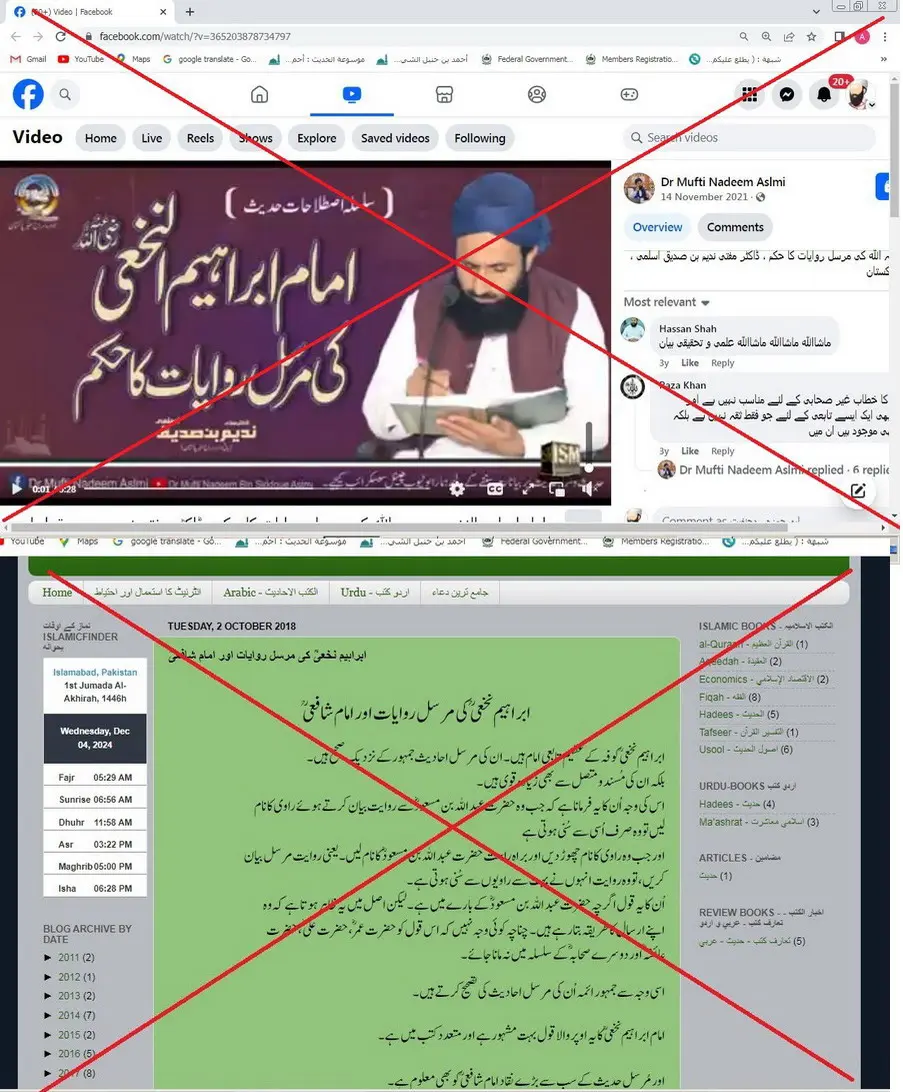
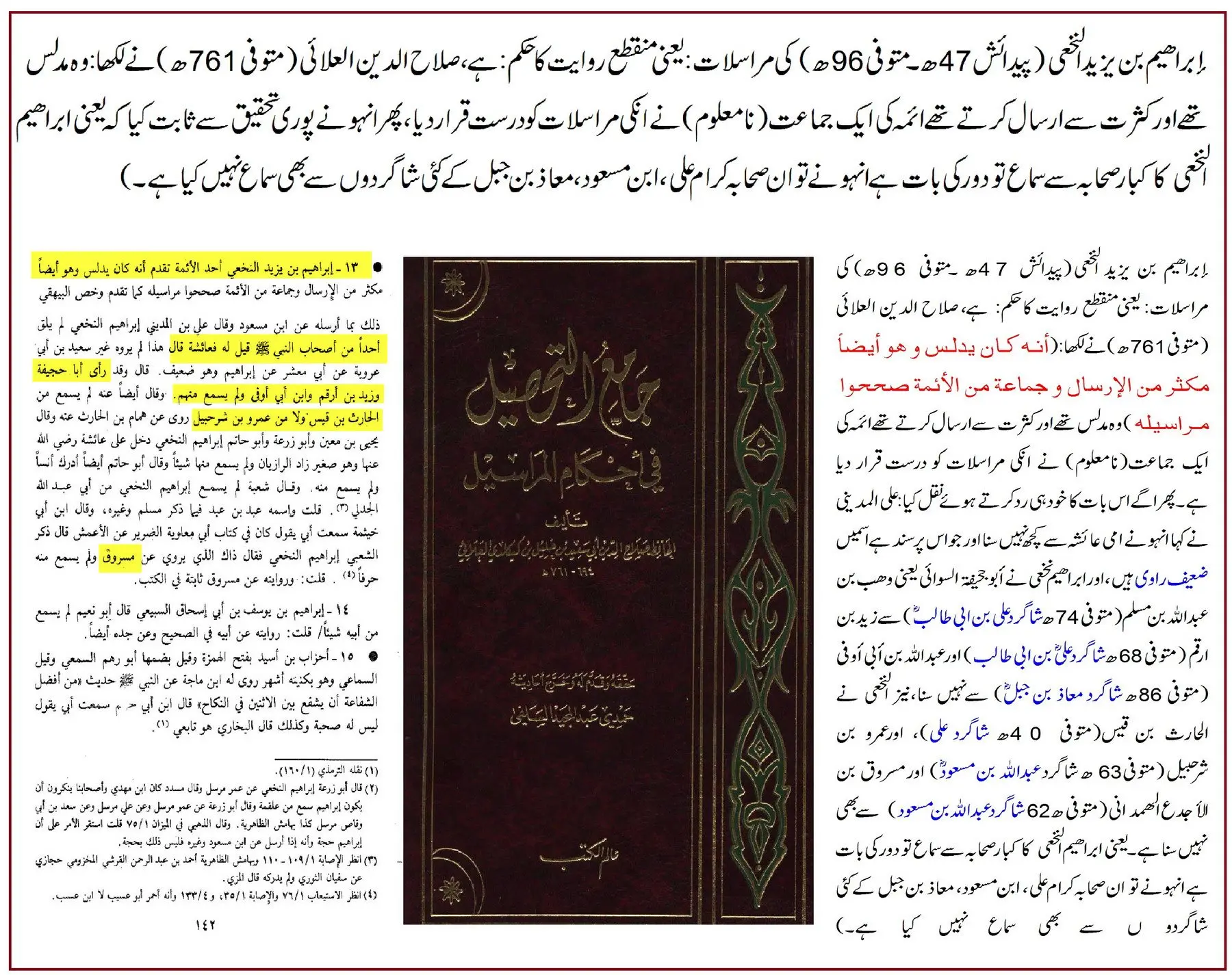
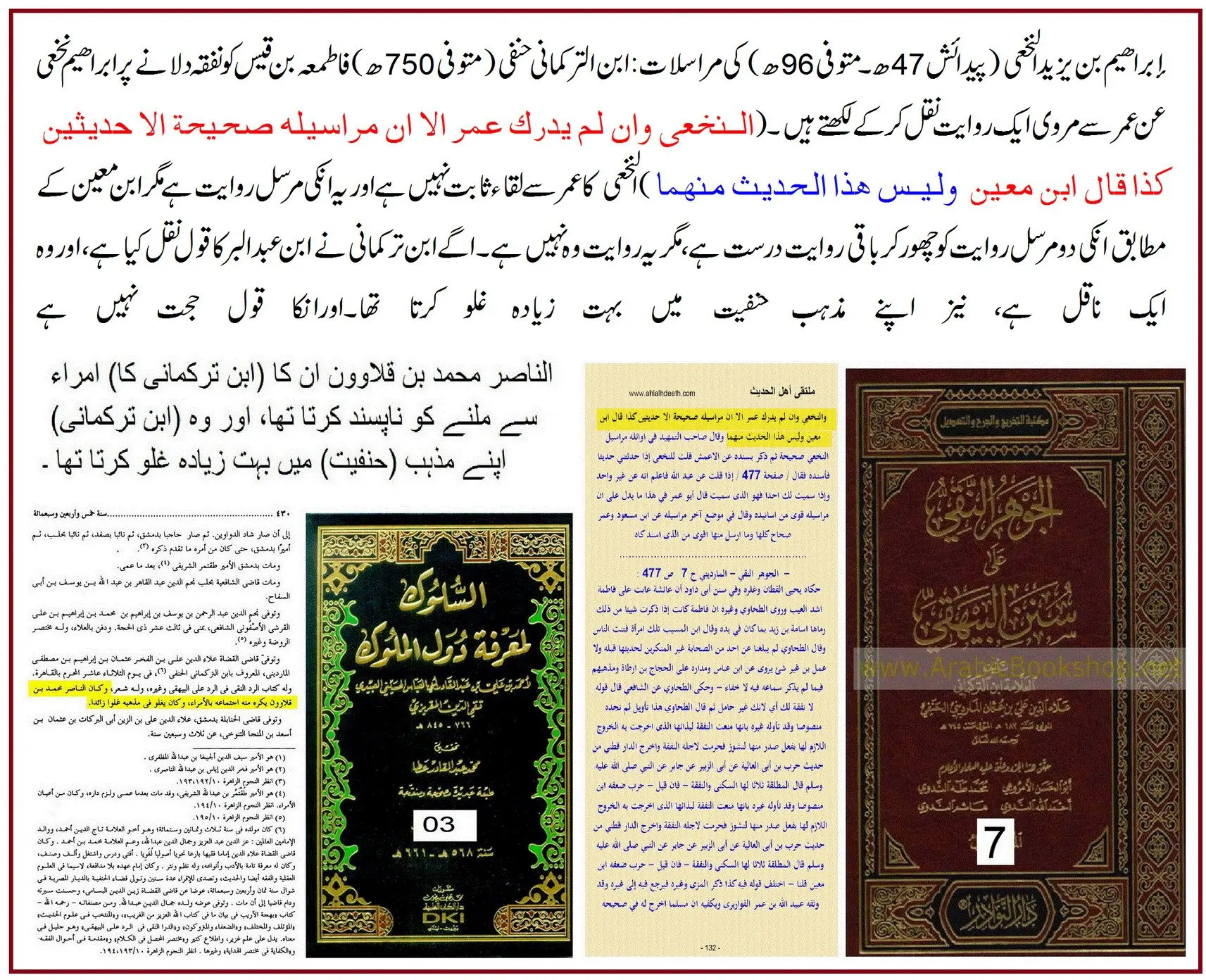
This research article examines how the hadith scholars (muḥaddithūn) evaluated the mursal (disconnected) narrations of Ibrāhīm ibn Yazīd al-Nakhaʿī al-Kūfī. Some Ḥanafīs and their partisan defenders assert that his mursal reports are valid evidence, even claiming that leading imams declared them authentic. However, the majority of hadith critics and scholars explicitly rejected his disconnected reports as non-authoritative.
In this article, we aim to:
① Present statements from 14 hadith scholars who rejected Ibrāhīm al-Nakhaʿī’s mursal narrations.
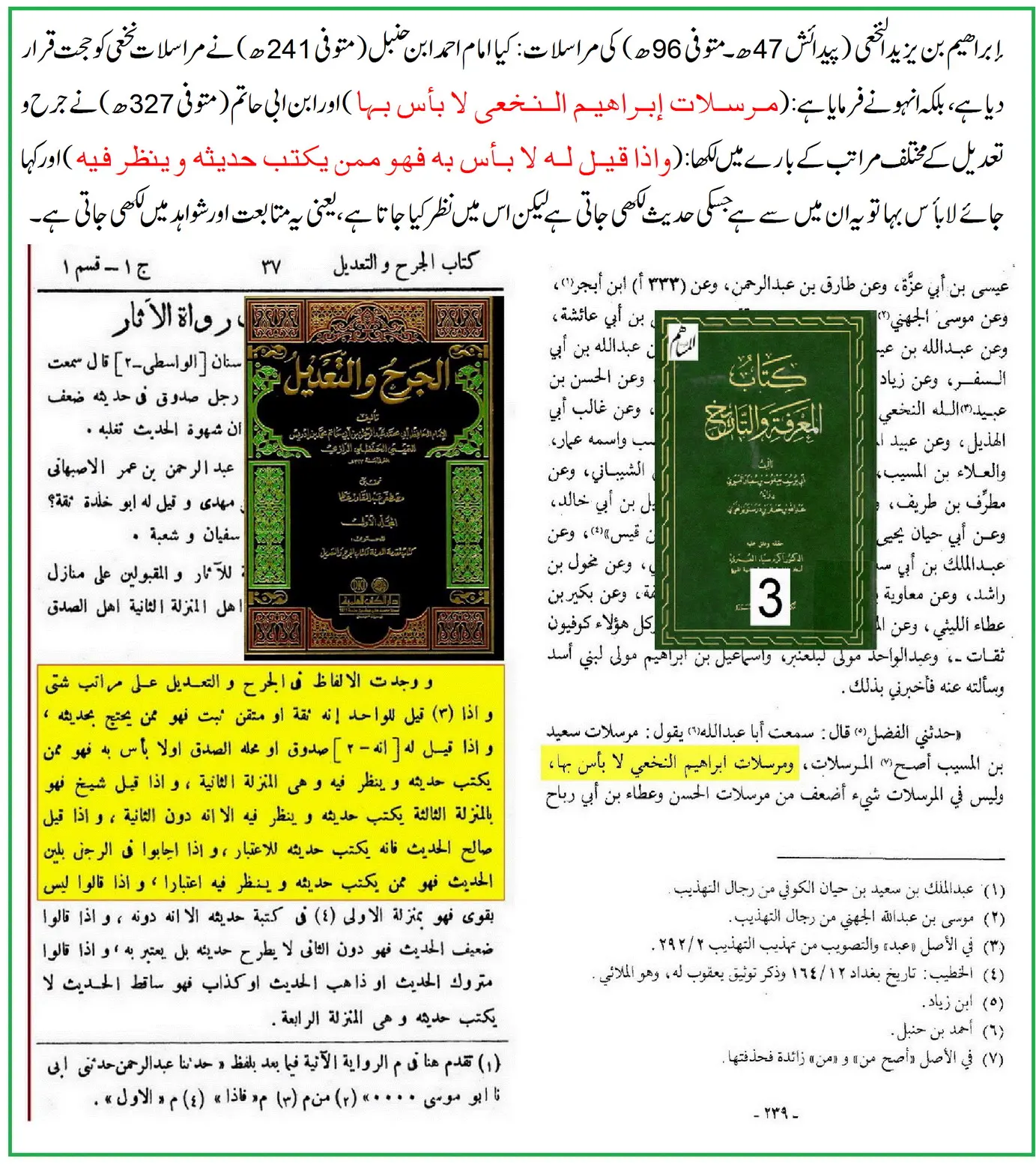
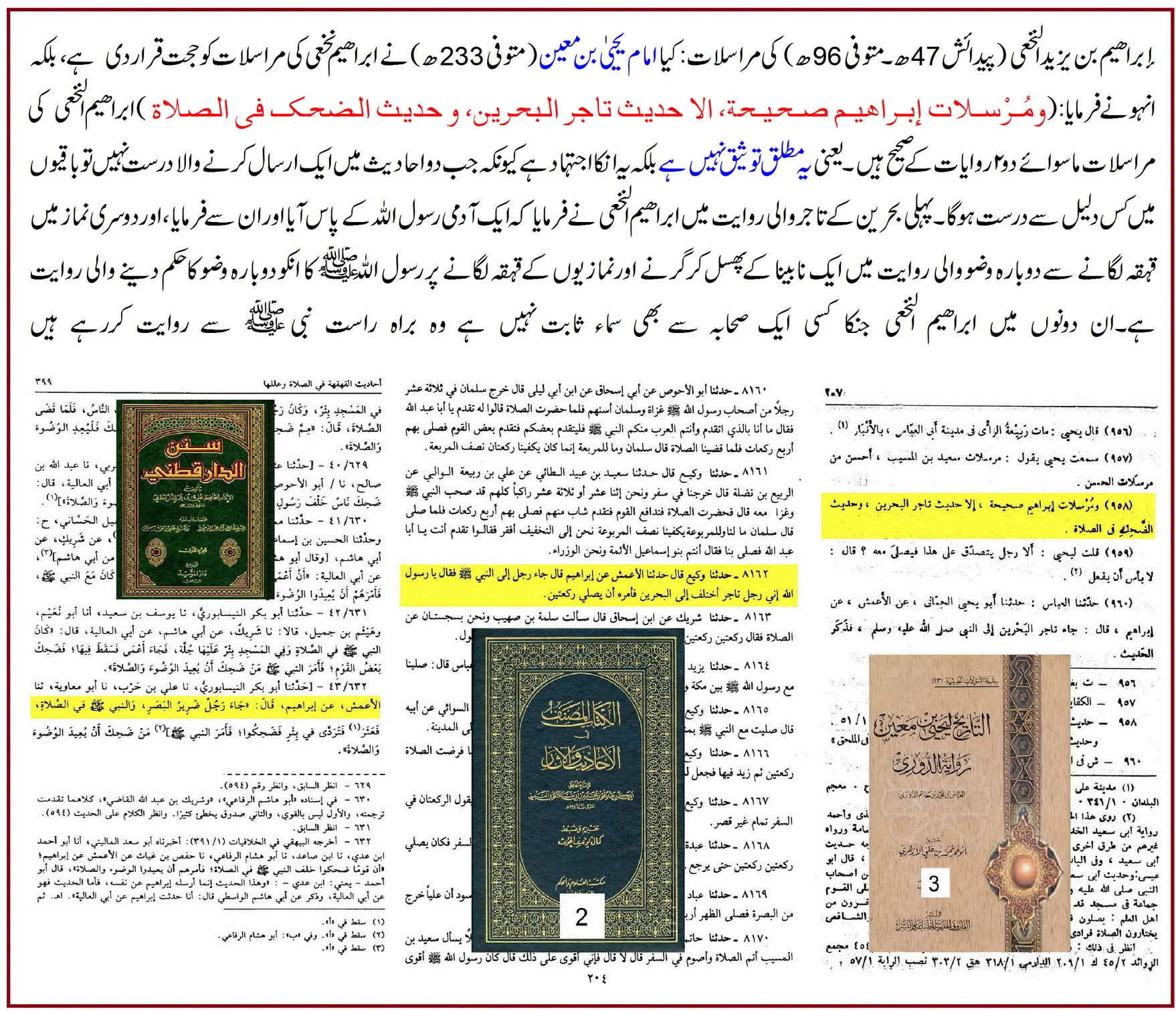
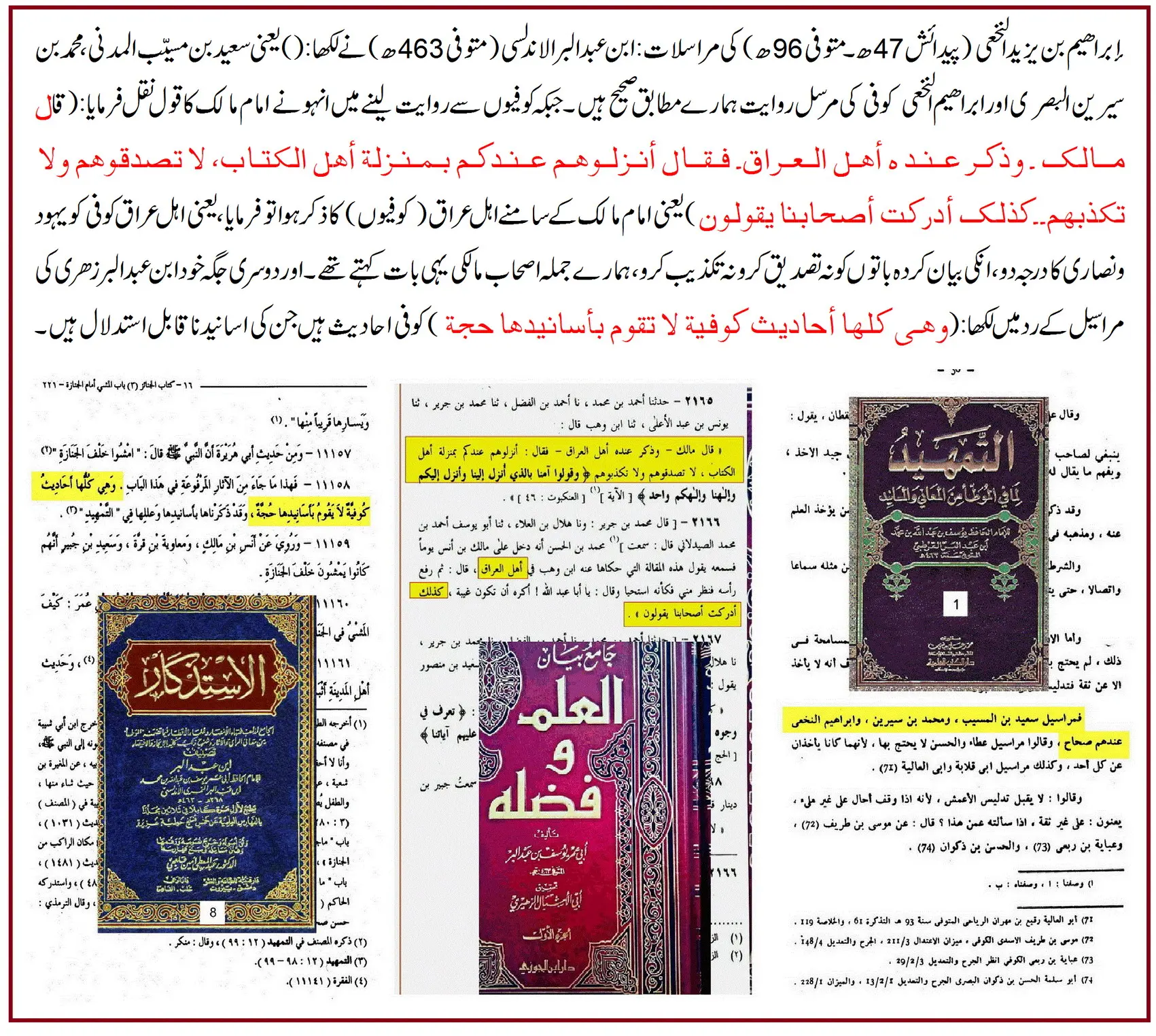
② Analyze and respond to the evidences cited by Imām Aḥmad, Yaḥyā ibn Maʿīn, and Ibn ʿAbd al-Barr.
③ Uncover contradictions and weak justifications presented by Ḥanafī scholars.
④ Summarize the methodological principles of hadith criticism regarding mursal narrations, and assess where Ibrāhīm al-Nakhaʿī fits within them.
❖ Hadith Scholars Who Rejected Ibrāhīm al-Nakhaʿī’s Mursal Narrations
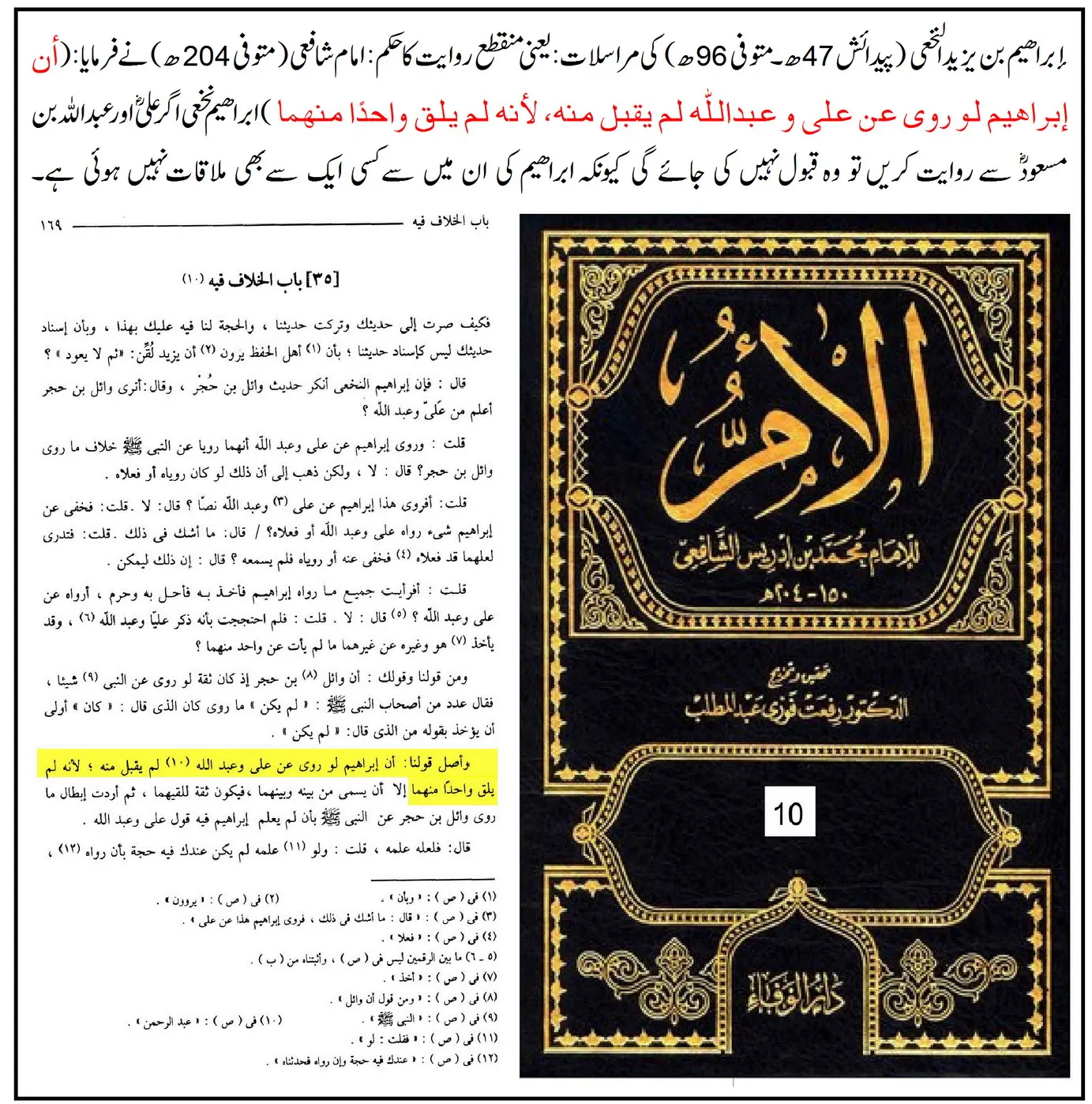
Imām al-Shāfiʿī رحمه الله
Arabic:
إن إبراهيم النخعي لو روى عن علي وعبد الله لم يقبل منه؛ لأنه لم يلق واحداً منهما.
Translation:
If Ibrāhīm al-Nakhaʿī were to narrate from ʿAlī or ʿAbdullāh (ibn Masʿūd), his narration would not be accepted—because he did not meet either of them.
📚 al-Umm, vol. 10, Ikhtilāf al-Ḥadīth
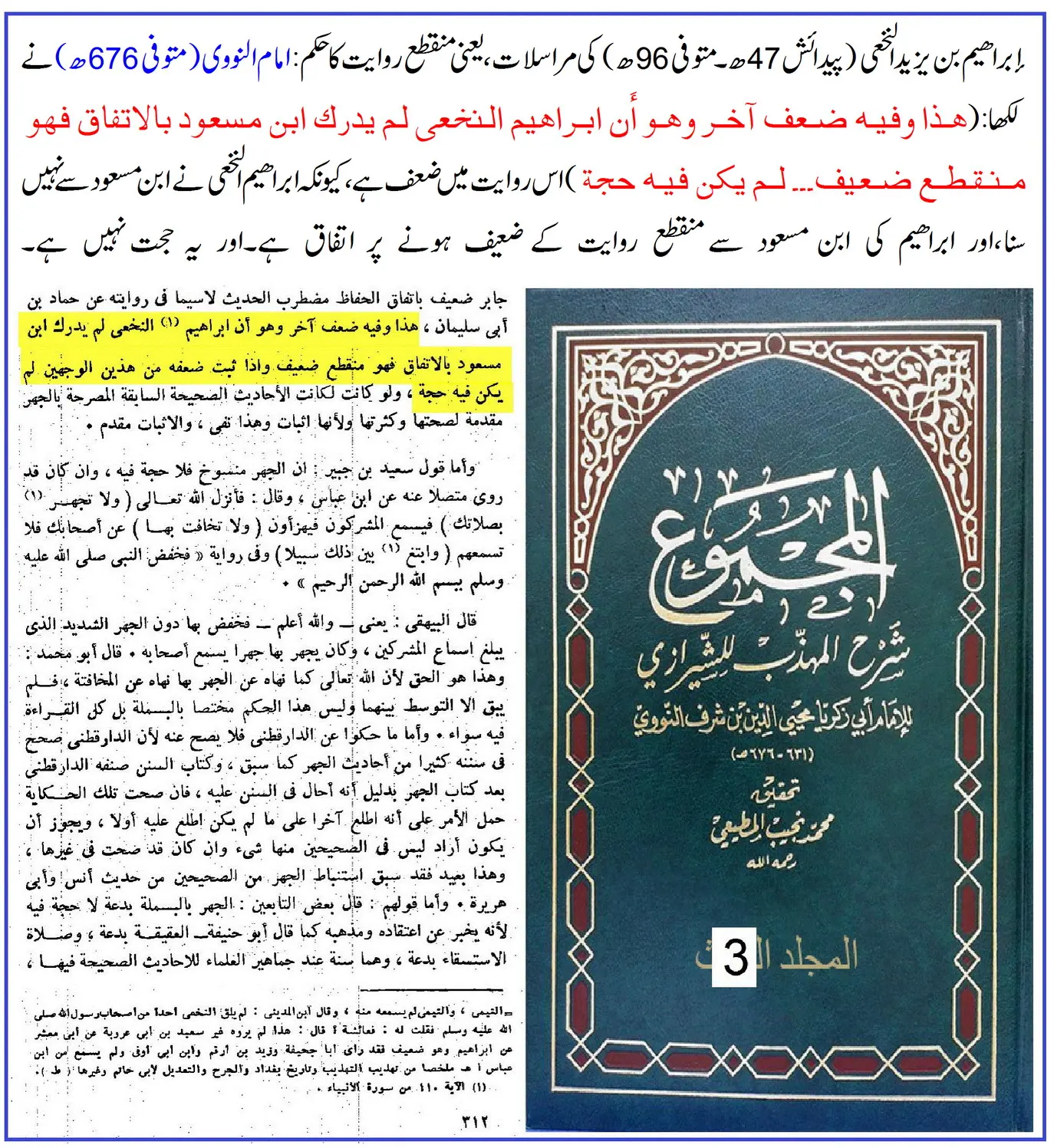
Imām al-Nawawī رحمه الله
Arabic:
وَفِيهِ ضَعْفٌ آخَرُ وَهُوَ أَنَّ إِبْرَاهِيمَ النَّخَعِيَّ لَمْ يُدْرِكِ ابْنَ مَسْعُودٍ بِالِاتِّفَاقِ، فَهُوَ مُنْقَطِعٌ ضَعِيفٌ، وَإِذَا ثَبَتَ ضَعْفُهُ مِنْ هَذَيْنِ الْوَجْهَيْنِ لَمْ يَكُنْ فِيهِ حُجَّةٌ...
Translation:
There is another weakness in this narration: Ibrāhīm al-Nakhaʿī—by consensus—did not meet Ibn Masʿūd; hence, the narration is disconnected and weak. Since its weakness is established from these two aspects, there is no proof in it.
📚 al-Majmūʿ Sharḥ al-Muhadhdhab
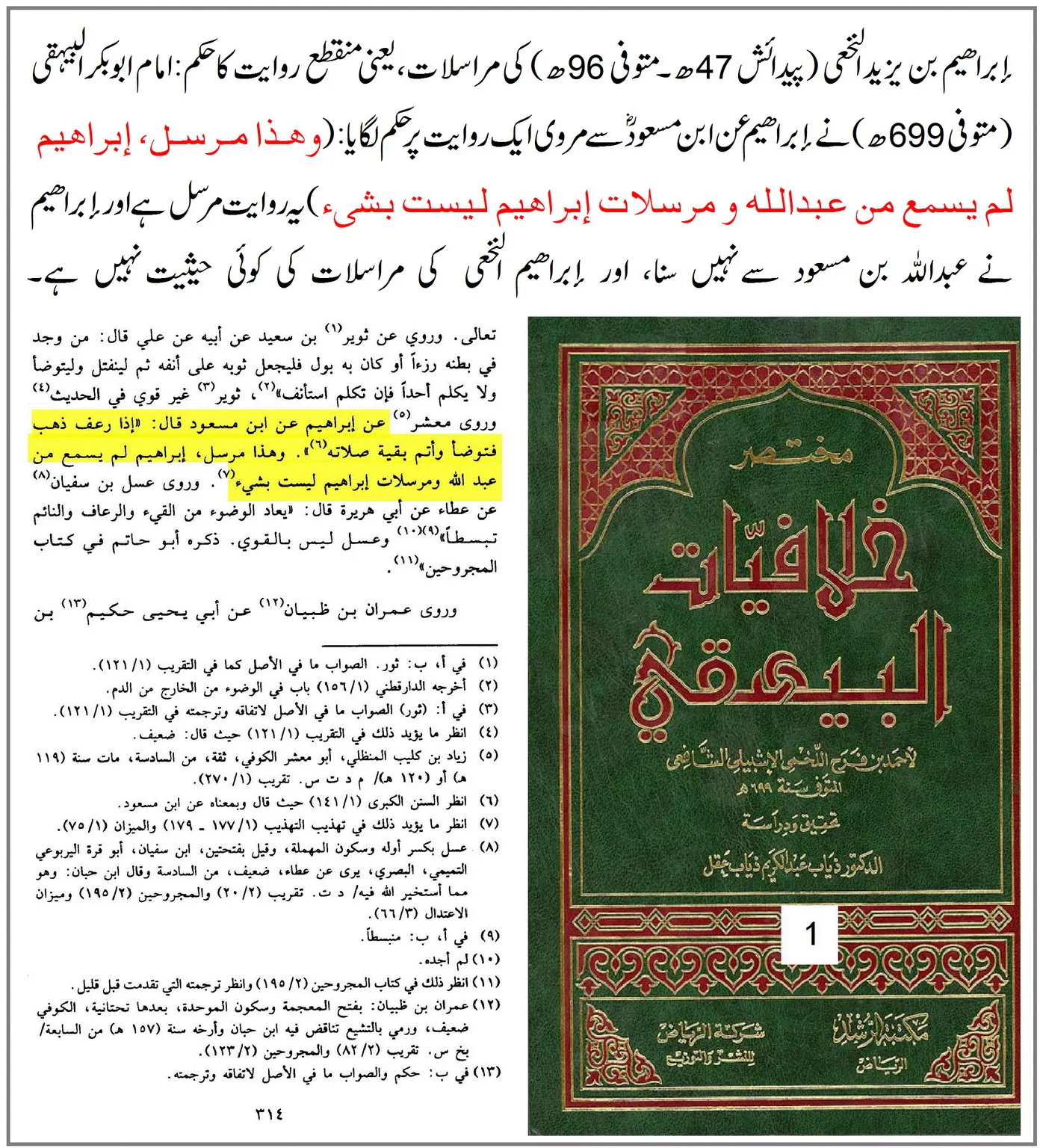
Imām al-Bayhaqī رحمه الله
Arabic:
وَهَذَا مُرْسَلٌ، إِبْرَاهِيمُ لَمْ يَسْمَعْ مِنْ عَبْدِ اللهِ، وَمُرْسَلاتُ إِبْرَاهِيمَ لَيْسَتْ بِشَيْءٍ.
Translation:
This narration is mursal; Ibrāhīm did not hear from ʿAbdullāh ibn Masʿūd. His mursal narrations are worthless.
📚 Mukhtaṣar Khalāfiyyāt al-Bayhaqī
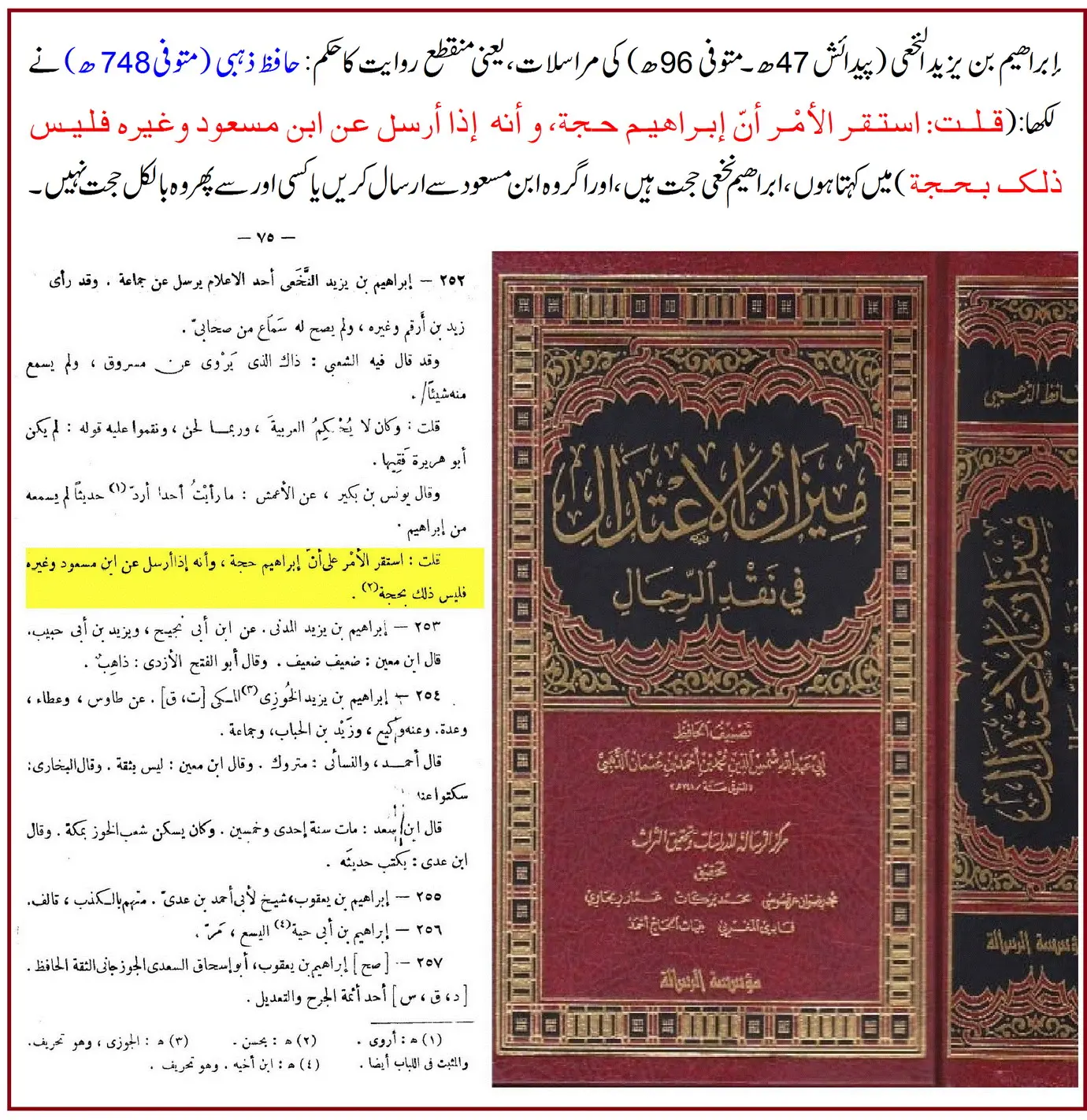
Ḥāfiẓ al-Dhahabī رحمه الله
Arabic:
استقر الأمر على أن إبراهيم حجة، وأنه إذا أرسل عن ابن مسعود وغيره فليس ذلك بحجة.
Translation:
It has become settled that Ibrāhīm is in principle a proof (ḥujjah), but when he narrates mursal from Ibn Masʿūd or others, it is not a valid proof.
📚 Mīzān al-Iʿtidāl
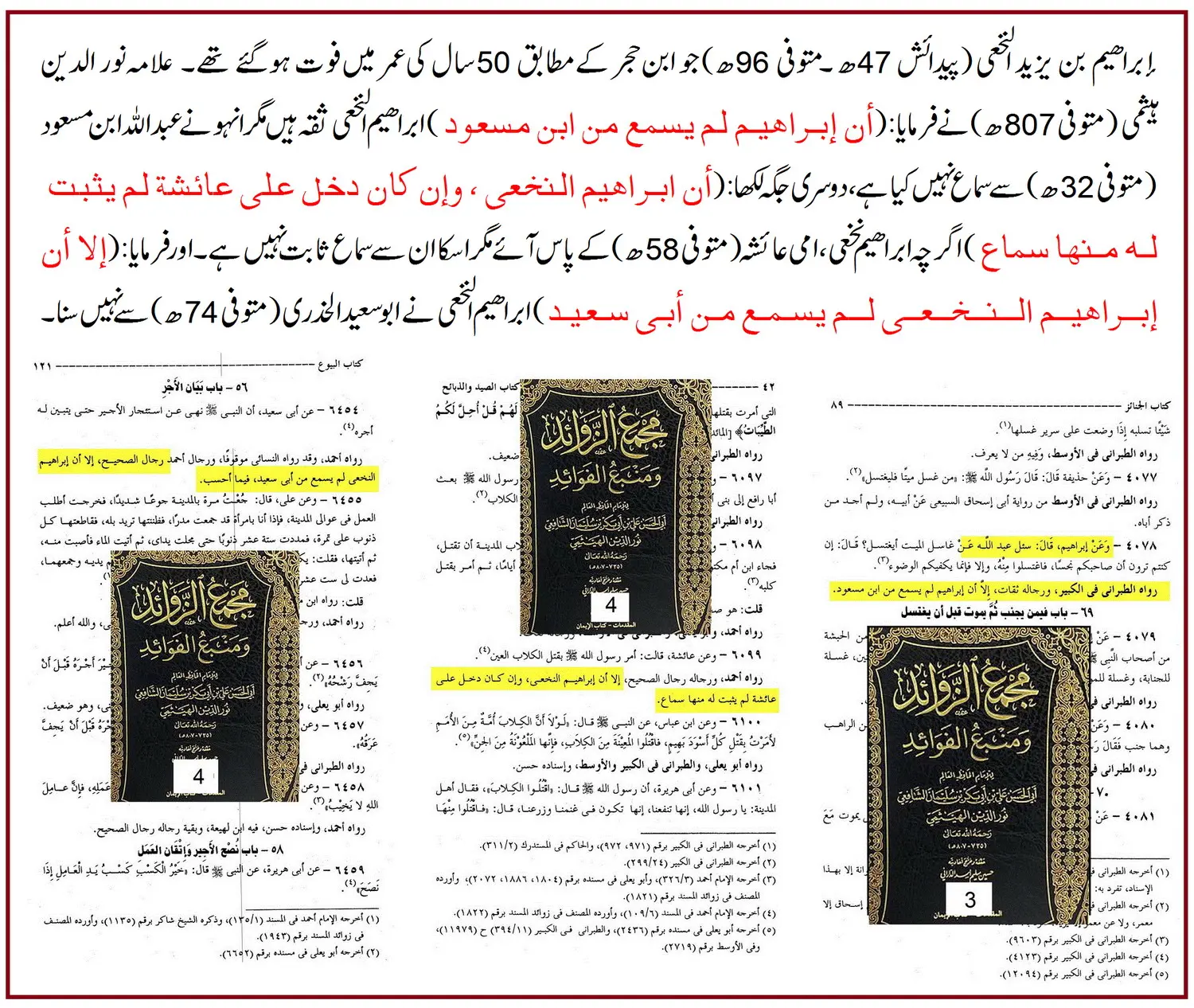
al-Haythamī رحمه الله
Arabic:
وَرِجَالُهُ ثِقَاتٌ إِلَّا أَنَّ إِبْرَاهِيمَ لَمْ يَسْمَعِ ابْنَ مَسْعُودٍ.
Translation:
All the narrators of this report are trustworthy, except that Ibrāhīm al-Nakhaʿī did not hear from Ibn Masʿūd.
📚 Majmaʿ al-Zawāʾid
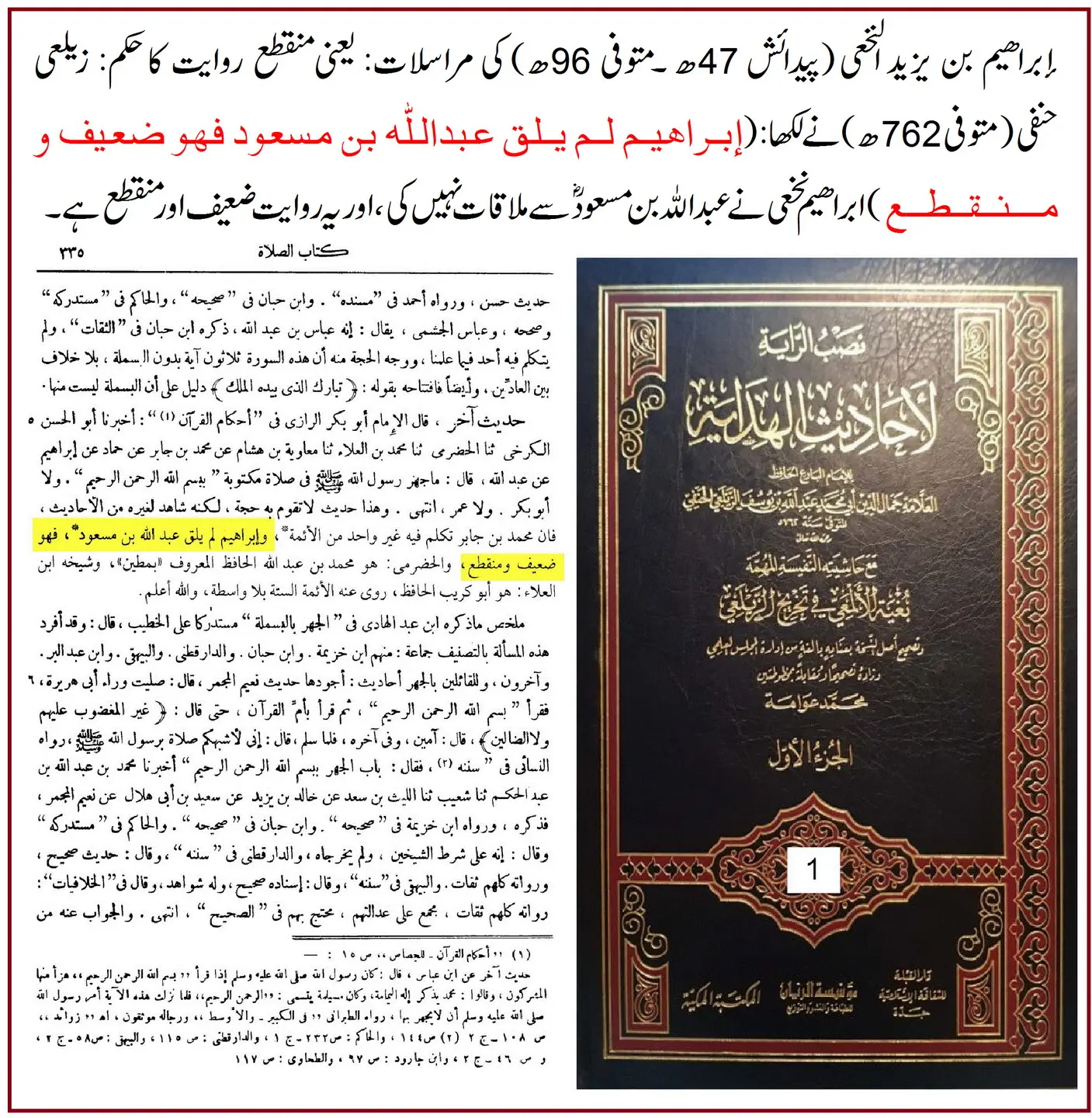
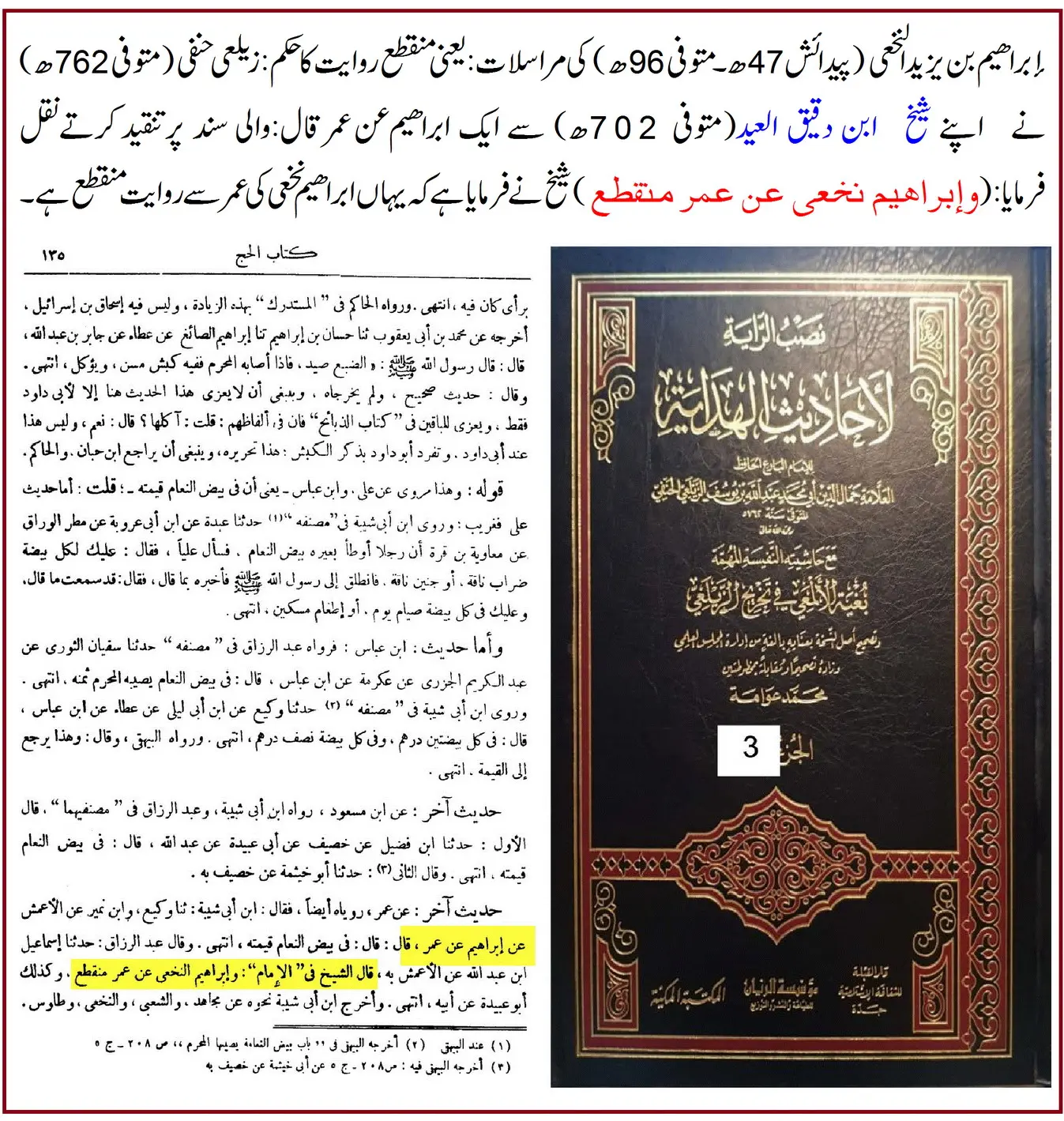
al-Zaylaʿī al-Ḥanafī رحمه الله
Arabic:
وَهَذَا حَدِيثٌ لَا تَقُومُ بِهِ حُجَّةٌ، لَكِنَّهُ شَاهِدٌ لِغَيْرِهِ مِنَ الْأَحَادِيثِ، فَإِنَّ مُحَمَّدَ بْنَ جَابِرٍ تَكَلَّمَ فِيهِ غَيْرُ وَاحِدٍ مِنَ الْأَئِمَّةِ، وَإِبْرَاهِيمُ لَمْ يَلْقَ عَبْدَ اللهِ بْنَ مَسْعُودٍ، فَهُوَ ضَعِيفٌ وَمُنْقَطِعٌ.
Translation:
This hadith is not such that a proof can be established by it, though it serves as a supporting witness (shāhid) for other hadiths. Muḥammad ibn Jābir has been criticised by more than one of the imams, and Ibrāhīm did not meet ʿAbdullāh ibn Masʿūd; thus the narration is weak and disconnected.
📚 Naṣb al-Rāyah
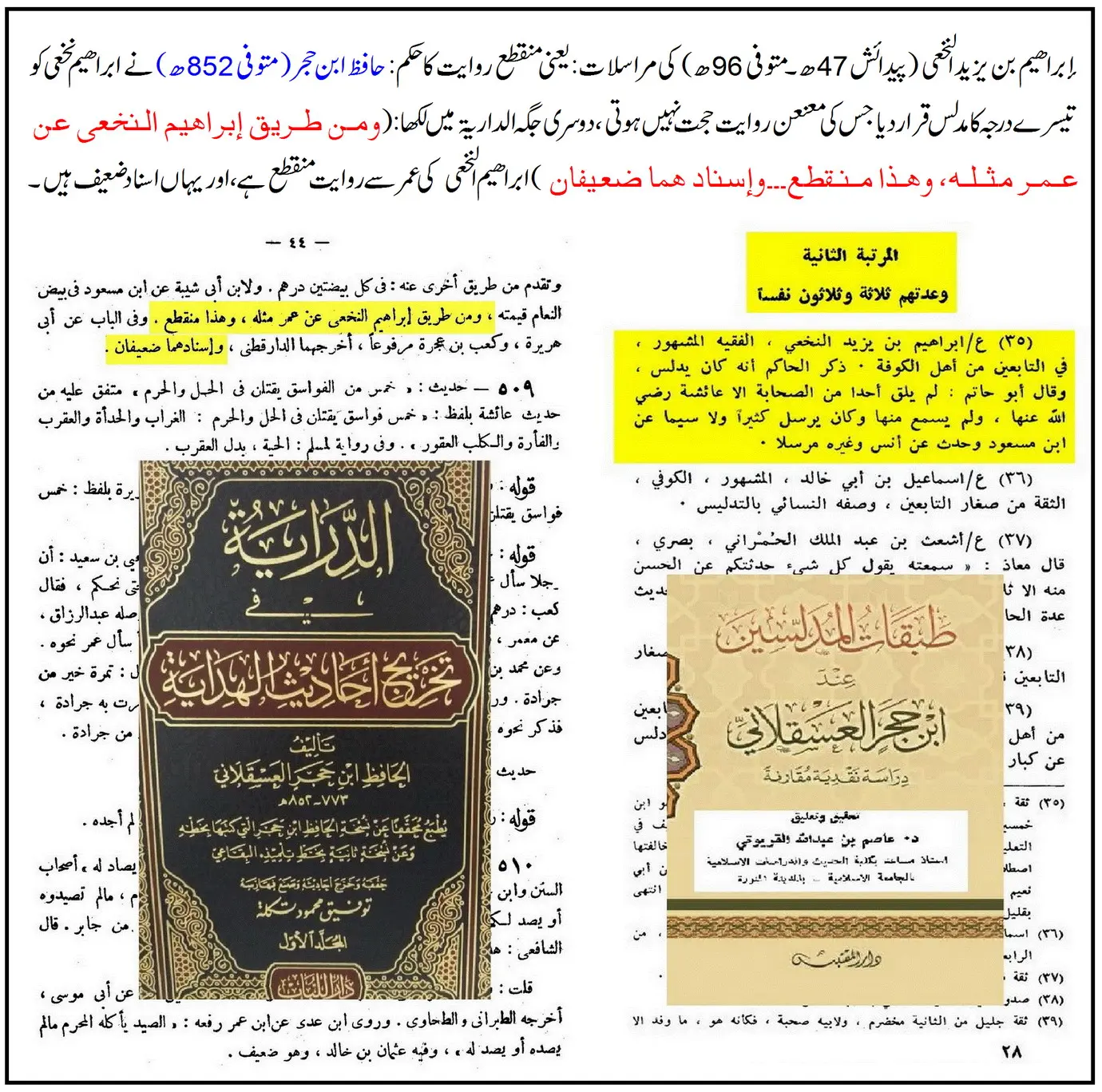
Ḥāfiẓ Ibn Ḥajar al-ʿAsqalānī رحمه الله
Arabic:
وَمِنْ طَرِيقِ إِبْرَاهِيمَ النَّخَعِيِّ عَنْ عُمَرَ مِثْلُهُ، وَهَذَا مُنْقَطِعٌ، وَفِي الْبَابِ عَنْ أَبِي هُرَيْرَةَ وَكَعْبِ بْنِ عُجْرَةَ مَرْفُوعًا أَخْرَجَهُمَا الدَّارَقُطْنِيُّ وَإِسْنَادُهُمَا ضَعِيفَانِ.
Translation:
The narration from ʿUmar via Ibrāhīm al-Nakhaʿī is interrupted. In this chapter there are also marfūʿ narrations from Abū Hurayrah and Kaʿb ibn ʿUjrah (may Allah be pleased with them), but the chains of both are weak.
📚 al-Dirāyah fī Takhrīj Aḥādīth al-Hidāyah
Ibn Daqīq al-ʿĪd رحمه الله
Arabic:
وَإِبْرَاهِيمُ النَّخَعِيُّ عَنْ عُمَرَ مُنْقَطِعٌ.
Translation:
Ibrāhīm al-Nakhaʿī’s report from ʿUmar is disconnected.
📚 Naṣb al-Rāyah
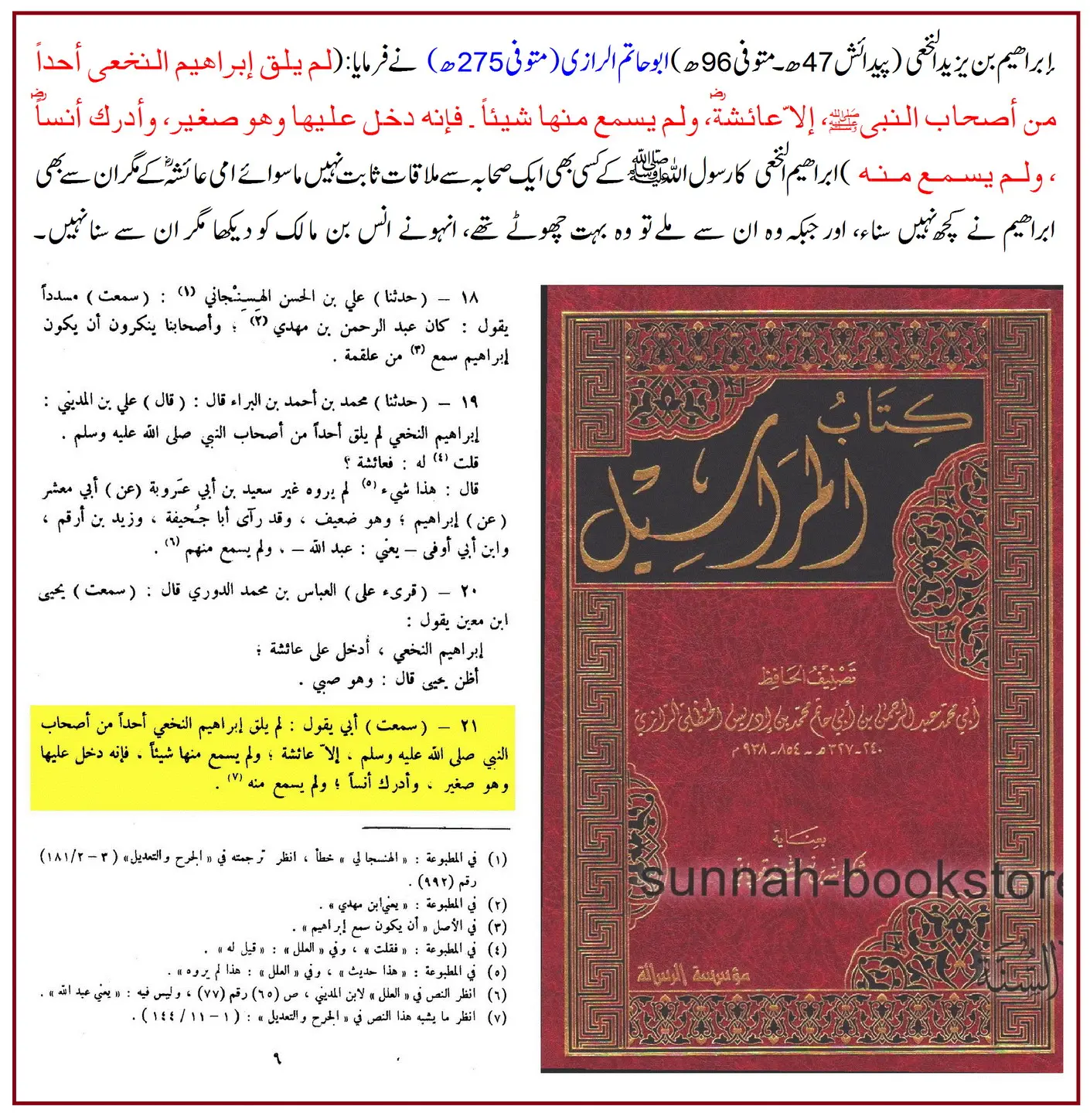
Imām Abū Ḥātim al-Rāzī رحمه الله
Arabic:
لَمْ يَلْقَ إِبْرَاهِيمُ النَّخَعِيُّ أَحَدًا مِنْ أَصْحَابِ النَّبِيِّ صَلَّى اللهُ عَلَيْهِ وَسَلَّمَ إِلَّا عَائِشَةَ، وَلَمْ يَسْمَعْ مِنْهَا شَيْئًا، فَإِنَّهُ دَخَلَ عَلَيْهَا وَهُوَ صَغِيرٌ، وَأَدْرَكَ أَنَسًا وَلَمْ يَسْمَعْ مِنْهُ.
Translation:
Ibrāhīm al-Nakhaʿī met none of the Prophet’s Companions (may Allah be pleased with them), except ʿĀʾishah, from whom he did not hear anything, because he visited her when he was a small child. He was contemporary with (found) Anas ibn Mālik but did not hear from him either.
📚 al-Marāsīl
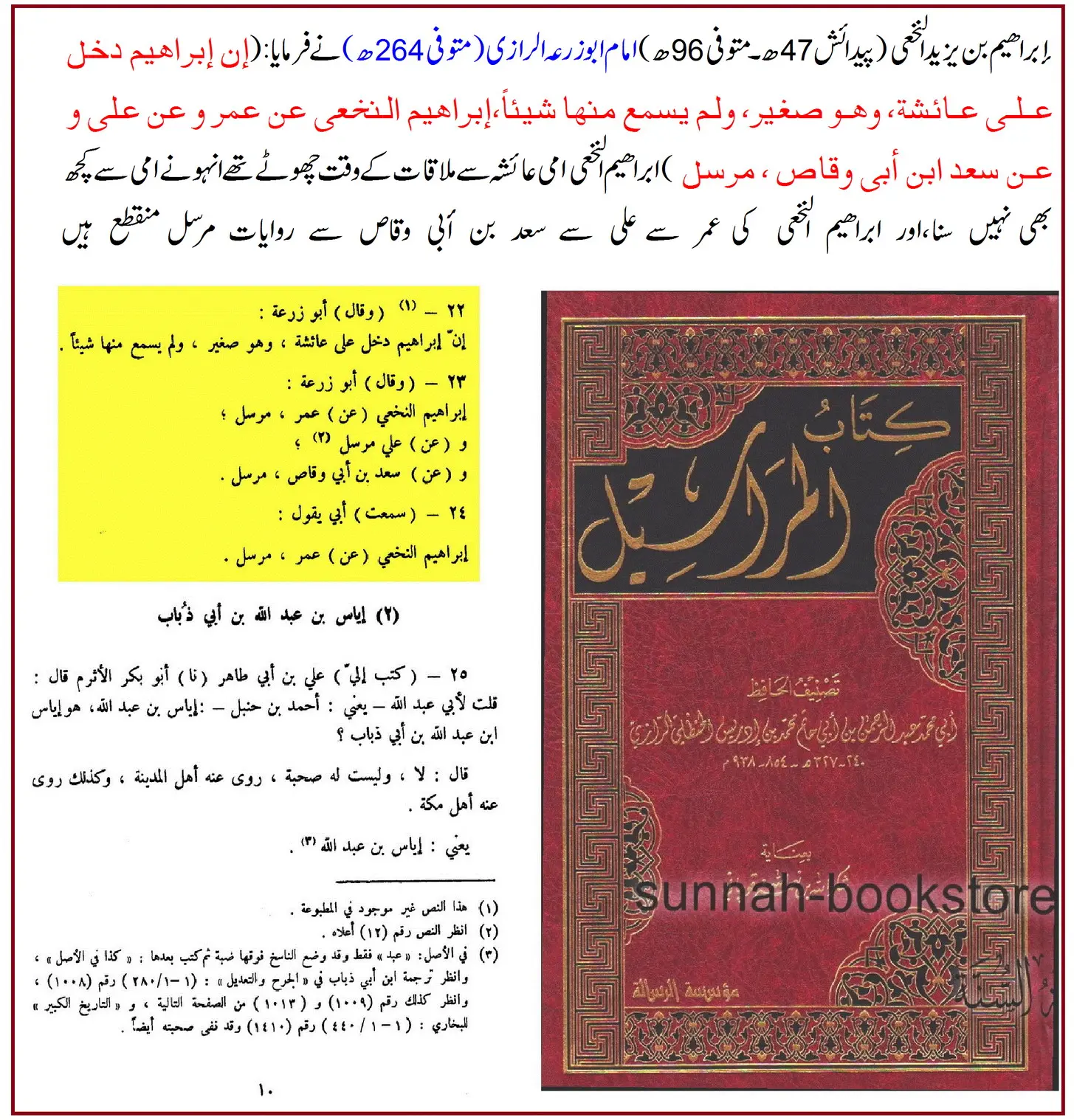
Imām Abū Zurʿah al-Rāzī رحمه الله
Arabic:
إِبْرَاهِيمُ النَّخَعِيُّ عَنْ عُمَرَ مُرْسَلٌ، وَعَنْ عَلِيٍّ مُرْسَلٌ، وَعَنْ سَعْدِ بْنِ أَبِي وَقَّاصٍ مُرْسَلٌ.
Translation:
His narrations from ʿUmar, ʿAlī, and Saʿd ibn Abī Waqqāṣ are mursal.
📚 al-Marāsīl
Shuʿbah ibn al-Ḥajjāj رحمه الله
Arabic:
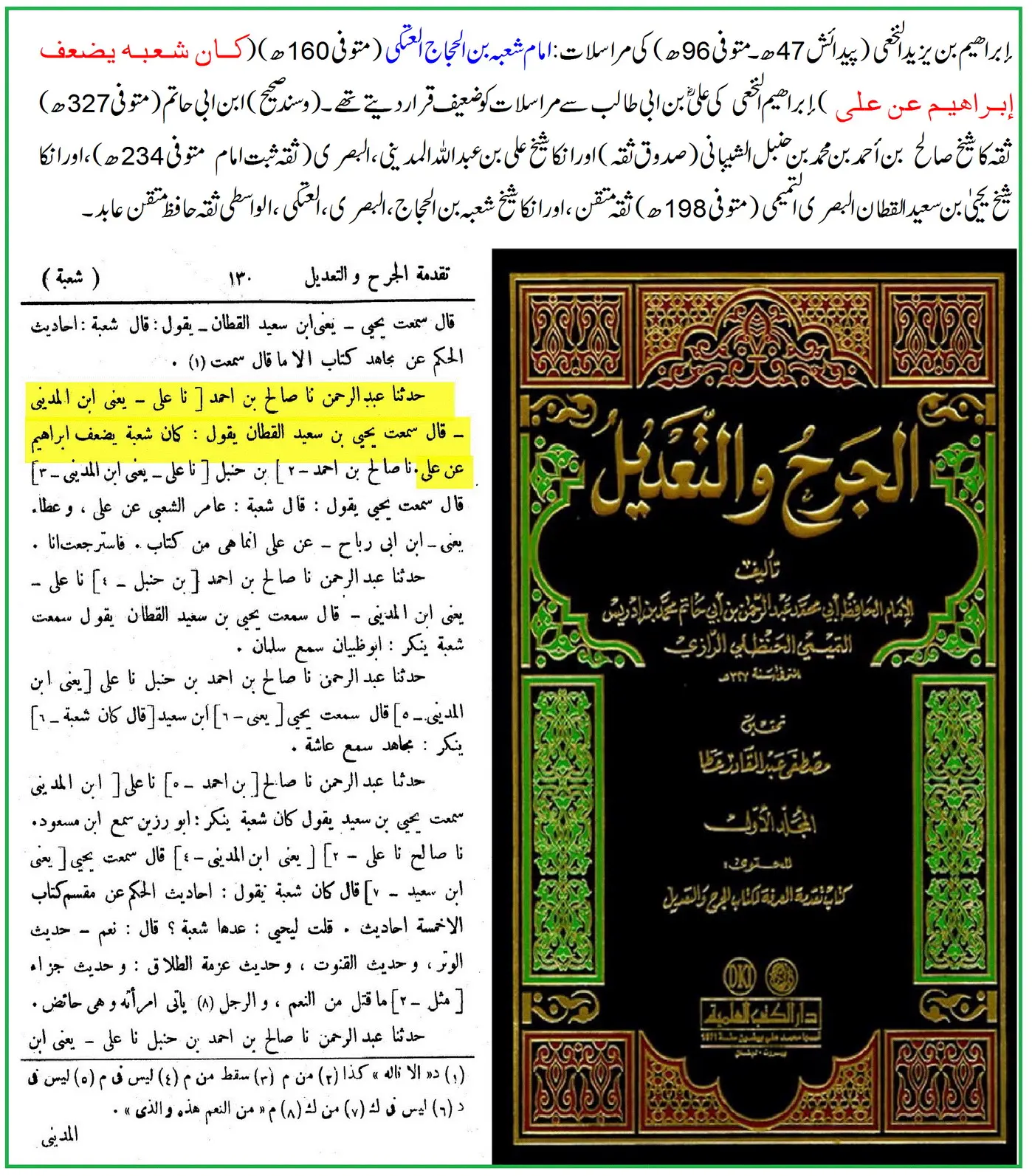
كَانَ شُعْبَةُ يُضَعِّفُ إِبْرَاهِيمَ عَنْ عَلِيٍّ.
Translation:
Shuʿbah considered Ibrāhīm’s narrations from ʿAlī to be weak.
📚 al-Jarḥ wa al-Taʿdīl
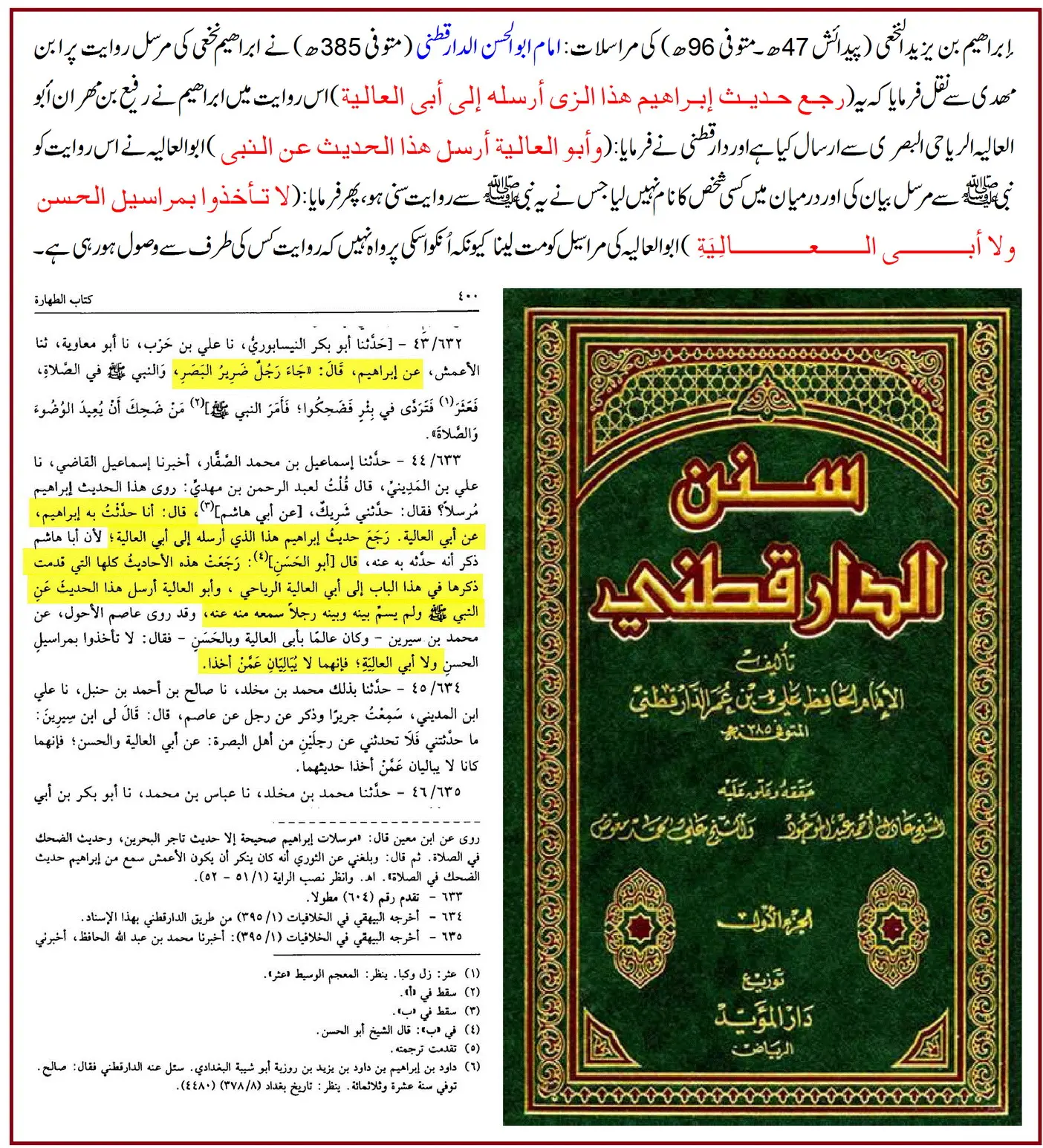
Imām al-Dāraquṭnī رحمه الله (via Ibn Mahdī)
Arabic:
رَجَعَ حَدِيثُ إِبْرَاهِيمَ الَّذِي أَرْسَلَهُ إِلَى أَبِي الْعَالِيَةِ، لِأَنَّ أَبَا هَاشِمٍ ذَكَرَ أَنَّهُ حَدَّثَهُ بِهِ عَنْهُ، فَقَالَ: لَا تَأْخُذُوا بِمَرَاسِيلِ الْحَسَنِ وَلَا أَبِي الْعَالِيَةِ فَإِنَّهُمَا لَا يُبَالِيَانِ عَمَّنْ أَخَذَا.
Translation:
The mursal narration of Ibrāhīm (al-Nakhaʿī) actually goes back to Abū al-ʿĀliyah, and Abū al-ʿĀliyah himself narrates it mursal from the Prophet ﷺ, without mentioning the intermediary. Regarding Abū al-ʿĀliyah it was said: Do not rely on the mursal narrations of al-Ḥasan or Abū al-ʿĀliyah—they don’t care whom they narrate from.
📚 Sunan al-Dāraquṭnī
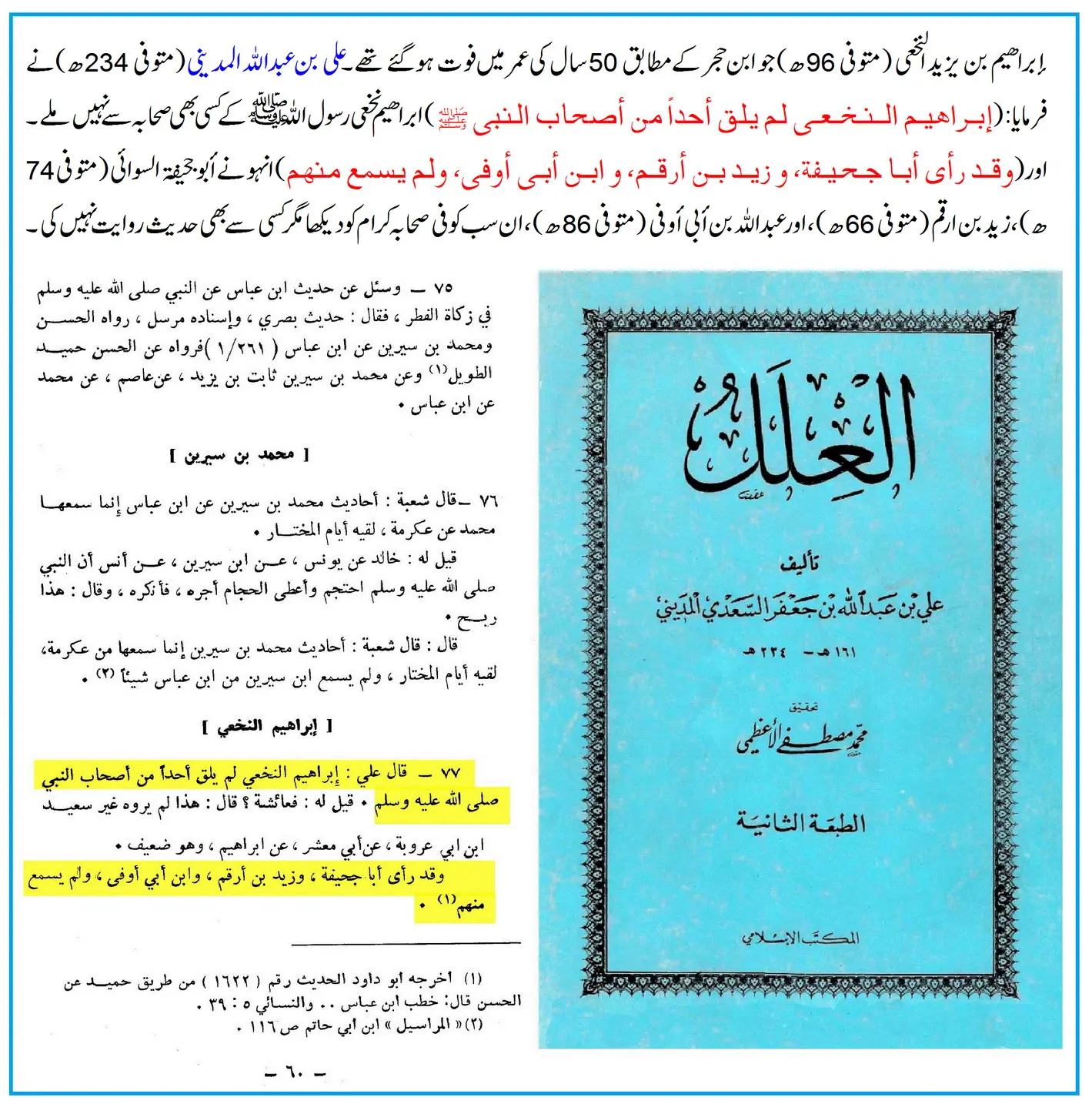
ʿAlī ibn ʿAbdullāh al-Madīnī رحمه الله
Arabic:
إِبْرَاهِيمُ النَّخَعِيُّ لَمْ يَلْقَ أَحَدًا مِنْ أَصْحَابِ النَّبِيِّ ﷺ… وَقَدْ رَأَى أَبَا جُحَيْفَةَ، وَزَيْدَ بْنَ أَرْقَمَ، وَابْنَ أَبِي أَوْفَى وَلَمْ يَسْمَعْ مِنْهُمْ.
Translation:
Ibrāhīm al-Nakhaʿī did not meet any of the Companions of the Messenger of Allah ﷺ. He did see Abū Juḥayfah, Zayd ibn Arqam, and Ibn Abī Awfā—but did not hear from them.
📚 al-ʿIlal by Ibn al-Madīnī
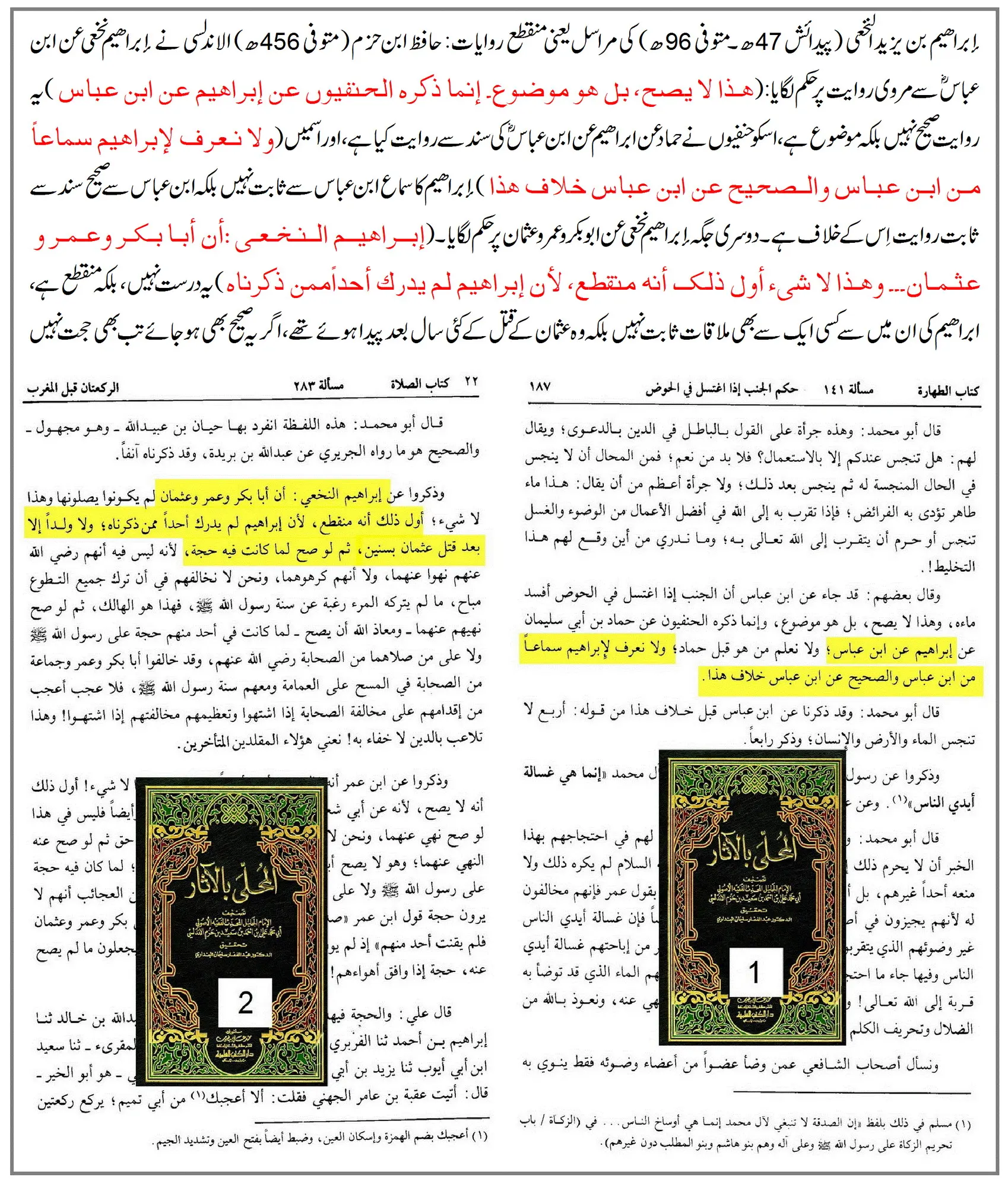
Ibn Ḥazm رحمه الله
Arabic:
لَا نَعْلَمُ لِإِبْرَاهِيمَ سَمَاعًا مِنْ ابْنِ عَبَّاسٍ… وَهَذَا لَا شَيْءَ؛ أَوَّلُ ذَلِكَ أَنَّهُ مُنْقَطِعٌ؛ لِأَنَّ إِبْرَاهِيمَ لَمْ يُدْرِكْ أَحَدًا مِمَّنْ ذَكَرْنَاهُ.
Translation:
We do not know of any hearing by Ibrāhīm from Ibn ʿAbbās (may Allah be pleased with him). This report is worthless: first of all, it is disconnected, and Ibrāhīm did not meet any of those mentioned in it.
📚 al-Muḥallā bi’l-Āthār
❖ Conclusion
This detailed review makes it clear that the marāsīl (disconnected narrations) of Ibrāhīm ibn Yazīd al-Nakhaʿī (may Allah have mercy on him) are not a proof according to the principles of hadith:
✔ The majority of the imams (Imām al-Shāfiʿī, Imām al-Nawawī, al-Bayhaqī, al-Dhahabī, al-Haythamī, al-Zaylaʿī, Ibn Ḥajar, Abū Ḥātim, Abū Zurʿah, Shuʿbah, ʿAlī ibn al-Madīnī, Ibn Ḥazm) have stated explicitly that many of al-Nakhaʿī’s attributions are without hearing (samāʿ); therefore they are counted as mursal/munqaṭiʿ and cannot be used as evidence.
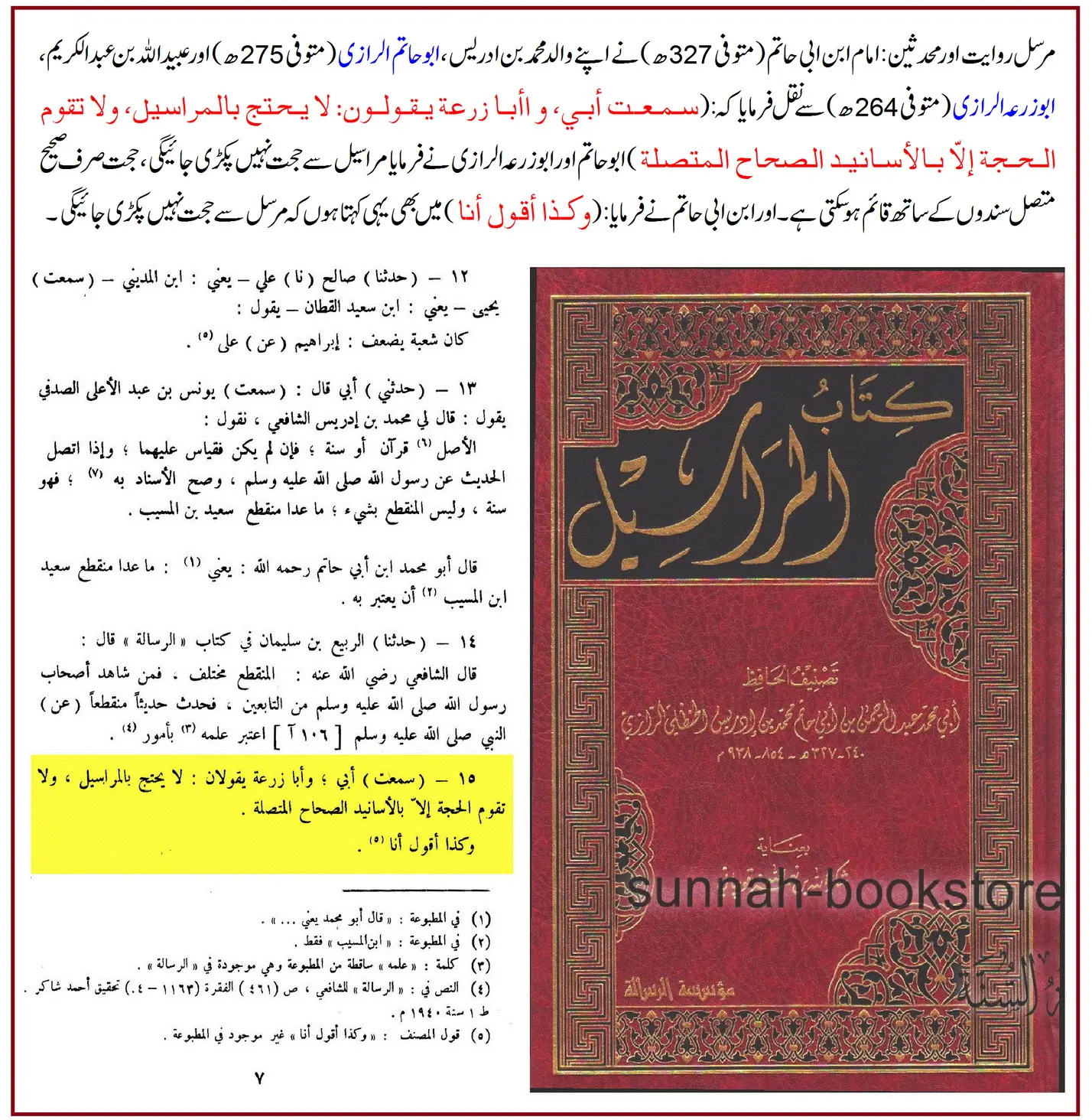
✔ Ibn Abī Ḥātim’s principle:
لا يُحتجّ بالمراسيل، ولا تقوم الحُجّة إلا بالأسانيد الصحاح المتصلة
“No evidence can be established through mursal reports. Only authentic, connected chains are binding.”
✔ Statements that show leniency (e.g. “lā baʾs bihā” or the “taṣḥīḥ” of certain specific marāsīl) do not amount to absolute authority; at most they reach the level of being mentioned among mutābaʿāt/shawāhid, not an independent proof.
Practical result: al-Nakhaʿī’s marāsīl—whether from the Companions (may Allah be pleased with them) or from some Tābiʿīn from whom his hearing is not established—may be recorded only as reinforcement (shāhid/mutābiʿ), not as an independent proof.
❖ Responses to Common Objections
Objection 1: Imām Aḥmad said, “Marāsīl of Ibrāhīm are not problematic.”
Response:
“Lā baʾs bihi/bihā” is a second-grade term in the terminology of jarḥ wa taʿdīl; it means the hadith “is written down and examined”—i.e. in shawāhid/mutābaʿāt, not as an independent proof. (al-Jarḥ wa al-Taʿdīl of Ibn Abī Ḥātim: the ranks of the expressions)
Objection 2: Ibn Maʿīn generally authenticated his marāsīl.
Response:
Even Ibn Maʿīn excluded some (e.g., “Tājir Baḥrayn”, “al-Ḍaḥik fī al-Ṣalāh”). So, this is not a blanket authentication, but a partial, ijtihād-based preference that cannot override the explicit principles of the majority (jumhūr).
Objection 3: Ibn ʿAbd al-Barr called marāsīl of Nakhaʿī, Ibn Sīrīn, and Saʿīd ibn al-Musayyib “ṣaḥīḥ”.
Response:
This also covers Madinan/Baṣran marāsīl, whereas the Ḥanafīs generally favour Kūfan ones—so presenting it as evidence for the Ḥanafī method is conflating two different issues. Moreover, Ibn ʿAbd al-Barr himself repeatedly warns against relying on Kūfan isnāds (al-Istidhkār), and he quotes strict caution from Imām Mālik regarding the narrations of the people of Iraq (Kūfah) (Jāmiʿ Bayān al-ʿIlm: 2165).
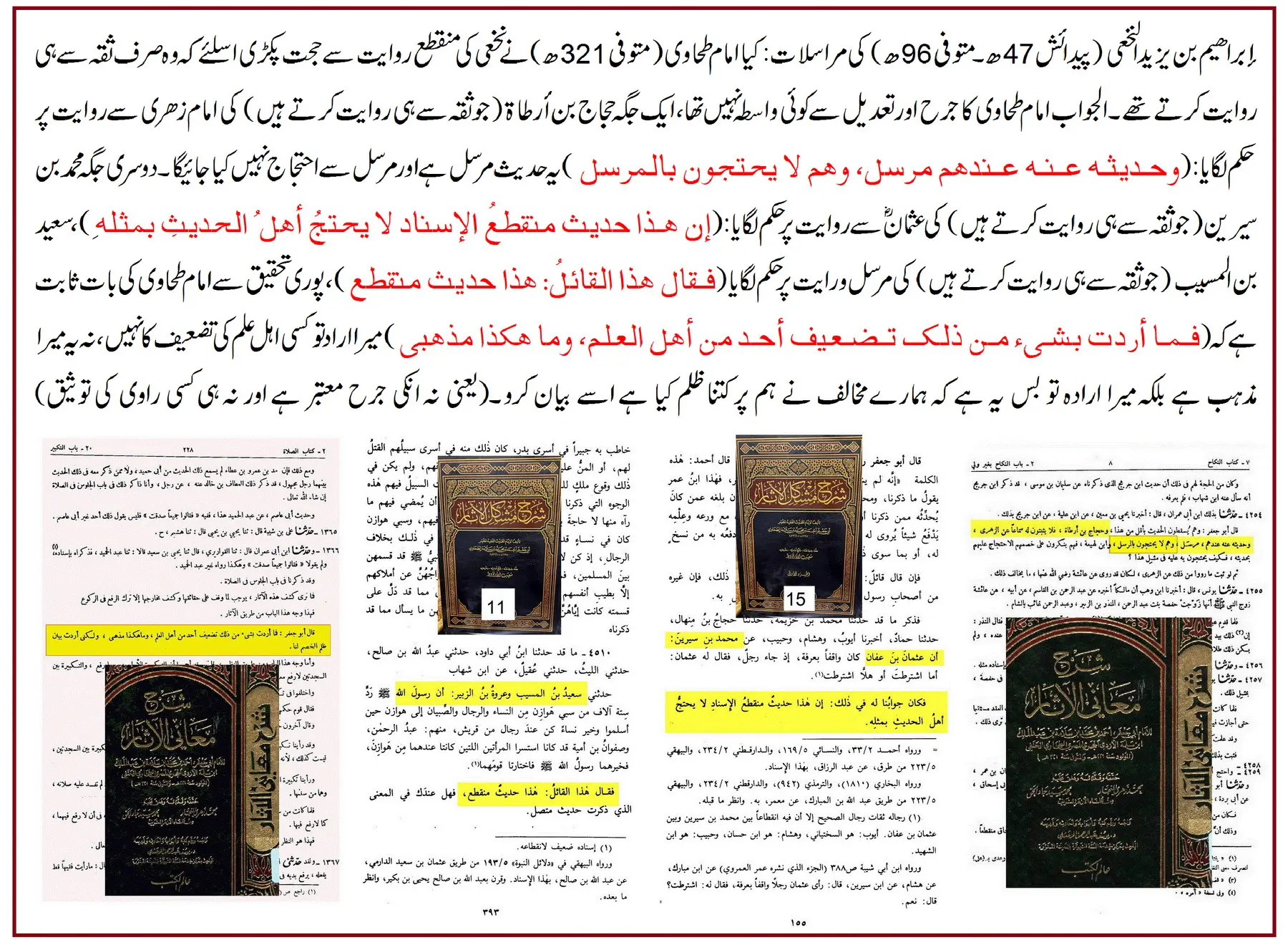
Objection 4: Imām Ṭaḥāwī relied on marāsīl of al-Nakhaʿī.
Response:
He also rejected the marāsīl of others (Ḥajjāj ibn Arṭāh, Muḥammad ibn Sīrīn, Saʿīd ibn al-Musayyib). This is partial leniency, not a principled agreement. He himself admitted: “ما أردتُ بذلك تضعيفَ أحدٍ… وإنما بيان ظلم الخصم” “By that I did not intend to weaken anyone… but only to show the injustice of the opponent.” (Sharḥ Maʿānī al-Āthār 1/227) — i.e. this is a polemical/juristic context, not a principled ruling of jarḥ wa taʿdīl.
📝 Practitioner’s Note
1. Every narration whose chain is: إبراهيم النخعي عن فلان من الصحابة/بعضِ التابعين (Ibrāhīm al-Nakhaʿī from so-and-so among the Companions/some of the Tābiʿīn)—and hearing is not established—should be regarded as munqaṭiʿ/mursal; do not use it as independent evidence.
2. Such narrations should be mentioned only for reinforcement; a Sharʿī ruling should not be based on them until an authentic, connected supporting witness/original report is found.
3. If partial authentication (tawthīq) is found from Ibn Maʿīn or others, treat it as an exception subordinate to the clear principles of the majority, not a general rule.
✅ Final Words
The texts and principles mentioned above make it clear that the marāsīl of Ibrāhīm al-Nakhaʿī (may Allah have mercy on him) are not a proof in themselves. Relying on them as independent evidence in any juristic or doctrinal issue is, in principle, open to question—unless they are reinforced by authentic, connected supporting evidence. This is the methodology of the majority of the hadith scholars and the scholarly way of the Sunnah of the Salaf.
❖ Scans of Important References