❖ Introduction
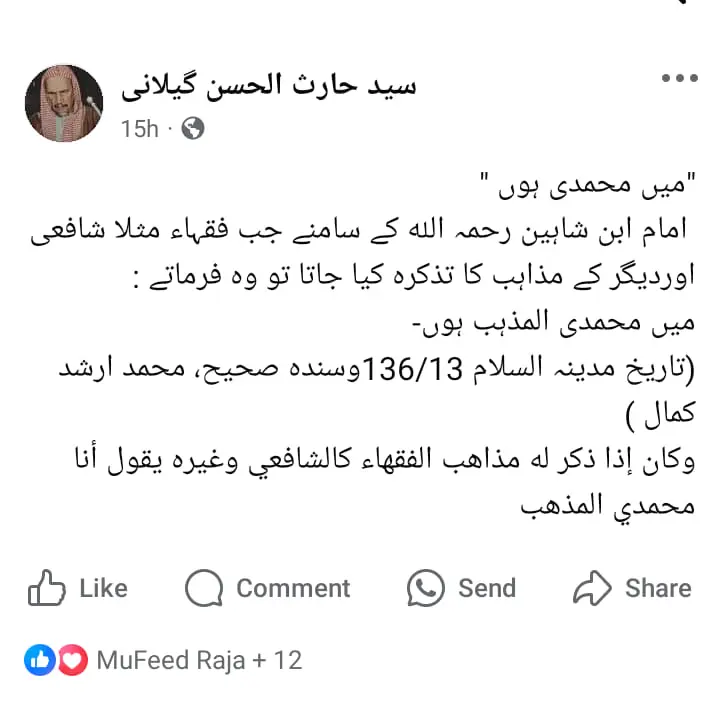
The objective of this research article is to academically refute a false claim made by a Barelvi author, who attempts to discredit Imām ʿUmar ibn Shāhīn al-Wāʿiẓ رحمه الله (famously known as Abū Ḥafṣ Ibn Shāhīn) using a critical remark from Imām al-Dāraquṭnī رحمه الله.
The Barelvi author suggests that Ibn Shāhīn’s statement of being “Muḥammadī in Madhhab” (i.e., following the Prophet ﷺ directly) is somehow indicative of scholarly or juristic deficiency, and he presents a critical comment from Dāraquṭnī as evidence.
In this article, we will:
① Present explicit endorsements of Imām Ibn Shāhīn رحمه الله from twelve prominent hadith scholars.
② Analyze Dāraquṭnī’s criticism and explain its background.
③ Mention the criticisms levied against Dāraquṭnī by Ḥanafī scholars and others.
④ Clarify from the perspective of principles of al-Jarḥ wa al-Taʿdīl (criticism and accreditation) how biased or harsh criticism is rejected.
This article—with references—establishes that Imām Ibn Shāhīn رحمه الله was trustworthy (thiqah), firm (thabt), and an eminent ḥadīth scholar, and that no valid form of discrediting criticism exists against him. The claim made by the Barelvi author is nothing but an example of academic dishonesty and of quoting out of context.
❖ The Original Statement Cited by the Barelvi Author
Arabic:
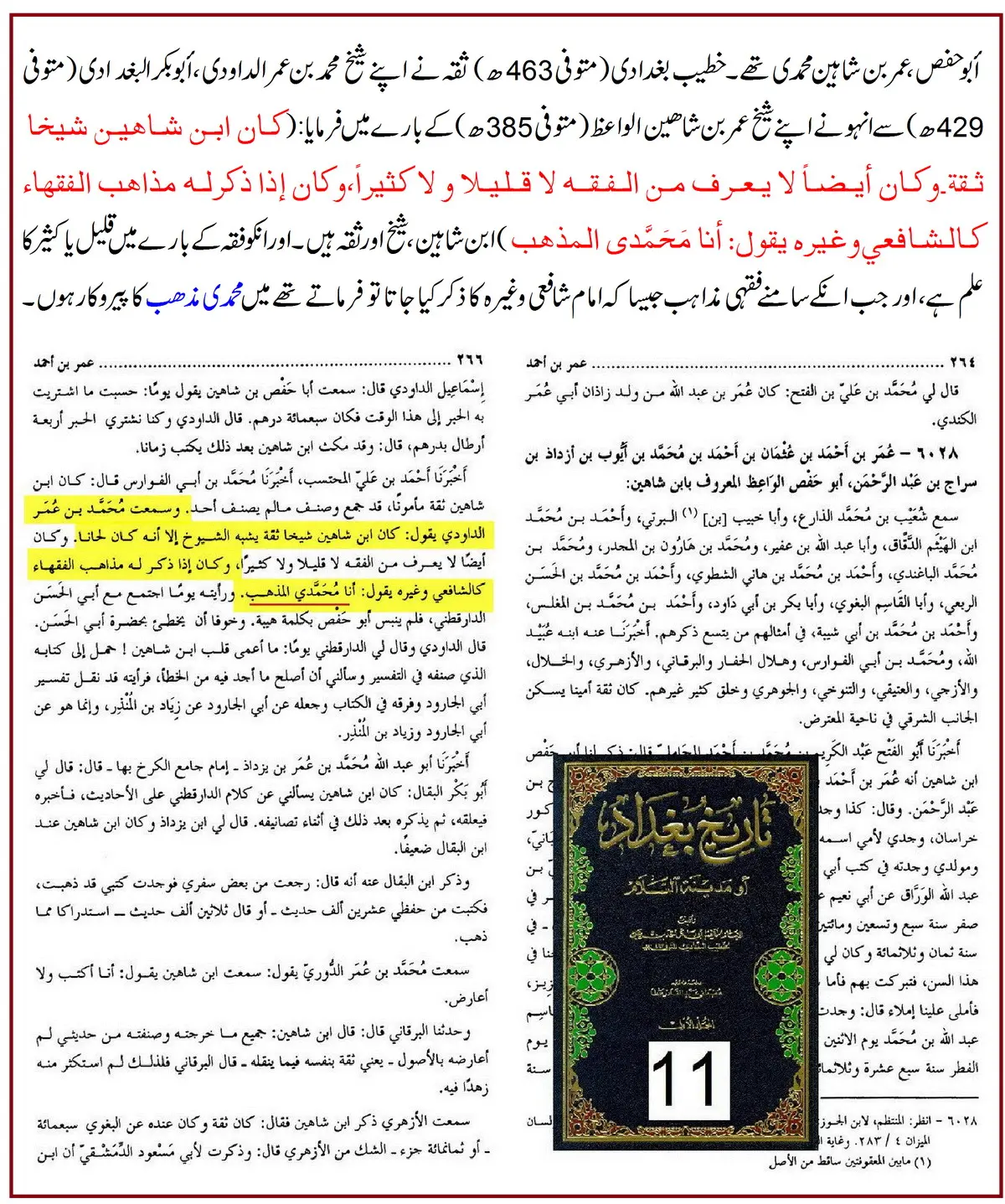
وسمعت مُحَمَّدَ بْنَ عُمَرَ الدَّاوُدِيَّ يَقُولُ: كَانَ ابْنُ شَاهِينَ شَيْخًا ثِقَةً، يُشْبِهُ الشُّيُوخَ، إِلَّا إِنَّهُ كَانَ لَحَّانًا، وَكَانَ أَيْضًا لَا يَعْرِفُ مِنَ الْفِقْهِ قَلِيلًا وَلَا كَثِيرًا، وَكَانَ إِذَا ذُكِرَ لَهُ مَذَاهِبُ الْفُقَهَاءِ كَالشَّافِعِيِّ وَغَيْرِهِ، يَقُولُ: أَنَا مُحَمَّدِيُّ الْمَذْهَبِ.
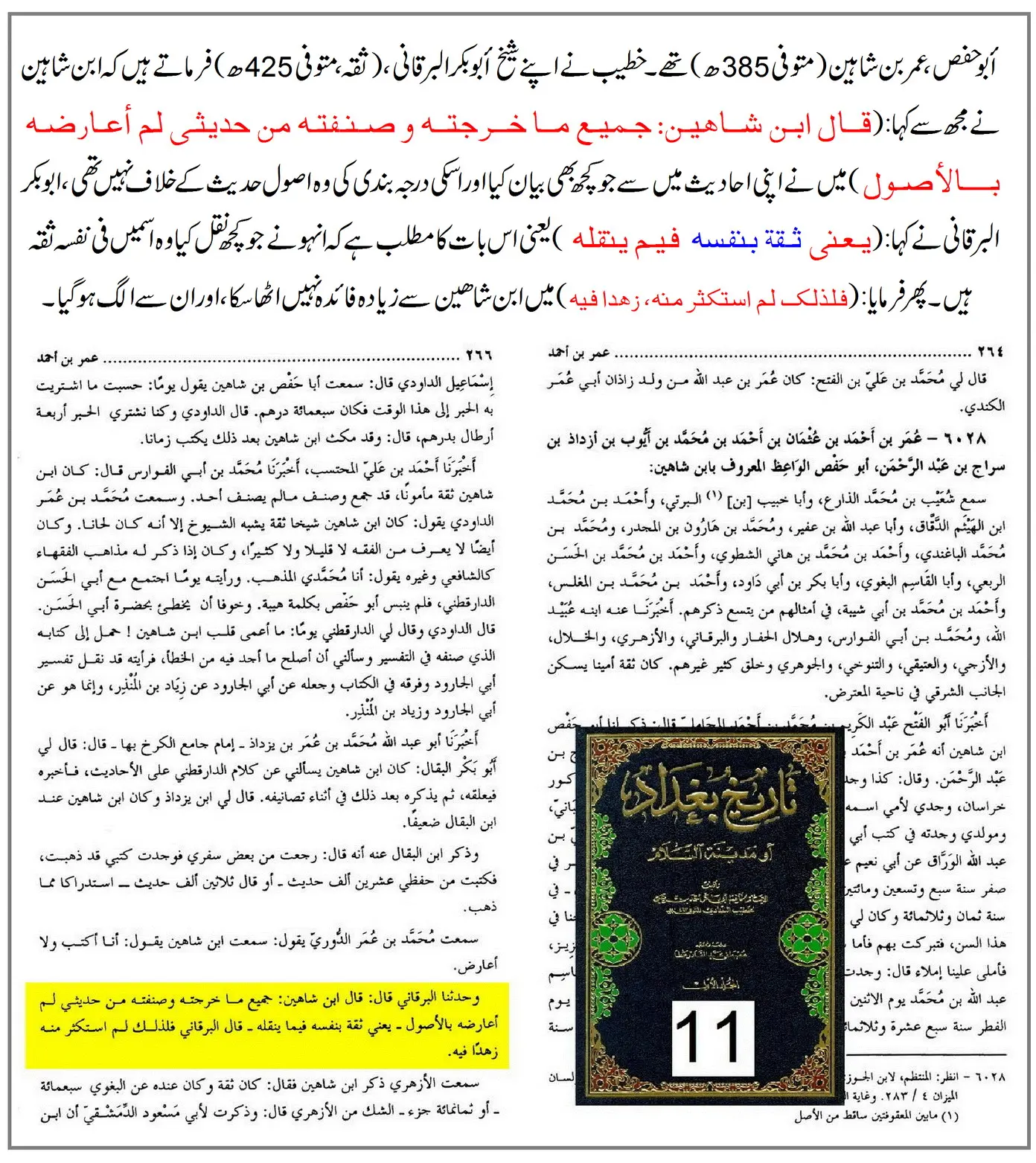
Translation:
Muḥammad ibn ʿUmar al-Dāwūdī said: Ibn Shāhīn رحمه الله was a dignified, trustworthy scholar resembling the great elders. However, he would sometimes make grammatical/language errors and was not deeply involved in the details of fiqh. When the madhāhib of jurists (such as Shāfiʿī and others) were mentioned before him, he would say: “I am Muḥammadī in Madhhab”—i.e., I follow the Sunnah of the Messenger ﷺ directly.
Reference: Tārīkh Baghdād by al-Khaṭīb al-Baghdādī.
❖ Explicit Endorsements of Imam Ibn Shahīn رحمه الله by Leading Hadith Scholars
① Muḥammad ibn ʿUmar al-Dāwūdī (quoted by al-Khaṭīb):
كان ابن شاهين شيخًا ثقة، يشبه الشيوخ…
“Ibn Shāhīn was a dignified, trustworthy scholar.”
📚 Tārīkh Baghdād
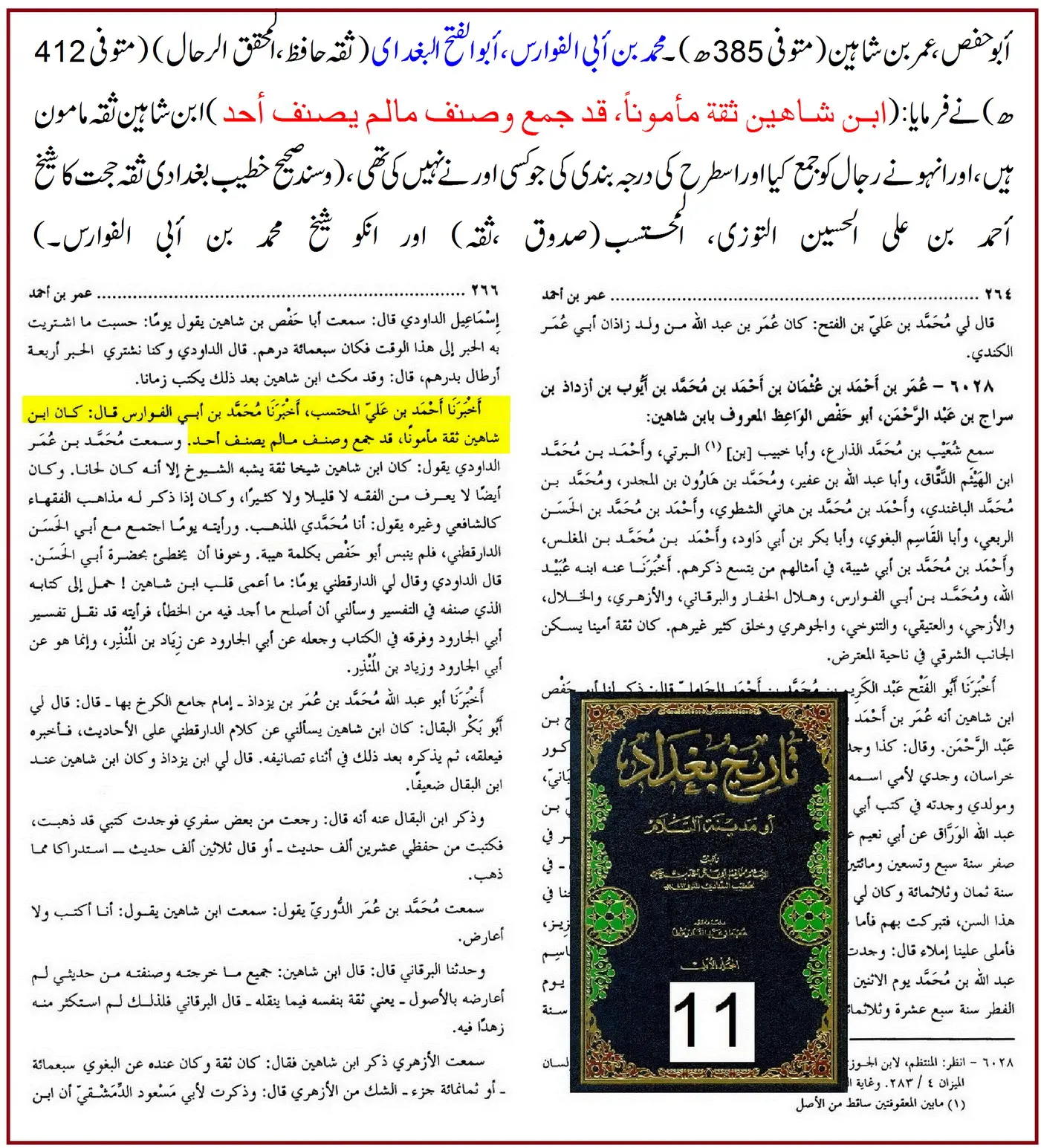
② Muḥammad ibn Abī al-Fawāris (ḥāfiẓ, thiqah):
كان ابن شاهين ثقة مأمونًا، قد جمع وصنّف ما لم يصنّف أحد.
“He was trustworthy, reliable; he compiled works like no other.”
📚 Tārīkh Baghdād
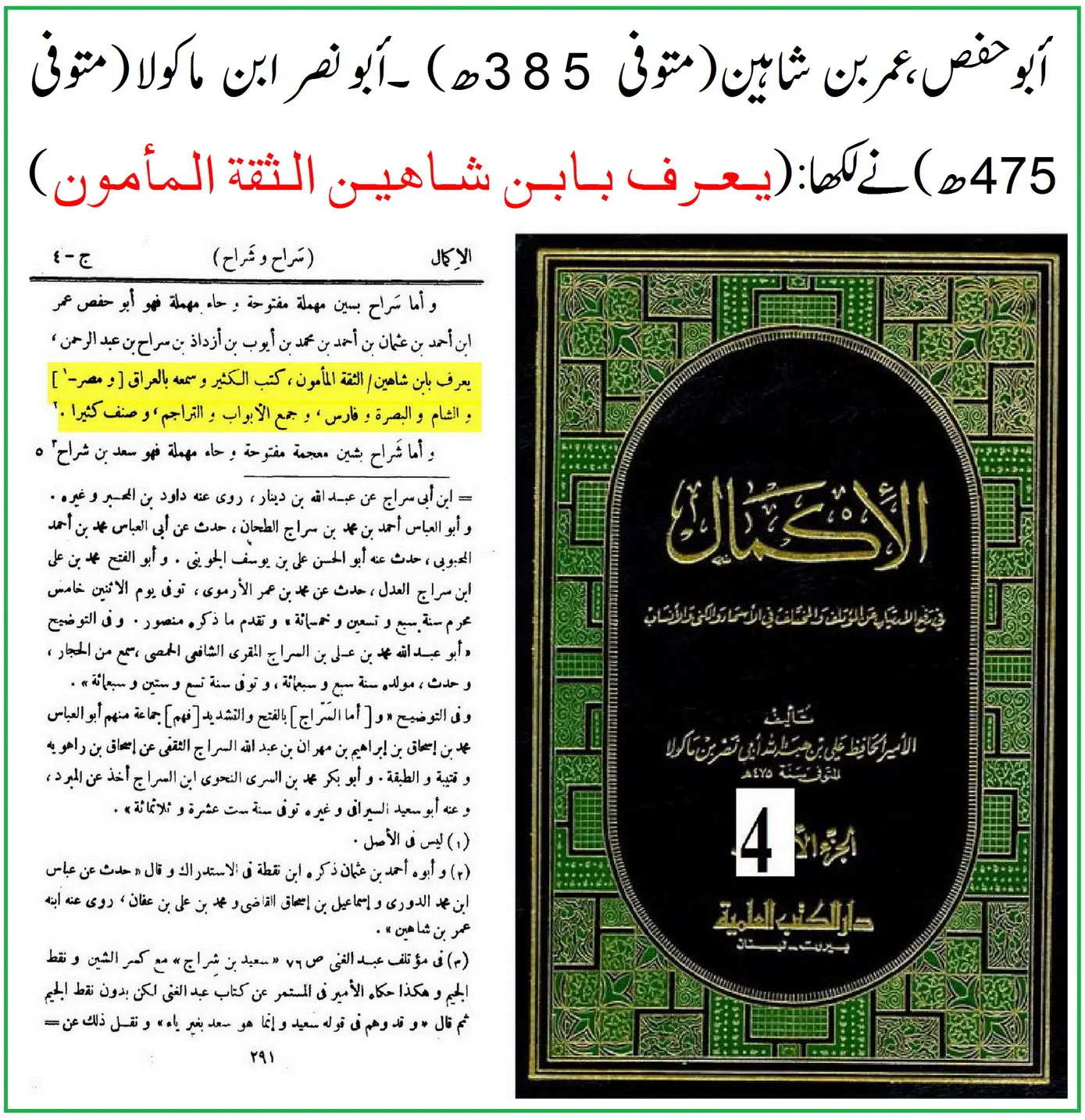
③ Ibn Mākūlā:
… يُعْرَفُ بابن شاهين الثقةِ المأمون، كتب الكثير وسمعه بالعراق ومصر والشام والبصرة وفارس.
“Ibn Shāhīn was trustworthy and reliable; he wrote and heard extensively across Iraq, Egypt, Syria, Basra, and Persia.”
📚 al-Ikmāl fī Rafʿ al-Irtiyāb
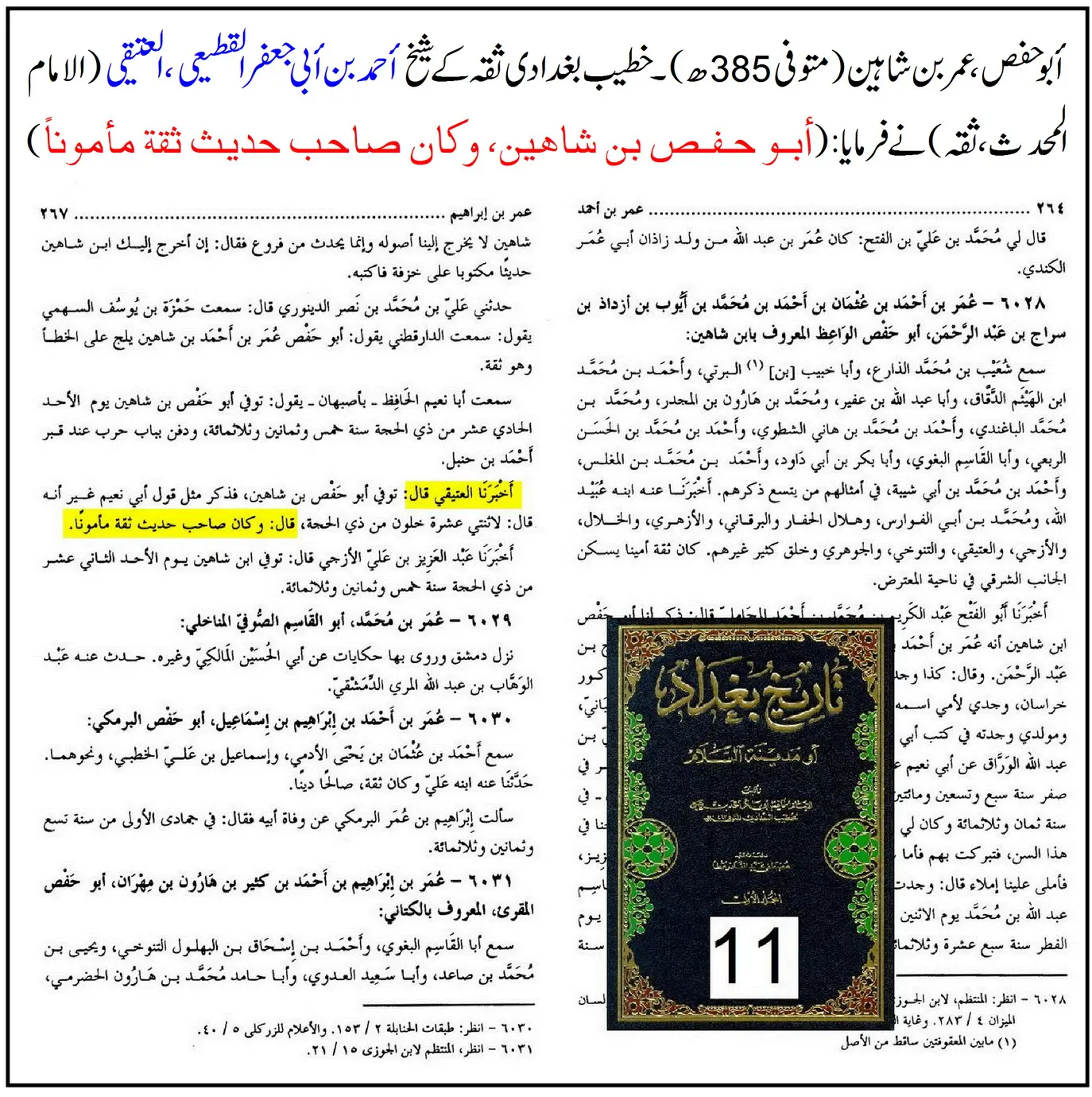
④ Aḥmad ibn Abī Jaʿfar al-Qaṭīʿī (al-ʿAtīqī):
وكان صاحب حديث ثقة مأمونًا
“A ḥadīth scholar, trustworthy and reliable.”
📚 Tārīkh Baghdād
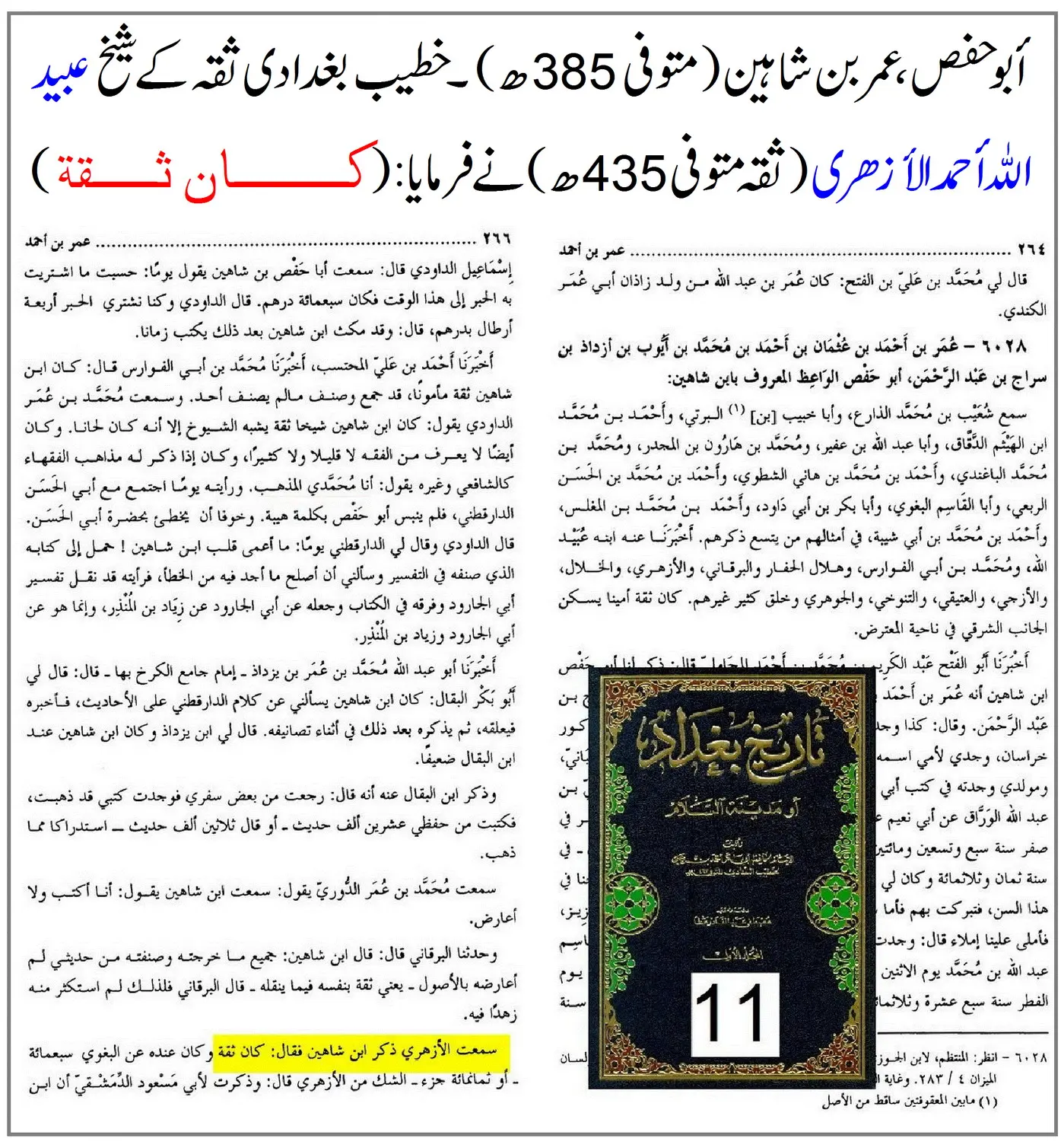
⑤ ʿUbaydullāh al-Azharī:
كان ثقة، وكان عنده عن البغوي سبع مائة أو ثمان مائة جزء.
“He was trustworthy; he possessed 700–800 ḥadīth volumes from al-Baghawī.”
📚 Tārīkh Baghdād
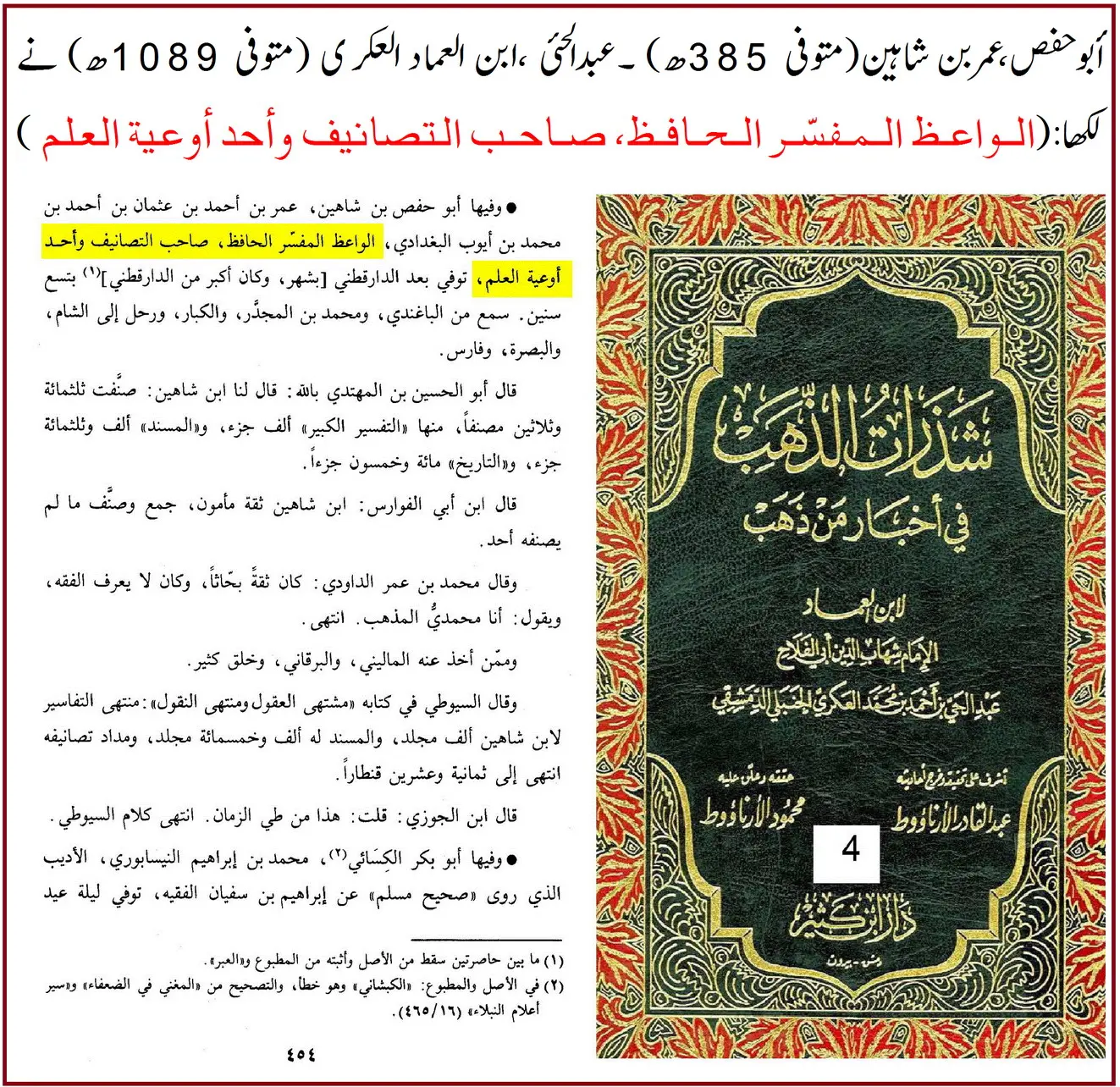
⑥ Ibn al-ʿImād al-Ḥanbalī:
الواعظُ المفسِّرُ الحافظُ، صاحبُ التصانيف وأحدُ أوعيةِ العلم.
“He was a preacher, exegete, ḥadīth memorizer, author, and an ocean of knowledge.”
📚 Shadharāt al-Dhahab
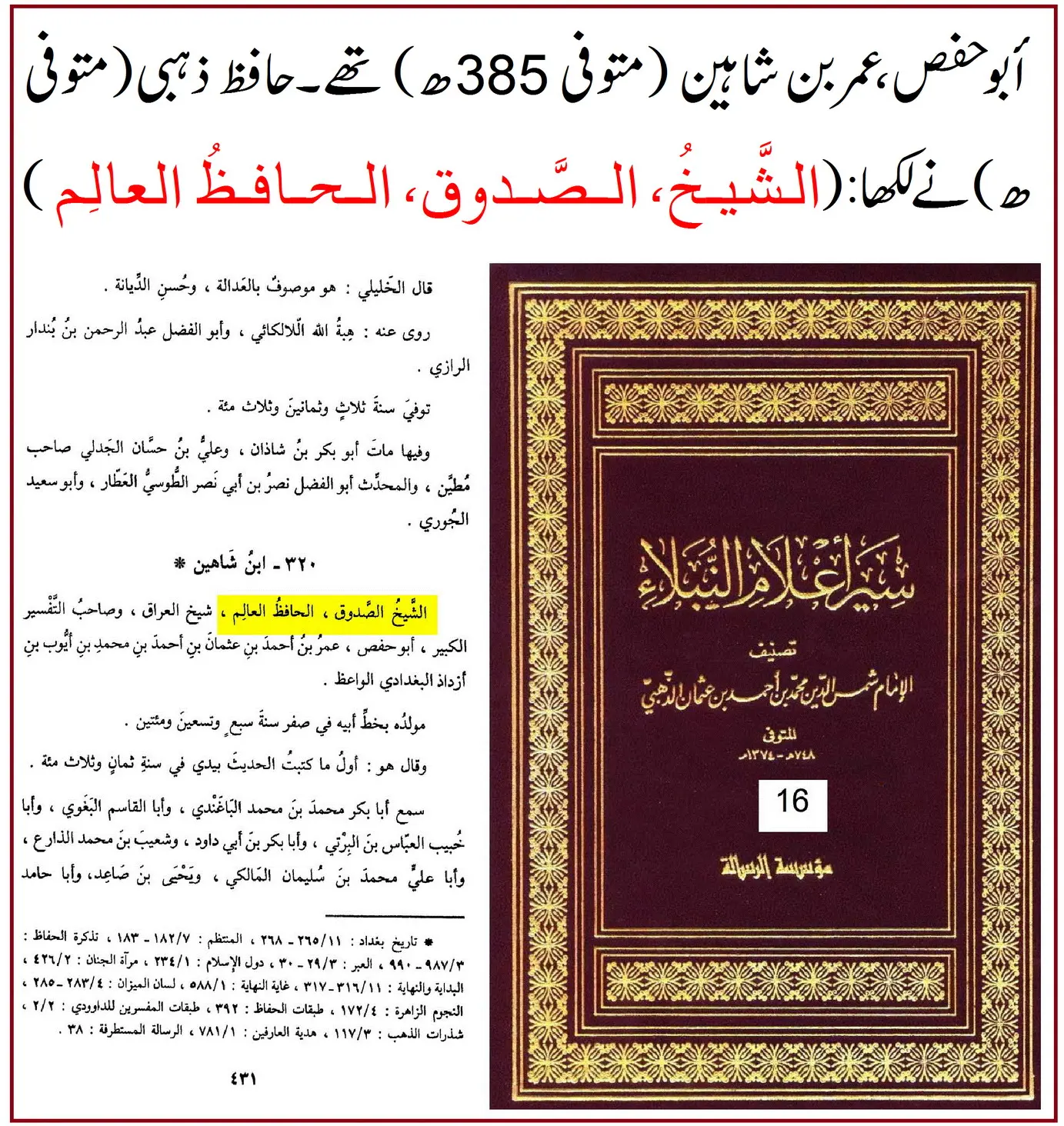
⑦ Ḥāfiẓ al-Dhahabī:
الشيخُ الصدوقُ الحافظُ العالمُ، شيخُ العراق، وصاحبُ التفسيرِ الكبير…
“A truthful Shaykh, ḥadīth memorizer, scholar, and Shaykh of Iraq. He authored a major tafsīr.”
📚 Siyar Aʿlām al-Nubalāʾ
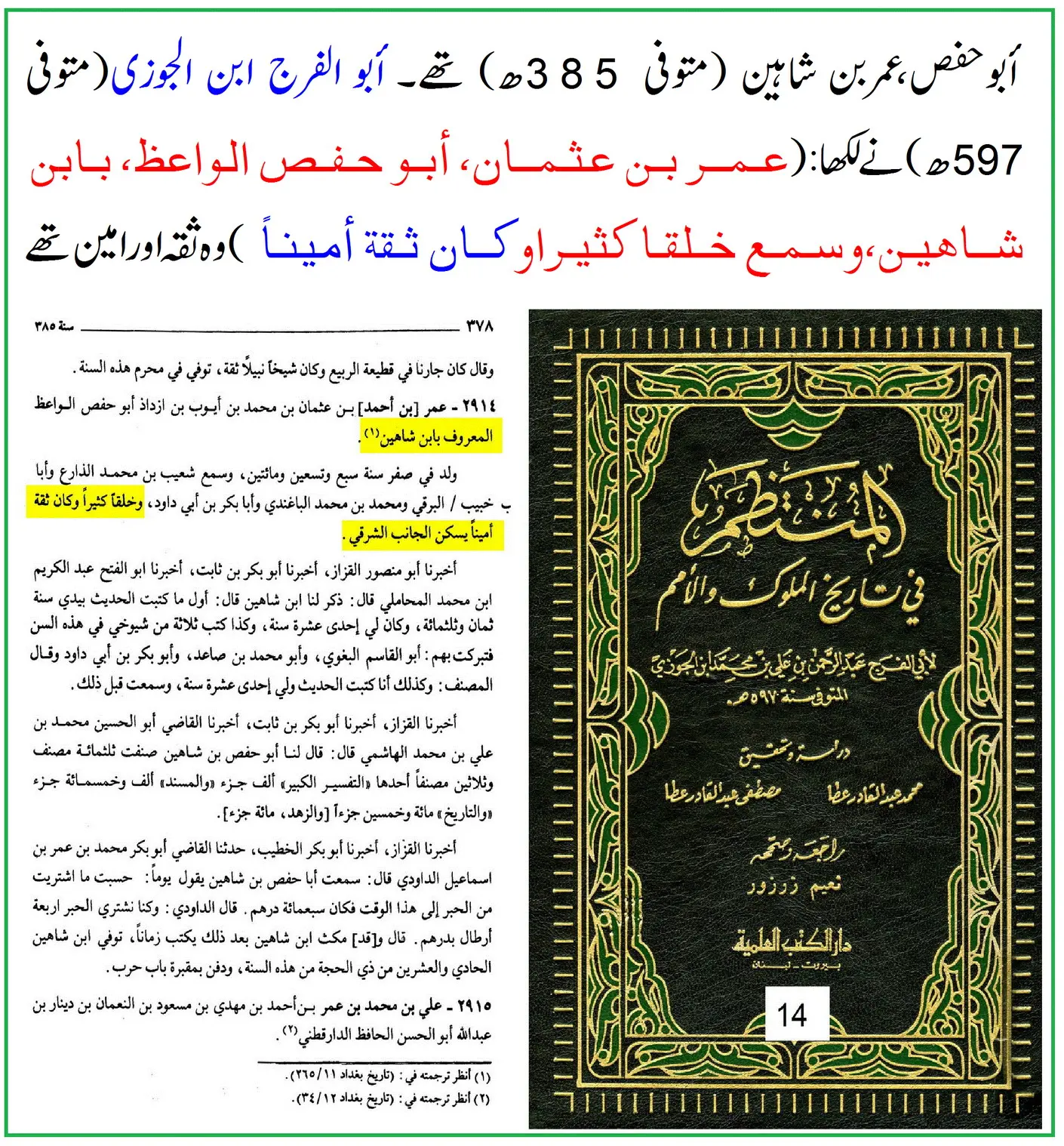
⑧ Ibn al-Jawzī:
وكان ثقةً أمينًا، يسكن الجانب الشرقي.
“He was trustworthy and reliable, and lived on the eastern side (of Baghdad).”
📚 al-Muntaẓam
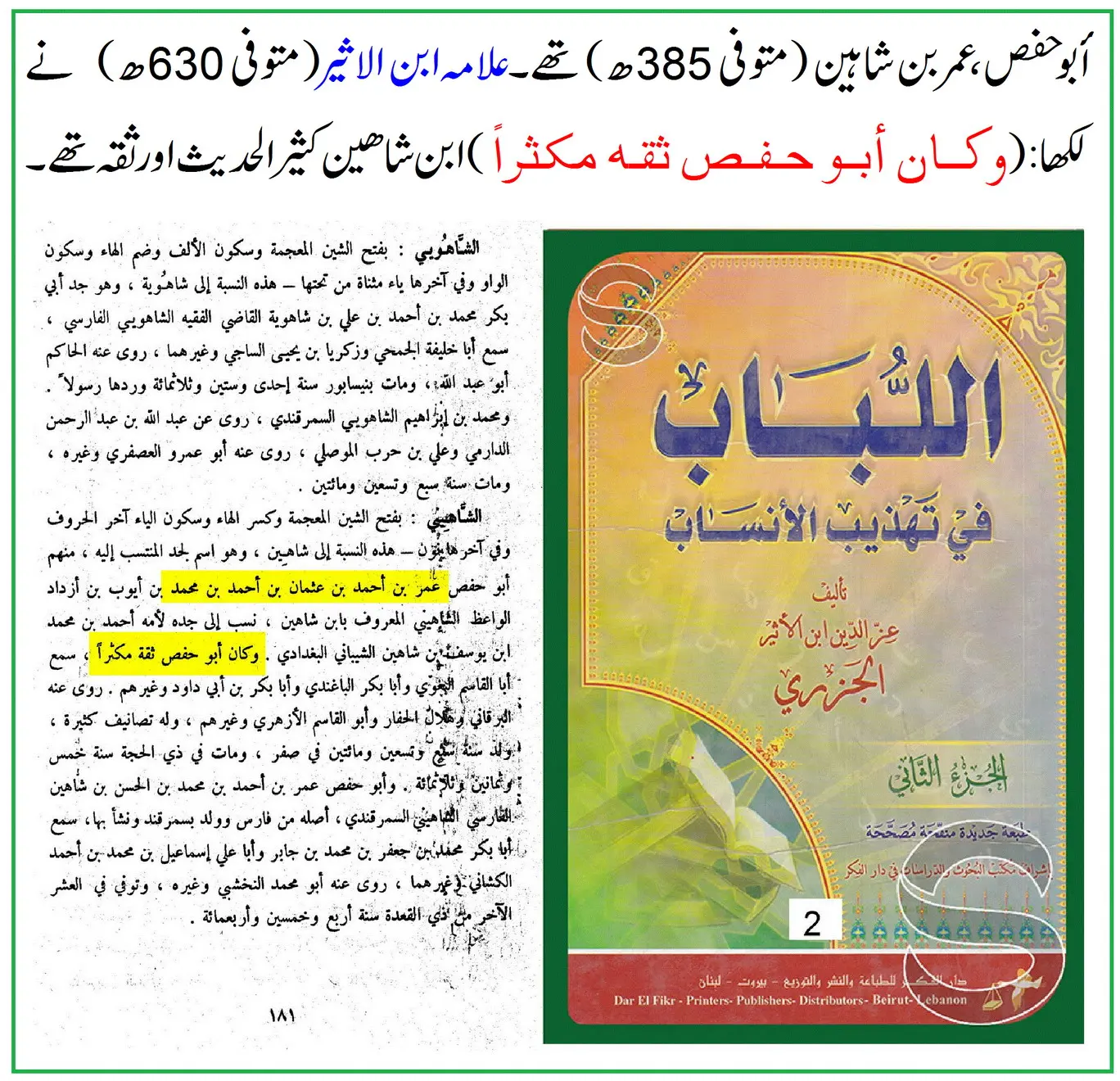
⑨ Ibn al-Athīr:
وكان أبو حفص ثقةً مكثِرًا
“Abū Ḥafṣ (Ibn Shāhīn) was trustworthy and prolific in narration.”
📚 al-Lubāb fī Tahdhīb al-Ansāb
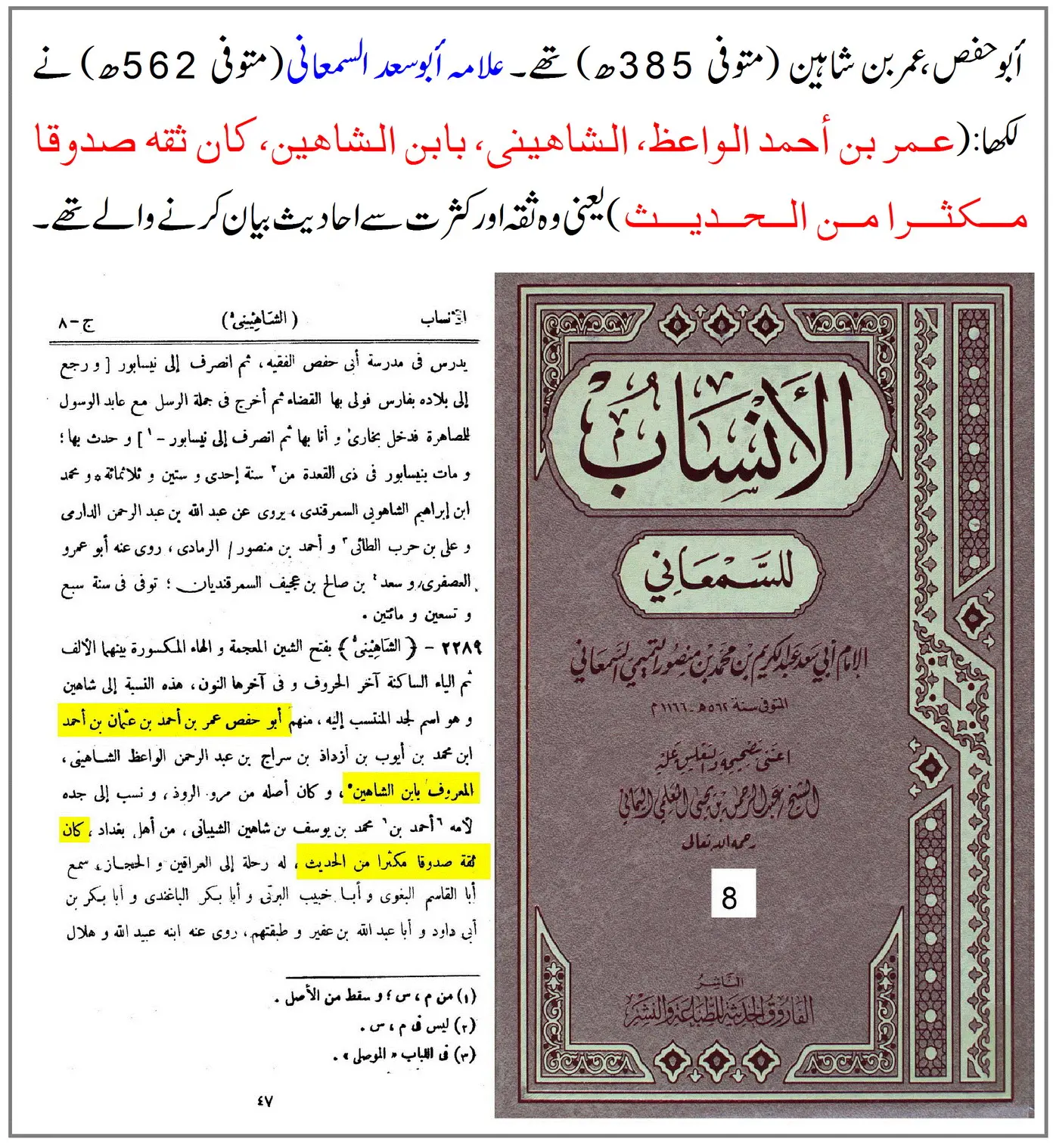
⑩ al-Samʿānī:
كان ثقةً صدوقًا مكثِرًا من الحديث.
“He was trustworthy, very truthful, and narrated abundantly.”
📚 al-Ansāb
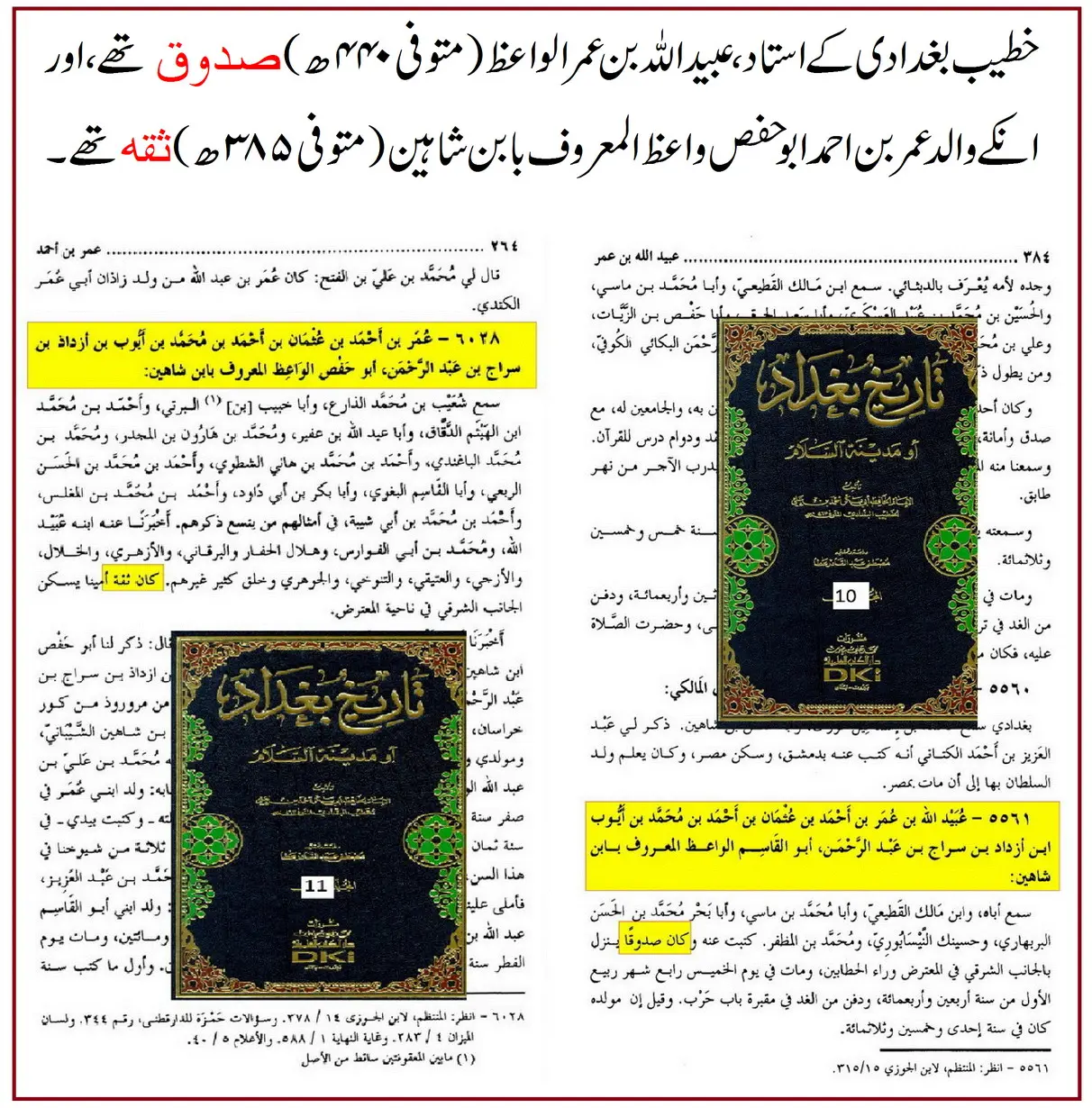
⑪ al-Khaṭīb al-Baghdādī (in his own biography):
وكان ثقةً أمينًا، يسكن الجانب الشرقي…
“He was trustworthy and reliable, and lived on the eastern side (of Baghdad).”
📚 Tārīkh Baghdād
⑫ Abū Bakr al-Barqānī:
قال لي ابن شاهين: جميعُ ما خرّجتُه وصنّفتُه من حديثي لم أعارضْه بالأصول… يعني ثقةً بنفسه فيما ينقله. قال البرقاني: فلذلك لم أستكثرْ منه زهدًا فيه.
Ibn Shāhīn said to me: “Everything I extracted and compiled from my ḥadīth, I did not collate against the original manuscripts”—i.e., he relied on himself (his own memory) in what he transmitted. Al-Barqānī said: “For that reason I did not narrate much from him, out of disinterest in him.”
📚 Tārīkh Baghdād
❖ The Objection Attributed to Dāraquṭnī and Its Proper Context
Arabic (quoted by al-Khaṭīb):
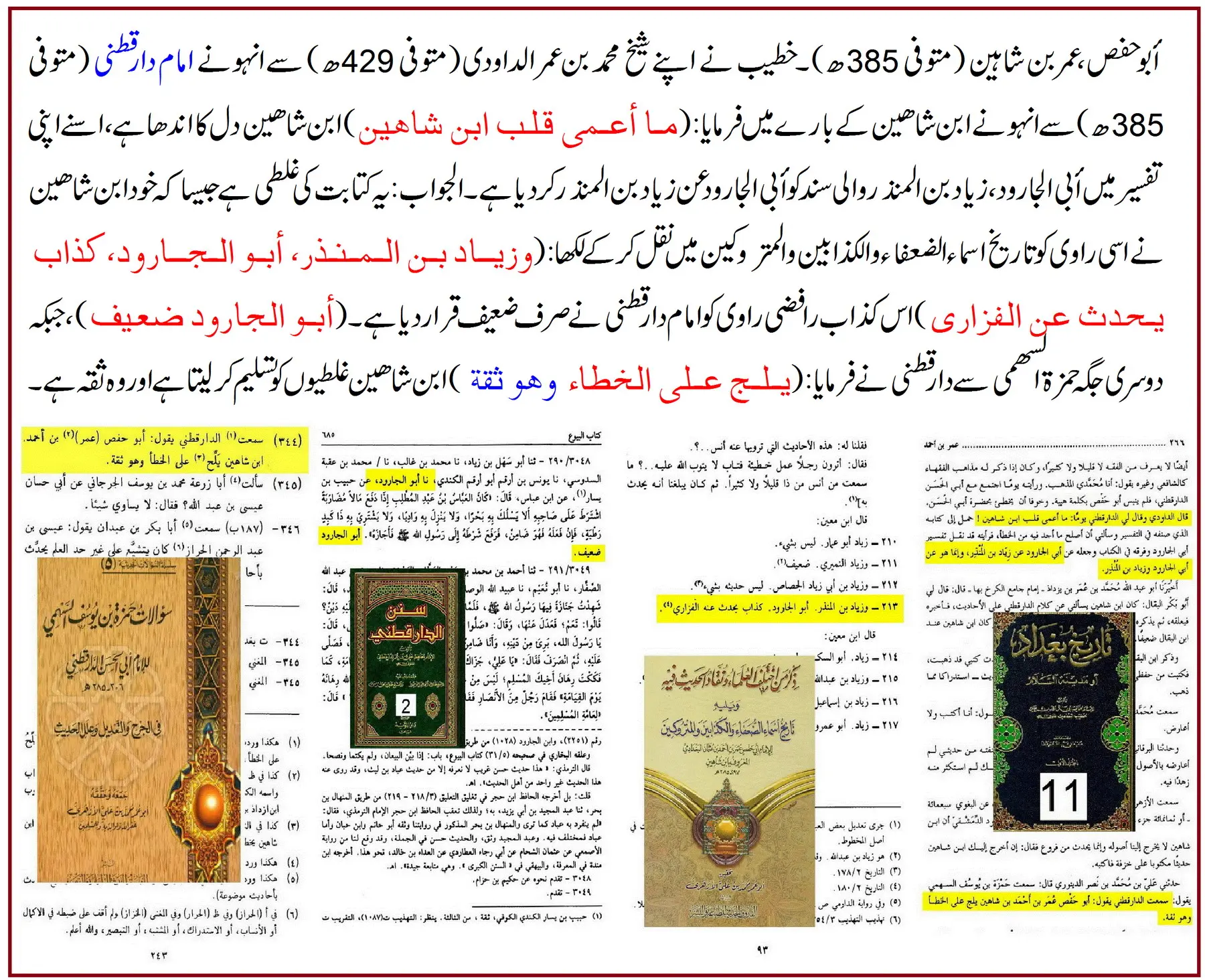
وقال لي الدارقطني يومًا: ما أعمى قلب ابن شاهين! حملَ إليّ كتابَه الذي صنّفه في التفسير… وجعله عن أبي الجارود، عن زياد بن المنذر، وإنما هو عن أبي الجارود.
Translation:
Dāraquṭnī said one day: “How blind is Ibn Shāhīn’s heart!” He wrote a chain in his tafsīr in the form (from Abū al-Jārūd, from Ziyād ibn al-Mundhir), whereas the correct form was simply (from Abū al-Jārūd) (i.e., a scribal mix-up in the order of attribution).
Reference: Tārīkh Baghdād.
Note: This same Ibn Shāhīn, in his book Tārīkh Asmāʾ al-Ḍuʿafāʾ wa al-Kadhdhābīn, writes this very narrator with the correct name as follows:
«وزيادُ بنُ المنذر، أبو الجارود: كذّاب…»
— which proves that the issue was a partial mix-up of writing/ordering, not a defect in his trustworthiness.
📚 Tārīkh Asmāʾ al-Ḍuʿafāʾ wa al-Kadhdhābīn by Ibn Shāhīn
Moreover, it is also reported from Dāraquṭnī himself:
«أبو حفص عمر بن أحمد بن شاهين يلِحُّ على الخطأ وهو ثقة»
(He persists in his errors, but he is trustworthy (thiqah).)
📚 Suʾālāt Ḥamzah al-Sahmī li al-Dāraquṭnī
❖ Summary
✔ Ibn Shāhīn رحمه الله calling himself “Muḥammadī in Madhhab” expresses his direct adherence to the Sunnah of the Prophet ﷺ; turning it into a criticism is contrary to academic honesty.
✔ There are explicit endorsements of Ibn Shāhīn رحمه الله from a dozen imams: thiqah, ṣadūq, amīn, ḥāfiẓ, Shaykh of Iraq, one of the vessels of knowledge, etc.
✔ What is being cited from Dāraquṭnī رحمه الله is a limited problem of writing/ordering in a chain; Dāraquṭnī himself made his trustworthiness clear elsewhere by saying “and he is trustworthy”, and Ibn Shāhīn, by identifying this same narrator with the correct name in his other book, also demonstrated the correction in practice.
❖ Analysis of Imām al-Dāraquṭnī’s Criticism
① The Original Statement (the Criticism)
Arabic:
وقال لي الدارقطني يومًا: ما أعمى قلب ابن شاهين! حملَ إليّ كتابَه الذي صنّفه في التفسير… وجعله عن أبي الجارود، عن زياد بن المنذر، وإنما هو عن أبي الجارود.
Translation:
Dāraquṭnī said: “How blind is Ibn Shāhīn’s heart! He wrote a chain in his tafsīr in the form (from Abū al-Jārūd, from Ziyād ibn al-Mundhir), whereas in reality it should have been just (from Abū al-Jārūd).”
Reference: Tārīkh Baghdād by al-Khaṭīb al-Baghdādī.
📌 Clarification:
This objection concerns a partial problem of writing or attribution, not trustworthiness. That is why:
② Dāraquṭnī’s Second Statement on Ibn Shāhīn (Explicit Accreditation)
Arabic:
أبو حفص عمر بن أحمد بن شاهين يلِحُّ على الخطأ وهو ثقة.
Translation:
Abū Ḥafṣ ʿUmar ibn Aḥmad Ibn Shāhīn persists in his errors, but he is trustworthy (thiqah).
Reference: Suʾālāt Ḥamzah ibn Yūsuf al-Sahmī li al-Dāraquṭnī.
📌 That is, the critic himself also made it clear that this man is thiqah.
③ Ibn Shāhīn’s Own Correction
Arabic:
وزياد بن المنذر، أبو الجارود: كذّاب…
Translation:
Ziyād ibn al-Mundhir, Abū al-Jārūd: a liar.
Reference: Tārīkh Asmāʾ al-Ḍuʿafāʾ wa al-Kadhdhābīn by Ibn Shāhīn.
📌 This proves that Ibn Shāhīn رحمه الله himself, in his other book, wrote the full and correct name of this narrator and made it clear—i.e., the real issue was a problem of writing/ordering, not ignorance of the narrator’s identity.
❖ Criticisms on Dāraquṭnī by Ḥanafī Scholars & Others
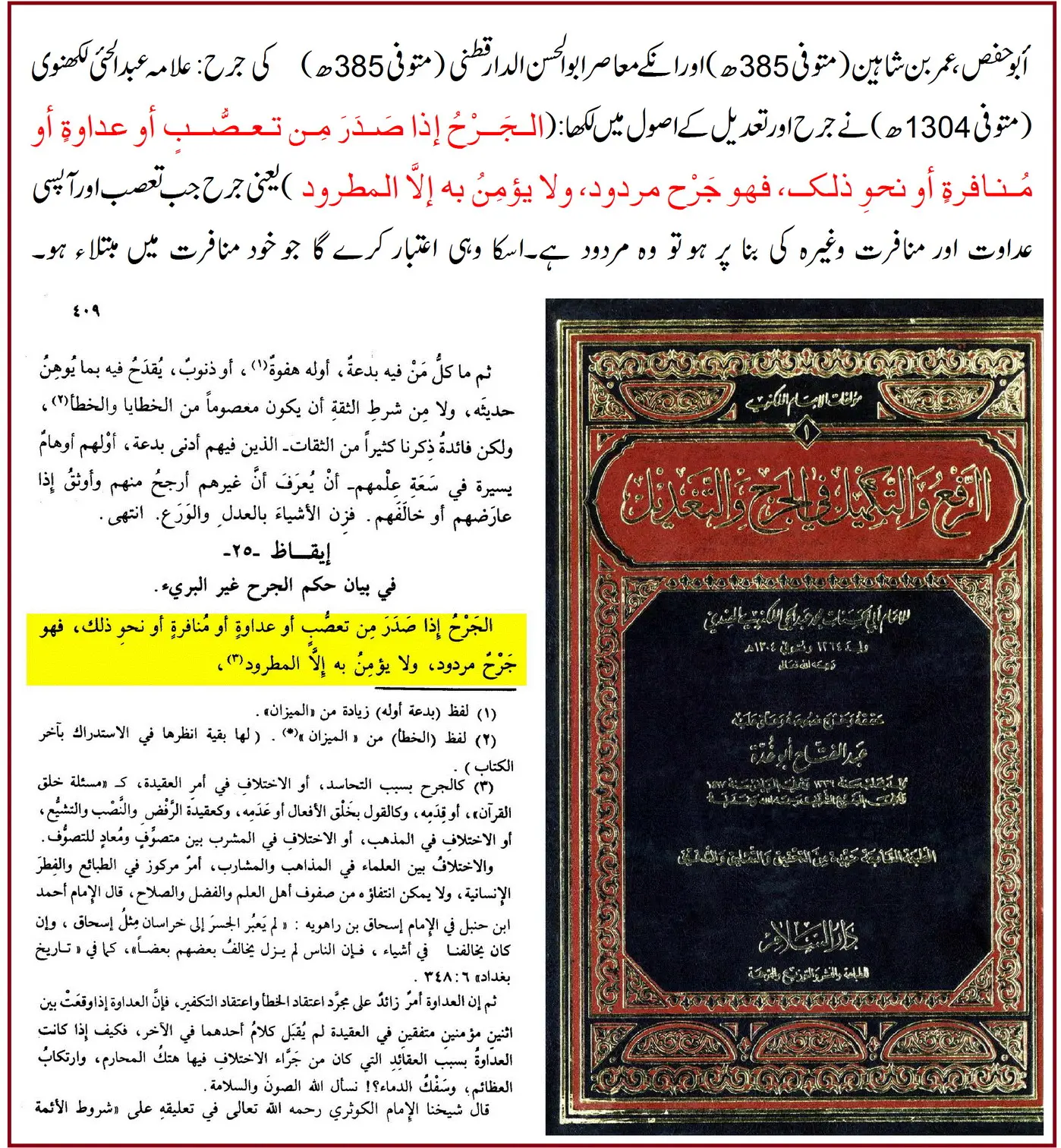
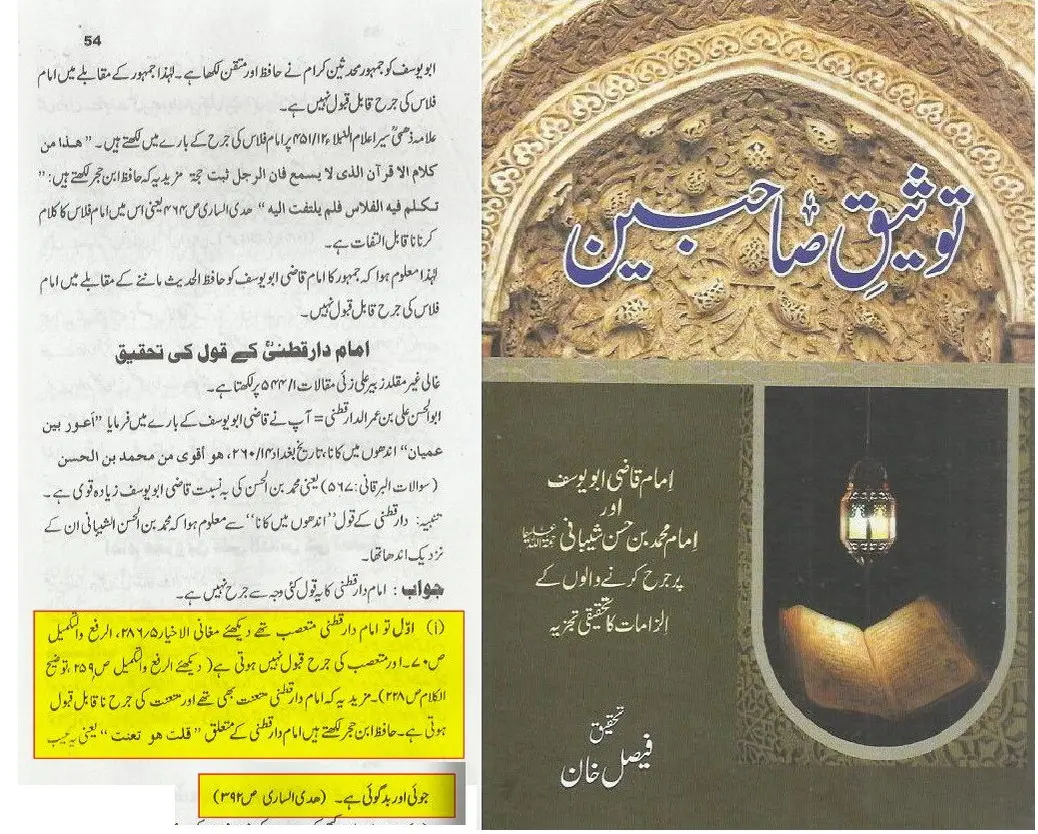
① ʿAbd al-Ḥayy al-Lakhnawī (d. 1304H) – the principle of criticism:
الجرح غير اذا صدر من تعصب أو عداوة أو منافرة… فهو مردود.
“If criticism arises from bias, enmity or aversion, it is rejected, and only someone who is himself afflicted with bias will accept it.”
📚 al-Rafʿ wa al-Takmīl fī al-Jarḥ wa al-Taʿdīl
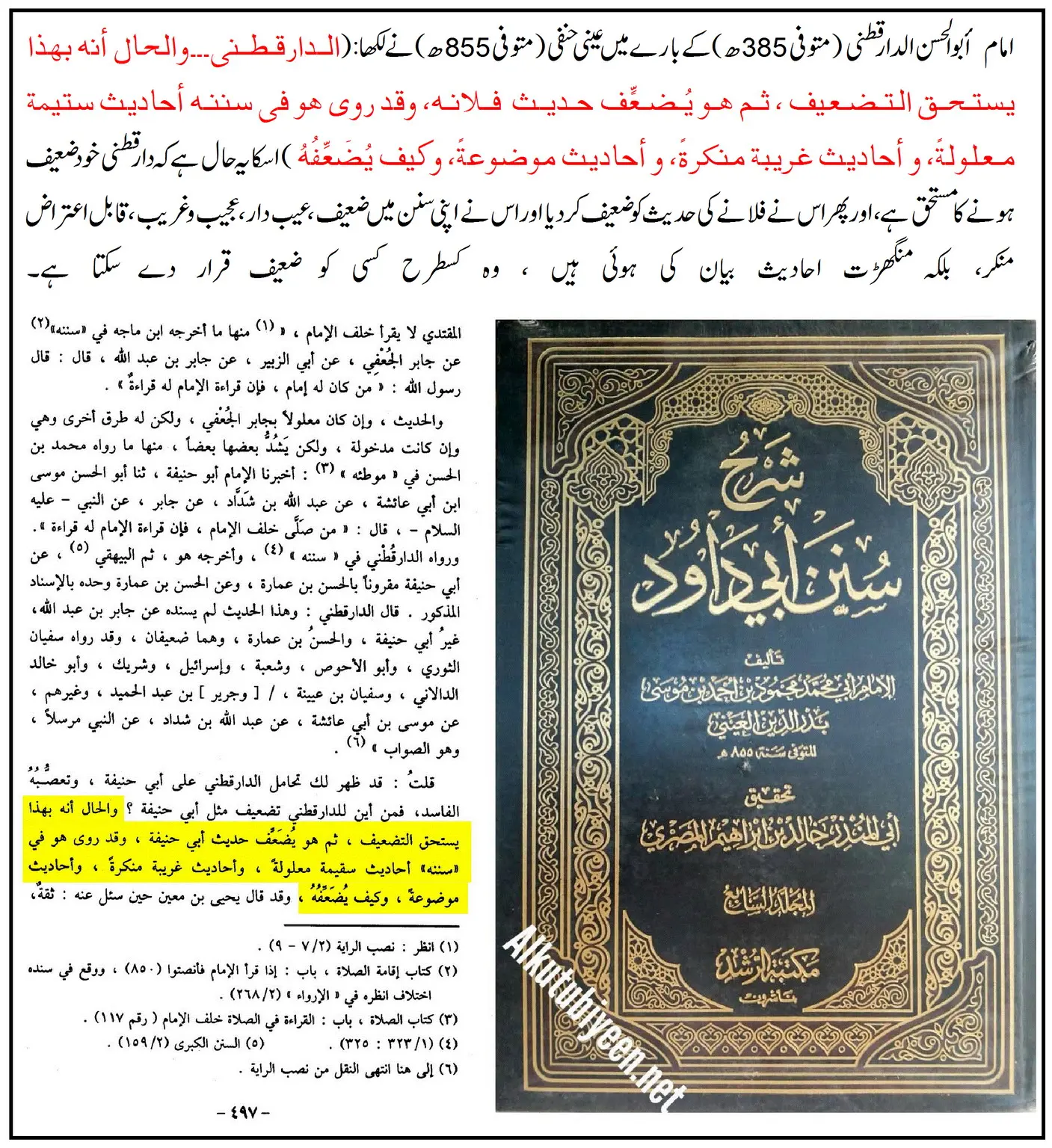
② Badr al-Dīn al-ʿAynī (d. 855H) – criticism of Dāraquṭnī:
…ثم هو يضعّف حديث أبي حنيفة، وقد روى هو في “سننه” أحاديث سقيمة معلولة، وأحاديث غريبة منكرة، وأحاديث موضوعة…
“Then he (Dāraquṭnī) declares the ḥadīth of Imām Abū Ḥanīfah weak, whereas he himself has narrated in his Sunan defective, flawed (muʿallal), strange and munkar, and even fabricated (mawḍūʿ) ḥadīths.”
📚 Sharḥ Sunan Abī Dāwūd by al-ʿAynī
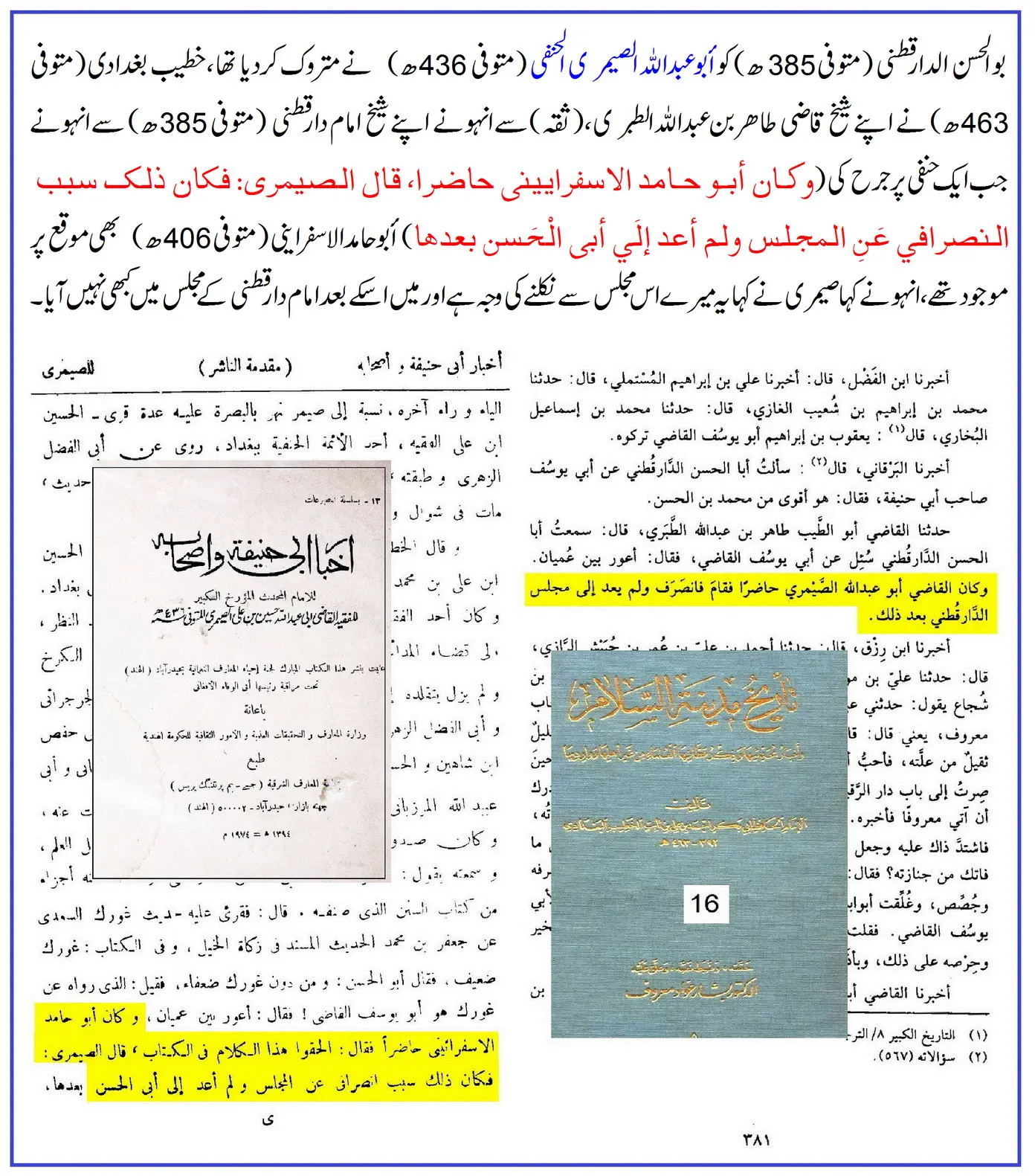
③ al-Ṣaymarī al-Ḥanafī (d. 436H) – abandoning Dāraquṭnī:
…فانصرفَ، ولم يعد إلى مجلس الدارقطني بعد ذلك.
“(After hearing a remark of Dāraquṭnī) he left the gathering, and after that he never returned to Dāraquṭnī’s gathering.”
📚 Tārīkh Baghdād; Akhbār Abī Ḥanīfah wa Aṣḥābihi by al-Ṣaymarī
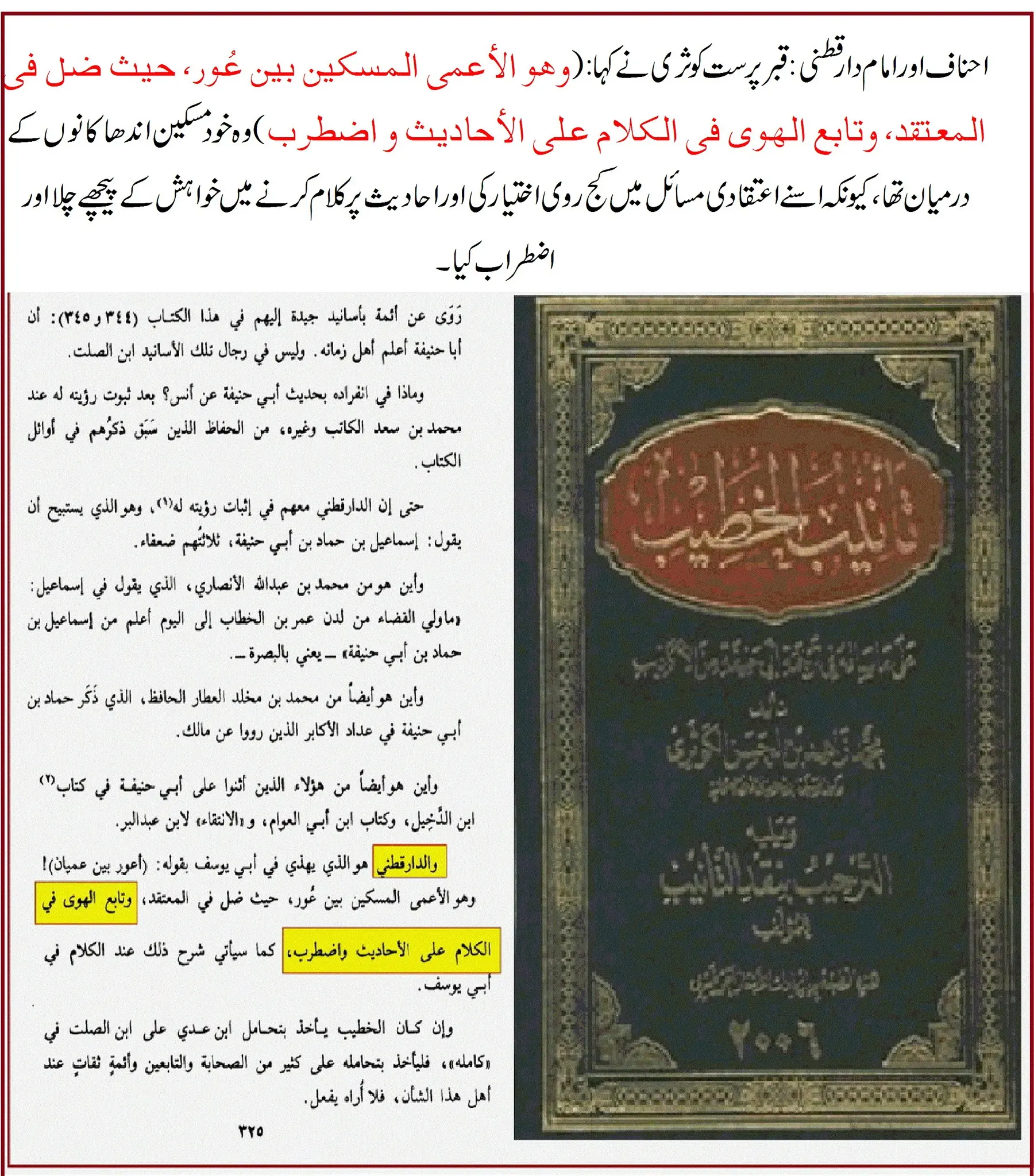
④ Zāhid al-Kawtharī – remark on Dāraquṭnī:
…مسكين أعمى بين عميان، لأنه في مسائل الاعتقاد كان ذا انحراف…
“(Dāraquṭnī) is a poor blind man among the blind, because he had deviation in matters of creed.”
📚 Maqālāt al-Kawtharī
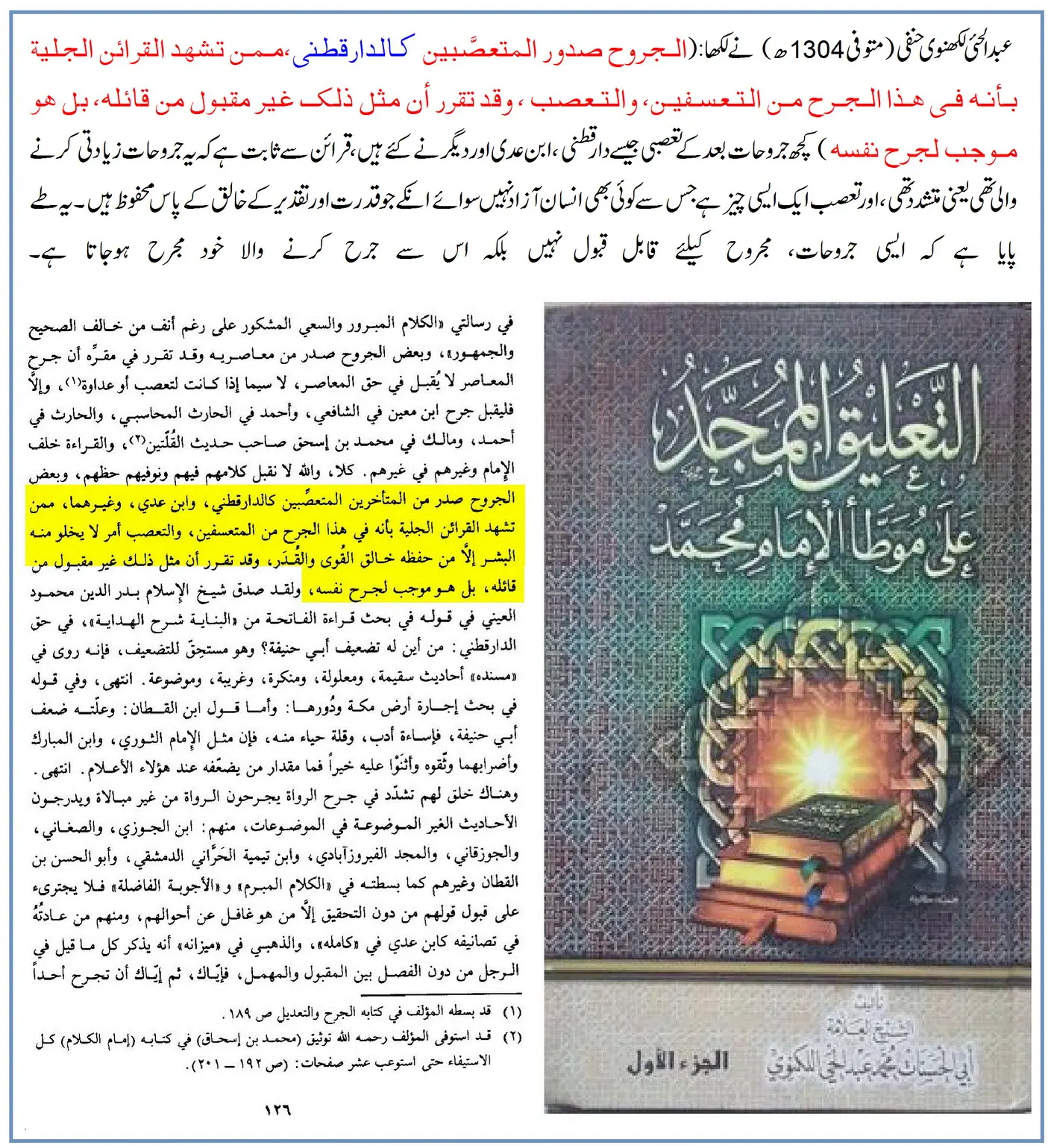
⑤ ʿAbd al-Ḥayy al-Lakhnawī – some criticisms stem from bias:
…كالدارقطني… ممن تشهد القرائن الجلية أنه في هذا الجرح من المتعسفين… ومثل ذلك غير مقبول… بل هو موجب لجرح نفسه.
“Such as Dāraquṭnī and others, about whom clear indications show that in this criticism they were among the excessive ones… such criticism is not acceptable; rather, it becomes a ground for criticising the critic himself.”
📚 al-Taʿlīq al-Mumajjad ʿalā Muwaṭṭaʾ Muḥammad
❖ Summary and Conclusion of the Article
✔ Dāraquṭnī’s criticism was based merely on a writing error, which Ibn Shāhīn رحمه الله himself corrected, and Dāraquṭnī himself also called him thiqah elsewhere.
✔ According to the Ḥanafīs and their major scholars, Dāraquṭnī’s biased criticism is not damaging; rather, some of them declared it to make him himself liable to criticism.
✔ Therefore, the Barelvi author’s argument that “Ibn Shāhīn رحمه الله is discredited by Dāraquṭnī’s criticism” is devoid of any academic basis.
❖ Scans of Important References