An important scholarly issue circulating on social media is whether Imam Yahya ibn Saeed al-Qattan (died 198 AH), who is among the most distinguished scholars of Ilm al-Jarh wa al-Ta’dil and whom Hafiz al-Dhahabi titled “Amir al-Mu’minin fi al-Hadith,” was truly a follower of Imam Abu Hanifa, or affiliated with Hanafi jurisprudence. This article will take a scholarly and investigative look at this issue. After presenting all the arguments put forth by the opponents in detail, their investigative analysis will be provided.
Arguments Presented by the Opposing Side and Their Investigative Analysis
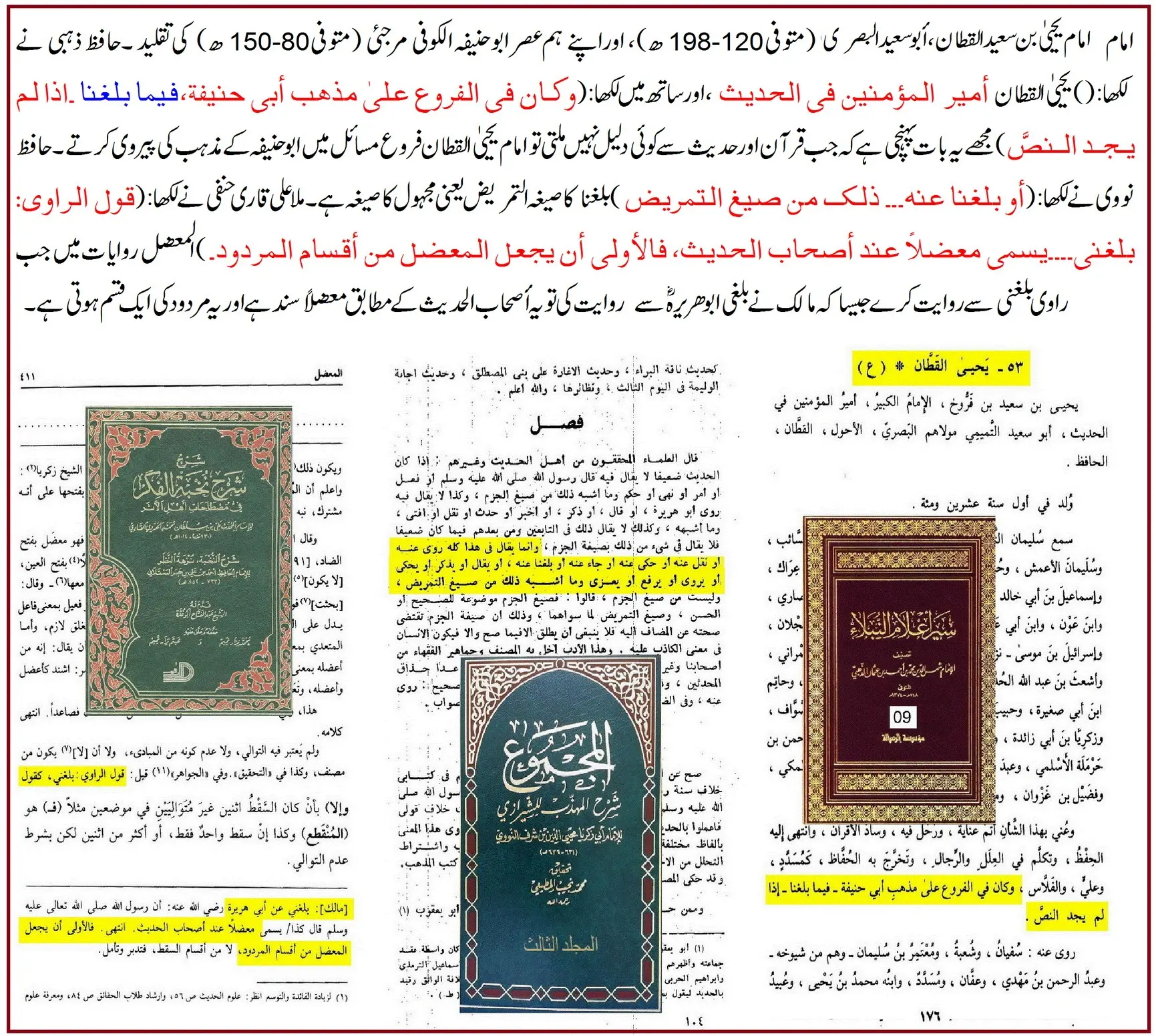
First Argument:
وكان في الفروع على مذهب أبي حنيفة – فيما بلغنا – إذا لم يجد النص۔ (سير أعلام النبلاء، رقم: 1366)
Translation: It has reached us that when Imam Yahya ibn Saeed al-Qattan did not find a clear text (Quran or Hadith) on an issue, he would issue fatwas on subsidiary matters according to the madhhab of Imam Abu Hanifa.
Investigative and Scholarly Analysis of This Argument:
Hafiz Zahbi, may Allah have mercy on him, has narrated this with the words of “فیما بلغنا”, which is in the form of tamreez (weak and uncertain narration). According to the principles of Hadith science, a statement in the form of tamreez is extremely weak and unacceptable. Consider the opinions of the great Muhaddithin regarding this:
- Imam Nawawi, may Allah have mercy on him, says: وَإِنَّمَا يُقَالُ… بَلَغَنَا عَنْهُ… مِنْ صِيغِ التَّمْرِيضِ… وَصِيَغُ التَّمْرِيضِ لِمَا سِوَاهُمَا۔
Reference: (Al-Majmu’ Sharh al-Muhadhdhab, Nawawi)
Translation: Phrases like “balaghna” and similar forms are used for weak and unreliable narrations.
- Mulla Ali Qari Hanafi says: قَول الرَّاوِي: بَلغنِي، يُسمى معضلا عِنْد أَصْحَاب الحَدِيث… من أَقسَام الْمَرْدُود۔
Reference: (Sharh Nukhbat al-Fikr, Mulla Ali Qari)
Translation: The narrator’s statement “balaghani” is considered “mu’dal” by the Muhaddithin, which is a category of rejected Hadith.
Conclusion:
The main point of this first argument is the unknown and weak form like “balaghna,” on which basis this narration must be rejected academically and research-wise. Therefore, declaring Imam Yahya bin Saeed al-Qattan as a follower of Imam Abu Hanifa based on this narration is baseless.
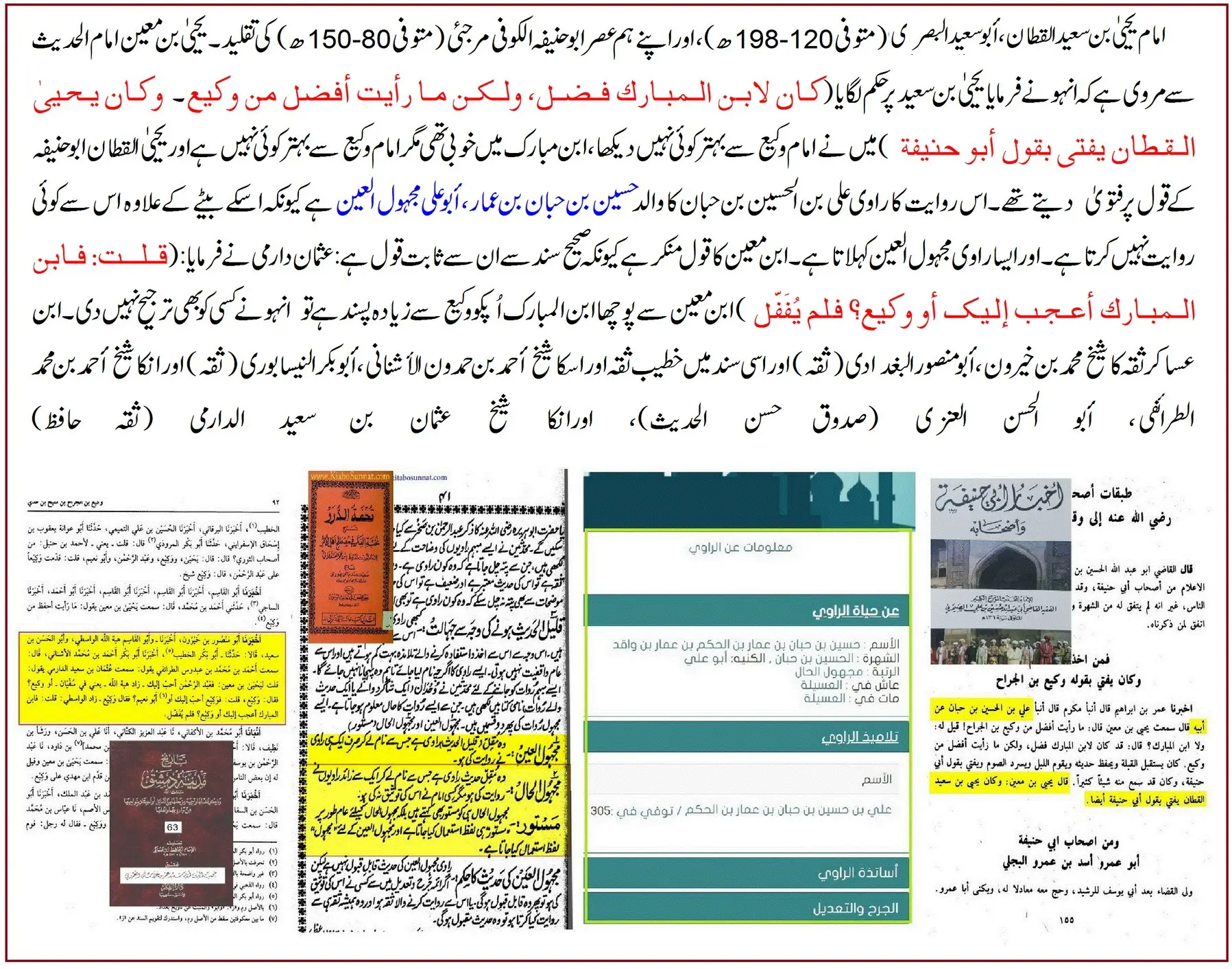
Second Argument:
Imam Saymari Hanafi has narrated:
أخبرنا عمر بن إبراهيم قال أنبأ مكرم قال أنبأ علي بن الحسين بن حبان عن أبيه قال سمعت يحيى بن معين قال ما رأيت أفضل من وكيع بن الجراح قيل له ولا ابن المبارك قال قد كان لابن المبارك فضل ولكن ما رأيت أفضل من وكيع كان يستقبل القبلة ويحفظ حديثه ويقوم الليل ويسرد الصوم ويفتي بقول أبي حنيفة وكان قد سمع منه شيئا كثيرا قال يحيى بن معين وكان يحيى بن سعيد القطان يفتي بقول أبي حنيفة أيضا
Translation:
Yahya ibn Ma’in said: “I have not seen anyone better than Waki’. It was asked: Not even Ibn al-Mubarak? He said: Ibn al-Mubarak also had excellence, but I did not find anyone better than Waki’. He used to sit facing the Qibla, memorize hadith, pray at night, fast continuously, and issue fatwas according to Abu Hanifa’s opinion; he had also heard a great deal from him (Abu Hanifa).” Yahya ibn Ma’in also said: “Yahya ibn Sa’id al-Qattan also issued fatwas according to Abu Hanifa’s opinion.”
Scholarly and Research Analysis of this Evidence:
This narration is extremely weak and rejected in terms of its chain of transmission. The central narrator in its chain is Husayn ibn Hibban ibn Ammar Abu Ali, the father of Ali ibn al-Husayn ibn Hibban, who is unknown (majhool al-‘ayn).
Ruling on Majhool al-‘Ayn:
A narrator being majhool al-‘ayn means that only one narrator has transmitted from him. Such a narration is considered completely unacceptable by the muhaddithin.
- Hafiz Ibn Hajar al-Asqalani says:
فإن سمي وانفرد واحد عنه فمجهول العين“If the narrator’s name is mentioned but only one narrator narrates from him, then he is considered unknown in essence.”
In this narration, only Ali bin Husain bin Hibban, the son of Husain bin Hibban bin Ammar, has narrated from him; no other student narrates from him.
Conflict of this narration with other authentic narrations:
Against this weak narration, there is also a narration with an authentic chain from Yahya bin Ma’in in which he clearly did not prefer either Waki’ or Ibn al-Mubarak over the other.
Hafiz Ibn Asakir narrates:
قلت ليحيى بن معين: فابن المبارك أعجب إليك أو وكيع؟ فلم يفضل
“I asked Yahya bin Ma’in: In your opinion, who is better, Ibn al-Mubarak or Waki’? He did not prefer either of them.”
The chain of this narration is completely authentic:
- محمد بن خیرون (ثقہ)
- احمد بن حمدون الاشنانی (ثقہ)
- احمد بن محمد بن عبدوس الطرائفی (صدوق)
- عثمان بن سعید الدارمی (ثقہ حافظ)
Therefore, in the presence of an authentic chain narration, the weak narration of Saimari is not reliable at all.
Summary of the matter:
- The narrator of the Saymari narration (Hussain bin Hibban bin Ammar) is unknown.
- The authentic narration of Yahya bin Ma’in completely negates it.
Therefore, the basis of this second argument is also extremely weak and rejected, and calling Imam Yahya bin Saeed al-Qattan a Hanafi on this basis amounts to scholarly betrayal.
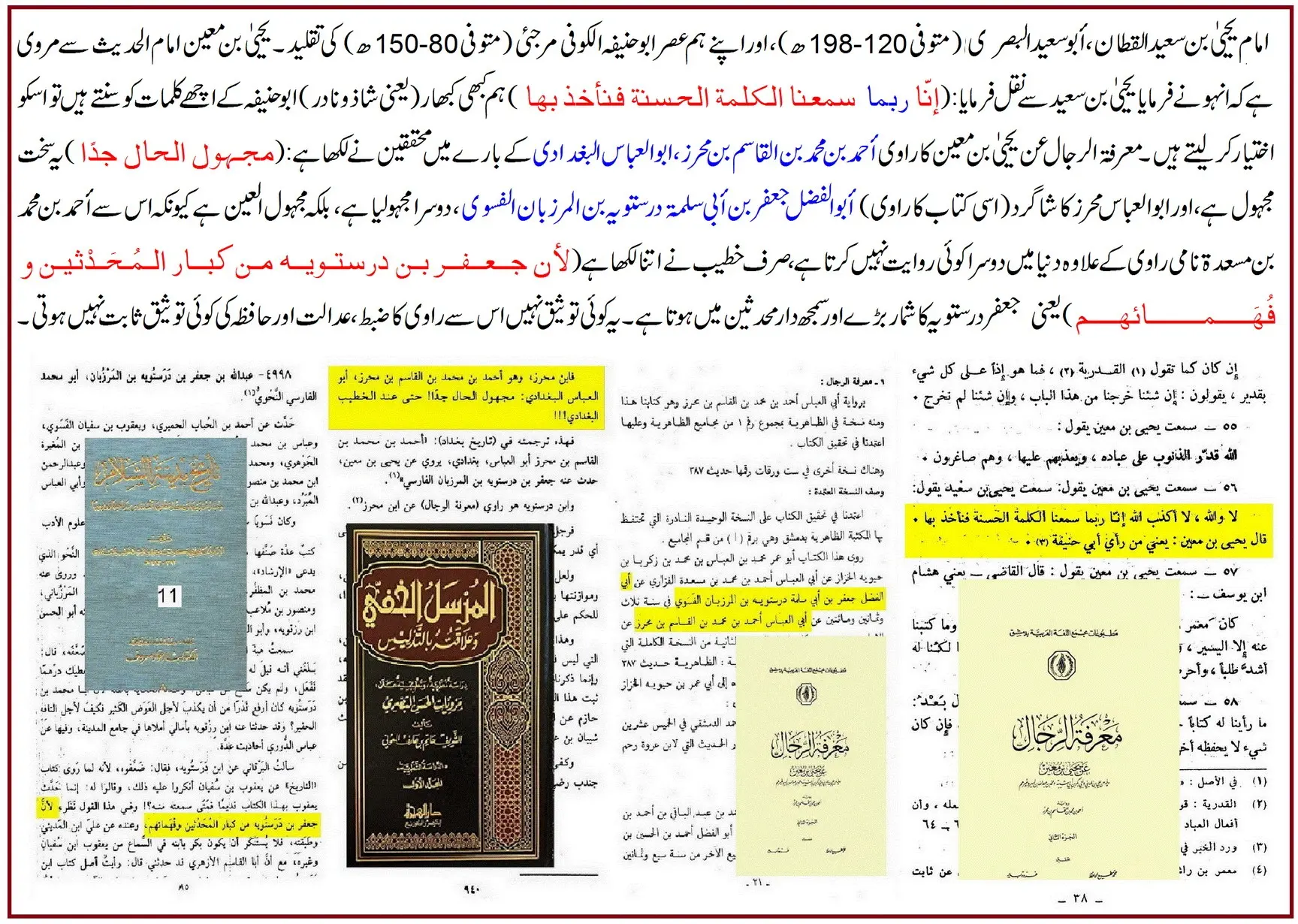
Third Argument:
Imam Yahya bin Ma’in says:
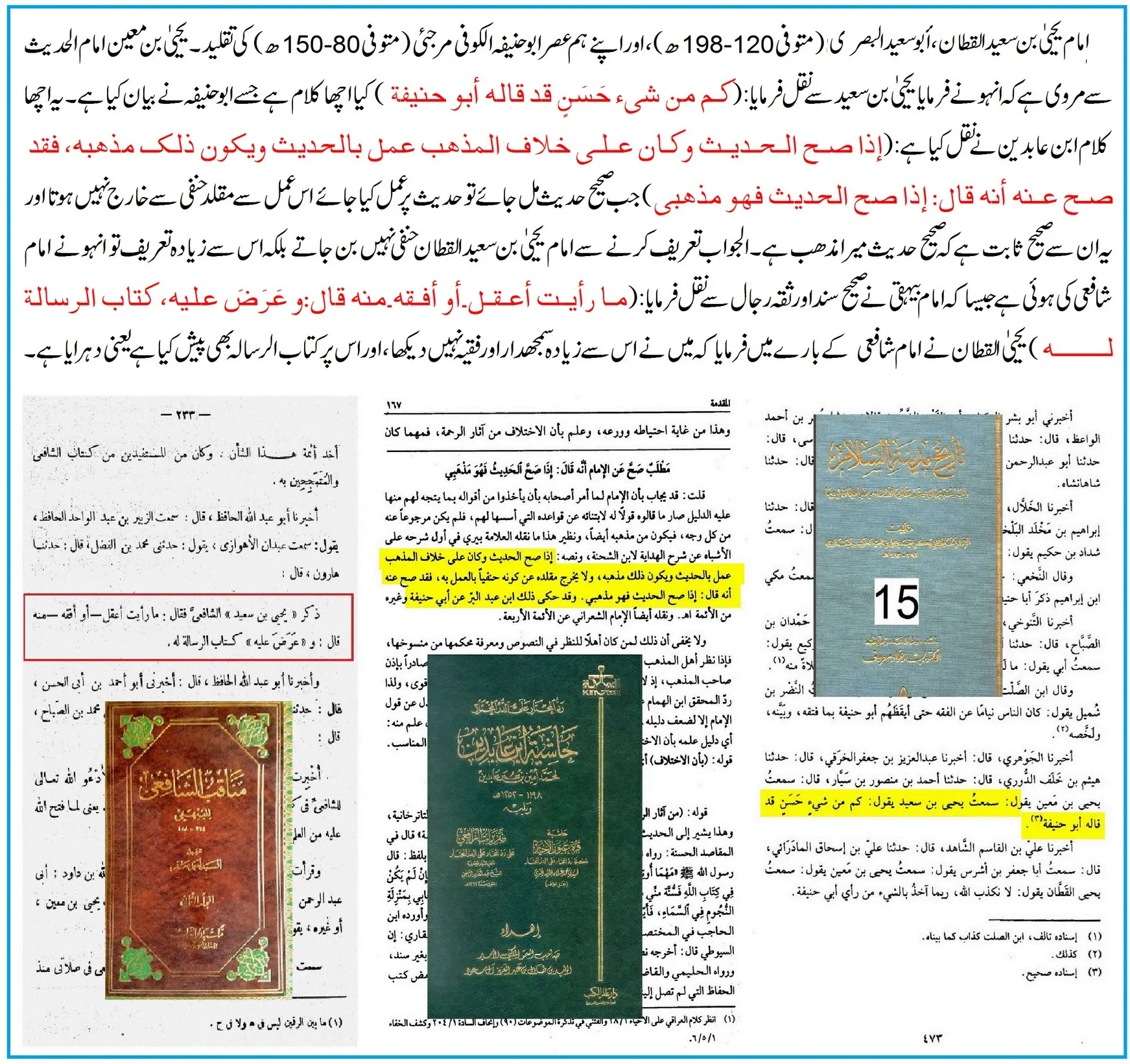
سمعت يحيى بن معين يقول سمعت يحيى بن سعيد يقول لا والله لا نكذب الله إنا ربما سمعنا الكلمة الحسنة فنأخذ بها قال يحيى بن معين يعنى من رأي أبي حنيفة
(معرفة الرجال عن يحيى بن معين، رواية أحمد بن محمد بن القاسم بن محرز)
Translation: “I heard Yahya bin Saeed al-Qattan say: By Allah! We do not misrepresent before Allah. Whenever we hear something good, we adopt it. Imam Yahya bin Ma’in says: He meant the opinion of Abu Hanifa.”
Scholarly and Investigative Analysis of this Argument:
The chain of this narration is weak and unreliable. A complete examination of the chain is presented below.
Investigative Examination of the Chain:
This narration is transmitted through the chain of Ahmad bin Muhammad bin al-Qasim bin Muharriz. Two main narrators in this chain are unknown:
- Abu al-Abbas Ahmad ibn Muhammad ibn al-Qasim ibn Muhriz is a narrator of unknown status. Among the muhaddithin, there is no authentication for him, nor is his trustworthiness established.
- Abu al-Fadl Ja’far ibn Durustawiyah ibn al-Marzban al-Fasawi is a narrator unknown in identity because only one narrator narrates from him. According to the muhaddithin, such a narrator is unacceptable.
- Hafiz Ibn Hajar al-Asqalani says:
فإن سمي وانفرد واحد عنه فمجهول العين، أو اثنان فأكثر ولم يوثق فمجهول الحال
Conclusion of the Chain:
Due to the presence of narrators of unknown status and unknown identity in the chain, this narration is weak and rejected.
The text of the narration does not prove imitation either:
It should be noted that nowhere in the text of this narration is there mention of Imam Yahya ibn Sa’id al-Qattan imitating Abu Hanifa. It is only said that occasionally if Abu Hanifa said something good, he would adopt it, which does not fall under the category of imitation in terms of jurisprudential interaction.
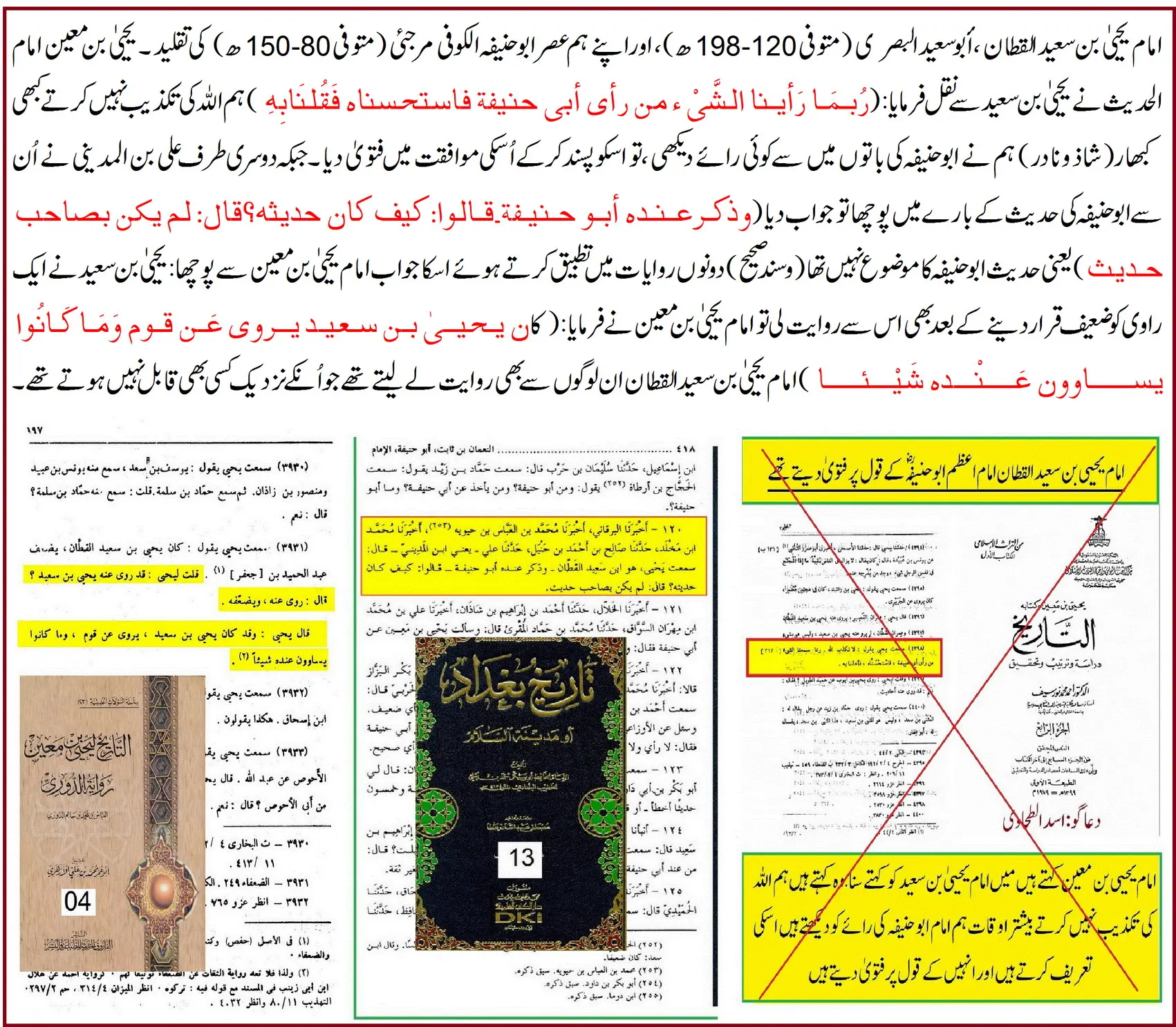
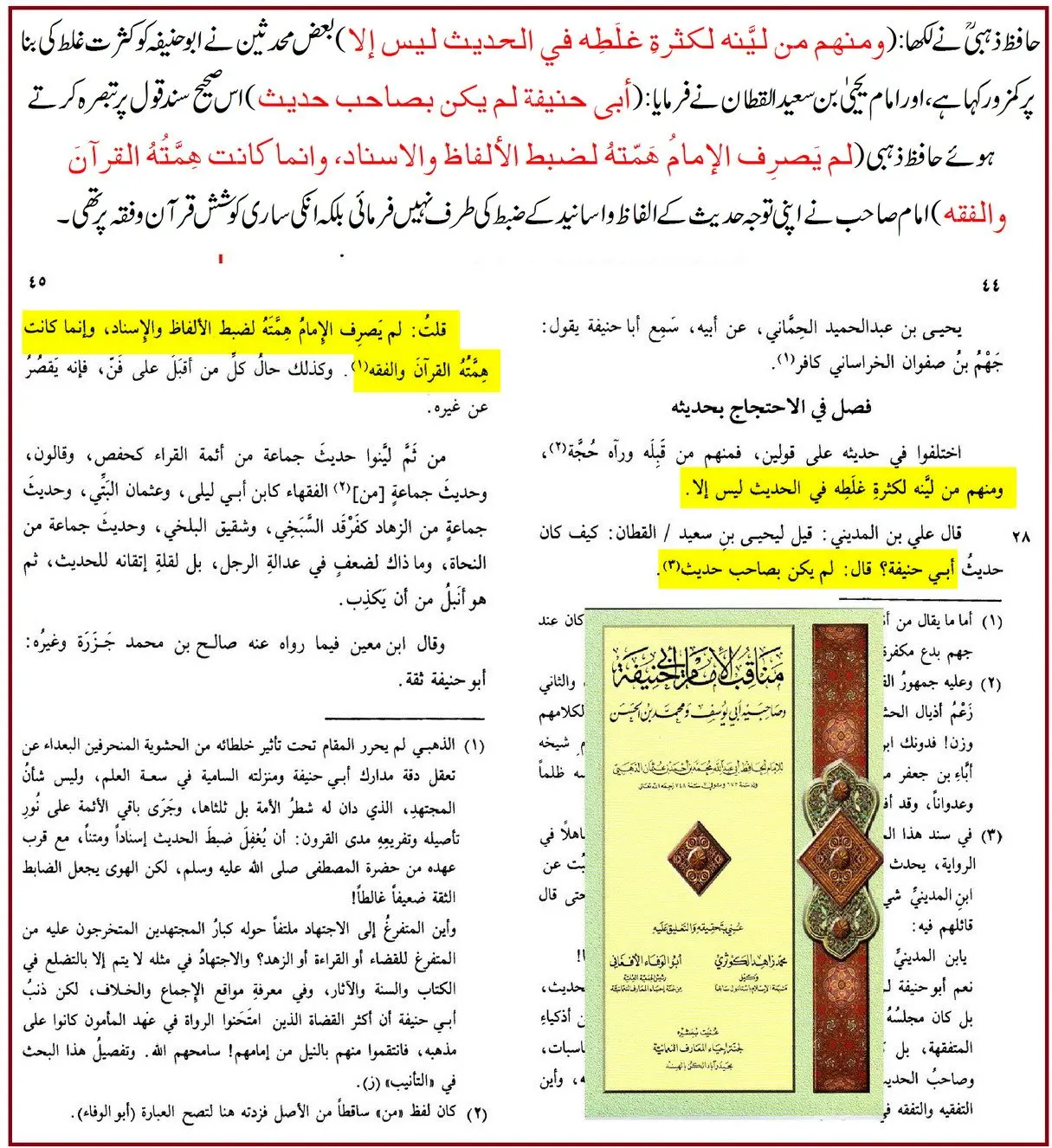
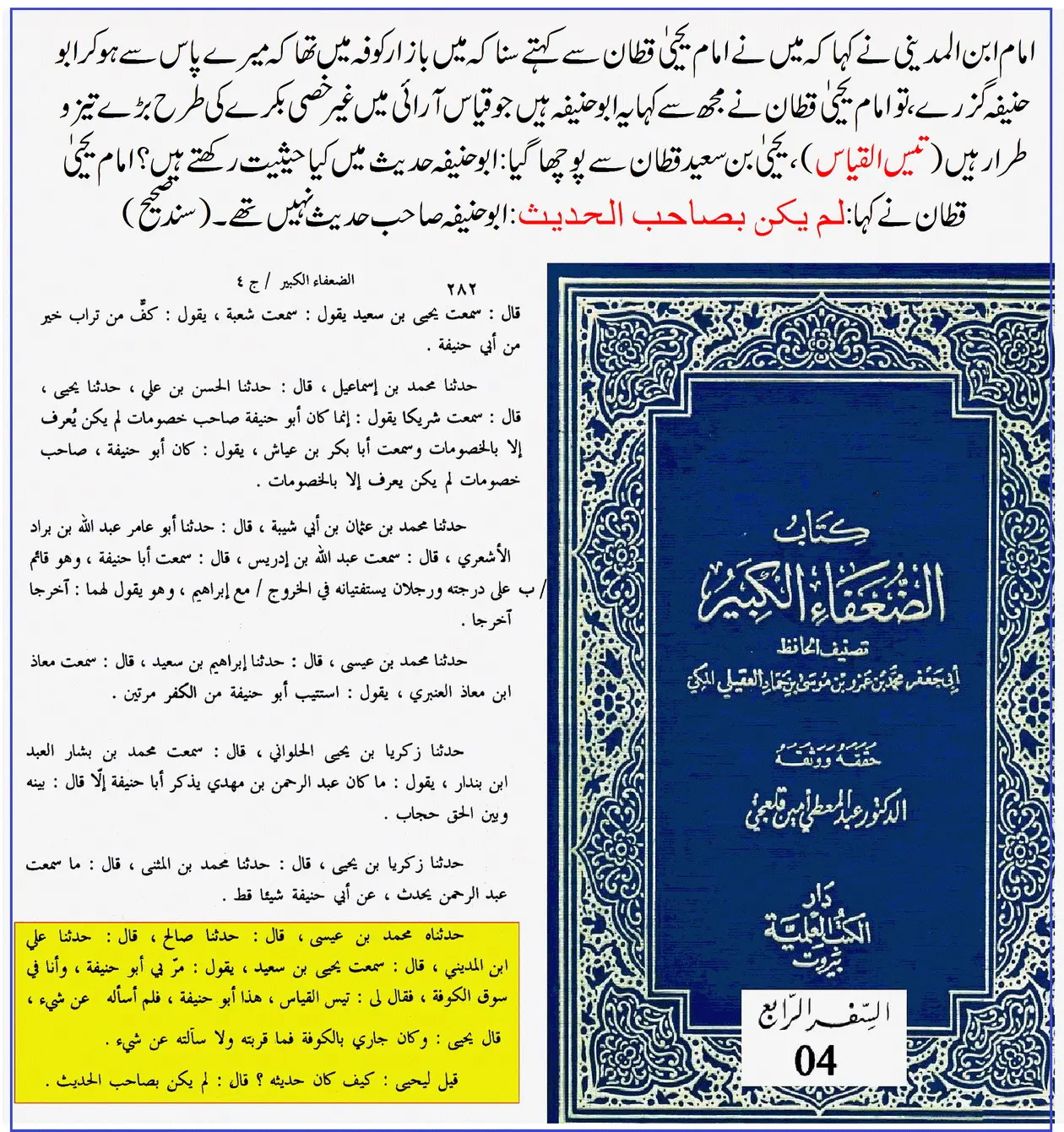
Imam Yahya ibn Sa’id al-Qattan himself says about Abu Hanifa’s status as a hadith narrator:
لم يكن صاحب حديث “Abu Hanifa was not a hadith scholar.”
And this statement is established with an authentic chain of narration from Imam Ali bin Madini.
Summary of the Discussion:
- This narration is very weak in terms of chain of narration (two narrators are unknown).
- The text of the narration does not prove imitation but merely mentions occasionally adopting a certain opinion.
- Imam Yahya bin Saeed al-Qattan’s own clear stance is against Abu Hanifa’s status as a hadith narrator.
Therefore, this third argument is also rejected from an academic and research perspective.
Fourth Argument:
Imam Yahya bin Ma’in says:
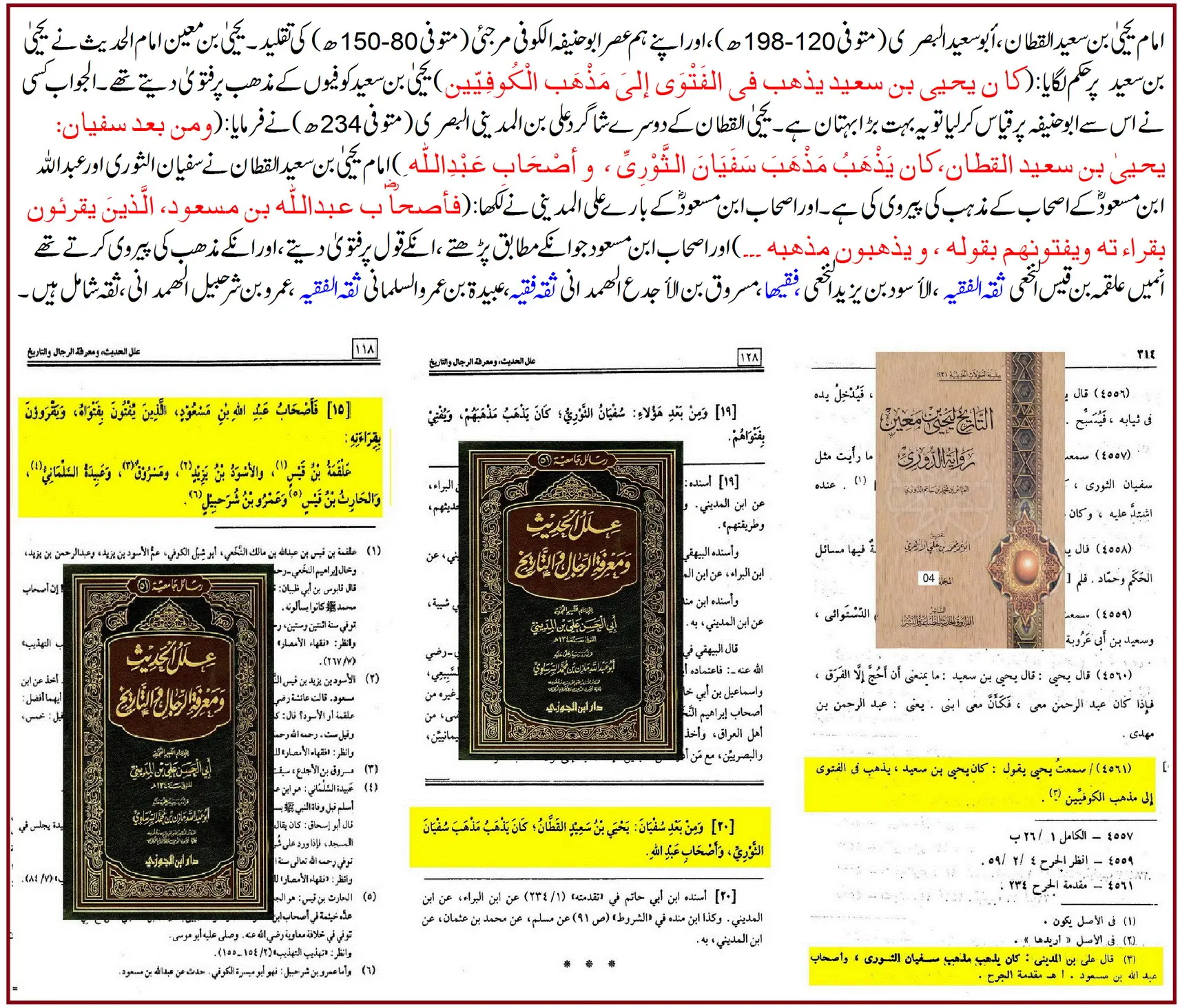
سَمِعتُ يحيى يقول قال يحيى بن سعيد القطان لا نكذب الله ربما رأينا الشيء من رأي أبي حنيفة فاستحسناه فقلنا به
Translation:
“I heard Yahya bin Saeed al-Qattan say: By Allah! We do not misrepresent Allah. Sometimes we liked an opinion of Abu Hanifa and adopted it.”
Research and Academic Analysis of this Argument:
In this narration, the word “rubbama” (sometimes) clearly appears. This indicates that Imam Yahya bin Saeed al-Qattan only occasionally accepted Abu Hanifa’s opinion as correct in one or two matters, which by no means serves as evidence for blind imitation.
The meaning of imitation (taqlid) is:
“Accepting the statement of an Imam without evidence, merely because it is his statement.”
Here, Imam al-Qattan accepts Abu Hanifa’s opinion on the basis of evidence (istihsan), not as blind imitation.
Imam Yahya bin Saeed al-Qattan’s Methodology and Interaction:
Imam Yahya bin Saeed al-Qattan himself has criticized Abu Hanifa on many occasions and has explicitly spoken about his status in hadith.
- Imam Yahya bin Saeed al-Qattan says:
لم يكن صاحب حديث “Abu Hanifa was not a man of hadith.”
This explicit statement is clear evidence that Imam Yahya bin Saeed al-Qattan’s attitude towards Abu Hanifa was that of a critic, not a follower.
Furthermore, it is narrated from Imam Yahya bin Ma’in that Imam Yahya bin Saeed al-Qattan sometimes used to narrate from people whom he himself considered weak.
- Imam Yahya bin Ma’in says:
كان يحيى بن سعيد يروي عن قوم وما كانوا يساوون عنده شيئا“Yahya bin Saeed used to narrate from some people whom he did not regard as having any status in his view.”
That is, Imam Yahya bin Saeed al-Qattan’s principle was that he would take good things from everyone and would accept narration even from weak narrators. On this basis, declaring someone a follower (muqallid) is completely incorrect from a scholarly perspective.
Summary of the matter:
- This narration mentions that Imam Yahya bin Saeed al-Qattan occasionally adopted Abu Hanifa’s opinion.
- The words of the narration themselves negate imitation (rubbama – occasionally).
- Imam al-Qattan also criticized Abu Hanifa, which is contrary to imitation.
- Imam al-Qattan’s general approach was that he would take the correct statement from every person; this is not imitation but a research-based method.
Therefore, this fourth argument is also rejected from an academic and research perspective.
Fifth Argument:
Imam Ibn Abdul Barr has narrated with an authentic chain of transmission:
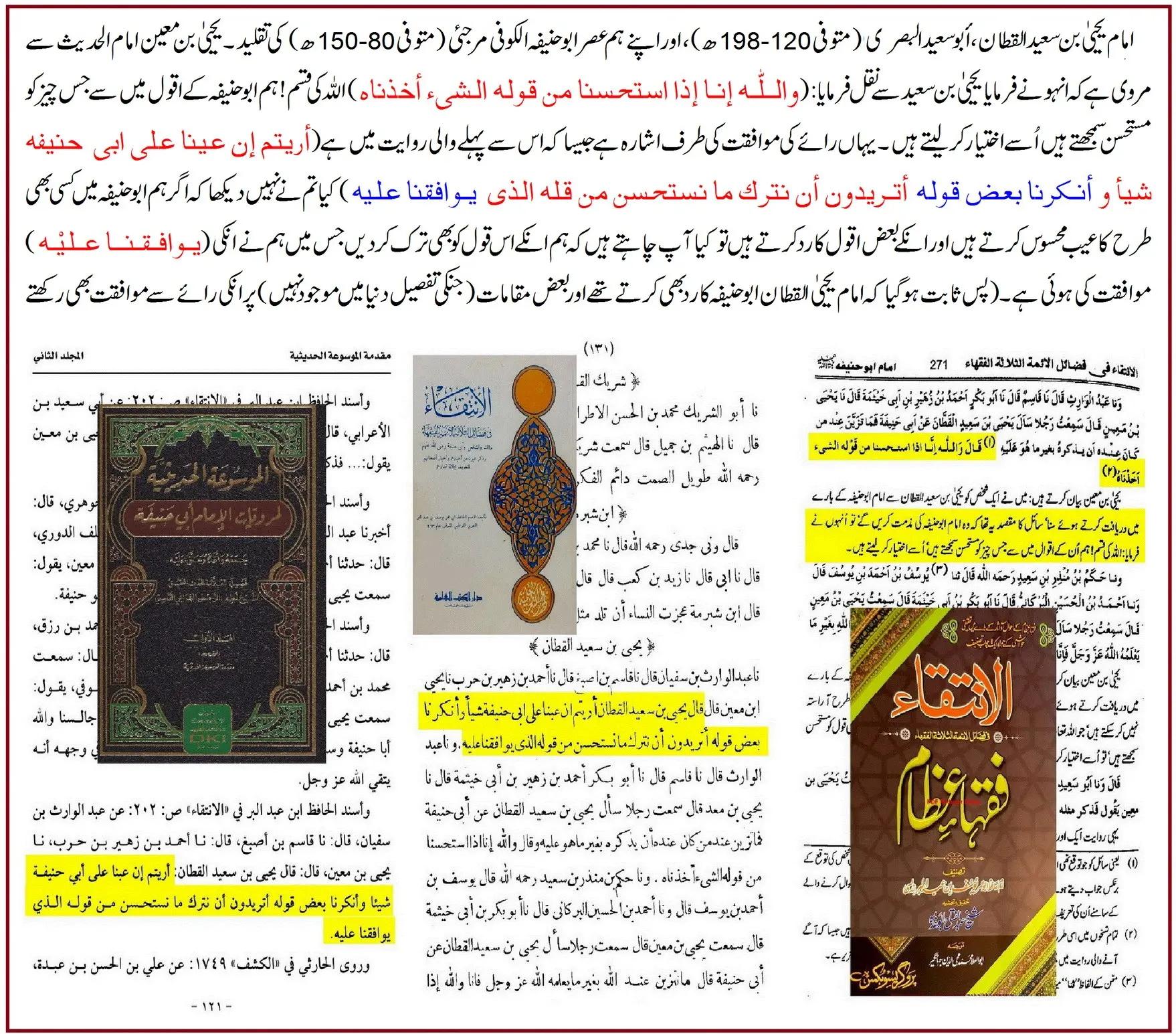
نا عبد الوارث قال نا قاسم قال نا أبو بكر أحمد بن زهير بن أبي خيثمة قال نا يحيى بن معين قال سمعت رجلا سأل يحيى بن سعيد القطان عن أبي حنيفة فما تزين عند من كان عنده أن يذكره بغير ما هو عليه وقال والله إنا إذا استحسنا من قوله الشيء أخذناه
Translation: “Yahya bin Ma’in says: I heard a person asking Yahya bin Saeed al-Qattan about Abu Hanifa. He said: It is appropriate to state only what is true about Abu Hanifa. By Allah! When we find any of his sayings good, we accept it.”
Analytical and Academic Examination of this Argument:
Ibn Abdul Barr has clarified this narration through another narration in the same book. He states that it is narrated from Imam Yahya bin Saeed al-Qattan:
أرأيتم إن عبنا على أبي حنيفة شيئا وأنكرنا بعض قوله أتريدون أن نترك ما نستحسن من قوله الذي يوافقنا عليه
Translation: “Have you not seen that if we criticize Abu Hanifa for something or deny some of his sayings, do you want us to abandon even those sayings of his which agree with our opinion?”
This narration clearly explains the stance of Imam Yahya bin Saeed al-Qattan. He only accepted those statements of Abu Hanifa which were in agreement with his own opinion. This is not called imitation (taqlid), but intellectual agreement (muwafaqah).
Clear difference between imitation and agreement:
-
Imitation (Taqlid):
Accepting the statement of an Imam or personality merely because it is their opinion, without evidence, is called imitation.
-
Agreement (Muwafaqah):
Accepting someone’s statement as correct based on evidence is agreement. Imam Yahya bin Saeed al-Qattan’s clear stance is agreement, not imitation.
Imam Yahya bin Saeed al-Qattan’s critical stance on Abu Hanifa:
Imam al-Qattan clearly criticized Abu Hanifa’s status in hadith:
لم يكن صاحب حديث “Abu Hanifa was not a narrator of hadith.”
This clear criticism is completely contrary to the stance of imitation. Because a follower (muqallid) can never criticize his Imam in such a manner.
Summary of the discussion:
- The true meaning of this narration is not imitation but conformity.
- The second narration of Ibn Abdul Barr has provided a complete explanation of this.
- Imam Yahya bin Saeed Al-Qattan’s severe critical stance on Abu Hanifa is contrary to imitation.
Therefore, this fifth argument is also rejected from a scholarly and research perspective.
Result of the entire research:
❌ First argument:
The phrase of Hafiz Dhahabi, may Allah have mercy on him, is narrated in the form of tamreed “balaghna,” which is weak and unreliable.
❌ Second argument:
In the narration of Saymari, the central narrator (Husayn bin Hibban bin Ammar) is unknown, and it conflicts with the authentic narration.
❌ Third argument:
There are two unknown narrators in the chain of narration, therefore this narration is weak. The text also does not support imitation.
❌ Fourth argument:
The word “rubbama” (sometimes) is present in the text of the narration, which clearly negates imitation. This was Imam Al-Qattan’s usual research style.
❌ Fifth argument:
From Ibn Abdul Barr’s explanation, it is understood that Imam Al-Qattan only accepted those statements of Imam Abu Hanifa which aligned with his own opinion; this is not imitation but scholarly agreement.
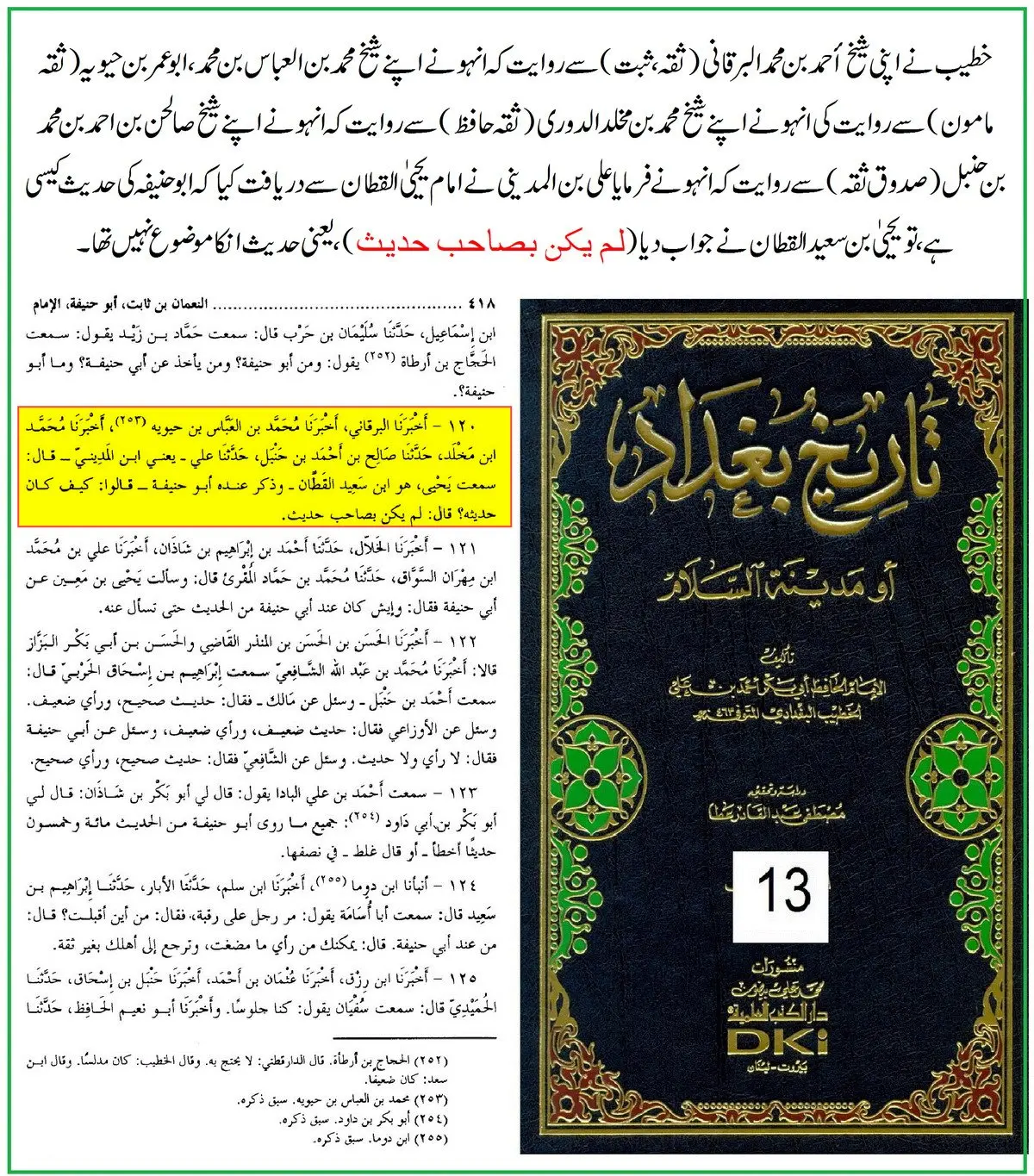
✅ Imam Yahya bin Saeed Al-Qattan’s clear stance regarding Imam Abu Hanifa’s status as a narrator of Hadith was critical:
- He states:
“Abu Hanifa was not a narrator of Hadith.”
Reference: (Tarikh Baghdad)
✅ Imam Yahya bin Saeed Al-Qattan accepted any jurisprudential opinion based on evidence, not merely by imitation.
✅ Imam Al-Qattan’s methodology was based on “investigative and scholarly agreement,” which is entirely different from imitation.
✅ All the presented evidences are weak and rejected in terms of their chain of transmission and text.
Calling Imam Yahya bin Saeed Al-Qattan, may Allah have mercy on him, a follower of Imam Abu Hanifa is academically incorrect and research-wise baseless.
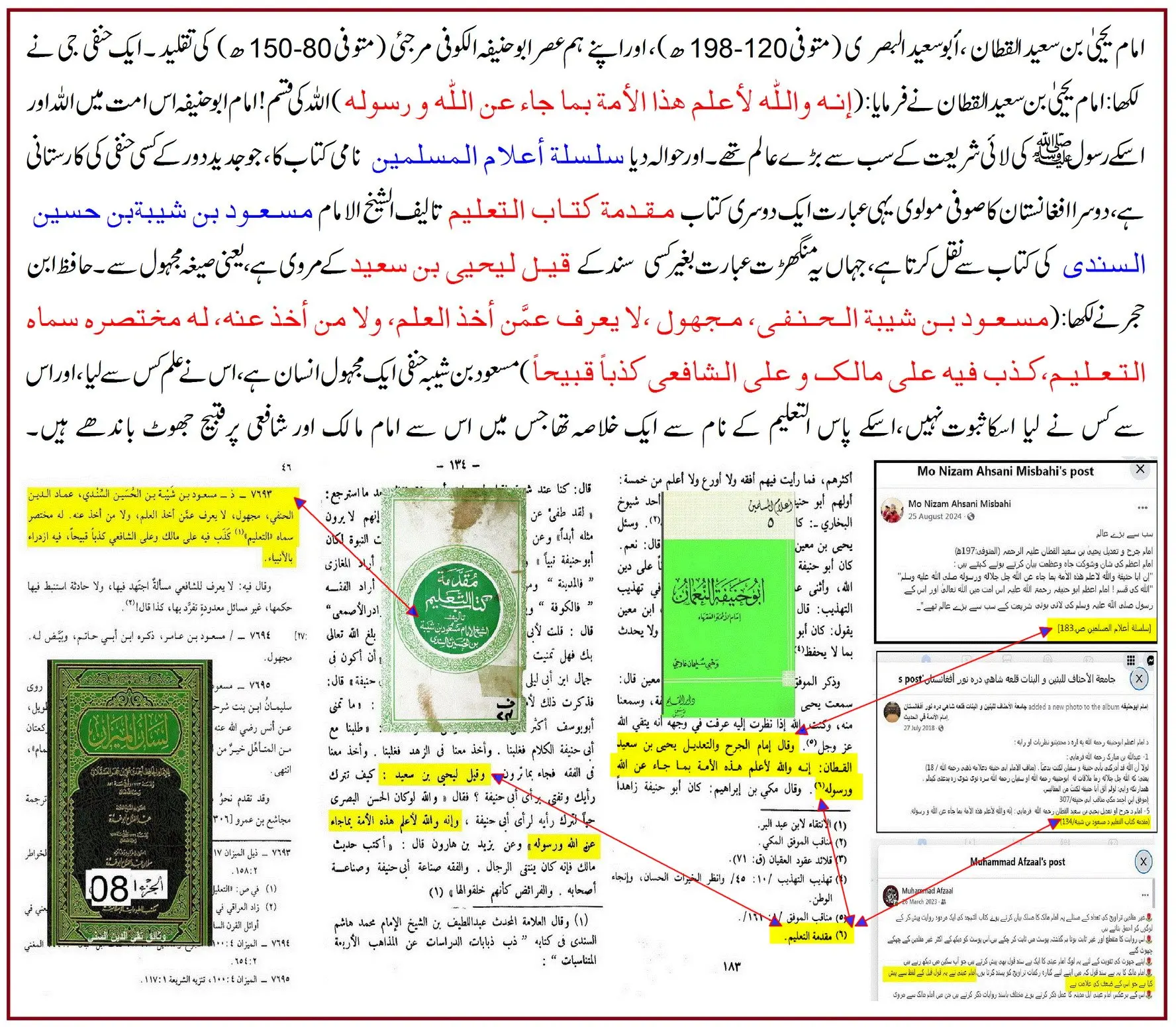
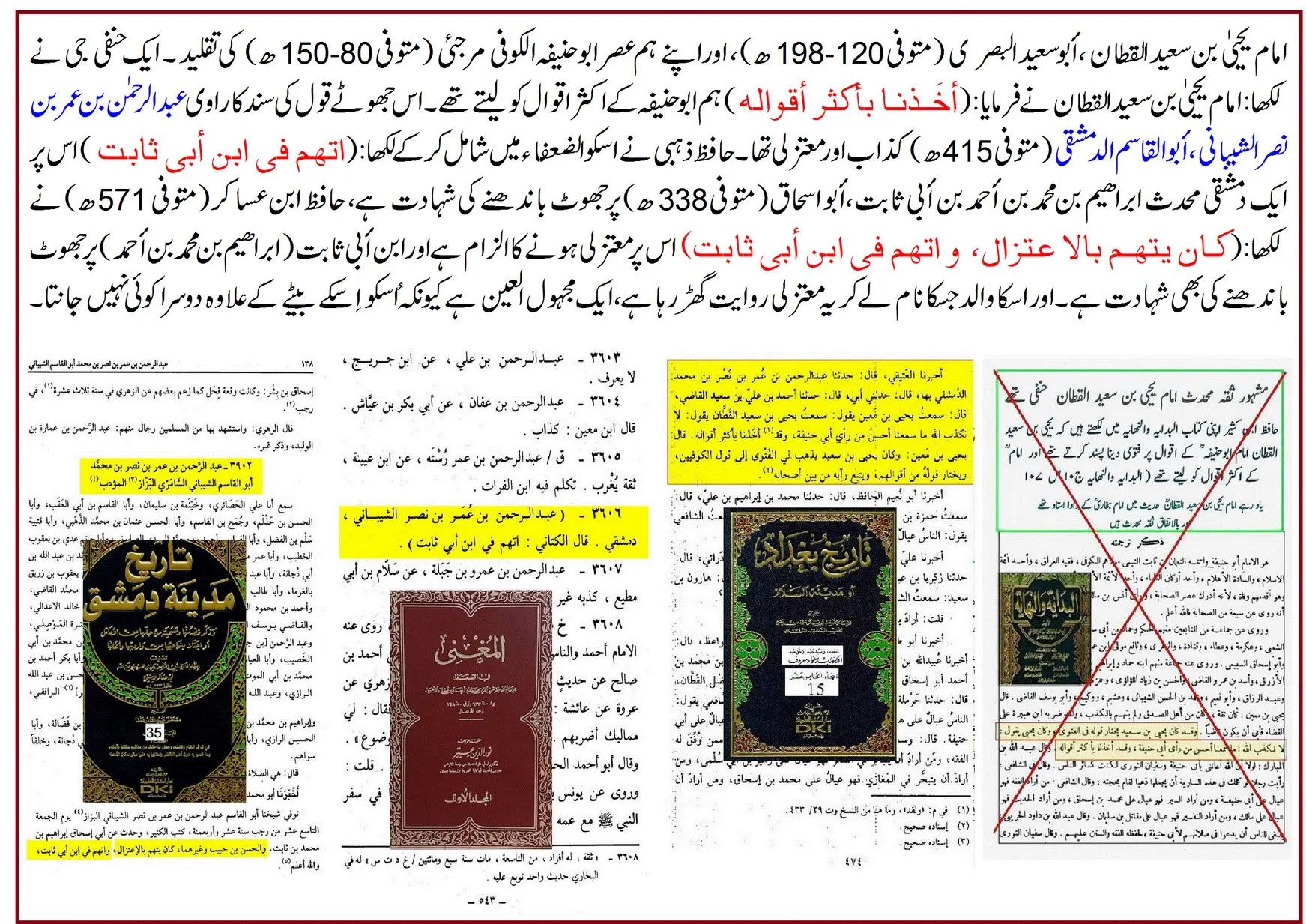
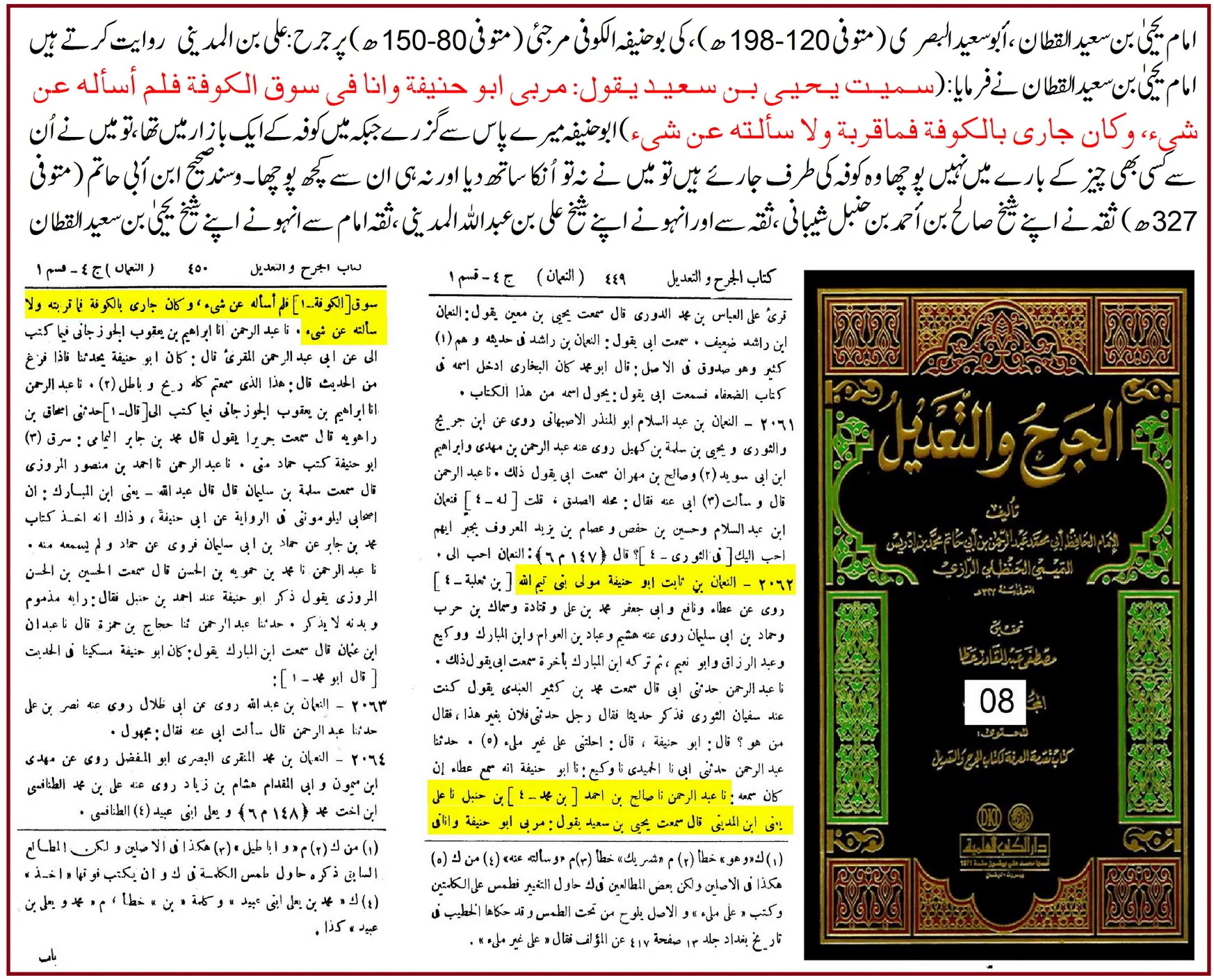
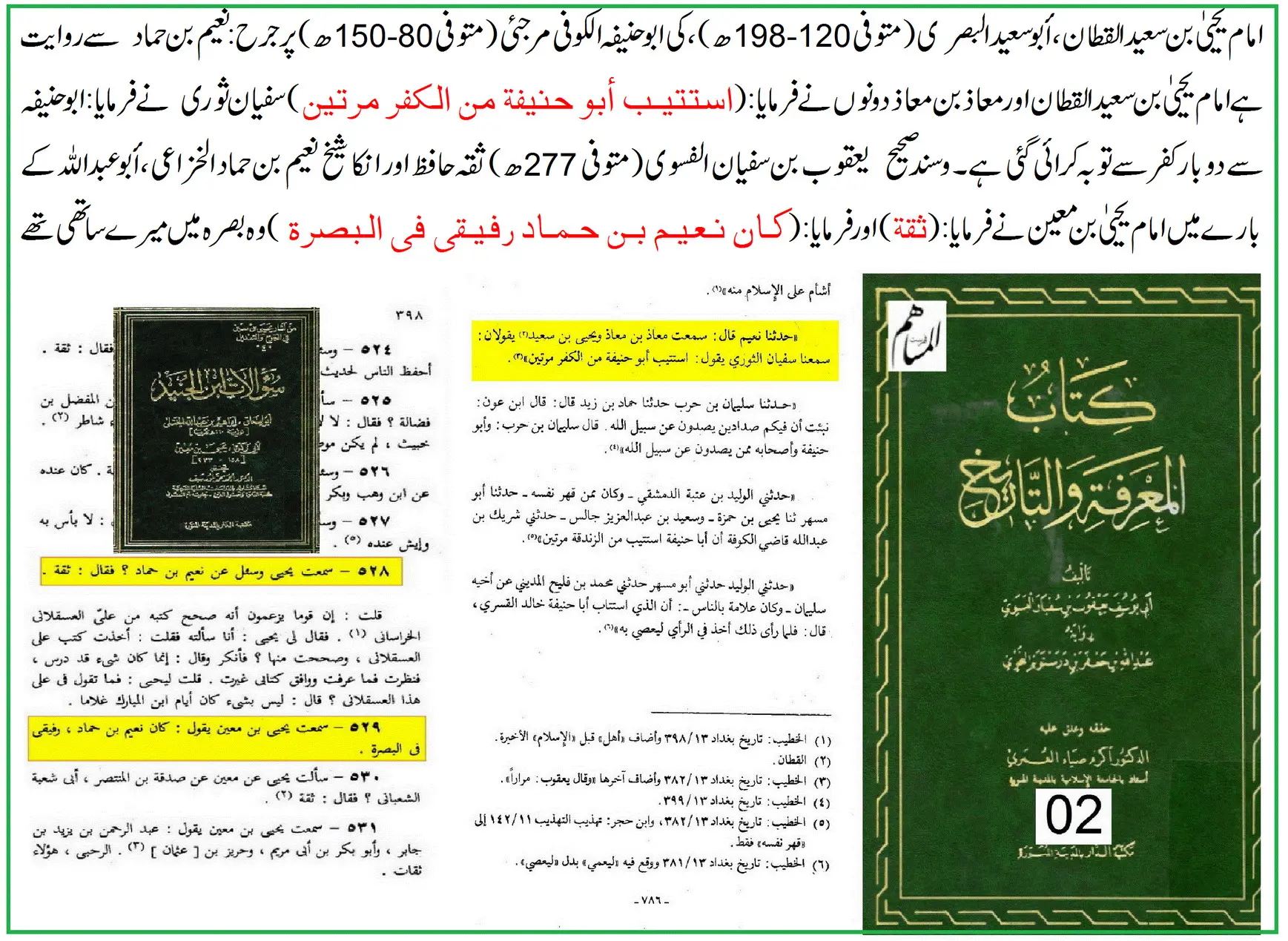
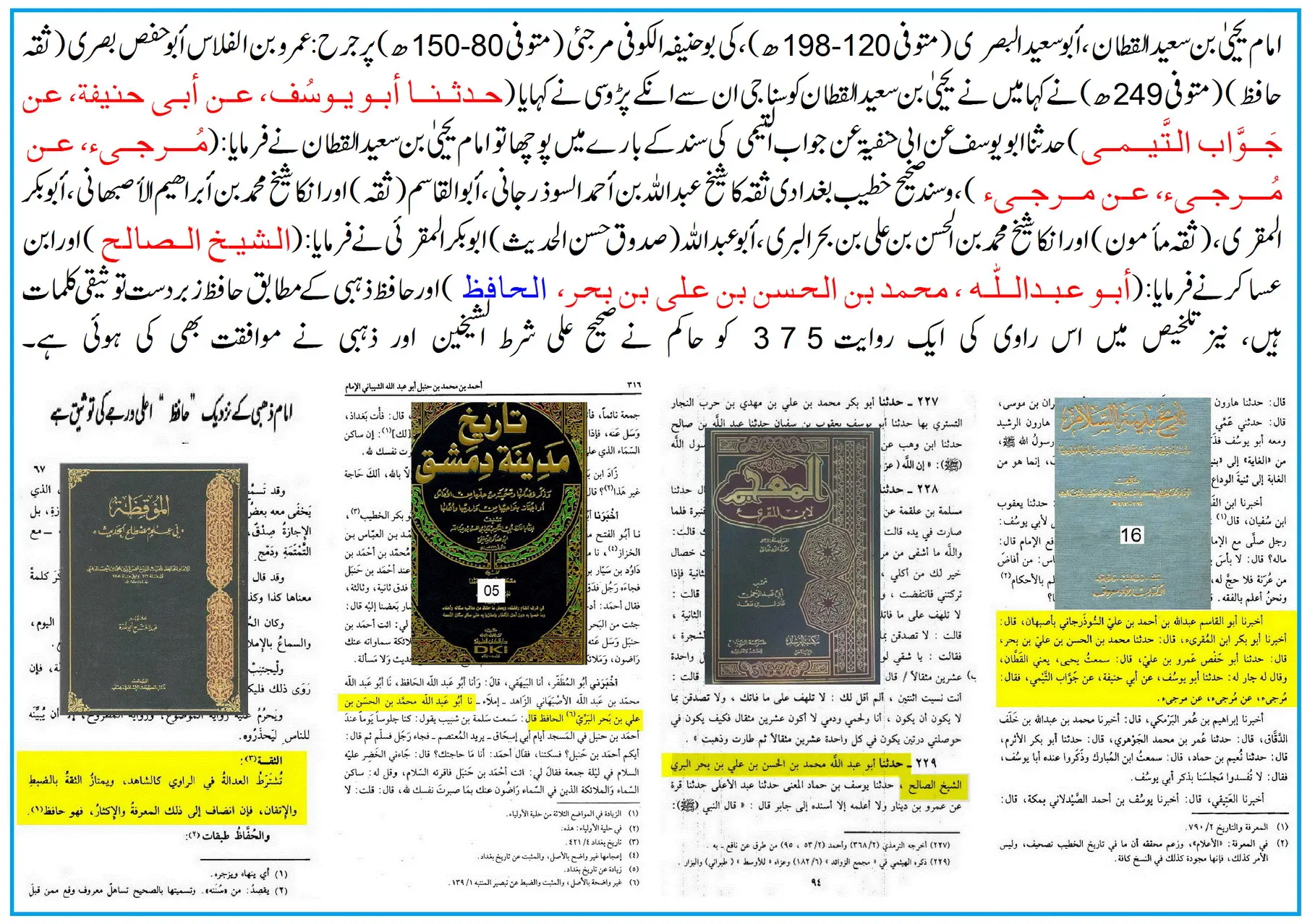
Screenshots of Important References