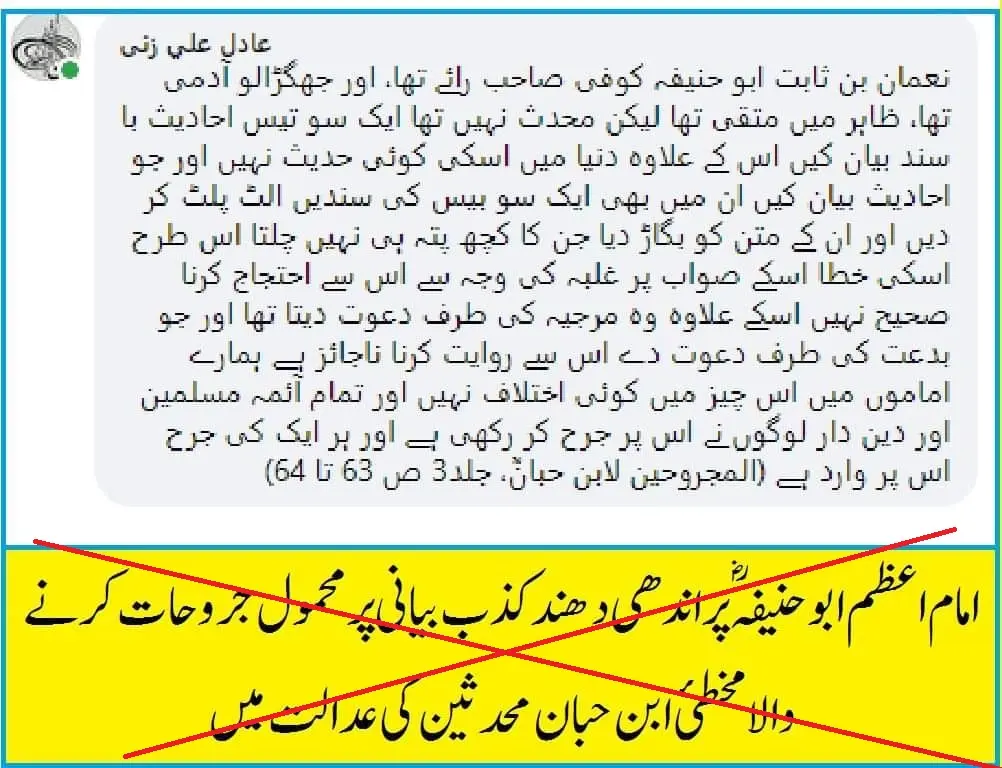
This article is an academic and research-based writing aimed at clarifying the reliability and scholarly status of Imam Muhammad ibn Hibban al-Busti (may Allah have mercy on him) and presenting a reasoned refutation of the accusations leveled against him. In this research, we will prove the following matters in detail:
- The authentication (tawthiq) of Imam Ibn Hibban (may Allah have mercy on him) by the majority of scholars.
- A researched response to the baseless criticisms from innovator and biased circles regarding him.
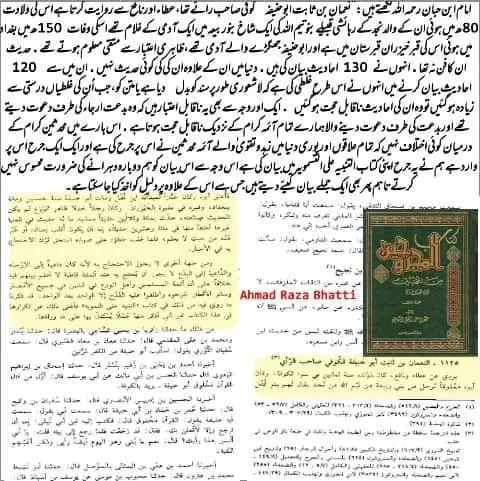
- Clarification that the claim that Imam Ibn Hibban (may Allah have mercy on him) was unique in criticizing Imam Abu Hanifa (may Allah have mercy on him) is incorrect; rather, other hadith scholars also agree with him in this.
The arguments in the article will be presented from original sources, with Arabic text, Urdu translation, and authentic references, so that the reader attains research-based satisfaction.
📜 The Authentication of Imam Ibn Hibban (may Allah have mercy on him) by the Majority of Imams and Hadith Scholars
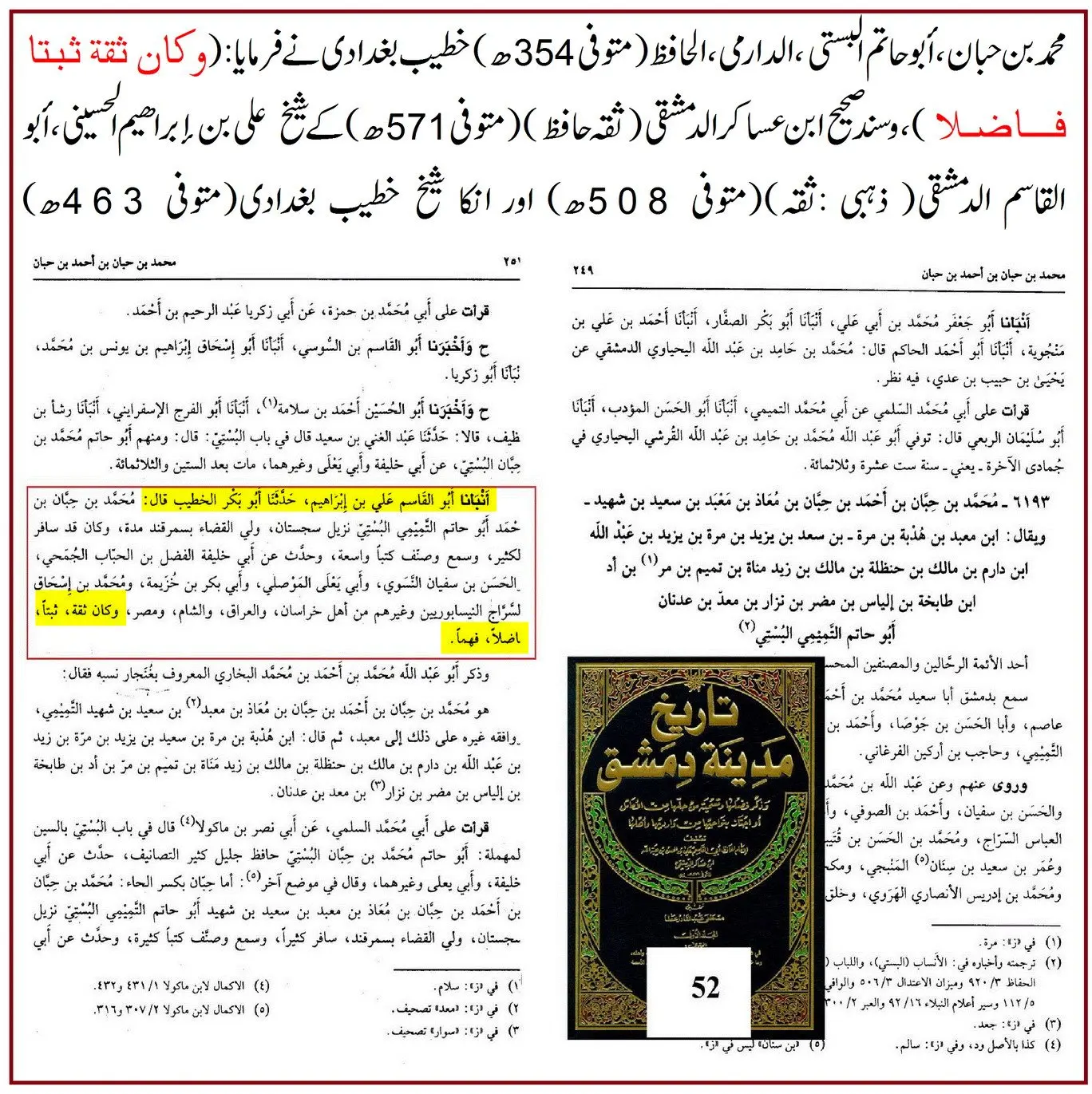
1. Authentication by Al-Khatib Al-Baghdadi
Arabic text:
وكان ثقة ثبتا فاضلا
Urdu translation: He was trustworthy, reliable, and virtuous.
Narrators of the chain:
-
Reference: Ibn Asakir Al-Dimashqi — Kunya: Abu al-Qasim, trustworthy Hafiz
-
Reference: Ali ibn Ibrahim Al-Husayni — Kunya: Abu al-Qasim, trustworthy
-
Reference: Al-Khatib Al-Baghdadi — trustworthy and authoritative
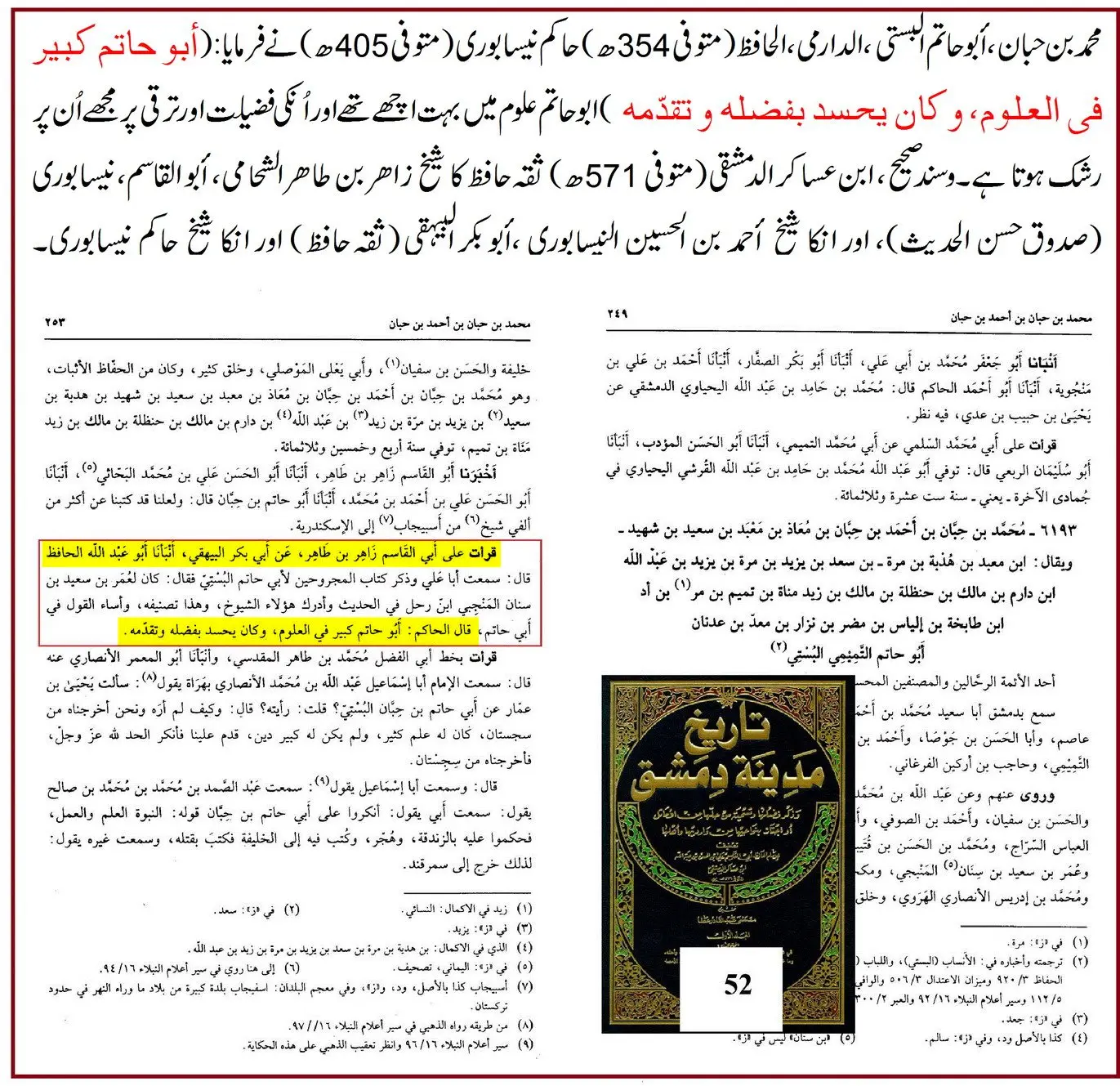
2. Statement of Hakim Nishapuri
Arabic text:
Translation: Abu Hatim held a high position in knowledge and his excellence and superiority were envied.
Narrators of the chain:
-
Reference: Ibn Asakir al-Dimashqi — Kunya: Abu al-Qasim, trustworthy Hafiz
-
Reference: Zahir ibn Tahir al-Shihami — Kunya: Abu al-Qasim, truthful and good in hadith
-
Reference: Ahmad ibn al-Husayn al-Nisaburi (al-Bayhaqi) — Kunya: Abu Bakr, trustworthy Hafiz
-
Reference: al-Hakim al-Nisaburi — trustworthy Hafiz
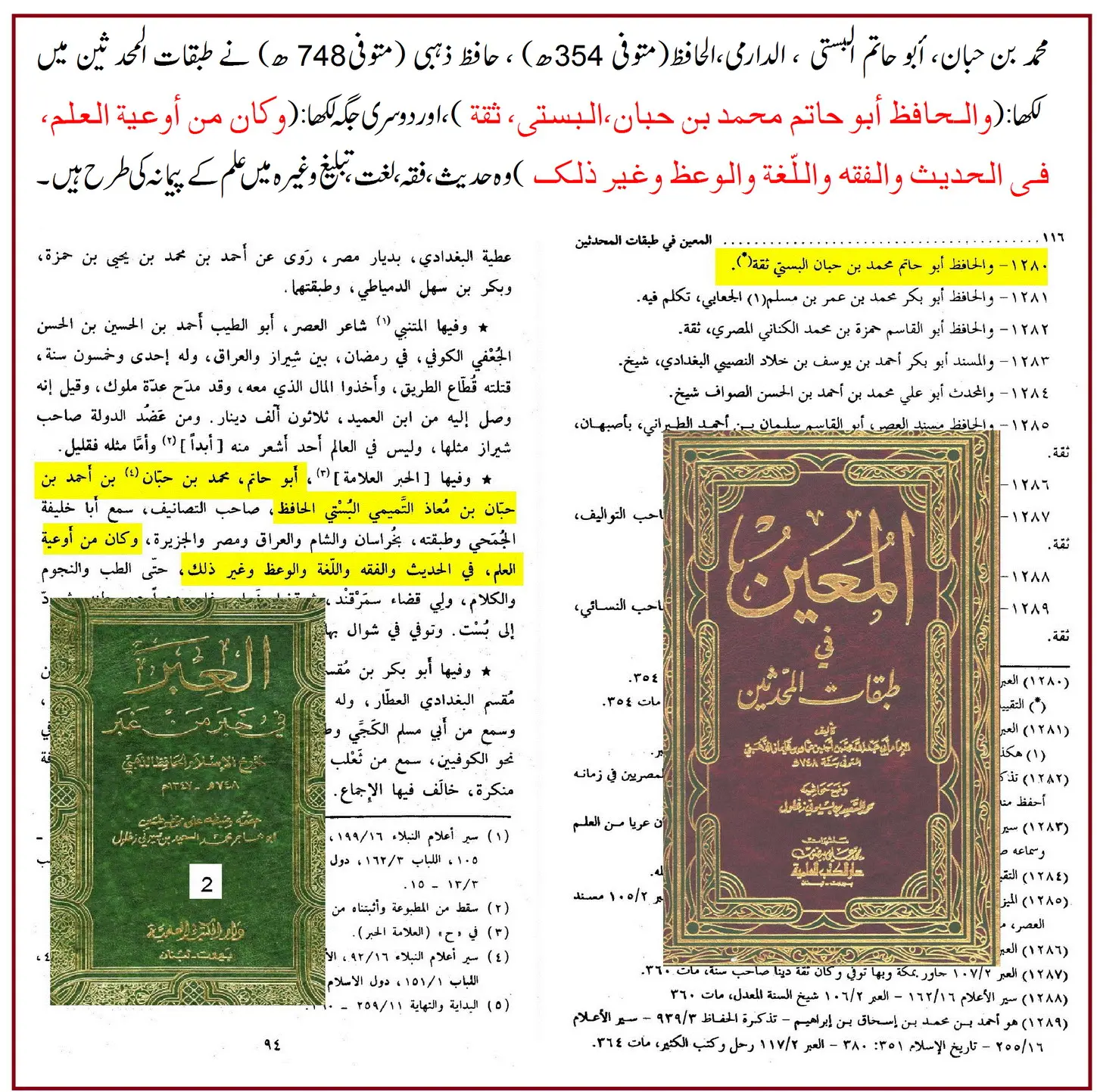
3. Testimony of Hafiz al-Dhahabi
Arabic text:
والحافظ أَبُو حَاتِم مُحَمَّد بن حبَان البستي ثِقَة
Translation: Hafiz Abu Hatim Muhammad ibn Hibban al-Busti was trustworthy and was like a measure of knowledge in hadith, jurisprudence, linguistics, and preaching.
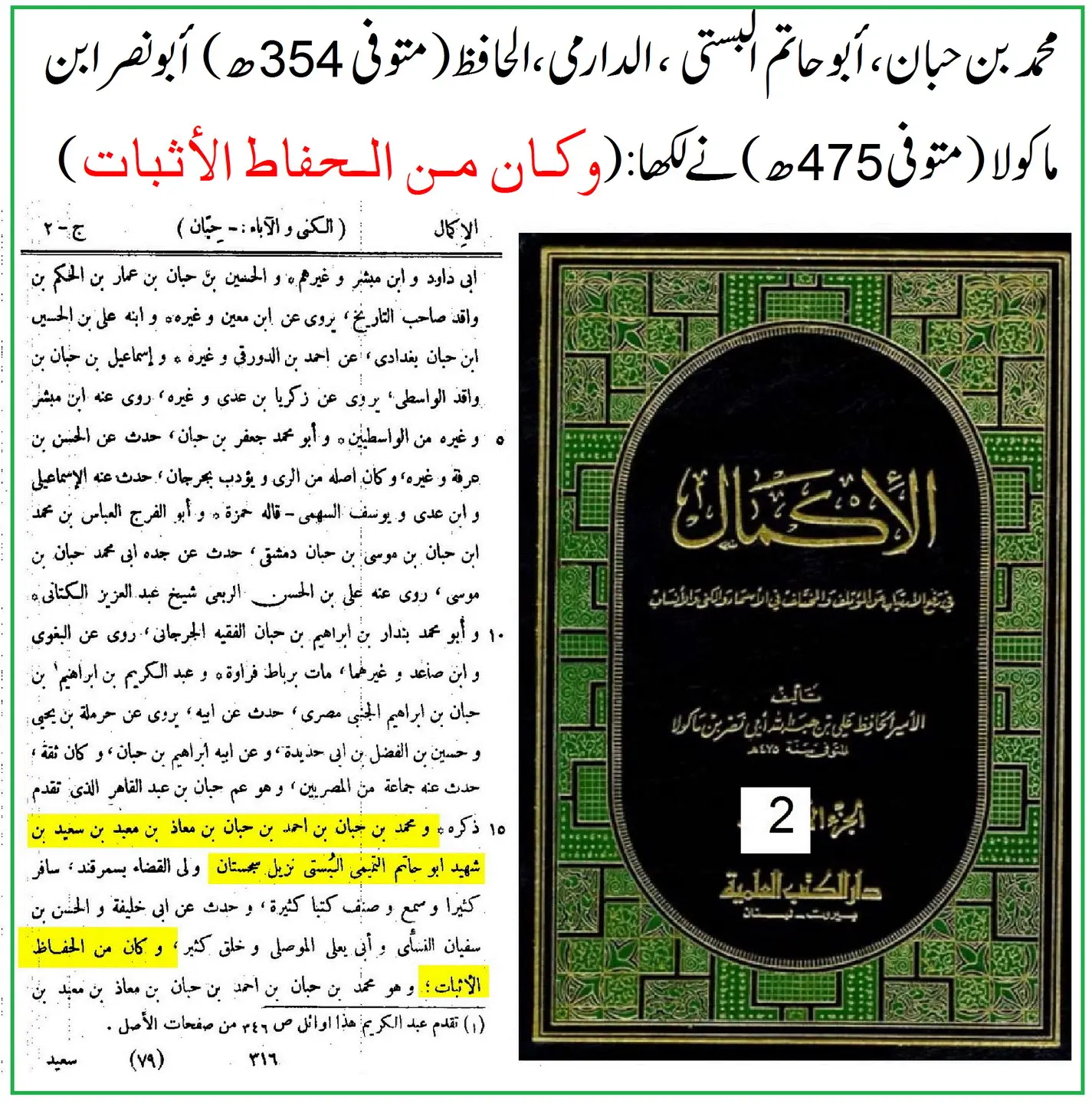
4. Words of Abu Nasr Ibn Makula
Arabic text:
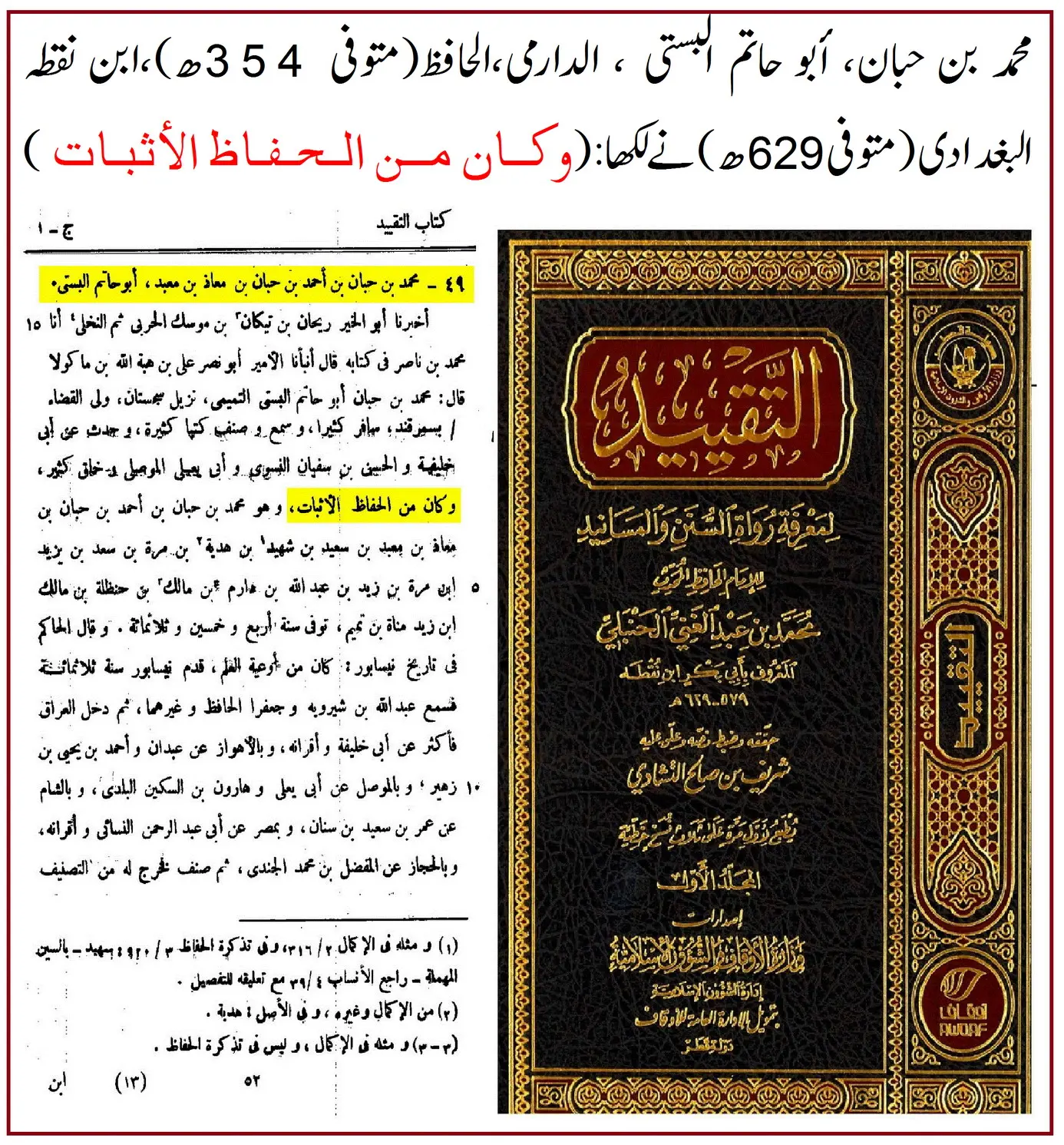
وكان من الحفاظ الأثبات
Translation: He was among the Hafiz of hadith who were firm and strong memorisers.
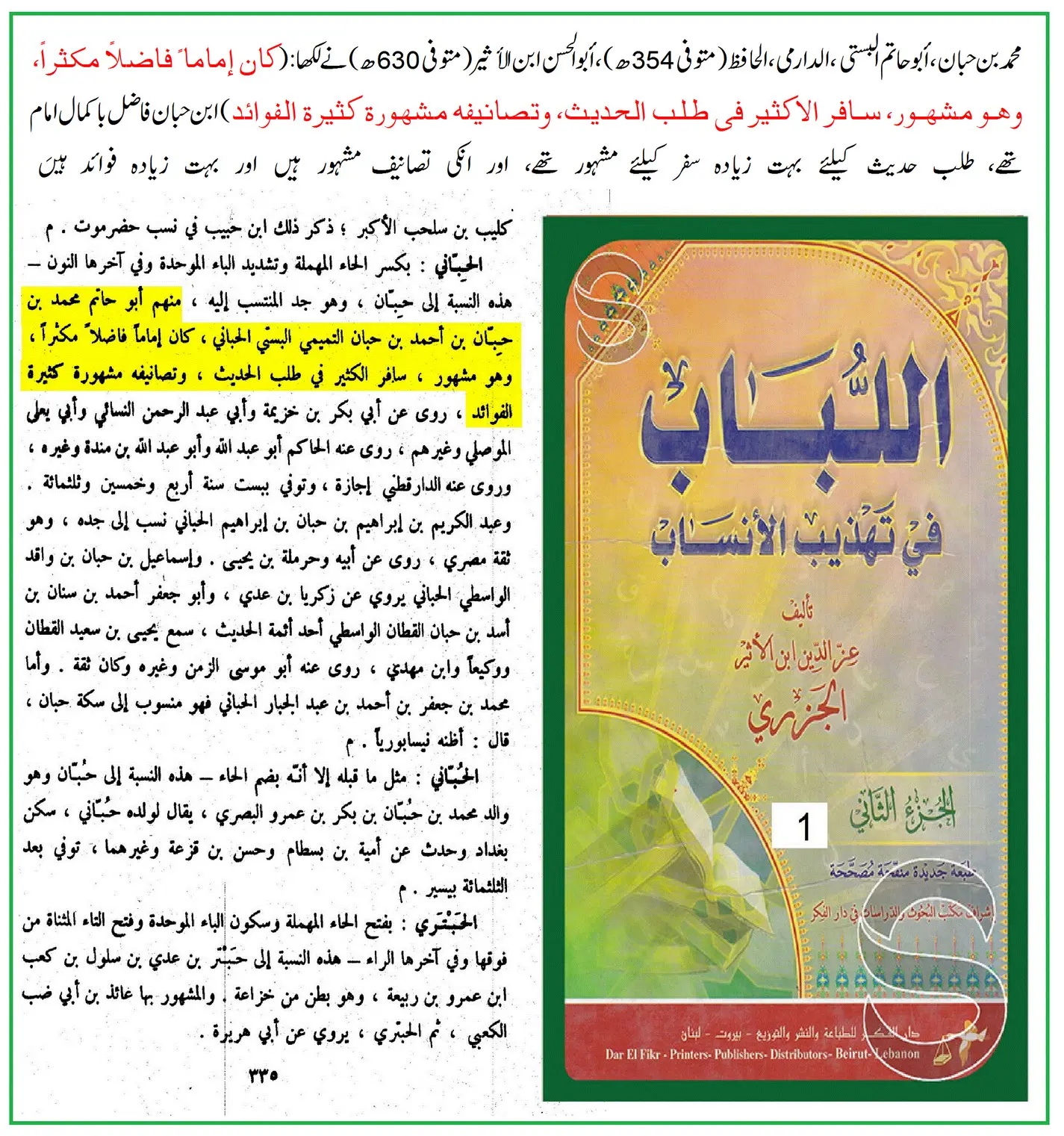
5. Words of Abu al-Hasan Ibn al-Athir
Arabic text:
كَانَ إِمَامًا فَاضلا مكثرا، وَهُوَ مَشْهُور سَافر الْكثير فِي طلب الحَدِيث، وتصانيفه مَشْهُورَة كَثِيرَة الْفَوَائِد
Translation: Ibn Hibban was an eminent imam and prolific narrator of hadith, who travelled extensively in pursuit of hadith, and his writings are famous and contain countless benefits.
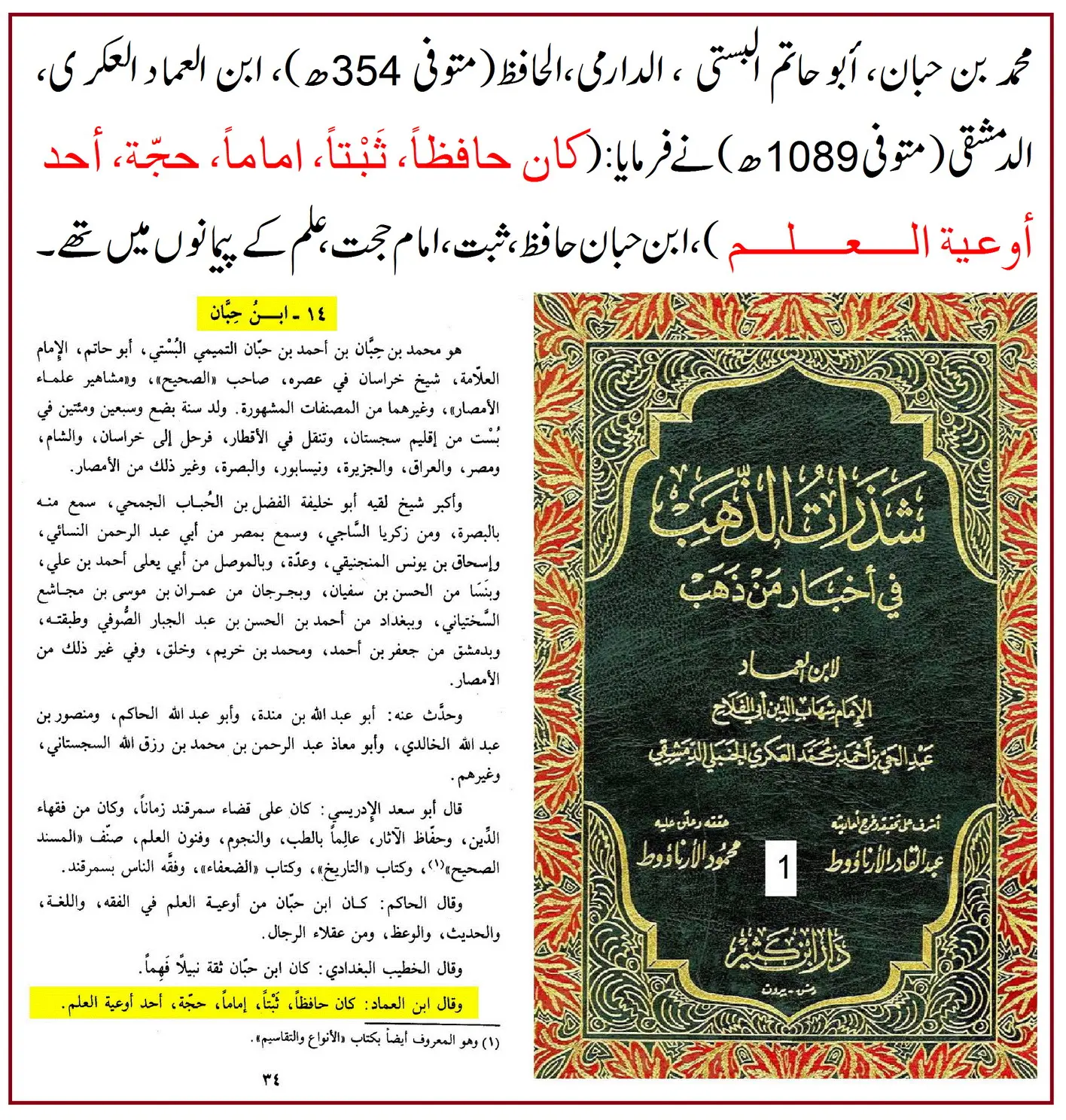
6. Statement of Ibn al-Imad al-Akri al-Dimashqi
Arabic text:
كان حافظا، ثبتا، إماما، حجّة، أحد أوعية العلم
Translation: He was a hafiz, firm (thabt), an imam, a proof (hujjah), and one of the great repositories of knowledge.
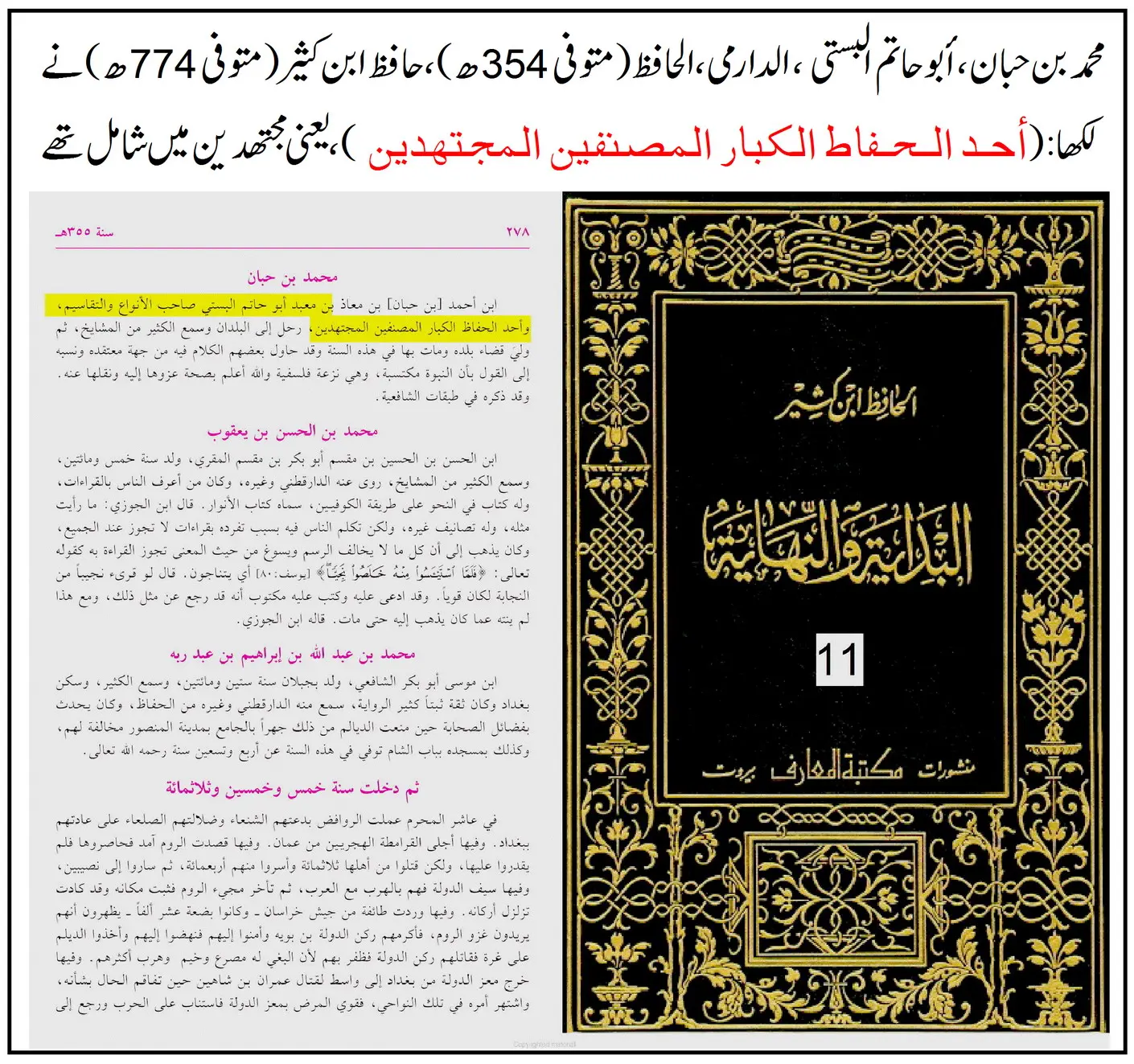
7. The Opinion of Imad ad-Din Ibn Kathir
Arabic text:
وأَحدُ الْحُفَّاظِ الْكِبَارِ الْمُصَنِّفِينَ الْمُجْتَهِدِينَ
Translation: He was counted among the great memorizers of hadith, authors, and mujtahids.
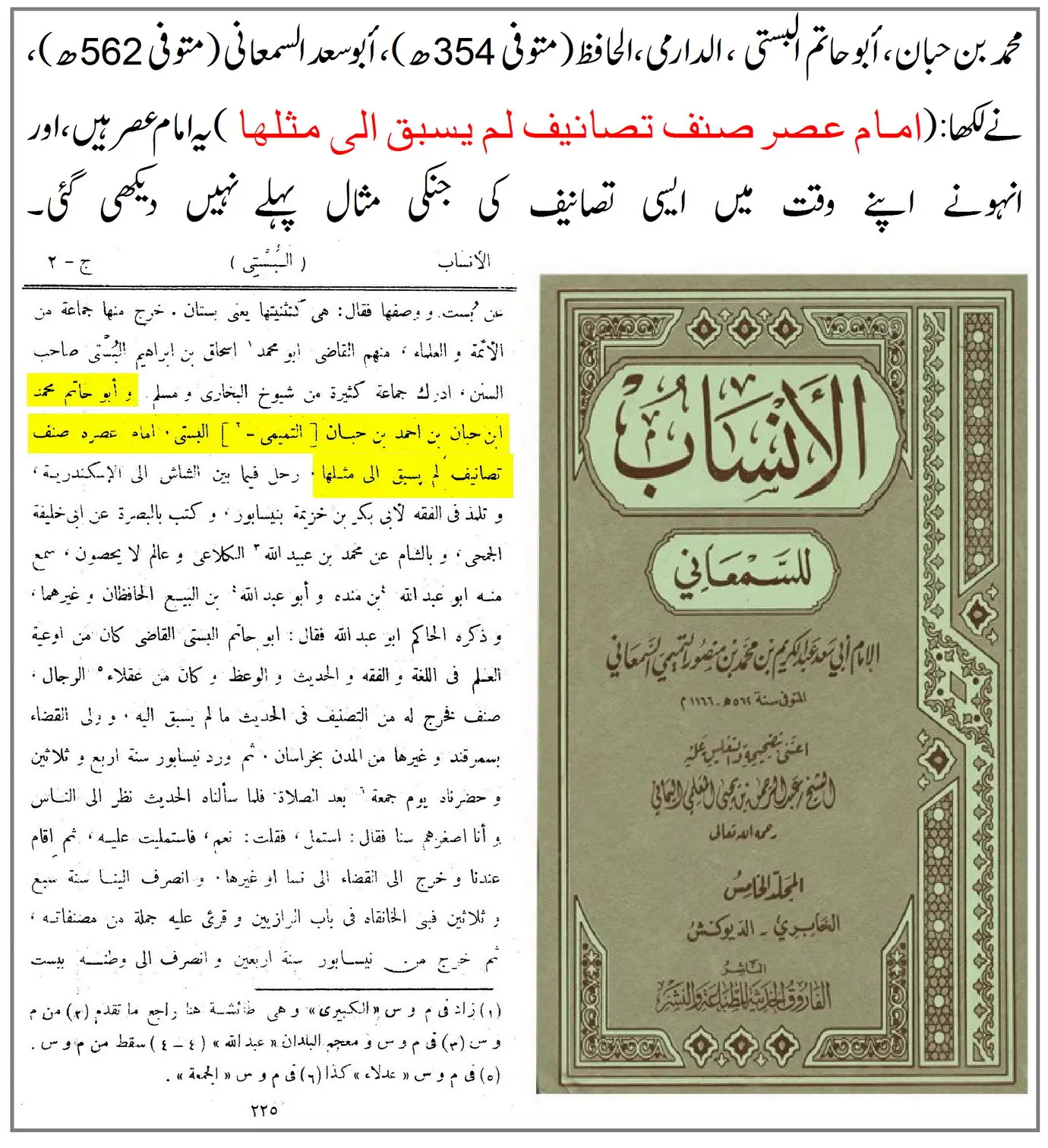
8. The Testimony of Abu Saad as-Sam’ani
Arabic text:
إمام عصره صنف تصانيف لم يسبق إلى مثلها
Translation: He was the imam of his time and wrote such works whose examples were not found before.
9. The Clarification of Ibn Nuqta al-Baghdadi
Arabic text:
وكان من الحفاظ الأثبات
Translation: He was among the memorizers of hadith who were reliable and strong.
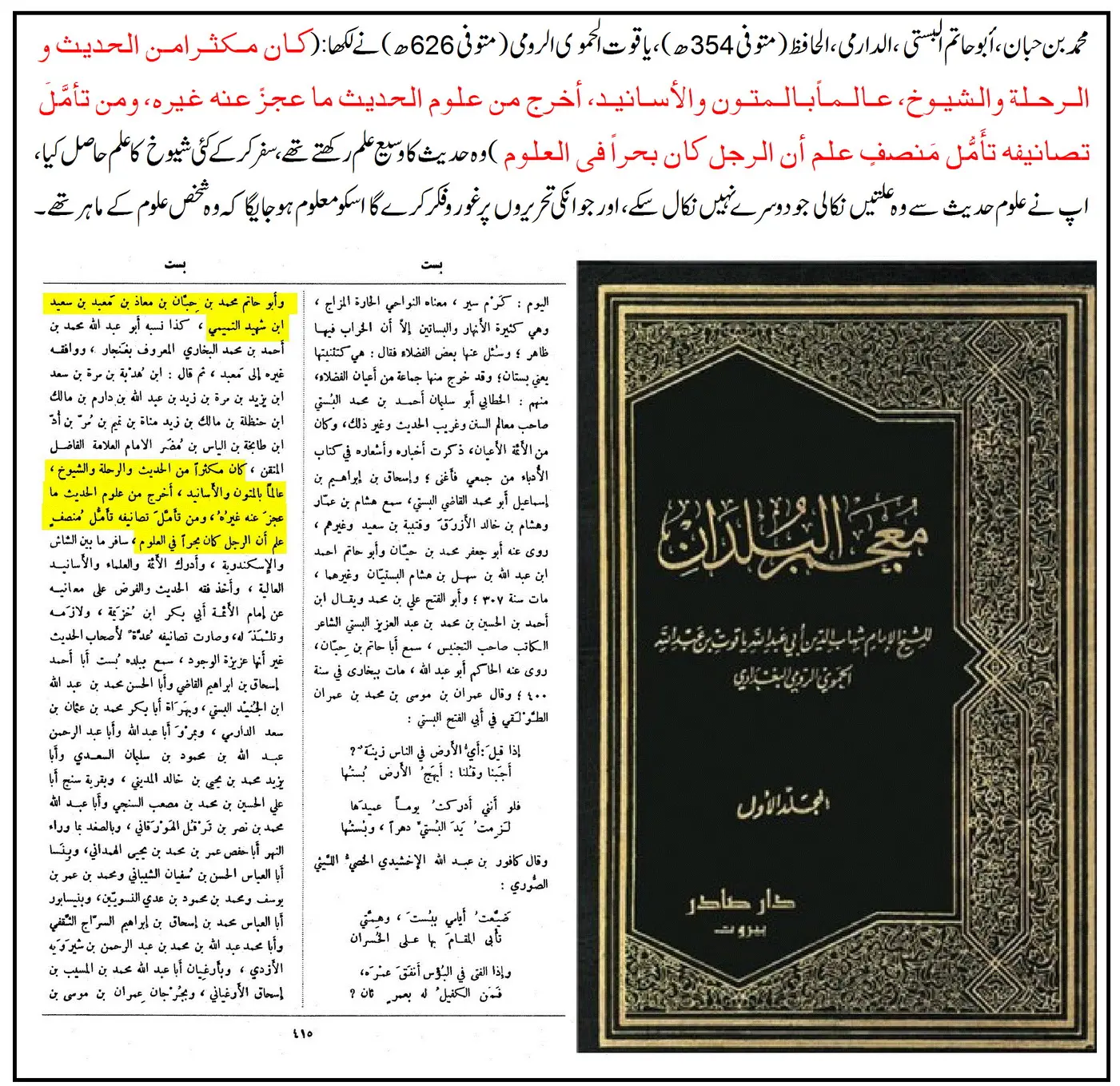
10. The Statement of Yaqut ar-Rumi al-Hamawi
Arabic text:
عالما بالمتون والأسانيد، أخرج من علوم الحديث ما عجز عنه غيره
Translation: He was a great scholar of texts and chains of narration, and he extracted from the sciences of hadith those points which others could not extract.
⚖️ Objections and Responses Regarding Imam Ibn Hibban (may Allah have mercy on him)
Objection Number 1: Expertise in Astrology and Theology
Text of the objection: Hafiz adh-Dhahabi wrote that Ibn Hibban was skilled in astrology and theology, and he was among the imams of his time. Innovators object on this basis that since he knew astrology and theology, this is a negative aspect.
Arabic text (Al-Dhahabi):
كان من أئمة زمانه، وكان عارفا بالطب والنجوم، والكلام والفقه، رأسا في معرفة الحديث.
Translation: He was among the leading scholars of his time, an expert in medicine, astronomy, theology, and jurisprudence, and held a high rank in the knowledge of Hadith.
Research response: Here, the knowledge of astronomy refers to the science based on observing the positions of stars to determine travel routes or seasonal times, not the claim of the unseen or forbidden astrology. Sheikh Ibn Uthaymeen (may Allah have mercy on him) clarified that this type of knowledge is permissible and there is no objection to it. As for the knowledge of theology (kalam), the objectors must prove in which issue Ibn Hibban engaged in kalam and which hadith scholar criticized him for it; otherwise, this objection is baseless.
Objection No. 2: The accusation of denying “limit” (hudood) for Allah
Text of the objection: It is said, citing Yahya bin Ammar, that Ibn Hibban denied that Allah has “limits,” and because of this, he was expelled from Sijistan.
Arabic text:
قدم علينا فأنكر الحد لله فأخرجناه
Translation: He came to us and denied the limit for Allah, so we expelled him.
Narrators of the chain:
-
Reference: Yahya bin Ammar Al-Shaibani — Unknown status
-
Reference: Abu Ismail Al-Ansari — Trustworthy Sheikh Al-Islam
Research Response:
- The main narrator of this report, Yahya bin Ammar Al-Shaibani, is of unknown status, so this accusation is not proven.
- Hafiz Al-Dhahabi himself said:
إنكاره الحد وإثباتكم للحد نوع من فضول الكلام، والسكوت عن الطرفين أولى
Meaning, denying or affirming the limit is a futile debate, and silence is better.
Objection Number 3: Accusation of Being a Heretic
Text of the objection: It was said on the authority of Abdul Samad bin Muhammad that scholars declared Ibn Hibban a heretic and ordered his killing because of his statement “Prophethood is knowledge and action.”
Arabic text:
أنكروا على ابن حبان قوله: النبوة العلم والعمل، وحكموا عليه بالزندقة، وهجروه
Urdu Translation: Scholars rejected Ibn Hibban’s statement that “Prophethood is the name of knowledge and action,” declared him a heretic, and then severed ties with him.
Narrators of the chain:
-
Reference: Abu Ismail Al-Ansari — Trustworthy Sheikh Al-Islam
-
Reference: Abdul Samad bin Muhammad bin Muhammad bin Saleh — Unknown status
-
Reference: Muhammad bin Muhammad bin Saleh — Unknown status
Research Response:
- The basis of this accusation is narrators who are unknown, therefore this narration is not reliable.
- The editor (muhaqqiq) of the book Dhamm al-Kalam wa Ahluhu also clarified that both Abdul Samad and his father are unknown.
Objection Number 4: Accusation of being a liar
Text of the objection: Ahmad bin Ali al-Sulaymani said that Sahl bin al-Sari declared Ibn Hibban a liar.
Arabic text:
لا تكتب عنه فإنه كذاب
Urdu translation: Do not write from him (Ibn Hibban), because he is a liar.
Narrators of the chain:
-
Reference: Ahmad bin Ali bin Amr al-Sulaymani — trustworthy hadith scholar, but strict in criticism
-
Reference: Abu Hatim Sahl bin al-Sari — unknown status (no explicit authentication)
Investigative response:
- Yaqut al-Rumi did not mention a connected chain for this statement.
- Hafiz al-Dhahabi declared the anomalous (shadh) criticisms of al-Sulaymani rejected:
فلا يسمع منه ما شذ فيه
Meaning his anomalous statements will not be accepted.
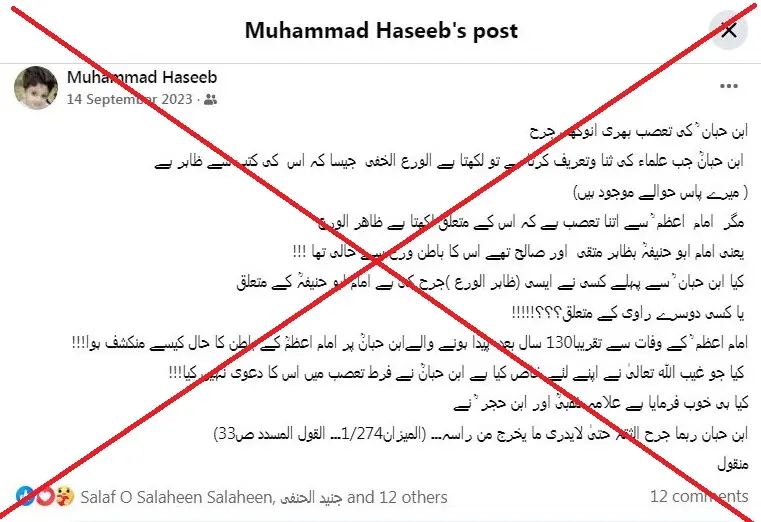
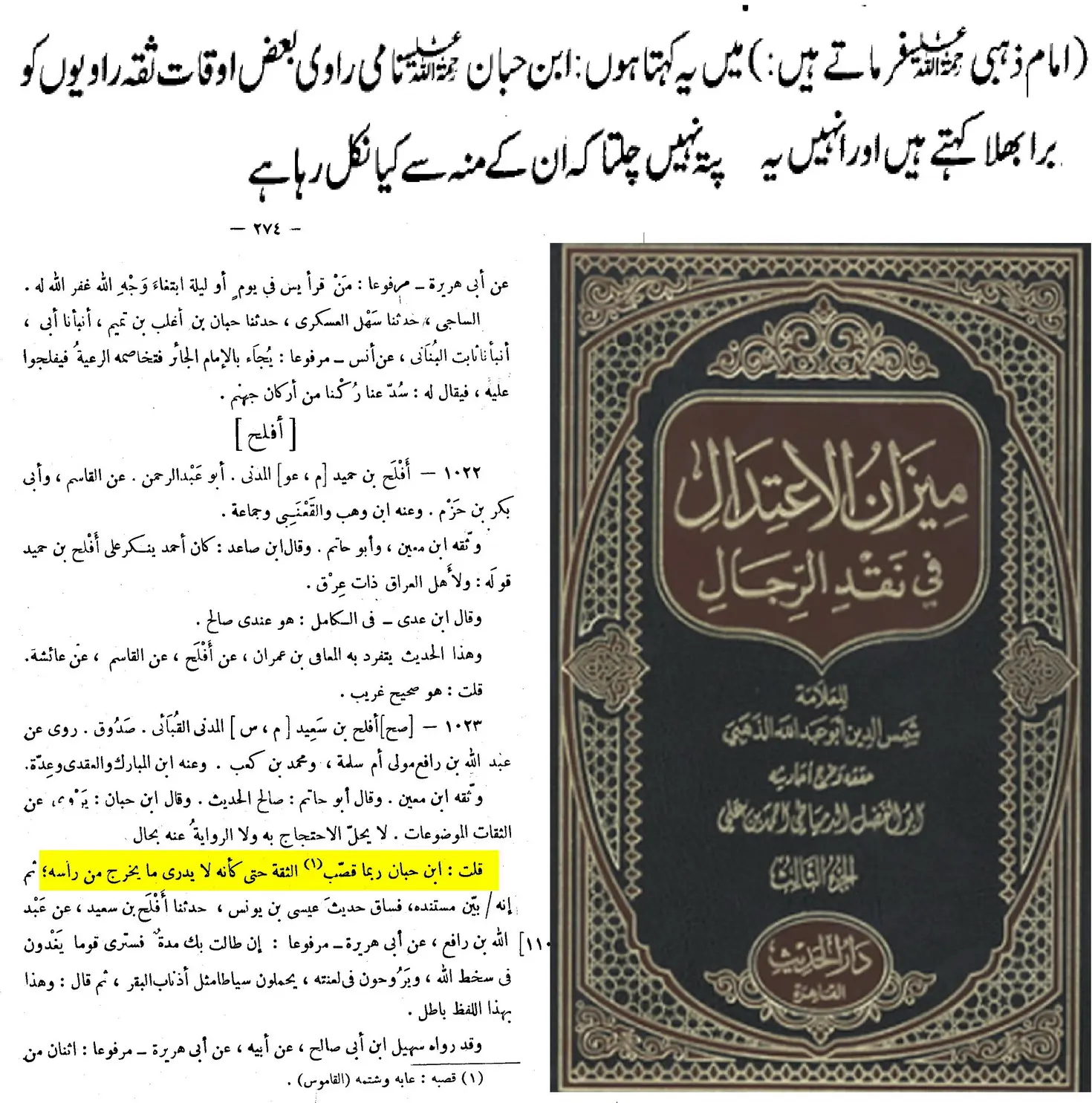
Objection Number 5: Habit of criticizing trustworthy narrators
Text of the objection: Hafiz al-Dhahabi and Ibn Hajar said that Ibn Hibban sometimes even criticized trustworthy narrators.
Arabic text:
ربما جرح الثقة حتى كأنه لا يدري ما يخرج من رأسه
Translation: Sometimes he even criticizes a trustworthy narrator, to the point that it is as if he does not know what he is saying.
Narrators of the chain:
-
Reference: Shams al-Din Muhammad ibn Ahmad al-Dhahabi — Imam of Jarh and Ta’dil
-
Reference: Ahmad ibn Ali ibn Hajar al-Asqalani — Imam of Hadith
Investigative Response:
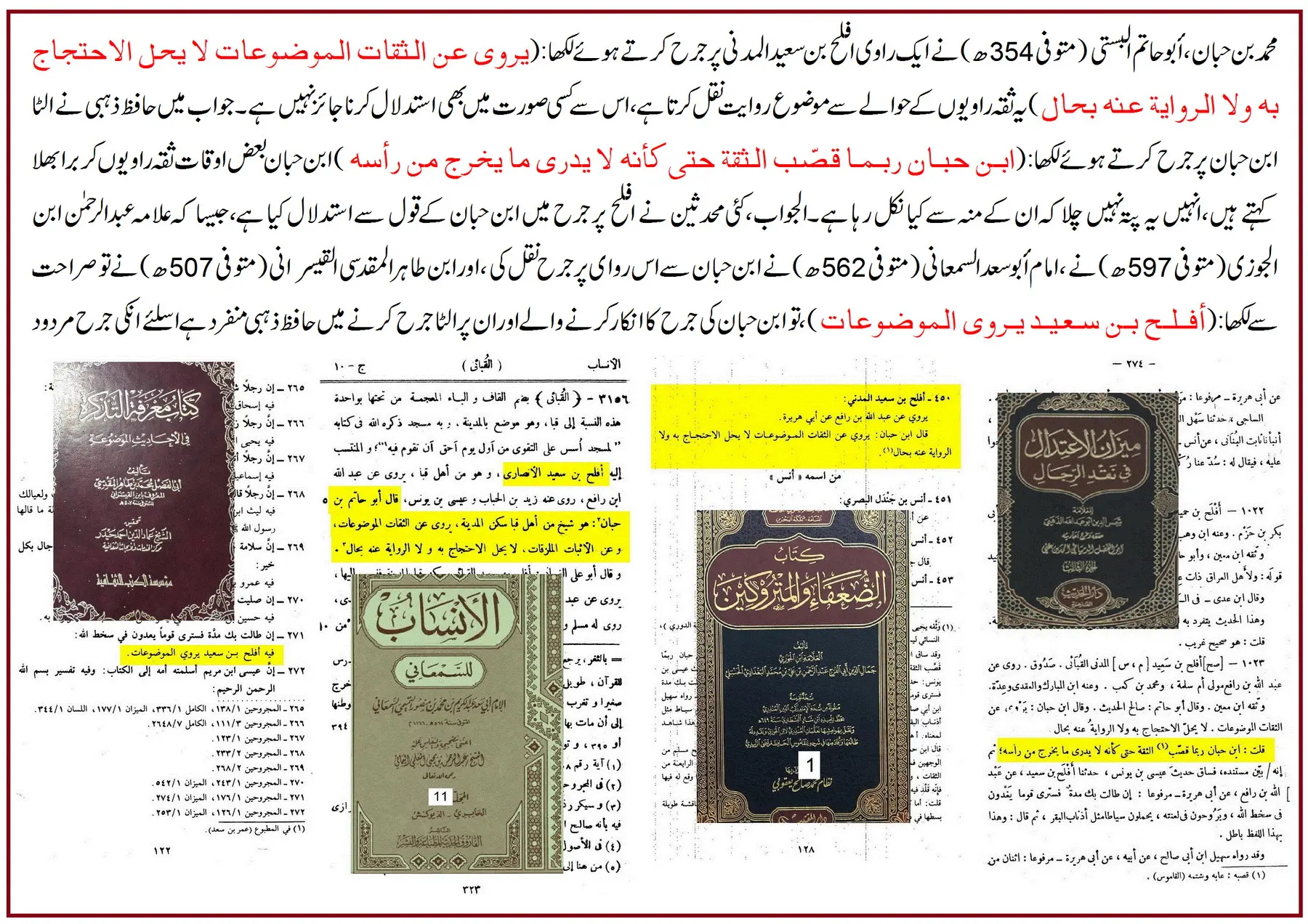
- This objection is based on the criticism of Aflah ibn Saeed al-Madani by Ibn Hibban, although this criticism was also made by Hakim Nishapuri, Abu Saad al-Samani, and Ibn Tahir al-Maqdisi.
- This shows that this criticism is not unique to Ibn Hibban but is agreed upon by other hadith scholars as well.
📜 Agreement on the criticism of Aflah ibn Saeed al-Madani
1. Ibn al-Jawzi (may Allah have mercy on him)
Arabic text:
يروي عن الثقات الموضوعات، لا يحل الاحتجاج به ولا الرواية عنه بحال
Translation: He used to narrate fabricated hadiths from trustworthy narrators; it is not permissible under any circumstances to take him as proof or to narrate from him.
2. Abu Saad al-Samani (may Allah have mercy on him)
Arabic text:
يروي عن الثقات الموضوعات، وعن الأثبات الملزقات، لا يحل الاحتجاج به ولا الرواية عنه بحال
Translation: He used to narrate fabricated and forged reports from trustworthy and reliable narrators; it is not permissible to take him as proof or to narrate from him.
3. Ibn Tahir al-Maqdisi (may Allah have mercy on him)
Arabic text:
فيه أفلح بن سعيد يروي الموضوعات
Translation: The Aflah ibn Saeed mentioned here is the one who narrates fabricated hadiths.
4. Hakim Nishapuri (may Allah have mercy on him)
Arabic text:
يروي عن عبد الله بن رافع وسهيل بن أبي صالح وغيرهما الموضوعات
Translation: He narrated fabricated reports from Abdullah bin Rafi’ and Suhail bin Abi Salih, etc.
⚖️ Conclusion:
In this criticism, Imam Ibn Hibban is not unique; rather, other hadith scholars have also criticized Aflah bin Saeed in the same way. Therefore, Ibn Hibban’s criticism is authentic and supported.
📌 Imam Ibn Hibban’s (may Allah have mercy on him) Criticism of Imam Abu Hanifa (may Allah have mercy on him)
Now we enter the section where Imam Ibn Hibban (may Allah have mercy on him) criticized Imam Abu Hanifa (may Allah have mercy on him), and narrations supporting this criticism are also reported from other hadith scholars.
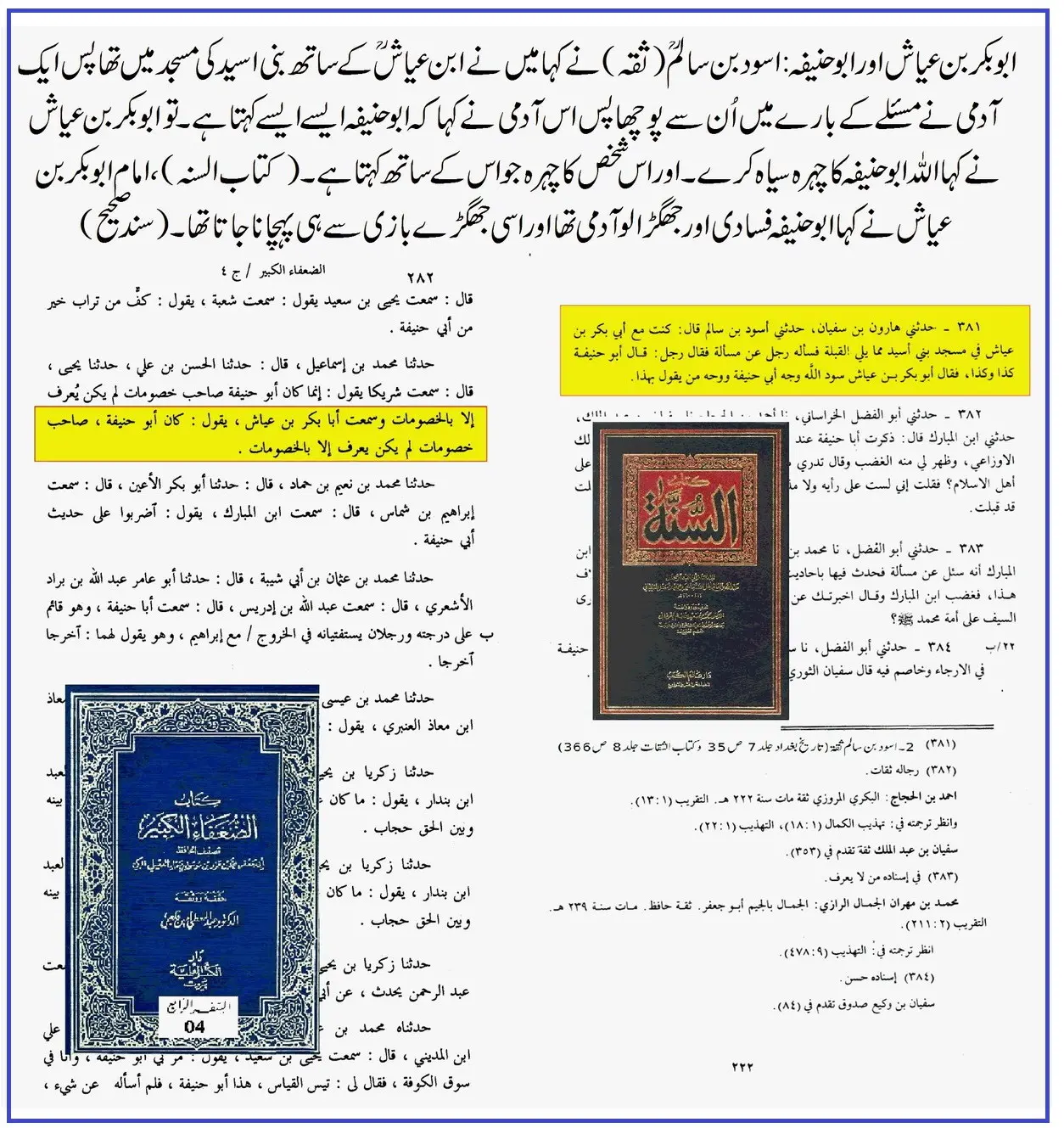
Criticism 1: Being quarrelsome
Arabic text:
إنما كان أبو حنيفة صاحب خصومات، لم يكن يعرف إلا بالخصومات
Translation: Abu Hanifa was a quarrelsome person, and was known only for disputes.
Narrators of the chain:
-
Reference: Muhammad bin Amr al-‘Aqili — trustworthy Hafiz
-
Reference: Muhammad bin Ismail al-Sulami — trustworthy Hafiz
-
Reference: Hasan bin Ali bin Affan — truthful
-
Reference: Yahya bin Saeed al-Qattan — trustworthy and reliable
-
Reference: Shareek bin Abdullah al-Qadi — trustworthy
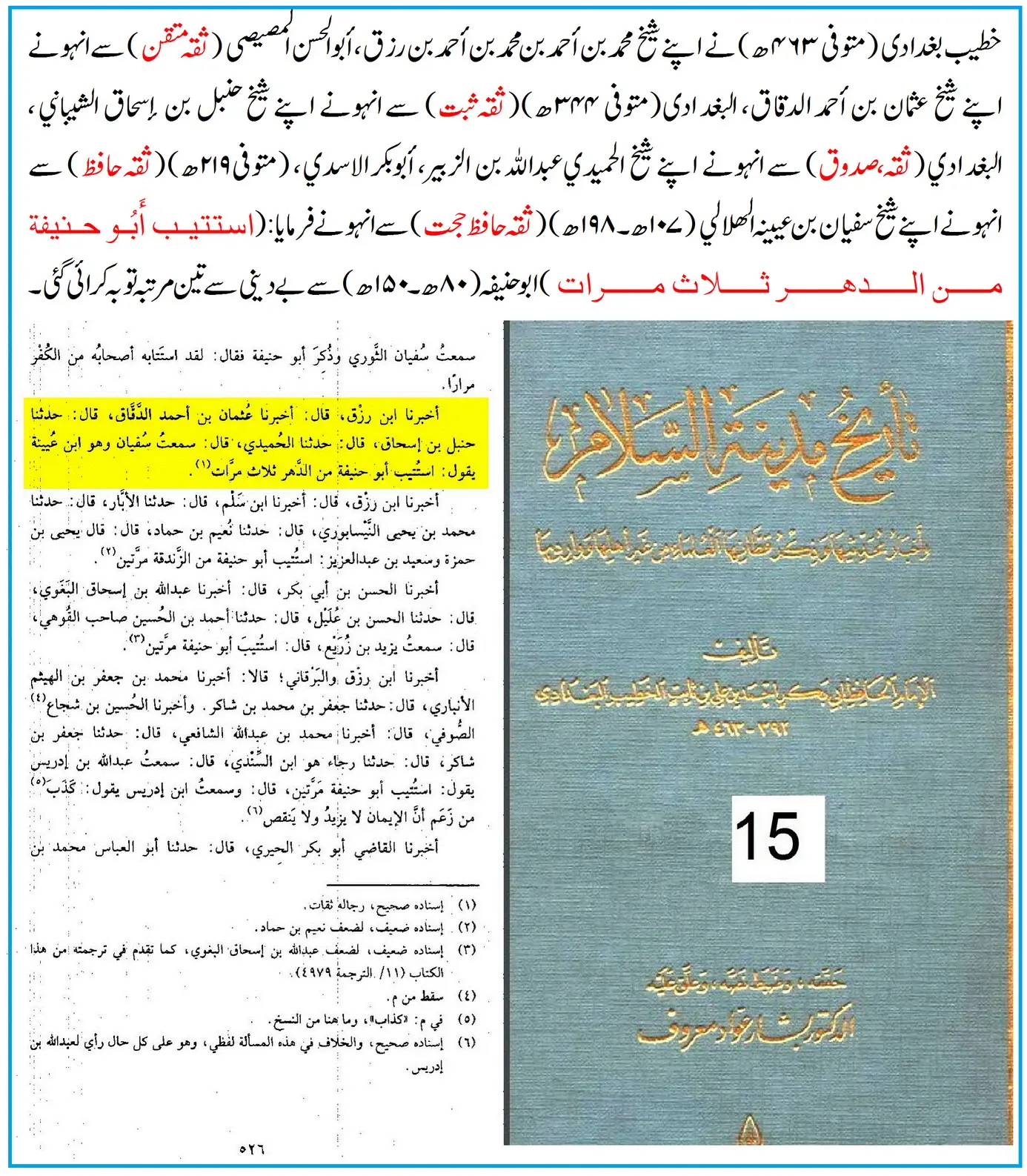
Criticism 2: Only apparent piety
Arabic text:
استتيب أبو حنيفة من الكفر ثلاث مرات
Translation: Abu Hanifa was made to repent three times due to disbelief.
Narrators of the chain:
-
Reference: Al-Khatib Al-Baghdadi — Trustworthy Hafiz
-
Reference: Muhammad bin Ahmad Al-Bazzar (Ibn Rizqiyyah) — Trustworthy and Precise
-
Reference: Uthman bin Ahmad Al-Daqqaq — Trustworthy and Reliable
-
Reference: Hanbal bin Ishaq Al-Shaibani — Trustworthy
-
Reference: Abdullah bin Al-Zubair Al-Humaidi — Trustworthy, Reliable, Authoritative
-
Reference: Sufyan bin Uyaynah Al-Hilali — Trustworthy Hafiz, Authoritative
Criticism 3: Weak Narration
Arabic text:
حدث بمائة وثلاثين حديثا مسانيد، ما له حديث في الدنيا غيرها، أخطأ منها في مائة وعشرين
Translation: He narrated 130 musnad hadiths, he has no other hadith in the world besides them, and he made mistakes in 120 of them.
Note: This is Imam Ibn Hibban’s own scholarly ijtihad. If anyone wants to refute this, they should present the authenticity of Abu Hanifa’s narrations with a sound chain, rather than attacking the critic.
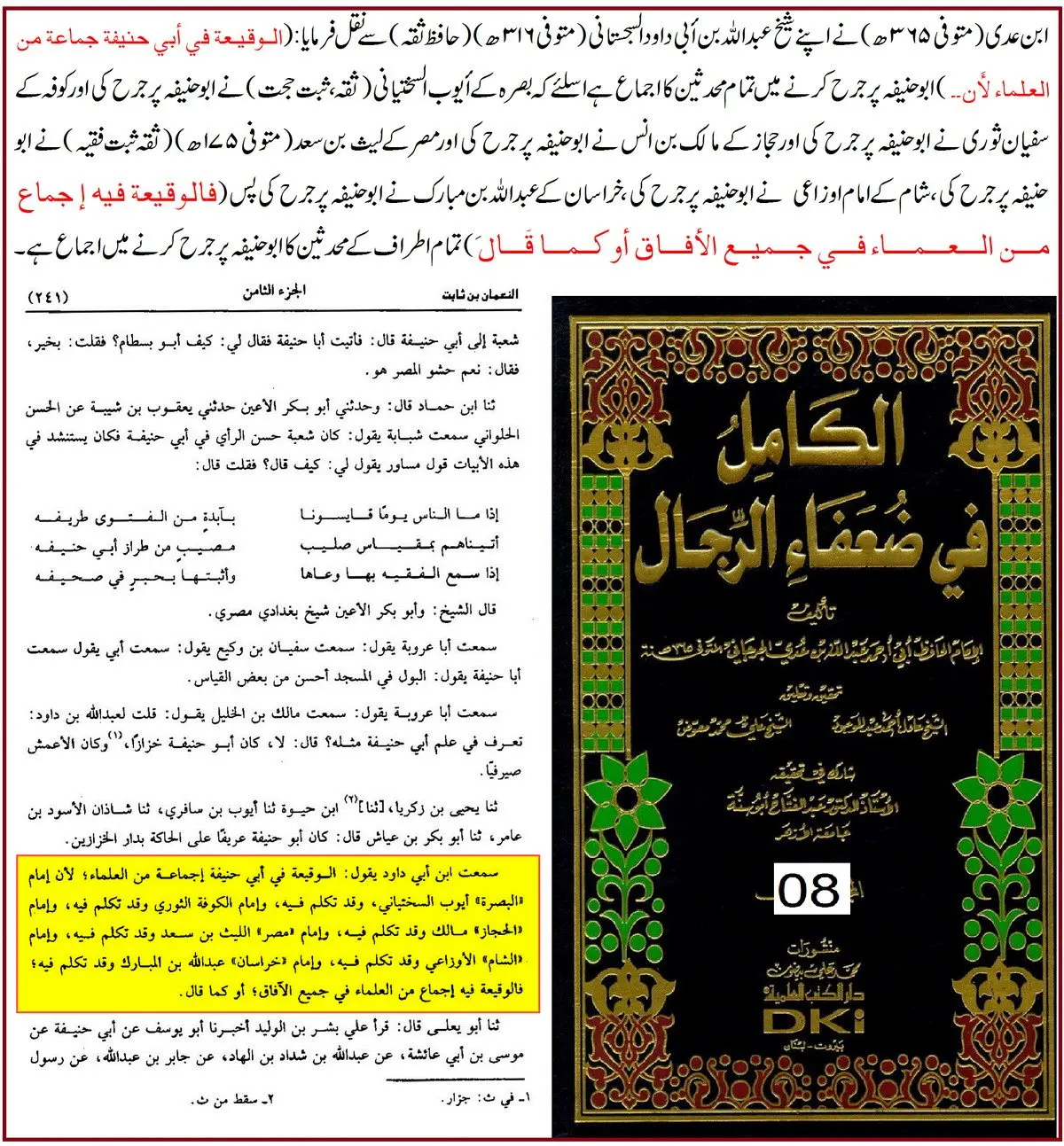
Criticism 4: Consensus of Muhaddithin on Abandoning Narration
Arabic text:
الوقيعة في أبي حنيفة إجماع من العلماء في جميع الآفاق
Translation: There is a consensus among scholars from all regions on criticizing Abu Hanifa.
Narrators of the chain:
-
Reference: Abdullah bin Adi Al-Jurjani — Precise Hafiz
-
Reference: Abdullah bin Abi Dawood Al-Sijistani — Trustworthy
📜 Summary of the Article
In this detailed research article, it has been clarified that:
- Imam Muhammad bin Hibban al-Busti (may Allah have mercy on him) was not only a trustworthy and steadfast memorizer of hadith but also the majority of hadith scholars testified to his scholarly prestige and vast knowledge.
- All objections raised against him (astrology, theology, denial of limits for Allah, heresy, falsehood, and criticism of a trustworthy person) were thoroughly examined and it was proven that either these objections are based on unknown narrators or their meaning is not as stated by the objectors.
- The criticism of Aflah bin Saeed al-Madani by Ibn Hibban (may Allah have mercy on him) was also mentioned by other hadith scholars (Hakim Nishapuri, Ibn al-Jawzi, Sam’ani, Ibn Tahir al-Maqdisi, etc.), which made it clear that he was not unique in this.
- He was also not unique in criticizing Imam Abu Hanifa (may Allah have mercy on him); rather, great imams such as Ayub al-Sakhtiyani, Sufyan al-Thawri, Imam Malik, Laith bin Saad, Imam Awza’i, and Abdullah bin Mubarak agreed with this.
- The scholarly status of Imam Ibn Hibban (may Allah have mercy on him) is so high that criticizing him is against scholarly integrity and is merely a result of bias.
📌 Conclusion
- It has been proven through research that all serious accusations against Imam Muhammad bin Hibban al-Busti (may Allah have mercy on him) are either not authentically established or their true meaning is based on distortion and misunderstanding.
- These criticisms are baseless and rejected in comparison to the authentication by the majority (jumhur) of the hadith scholars who have authenticated him.
- The background of his criticism of Imam Abu Hanifa (may Allah have mercy on him) is supported by the statements of other imams and critics, therefore it was an academic opinion and not personal animosity.
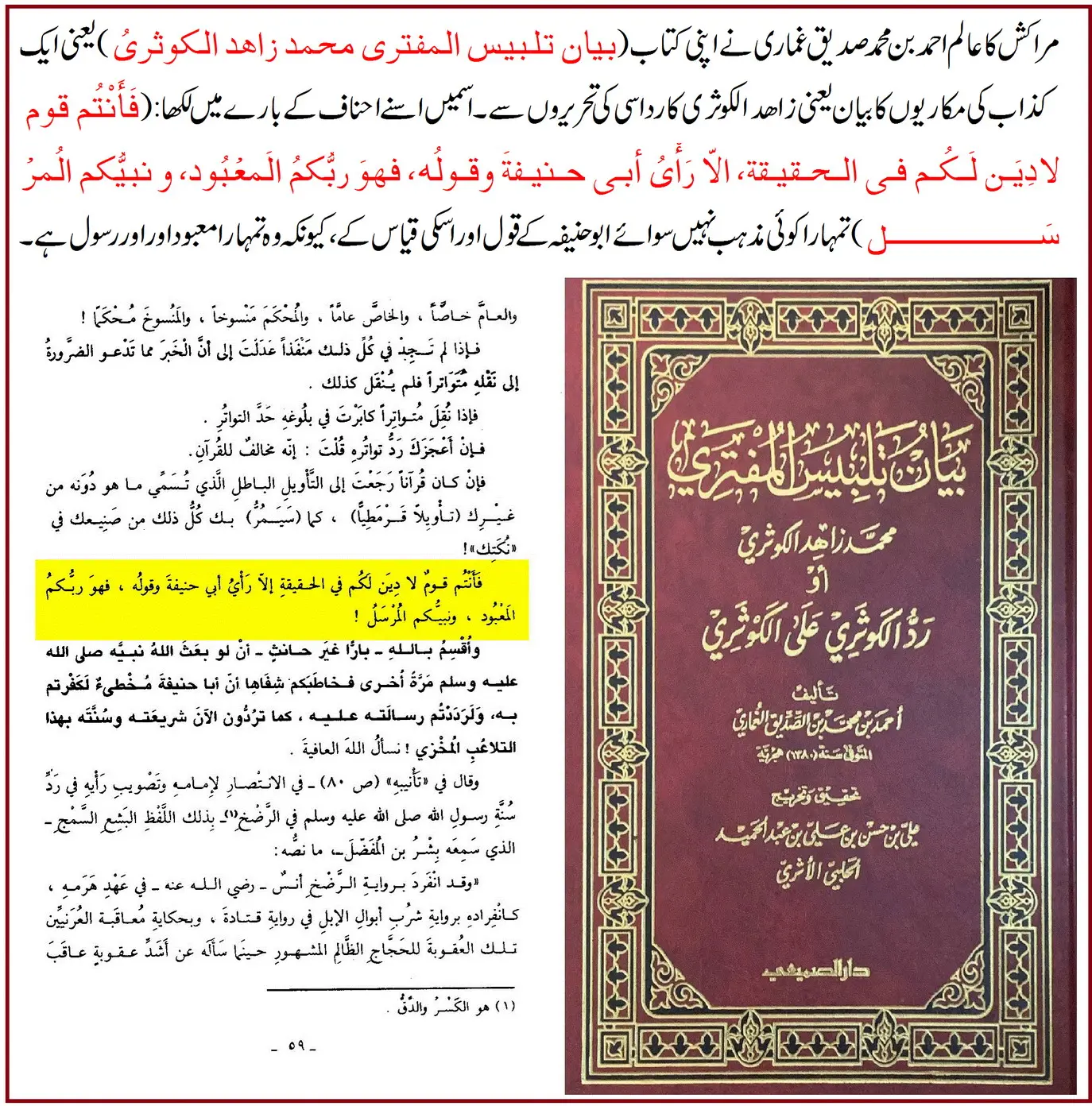
- Turning scholarly disagreement into insults and personal attacks is not the way of the learned; rather, it is a sign of bias and an innovator’s mindset.
Scans of Important References