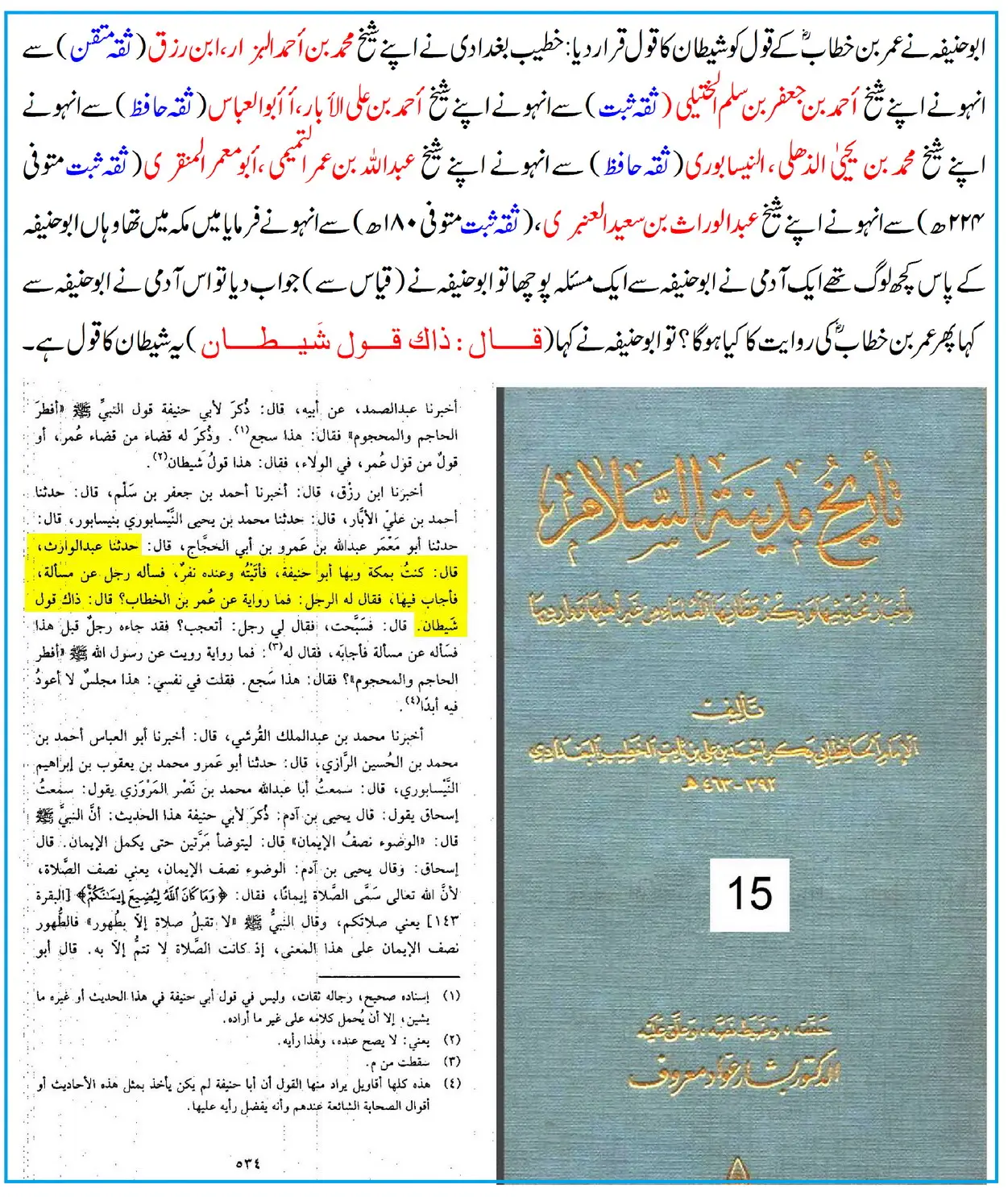
Regarding Imam Azam Abu Hanifaؒ, Imam Khateeb Baghdadi has narrated in his book Tarikh Baghdad a tradition in which it is mentioned that Imam Abu Hanifaؒ said about a saying attributed to Hazrat Umar bin Khattabؓ: “That is the saying of Satan,” meaning, may Allah protect us, it is the saying of Satan.
This tradition is authentic and established with a sound chain of narration. The majority of hadith scholars have declared the narrators in its chain to be trustworthy and reliable, and the objections raised against it are merely based on interpretations and conjectures.
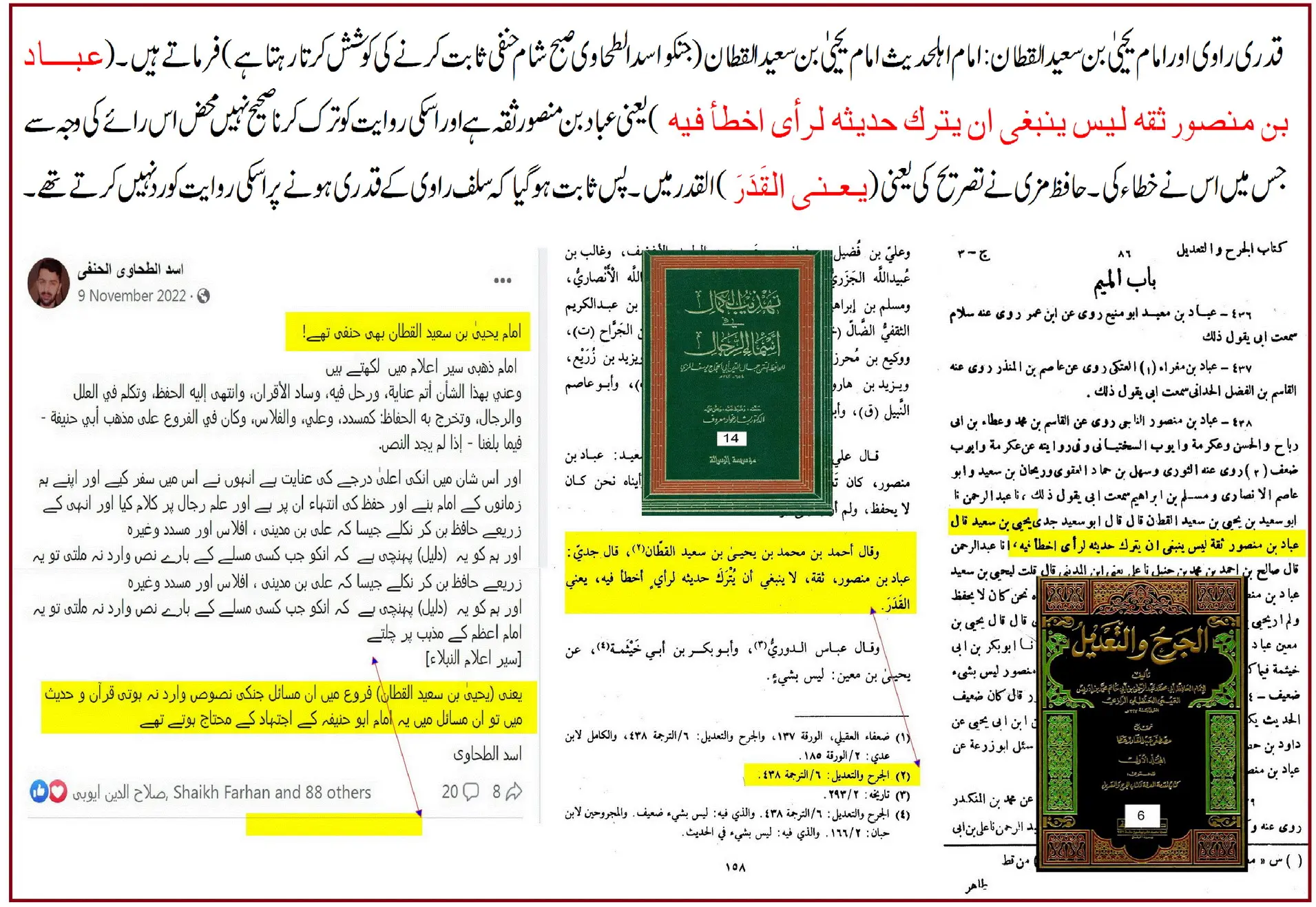
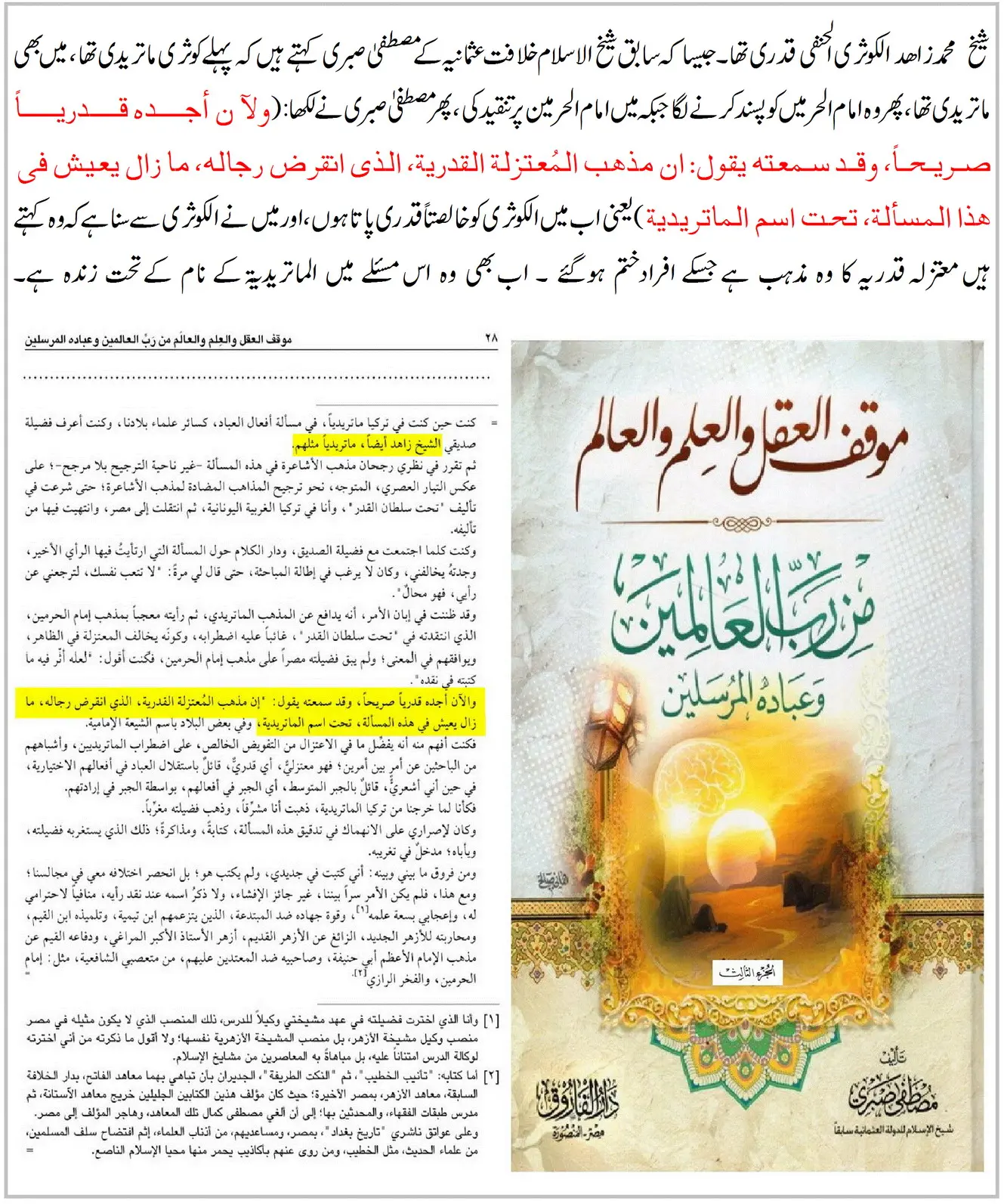
Some people from the Barelvi school of thought, especially the innovator Asad al-Tahawi, deny this tradition and create various doubts, such as:
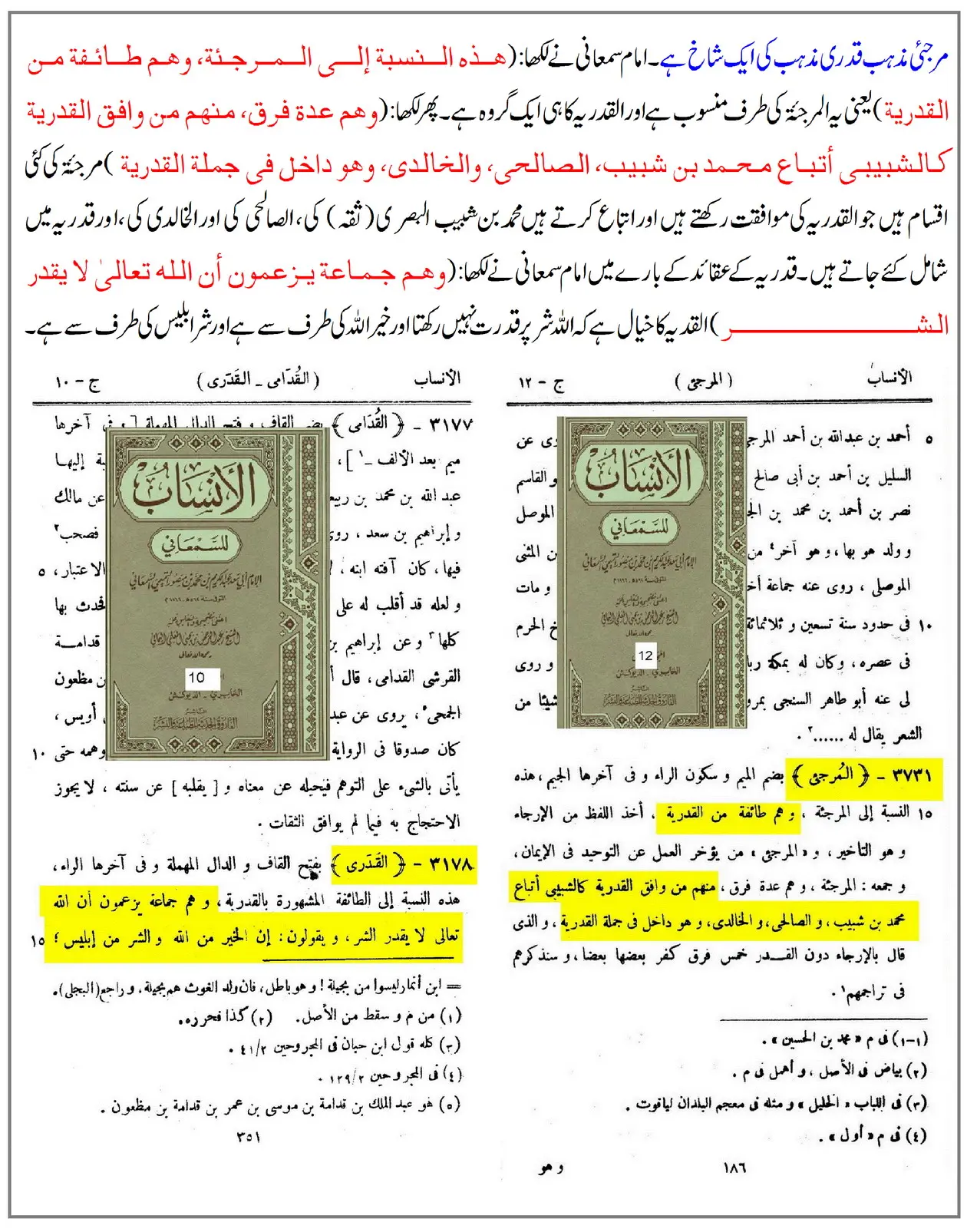
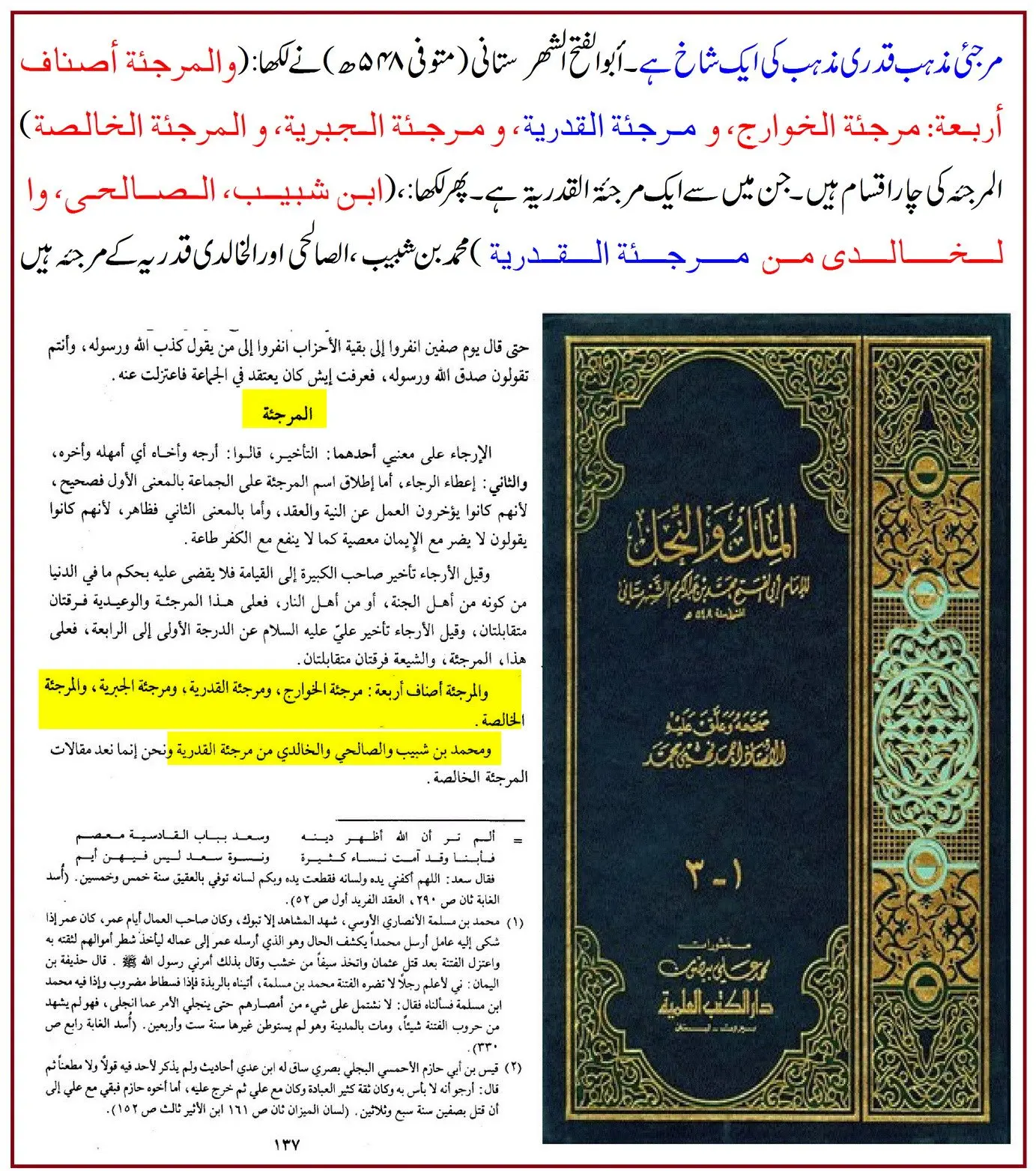
- Rejecting it by accusing some narrators in the chain of being “Qadari” (deniers of divine decree);
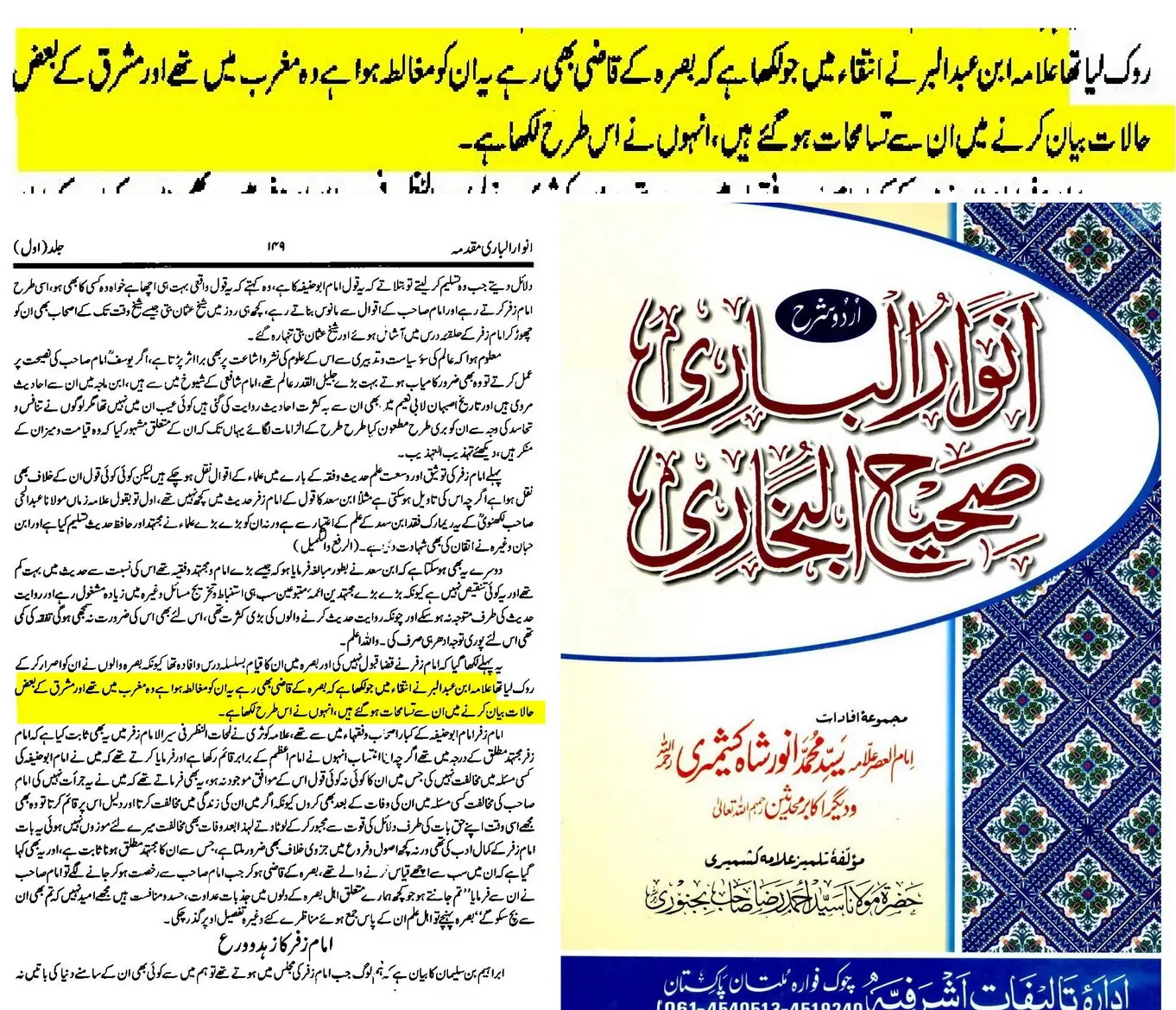
- Claiming that the people of Basra fabricated this tradition out of bias;
- Or that such a saying was never attributed to Imam Abu Hanifaؒ.
Answering all these doubts and proving that this narration is indeed authentically transmitted from Imam Abu Hanifa (may Allah have mercy on him) is the purpose of this article. For this, we will present each objection and then provide a researched answer.
The original text of the narration present in Tarikh Baghdad and the narrators of its chain
أَخْبَرَنَا ابْنُ رِزْقٍ، قَالَ: أَخْبَرَنَا أَحْمَدُ بْنُ جَعْفَرِ بْنِ سَلْمٍ، قَالَ: حَدَّثَنَا أَحْمَدُ بْنُ عَلِيٍّ الأَبَّارُ، قَالَ: حَدَّثَنَا مُحَمَّدُ بْنُ يَحْيَى النَّيْسَابُورِيُّ، بِنَيْسَابُورَ، قَالَ: حَدَّثَنَا أَبُو مَعْمَرِ عَبْدُ اللَّهِ بْنُ عَمْرِو بْنِ أَبِي الْحَجَّاجِ، قَالَ: حَدَّثَنَا عَبْدُ الْوَارِثِ، قَالَ: كُنْتُ بِمَكَّةَ وَبِهَا أَبُو حَنِيفَةَ، فَأَتَيْتُهُ وَعِنْدَهُ نَفَرٌ، فَسَأَلَهُ رَجُلٌ عَنْ مَسْأَلَةٍ فَأَجَابَ فِيهَا، فَقَالَ لَهُ الرَّجُلُ: فَمَا رِوَايَةٌ عَنْ عُمَرَ بْنِ الْخَطَّابِ؟ قَالَ: ذَاكَ قَوْلُ شَيْطَانٍ،
Translation
Abdul Waris says: I was in Makkah and Abu Hanifa was there. I went to him; some people were sitting with him. A person asked him a question, and Imam Abu Hanifa replied. He said: “What is the narration regarding this from Umar ibn al-Khattab (may Allah be pleased with him)?” Imam Abu Hanifa said: “This is the statement of Satan.”
قَالَ: فَسَبَّحْتُ، فَقَالَ لِي رَجُلٌ: أَتَعْجَبُ؟ فَقَدْ جَاءَهُ رَجُلٌ قَبْلَ هَذَا فَسَأَلَهُ عَنْ مَسْأَلَةٍ، فَأَجَابَهُ، فَقَالَ لَهُ: فَمَا رِوَايَةٌ رُوِيَتْ عَنْ رَسُولِ اللَّهِ صَلَّى اللَّهُ عَلَيْهِ وَسَلَّمَ: ” أَفْطَرَ الْحَاجِمُ وَالْمَحْجُومُ “؟ فَقَالَ: هَذَا سَجْعٌ، فَقُلْتُ فِي نَفْسِي: هَذَا مَجْلِسٌ لَا أَعُودُ فِيهِ أَبَدًا.
The narrator says: Upon hearing this, I said SubhanAllah. A person said to me: Are you surprised? Previously, another person came and asked a question, and Abu Hanifa answered. He said: “It is narrated from the Messenger of Allah ﷺ that both the one who performs cupping and the one on whom cupping is performed break their fast.” Then Imam Abu Hanifa said: “This is merely rhymed speech.” I said to myself: This is the gathering I will never attend again.
Status of the Narrators of the Chain
- Al-Khatib Al-Baghdadi — Trustworthy, authoritative.
- Muhammad ibn Ahmad Al-Bazzaz, Abu Al-Hasan Abu Bakr — Trustworthy, precise.
- Ahmad ibn Ja’far Al-Khatli, Abu Bakr — Trustworthy, reliable.
- Ahmad ibn Ali Al-Abar, Abu Al-Abbas Al-Baghdadi Al-Nakhshabi — Trustworthy, memorizer.
- Muhammad ibn Yahya Al-Dhuhli Al-Nisaburi — Trustworthy, memorizer, noble.
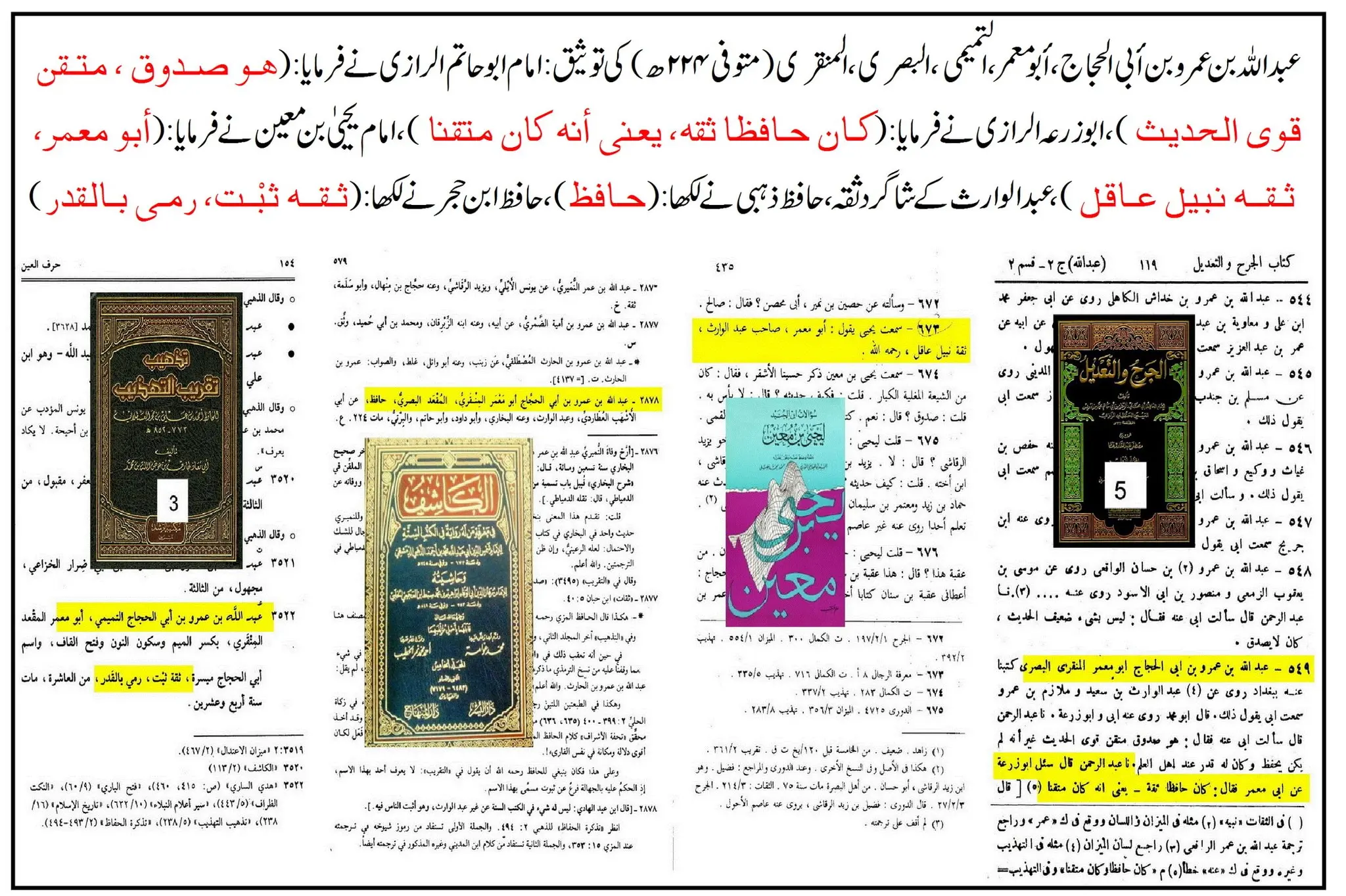
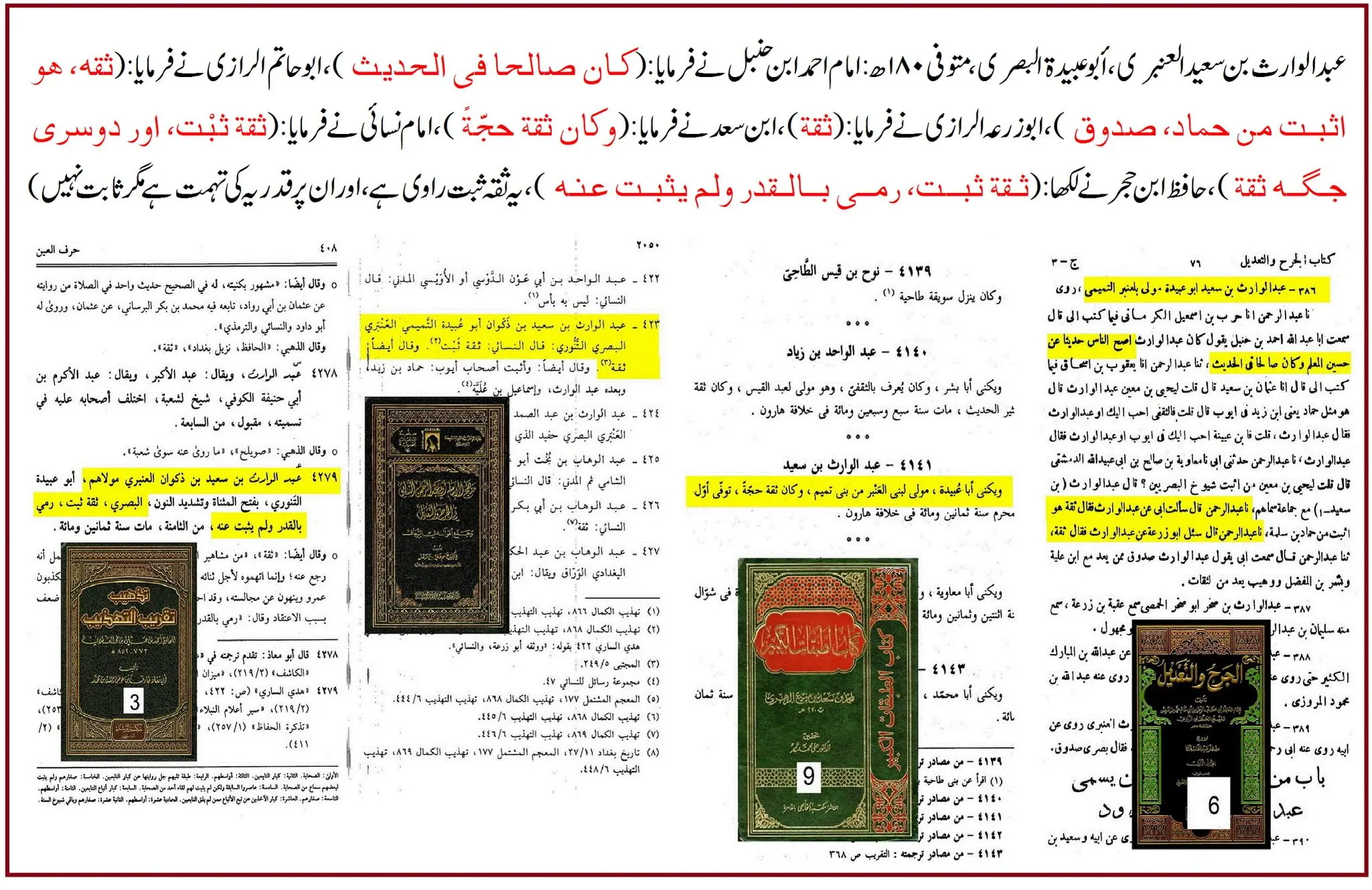
- Abdullah ibn Amr ibn Abi Al-Hajjaj Al-Tamimi, Abu Muammar Al-Basri Al-Munqari — Trustworthy, reliable, although he is attributed with being a Qadari.
- Abdul Warith ibn Saeed Al-Anbari Al-Basri — Trustworthy, reliable; he is accused of being a Qadari but it is not established.
First Objection — Presence of Qadari Narrators in the Chain
❖ Objection
The Barelvi scholars say that in the chain of this narration, there are two narrators: Abu Muammar Abdullah bin Amr bin Abi al-Hajjaj and Abdul Warith bin Saeed. Both are accused of being “Qadari.” The narration of an innovator is rejected; therefore, this narration is not authoritative.
Answer
① Abdul Warith bin Saeed (d. 180 AH)
- Hafiz Ibn Hajar:
«ثقة ثبت رُمي بالقدر ولم يثبت عنه»
Reference: (Taqreeb al-Tahdheeb, No: 3888)Translation: He is trustworthy and reliable; the accusation of being Qadari was made but was not proven.
- Imam Al-Dhahabi:
«قد كان عبد الوارث إمامًا حجّة متعبدًا»
Reference: (Tarikh al-Islam, 10/672)Translation: Abdul Warith was an Imam, authoritative, and devout worshipper.
Explanation: Although the accusation of being Qadari was mentioned regarding Abdul Warith, the scholars clarified that this accusation was not proven. Rather, he was called an Imam, authoritative, and reliable.
② Abu Muammar Abdullah bin Amr al-Munqari (d. 225 AH)
- Imam Abu Zur’ah al-Razi:
«كان حافظًا – ثقة»
Reference: (Al-Jarh wa al-Ta’dil, 5/66)Translation: He was a Hafiz and trustworthy.
- Imam Abu Hatim al-Razi:
«صدوق متقن قوي الحديث»
Reference: (Al-Jarh wa al-Ta’dil, 5/66)Translation: He was truthful, reliable, and strong in hadith.
- Imam Yahya ibn Ma’in:
«ثقة نبيل عاقل»
Reference: (Su’alat Ibn al-Junaid, p. 673)Translation: He was trustworthy, noble, and intelligent.
- Hafiz adh-Dhahabi:
«حافظ»
Reference: (Al-Kashif, 2/175)Translation: He was a Hafiz.
- Hafiz Ibn Hajar:
«ثقة ثبت»
Reference: (Taqrib at-Tahdhib, No: 3498)Translation: He was trustworthy and reliable.
Explanation: There is indeed an attribution of “Qadari” to Abu Muammar, but despite that, all the major Imams have called him trustworthy, strong in hadith, and precise.
③ Fundamental Principle
- Yahya ibn Sa’id al-Qattan:
«عباد بن منصور ثقة، لا ينبغي أن يترك حديثه لرأي أخطأ فيه، يعني القدر»
Reference: (Al-Jarh wa al-Ta’dil, 6/23)Translation: ‘Abbad ibn Mansur is trustworthy. His hadith should not be abandoned merely because he held an incorrect opinion regarding the issue of Qadar (divine decree).
Explanation: The principle of hadith is that if a narrator is trustworthy but holds a heretical belief and does not promote his heresy, then his narration is accepted.
✅ Conclusion
- The allegation of Abdul Warith being a Qadari is not proven.
- Abu Muammar is trustworthy and strong in hadith; attributing Qadari beliefs to him does not affect his integrity.
- The fundamental principle is that if an innovator narrator is trustworthy, then his narration is accepted.
- Therefore, the objection that there are Qadari narrators in the chain is baseless and rejected.
Second Objection — Bias of the People of Basra
❖ Objection
The Barelvi scholars say that the hadith scholars and people of knowledge in Basra were biased against Imam Abu Hanifa (may Allah have mercy on him). For this reason, such narrations were fabricated against him to weaken the personality of Imam Abu Hanifa (may Allah have mercy on him).
Answer
① The basis of narration is the chain of transmission, not a story of bias
- According to hadith scholars, the authenticity or weakness of a narration depends on the chain of transmission and the integrity and precision of the narrators, not on regional or city bias.
- The claim that “the people of Basra fabricated narrations out of bias” has no chain of transmission evidence.
② Explicit endorsements by the Imams
All the narrators of this hadith (Abdul Warith, Abu Muammar, Muhammad bin Yahya al-Dhuhli, Ahmad bin Ali al-Abar, etc.) have been explicitly described by the Imams with words like trustworthy, reliable, and memorizer.
For example:
- Ibn Hajar said about Abdul Warith:
«ثقة ثبت رمي بالقدر ولم يثبت عنه»
Reference: (Taqreeb al-Tahdheeb, 3888)Translation: He is trustworthy and reliable; there is an accusation of being a Qadari against him but it has not been proven.
- Yahya bin Ma’in said about Abu Muammar:
«ثقة نبيل عاقل»
Reference: (Su’alat Ibn al-Junaid, p. 673)Translation: He was trustworthy, noble, and intelligent.
These words themselves indicate that their narration was accepted with confidence.
③ Historical stories are not proof
- To say that the people of Basra had enmity towards Imam Abu Hanifa (may Allah have mercy on him) is merely a story without any authentic chain of narration.
- If we accept this principle, then every authentic narration can be rejected by calling it bias.
- The methodology of the muhaddithin is that as long as the chain is authentic and the narrators are trustworthy, the narration is accepted, whether the narrator is from Basra or Kufa.
④ From the books of the Hanafis themselves
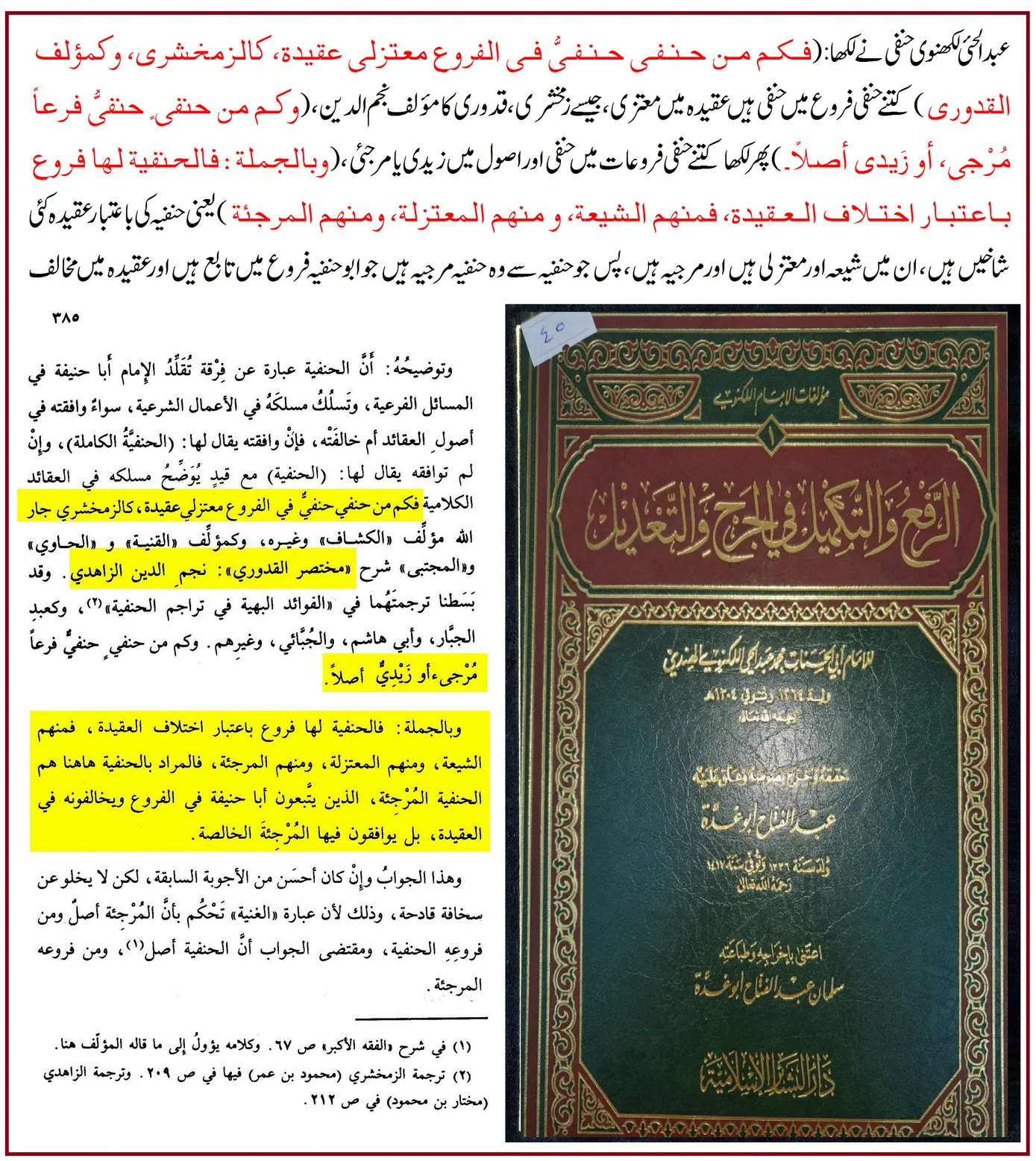
Some Hanafi scholars have also acknowledged that certain statements are established from Imam Abu Hanifa (may Allah have mercy on him) in which he used strong words. Therefore, instead of denying, it is more just to accept the reality and present a scholarly explanation for it.
✅ Conclusion
The objection of “Bias of Basra” is neither scholarly nor supported by the chain of narration. The narrators of this hadith are trustworthy and reliable, and the hadith is authentic in its chain. Therefore, the interpretation of bias is by no means sufficient to reject the hadith.
Third Objection — Criticism by Al-Daraqutni and Ibn Hajar
❖ Objection
The Barelvi scholars say that Imam Al-Daraqutni and Hafiz Ibn Hajar criticized Asim ibn Bahdala (who is in this chain). Al-Daraqutni said that his memorization has some issues, and Ibn Hajar said that he is truthful but prone to mistakes. From this, it is understood that the chain is not reliable.
Answer
① Imam Al-Daraqutni’s Opinion
- Al-Daraqutni said:
«ابن أبي النجود في حفظه شيء»
Reference: (Su’alat Al-Barqani lil-Daraqutni, p. 338)Translation: Ibn Abi Al-Najud (i.e., Asim ibn Bahdala) has some issues in his memorization.
❖ Explanation: This criticism is a partial warning, not an outright weakening. If he were unreliable, Darqatni himself would not have cited many of his narrations in his books.
② Opinion of Hafiz Ibn Hajar
- Ibn Hajar said:
«عاصم بن بهدلة … صدوق له أوهام»
Reference: (Taqreeb al-Tahdheeb, No. 3054)Translation: Asim ibn Bahdala is truthful, but sometimes he makes mistakes (errors).
❖ Explanation:
- “Truthful” means that fundamentally he is trustworthy.
- “Sometimes mistakes” means he occasionally errs, which happens with many trustworthy narrators.
- Ibn Hajar did not call him a liar or weak, rather he acknowledged his truthfulness and justice.
③ Endorsement by the Majority of Muhaddithin
- Imam Ahmad ibn Hanbal:
«ثقة رجل صالح خير»
Reference: (Al-‘Ilal wa Ma‘rifat al-Rijal)Translation: He was trustworthy, pious, and good.
- Yahya ibn Ma‘in:
«ثقة لا بأس به»
Reference: (Riwayat Tahman)Translation: He is trustworthy, there is no harm in him.
- Abu Zur‘ah al-Razi:
«ثقة»
Reference: (Al-Jarh wa al-Ta‘dil, 5/66)Translation: He was trustworthy.
❖ Explanation: When the majority have declared him trustworthy, the partial criticism is to be rejected. According to the principles of Hadith, if a narrator has partial criticism but there is abundant endorsement, preference is given to the endorsement.
④ Comment by Shu‘ayb Arna’ut
- Arnaut said about Ibn Hajar’s “Sadooq Lahu Awhaam”:
«ليس بجيد … فقد وثقه يحيى بن معين، وأحمد، وأبو زرعة …»
Reference: (Tahrir Taqreeb al-Tahdheeb)Translation: This statement is not correct, because Yahya ibn Ma’in, Ahmad ibn Hanbal, Abu Zur’ah, etc. all have authenticated him.
✅ Conclusion
- Darqutni and Ibn Hajar’s criticism is partial, not explicit weakening.
- The majority of hadith scholars have declared him trustworthy and truthful.
- According to the principles of hadith, authentication outweighs criticism, therefore this objection is invalid.
Fourth Objection — Denial of the Narration and Interpretations
❖ Objection
The Barelvi scholars say that this narration is not established from Imam Abu Hanifa (may Allah have mercy on him) at all. They claim that either this narration is fabricated, or the transmitted words have been distorted and misrepresented. Some people also interpret that Imam Abu Hanifa (may Allah have mercy on him) never said this, and it is only an accusation from his enemies.
Answer
① The chain of narration is authentic
- Imam Khateeb Baghdadi has mentioned this narration with the complete chain:
أَخْبَرَنَا ابْنُ رِزْقٍ … عَنْ أَبِي مَعْمَرٍ … عَنْ عَبْدِ الْوَارِثِ … قَالَ: كُنْتُ بِمَكَّةَ وَبِهَا أَبُو حَنِيفَةَ … فَقَالَ: «ذَاكَ قَوْلُ شَيْطَانٍ».
Reference: (Tareekh Baghdad, 13/387)Translation: Abdul Waris says: I was in Makkah and Abu Hanifa was there… A person mentioned the narration of Hazrat Umar (RA) to which Imam Abu Hanifa said: “This is the statement of Satan.”
- We have already presented detailed authentication of all the narrators of this chain in earlier sections.
② Criticism of the narrators is rejected
- Regarding Abdul Waris bin Saeed, Hafiz Ibn Hajar said:
«ثقة ثبت رمي بالقدر ولم يثبت عنه»
Reference: (Taqreeb al-Tahdheeb)Translation: He is trustworthy and reliable; there is an accusation of being a Qadari against him but it is not established.
- Regarding Abu Muammar Abdullah bin Amr, Imam Abu Zur’ah said:
«كان حافظًا – ثقة»
Reference: (Al-Jarh wa al-Ta’dil)Translation: He was a Hafiz and trustworthy.
❖ When the Imams have called them trustworthy and strong, denying the narration is merely a claim.
③ There is no confusion in the text of the narration
- Some objectors say that sometimes Abdul Waris narrates it as an observation and sometimes from his father, therefore the text is inconsistent.
- This is incorrect because in the present chain Abdul Waris has narrated his own observation.
- If there are multiple routes of a single event, it is accumulation and strengthening, not inconsistency.
④ The Reality of Interpretations
- Denial or interpretation of a narration is done when there is weakness in the chain or nakarah (objectionable/unacceptable content) in the text.
- Here the chain is authentic and there is no nakarah in the text either.
- This statement of Imam Abu Hanifa (may Allah have mercy on him) is an example of his strict debating style. It does not imply any insult or disrespect to Hazrat Umar (may Allah be pleased with him), rather it was only a denial of a narration or an attributed statement.
✅ Conclusion
- Denying the narration is against the scholarly methodology because the chain is authentic and the narrators are trustworthy.
- Interpretations are only attempts to save a weak position.
- This narration is correctly established from Imam Abu Hanifa (may Allah have mercy on him) and there is no basis to reject it.
📌 Summary of the entire article
- Imam Khateeb Baghdadi mentioned this narration with a complete chain of transmission in his book Tarikh Baghdad that Imam Azam Abu Hanifa (may Allah have mercy on him) said regarding a statement attributed to Hazrat Umar bin Khattab (RA): “That is the statement of Satan.”
- Opponents raised four major objections to this narration:
- The presence of Qadari narrators in the chain.
- The narration was fabricated due to the bias of the people of Basra.
- Partial criticism by Darqatni and Ibn Hajar.
- Complete denial or reinterpretation of the narration.
- We have explained in detail that:
All narrators in the chain (Abdul Warith, Abu Muammar, Muhammad bin Yahya al-Dhuhli, Ahmad bin Ali al-Abar, etc.) are trustworthy, reliable, and strong narrators.
- The accusation of being Qadari is either unproven (Abdul Warith) or not damaging (Abu Muammar).
- The claim of Basra’s bias is merely a story without any chain-based evidence.
- The criticism by Darqatni and Ibn Hajar is partial and does not negate their integrity; the majority of hadith scholars have authenticated them.
- Denying the narration goes against the principles of hadith scholars because the chain is authentic and the narrators are trustworthy.
Therefore, this narration is authentically established from Imam Abu Hanifa (may Allah have mercy on him). There is no scholarly basis to reject it or cast doubts upon it.
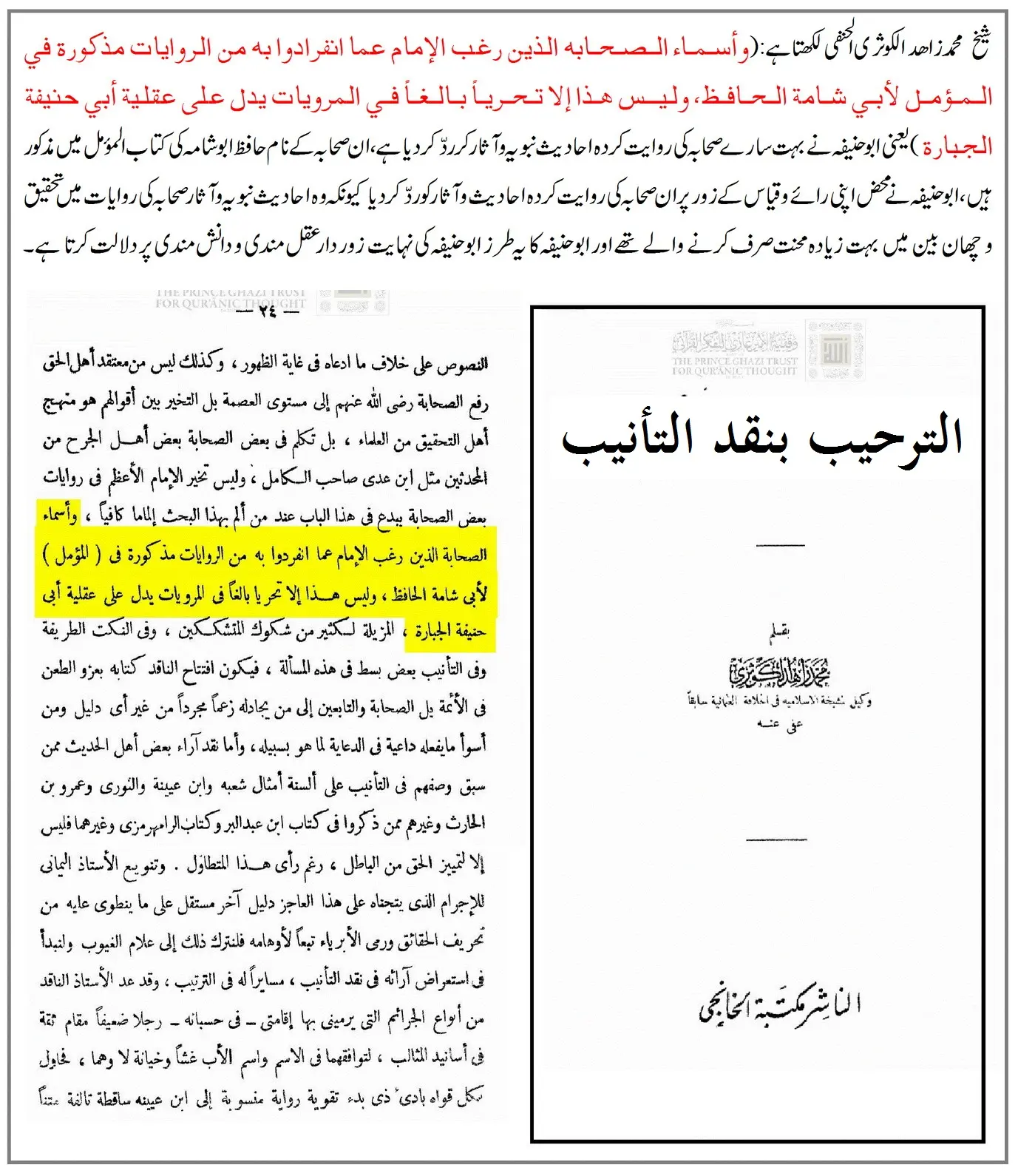
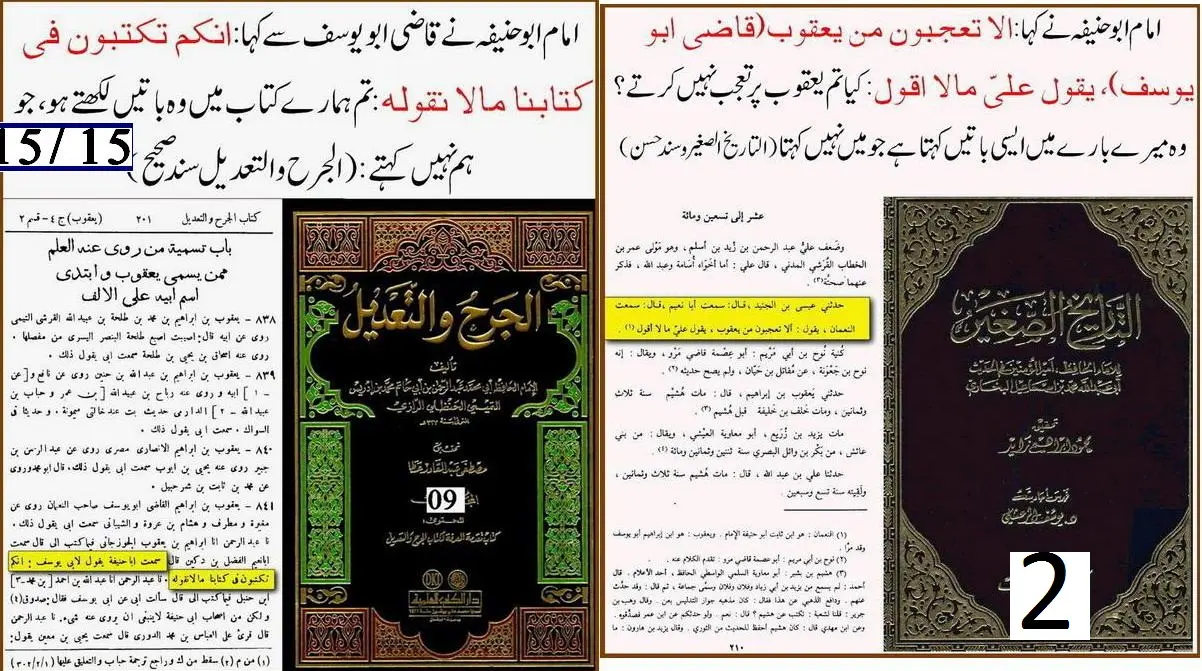
Scans of Important References