In the present research article, we want to clarify that Imam Muhammad ibn al-Hasan al-Shaybani al-Kufi, may Allah have mercy on him (died 189 AH), who is the most famous student of Imam Abu Hanifa, may Allah have mercy on him, and one of the founders of Hanafi jurisprudence, was in fact not a follower (muqallid) of Imam Abu Hanifa himself. A scholarly examination will also be presented of the doubt raised by followers of the Hanafi school that Imam Muhammad only differed from Imam Abu Hanifa in a few subsidiary issues, but in principle, he followed him. In this research, we will prove that:
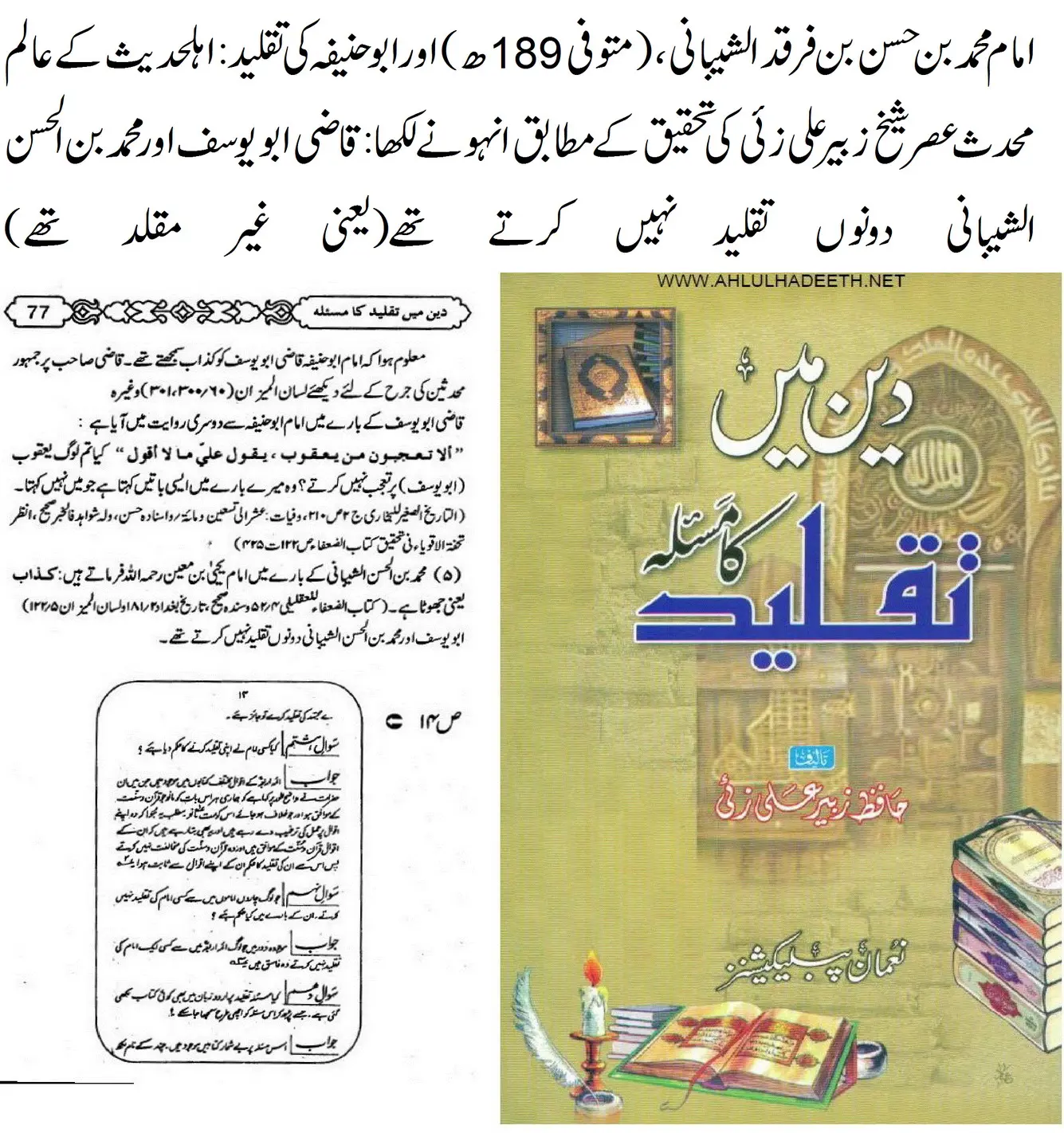
✿ Imam Muhammad ibn al-Hasan al-Shaybani generally rejected imitation (taqlid).
✿ Imam Muhammad frequently differed from Imam Abu Hanifa in both principles and subsidiary matters.
✿ Imam Muhammad ibn al-Hasan was an absolute mujtahid, not a mujtahid within a particular school (mujtahid fi al-madhhab).
In this regard, we will first present Imam Muhammad’s own clear statements, then provide a researched response to the doubts raised by those who advocate imitation.
Imam Muhammad bin Hasan’s Clear and Explicit Position on Following Abu Hanifa:
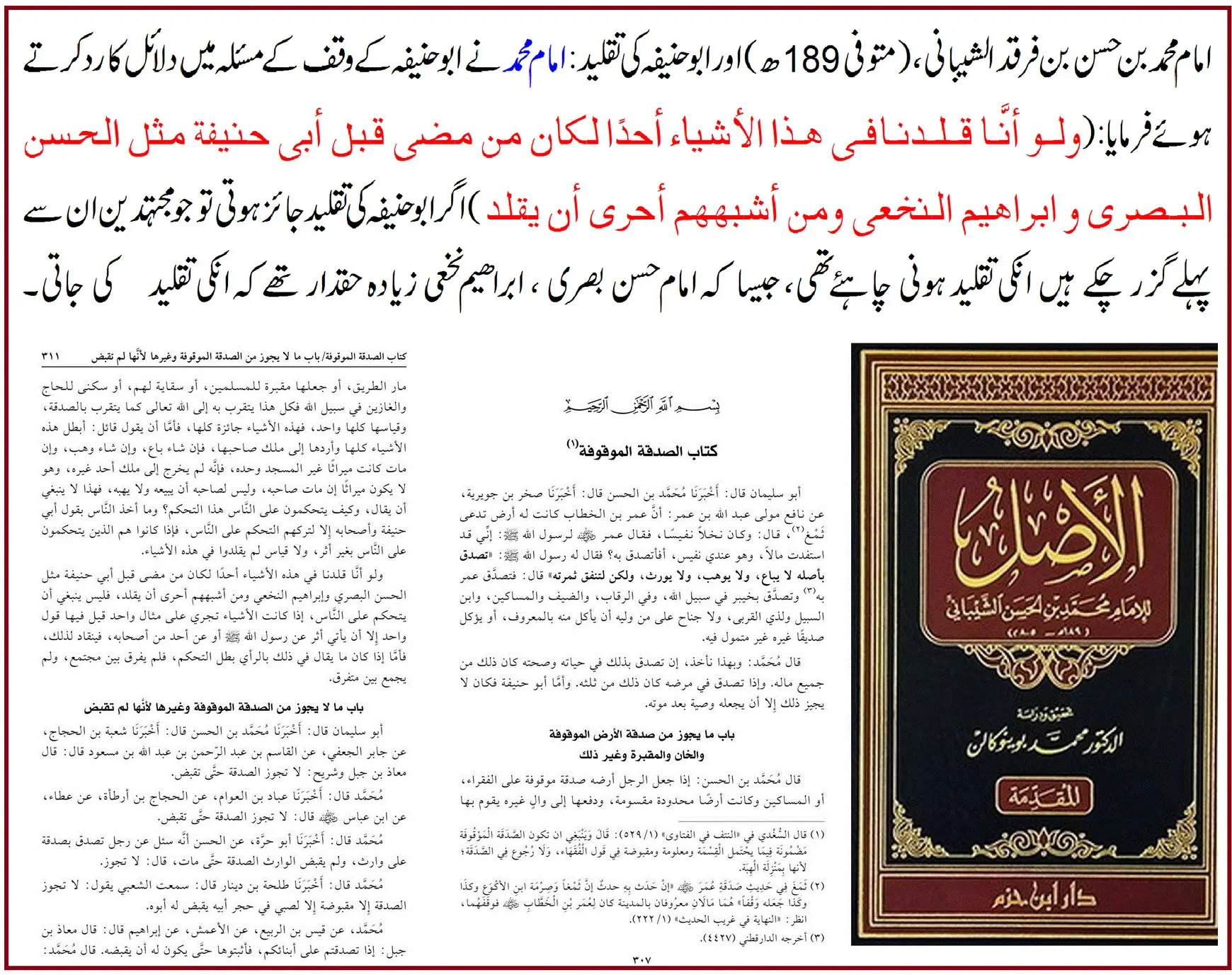
Imam Muhammad bin al-Hasan al-Shaybani states in his well-known book “Al-Asl”:
وَلَوْ أَنَّا قَلَّدْنَا فِي هٰذِهِ الْأَشْيَاءِ أَحَدًا، لَكَانَ مَنْ مَضَى قَبْلَ أَبِي حَنِيفَةَ مِثْلَ الْحَسَنِ الْبَصْرِيِّ وَإِبْرَاهِيمَ النَّخَعِيِّ وَمَنْ أَشْبَهَهُمْ أَحْرَىٰ أَنْ يُقَلَّدَ، فَلَيْسَ يَنْبَغِي أَنْ يُتَحَكَّمَ عَلَى النَّاسِ۔
Translation: “If we were to follow anyone in these matters, it would have been better to follow the predecessors before Abu Hanifa, such as Hasan al-Basri and Ibrahim al-Nakha’i, etc. It is not correct to make it obligatory for people to follow (the opinion of) one person.”
From this statement, the following conclusions are clearly derived:
- Imam Muhammad explicitly denied following Abu Hanifa.
- He rejected following (taqlid) in general, not limiting it to any specific issue.
- In his view, if following someone was necessary, then the earlier mujtahids before Imam Abu Hanifa were more deserving of it.
The First Objection by the Followers of Taqlid and Its Response
Claim of the Followers of Taqlid:
“Imam Muhammad here denied taqlid only in the issue of waqf (endowment), and the reason was specific circumstances, not a general rejection of taqlid.”
Scholarly Response to This Taqlidi Claim:
(1) Imam Muhammad’s own words indicate:
Imam Muhammad used the term “هٰذِهِ الْأَشْيَاءِ” (these issues) in his statement, which is of a general nature, and he also negated imitation in a general manner. If Imam Muhammad wanted to limit himself to only one specific issue, he would have clearly mentioned only one issue. But he generally stated the principle that it is not correct to make the opinion of one scholar binding on people.
(2) Testimony of Imam Abu Hamid Al-Ghazali:
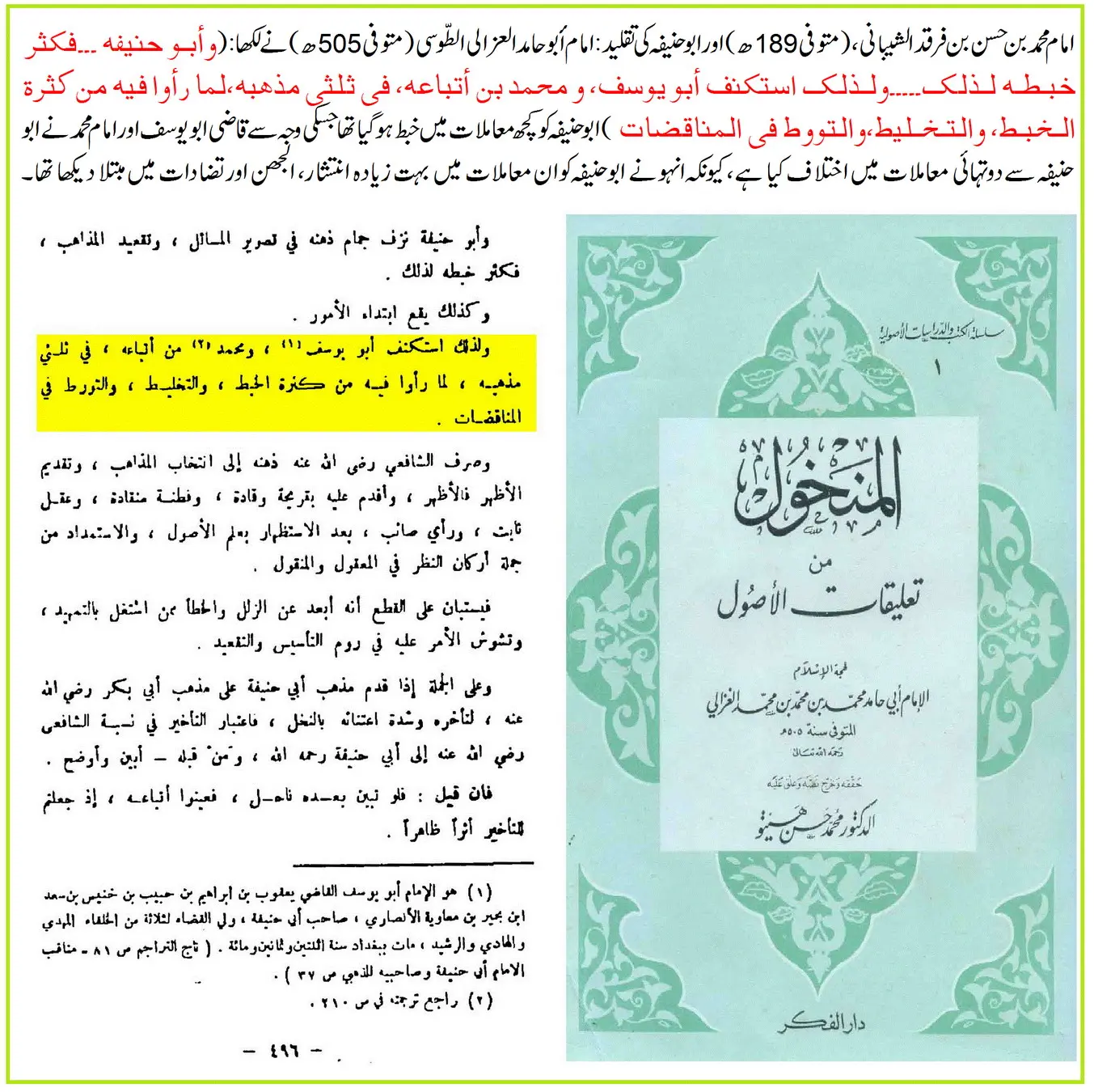
Imam Abu Hamid Al-Ghazali (died 505 AH) also clearly stated that Imam Muhammad differed with Imam Abu Hanifa not only on one issue but on many issues:
وأبو حنيفة نزف جمام ذهنه في تصوير المسائل… فكثر خبطه… ولذلك استنكف أبو يوسف، ومحمد من اتباعه، في ثلثي مذهبه، لما رأوا فيه من كثرة الخبط، والتخليط، والتورط في المناقضات۔
Translation: “Imam Abu Hanifa made multiple mistakes in formulating issues, due to which Abu Yusuf and Muhammad avoided following him in two-thirds of the issues, because they saw in his opinions frequent contradictions, confusion, and inconsistency.”
It is clearly evident here that Imam Muhammad was not limited to a specific issue only, but generally rejected taqlid (imitation).
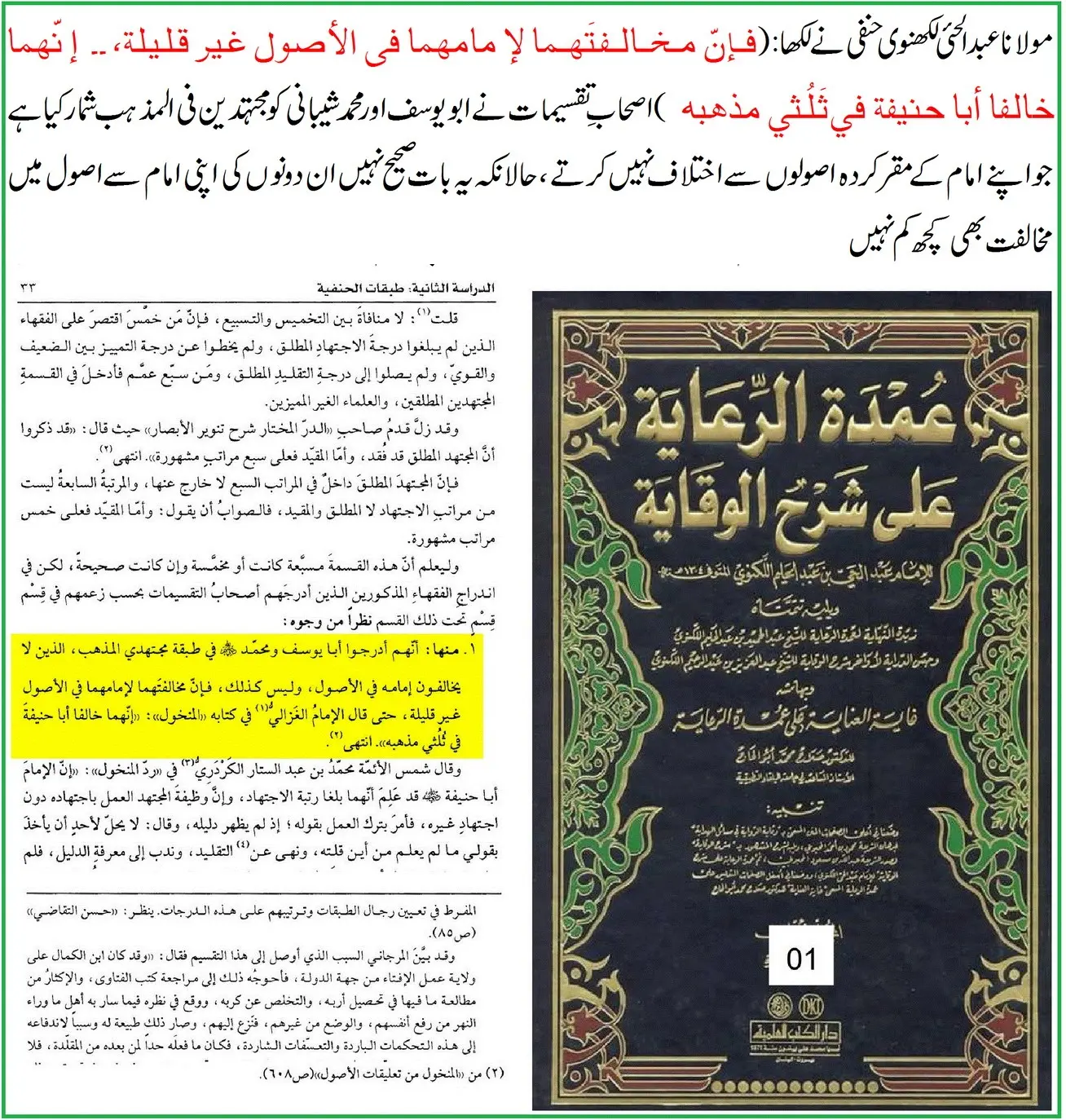
(3) Explanation of Abdul Ha’i Lakhnawi Hanafi:
Allama Abdul Ha’i Lakhnawi (died 1304 AH) wrote clearly about Imam Muhammad and Qazi Abu Yusuf:
فإنّ مخالفتَهما لإمامهما في الأصول غير قليلة، حتى قال الإمامُ الغَزاليُّ في المنخول: إنّهما خالفا أبا حنيفةَ في ثُلُثي مذهبه۔
Translation: “Imam Abu Yusuf and Imam Muhammad not only differed from Imam Abu Hanifa in the branches (furu’) but also in the principles (usul) in an extraordinary manner. Even Imam Ghazali stated that they differed with Abu Hanifa in two-thirds of the issues.”
This clarifies that Imam Muhammad was not merely a mujtahid within the school (mujtahid fi al-madhhab) but an absolute mujtahid (mujtahid mutlaq), because only an absolute mujtahid can make principled differences.
The Second Objection of the Taqlidi People and Its Investigative Response
The taqlidi people have presented another objection to avoid this fact. They say:
“Imam Muhammad bin Hasan al-Shaybani and Qazi Abu Yusuf are considered mujtahid fi al-madhhab, not mujtahid mutlaq. That is, these two differed from Imam Abu Hanifa only in the branches (furu’), not in the principles (usul).”
Let us take a scholarly review of this claim:
Scholarly Refutation of the Objection:
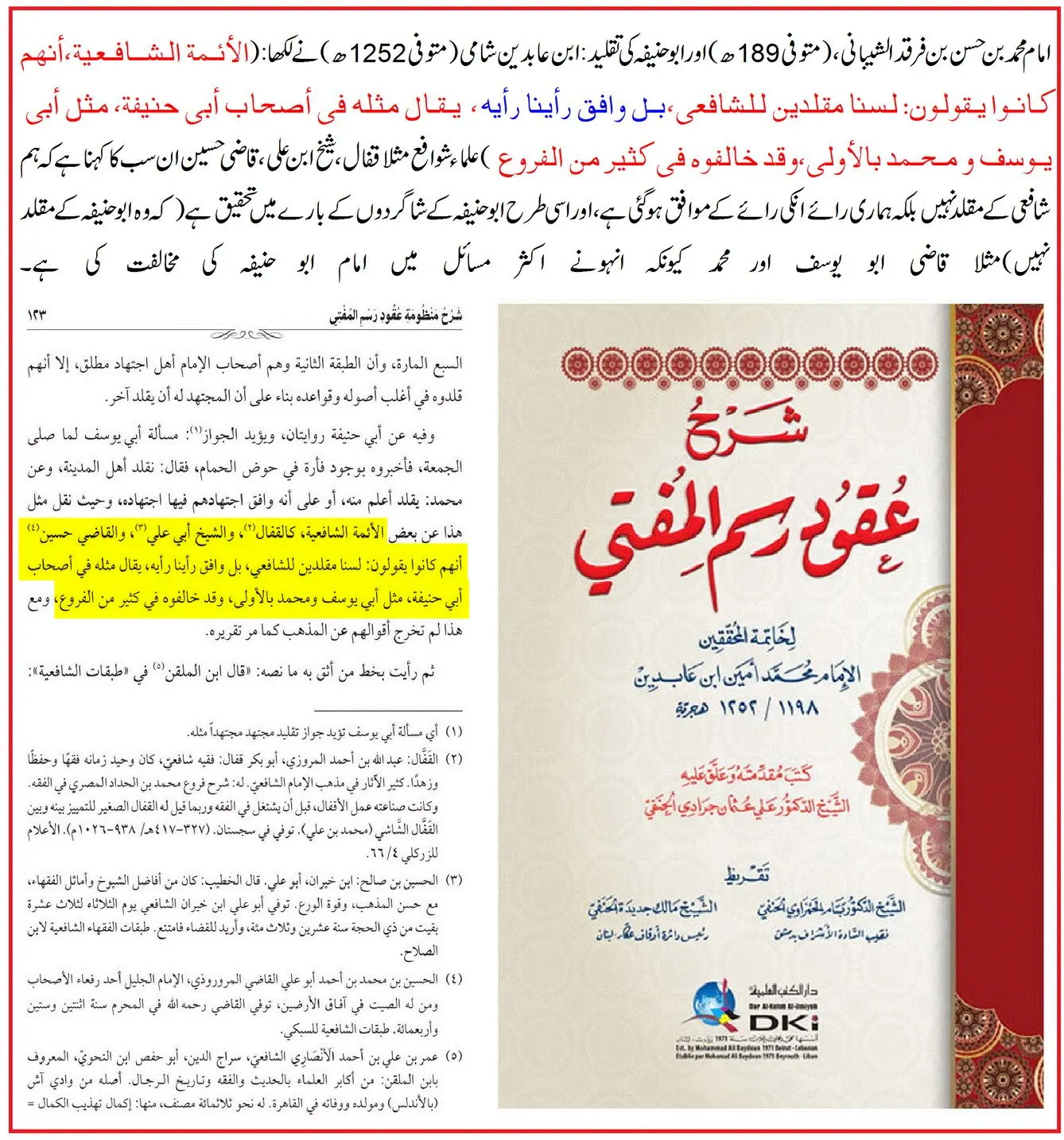
(1) Testimony of Ibn Abidin Shami Hanafi:
Allama Ibn Abidin Shami (died 1252 AH) clearly states:
الأئمة الشافعية كالقفال والشيخ أبي على والقاضى حسين كانوا يقولون: لسنا مقلدين للشافعي، بل وافق رأينا رأيه، يُقال مثله في أصحاب أبي حنيفة مثل أبي يوسف ومحمد بالأولى، وقد خالفوه في كثير من الفروع۔
Translation: “The great Shafi’i Imams such as Qaffal, Sheikh Abu Ali, and Qadi Hussain used to say that we are not followers (muqallid) of al-Shafi’i but rather our opinion coincided with his. The same can be said even more strongly about Abu Hanifa’s students Abu Yusuf and Muhammad al-Shaybani because they frequently differed with their Imam Abu Hanifa in subsidiary issues.”
Here, it is established through the testimony of a Hanafi Imam like Ibn Abidin Shami that the status of Imam Muhammad ibn al-Hasan was not limited merely to being a mujtahid within the school (mujtahid fi al-madhhab), but his method clearly reflected that of an absolute mujtahid (mujtahid mutlaq).
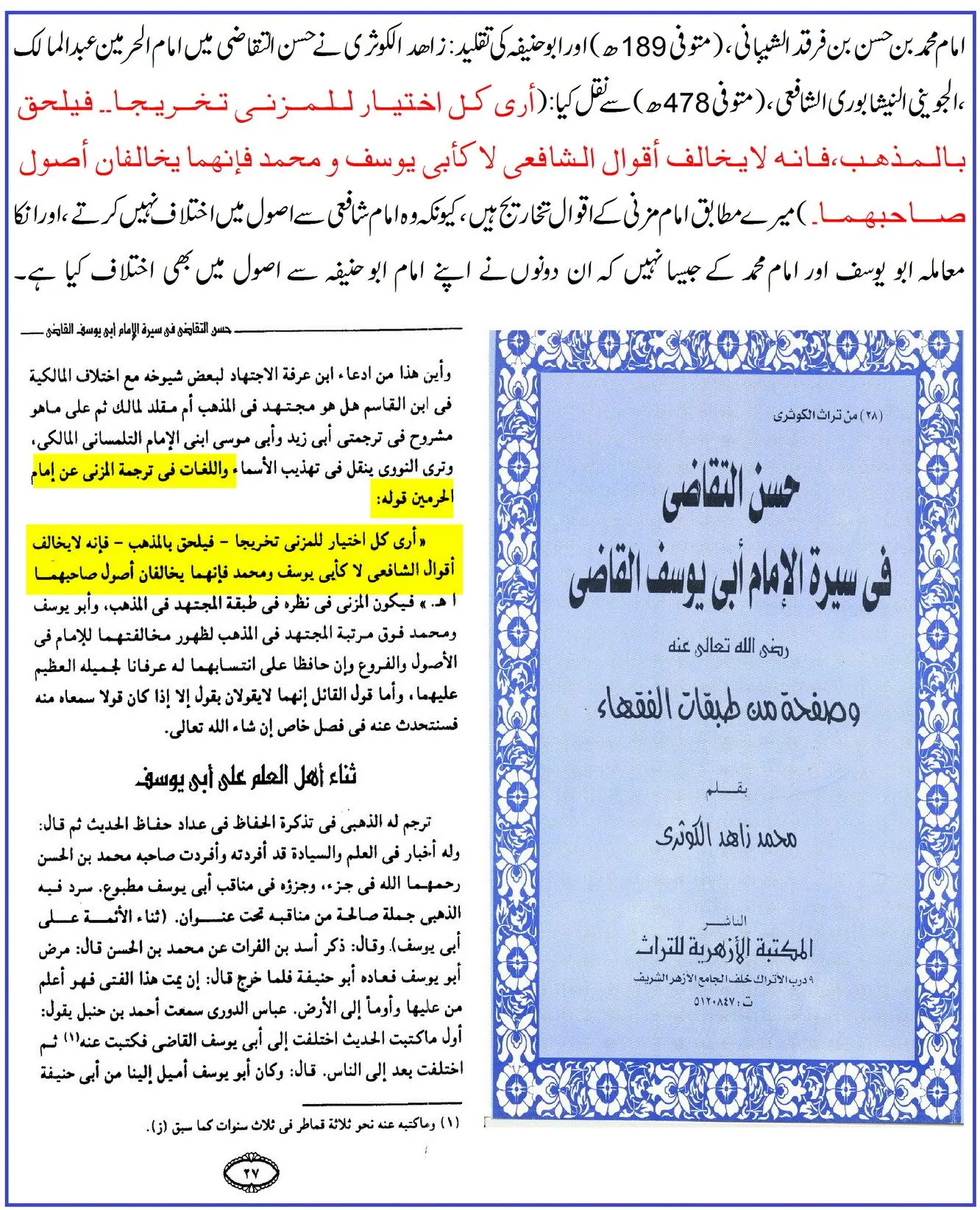
(2) Clarification by Imam al-Haramayn al-Juwayni:
Imam al-Haramayn Abu al-Ma’ali al-Juwayni (died 478 AH) said about Imam al-Muzani:
إن كل ما اختاره المزني أرى أنه تخريج ملحق بالمذهب، لا كأبي يوسف ومحمد، فإنهما يخالفان أصول صاحبهما۔
Translation: “The preferred opinions (ikhtiyarat) of Imam al-Muzani are only derivations (takhrijat) within the Shafi’i school, but the case of Abu Yusuf and Muhammad is not like that. Both of them opposed the principles of their Imam Abu Hanifa.”
From the clear and strong statement of Imam al-Haramayn al-Juwayni, it is also evident that Imam Muhammad and Abu Yusuf were not limited to the branches of jurisprudence only, but they were not followers of Abu Hanifa in the principles either.
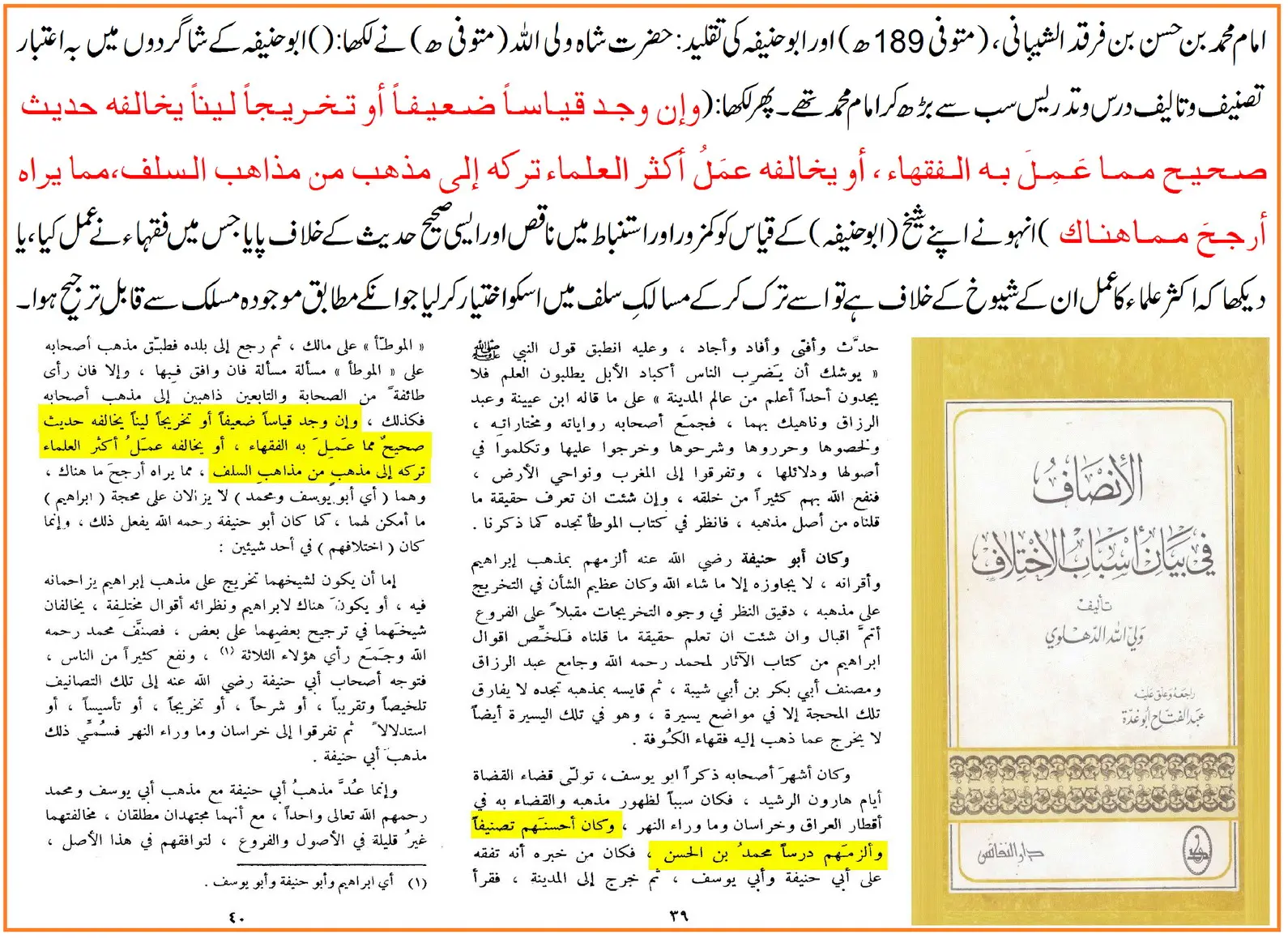
(3) Testimony of Shah Waliullah Muhaddith Dehlawi:
Shah Waliullah Muhaddith Dehlawi (died 1176 AH) writes about Imam Muhammad ibn al-Hasan:
وإن وجد قياسًا ضعيفًا أو تخريجًا لينًا يخالفه حديث صحيح مما عمل به الفقهاء أو يخالفه عمل أكثر العلماء، تركه إلى مذهب من مذاهب السلف مما يراه أرجح ما هناك۔
Translation: “When Imam Muhammad found his teacher’s (Abu Hanifa’s) opinion weak in any matter or contrary to an authentic hadith and the practice of the majority of scholars, he would abandon that opinion and adopt the opinion of another mujtahid from the predecessors which he considered more correct.”
This statement also confirms the fact that Imam Muhammad was not a mere follower but clearly an absolute mujtahid.
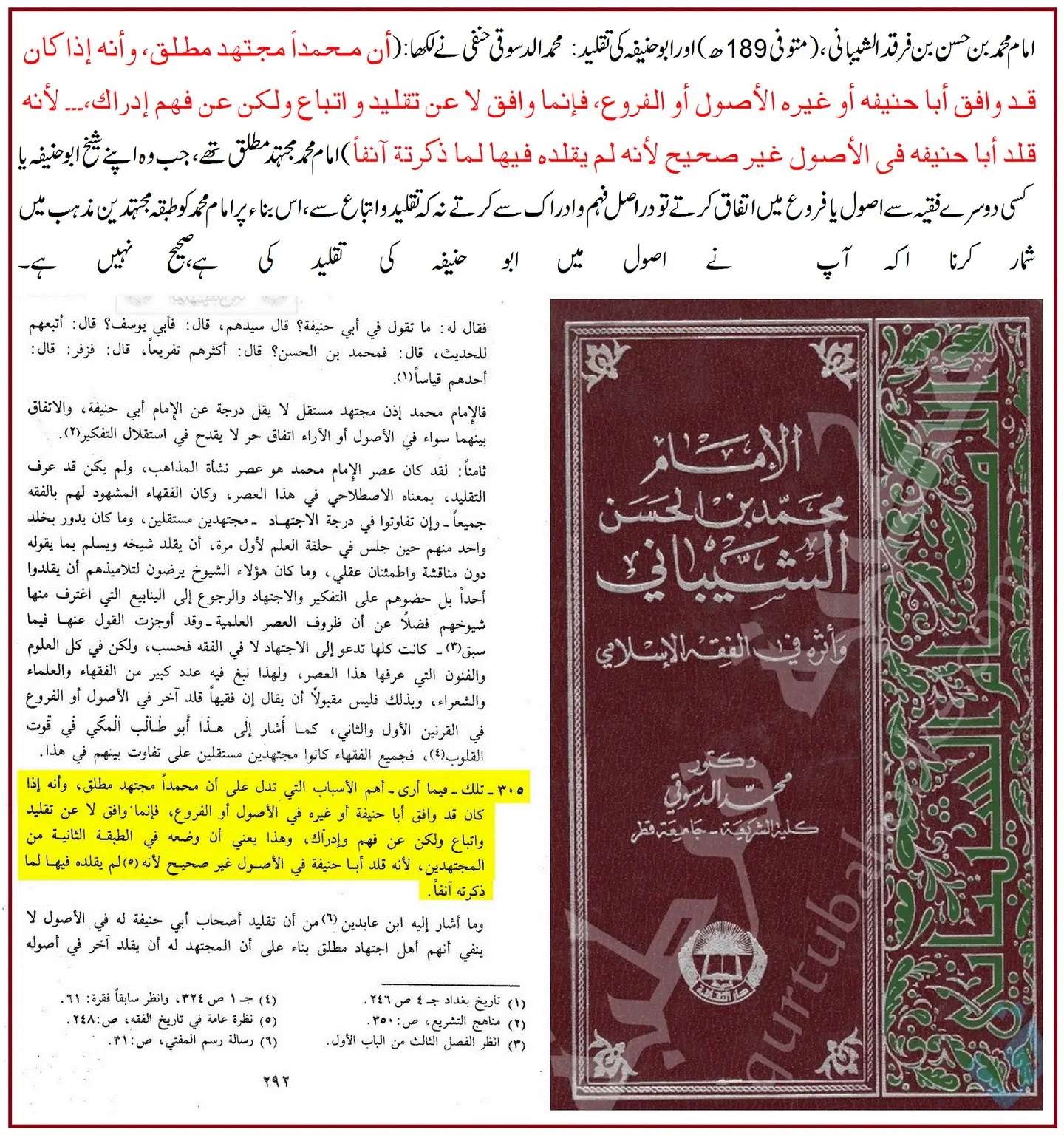
(4) Research of Muhammad al-Dusuqi Hanafi:
The famous Hanafi researcher Muhammad al-Dusuqi writes in his book:
“Imam Muhammad was an absolute Mujtahid. When he agreed with Abu Hanifa or any other jurist on principles or branches of jurisprudence, it was actually based on understanding and perception, not on imitation and following. On this basis, it is not correct to call Imam Muhammad a Mujtahid within the school (Mujtahid fi al-Madhhab).”
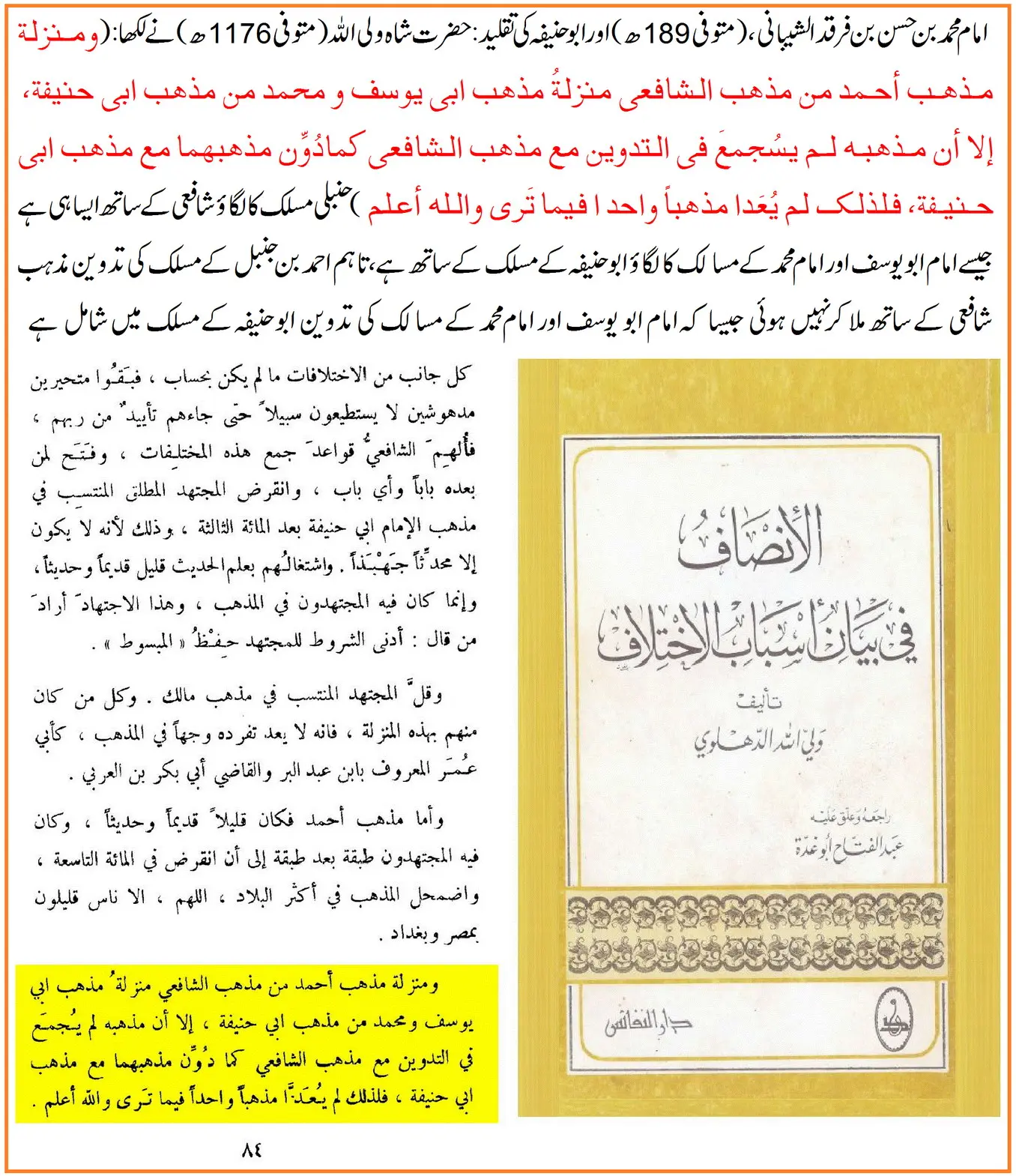
(5) Further clarification by Shah Waliullah Dehlawi:
Shah Waliullah Dehlawi, comparing the relationship of Imam Abu Hanifa with Imam Muhammad and Abu Yusuf to that of Imam Ahmad ibn Hanbal and Imam Shafi’i, writes:
ومنزلة مذهب أحمد من مذهب الشافعي كمنزلة مذهب أبي يوسف ومحمد من مذهب أبي حنيفة، إلا أن مذهبه لم يُجمع في التدوين مع مذهب الشافعي كما دُوِّن مذهبهما مع مذهب أبي حنيفة، فلذلك لم يُعدّا مذهبًا واحدًا فيما ترى۔
Translation: “The relationship of Imam Ahmad ibn Hanbal with Imam Shafi’i is the same as that of Imam Abu Yusuf and Imam Muhammad with Imam Abu Hanifa. The only difference is that Imam Ahmad’s school was not compiled together with the Shafi’i school, whereas the schools of Abu Yusuf and Muhammad were compiled together with that of Abu Hanifa.”
From this statement, it is also clear that Imam Muhammad was not a follower of Abu Hanifa in principle, but rather exercised independent ijtihad in his principles and branches.
The third objection of the imitators and its scholarly refutation
Some Hanafi scholars raise the point in this discussion that Imam Muhammad bin al-Hasan al-Shaybani only abandoned taqlid (imitation) in certain specific issues, such as the issue of waqf (endowment), otherwise, in other matters, he was in favor of taqlid of Abu Hanifa. Therefore, according to them, it is not correct to call Imam Muhammad an absolute mujtahid.
The scholarly examination of this claim is as follows:
(1) Analysis of the wording of the taqlid supporters:
The taqlid supporters have presented the following statement of Allama Zahid al-Kawthari in this regard:
“Imam Muhammad spoke about not performing taqlid in issues like waqf, but the prohibition of taqlid absolutely in every issue and for every person is not reported from anyone.”
Here, the taqlid supporters are qualifying the clear statement of Imam Muhammad against taqlid, although there is no evidence for this.
(2) The explicit and clear statement of Imam Muhammad bin al-Hasan:
Imam Muhammad bin al-Hasan himself, in his famous book “Kitab al-Asl,” clearly rejects the very concept of taqlid, stating:
ولو أنا قلدنا [في] هذه الأشياء أحداً لكان من مضى قبل أبي حنيفة مثل الحسن البصري وإبراهيم النخعي ومن أشبههم أحرى أن يقلد، فليس ينبغي أن يتحكم على الناس۔
Translation: “If we considered following someone in these issues permissible, then the imams before Abu Hanifa, such as Hasan al-Basri and Ibrahim al-Nakha’i, would be more deserving of being followed. Therefore, it is not correct to make following (taqlid) obligatory upon people.”
Here, Imam Muhammad is fundamentally negating taqlid, not limiting it only to the issue of waqf.
(3) Testimony of Imam Ghazali (d. 505 AH):
Imam Abu Hamid al-Ghazali further clarified that Imam Muhammad and Qadi Abu Yusuf opposed Abu Hanifa not only in a specific issue but in many issues. Consider his words:
وأبو حنيفة نَزَفَ جِمامُ ذهنه في تصوير المسائل، فكثُر خبطُه لذلك. ولذلك استنكف أبو يوسف ومحمد من اتباعه في ثُلُثَيْ مذهبه، لما رأوا فيه من كثرة الخبط والتخليط والتورط في المناقضات۔
Translation: “Abu Hanifa’s mind was entangled in some issues, and for this reason, Qadi Abu Yusuf and Imam Muhammad rejected following him in two-thirds of the issues because they saw many contradictions and confusion in Abu Hanifa’s positions.”
From this statement of Imam Ghazali, it is also proven that Imam Muhammad rejected taqlid of Abu Hanifa not only in waqf but in most issues.
(4) Explanation of Allama Abdul Hai Lakhnawi (d. 1304 AH):
Famous Hanafi Imam Allama Abdul Hai Lakhnawi states:
إنهم أدرجوا أبا يوسف ومحمدًا في طبقة مجتهدي المذهب، وليس كذلك، فإن مخالفتهما لإمامهما في الأصول غير قليلة، حتى قال الإمام الغزالي في كتابه المنخول: إنهما خالفا أبا حنيفة في ثُلُثَيْ مذهبه۔
Translation: “People have placed Abu Yusuf and Muhammad at the level of Mujtahid in the school of thought, but this is not correct, because the differences of both of them with their Imam even in the principles (usul) are not few. Imam Ghazali even said that they differed with Abu Hanifa in two-thirds of the issues.”
This clear statement removes the misconception of the followers.
(5) Testimony of Shah Waliullah Dehlawi (died 1176 AH):
Shah Waliullah Dehlawi explained Imam Muhammad’s method of Ijtihad as follows:
إذا وجد (محمد بن الحسن) قياسًا ضعيفًا أو تخريجًا لينًا يخالفه حديث صحيح أو يخالفه عمل أكثر العلماء، تركه إلى مذهب من مذاهب السلف مما يراه أرجح۔
Translation: “When Imam Muhammad saw any weak analogy or deduction of Abu Hanifa which was against authentic Hadith or the majority of scholars, he abandoned it and preferred the path of some Mujtahid from the Salaf.”
Here Shah Waliullah also established Imam Muhammad’s Ijtihad as absolute and fundamental.
The fourth objection of the followers and its scholarly and research-based refutation
Another important objection raised by the imitators to avoid accepting Imam Muhammad ibn al-Hasan al-Shaybani as a Mujtahid Mutlaq is as follows:
“Despite his ijtihadi opinions, Imam Muhammad ibn al-Hasan always attributed himself to Imam Abu Hanifa, therefore, despite his ijtihad, he will still be counted as Hanafi.”
Let us examine this objection in the light of scholarly and historical facts:
(1) Imam Muhammad ibn al-Hasan not attributing himself to Imam Abu Hanifa:
The claim of the imitators that Imam Muhammad attributed himself to Abu Hanifa is historically baseless. On the contrary, Imam Muhammad repeatedly offered strong scholarly criticism of Imam Abu Hanifa’s jurisprudential reasoning and deduction.
For example, consider the following famous statement of Imam Muhammad:
ولو أنا قلدنا في هذه الأشياء أحداً لكان من مضى قبل أبي حنيفة مثل الحسن البصري وإبراهيم النخعي ومن أشبههم أحرى أن يقلد۔
Translation: “If we were to imitate anyone in these matters, then the Imams before Abu Hanifa, such as Hasan al-Basri and Ibrahim al-Nakha’i, would be more deserving of it.”
This passage clarifies that Imam Muhammad did not even believe in taqlid of Abu Hanifa, so how could he attribute himself to him?
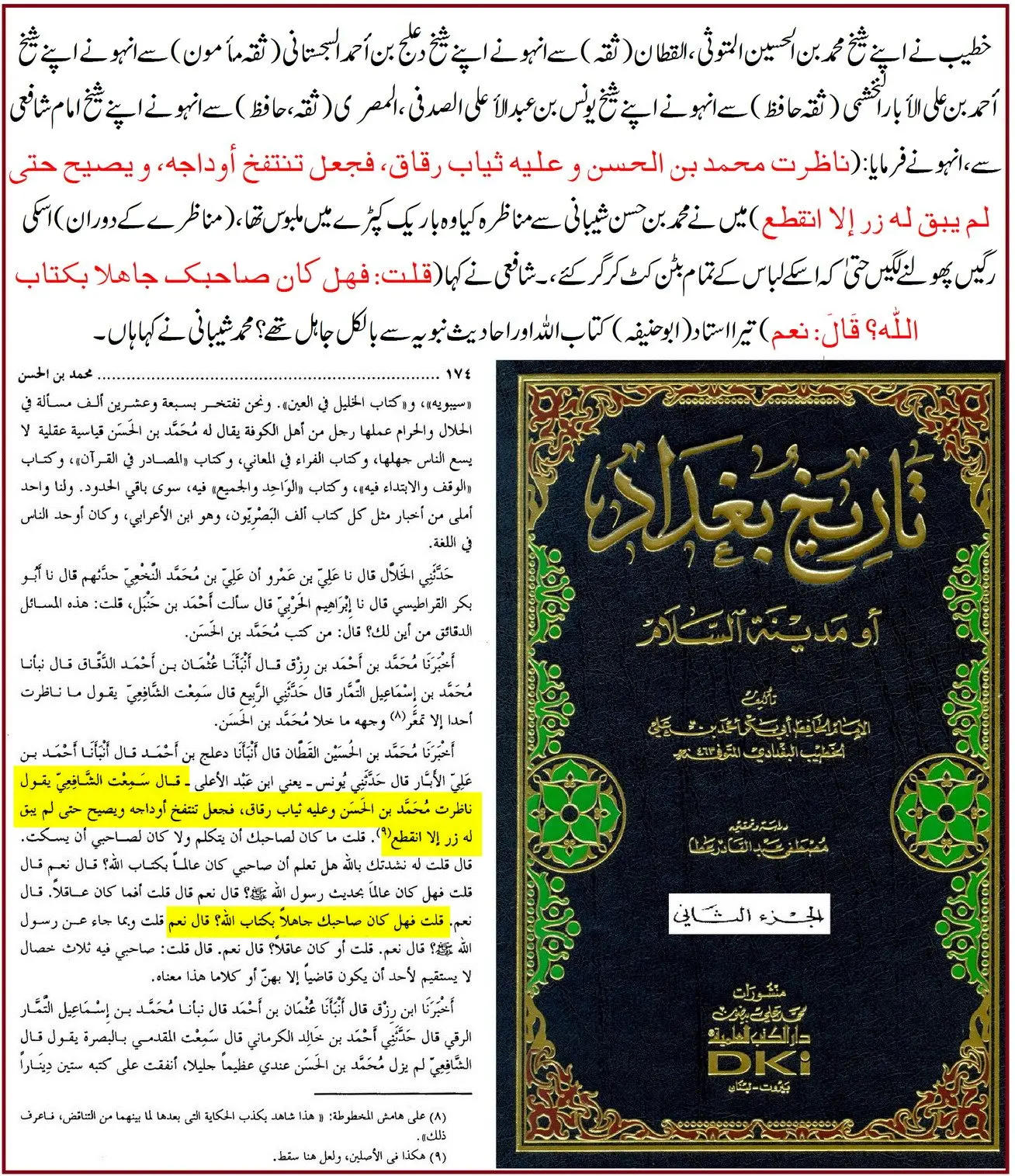
(2) Debate with Imam Shafi’i and Imam Muhammad’s severe criticism of Abu Hanifa:
The famous hadith scholar Imam Khateeb Baghdadi (died 463 AH) narrated the debate between Imam Shafi’i and Imam Muhammad bin Al-Hasan, which clearly reveals Imam Muhammad’s stance regarding Abu Hanifa:
ناظرت محمد بن الحسن فقلت له: نشدتك بالله هل تعلم أن صاحبي (امام مالک) كان عالما بكتاب الله؟ قال: نعم۔
قلت: فهل كان عالما بحديث رسول الله ﷺ؟ قال: نعم۔
قلت: فهل كان صاحبك (ابو حنیفہ) جاهلا بكتاب الله؟ قال: نعم۔
قلت: وبما جاء عن رسول الله ﷺ؟ قال: نعم۔
Translation: Imam Shafi’i says that I debated with Imam Muhammad, and I asked him: “By Allah! Do you know that my teacher Imam Malik was a scholar of the Book of Allah and the Hadith of the Prophet ﷺ?” He replied: “Yes!” I asked: “Was your teacher Abu Hanifa ignorant of the Book of Allah and the Hadith of the Prophet ﷺ?” He replied: “Yes (he was ignorant).”
Verification of the chain of narration:
This narration was transmitted by Imam Khateeb Baghdadi with an authentic chain of narrators who are trustworthy.
This historical narration proves that Imam Muhammad did not even consider Abu Hanifa reliable enough in fundamental scholarly matters to attribute himself to him.
(3) Further clarification on Imam Muhammad’s Ijtihad by Shah Waliullah Dehlawi:
Shah Waliullah Dehlawi has clearly described the relationship between Imam Muhammad and Imam Abu Hanifa as one of Ijtihad. He states:
ومنزلة مذهب أحمد من مذهب الشافعي كمنزلة مذهب أبي يوسف ومحمد من مذهب أبي حنيفة، إلا أن مذهب أحمد لم يُجمع في التدوين مع مذهب الشافعي كما دُوِّن مذهبهما مع مذهب أبي حنيفة، فلذلك لم يُعدّا مذهبًا واحدًا۔
Translation: “The relationship of Imam Ahmad ibn Hanbal with Imam Shafi’i is like that of Imam Abu Yusuf and Imam Muhammad with Abu Hanifa. The only difference is that Ahmad’s madhhab was not codified with Shafi’i’s madhhab, whereas the madhhabs of Abu Yusuf and Imam Muhammad were codified with Abu Hanifa’s, which caused misunderstanding.”
Here Shah Waliullah is clarifying that Imam Muhammad’s relationship with Abu Hanifa was merely that of teacher and student, not of imitation (taqlid).
(4) The clear stance of Ibn Abidin Shami Hanafi:
Ibn Abidin Shami Hanafi also stated that Imam Muhammad was not a follower (muqallid) of Imam Abu Hanifa but an absolute Mujtahid:
الأئمة الشافعية كالقفال والشيخ أبي على والقاضى حسين كانوا يقولون: لسنا مقلدين للشافعي، بل وافق رأينا رأيه، يقال مثله في أصحاب أبي حنيفة مثل أبي يوسف ومحمد بالأولى۔
This Hanafi scholar also clearly states that Imam Muhammad is not a follower of Abu Hanifa but an independent Mujtahid.
(5) Admission of Allama Abdul Ha’i Lakhnawi Hanafi:
Allama Abdul Ha’i Lakhnawi Hanafi says:
إن مخالفة أبي يوسف ومحمد لإمامهما في الأصول غير قليلة، حتى قال الغزالي في المنخول إنهما خالفاه في ثُلُثَيْ مذهبه۔
Translation: “Abu Yusuf and Muhammad have significant differences with Abu Hanifa even in principles, to the extent that Imam Ghazali says they differed with Abu Hanifa in two-thirds of the issues.”
Summary of the Discussion and Conclusion
① Fundamental Misunderstanding of the Followers:
Some followers mistakenly believe that Imam Muhammad bin al-Hasan differed from Imam Abu Hanifa only in a few issues (such as Waqf), whereas the reality is completely the opposite.
- Imam Muhammad himself clearly rejected all kinds of blind following:
“If imitation were permissible, then the Imams before Abu Hanifa, such as Hasan al-Basri and Ibrahim al-Nakha’i, would have had more right to be followed.”
Reference: (Kitab al-Asl)
② Imam Muhammad’s Disagreement with Abu Hanifa on Numerous Issues:
Imam Abu Hamid al-Ghazali (d. 505 AH) clarified the intensity of the differences between Imam Muhammad and Abu Yusuf:
“Abu Yusuf and Muhammad differed with Abu Hanifa in two-thirds (⅔) of the issues because they found considerable confusion and contradictions in Abu Hanifa’s ijtihads.”
- Allama Abdul Ha’i Lakhnawi (died 1304 AH) also confirmed the same:
“The principled differences of Abu Yusuf and Muhammad with Abu Hanifa are not trivial but noteworthy.”
Reference: (Umdat al-Ra’aya)
③ Consensus of the Scholars of the Ummah on Accepting Imam Muhammad as an Absolute Mujtahid:
Regarding the scholarly status of Imam Muhammad, Shah Waliullah Dehlawi (died 1176 AH), Ibn Abidin Shami (died 1252 AH), and many other renowned jurists explicitly stated that Imam Muhammad ibn al-Hasan was not merely a follower of Abu Hanifa but an absolute mujtahid.
- Shah Waliullah Dehlawi says:
“When Imam Muhammad found any argument of Abu Hanifa weak, he would abandon it and adopt the sayings of other pious predecessors.”
Reference: (Al-Insaf, Shah Waliullah) - Ibn Abidin Shami says:
“Imam Muhammad and Abu Yusuf should not be considered followers of Abu Hanifa but mujtahids who exercised independent ijtihad.”
Reference: (Uqud Rasm al-Mufti)
④ Imam Muhammad Not Attributing Himself to Abu Hanifa:
Imam Muhammad bin al-Hasan never considered himself a follower of Abu Hanifa. In his famous debate with Imam Shafi’i, his clear words are:
- Imam Shafi’i asked:
“Were your teacher Abu Hanifa ignorant of the Book of Allah and the Hadith of the Prophet ﷺ?” Imam Muhammad clearly said:
Reference: “Yes!” (Tarikh Baghdad, authentic chain)
This is clear evidence that Imam Muhammad had severe disagreements with Abu Hanifa on scholarly and methodological issues.
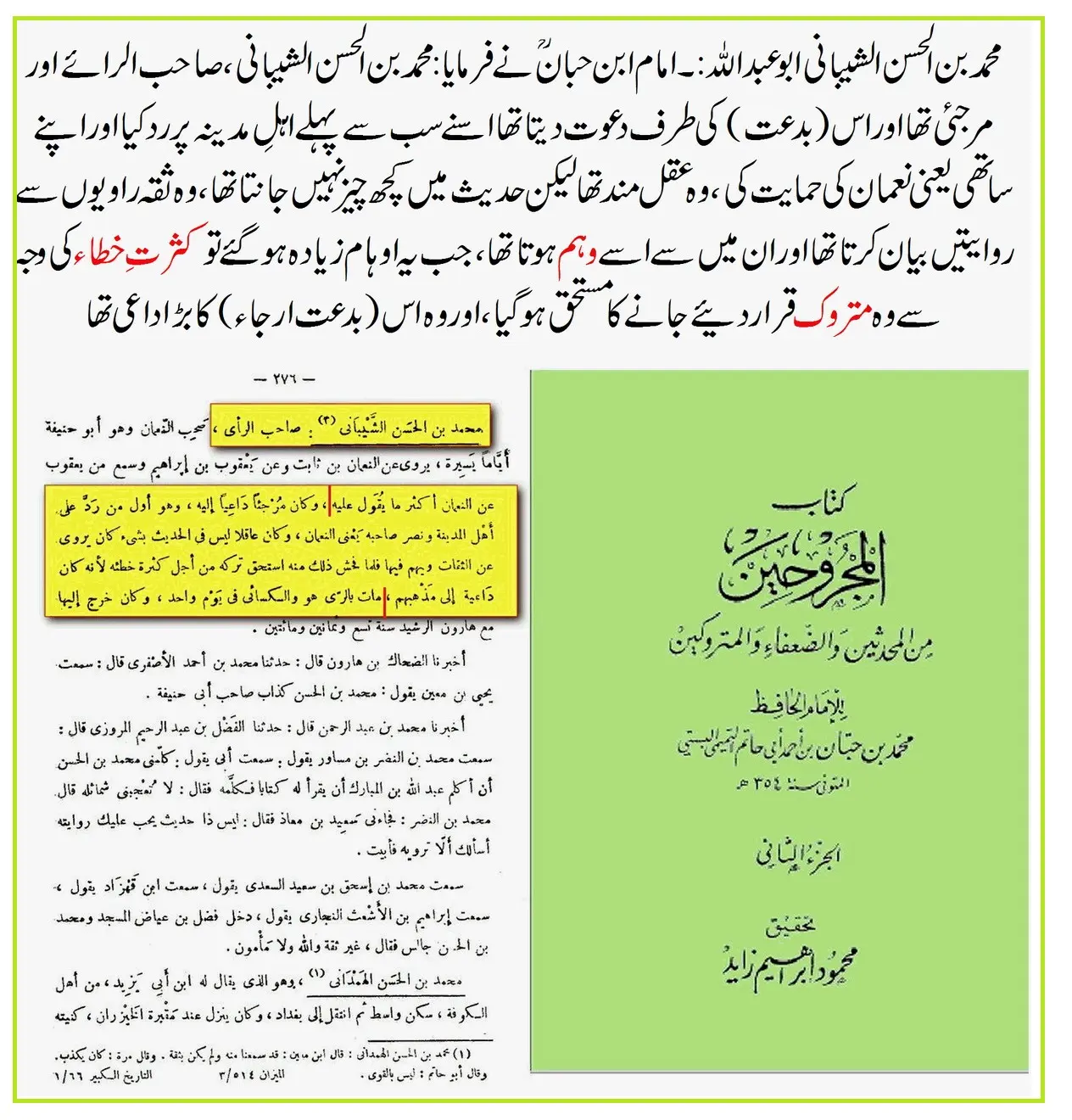
Screenshots of Important References