❌ Allegation:
The Barelvi sect accuses Ahl-e-Hadith of:
“They are Khariji (extremists) because they apply the verses of the Quran revealed about disbelievers to Muslims.”
✅ Response:
This allegation is not only false but Barelvi scholars themselves have accepted this principle in their writings and fatwas that:
❝ The verses of the Quran revealed about disbelievers also apply in their general wording to Muslims. ❞
📌 As an example, we present a fatwa from one of the Muftis of Dawat-e-Islami from their official website:
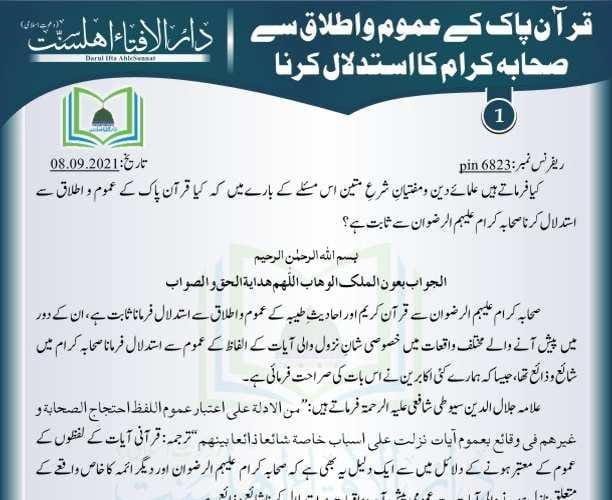
Mufti Muhammad Qasim Attari (Dawat-e-Islami) official fatwa Fatwa No: Pin-6823 Date: 30 Muharram 1443 AH / 8 September 2021 CE
📚 Question:
Is it proven from the Companions of the Prophet that reasoning from the generality and applicability of the Quran is valid?
🟢 Answer from Mufti Qasim Attari Barelvi:
“It is proven from the Companions of the Prophet, may Allah be pleased with them, that reasoning from the generality and applicability of the Quran and the pure Ahadith is valid… It was common and widespread to deduce general rulings from verses revealed about specific incidents.”
✦ The Actions of the Companions – Reasoning from Verses about the Disbelievers
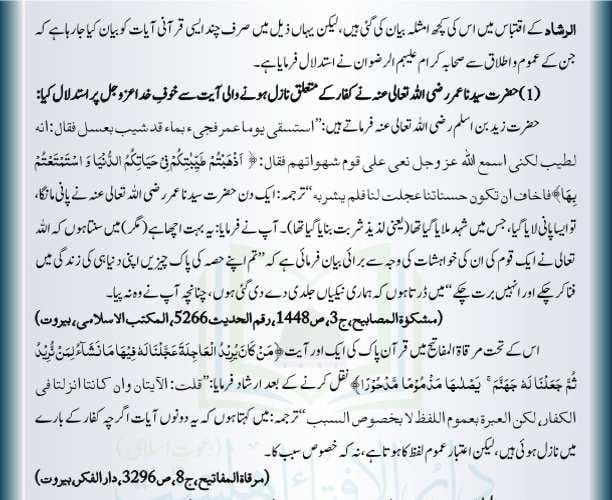
📖 1. Hazrat Umar (RA) Reasoning from the Verse about Fear of the Hereafter
Verse:
﴿ أَذْهَبْتُمْ طَيِّبَاتِكُمْ فِي حَيَاتِكُمُ الدُّنْيَا وَاسْتَمْتَعْتُم بِهَا ﴾
Translation: You have wasted your pure things in the life of this world and have already enjoyed them.
📘 This verse was revealed about the disbelievers, but:
🔹 When Hazrat Umar (RA) ordered honey-mixed water and saw it, he recalled the verse and said:
❝ I fear that these might be the blessings about which it was said that they were enjoyed in this world, but there will be nothing in the Hereafter. ❞ And he did not drink the honey water.
📚 Reference:
❝ قلت: الآيتان وإن كانتا نزلتا في الكفار، لكن العبرة بعموم اللفظ لا بخصوص السبب ❞
Translation: Although these verses were revealed about the disbelievers, in terms of Shariah, the generality of the wording applies, not the cause of revelation.
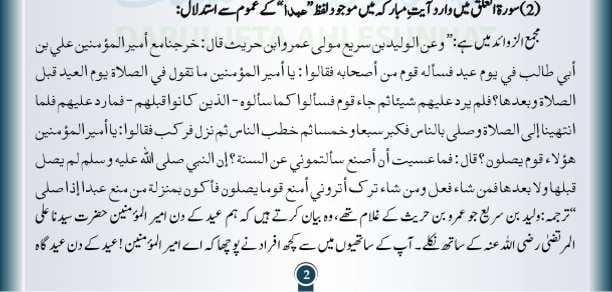
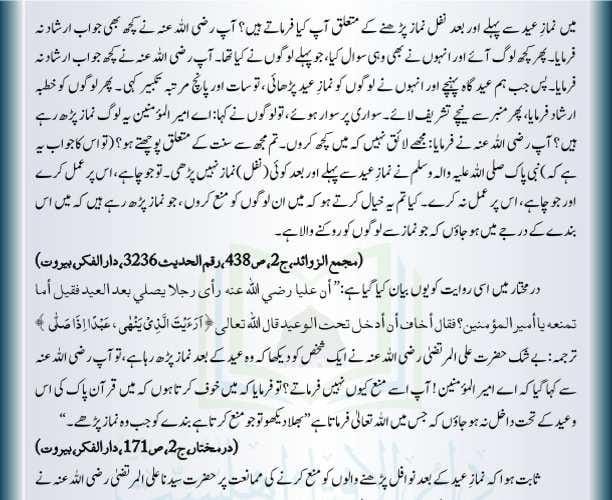
📖 2. Hazrat Ali (RA) Not Preventing Someone from Offering Nawafil on Eid Day
Verse:
﴿ أَرَأَيْتَ الَّذِي يَنْهَىٰ عَبْدًا إِذَا صَلَّىٰ ﴾
Translation: Have you seen the one who forbids a servant when he prays?
📘 Revealed about: A disbeliever like Abu Jahl
🔹 Hazrat Ali (RA) argued from the general word “عبدًا” (servant) in this verse and said:
❝ I fear entering into the warning of preventing prayer from it ❞ meaning the one who prays Nawafil after Eid is prohibited from being stopped.
📚 Reference:
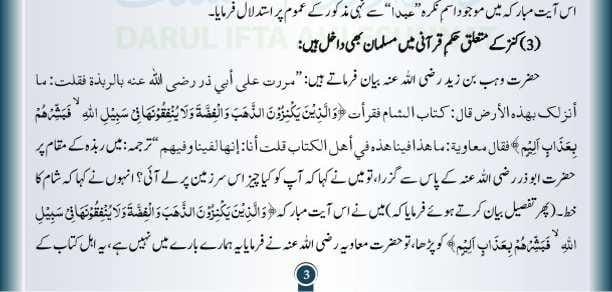
📖 3. Hazrat Abu Dharr (RA)’s rejection of the warning about hoarding wealth
Verse:
﴿ وَالَّذِينَ يَكْنِزُونَ الذَّهَبَ وَالْفِضَّةَ وَلَا يُنفِقُونَهَا فِي سَبِيلِ اللَّهِ فَبَشِّرْهُم بِعَذَابٍ أَلِيمٍ ﴾
Translation: And those who hoard gold and silver and do not spend it in the way of Allah, give them tidings of a painful punishment.
📘 Contextually, this verse is about the People of the Book, but:
🔹 Hazrat Abu Dharr (RA) said:
❝ This verse also applies to us Muslims, not only to the People of the Book. ❞
📚 Reference:
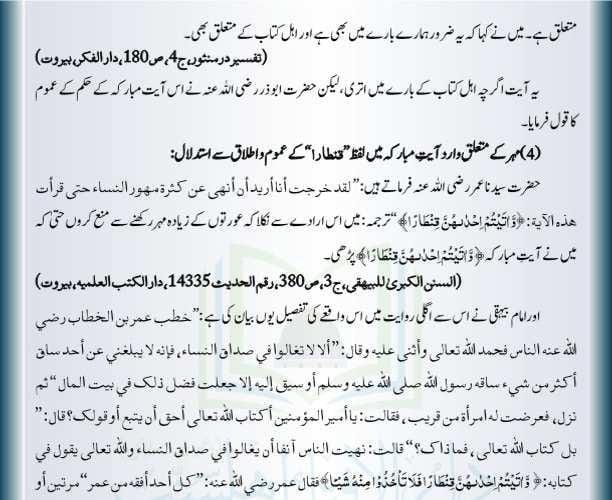
📖 4. Hazrat Umar (RA) and the Verse of Mahr
Verse:
﴿ وَآتَيْتُمْ إِحْدَاهُنَّ قِنطَارًا فَلَا تَأْخُذُوا مِنْهُ شَيْئًا ﴾
Translation: If you have given a wife a great amount of wealth as Mahr, do not take back anything from it.
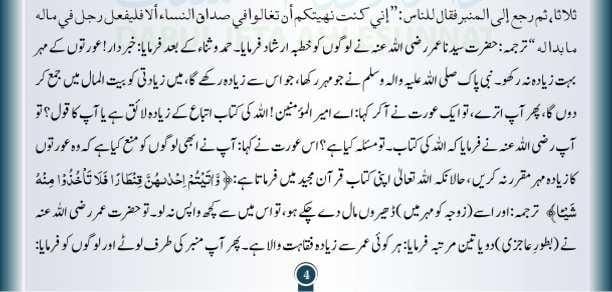
🔹 Incident: Hazrat Umar (RA) decided to set a limit on the dowries of women so that people would not be extravagant.
📍 But when a woman recited a verse to him, Hazrat Umar (RA) immediately reconsidered.
🔊 Umar (RA) said:
❝ Every person is wiser than Umar ❞ and then said: ❝ Whoever wants to give whatever dowry they wish, I will not set a limit. ❞
📚 Reference:
✅ Here Umar (RA) argued from the generality of the word “Qintar” (a large amount of wealth) that since the Quran did not specify an amount, how could he impose a restriction?
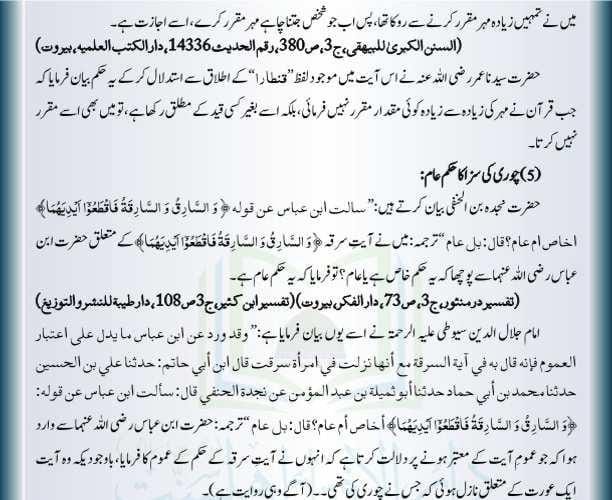
📖 5. Hazrat Ibn Abbas (RA) and the Verse of Theft
Verse:
﴿ وَالسَّارِقُ وَالسَّارِقَةُ فَاقْطَعُوا أَيْدِيَهُمَا ﴾
Translation: Cut off the hands of the male and female thief.
📍 Revealed: Regarding a specific woman who had committed theft
🔹 Hazrat Najdah Al-Hanafi says:
I asked Ibn Abbas (RA): ❝ Is this ruling specific or general? ❞ He replied: ❝ Rather, this ruling is general. ❞
📚 Reference:
🔖 Imam Suyuti writes:
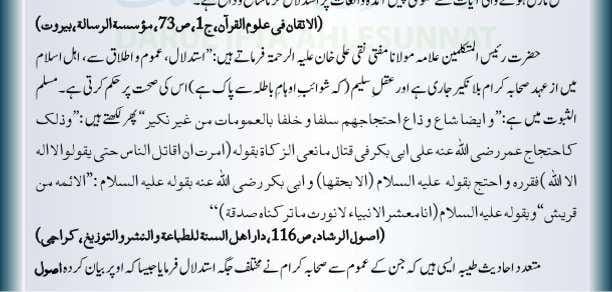
❝ This is clear evidence that the Companions acted upon the general wording of the verses ❞
📖 6. Hazrat Ali (RA) and the Argument from the Verse “Al-A’immah min Quraysh”
This Hadith:
❝ الأئمة من قريش ❞
Translation: The rulers will be from among Quraysh.
🔹 Hazrat Abu Bakr (RA) presented this Hadith as evidence for his caliphate, even though it was a personal statement of the Prophet ﷺ. However, the Companions derived a political rule from its general application.
📚 Reference:
📌 Summary of Arguments:
- ✅ The generality of Quranic verses is not limited only to disbelievers but can apply to anyone possessing those attributes.
- ✅ The Companions repeatedly used verses revealed in the context of disbelievers or People of the Book as evidence.
- ✅ Imam Bayhaqi, Imam Suyuti, Hazrat Naqi Ali Khan, and even Barelvi Mufti Qasim Attari accept this principle.
- ✅ From Hadith and the sayings of the Companions, this principle is repeatedly established: “Al-‘Ibra bi-‘umoom al-lafz la bi-khusus al-sabab” (The ruling depends on the generality of the wording, not solely on the specific cause of revelation).
❌ Barelvi Contradiction:
🟥 On one hand, Ahl al-Hadith are criticized that:
“They attach verses about disbelievers to Muslims; this is an extremist way of thinking.”
🟩 On the other hand, their elders and muftis (such as Mufti Qasim Attari) state the same principle that:
❝ It is proven from the Companions of the Prophet that the generality of the verses applies commands to Muslims ❞
📚 Fatwa Number: Pin-6823📅 Dawat-e-Islami Dar al-Ifta Ahl al-Sunnah🖋 Mufti Muhammad Qasim Attari
⚖️ Scholarly Principle:
🌟 العبرة بعموم اللفظ، لا بخصوص السبب
Translation: The ruling is based on the general wording of the verse, not only on the specific occasion on which the verse was revealed.
✅ This is the principle adopted by Ahl al-Hadith — following the method of the Companions and the Successors.
📢 Position of Ahl al-Hadith:
Ahl al-Hadith never say that all Muslims are like disbelievers. Rather, when an action is condemned and threatened with punishment in the Quran, if a Muslim commits that same action, then the general ruling of the verse can also apply to him — as the Companions did.
This is a principle of Shariah, not extremism.
🔥 Decisive Point:
📍 When:
- The Companions of the Prophet
- The Successors
- Imam Suyuti
- Naqi Ali Khan
- Mufti Qasim Attari
Everyone agrees that the generality of the verses is valid,
so targeting only the Ahl al-Hadith is bias and sectarianism, not scholarly research.
Below is the fatwa of Mufti Qasim Attari presented for your service.