
الحمد لله رب العالمين والصلوة والسلام على رسوله الأمين، أما بعد:
The Messenger of Allah, peace be upon him, used to raise his hands at the beginning of the prayer, before bowing, and after bowing.
Imam Bukhari, may Allah have mercy on him, says:
حدثنا إسحاق الواسطي قال: حدثنا خالد بن عبدالله عن خالد عن أبى قلابة أنه رأى مالك بن الحويرث إذا صلى كبر ورفع يديه وإذا أراد أن يركع رفع يديه وإذا رفع رأسه من الركوع رفع يديه وحدث أن رسول الله صلى الله عليه وسلم صنع هكذا
ولفظ مسلم فى الآخر: وحدث أن رسول الله صلى الله عليه وسلم كان يفعل هكذا
It is narrated from Abu Qulaba, a Tabi’i, may Allah have mercy on him, that after the death of the Prophet Muhammad, peace be upon him, he saw Malik bin al-Huwairith, may Allah be pleased with him, when he prayed, he would say Allahu Akbar and raise his hands, and when he intended to bow he would raise his hands, and when he raised his head from bowing he would raise his hands, and he narrated that the Messenger of Allah, peace be upon him, used to do so. And in the narration of Sahih Muslim, it is mentioned that he used to narrate that the Messenger of Allah, peace be upon him, himself used to do this.
Commentary: From this authentic hadith, it is established that the Messenger of Allah, peace be upon him, used to raise his hands before and after bowing. In contrast, no authentic hadith explicitly proves the abandonment or omission of raising hands before and after bowing.
The issue of raising hands in prayer is extremely important and a matter of scholarly debate. The senior scholars of Ahl al-Sunnah have written books affirming this issue, for example, “Ameer al-Mu’mineen fi al-Hadith” by Imam Bukhari, may Allah have mercy on him: the section on raising hands. However, no major scholar of Ahl al-Sunnah has written a book advocating the abandonment of raising hands.
The author has written a book titled “Noor al-Aynayn fi Ithbat Raf’ al-Yadayn” which has had several editions published. In this book, the affirmation of raising hands and refutation of opponents’ doubts have been conclusively addressed. So far, no response has come from any side. Praise be to Allah.
Anwar Khurshid Deobandi wrote a book against Ahl al-Hadith titled “Hadith aur Ahl al-Hadith.” In this book, he dedicated a chapter to the abandonment of raising hands and also discussed the issue of raising hands. The author wrote a complete response titled “Noor al-Qamareen,” which has been published and widely circulated. In “Noor al-Qamareen,” all of Anwar Sahib’s doubts were answered conclusively and decisively. He remained silent in response. Ordinary Muslims benefited greatly from “Noor al-Qamareen.” Now this response is being published as a modern edition along with the original texts of Anwar Khurshid Sahib.
Raising hands before and after bowing in prayer is mutawatir (conclusively transmitted).
The abandonment or omission of raising hands is proven neither from the Prophet Muhammad, peace be upon him, nor from any companion, may Allah be pleased with them. Sayyiduna Saeed bin Jubair, may Allah have mercy on him, says:
All the companions of the Messenger of Allah, peace be upon him, used to raise their hands at the beginning of the prayer, at the time of bowing, and after raising their heads from bowing.
I pray to Allah Almighty that He makes this book a means of spreading the Book and Sunnah and a provision for the Hereafter for me. Ameen.
(8 August 2004)
The Issue of Raising the Hands and Hadith and Ahl al-Hadith
Anwar Khurshid Deobandi, in his book “Hadith and Ahl al-Hadith,” under the chapter ترك رفع اليدين فى غير الافتتاح, has presented thirty-eight (38) Marfoo’ Ahadith and some reports of the Companions, may Allah be pleased with them all, and reports of the Tabi’in, claiming that
apart from Takbeer-e-Tahreema, raising the hands should not be done.
In this brief article, the mentioned arguments of his are reviewed and some proofs in favor of raising the hands are presented:
First of all, if raising the hands should not be done except at Takbeer-e-Tahreema, then why do the Hanafi, Barelvi, and Deobandi groups raise their hands in Witr and the two Eids? If they say that the specification of raising the hands in Witr and the two Eids is established by other authentic proofs, then it is replied that the specification of raising the hands before Ruku’, after Ruku’, and after two Rak’ahs is also established by other authentic proofs, so why deny this authentic Sunnah? Now, please see Anwar Khurshid Deobandi Sahib’s arguments and brief comments on them:
Hadith Number 1:
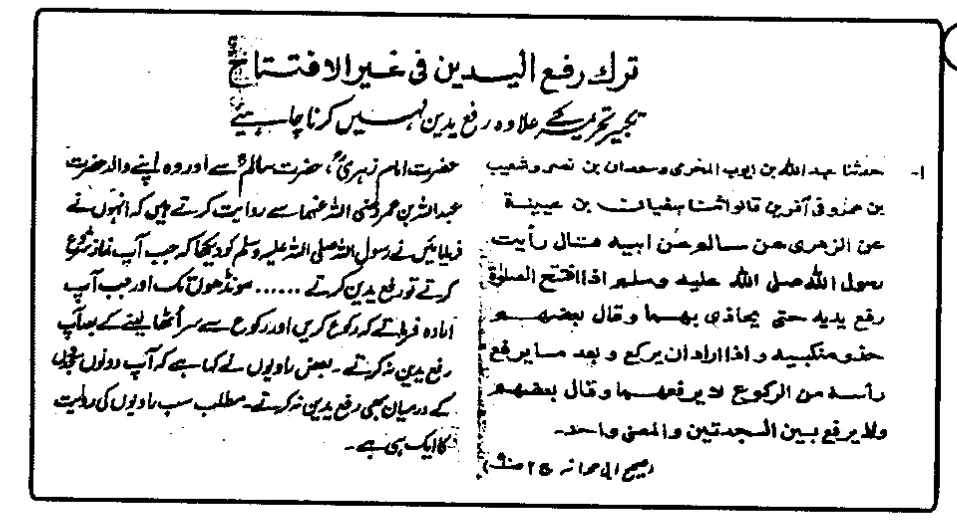
Comment:
➊ The currently published edition of Musnad Abi Awana is the one published by the Indian Deobandis, who published it from multiple manuscripts, one of which is the manuscript of Shah Ihsanullah Al-Sindhi, may Allah have mercy on him, from Al-Maktabah Al-Rashidiyah.
The above-mentioned hadith is present on page
of this manuscript, and its text is as follows:
وبعد ما يرفع رأسه من الركوع ولا يرفعهما وقال بعضهم ولا يرفع بين السجدتين والمعنى واحد
This same text is present in Anwar Sahib’s hadith and Ahl al-Hadith (4th edition) on page
. Another manuscript of Sahih Abi Awana is available at Al-Jami’ah Al-Islamiyyah Madinah Munawwarah, which also has the same text as the Rashidiyah manuscript.
Therefore, it is proven that in two handwritten manuscripts the waw (و) is present, which the Indian publishers have omitted. After that, wherever Sahih Abi Awana has been printed worldwide, it is a reflection of the Indian manuscript.
➋ The above-mentioned narration of Sahih Abi Awana is also present in Sahih Muslim
with the affirmation of the waw.
➌ In the mentioned narration, Imam Abu Awana has at least three teachers:
⟐ Abdullah bin Ayyub
⟐ Sa’dan bin Nasr
⟐ Shu’ayb bin Amr
Among these, the narration of Sa’dan bin Nasr is present in Al-Sunan Al-Kubra by Al-Bayhaqi
with the affirmation of raising the hands and the waw.
➍ Imam Abu Awana says:
حدثنا الربيع بن سليمان عن الشافعي عن ابن عيينة بنحوه إلخ
This narration is present in Kitab Al-Imam by Al-Shafi’i
with the affirmation of the waw and proof of raising the hands. Imam Abu Awana essentially wants to explain by mentioning the difference among narrators that some narrators have stated ولا يرفع بين السجدتين
and some have stated the words ولا يرفعهما بين السجدتين, while the meaning والمعني واحد is the same.
The endorsement of Imam Abu Awana is further confirmed by the fact that this narration with the affirmation of raising the hands is present in Kitab Al-Imam by Al-Shafi’i, etc.
➎ The author of the letters has proven in his book “Nur Al-Aynayn fi Mas’alah Raf’ Al-Yadayn” that more than thirty (30) Imams and narrators have transmitted this narration from Sufyan bin ‘Uyaynah, may Allah have mercy on him, with the affirmation of raising the hands. Similarly, this narration is established with mutawatir status from Imam Zahri, may Allah have mercy on him. Hafiz Ibn Hajar, may Allah have mercy on him, says:
فإن الرواية عن الزهري بهذا السند بالغة مبلغ القطع بإثبات الرفع عند الركوع وعند الإعتدال وهى فى الموطأ وسائر كتب أهل الحديث
Imam Hazmi, may Allah have mercy on him, says: وممن رواه الزهري عن سالم ولم يختلف فيه عليه ولا اضطراب فى متنه and among those who narrated from Salim is Zahri as well. There is no disagreement about them in this narration, nor is there any confusion in the text of this narration.
➏ Imam Abu Awana has dedicated a chapter to the affirmation of raising the hands on this hadith, so it is impossible that under this chapter he would bring a narration that denies raising the hands.
A person puts a board on his shop saying “Meat Shop” while inside the shop he has arranged stationery items. Can anyone consider him a sensible person? When an ordinary person does not do this, how can it be attributed to Imam Abu Awana?
➐ Before the present era, no Hanafi scholar used this narration of Abu Awana for argumentation; if such a narration existed, the Hanafi predecessors would certainly have used it for argument.
➑ In this narration, both ولا يرفع and ولا يرفعهما negate the raising of hands with prostrations, not the one with bowing.
➒ Numerous trustworthy narrators have transmitted the affirmation of raising the hands from Ibn Umar, may Allah be pleased with them both, such as Salim bin Abdullah, Nafi’, and Muharib bin Dathar, may Allah have mercy on them and others.
➓ Ibn Umar, may Allah be pleased with them both, used to throw stones at anyone he saw not raising the hands.
Hadith Number 2:

Commentary:
➊ The current manuscript of Musnad Hamidi has been published by Habib-ur-Rahman Azmi Deobandi from the Deoband manuscript (dated 1324 AH).
Azmi Sahib has also mentioned (
after the introduction) the manuscript of Maktabah Zahiriya Damascus. Its date is 689 AH.
I have a complete photocopy of the mentioned manuscript of Maktabah Zahiriya. On its page 100, the above-mentioned hadith is present with the following text:
وبعد ما يرفع رأسه من الركوع ولا يرفع بين السجدتين
That is, it does not contain the words فلا يرفع.
➋ My Arab student friends from Medina University have sent another (complete) manuscript of Musnad Hamidi from Maktabah Zahiriya, dated approximately the seventh century Hijri. It also contains isnads from Imam Ibn Qudamah and others. On page
a, the same narration is present with the text:
وبعد ما يرفع رأسه من الركوع ولا يرفع بين السجدتين
The words فلا يرفع are not present.
Therefore, it is established that the word فلا يرفع in the text of the hadith is a misconception of the Indian copyists of the thirteenth and fourteenth centuries.
➌ The current manuscript of Musnad Hamidi (research by Al-Azmi) is full of errors. In the research of Musnad Al-Hamidi, which is being published (InshaAllah) from Darussalam Riyadh, Lahore, I have identified approximately four hundred errors. Readers are requested, as an experiment, to take out any page of Azmi Sahib’s manuscript and read the footnotes. You will find errors on every page. For example, on
there is أخبرني أبو الشعثاء جابر بن زيد قال: سمعت رسول الله صلى الله عليه وسلم يقول, although this chain is absolutely incorrect.
Jabir bin Zaid is a Tabi‘i. His meeting with the Prophet ﷺ is not at all established. There is no space here for details, otherwise I would mention many such examples. Therefore, it is a highly reprehensible act to distort Sahih Muttafaqun Alayh hadiths on the basis of such erroneous manuscripts.
➍ Before the present era, no Hanafi scholar has presented this narration in their argument.
➎ It is established with mutawatir evidence from Sufyan bin ‘Uyaynah, may Allah have mercy on him, that raising the hands (raf‘ al-yadayn) is practiced.
➏ It is established with mutawatir evidence from Zuhri, may Allah have mercy on him, that raising the hands is practiced.
➐ Numerous students have narrated from Ibn ‘Umar, may Allah be pleased with them both, the practice of raising the hands.
➑ Ibn ‘Umar, may Allah be pleased with them both, used to throw pebbles at those who did not raise their hands.
➒ If a narration different in its matn is transmitted from any manuscript of a book, then the other existing manuscripts of that book should also be considered. For details see
➓ It is narrated from Imam Hamidi that whoever, after knowing the hadith of Ibn ‘Umar, may Allah be pleased with them both, still does not raise the hands, then his prayer is invalid or deficient.
When Imam Hamidi is a proponent of the obligation of raising the hands, how can it be that he would narrate a hadith against raising the hands?
Hadith Number 3:

Commentary:
On the above-mentioned page of Nasb al-Rayah, after this hadith, it is written:
قال البيهقي: قال الحاكم: هذا باطل موضوع، ولا يجوز أن يذكر الاعلي سبيل القدح
Al-Bayhaqi said: Al-Hakim said: This narration is false and fabricated, and it is not permissible to mention this narration without criticizing it.
Meaning, this narration is false and fabricated. Anwar Khurshid Deobandi, like traditional followers, silently concealed this criticism.
Hadith Number 4:
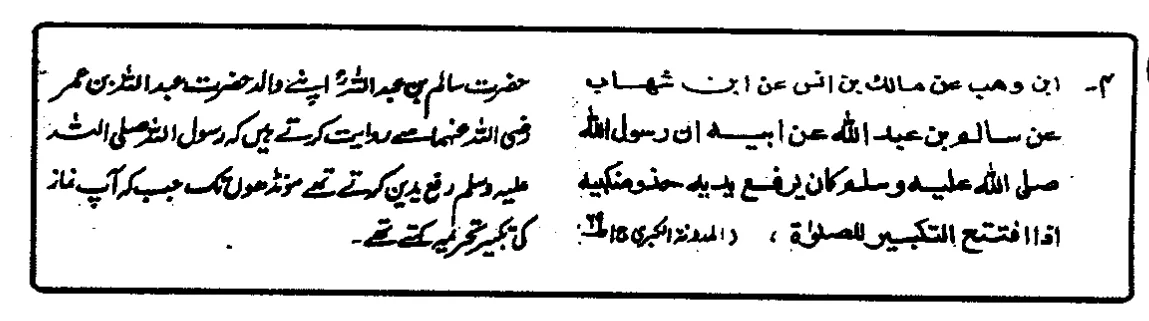
Comment:
There is no mention in this hadith of not raising the hands.
In Imam Bayhaqi’s book “Ma’rifat al-Sunan wal-Athar”
, the same narration of Ibn Wahb is present with affirmation of raising the hands before and after Ruku’.
“Al-Mudawwana al-Kubra” is not the book of Imam Malik. The chain of narration connected to the author of Mudawwana, “Sahnun,” is unknown, therefore the entire book is without an authentic chain. A famous scholar Abu Uthman Saeed bin Muhammad bin Subaih bin Al-Haddad Al-Maghribi, the author of Sahnun, was among the Mujtahids.
He wrote a book refuting Mudawwana.
He used to call Mudawwana “Mudawwadah,” meaning a book full of worms.
Regarding the issues narrated by Abdul Rahman bin Qasim from Imam Malik, Imam Abu Zur’ah Al-Razi said: فالناس يتكلمون فى هذه المسائل so people criticize these issues.
Hadith Number 5:

Commentary:
➊ This narration does not prove the abandonment of raising the hands.
➋ It is established with an authentic chain from Ibn Abbas (may Allah be pleased with them) that raising the hands was practiced.
➌ Habib ur Rahman Azmi Deobandi writes in the margin of the book كشف الاستار presented by Anwar Khurshid Sahib:
قال الهيثمي وفيه ابن أبى ليلى وهو سيء الحفظ
Meaning, the memory of its narrator Ibn Abi Layla was weak.
Also, on the same page, there is criticism by Muhaddith Hazar.
➍ Anwar Shah Kashmiri (Deobandi) says about this narrator Muhammad ibn Abi Layla:
فهو ضعيف عندي كما ذهب إليه الجمهور
Meaning, he is weak in my view and in the view of the majority.
➎ One of his narrators, Al-Hakam ibn Utaybah, is a mudallis (one who conceals defects in the chain).
Regarding the mudallis narrator, Sarfaraz Khan Sahib says:
If a mudallis narrator narrates from someone, it is not a proof unless he clarifies or a trustworthy narrator follows him; however, it should be noted that in the Sahihayn (Bukhari and Muslim), tadlis is not harmful as it is interpreted as hearing through other means.
Hadith Number 6:

Comment:
➊ There is no mention in this narration about not raising the hands. Also see
➋ Ata bin Al-Saib, may Allah have mercy on him, suffered from confusion in his later years.
To my knowledge, there is no evidence that Warqa heard from Ata before his confusion.
Hadith numbers 7 to 14:


Commentary:
➊ In all these narrations, Sufyan al-Thawri is the one who narrates with the word «عن» in every chain. Ibn al-Turkumani Hanafi writes: الثوري مدلس وقد عنعن Thawri is a mudallis (one who practices tadlis) and he has narrated this hadith with the word عن.
Sarfaraz Khan Safdar Hayati Deobandi, Master Amin Okara Hayati Deobandi, Sher Muhammad Sahib Mamati Deobandi, Muhammad Sharif Sahib Kotlawi Barelvi, and Naimwi among others have also accepted that Sufyan al-Thawri was a mudallis.
Regarding the tadlis of the narrator in the word عنعنہ, Sarfaraz Khan Safdar Deobandi’s research has already passed in Hadith 5, Answer 5. Ahmad Raza Khan Barelvi states:
And عنعنہ mudallis is rejected and not authentic according to the chosen and relied upon belief of the majority of muhaddithin.
And he further writes that عنعنہ mudallis is not accepted according to the principles of the muhaddithin
Hadith Number 15:

Comment:
Its chain of narration in Jami’ al-Masanid is as follows:
أخرجه أبو محمد البخاري عن رجاء بن عبد الله النهشلي عن شقيق بن إبراهيم عن أبى حنيفة رضي الله عنه
Its first narrator Abu Muhammad al-Bukhari al-Harithi is a liar.
The second narrator is unknown and the third is the subject of discussion, therefore this chain is fabricated and false.
Hadith numbers 16 to 21 and 23:



Comment:
➊ Its narrator Yazid ibn Abi Yazid is weak according to the majority.
Hafiz Ibn Kathir states:
يزيد بن أبى زياد وهو ضعيف
Muhammad Ilyas Faisal, author of “Salat al-Nabi ﷺ”, writes:
“Zaili states that its chain includes Yazid ibn Abi Yazid and he is weak.”
Ali Muhammad Sahib Haqqani Deobandi, author of “Nabawi Namaz Mudallal Sanadi” Volume One, states:

Its meaning has already been explained in the words of Ilyas Faisal Sahib.
➋ Yazid bin Abi Ziyad is a fabricator.
And in the narration where raising the hands is not done (lam ya‘ud, etc.), he has not specified hearing (sama‘) in any chain. In the chain of Imam Shuba in which hearing is specified, there is no negation of raising the hands again after the first takbir.
➌ Yazid bin Abi Ziyad’s memory deteriorated in his later years.
Yazid narrated this hadith after confusion.
➍ The muhaddithun agree that the statement “lam ya‘ud” is a fabricated statement of Yazid bin Abi Ziyad.
➎ Several muhaddithun, such as Imam Yahya bin Ma‘in and others, have declared this narration weak.
For further details, see the earlier pages of this book.
Hadith Numbers 22, 24 to 28:
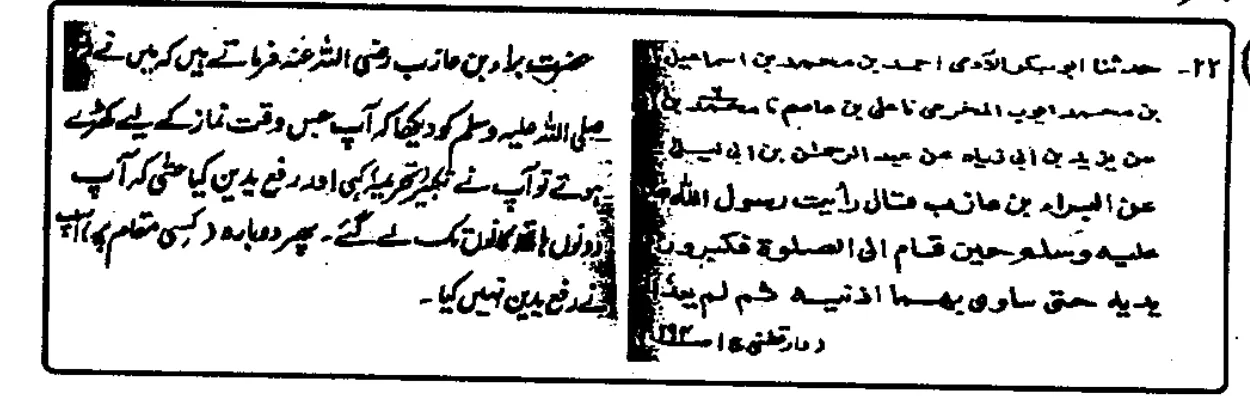


Comment:
Muhammad bin Abi Layla is weak as mentioned in comments 3 and 4 on Hadith 5.
Tahawi Hanafi also calls him مضطرب الحفظ جدا.
Ibn Abi Layla heard this narration from Yazid bin Abi Ziyad.
Hadith Number 29:

Comment:
In this narration, there is no mention of not raising the hands after the first Takbir al-Iwla. In the same manuscript of Sunan Abi Dawood, Hadith 738 is narrated from Abu Hurairah (may Allah be pleased with him), in which he reports the raising of hands before and after Ruku from our Prophet (peace be upon him).
Imam Ibn Khuzaymah (may Allah have mercy on him) has narrated this hadith in his Sahih.
Hafiz Ibn Hajar (may Allah have mercy on him) said: هذا حديث صحيح
Hadith Number 30:

Comment:
In this narration, there is no mention of abandoning the raising of hands before and after bowing (ruku). It is an established principle that the absence of mention does not imply the negation of mention.
In the previous hadith, the raising of hands from Abu Hurairah (may Allah be pleased with him) has already been affirmed.
The raising of hands is also established from Abu Hurairah (may Allah be pleased with him).
Indeed, in one narration from him, it is also mentioned:
أقسم بالله إن كانت لهي صلاته حتى فارق الدنيا
The narrator Muhammad bin Ahmad bin Asmah Al-Ramli’s status is not known, but in Musnad Al-Shamiyyin by Al-Tabarani
, some hadiths include his following. A detailed discussion is forthcoming, InshaAllah.
Hadith Number 31:
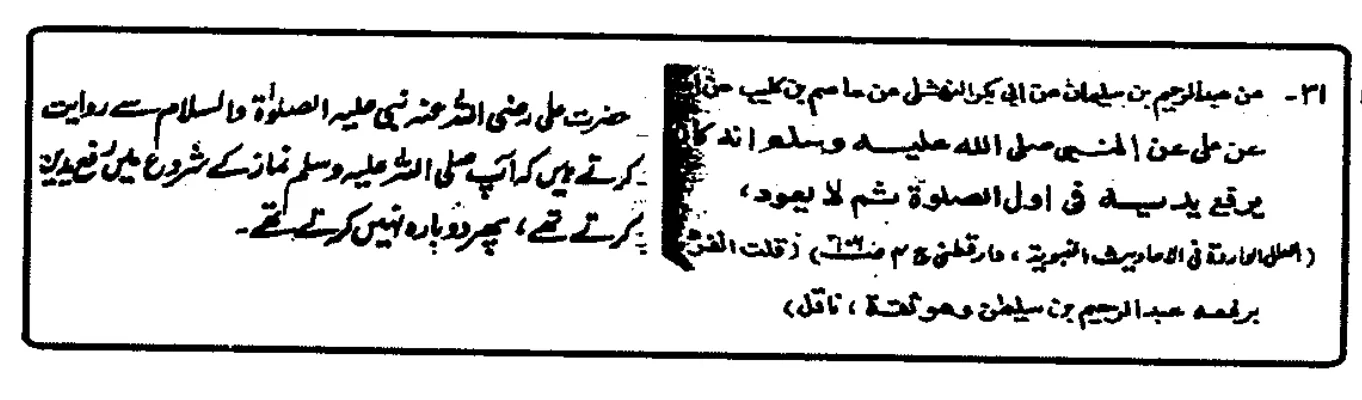
Comment:
➊ Imam Al-Daraqutni criticized this narration and said:
ووهم فى رفعه meaning there was a mistake in describing it as Marfoo’ (raised).
➋ Secondly, in Al-‘Ilal Al-Waridah, the chain is missing up to the mention of Abdul Rahim, so this narration is rejected due to being without a chain.
Hadith Number 32:

Comment:
There is no mention of abandoning the raising of hands in this hadith. Secondly, this hadith is false. Before the mentioned page of Kamil ibn ‘Adi
, there is a statement of Imam Bukhari, may Allah have mercy on him: كثير بن عبد الله أبو هاشم الأبلي منكر الحديث عن أنس and the statement of Imam Nasai is written:
كثير أبو هاشم يروي عن أنس: متروك الحديث
For Imam Bukhari, criticizing a narrator as “Munkir al-Hadith” (denier of the hadith) is a severe criticism.
In fact, in Tahdhib al-Tahdhib
it is written:
وقال الحاكم: زعم أنه سمع من أنس، روى عنه أحاديث يشهد القلب أنها موضوعة and Hakim said: He claimed to have heard from Anas, he narrated from you such hadiths about which the heart testifies that they are fabricated.
Hadith Number 33:
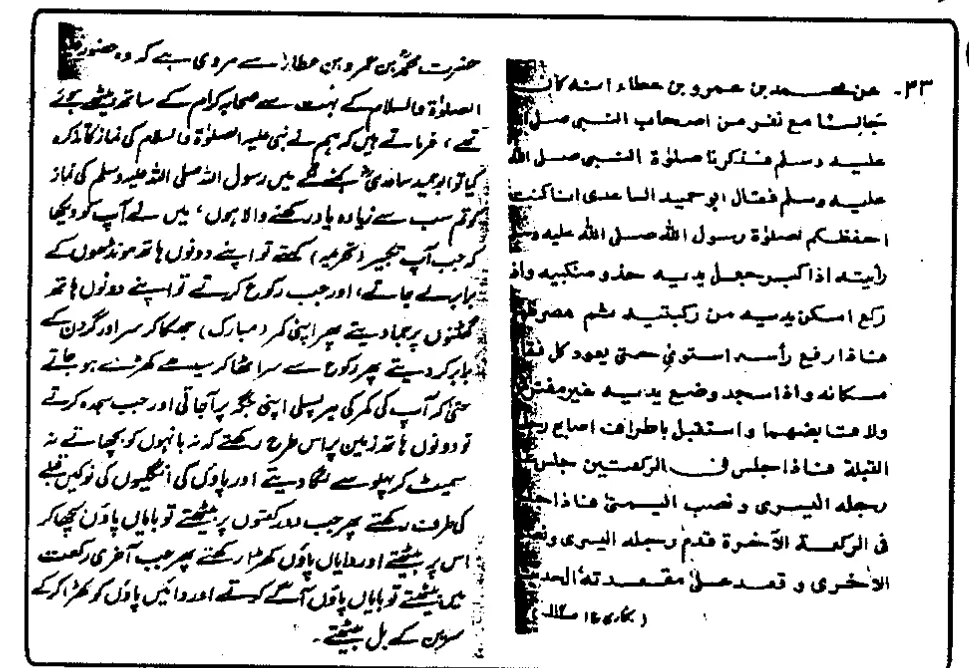
Comment:
This narration is absolutely authentic. However, it does not mention the omission of raising the hands before and after the bowing (ruku). The same narration of Muhammad bin Amr bin Ata, with another chain, affirming the raising of hands before and after the bowing, is also present in Sunan Abi Dawood
, Sunan Tirmidhi
. Imam Ibn Khuzaymah
, Imam Ibn Hibban
, and others have declared it authentic. Imam Tirmidhi, may Allah have mercy on him, says: هذا حديث حسن صحيح Imam Bukhari, Imam Ibn Taymiyyah, Imam Ibn Qayyim, and others have also declared it authentic. Therefore, Anwar Khurshid Sahib’s reasoning by leaving the detailed narration and relying on the brief narration is not correct. It should be noted that the narrator of the mentioned hadith, Abdul Hamid bin Ja’far, is considered trustworthy by most scholars.
Hadith Number 34:

Commentary:
One narrator of this hadith has extensive discussion on Shahr bin Hawshab, but the preferred opinion is that he is Hasan al-Hadith because he is reliable according to the majority. It is asked, where is the mention of abandoning the raising of hands before and after Ruku in this? Unnecessarily quoting a hadith that does not mention this just to increase the volume of your book, what service to the religion is that?
Hadith Number 35:
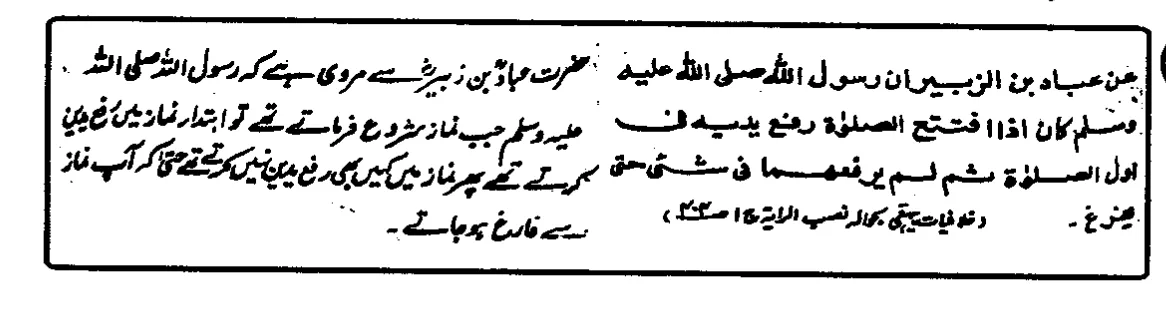
Comment:
➊ The identity of one narrator in its chain, “Muhammad bin Ishaq,” needs to be determined. It should be clarified who this noble person is.
➋ Hafs bin Ghiyas is a mudallis (one who practices tadlis).
Therefore, the specification of his hearing should be established.
Abu Yusuf Muhammad Wali Dar Waleesh (Professor at Jamia Uloom Islamia, Banuri Town) writes in his book ”د پيغمبر خدا صلى الله عليه وسلم مونح“:
او د مدلس عنعنه دهيحا په نزد قبوله نه ده
Meaning, narrating from a mudallis with “an” is not acceptable to anyone.
➌ The narration is munqati‘ (disconnected). Imam Iraqi says about the mursal narration:
ورده جماهير النقاد للجهل بالساقط فى الإسناد
And the majority of muhaddithin have rejected the mursal narration because the missing narrator in its chain is unknown.
Hadith numbers 36, 37:

Commentary:
➊ There is no mention of raising the hands during or after bowing in this; rather, this narration is about raising the hands during Tashahhud, as is established by another hadith in Sahih Muslim.
➋ The great scholars and other ulema (such as Imam Nasai, Imam Abu Dawood, Nawawi, may Allah have mercy on them) and Muhammad ibn al-Hasan al-Shaybani( فى الحجة على أهل المدينة) have dedicated chapters on the salutations (Salam) based on this.
➌ No hadith scholar has mentioned this narration in the chapter of abandoning the raising of hands.
➍ There is consensus among scholars that the narration of Jabir ibn Samurah (may Allah be pleased with him) has no relation to the raising of hands during Qiyam (standing), but only relates to raising the hands during Tashahhud.
➎ Comparing an act established from the Prophet ﷺ himself to the tails of evil horses is extremely wrong and reprehensible.
➏ If this hadith established the abrogation or prohibition of raising the hands, then why do the Hanafi, Deobandi, and Barelvi scholars raise their hands in (1) the first Takbeer, (2) Witr, and (3) on the two Eids?
If its specification is proven by other evidences, then the specification of raising the hands before and after Ruku is also proven by mutawatir hadiths. See Allama Suyuti’s قطف الأزهار المتناثرة فى الأحاديث المتواترة
➐ The narration of Tamim bin Tarfa, may Allah have mercy on him, is presented by the opponents of raising the hands during Qiyam, whereas this same narration is also present in Mukhtasar Musnad Ahmad
with the words وهم قعود, meaning: and they were sitting.
➑ Many scholars have severely criticized those who argue from this hadith. For example, Imam Nawawi, may Allah have mercy on him, calls it أقبح أنواع الجهالة بالسنة, meaning the greatest type of ignorance alongside the Sunnah.
➒ Among the narrators of this hadith, such as Imam Muslim, Imam Ahmad, and Imam Abu Dawood, may Allah have mercy on them and others, none has established the abrogation or prohibition of raising the hands based on this hadith.
➓ Many Deobandi scholars have criticized the argument for raising the hands based on this narration. For example, Mahmood Hasan Deobandi states:
Answering with the narration of the other companions of Khail is not just, because it concerns the Salam, and the companions say that at the time of Salam they also used to gesture with the hands. You have prohibited this.
Muhammad Taqi Usmani (who holds a high position in serious Deobandi circles) says:
But the fair thing is that the Hanafi argument from this hadith is doubtful and weak.
Who knew that Anwar Khurshid Sahib would bring such disputes that, while shedding the blood of justice, would keep presenting the above-mentioned hadith of Sayyiduna Jabir bin Samurah, may Allah be pleased with him, along with weak, fabricated, and unrelated narrations to mislead his Deobandi followers. Such conspiracies have a severe effect on the simple-minded public, as mentioned by Maulvi Ashiq Ilahi Meerthi Sahib, who says:
The real issue was that some Hanafis began calling the Ahl al-Hadith, i.e., the non-followers of taqlid of the time, disbelievers for raising the hands, and this was the gravest mistake.
Hadith Number 38:
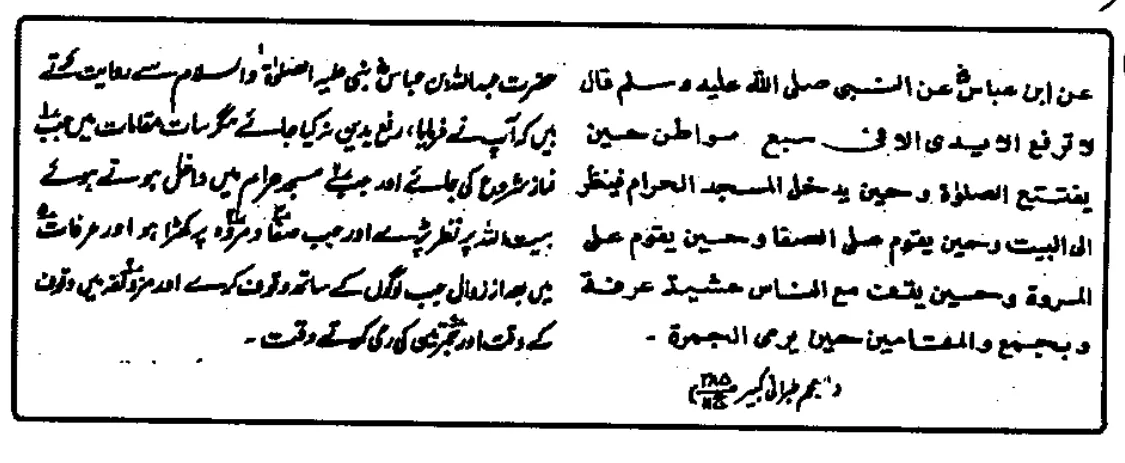
Commentary:
In the chain of narration of this hadith, the same Muhammad bin Abi Layla (weak) is present, who has already been mentioned under Hadith Number 5, Commentary Numbers 3-4. There are several other defects in its chain as well, such as the continuous narration (tadlis) of Hikm bin Utaybah, etc.
Summary:
Anwar Khurshid Deobandi has presented twenty-eight mursal narrations. Among these, ten (4, 5, 23, 29, 30, 32, 33, 34, 36, 37) are unrelated to the subject. None of these narrations mention raising the hands before or after bowing (ruku). Of these ten, number 4 is brief, numbers 23 and 5 are weak, 32 is invalid, number 34 is doubtful, and the rest are authentic in terms of chain, but they do not prove the non-performance of raising the hands at all. A brief review of the remaining twenty-eight narrations is as follows:
(numbers 1, 2) fabricated, (number 3) invalid, fabricated, (numbers 6 to 14) weak, (number 15) fabricated, (numbers 16 to 22) weak, (numbers 24 to 28) weak, (number 31) weak, (number 35) weak mursal, and (number 38) weak.
Some of these narrations have been mentioned eight times and some seven times. Now, before you, the affirmation of raising the hands before and after bowing is presented from authentic hadiths.