◈ Introduction
The performance of Jumu‘ah (Friday) prayer is among the great symbols (شعائر) of Islam. From the blessed era of the Messenger of Allah ﷺ to the times of the Rightly Guided Caliphs, there was only one Adhān for Jumu‘ah prayer.
However, in later periods, due to the growth in population and expansion of Muslim communities, a second Adhān was introduced in some areas. This additional Adhān has since remained a subject of scholarly discussion and critique.
In this detailed research article, we aim to demonstrate with clear evidence, statements of the Salaf (pious predecessors), and reliable historical references that the second Adhān for Jumu‘ah, which is given before the Imām ascends the pulpit (minbar), did not exist during the era of the Prophet ﷺ, Abū Bakr رضي الله عنه or ‘Umar رضي الله عنه. It was a later innovation, and many of the Companions, Tābi‘īn, Atbāʿ al-Tābiʿīn and prominent scholars of Islam explicitly declared it to be a Bid‘ah (innovation).
The goal of this research is not to target any specific group or school of thought, but to clarify the historical and scholarly position so that the reader may be informed about the Sunnah of the Prophet ﷺ and the way of the Salaf al-Ṣāliḥīn.
❖ The Single Adhān in the Era of the Prophet ﷺ
During the lifetime of the Prophet ﷺ, and the blessed caliphates of Abū Bakr رضي الله عنه and ‘Umar رضي الله عنه, it was the uncontested practice that only one Adhān was called for Jumu‘ah prayer – that which was called after the Imām sat on the minbar.
❖ The Origin of the Second Adhān
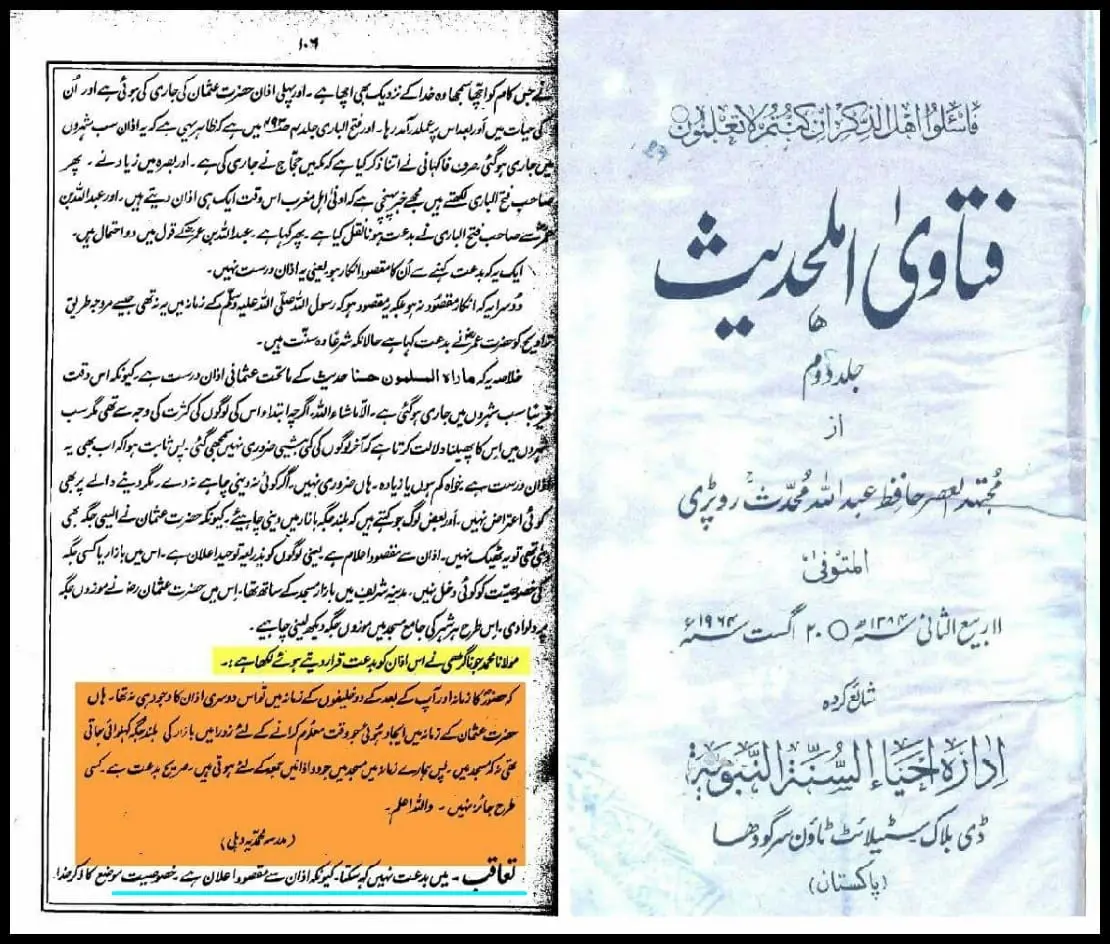
Through the study of Islamic history, we find that due to the increase in population and the expansion of Madīnah, gathering people for Jumu‘ah became difficult. Hence, ‘Uthmān ibn ‘Affān رضي الله عنه, the third Caliph, arranged for an additional Adhān, which was not given inside the mosque, but from a high place in the market of Zawrā’, outside the Prophet’s Mosque.
Imām al-Qurṭubī رحمه الله wrote:
«فأما الأذان الأول فمحدث، فعله عثمان بن عفان ليتأهب الناس لحضور الخطبة عند اتساع المدينة وكثرة أهلها»
“As for the first Adhān (i.e. the additional one), it is a later innovation. ‘Uthmān ibn ‘Affān introduced it so that people could prepare for the sermon due to the expansion of the city and the increase in its population.”
📚 Tafsīr al-Qurṭubī, al-Lubāb fī ‘Ulūm al-Kitāb by Ibn ‘Ādil
It should be noted that although it is called the ‘first’ Adhān, in actual sequence, it is the second, as the original Adhān in the Prophet’s time was the one after the Imām sat on the minbar.
❖ Opinions of the Noble Companions
Foremost among the Salaf is the group of the noble Companions, whose way and statements are a guiding light for the Ummah. Below we present the authentic opinions of eminent Companions regarding the second Adhān of Jumu‘ah (the first in sequence, i.e. the Adhān before the Imām sits on the minbar).
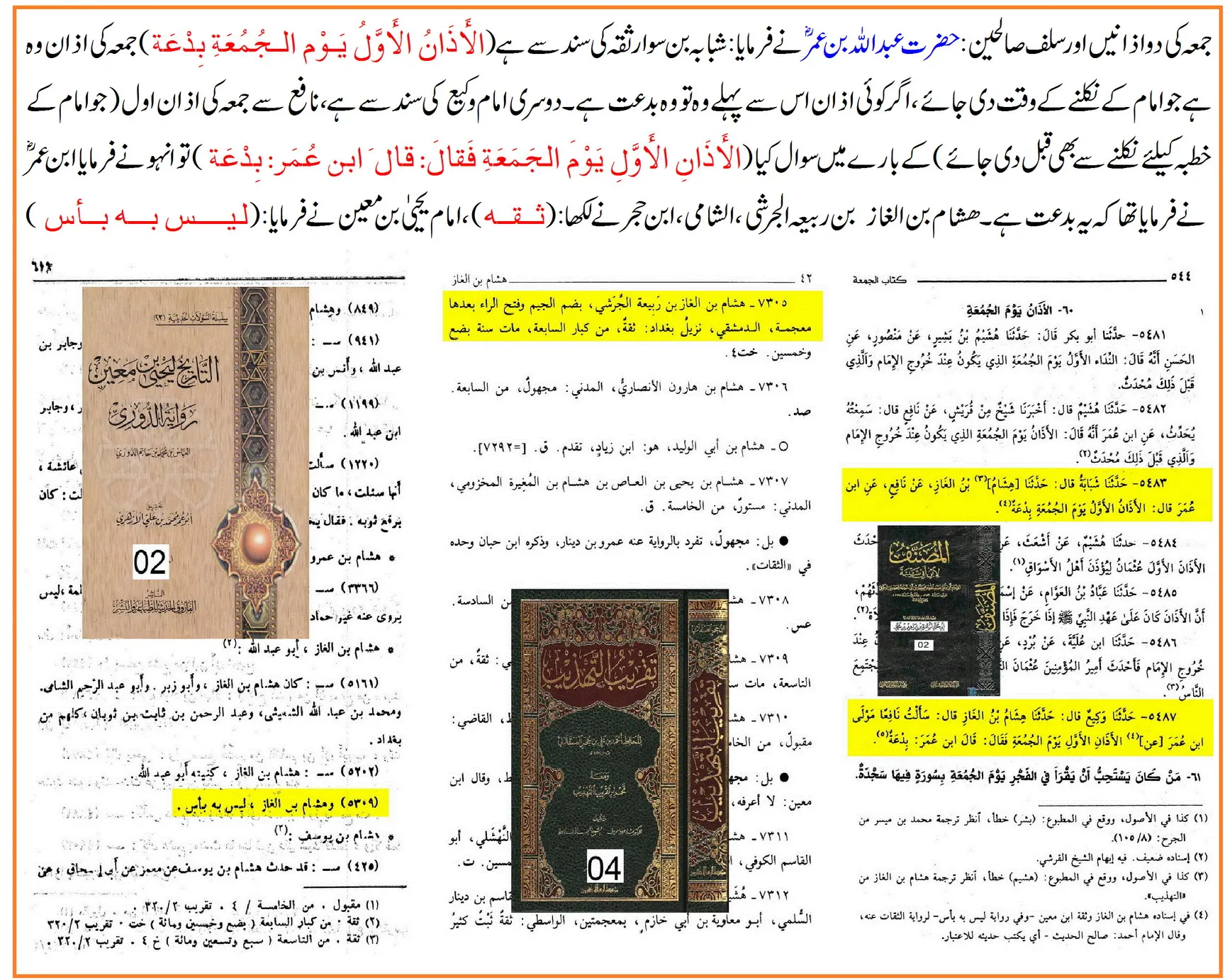
① The Clear Stance of ʿAbdullāh ibn ʿUmar رضي الله عنهما
ʿAbdullāh ibn ʿUmar رضي الله عنهما explicitly says regarding this additional Adhān of Jumu‘ah:
«الأذانُ الأوّلُ يومَ الجُمعةِ بِدْعةٌ»
“The first Adhān on the day of Jumu‘ah is a Bid‘ah (innovation).”
📚 Muṣannaf Ibn Abī Shaybah, 5437
The same narration is reported through another chain as follows:
«سألتُ نافعًا مولى ابنِ عمرَ، الأذانُ الأوّلُ يومَ الجمعةِ بِدْعَةٌ؟ فقال: قال ابنُ عمرَ: بِدْعَةٌ»
“I asked Nāfi‘, the freed slave of Ibn ʿUmar: Is the first Adhān on Friday a Bid‘ah? He replied: Ibn ʿUmar said: It is a Bid‘ah.”
📚 Muṣannaf Ibn Abī Shaybah, 5441
Chain Analysis:
- Shabābah ibn Sawwār – truthful, ḥasan al-ḥadīth
- Hishām ibn al-Ghāz – trustworthy (thiqah)
- Nāfiʿ, the freed slave of Ibn ʿUmar – well-known trustworthy Tābiʿī
This narration exists with its complete chain in authentic books of hadith, which makes it clear that Ibn ʿUmar رضي الله عنهما considered the second Adhān of Jumu‘ah to be a Bid‘ah.
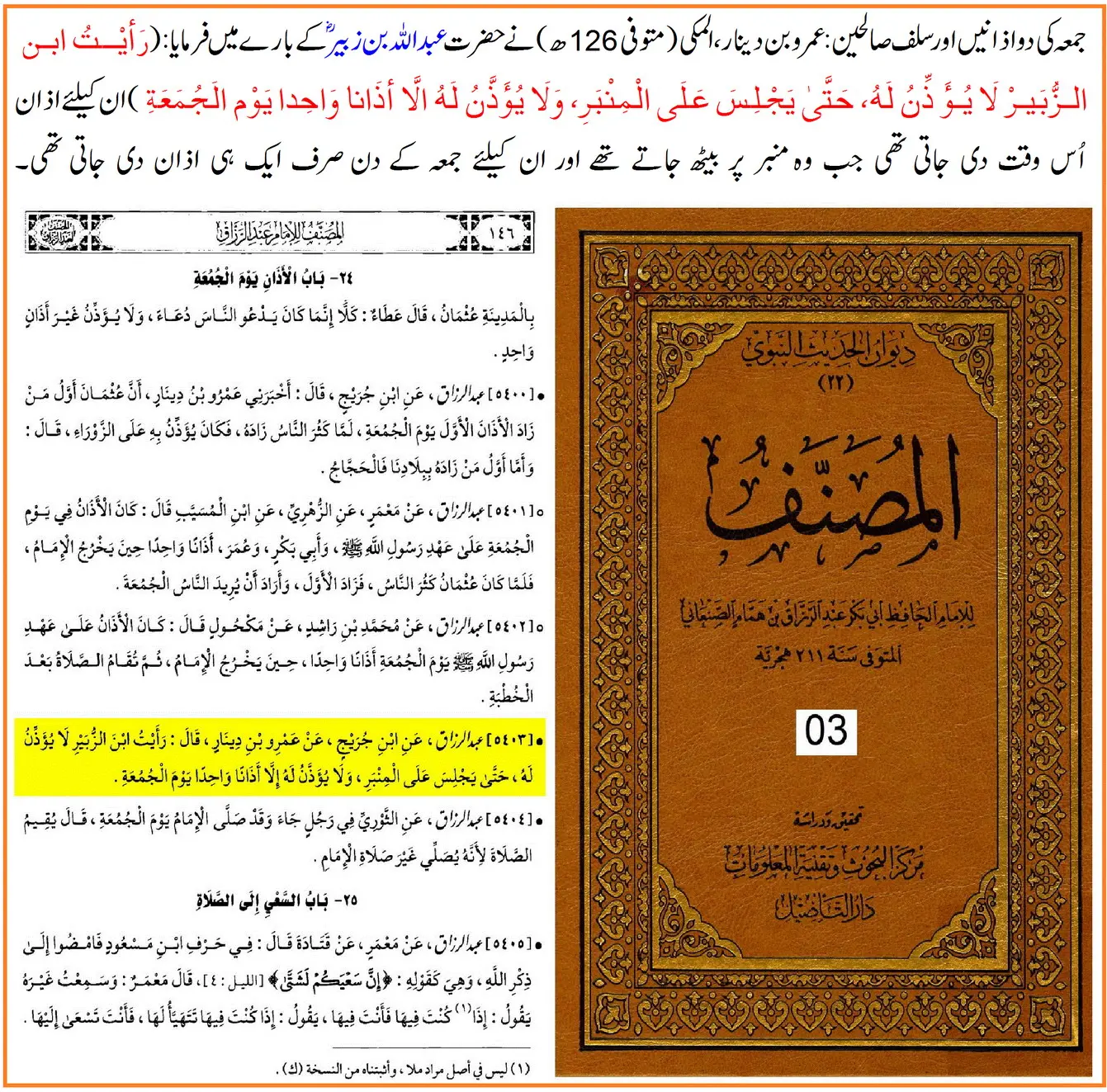
② The Practice of ʿAbdullāh ibn al-Zubayr رضي الله عنه
ʿAbdullāh ibn al-Zubayr رضي الله عنه was distinguished among the Companions for his knowledge and piety. His trustworthy student Imām ʿAmr ibn Dīnār (d. 126 AH) says:
«رأيتُ ابنَ الزُبيرِ لا يُؤذَّنُ له حتّى يجلسَ على المِنبرِ، ولا يُؤذَّنُ له إلّا أذانًا واحدًا يومَ الجمعةِ»
“I saw Ibn al-Zubayr رضي الله عنه – the Adhān was not called for him until he sat on the minbar, and there was only one Adhān on Jumu‘ah.”
📚 Muṣannaf ʿAbd al-Razzāq, 5344
Imām ʿAmr ibn Dīnār’s mention here of a single Adhān amounts to negating the custom of the second, additional Adhān, which shows that in the general practice of the Companions there was only one Adhān.
✿ Summary of the Companions’ Stance
The following conclusions emerge from these clear statements and practices of the noble Companions:
✔ During the era of the Companions, only the original Adhān after the Imām sat on the minbar was practiced.
✔ ʿAbdullāh ibn ʿUmar and ʿAbdullāh ibn al-Zubayr considered the additional Adhān to be a Bid‘ah.
❖ The Opinions of the Tābiʿīn (Successors)
The Tābiʿīn received direct knowledge from the Companions, and their views hold significant authority.
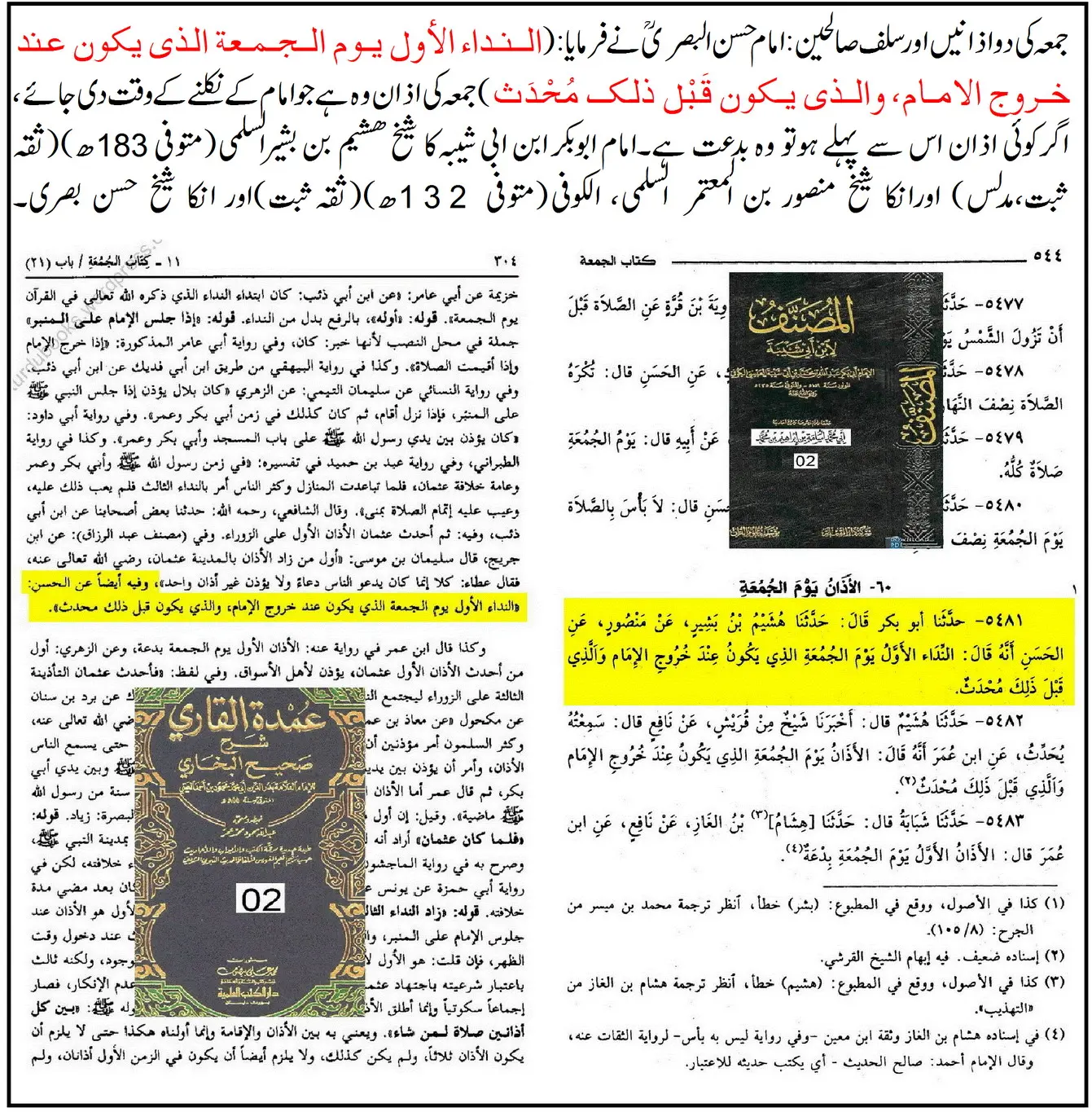
① Imām al-Ḥasan al-Baṣrī رحمه الله (d. 110 AH)
Imām al-Ḥasan al-Baṣrī رحمه الله says in clear words regarding this additional Adhān:
«النداءُ الأوّلُ يومَ الجمعةِ الذي يكونُ عند خروجِ الإمامِ، والذي قبل ذلك مُحدَثٌ»
“The original Adhān on Friday is the one when the Imām emerges, and the one before that is an innovation.”
📚 Muṣannaf Ibn Abī Shaybah, 5435
Chain Analysis:
- Hushaym ibn Bashīr – trustworthy and firm (thiqah thabt)
- Manṣūr ibn al-Muʿtamir – trustworthy and firm (thiqah thabt)
- al-Ḥasan al-Baṣrī – well-known trustworthy Tābiʿī
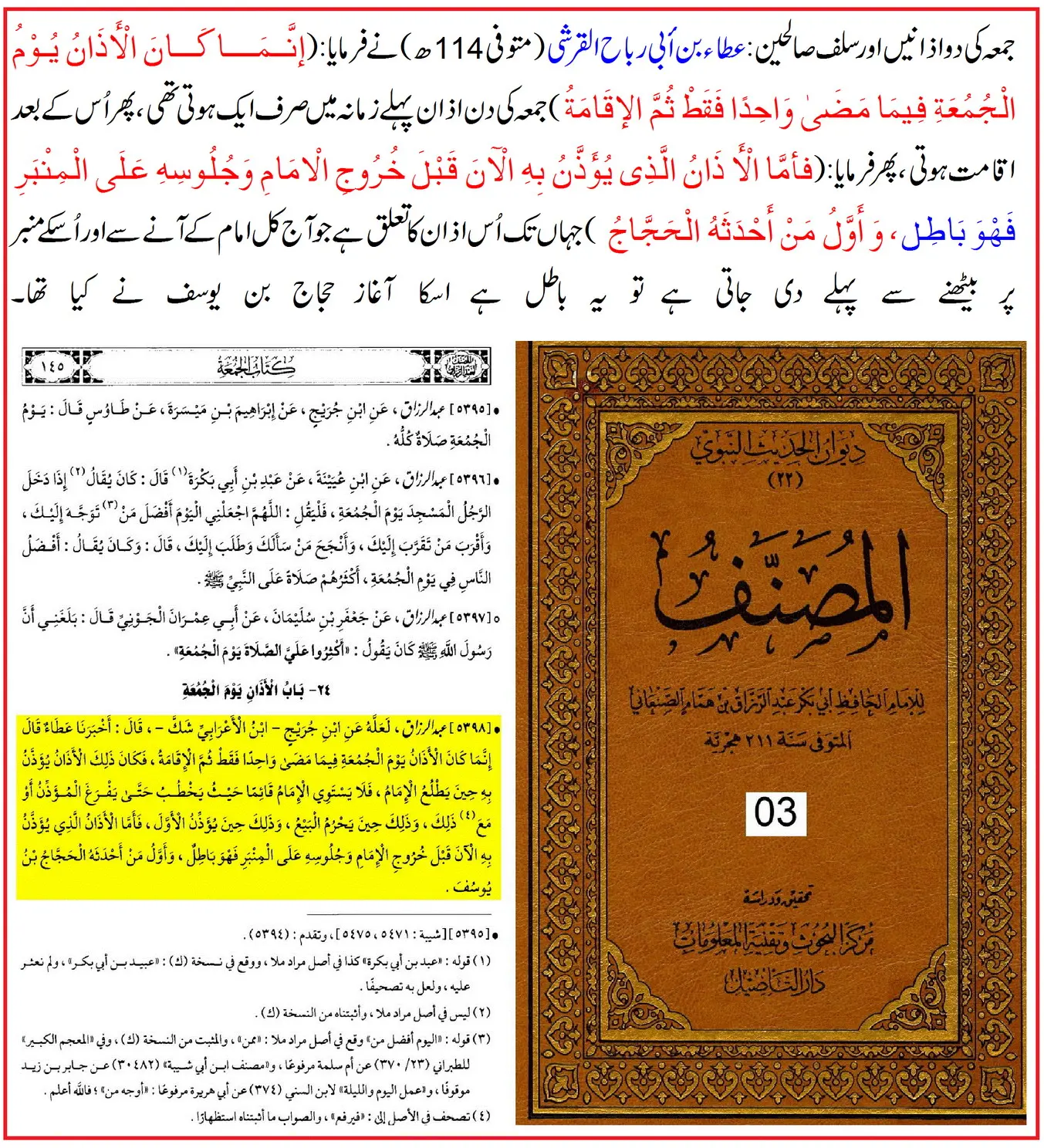
② Imām ʿAṭāʾ ibn Abī Rabāḥ رحمه الله (d. 114 AH)
Imām ʿAṭāʾ ibn Abī Rabāḥ رحمه الله says in this regard:
«إنّما كانَ الأذانُ يومَ الجمعةِ فيما مضى واحدًا، ثمّ الإقامة، فكان ذلك الأذانُ يُؤذَّنُ به حين يطلعُ الإمامُ…. فأمّا الأذانُ الذي يُؤذَّنُ به الآنَ قبلَ خروجِ الإمامِ وجلوسِه على المِنبرِ فهو باطلٌ، وأوّلُ من أحدثَه الحجّاجُ بنُ يوسفَ»
“In earlier times there was only one Adhān on the day of Jumu‘ah, followed by the Iqāmah; that Adhān was given when the Imām appeared… As for the Adhān that is now given before the Imām’s appearance and seating on the minbar, it is invalid, and Hajjāj ibn Yūsuf was the first to introduce it.”
📚 Muṣannaf ʿAbd al-Razzāq, 5339
This statement very clearly proves that the second Adhān is a later invention.
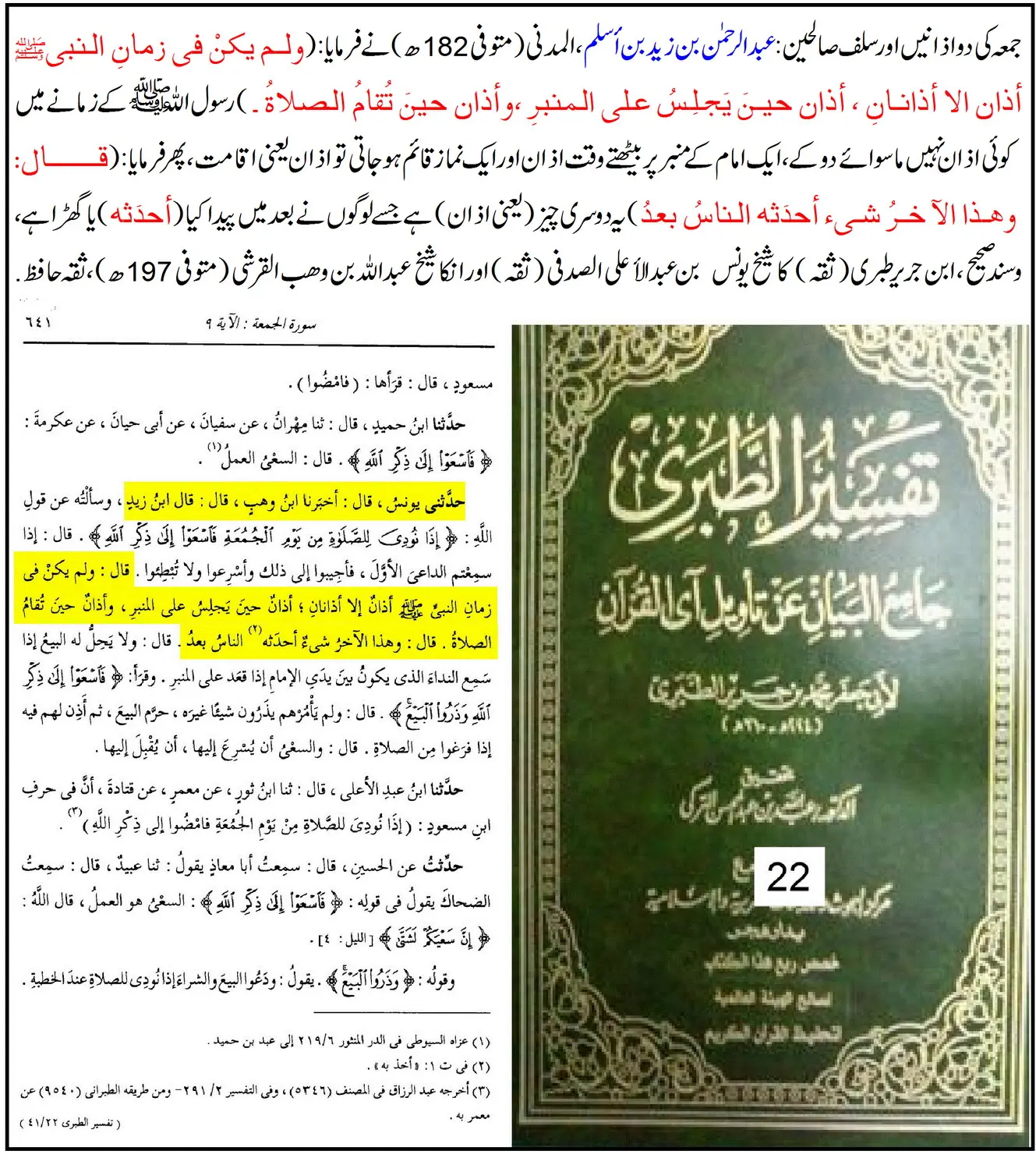
③ Imām ʿAbd al-Raḥmān ibn Zayd ibn Aslam رحمه الله (d. 182 AH)
Imām ʿAbd al-Raḥmān ibn Zayd ibn Aslam رحمه الله says:
«لم يكن في زمانِ النبيِّ ﷺ أذانٌ إلا أذانانِ: أذانٌ حين يجلسُ على المِنبرِ، وأذانٌ حين تُقامُ الصلاةُ، وهذا الآخرُ شيءٌ أحدثَه الناسُ بعدُ»
“In the time of the Prophet ﷺ, there were only two calls: one Adhān when the Imām sat on the minbar, and the Iqāmah. This additional Adhān is something introduced later by people.”
📚 Tafsīr al-Ṭabarī
✿ Summary of Tābiʿīn’s Views:
These explicit statements of the noble Tābiʿīn clearly bring out the following facts:
✔ Even up to the time of the Tābiʿīn, a single Adhān for Jumu‘ah, in accordance with the Sunnah, remained the practice.
✔ They called the extra Adhān: “محدث“, “باطل” (innovation, invalid).
✔ Some traced its origin to Hajjāj ibn Yūsuf.
❖ Views of the Prominent Jurists and Scholars
We will now set out the statements and juristic positions of the well-known jurists and Imāms of Islamic history, so that the issue of the second Adhān of Jumu‘ah becomes fully clear from a scholarly and research standpoint.
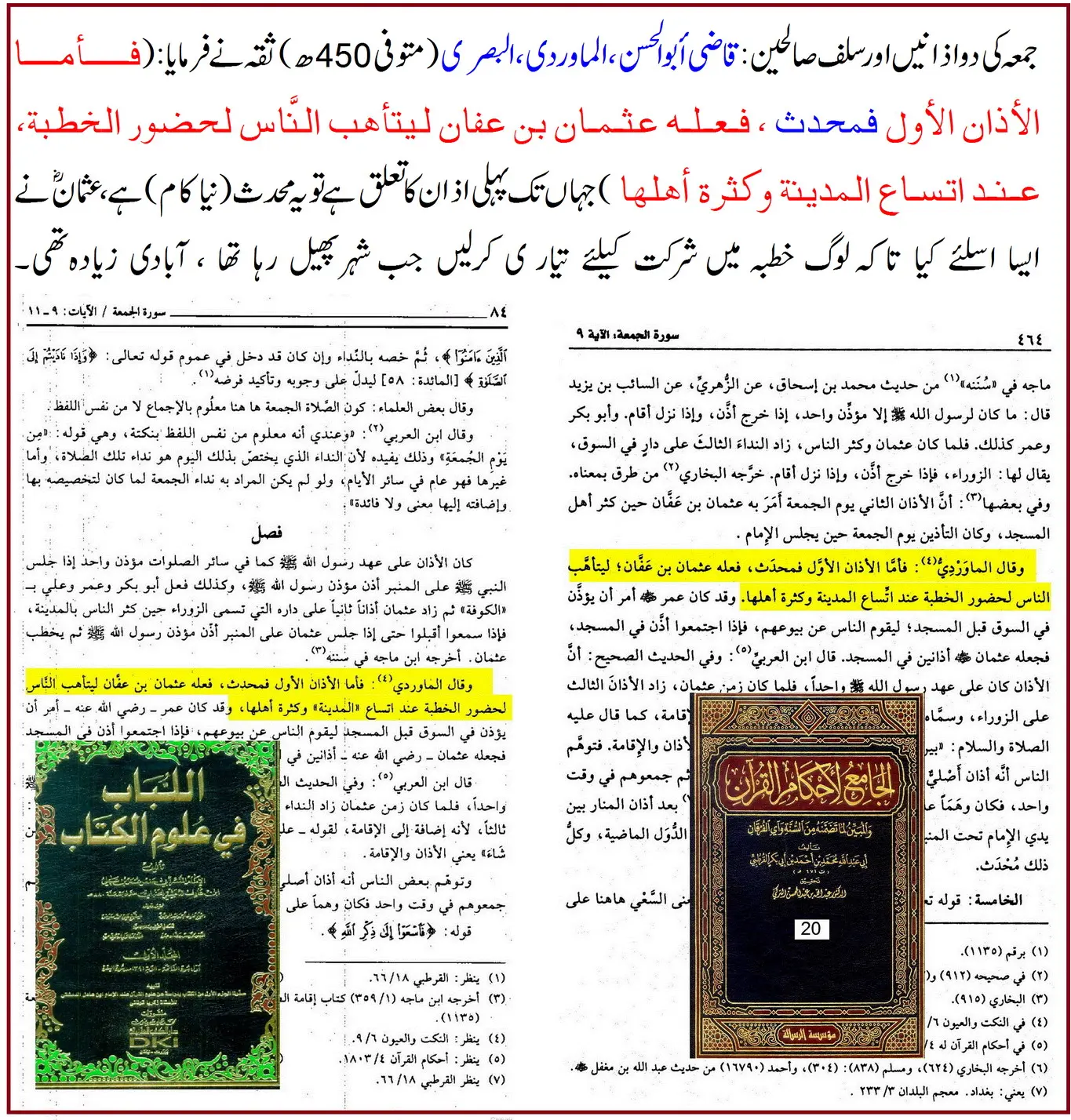
① Imām al-Māwardī رحمه الله (d. 450 AH)
Imām al-Māwardī رحمه الله writes about this Adhān:
«فأما الأذان الأول فمحدث، فعله عثمان بن عفان ليتأهب الناس لحضور الخطبة عند اتساع المدينة وكثرة أهلها»
“The first Adhān (i.e. the additional Adhān) is a new thing, which ʿUthmān رضي الله عنه started only so that people could prepare to attend the sermon, because the city had expanded and the people had increased.”
📚 Tafsīr al-Qurṭubī, al-Lubāb fī ʿUlūm al-Kitāb
This clearly proves that, according to al-Māwardī رحمه الله too, the additional Adhān was a later addition.
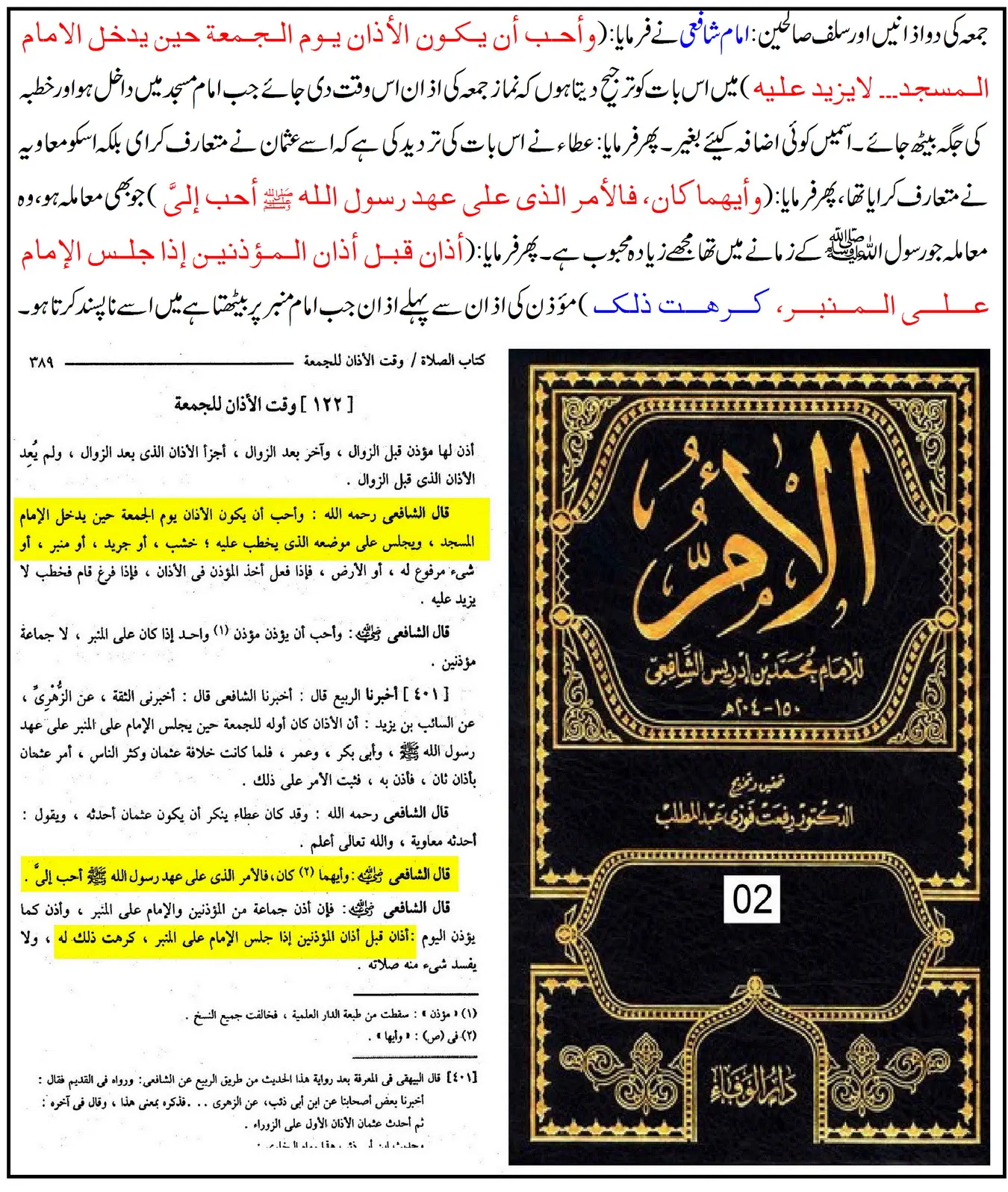
② Imām al-Shāfiʿī رحمه الله (d. 204 AH)
Imām al-Shāfiʿī رحمه الله says about this additional Adhān:
«وأحب أن يكون الأذان يوم الجمعة حين يدخل الإمام المسجد ويجلس على موضعه الذي يخطب عليه، لا يزيد عليه»
“I prefer that the Adhān on Jumu‘ah be given only when the Imām enters the mosque and sits on the minbar, without any addition to it.”
📚 al-Umm
He further says:
«أذان قبل أذان المؤذنين إذا جلس الإمام على المنبر، كرهت ذلك»
“An Adhān before the one given when the Imām sits on the minbar — I dislike that.”
📚 al-Umm
Had Imām al-Shāfiʿī رحمه الله considered this additional Adhān a Sunnah, he would not have expressed dislike for it.
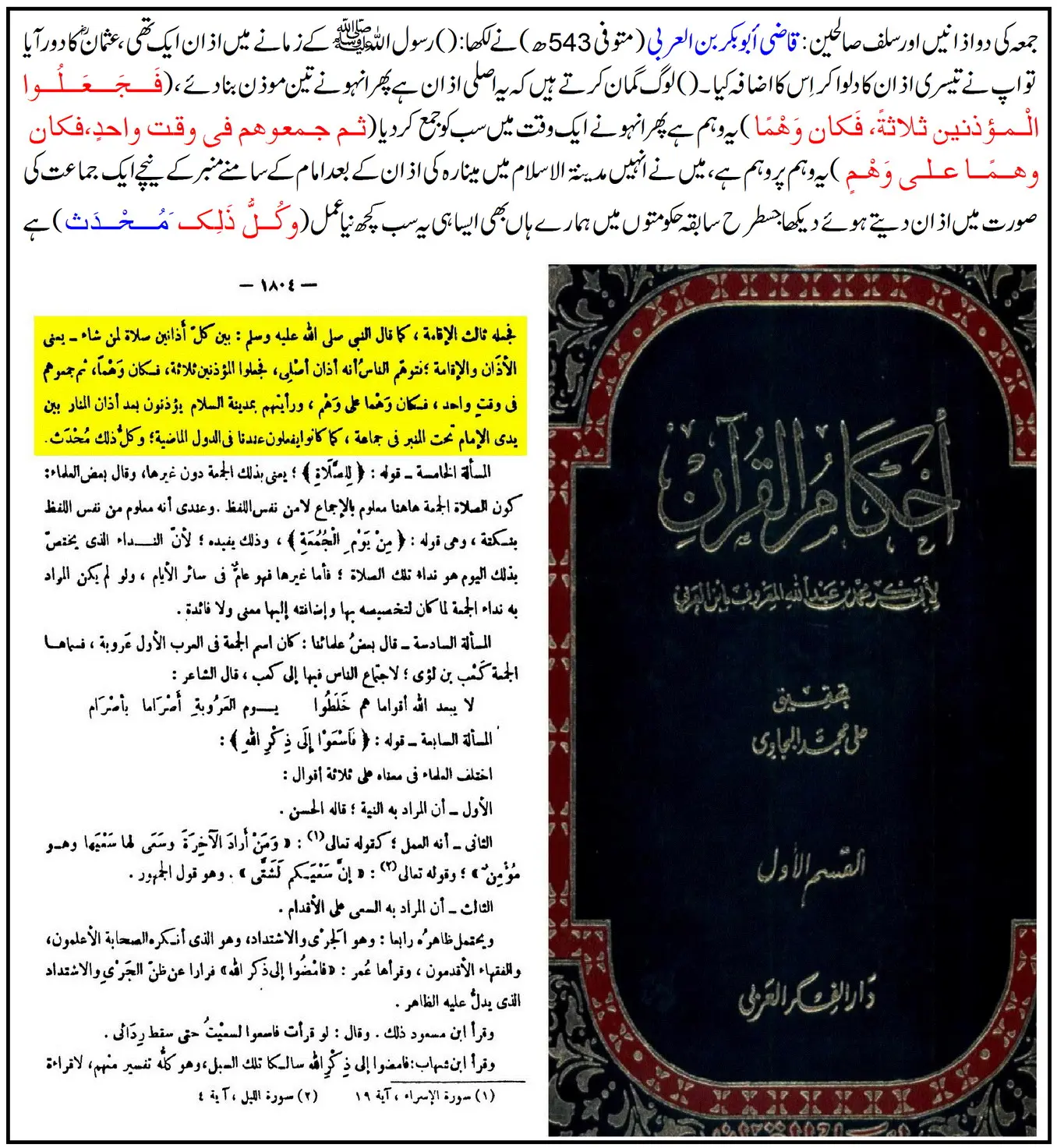
③ Qāḍī Abū Bakr Ibn al-ʿArabī رحمه الله (d. 543 AH)
Qāḍī Ibn al-ʿArabī رحمه الله writes on this:
“In the time of the Messenger of Allah ﷺ there was only one Adhān. ʿUthmān رضي الله عنه started a third (additional) Adhān at al-Zawrā’. People took it to be the original Adhān and appointed three muezzins. This is a clear misconception. Later they began giving two Adhāns at one time — this is misconception upon misconception. I saw the same in Baghdad. All these matters are innovations (muḥdath).”
📚 Aḥkām al-Qur’ān
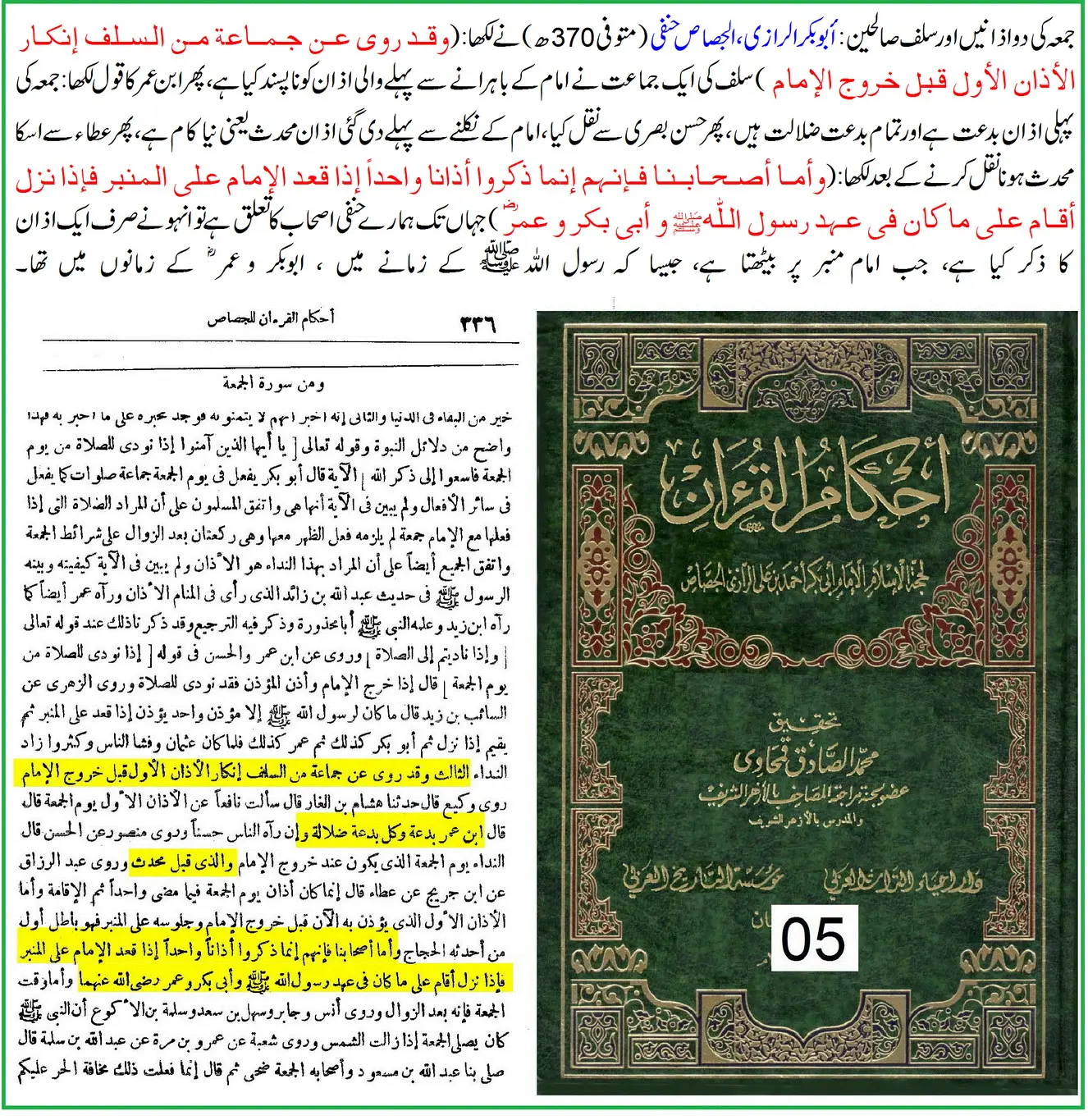
④ Imām Abū Bakr al-Jaṣṣāṣ al-Ḥanafī رحمه الله (d. 370 AH)
Imām al-Jaṣṣāṣ al-Ḥanafī رحمه الله says:
“A group of the Salaf called the Adhān given before the Imām comes out a Bid‘ah. Ibn ʿUmar said: ‘The first Adhān of Jumu‘ah is a Bid‘ah, and every Bid‘ah is misguidance, even if people regard it as good.’ Al-Ḥasan al-Baṣrī said: ‘The Adhān before the Imām comes out is a new thing (muḥdath).’”
He further says:
“Our Ḥanafī companions also mentioned only that one Adhān which is given when the Imām sits on the minbar, as it was in the time of the Messenger of Allah ﷺ, Abū Bakr رضي الله عنه and ʿUmar رضي الله عنه.”
📚 Aḥkām al-Qur’ān
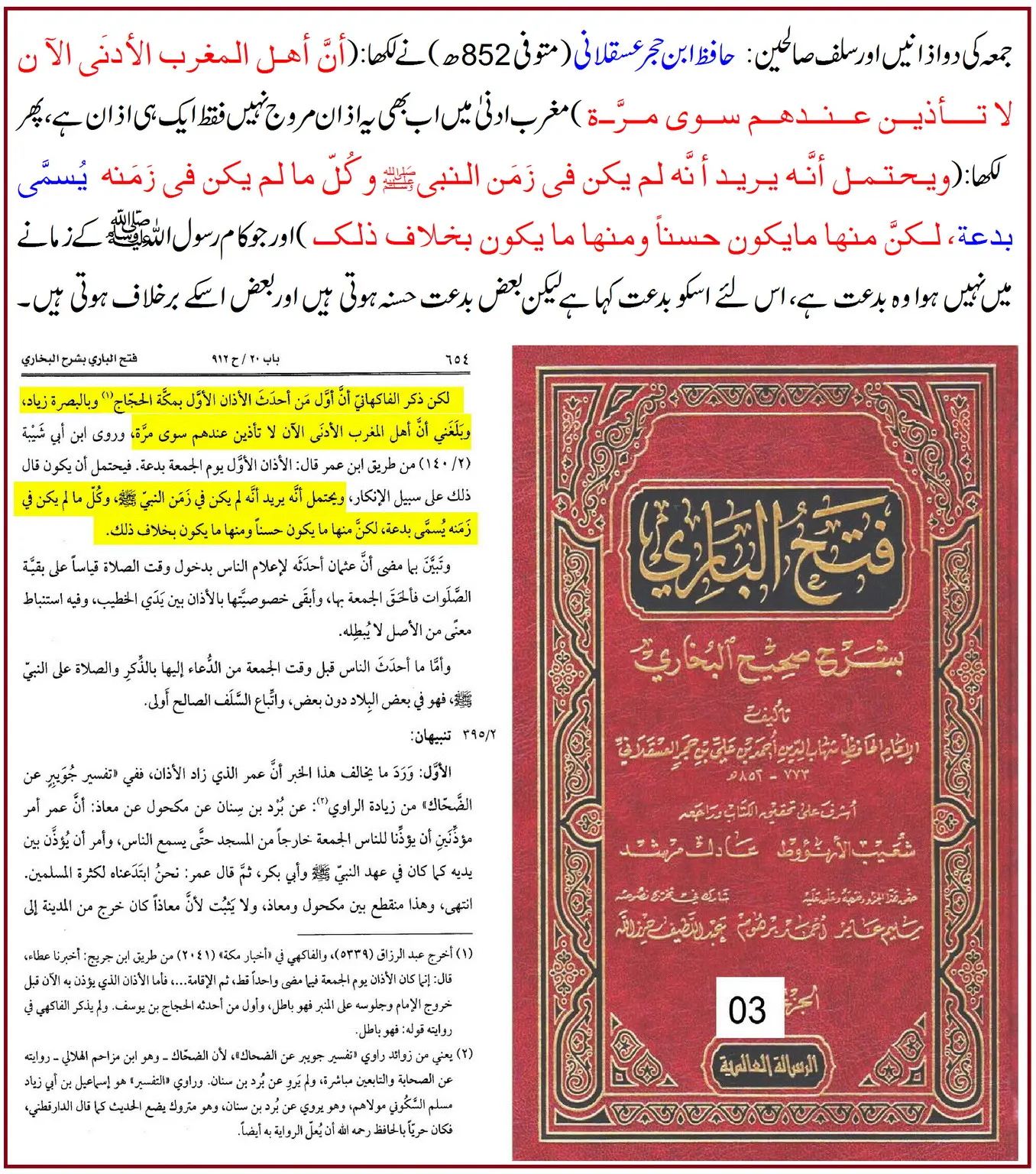
⑤ Ḥāfiẓ Ibn Ḥajar al-ʿAsqalānī رحمه الله (d. 852 AH)
Ḥāfiẓ Ibn Ḥajar رحمه الله says:
“Al-Fākihānī said that in Makkah this additional Adhān was first introduced by al-Ḥajjāj ibn Yūsuf, and in Basra by Ziyād. In the far Maghrib there is still only one Adhān. Ibn ʿUmar called the extra Adhān a Bid‘ah; it is possible that he said it by way of disapproval. Every practice not found in the Prophet’s ﷺ time is a Bid‘ah, whether good or bad.”
📚 Fatḥ al-Bārī Sharḥ Ṣaḥīḥ al-Bukhārī
✿ Summary of the Views of the Jurists and Imāms:
✔ The jurists and Imāms explicitly declared the additional Adhān to be “muḥdath” (a new thing), “Bid‘ah” and “not Sunnah”.
✔ All reliable Imāms agree that the Sunnah of the Messenger ﷺ and the way of the Companions was a single Adhān.
✔ Many Imāms in different eras disliked the later addition.
❖ Conclusion & Key Findings
① Era of the Prophet ﷺ:
In the era of the Prophet ﷺ there was only one Adhān for Jumu‘ah prayer, given after the Imām sat on the minbar. All historians and scholars agree on this fact.
② Era of Abū Bakr and ʿUmar:
Continued the exact Sunnah of the Prophet ﷺ.
③ Era of ʿUthmān:
Due to the growth in population and the expansion of Madīnah, ʿUthmān ibn ʿAffān رضي الله عنه arranged an additional Adhān, which was given outside the mosque (from the market called al-Zawrā’). Later people made this Adhān customary inside the mosque.
④ Companions’ Position:
- Sayyidunā ʿAbdullāh ibn ʿUmar explicitly declared the additional Adhān a “Bid‘ah”. (Muṣannaf Ibn Abī Shaybah)
- In the time of ʿAbdullāh ibn al-Zubayr, a single Adhān remained the practice. (Muṣannaf ʿAbd al-Razzāq)
⑤ Tābiʿīn’s Position:
- Imām al-Ḥasan al-Baṣrī called this Adhān “muḥdath” (a new thing).
- Imām ʿAṭāʾ ibn Abī Rabāḥ declared this Adhān “bāṭil” (invalid) and said it was an invention of al-Ḥajjāj ibn Yūsuf.
- Imām ʿAbd al-Raḥmān ibn Zayd also declared it a later invention.
⑥ Views of Scholars:
- Imām al-Shāfiʿī declared the additional Adhān disliked and stressed the Sunnah.
- Qāḍī Abū Bakr Ibn al-ʿArabī and Imām Abū Bakr al-Jaṣṣāṣ al-Ḥanafī also explicitly called the additional Adhān “Bid‘ah” and “muḥdath”.
- Imām al-Māwardī and Ḥāfiẓ Ibn Ḥajar also stated clearly that the additional Adhān is a Bid‘ah.
📌 Final Summary
All the above evidence and clear historical facts prove that the additional Adhān of Jumu‘ah is contrary to the Sunnah of the Messenger ﷺ, the Sunnah of the Rightly Guided Caliphs, and the general way of the Companions and Tābiʿīn. Numerous eminent Companions, Tābiʿīn and jurists of the Ummah have explicitly declared it a Bid‘ah.
Indeed, ʿUthmān رضي الله عنه arranged an additional Adhān because of the needs of the population, but it was outside the mosque and only for notification. Today, making this Adhān customary inside the mosque as worship and Sunnah undoubtedly falls within Bid‘ah.
❖ Screenshots of Important References