This article is about the authentication of the narrator of Hadith عاصم بن بَهدَلَہ، أبو بکر القارئ الکوفی (known as: Asim ibn Abi al-Najud). According to the majority of Muhaddithin, he is truthful/has good hadith. At some places, brief criticisms by Ibn Hajar and Al-Daraqutni are mentioned; in this article we will:
- First present the authentication of Asim from 20 Imams;
- Then provide clarification regarding the warnings/criticisms of Ibn Hajar and Al-Daraqutni;
- And in conclusion clarify that Asim’s hadith is Hasan/acceptable and the criticisms against him do not amount to discrediting him in comparison to the majority’s authentication.
📖 Authentication of Asim ibn Bahdala (Asim ibn Abi al-Najud)
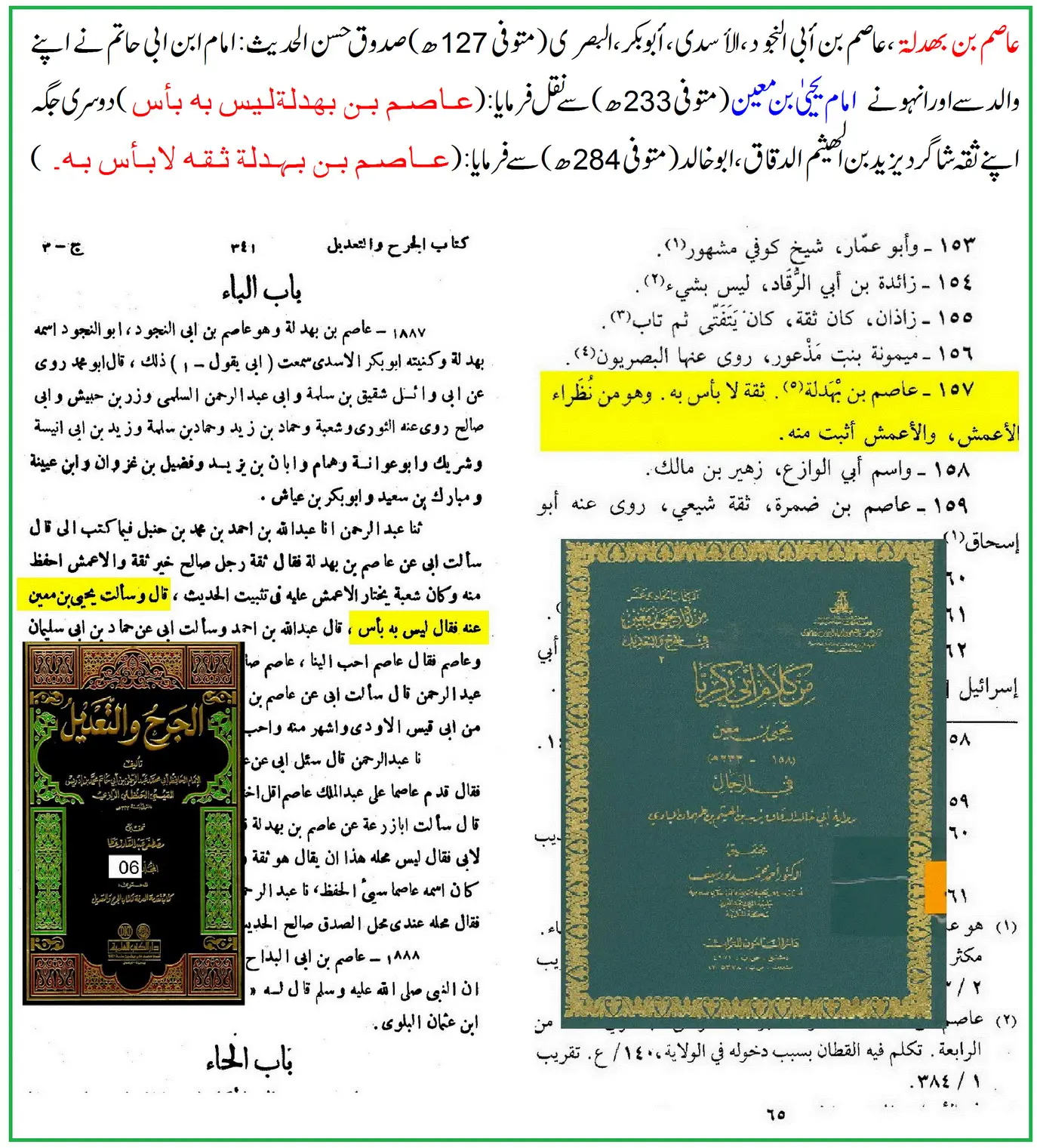
① Imam Ahmad ibn Hanbal (241 AH)
Arabic text: 918 – سَأَلْتُهُ عَنْ عَاصِمِ بْنِ بَهْدَلَةَ، فَقَالَ: ثِقَةٌ، رَجُلٌ صَالِحٌ خَيْرٌ، ثِقَةٌ، وَالْأَعْمَشُ أَحْفَظُ مِنْهُ.
Translation: I asked Imam Ahmad about Asim ibn Bahdala, and he said: “He is trustworthy, a pious and righteous man, good, trustworthy; however, Al-A’mash is more memorizing than him.”
Reference:
Explanation: ❖ Imam Ahmad said “trustworthy” twice and also added “a righteous and good man,” which is a testimony to his piety and integrity. ❖ “Al-A’mash is more memorizing than him” is only a comparative phrase, not a criticism.
② Imam Yahya ibn Ma’in (233 AH)
Arabic text: 157 – عَاصِمُ بْنُ بَهْدَلَةَ ثِقَةٌ لَا بَأْسَ بِهِ، وَهُوَ مِنْ نُظَرَاءِ الْأَعْمَشِ، وَالْأَعْمَشُ أَثْبَتُ مِنْهُ.
Translation: Yahya ibn Ma’in said: “Asim ibn Bahdala is trustworthy, there is no objection against him; he is among the narrators of the same rank as Al-A’mash, however, Al-A’mash is more reliable than him.”
Reference:
Explanation: ❖ Imam Yahya ibn Ma’in explicitly authenticated him as: “Trustworthy, no problem with him.” ❖ Compared him with Al-A’mash, but there is no criticism on Asim’s precision and integrity.
③ Imam Abu Zur’ah Al-Razi (264 AH)
Arabic text: … نا عبد الرحمن قال: سألت أبا زرعة عن عاصم بن بهدلة، فقال: ثقة.
Translation: Abdul Rahman says: I asked Abu Zur’ah about Asim ibn Bahdala, and he said: “He is trustworthy.”
Reference:
Explanation: ❖ A brief but strong authentication from a great critic like Abu Zur’ah. ❖ Simply saying “trustworthy” is considered the highest degree of authentication among hadith scholars.
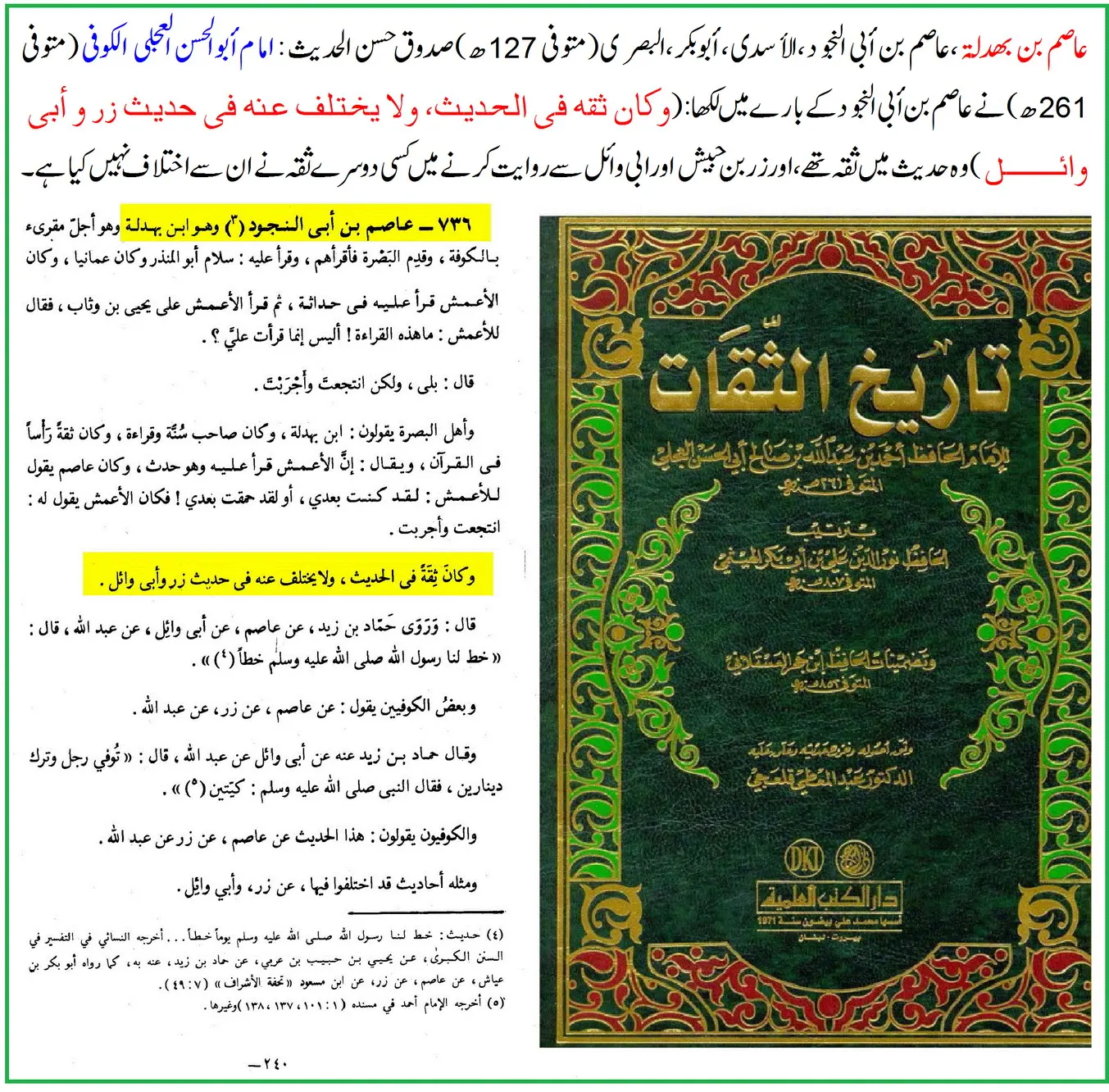
④ Imam Al-‘Ijli (261 AH)
Arabic text: 763 – عاصم بن أبي النجود، وهو ابن بهدلة … وكان ثقة في الحديث، ولا يختلف عنه في حديث زر وأبي وائل.
Translation: Asim ibn Abi al-Najud, the same Ibn Bahdala … “He was trustworthy in hadith; and there is no disagreement in his narration from Zur ibn Hubaysh and Abu Wa’il.”
Reference:
Explanation:❖ Al-Ajli explicitly said “Trustworthy in hadith”.❖ He also mentioned that there was no difference found in their narrations from Zur and Abu Wa’il, which is evidence of their precision.
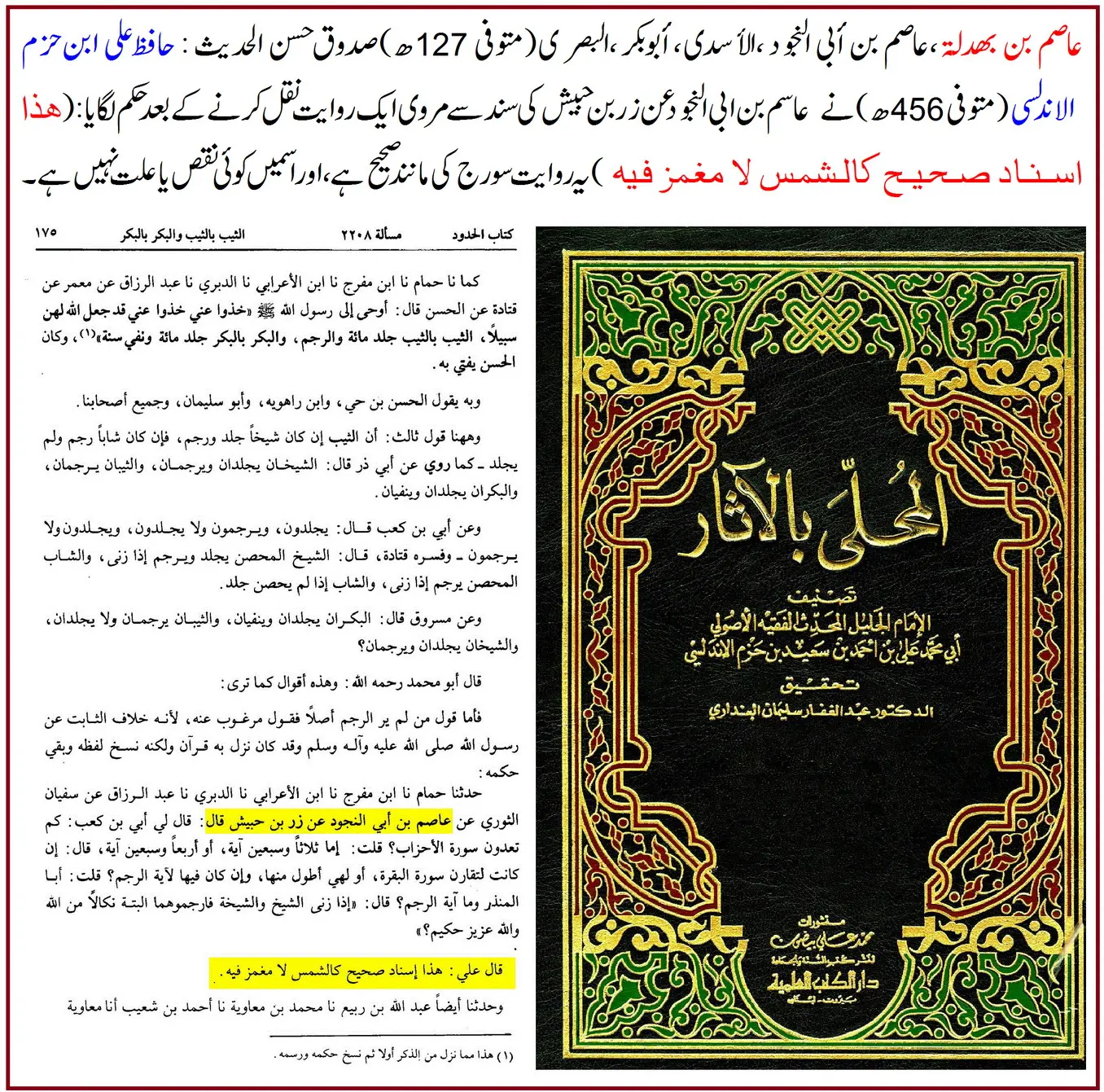
⑤ Hafiz Ibn Hazm al-Andalusi (456 AH)
Arabic text:… عَاصِمِ بْنِ أَبِي النَّجُودِ عَنْ زِرِّ بْنِ حُبَيْشٍ … قَالَ عَلِيٌّ: هَذَا إِسْنَادٌ صَحِيحٌ كَالشَّمْسِ لَا مَغْمَزَ فِيهِ.
Translation: Ibn Hazm says: “The chain of narration from Asim ibn Abi al-Najud through Zur ibn Hubaysh is absolutely authentic and clear like the sun; there is no room for any defect or flaw in it.”
Reference:
Explanation:❖ Ibn Hazm called this chain “authentic like the sun,” which is the highest level of praise.❖ This is a clear indication that trust in Asim’s chain is firmly established.
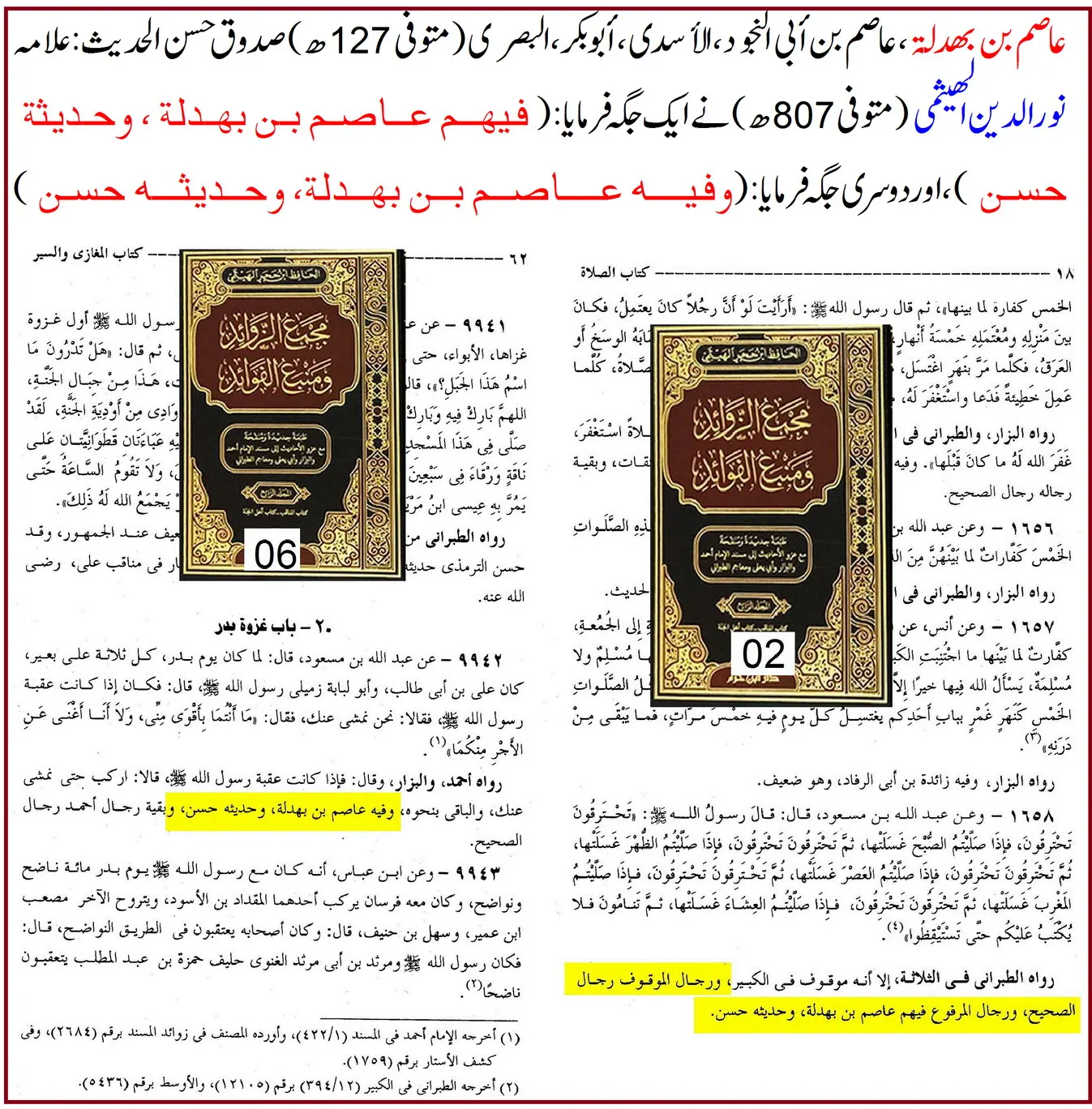
⑥ Allama Nur al-Din al-Haythami (807 AH)
Arabic text:1658 – … وَرِجَالُ الْمَرْفُوعِ فِيهِمْ عَاصِمُ بْنُ بَهْدَلَةَ، وَحَدِيثُهُ حَسَنٌ.
9942 – … وَفِيهِ عَاصِمُ بْنُ بَهْدَلَةَ، وَحَدِيثُهُ حَسَنٌ، وَبَقِيَّةُ رِجَالِ أَحْمَدَ رِجَالُ الصَّحِيحِ.
Translation: Al-Haythami says: “In this chain, Asim ibn Bahdala is present and his hadith is Hasan.”
Reference:
Explanation:❖ Al-Haythami explicitly stated about Asim: “His hadith is Hasan.”❖ Meaning his narration is reliable and acceptable.
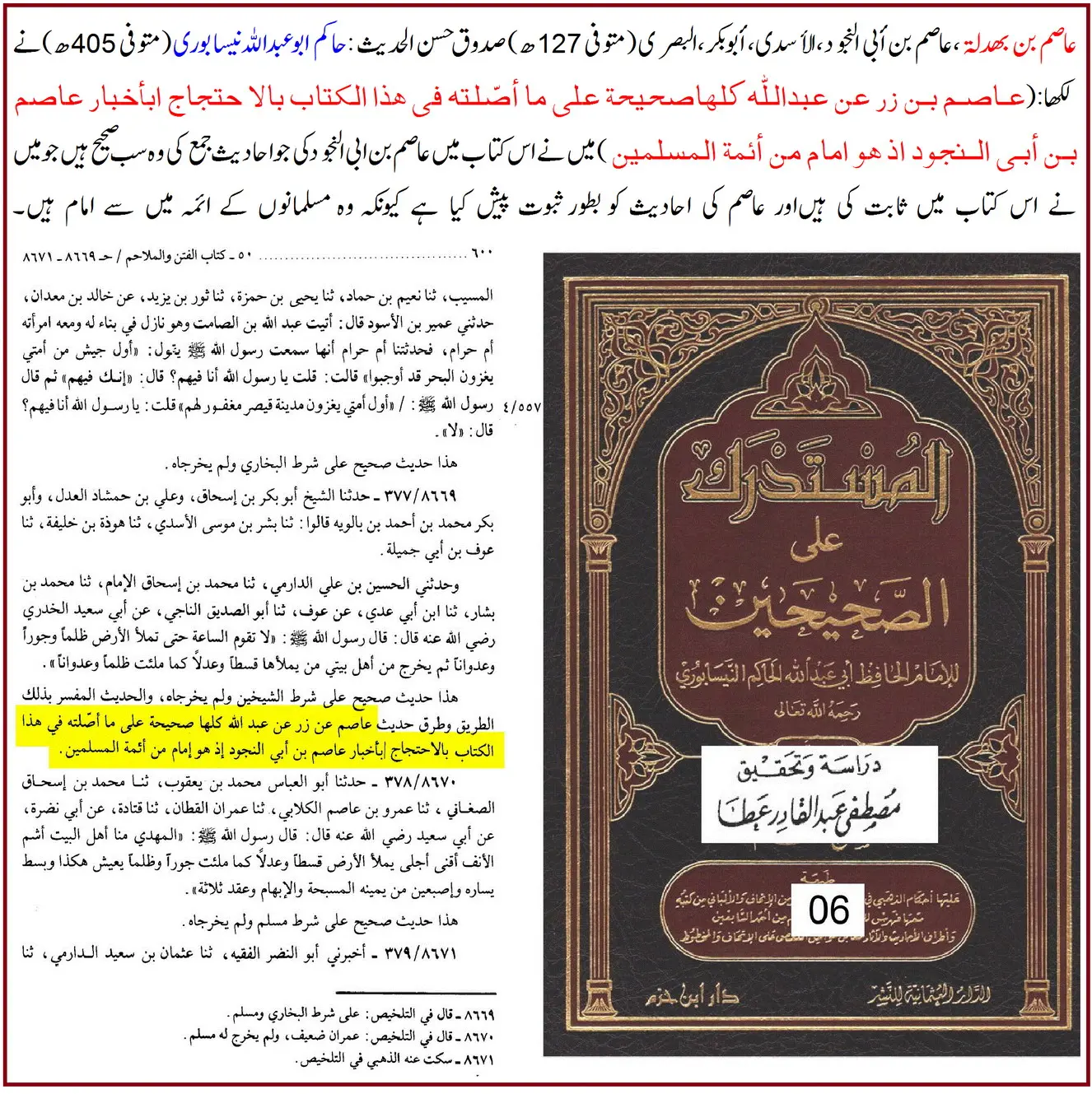
⑦ Hakim Abu Abdullah Al-Nisaburi (405 AH)
Arabic text: 8669 – … وَطُرُقُ حَدِيثِ عَاصِمٍ، عَنْ زِرٍّ، عَنْ عَبْدِ اللَّهِ كُلُّهَا صَحِيحَةٌ عَلَى مَا أَصَّلْتُهُ فِي هَذَا الْكِتَابِ … إِذْ هُوَ إِمَامٌ مِنْ أَئِمَّةِ الْمُسْلِمِينَ.
Translation: Hakim says: “All the hadiths of Asim ibn Abi al-Najud from Zirr from Abdullah are authentic … because he is one of the Imams of the Muslims.”
Reference:
Explanation: ❖ Hakim not only called their narrations “authentic” but also counted them among the “Imams of the Muslims.” ❖ These words indicate their status and rank.
⑧ Abu Al-Abbas Al-Busiri (840 AH)
Arabic text: 4478 – … عَنْ عَاصِمِ بْنِ بَهْدَلَةَ، عَنْ زِرٍّ، عَنْ عَبْدِ اللَّه … رُوَاتُهُ ثِقَاتٌ.
5747 – … عَنْ عَاصِمِ بْنِ بَهْدَلَةَ، عَنْ زِرٍّ بْنِ حُبَيْشٍ، عَنْ حُذَيْفَةَ … هَذَا إِسْنَادٌ رُوَاتُهُ ثِقَاتٌ.
Translation: Al-Busiri says: “This chain in which Asim bin Bahdala is present … all its narrators are trustworthy.”
Reference:
Explanation: ❖ Al-Busiri explicitly stated that “its narrators are trustworthy.” ❖ Asim is also included among these narrators, so he is considered trustworthy as well.
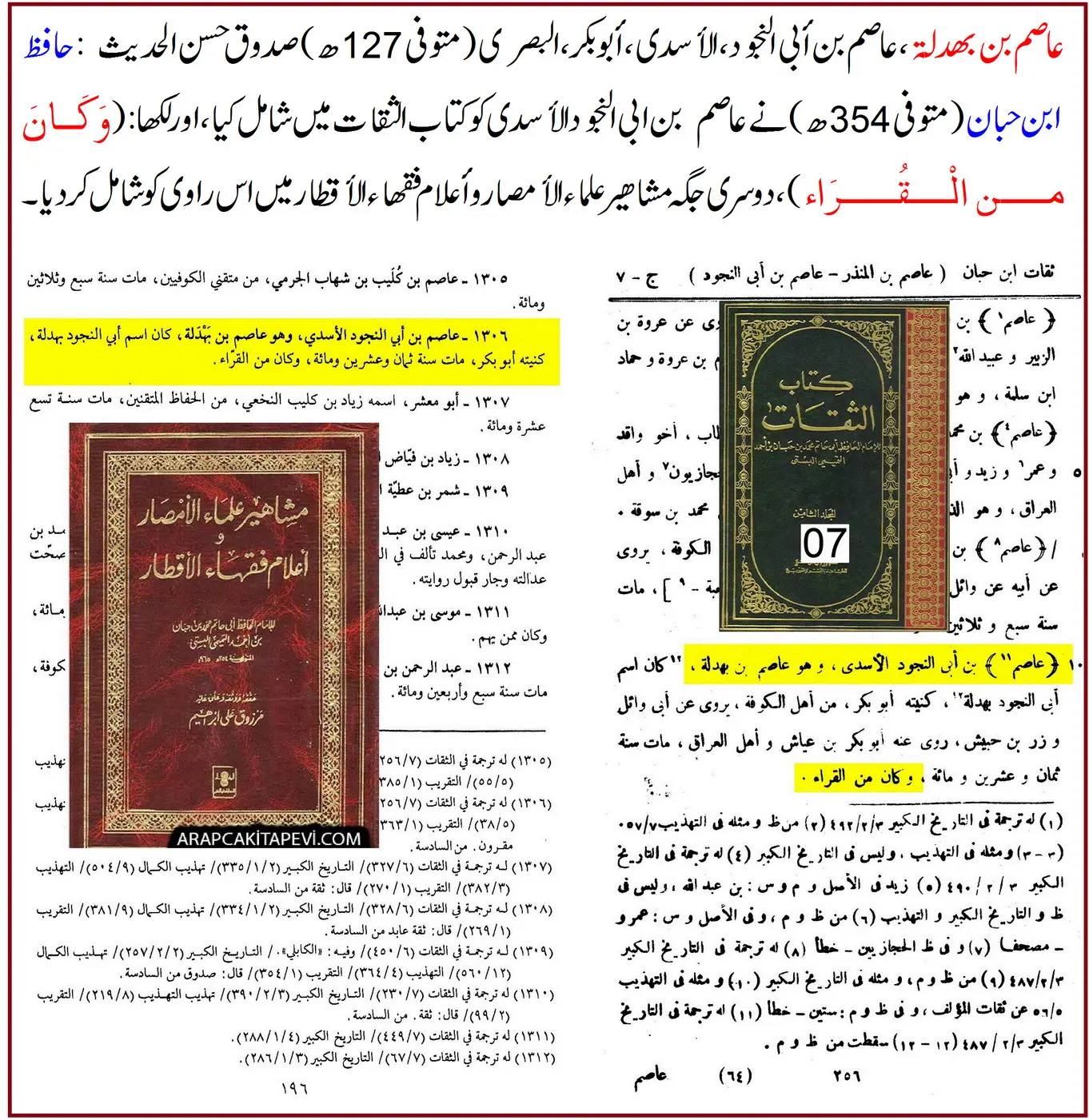
⑨ Hafiz Ibn Hibban (354 AH)
Arabic text: 9952 – عَاصِم بْن أبي النجُود الْأَسدي وَهُوَ عَاصِم بْن بَهْدَلَة …
[1306] … كَانَ مِنَ الْقُرَّاءِ … وَكَانَ ثِقَةً.
Translation: Ibn Hibban said: “Asim bin Abi Al-Najud Al-Asadi, the same Asim bin Bahdala … he was among the Qurra (reciters) … and he was trustworthy.”
Reference:
Explanation: ❖ Ibn Hibban included him in his book “Al-Thiqat.” ❖ Being included in “Al-Thiqat” is sufficient to show that he was considered reliable by him.
⑩ Hafiz Ibn Abdul Barr (463 AH)
Arabic text: … قَالَ أَبُو عُمَرَ: هُوَ حَدِيثٌ صَحِيحٌ حَسَنٌ ثَابِتٌ مَحْفُوظٌ مَرْفُوعٌ.
Translation: Ibn Abdul Barr said about the narration from Asim bin Bahdala on the authority of Zur: “This hadith is authentic, good, established, preserved, and marfu’ (attributed to the Prophet ﷺ).”
Reference:
Explanation: ❖ Ibn Abdul Barr called this chain “authentic, good, established.” ❖ This clarification further strengthens the reliability of Asim.
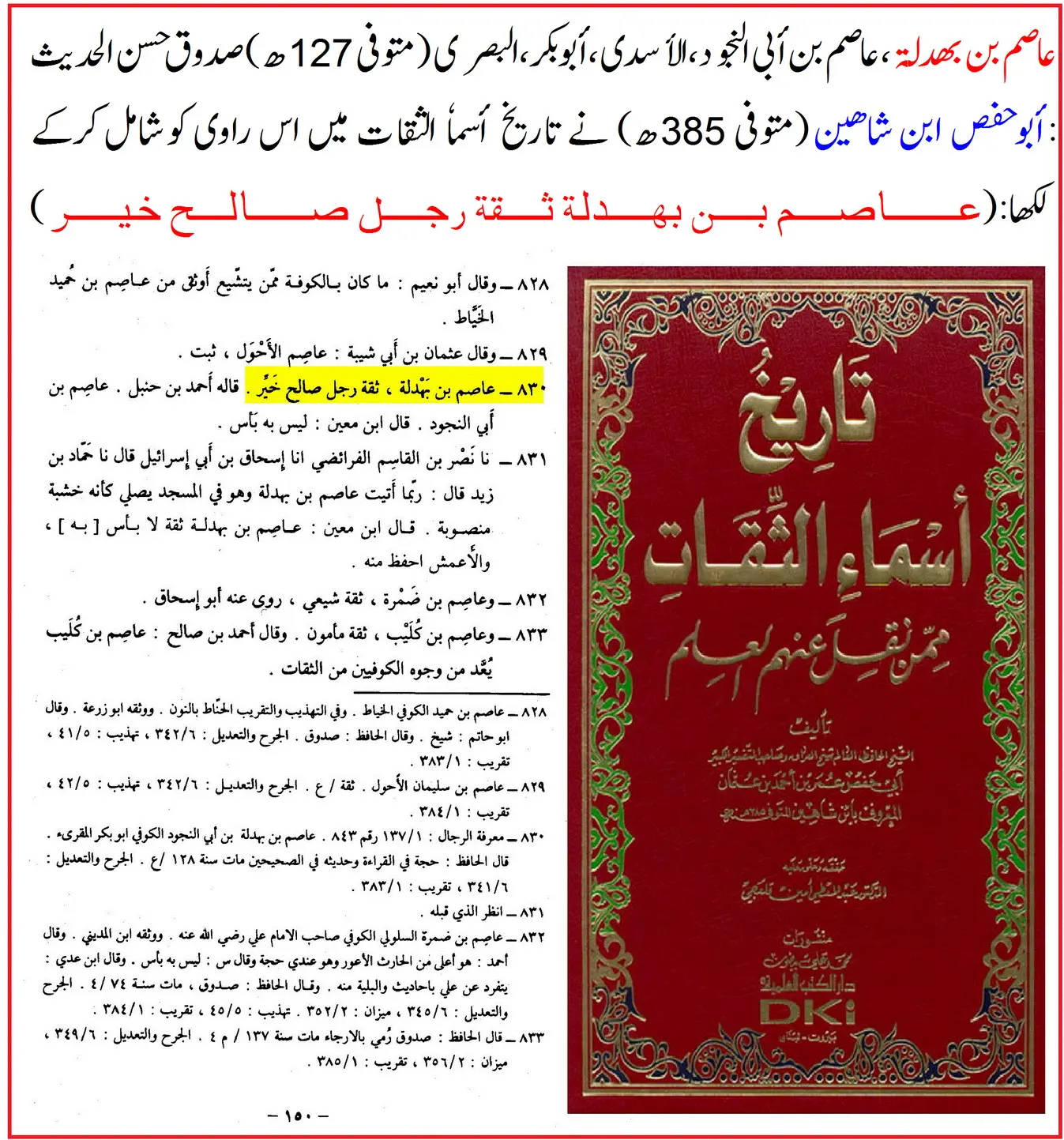
⑪ Ibn Shahin (385 AH)
Arabic text: 830 – عَاصِمُ بْنُ بَهْدَلَةَ ثِقَةٌ، رَجُلٌ صَالِحٌ، خَيْرٌ.
Translation: Ibn Shahin said: “Asim bin Bahdala is trustworthy, a righteous and pious person, and good.”
Reference:
Explanation: ❖ Ibn Shahin not only called him trustworthy but also testified to his righteousness and goodness. ❖ These words indicate his justice and piety.
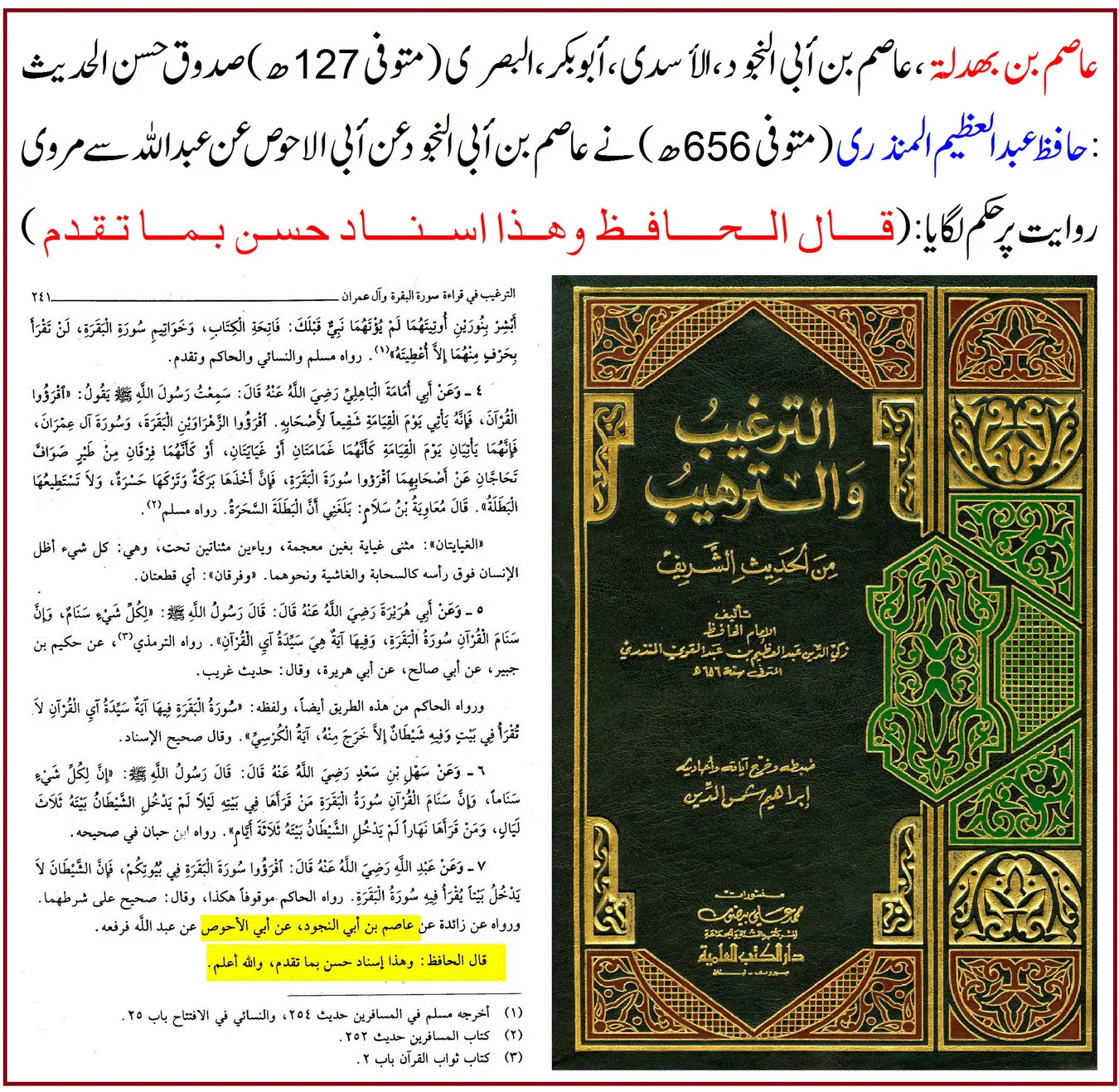
⑫ Abdul Azim al-Mundhiri (656 AH)
Arabic text: … وَرَوَاهُ عَنْ زَائِدَةَ عَنْ عَاصِمِ بْنِ أَبِي النَّجُودِ عَنْ أَبِي الْأَحْوَصِ عَنْ عَبْدِ اللَّهِ فَرَفَعَهُ.
قَالَ الْحَافِظُ: وَهَذَا إِسْنَادٌ حَسَنٌ.
Translation: Hafiz Mundhiri says: “This chain in which Asim bin Abi al-Najud is present … this chain is Hasan.”
Reference:
Explanation: ❖ Al-Mundhiri explicitly stated that this chain is “good.” ❖ Declaring it good means this narration is worthy of being acted upon and accepted.
⑬ Shams al-Din al-Sakhawi (902 AH)
Arabic text: 618 – … أخرجه الطبراني في الكبير بسند حسن، من حديث عَاصِمِ بْنِ بَهْدَلَةَ عن أبي وائل.
Translation: Sakhawi says: “This hadith has been narrated by Al-Tabarani in Al-Kabeer, through Asim bin Bahdala on the authority of Abi Wa’il, and this chain is Hasan.”
Reference:
Explanation: ❖ Sakhawi directly declared the chain through Asim as Hasan. ❖ This shows that later scholars also considered them trustworthy.
⑭ Imam Abu Isa Al-Tirmidhi (279 AH)
Arabic text: حَدَّثَنَا عُبَيْدُ بْنُ أَسْبَاطٍ، ثَنَا أَبِي، ثَنَا سُفْيَانُ، عَنْ عَاصِمِ بْنِ بَهْدَلَةَ، عَنْ زِرٍّ، عَنْ عَبْدِ اللَّهِ …
قَالَ أَبُو عِيسَى: هَذَا حَدِيثٌ حَسَنٌ صَحِيحٌ.
Translation: Imam Tirmidhi narrated the hadith through Asim’s chain and said: “This hadith is Hasan Sahih.”
Reference:
Explanation: ❖ Imam Tirmidhi’s statement “Hasan Sahih” makes Asim’s narration authentic and trustworthy. ❖ These are the strongest words used to describe a chain.
⑮ Badr al-Din al-Ayni (855 AH)
Arabic text: … عَاصِمُ بْنُ بَهْدَلَةَ … قلت: وروى عنه الإمام أبو حنيفة، وهو أستاذ أبي حنيفة … فَانْظُرْ أَيُّهَا الْمُنْصِفُ إِلَى مِثْلِ هَؤُلَاءِ السَّادَاتِ الثِّقَاتِ الأَتْقِيَاءِ الأَخْيَارِ كَيْفَ تَقَلَّدُوا أَبَا حَنِيفَةَ.
Translation: Al-Ayni writes: “Asim bin Bahdala … Imam Abu Hanifa narrated from him, he was his teacher … So O fair judge, see how these trustworthy, pious, and righteous Sayyids followed Abu Hanifa.”
Reference:
Explanation: ❖ Al-Ayni described Asim as “Sayyids, trustworthy, pious, and virtuous.” ❖ This is not only authentication but also a great praise of his scholarly and practical status.
⑯ Jamal al-Din al-Zayla’i (762 AH)
Arabic text: … قَالَ: وَعَاصِمُ بْنُ أَبِي النَّجُودِ وَنُعَيْمُ بْنُ أَبِي هِنْدٍ حَافِظَانِ ثِقَتَانِ.
Translation: Al-Zayla’i says: “Asim ibn Abi al-Najud and Nu’aym ibn Abi Hind are both Hafiz and trustworthy.”
Reference:
Explanation: ❖ Al-Zayla’i directly called Asim a Hafiz and trustworthy, which proves both his strong memorization and justice.
⑰ Imam Abu Dawood (275 AH)
Arabic text: 503- سَأَلْتُ أَبَا دَاوُدَ، عَنْ عَاصِمٍ وَعَمْرِو بْنِ مُرَّةَ؟ فَقَالَ: عَمْرُو فَوْقَهُ.
Translation: Abu Dawood was asked: What is the difference between Asim and Amr ibn Murrah? He said: “Amr ibn Murrah is superior to him.”
Reference:
Explanation: ❖ Abu Dawood considered Amr ibn Murrah to be superior to Asim, but this is not a disparagement. ❖ Abu Dawood himself recorded many narrations of Asim in Sunan Abu Dawood and remained silent on them, and Abu Dawood’s silence is a sign of the hadith being suitable (salih) and accepted.
⑱ Hafiz Ibn Kathir (774 AH)
Arabic text: … عَنْ عَاصِمِ بْنِ أَبِي النَّجُودِ … وَهَذَا إِسْنَادٌ جَيِّدٌ قَوِيٌّ.
… وَفِي مَوْضِعٍ آخَرَ: هَذَا إِسْنَادٌ حَسَنٌ.
Translation: Ibn Kathir says: “This chain of narration in which Asim bin Abi al-Najud is present is good and strong … and elsewhere he said: This is a Hasan (good) chain.”
Reference:
Explanation: ❖ Ibn Kathir explicitly said “good and strong chains” and “Hasan chains.” ❖ This establishes Asim’s narration as strong and authoritative.
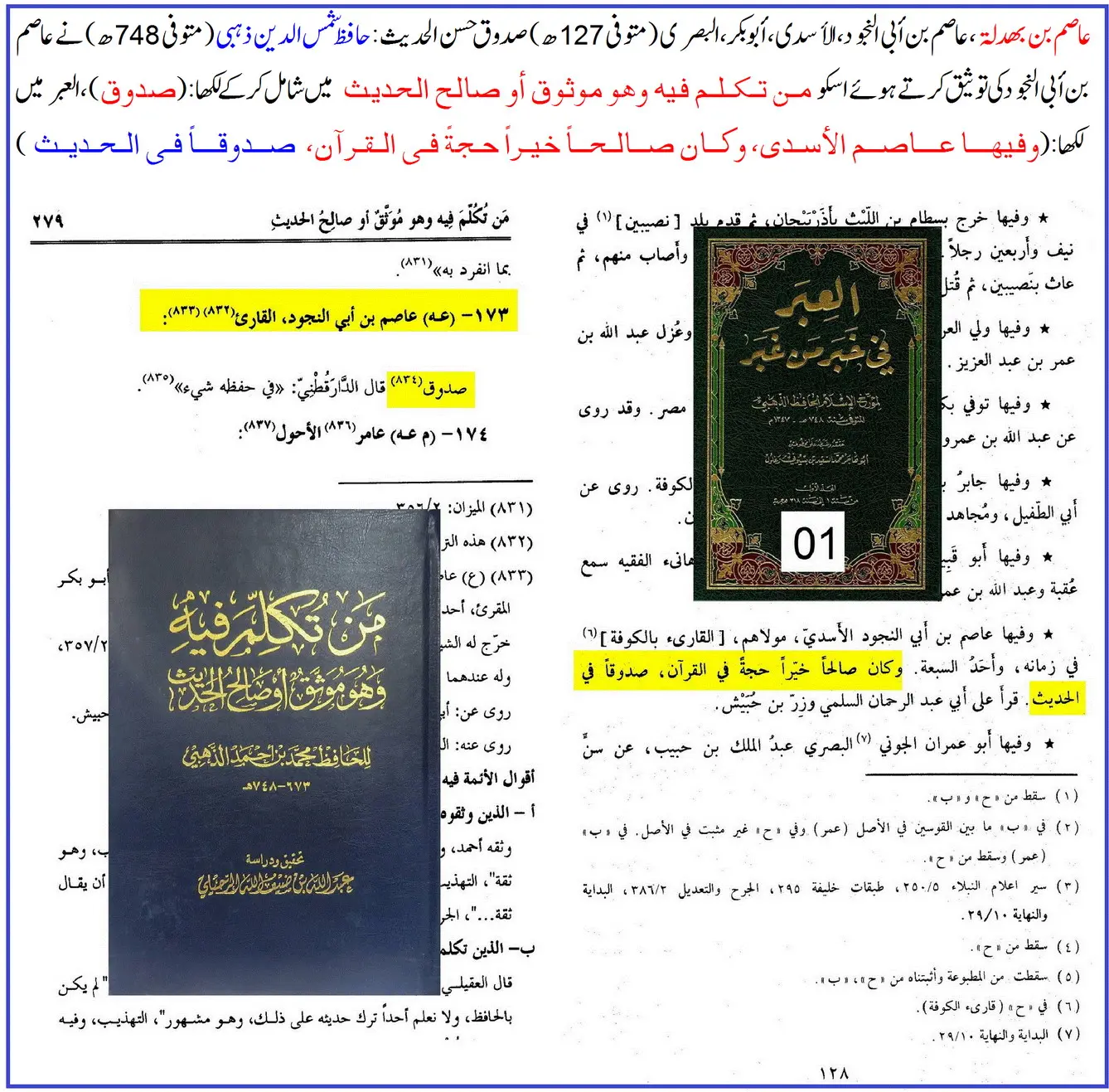
⑲ Hafiz al-Dhahabi (748 AH)
Arabic text: 173 – “عه” عَاصِمُ بْنُ أَبِي النَّجُودِ … صَدُوقٌ.
… وَقَالَ: “وَكَانَ صَالِحًا خَيْرًا، حُجَّةً فِي الْقُرْآنِ، صَدُوقًا فِي الْحَدِيثِ”.
Translation: Al-Dhahabi says: “Asim bin Abi al-Najud is truthful … he was righteous, good, authoritative in the Qur’an, and truthful in hadith.”
Reference:
Explanation: ❖ Al-Dhahabi explicitly stated that he is truthful, and called him a proof (hujjah) in the Qur’an. ❖ This statement is evidence of his greatness and dual testimony (in both Quran and Hadith).
⑳ Imam Al-Daraqutni (385 AH)
Arabic text: … قَالَ: ابْنُ أَبِي النَّجُودِ فِي حِفْظِهِ شَيْءٌ.
Translation: Al-Daraqutni said: “There is something in the memory of Asim ibn Abi al-Najud.”
Reference:
Explanation: ❖ Al-Daraqutni’s phrase “fi hifzihi shay'” is a mild caution, not an explicit, explained criticism (jarh mufassar). ❖ Nevertheless, Al-Daraqutni has recorded many narrations of Asim in his books. ❖ Therefore, this caution does not undermine his integrity and reliability, it only indicates weakness compared to other memorizers.
Ibn Hajar’s Criticism and Its Explanation
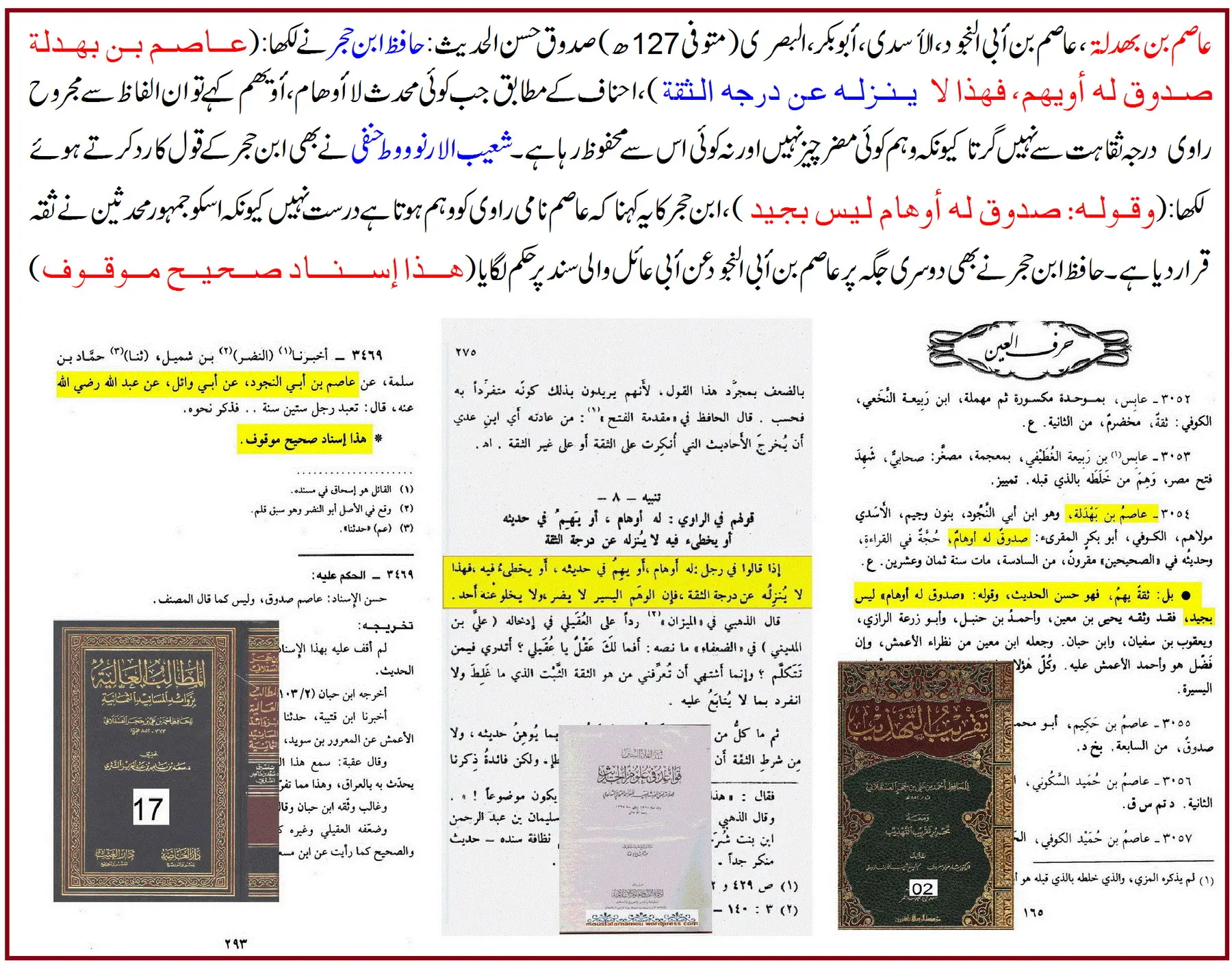
Hafiz Ibn Hajar (852 AH)
Arabic text: 3054 – عَاصِمُ بْنُ بَهْدَلَةَ … صَدُوقٌ لَهُ أَوْهَامٌ.
Translation: Ibn Hajar said: “Asim ibn Bahdala is truthful but some mistakes (errors) have occurred from him.”
Reference:
Explanation: ❖ “Saduq” = acknowledgment of the primary level of trustworthiness. ❖ “Lahu Awhaam” = some narrations contain mistakes, which often happens with narrators. ❖ This is not a criticism that makes them weak.
Answer of the Majority (Imam Arnaout, etc.)
Arabic text: وقوله: “صدوق له أوهام” ليس بجيد، فقد وثقه يحيى بن معين، وأحمد، وأبو زرعة، ويعقوب بن سفيان، وابن حبان … وكل هؤلاء وثقوه مع معرفتهم ببعض أوهامه اليسيرة.
Translation: Shu’aib Arnaout says: “Ibn Hajar’s statement that Asim is ‘Saduq Lahu Awhaam’ is not correct. Because Yahya ibn Ma’in, Ahmad ibn Hanbal, Abu Zur’ah, Ya’qub ibn Sufyan, and Ibn Hibban all considered him trustworthy, even though they were aware of some of his minor mistakes.”
Reference:
Explanation: ❖ The majority considered him trustworthy despite his mistakes. ❖ Mistakes are common among hadith scholars, but if the narrator’s fundamental integrity and precision remain intact, the narration remains acceptable.
Summary and Conclusion
❖ In light of the presented texts and statements, it has become clear that Asim ibn Bahdala al-Kufi (Abu Bakr al-Qari) is considered “trustworthy/honest, good in hadith” by the majority of hadith scholars. ❖ Earlier critics (Imam Ahmad, Yahya ibn Ma’in, Abu Zur’ah, al-Ajli, Ibn Hibban, Ibn Abd al-Barr, Hakim, Tirmidhi, Haithami, Busiri, Ibn Shahin, Ibn Kathir, Dhahabi, Zaili, and others) explicitly authenticated him; some described his chains of narration as “authentic like the sun/good strong/good authentic/trustworthy narrators.” ❖ Ibn Hajar’s phrase “Saduq lahu awham” and Daruqutni’s caution “fi hifzihi shay’” are types of admonition, not decisive criticism or rejection; both scholars did not deny his fundamental trustworthiness but rather indicated the level of memorization compared to the best hafiz (memorizer) on certain occasions. ❖ According to the principles of criticism, when a narrator has partial or mild criticism and, in contrast, there are many clear and diverse authentications—especially when multiple narrations of his have been declared good/authentic by the Imams—the authentication is preferred, and the narrator’s narration remains acceptable. ❖ Therefore, the narrations of Asim ibn Bahdala—especially the chain: Asim from Zirr from Abdullah/Abi Wa’il—are fundamentally classified as good/authentic, and rejecting his narration merely based on the indication of “awham” (minor doubts) contradicts the methodology of hadith scholars. ❖ Consequently: Asim ibn Bahdala is trustworthy and good in hadith; the partial criticisms against him do not amount to rejection, and his narrations are valid for jurisprudence and creed when supported by other evidence and indications.
Scans of Important References