
Deobandi Called Devil Bandi
The complete response to the booklet “Ikhfa Al-Tameen” from the book “Hadith and Ahl al-Hadith” is presented according to Deobandi books. And all praise is due to Allah.
Deobandi (1)
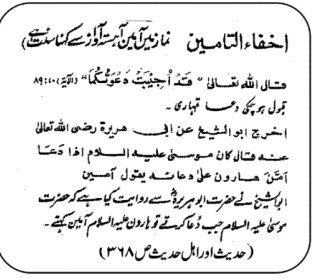
Answer:
This narration الدر المخور
is present with the chain of وأخرج أبو الشيخ, but its chain is not mentioned here. Sarfaraz Khan Safdar Deobandi said: “A statement without a chain is not proof.”
Muhammad Habibullah Dervi Deobandi said: “A statement without a chain cannot be considered reliable.”
Note: The narration attributed to Abu Hurairah رضي الله عنه with this meaning is present in Musannif Abdul Razzaq
with the chain of بشر بن رافع عن ابي عبدالله عن ابي هريره. Regarding Bishr bin Rafi’, Habibullah Dervi said: “He is a fabricator, meaning one who invents hadith on his own.”
And about Abu Abdullah, he said: “He is unknown.”
Deobandi (2)
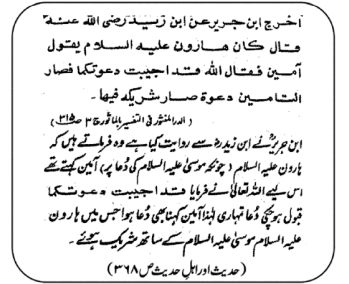
Answer:
The narration of Ibn Zaid, may Allah be pleased with him, is mentioned in الدر المخور
with reference to Ibn Jarir. This narration is recorded in Tafsir Ibn Jarir
with the following chain of transmission: حدثني يونس قال أخبرنا ابن وهب قال قال ابن زيد كان هارون يقول آمين إلخ. Yunus refers to Ibn Abdul A’la, Ibn Wahb refers to Abdullah bin Wahb, and Ibn Zaid refers to Abdul Rahman bin Zaid bin Aslam.
Regarding Abdul Rahman bin Zaid bin Aslam, Muhammad bin Ali Al-Naimawi said: هو ضعيف, meaning he is weak.
The Deobandi scholars teach Athar al-Sunan in their madrasas; this is their authentic book.
It is clear that Abdul Rahman bin Zaid bin Aslam is not a companion but a weak narrator, therefore writing “may Allah be pleased with him” after his name is misleading to the Urdu-speaking community.
Deobandi (3)
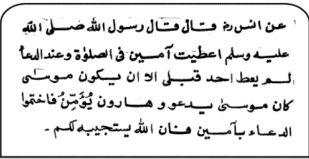
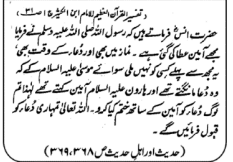
Answer:
This narration attributed to Anas bin Malik رضي الله عنه is mentioned without a chain in Tafsir Ibn Kathir
. It is not found in Jami’ al-Masanid wa al-Sunan by Ibn Kathir. However, المطالب العاليه بزوائد المسانيد الثمانيه لابن حجر
contains this narration. Habib ur-Rahman Azmi Deobandi, the commentator of Al-Matalib, said: ”ضعف البوصيري اسناده لضعف زربي بن عبدالله، قال ورواه ابن خزيمه فى صحيحه وتردد فى ثبوته وقال ان ثبت الخبر“ meaning if this report is established.
Al-Busiri called this chain weak due to the weakness of Zurbi bin Abdullah and said that Ibn Khuzaymah narrated it in his Sahih but hesitated in its authenticity.
In the chain of Sahih Ibn Khuzaymah
, Zurbi bin Abdullah is present. It is clear that this report is not established according to Imam Ibn Khuzaymah.
Deobandi (4)

Answer:
On the same page of Sahih Bukhari
, it is written:
وقال عطاء آمين دعاء أمن ابن الزبير ومن وراءه حتي ان للمسجد للجة
Ibn al-Zubair (may Allah be pleased with them) said that Ameen is a supplication. When Ibn al-Zubair (may Allah be pleased with them) and those who were behind you (praying) said Ameen, the mosque echoed.
Some people have concealed from أمن ابن الزبير to the end in this narration. From this complete statement, it is understood that Ameen is a supplication that can be said aloud. Those who make loud supplications on loudspeakers at the Raiwind Tablighi gathering should be ashamed of the claim that every supplication must be secret and not aloud.
Deobandi (5)
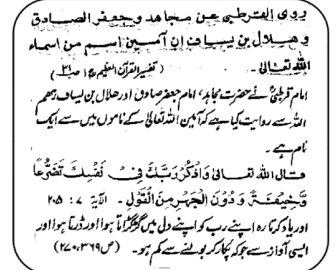
Answer:
مجاهد، جعفر الصادق اور هلال بن يساف كے اقوال تفسير قرطبي
is transmitted without chain and روى is transmitted in the form of tamreez.
Remember that السلام عليكم is also a noun from the names of Allah. See صحيح البخاري، كتاب الاستئذان، باب السلام اسم من اسماء الله تعاليٰ
. What do you think? Should السلام عليكم also be said in the heart?
After this, commentary on the narrations mentioned by some people is presented.
Deobandi (6)
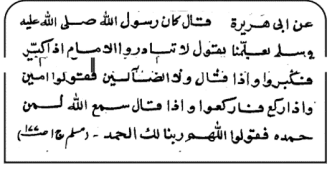
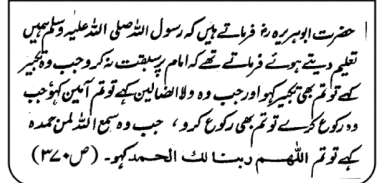
Answer:
In Sunan Abi Dawood,
there is a hadith in which the Prophet Muhammad (peace be upon him) instructed a person entering someone else’s house:
قل السلام عليكم أأدخل meaning say السلام عليكم, “May I come in?” قولوا آمين is like قل السلام عليكم. What do you think? Will the person entering another’s house secretly say السلام عليكم in his heart so that the homeowner does not hear?
Deobandi (7)
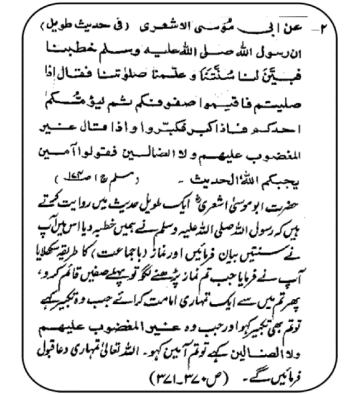
Answer:
See Hadith number 1
Deobandi (8)
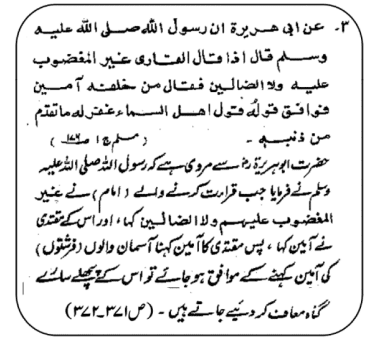
Answer:
This is evidence for saying Ameen aloud. Imam al-Siraj narrated from Imam Ibn Shihab al-Zuhri at the end of a narration of this meaning from Sayyiduna Abu Hurairah (may Allah be pleased with him):
كان رسول الله صلى الله عليه وسلم اذا قال ولا الضالين جهر بآمين
Meaning when the Messenger of Allah (peace be upon him) said ولا الضالين, he said Ameen aloud.
Deobandi (9)
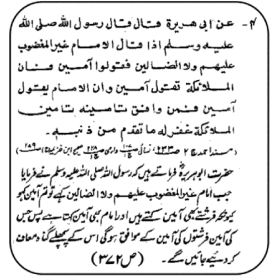
Answer:
فقولوا آمين meaning you say Ameen.
This is evidence for saying Ameen aloud, see Hadith number 2
Deobandi (10)
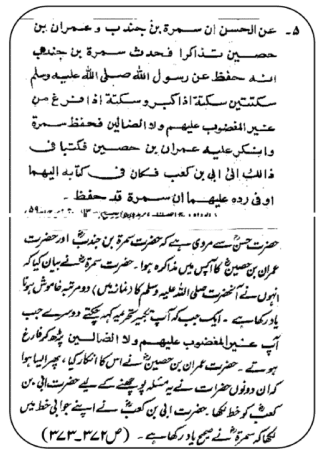
Answer:
و سكوته اذا فرغ من غير المغضوب عليهم ولا الضالين That is, the second prostration when you finish reciting غير المغضوب عليهم ولا الضالين you would do.
In the chain of these two narrations, Qatadah is the narrator and the narration is from عن. Master Amin Okara Deobandi said about Qatadah: “Qatadah is a mudallis (a narrator who conceals a defect in the chain).”
If a mudallis narrator narrates from عن, Okara said: “It is unanimously a sign of weakness.”
Sarfaraz Khan Safdar Deobandi said: “If a mudallis narrator narrates from عن, then it is not proof except if he reports directly or if there is a trustworthy follower of his, but remember that in the Sahihayn (Bukhari and Muslim) mudallas is not harmful; it is understood through other means of hearing.”
Deobandi (11)
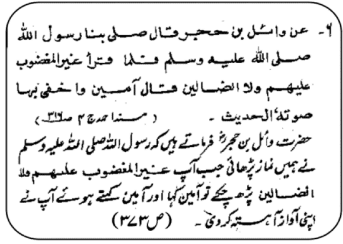
Answer:
Regarding this narration, Naimwi said: وإسناده صحيح وفي متنه اضطراب
Meaning its chain of narration (apparently) is authentic, but there is inconsistency in its text.
Naimwi further said:
فغايته أن الحديث مضطرب لا يصح الإحتجاج لأحد الفريقين
Meaning at most, this hadith is inconsistent, and it is not correct for either party to use it as evidence.
Students of Hadith principles know that an inconsistent narration is weak.
Deobandi (12)
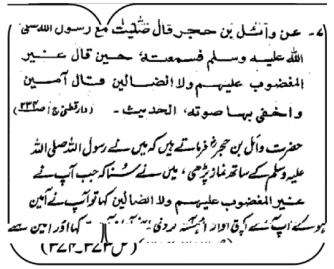
Answer:
According to Naimwi, this narration is inconsistent, see Hadith number 6.
Deobandi (13)
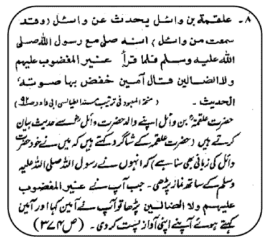
Answer:
It is inconsistent, see Hadith number 6.
Deobandi (14)
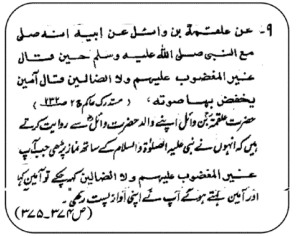
Answer:
It is inconsistent, see Hadith number 6.
Deobandi (15)
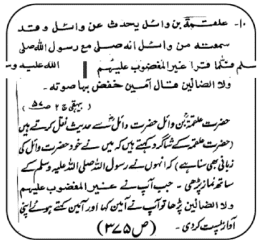
Answer:
It is inconsistent, see Hadith number 6.
Deobandi (16)
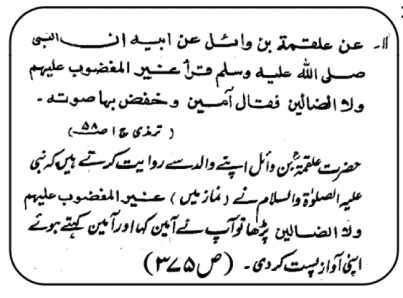
Answer:
It is inconsistent (weak), see Hadith number 6.
Deobandi (17)
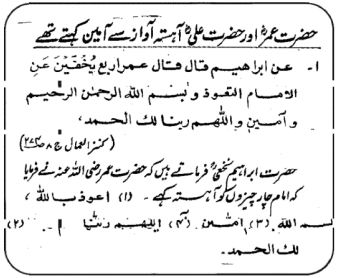
Answer:
كنز العمال
mentions this narration citing Ibn Jarir. This narration is without a chain of transmission. This narration was not found in Ibn Jarir’s book (تهذيب الآثار مسند امير المومنين عمر رضي الله عنه). Ibrahim al-Nakha’i was born in 37 AH or 50 AH.
Our master Umar (may Allah be pleased with him) was martyred in 24 AH.
Therefore, this narration without a chain is also disconnected.
Deobandi (18)
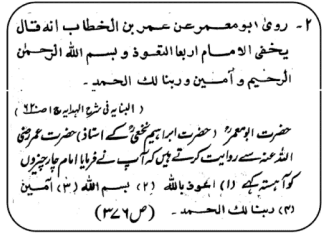
Answer:
البنايه فى شرح الهدايه للعيني
mentions this narration without a chain.
Deobandi (19)
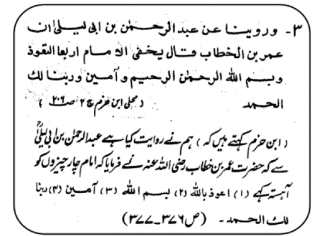
Answer:
محلي ابن حزم
mentions this narration without a chain.
Deobandi (20)
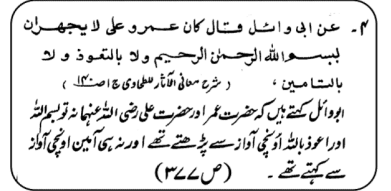
Answer:
Regarding this narration, Muhammad bin Ali al-Naimawi said:
رواه الطحاوي وابن جرير وإسناده ضعيف
Meaning it was narrated by Tahawi and Ibn Jarir and its chain is weak.
Deobandi (21)
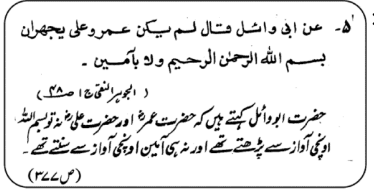
Answer:
الجوهر النقي
contains this narration (quoted from Ibn Jarir al-Tabari’s Tahdhib al-Athar), which Naimi has classified as اسناده ضعيف.
Regarding its narrator Abu Saad Saeed bin al-Marzban al-Baqqal, Naimi said: ضعفه غير واحد, meaning more than one (Muhaddith) has declared him weak.
Deobandi (22)
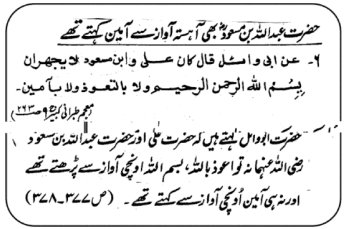
Answer:
الحجم الكبير للطبراني
mentions Abu Saad al-Baqqal, which is why Naimi declared this narration weak.
Deobandi (23)
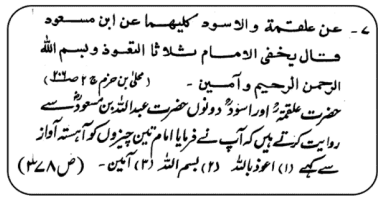
Answer:
المحلي لابن حزم
mentions its narrator as Abu Hamza Maymun al-A’war al-Qassab al-Kufi, وهو ضعيف متروك الحديث۔
Regarding Maymun Abu Hamza, Zaili Hanafi said:
قال الدارقطني أبو حمزة هذا ميمون وهو ضعيف الحديث، قال ابن الجوزي فى التحقيق وقال أحمد هو متروك، وقال ابن معين ليس بشيء، وقال النسائي ليس بثقة .
Deobandi (24)
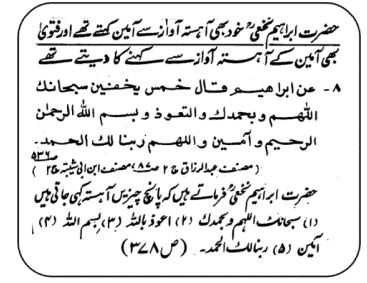
Answer:
Its narrator is Sufyan bin Saeed Ath-Thawri.
About Sufyan Ath-Thawri, Ameen Okarawee said: ”سفیان مدلس، علاء بن صالح شیعہ، “Muhammad bin Kathir is weak.”
According to the Deobandi principle, this narration is weak. If, considering Imam Bukhari’s statement, Sufyan ‘an Mansur is regarded as strong, then this is the opinion of Ibrahim Nakha’i, which is related not to the followers but only to the Imam, and it is rejected due to being contrary to the Marfu’ah hadiths, the sayings of the Companions, and the sayings of the Tabi’in.
Deobandi (25)
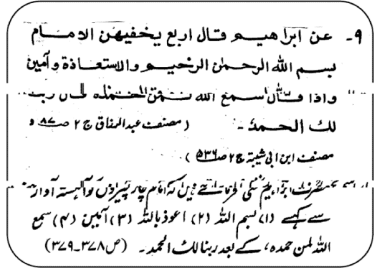
Answer:
Its narrator, Hammad bin Abi Sulayman, is mixed. Hafiz Haithami said:
ولا يقبل من حديث حماد إلا ما رواه عنه القدماء شعبة وسفيان الثوري والدستوائي ومن عدا هؤلاء رووا عنه بعد الإختلاط
Meaning, only those narrations of Hammad are accepted which were narrated by his early students Shu’bah, Sufyan Thawri, and (Hisham) al-Dastawai; all others narrated from him after his mixing.
In the mentioned narration, his student is Muammar bin Rashid. The second narration
by Muhammad bin Abi Layla is weak.
Sarfaraz Khan Safdar said about Hafiz Haithami: “If in his time, Allama Haithami was not the authority on authenticity and weakness, then who else was?”
Also see Taskin al-Sudur
.
Deobandi (26)
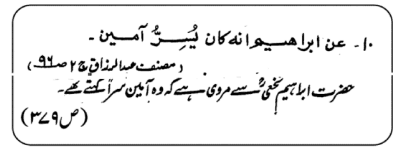
Answer:
This narration does not clarify when Ibrahim Nakha’i used to say Ameen secretly (sirr). Was it during the prayer or outside the prayer? If during the prayer, then did he say it secretly in loud prayers or in silent prayers? It is quite possible that this effect means that Ibrahim Nakha’i used to say Ameen secretly in silent prayers.
In the favorite book of the Deobandis about the Tabi‘in, Tazkirat al-Nu‘man, translated in ‘Uqud al-Juman, it is written that Imam Abu Hanifa said: “If there are reports from the Companions and they differ, then I choose among them, and if it is about the Tabi‘in, then I oppose them, meaning I also perform ijtihad like them.”
Two points are established regarding this:
❀ First: The Imam does not accept the sayings and actions of the Tabi‘in as proof.
❀ Second: The Imam himself is not among the Tabi‘in. If he were among the Tabi‘in, then what was the need to mention the Tabi‘in separately?
Deobandi (27)
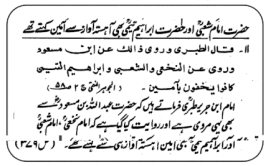
Answer:
All these references of Al-Tabari in Al-Jawhar al-Naqi are without chain (weak) and mentioned with the phrase روى.
Deobandi (28)
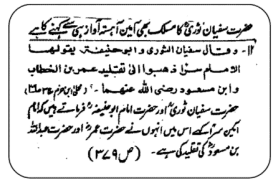
Answer:
The birth of the local author Hafiz Ibn Hazm occurred after the deaths of Sufyan Thawri and Abu Hanifa, therefore all these references are without chain of narration.
Deobandi (29)
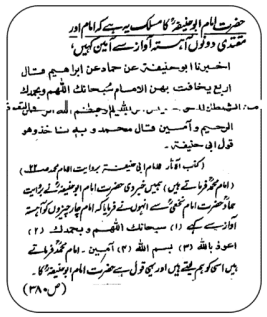
Answer:
Regarding the author of Kitab al-Athar, Muhammad ibn al-Hasan al-Shaybani, Imam Yahya ibn Ma’in said: جهمي كذاب
Sarfaraz Safdar Deobandi Sahib has blindly written a false statement of Hafiz al-Dhahabi that “Imam Ibn Ma’in is counted among the Hanafi scholars.”
Sarfaraz Khan Sahib wrote about Qadi Abu Yusuf that “he was Hanafi in jurisprudence and among the companions of Abu Hanifa.”
Deobandi (30)
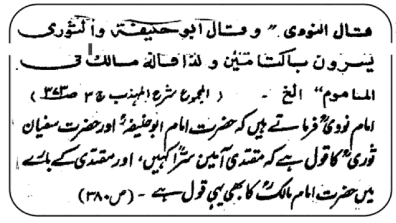
Answer:
The birth of Allama Nawawi occurred long after the deaths of Imam Malik, Sufyan Thawri, and Abu Hanifa, therefore the reference to Al-Majmu’ Sharh al-Muhadhdhab is rejected due to lack of chain of narration.
Deobandi (31)
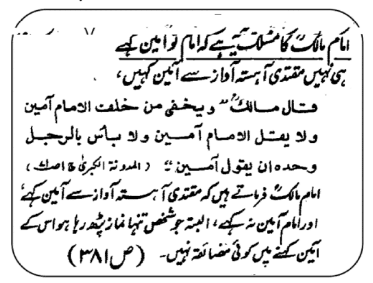
Answer:
المدونه الكبريٰ is not the book of Imam Malik. There is no known connected chain of narration up to Sahib Madunah Sahnun, therefore this entire book is without a chain of narration. A famous scholar Abu Uthman Saeed bin Muhammad bin Subaih bin Al-Haddad Al-Maghribi, Sahib Sahnun, who was among the Mujtahids,
wrote a book refuting Madunah.
He used to call مدونه as مدود (the book with errors).
Sheikh Abu Uthman was among the Imams of Ahl al-Sunnah. He passed away in 302 AH, may Allah have mercy on him. About Sahnun, Imam Abu Ya’la Khalili says: لم يرض أهل الحديث حفظه meaning the Muhaddithin are not satisfied with his memory.
Abu Al-Arab praised Sahnun greatly, but Khalili holds a very high status. It is understood that Sahnun is a narrator of various fiqh. Even if this unauthenticated book Al-Madunah was proven authentic up to Sahnun, the Hadith of Muwatta Imam Malik
: إذا علم الإمام فأمنوا meaning when the Imam says Ameen, you say Ameen, would be rejected in comparison. Because in this unauthenticated book it is written that the Imam does not say Ameen. The Deobandi scholars also do not accept other issues of this unauthenticated book, for example
it is written: ❀ In prayer, بسم الله الرحمن الرحيم should not be recited silently even. ❀ According to المدونه الكبريٰ: According to Imam Malik, folding hands in prayer is disliked. What is your opinion about these issues?
Deobandi (32)
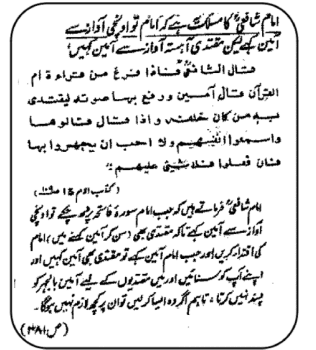
Answer:
Two things are understood from Imam Shafi’i’s statement:
❀ First: The Imam should say Ameen aloud. (Deobandis are completely against this)
❀ Second: The follower should not say Ameen aloud. (And if he does, there is no sin on him)
Imam Tirmidhi has narrated from Imam Shafi’i: أن يرفع الرجل صوته بالتأمين
Meaning a person should say Ameen aloud.
The authentic chains of this statement are present in Imam Tirmidhi’s book Al-‘Ilal
. It is understood that the second part (2) of Imam Shafi’i’s statement is abrogated according to his own fatwa.
Deobandi (33)
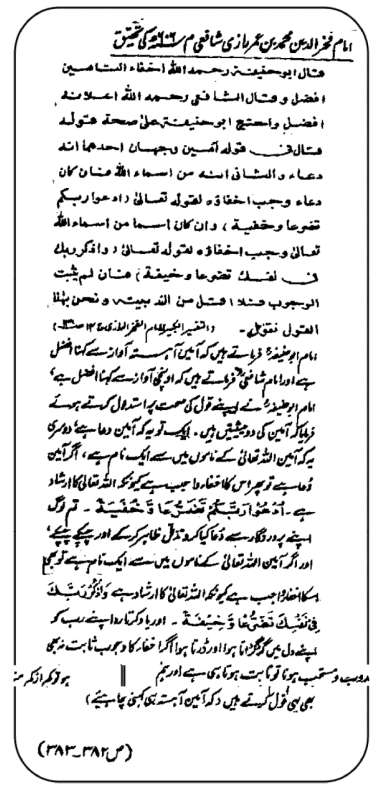
Answer:
Imam Shafi’i and Imam Abu Hanifa were born long after the death of Fakhr al-Din al-Razi, so this statement is baseless. A review of all the evidence in the book “Hadith and Ahl al-Hadith” shows that some people cunningly wrote that “Non-followers (ghair muqallideen) say that ‘Ameen’ should be said aloud, contrary to the Quran, Sunnah, the practices of the Companions and the Followers, and the sayings of the Mujtahid Imams.”
However, saying ‘Ameen’ aloud is established from the Prophet Muhammad ﷺ, the noble Companions (may Allah be pleased with them), the great Followers, and the Mujtahid Imams.
Hussain Ahmad (Madani) Deobandi said: The Great Imam and Imam Ahmad state that the prayer can be silent or aloud; in both cases, the Imam and the follower say ‘Ameen’ silently, while Imam Malik and Imam Shafi’i said it aloud.
No narration from Imam Malik has been found. Regarding saying ‘Ameen’ aloud, Imam Tirmidhi states: وبه يقول الشافعي وأحمد وإسحاق and Shafi’i, Ahmad, and Ishaq (bin Rahwayh) (may Allah be pleased with them) hold this view.
The Companions (may Allah be pleased with them) said ‘Ameen’ aloud in loud prayers and quietly in silent prayers, following the practice of the Prophet ﷺ. There are hadiths about saying ‘Ameen’ aloud in prayer. The madhhab of Imam Shafi’i and Ahmad is the same in this regard.
Deobandi (34)
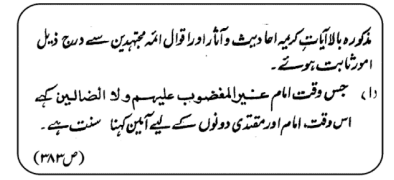
Answer:
Saying Ameen aloud is Sunnah as has been explained with evidence.
Deobandi (35)
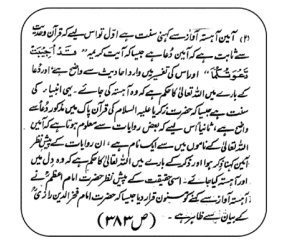
Answer:
The answer to this has already been given on previous pages. Saying Ameen slowly in an audible prayer is not proven at all.
Deobandi (36)
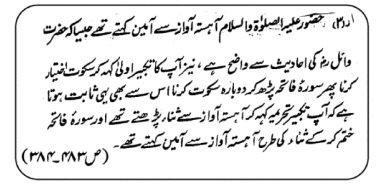
Answer:
This is not proven, because the Prophet Muhammad (peace be upon him) used to say Ameen aloud, which has been established with evidence.
Deobandi (37)
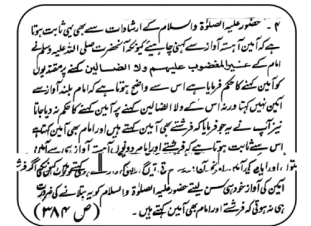
Answer:
The answer to this has also been given.
Deobandi (38)
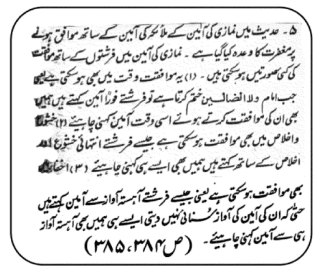
Answer:
The answer to this has also been given. Do the Deobandi gentlemen observe or hear other matters of the angels that they have issued the ruling that angels say Ameen slowly because they do not hear the voice of Ameen?
Deobandi (39)
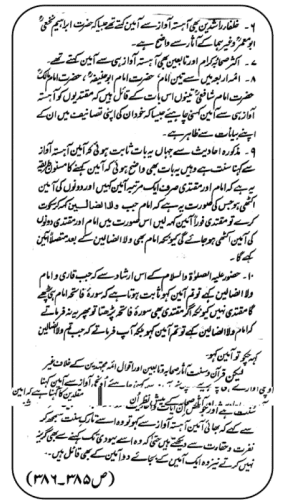
Answer:
These are doubts, which have been refuted in the best manner.
Deobandi (40)
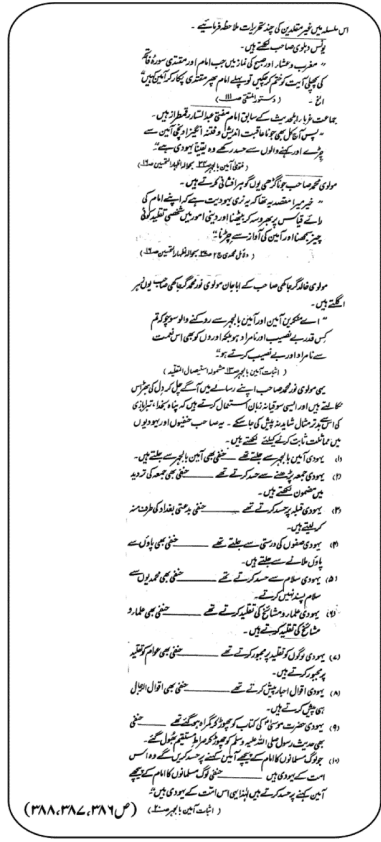
Answer:
These fatwas apply to those people who, despite having knowledge, openly say Ameen Biljahr and harm those who say Ameen Biljahr with their hands and tongues, even beating them and expelling them from their mosques, and then without any fear or shame, call Ameen Biljahr as Ameen Bilshar.
والله من ورائهم محيط
Ameen Biljahr and Ameen Okaraavi
Master Amin Okaraavi Deobandi wrote a book titled “Tahqiq Mas’alah Ameen,” in which answers to most doubts have been addressed in our book and Al-Qaul Al-Mateen (Part One). Some points from this Okaraavi’s book are reviewed as follows:
I said: It is not proven at all that Atta met two hundred companions, and it is absolutely wrong that by the time of Ibn Zubair (may Allah be pleased with them both), two hundred companions were present in one city.
At another place, Okaraavi Sahib states: Makkah Mukarramah is also the center of Islam and Muslims, Hazrat Atta bin Abi Rabah is the Mufti here, and he had the honor of meeting two hundred companions.
Meaning, he had the honor of meeting, and if the narration contradicts the meaning, then the meeting is not proven. This is Deobandi justice!
(1) Okaraavi Sahib wrote a narration with reference to Ibn Khuzaymah on
:
إن الله أعطى ني التأمين إلخ .
This narration is present in Sahih Ibn Khuzaymah
with the chain from Zarbi bin Abdullah from Anas (may Allah be pleased with him). Imam Ibn Khuzaymah expressed doubt about its authenticity, meaning according to him this narration is not proven, as referenced by Busiri earlier: “This narration is weak due to the weakness of Zarbi bin Abdullah.”
(2) In Chapter Four
, Okaraavi Sahib presented eight arguments trying to prove that the supplication should be done slowly. The narrator of the seventh argument, Muawiyah bin Bayti Al-Sadafi, is weak according to Abu Shi, as admitted by Amin Okaraavi. The eighth argument is without chain. After presenting these eight arguments, Okaraavi Sahib did not write anything about the loud supplication of Raiwind, which these people do on the last day of the Tablighi gathering on loudspeakers, and Deobandis and Deobandi-like people attend this supplication.
(3) On
, Hadith Al-Saktain is mentioned, about which Abu Bakr Al-Jassas Hanafi says:
أما حديث السكتتين فهو غير ثابت meaning the hadith of the two silences is not authentic.
Remember that in the preferred opinion, these two silences are at the end of the recitation, not at the end of Al-Fatiha.
(4) On
, Okaraavi Sahib quoted a narration with the two silences from Abu Bakr bin Abi Shaybah, from Abdullah bin Mas’ud (may Allah be pleased with him). I did not find this narration. A polite request to all Deobandis is to present this narration from Abu Bakr bin Abi Shaybah’s book with reference, chain, and text so that Okaraavi Sahib can be saved from the serious accusation of fabricating a hadith; otherwise, the result is obvious.
(5) On
, Okaraavi Sahib wrote about Ibrahim Nakha’i:
”سيد التابعين“ while Zafar Ahmad Thanvi Deobandi Sahib writes:
فإن قول التابعي لا حجة فيه
Meaning there is no proof in the statement of the Tabi’i.
(6) On
, Okaraavi Sahib quoted from Tahawi
from Abdullah bin Zubair (may Allah be pleased with them both) that “they did not say Ameen at all.” I did not find this narration in Sharh Ma’ani Al-Athar.
(7) Okaraavi Sahib quoted from Majma’ Al-Zawa’id
from Al-Tabarani’s Al-A’jam Al-Kabir: “The Prophet (peace be upon him) قال آمين ثلاث مرات.“
. This narration is present in our copy
and Al-A’jam Al-Kabir
. About its narrator Abu Ishaq, Okaraavi wrote: “His memory was not sound in later times. Therefore, this hadith is not reliable.”
And about Abdul Jabbar from his father, he wrote that Imam Bukhari, Ibn Ma’in, Tirmidhi, and Nasai, etc., all agree that Abdul Jabbar did not hear any narration from his father. Therefore, this narration is mursal (disconnected).
It is clear that this narration is weak even by Okaraavi Sahib’s own standards.
The summary of this entire discussion is that Deobandis have no argument against loud Ameen and in favor of silent Ameen.
﴿فَهُمْ فِي رَيْبِهِمْ يَتَرَدَّدُونَ﴾
وما علينا إلا البلاغ