This article is a scholarly response to a misconception raised by Ibn Hajar al-Haytami (d. 974 AH) in his book Tuhfah al-Muhtāj.
He:
- Interpreted the well-established ḥadīths of “Allah’s Descent” in a figurative sense.
- Claimed that these refer to the “descent of Allah’s command”.
- Quoted Ibn Jamāʿah’s statement to attack Shaykh al-Islām Ibn Taymiyyah رحمه الله.
The Ahl al-Sunnah wa’l-Jamāʿah have a clear and firm methodology regarding this issue:
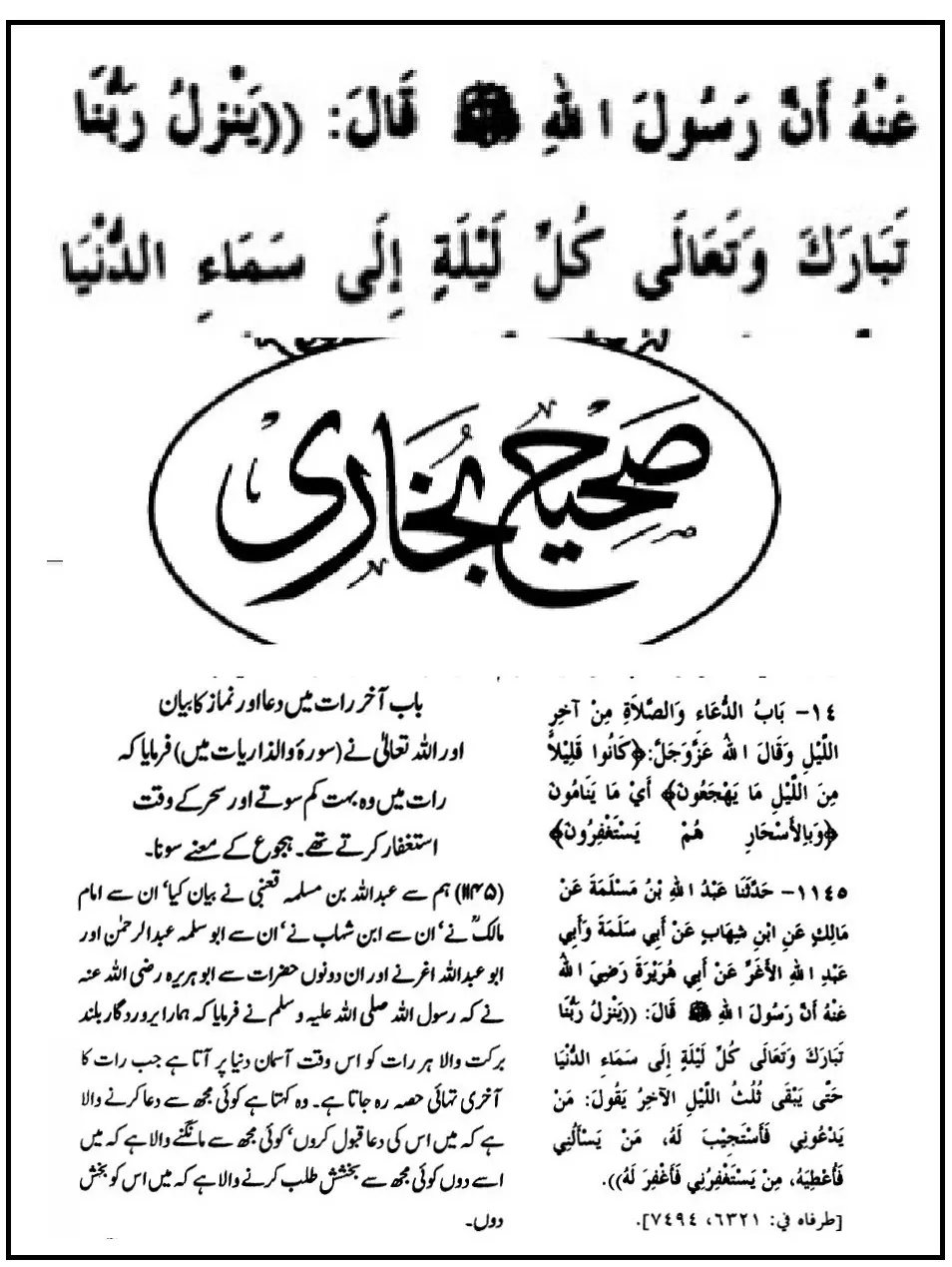
❖ Allah’s descent every night is an established belief.
❖ Belief in it is obligatory.
❖ Its modality (how it occurs) is unknown and left to Allah.
❖ Only the deviant sects like the Jahmiyyah and Muʿtazilah deny it.
✿ Claim of the Opponent: Ibn Hajar al-Haytami
He stated:
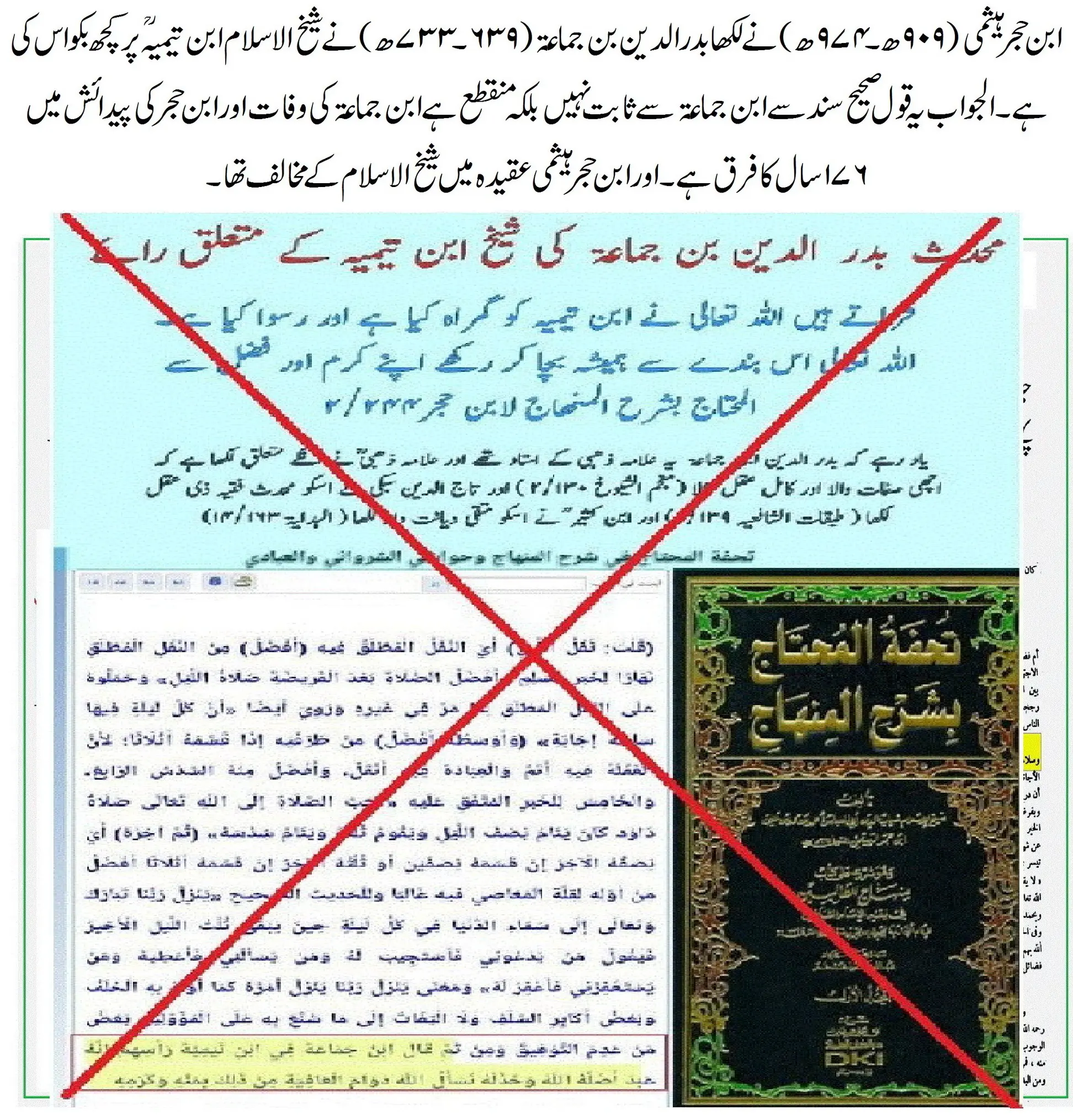
«ومعنى ينزل ربنا ينزل أمره كما أوله به الخلف وبعض أكابر السلف، ولا التفات إلى ما شنّع به على المؤوّلين بعض من عدم التوفيق، ومن ثم قال ابن جماعة في ابن تيمية رأسهم إنه عبد أضله الله وخذله.»
(Tuhfah al-Muhtāj)
📌 Translation:
“Some of the later scholars and even some early ones interpreted ‘Allah’s descent’ as the descent of His command. The criticism of these interpreters by some ill-fated individuals is to be ignored. Thus, Ibn Jamāʿah said about Ibn Taymiyyah – their leader – that he was a man whom Allah led astray and disgraced.”
◈ Response
This statement is disconnected and without any chain of narration, because:
- Ibn Jamāʿah died in 733 AH.
- Ibn Hajar al-Haytami was born in 905 AH.
- There is a gap of 172 years, so this is mere unsourced transmission.
Further, the claim that only Ibn Taymiyyah interpreted Allah’s descent literally is false.
In truth, there is ijmāʿ (consensus) of the Salaf (righteous predecessors) on affirming this belief.
Imam Mālik, Sufyān ibn ʿUyaynah, ʿAbdullāh ibn al-Mubārak, al-Tirmidhī, Ibn Khuzaymah, al-Dārimī, Isḥāq ibn Rāhawayh – all affirmed it without explaining how.
Ibn Taymiyyah merely followed the way of the Companions and the Salaf:
“Affirm the descent, but do not ask how.”
✿ Methodology of the Salaf Regarding Allah’s Descent
Below are clear statements from the Salaf proving that belief in the descent of Allah is wājib (obligatory), and its rejection is the way of the deviant groups.
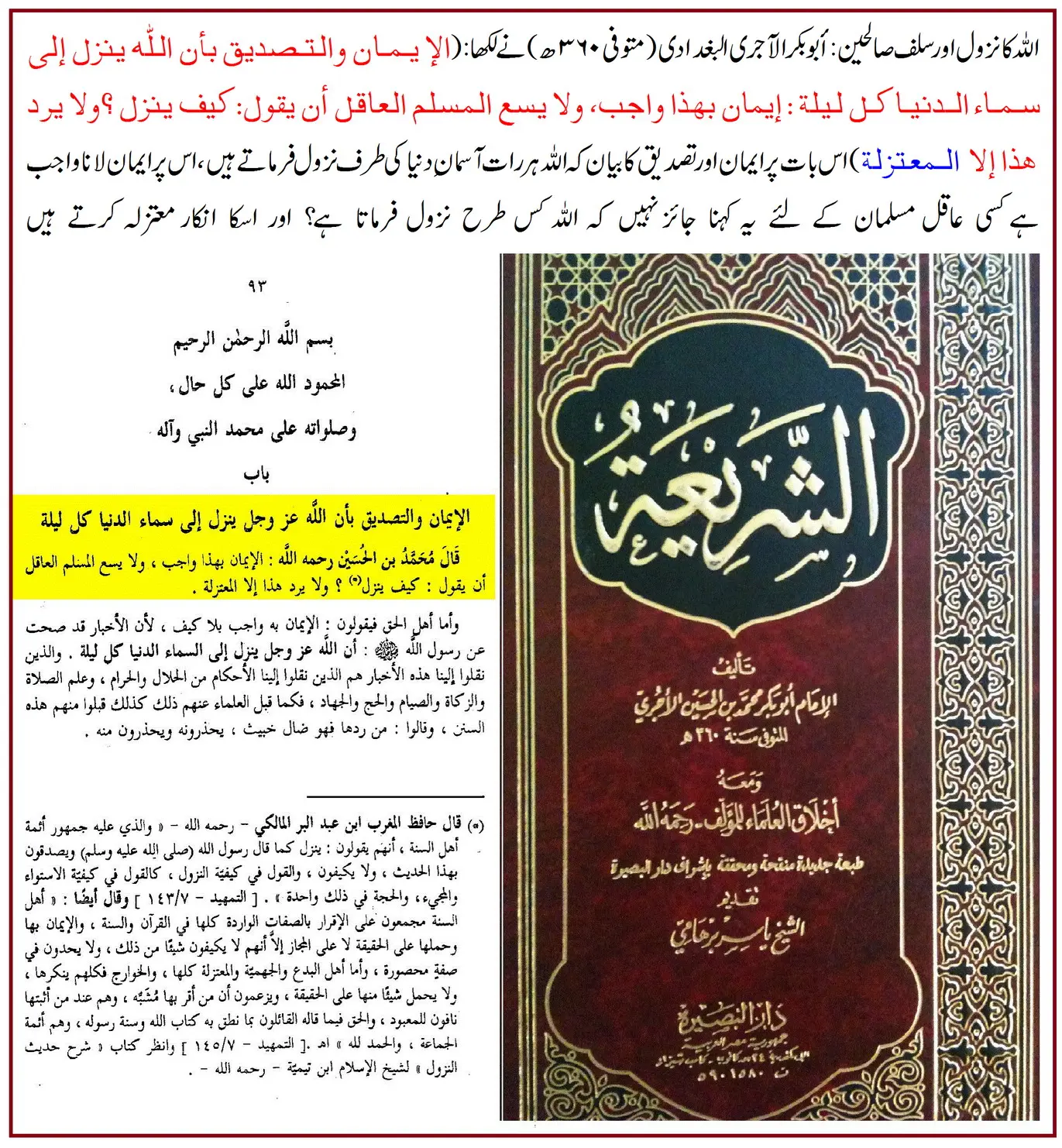
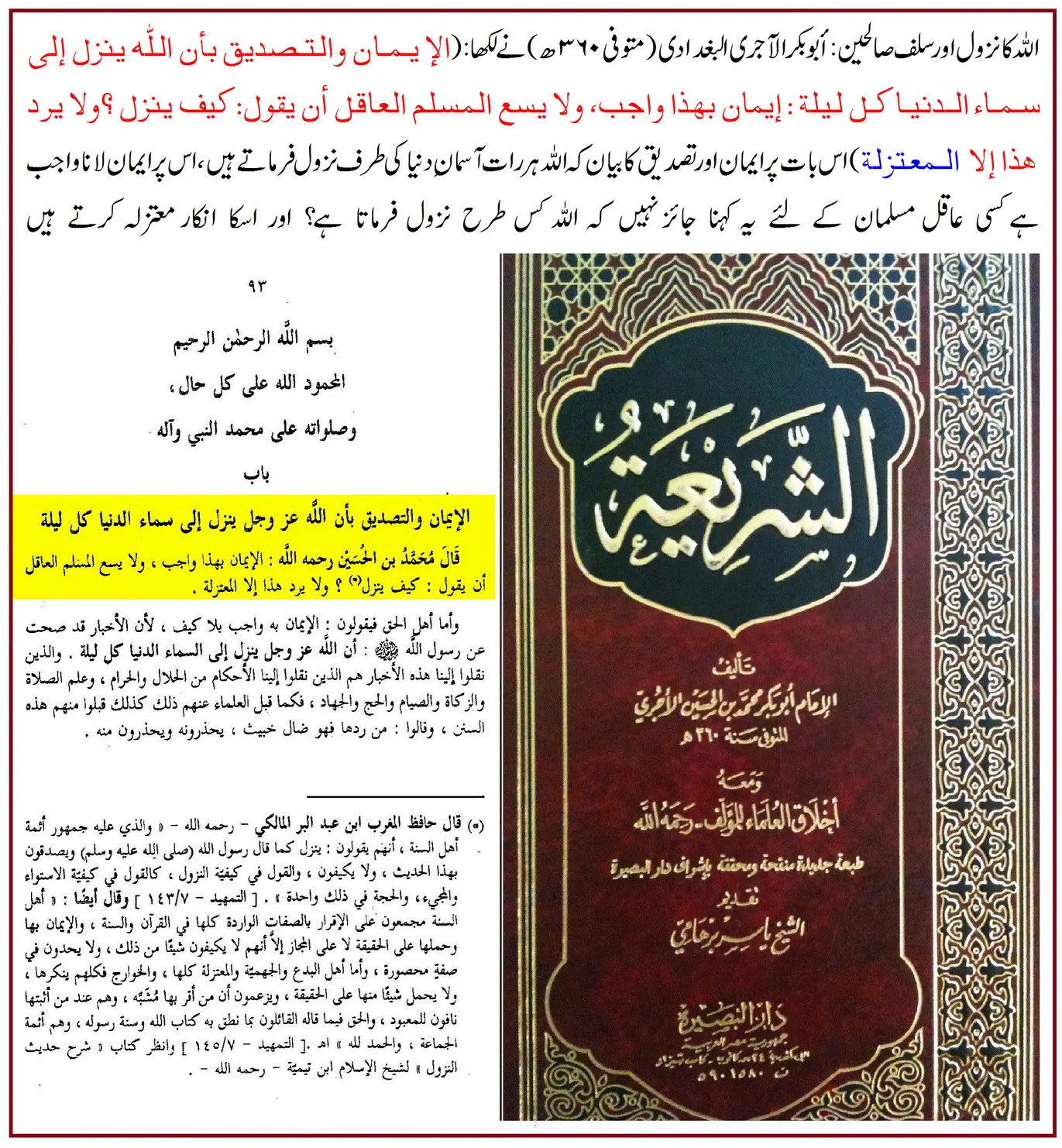
① Imām Abū Bakr al-Ājurri (d. 360 AH)
📜 al-Sharīʿah
النص:
“بَابُ الْإِيمَانِ وَالتَّصْدِيقِ بِأَنَّ اللَّهَ عَزَّ وَجَلَّ يَنْزِلُ إِلَى سَمَاءِ الدُّنْيَا كُلَّ لَيْلَةٍ … وَلا يَرُدُّ هَذَا إِلَّا الْمُعْتَزِلَةُ، وَأَمَّا أَهْلُ الْحَقِّ فَيَقُولُونَ: الْإِيمَانُ بِهِ وَاجِبٌ بِلَا كَيْفٍ.”
📌 Translation:
Al-Ājurrī says: “Belief in and affirmation of the fact that Allah descends every night to the lowest heaven is obligatory. It is not permissible for any Muslim to say how He descends. Only the Muʿtazilah deny this. The people of truth say: belief in it is obligatory, without describing its modality.”
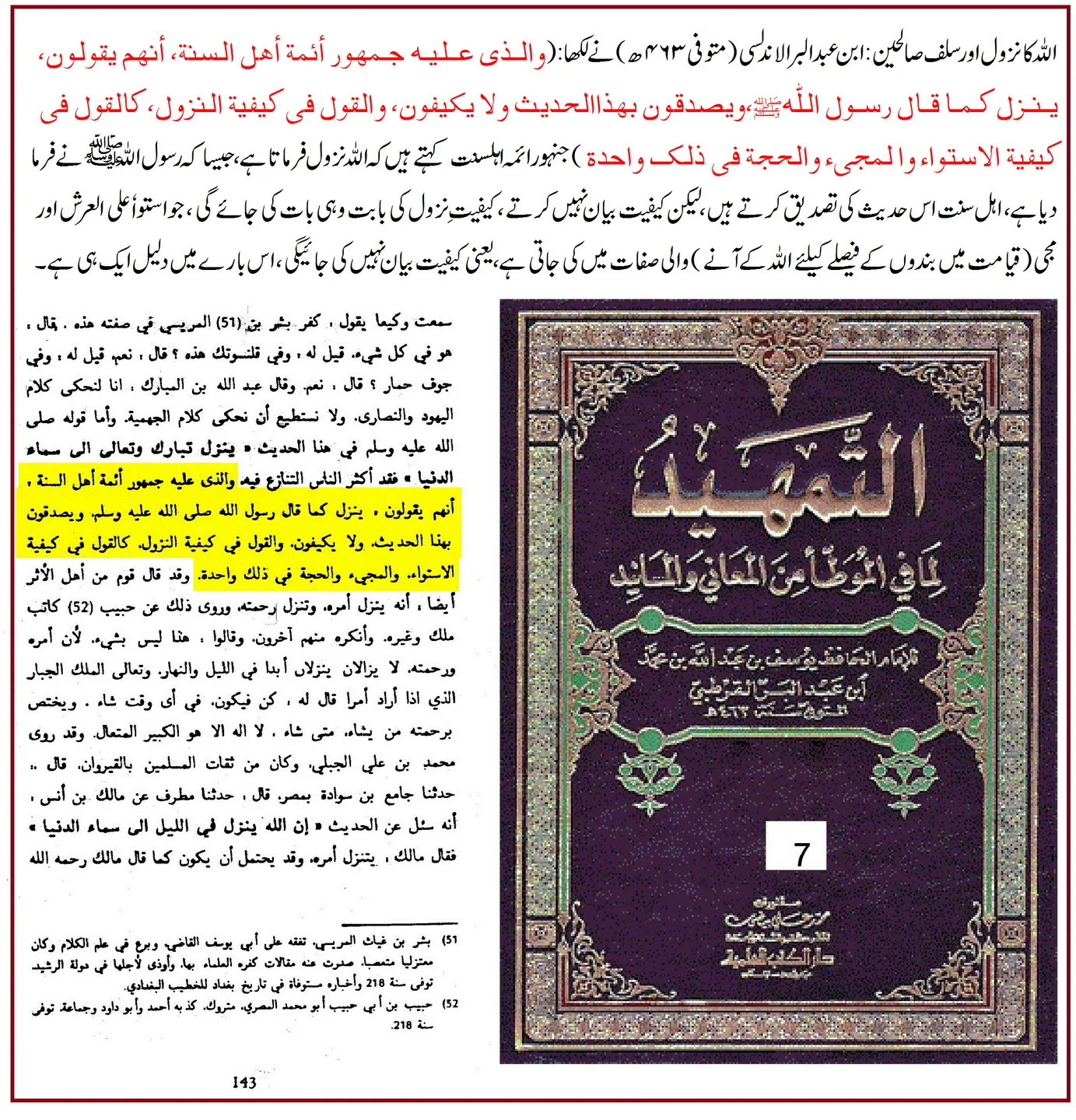
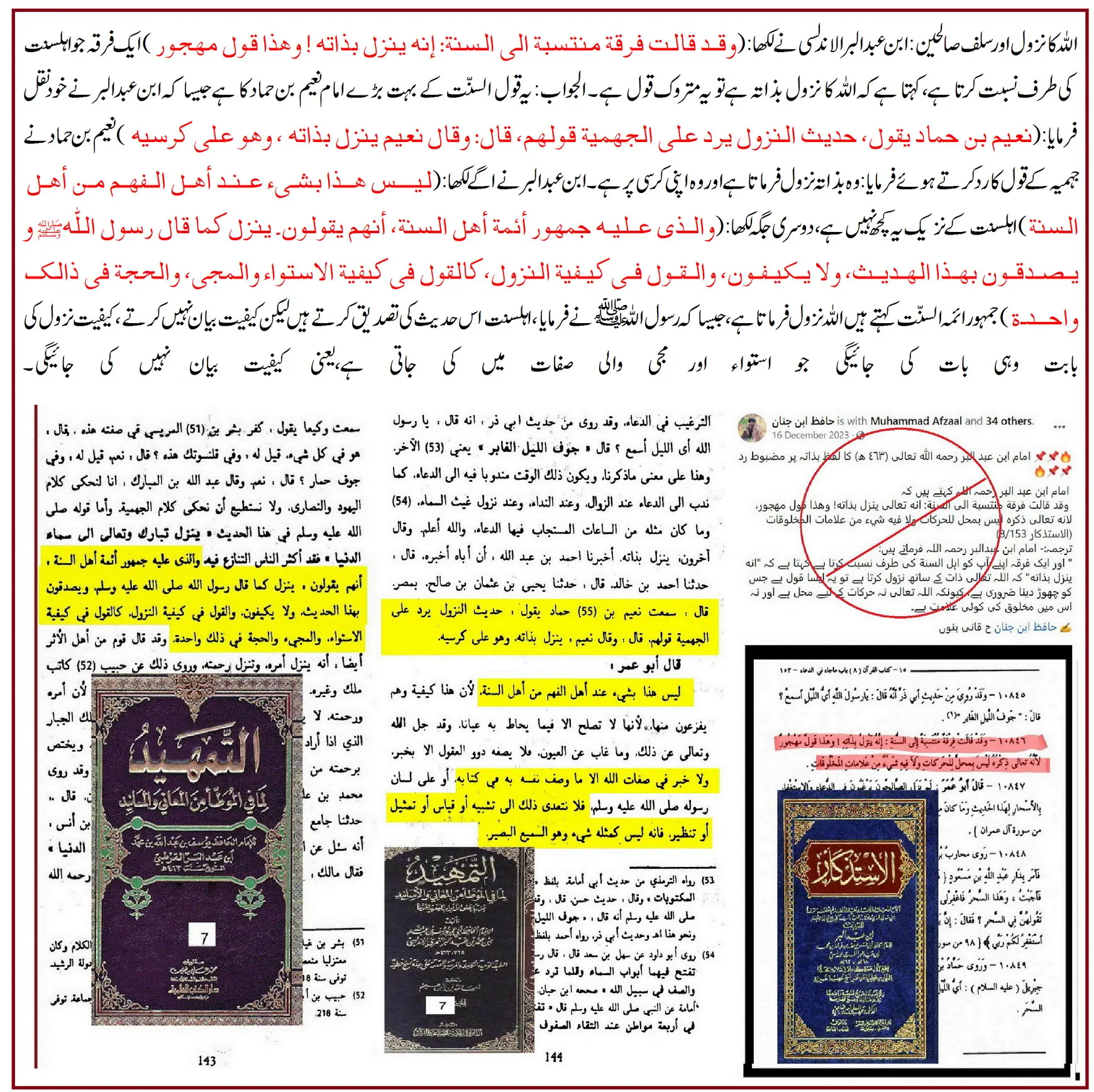
② Imām Ibn ʿAbd al-Barr (d. 463 AH)
📜 al-Tamhīd
النص:
“والذي عليه جمهور أئمة أهل السنة أنهم يقولون: ينزل كما قال رسول الله ﷺ، ويصدقون بهذا الحديث ولا يكيفون. والقول في كيفية النزول كالقول في كيفية الاستواء والمجيء، والحجة في ذلك واحدة.”
📌 Translation:
“The creed of the majority of the Imāms of Ahl al-Sunnah is that Allah descends, as the Messenger of Allah ﷺ said. Ahl al-Sunnah affirm this ḥadīth as true but do not describe its modality. The same principle applies to the modality of the descent as applies to the modality of the istiwāʾ over the Throne and Allah’s coming. The proof in all of these is one and the same.”
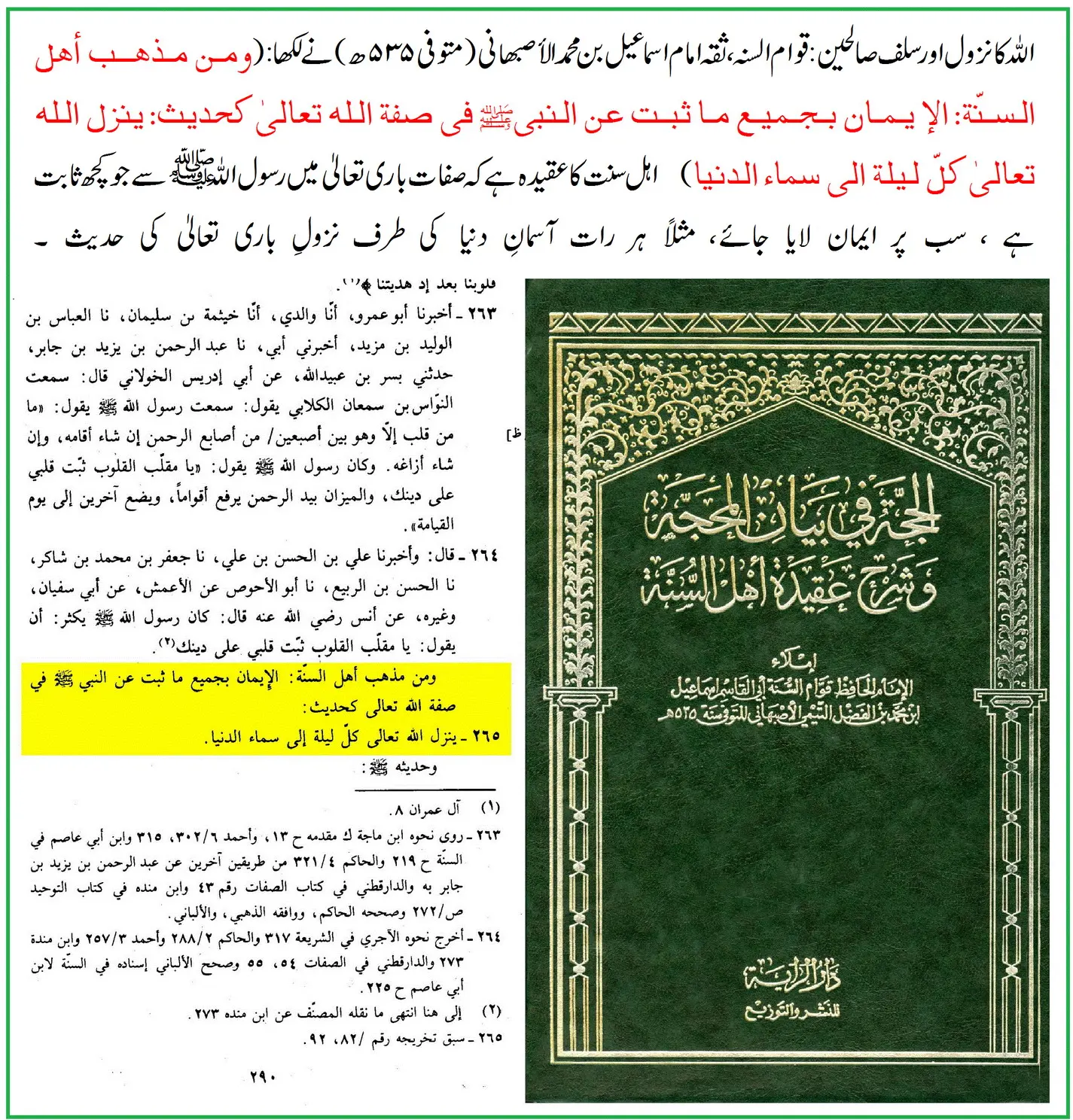
③ Imām Ismāʿīl al-Asbahānī (d. 535 AH)
📜 al-Ḥujjah fī Bayān al-Maḥajjah
النص:
“ومن مذهب أهل السنة: الإيمان بجميع ما ثبت عن النبي ﷺ في صفة الله تعالى، كحديث: “ينزل الله تعالى كل ليلة إلى سماء الدنيا”.”
📌 Translation:
Part of the creed of Ahl al-Sunnah is that it is obligatory to believe in everything that is authentically established from the Prophet ﷺ regarding the attributes of Allah the Exalted, such as the ḥadīth:
“Allah the Exalted descends every night to the lowest heaven.”
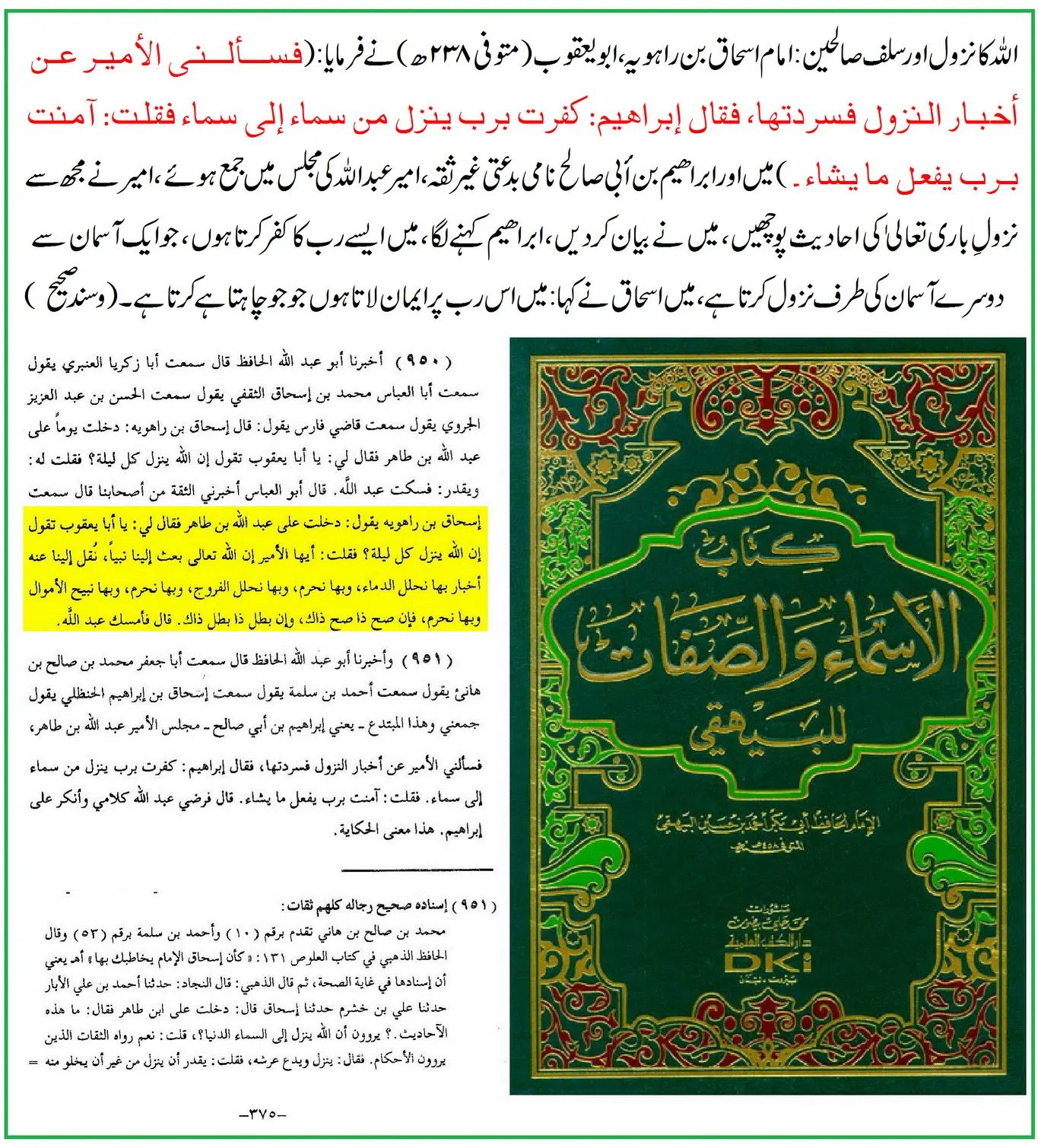
④ Imām Isḥāq ibn Rāhawayh (d. 238 AH)
📜 al-Asmāʾ wa’l-Ṣifāt – al-Bayhaqī
النص:
“… سَمِعْتُ إِسْحَاقَ بْنَ إِبْرَاهِيمَ الْحَنْظَلِيَّ، يَقُولُ: … فَقَالَ إِبْرَاهِيمُ (المبتدع): كَفَرْتُ بِرَبٍّ يَنْزِلُ مِنْ سَمَاءٍ إِلَى سَمَاءٍ. فَقُلْتُ (إسحاق): آمَنْتُ بِرَبٍّ يَفْعَلُ مَا يَشَاءُ.”
📌 Translation:
Imām Isḥāq ibn Rāhawayh said: “I was with an innovator in the gathering of the Amīr. The innovator said: ‘I disbelieve in a Lord who descends from one heaven to another.’ So I replied: ‘I believe in a Lord who does whatever He wills.’”
⑤ Imām Ibn Khuzaymah (d. 311 AH)
📜 Kitāb al-Tawḥīd
النص:
“باب ذكر أخبار ثابتة السند صحيحة … في نزول الرب جل وعلا إلى السماء الدنيا كل ليلة، … فنحن قائلون مصدقون بما في هذه الأخبار من ذكر النزول غير متكلفين القول بصفته أو بكيفيته، إذ النبي ﷺ لم يصف لنا كيفية النزول.”
📌 Translation:
“We believe in all the authentic and established narrations about Allah’s descent, affirm them as true and accept them, but we do not describe the modality of the descent, because the Prophet ﷺ did not describe any modality of the descent.”
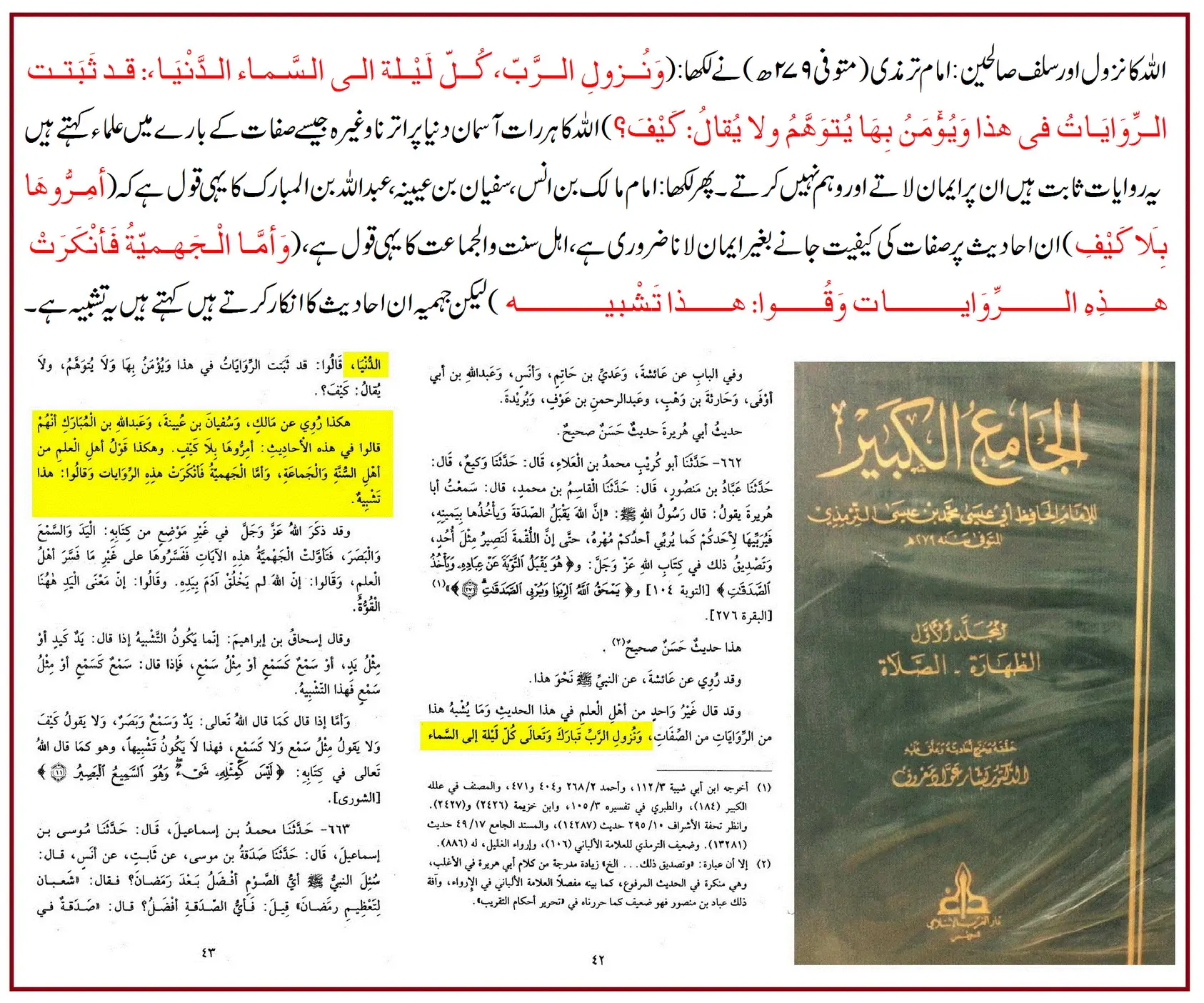
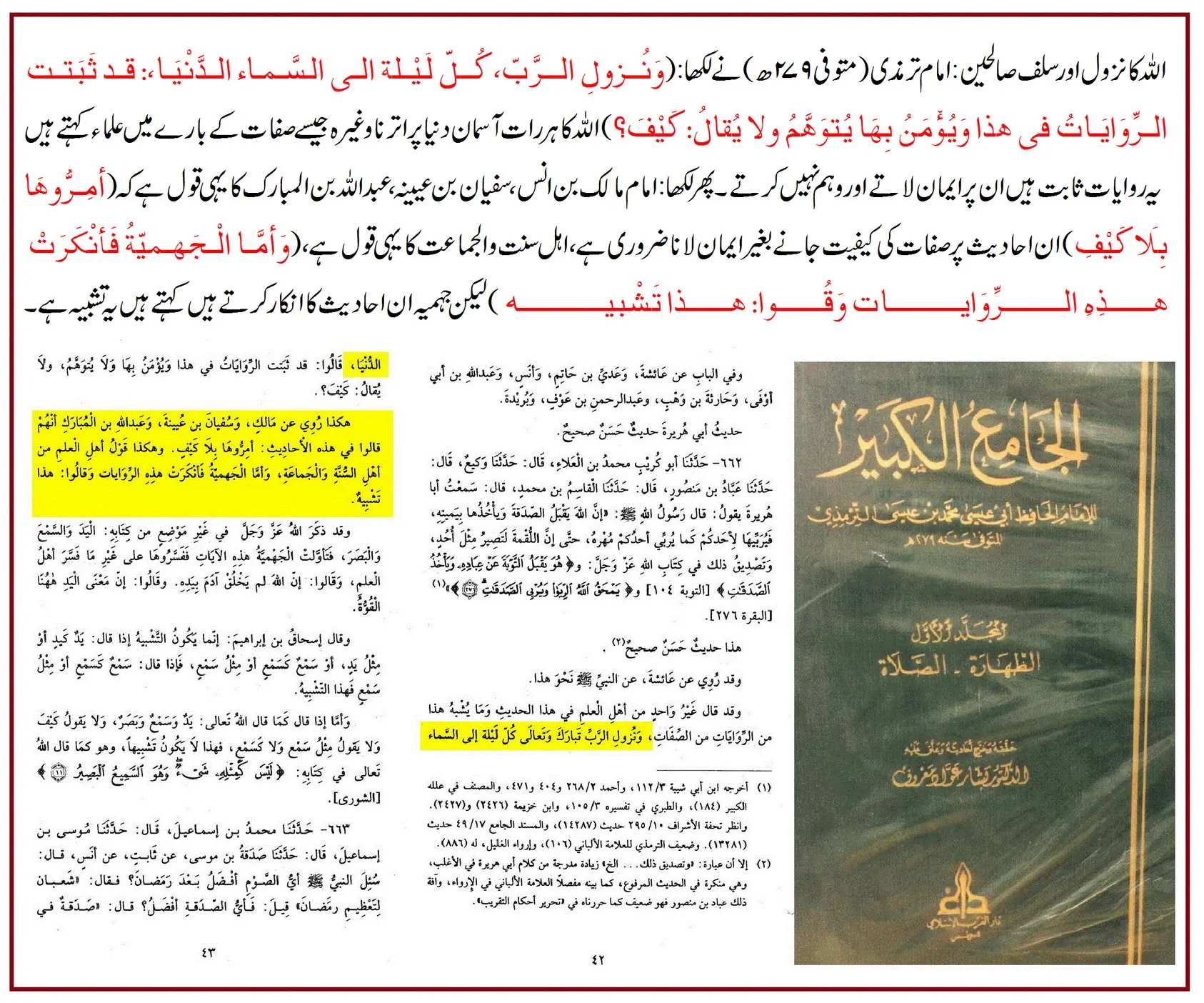
⑥ Imām al-Tirmidhī (d. 279 AH)
📜 Sunan al-Tirmidhī
النص:
“… وقد قال غير واحد من أهل العلم في هذا الحديث وما يشبهه من الروايات من الصفات: ونزول الرب تبارك وتعالى كل ليلة إلى السماء الدنيا. قالوا: قد تثبت الروايات في هذا ويؤمن بها ولا يقال: كيف. هكذا روي عن مالك، وسفيان بن عيينة، وعبد الله بن المبارك أنهم قالوا في هذه الأحاديث: أمِرّوها بلا كيف.”
📌 Translation:
Imām al-Tirmidhī says: “Many of the people of knowledge have said regarding this ḥadīth and other similar narrations about the attributes of Allah that these narrations are established and it is necessary to believe in them, but their modality is not to be described. This is also the view of Imām Mālik, Sufyān ibn ʿUyaynah and ʿAbdullāh ibn al-Mubārak: that these aḥādīth are to be accepted without describing modality.”
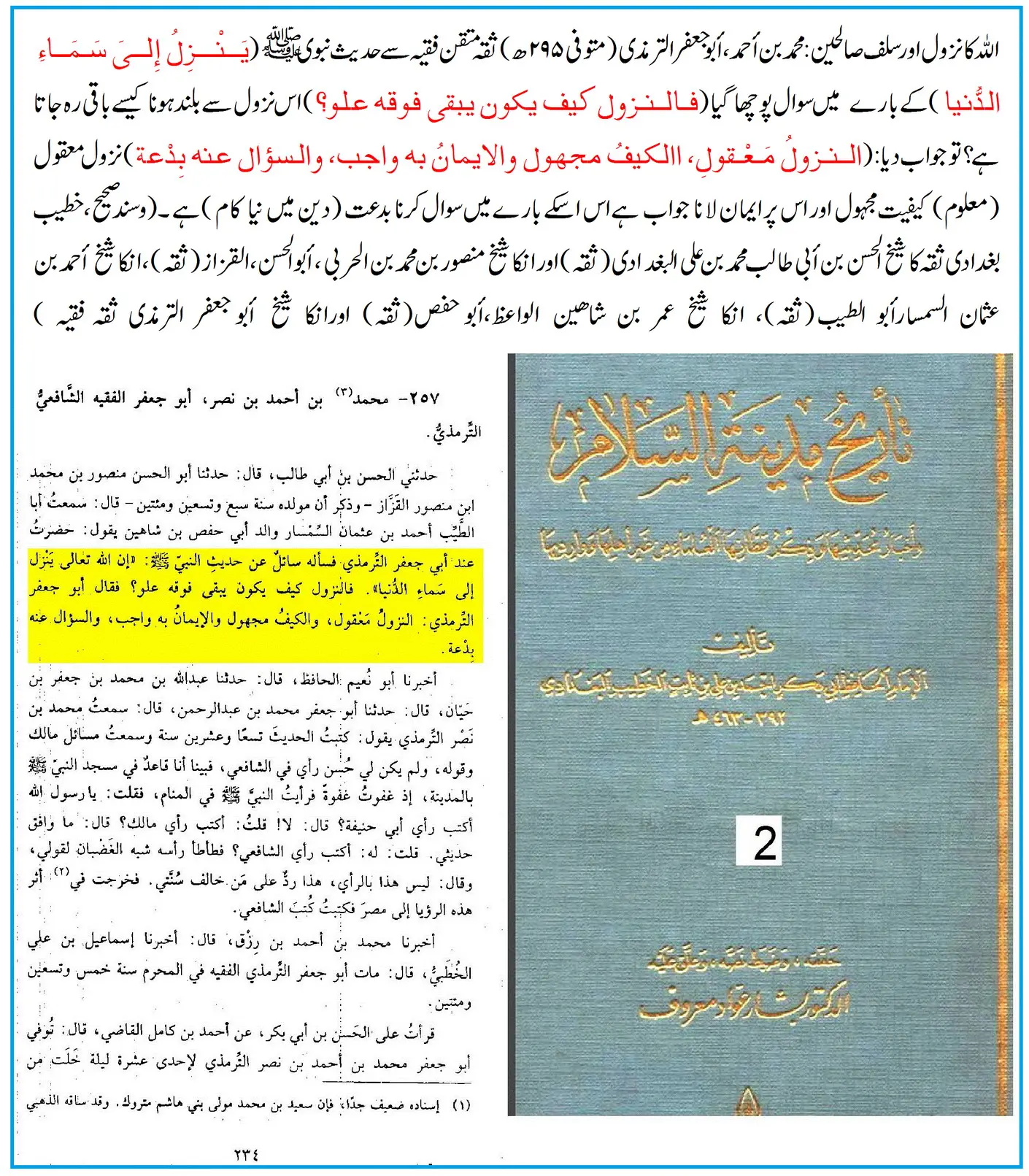
⑦ Imām Abū Jaʿfar al-Tirmidhī (d. 295 AH)
📜 Tārīkh Baghdād
النص:
“… سُئِلَ أَبُو جَعْفَرٍ التِّرْمِذِيُّ عَنْ حَدِيثِ النُّزُولِ فَقَالَ: النُّزُولُ مَعْقُولٌ، وَالْكَيْفُ مَجْهُولٌ، وَالْإِيمَانُ بِهِ وَاجِبٌ، وَالسُّؤَالُ عَنْهُ بِدْعَةٌ.”
📌 Translation:
Imām Abū Jaʿfar al-Tirmidhī was asked about the ḥadīth of descent — how does the descent take place? He said: “Descent is known, its modality is unknown, belief in it is obligatory, and asking about it is an innovation.”
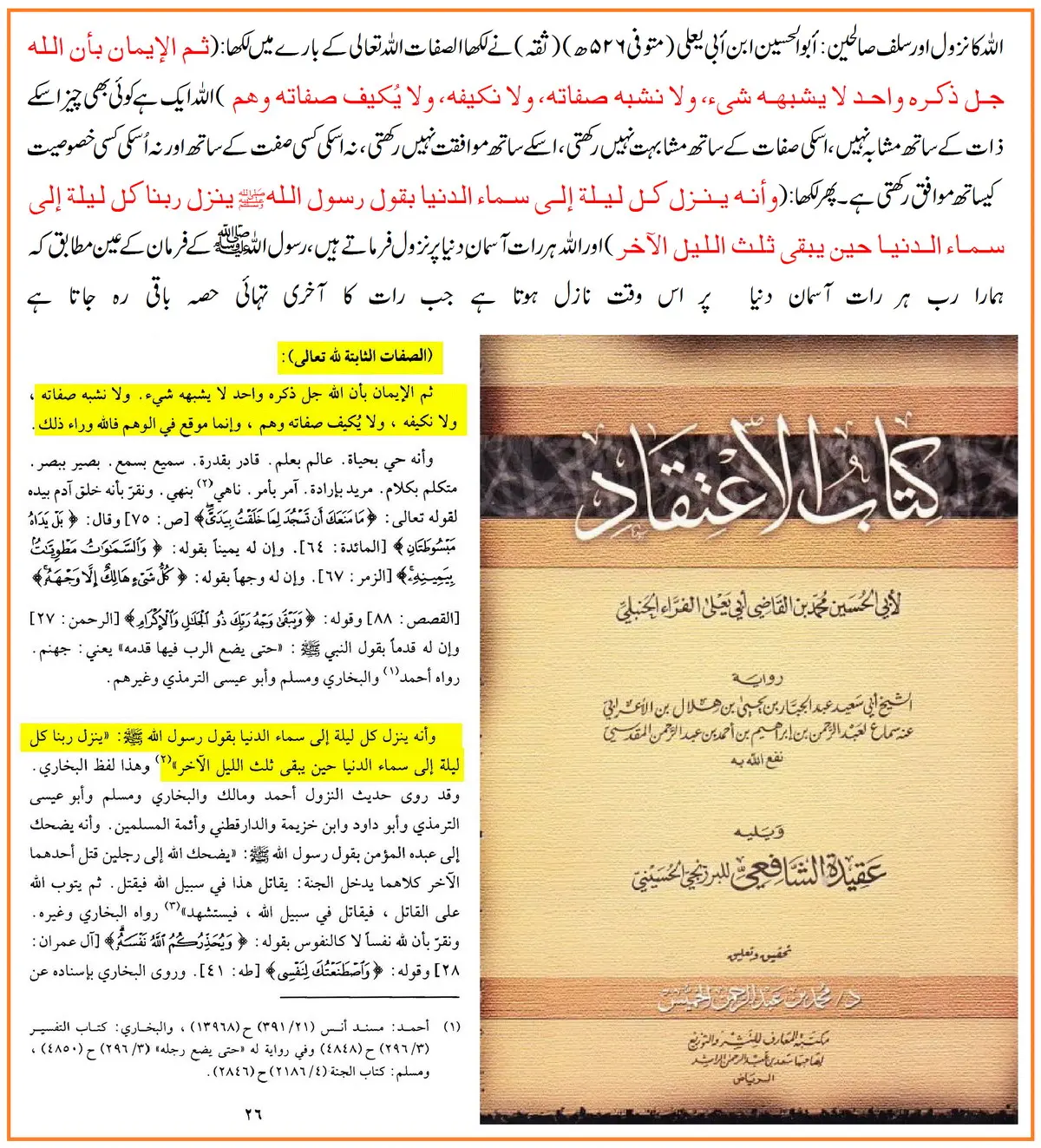
⑧ Imām Ibn Abī Yaʿlā (d. 526 AH)
📜 al-Iʿtiqād
النص:
“… وأنه ينزل كل ليلة إلى سماء الدنيا بقول رسول الله ﷺ: “ينزل ربنا كل ليلة إلى سماء الدنيا حين يبقى ثلث الليل الآخر”.”
📌 Translation:
Ibn Abī Yaʿlā writes: “Allah the Exalted descends every night to the lowest heaven, as the Messenger of Allah ﷺ said: ‘Our Lord descends every night to the lowest heaven when the last third of the night remains.’”
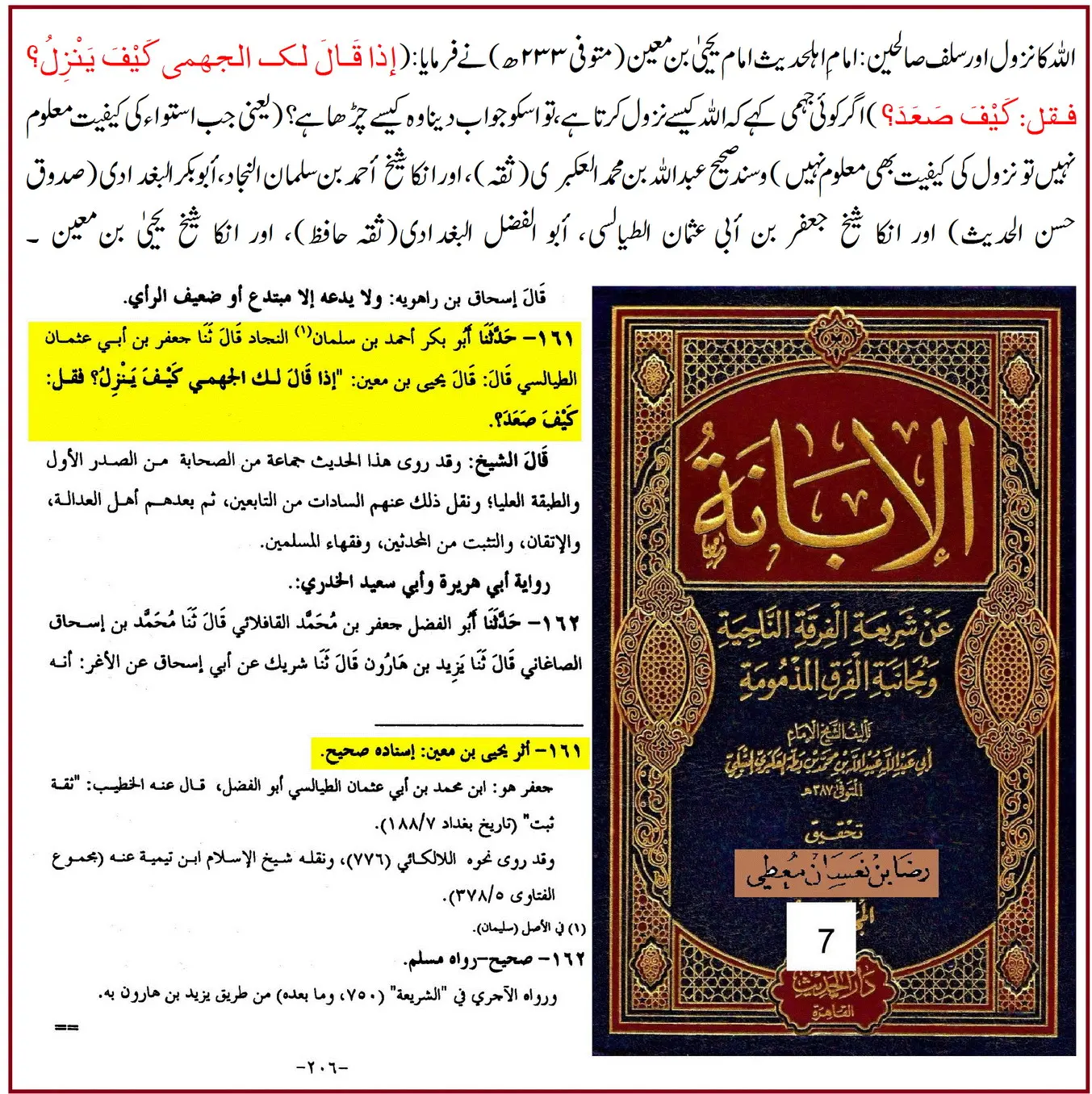
⑨ Imām Yaḥyā ibn Maʿīn (d. 233 AH)
📜 al-Ibānah al-Kubrā – Ibn Baṭṭah
النص:
“إذا قال لك الجهمي: كيف ينزل؟ فقل: كيف صعد؟”
📌 Translation:
If a Jahmī asks you, “How does Allah descend?” ask him, “How did He ascend?”
(Just as we do not know how Allah rose over the Throne, we don’t know how He descends.)
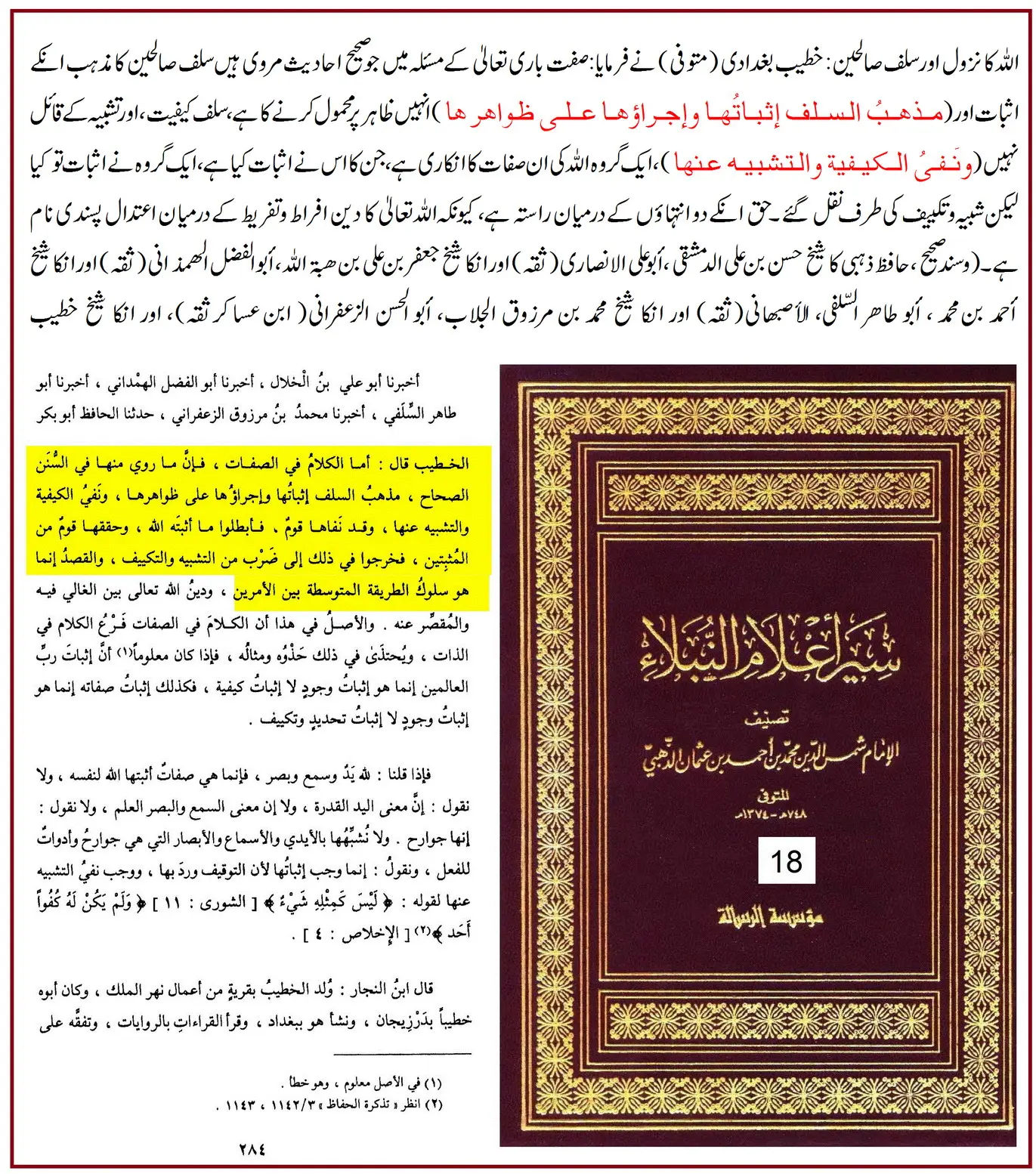
⑩ al-Khaṭīb al-Baghdādī (d. 463 AH)
📜 Siyar Aʿlām al-Nubalāʾ
النص:
“أما الكلام في الصفات فإن ما روي منها في السنن الصحاح مذهب السلف إثباتها، وإجراؤها على ظاهرها، ونفي الكيفية والتشبيه عنها.”
📌 Translation:
Al-Khaṭīb al-Baghdādī says: “As for what has come regarding the attributes in the authentic aḥādīth, the way of the Salaf is that they are affirmed, kept upon their apparent meaning, and modality and likening (tashbīh) are negated from them.”
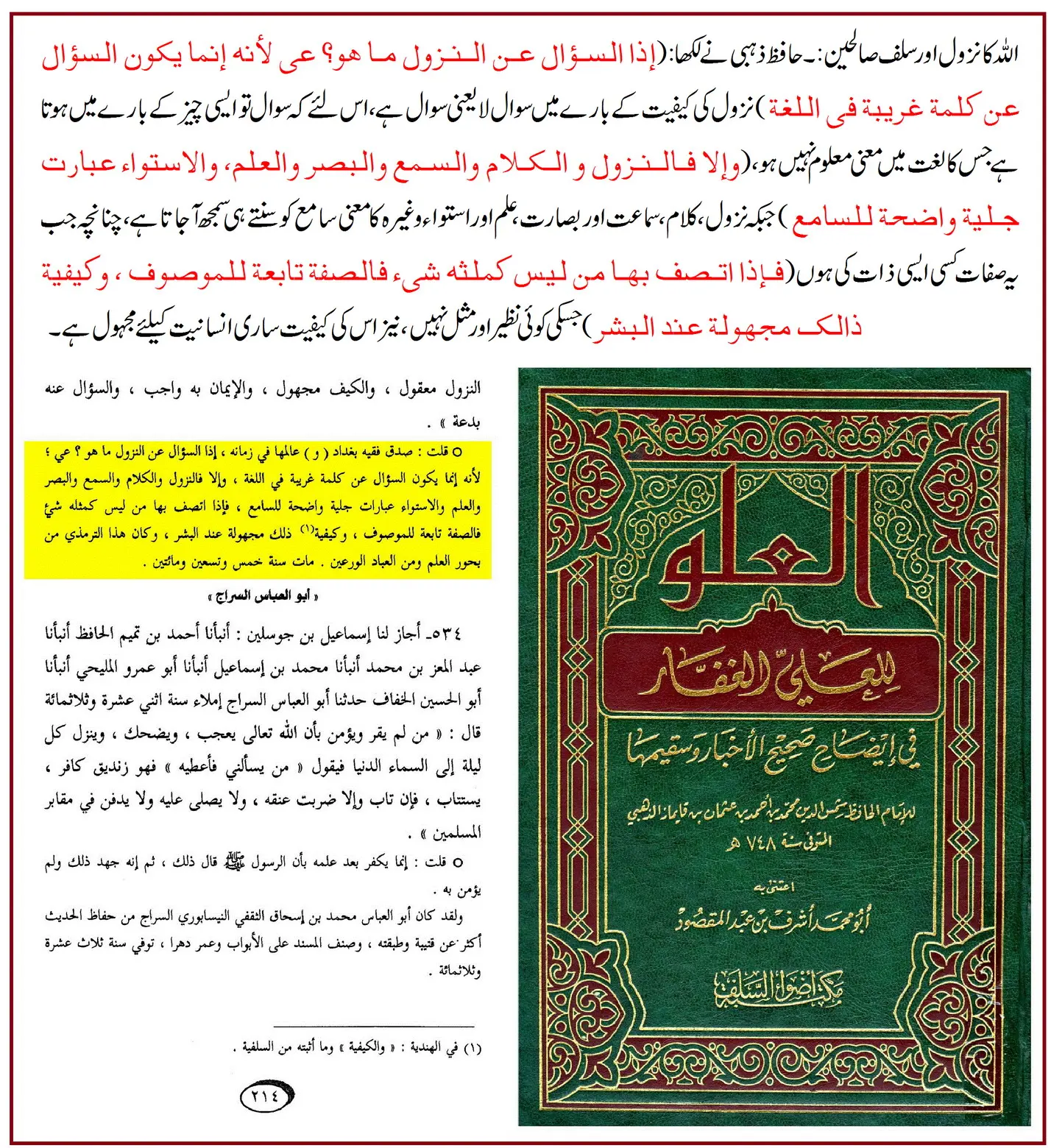
⑪ Ḥāfiẓ al-Dhahabī (d. 748 AH)
📜 al-ʿUlū lil-ʿAliyy al-Ghaffār
النص:
“… فالنزول والكلام والسمع والبصر والعلم والاستواء عبارات جلية واضحة للسامع، فإذا اتصف بها من ليس كمثله شيء فالصفة تابعة للموصوف، وكيفية ذلك مجهولة عند البشر.”
📌 Translation:
Ḥāfiẓ al-Dhahabī says: “Descent, speech, hearing, seeing, knowledge and istiwāʾ — all these words are clear and understood by everyone. But when these attributes are established for the One who has no likeness, the attribute is affirmed, while its modality is unknown to human beings.”
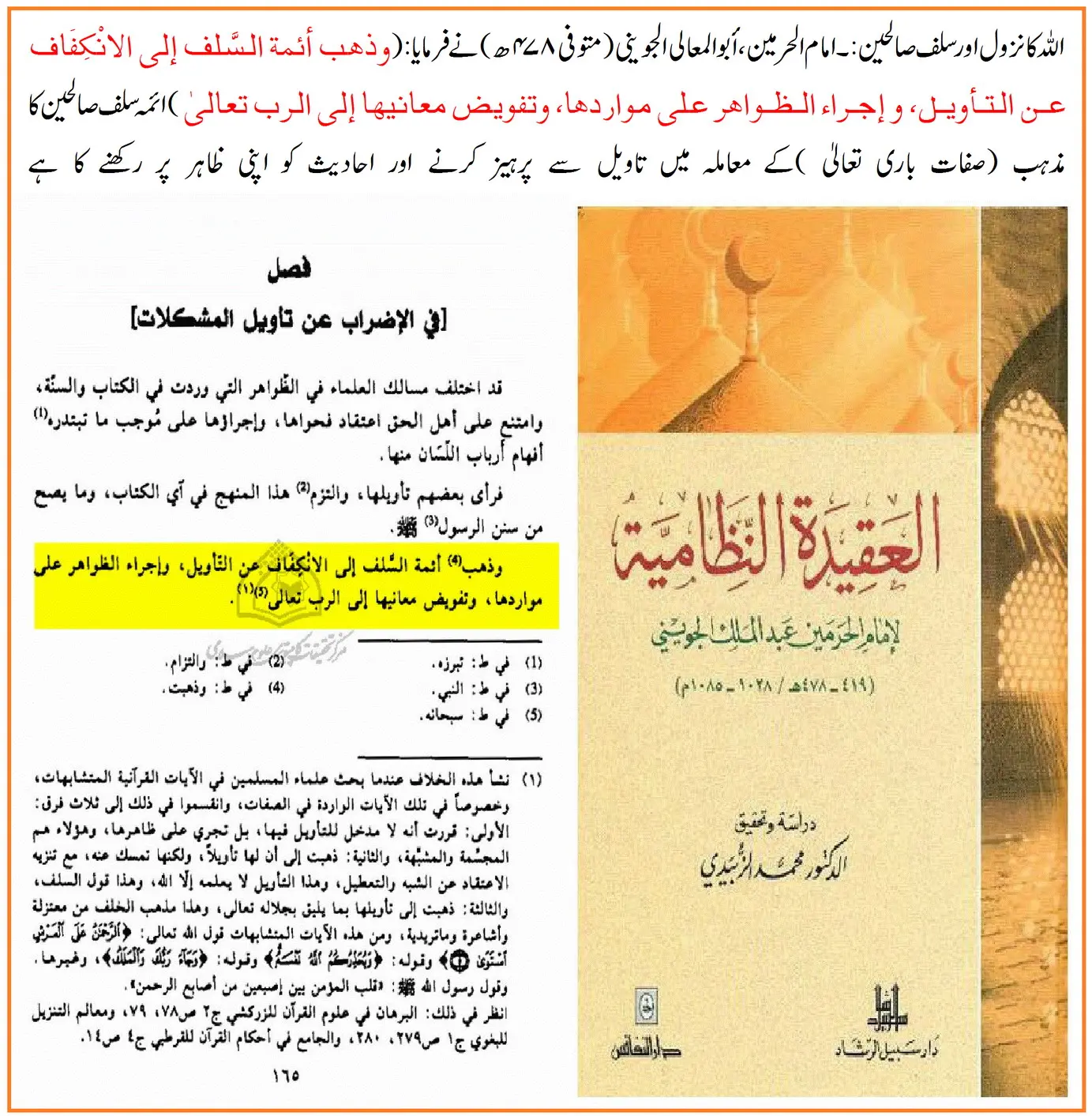
⑫ Imām al-Ḥaramayn al-Juwaynī (d. 478 AH)
📜 al-Asmāʾ wa’l-Ṣifāt – al-Bayhaqī
النص:
“حديث النزول قد ثبت عن رسول الله ﷺ من وجوه صحيحة، وورد في التنزيل ما يصدقه وهو قوله تعالى: {وجاء ربك والملك صفا صفا}. والمجيء والنزول صفتان من صفات الله تعالى بلا تشبيه.”
📌 Translation:
The ḥadīth of descent is authentic, and the Qurʾān affirms it:
{وَجَاءَ رَبُّكَ وَالْمَلَكُ صَفًّا صَفًّا}
Allah’s coming and descent are among His attributes – without likening Him to creation.
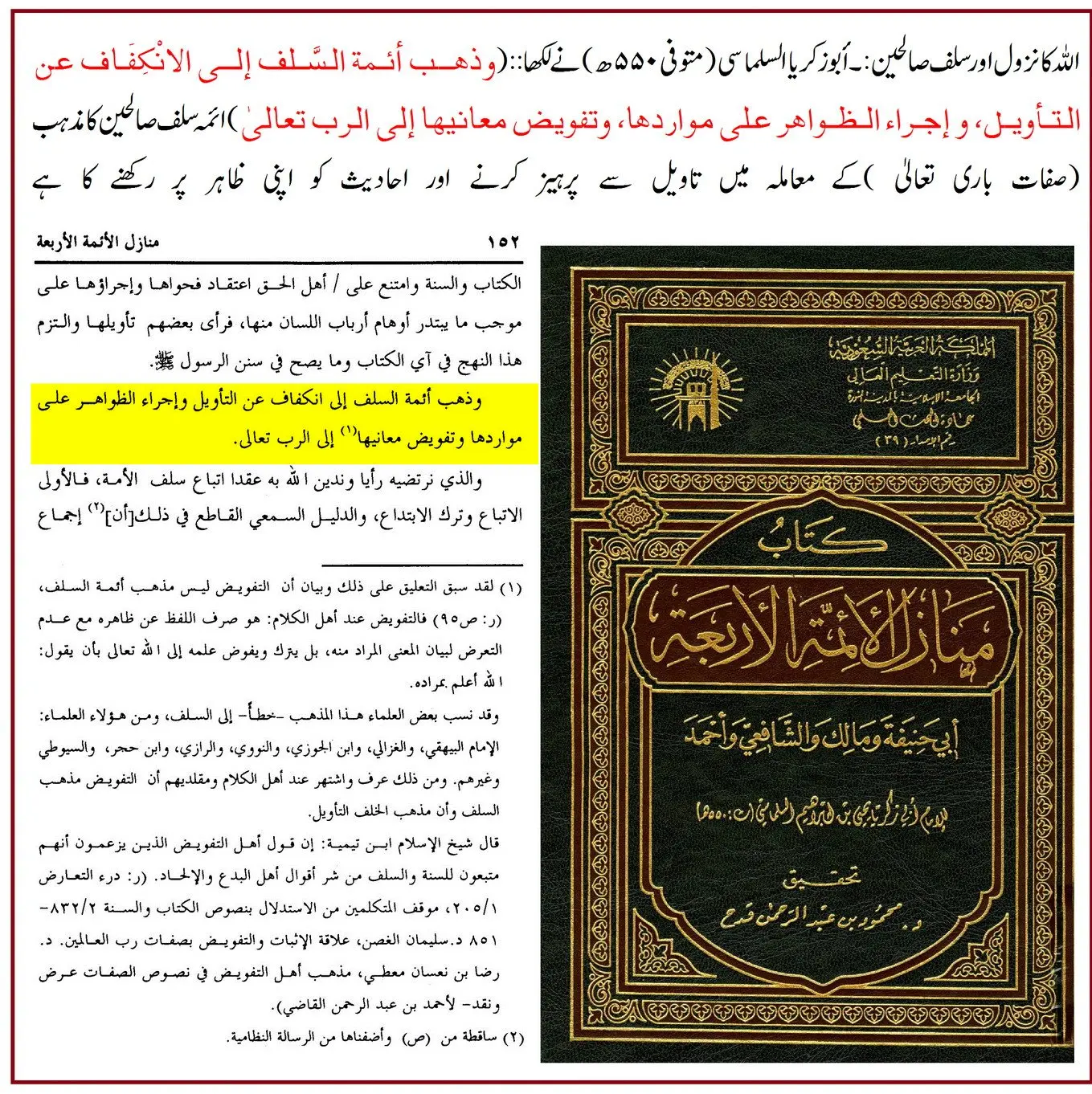
⑬ Abū Zakariyyā al-Salamsī (d. 550 AH)
📜 Manāzil al-Aʾimmah al-Arbaʿah
النص:
“وذهب أئمة السلف إلى الانكفاف عن التأويل وإجراء الظواهر على مواردها، وتفويض معانيها إلى الرب تعالى.”
📌 Translation:
The Imāms of the Salaf would avoid interpretation, keep the texts on their apparent meaning, and delegate their reality to Allah.
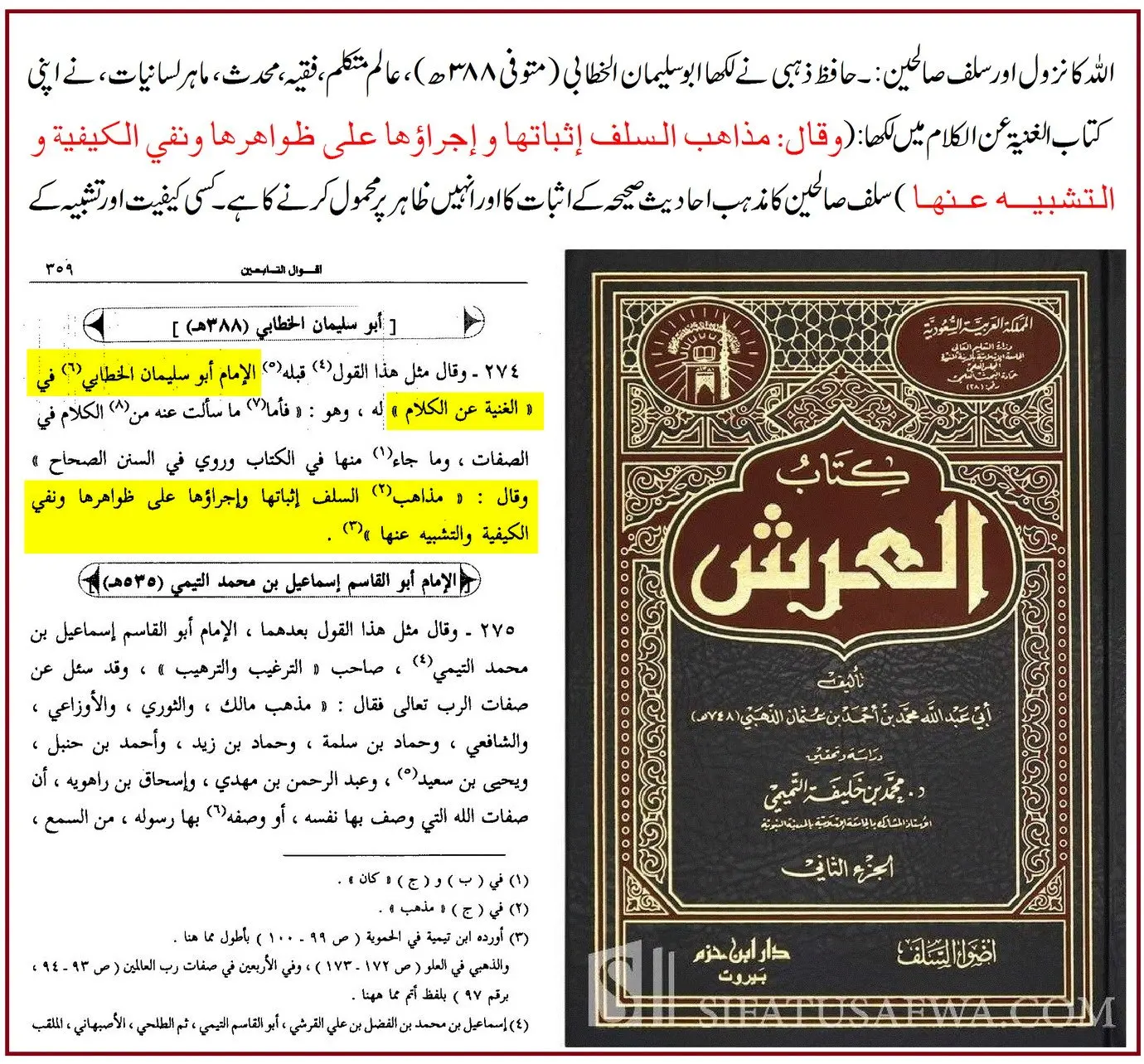
⑭ Abū Sulaymān al-Khaṭṭābī (d. 388 AH)
📜 al-ʿArsh – al-Dhahabī
النص:
“مذاهب السلف إثباتها وإجراؤها على ظواهرها، ونفي الكيفية والتشبيه عنها.”
📌 Translation:
The way of the Salaf is to affirm the attributes, take them on their apparent meaning, and deny any modality or comparison to creation.
✿ Refutation of the False Interpretation of the Jahmiyyah and Muʿtazilah
① Imām Abū Bakr al-Ājurrī (d. 360 AH)
📜 al-Sharīʿah
النص:
“… ولا يرد هذا إلا المعتزلة، وأما أهل الحق فيقولون: الإيمان به واجب بلا كيف.”
📌 Translation:
This is only denied by the Muʿtazilah. The people of truth affirm it as obligatory, without asking how.
② Imām al-Tirmidhī (d. 279 AH)
📜 Sunan al-Tirmidhī
النص:
“… وهكذا قول أهل العلم من أهل السنة والجماعة، وأما الجهمية فأنكرت هذه الروايات وقالوا: هذا تشبيه.”
📌 Translation:
“Ahl al-Sunnah wa’l-Jamāʿah say that these narrations are established and belief in them is obligatory, whereas the Jahmiyyah denied them and said: this is tashbīh (likening Allah to creation).”
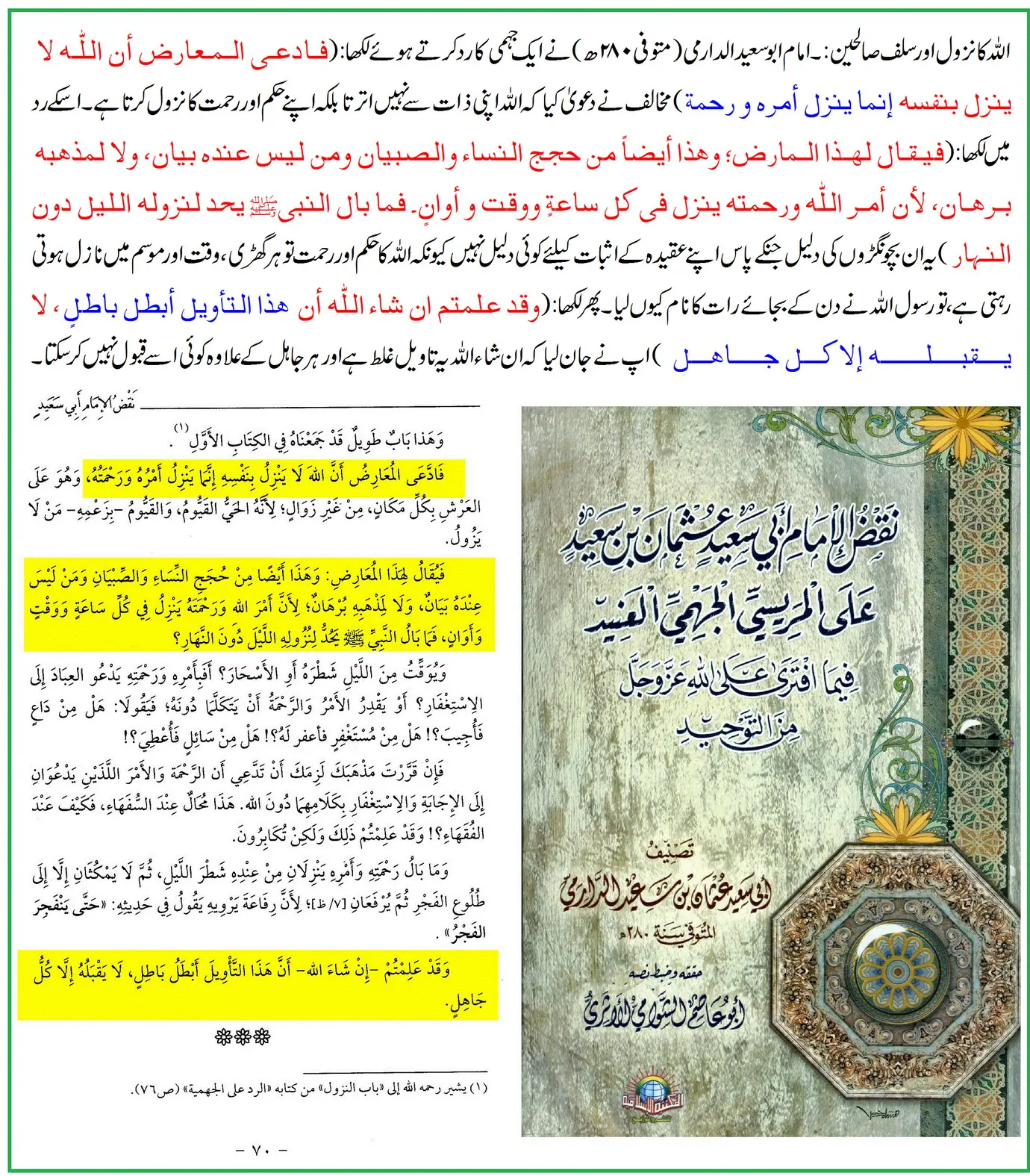
③ Imām Abū Saʿīd al-Dārimī (d. 280 AH)
📜 Naqḍ ʿUthmān ibn Saʿīd ʿalā al-Marrīsī al-Jahmī
النص:
“… فادعى المعارض أن الله لا ينزل بنفسه، إنما ينزل أمره ورحمته… فقيل لهذا المعارض: هذا أيضًا من حجج النساء والصبيان… لأن أمر الله ورحمته ينزل في كل ساعة… فما بال النبي ﷺ يحد لنزوله الليل دون النهار؟”
📌 Translation:
Imām al-Dārimī, refuting the Jahmī, said: “The opponent claimed that Allah does not descend Himself; rather, His command and mercy descend. So we say: Allah’s command and mercy descend at all times, so why did the Prophet ﷺ specify the descent with the last part of the night in particular? This interpretation is among the most false of interpretations.”
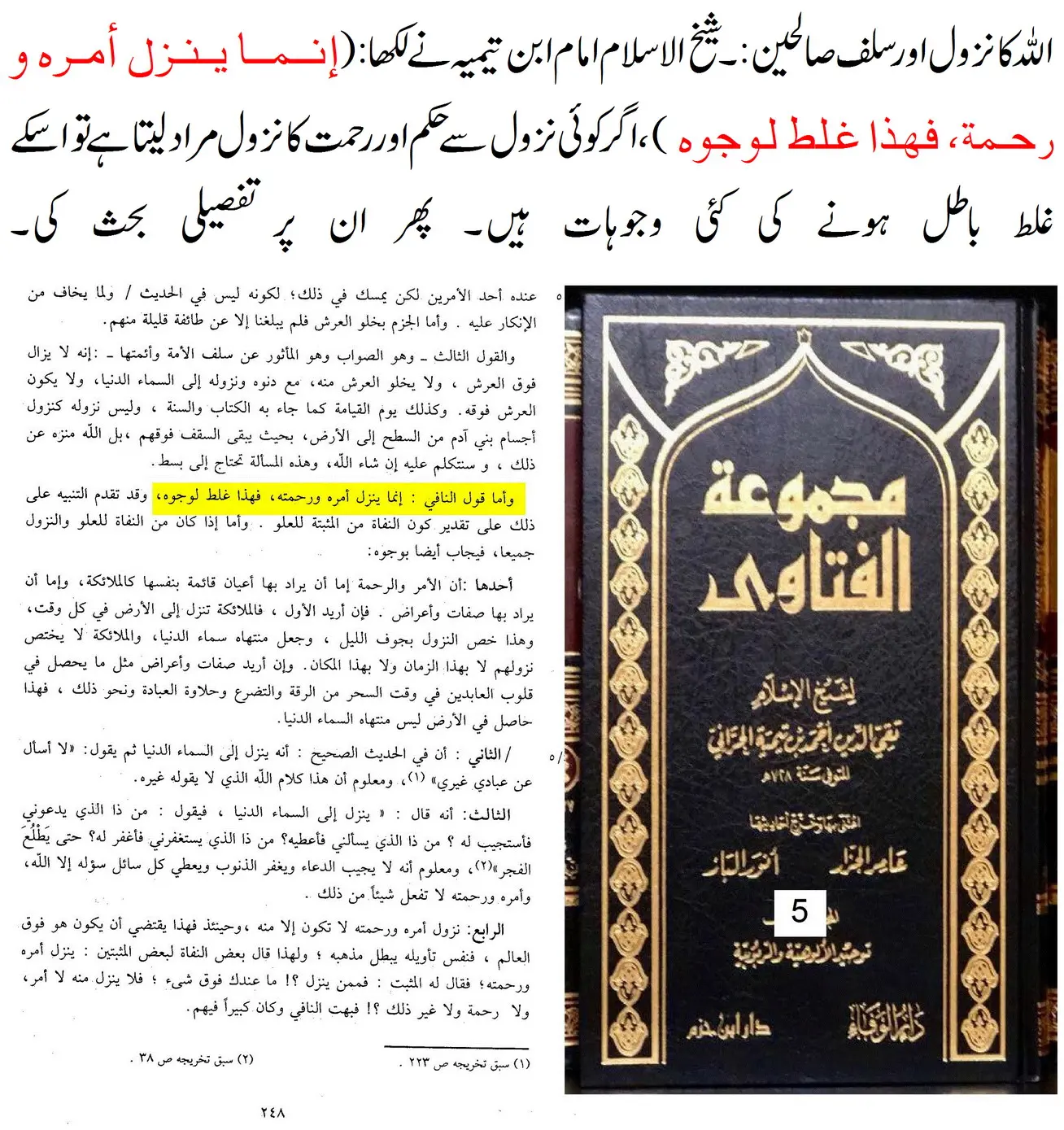
④ Shaykh al-Islām Ibn Taymiyyah (d. 728 AH)
📜 Majmūʿ al-Fatāwā
النص:
“… وأما قول النافي: إنما ينزل أمره ورحمته، فهذا غلط…”
📌 Translation:
The idea that it is only Allah’s command or mercy that descends is incorrect.
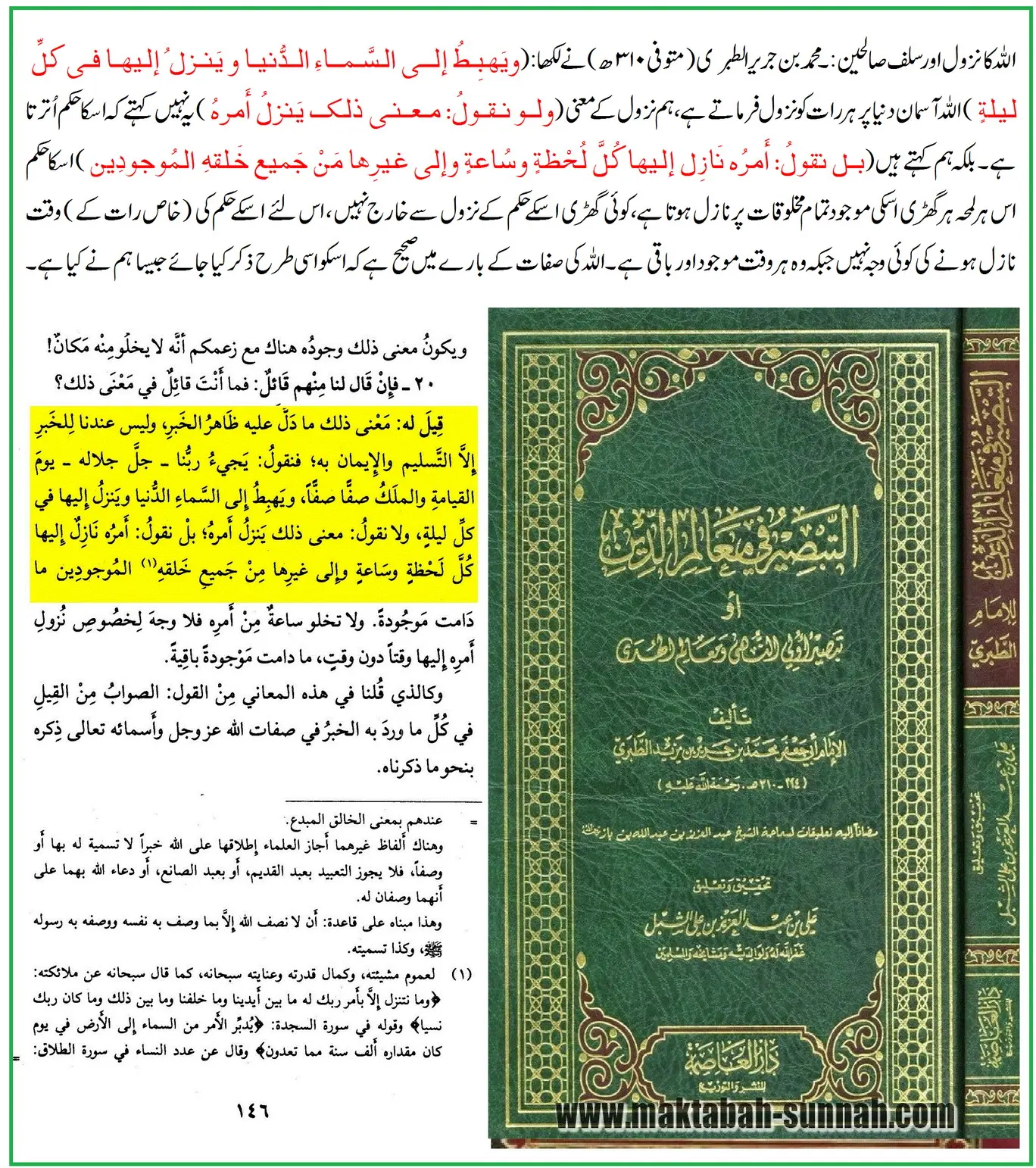
⑤ Imām al-Ṭabarī (d. 310 AH)
📜 al-Tabsīr fī Maʿālim al-Dīn
النص:
“… ولا نقول: معنى ذلك ينزل أمره، بل نقول: أمره نازل إليها كل لحظة… فلا وجه لخصوص نزول أمره إليها وقتًا دون وقت.”
📌 Translation:
We do not interpret descent as the descent of Allah’s command. His command descends at all times, so specifying a time makes no sense if that were the case.
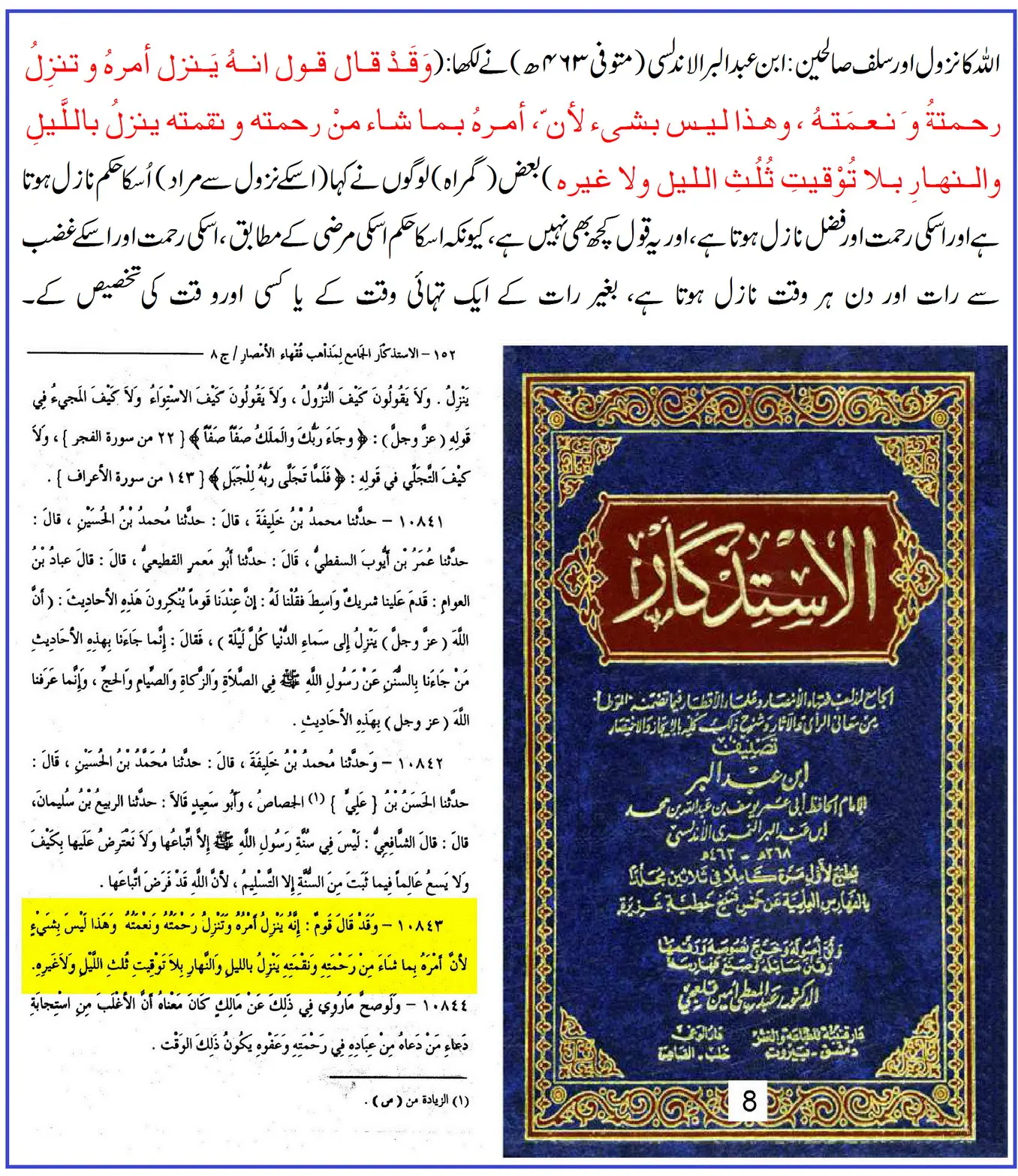
⑥ Imām Ibn ʿAbd al-Barr (d. 463 AH)
📜 al-Istidhkār
النص:
“وقد قال قوم: إنه ينزل أمره وتنزل رحمته ونعمتُه، وهذا ليس بشيء، لأن أمره بما شاء من رحمته ونقمته ينزل بالليل والنهار بلا توقيت ثلث الليل ولا غيره.”
📌 Translation:
The claim that it refers to Allah’s command or mercy is baseless, because His command descends day and night, not only during the last third of the night.
➡️ Although Ibn ʿAbd al-Barr in some places called “descent in His Essence” (nuzūl bi-dhātihi) abandoned, he also made clear that the methodology of the majority of Ahl al-Sunnah is what is established from the apparent wording of the ḥadīth: descent without modality.
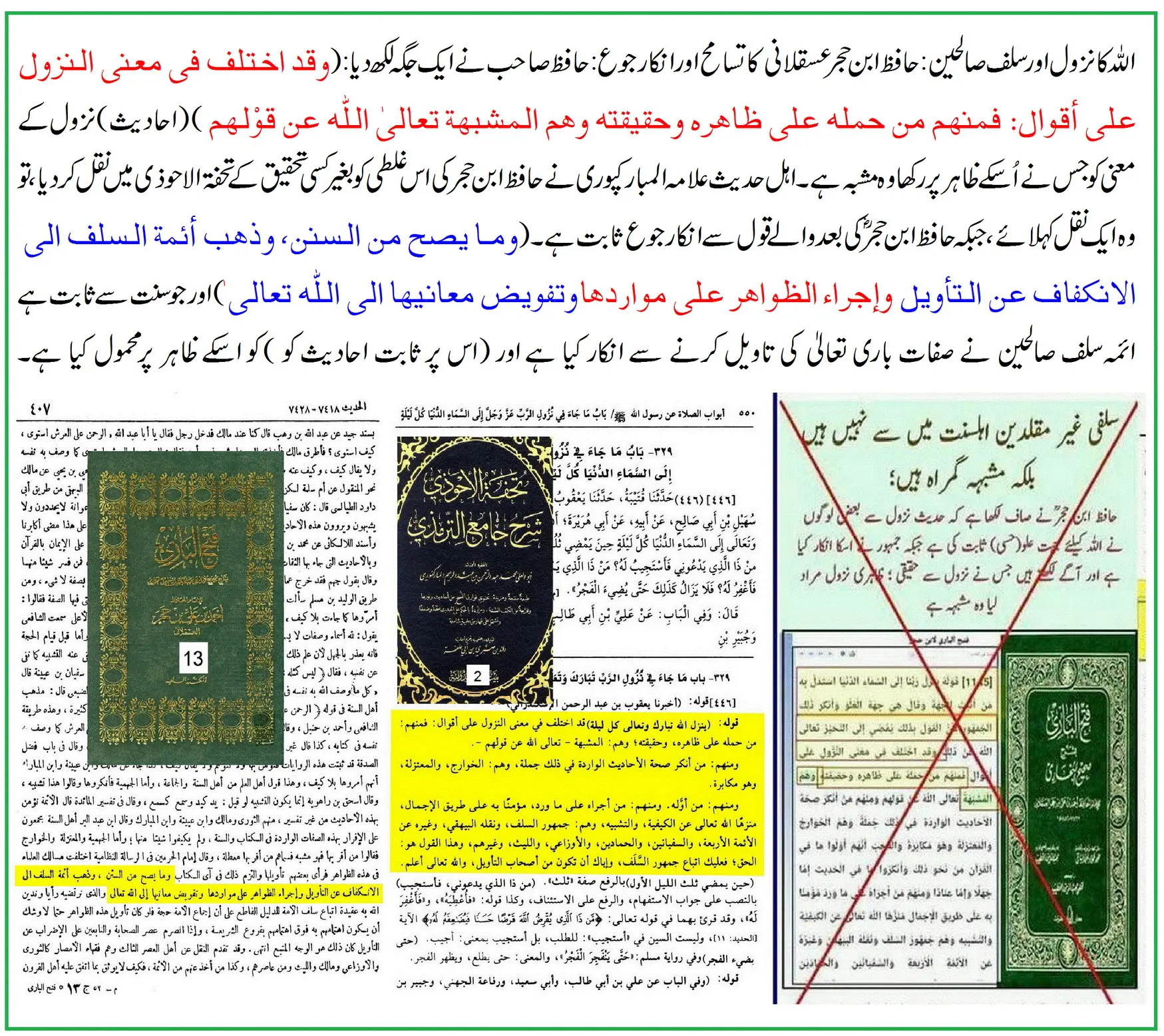
⑦ Ḥāfiẓ Ibn Ḥajar al-ʿAsqalānī (d. 852 AH)
النص (first statement):
“وقد اختلف في معنى النزول على أقوال، فمنهم من حمله على ظاهره وهم المشبهة.”
(Fatḥ al-Bārī 3/…)
📌 Translation:
“There is disagreement about the meaning of descent. Some took it upon its apparent meaning, and they are the Mushabbihah (anthropomorphists).”
➡️ This was Ḥāfiẓ Ibn Ḥajar’s initial statement, which was based on a scholarly oversight (tasāmuḥ).
النص (retraction):
“وما يصح من السنن، وذهب أئمة السلف إلى الانكفاف عن التأويل، وإجراء الظواهر على مواردها، وتفويض معانيها إلى الله تعالى.”
(Fatḥ al-Bārī 11/…)
📌 Translation:
“As for the authentic aḥādīth, the Imāms of the Salaf preferred to refrain from interpreting them, kept their apparent meaning, and entrusted their meanings to Allah.”
➡️ This shows that Ḥāfiẓ Ibn Ḥajar retracted his earlier statement made out of oversight and returned to the methodology of the Salaf.
✿ Core Creed of the Salaf on Divine Attributes
🔴 01 – al-Khaṭīb al-Baghdādī (d. 463 AH)
📜 Siyar Aʿlām al-Nubalāʾ, authentic chain
“أَمَّا الكَلاَمُ فِي الصِّفَات فَإِنَّ مَا رُوِيَ مِنْهَا فِي السُّنَنِ الصِّحَاح مَذْهَبُ السَّلَفِ إِثْبَاتُهَا، وَإِجْرَاؤُهَا عَلَى ظَوَاهِرِهَا، وَنَفْيُ الكَيْفِيَّةِ وَالتَّشْبِيهِ عَنْهَا.”
📌 Translation:
Regarding what has come about the attributes of Allah in the authentic aḥādīth, the way of the Salaf is that they are affirmed, kept upon their apparent meaning, and modality and likening are negated from them.
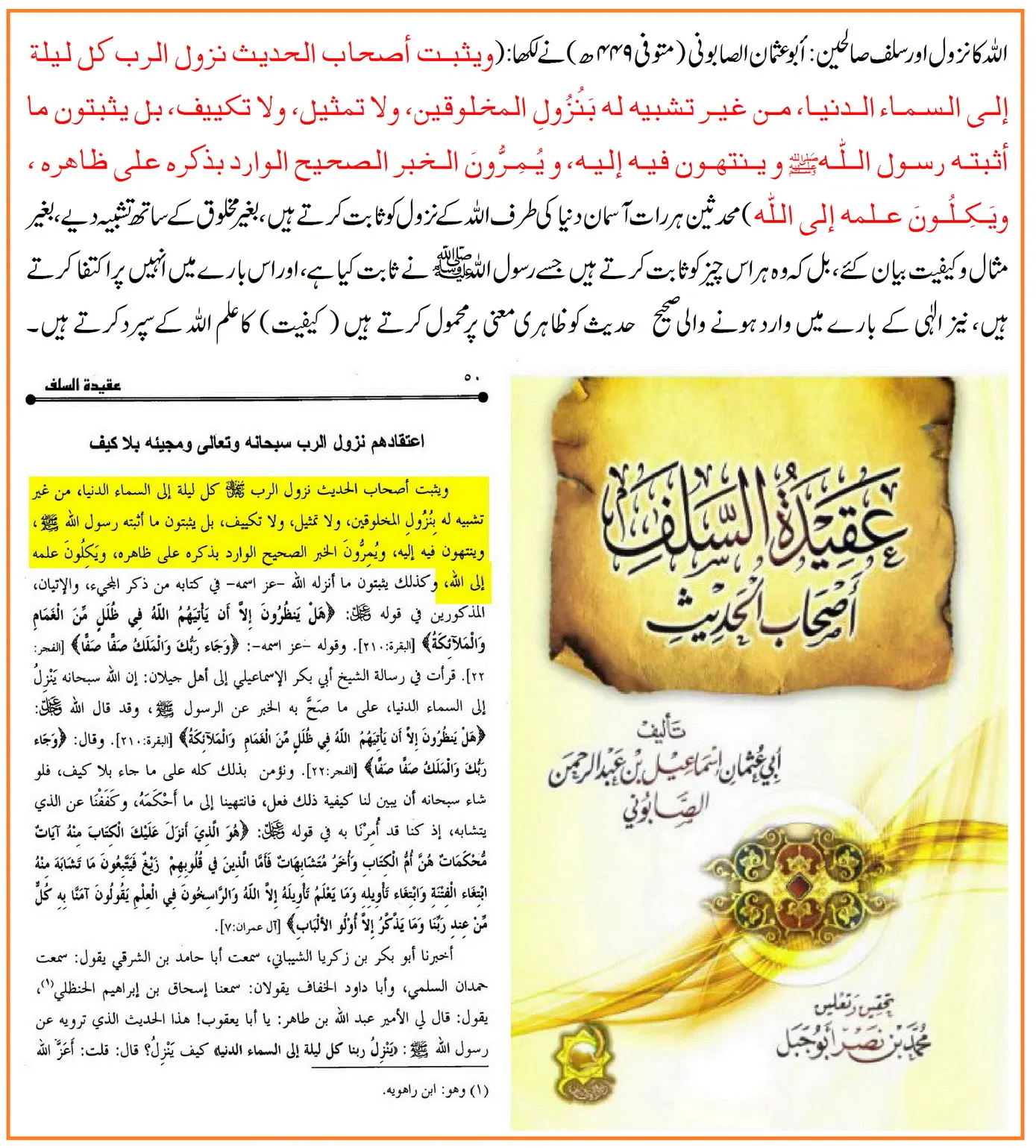
🔴 02 – Imām Abū ʿUthmān al-Ṣābūnī (d. 449 AH)
📜 ʿAqīdat al-Salaf
“ويمرون الخبر الصحيح الوارد بذكره على ظاهره، ويكلون علمه إلى الله.”
📌 Translation:
The Ahl al-Ḥadīth pass authentic reports as they are, and leave their reality to Allah.
🔴 03 – Imām al-Ḥaramayn al-Juwaynī (d. 478 AH)
📜 al-ʿAqīdah al-Niẓāmiyyah
“وذهب أئمة السلف إلى الانكفاف عن التأويل، وإجراء الظواهر على مواردها، وتفويض معانيها إلى الرب تعالى.”
📌 Translation:
The Salaf avoided interpretation, accepted the apparent wording, and left the meaning to Allah.
🔴 04 – Abū Zakariyyā al-Salamsī (d. 550 AH)
📜 Manāzil al-Aʾimmah al-Arbaʿah: Abū Ḥanīfah, Mālik, al-Shāfiʿī and Aḥmad
“وذهب أئمة السلف إلى الانكفاف عن التأويل، وإجراء الظواهر على مواردها، وتفويض معانيها إلى الرب تعالى.”
📌 Translation:
The Salaf did not interpret the attributes but entrusted their meanings to the Lord.
🔴 05 – Abū Sulaymān al-Khaṭṭābī (d. 388 AH)
📜 al-ʿArsh – al-Dhahabī
“مذاهب السلف إثباتها وإجراؤها على ظواهرها، ونفي الكيفية والتشبيه عنها.”
📌 Translation:
The attributes are to be affirmed as they are, while negating modality and likeness to creation.
✿ Summary of Findings
- Ibn Hajar al-Haytami interpreted the descent as the descent of Allah’s command and quoted Ibn Jamāʿah’s statement to attack Ibn Taymiyyah. But this quotation is disconnected and without a chain, because there is a gap of approximately 172 years between the two.
- Interpreting the descent as the descent of His command or mercy is the taʾwīl of the Jahmiyyah, Muʿtazilah and Rāfiḍah. The Salaf al-Ṣāliḥīn and the Ahl al-Ḥadīth have always declared this taʾwīl false and rejected.
- The Imāms of the Salaf such as Imām Mālik, Sufyān ibn ʿUyaynah, Ibn al-Mubārak, Imām Isḥāq ibn Rāhawayh, Imām Ibn Khuzaymah, Imām al-Tirmidhī, Imām al-Dārimī, Imām al-Ṭabarī, Imām Ibn ʿAbd al-Barr, al-Khaṭīb al-Baghdādī, Ḥāfiẓ al-Dhahabī and others all made clear that:
- ✅ Belief in the descent of Allah is obligatory.
- ✅ The modality of the descent is unknown.
- ✅ Only the Jahmiyyah and Muʿtazilah denied it.
- Although Ḥāfiẓ Ibn Ḥajar al-ʿAsqalānī, in one place, out of oversight called those who believe in the apparent meaning of the descent “Mushabbihah”, he later retracted, supported the methodology of the Salaf, and wrote that the Imāms of the Salaf refrained from taʾwīl and kept the aḥādīth upon their apparent meaning.
- On this basis, the attack on Ibn Taymiyyah رحمه الله is a mere accusation. He did not hold any new creed; rather, he expounded the very methodology of the majority of the Salaf al-Ṣāliḥīn: affirming the descent, while entrusting its modality to Allah.
✅ Conclusion
- The position of Ibn Hajar al-Haytami is false and contrary to the Salaf.
- The methodology of the majority of Ahl al-Sunnah wa’l-Jamāʿah is that Allah the Exalted descends every night to the lowest heaven, as has come in the authentic aḥādīth.
- The modality of the descent is not to be described, because the Prophet ﷺ himself did not describe it.
- Only the Jahmiyyah and Muʿtazilah rejected this creed; Ahl al-Sunnah have always been agreed upon it.
📌 Final Word:
The creed of Shaykh al-Islām Ibn Taymiyyah رحمه الله was not a new theory; rather, it was the very methodology on which the Salaf al-Ṣāliḥīn had been agreed for centuries. The interpretations of later figures such as Ibn Hajar al-Haytami are rejected and unreliable.
Scanned Images of Key References: