This article is a researched refutation of two major accusations that some objectors level against Hazrat Abu Hurairah (RA): (1) that he attributed the words of Ka’b al-Ahbar to the Prophet ﷺ, and (2) that he attributed “hearsay” statements to the Prophet ﷺ without investigation. We want to prove that the first claim is based on weak/unverified narration, whereas the hadith is established as marfu‘ (attributed to the Prophet) through authentic and reliable chains; and the second claim is not an instance of “fabricating hadith” at all, but rather an ijtihadi (juristic) ruling, from which Abu Hurairah (RA) withdrew upon acquiring correct knowledge—and according to the principles of the scholars, this behavior is a sign of honesty and caution, not (God forbid) lying.
False Accusation No. 1: “Abu Hurairah (RA) attributed Ka’b al-Ahbar’s narration to the Prophet ﷺ”
Summary of the Objection
📌 The objection is that in the narration mentioning “the day of Friday,” some words (the creation of Adam (peace be upon him), entry/expulsion from Paradise, the Day of Judgment, etc.) were attributed by Abu Hurairah رضي الله عنه to the Prophet ﷺ, whereas (according to the objector) they originally belonged to Ka’b al-Ahbar; and for this, a discussion/quotation from “Sahih Ibn Khuzaymah” is presented.
① The Marfu’ narration in Sahih Muslim: The original basis
17 – (854) وحَدَّثَنِي حَرْمَلَةُ بْنُ يَحْيَى، أَخْبَرَنَا ابْنُ وَهْبٍ، أَخْبَرَنِي يُونُسُ، عَنِ ابْنِ شِهَابٍ، أَخْبَرَنِي عَبْدُ الرَّحْمَنِ الْأَعْرَجُ، أَنَّهُ سَمِعَ أَبَا هُرَيْرَةَ، يَقُولُ: قَالَ رَسُولُ اللهِ صَلَّى اللهُ عَلَيْهِ وَسَلَّمَ: «خَيْرُ يَوْمٍ طَلَعَتْ عَلَيْهِ الشَّمْسُ يَوْمُ الْجُمُعَةِ، فِيهِ خُلِقَ آدَمُ، وَفِيهِ أُدْخِلَ الْجَنَّةَ، وَفِيهِ أُخْرِجَ مِنْهَا»
Translation:
Hazrat Abu Hurairah رضي الله عنه reports that the Messenger of Allah ﷺ said: “The best day on which the sun rises is Friday. On this day, Adam was created, on this day he was admitted to Paradise, and on this day he was expelled from it.”
Brief explanation:
This narration is explicitly Marfu’ and is present in Muslim with an authentic chain; therefore, in principle, something proven with an authentic method is not invalidated by a weak/defective chain or merely by a claim of “confusion.”
② The narration in Mustadrak al-Hakim: Ka’b’s confirmation is not the same as being the “source”
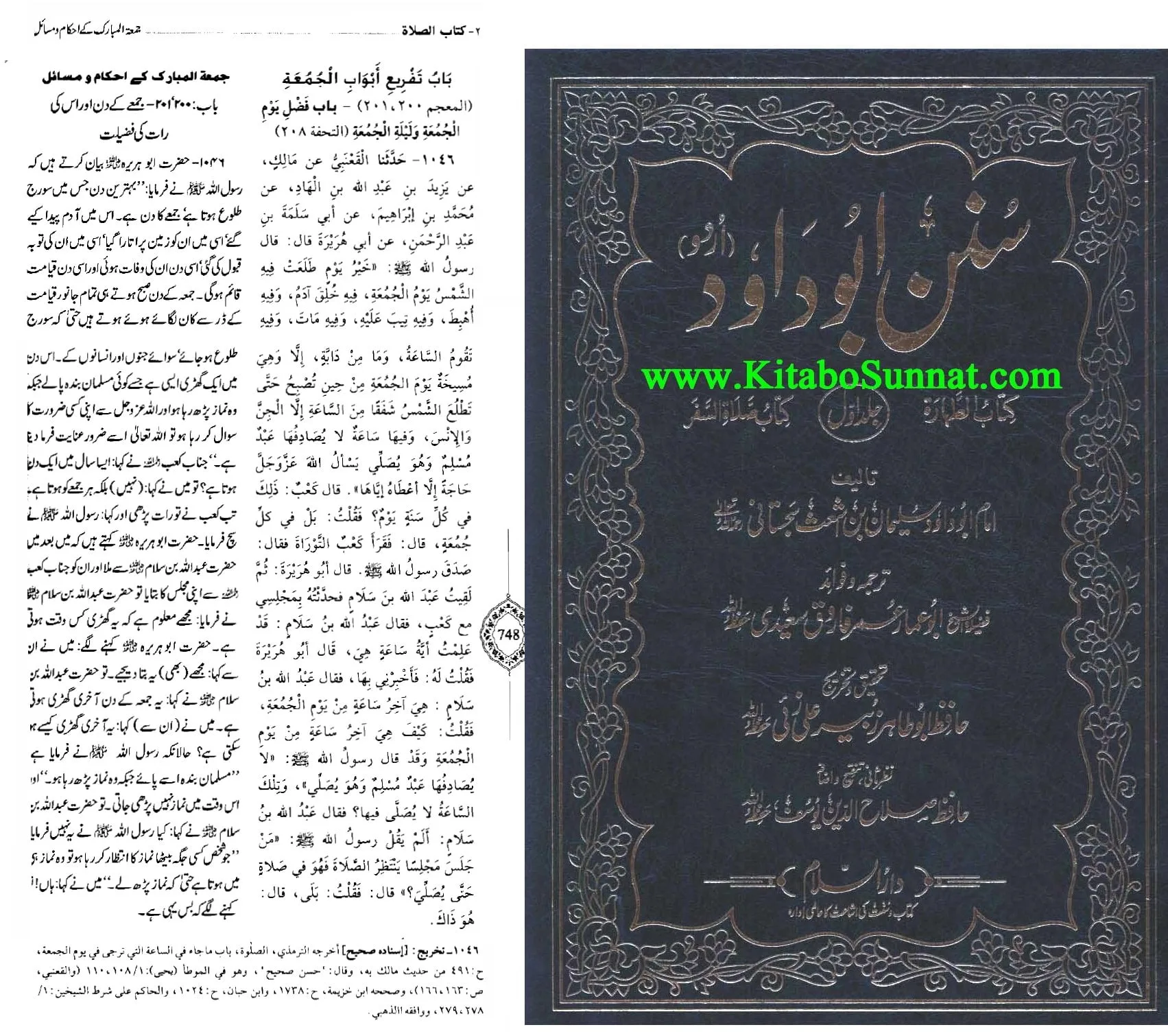
1030 – عَنْ أَبِي سَلَمَةَ بْنِ عَبْدِ الرَّحْمَنِ، عَنْ أَبِي هُرَيْرَةَ، قَالَ: قَالَ رَسُولُ اللَّهِ صَلَّى اللهُ عَلَيْهِ وَسَلَّمَ: «خَيْرُ يَوْمٍ طَلَعَتْ فِيهِ الشَّمْسُ يَوْمُ الْجُمُعَةِ فِيهِ خُلِقَ آدَمُ، وَفِيهِ أُهْبِطَ، وَفِيهِ تِيبَ عَلَيْهِ، وَفِيهِ مَاتَ، وَفِيهِ تَقُومُ السَّاعَةُ، وَمَا مِنْ دَابَّةٍ إِلَّا وَهِيَ مُصِيخَةٌ يَوْمَ الْجُمُعَةِ مِنْ حِينِ يُصْبَحُ حَتَّى تَطْلُعَ الشَّمْسُ شَفَقًا مِنَ السَّاعَةِ إِلَّا الْجِنَّ وَالْإِنْسَ، وَفِيهَا سَاعَةٌ لَا يُصَادِفُهَا عَبْدٌ مُسْلِمٌ وَهُوَ يُصَلِّي يَسْأَلُ اللَّهَ شَيْئًا إِلَّا أَعْطَاهُ إِيَّاهُ» قَالَ كَعْبٌ: ذَلِكَ فِي كُلِّ سَنَةٍ يَوْمٌ؟ فَقُلْتُ: بَلْ فِي كُلِّ جُمُعَةٍ، قَالَ فَقَرَأَ كَعْبٌ التَّوْرَاةَ، فَقَالَ: صَدَقَ رَسُولُ اللَّهِ صَلَّى اللهُ عَلَيْهِ وَسَلَّمَ، قَالَ أَبُو هُرَيْرَةَ: ثُمَّ لَقِيتُ عَبْدَ اللَّهِ بْنَ سَلَّامٍ، فَحَدَّثْتُهُ بِمَجْلِسِي مَعَ كَعْبٍ فَقَالَ عَبْدُ اللَّهِ بْنُ سَلَامٍ: «قَدْ عَلِمْتُ أَيَّةَ سَاعَةٍ هِيَ؟» قَالَ أَبُو هُرَيْرَةَ: فَقُلْتُ لَهُ فَأَخْبَرَنِي بِهَا. فَقَالَ عَبْدُ اللَّهِ بْنُ سَلَامٍ: «هِيَ آخِرُ سَاعَةٍ فِي يَوْمِ الْجُمُعَةِ» .
[التعليق – من تلخيص الذهبي] 1030 – على شرطهما
( (المستدرك على الصحيحين
Translation (Summary):
Hazrat Abu Huraira (RA) narrates a detailed hadith from the Prophet ﷺ about the virtue of Friday. Ka’b (al-Ahbar) asks: Is this (special moment/virtue) only on one day in the year? Abu Huraira (RA) replies: No, every Friday. Then Ka’b reads from the Torah and says: “The Messenger of Allah ﷺ has spoken the truth.” Afterwards, Abu Huraira (RA) meets Abdullah bin Salam (RA) and further discussion takes place.
Brief Explanation:
The direction of this narration is clear: Abu Huraira (RA) is narrating a hadith from the Prophet ﷺ, and Ka’b (a Tabi’i) is confirming it. Confirmation does not mean “being the source”; rather, at most, Ka’b testified by finding it consistent with his own scriptural knowledge.
③ Ibn Khuzaymah’s wording: He mentioned “disagreement,” but the ruling depends on the evidence.
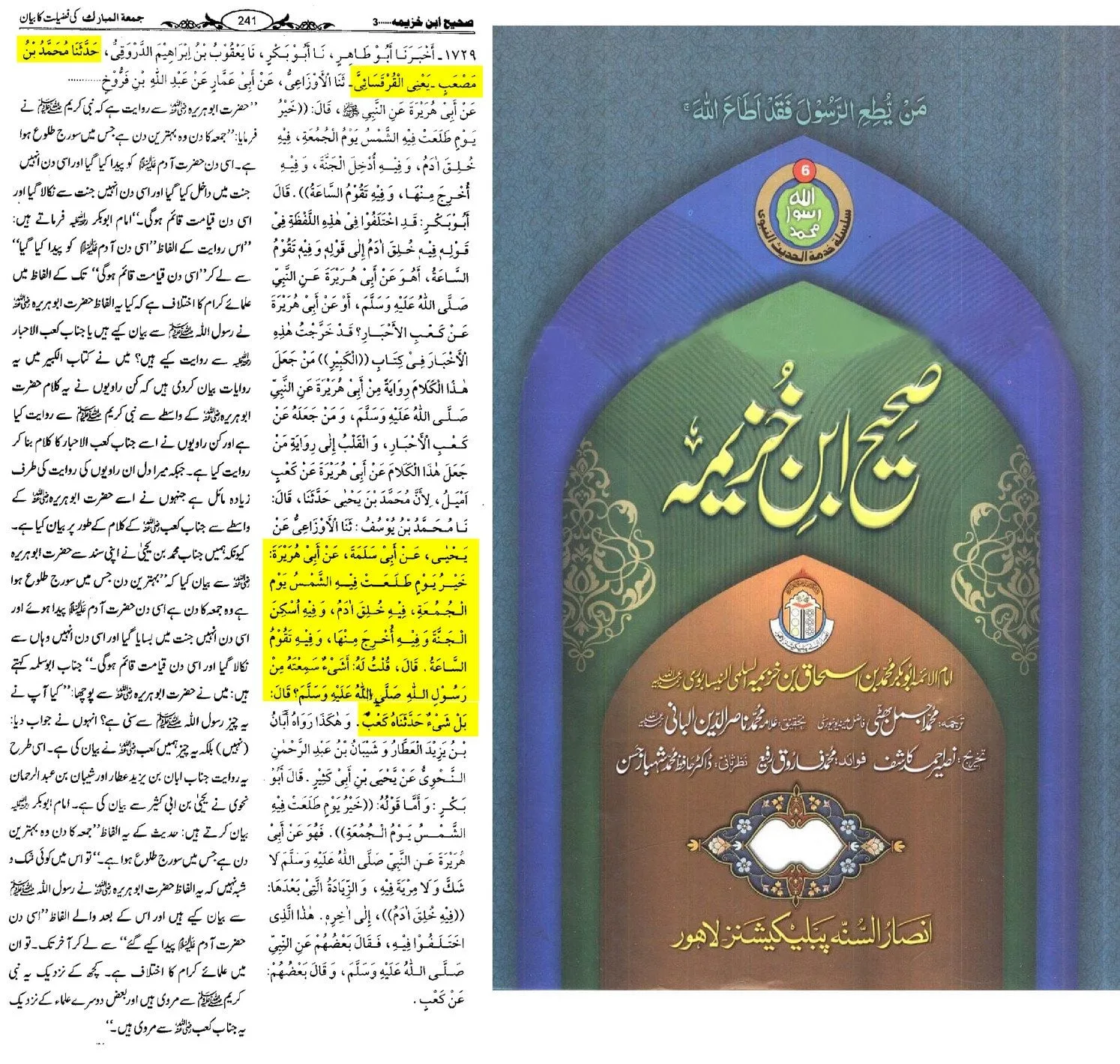
أخبرنا أبو طاهر ، نا أبو بكر ، نا يعقوب بن إبراهيم الدورقي ، حدثنا محمد بن مصعب يعني القرقساني ، ثنا الأوزاعي ، عن أبي عمار ، عن عبد الله بن فروخ ، عن أبي هريرة ، عن النبي – صلى الله عليه وسلم – قال : ” خير يوم طلعت فيه الشمس يوم الجمعة ، فيه خلق آدم ، وفيه أدخل الجنة ، وفيه أخرج منها ، وفيه تقوم الساعة ” .
قال أبو بكر : قد اختلفوا في هذه اللفظة في قوله : ” فيه خلق آدم ” إلى قوله : ” وفيه تقوم الساعة ” ، أهو عن أبي هريرة ، عن النبي – صلى الله عليه وسلم – ؟ أو عن أبي هريرة ، عن كعب الأحبار ؟ قد خرجت هذه الأخبار في كتاب الكبير : من جعل هذا الكلام رواية من أبي هريرة ، عن النبي – صلى الله عليه وسلم – ، ومن جعله عن كعب الأحبار ، والقلب إلى رواية من جعل هذا الكلام عن أبي هريرة ، عن كعب أميل ؛ لأن محمد بن يحيى ، حدثنا قال : نا محمد بن يوسف ، ثنا الأوزاعي ، عن يحيى ، عن أبي سلمة ، عن أبي هريرة : خير يوم طلعت فيه الشمس يوم الجمعة ، فيه خلق آدم ، وفيه أسكن الجنة ، وفيه أخرج منها ، وفيه تقوم الساعة ، قال : قلت له : أشيء سمعته من رسول الله – صلى الله عليه وسلم – ؟ قال : بل شيء حدثناه كعب.
Translation (Central Meaning):
After mentioning the Friday narration, Ibn Khuzaymah (may Allah have mercy on him) said that there is a difference regarding the words from “فِيهِ خُلِقَ آدَمُ” to “وَفِيهِ تَقُومُ السَّاعَةُ“: whether these were narrated by Abu Hurairah (may Allah be pleased with him) from the Prophet ﷺ or from Ka’b al-Ahbar? Then he stated that his inclination is towards it being from Ka’b, because in one narration Abu Hurairah was asked: Did you hear this from the Messenger of Allah ﷺ? He replied: No, this was told to us by Ka’b.
Brief Explanation:
Here two things are separate:
✅ Ibn Khuzaymah’s reporting of the “difference” (this is scholarly honesty) and
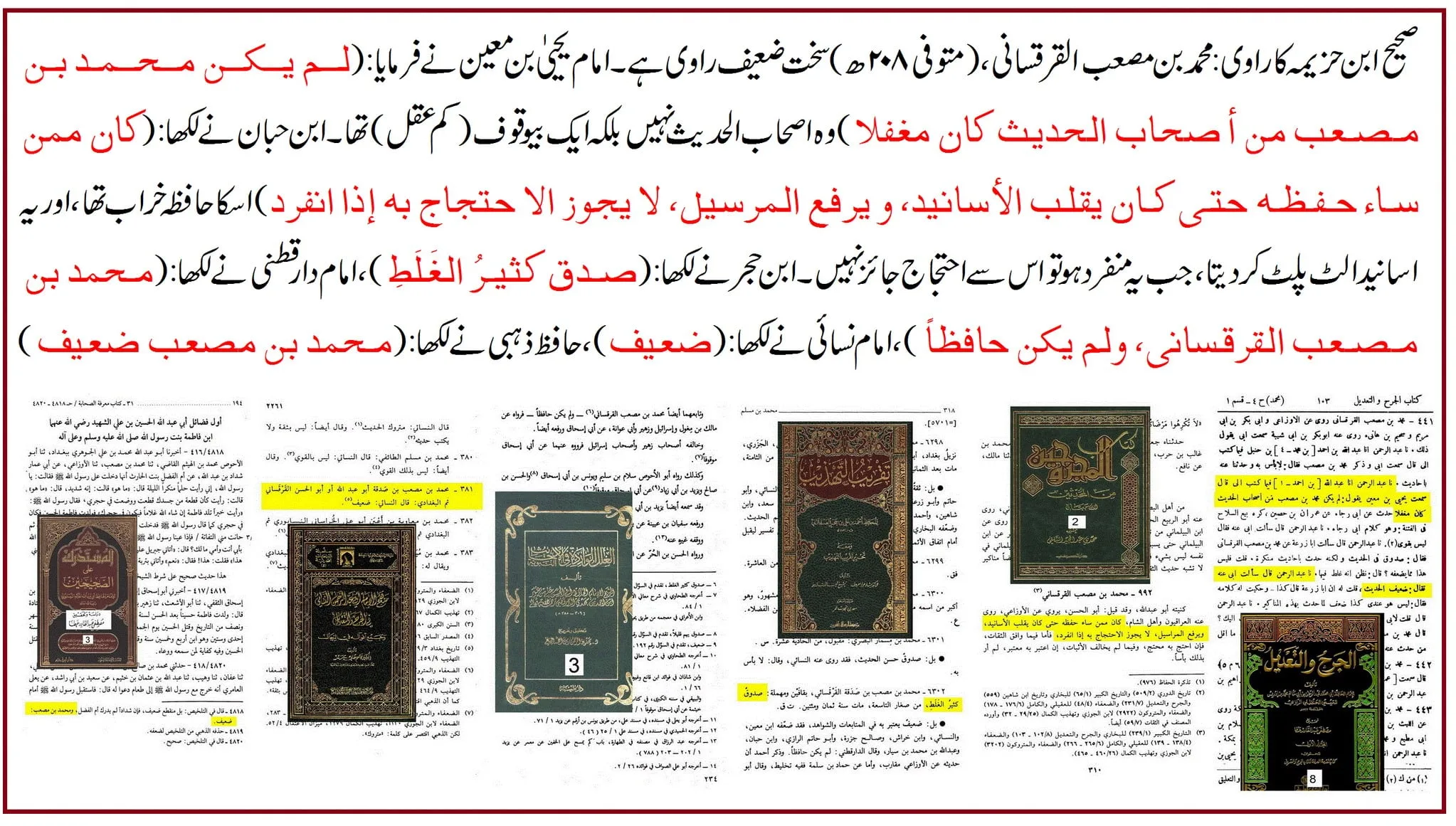
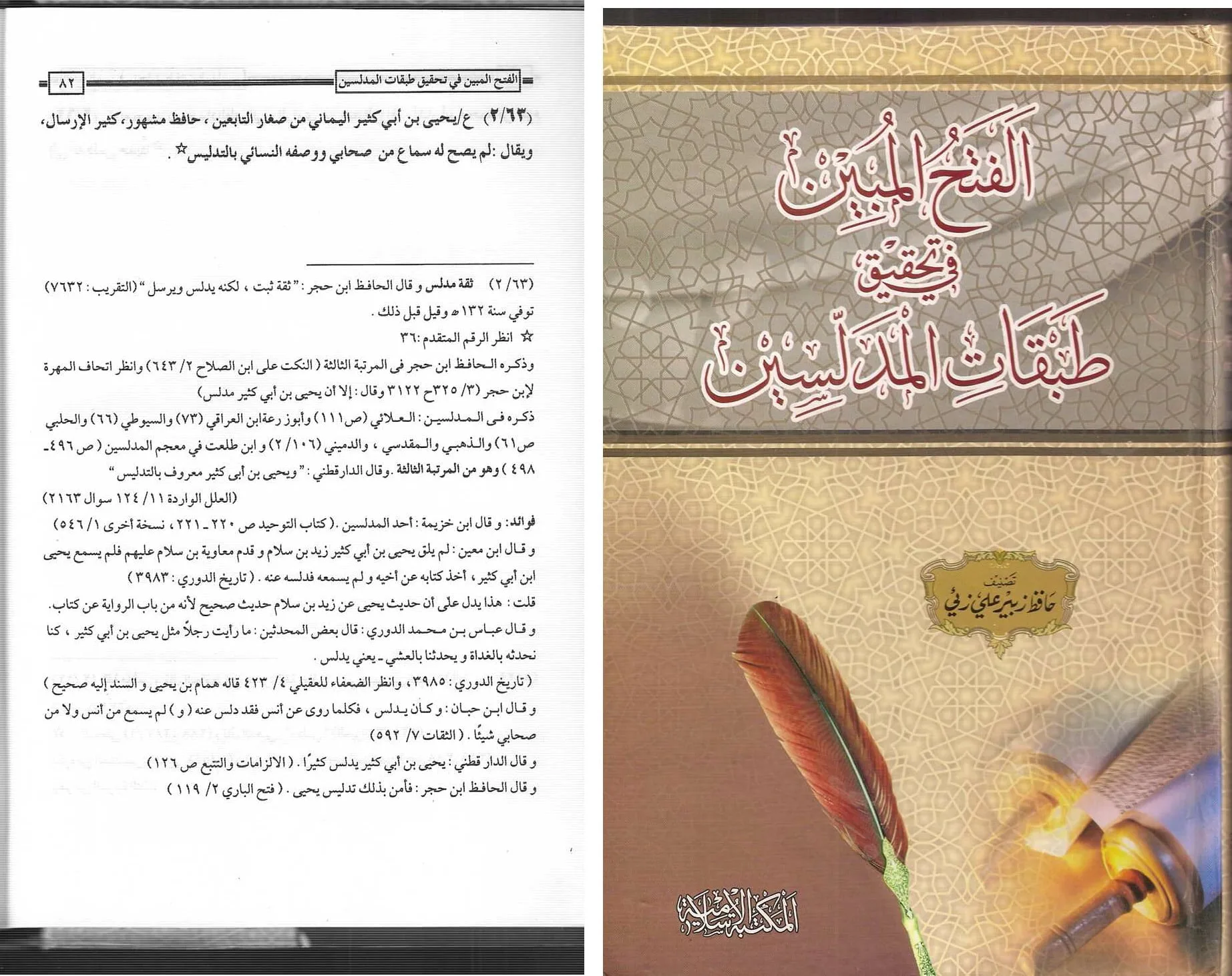
✅ The ruling on the difference is valid only when the narration relied upon is strong in its chain of transmission. Now the fundamental point arises that the narration of Abu Hurairah “hearing from Ka’b” is weak in its chain.
④ The “Mawquf” narration at the same place by Ibn Khuzaymah is weak in its chain of transmission
The narration of Ibn Khuzaymahؒ from the same chapter (1729) is as follows:
1729 – نا يَعْقُوبُ بْنُ إِبْرَاهِيمَ الدَّوْرَقِيُّ، حَدَّثَنَا مُحَمَّدُ بْنُ مُصْعَبٍ يَعْنِي الْقُرْقُسَانِيَّ، ثنا الْأَوْزَاعِيُّ، عَنْ أَبِي عَمَّارٍ، عَنْ عَبْدِ اللَّهِ بْنِ فَرُّوخَ، عَنْ أَبِي هُرَيْرَةَ، عَنِ النَّبِيِّ صَلَّى اللهُ عَلَيْهِ وَسَلَّمَ قَالَ: «خَيْرُ يَوْمٍ طَلَعَتْ فِيهِ الشَّمْسُ يَوْمُ الْجُمُعَةِ , فِيهِ خُلِقَ آدَمُ , وَفِيهِ أُدْخِلَ الْجَنَّةَ , وَفِيهِ أُخْرِجَ مِنْهَا , وَفِيهِ تَقُومُ السَّاعَةُ»——
قَالَ أَبُو بَكْرٍ: قَدِ اخْتَلَفُوا فِي هَذِهِ اللَّفْظَةِ فِي قَوْلِهِ: «فِيهِ خُلِقَ آدَمُ» إِلَى قَوْلِهِ: «وَفِيهِ تَقُومُ السَّاعَةُ» , أَهُوَ عَنْ أَبِي هُرَيْرَةَ , عَنِ النَّبِيِّ صَلَّى اللهُ عَلَيْهِ وَسَلَّمَ؟ أَوْ عَنْ أَبِي هُرَيْرَةَ , عَنْ كَعْبِ الْأَحْبَارِ؟
لِأَنَّ مُحَمَّدَ بْنَ يَحْيَى، حَدَّثَنَا قَالَ: نا مُحَمَّدُ بْنُ يُوسُفَ , ثنا الْأَوْزَاعِيُّ , عَنْ يَحْيَى , عَنْ أَبِي سَلَمَةَ , عَنْ أَبِي هُرَيْرَةَ: خَيْرُ يَوْمٍ طَلَعَتْ فِيهِ الشَّمْسُ يَوْمُ الْجُمُعَةِ , فِيهِ خُلِقَ آدَمُ , وَفِيهِ أُسْكِنَ الْجَنَّةَ , وَفِيهِ أُخْرِجَ مِنْهَا , وَفِيهِ تَقُومُ السَّاعَةُ, قَالَ: قُلْتُ لَهُ: أَشَيْءٌ سَمِعْتَهُ مِنْ رَسُولِ اللَّهِ صَلَّى اللهُ عَلَيْهِ وَسَلَّمَ؟ قَالَ: بَلْ شَيْءٌ حَدَّثَنَاهُ كَعْبٌ
And in the same text, this commentary is also present:
[التعليق] 1729 – قال الألباني: إسناده ضعيف
Translation (Summary):
On one hand, a marfoo‘ narration is transmitted, then a difference is mentioned, and in one chain it is stated that Abu Hurairahؓ said: “This matter was conveyed to us by Ka‘b.” However, regarding the chain of this very transmission, it is clarified that its chain is weak.
Brief Explanation:
When the transmission “heard from Ka‘b” is weak in its chain, and on the other hand, the same meaning is authentically marfoo‘ in Sahih Muslim, then the fundamental basis of the accusation automatically collapses. Therefore, calling it an “admission of guilt” is not academically correct; at most, it is a claim based on a weak chain.
⑤ Witness of Hadith: Narration of Aws ibn Awsؓ
5511 – حَدَّثَنَا حُسَيْنُ بْنُ عَلِيٍّ، عَنْ عَبْدِ الرَّحْمَنِ بْنِ يَزِيدَ بْنِ جَابِرٍ، عَنْ أَبِي الْأَشْعَثِ الصَّنْعَانِيِّ، عَنْ أَوْسٍ، أَنَّ رَسُولَ اللَّهِ صَلَّى اللهُ عَلَيْهِ وَسَلَّمَ قَالَ: «إِنَّ مِنْ أَفْضَلِ أَيَّامِكُمْ يَوْمَ الْجُمُعَةِ، فِيهِ خُلِقَ آدَمُ، وَفِيهِ النَّفْخَةُ، وَفِيهِ الصَّعْقَةُ»
Translation:
It is narrated from Hazrat Aws ibn Aws Thaqafiؓ that the Messenger of Allah ﷺ said: “The best day among your days is Friday; on this day Adamؑ was created, on this day the trumpet will be blown, and on this day unconsciousness/shock will befall the people.”
Brief Explanation:
This further strengthens the principle that topics such as the birth of Adam (peace be upon him) on Friday are proven through multiple companions with an attribution to the Prophet ﷺ; therefore, merely labeling them as “Ka’b’s statement” is against scholarly fairness.
Response to False Accusation No. 1
🧾 The correct scholarly conclusion is:
✅ After the marfu’ narration in Sahih Muslim and other evidences, the accusation of “taken from Ka’b and attributed to the Prophet ﷺ” is not proven.
Rather, the narration confirming Ka’b also indicates that Ka’b testified to its conformity after hearing the hadith, not that Abu Huraira (may Allah be pleased with him) took it from Ka’b and attributed it to the Prophet ﷺ.
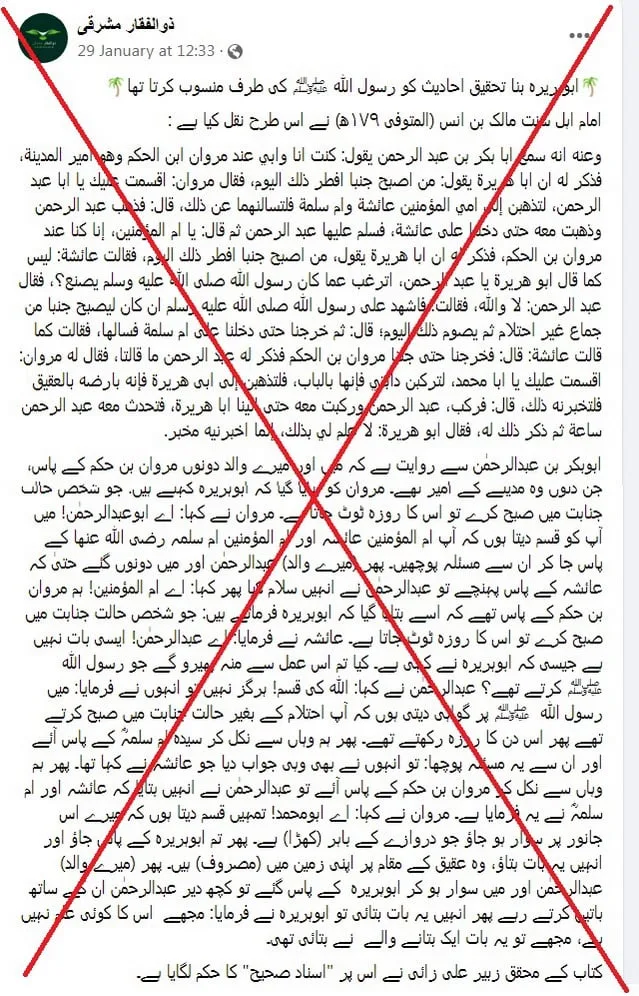
False Accusation No. 2: “Abu Huraira (may Allah be pleased with him) attributed every hearsay to the Prophet ﷺ”
Summary of the Objection
📌 The objection is based on an incident where it was narrated from Abu Hurairah رضي الله عنه that “Whoever wakes up in a state of janabah (major ritual impurity) should not fast that day / should break the fast”; then the narration from the Mothers of the Believers رضي الله عنهن appeared that the Prophet ﷺ used to wake up in a state of janabah and fast; upon this, Abu Hurairah رضي الله عنه said: “I do not know, someone who informed me told me this.” The objector presents this as an “unverified attribution.”
① Incident in Muwatta: Abu Hurairah’s “I do not know… someone informed me”
وعنه انه سمع ابا بكر بن عبد الرحمن يقول: كنت انا وابي عند مروان ابن الحكم وهو امير المدينة، فذكر له ان ابا هريرة يقول: من اصبح جنبا افطر ذلك اليوم، فقال مروان: اقسمت عليك يا ابا عبد الرحمن، لتذهبن إلى امي المؤمنين عائشة وام سلمة فلتسالنهما عن ذلك، قال: فذهب عبد الرحمن وذهبت معه حتى دخلنا على عائشة، فسلم عليها عبد الرحمن ثم قال: يا ام المؤمنين، إنا كنا عند مروان بن الحكم، فذكر له ان ابا هريرة يقول، من اصبح جنبا افطر ذلك اليوم، فقالت عائشة: ليس كما قال ابو هريرة يا عبد الرحمن، اترغب عما كان رسول الله صلى الله عليه وسلم يصنع؟، فقال عبد الرحمن: لا والله، فقالت: فاشهد على رسول الله صلى الله عليه وسلم ان كان ليصبح جنبا من جماع غير احتلام ثم يصوم ذلك اليوم؛ قال: ثم خرجنا حتى دخلنا على ام سلمة فسالها، فقالت كما قالت عائشة: قال: فخرجنا حتى جئنا مروان بن الحكم فذكر له عبد الرحمن ما قالتا، فقال له مروان: اقسمت عليك يا ابا محمد، لتركبن دابتي فإنها بالباب، فلتذهبن إلى ابى هريرة فإنه بارضه بالعقيق فلتخبرنه ذلك، قال: فركب، عبد الرحمن وركبت معه حتى اتينا ابا هريرة، فتحدث معه عبد الرحمن ساعة ثم ذكر ذلك له، فقال ابو هريرة: لا علم لي بذلك، إنما اخبرنيه مخبر.
Translation (Summary):
Abu Bakr bin Abdul Rahman says: We were with Marwan, and it was told to him that Abu Hurairah رضي الله عنه says: Whoever wakes up in a state of janabah should not fast that day. Marwan said: Go and ask Umm al-Mu’minin Aisha رضي الله عنها and Umm Salamah رضي الله عنها. Both Mothers of the Believers رضي الله عنهن said: That is not the case; the Prophet ﷺ used to wake up in a state of janabah and fast. Then this was conveyed to Abu Hurairah رضي الله عنه, who said: “I do not know about this; someone who informed me told me this.”
Brief Explanation:
Here, Abu Hurairah’s statement is decisive: he did not say, “I heard from the Prophet ﷺ”; rather, he clarified that this information reached him from a narrator. Then, when the clear report from the Mothers of the Believers came forth, he accepted it. This approach is close to “caution in attribution,” not lying.
② “It is enough for a man to be a liar…” Hadith: A standard of ethics, not an accusation against Abu Hurairah
وعن ابي هريرة قال: قال رسول الله صلى الله عليه وسلم: كفى بالمرء كذبا ان يحدث بكل ما سمع۔
رواه مسلم
Translation:
Hazrat Abu Hurairah narrates that the Messenger of Allah ﷺ said: “It is enough for a man to be a liar that he narrates everything he hears.”
Brief Explanation:
This hadith is a general principled warning. It is not correct to use it as proof to necessarily label Abu Hurairah as a “liar,” especially when in the same incident Abu Hurairah, after questioning/investigation, said he did not know and then retracted.
③ Abu Hurairah’s Reversal: Transmission with Chain by Ibn Abdul Barr
حَدَّثَنَا عَبْدُ الْوَارِثِ بْنُ سُفْيَانَ(صدوق) قَالَ حَدَّثَنَا قَاسِمُ بْنُ أَصْبَغَ ( ثقة حافظ)قَالَ حَدَّثَنَا مُحَمَّدُ بْنُ عَبْدِ السَّلَامِ ( ثقة)قَالَ حَدَّثَنَا مُحَمَّدُ بْنُ بَشَّارٍ قَالَ حَدَّثَنَا مُحَمَّدٌ وَيَحْيَى(ابن القطان ثقة) قَالَا حَدَّثَنَا شُعْبَةُ( ثقة) قَالَ سَمِعْتُ قَتَادَةَ( ثقة سماع کی تصریح) يُحَدِّثُ عَنْ سَعِيدِ بْنِ الْمُسَيَّبِ أَنَّ أَبَا هُرَيْرَةَ تَرَكَ فُتْيَاهُ بَعْدَ ذَلِكَ
Translation:
It is narrated from Saeed bin Al-Musayyib that Abu Hurairah (may Allah be pleased with him) later abandoned his ruling (i.e., he reversed it).
Brief Explanation:
This is the scholarly standard that clarifies the jurisprudential integrity of the Companions (may Allah be pleased with them): when a strong proof appears, one should reverse their position.
④ Hafiz Ibn Hajar’s Explicit Statement in Fath al-Bari: “Abu Hurairah Reversed His Ruling”
(قَوْلُهُ بَابٌ الصَّائِمُ يُصْبِحُ جُنُبًا)
قَدْ رَجَعَ أَبُو هُرَيْرَةَ عَنِ الْفَتْوَى بِذَلِكَ إِمَّا لِرُجْحَانِ رِوَايَةِ أُمَّيِ الْمُؤْمِنِينَ فِي جَوَازِ ذَلِكَ صَرِيحًا عَلَى رِوَايَةِ غَيْرِهِمَا مَعَ مَا فِي رِوَايَةِ غَيْرِهِمَا مِنَ الِاحْتِمَالِ إِذْ يُمْكِنُ أَنْ يُحْمَلَ الْأَمْرُ بِذَلِكَ عَلَى الِاسْتِحْبَابِ فِي غَيْرِ الْفَرْضِ وَكَذَا النَّهْيُ عَنْ صَوْمِ ذَلِكَ الْيَوْمِ وَإِمَّا لِاعْتِقَادِهِ أَنْ يَكُونَ خَبَرُ أُمَّيِ الْمُؤْمِنِينَ نَاسِخًا لِخَبَرِ غَيْرِهِمَا
Translation (Summary):
Hafiz Ibn Hajar writes that Abu Hurairah (may Allah be pleased with him) reversed his ruling on this issue; either because the narration from the Mothers of the Believers (may Allah be pleased with them) is explicit in permissibility and there is doubt in the other narration, or because Abu Hurairah (may Allah be pleased with him) considered that the report from the Mothers of the Believers (may Allah be pleased with them) abrogates the other report (etc.).
Brief Explanation:
This statement clarifies that the matter was not about “fabricating a hadith” but about “jurisprudential deduction/ruling,” which was corrected upon the emergence of evidence.
⑤ Abu Hurairah’s Status in Jurisprudence and Ijtihad: Words of the Imams
الإمام الفقيه المجتهد الحافظ، صاحب رسول الله صلى الله عليه وسلم، أبو هريرة الدوسي اليماني سيّد الحفاظ الأثبات
Translation:
(In the words of Dhahabiؒ) Abu Hurairahؓ is an Imam, jurist, mujtahid, memorizer of hadith, companion of the Messenger of Allah ﷺ, and the chief of reliable memorizers.
Brief Explanation:
Such statements of the Imams strengthen the fact that attributing “without investigation” and “falsehood” to Abu Hurairahؓ contradicts the well-known methodology of the scholars, especially when his retraction in the incident itself is also established.
⑥ Even if there is an error in Ijtihad, there is reward: The original of Sahih Bukhari
7352 – حَدَّثَنَا عَبْدُ اللَّهِ بْنُ يَزِيدَ المُقْرِئُ المَكِّيُّ، حَدَّثَنَا حَيْوَةُ بْنُ شُرَيْحٍ، حَدَّثَنِي يَزِيدُ بْنُ عَبْدِ اللَّهِ بْنِ الهَادِ، عَنْ مُحَمَّدِ بْنِ إِبْرَاهِيمَ بْنِ الحَارِثِ، عَنْ بُسْرِ بْنِ سَعِيدٍ، عَنْ أَبِي قَيْسٍ، مَوْلَى عَمْرِو بْنِ العَاصِ، عَنْ عَمْرِو بْنِ العَاصِ، أَنَّهُ سَمِعَ رَسُولَ اللَّهِ صَلَّى اللهُ عَلَيْهِ وَسَلَّمَ يَقُولُ: «إِذَا حَكَمَ الحَاكِمُ فَاجْتَهَدَ ثُمَّ أَصَابَ فَلَهُ أَجْرَانِ، وَإِذَا حَكَمَ فَاجْتَهَدَ ثُمَّ أَخْطَأَ فَلَهُ أَجْرٌ» ،
Translation:
The Messenger of Allah ﷺ said: “When a ruler/decision-maker makes ijtihad and is correct, he receives two rewards, and if he makes ijtihad and errs, he receives one reward.”
Brief Explanation:
This principle indicates that if a mujtahid errs in ijtihad, he is not called “liar,” especially when he retracts upon the arrival of evidence.
The summarized answer to slander number 2
🧾 This story clearly proves that:
✅ Abu Huraira (RA) mentioned a “reporter” in relation to a report/fatwa, then retracted upon encountering strong evidence.
This is an example of “scholarly revision” and “jurisprudential integrity” rather than “fabricating hadiths without investigation.”
Final Conclusion
⚖️ The summary of both accusations is:
The claim of “attributing the Friday narration from Ka’b to the Prophet ﷺ” is based on weak transmission, whereas the hadith is proven marfu’ through Sahih Muslim and other evidences.
Regarding the issue of “waking up in the morning in a state of janabah,” Abu Huraira (RA) did not fabricate a marfu’ hadith but dealt with a report/fatwa, from which he retracted upon the emergence of correct knowledge—and this is the standard of scholarly trustworthiness of the Companions (RA) according to Ahl al-Sunnah.
Scans of Important References