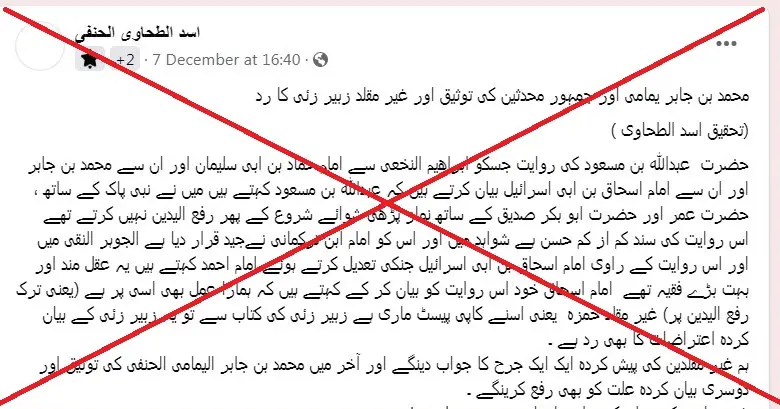
Muhammad bin Jabir Al-Yamami Al-Suhaimi, Al-Kufi (d. 171 AH) was a hadith narrator who was blind and illiterate. He had some of his books written by others and would have a reader read them aloud to his students. It is narrated that he said: “Abu Hanifa stole my book of Hammad bin Abi Sulayman.” After this incident, his remaining books were also lost, and he suffered severe confusion, especially in narrations from Hammad bin Abi Sulayman. Eventually, his confusion increased to such an extent that great imams like Abdul Rahman bin Mahdi stopped narrating from him, and he moved from Kufa to Yamama. Since he was blind, he could not safeguard his hadiths, so the hadith scholars severely criticized him and declared him weak, and some even considered him abandoned.
In this article, we will compile the criticisms of the majority of hadith scholars regarding Muhammad bin Jabir Al-Yamami to clarify that he was not reliable in the field of hadith.
41 Imams’ Criticisms of Muhammad bin Jabir Al-Yamami
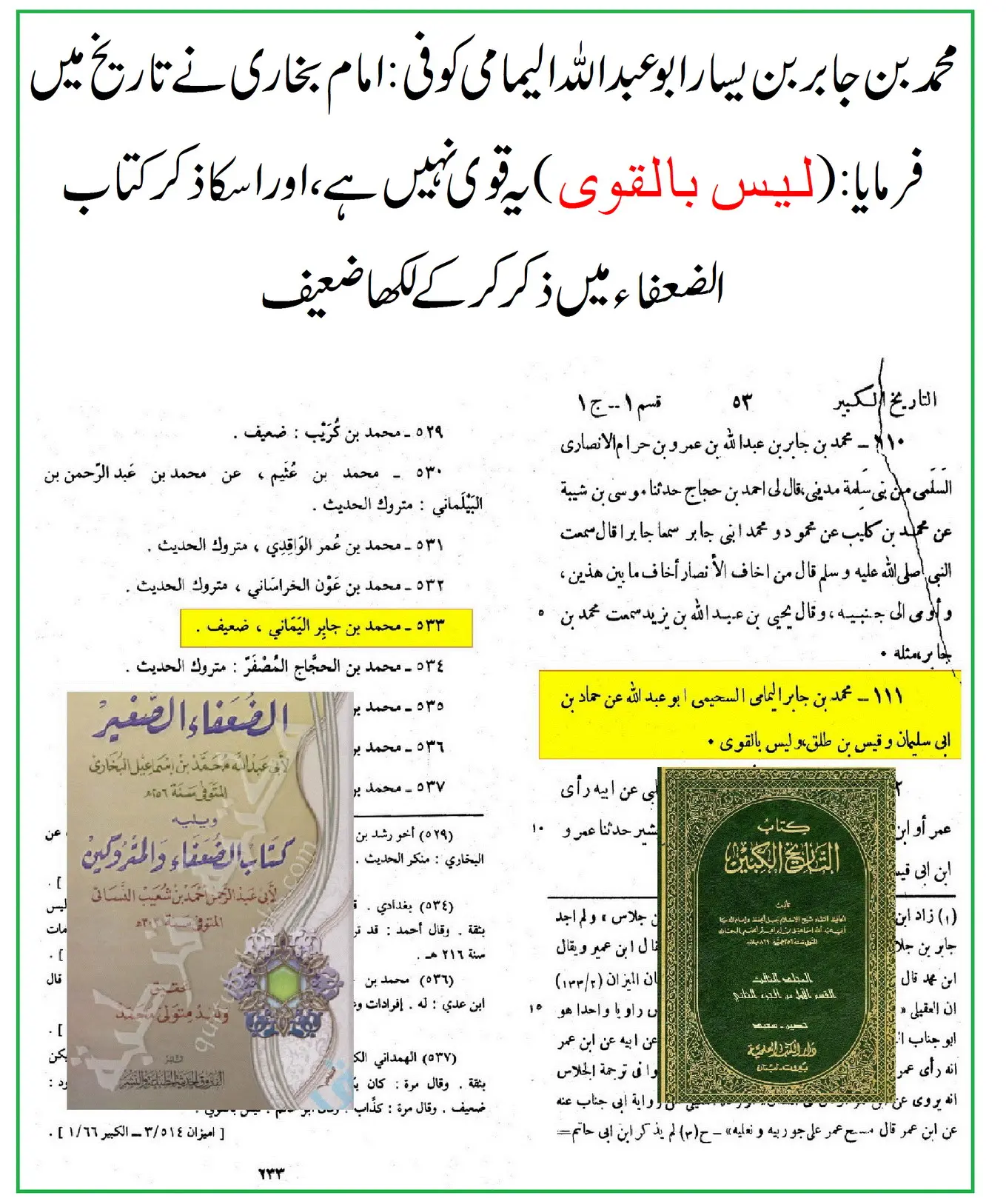
➊ Imam Bukhari
Arabic: «محمد بن جابر اليمامي السحيمي … وليس بالقوي.»
Translation: Muhammad bin Jabir Al-Yamami is not strong.
Explanation: Bukhari declared him weak in two places.
➋ Imam Ahmad bin Hanbal
Arabic: «سُئِل عن محمد بن جابر فغلظ فيه وقال: لا يحدث عنه إلا من هو شرّ منه.»
Translation: When asked about Muhammad bin Jabir, he spoke harshly and said: Only those should narrate from him who are worse than him.
Explanation: Imam Ahmad mentioned munkar (rejected) narrations and inconsistency (idtirab) and explicitly stated to abandon narrating from him.
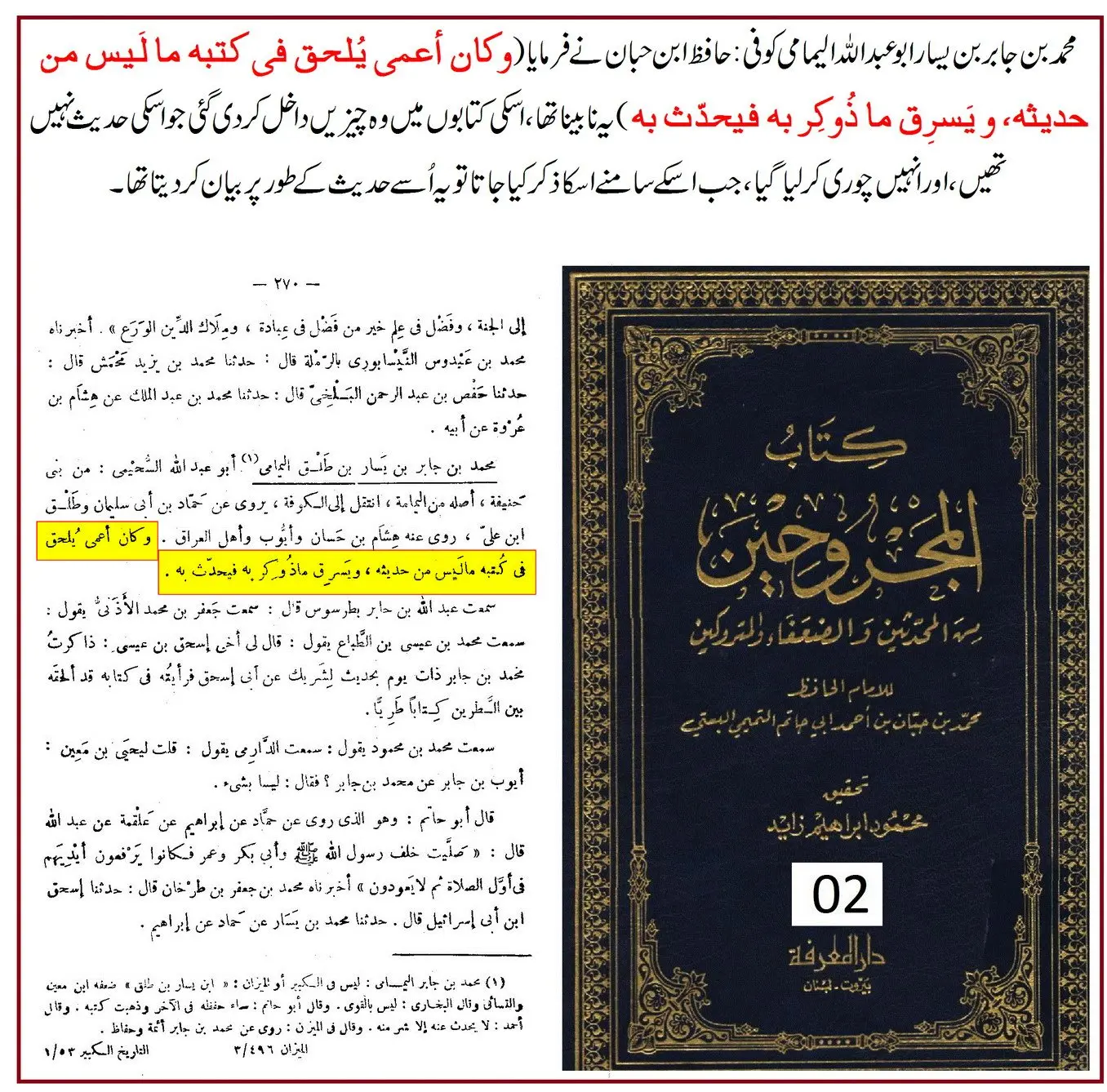
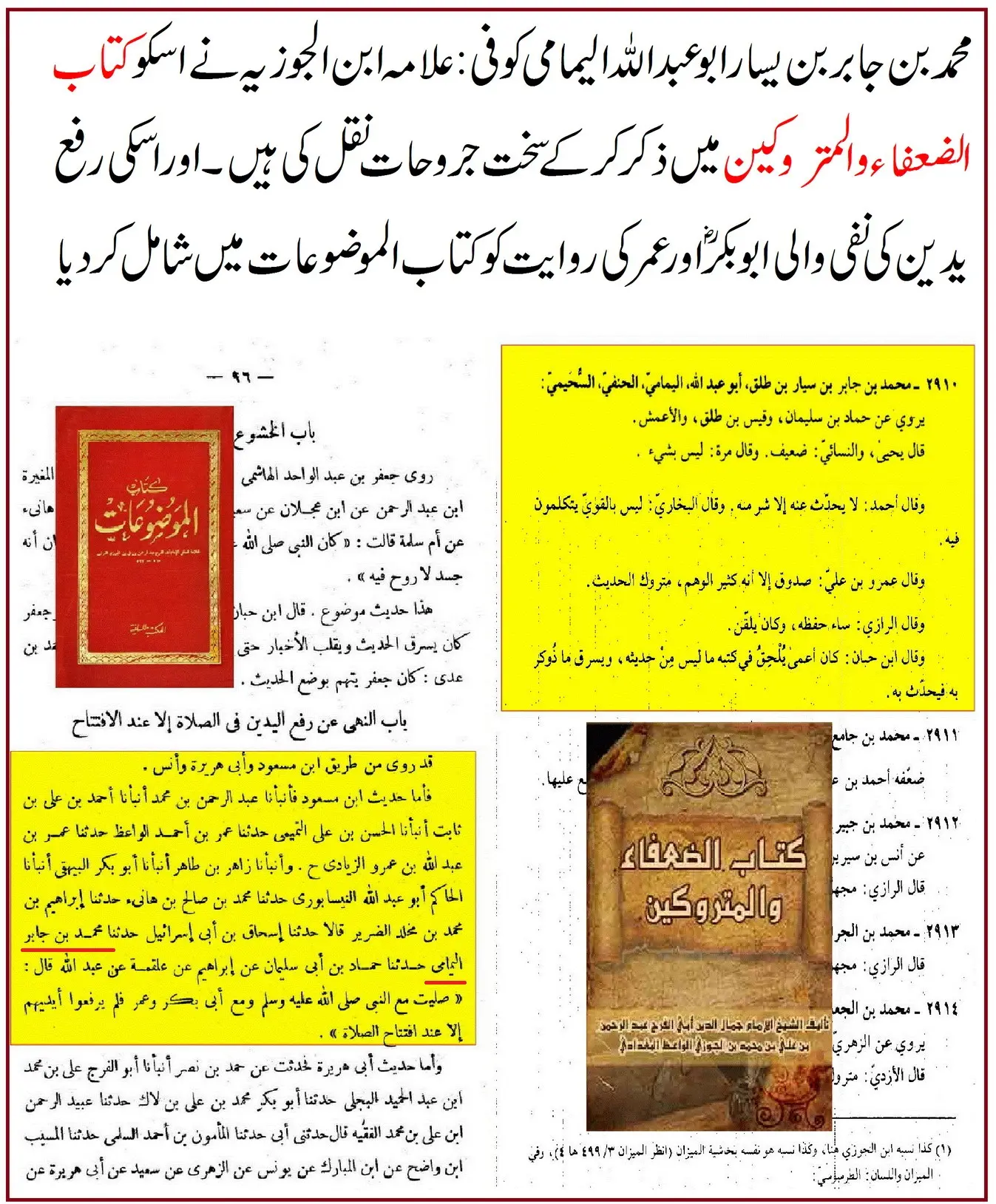
➌ Ibn Hibban
Arabic: «وكان أعمى، يُلحق في كتبه ما ليس من حديثه … فيحدث به.»
Translation: He was blind; things were inserted into his books that were not his hadith, and he narrated them.
Explanation: Due to blindness and lack of retention, mixing and unreliability in hadith is proven.
➍ Ibn Al-Jawzi
Arabic: «محمد بن جابر … اليمامي … يروي عن حماد …
Translation: I included Muhammad bin Jabir Al-Yamami in my book Al-Du’afa wal-Matrukin.
Explanation: Ibn Al-Jawzi also declared some of his narrations fabricated, such as the narration denying the raising of hands.
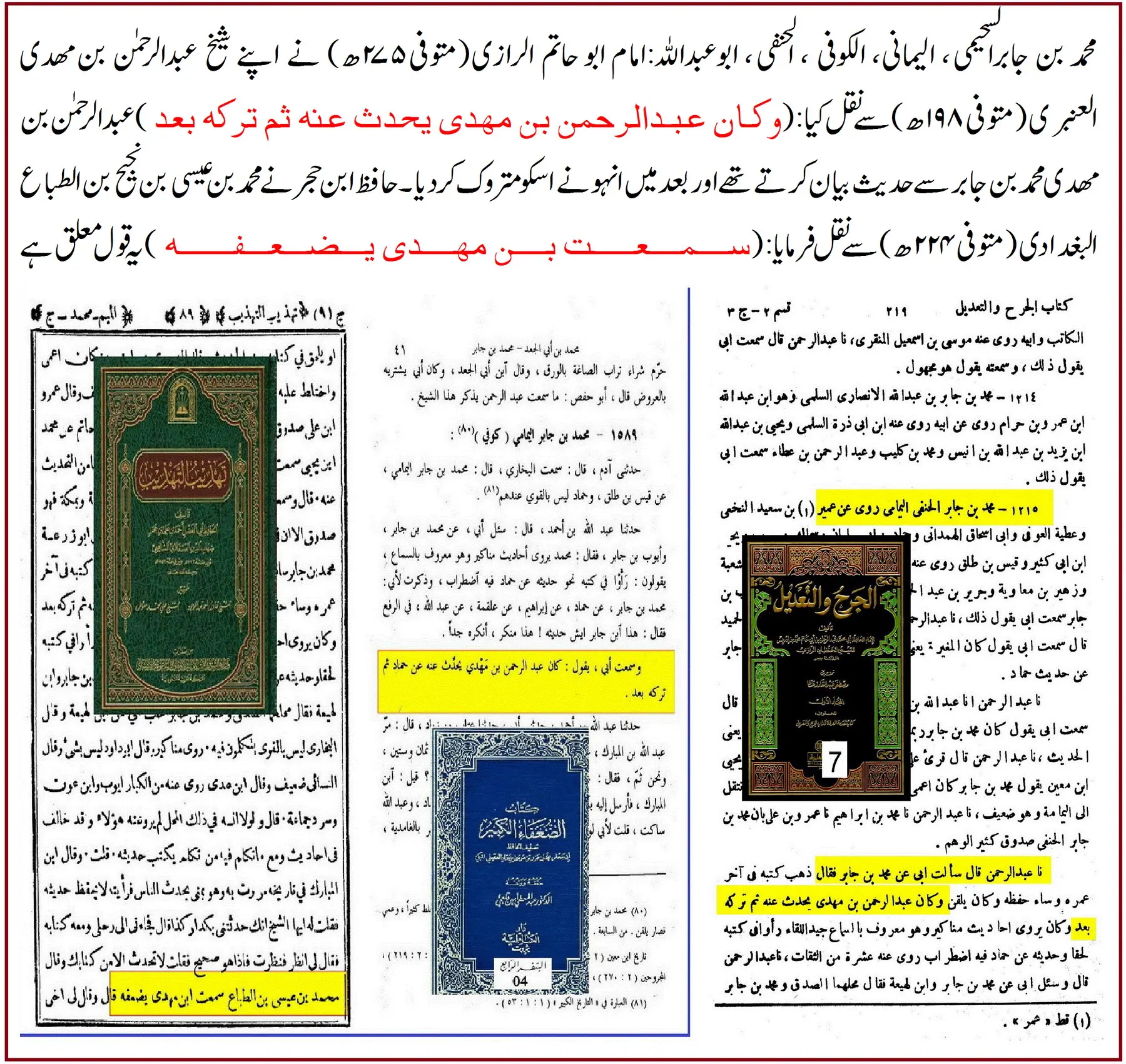
➎ Abdul Rahman bin Mahdi (quoted by Abu Hatim)
Arabic: «ذهب كتبه في آخر عمره وساء حفظه وكان يلقن … ثم تركه عبد الرحمن بن مهدي.»
Translation: Towards the end of his life, his books were lost, his memory deteriorated, he accepted prompting … Abdul Rahman bin Mahdi used to narrate first and then stopped.
Explanation: All this is evidence of his weakness and agreement on abandonment.
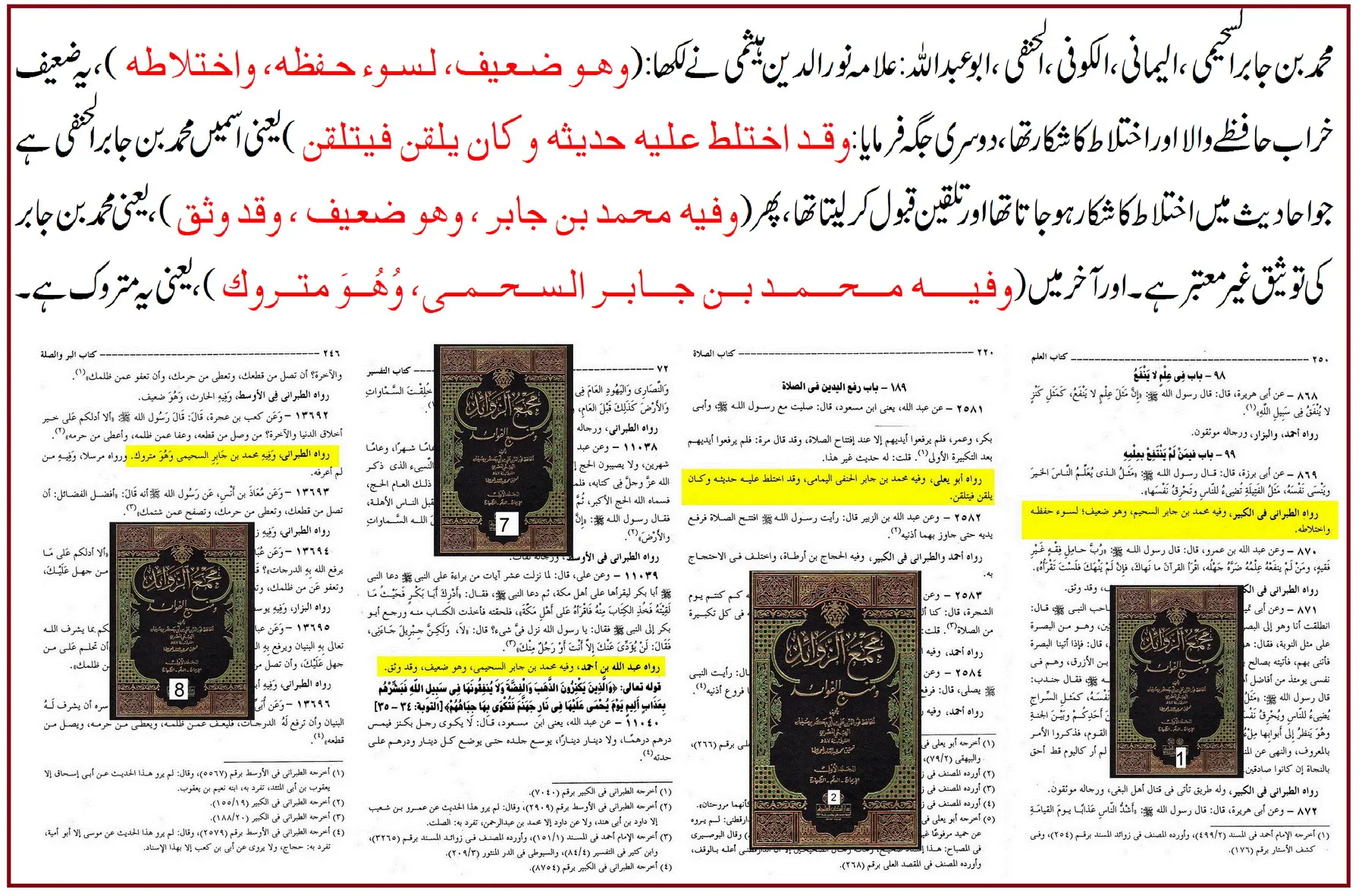
➏ Allama Haithami
Arabic: «محمد بن جابر السحيمي … ضعيف لسوء حفظه واختلاطه … وكان يُلقَّن فيتلقن.»
Translation: Muhammad bin Jabir is weak, his memory was bad, he suffered from confusion, he used to accept prompting.
Explanation: Haithami explained the cause of his weakness, confusion, and acceptance of prompting at various places.
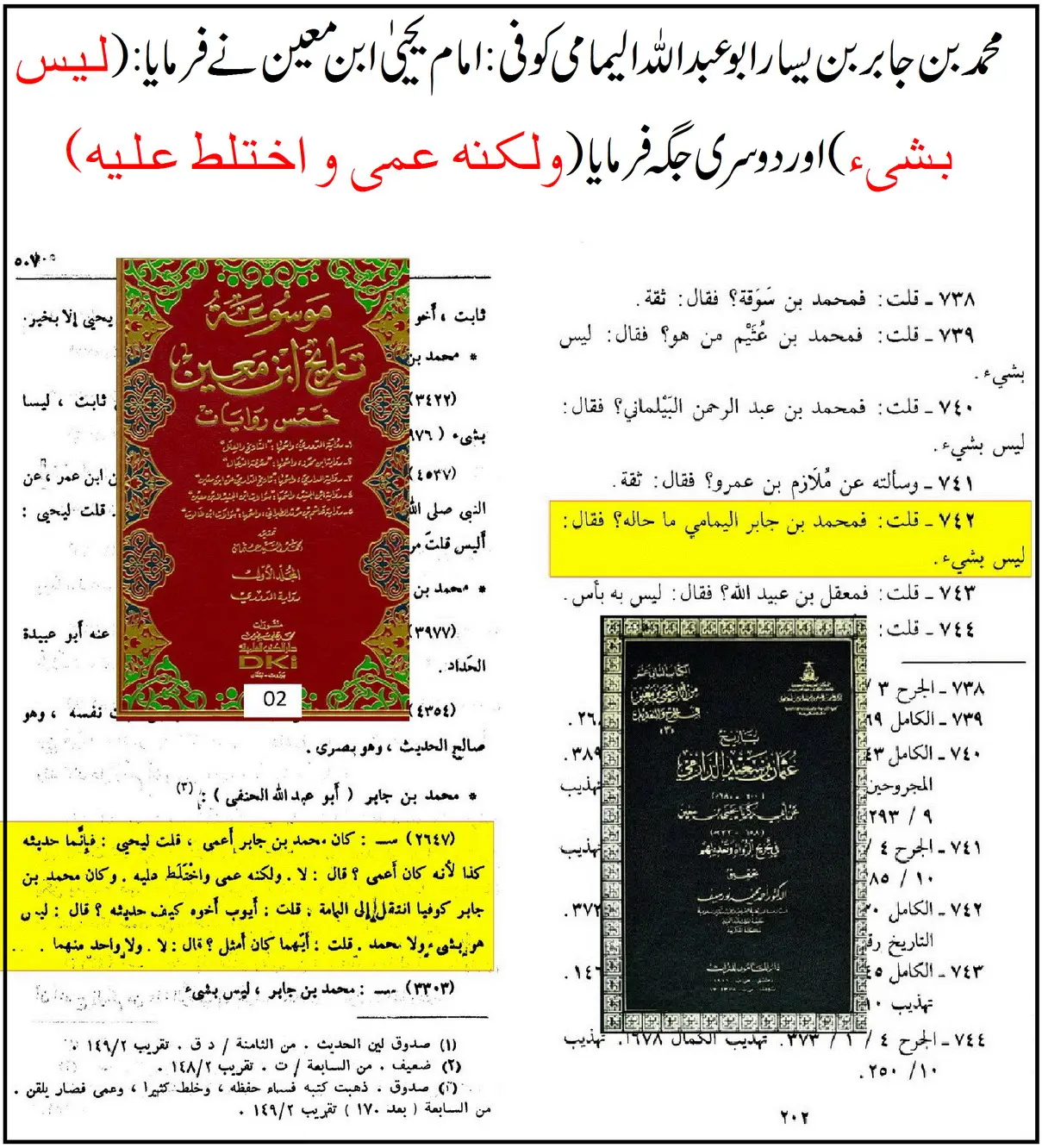
➐ Yahya bin Ma’in
Arabic: «محمد بن جابر ليس بشيء … لا يكتب حديثه … كان أعمى واختلط.»
Translation: Muhammad bin Jabir is nothing, his hadith is not recorded. He was blind and suffered from confusion.
Explanation: Ibn Ma’in called him unreliable multiple times.
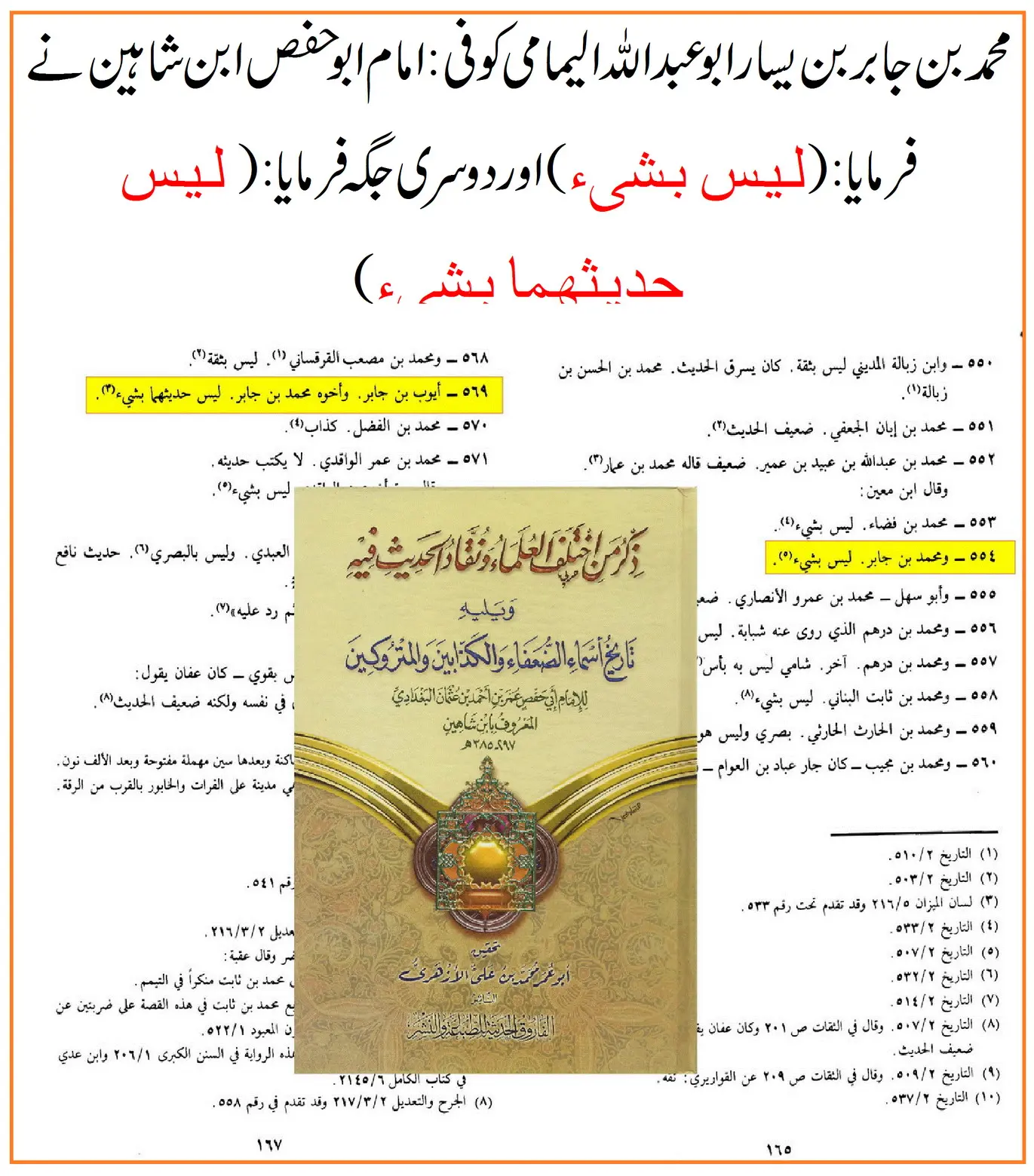
➑ Ibn Shaheen
Arabic: «أيوب بن جابر وأخوه محمد بن جابر ليس حديثهما بشيء.»
Translation: Ayub bin Jabir and his brother Muhammad bin Jabir, neither of their hadith is of any use.
Explanation: The narration of both brothers is rejected.
➒ Amr bin Ali
Arabic: «محمد بن جابر الحنفي صدوق كثير الوهم.»
Translation: Muhammad bin Jabir was truthful (saduq) but made many errors.
Explanation: Making many errors renders him weak.
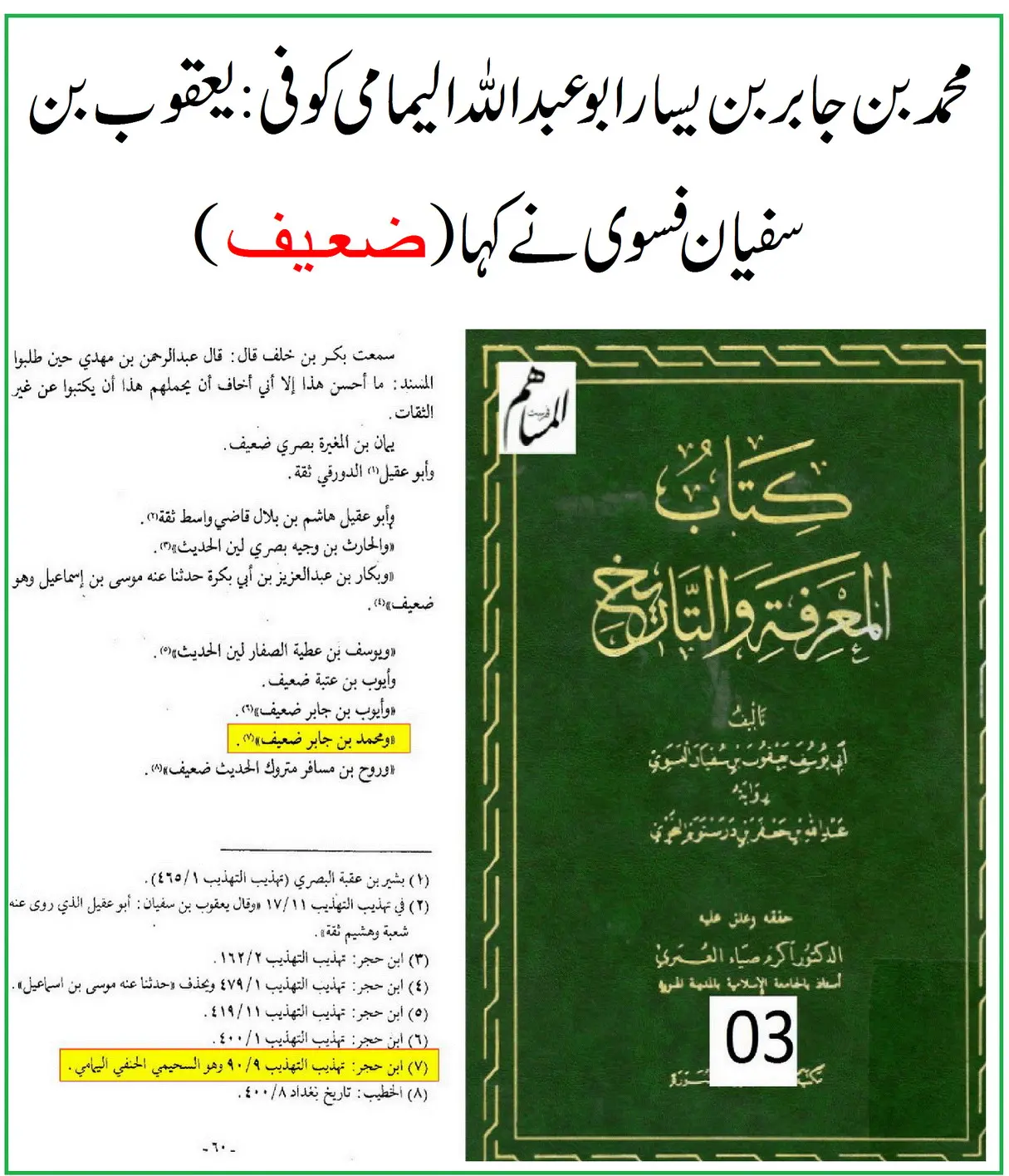
➓ Ya’qub bin Sufyan
Arabic: «محمد بن جابر ضعيف.»
Translation: Muhammad bin Jabir is weak.
Explanation: Brief and clear criticism.
⓫ Hafiz Zahbi
Arabic: «محمد بن جابر الحنفي اليمامي … سيّء الحفظ … قلت: ما هو بحجّة، وله مناكير عدة كابن لهيعة.»
Translation: Muhammad bin Jabir Yamami had a poor memory … I say he is not reliable and he had many rejected narrations like Ibn Lahi’ah.
Explanation: Hafiz Zahbi declared him weak and unreliable, and pointed out the abundance of rejected narrations.
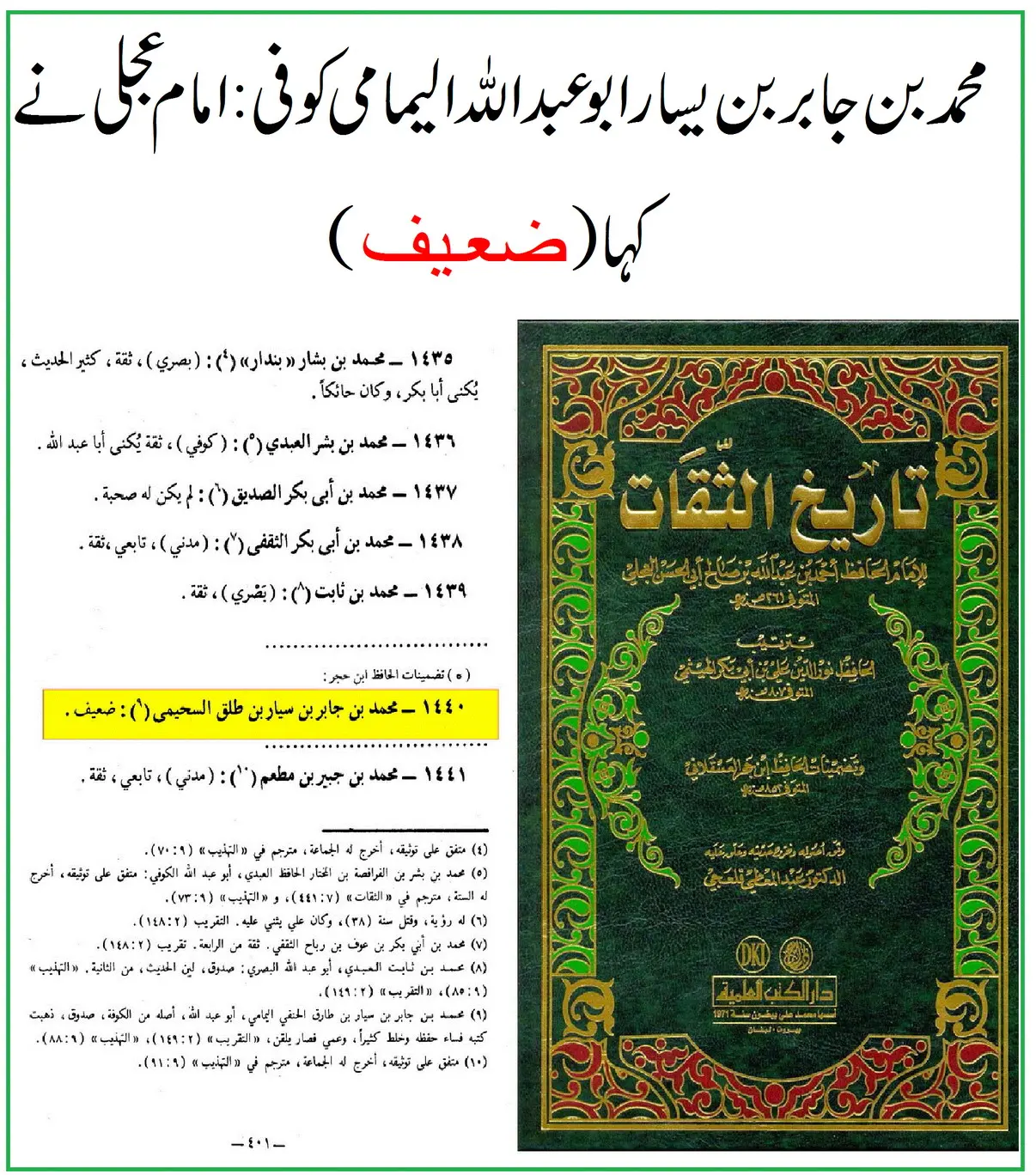
⓬ Imam Ajli
Arabic: «محمد بن جابر … ضعيف.»
Translation: Muhammad bin Jabir is weak.
Explanation: For a strict hadith scholar like Ajli to say weak is a very severe criticism.
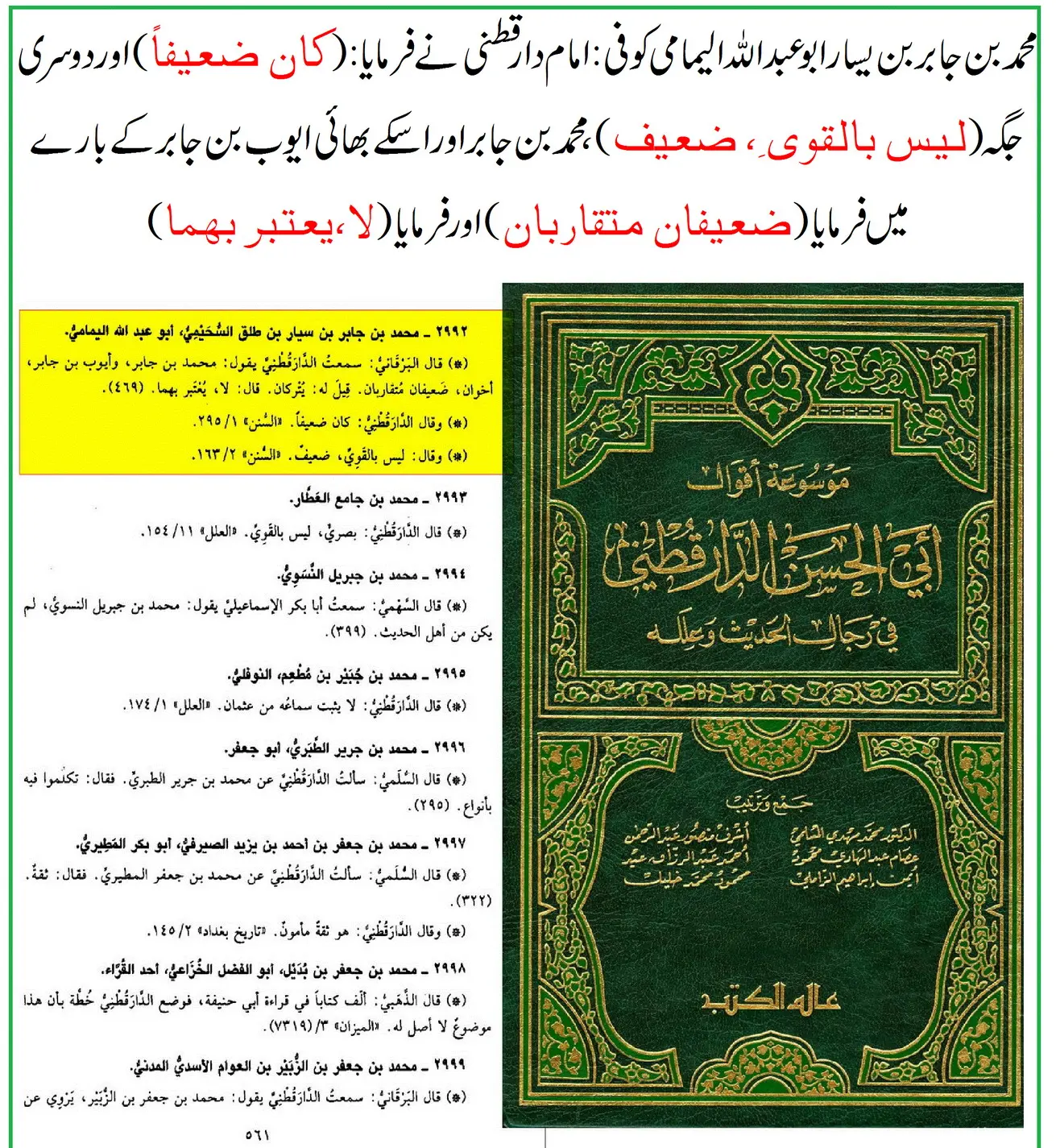
⓭ Imam Darqutni
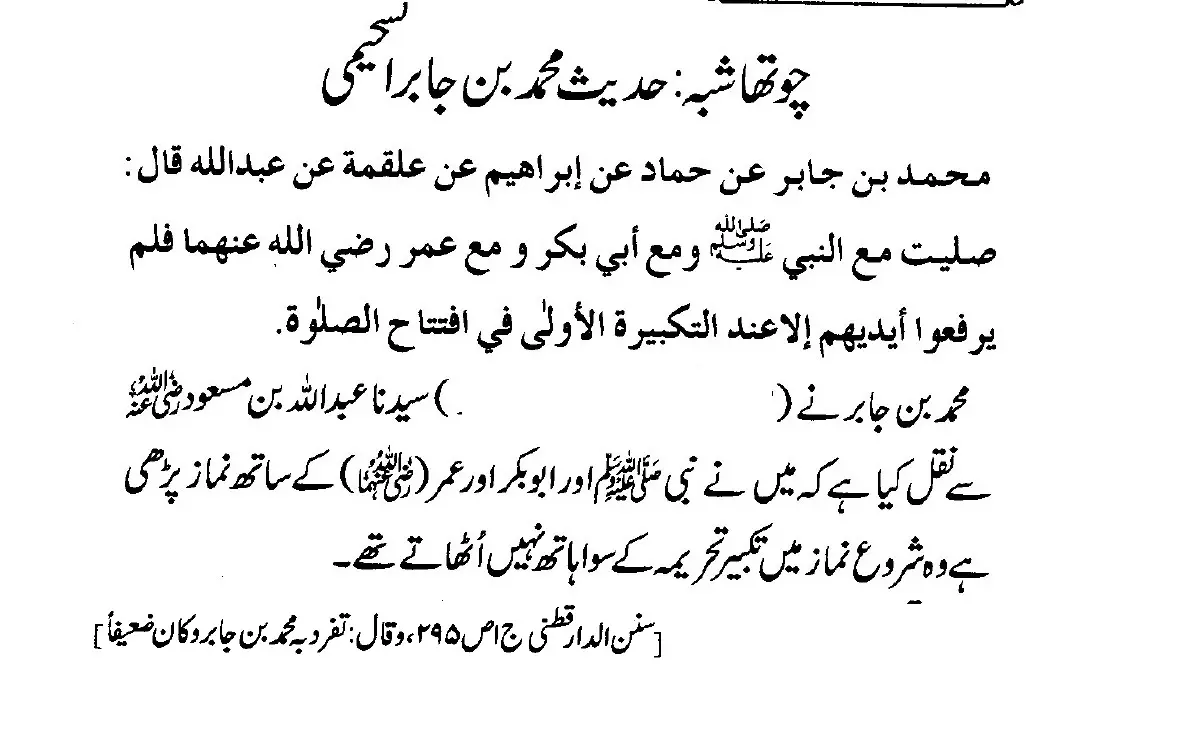
Arabic: «تفرد به محمد بن جابر … وكان ضعيفًا … وقال: محمد بن جابر وأيوب بن جابر أخوان ضعيفان متقاربان، لا يعتبر بهما.»
Translation: Muhammad bin Jabir narrated it alone and he was weak … Muhammad and Ayub, both brothers, are weak; their hadith is not reliable.
Explanation: Darqutni declared his narration unacceptable.
⓮ Ibn Hammad al-Dulabi
Arabic: «أبو عبد الله محمد بن جابر … ضعيف.»
Translation: Muhammad bin Jabir is weak.
Explanation: Another explicit criticism from an early hadith scholar.
⓯ Ibn Abi Khaythamah (Ibn Mu’in’s statement)
Arabic: «محمد بن جابر ليس حديثه بشيء.»
Translation: Muhammad bin Jabir’s hadith is worthless.
Explanation: This is also a severe criticism.
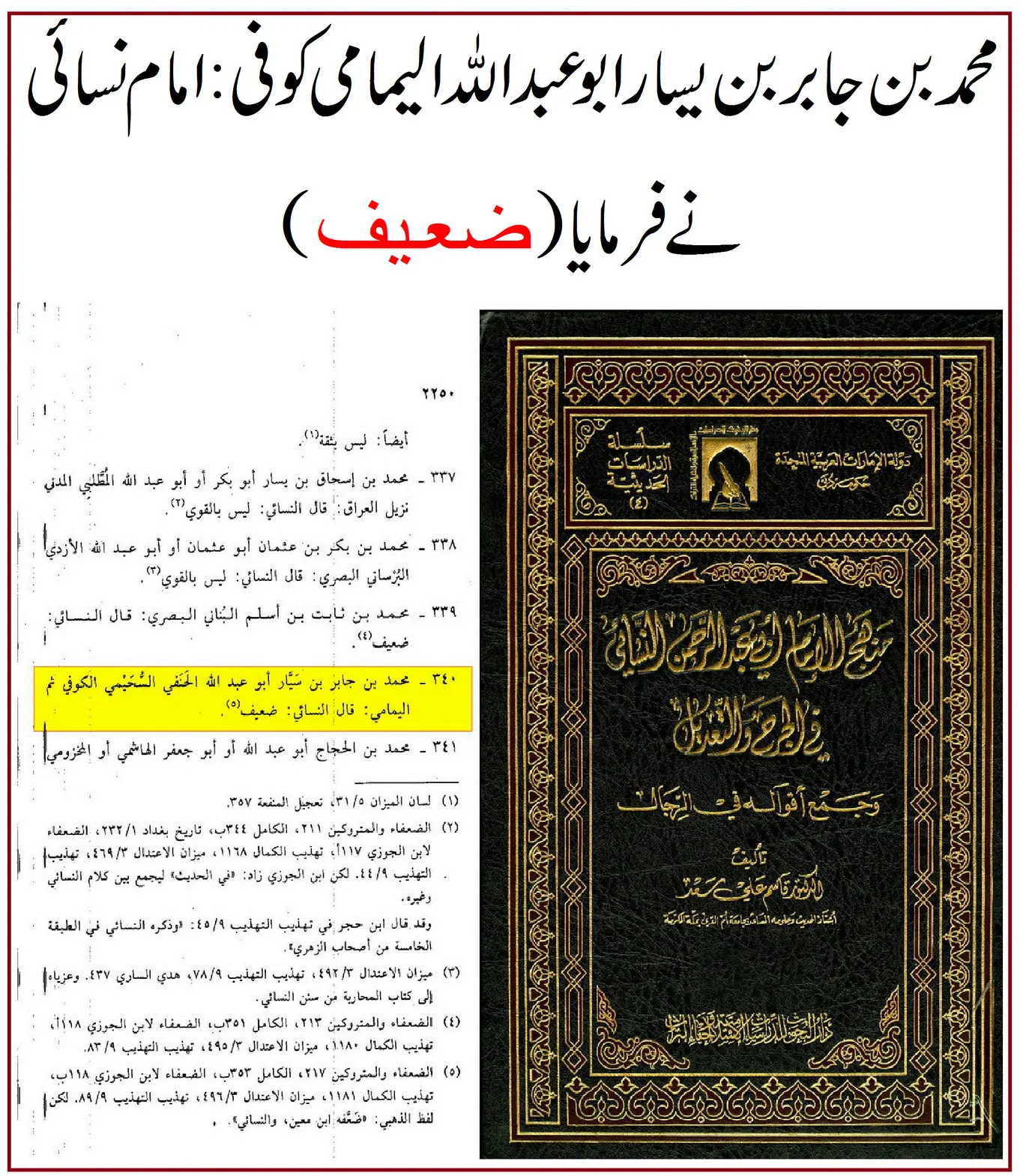
⓰ Imam Nasai
Arabic: «محمد بن جابر اليمامي ضعيف.»
Translation: Muhammad bin Jabir Yamami is weak.
Explanation: Nisai also declared him weak by calling him daif.
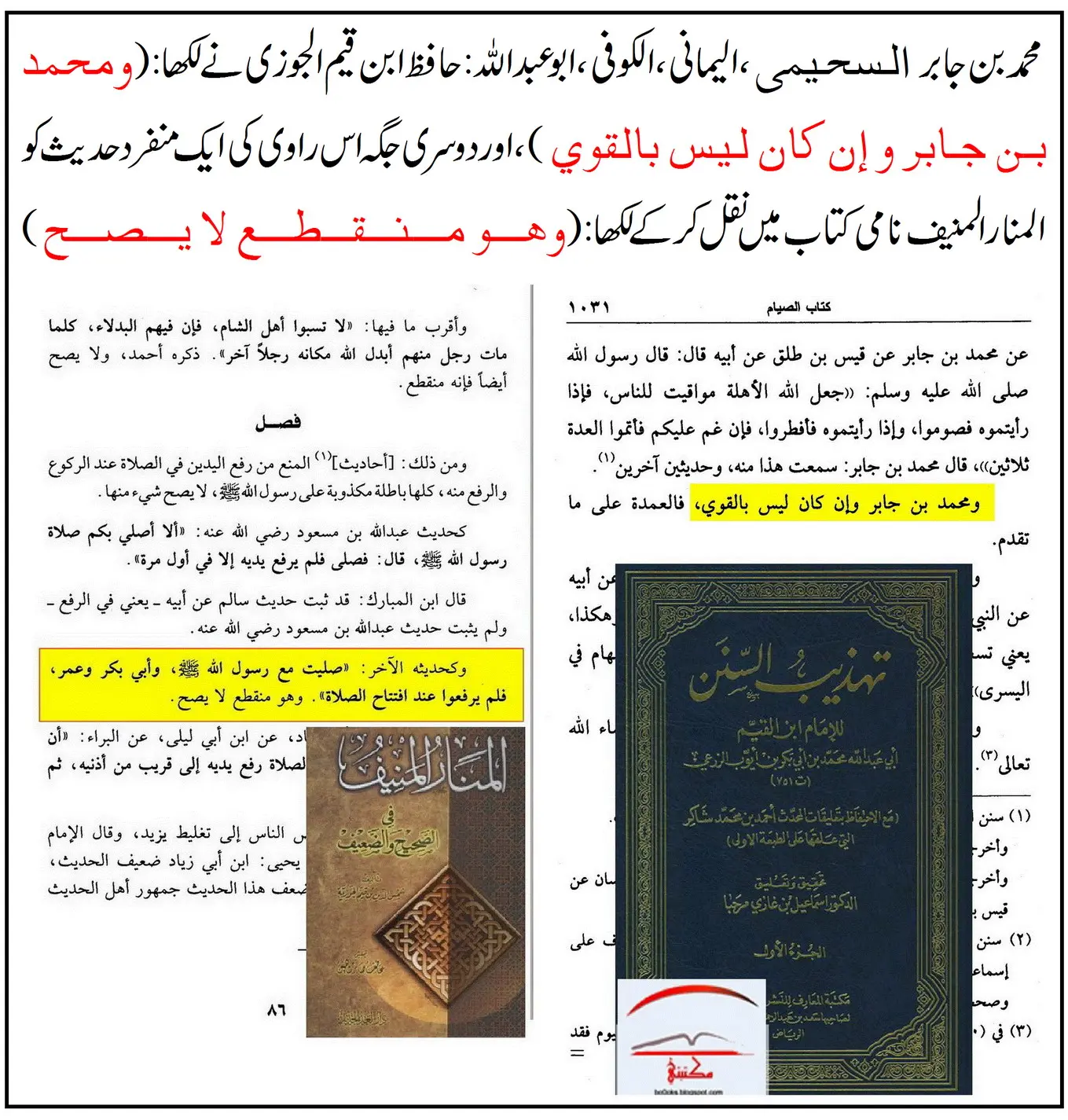
⓱ Ibn Qayyim al-Jawziyyah
Arabic: «محمد بن جابر … وإن كان ليس بالقوي … وهذا الحديث منقطع لا يصح.»
Translation: Muhammad ibn Jabir is not strong… and his solitary narration is disconnected and not authentic.
Explanation: Ibn Qayyim called his chain weak and disconnected.
⓲ Muhammad ibn Tahir al-Maqdisi
Arabic: «محمد بن جابر السحيمي ليس بشيء في الحديث.»
Translation: Muhammad ibn Jabir has no standing in hadith.
Explanation: Here too, there is explicit criticism, declaring him unreliable.
⓳ Hafiz Suyuti
Arabic: «حدثنا محمد بن جابر اليمامي … موضوع … آفته اليمامي.»
Translation: The narration of Muhammad ibn Jabir al-Yamami is fabricated… its defect lies with al-Yamami himself.
Explanation: Suyuti declared the narration denying the raising of hands as fabricated and attributed its defect to Muhammad ibn Jabir.
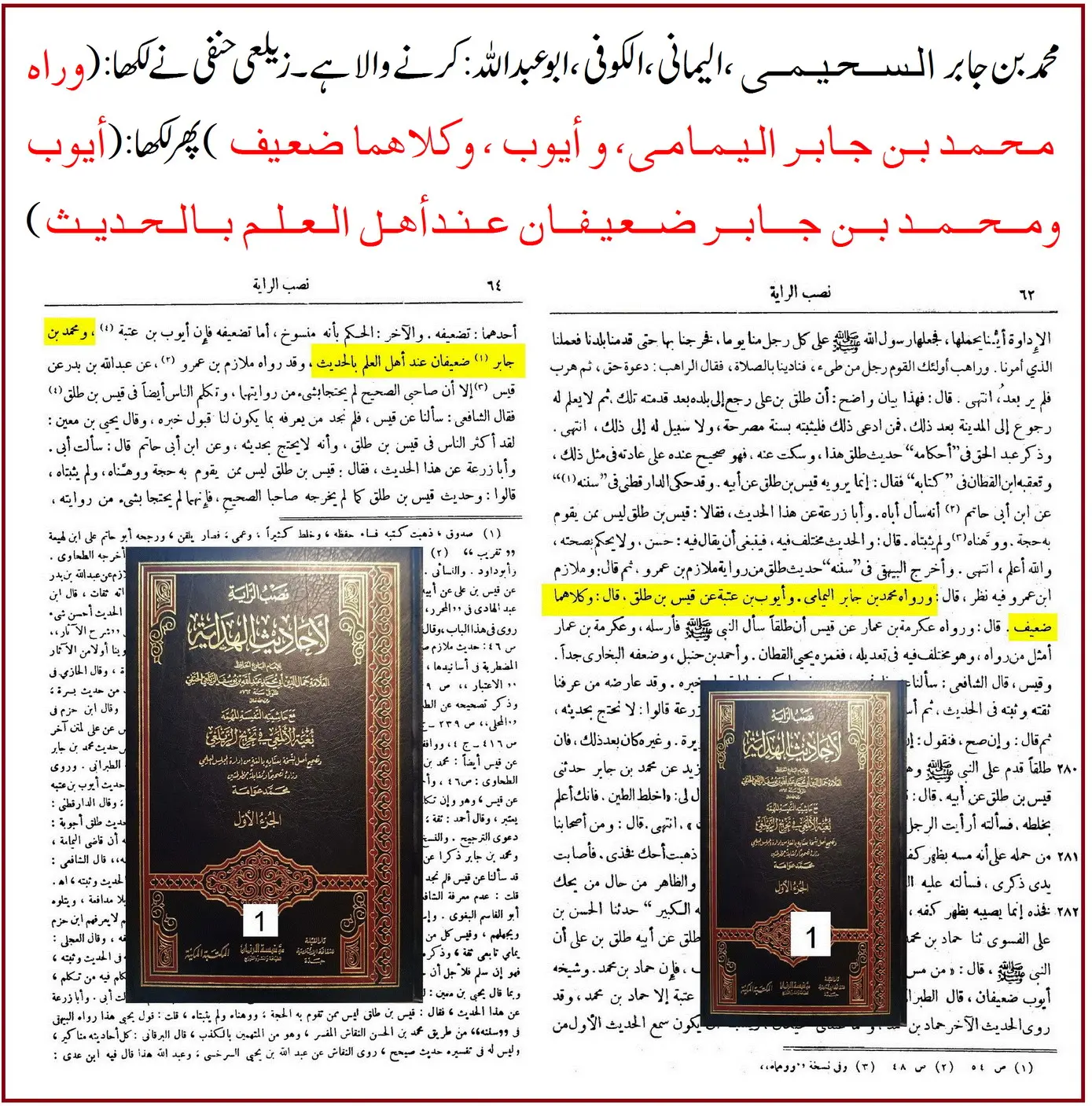
⓴ Zaili Hanafi
Arabic: «محمد بن جابر ضعيف … وكلاهما لا يحتج بهما.»
Translation: Muhammad ibn Jabir is weak… and no argument is taken from him or from his corroborating narrations.
Explanation: Zaili declared this narrator weak regarding a narration against his own school.
㉑ Imam Bayhaqi
Arabic: «محمد بن جابر السحيمي متروك … ليس بمحفوظ ولا يحتج به.»
Translation: Muhammad ibn Jabir al-Suhaymi is abandoned… his narration is not preserved (mahfuz) and he is not used as evidence.
Explanation: Al-Bayhaqi clearly called him abandoned (matruk) and not usable as evidence.
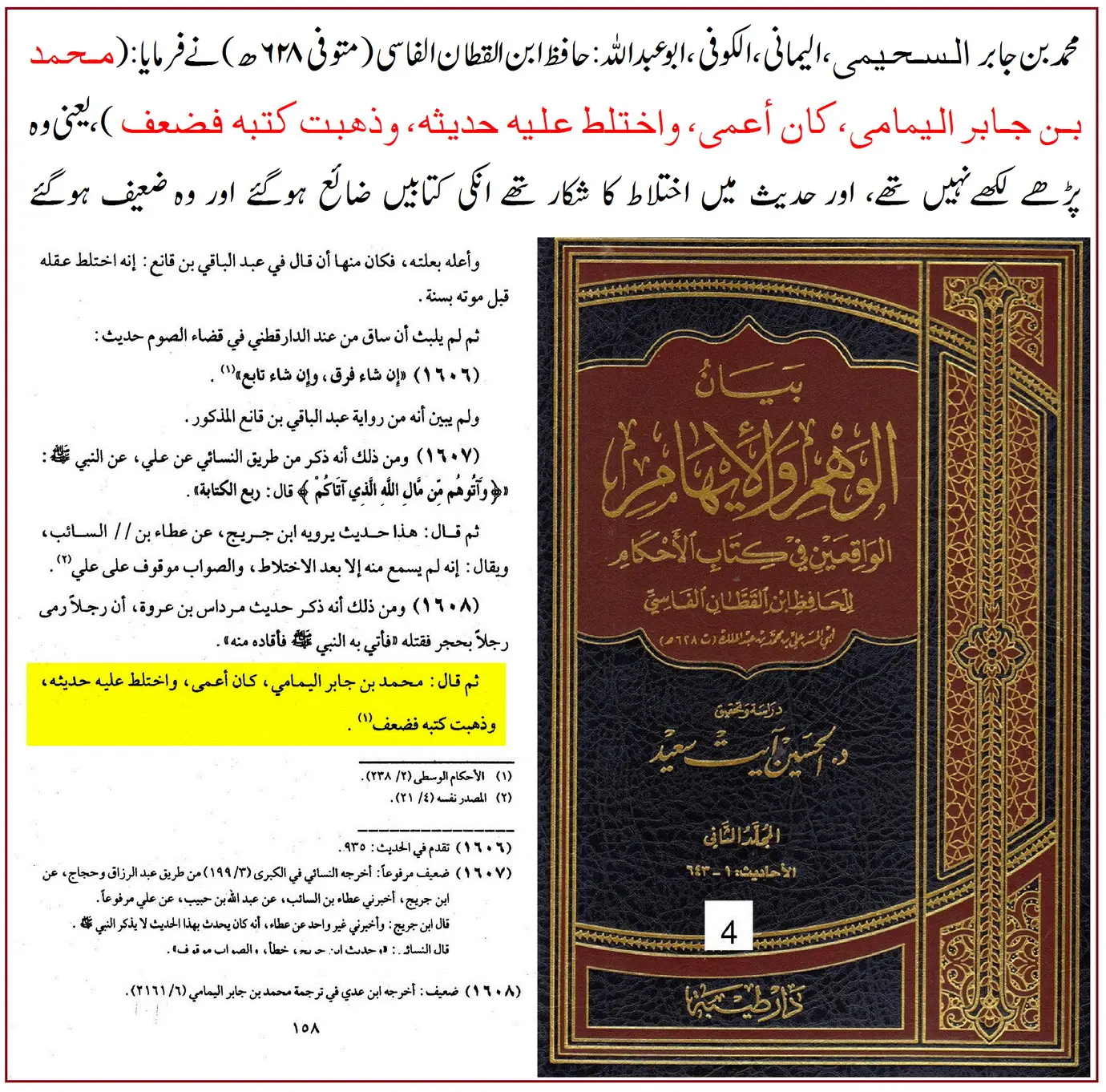
㉒ Ibn al-Qattan al-Fasi
Arabic: «محمد بن جابر اليمامي، كان أعمى، واختلط عليه حديثه، وذهبت كتبه فضعف.»
Translation: Muhammad ibn Jabir was blind, his hadith became mixed up, books were lost, and he became weak.
Explanation: Reason for weakness: being blind, loss of books, and confusion.
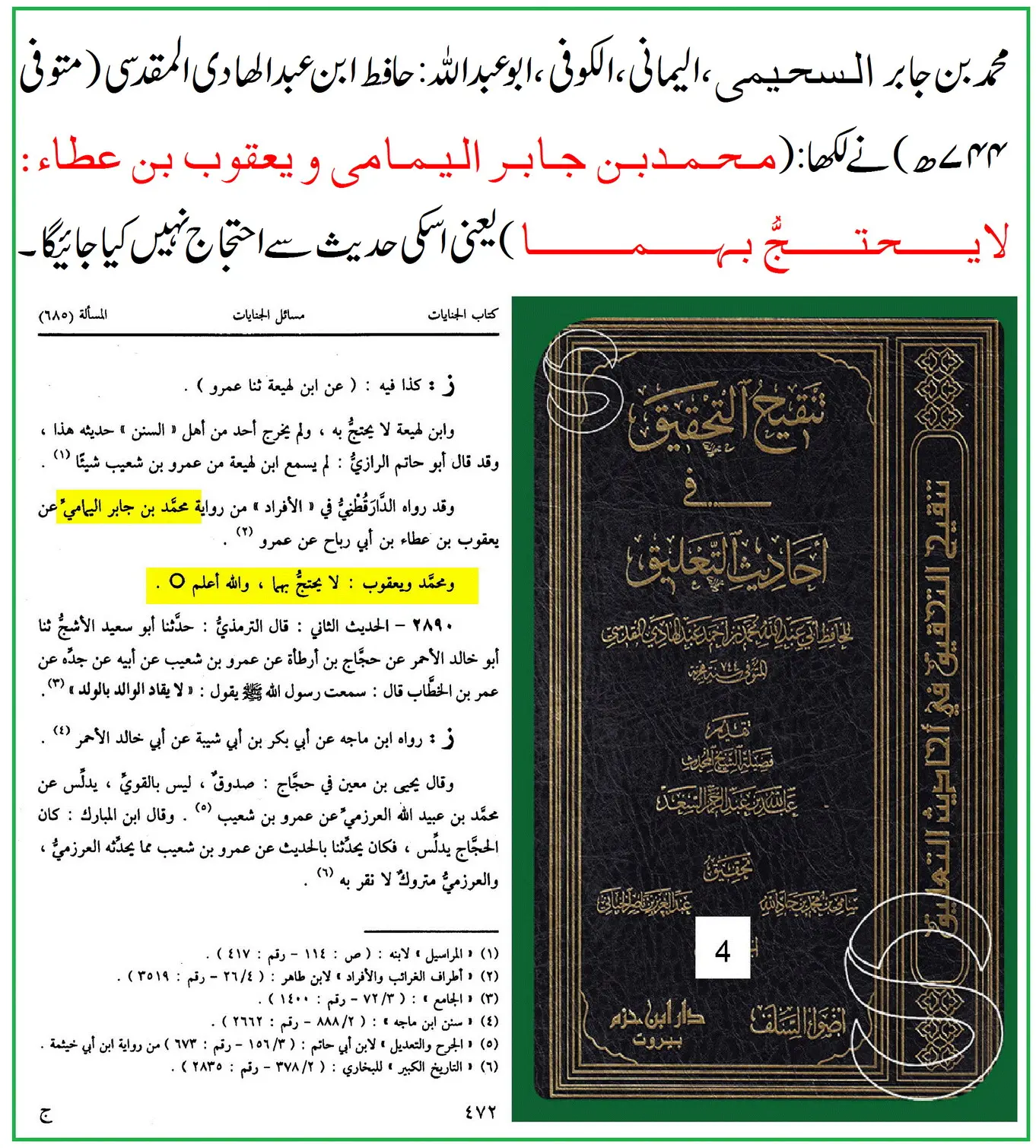
㉓ Ibn Abd al-Hadi al-Maqdisi
Arabic: «محمد ويعقوب لا يُحتج بهما.»
Translation: Neither Muhammad ibn Jabir nor Ya’qub ibn ‘Ata is used as evidence.
Explanation: Explicitly declared not usable as evidence.
㉔ Ibn al-Mulaqqin
Arabic: «محمد ويعقوب لا يُحتج بهما.»
Translation: Neither Muhammad ibn Jabir nor Ya’qub ibn ‘Ata is used as evidence.
Explanation: This criticism agrees with that of Ibn Abd al-Hadi.
㉕ Hafiz Ibn Hazm
Arabic: «… عن محمد بن جابر اليمامي، وهو هالك.»
Translation: Muhammad ibn Jabir al-Yamami is halik (ruined, i.e. unreliable).
Explanation: Ibn Hazm gave the harshest criticism.
㉖ Hafiz Ibn Kathir
Arabic: «وهذا ضعيف الإسناد ومتنُه فيه نكارة …»
Translation: Its chain is weak and its text is munkar (rejected).
Explanation: Ibn Kathir said his narration is weak in chain and rejected in text.
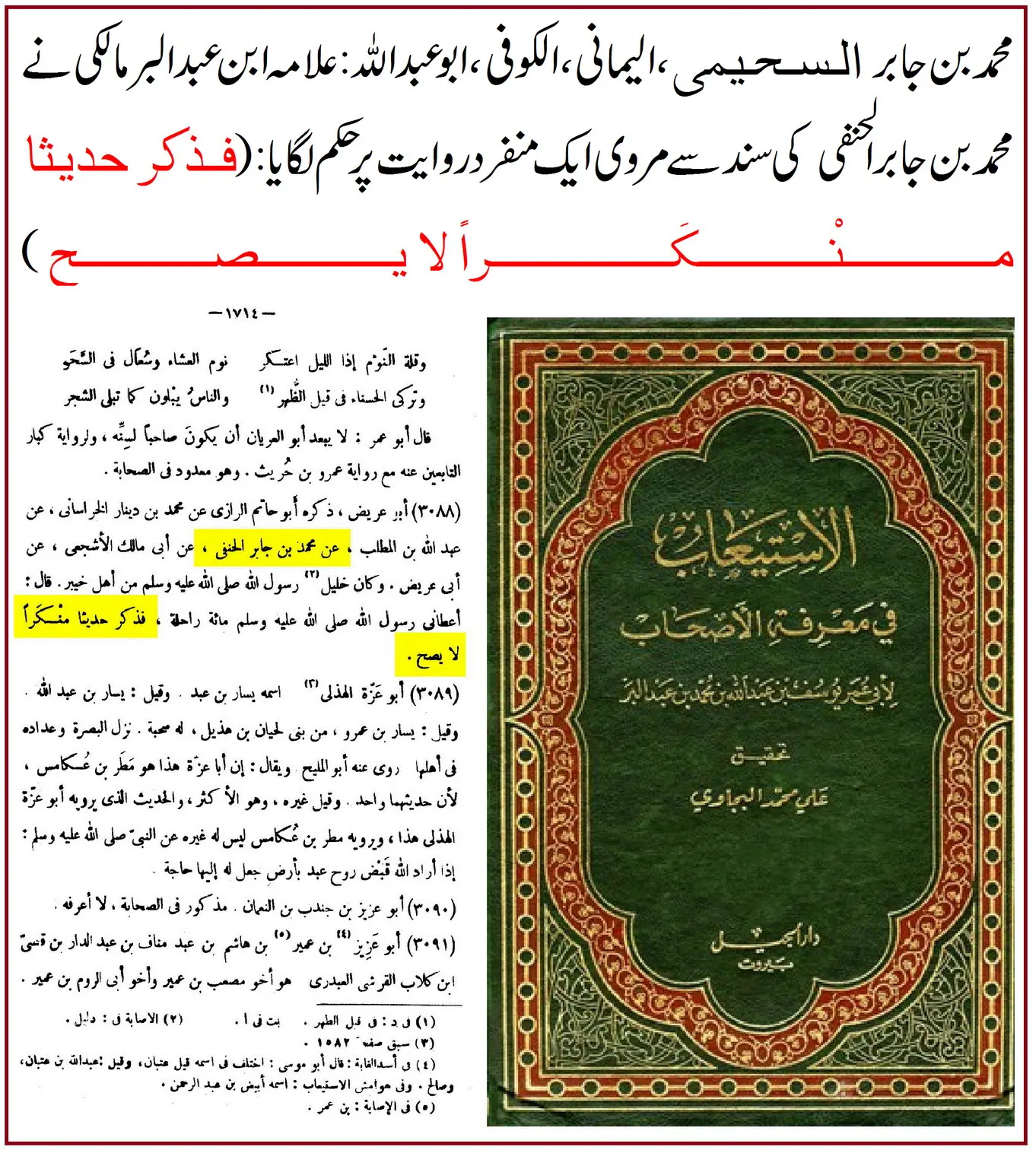
㉗ Ibn Abd al-Barr
Arabic: «… فذكر حديثًا منكرًا لا يصح.»
Translation: He narrated a rejected hadith which is not authentic.
Explanation: Ibn Abd al-Barr also declared his narration rejected and not authentic.
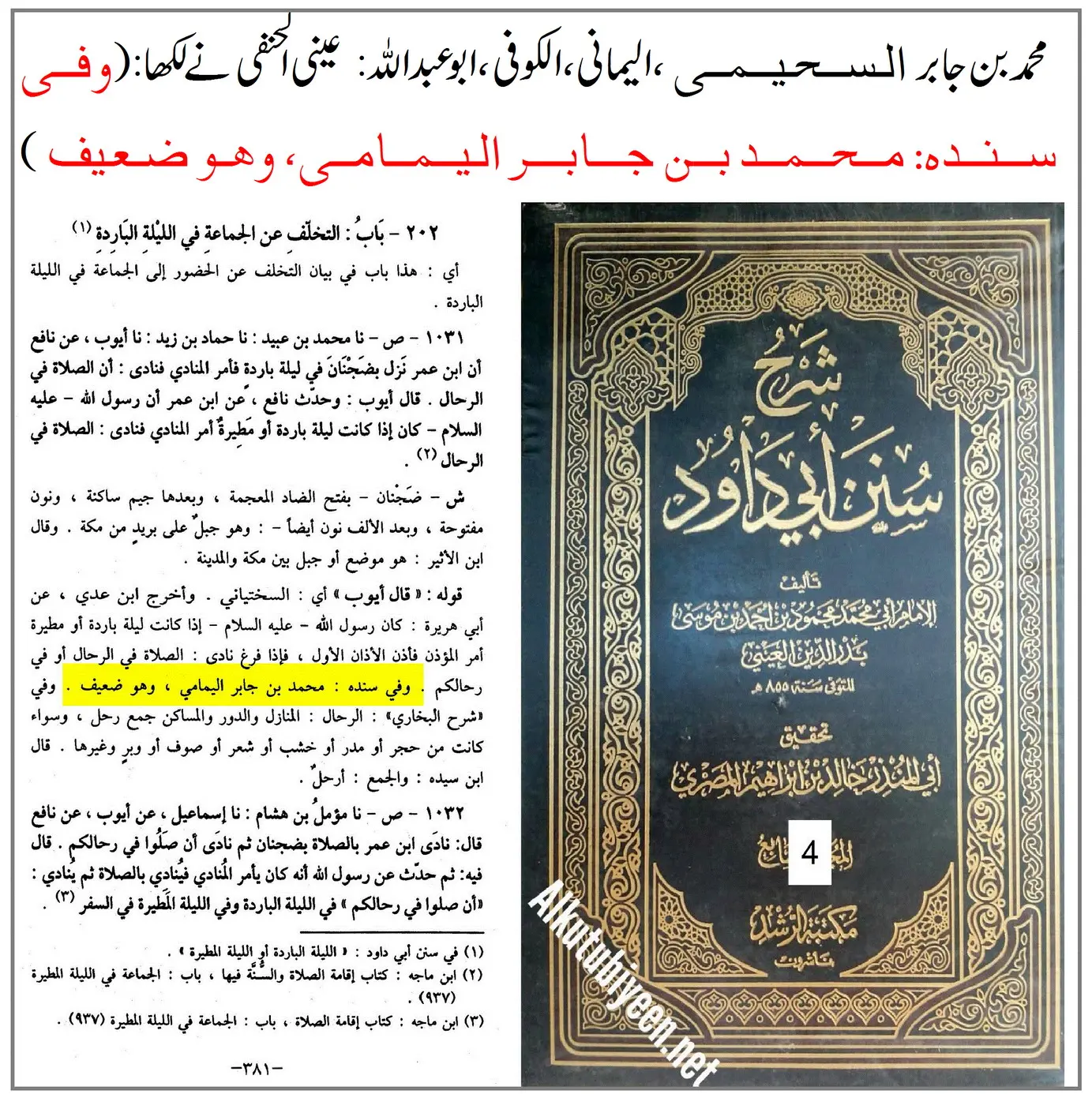
㉘ Badr al-Din al-‘Ayni (Hanafi)
Arabic: «ومحمد بن جابر ضعيف … سكت الناس عن حديثه.»
Translation: Muhammad bin Jabir is weak … and the muhaddithin have abandoned his hadith.
Explanation: Ayni also considered him weak contrary to his own school of thought.
㉙ Abu Ishaq al-Jawzjani
Arabic: «محمد وأيوب ابنا جابر غير مقنعين.»
Translation: The hadiths of both Muhammad and Ayub bin Jabir are unreliable.
Explanation: Both brothers were declared unacceptable as evidence.
㉚ Imam Nawawi
Arabic: «مداره على محمد بن جابر السحيمي، وهو شديد الضعف.»
Translation: This hadith depends on Muhammad bin Jabir and he is severely weak.
Explanation: Nawawi explicitly stated severe weakness.
㉛ Imam Abu Zur’ah al-Razi
Arabic: «محمد بن جابر ساقط الحديث عند أهل العلم.»
Translation: Muhammad bin Jabir is considered a rejected narrator by the scholars.
Explanation: Indicates the consensus position of the scholars.
㉜ Abdul Haq al-Ashbili
Arabic: «… وكان قد عمي فاختلط حديثه فضعف …»
Translation: He became blind and due to confusion in hadith, he became weak.
Explanation: Blindness and confusion were cited as reasons for weakness.
㉝ Imam ‘Aqili
Arabic: «لا يُتابع على عامة حديثه.»
Translation: Most of his hadiths are not corroborated.
Explanation: Meaning they are solitary narrations, hence weak.
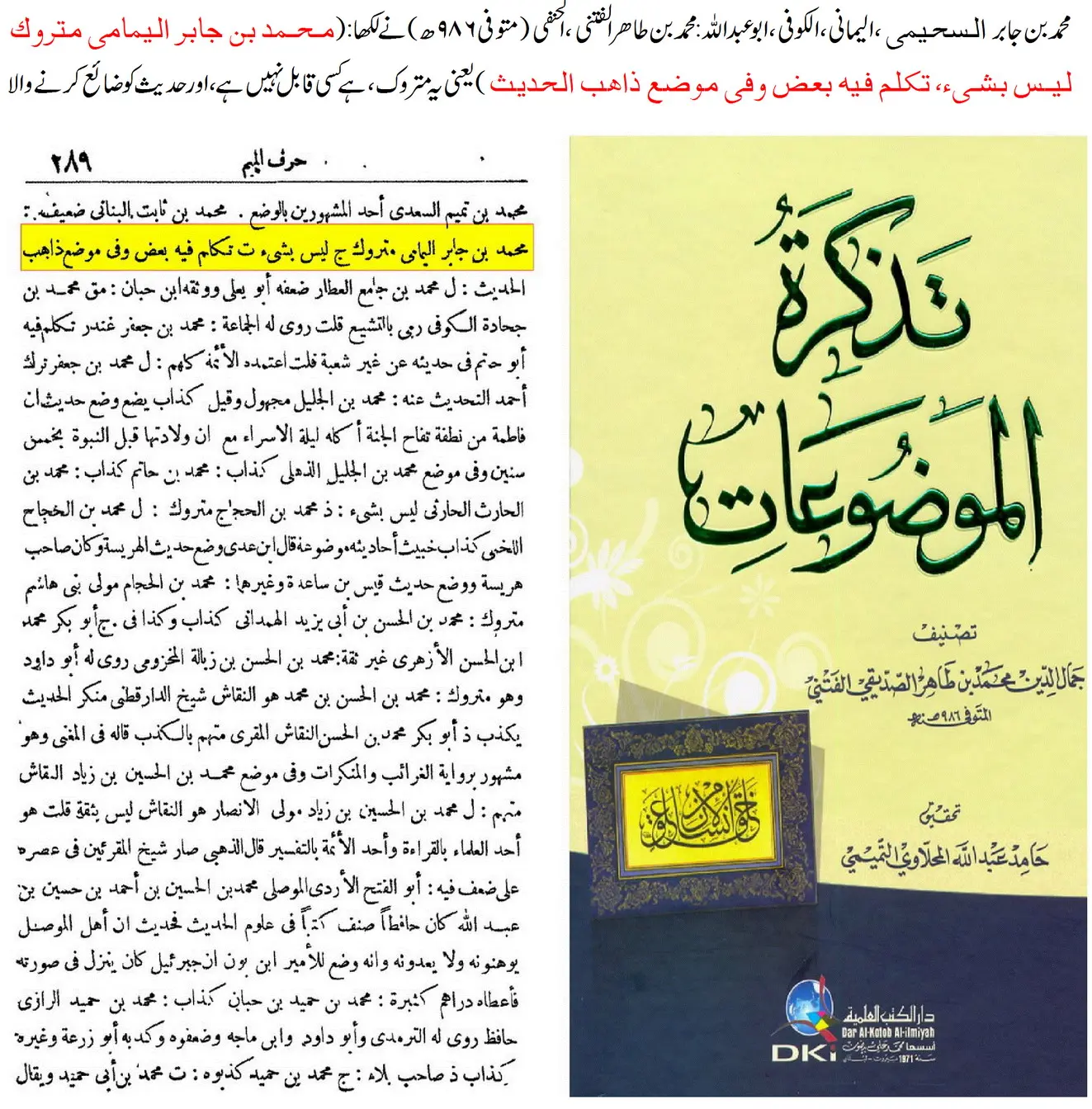
㉞ Muhammad bin Tahir al-Fatni
Arabic: «محمد بن جابر ليس بشيء.»
Translation: Muhammad bin Jabir is nothing.
Explanation: Severe criticism, meaning completely unreliable.
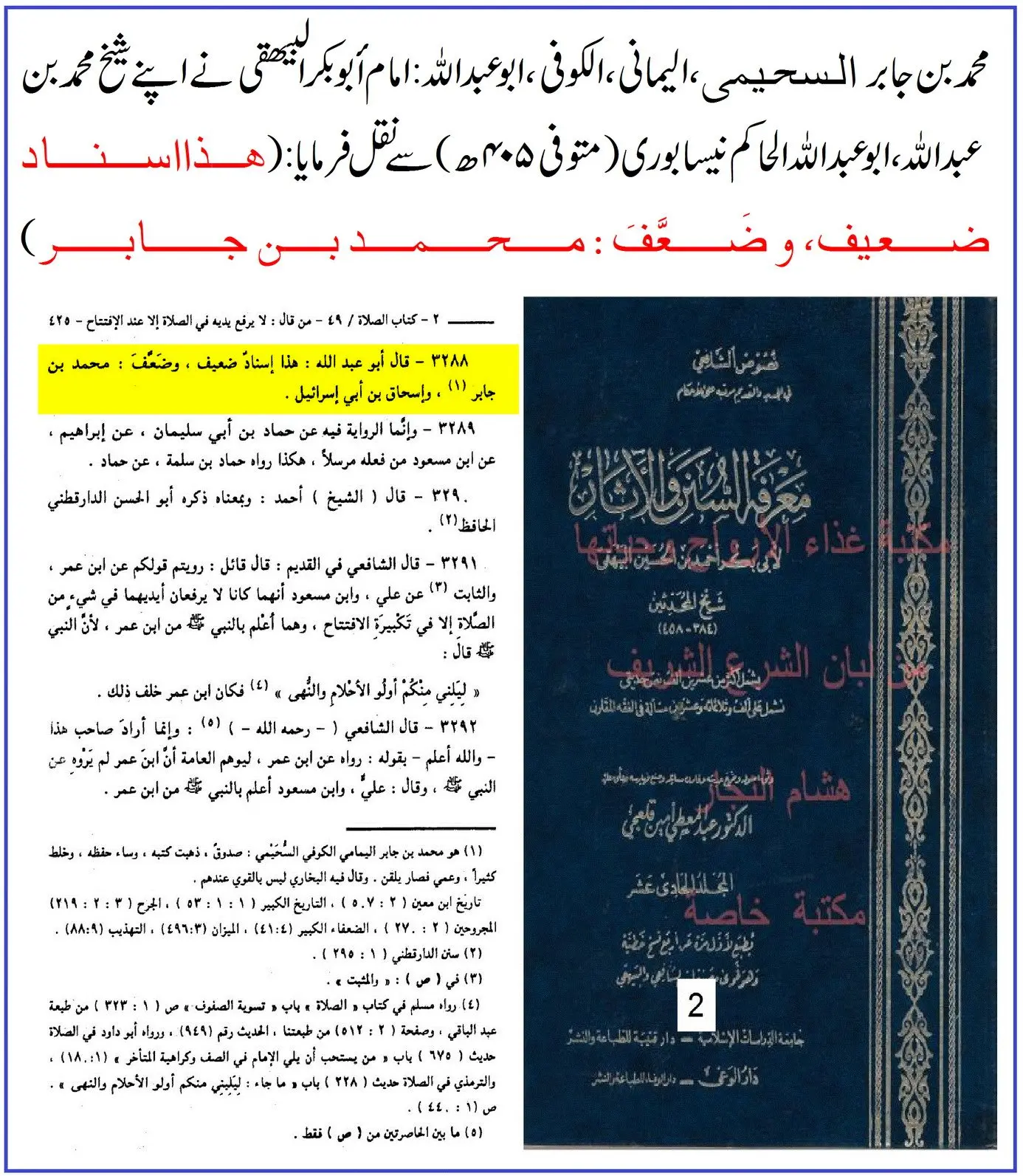
㉟ Imam Hakim Nishapuri
Arabic: «إسناد ضعيف … ضعف محمد بن جابر.»
Translation: The chain is weak … and the reason is the weakness of Muhammad bin Jabir.
Explanation: Hakim declared it explicitly weak.
㊱ Hafiz Ibn Hajar
Arabic: «صدوق، ذهبت كتبه فساء حفظه وخلط كثيرًا وعمي فصار يُلقن.»
Translation: He was truthful but his books were lost, his memory deteriorated, he suffered from frequent confusion, and due to blindness, he accepted prompting.
Explanation: Ibn Hajar called him “truthful” but also listed qualities of frequent confusion and of not being usable as evidence.
㊲ Hafiz Ibn Rajab
Arabic: «محمد بن جابر هو اليمامي: ضعيف.»
Translation: Muhammad bin Jabir al-Yamami is weak.
Explanation: A brief and decisive criticism.
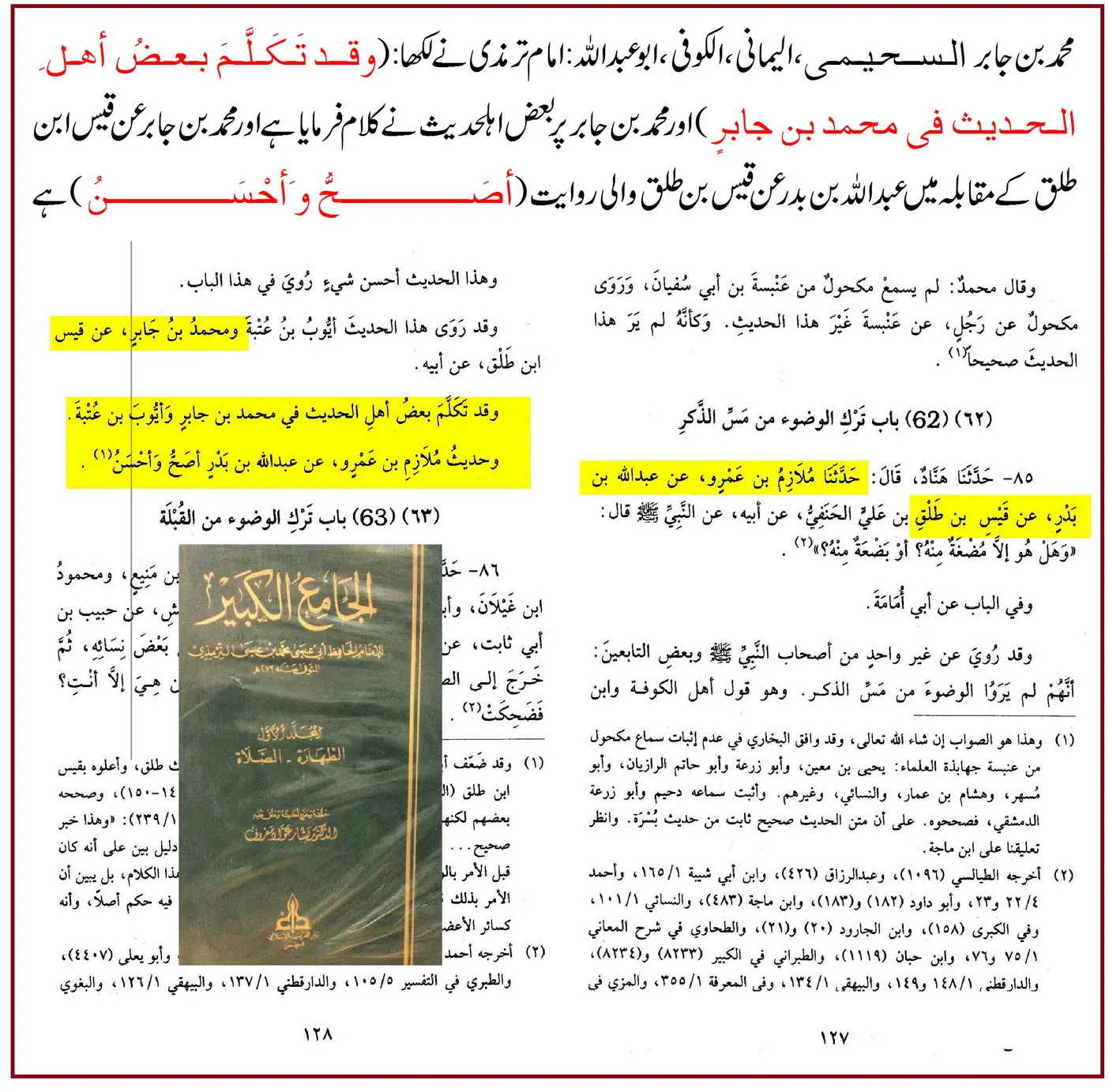
㊳ Imam Tirmidhi
Arabic: «وقد تكلم بعض أهل الحديث في محمد بن جابر …»
Translation: Some among the people of Hadith have spoken about Muhammad bin Jabir.
Explanation: Imam Tirmidhi hinted at his weakness.
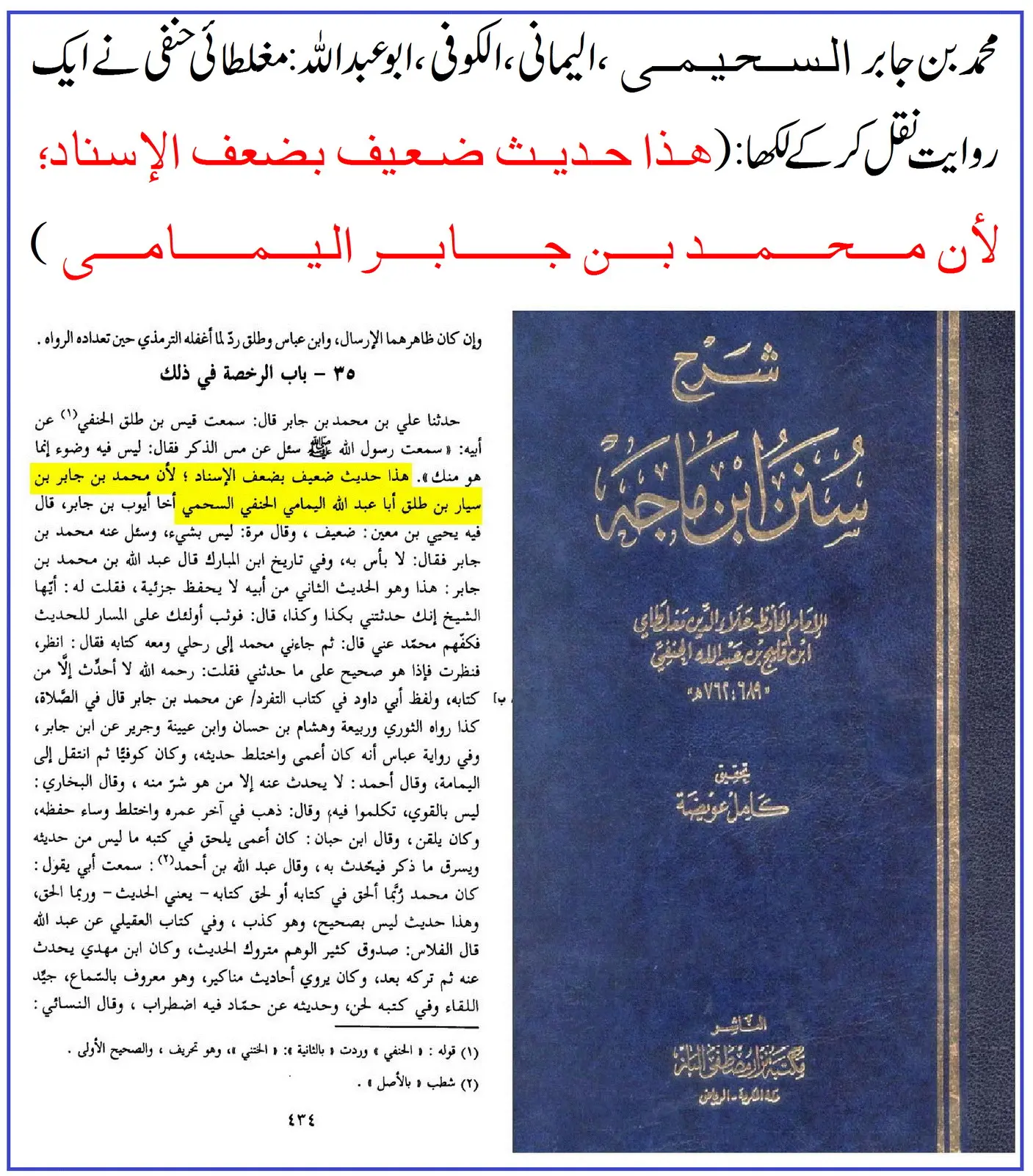
㊴ Maghlatai Hanafi
Arabic: «هذا حديث ضعيف … لأن محمد بن جابر … ضعيف … وقال أبو داود: ليس بشيء.»
Translation: This Hadith is weak … because it contains Muhammad bin Jabir who is weak … and Abu Dawood said: He is insignificant.
Explanation: The Hanafi Muhaddith also considered him weak.
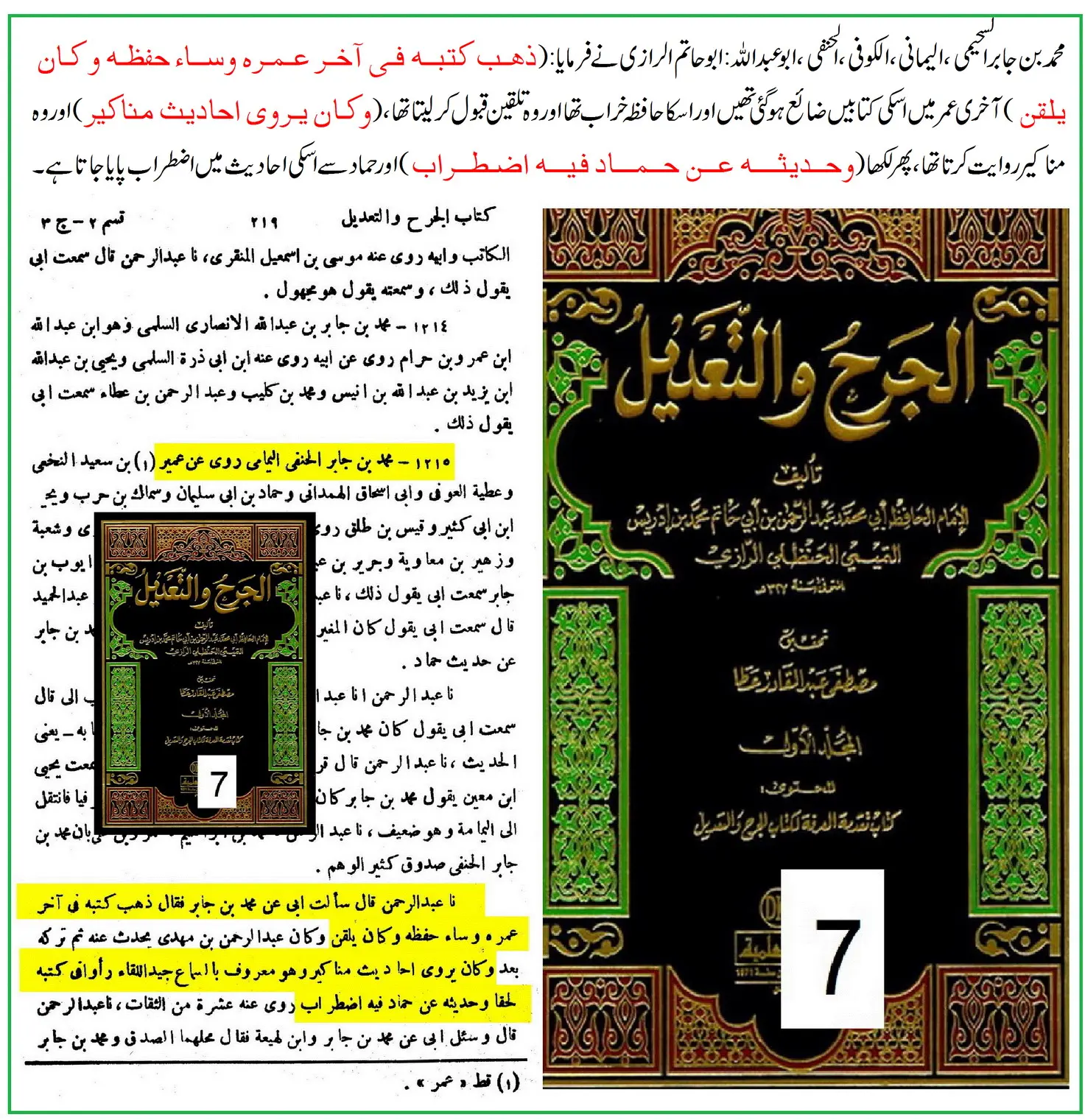
㊵ Imam Abu Hatim
Arabic: «ذهب كتبه … وساء حفظه وكان يلقن … وحديثه عن حماد فيه اضطراب.»
Translation: His books were lost, his memory deteriorated, he accepted prompting … and there is confusion in his hadith from Hammad.
Explanation: Explicit criticism of confusion and disorder.
㊶ Imam Iraqi
Arabic: «حديث ابن مسعود … من طريق محمد بن جابر، وهو آفته.»
Translation: This narration of Ibn Mas’ud is from the chain of Muhammad bin Jabir and is weak because of him.
Explanation: The defect in the hadith is attributed to him.
✦ Comprehensive Summary
From all these statements (41 hadith scholars), it is established that:
- Muhammad bin Jabir al-Yamami was blind, non-scribe, and after his books were lost, he suffered severe confusion and weakness.
- Most called him weak, several declared him abandoned, and some labeled his unique narrations as fabricated.
- Only in a few places was he called “truthful,” but it was clarified that due to the loss of books and confusion, he is not reliable.
✅ Conclusion:
The criticisms of Muhammad bin Jabir al-Yamami by the majority of hadith scholars are definitive and unanimous, therefore none of his narrations are authentic or authoritative.
Scans of Important References