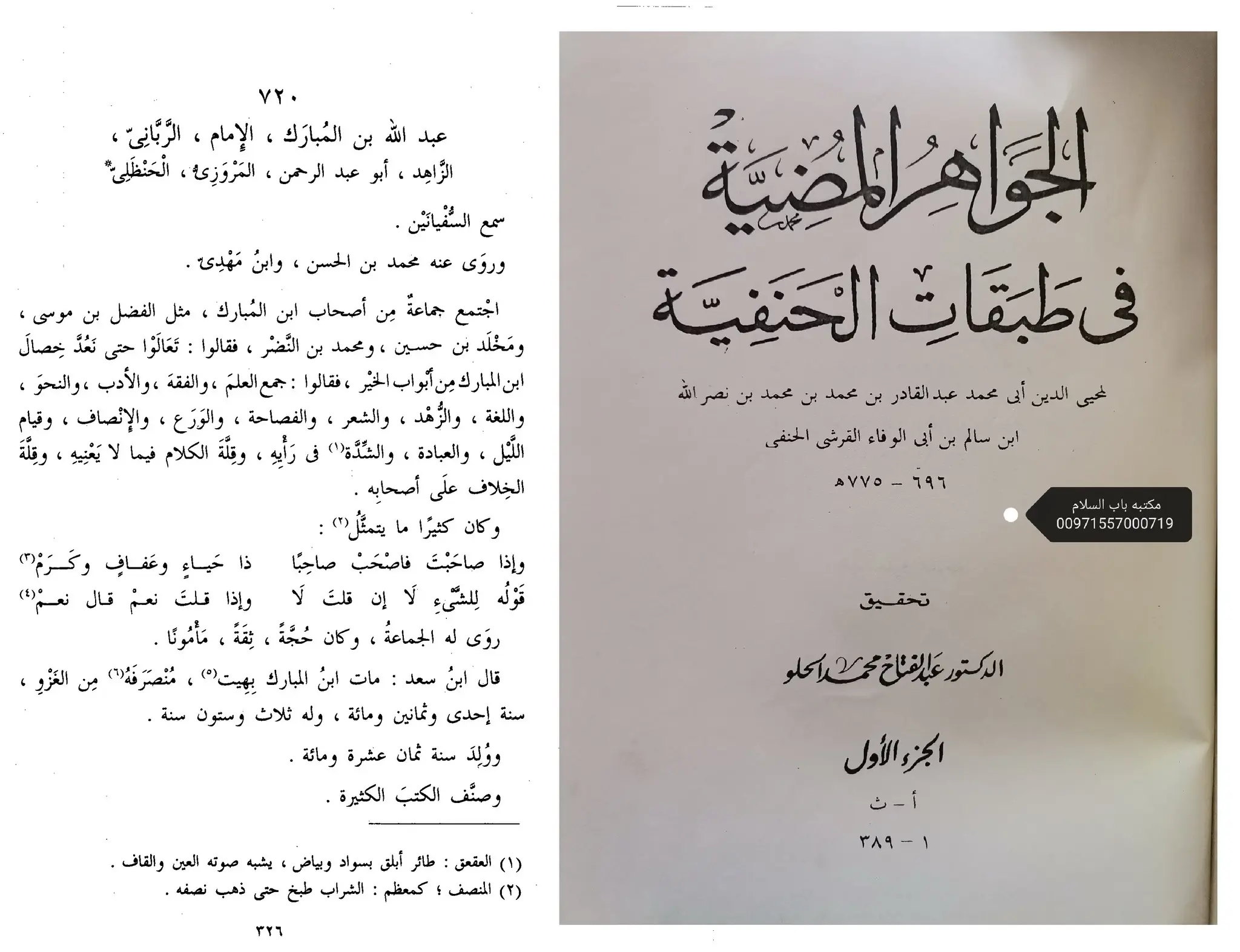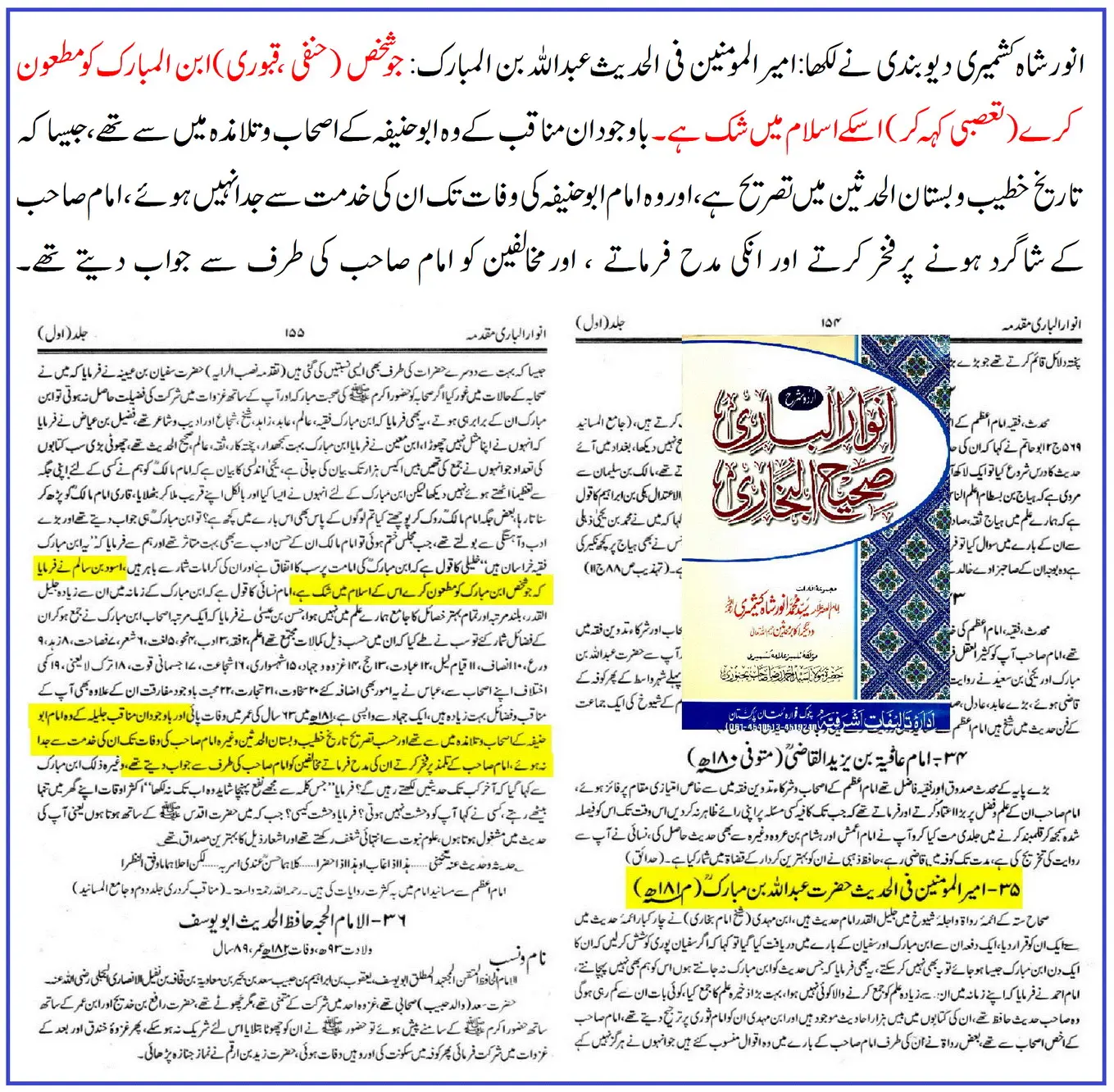
In this article, we will review the discussion regarding the relationship between Imam Abdullah bin Al-Mubarak (181 AH) and Imam Abu Hanifa (150 AH). In Hanafi books such as Al-Jawahir Al-Madiyah (Abdul Qadir Al-Qurashi Hanafi, died 775 AH) and biased Hanafis like Anwar Shah Kashmiri, it has been claimed that:
- Ibn Al-Mubarak was a student of Imam Abu Hanifa and took pride in his knowledge.
- Ibn Al-Mubarak was counted among the Hanafi school.
Whereas the reality is that Imam Ibn Al-Mubarak himself criticized Imam Abu Hanifa harshly on multiple occasions, distanced himself from him, and in his last will advised abandoning his narrations.
In this article, we will present each reference with the Arabic text, then explain its chain of transmission and grading. This will make it clear to readers that the “endorsement” (of Abu Hanifa) attributed to Ibn Al-Mubarak in Hanafi books is actually based on weak and fabricated narrations, while his authentic statements are against Abu Hanifa.
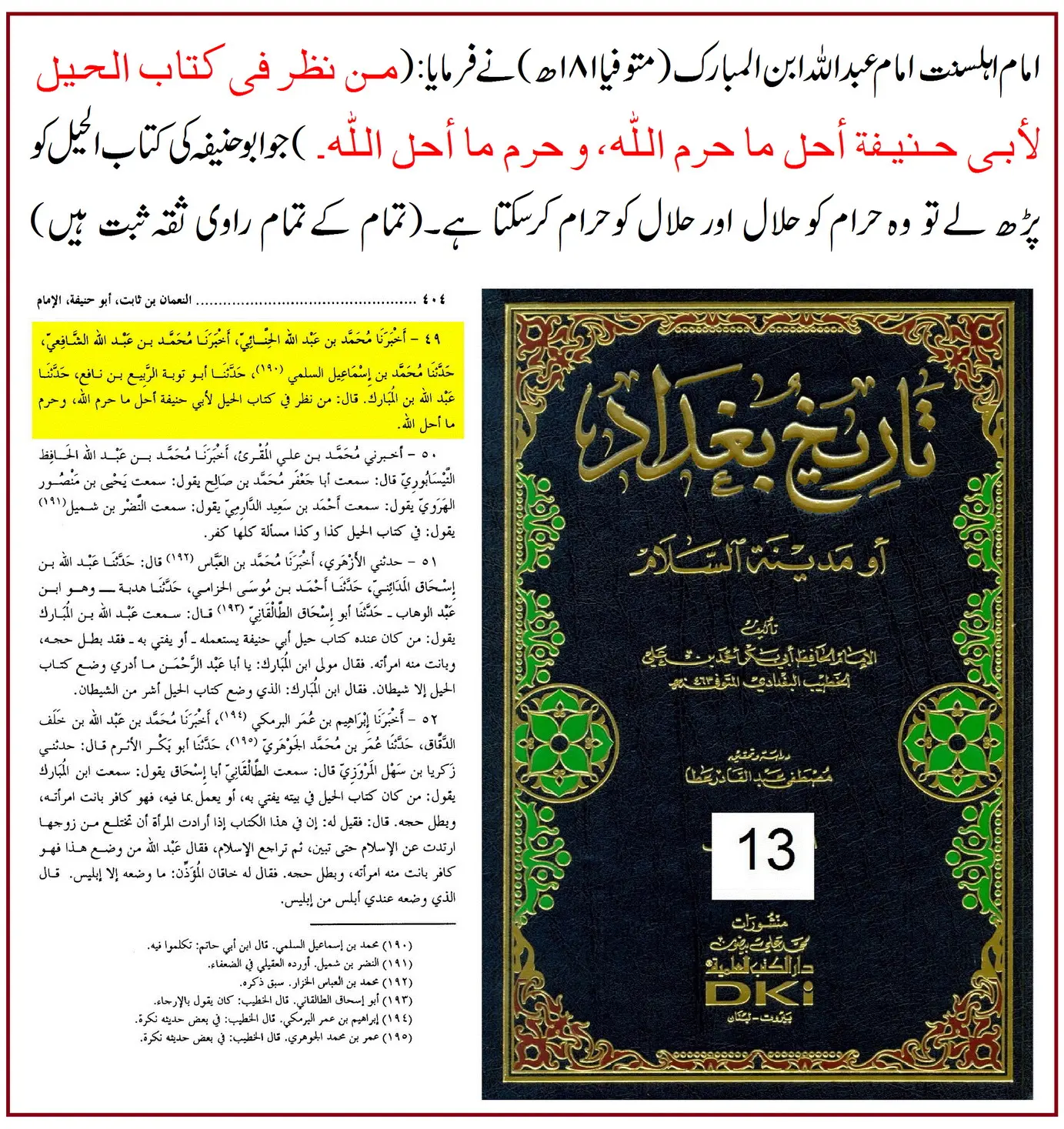
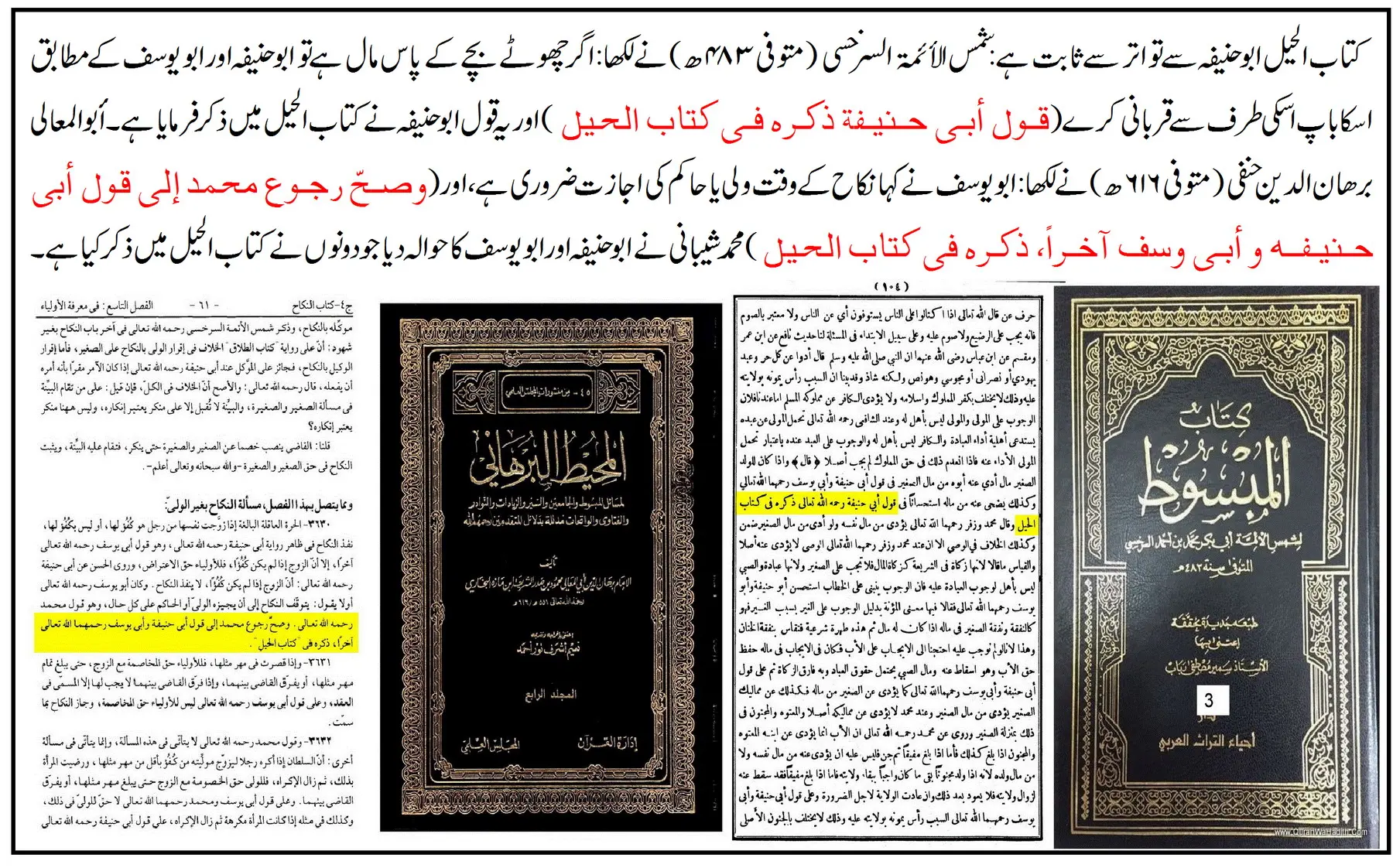
Ibn Al-Mubarak’s Criticism of Abu Hanifa’s Book “Al-Hiyal”
Text:
Abdullah bin Al-Mubarak said: مَنْ نَظَرَ فِي كِتَابِ الْحِيَلِ لِأَبِي حَنِيفَةَ أَحَلَّ مَا حَرَّمَ اللَّهُ، وَحَرَّمَ مَا أَحَلَّ اللَّهُ.
Translation: Ibn al-Mubarak (may Allah have mercy on him) said: “Whoever looks at Abu Hanifa’s book Al-Hiyal will make the forbidden lawful and the lawful forbidden.”
Judgment of the narrators:
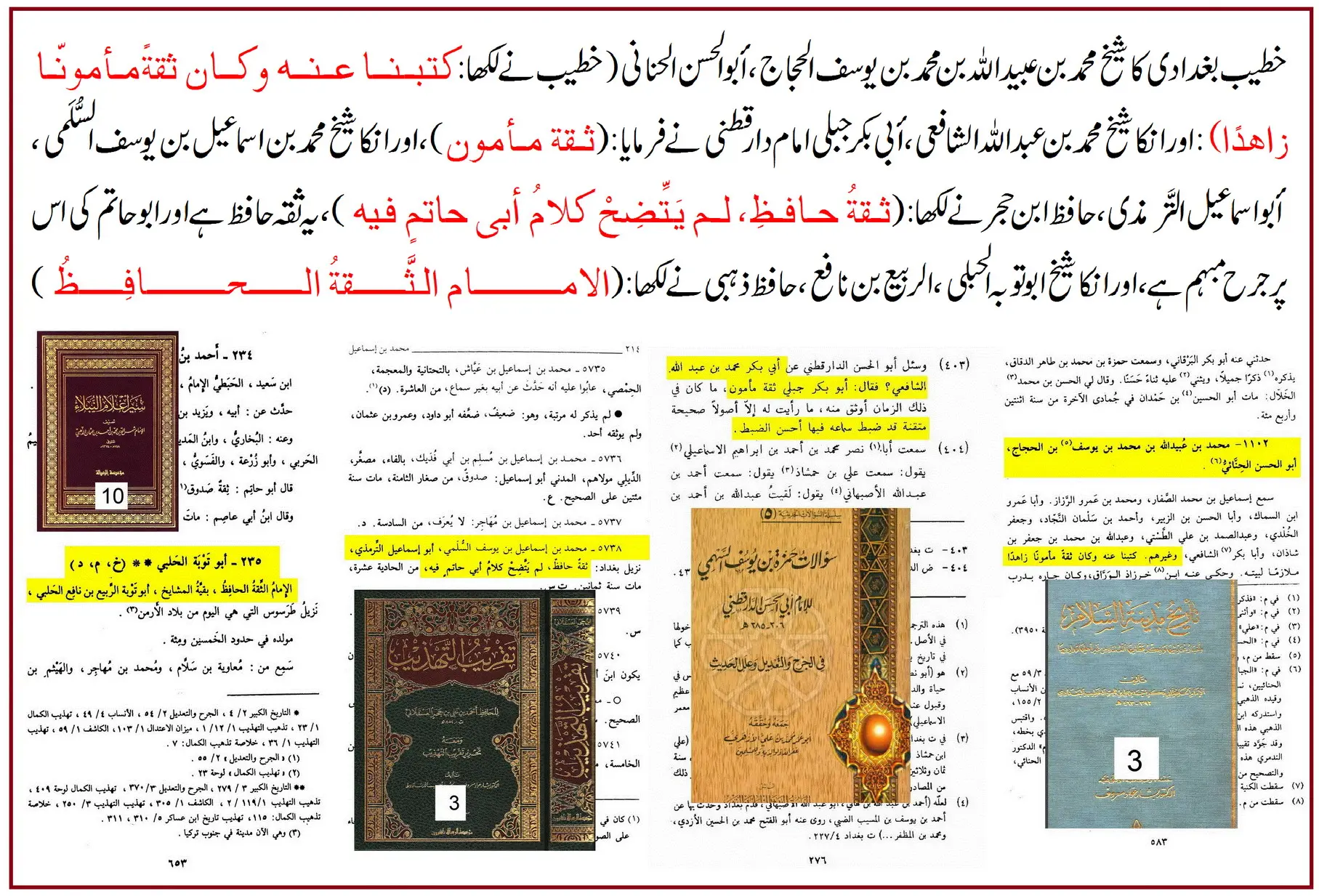
- Muhammad ibn Ubaid Allah al-Hana’i: Trustworthy, reliable
- Muhammad ibn Abdullah al-Shafi’i: Trustworthy
- Muhammad ibn Ismail al-Sulami: Trustworthy, memorizer
- Al-Rabi’ ibn Nafi’: Trustworthy, authoritative (Seer A’lam al-Nubala)
🔴 This chain is authentic.
Ibn al-Mubarak’s criticism of Abu Hanifa’s knowledge of Hadith
Text:
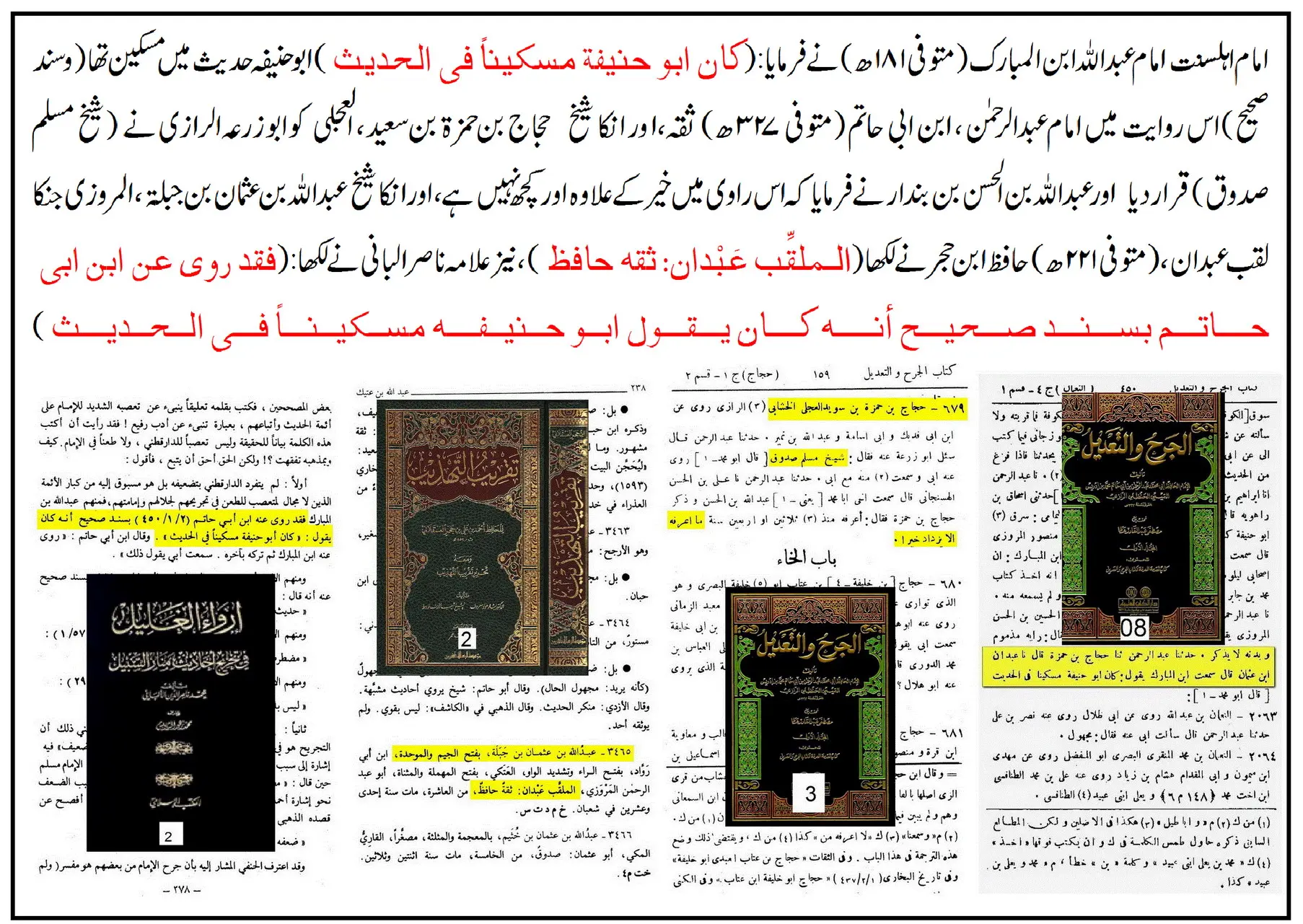
سَمِعْتُ ابْنَ الْمُبَارَكِ يَقُولُ: كَانَ أَبُو حَنِيفَةَ مِسْكِينًا فِي الْحَدِيثِ.
Translation: Ibn al-Mubarak (may Allah have mercy on him) said: “Abu Hanifa was poor in the field of Hadith.”
Authentication: This was narrated by Abdul Rahman ibn Abi Hatim with his authentic chain. Imam Al-Albani (may Allah have mercy on him) also authenticated it:
بِسَنَدٍ صَحِيحٍ.
“Abu Hanifa was an orphan in Hadith”
Text:
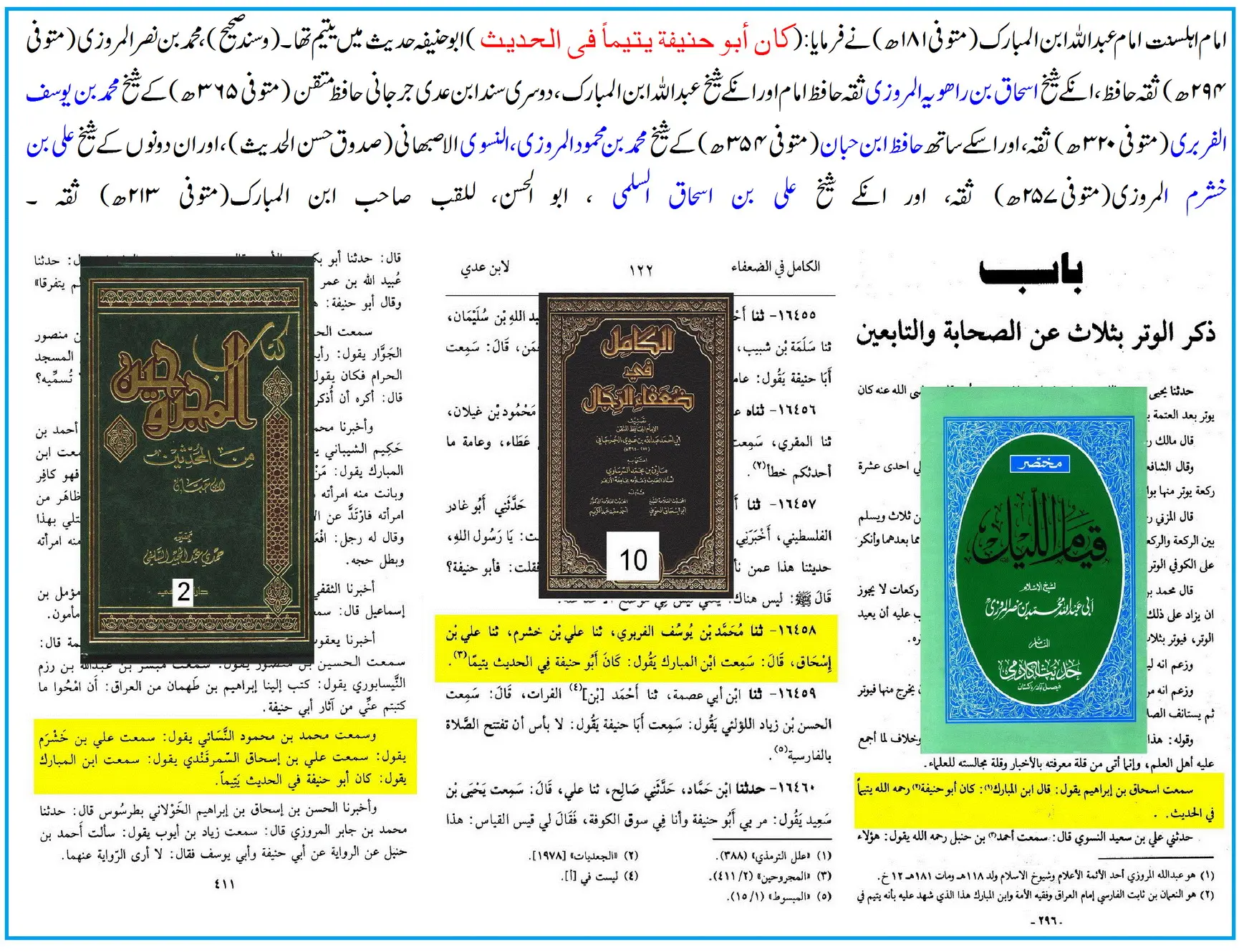
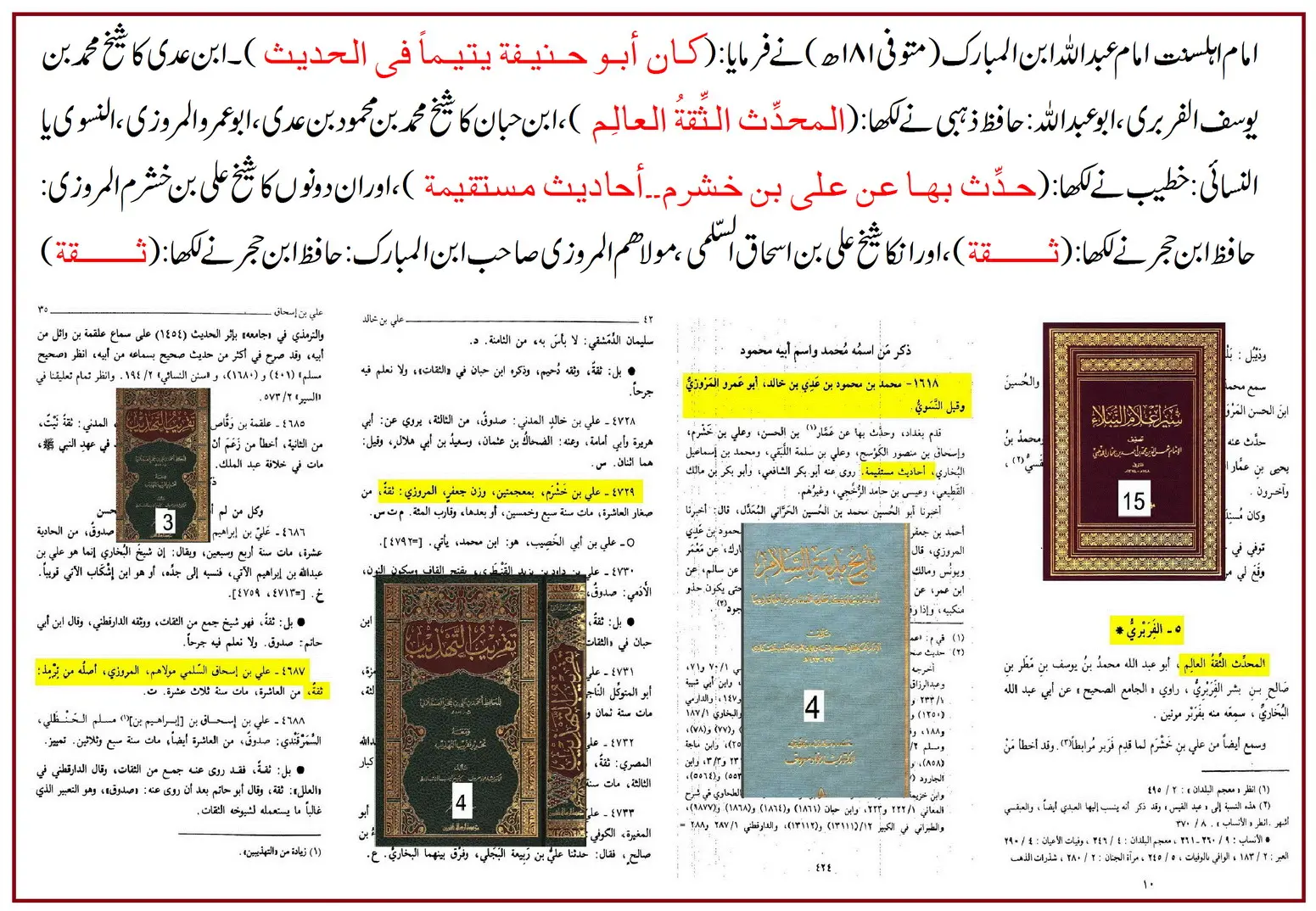
سَمِعْتُ ابْنَ الْمُبَارَكِ يَقُولُ: كَانَ أَبُو حَنِيفَةَ فِي الْحَدِيثِ يَتِيمًا.
Translation: Ibn al-Mubarak (may Allah have mercy on him) said: “Abu Hanifa was an orphan in the field of Hadith.”
Chain:
- Ali ibn Khashram: Trustworthy
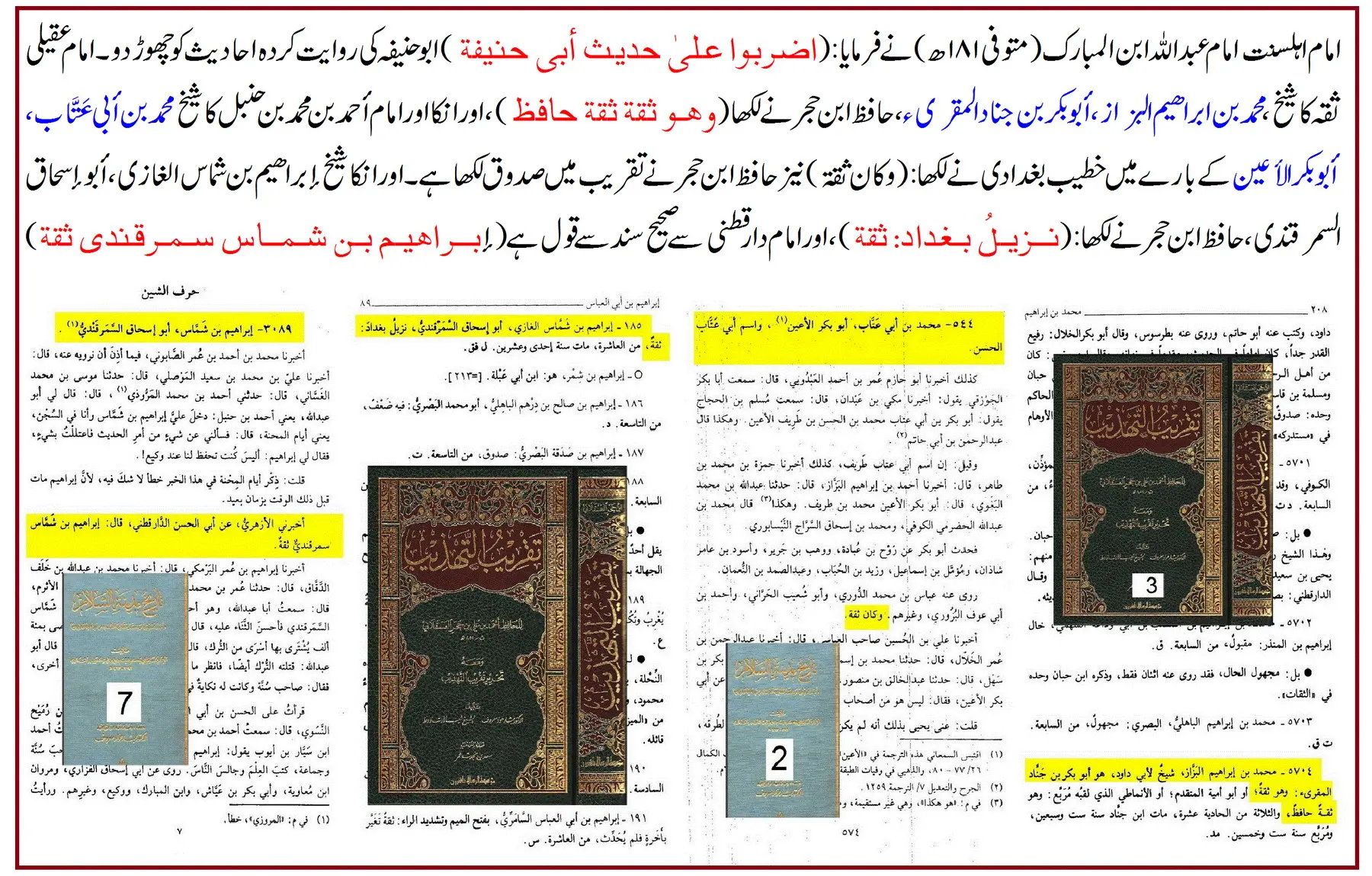
- Ali ibn Ishaq al-Samarqandi: Trustworthy, companion of Ibn al-Mubarak
- Ishaq ibn Rahwayh also transmitted this narration.
🔴 This narration is established by multiple authentic chains.
The advice to abandon the hadiths of Abu Hanifa
Text:
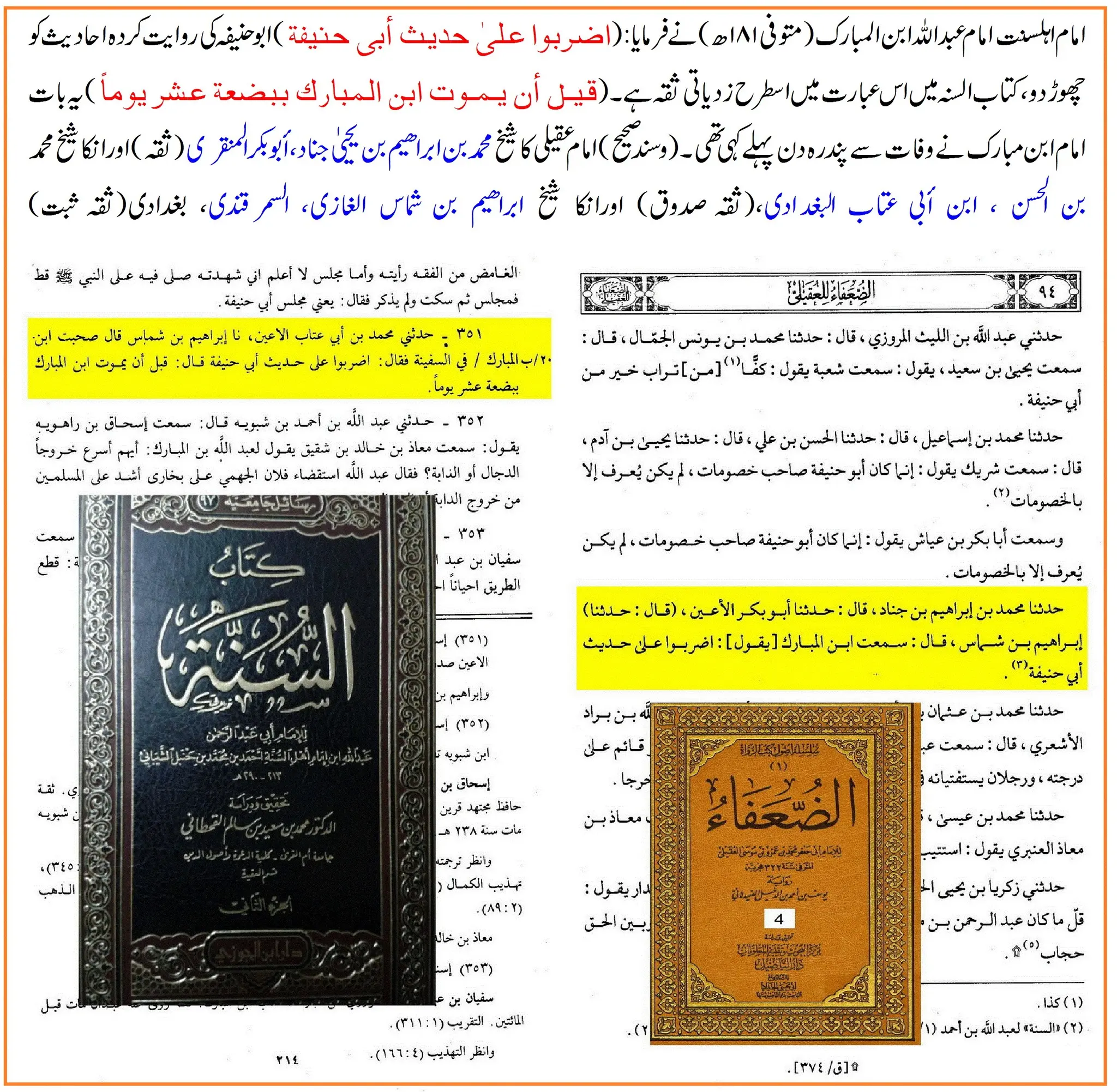
سَمِعْتُ ابْنَ الْمُبَارَكِ، يَقُولُ: اضْرِبُوا عَلَى حَدِيثِ أَبِي حَنِيفَةَ.
Translation: Ibn al-Mubarak (may Allah have mercy on him) said: “Leave aside the hadiths narrated by Abu Hanifa.”
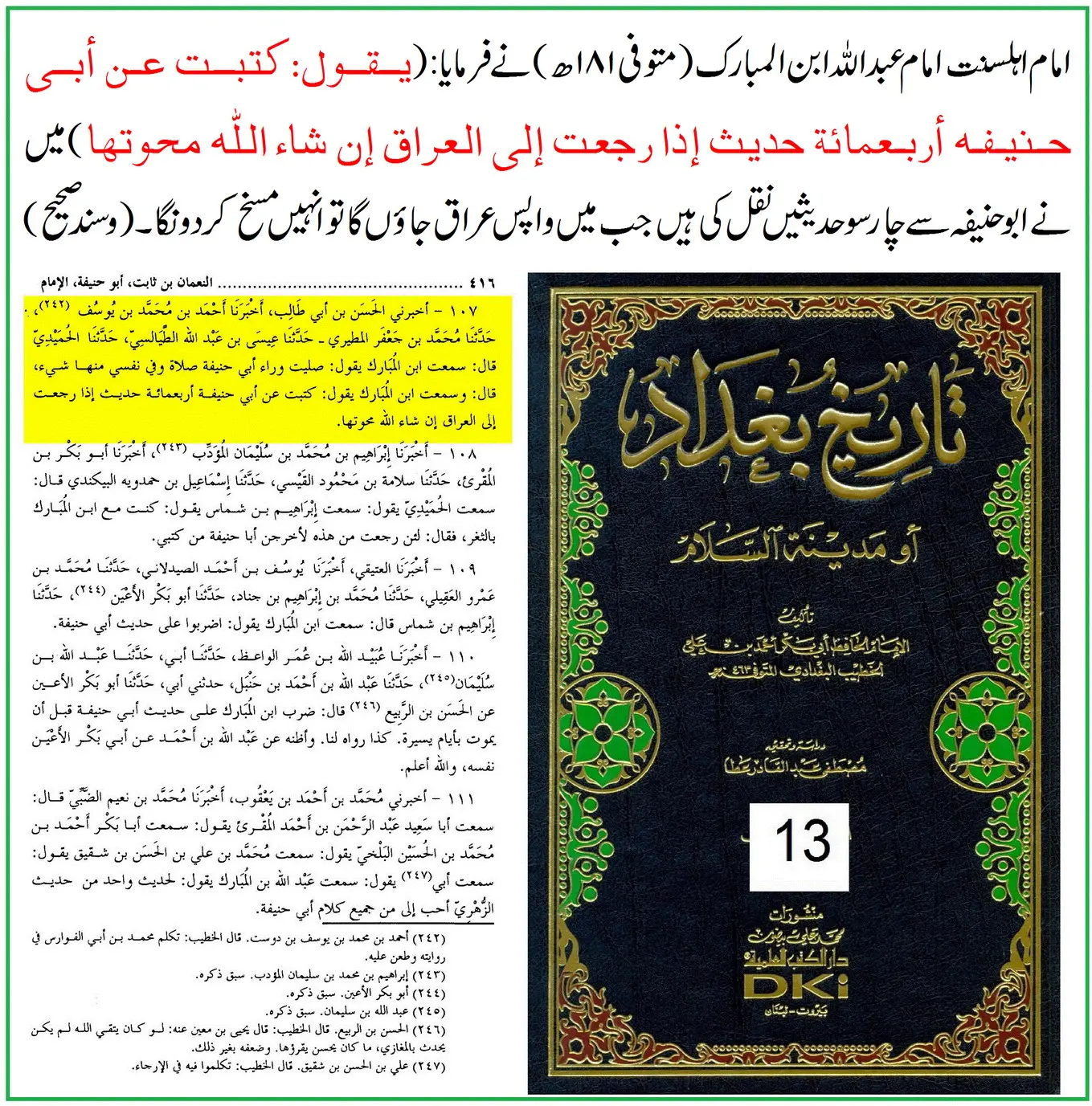
📌 And Imam Ahmad ibn Hanbal (may Allah have mercy on him) narrates that Ibn al-Mubarak (may Allah have mercy on him) advised a few days before his death: “Abandon the narrations of Abu Hanifa.”
Accusation of Innovation (Arja’) against Abu Hanifa
Text:
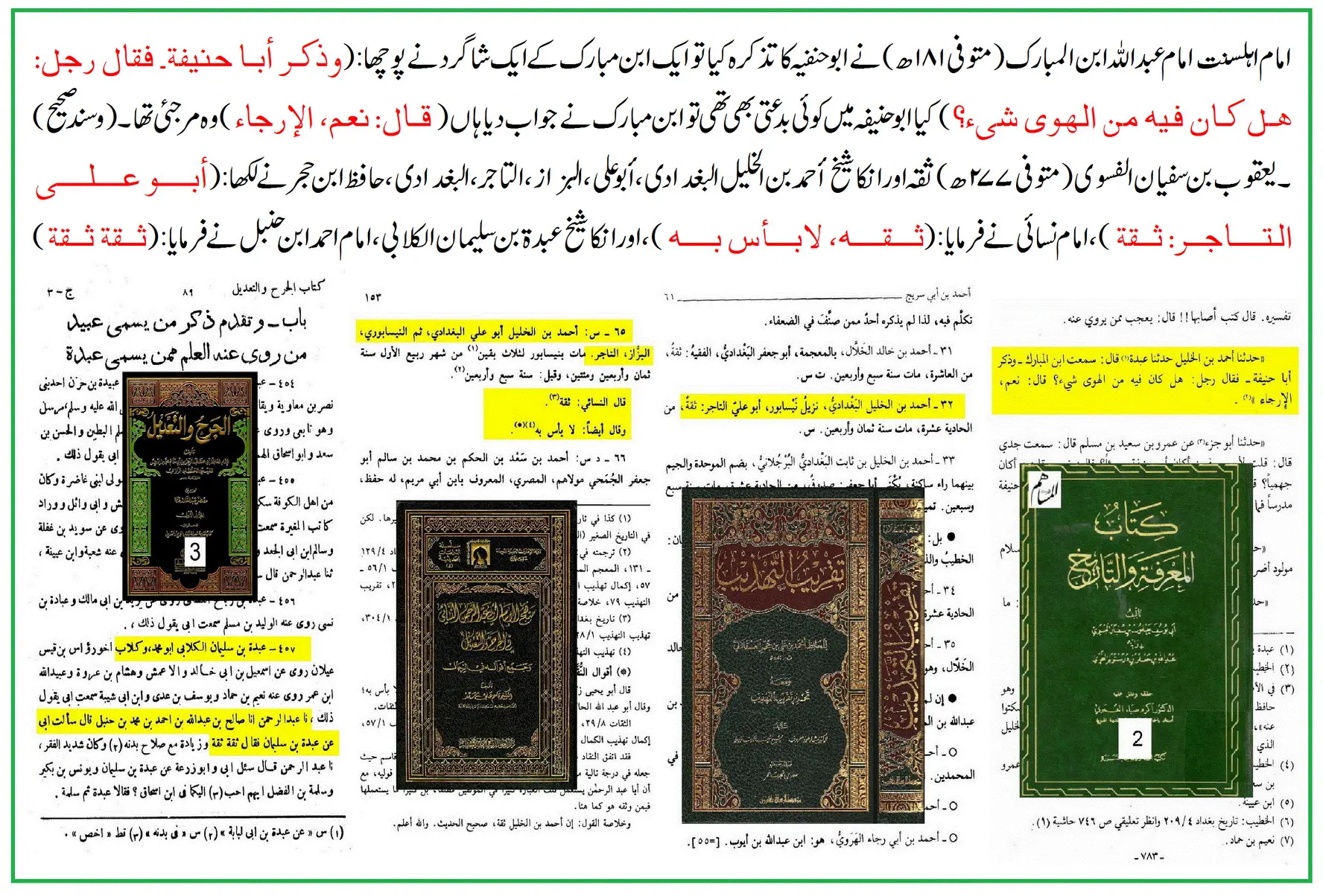
سَمِعْتُ ابْنَ الْمُبَارَكِ – وَذُكِرَ أَبُو حَنِيفَةَ – فَقِيلَ: هَلْ كَانَ فِيهِ مِنَ الْهَوَى شَيْءٌ؟ قَالَ: نَعَمْ، الْإِرْجَاءُ.
Translation: Ibn al-Mubarak (may Allah have mercy on him) was asked: “Was there any innovation in Abu Hanifa?” He replied: “Yes, he was a Murji’i.”
Chain of transmission:
- Ahmad ibn Khalil: Trustworthy
- Abdah ibn Sulayman al-Marwazi: Trustworthy
- Ya’qub al-Fasawi: Imam, Trustworthy
🔴 This chain is authentic.
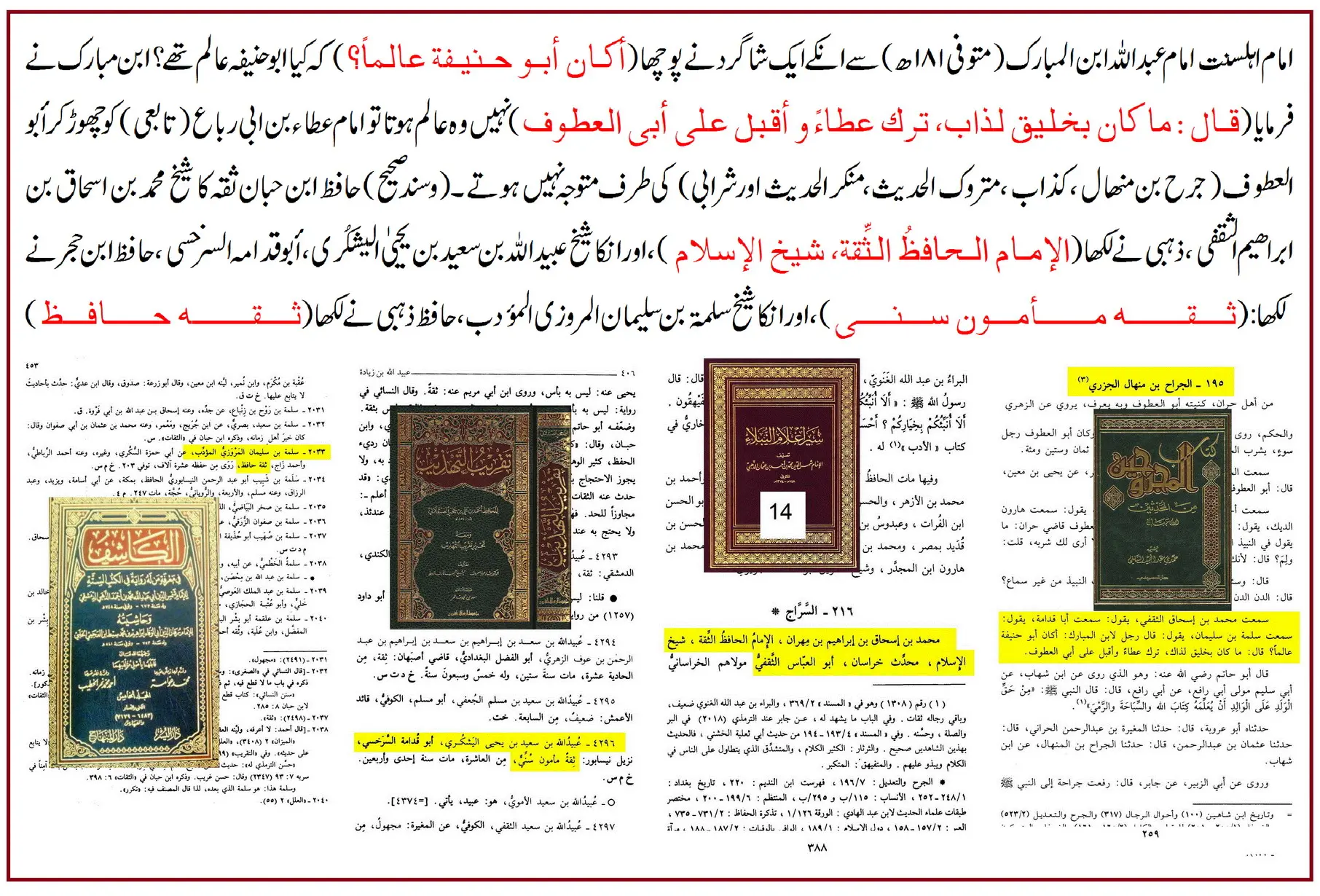
Ibn al-Mubarak’s Fatwa – “Abu Hanifa was not a scholar”
Text:
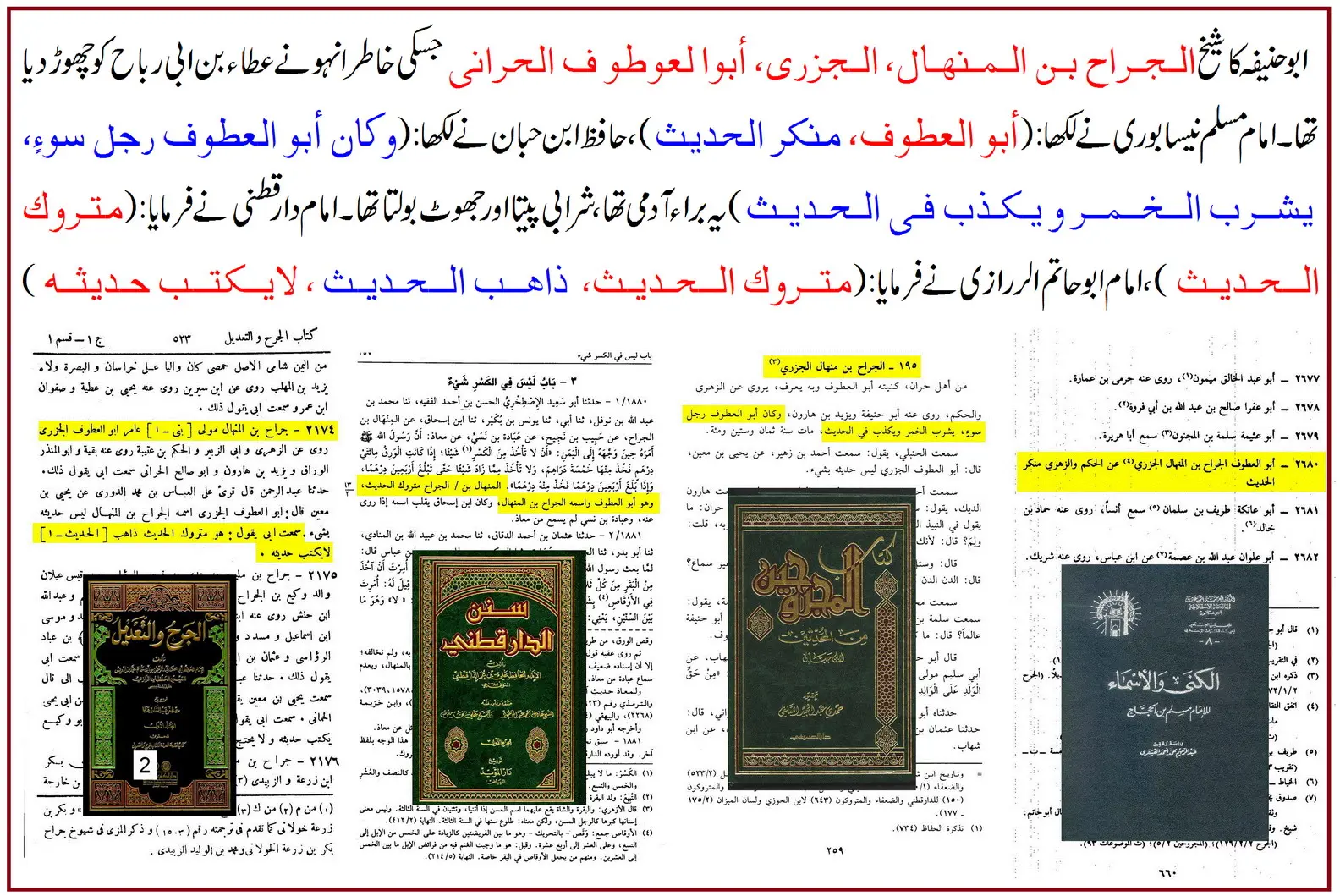
قِيلَ لِابْنِ الْمُبَارَكِ: أَكَانَ أَبُو حَنِيفَةَ عَالِمًا؟ قَالَ: مَا كَانَ بِخَلِيقٍ لِذَاكَ، تَرَكَ عَطَاءً وَأَقْبَلَ عَلَى أَبِي الْعَطُوفِ.
Translation: Ibn al-Mubarak (may Allah have mercy on him) was asked: “Was Abu Hanifa a scholar?” He replied: “No! He was not a scholar; otherwise, he would not have turned to Abu al-‘Atuf (Jarrah ibn al-Minhal: abandoned and liar, drunkard) instead of ‘Ata ibn Abi Rabah (a trustworthy Tabi‘i).”
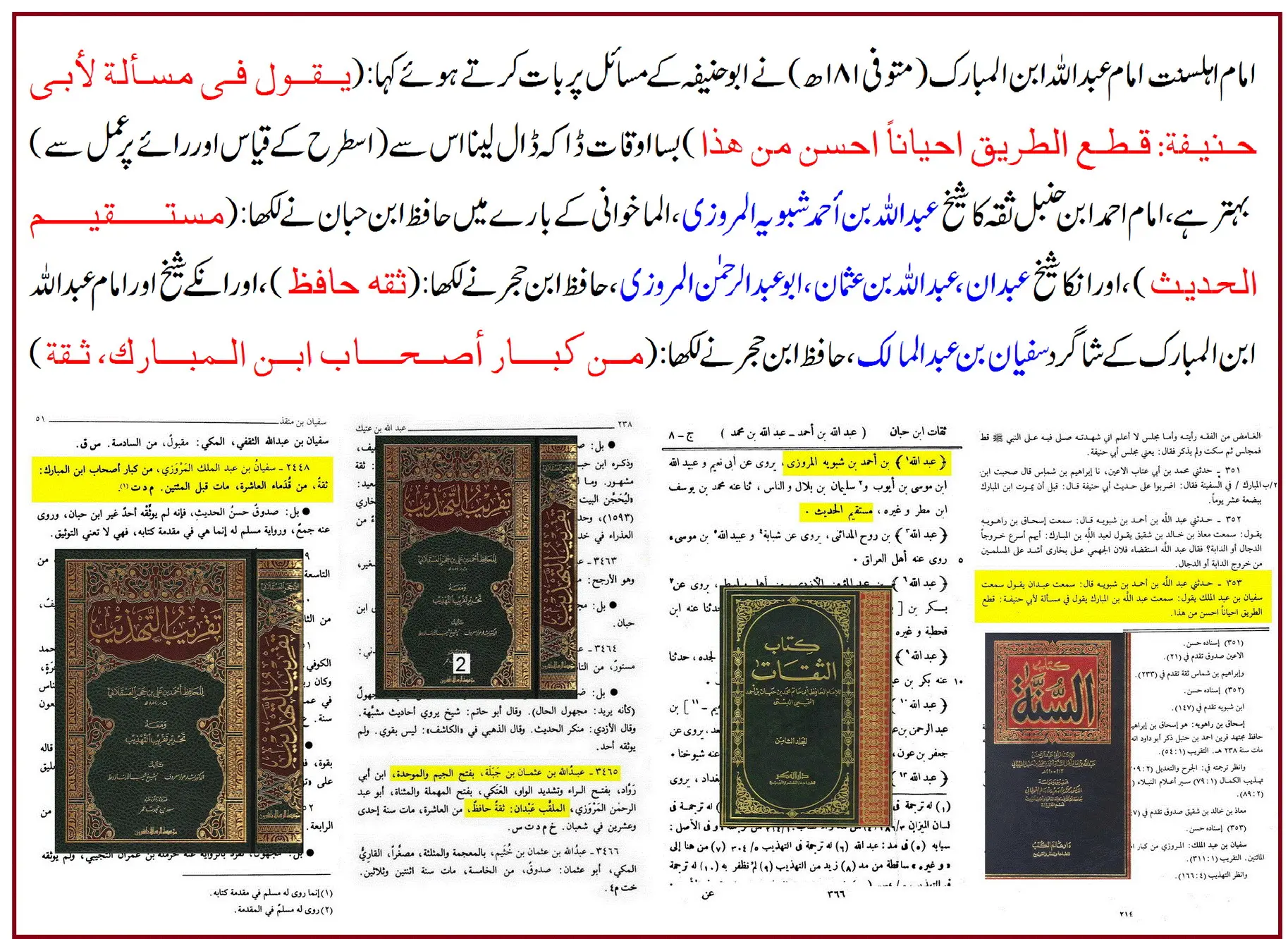
Strong criticism on Qiyas and personal opinion
Text:
سَمِعْتُ ابْنَ الْمُبَارَكِ يَقُولُ فِي مَسْأَلَةٍ لِأَبِي حَنِيفَةَ: قَطْعُ الطَّرِيقِ أَحْيَانًا أَحْسَنُ مِنْ هَذَا.
Translation: Ibn al-Mubarak (may Allah have mercy on him), commenting on an issue of Abu Hanifa, said: “Sometimes it is better to commit robbery than to follow that (opinion based on Qiyas and personal reasoning).”
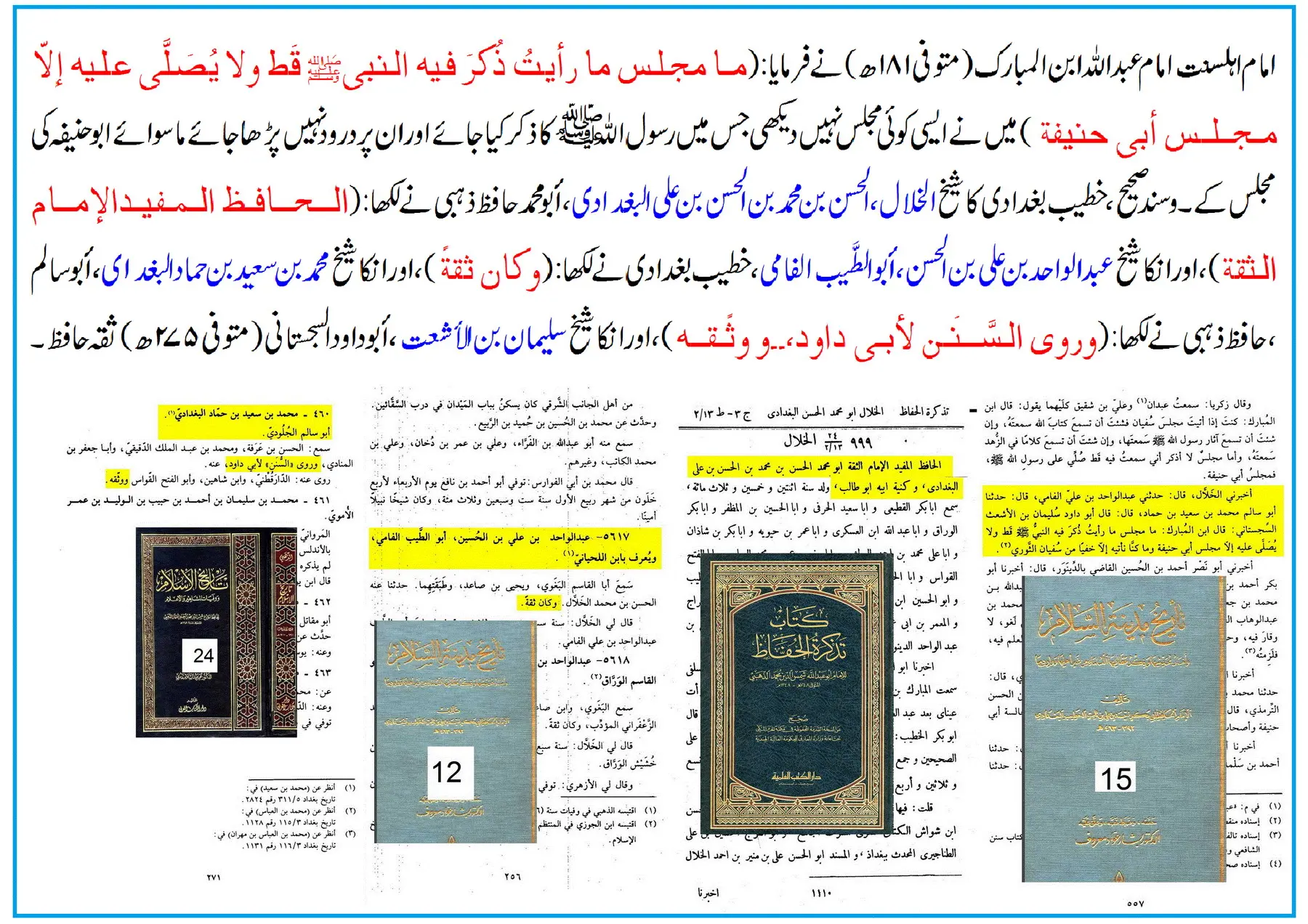
The condition of Abu Hanifa’s gathering
Text:
قَالَ ابْنُ الْمُبَارَكِ: مَا رَأَيْتُ مَجْلِسًا يُذْكَرُ فِيهِ النَّبِيُّ ﷺ فَلَا يُصَلَّى عَلَيْهِ إِلَّا مَجْلِسَ أَبِي حَنِيفَةَ.
Translation: Ibn al-Mubarak (may Allah have mercy on him) said: “I have never seen a gathering in which the mention of the Prophet ﷺ was made and blessings were not sent upon him, except for the gathering of Abu Hanifa.”
Declaration of Abandoning Abu Hanifa
Text:
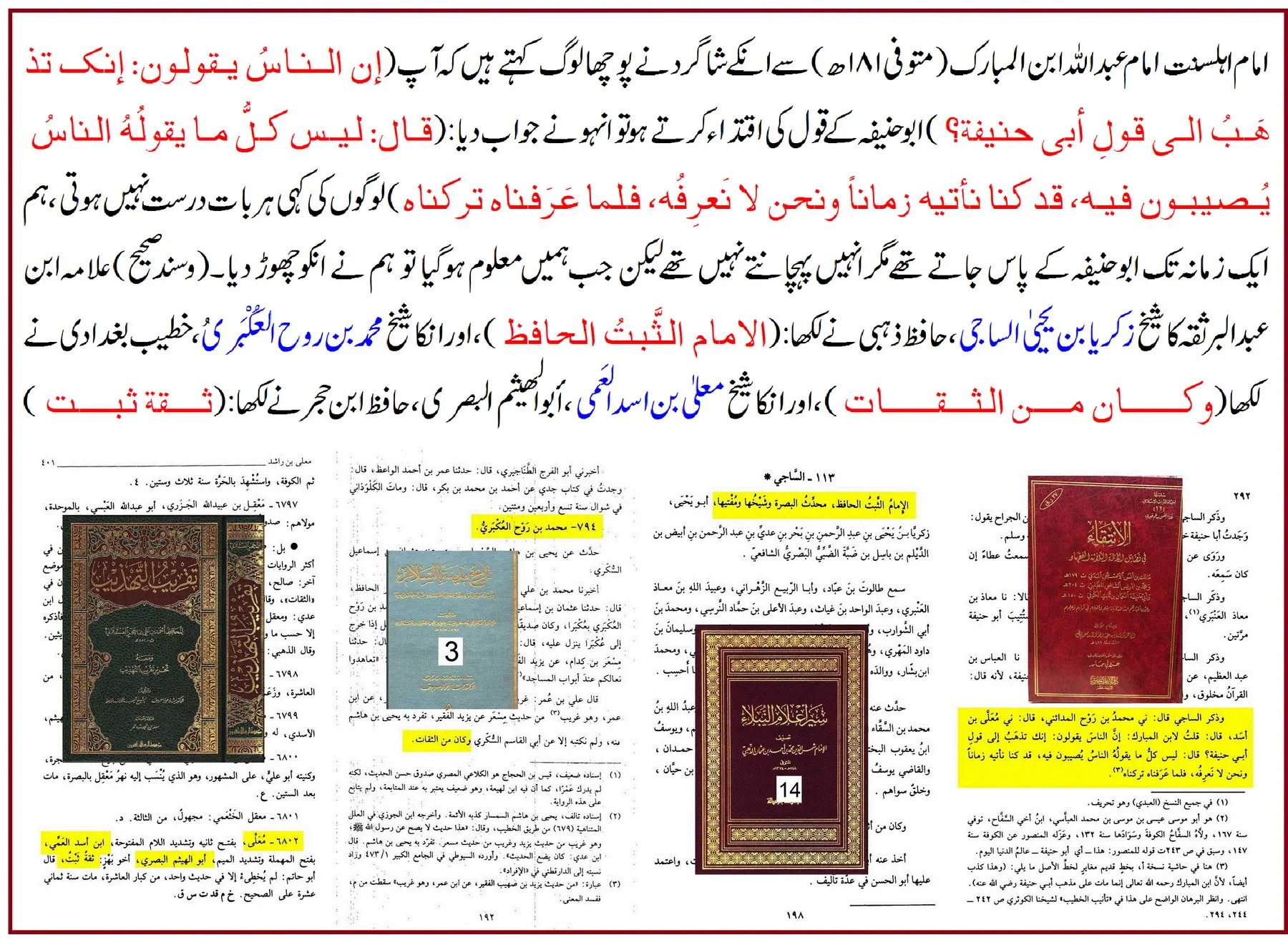
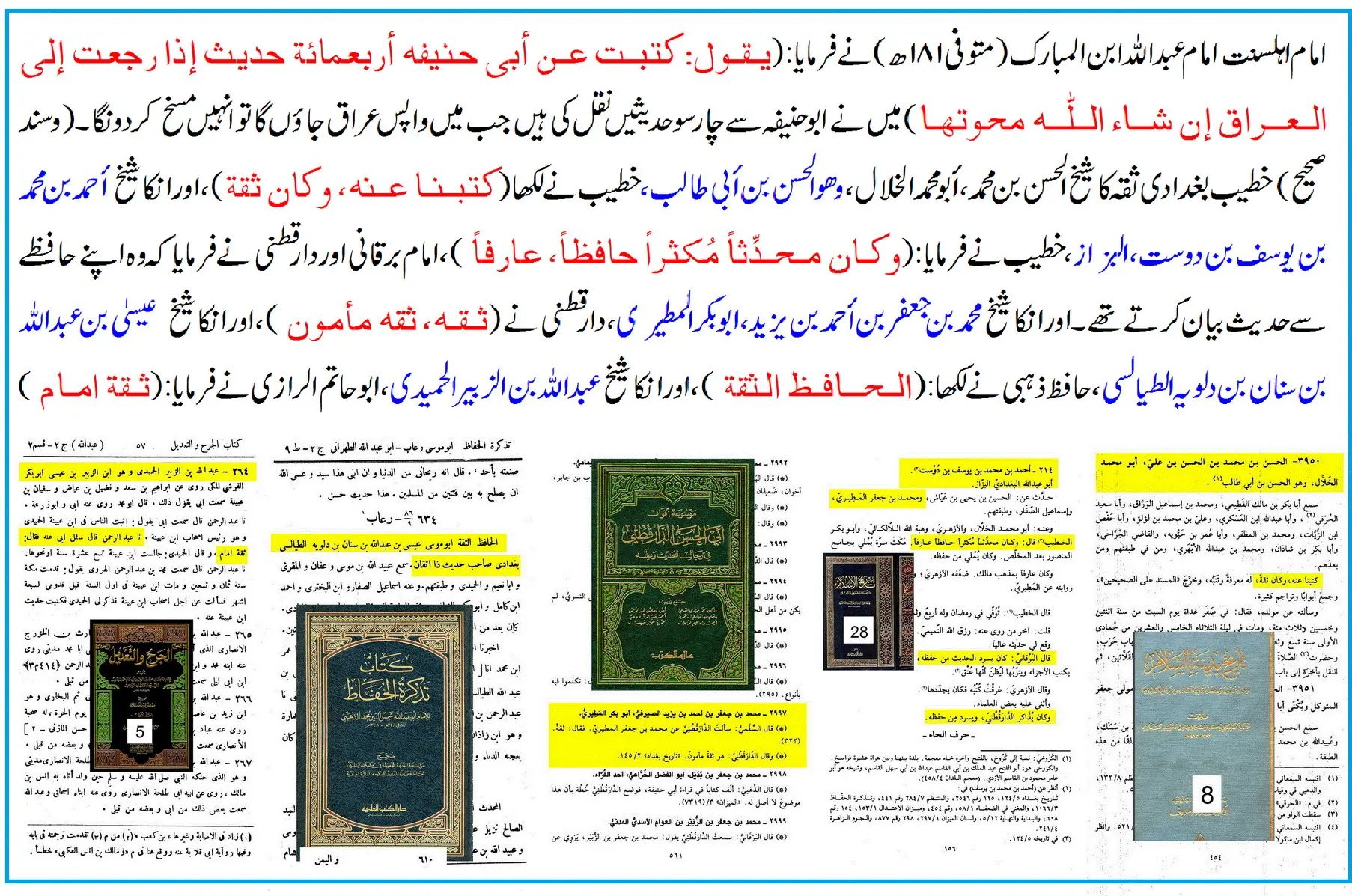
سُئِلَ ابْنُ الْمُبَارَكِ: النَّاسُ يَقُولُونَ: إِنَّكَ تَذْهَبُ إِلَى قَوْلِ أَبِي حَنِيفَةَ؟ قَالَ: لَيْسَ كُلُّ مَا يَقُولُ النَّاسُ يُصِيبُونَ فِيهِ، قَدْ كُنَّا نَأْتِيهِ زَمَانًا وَنَحْنُ لَا نَعْرِفُهُ، فَلَمَّا عَرَفْنَاهُ تَرَكْنَاهُ.
Translation: Ibn al-Mubarak (may Allah have mercy on him) was asked: “People say that you follow the sayings of Abu Hanifa?” He replied: “Not everything people say is correct. For a time, we used to go to him while we did not recognize him, but when we recognized him, we abandoned him.”
Complete Disassociation of Imam Abdullah ibn al-Mubarak (may Allah have mercy on him) from Abu Hanifa
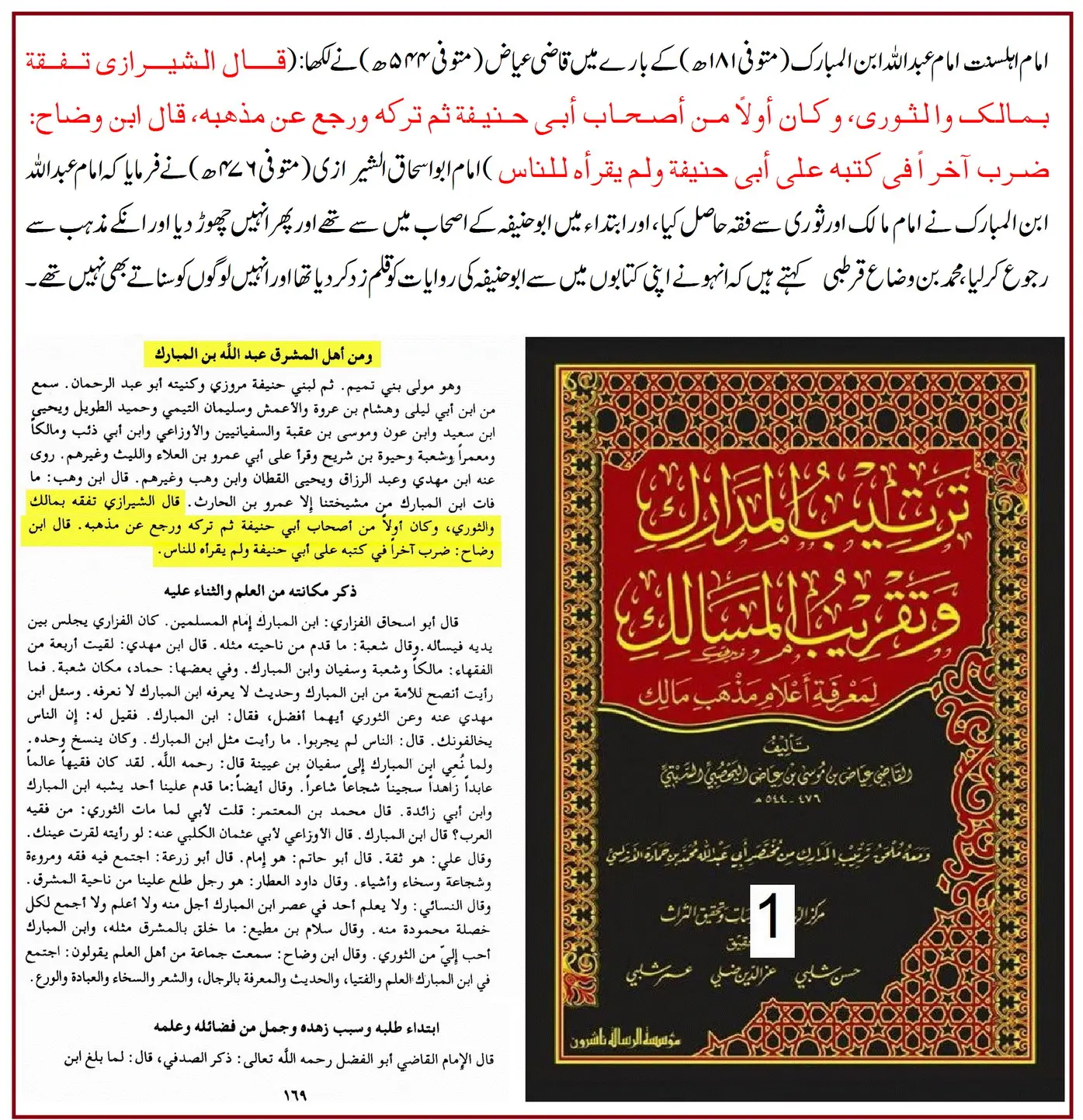
🔴 Qadi Iyad al-Maliki (died 544 AH) narrated:
Text:
قال الشيرازي: تفقه بمالك والثوري، وكان أولاً من أصحاب أبي حنيفة ثم تركه ورجع عن مذهبه. قال ابن وضاح: ضرب آخراً في كتبه على أبي حنيفة ولم يقرأه للناس.
Translation: Shirazi said: “Ibn al-Mubarak studied jurisprudence from Imam Malik and Thawri, and initially was among the companions of Abu Hanifa, then he abandoned him and turned away from his madhhab.” Ibn Waddah said: “In the end, Ibn al-Mubarak erased the sayings of Abu Hanifa from his books and did not present them before people.”
Summary and Conclusion
① Imam Ibn al-Mubarak (may Allah have mercy on him) severely criticized Abu Hanifa’s book Al-Hiyal, stating that it plays with what is halal and haram. ② He described Abu Hanifa as poor and an orphan in hadith. ③ He said to leave aside the hadiths narrated by Abu Hanifa. ④ He clarified that Abu Hanifa was a Murji’i (innovator). ⑤ He used harsh words regarding issues based on analogy and opinion, even saying: It is better to commit robbery than that. ⑥ Ibn al-Mubarak himself declared: We used to go to Abu Hanifa, but once we recognized him, we left. ⑦ Finally, he erased Abu Hanifa’s sayings from his books and stopped mentioning them.
Response to the Attribution of Endorsement of Abu Hanifa to Abdullah Ibn al-Mubarak
① The First Attributed Report
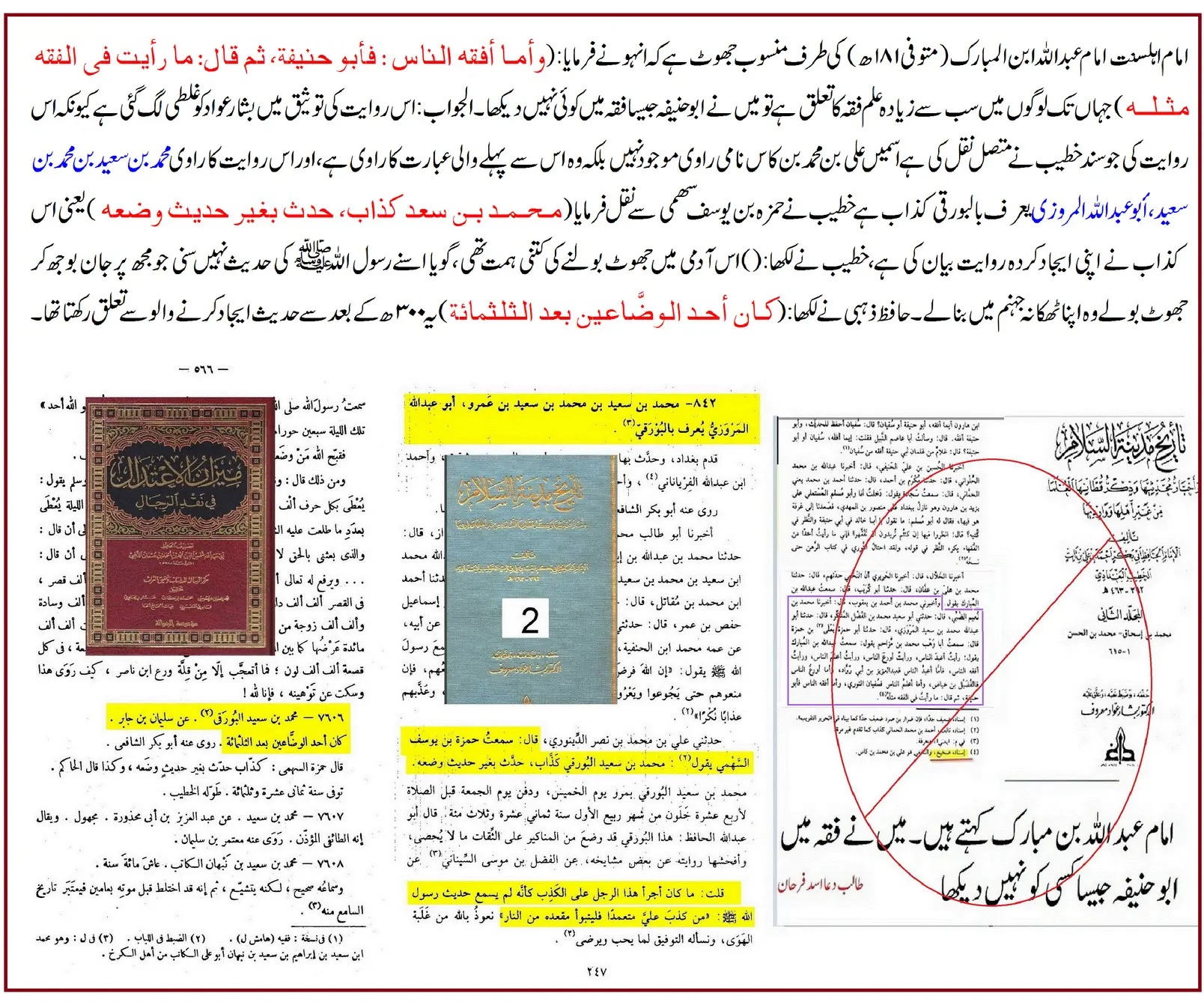
Text: وَأَخْبَرَنِي مُحَمَّد بن أَحْمَد بن يَعْقُوب، قَالَ: أَخْبَرَنَا مُحَمَّد بن نعيم الضبي، قَالَ: حَدَّثَنَا أَبُو سعيد مُحَمَّد بن الفضل المذكر، قَالَ: حَدَّثَنَا أَبُو عبد الله مُحَمَّد بن سعيد المروزي، قَالَ: حَدَّثَنَا أَبُو حمزة يَعْلَى بن حمزة، قال: سمعت أبا وهب مُحَمَّد بن مزاحم، يقول: سمعت عبد الله بن المبارك، يقول: وأما أفقه الناس: فأبو حنيفة، ثم قال: ما رأيت في الفقه مثله
Translation: Ibn al-Mubarak said: “Among the people, the most knowledgeable in jurisprudence was Abu Hanifa; I have not seen anyone like him in fiqh.”
Response:
This report is false because its main narrator, Muhammad ibn Sa’id al-Burqi al-Marwazi, was a severe liar and fabricator.
- Al-Khatib al-Baghdadi states: “محمد بن سعيد البورقي كذاب، حدث بغير حديث وضعه.”
Reference: (Tarikh Baghdad 3/111)
Translation: “He was a liar and narrated fabricated traditions.”
- Al-Khatib further writes: “ما كان أجرأ هذا الرجل على الكذب! كأنه لم يسمع حديث رسول الله صلى الله عليه وسلم: من كذب علي متعمداً فليتبوأ مقعده من النار.”
Reference: (Tareekh Baghdad 3/112)
Translation: “How audacious was this man to lie! As if he had not heard the Hadith of the Messenger of Allah ﷺ that whoever lies upon me, let him prepare his place in Hell.”
- Hafiz Dhahabi states: “محمد بن سعيد البورقي، كان أحد الوضاعين بعد الثلثمائة.”
Reference: (Mizan al-I’tidal 4/26)
Translation: “Muhammad ibn Saeed al-Burqi was among those fabricators who appeared after the third century Hijri.”
Therefore, this narration is fabricated (mawdu’).
② Second Attributed Narration
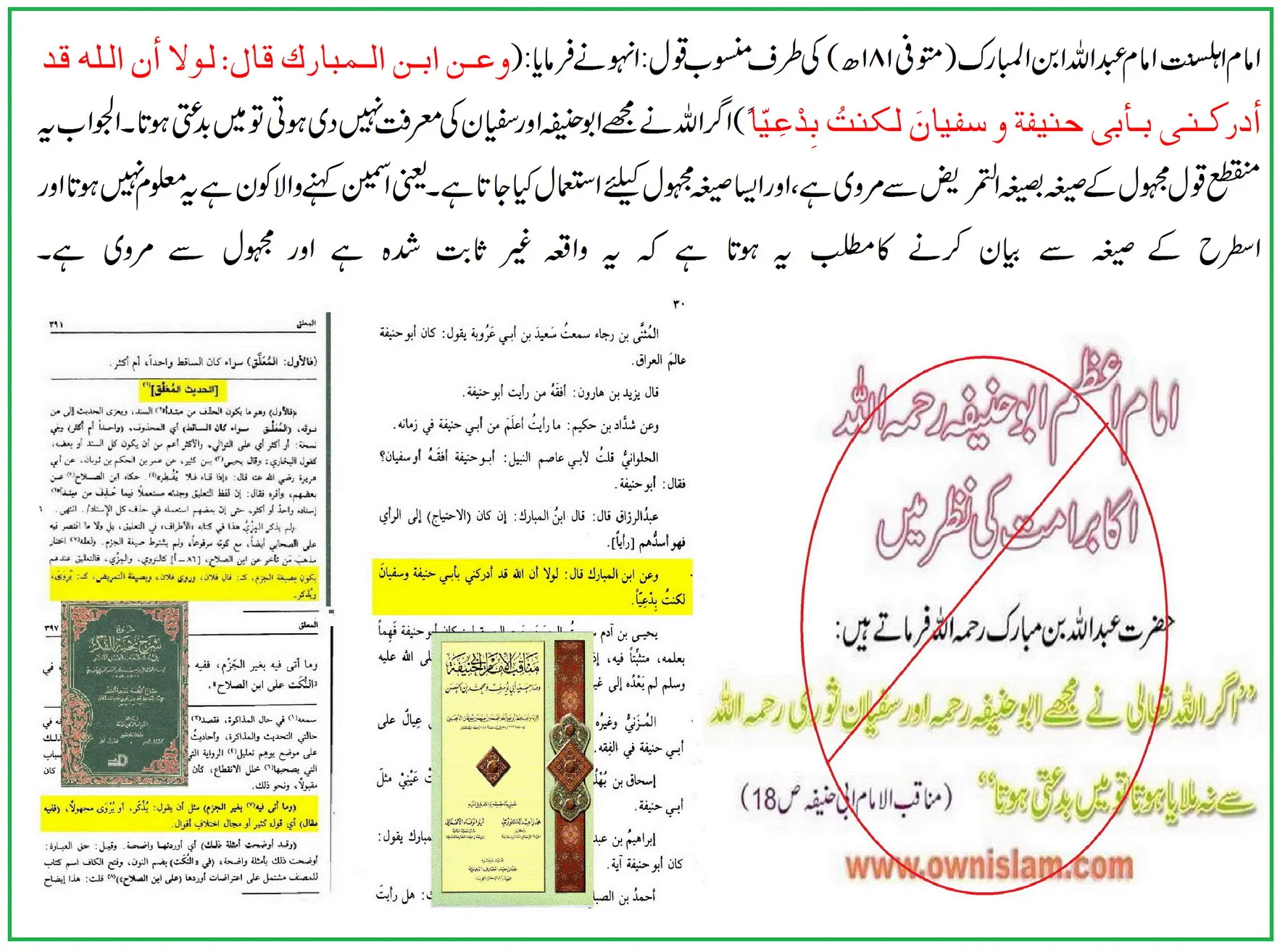
Text: وَعَنِ ابْنِ الْمُبَارَكِ، قَالَ: لَوْلا أَنَّ اللَّهَ قَدْ أَدْرَكَنِي بِأَبِي حَنِيفَةَ وَسُفْيَانَ لَكُنْتُ بِدْعِيًّا
Translation: Ibn al-Mubarak said: “If Allah had not granted me the knowledge of Abu Hanifa and Sufyan (Thawri), I would have been an innovator.”
Response:
This narration is also not authentic.
- Hafiz Dhahabi himself transmitted it without chain and in the form of tamreez: “ويروى عن ابن المبارك…”
In the science of Hadith terminology, the form of tamreez (يُروى، يُذكر، يُحكى) is used for weak or unauthenticated narrations.
Imam Ibn Hajar al-Asqalani explains: “التعليق إذا ورد بصيغة التمريض فهو دليل على ضعف الأثر.”
Translation: “When a statement is transmitted with the form of tamreez, it is a sign of its weakness and lack of authenticity.”
Therefore, attributing this statement to Ibn al-Mubarak is a lie.
③ Third Attributed Tradition
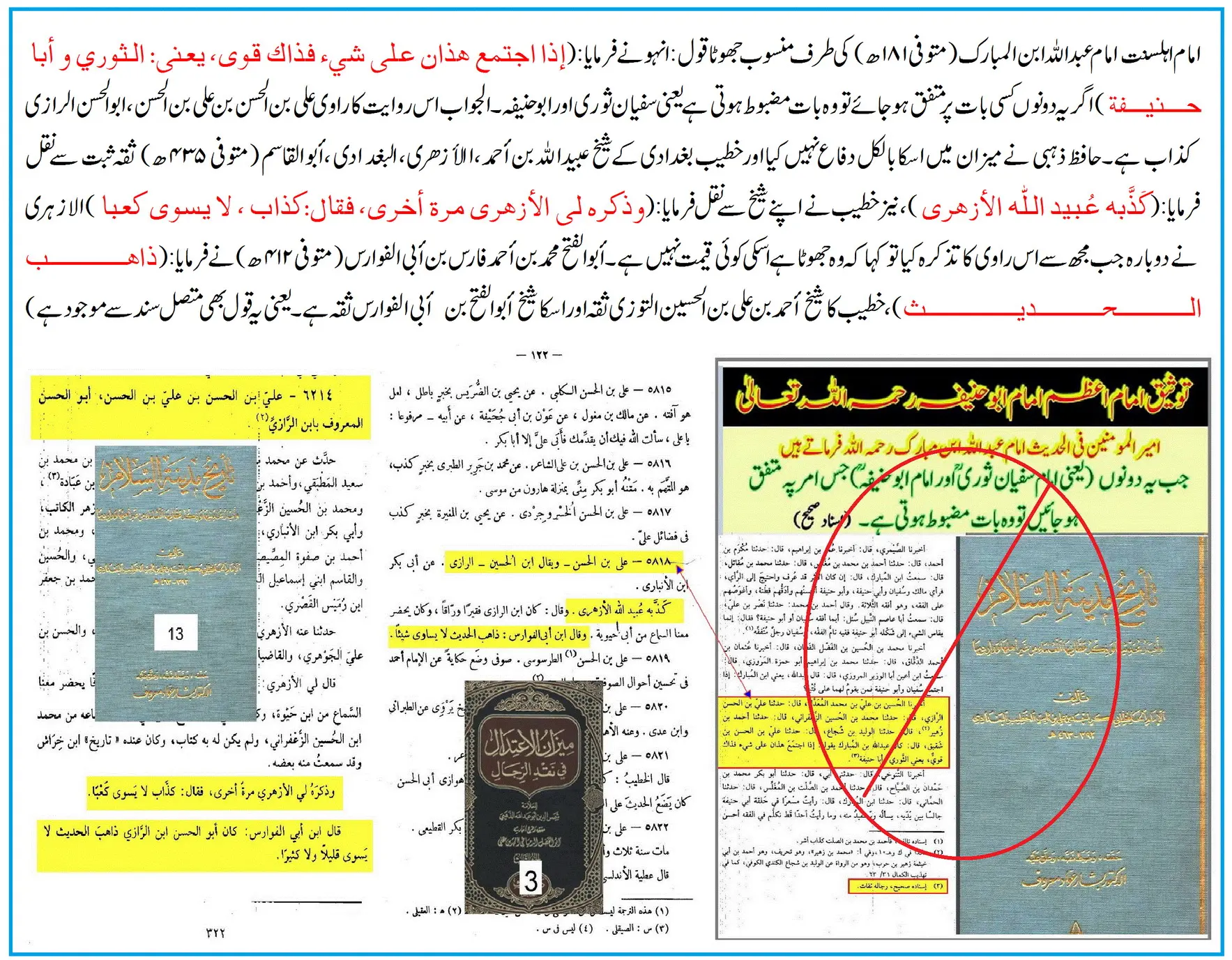
Text: أَخْبَرَنَا الحسين بن علي بن مُحَمَّد المعدل، قَالَ: حَدَّثَنَا علي بن الحسن الرازي، قَالَ: حَدَّثَنَا مُحَمَّد بن الحسين الزعفراني، قَالَ: حَدَّثَنَا أَحْمَد بن زهير، قَالَ: حَدَّثَنَا الوليد بن شجاع، قَالَ: حَدَّثَنَا علي بن الحسن بن شقيق، قال: كان عبد الله بن المبارك، يقول: إذا اجتمع هذان على شيء فذاك قوي، يعني: الثوري، وأبا حنيفة.
Translation: Ibn al-Mubarak said: “When these two (Sufyan al-Thawri and Abu Hanifa) agree on something, that matter becomes strong.”
Answer:
This tradition is also false because its narrator, Ali ibn al-Hasan al-Razi, was a severe liar.
- Hafiz al-Dhahabi writes: “علي بن الحسن الرازي، كذبه عبيد الله الأزهري.”
Reference: (Mizan al-I’tidal 3/124)
Translation: “Ali ibn al-Hasan al-Razi was declared a liar by Ubayd Allah al-Azhari.”
- Khatib al-Baghdadi states: “كذاب، لا يسوى كعبا.”
Reference: (Tarikh Baghdad 11/393)
Translation: “He was a liar, he had no standing.”
- Ibn Abi al-Fawaris says: “كان ابن الرازي ذاهب الحديث لا يسوى قليلا ولا كثيرا.”
Reference: (Tarikh Baghdad 11/394)
Translation: “Ibn al-Razi’s hadith was worthless (dhahib al-hadith); he was not worth anything, little or much.”
Therefore, this statement is also falsely attributed to Ibn al-Mubarak.
④ Fourth Attributed Tradition
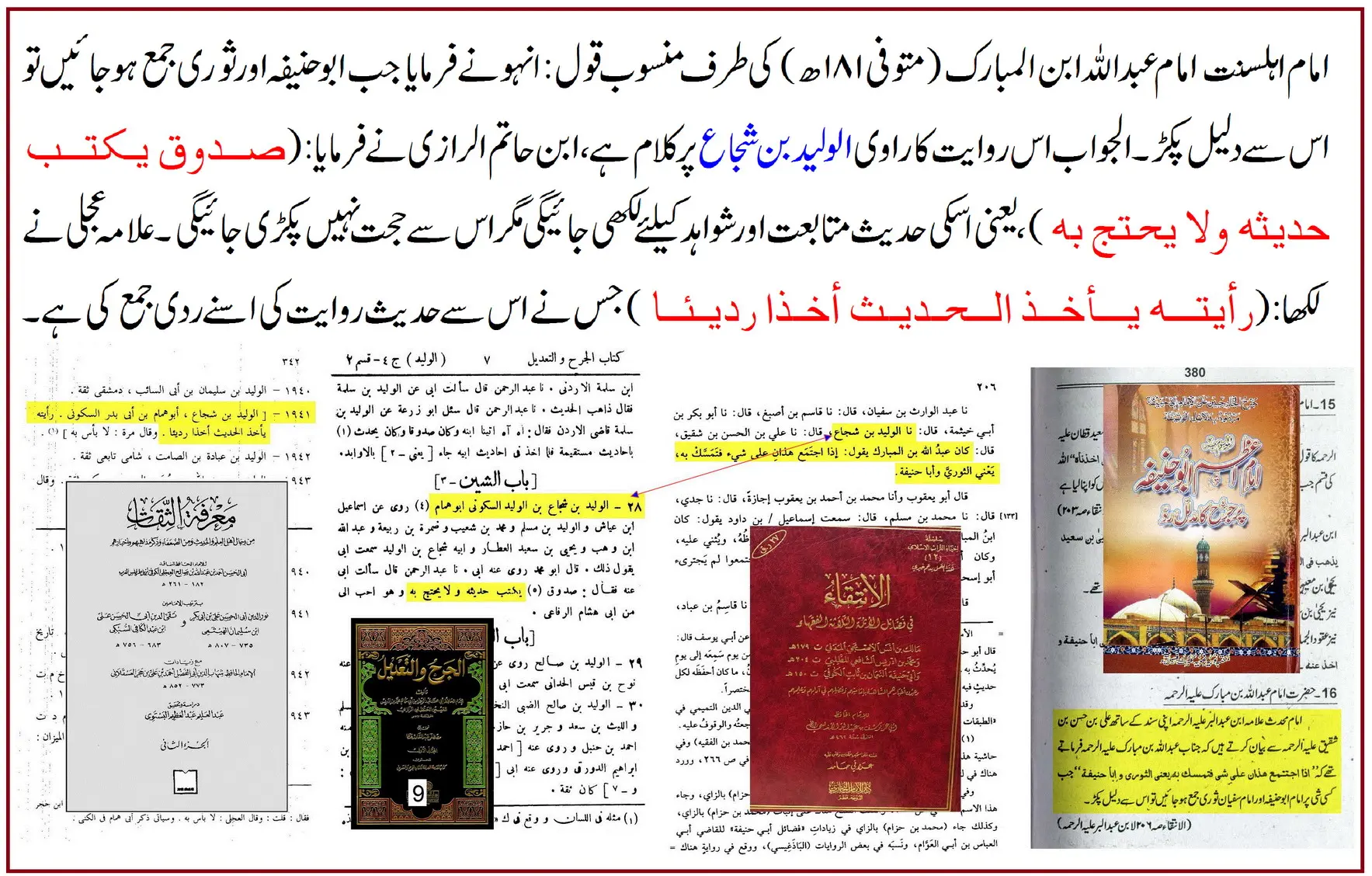
Text: نَا عبد الوارث بْنُ سُفْيَانَ، قَالَ: نَا قَاسِمُ بْنُ أَصْبَغَ، قَالَ: نَا أَبُو بَكْرِ بْنُ أَبِي خَيْثَمَةَ، قَالَ: نَا الْوَلِيدُ بْنُ شُجَاعٍ، قَالَ: نَا عَلِيُّ بْنُ الْحَسَنِ بْنِ شَقِيقٍ، قَالَ: كَانَ عبد الله بْنُ الْمُبَارَكِ يَقُولُ: إِذَا اجْتَمَعَ هَذَانِ عَلَى شَيْءٍ فَتَمَسَّكْ بِهِ، يَعْنِي الثَّوْرِيَّ وَأَبَا حَنِيفَةَ.
Translation: Ibn al-Mubarak said: “When Sufyan al-Thawri and Abu Hanifa agree on something, act upon it.”
Answer:
The narrator of this tradition, al-Walid ibn Shuja’ al-Sakuni, is weak.
- Imam Abu Hatim al-Razi says: “يكتب حديثه ولا يحتج به.”
Reference: (Al-Jarh wa al-Ta’dil 9/27)
Translation: “His narration is recorded but is not taken as evidence.”
- Imam Ajli says: “رأيته يأخذ الحديث أخذا رديئا.”
Reference: (Ma’rifat al-Thiqat 2/359)
Translation: “I saw that he used to take hadith in a very poor manner.”
Therefore, this narration is also not a proof.
⑤ Fifth Attributed Narration
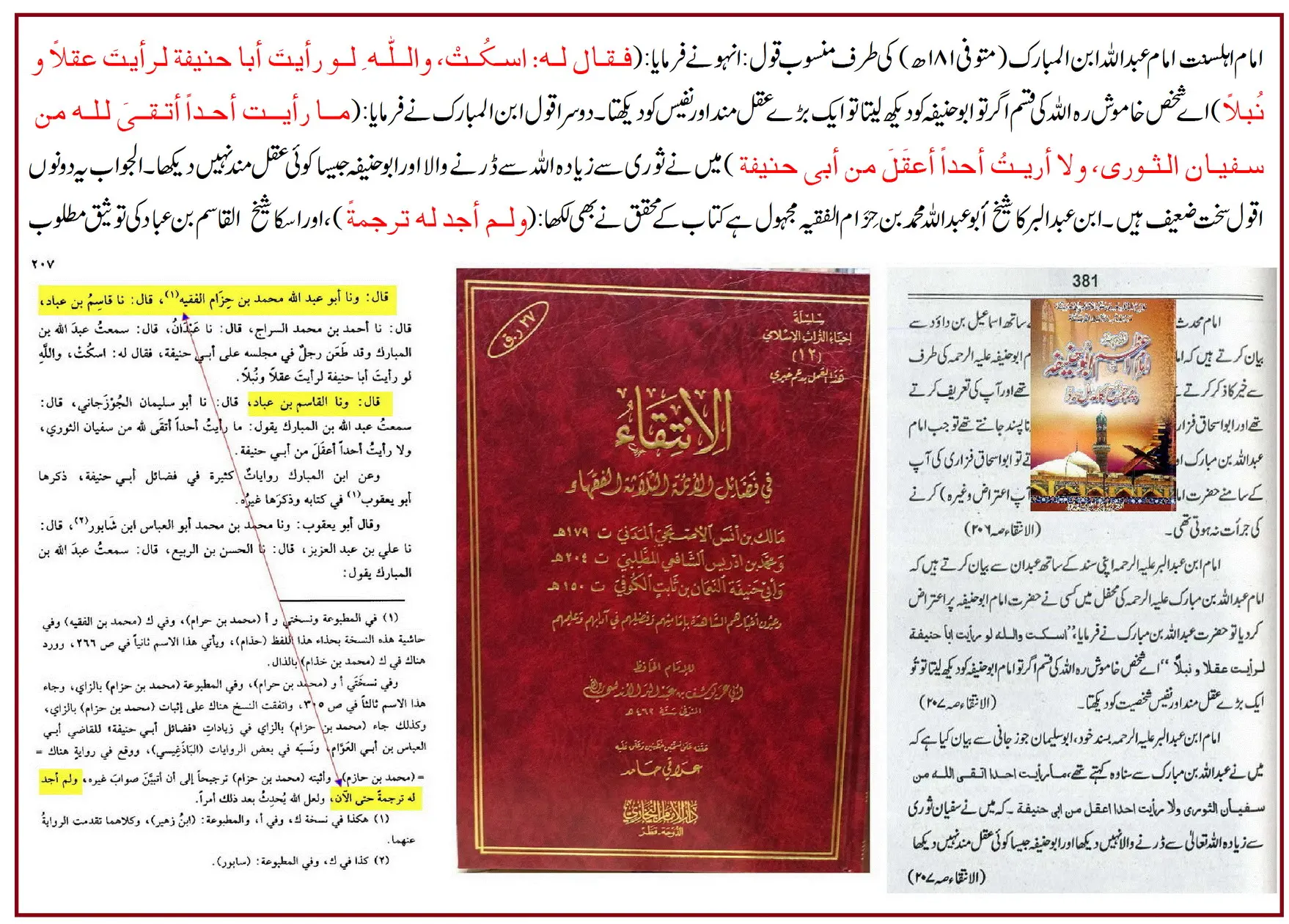
Text: قَالَ ونا أَبُو عبد الله مُحَمَّد بن حرَام الْفَقِيه، قَالَ: نَا قَاسم ابْن عَبَّادٍ، قَالَ: نَا أَحْمَدُ بْنُ مُحَمَّدٍ السَّرَّاجُ، قَالَ: نَا عَبْدَانِ، قَالَ: سَمِعت عبد الله ابْن الْمُبَارك وَقد طعن رجل فى مَجْلِسه فى أَبِي حَنِيفَةَ، فَقَالَ لَهُ: اسْكُتْ، وَاللَّهِ لَوْ رَأَيْتَ أَبَا حَنِيفَةَ لَرَأَيْتَ عَقْلًا وَنُبْلًا.
Translation: Ibn al-Mubarak said: “Be silent, if you had seen Abu Hanifa, you would have seen intellect and greatness.”
Answer:
This narration is also weak because its Sheikh Abu Abdullah Muhammad ibn Haram al-Faqih is unknown, and the narrator after him, Al-Qasim ibn ‘Abbad, is also not well-known. The investigator of the book also clarified that no reliable biographical entry (tarjamah) was found for either of them.
Therefore, this statement is also not authentic.
✅ Summary:
The few “praise” narrations attributed to Imam Abdullah ibn al-Mubarak have either liars (Muhammad ibn Sa’id al-Burqi, Ali ibn al-Hasan al-Razi) or weak narrators (Al-Walid ibn Shuja’) or unknown narrators in their chains. Therefore, all these narrations are false, while the detailed (mufassar) criticism and explicit statements against Abu Hanifa from Ibn al-Mubarak are proven with completely authentic chains.
Scans of Important References