This article presents a research review of the rulings on alcohol in Hanafi jurisprudence and the permissibility or prohibition of its various types based on transmitted texts, fatwas, and practical tendencies. It includes the statements of Imam Abu Hanifa and his students, phrases from authentic books such as “Al-Jami’ al-Saghir” and “Al-Hidayah,” and the opinions of Hanafi scholars, quoted with the original Arabic text and reliable references. The article compares the Hanafi principles regarding the permissibility of drinking alcohol for strength or treatment, turning alcohol into vinegar, and the punishment for drinking alcohol with authentic hadiths. Additionally, the testimony of Imam Abu Awana and evidence related to the permissibility of non-grape alcohols in Hanafi jurisprudence are included to provide the reader with a complete and unbiased picture of the issue.
Muhammad ibn Hasan al-Shaybani and Marghinani’s Explanations
1️⃣ Statement of Muhammad ibn Hasan al-Shaybani
Original text:
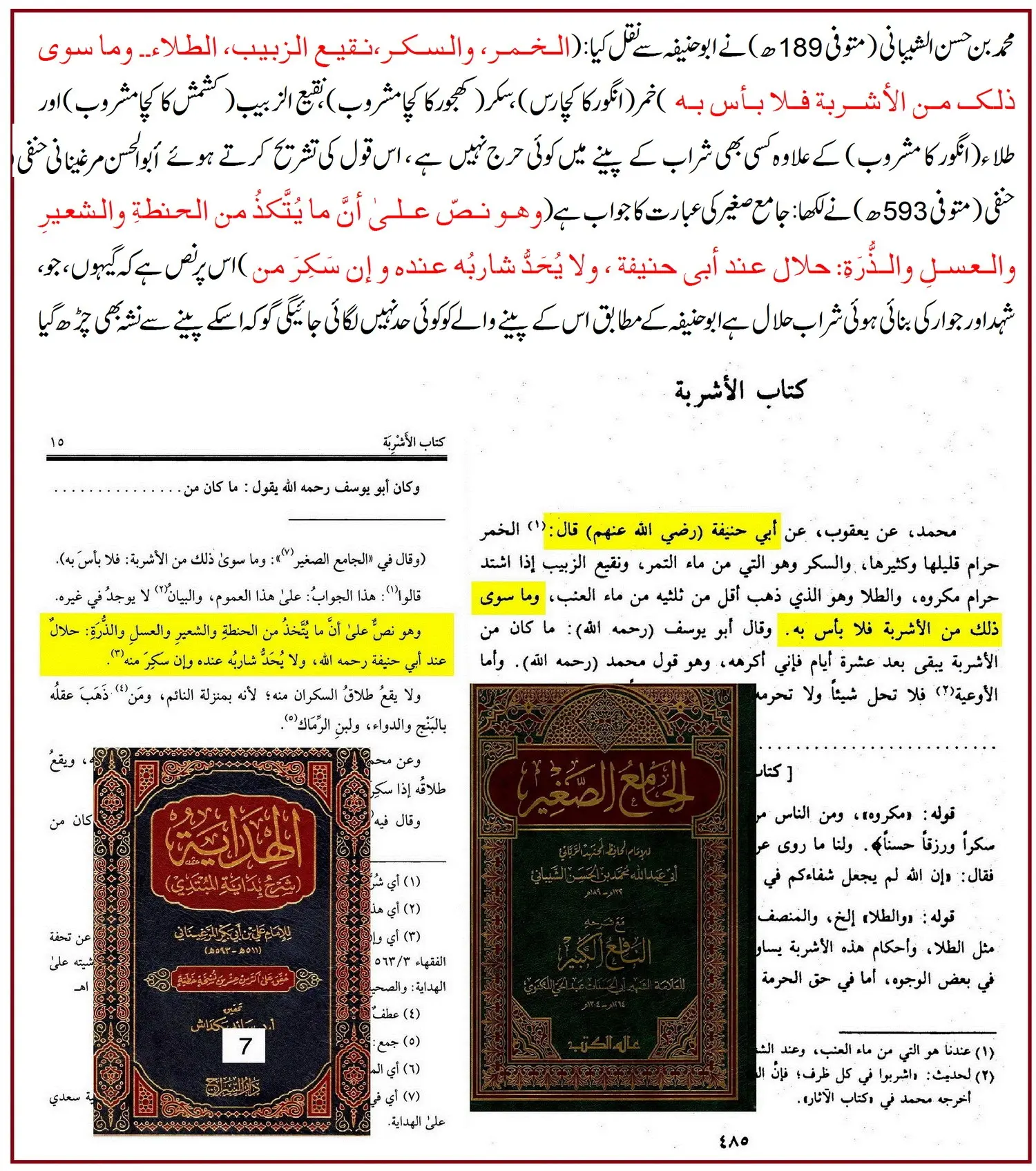
مُحَمَّد عَن يَعْقُوب عَن أبي حنيفة (رَضِي الله عَنْهُم) قَالَ: الْخمر حرَام قليلها وكثيرها وَالسكر وَهُوَ الَّتِي من مَاء التَّمْر ونقيع الزَّبِيب إِذا اشْتَدَّ حرَام مَكْرُوه والطلا وَهُوَ الَّذِي ذهب أقل من ثُلثَيْهِ من مَاء الْعِنَب وَمَا سوى ذَلِك من الْأَشْرِبَة فَلَا بَأْس بِهِ
Translation: Muhammad bin Hasan al-Shaybani narrates from his Sheikh Imam Abu Hanifa: Khamr (raw grape juice) is forbidden, Sukkar (raw date drink) and Naqi’ al-Zabib (raw raisin drink) when they become strong (i.e., intoxicating) are forbidden and disliked, Tala’ (a grape drink from which two-thirds has not evaporated) is also included in this, and besides these, there is no harm in other drinks.
📌 Point: Here, according to Abu Hanifa, except for Khamr, Sukkar, Naqi’ al-Zabib, and Tala’, there is no objection to other intoxicating drinks, even if they cause intoxication in small amounts.
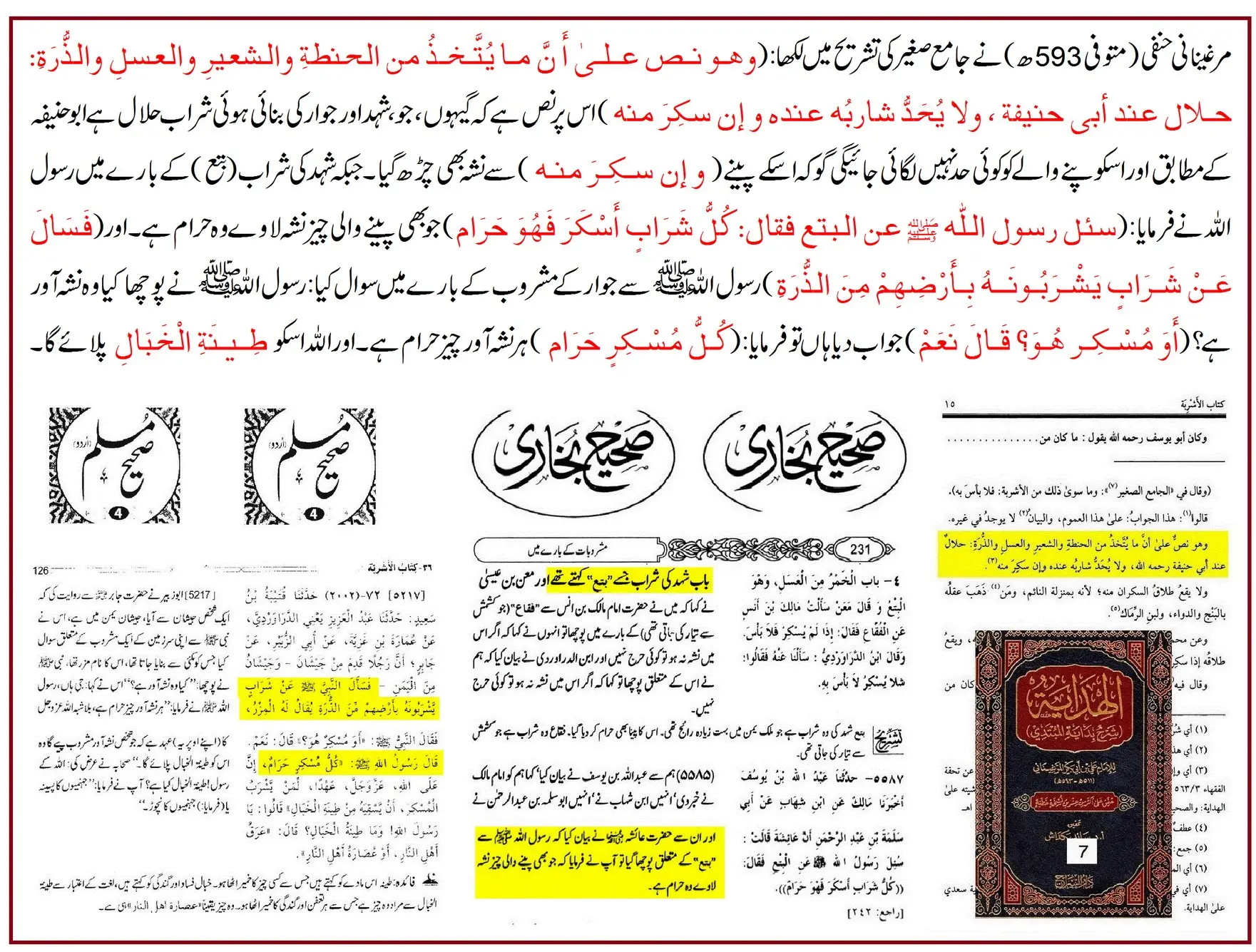
2️⃣ Explanation of Marghinani Hanafi
Original text:
“وقال في الجامع الصغير: وما سوى ذلك من الأشربة فلا بأس به” قالوا: هذا الجواب على هذا العموم والبيان لا يوجد في غيره، وهو نص على أن ما يتخذ من الحنطة والشعير والعسل والذرة حلال عند أبي حنيفة، ولا يحد شاربه عنده وإن سكر منه.
Translation: “Jami’ Saghir” states: Apart from this, there is no harm in any other beverages. Scholars say: This answer is general, and such clarification is not found in any other book. It is a text that wine made from wheat, barley, honey, and millet is permissible according to Imam Abu Hanifa, and no legal punishment (hudood) will be imposed on the one who drinks it, even if it causes intoxication.
📌 Point: Marghinani clearly stated the Hanafi position that wine made from wheat, barley, honey, and millet is permissible, and even if it causes intoxication, no hudood will be applied.
The Status of Hidayah and the Response to the Deobandi Objection
In the Hanafi school of thought, “Al-Hidayah fi Sharh Bidayat al-Mubtadi” holds extraordinary importance. Some people from the Deobandi school of thought object to it when it contains fatwas that may cause embarrassment in front of the general public or opponents, such as the issue permitting certain types of alcohol. A Deobandi Nazim Abbasi tried to dismiss Marghinani’s statement by saying, “This is Marghinani’s misconception.” However, the Hanafi scholars themselves have given Al-Hidayah an exceptional status.
1️⃣ Praise of Imad al-Din (Marghinani’s son)
Original text:
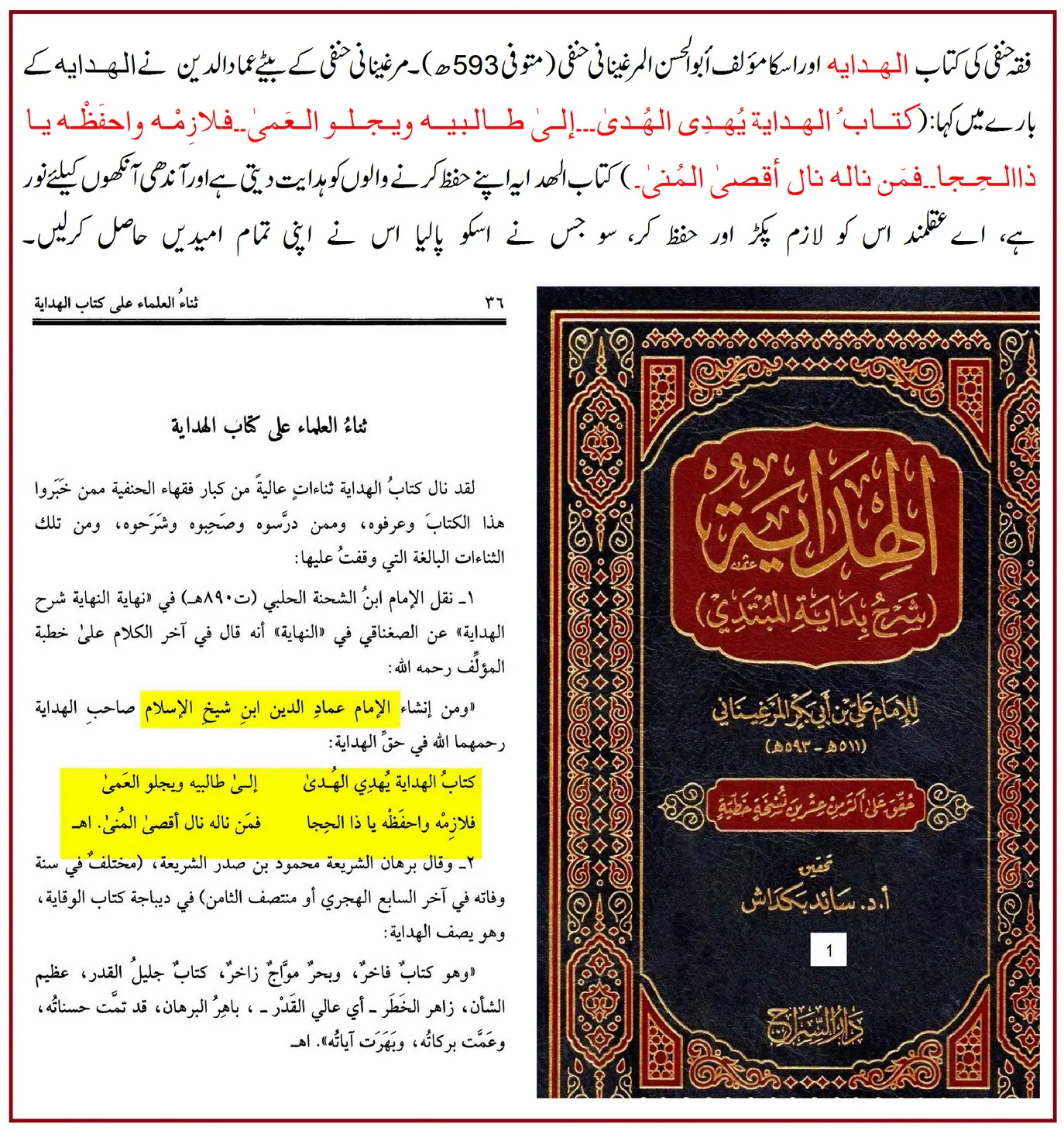
كتاب الهداية يهدي الهدى .. إلى حافظيه ويجلو العمى .. فلازمه واحفظه ياذا الحجى .. فمن ناله نال أقصى المنى
Translation: The book “Al-Hidayah” guides its preservers and removes blindness; O wise one! Hold fast to it and memorize it, for whoever attains it has attained all his hopes.
2️⃣ Praise of Haji Khalifa (Katib Jalabi Hanafi)
Original text:
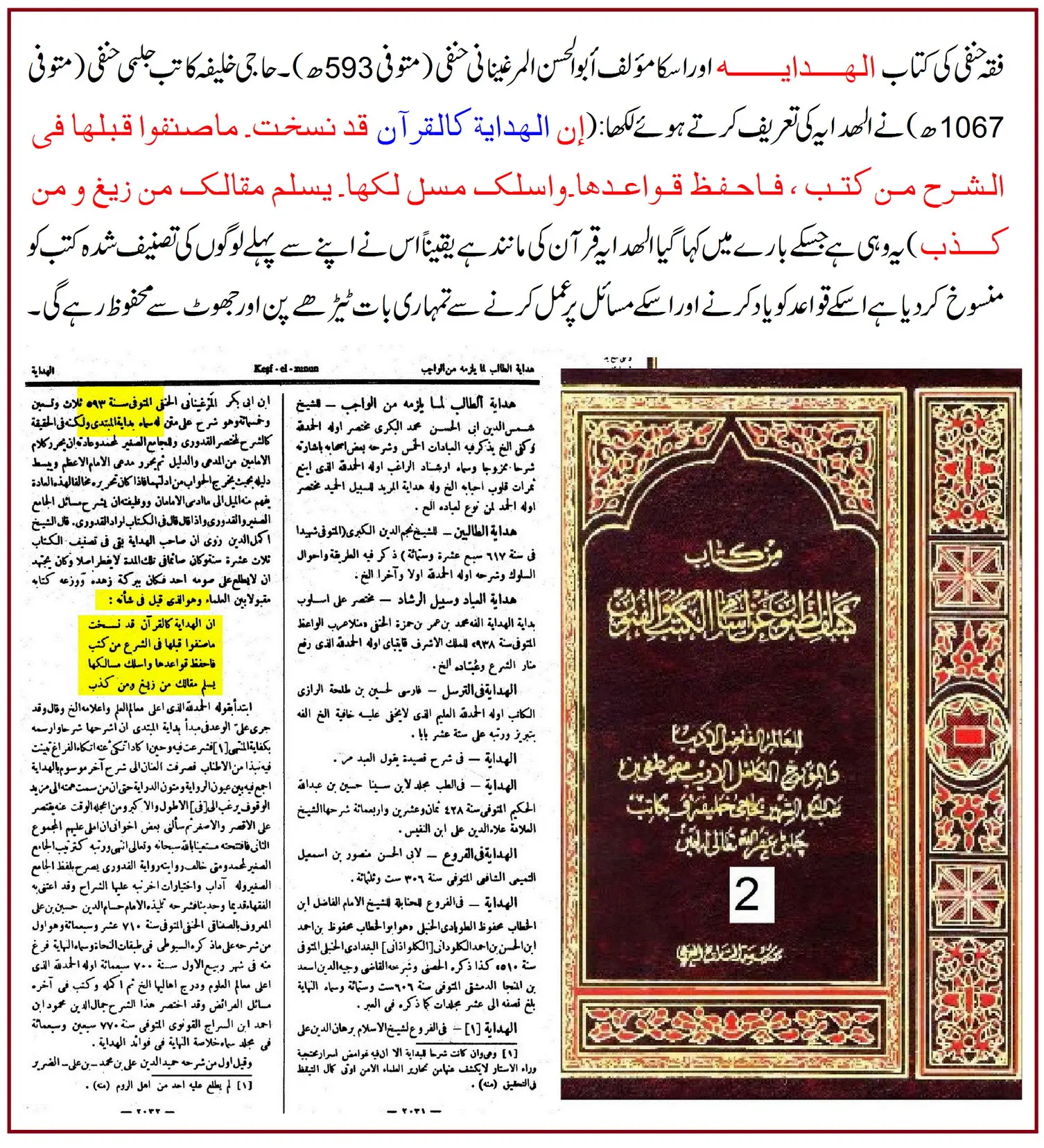
إن (الهداية) كالقرآن قد نسخت * ما صنفوا قبلها في الشرع من كتب
فاحفظ قواعدها واسلك مسالكها * يسلم مقالك من زيغ ومن كذب
Translation: “Hidayah” is like the Quran in that it has abrogated the previous Shariah books; memorize its rules and follow its method so that your speech remains free from crookedness and falsehood.
3️⃣ Anwar Shah Kashmiri Deobandi’s Opinion
Original text:
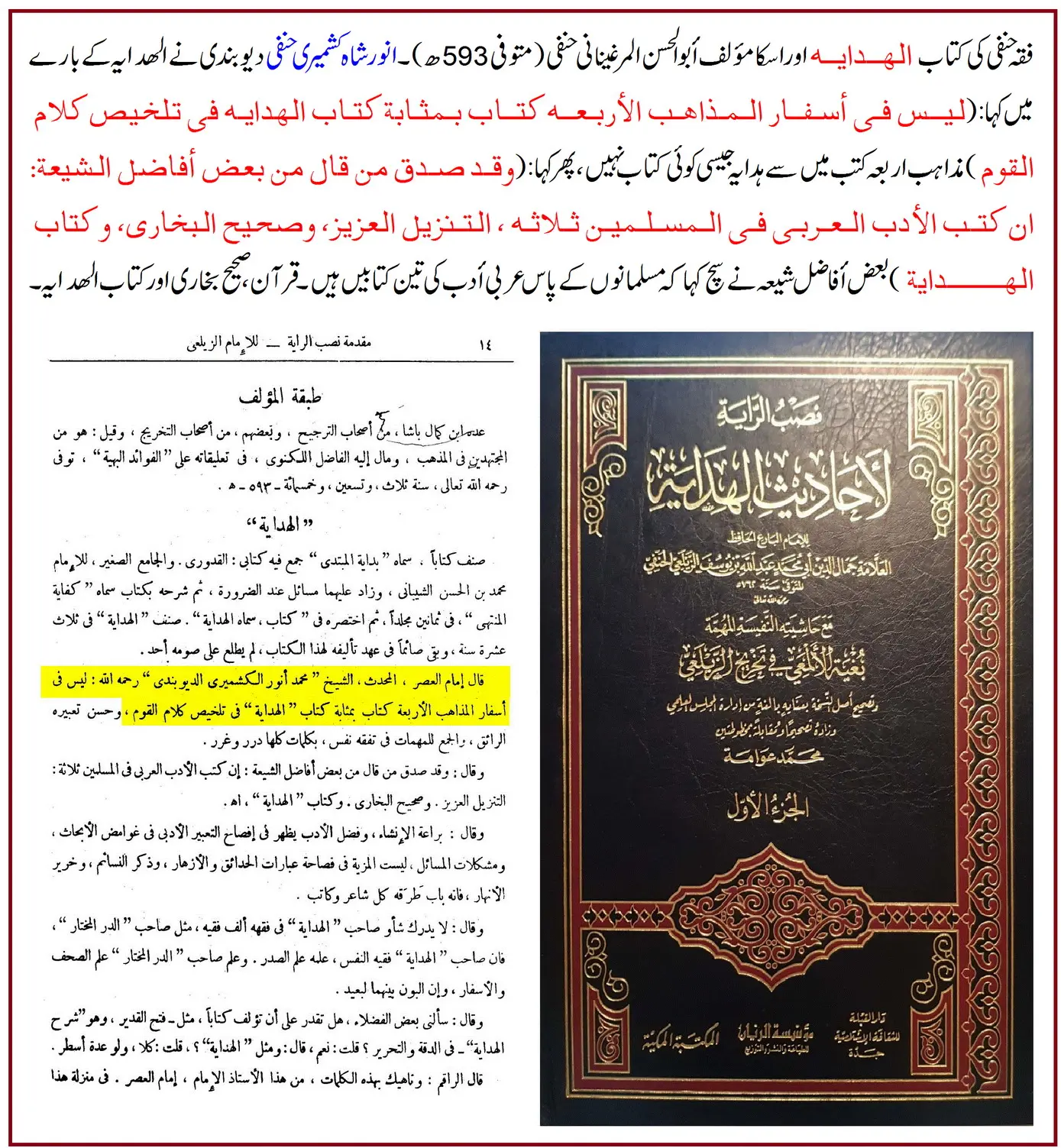
ليس في أسفار المذاهب الأربعة كتاب بمثابة كتاب الهداية في تلخيص كلام القوم، وحسن تعبيره الرائق، والجمع للمهمات في تفقه نفس، بكلمات كلها درر وغرر. وقد صدق من قال من بعض أفاضل الشيعة: إن كتب الأدب العربي في المسلمين ثلاثة: التنزيل العزيز. وصحيح البخاري. وكتاب الهداية.
Translation: Among the books of the four schools of thought, there is no book like Hidayah which is a summary of the speech of the scholars (of the school), an excellent expression, a collection of important issues, and profound in jurisprudence. Some distinguished Shia scholars have rightly said that among Muslims there are three books of Arabic literature: the Quran, Sahih Bukhari, and the book Hidayah.
4️⃣ Muhammad Awamah Hanafi’s Opinion
Original text:
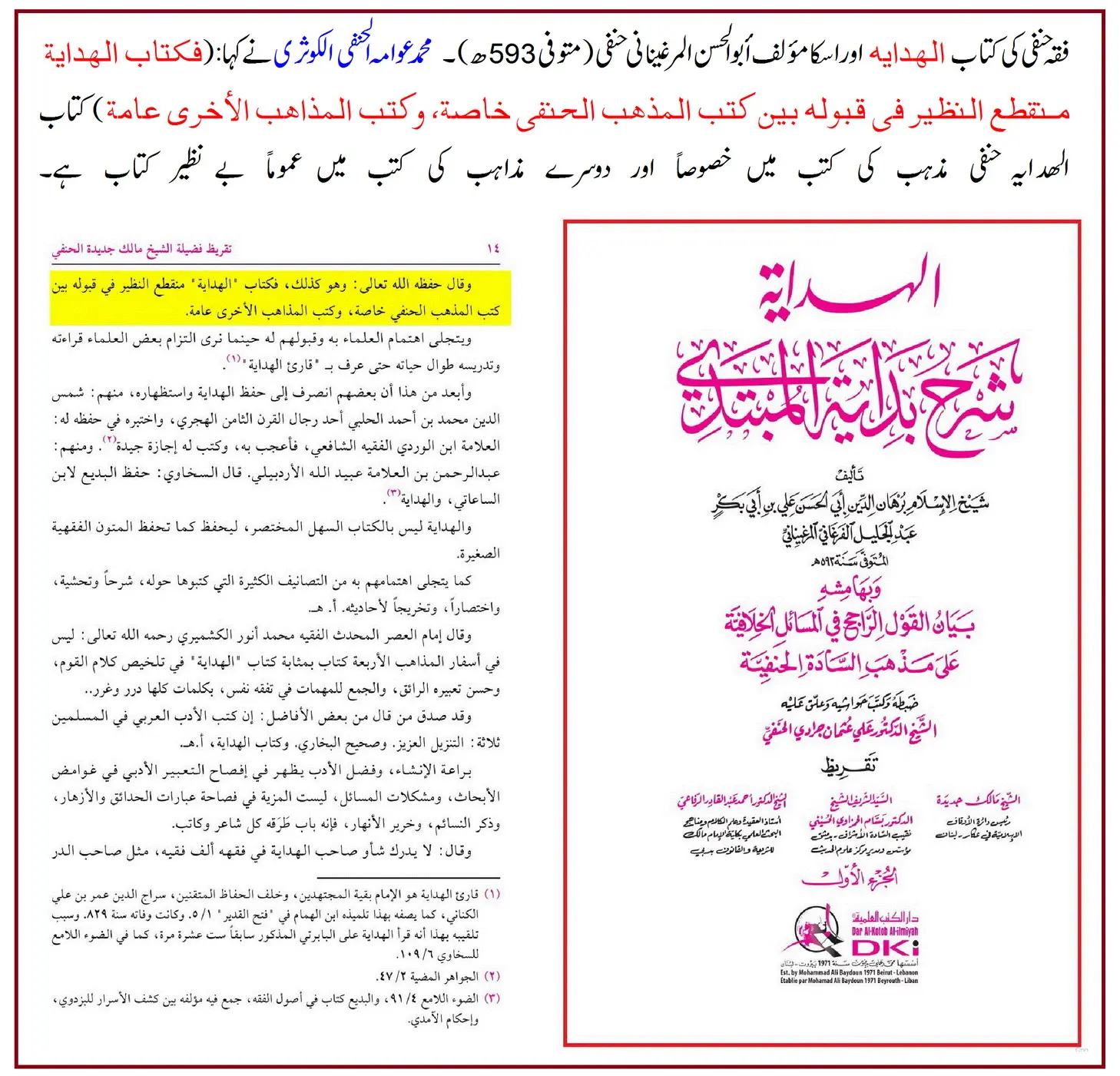
فكتاب “الهداية” منقطع النظير في قبوله بين كتب المذهب الحنفي خاصة، وكتب المذاهب الأخرى عامة.
Translation: The book “Hidayah” is uniquely popular among Hanafi books and generally unparalleled among the books of other schools of thought.
📌 Conclusion: When even the Hanafi elders give Hidayah such a high status that they liken it to the Quran and count it among the highest books of Arabic literature, then rejecting any of its fatwas by calling them “delusion” is equivalent to striking one’s own sectarian foundation.
The Permissibility of Drinking Wine for Strength – Hanafi Fatwas versus Ahadith
1️⃣ Alaa al-Din al-Bukhari Hanafi (730 AH)
Original Text:
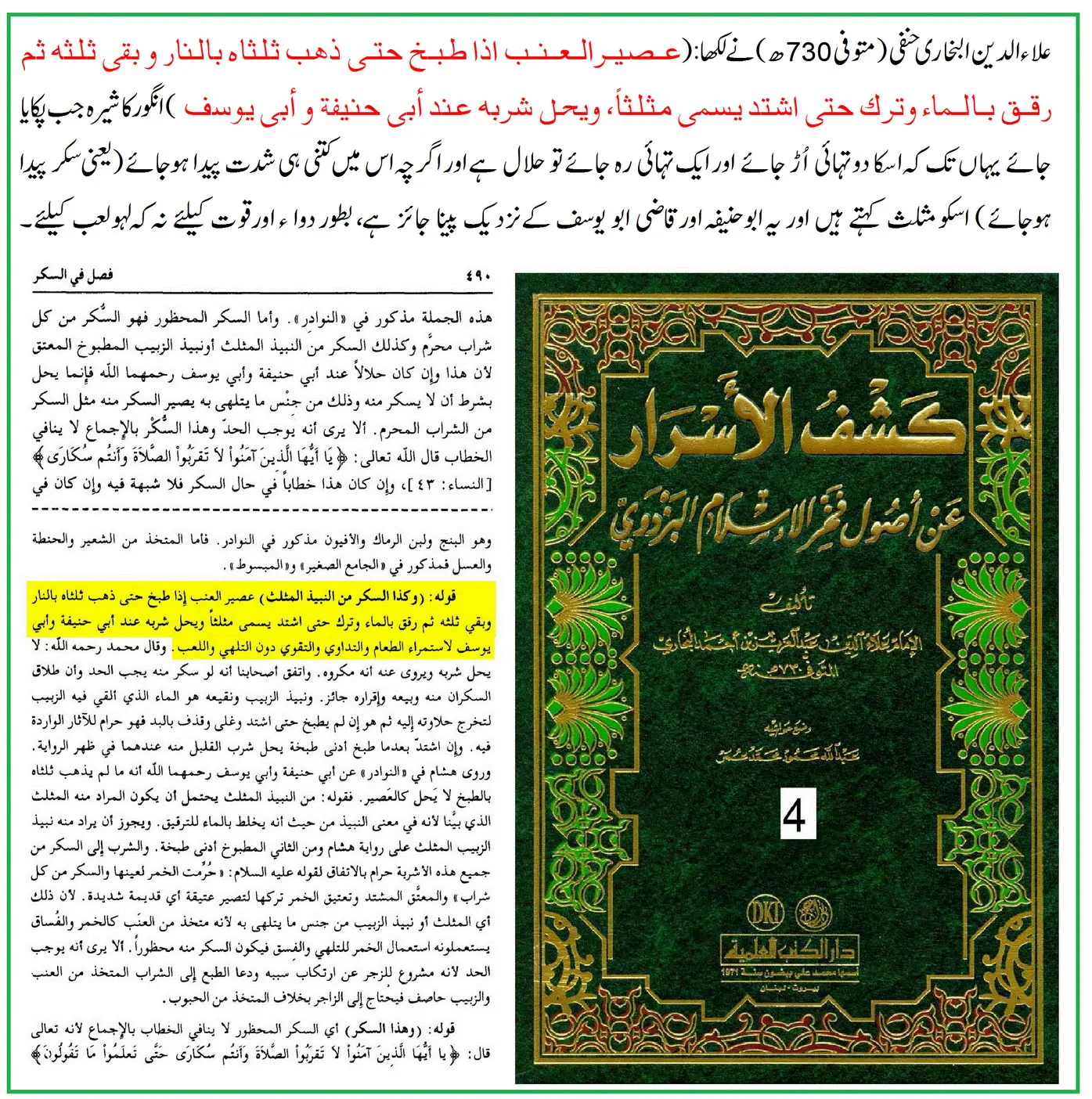
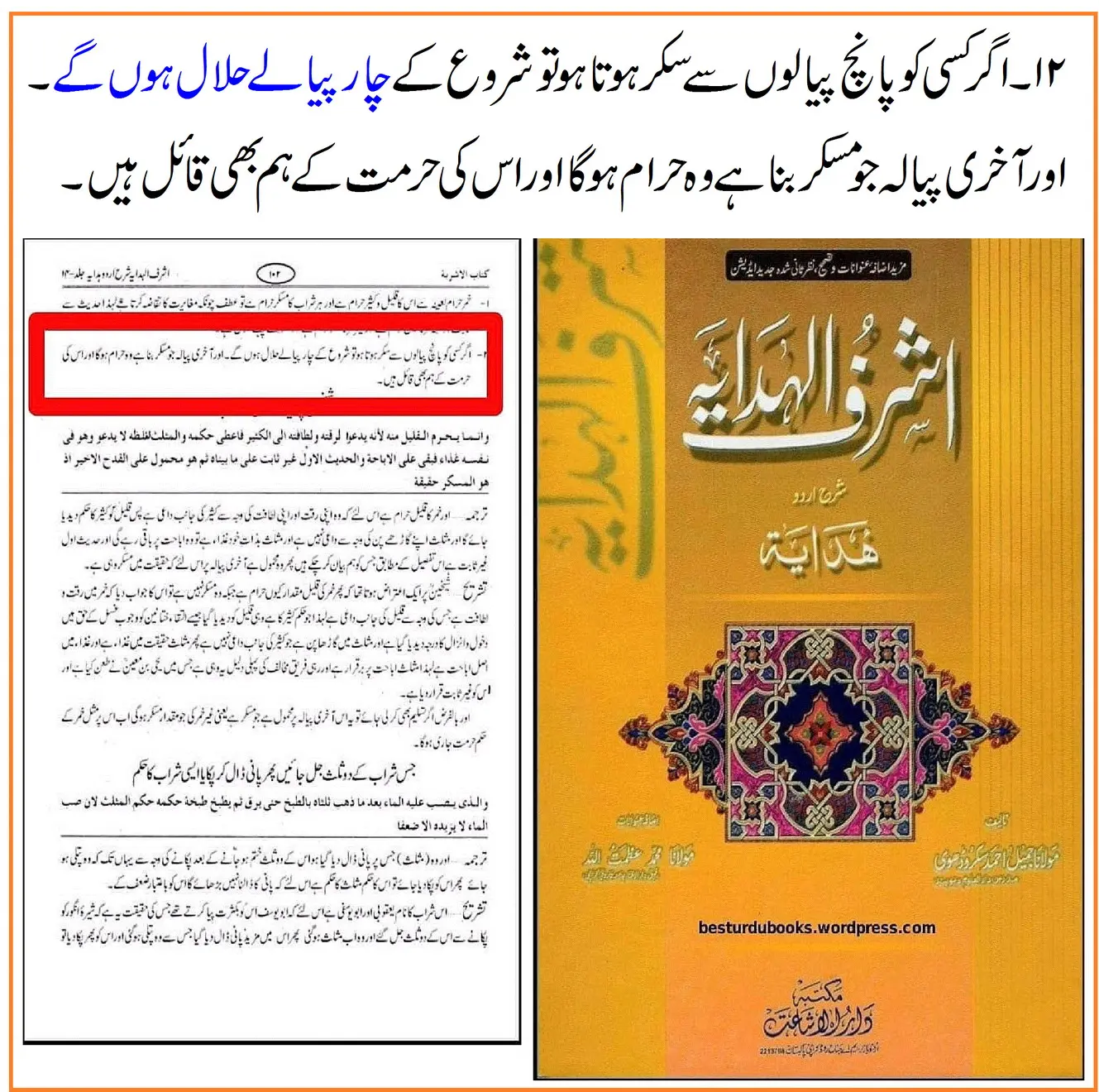
[الْقَسْم الثَّانِي السُّكْر بِطَرِيقِ غَيْر مُبَاح] قَوْلُهُ (وَكَذَا السُّكْرُ مِنْ النَّبِيذِ الْمُثَلَّثِ) عَصِيرُ الْعِنَبِ إذَا طُبِخَ حَتَّى ذَهَبَ ثُلُثَاهُ بِالنَّارِ وَبَقِيَ ثُلُثُهُ ثُمَّ رُقِّقَ بِالْمَاءِ وَتُرِكَ حَتَّى اشْتَدَّ يُسَمَّى مُثَلَّثًا وَيَحِلُّ شُرْبُهُ عِنْدَ أَبِي حَنِيفَةَ وَأَبِي يُوسُفَ لِاسْتِمْرَاءِ الطَّعَامِ وَالتَّدَاوِي وَالتَّقَوِّي دُونَ التَّلَهِّي وَاللَّعِبِ.
Translation: When grape juice is boiled until two-thirds of it evaporates and one-third remains, then water is added and it is left until it becomes strong (i.e., intoxicating), it is called “Muthallath.” According to Imam Abu Hanifa and Qadi Abu Yusuf, drinking it is permissible as a digestive, medicine, and for strength, but not for amusement and play.
2️⃣ Badr al-Din Ayni Hanafi (855 AH)
Original Text:
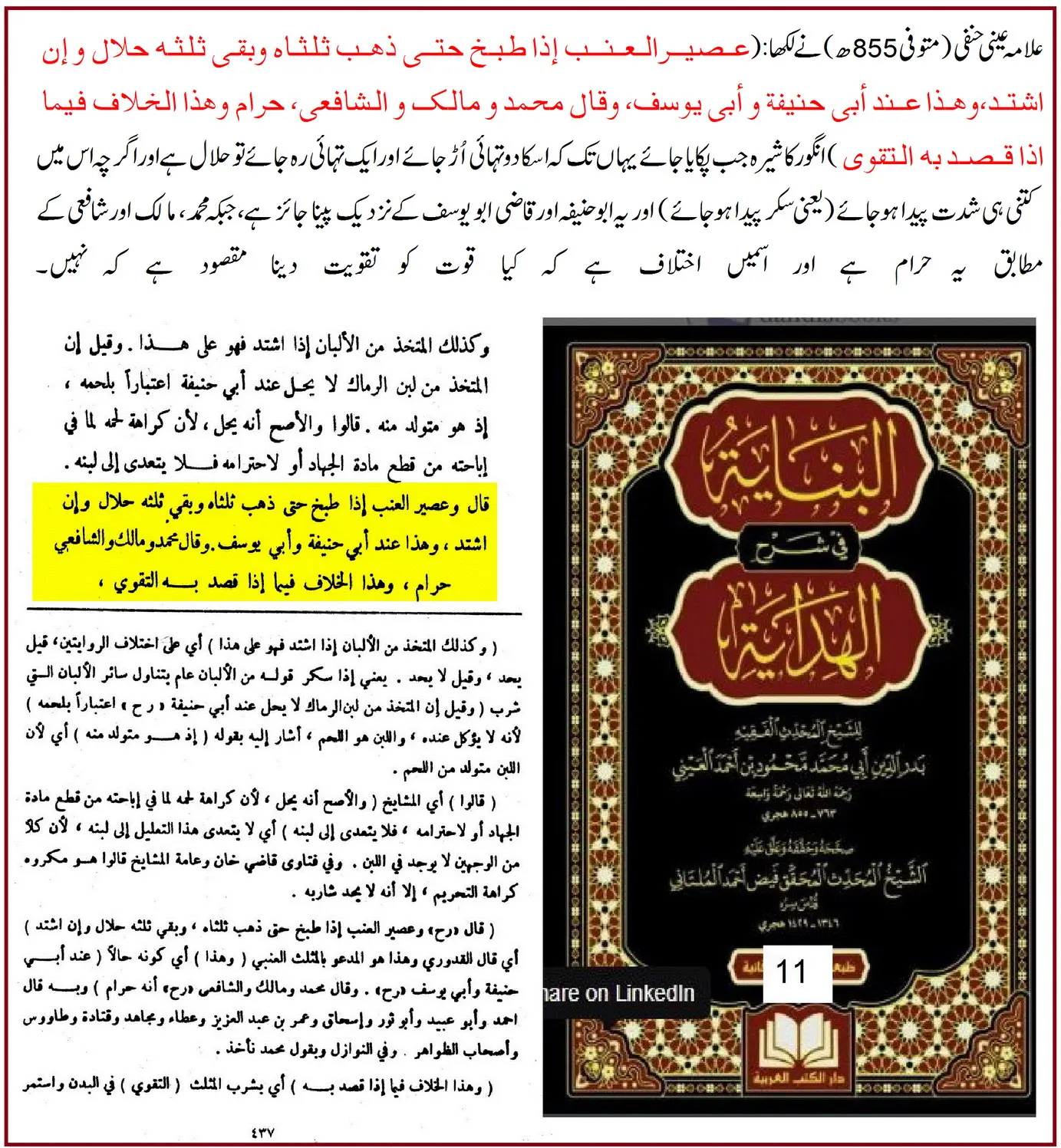
[حكم شرب عصير العنب إذا طبخ حتى ذهب ثلثاه وبقي ثلثه] (قال: وعصير العنب إذا طبخ حتى ذهب ثلثاه وبقي ثلثه حلال وإن اشتد) وهذا عند أبي حنيفة وأبي يوسف، وقال محمد ومالك والشافعي: حرام، وهذا الخلاف فيما إذا قصد به التقوي.
Translation: When grape juice is boiled until two-thirds of it evaporates and one-third remains, it is halal even if it becomes very strong (intoxicating). This is the position of Imam Abu Hanifa and Qadi Abu Yusuf, while according to Imam Muhammad, Malik, and Shafi’i, it is haram. This difference arises when the purpose of drinking is to gain strength.
3️⃣ Mufti Taqi Usmani Hanafi
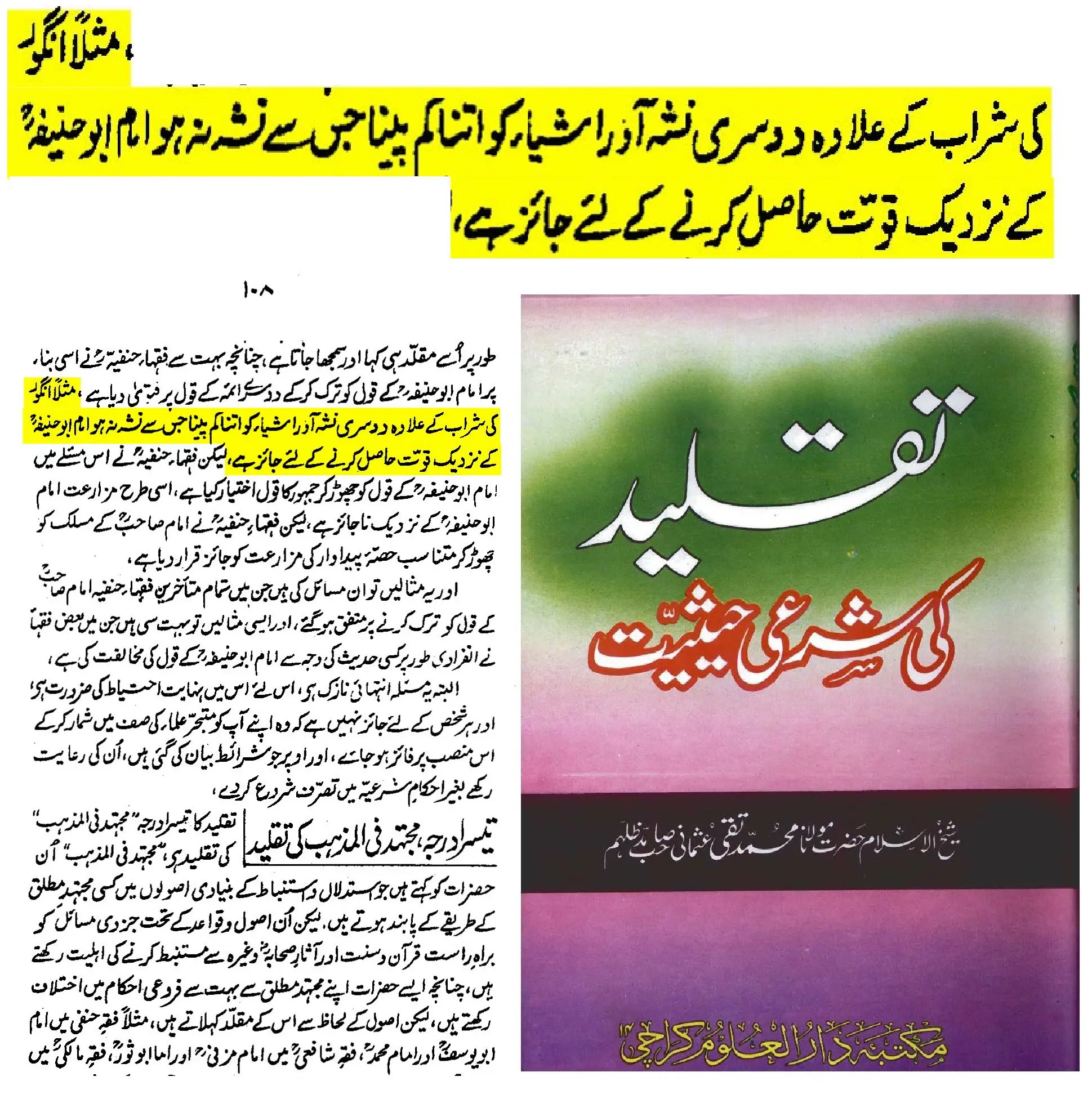
Excerpt: Mufti Taqi Usmani writes that:
“Except for grape wine, consuming other intoxicants in such a small amount that it does not cause intoxication is permissible according to Imam Abu Hanifa for gaining strength.”
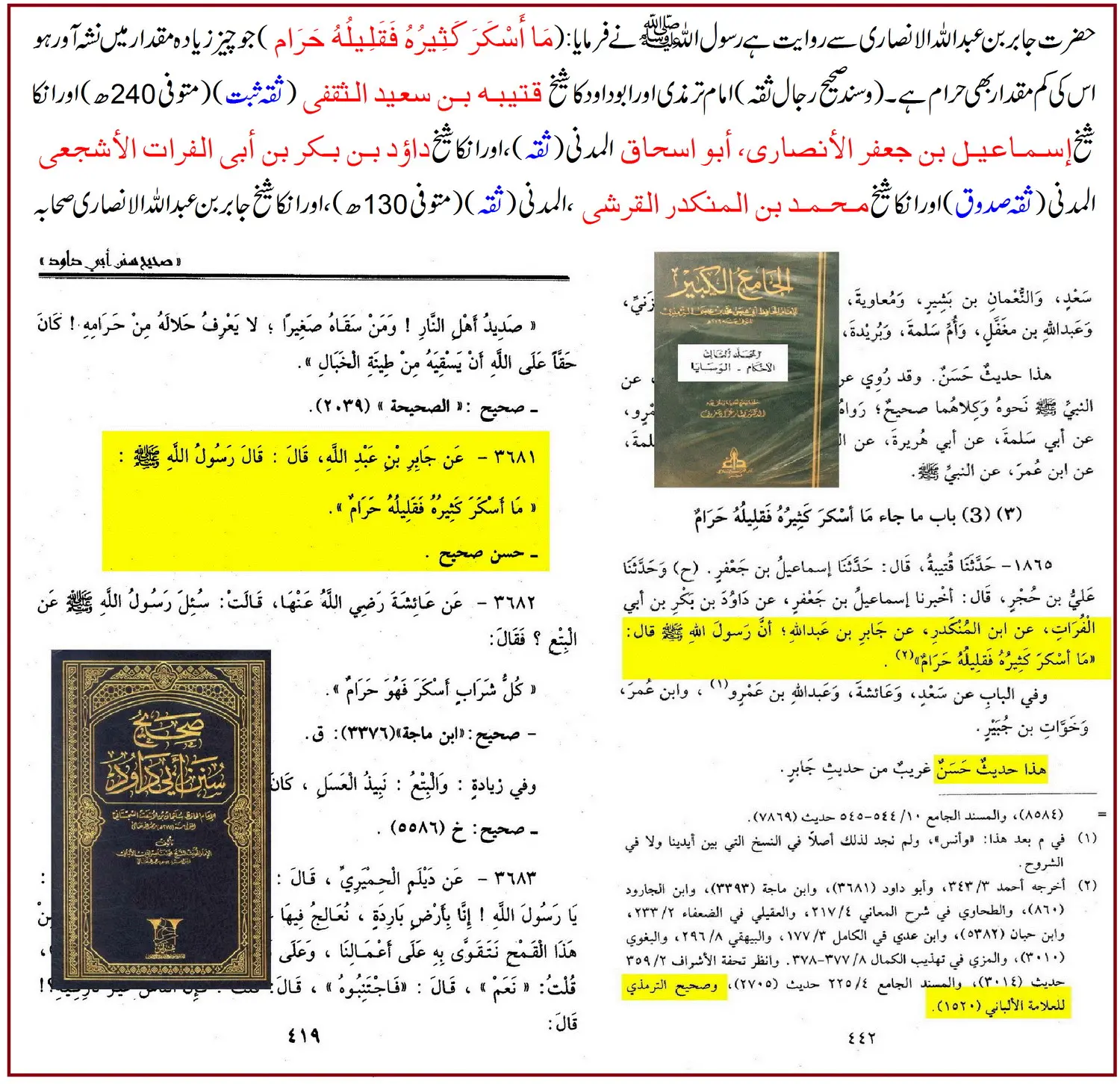
4️⃣ Prophetic Hadith ﷺ – The Prohibition of Intoxicating Substances
Original text:
عَنْ جَابِرِ بْنِ عَبْدِ اللهِ، أَنَّ رَسُولَ اللهِ ﷺ قَالَ: «مَا أَسْكَرَ كَثِيرُهُ فَقَلِيلُهُ حَرَامٌ»
Translation: The Messenger of Allah ﷺ said: “Whatever causes intoxication in large amounts, a small amount of it is also forbidden.”
📌 Comparison:
- According to authentic hadiths, if a drink causes intoxication in large amounts, then even a small amount of it is forbidden.
- According to Hanafi jurisprudence, some wines are permissible to drink in small amounts as a source of strength or medicine, even if there is a possibility of intoxication, provided the purpose is not amusement or recreation.
The Issue of Turning Wine into Vinegar – Hanafi Jurisprudence versus Authentic Hadiths
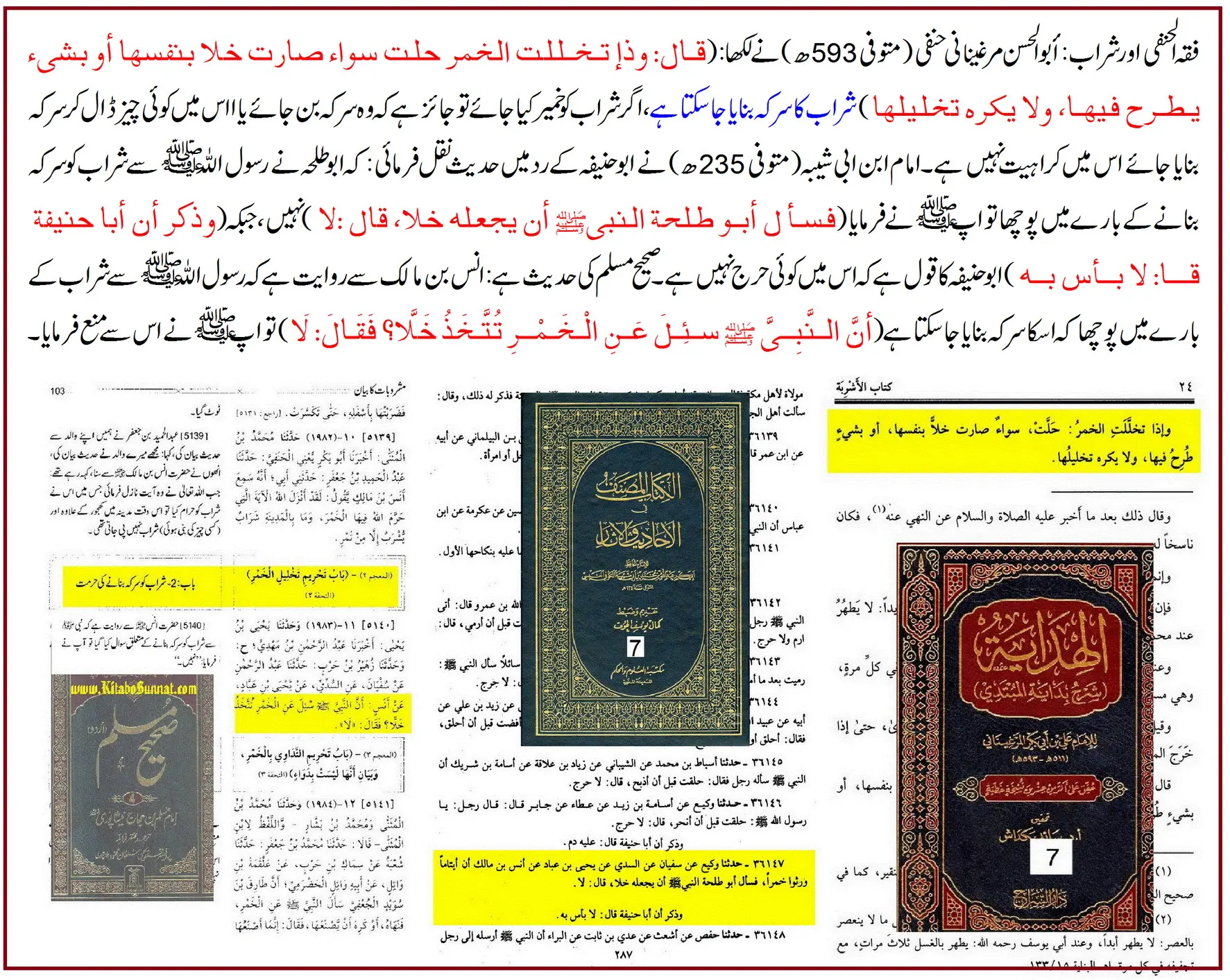
1️⃣ Abu al-Hasan al-Marghinani Hanafi (593 AH) – Hanafi Legal Ruling
Original text:
قال: “وإذا تخللت الخمر حلت سواء صارت خلا بنفسها أو بشيء يطرح فيها، ولا يكره تخليلها”
Translation: If wine turns into vinegar, it is permissible, whether it turns into vinegar naturally or by adding something to make it vinegar, and turning it into vinegar is not disliked.
📌 Jurisprudential Conclusion: In Hanafi jurisprudence, it is permissible to deliberately convert wine into vinegar.
2️⃣ Musannaf Ibn Abi Shaybah – Abu Hanifa’s Position
Original Text:
36147 – وَكِيعٌ، عَنْ سُفْيَانَ، عَنِ السُّدِّيِّ، عَنْ يَحْيَى بْنِ عَبَّادٍ، عَنْ أَنَسِ بْنِ مَالِكٍ، “أَنَّ أَيْتَامًا وَرِثُوا خَمْرًا، فَسَأَلَ أَبُو طَلْحَةَ النَّبِيَّ ﷺ أَنْ يَجْعَلَهُ خَلًّا، قَالَ: لَا” وَذُكِرَ أَنَّ أَبَا حَنِيفَةَ قَالَ: لَا بَأْسَ بِهِ
Translation: Anas (RA) narrates that some orphans inherited wine, so Abu Talhah (RA) asked the Prophet ﷺ whether it could be turned into vinegar. The Prophet ﷺ said: “No.” It is mentioned that Abu Hanifa said: There is no harm in it.
3️⃣ Sahih Muslim – Prophetic Prohibition ﷺ
Original Text:
عَنْ أَنَسٍ، أَنَّ النَّبِيَّ ﷺ سُئِلَ عَنِ الْخَمْرِ تُتَّخَذُ خَلًّا، فَقَالَ: «لَا»
Translation: Anas (RA) narrates that the Prophet ﷺ was asked about turning wine into vinegar, and he ﷺ said: “No.”
📌 Comparison:
- Hanafi Jurisprudence: It is permissible to deliberately convert wine into vinegar.
- Authentic Hadith: The Prophet ﷺ prohibited this action.
Punishment for Drinking Wine – Hanafi Principles and Ahadith
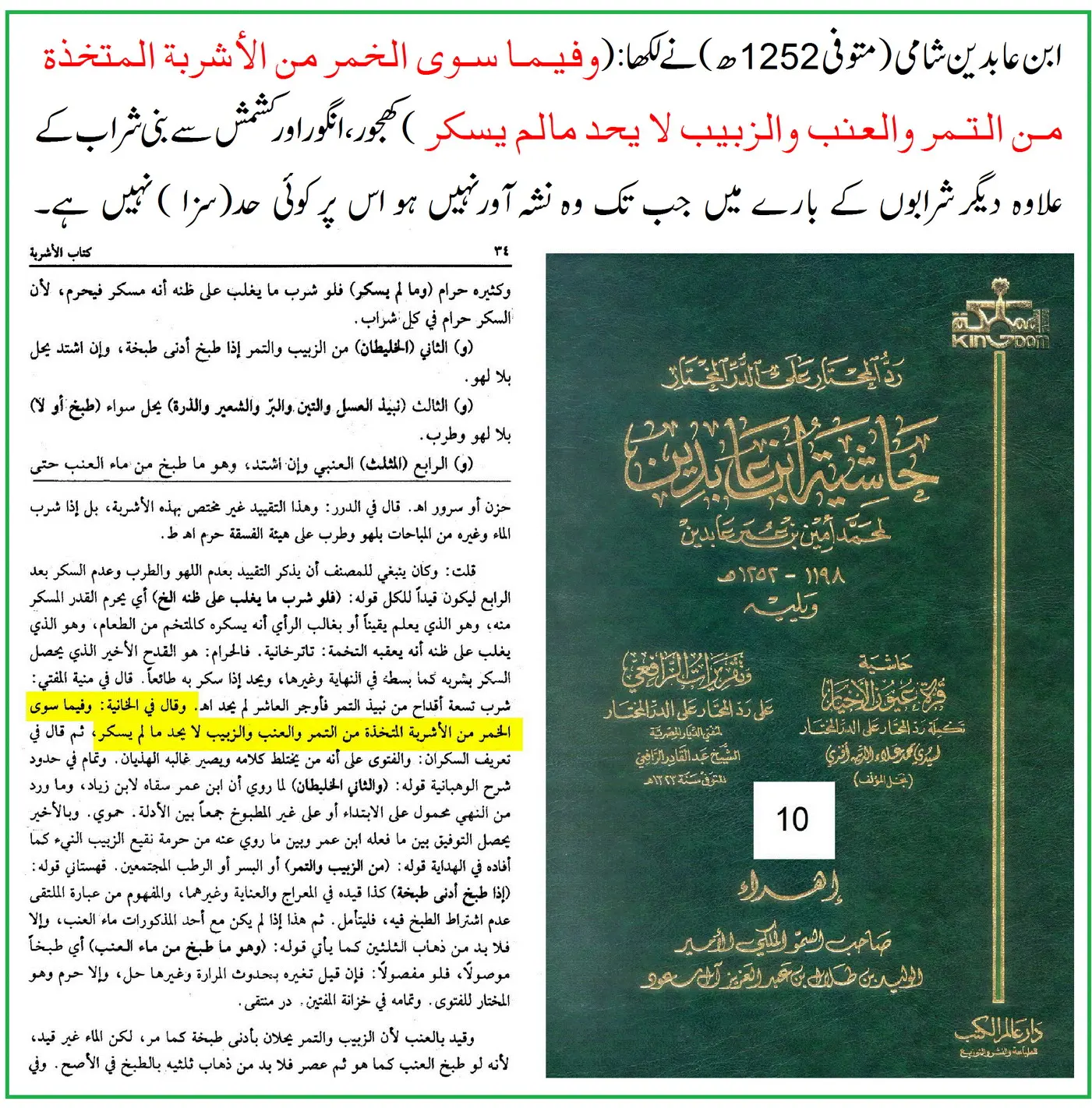
1️⃣ Ibn Abidin al-Shami (1252 AH) – No Punishment for Non-Khamr Wine
Original Text:
وَقَالَ فِي الْخَانِيَّةِ: وَفِيمَا سِوَى الْخَمْرِ مِنْ الْأَشْرِبَةِ الْمُتَّخَذَةِ مِنْ التَّمْرِ وَالْعِنَبِ وَالزَّبِيبِ لَا يُحَدُّ مَا لَمْ يَسْكَرْ
Translation: Khaniyyah said: Regarding wines made from dates, grapes, and raisins other than khamr (grape wine), there is no punishment (Shariah penalty) unless it causes intoxication.
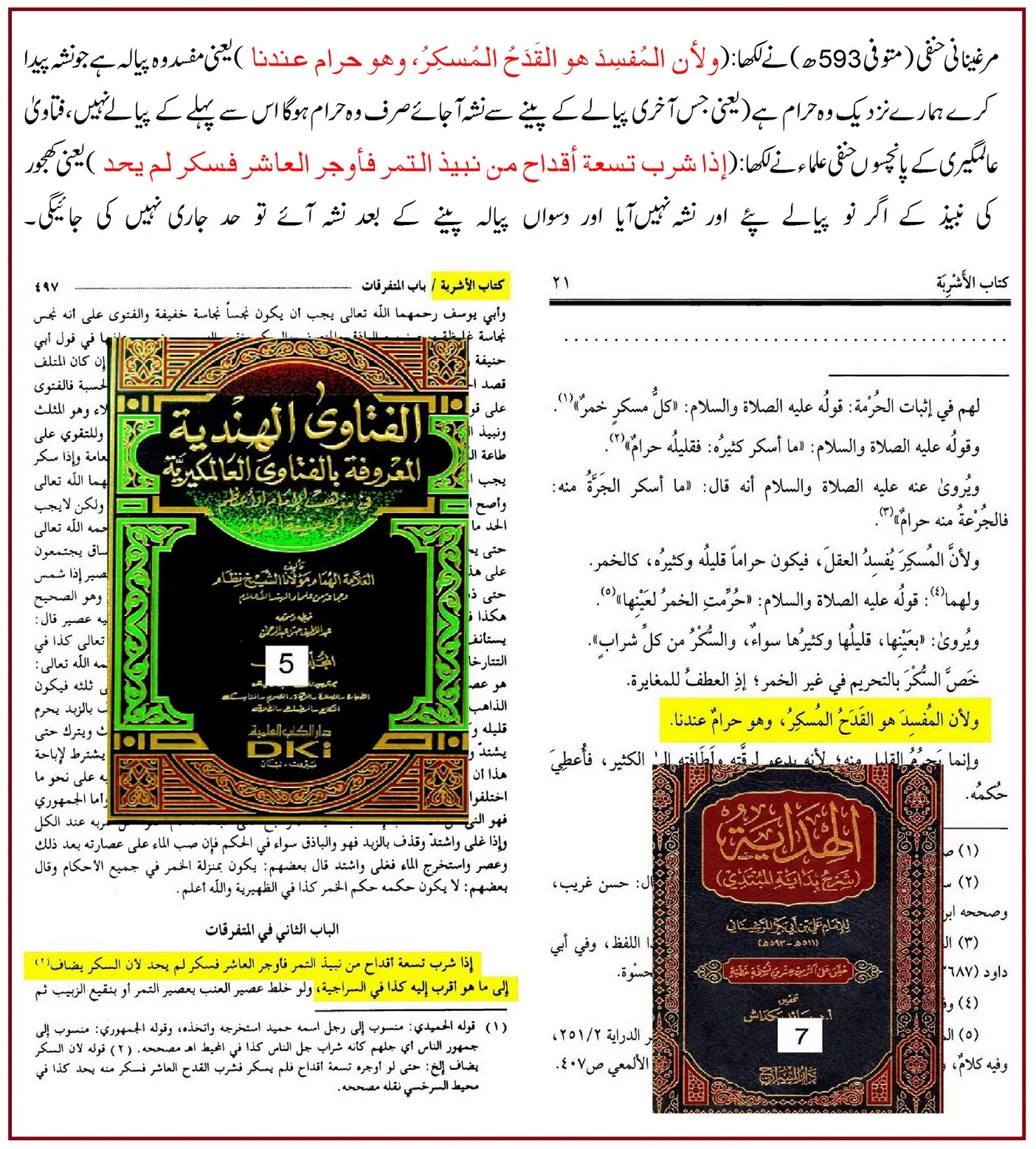
2️⃣ Marghinani Hanafi – Intoxication from the last cup
Original text:
ولأن المفسد هو القدح المسكر وهو حرام عندنا وإنما يحرم القليل منه
Translation: Because the cup that causes corruption is the one that causes intoxication, and that is considered forbidden by us, and its small amount is forbidden only when it causes intoxication.
3️⃣ Fatawa Alamgiri – If intoxication occurs after the tenth cup when nine cups were drunk without intoxication, there is no punishment
Original text:
إذَا شَرِبَ تِسْعَةَ أَقْدَاحٍ مِنْ نَبِيذِ التَّمْرِ فَأُوجِرَ الْعَاشِرَ فَسَكِرَ لَمْ يُحَدَّ؛ لِأَنَّ السُّكْرَ يُضَافُ إِلَى مَا هُوَ أَقْرَبُ إِلَيْهِ
Translation: If someone drinks nine cups of date wine and does not become intoxicated, and then the tenth cup is poured into his mouth (forcibly) and he becomes intoxicated, then no punishment will be applied, because intoxication is attributed to what is closest to it.
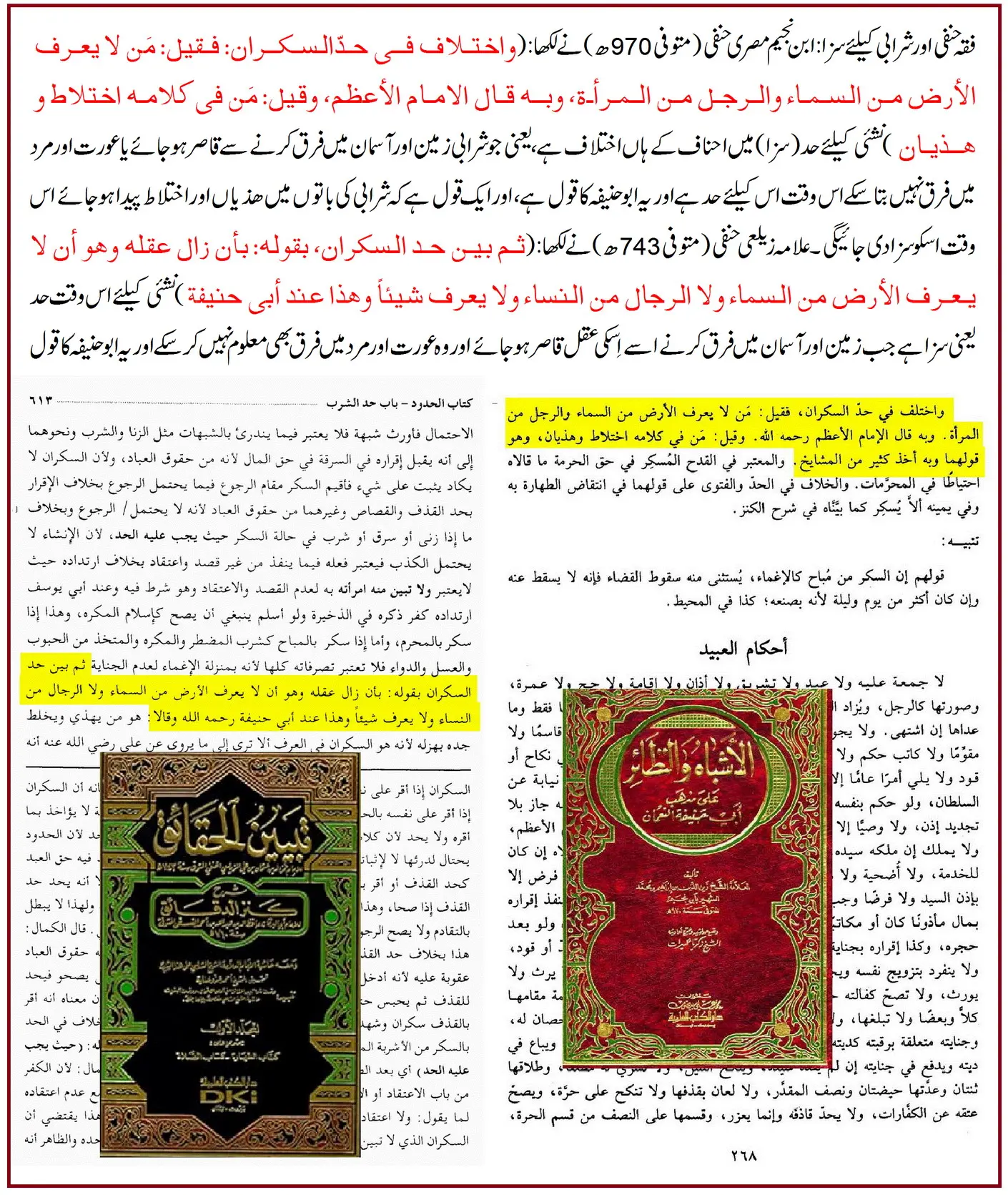
4️⃣ Ibn Najim al-Masri (970 AH) – Definition of intoxication
Original text:
وَاخْتُلِفَ فِي حَدِّ السَّكْرَانِ، فَقِيلَ: مَنْ لَا يَعْرِفُ الْأَرْضَ مِنَ السَّمَاءِ وَالرَّجُلَ مِنَ الْمَرْأَةِ، وَبِهِ قَالَ الْإِمَامُ الْأَعْظَمُ، وَقِيلَ: مَنْ فِي كَلَامِهِ اخْتِلَاطٌ وَهَذَيَانٌ، وَهُوَ قَوْلُهُمَا
Translation: There is a difference of opinion regarding the definition of an intoxicated person: it is said that it is a person who cannot distinguish between the earth and the sky or between a man and a woman, and this is the view of Imam Azam (Abu Hanifa). It is also said that it is one whose speech is confused and delirious, and this is the opinion of both his students.
5️⃣ Zaili Hanafi (743 AH) – Abu Hanifa’s View
Original text:
حَدُّ السَّكْرَانِ بِأَنْ زَالَ عَقْلُهُ، وَهُوَ أَنْ لَا يَعْرِفَ الْأَرْضَ مِنَ السَّمَاءِ وَلَا الرِّجَالَ مِنَ النِّسَاءِ … وَهَذَا عِنْدَ أَبِي حَنِيفَةَ
Translation: The limit of intoxication is when a person’s intellect is lost to the extent that he cannot distinguish between the earth and the sky or between a man and a woman, and this is the view of Abu Hanifa.
6️⃣ Prophetic Hadith ﷺ – Criterion of Prohibition
Original text:
«مَا أَسْكَرَ كَثِيرُهُ فَقَلِيلُهُ حَرَامٌ»
Translation: The Messenger of Allah ﷺ said: “Whatever causes intoxication in large quantities, a small quantity of it is also forbidden.”
📌 Comparison:
- Hanafi Fiqh: Drinking is not prohibited before reaching the quantity that causes intoxication, and in some cases, even if intoxication occurs, there is no hadd punishment.
- Prophetic Sunnah ﷺ: Whatever drink causes intoxication in large quantities, even a small amount of it is forbidden.
Testimony of Abu Awana and the General Tendency of Hanafi Fiqh
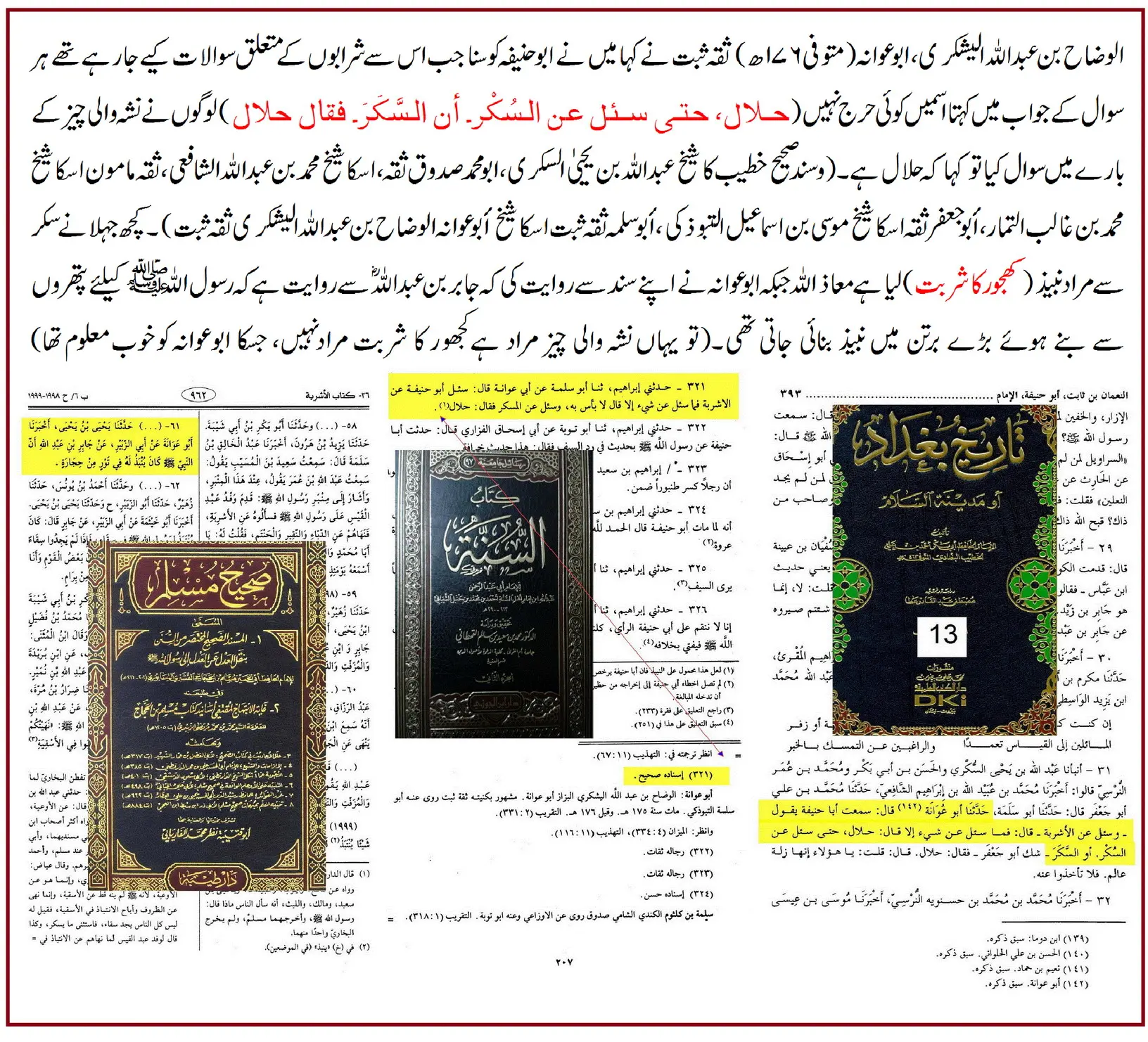
1️⃣ Imam Abu Awana Al-Waddah bin Abdullah Al-Yashkiri (176 AH) – Testimony of a Thiqah Thabt (Trustworthy, Precise) Narrator
Original text:
321 – حَدَّثَنِي إِبْرَاهِيمُ، ثنا أَبُو سَلَمَةَ، عَنْ أَبِي عَوَانَةَ، قَالَ: “سُئِلَ أَبُو حَنِيفَةَ عَنِ الْأَشْرِبَةِ، فَمَا سُئِلَ عَنْ شَيْءٍ، إِلَّا قَالَ: لَا بَأْسَ بِهِ، وَسُئِلَ عَنِ الْمُسْكِرِ فَقَالَ: حَلَالٌ”
Translation: Abu Awana says: “Abu Hanifa was asked about drinks, and he was not asked about anything except that he said: There is no harm in it, and when asked about intoxicating drinks, he said: It is permissible.”
2️⃣ Status of the Chain
- Al-Khatib Al-Baghdadi – ثقة حجة
- Abdullah bin Yahya Al-Sukkari – صدوق حسن الحديث
- Muhammad bin Abdullah Al-Shafi’i – ثقة مأمون
- Muhammad bin Ghalib Al-Tammar – ثقة
- Musa bin Ismail Al-Tabudhki – ثقة ثبت
- Abu Awana Al-Waddah bin Abdullah Al-Yashkiri – ثقة ثبت
📌 The chain is authentic and this explains the direct fatwa of Abu Hanifa.
3️⃣ Objection and Its Refutation
Some objectors (such as Asad Al-Madari) said that Abu Awana here misunderstood Nabidh as “intoxication.”
Refutation:
- Nabidh is a date syrup, which the Messenger of Allah ﷺ drank, as Abu Awana himself narrates through his chain:
Original text:
61 – (1999) حَدَّثَنَا يَحْيَى بْنُ يَحْيَى، أَخْبَرَنَا أَبُو عَوَانَةَ، عَنْ أَبِي الزُّبَيْرِ، عَنْ جَابِرِ بْنِ عَبْدِ اللهِ، «أَنَّ النَّبِيَّ ﷺ كَانَ يُنْبَذُ لَهُ فِي تَوْرٍ مِنْ حِجَارَةٍ»
Translation: Jabir bin Abdullah رضي الله عنه narrates that Nabidh was prepared for the Prophet ﷺ in a vessel made of stones.
📌 From this, it is understood that Abu Awana knew the difference between Nabidh and intoxicating alcohol, so calling his testimony a “misunderstanding” is baseless.
4️⃣ Overall Trend
From these evidences, it becomes clear that in Hanafi jurisprudence:
- Some non-grape wines (made from wheat, barley, honey, sorghum, etc.) are permissible if they are not intoxicating, and even in some cases, despite being intoxicating, they are not subject to punishment.
- Drinking wine for strength or medicinal purposes is permissible in some cases.
- Preparing Muthallath from grape juice and drinking it is permissible according to Imam Abu Hanifa and Qadi Abu Yusuf.
🔍 Summary of the Research
-
Sayings of Imam Abu Hanifa and his students:
In the explicit statements of Muhammad bin Hasan al-Shaybani and Marghinani, permissibility was declared for all drinks other than khamr, sukar, naqee’ al-zabeeb, and talaa.
- Wine made from wheat, barley, honey, sorghum, etc., was considered permissible and not punishable by hadd despite causing intoxication.
-
Status of Al-Hidayah:
The Hanafi scholars counted “Al-Hidayah” among the most important books after the Quran, encouraged memorizing it, and regarded it as the foundation of Hanafi jurisprudence.
- Accusing its fatwas of “wahm” (error) is an attack on their own school.
-
Drinking wine for strength or treatment:
In the fatwas of Ala al-Din al-Bukhari, Badr al-Din al-Ayni, and Mufti Taqi Usmani, drinking mutallath and similar was declared permissible as treatment or for strength.
- This position contradicts the authentic hadith “What intoxicates in large amounts, a small amount of it is forbidden.”
-
Turning wine into vinegar:
In Hanafi fiqh, deliberate conversion of wine into vinegar is permitted, whereas in Sahih Muslim the Prophet ﷺ forbade this act.
-
Punishment for drinking wine:
In Hanafi fiqh, hadd punishment is not applied until the state of intoxication is very severe, and sometimes the hadd is waived by treating the last cup as the cause.
- The standard in the hadith is that the lesser amount of a drink that causes intoxication in larger quantity is also forbidden and punishable.
-
Testimony of Abu Awana:
It is proven with authentic chain that Abu Hanifa believed in the permissibility of all kinds of wine, even calling intoxicating drinks “halal.”
⚖ Conclusion
- In Hanafi jurisprudence, some non-grape wines have been declared permissible, even applying the principle of removing the punishment limit for intoxicating quantities.
- This lenient approach conflicts with the authentic hadiths’ standard of prohibition, which declare every intoxicating substance forbidden, even in small amounts.
- Criticism from muhaddithin and internal contradictions within Hanafi jurisprudence make it clear that these issues in Hanafi fatwas are not in accordance with the Prophetic texts.
Scans of Important References