إن الحمد لله نحمده و نستعينه، من يهده الله فلا مضل له و من يضلل فلا هادي له، وأشهد أن لا إله إلا الله وحده لا شريك له، و أن محمدا عبده و رسوله، أما بعد: فإن خير الحديث كتاب الله، و خير الهدي هدي محمد صلى الله عليه وسلم و شر الأمور محدثاتها وكل بدعة ضلالة، وكل ضلالة فى النار
In Islam, after the declaration of أشهد أن لا إله إلا الله وأشهد أن محمدا رسول الله, the second pillar is Salat (prayer). When the Prophet Muhammad (peace be upon him) prayed, he would raise both hands up to the shoulders or ears at Takbir al-Ihram, before bowing (ruku), and after rising from bowing, as established by mutawatir hadiths. This is commonly known as Raf’ al-Yadain (raising the hands).
The following Companions (may Allah be pleased with them) have narrated the raised hands tradition:
✿ Abdullah ibn Umar (may Allah be pleased with him)
✿ Malik ibn al-Huwairith (may Allah be pleased with him)
✿ Wa’il ibn Hujr (may Allah be pleased with him)
✿ Abu Humayd al-Sa’idi (may Allah be pleased with him)
✿ Abu Qatada (may Allah be pleased with him)
✿ Sahl ibn Sa’d (may Allah be pleased with him)
✿ Abu Sa’id al-Sa’idi (may Allah be pleased with him)
✿ Muhammad ibn Muslimah (may Allah be pleased with him)
✿ Abu Bakr al-Siddiq (may Allah be pleased with him)
✿ Umar ibn al-Khattab (may Allah be pleased with him)
✿ Ali ibn Abi Talib (may Allah be pleased with him)
✿ Abu Hurairah (may Allah be pleased with him)
✿ Abu Musa al-Ash’ari (may Allah be pleased with him)
✿ Abdullah ibn al-Zubair (may Allah be pleased with him)
✿ Jabir ibn Abdullah al-Ansari (may Allah be pleased with him)
✿ Anas ibn Malik (may Allah be pleased with him)
and others (may Allah be pleased with them).
Imam Istakhri, Hafiz Sayuti, Ashraf Ali Thanwi Deobandi, and others have explicitly stated that any hadith narrated by at least ten narrators (Companions) is mutawatir. See Tadreeb al-Rawi
, Qatf al-Azhar al-Mutanathirah
, Bawadir al-Nawadir
. Books written on mutawatir hadiths specifically mention the raising of hands before and after bowing as mutawatir. See Nazm al-Mutanathir min al-Hadith al-Mutawatir
, Laqit al-Lala’ al-Mutanathirah fi al-Ahadith al-Mutawatirah
Qatf al-Azhar al-Mutanathirah
.
Among the scholars who have declared the mentioned raising of hands as mutawatir are:
Al-Kattani, Ibn al-Jawzi, Ibn Hajar, Zakariya al-Ansari, Al-Zabidi, and others.
Many scholars have written books and treatises on the issue of raising hands in prayer, for example:
✿ Muhammad ibn Nasr al-Marwazi’s “Kitab Raf’ al-Yadain”
✿ Abu Bakr al-Bazzar
✿ Abu Nu’aym al-Asbahani, Kitab Raf’ al-Yadain fi al-Salat
✿ Taqi al-Din al-Subki, whose treatise is published.
✿ Ibn al-Qayyim
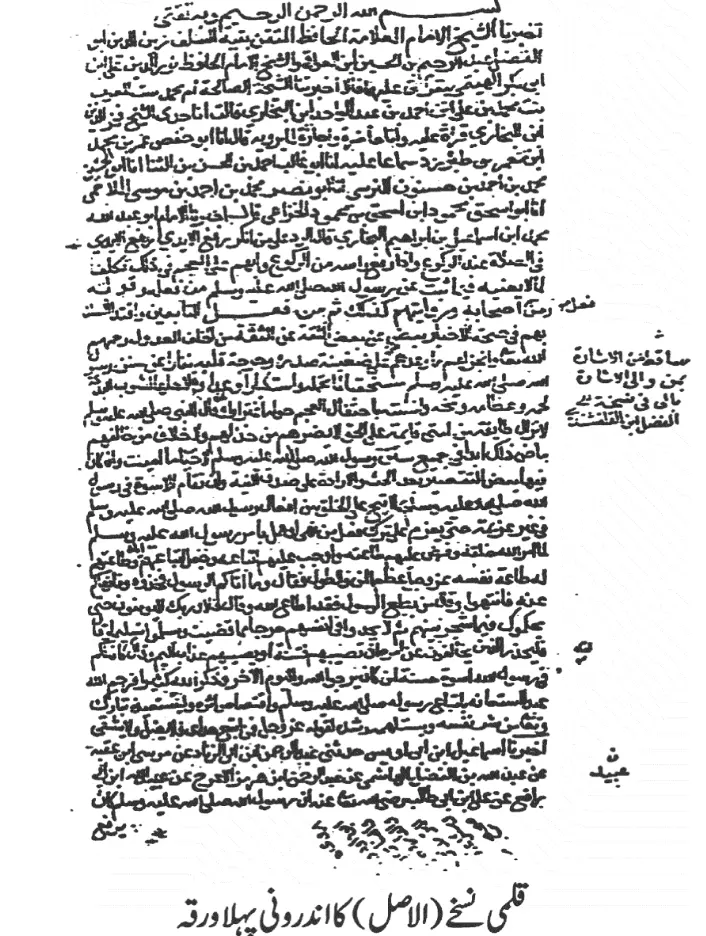
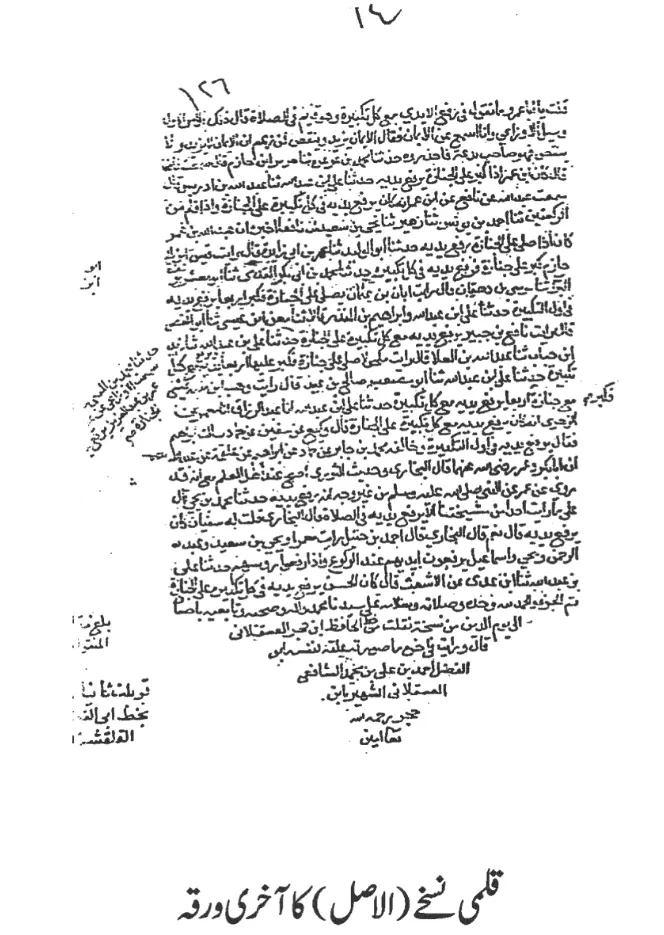
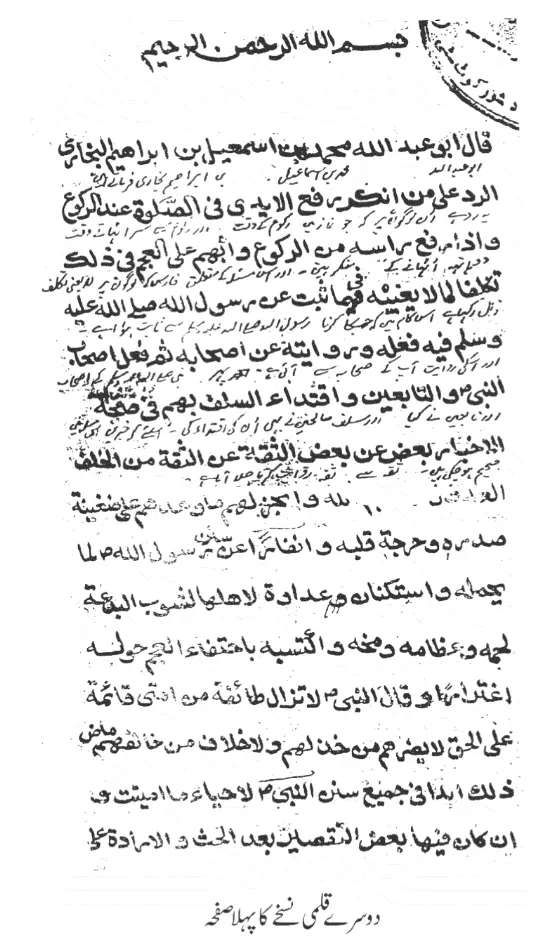
Among these books, the famous book “Juz’ Raf’ al-Yadain” of Imam Bukhari is well-known. I was fortunate to find an excellent (manuscript illuminated) copy of Juz’ Raf’ al-Yadain of Bukhari in the library of my respected teacher Sayyid Badi’ al-Din Shah al-Rashidi (may Allah have mercy on him), which is a photocopy of the original manuscript. I considered this copy as original and conducted research, extraction of hadiths, and translation.
Later, a dear friend of mine, Mujahid Ali Mujahid Jhangvi (formerly Deobandi and now Ahl al-Hadith), informed me that he has a manuscript copy of “Juz’ Raf’ al-Yadain.” Upon my request, he gave me a photocopy of this manuscript. I considered it the second original and compared it with the first copy. May Allah Almighty reward brother Mujahid Ali Mujahid with goodness in this world and the Hereafter. Ameen.
Introduction to the Narrators of the Manuscript
The excellence of this manuscript lies in the fact that the chain of narration is written from the scribe up to Imam Bukhari at the beginning. From the text at the end of the book, it is known that “اخبرنا الشیخ الامام العلامہ الحافظ المتقن بقیة السلف زین الدین ابوالفضل عبدالرحیم بن الحسین بن العراق” was written by the Hafiz Ibn Hajar al-Asqalani. Now, a brief and concise mention of the narrators of this manuscript is presented:
➊ First Narrator: Hafiz Ibn Hajar al-Asqalani
Hafiz Ibn Hajar Al-Asqalani الشافعي الامام العلامه الحافظ فريد الوقت مفخر الزمان بقية الحفاظ علم الائمه الاعلام، عمدة المحققين، خاتمه الحفاظ المبرزين والقضاة المشهورين
. He was born in 773 AH and died in 852 AH. He is the author of beneficial books such as Tahdhib al-Tahdhib, Taqrib al-Tahdhib, Lisan al-Mizan, Fath al-Bari, Tabaqat al-Mudallisīn, and Taghlīq al-Ta‘līq, and is among the most trustworthy and precise scholars in the narration of Hadith.
Here, as a caution, it is stated that the fact that some scholars are Shafi’i, Maliki, Hanbali, Hanafi, etc., whether earlier or later, does not at all mean that these scholars were among the followers (Muqallidīn). It is narrated from many scholars who are called Shafi’i that they said:
لسنا مقلدين للشافعي بل وافق رأينا رأيه
We are not followers (Muqallid) of Imam Shafi’i, rather our opinion coincidentally agrees with his opinion.
Hafiz Ibn Hajar states:
إن المذموم من التقليد أخذ قول الغير بغير حجة
Taking the statement of anyone other than the Prophet without evidence is among the blameworthy forms of imitation (taqlid).
It is known even to common people that imitation (taqlid) is done without evidence. In the authentic Deobandi dictionary “Al-Qamus al-Wahid,” it is written:
Al-taqlid: Following without thought or evidence, (2) imitation, (3) entrusting
Qallada fulanan: To imitate, to follow without evidence, to blindly follow someone, (2) to imitate someone as in “the monkey imitated the human.”
Ashraf Ali Thanwi Deobandi states:
“Taqlid means accepting the statement of the Ummah without evidence.”
It is understood that this is the taqlid which Hafiz Ibn Hajar considered blameworthy; therefore, the question of him being a follower (Muqallid) of Imam Shafi’i does not arise. He opposed Imam Shafi’i on many issues; for example, Ibrahim ibn Muhammad ibn Abi Yahya al-Aslami was considered trustworthy (thiqah) by Imam Shafi’i, whereas Hafiz Ibn Hajar wrote in Taqrib al-Tahdhib that he was “abandoned” (matruk).
Mentioning a person in Tabaqat books, such as Tabaqat al-Shafi’iyyah, is not proof of being a follower (Muqallid). Imam Shafi’i is mentioned in Tabaqat al-Malikiyyah
and Tabaqat al-Hanbaliyah by Abi al-Husayn
, Imam Ahmad is mentioned in Tabaqat al-Shafi’iyyah by al-Subki
, and Dawud al-Zahiri is mentioned in Tabaqat al-Shafi’iyyah
. See Tanqeed Sadeed
by our Sheikh Imam Abi Muhammad Badi’ al-Din al-Rashidi, may Allah have mercy on him.
Although all of these were Mujtahids, none of them were followers (Muqallid). Remember that there is no authentic book in the world titled “Tabaqat al-Muqallidīn” by any authentic Muhaddith; rather, on the contrary, the book “Al-Iydah fi al-Radd ‘ala al-Muqallidīn” was written by the Imam Mujtahid Hafiz, the scholar of Andalusia Abu Muhammad al-Qasim ibn Muhammad ibn al-Qasim ibn Muhammad ibn Sayyar al-Qurtubi, may Allah have mercy on him (died 276 AH). See Siyar A’lam al-Nubala
➋ Second Narrator: Hafiz Abu al-Fadl al-Iraqi, born 725 AH, died 806 AH.
He is the author of useful books such as Alfiyyah fi Mustalah al-Hadith, At-Taqyeed wal-Izha, Sharh Muqaddimah Ibn as-Salah, and Al-Mughni ‘an Hamal al-Asfar fi al-Asfar, etc. Hafiz Ibn Fahd said:
الإمام الأوحد العلامة الحجة الحبر الناقد، عمدة الأنام، حافظ الإسلام فريد دهره وحيد عصره، من فاق بالحفظ والإتقان فى زمانه
➌ Third Narrator: Hafiz Nur al-Din al-Haythami, may Allah have mercy on him, born 735 AH, died 807 AH.
He is the author of useful books such as Majma’ az-Zawa’id, Mawarid az-Zamaan, and Kashf al-Astar, etc. Hafiz Ibn Hajar said about him:
كان خيرا ساكتا صيتا، سليم الفطرة شديد الإنكار للمنكر، لا يترك قيام الليل
➍ Fourth Narrator: Sayyidah Hafizah Umm Muhammad Sit al-Arab bint Muhammad, may Allah have mercy on her, died 677 AH.
Hafiz Ibn Hajar said:
حفيدة الفخر ابن البخاري، أحضرت عليه فكان عندها من حديثه من الكتب الطوال والأجزاء شيء كثير و حدثت و طال عمرها، أخذ عنها شيخنا العراقي
Muhaddithah of good character and worship
➎ Fifth Narrator: Imam Fakhr ad-Din Ibn al-Bukhari, may Allah have mercy on him, born 595 AH, died 690 AH.
Hafiz adh-Dhahabi said: كان فقيها عالما أديبا فاضلا، كامل العقل، متين الورع مكرما للمحدثين
➏ Sixth Narrator: Sheikh Umar ibn Muhammad ibn Tabarzad, may Allah have mercy on him, born 516 AH, died 607 AH.
Some people have criticized certain matters of religion due to negligence (laziness), but Hafiz Ibn Nuqta, may Allah have mercy on him, says:
هو مكثر، صحيح السماع، ثقة فى الحديث
➐ Seventh Narrator: Sheikh Ahmad bin Al-Hasan bin Al-Banna, may Allah have mercy on him, born 445 AH, died 527 AH.
Hafiz Ibn Al-Jawzi said about him:
وكان ثقة
➑ Eighth Narrator: Sheikh Muhammad bin Ahmad bin Hasanun An-Narsi, may Allah have mercy on him
He was born in 367 AH and died in 456 AH. Hafiz Al-Khatib Al-Baghdadi, may Allah have mercy on him, said about him:
كتبنا عنه وكان صدوقا ثقة، من أهل القرآن، حسن الإعتقاد
➒ Ninth Narrator: Sheikh Muhammad bin Ahmad bin Musa Al-Mallahmi, may Allah have mercy on him
He was born in 312 AH and died in 395 AH. Hafiz Al-Dhahabi wrote about him:
كان ثقة، يحفظ ويفهم
➓ Tenth Narrator: Mahmood bin Ishaq Al-Khuza’i, may Allah have mercy on him, died 332 AH.
You have three students:
✿ Al-Mulahami
✿ Ahmad bin Muhammad bin Al-Husayn Al-Razi
✿ Ahmad bin Ali bin Umar Al-Sulaymani
Hafiz Ibn Hajar has classified one narration narrated by them as Hasan (good).
The authentication (tahseen) of the narration is based on the reliability of each narrator. See Nasb al-Rayah by Al-Zaili
etc.
Therefore, Mahmood bin Ishaq mentioned here is considered trustworthy, truthful, and Hasan al-Hadith according to Hafiz Ibn Hajar. It should be noted that no Muhaddith has called Mahmood unknown. (Mention of Mahmood bin Ishaq is present in Tarikh al-Islam by Al-Dhahabi
and Al-Irshad fi Ma’rifat ‘Ulama al-Hadith by Al-Khalili
. He died in 332 AH. May Allah have mercy on him For a detailed article about him, see the same book
) The claim by some liars in the 14th and 15th centuries that Mahmood is unknown is completely rejected. And all praise is due to Allah.
⓫ Eleventh Narrator: Sheikh al-Islam, Imam, Jurist Mujtahid, Hafiz Abu Abdullah Al-Bukhari, may Allah have mercy on him, born 194 AH (truthful), died 256 AH (light).
You are the author of beneficial books such as Sahih al-Bukhari, Al-Tarikh al-Kabir, Kitab al-Du’afa, etc. The verdict of the scholars about you is:
أمير المؤمنين فى الحديث ورأس المحدثين فى القديم والحديث وأستاذ الحفاظ الذى أجمعت الأمة شرقا وغربا على توثيقه وأمانته وضبطه وصيانته
Your student, the student Hafiz Ibn Hibban, testified that:
وكان من خيار الناس ممن جمع وصنف ورحل وحفظ وذاكر وحث عليه وكثرت عنايته بالأخبار وحفظه للآثار مع علمه بالتاريخ ومعرفة أيام الناس ولزوم الورع الخفي والعبادة الدائمة إلى أن مات رحمه الله
Imam Abu Isa al-Tirmidhi, may Allah have mercy on him, said:
ولم أر أحدا بالعراق ولا بخراسان فى معنى العلل والتاريخ ومعرفة الأسانيد
Meaning, like Imam al-Bukhari, may Allah have mercy on him. For details, see my book “Al-Asanid al-Sahihah fi Akhbar al-Imam Abi Hanifah,”
From this research, it has become clear that the chain of narration of “Juz’ Raf’ al-Yadayn by al-Bukhari” up to Imam Bukhari is completely authentic and established.
Details of the Research:
➊ The author has considered the apparent manuscript as the primary original because it is authentic, established, and the most accurate manuscript. Ibn al-Salah wrote this condition for copying from manuscripts:
و هو أن يكون ناقل النسخة من الأصل غير سقيم النقل، بل صحيح النقل قليل السقط
And that the copyist of the original (reliable) manuscript should not be one who copies incorrectly but one who copies correctly and makes very few mistakes.
➋ My brother Mujahid Ali Mujahid’s manuscript has been considered the secondary original, and some phrases have been corrected.
➌ Judgments have been made on the authenticity and weakness of the hadiths.
➍ A concise, comprehensive, and necessary referencing of hadiths has been done. Lengthiness was avoided because it does not benefit the general Muslim public, and the book unnecessarily becomes lengthy and expensive, making it difficult for the public to purchase. For example, Dr. Saad bin Abdullah bin Abdul Aziz Al-Humaid published 869 hadiths of Sunan Saeed bin Mansoor / Tafsir Saeed bin Mansoor with very lengthy referencing in four volumes plus a fifth volume of indexes, totaling 1681 pages. Whereas this book could have been published in one volume. Imam Saeed bin Mansoor does not require that the referencing of the hadith he narrated be done from fifty books for it to be authentic. Rather, it is sufficient for the public that the original text is accurately preserved with concise and necessary referencing and the correct or weak status of the narration is stated. Some modern pious researchers have an unnecessary obsession with lengthy and thick books.
➎ At the end, a list of hadith narrators with reference to hadith numbers has been written to facilitate hadith search.
➏ The numbering of hadiths is according to the researched manuscript of respected teacher Syed Abu Muhammad Badi’ al-Din al-Rashidi al-Sindhi, “Jala’ al-‘Aynayn bi-Tahrij Riwayat al-Bukhari fi Juz’ Raf’ al-Yadayn,” so that some research enthusiasts can benefit from both manuscripts and compare if necessary.
➐ The pages of the handwritten Arabic manuscripts have been mentioned with [Q: ].
➑ A list of hadith margins, etc., has been included at the end to further ease hadith search.
➒ A comprehensive introduction has been written presenting my methodology along with scholarly benefits.
➓ The doubts and objections of the deniers of raising hands, such as Primary Master Muhammad Amin Safdar Okara Deobandi Hayati, have been answered with decisive and conclusive replies.
Master Amin Okara:
Master Amin Okara wrote a manuscript of “Juz’ Raf’ al-Yadayn” with translation and notes that contains lies, fabrications, fallacies, and confusions.
Master Amin wrote an article against me, to which I replied in fifty pages titled “Okara’s Pursuit” and sent it to him during his lifetime. I demanded that he fully copy my reply and respond to it. I wrote:
If he does not keep it in the text and respond fully, his reply will be considered null and void.
He could not respond according to my condition during his lifetime.
I have answered all of Master Okara’s important and fundamental objections regarding “Juz’ Raf’ al-Yadayn” in this book “Tahqiq wa Takhreej Juz’ Raf’ al-Yadayn.” Praise be to Allah.
Okara’s Lies:
Some explicit lies of Okara are as follows:
➊ Amin Okara said:
Its narrator Ahmad bin Sa’id al-Darimi is a Jahmi sect innovator.
The biography of Imam Ahmad bin Sa’id al-Darimi is mentioned in Tahdhib al-Tahdhib
and others. He is a narrator of Sahih Bukhari and Sahih Muslim and is unanimously trustworthy. Imam Ahmad bin Hanbal praised him. No hadith scholar has accused him of belonging to the Jahmi sect.
➋ Okara said:
The Holy Prophet (peace be upon him) said لا جمعة الا بخطبة There is no Friday prayer without a sermon.
No hadith with these words is authentically attributed to the Prophet (peace be upon him). In the unauthentic Maliki book “Al-Mudawwana,” a statement attributed to Ibn Shihab (al-Zuhri) is written:
بلغني أنه لا جمعة إلا بخطبة فمن لم يخطب صلى الظهر أربعا
Okara explicitly attributed this unauthenticated statement to the Holy Prophet (peace be upon him).
➌ Okara said:
Among the four Imams, only Imam Sahib (i.e., Abu Hanifa the transmitter) is of Persian descent.
However, it is not established that Imam Abu Hanifa was of Persian descent. In Tahdhib al-Tahdhib
, it is written with the form of majhul (unknown) و قيل أنه من أبناء فارس, indicating that Imam Sahib’s Persian origin is not proven. On the contrary, Imam Abu Hanifa’s trustworthy student Abu Nu’aym al-Fadl bin Dakin al-Kufi states:
ابو حنيفة النعمان بن ثابت بن زوطى، أصله من كابل
Meaning Imam Sahib was from Kabul.
Okara changed Kabul to Persian. Glory be to Allah!
➍ In a weak narration, it is mentioned:
والمرأة تجعل يديها حذاء ثديها
And the woman places her hands level with her breasts.
Distorting this, Okara wrote in the same hadith:
والمرأة ترفع يديها حذاء ثديها
And the woman raises her hands to the level of her breasts.
He used this hadith as evidence and then criticized its narrator on p. 346 of the same book by writing “and Umm Yahya is unknown,” because on that page the hadith was against his desire, and on p. 323 it was according to his desire. The real purpose was to follow his desire.
➎ Okara said:
Brothers in Islam, just as Allah named us Muslims in opposition to disbelievers, similarly the Prophet (peace be upon him) named us Ahl al-Sunnah wa al-Jama’ah in opposition to Ahl al-Hadith.
However, in no hadith did the Prophet (peace be upon him) name the Deobandis as Ahl al-Sunnah wa al-Jama’ah in opposition to Ahl al-Hadith. It is known to the general scholars of truth that the Deobandis are not Ahl al-Sunnah wa al-Jama’ah but mere Sufi Wahdat al-Wujud followers and extreme imitators. Imam Suyuti excluded imitators from Ahl al-Sunnah wa al-Jama’ah by saying:
والذي يجب أن يقال كل من انتسب إلى إمام غير رسول الله صلى الله عليه وسلم يوالي على ذلك ويعادي عليه فهو مبتدع خارج عن السنة والجماعة سواء كان فى الأصول أو الفروع
It is obligatory to say that every person who is affiliated with any leader other than the Prophet (peace be upon him), his love and enmity are based on that leader, so such a person is an innovator and outside Ahl al-Sunnah wa al-Jama’ah, whether this affiliation and love/enmity is in principle or in branches.
➏ Okara said:
Regarding Taraweeh prayer, no Imam’s school has less than twenty rak’ahs.
However, Ayn al-Hanafi wrote:
وقيل احدى عشرة ركعة وهو اختيار مالك لنفسه واختاره أبو بكر العربي
And one opinion is eleven rak’ahs, and Imam Malik preferred it for himself. Abu Bakr al-Arabi also adopted it.
Abdul Haq al-Ashbili Maliki (d. 581 AH) also narrated the eleven rak’ahs opinion from Imam Malik. See Kitab al-Tajdid by al-Ashbili
➐ Regarding the main narrator of Sahih Sitta, Ibn Jurayj, Okara said:
It is also remembered that this Ibn Jurayj is the same person who started Mut’ah in Mecca and did Mut’ah with ninety women.
Tadhkirat al-Huffaz by al-Dhahabi
mentions Ibn Jurayj’s biography but does not mention “starting Mut’ah.” This is pure Okara lie.
As for the claim that Ibn Jurayj did Mut’ah with ninety women, referencing Tadhkirat al-Huffaz
, this is also not proven because Imam Dhahabi did not provide any chain up to Ibn Abd al-Hakam. Unsupported statements are considered rejected unless proven authentic or good with chain in another book.
➑ Okara said:
Hazrat Abu Hurairah (may Allah be pleased with him) did not raise hands in prayer after the Prophet (peace be upon him).
However, no narration with these words exists in the Hadith collections. Writing a narration without mention from Muwatta Imam Muhammad by Muhammad bin al-Hasan al-Shaybani (called liar by Ibn Ma’in)
is not proof that Abu Hurairah (may Allah be pleased with him) did not raise hands. In Juz’ Raf’ al-Yadayn
, there is an authentic chain narration that Abu Hurairah (may Allah be pleased with him) raised hands before (and after) bowing.
➒ On the unauthentic book Al-Mudawwana
, a brief narration with the chain Ibn Wahb, Ibn al-Qasim from Malik from Ibn Shihab from Salim bin Abdullah from his father states:
أن رسول الله صلى الله عليه وسلم كان يرفع يديه حذو منكبيه إذا افتتح التكبير للصلوة
Indeed, when the Prophet (peace be upon him) said the opening Takbir in prayer, he raised both hands up to the shoulders.
Master Okara translated it as:
It is narrated from Abdullah bin Umar (may Allah be pleased with him) that the Prophet (peace be upon him) raised hands only at the first Takbir in prayer.
However, the words “only” and “just” were fabricated by Okara himself. These words do not exist in the hadith.
Remember that the Mudawwana narration is present in Muwatta Ibn al-Qasim
with raising hands before and after bowing, and the narration of Ibn Wahb
includes raising hands at “when saying Takbir for bowing.” This clearly means that the narrations of Ibn Wahb and Ibn al-Qasim are evidence for raising hands, which the unknown narrators of “Mudawwana” summarized briefly.
➓ Regarding Imam Ata bin Abi Rabah, Okara said:
I said: It is not proven at all that Ata met two hundred companions, and it is absolutely wrong that two hundred companions were present in one city during Ibn Zubair’s time.
Elsewhere Okara declared:
Makkah is also the center of Islam and Muslims. Hazrat Ata bin Abi Rabah is the Mufti here. He had the honor of meeting two hundred companions.
Between these two contradictory statements, the first is completely wrong. It is evident that covering all his lies in this introduction of Juz’ Raf’ al-Yadayn is impossible. A separate book is needed to introduce his lies and fabrications.
A Review of Some Fallacies of Okaraavi Sahib:
● Compared to the hadiths of Sahih Bukhari and Sahih Muslim, Okaraavi Sahib frequently cites the book named “Musnad Imam Azam,” for example, see Juz’ Raf’ al-Yadain with alterations by Okaraavi
, etc.
In the preface of the book named “Musnad Imam Azam,” it is written:
The book currently being presented under the name “Musnad Imam Azam” is actually the compilation of Imam Abdullah Harithi, which was abridged by Allama Haskafi.
Abdullah bin Muhammad bin Yaqub al-Harithi was a notorious liar and fabricator.
(It is said) Abu Saeed al-Rawas said:
يتهم بوضع الحديث
This person is accused of fabricating hadith.
(It is narrated that) Ahmad al-Sulaymani said:
كان يضع هذا الاسناد على هذا المتن الخ
This person used to fabricate a chain and attach it to another text.
Al-Buzra’ah Ahmad bin al-Husayn al-Razi said: He is weak. Hakim Khalili and Khateeb Baghdadi also criticized him. See Lisan al-Mizan
Imam Abu Ahmad al-Hafiz said:
الأستاذ ينسج الحديث
He was a teacher, fabricating hadiths.
Meaning, this person was a master in lying and fabricating hadiths. Later people have exercised this mastery by removing the chains of narration from Harithi the liar up to Imam Abu Hanifa Sahib. See Musnad Imam Azam
, so that later people cannot conduct any research. Now this fabricated book is being spread worldwide under the name “Musnad Imam Azam.” On page
of this fabricated Musnad, a hadith is written:
I saw the Messenger of Allah (peace be upon him) urinating while standing on the hoof of a donkey.
I have not found any narration in this Harithi Musnad about urinating while sitting!
● Okaraavi writes:
In Muwatta, there is no mention of raising the hands during Ruku’, and Imam Bukhari added this.
Whereas in Muwatta
, the words ”إذا كبر للركوع“ are present. Imam Bukhari did not add anything but narrated the hadith. It is evident that the Deobandi gentlemen are also disrespectful to the great Muhaddithin.
● Okaraavi Sahib and his party try to create issues from narrations that do not mention raising the hands, whereas in Noor al-Aynain, this argument has been refuted through a dedicated chapter.
● In some narrations, students ask their teachers questions or seek evidence. Okaraavi Sahib and others try to create opposition to Sunnah Sahihah or abandonment from such questions and answers. Sayyiduna Abdullah bin Umar (may Allah be pleased with him) used to touch the two Yemeni corners during Tawaf of the Kaaba and not the other corners… etc. Then Ubaid bin Jurayj asked:
I have seen you doing four things that your other companions do not do.
Then Sayyiduna Ibn Umar (may Allah be pleased with him) satisfied him by narrating hadiths. Extracting from this question and answer that touching the Yemeni corners is wrong or obsolete is the work of people like Okaraavi.
Some important points:
➊ If the chain or text of one narration is supported by another chain and text, it is called a “Shahid” (witness), provided both have approximately the same meaning. For example, the hadith: لا تقبل صلوة بغير طهور
has the best Shahid in the hadith: لا تقبل صلوة أحدكم إذا أحدث حتى يتوضأ
. According to the earlier scholars, there is no significant difference between Shahid and Mutaba’at (following). See
➋ Mutaba’at: For example, Sufyan bin ‘Uyaynah narrated the hadith of raising the hands before and after Ruku’ through the chain Zuhri from Salim from his father. The same hadith was narrated by Imam Malik through the same chain Zuhri from Salim from his father with the same meaning. According to Muhaddithin, Imam Malik followed Sufyan bin ‘Uyaynah and Sufyan followed Imam Malik.
➌ Sajdah, Sajdatain:
Sayyiduna Ibn Umar (may Allah be pleased with him) said:
صليت مع النبى صلى الله عليه وسلم سجدتين قبل الظهر .إلخ
I prayed two prostrations (i.e., two Rak’ahs) with the Prophet (peace be upon him) before Dhuhr.
Here “Sajdatain” means “two Rak’ahs” as written in the printed version of Sahih Bukhari used in madrasas, and in the translation of Sahih Bukhari published with the margin by Master Amin Okaraavi with alterations, “Sajdatain” is also translated as “two Rak’ahs.”
It is understood that “Sajdah” can mean one Rak’ah and “Sajdatain” can mean two Rak’ahs. Therefore, in narrations mentioning raising the hands after Sajdatain, it means raising the hands after two Rak’ahs, as proven by other narrations.
➍ In the principles of Hadith, it is established that a narration by a mudallis (one who conceals the source) without explicit hearing (e.g., using ‘an’) is weak, provided:
a: It is proven that the narrator is a mudallis, even if only once.
b: The narration is other than those in Sahih Bukhari and Sahih Muslim.
Sarfaraz Khan Safdar Deobandi Sahib says:
If a mudallis narrator narrates with ‘an’, it is not proof unless he explicitly states or a trustworthy narrator follows him, but it is remembered that in Sahihain, tadlis is not harmful; it is interpreted through other means of hearing.
Amin Okaraavi Sahib has declared hadiths weak due to mudallis narrators using ‘an’. See Tajalliyat Safdar
, published by Jami’at Ishaat al-Uloom al-Hanafiyyah Faisalabad. Among these mudallis narrators is Imam Sufyan al-Thawri, who is famous for tadlis.
He was declared a mudallis by Abdullah bin al-Mubarak, Yahya bin Sa’id al-Qattan, Yahya bin Ma’in, and many other Muhaddithin.
No Muhaddith has denied Sufyan al-Thawri’s tadlis. Therefore, it is evident there is consensus on his tadlis. Hanafi scholars have also testified to Sufyan al-Thawri’s tadlis.
,
. Even Deobandi scholars have accepted Sufyan al-Thawri (may Allah have mercy on him) as a mudallis.
,
,
.
Therefore, it is understood that narrations with ‘an’ from Sufyan al-Thawri outside Sahihain are weak. This is the research of the writer of these lines, which has been repeatedly written in Noor al-Aynain, etc.
Humans are prone to error. About sixteen years ago, in a letter dated 8/19/1408H to Abdul Rasheed Ansari, the writer mistakenly wrote:
The second class is mudallis whose tadlis is not harmful.
After realizing the mistake, I publicly retracted it, and this retraction was also published in the monthly Shahadat. I wrote: My statement is wrong. I retract it. Therefore, it should be considered canceled and invalid.
Note: Here I declare that only those books of mine are authentic and reliable which bear my signature with the date at the end of every edition. I am not responsible for any book published without this condition.
On the outer title of the manuscript Zahiriya, it is written:
كتاب رفع اليدين فى الصلوة تأليف الإمام الحافظ الحجة شيخ الحفاظ علم المحدثين أمير المؤمنين أبى عبدالله محمد بن إسماعيل بن إبراهيم البخاري الجعفي رحمه الله تعالىٰ ورضي عنه وعنا به آمين
Conclusion:
Finally, I state that I have provided detailed proofs for the affirmation of raising the hands and detailed answers to the doubts of opponents of raising the hands in “Noor al-Aynain.” For those seeking details, studying “Noor al-Aynain” is essential. For the general public, Imam Bukhari’s Juz’ Raf’ al-Yadain (with research) is sufficient. والحمد لله وما توفيقي الا بالله عليه توكلت واليه انيب.
Scan of Juz’ Raf’ al-Yadain from Nuskha Zahiriya