❖ Introduction
Ḥanafī followers claim that there is no need for the follower (muqtadī) to recite Sūrah al-Fātiḥah behind the imām, asserting that the imām’s recitation suffices for the entire congregation. They cite some narrations attributed to Sayyidunā ʿAbdullāh ibn ʿUmar رضي الله عنهما in support of their view, attempting to portray him as one who opposed reciting al-Fātiḥah behind the imām under all circumstances.
Below, we present the core narration used by the Ḥanafīs, followed by clarifications from the early scholars and imāms of Ahl al-Sunnah regarding its true context and meaning.
◈ The Narration from Ibn ʿUmar رضي الله عنه
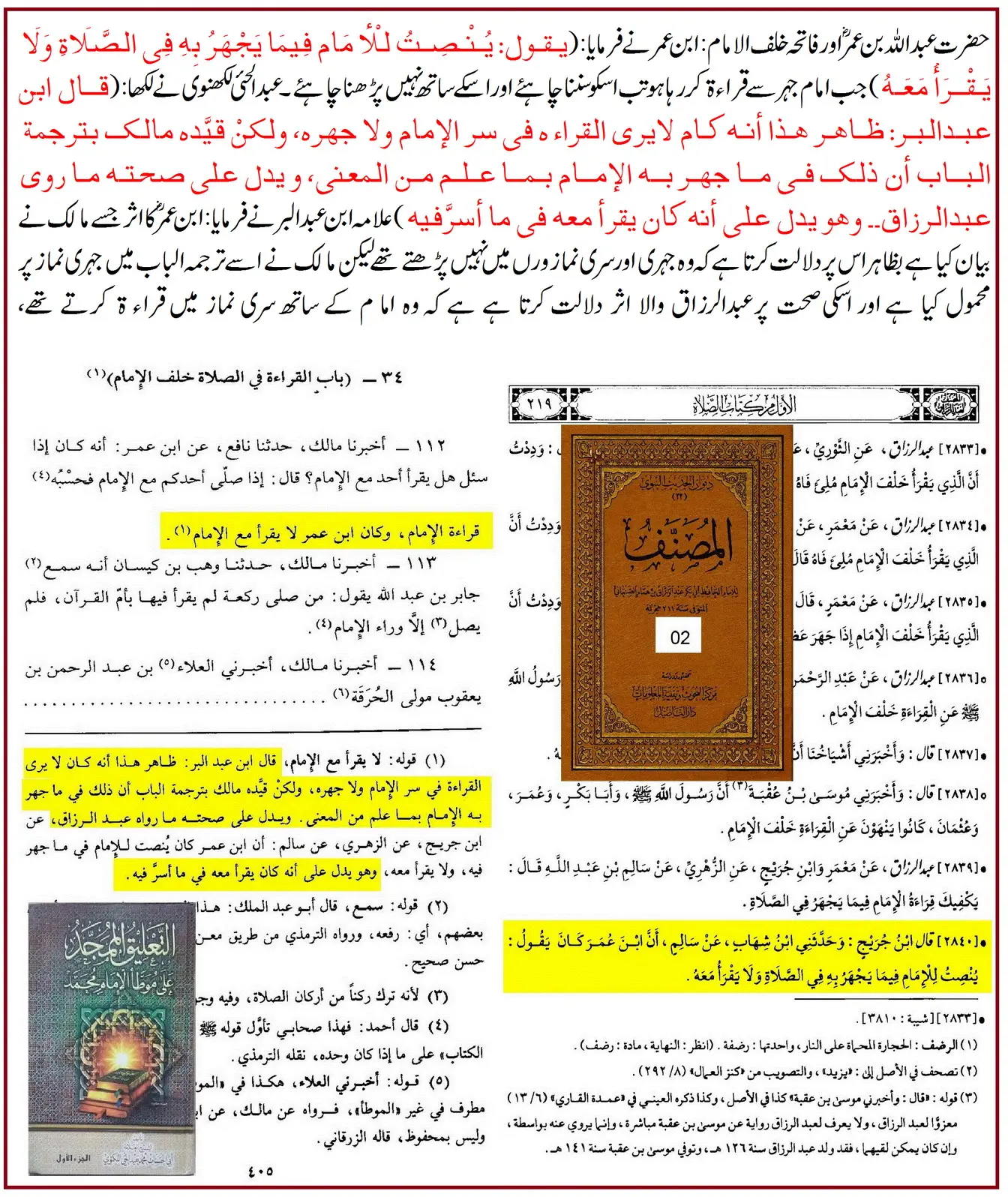
الْمُصَنَّف لعبد الرزاق
قَالَ ابْنُ جُرَيْجٍ: وَحَدَّثَنِي ابْنُ شِهَابٍ، عَنْ سَالِمٍ، أَنَّ ابْنَ عُمَرَ كَانَ يَقُولُ: “يُنْصَتُ لِلْإِمَامِ فِيمَا يَجْهَرُ بِهِ فِي الصَّلَاةِ وَلَا يَقْرَأُ مَعَهُ”
Translation:
Ibn ʿUmar رضي الله عنه used to say: “One should remain silent behind the imām when he recites aloud in prayer, and should not recite along with him.”
[Ref: al-Muṣannaf by ʿAbd al-Razzāq]
📌 This narration specifically applies to loud (jahrī) prayers and instructs silence during the imām’s recitation. However, it does not negate recitation in silent (sirrī) prayers or during pauses (saktāt) in loud prayers.
❖ Scholarly Clarifications on the Narration
① Imām Ibn ʿAbd al-Barr – Commentary by ʿAllāmah ʿAbd al-Ḥayy Lakhnawī
(قوله: لا يقرأ مع الإمام، قال ابن عبد البر: ظاهر هذا أنه كان لا يرى القراءة في سر الإمام ولا جهره، ولكن قيَّده مالك بترجمة الباب أن ذلك في ما جهر به الإمام بما علم من المعنى. ويدل على صحته ما رواه عبد الرزاق، عن ابن جريج، عن الزهري، عن سالم: أن ابن عمر كان يُنصت للإمام في ما جهر فيه، ولا يقرأ معه، وهو يدل على أنه كان يقرأ معه في ما أسرَّ فيه.)
The apparent meaning of Ibn ʿUmar’s statement is that he did not recite in either loud or silent prayers. However, Imām Mālik limited this opinion to loud prayers only, based on the chapter heading. Supporting this is another narration from ʿAbd al-Razzāq: Ibn ʿUmar used to remain silent during loud recitation but would recite in what the imām recited silently.
[Ref: al-Taʿlīq al-Mumajjad ʿalā al-Muwaṭṭaʾ Muḥammad]
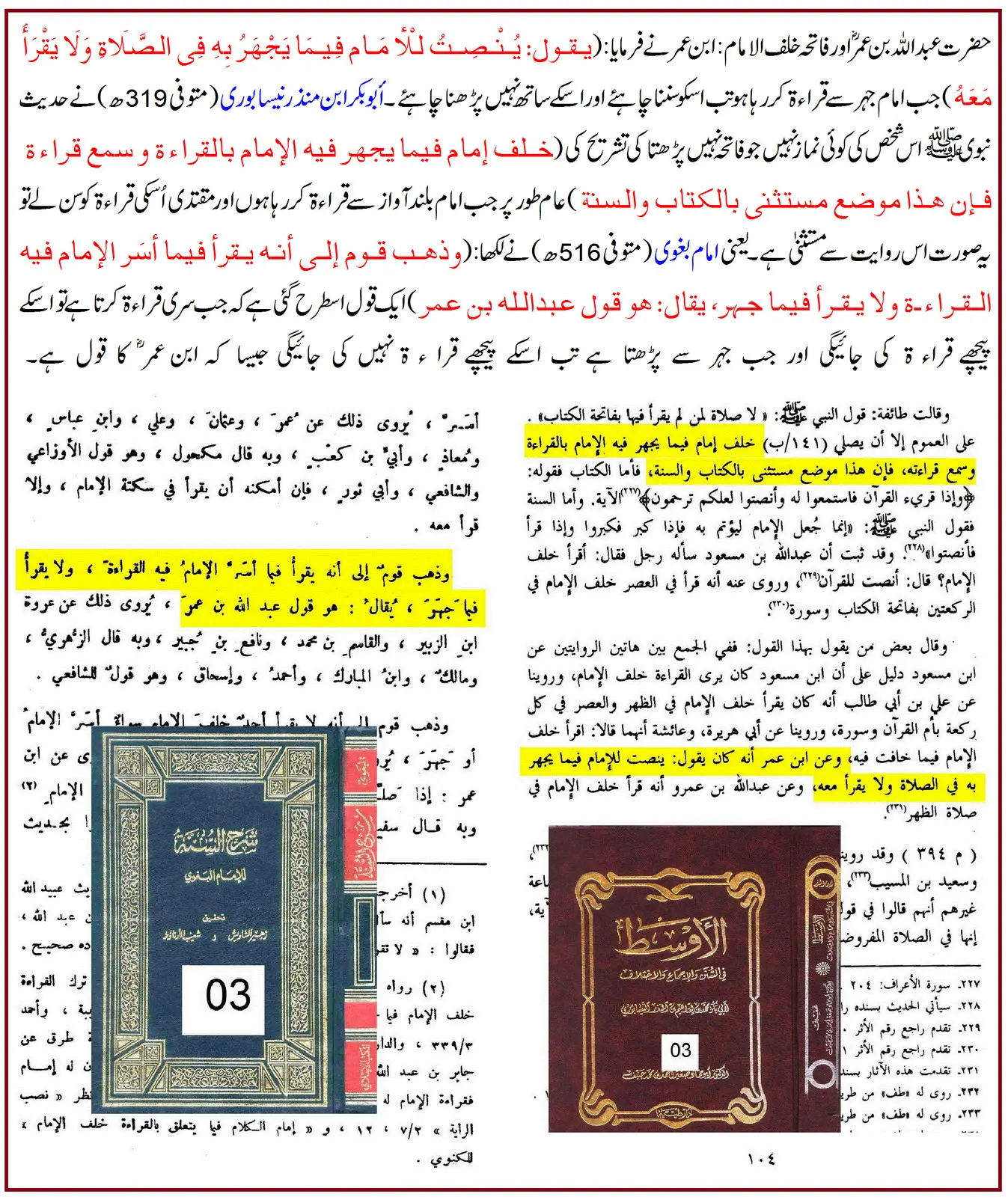
② Imām Ibn al-Mundhir al-Nīsābūrī رحمه الله
«لَا صَلَاةَ لِمَنْ لَمْ يَقْرَأْ فِيهَا بِفَاتِحَةِ الْكِتَابِ» عَلَى الْعُمُومِ إِلَّا أَنْ يُصَلِّيَ خَلْفَ الْإِمَامِ فِيمَا يَجْهَرُ فِيهِ الْإِمَامُ بِالْقِرَاءَةِ، وَسَمِعَ قِرَاءَتَهُ، فَإِنَّ هَذَا مَوْضِعٌ مَسْتَثْنًى بِالْكِتَابِ وَالسُّنَّةِ
“The ḥadīth ‘There is no prayer for one who does not recite al-Fātiḥah’ is general, except when one hears the imām’s recitation in a loud prayer—this is an exception proven by the Qurʾān and Sunnah.”
[Ref: al-Awsaṭ fī al-Sunan wa al-Ijmāʿ wa al-Ikhtilāf]
③ Imām al-Baghawī رحمه الله
«وَذَهَبَ قَوْمٌ إِلَى أَنَّهُ يَقْرَأُ فِيمَا أَسَرَّ الإِمَامُ فِيهِ الْقِرَاءَةَ، وَلا يَقْرَأُ فِيمَا جَهَرَ، يُقَالُ: هُوَ قَوْلُ عَبْدِ اللَّهِ بْنِ عُمَرَ… وَبِهِ قَالَ الزُّهْرِيُّ، وَمَالِكٌ، وَابْنُ الْمُبَارَكِ، وَأَحْمَدُ، وَإِسْحَاقُ، وَهُوَ قَوْلٌ لِلشَّافِعِيِّ»
“Some scholars opine that the follower should recite in silent prayers but not in loud prayers. This is the opinion of ʿAbdullāh ibn ʿUmar, al-Zuhrī, Mālik, Ibn al-Mubārak, Aḥmad, Isḥāq, and it is one of the opinions of Imām al-Shāfiʿī.”
[Ref: Sharḥ al-Sunnah]
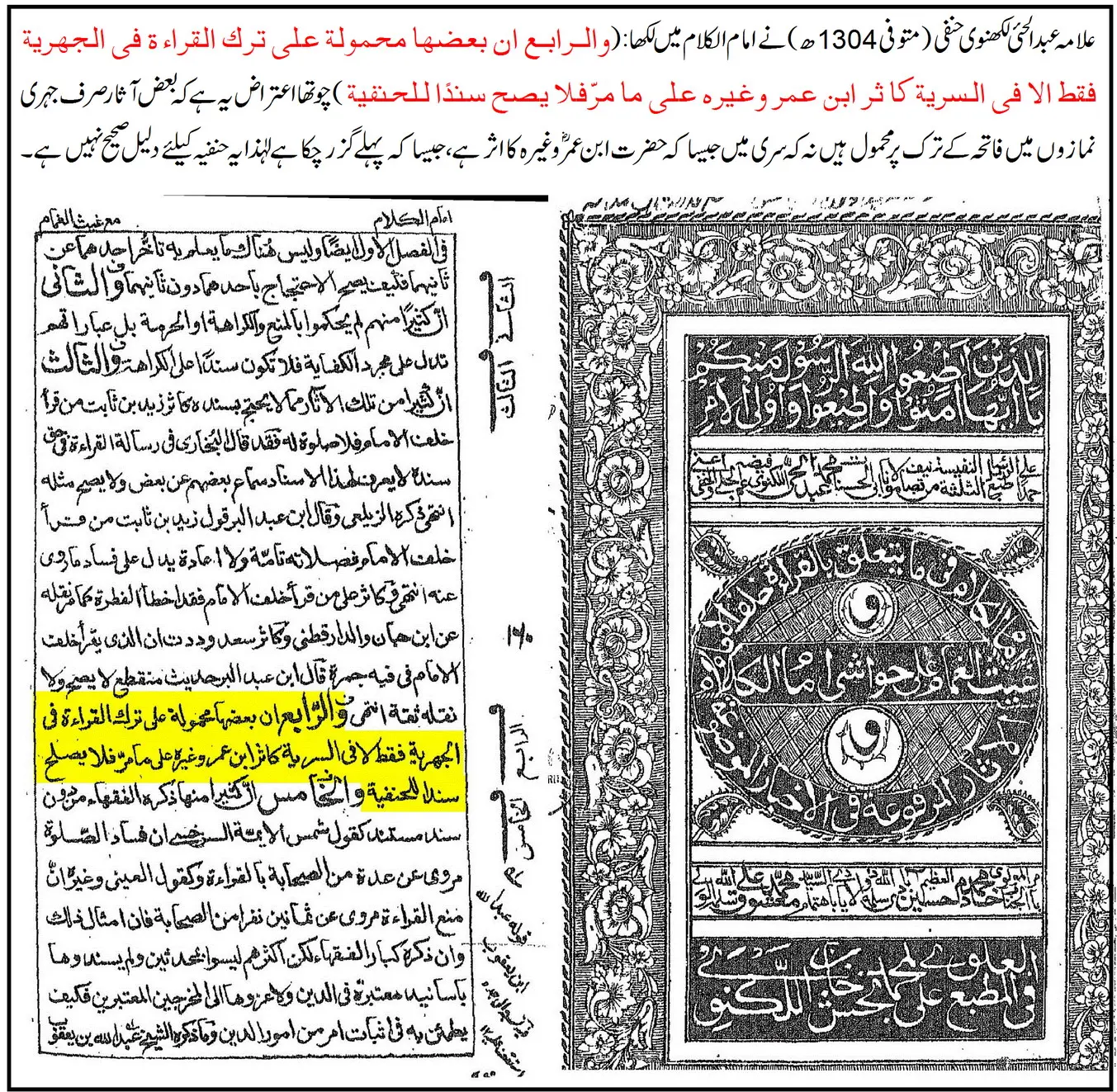
④ ʿAllāmah ʿAbd al-Ḥayy Lakhnawī رحمه الله
“Some narrations merely apply to the omission of al-Fātiḥah in loud prayers, not silent ones. Such as the narration of Ibn ʿUmar, hence this cannot be used as conclusive proof for the Ḥanafīs.”
[Ref: Ghayth al-Ghamām ʿalā Ḥawāshī Imām al-Kalām]
📌 Conclusion:
These statements confirm that Ibn ʿUmar رضي الله عنه only advised silence during the imām’s loud recitation—not against reciting al-Fātiḥah in every case.
❖ Ibn ʿUmar’s Own Practice of Reciting Behind the Imām
While some narrations suggest silence during loud recitation, other authentic reports affirm Ibn ʿUmar’s recitation in silent prayers and even during pauses in loud prayers.
1. Abū al-ʿĀliyah’s Report: Reciting in Every Prayer
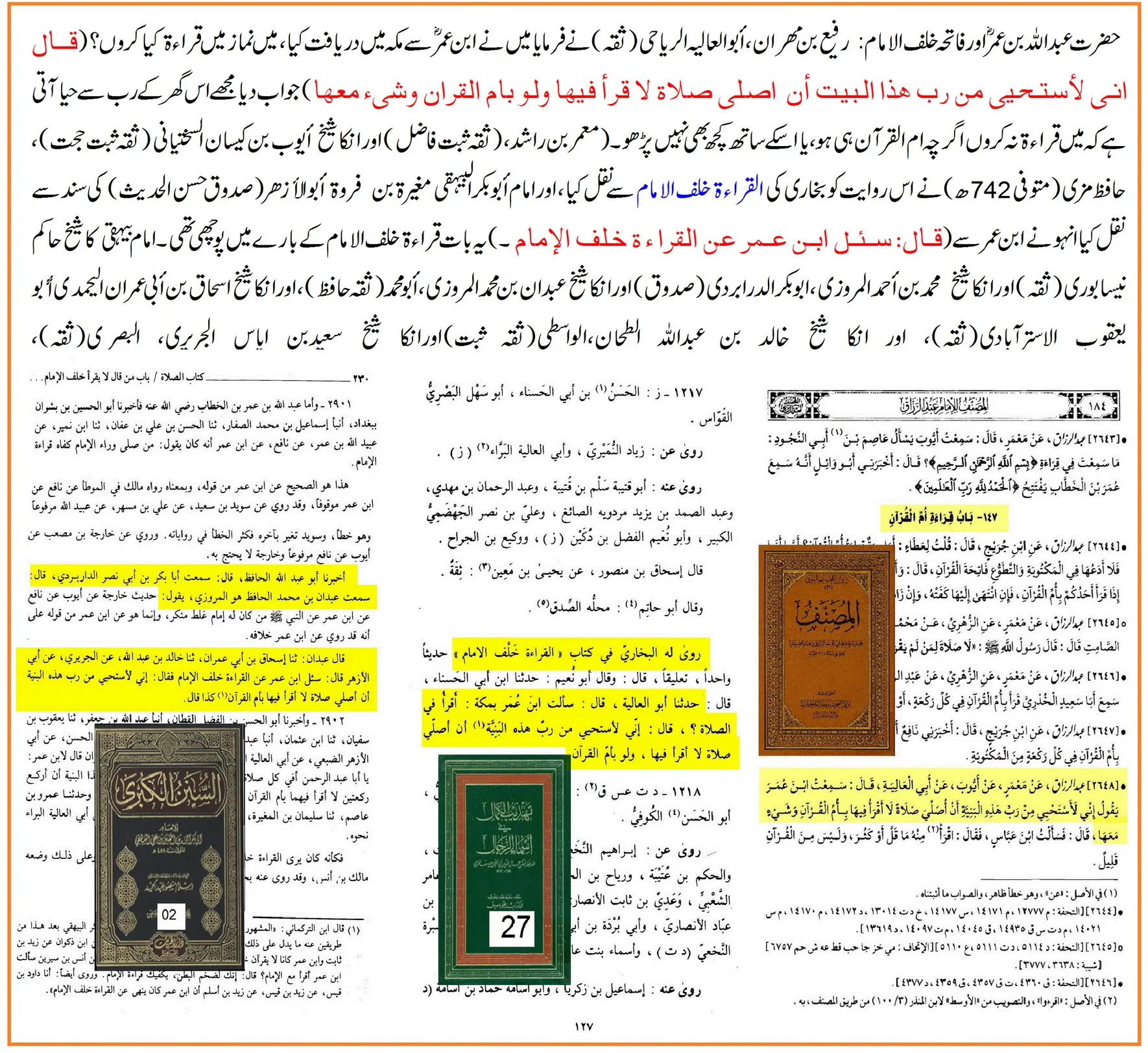
2626 – عَنْ مَعْمَرٍ، عَنْ أَيُّوبَ، عَنْ أَبِي الْعَالِيَةِ قَالَ: سَمِعْتُ ابْنَ عُمَرَ يَقُولُ: «إِنِّي لَأَسْتَحْيِي مِنْ رَبِّ هَذِهِ الْبَنِيَّةِ أَنْ أُصَلِّيَ صَلَاةً لَا أَقْرَأُ فِيهَا بِأُمِّ الْقُرْآنِ وَشَيْءٍ مَعَهَا»
“I heard Sayyidunā Ibn ʿUmar رضي الله عنه say: I feel ashamed before the Lord of this House (Kaʿbah) to pray a prayer in which I do not recite Sūrah al-Fātiḥah and something along with it.”
[Ref: al-Muṣannaf of ʿAbd al-Razzāq – Authentic Chain]
📌 This is a clear declaration that Ibn ʿUmar رضي الله عنه regarded Sūrah al-Fātiḥah as necessary in every prayer.
Narrators of the Chain:
1. Maʿmar ibn Abī ʿAmr al-Azdī – thiqah, thabt, fāḍil
2. Ayyūb ibn Kaysān al-Sakhtiyānī – thiqah, thabt, ḥujjah
3. Rufayʿ ibn Mihrān Abū al-ʿĀliyah al-Riyāḥī – thiqah
Clarification of the Muḥaddithīn
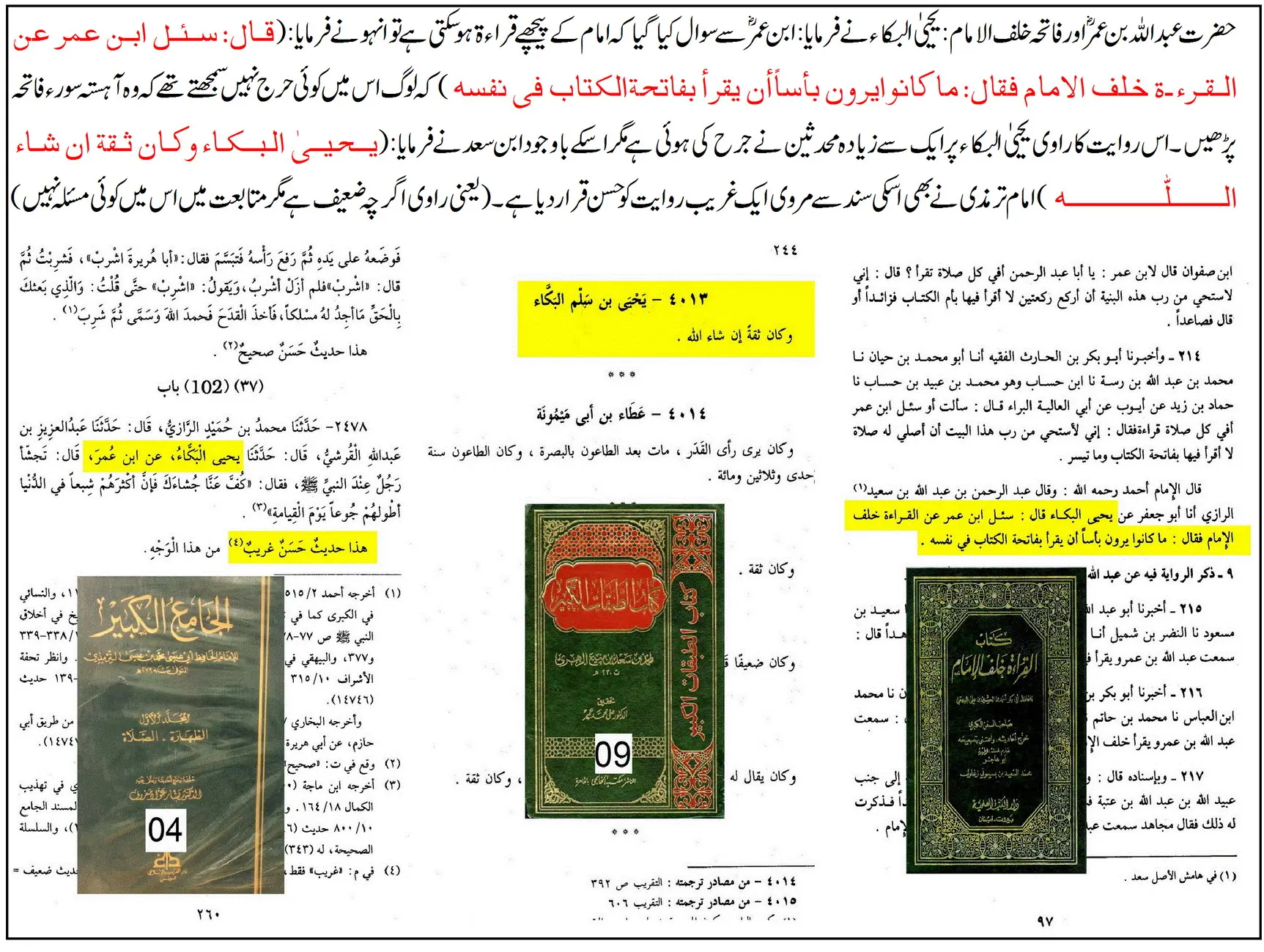
• Ḥāfiẓ al-Mizzī رحمه الله mentioned this narration from Imām al-Bukhārī’s al-Qirāʾah Khalfa al-Imām and made clear that the question was about reciting behind the imām.
• Imām al-Bayhaqī رحمه الله also stated explicitly that these words were said in reply to a question about reciting behind the imām.
[Ref: Tahdhīb al-Kamāl fī Asmāʾ al-Rijāl]
2. Yahyā al-Bakkāʾ’s Report: Silent Recitation in Loud Prayers
قَالَ: سُئِلَ ابْنُ عُمَرَ عَنِ الْقِرَاءَةِ خَلْفَ الْإِمَامِ فَقَالَ: «مَا كَانُوا يَرَوْنَ بَأْسًا أَنْ يَقْرَأَ بِفَاتِحَةِ الْكِتَابِ فِي نَفْسِهِ»
“When asked about reciting behind the imām, Ibn ʿUmar replied: ‘They did not see any harm in silently reciting Sūrah al-Fātiḥah behind the imām.’”
[Ref: al-Qirāʾah Khalfa al-Imām by al-Bayhaqī]
📌 This shows that Ibn ʿUmar رضي الله عنه considered quiet recitation correct even in loud prayers, especially during the imām’s pauses or a suitable break.
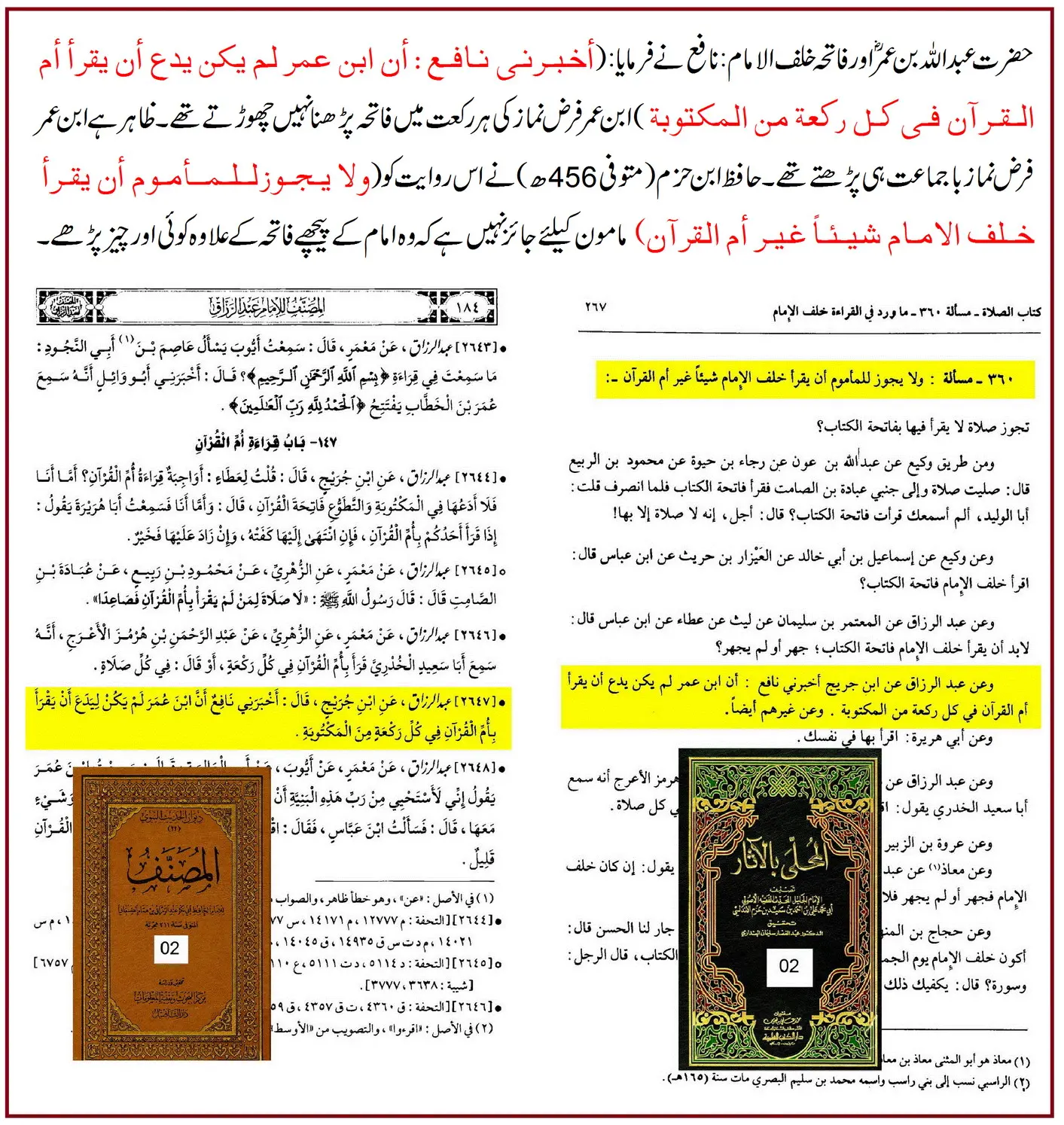
3. Nāfiʿ’s Report: Al-Fātiḥah in Every Rakʿah
2625 – عَنِ ابْنِ جُرَيْجٍ قَالَ: أَخْبَرَنِي نَافِعٌ، «أَنَّ ابْنَ عُمَرَ لَمْ يَكُنْ لِيَدَعَ أَنْ يَقْرَأَ بِأُمِّ الْقُرْآنِ فِي كُلِّ رَكْعَةٍ مِنَ الْمَكْتُوبَةِ»
Nāfiʿ says: “Sayyidunā Ibn ʿUmar رضي الله عنه would not leave reciting Sūrah al-Fātiḥah in every rakʿah of an obligatory prayer.”
[Ref: al-Muṣannaf of ʿAbd al-Razzāq – Authentic Chain]
📌 This narration makes clear that according to Ibn ʿUmar رضي الله عنه, whether the prayer was in congregation or alone, reciting al-Fātiḥah in every rakʿah was necessary.
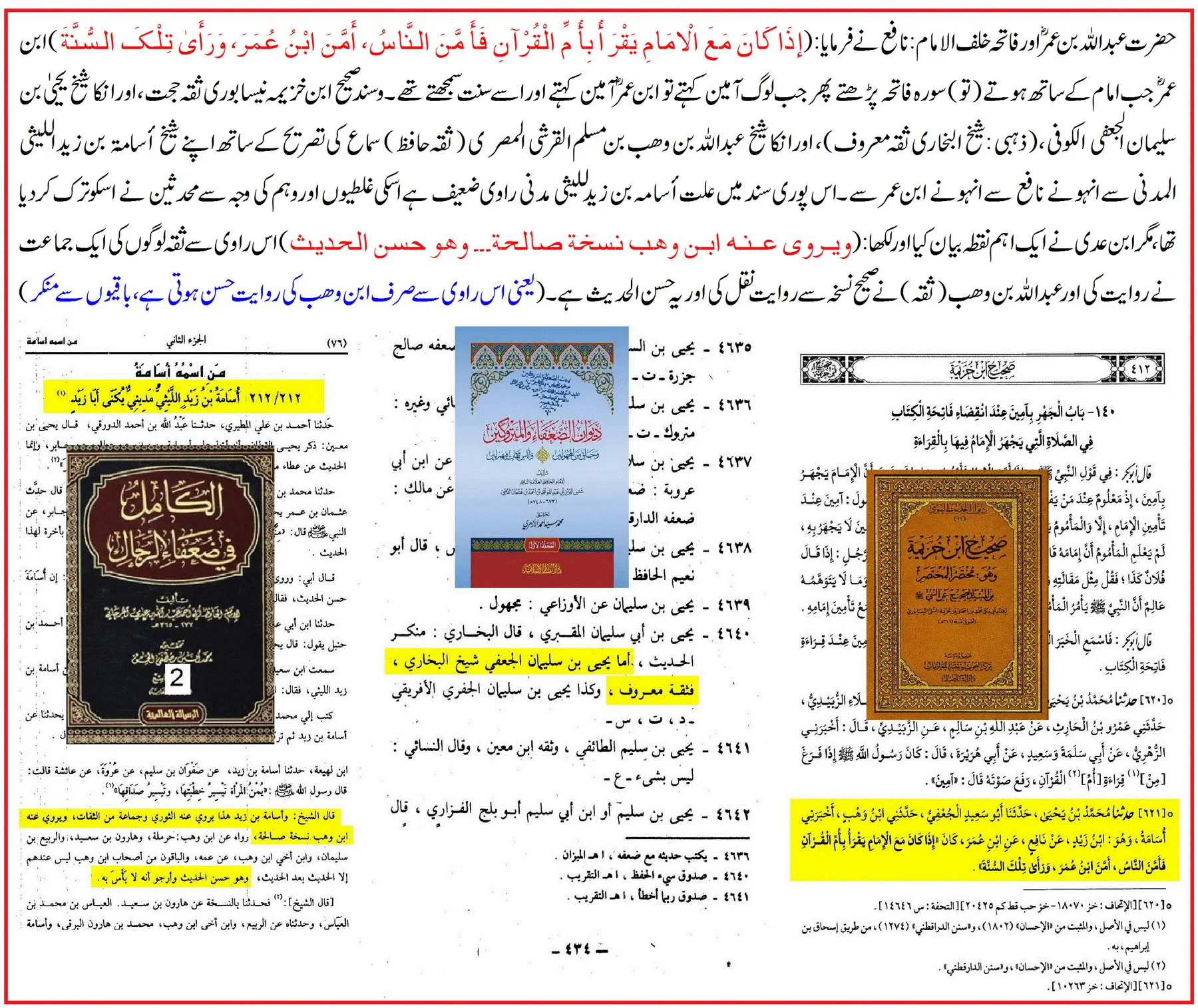
4. Ṣaḥīḥ Ibn Khuzaymah: Saying Āmīn with the Imām
«كَانَ إِذَا كَانَ مَعَ الْإِمَامِ يَقْرَأُ بِأُمِّ الْقُرْآنِ فَأَمَّنَ النَّاسُ أَمَّنَ ابْنُ عُمَرَ، وَرَأَى تِلْكَ السُّنَّةَ»
“When Ibn ʿUmar رضي الله عنه prayed with the imām, he would recite Sūrah al-Fātiḥah; then when the people said ‘Āmīn’, he also said Āmīn, and he considered this the Sunnah.”
[Ref: Ṣaḥīḥ Ibn Khuzaymah – Hasan Chain]
📌 This is an explicit practice showing that Ibn ʿUmar رضي الله عنه recited al-Fātiḥah behind the imām in congregation and then said Āmīn.
Summary
From all these authentic narrations it is known that Sayyidunā Ibn ʿUmar رضي الله عنه:
✔ remained silent during the imām’s recitation in loud prayers.
✔ recited Sūrah al-Fātiḥah during the pauses or in silent prayers.
✔ was committed to reciting Sūrah al-Fātiḥah in every rakʿah, whether behind the imām or alone.
❖ The Pauses (Saktāt) of the Imām and Their Rulings
It is proven from Ibn ʿUmar and other companions that the imām would pause at two places during loud prayers. For the muqtadī, reciting Sūrah al-Fātiḥah during these pauses is legislated (mashrūʿ) and recommended (mustaḥabb). Below we now present clear evidence for this.
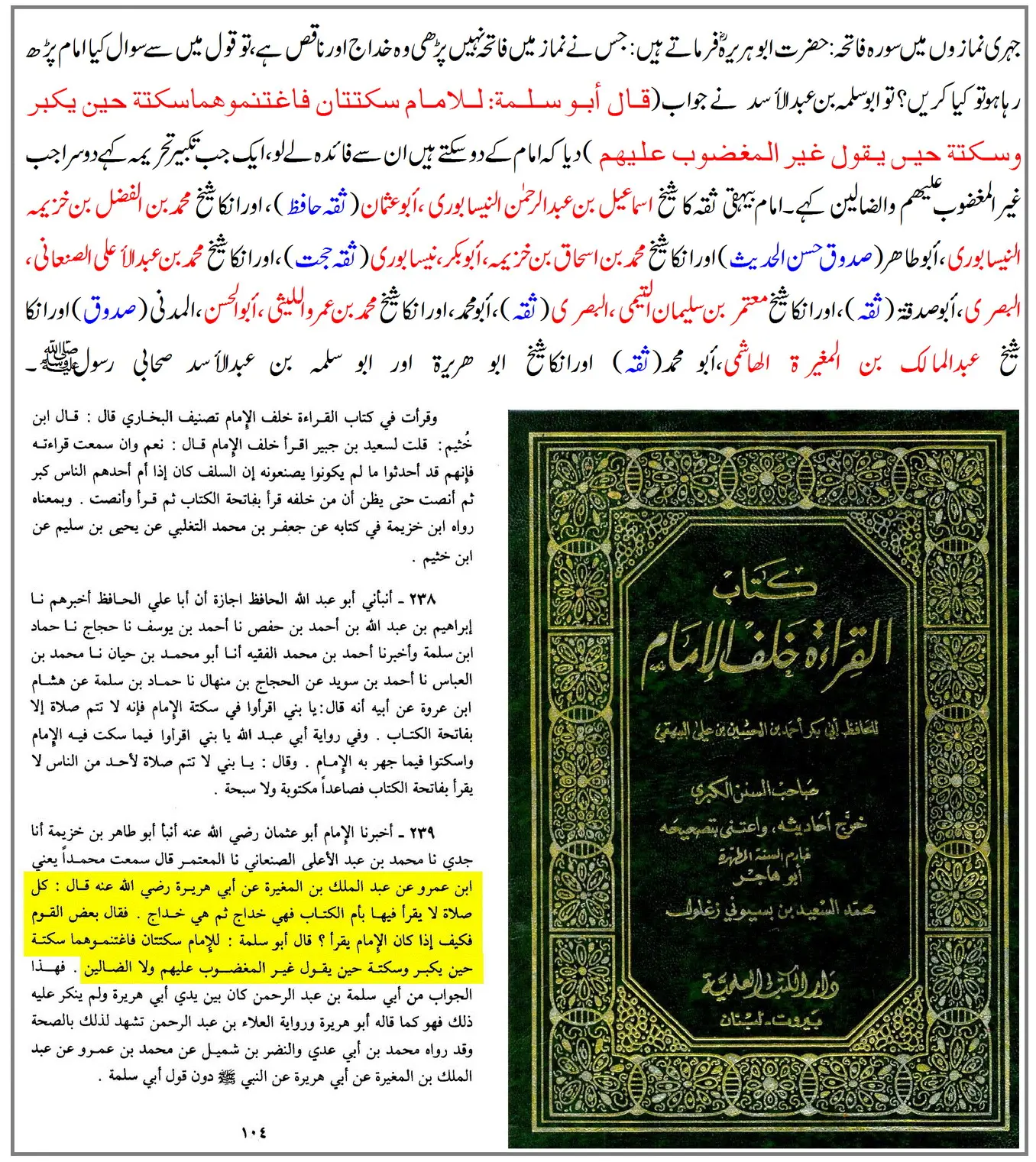
1. Abū Hurayrah’s Statement and Clarification by Abū Salamah
239 – … عَنْ أَبِي هُرَيْرَةَ، رَضِيَ اللَّهُ عَنْهُ قَالَ: ” كُلُّ صَلَاةٍ لَا يُقْرَأُ فِيهَا بِأُمِّ الْكِتَابِ فَهِيَ خِدَاجٌ ثُمَّ هِيَ خِدَاجٌ ” فَقَالَ بَعْضُ الْقَوْمِ: فَكَيْفَ إِذَا كَانَ الْإِمَامُ يَقْرَأُ؟ قَالَ أَبُو سَلَمَةَ: ” لِلْإِمَامِ سَكْتَتَانِ فَاغْتَنِمُوهُمَا، سَكْتَةٌ حِينَ يُكَبِّرُ، وَسَكْتَةٌ حِينَ يَقُولُ: {غَيْرِ الْمَغْضُوبِ عَلَيْهِمْ وَلَا الضَّالِّينَ} “
“Abū Hurayrah رضي الله عنه said: “Every prayer in which Umm al-Kitāb (al-Fātiḥah) is not recited is deficient, then it is deficient.” One of the people asked: “What if the imām is reciting?” Abū Salamah رحمه الله said: “The imām has two pauses, so make use of them: one at the time of the opening takbīr, and the other when he says {غَيْرِ الْمَغْضُوبِ عَلَيْهِمْ وَلَا الضَّالِّينَ}.”
[Ref: al-Qirāʾah Khalfa al-Imām by al-Bayhaqī – Authentic Chain]
Statements of the Imāms Regarding This Narration
2. Statement of Imām Aḥmad رحمه الله
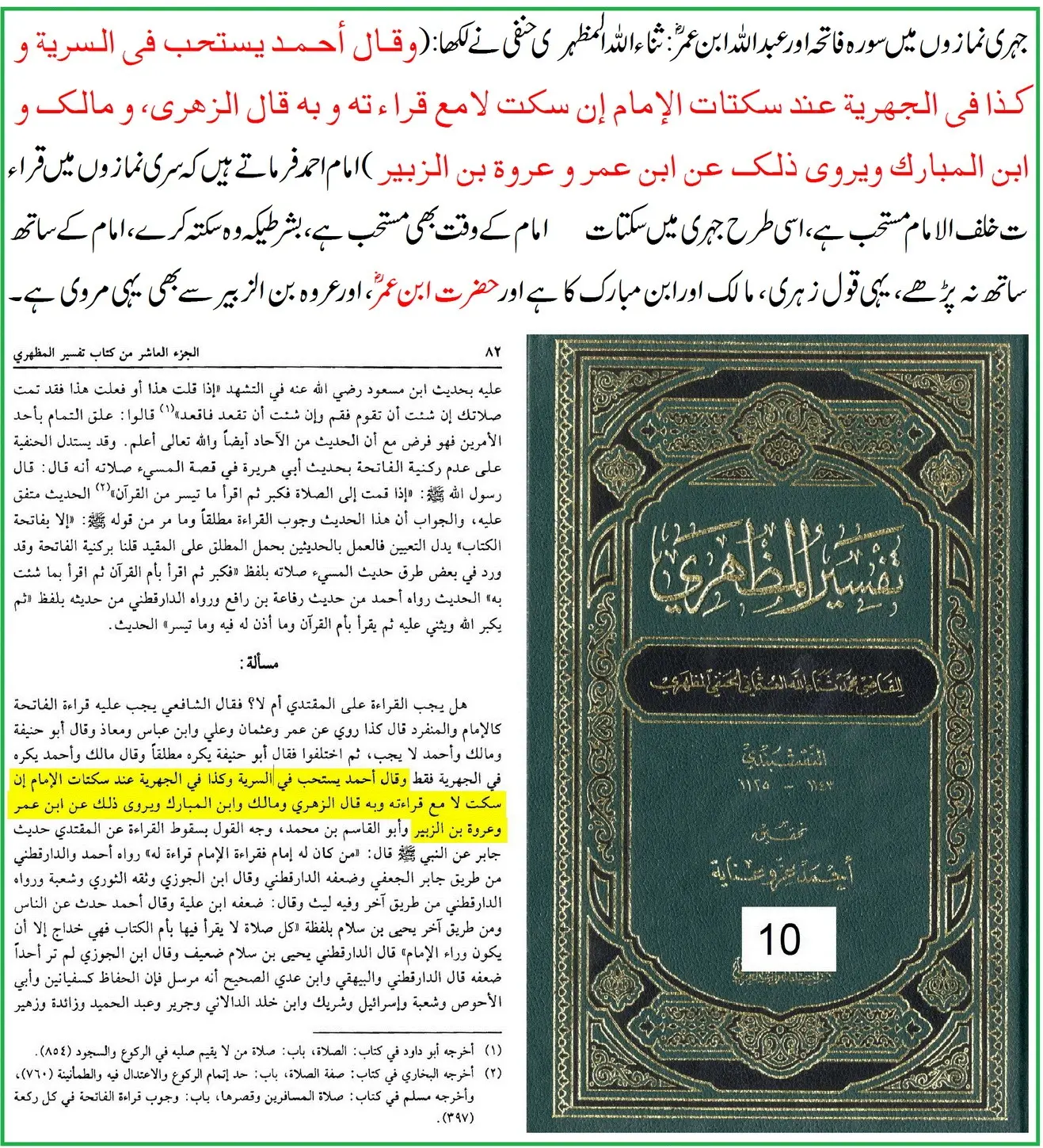
Thanāʾullāh al-Maẓharī Ḥanafī quoted:
“وقال احمد: يُسْتَحَبُّ فِي السِّرِّيَّةِ، وَكَذَا فِي الْجَهْرِيَّةِ عِنْدَ سَكْتَاتِ الْإِمَامِ إِنْ سَكَتَ، لَا مَعَ قِرَاءَتِهِ، وَبِهِ قَالَ الزُّهْرِيُّ، وَمَالِكٌ، وَابْنُ الْمُبَارَكِ، وَيُرْوَى ذَلِكَ عَنِ ابْنِ عُمَرَ”
“Imām Aḥmad said: It is recommended to recite in silent prayers, and also in loud prayers during the pauses—if the imām pauses, not along with his recitation. This is the view of al-Zuhrī, Mālik and Ibn al-Mubārak, and it is narrated from Ibn ʿUmar.”
[Ref: Tafsīr al-Maẓharī]
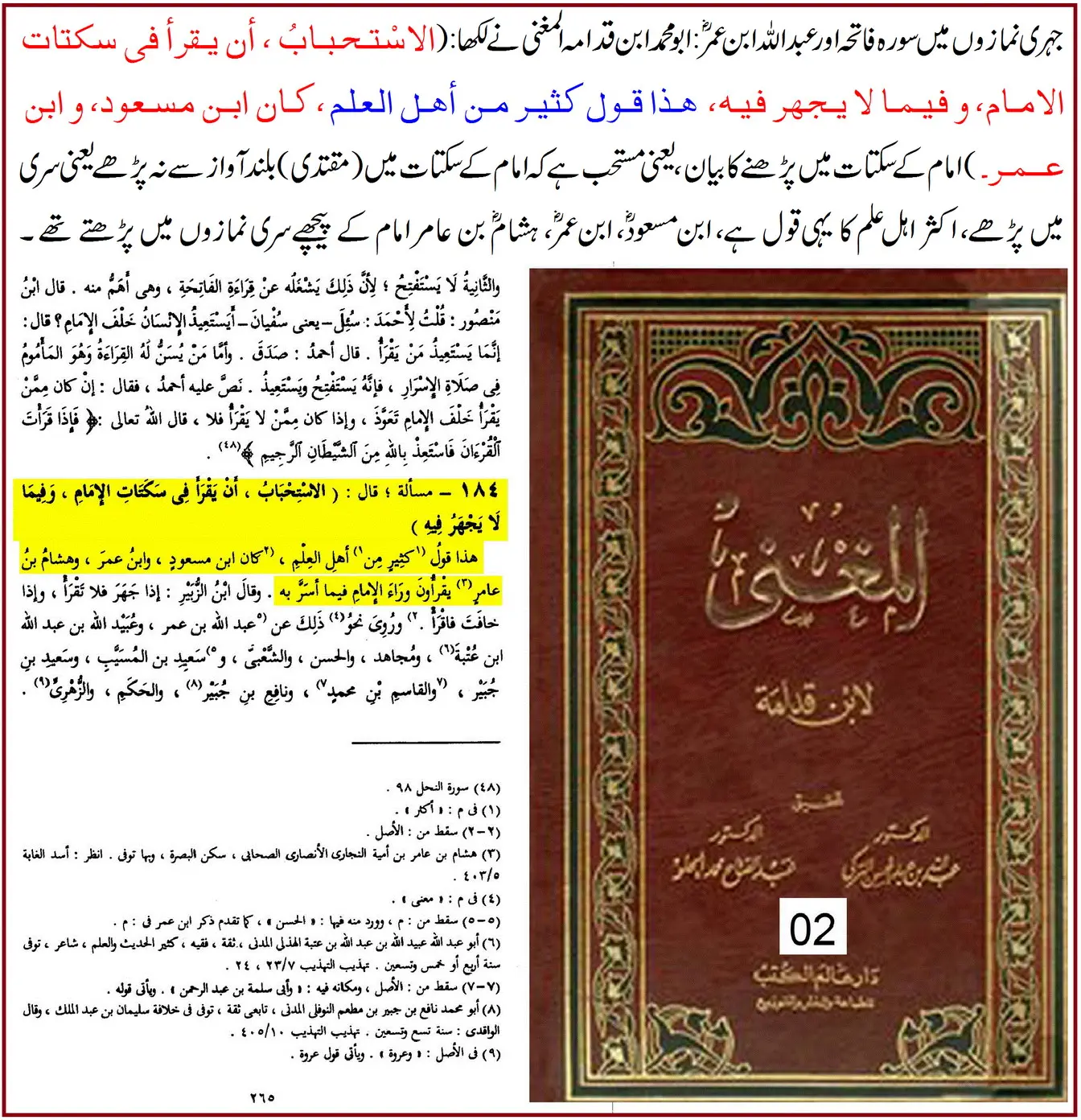
3. Imām Ibn Qudāmah Ḥanbalī رحمه الله
“الِاسْتِحْبَابُ أَنْ يَقْرَأَ فِي سَكَتَاتِ الْإِمَامِ، وَفِيمَا لَا يَجْهَرُ فِيهِ، هَذَا قَوْلُ أَكْثَرِ أَهْلِ الْعِلْمِ، كَانَ ابْنُ مَسْعُودٍ، وَابْنُ عُمَرَ، وَهِشَامُ بْنُ عَامِرٍ يَقْرَءُونَ وَرَاءَ الْإِمَامِ فِيمَا أَسَرَّ بِهِ”
“Reciting during the pauses of the imām or in silent prayers is recommended. This is the view of most of the people of knowledge. Ibn Masʿūd, Ibn ʿUmar, and Hishām bin ʿĀmir used to recite behind the imām in what he recited silently.”
[Ref: al-Mughnī]
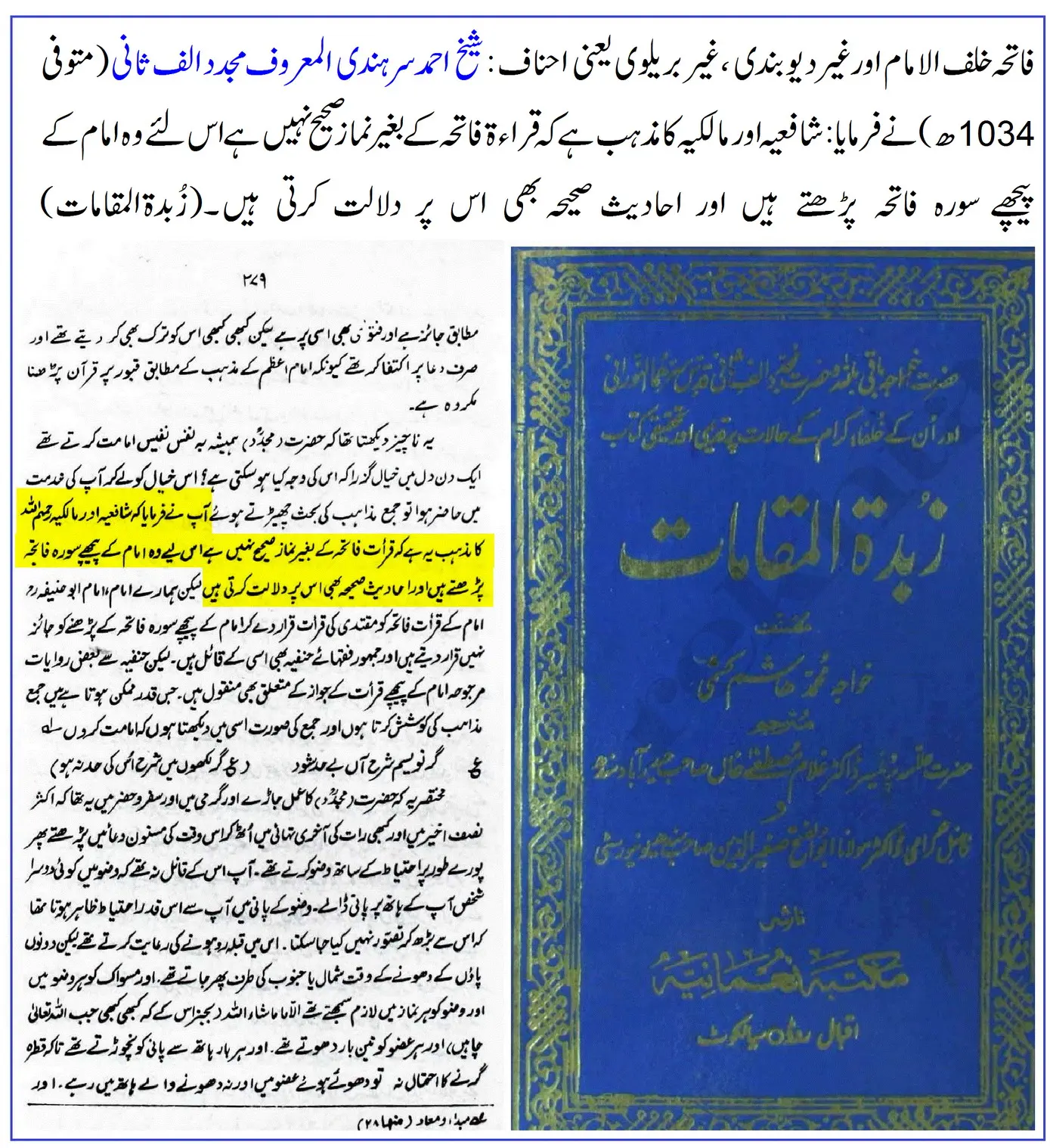
4. Imām Mālik رحمه الله and Imām al-Zuhrī رحمه الله
The same position is reported from these two imāms as well: the follower should recite during the pause in loud prayers, and must recite in silent prayers. Imām Mālik’s view has already been mentioned above in the quotation of Imām Aḥmad.
📌 Summary:
✔ Two pauses of the imām in loud prayers are established: one after the opening takbīr and one after Sūrah al-Fātiḥah.
✔ Reciting Sūrah al-Fātiḥah during these pauses is recommended and legislated according to the Companions, the Tābiʿīn and the imāms.
✔ The same is established about Ibn ʿUmar رضي الله عنه: he recited during the pauses in loud prayers and in silent prayers.
❖ Proof from Leading Ḥanafī Scholars for Reciting Behind the Imām
This is not restricted to the muḥaddithīn and the early jurists alone; rather, even the great Ḥanafī imāms and mashāyikh themselves have, in various places, declared reciting Sūrah al-Fātiḥah behind the imām to be necessary or at least commendable. In this section we present their original texts and references.
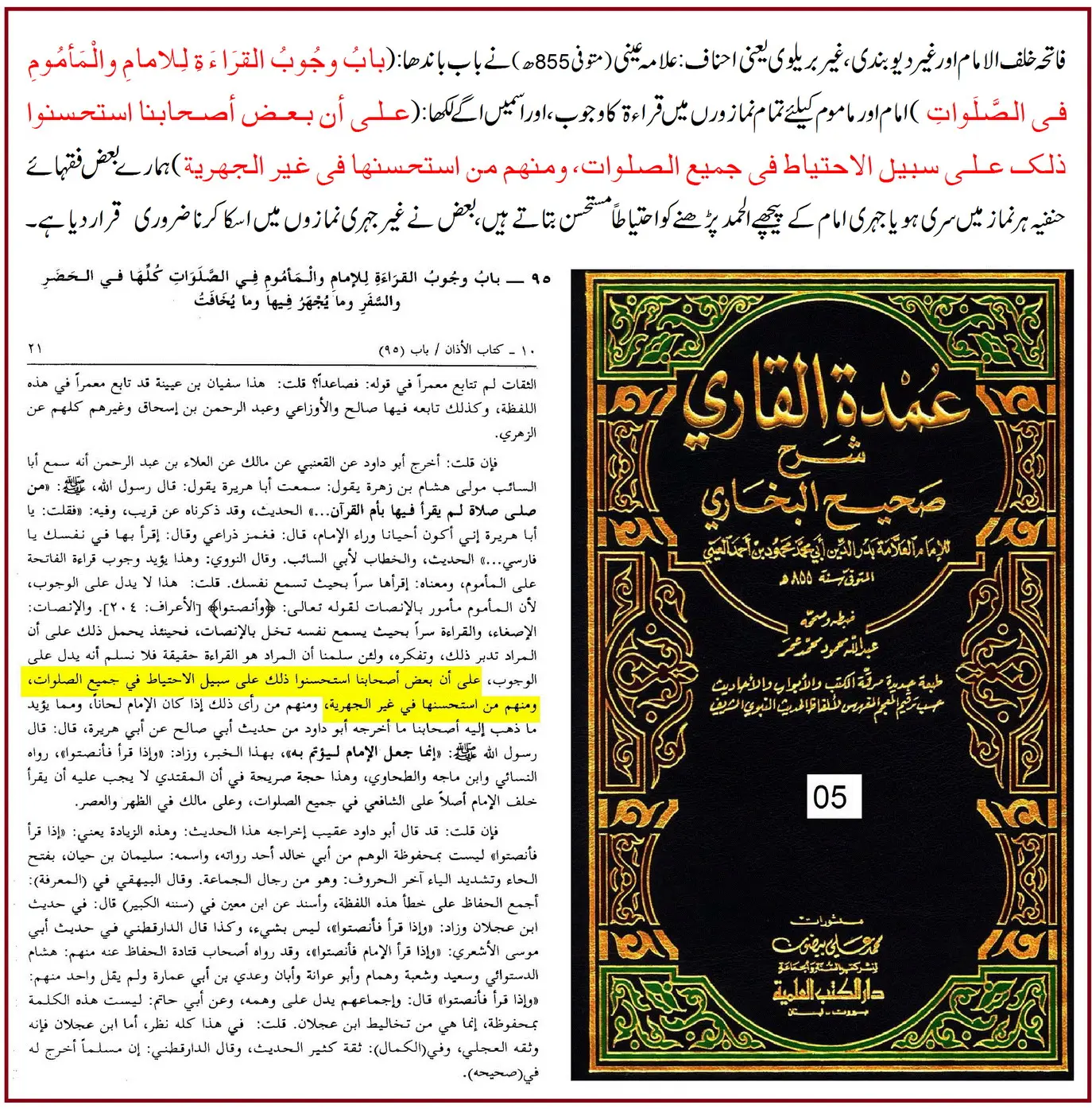
1. ʿAllāmah Badr al-Dīn al-ʿAynī Ḥanafī رحمه الله (d. 855 AH)
Under the chapter باب وجوب القراءة للإمام والمأموم (The obligation of recitation for the imām and the follower) he writes:
“عَلَى أَنَّ بَعْضَ أَصْحَابِنَا اسْتَحْسَنُوا ذَلِكَ عَلَى سَبِيلِ الِاحْتِيَاطِ فِي جَمِيعِ الصَّلَوَاتِ، وَمِنْهُمْ مَنْ اسْتَحْسَنَهَا فِي غَيْرِ الْجَهْرِيَّةِ”
“Some of our scholars regarded it as preferable (iḥtiyāṭan) to recite in all prayers, and others in non-loud prayers only.”
[Ref: ʿUmdat al-Qārī]
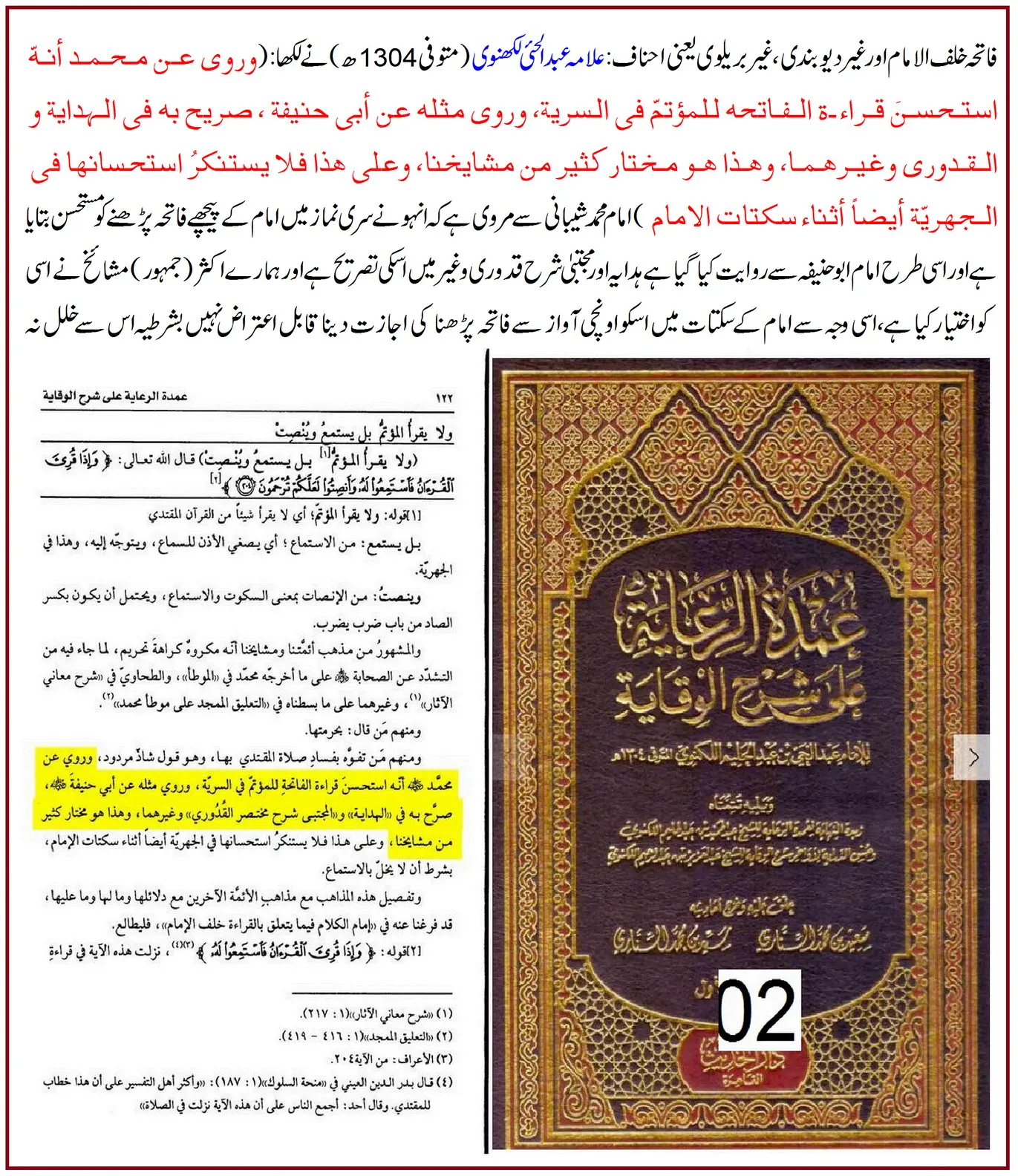
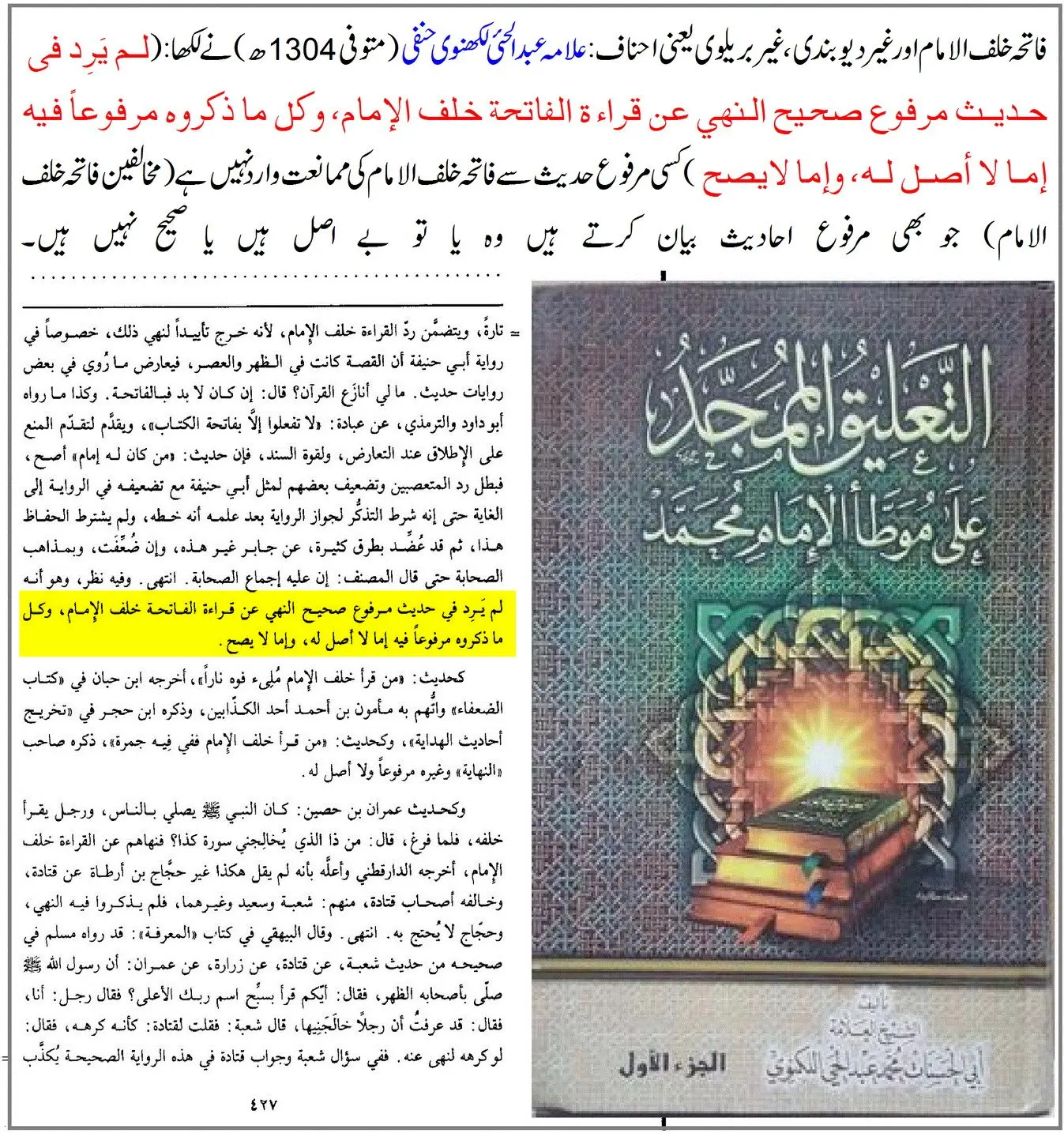
2. ʿAllāmah ʿAbd al-Ḥayy Lakhnawī رحمه الله (d. 1304 AH)
“ورُوي عن محمد أنّه استحسنَ قراءة الفاتحةِ للمؤتمّ في السريّة، وروى مثله عن أبي حنيفةَ، صرّح به في ((الهداية)) و((المجتبى شرح مختصر القدوري)) وغيرهما، وهذا هو مختار كثير من مشايخنا”
“It is narrated from Imām Muḥammad that he considered it preferable for the follower to recite al-Fātiḥah in silent prayers, and the like is narrated from Abū Ḥanīfah; this is stated in al-Hidāyah, al-Mujtabā Sharḥ Mukhtaṣar al-Qudūrī and others. This is the chosen opinion of many of our mashāyikh.”
[Ref: ʿUmdat al-Riʿāyah]
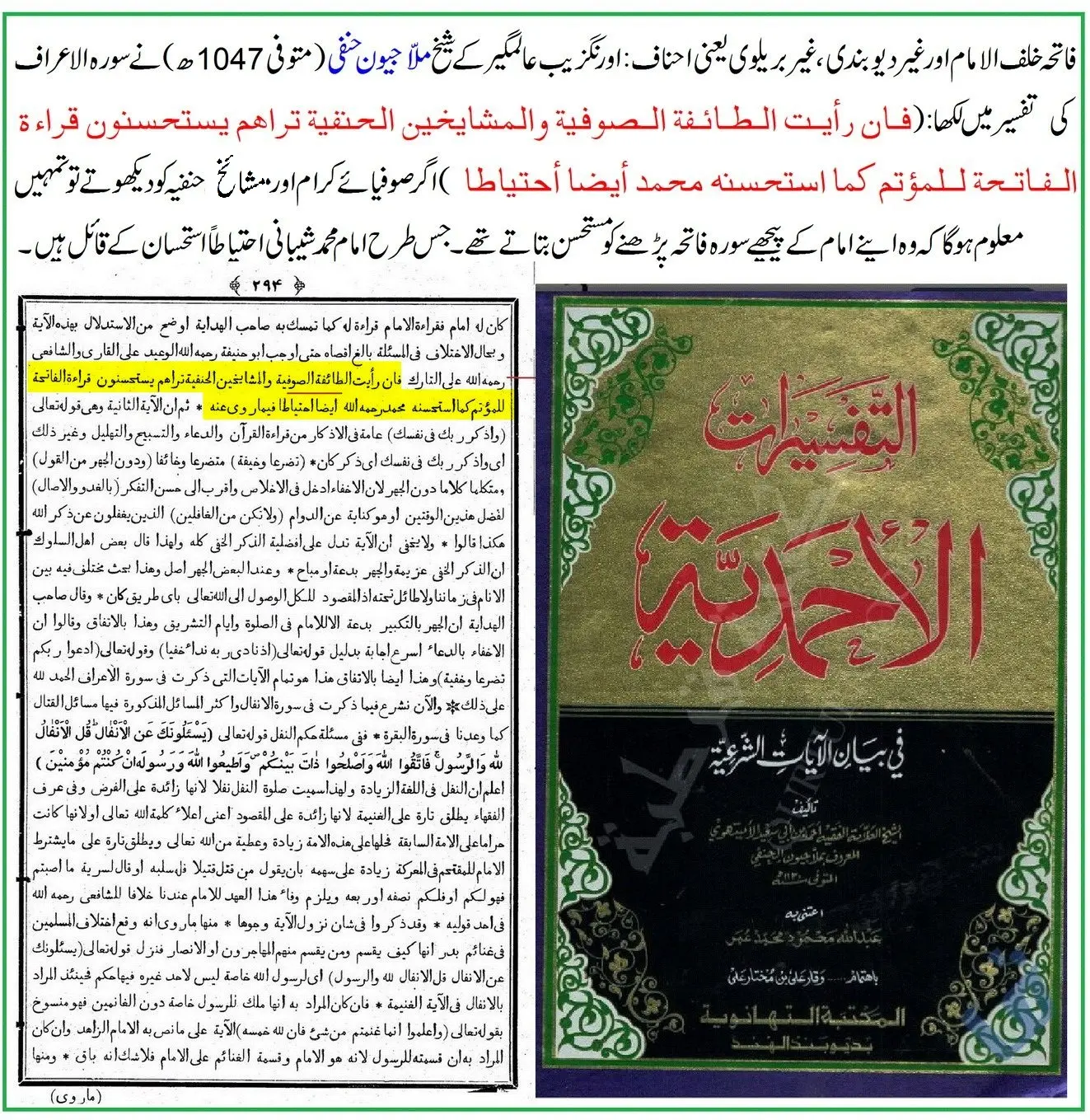
3. Mullā Jīwan Ḥanafī رحمه الله (d. 1130 AH)
“فإن رأيت الطائفة الصوفية والمشائخين الحنفية تراهم يستحسنون قراءة الفاتحة للمؤتم، كما استحسنه محمد أيضًا”
“If you look at the Sufis and the Ḥanafī mashāyikh, you will see that they consider it preferable for the follower to recite al-Fātiḥah, just as Imām Muḥammad also considered it preferable.”
[Ref: al-Tafsīrāt al-Aḥmadiyyah]
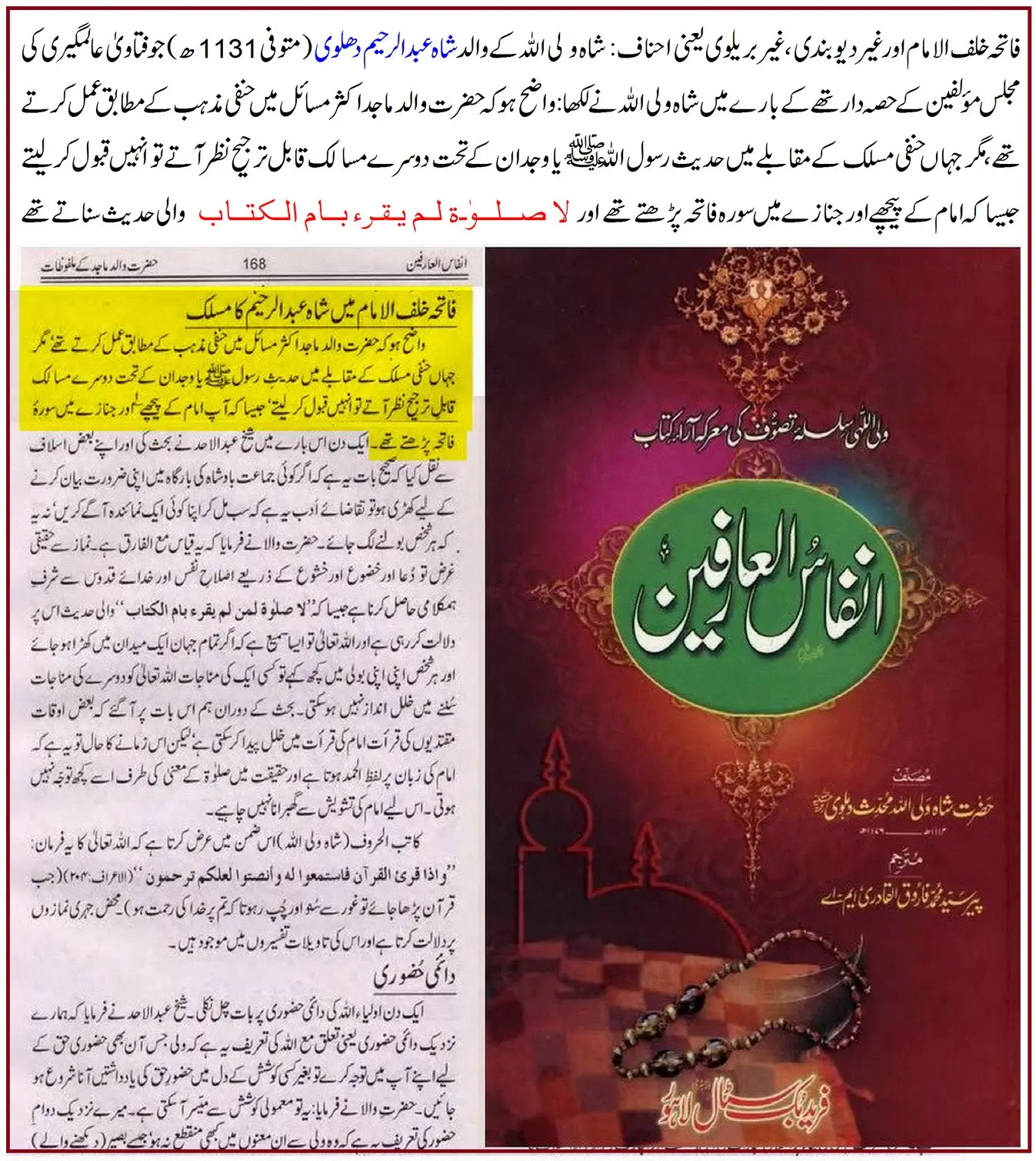
4. Shāh ʿAbd al-Raḥīm Dehlawī رحمه الله (d. 1131 AH)
Shāh Walīullāh Dehlawī رحمه الله writes about his father in Anfās al-ʿĀrifīn:
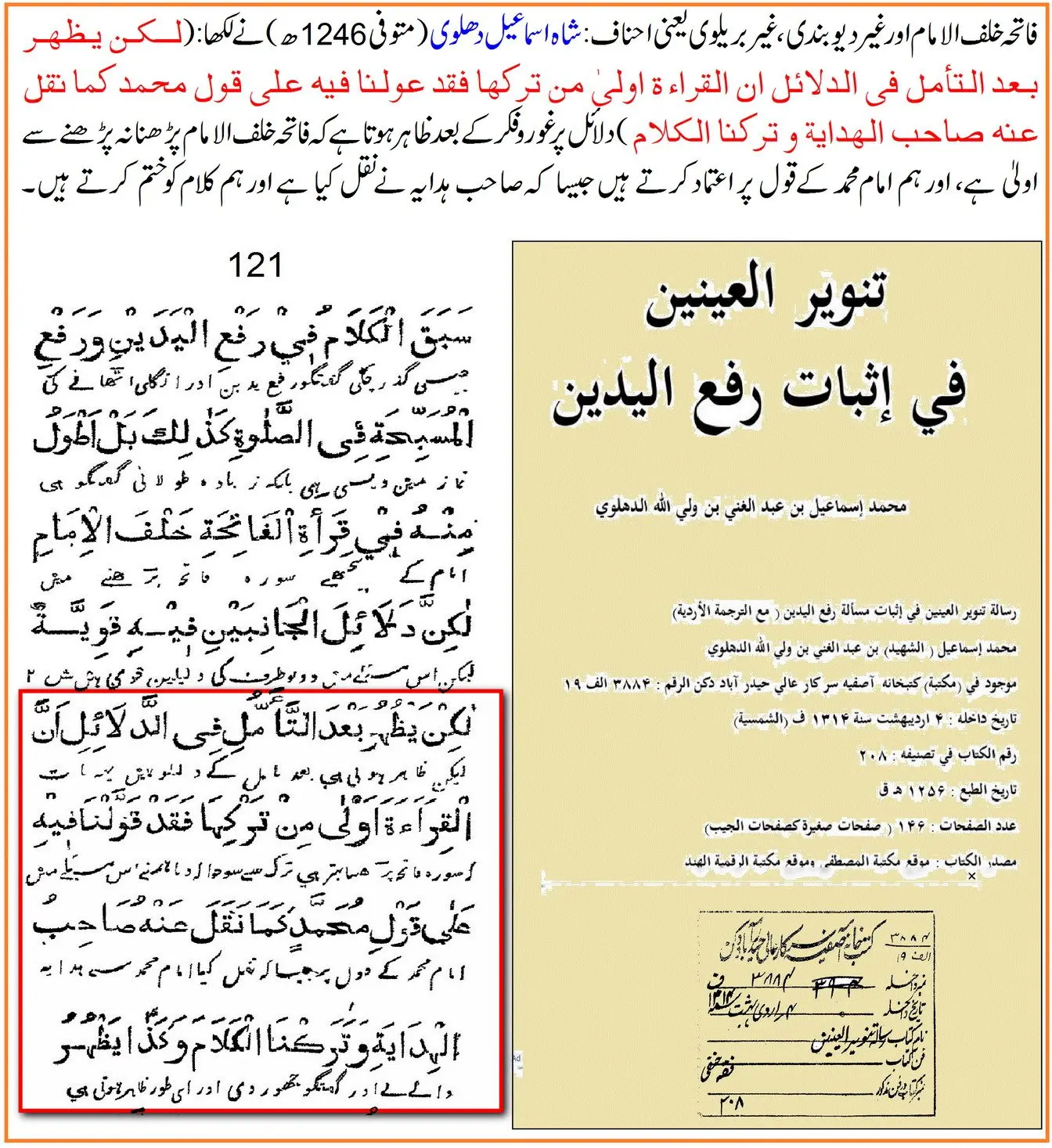
“He acted on the Ḥanafī madhhab in most issues, but wherever, in contrast to the Ḥanafī position, another view appeared preponderant to him on the basis of ḥadīth or inner perception (wijdān), he would adopt it. For example, he would recite Sūrah al-Fātiḥah behind the imām and in the funeral prayer, and would cite the ḥadīth «لا صلاة لمن لم يقرأ بأم القرآن» (“There is no prayer for one who does not recite Umm al-Qurʾān”).”
[Ref: Anfās al-ʿĀrifīn]
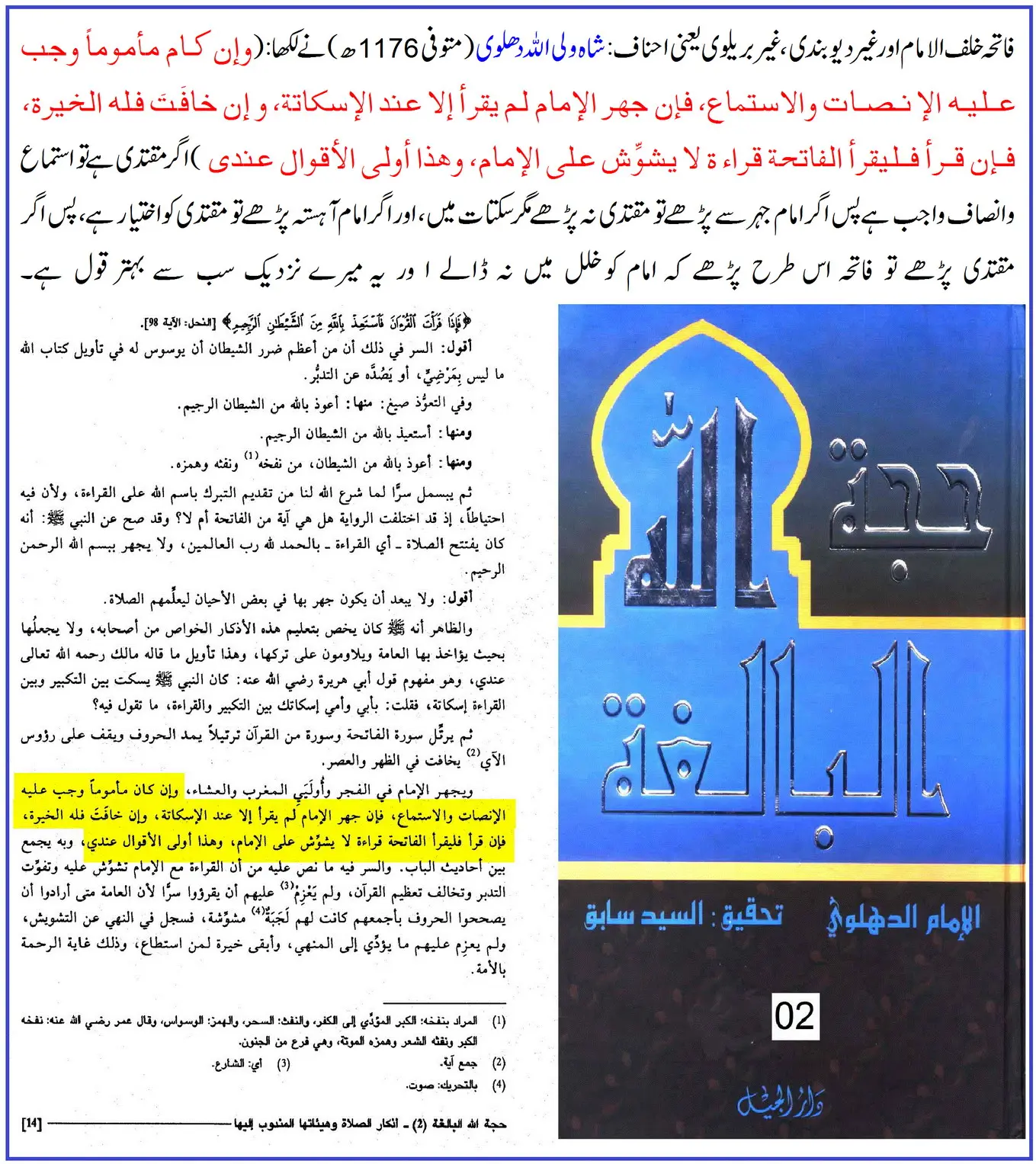
5. Shāh Walīullāh Dehlawī رحمه الله (d. 1176 AH)
“وَإِنْ كَانَ مَأْمُومًا وَجَبَ عَلَيْهِ الِاسْتِمَاعُ وَالْإِنْصَاتُ، فَإِنْ جَهَرَ الْإِمَامُ لَمْ يَقْرَأْ إِلَّا عِنْدَ إِسْكَاتِهِ، وَإِنْ خَافَتَ فَلَهُ الْخِيَرَةُ، فَإِنْ قَرَأَ فَلْيَقْرَأِ الْفَاتِحَةَ قِرَاءَةً لَا يُشَوِّشُ عَلَى الْإِمَامِ، وَهَذَا أَوْلَى الْأَقْوَالِ عِنْدِي”
“If he is a follower, listening and remaining silent are obligatory upon him. If the imām recites loudly, he should not recite except during the imām’s pause. If the imām recites silently, he has the option; and if he recites, let him recite al-Fātiḥah in a way that does not disturb the imām. This is the best opinion according to me.”
[Ref: Ḥujjat Allāh al-Bālighah]
These statements make clear that even according to the majority of the Ḥanafīs, on specific occasions (especially in silent prayers and during the pause in loud prayers), reciting Sūrah al-Fātiḥah behind the imām is legislated and commendable, and according to some even necessary.
✅ Final Summary and Conclusions
From this entire study the following points have become clear:
✔ Ibn ʿUmar’s statement concerns remaining silent during the imām’s recitation in loud prayers; it does not negate recitation in silent prayers or during the imām’s pauses.
✔ Multiple authentic narrations show that Ibn ʿUmar recited al-Fātiḥah in every rakʿah, even behind the imām.
✔ Pauses (saktāt) of the imām in loud prayers are well-documented, and reciting during them is recommended by companions, tābiʿīn, and early imāms.
✔ Even senior Ḥanafī scholars and mashāyikh have declared reciting Sūrah al-Fātiḥah in silent prayers and during the pause in loud prayers to be commendable or necessary.
There are clear proofs from the Companions, the muḥaddithīn, the four imāms and the majority of the Ḥanafīs for the legitimacy and recommendation of reciting Sūrah al-Fātiḥah behind the imām. Therefore, the claim that “the imām’s recitation alone suffices for the follower in all cases” is neither the belief of Ibn ʿUmar nor that of the majority of the people of knowledge.
Screenshots of Important References