This research is a review of the narrations of “Talaq al-Batta” transmitted through the chain of Imam Shafi’i (and a parallel chain of Zubair bin Saeed Nawfali), in which the incident of Rukana رضي الله عنه is interpreted to mean that in a divorce pronounced by saying “al-batta,” the husband’s intention (one) is taken as the basis to allow revocation/retraction. We will show that:
- These narrations are weak/disconnected/contradictory in their chains and contain unknown and defective narrators;
- Several scholars of hadith (Bukhari, Ahmad, Bayhaqi, Ibn al-Arabi, Ibn Hazm, al-Mundhiri, Ibn al-Qayyim, al-Tahawi, al-Zaili, al-Ashbili, al-Shawkani, and others) have made explicit statements declaring them weak or fabricated;
- Therefore, in jurisprudential reasoning, it is not correct to prefer them over authentic and sound narrations (for example, the authentic routes of Ibn Abbas رضي الله عنهما).
At every point, the Arabic text will be presented first, then the Urdu translation, followed by the source/reference; after that, a brief but clear chain criticism will be provided.
What is Talaq al-Batta?
“Batta” is an Arabic word, which means to cut off, to end.
- In Arab society, if a person said to his wife at the time of divorce: ”أنتِ طالق البتّة“ meaning “You are divorced, completely finished,” it was understood that he intended the divorce to be absolute and final.
- Now the dispute is:
Does saying “Talaq al-Batta” result in all three divorces taking effect?
- Or will it be counted as only one divorce and the husband’s intention (niyyah) will be considered?
Regarding this, a narration of Hazrat Rukana (RA) is presented in which he gave his wife a “Talaq al-Batta” and the Prophet ﷺ asked about his intention; when he said that his intention was only one divorce, the Prophet ﷺ returned the wife to him.
Arguments Presented by the Opposing Party
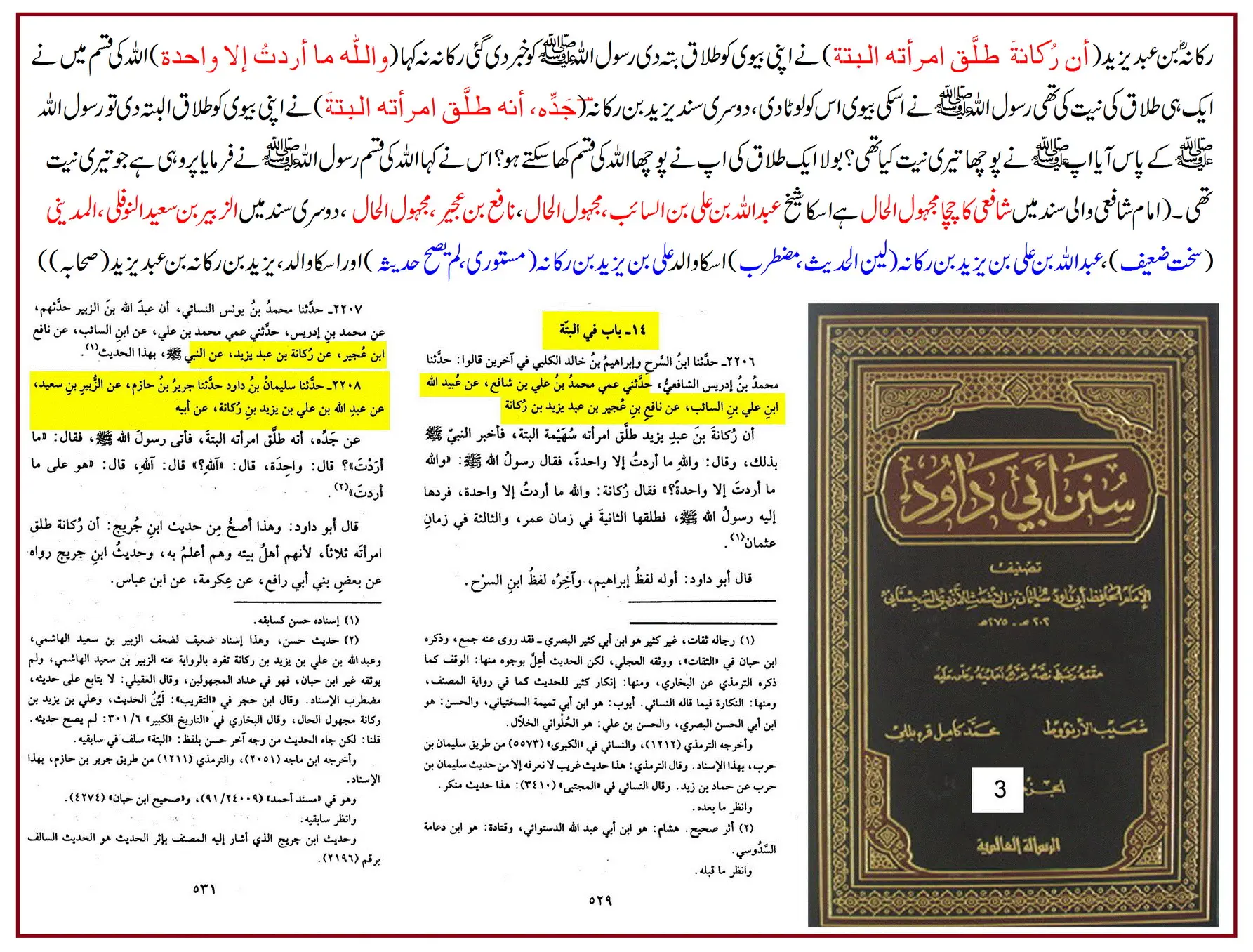
Narration 1: With the chain of narration from Shafi’i, “Talaq al-Batta” (Rukana RA)
Arabic text: 2206 – حَدَّثَنَا ابْنُ السَّرْحِ، وَإِبْرَاهِيمُ بْنُ خَالِدٍ الْكَلْبِيُّ أَبُو ثَوْرٍ، فِي آخَرِينَ، قَالُوا: حَدَّثَنَا مُحَمَّدُ بْنُ إِدْرِيسَ الشَّافِعِيُّ، حَدَّثَنِي عَمِّي مُحَمَّدُ بْنُ عَلِيِّ بْنِ شَافِعٍ، عَنْ عَبْدِ اللَّهِ بْنِ عَلِيِّ بْنِ السَّائِبِ، عَنْ نَافِعِ بْنِ عُجَيْرِ بْنِ عَبْدِ يَزِيدَ بْنِ رُكَانَةَ، أَنَّ رُكَانَةَ بْنَ عَبْدِ يَزِيدَ طَلَّقَ امْرَأَتَهُ سُهَيْمَةَ البَتَّةَ، فَأَخْبَرَ النَّبِيَّ صَلَّى اللهُ عَلَيْهِ وَسَلَّمَ بِذَلِكَ، وَقَالَ: وَاللَّهِ مَا أَرَدْتُ إِلَّا وَاحِدَةً، فَقَالَ رَسُولُ اللَّهِ صَلَّى اللهُ عَلَيْهِ وَسَلَّمَ: «وَاللَّهِ مَا أَرَدْتَ إِلَّا وَاحِدَةً؟» قَالَ رُكَانَةُ: وَاللَّهِ مَا أَرَدْتُ إِلَّا وَاحِدَةً، فَرَدَّهَا إِلَيْهِ رَسُولُ اللَّهِ صَلَّى اللهُ عَلَيْهِ وَسَلَّمَ.
Translation: Rukana bin Abdul Yazid رضي الله عنه divorced his wife Suhaymah by saying “al-batta.” Then he informed the Prophet ﷺ and said: “By Allah! My intention was one (divorce).” The Prophet ﷺ said: “By Allah! Was your intention only one?” Rukana رضي الله عنه said: “By Allah! It was only one.” So the Messenger of Allah ﷺ returned her (the wife) to his marriage.
Narration 2: Parallel Chain (via Al-Zubair bin Saeed Al-Nawfali)
Arabic text: 2208 – حَدَّثَنَا سُلَيْمَانُ بْنُ دَاوُدَ الْعَتَكِيُّ، حَدَّثَنَا جَرِيرُ بْنُ حَازِمٍ، عَنِ الزُّبَيْرِ بْنِ سَعِيدٍ، عَنْ عَبْدِ اللَّهِ بْنِ عَلِيِّ بْنِ يَزِيدَ بْنِ رُكَانَةَ، عَنْ أَبِيهِ، عَنْ جَدِّهِ: أَنَّهُ طَلَّقَ امْرَأَتَهُ البَتَّةَ، فَأَتَى رَسُولَ اللَّهِ صَلَّى اللهُ عَلَيْهِ وَسَلَّمَ، فَقَالَ: مَا أَرَدْتَ؟ قَالَ: وَاحِدَةً، قَالَ: آللَّهِ؟ قَالَ: آللَّهِ، قَالَ: «هُوَ عَلَى مَا أَرَدْتَ».
Translation: (Yazid bin) Rukana divorced his wife by saying “al-batta”; he came to the Messenger of Allah ﷺ. He ﷺ asked: “What was your intention?” He said: “One (divorce).” He ﷺ said: “By Allah (say it)?” He said: “By Allah (I swear).” He ﷺ said: “This (ruling) is according to your intention.”
The opposing party argues from these two narrations that if the intention in “Talaq al-Batta” is “Wahida” (single), then revocation or a single ruling should be established; and that the Prophet ﷺ himself did this with Rukana رضي الله عنه.
Critiques on the Narration of Talaq al-Batta (Scholars’ Criticism)
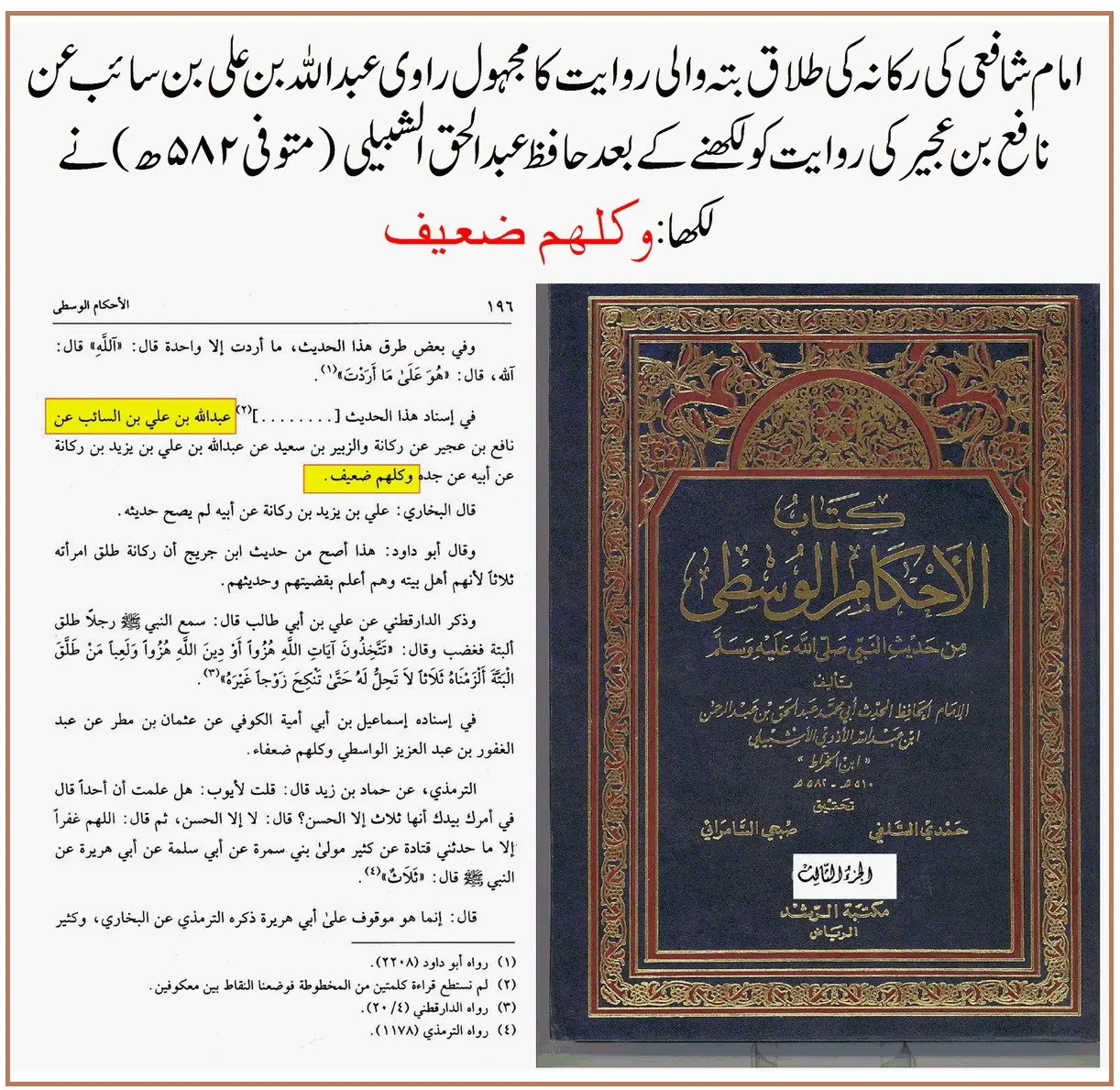
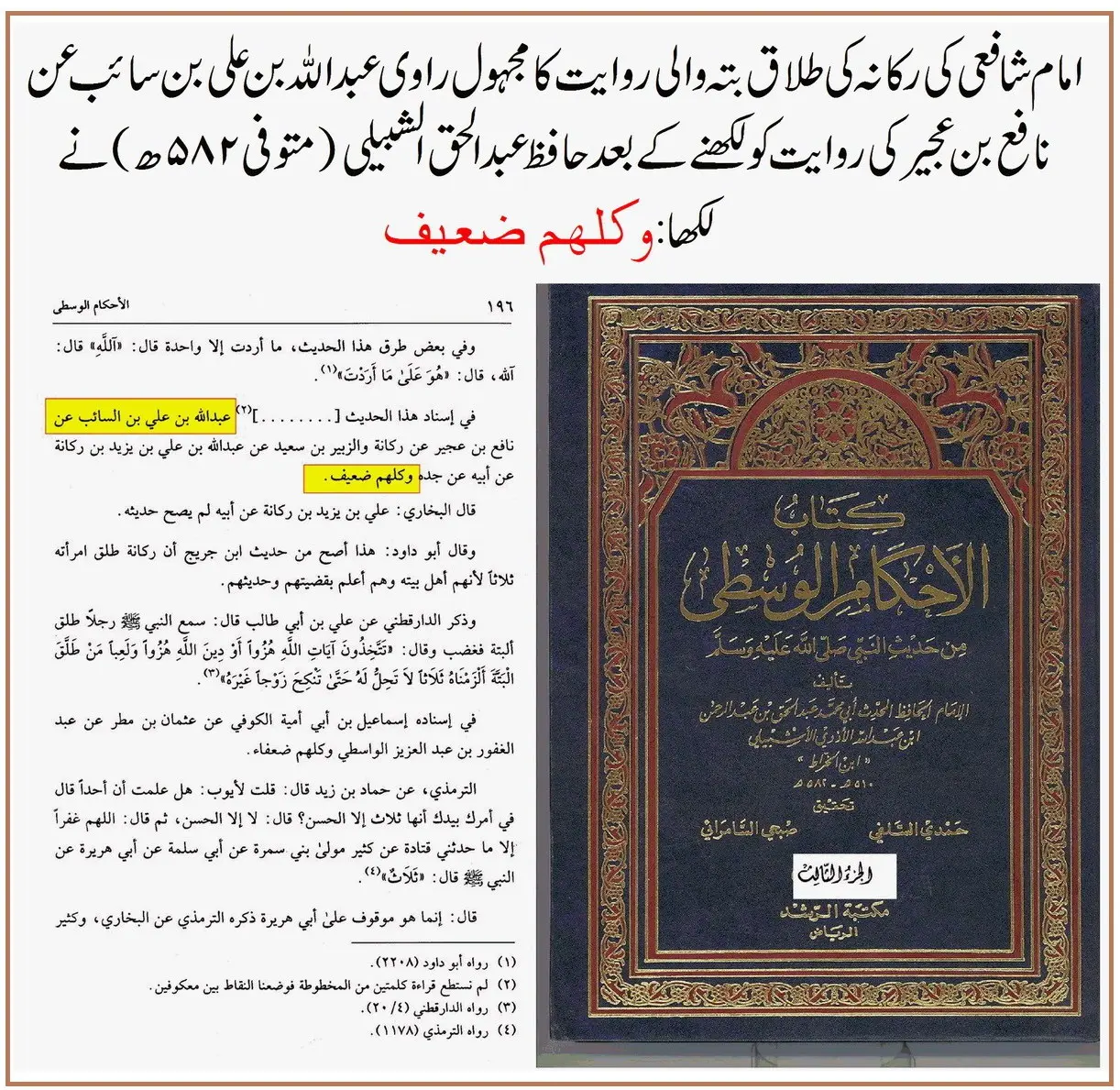
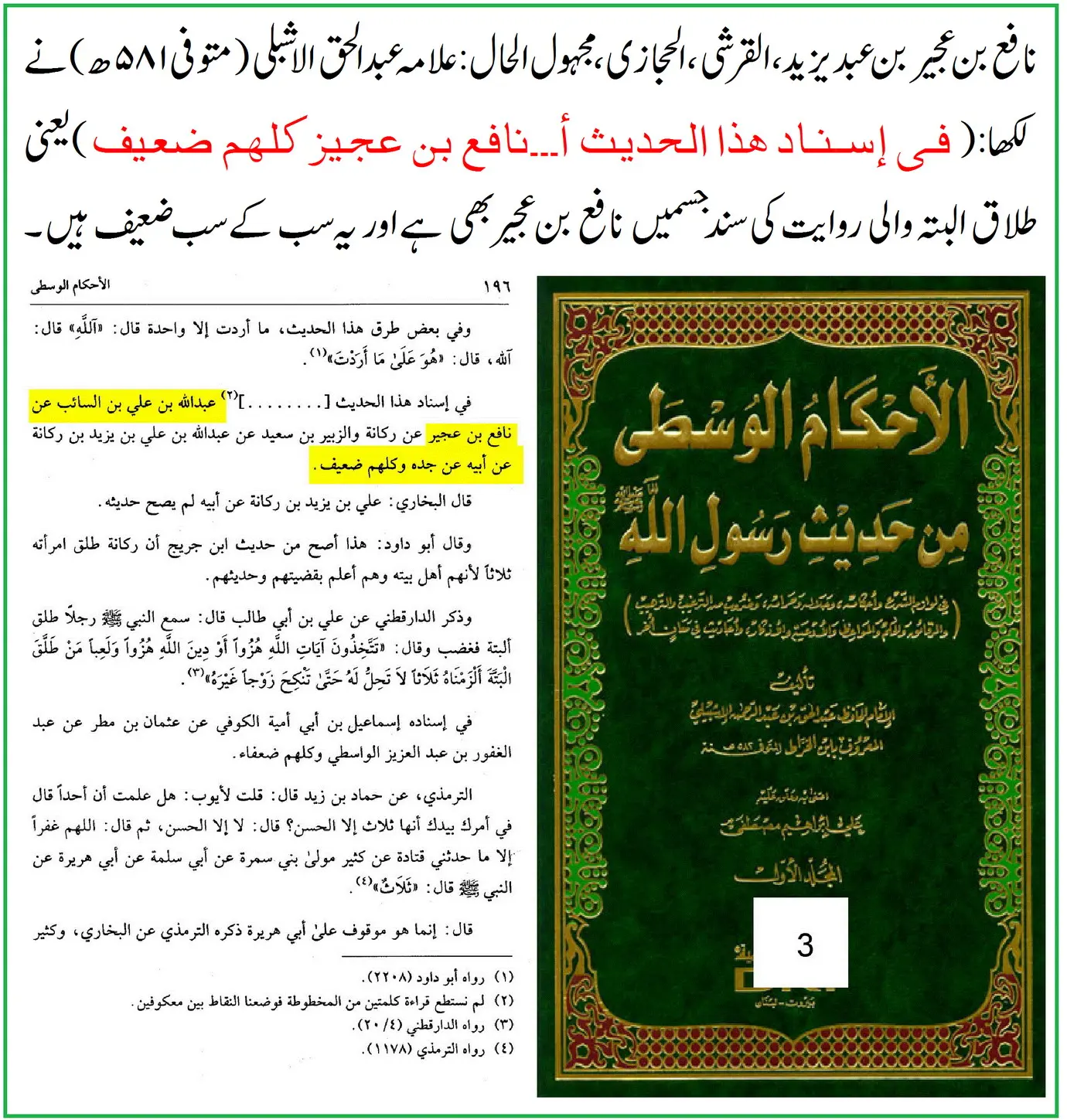
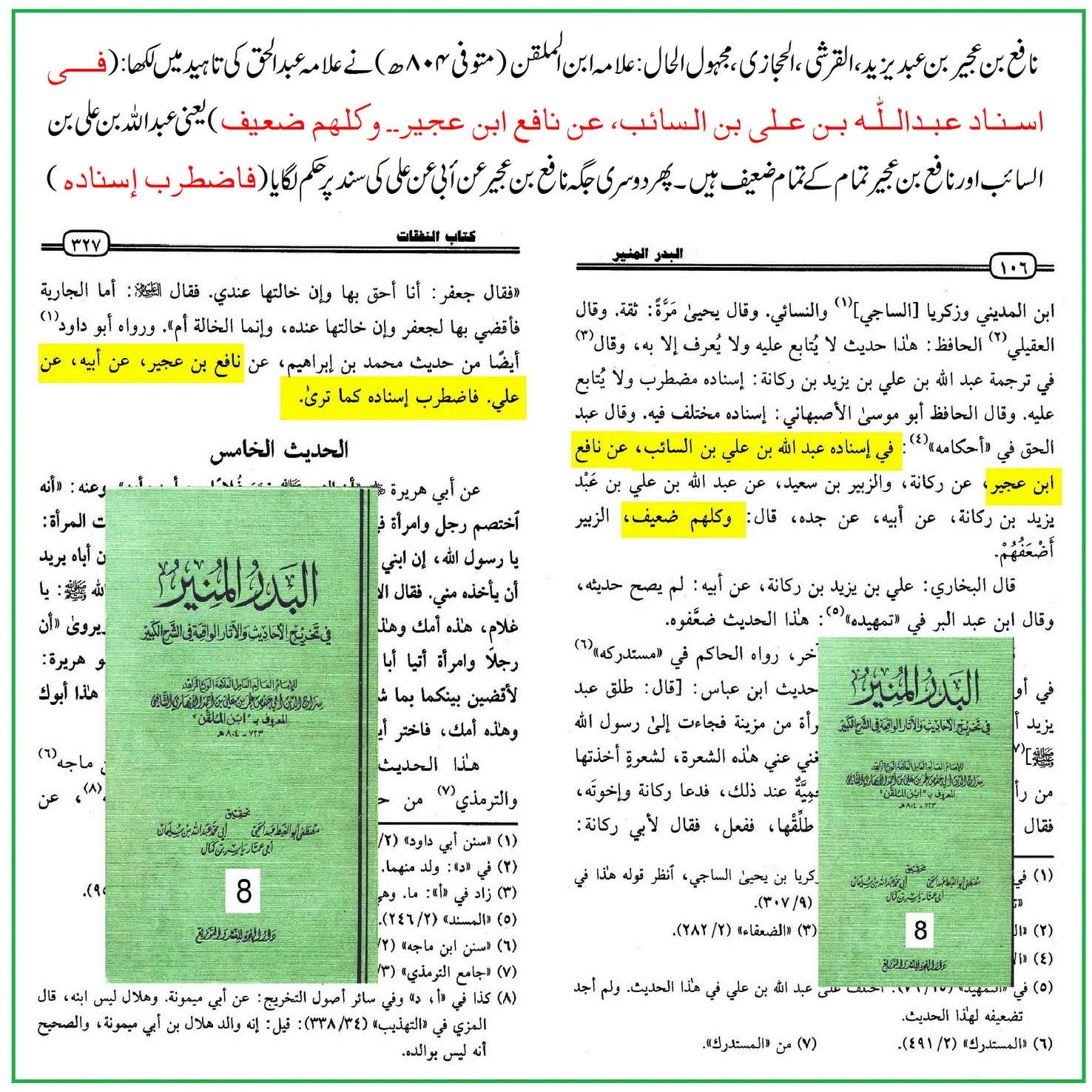
① Allama Abdul Haq al-Ashbili (d. 582 AH)
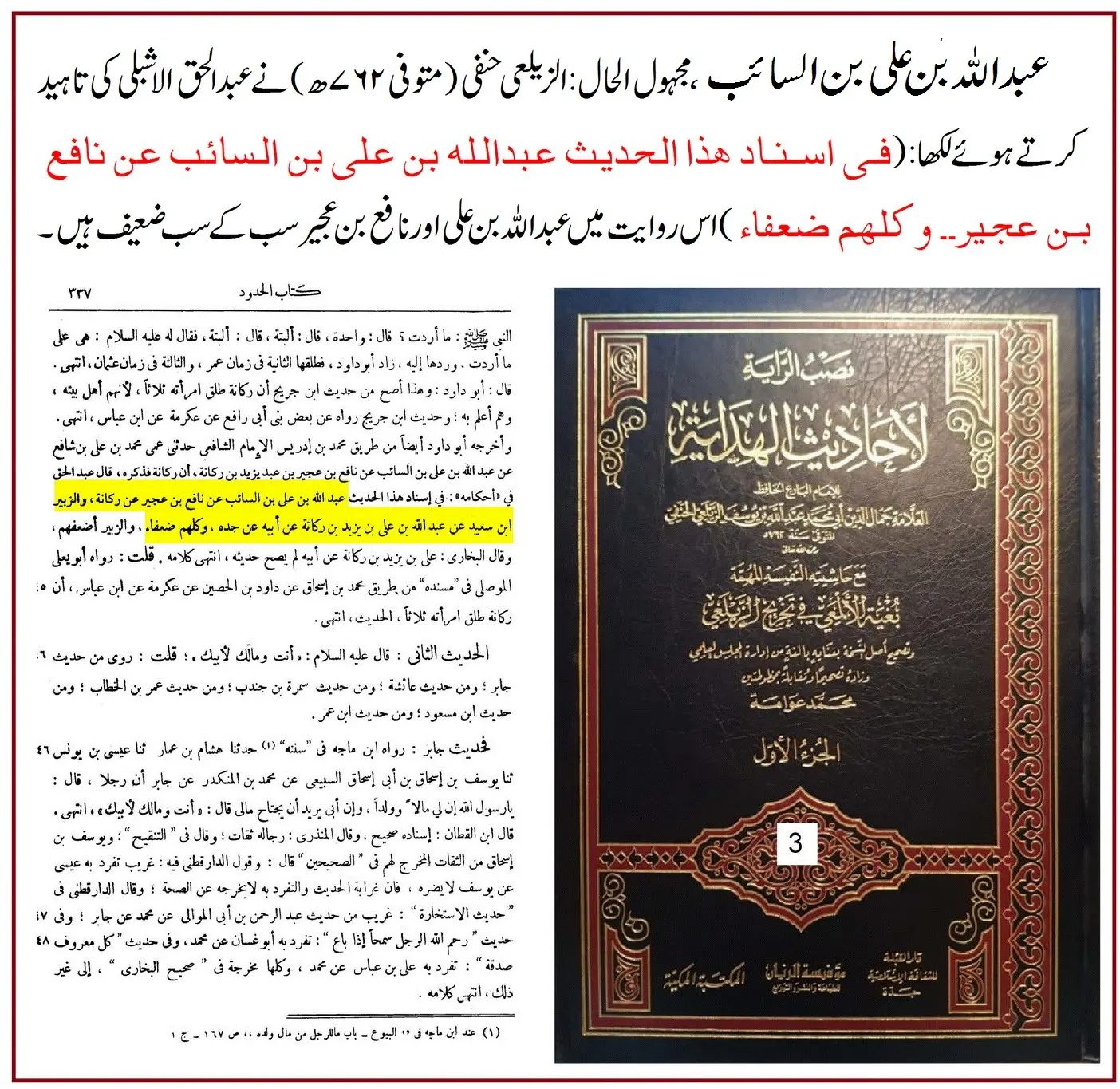
Arabic text: «في إسناد هذا الحديث عبد الله بن علي بن السائب عن نافع بن عجير عن ركانة، والزبير بن سعيد عن عبد الله بن علي بن يزيد بن ركانة عن أبيه عن جده، وكلهم ضعيف.»
Translation: In the chain of this hadith, Abdullah ibn Ali ibn Saib, Nafi’ ibn ‘Ujair from Rukana, and Zubair ibn Saeed from Abdullah ibn Ali ibn Yazid ibn Rukana from his father from his grandfather are all weak.
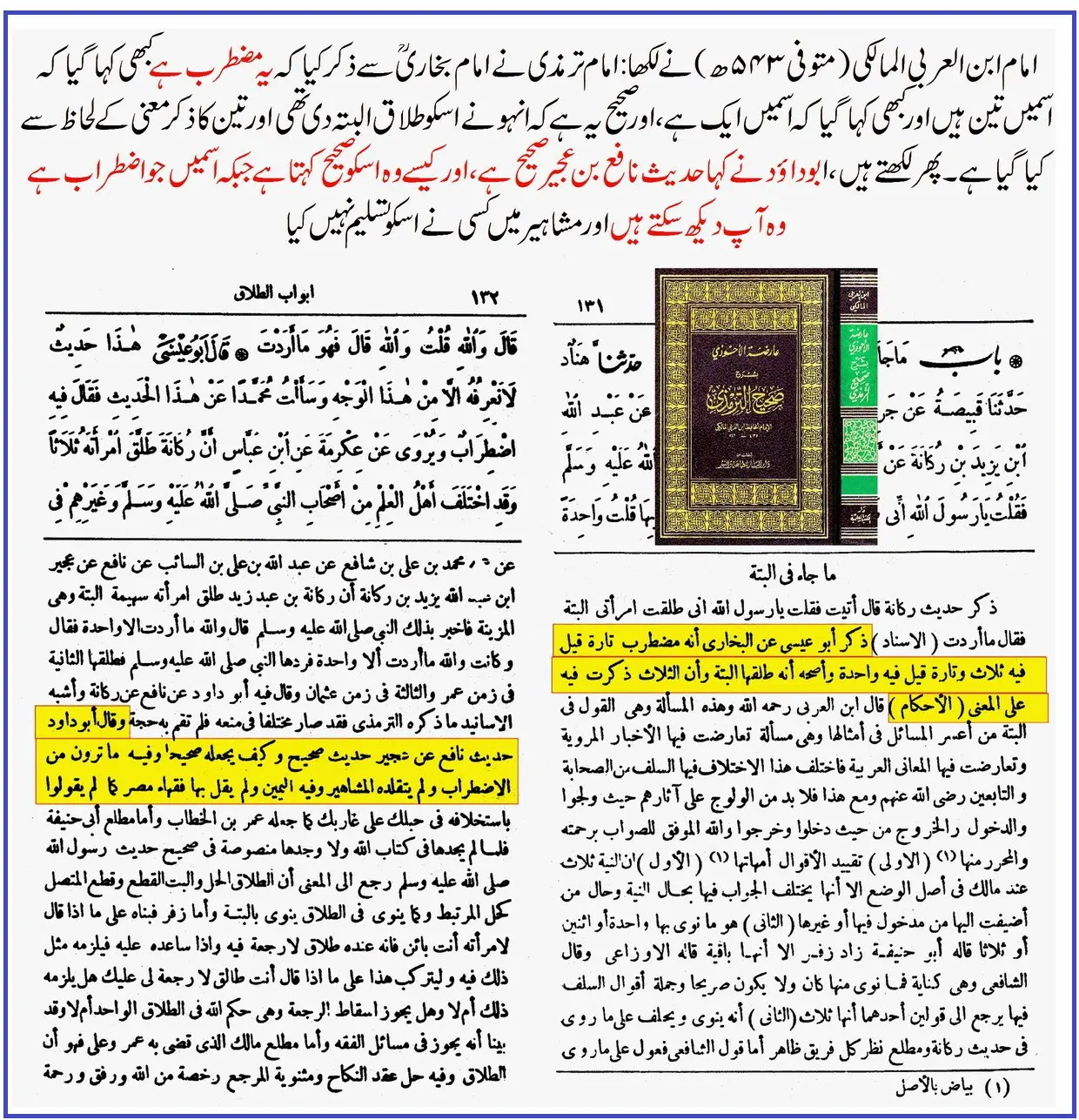
② Imam Ibn al-Arabi al-Maliki (d. 543 AH)
Arabic text: «قد ذكر أبو عيسى عن البخاري أنه مضطرب، تارة قيل فيه: ثلاثًا، وتارة قيل فيه: واحدة. وأصحّه أنه طلّقها البتّة. وقال أبو داود: حديث نافع بن عجير حديث صحيح. وكيف يجعله صحيحًا، وفيه ما ترون من الاضطراب؟!»
Translation: Imam Tirmidhi narrated from Imam Bukhari that this hadith is contradictory; sometimes it is said that the divorce was three, and sometimes it is said that it was one. And the more correct view is that it was Talaq al-Batta. Abu Dawood said: The hadith of Nafi’ ibn ‘Ujair is authentic, but how do they consider it authentic when you see that there is contradiction in it?!
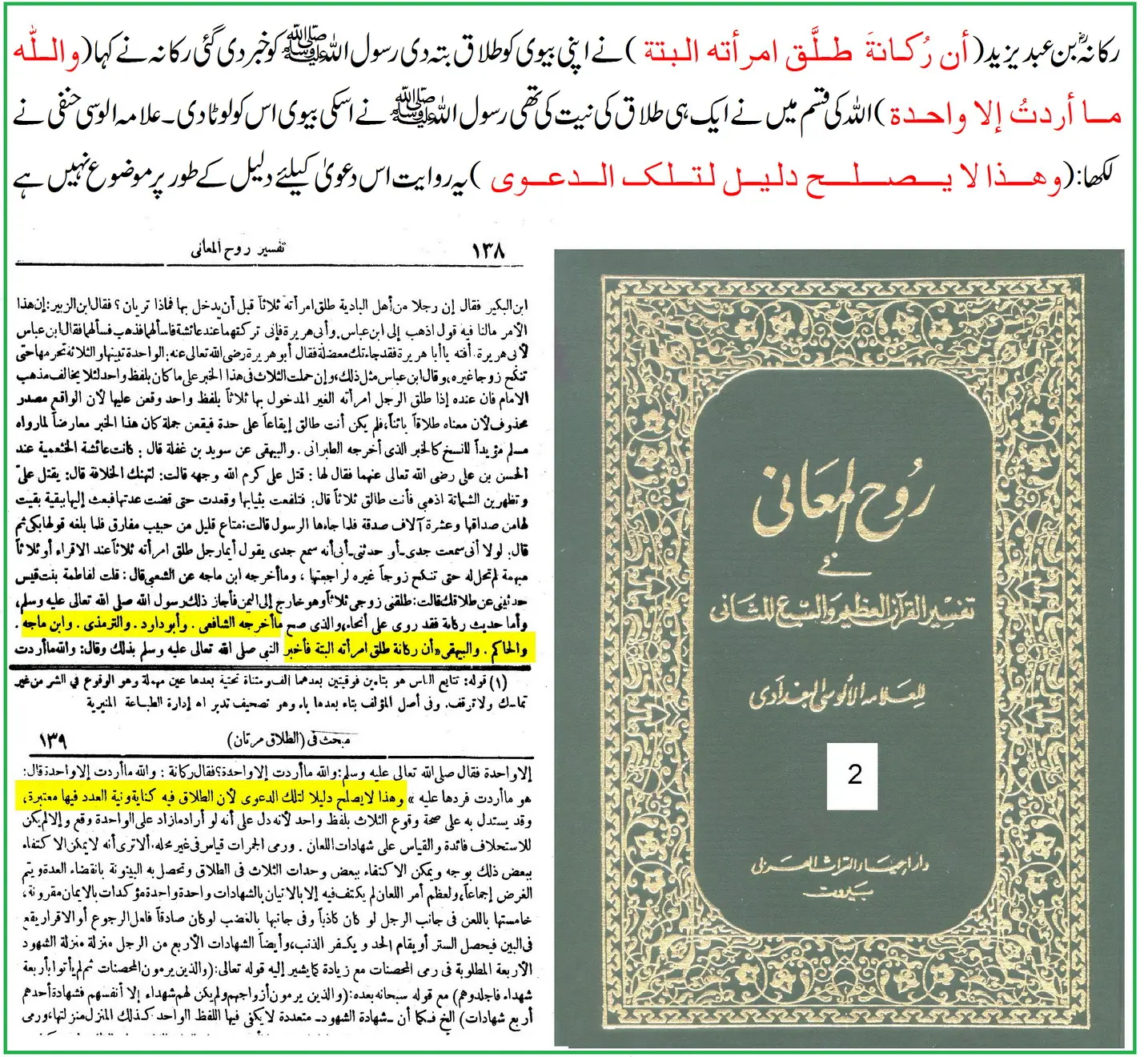
③ Al-Alusi al-Baghdadi Hanafi (d. 1270 AH)
Arabic text: «أخرجه الشافعي وأبو داود والترمذي وابن ماجة والحاكم والبيهقي: أن ركانة طلّق امرأته البتة … وهذا لا يصلح دليلاً لتلك الدعوى.»
Translation: This narration has been mentioned by Shafi’i, Abu Dawood, Tirmidhi, Ibn Majah, Hakim, and Bayhaqi that Rukana divorced his wife by talaq al-batta… but this narration is not valid as evidence for this claim.
④ Imam Bukhari (d. 256 AH)
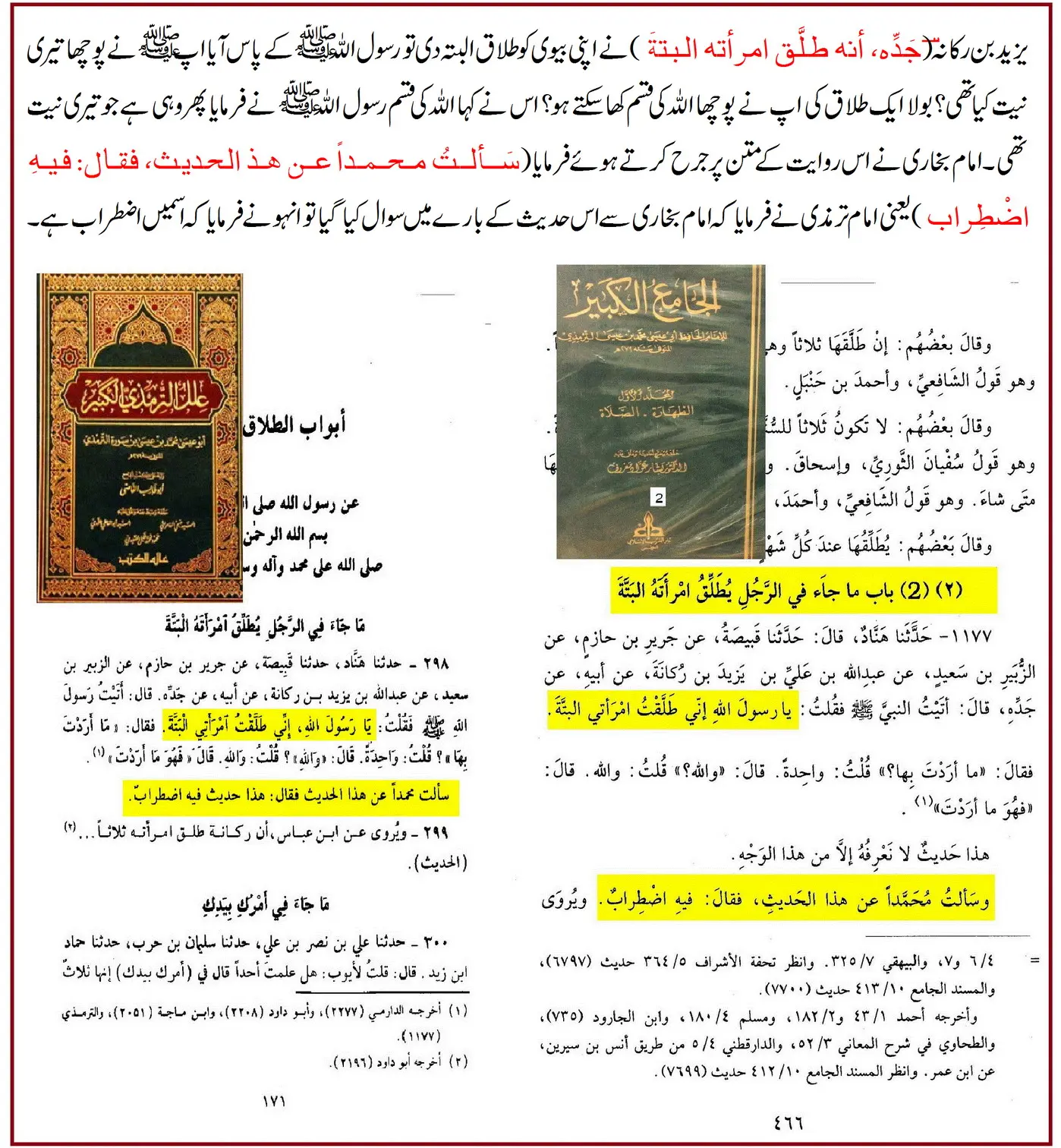
Arabic text (quoted in Imam Tirmidhi’s Al-Ilal): «سألتُ محمدًا (يعني البخاري) عن هذا الحديث، فقال: فيه اضطراب.»
Translation: I asked Imam Bukhari about this hadith, and he said: “There is confusion in it.”
⑤ Imam Ahmad ibn Hanbal (d. 241 AH)
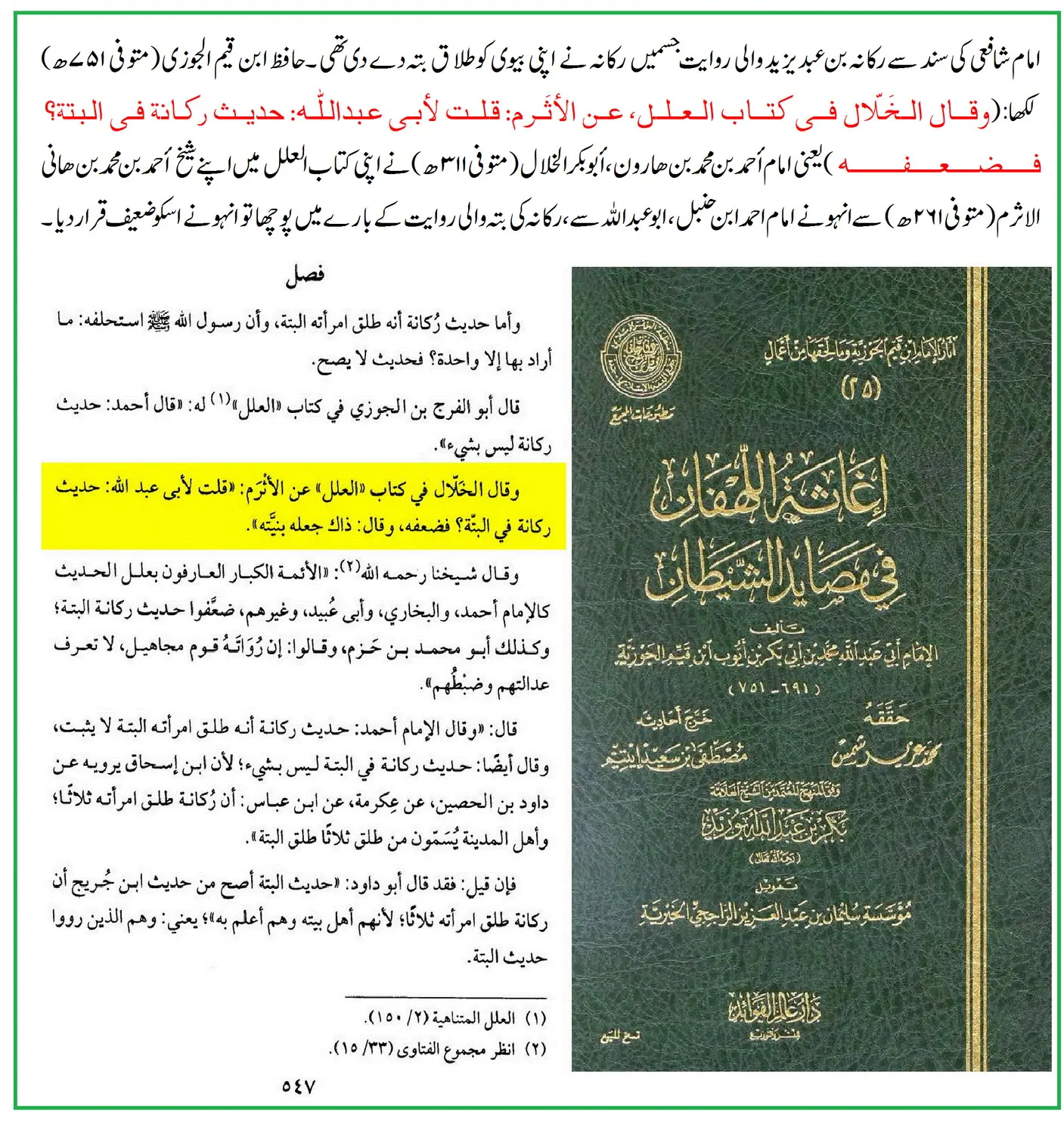
Arabic text: «قلتُ لأبي عبد الله (يعني أحمد) حديث ركانة في البتّة؟ فضعّفه، وقال: ذاك جعله بنيته.»
Translation: I asked Imam Ahmad ibn Hanbal about the hadith of Rukana’s talaq al-batta, and he declared it weak, saying: “That, Rukana made it (so) by his own intention.”
⑥ Imam Abu Bakr al-Nisaburi (d. 319 AH)
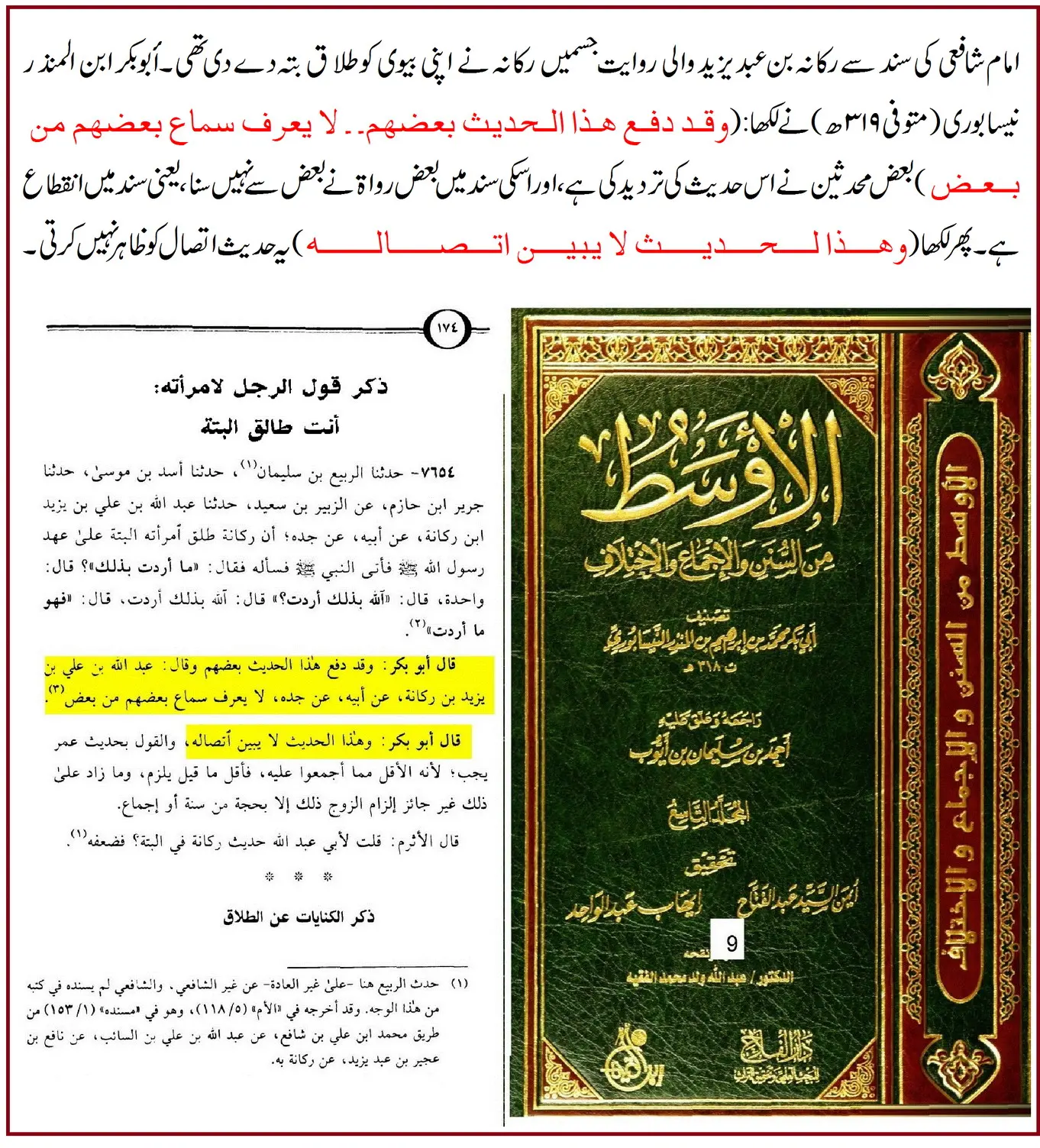
Arabic text: «وقد دفع هذا الحديث بعضهم، وقال: عبد الله بن علي بن يزيد بن ركانة عن أبيه عن جده لا يعرف سماع بعضهم من بعض … وهذا الحديث لا يبين اتصاله.»
Translation: Some scholars have rejected this hadith and said: Abdullah ibn Ali ibn Yazid ibn Rukana from his father from his grandfather — some of them are not known to have heard from others… and this hadith does not show its continuity.
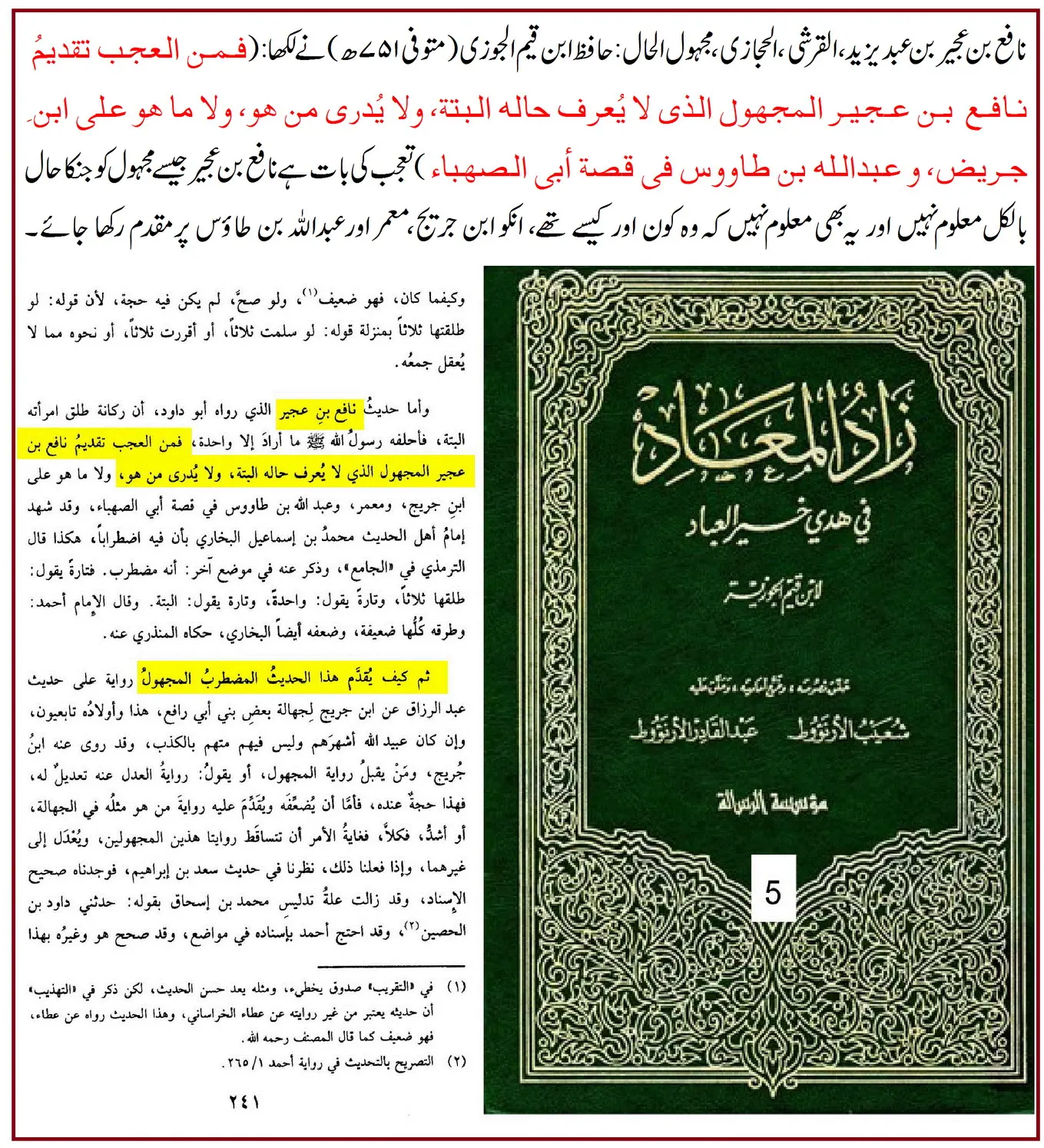
⑦ Hafiz Ibn Qayyim al-Jawziyyah (d. 751 AH)
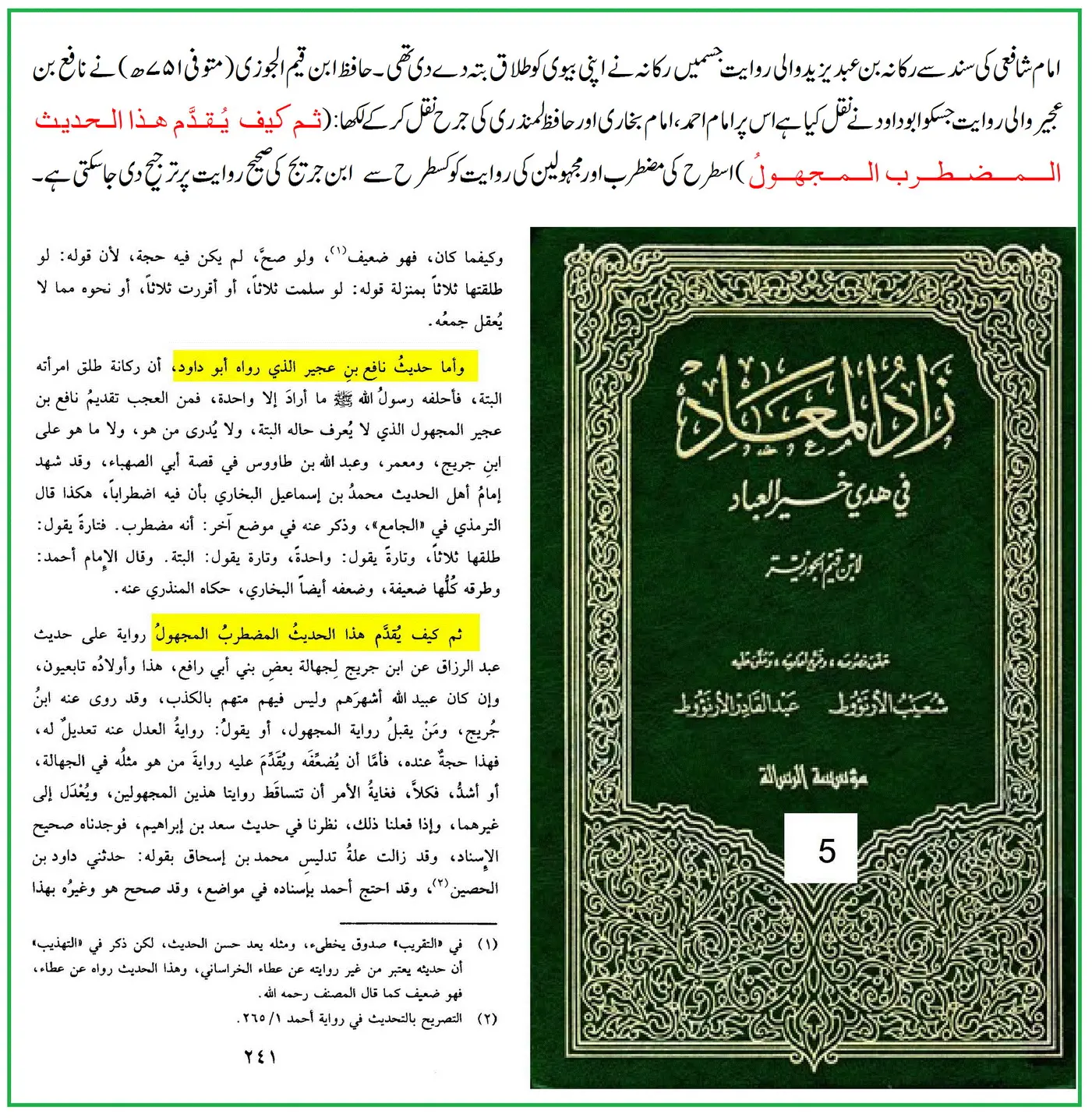
Arabic text: «وأما حديث نافع بن عجير الذي رواه أبو داود: أن ركانة طلّق امرأته البتّة … فكيف يقدَّم هذا الحديث المضطرب المجهول روايةً على الأحاديث الصحيحة؟»
Translation: As far as the narration of Nafi’ ibn ‘Ujair is concerned, which Abu Dawood mentioned that Rukana divorced his wife Talaq al-Batta… then how can such a confused and unknown narration be preferred over authentic hadiths?
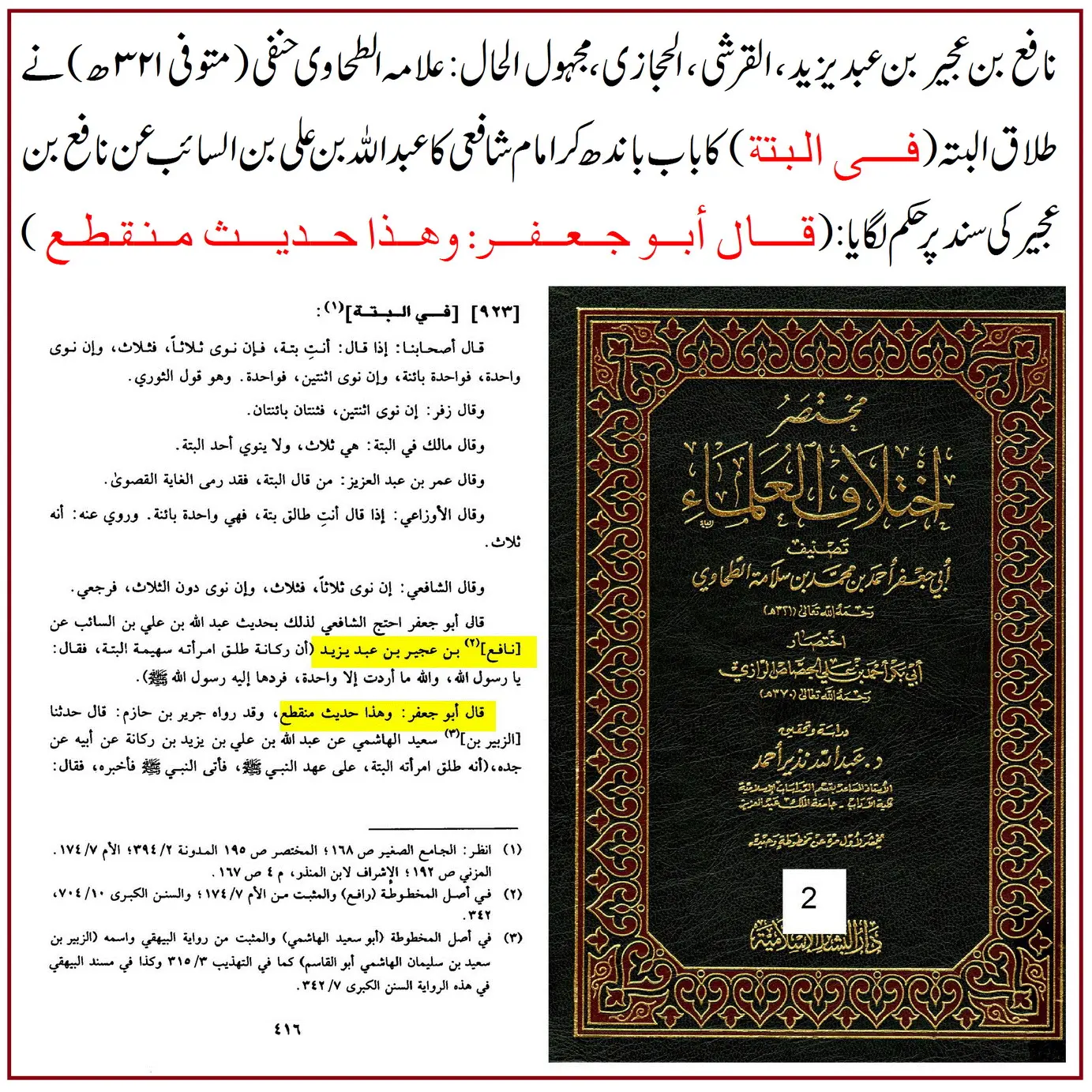
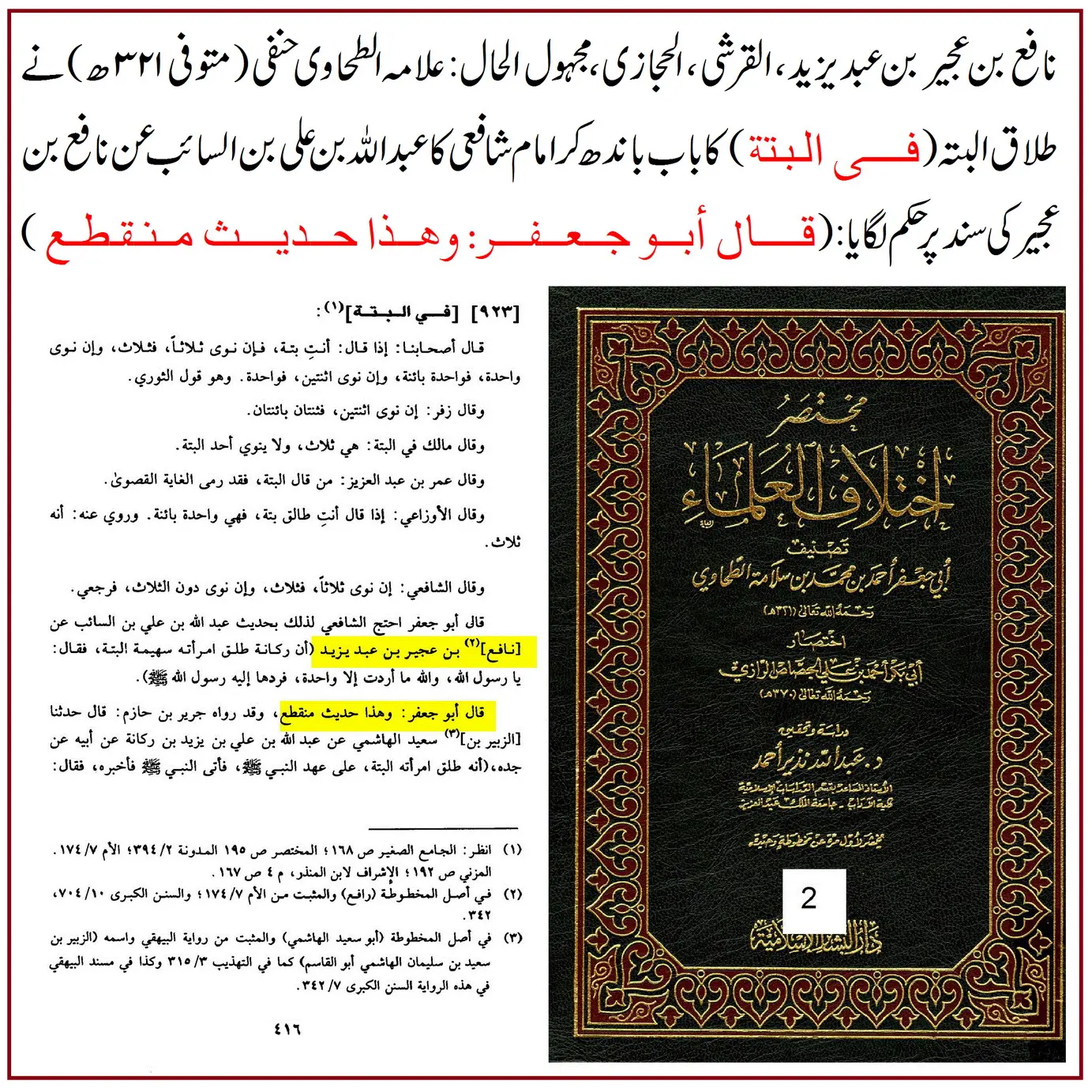
⑧ Imam Abu Ja’far al-Tahawi (d. 321 AH)
Arabic text: «احتج الشافعي لذلك بحديث عبد الله بن علي بن السائب عن نافع بن عجير … أن ركانة طلّق امرأته سهيمة البتّة … فقال: والله ما أردت إلا واحدة … فردّها إليه رسول الله ﷺ. قال أبو جعفر: وهذا حديث منقطع.»
Translation: Al-Shafi’i used the hadith from Abdullah ibn Ali ibn Saib from Nafi’ ibn ‘Ujair… in which Rukana divorced his wife Suhaymah Talaq al-Batta… then the Messenger of Allah ﷺ asked and returned her back. Abu Ja’far al-Tahawi said: This hadith is disconnected (munqati’).
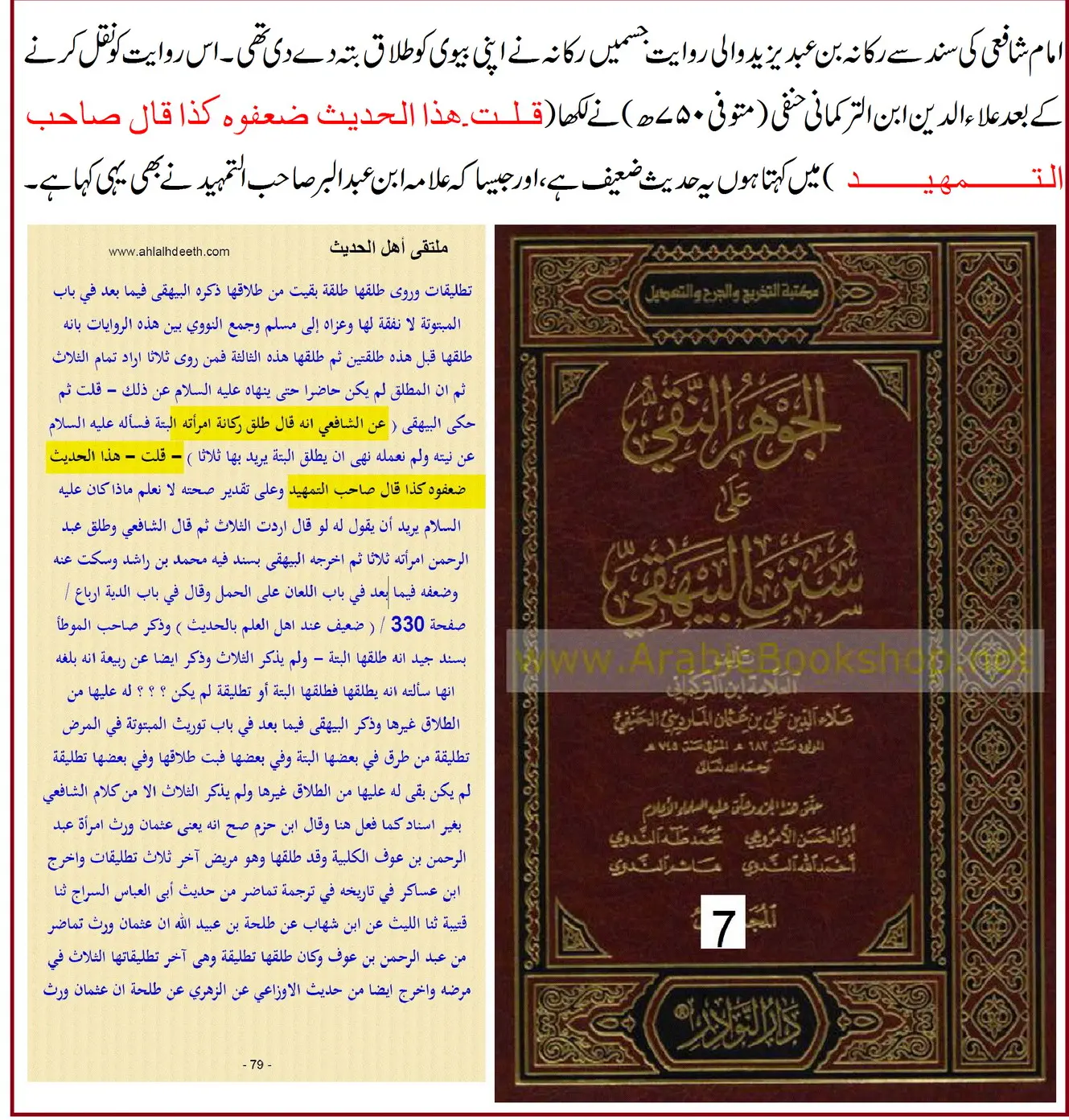
⑨ Allama Ibn al-Turkumani al-Hanafi (d. 750 AH)
Arabic text: «قلت: هذا الحديث ضعفوه، كذا قال صاحب التمهيد.»
Translation: I say: This hadith has been declared weak by the muhaddithun, as Sahib al-Tamhid (Ibn Abd al-Barr) also stated.
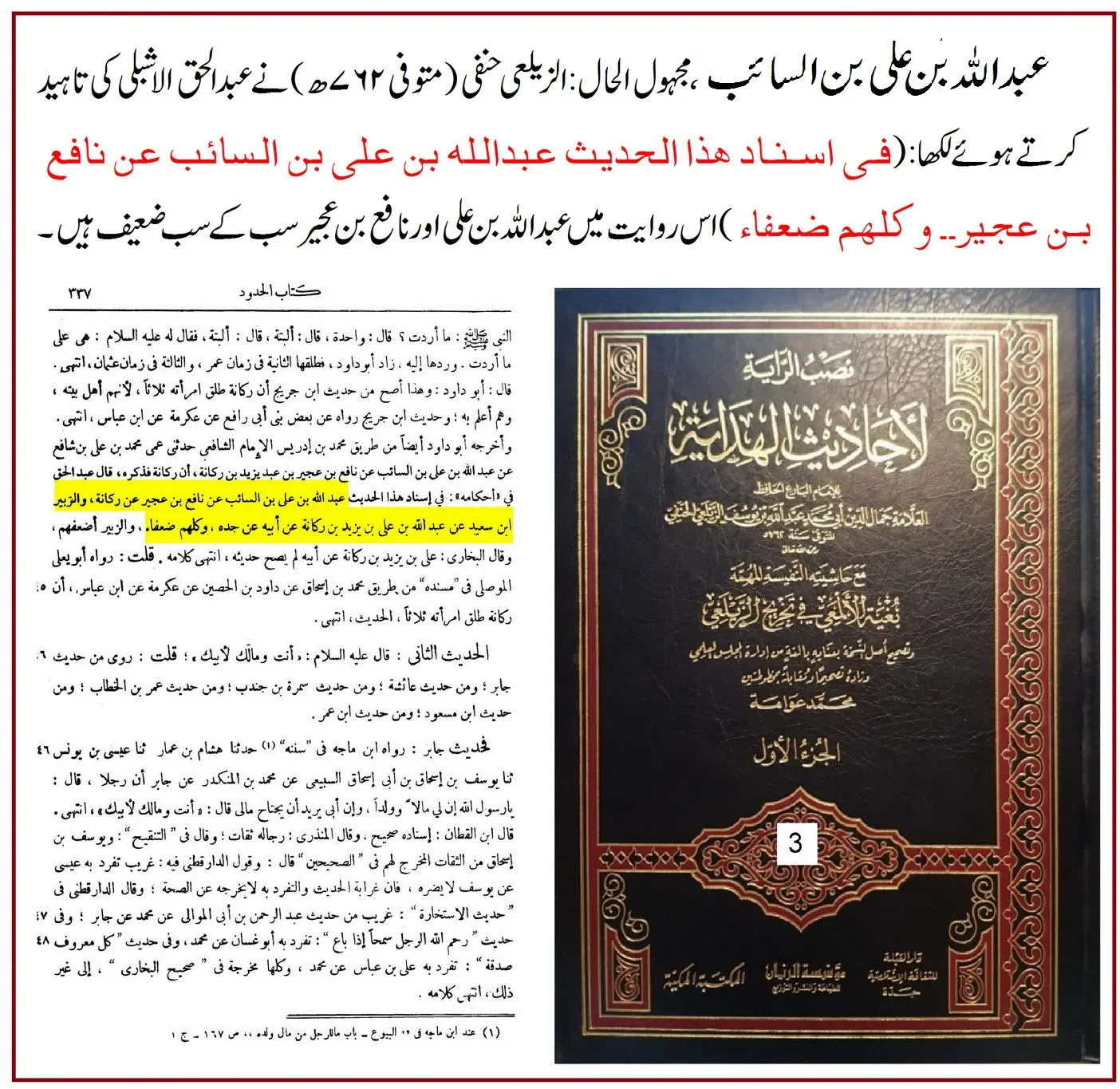
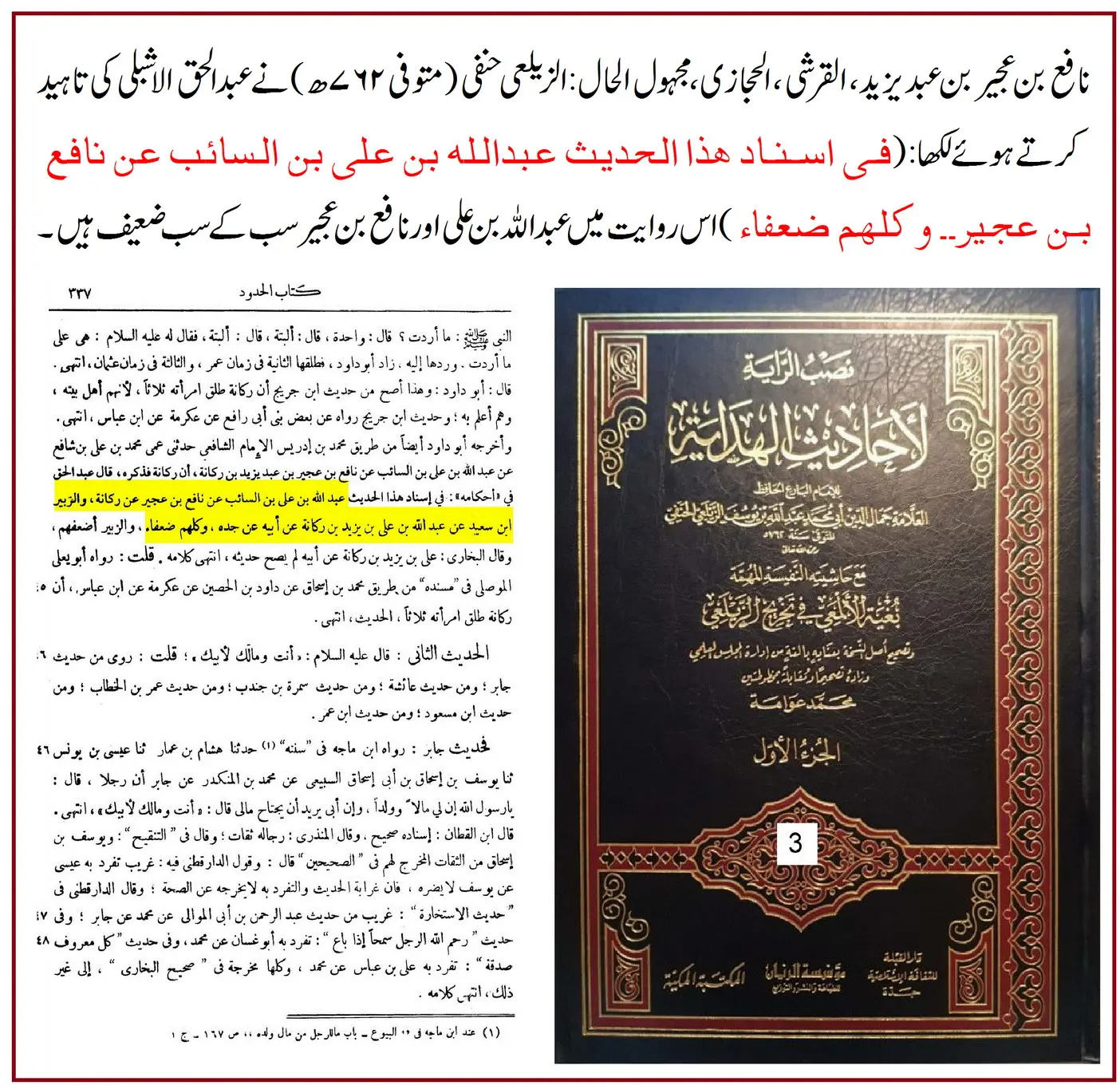
⑩ Allama Zaili al-Hanafi (d. 726 AH)
Arabic text: «في إسناد هذا الحديث عبد الله بن علي بن السائب عن نافع بن عجير عن ركانة، والزبير بن سعيد عن عبد الله بن علي بن يزيد بن ركانة عن أبيه عن جدّه، وكلّهم ضعفاء، والزبير أضعفهم.»
Translation: In the chain of this hadith, there is Abdullah bin Ali bin Saib from Nafi bin Ujair from Rukana, and Zubair bin Saeed from Abdullah bin Ali bin Yazid bin Rukana from his father from his grandfather, and all of them are weak; among them, Zubair is the weakest.
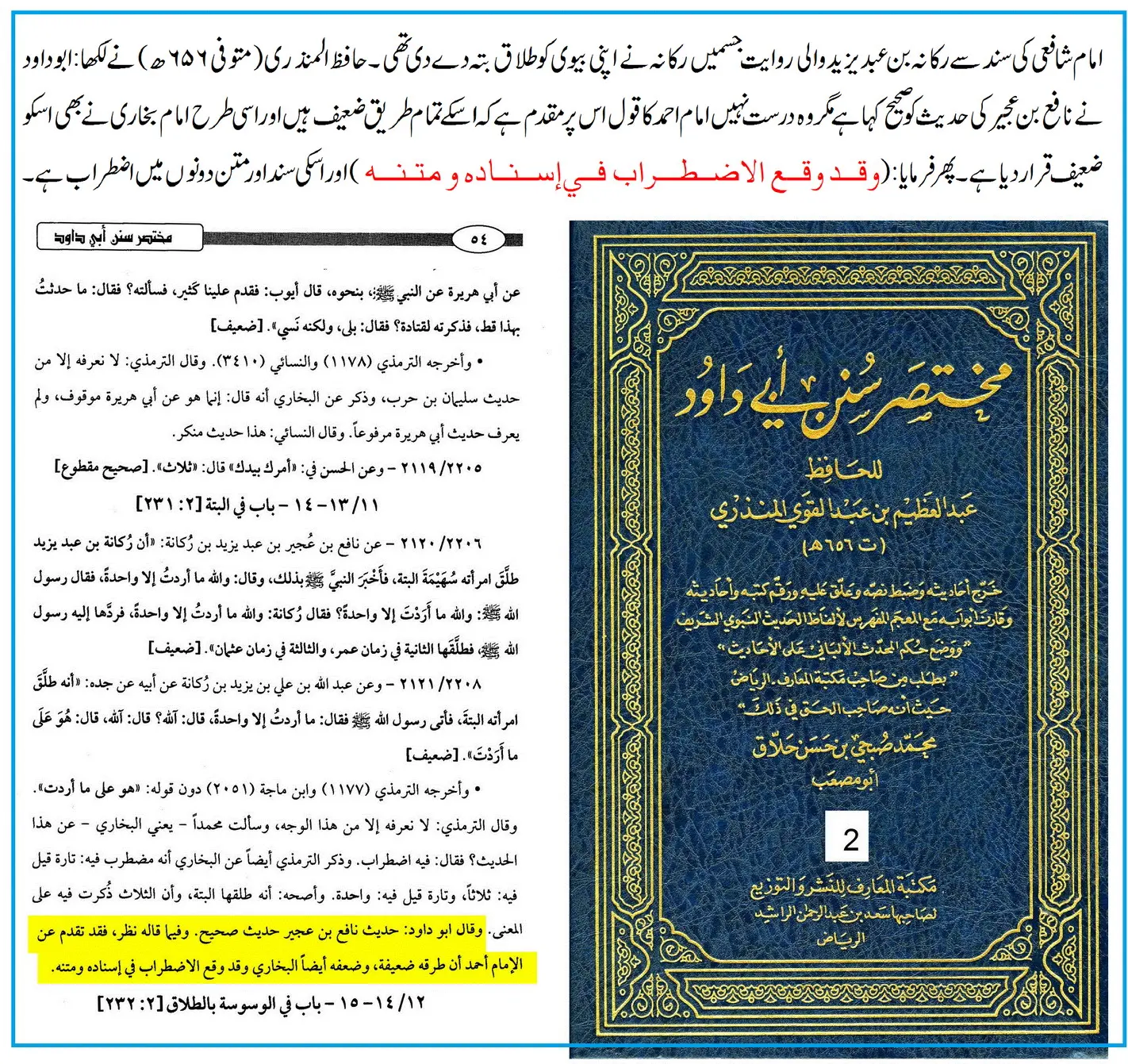
⑪ Hafiz Abdul Azim Al-Mundhiri (d. 656 AH)
Arabic text: «وقال أبو داود: حديث نافع بن عجير حديث صحيح. وفيما قاله نظر، فقد تقدّم عن الإمام أحمد أن طرقه ضعيفة، وضعّفه أيضًا البخاري، وقد وقع الاضطراب في إسناده ومتنه.»
Translation: Abu Dawood said: The hadith of Nafi bin Ujair is authentic. However, his statement is questionable, because it has already been mentioned from Imam Ahmad that all its chains are weak, and Bukhari also declared it weak, and there is confusion in both its chains and text.
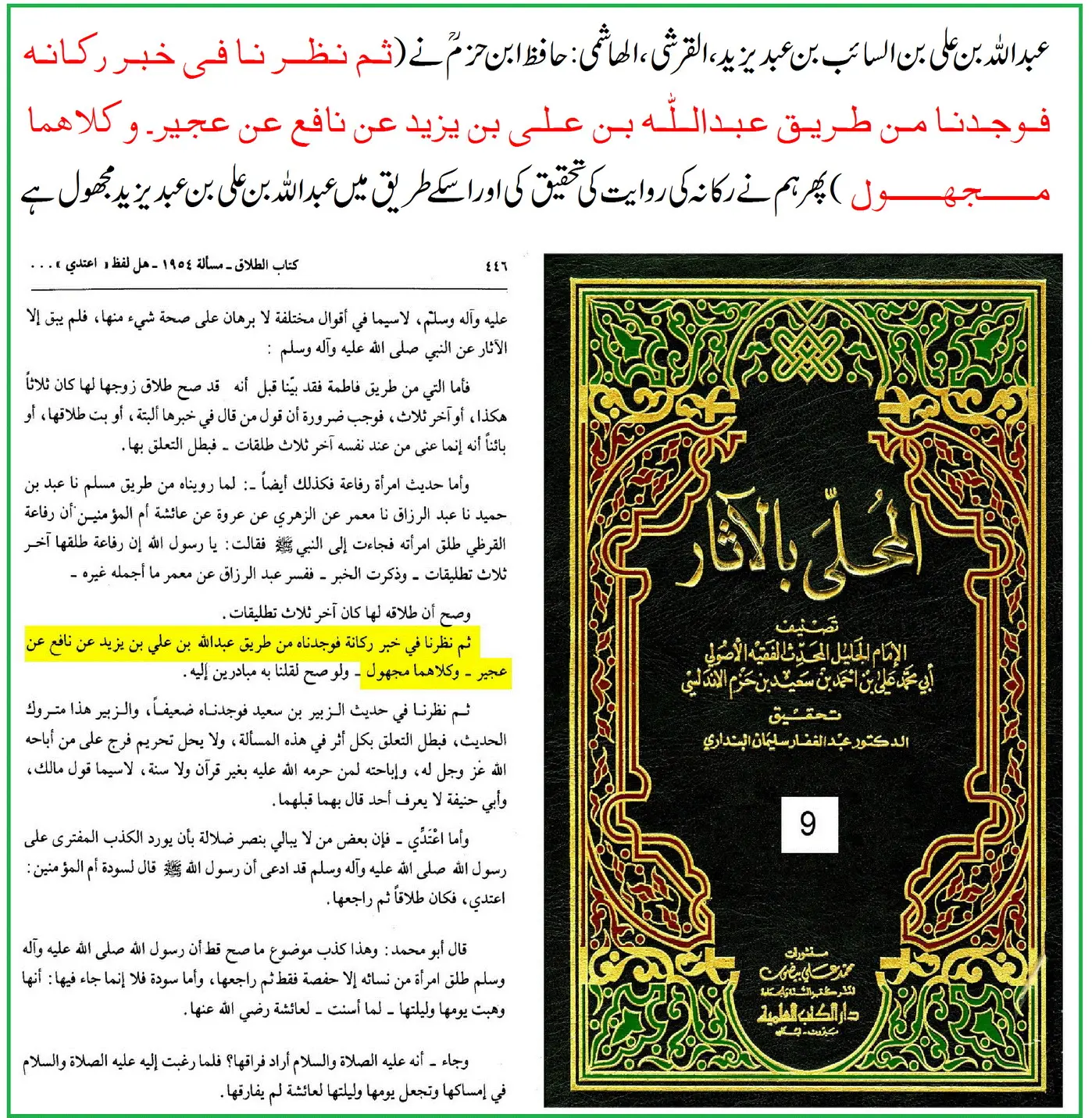
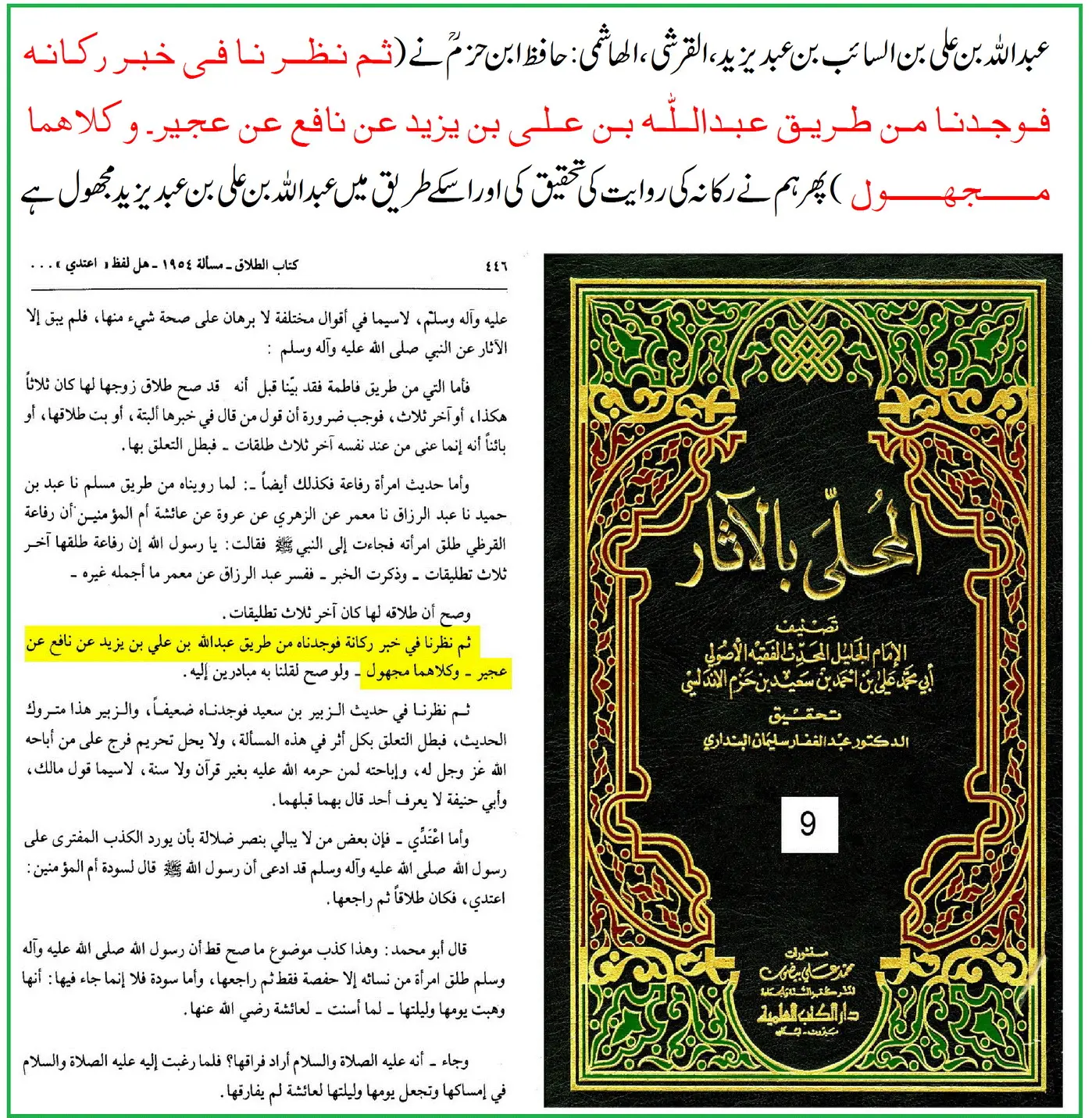
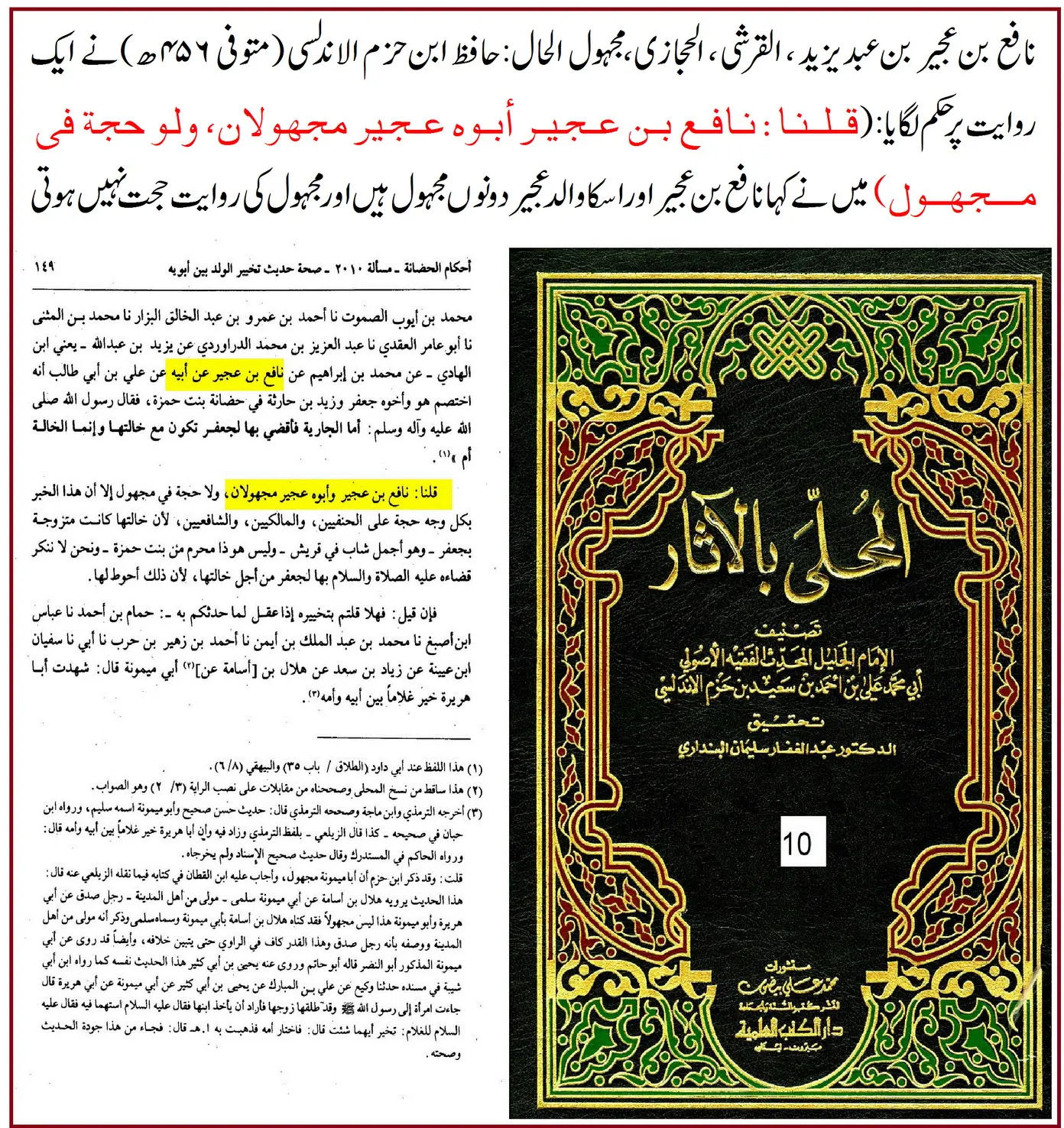
⑫ Hafiz Ibn Hazm Al-Andalusi (d. 456 AH)
Arabic text: «ثم نظرنا في خبر ركانة فوجدناه من طريق عبد الله بن علي بن يزيد عن نافع عن عجير، وكلاهما مجهول، ولو صح لقلنا به مبادرين إليه.»
Translation: We examined the narration of Rukana and found it in this way: Abdullah bin Ali bin Yazid from Nafi from Ujair, and the condition of both (Nafi and Ujair) is that they are unknown. And if this narration were proven authentic, we would have acted upon it first.
Discussion on the Unknown Narrators in Imam Shafi’i’s Chain
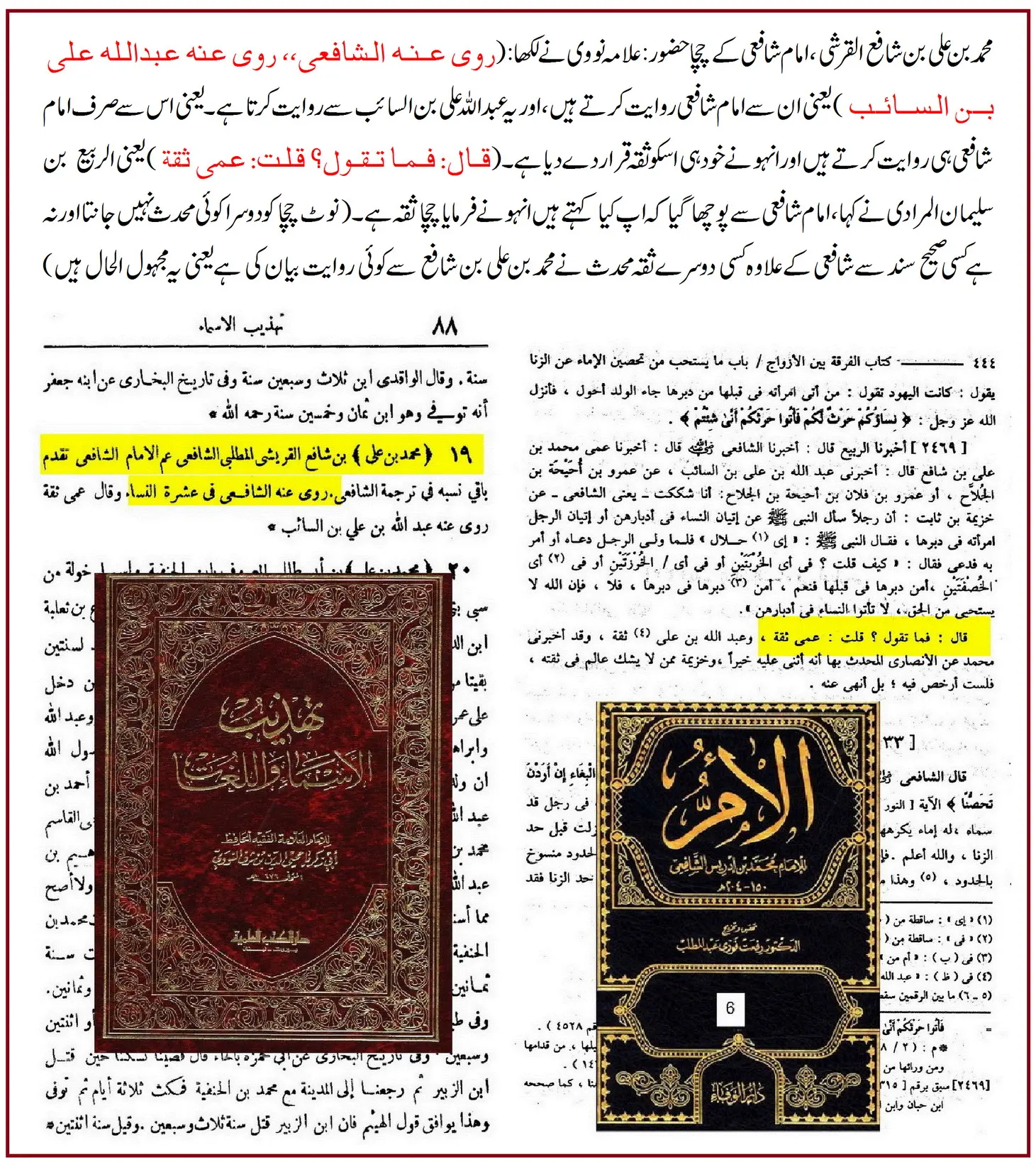
🔴 First Unknown: Uncle of al-Shafi’i – Muhammad ibn Ali ibn Shafi’ al-Qurashi al-Muttalibi
1) Fundamental Status (Being Unknown):
- Arabic: «الرتبة: مجهول.»
- Translation: Grade: Unknown.
- Note: The narrator’s conditions of integrity and precision, birth/death, and other students are not established; practically, only Imam Shafi’i narrates from him.
2) Imam Shafi’i’s Own Authentication (Unique Statement):
- Arabic: «قلتُ: عمي ثقة.»
- Translation: (Shafi’i says) “My uncle is trustworthy.”
-
Reference: Reference: Al-Um by Shafi’i; also: Ibn al-Qayyim, Zad al-Ma’ad (Narration of Al-Rabi’ ibn Sulayman: “It was said to Shafi’i… he said: My uncle is trustworthy”).
Note: Shafi’i’s unique authentication is not sufficient when practically others (other muhaddithin) do not narrate from him—fundamentally, this narrator will remain unknown in status.
3) Imam Nawawi’s Clarification (Uniqueness of Studentship):
- Arabic: «… عمُّ الإمام الشافعي… روى عنه الشافعي في عشرة النساء…»
- Translation: Imam Shafi’i’s uncle… only Shafi’i narrated from him (in ‘Ishrat al-Nisa’).
-
Reference: Reference: Tahdhib al-Asma’ wa al-Lughat by Nawawi.
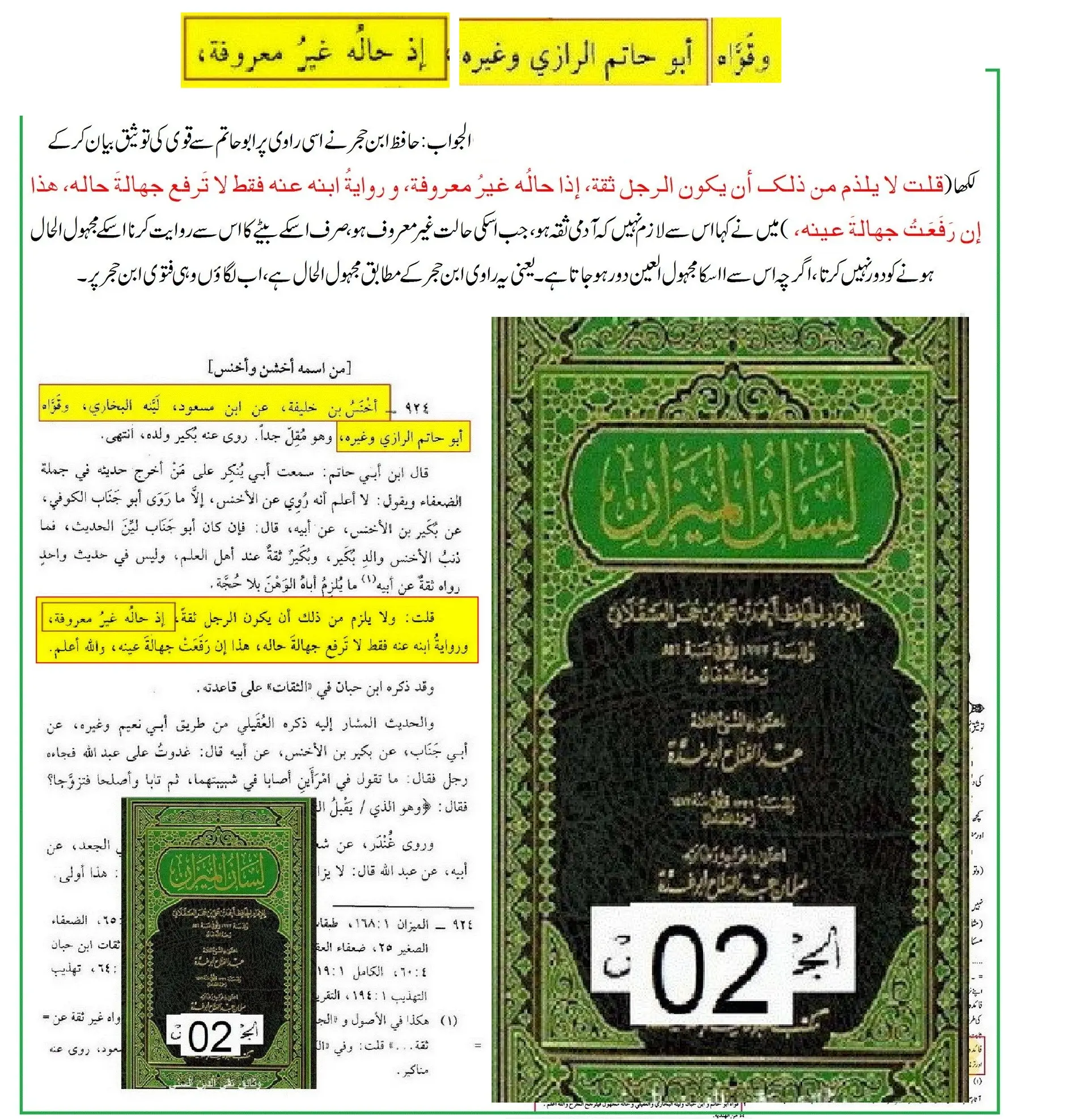
4) Rule of Unknown Status (Ibn Hajar’s Fundamental Statement):
- Arabic: «… ولا يلزم من ذلك أن يكون الرجل ثقة إذ حاله غير معروفة…»
- Translation: This (individual narration) does not necessarily imply that the narrator is trustworthy; whereas his condition is unknown…
-
Reference: Reference: Lisan al-Mizan by Ibn Hajar (as a general rule in the chapter on Akhnas ibn Khalifah).
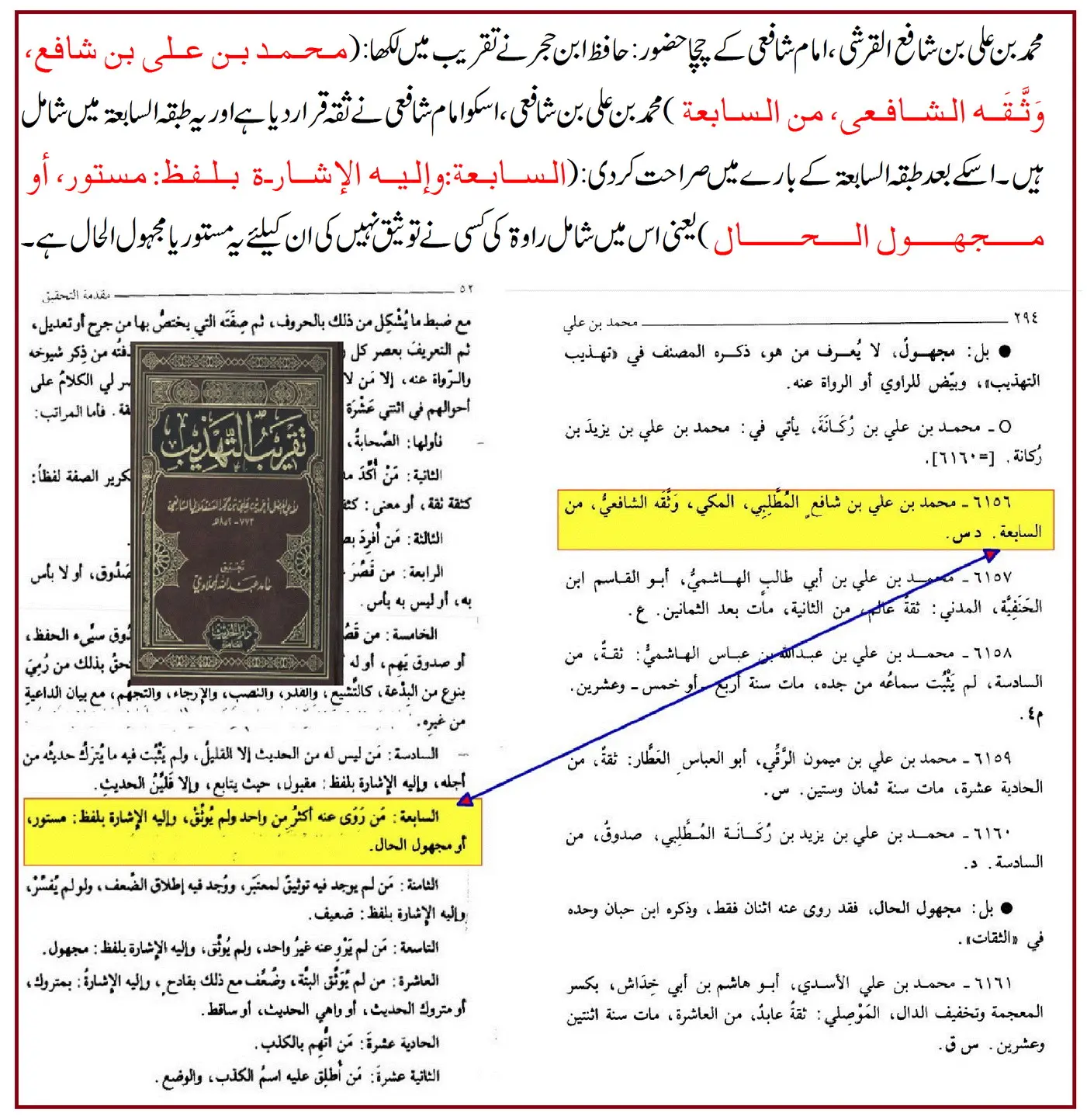
5) Ibn Hajar’s Classification (Mastoor/Majhool al-Haal):
- Arabic: «6156 – محمد بن علي بن شافع المطَّلبي، المكي، وثّقه الشافعي، من السابعة… والسابعة: مستور/مجهول الحال.»
- Translation: (In Taqreeb) Muhammad ibn Ali ibn Shafi’ Makki; Shafi’i called him trustworthy; however, he was counted among the seventh category (Mastoor/Majhool al-Haal).
-
Reference: Reference: Taqreeb al-Tahdheeb by Ibn Hajar.
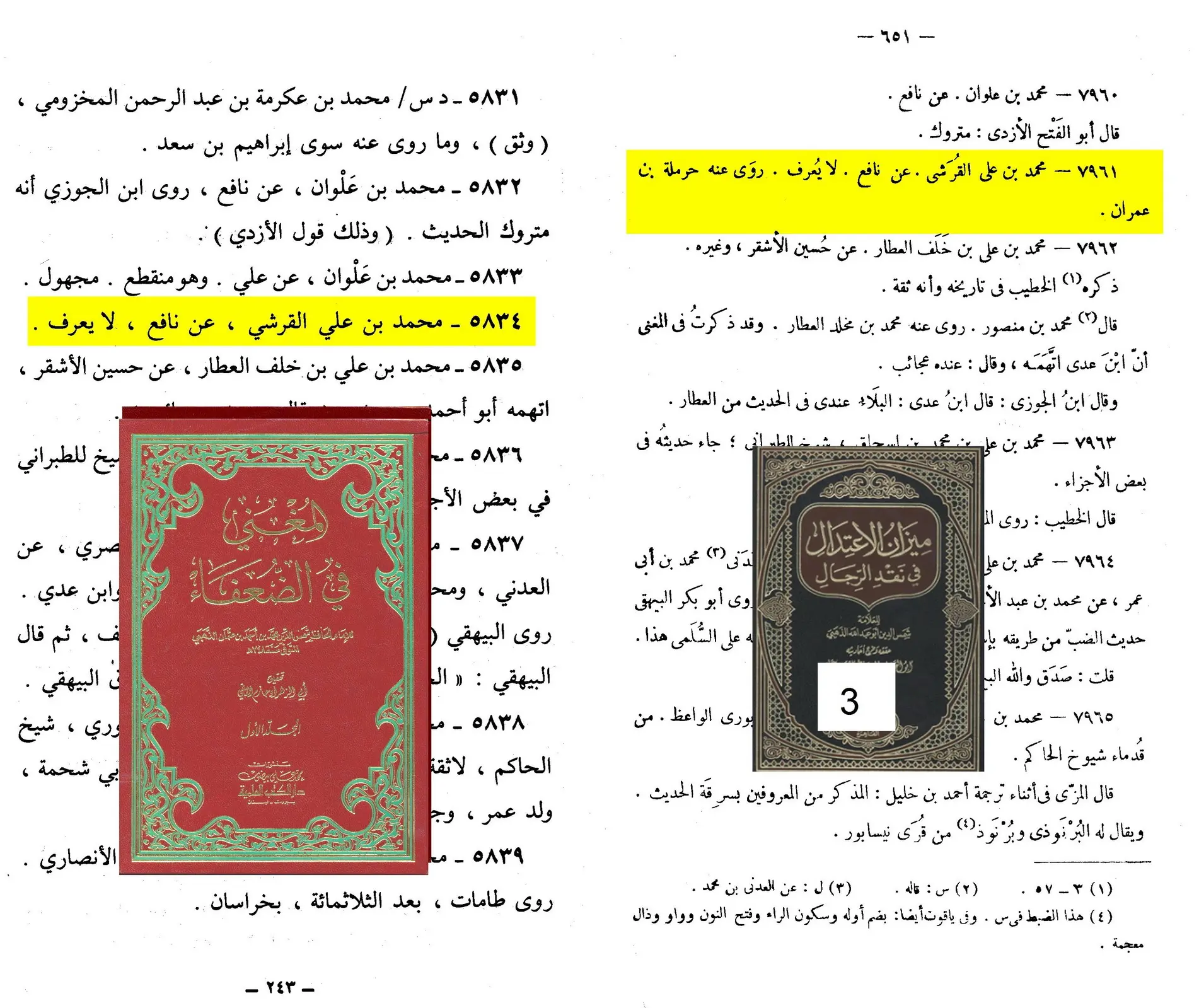
6) Al-Dhahabi’s Clarification (La Yu’raf):
- Arabic: «محمد بن علي القرشي عن نافع: لا يُعرف…»
- Translation: Muhammad ibn Ali al-Qurashi (narrator from Nafi’) is unknown.
-
Reference: Reference: Mizan al-I’tidal; Al-Mughni fi al-Du’afa by Al-Dhahabi.
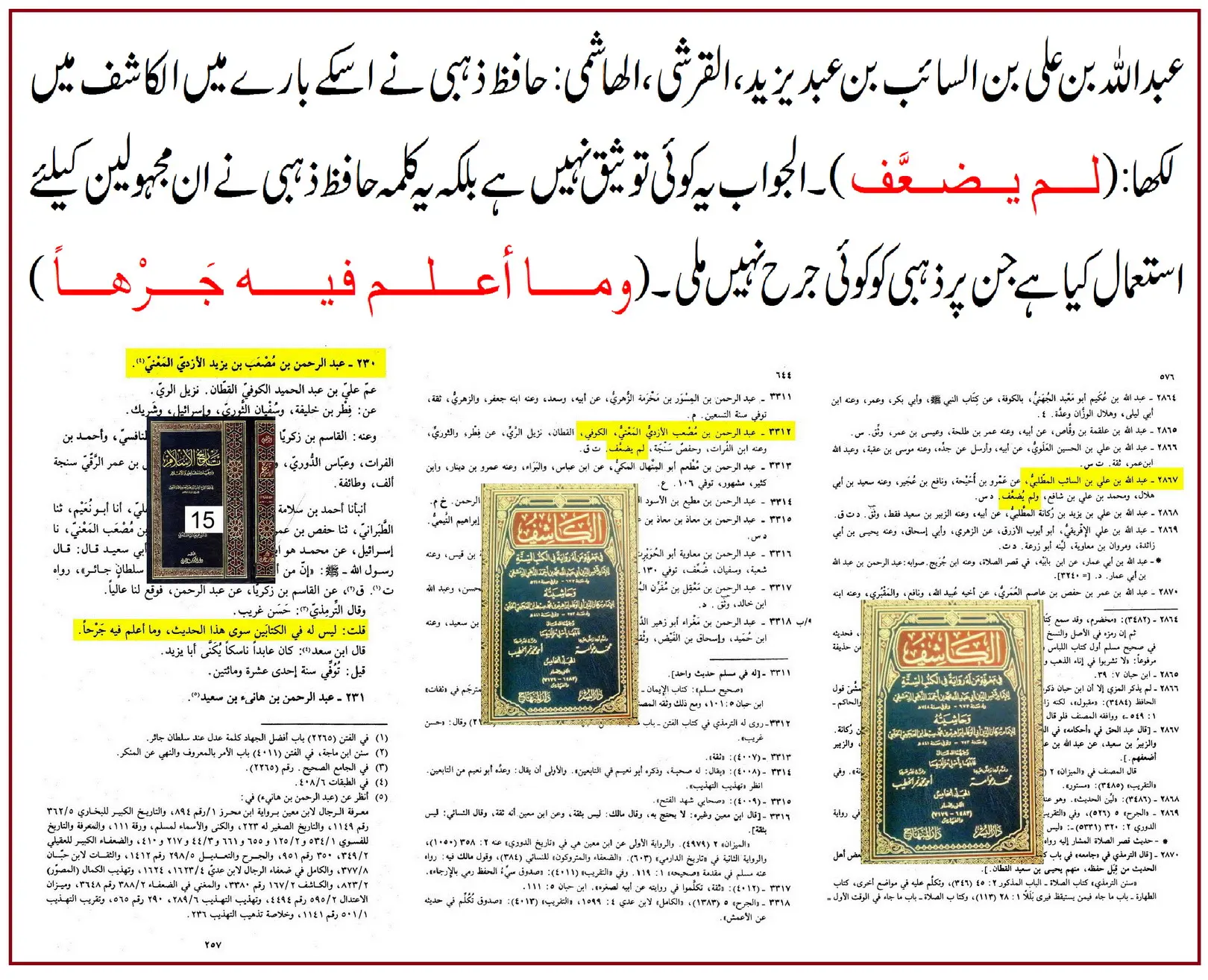
🔴 Second Majhool: Abdullah ibn Ali ibn al-Sa’ib al-Muttalibi
1) Abdul Haq al-Ashbili:
- Arabic: «… وكلّهم ضعيف.»
- Translation: All narrators in this chain are weak.
-
Reference: Reference: Al-Ahkam al-Wusta.
2) Ibn Hazm:
- Arabic: «… عبد الله بن علي بن يزيد عن نافع عن عجير – وكلاهما مجهول…»
- Translation: In this chain, Abdullah ibn Ali ibn Yazid from Nafi’ from Ujeer – both are unknown.
-
Reference: Reference: Al-Muhalla bil Athar.
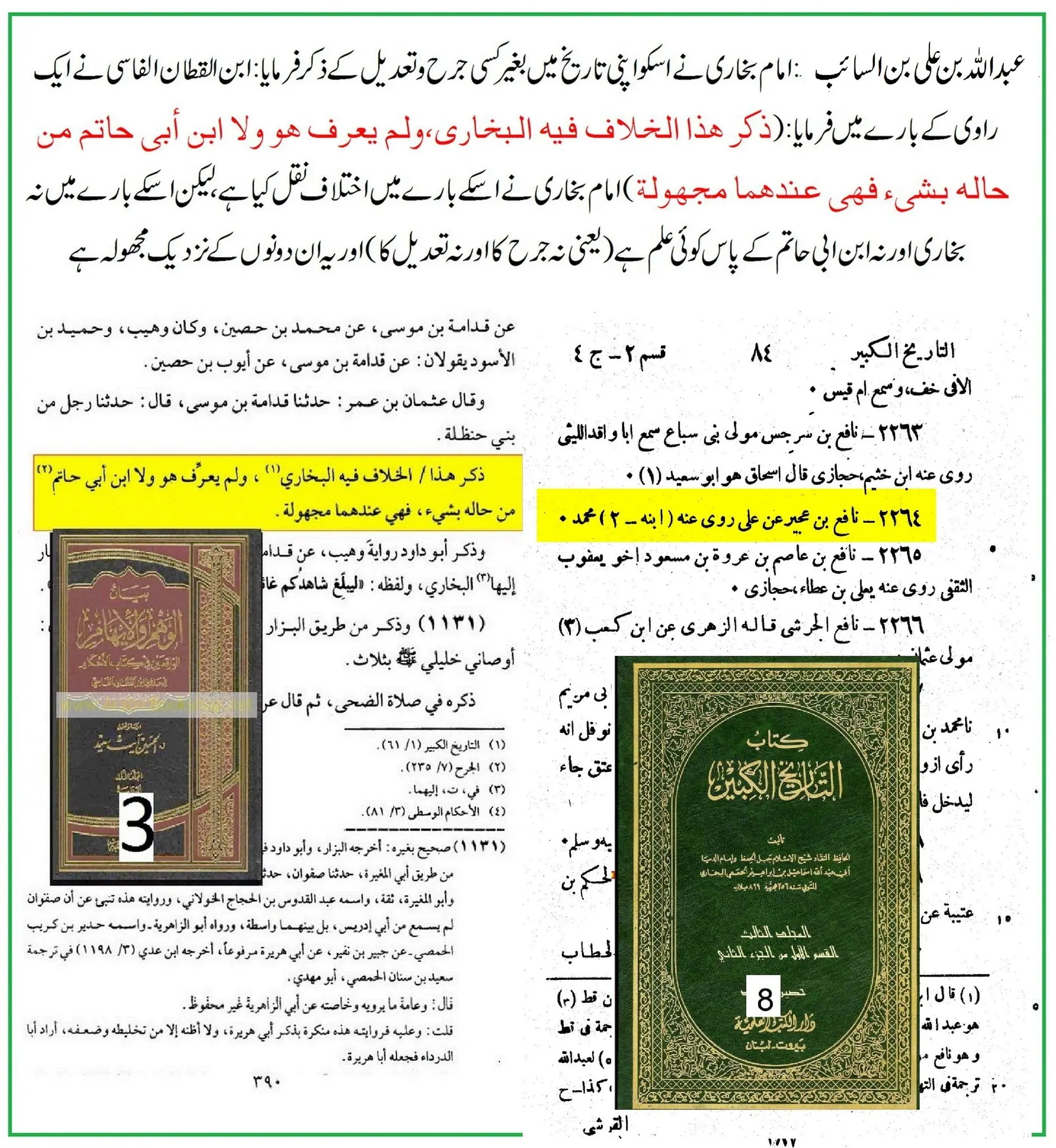
3) Imam Bukhari – Mention without Tadil/Jarh:
- Arabic: «عبد الله بن علي بن السائب… روى عنه عمر مولى غَفرة وسعيد بن أبي هلال.»
- Translation: Bukhari only mentioned the names and narrators—no authentication or criticism.
-
Reference: Reference: Al-Tarikh al-Kabir by Bukhari.
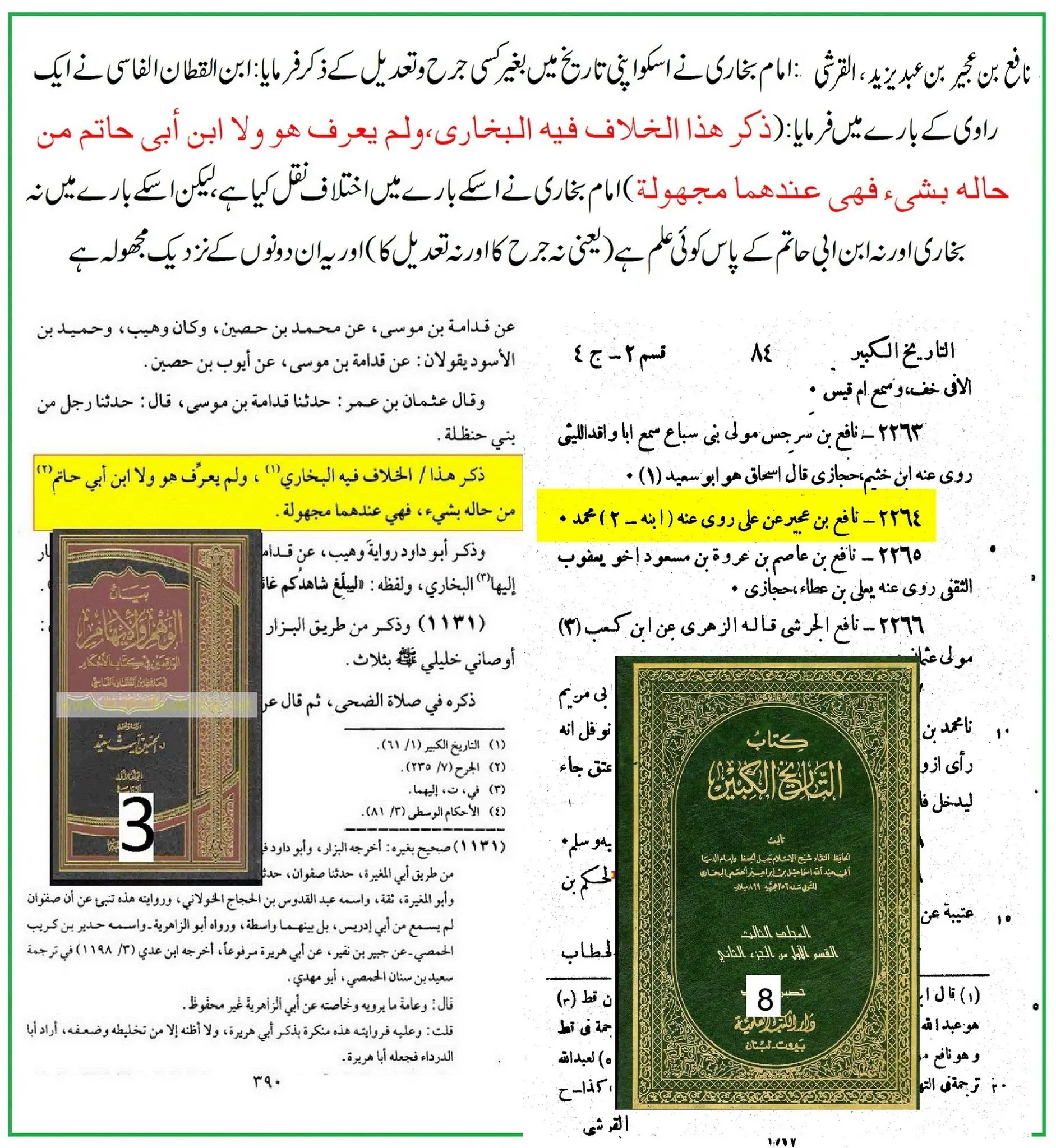
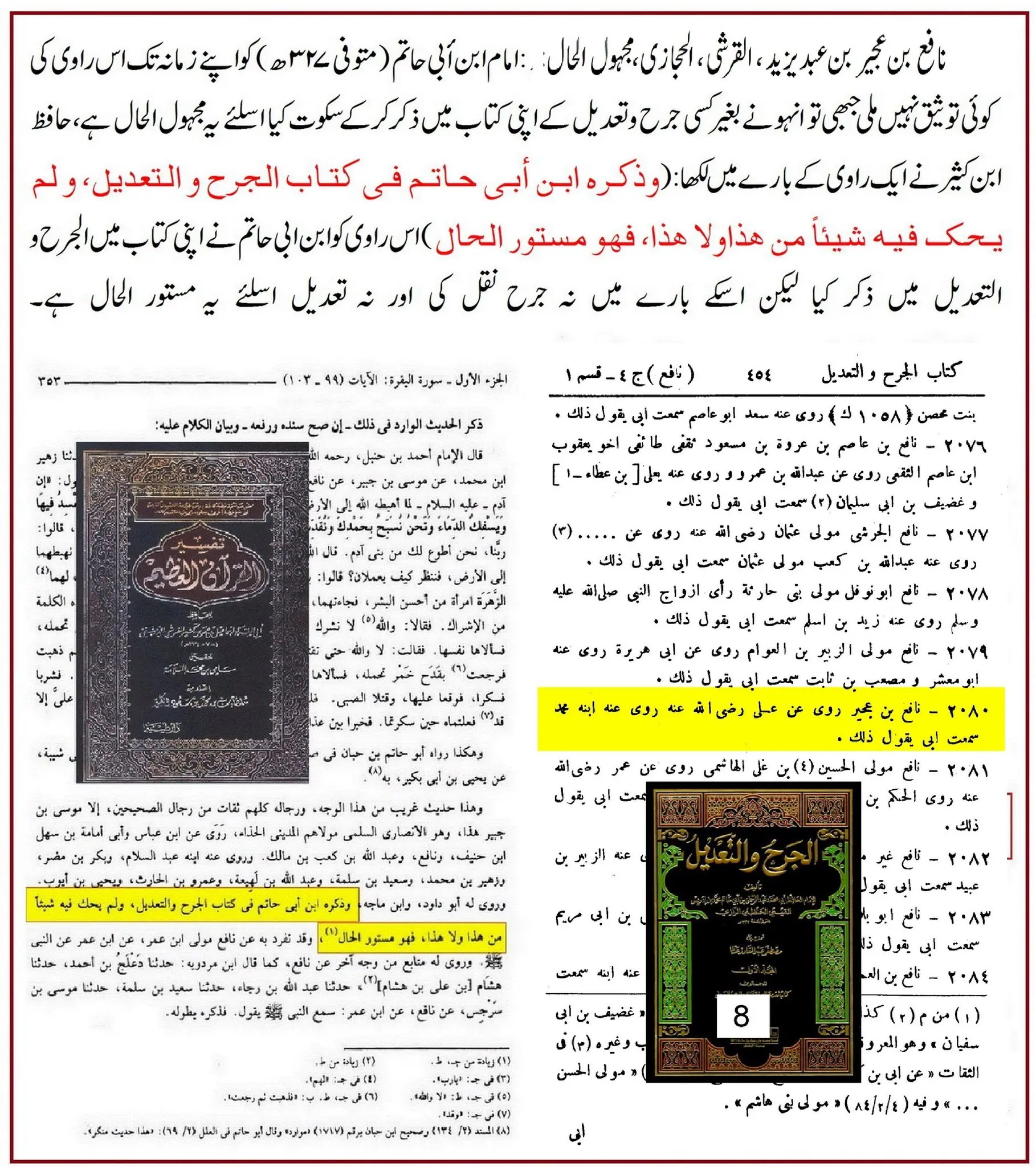
Ibn al-Qattan al-Fasi: Bukhari and Ibn Abi Hatim could not clarify the status; therefore, according to them, he remained unknown. (Bayan al-Wahm wal-Iham)
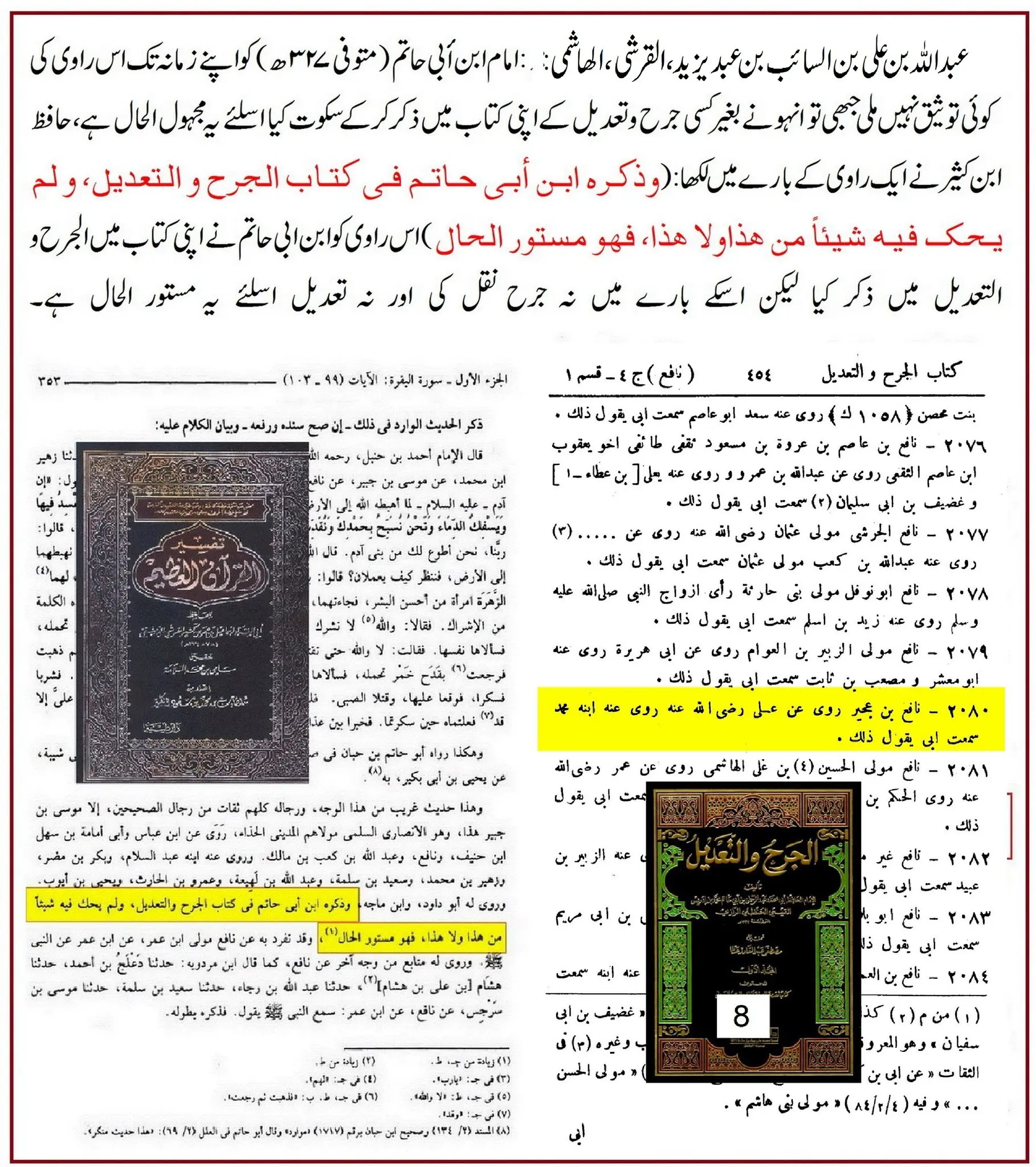
4) Ibn Abi Hatim – Silence (La Yadri Haaluh):
- Arabic: «… ذُكِرَ بلا جرحٍ ولا تعديل.»
- Translation: Mentioned without criticism or praise—i.e., concealed status.
-
Reference: Reference: Al-Jarh wa al-Ta’dil; as reinforcement Ibn Kathir: “Fahuwa Mastur al-Haal” (Tafsir Ibn Kathir).
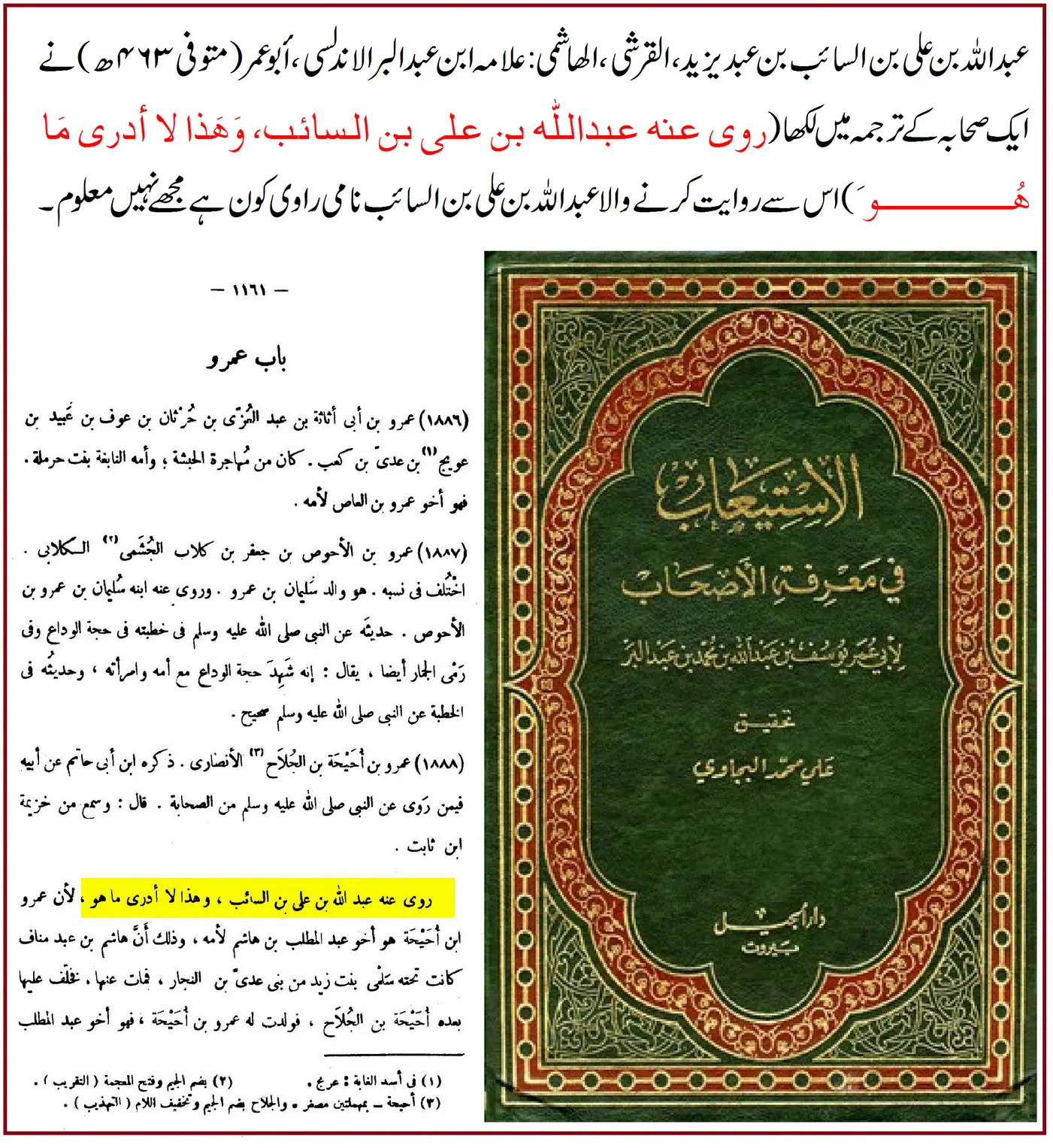
5) Ibn Abdul Barr:
- Arabic: «… وهذا لا أدري ما هو.»
- Translation: (This narrator) is unknown who he is.
-
Reference: Reference: Al-Isti’ab.
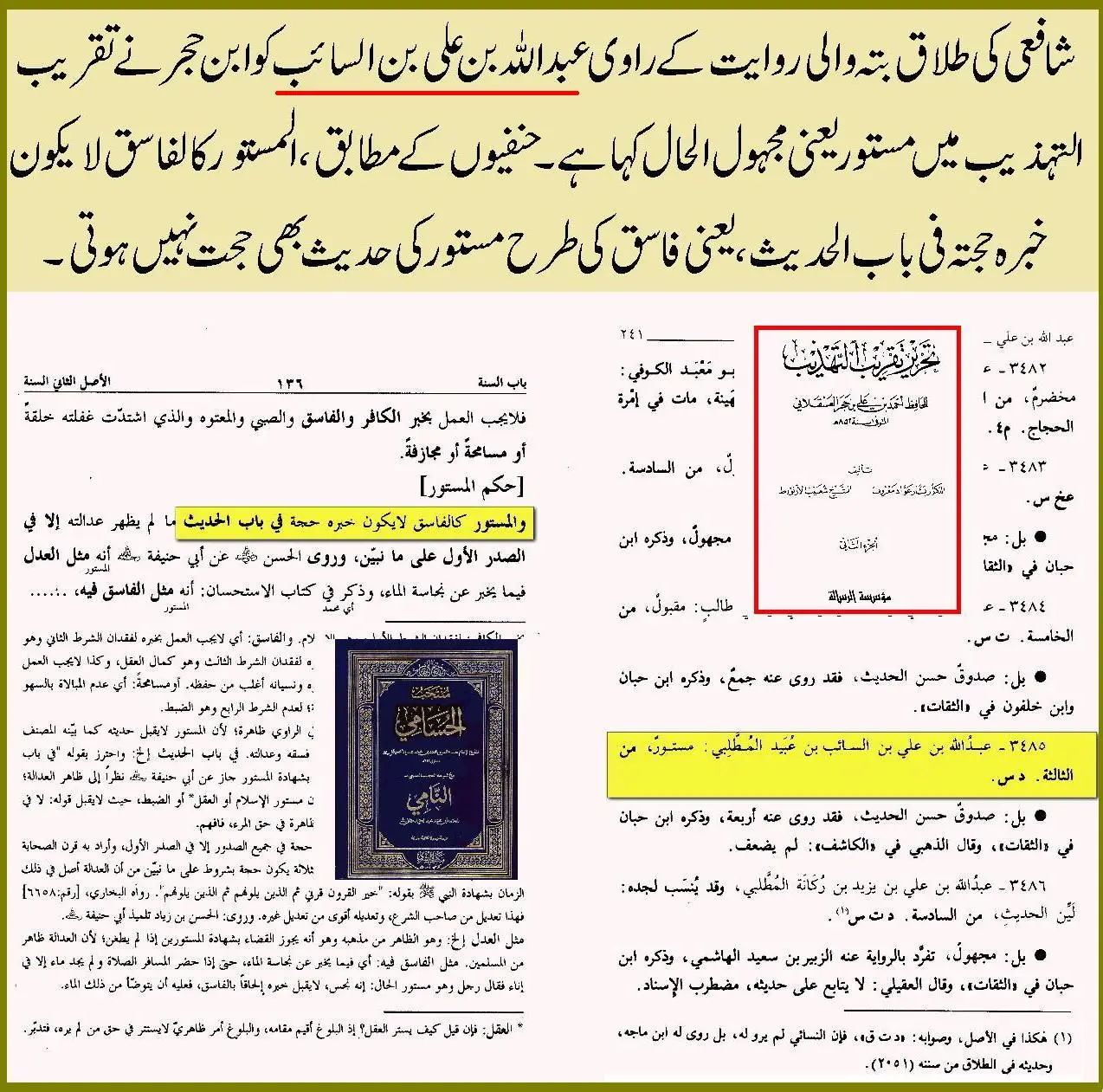
6) Ibn Hajar:
- Arabic: «مستور.»
- Translation: Concealed status.
-
Reference: Reference: Taqreeb al-Tahdheeb.
Fiqhi Note (According to Hanafis): The report of a concealed narrator is not proof unless his probity (‘adalah) becomes evident—”والمستور كالفاسق…“
7) Al-Zaili (Endorsement of Abdul Haq):
- Arabic: «… وكلّهم ضعفاء.»
- Translation: All narrators in this chain are weak.
-
Reference: Reference: Nasb al-Rayah.
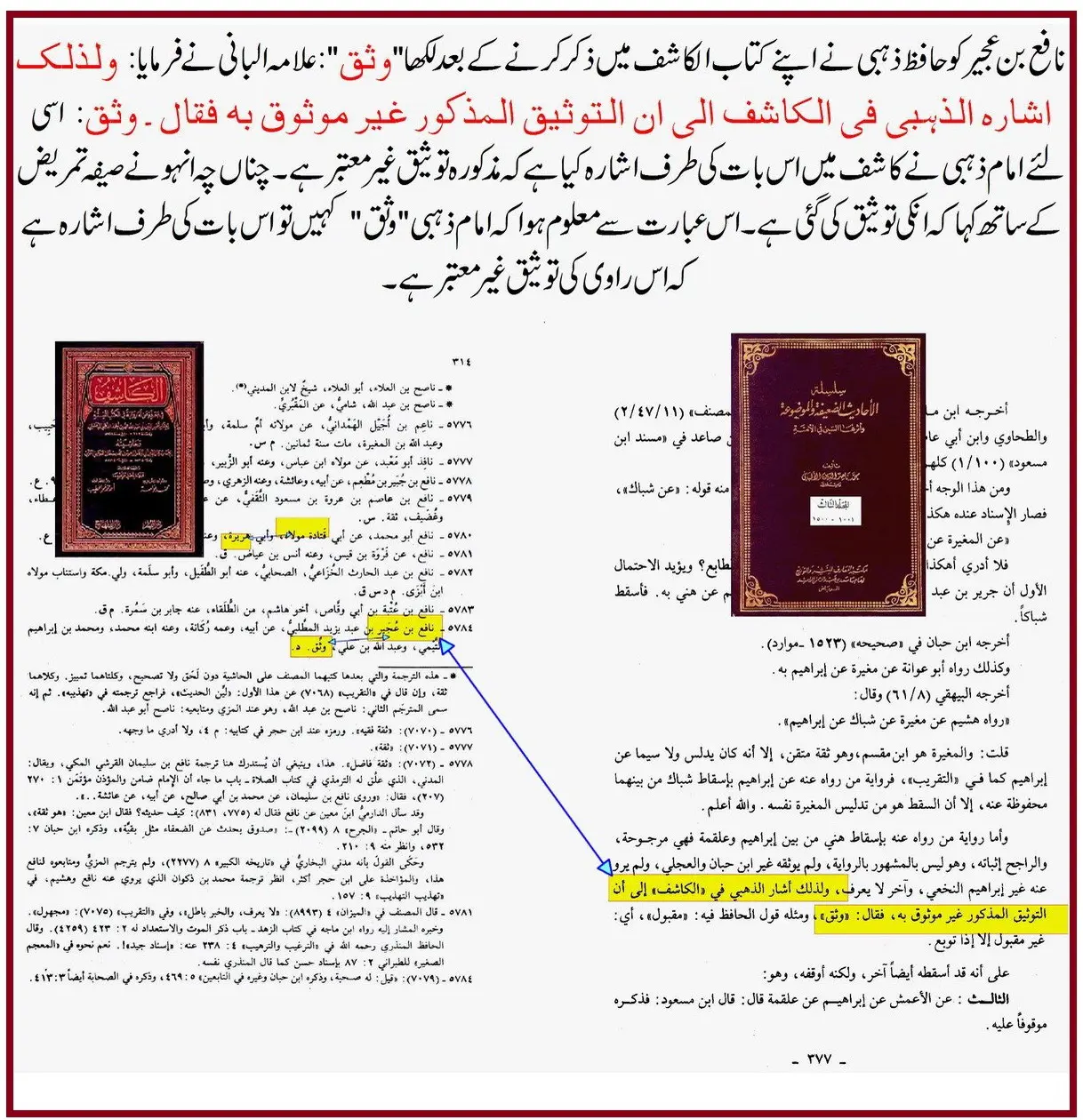
8) Al-Dhahabi (In Al-Kashif, the style of “Lam Yudha’if”):
- Arabic: «… لم يُضعّف.»
- Note (Explanatory): Al-Dhahabi’s “Lam Yudha’if” is not authentication; it is merely a statement that he did not come across any criticism, whereas other quotations establish his being unknown/hidden (jahalah/satr).
🔴 Third Unknown: Nafi’ ibn ‘Ujair
1) Abdul Haq al-Ashbili:
- Arabic: «… وكلّهم ضعيف.»
- Translation: (All in this chain are) weak.
-
Reference: Reference: Al-Ahkam al-Wusta.
2) Ibn Hazm:
- Arabic: «نافع بن عجير وأبوه عجير مجهولان، ولا حجّة في مجهول.»
- Translation: Nafi’ ibn ‘Ujair and his father both are unknown, and the narration of an unknown is not proof.
-
Reference: Reference: Al-Muhalla bil Athar.
3) Imam Bukhari – Mention without criticism/praise:
- Arabic: «نافع بن عجير… روى عنه ابنه محمد.»
- Translation: Bukhari only mentioned—no authentication or criticism.
-
Reference: Reference: Al-Tarikh al-Kabir lil-Bukhari.
Ibn al-Qattan: According to Bukhari and Ibn Abi Hatim, the state is unknown (Bayan al-Wahm wal-Iham).
4) Ibn Abi Hatim – Silence:
- Arabic: «نافع بن عجير روى عن علي… روى عنه ابنه محمد.»
- Translation: Only mentioned—no criticism/praise → state unknown.
-
Reference: Reference: Al-Jarh wa al-Ta’dil; Ibn Kathir: “Hidden state” (Tafsir Ibn Kathir).
5) Ibn al-Qayyim:
- Arabic: «… نافع بن عجير المجهول الذي لا يُعرف حاله البتّة…»
- Translation: Nafi’ ibn ‘Ujair is unknown; his condition is completely unknown.
-
Reference: Reference: Zad al-Ma’ad.
6) Al-Dhahabi (in Al-Kashif the form “wuthiq”):
- Explanation: Al-Dhahabi’s mere use of “wuthiq” often refers to Ibn Hibban’s unique authentication which many scholars have distrusted; therefore, the overall evidence points to his being unknown (jahalah).
- Explanatory reference: Al-Albani, Silsilat al-Ahadith al-Da’ifah (Rule).
7) Ibn al-Mulaqqin (Approval of Abdul Haq + confusion):
- Arabic: «… وكلهم ضعيف، الزبير أضعفهم… واضطرب إسناده كما ترى.»
- Translation: All narrators are weak, Zubair is the weakest among them… and the chain is confused as is clear.
-
Reference: Reference: Al-Badr al-Munir.
8) Al-Zaili (Approval):
- Arabic: «… وكلّهم ضعفاء.»
- Translation: All are weak.
-
Reference: Reference: Nasb al-Rayah.
9) Al-Tahawi — Ruling: Disconnected:
- Arabic: «وهذا حديث منقطع.»
- Translation: This hadith is disconnected.
-
Reference: Reference: Mukhtasar Ikhtilaf al-Ulama.
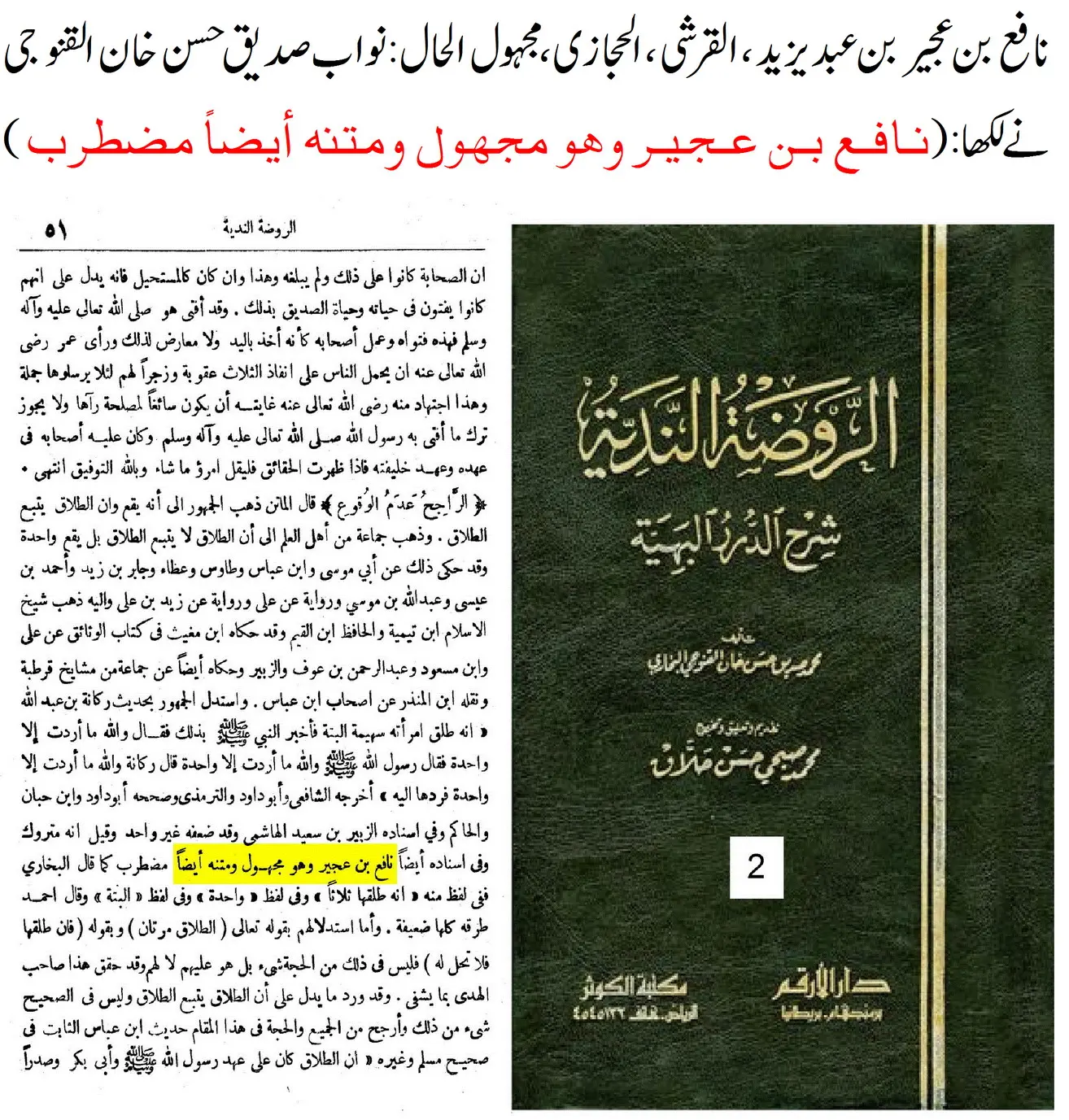
10) Nawab Sadiq Hasan Khan:
- Arabic: «نافع بن عجير، وهو مجهول. ومتنه مضطرب؛ كما قال البخاري…»
- Translation: Nafi’ ibn ‘Ujair is unknown; and the text is confused as Bukhari said.
-
Reference: Reference: Al-Rawdah al-Nadiyyah (with Al-Ta’liqat al-Radiyyah).
Summary of the entire article
- In terms of chain of narration:
There are three major unknown narrators in the chain:
Muhammad bin Ali bin Shafi’ (uncle of Al-Shafi’i) — unknown status.
- Abdullah bin Ali bin Al-Saib — concealed/unknown.
- Nafi’ bin Ujair — unknown.
Other chains (Zubair bin Saeed, etc.) are also very weak and contain confusion and discontinuity.
In terms of text:
- There is severe confusion in the hadith: sometimes “thalaath” (three), sometimes “wahida” (one), sometimes “al-battah” (certainly).
- The majority of hadith scholars have declared it weak, disconnected, and confused.
- Some have even called it fabricated (Ibn Hazm, Shawkani, Sayuti, etc. have explanations available).
Opinions of the Imams:
- Imam Ahmad, Imam Bukhari, Imam Darqutni, Imam Bayhaqi: all have called it weak/confused.
- Abdul Haq Al-Ashbili, Ibn Arabi, Ibn Al-Qayyim, Al-Tahawi, Al-Zaili, Ibn Al-Turkumani, Al-Mundhiri, Ibn Hazm, Nawab Sadiq Hasan Khan: all have discussed in detail the weakness of the narration and the narrators’ being unknown/criticised (jahalah/jarh).
🔴 Final Conclusion
- The narration of Rukana regarding “Talaq al-Batta” is very weak, confused, and narrated from unknown narrators.
- It is not correct to derive the principle from this narration that “three divorces will be counted as one according to intention.”
- It cannot in any way be preferred over the authentic chain narration in Musnad Ahmad (according to Ibn Abbas رضي الله عنهما, in which Rukana gave his wife three divorces and the Prophet ﷺ ordered separation).
From a jurisprudential perspective, the Ahl al-Sunnah wal-Jama’ah rely on authentic and clear hadiths regarding the issue of “Talaq al-Batta,” not on such defective and confused narrations. Therefore, this narration transmitted through the chain of Imam Shafi’i is not authoritative.
Scans of Important References