
عبد الحميد بن جعفر قال: حدثنا محمد بن عمرو بن عطاء قال: سمعت أبا حميد الساعدي فى عشرة من أصحاب النبى صلى الله عليه وسلم فيهم أبو قتادة، فقال أبو حميد: أنا أعلمكم بصلاة رسول الله صلى الله عليه وسلم قالو: لم فو الله ما كنت أكثرنا له تبعة ولا أقدمنا له صحبة؟ قال: بلى قالوا: فاعرض، قال: كان رسول الله صلى الله عليه وسلم إذا قام إلى الصلوة كبر ثم رفع يديه حتى يحاذي بهما منكبيه ويقيم كل عظم فى موضعه ثم يقرأ ثم يرفع يديه حتى يحاذي بهما منكبيه ثم يركع و يضع راحتيه على ركبتيه معتدلا لا يصوب رأسه ولا يقنع به يقول سمع الله لمن حمده ويرفع يديه حتى يحاذي بهما منكبيه ثم إذا قام من الركعتين رفع يديه حتى يحاذي بهما منكبيه كما صنع عند افتتاح الصلاة فقالوا: صدقت هكذا كان يصلي النبى صلى الله عليه وسلم
Abdul Hamid bin Jaafar said: I heard Muhammad bin Amr bin Ata say: I heard from Abu Humaid Al-Sa’di, may Allah be pleased with him, from ten companions among whom was Abu Qatada, may Allah be pleased with him. Abu Humaid, may Allah be pleased with him, said: I know the prayer of the Messenger of Allah صلى الله عليه وآله وسلم better than all of you. They said: You neither became a Muslim before us, nor did you keep company with him more than us (nor did you follow him more than us). Abu Humaid said: That is true. Then they said: Well then, present it.
Our master Abu Humaid, may Allah be pleased with him, said: When the Messenger of Allah صلى الله عليه وآله وسلم stood for prayer, he would say Allahu Akbar and raise both his hands up to his shoulders, and every bone would remain in its place. Then he would recite, then raise both his hands up to his shoulders again, then bow, placing his palms on both his knees, neither raising his head too high nor lowering it too much in bowing. Then he would raise his head and say “Sami’a Allahu liman hamidah” and raise both hands up to his shoulders… Then when he stood after two rak’ahs, he would raise both hands up to his shoulders. All ten companions, may Allah be pleased with them, said: You have spoken the truth; the Prophet صلى الله عليه وسلم used to pray in this manner.
و قال حديث أبى حميد هذا حديث صحيح متلقى بالقبول لا علة له وقد أعله قوم بما برأه الله أئمة الحديث منه و نحن نذكر ما عللوه به ثم نبين فساد تعليلهم و بطلانه بعون الله. That is, this hadith is authentic and accepted. It has no defect, and a group considered it defective, for which Allah has declared the Imams of Hadith innocent, and we will explain their stated defects. Then, with Allah’s help, we will demonstrate the corrupt and false nature of their defects. (Insha’Allah) Besides this, this hadith is present in many other books. Al-Khattabi said in Ma’alim As-Sunan (194/1) that the hadith is authentic.
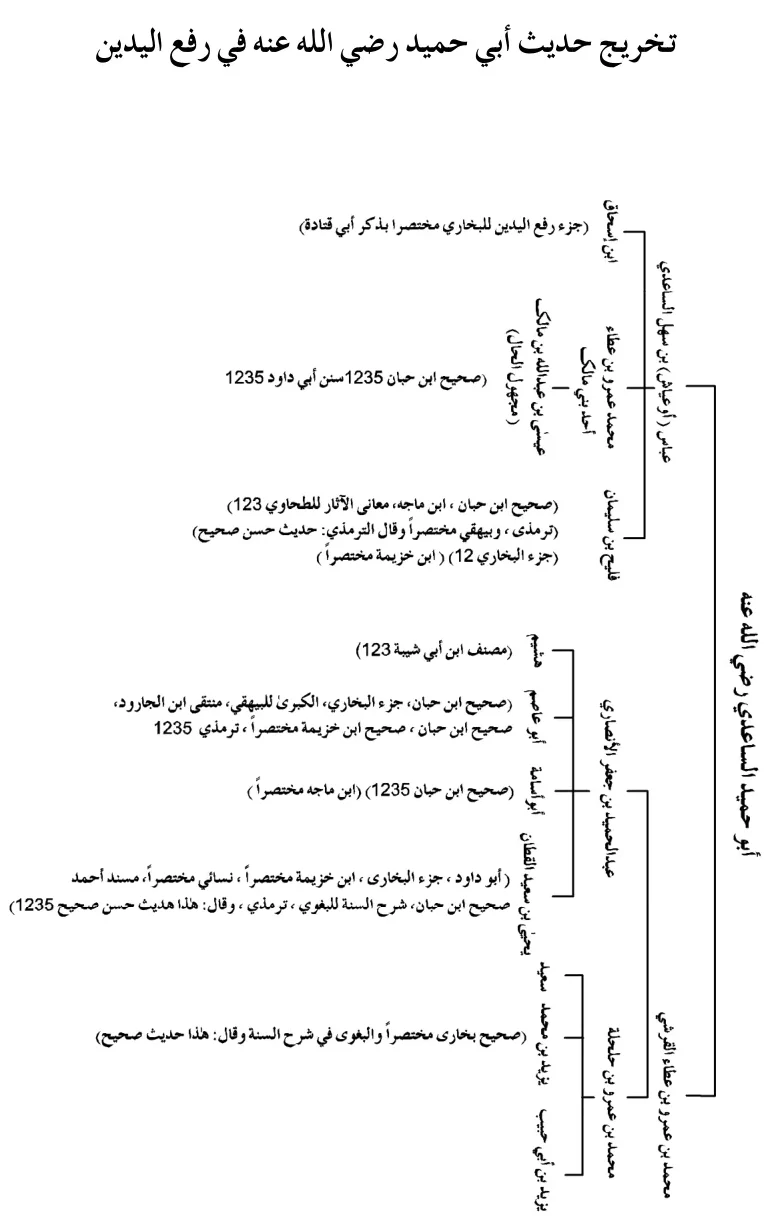
Regarding the meaning of raising the hands, from Abu Humaid, may Allah be pleased with him, there is a narration from Abbas bin Suhail Al-Sa’di in which these companions were also present at that time:
Sahl bin Sa’d Al-Sa’di, Abu Usaid Al-Sa’di, Abu Hurairah, and Muhammad bin Muslimah, may Allah be pleased with them all.
Hafiz Abu Hatim Ibn Hibban Al-Busti said: Both narrations (the narration of Muhammad bin Amr bin Ata and the narration of Abbas bin Suhail Al-Sa’di) are authentic.
In Sahih Ibn Khuzaymah it is stated that Muhammad bin Yahya (a trustworthy Imam) said:
من سمع هذا الحديث ثم لم يرفع يديه يعني إذا ركع و إذا رفع رأسه من الركوع فصلاته ناقصة.
Whoever hears this hadith and does not raise his hands, his prayer is incomplete.
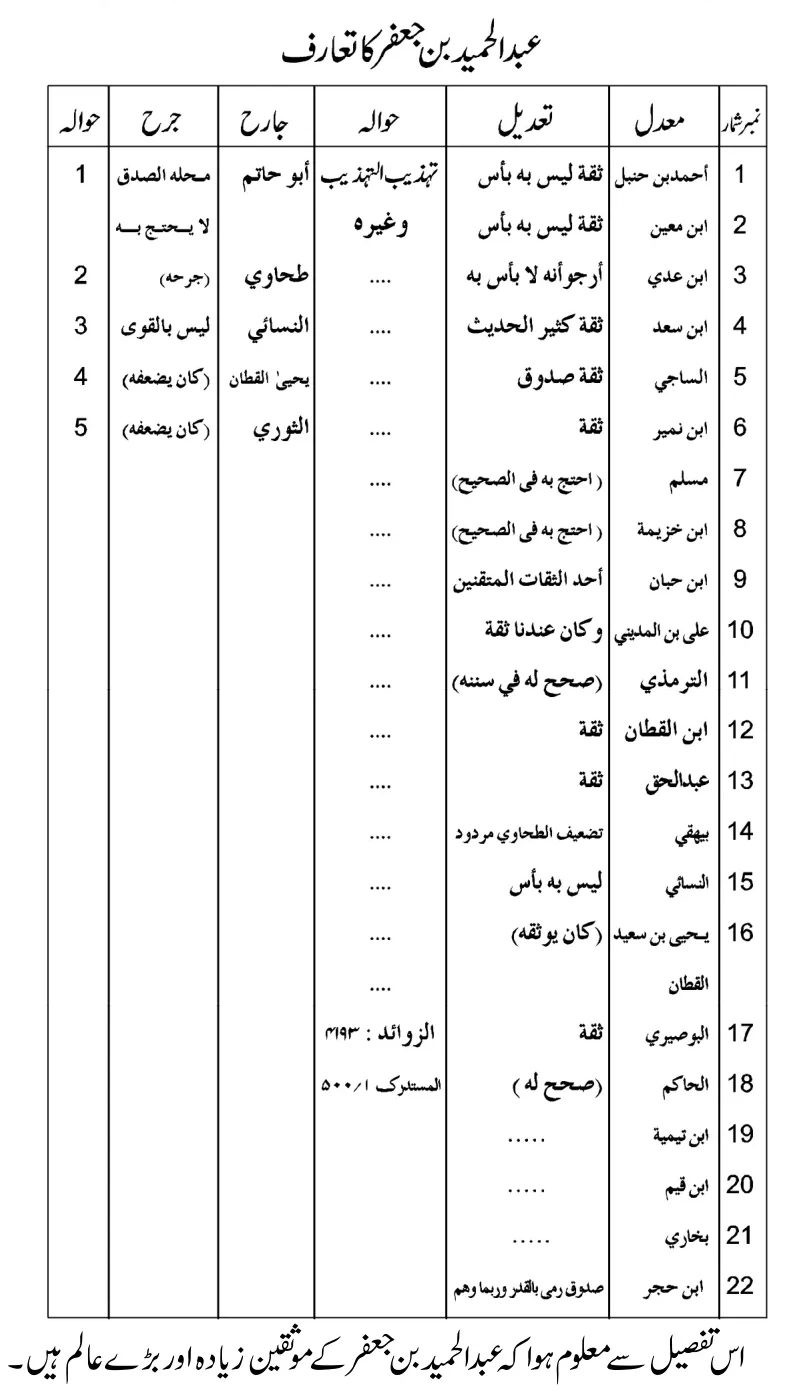
Zaili Hanafi said: ”ولكن وثقه أكثر العلماء“ that is, many scholars have declared him trustworthy. End. [
(After this, what Zaili wrote in the words of ”انه غلط فى هذا الحديث“ is rejected for two reasons: ➊ It is against the consensus. ➋ That is a different hadith, not the one we presented.)
Therefore, Abdul Hamid mentioned is trustworthy.
The criticism of Abu Hatim, Nasai, and Yahya bin Saeed conflicts with their authentication, so it is invalid. Hafiz Zahabi narrates two contradictory statements of Hafiz Ibn Hibban in the biography of Abdul Rahman bin Thabit bin Al-Samit, one calling him weak and the other calling him trustworthy, and he decides: فساقط قولاه Both contradictory statements of Ibn Hibban are rejected.
Sufyan al-Thawri’s criticism was due to the issue of predestination, which Hafiz Zahabi refuted in a subtle manner in “Sir al-A’lam al-Nubala”
. There are hadiths in Sahihayn and others from a group accused of Qadariyyah etc. (for example Qatadah, a Tabi’i, etc.) Should their hadith be rejected? One must be cautious!
The criticism of Abu Ja’far al-Tahawi was rejected by Ahmad bin al-Husayn al-Bayhaqi, and Hafiz Ibn Hajar does not hold a position to accept his rare statement against the clear and explicit authentication of Imam Ahmad bin Hanbal and others.
(Provided that his statement is interpreted as criticism, otherwise his statement is not criticism.)
Therefore, Hafiz Zahabi writes: احتج به الجماعة سوى البخاري و هو حسن الحديث A group has taken his narration as proof (except Imam Bukhari) and it is a good hadith.
(Imam Bukhari also declared his hadith authentic. كما تقدم, therefore it is authentic according to them.)
Hafiz Abu Hatim bin Hibban writes:
عبدالحميد رضى الله عنه أحد الثقات المتقنين قد سبرت أخباره فلم أره انفرد بحديث منكر لم يشارك فيه.
Abdul Hamid bin Ja’far, may Allah be pleased with him, was trustworthy and precise. I have examined his hadiths; they are not unique with any fabricator of hadith.
Introduction of Muhammad bin Amr bin Ata
He is a central narrator of the Kutub al-Sittah. He has been declared trustworthy by Abu Zur’ah, Nasa’i, Abu Hatim, Ibn Sa’d, Ibn Hibban, and others. Hafiz Dhahabi said: ”أحد الثقات“
The criticism mentioned in Tahdhib is directed at Muhammad bin Amr al-Laithi. Therefore, Ibn Ata is unanimously considered trustworthy. He heard this hadith from Sayyiduna Abu Humaid رضي الله عنه.
One of his narrations from Sayyiduna Abu Humaid رضي الله عنه is also in Sahih Bukhari, so the accusation of discontinuity is baseless and rejected.
Abbas bin Suhail al-Sa’di also followed him. (Narrated by Faleeh bin Sulaiman from him) as is evident from the authentication table.
◈Narration of Attaf bin Khalid
Tahawi Hanafi has brought the narration of Ataf bin Khalid in opposition to the narration of Abdul Hamid bin Ja’far.
Abdullah bin Saleh –> Yahya bin Saeed –> Ataf bin Khalid –> Muhammad bin Amr bin Ata –> A man
Its central narrator Abdullah bin Saleh is a subject of discussion. Imam Nasai said: ليس بثقة
Ahmad bin Hanbal, Ibn Ma’in, and Ibn al-Madini have criticized him.
Some have authenticated him, but according to the majority of scholars, he is weak.
Hafiz Nur al-Din Haithami (d. 807 AH) said: وعبد الله بن صالح ضعفه الجمهور و قال عبد الملك بن شعيب: ثقة مأمون
Therefore, the authentication of Abdul Malik bin Shu’ayb and others is rejected against the majority.
Imam Bukhari, Ibn Ma’in, Abu Zur’ah, and Imam Abu Hatim’s narrations from him are among his authentic hadiths.
This narration is not from the method of the skilled narrators, hence it is weak.
Secondly, even if this narration were authentic, the “man” referred to is “Abbas and Ayyash bin Suhail al-Sa’di.”
It is evident that the interpreter takes precedence over the ambiguous. For example, if a narrator says:
عن رجل عن أبى هريرة and the same narrator says: عن محمد بن زياد عن أبى هريرة then inevitably the “man” refers to “Muhammad bin Ziyad.”
Therefore, the objection to Abdul Hamid bin Ja’far’s hadith on the basis of Ataf bin Khalid’s (conditional) narration is futile, especially since many other narrators have also followed it.
◈Claim of Anxiety
Some who cause confusion have claimed that this hadith is contradictory because
① محمد بن عمرو بن عطاء عن أبى حميد
② محمد بن عمرو أخبرني مالك عن عياش أو عباس بن سهل
③ محمد بن عمرو بن عطاء عن عباس بن سهل عن أبى حميد
④ محمد بن عمرو بن عطاء عن عباس أو عياش
⑤ محمد بن عمرو بن عطاء: حدثني رجل
This narration is transmitted with these chains of narration.
Regarding narration number 2, it is stated that this narration is present exactly as it is with the same chain in
, in which
the word محمد بن عمرو بن عطاء أحد بني مالك عن عباس بن سهل أحد بني مالك was mistakenly printed as ”أخبرني مالك“ in “Al-Sunan Al-Kubra”.
In any case, even if the ancient manuscript has ”أخبرني مالك“, it is rare (due to the scribe’s error). Regarding narrations number 1, 3, and 4, Ibn Hibban’s decision is:
سمع هذا الخبر محمد بن عمرو بن عطاء عن أبى حميد الساعدي و سمعه من عباس بن سهل بن سعد الساعدي فالطريقان جميعا محفوظان
Meaning Muhammad ibn Amr ibn Ata heard this hadith from both Abu Humayd and Abbas ibn Suhail, so both chains are authentic.
It should be noted that the narration with عباس بن سهل عن أبيه is not known to us. Also, it should be remembered that in the narration of Muhammad ibn Amr ibn Ata from Abbas ibn Suhail, there is a person named Isa ibn Abdullah ibn Malik whose status is unknown, so presenting his narration against Abdul Hamid ibn Ja’far is pointless.
(5) That is, in the narration of Ataf ibn Khalid, the man referred to is Abbas ibn Suhail as shown in the table, so the claim of contradiction is rejected. This is why great imams of the field and eminent scholars have declared this hadith authentic.
◈The Year of Death of Sayyiduna Abu Qatada (May Allah be pleased with him)
Sayyiduna Abu Qatada Al-Harith bin Rabi’i Al-Ansari, may Allah be pleased with him, was a companion.
① Imam Al-Layth (Ibn Sa’d, trustworthy Imam, died 175 AH) said:
Abu Qatada Al-Harith bin Rabi’i bin Al-Nu’man Al-Ansari, may Allah be pleased with him, died in 54 AH.
② Saeed bin Afir (died 226 AH, truthful scholar of genealogies) said:
Abu Qatada, may Allah be pleased with him, died in 54 AH at the age of 70 years.
③ Imam Yahya bin Ma’in (trustworthy Imam) said: He died in 54 AH.
④ The same is stated by Imam Tirmidhi (trustworthy Imam) and
⑤ Abu Abdullah bin Manda Al-Hafiz (trustworthy Imam).
⑥ Imam Bayhaqi (trustworthy Imam) said: The people of history are unanimous that Abu Qatada Al-Harith bin Rabi’i bin Al-Nu’man Al-Ansari died in 54 AH. (Reference as above)
⑦ Ibrahim bin Al-Mundhir said: Abu Qatada died in Madinah in 54 AH.
⑧ Al-Dhahabi said: He died in 54 AH.
⑨ Ibn Hajar said: He died in 54 AH.
⑩ Ibn Kathir mentioned him in the deaths of 54 AH.
◈Unveiling
In contrast to these majority scholars, Habibullah Sahib Darwi Deobandi said on page 207 of “Noor al-Sabah”: “Imam Haitham bin Uday states that Hazrat Abu Qatada passed away in 38 AH.
Firstly, Ibn Kathir has refuted this statement by saying زعم الهيثم بن عدي وغيره وهذا غريب. (See Al-Bidaya wa’l-Nihaya) Secondly, Haitham bin Uday is a well-known liar as has been mentioned before.
◈A Strong Argument
Umm Kulthum bint Ali ibn Abi Talib passed away between 50 AH and 60 AH (in 54 AH).
Naafi’ (may Allah have mercy on him) narrates that when Umm Kulthum’s funeral prayer was performed, among the people present were Ibn Umar, Abu Hurairah, Abu Saeed, and Abu Qatada (may Allah be pleased with them all).
Such a narration is also reported from Ammar Mawla al-Harith ibn Nawfal.
This funeral prayer was performed during the governorship of Saeed ibn al-As (may Allah be pleased with him). Saeed ibn al-As was in power from 28 AH to 55 AH.
It is logically impossible that someone who died in 38 AH would participate in a funeral that took place between 50 AH and 60 AH (in 54 AH). Therefore, the above narration is a definitive text that Sayyiduna Abu Qatada (may Allah be pleased with him) died after 50 AH (in 54 AH). He did not die during the time of Sayyiduna Ali (may Allah be pleased with him).
It is extremely wrong and deceptive to declare him deceased in 38 AH based on disconnected and unsound narrations and the statement of a liar like Haitham ibn Uday.
Hafiz Ibn Qayyim al-Jawziyyah has given a detailed and comprehensive discussion on this hadith in Tahdhib Sunan Abi Dawood and has provided crushing responses to opponents and adversaries.
◈One More Point
Muhammad bin Sirin (may Allah have mercy on him) was a student of Abu Qatada (may Allah be pleased with him).
From Abu Qatada (may Allah be pleased with him), there is a narration from him in Sunan Tirmidhi and others.
He passed away at the age of 77 in 110 AH.
Meaning he was born in 33 AH.
Muhammad bin Amr al-Amiri, a student of Abu Humaid, passed away at the age of 83 towards the end of the caliphate of Hisham bin Abd al-Malik.
Hisham died in 125 AH.
Meaning Muhammad bin Amr was born in 42 AH.
So, he was only nine (9) years younger than Muhammad bin Sirin.
If Ibn Sirin could meet Sayyiduna Abu Qatada (may Allah be pleased with him), then what prevents Muhammad bin Amr from having met him as well.
Note that the narration of Muhammad bin Amr from Abu Humaid (may Allah be pleased with him) is also in Sahih Bukhari. The companions from whom Muhammad bin Sirin was a student passed away in 48 AH and after.
His narration from Sayyiduna Hudhayfah (may Allah be pleased with him) and others is mursal (disconnected).
