
✍ Compiled by: Abu Hamzah Salafi
This research article examines how the hadith scholars (muḥaddithūn) evaluated the mursal (disconnected) narrations of Ibrāhīm ibn Yazīd al-Nakhaʿī al-Kūfī. Some Ḥanafīs and their partisan defenders assert that his mursal reports are valid evidence, even claiming that leading imams declared them authentic. However, the majority of hadith critics and scholars explicitly rejected his disconnected reports as non-authoritative.
In this article, we aim to:
① Present statements from 14 hadith scholars who rejected Ibrāhīm al-Nakhaʿī’s mursal narrations.
② Analyze and respond to the evidences cited by Imām Aḥmad, Yaḥyā ibn Maʿīn, and Ibn ʿAbd al-Barr.
③ Uncover contradictions and weak justifications presented by Ḥanafī scholars.
④ Summarize the methodological principles of hadith criticism regarding mursal narrations, and assess where Ibrāhīm al-Nakhaʿī fits within them.
Arabic:
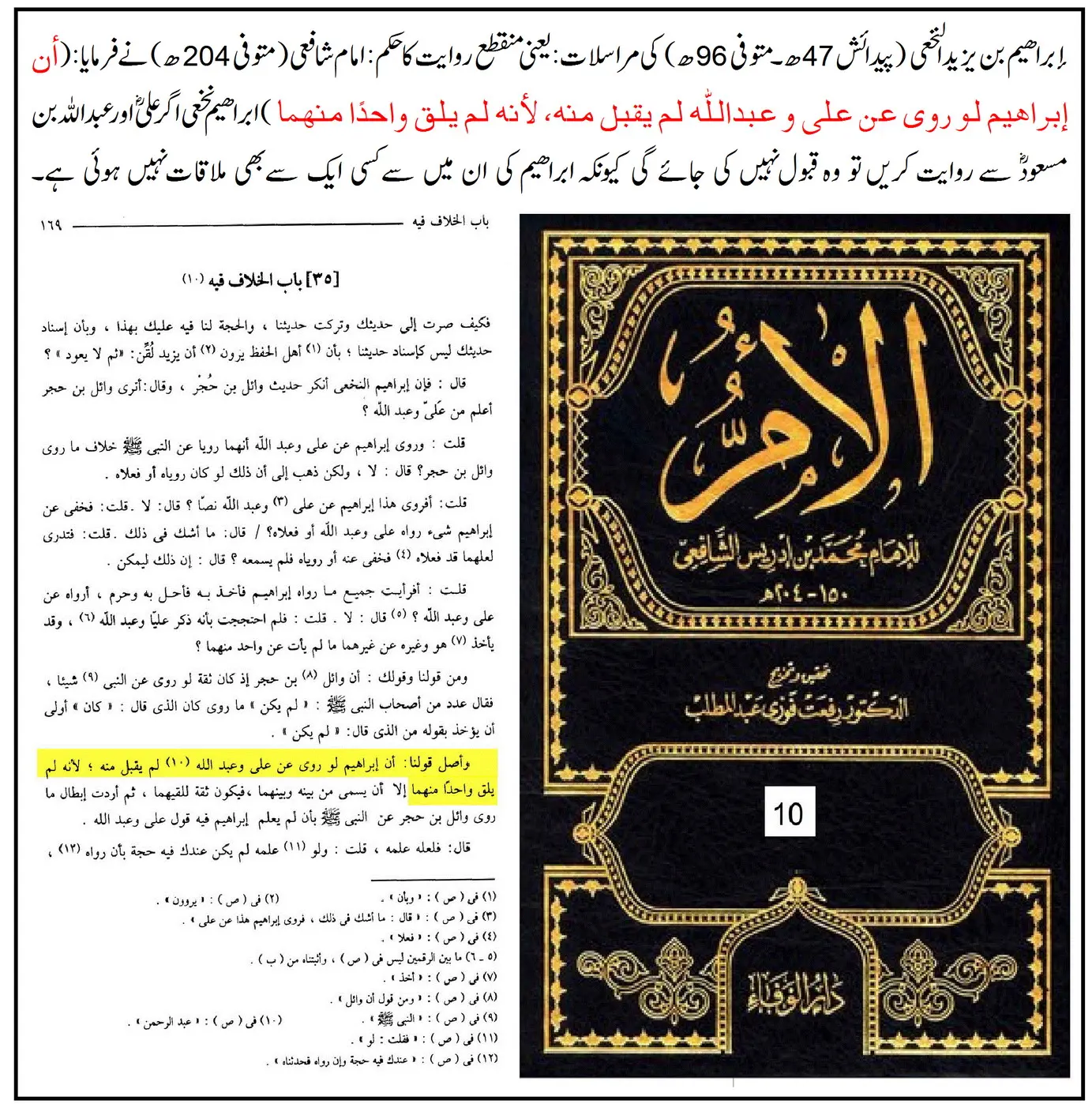
إن إبراهيم النخعي لو روى عن علي وعبد الله لم يقبل منه؛ لأنه لم يلق واحداً منهما.
Translation:
If Ibrāhīm al-Nakhaʿī were to narrate from ʿAlī or ʿAbdullāh (ibn Masʿūd), his narration would not be accepted—because he did not meet either of them.
 al-Umm, vol. 10, Ikhtilāf al-Ḥadīth
Arabic:
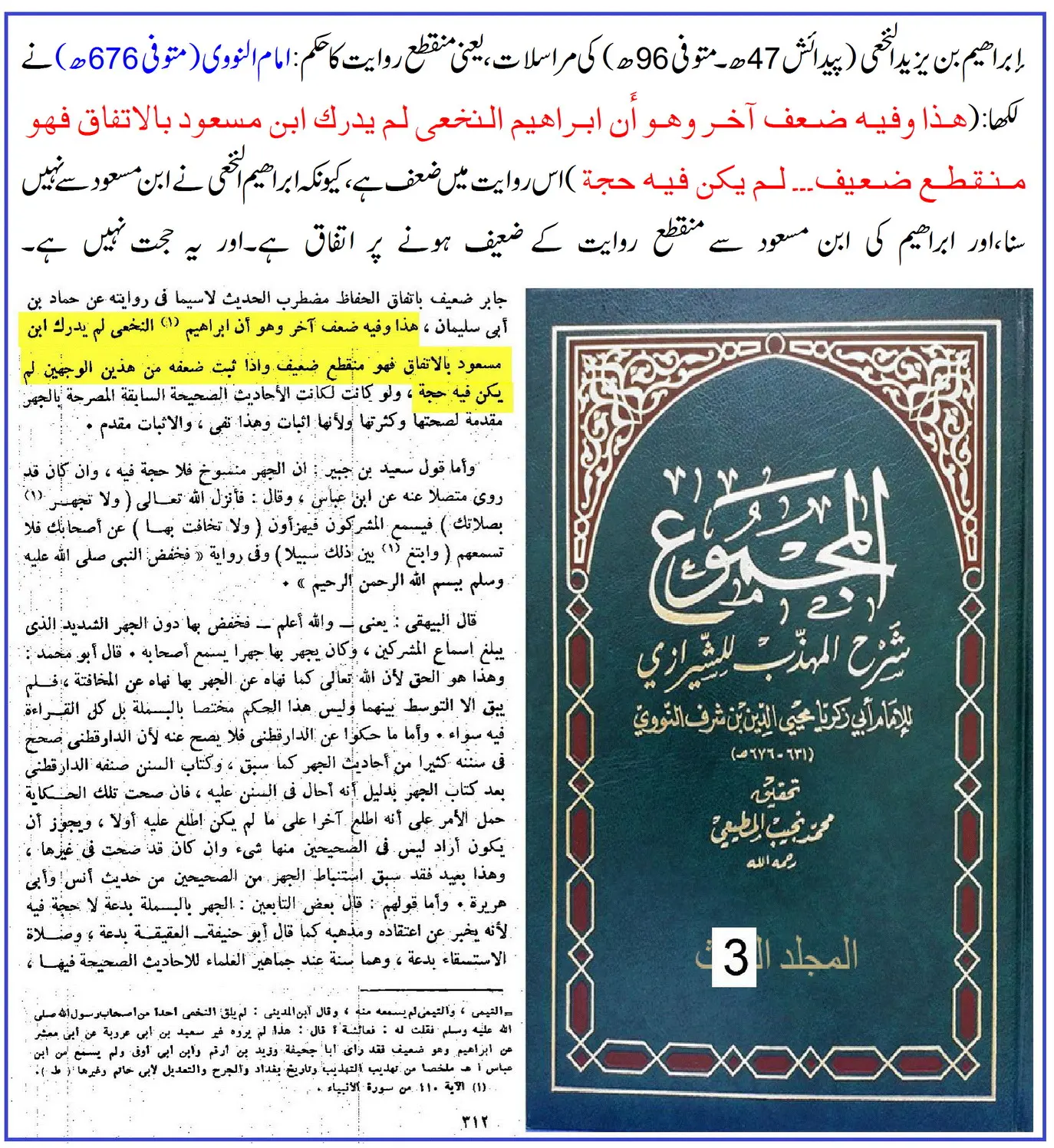
إِبْرَاهِيمَ النَّخَعِيَّ لَمْ يُدْرِكِ ابْنَ مَسْعُودٍ... فَهُوَ مُنْقَطِعٌ ضَعِيفٌ...
Translation:
Ibrāhīm al-Nakhaʿī—by consensus—did not meet Ibn Masʿūd; hence, the narration is disconnected and weak. Therefore, it cannot be used as evidence.
al-Majmūʿ Sharḥ al-Muhadhdhab
Arabic:
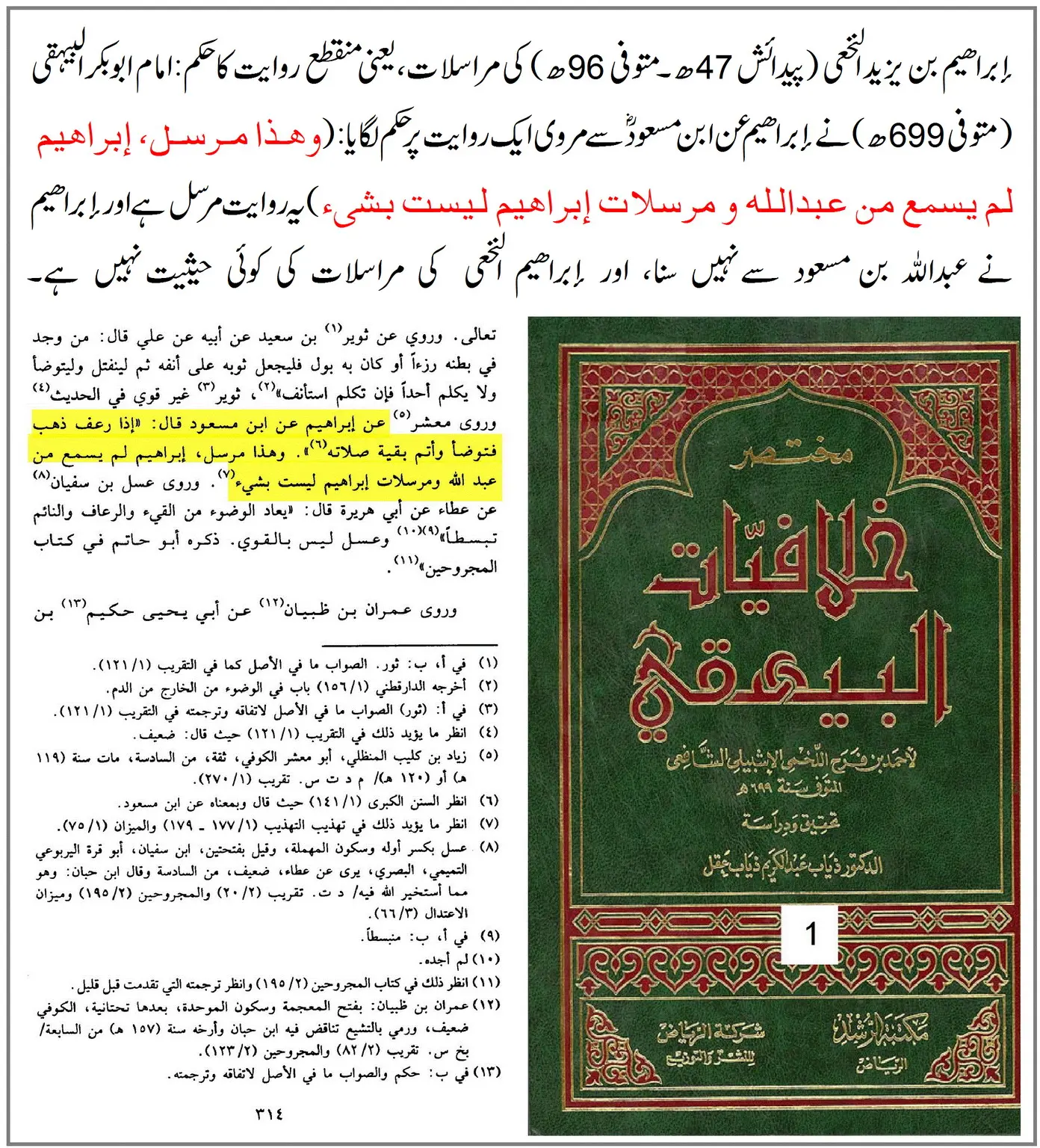
إِبْرَاهِيمُ لَمْ يَسْمَعْ مِنْ عَبْدِ اللهِ... وَمُرْسَلاتُهُ لَيْسَتْ بِشَيْءٍ.
Translation:
Ibrāhīm did not hear from ʿAbdullāh ibn Masʿūd. His mursal narrations are worthless.
Mukhtaṣar Khalāfiyyāt al-Bayhaqī
Arabic:
إذا أرسل عن ابن مسعود وغيره فليس ذلك بحجة.
Translation:
Though Ibrāhīm is a trustworthy authority, when he narrates mursal from Ibn Masʿūd or others, it is not a valid proof.
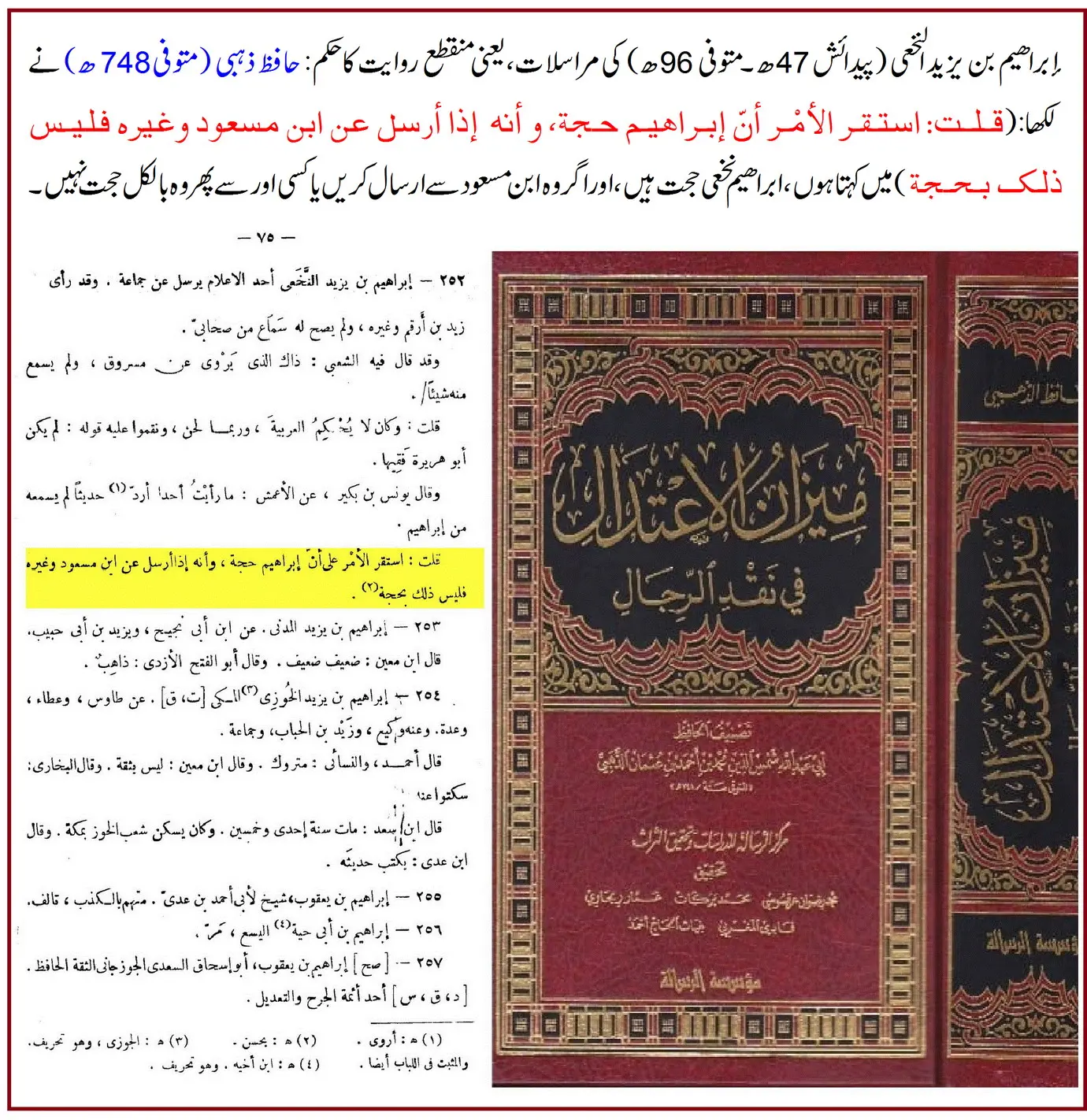
Mīzān al-Iʿtidāl
Arabic:
إِبْرَاهِيمَ لَمْ يَسْمَعِ ابْنَ مَسْعُودٍ
Translation:
Ibrāhīm al-Nakhaʿī did not hear from Ibn Masʿūd.
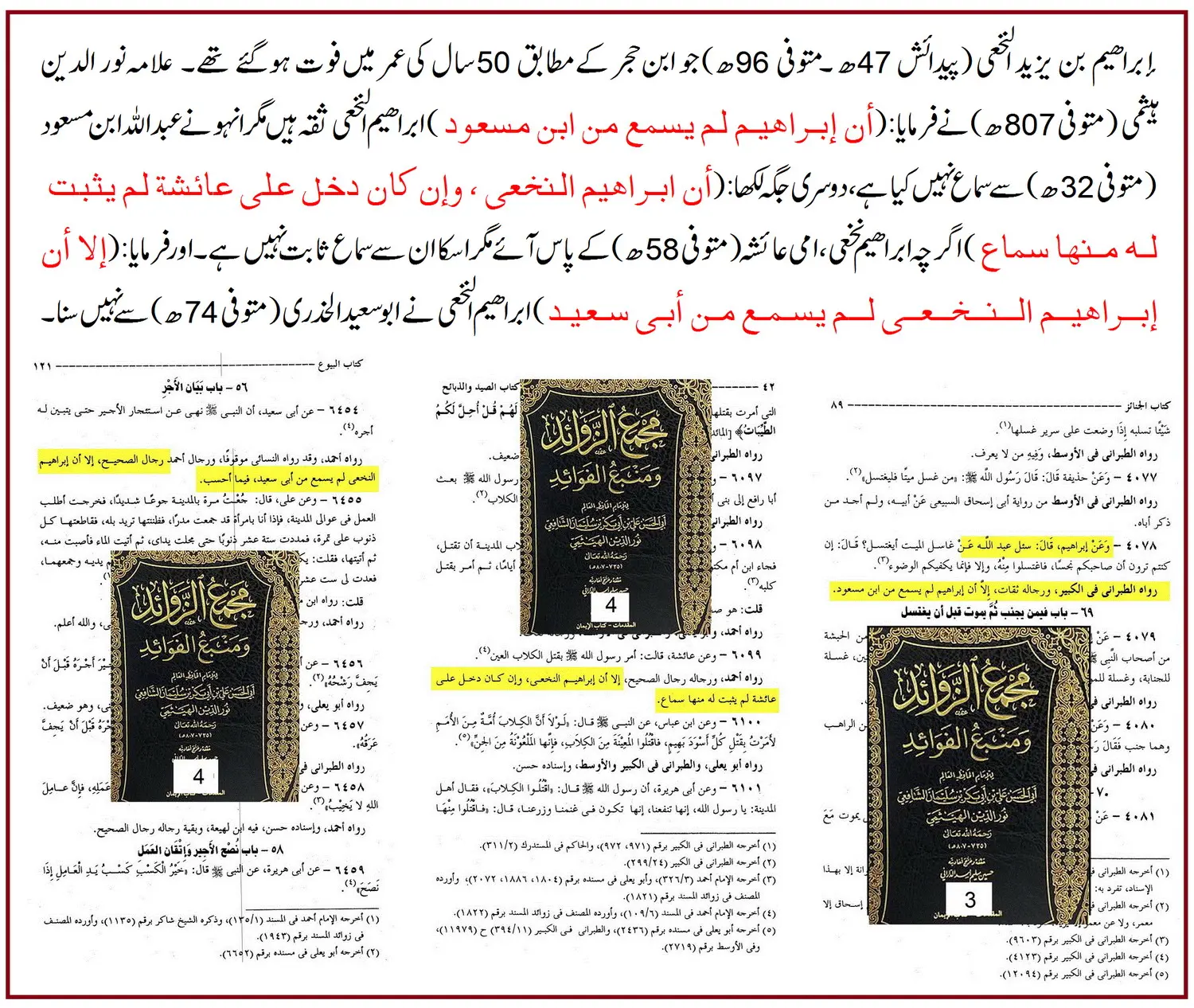
Majmaʿ al-Zawāʾid
Arabic:
إِبْرَاهِيمُ لَمْ يَلْقَ عَبْدَ اللهِ بْنَ مَسْعُودٍ، فَهُوَ ضَعِيفٌ وَمُنْقَطِعٌ
Translation:
Ibrāhīm did not meet ʿAbdullāh ibn Masʿūd; thus the narration is weak and disconnected.
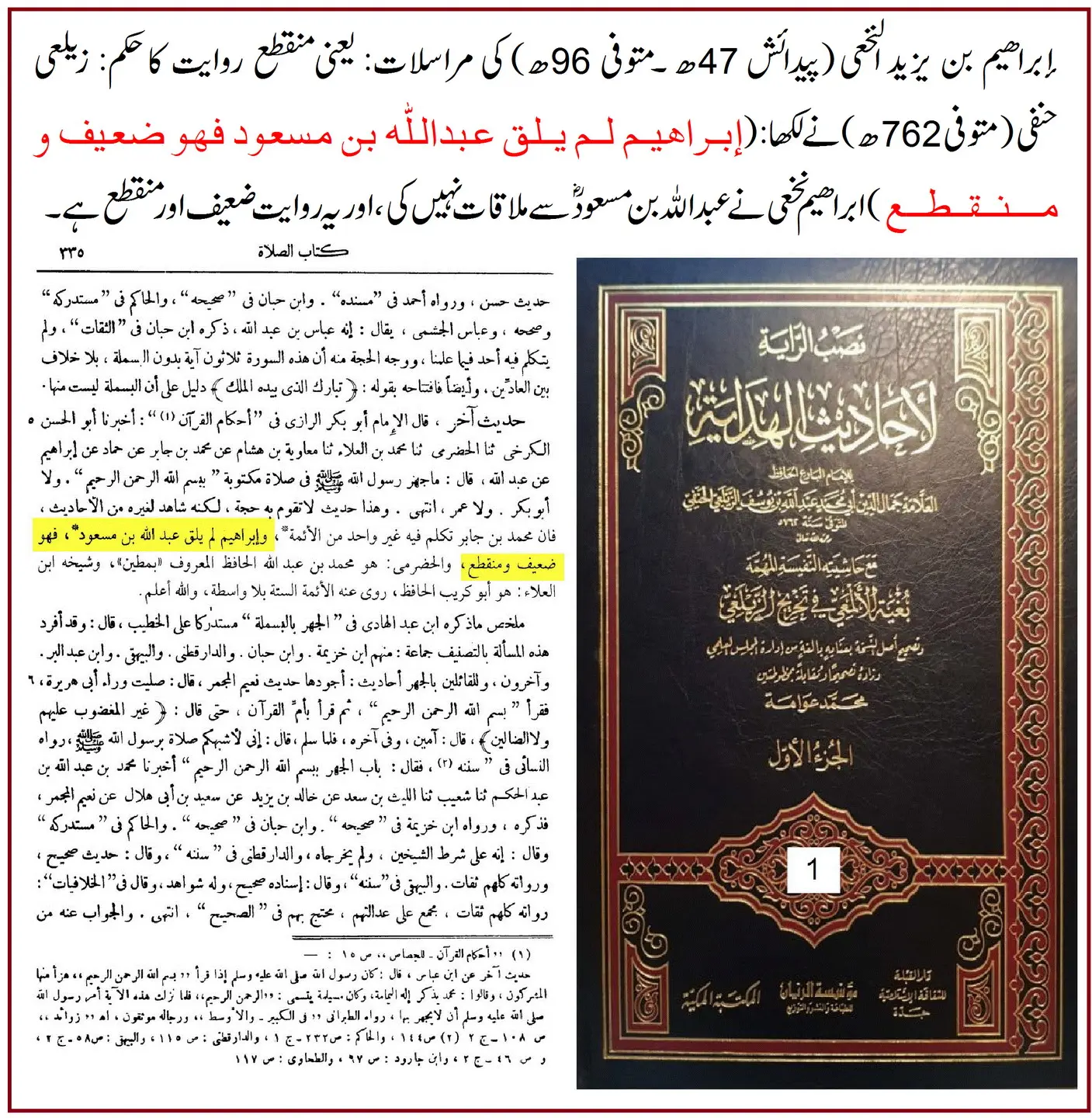
Naṣb al-Rāyah
Arabic:
وَهَذَا مُنْقَطِعٌ
Translation:
The narration from ʿUmar via Ibrāhīm al-Nakhaʿī is interrupted.
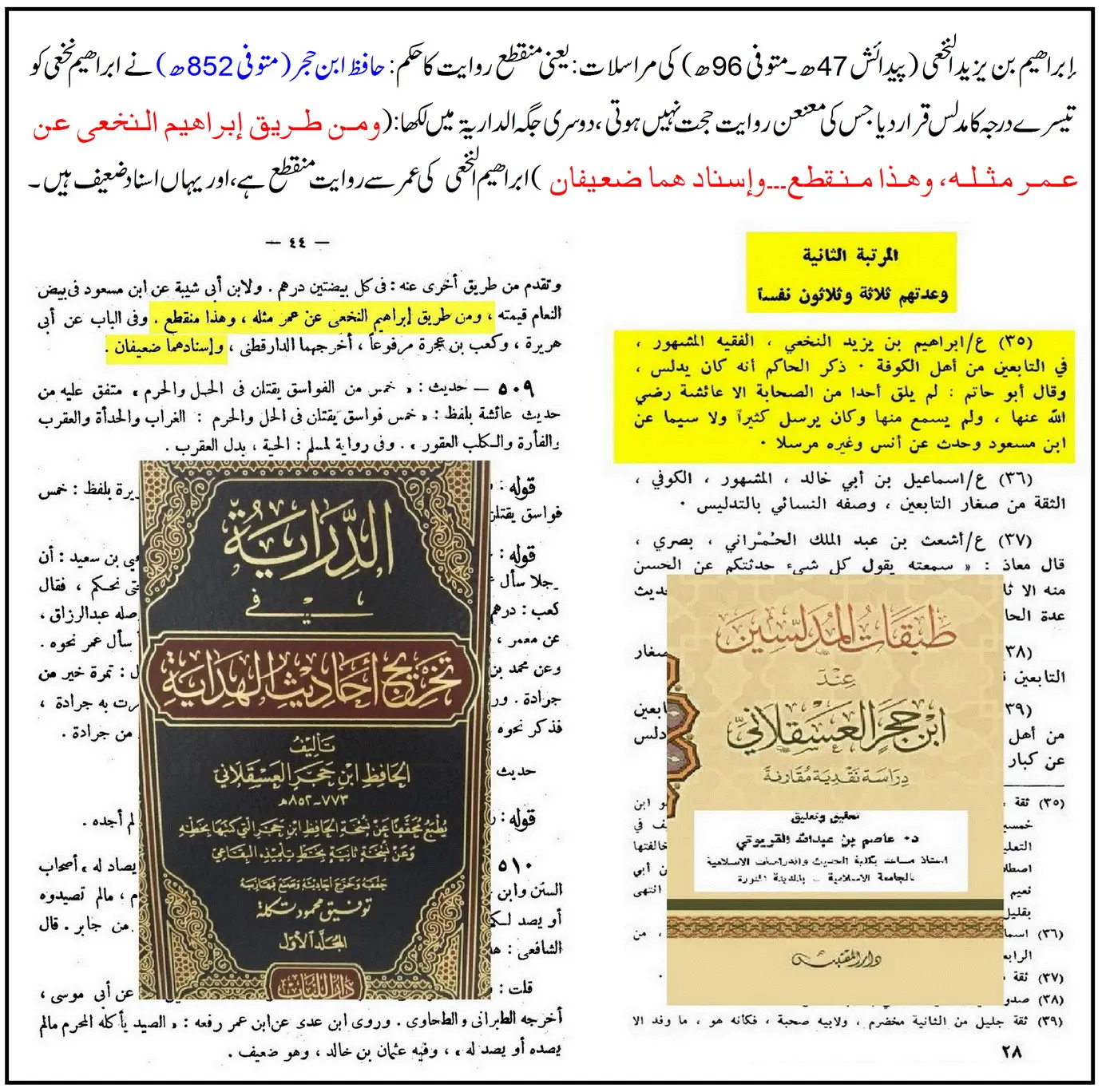
al-Dirāyah fī Takhrīj Aḥādīth al-Hidāyah
Arabic:
إِبْرَاهِيمُ النَّخَعِيُّ عَنْ عُمَرَ مُنْقَطِعٌ
Translation:
Ibrāhīm al-Nakhaʿī’s report from ʿUmar is disconnected.
Naṣb al-Rāyah
Arabic:
لَمْ يَلْقَ إِبْرَاهِيمُ أَحَدًا مِنْ أَصْحَابِ النَّبِيِّ…
Translation:
Ibrāhīm al-Nakhaʿī met none of the Prophet’s Companions ﷺ, except ʿĀʾishah, from whom he did not hear anything.
al-Marāsīl
Imām Abū Zurʿah al-Rāzī رحمه الله
Arabic:
عَنْ عُمَرَ مُرْسَلٌ، وَعَنْ عَلِيٍّ مُرْسَلٌ…
Translation:
His narrations from ʿUmar, ʿAlī, and Saʿd ibn Abī Waqqāṣ are mursal.
al-Marāsīl
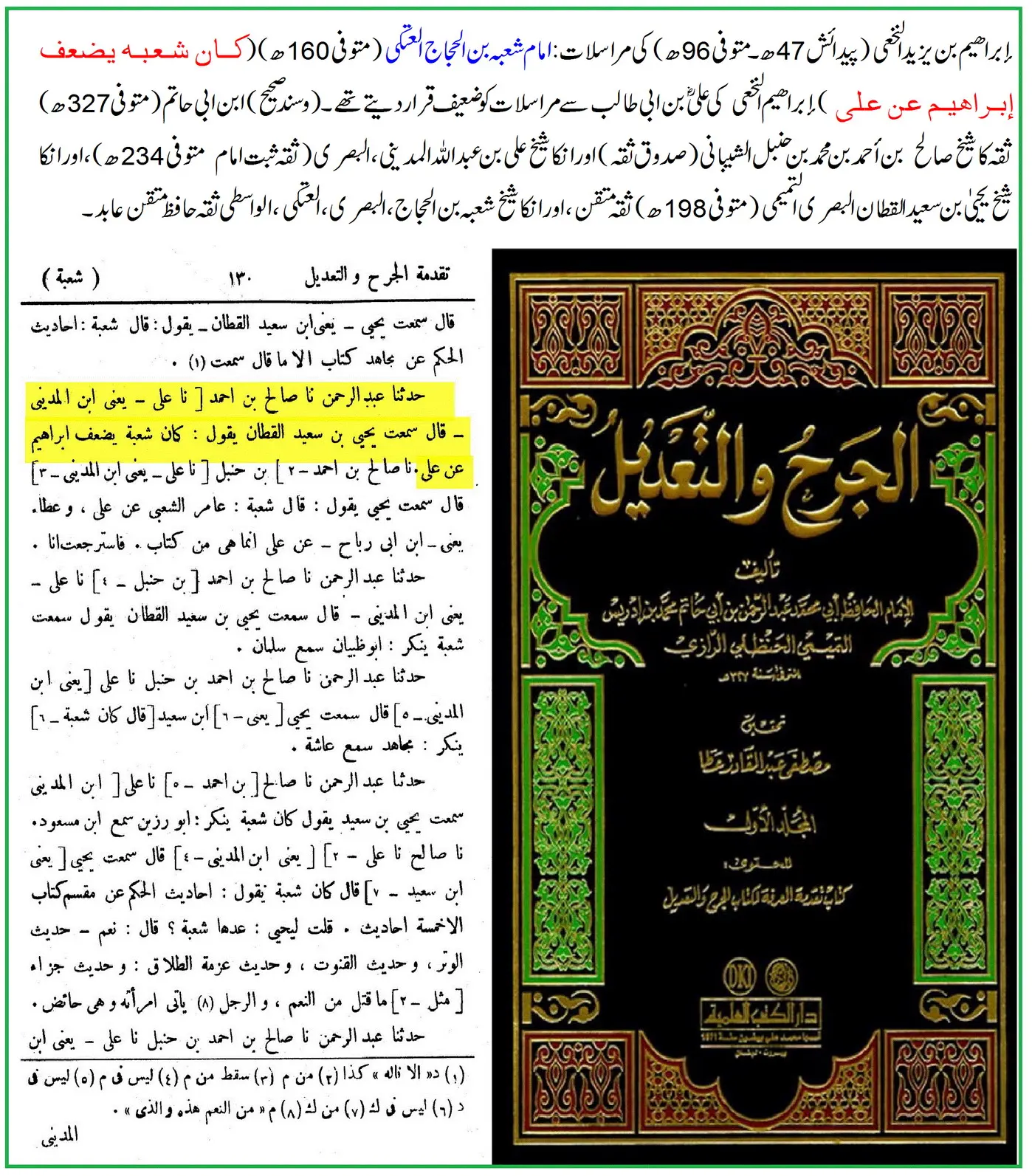
Arabic:
كَانَ يُضَعِّفُ إِبْرَاهِيمَ عَنْ عَلِيٍّ
Translation:
Shuʿbah considered Ibrāhīm’s narrations from ʿAlī to be weak.
al-Jarḥ wa al-Taʿdīl
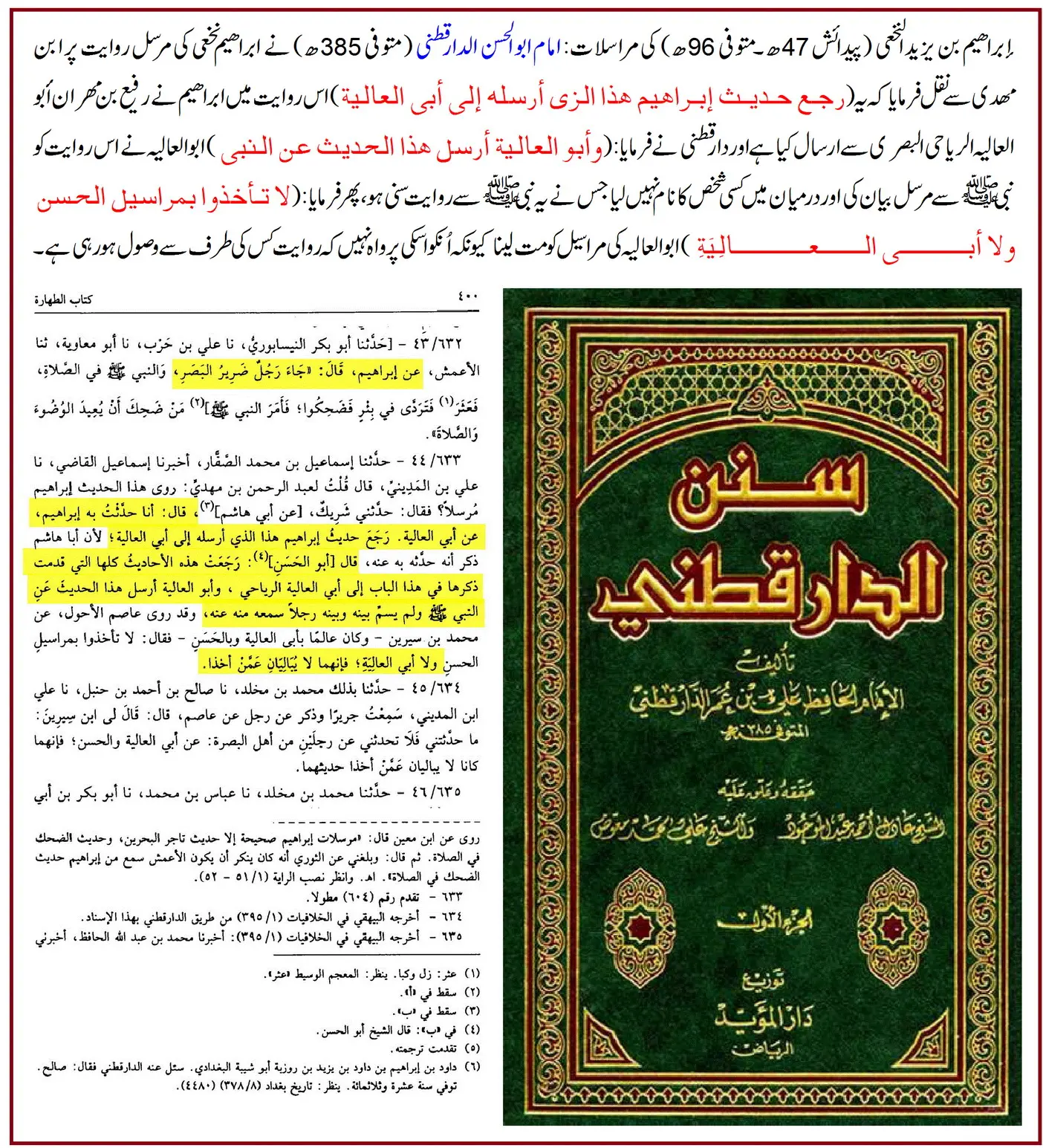
Arabic:
لَا تَأْخُذُوا بِمَرَاسِيلِ الْحَسَنِ وَلَا أَبِي الْعَالِيَةِ
Translation:
Do not rely on the mursal narrations of al-Ḥasan or Abū al-ʿĀliyah—they don’t care whom they narrate from.
Sunan al-Dāraquṭnī
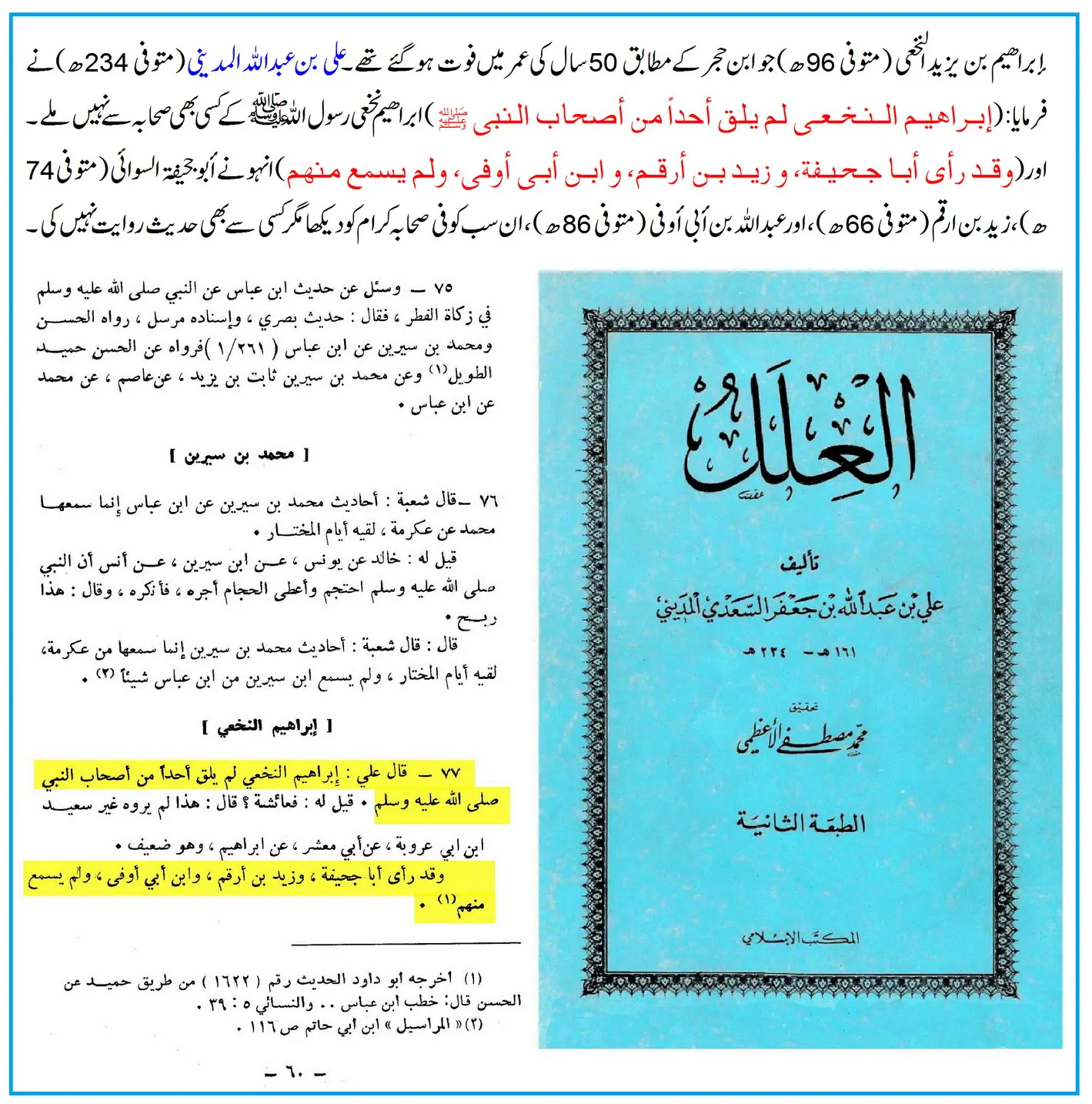
Arabic:
إِبْرَاهِيمُ لَمْ يَسْمَعْ مِنْهُمْ
Translation:
Ibrāhīm saw Abū Juḥayfah, Zayd ibn Arqam, and Ibn Abī Awfā—but did not hear from them.
al-ʿIlal by Ibn al-Madīnī
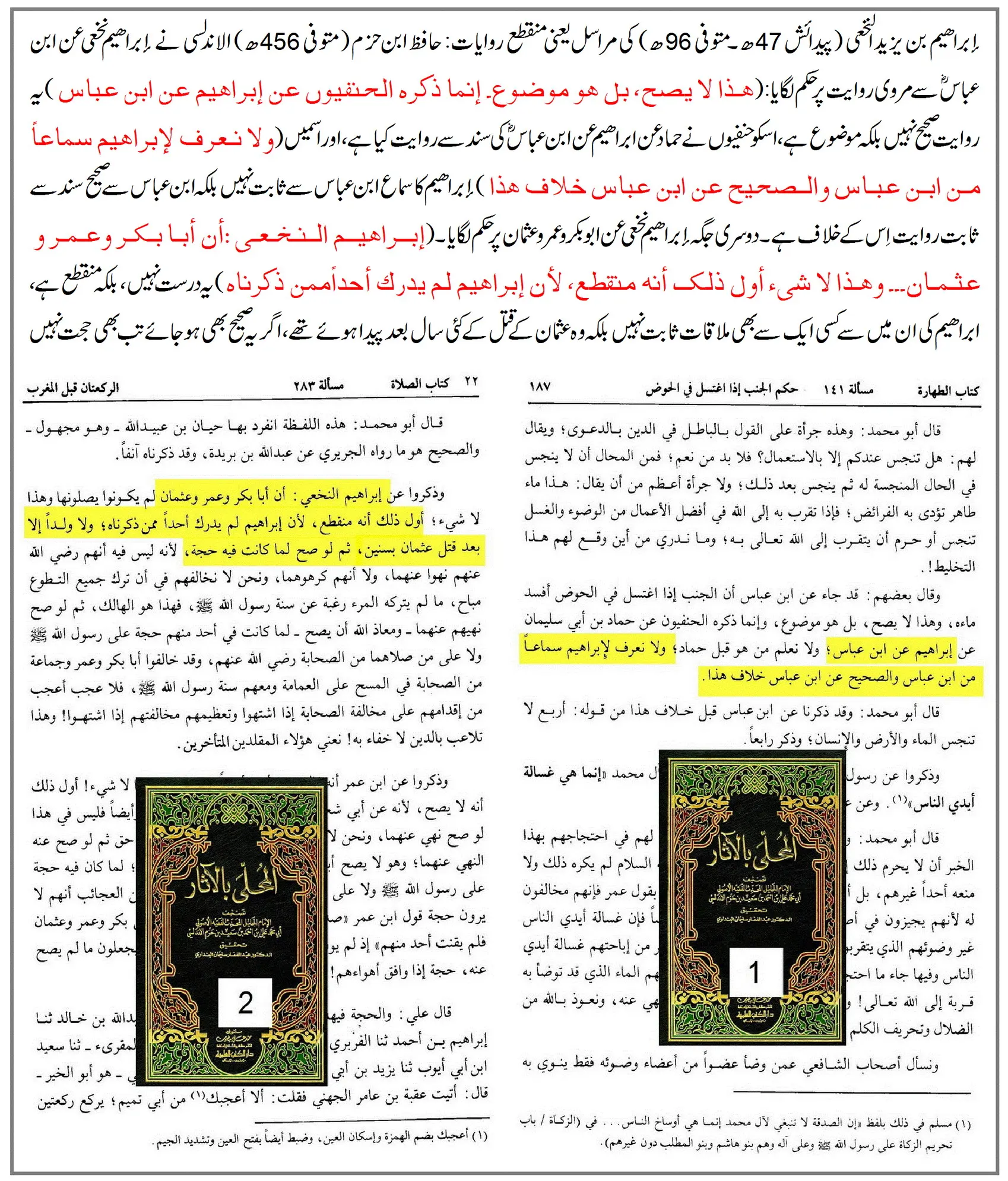
Arabic:
إِبْرَاهِيمَ لَمْ يُدْرِكْ أَحَدًا…
Translation:
Ibrāhīm did not meet any of the people mentioned in his narrations. Hence, they are interrupted and carry no weight.
al-Muḥallā bi’l-Āthār
✔ Consensus of the majority of hadith critics: Ibrāhīm al-Nakhaʿī’s mursal narrations are not valid evidence.
✔ Ibn Abī Ḥātim’s principle:
لا يُحتجّ بالمراسيل، ولا تقوم الحُجّة إلا بالأسانيد الصحاح المتصلة
“No evidence can be established through mursal reports. Only authentic, connected chains are binding.”
al-Jarḥ wa al-Taʿdīl
✔ Claims like “lā baʾs bihā” or “ṣaḥīḥ” for some marāsīl only refer to secondary support (shāhid/mutābaʿ)—not independent proof.
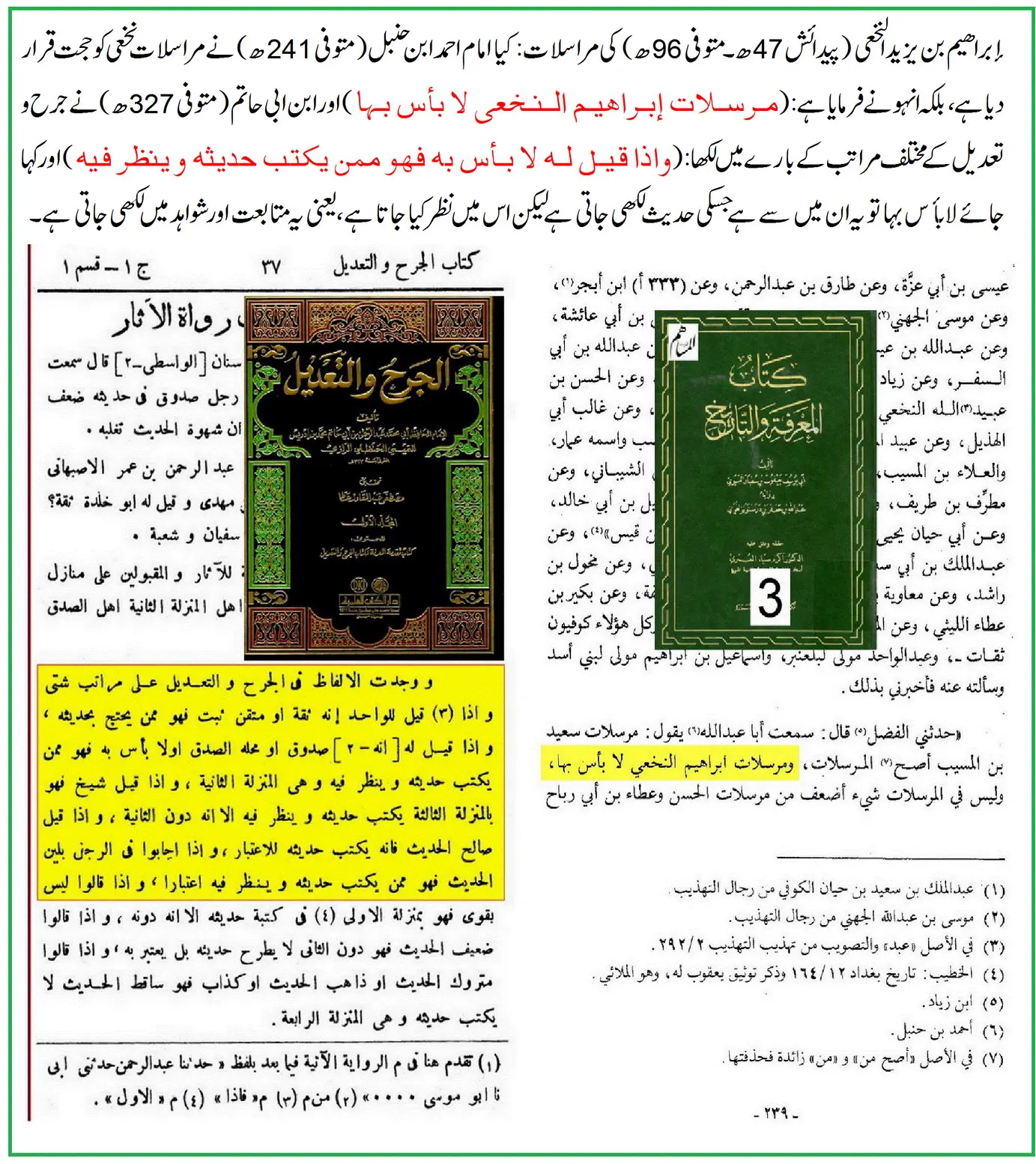
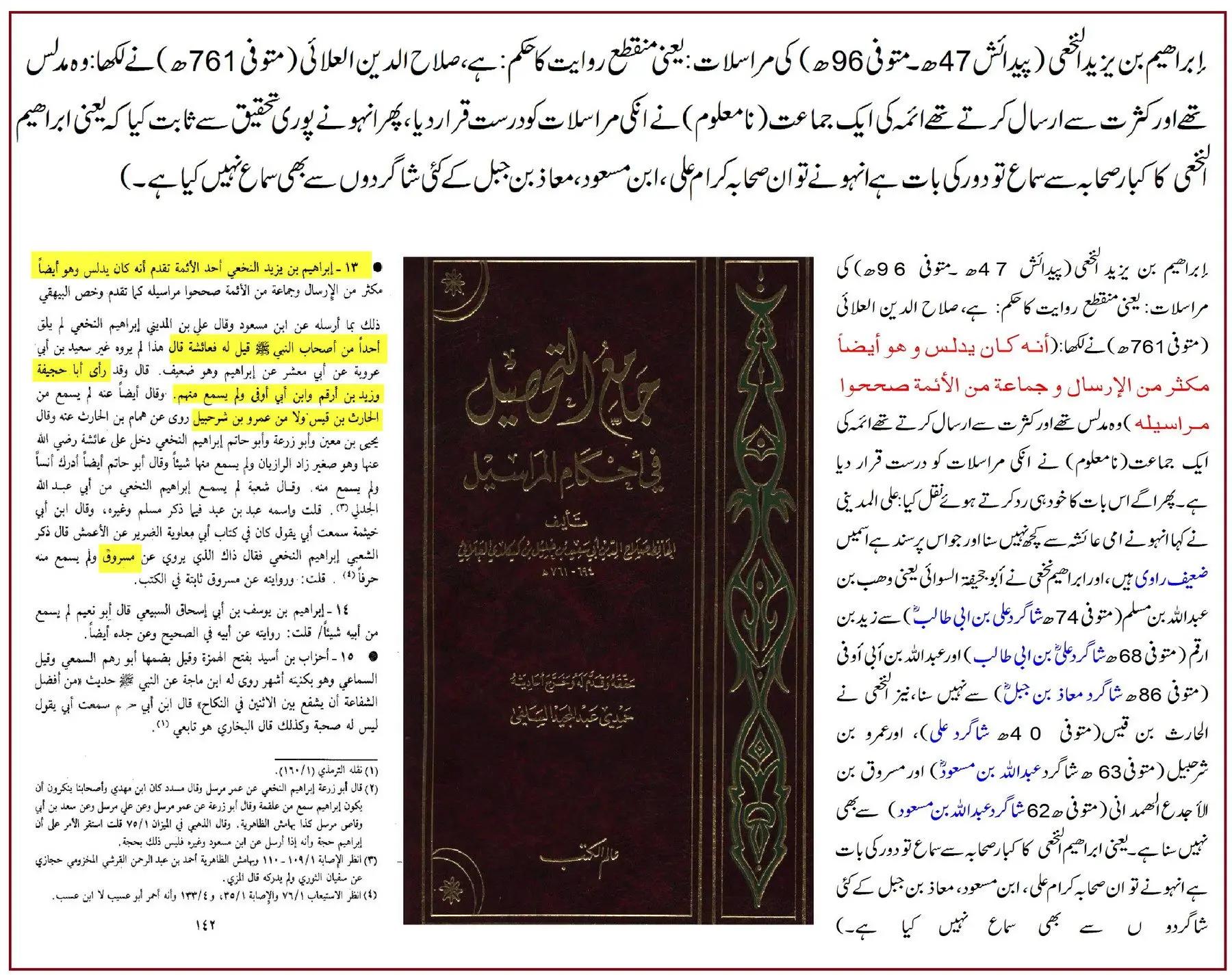
Objection 1: Imām Aḥmad said, “Marāsīl of Ibrāhīm are not problematic.”
Response:
This phrase is a grade 2 term in jarḥ wa taʿdīl. It means the narration is written and reviewed, suitable only for supportive citation—not as standalone evidence.
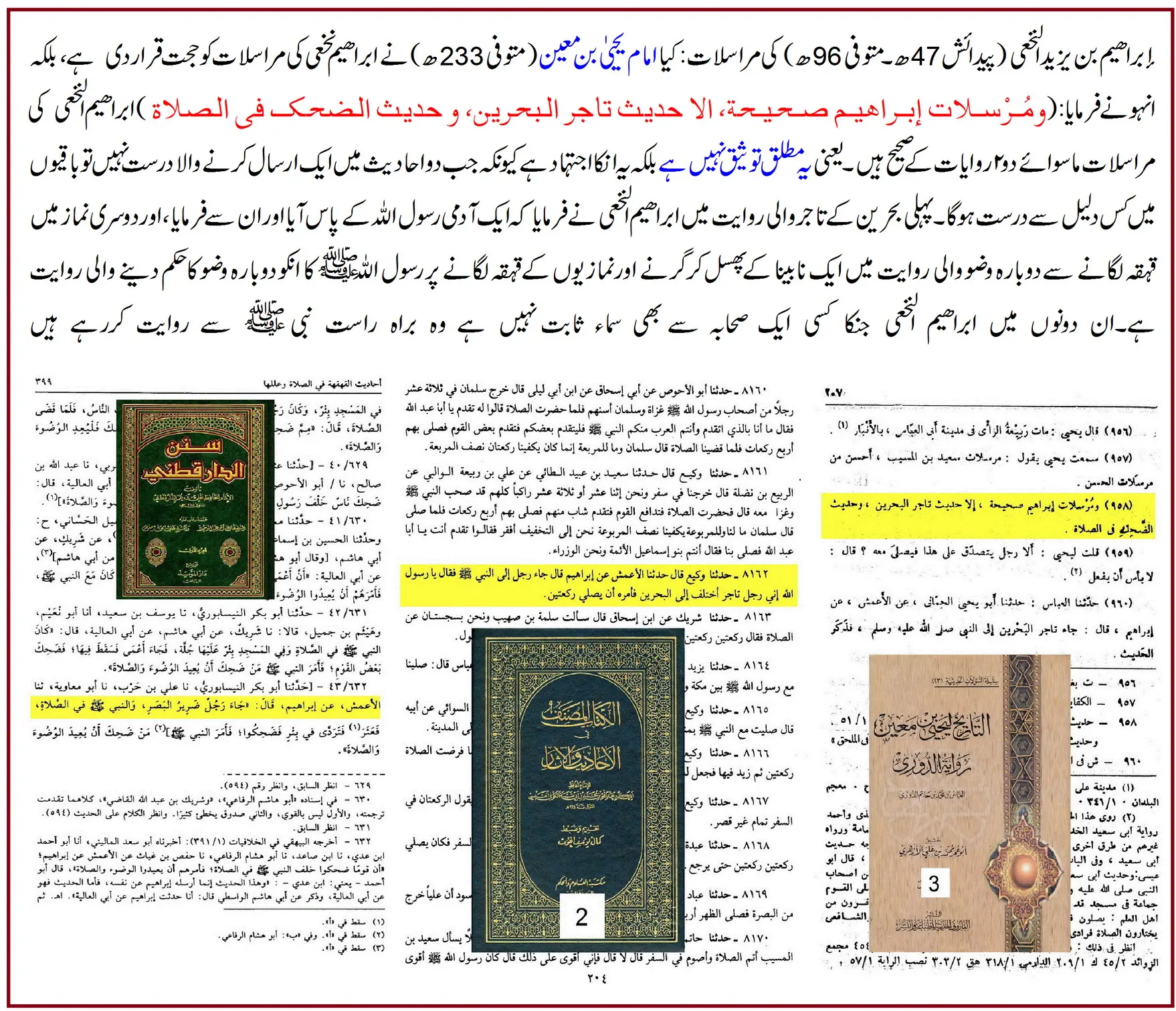
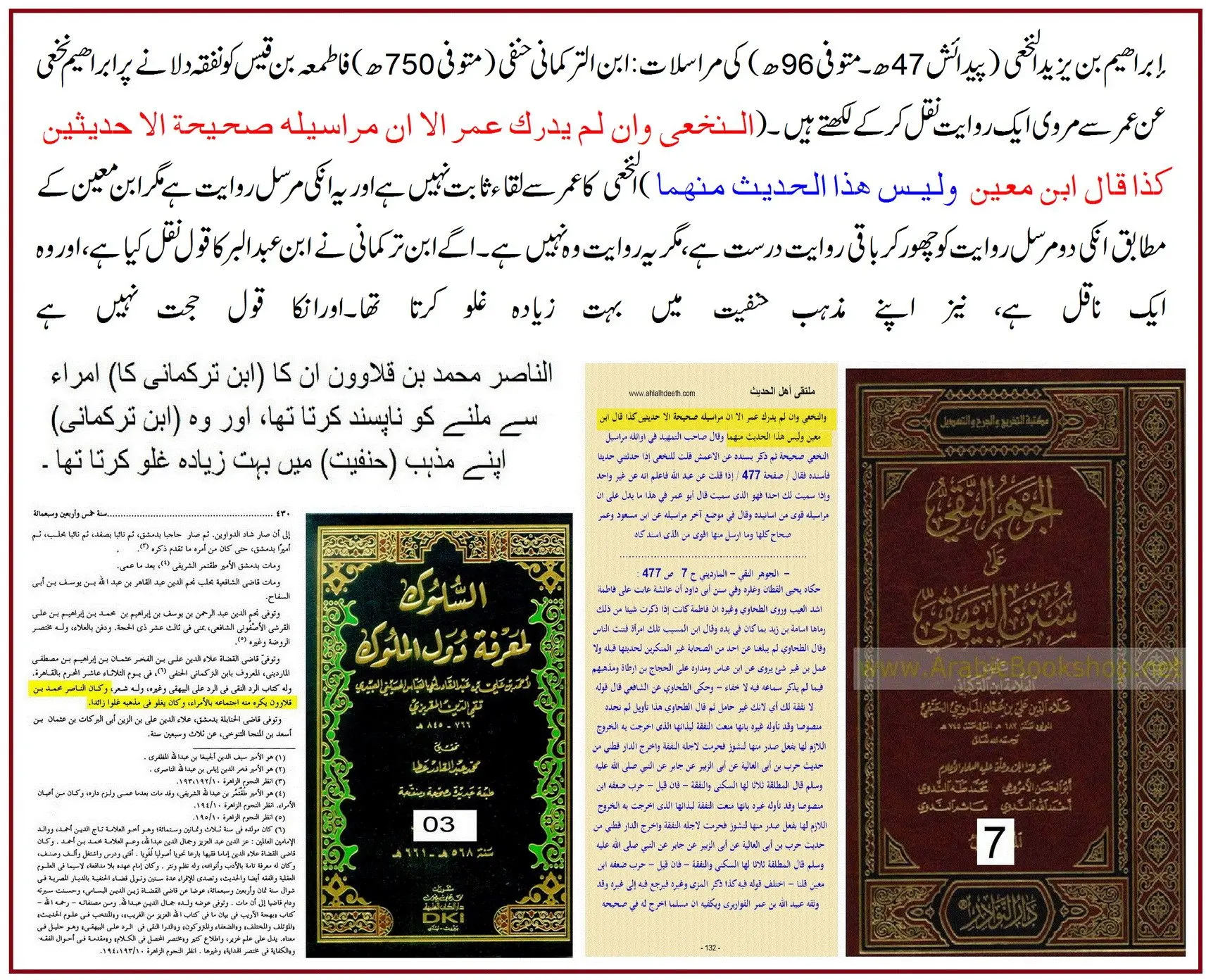
Objection 2: Ibn Maʿīn generally authenticated his marāsīl.
Response:
Even Ibn Maʿīn excluded some (e.g., "Tājir Baḥrayn", "al-Ḍaḥik fī al-Ṣalāh"). So, this is not a blanket authentication, and cannot override the consensus of other critics.
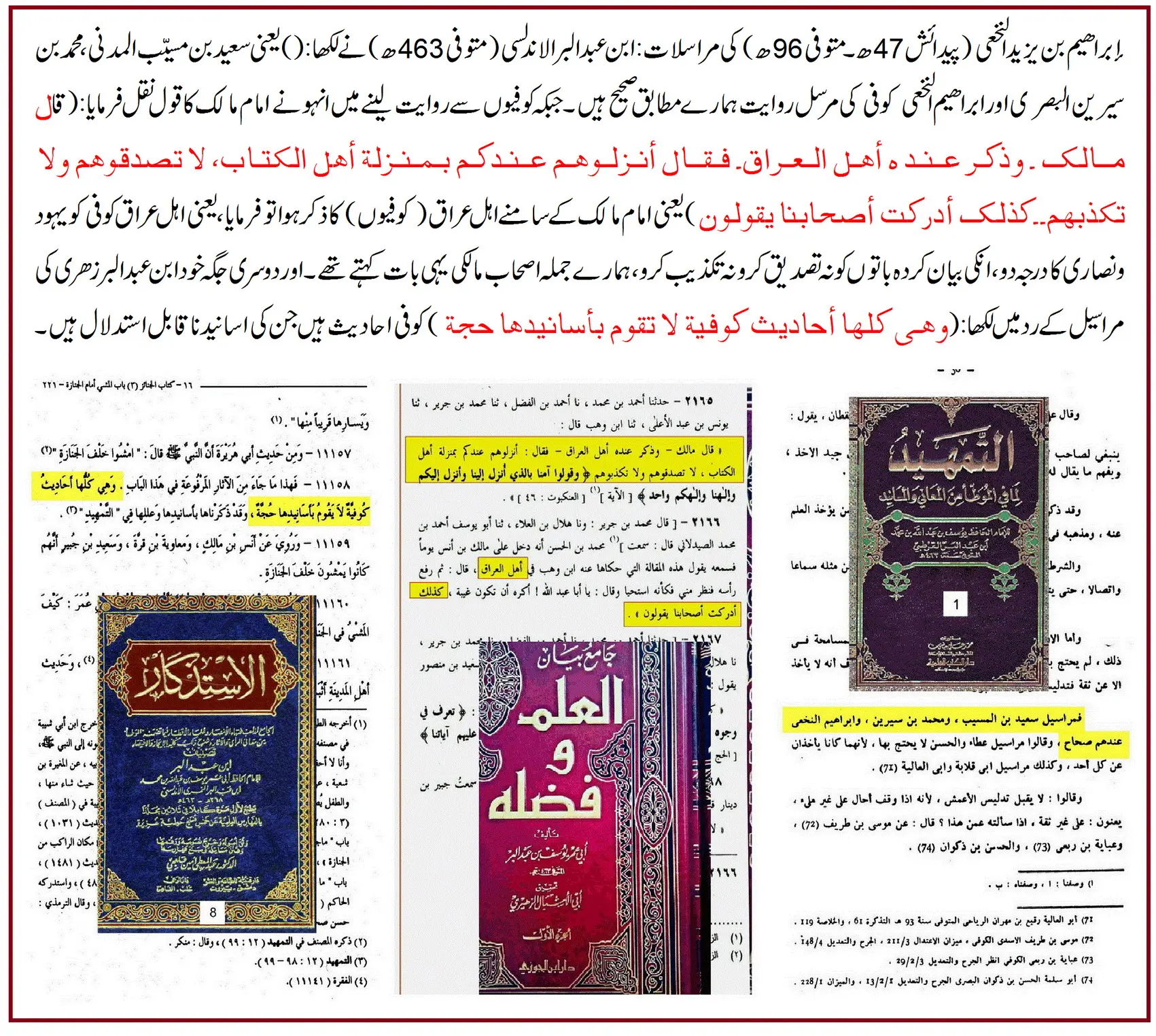
Objection 3: Ibn ʿAbd al-Barr called marāsīl of Nakhaʿī, Ibn Sīrīn, and Saʿīd ibn al-Musayyib “ṣaḥīḥ”.
Response:
This refers to Madinan/Baṣran marāsīl generally. Ḥanafīs favor Kūfan ones. Moreover, Ibn ʿAbd al-Barr warns against Kūfan isnāds elsewhere (see al-Istidhkār, Jāmiʿ Bayān al-ʿIlm).
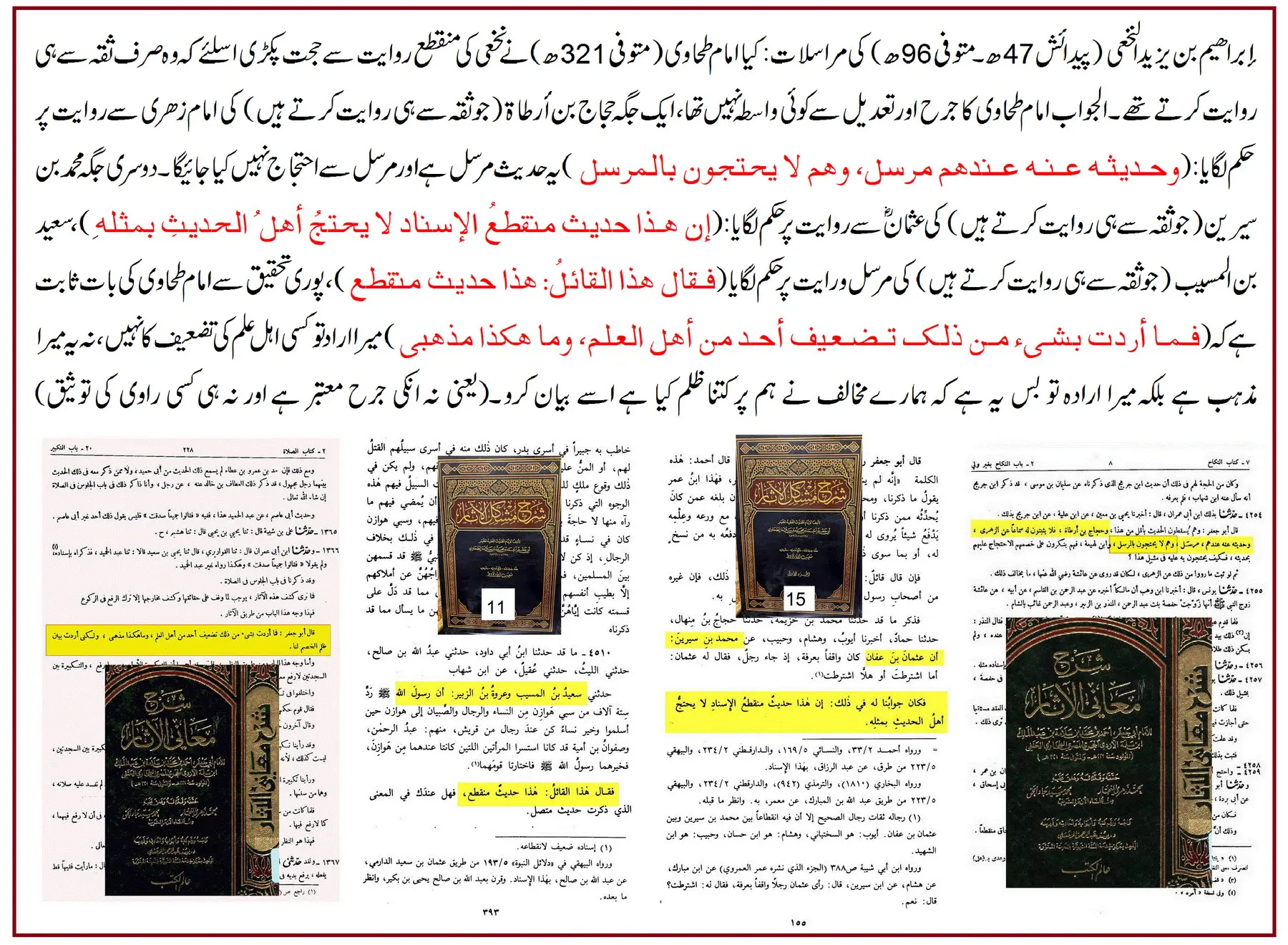
Objection 4: Imām Ṭaḥāwī relied on marāsīl of al-Nakhaʿī.
Response:
He also rejected other marāsīl. His use is contextual, not a principled acceptance of all mursal reports. He himself said: “I did not mean to weaken anyone, only to refute the opponent.” (Sharḥ Maʿānī al-Āthār 1/227)
When encountering a chain like:
Ibrāhīm al-Nakhaʿī → [Companion] or early Tābiʿī
⟶ Check for confirmed hearing (samaʿ).
⟶ If not established, consider the narration mursal/manqūṭiʿ and not valid proof.
⟶ Use only as supportive evidence when backed by authentic, connected reports.
The established principle from hadith scholars is that Ibrāhīm al-Nakhaʿī’s mursal narrations are not independent proof. They may serve in a supporting role, but cannot carry legal or doctrinal weight on their own.
This is the methodology of the majority and the path of the Salaf.
❖ Objective of the Article:
This research article examines how the hadith scholars (muḥaddithūn) evaluated the mursal (disconnected) narrations of Ibrāhīm ibn Yazīd al-Nakhaʿī al-Kūfī. Some Ḥanafīs and their partisan defenders assert that his mursal reports are valid evidence, even claiming that leading imams declared them authentic. However, the majority of hadith critics and scholars explicitly rejected his disconnected reports as non-authoritative.
In this article, we aim to:
① Present statements from 14 hadith scholars who rejected Ibrāhīm al-Nakhaʿī’s mursal narrations.
② Analyze and respond to the evidences cited by Imām Aḥmad, Yaḥyā ibn Maʿīn, and Ibn ʿAbd al-Barr.
③ Uncover contradictions and weak justifications presented by Ḥanafī scholars.
④ Summarize the methodological principles of hadith criticism regarding mursal narrations, and assess where Ibrāhīm al-Nakhaʿī fits within them.
❖ Hadith Scholars Who Rejected Ibrāhīm al-Nakhaʿī’s Mursal Narrations
Imām al-Shāfiʿī رحمه الله
Arabic:
إن إبراهيم النخعي لو روى عن علي وعبد الله لم يقبل منه؛ لأنه لم يلق واحداً منهما.
Translation:
If Ibrāhīm al-Nakhaʿī were to narrate from ʿAlī or ʿAbdullāh (ibn Masʿūd), his narration would not be accepted—because he did not meet either of them.
al-Umm, vol. 10, Ikhtilāf al-ḤadīthImām al-Nawawī رحمه الله
Arabic:
إِبْرَاهِيمَ النَّخَعِيَّ لَمْ يُدْرِكِ ابْنَ مَسْعُودٍ... فَهُوَ مُنْقَطِعٌ ضَعِيفٌ...
Translation:
Ibrāhīm al-Nakhaʿī—by consensus—did not meet Ibn Masʿūd; hence, the narration is disconnected and weak. Therefore, it cannot be used as evidence.
al-Majmūʿ Sharḥ al-MuhadhdhabImām al-Bayhaqī رحمه الله
Arabic:
إِبْرَاهِيمُ لَمْ يَسْمَعْ مِنْ عَبْدِ اللهِ... وَمُرْسَلاتُهُ لَيْسَتْ بِشَيْءٍ.
Translation:
Ibrāhīm did not hear from ʿAbdullāh ibn Masʿūd. His mursal narrations are worthless.
Mukhtaṣar Khalāfiyyāt al-BayhaqīḤāfiẓ al-Dhahabī رحمه الله
Arabic:
إذا أرسل عن ابن مسعود وغيره فليس ذلك بحجة.
Translation:
Though Ibrāhīm is a trustworthy authority, when he narrates mursal from Ibn Masʿūd or others, it is not a valid proof.
Mīzān al-Iʿtidālal-Haythamī رحمه الله
Arabic:
إِبْرَاهِيمَ لَمْ يَسْمَعِ ابْنَ مَسْعُودٍ
Translation:
Ibrāhīm al-Nakhaʿī did not hear from Ibn Masʿūd.
Majmaʿ al-Zawāʾidal-Zaylaʿī al-Ḥanafī رحمه الله
Arabic:
إِبْرَاهِيمُ لَمْ يَلْقَ عَبْدَ اللهِ بْنَ مَسْعُودٍ، فَهُوَ ضَعِيفٌ وَمُنْقَطِعٌ
Translation:
Ibrāhīm did not meet ʿAbdullāh ibn Masʿūd; thus the narration is weak and disconnected.
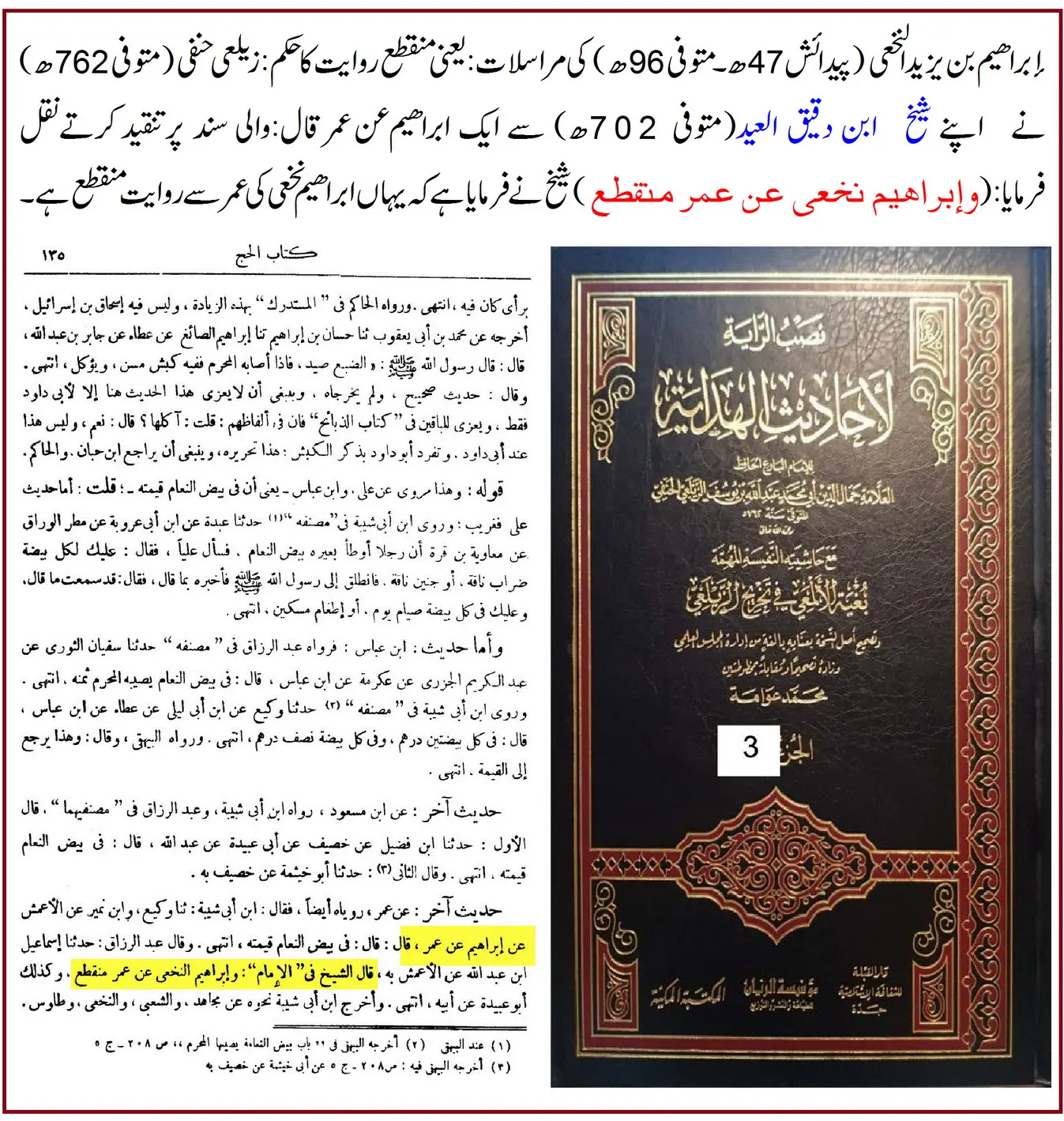
Naṣb al-RāyahḤāfiẓ Ibn Ḥajar al-ʿAsqalānī رحمه الله
Arabic:
وَهَذَا مُنْقَطِعٌ
Translation:
The narration from ʿUmar via Ibrāhīm al-Nakhaʿī is interrupted.
al-Dirāyah fī Takhrīj Aḥādīth al-HidāyahIbn Daqīq al-ʿĪd رحمه الله
Arabic:
إِبْرَاهِيمُ النَّخَعِيُّ عَنْ عُمَرَ مُنْقَطِعٌ
Translation:
Ibrāhīm al-Nakhaʿī’s report from ʿUmar is disconnected.
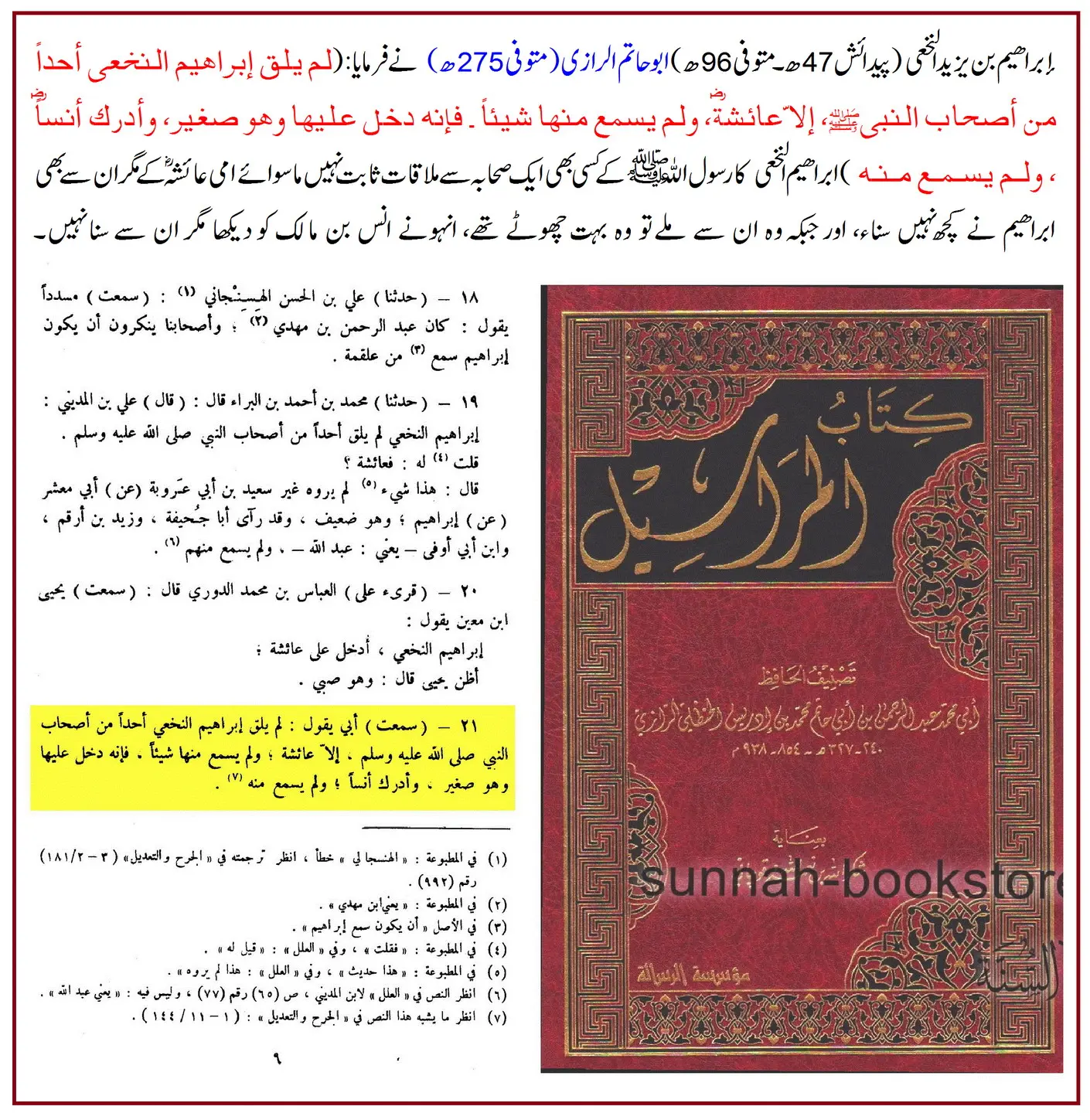
Naṣb al-RāyahImām Abū Ḥātim al-Rāzī رحمه الله
Arabic:
لَمْ يَلْقَ إِبْرَاهِيمُ أَحَدًا مِنْ أَصْحَابِ النَّبِيِّ…
Translation:
Ibrāhīm al-Nakhaʿī met none of the Prophet’s Companions ﷺ, except ʿĀʾishah, from whom he did not hear anything.
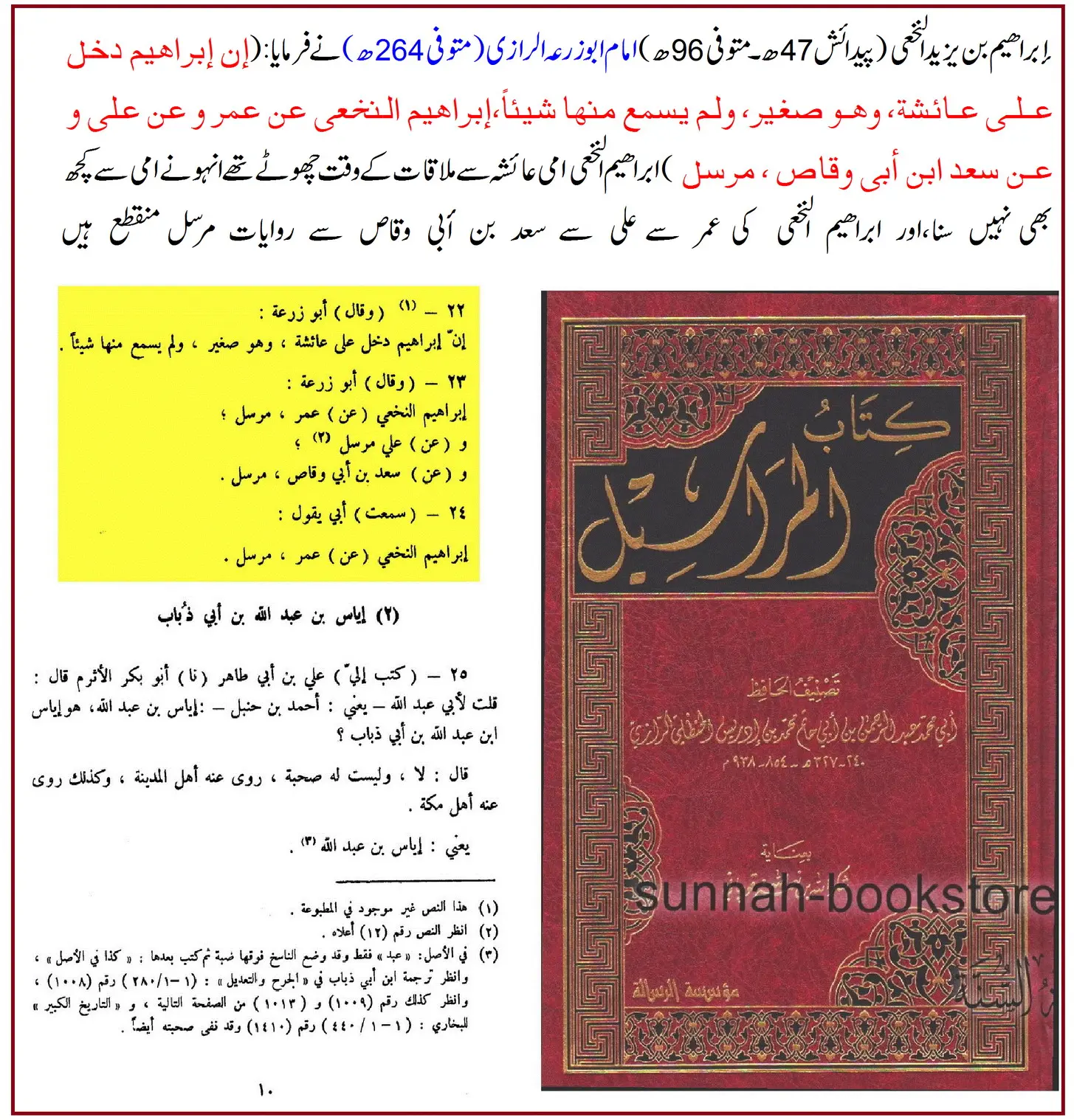
al-MarāsīlImām Abū Zurʿah al-Rāzī رحمه الله
Arabic:
عَنْ عُمَرَ مُرْسَلٌ، وَعَنْ عَلِيٍّ مُرْسَلٌ…
Translation:
His narrations from ʿUmar, ʿAlī, and Saʿd ibn Abī Waqqāṣ are mursal.
al-MarāsīlShuʿbah ibn al-Ḥajjāj رحمه الله
Arabic:
كَانَ يُضَعِّفُ إِبْرَاهِيمَ عَنْ عَلِيٍّ
Translation:
Shuʿbah considered Ibrāhīm’s narrations from ʿAlī to be weak.
al-Jarḥ wa al-TaʿdīlImām al-Dāraquṭnī رحمه الله (via Ibn Mahdī)
Arabic:
لَا تَأْخُذُوا بِمَرَاسِيلِ الْحَسَنِ وَلَا أَبِي الْعَالِيَةِ
Translation:
Do not rely on the mursal narrations of al-Ḥasan or Abū al-ʿĀliyah—they don’t care whom they narrate from.
Sunan al-DāraquṭnīʿAlī ibn ʿAbdullāh al-Madīnī رحمه الله
Arabic:
إِبْرَاهِيمُ لَمْ يَسْمَعْ مِنْهُمْ
Translation:
Ibrāhīm saw Abū Juḥayfah, Zayd ibn Arqam, and Ibn Abī Awfā—but did not hear from them.
al-ʿIlal by Ibn al-MadīnīIbn Ḥazm رحمه الله
Arabic:
إِبْرَاهِيمَ لَمْ يُدْرِكْ أَحَدًا…
Translation:
Ibrāhīm did not meet any of the people mentioned in his narrations. Hence, they are interrupted and carry no weight.
al-Muḥallā bi’l-Āthār❖ Summary of Hadith Principles Regarding Mursal Narrations
✔ Consensus of the majority of hadith critics: Ibrāhīm al-Nakhaʿī’s mursal narrations are not valid evidence.
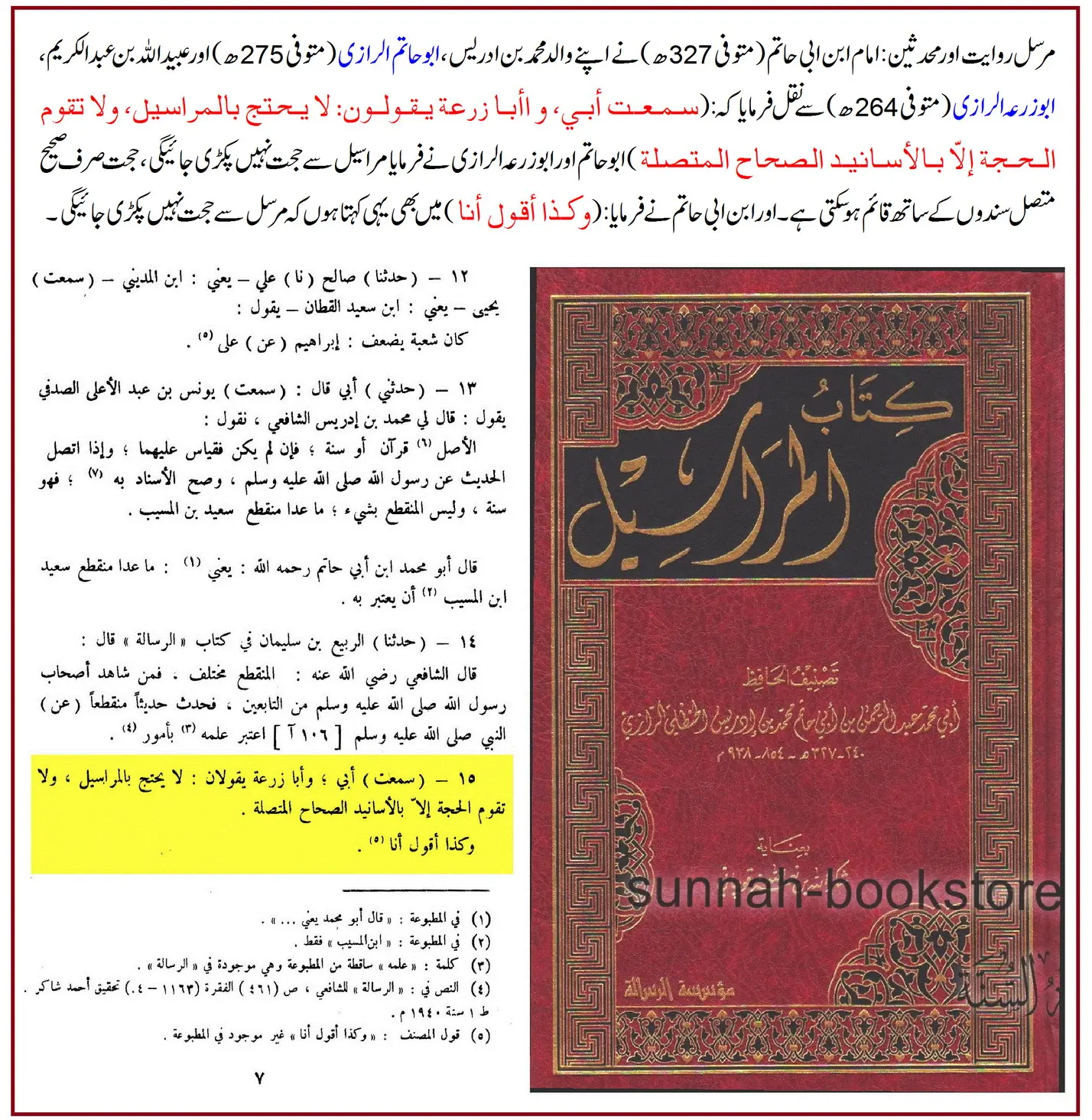
✔ Ibn Abī Ḥātim’s principle:
لا يُحتجّ بالمراسيل، ولا تقوم الحُجّة إلا بالأسانيد الصحاح المتصلة
“No evidence can be established through mursal reports. Only authentic, connected chains are binding.”
al-Jarḥ wa al-Taʿdīl✔ Claims like “lā baʾs bihā” or “ṣaḥīḥ” for some marāsīl only refer to secondary support (shāhid/mutābaʿ)—not independent proof.
❖ Responses to Common Objections
Objection 1: Imām Aḥmad said, “Marāsīl of Ibrāhīm are not problematic.”
Response:
This phrase is a grade 2 term in jarḥ wa taʿdīl. It means the narration is written and reviewed, suitable only for supportive citation—not as standalone evidence.
Objection 2: Ibn Maʿīn generally authenticated his marāsīl.
Response:
Even Ibn Maʿīn excluded some (e.g., "Tājir Baḥrayn", "al-Ḍaḥik fī al-Ṣalāh"). So, this is not a blanket authentication, and cannot override the consensus of other critics.
Objection 3: Ibn ʿAbd al-Barr called marāsīl of Nakhaʿī, Ibn Sīrīn, and Saʿīd ibn al-Musayyib “ṣaḥīḥ”.
Response:
This refers to Madinan/Baṣran marāsīl generally. Ḥanafīs favor Kūfan ones. Moreover, Ibn ʿAbd al-Barr warns against Kūfan isnāds elsewhere (see al-Istidhkār, Jāmiʿ Bayān al-ʿIlm).
Objection 4: Imām Ṭaḥāwī relied on marāsīl of al-Nakhaʿī.
Response:
He also rejected other marāsīl. His use is contextual, not a principled acceptance of all mursal reports. He himself said: “I did not mean to weaken anyone, only to refute the opponent.” (Sharḥ Maʿānī al-Āthār 1/227)
 Practitioner’s Note
When encountering a chain like:
Ibrāhīm al-Nakhaʿī → [Companion] or early Tābiʿī
⟶ Check for confirmed hearing (samaʿ).
⟶ If not established, consider the narration mursal/manqūṭiʿ and not valid proof.
⟶ Use only as supportive evidence when backed by authentic, connected reports.
 Final Words
The established principle from hadith scholars is that Ibrāhīm al-Nakhaʿī’s mursal narrations are not independent proof. They may serve in a supporting role, but cannot carry legal or doctrinal weight on their own.
This is the methodology of the majority and the path of the Salaf.
