


✍ Compiled by: Abū Ḥamzah Salafī
Was Imām Yaḥyā ibn Saʿīd al-Qaṭṭān (d. 198 AH), one of the leading scholars of al-Jarḥ wa al-Taʿdīl and whom Ḥāfiẓ al-Dhahabī titled “Amīr al-Mu’minīn fī al-Ḥadīth”, truly a follower or adherent of the Ḥanafī school?
This article aims to critically and academically evaluate this issue. All arguments presented by the opposing side will be cited and then thoroughly analyzed in the light of ḥadīth principles and scholarly critique.
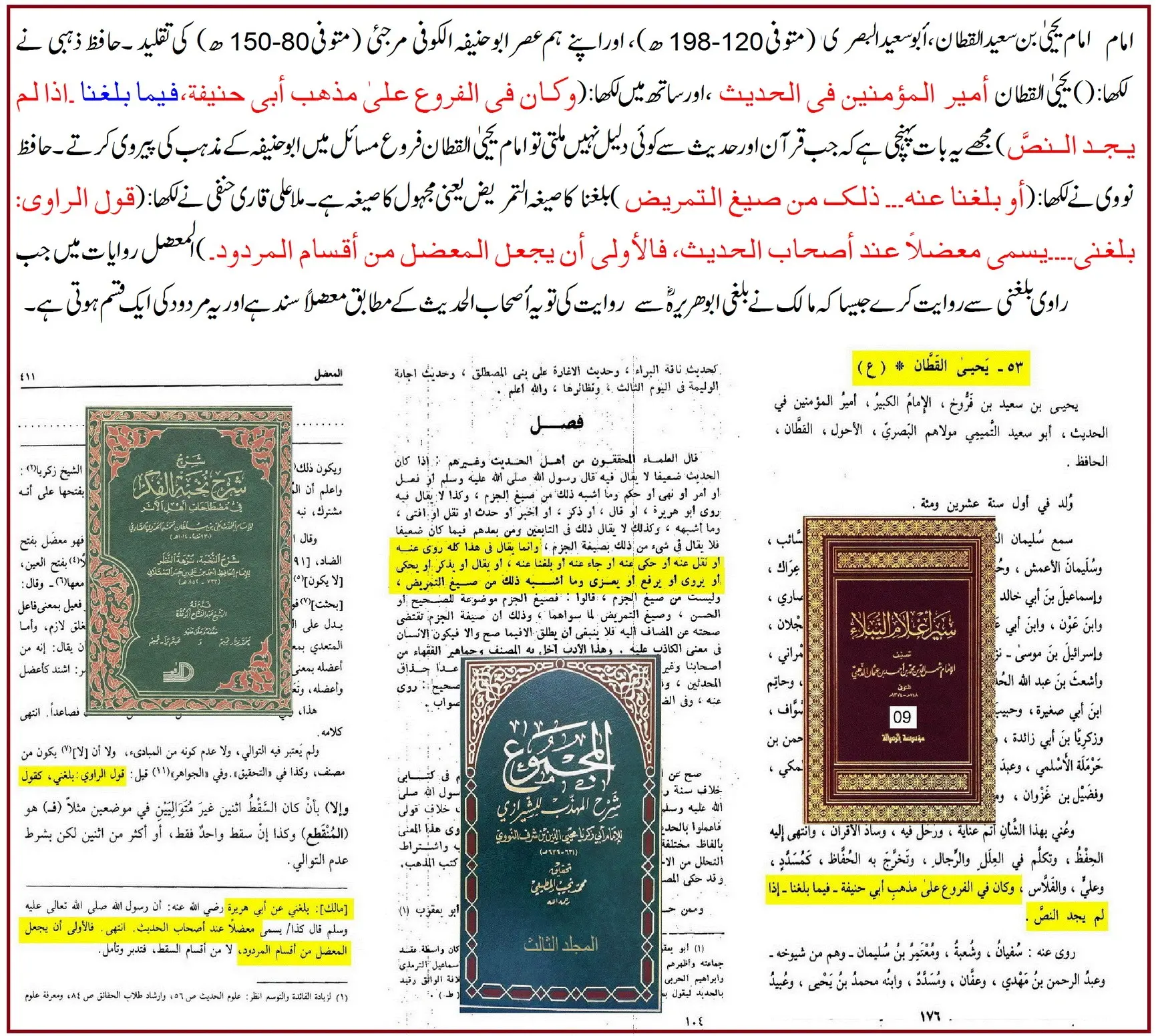
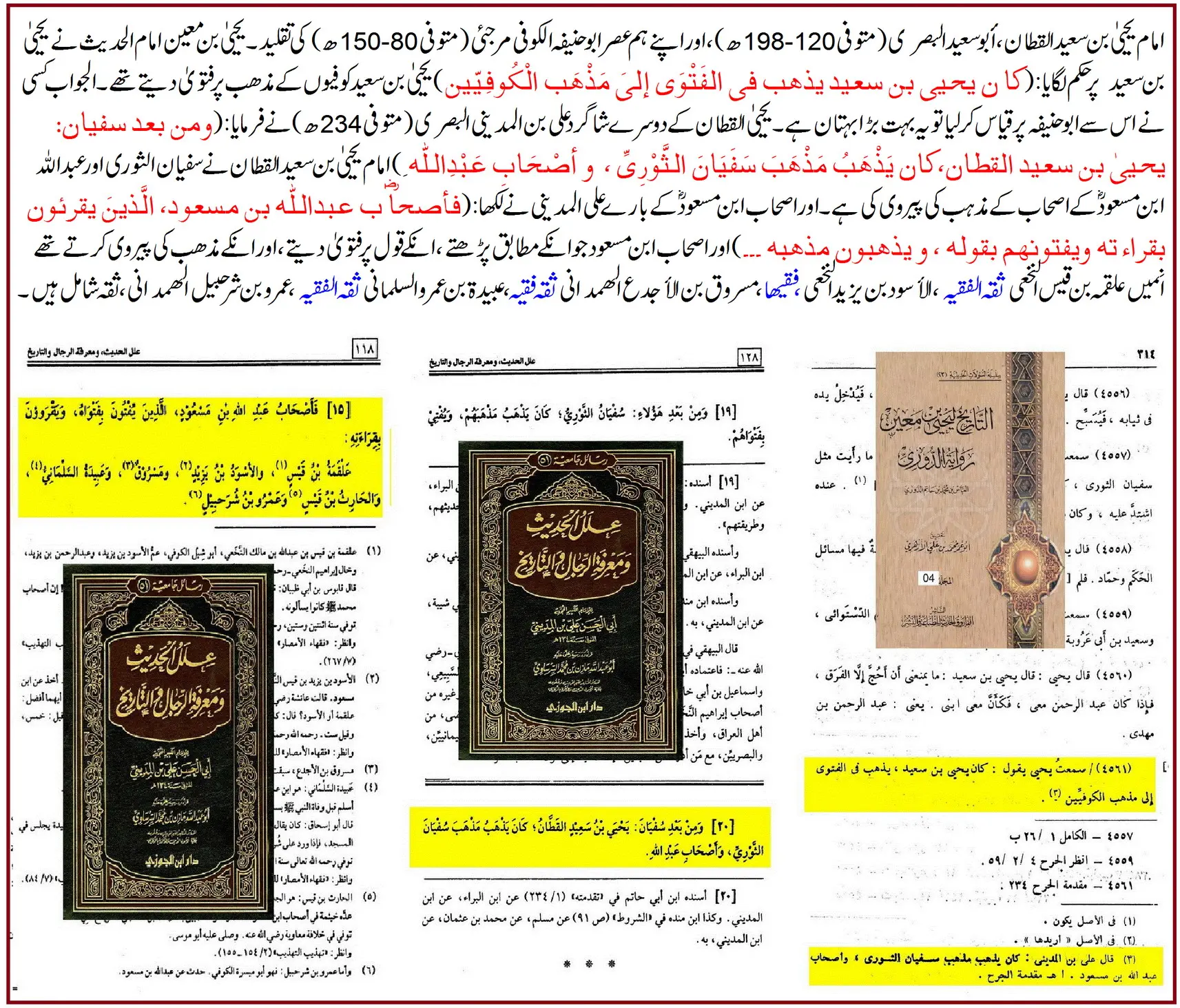
وكان في الفروع على مذهب أبي حنيفة – فيما بلغنا – إذا لم يجد النص
Source: Siyar Aʿlām al-Nubalāʾ, Entry: 1366
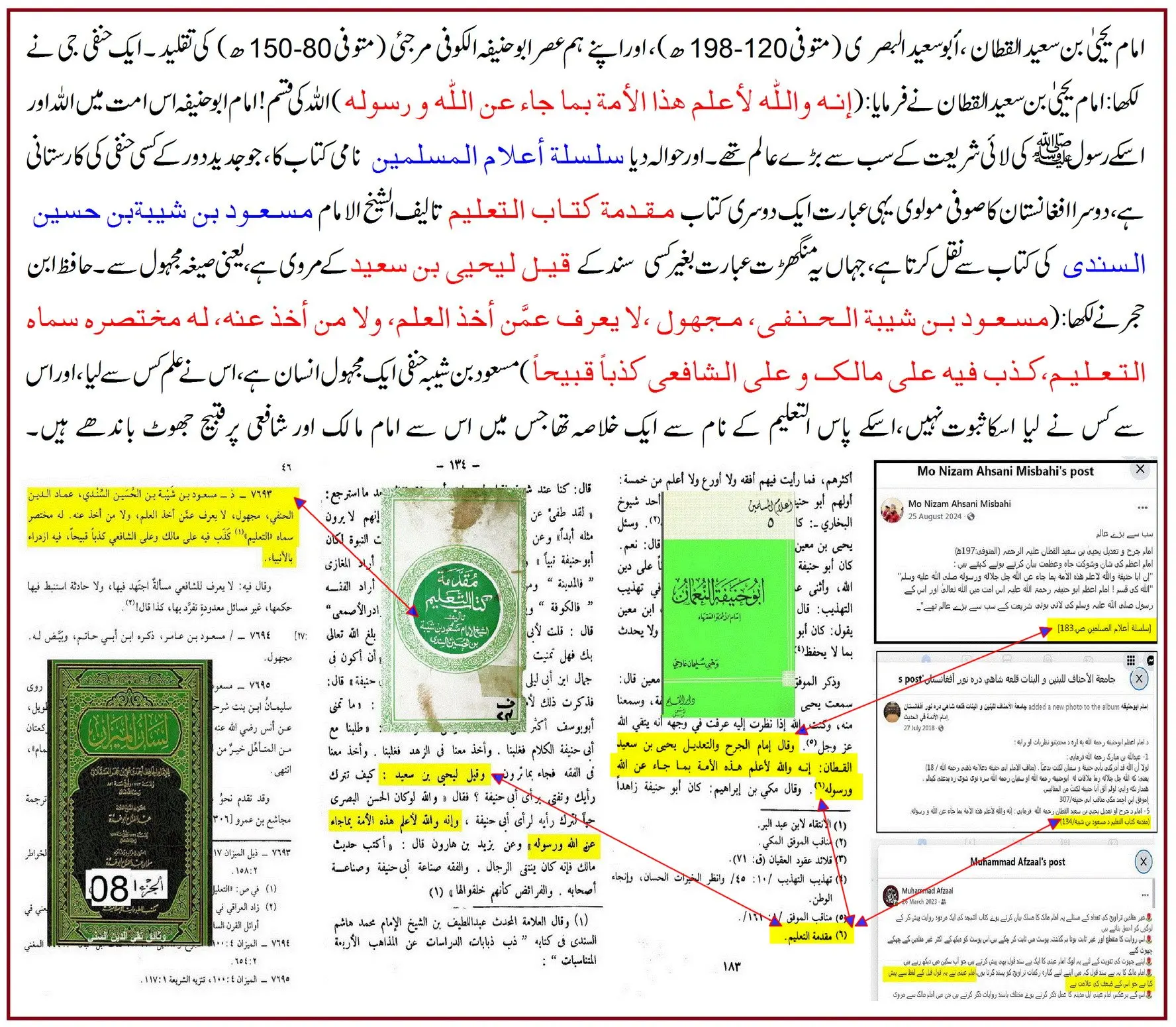
Translation:
“It has reached us that Imām Yaḥyā ibn Saʿīd al-Qaṭṭān, in the absence of clear textual evidence (naṣṣ), used to issue fatāwā on subsidiary matters according to the madhhab of Abū Ḥanīfah.”
Ḥāfiẓ al-Dhahabī uses the phrase "فيمَا بلغنا" (It has reached us), which is a ** صيغة التمريض (expression of uncertainty)** — a well-known term in the science of ḥadīth indicating weakness or unreliability.
 Statements from the Scholars:
❖ Imām al-Nawawī رحمه الله:
"بلغنا" is among the expressions of uncertainty used for weak and unauthenticated narrations.
(al-Majmūʿ Sharḥ al-Muhadhdhab)
❖ Mullā ʿAlī al-Qārī (Ḥanafī) رحمه الله:
"بلغني" is classified by ḥadīth experts as muʿḍal (severely weak), a category of rejected ḥadīth.
(Sharḥ Nukhbat al-Fikar)
The core phrase "بلغنا" is unreliable in terms of ḥadīth standards. Hence, attributing taqlīd (blind following) of Abū Ḥanīfah to Imām al-Qaṭṭān based on this is academically invalid.
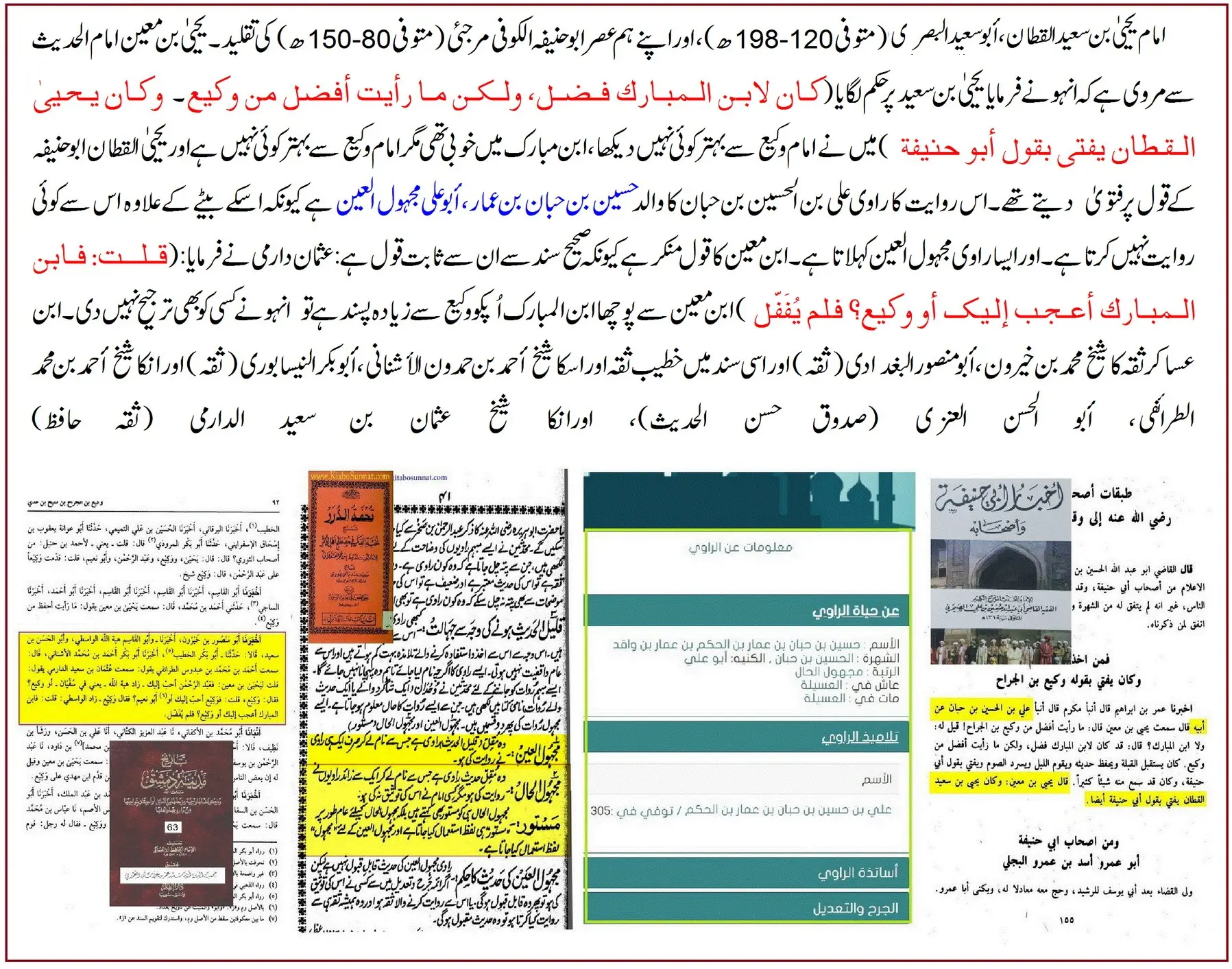
“Yaḥyā ibn Maʿīn said: Wakiʿ was the best person I saw… he would issue fatāwā according to Abū Ḥanīfah's opinion, and so did Yaḥyā ibn Saʿīd al-Qaṭṭān.”
Source: Akhbār Abī Ḥanīfah wa Aṣḥābih, al-Ṣaymarī
This chain includes Ḥusayn ibn Ḥibbān ibn ʿAmmār Abū ʿAlī, who is majhūl al-ʿayn (unknown).
Judgement on Majhūl al-ʿAyn:
❖ Ḥāfiẓ Ibn Ḥajar رحمه الله:
“If a narrator is named, but only one person narrates from him, he is majhūl al-ʿayn.”
(Nukhbat al-Fikar)
❖ In this case, the only narrator from Ḥusayn ibn Ḥibbān is his son, hence the narration is unacceptable.
An authentic narration from Yaḥyā ibn Maʿīn states:
“He gave no preference between Ibn al-Mubārak and Wakiʿ.”
(Tārīkh Dimashq, vol. 63, p. 341)
With a sound chain including trustworthy narrators:
This second evidence is based on a weak chain contradicted by an authentic report. Therefore, it does not establish that Imām al-Qaṭṭān was a Ḥanafī.
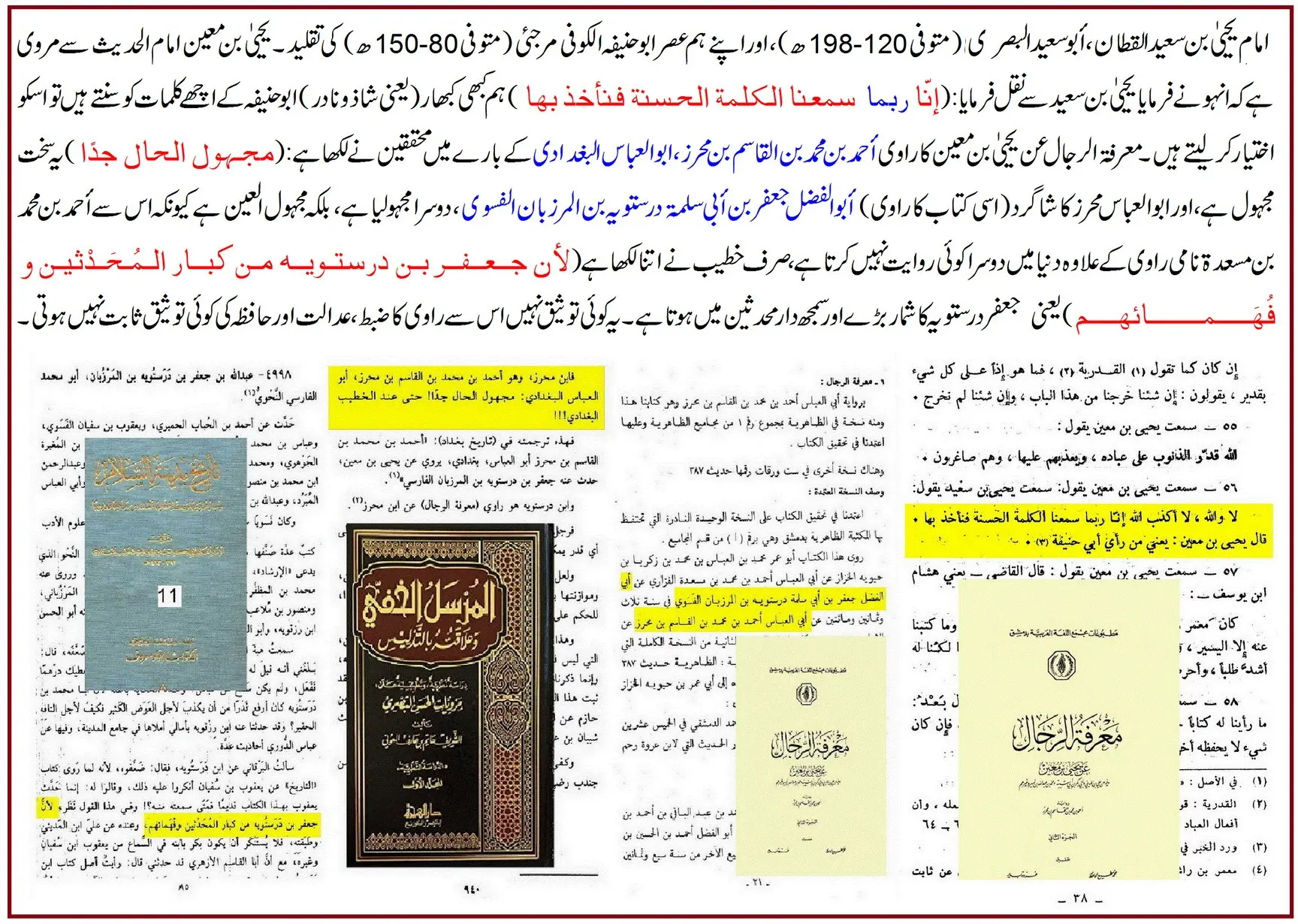
Ibn Maʿīn said: ‘He meant the opinion of Abū Ḥanīfah.’”
(Maʿrifat al-Rijāl by Ibn Maʿīn, narration of Ibn Maḥraz)
The chain contains:
The content also does not indicate taqlīd, only that he would occasionally accept a sound opinion, which is not the same as taqlīd.
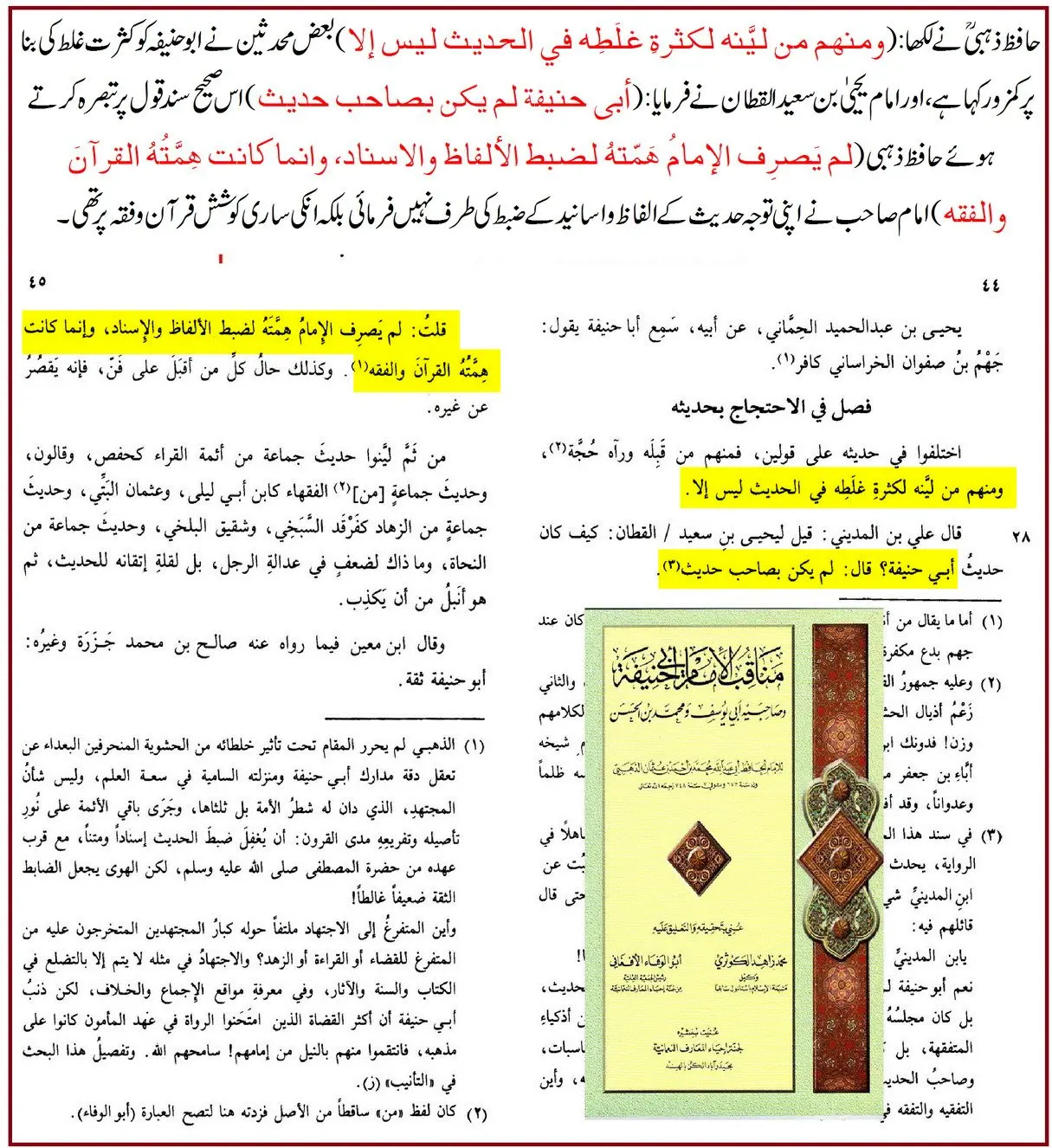
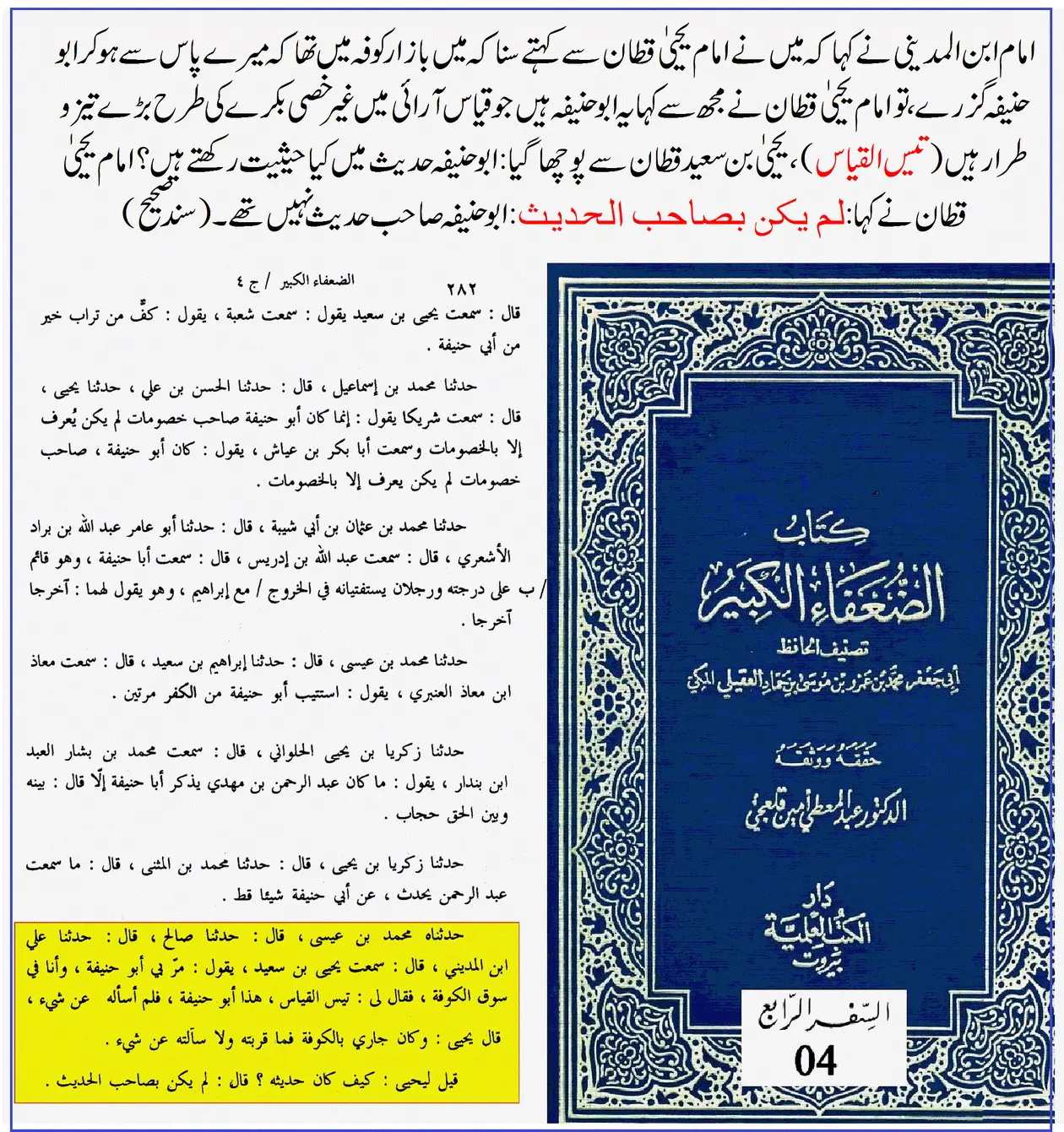
❖ Imām al-Qaṭṭān said regarding Abū Ḥanīfah:
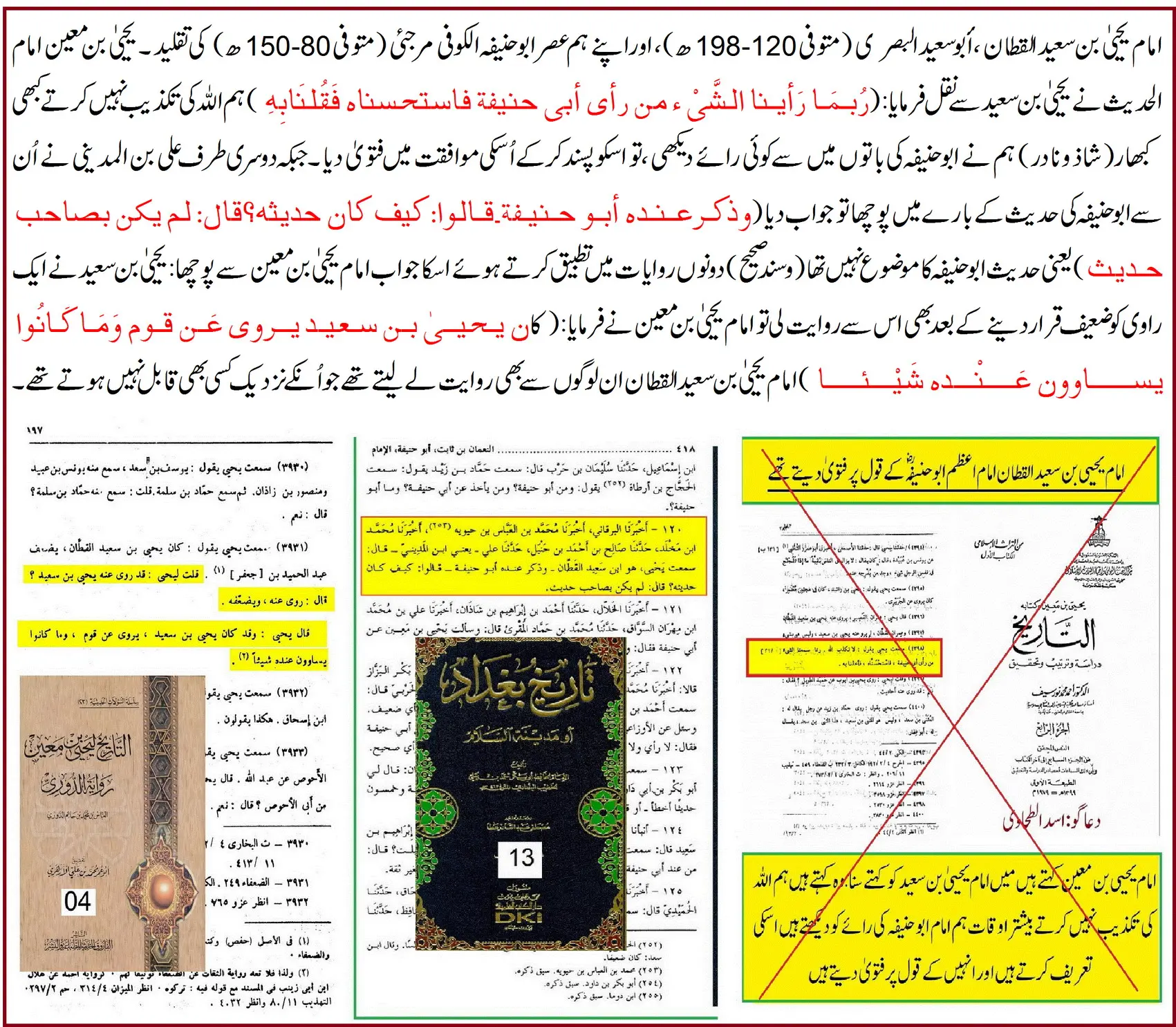
"He was not a ḥadīth scholar."
(Tārīkh Baghdād) – with a ṣaḥīḥ isnād from Imām Ibn al-Madīnī
This narration is both weak in chain and void of any claim of taqlīd.
(Tārīkh Ibn Maʿīn, Riwayah al-Dūrī: 2530)
The key word is "ربما" (sometimes) — this explicitly contradicts the concept of taqlīd.
Definition of Taqlīd:
"Accepting a scholar's opinion merely because it is his, without evidence."
This narration shows selective acceptance based on reason and agreement, not blind following.
Moreover, Imām al-Qaṭṭān made critical statements against Abū Ḥanīfah, as stated earlier.
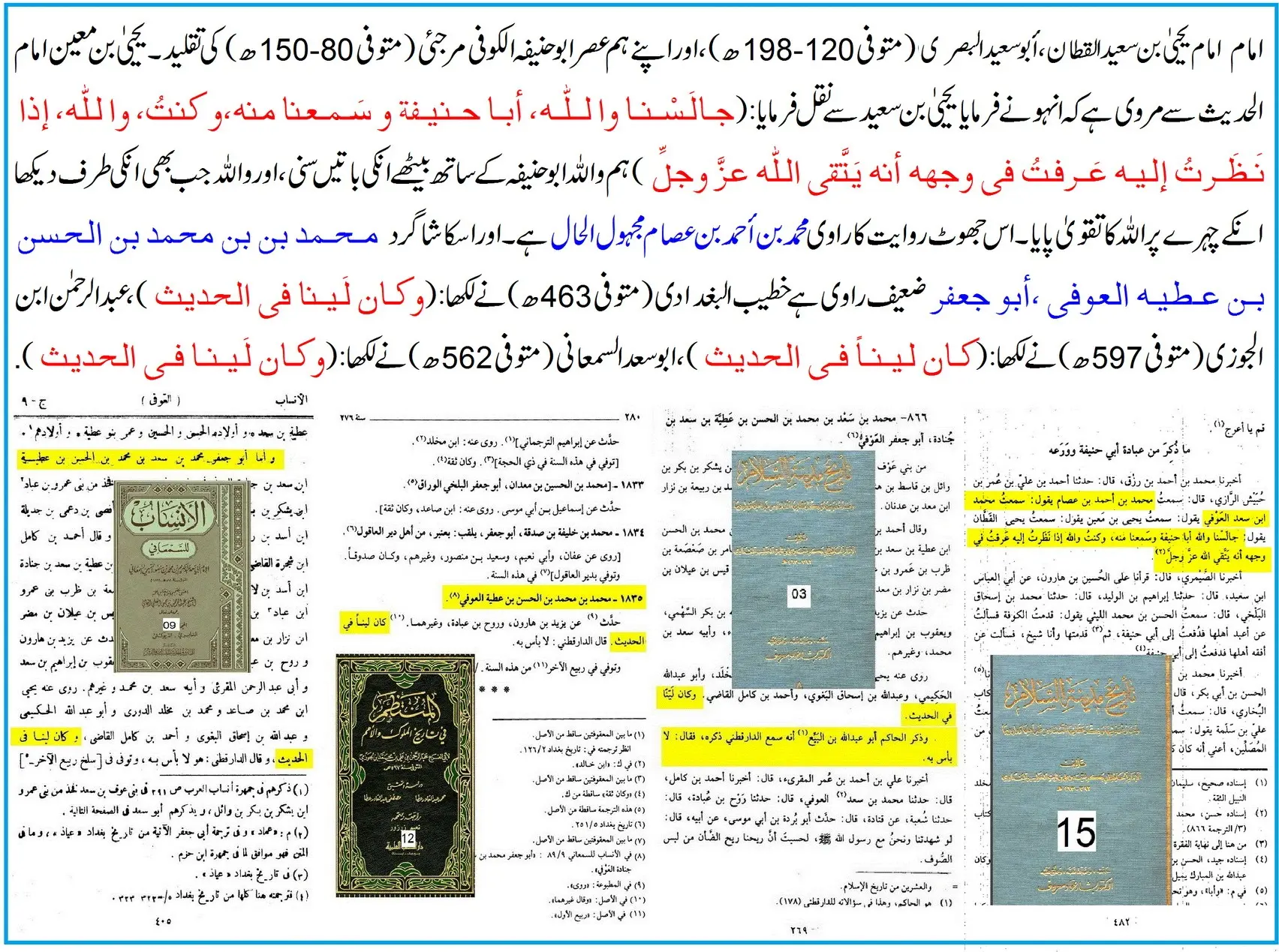
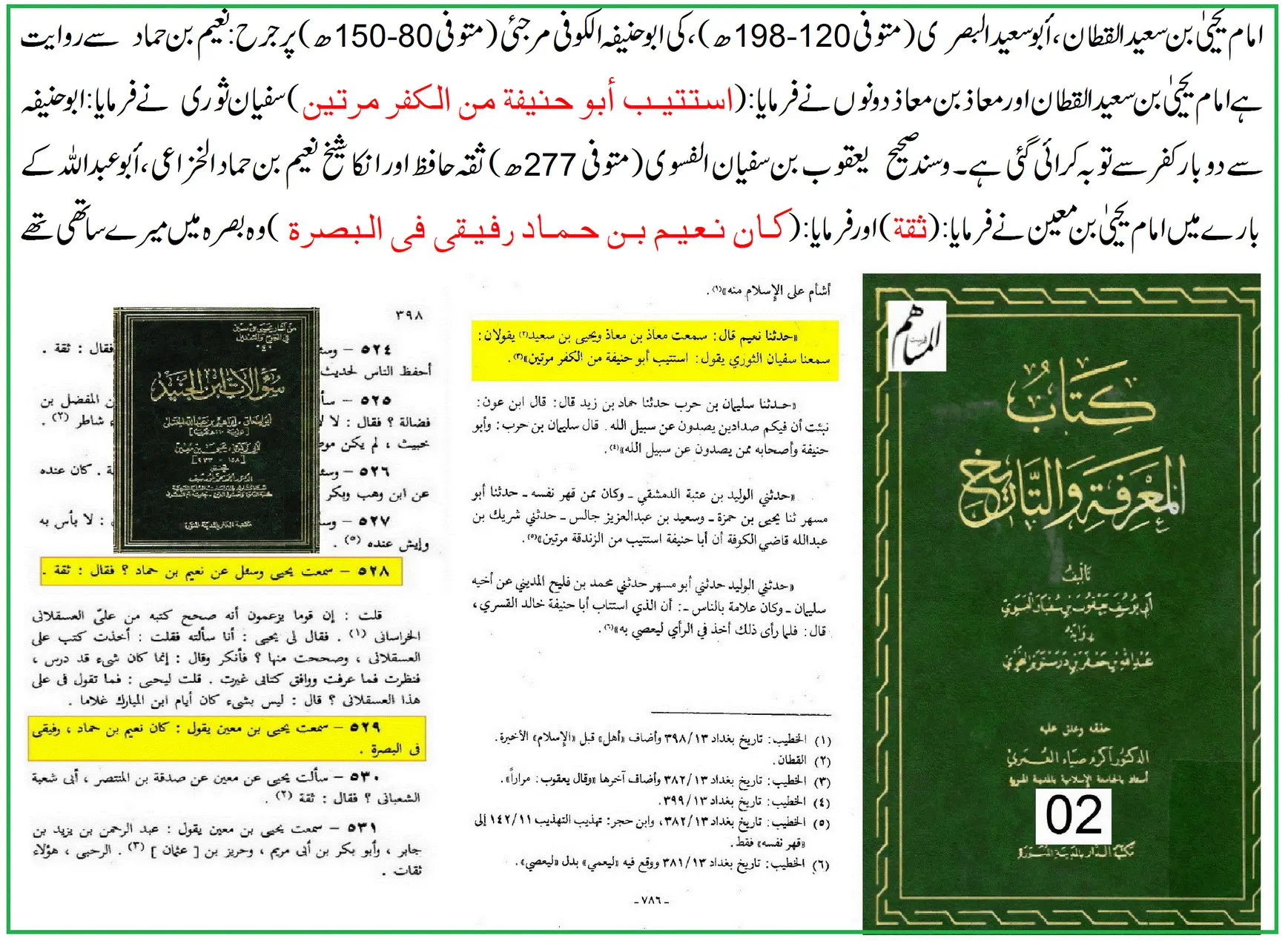
He would also sometimes narrate from people he considered weak:
“He would narrate from some people who were worthless in his sight.”
(Tārīkh Ibn Maʿīn)
This is not taqlīd, but independent scholarly judgment and occasional agreement.
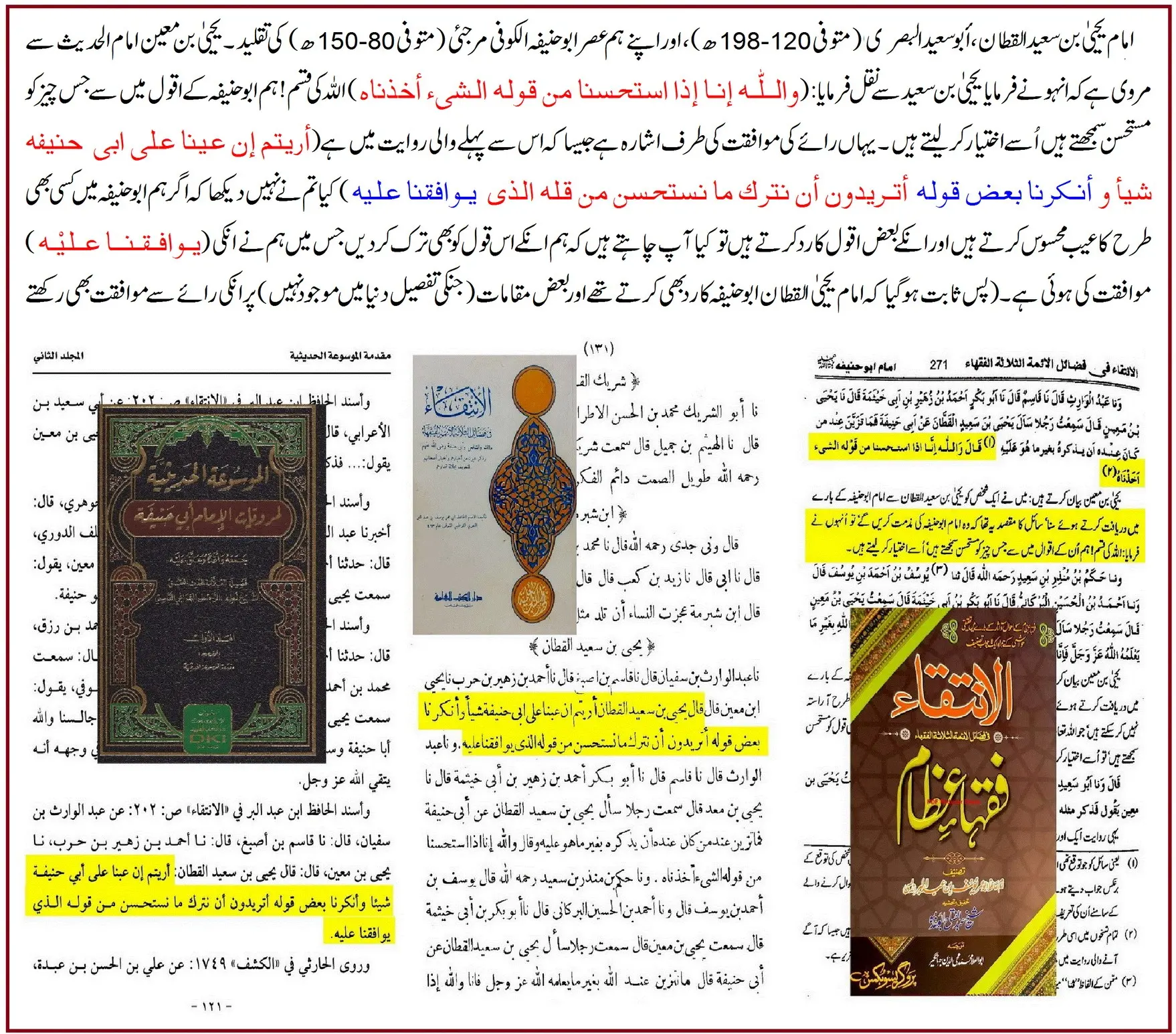
Imām al-Qaṭṭān said:
“By Allah! When we find something good in Abū Ḥanīfah’s views, we adopt it.”
He further clarified:
“If we criticize Abū Ḥanīfah in some matters, do you want us to abandon even those opinions of his which match our own reasoning?”
(al-Intiqāʾ by Ibn ʿAbd al-Barr)
The explanation by Ibn ʿAbd al-Barr clearly shows this is not taqlīd, but muwāfaqat (agreement).
Difference Between Taqlīd and Muwāfaqat:
“He was not a ḥadīth scholar.”
(Tārīkh Baghdād)
This kind of critique cannot come from a muqallid.
This is scholarly agreement, not blind following. The evidence does not support the claim of taqlīd.
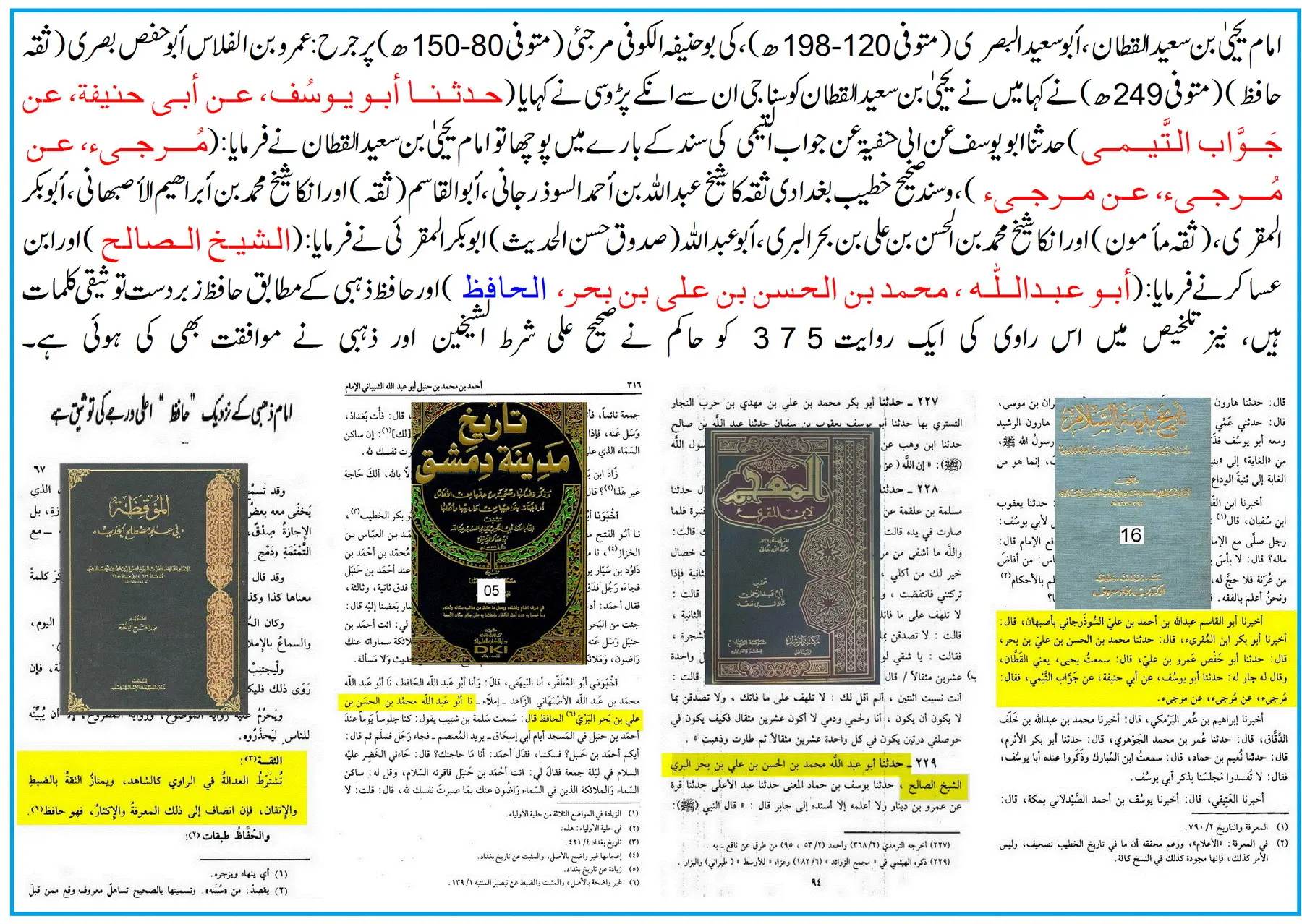
 Imām al-Qaṭṭān made critical statements against Abū Ḥanīfah’s ḥadīth authority.
He followed opinions based on evidence, not due to blind following.
His approach was one of academic scrutiny and selective agreement, not taqlīd.
All evidences claiming otherwise are weak and unreliable in both chain and content.
❖ Introduction
One of the scholarly debates circulating on social media concerns the claim:Was Imām Yaḥyā ibn Saʿīd al-Qaṭṭān (d. 198 AH), one of the leading scholars of al-Jarḥ wa al-Taʿdīl and whom Ḥāfiẓ al-Dhahabī titled “Amīr al-Mu’minīn fī al-Ḥadīth”, truly a follower or adherent of the Ḥanafī school?
This article aims to critically and academically evaluate this issue. All arguments presented by the opposing side will be cited and then thoroughly analyzed in the light of ḥadīth principles and scholarly critique.
◈ Opposing Arguments and Their Academic Analysis
① First Argument
Arabic Reference:وكان في الفروع على مذهب أبي حنيفة – فيما بلغنا – إذا لم يجد النص
Source: Siyar Aʿlām al-Nubalāʾ, Entry: 1366
Translation:
“It has reached us that Imām Yaḥyā ibn Saʿīd al-Qaṭṭān, in the absence of clear textual evidence (naṣṣ), used to issue fatāwā on subsidiary matters according to the madhhab of Abū Ḥanīfah.”
 Analytical Evaluation:
Ḥāfiẓ al-Dhahabī uses the phrase "فيمَا بلغنا" (It has reached us), which is a ** صيغة التمريض (expression of uncertainty)** — a well-known term in the science of ḥadīth indicating weakness or unreliability.
Statements from the Scholars:❖ Imām al-Nawawī رحمه الله:
"بلغنا" is among the expressions of uncertainty used for weak and unauthenticated narrations.
(al-Majmūʿ Sharḥ al-Muhadhdhab)
❖ Mullā ʿAlī al-Qārī (Ḥanafī) رحمه الله:
"بلغني" is classified by ḥadīth experts as muʿḍal (severely weak), a category of rejected ḥadīth.
(Sharḥ Nukhbat al-Fikar)
Conclusion:
The core phrase "بلغنا" is unreliable in terms of ḥadīth standards. Hence, attributing taqlīd (blind following) of Abū Ḥanīfah to Imām al-Qaṭṭān based on this is academically invalid.② Second Argument
Narration from al-Ṣaymarī (Ḥanafī):“Yaḥyā ibn Maʿīn said: Wakiʿ was the best person I saw… he would issue fatāwā according to Abū Ḥanīfah's opinion, and so did Yaḥyā ibn Saʿīd al-Qaṭṭān.”
Source: Akhbār Abī Ḥanīfah wa Aṣḥābih, al-Ṣaymarī
Analytical Evaluation:
This chain includes Ḥusayn ibn Ḥibbān ibn ʿAmmār Abū ʿAlī, who is majhūl al-ʿayn (unknown). Judgement on Majhūl al-ʿAyn:❖ Ḥāfiẓ Ibn Ḥajar رحمه الله:
“If a narrator is named, but only one person narrates from him, he is majhūl al-ʿayn.”
(Nukhbat al-Fikar)
❖ In this case, the only narrator from Ḥusayn ibn Ḥibbān is his son, hence the narration is unacceptable.
 Conflict with a Stronger Report:
An authentic narration from Yaḥyā ibn Maʿīn states:
“He gave no preference between Ibn al-Mubārak and Wakiʿ.”
(Tārīkh Dimashq, vol. 63, p. 341)
With a sound chain including trustworthy narrators:
- Muḥammad ibn Khayrūn (thiqah)
- Aḥmad ibn Ḥamdūn (thiqah)
- ʿUthmān ibn Saʿīd al-Dārimī (ḥāfiẓ, thiqah)
Conclusion:
This second evidence is based on a weak chain contradicted by an authentic report. Therefore, it does not establish that Imām al-Qaṭṭān was a Ḥanafī.③ Third Argument
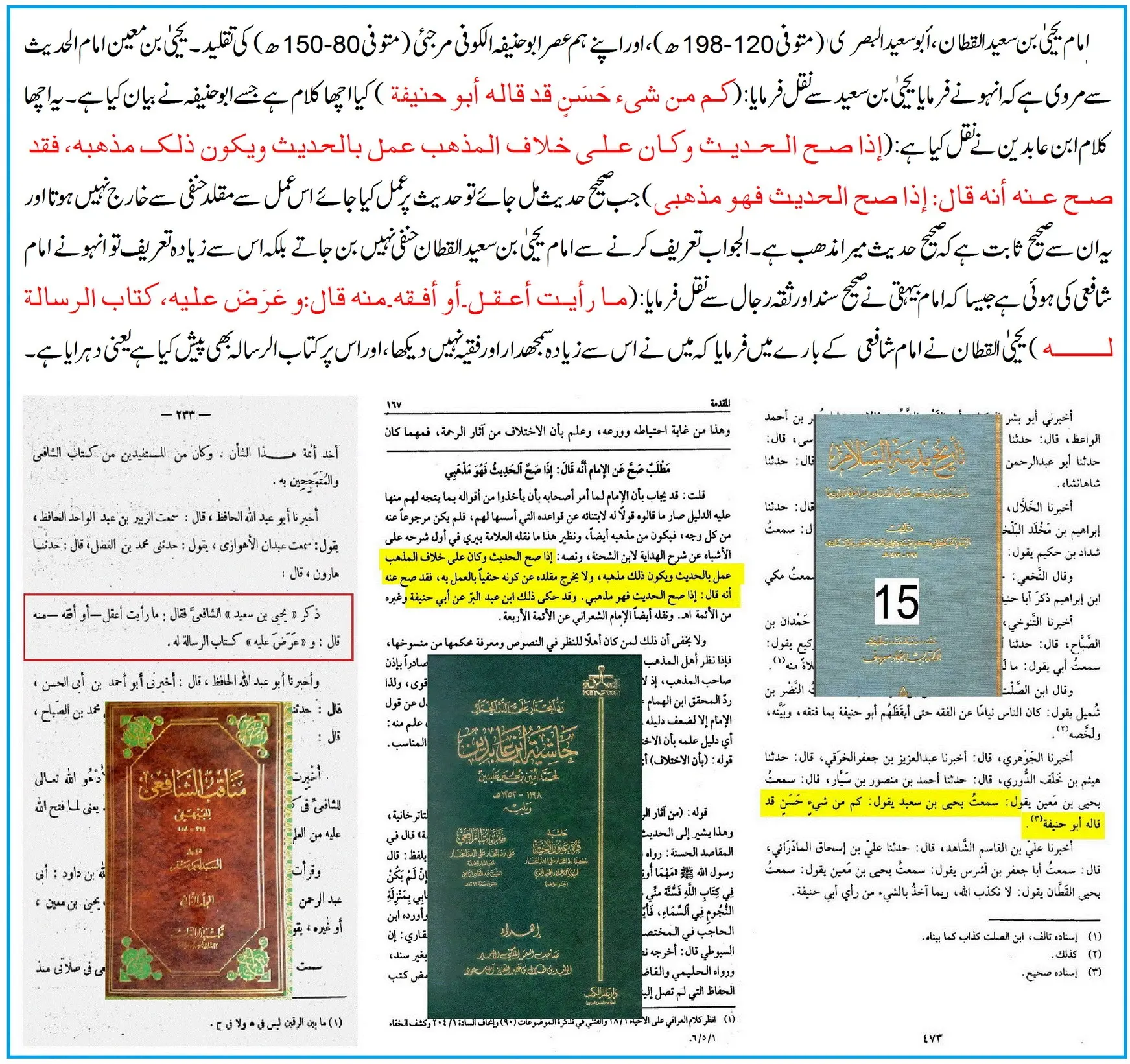
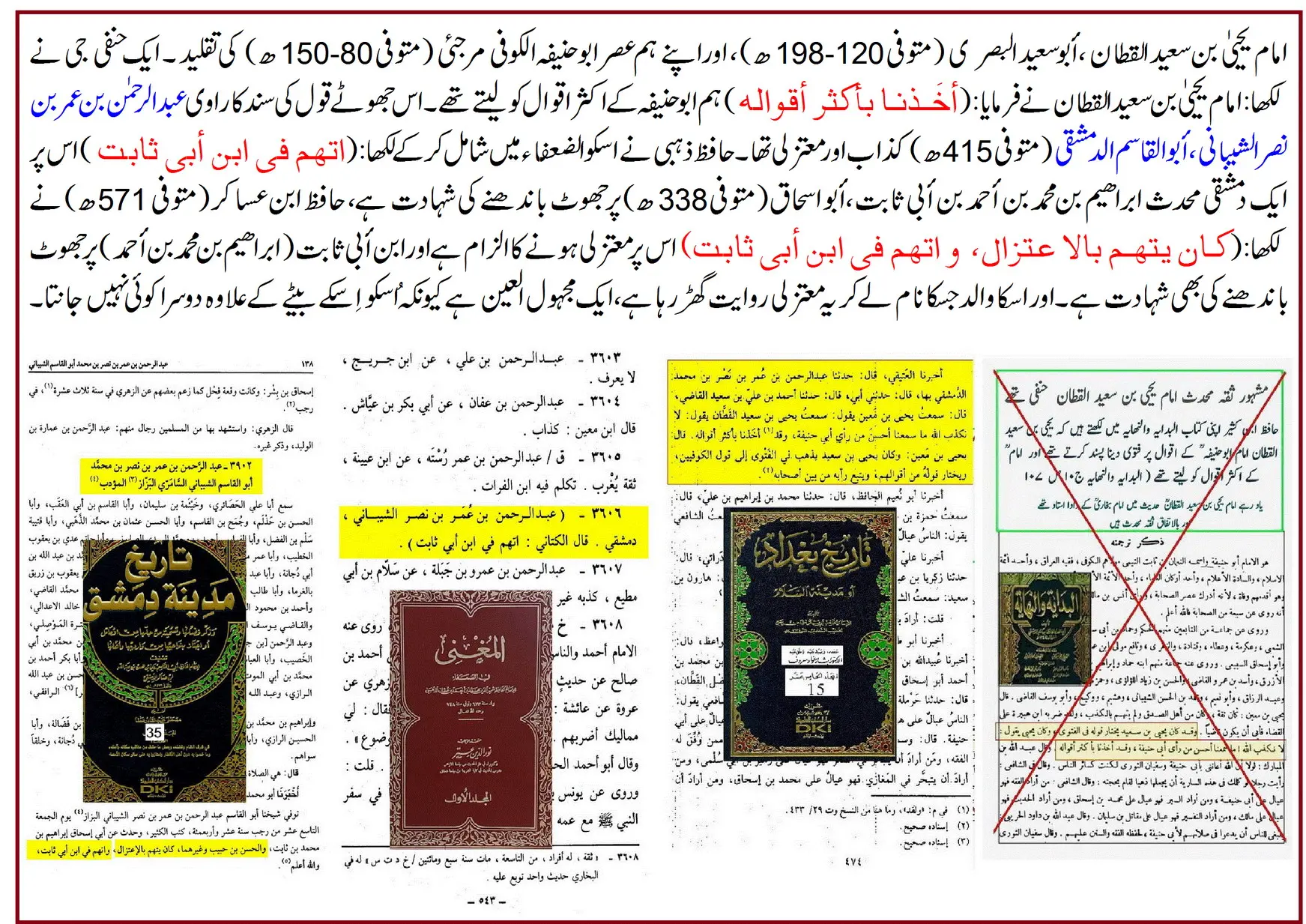
“We heard Yaḥyā ibn Saʿīd say: ‘We don’t lie about Allah; whenever we hear a good opinion, we accept it.’Ibn Maʿīn said: ‘He meant the opinion of Abū Ḥanīfah.’”
(Maʿrifat al-Rijāl by Ibn Maʿīn, narration of Ibn Maḥraz)
Analytical Evaluation:
The chain contains:
- Aḥmad ibn Muḥammad ibn al-Qāsim ibn Maḥraz – Majhūl al-ḥāl
- Jaʿfar ibn Durustawayh – Majhūl al-ʿayn
The content also does not indicate taqlīd, only that he would occasionally accept a sound opinion, which is not the same as taqlīd.❖ Imām al-Qaṭṭān said regarding Abū Ḥanīfah:
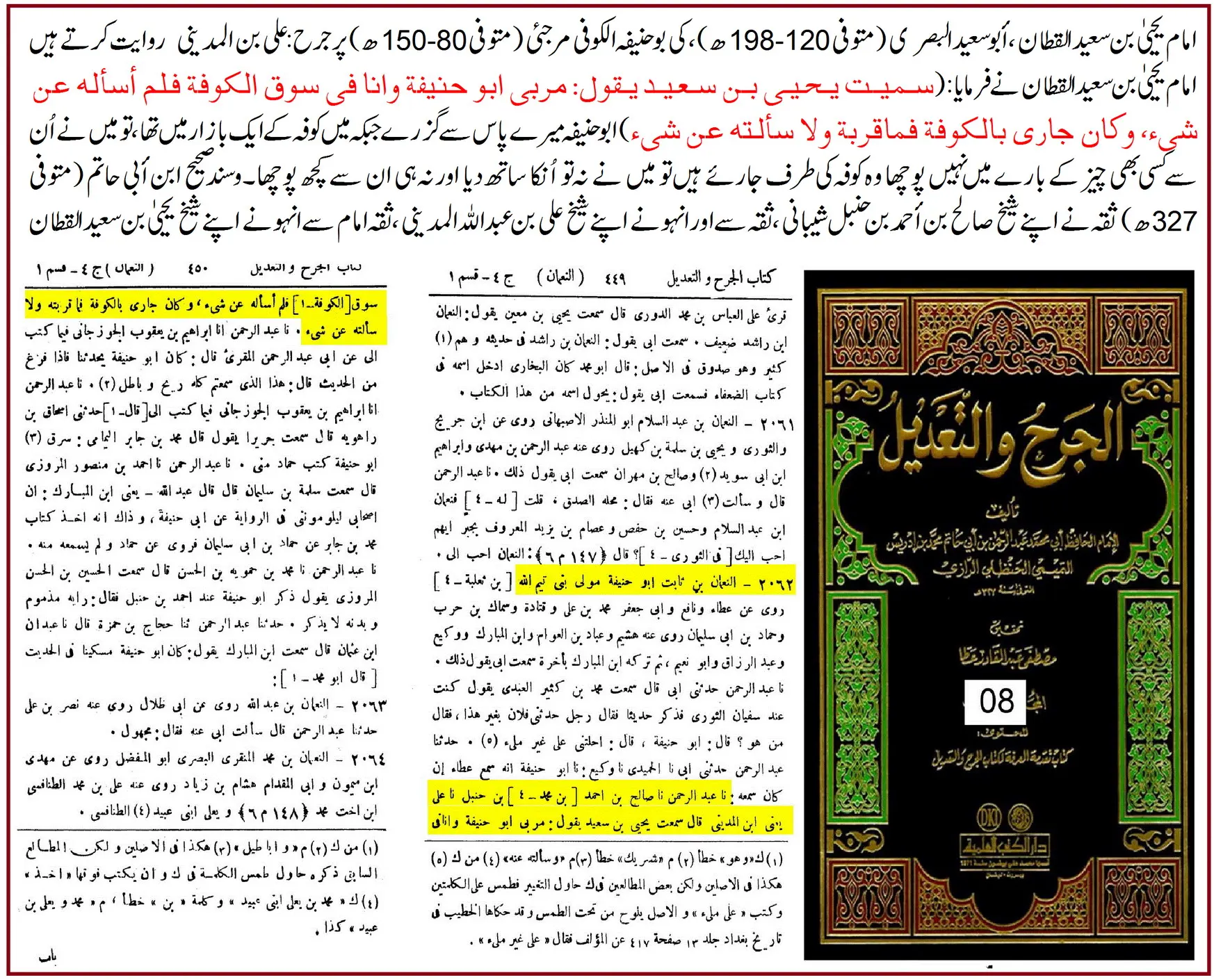
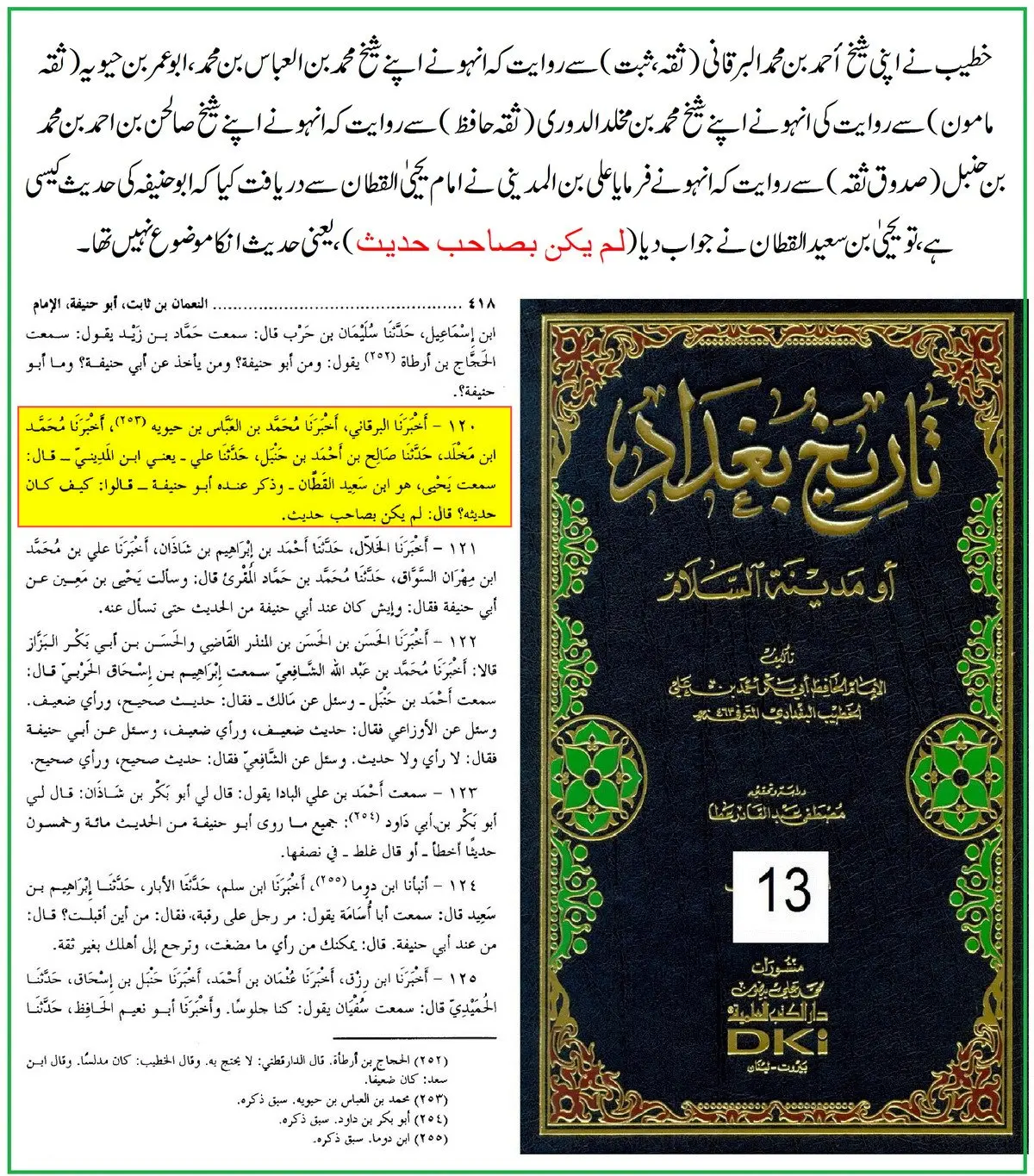
"He was not a ḥadīth scholar."
(Tārīkh Baghdād) – with a ṣaḥīḥ isnād from Imām Ibn al-Madīnī
Conclusion:
This narration is both weak in chain and void of any claim of taqlīd.④ Fourth Argument
“Sometimes, if we saw something from Abū Ḥanīfah’s view as good, we would adopt it.”(Tārīkh Ibn Maʿīn, Riwayah al-Dūrī: 2530)
Analytical Evaluation:
The key word is "ربما" (sometimes) — this explicitly contradicts the concept of taqlīd.
Definition of Taqlīd:"Accepting a scholar's opinion merely because it is his, without evidence."
This narration shows selective acceptance based on reason and agreement, not blind following.
Moreover, Imām al-Qaṭṭān made critical statements against Abū Ḥanīfah, as stated earlier.
He would also sometimes narrate from people he considered weak:
“He would narrate from some people who were worthless in his sight.”
(Tārīkh Ibn Maʿīn)
Conclusion:
This is not taqlīd, but independent scholarly judgment and occasional agreement.
⑤ Fifth Argument
Narration from Ibn ʿAbd al-Barr:Imām al-Qaṭṭān said:
“By Allah! When we find something good in Abū Ḥanīfah’s views, we adopt it.”
He further clarified:
“If we criticize Abū Ḥanīfah in some matters, do you want us to abandon even those opinions of his which match our own reasoning?”
(al-Intiqāʾ by Ibn ʿAbd al-Barr)
Analytical Evaluation:
The explanation by Ibn ʿAbd al-Barr clearly shows this is not taqlīd, but muwāfaqat (agreement).
Difference Between Taqlīd and Muwāfaqat:
- Taqlīd: Accepting an opinion without evidence.
- Muwāfaqat: Accepting when it aligns with one’s own reasoning and ijtihād.
“He was not a ḥadīth scholar.”
(Tārīkh Baghdād)
This kind of critique cannot come from a muqallid.
Conclusion:
This is scholarly agreement, not blind following. The evidence does not support the claim of taqlīd.
Final Summary of the Research
 Argument Argument | Reason for Rejection |
|---|---|
| First | Phrase "بلغنا" denotes weak transmission |
| Second | Contains majhūl narrator; contradicted by a ṣaḥīḥ narration |
| Third | Two narrators unknown; content does not prove taqlīd |
| Fourth | Word “ربما” shows occasional agreement, not consistent taqlīd |
| Fifth | Ibn ʿAbd al-Barr clarifies it was agreement, not blind following |
Positive Points:
Imām al-Qaṭṭān made critical statements against Abū Ḥanīfah’s ḥadīth authority. He followed opinions based on evidence, not due to blind following. His approach was one of academic scrutiny and selective agreement, not taqlīd. All evidences claiming otherwise are weak and unreliable in both chain and content.
