


✍ Compiled by: Abu Hamzah Salafi
In this detailed research article, we aim to clarify that Imām Muḥammad ibn al-Ḥasan al-Shaybānī al-Kūfī (d. 189 AH)—the most famous student of Imām Abū Ḥanīfah and one of the foundational figures of the Ḥanafī school—was not a blind follower (muqallid) of Imām Abū Ḥanīfah. We will also respond to the Ḥanafī claim that although Imām Muḥammad differed from his teacher in some subsidiary issues (furūʿ), he followed him in principles (uṣūl).
This article proves that:
① Imām Muḥammad rejected the concept of taqlīd (blind following) in general.
② He differed with Imām Abū Ḥanīfah frequently, in both fundamentals (uṣūl) and subsidiary matters (furūʿ).
③ He was a mujtahid muṭlaq (an independent jurist), not merely a mujtahid within the madhhab.
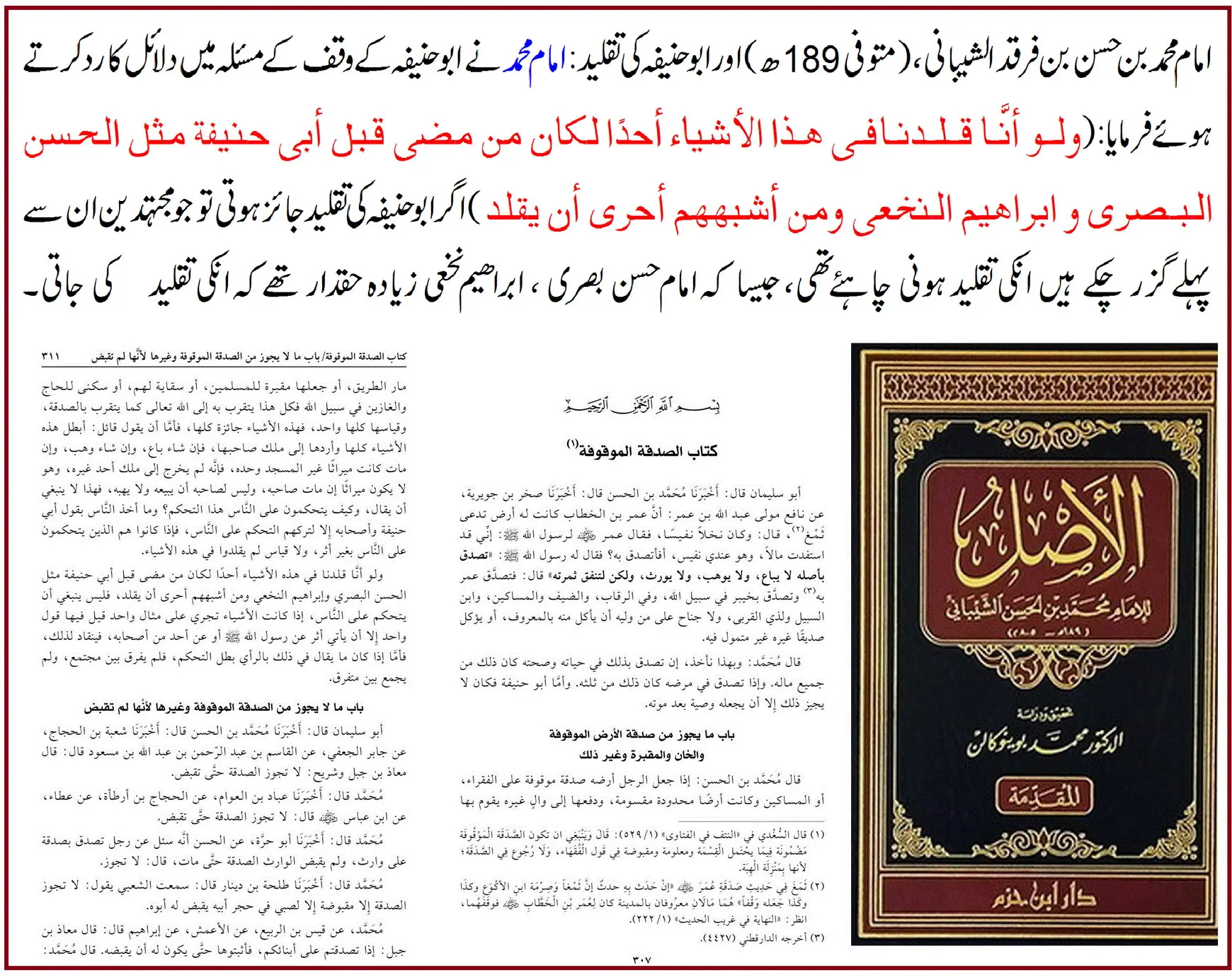
Imām Muḥammad stated in his renowned work al-Aṣl:
وَلَوْ أَنَّا قَلَّدْنَا فِي هٰذِهِ الْأَشْيَاءِ أَحَدًا، لَكَانَ مَنْ مَضَى قَبْلَ أَبِي حَنِيفَةَ مِثْلَ الْحَسَنِ الْبَصْرِيِّ وَإِبْرَاهِيمَ النَّخَعِيِّ وَمَنْ أَشْبَهَهُمْ أَحْرَىٰ أَنْ يُقَلَّدَ، فَلَيْسَ يَنْبَغِي أَنْ يُتَحَكَّمَ عَلَى النَّاسِ۔
(Kitāb al-Aṣl by Muḥammad ibn al-Ḥasan al-Shaybānī)
Translation:
“If we were to follow anyone in these matters, then those who preceded Abū Ḥanīfah—such as al-Ḥasan al-Baṣrī, Ibrāhīm al-Nakhaʿī and their likes—would be more worthy of being followed. It is not appropriate to impose anyone’s opinion upon the people.”
✦ This quote clearly demonstrates that:
Objection:
“This statement was made by Imām Muḥammad only in the issue of waqf (endowment), not as a general rule.”
Response:
① Wording Analysis:
Imām Muḥammad used the phrase “these matters” (هٰذِهِ الْأَشْيَاءِ)—a general term—implying a general rejection of taqlīd.
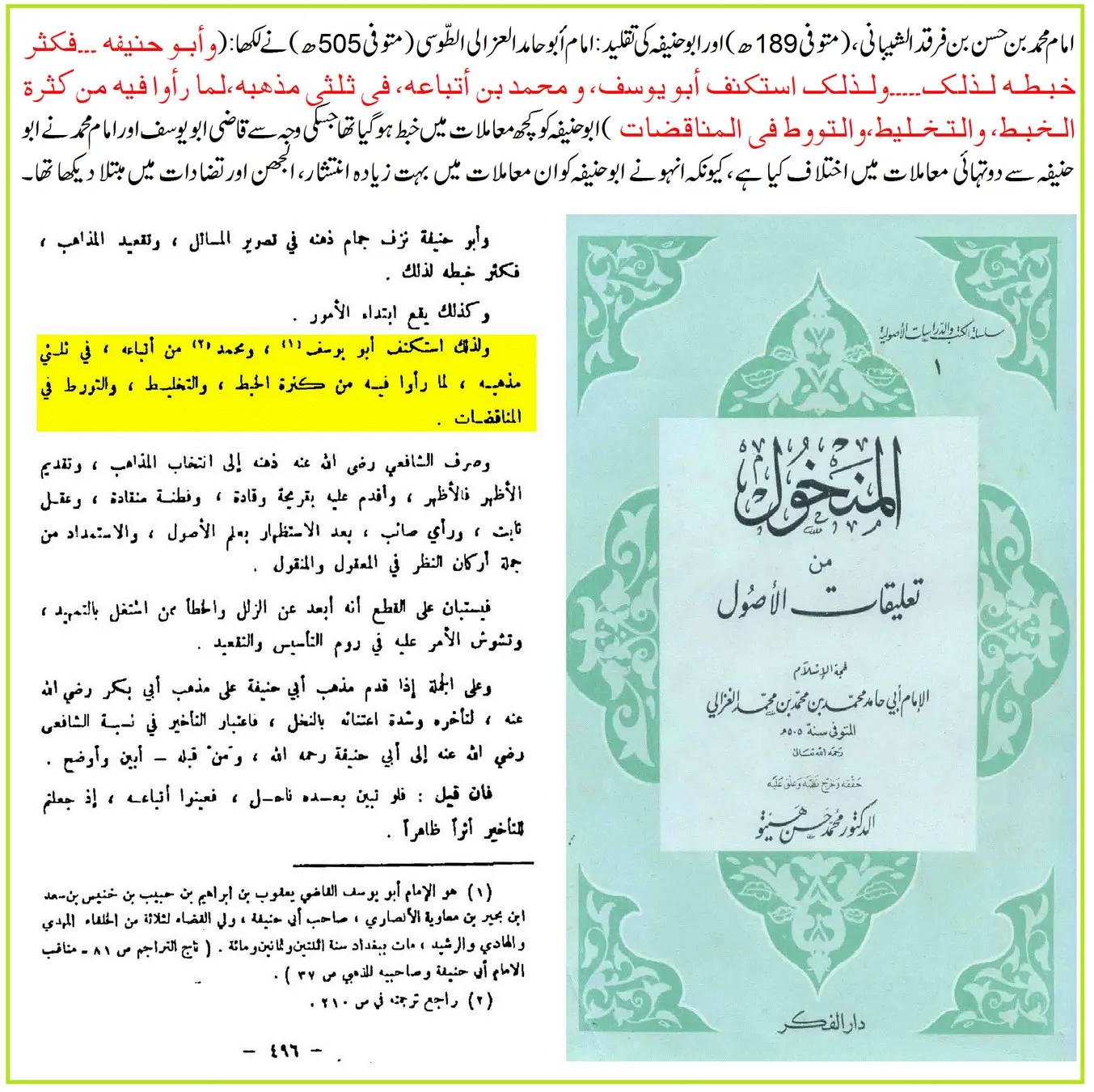
② Imām Abū Ḥāmid al-Ghazālī’s Testimony:
“Abū Yūsuf and Muḥammad refrained from following Abū Ḥanīfah in two-thirds of his madhhab due to frequent inconsistencies.”
(al-Mustasfā/al-Mankhūl)
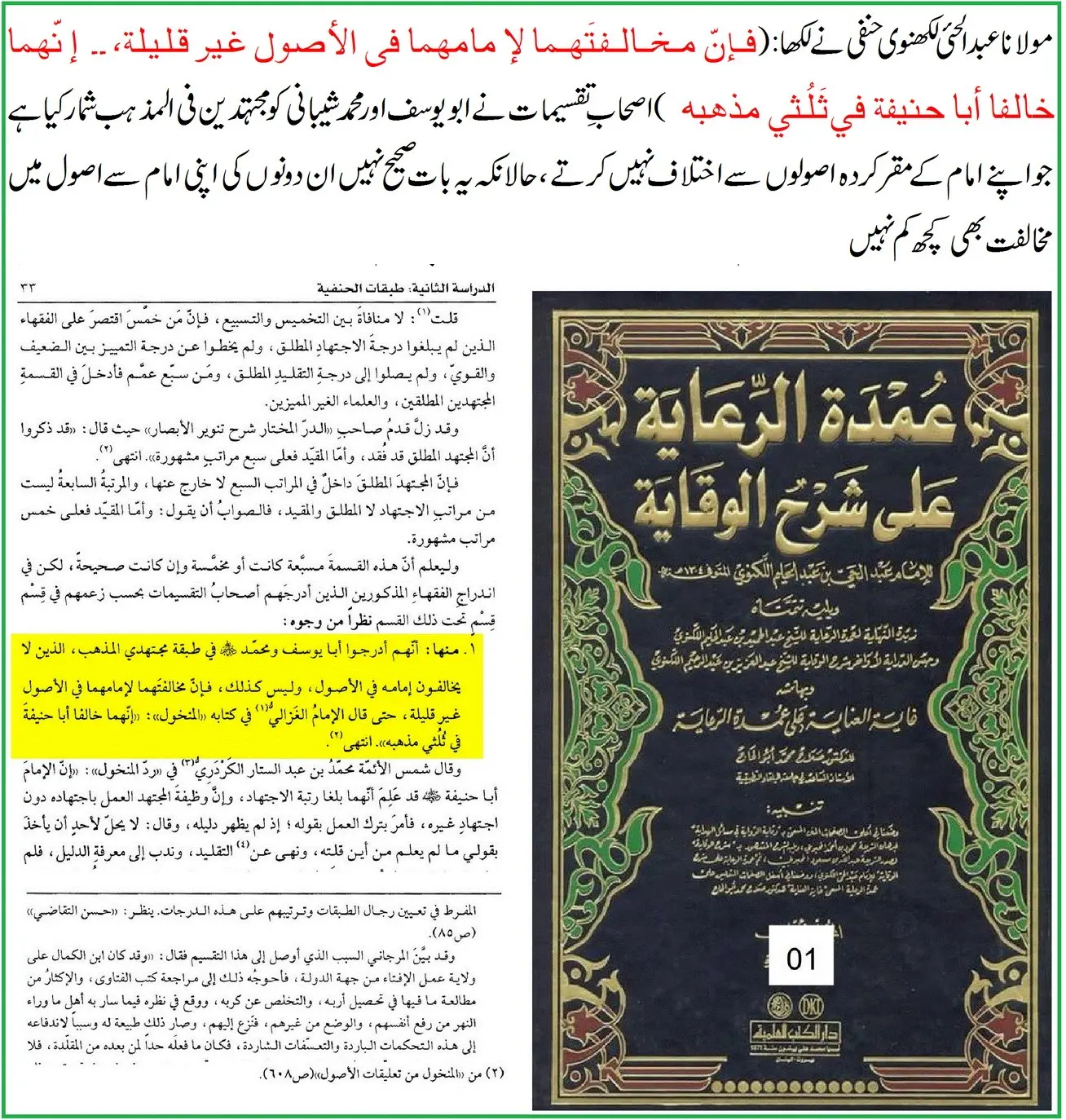
③ ʿAllāmah ʿAbd al-Ḥayy al-Lakhnawī (Ḥanafī) wrote:
“Their opposition to their Imām in principles was significant. Ghazālī stated that they opposed him in two-thirds of his school.”
(ʿUmdat al-Riʿāyah)
Objection:
“Imām Muḥammad and Abū Yūsuf were only mujtahid fī al-madhhab, not mujtahid muṭlaq. They differed only in subsidiary matters.”
Response:
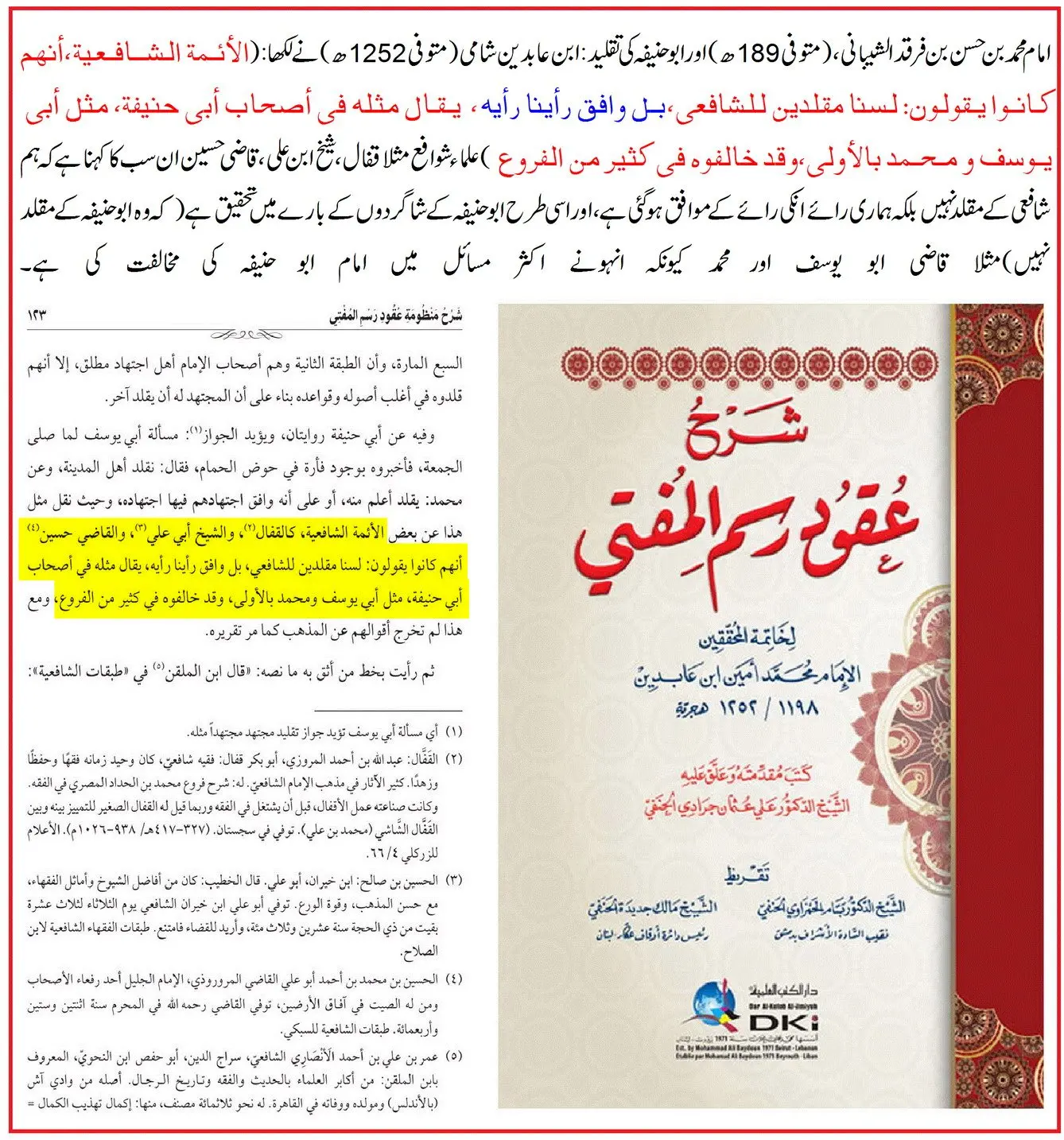
① Ibn ʿĀbidīn al-Shāmī (Ḥanafī) states:
“The Shāfiʿī scholars such as al-Qaffāl and others said: ‘We are not muqallid of al-Shāfiʿī; our opinion merely coincides with his.’ This applies even more to the companions of Abū Ḥanīfah like Abū Yūsuf and Muḥammad who differed with him in many issues.”
(ʿUqūd Rasm al-Muftī, p. 39)
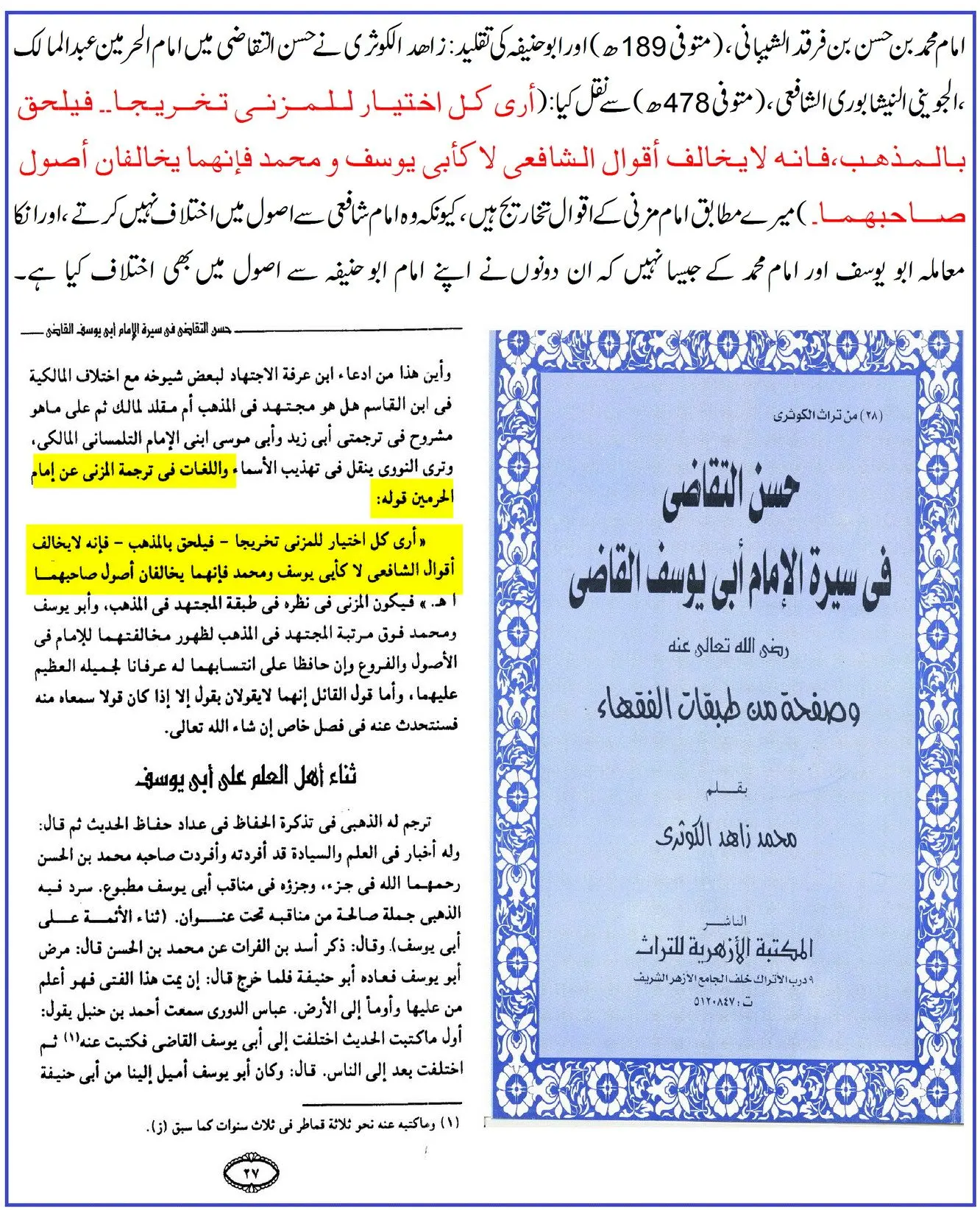
② Imām al-Ḥaramayn al-Juwaynī stated:
“Al-Muzanī’s views are still within the framework of the Shāfiʿī madhhab. But Abū Yūsuf and Muḥammad contradicted their teacher’s principles.”
(Ḥusn al-Taqāḍī, al-Kawtharī)
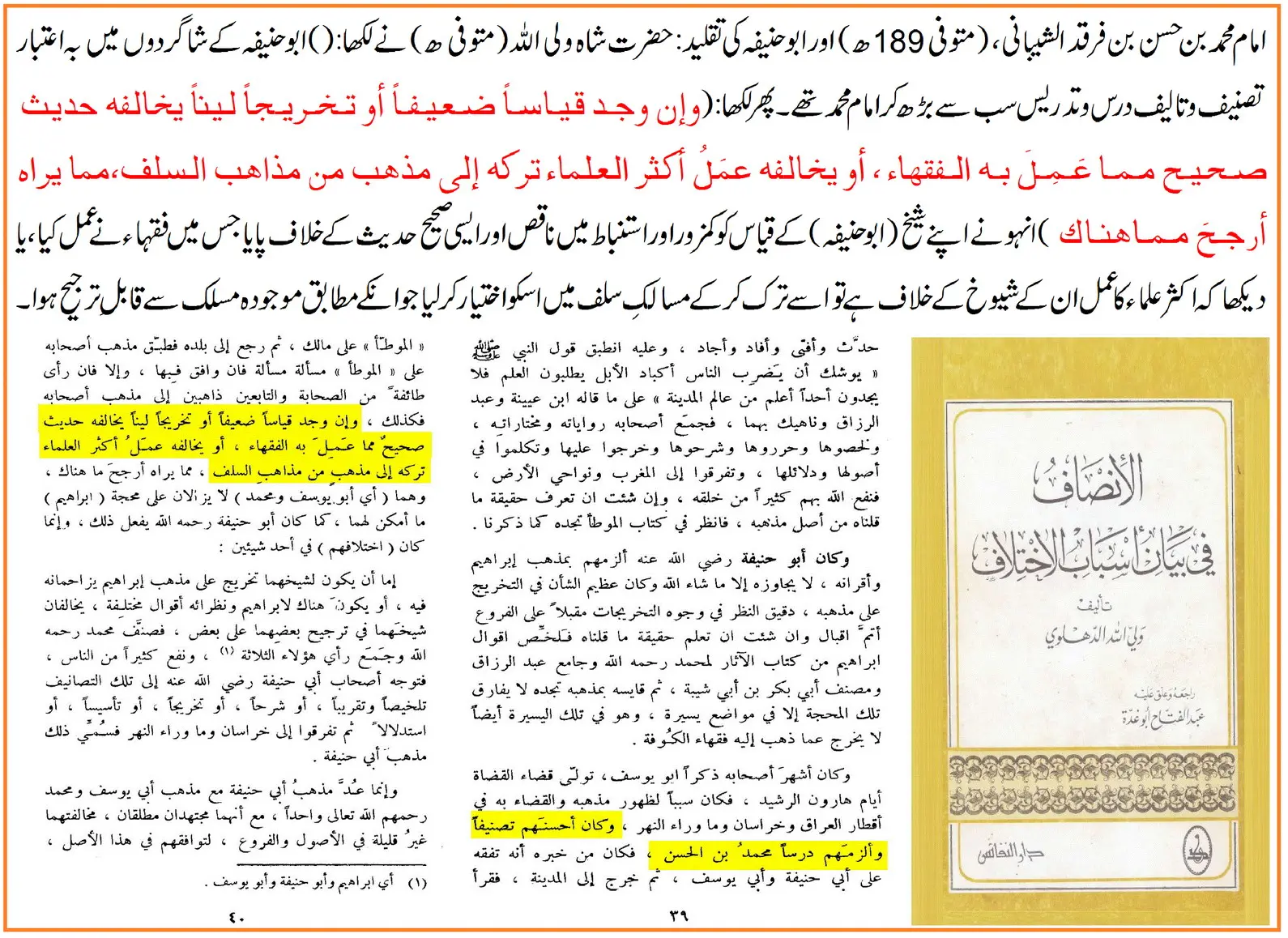
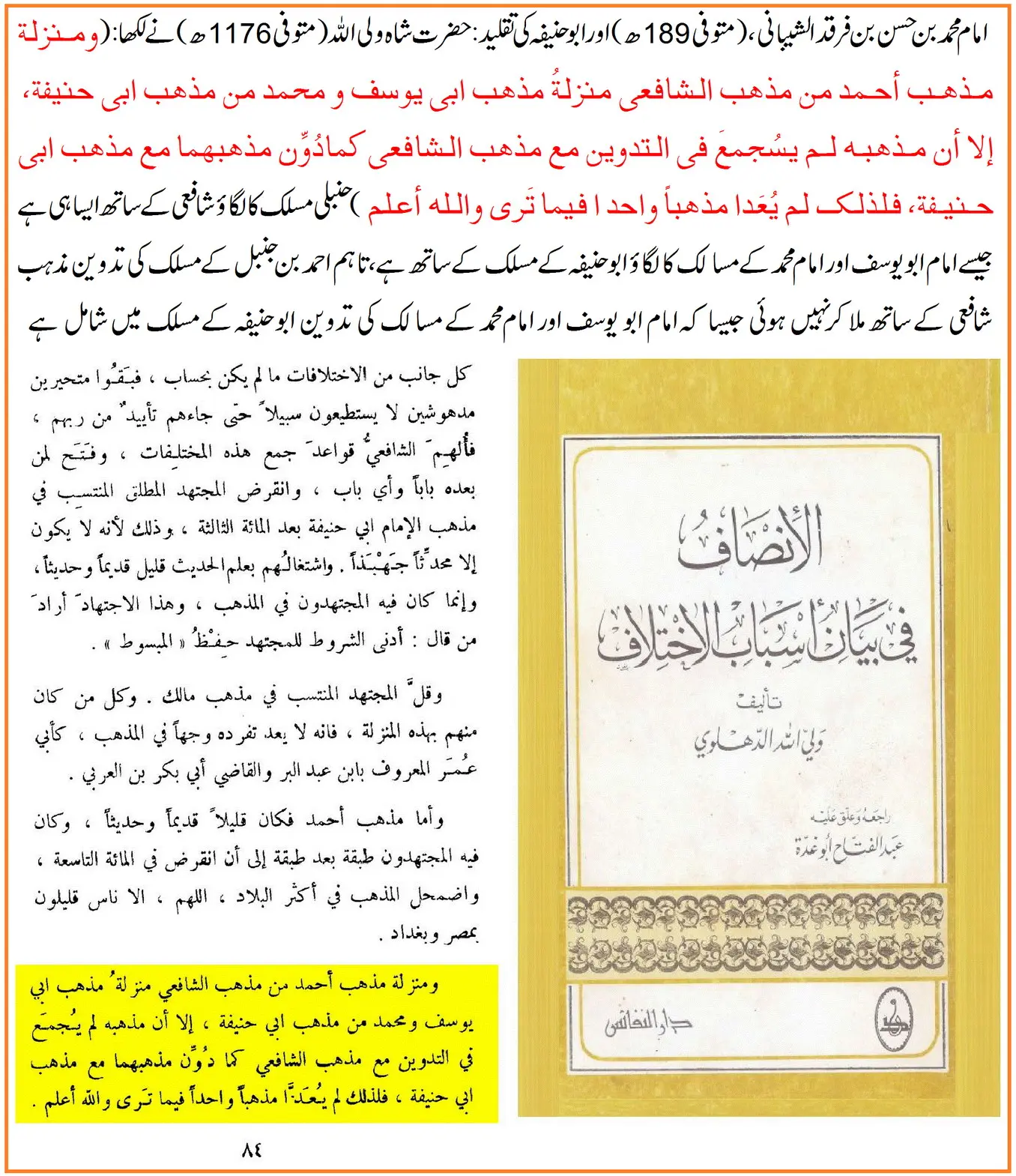
③ Shāh Walī Allāh al-Dihlawī wrote:
“If Imām Muḥammad found a weak analogy or deduction that contradicted a sound ḥadīth or the consensus, he would abandon it and follow the view of another Salaf whom he saw as stronger.”
(al-Insāf fī Bayān Asbāb al-Ikhtilāf)
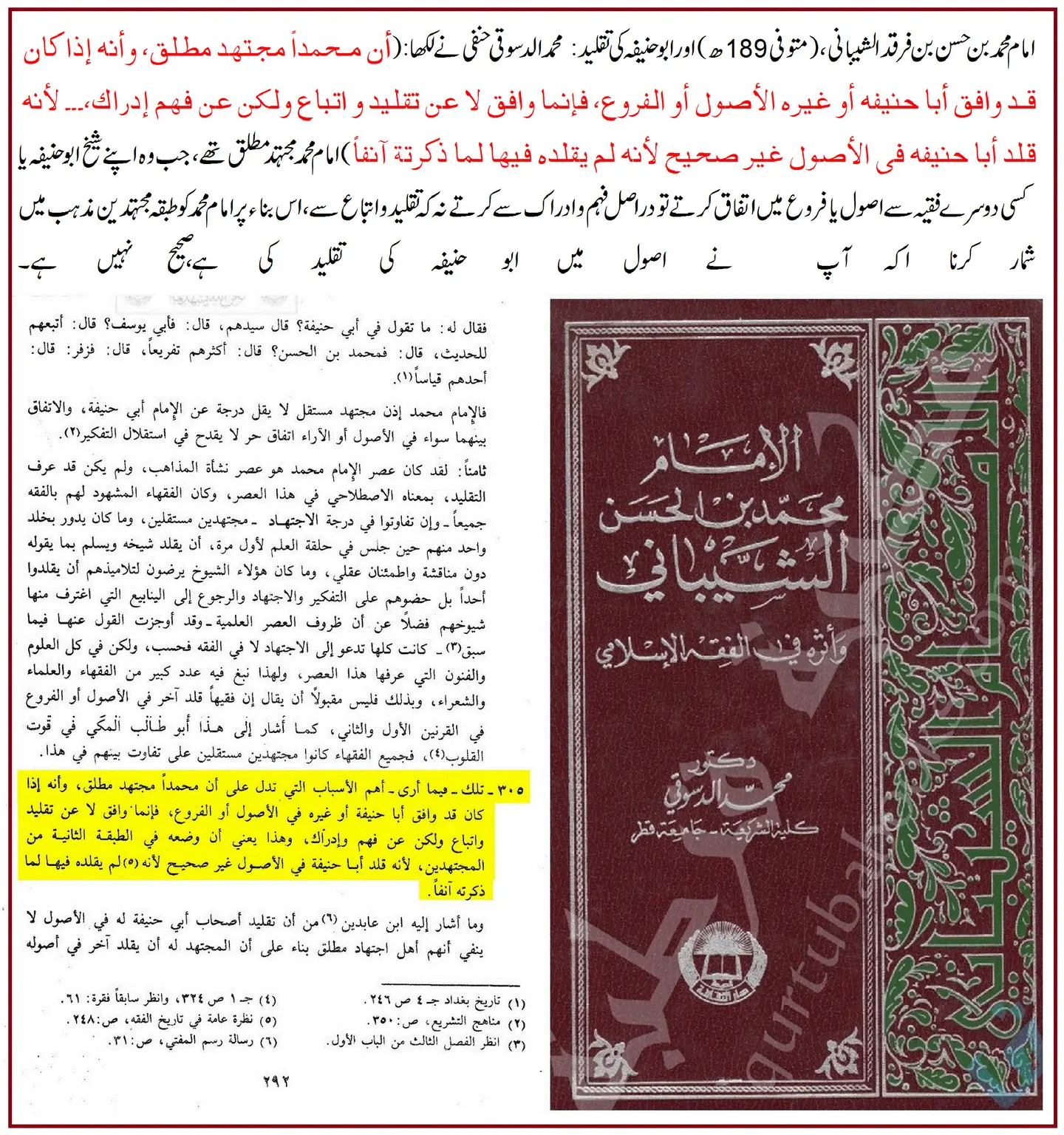
④ Muḥammad al-Dasūqī (Ḥanafī) confirms:
“Imām Muḥammad was a mujtahid muṭlaq. His agreement with Abū Ḥanīfah or others was based on independent reasoning, not taqlīd.”
(Imām Muḥammad ibn al-Ḥasan wa Atharuh fī al-Fiqh al-Islāmī)
⑤ Further Support from Shāh Walī Allāh:
“Imām Aḥmad’s relationship with al-Shāfiʿī was like that of Abū Yūsuf and Muḥammad with Abū Ḥanīfah, except their madhhab was codified with his, hence the confusion.”
(al-Insāf)
Objection:
“Imām Muḥammad only opposed Abū Ḥanīfah in a few issues such as waqf, not broadly.”
Response:
① No Evidence of Limitation:
There is no textual or contextual indication that Imām Muḥammad limited his statement to waqf.
② Imām al-Ghazālī again affirms:
“They disagreed with Abū Ḥanīfah in two-thirds of his school.”
(al-Mankhūl)
③ ʿAllāmah al-Lakhnawī reaffirms:
“Their disagreement in uṣūl was not minor.”
(ʿUmdat al-Riʿāyah)
④ Shāh Walī Allāh emphasizes:
“He would abandon weak analogies and follow more reliable Salafī opinions.”
(al-Insāf)
Objection:
“Despite his ijtihād, Imām Muḥammad remained affiliated with the Ḥanafī school.”
Response:
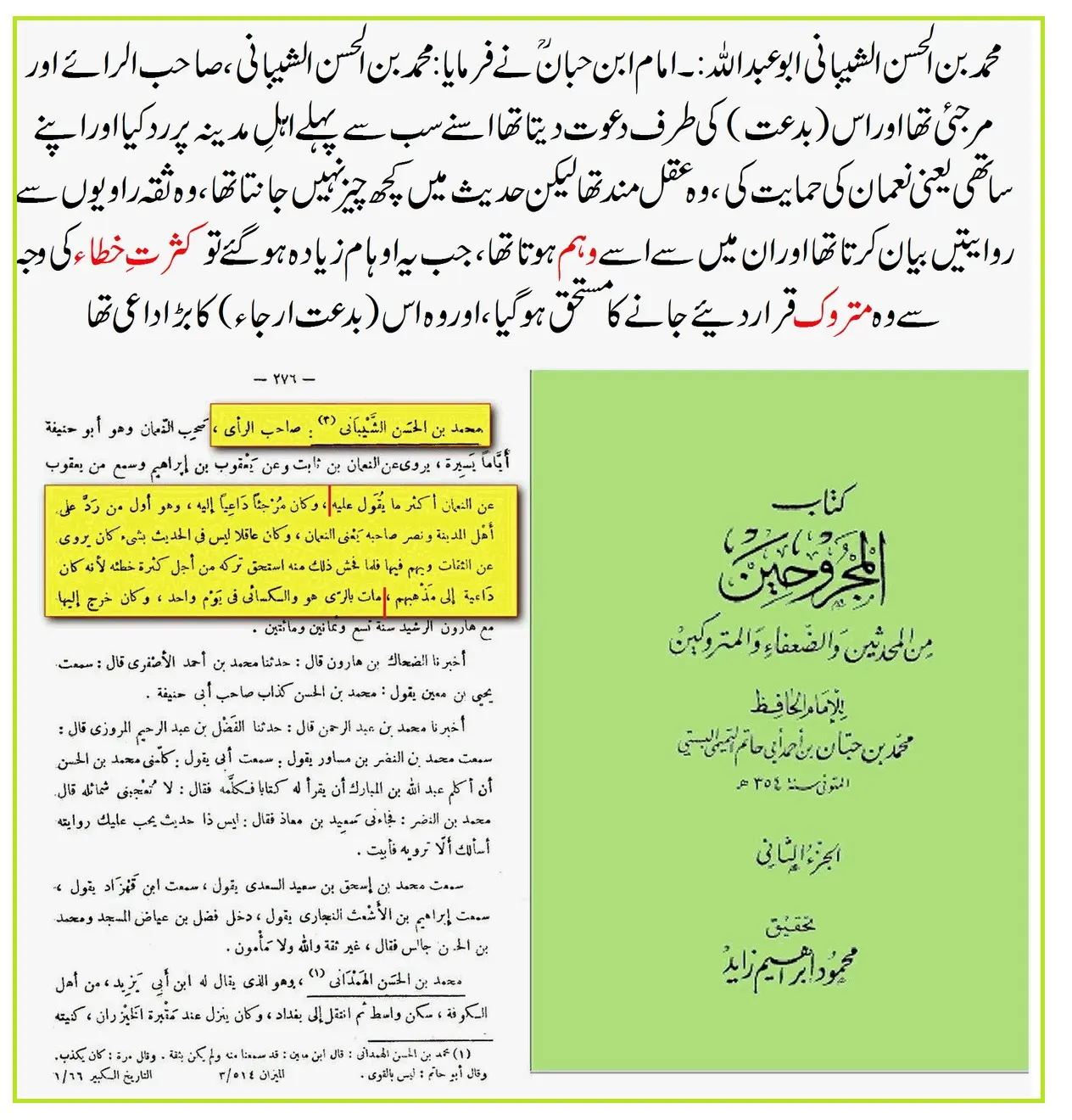
① Historical Evidence Denies This Claim:
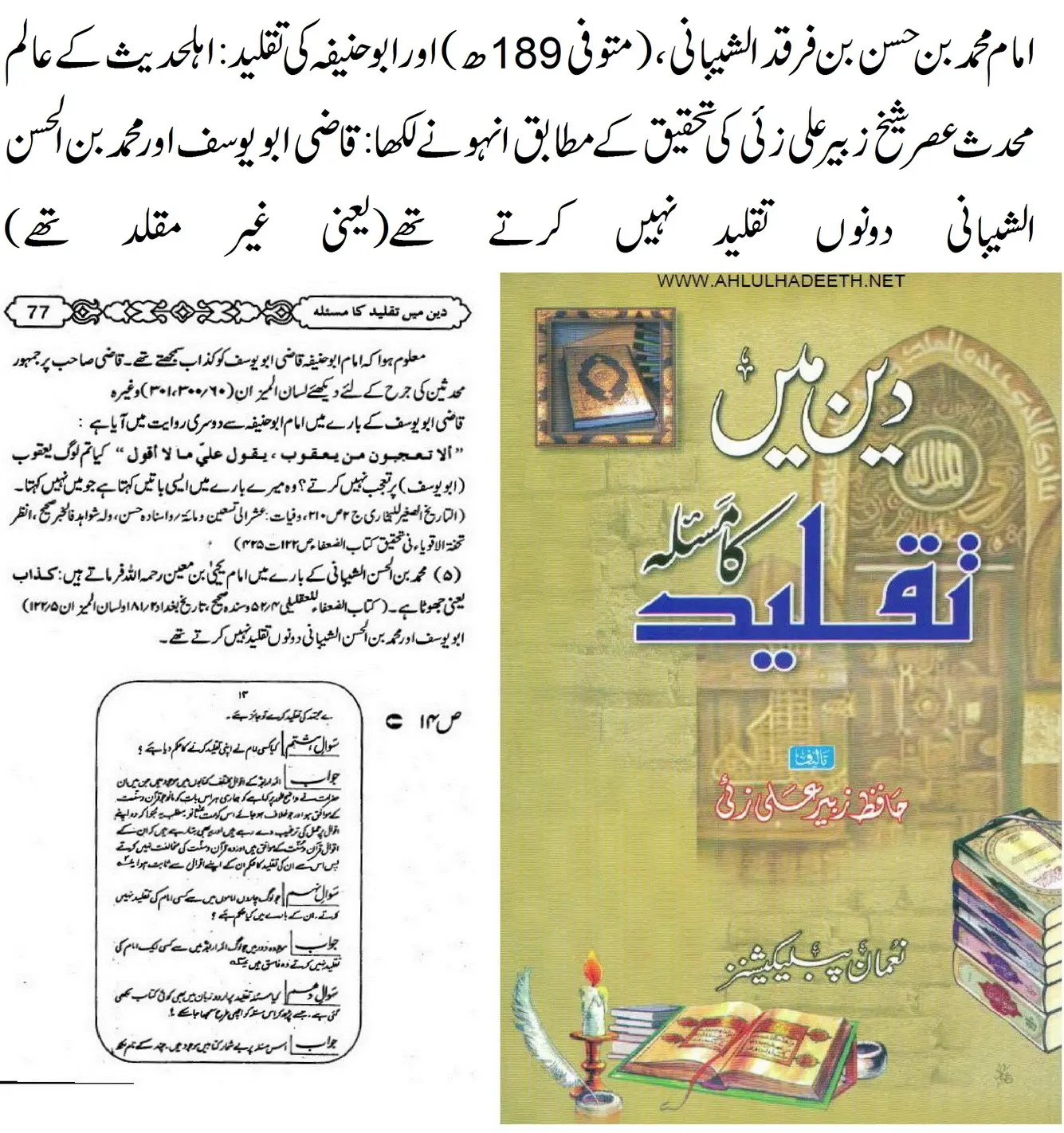
Imām Muḥammad never described himself as a muqallid of Abū Ḥanīfah.
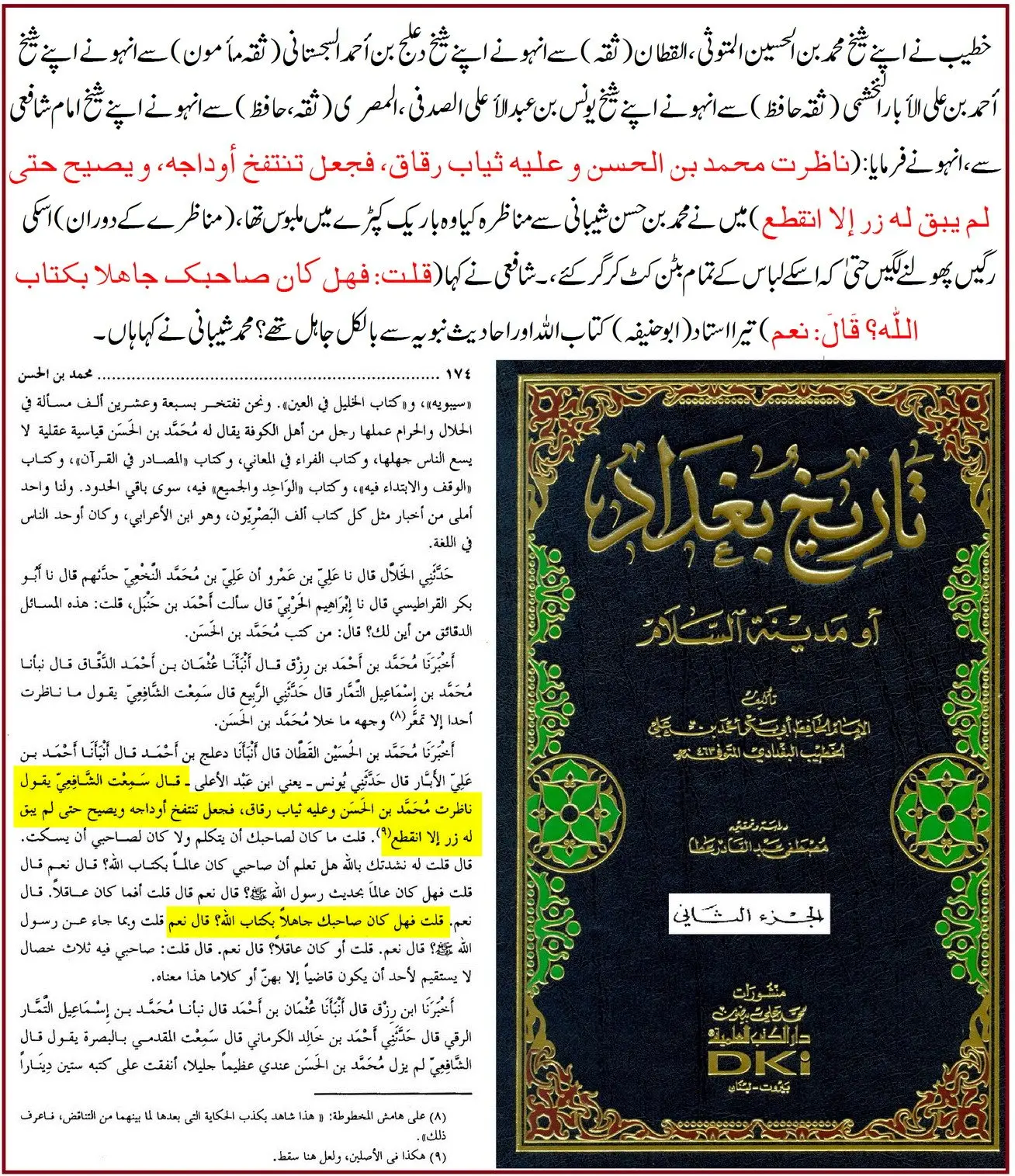
② Conversation Between Imām Shāfiʿī and Imām Muḥammad:
Narrated by Imām al-Khaṭīb al-Baghdādī (d. 463 AH):
Imām Shāfiʿī asked Imām Muḥammad:
“Was your teacher (Abū Ḥanīfah) ignorant of the Qur'an?”
He replied: “Yes.”
“Was he ignorant of the Sunnah?”
He said: “Yes.”
(Tārīkh Baghdād, vol. 2, p. 180 – with authentic chain)
③ Shāh Walī Allāh again explains:
“The same way Aḥmad was not a blind follower of al-Shāfiʿī, Muḥammad was not a blind follower of Abū Ḥanīfah.”
(al-Insāf)
④ Ibn ʿĀbidīn reiterates:
“Abū Yūsuf and Muḥammad were not muqallid of Abū Ḥanīfah, just as major Shāfiʿī scholars were not blind followers of al-Shāfiʿī.”
(ʿUqūd Rasm al-Muftī)
⑤ ʿAllāmah al-Lakhnawī affirms:
“Their opposition in uṣūl was too significant for them to be considered merely mujtahid fī al-madhhab.”
(ʿUmdat al-Riʿāyah)
① Clear Rejection of Taqlīd by Imām Muḥammad:
“If we were to follow anyone, those before Abū Ḥanīfah were more deserving.” (al-Aṣl)
② Substantial Disagreement with Abū Ḥanīfah:
Imām al-Ghazālī: “They opposed him in two-thirds of his school.”
ʿAllāmah al-Lakhnawī: “They even differed in uṣūl.”
③ Consensus of Scholars on His Independent Ijtihād:
④ No Self-Claim of Affiliation by Imām Muḥammad:
The alleged association with the Ḥanafī school is based only on codification of views, not taqlīd.
❖ Introduction
In this detailed research article, we aim to clarify that Imām Muḥammad ibn al-Ḥasan al-Shaybānī al-Kūfī (d. 189 AH)—the most famous student of Imām Abū Ḥanīfah and one of the foundational figures of the Ḥanafī school—was not a blind follower (muqallid) of Imām Abū Ḥanīfah. We will also respond to the Ḥanafī claim that although Imām Muḥammad differed from his teacher in some subsidiary issues (furūʿ), he followed him in principles (uṣūl).
This article proves that:
① Imām Muḥammad rejected the concept of taqlīd (blind following) in general.
② He differed with Imām Abū Ḥanīfah frequently, in both fundamentals (uṣūl) and subsidiary matters (furūʿ).
③ He was a mujtahid muṭlaq (an independent jurist), not merely a mujtahid within the madhhab.
❖ Imām Muḥammad's Explicit Rejection of Blind Following
Imām Muḥammad stated in his renowned work al-Aṣl:
وَلَوْ أَنَّا قَلَّدْنَا فِي هٰذِهِ الْأَشْيَاءِ أَحَدًا، لَكَانَ مَنْ مَضَى قَبْلَ أَبِي حَنِيفَةَ مِثْلَ الْحَسَنِ الْبَصْرِيِّ وَإِبْرَاهِيمَ النَّخَعِيِّ وَمَنْ أَشْبَهَهُمْ أَحْرَىٰ أَنْ يُقَلَّدَ، فَلَيْسَ يَنْبَغِي أَنْ يُتَحَكَّمَ عَلَى النَّاسِ۔
(Kitāb al-Aṣl by Muḥammad ibn al-Ḥasan al-Shaybānī)
Translation:
“If we were to follow anyone in these matters, then those who preceded Abū Ḥanīfah—such as al-Ḥasan al-Baṣrī, Ibrāhīm al-Nakhaʿī and their likes—would be more worthy of being followed. It is not appropriate to impose anyone’s opinion upon the people.”
✦ This quote clearly demonstrates that:
- Imām Muḥammad categorically denied taqlīd of Abū Ḥanīfah.
- He rejected blind following in general, not in isolated issues.
- He considered earlier scholars more worthy of being followed, had taqlīd been valid.
❖ Refuting the First Objection of the Muqallidīn
Objection:
“This statement was made by Imām Muḥammad only in the issue of waqf (endowment), not as a general rule.”
Response:
① Wording Analysis:
Imām Muḥammad used the phrase “these matters” (هٰذِهِ الْأَشْيَاءِ)—a general term—implying a general rejection of taqlīd.
② Imām Abū Ḥāmid al-Ghazālī’s Testimony:
“Abū Yūsuf and Muḥammad refrained from following Abū Ḥanīfah in two-thirds of his madhhab due to frequent inconsistencies.”
(al-Mustasfā/al-Mankhūl)
③ ʿAllāmah ʿAbd al-Ḥayy al-Lakhnawī (Ḥanafī) wrote:
“Their opposition to their Imām in principles was significant. Ghazālī stated that they opposed him in two-thirds of his school.”
(ʿUmdat al-Riʿāyah)
❖ Refuting the Second Objection
Objection:
“Imām Muḥammad and Abū Yūsuf were only mujtahid fī al-madhhab, not mujtahid muṭlaq. They differed only in subsidiary matters.”
Response:
① Ibn ʿĀbidīn al-Shāmī (Ḥanafī) states:
“The Shāfiʿī scholars such as al-Qaffāl and others said: ‘We are not muqallid of al-Shāfiʿī; our opinion merely coincides with his.’ This applies even more to the companions of Abū Ḥanīfah like Abū Yūsuf and Muḥammad who differed with him in many issues.”
(ʿUqūd Rasm al-Muftī, p. 39)
② Imām al-Ḥaramayn al-Juwaynī stated:
“Al-Muzanī’s views are still within the framework of the Shāfiʿī madhhab. But Abū Yūsuf and Muḥammad contradicted their teacher’s principles.”
(Ḥusn al-Taqāḍī, al-Kawtharī)
③ Shāh Walī Allāh al-Dihlawī wrote:
“If Imām Muḥammad found a weak analogy or deduction that contradicted a sound ḥadīth or the consensus, he would abandon it and follow the view of another Salaf whom he saw as stronger.”
(al-Insāf fī Bayān Asbāb al-Ikhtilāf)
④ Muḥammad al-Dasūqī (Ḥanafī) confirms:
“Imām Muḥammad was a mujtahid muṭlaq. His agreement with Abū Ḥanīfah or others was based on independent reasoning, not taqlīd.”
(Imām Muḥammad ibn al-Ḥasan wa Atharuh fī al-Fiqh al-Islāmī)
⑤ Further Support from Shāh Walī Allāh:
“Imām Aḥmad’s relationship with al-Shāfiʿī was like that of Abū Yūsuf and Muḥammad with Abū Ḥanīfah, except their madhhab was codified with his, hence the confusion.”
(al-Insāf)
❖ Refuting the Third Objection
Objection:
“Imām Muḥammad only opposed Abū Ḥanīfah in a few issues such as waqf, not broadly.”
Response:
① No Evidence of Limitation:
There is no textual or contextual indication that Imām Muḥammad limited his statement to waqf.
② Imām al-Ghazālī again affirms:
“They disagreed with Abū Ḥanīfah in two-thirds of his school.”
(al-Mankhūl)
③ ʿAllāmah al-Lakhnawī reaffirms:
“Their disagreement in uṣūl was not minor.”
(ʿUmdat al-Riʿāyah)
④ Shāh Walī Allāh emphasizes:
“He would abandon weak analogies and follow more reliable Salafī opinions.”
(al-Insāf)
❖ Refuting the Fourth Objection
Objection:
“Despite his ijtihād, Imām Muḥammad remained affiliated with the Ḥanafī school.”
Response:
① Historical Evidence Denies This Claim:
Imām Muḥammad never described himself as a muqallid of Abū Ḥanīfah.
② Conversation Between Imām Shāfiʿī and Imām Muḥammad:
Narrated by Imām al-Khaṭīb al-Baghdādī (d. 463 AH):
Imām Shāfiʿī asked Imām Muḥammad:
“Was your teacher (Abū Ḥanīfah) ignorant of the Qur'an?”
He replied: “Yes.”
“Was he ignorant of the Sunnah?”
He said: “Yes.”
(Tārīkh Baghdād, vol. 2, p. 180 – with authentic chain)
③ Shāh Walī Allāh again explains:
“The same way Aḥmad was not a blind follower of al-Shāfiʿī, Muḥammad was not a blind follower of Abū Ḥanīfah.”
(al-Insāf)
④ Ibn ʿĀbidīn reiterates:
“Abū Yūsuf and Muḥammad were not muqallid of Abū Ḥanīfah, just as major Shāfiʿī scholars were not blind followers of al-Shāfiʿī.”
(ʿUqūd Rasm al-Muftī)
⑤ ʿAllāmah al-Lakhnawī affirms:
“Their opposition in uṣūl was too significant for them to be considered merely mujtahid fī al-madhhab.”
(ʿUmdat al-Riʿāyah)
❖ Summary and Conclusion
① Clear Rejection of Taqlīd by Imām Muḥammad:
“If we were to follow anyone, those before Abū Ḥanīfah were more deserving.” (al-Aṣl)
② Substantial Disagreement with Abū Ḥanīfah:
Imām al-Ghazālī: “They opposed him in two-thirds of his school.”
ʿAllāmah al-Lakhnawī: “They even differed in uṣūl.”
③ Consensus of Scholars on His Independent Ijtihād:
- Shāh Walī Allāh, Ibn ʿĀbidīn, and others confirm he was a mujtahid muṭlaq.
④ No Self-Claim of Affiliation by Imām Muḥammad:
The alleged association with the Ḥanafī school is based only on codification of views, not taqlīd.

