


Compiled by: Abu Hamza Salafi
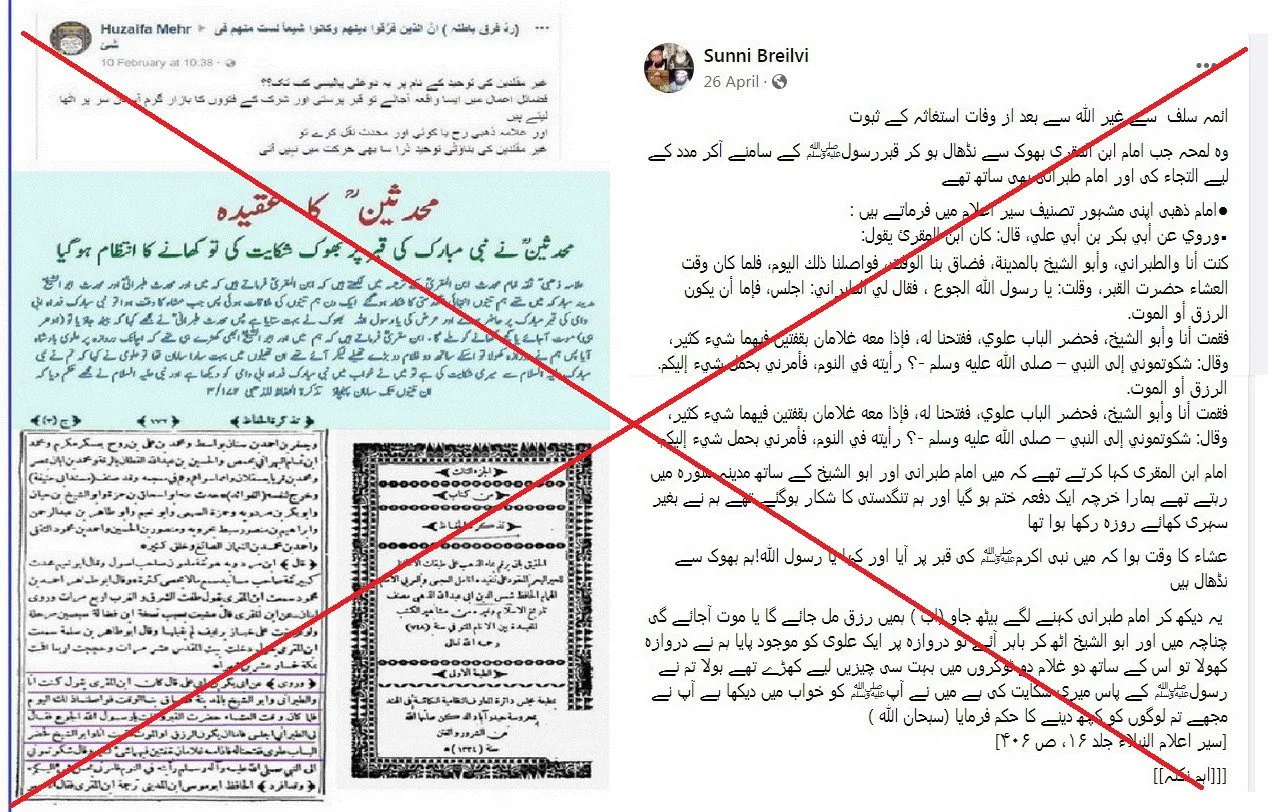
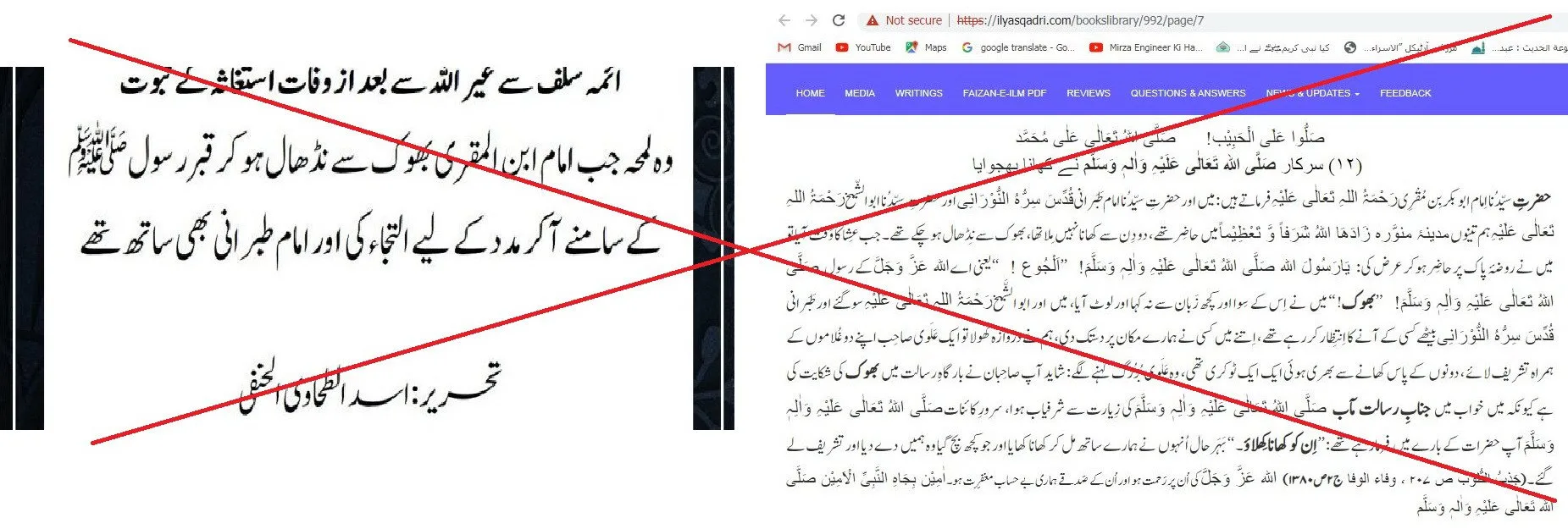
Some people present this story as evidence that Imam Abu Bakr Ibn al-Muqri (Muhammad ibn Ibrahim ibn Ali, died 381 AH) went to the Prophet’s grave during a time of hunger and called out to the Prophet ﷺ. Then an Alawi came and, referring to a dream, gave him food. Although this story is narrated in some books, from the principles of Hadith and principles of reasoning, this incident is not worthy of being considered as evidence.
Presented Story
The story that is narrated is as follows:
وروي عن أبي بكر بن أبي علي، قال: كان ابن المقرئ يقول:
كنت أنا والطبراني، وأبو الشيخ بالمدينة، فضاق بنا الوقت، فواصلنا ذلك اليوم، فلما كان وقت العشاء حضرت القبر، وقلت: يا رسول الله الجوع ، فقال لي الطبراني: اجلس، فإما أن يكون الرزق أو الموت.
فقمت أنا وأبو الشيخ، فحضر الباب علوي، ففتحنا له، فإذا معه غلامان بقفتين فيهما شيء كثير، وقال: شكوتموني إلى النبي – صلى الله عليه وسلم -؟ رأيته في النوم، فأمرني بحمل شيء إليكم.
Translation:
It is narrated from Abu Bakr bin Abi Ali, who said that Ibn al-Muqri used to say: I, Tabarani, and Abu al-Sheikh were in Medina, and we became very hungry and distressed. So, we continued fasting that day. When it was time for Isha, I came near the grave (of the Prophet ﷺ) and said: O Messenger of Allah! I am hungry. Then Tabarani said to me: Sit down, either provision will come or death. Abu al-Sheikh and I stood up, and at that moment an Alawi came to the door. We opened the door for him, and he had two slaves with two baskets containing many things. He said: Did you complain to the Prophet ﷺ about me? I saw the Prophet ﷺ in a dream, and he ordered me to bring something for you.
Reference: Siyar A'lam al-Nubala (narration)
01- Merely being present in the book does not necessitate authenticity
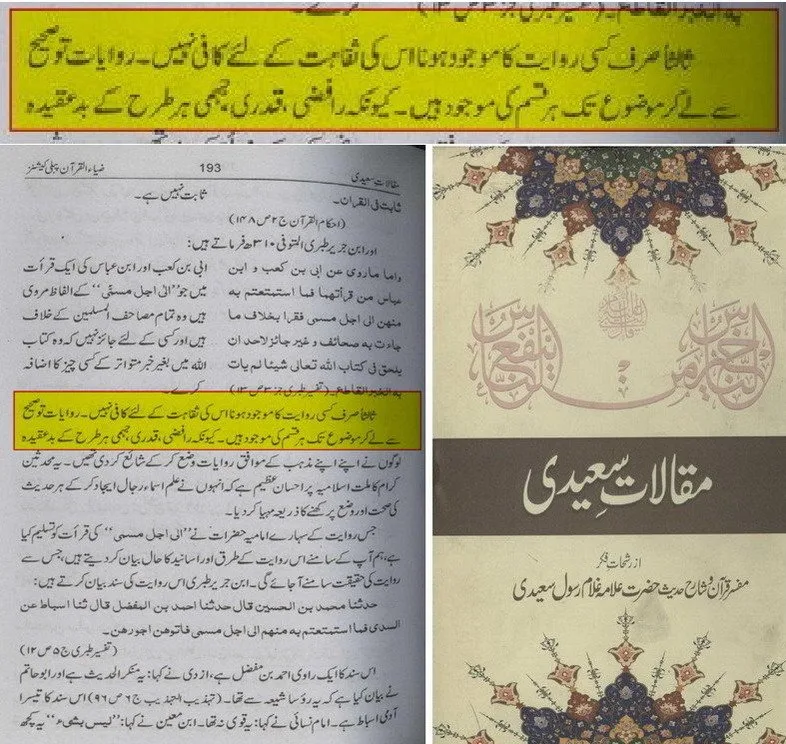
The presence of an event or narration in books does not prove that the event is authentic. Books contain all kinds of narrations, including authentic, good, weak, and even fabricated. Therefore, the fundamental requirement is that the chain of narration and authenticity of the narration presented as evidence should be clear.
02- Hafiz Zahabi has narrated it in the form of Tamreez
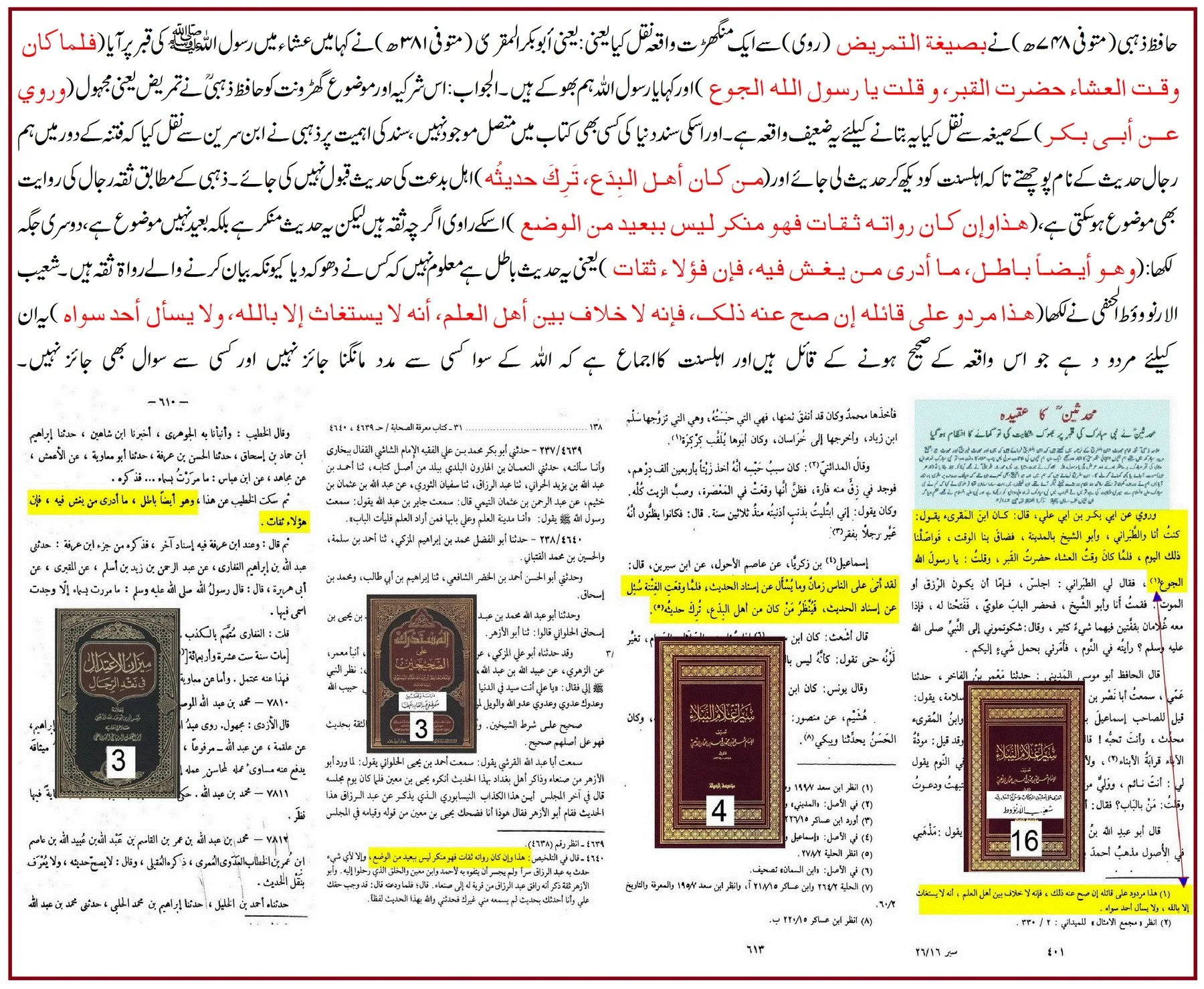
Hafiz Zahabi has narrated this story with the word “وروي” (is narrated). Among the Ahl al-Hadith, this indicates that the narrator is not presenting it as definitively established, but rather as a report or anecdote.
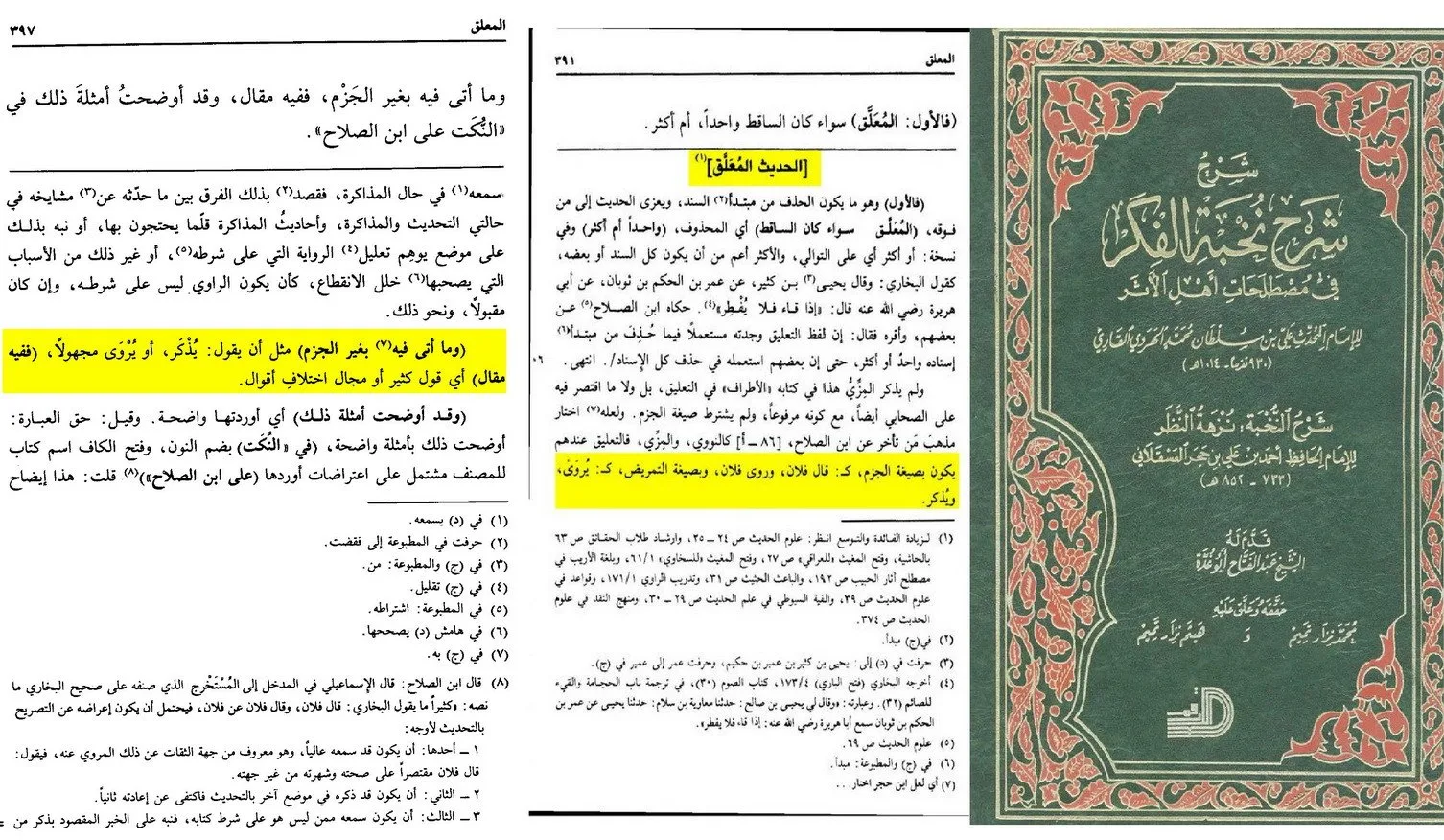
The principle of terminology states:
... فالتعليق عندهم يكون بصيغة الجزم ... وبصيغة التمريض، ك: يروى، ويذكر.
Translation:
According to them, Ta’leeq (suspension) is sometimes with the form of certainty and sometimes with the form of doubt, such as: “It is narrated” and “It is mentioned.”
Reference: Sharh Nukhbat al-Fikr li al-Qari
Here, the expression “وروي” itself indicates that presenting this story as definitive proof is not correct.
03- This story does not have a continuous chain of narration
The way this incident is presented is essentially a narrative; its connected chain of transmission on which this story is based is not brought forward. In matters of beliefs and practices, the evidence that is valid is only that whose chain of transmission is established, especially when the matter concerns worship, supplication, and seeking help.
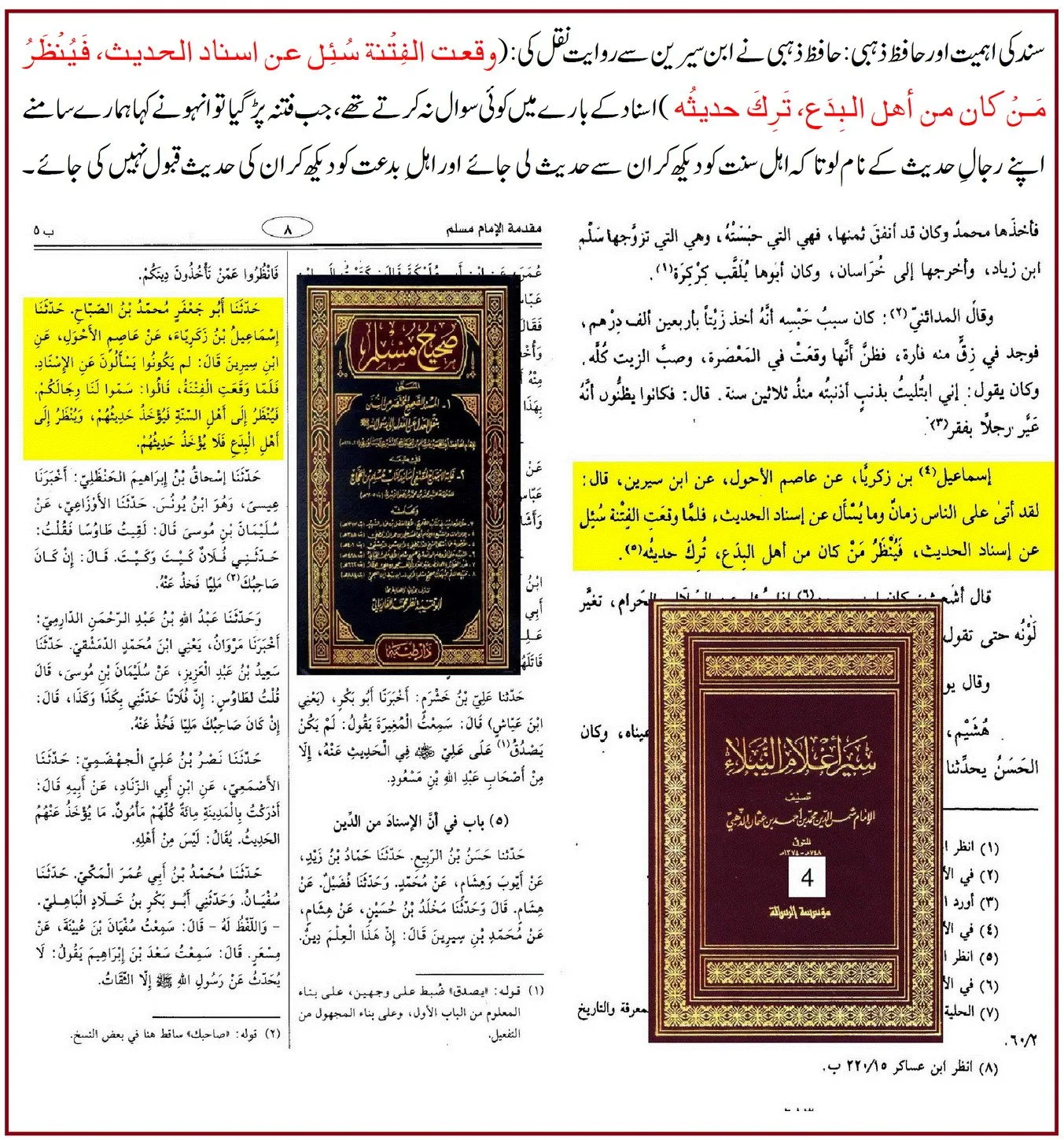
On the importance of the chain of transmission, the fundamental statement of Ibn Sirin (narrated by Hafiz al-Dhahabi):
... قال: لقد أتى على الناس زمان وما يُسأل عن إسناد الحديث، فلما وقعت الفتنة، سُئل عن إسناد الحديث، فينظر من كان من أهل البدع، تُرك حديثه.
Translation:
He said: There came a time upon the people when the chain of transmission of a hadith was not questioned, then when tribulation occurred, the chain of transmission of the hadith began to be questioned. Thus, if it was seen that the narrator was among the innovators, his hadith was abandoned.
Reference: Siyar A'lam al-Nubala
04- Narrations of trustworthy narrators can also be rejected or false
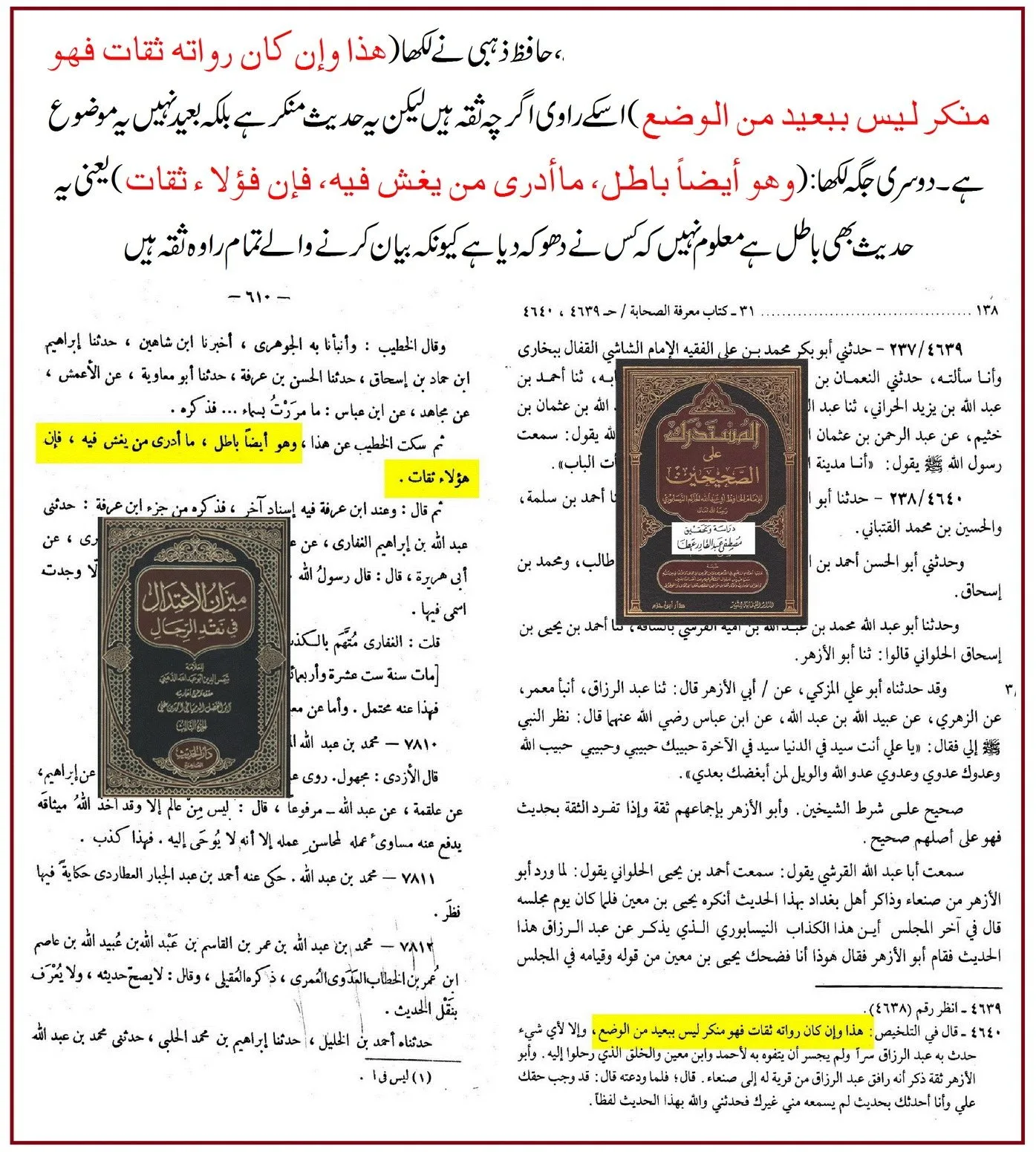
It is a well-known principle that just because the narrators are trustworthy, it does not necessarily mean every narration is correct. Sometimes even from trustworthy narrators, a rejected or false statement is transmitted, and this is found in the words of Hafiz al-Dhahabi himself:
وإن كان رواته ثقات فهو منكر ليس ببعيد من الوضع.
Translation:
Although its narrators are trustworthy, this narration is rejected and may not be free from fabrication.
Reference: Takhlees al-Dhahabi ala al-Mustadrak
And another similar example:
وهو أيضا باطل، ما أدري من يغش فيه، فإن هؤلاء ثقات.
Translation:
This is also false; I do not know who has deceived in it, although all the narrators are trustworthy.
Reference: Mizan al-I'tidal lil-Dhahabi
When falsehood or rejection is possible despite trustworthy narrators, then in this story, where fundamentally the chain itself is not established, it is even more incorrect to establish belief or practice from it.
05- Even Hafiz Dhahabi’s narrations are against this style in the chapter of supplication
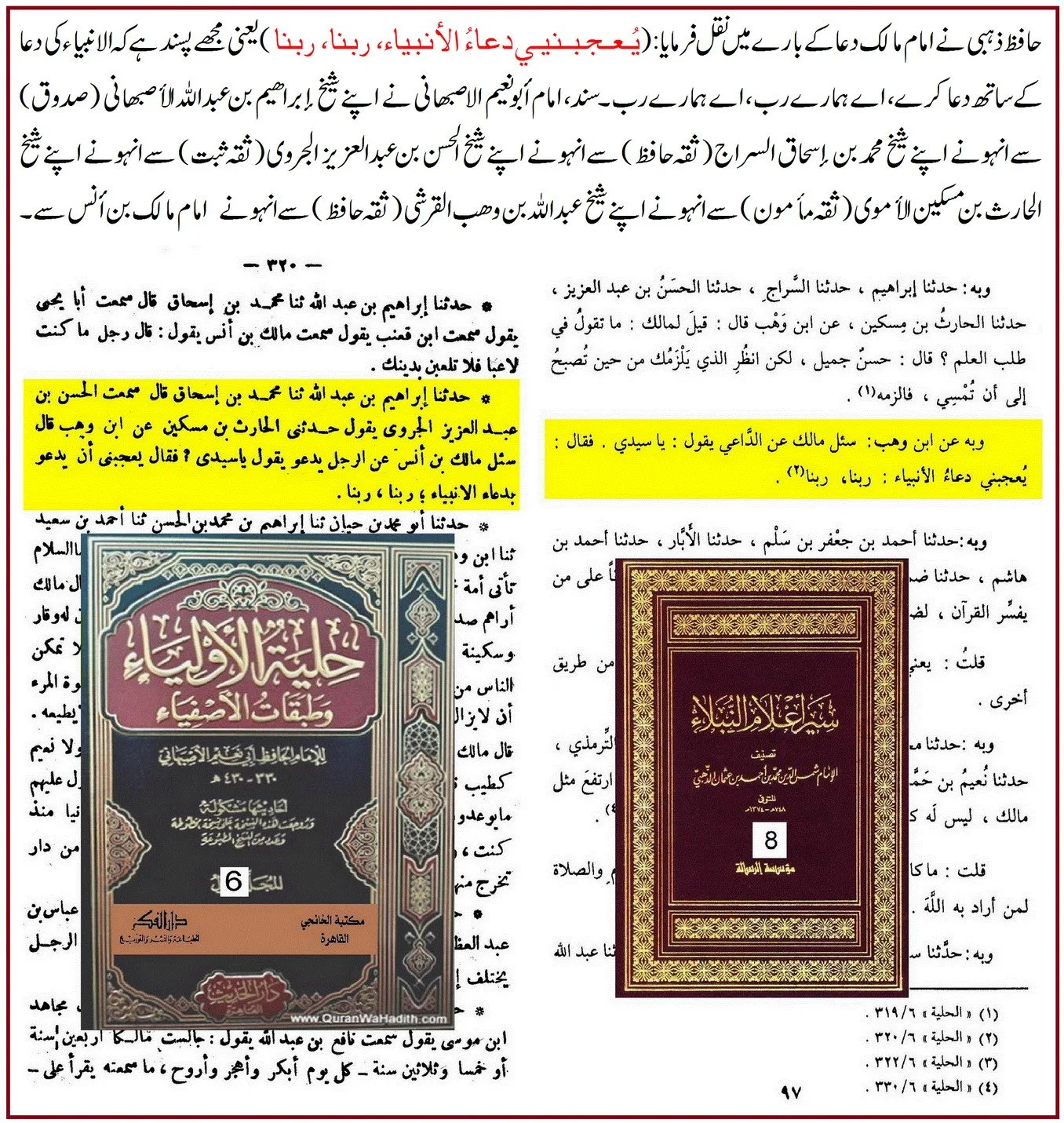
Hafiz Dhahabi narrated from Imam Malik regarding the etiquettes and method of supplication:
سُئِلَ مَالِكٌ عَنِ الدَّاعِي يَقُوْلُ: يَا سَيِّدِي، فَقَالَ: يُعْجِبُنِي دُعَاءُ الأَنْبِيَاءِ: رَبَّنَا، رَبَّنَا.
Translation:
A question was asked from Imam Malik about a person who says in supplication: “O my master,” and he replied: I like the supplication of the Prophets: “O our Lord, O our Lord.”
Reference: Siyar A'lam al-Nubala (narration)
A narration with a connected chain on the same subject is narrated in “Hilyat al-Awliya”:
... عن ابن وهب، قال: سئل مالك بن أنس، عن الرجل يدعو يقول: يا سيدي فقال: يعجبني أن يدعو بدعاء الأنبياء ربنا ربنا.
Translation:
It is narrated from Ibn Wahb, who said that Imam Malik bin Anas was asked about a person who says in supplication: "O my master," and he replied: I prefer that he supplicates with the supplication of the Prophets: "O our Lord, O our Lord."
Reference: Hilyat al-Awliya
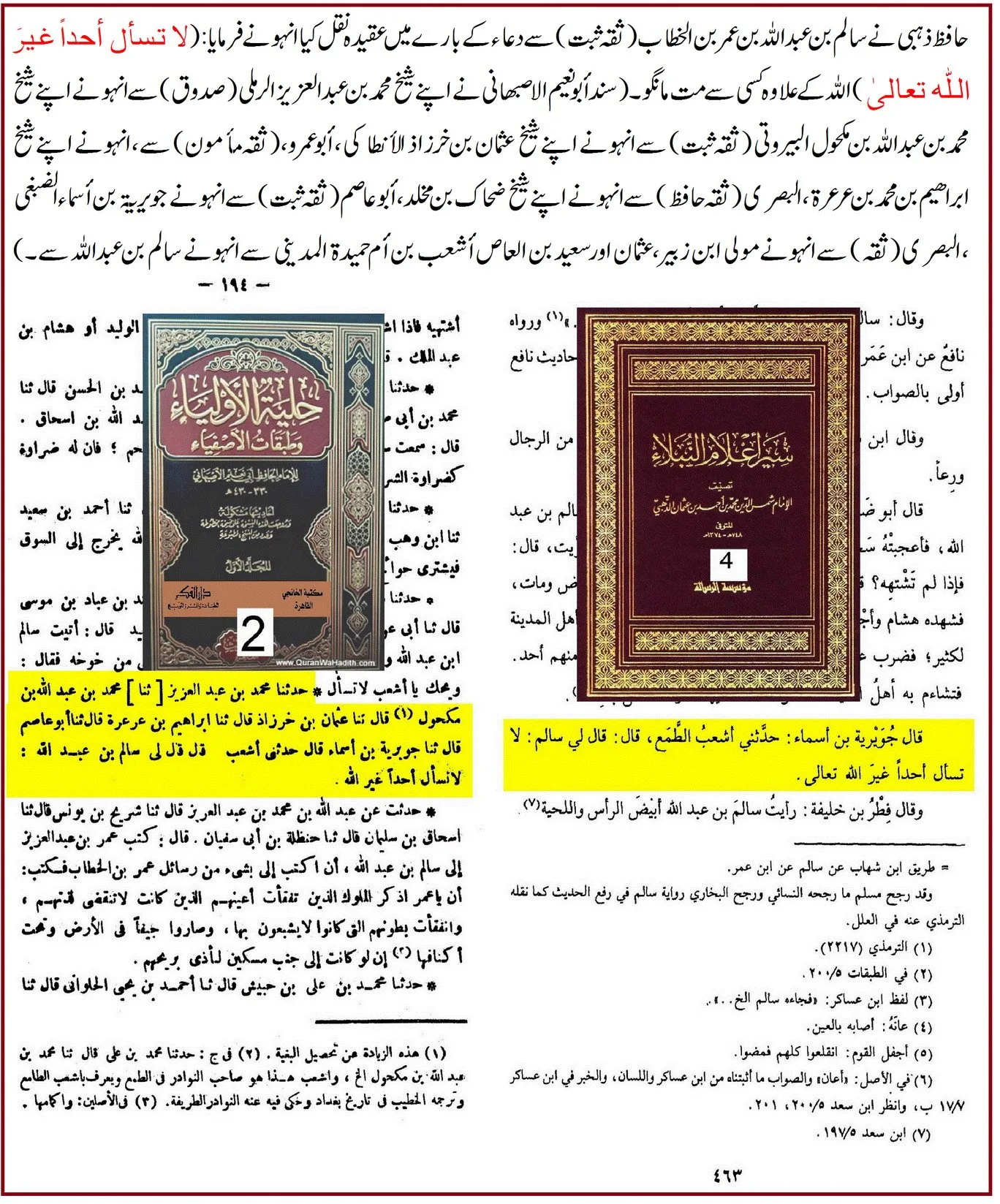
Similarly, the statement of Salim bin Abdullah has also been transmitted:
قال لي سالم: لا تسأل أحدا غير الله تعالى.
Translation:
Salim said to me: Do not ask anyone except Allah Almighty.
Reference: Siyar A'lam al-Nubala (and its chain is transmitted in Hilyat al-Awliya)
These narrations clarify that the well-known way of supplication and asking is "Our Lord, Our Lord" and "Do not ask anyone except Allah," and not to go to graves and call out as a legal proof.
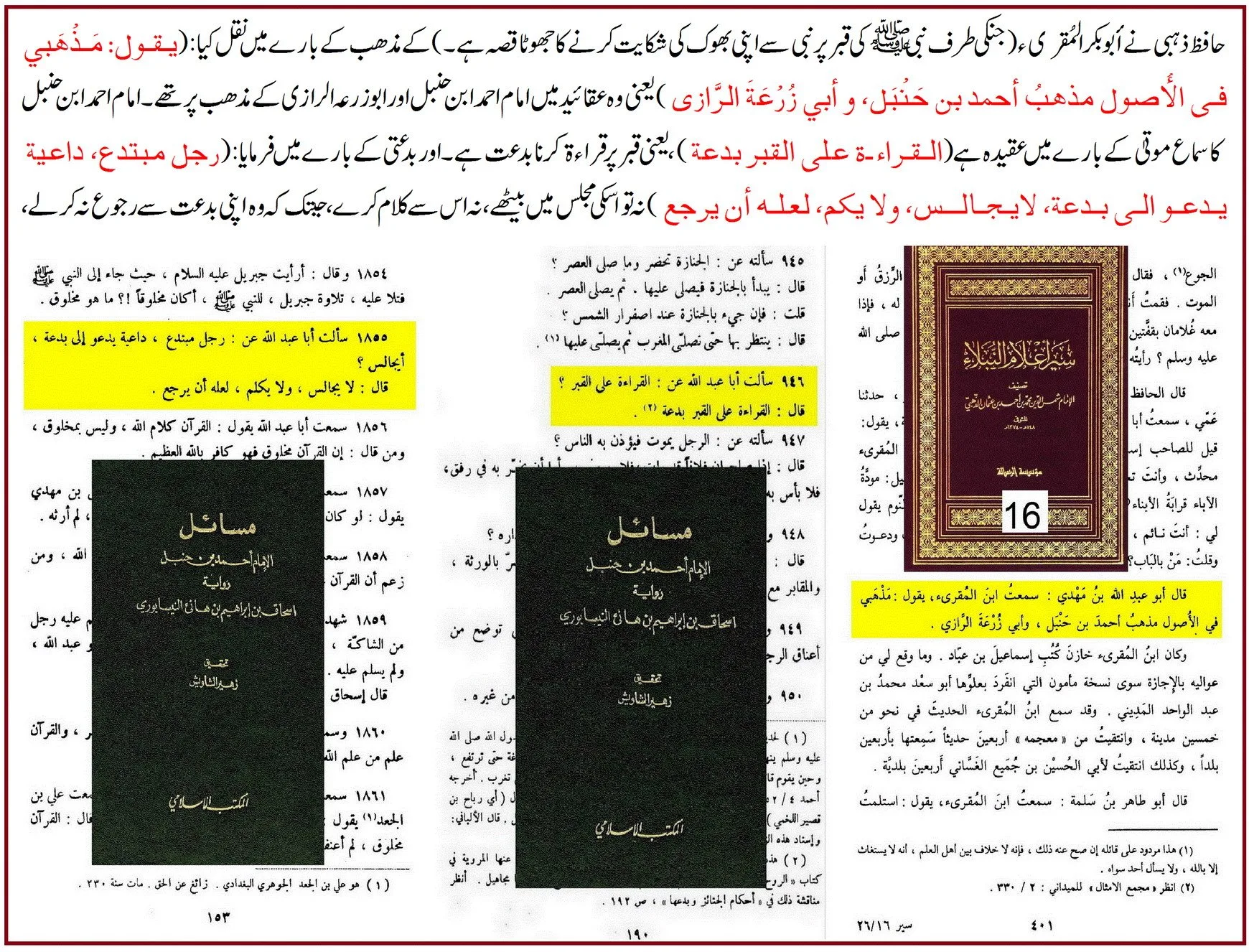
06- Ibn al-Muqri’ clarified the method of Imam Ahmad and Abu Zur’ah in the principles of creed
Hafiz Dhahabi also narrated in the biography of Abu Bakr Ibn al-Muqri’:
سمعت ابن المقرئ يقول: مذهبي في الأصول مذهب أحمد بن حنبل، وأبي زرعة الرازي.
Reference: Siyar A'lam al-Nubala
Translation:
I heard Ibn al-Muqri’ say: In the principles (of creed), my path is the path of Imam Ahmad bin Hanbal and Abu Zur’ah al-Razi.
When Ibn al-Muqri’ attributes the creed principles to the school of Imam Ahmad and Abu Zur’ah, then it is not correct to categorically attribute a story, in which calling out by the grave is made a definitive proof, to them without any chain of narration and investigation.
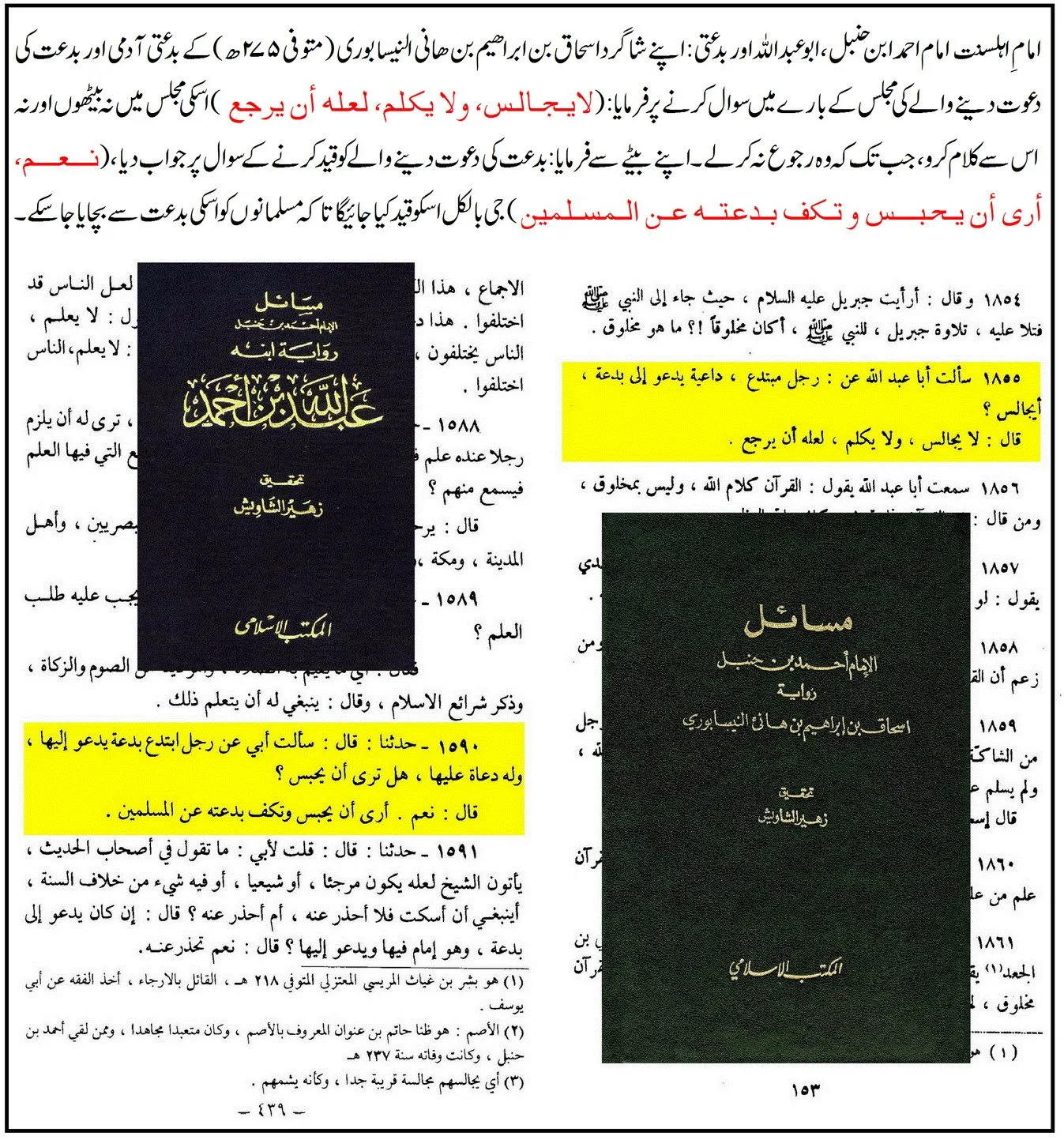
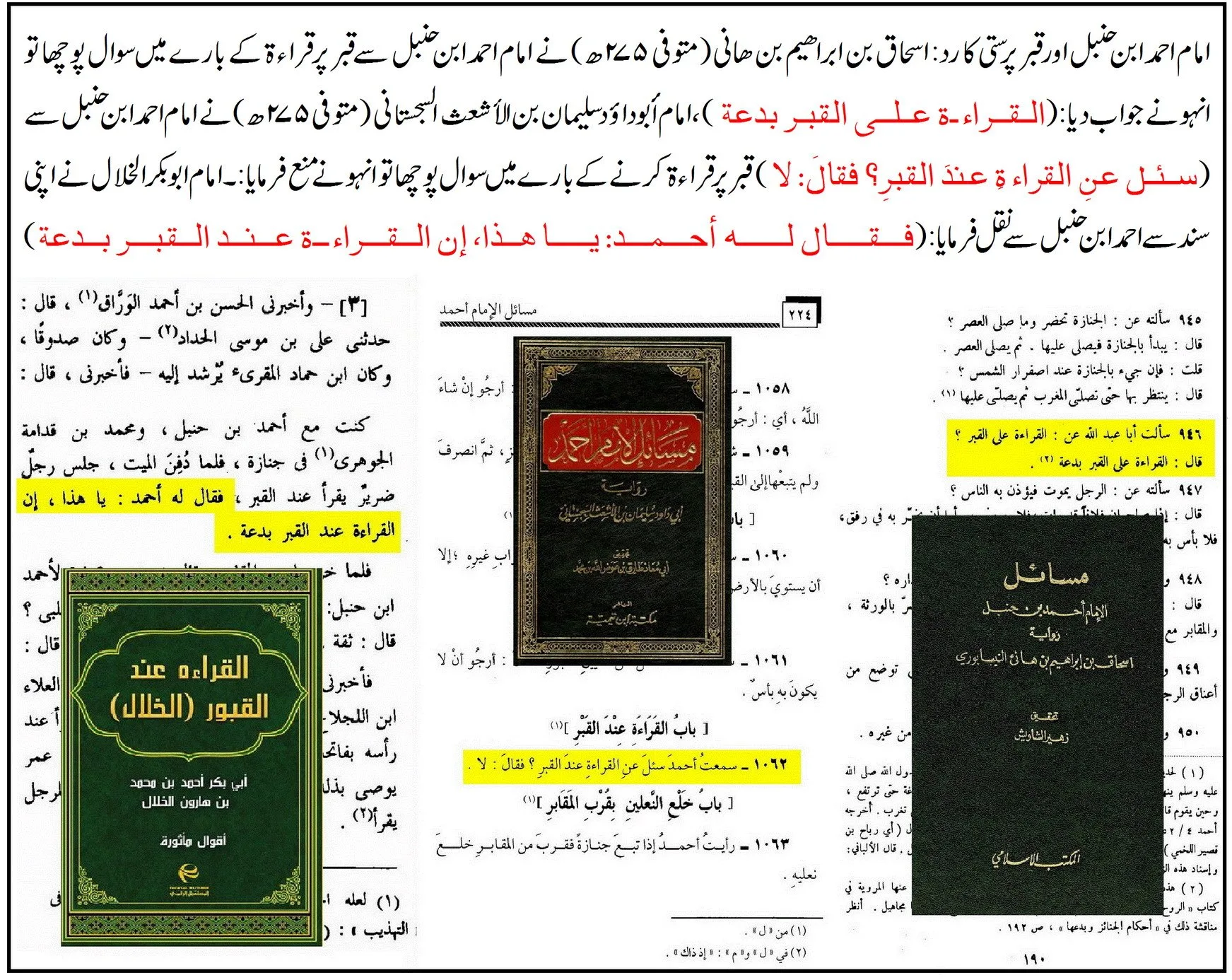
07- Denial of Innovations Related to Graves in the Works of Imam Ahmad
When Imam Ahmad was asked about reciting by the grave, the transmitted answer is:
سئل عن القراءة عند القبر؟ فقال: لا.
Translation:
When Imam Ahmad was asked about reciting by the grave, he said: No.
And:
القراءة على القبر بدعة.
Translation:
Reciting at the grave is an innovation.
Reference: Masail (Ibn Hani) and transmission of Abu Dawood
In this context, the fundamental point remains that for acts presented as worship or means of nearness regarding the grave, strong evidence is required.
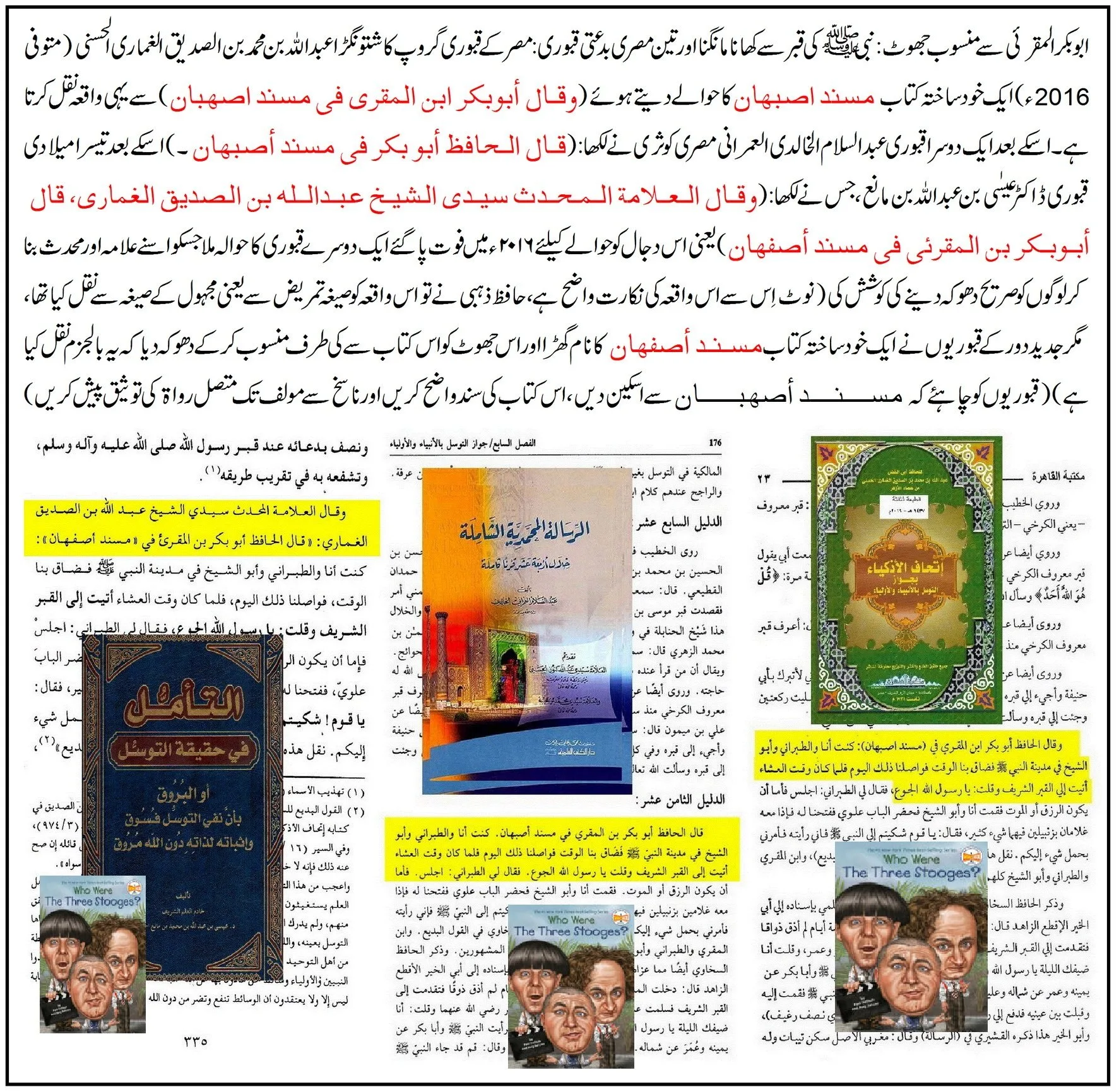
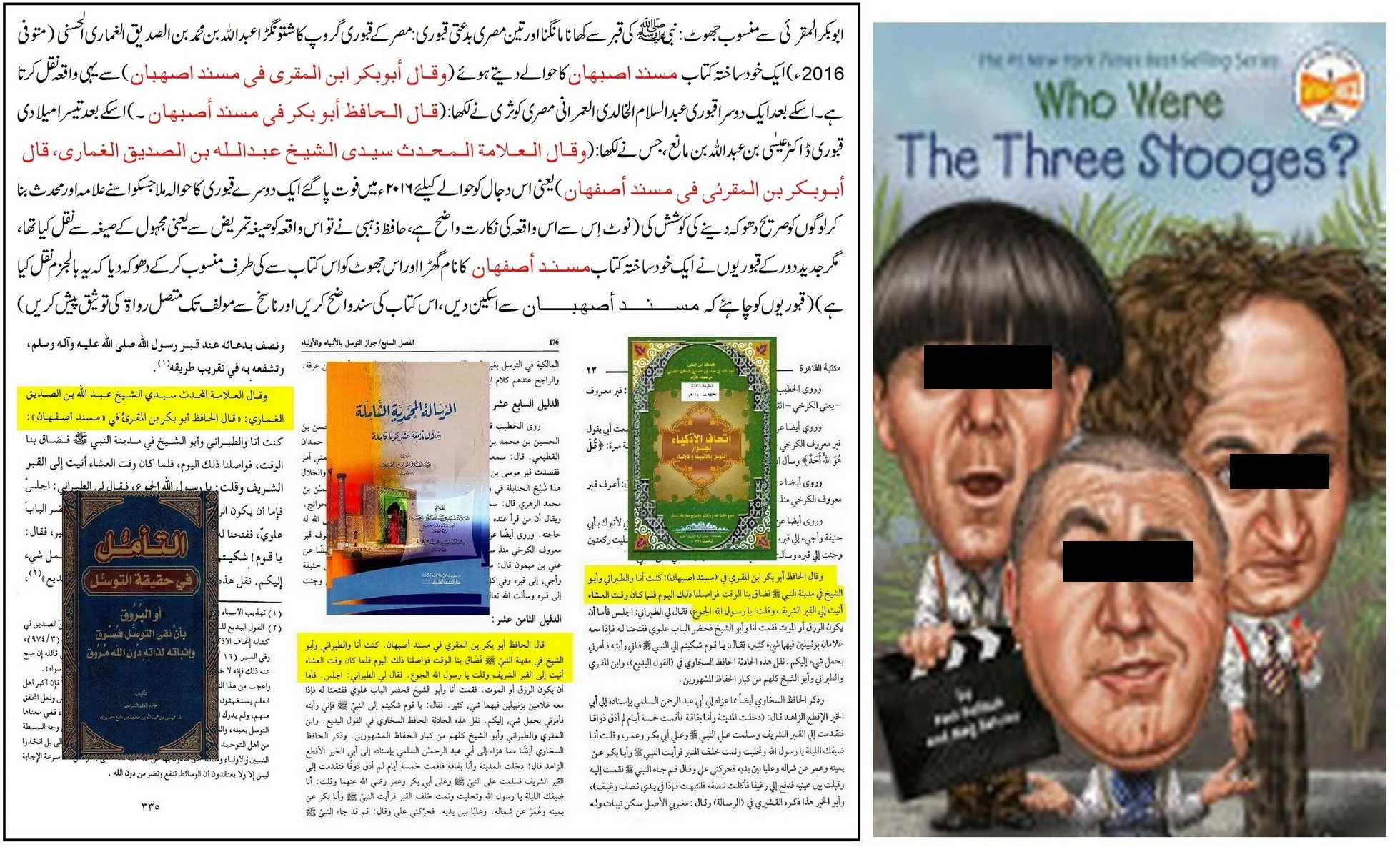
08- The Claim and Reality of “Musnad Asbahan”
Some people say that this story was narrated by Ibn al-Muqri’ himself in “Musnad Asbahan,” and then on this basis try to end the issue of the chain of narration. This mode of reasoning is not correct because:
1. Until the book, its copy, and the chain of narration of the text contained within it are clearly presented, a mere claim does not become proof.
2. If an event is attributed to a lost or unavailable book, trust in that attribution will only be established when reliable scholars transmit it with a connected chain of narration, or a verified copy of the book is presented.
3. Merely writing in some modern writings “قال الحافظ أبو بكر بن المقرئ في مسند أصبهان” neither proves the book nor the event.
The real standard is this: a connected chain of narration or a verified source.
09- The internal clues of the story also indicate confusion
This story, in terms of its structure, also raises many questions, for example:
1. Ibn al-Muqri's phrase "O Messenger of Allah, hunger" and then the statement of the person who comes later saying "You have complained to the Prophet ﷺ on my behalf" lack natural coherence within the story.
2. Immediate arrangements based on a dream and then reaching the door at the same time is a narrative style that cannot be used as a basis for belief and practice without authentication.
3. Such stories are generally fabricated in a sermonic and narrative style, and later people turn them into "proofs of belief."
These indications are not decisive by themselves, but when the chain of narration is also not established, the doubtful nature of the story becomes even clearer.
Summary
1. This narration is transmitted with “Warwi,” and is not at the level of definitive proof.
2. Its continuous chain is not presented, and according to the principles of Hadith, beliefs and acts of worship cannot be established through narrations without a chain.
3. Despite trustworthy narrators, the possibility of a fabricated/false narration has been stated by the Imams themselves, and here the main issue is that the chain itself is not established.
4. The narrations of Hafiz Dhahabi in the chapter of supplication indicate fundamental etiquettes such as “Rabbana Rabbana” and “Do not ask anyone other than Allah.”
5. Ibn al-Muqri’ has attributed the school of Imam Ahmad and Abu Zur’ah in his principles of belief, and from Imam Ahmad, the rejection of innovations in the chapter of graves has been transmitted.
6. Therefore, it is not correct to use this narration as evidence for the permissibility of seeking help after death unless its authentic continuous chain is presented.
Last edited:

