
✍ Compiled by: Abu Hamzah Salafi
The performance of Jumu‘ah (Friday) prayer is among the great symbols (شعائر) of Islam. From the blessed era of the Messenger of Allah ﷺ to the times of the Rightly Guided Caliphs, there was only one Adhān for Jumu‘ah prayer.
However, in later periods, due to the growth in population and expansion of Muslim communities, a second Adhān was introduced in some areas. This additional Adhān has since remained a subject of scholarly discussion and critique.
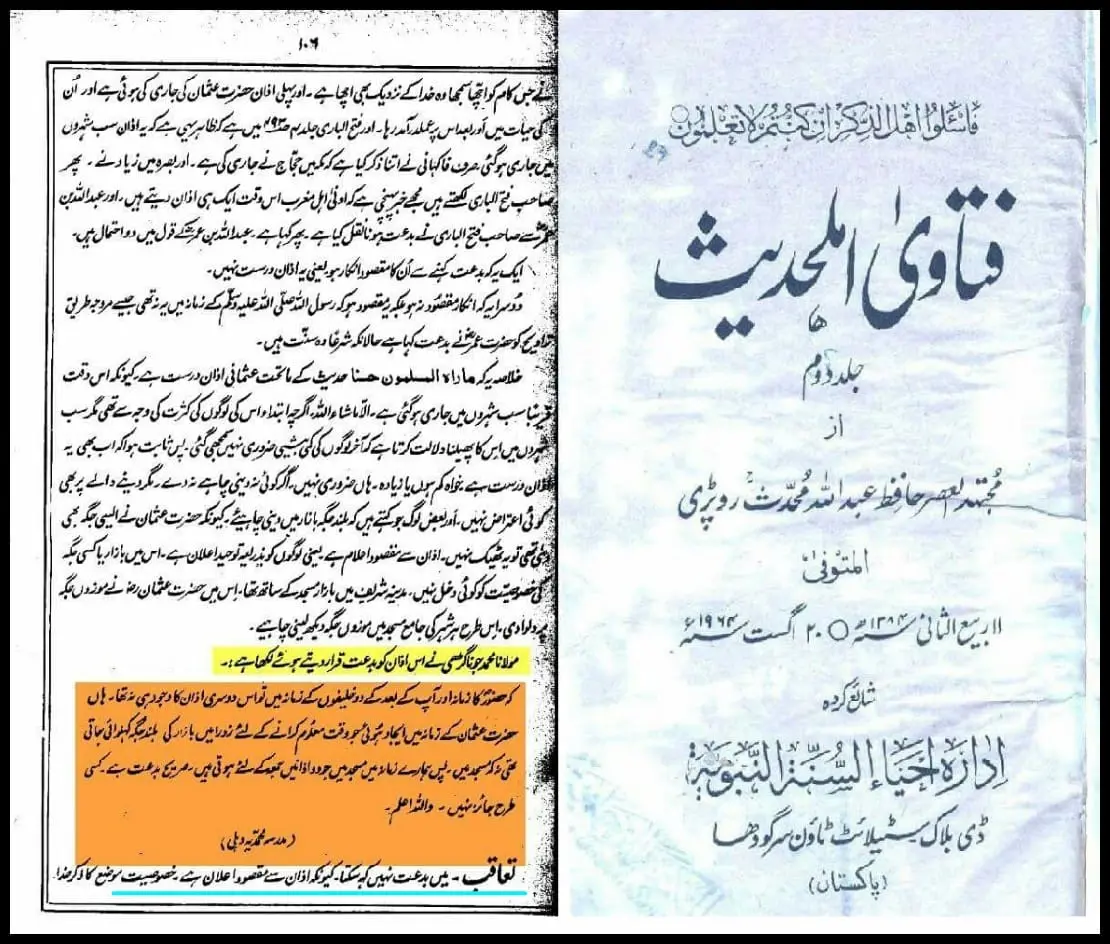
In this detailed research article, we aim to demonstrate with clear evidence, statements of the Salaf (pious predecessors), and reliable historical references that the second Adhān for Jumu‘ah, which is given before the Imām ascends the pulpit (minbar), did not exist during the era of the Prophet ﷺ, Abū Bakr رضي الله عنه or ‘Umar رضي الله عنه. It was a later innovation, and many of the Companions, Tābi‘īn, and prominent scholars of Islam explicitly declared it to be a Bid‘ah (innovation).
The goal of this research is not to target any specific group or school of thought, but to clarify the historical and scholarly position so that the reader may be informed about the Sunnah of the Prophet ﷺ and the way of the Salaf al-Ṣāliḥīn.
During the lifetime of the Prophet ﷺ, and the blessed caliphates of Abū Bakr رضي الله عنه and ‘Umar رضي الله عنه, it was the uncontested practice that only one Adhān was called for Jumu‘ah prayer – that which was called after the Imām sat on the minbar.
Through the study of Islamic history, we find that due to the increase in population and the expansion of Madīnah, gathering people for Jumu‘ah became difficult. Hence, ‘Uthmān ibn ‘Affān رضي الله عنه, the third Caliph, arranged for an additional Adhān, which was not given inside the mosque, but from a high place in the market of Zawrā’, outside the Prophet’s Mosque.
Imām al-Qurṭubī رحمه الله wrote:
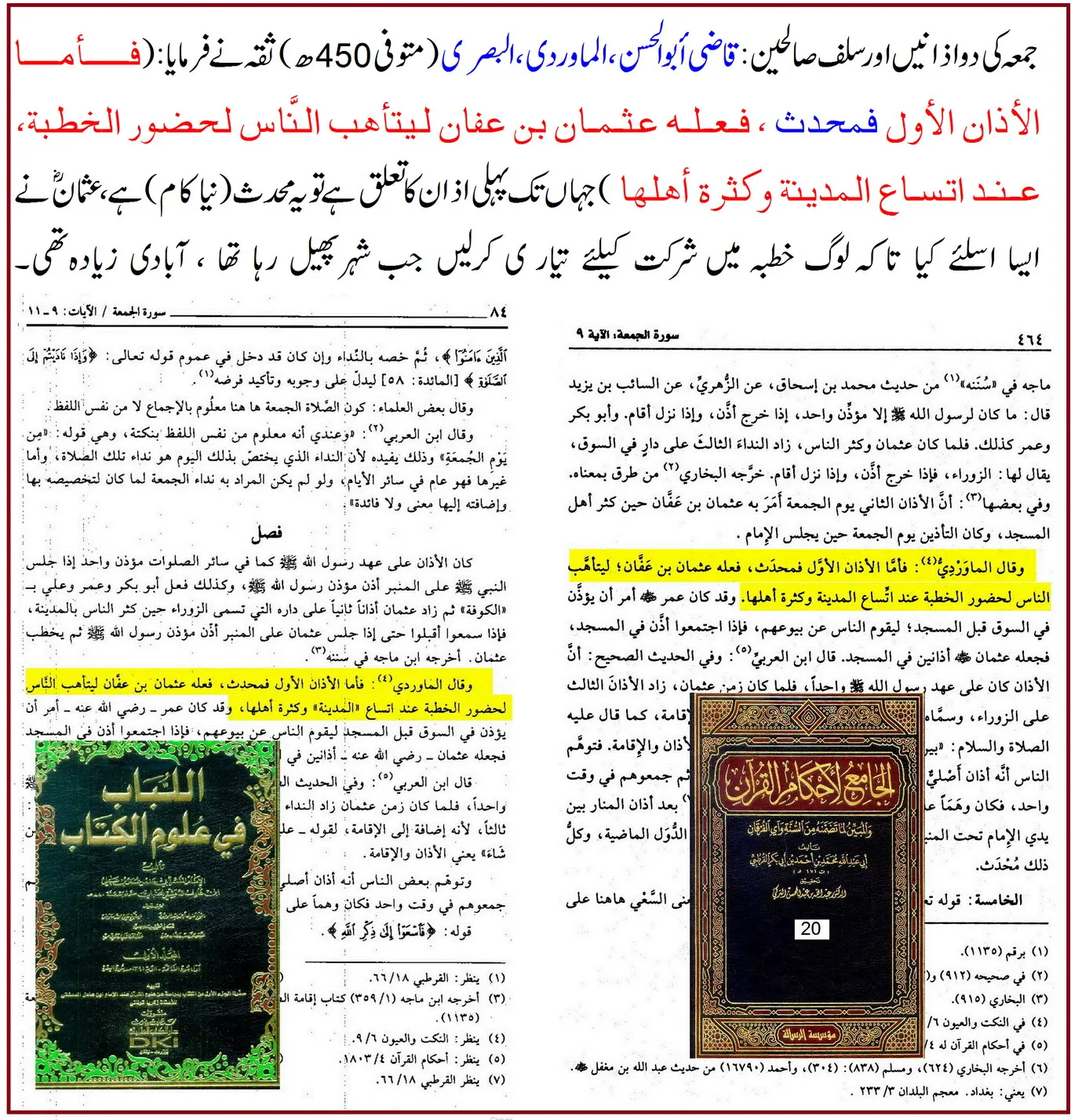
«فأما الأذان الأول فمحدث، فعله عثمان بن عفان ليتأهب الناس لحضور الخطبة عند اتساع المدينة وكثرة أهلها»
“As for the first Adhān (i.e. the additional one), it is a later innovation. ‘Uthmān ibn ‘Affān introduced it so that people could prepare for the sermon due to the expansion of the city and the increase in its population.”
 Tafsīr al-Qurṭubī, al-Lubāb fī ‘Ulūm al-Kitāb by Ibn ‘Ādil
It should be noted that although it is called the ‘first’ Adhān, in actual sequence, it is the second, as the original Adhān in the Prophet’s time was the one after the Imām sat on the minbar.
The Companions of the Prophet ﷺ are the first and most authoritative generation after him. Their statements serve as a beacon for the Ummah.
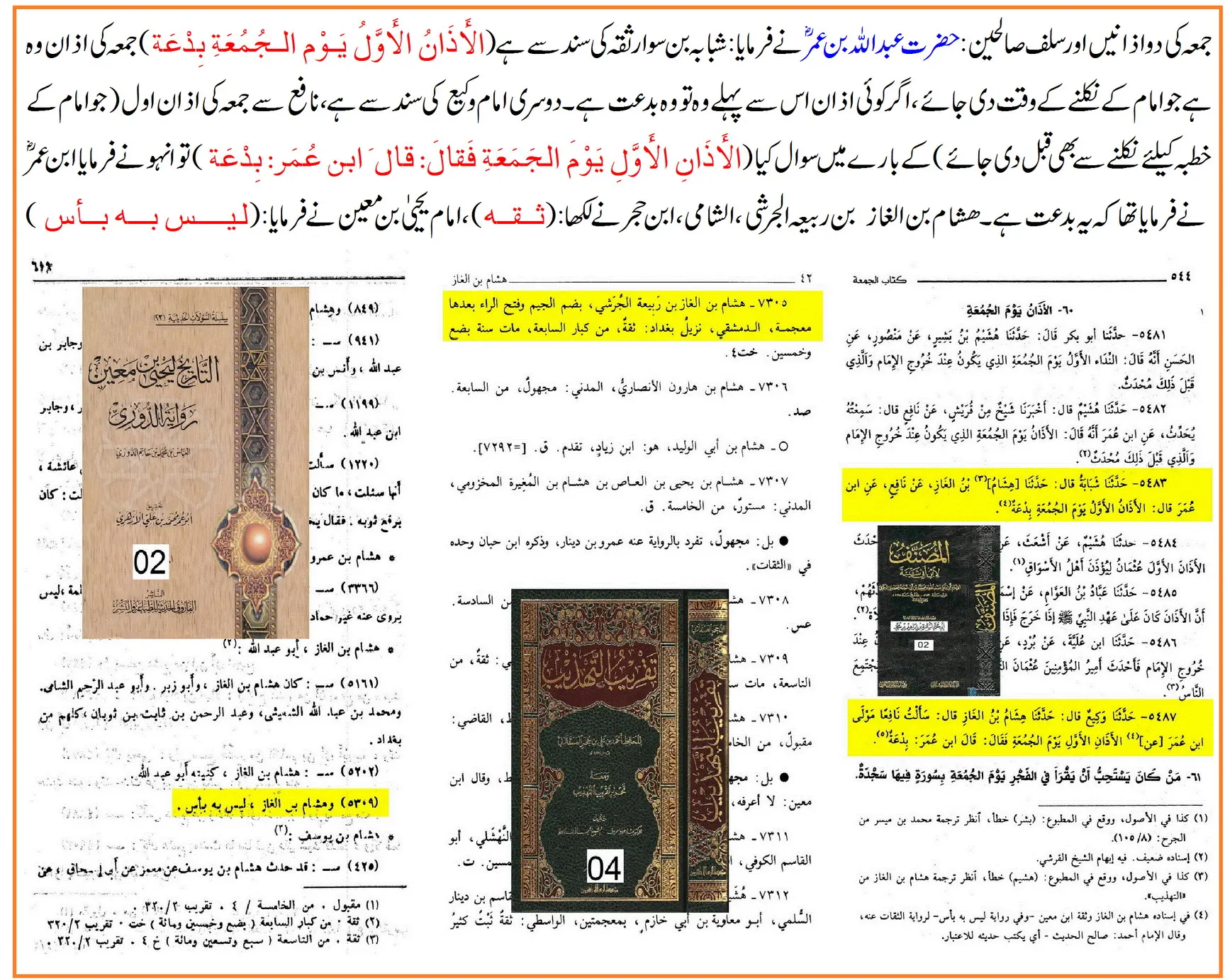
He explicitly declared:
«الأذانُ الأوّلُ يومَ الجُمعةِ بِدْعةٌ»
“The first Adhān on the day of Jumu‘ah is a **Bid‘ah (innovation).”
Muṣannaf Ibn Abī Shaybah, 5437
Another narration:
«سألتُ نافعًا مولى ابنِ عمرَ، الأذانُ الأوّلُ يومَ الجمعةِ بِدْعَةٌ؟ فقال: قال ابنُ عمرَ: بِدْعَةٌ»
“I asked Nāfi‘, the freed slave of Ibn ʿUmar: Is the first Adhān on Friday a Bid‘ah? He replied: Ibn ʿUmar said: It is a Bid‘ah.”
Muṣannaf Ibn Abī Shaybah, 5441
Chain Analysis:
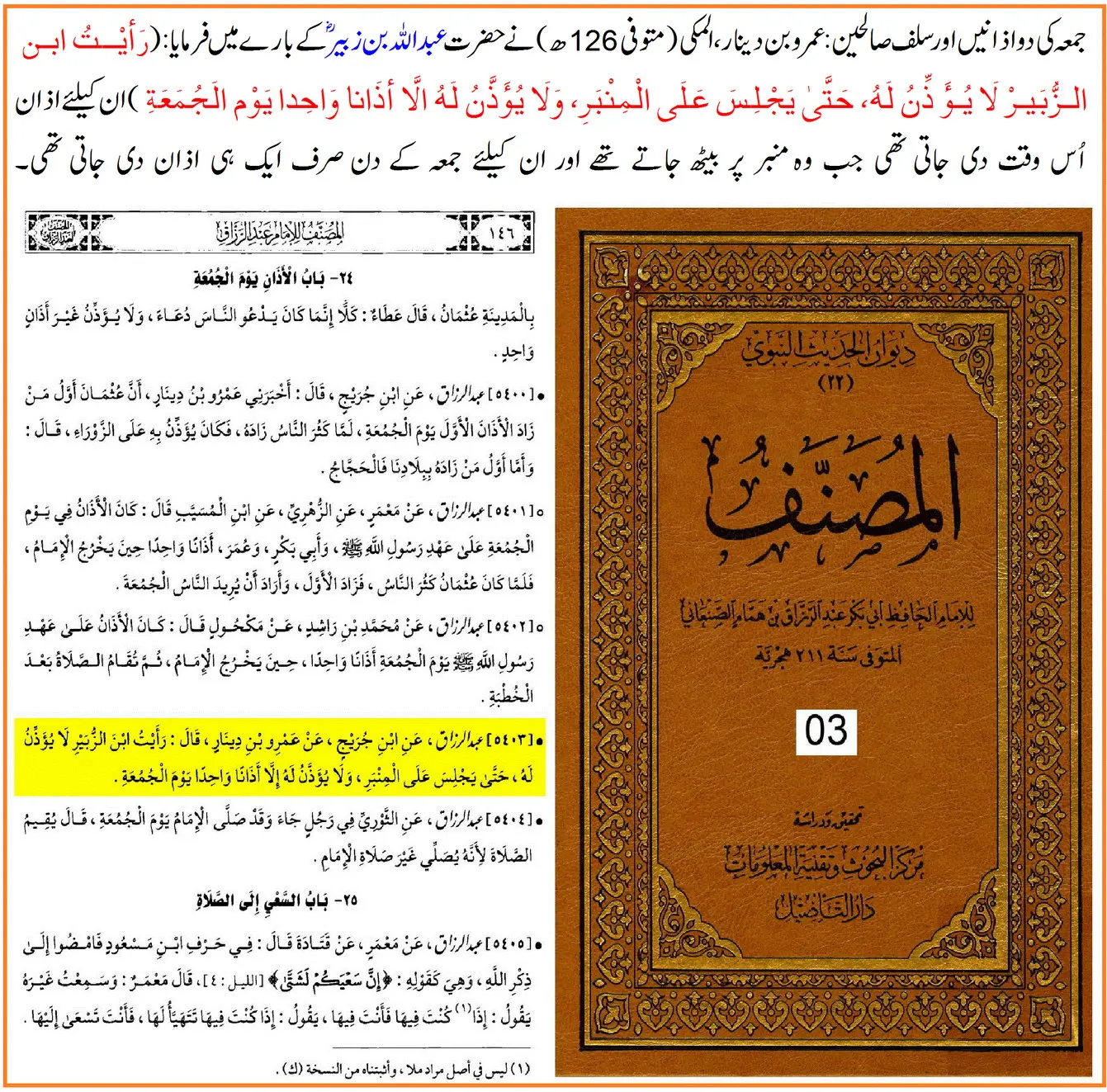
Imām ʿAmr ibn Dīnār (d. 126 AH) said:
«رأيتُ ابنَ الزُبيرِ لا يُؤذَّنُ له حتّى يجلسَ على المِنبرِ، ولا يُؤذَّنُ له إلّا أذانًا واحدًا يومَ الجمعةِ»
“I saw Ibn al-Zubayr رضي الله عنه – the Adhān was not called for him until he sat on the minbar, and there was only one Adhān on Jumu‘ah.”
Muṣannaf ʿAbd al-Razzāq, 5344
From the above:
✔ During the era of the Companions, only the original Adhān after the Imām sat on the minbar was practiced.
✔ ʿAbdullāh ibn ʿUmar and ʿAbdullāh ibn al-Zubayr considered the additional Adhān to be a Bid‘ah.
The Tābiʿīn received direct knowledge from the Companions, and their views hold significant authority.
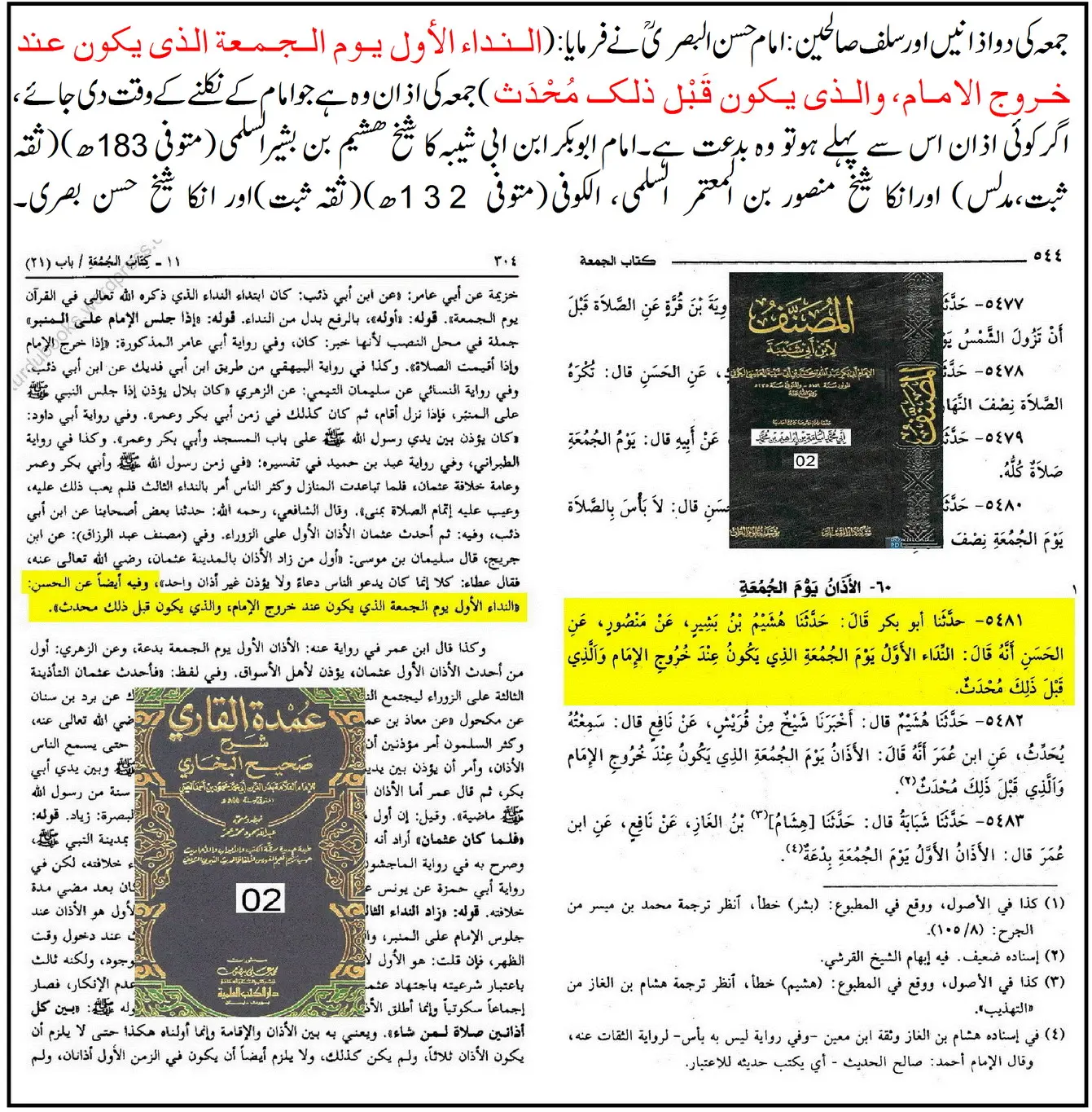
«النداءُ الأوّلُ يومَ الجمعةِ الذي يكونُ عند خروجِ الإمامِ، والذي قبل ذلك مُحدَثٌ»
“The original Adhān on Friday is the one when the Imām emerges, and the one before that is an innovation.”
Muṣannaf Ibn Abī Shaybah, 5435
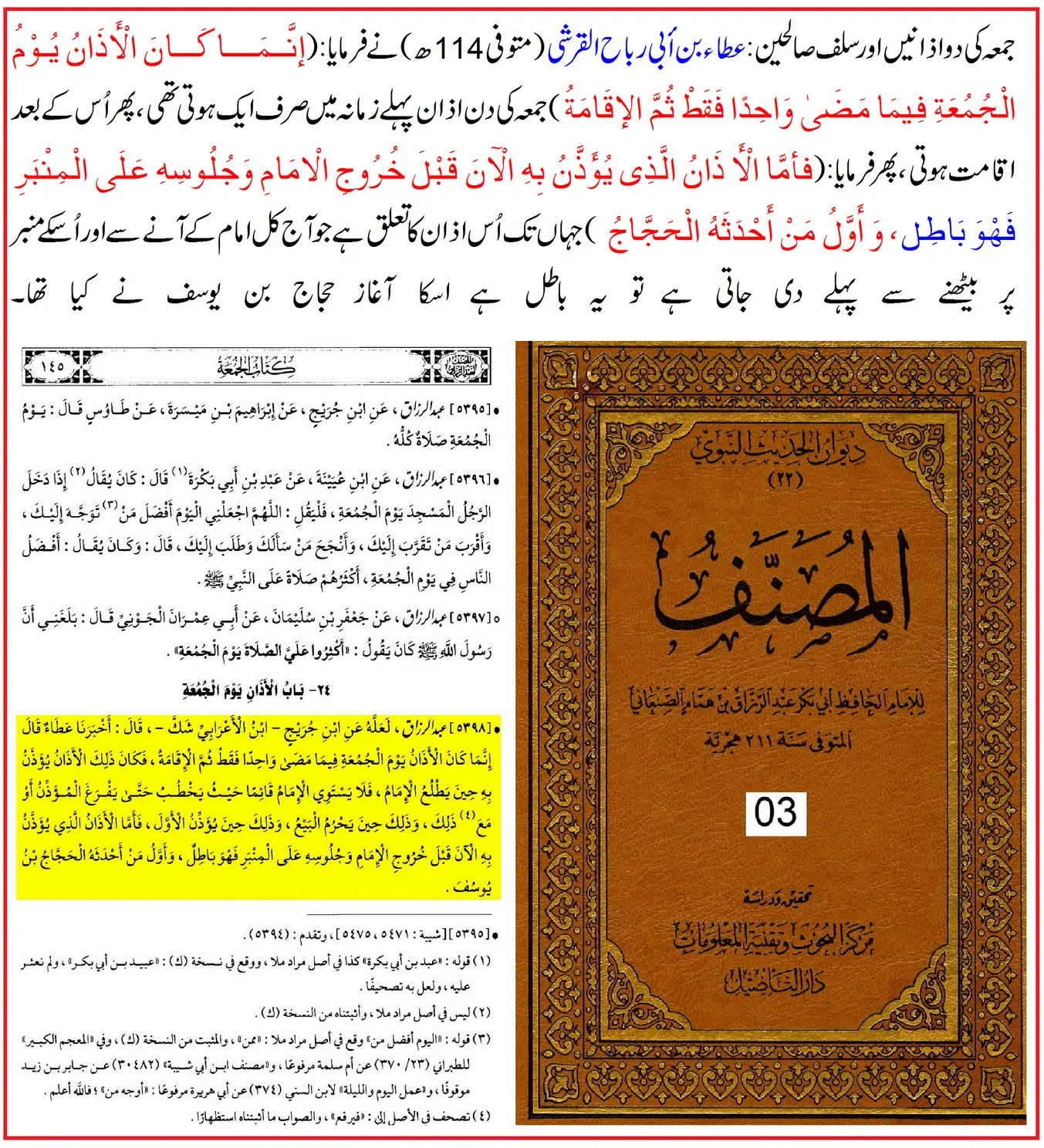
«…فأمّا الأذانُ الذي يُؤذَّنُ به الآنَ قبلَ خروجِ الإمامِ وجلوسِه على المِنبرِ فهو باطلٌ، وأوّلُ من أحدثَه الحجّاجُ بنُ يوسفَ»
“…As for the Adhān that is now given before the Imām’s appearance and seating on the minbar, it is invalid, and Hajjāj ibn Yūsuf was the first to introduce it.”
Muṣannaf ʿAbd al-Razzāq, 5339
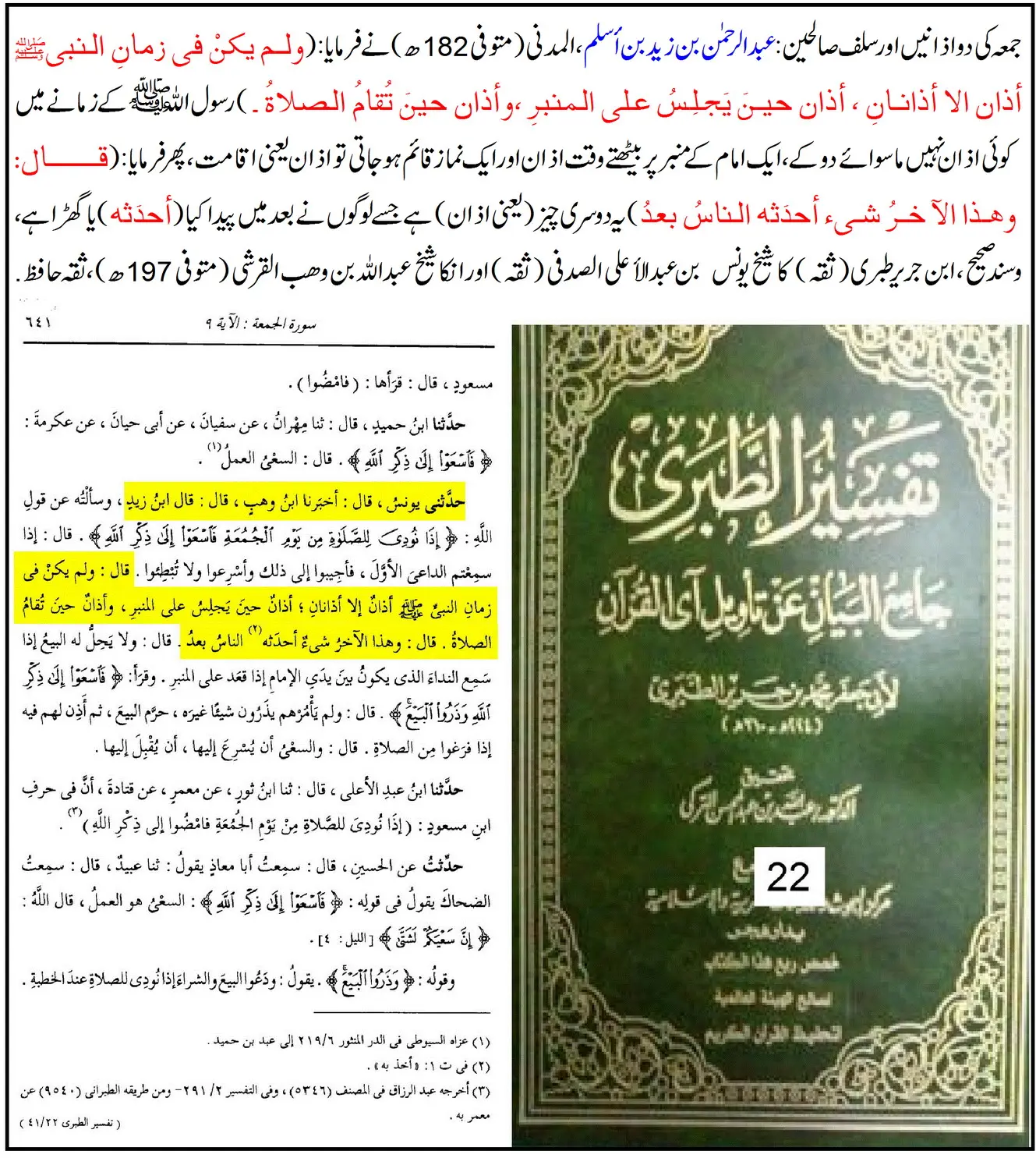
«لم يكن في زمانِ النبيِّ ﷺ أذانٌ إلا أذانانِ… وهذا الآخرُ شيءٌ أحدثَه الناسُ بعدُ»
“In the time of the Prophet ﷺ, there were only two calls: one Adhān when the Imām sat on the minbar, and the Iqāmah. This additional Adhān is something introduced later by people.”
Tafsīr al-Ṭabarī
✔ All major Tābiʿīn acknowledged one Adhān as the Sunnah.
✔ They called the extra Adhān: "محدث", "باطل" (innovation, invalid).
✔ Some traced its origin to Hajjāj ibn Yūsuf.
“The first Adhān is a later innovation introduced by ʿUthmān رضي الله عنه due to the city's expansion and increased population.”
Tafsīr al-Qurṭubī, al-Lubāb fī ʿUlūm al-Kitāb
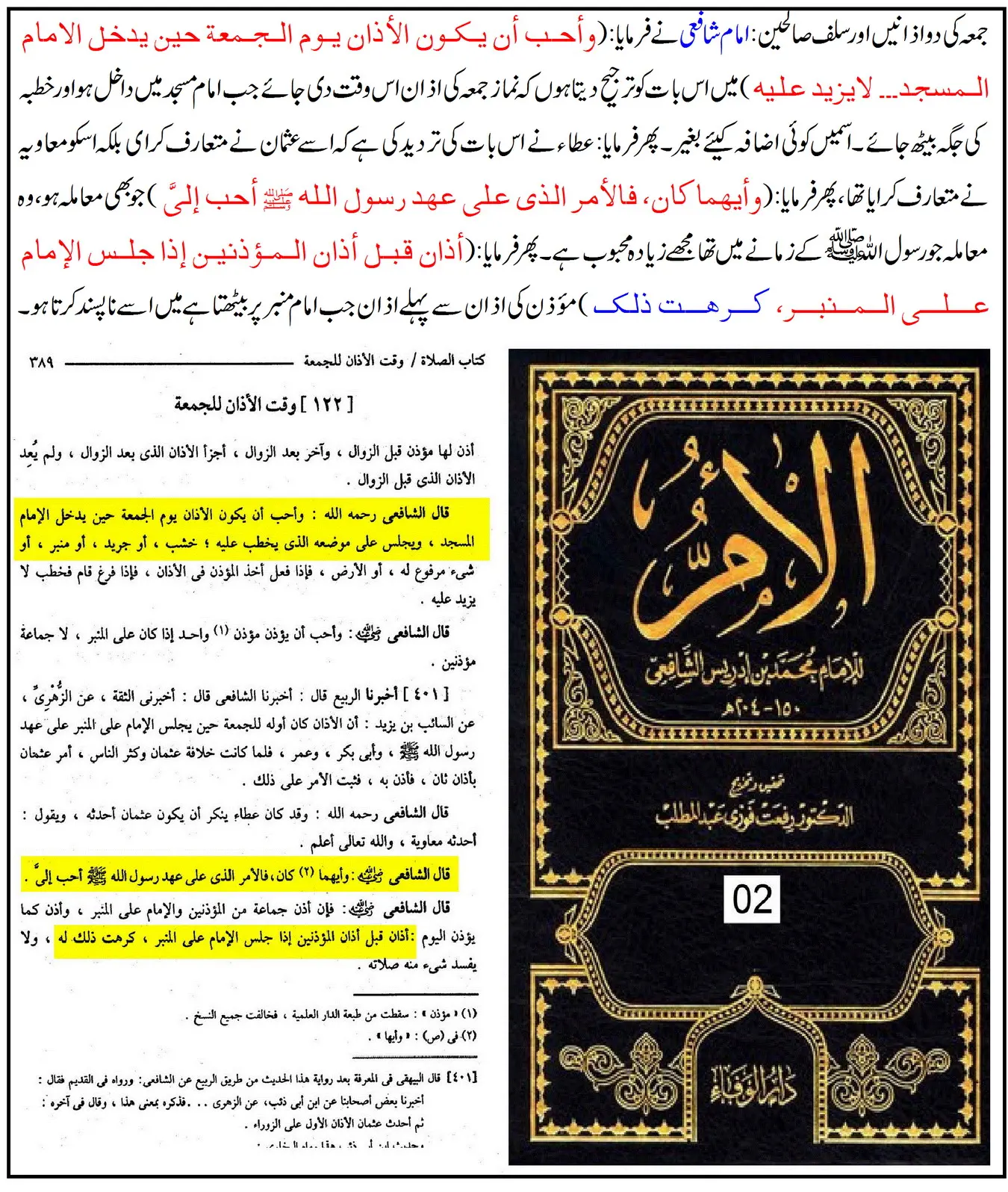
“I prefer the Adhān be given only when the Imām sits on the minbar, and no more than that.”
al-Umm
“I dislike the Adhān given before the Imām ascends the minbar.”
al-Umm
“In the Prophet’s ﷺ time, there was only one Adhān. ʿUthmān introduced a third from Zawrā’. Later people misunderstood and institutionalized it. These are all innovations.”
Aḥkām al-Qur’ān
“A group of Salaf called the additional Adhān a Bid‘ah. Ibn ʿUmar said: ‘The first Adhān of Jumu‘ah is a Bid‘ah, and every Bid‘ah is misguidance.’”
Aḥkām al-Qur’ān
“Ibn ʿUmar called the extra Adhān a Bid‘ah. Every practice not found in the Prophet’s ﷺ time is a Bid‘ah, whether good or bad.”
Fatḥ al-Bārī Sharḥ Ṣaḥīḥ al-Bukhārī
① Era of the Prophet ﷺ:
Only one Adhān after the Imām sat on the minbar was the practice.
② Era of Abū Bakr and ʿUmar:
Continued the exact Sunnah of the Prophet ﷺ.
③ Era of ʿUthmān:
An additional Adhān was added outside the mosque due to necessity—not as a Sunnah.
④ Companions’ Position:
⑤ Tābiʿīn’s Position:
⑥ Views of Scholars:
Unanimous agreement that the Sunnah is one Adhān only, and the second is a later innovation.
The second Adhān before the Imām ascends the minbar for Jumu‘ah is not part of the Prophet’s ﷺ Sunnah, nor the practice of the Rightly Guided Caliphs, nor the Companions or Tābiʿīn.
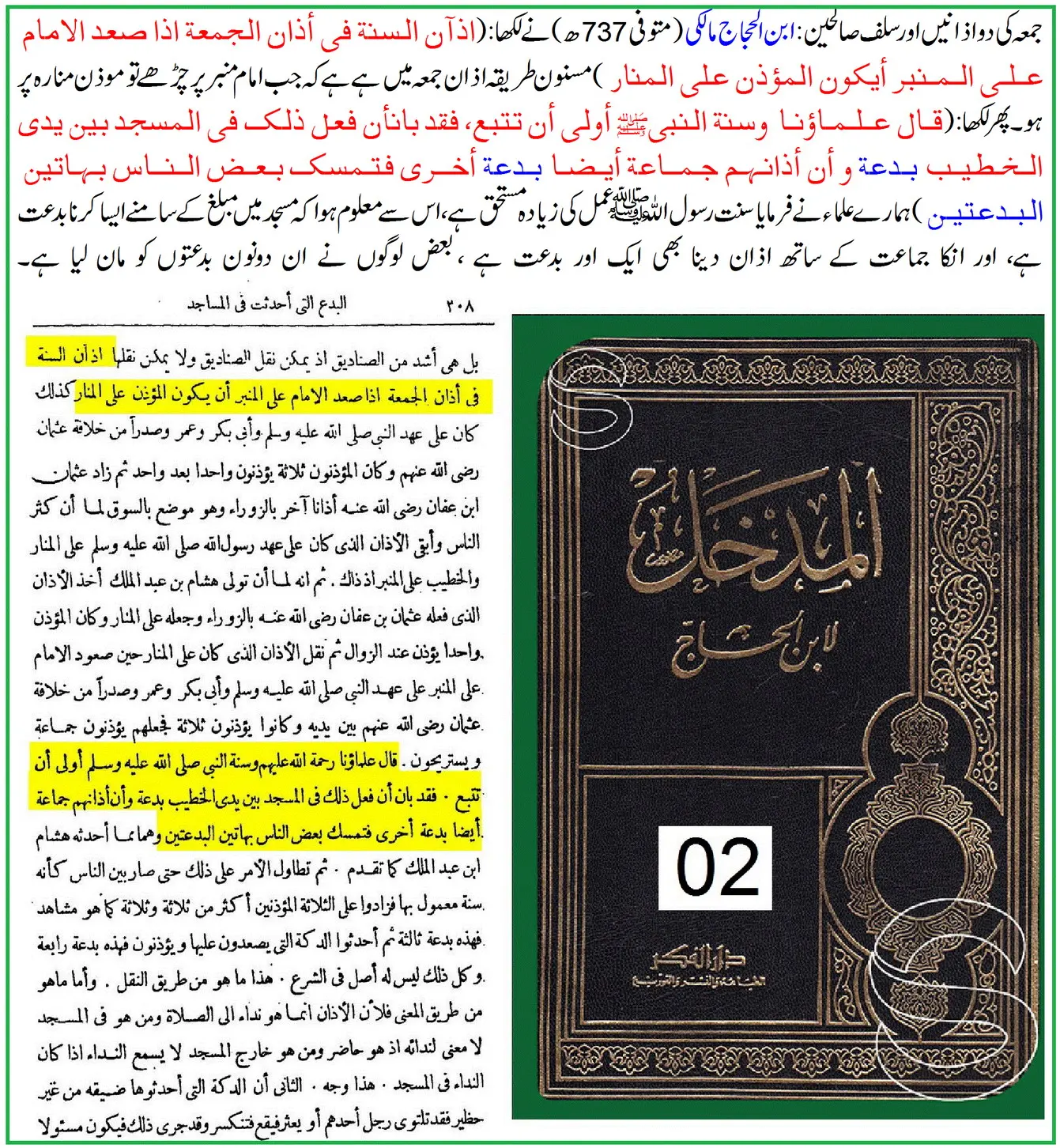
Numerous classical scholars have explicitly labeled it a Bid‘ah, even if introduced by ʿUthmān رضي الله عنه for a practical purpose outside the masjid. Institutionalizing this inside the mosque as a religious act qualifies it as Bid‘ah.
◈ Introduction
The performance of Jumu‘ah (Friday) prayer is among the great symbols (شعائر) of Islam. From the blessed era of the Messenger of Allah ﷺ to the times of the Rightly Guided Caliphs, there was only one Adhān for Jumu‘ah prayer.
However, in later periods, due to the growth in population and expansion of Muslim communities, a second Adhān was introduced in some areas. This additional Adhān has since remained a subject of scholarly discussion and critique.
In this detailed research article, we aim to demonstrate with clear evidence, statements of the Salaf (pious predecessors), and reliable historical references that the second Adhān for Jumu‘ah, which is given before the Imām ascends the pulpit (minbar), did not exist during the era of the Prophet ﷺ, Abū Bakr رضي الله عنه or ‘Umar رضي الله عنه. It was a later innovation, and many of the Companions, Tābi‘īn, and prominent scholars of Islam explicitly declared it to be a Bid‘ah (innovation).
The goal of this research is not to target any specific group or school of thought, but to clarify the historical and scholarly position so that the reader may be informed about the Sunnah of the Prophet ﷺ and the way of the Salaf al-Ṣāliḥīn.
❖ The Single Adhān in the Era of the Prophet ﷺ
During the lifetime of the Prophet ﷺ, and the blessed caliphates of Abū Bakr رضي الله عنه and ‘Umar رضي الله عنه, it was the uncontested practice that only one Adhān was called for Jumu‘ah prayer – that which was called after the Imām sat on the minbar.
❖ The Origin of the Second Adhān
Through the study of Islamic history, we find that due to the increase in population and the expansion of Madīnah, gathering people for Jumu‘ah became difficult. Hence, ‘Uthmān ibn ‘Affān رضي الله عنه, the third Caliph, arranged for an additional Adhān, which was not given inside the mosque, but from a high place in the market of Zawrā’, outside the Prophet’s Mosque.
Imām al-Qurṭubī رحمه الله wrote:
«فأما الأذان الأول فمحدث، فعله عثمان بن عفان ليتأهب الناس لحضور الخطبة عند اتساع المدينة وكثرة أهلها»
“As for the first Adhān (i.e. the additional one), it is a later innovation. ‘Uthmān ibn ‘Affān introduced it so that people could prepare for the sermon due to the expansion of the city and the increase in its population.”
Tafsīr al-Qurṭubī, al-Lubāb fī ‘Ulūm al-Kitāb by Ibn ‘ĀdilIt should be noted that although it is called the ‘first’ Adhān, in actual sequence, it is the second, as the original Adhān in the Prophet’s time was the one after the Imām sat on the minbar.
❖ Opinions of the Noble Companions
The Companions of the Prophet ﷺ are the first and most authoritative generation after him. Their statements serve as a beacon for the Ummah.
① The Clear Stance of ʿAbdullāh ibn ʿUmar رضي الله عنهما
He explicitly declared:
«الأذانُ الأوّلُ يومَ الجُمعةِ بِدْعةٌ»
“The first Adhān on the day of Jumu‘ah is a **Bid‘ah (innovation).”
Muṣannaf Ibn Abī Shaybah, 5437Another narration:
«سألتُ نافعًا مولى ابنِ عمرَ، الأذانُ الأوّلُ يومَ الجمعةِ بِدْعَةٌ؟ فقال: قال ابنُ عمرَ: بِدْعَةٌ»
“I asked Nāfi‘, the freed slave of Ibn ʿUmar: Is the first Adhān on Friday a Bid‘ah? He replied: Ibn ʿUmar said: It is a Bid‘ah.”
Muṣannaf Ibn Abī Shaybah, 5441Chain Analysis:
- Shabābah ibn Sawwār – truthful, ḥasan al-ḥadīth
- Hishām ibn al-Ghāz – trustworthy (thiqqah)
- Nāfiʿ – well-known trustworthy Tābiʿī
② The Practice of ʿAbdullāh ibn al-Zubayr رضي الله عنه
Imām ʿAmr ibn Dīnār (d. 126 AH) said:
«رأيتُ ابنَ الزُبيرِ لا يُؤذَّنُ له حتّى يجلسَ على المِنبرِ، ولا يُؤذَّنُ له إلّا أذانًا واحدًا يومَ الجمعةِ»
“I saw Ibn al-Zubayr رضي الله عنه – the Adhān was not called for him until he sat on the minbar, and there was only one Adhān on Jumu‘ah.”
Muṣannaf ʿAbd al-Razzāq, 5344✿ Summary of the Companions’ Stance
From the above:
✔ During the era of the Companions, only the original Adhān after the Imām sat on the minbar was practiced.
✔ ʿAbdullāh ibn ʿUmar and ʿAbdullāh ibn al-Zubayr considered the additional Adhān to be a Bid‘ah.
❖ The Opinions of the Tābiʿīn (Successors)
The Tābiʿīn received direct knowledge from the Companions, and their views hold significant authority.
① Imām al-Ḥasan al-Baṣrī رحمه الله (d. 110 AH)
«النداءُ الأوّلُ يومَ الجمعةِ الذي يكونُ عند خروجِ الإمامِ، والذي قبل ذلك مُحدَثٌ»
“The original Adhān on Friday is the one when the Imām emerges, and the one before that is an innovation.”
Muṣannaf Ibn Abī Shaybah, 5435② Imām ʿAṭāʾ ibn Abī Rabāḥ رحمه الله (d. 114 AH)
«…فأمّا الأذانُ الذي يُؤذَّنُ به الآنَ قبلَ خروجِ الإمامِ وجلوسِه على المِنبرِ فهو باطلٌ، وأوّلُ من أحدثَه الحجّاجُ بنُ يوسفَ»
“…As for the Adhān that is now given before the Imām’s appearance and seating on the minbar, it is invalid, and Hajjāj ibn Yūsuf was the first to introduce it.”
Muṣannaf ʿAbd al-Razzāq, 5339③ Imām ʿAbd al-Raḥmān ibn Zayd ibn Aslam رحمه الله (d. 182 AH)
«لم يكن في زمانِ النبيِّ ﷺ أذانٌ إلا أذانانِ… وهذا الآخرُ شيءٌ أحدثَه الناسُ بعدُ»
“In the time of the Prophet ﷺ, there were only two calls: one Adhān when the Imām sat on the minbar, and the Iqāmah. This additional Adhān is something introduced later by people.”
Tafsīr al-Ṭabarī✿ Summary of Tābiʿīn’s Views:
✔ All major Tābiʿīn acknowledged one Adhān as the Sunnah.
✔ They called the extra Adhān: "محدث", "باطل" (innovation, invalid).
✔ Some traced its origin to Hajjāj ibn Yūsuf.
❖ Views of the Prominent Jurists and Scholars
① Imām al-Māwardī رحمه الله (d. 450 AH)
“The first Adhān is a later innovation introduced by ʿUthmān رضي الله عنه due to the city's expansion and increased population.”
Tafsīr al-Qurṭubī, al-Lubāb fī ʿUlūm al-Kitāb② Imām al-Shāfiʿī رحمه الله (d. 204 AH)
“I prefer the Adhān be given only when the Imām sits on the minbar, and no more than that.”
al-Umm“I dislike the Adhān given before the Imām ascends the minbar.”
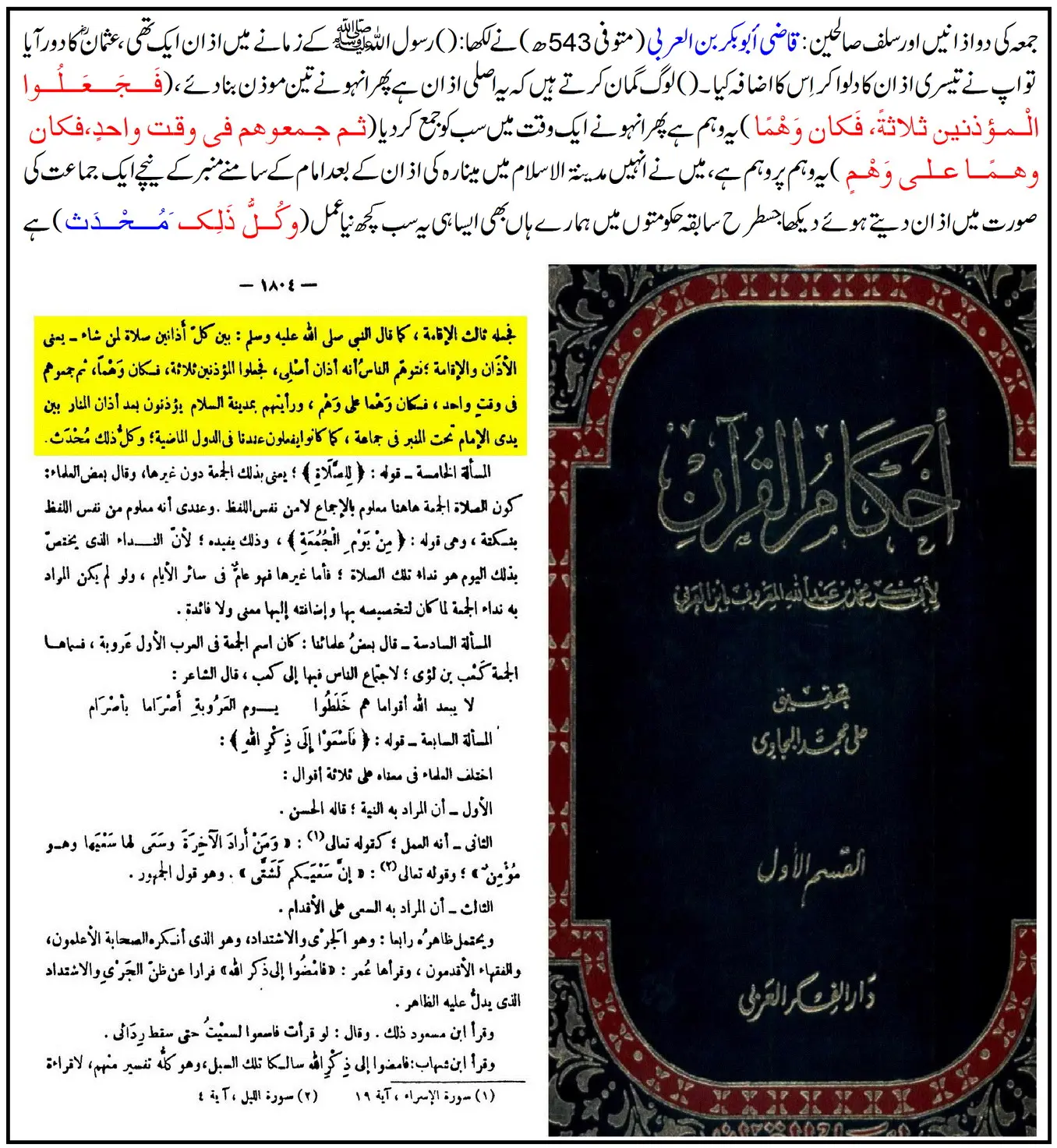
al-Umm③ Qāḍī Abū Bakr Ibn al-ʿArabī رحمه الله (d. 543 AH)
“In the Prophet’s ﷺ time, there was only one Adhān. ʿUthmān introduced a third from Zawrā’. Later people misunderstood and institutionalized it. These are all innovations.”
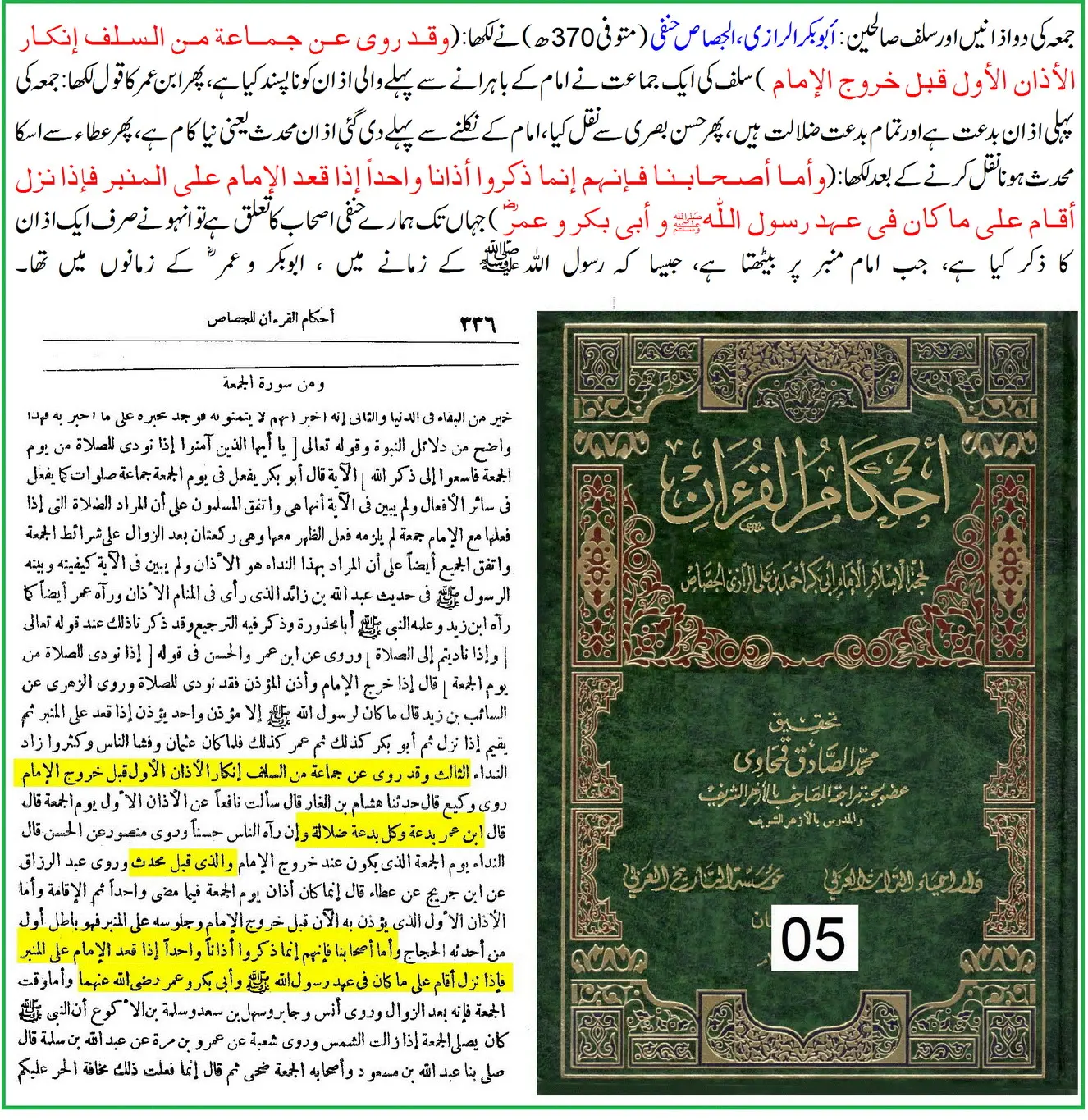
Aḥkām al-Qur’ān④ Imām Abū Bakr al-Jaṣṣāṣ al-Ḥanafī رحمه الله (d. 370 AH)
“A group of Salaf called the additional Adhān a Bid‘ah. Ibn ʿUmar said: ‘The first Adhān of Jumu‘ah is a Bid‘ah, and every Bid‘ah is misguidance.’”
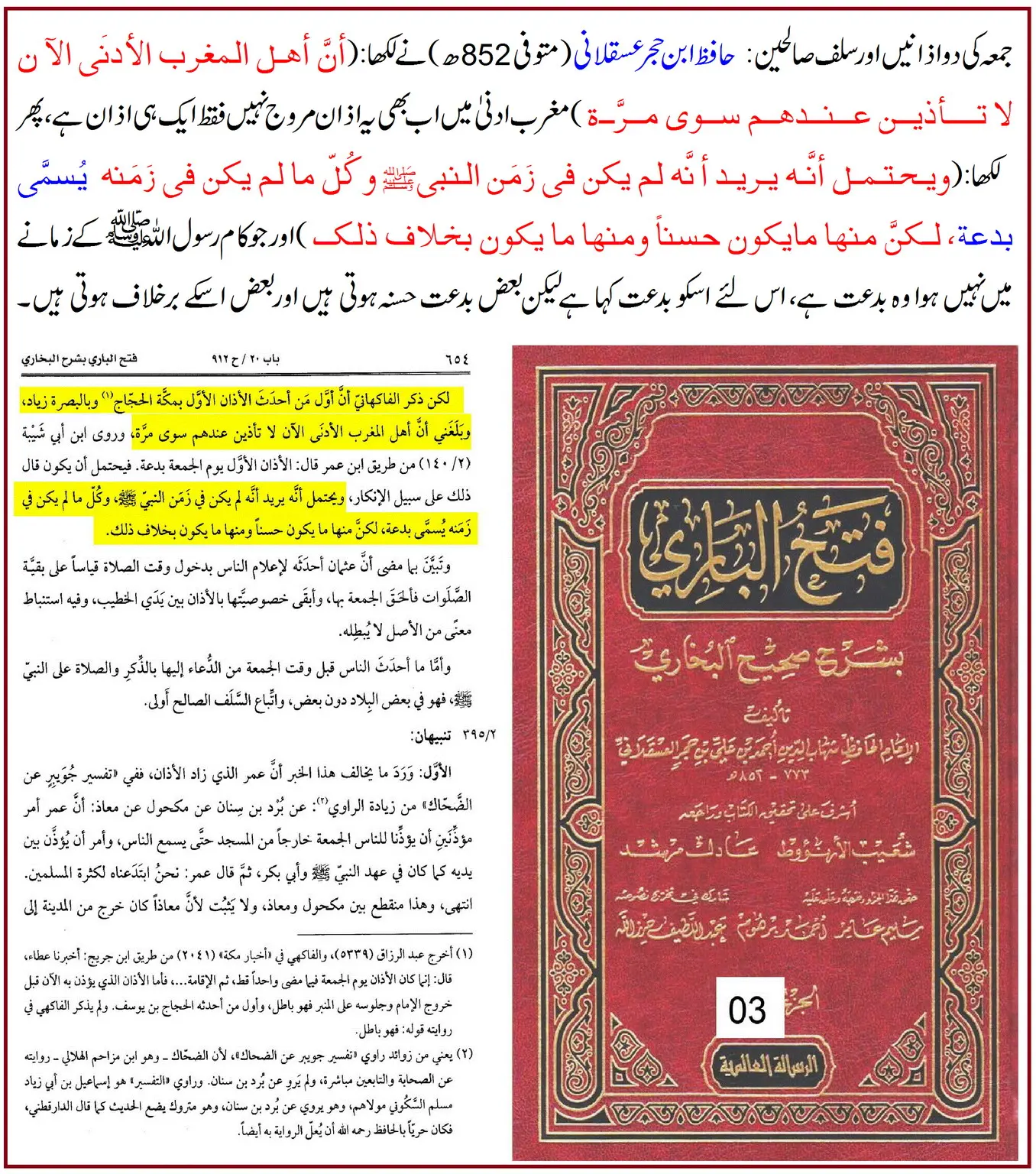
Aḥkām al-Qur’ān⑤ Ḥāfiẓ Ibn Ḥajar al-ʿAsqalānī رحمه الله (d. 852 AH)
“Ibn ʿUmar called the extra Adhān a Bid‘ah. Every practice not found in the Prophet’s ﷺ time is a Bid‘ah, whether good or bad.”
Fatḥ al-Bārī Sharḥ Ṣaḥīḥ al-Bukhārī❖ Conclusion & Key Findings
① Era of the Prophet ﷺ:
Only one Adhān after the Imām sat on the minbar was the practice.
② Era of Abū Bakr and ʿUmar:
Continued the exact Sunnah of the Prophet ﷺ.
③ Era of ʿUthmān:
An additional Adhān was added outside the mosque due to necessity—not as a Sunnah.
④ Companions’ Position:
- Ibn ʿUmar: “Bid‘ah.”
- Ibn al-Zubayr: One Adhān only.
⑤ Tābiʿīn’s Position:
- Ḥasan al-Baṣrī: “Mubtadaʿ (Innovation).”
- ʿAṭāʾ: “Bāṭil (Invalid).”
- ʿAbd al-Raḥmān: “Later addition.”
⑥ Views of Scholars:
Unanimous agreement that the Sunnah is one Adhān only, and the second is a later innovation.
 Final Summary
The second Adhān before the Imām ascends the minbar for Jumu‘ah is not part of the Prophet’s ﷺ Sunnah, nor the practice of the Rightly Guided Caliphs, nor the Companions or Tābiʿīn.
Numerous classical scholars have explicitly labeled it a Bid‘ah, even if introduced by ʿUthmān رضي الله عنه for a practical purpose outside the masjid. Institutionalizing this inside the mosque as a religious act qualifies it as Bid‘ah.
