Compiled by: Abu Hamza Salafi
This article explains the principle of when the narration of an innovator narrator is accepted and when it is rejected. According to the majority of hadith scholars, the rule is: (1) If the innovation is kufr (or the narrator considers lying permissible), then the narration is rejected; (2) If the innovation is not kufr and the narrator is truthful, trustworthy, and does not promote his innovation (non-proponent), then the narration is acceptable; (3) If he is a proponent of the innovation or his narration supports that innovation, then it will be rejected. This methodology has been explicitly stated by the Imams: Al-Dhahabi, Ibn Kathir, Ibn Hajar, and others.
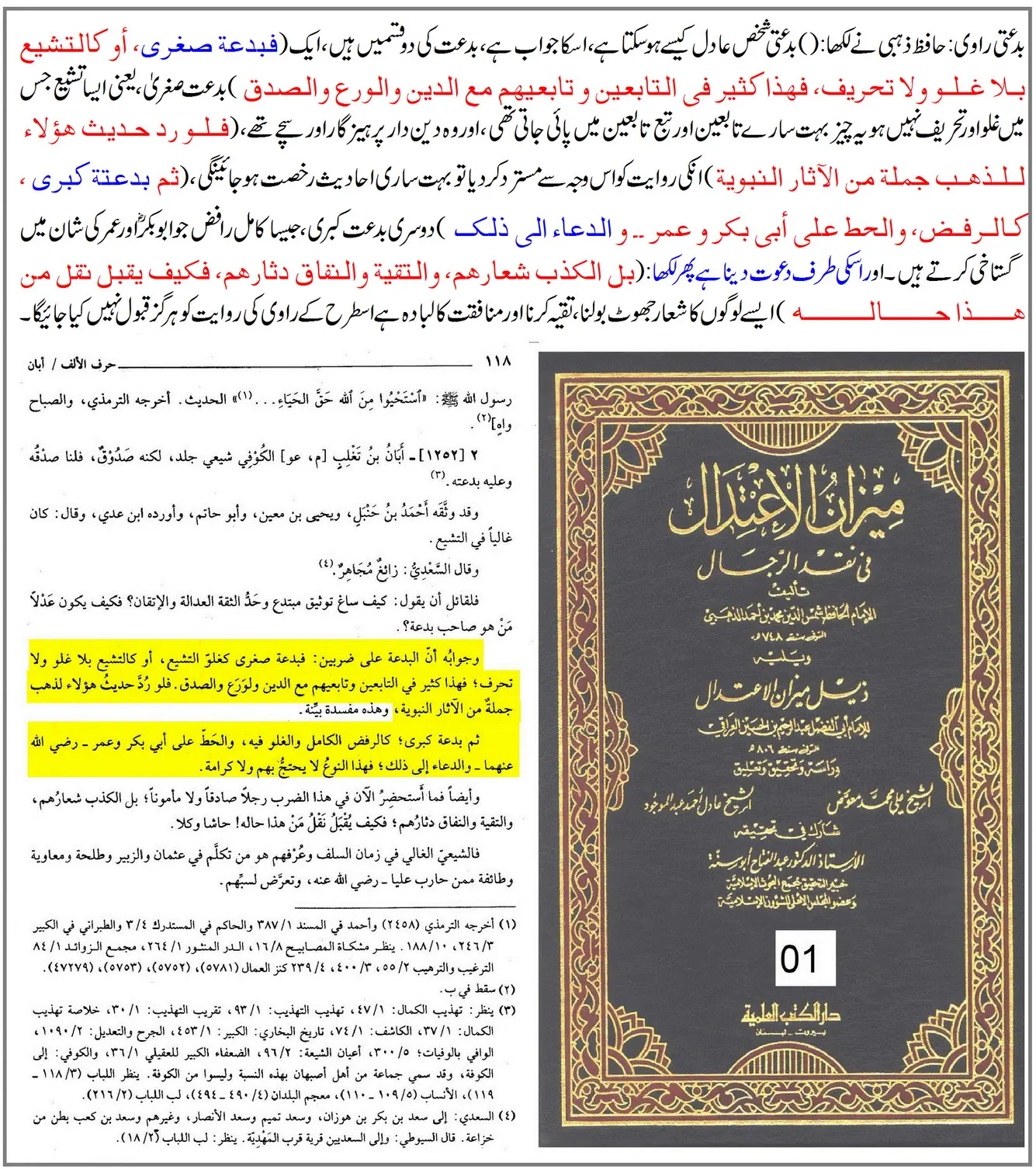
Hafiz Al-Dhahabi’s Rule (Minor Innovation versus Major Innovation)
Arabic text: «… البِدعة على ضربين: فبدعةٌ صغرى كغلوِّ التشيع… فهذا كثير في التابعين… مع الدين والورع والصدق، فلو رُدَّ حديث هؤلاء لذهب جملةٌ من الآثار… ثم بدعةٌ كبرى كالرفض الكامل… والحطِّ على أبي بكر وعمر… والدعاء إلى ذلك، فهذا النوع لا يُحتَجُّ بهم… بل الكذب شعارهم… فكيف يُقبَل نقلُ من هذا حاله!»
Reference: (Mizan al-I'tidal 1/5)
Translation and Explanation: Innovation (Bid'ah) is of two types: minor (such as exaggeration in Shi'ism or Shi'ism without exaggeration) — this was also found among the Tabi‘in, and such people were religious, pious, and truthful; if all their narrations are rejected, a large collection of hadith would be lost. The second is major (for example, complete rejection, slandering the two Caliphs (Rashidun) and inviting to that) — the narrations of such people are not accepted; they involve dissimulation (taqiyya)/hypocrisy and falsehood. Conclusion: In the case of non-excommunicating innovation and non-inviting to it, the narration of the narrator with truthfulness and trustworthiness is accepted; otherwise, it is rejected.
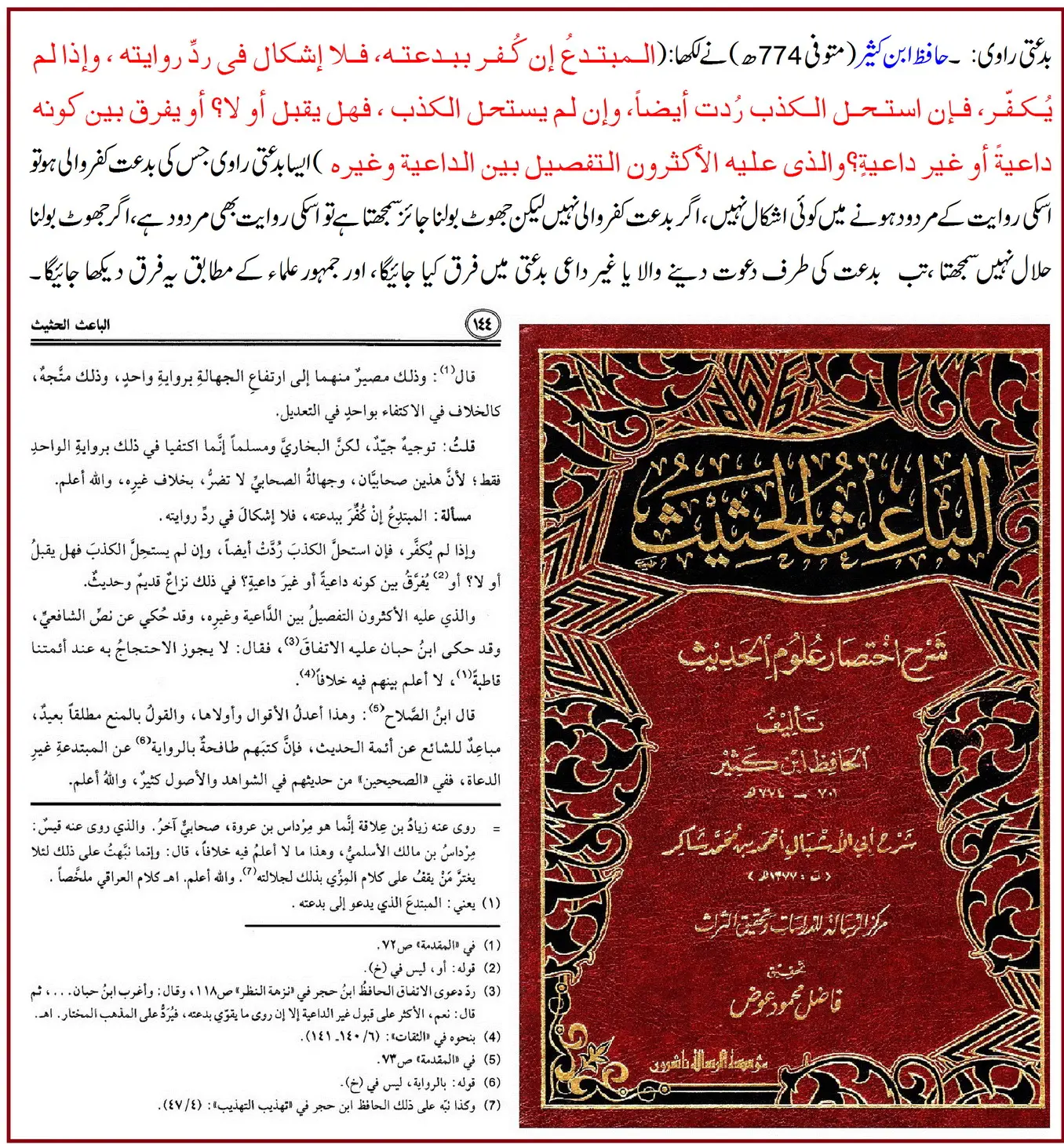
Speech of Hafiz Ibn Kathir (Detailed Differentiation)
Arabic text: «المبتدع إن كَفَر ببدعته فلا إشكال في ردِّ روايته. وإذا لم يَكْفُر، فإنِ استحلَّ الكذب رُدَّت أيضاً، وإن لم يستحلَّ الكذب: فهل يقبل أو لا؟ أو يُفرَّق بين كونه داعيةً أو غيرَ داعية؟ في ذلك نزاعٌ…»
Reference: (Ikhtisar Ulum al-Hadith p.110)
Translation and Explanation: There is no problem with the narration of one whose innovation reaches the level of disbelief — it is rejected. In non-excommunicating innovation, if the narrator considers lying permissible, then it is rejected. And if he does not consider lying permissible, then there is a difference of opinion regarding acceptance or rejection: the majority have adopted the distinction between one who invites to innovation and one who does not.
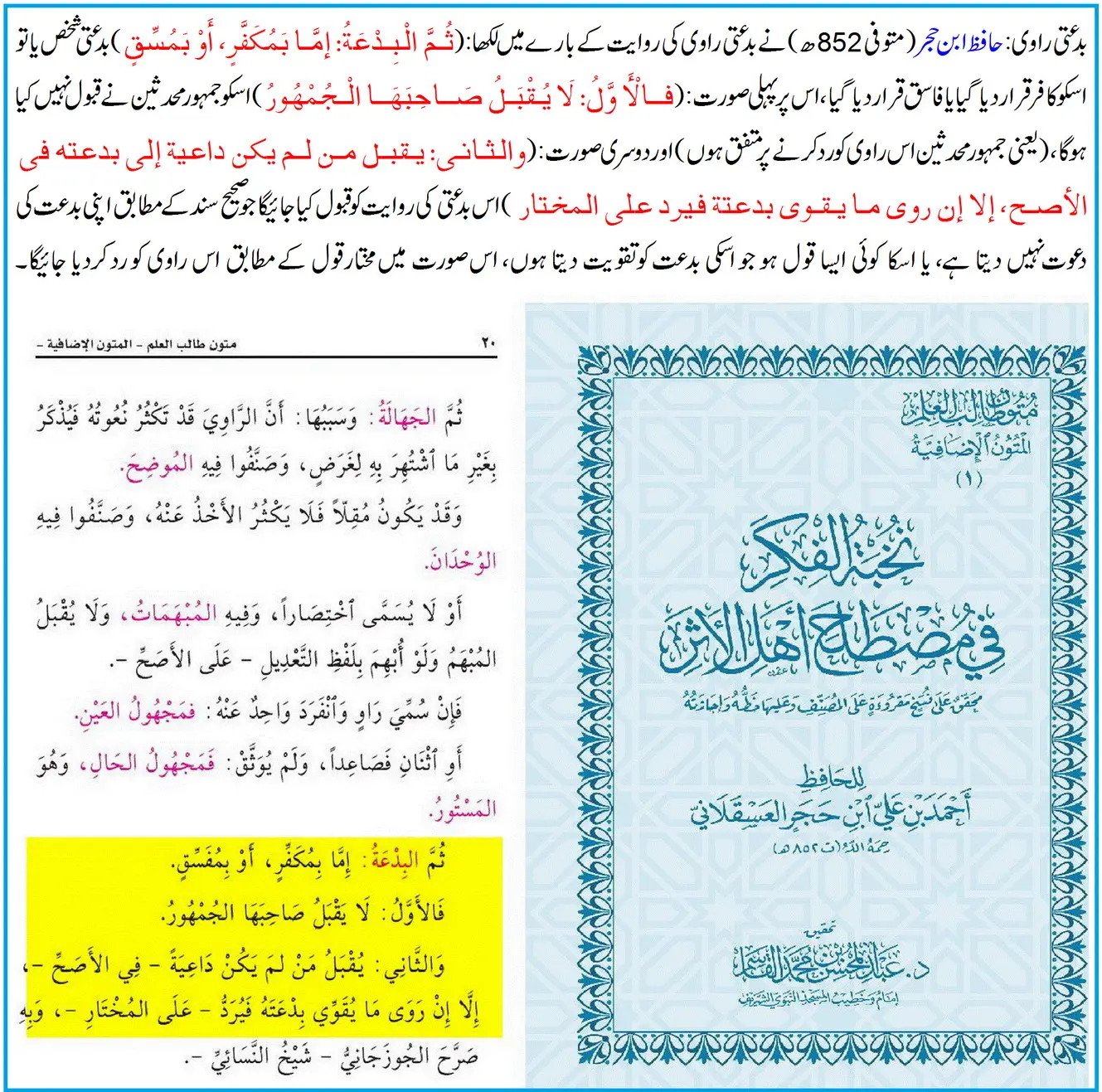
Summary of Principles by Hafiz Ibn Hajar
Arabic text: «البدعة إمّا بمُكَفِّرٍ أو بمُفَسِّقٍ؛ فالأوّل لا يقبل صاحبُها عند الجمهور، والثاني: يُقبل من لم يكن داعيةً إلى بدعته في الأصح، إلا إن روى ما يقوّي بدعته فيُرَدُّ على المختار.»
Reference: (Nukhbat al-Fikr, with Sabil al-Salam)
Translation and Explanation: If an innovation is considered kufr (disbelief), then according to the majority, its bearer is not acceptable. In the case of a sinful innovation, the narration of a non-innovator is accepted according to the most authentic view, except in the case where he brings a narration that strengthens his innovation — then it will be rejected.
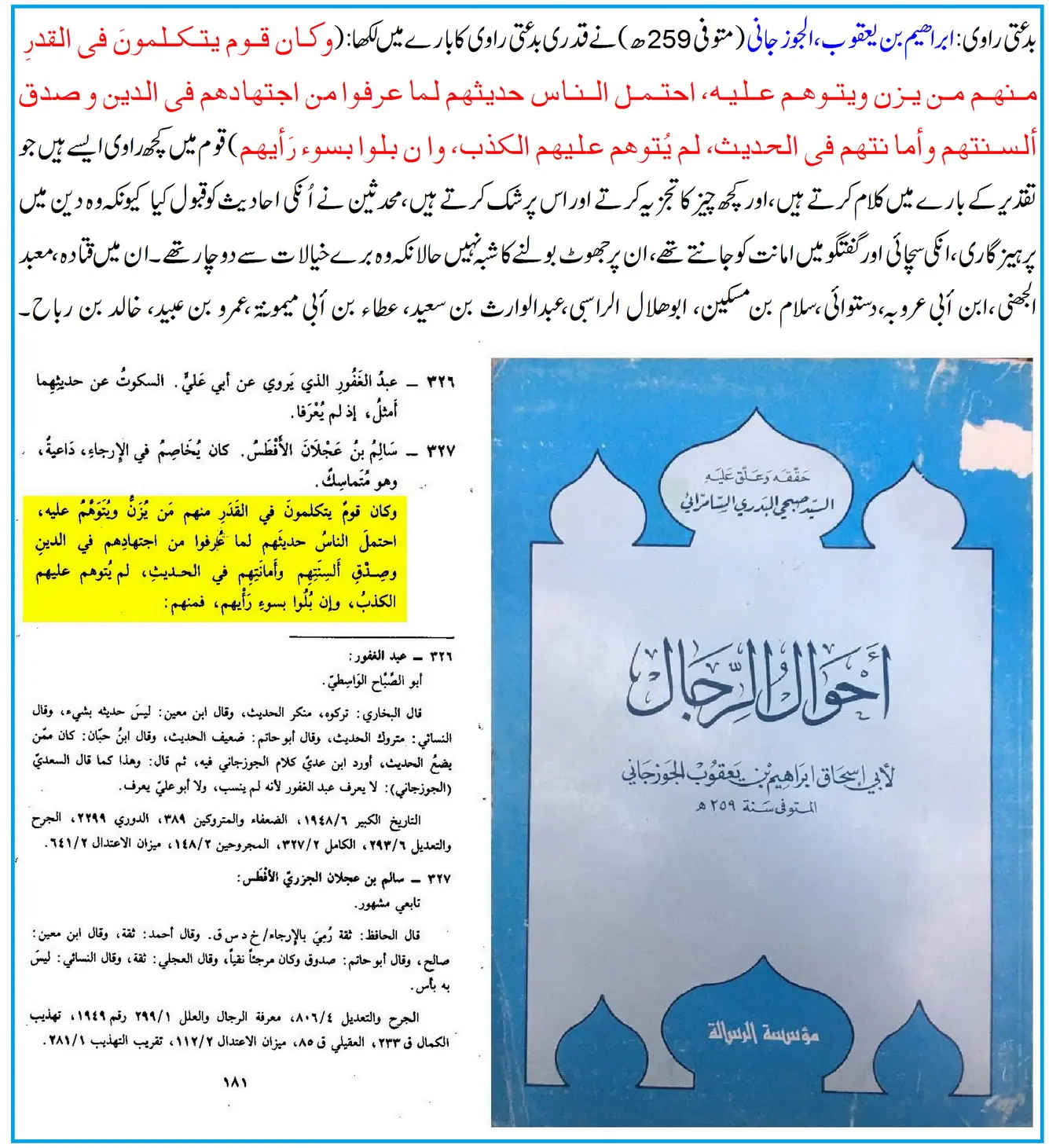
Al-Jawzjani (d. 259 AH) — Narration of an innovator but truthful and trustworthy narrator is accepted
Arabic text: «وكان قومٌ يتكلّمون في القَدَر… احتمل الناسُ حديثَهم لِما عُرف من اجتهادِهم في الدّين وصدقِ ألسنتهم وأمانتِهم في الحديث… لم يُتَوهَّم عليهم الكذب وإن بُلوا بسوء رأيهم.»
Reference: (Ahwal al-Rijal by Al-Jawzjani)
Translation and Explanation: There were some narrators who held "Qadari opinion"; the hadith scholars recognized their honesty, truthfulness, and trustworthiness and accepted their hadith because there was no suspicion of lying on them — even though their opinion was mistaken.  Principle: The narration of a non-innovator, truthful, and trustworthy innovator is acceptable.
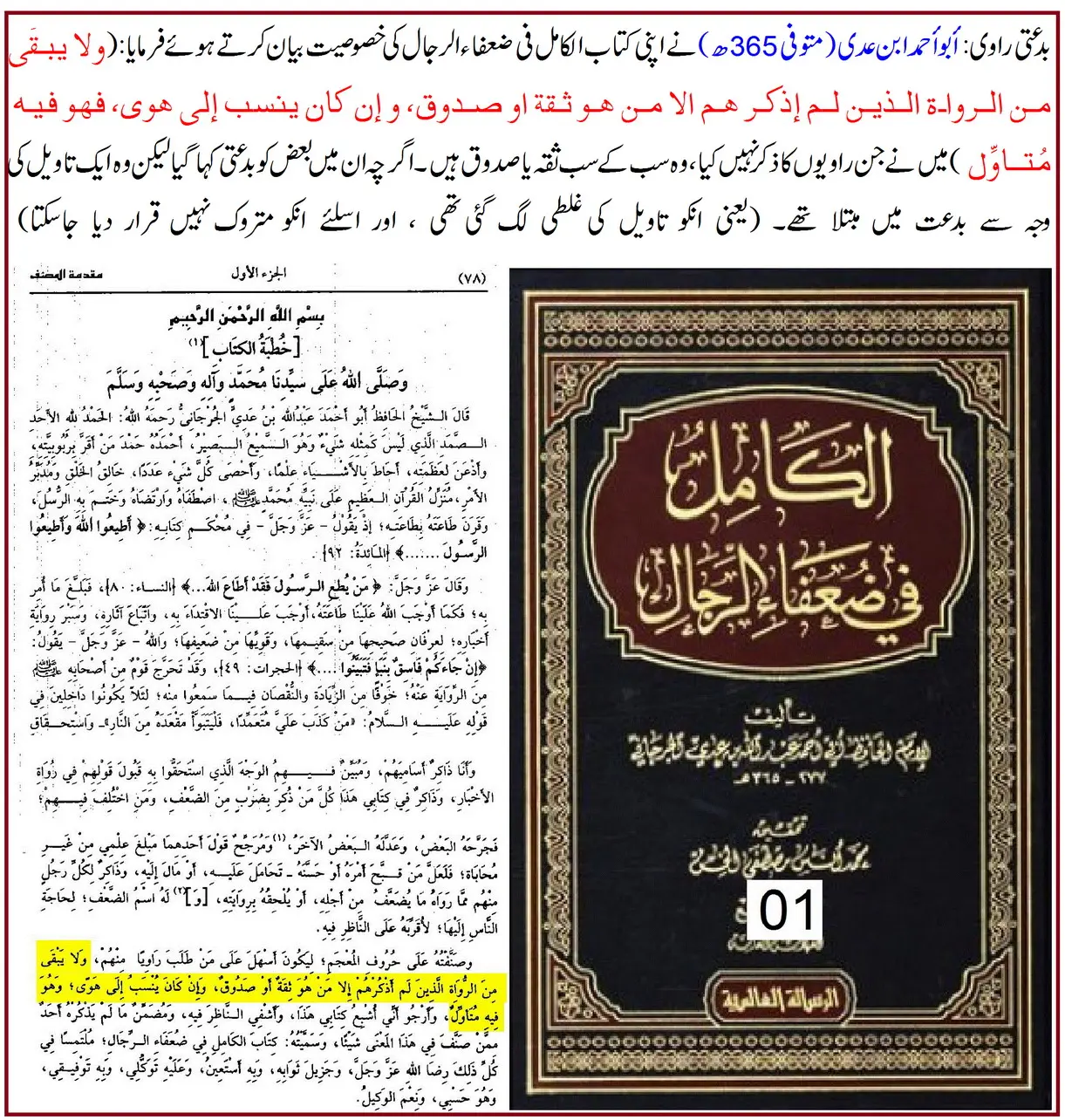
Ibn ‘Adi (d. 365 AH) — Mere attribution of innovation does not necessitate abandonment
Arabic text: «ولا يبقى من الرواة الذين لم أذكرهم إلا من هو ثقةٌ أو صدوق وإن كان يُنسب إلى هوى، وهو فيه متأوّل.»
Reference: (Al-Kamil fi al-Du‘afa)
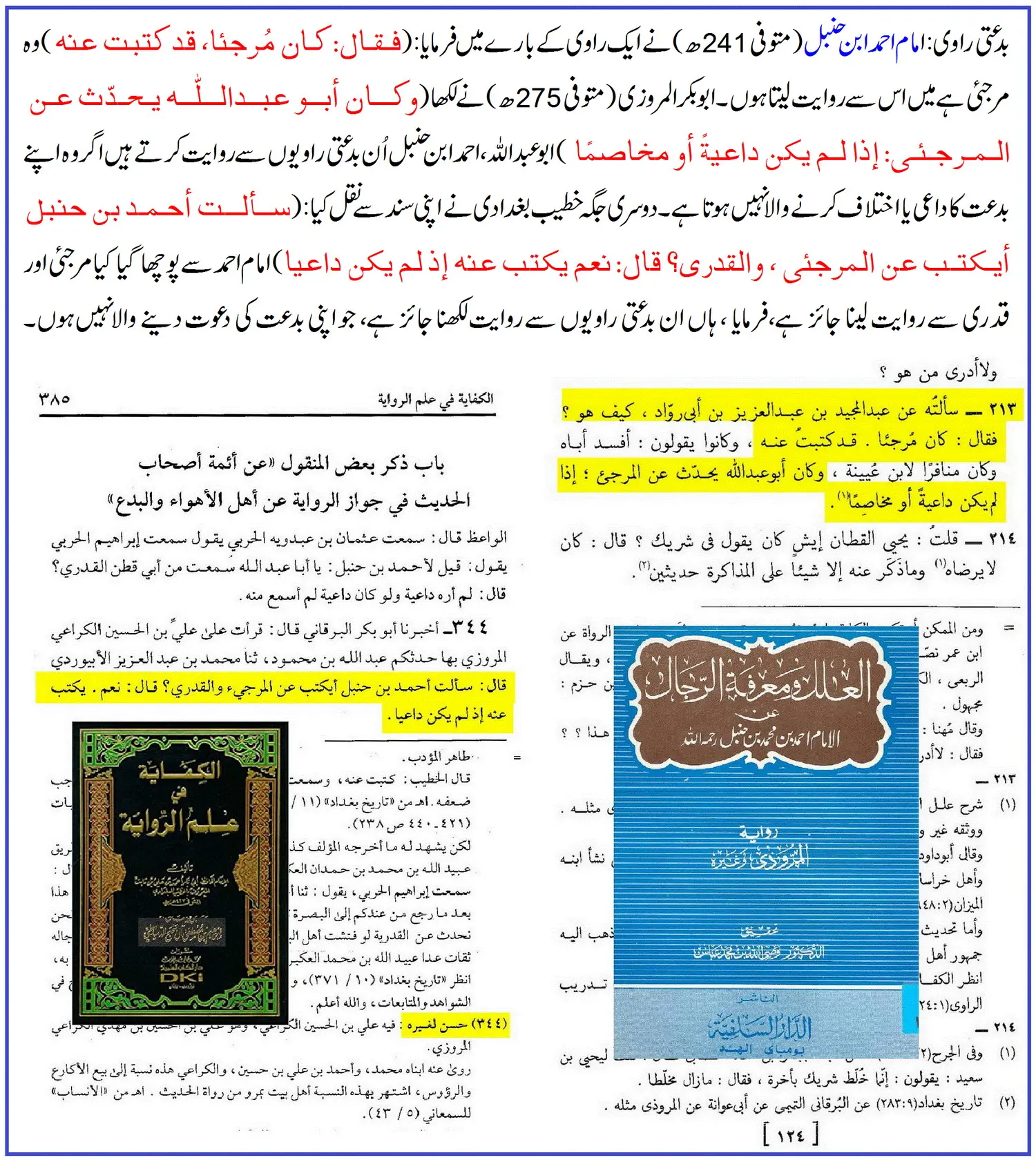
Translation: The narrators I have not mentioned are generally trustworthy/honest; although some are attributed to innovation, they interpret it (due to misunderstanding/interpretation). Principle: Mere attribution of innovation, while truthfulness and justice are established, is not a reason to abandon the hadith.Imam Ahmad ibn Hanbal (d. 241 AH) — Narration from a non-innovator innovator
Arabic text (Al-Marwazi): «أبو عبد الله (أحمد) يُحدّث عن المرجئ إذا لم يكن داعيةً أو مخاصِماً.»
Reference: (From Ahmad's words on the defects of hadith)
Arabic text (Al-Khatib): سُئل: «أَيُكتَب عن المرجئ والقدري؟ قال: نعم يُكتب عنه إذا لم يكن داعيةً.»
Reference: (Al-Kifayah fi Ilm al-Riwayah)
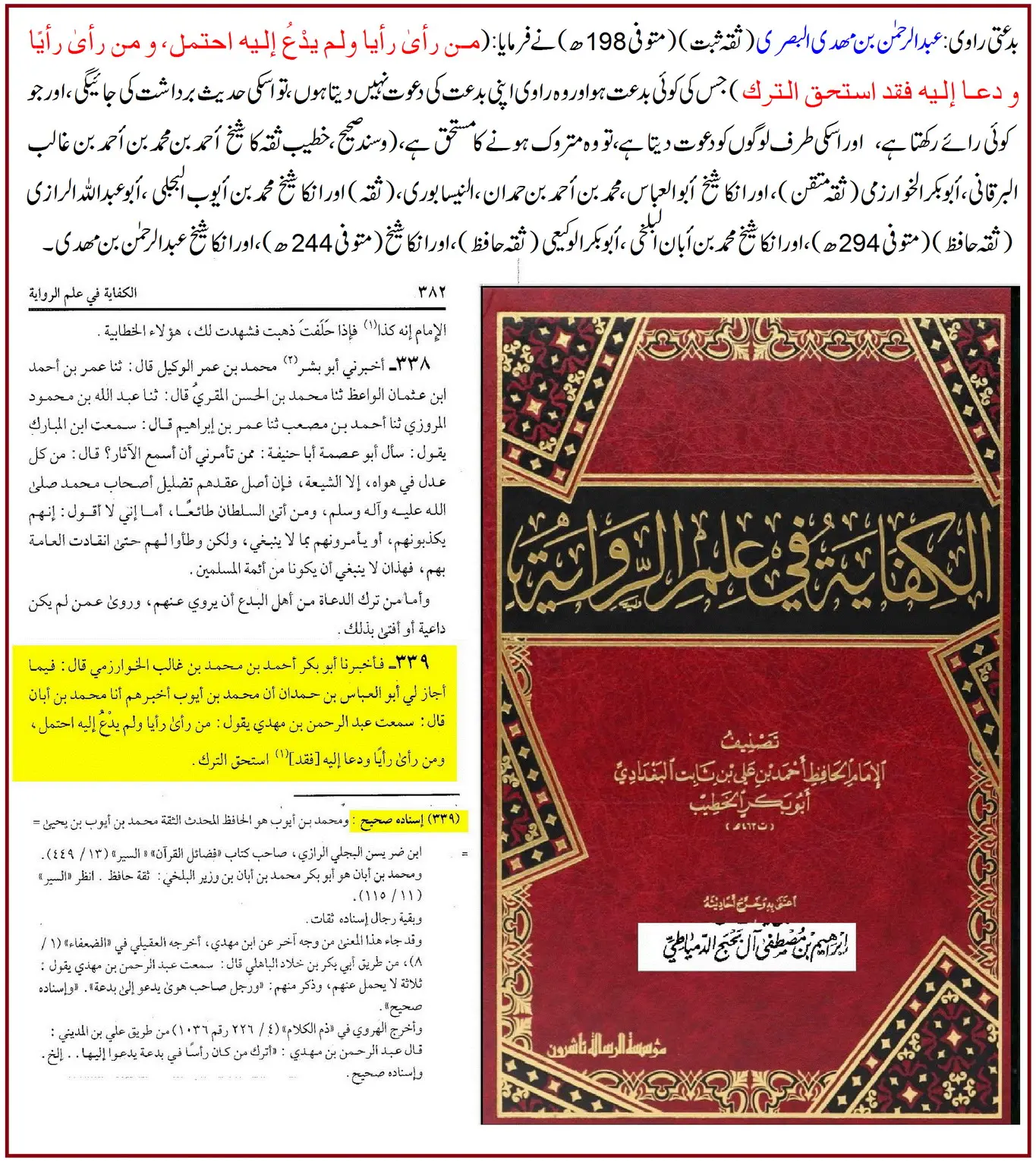
Translation and explanation: Imam Ahmad (may Allah have mercy on him) also recorded narrations from Murji'i/Qadari narrators on the condition that they are not callers (da'i) (and not quarrelsome). Principle: The narration of a non-calling innovator is acceptable.Abdur Rahman bin Mahdi (198 AH) — Calling to innovation = abandonment
Arabic text: «مَن رأى رأيًا ولم يدعُ إليه احتُمِل، ومن رأى رأيًا ودعا إليه فقد استحقّ التَّرك.»
Reference: (Al-Kifayah lil-Khatib)
Translation: Whoever holds an (innovative) opinion and does not call to it, his hadith is tolerated/accepted; but whoever calls to it, he is to be abandoned. Principle: The narration of a caller to innovation is rejected.Yahya bin Ma'in (233 AH) — Avoid callers, narrate from non-callers
Arabic text: سُئل عن كلِّ داعيةٍ: «لا يُكتب حديثُه إن كان قدريًّا أو رافضيًّا…؟» قال:«لا يُكتب عنهم إلا أن يكونوا ممّن يُظنّ به ذلك ولا يدعو إليه كهشام الدستوائي… ممّن يرى القدر ولا يدعو إليه.»
Reference: (Al-Kifayah lil-Khatib)
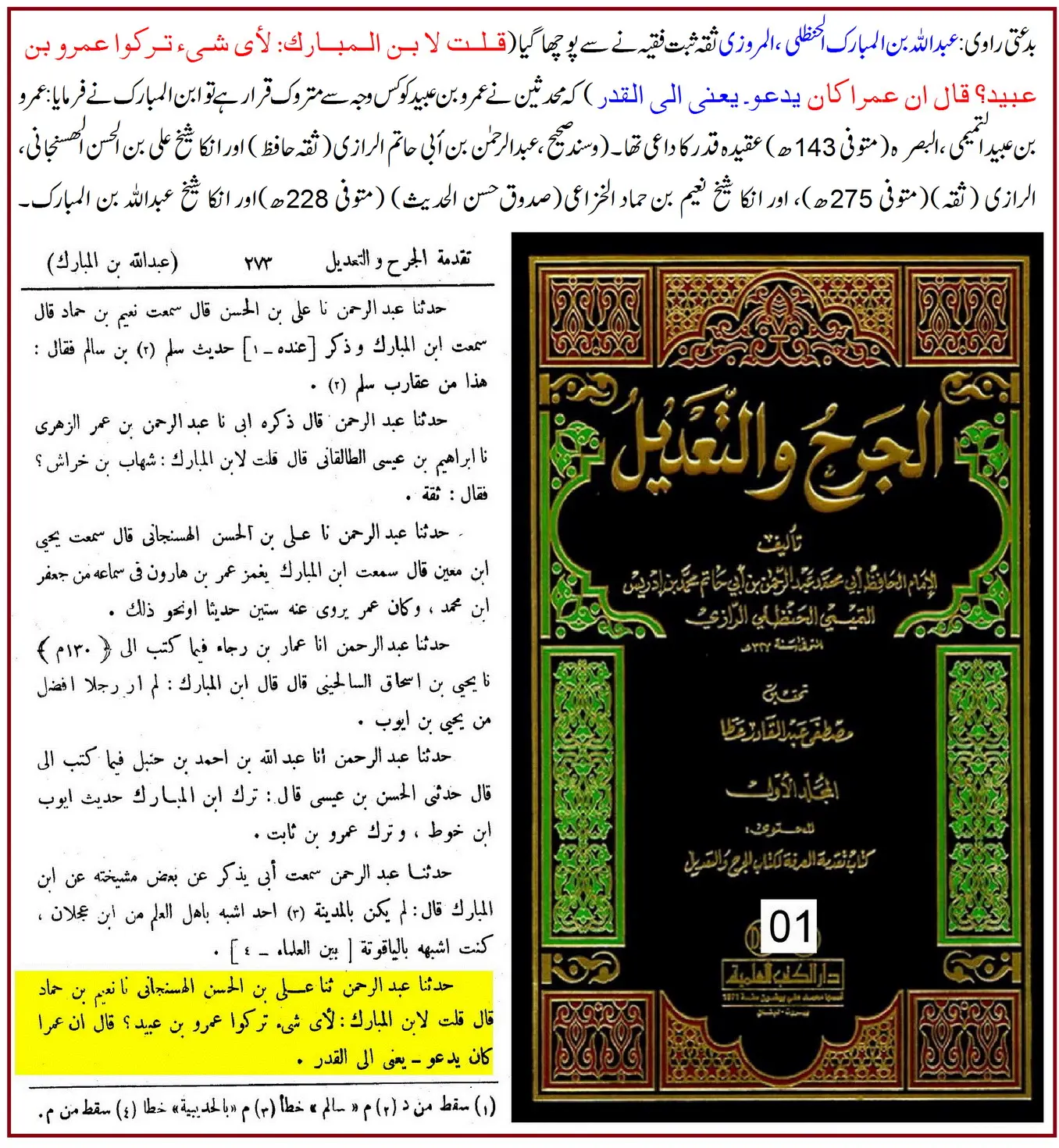
Translation: Do not write hadith from every caller (Qadari/Rafidi...); however, from one about whom there is suspicion but who does not call—like Hisham al-Dastuwi—narration is permissible. Principle: Calling is a condition for abandonment; if there is no calling and truthfulness/accuracy is present, then acceptance is valid.Ibn al-Mubarak (181 AH) — Explicit discrediting of the caller
Arabic text: قيل له: لِمَ تُرِكَ عمرو بن عبيد؟ قال: «إنّه كان يدعو (إلى القدر).»
Reference: (Al-Jarh wa al-Ta'dil by Ibn Abi Hatim)
Translation: Amr ibn Ubayd was a Qadari caller, and for that reason he was abandoned. Principle: Abandonment due to being a caller.Imam Malik — Narration from non-calling Qadari/Khariji, with the condition of truthfulness
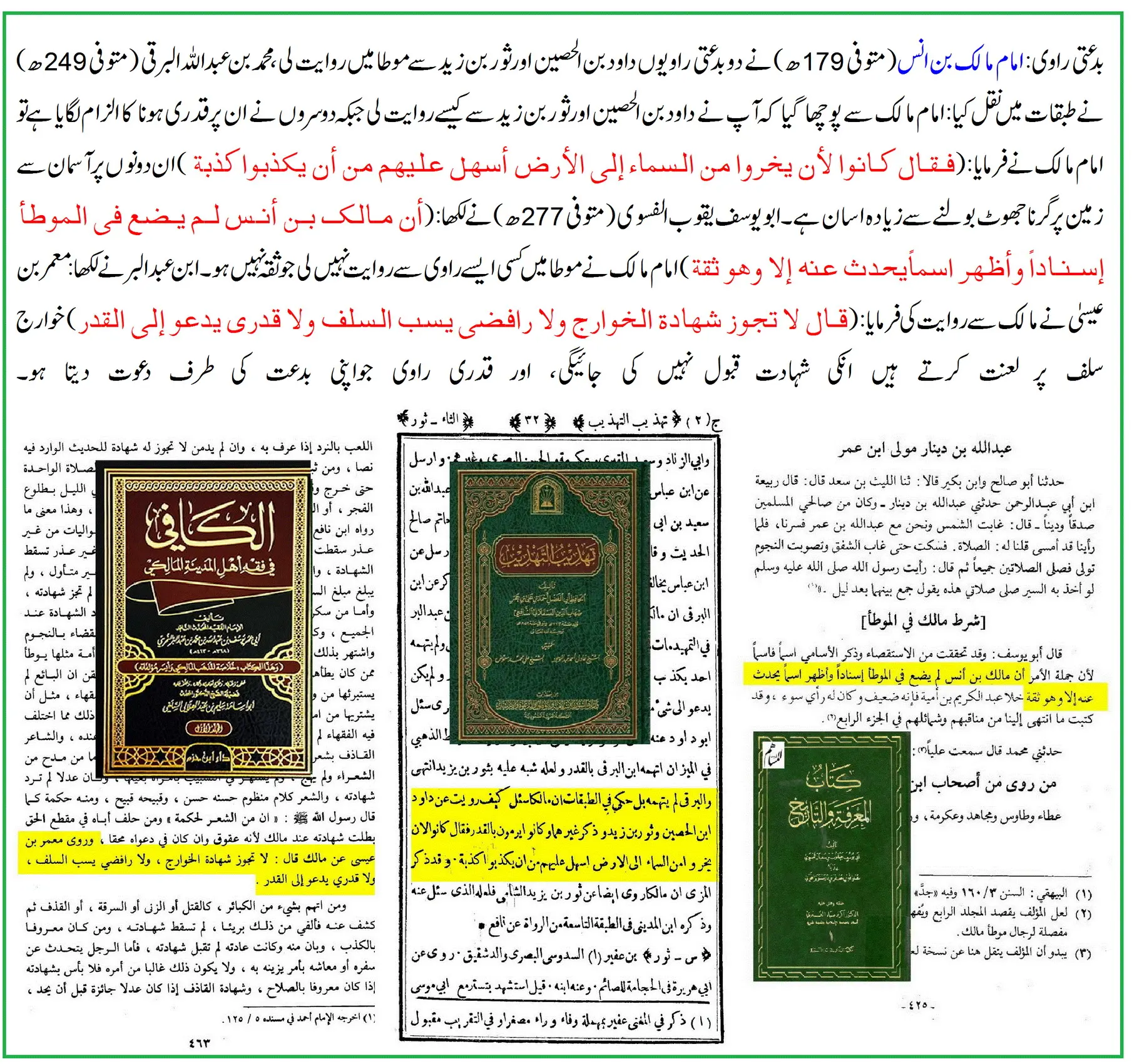
Translation: «سُئل مالك: كيف رويتَ عن داود بن الحصين وثور بن زيد وكانا يُرميان بالقدر؟ قال: كانا لأن يخرّا من السماء إلى الأرض أهون عليهما من أن يكذبا.»
Reference: (Tahdhib al-Tahdhib)
and: «لم يضع في الموطأ إلا وهو ثقة.» (المعرفة والتاريخ للفسوي) Further: «لا تجوز شهادة الخارجي ولا رافضي يسبّ السلف، ولا قدريّ داعية.»
Reference: (Al-Kafi by Ibn Abd al-Barr)
Translation and explanation: Imam Malik (may Allah be pleased with him) narrated from a truthful but non-innovator caller; clarification on the impermissibility of the testimony/narration of a caller to innovation. Principle: Truthfulness + non-calling ⇒ acceptance; calling/insulting ⇒ rejection.After the critics of the Imams of Hadith, the later Imams (An-Nawawi, Ibn Rajab, Al-Suyuti, Ibn al-Mulaqqin, Ibn as-Salah, etc.) firmly stated this principle as a rule that the narration of an innovator is accepted if he does not call to innovation, and if he is a caller, then the narration is rejected. This is the unanimous doctrine of the majority.
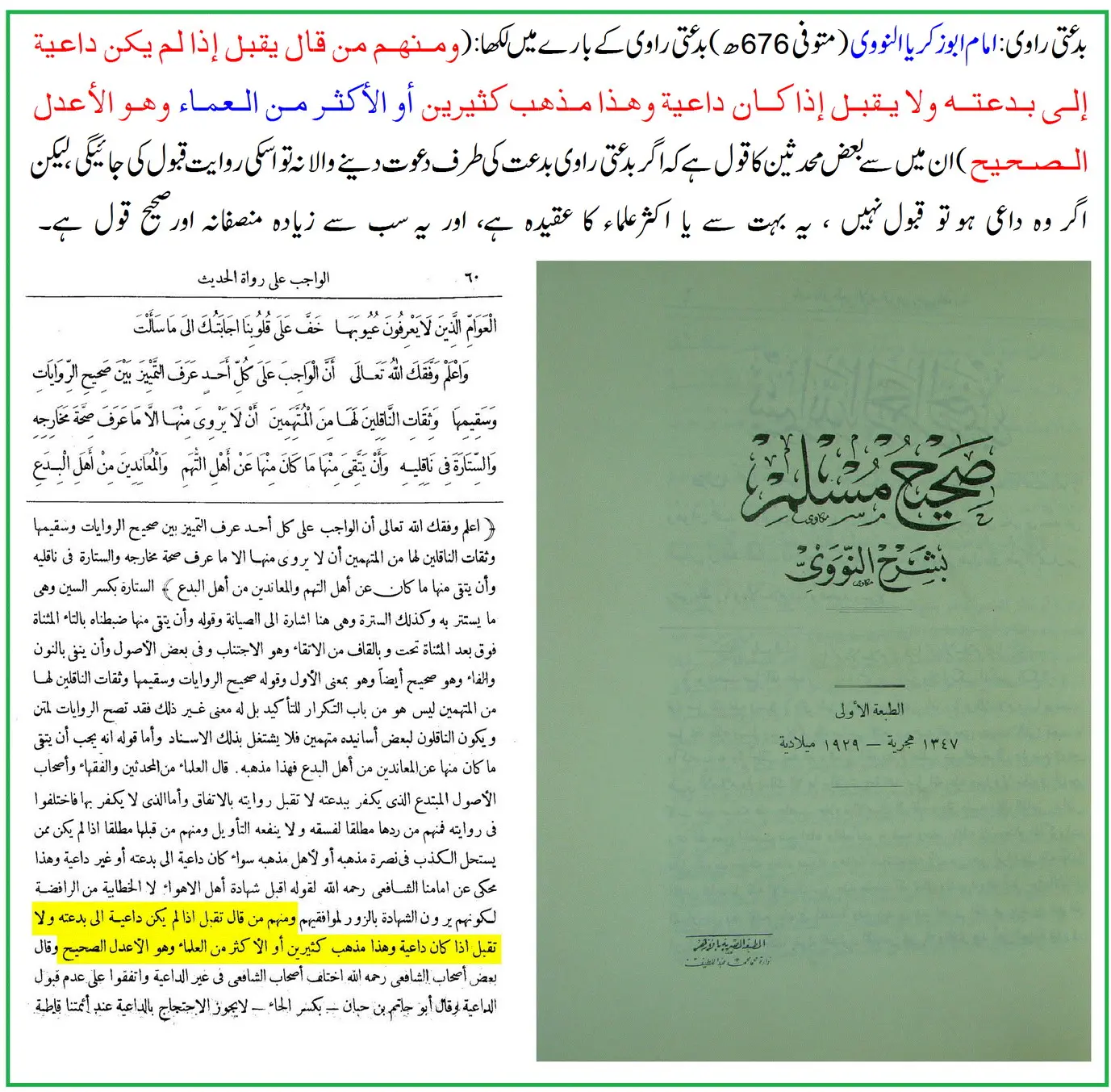
Imam An-Nawawi (676 AH)
Arabic text: «تُقبل إذا لم يكن داعية إلى بدعته، ولا تُقبل إذا كان داعية، وهذا مذهبُ كثيرين أو الأكثر من العلماء، وهو الأعدل الصحيح.»
Reference: (Sharh Sahih Muslim 1/54)
Translation and explanation: The narration of an innovator is accepted only when he is not a caller to his innovation, and if he is a caller, then it is not accepted. This is the belief of most scholars and is the most correct and just opinion.
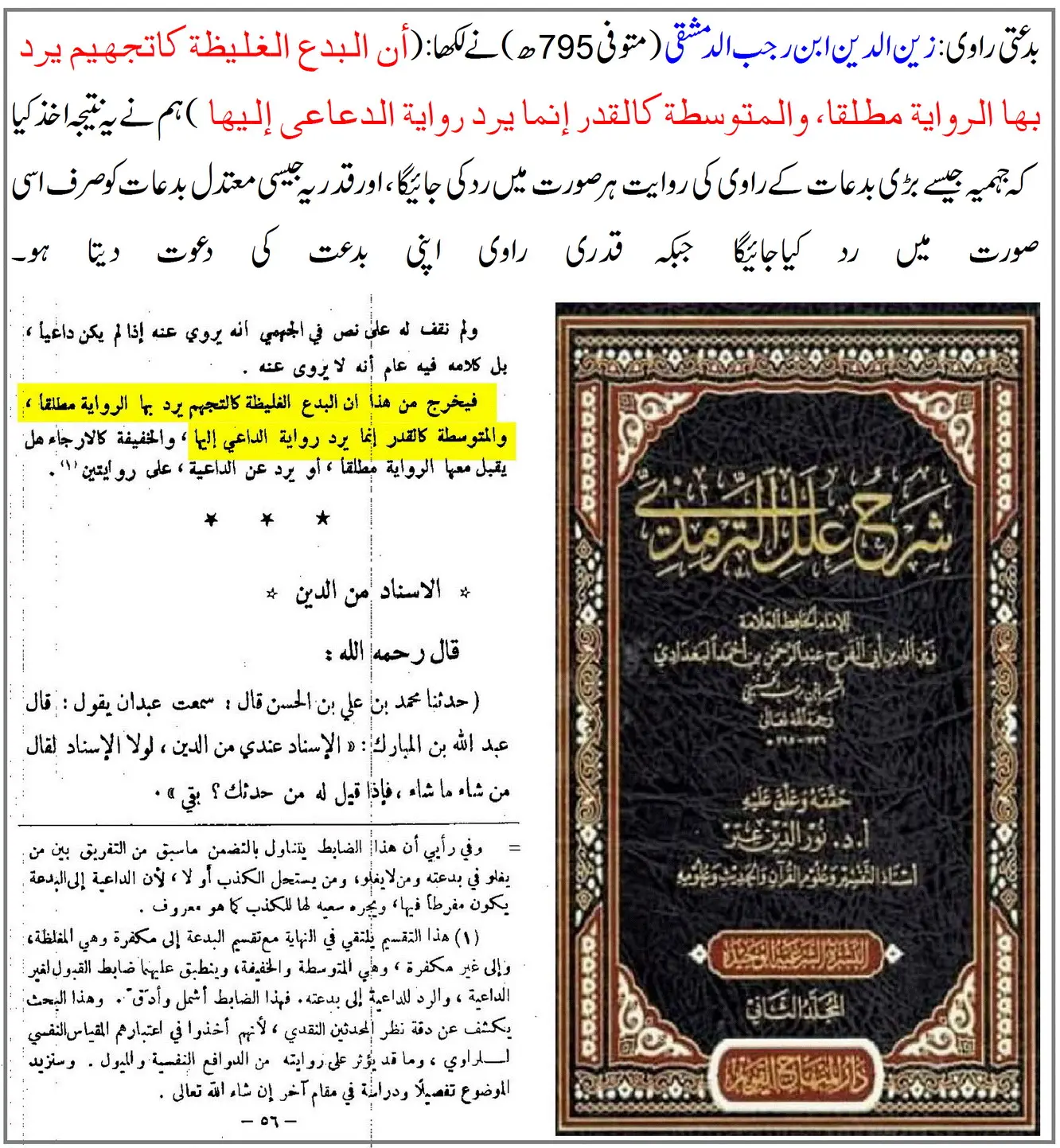
Imam Ibn Rajab Al-Hanbali (795 AH)
Arabic text: «البدع الغليظة كالتجهم يُردُّ بها الرواية مطلقًا، والمتوسطة كالقدر يُردّ رواية الداعي إليها، والخفية كالإرجاء يُنظر: هل تُقبل مطلقًا أو تُردّ عن الداعية؟ على روايتين.»
Reference: (Sharh 'Ilal at-Tirmidhi p. 588)
Translation: The narration of one with severe innovations (e.g., Jahmiyyah) is absolutely rejected; in moderate innovations (e.g., Qadariyyah), only the narrator who is a caller is rejected; and in subtle innovations (such as Murji'ah), there is a difference of opinion; some accept absolutely, while others reject the narrator who is a caller.
Conclusion: The ruling of acceptance or rejection is given according to the severity of the innovation and the aspect of calling — this is the approach of the majority.
Imam Ibn al-Salah (643 AH)
Arabic text: «تُقبل روايته إذا لم يكن داعية، ولا تُقبل إذا كان داعية، وهذا مذهبُ الكثير أو الأكثر من العلماء.»
Reference: (Muqaddimah Ibn al-Salah, p. 104)
Translation: If the innovator narrator is not a caller, then his narration is accepted, and if he is a caller, then it is not; this is the belief of most scholars.
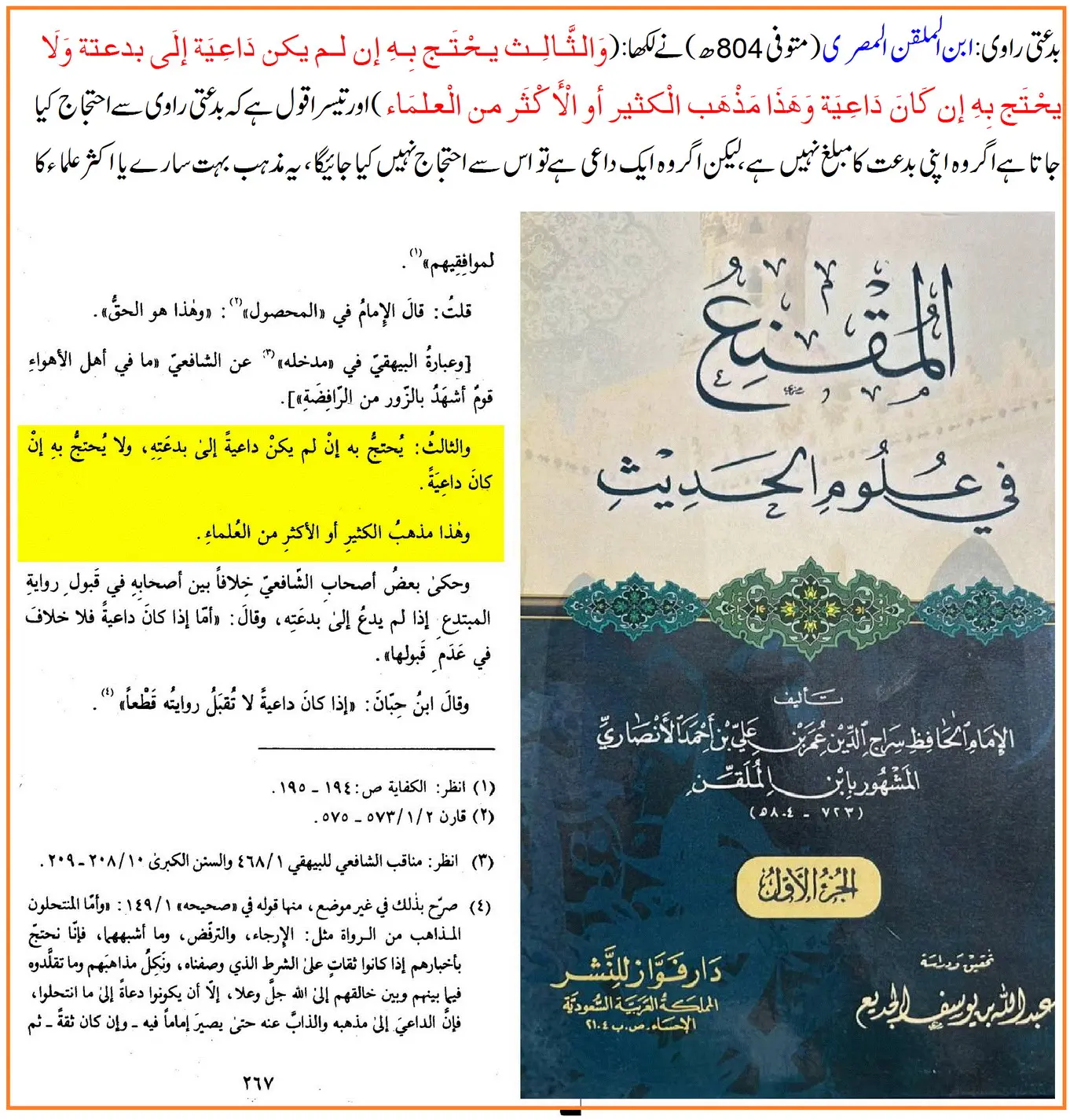
Imam Ibn al-Mulaqqin (804 AH)
Arabic text: «يُحتجّ به إن لم يكن داعية إلى بدعته، ولا يُحتجّ به إن كان داعية، وهذا مذهب الكثير أو الأكثر من العلماء.»
Reference: (Al-Muqni' fi 'Ulum al-Hadith, p. 312)
Translation: If the innovator does not call to his innovation, then he can be used as evidence, and if he is a caller, then not; this is the position of most scholars.
Imam Jalal al-Din al-Suyuti (911 AH)
Arabic text: «يُحتجّ به إن لم يكن داعية إلى بدعته، ولا يُحتجّ به إن كان داعية، وهذا هو الأظهر الأعدل، وقولُ الكثير الأكثر من العلماء.»
Reference: (Tadreeb al-Rawi 1/346)
Translation and explanation: If the innovator is not a caller, then he will be used as evidence, and if he is a caller, then not. This statement is the most apparent, the most just, and the closest to the truth according to the majority.
Sayuti (may Allah have mercy on him) further stated that Bukhari (may Allah have mercy on him) and Muslim (may Allah have mercy on him) also objected to narrators who were innovators but not callers to innovation, such as Abdul Waris bin Saeed, Hisham al-Dastuwai, Qatadah, etc.
Summary of the Discussion
- The majority of hadith scholars and later imams unanimously agree that
if an innovator is a caller to innovation or his narration strengthens the innovation, then he is rejected. - If he is not a caller, truthful, and reliable, then his narration is accepted.
- Calling to innovation and permitting falsehood are the fundamental reasons for abandoning a narration.
- This methodology is in accordance with the Quranic principle «إن جاءكم فاسق بنبإ فتبينوا» — meaning investigation is necessary, blind rejection is not.
- This is the principled stance of Bukhari, Muslim, Ahmad, Malik, Ibn Mahdi, Ibn Ma'in, Nawawi, Ibn Hajar, Sayuti, and others.
Practical Examples of the Criticizing Imams — Interaction of Hadith Scholars with Innovator Narrators
The imams of hadith criticism and evaluation not only adopted this methodology in principle but also applied it practically, accepting the narration of an innovator narrator provided he is truthful, reliable, and not a caller to innovation. This section presents some prominent practical examples that demonstrate the consensus approach of the majority of hadith scholars.
➊ Imam Malik bin Anas (179 AH)
Question: How did you narrate from narrators like Dawood bin Al-Husain and Thawr bin Zaid when they were accused of being "Qadari"?
Answer:
«كانا لأن يَخِرّا من السماء إلى الأرض أهون عليهما من أن يكذبا كذبة.»
Reference: (Tahdhib al-Tahdhib 3/189)
Translation: For both of them, falling from the sky to the earth was easier than telling a lie.Imam Malik (may Allah have mercy on him) said: I only narrated from those who are truthful and trustworthy, even if they were accused of some ideological deviation.
On this, Abu Yusuf al-Fasawi (may Allah have mercy on him) clarified:
“مالك بن أنس لم يضع في الموطأ إسنادًا إلا وهو ثقة.”
Reference: (Al-Ma'rifah wa al-Tarikh 1/45)
Translation: Imam Malik (may Allah have mercy on him) did not narrate in Al-Muwatta from any narrator who was not trustworthy.➋ Imam Malik’s (may Allah have mercy on him) avoidance of innovators who call to innovation
Imam Malik (may Allah have mercy on him) said:
«لا تجوز شهادة الخوارج، ولا رافضي يسب السلف، ولا قدريٍّ يدعو إلى القدر.»
Reference: (Al-Kafi fi Fiqh Ahl al-Madina 1/371)
Translation: The testimony (narration) of the Kharijites, the revilers of the Rafidah, and those who call to innovation, and the Qadariyyah is not permissible. Principle: Narrations were taken from non-calling Qadariyyah, not from those who call to it.➌ Imam Ibn Abd al-Barr (463 AH)
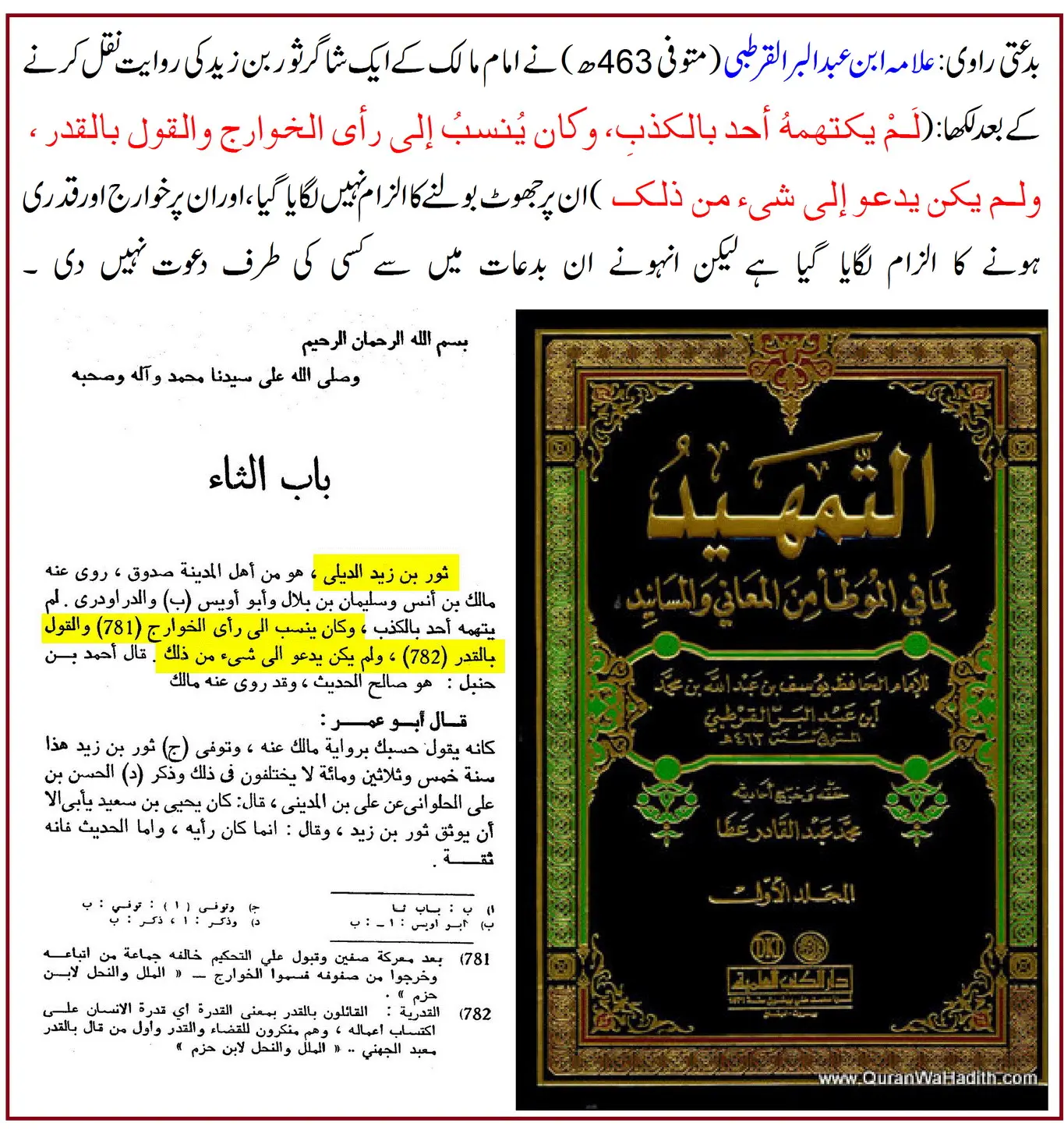
He writes about Thawr bin Zaid al-Daili, a student of Imam Malik:
«ثَوْرُ بن زيدٍ... صَدوقٌ... لم يُتَّهَم بالكذب، وكان يُنسب إلى رأي الخوارج والقول بالقدر، ولم يكن يدعو إلى شيء من ذلك.»
Reference: (Al-Tamhid 1/197)
Translation: Thawr bin Zaid al-Madani was a truthful narrator; he was not accused of lying, although he was attributed to the Kharijites or Qadariyyah, but he did not call to his innovation. It is clear from this that Ibn Abdul Barr (may Allah have mercy on him) himself explained the methodology of Imam Malik (may Allah have mercy on him) — the narration of a non-calling innovator is acceptable.➍ Imam Ibn Hibban (354 AH)
He said about Imam Muhammad bin Hasan al-Shaybani (Hanafi):
«كان مرجئًا داعيًا إليه... وكان يروي عن الثقات ويَهم فيها، فلما فحش ذلك استحقّ الترك... لأنه كان داعيةً إلى مذهبهم.»
Reference: (Al-Majruhin 2/126)
Translation: Muhammad bin Hasan al-Shaybani was a Murji'i and a caller to innovation, he narrated from trustworthy narrators but made many mistakes. Since he was a caller to innovation, he was deemed worthy of rejection. Principle: Rejection only due to calling to innovation, otherwise not rejected despite narrating from trustworthy narrators.➎ Imam Ibn Abdul Barr’s mention of consensus
He said:
«قد أجمع العلماء على قبول رواية الصادق الضابط، وإن كان مبتدعًا، إذا لم يكن داعيًا إلى بدعته.»
Reference: (Jami' Bayan al-'Ilm 2/91)
Translation: There is a consensus among scholars that if a narrator is truthful and precise but an innovator, yet not a caller to innovation, then his narration will be accepted.The Fundamental Methodology of the Majority of Hadith Scholars and Summary of the Research
All these texts, statements, and practical evidences converge on one scholarly reality that according to the majority of the Imams of Hadith, the narration of an innovator narrator is not absolutely rejected, rather it is acceptable based on justice and truthfulness, precision, and non-promotion of innovation. Their methodology is based on balance, investigation, and justice, which is a prominent example of the scholarly standard of this Ummah.
➊ The unanimous principle of the majority
The Imams of criticism and investigation — Al-Dhahabi, Ibn Kathir, Ibn Hajar, Al-Nawawi, Ibn Abdul Barr, Ibn Rajab, Al-Suyuti, Ibn Al-Salah, and others — all clarified that:
 If the narrator believes in a kufr innovation or considers lying permissible, then his narration is invalid. If the narrator holds a non-kufr innovation but is not a caller to it and is truthful, honest, and a strong memorizer, then his narration is acceptable. If he is a caller to innovation or his narration strengthens innovation, then he will be rejected.
➋ This principle is exactly in accordance with the texts of Shariah
The Noble Qur'an has said:
﴿يَا أَيُّهَا الَّذِينَ آمَنُوا إِنْ جَاءَكُمْ فَاسِقٌ بِنَبَإٍ فَتَبَيَّنُوا﴾
Reference: (Al-Hujurat: 6)
Meaning, if a sinful person brings news, then verify it.  The hadith scholars adopted this Quranic methodology: investigation and verification — neither blind imitation nor blind rejection.
➌ Clear Principles from Practical Evidence
- Bukhari (may Allah have mercy on him) narrated from non-preaching innovators, such as Abdul Waris bin Saeed, Qatadah, Hisham al-Dastuwi.
- Muslim (may Allah have mercy on him) also accepted the testimony of truthful, non-preaching narrators.
- Imam Malik (may Allah have mercy on him), Ahmad (may Allah have mercy on him), Ibn Ma'in (may Allah have mercy on him), Ibn Mahdi (may Allah have mercy on him), etc., all accepted narrations from innovators when they were not preachers.
➍ Consensus and Acknowledgment of the Imams
- Ibn Abdul Barr (may Allah have mercy on him): “أجمع العلماء على قبول رواية الصادق الضابط إذا لم يكن داعياً إلى بدعته.”Reference: (Jami' Bayan al-'Ilm 2/91)
 “The consensus of scholars is that the narration of a truthful, precise, non-preaching innovator is accepted.”
 - An-Nawawi (may Allah have mercy on him), Ibn Hajar (may Allah have mercy on him), Al-Suyuti (may Allah have mercy on him): “This is the belief of the majority and most scholars, and it is the just and correct opinion.”
➎ Methodology of Hadith Scholars Based on Justice and Fairness
- Criteria for the narrator’s justice: piety, truthfulness, precision, and absence of lying.
- The effect of innovation was only considered when it became a cause of falsehood or distortion in the narration.
- There is no general prohibition against a non-preaching innovator because his narration is included in a large portion of religious knowledge.
➏ Summary of Principles (Comprehensive Code)
Rank of Narrator
Call to Innovation
Truthfulness and Precision
Ruling on the Narration
Innovator who is a disbeliever
—
—
Rejected
One who considers falsehood permissible
—
—
Rejected
Non-disbelieving innovator, caller
Calls to it
Truthful or otherwise
Rejected
Non-disbelieving innovator, non-caller
Does not call to it
Truthful, reliable
Accepted
Conclusion of the Discussion
- The criterion for the narration of an innovator narrator is not emotions but investigation, justice, and truthfulness.
- The consensus of the majority of hadith scholars is that if a non-caller innovator is truthful and strong, then his narration will be taken as evidence.
- A caller to innovation, a liar, or an innovator who is a disbeliever narrator will be abandoned.
- This principle is practically observed in the narrations of Bukhari and Muslim, which is the best proof of the moderation and justice of the methodology of Ahl al-Sunnah wa al-Jama'ah.
 Summary of the Research:
Acceptance or rejection of the narration of an innovator depends on the type of "innovation" and the narrator's "calling and truthfulness"; this is the majority methodology based on justice, which has saved the Ummah from excess and negligence in the knowledge of hadith.