


❀ Source Note ❀
This excerpt is taken from the book Nūr al-ʿAynayn fī Ithbāt Rafʿ al-Yadayn ʿinda al-Rukūʿ wa Baʿdah fī al-Ṣalāh by Muḥaddith al-ʿAṣr Ḥāfiẓ Zubair ʿAlī Zaʾī رحمه الله.
ألا أصلي بكم صلوة رسول الله صلى الله عليه وسلم؟ فصلى فلم يرفع يديه إلا فى أول مرة
“Shall I not lead you in the prayer of the Messenger of Allah ﷺ?” Then he prayed and did not raise his hands except the first time.
لم يثبت حديث… ابن مسعود
“The ḥadīth attributed to Ibn Masʿūd is not established.”
Some people in modern times attempted to divert Ibn al-Mubārak’s criticism away from this ḥadīth, but the following scholars clearly applied his statement to this very narration:
➊ al-Tirmidhī
➋ Ibn al-Jawzī – “ʿAbdullāh bin al-Mubārak said: this ḥadīth is not established.”
➌ Ibn ʿAbd al-Hādī
➍ al-Nawawī
➎ Ibn Qudāmah
➏ Ibn Ḥajar
➐ al-Shawkānī
➑ al-Baghawī
➒ al-Bayhaqī
No ḥadīth scholar ever stated that Ibn al-Mubārak’s criticism does not apply to the ḥadīth of Ibn Masʿūd.
“This is an error; it is said that al-Thawrī erred in it.”
“In reality, this is the weakest narration relied upon.”
“This narration is a shortened version of a longer one and is not authentic with this wording.”
① Ibn al-Jawzī
② Ibn ʿAbd al-Barr
③ Ibn ʿAbd al-Hādī
④ Ibn Ḥajar
⑤ Ibn al-Mulaqqin
⑥ Ibn al-Qaṭṭān al-Fāsī
⑦ Shams al-Ḥaqq ʿAẓīmābādī – who confirmed the statement exists in old manuscripts of Abū Dāwūd
⑧ Yaḥyā bin Ādam
⑨ al-Bazzār
⑩ Muḥammad bin Waḍḍāḥ
⑪ Imām al-Bukhārī
⑫ al-Zaylaʿī (quoting Ibn al-Qaṭṭān)
⑬ ʿAbd al-Ḥaqq al-Ishbīlī
⑭ Ibn al-Mulaqqin
⑮ al-Ḥākim
⑯ al-Nawawī – “They unanimously agreed upon its weakness.”
⑰ al-Dārimī
⑱ al-Bayhaqī
⑲ Muḥammad bin Naṣr al-Marwazī
⑳ Ibn Qudāmah
㉑ al-Qurṭubī
All of these were eminent scholars of the Ummah. Their unanimous declaration of weakness takes precedence over the authentication of al-Tirmidhī and Ibn Ḥazm.
Numerous scholars declared him a mudallis, including:
➊ Yaḥyā bin Saʿīd al-Qaṭṭān
➋ Imām al-Bukhārī
➌ Yaḥyā bin Maʿīn
➍ Ibn Ḥajar – placed him among the mudallisīn
➎ al-Dhahabī – stated he practiced tadlīs from weak narrators
➏ Ibn Rajab
➐ al-ʿAlāʾī
➑ Abū Nuʿaym
➒ al-Ḥākim
➓ al-ʿAynī
⓫ al-Qasṭallānī
A principle established by the scholars:
If taken generally, then those who abandon Rafʿ al-Yadayn contradict it themselves, as they raise their hands in:
➊ Witr
➋ ʿEid prayers
If specification is allowed there due to other narrations, then specification is equally valid here due to authentic narrations from Ṣaḥīḥayn.
“باب من لم يذكر الرفع عند الركوع”
“The chapter of those who did not mention raising the hands before rukūʿ.”
It is a well-known principle that absence of mention does not prove absence of action.
Ibn al-Turkmānī said:
ومن لم يذكر الشي ليس بحجة على من ذكره
“One who does not mention something is not proof against one who mentions it.”
Ḥāfiẓ Ibn Ḥajar said:
ولا يلزم من عدم ذكر الشي عدم وقوعه
“The non-mention of something does not necessitate its non-occurrence.”
It is an established principle that affirmation takes precedence over negation.
Imām al-Nawawī said:
إن أحاديث الرفع أولى لأنها إثبات وهذا نفي فيقدم الإثبات لزيادة العلم
Imām al-Nawawī said:
“If it were authentic, it would be interpreted in this way so that all narrations may be reconciled.”
Imām al-Bayhaqī said that initially Rafʿ al-Yadayn may not have been legislated, then later became the Sunnah before and after rukūʿ, while Ibn Masʿūd remained unaware of this change.
ولو لا هذا الخبر لكان رفع اليدين عند كل رفع وخفض فرضا
“If not for this narration, raising the hands at every movement would be obligatory.”
Based on the detailed research above, this narration is weak, defective, and unfit for evidence. Therefore, the stance of Ibn Ḥazm collapses by his own principle.
This research article related to the topic may also be reviewed.
This excerpt is taken from the book Nūr al-ʿAynayn fī Ithbāt Rafʿ al-Yadayn ʿinda al-Rukūʿ wa Baʿdah fī al-Ṣalāh by Muḥaddith al-ʿAṣr Ḥāfiẓ Zubair ʿAlī Zaʾī رحمه الله.
Second Objection: The Hadith of Ibn Mas‘ud (رضي الله عنه)
② Second Doubt: The Ḥadīth of Ibn Masʿūd رضي الله عنه
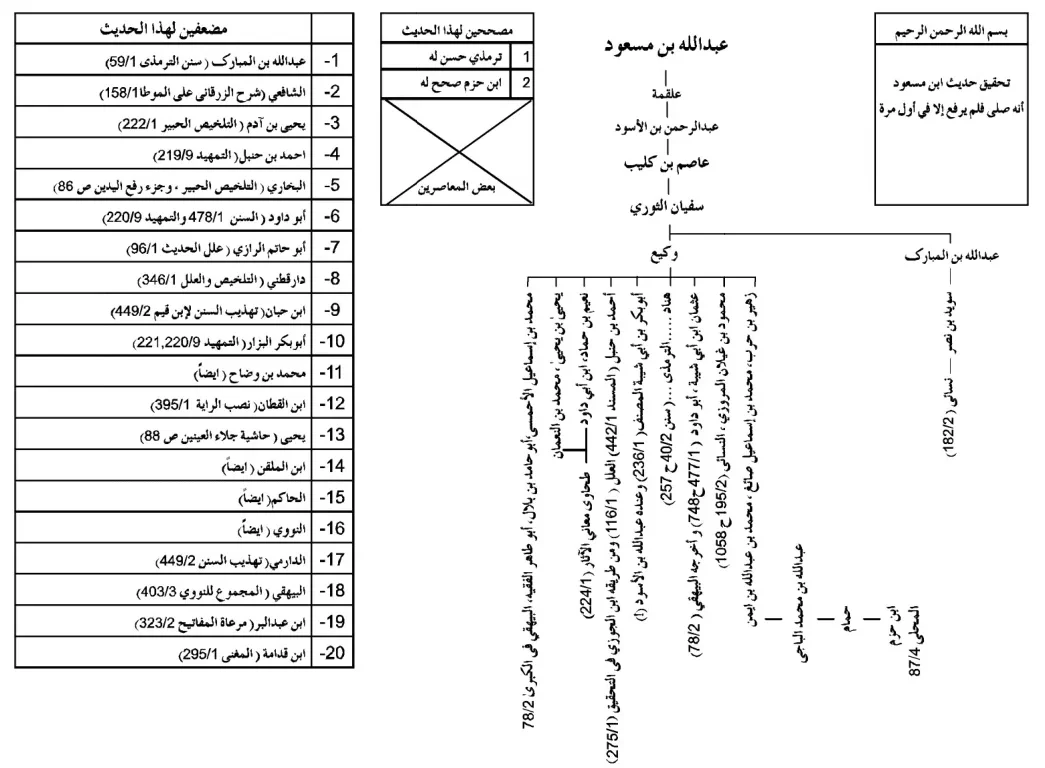
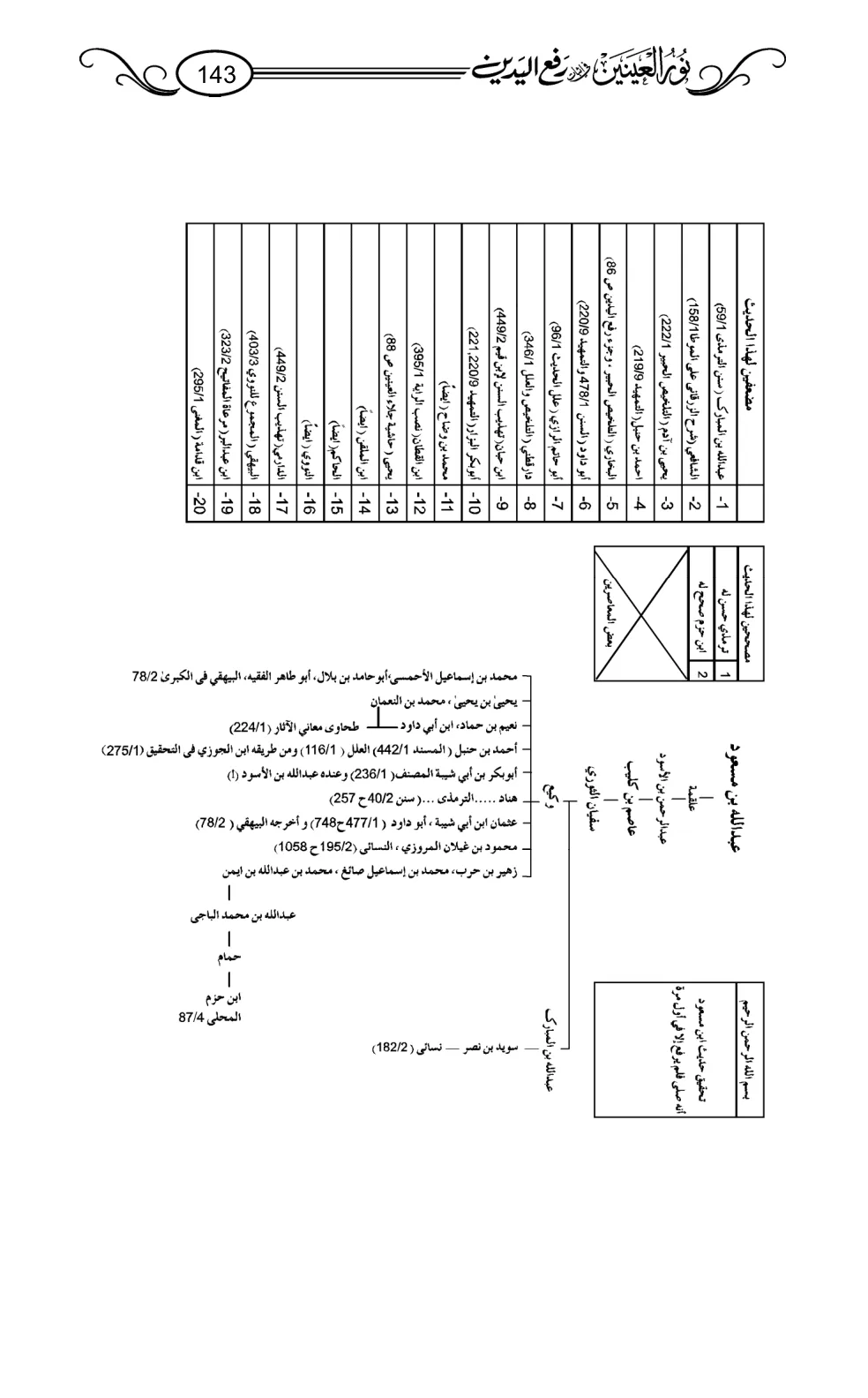
Sufyān (al-Thawrī) narrated from ʿĀṣim bin Kulayb, from ʿAbd al-Raḥmān bin al-Aswad, from ʿAlqamah, who said that ʿAbdullāh bin Masʿūd رضي الله عنه said:ألا أصلي بكم صلوة رسول الله صلى الله عليه وسلم؟ فصلى فلم يرفع يديه إلا فى أول مرة
“Shall I not lead you in the prayer of the Messenger of Allah ﷺ?” Then he prayed and did not raise his hands except the first time.
Reference: Sunan al-Tirmidhī, 1/59, ḥadīth: 257; al-Muḥallā of Ibn Ḥazm, 4/87–88, issue: 444
Research (Taḥqīq)
This ḥadīth is defective (muʿallal) due to a critical flaw and is weak both in chain and text. The following Imāms and scholars of ḥadīth have declared it weak and defective:✔ First Answer
① The Majority of Ḥadīth Scholars Declared It Weak
Shaykh al-Islām al-Mujāhid al-Shiqī ʿAbdullāh bin al-Mubārak (d. 181 AH) said:لم يثبت حديث… ابن مسعود
“The ḥadīth attributed to Ibn Masʿūd is not established.”
Reference: Sunan al-Tirmidhī, 1/59, ḥadīth: 256
Some people in modern times attempted to divert Ibn al-Mubārak’s criticism away from this ḥadīth, but the following scholars clearly applied his statement to this very narration:
➊ al-Tirmidhī
➋ Ibn al-Jawzī – “ʿAbdullāh bin al-Mubārak said: this ḥadīth is not established.”
➌ Ibn ʿAbd al-Hādī
➍ al-Nawawī
➎ Ibn Qudāmah
➏ Ibn Ḥajar
➐ al-Shawkānī
➑ al-Baghawī
➒ al-Bayhaqī
No ḥadīth scholar ever stated that Ibn al-Mubārak’s criticism does not apply to the ḥadīth of Ibn Masʿūd.
② Statements of Leading Imāms
- Imām al-Shāfiʿī (d. 204 AH) rejected all narrations of abandoning Rafʿ al-Yadayn, declaring them unestablished.
- Imām Aḥmad bin Ḥanbal (d. 241 AH) criticized this narration.
- Abū Ḥātim al-Rāzī (d. 277 AH) said:
“This is an error; it is said that al-Thawrī erred in it.”
Reference: ʿIlal al-Ḥadīth, 1/96
- Imām al-Dāraqutnī declared it ghayr maḥfūẓ (unpreserved).
- Ḥāfiẓ Ibn Ḥibbān said:
“In reality, this is the weakest narration relied upon.”
Reference: Talkhīṣ al-Ḥabīr, 1/222
- Imām Abū Dāwūd said:
“This narration is a shortened version of a longer one and is not authentic with this wording.”
Reference: Sunan Abī Dāwūd
Imām Abū Dāwūd and the Ḥadīth of Ibn Masʿūd
Many later scholars falsely denied that this statement belonged to Abū Dāwūd. However, the following scholars explicitly attributed it to him:① Ibn al-Jawzī
② Ibn ʿAbd al-Barr
③ Ibn ʿAbd al-Hādī
④ Ibn Ḥajar
⑤ Ibn al-Mulaqqin
⑥ Ibn al-Qaṭṭān al-Fāsī
⑦ Shams al-Ḥaqq ʿAẓīmābādī – who confirmed the statement exists in old manuscripts of Abū Dāwūd
⑧ Yaḥyā bin Ādam
⑨ al-Bazzār
⑩ Muḥammad bin Waḍḍāḥ
⑪ Imām al-Bukhārī
⑫ al-Zaylaʿī (quoting Ibn al-Qaṭṭān)
⑬ ʿAbd al-Ḥaqq al-Ishbīlī
⑭ Ibn al-Mulaqqin
⑮ al-Ḥākim
⑯ al-Nawawī – “They unanimously agreed upon its weakness.”
⑰ al-Dārimī
⑱ al-Bayhaqī
⑲ Muḥammad bin Naṣr al-Marwazī
⑳ Ibn Qudāmah
㉑ al-Qurṭubī
All of these were eminent scholars of the Ummah. Their unanimous declaration of weakness takes precedence over the authentication of al-Tirmidhī and Ibn Ḥazm.
✔ Second Answer
The entire chain revolves around Imām Sufyān al-Thawrī, who—despite being a trustworthy ḥāfiẓ—was a known mudallis.Numerous scholars declared him a mudallis, including:
➊ Yaḥyā bin Saʿīd al-Qaṭṭān
➋ Imām al-Bukhārī
➌ Yaḥyā bin Maʿīn
➍ Ibn Ḥajar – placed him among the mudallisīn
➎ al-Dhahabī – stated he practiced tadlīs from weak narrators
➏ Ibn Rajab
➐ al-ʿAlāʾī
➑ Abū Nuʿaym
➒ al-Ḥākim
➓ al-ʿAynī
⓫ al-Qasṭallānī
A principle established by the scholars:
Therefore, this narration of Sufyān al-Thawrī—without explicit hearing and without corroboration—is weak.“A mudallis who narrates with ‘ʿan’ is not accepted unless he explicitly states hearing.”
✔ Third Answer
This narration does not explicitly mention Rafʿ al-Yadayn before or after rukūʿ. Hence, it is ambiguous (mujmal).If taken generally, then those who abandon Rafʿ al-Yadayn contradict it themselves, as they raise their hands in:
➊ Witr
➋ ʿEid prayers
If specification is allowed there due to other narrations, then specification is equally valid here due to authentic narrations from Ṣaḥīḥayn.
✔ Fourth Answer
Imām Abū Dāwūd placed this narration under the chapter:“باب من لم يذكر الرفع عند الركوع”
“The chapter of those who did not mention raising the hands before rukūʿ.”
It is a well-known principle that absence of mention does not prove absence of action.
Ibn al-Turkmānī said:
ومن لم يذكر الشي ليس بحجة على من ذكره
“One who does not mention something is not proof against one who mentions it.”
Ḥāfiẓ Ibn Ḥajar said:
ولا يلزم من عدم ذكر الشي عدم وقوعه
“The non-mention of something does not necessitate its non-occurrence.”
✔ Fifth Answer
The narration of Sufyān contains negation, while the authentic narrations of Ṣaḥīḥayn contain affirmation.It is an established principle that affirmation takes precedence over negation.
Imām al-Nawawī said:
إن أحاديث الرفع أولى لأنها إثبات وهذا نفي فيقدم الإثبات لزيادة العلم
Reference: al-Majmūʿ, 3/403
✔ Sixth Answer
Some scholars interpreted the narration (if authentic) to mean not repeating Rafʿ al-Yadayn at the beginning of every rakʿah, not negating it at rukūʿ.Imām al-Nawawī said:
“If it were authentic, it would be interpreted in this way so that all narrations may be reconciled.”
Reference: al-Majmūʿ, 3/403
✔ Seventh Answer
Even if hypothetically authentic, the narration would be abrogated.Imām al-Bayhaqī said that initially Rafʿ al-Yadayn may not have been legislated, then later became the Sunnah before and after rukūʿ, while Ibn Masʿūd remained unaware of this change.
Reference: Maʿrifat al-Sunan wa al-Āthār
◈ Final Statement
Ibn Ḥazm wrote:ولو لا هذا الخبر لكان رفع اليدين عند كل رفع وخفض فرضا
“If not for this narration, raising the hands at every movement would be obligatory.”
Reference: al-Muḥallā, 4/88
Based on the detailed research above, this narration is weak, defective, and unfit for evidence. Therefore, the stance of Ibn Ḥazm collapses by his own principle.
This research article related to the topic may also be reviewed.

