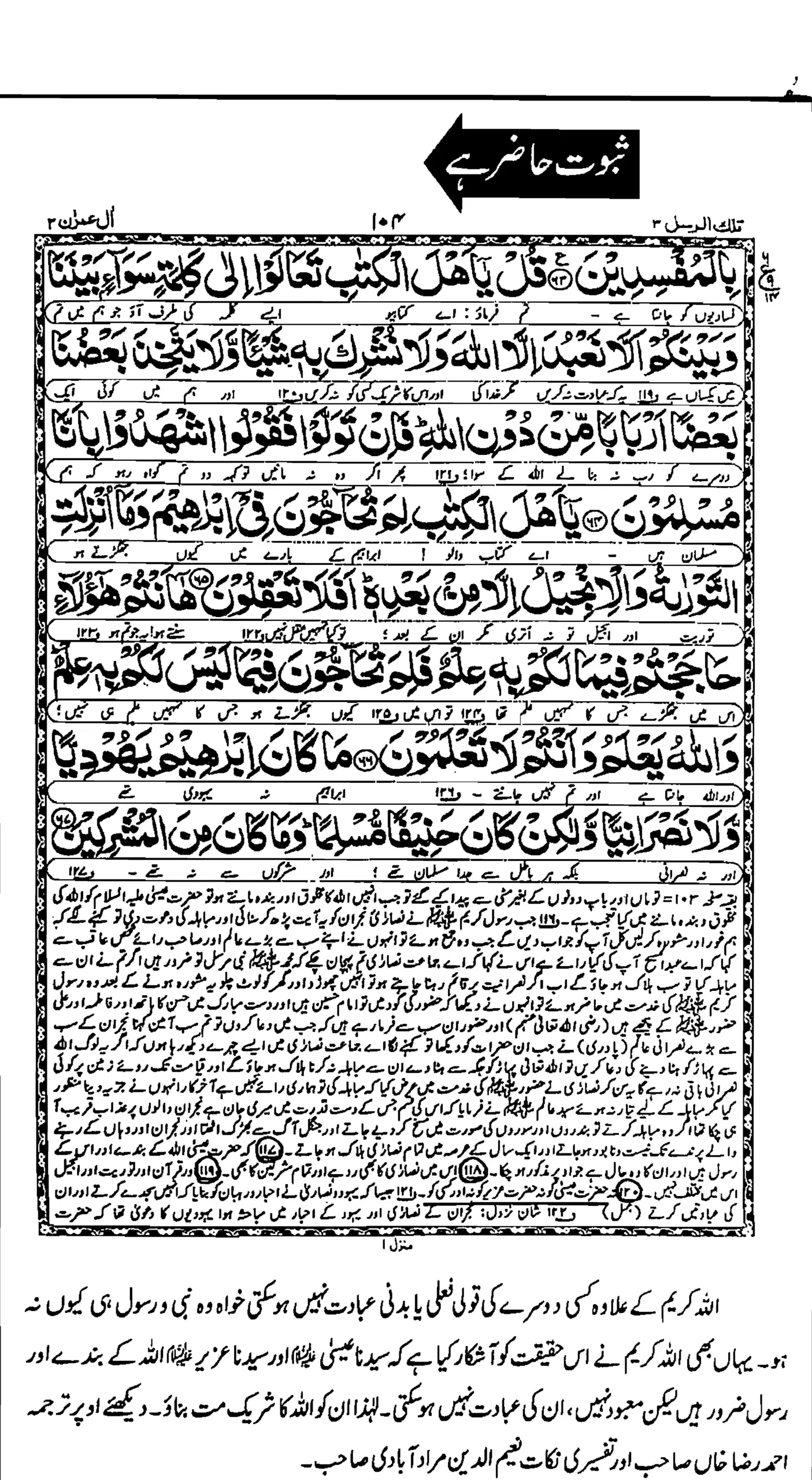
This excerpt is taken from Sheikh Irshad Ullah Maan's book The Search for Truth.
[1] Sayyiduna Ubaidullah رضي الله عنه narrated: Then I mentioned to Sayyiduna Ibn Abbas رضي الله عنه the hadith of Sayyida Aisha رضي الله عنهما. He asked me: Do you know who those unnamed people were that Aisha (رضي الله عنهما) referred to? I said no.
Reference: Bukhari, Book of Adhan, Chapter: The Imam is made to be followed: 687, Muslim, Book of Prayer, Chapter: Appointment of the Imam when he is unable... etc.: 418
[2] Sayyiduna Bilal رضي الله عنه came to Sayyiduna Abu Bakr رضي الله عنه and said: Will you lead the prayer? I will say the Iqamah. (Because the Prophet ﷺ had gone for reconciliation and the time for prayer had come.) Sayyiduna Abu Bakr رضي الله عنه said: Yes! So Sayyiduna Abu Bakr رضي الله عنه started the prayer. Meanwhile, the Prophet ﷺ arrived while the people were in prayer. The Prophet ﷺ passed through the rows and went to the first row. The people struck one hand over the other, but Abu Bakr رضي الله عنه did not pay attention to the prayer. When the people repeatedly started striking their hands, Sayyiduna Siddiq Akbar رضي الله عنه became attentive, looked at the Prophet ﷺ, and then stepped back. Then the Prophet ﷺ advanced and led the prayer.
Reference: Bukhari, Book of Adhan, Chapter: Whoever enters to lead the people in prayer and the Imam comes... etc:684], [Muslim, Book of Prayer, Chapter: Giving precedence to the congregation who prays... etc:421
[3] Sayyiduna Abu Bakr رضي الله عنه brought three men with him, according to the command of the Messenger of Allah ﷺ, to feed them at his home, and he himself stayed at the house of the Messenger of Allah ﷺ. They stayed there. After part of the night had passed, Sayyiduna Abu Bakr رضي الله عنه came home, and his wife said, "What happened that you did not even inquire about the guests?" Sayyiduna Abu Bakr رضي الله عنه asked, "Have you not yet fed them dinner?" His wife said, "What could I do? Until you came, they refused to eat. They were asked to eat, but they did not agree."
Reference: Bukhari, Book of Prayer Times, Chapter: Staying up at night with family and guests:602], [Muslim, Book of Drinks, Chapter: Honoring the Guest and the Virtue of Preferring Him:2057
[4] Sayyiduna Abu Bakr رضي الله عنه, narrating the event of the Hijrah, said: "There we met a shepherd. I asked him which tribe he belonged to, and he said such and such."
Reference: Bukhari, Book of Virtues, Chapter: Signs of Prophethood in Islam:3615], [Muslim, Book of Asceticism, Chapter: On the Hadith of the Hijrah... etc.:2009
[5] Sayyiduna Uthman رضي الله عنه narrates: When the Messenger of Allah ﷺ passed away, some of his companions رضي الله عنهم became very sorrowful, and I was among them. I was sitting distressed when Umar رضي الله عنه passed by, and he said السلام علیکم, but I did not realize that he had passed by. Sayyiduna Umar رضي الله عنه complained about me to Abu Bakr رضي الله عنه. Both of them came to me together and asked what the reason was that I did not respond to the greeting of my brother Umar (رضي الله عنه). I said that I had no knowledge at all that he had passed by me and said السلام علیکم. Sayyiduna Abu Bakr رضي الله عنه asked what the trouble was?
Reference: Musnad Ahmad: Hadith 20], [Musnad Abi Ya'la: Hadith 10]
[6] During the journey, Sayyida Aisha رضي الله عنها lost her necklace, and everyone stopped. Sayyiduna Abu Bakr رضي الله عنه became very upset with Sayyida Aisha رضي الله عنها, saying that because of you everyone has stopped. Later, Sayyida Aisha رضي الله عنها's camel was lifted, and the necklace was found under the camel.
Reference: Bukhari, Kitab al-Tayammum, Chapter: 334
[7] Sayyida Aisha رضي الله عنها visited Sayyiduna Abu Bakr رضي الله عنه during his illness. Among other things, Sayyiduna Abu Bakr رضي الله عنه asked her on which day the Prophet Muhammad ﷺ had passed away. Aisha رضي الله عنها said on Monday. Sayyiduna Abu Bakr رضي الله عنه asked, "What day is it today?" Sayyida Aisha رضي الله عنها said Monday. He then said, "Then I hope that I will also depart by tonight." However, Sayyiduna Abu Bakr رضي الله عنه did not pass away that day; he passed away after some part of Tuesday night had passed, and he was buried before morning.
Reference: Bukhari, Book of Funerals, Chapter on Death on Monday:1387
[8] Our master Umar (may Allah be pleased with him) was severely wounded by a person hiding in the Prophet's Mosque during the morning prayer congregation, and later he passed away. Similarly, our master Ali (may Allah be pleased with him) was martyred by a person hiding in Kufa, and neither of the two rightly guided caliphs knew that there was someone hiding who wanted to martyr them.
Reference: Bukhari, Book of Virtues of the Companions of the Prophet ﷺ, Chapter on the Story of the Pledge... etc.:3700
[9] When the Qibla was changed, a person prayed with the Messenger of Allah ﷺ. After the prayer, he passed by a group of Ansar who were praying Asr facing Bayt al-Maqdis. He said: I bear witness that I prayed with the Messenger of Allah ﷺ the prayer in which he faced the current Qibla (the Kaaba). Then that group turned their faces (during the prayer) towards the Kaaba.
Reference: Bukhari, Book of Prayer, Chapter on Facing the Qibla... etc.:399], [Muslim, Book of Mosques, Chapter on Changing the Qibla... etc.:525
[10] The Companions, may Allah be pleased with them all, were on a journey with the Messenger of Allah ﷺ. They kept walking throughout the night, and near morning they made a halt. Everyone fell into a deep sleep until the sun had fully risen. The first to wake up was Sayyiduna Abu Bakr, may Allah be pleased with him, then Sayyiduna Umar, may Allah be pleased with him, also woke up. Finally, Sayyiduna Abu Bakr, may Allah be pleased with him, sat near the blessed head of the Messenger of Allah ﷺ and loudly said Allahu Akbar. This also woke the Messenger of Allah ﷺ, and he gave the order to move on from there. Then they proceeded and performed the morning prayer.
Reference: Bukhari, Book of Virtues, Chapter on Signs of Prophethood in Islam: 3571], [Muslim, Book of Mosques, Chapter on Making Up Missed Prayers...etc.: 682
[11] Sayyiduna Umar رضي الله عنه left Makkah, people were with him, when they reached Bidaa, they saw a few horsemen under a babool tree. Sayyiduna Umar رضي الله عنه said, "Go and see who these people are." When it was checked, they were Suhaib. When this information was given, Sayyiduna Umar رضي الله عنه said, "Call them," so they were told that the Commander of the Faithful is calling, and they came.
Reference: Bukhari, Book of Funerals, Chapter: The Prophet ﷺ said ((The dead is punished by some crying... etc)):1287], [Muslim, Book of Funerals, Chapter: The dead is punished by crying... etc:927, after 928
[12] The Companions رضي الله عنهم passed by a funeral, and people began to praise it, upon hearing this the Messenger of Allah ﷺ said: "It has become obligatory." Then they passed by another funeral, and people began to criticize it. The Messenger of Allah ﷺ said: "It has become obligatory." Upon this, Sayyiduna Umar رضي الله عنه asked, "What has become obligatory?"
Reference: Bukhari, Book of Funerals, Chapter: People’s praise of the dead:1367], [Muslim, Book of Funerals, Chapter: About one who is praised... etc:949
[13] Sayyiduna Abu Dharr رضي اللہ عنہ was with the Messenger of Allah ﷺ. After going some distance, the Messenger of Allah ﷺ said: Abu Dharr, stay here. Then he ﷺ proceeded and disappeared from sight. After that, I heard a voice and became worried that perhaps some trouble had befallen the Messenger of Allah ﷺ. I stayed put by his command. When he ﷺ returned, Sayyiduna Abu Dharr رضي اللہ عنہ said: O Prophet of Allah (ﷺ)! May Allah sacrifice me for you! With whom were you talking on this rocky land?
Reference: Bukhari, Book of Softening the Hearts, Chapter on Those Who Give Much: 6443], [Muslim, Book of Zakat, Chapter on Encouragement in Charity: 33/94, after 991]
[14] There was some disagreement among the people regarding the fasting of the Messenger of Allah ﷺ on the day of Arafat. Some said he ﷺ was fasting, and others said no. Therefore, they sent a bowl of milk to him ﷺ. The Messenger of Allah ﷺ was sitting on a camel in Arafat, standing in vigil. He drank that milk.
Reference: Bukhari, Book of Fasting, Chapter on Fasting on the Day of Arafat: 1988], [Muslim, Book of Fasting, Chapter on the Recommendation to Break the Fast for the Pilgrim on the Day of Arafat: 1123]
[15] The Messenger of Allah ﷺ circumambulated the Kaaba and reached Maqam Ibrahim, where he prayed two rak'ahs. There were some people with him ﷺ who stood between him ﷺ and the others. One of them asked Ibn Abi Awfa if the Messenger of Allah ﷺ had entered inside the Kaaba. He replied that he had not.
Reference: Bukhari, Book of Prayer, Chapter on Prayer Between the Rides... etc.: 505, 504], [Muslim, Book of Hajj, Chapter on the Recommendation of Entering the Kaaba for the Pilgrim and Others and Praying There... etc.: 389/1329
[16] Sayyiduna Abdullah bin Umar رضي الله عنهما narrated: that the Messenger of Allah ﷺ entered inside the Kaaba, Sayyiduna Bilal رضي الله عنه and two other companions were with him ﷺ. Then the door of the Kaaba was closed and he ﷺ stayed inside. When he ﷺ came out, I asked Sayyiduna Bilal رضي الله عنه what the Messenger of Allah ﷺ did inside.
Reference: Bukhari, Book of Prayer, Chapter on Prayer Between the Rides... etc.: 505, 504], [Muslim, Book of Hajj, Chapter on the Recommendation of Entering the Kaaba for the Pilgrim and Others and Praying There... etc.: 389/1329
[17] Our Master Umar (may Allah be pleased with him) said: I had an Ansari friend, and when I was not present in the gathering of the Messenger of Allah ﷺ, he would come and tell me everything that was discussed in the gathering, and when he was not present, I would inform him. At that time, we were afraid of the king of Ghassan. It was reported that he intended to attack Medina, so we were always under this threat. One day, my Ansari friend knocked on the door and said, "Open." I said, "It seems the Ghassani have come." He said, "An even more important matter has arisen, that the Messenger of Allah ﷺ has separated from his wives."
Reference: Bukhari, Book of Knowledge, Chapter on Alternating in Knowledge:89], [Muslim, Book of Divorce, Chapter on Iilaa and Separation from Women... etc.:31/1479
Similarly, countless incidents are recorded in the books of Hadith which indicate that the Companions of the Prophet (may Allah be pleased with them) did not have knowledge of the unseen. After studying the authentic books of Hadith, it is conclusively proven that the great senior Companions (may Allah be pleased with them) did not possess knowledge of the unseen, so what status do today's elders have in comparison to them?
And Muradabadi Sahib wrote the same in
Reference: Tafseer Aal-e-Imran: 170,169, pp: 332 to 334
that Allah Almighty informed the Companions (may Allah be pleased with them) about the state of the martyrs of Uhud in Paradise. Before this, the Companions did not know the fate of the martyrs of Uhud.It is thus proven that souls remain; they do not perish with the death of the body.
Reference: F:333
They eat, drink, and enjoy like the living. The context of the verse indicates that life is for both the soul and the body. Scholars have stated that the bodies of martyrs remain preserved in the graves; the soil does not harm them. During the time of the Companions and afterwards, it was frequently observed that if the graves of martyrs were ever opened, their bodies were found fresh.
Reference: F:334
Favor, honor, reward, and blessings are given after death; they are made close to Allah, and are granted the provision and blessings of Paradise.After the above statement of Mr. Muradabadi and the study of
Reference: Al-Baqarah:154, F:281
, it is conclusively proven that martyrs are not alive in their graves; their souls are separated from their bodies, bodies are in the graves, and souls are in Paradise. If the souls of martyrs are in Paradise and their bodies in graves, then the souls and bodies of Prophets and Siddiqeen (i.e., true followers) are also separate, becauseThey are superior to the martyrs. See:
Reference: Translation with Tafsir Ahmad Raza Khan An-Nisa:69, pp:181 to 183
Their souls are in Paradise and their bodies are in the graves. Muradabadi also wrote that after death, a person's deeds cease.
Reference: Ash-Shu'ara:89, p:92
These tafsirs clearly refute the grave worshippers who say that we call upon those in the graves because they are alive in the graves.
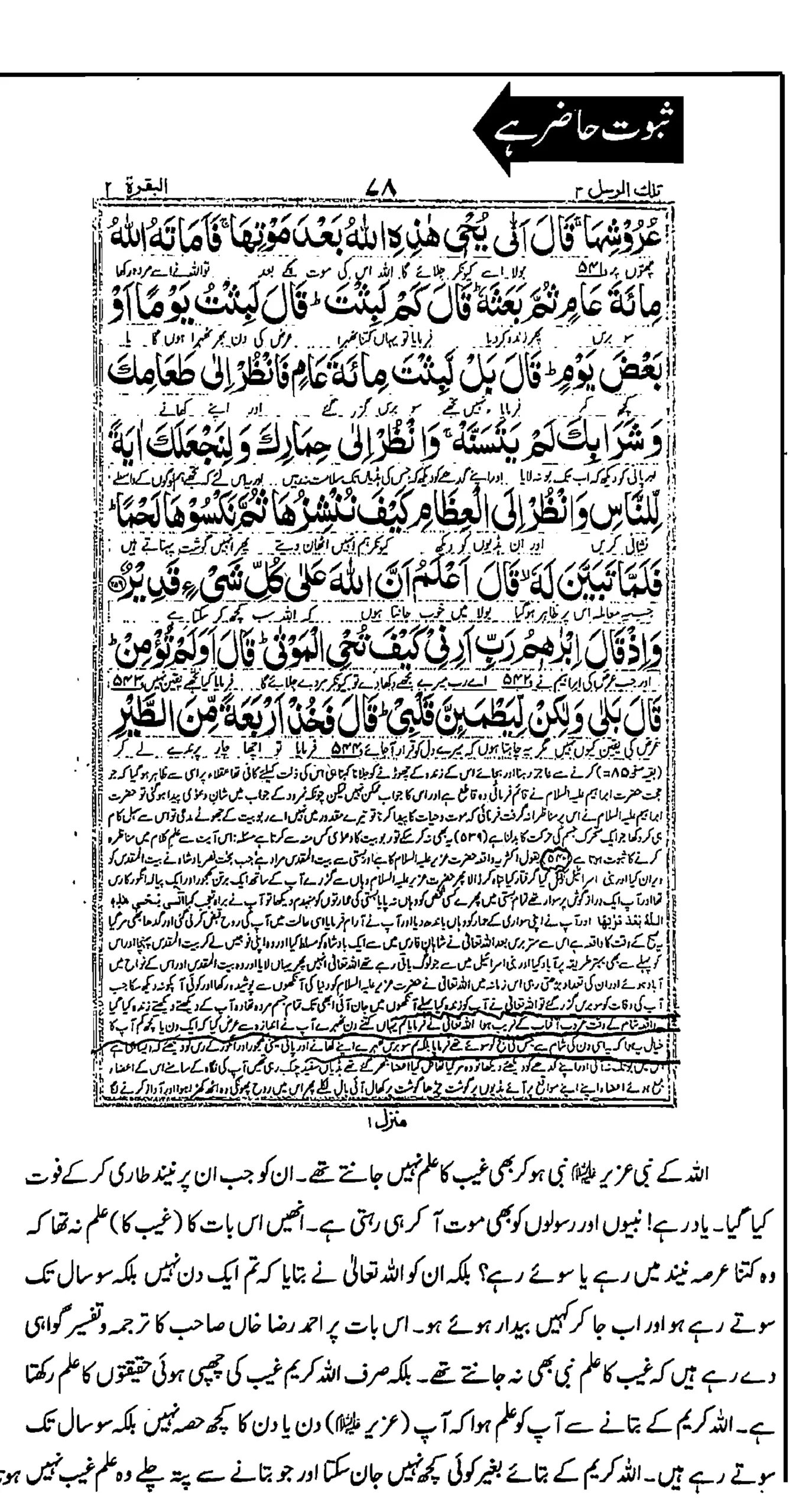
[1] Allah Almighty caused Uzair (peace be upon him) to die for a hundred years. When Allah revived him, He asked him how long he had stayed there. He replied, "A day or part of a day."
Reference: Al-Baqarah:259
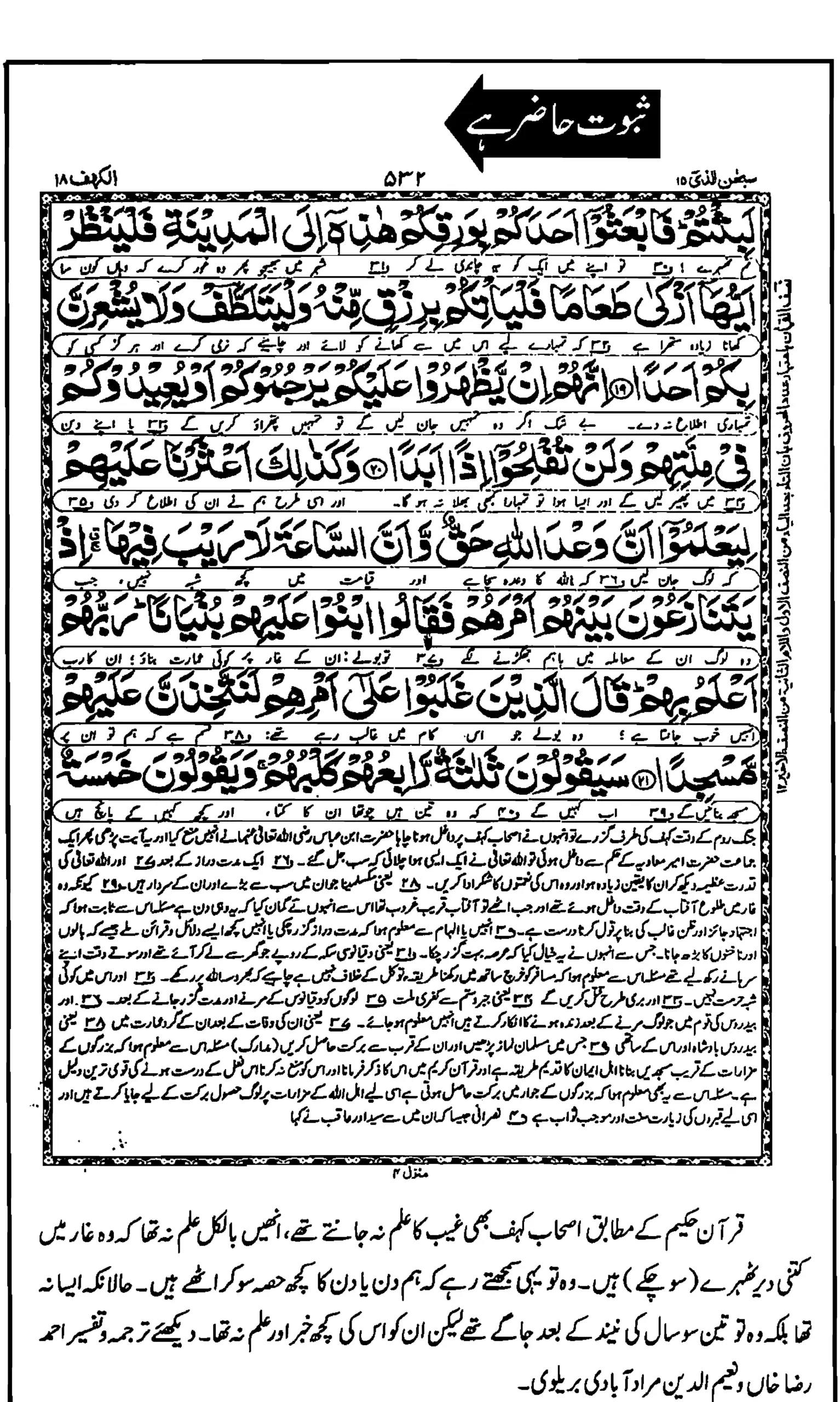
[2] Allah caused the People of the Cave to sleep in a cave. They slept there for 309 years. Later, when Allah awakened them, one of them said, "How long have you stayed here?" They said, "We have stayed a day or less than a day."
Similarly, We awakened them so that they might question one another. One of them said, "How long have you stayed?" They said, "We have stayed a day or part of a day." They said, "Your Lord knows best how long you stayed."
Reference: Al-Kahf:19
Those people stayed in their cave for three hundred years and added nine more.
Reference: Al-Kahf:25
The People of the Cave slept in their cave for three hundred and nine years; they are Allah’s acknowledged saints. But when they woke up after [309] years, they said among themselves, "Did we stay here a day or less than a day?" Thus, it is proven that even those whom Allah called saints did not have knowledge of the unseen. And how can it be imagined today that those who have no proof of sainthood know the unseen?
[3] When Sayyiduna Musa (AS) set out towards Sayyiduna Khidr (AS), the servant was with him, food was nearby, and on the way Sayyiduna Musa (AS) fell asleep. Upon waking and moving forward, Sayyiduna Musa (AS) asked the servant to bring the food, but the servant replied that the fish had come back to life and jumped into the river.
[Al-Kahf: 60 to 63]
Reference: Bukhari, Book of Knowledge, Chapter on what is recommended for a scholar when asked... etc: 122,74
[4] In [Surah Yaseen], it is mentioned that when a man came running from the far side of the city and called his people to believe in the message of three messengers, and declared his faith, (his people martyred him). Allah granted him Paradise. That believing man said, "O, I wish my people knew that my Lord has forgiven me and made me among the honored."
Reference: Yaseen: 26 to 37
[It is understood that the believing martyr could not communicate with his people after going to the Barzakh world].
[5] When Allah Almighty and Sayyiduna Isa (Jesus) عليه السلام will have a conversation on the Day of Judgment, and Allah Almighty will say: O Isa! Did you tell the people to worship me and my mother besides Allah? He will reply: You are pure; it is not befitting for me to say what I have no right to say. If I had said that, then surely You would have known it, and You know what is in my heart, and I do not know what is in Your heart. And I was their guardian as long as I was among them; then when You took me up, You were the guardian over them, and You are, over all things, Witness.
Reference: Al-Ma'idah: 112 to 117
How clearly Sayyiduna Isa (peace be upon him) denies knowledge of the unseen about himself. This attribute of knowledge belongs only to Allah Almighty. Therefore, the Knower of the unseen is only Allah’s essence. There is no other Knower of the unseen besides Him, because this belief is against the Quran, and whoever denies even one verse of the Quran is a disbeliever and is outside the fold of Islam.
It has been well established from the Quran and Hadith that knowledge of the unseen is only with Allah Almighty (the things that have been revealed are knowledge, and those that have not been revealed are unseen):
[وَ لَئِنِ اتَّبَعۡتَ اَہۡوَآءَہُمۡ بَعۡدَ الَّذِیۡ جَآءَکَ مِنَ الۡعِلۡمِ ۙ مَا لَکَ مِنَ اللّٰہِ مِنۡ وَّلِیٍّ وَّ لَا نَصِیۡرٍ]
And if you follow their desires after the knowledge that has come to you, then you will have no protector or helper against Allah.
Reference: Al-Baqarah:120
It is proven that when these verses had not yet been revealed to the Messenger of Allah ﷺ, this was unseen for him. When these verses were revealed, it was no longer unseen but became knowledge.
The knowledge of the unseen belongs to Allah Almighty alone, as has been stated.
Reference: An-Naml:65
[اَفَمَنۡ یَّخۡلُقُ کَمَنۡ لَّا یَخۡلُقُ ؕ اَفَلَا تَذَکَّرُوۡنَ]،[وَ اِنۡ تَعُدُّوۡا نِعۡمَۃَ اللّٰہِ لَا تُحۡصُوۡہَا ؕ اِنَّ اللّٰہَ لَغَفُوۡرٌ رَّحِیۡمٌ]،[وَ اللّٰہُ یَعۡلَمُ مَا تُسِرُّوۡنَ وَ مَا تُعۡلِنُوۡنَ]،[وَ الَّذِیۡنَ یَدۡعُوۡنَ مِنۡ دُوۡنِ اللّٰہِ لَا یَخۡلُقُوۡنَ شَیۡئًا وَّ ہُمۡ یُخۡلَقُوۡنَ]،[اَمۡوَاتٌ غَیۡرُ اَحۡیَآءٍ ۚ وَ مَا یَشۡعُرُوۡنَ ۙ اَیَّانَ یُبۡعَثُوۡنَ]
[So is He who creates like one who does not create? Then will you not take heed?] [And if you count the favors of Allah, you will not be able to number them. Indeed, Allah is Forgiving and Merciful.] [And Allah knows what you conceal and what you declare.] [And those whom they invoke besides Allah do not create anything, and they themselves are created.] [They are dead, not alive, and they do not know when they will be resurrected.]
Reference: An-Nahl:17 to 21
It should be remembered that the belief that the deceased have knowledge of what is happening in the world has always been a fundamental cause of polytheism, and the Quran states that the deceased have no knowledge and no authority.
Reference: Al-Fatir:11 to 23