✍ Compiled by: Abu Hamzah Salafi
The purpose of this research article is to compile the statements of the scholars of ḥadīth regarding the tadlīs of Imām Sufyān ibn Saʿīd al-Thawrī رحمه الله (d. 161 AH). The majority of ḥadīth scholars have clearly stated that Sufyān al-Thawrī sometimes practiced tadlīs, and at times he also performed tadlīs from weak or unknown narrators. For this reason, his muʿanʿan narration is not evidence without an explicit statement of hearing (samāʿ) or a reliable supporting corroboration.This is not merely the opinion of a few individuals; rather, 30 leading Imāms of ḥadīth have explicitly stated this. In addition, some non-ḥadīth scholars (from Deobandī and Barelwī elders) have also acknowledged this reality.
 Explicit Statements of the Imāms and Muḥaddithīn
① Sufyān al-Thawrī’s Own Admission
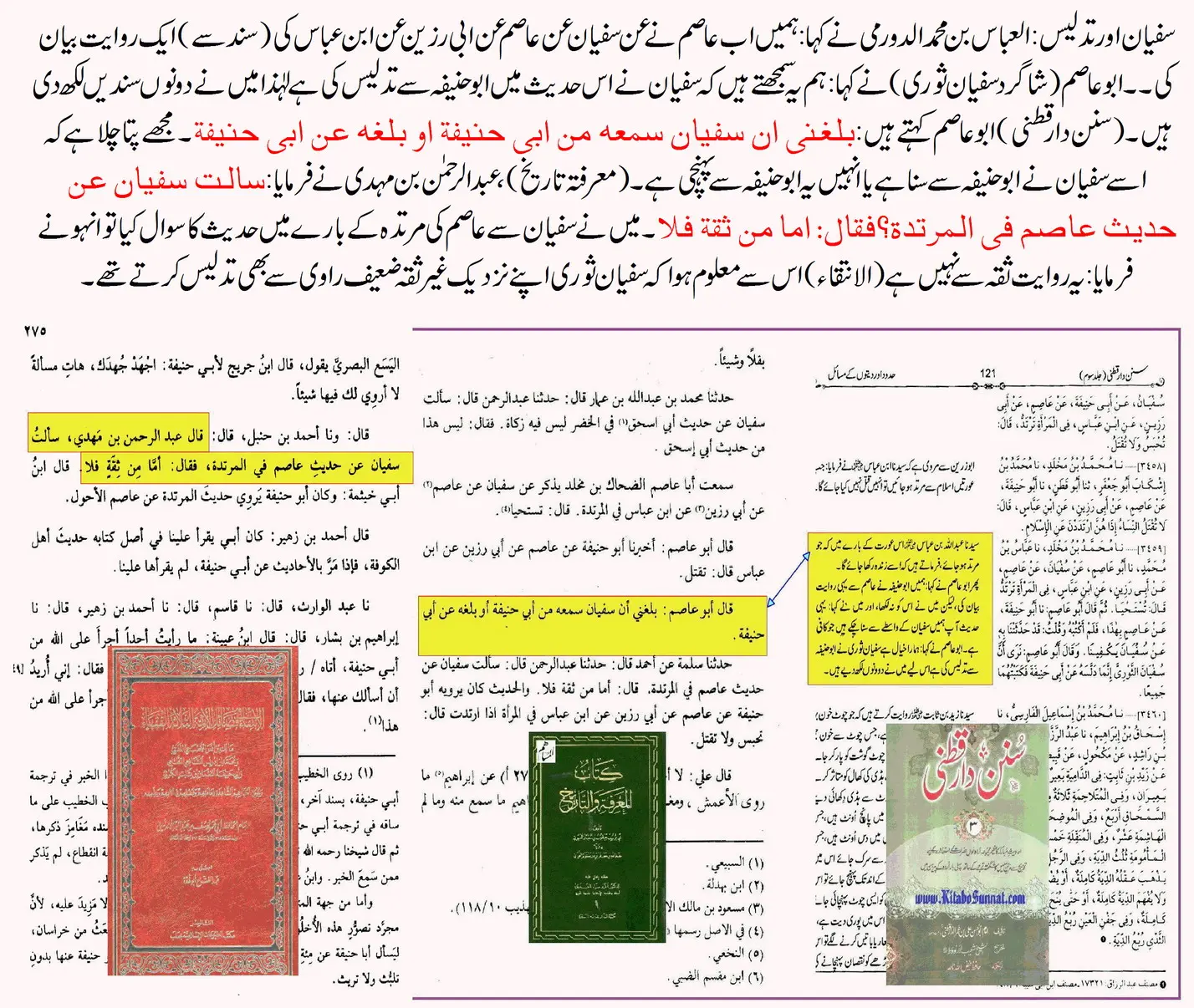
قَالَ وَنا أَحْمَدُ بْنُ حَنْبَلٍ قَالَ قَالَ عَبْدُ الرَّحْمَنِ بْنُ مَهْدِيٍّ سَأَلْتُ سُفْيَانَ عَنْ حَدِيثِ عَاصِمٍ فِي الْمُرْتَدَّةِ فَقَالَ: أَمَّا مِنْ ثِقَةٍ.(الانتقاء في فضائل الثلاثة الأئمة، ص 148)
 Translation:
ʿAbd al-Raḥmān ibn Mahdī said: I asked Sufyān regarding the narration of ʿĀṣim (concerning the apostate woman), so Sufyān said: “This is not from a trustworthy (narrator).”
Further narration:
3459 – نا مُحَمَّدُ بْنُ مَخْلَدٍ , نا عَبَّاسُ بْنُ مُحَمَّدٍ , نا أَبُو عَاصِمٍ , عَنْ سُفْيَانَ , عَنْ عَاصِمٍ , عَنْ أَبِي رَزِينٍ , عَنِ ابْنِ عَبَّاسٍ , فِي الْمَرْأَةِ تَرْتَدُّ قَالَ: «تُسْتَحْيَا».
(سنن الدارقطني 3/112)
② Ḥāfiẓ al-Dhahabī (d. 748 AH)
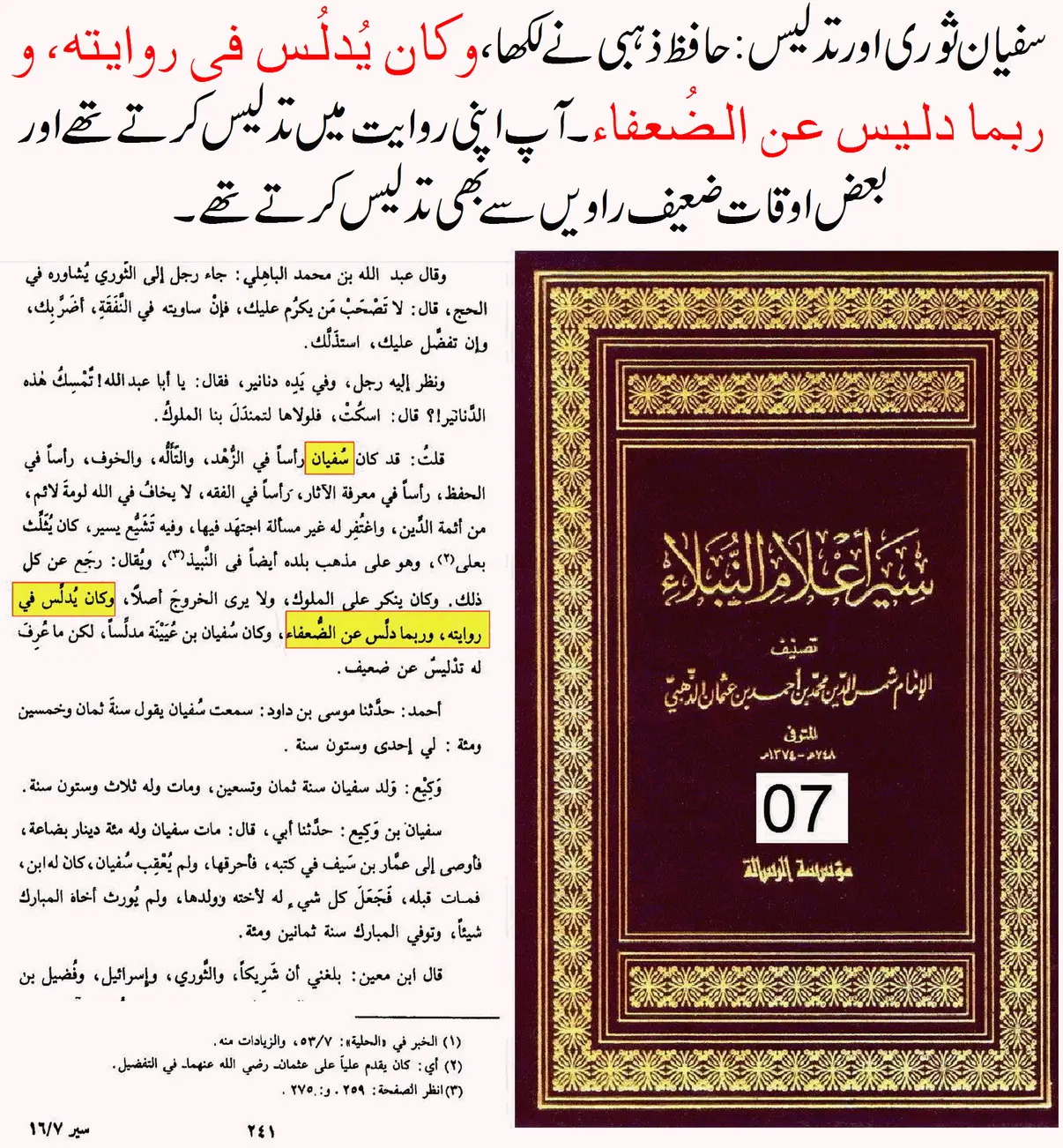
82 – سُفْيَانُ بنُ سَعِيْدِ بنِ مَسْرُوْقٍ الثَّوْرِيُّ … وَكَانَ يُدَلِّسُ فِي رِوَايَتِهِ، وَرُبَّمَا دَلَّسَ عَنِ الضُّعَفَاءِ.(سير أعلام النبلاء 7/229)
Translation:Imām Sufyān al-Thawrī practiced tadlīs in his narrations, and sometimes he performed tadlīs from weak narrators as well.
③ ʿAlī ibn al-Madīnī (d. 234 AH)
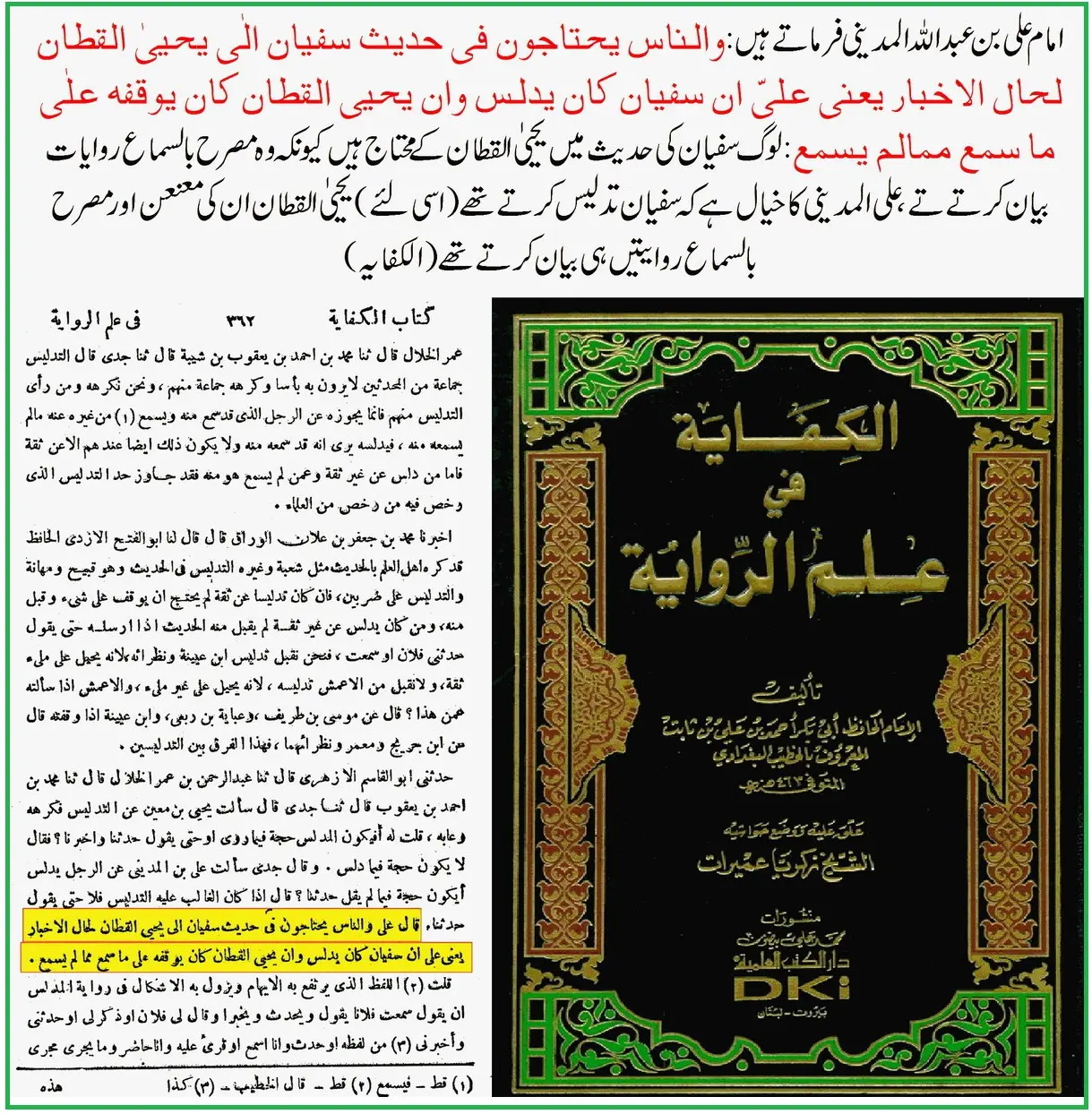
قَالَ عَلِيٌّ: وَالنَّاسُ يَحْتَاجُونَ فِي حَدِيثِ سُفْيَانَ إِلَى يَحْيَى الْقَطَّانِ لِحَالِ الْإِخْبَارِ، يَعْنِي أَنَّ سُفْيَانَ كَانَ يُدَلِّسُ، وَأَنَّ يَحْيَى الْقَطَّانَ كَانَ يُوقِفُهُ عَلَى مَا سَمِعَ مِمَّا لَمْ يَسْمَعْ.(الكفاية في علم الرواية للخطيب البغدادي 1/364)
Translation:ʿAlī ibn al-Madīnī said: People were in need of Yaḥyā al-Qaṭṭān regarding Sufyān’s ḥadīth, meaning that Sufyān practiced tadlīs, and Yaḥyā al-Qaṭṭān would clarify what he actually heard versus what he did not hear.
④ Yaḥyā ibn Saʿīd al-Qaṭṭān (d. 198 AH)
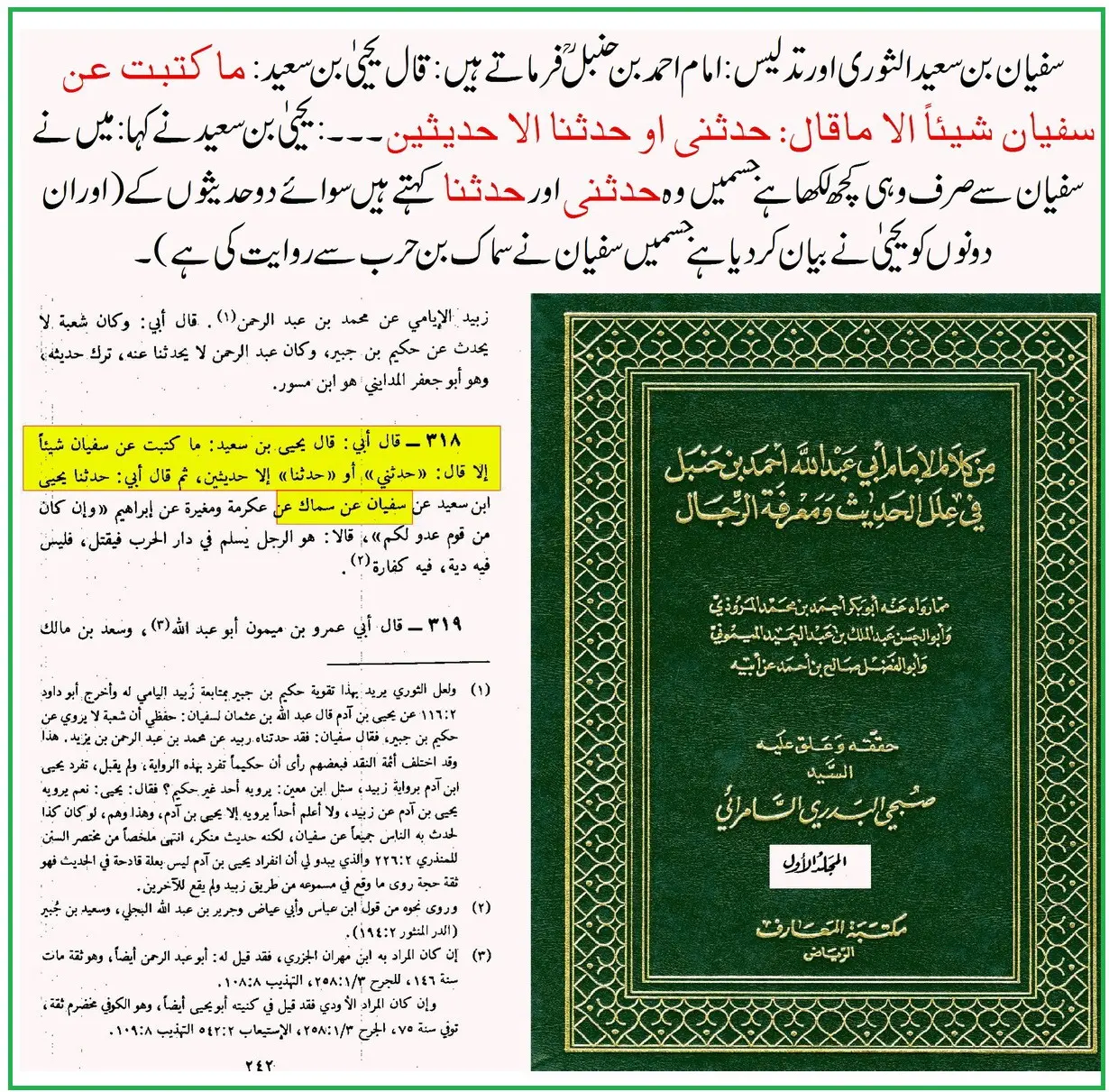
قَالَ يَحْيَى بْنُ سَعِيدٍ: مَا كَتَبْتُ عَنْ سُفْيَانَ شَيْئًا إِلَّا قَالَ "حَدَّثَنِي” أَوْ "حَدَّثَنَا” إِلَّا حَدِيثَيْنِ.(العلل ومعرفة الرجال لابن أبي حاتم 2/37)
Translation:Yaḥyā ibn Saʿīd al-Qaṭṭān said: I did not write anything from Sufyān unless he said “ḥaddathanī” or “ḥaddathanā”, except for two ḥadīths.
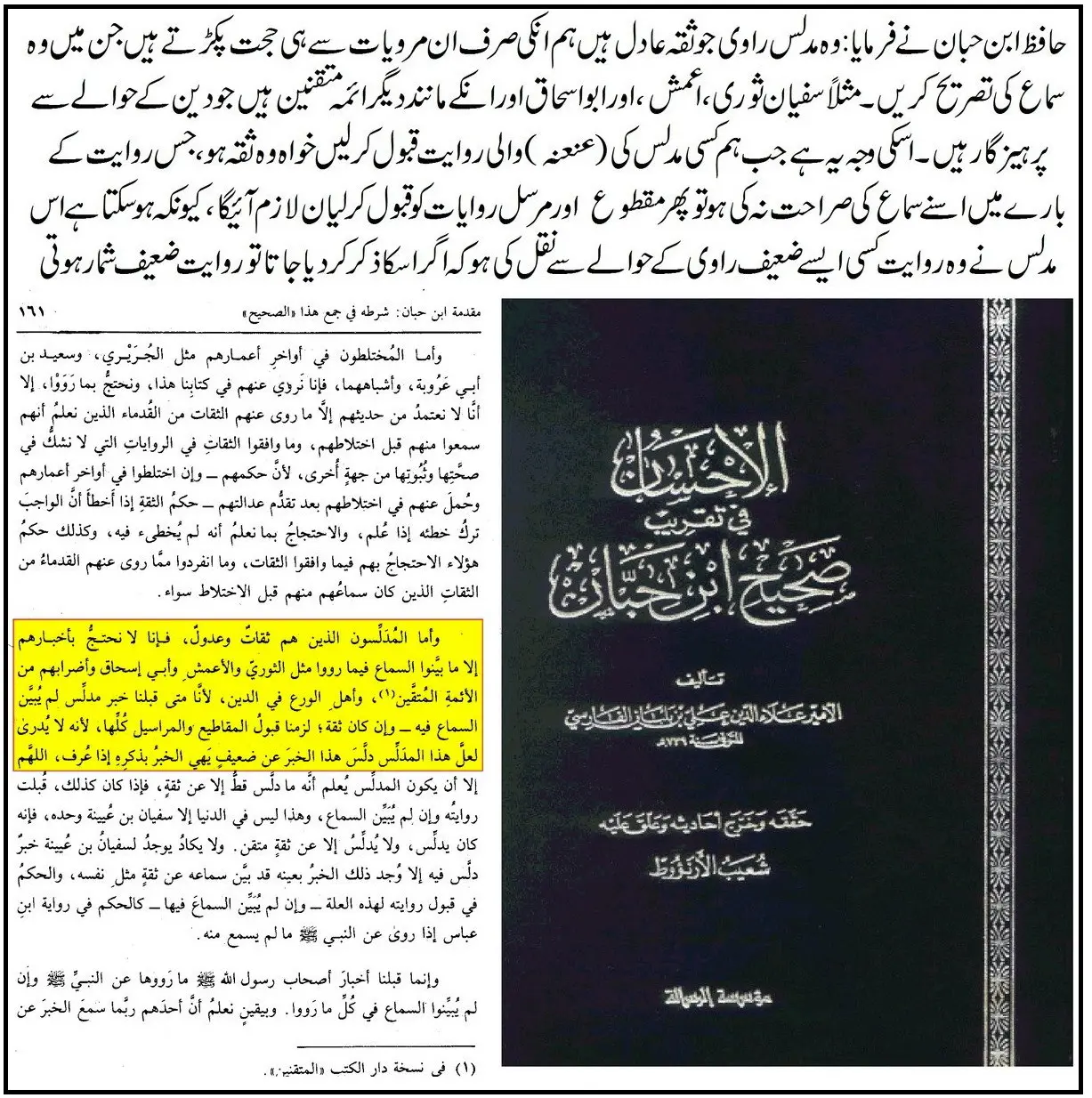
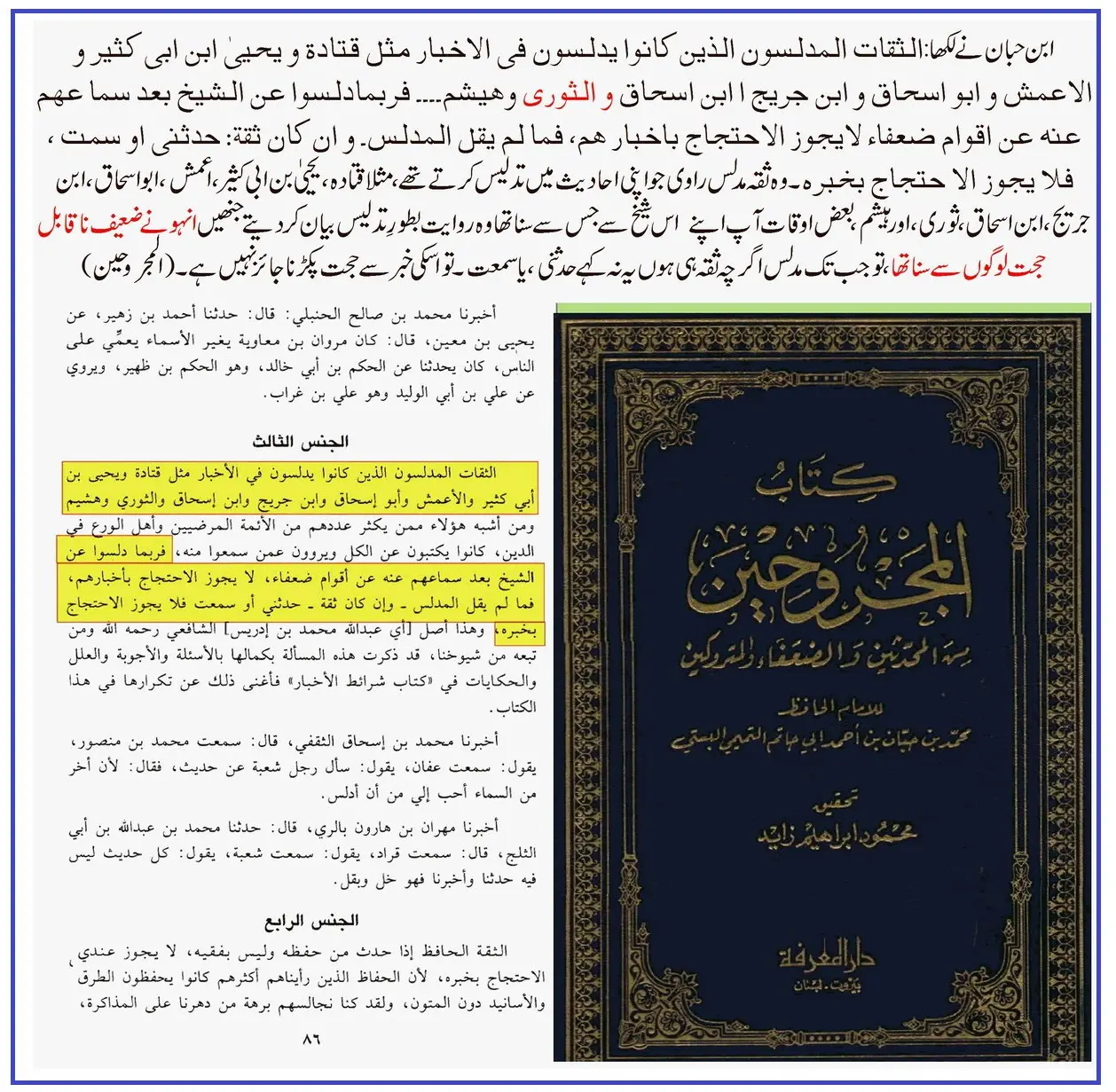
⑤ Ḥāfiẓ Ibn Ḥibbān (d. 354 AH)
وأما المدلسون الذين هم ثقات وعدول فإنا لا نحتج بأخبارهم إلا ما بينوا السماع فيما رووا مثل الثوري والأعمش وأبي إسحاق وأضرابهم…(الإحسان في تقريب صحيح ابن حبان 1/161)
Translation:As for mudallis narrators who are trustworthy and upright, we only take their narrations as proof when they explicitly clarify hearing (samāʿ), such as: al-Thawrī, al-Aʿmash, Abū Isḥāq, and those like them.
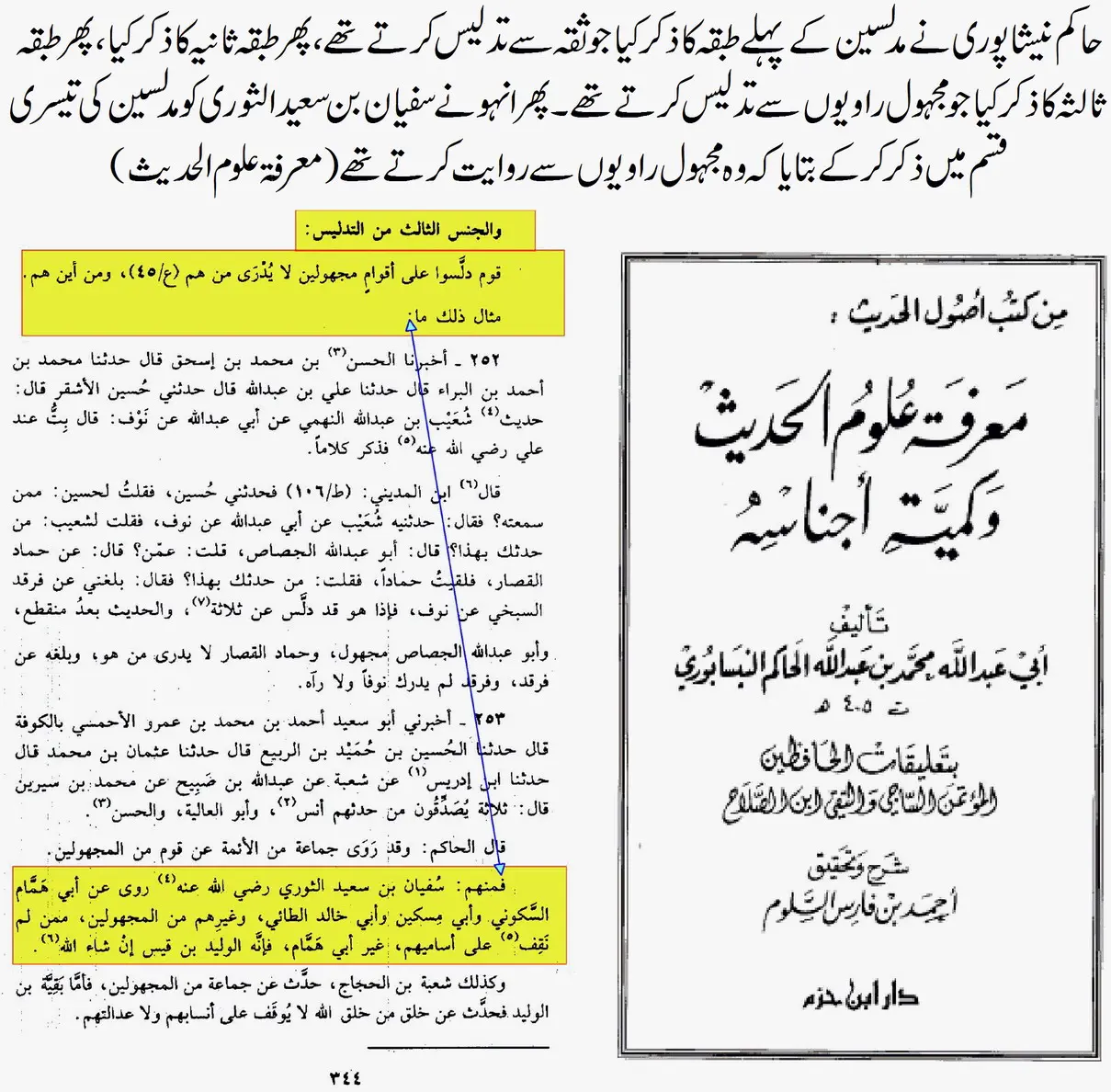
⑥ al-Ḥākim al-Naysābūrī (d. 405 AH)
…فَمِنْهُمْ سُفْيَانُ الثَّوْرِيُّ، رَوَى عَنْ أَبِي هَمَّامٍ السَّكُونِيِّ، وَأَبِي مِسْكِينٍ، وَأَبِي خَالِدٍ الطَّائِيِّ، وَغَيْرِهِمْ مِنَ الْمَجْهُولِينَ…(معرفة علوم الحديث ص 104)
Translation:Sufyān al-Thawrī is among those who narrated via tadlīs from unknown narrators, such as Abū Hammām al-Sukūnī, Abū Miskīn, Abū Khālid al-Ṭāʾī, and others.
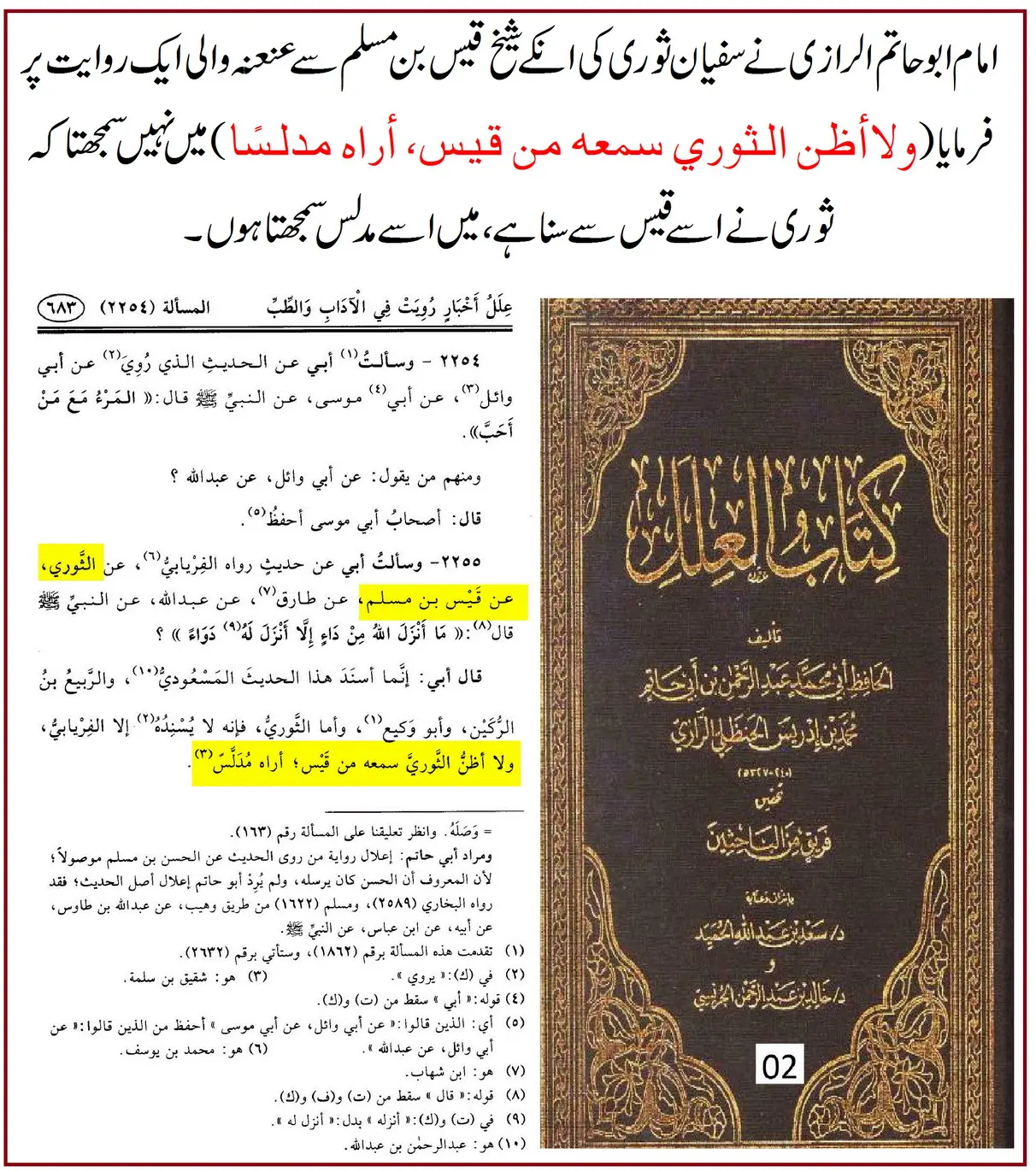
⑦ Abū Ḥātim al-Rāzī (d. 277 AH)
2255 – ...قَالَ أَبِي: ... وَلَا أَظُنُّ الثَّوْرِيَّ سَمِعَهُ مِنْ قَيْسٍ؛ أَرَاهُ مُدَلَّسًا.
(العلل لابن أبي حاتم 2255)
Translation:Abū Ḥātim said: I do not think Sufyān heard this ḥadīth from Qays; rather I consider it tadlīs.
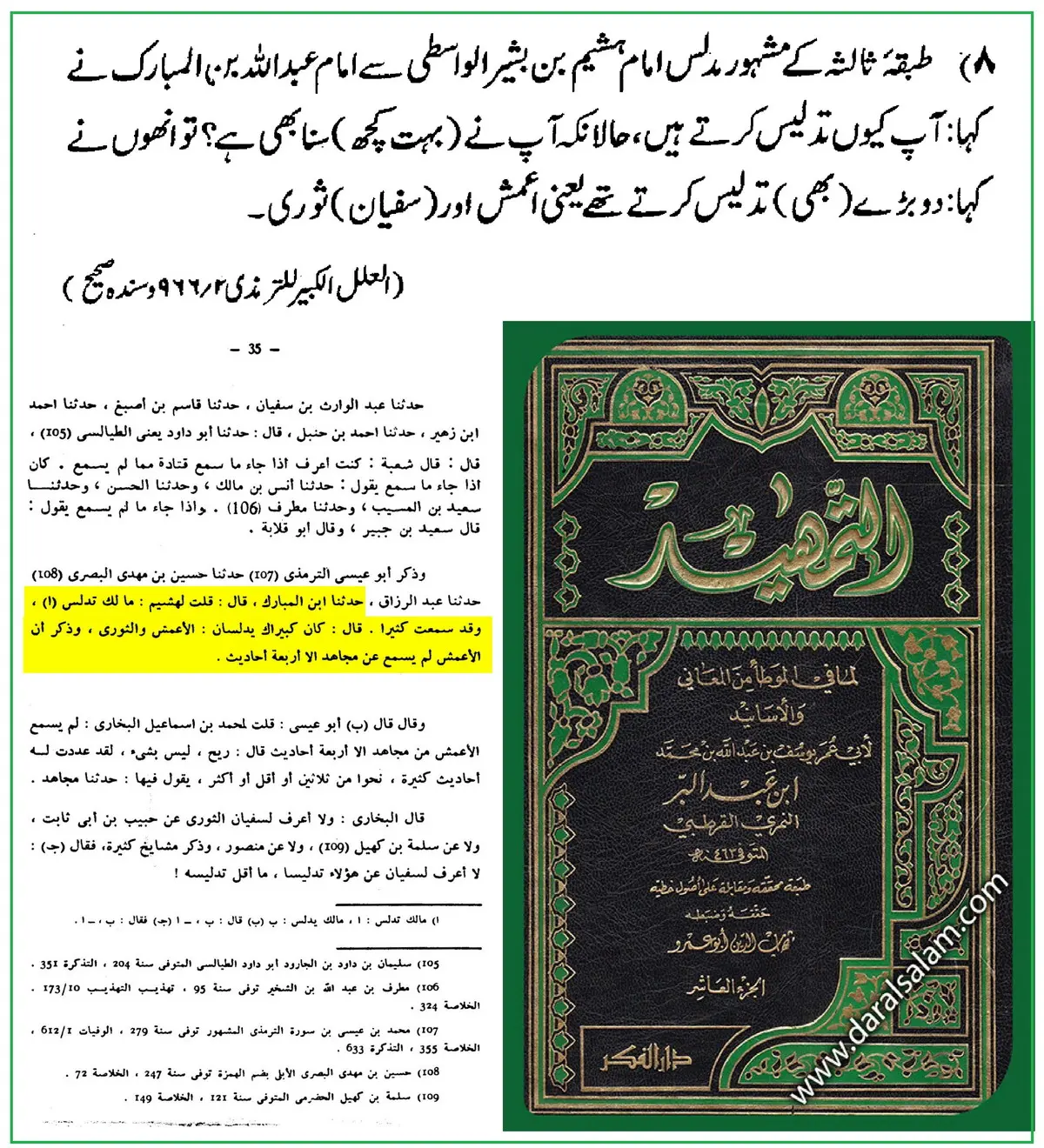
⑧ Hushaym ibn Bashīr → Ibn al-Mubārak
قَالَ ابْنُ الْمُبَارَكِ: قُلْتُ لِهُشَيْمٍ: مَا لَكَ تُدَلِّسُ وَقَدْ سَمِعْتَ كَثِيرًا؟قَالَ: كَانَ كَبِيرَاكَ يُدَلِّسَانِ: الْأَعْمَشُ وَالثَّوْرِيُّ.
(التمهيد لابن عبد البر 1/28)
Translation:Ibn al-Mubārak said: I asked Hushaym: Why do you perform tadlīs when you have heard much? He replied: Your elders also performed tadlīs: al-Aʿmash and al-Thawrī.
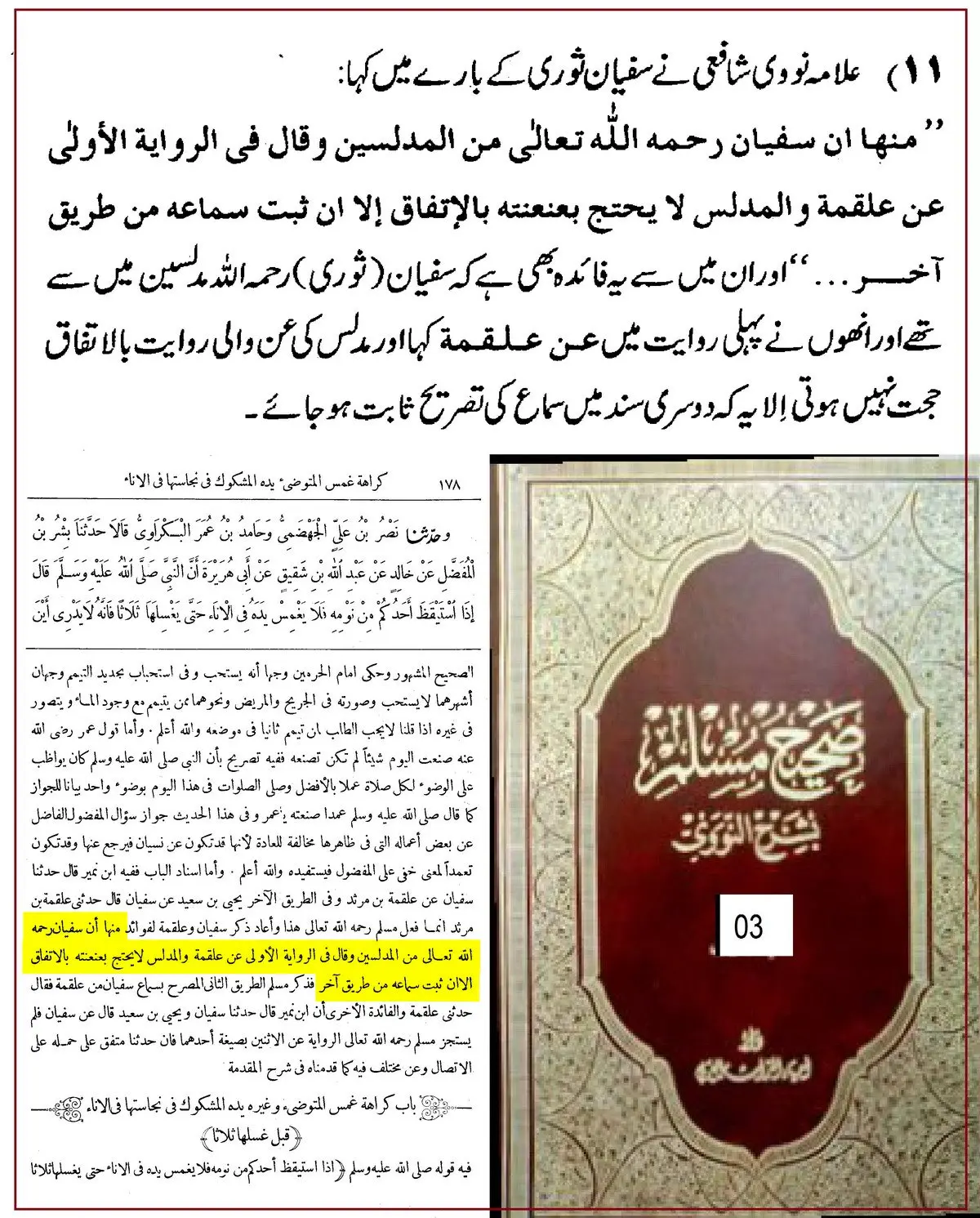
⑨ Imām al-Nawawī (d. 676 AH)
…أَنَّ سُفْيَانَ رَحِمَهُ اللَّهُ تَعَالَى مِنَ الْمُدَلِّسِينَ … وَالْمُدَلِّسُ لَا يُحْتَجُّ بِعَنْعَنَتِهِ بِالِاتِّفَاقِ إِلَّا إِذَا ثَبَتَ سَمَاعُهُ.(شرح صحيح مسلم للنووي 1/27)
Translation:Sufyān is from the mudallisīn, and the muʿanʿan narration of a mudallis is not accepted as proof by agreement, unless his hearing is established.
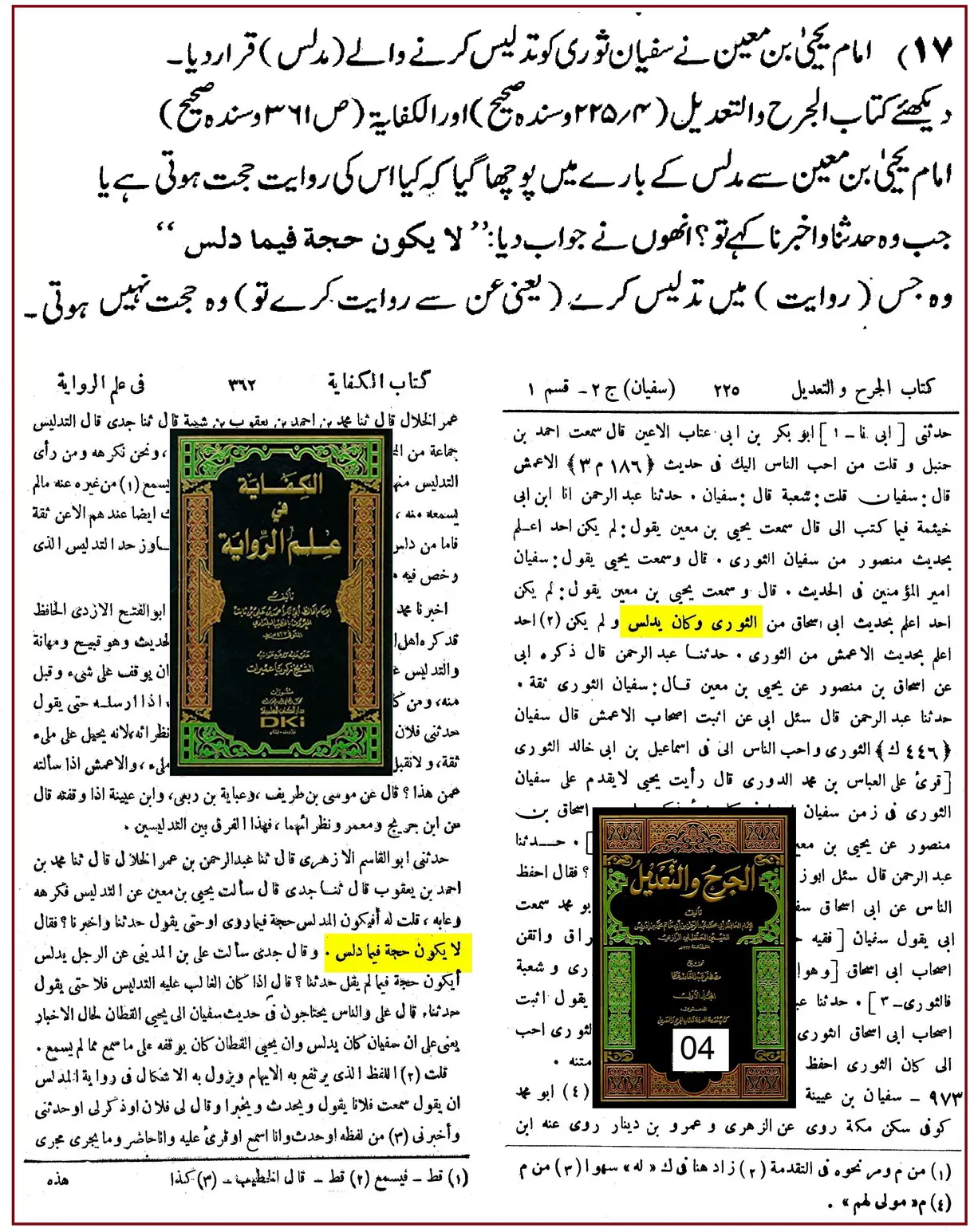
⑩ Yaḥyā ibn Maʿīn (d. 233 AH)
... وَكَانَ يُدَلِّسُ.(الجرح والتعديل لابن أبي حاتم 4/145)
Translation:Yaḥyā ibn Maʿīn said: No one knew Abū Isḥāq’s ḥadīth more than al-Thawrī, but he practiced tadlīs.
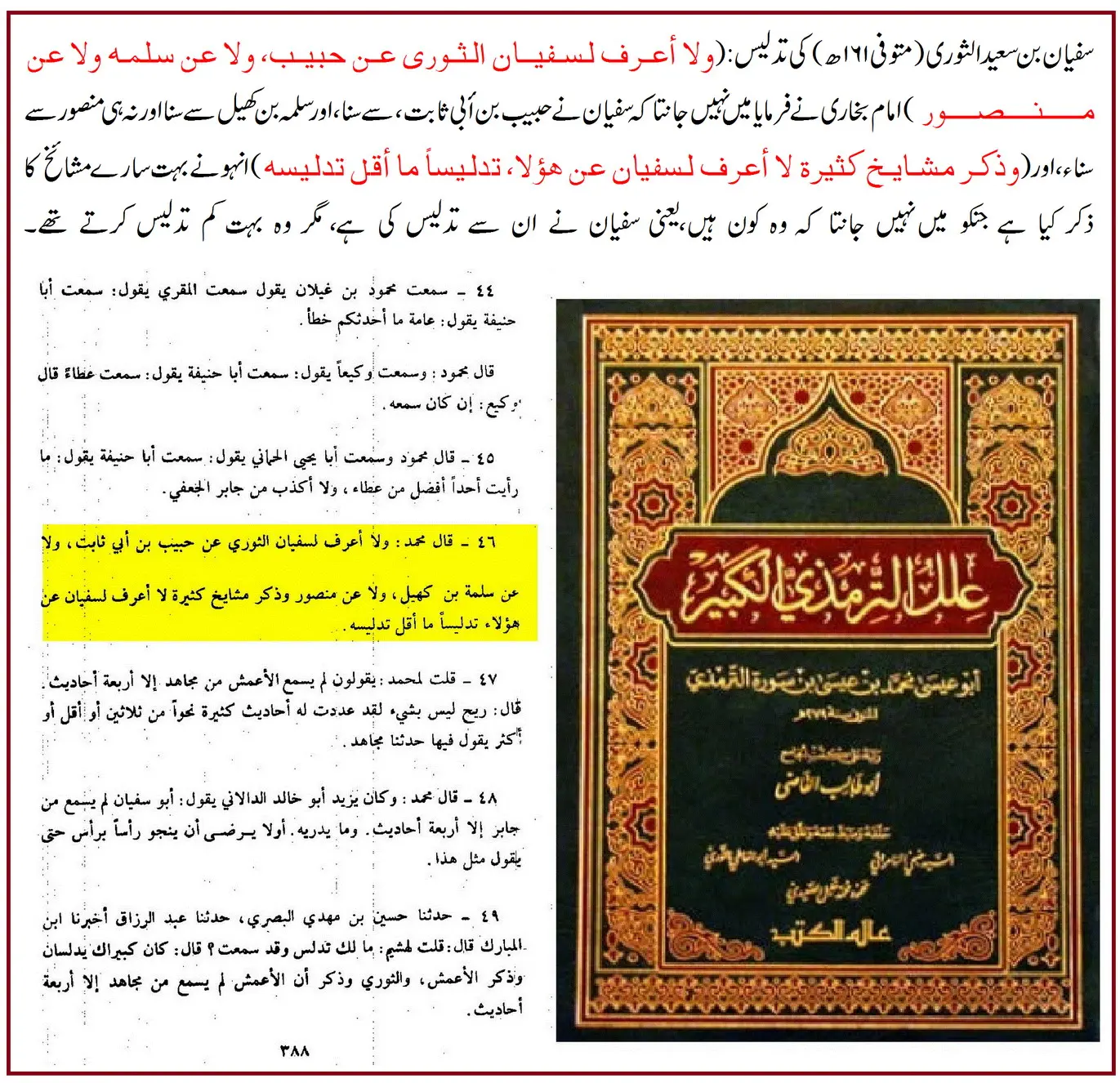
⑪ Imām al-Bukhārī (d. 256 AH)
... مَا أَقَلَّ تَدْلِيسَهُ.(علل الترمذي الكبير 2/976)
Translation:Imām al-Bukhārī said: I do not know that Sufyān narrated by hearing from Ḥabīb ibn Abī Thābit, Salamah ibn Kuhayl, or Manṣūr… He performed tadlīs from them, though very little.
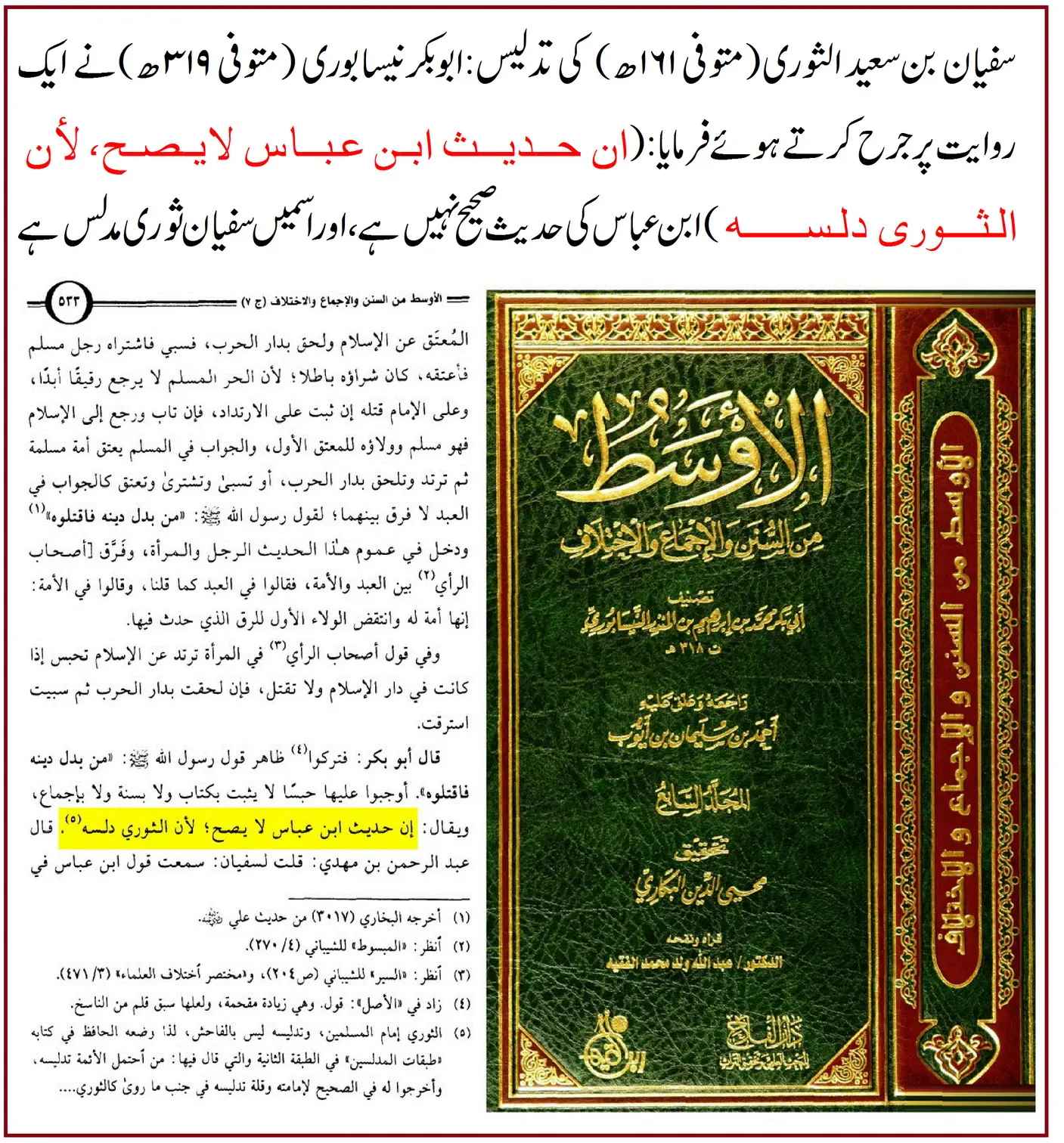
⑫ Abū Bakr al-Naysābūrī (d. 319 AH)
إن حديث ابن عباس لا يصح لأن الثوري دلسه.(الأوسط لابن المنذر 5/147)
Translation:The ḥadīth of Ibn ʿAbbās is not authentic because al-Thawrī performed tadlīs in it.
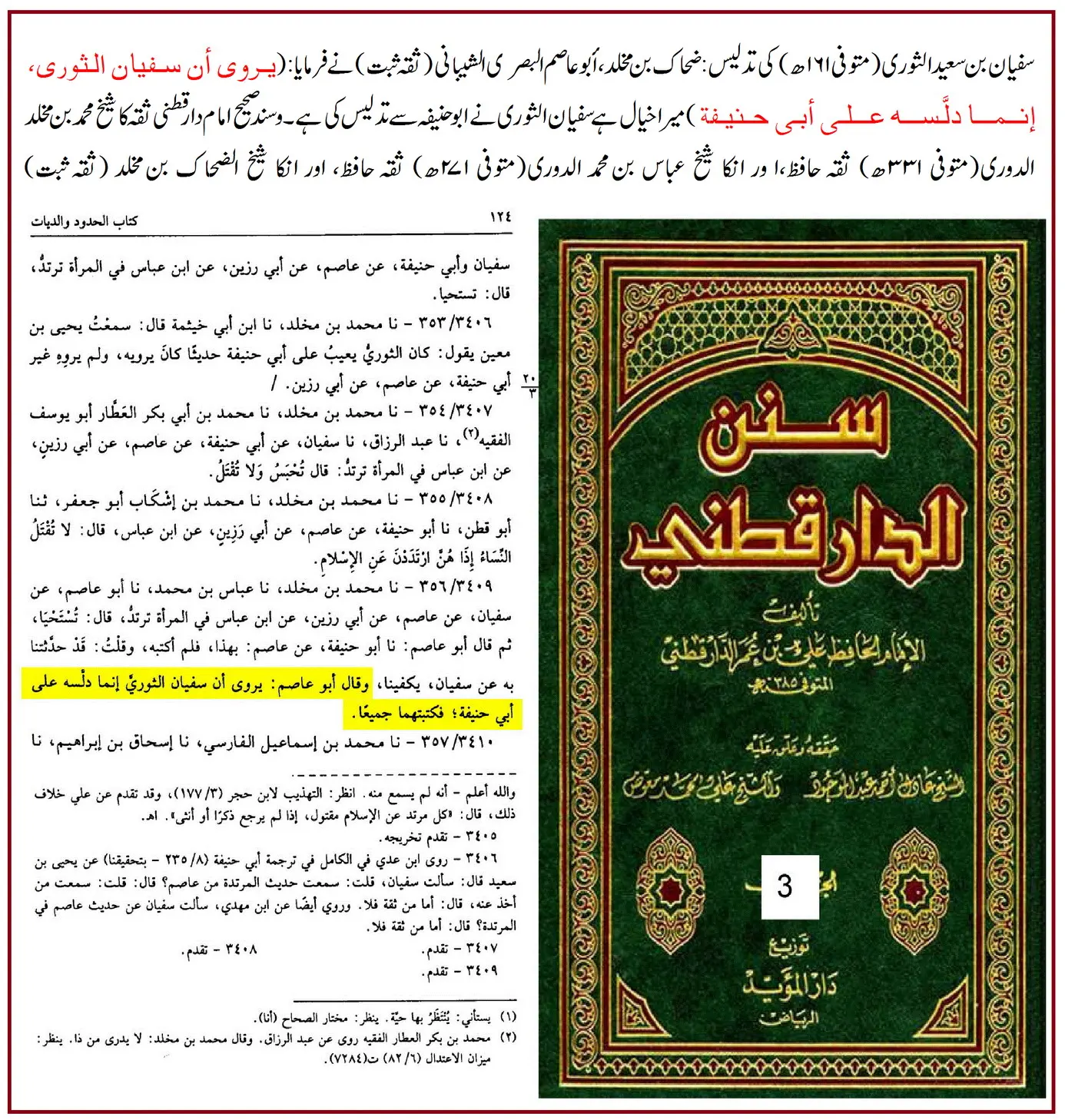
⑬ Abū ʿĀṣim al-Ḍaḥḥāk ibn Makhlad (d. 212 AH)
قَالَ أَبُو عَاصِمٍ: نَرَى أَنَّ سُفْيَانَ الثَّوْرِيَّ إِنَّمَا دَلَّسَهُ عَنْ أَبِي حَنِيفَةَ، فَكَتَبْتُهُمَا جَمِيعًا.
(سنن الدارقطني 3459)
Translation:Abū ʿĀṣim said: We believe that Sufyān al-Thawrī performed tadlīs in this narration from Abū Ḥanīfah, so I wrote both of them together.
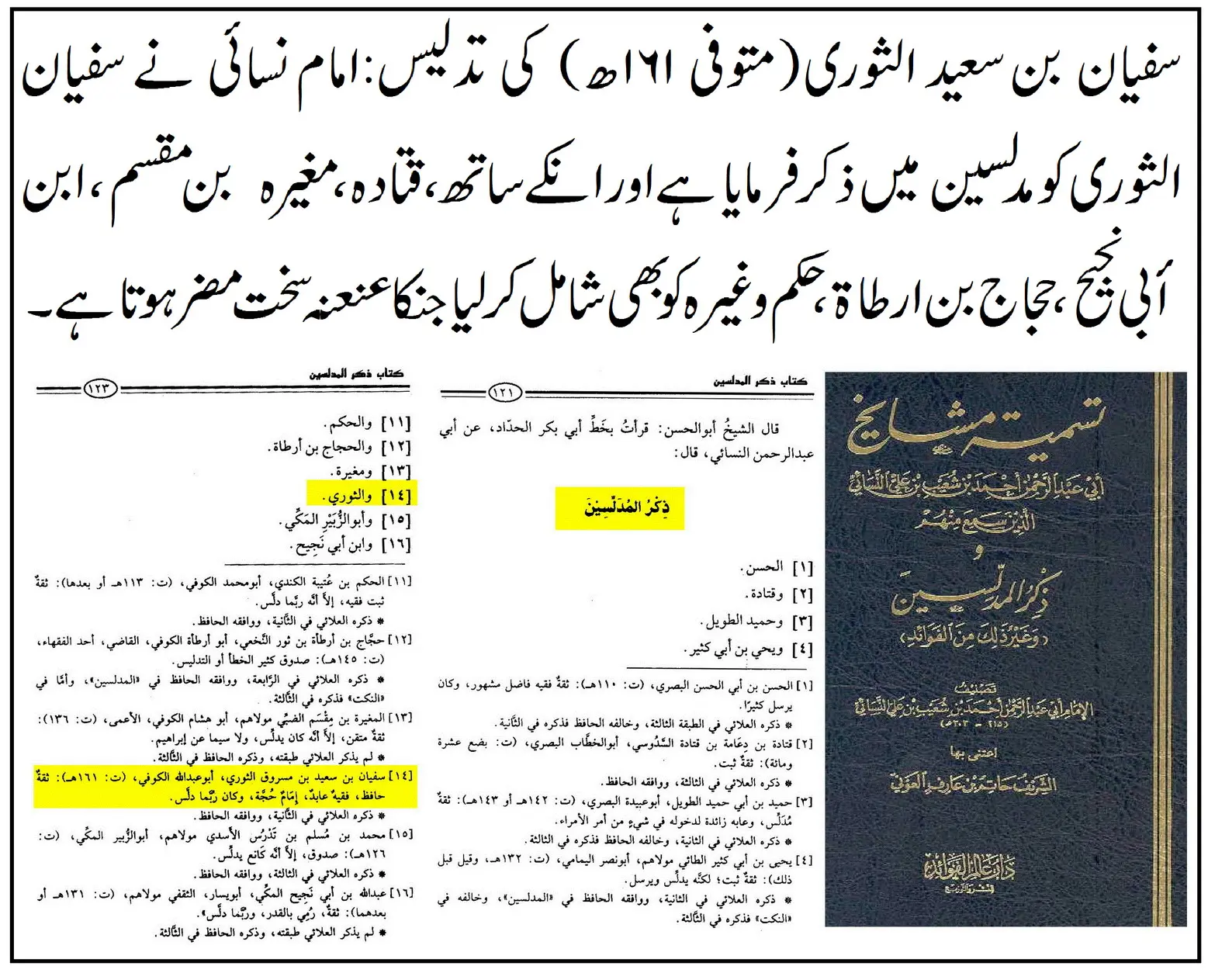
⑭ Imām al-Nasā’ī (d. 303 AH)
…والثوري.(ذكر المدلسين للنسائي ص 85)
Translation:Imām al-Nasā’ī included Sufyān al-Thawrī among the mudallisīn.
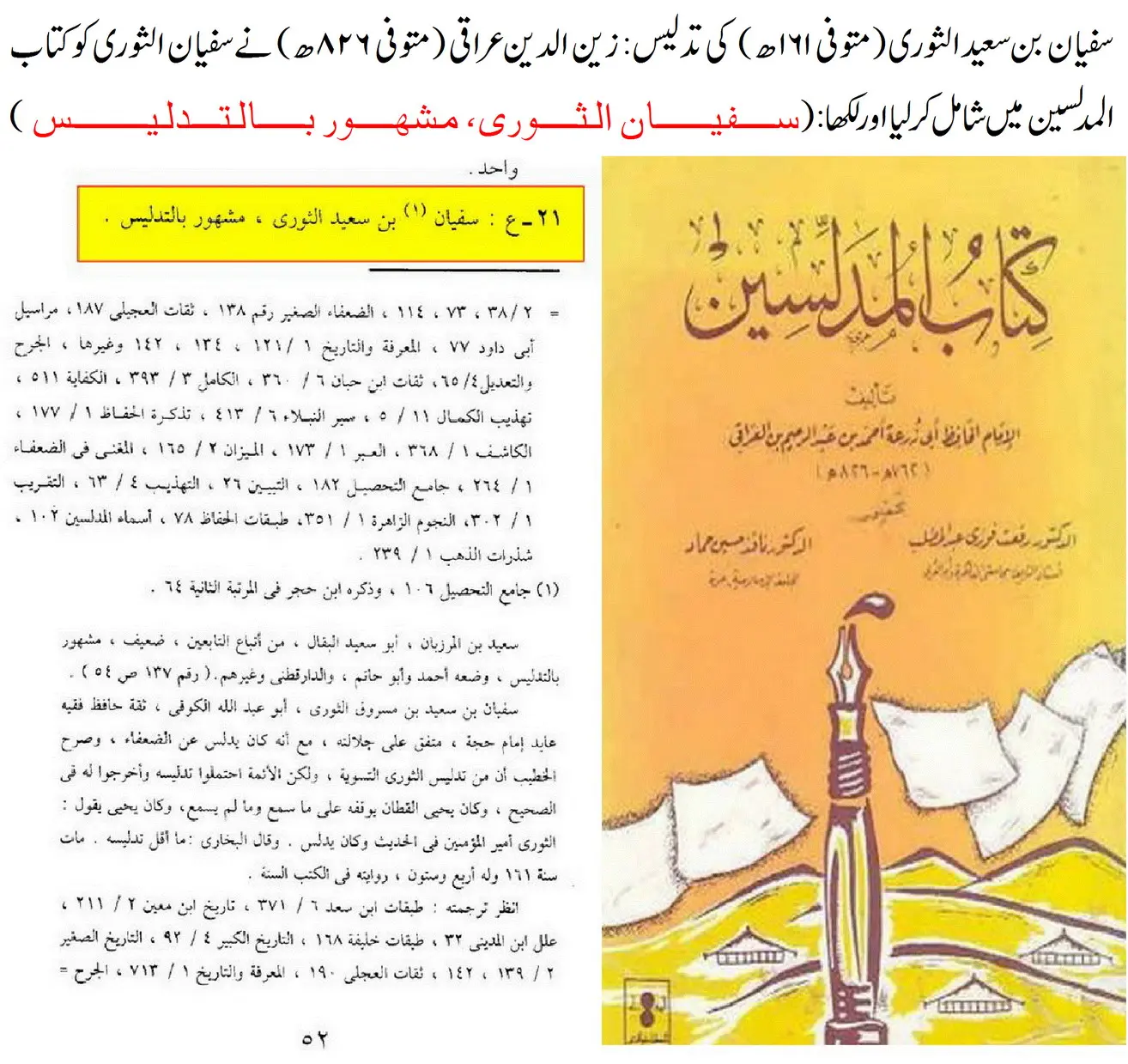
⑮ Zayn al-Dīn al-ʿIrāqī (d. 806 AH)
21 ـ ع: سفيان بن سعيد الثوري مشهور بالتدليس.(المدلسين للعراقي ص 34)
Translation:Sufyān ibn Saʿīd al-Thawrī is well-known for tadlīs.
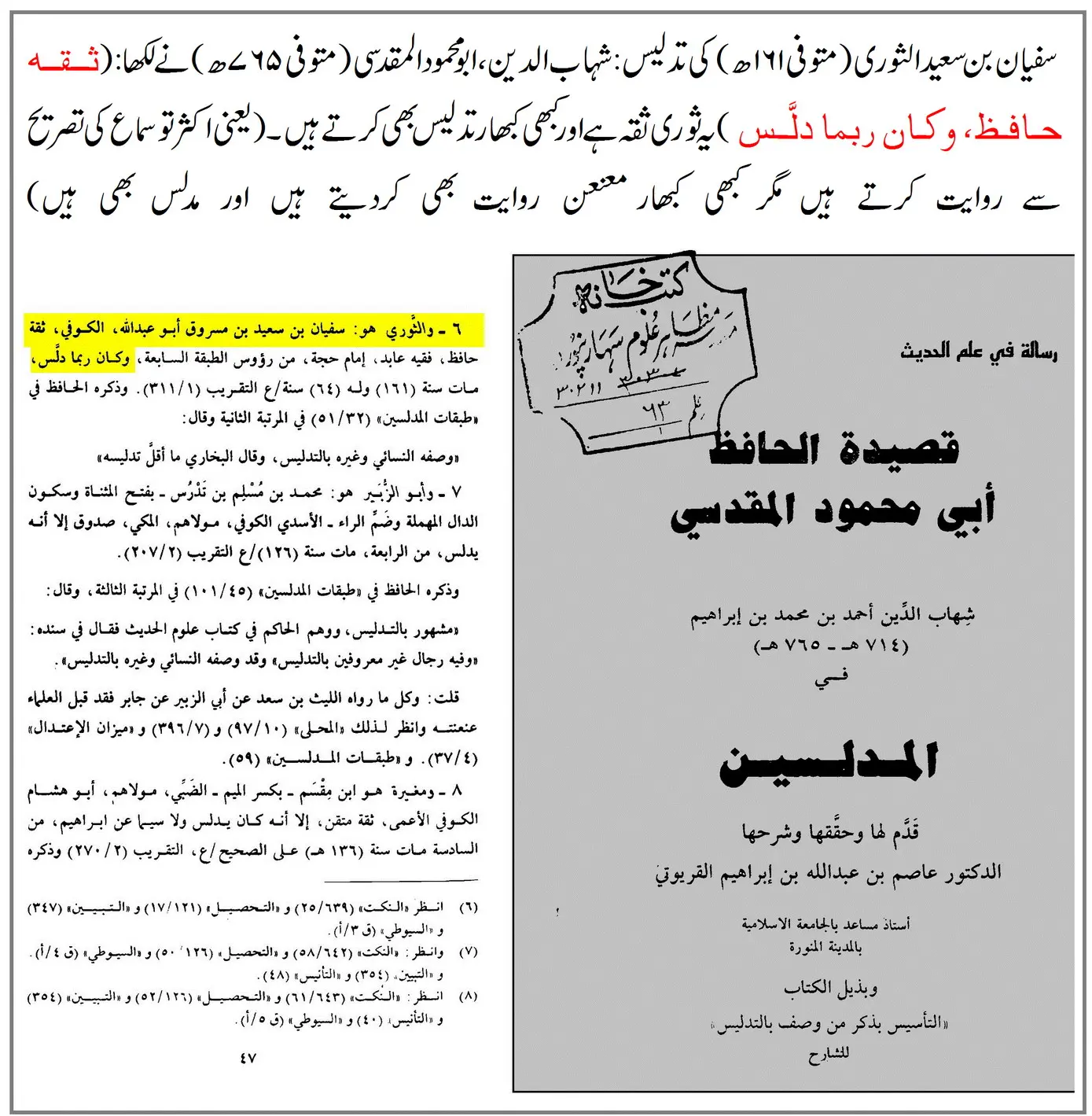
⑯ Abū Muḥammad al-Maqdisī (d. 765 AH)
…الثوري ثقة حافظ، إلا أنه كان يدلس أحيانًا.(قصيدة أبي محمود المقدسي ص 44)
Translation:Al-Thawrī is trustworthy and a ḥāfiẓ, but he would sometimes practice tadlīs.
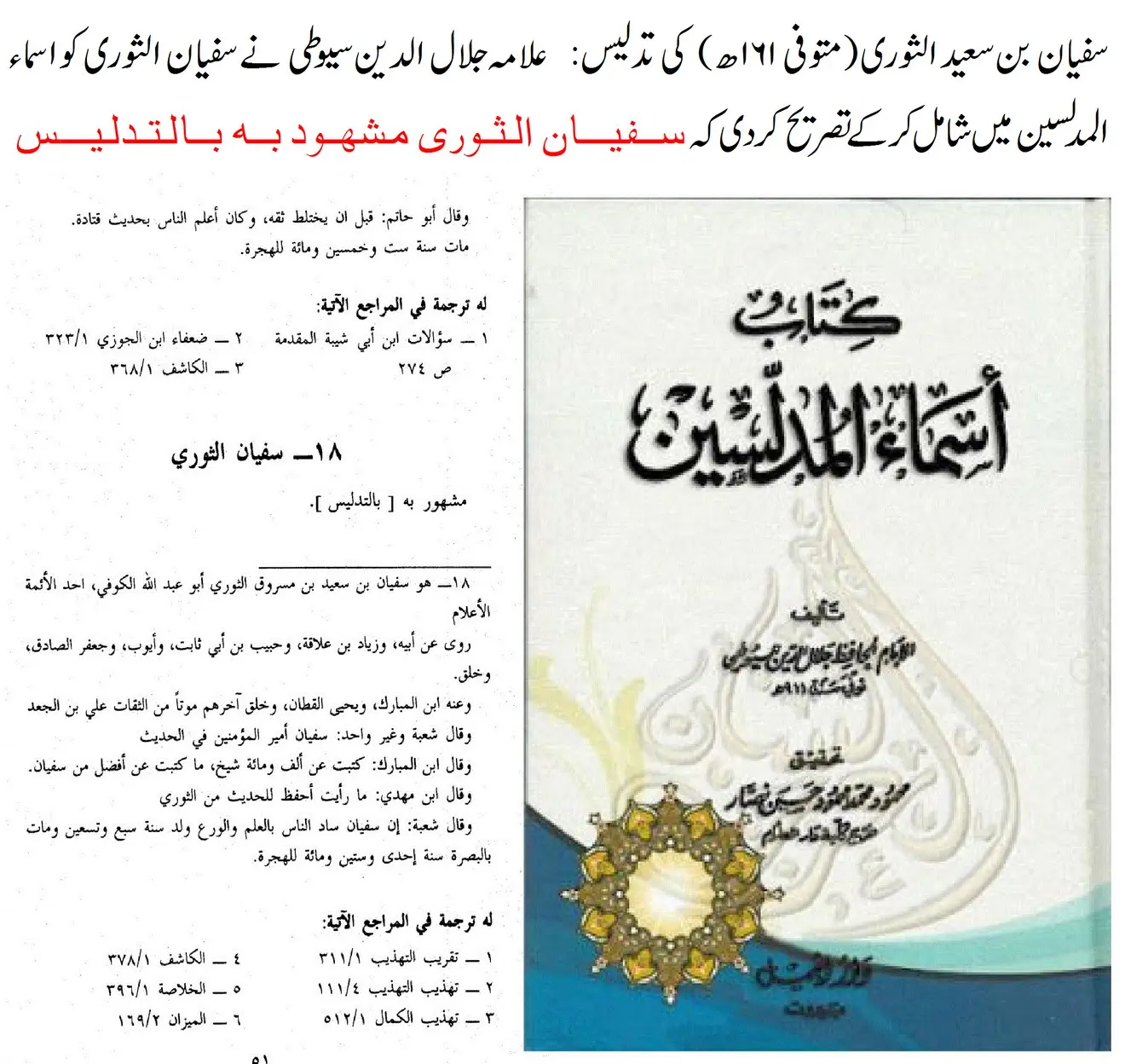
⑰ Jalāl al-Dīn al-Suyūṭī (d. 911 AH)
18- سفيان الثوري مشهور به [بالتدليس].(أسماء المدلسين للسيـوطي ص 52)
Translation:Al-Suyūṭī explicitly stated that Sufyān al-Thawrī is among those famous for tadlīs.
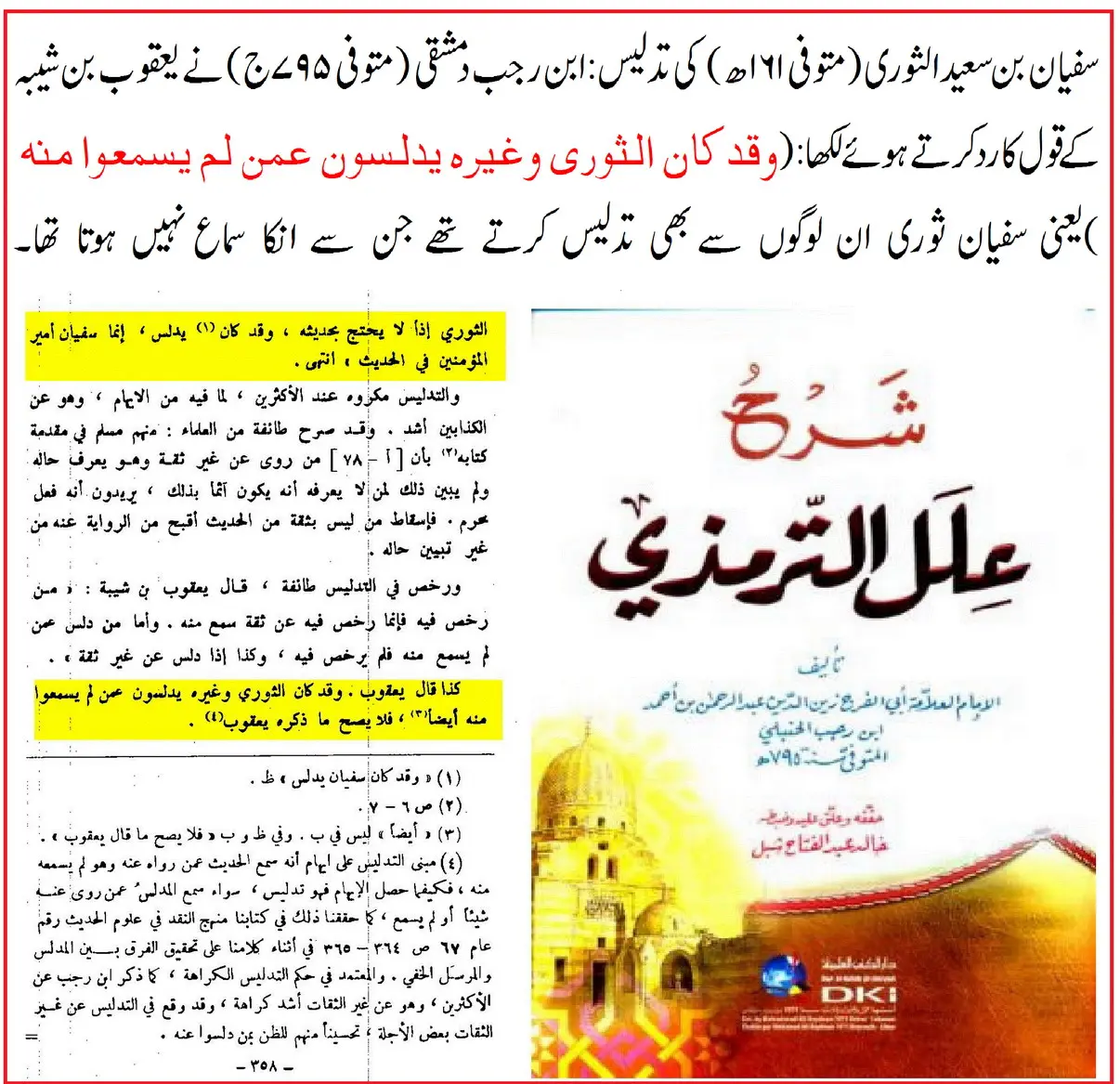
⑱ Ibn Rajab al-Ḥanbalī (d. 795 AH)
وقد كان الثوري وغيره يدلسون عمن لم يسمعوا منه أيضاً.(شرح علل الترمذي 1/186)
Translation:Al-Thawrī and others would perform tadlīs from narrators whom they had not heard from.
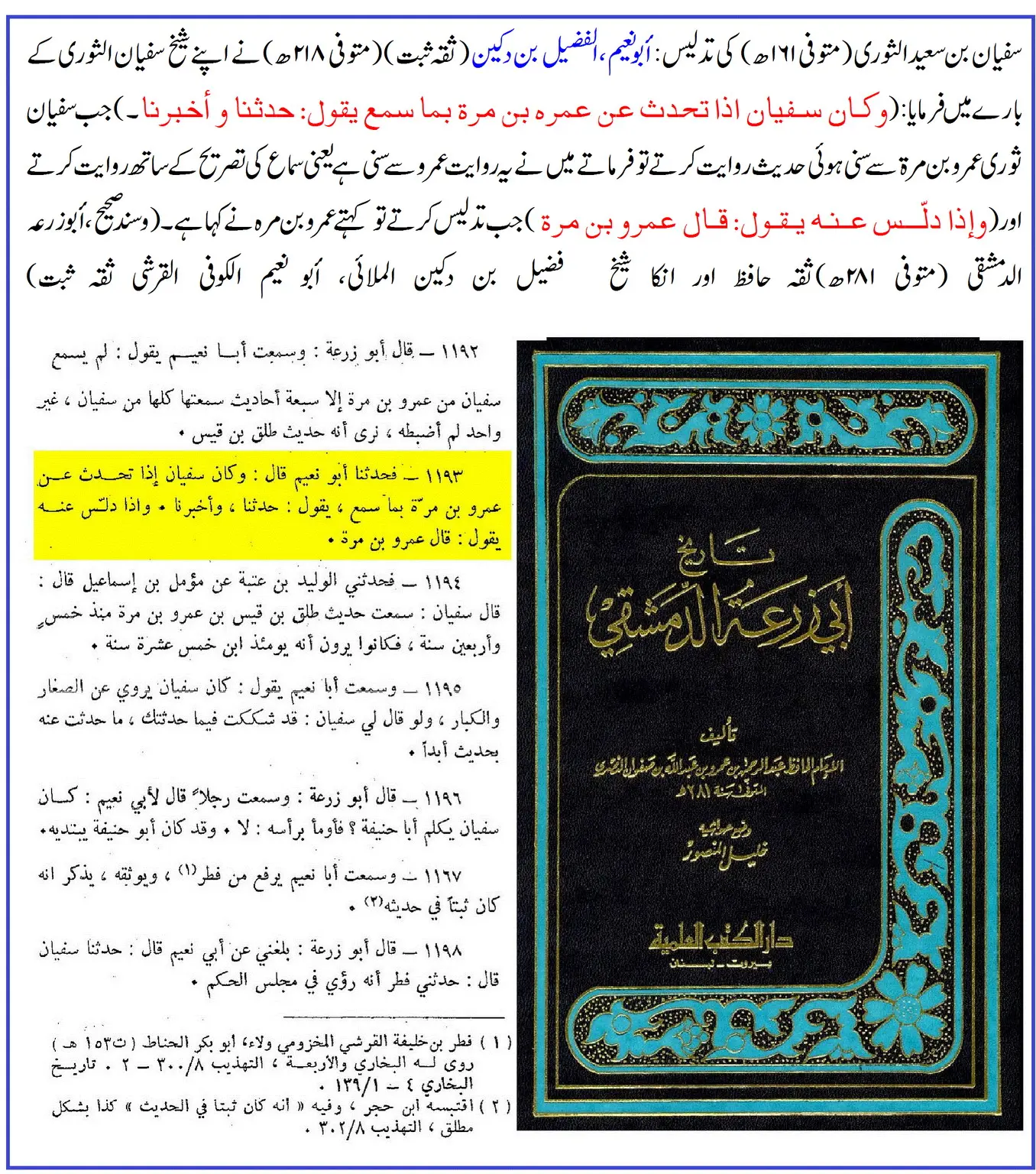
⑲ Abū Nuʿaym Faḍl ibn Dukayn (d. 218 AH)
... وَإِذَا دَلَّسَ عَنْهُ، يَقُولُ: "قَالَ عَمْرُو بْنُ مُرَّةَ”.(تاريخ أبي زرعة الدمشقي 1/541)
Translation:When Sufyān narrated what he heard from ʿAmr ibn Murrah, he would say: “ḥaddathanā / akhbaranā.” But when he performed tadlīs from him, he would only say: “ʿAmr ibn Murrah said…”
⑳ ʿAlī ibn al-Jaʿd (d. 230 AH)
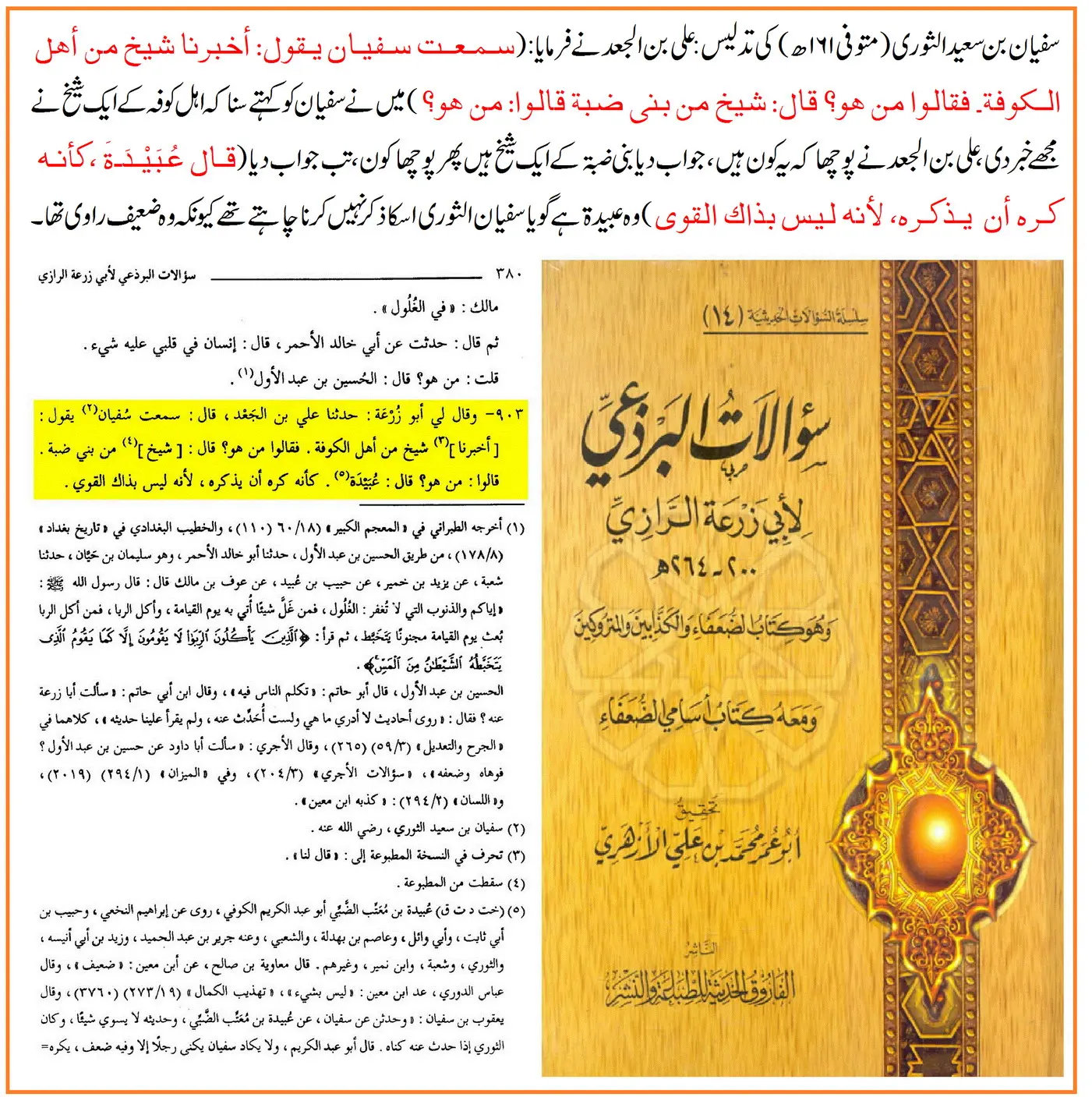
... كَأَنَّهُ كَرِهَ أَنْ يُسَمِّيهِ لِأَنَّهُ لَيْسَ بِذَاكَ الْقَوِيِّ.(سؤالات البرذعي لأبي زرعة ص 903)
Translation:Sufyān said: “A shaykh from the people of Kūfah informed us…” then said: “He is ʿUbaydah,” as if he disliked naming him because he was not strong (as a narrator).
㉑ al-Khaṭīb al-Baghdādī (d. 463 AH)
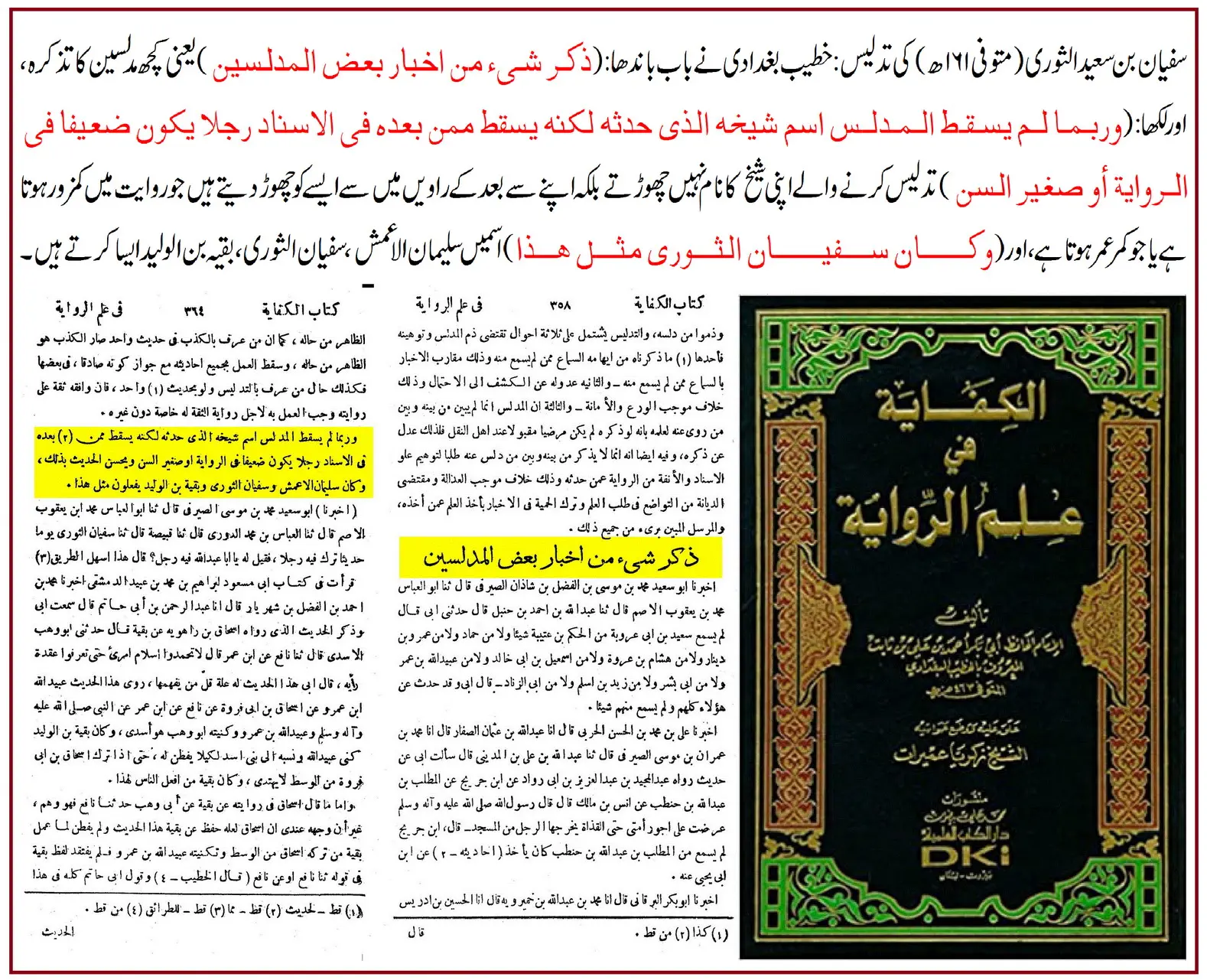
وَكَانَ سُلَيْمَانُ الْأَعْمَشُ، وَسُفْيَانُ الثَّوْرِيُّ، وَبَقِيَّةُ بْنُ الْوَلِيدِ يَفْعَلُونَ مِثْلَ هَذَا.(الكفاية في علم الرواية ص 364)
Translation:Sulaymān al-Aʿmash, Sufyān al-Thawrī, and Baqiyyah ibn al-Walīd used to do this—removing weak or unknown narrators from the chain.
㉒ Imām al-Dāraquṭnī (d. 385 AH)
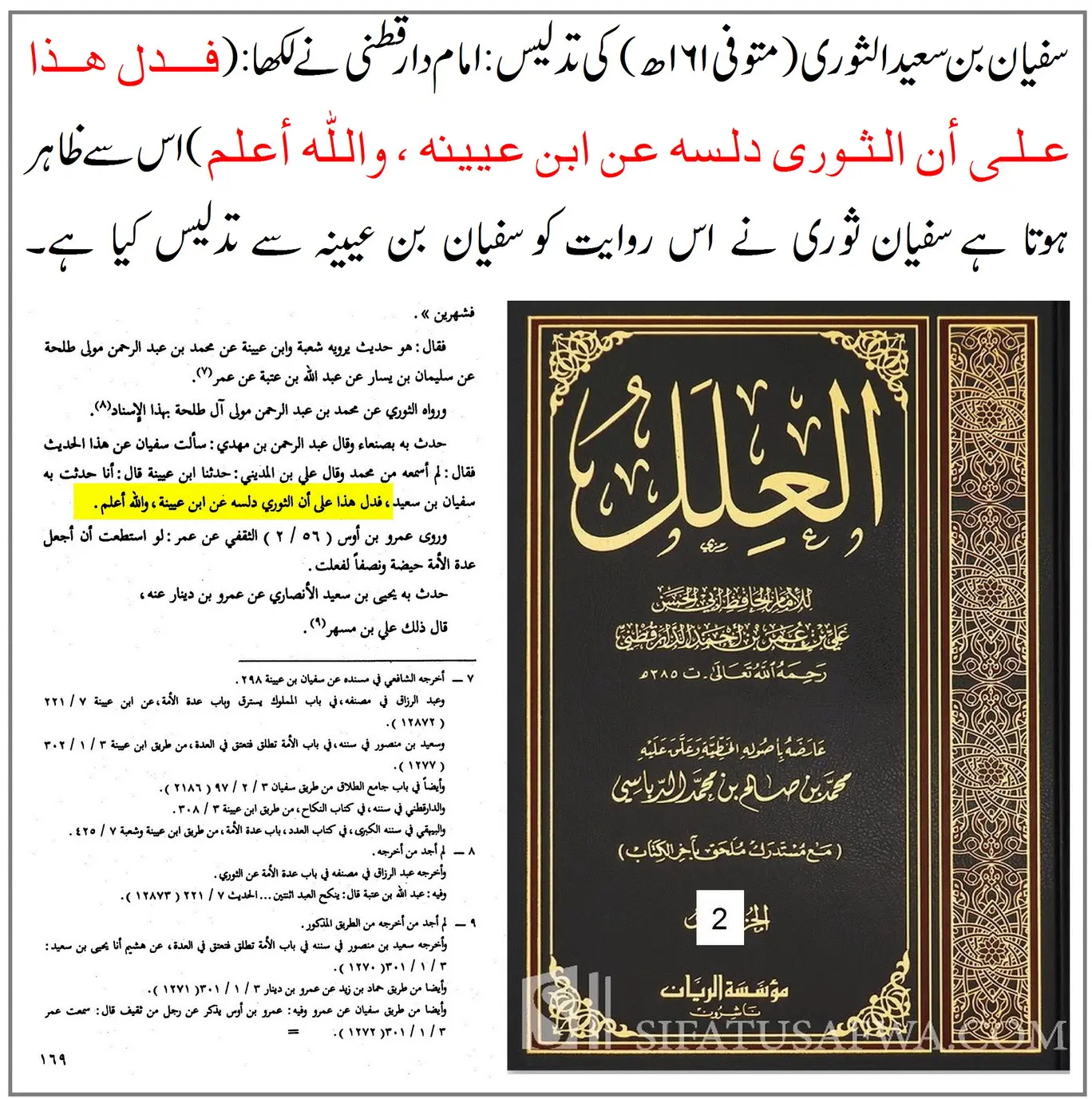
فَدَلَّ هَذَا عَلَى أَنَّ الثَّوْرِيَّ دَلَّسَهُ عَنِ ابْنِ عُيَيْنَةَ وَاللَّهُ أَعْلَمُ.(العلل للدارقطني 13/273)
Translation:This indicates that al-Thawrī performed tadlīs in it from Ibn ʿUyaynah—and Allah knows best.
㉓ ʿAbdullāh ibn al-Mubārak (d. 181 AH)
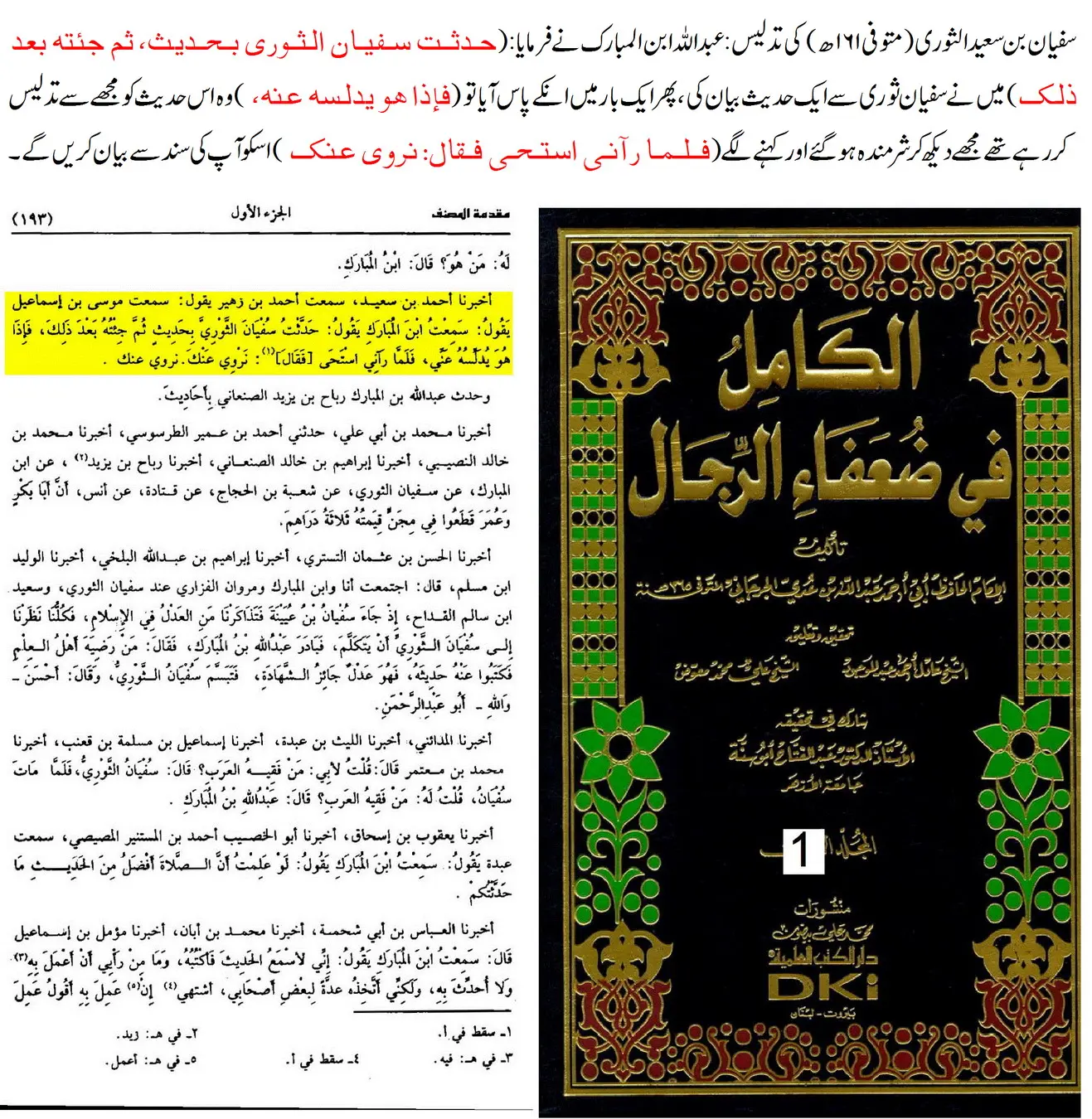
... فَإِذَا هُوَ يُدَلِّسُهُ عَنِّي ...(الكامل لابن عدي 3/465)
Translation:I narrated a ḥadīth to Sufyān al-Thawrī, then later I came to him and found him performing tadlīs of it from me; when he saw me, he felt embarrassed and said: “We narrate from you, we narrate from you.”
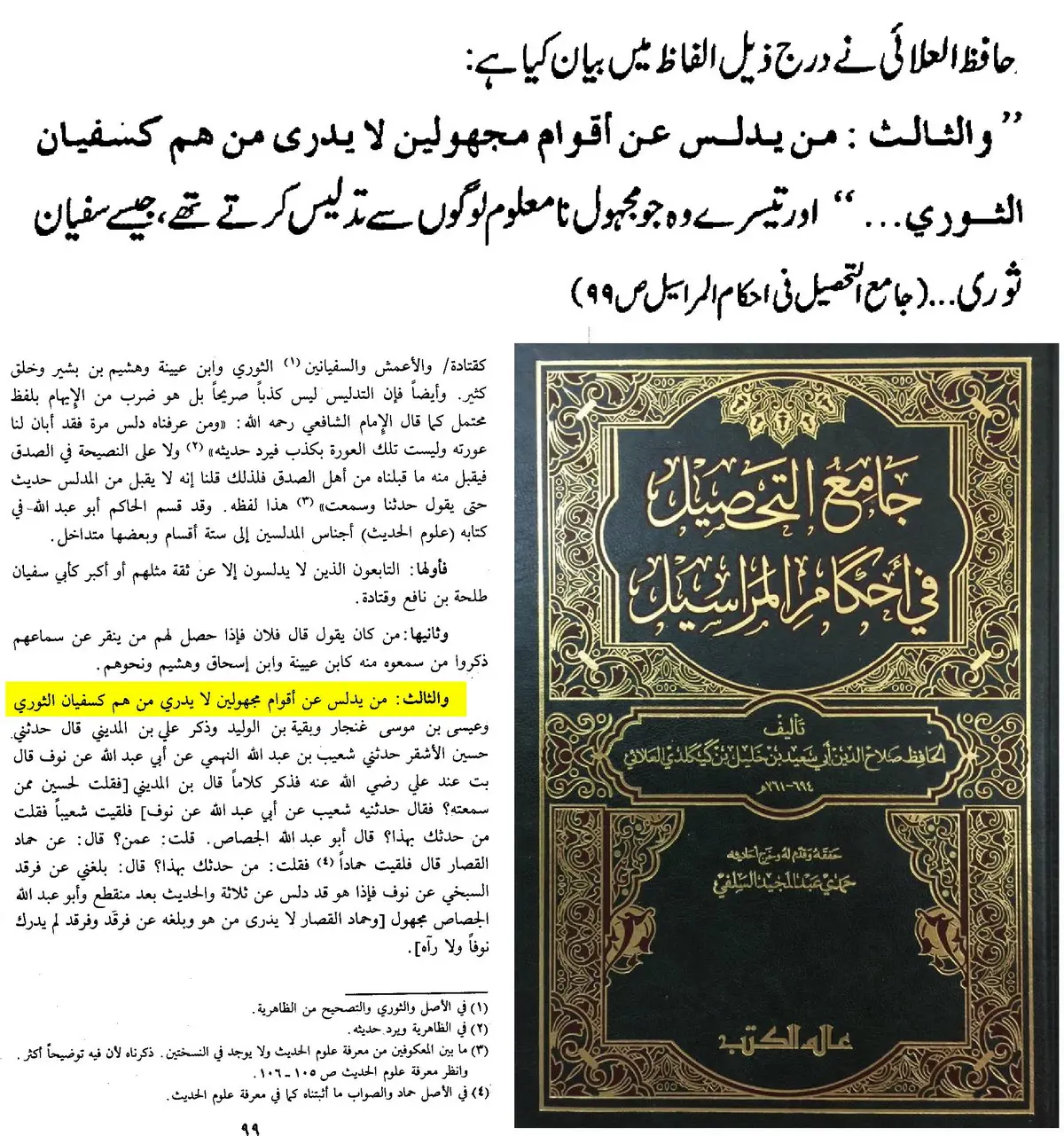
㉔ Ṣalāḥ al-Dīn al-ʿAlā’ī (d. 761 AH)
... كَسُفْيَانَ الثَّوْرِيِّ.(جامع التحصيل ص 112)
Translation:In the third category are those who performed tadlīs from unknown people, such as Sufyān al-Thawrī.
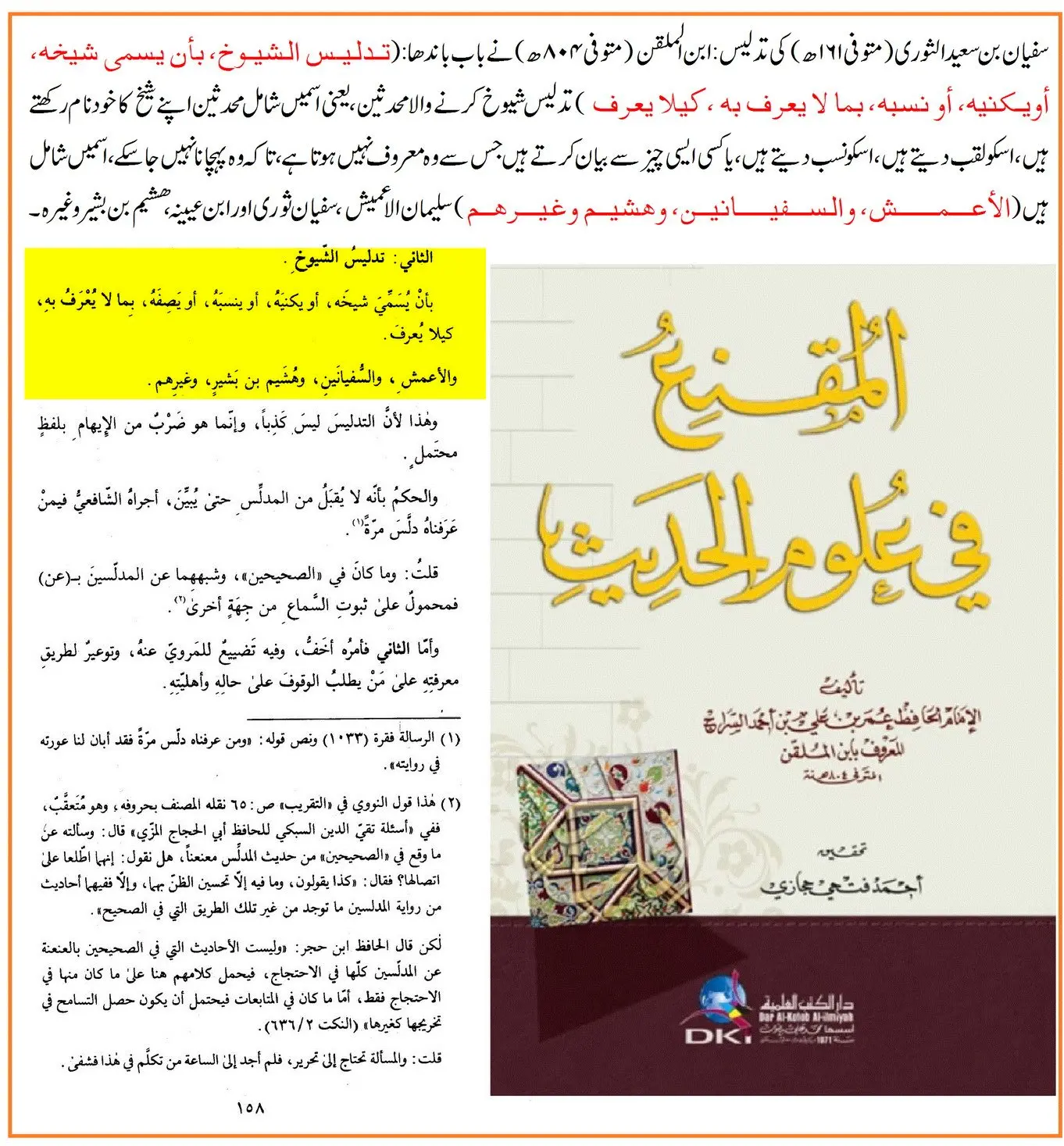
㉕ Ibn al-Mulaqqin (d. 804 AH)
... وَالْحُكْمُ أَنَّهُ لَا يُقْبَلُ مِنَ الْمُدَلِّسِ حَتَّى يُبَيِّنَ.(المقنع في علوم الحديث ص 108)
Translation:Al-Aʿmash, the two Sufyāns (al-Thawrī and Ibn ʿUyaynah), Hushaym ibn Bashīr, and others practiced tadlīs… Tadlīs is not lying, but a form of creating ambiguity, and the ruling is that the narration of a mudallis is not accepted until he clarifies.
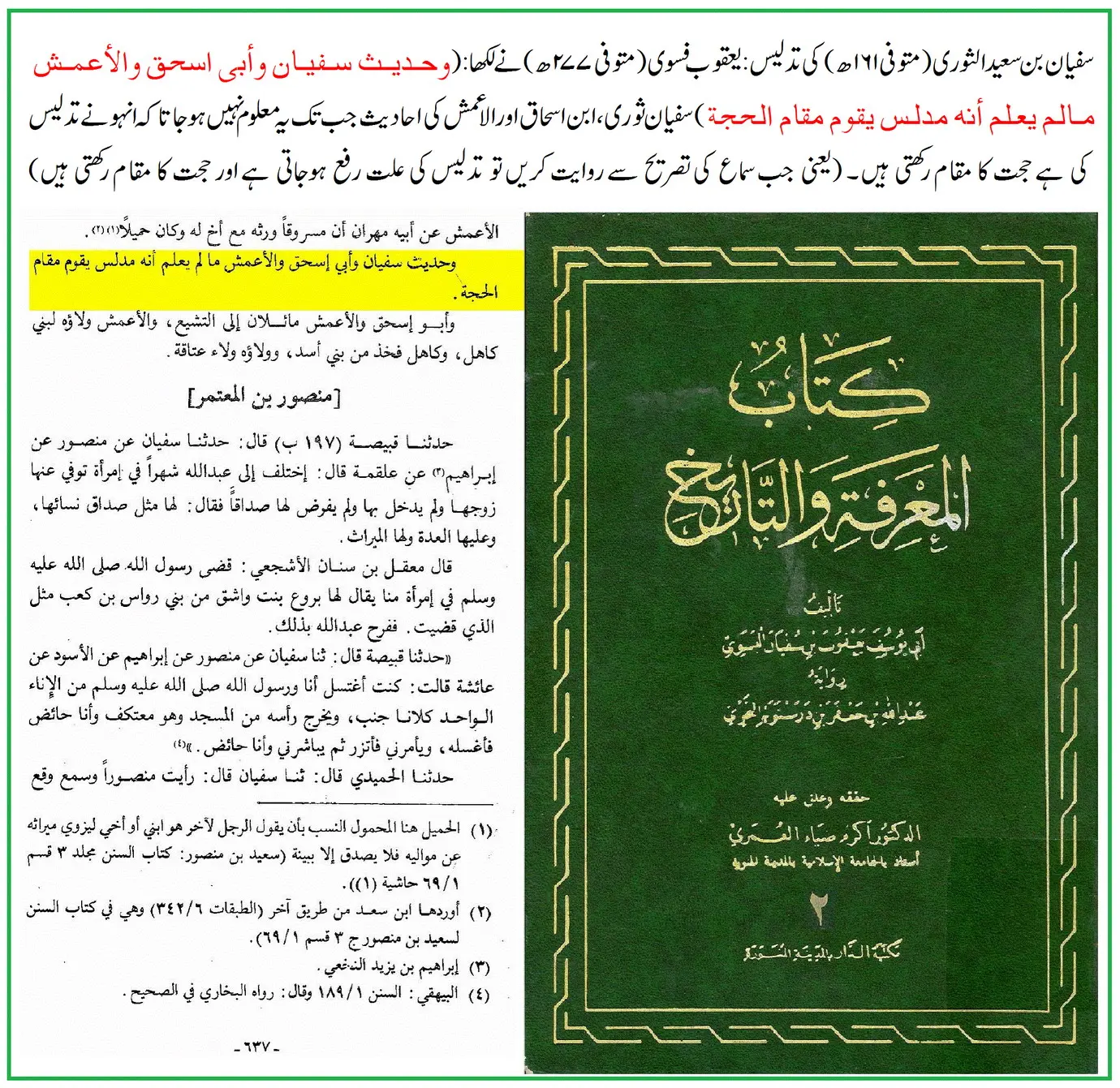
㉖ Yaʿqūb ibn Sufyān al-Fasawī (d. 277 AH)
وَحَدِيثُ سُفْيَانَ وَأَبِي إِسْحَاقَ وَالْأَعْمَشِ، مَا لَمْ يُعْلَمْ أَنَّهُ مُدَلِّسٌ، يَقُومُ مَقَامَ الْحُجَّةِ.(المعرفة والتاريخ 2/690)
Translation:The narrations of Sufyān, Abū Isḥāq, and al-Aʿmash, so long as tadlīs is not known in them, stand as evidence.
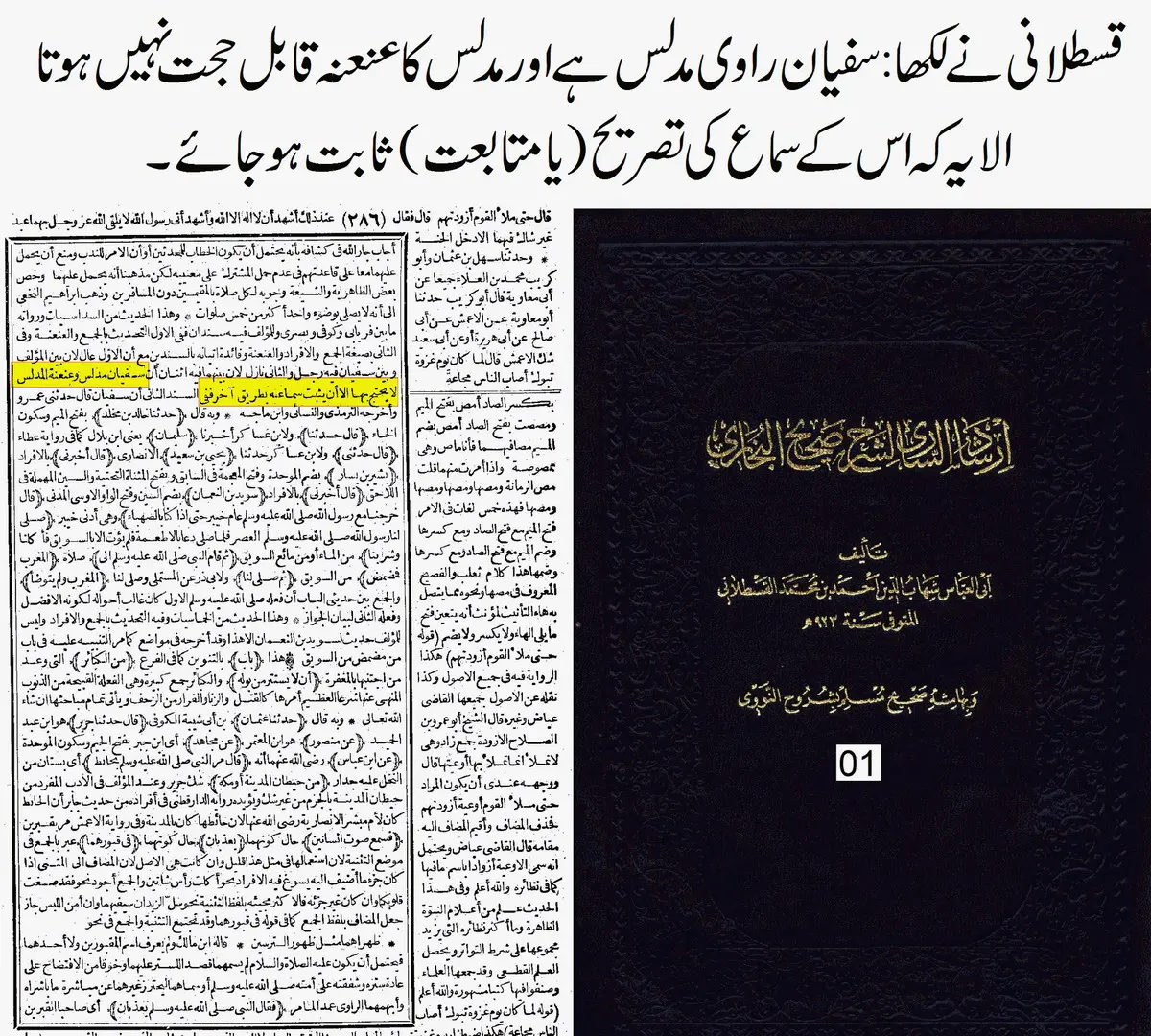
㉗ Shams al-Dīn al-Qasṭallānī (d. 923 AH)
أن سفيان مدلس، وعنعنة المدلس لا يُحْتَجُّ بها إلا أن يثبت سماعه بطريق آخر.(إرشاد الساري شرح صحيح البخاري 1/29)
Translation:Sufyān was a mudallis, and the muʿanʿan narration of a mudallis is not evidence unless hearing is established via another route.
㉘ Muḥammad ibn Yūsuf al-Kirmānī al-Ḥanafī (d. 786 AH)
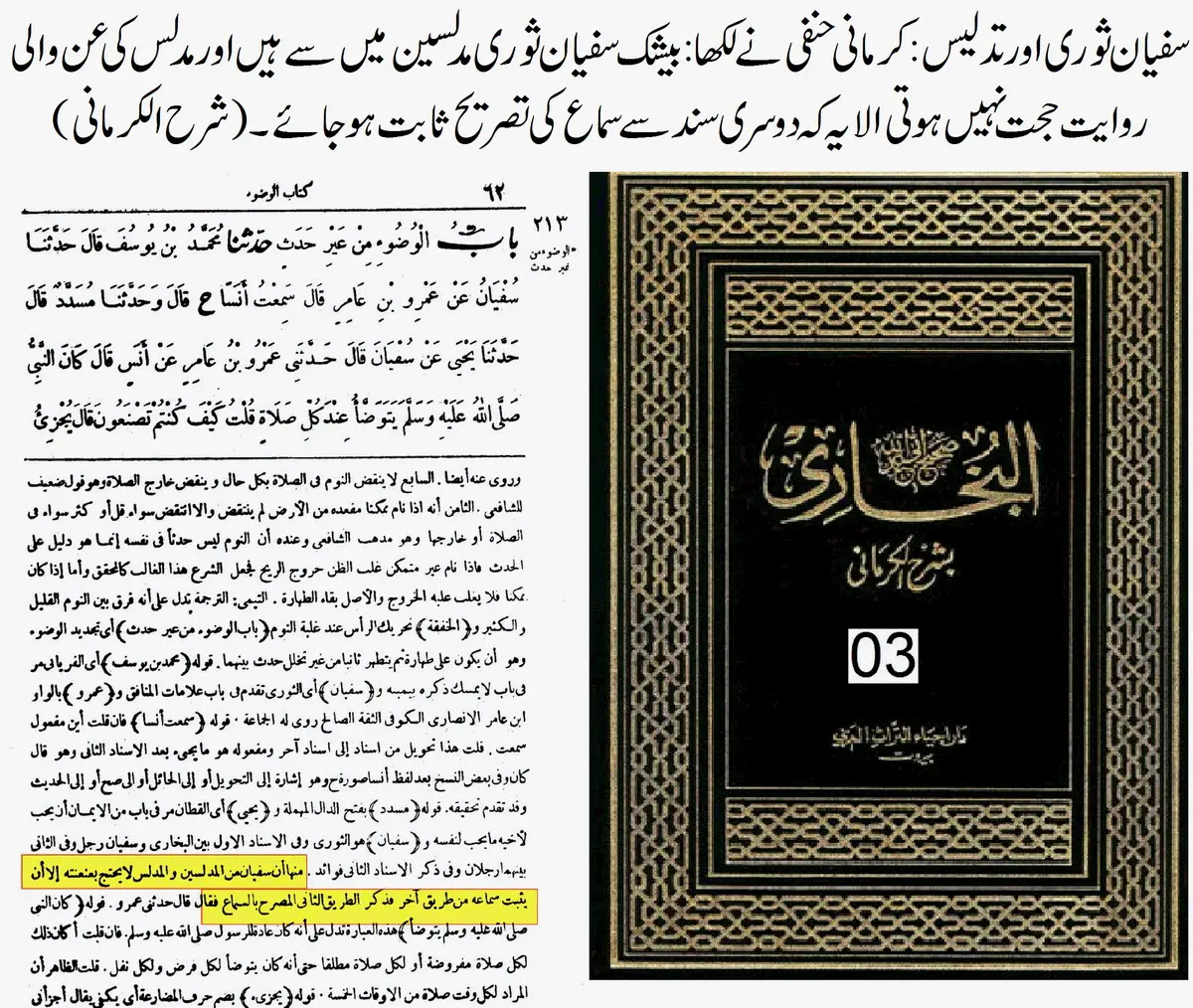
أن سفيان من المدلسين، والمدلس لا يُحْتَجُّ بِعنعنته إلا أن يثبت سماعه.(شرح الكرماني على صحيح البخاري 1/128)
Translation:Sufyān is among the mudallisīn, and the muʿanʿan of a mudallis is not accepted unless hearing is established.
㉙ Badr al-Dīn al-ʿAynī al-Ḥanafī (d. 855 AH)
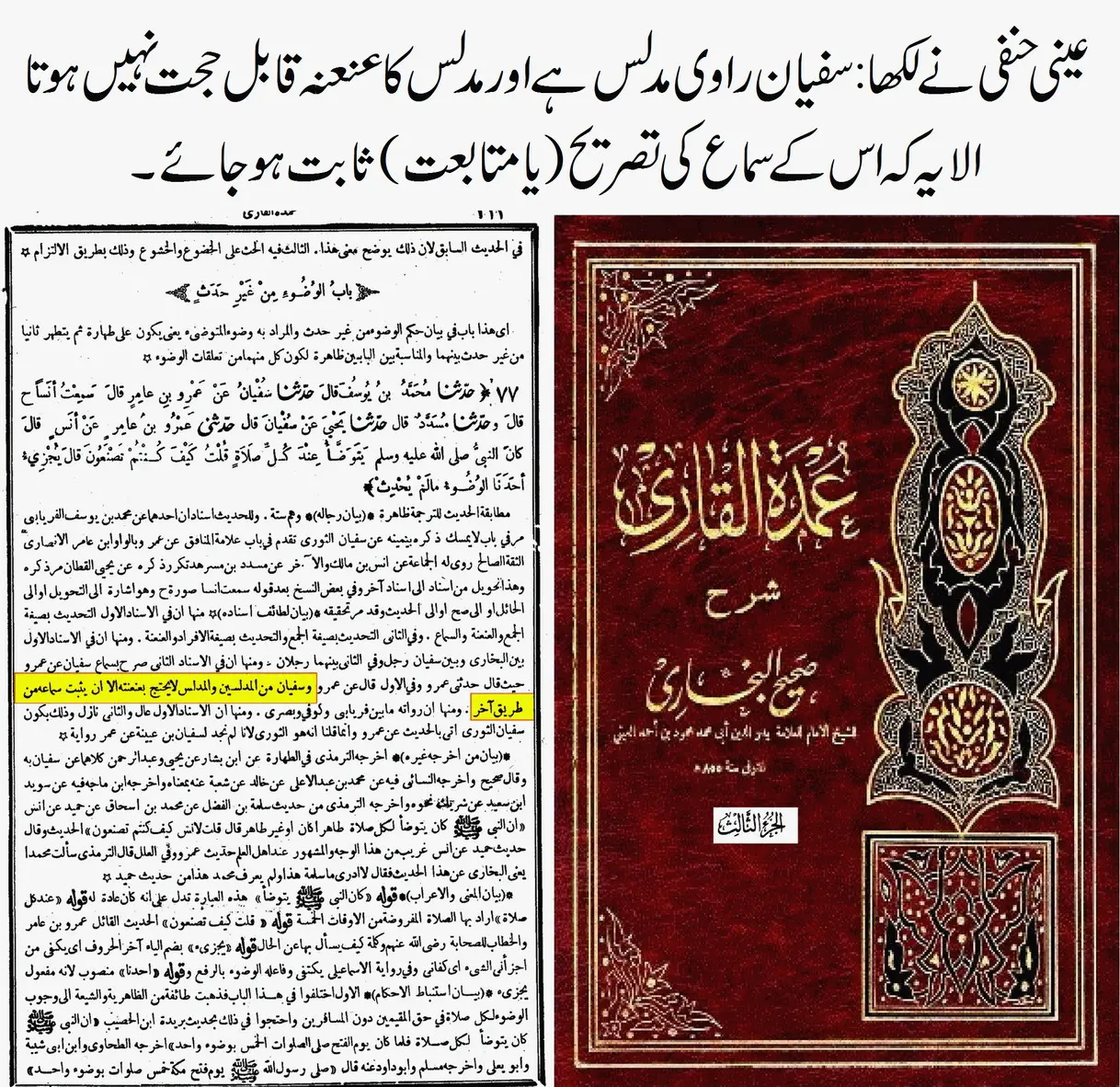
وسفيان من المدلسين، والمدلس لا يُحْتَجُّ بِعنعنته إلا أن يثبت سماعه من طريق آخر.(عمدة القاري شرح صحيح البخاري 1/32)
Translation:Sufyān was among the mudallisīn, and his muʿanʿan narration is not evidence unless hearing is established through another chain.
㉚ Ibn al-Turkmānī al-Ḥanafī (d. 750 AH)
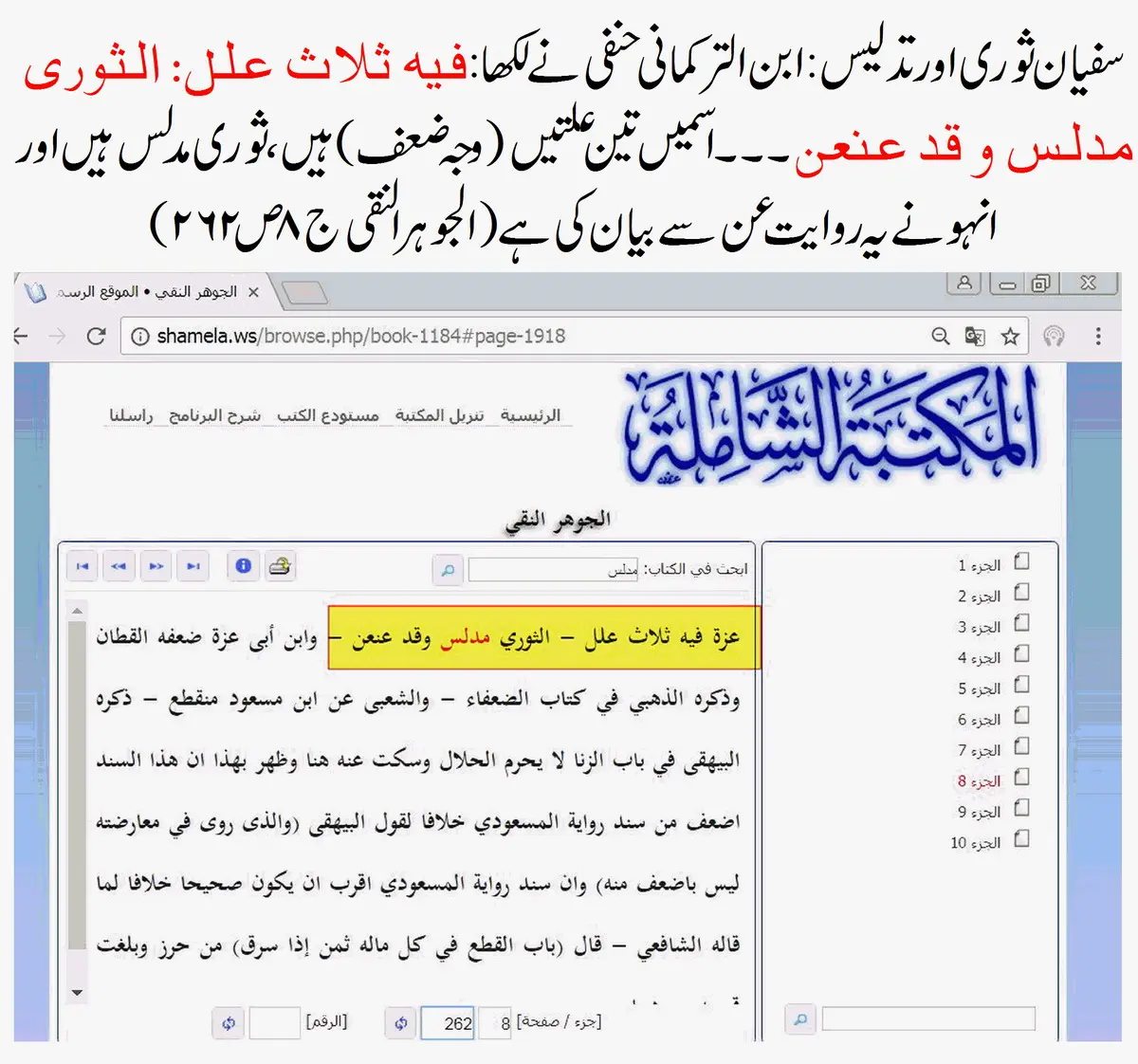
…الثوري مدلس، وقد عنعن.(الجوهر النقي على سنن البيهقي 3/185)
Translation:The flaw in this narration is that al-Thawrī is a mudallis and he narrated it with “ʿan”.
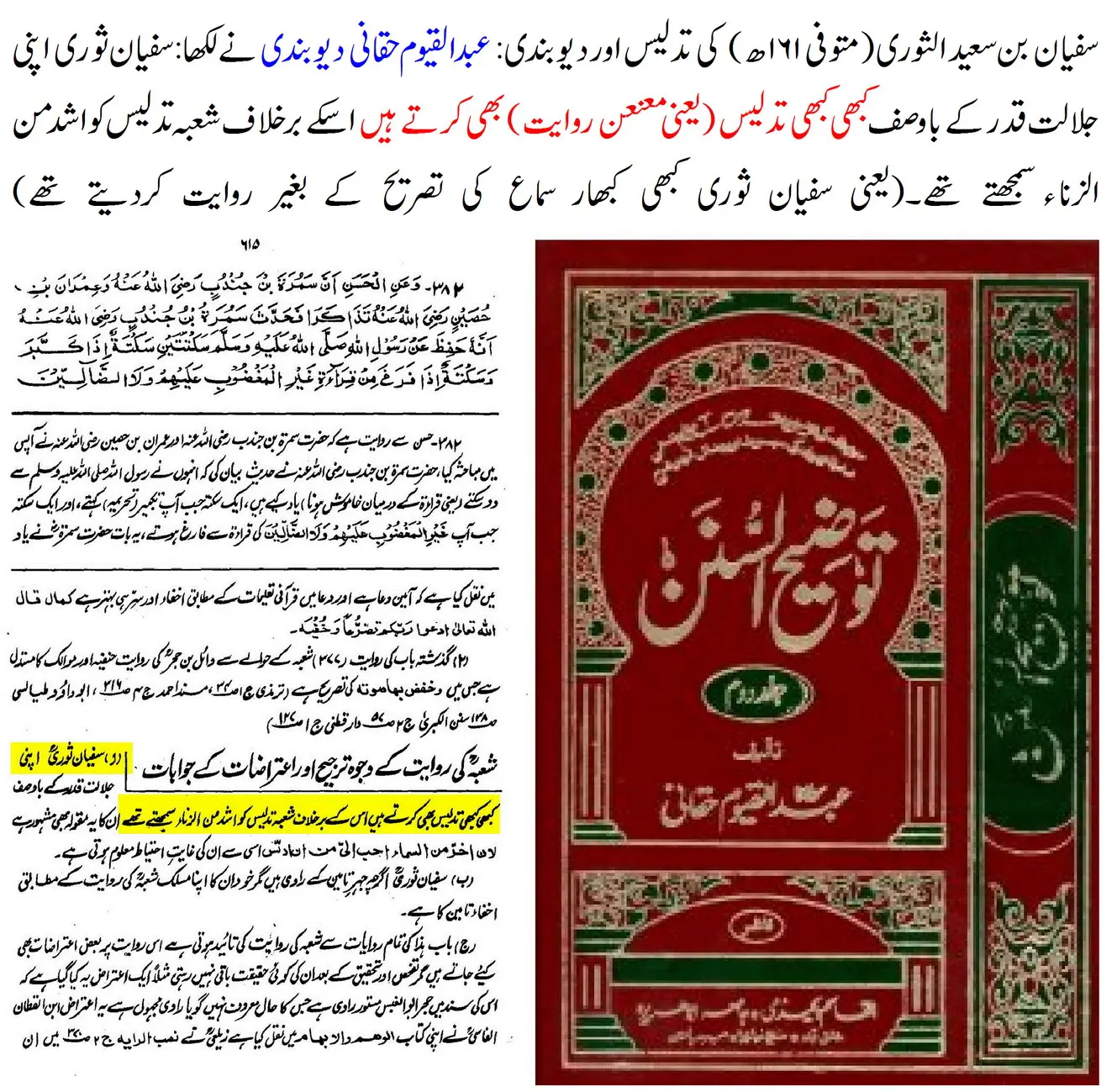
◈✔ Criticism Acknowledged by Deobandī and Barelwī Elders
① Sarfarāz Khān Ṣafdar (Deobandī)
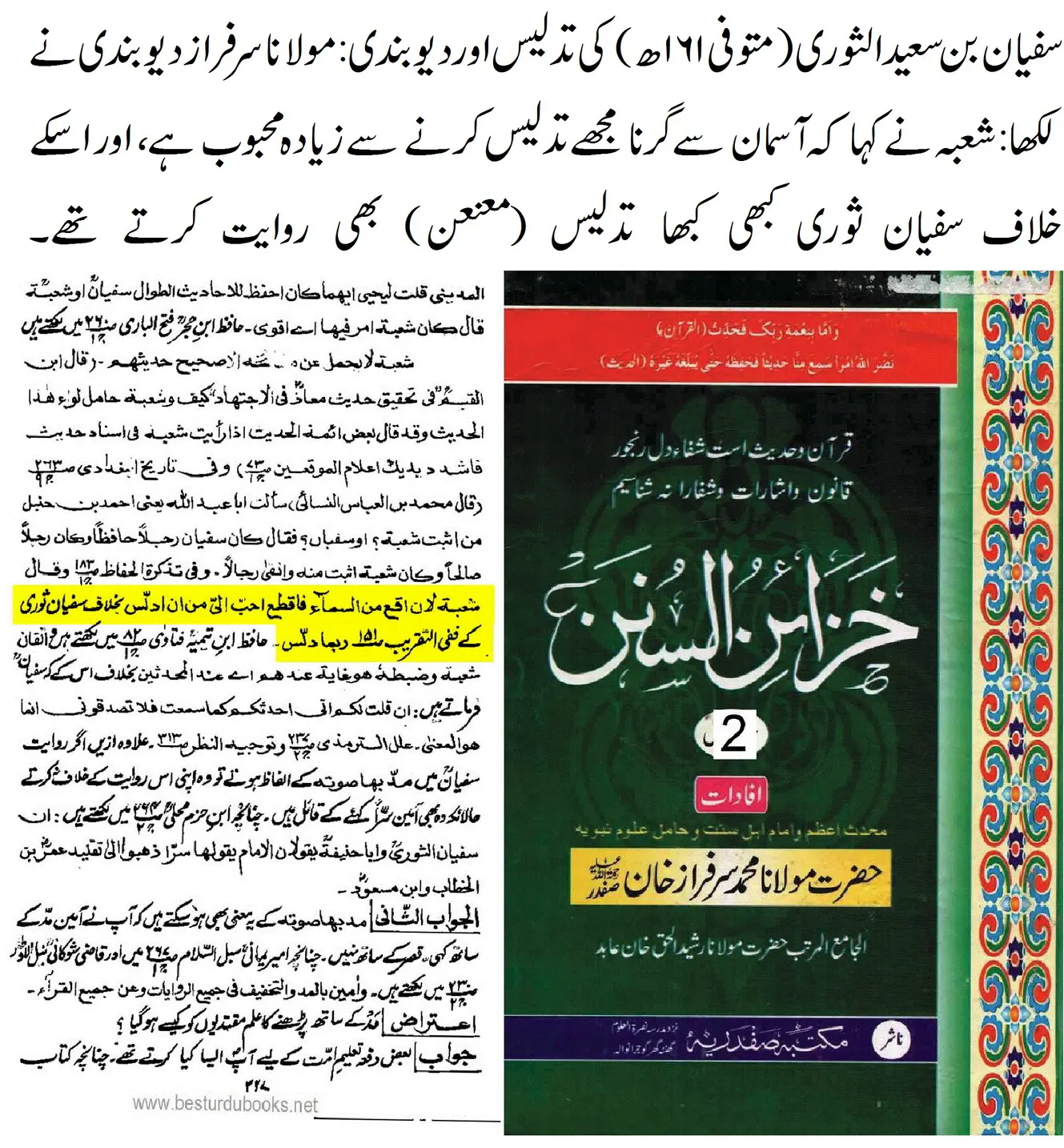
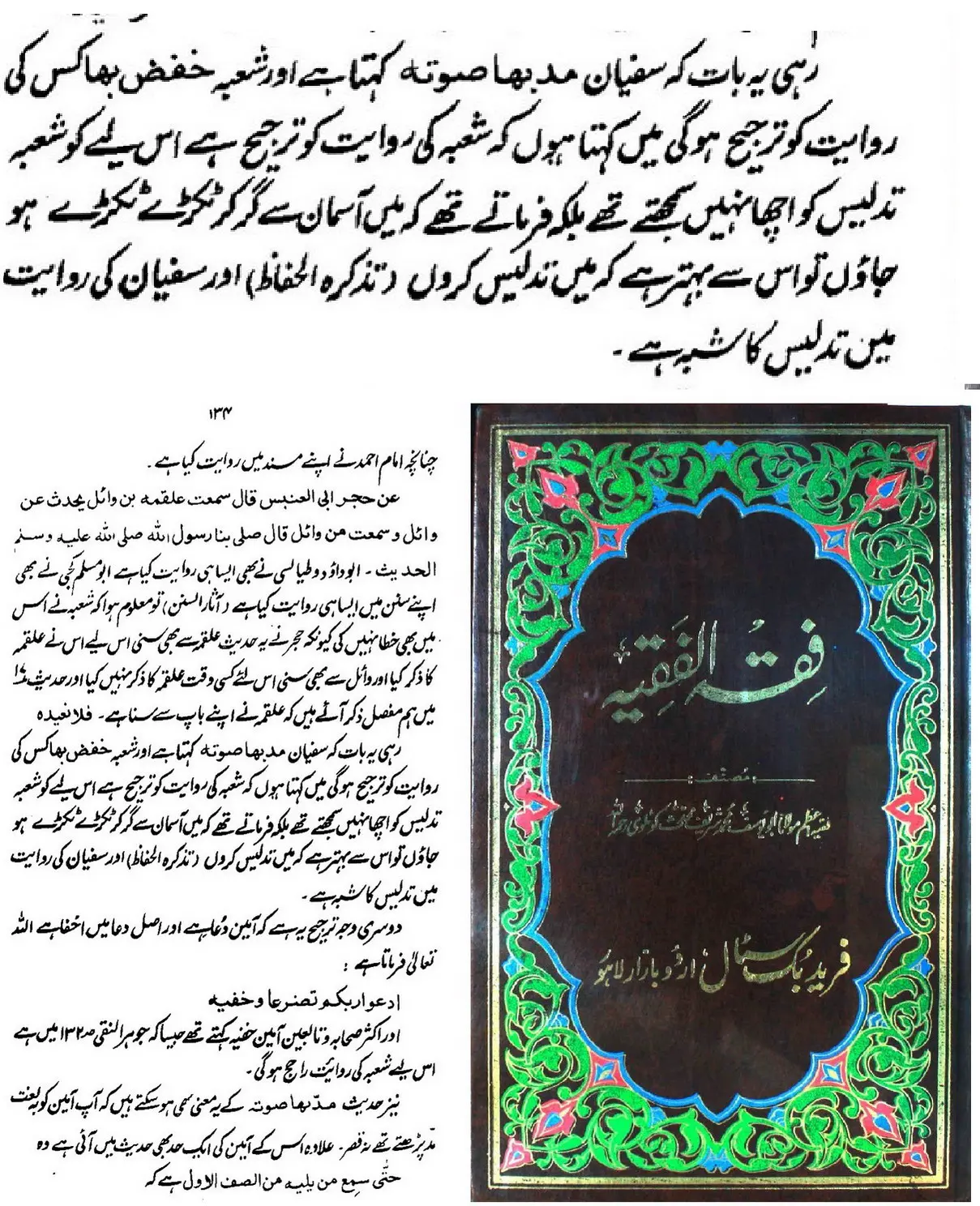
Shuʿbah said: Falling from the sky is more beloved to me than doing tadlīs—whereas Sufyān al-Thawrī would sometimes do tadlīs.(خزائن السنن 2/112)
Translation:The Deobandī muḥaddith Sarfarāz Khān Ṣafdar also accepted that Sufyān al-Thawrī sometimes practiced tadlīs.
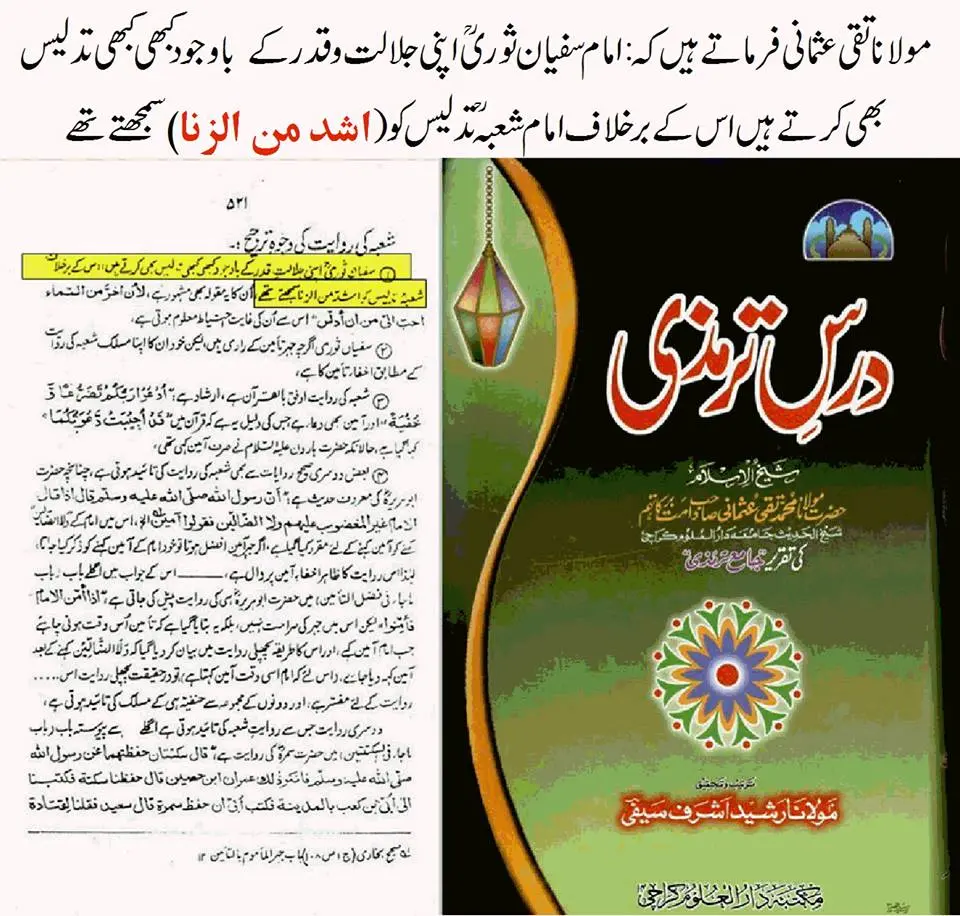
② Muftī Taqī ʿUthmānī (Deobandī)
Imām Sufyān al-Thawrī, despite his greatness, would sometimes practice tadlīs; whereas Imām Shuʿbah considered tadlīs more obscene than zinā.(درس ترمذی 1/223)
Translation:According to Muftī Taqī ʿUthmānī, tadlīs occurred from Sufyān al-Thawrī, while Imām Shuʿbah strongly avoided it.
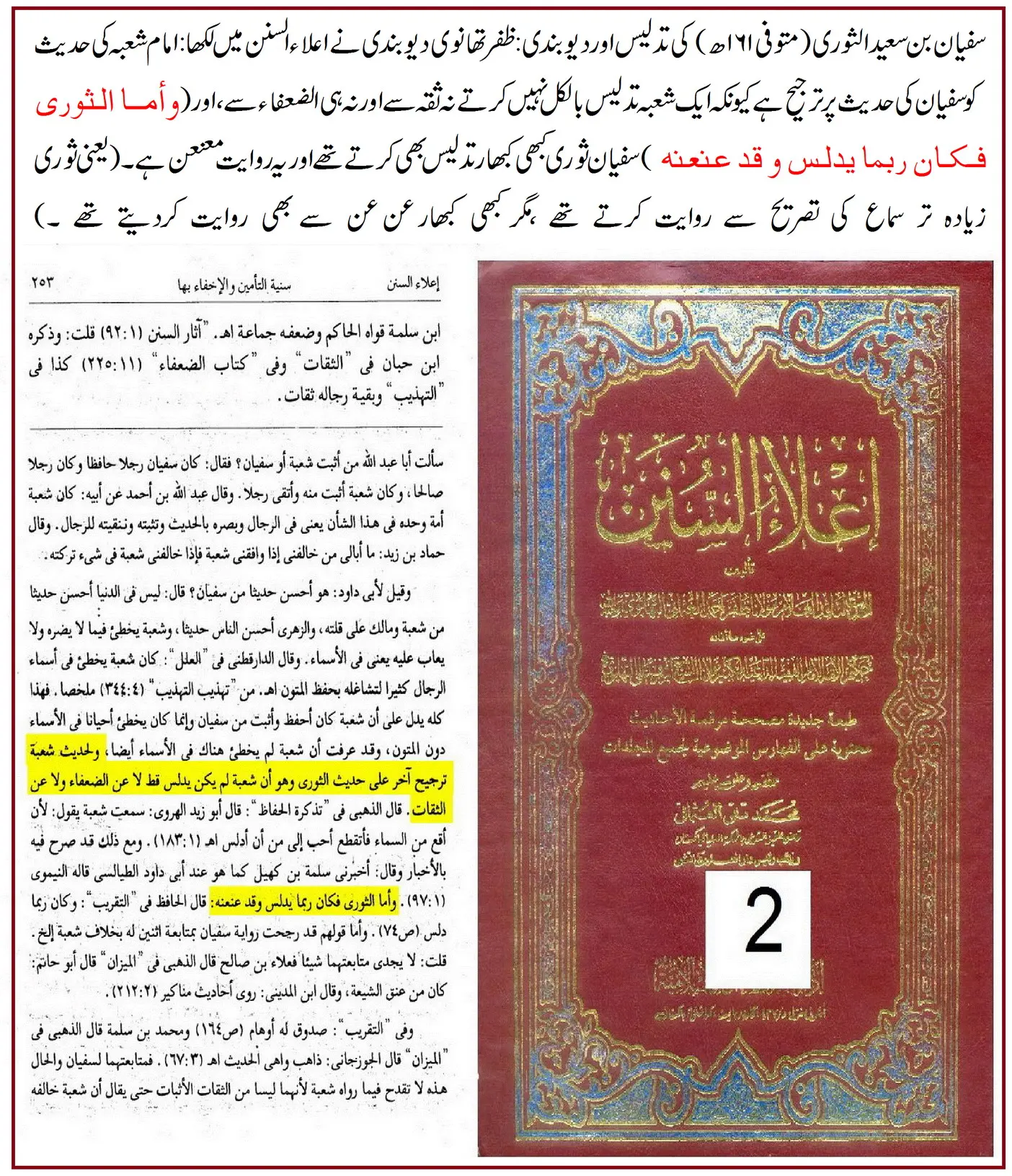
③ Ẓafar Aḥmad Thānawī (Deobandī)
Imām Shuʿbah’s ḥadīth is preferred over Sufyān’s because Shuʿbah did not practice tadlīs at all—neither from trustworthy nor from weak narrators—whereas Sufyān would sometimes do tadlīs, and this narration is muʿanʿan.(اعلاء السنن 4/12)
Translation:Ẓafar Thānawī clearly stated that since Sufyān’s narration is muʿanʿan and tadlīs occurred from him, preference is given to Shuʿbah.
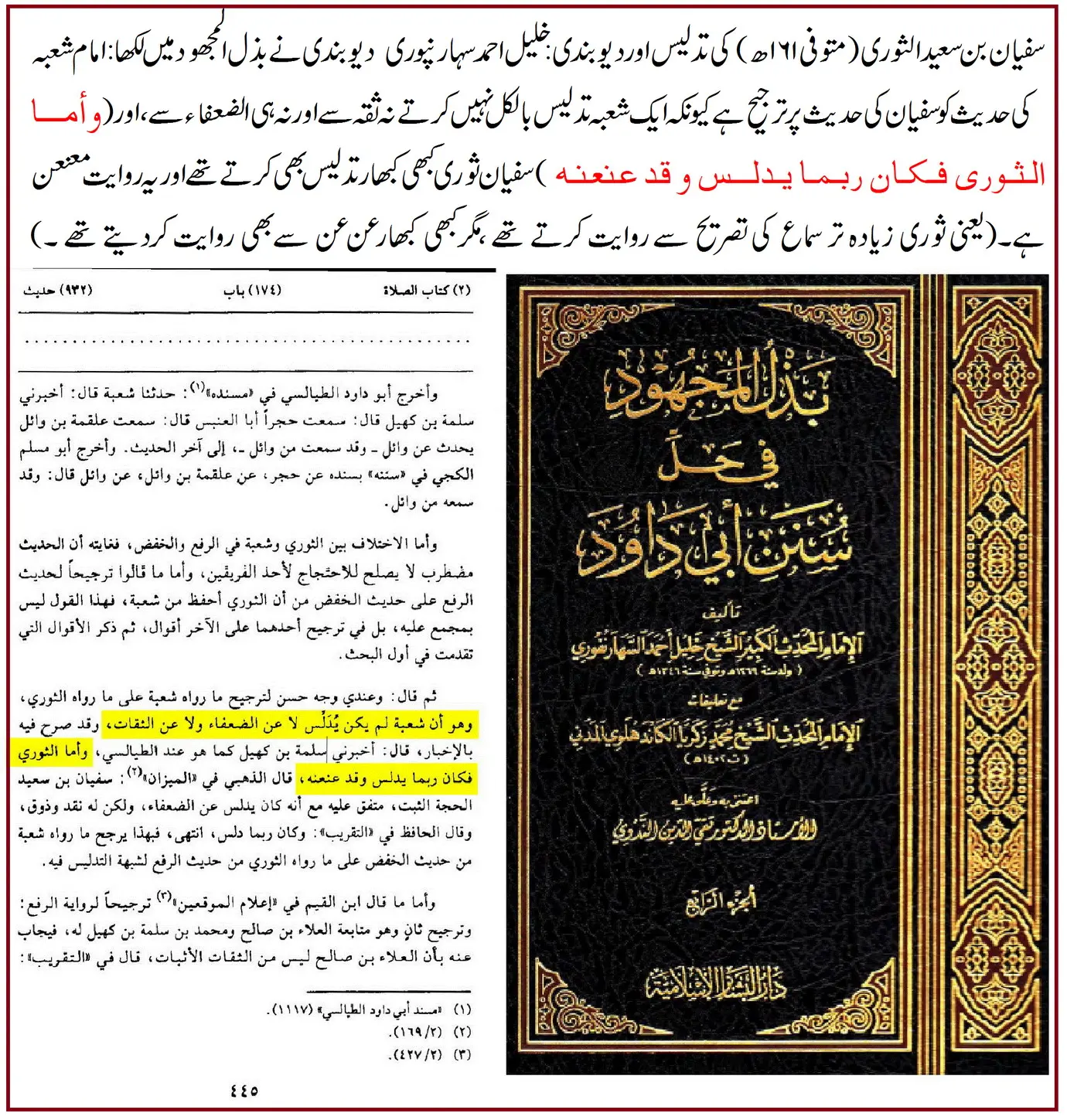
④ Khalīl Aḥmad Sahāranpūrī (Deobandī)
(بذل المجہود شرح سنن ابی داود 3/145) Translation:Khalīl Aḥmad Sahāranpūrī also accepts that Sufyān al-Thawrī practiced tadlīs; therefore Shuʿbah’s narration is preferred.
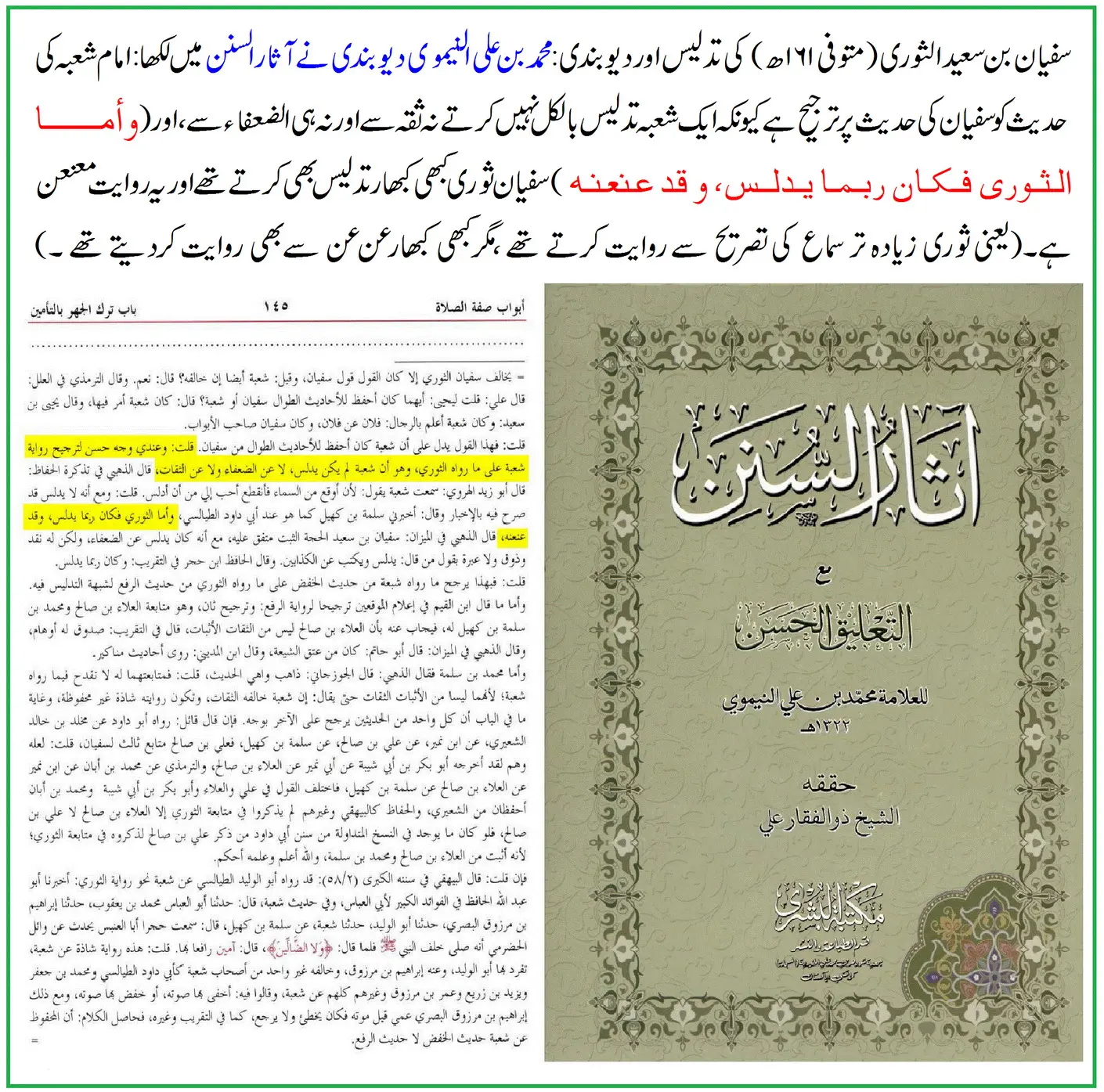
⑤ Muḥammad ibn ʿAlī al-Nīmāwī (Deobandī)
(آثار السنن ص 85) Translation:According to al-Nīmāwī, Sufyān’s muʿanʿan narration is weak unless explicit hearing is mentioned.
⑥ ʿAbd al-Qayyūm Ḥaqqānī (Deobandī)
Sufyān al-Thawrī would sometimes practice tadlīs.(مقالات حقانیہ 1/324)
Translation:Ḥaqqānī directly acknowledged that Imām al-Thawrī was a mudallis.
⑦ Muḥammad Sharīf Koṭlawī (Barelwī)
There is suspicion of tadlīs in Sufyān’s narration.(فتاویٰ کوثر 2/45)
Translation:The Barelwī scholar Koṭlawī also accepted the possibility of tadlīs in Sufyān’s narrations.
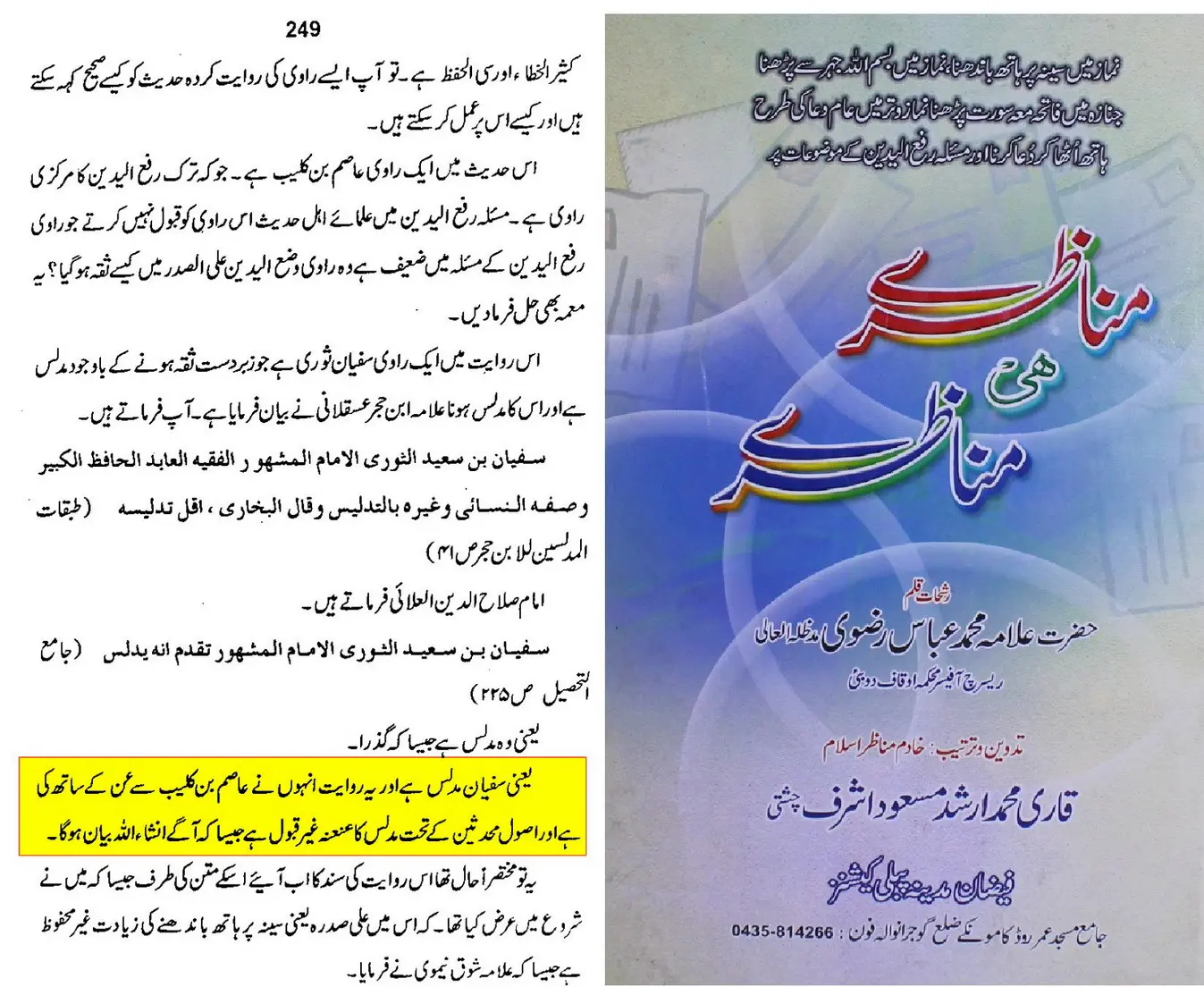
⑧ ʿAbbās Raḍwī (Barelwī)
Sufyān is a mudallis, and he narrated this from ʿĀṣim ibn Kulayb with “ʿan,” and according to the principles of the muḥaddithīn, the muʿanʿan narration of a mudallis is not accepted.(فتاویٰ رضویہ جدید 8/212)
Translation:According to the Barelwī scholar ʿAbbās Raḍwī, Sufyān’s muʿanʿan narration is, in principle, not admissible as evidence.
Conclusion and Final Outcome
From the entire research, this reality becomes completely clear:❀ Imām Sufyān ibn Saʿīd al-Thawrī (d. 161 AH) was, according to the muḥaddithīn, trustworthy, a ḥāfiẓ, and an Imām, but at the same time, the majority of ḥadīth scholars criticized him for tadlīs.
◈✔ At least 30 scholars of ḥadīth, early and later, mentioned his tadlīs and clarified that his muʿanʿan narration cannot be used as evidence unless there is explicit clarification of hearing (samāʿ).
◈✔ Alongside this, 8 non-ḥadīth scholars (Deobandī and Barelwī) also acknowledged that tadlīs occurred from Sufyān al-Thawrī.
① Therefore, when Sufyān al-Thawrī narrates using “ʿan” and there is no explicit samāʿ or reliable supporting corroboration, then that narration will be considered weak in terms of evidential strength.
② However, when he narrates with “ḥaddathanā” or “akhbaranā,” then it will be relied upon by consensus.
Final Result:Imām Shuʿbah ibn al-Ḥajjāj—who considered tadlīs “more obscene than zinā”—is always given preference by the muḥaddithīn when compared against Sufyān al-Thawrī’s muʿanʿan narration.
Thus it becomes clear that Sufyān al-Thawrī’s tadlīs is an established fact, supported by clear and explicit testimonies.