


This excerpt is taken from Sheikh Irshad Ullah Maan's book The Search for Truth.
Reference: An-Nisa:117,116], [Al-An'am:41,40, 63 to 66], [Al-A'raf: 189 to 198], [Yunus:66], [Ar-Ra'd:14 to 21], [An-Nahl:86,54,53], [Al-Qasas:62 to 64], [Al-Kahf:52], [Ar-Rum:11 to 40], [Saba: 22], [Fatir:1 to 26, 33 to 41], [Az-Zumar:8 to 16], [Al-Mu’min:12 to 14, 73 to 76]
According to Quranic verdicts, calling upon anyone other than Allah is Shirk. And Ahmad Raza Khan Sahib wrote that a Muslim becomes an apostate due to Shirk.
Reference: See: His translation along with Tafsir Al-Baqarah:52, Fa:88
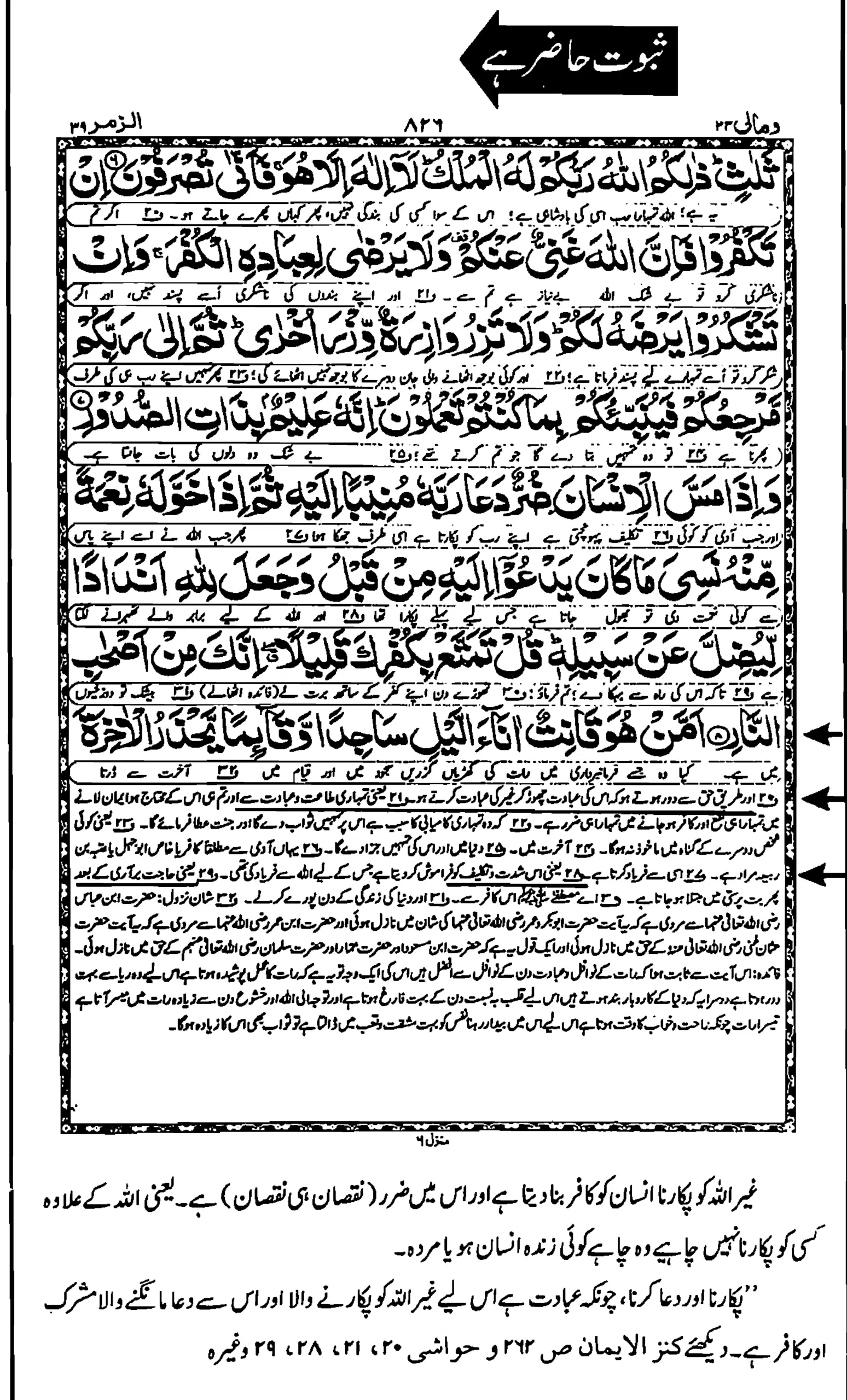
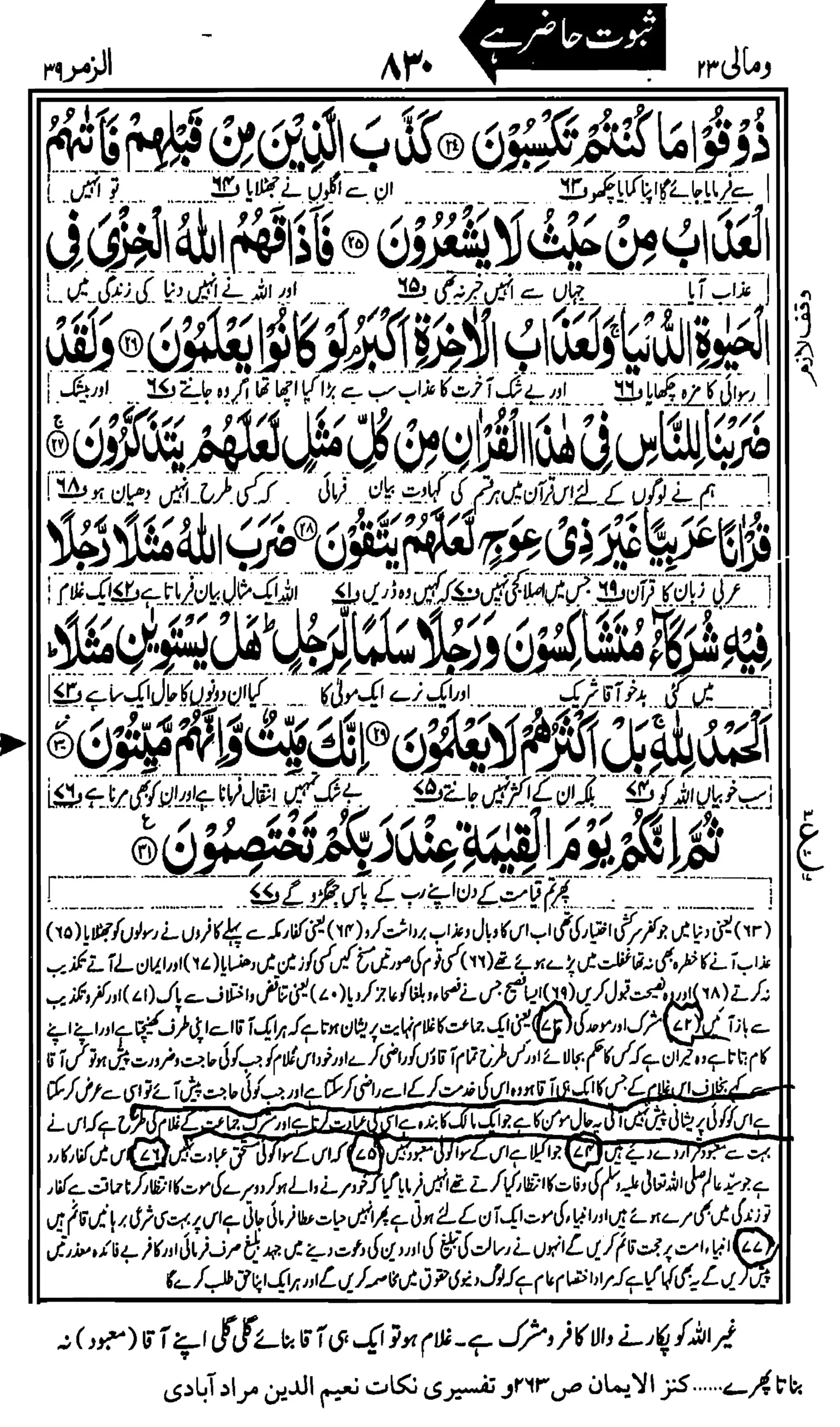
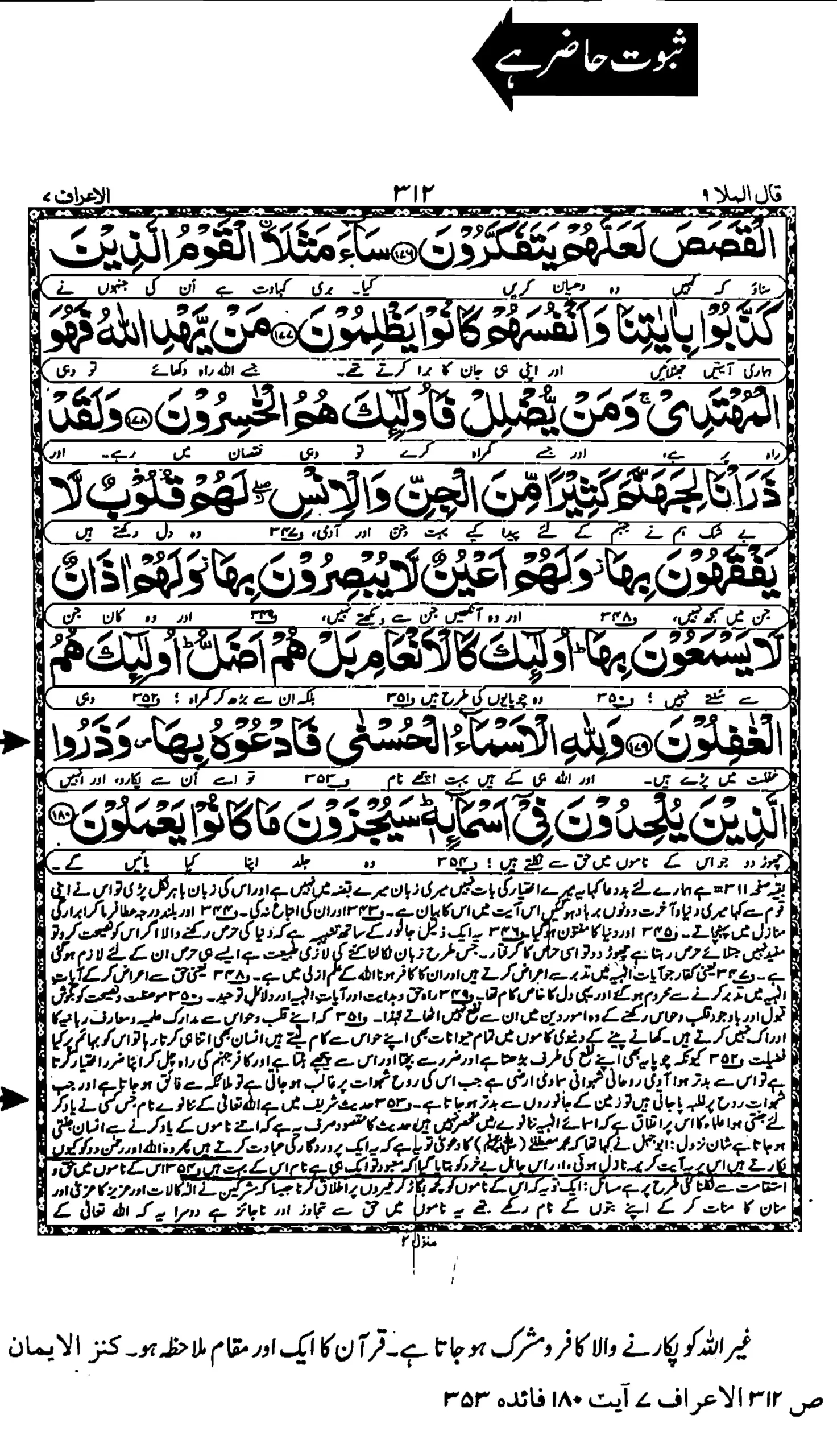
Calling upon anyone other than Allah is Kufr (Quranic Verdicts):
Reference: Al-A'raf:37 to 41], [Ar-Ra'd:14 to 21], [Bani Isra'il:67 to 69], [Al-Mu’minun:117,116], [Fatir:33 to 41], [Az-Zumar:8 to 16], [Al-Mu’min:12 to 14, 73 to 76]
According to Quranic verdicts, the one who calls upon anyone other than Allah is a disbeliever. And Muradabadi Sahib wrote that it is definite that disbelievers will be deprived of Paradise. See:
Reference: Translation by Ahmad Raza Khan Sahib along with Tafsir Al-A'raf:37 to 41 with benefits
Calling upon anyone other than Allah is their worship (Quranic Verdicts):
Reference: Al-An'am:56], [Yunus:104 to 107], [Hud:101], [An-Nahl:1 to 23], [Al-Kahf:15,14], [Maryam:48 to 50], [Al-Mu’minun:117,116], [Ash-Shu'ara:213], [An-Naml:62]
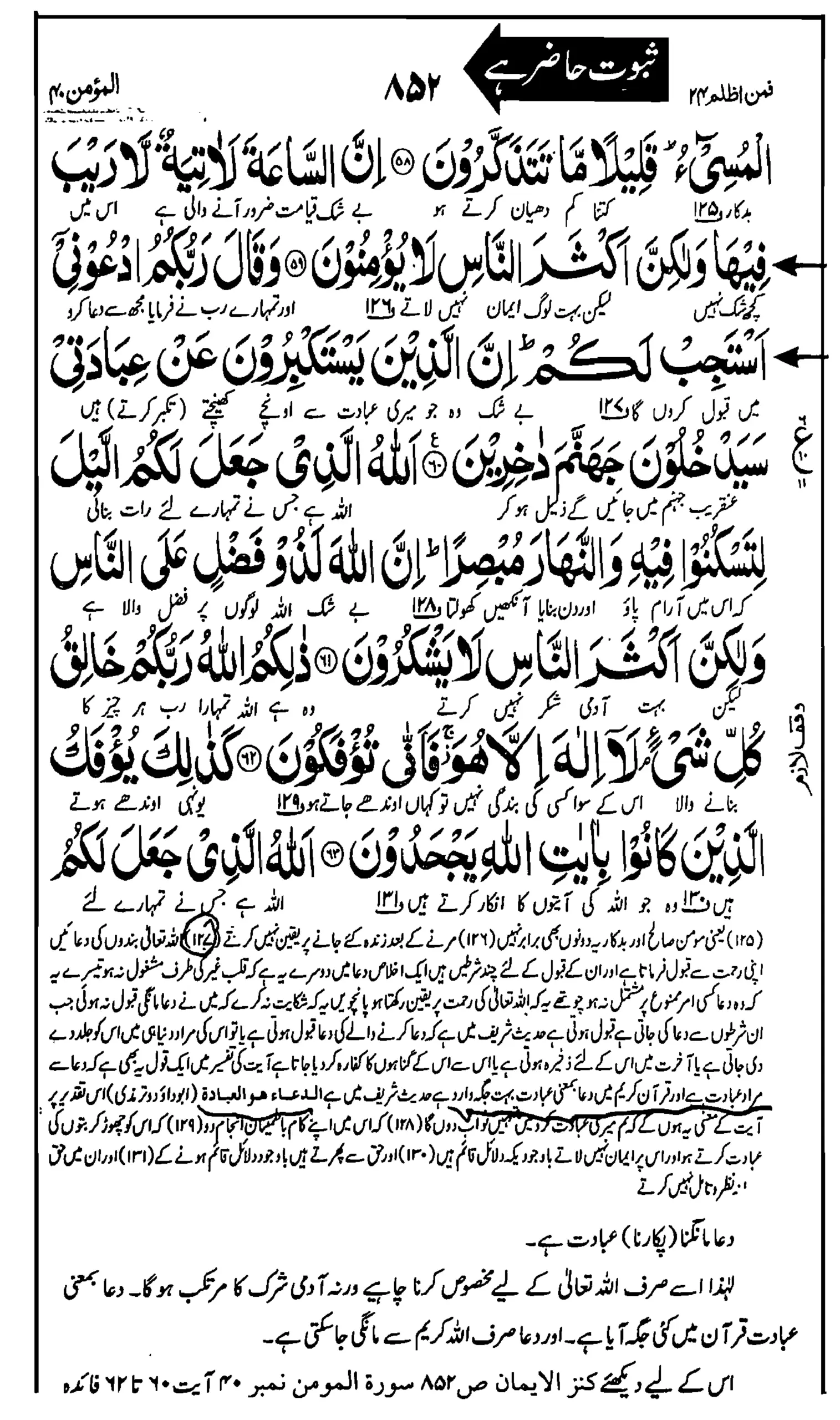
Call upon Allah (Quranic Verdicts):
Reference: Al-Baqarah:186], [Al-A'raf:180,56,55], [Ar-Ra'd:14 to 21], [Al-Hajj:61 to 77], [Luqman:28 to 32], [Fatir:1 to 41], [Az-Zumar:39,38], [Al-Mu’min:20]
Calling upon anyone other than Allah is futile, because they do not have the authority to act (Quranic Verdicts):
Reference: Al-An'am:71], [Yunus:104 to 107], [Hud:101], [Al-Hajj:13,12], [Saba:22], [Fatir:1 to 26], [Az-Zumar:39,38], [Az-Zukhruf:84 to 86]
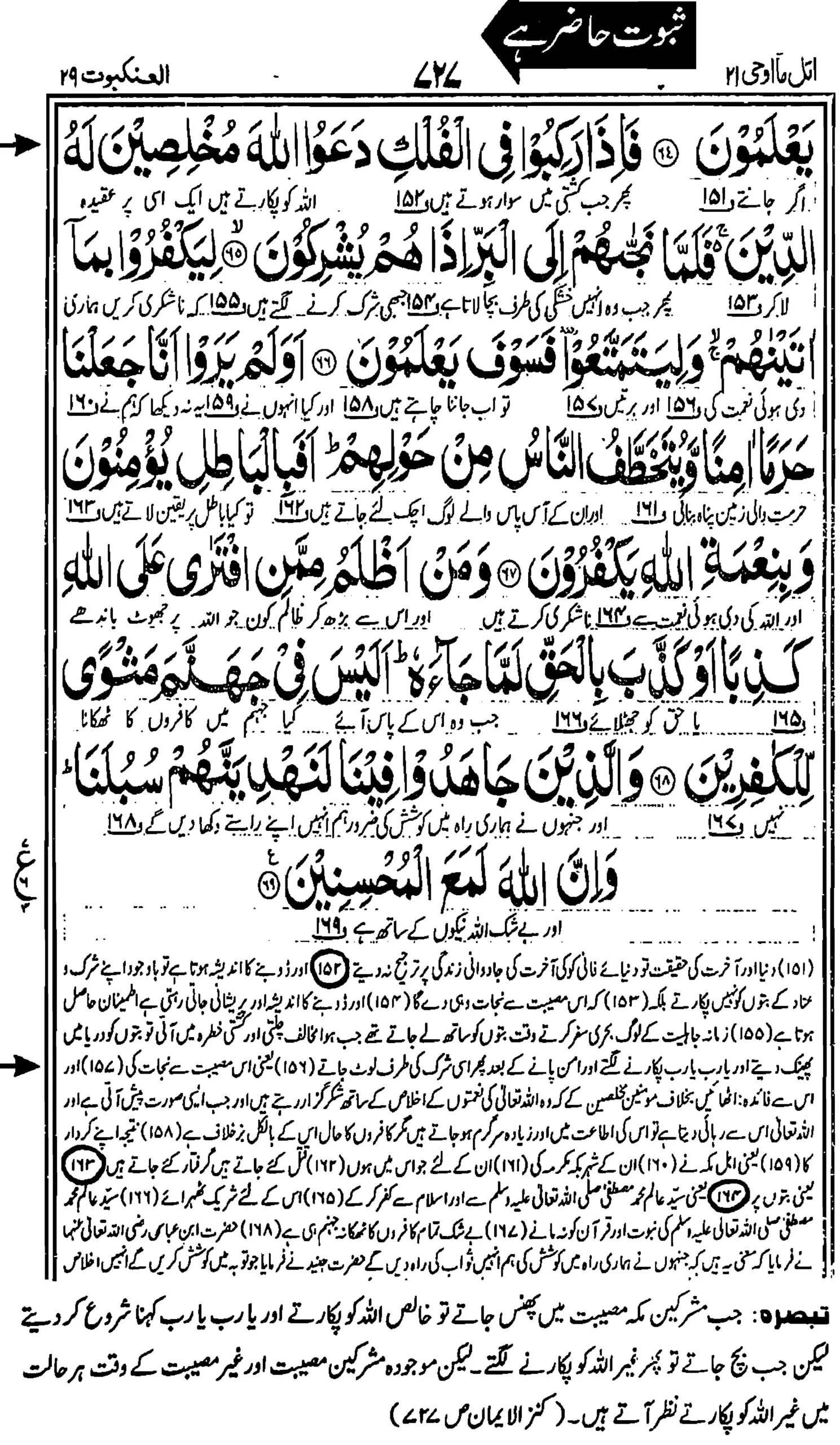
Call upon Allah alone (purely and exclusively) (Quranic Verdicts):
Reference: Al-A'raf:29,28], [Al-Mu’min:12 to 14, 60 to 68], [Yunus:18 to 23], [Al-Ankabut:61 to 66], [Luqman:25 to 32]
Here we want to present another statement of Ahmad Raza Khan Sahib for the study of discerning readers:
[1] It is mentioned in
Reference: Al-A'raf:29
: [وَّادۡعُوۡہُ مُخۡلِصِیۡنَ لَہُ الدِّیۡنَ]And worship Him, being sincere to Him in religion.
[2]
Reference: Al-Mu’min:14
it is stated: [فَادۡعُوا اللّٰہَ مُخۡلِصِیۡنَ لَہُ الدِّیۡنَ وَ لَوۡ کَرِہَ الۡکٰفِرُوۡنَ] So worship Allah, being sincere to Him alone
Reference: (p30)
and be not among the polytheists
Reference: (p30)
(by renouncing shirk).[3]
Reference: Al-Mu’min:65
it is stated: [ہُوَ الۡحَیُّ لَاۤ اِلٰہَ اِلَّا ہُوَ فَادۡعُوۡہُ مُخۡلِصِیۡنَ لَہُ الدِّیۡنَ ؕ اَلۡحَمۡدُ لِلّٰہِ رَبِّ الۡعٰلَمِیۡنَ]He alone is the Ever-Living
Reference: (p136)
. There is no deity except Him, so worship Him, being sincere to Him alone, all the attributes belong to Allah, the Lord of all the worlds.[4] [قُلۡ اِنِّیۡ نُہِیۡتُ اَنۡ اَعۡبُدَ الَّذِیۡنَ تَدۡعُوۡنَ مِنۡ دُوۡنِ اللّٰہِ لَمَّا جَآءَنِیَ الۡبَیِّنٰتُ مِنۡ رَّبِّیۡ ۫ وَ اُمِرۡتُ اَنۡ اُسۡلِمَ لِرَبِّ الۡعٰلَمِیۡنَ]
Say, "I am forbidden to worship those whom you invoke besides Allah." And there have come to me clear proofs from my Lord, and I am commanded to submit to the Lord of the worlds.
Reference: Al-Mu’min:66
[5]
Reference: Surah Yunus:22
it is stated: [دَعَوُا اللّٰہَ مُخۡلِصِیۡنَ لَہُ الدِّیۡنَ] At that time they call upon Allah, being sincere to Him alone.[6]
Reference: Al-Ankabut:65
it is stated: [دَعَوُا اللّٰہَ مُخۡلِصِیۡنَ لَہُ الدِّیۡنَ] They call upon Allah, having faith in Him alone.[7]
Reference: Ar-Rum:33 to 35
it is stated: [دَعَوۡا رَبَّہُمۡ مُّنِیۡبِیۡنَ اِلَیۡہِ] So they call upon their Lord, turning to Him in repentance.[8]
Reference: Luqman:32
it is stated: [دَعَوُا اللّٰہَ مُخۡلِصِیۡنَ لَہُ الدِّیۡنَ] So they call upon Allah, having faith in Him alone.
Reference: (p60)
(And at that time they forget all others and supplicate only to Him).You have observed a dual approach in the above text, in
Reference: 1 to 4
(دعو) has been translated as worship, servitude, and prayer. Whereas in the same word in
Reference: 5 to 8
, it has been translated as "calling out." This was done to prove one's belief correct, although Allah Almighty in all the above 8 verses is saying to call upon Allah alone (i.e.,) call only Allah and do not call anyone else.Do not call anyone along with Allah (Quranic rulings):
Reference: Al-A'raf:56,55], [Al-Jinn:18], [Al-Mu’minun:117,91], [An-Naml:60 to 65], [Al-Qasas:88], [Al-Mu’min:60], [Al-An’am:19], [Al-Hijr:96], [Bani Isra’il:42,39,22], [Qaf:26]
Do not call upon creation (Quranic rulings):
Reference: Al-A'raf:190,191], [Yunus:104 to 107 with benefits], [Ar-Ra’d:14 to 21], [Fatir:33 to 41], [Al-Ahqaf:4 to 6], [An-Nahl:1 to 23]
Christians and Jews call upon others besides Allah:
Christians and Jews call upon others besides Allah. Therefore, Allah Almighty has called them polytheists and disbelievers in the Holy Quran.
See:
Reference: Muradabadi Tafsir Al-Jinn:20,18 F:38], [Al-A'raf:37 to 41 with benefits], [Bani Isra’il:56,57, F:118]
Those who call upon others besides Allah and the Day of Judgment:
Reference: Al-Kahf:52], [An-Nahl:86], [Al-Qasas:62 to 64], [Fatir:1 to 26], [Al-Mu’min:73 to 76], [Ha Mim As-Sajda:48,47], [Al-Ahqaf:4 to 6]
Unaware of calling partners:
Reference: Al-Ahqaf:4 to 6
Unaware of calling upon the dead:
Reference: Fatir:19 to 22
[1]Etiquettes and conditions of supplication.
Reference: (Al-A'raf:29,55,56)
[2]Importance of supplication.
Reference: (Al-Furqan:77)
[3]Supplication is true worship, and turning away from worship is the work of the inhabitants of Hell.
Reference: (Al-Furqan:60)
[4]Keep supplicating to Allah for His grace.
Reference: (An-Nisa:32)
[5]No intermediary is needed to pray to Allah.
Reference: (Al-Baqarah:186)
[6]Allah is near to the servant and accepts his prayer.
Reference: (Hud:61)
[7]If a prophet makes a disliked prayer, it is rejected by Allah.
Reference: (Hud:46)
[8]Praying for an unlawful act is sheer ignorance.
Reference: (Hud:46)
[9]Asking for help from anyone other than Allah is shirk (associating partners with Allah).
Reference: (Bani Isra'il:56)
[10]The end of a polytheist is bad.
Reference: (Al-Hajj:12,13)
[11]Praying to others besides Allah is deception and fraud.
Reference: (Fatir:14)
[12]The gods of the polytheists neither hear prayers nor can respond.
Reference: (Fatir:14)
[13]Those whom they call besides Allah are utterly powerless.
Reference: (Al-Mu’min:20)
[14]These gods are completely unaware of their prayers.
Reference: (Al-Ahqaf:5)
[15]Calling upon them is futile.
Reference: (Al-Mu’min:43)
[16]These gods are so powerless that they cannot even contend with a fly.
Reference: (Al-Hajj:73)
[17]Allah accepts the prayer of the distressed.
Reference: (An-Naml:62)
[18]There can be no prayer of forgiveness for a polytheist.
Reference: (At-Tawbah:114)
[19]Funeral prayer is forbidden for a polytheist and a hypocrite.
Reference: (At-Tawbah:84)
[20]Ibrahim (peace be upon him) initially prayed for his polytheist father.
Reference: (Ash-Shu’ara:86)
[21]When he became aware of his end, he declared disassociation.
Reference: (At-Tawbah:114)
[22]Supplication is only rightful to Allah.
Reference: (At-Tawbah:114)
[23]And asking others besides Him is falsehood.
Reference: (Ad-Dhariyat:14), (Al-A'raf:197,194)
[1]Supplication at the time of calamity and distress.
Reference: (Al-Baqarah:156)
[2]Supplication for the good of this world and the Hereafter.
Reference: (Al-Baqarah:201)
[3]Supplication for pardon and forgiveness.
Reference: (Al-Baqarah:286)
[4]Supplication that the Messenger of Allah ﷺ used to recite during the night vigil.
Reference: (Aal Imran:191,194)
[5]Supplication of the Mujahideen in the battlefield.
Reference: (Aal Imran:147)
[6]Supplication for protection from the evil of enemies.
Reference: (Aal Imran:174)
[7]Supplication of Zakariya (peace be upon him) for righteous offspring.
Reference: (Aal Imran:38)
[8]Supplication of those firmly grounded in knowledge.
Reference: (Aal Imran:8,9)
[9]Supplication of the pious.
Reference: (Aal Imran:16)
[10]Supplication of the servants of the Most Merciful.
Reference: (Al-Furqan:65,66)
[11]Supplication for the reform of children and spouse.
Reference: (Al-Furqan:74)
[12]Supplication of Talut and his companions.
Reference: (Al-Baqarah:250)
[13]Supplication of the mother of Mary.
Reference: (Aal Imran:36)
[14]Supplication of the People of the Cave.
Reference: (Al-Kahf:10)
[15]Supplication of the People of Al-A'raf.
Reference: (Al-A'raf:47)
[16]Supplication for the victory and help of the truth.
Reference: (Al-A'raf:89)
[17]Supplication for steadfastness.
Reference: (Al-A'raf:126)
[18]Supplication of Musa (peace be upon him) for his brother.
Reference: (Al-A'raf:151)
[19]Supplication for his people.
Reference: (Al-A'raf:155,156)
[20]The practice of the people of Paradise -
Reference: (Yunus:88)
[21]The cursed supplication of Musa against Pharaoh.
Reference: (Yunus:88)
[22]Prayer at the time of boarding Noah's (peace be upon him) Ark.
Reference: (Hud:41)
[23]Prayer of Moses (peace be upon him) for expansion of the chest and eloquence in speech.
Reference: (Ta-Ha:25-28)
[24]Instruction to the Prophet Muhammad ﷺ to pray for increase in knowledge.
Reference: (Ta-Ha:114)
[25]Prayer of the Prophet Muhammad ﷺ in the face of the arrogance of the disbelievers.
Reference: (Al-Anbiya:112)
[26]Prayer of the believers.
Reference: (Al-Anfal:40)
[27]Prayer at the time of riding.
Reference: (Al-Mu’minun:29)
[28]Prayer of Noah (peace be upon him) against the disbelievers.
Reference: (Al-Mu’minun:39)
[29]Prayer to stay away from the oppressors.
Reference: (Al-Mu’minun:94)
[30]Prayer for refuge from satanic whispers.
Reference: (Al-Mu’minun:98,97)
[31]Prayer of the believers.
Reference: (Al-Mu’minun:109)
[32]Instruction to the Prophet Muhammad ﷺ to seek forgiveness.
Reference: (Al-Mu’minun:118)
[33]Prayer of Abraham (peace be upon him).
Reference: (Al-Mu’minun:83)
[34]Prayer of David and Solomon (peace be upon them).
Reference: (An-Naml:15)
[35]Prayer of the Queen of Sheba.
Reference: (An-Naml:44)
[36]Prayer of the people of Paradise.
Reference: (Fatir:35,34)
[37]Prayer of Job (peace be upon him) in the state of illness.
Reference: (Al-Anbiya:83)
[38]Prayer of Jonah (peace be upon him) inside the belly of the fish.
Reference: (Al-Anbiya:87)
[39]Prayer of Zechariah (peace be upon him).
Reference: (Al-Anbiya:89)
[40]Prayer of Abraham (peace be upon him) at the time of migration.
Reference: (As-Saffat:100)
[41]Prayer of the bearers of the Throne for the believers.
Reference: (Al-Mu’min:7)
[42]Prayer of a believer after the age of forty years.
Reference: (Al-Ahqaf:15)
[43]Prayer of a believer.
Reference: (Al-Hashr:10)
[44]Prayer of a disbeliever at the time of death agony.
Reference: (Al-Munafiqun:9)
[45]Prayer of Asiya, wife of Pharaoh.
Reference: (At-Tahrim:11)
[46]The prayer of a believer while riding.
Reference: (Az-Zukhruf:14,13)
[47]The prayer of Adam and Eve, peace be upon them.
Reference: (Al-A'raf:23)
[48]The prayer of Noah, peace be upon him.
Reference: (Al-Qamar:23)
[49]The curse of Noah, peace be upon him, upon the disbelievers.
Reference: (Nuh:26 to 28)
[50]The final prayer of Joseph, peace be upon him.
Reference: (Yusuf:101)
[51]The prayer of Solomon, peace be upon him.
Reference: (An-Naml:19), (Sad:35)
[52]The prayer of Lot, peace be upon him.
Reference: (Ash-Shu'ara:169)
[53]The prayer of Joseph, peace be upon him, for protection from the temptation of women.
Reference: (Yusuf:33)
[54]The prayer of Moses, peace be upon him.
Reference: (Al-Qasas:16)
[55]The prayer of Shu'ayb, peace be upon him.
Reference: (Al-A'raf:89), (Hud:88)
[56]The prayer of Jesus, peace be upon him.
Reference: (Al-Ma'idah:144)
[57]The prayer of Abraham and Ishmael, peace be upon them.
Reference: (Al-Baqarah:127 to 129)
[58]The prayer of the Messenger of Allah ﷺ which he used to make near the time of migration.
Reference: (Bani Isra'il:80)
[59]The prayer of Abraham, peace be upon him.
Reference: (Ibrahim:35 to 48)
[60]The prayer of Moses, peace be upon him.
Reference: (Al-Ma'idah:25)
[61]Prayer for parents.
Reference: (Bani Isra'il:24)
[62]The prayer of the people of Moses, peace be upon him.
Reference: (Yunus:86,85)
[63]The prayer of Moses, peace be upon him, when leaving Egypt.
Reference: (Al-Qasas:21)
[64]The prayer of Moses, peace be upon him, upon reaching Midian.
Reference: (Al-Qasas:24)
[65]The prayer of Abraham, peace be upon him, after inviting the people to monotheism.
Reference: (Ash-Shu'ara:83 to 89)
[66]The prayer of Abraham, peace be upon him, and his companions.
Reference: (Al-Mumtahina:5,4)
[67]The prayer of the believers.
Reference: (Al-Hashr:10)
[68]The prayer of the believers on the Day of Resurrection.
Reference: (At-Tahrim:8)
[69]The prayer of the believing People of the Book.
Reference: (Al-Ma'idah:83)
In the Quran and Hadith, there are supplications mentioned for every occasion in life. However, there is no mention of an intermediary or invoking through so-and-so. For example, supplications after ablution, after the call to prayer, during prayer, after prayer, at bedtime, upon waking, during Tahajjud, morning and evening remembrances, various supplications during Hajj, at the time of breaking the fast, upon hearing the rooster's call, upon hearing the donkey's bray, during travel, eating, drinking, intimacy, entering and leaving the restroom, during war and peace, in times of anxiety, for the well-being of religion, world, wealth, children, and brothers who have declared the Kalima, for life, death (i.e., at the time of funeral), during sacrifice, when leaving the house, when entering the house, and so on and so forth.
Generally, in prayers, phrases like "by the sanctity of so-and-so elder" or "by the noble person of the Prophet ﷺ" have become common. However, there is no evidence for this in the Quran and authentic Hadith. Yes, only in the Noble Hadith is sending blessings (Durood Sharif) considered one of the means for the acceptance of prayers. Hafiz Ibn Taymiyyah, may Allah have mercy on him, writes: Such words in prayers are not established from the Companions, the Followers, or the pious predecessors; therefore, this type of prayer by intercession is an innovation. From all these prayers, it is proven that all the religious elders directly asked Allah Almighty in their prayers, without holding onto any intermediary.

