


Compiled by: Abu Hamza Salafi
In this article, we present the famous work of Imam Malik bin Anas, may Allah have mercy on him, in which he strongly refutes innovation (especially the claim of "good innovation" by inventing new acts of worship), and clarifies by citing the Quranic verse {اليوم أكملت لكم دينكم} that the religion was completed during the time of the Messenger of Allah ﷺ; therefore, whatever was not part of the religion at that time cannot become part of the religion today. Then, based on the chain of narration of this work, objections raised by some groups are mentioned in a scholarly and polite manner, and the identification and authentication of the narrators of the chain are presented one by one to make it clear that this work is fundamentally valid for argumentation, and scholars have transmitted it with a well-known chain of narration.
Original Text and Meaning
This narration from Imam Malik bin Anas, may Allah have mercy on him, is transmitted in refutation of innovation:
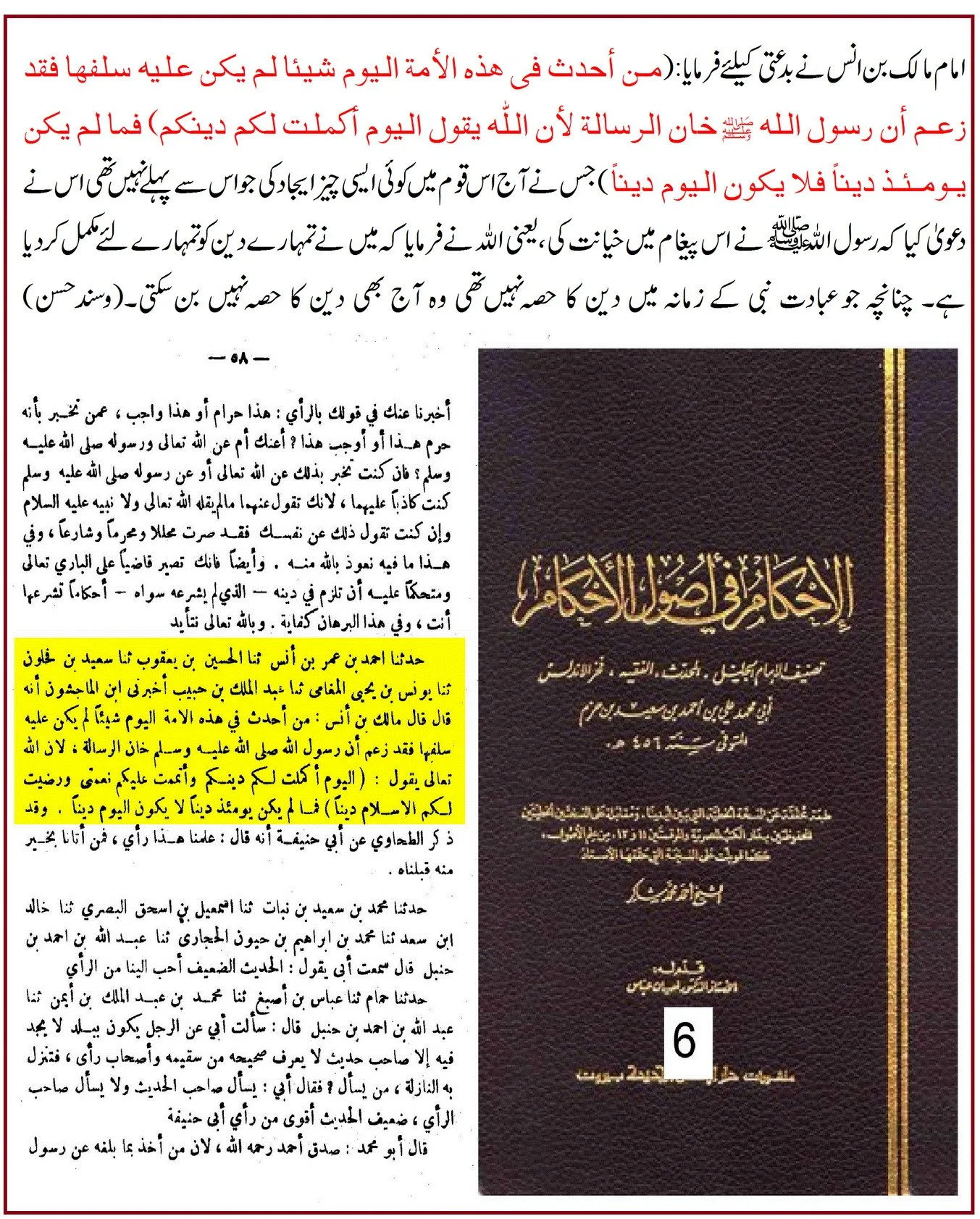
حدثنا أحمد بن عمر بن أنس نا الحسين بن يعقوب نا سعيد بن فحلون نا يونس(یوسف) بن يحيى المفامي نا عبد الملك بن حبيب أخبرني بن الماجشون أنه قال قال مالك بن أنس من أحدث في هذه الأمة اليوم شيئا لم يكن عليه سلفها فقد زعم أن رسول الله صلى الله عليه وسلم خان الرسالة لأن الله يقول {اليوم أكملت لكم دينكم} فما لم يكن يومئذ ديناً فلا يكون اليوم ديناً
Ahmad bin Umar bin Anas narrates… (with this chain) that Ibn Majashoon said: Malik bin Anas said: "Whoever today in this Ummah innovates something (in the name of religion) that was not the way of the Salaf of this Ummah, it is as if he has claimed that the Messenger of Allah ﷺ was unfaithful in his prophethood; because Allah Almighty says: {اليوم أكملت لكم دينكم} (Today I have perfected for you your religion). So whatever was not religion on that day (i.e., during the Prophetic era), cannot be religion today."
Reference: Al-Ihkam fi Usool al-Ahkam, vol. 6, p. 58
Brief Explanation:
In this statement, Imam Malik (may Allah have mercy on him) expresses a fundamental principle: the foundation of religion is "revelation" and "the established way of the Salaf." If someone invents an act of worship/obedience considering it "religion" and deems it "good," then in reality, he is fabricating a new religious status contrary to the declaration of the completion of religion (the verse of completion). That is why Imam Malik (may Allah have mercy on him) gave a very stern warning against this way of thinking.
① Narrator No. 1: Ahmad bin Umar bin Anas bin Dilhath (Abu al-Abbas al-Andalusi)
The first narrator in the chain of Imam Malik’s work:
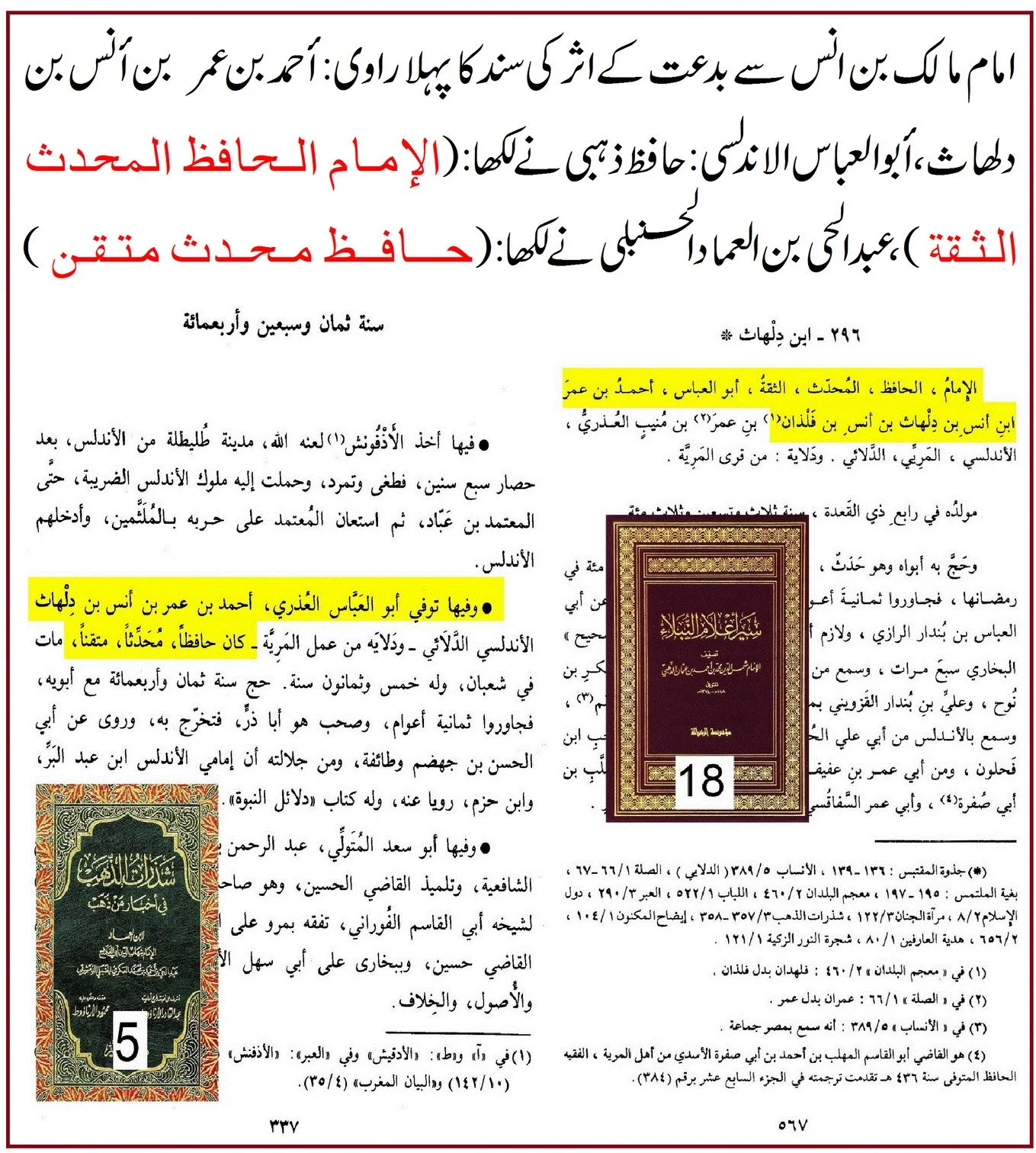
Ahmad bin Umar bin Anas bin Dilhath, Abu al-Abbas al-Andalusi
1. Words of Hafiz al-Dhahabi:
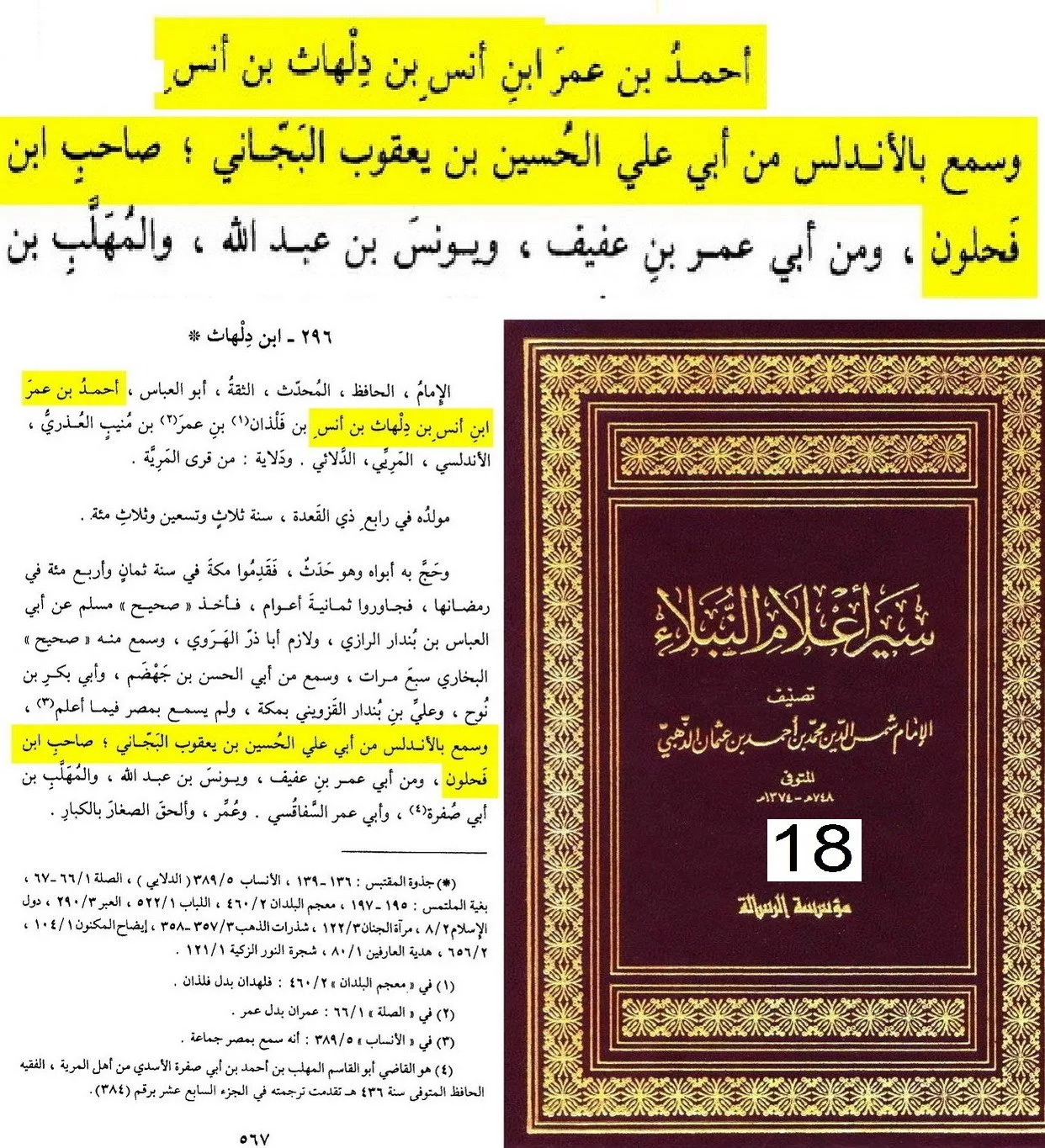
296 - ابْنُ دِلْهَاثٍ أَحْمَدُ بنُ عُمَرَ بنِ أَنَسٍ العُذْرِيُّ *------الإِمَامُ، الحَافِظُ، المُحَدِّثُ، الثِّقَةُ،----وَسَمِعَ بِالأَنْدَلُسِ مِنْ: أَبِي عَلِيٍّ الحُسَيْن بن يَعْقُوْبَ البَجَّانِيّ؛ صَاحِب ابْن فَحلُوْنَ،
Translation:
Hafiz al-Dhahabi called Ibn Dilhath Ahmad bin Umar bin Anas al-Adhri “Imam, Hafiz, Muhaddith, trustworthy” and mentioned that he heard from Abu Ali Husayn bin Ya'qub al-Bajani (who is from the circle of Ibn Fahloon’s teacher/student) in Andalusia.
Reference: (Siyar A'lam al-Nubala)
2. Abd al-Hayy bin al-Imad al-Hanbali:
أحمد بن عمر بن أنس بن دلهاث الأندلسي الدّلائي- ودلايه من عمل المريّة- كان حافظا، محدّثا، متقنا،
Translation:
Ahmad bin Umar bin Anas bin Dilhath al-Andalusi (al-Dallai) was a Hafiz, Muhaddith, and precise.
Reference: (Shadharat al-Dhahab fi Akhbar man Dhahab)
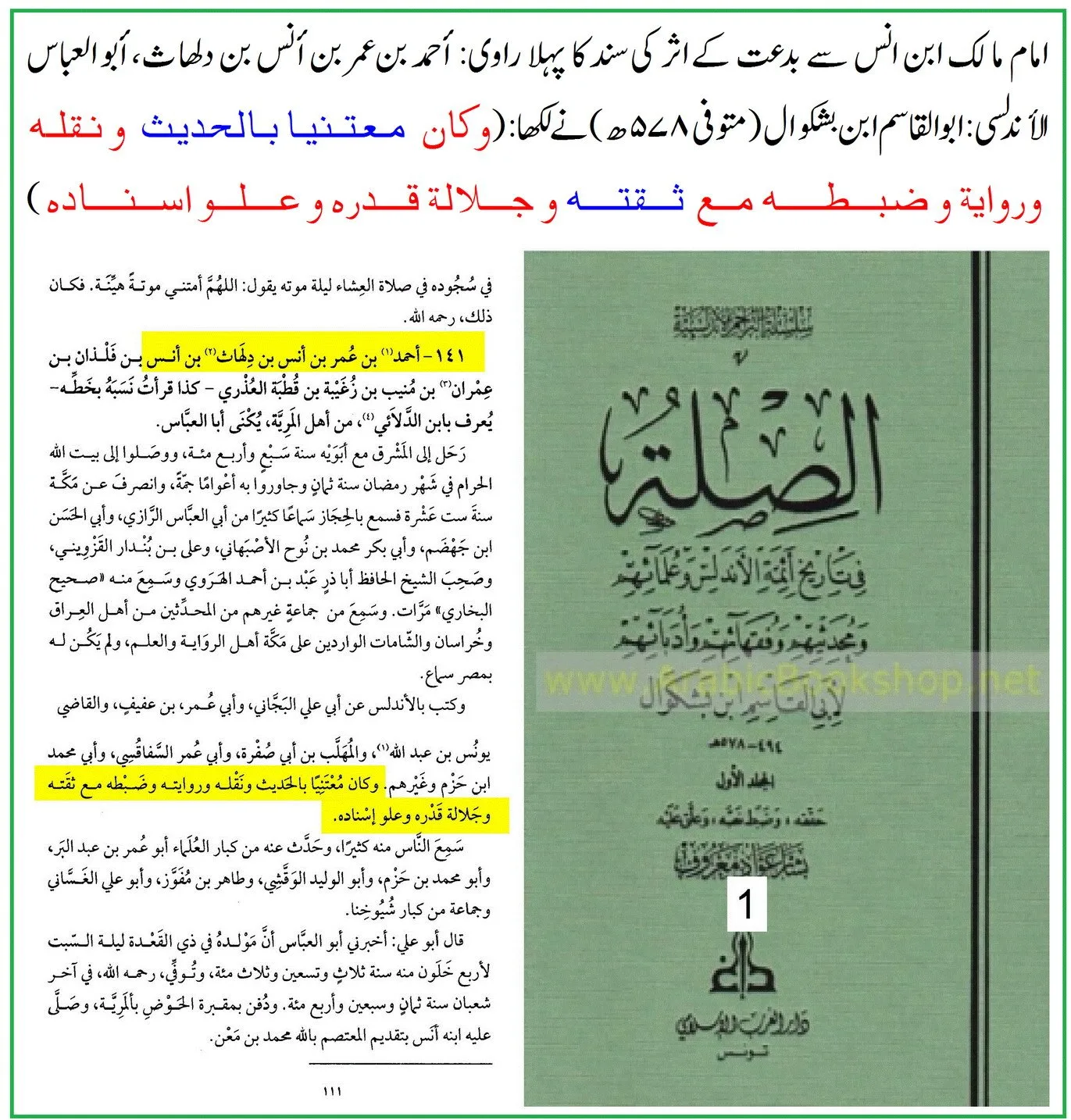
3. Ibn Bashkuwal:
وكان معتنيا بالحديث ونقله وروايته وضبطه مع ثقته وجلالة قدره وعلو إسناده
Translation:
He paid special attention to the narration, transmission, and accuracy of hadith, with his trustworthiness, high status, and strong chain.
Reference: (Al-Silah fi Tarikh A’immah al-Andalus)
Conclusion:
According to the statements of the scholars, the status of this narrator is strong (trustworthy/Hafiz/precise), therefore the beginning of the chain is established on a reliable basis.
② Narrator No. 2: Husayn bin Abdullah / Husayn bin Ya'qub al-Bajani (Identification and Degree of Narration)
In this chain, the second narrator is mentioned as “Al-Husayn ibn Ya'qub Al-Bajani.” Scholars have clarified that his attribution is also made to his grandfather.
1. Hafiz Dhahabi:
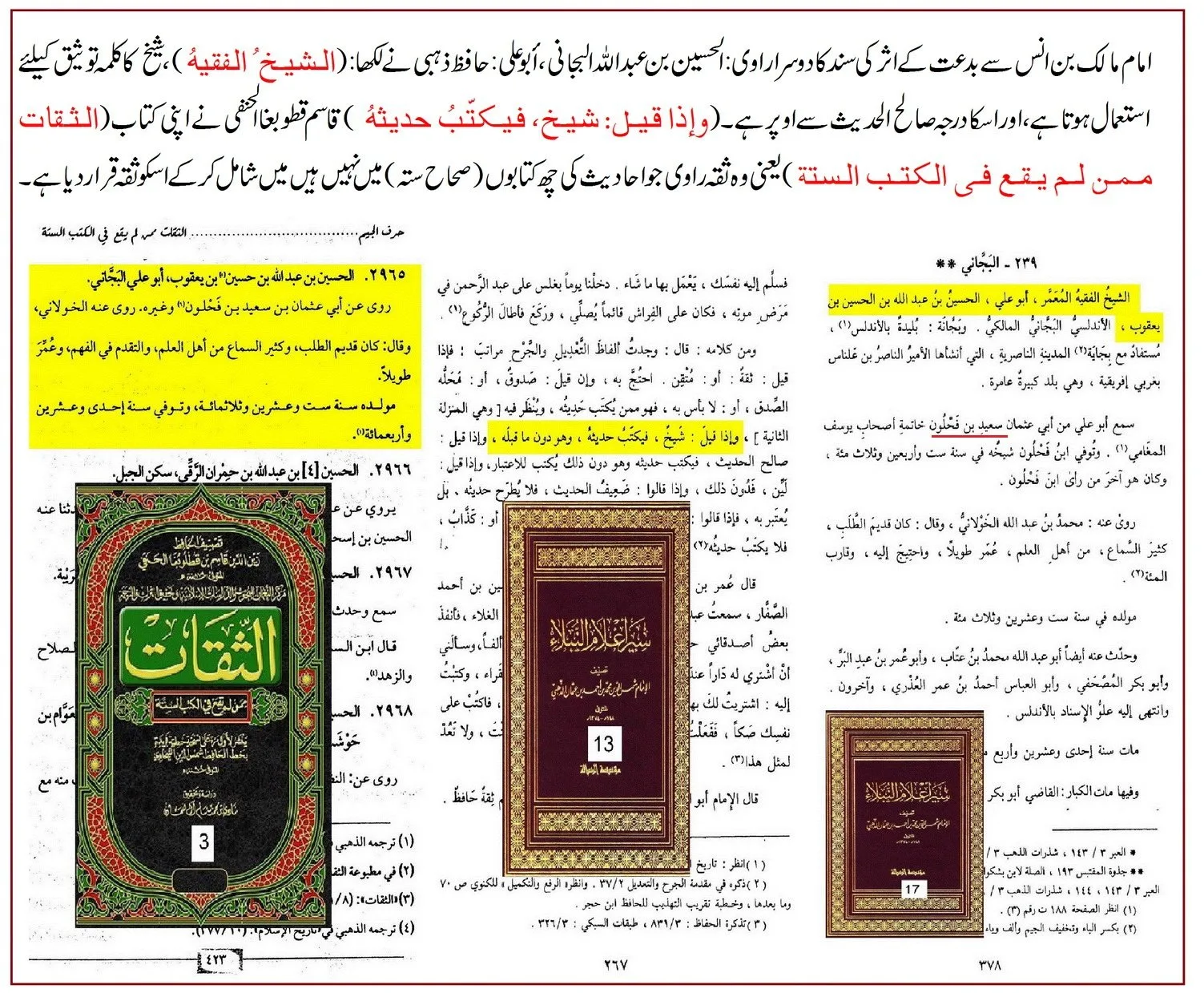
239 - البَجَّانِيُّ أَبُو عَلِيٍّ الحُسَيْنُ بنُ عَبْدِ اللهِ بنِ الحُسَيْنِ **----الشَّيْخُ، الفَقِيْهُ، المُعَمَّرُ، أَبُو عَلِيٍّ الحُسَيْنُ بنُ عَبْدِ اللهِ بنِ الحُسَيْنِ بنِ يَعْقُوْبَ الأَنْدَلُسِيُّ، البَجَّانِيُّ، ------سَمِعَ: أَبُو عَلِيٍّ مِنْ أَبِي عُثْمَانَ سَعِيْدِ بن فَحْلُوْنَ
Translation:
Hafiz Dhahabi called Abu Ali Husayn ibn Abdullah ibn Al-Husayn ibn Ya'qub Al-Andalusi Al-Bajani “the Sheikh, the jurist, the long-lived,” and also mentioned that he heard from Abu Uthman Sa'id ibn Fahlun.
Reference: (Siyar A'lam al-Nubala)
2. Explanation of Hafiz Dhahabi’s words of criticism and praise (Grades of narration)
وَإِن قِيْلَ: صَدُوْقٌ، أَوْ: مَحَلُّهُ الصِّدْقُ، أَوْ: لاَ بَأْسَ بِهِ، فَهُوَ مِمَّنْ يُكْتَبُ حَدِيْثُهُ، وَيُنْظَرُ فِيْهِ وَهِيَ المَنْزِلَةُ الثَّانِيَةُ.وَإِذَا قِيْلَ: شَيْخٌ، فَيُكْتَبُ حَدِيْثُهُ، وَهُوَ دُوْنَ مَا قَبْلَهُ.وَإِذَا قِيْلَ: صَالِحُ الحَدِيْثِ، فَيُكْتَبُ حَدِيْثَهُ وَهُوَ دُوْنَ ذَلِكَ، يُكْتَبُ للاعتِبَارِ.
Translation (Summary):
If a narrator is described as “Saduq / Muhalla al-Sidq / La Ba'sa Bih” then his hadith is written down and scrutinized (this is the second level). If he is called “Sheikh,” his hadith is written but this is a lower grade. If he is called “Saleh al-Hadith,” his hadith is also written but this is an even lower grade and generally written for consideration.
Reference: (Siyar A'lam al-Nubala 13/267)
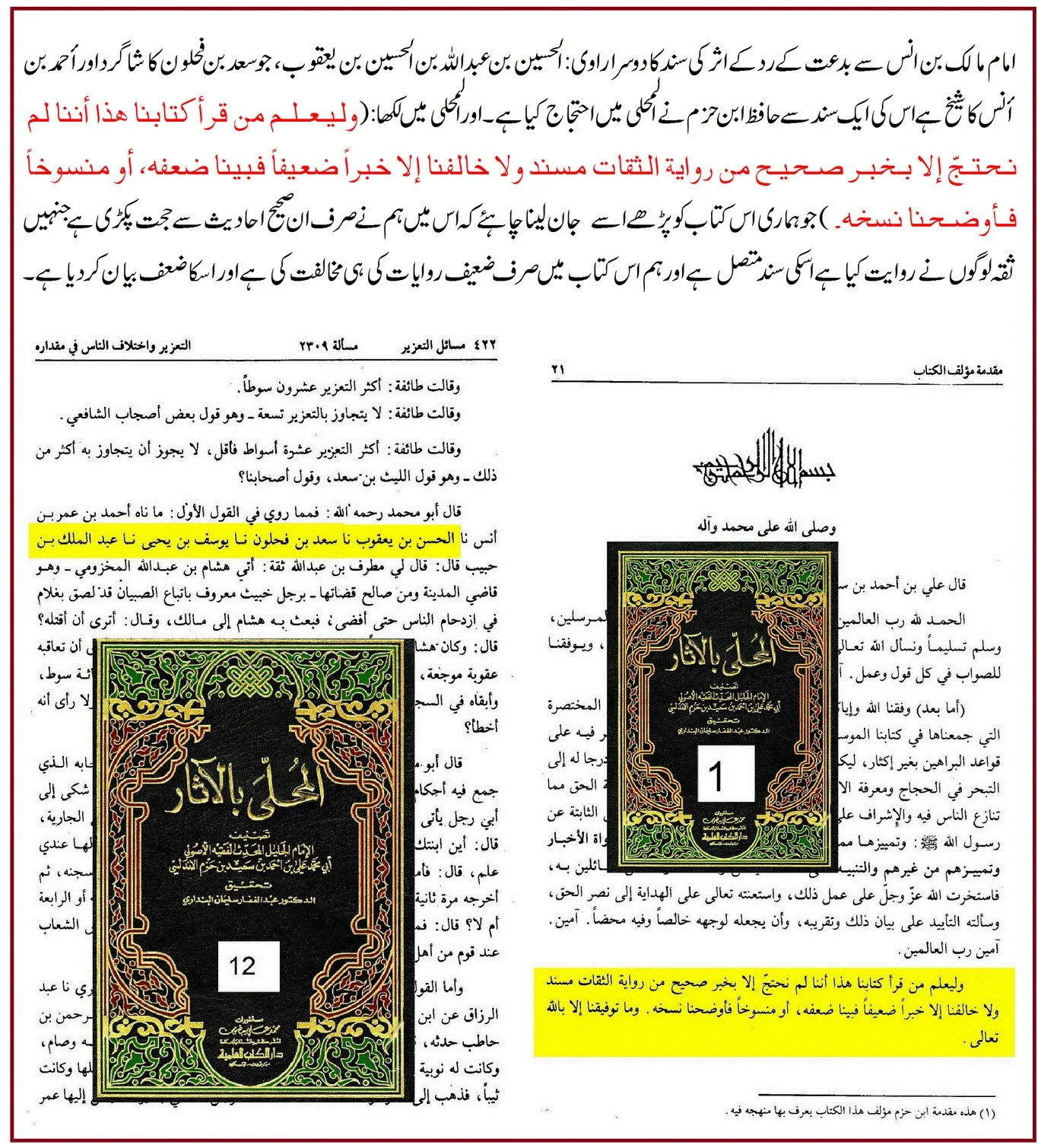
3. Ibn Hazm’s use of this chain with his method of argumentation
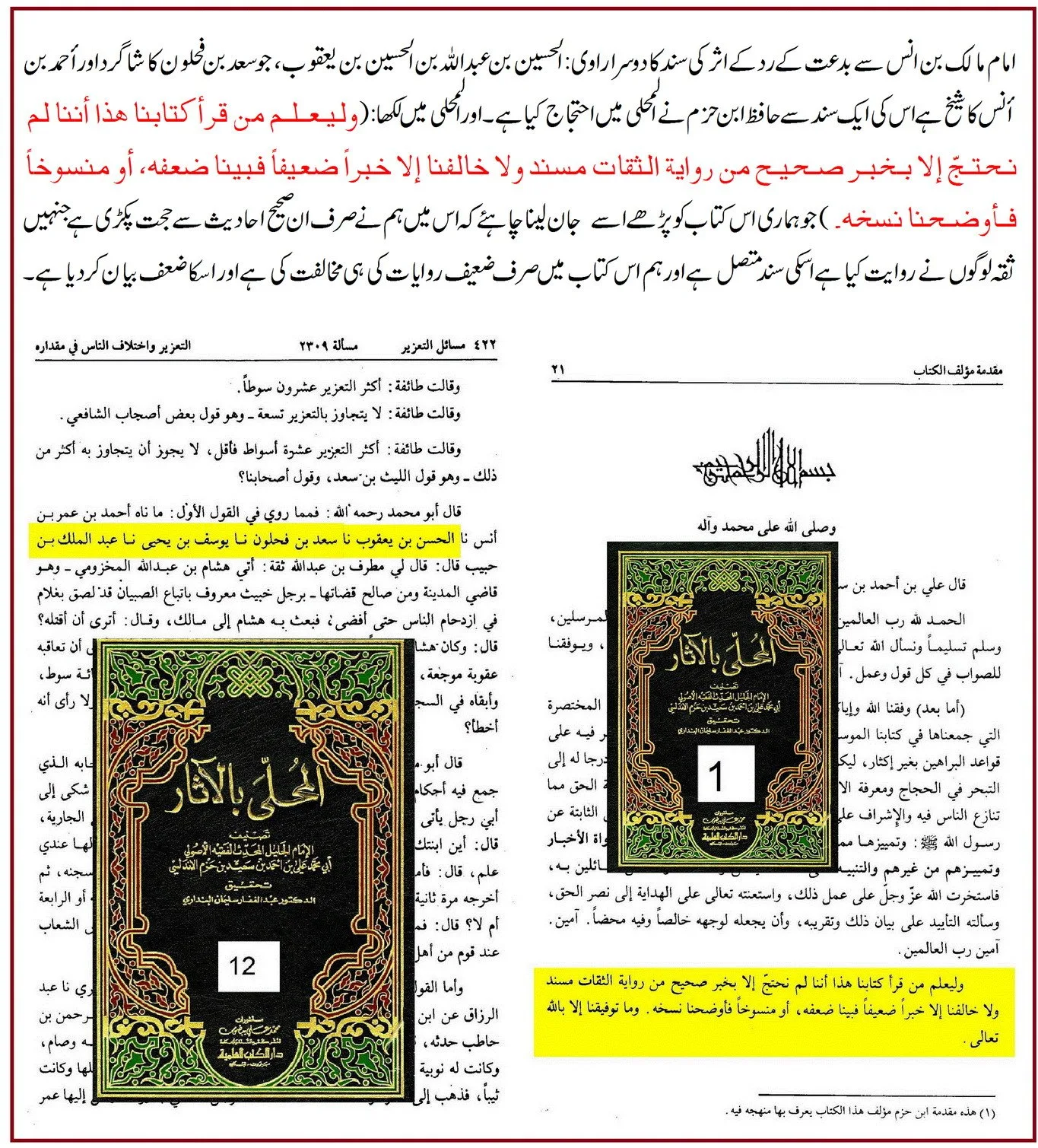
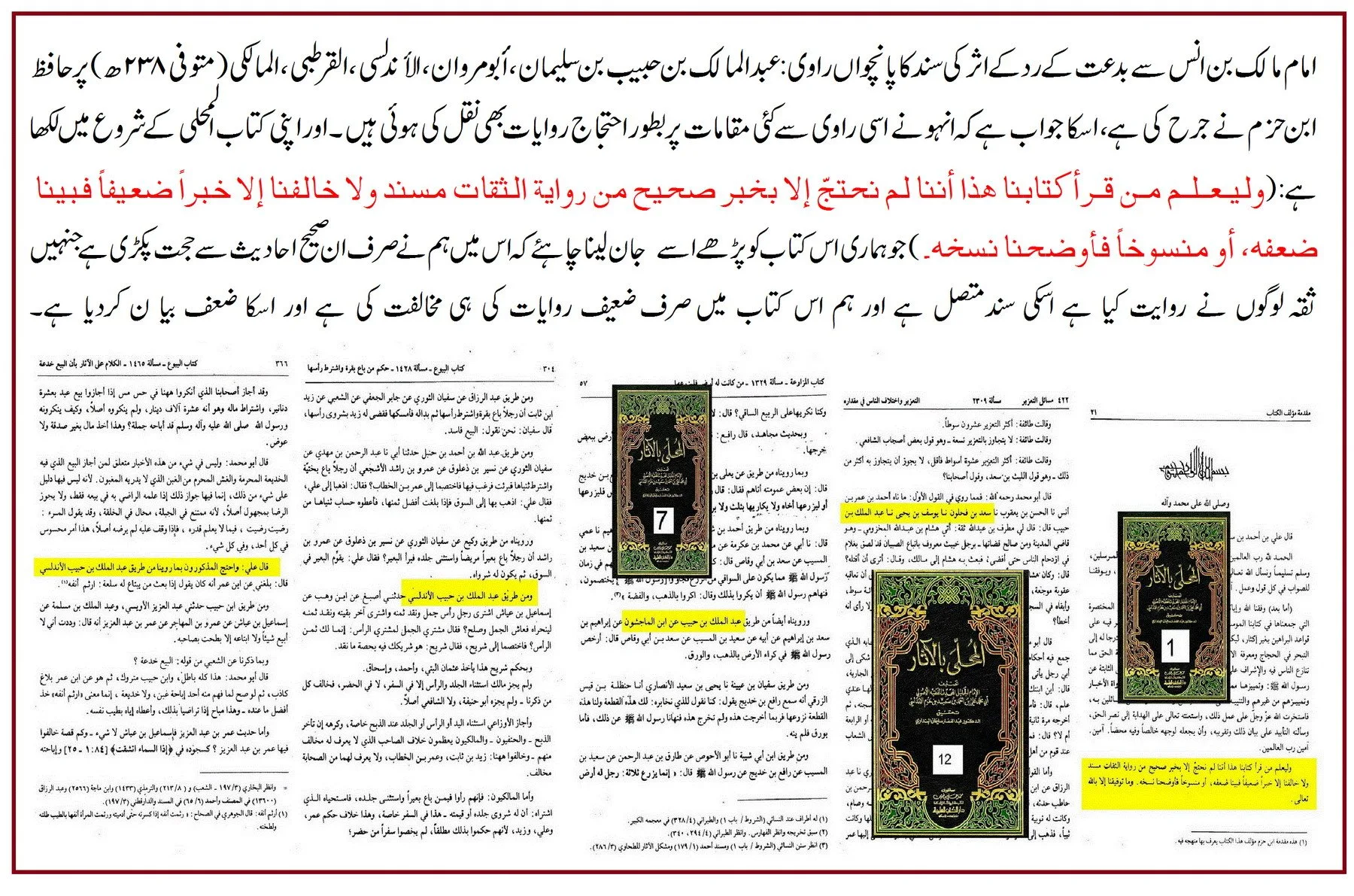
فَمِمَّا رُوِيَ فِي الْقَوْلِ الْأَوَّلِ: مَا ناه أَحْمَدُ بْنُ عُمَرَ بْنِ أَنَسٍ نا الْحَسَنُ بْنُ يَعْقُوبَ نا سَعْدُ بْنُ فَلْحُونٍ نا يُوسُفُ بْنُ يَحْيَى نا عَبْدُ الْمَلِكِ بْنُ حَبِيبٍ قَالَ:
Translation:
In the first narration mentioned, it is: Ahmad bin Umar bin Anas narrated to us… (with the same chain) up to Abdul Malik bin Habib.
Reference: (Al-Muhalla bil Athar)
And at the beginning of "Al-Muhalla," Ibn Hazm's principle:
وَلْيَعْلَمْ مَنْ قَرَأَ كِتَابَنَا هَذَا أَنَّنَا لَمْ نَحْتَجَّ إلَّا بِخَبَرٍ صَحِيحٍ مِنْ رِوَايَةِ الثِّقَاتِ مُسْنَدٍ وَلَا خَالَفْنَا إلَّا خَبَرًا ضَعِيفًا فَبَيَّنَّا ضَعْفَهُ، أَوْ مَنْسُوخًا فَأَوْضَحْنَا نَسْخَهُ. وَمَا تَوْفِيقُنَا إلَّا بِاَللَّهِ تَعَالَى.
Translation:
Whoever reads our book should know that we have relied only on authentic reports that are narrated by trustworthy narrators with a connected chain (Musnad). And we have opposed only weak reports and clarified their weakness, or abrogated them and clarified their abrogation. And our success is only from Allah Almighty.
Reference: (Al-Muhalla bil Athar)
4. Mention of Qasim Qutubgha Al-Hanafi:
He included this narrator in his book (الثقات ممن لم يقع في الكتب الستة).
Conclusion:
The identification of this narrator (Al-Bujani) becomes clear from the works of the biographers and at least the status of "worthy of hadith recording/consideration" is certainly established, especially when this chain is strengthened by other evidences.
◈ One Objection and Its Scholarly Response: The Identification of “Husayn bin Ya'qub”
Objection:
A Barelvi critic objected that the identification of "Hussain bin Ya'qub" in this chain is required; it is not clear who he is.
Answer (Evidence for Identification):
The identity of the narrator is known through his teachers and students, and here there is evidence on both sides:
1. Hafiz Dhahabi's Authentication:
الثِّقَةُ، أَبُو العَبَّاسِ أَحْمَدُ بنُ عُمَرَ بنِ أَنَسِ بنِ دِلْهَاثِ بنِ أَنَسِ-----وَسَمِعَ بِالأَنْدَلُسِ مِنْ: أَبِي عَلِيٍّ الحُسَيْن بن يَعْقُوْبَ البَجَّانِيّ؛ صَاحِب ابْن فَحلُوْنَ،
Translation:
Ahmad bin Umar bin Anas (trustworthy) heard from Abu Ali Hussain bin Ya'qub al-Bajani in Andalus, who is associated with the circle of Ibn Fahlun.
Reference: (Siyar A'lam al-Nubala)
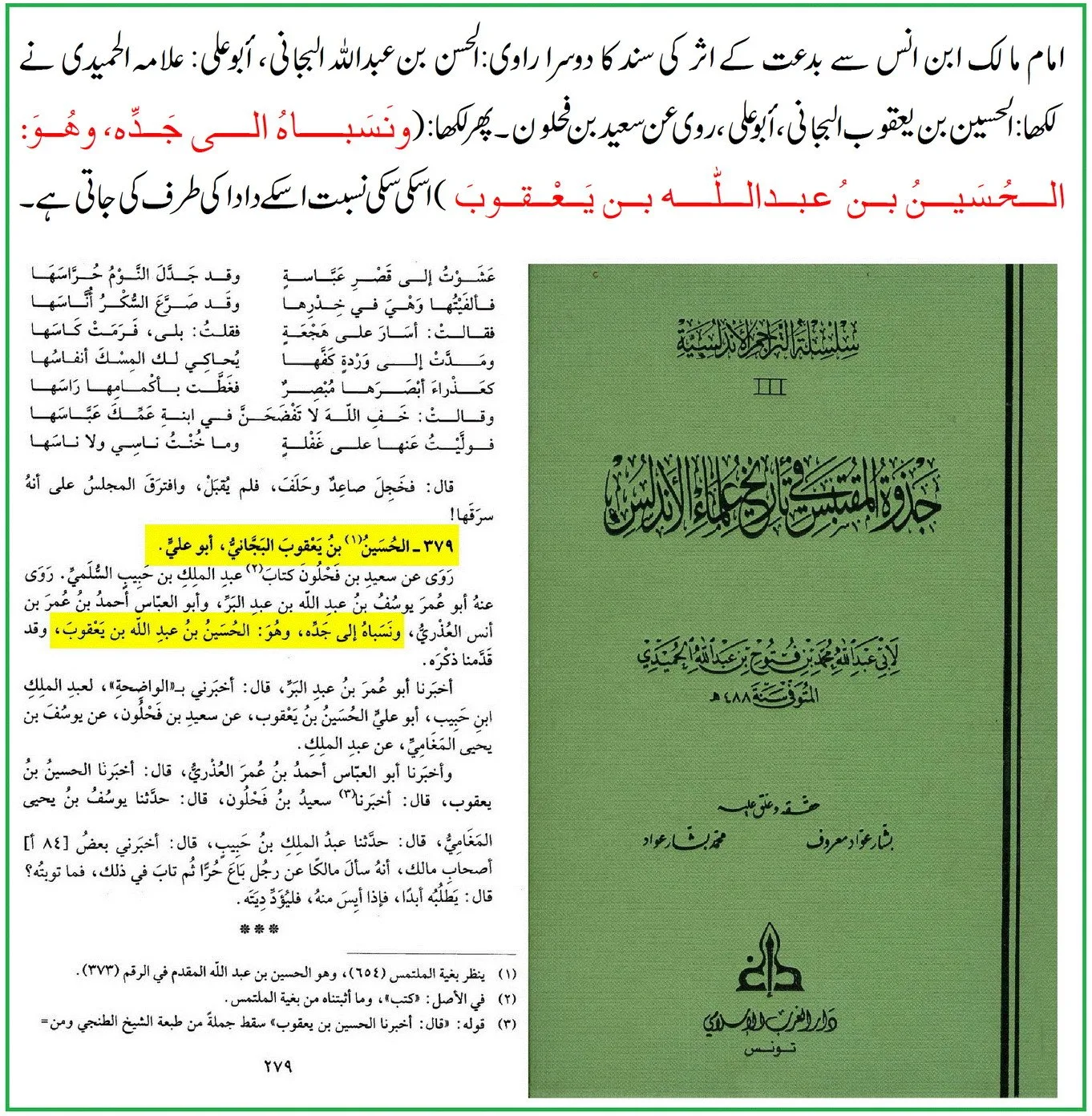
2. Imam Humaydi's Clarification (Attributing to the grandfather's side)
الحسين بن يعقوب البجاني أبو علي، روى عن سعيد بن فحلون كتاب عبد الملك بن حبيب السلمى----- ونسباه إلى جده، وهو الحسين بن عبد الله ابن يعقوب
Translation:
Hussain bin Ya'qub al-Bajani Abu Ali narrated from Sa'id bin Fahlun from the book of Abd al-Malik bin Habib al-Salmi... and his attribution is made to the grandfather's side, and he is "Hussain bin Abdullah bin Ya'qub."
Reference: (Juzwat al-Muqtasib fi Dhikr Wulat al-Andalus)
Conclusion:
Thus, the identification of "Hussain bin Ya'qub" becomes clear from the words of the experts in biographies.
③ Narrator Number 3: Sa'id bin Fahlun al-Albiri al-Andalusi (Abu Uthman)
1. Hafiz Dhahabi:
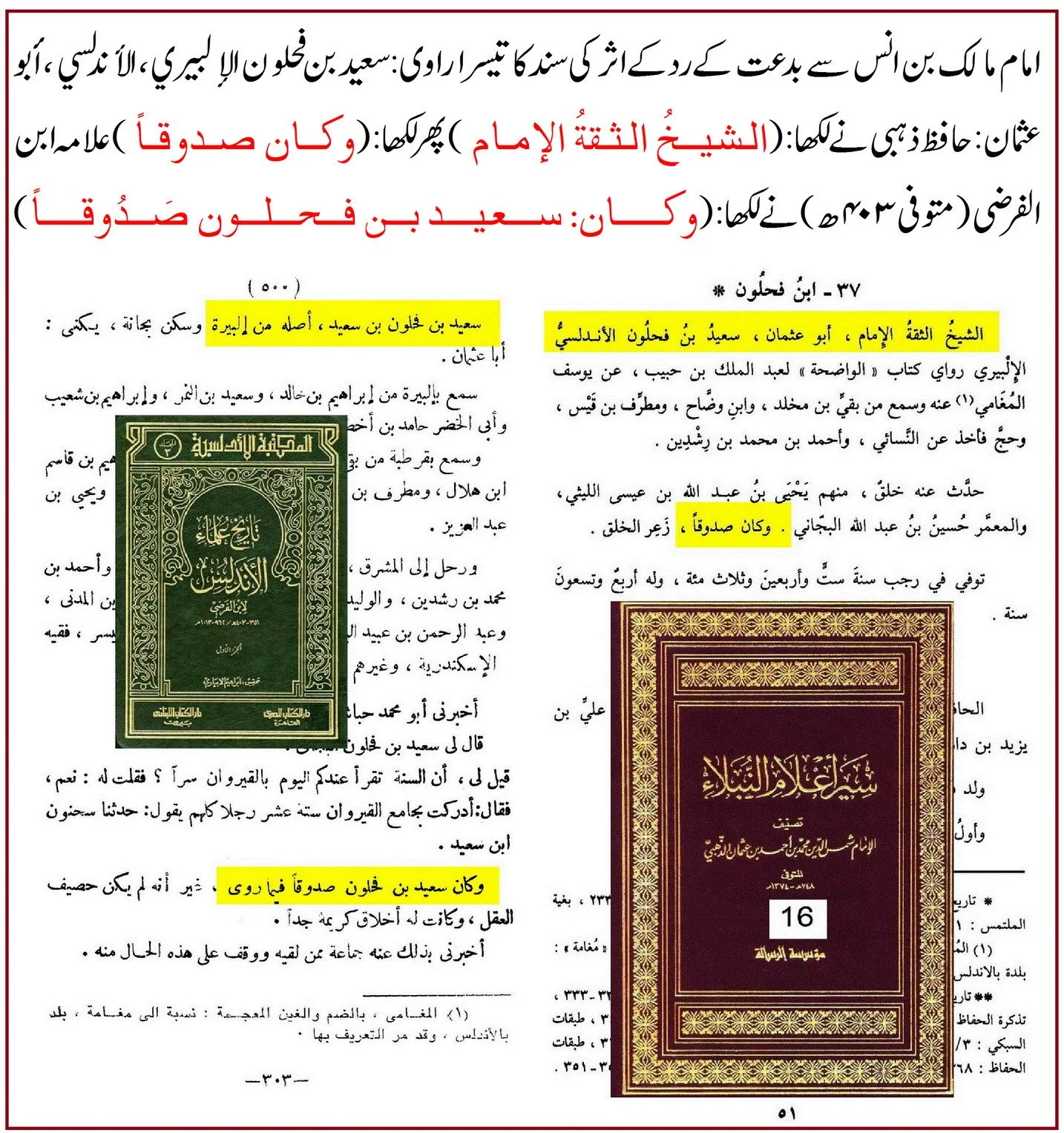
37 - ابْنُ فَحْلُوْنَ أَبُو عُثْمَانَ سَعِيْدُ بنُ فَحْلُوْنَ الأَنْدَلُسِيُّ *
الشَّيْخُ، الثِّقَةُ، الإِمَامُ، أَبُو عُثْمَانَ سَعِيْدُ بنُ فحلُوْنَ الأَنْدَلُسِيُّ، الإِلْبِيْرِيُّ، رَاوي كِتَابِ (الوَاضحَةِ) لِعَبْدِ المَلِكِ بنِ حَبِيْبٍ، عَنْ يُوْسُفَ المُغَامِيِّ (1) عَنْهُ.
Ibn Fahloon Abu Uthman Saeed bin Fahloon Andalusi (Al-Albiri) is a "Sheikh, trustworthy, Imam." He is a narrator of Abdul Malik bin Habeeb's book "Al-Wadihah," through Yusuf Al-Mughami.
Reference: (Siyar A'lam al-Nubala)
2. Ibn Al-Furadi:
وکان سعید بن فحلون صدوقاً
Saeed bin Fahloon was truthful.
Conclusion:
The authentication of this narrator is present as "trustworthy/Imam" and at least as "truthful," which strengthens the chain.
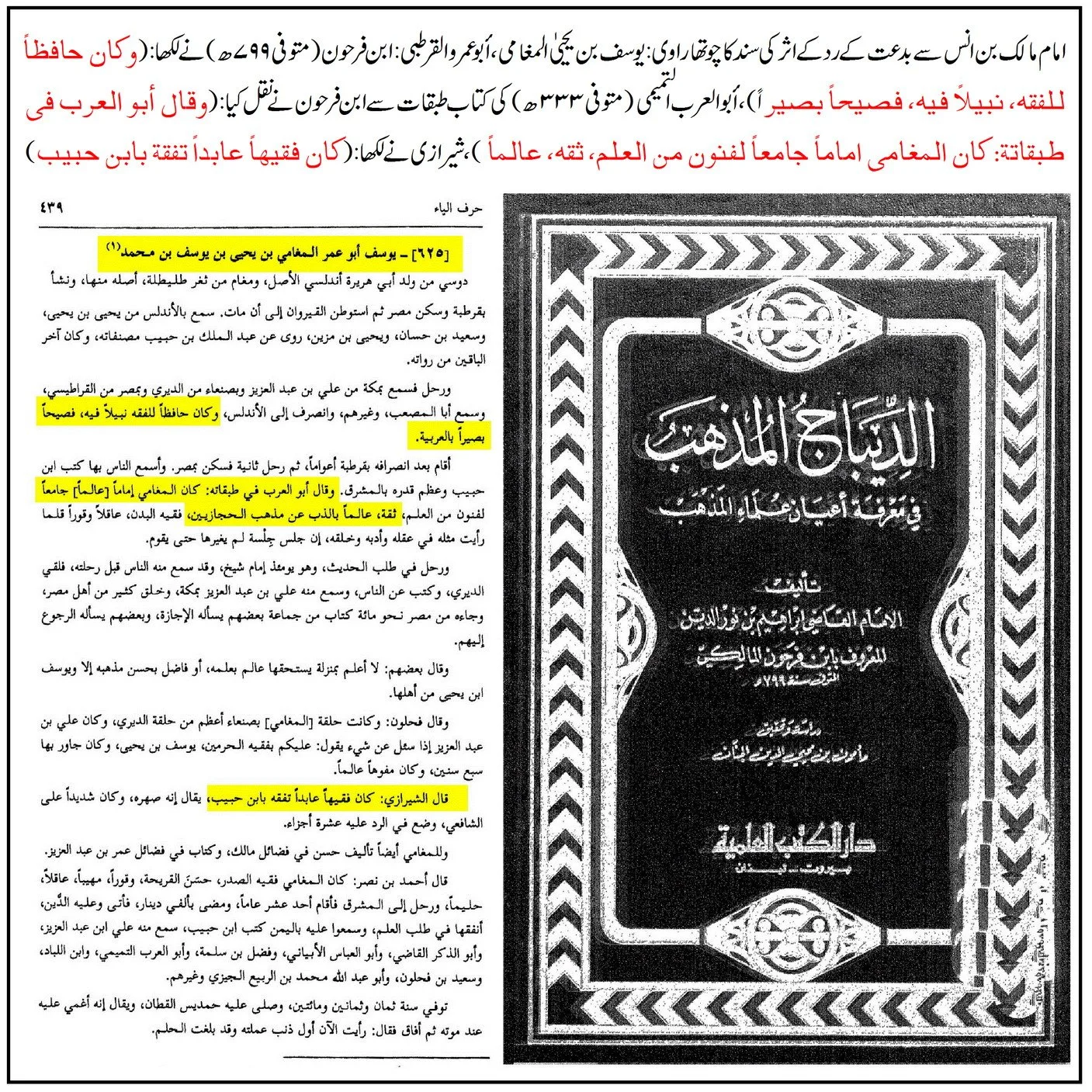
④ Narrator No. 4: Yusuf bin Yahya Al-Mughami (Abu Umar Al-Qurtubi)
1. Ibn Farhun:
يُوسُف أَبُو عمر المغامي بن يحيى بن يُوسُف بن مُحَمَّد دوسي----- وَكَانَ حَافِظًا للفقه نبيلاً فِيهِ فصيحاً بَصيرًا بِالْعَرَبِيَّةِ
Yusuf Abu Umar Al-Mughami bin Yahya… was a memorizer of jurisprudence, distinguished in it, eloquent, and insightful in Arabic.
Reference: (Al-Dibaj Al-Madhhab fi Ma'rifat A'yan 'Ulama' Al-Madhhab)
2. Abu Al-Arab Al-Tamimi (according to Ibn Farhun's narration):
وَقَالَ أَبُو الْعَرَب فِي طبقاته كَانَ المغامي إِمَامًا جَامعا لفنون من الْعلم ثِقَة عَالما بالذب عَن مَذْهَب الْحِجَازِيِّينَ
Abu Al-Arab said in his "Tabaqat": Al-Mughami was an Imam, comprehensive in multiple sciences, trustworthy, and a scholar defending the doctrine of the people of Hijaz.
Reference: (Al-Dibaj Al-Madhhab fi Ma'rifat A'yan 'Ulama' Al-Madhhab)
3. Allama Shirazi:
قَالَ الشِّيرَازِيّ كَانَ فَقِيها عابداً تفقه بِابْن حبيب
Shirazi said: He was a jurist and worshipper, and he acquired jurisprudence from Ibn Habeeb.
Reference: (Al-Dibaj Al-Madhhab fi Ma'rifat A'yan 'Ulama' Al-Madhhab)
Conclusion:
The endorsement of Yusuf al-Mughami is found in the words "Thiqah/Imam/Hafiz al-Fiqh," which is a clear enhancement in the strength of the chain.
◈ An Objection and Its Scholarly Response: Is “Yunus (Yusuf) bin Yahya al-Mughami” Unknown?
Objection:
A Barelvi critic said that “Yunus bin Yahya al-Mughami” in the chain is unknown.
Response:
The text of the chain itself points to “Yunus (Yusuf),” and among the biographers, the correct name is “Yusuf bin Yahya al-Mughami.” This correction is also found in other sources:
1. Ibn Farhun’s explicit statement:
يُوسُف أَبُو عمر المغامي بن يحيى بن يُوسُف بن مُحَمَّد----رُوِيَ عَن عبد الملك بن حبيب مصنفاته --------ـ
Translation:
Yusuf Abu Umar al-Mughami… narrates from Abd al-Malik bin Habib from his works.
Reference: (al-Dibaj al-Madhhab fi Ma’rifat A’yan ‘Ulama’ al-Madhhab)
And then:
كتب ابْن حبيب سمع مِنْهُ-----وَسَعِيد بن فحلون
Translation:
The books of Ibn Habib were heard from him… and among those who heard from him is Sa’id bin Fahloon as well.
Reference: (al-Dibaj al-Madhhab fi Ma’rifat A’yan ‘Ulama’ al-Madhhab)
2. The form of the same chain in Ibn Hazm’s “al-Muhalla”:
فَمِمَّا رُوِيَ فِي الْقَوْلِ الْأَوَّلِ: مَا ناه أَحْمَدُ بْنُ عُمَرَ بْنِ أَنَسٍ نا الْحَسَنُ بْنُ يَعْقُوبَ نا سَعْدُ بْنُ فَلْحُونٍ نا "يُوسُفُ بْنُ يَحْيَى" نا عَبْدُ الْمَلِكِ بْنُ حَبِيبٍ قَالَ:
Translation:
In this chain, the name “Yusuf bin Yahya” is explicitly mentioned.
Reference: (al-Muhalla bil-Athar)
Result:
This objection actually arose from a writing/copying error of the name (Yunus/Yusuf) or a mistake in attribution, whereas in authentic narrations the form “Yusuf bin Yahya al-Mughami” is clear.
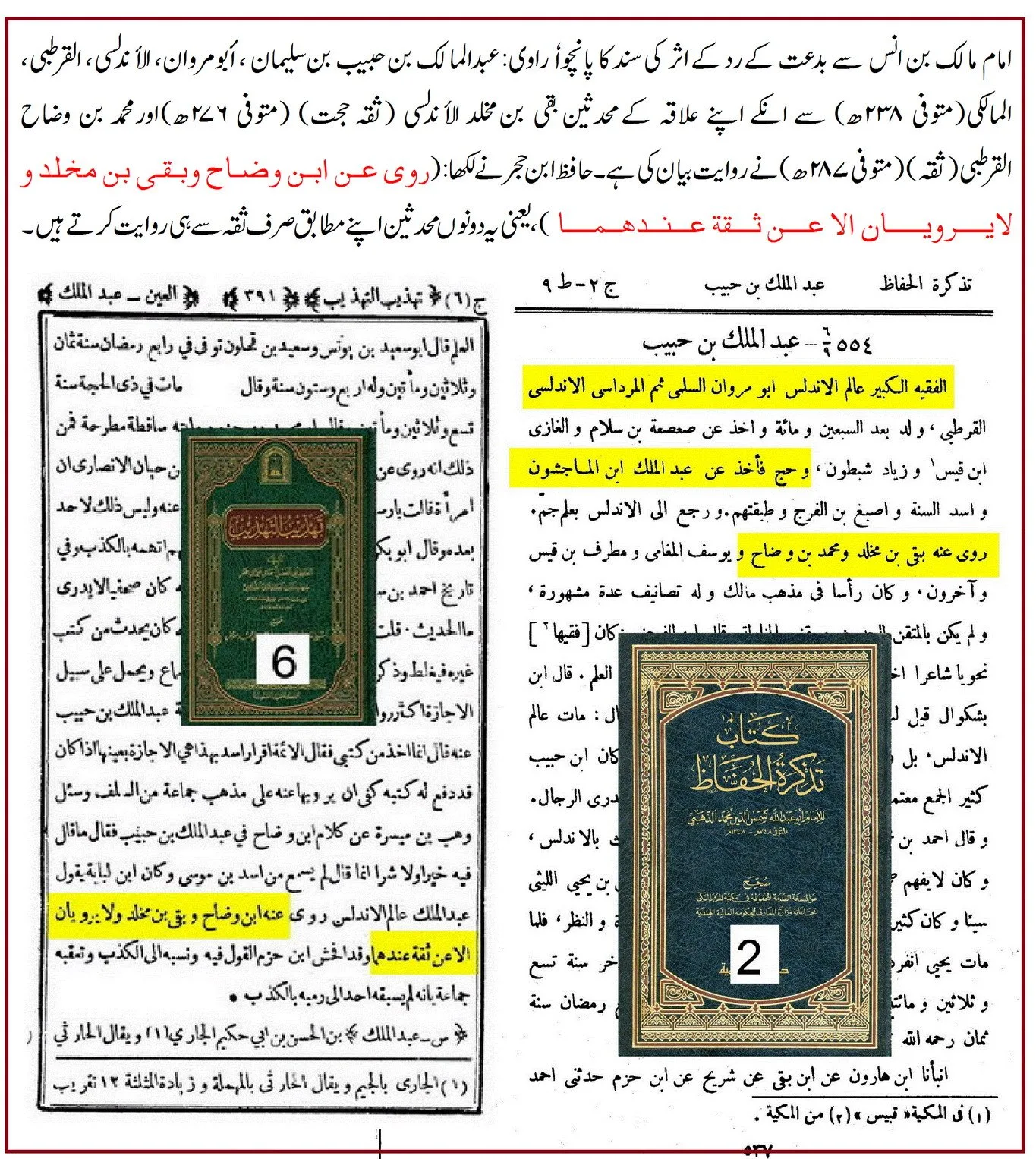
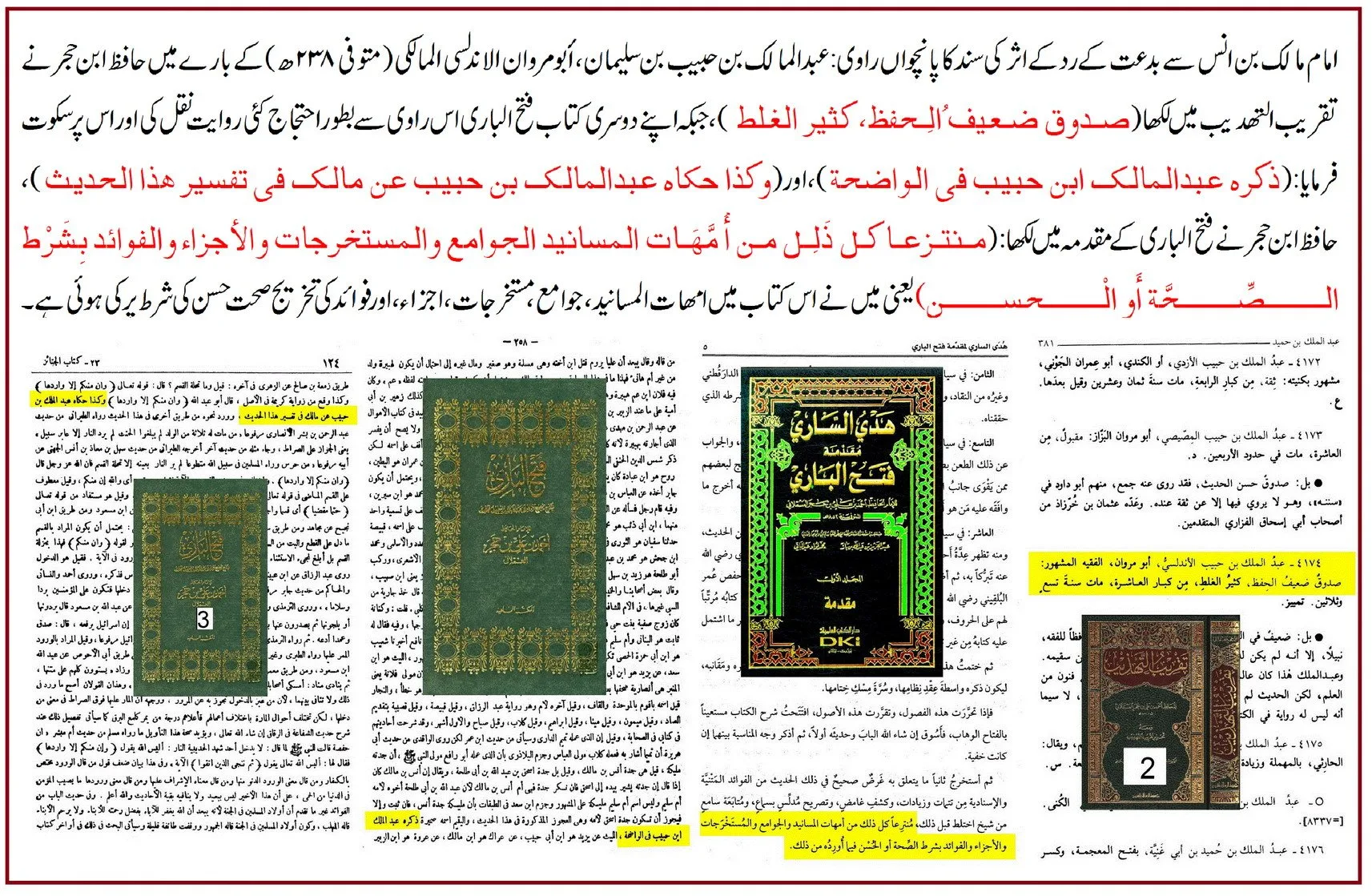
⑤ Narrator No. 5: Abdul Malik bin Habib al-Sulami al-Andalusi (Abu Marwan, died 238 AH)
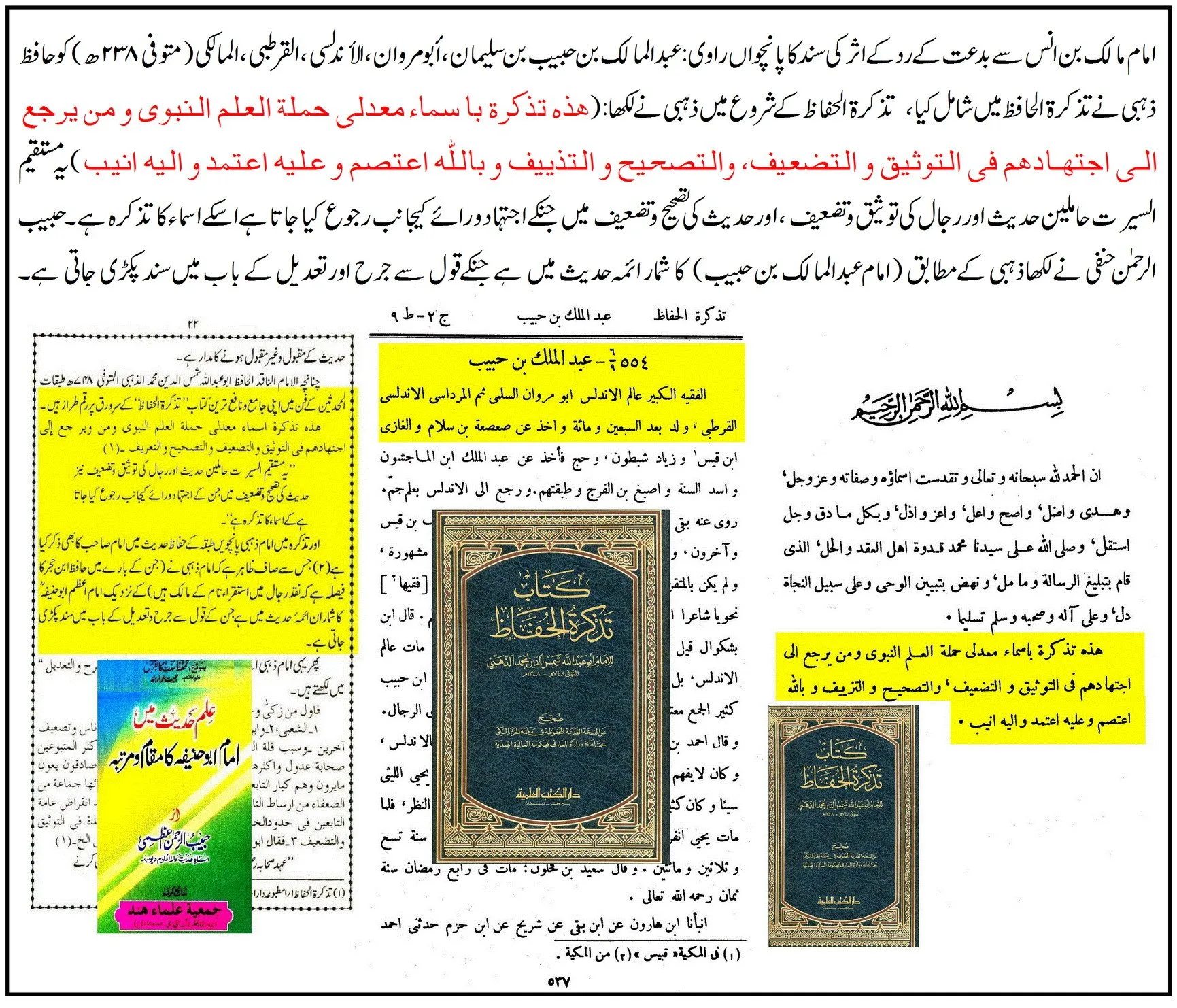
1. Hafiz al-Dhahabi:
554- 6/ 9- عبد الملك بن حبيب الفقيه الكبير عالم الأندلس أبو مروان السلمي ثم المرداسى الأندلسي القرطبي:-----روى عنه بقى بن مخلد ومحمد بن وضاح
Translation:
Abdul Malik bin Habib was a great jurist, scholar of Andalusia, Abu Marwan al-Sulami… Baqi bin Makhlad and Muhammad bin Waddah narrated from him.
Reference: (Tadhkirat al-Huffaz)
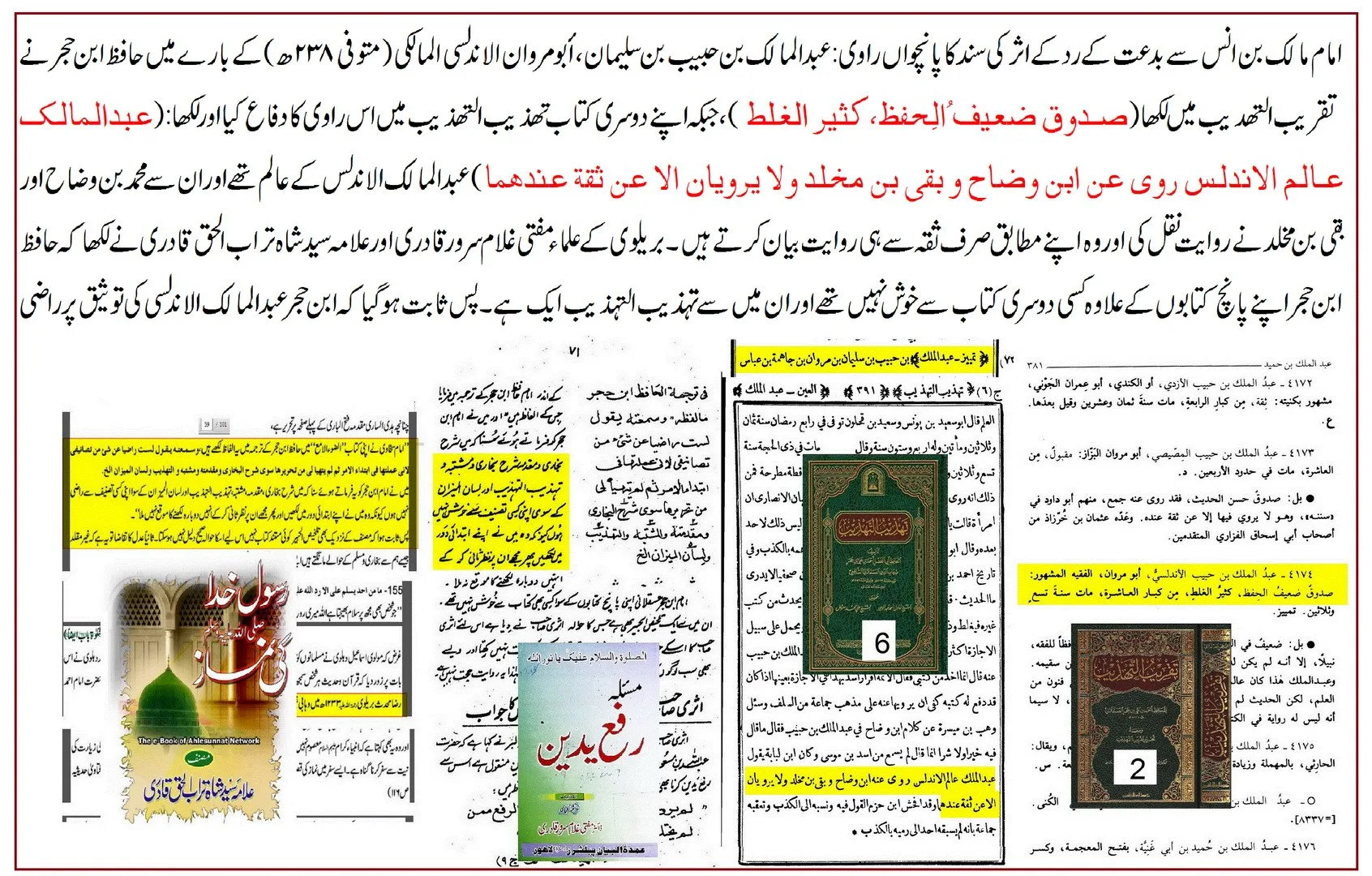
2. An important indication in Hafiz Ibn Hajar (Tahdhib al-Tahdhib):
739 - "تمييز عبد الملك" بن حبيب بن سليمان بن مروان بن جاهمة بن----عبد الملك عالم الأندلس روى عنه ابن وضاح وبقي بن مخلد ولا يرويان إلا عن ثقة عندهما
Translation:
Abdul Malik bin Habib is a scholar of Andalusia, Ibn Waddah and Baqi bin Makhlad narrated from him, and both of them narrate only from trustworthy narrators according to their view.
Reference: (Tahdhib al-Tahdhib)
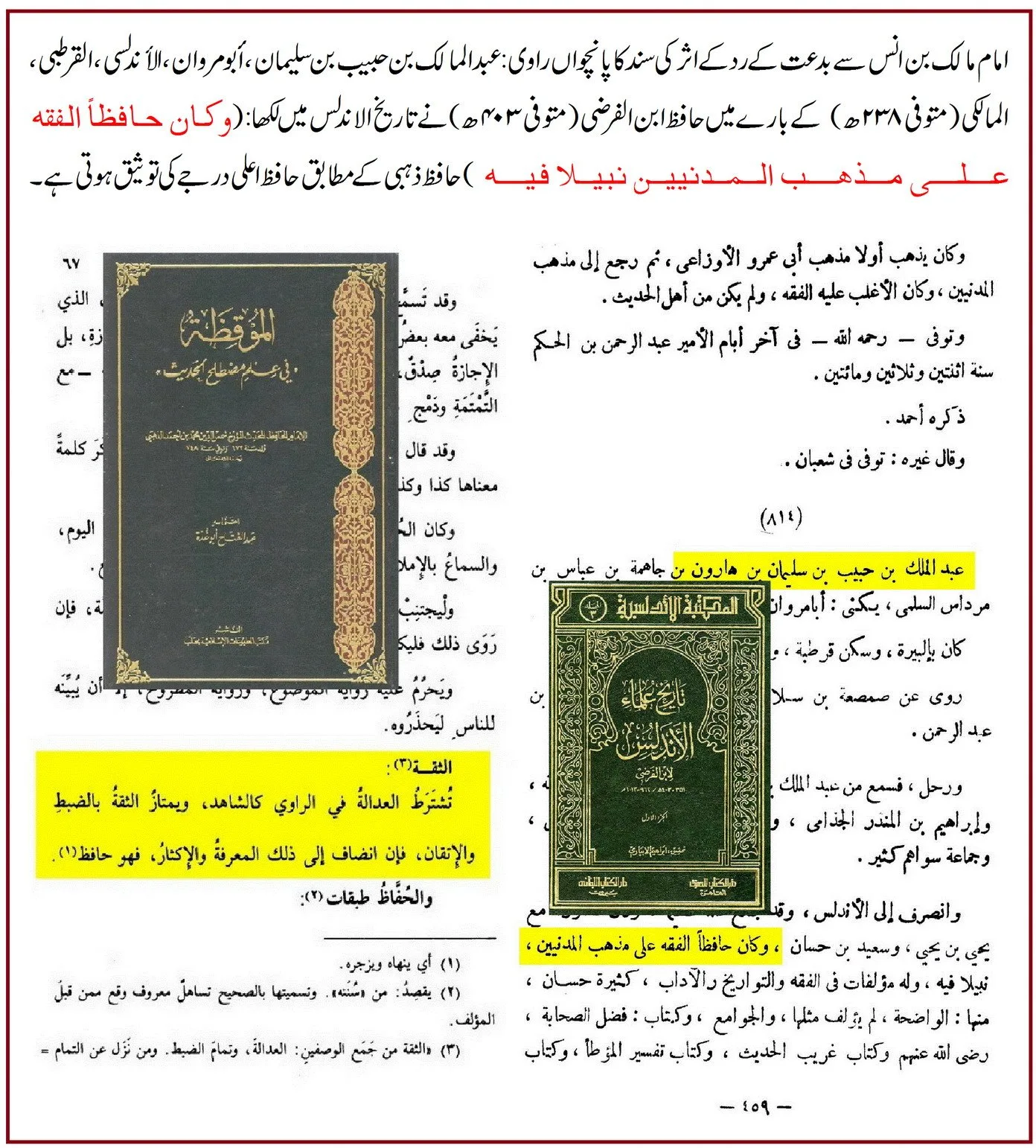
3. Ibn al-Furadi:
816 - عبد المَلِك بن حَبيب بن سُلَيْمان بن هارون بن جاهمة بن عَبّاس----- وكان: حافِظاً لِلْفِقْه على مَذْهب المدنيّين، نبيلا فيه
Translation:
Abdul Malik bin Habib… was a memorizer of jurisprudence according to the Madhhab of the people of Madinah and was distinguished in it.
Reference: (Tarikh Ulama al-Andalus by Ibn al-Furadi)
4. Hafiz al-Dhahabi’s definition of “Hafiz” (terminological benefit):
الثقة: تُشتَرَطُ العدالةُ في الراوي، كالشاهد. ويمتازُ الثقةُ بالضبطِ والإتقان. فإن انضافَ إلى ذلك المعرفةُ والإكثارُ، فهو حافظٌ.
Translation:
In a trustworthy narrator, uprightness (adalah) is a condition, and a trustworthy narrator is distinguished by precision and mastery. If knowledge and frequent narration are also combined with this, then he is called a “Hafiz.”
Reference: (Al-Mawqizah fi Ilm Mustalah al-Hadith)
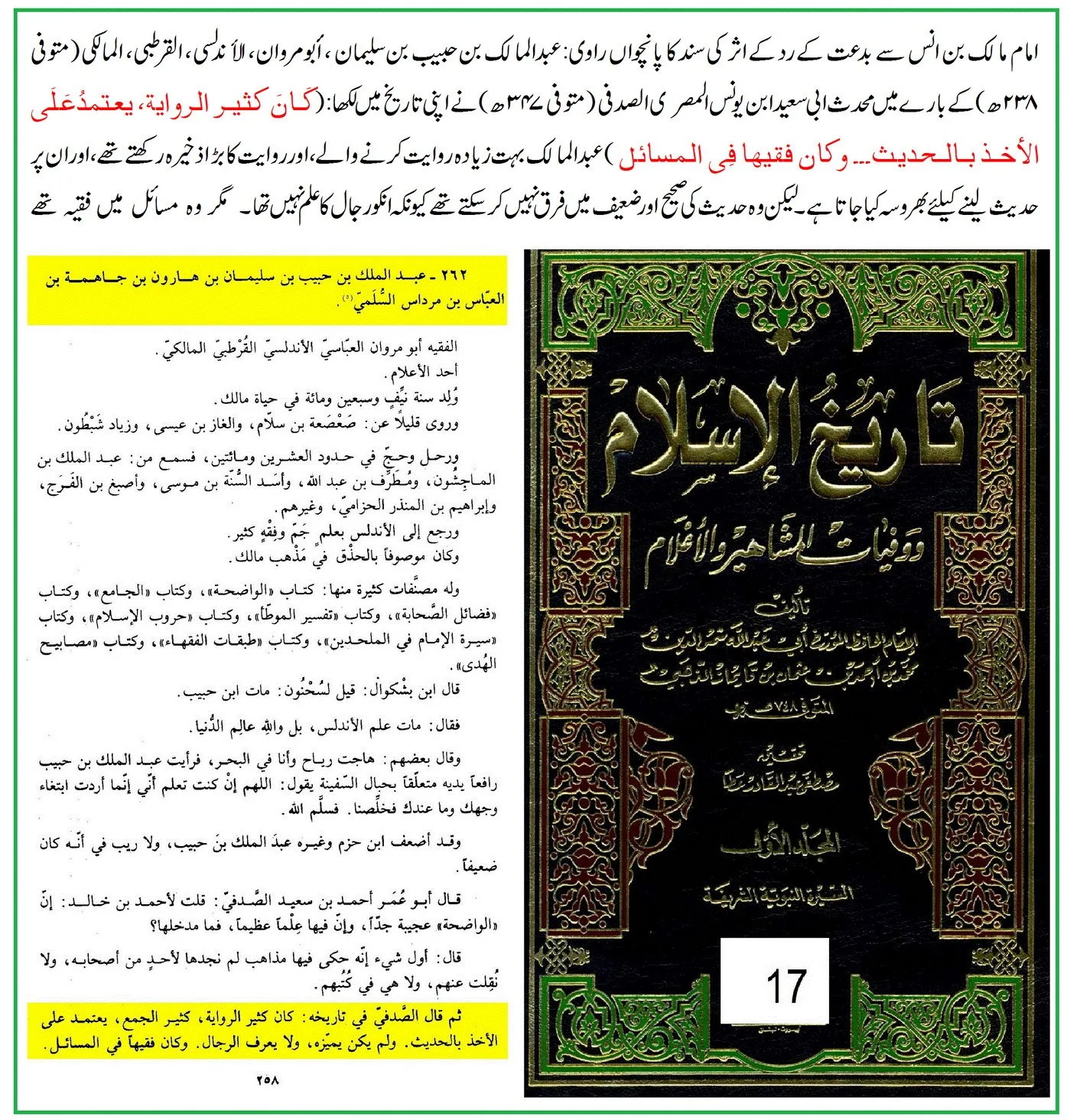
5. Hafiz Zahabi also quotes a critical note in (Tarikh al-Islam):
ثُمَّ قَالَ الصَّدفيّ فِي تاريخه: كَانَ كثير الرواية، كثير الجمع، يعتمدُ عَلَى الأخذ بالحديث. ولَم يكن يميّزه، ولا يعرف الرجال. وكان فقيهًا فِي المسائل.
Translation:
Then As-Sudafi said in his history: He was a very prolific narrator, a great collector, trusted in taking hadith, but he could not distinguish (in every narration) and did not know the narrators (in a perfect degree); however, he was a jurist in issues.
Reference: (Tarikh al-Islam wa Wafayat al-Mashahir wal-A'lam)
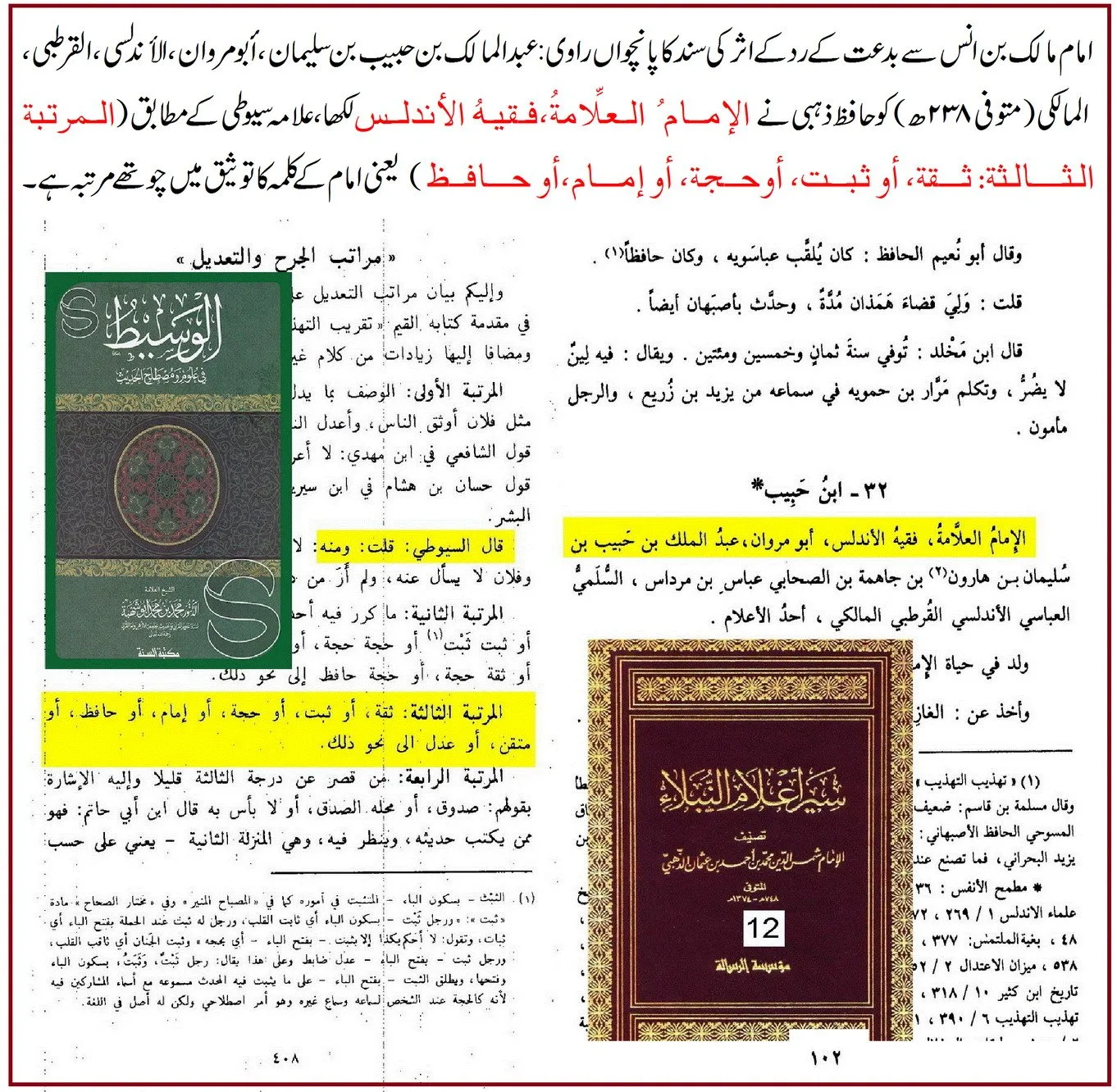
6. Hafiz Zahabi in (Siyar A'lam al-Nubala):
32 - ابْنُ حَبِيْبٍ عَبْدُ المَلِكِ بنُ حَبِيْبِ بنِ سُلَيْمَانَ السُّلَمِيُّ *----الإِمَامُ، العَلاَّمَةُ، فَقِيْهُ الأَنْدَلُسِ، أَبُو مَرْوَانَ عَبْدُ المَلِكِ بنُ حَبِيْبِ بنِ سُلَيْمَانَ بنِ هَارُوْنَ
Translation:
Ibn Habib Abdul Malik bin Habib al-Salmi… is the "Imam, Scholar, Jurist of Andalus" Abu Marwan.
Reference: (Siyar A'lam al-Nubala)
Conclusion:
Regarding Abdul Malik bin Habib, among the scholars there is both praise and caution in some aspects: there is recognition of his jurisprudence and knowledge, and also discussion on his memorization/errors. The narration of "athar" (reports) from such a narrator—especially when combined with other indications and the overall condition of the chain—is considered debatable/contestable by researchers, as many Imams have derived and narrated from him.
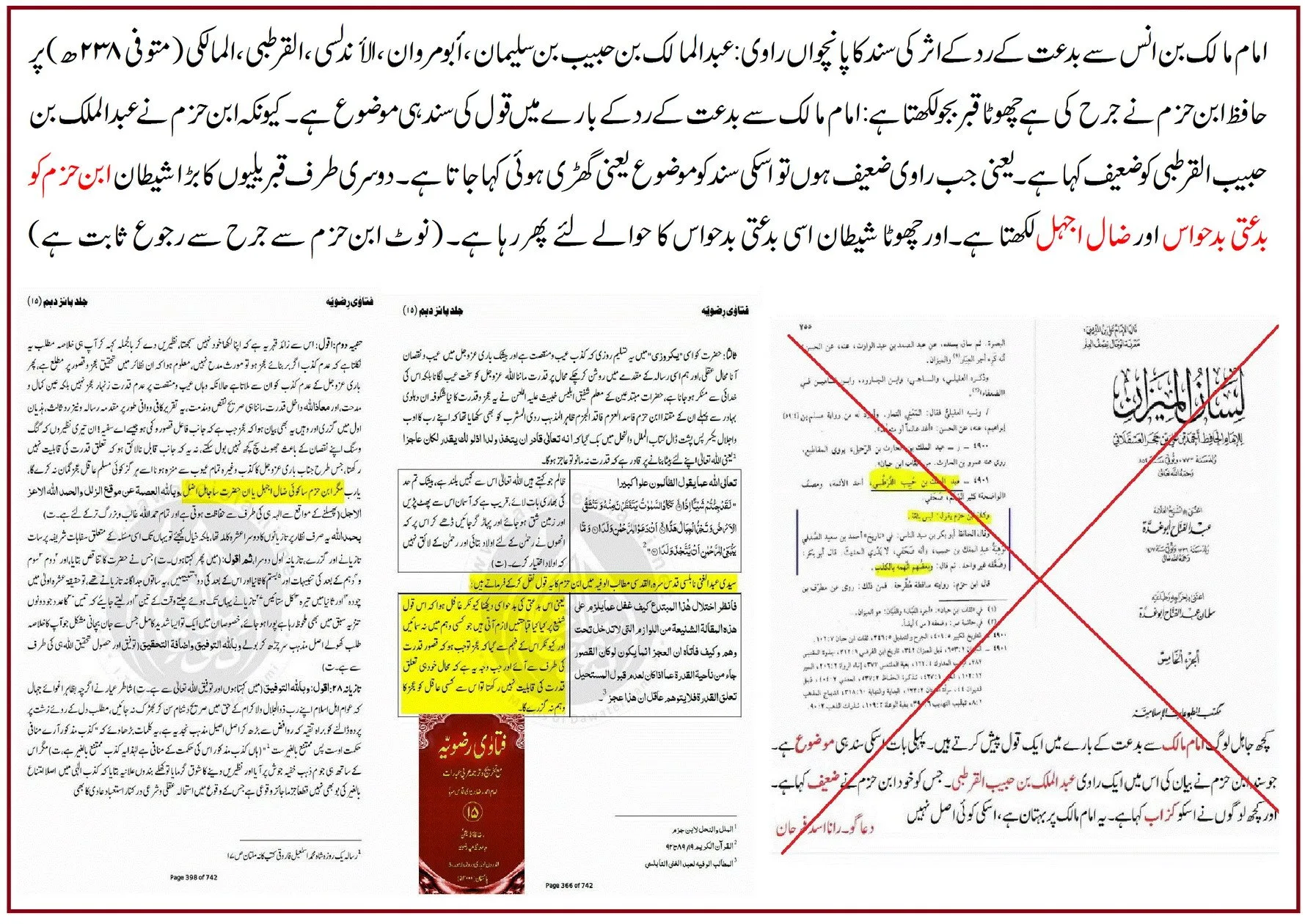
◈ An Objection and Scholarly Discussion on it: The Weakening of “Abdul Malik bin Habib”
Objection:
A Barelvi critic said that Abdul Malik bin Habib is "weak in memory," and some scholars have spoken harshly about him. Also, the following words are mentioned in "Taqreeb":
عبد الملك بن حبيب الأندلسي، أبو مروان، الفقيه المشهور: صدوق ضعيف الحفظ، كثير الغلط،
Translation:
Abdul Malik bin Habib Al-Andalusi Abu Marwan, a famous jurist: truthful but weak in memory, and makes many mistakes.
Answer:
Along with this, it is also a strong indication that Imams like Ibn Waddah and Baqi bin Makhlad narrate from him, and it is a fundamental principle mentioned in Tahdhib al-Tahdhib that these two only narrate from those whom they consider "trustworthy":
ولا يرويان إلا عن ثقة عندهما
Translation:
They do not narrate from anyone except those whom they consider trustworthy.
Reference: (Tahdhib al-Tahdhib)
Furthermore, the mention of his works/narrations by major commentators is also considered an academic indication; however, "indication" is taken in the overall weight rather than as absolute authentication. This way, the matter remains scholarly and does not become an accusation.
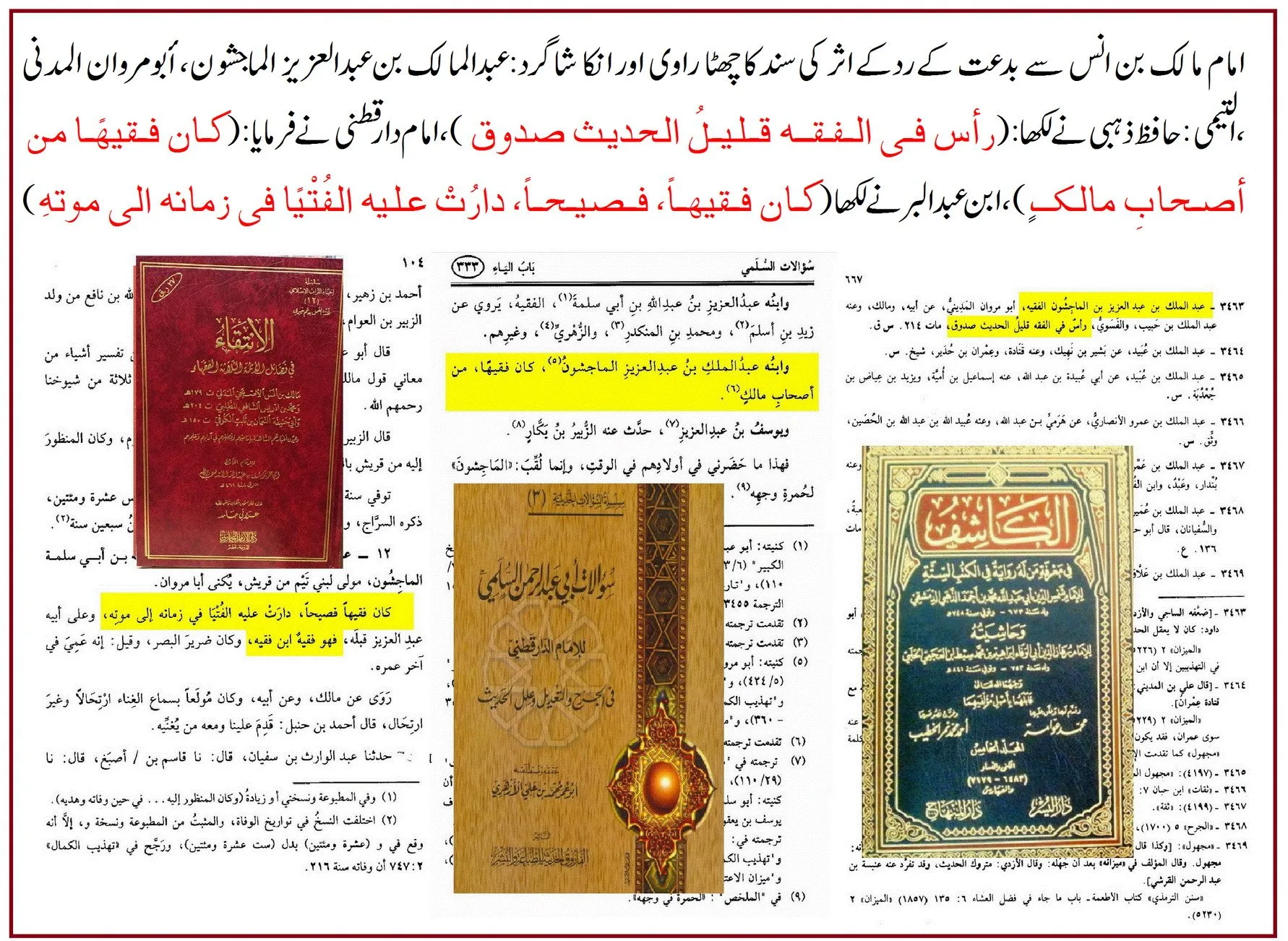
⑥ Narrator Number 6: Abdul Malik bin Abdul Aziz Al-Majshoon (Abu Marwan Al-Madani)
1. Hafiz Al-Dhahabi:
3463- عبد الملك بن عبد العزيز بن الماجشون الفقيه أبو مروان المديني عن أبيه ومالك وعنه عبد الملك بن حبيب والفسوي رأس في الفقه قليل الحديث صدوق
Translation:
Abdul Malik bin Abdul Aziz bin Al-Majshoon, a jurist Abu Marwan Al-Madani… (he) narrated from his father and Malik, and from them Abdul Malik bin Habeeb and Al-Fasawi narrated. He is "Raas" (prominent) in jurisprudence, narrates few hadiths, and is "Saduq" (truthful).
Reference: (Al-Kashif fi Ma'rifat)
2. Imam Darqatni:
عبدُالملكِ بنُ عبدِالعزيزِ الماجشونُ ، كان فقيهًا، من أصحابِ مالكٍ
Translation:
Abdul Malik bin Abdul Aziz Al-Majshoon was a jurist and among the companions of Imam Malik.
Reference: (Su'alat Al-Sulami lil-Darqatni)
3. Ibn Abdul Barr:
عبد الملك بن عبد العزيز بن عبد الله بْنِ أَبِي سَلَمَةَ الْمَاجِشُونُ----- كَانَ فَقِيهًا فَصِيحًا دَارَتْ عَلَيْهِ الْفُتْيَا فِي زَمَانِهِ إِلَى مَوته
Translation:
Abdul Malik bin Abdul Aziz… was a jurist and eloquent; during his lifetime, fatwas revolved around him until his death.
Reference: (Al-Intiqaa fi Fada'il Al-Thalatha)
Conclusion:
This narrator is at least "Saduq" and established with a prominent status in jurisprudence and among the companions of Malik, therefore the chain’s ending is also based on a reasonable foundation.
◈ An Objection: Some Criticisms/Conditions about "Al-Majshoon"
Objection:
A Barelvi critic said that although Al-Majshoon was a jurist, he was considered weak in narration, and in his later years he also became blind. Some transmitted phrases are also mentioned in certain books:
صاحب مالك.
ضعفه الساجي والازدى.
وسئل أحمد بن حنبل عنه، فقال: هو كذا وكذا، ومن يأخذ عنه!
Translation (Summary):
He was a companion/student of Imam Malik. Al-Saji and Al-Azdi considered him weak. When asked about him, Imam Ahmad bin Hanbal spoke harshly... (etc.)
And regarding Ibn Abdul Barr, it is also mentioned:
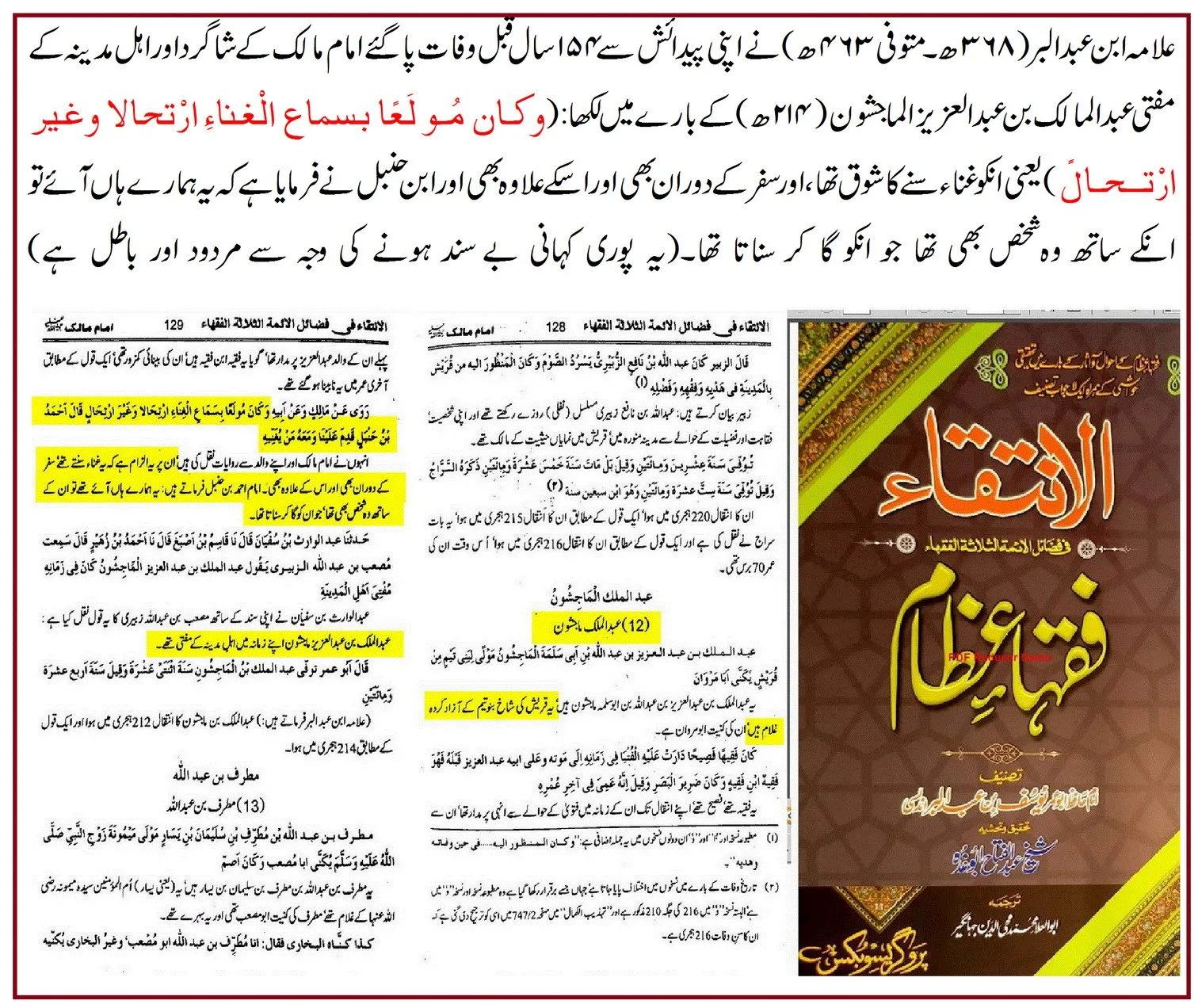
قال ابن عبد البر: كان فقيها فصيحا دارت عليه الفتيا في زمانه وعلى أبيه قبله، وأضر في آخر عمره، وكان مولعا بسماع الغناء.
Translation:
Ibn Abdul Barr said: He was a jurist and eloquent; during his time, fatwas were referred to him, and before him to his father. Towards the end of his life, he became blind, and (it is reported) that he had a fondness for listening to singing.
Answer:
(1) On one hand, there are explicit texts of authentication (Saduq/Faqih/Ras fi al-Fiqh/Ashab Malik), and (2) on the other hand, some critical narrations are also found. At such points, researchers generally perform "collection and reconciliation": that is, the testimony of jurisprudence and the position of Ifta stand on their own, and "not being a mutawātir hadith / few narrations" or "weakening by some critics" stand on their own—then the overall conclusion is drawn according to the grade of the chain, especially when the discussion is about "effect" rather than "a hadith that is decisive in rulings of halal and haram."
And as far as the attribution like "ghina" (singing) is concerned, scholars generally examine such historical reports with chain, evidence, and context, and do not pass judgment on anyone without investigation.
✔ Result of Research: Overall Grade of the Narrators of the Chain
From the above details, the overall status of the narrators of the chain can be arranged as follows:
✦ ① Ahmad bin Umar bin Anas bin Dulhath — "The Imam/Al-Hafiz/Al-Muhaddith/Al-Thiqah"
✦ ② Husayn bin Abdullah/Husayn bin Ya'qub Al-Bajani — well-known among biographers, clear determination, at least worthy of documentation
✦ ③ Saeed bin Fahlun — "Al-Thiqah/Al-Imam" and "Saduq"
✦ ④ Yusuf bin Yahya Al-Mughami — "Imam/Thiqah/Hafiz of Fiqh"
✦ ⑤ Abdul Malik bin Habib — great jurist and scholar of Andalus; along with some critical remarks, but narrations and indications from senior scholars exist
✦ ⑥ Abdul Malik bin Abdul Aziz Al-Majshun — "Saduq", prominent in Fiqh, companion of Malik
From this overall picture, it appears that the original meaning of Imam Malik's principle is well-known among scholars, and it has been transmitted with chains of narration by reliable sources; therefore, rejecting it solely on the basis of disparagement and criticism is not a scholarly approach.
✔ Conclusion and Summary
The statement of Imam Malik bin Anas, may Allah have mercy on him, is a great fundamental principle in the chapter of innovation: "Religion is only that which was established as religion during the Prophetic era." The verse of completion {اليوم أكملت لكم دينكم} is a strong foundation for this principle. For this reason, the Maliki scholars and other learned people have quoted Imam Malik’s stance and used it as evidence. Also, regarding the objections raised about the chain of narration, the correct approach is to discuss them academically by determining the narrators, referring to the texts of the biographers, and considering the overall indications—not through disparagement, accusations, or inappropriate language. Thus, this work remains a strong scholarly argument against innovation, and it guides that adding or inventing acts of worship and calling them "good" to make them part of religion is against the methodology of the pious predecessors.
Last edited:

