Compiled by: Abu Hamzah Salafi
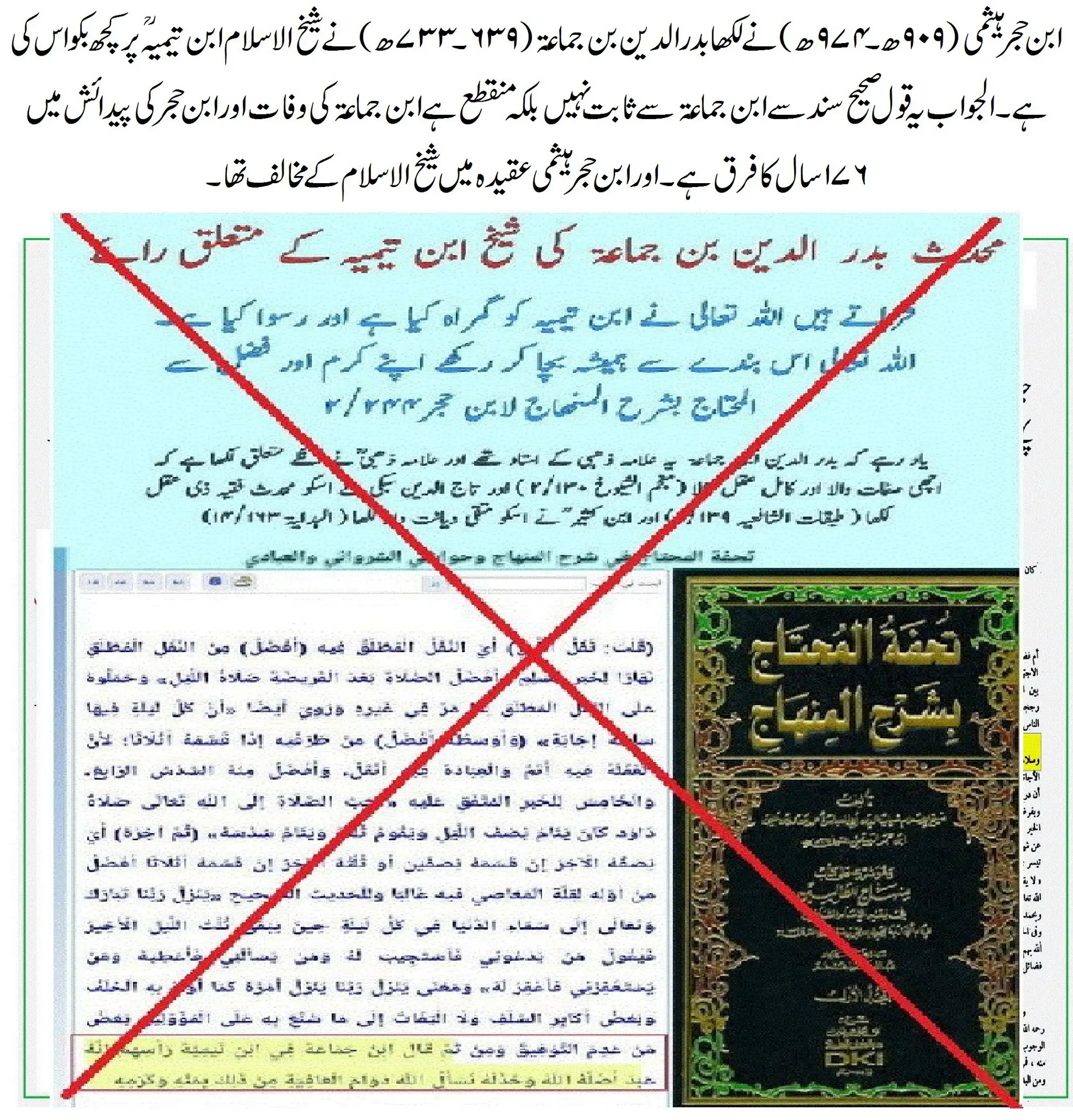
This article is a scholarly response to a misconception raised by Ibn Hajar al-Haytami (d. 974 AH) in his book Tuhfah al-Muhtāj.
He:
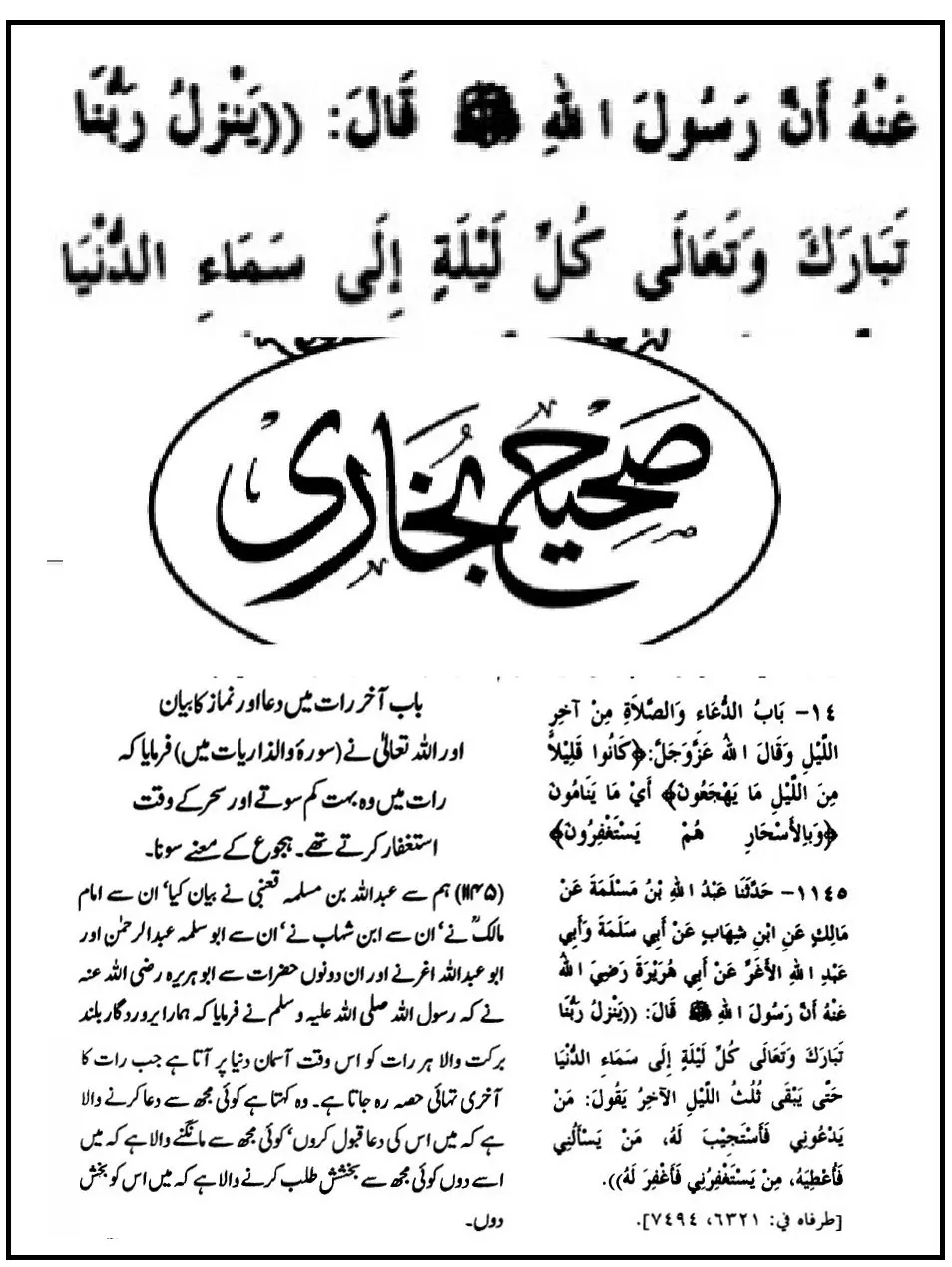
- Interpreted the well-established ḥadīths of “Allah’s Descent” in a figurative sense.
- Claimed that these refer to the “descent of Allah’s command”.
- Quoted Ibn Jamāʿah’s statement to attack Shaykh al-Islām Ibn Taymiyyah رحمه الله.
The Ahl al-Sunnah wa’l-Jamāʿah have a clear and firm methodology regarding this issue:
❖ Allah’s descent every night is an established belief.
❖ Belief in it is obligatory.
❖ Its modality (how it occurs) is unknown and left to Allah.
❖ Only the deviant sects like the Jahmiyyah and Muʿtazilah deny it.
✿ Claim of the Opponent: Ibn Hajar al-Haytami
He stated:
«ومعنى ينزل ربنا ينزل أمره كما أوله به الخلف وبعض أكابر السلف، ولا التفات إلى ما شنّع به على المؤوّلين بعض من عدم التوفيق، ومن ثم قال ابن جماعة في ابن تيمية رأسهم إنه عبد أضله الله وخذله.»
(Tuhfah al-Muhtāj)
Translation:"Some of the later scholars and even some early ones interpreted 'Allah's descent' as the descent of His command. The criticism of these interpreters by some ill-fated individuals is to be ignored. Thus, Ibn Jamāʿah said about Ibn Taymiyyah – their leader – that he was a man whom Allah led astray and disgraced."
◈ Response
This statement is disconnected and without any chain of narration, because:
- Ibn Jamāʿah died in 733 AH.
- Ibn Hajar al-Haytami was born in 905 AH.
- There is a gap of 172 years, so this is mere unsourced transmission.
Further, the claim that only Ibn Taymiyyah interpreted Allah’s descent literally is false.
In truth, there is ijmāʿ (consensus) of the Salaf (righteous predecessors) on affirming this belief.
Imam Mālik, Sufyān ibn ʿUyaynah, ʿAbdullāh ibn al-Mubārak, al-Tirmidhī, Ibn Khuzaymah, al-Dārimī, Isḥāq ibn Rāhawayh – all affirmed it without explaining how.
Ibn Taymiyyah merely followed the way of the Companions and the Salaf:
"Affirm the descent, but do not ask how."
✿ Methodology of the Salaf Regarding Allah’s Descent
Below are clear statements from the Salaf proving that belief in the descent of Allah is wājib (obligatory), and its rejection is the way of the deviant groups.
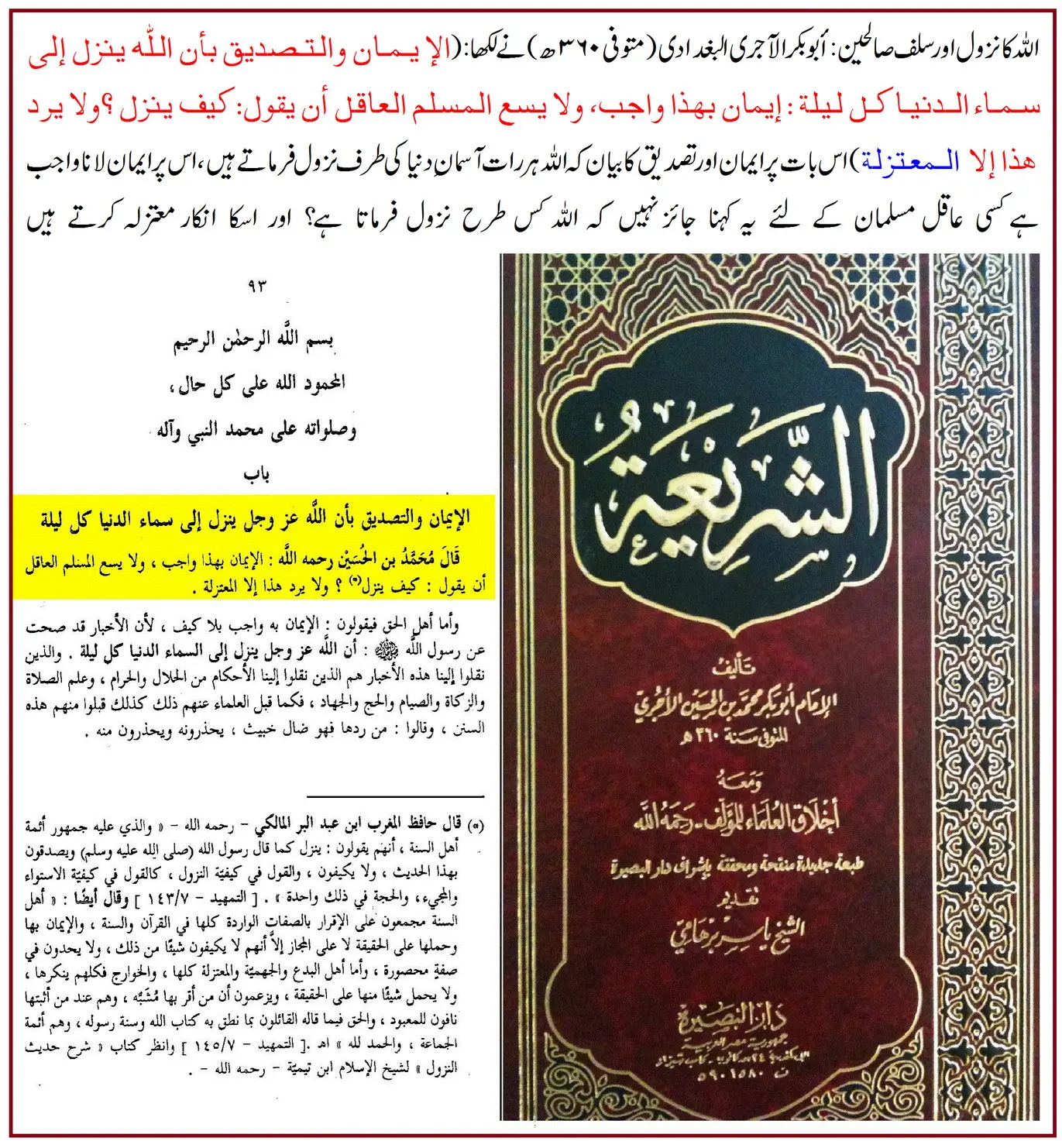
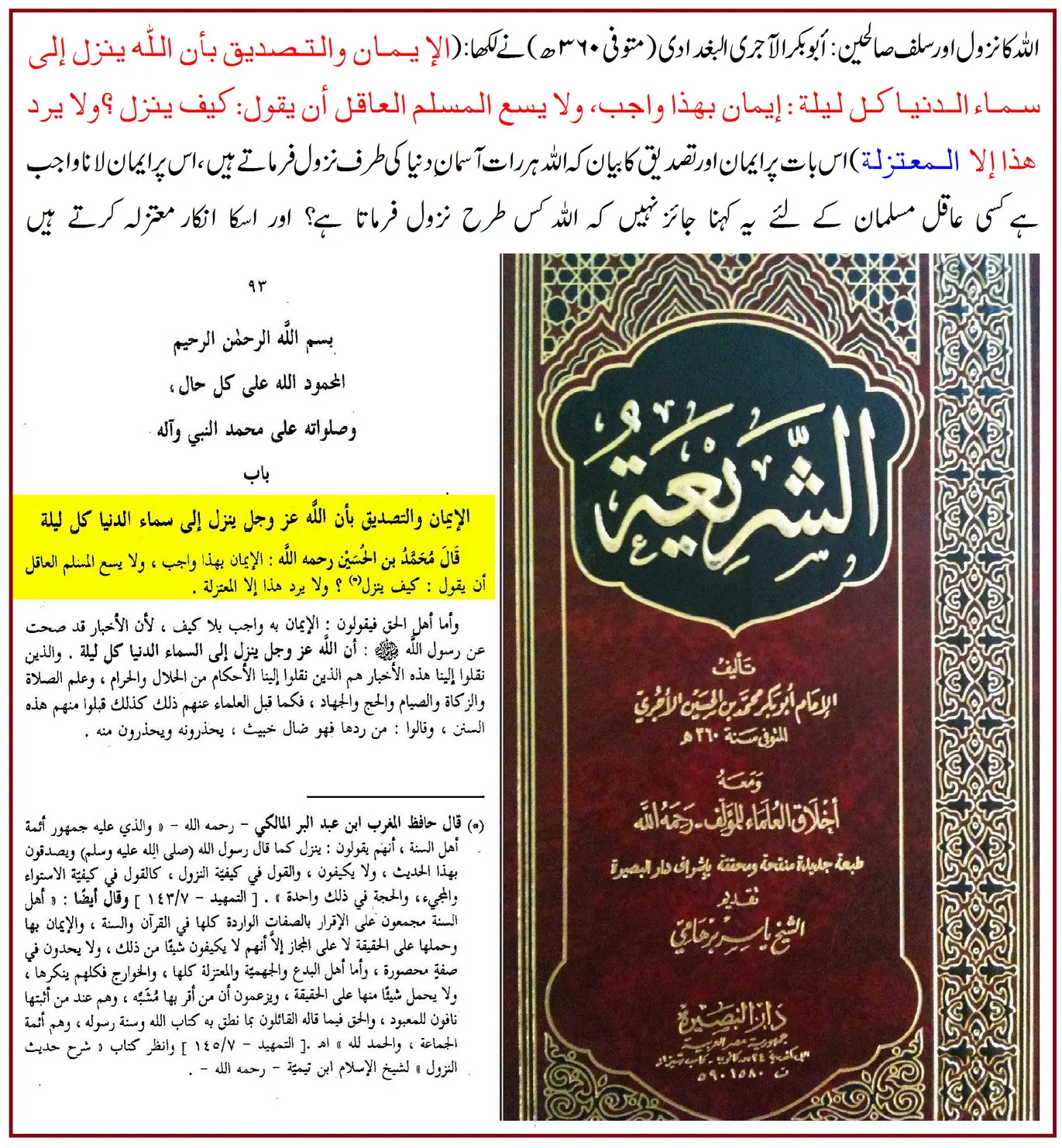
① Imām Abū Bakr al-Ājurri (d. 360 AH)
 al-Sharīʿah
النص:
"وَلَا يَرُدُّ هَذَا إِلَّا الْمُعْتَزِلَةُ... الْإِيمَانُ بِهِ وَاجِبٌ بِلَا كَيْفٍ."
Translation:It is obligatory to affirm that Allah descends every night to the lowest heaven. Denial of this is only from the Muʿtazilah. The people of truth say: Belief in it is obligatory – without asking how.
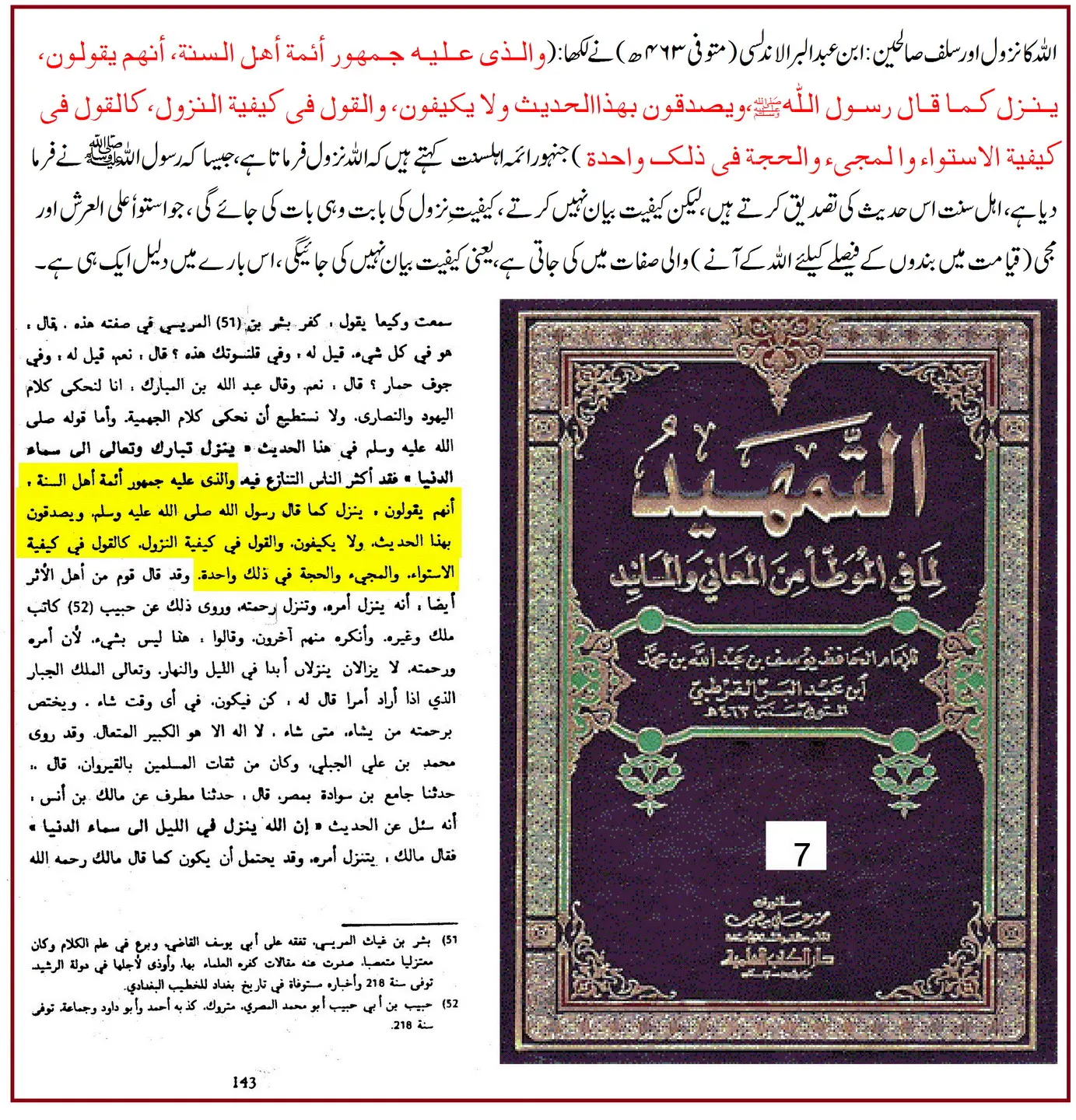
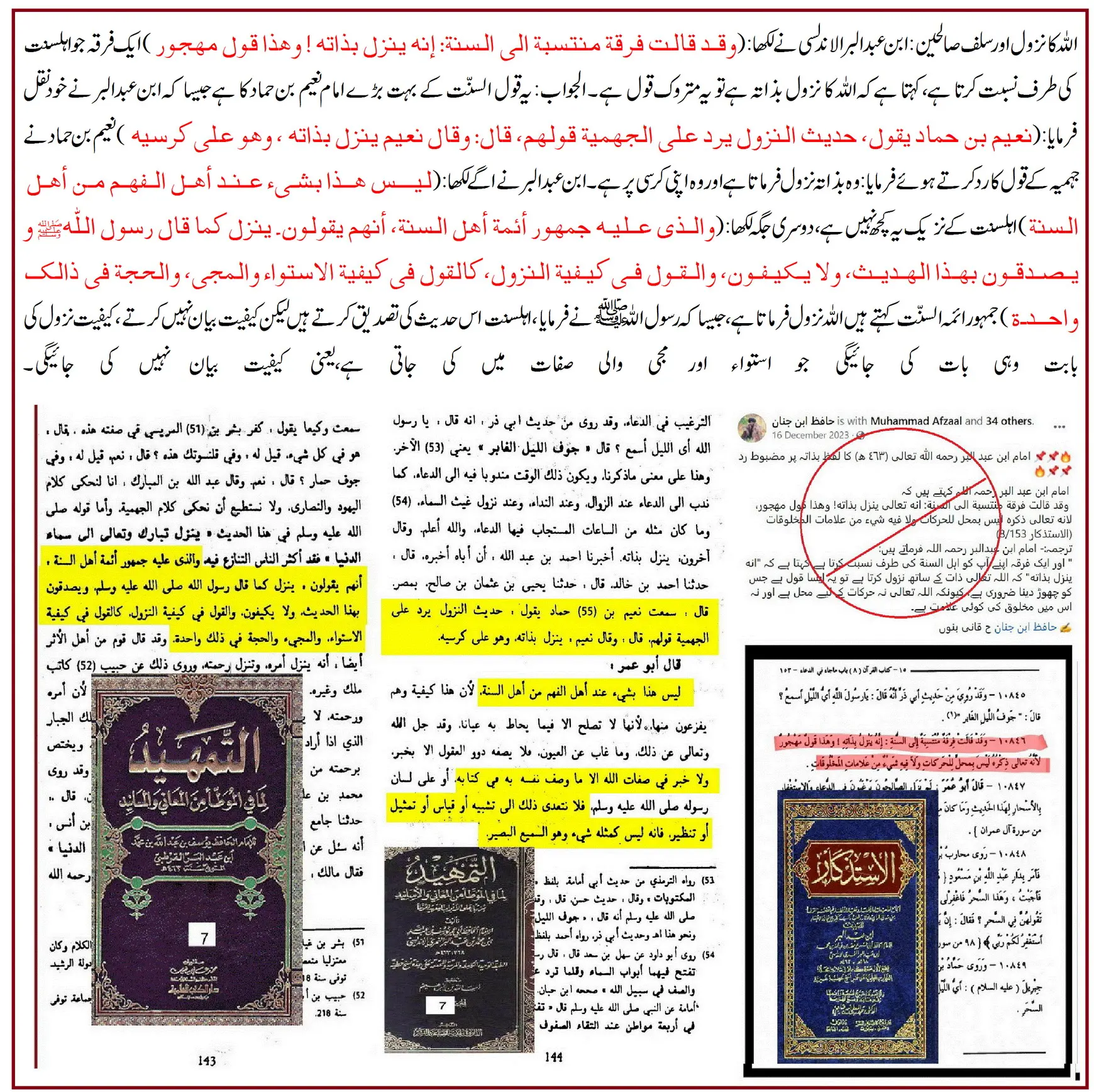
② Imām Ibn ʿAbd al-Barr (d. 463 AH)
al-Tamhīdالنص:
"يصدقون بهذا الحديث ولا يكيفون... والحجة في ذلك واحدة."
Translation:The majority of Ahl al-Sunnah affirm that Allah descends as the Prophet ﷺ said, but do not describe its modality, just as with Allah’s istiwa and coming.
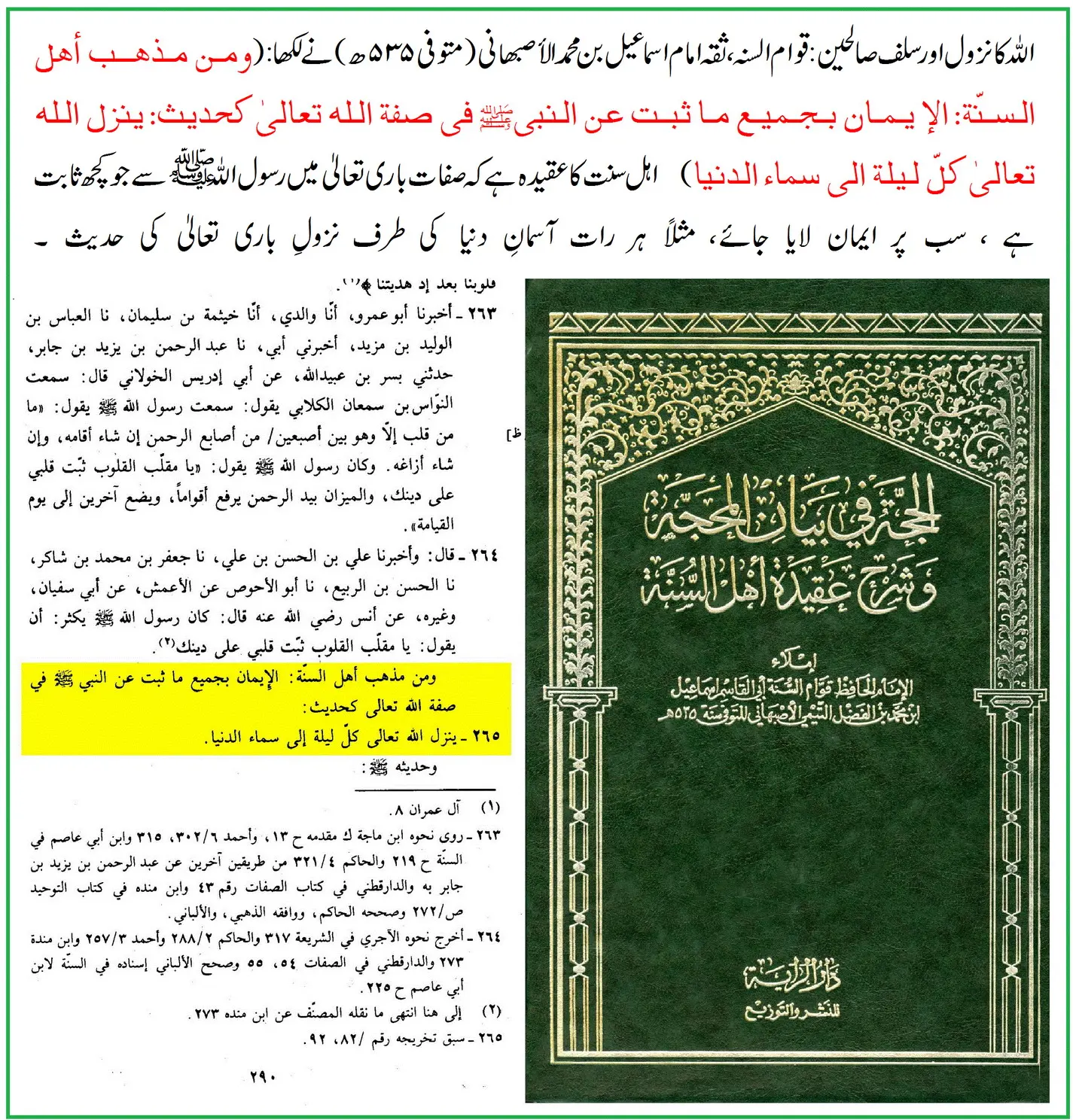
③ Imām Ismāʿīl al-Asbahānī (d. 535 AH)
al-Ḥujjah fī Bayān al-Maḥajjahالنص:
"... كحديث: "ينزل الله تعالى كل ليلة إلى سماء الدنيا”.
Translation:Among the beliefs of Ahl al-Sunnah is affirming all authentic descriptions of Allah, such as:
"Allah descends every night to the lowest heaven."
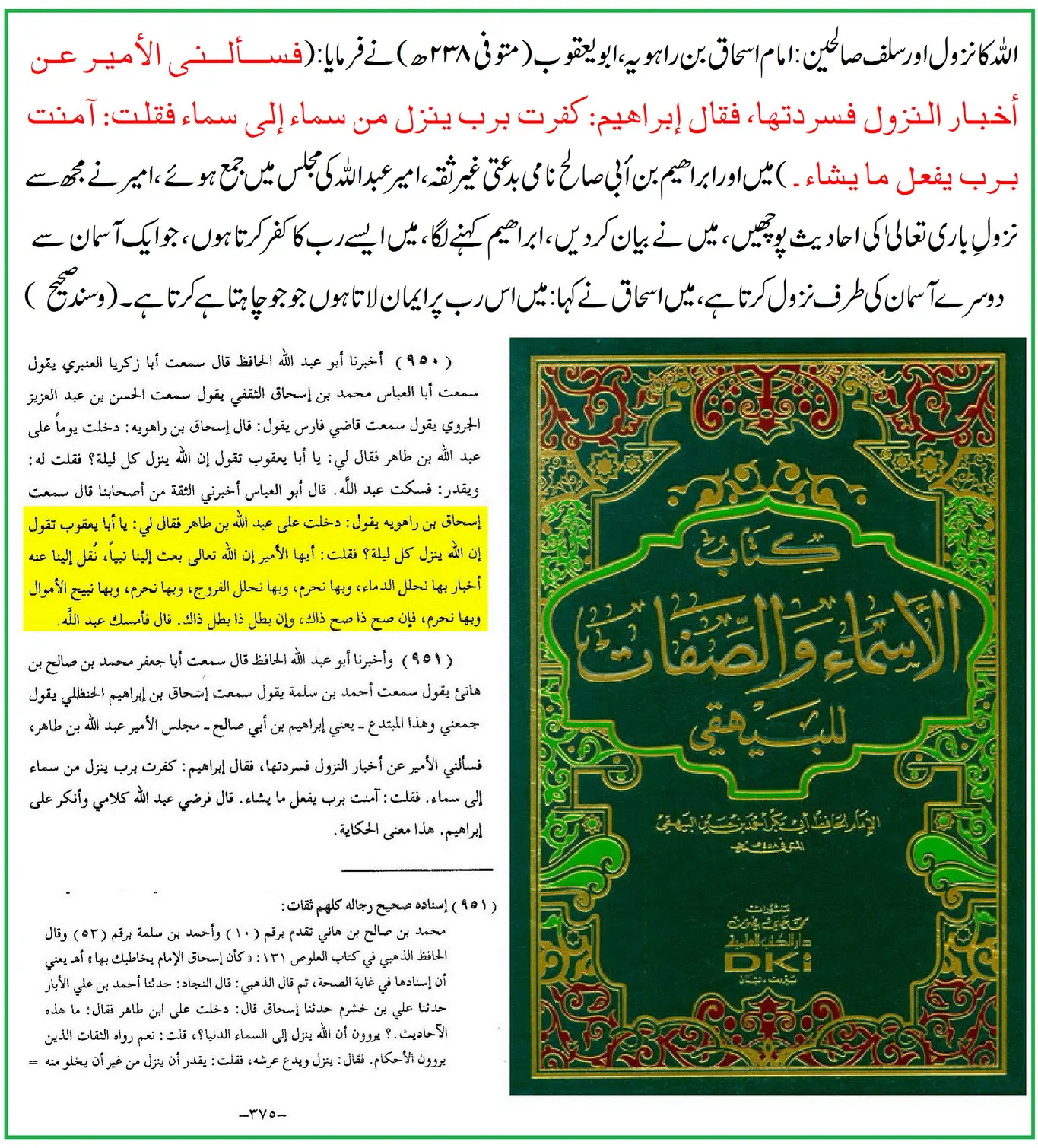
④ Imām Isḥāq ibn Rāhawayh (d. 238 AH)
al-Asmāʾ wa’l-Ṣifāt – al-Bayhaqīالنص:
"آمنت برب يفعل ما يشاء."
Translation:A heretic once said to me: “I disbelieve in a Lord who descends from heaven to heaven.” I replied:
“I believe in a Lord who does whatever He wills.”
⑤ Imām Ibn Khuzaymah (d. 311 AH)
Kitāb al-Tawḥīdالنص:
"غير متكلفين القول بصفته أو بكيفيته..."
Translation:We affirm all authentic narrations of Allah’s descent without delving into how, for the Prophet ﷺ never described its modality.
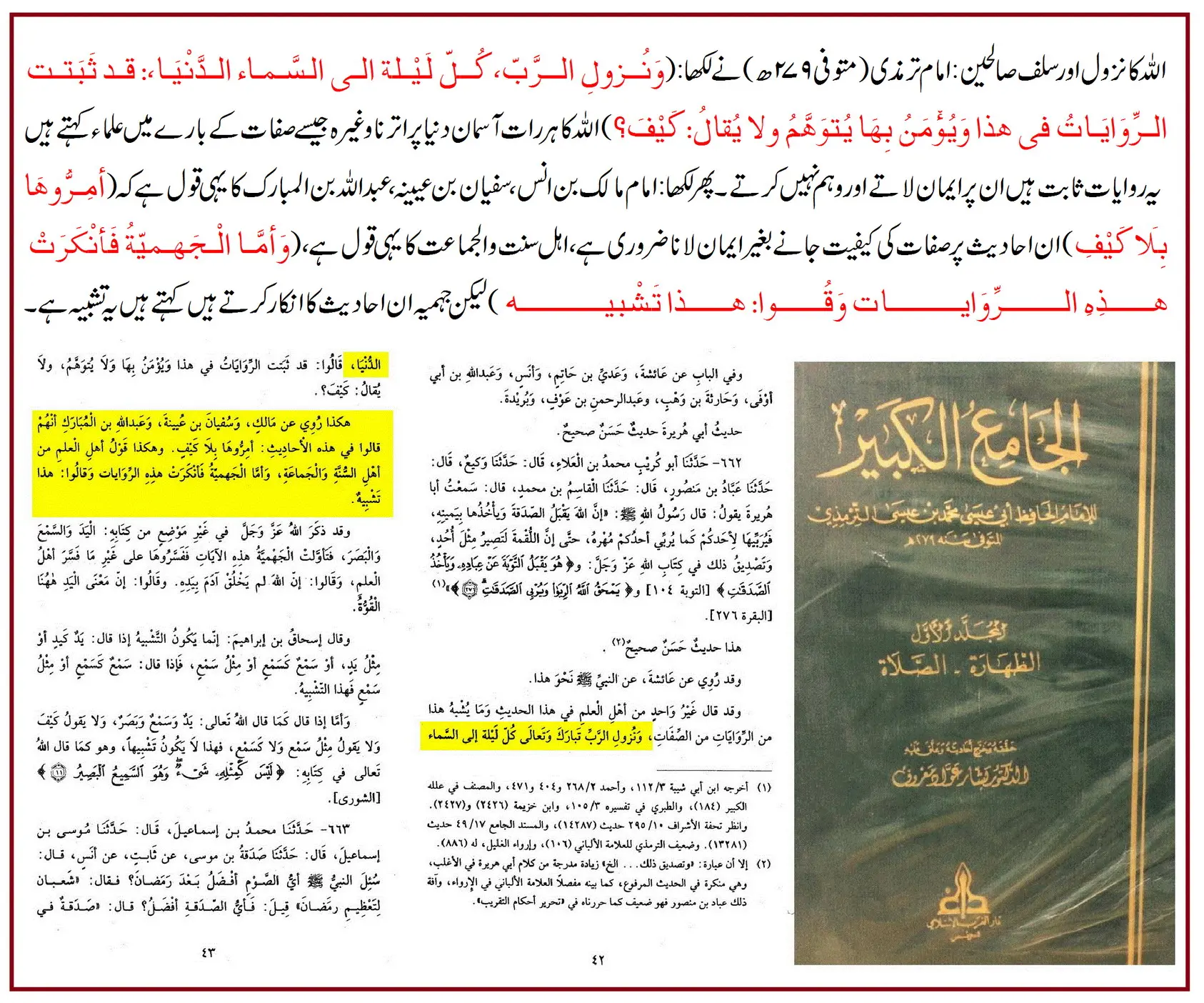
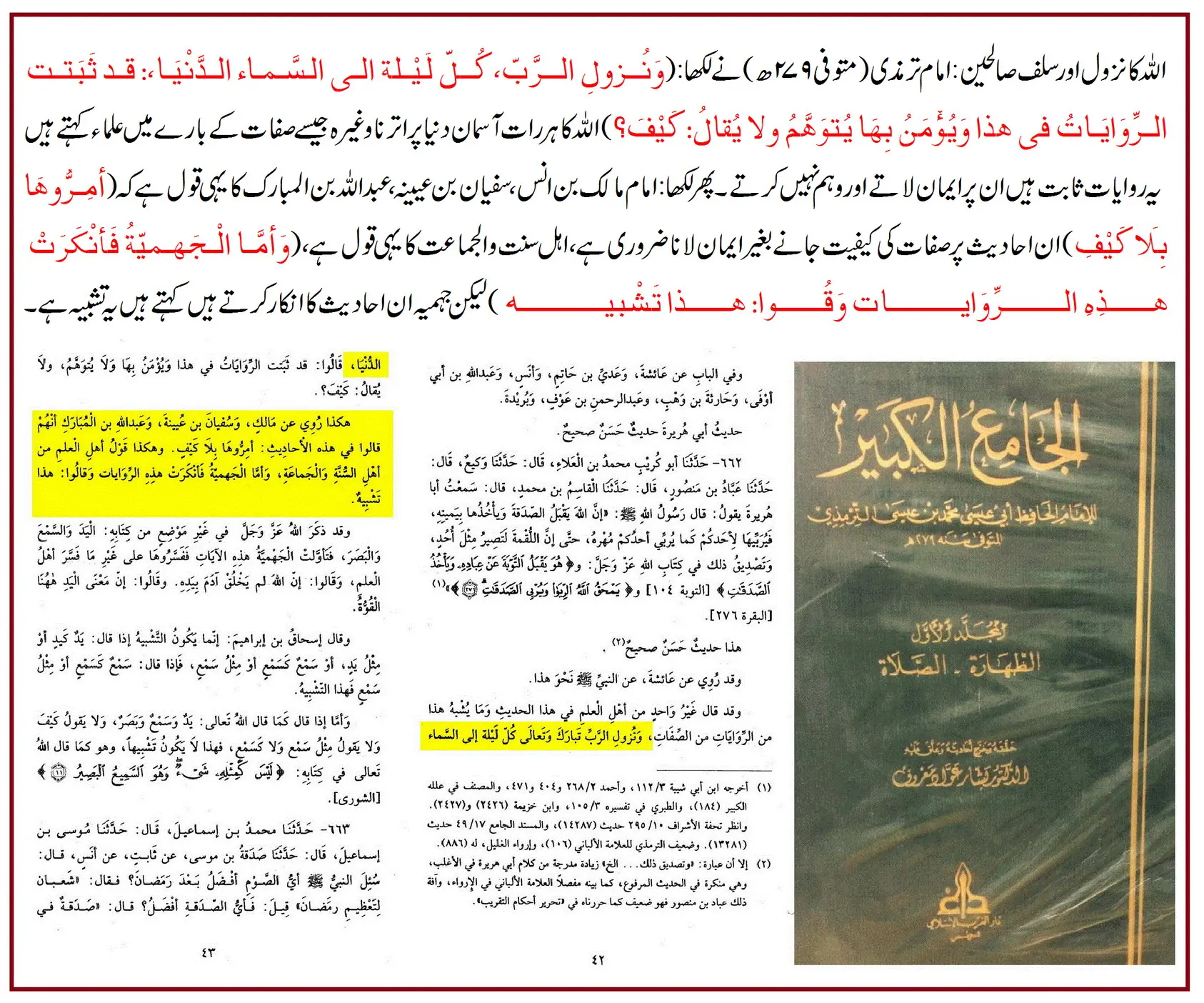
⑥ Imām al-Tirmidhī (d. 279 AH)
Sunan al-Tirmidhīالنص:
"أمِرّوها بلا كيف."
Translation:Many scholars said: These narrations (on Allah’s attributes) are authentic, we believe in them, but do not explain how. Imāms Mālik, Sufyān ibn ʿUyaynah, and ʿAbdullāh ibn al-Mubārak said: Pass them as they came, without asking how.
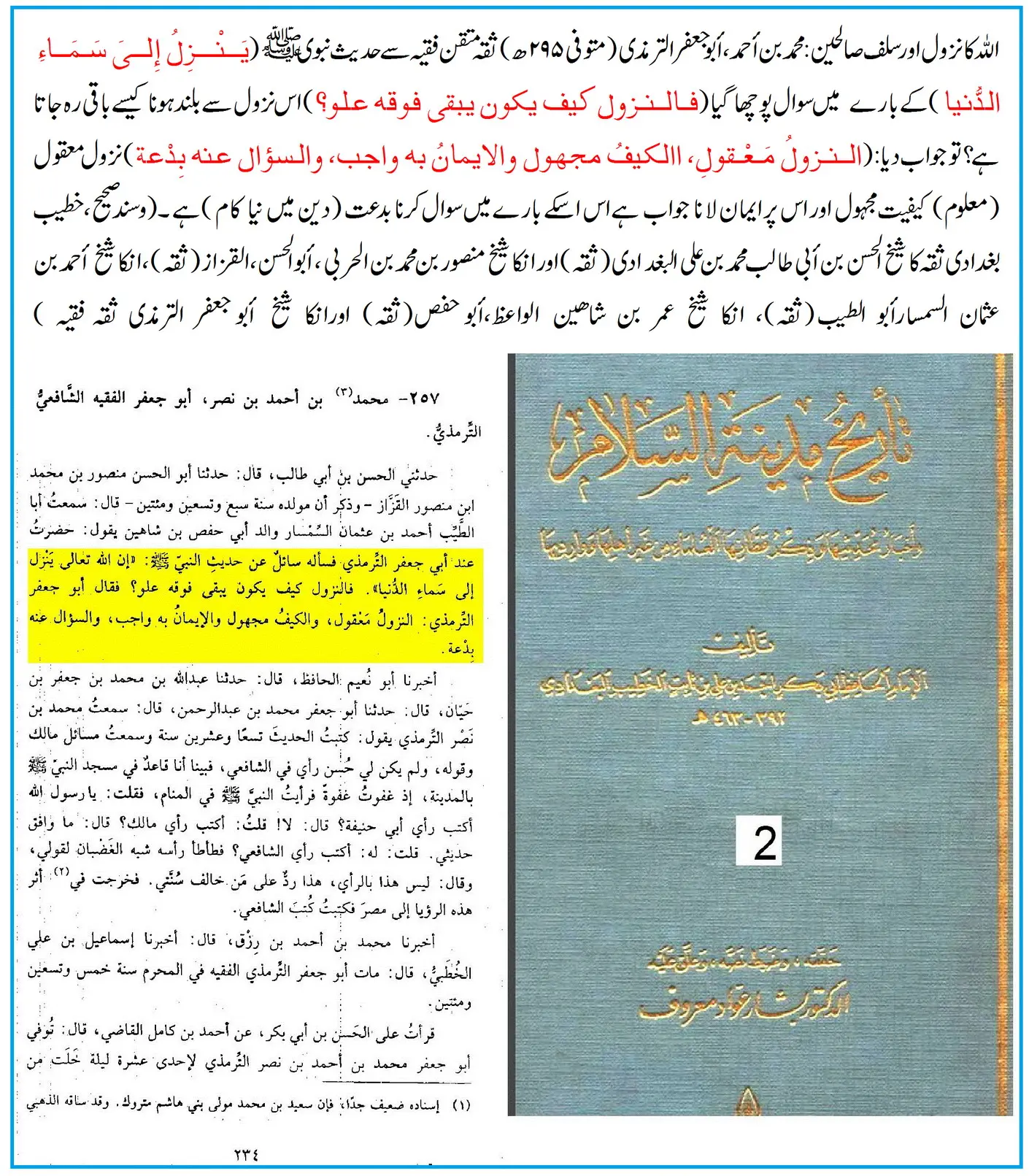
⑦ Imām Abū Jaʿfar al-Tirmidhī (d. 295 AH)
Tārīkh Baghdādالنص:
"النزول معقول، والكيف مجهول، والإيمان به واجب، والسؤال عنه بدعة."
Translation:“Descent is intelligible, how it occurs is unknown. Belief in it is obligatory, and asking how is an innovation.”
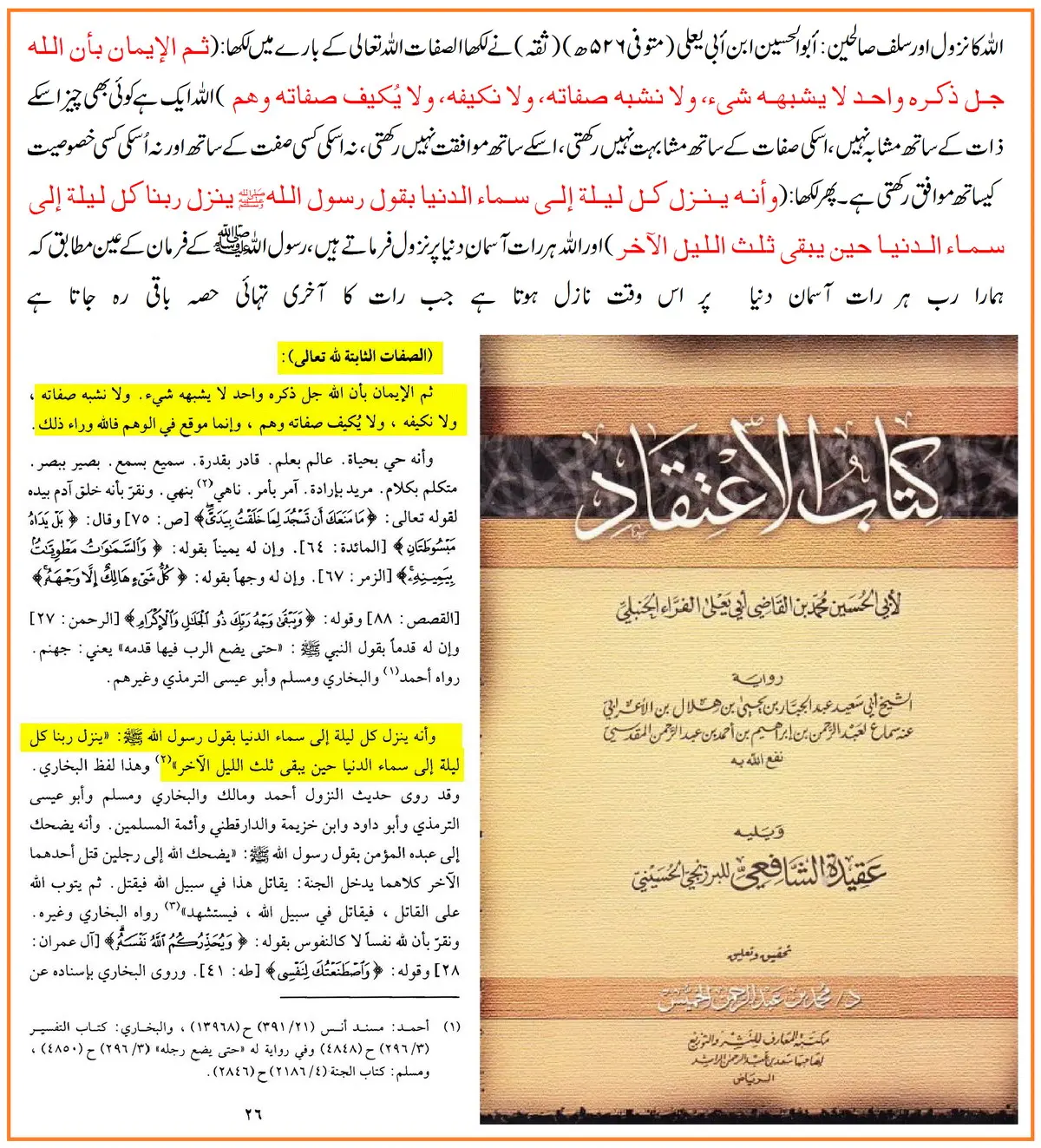
⑧ Imām Ibn Abī Yaʿlā (d. 526 AH)
al-Iʿtiqādالنص:
"...ينزل ربنا كل ليلة إلى سماء الدنيا..."
Translation:Allah descends every night to the lowest heaven, as the Prophet ﷺ said.
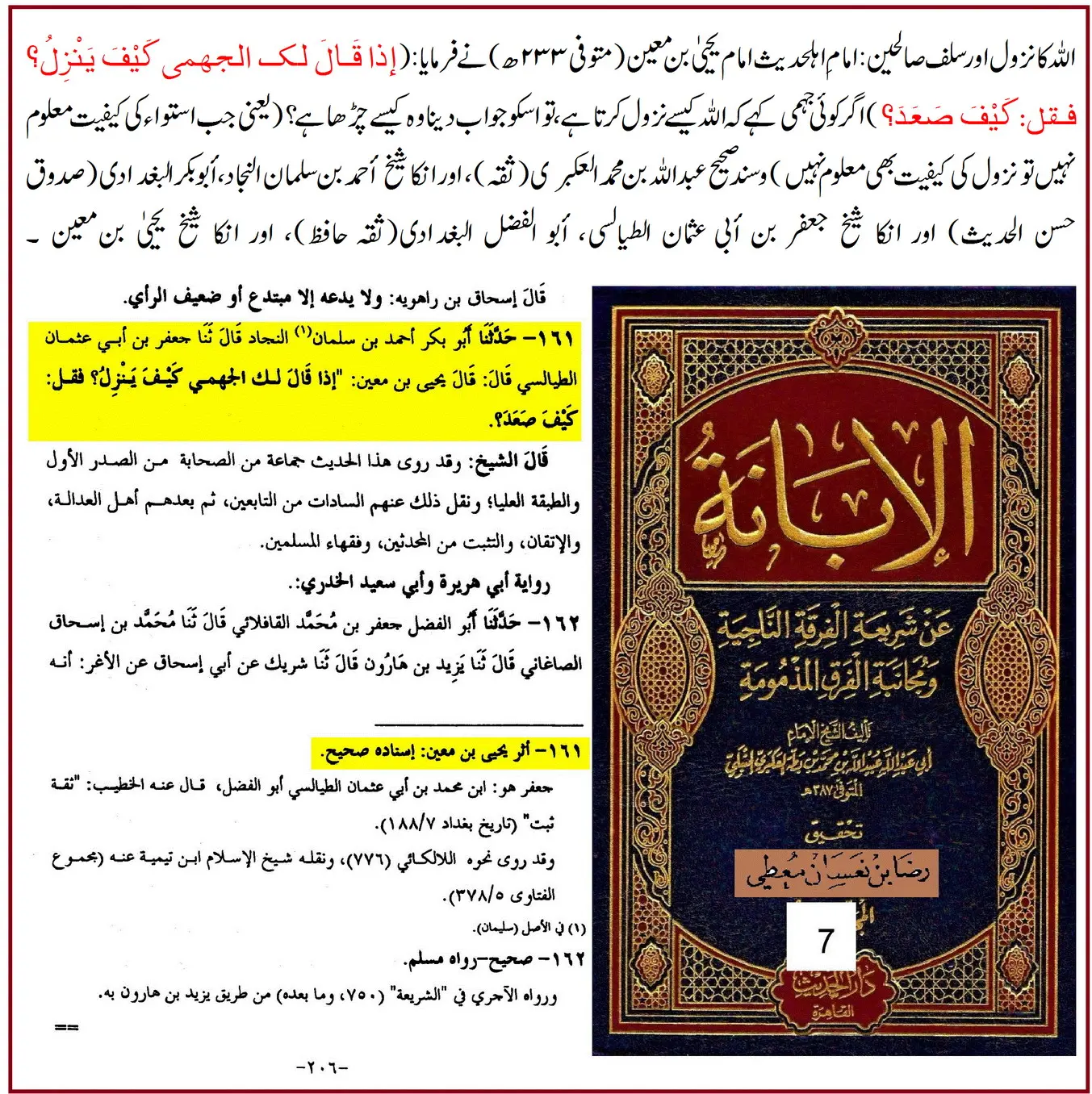
⑨ Imām Yaḥyā ibn Maʿīn (d. 233 AH)
al-Ibānah al-Kubrā – Ibn Baṭṭahالنص:
"إذا قال لك الجهمي: كيف ينزل؟ فقل: كيف صعد؟"
Translation:If a Jahmī asks you, “How does Allah descend?” ask him, “How did He ascend?”
(Just as we do not know how Allah rose over the Throne, we don’t know how He descends.)
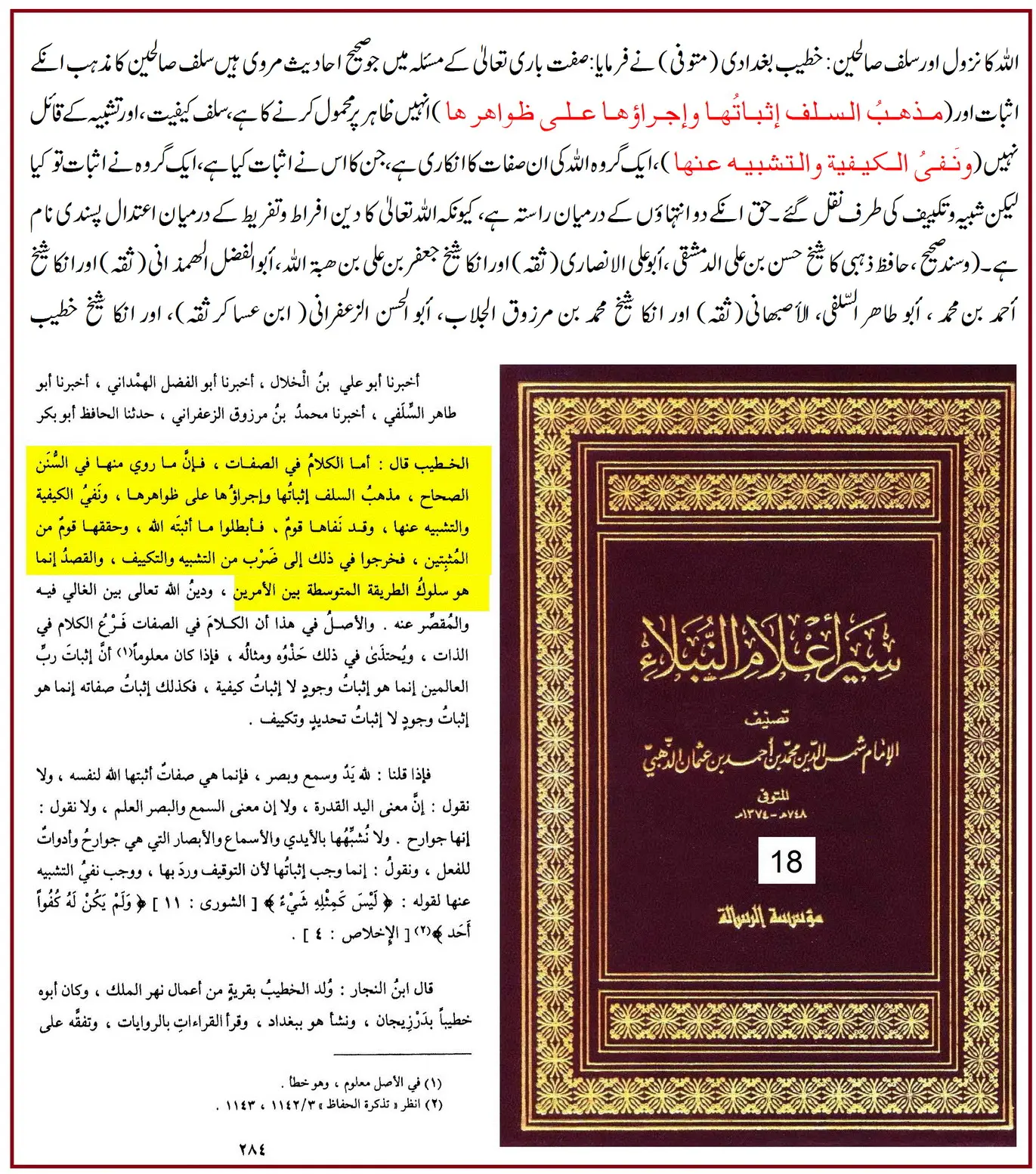
⑩ al-Khaṭīb al-Baghdādī (d. 463 AH)
Siyar Aʿlām al-Nubalāʾالنص:
"وإجراؤها على ظاهرها، ونفي الكيفية والتشبيه عنها."
Translation:Regarding divine attributes, the way of the Salaf is to affirm them as they appear, without modality or anthropomorphism.
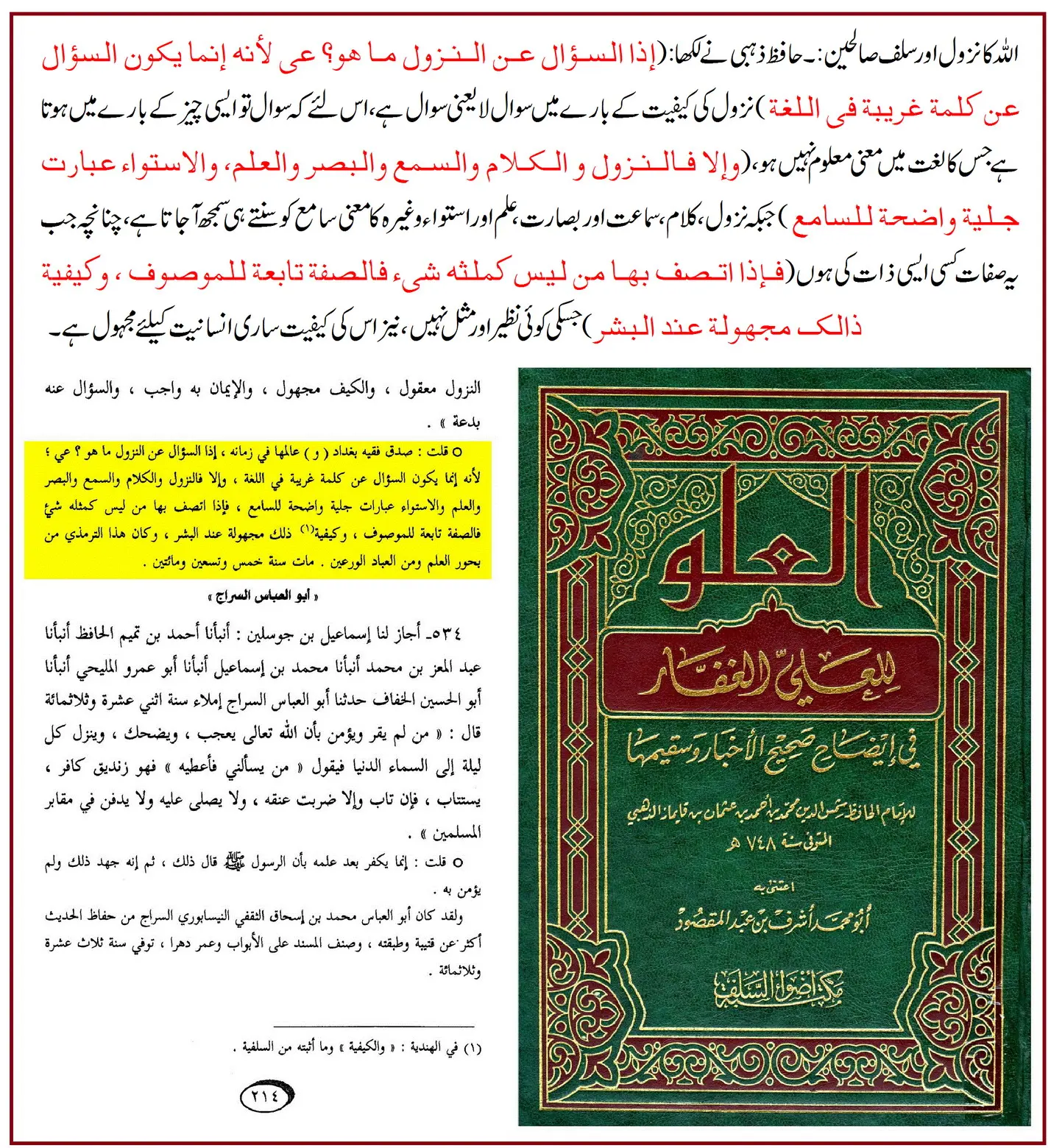
⑪ Ḥāfiẓ al-Dhahabī (d. 748 AH)
al-ʿUlū lil-ʿAliyy al-Ghaffārالنص:
"...وإذا اتصف بها من ليس كمثله شيء فالصفة تابعة للموصوف..."
Translation:These attributes – speech, sight, knowledge, descent, etc. – are clear words. When they’re attributed to Allah, who has no equal, the attribute is affirmed, but its how is unknown.
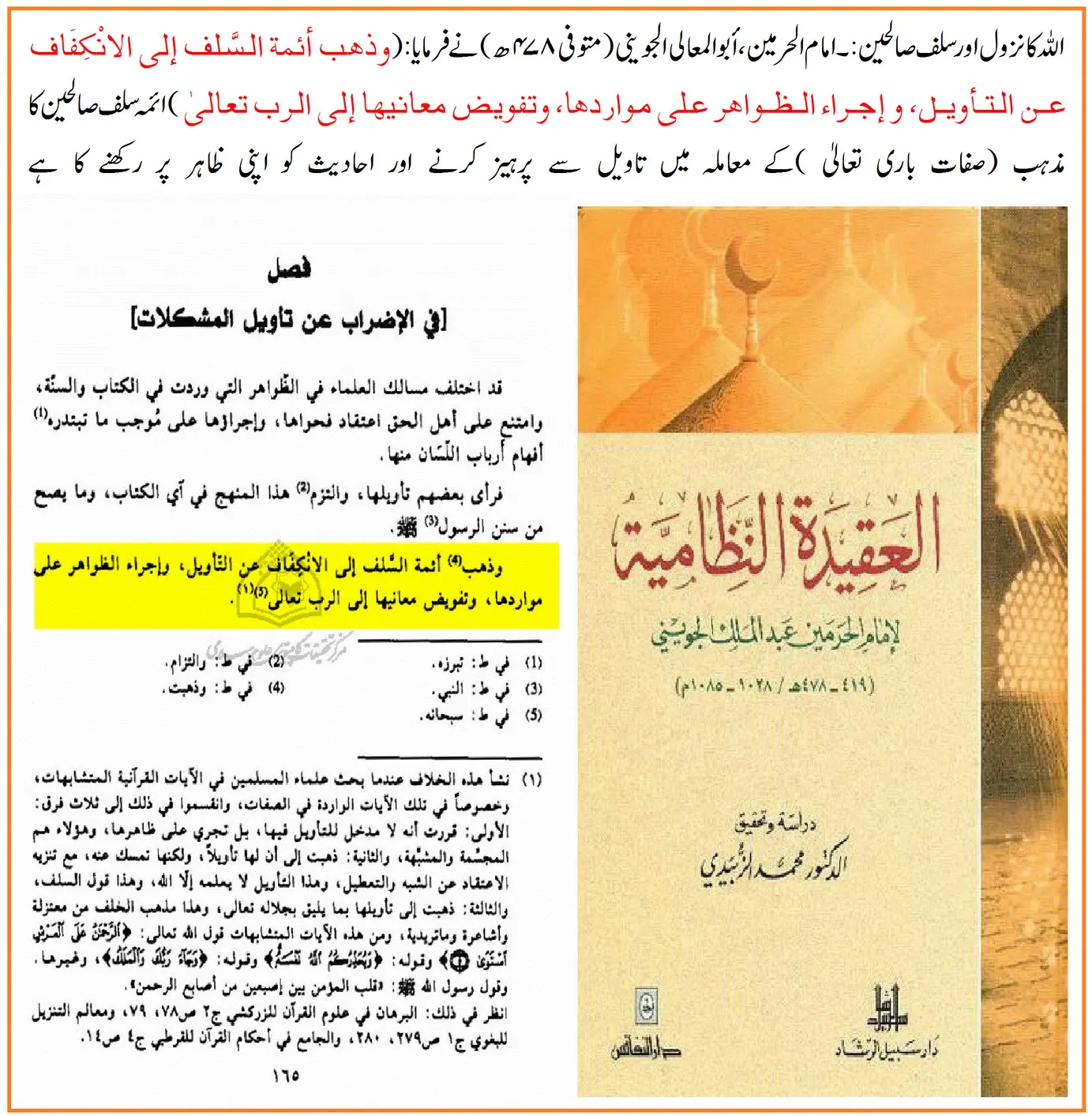
⑫ Imām al-Ḥaramayn al-Juwaynī (d. 478 AH)
al-Asmāʾ wa’l-Ṣifāt – al-Bayhaqīالنص:
"...والمجيء والنزول صفتان من صفات الله تعالى بلا تشبيه."
Translation:The ḥadīth of descent is authentic, and the Qurʾān affirms it:
{وَجَاءَ رَبُّكَ وَالْمَلَكُ صَفًّا صَفًّا}
Allah’s coming and descent are among His attributes – without likening Him to creation.
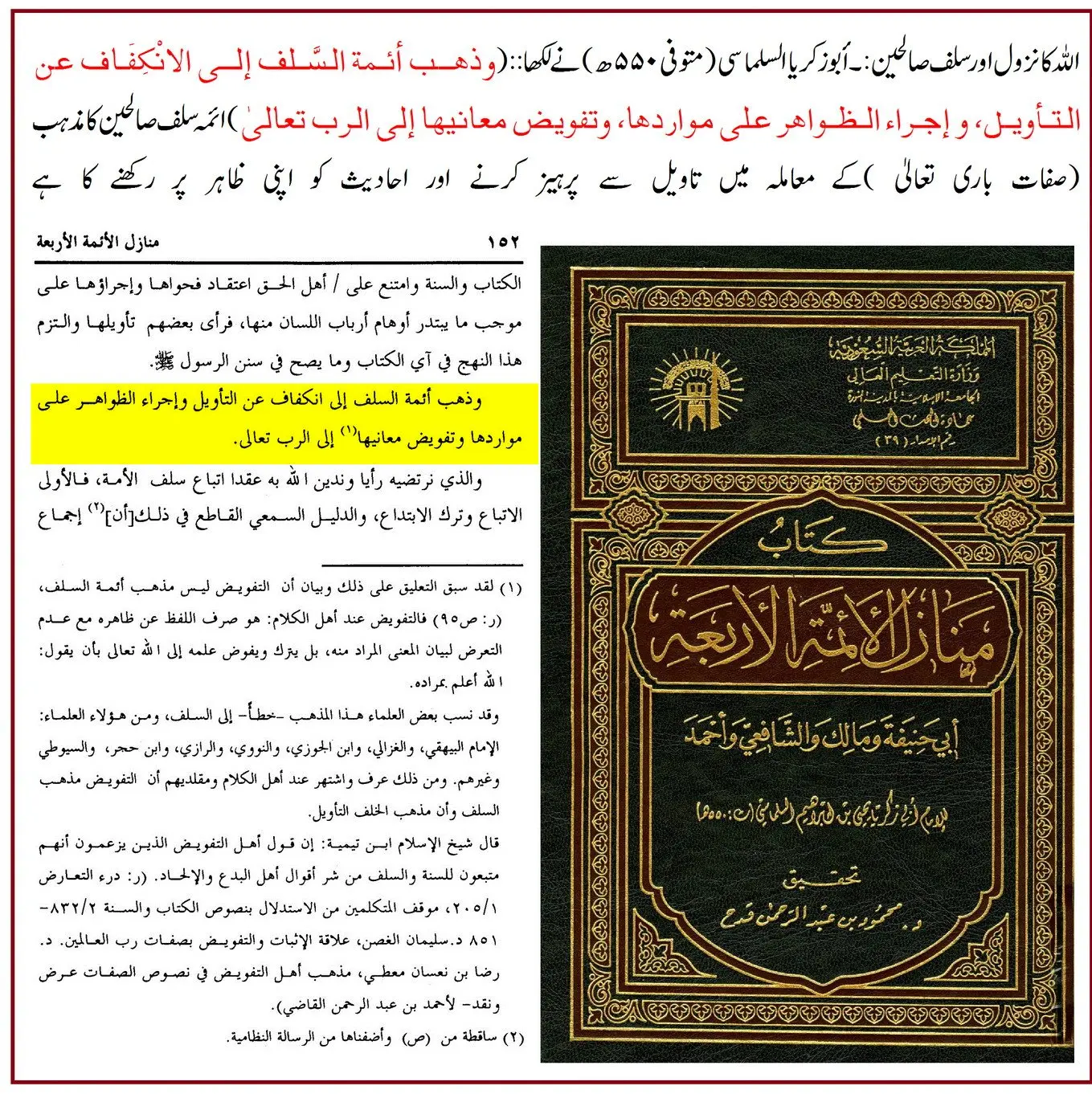
⑬ Abū Zakariyyā al-Salamsī (d. 550 AH)
Manāzil al-Aʾimmah al-Arbaʿahالنص:
"تفويض معانيها إلى الرب تعالى."
Translation:The Imāms of the Salaf would avoid interpretation, keep the texts on their apparent meaning, and delegate their reality to Allah.
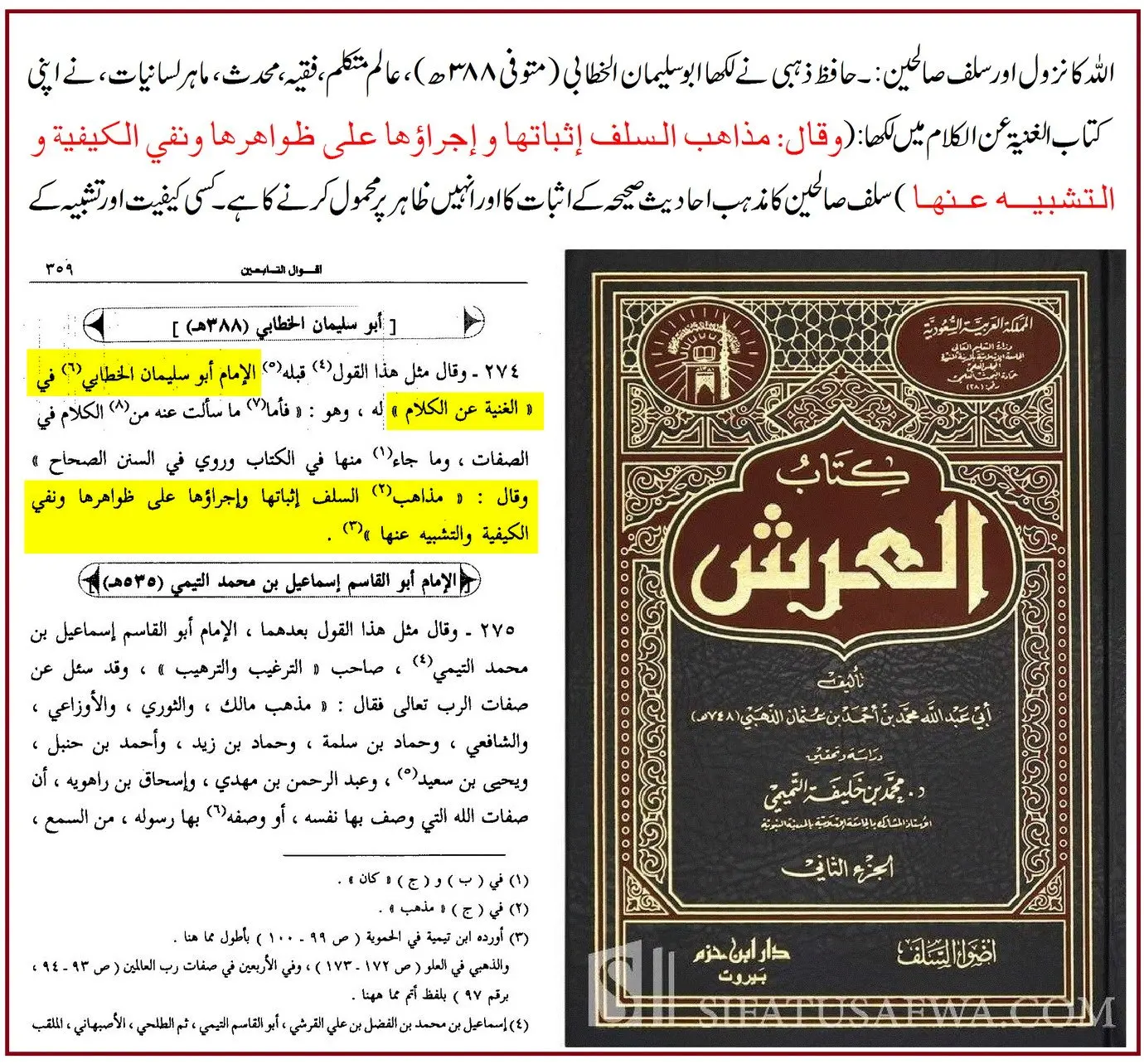
⑭ Abū Sulaymān al-Khaṭṭābī (d. 388 AH)
al-ʿArsh – al-Dhahabīالنص:
"نفي الكيفية والتشبيه عنها."
Translation:The way of the Salaf is to affirm the attributes, take them on their apparent meaning, and deny any modality or comparison to creation.
✿ False Interpretation by Jahmiyyah and Muʿtazilah
These groups claimed that the ḥadīth of Allah’s Descent refers not to His actual descent, but to the descent of His command or mercy.
This is a clear distortion (taʾwīl bāṭil) and contradicts the apparent wording of authentic narrations.
❖ Refutations by Scholars of Ahl al-Sunnah
① Imām Abū Bakr al-Ājurrī (d. 360 AH)
al-Sharīʿahالنص:
"ولا يرد هذا إلا المعتزلة... الإيمان به واجب بلا كيف."
Translation:This is only denied by the Muʿtazilah. The people of truth affirm it as obligatory, without asking how.
② Imām al-Tirmidhī (d. 279 AH)
Sunan al-Tirmidhīالنص:
"أما الجهمية فأنكرت هذه الروايات وقالوا: هذا تشبيه."
Translation:The Jahmiyyah denied these narrations, claiming they indicate anthropomorphism. But Ahl al-Sunnah believe in them as authentic, without interpreting them.
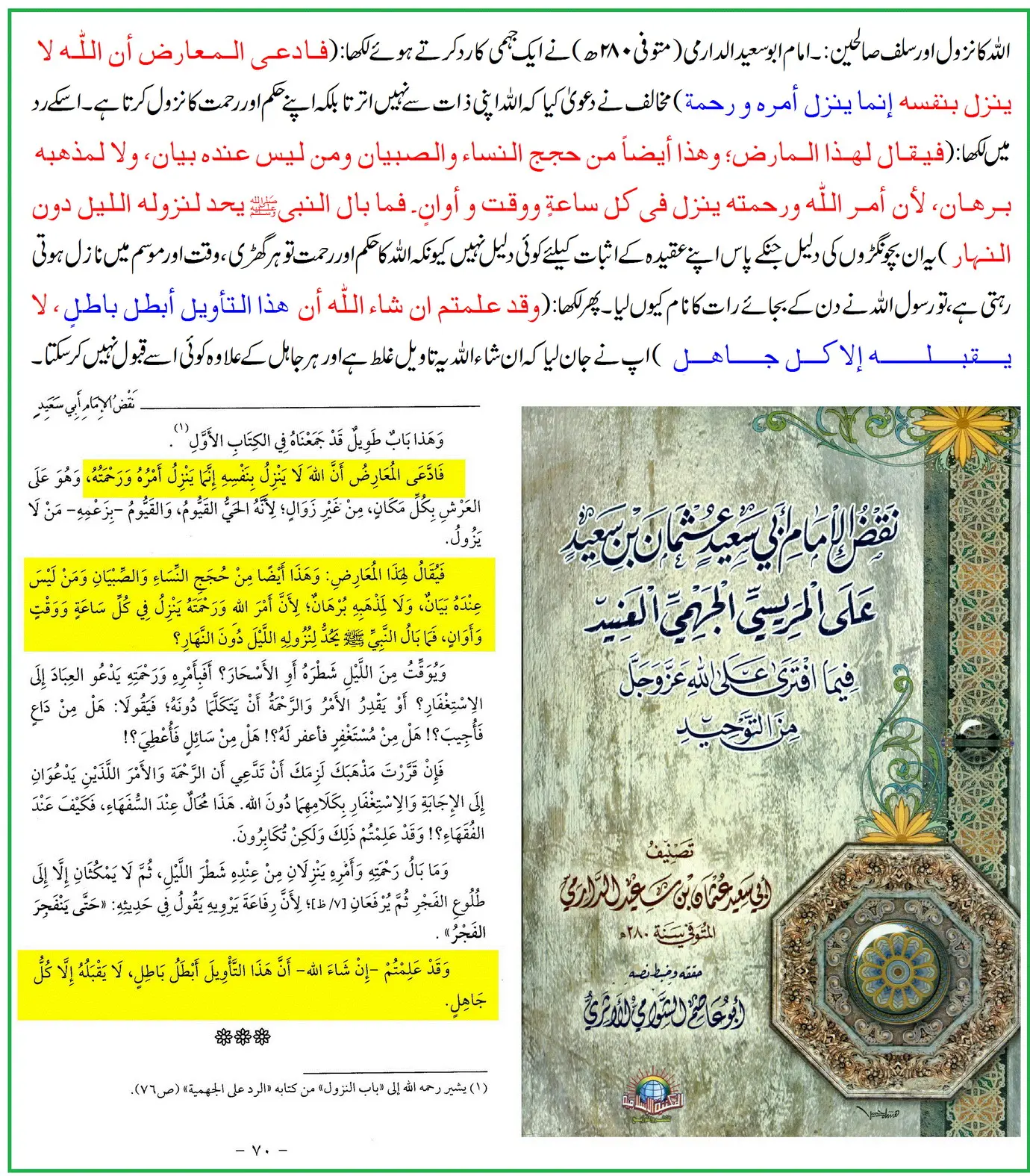
③ Imām Abū Saʿīd al-Dārimī (d. 280 AH)
Naqḍ ʿUthmān ibn Saʿīd ʿalā al-Marrīsī al-Jahmīالنص:
"قال المعارض: إنما ينزل أمره… هذا من حجج النساء والصبيان…"
Translation:The opponent claimed Allah’s command or mercy descends. Al-Dārimī replied: Allah’s command descends every hour, so why would the Prophet ﷺ specify only the last part of the night? This is one of the most baseless interpretations.
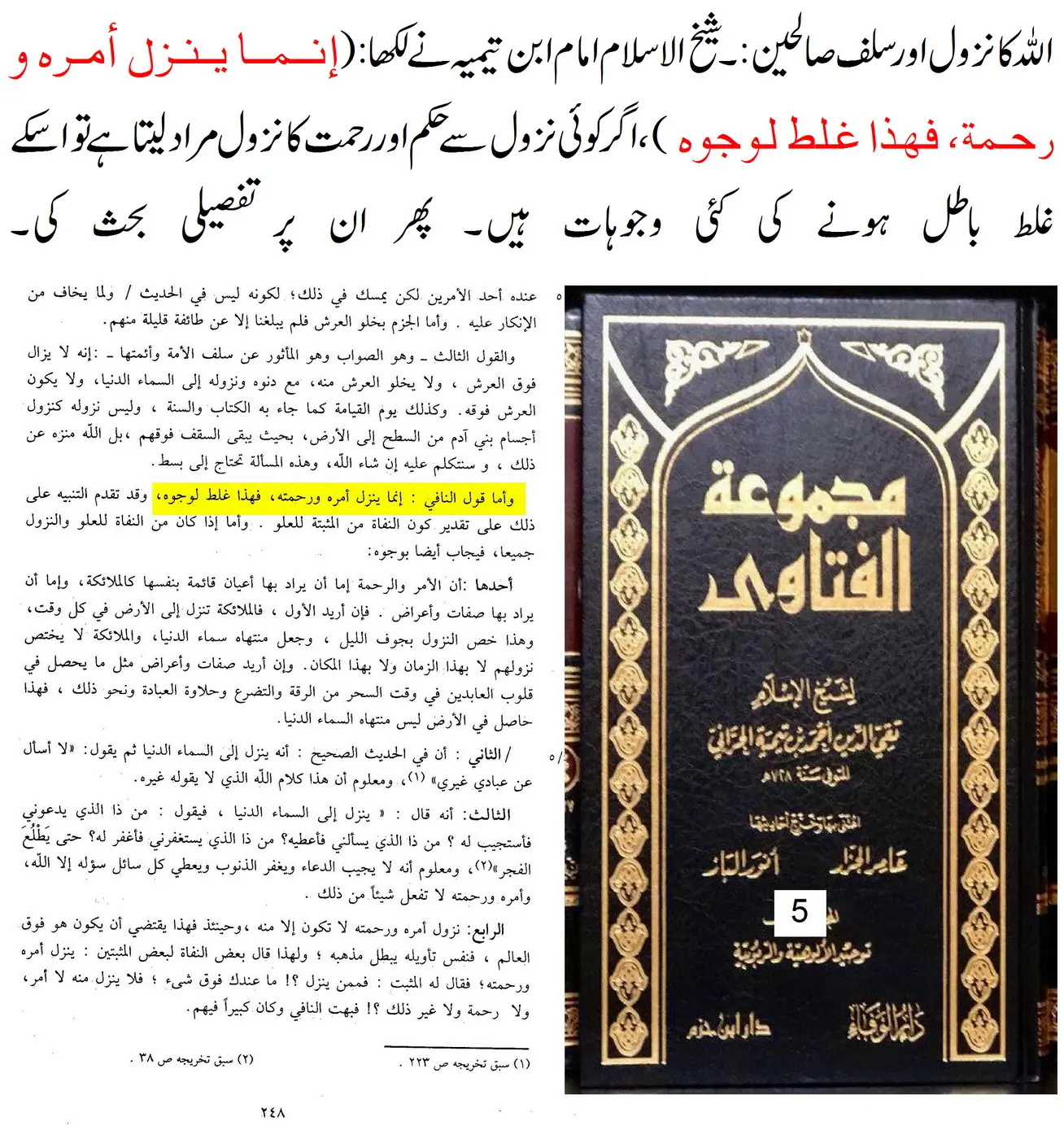
④ Shaykh al-Islām Ibn Taymiyyah (d. 728 AH)
Majmūʿ al-Fatāwāالنص:
"إنما ينزل أمره ورحمته، فهذا غلط."
Translation:The idea that it is only Allah’s command or mercy that descends is incorrect.
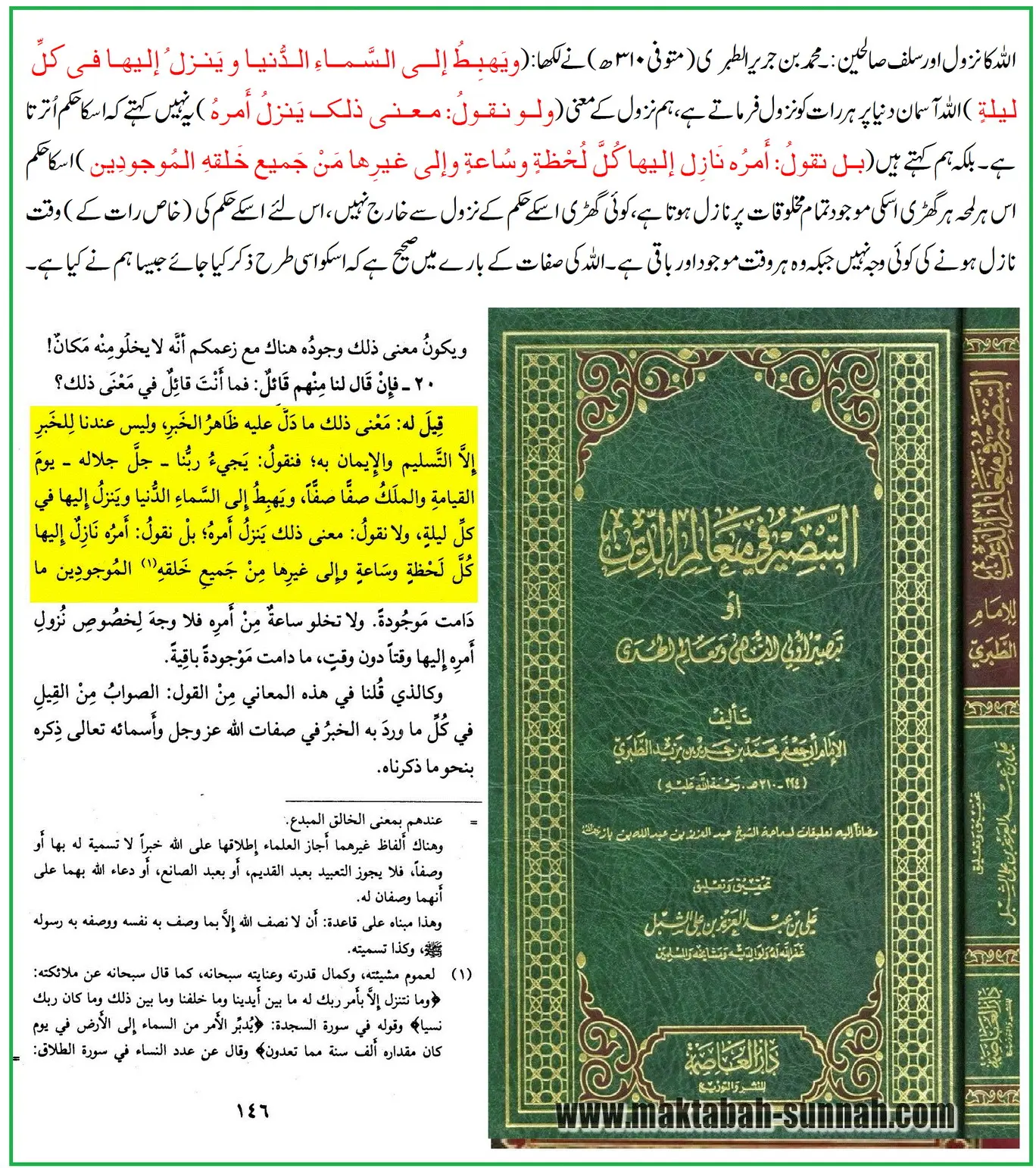
⑤ Imām al-Ṭabarī (d. 310 AH)
al-Tabsīr fī Maʿālim al-Dīnالنص:
"ولا نقول: معنى ذلك ينزل أمره… فلا وجه لخصوص نزوله وقتًا دون وقت."
Translation:We do not interpret descent as the descent of Allah’s command. His command descends at all times, so specifying a time makes no sense if that were the case.
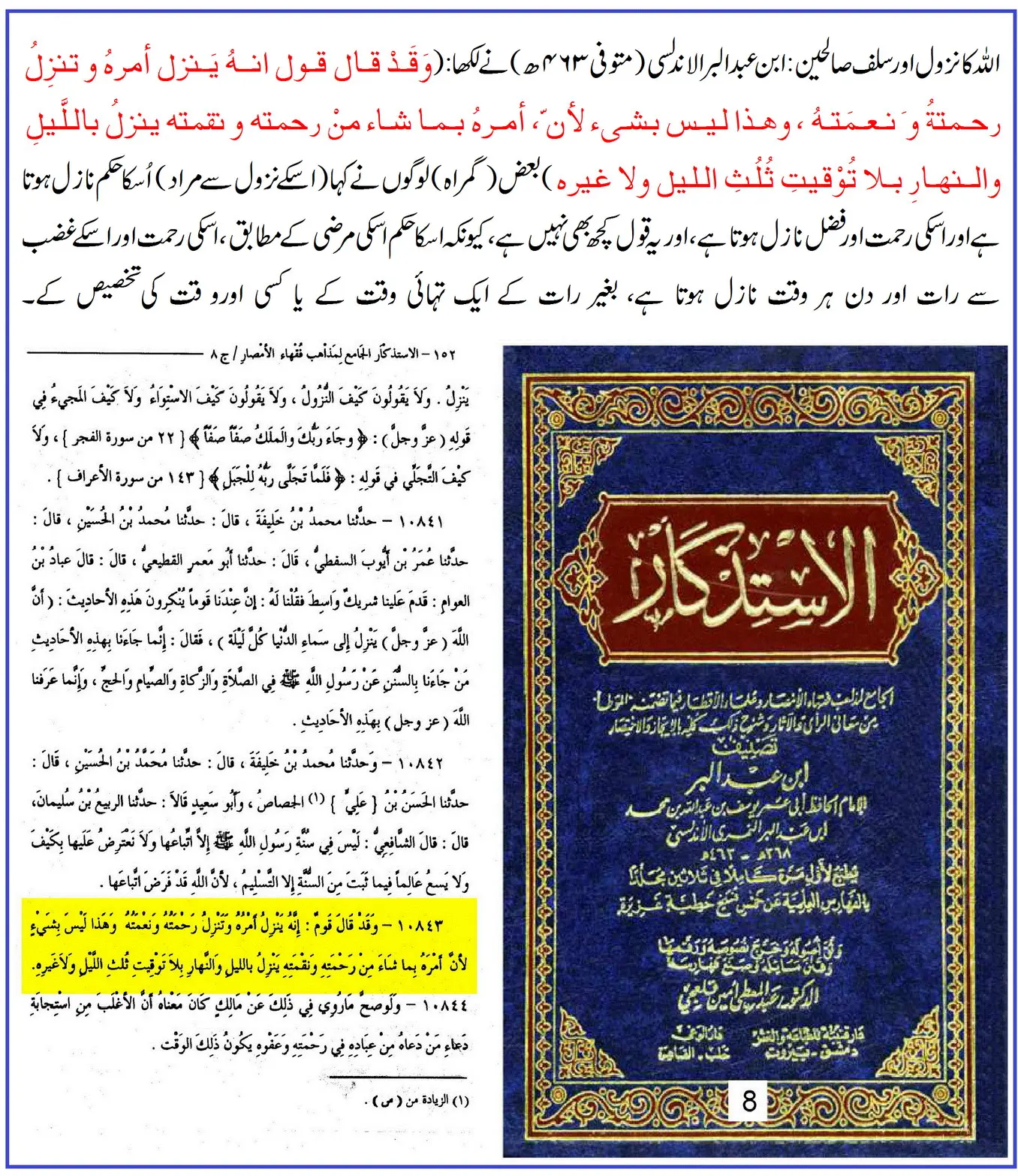
⑥ Imām Ibn ʿAbd al-Barr (d. 463 AH)
al-Istidhkārالنص:
"ينزل أمره وتنزل رحمته… وهذا ليس بشيء."
Translation:The claim that it refers to Allah’s command or mercy is baseless, because His command descends day and night, not only during the last third of the night.
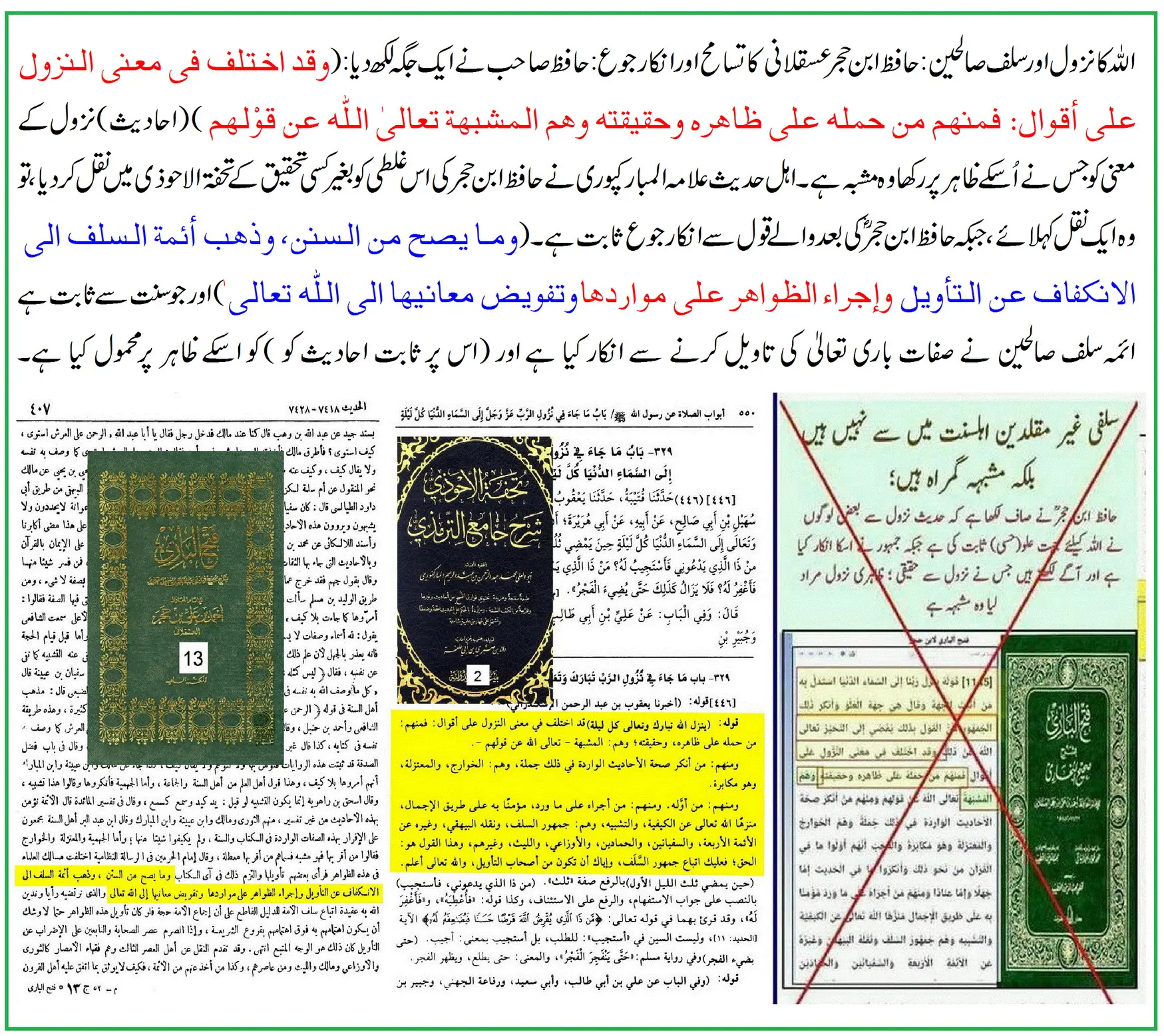
⑦ Ḥāfiẓ Ibn Ḥajar al-ʿAsqalānī (d. 852 AH)
Initial statement (based on scholarly leniency):
"منهم من حمله على ظاهره وهم المشبهة."
Translation:Some interpreted the descent literally and were called anthropomorphists.
Final stance (after scholarly revision):
"وذهب أئمة السلف إلى الانكفاف عن التأويل، وإجراء الظواهر على مواردها، وتفويض معانيها إلى الله."
Translation:The Salaf refrained from interpretation, accepted the apparent meaning, and entrusted the understanding to Allah.
 This indicates his return to the Salafi methodology and rejection of earlier statements made out of scholarly leniency.
✿ Core Creed of the Salaf on Divine Attributes
 01 – al-Khaṭīb al-Baghdādī (d. 463 AH)
Siyar Aʿlām al-Nubalāʾ"إثباتها، وإجراؤها على ظواهرها، ونفي الكيفية والتشبيه عنها."
Translation:Attributes are affirmed, accepted as they appear, without modality or comparison.
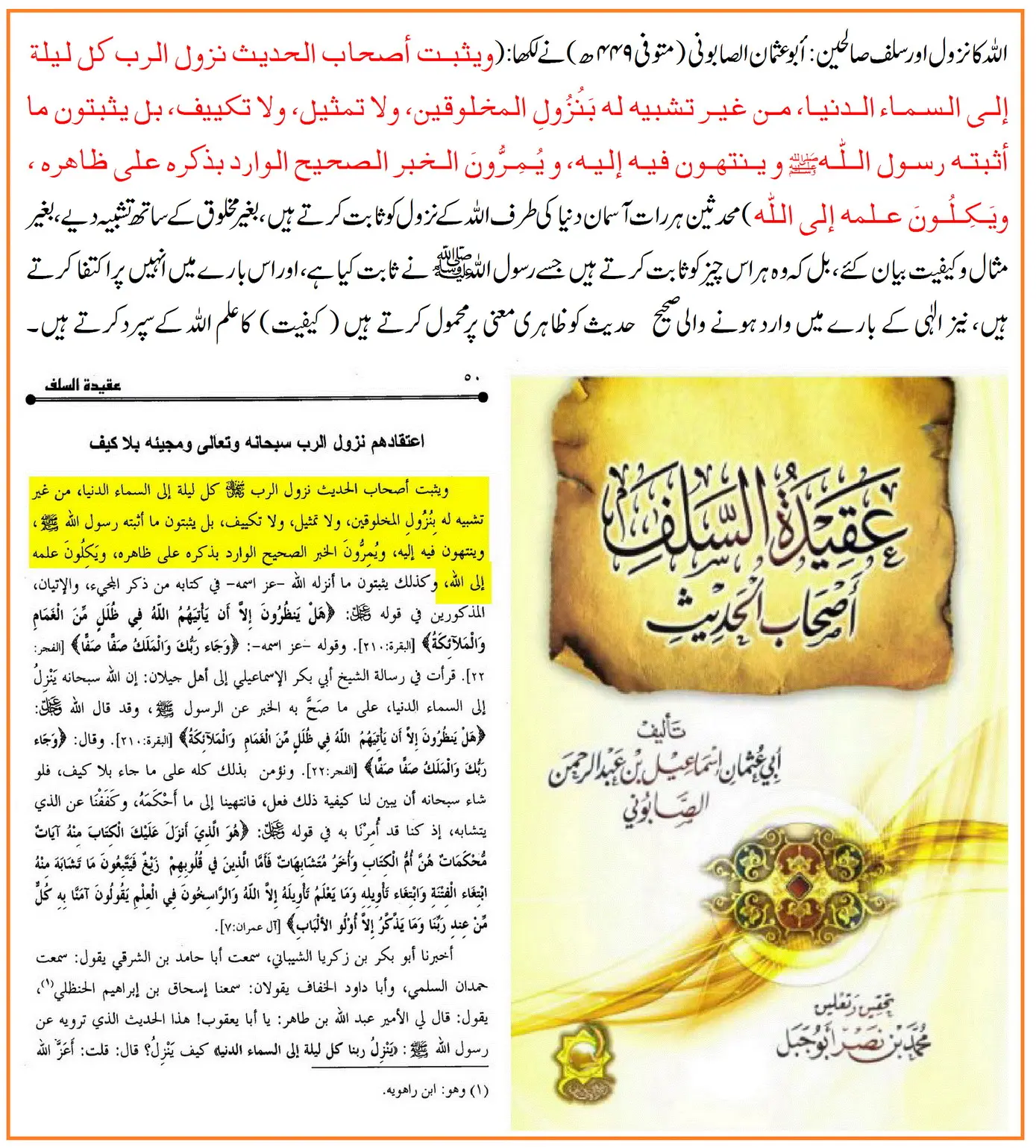
02 – Imām Abū ʿUthmān al-Ṣābūnī (d. 449 AH)
ʿAqīdat al-Salaf"ويمرون الخبر الصحيح على ظاهره، ويكلون علمه إلى الله."
Translation:The Ahl al-Ḥadīth pass authentic reports as they are, and leave their reality to Allah.
03 – Imām al-Ḥaramayn al-Juwaynī (d. 478 AH)
al-ʿAqīdah al-Niẓāmiyyah"تفويض معانيها إلى الرب تعالى."
Translation:The Salaf avoided interpretation, accepted the apparent wording, and left the meaning to Allah.
04 – Abū Zakariyyā al-Salamsī (d. 550 AH)
Manāzil al-Aʾimmah al-Arbaʿah"تفويض معانيها إلى الرب تعالى."
Translation:The Salaf did not interpret the attributes but entrusted their meanings to the Lord.
05 – Abū Sulaymān al-Khaṭṭābī (d. 388 AH)
al-ʿArsh – al-Dhahabī"إثباتها... ونفي الكيفية والتشبيه عنها."
Translation:The attributes are to be affirmed as they are, while negating modality and likeness to creation.
✿ Summary of Findings
- Ibn Hajar al-Haytami's claim that Allah’s descent refers to His command or mercy is a rejected interpretation, rooted in the distortions of the Jahmiyyah, Muʿtazilah, and Rāfiḍah.
- The quote he cited from Ibn Jamāʿah against Ibn Taymiyyah is unauthenticated and disconnected.
- The true creed of Ahl al-Sunnah wa’l-Jamāʿah is:
- Affirm the descent as per the ḥadīth.
- Do not ask how.
- Reject any taʾwīl that contradicts the apparent text.
- Renowned scholars such as Imām Mālik, Ibn al-Mubārak, Ibn Khuzaymah, al-Tirmidhī, al-Ṭabarī, al-Dārimī, Ibn ʿAbd al-Barr, al-Khaṭīb, al-Dhahabī – all upheld this.
Even Ḥāfiẓ Ibn Ḥajar, despite a moment of scholarly leniency, later recanted and returned to the Salafi approach.
Conclusion
- Ibn Taymiyyah’s creed was not an innovation. It was a revival of the unanimous belief of the Salaf.
- Ibn Hajar al-Haytami's claim is baseless and lacks authentic support.
- The descendants of misguided theological schools cannot distort clear aḥādīth.
- The truth remains: Allah descends every night to the lowest heaven, and we believe in it without asking how, just as the Companions and Imāms of the Salaf did.
Final Verdict:The interpretation of the Jahmiyyah, Muʿtazilah, and later figures like Ibn Hajar al-Haytami is invalid and rejected.
Ahl al-Sunnah wa’l-Jamāʿah stand united upon affirming the descent, negating modality, and rejecting all forms of distortion (taʾwīl).
Scanned Images of Key References: