


✍ Compiled by: Abu Hamzah Salafi
According to the scholars of ḥadīth, the authenticity or weakness of a narration is determined based on the reliability or unreliability of its narrators. Recently, some individuals have raised an objection labeling the trustworthy Tābiʿī narrator Nāfiʿ bin Maḥmūd bin al-Rabīʿ al-Anṣārī as “Majhūl” (unknown).
The purpose of this article is to present the authentic attestations (tawthīqāt) regarding Nāfiʿ bin Maḥmūd from established muḥaddithīn and to refute—academically and critically—the claim that he is “Majhūl”.
Through our research, it will become evident that not only is Nāfiʿ bin Maḥmūd a reliable and credible narrator, but to call him "Majhūl" is a clear scholarly error.
In his renowned work Sunan al-Dāraqutnī, after quoting a narration through Nāfiʿ bin Maḥmūd, Imām al-Dāraqutnī clearly declares:
"هذا إسناد حسن ورجاله ثقات كلهم"
“This isnād is ḥasan and all its narrators are trustworthy.”
(Sunan al-Dāraqutnī, Ḥadīth: 1220)
This narration was transmitted from Nāfiʿ bin Maḥmūd by three trustworthy students:
Imām Dāraqutnī's statement is a clear tawthīq for Nāfiʿ bin Maḥmūd.
In al-Muḥallā bil-Athār, while discussing recitation behind the Imām, he wrote:
"فَهَذَا قُوَّةٌ لِلْحَدِيثِ لَا وَهْنٌ؛ لِأَنَّ كِلَيْهِمَا ثِقَةٌ"
“This (variation of narration) strengthens the ḥadīth, not weakens it; because both narrators are trustworthy.”
(al-Muḥallā, Issue: 360)
Thus, according to Ibn Ḥazm, Nāfiʿ bin Maḥmūd is Thiqah.
In al-Qirāʾah Khalfa al-Imām, Imām Bayhaqī stated:
"وَهَذَا إِسْنَادٌ صَحِيحٌ وَرُوَاتُهُ ثِقَاتٌ"
“This isnād is ṣaḥīḥ and its narrators are trustworthy.”
(Ḥadīth No: 121)
Also in al-Sunan al-Kubrā:
"وَالْحَدِيثُ صَحِيحٌ، عَنْ عُبَادَةَ..."
(Ḥadīth No: 2921)
These statements indicate Imām Bayhaqī regarded Nāfiʿ bin Maḥmūd as reliable.
In Tanqīḥ al-Taḥqīq, al-Dhahabī affirms:
"وصَحّحَ إسنادهُ... وإسنادهُ ثقاتٌ."
Also, in al-Kāshif:
"نافع بن محمود المقدسي... ثقة"
(al-Kāshif: 5787)
Thus, Ḥāfiẓ al-Dhahabī clearly affirmed his reliability.
In Taqrīb al-Tahdhīb, he labeled Nāfiʿ as:
"مستور، من الثالثة"
(Entry: 7082)
Clarifying the term, he wrote in the introduction:
"الثالثة: من أُفرِدَ بصفة كثقة، أو متقن، أو ثبت، أو عدل."
So, Ibn Ḥajar includes him among those described as Thiqah or ʿAdl.
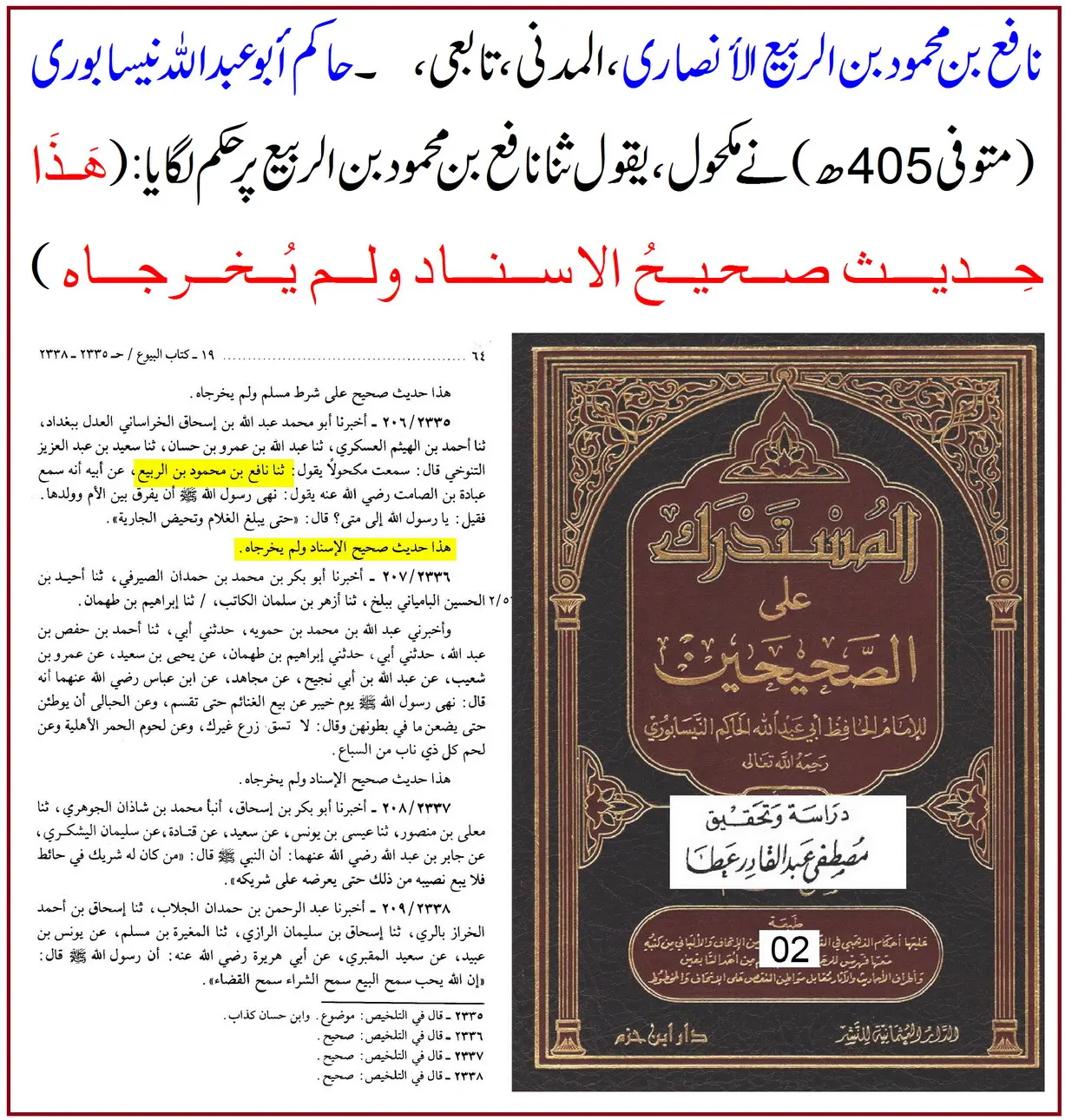
In al-Mustadrak ʿala al-Ṣaḥīḥayn, after quoting his narration:
"هَذَا حَدِيثٌ صَحِيحُ الْإِسْنَادِ"
(Hadith No: 2335)
A Ṣaḥīḥ isnād means every narrator is Thiqah, including Nāfiʿ.
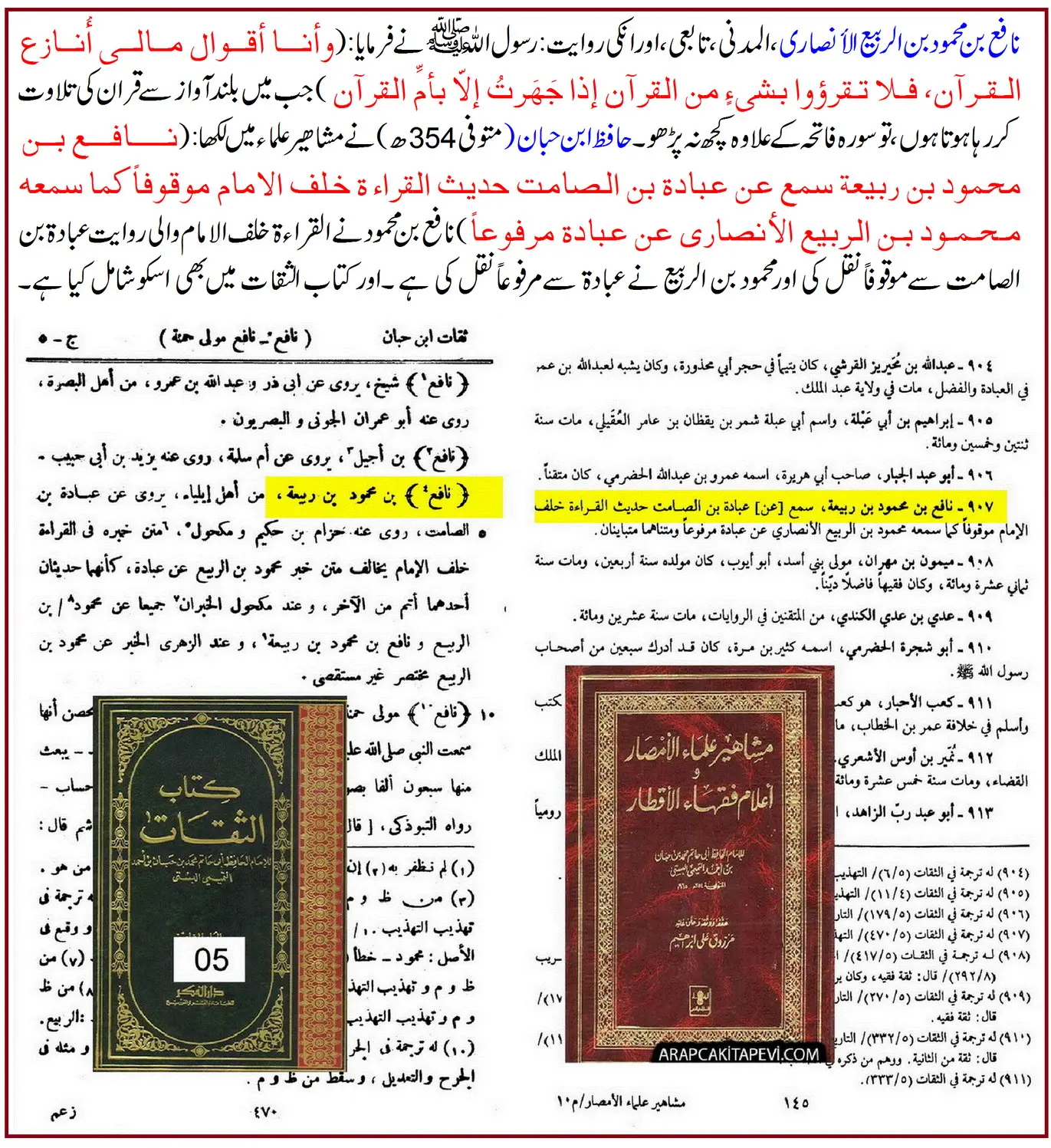
Included Nāfiʿ in his book al-Thiqāt, stating:
"نافع بن محمود بن ربيعة، من أهل إيلياء..."
(al-Thiqāt: 5770)
Being listed here is a clear tawthīq.
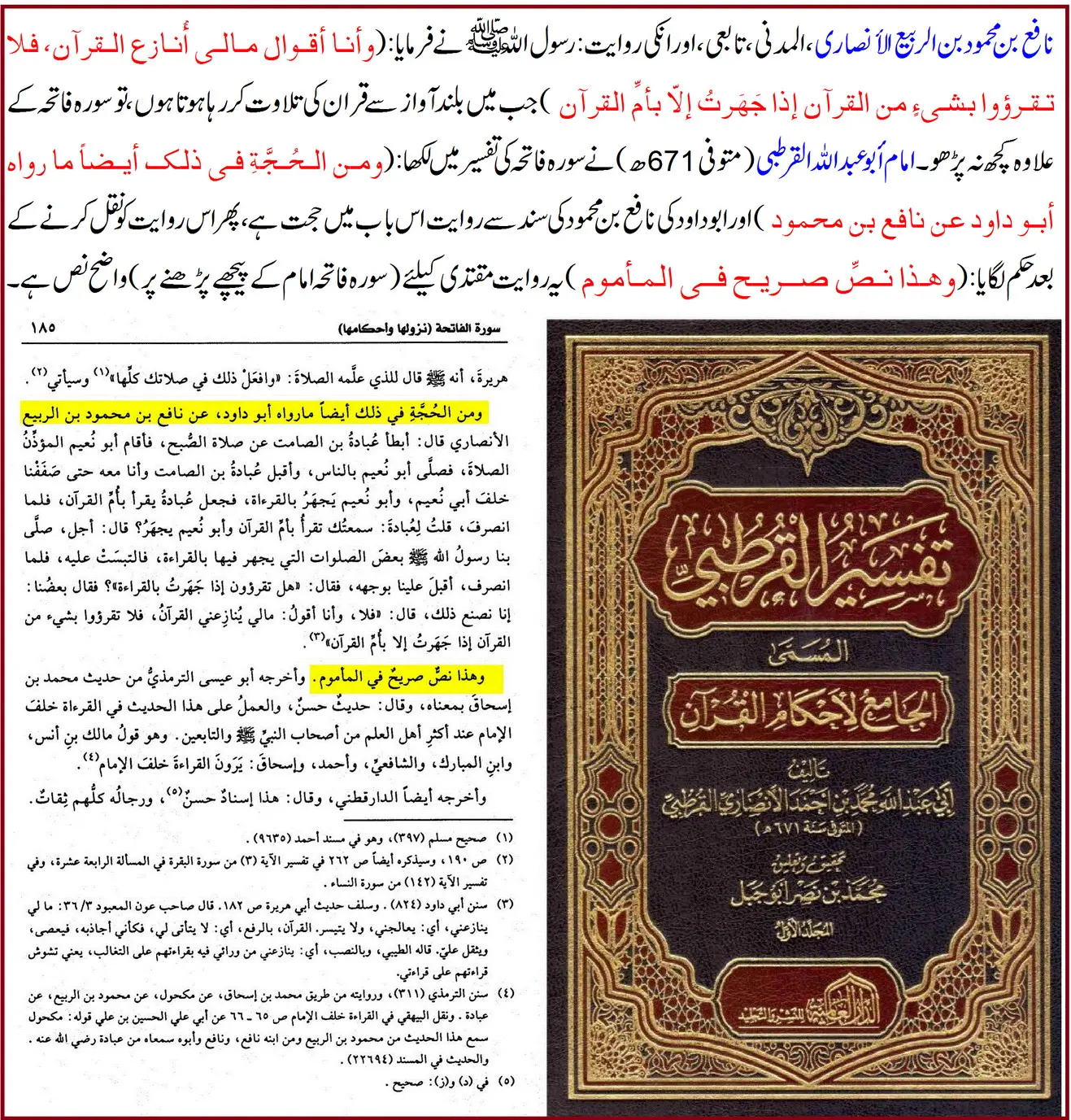
In his tafsīr, al-Jāmiʿ li Aḥkām al-Qurʾān:
"وَهَذَا نَصٌّ صَرِيحٌ فِي الْمَأْمُومِ"
Using his narration as evidence implies acceptance of his reliability, as weak narrations are not used for proof.
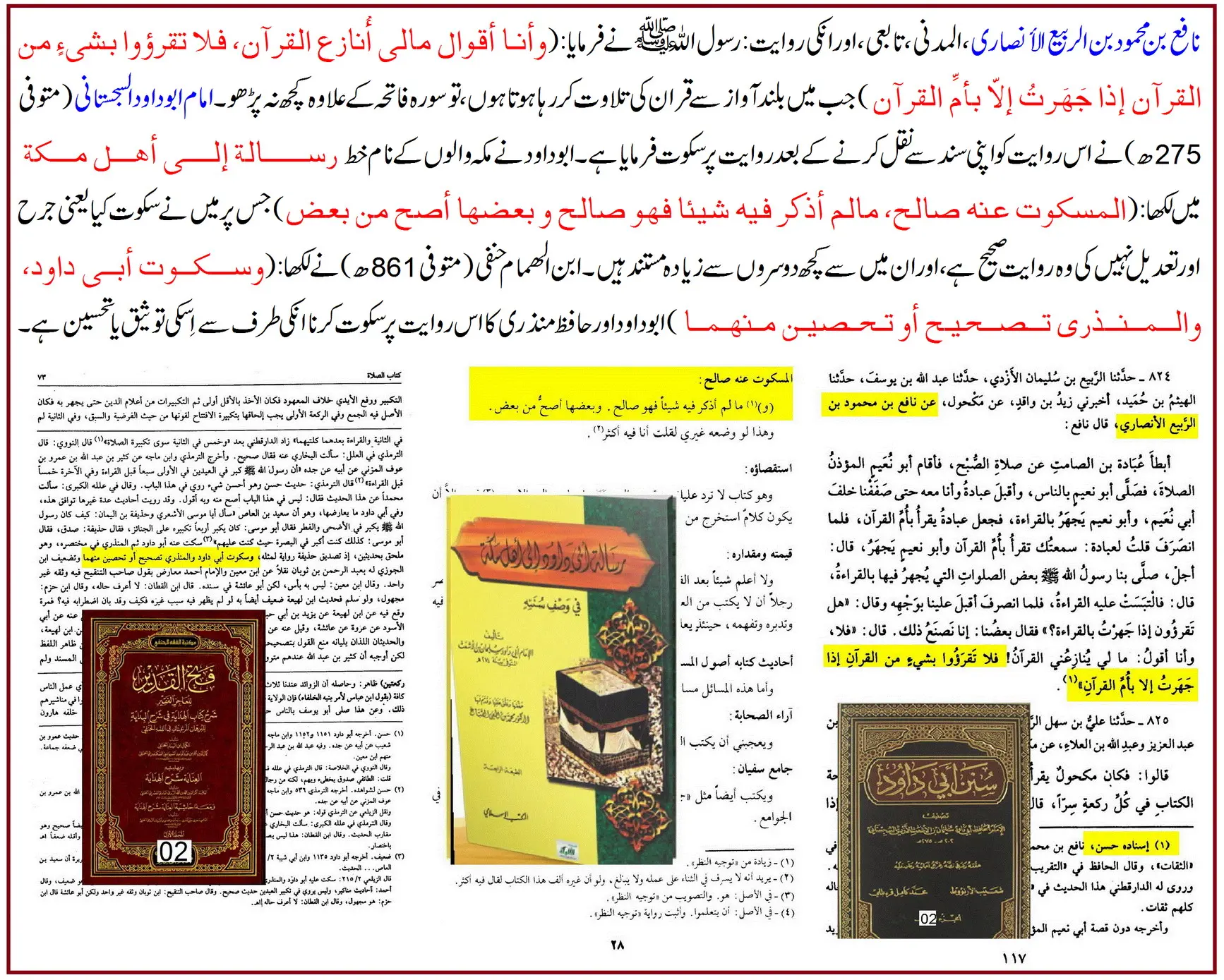
In Sunan Abī Dāwūd:
He quoted Nāfiʿ’s narration without criticism and remained silent—his own declared principle being:
"الْمَسْكُوتُ عَنْهُ صَالِحٌ"
Silence equals authentication.
(See: Risālah of Abū Dāwūd to the People of Makkah)
In al-Aḥādīth al-Mukhtārah, which includes only authentic narrations:
"إِسْنَادُهُ صَحِيحٌ..."
(al-Mukhtārah: 421)
Hence, his inclusion reflects strong acceptance.
Thus, calling Nāfiʿ bin Maḥmūd "Majhūl" is baseless and against the academic principles of ḥadīth sciences.
"وَلَيْسَ نَافِعُ بْنُ مَحْمُودٍ بِمَعْرُوفٍ"
 Refutation:
This statement comes from a book falsely attributed to Imām Ṭaḥāwī without sanad or authentic manuscript. Furthermore, Ṭaḥāwī himself stated:
"فما أردتُ بشيء من ذلك تضعيفَ أحدٍ من أهل العلم..."
Hence, the attribution is unreliable and invalid.
"نَافِعُ بْنُ مَحْمُودٍ هَذَا مَجْهُولٌ لَا يُعْرَفُ"
Refutation:
Jaṣṣāṣ was a Muʿtazilī. His criticism is not credible, especially against such a well-attested narrator.
"كَانَ يَمِيلُ إِلَى الِاعْتِزَالِ..."
(Siyar Aʿlām al-Nubalāʾ)
"نَافِعُ بْنُ مَحْمُودٍ هَذَا مَجْهُولٌ"
Refutation:
① Ibn al-Qaṭṭān al-Fāsī stated that Ibn ʿAbd al-Barr later retracted and declared him Thiqah:
"وقال فيه أبو عمر: مجهول... إنه ثقة"
② Ibn Mufliḥ al-Ḥanbalī rejected this jarḥ:
"وَقَالَ ابْنُ عَبْدِ الْبَرِّ... وَلَيْسَ كَذَلِكَ..."
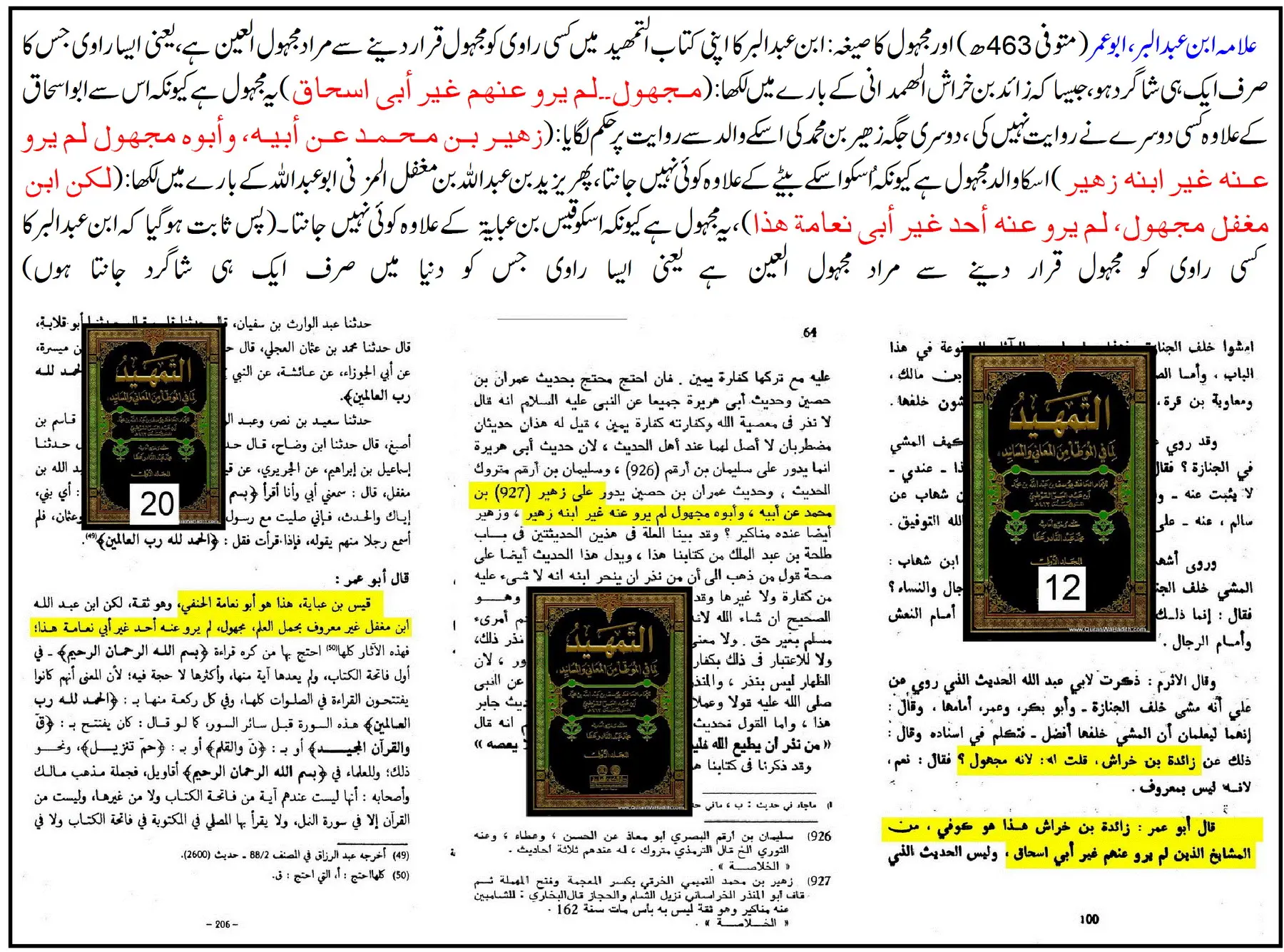
③ Ibn ʿAbd al-Barr used “Majhūl” in the sense of Majhūl al-ʿAyn (one with only a single student), but Nāfiʿ had multiple trustworthy narrators, making this categorization incorrect.
After thorough analysis, it is clear:
والله أعلم بالصواب
Introduction
According to the scholars of ḥadīth, the authenticity or weakness of a narration is determined based on the reliability or unreliability of its narrators. Recently, some individuals have raised an objection labeling the trustworthy Tābiʿī narrator Nāfiʿ bin Maḥmūd bin al-Rabīʿ al-Anṣārī as “Majhūl” (unknown).
The purpose of this article is to present the authentic attestations (tawthīqāt) regarding Nāfiʿ bin Maḥmūd from established muḥaddithīn and to refute—academically and critically—the claim that he is “Majhūl”.
Through our research, it will become evident that not only is Nāfiʿ bin Maḥmūd a reliable and credible narrator, but to call him "Majhūl" is a clear scholarly error.
Part One: Statements of Tawthīq from the Muḥaddithīn
① Imām al-Dāraqutnī (d. 385 AH):
In his renowned work Sunan al-Dāraqutnī, after quoting a narration through Nāfiʿ bin Maḥmūd, Imām al-Dāraqutnī clearly declares:
"هذا إسناد حسن ورجاله ثقات كلهم"
“This isnād is ḥasan and all its narrators are trustworthy.”
(Sunan al-Dāraqutnī, Ḥadīth: 1220)
This narration was transmitted from Nāfiʿ bin Maḥmūd by three trustworthy students:
- Ḥarām bin Ḥakīm al-Anṣārī (Thiqah)
- Makhḥūl bin Abī Muslim al-Shāmī (Thiqah)
- ʿUthmān bin Abī Sūdah al-Maqdisī (Thiqah)
Imām Dāraqutnī's statement is a clear tawthīq for Nāfiʿ bin Maḥmūd.
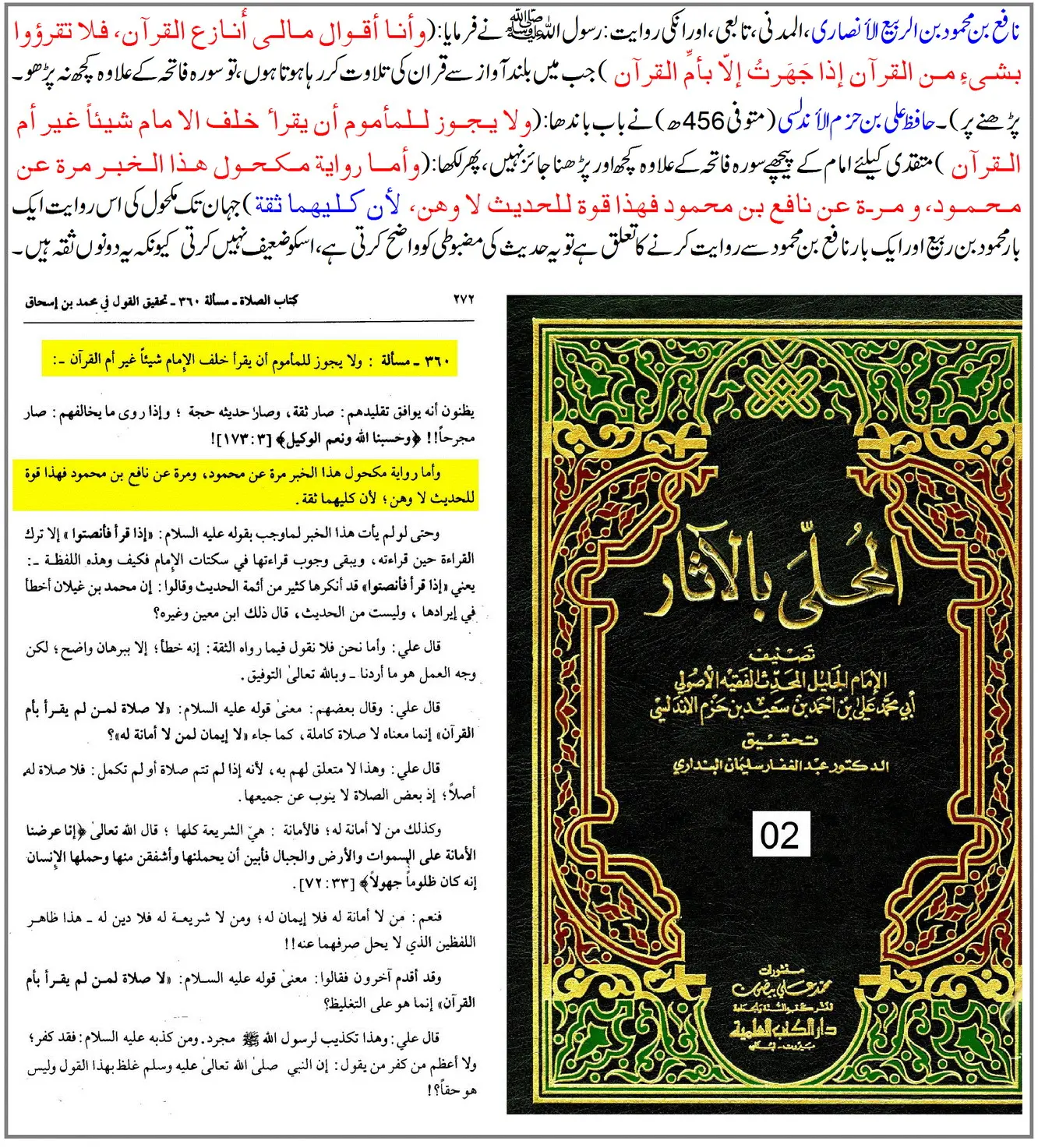
② Ḥāfiẓ Ibn Ḥazm al-Andalusī (d. 456 AH):
In al-Muḥallā bil-Athār, while discussing recitation behind the Imām, he wrote:
"فَهَذَا قُوَّةٌ لِلْحَدِيثِ لَا وَهْنٌ؛ لِأَنَّ كِلَيْهِمَا ثِقَةٌ"
“This (variation of narration) strengthens the ḥadīth, not weakens it; because both narrators are trustworthy.”
(al-Muḥallā, Issue: 360)
Thus, according to Ibn Ḥazm, Nāfiʿ bin Maḥmūd is Thiqah.
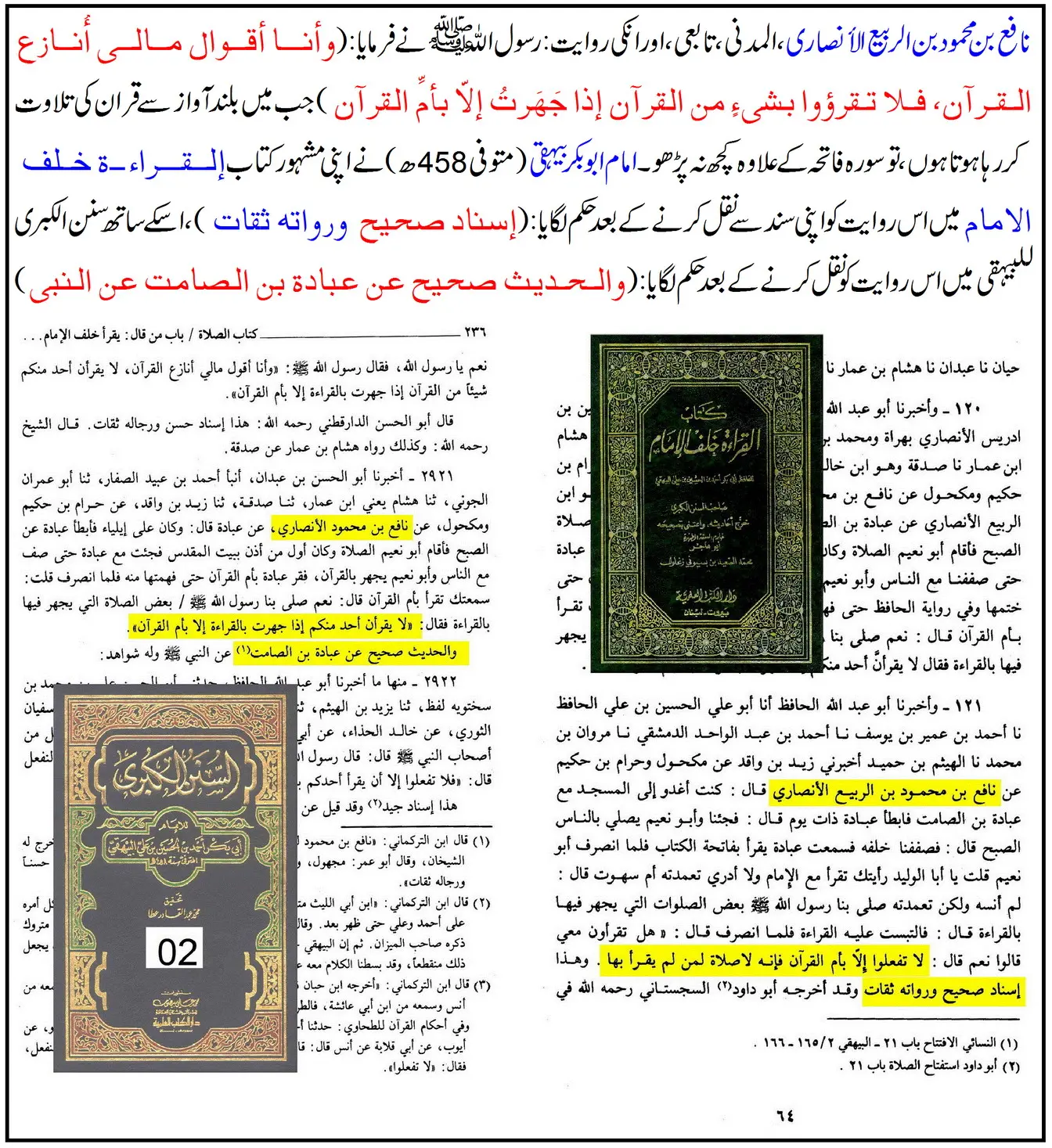
③ Imām Abū Bakr al-Bayhaqī (d. 458 AH):
In al-Qirāʾah Khalfa al-Imām, Imām Bayhaqī stated:
"وَهَذَا إِسْنَادٌ صَحِيحٌ وَرُوَاتُهُ ثِقَاتٌ"
“This isnād is ṣaḥīḥ and its narrators are trustworthy.”
(Ḥadīth No: 121)
Also in al-Sunan al-Kubrā:
"وَالْحَدِيثُ صَحِيحٌ، عَنْ عُبَادَةَ..."
(Ḥadīth No: 2921)
These statements indicate Imām Bayhaqī regarded Nāfiʿ bin Maḥmūd as reliable.
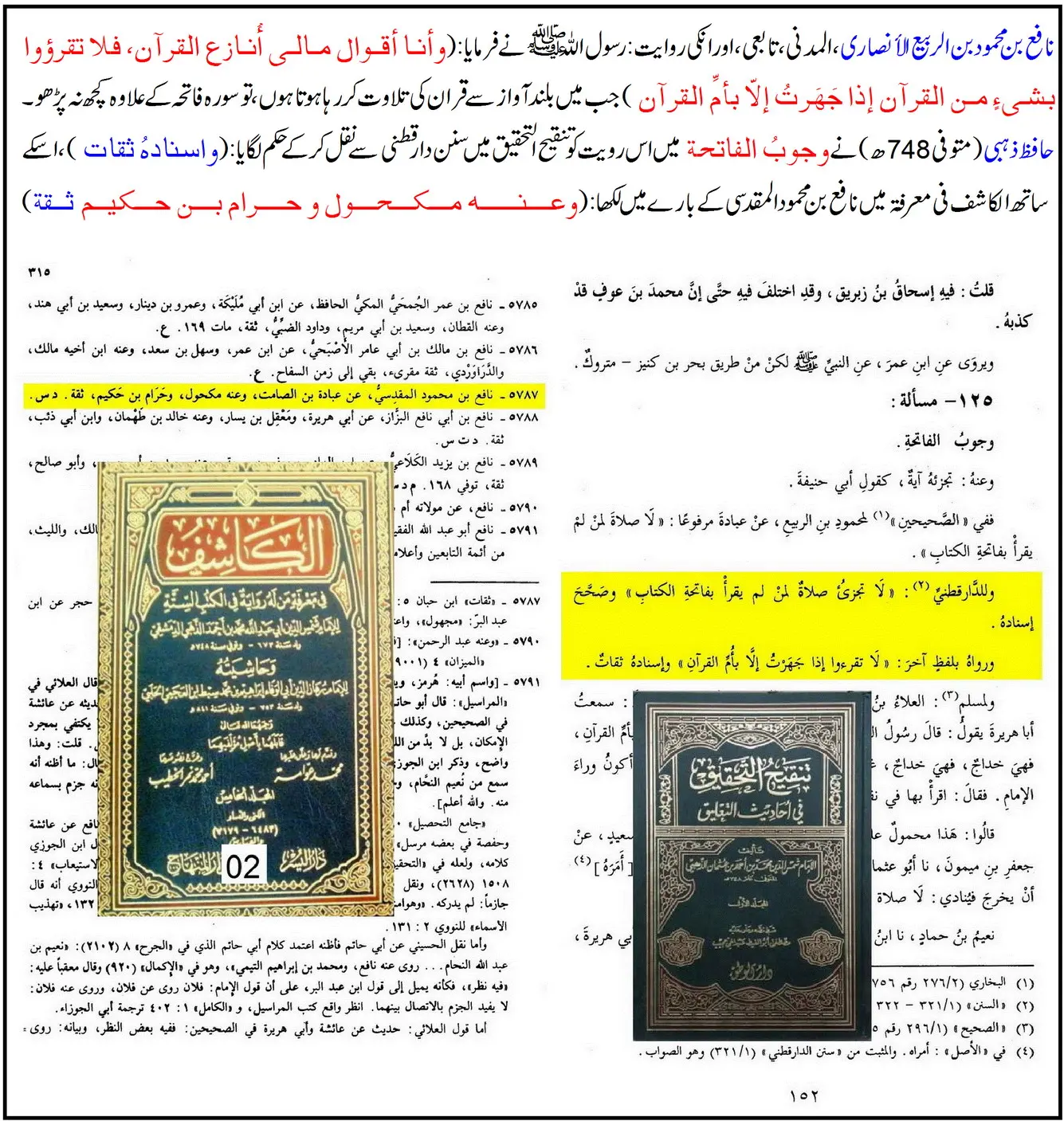
④ Ḥāfiẓ al-Dhahabī (d. 748 AH):
In Tanqīḥ al-Taḥqīq, al-Dhahabī affirms:
"وصَحّحَ إسنادهُ... وإسنادهُ ثقاتٌ."
Also, in al-Kāshif:
"نافع بن محمود المقدسي... ثقة"
(al-Kāshif: 5787)
Thus, Ḥāfiẓ al-Dhahabī clearly affirmed his reliability.
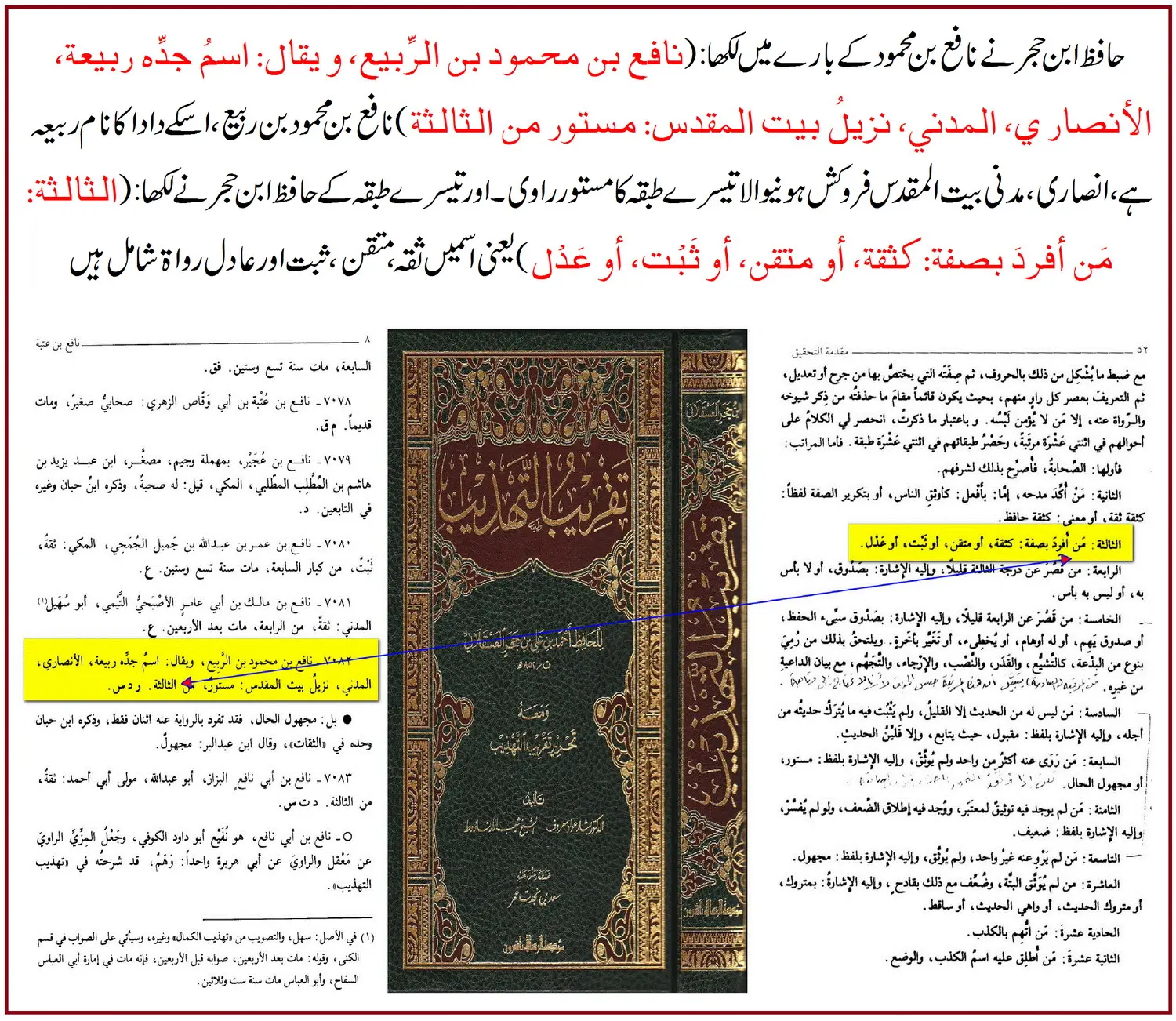
⑤ Ḥāfiẓ Ibn Ḥajar al-ʿAsqalānī (d. 852 AH):
In Taqrīb al-Tahdhīb, he labeled Nāfiʿ as:
"مستور، من الثالثة"
(Entry: 7082)
Clarifying the term, he wrote in the introduction:
"الثالثة: من أُفرِدَ بصفة كثقة، أو متقن، أو ثبت، أو عدل."
So, Ibn Ḥajar includes him among those described as Thiqah or ʿAdl.
⑥ Imām al-Ḥākim al-Naysābūrī (d. 405 AH):
In al-Mustadrak ʿala al-Ṣaḥīḥayn, after quoting his narration:
"هَذَا حَدِيثٌ صَحِيحُ الْإِسْنَادِ"
(Hadith No: 2335)
A Ṣaḥīḥ isnād means every narrator is Thiqah, including Nāfiʿ.
⑦ Ḥāfiẓ Ibn Ḥibbān (d. 354 AH):
Included Nāfiʿ in his book al-Thiqāt, stating:
"نافع بن محمود بن ربيعة، من أهل إيلياء..."
(al-Thiqāt: 5770)
Being listed here is a clear tawthīq.
⑧ Imām Abū ʿAbdillāh al-Qurṭubī (d. 671 AH):
In his tafsīr, al-Jāmiʿ li Aḥkām al-Qurʾān:
"وَهَذَا نَصٌّ صَرِيحٌ فِي الْمَأْمُومِ"
Using his narration as evidence implies acceptance of his reliability, as weak narrations are not used for proof.
⑨ Imām Abū Dāwūd al-Sijistānī (d. 275 AH):
In Sunan Abī Dāwūd:
He quoted Nāfiʿ’s narration without criticism and remained silent—his own declared principle being:
"الْمَسْكُوتُ عَنْهُ صَالِحٌ"
Silence equals authentication.
(See: Risālah of Abū Dāwūd to the People of Makkah)
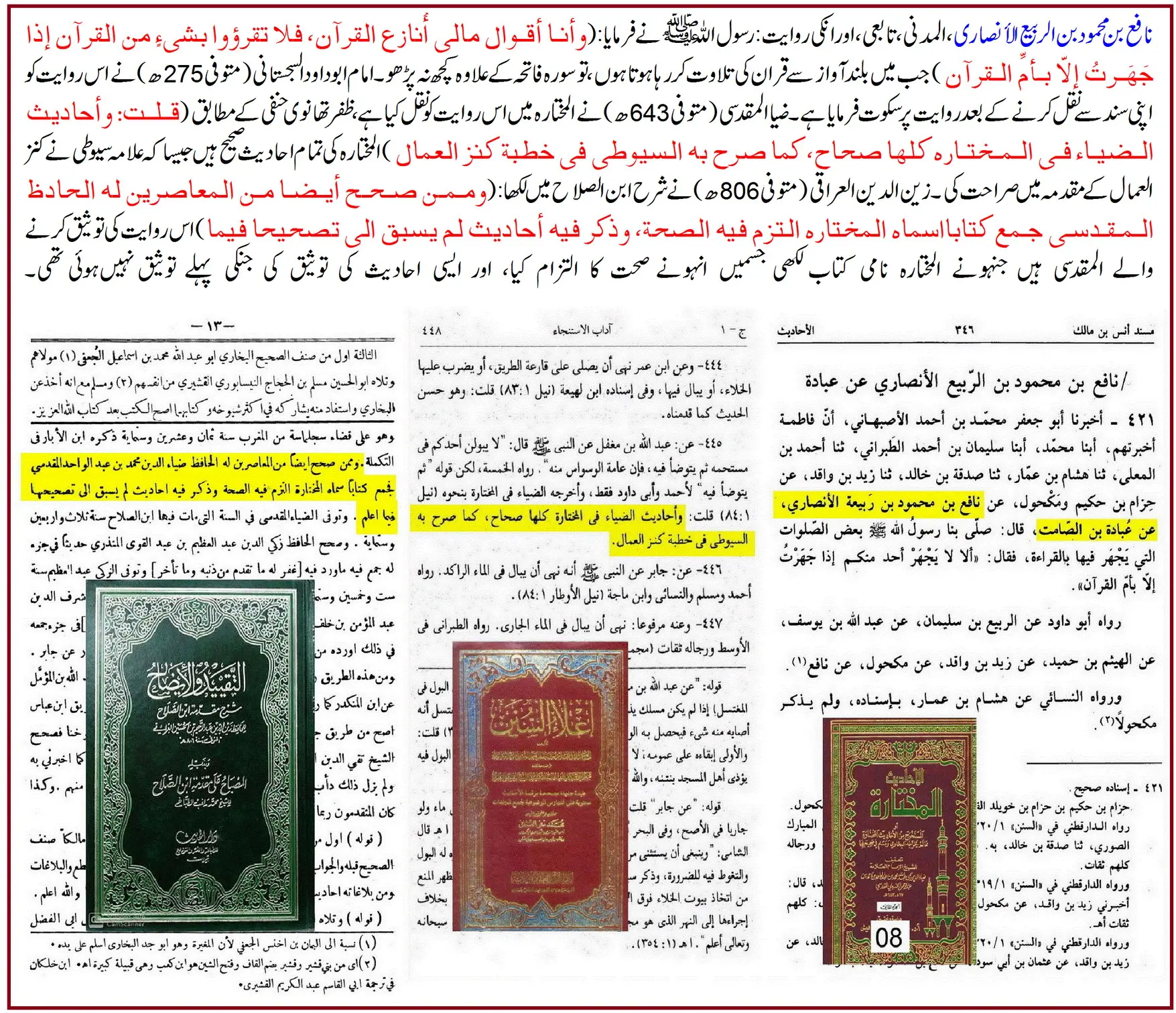
⑩ Imām Ḍiyāʾ al-Dīn al-Maqdisī (d. 643 AH):
In al-Aḥādīth al-Mukhtārah, which includes only authentic narrations:
"إِسْنَادُهُ صَحِيحٌ..."
(al-Mukhtārah: 421)
Hence, his inclusion reflects strong acceptance.
 Summary of the Scholars Who Declared Him Thiqah:
- Imām al-Dāraqutnī
- Ḥāfiẓ Ibn Ḥazm
- Imām al-Bayhaqī
- Ḥāfiẓ al-Dhahabī
- Imām al-Ḥākim
- Ḥāfiẓ Ibn Ḥibbān
- Imām al-Qurṭubī
- Imām Abū Dāwūd
- Imām Ḍiyāʾ al-Maqdisī
- Ibn Mufliḥ al-Ḥanbalī also affirmed his reliability
Thus, calling Nāfiʿ bin Maḥmūd "Majhūl" is baseless and against the academic principles of ḥadīth sciences.
Part Two: Academic Refutation of the “Majhūl” Objection
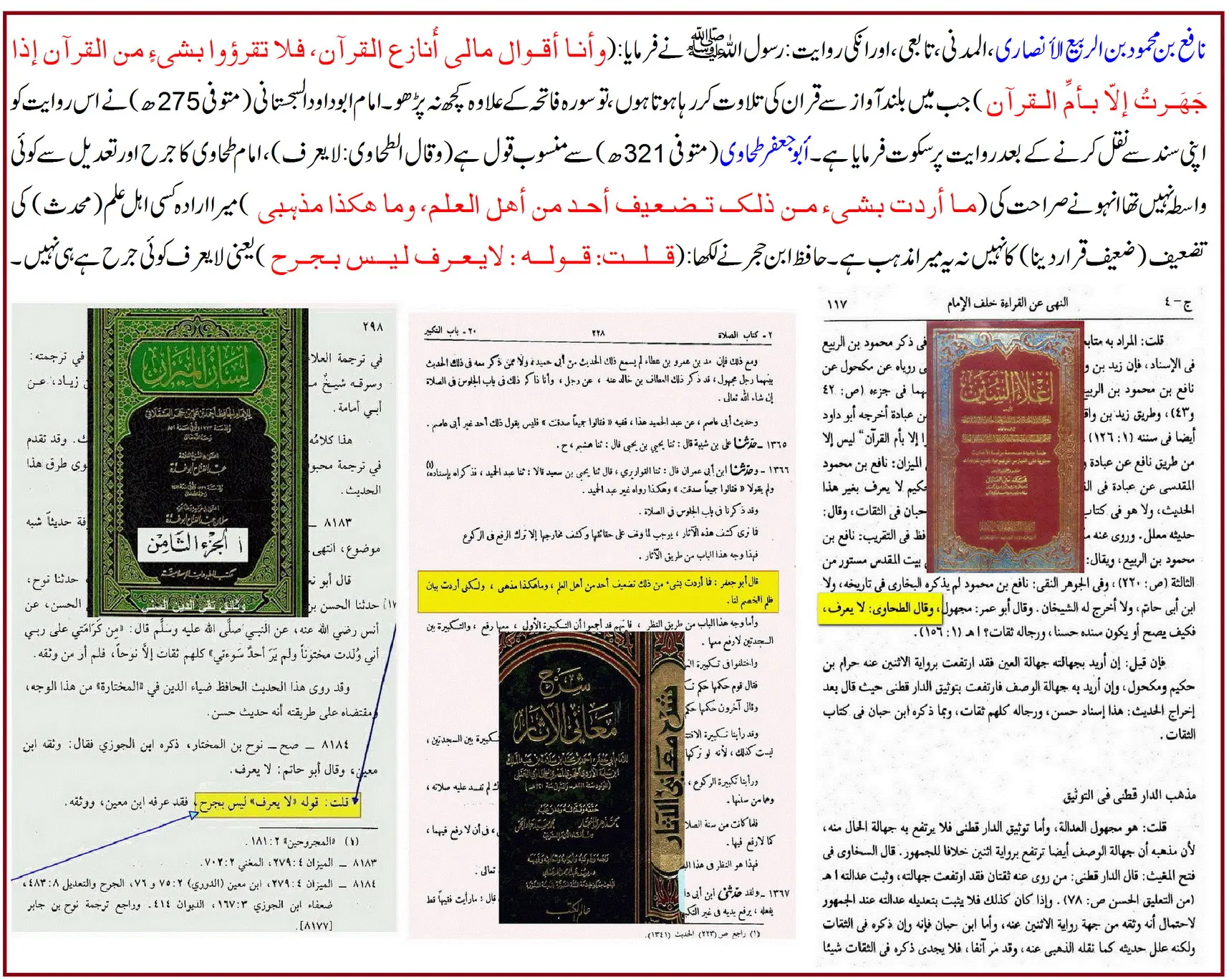
 Objection #1: Attributed to Imām al-Ṭaḥāwī
"وَلَيْسَ نَافِعُ بْنُ مَحْمُودٍ بِمَعْرُوفٍ"
Refutation:This statement comes from a book falsely attributed to Imām Ṭaḥāwī without sanad or authentic manuscript. Furthermore, Ṭaḥāwī himself stated:
"فما أردتُ بشيء من ذلك تضعيفَ أحدٍ من أهل العلم..."
Hence, the attribution is unreliable and invalid.
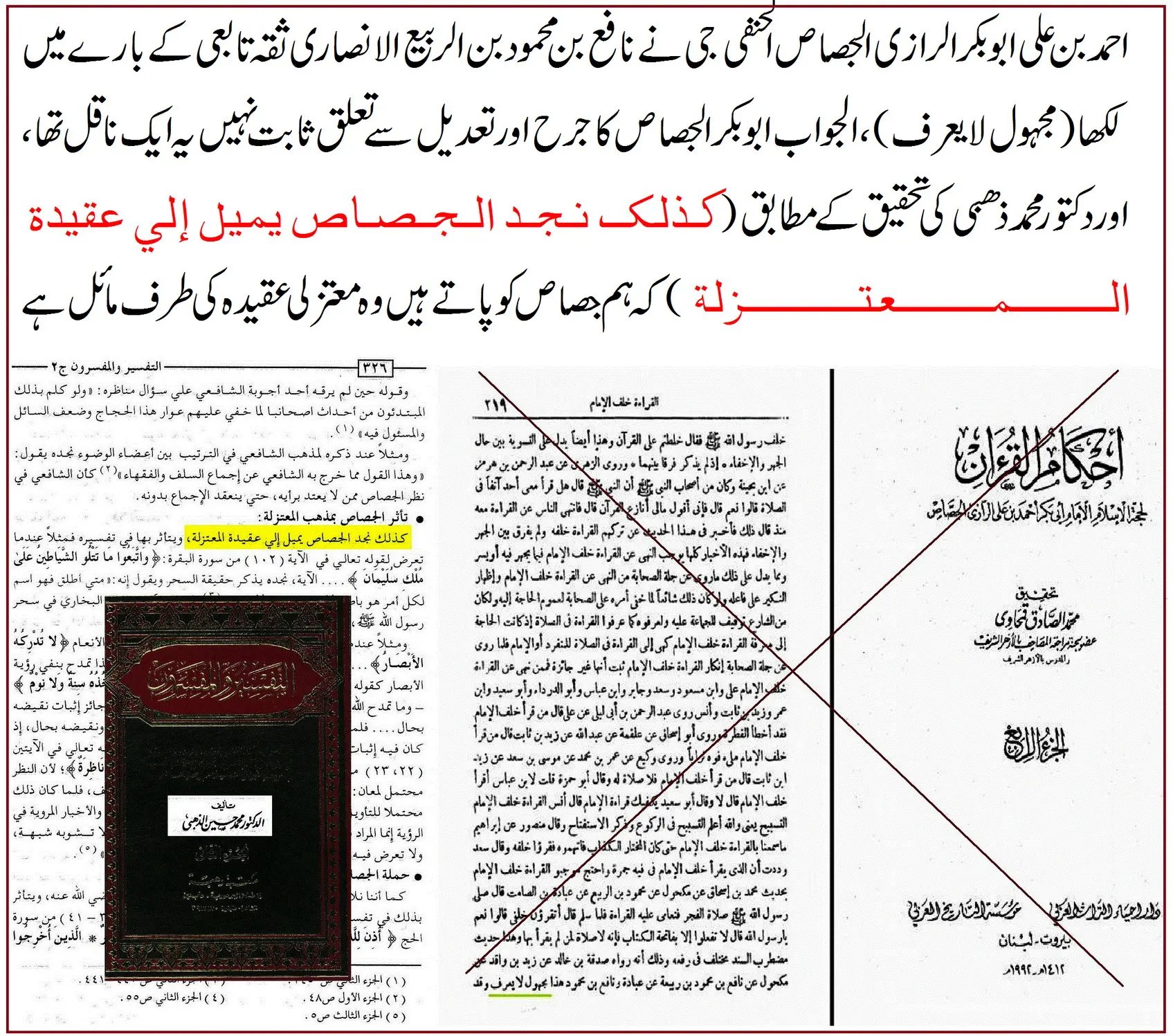
Objection #2: Statement of Abū Bakr al-Jaṣṣāṣ (Muʿtazilī)
"نَافِعُ بْنُ مَحْمُودٍ هَذَا مَجْهُولٌ لَا يُعْرَفُ"
Refutation:Jaṣṣāṣ was a Muʿtazilī. His criticism is not credible, especially against such a well-attested narrator.
"كَانَ يَمِيلُ إِلَى الِاعْتِزَالِ..."
(Siyar Aʿlām al-Nubalāʾ)
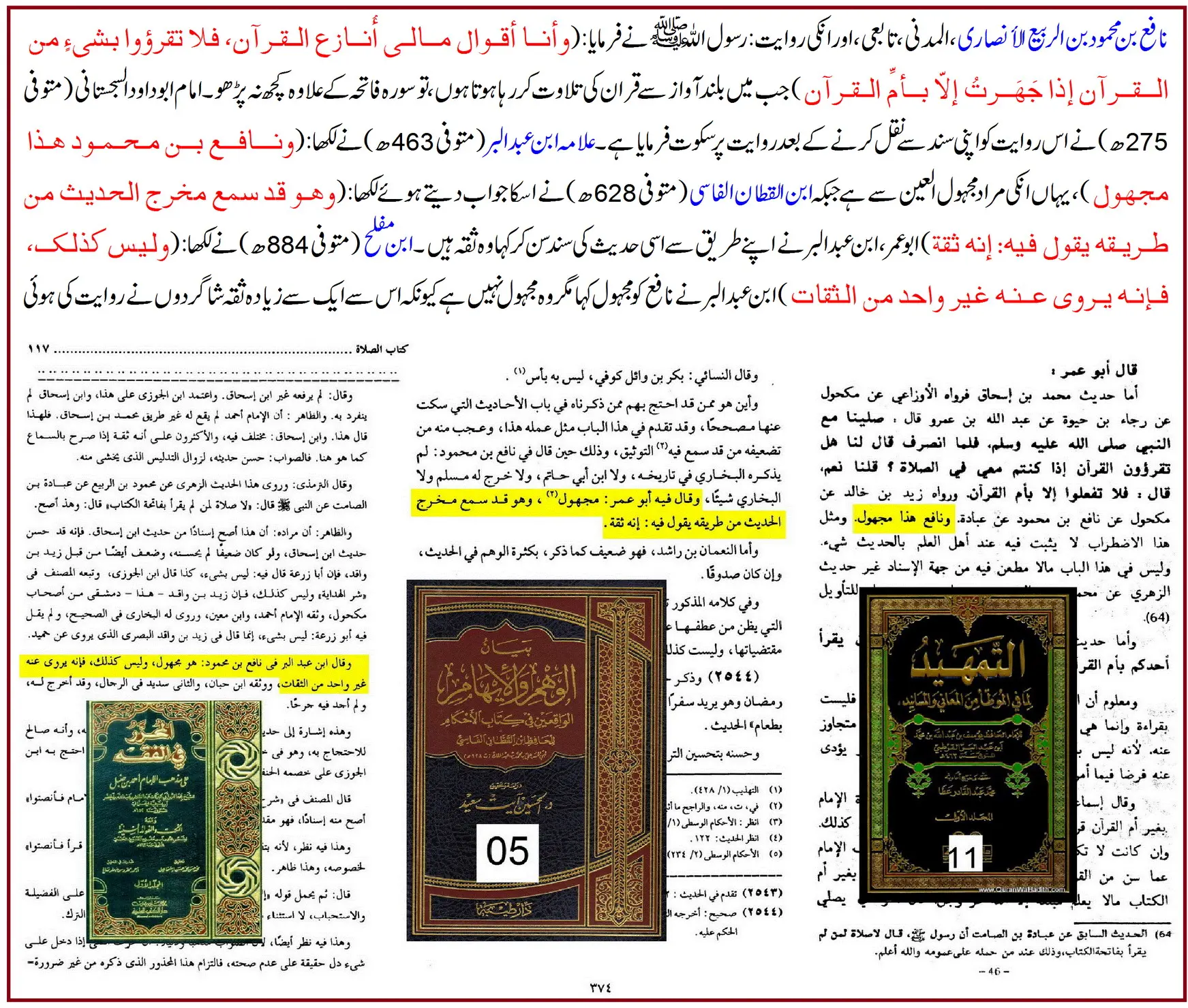
Objection #3: Statement of Ibn ʿAbd al-Barr
"نَافِعُ بْنُ مَحْمُودٍ هَذَا مَجْهُولٌ"
Refutation:① Ibn al-Qaṭṭān al-Fāsī stated that Ibn ʿAbd al-Barr later retracted and declared him Thiqah:
"وقال فيه أبو عمر: مجهول... إنه ثقة"
② Ibn Mufliḥ al-Ḥanbalī rejected this jarḥ:
"وَقَالَ ابْنُ عَبْدِ الْبَرِّ... وَلَيْسَ كَذَلِكَ..."
③ Ibn ʿAbd al-Barr used “Majhūl” in the sense of Majhūl al-ʿAyn (one with only a single student), but Nāfiʿ had multiple trustworthy narrators, making this categorization incorrect.
Conclusion
After thorough analysis, it is clear:
- Over 10 great muḥaddithīn have explicitly declared Nāfiʿ bin Maḥmūd as Thiqah.
- All objections labeling him “Majhūl” are invalid or refuted.
- His narrations are at least ḥasan, if not ṣaḥīḥ.
- The objection is therefore unfounded and holds no academic weight.
والله أعلم بالصواب

