

Compiled by: Abu Hamzah Salafi
الحمد للہ وحدہ، والصلوٰۃ والسلام علی من لا نبی بعدہ۔
All praise is for Allah alone, and peace and blessings be upon the one after whom there is no Prophet.
❖ In this article:
① We will present the original narration with its Arabic text.
② Then we will نقل the statements and criticisms of the ḥadīth scholars with their original Arabic wording and references.
③ Finally, it will become clear that the narration concerning abandoning Rafʿ al-Yadayn is weak and defective, declared invalid by the majority of ḥadīth scholars, while authentic and established narrations from a large group of Companions affirm the Sunnah of Rafʿ al-Yadayn.
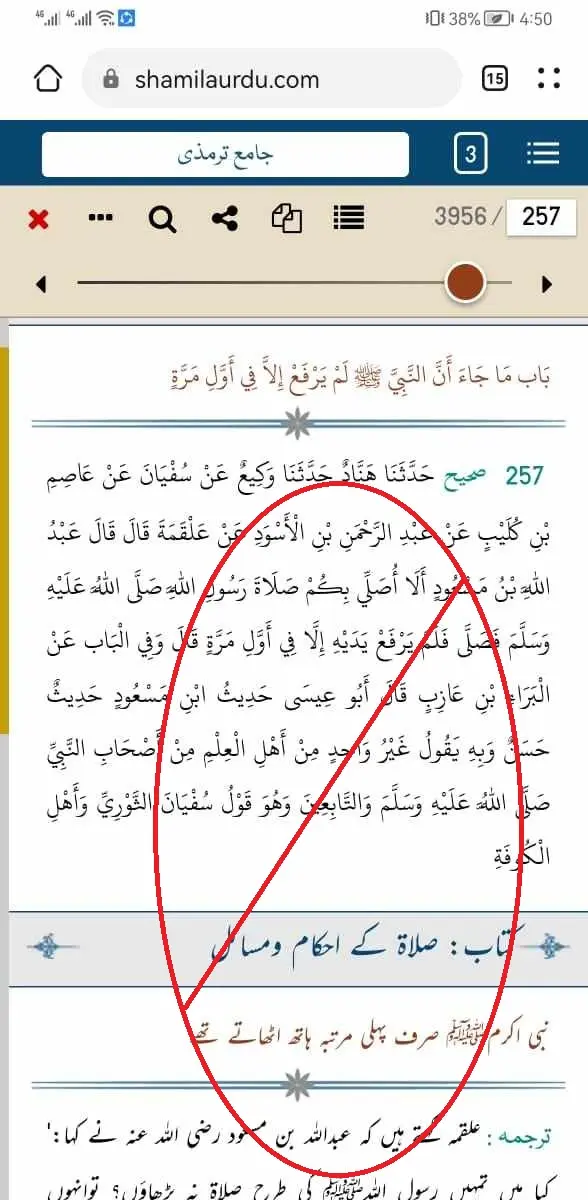
257 – حَدَّثَنَا هَنَّادٌ، قَالَ: حَدَّثَنَا وَكِيعٌ، عَنْ سُفْيَانَ، عَنْ عَاصِمِ بْنِ كُلَيْبٍ، عَنْ عَبْدِ الرَّحْمَنِ بْنِ الأَسْوَدِ، عَنْ عَلْقَمَةَ، قَالَ: قَالَ عَبْدُ اللهِ بْنُ مَسْعُودٍ: أَلاَ أُصَلِّي بِكُمْ صَلاَةَ رَسُولِ اللهِ صَلَّى اللَّهُ عَلَيْهِ وَسَلَّمَ؟ فَصَلَّى، فَلَمْ يَرْفَعْ يَدَيْهِ إِلاَّ فِي أَوَّلِ مَرَّةٍ.»
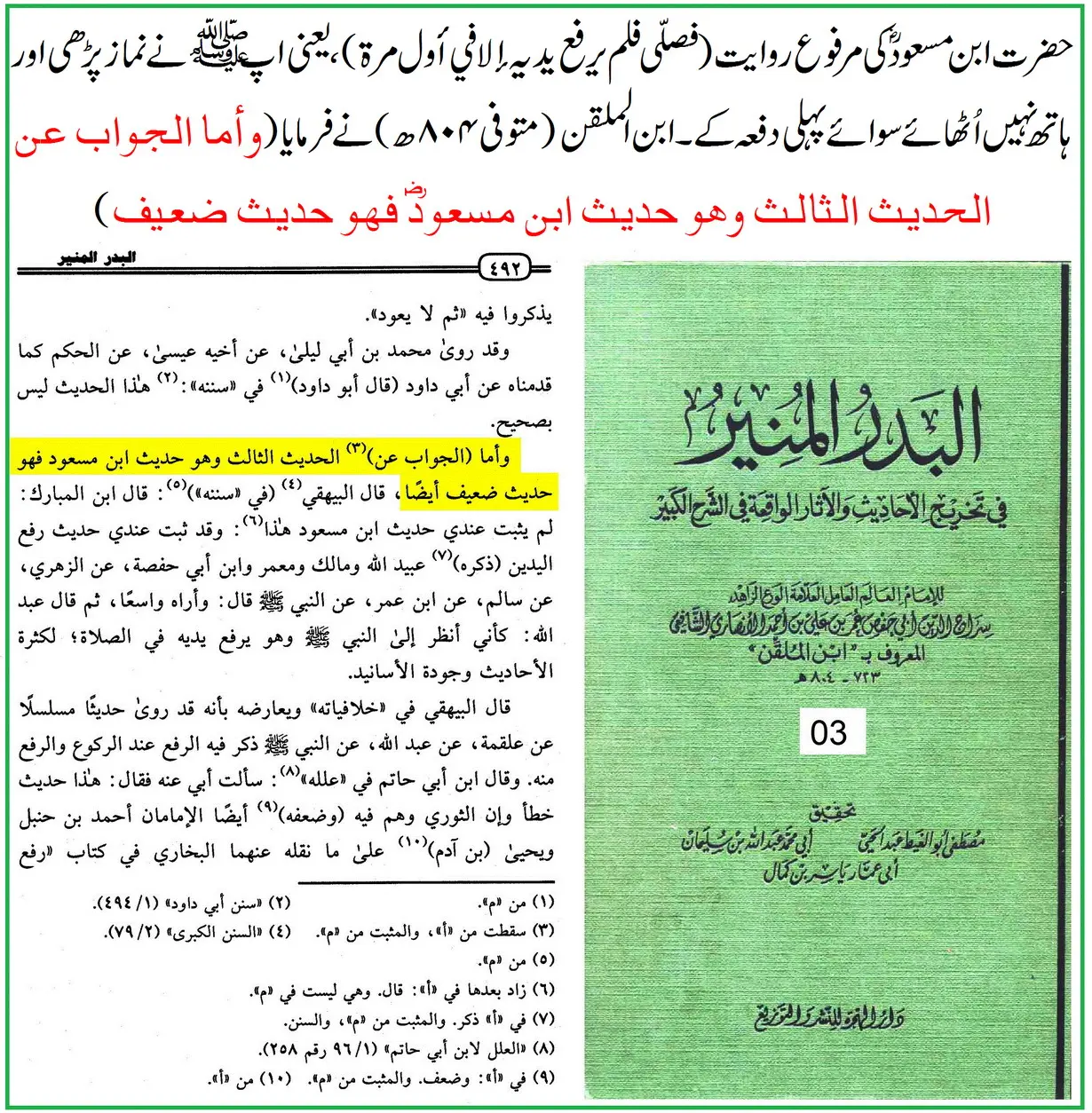
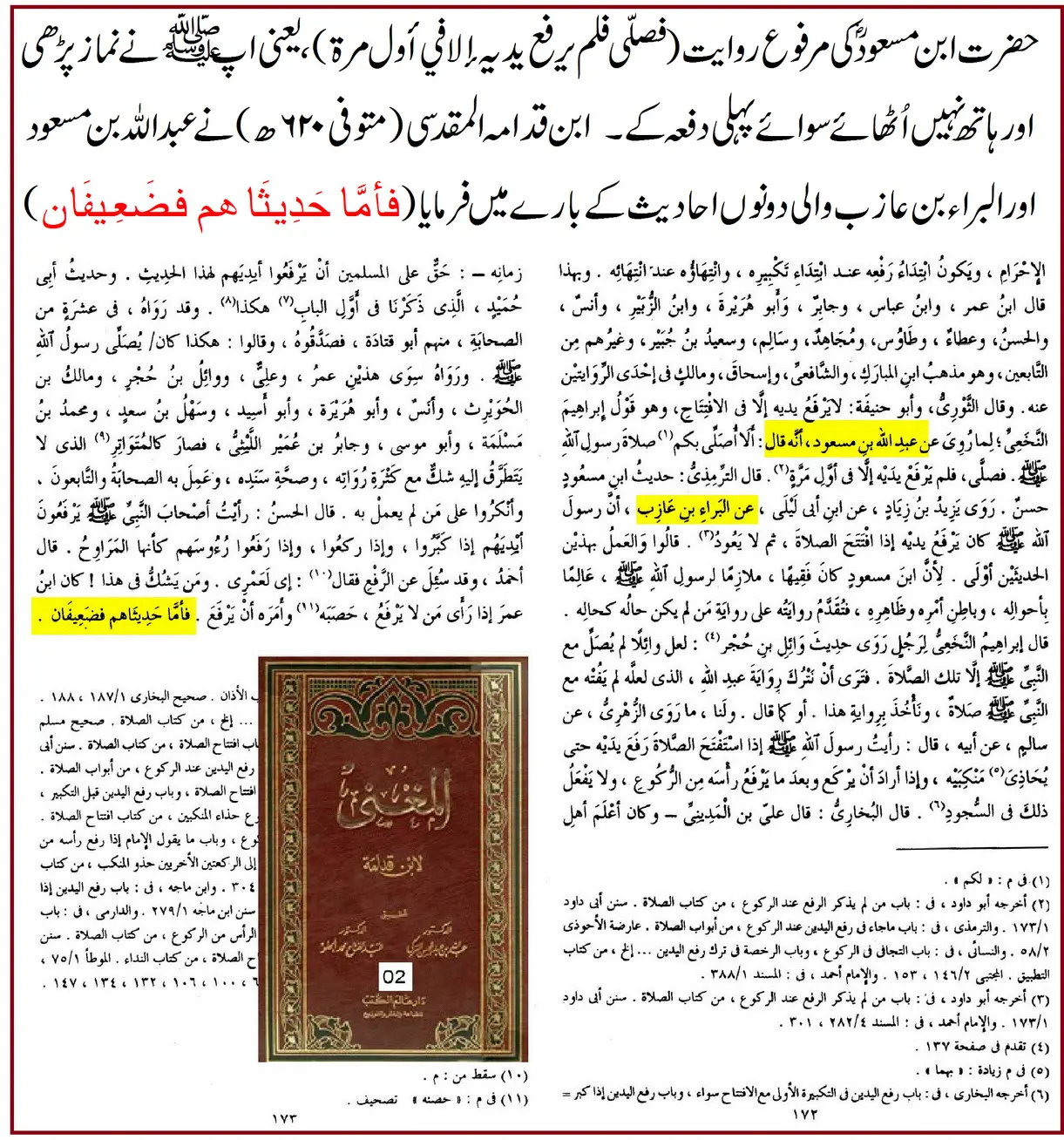
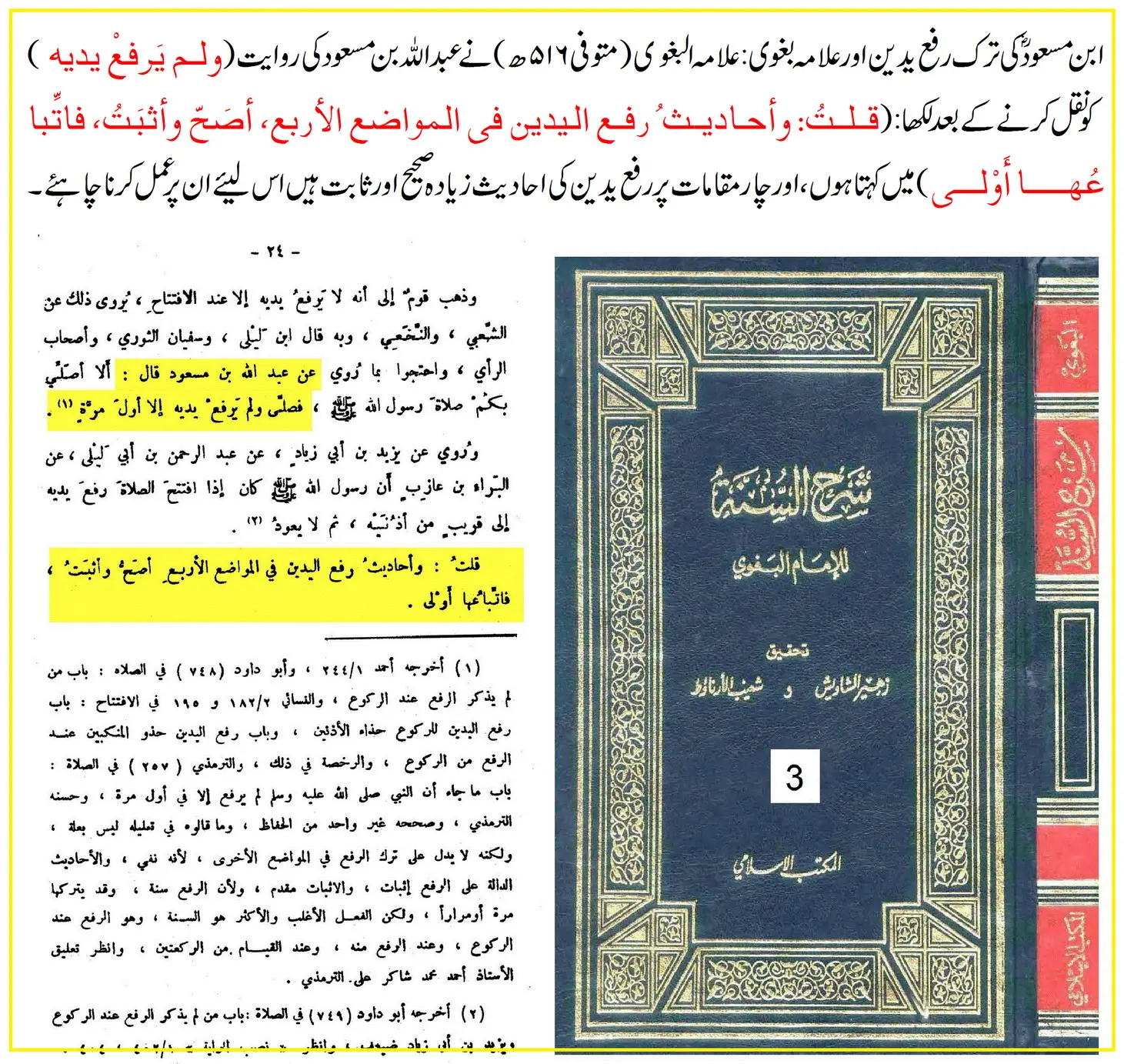
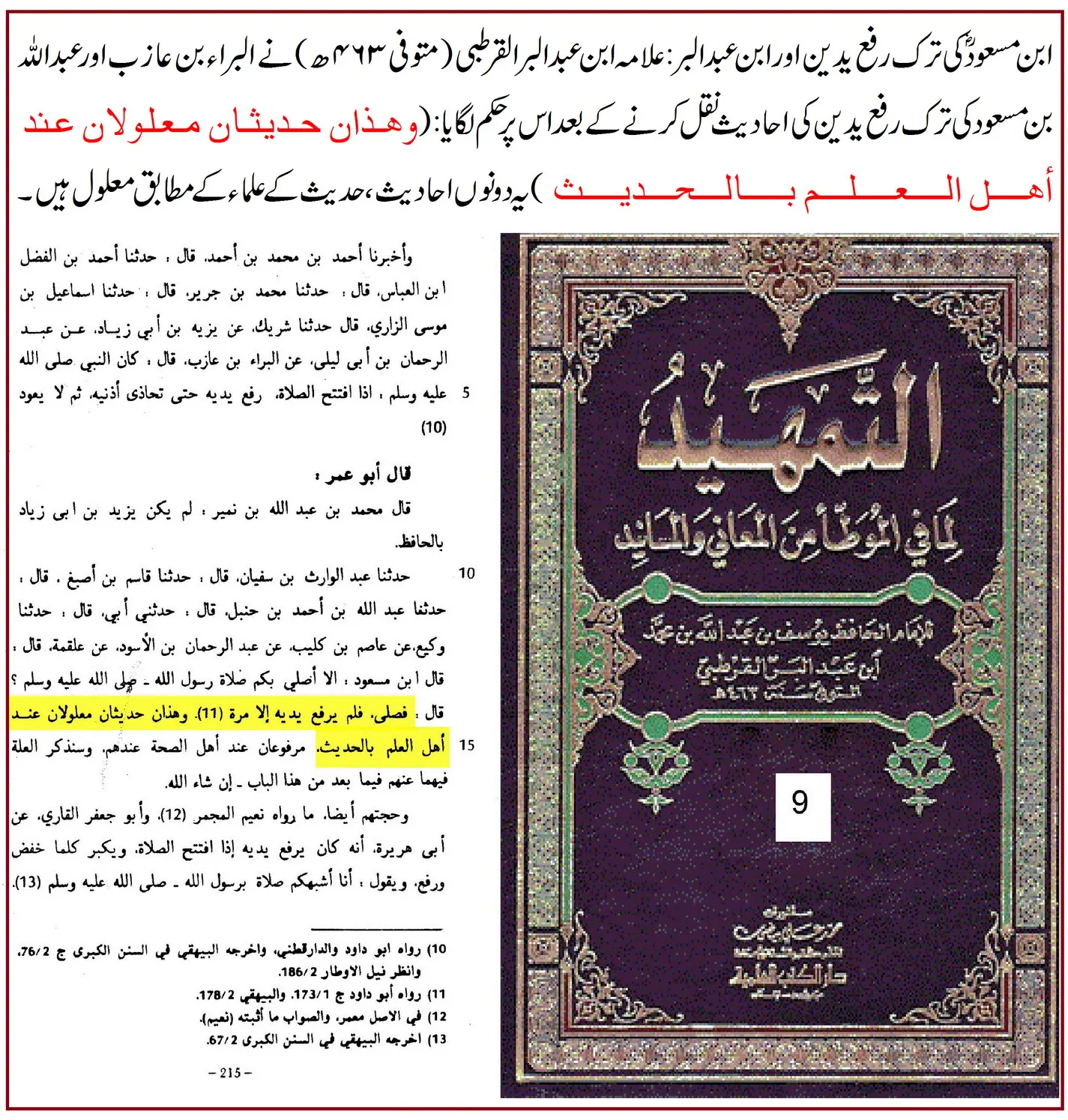
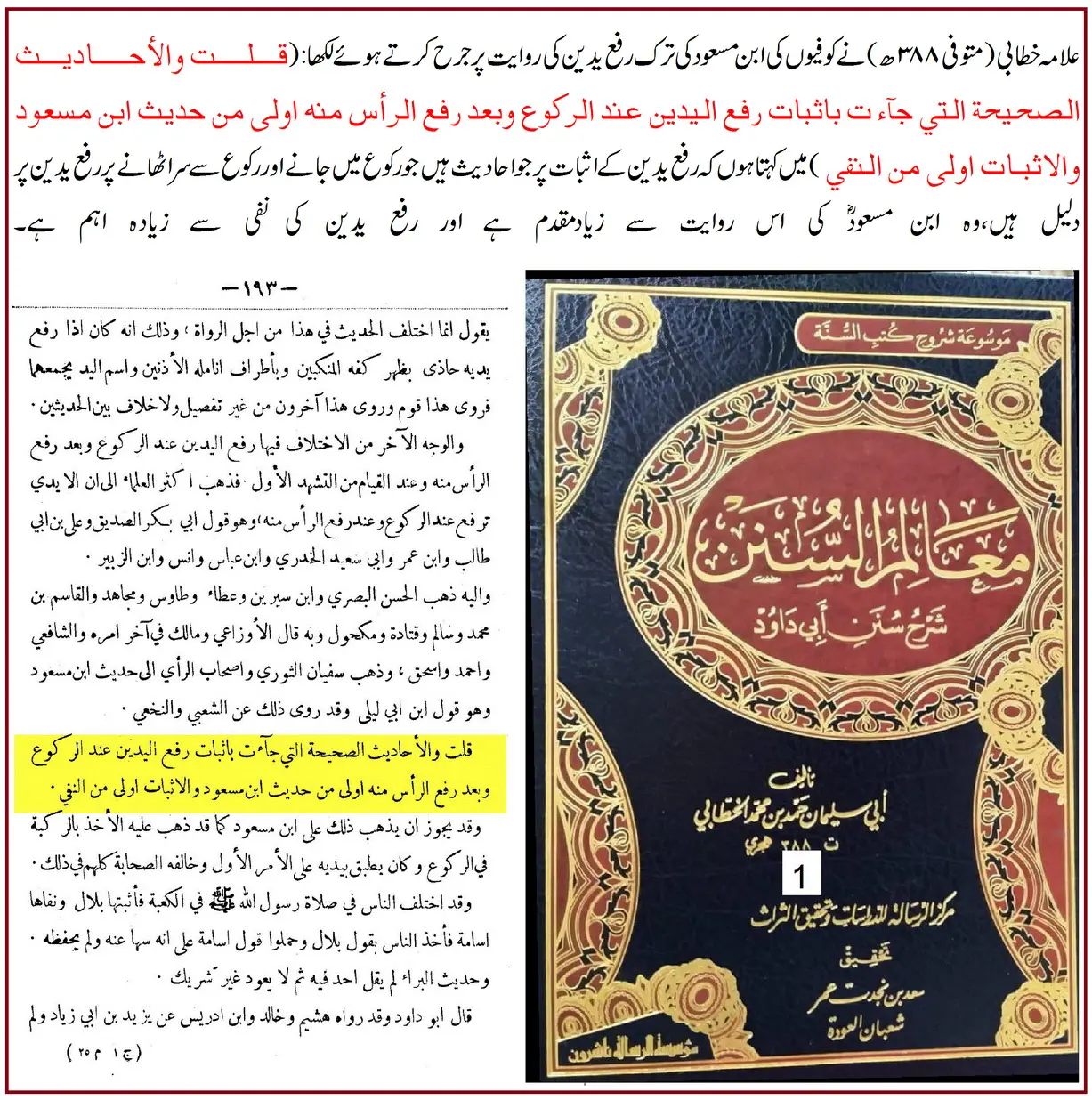
✔ Imām Ibn al-Mubārak, Imām al-Shāfiʿī, Imām Aḥmad, Imām al-Bukhārī, Imām al-Nasā’ī, Imām al-Dāraquṭnī, Imām Abū Dāwūd, Ibn Ḥibbān, Ibn Khuzaymah, Ibn ʿAbd al-Barr, Ibn al-Mulaqqin, al-Nawawī, Ibn Ḥajar, Ibn Qudāmah and many others declared it weak, not preserved, defective, or rejected.
✔ Some described it as the strongest proof of the Kūfans — yet clarified that in reality it is the weakest.
② Among them: ʿUmar رضي الله عنه, ʿAlī رضي الله عنه, Ibn ʿUmar رضي الله عنه, Mālik ibn al-Ḥuwayrith رضي الله عنه, Anas رضي الله عنه and others.
③ The majority of ḥadīth scholars clearly stated:
No narration establishing the abandonment of Rafʿ al-Yadayn is authentic from the Prophet ﷺ.
Rather, the narrations affirming it are more authentic, more numerous, and stronger.
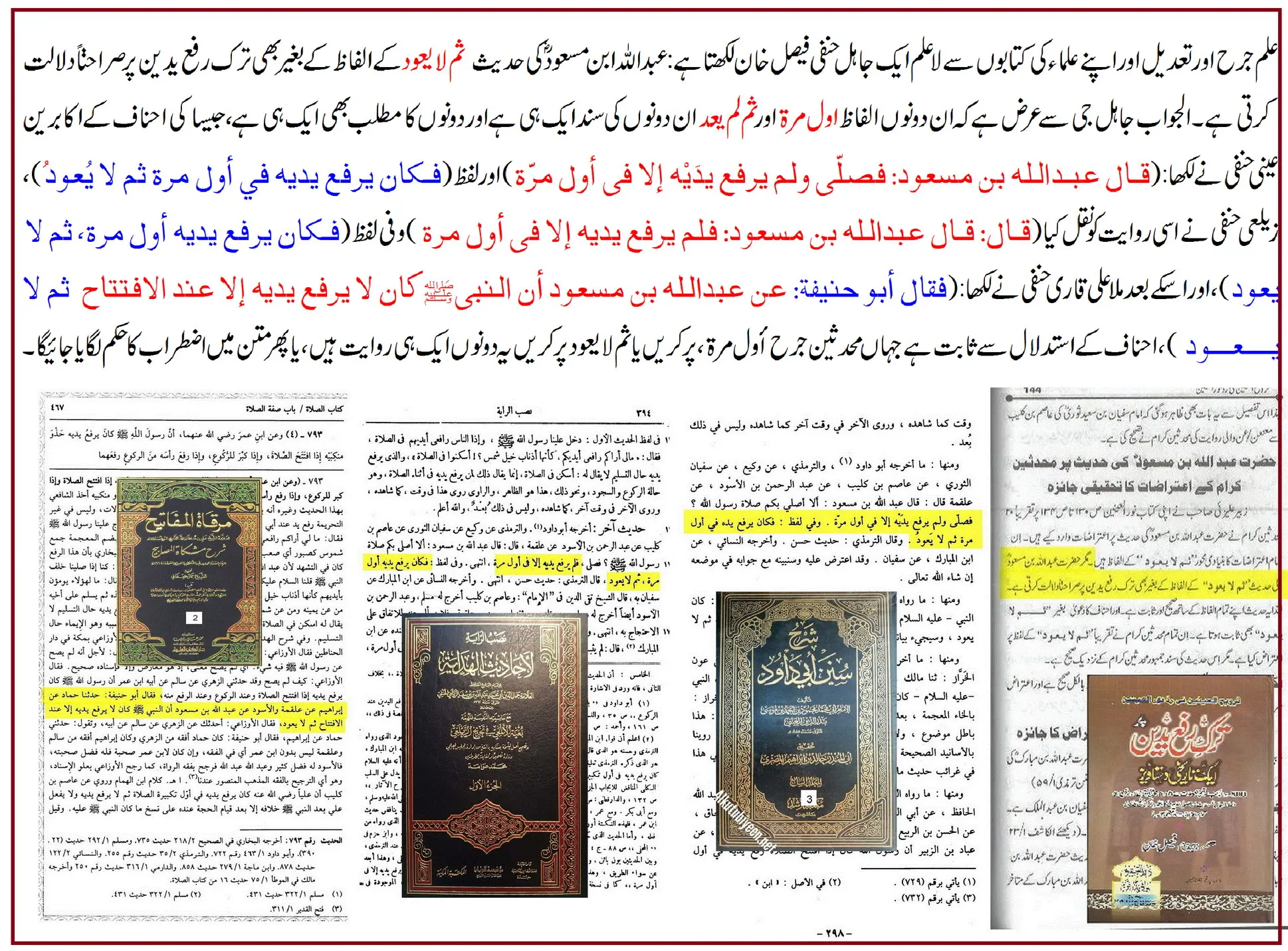
الحمد للہ وحدہ، والصلوٰۃ والسلام علی من لا نبی بعدہ۔
All praise is for Allah alone, and peace and blessings be upon the one after whom there is no Prophet.
Rafʿ al-Yadayn in Prayer and the Weakness of the Narration of Ibn Masʿūd (رضي الله عنه)
Raising the hands (Rafʿ al-Yadayn) in prayer is an established Sunnah proven by numerous narrations that have reached the level of tawātur. However, in some books a narration from ʿAbdullāh ibn Masʿūd رضي الله عنه is cited stating that the Messenger of Allah ﷺ raised his hands only the first time and did not repeat it thereafter. This narration appears in Jāmiʿ al-Tirmidhī.❖ In this article:
① We will present the original narration with its Arabic text.
② Then we will نقل the statements and criticisms of the ḥadīth scholars with their original Arabic wording and references.
③ Finally, it will become clear that the narration concerning abandoning Rafʿ al-Yadayn is weak and defective, declared invalid by the majority of ḥadīth scholars, while authentic and established narrations from a large group of Companions affirm the Sunnah of Rafʿ al-Yadayn.
✦ The Original Narration (Jāmiʿ al-Tirmidhī)
Arabic Text
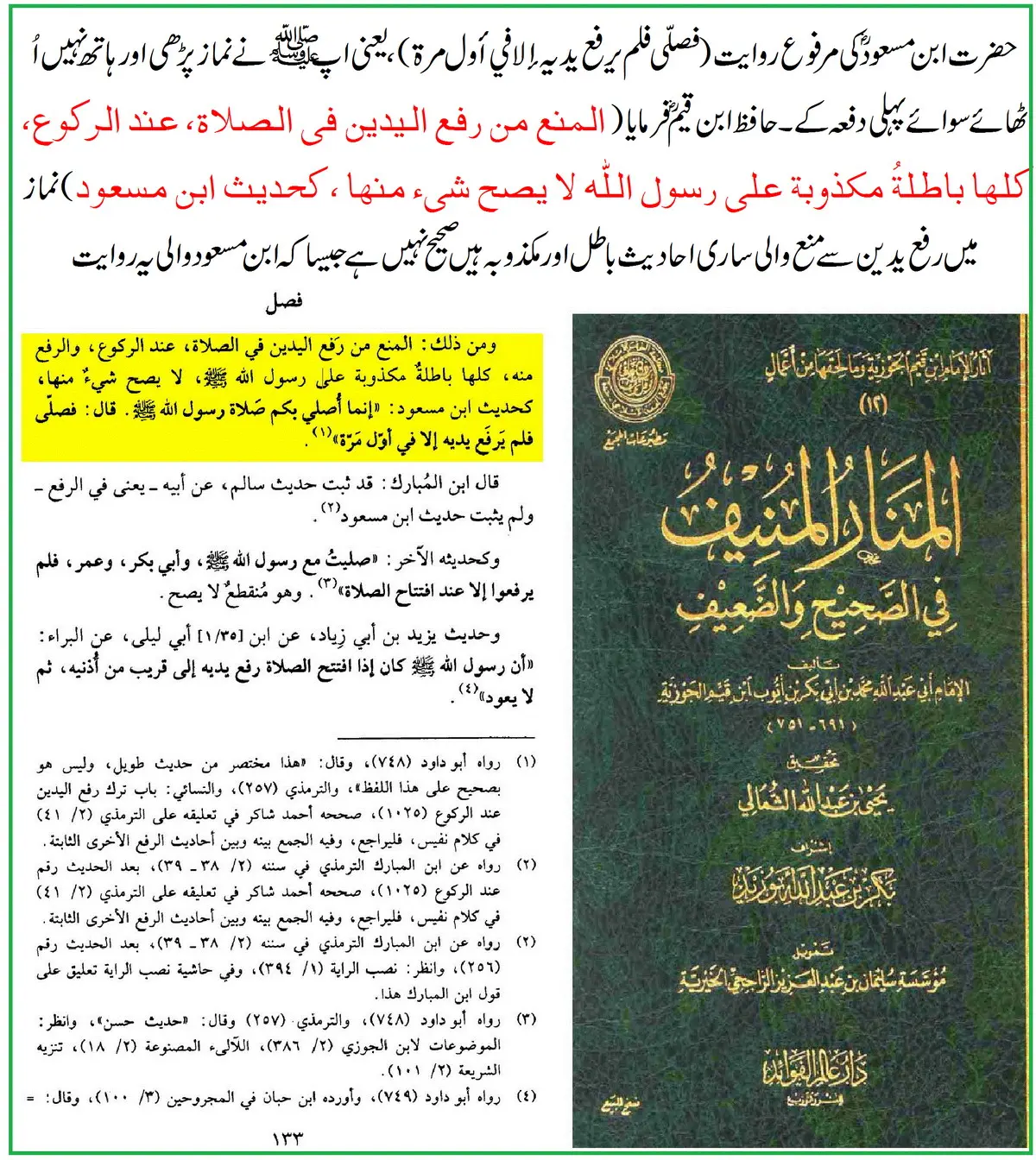
«191 – باب ما جاء أن النبي صلى الله عليه وسلم لم يرفع إلا في أول مرة257 – حَدَّثَنَا هَنَّادٌ، قَالَ: حَدَّثَنَا وَكِيعٌ، عَنْ سُفْيَانَ، عَنْ عَاصِمِ بْنِ كُلَيْبٍ، عَنْ عَبْدِ الرَّحْمَنِ بْنِ الأَسْوَدِ، عَنْ عَلْقَمَةَ، قَالَ: قَالَ عَبْدُ اللهِ بْنُ مَسْعُودٍ: أَلاَ أُصَلِّي بِكُمْ صَلاَةَ رَسُولِ اللهِ صَلَّى اللَّهُ عَلَيْهِ وَسَلَّمَ؟ فَصَلَّى، فَلَمْ يَرْفَعْ يَدَيْهِ إِلاَّ فِي أَوَّلِ مَرَّةٍ.»
Reference: Jāmiʿ al-Tirmidhī, Kitāb al-Ṣalāh
Translation
ʿAlqamah reported that ʿAbdullāh ibn Masʿūd رضي الله عنه said: “Shall I not pray for you the prayer of the Messenger of Allah ﷺ?” Then he prayed and raised his hands only the first time (at the opening takbīr).✦ Statements and Criticisms of the Ḥadīth Scholars
① Imām ʿAbdullāh ibn al-Mubārak (رحمه الله)
Arabic Text
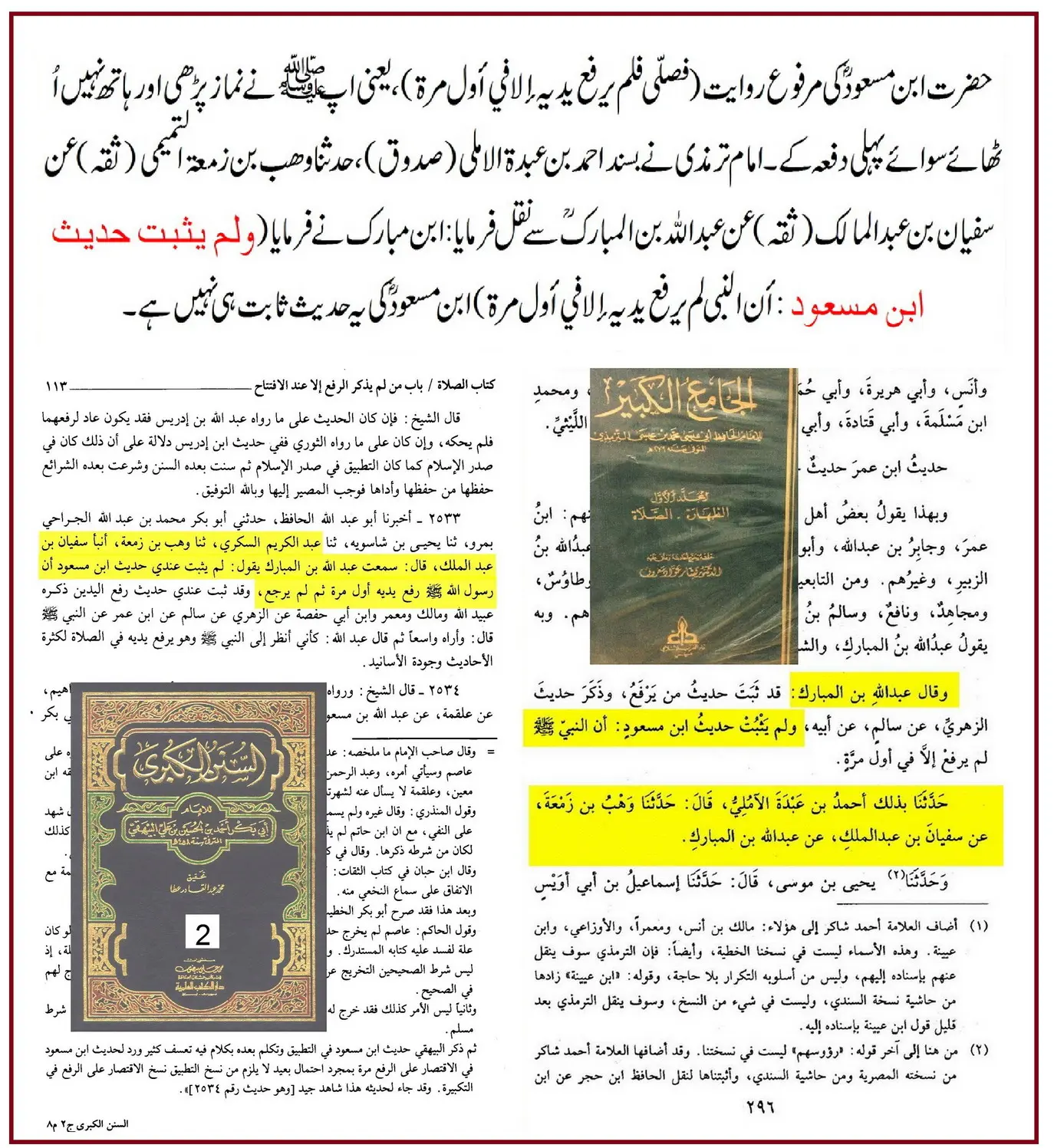
«قال عبد الله بن المبارك: قد ثبت حديث من يرفع، وذكر حديث الزهري عن سالم عن أبيه، ولم يثبت حديث ابن مسعود أن النبي صلى الله عليه وسلم لم يرفع إلا في أول مرة.»
Reference: Jāmiʿ al-Tirmidhī, under ḥadīth 257
Translation
Ibn al-Mubārak said: “The ḥadīth of those who raise their hands (the ḥadīth of Ibn ʿUmar) is established according to me, whereas the ḥadīth of Ibn Masʿūd that the Prophet ﷺ raised his hands only the first time is not established.”② Imām al-Shāfiʿī (رحمه الله)
Arabic Text
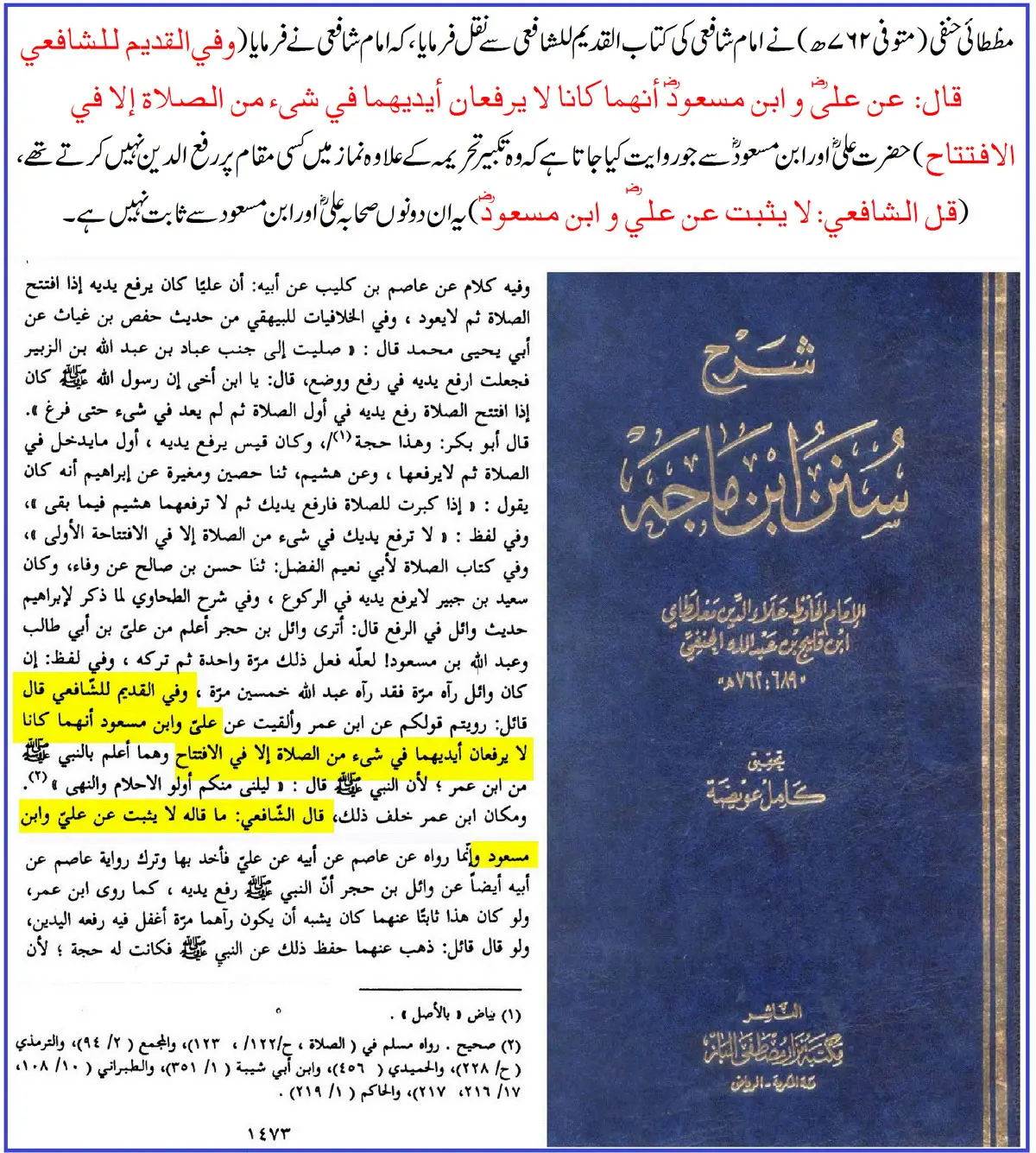
«قال الشافعي: ما قاله لا يثبت عن علي ولا عن ابن مسعود.»
Reference: Mughlatāy, Sharḥ Sunan Ibn Mājah
Translation
Imām al-Shāfiʿī said: “What is attributed (regarding raising only once) is not established from ʿAlī nor from Ibn Masʿūd.”③ Ḥāfiẓ Ibn al-Qayyim (رحمه الله)
Arabic Text
«أحاديث المنع من رفع اليدين عند الركوع والرفع منه كلها باطلة على رسول الله ﷺ لا يصح منها شيء، كحديث ابن مسعود: "فلم يرفع إلا في أول مرة”.»
Reference: Ibn al-Qayyim, al-Manār al-Munīf, pp. 309–310
Translation
All the narrations prohibiting raising the hands at bowing and rising from it are false upon the Messenger of Allah ﷺ. Nothing from them is authentic, such as the ḥadīth of Ibn Masʿūd: “He did not raise them except the first time.”④ Imām Abū Ḥātim al-Rāzī (رحمه الله)
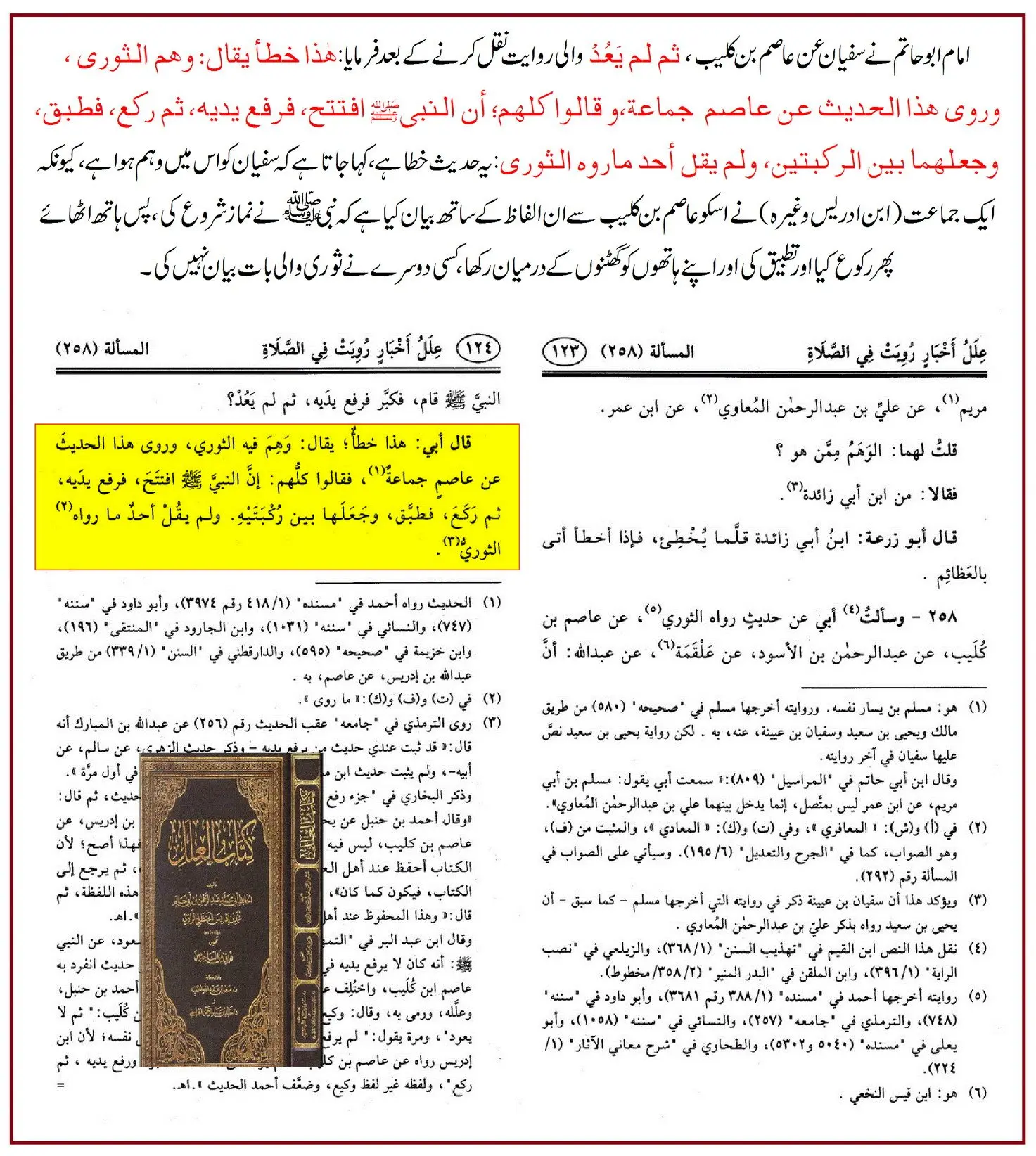
Arabic Text
«قال أبي: هذا خطأ، يقال وهم فيه الثوري… ولم يقل أحد ما رواه الثوري.»
Reference: Ibn Abī Ḥātim, al-ʿIlal (258)
Translation
My father said: “This is a mistake. It is said that al-Thawrī erred in it… None of those who narrated it mentioned the wording that al-Thawrī reported.”⑤ Imām al-Dāraquṭnī (رحمه الله)
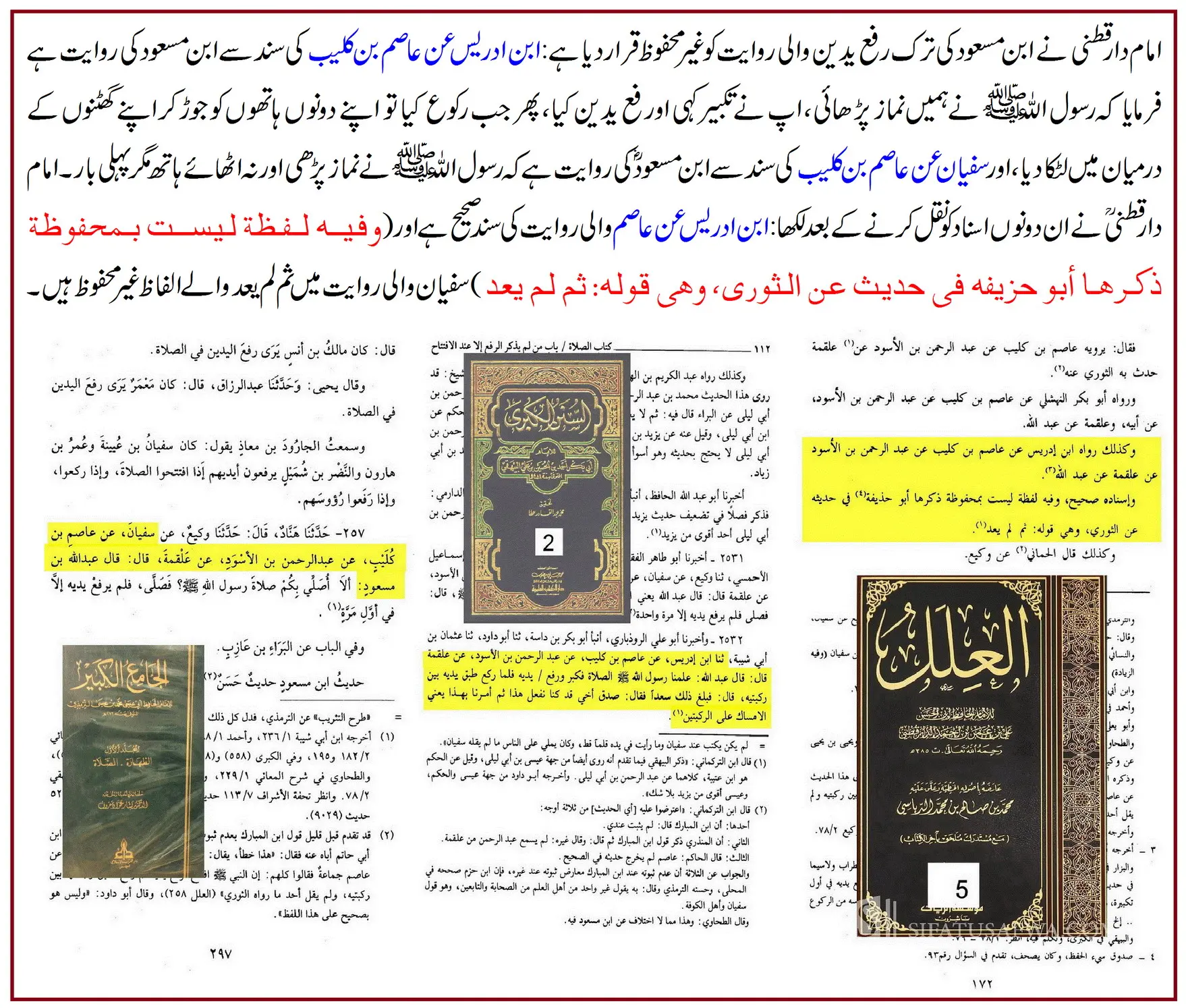
Arabic Text
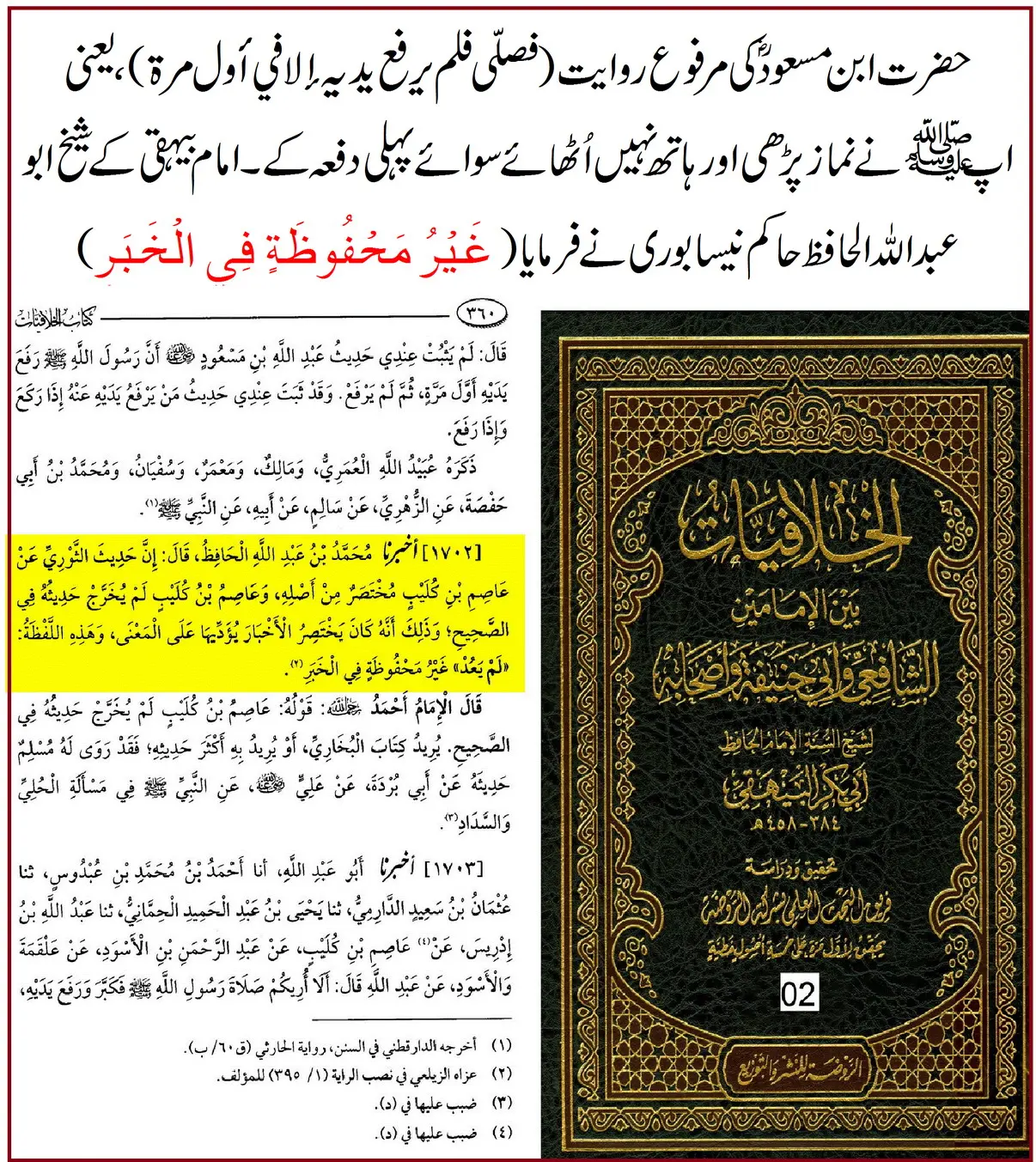
«… وَإِسْنَادُهُ صَحِيحٌ، وَفِيهِ لَفْظَةٌ لَيْسَتْ بِمَحْفُوظَةٍ… وَهِيَ قَوْلُهُ: "ثُمَّ لَمْ يَعُدْ”.»
Reference: al-Dāraquṭnī, al-ʿIlal al-Wāridah
Translation
Its chain is authentic, but it contains a wording that is not preserved… namely the statement: “ثم لم يعد (then he did not repeat it).”⑥ Imām Ibn Ḥibbān (رحمه الله)
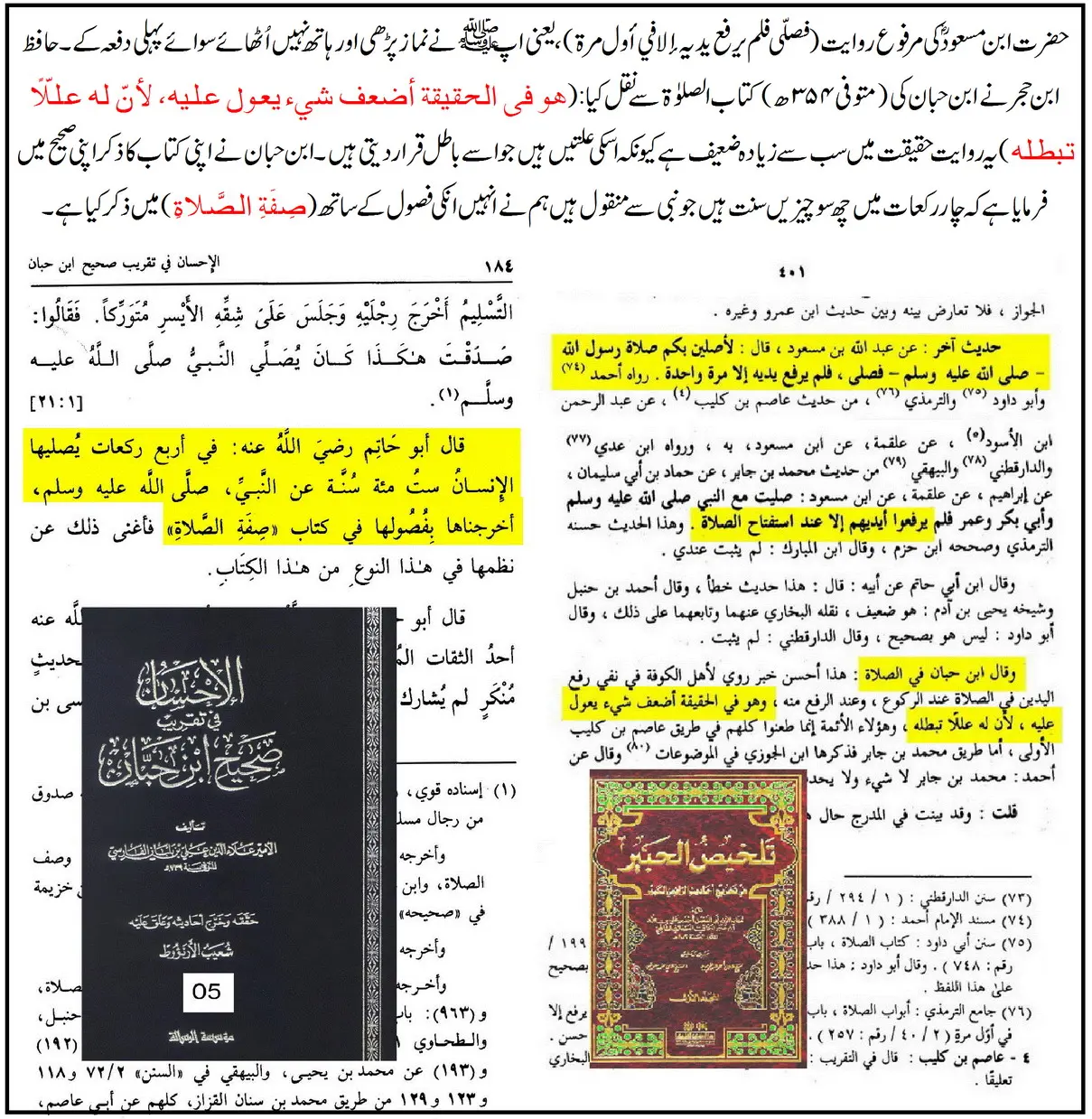
Arabic Text (as نقل by Ibn Ḥajar)
«… وهو في الحقيقة أضعف شيء يُعوَّل عليه، لأن له عللاً تبطله…»
Reference: Ibn Ḥajar, al-Talkhīṣ al-Ḥabīr (2/219)
Translation
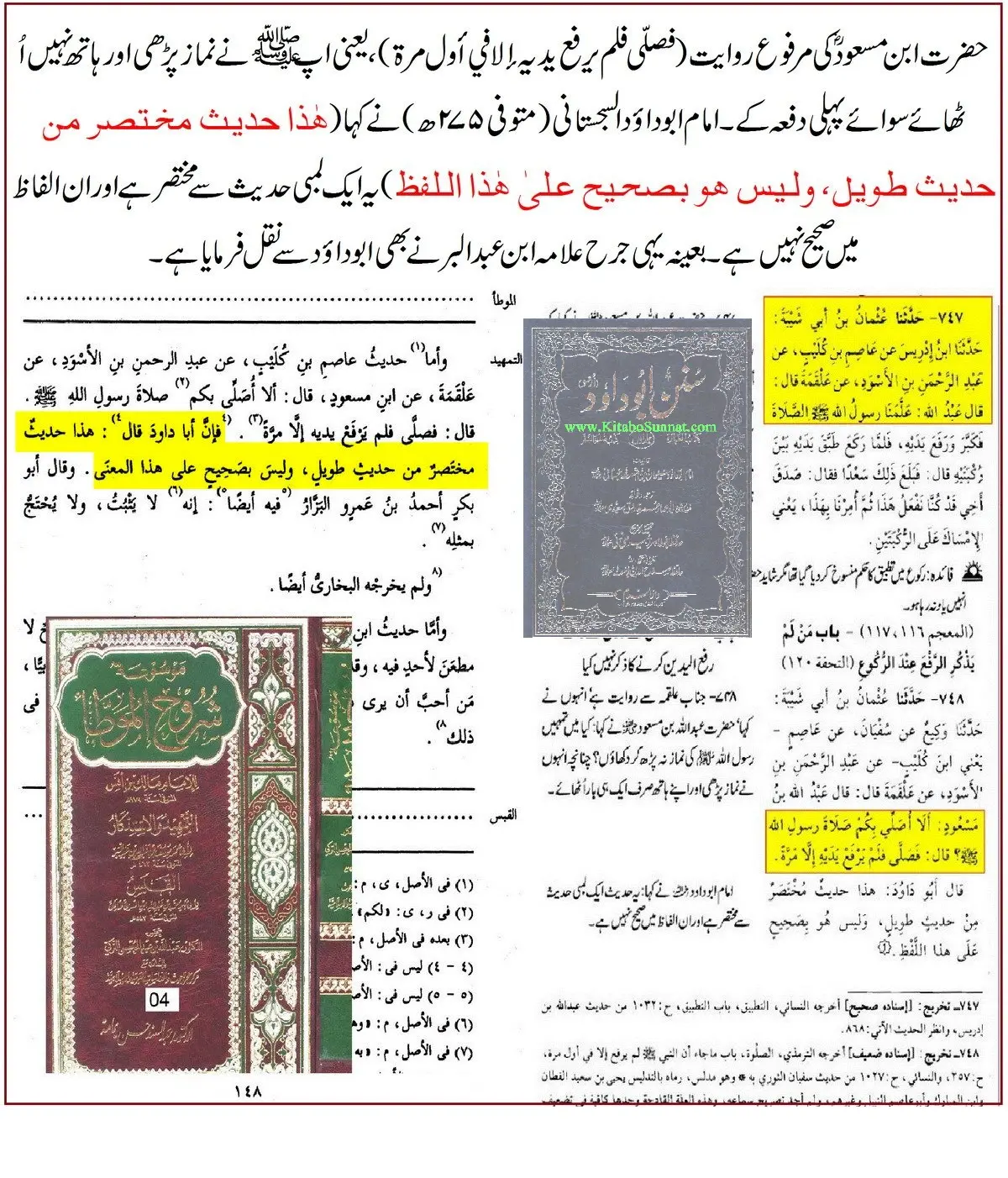
In reality, it is the weakest report relied upon, for it contains defects that invalidate it.⑦ Imām Abū Dāwūd (رحمه الله)
Arabic Text
«قال أبو داود: هذا حديث مختصر من حديث طويل، وليس هو بصحيح على هذا اللفظ.»
Reference: Sunan Abī Dāwūd (748)
Translation
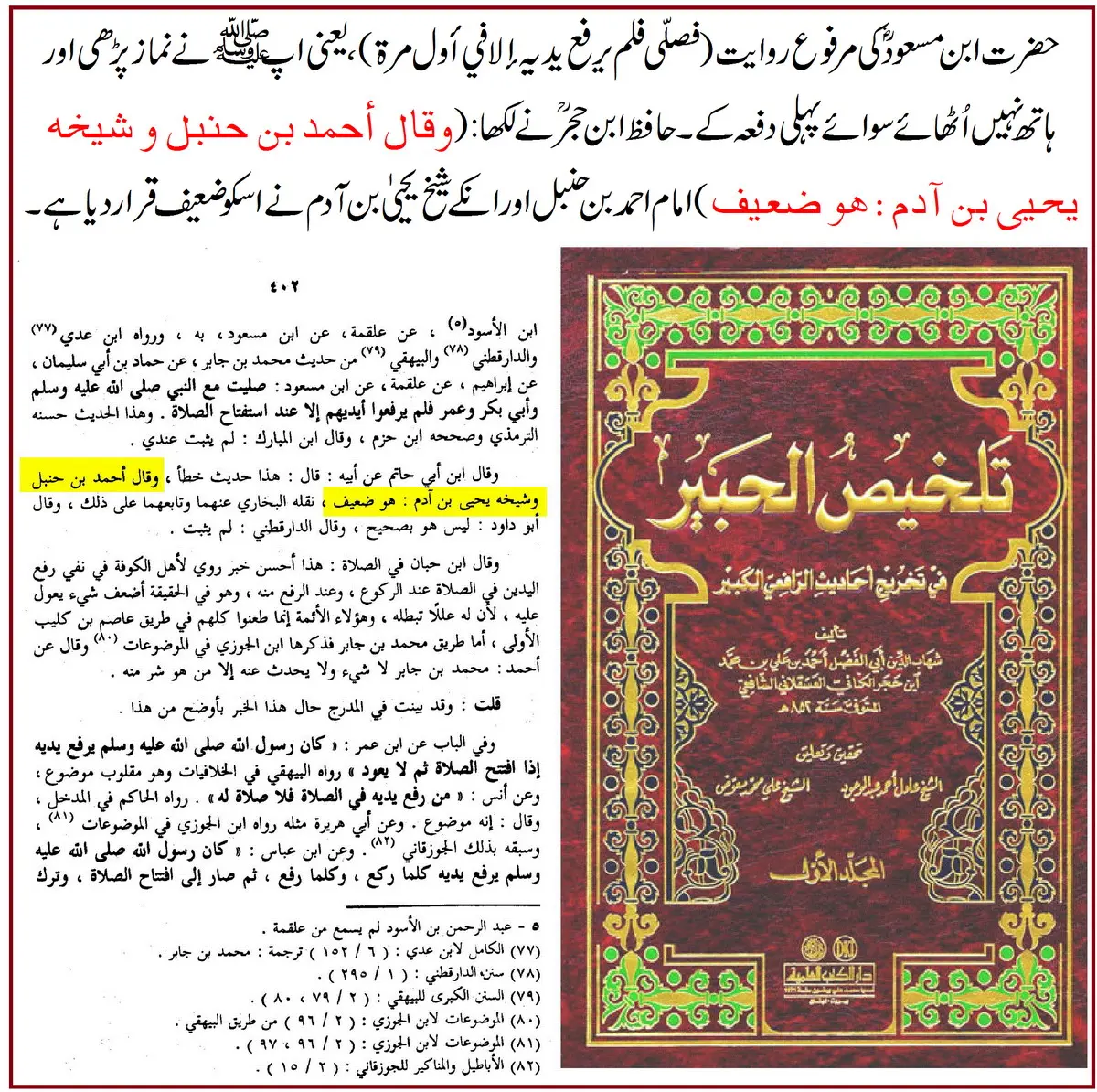
Abū Dāwūd said: “This is a shortened version of a longer ḥadīth, and it is not authentic with this wording.”⑧ Imām Aḥmad ibn Ḥanbal & Yaḥyā ibn Ādam (رحمهم الله)
Arabic Text
«هو ضعيف.»
Reference: Ibn Ḥajar, al-Talkhīṣ al-Ḥabīr (2/221)
Translation
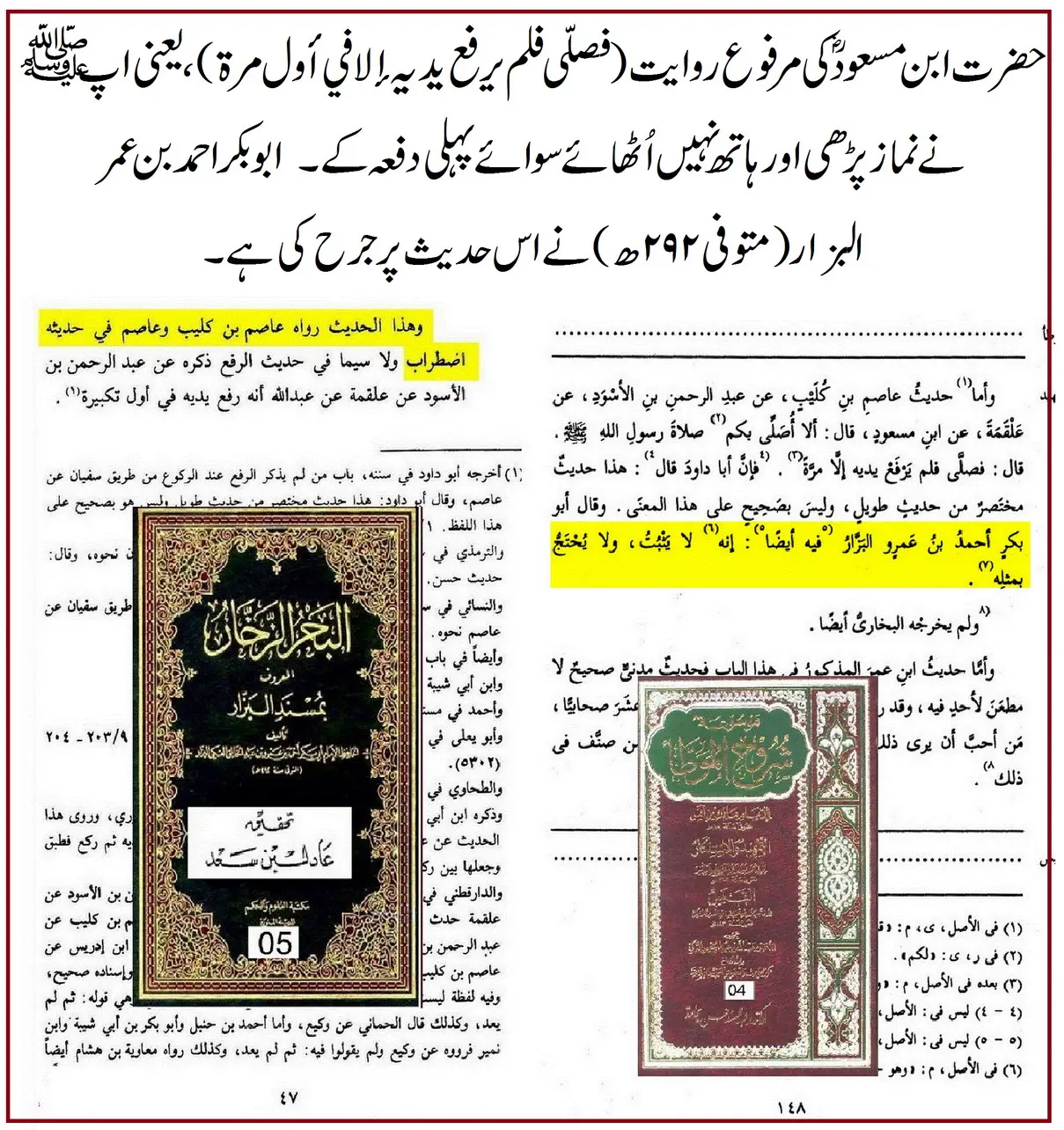
“It is weak.”⑨ Imām al-Bazzār (رحمه الله)
Arabic Text
«وعاصم في حديثه اضطراب، ولا سيما في حديث الرفع.»
Reference: al-Bazzār, al-Baḥr al-Zakhkhār (1608)
Translation
ʿĀṣim has inconsistency in his narrations, especially in the ḥadīth of raising the hands.⑩ Muḥammad ibn Waḍḍāḥ (رحمه الله)
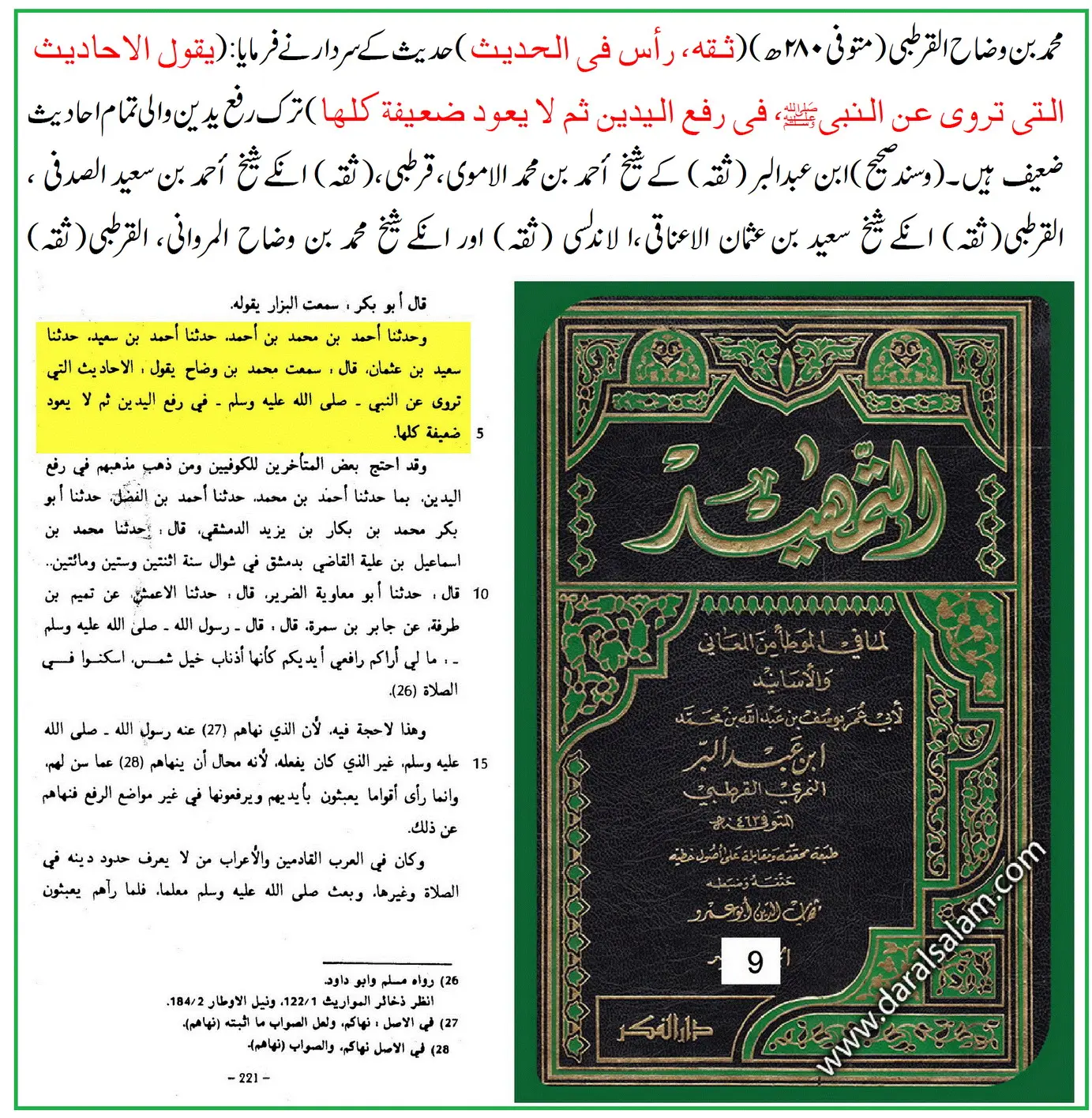
Arabic Text
«الأحاديث التي تُروى… ثم لا يعود ضعيفة كلها.»
Reference: Ibn ʿAbd al-Barr, al-Tamhīd (9/236)
Translation
All the narrations reported that he raised his hands once and did not repeat it are weak.⑪ Imām al-Bukhārī (رحمه الله)
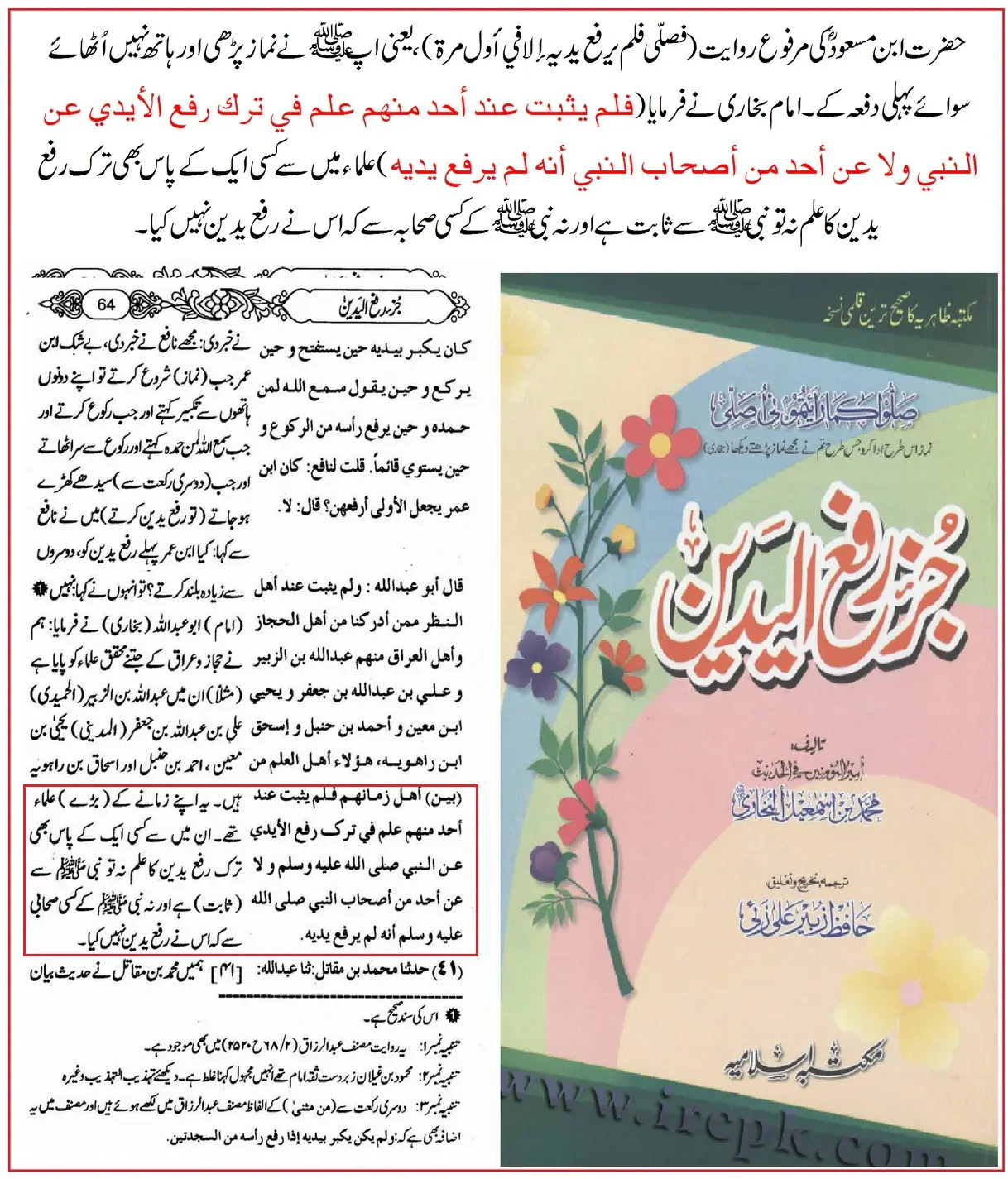
Arabic Text
«فلم يثبت عند أحد منهم ترك رفع الأيدي عن النبي ﷺ ولا عن أحد من أصحابه.»
Reference: al-Bukhārī, Qurrat al-ʿAynayn, p. 34
Translation
It was not established according to any of them that abandoning the raising of hands is reported from the Prophet ﷺ or from any of his Companions.⑫–㉕
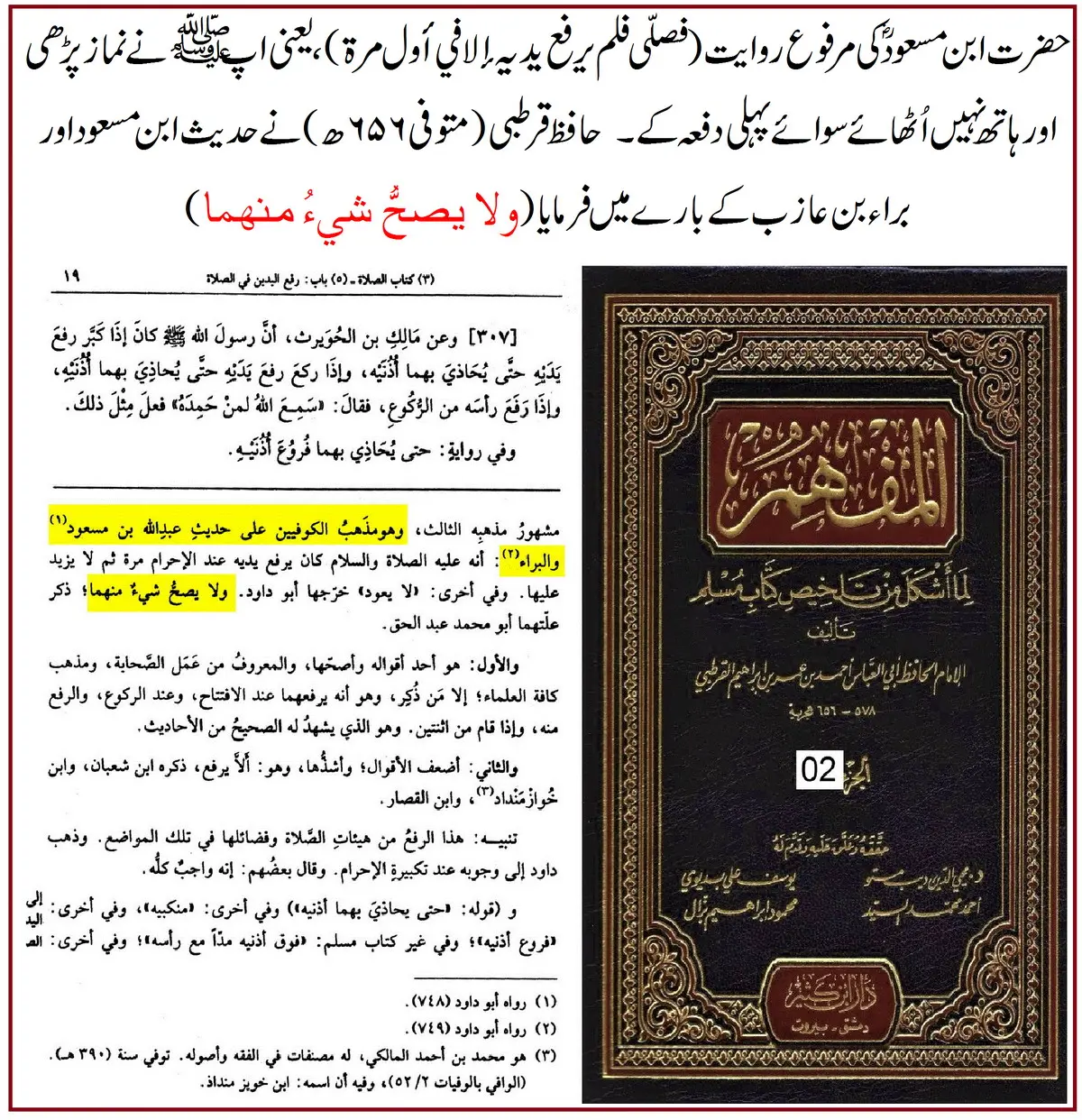
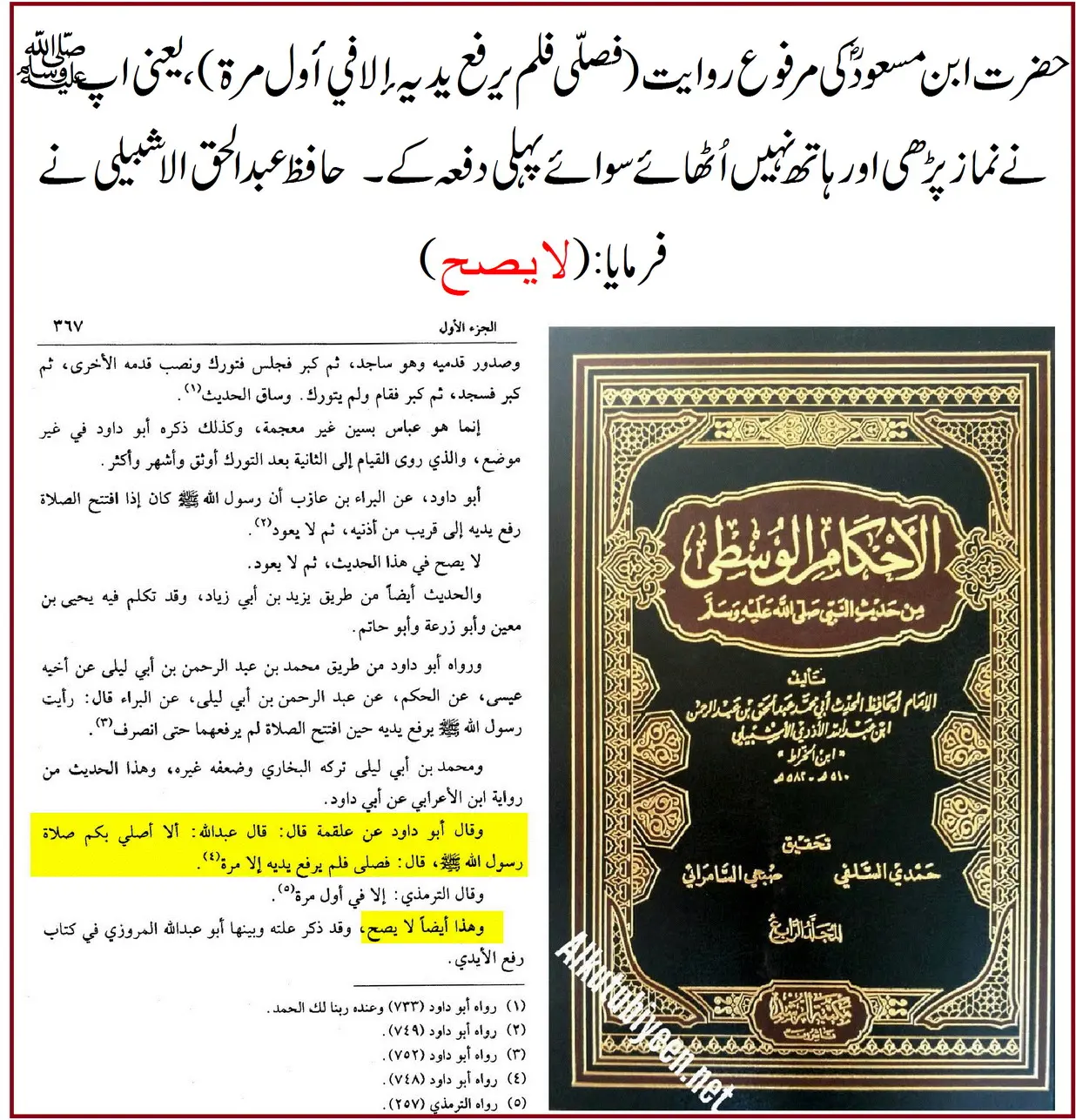
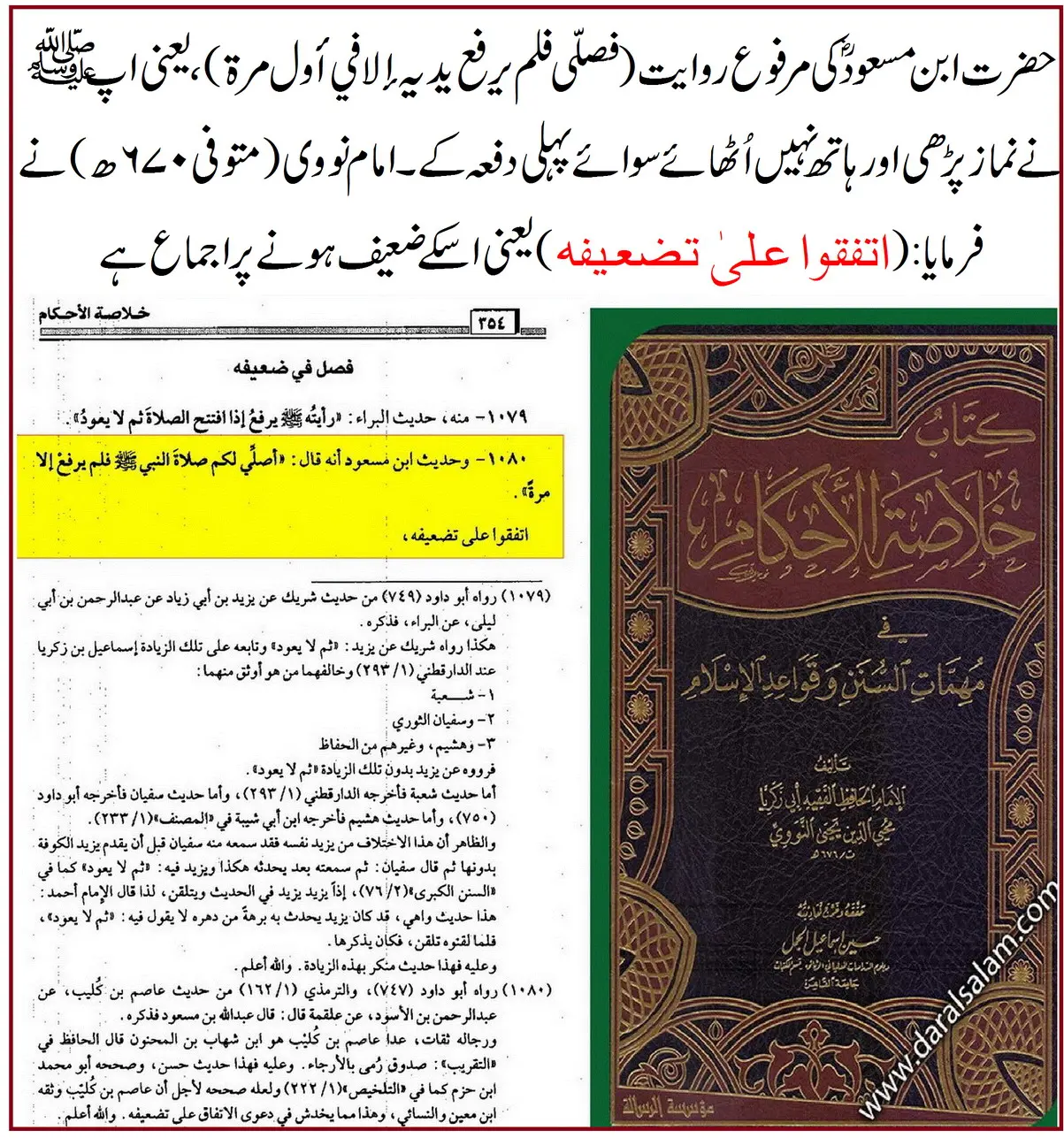
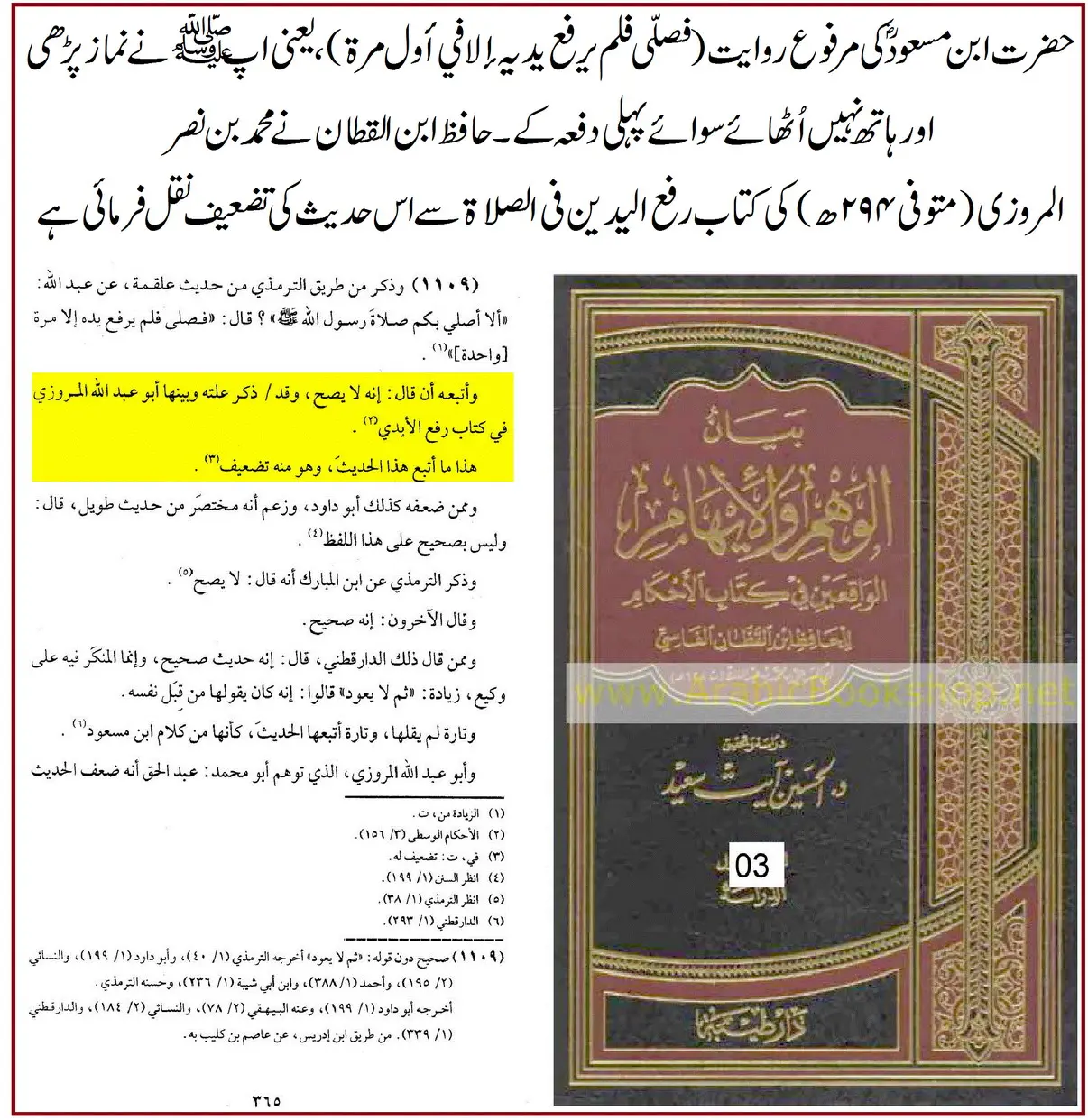
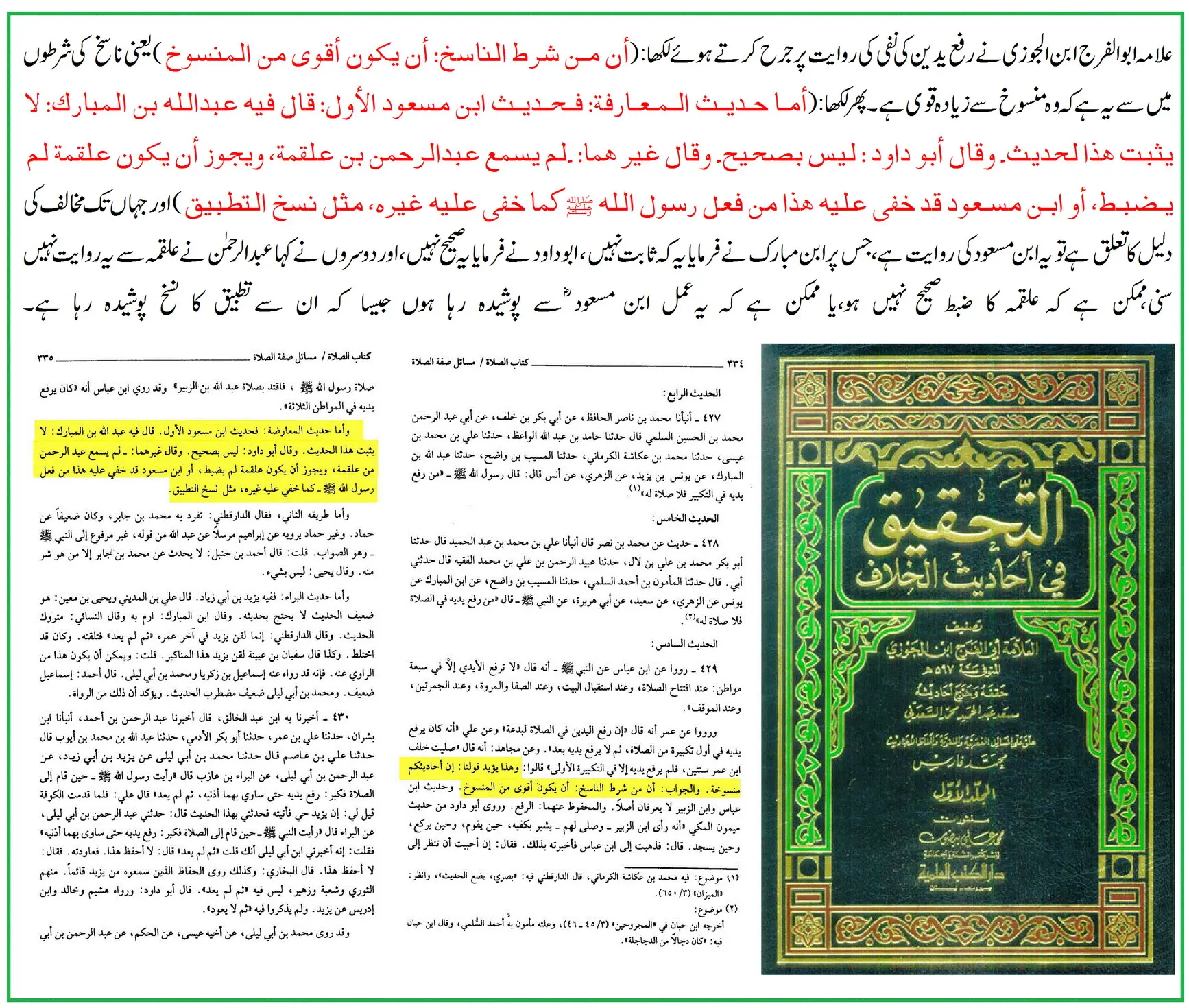
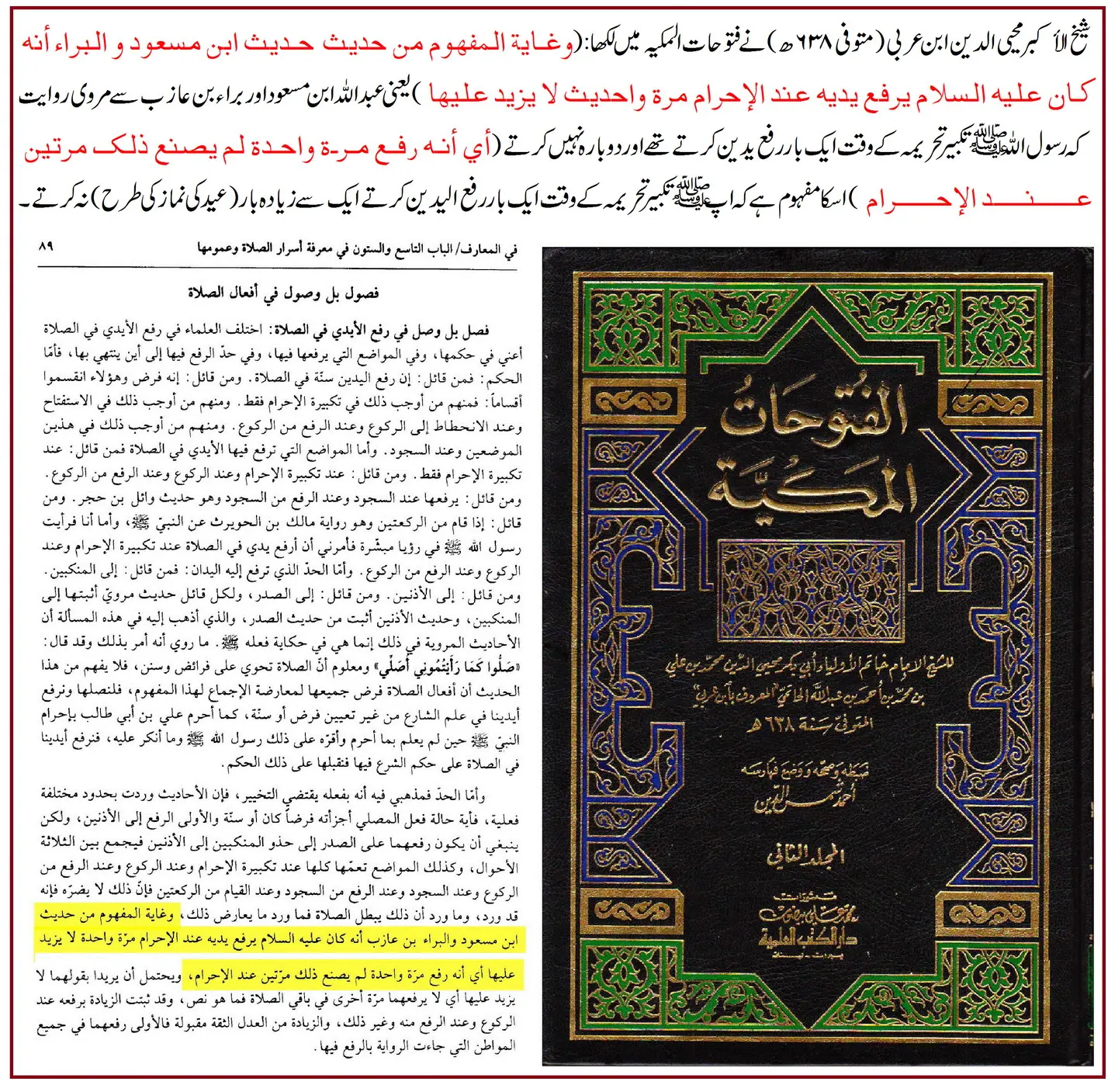
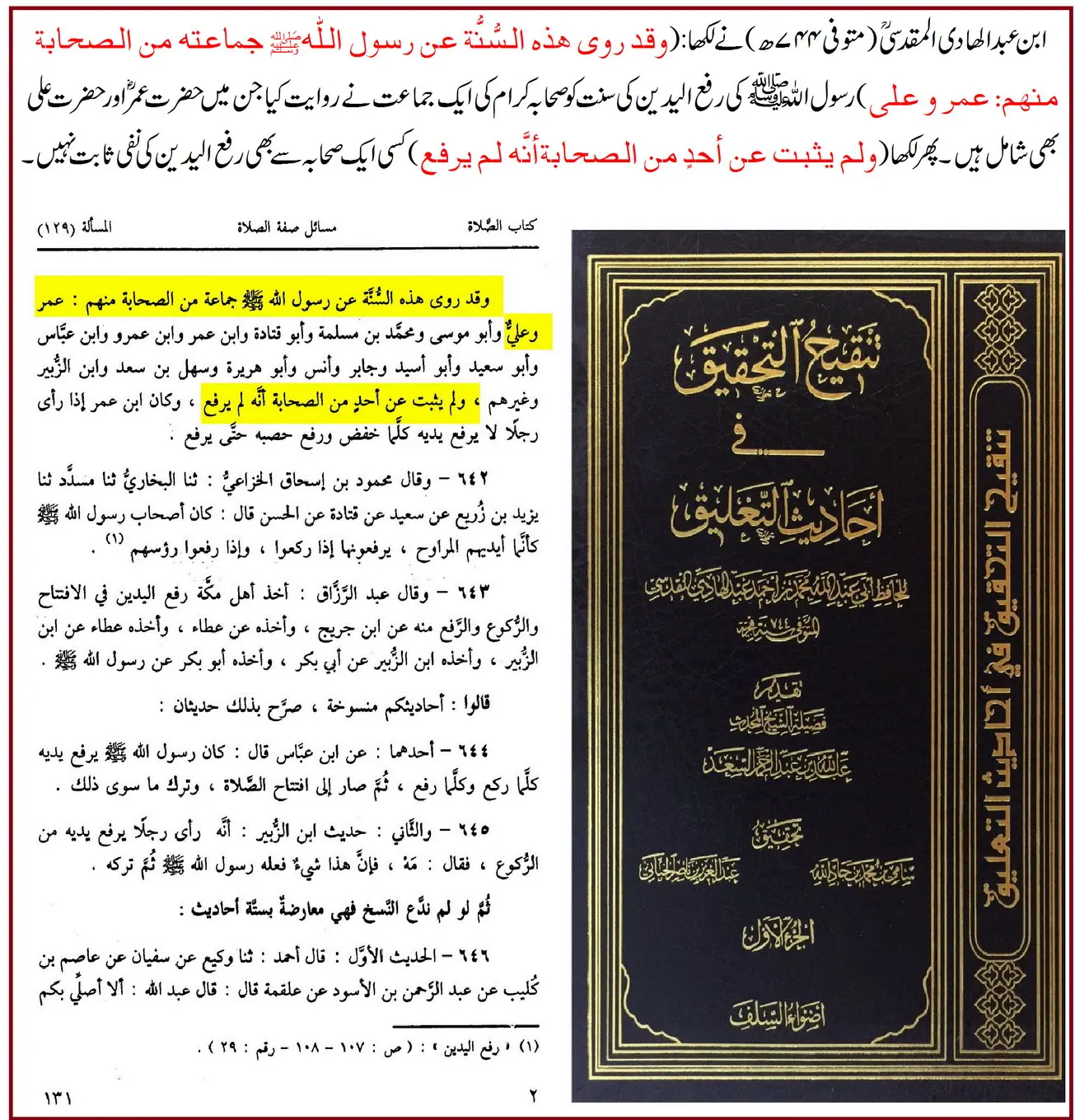
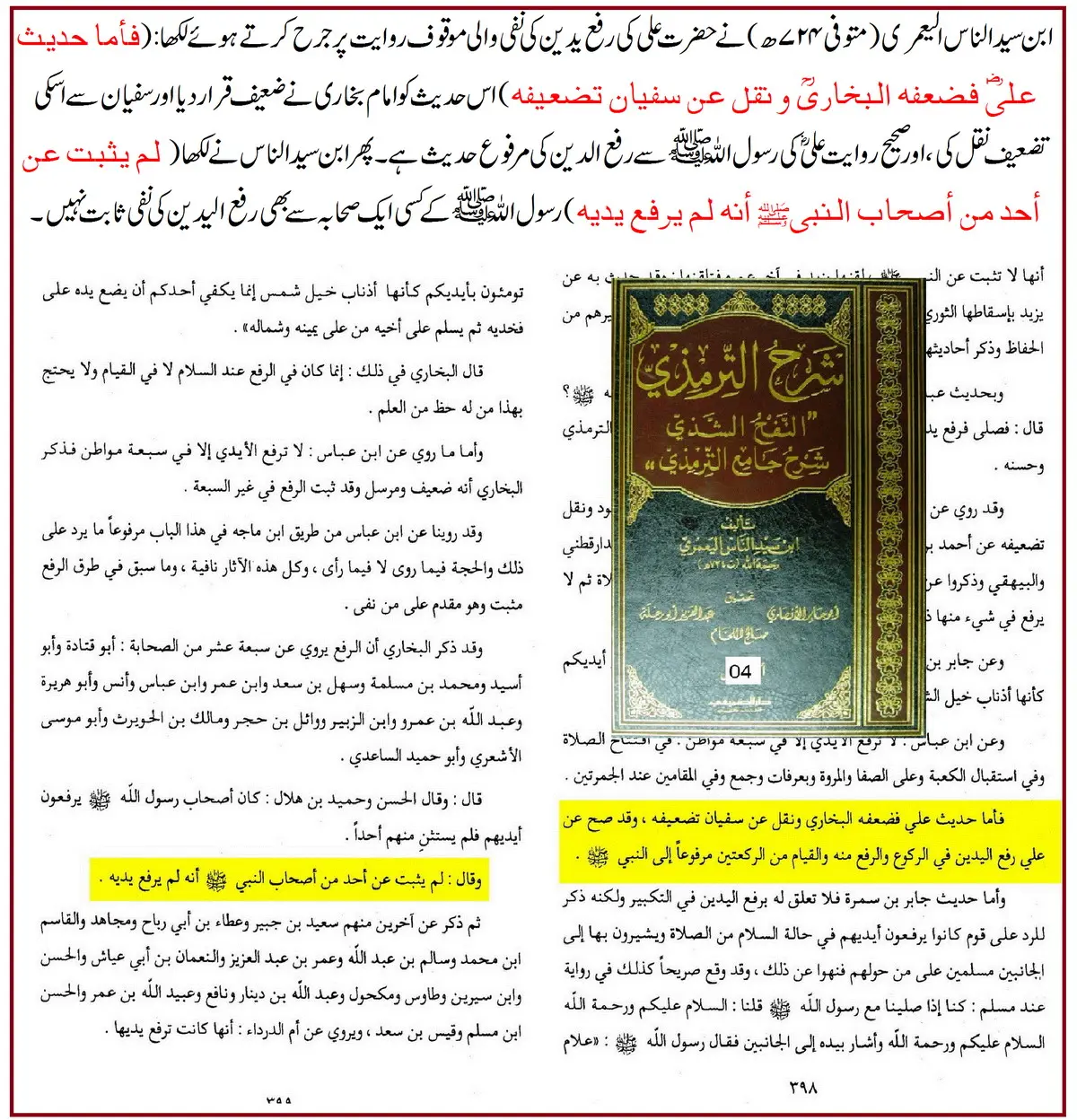
Similarly, Imām al-Qurṭubī, ʿAbd al-Ḥaqq al-Ishbīlī, Ibn al-Mulaqqin, al-Ḥākim, al-Nawawī (who stated that the scholars agreed upon its weakness), Ibn al-Qaṭṭān, Ibn Qudāmah, al-Baghawī, Ibn ʿAbd al-Barr, al-Khaṭṭābī, Ibn al-Jawzī, Ibn ʿArabī, Ibn ʿAbd al-Hādī, and Ibn Sayyid al-Nās — all declared this narration weak, defective, or not preserved.✦ Summary and Conclusion
The narration of Ibn Masʿūd رضي الله عنه concerning abandoning Rafʿ al-Yadayn is reported in Jāmiʿ al-Tirmidhī and Sunan Abī Dāwūd, but:✔ Imām Ibn al-Mubārak, Imām al-Shāfiʿī, Imām Aḥmad, Imām al-Bukhārī, Imām al-Nasā’ī, Imām al-Dāraquṭnī, Imām Abū Dāwūd, Ibn Ḥibbān, Ibn Khuzaymah, Ibn ʿAbd al-Barr, Ibn al-Mulaqqin, al-Nawawī, Ibn Ḥajar, Ibn Qudāmah and many others declared it weak, not preserved, defective, or rejected.
✔ Some described it as the strongest proof of the Kūfans — yet clarified that in reality it is the weakest.
✦ Evidence for Raising the Hands
① Authentic and strong narrations exist from more than fifty Companions.② Among them: ʿUmar رضي الله عنه, ʿAlī رضي الله عنه, Ibn ʿUmar رضي الله عنه, Mālik ibn al-Ḥuwayrith رضي الله عنه, Anas رضي الله عنه and others.
③ The majority of ḥadīth scholars clearly stated:
No narration establishing the abandonment of Rafʿ al-Yadayn is authentic from the Prophet ﷺ.
Rather, the narrations affirming it are more authentic, more numerous, and stronger.

