


This excerpt is taken from Sheikh Irshad Ullah Maan's book In Search of Truth.
Question: In the Holy Quran, the Prophet Muhammad ﷺ is addressed with certain words; based on these verses, can we also say "O Messenger of Allah ﷺ" in ordinary circumstances?
Answer: Allah Almighty addresses whomever He wills, and He is capable of making them hear. He said: [یُسۡمِعُ مَنۡ یَّشَآءُ ۚ وَ مَاۤ اَنۡتَ بِمُسۡمِعٍ مَّنۡ فِی الۡقُبُوۡرِ] Indeed, Allah makes whom He wills hear, and you cannot make the dead hear.
Reference: (Fatir:22)
Since Allah is capable of making them hear, He has also addressed such things. He has addressed the earth and the sky as well: [یٰۤاَرۡضُ ابۡلَعِیۡ مَآءَکِ وَ یٰسَمَآءُ اَقۡلِعِیۡ] O earth! swallow your water, and O sky! withhold [your rain].
Reference: (Hud:44)
He addressed all humans by saying: [يٰۤاَيُّهَا النَّاسُ].
Reference: (Al-Baqarah:21)
He addressed the disbelievers by saying: [يٰۤاَيُّهَا الَّذِيْنَ كَفَرُوْا].
Reference: (At-Tahrim:7)
He addressed Satan by saying: [يٰۤاِبْلِيْسُ].
Reference: (Sad:75)
Since nothing is hidden from Allah, He addresses whomever He wills; He sees everyone and hears them. However, we do not have the power to make our voice reach them, nor are they capable of responding, so there is no proof in this.
Question: In Tashahhud, the words of salutations are said to the Prophet ﷺ; does this mean that saying "O Messenger of Allah ﷺ" is permissible outside of prayer as well?
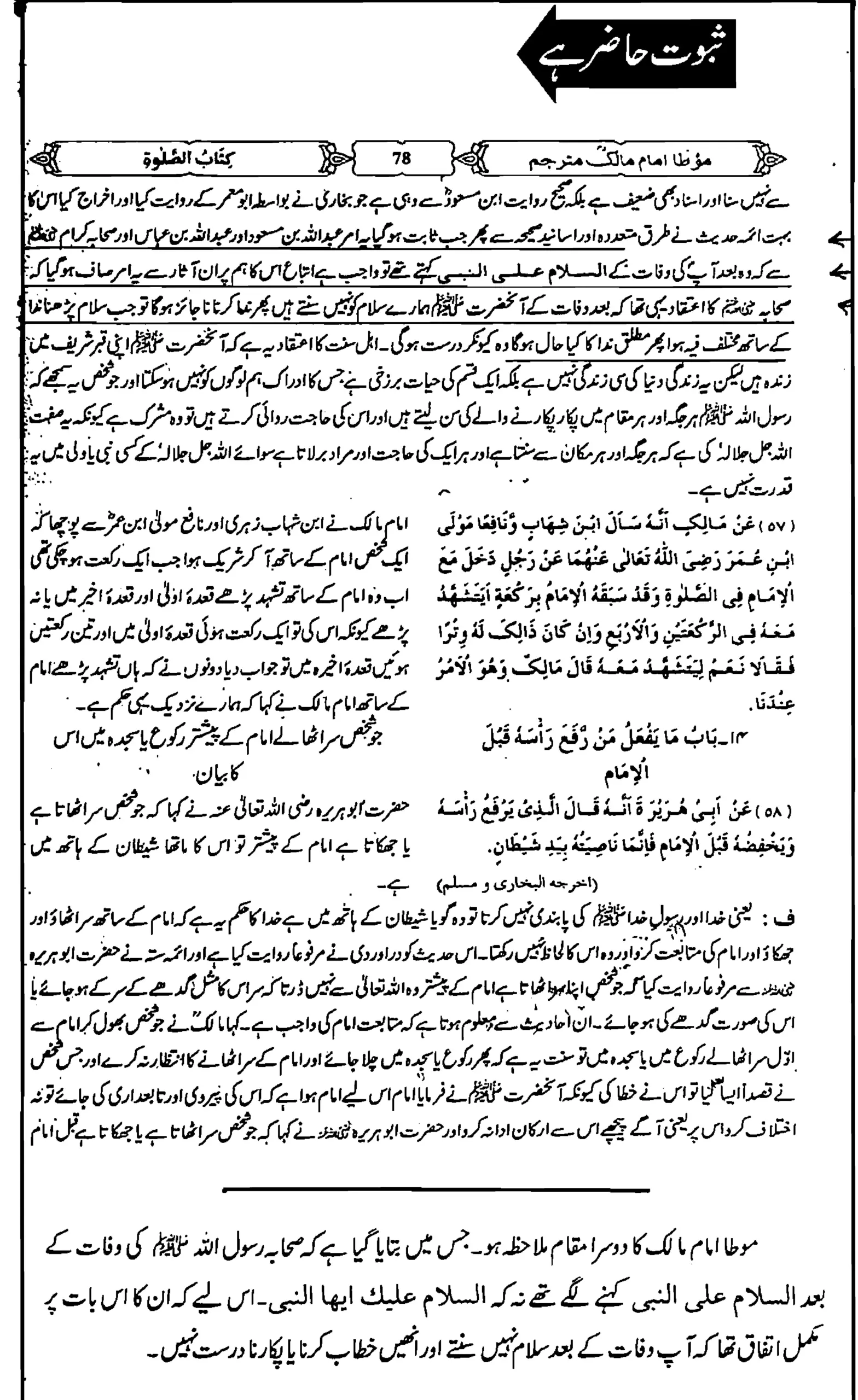
Answer: It is narrated from Sayyiduna Abdullah bin Mas'ud (may Allah be pleased with him) that when the Messenger of Allah ﷺ was alive among us, we used to say (اَلسَّلَامُ عَلَيْكَ اَيُّهَا النَّبِيُّ). But after he passed away, we say (اَلسَّلَامُ عَلَی النَّبِیِّ).
Reference: Bukhari, Book of Seeking Permission, Chapter on Taking by the Hands: 6265
Sayyiduna Abdullah bin Umar (may Allah be pleased with both of them) used to recite (اَلسَّلَامُ عَلَی النَّبِیِّ وَ رَحْمَةُ اللّٰهِ وَ بَرَكَاتُهٗ) in Tashahhud.
Reference: Muwatta Imam Malik, Book of Prayer, Chapter on Tashahhud in Prayer: 54
In fact, the form of address in Tashahhud is used because the Companions say that the Messenger of Allah ﷺ taught us this prayer of Tashahhud in the same way as a Surah of the Quran. Therefore, wherever words of address appear in the Quran, they are recited in the same manner, and thus this prayer was also continued by the Companions, may Allah be pleased with them, in the same way. It is understood that the belief of the Companions was that the Prophet ﷺ does not hear after death. Those among the Salaf who believed in addressing the dead also considered calling out and seeking help from anyone other than Allah as shirk (polytheism). They interpret that they use the words according to the command, but they do not believe in calling out to anyone other than Allah.
Question: When going to the cemetery, greetings are given to the people of the graves. If the dead generally do not hear the living, then why are words of greeting addressed to them?
Answer: Just addressing is not proof of hearing. Sayyiduna Umar رضي الله عنه addresses the Black Stone and says: O Black Stone! You are just a stone; benefit and harm are not in your control. If I had not seen the Prophet ﷺ kissing you, I would never have kissed you. Is this proof that stones hear? It is clear that merely addressing is not proof of hearing.
Last edited:

