


✍ Compiled by: Abu Hamzah Salafi
In this article, we present a research-based refutation of a blatant lie attributed to Ḥāfiẓ Ibn Ḥibbān رحمه الله by a Barelvi author. The claim is made that Ibn Ḥibbān supposedly endorsed seeking intercession (tawassul) through the graves of the Awliyā (friends of Allah).
We will present:
We will also examine:
Further, we will cite:
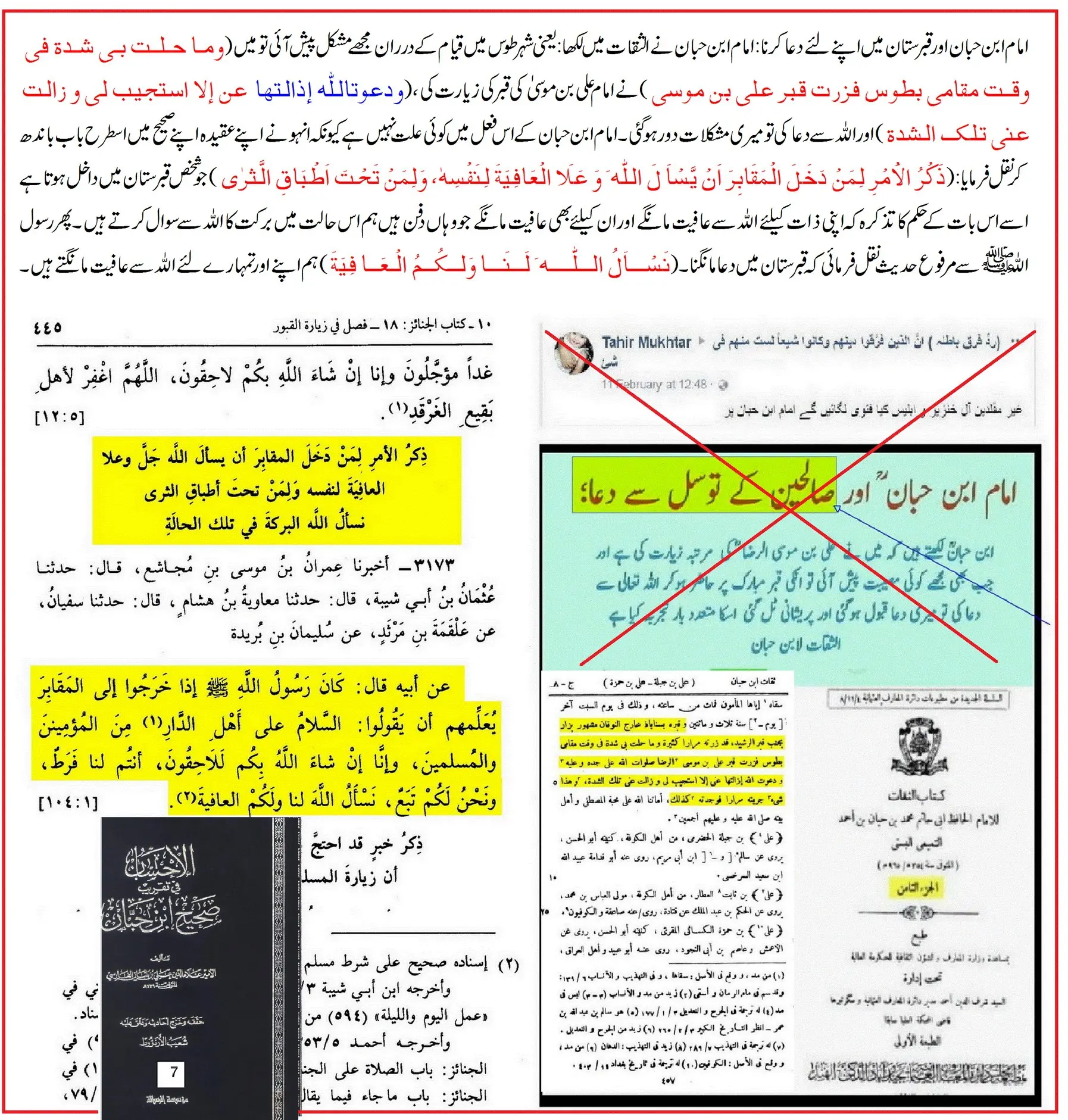
A Barelvi writer named Asad states:
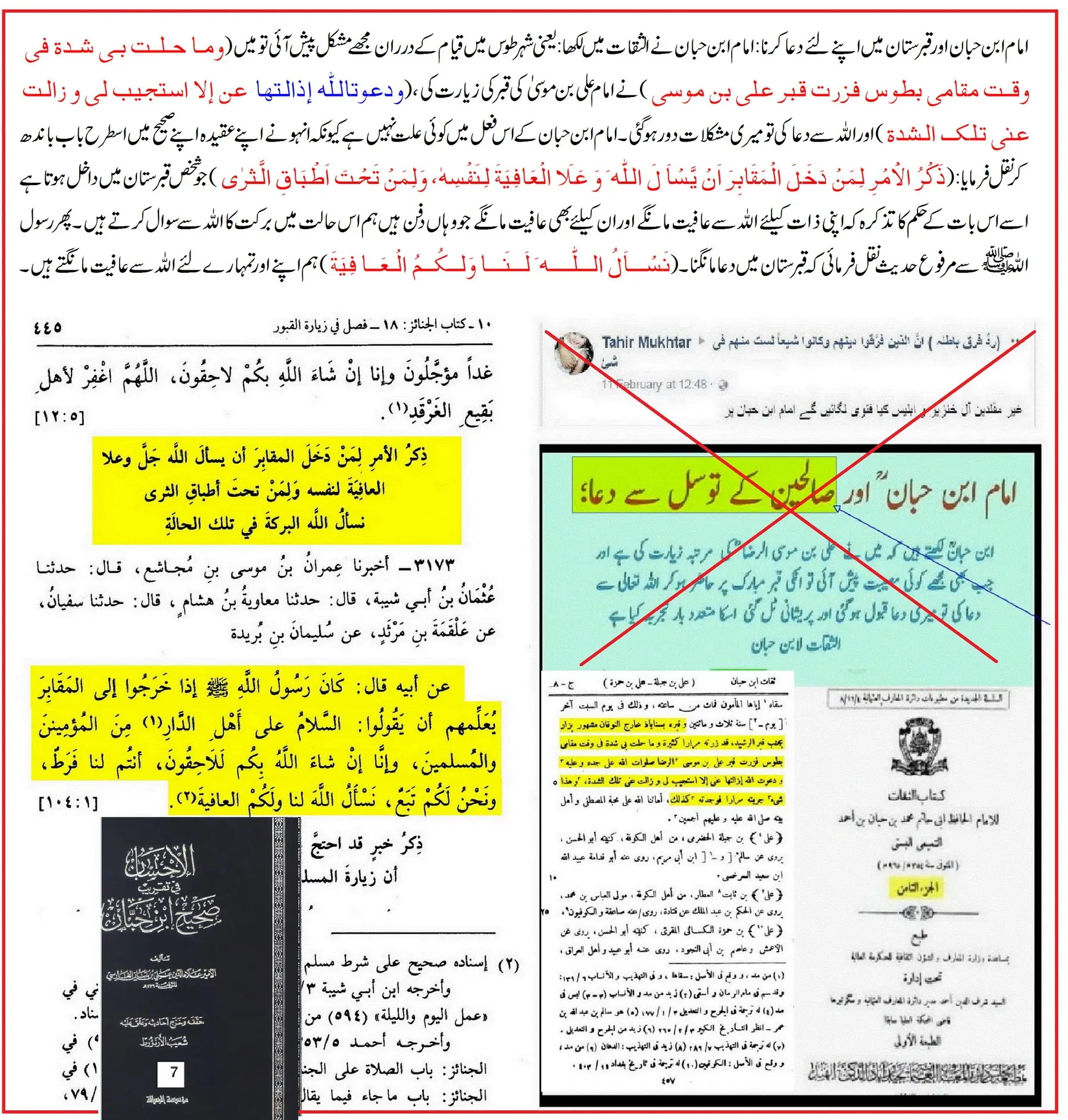
“Imām Ibn Ḥibbān رحمه الله (d. 354 AH) believed in intercession through the graves of the Awliyā of Allah. … I visited the grave of Imām ʿAlī ibn Mūsā al-Riḍā in Ṭūs many times, and whenever I faced a difficulty, I would go to that grave and supplicate to Allah—and Allah accepted my supplication and removed the hardship. This was a tested method…”
He concludes:
“Imām Ibn Ḥibbān used the grave of Imām ʿAlī al-Riḍā as a means for his duʿā to be accepted.”
✔ Nowhere in the entire Arabic text is there any wording like "intercession through the grave" (tawassul bil-maqbūr).
✔ This innovative writer distorted the meaning by equating "making duʿā at the grave" with "using the grave as a means (tawassul)"—a clear act of forgery and distortion.
In his authentic compilation, Ṣaḥīḥ Ibn Ḥibbān, he devoted an entire chapter:
ذِكْرُ الْأَمْرِ لِمَنْ دَخَلَ الْمَقَابِرَ أَنْ يَسْأَلَ اللَّهَ جَلَّ وَعَلَا الْعَافِيَةَ لِنَفْسِهِ وَلِمَنْ تَحْتَ أَطْبَاقِ الثَّرَى نَسْأَلُ اللَّهَ الْبَرَكَةَ فِي تِلْكَ الْحَالَةِ
(al-Iḥsān fī Taqrīb Ṣaḥīḥ Ibn Ḥibbān)
"Mention of the command that whoever enters a graveyard should ask Allah for well-being for himself and for those beneath the earth, and we ask Allah for blessings in that situation."
He then brings the following narration:
3173 – The Ḥadīth:
بُرَيْدَةَ، عَنْ أَبِيهِ قَالَ:
كَانَ رَسُولُ اللَّهِ ﷺ إِذَا خَرَجُوا إِلَى الْمَقَابِرِ يُعَلِّمُهُمْ أَنْ يَقُولُوا:
"السَّلَامُ عَلَى أَهْلِ الدَّارِ مِنَ الْمُؤْمِنِينَ وَالْمُسْلِمِينَ… نَسْأَلُ اللَّهَ لَنَا وَلَكُمُ الْعَافِيَةَ"
(al-Iḥsān fī Taqrīb Ṣaḥīḥ Ibn Ḥibbān)
 Inference:
According to Ibn Ḥibbān, it is Sunnah to supplicate at the graves for both oneself and the deceased.
He includes this under the “Chapter of Duʿā at Graves”, which refers to making duʿā to Allah at the grave, not making the grave a means of intercession.
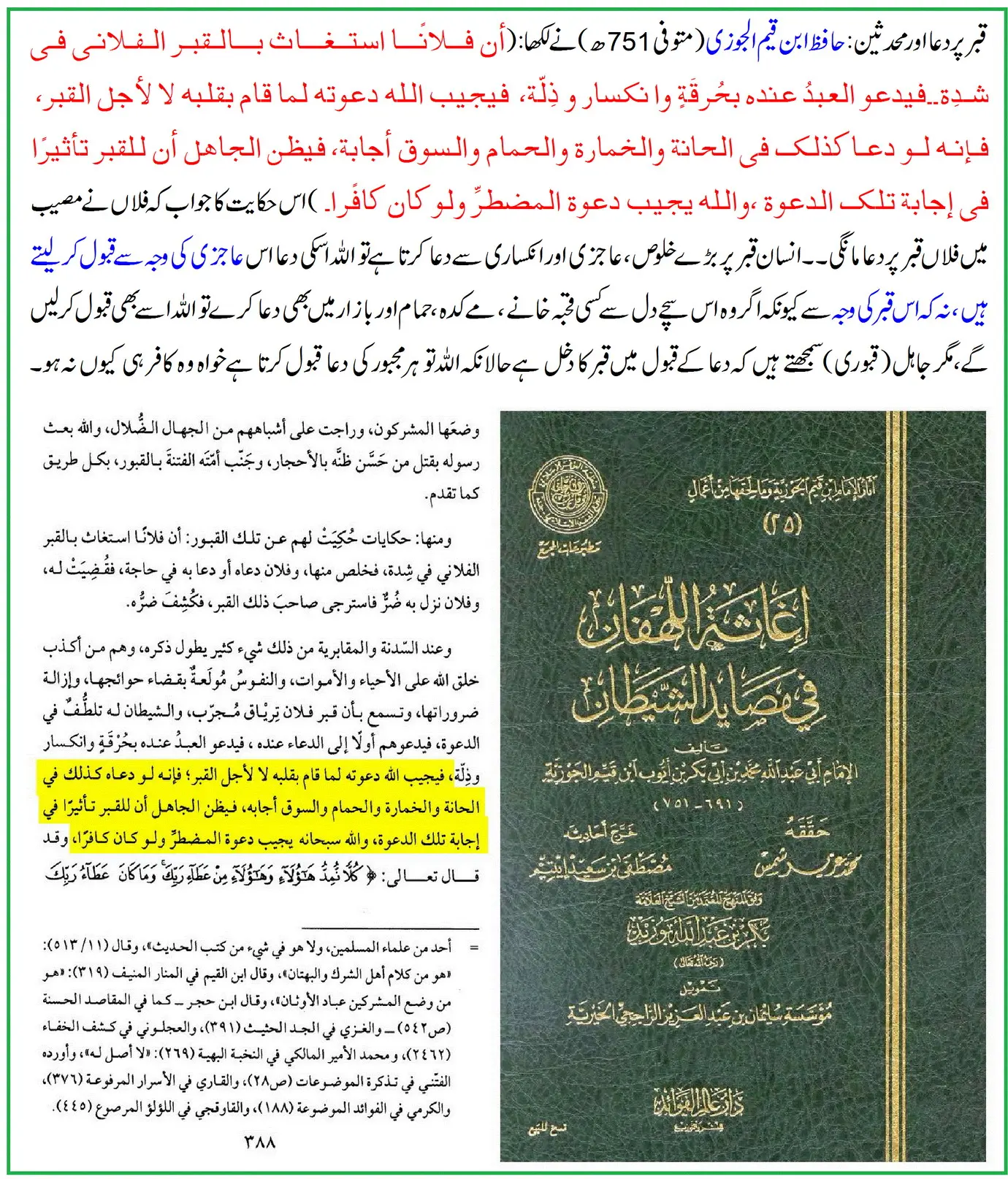
أن فلانا استغاث بالقبر الفلانى فى شدة فخلص منها… فإن الله يجيب دعوة المضطر، ولو كان كافراً.
(Ighāthat al-Lahfān)
Translation:
Someone claims that he was relieved of hardship by calling upon a certain grave. In reality, Allah responds due to the heartfelt sincerity, humility, and brokenness of the supplicant—not due to the grave itself. Had he prayed in the same manner in a tavern, brothel, or marketplace, Allah could still accept it. The ignorant think the grave had an effect, but Allah answers the duʿā of the distressed—even if the person is a disbeliever.
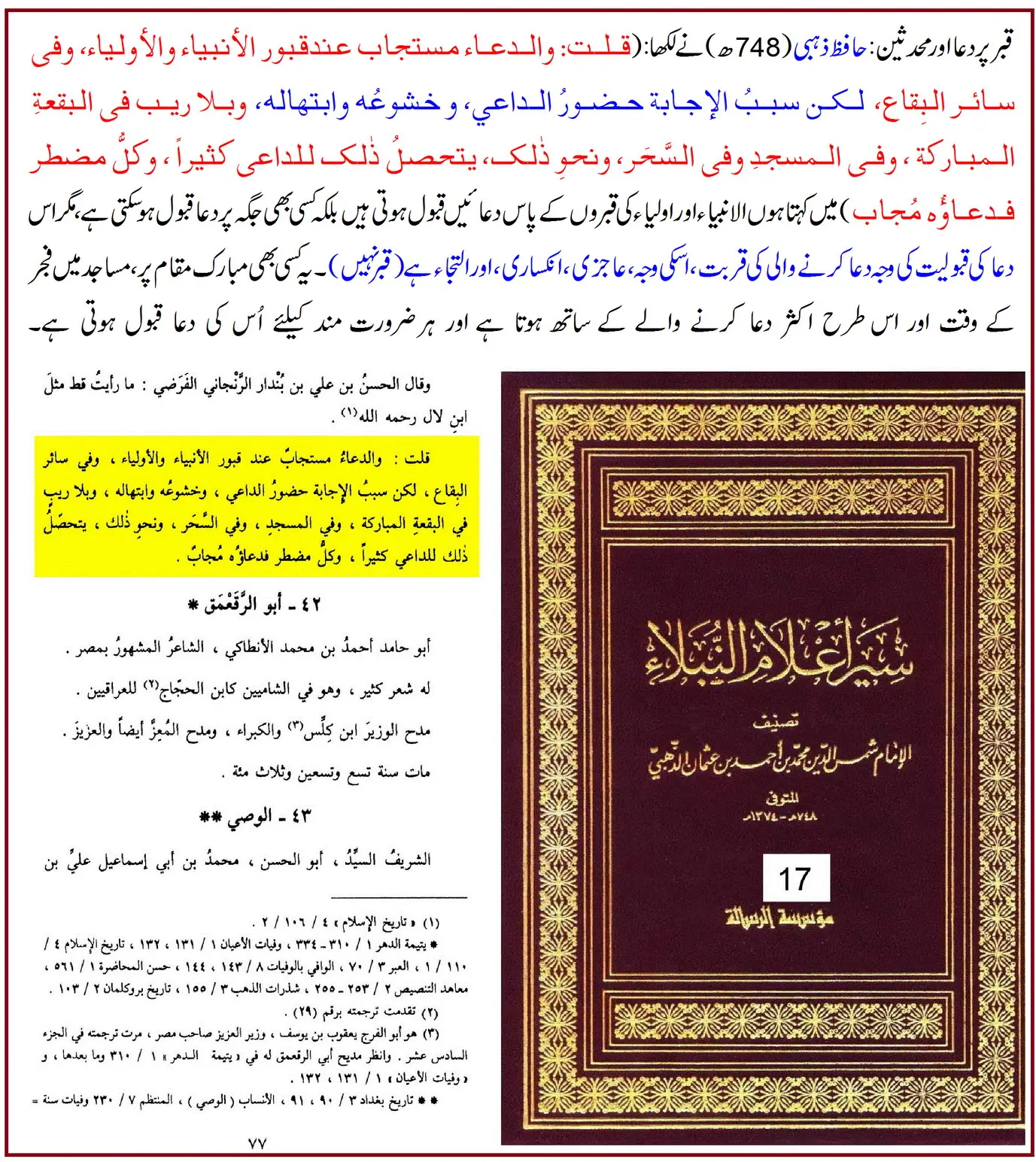
الدُّعَاءُ مُسْتَجَاب عِنْد قُبُوْر الأَنْبِيَاء وَالأَوْلِيَاء، وَفِي سَائِر البِقَاع… سَبَبُ الإِجَابَة: خُشُوعُ الدَّاعِي وَابْتِهَالُهُ
(Siyar Aʿlām al-Nubalāʾ)
Translation:
Duʿā may be accepted at the graves of the prophets and righteous, as well as other places. But the real cause of acceptance is the presence of heart, humility, and supplication. Blessed places or times (like mosques, or suḥūr) only enhance this effect. Every distressed person's duʿā is answered.
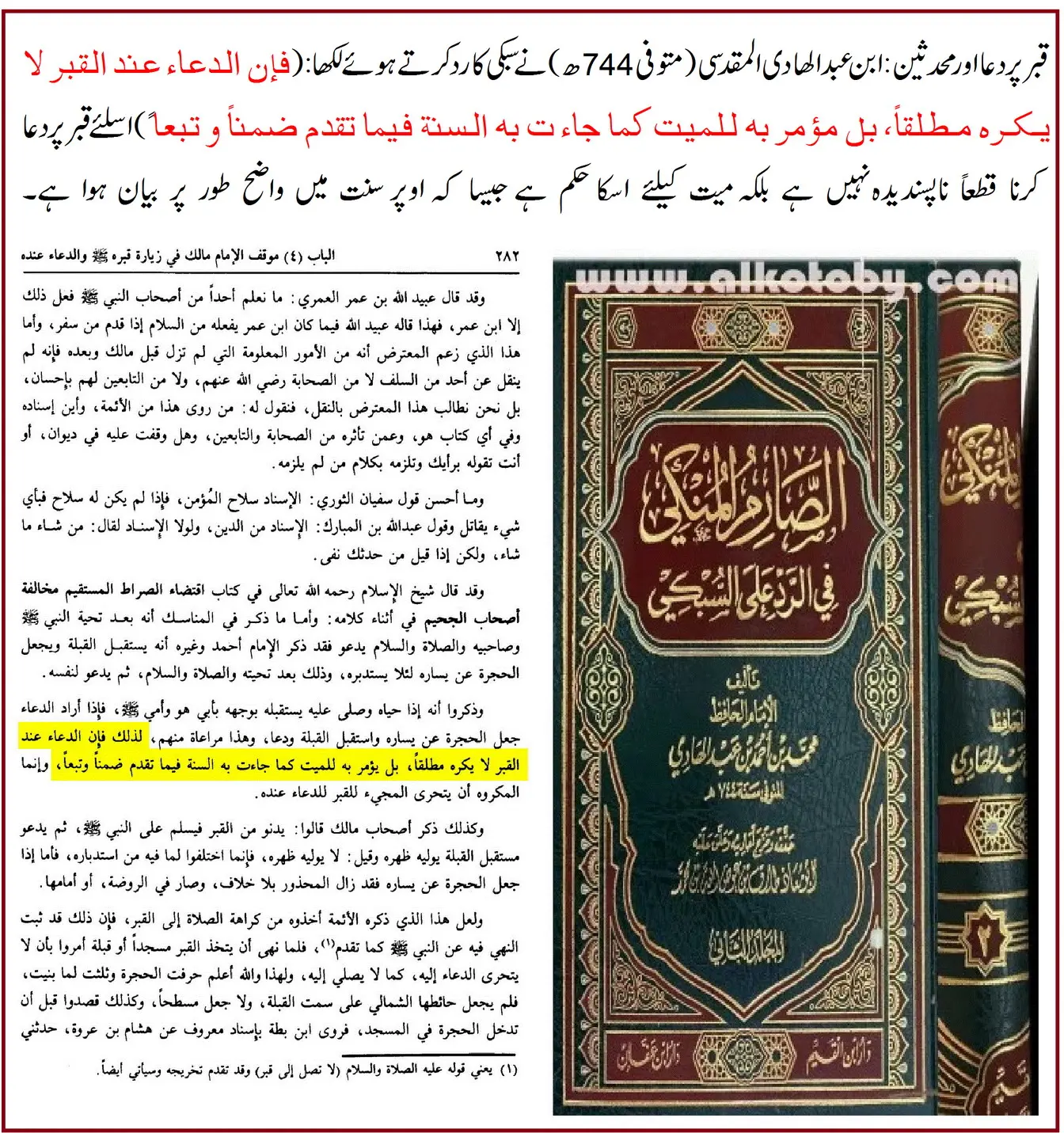
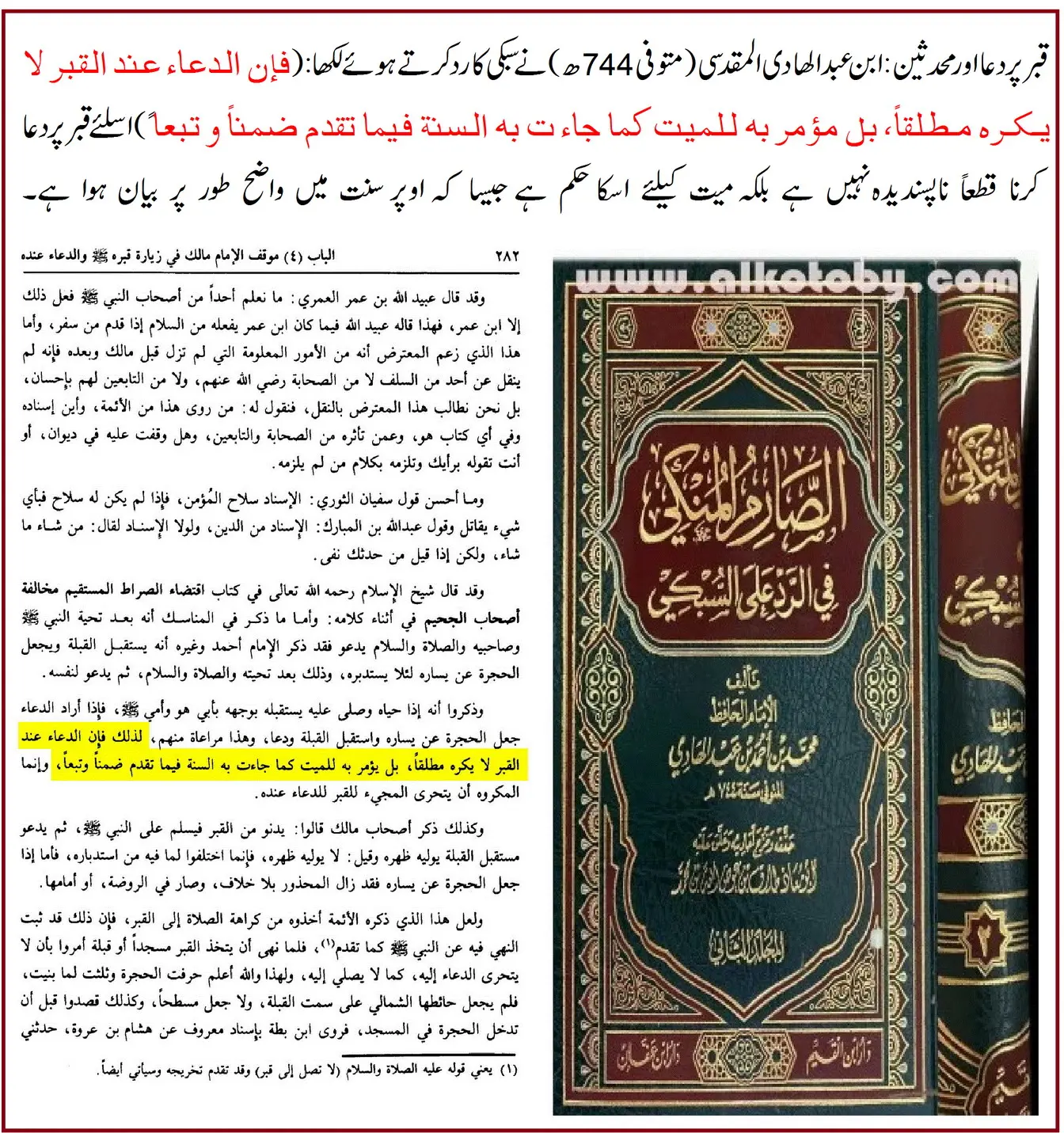
فإن الدعاء عند القبر لا يكره مطلقاً، بل يؤمر به للميت
(al-Ṣārim al-Munkī)
Translation:
Making duʿā at the grave is not absolutely disliked, rather it is prescribed for the deceased, as indicated in the Sunnah, implicitly and secondarily.
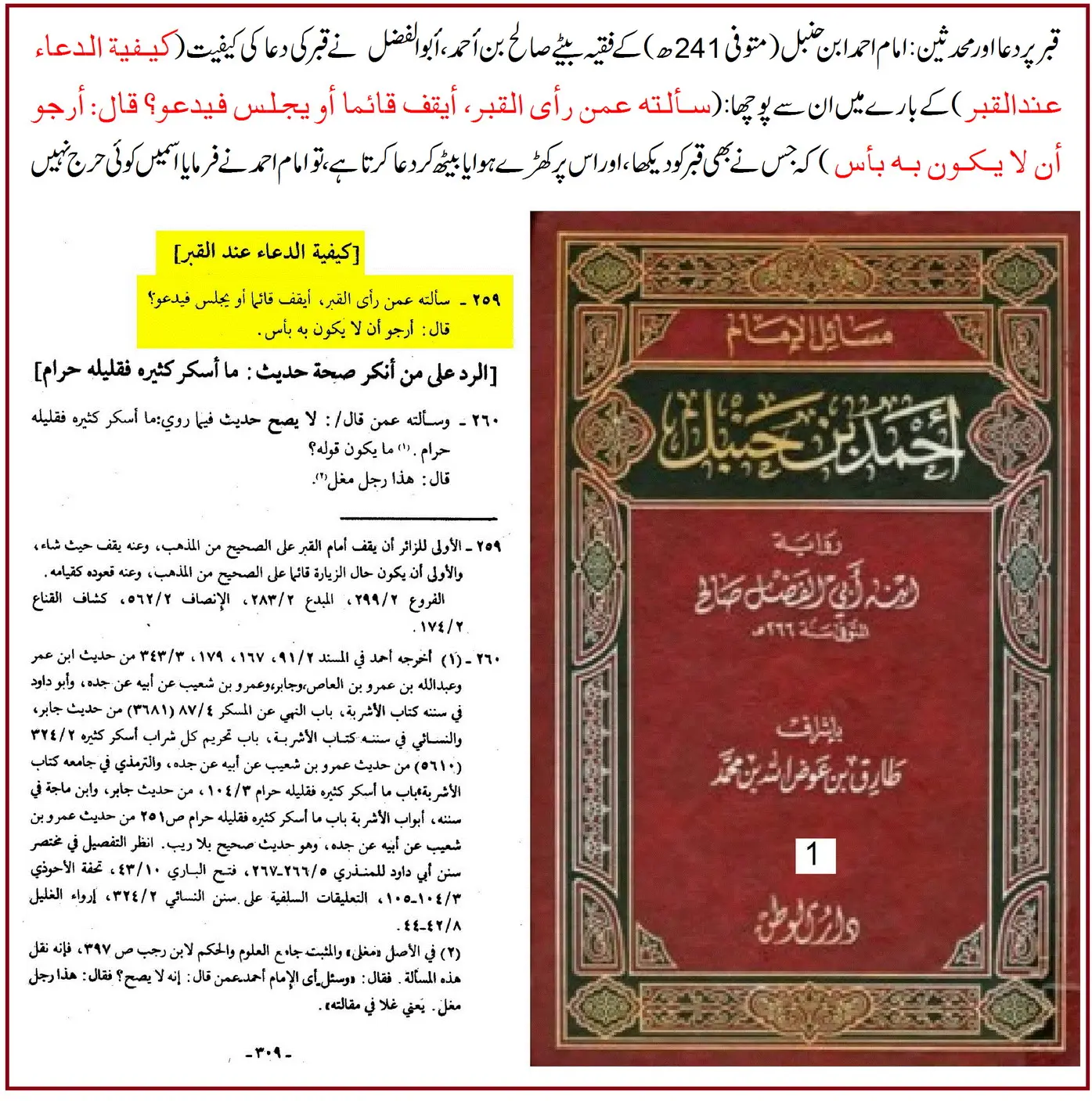
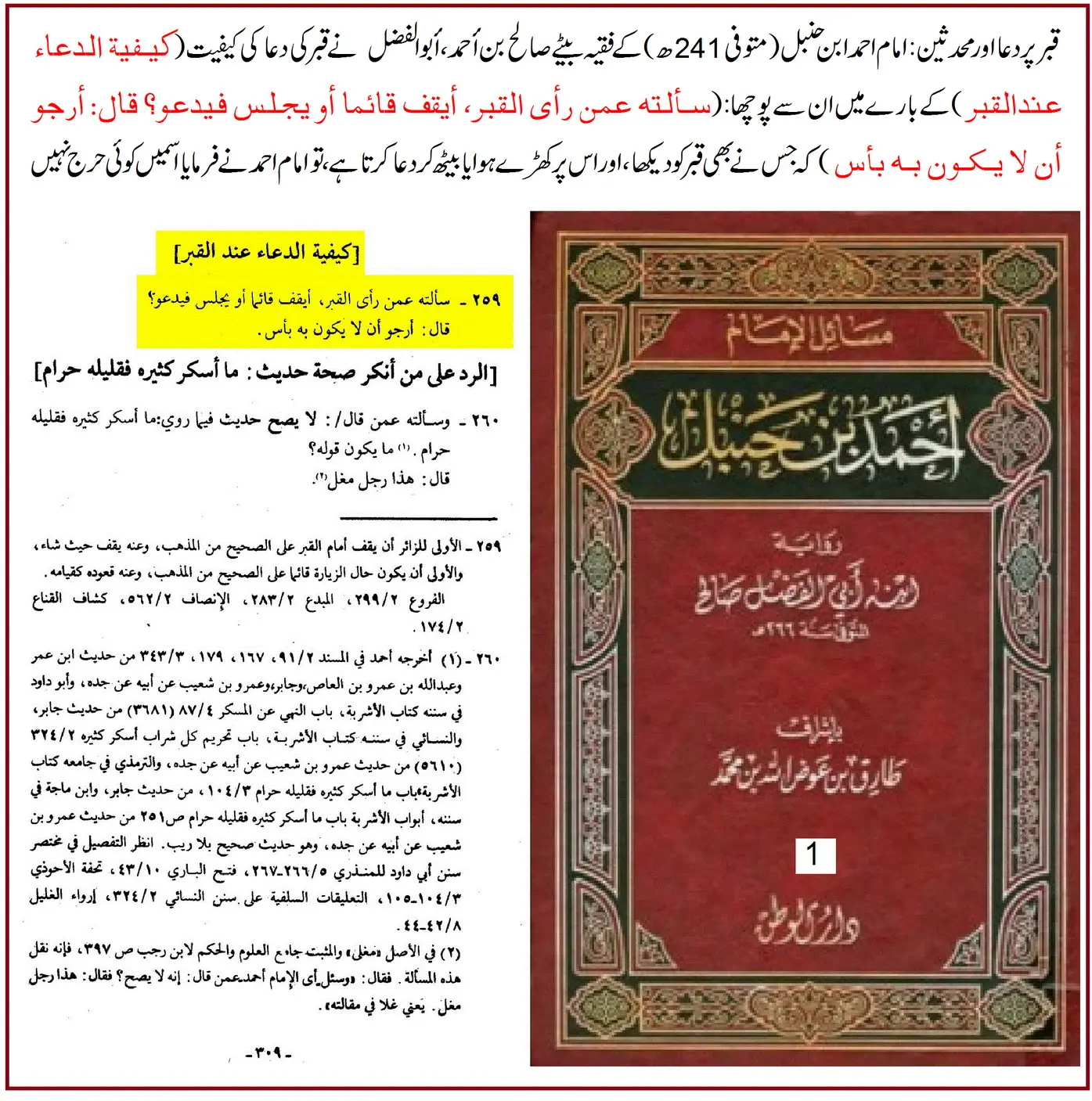
أَرْجُو أَنْ لَا يكون بِهِ بَأْس
(Masāʾil al-Imām Aḥmad – narration of Ṣāliḥ)
Translation:
When asked about duʿā at graves—whether one should stand or sit—he replied: "I hope there is no harm in either."
Summary:
The scholars of ḥadīth confirm that acceptance of duʿā at graves is not due to the grave, but due to the internal state of the supplicant.
None of these statements prove the belief in intercession through the graves.
Ḥāfiẓ Ibn Ḥibbān’s practice was "supplicating to Allah at the grave", not "making the grave a means for supplication."
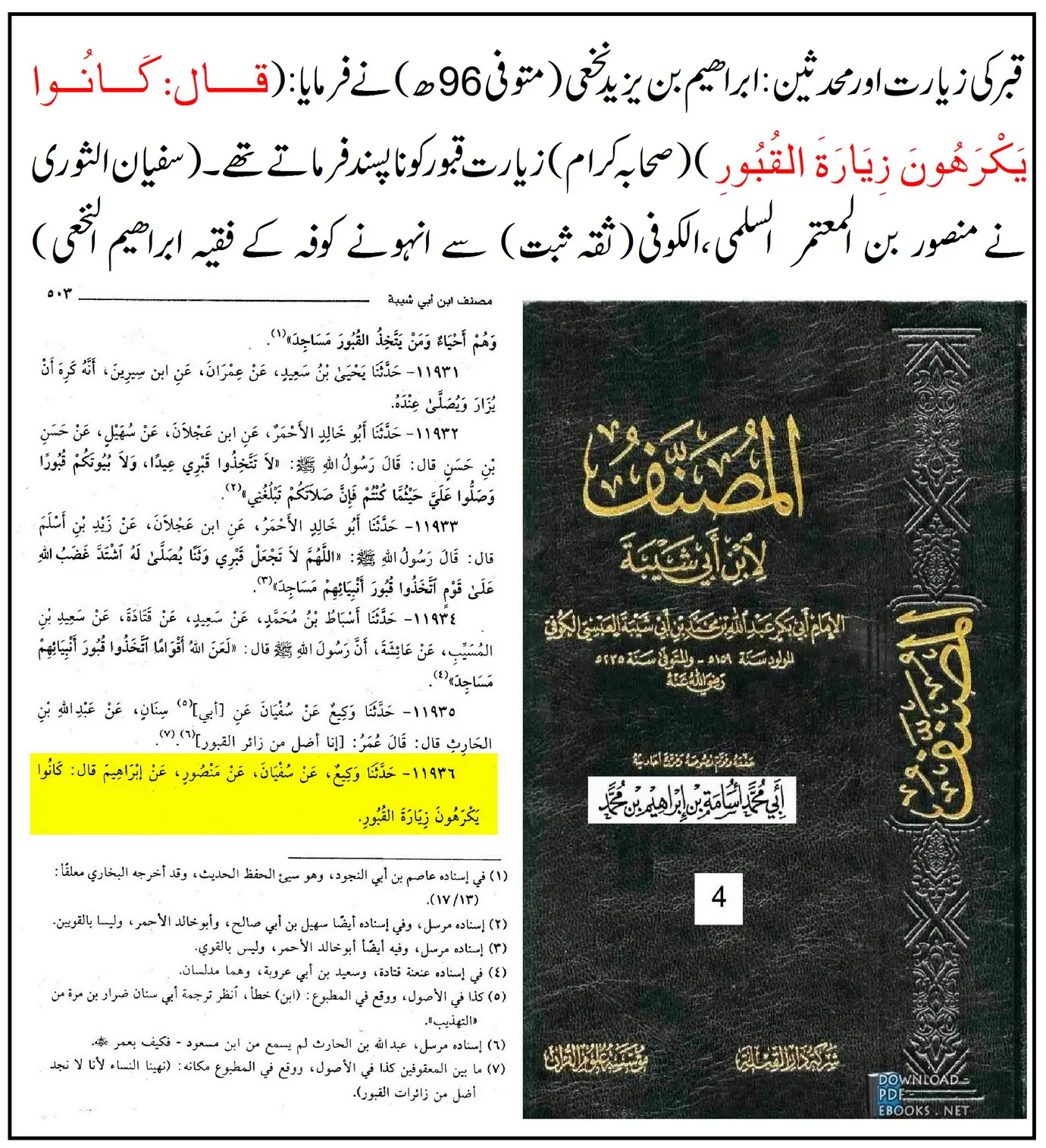
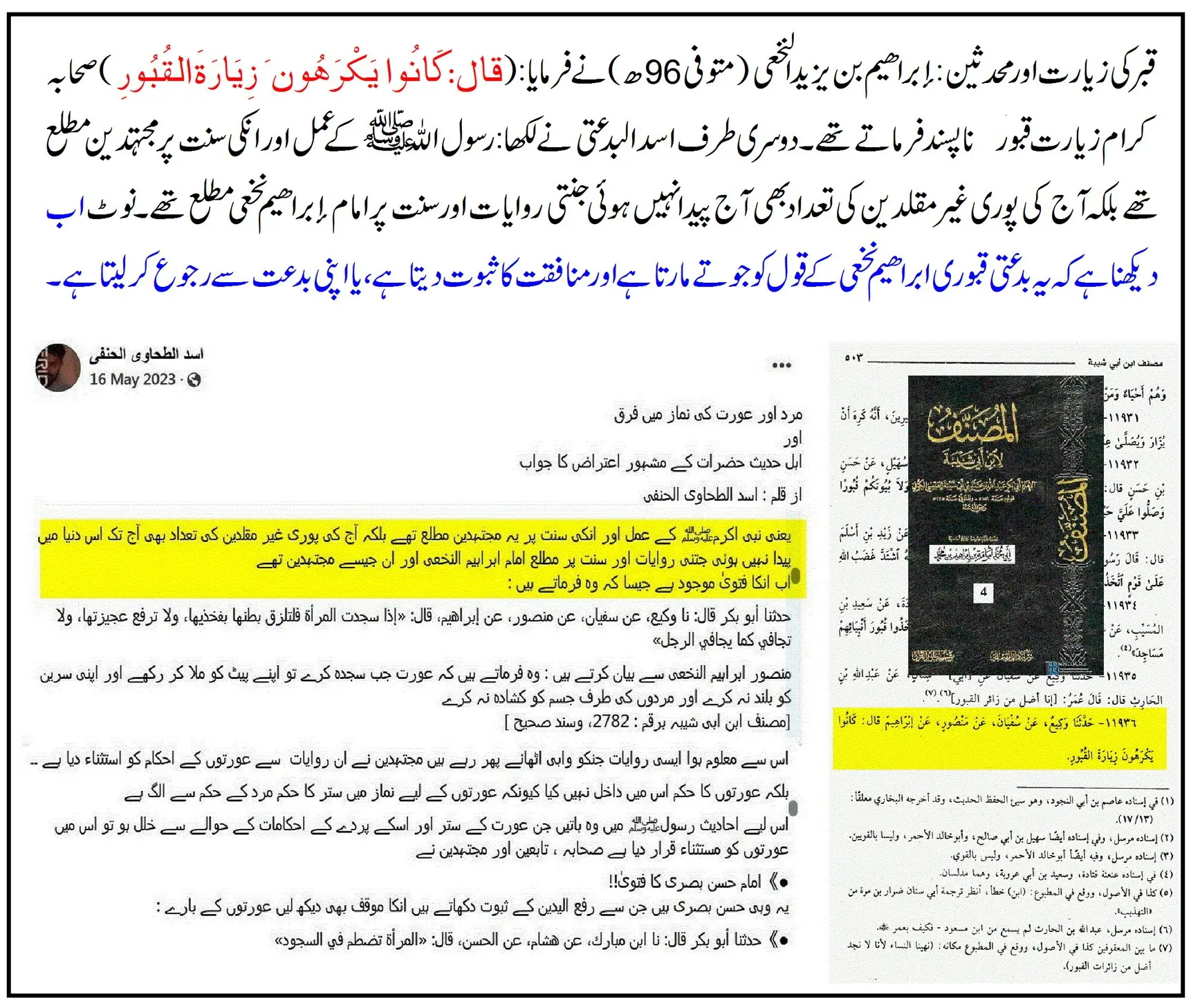
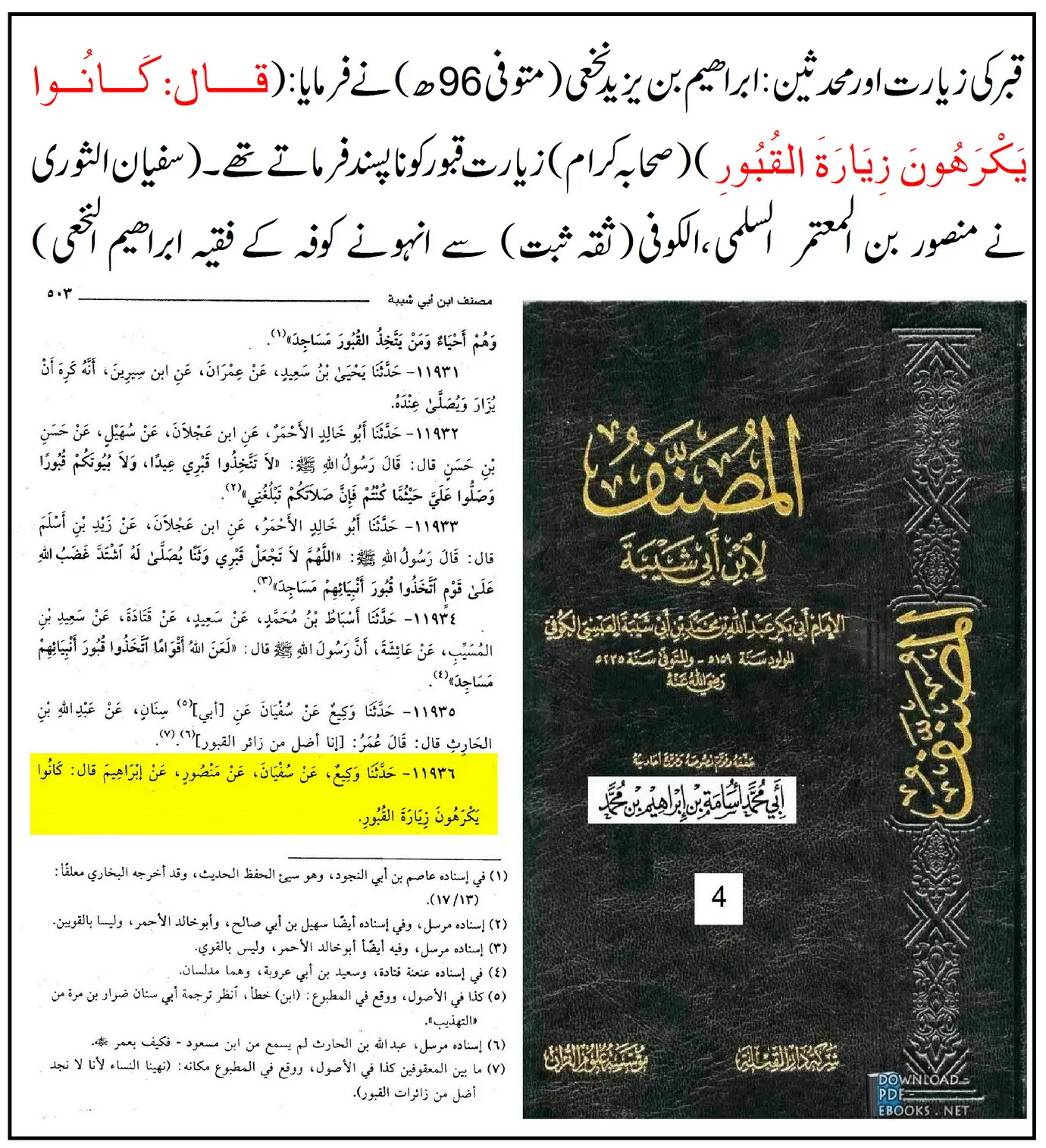
كَانُوا يَكْرَهُونَ زِيَارَةَ الْقُبُورِ
(al-Muṣannaf Ibn Abī Shaybah: 11822)
Translation:
He said: “They (the Salaf) used to dislike visiting graves.”
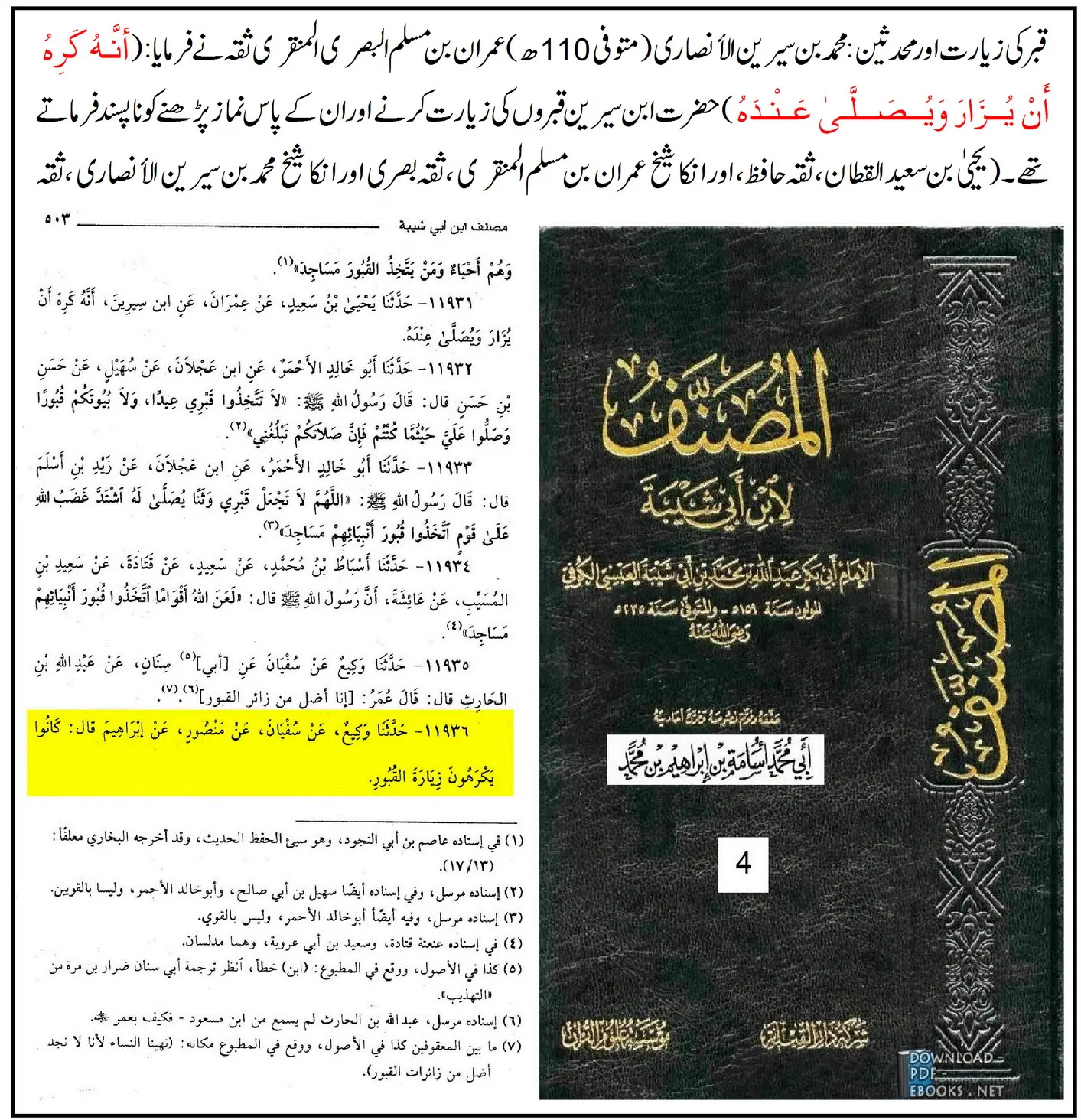
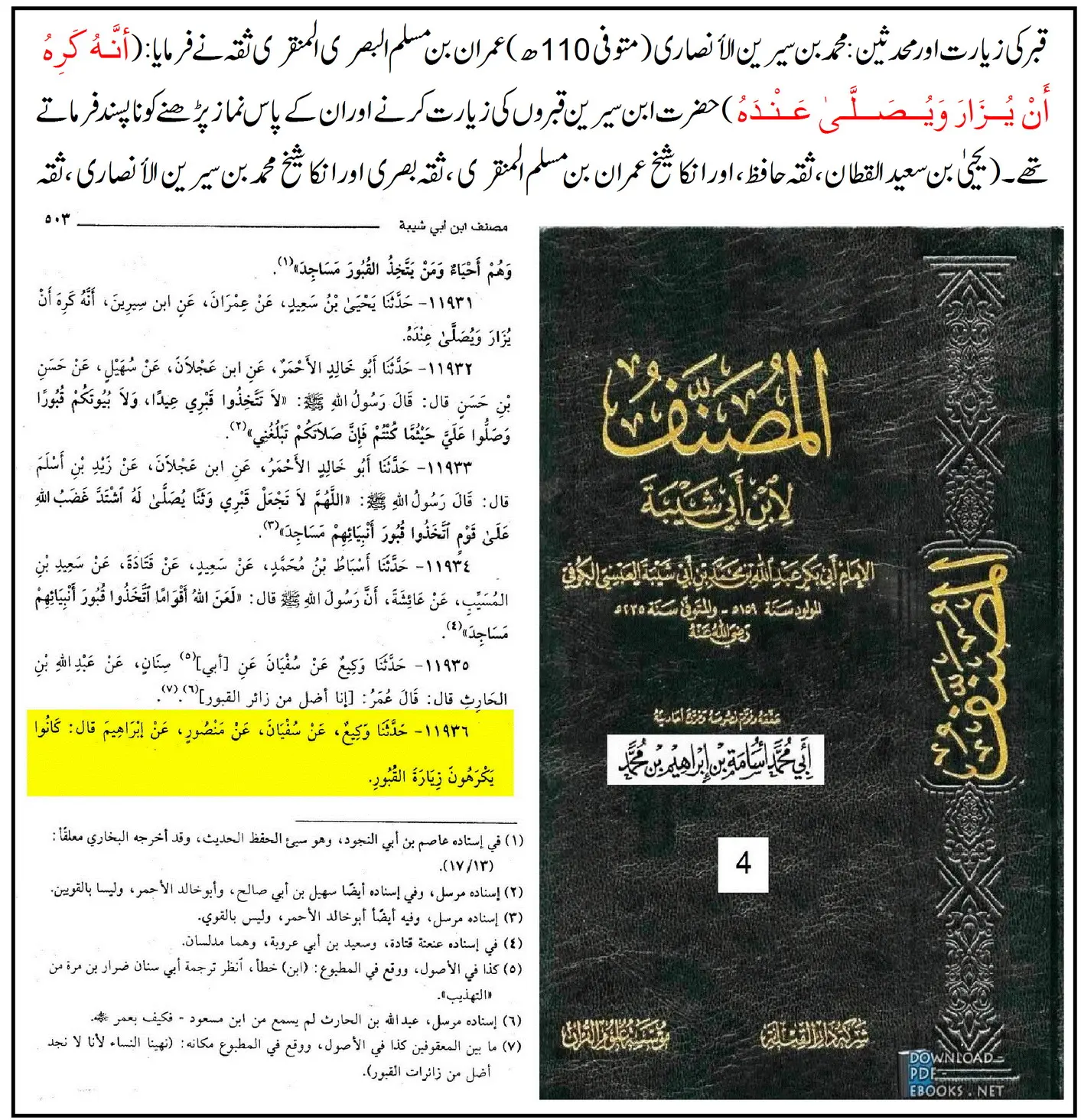
كَانَ يَكْرَهُ أَنْ يُزَارَ الْقَبْرُ، وَيُصَلَّى عِنْدَهُ
(al-Muṣannaf Ibn Abī Shaybah: 11817 – Authentic chain)
Translation:
Ibn Sīrīn disliked visiting graves and praying near them.
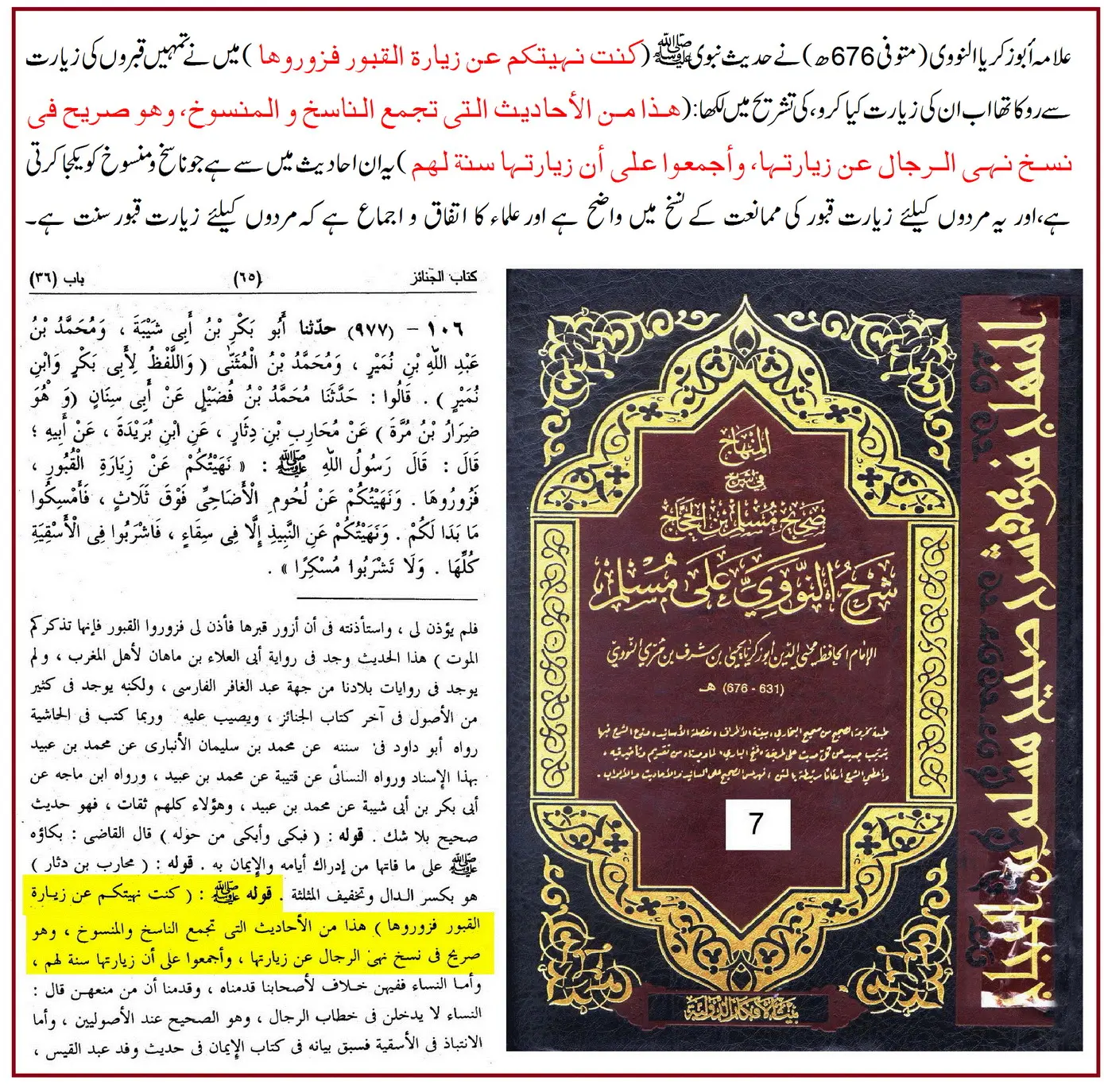
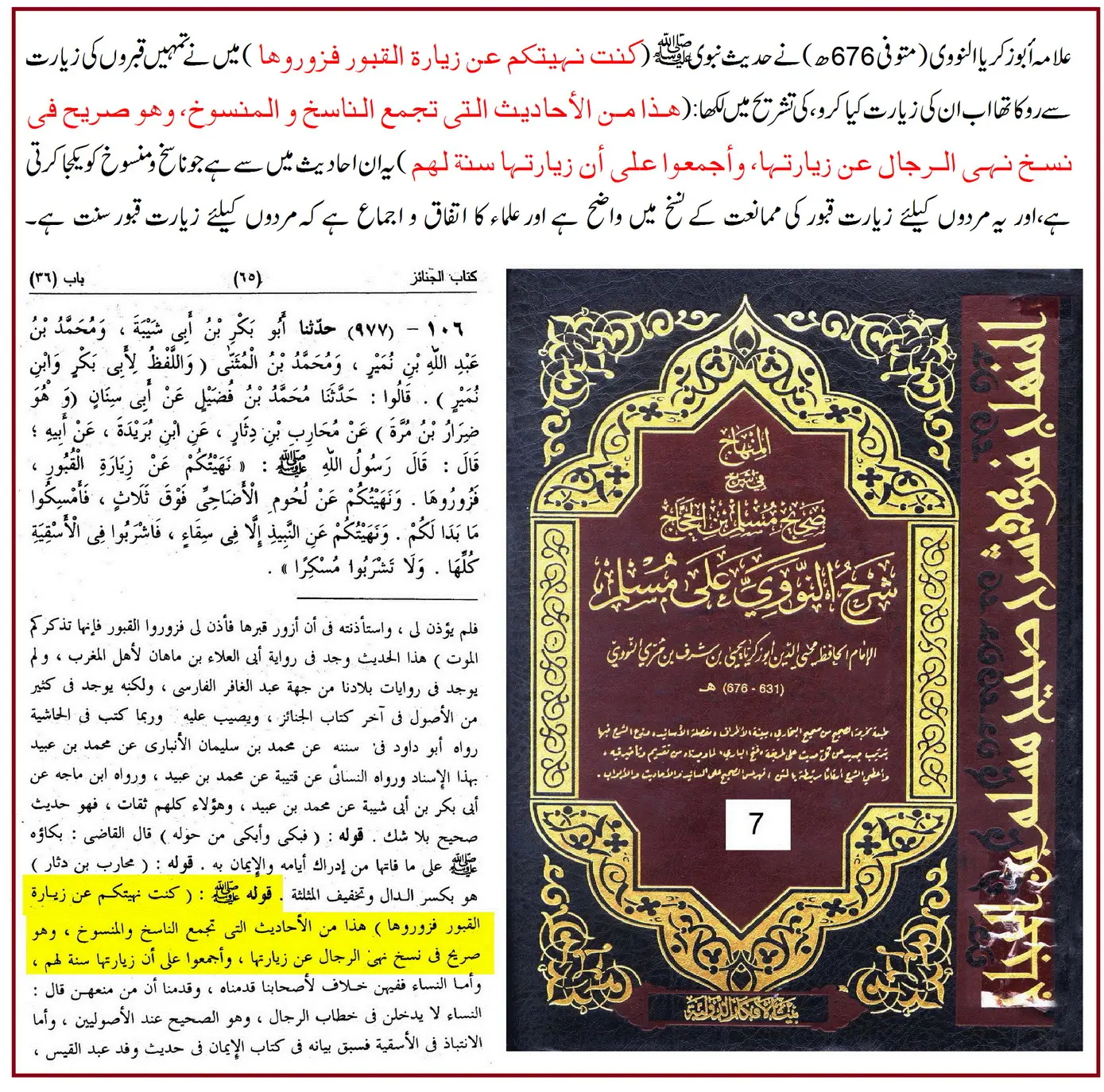
فَزُورُوهَا… صَرِيحٌ فِي نَسْخِ نَهْيِ الرِّجَالِ عَنْ زِيَارَتِهَا…
(Sharḥ Ṣaḥīḥ Muslim)
Translation:
The ḥadīth “I had forbidden you from visiting graves, but now visit them” clearly abrogates the prohibition for men. And it is consensus that visiting graves is Sunnah for men.
Conclusion:
Initially, some early Salaf held grave visitation as disliked, but the ruling was later abrogated, and it became Sunnah for men.
Duʿā at the grave is not prohibited, but believing the grave has an effect on the duʿā is a bidʿah (innovation).
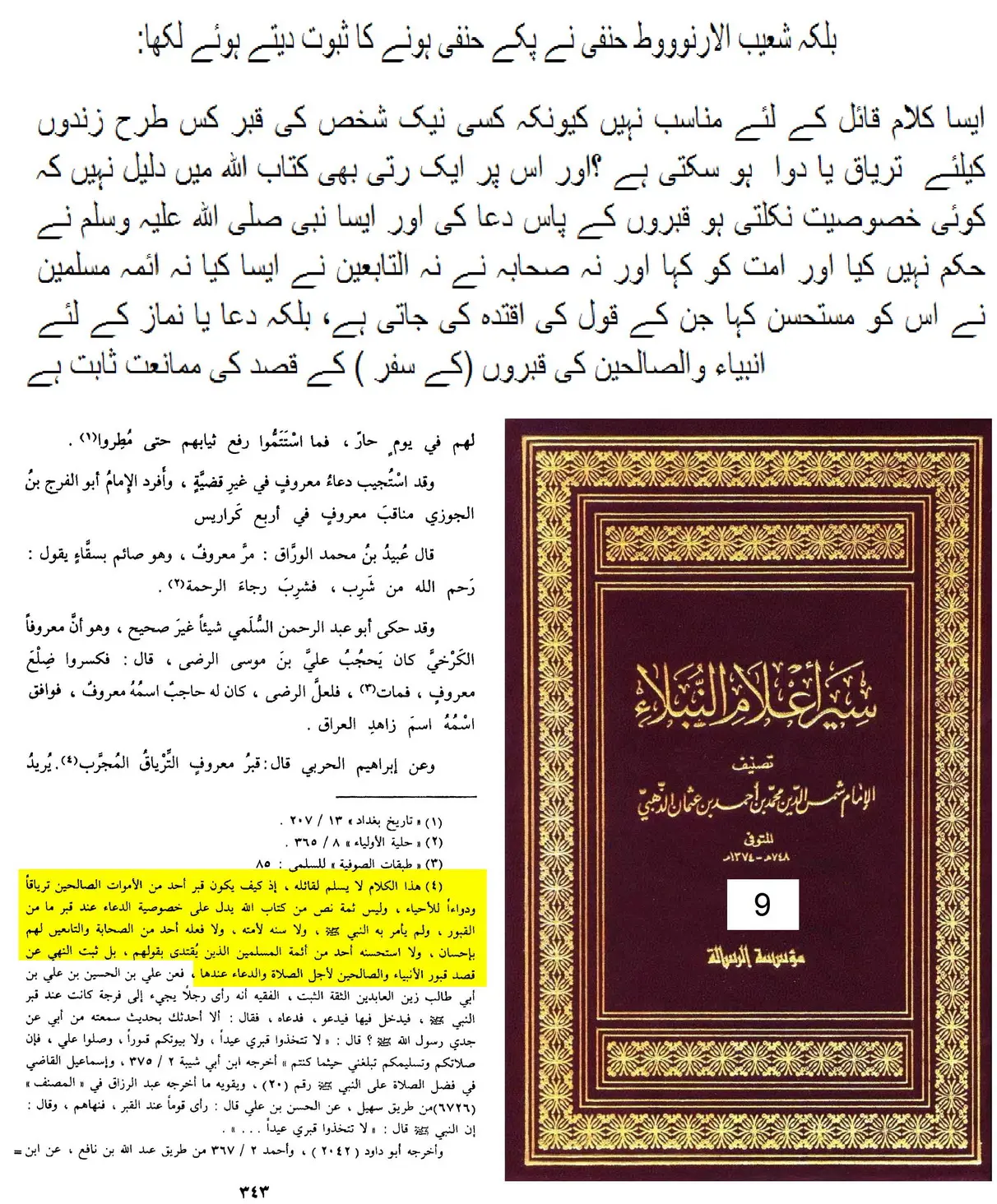
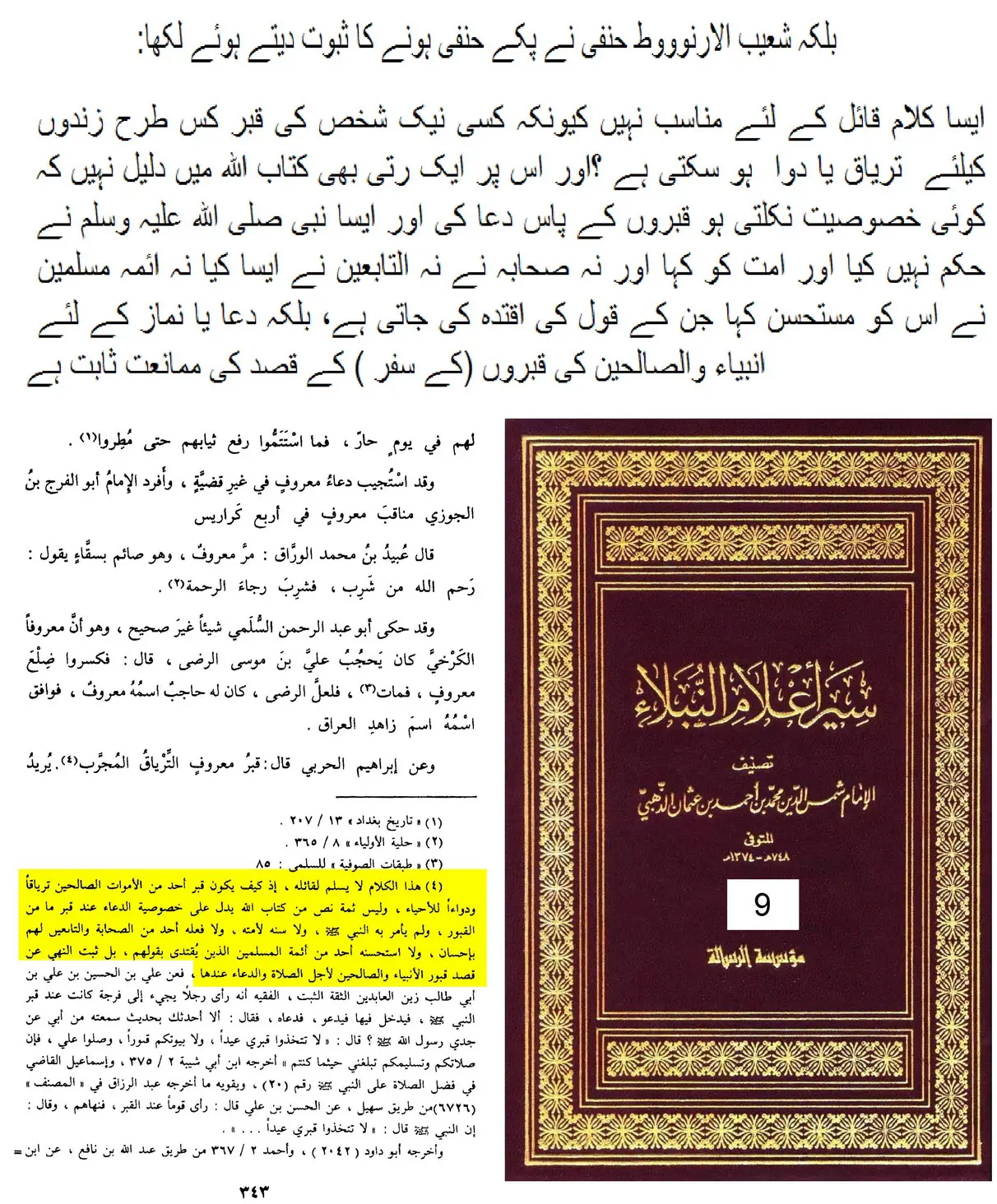
فليس ثمة نص من كتاب الله يدل على خصوصية الدعاء عند قبر… ولم يفعله الصحابة ولا التابعون… بل ثبت النهي
(Footnote on Siyar Aʿlām al-Nubalāʾ)
Translation:
This claim is incorrect—that a righteous person’s grave is a remedy for the living. There is no verse from the Qur’an that assigns special status to duʿā at any grave. Neither did the Prophet ﷺ command it, nor the companions or followers practice it, nor did any imām of the Muslims endorse it. In fact, praying or making duʿā intentionally at graves of prophets or pious people is forbidden.
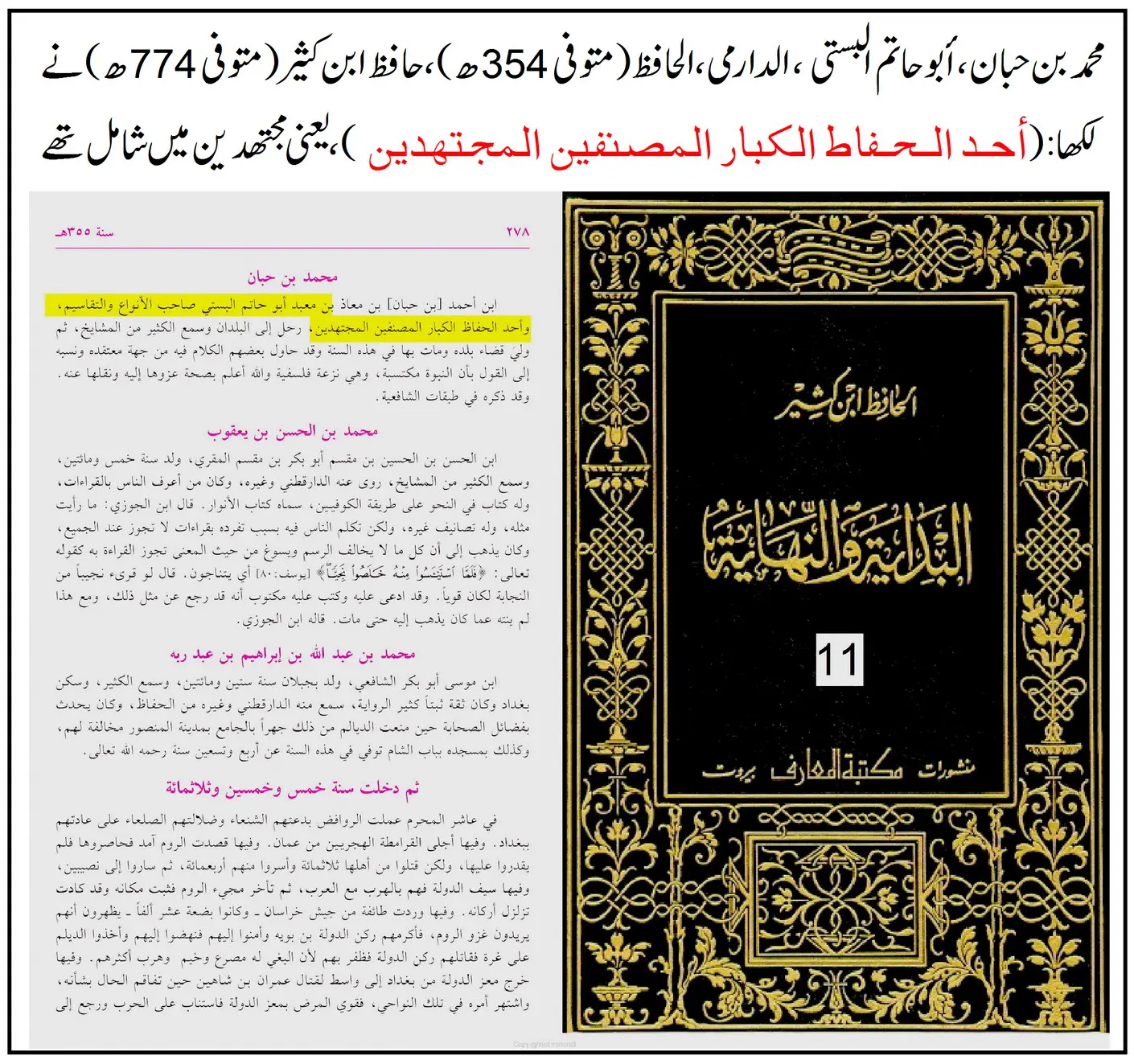
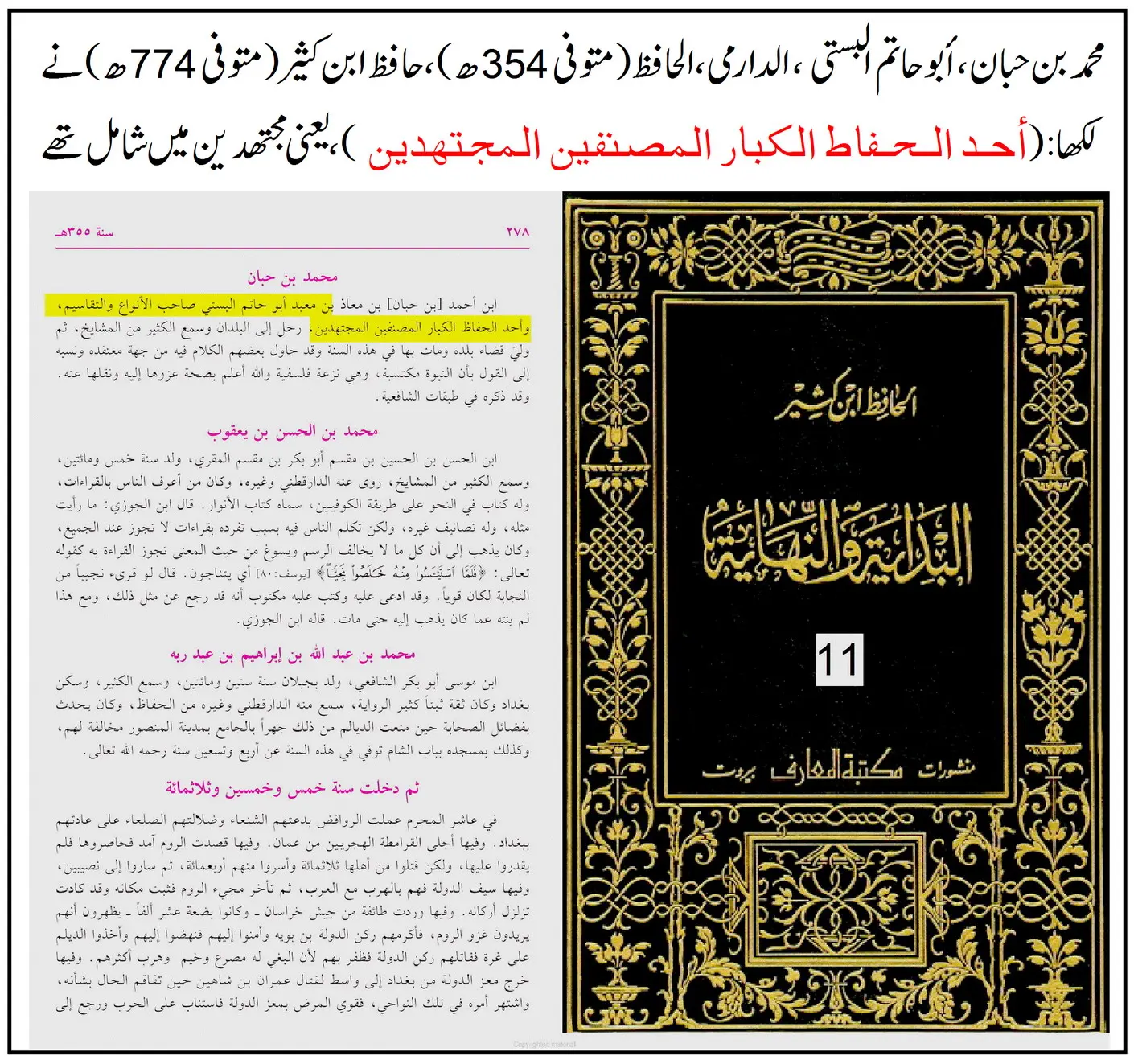
أحد الحفّاظ الكبار المصنّفين المجتهدين
(al-Bidāyah wa al-Nihāyah by Ibn Kathīr)
Translation:
Ibn Ḥibbān was among the great memorizers of ḥadīth, prolific authors, and mujtahid scholars.
إِذَا حَكَمَ الحَاكِمُ فَاجْتَهَدَ…
(Ṣaḥīḥ al-Bukhārī: 7352)
Translation:
When a judge exercises ijtihād and gets it right, he receives two rewards. If he errs, he still receives one reward.
In this article, we present a research-based refutation of a blatant lie attributed to Ḥāfiẓ Ibn Ḥibbān رحمه الله by a Barelvi author. The claim is made that Ibn Ḥibbān supposedly endorsed seeking intercession (tawassul) through the graves of the Awliyā (friends of Allah).
We will present:
- The original misleading quote,
- Its actual context,
- And the clarifications of scholars and ḥadīth experts to prove that there is no mention of intercession through graves in Ibn Ḥibbān’s statements.
We will also examine:
- The legal status of making duʿā at graves,
- Statements of the Muhaddithīn (ḥadīth scholars),
- Authentic aḥādīth,
- And the methodology of the jurists (fuqahā).
Further, we will cite:
- Fatāwā from the Salaf regarding the visitation of graves,
- What truly causes duʿā to be accepted—with insights from Ibn al-Qayyim, al-Dhahabī, and other prominent imāms,
- And clarify that even if a mujtahid errs in ijtihād, he is not deprived of reward.
① The Claim, the Original Quote, and Initial Rebuttal
❖ The Barelvi Claim:
A Barelvi writer named Asad states:
“Imām Ibn Ḥibbān رحمه الله (d. 354 AH) believed in intercession through the graves of the Awliyā of Allah. … I visited the grave of Imām ʿAlī ibn Mūsā al-Riḍā in Ṭūs many times, and whenever I faced a difficulty, I would go to that grave and supplicate to Allah—and Allah accepted my supplication and removed the hardship. This was a tested method…”
He concludes:
“Imām Ibn Ḥibbān used the grave of Imām ʿAlī al-Riḍā as a means for his duʿā to be accepted.”
❖ Initial Refutation:
✔ Nowhere in the entire Arabic text is there any wording like "intercession through the grave" (tawassul bil-maqbūr).
✔ This innovative writer distorted the meaning by equating "making duʿā at the grave" with "using the grave as a means (tawassul)"—a clear act of forgery and distortion.
② The Methodology of Ḥāfiẓ Ibn Ḥibbān – In His Ṣaḥīḥ
In his authentic compilation, Ṣaḥīḥ Ibn Ḥibbān, he devoted an entire chapter:
ذِكْرُ الْأَمْرِ لِمَنْ دَخَلَ الْمَقَابِرَ أَنْ يَسْأَلَ اللَّهَ جَلَّ وَعَلَا الْعَافِيَةَ لِنَفْسِهِ وَلِمَنْ تَحْتَ أَطْبَاقِ الثَّرَى نَسْأَلُ اللَّهَ الْبَرَكَةَ فِي تِلْكَ الْحَالَةِ
(al-Iḥsān fī Taqrīb Ṣaḥīḥ Ibn Ḥibbān)
"Mention of the command that whoever enters a graveyard should ask Allah for well-being for himself and for those beneath the earth, and we ask Allah for blessings in that situation."
He then brings the following narration:
3173 – The Ḥadīth:
بُرَيْدَةَ، عَنْ أَبِيهِ قَالَ:
كَانَ رَسُولُ اللَّهِ ﷺ إِذَا خَرَجُوا إِلَى الْمَقَابِرِ يُعَلِّمُهُمْ أَنْ يَقُولُوا:
"السَّلَامُ عَلَى أَهْلِ الدَّارِ مِنَ الْمُؤْمِنِينَ وَالْمُسْلِمِينَ… نَسْأَلُ اللَّهَ لَنَا وَلَكُمُ الْعَافِيَةَ"
(al-Iḥsān fī Taqrīb Ṣaḥīḥ Ibn Ḥibbān)
Inference:According to Ibn Ḥibbān, it is Sunnah to supplicate at the graves for both oneself and the deceased.
He includes this under the “Chapter of Duʿā at Graves”, which refers to making duʿā to Allah at the grave, not making the grave a means of intercession.
③ Clarifications from the Muhaddithīn – True Cause of Duʿā Acceptance
❖ Ibn al-Qayyim al-Jawziyyah رحمه الله (d. 751 AH):
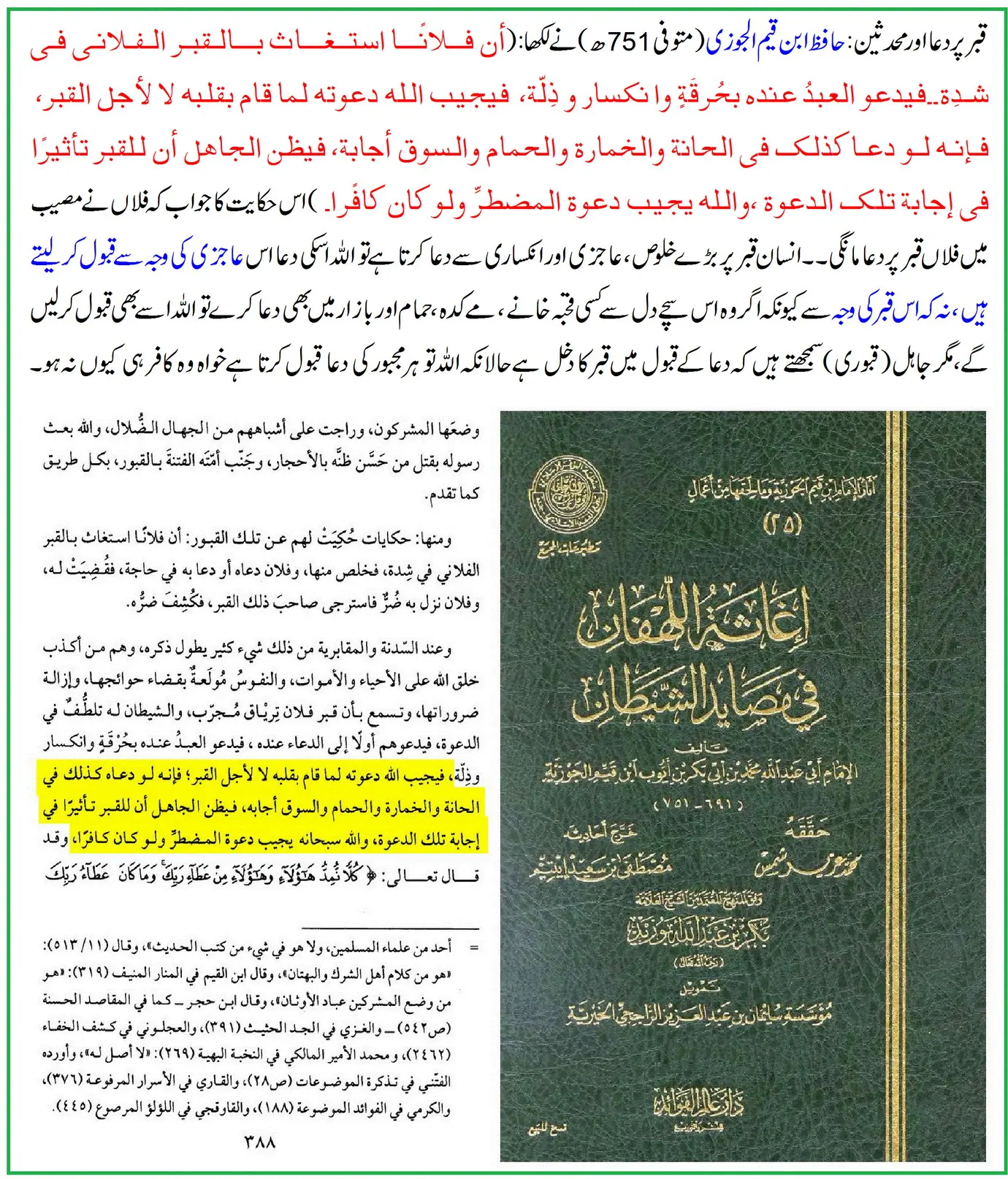
أن فلانا استغاث بالقبر الفلانى فى شدة فخلص منها… فإن الله يجيب دعوة المضطر، ولو كان كافراً.
(Ighāthat al-Lahfān)
Translation:
Someone claims that he was relieved of hardship by calling upon a certain grave. In reality, Allah responds due to the heartfelt sincerity, humility, and brokenness of the supplicant—not due to the grave itself. Had he prayed in the same manner in a tavern, brothel, or marketplace, Allah could still accept it. The ignorant think the grave had an effect, but Allah answers the duʿā of the distressed—even if the person is a disbeliever.
❖ Ḥāfiẓ al-Dhahabī رحمه الله (d. 748 AH):
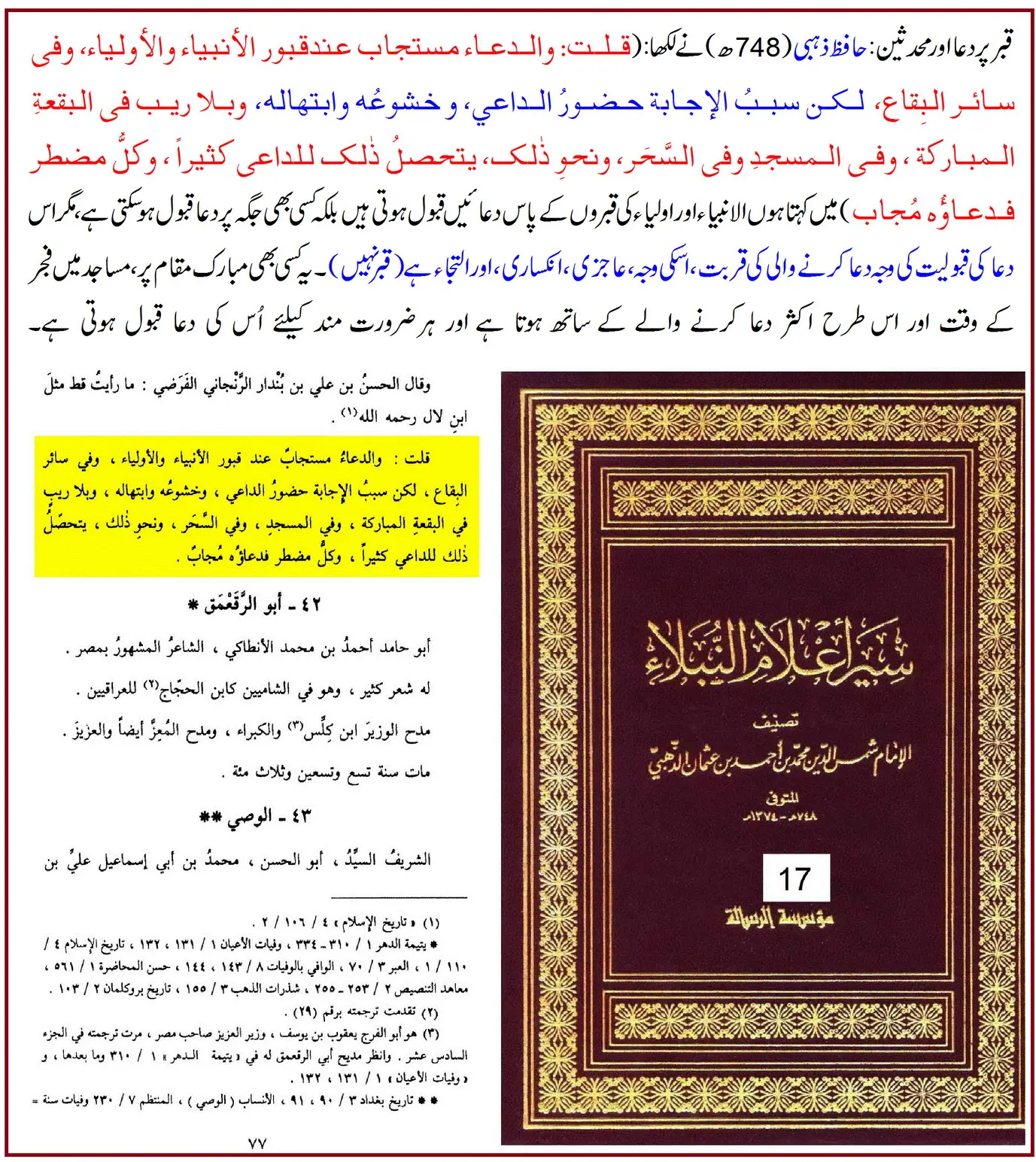
الدُّعَاءُ مُسْتَجَاب عِنْد قُبُوْر الأَنْبِيَاء وَالأَوْلِيَاء، وَفِي سَائِر البِقَاع… سَبَبُ الإِجَابَة: خُشُوعُ الدَّاعِي وَابْتِهَالُهُ
(Siyar Aʿlām al-Nubalāʾ)
Translation:
Duʿā may be accepted at the graves of the prophets and righteous, as well as other places. But the real cause of acceptance is the presence of heart, humility, and supplication. Blessed places or times (like mosques, or suḥūr) only enhance this effect. Every distressed person's duʿā is answered.
❖ Ibn ʿAbd al-Hādī رحمه الله (d. 744 AH):
فإن الدعاء عند القبر لا يكره مطلقاً، بل يؤمر به للميت
(al-Ṣārim al-Munkī)
Translation:
Making duʿā at the grave is not absolutely disliked, rather it is prescribed for the deceased, as indicated in the Sunnah, implicitly and secondarily.
❖ Imām Aḥmad ibn Ḥanbal رحمه الله:
أَرْجُو أَنْ لَا يكون بِهِ بَأْس
(Masāʾil al-Imām Aḥmad – narration of Ṣāliḥ)
Translation:
When asked about duʿā at graves—whether one should stand or sit—he replied: "I hope there is no harm in either."
Summary:The scholars of ḥadīth confirm that acceptance of duʿā at graves is not due to the grave, but due to the internal state of the supplicant.
None of these statements prove the belief in intercession through the graves.
Ḥāfiẓ Ibn Ḥibbān’s practice was "supplicating to Allah at the grave", not "making the grave a means for supplication."
④ Visiting Graves – Views of the Salaf and Scholars
❖ Ibrāhīm al-Nakhaʿī رحمه الله (d. 96 AH):
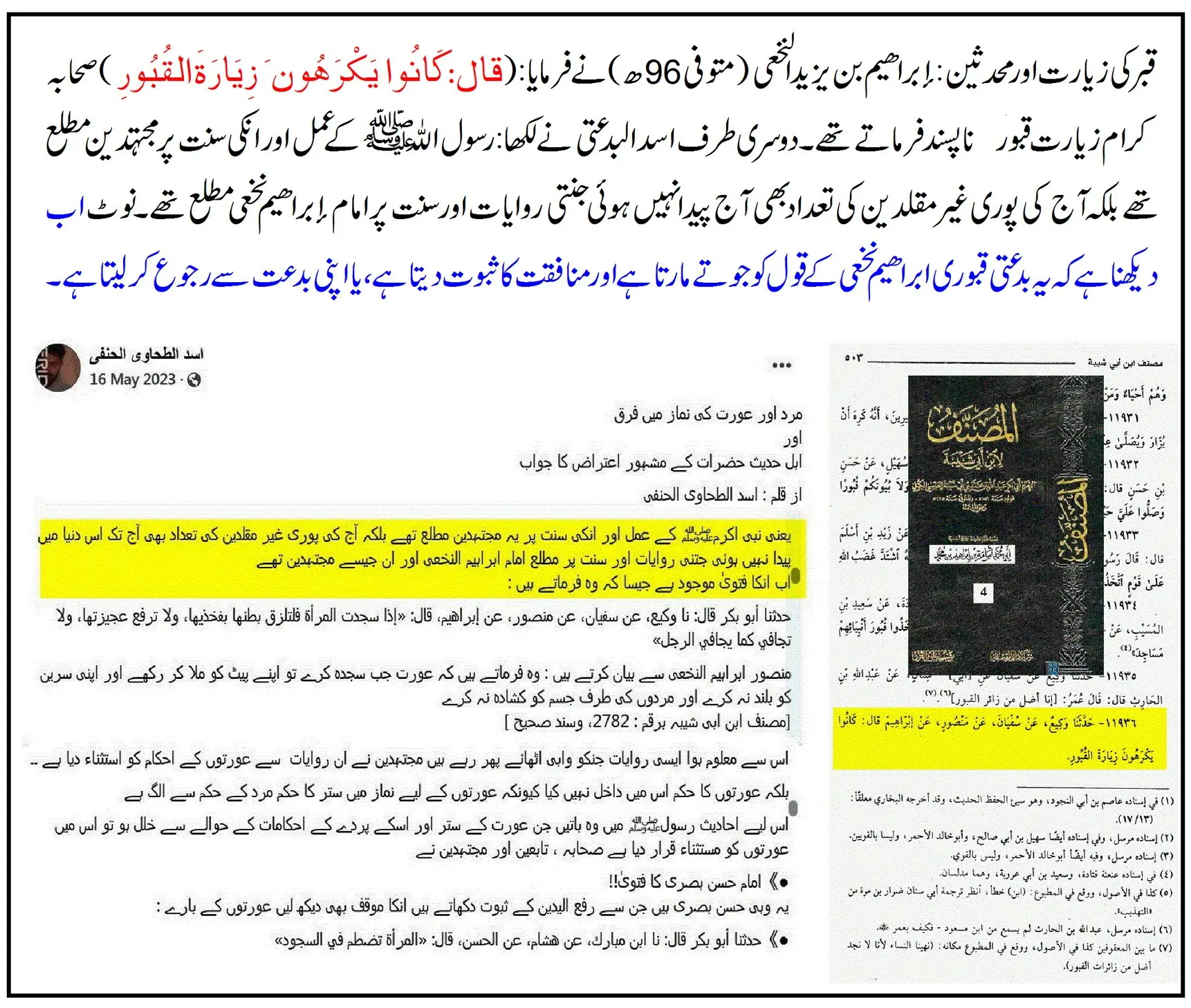
كَانُوا يَكْرَهُونَ زِيَارَةَ الْقُبُورِ
(al-Muṣannaf Ibn Abī Shaybah: 11822)
Translation:
He said: “They (the Salaf) used to dislike visiting graves.”
❖ Ibn Sīrīn رحمه الله (d. 110 AH):
كَانَ يَكْرَهُ أَنْ يُزَارَ الْقَبْرُ، وَيُصَلَّى عِنْدَهُ
(al-Muṣannaf Ibn Abī Shaybah: 11817 – Authentic chain)
Translation:
Ibn Sīrīn disliked visiting graves and praying near them.
❖ Imām al-Nawawī رحمه الله (d. 676 AH):
فَزُورُوهَا… صَرِيحٌ فِي نَسْخِ نَهْيِ الرِّجَالِ عَنْ زِيَارَتِهَا…
(Sharḥ Ṣaḥīḥ Muslim)
Translation:
The ḥadīth “I had forbidden you from visiting graves, but now visit them” clearly abrogates the prohibition for men. And it is consensus that visiting graves is Sunnah for men.
Conclusion:Initially, some early Salaf held grave visitation as disliked, but the ruling was later abrogated, and it became Sunnah for men.
Duʿā at the grave is not prohibited, but believing the grave has an effect on the duʿā is a bidʿah (innovation).
⑤ Clarification of Shaykh Shuʿayb al-Arnāʾūṭ and Reward in Ijtihād
❖ Shaykh Shuʿayb al-Arnāʾūṭ رحمه الله:
فليس ثمة نص من كتاب الله يدل على خصوصية الدعاء عند قبر… ولم يفعله الصحابة ولا التابعون… بل ثبت النهي
(Footnote on Siyar Aʿlām al-Nubalāʾ)
Translation:
This claim is incorrect—that a righteous person’s grave is a remedy for the living. There is no verse from the Qur’an that assigns special status to duʿā at any grave. Neither did the Prophet ﷺ command it, nor the companions or followers practice it, nor did any imām of the Muslims endorse it. In fact, praying or making duʿā intentionally at graves of prophets or pious people is forbidden.
❖ Ḥāfiẓ Ibn Ḥibbān رحمه الله:
أحد الحفّاظ الكبار المصنّفين المجتهدين
(al-Bidāyah wa al-Nihāyah by Ibn Kathīr)
Translation:
Ibn Ḥibbān was among the great memorizers of ḥadīth, prolific authors, and mujtahid scholars.
❖ Authentic Ḥadīth – Reward in Ijtihād:
إِذَا حَكَمَ الحَاكِمُ فَاجْتَهَدَ…
(Ṣaḥīḥ al-Bukhārī: 7352)
Translation:
When a judge exercises ijtihād and gets it right, he receives two rewards. If he errs, he still receives one reward.
Summary:
- Ḥāfiẓ Ibn Ḥibbān's practice of making duʿā at the grave does not support the concept of intercession through graves.
- Scholars and jurists have made clear that acceptance of duʿā is due to the supplicant’s inner state, not the grave.
- Attributing special power to a grave for duʿā is an innovation.
- Ibn Ḥibbān, being a mujtahid, would still be rewarded even if he erred.

