This excerpt is taken from Sheikh Irshad Ullah Maan's book In Search of Truth.
Now we will discuss dua in detail. Dua and the related words derived from ،،دعو،، mean calling, asking, summoning, or requesting prayer. In this regard, please observe some evidences from the Quran and Hadith:
[1] Help one another in righteousness and piety, and do not help one another in sin and transgression. And fear Allah; surely Allah's punishment is severe.
Reference: Al-Ma'idah:2
[2] The Prophet, mercy to the worlds ﷺ said:
[والله في عون العبد ما كان العبد في عون أخيه]
And Allah helps His servant as long as the servant helps his brother.
Reference: Muslim, Book of Remembrance and Supplication, Chapter on the virtue of gathering for recitation... etc:2699
He said:
A Muslim is a brother to another Muslim; he neither oppresses him nor abandons him without support.
Reference: Muslim, Book of Virtue and Maintaining Ties, Chapter on the prohibition of oppressing a Muslim and forsaking him... etc:2564
[3] It is mentioned in the Holy Quran: That time is also worth remembering when you people were running away far, and no one looked back, and the Messenger was standing behind you calling out.
Reference: Al Imran:153
(Here the word ،،یدعو،، is used, Ahmed Raza Khan Sahib translated it as "calling") And it is said: She said, "My father is calling you so that you may give him the wages for the animals you watered."
Reference: Al-Qasas:25
(Here Ahmed Raza Khan Sahib translated ،،یدعو،، as "calling," what is it?)[4] Our Master Noah (peace be upon him) said: O my Lord! I have called my people night and day towards You.
Reference: Nuh:5
(Here Ahmed Raza Khan Sahib translated ،،دعو،، as "called")[5] Allah Almighty commands: And indeed, the mosques are for Allah, so do not call upon anyone along with Allah.
Reference: Al-Jinn:18
And He said: Do not call upon any other deity with Allah.
Reference: Al-Qasas:88
And He said: And who is more astray than one who calls upon besides Allah those who will not respond to him until the Day of Resurrection, and they, of their invocation, are unaware.
Reference: Al-Ahqaf:5
And He said: We worship You alone and seek help from You alone.
Reference: Al-Fatiha:4
And in the Holy Quran, at the following places, calling upon anyone other than Allah is declared as shirk (associating partners with Allah), disbelief, or worship of others besides Allah.
Reference: An-Nisa:117,116], [Al-An'am:71,64,63,56,41,40], [Al-Jinn:20
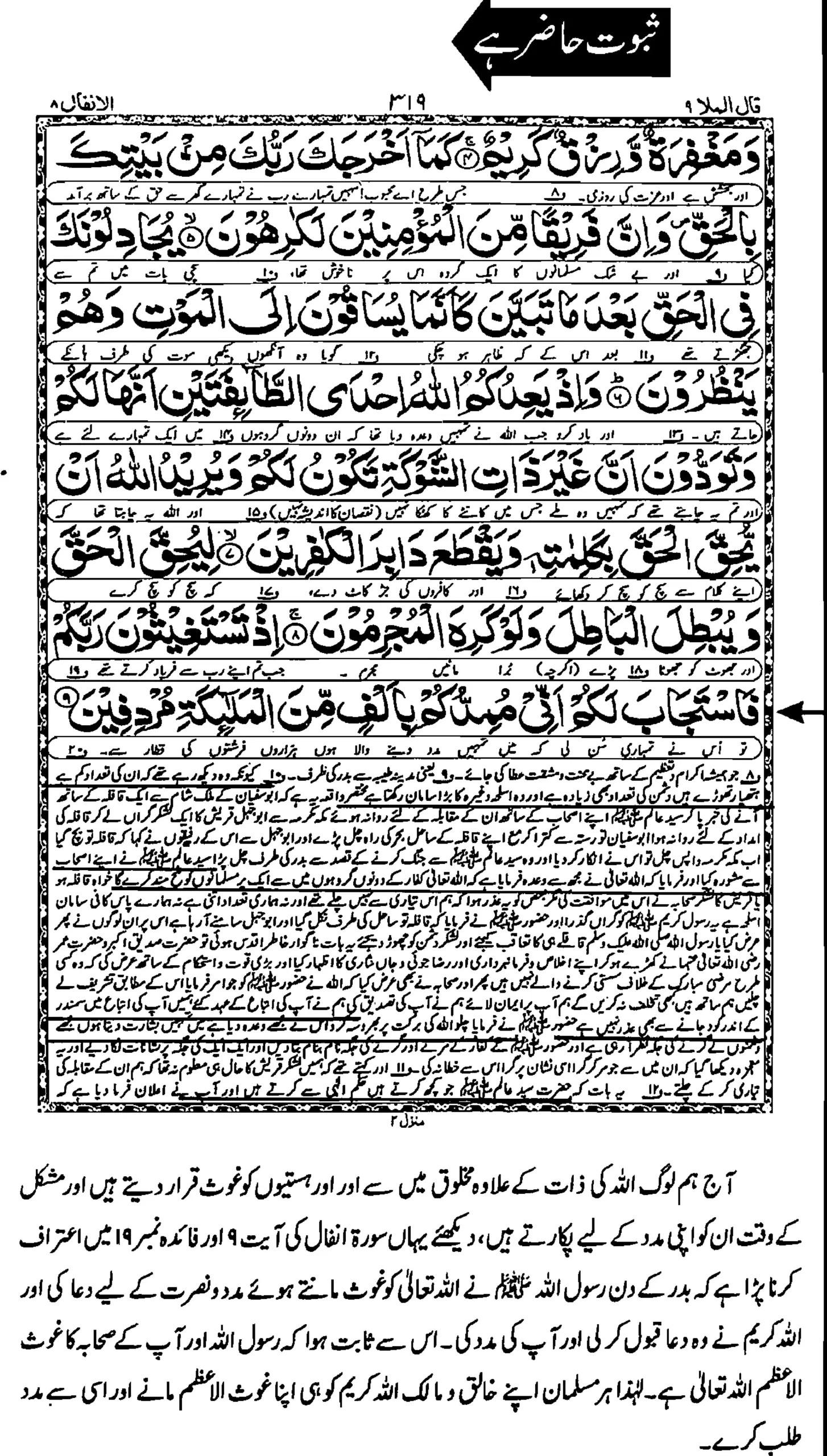
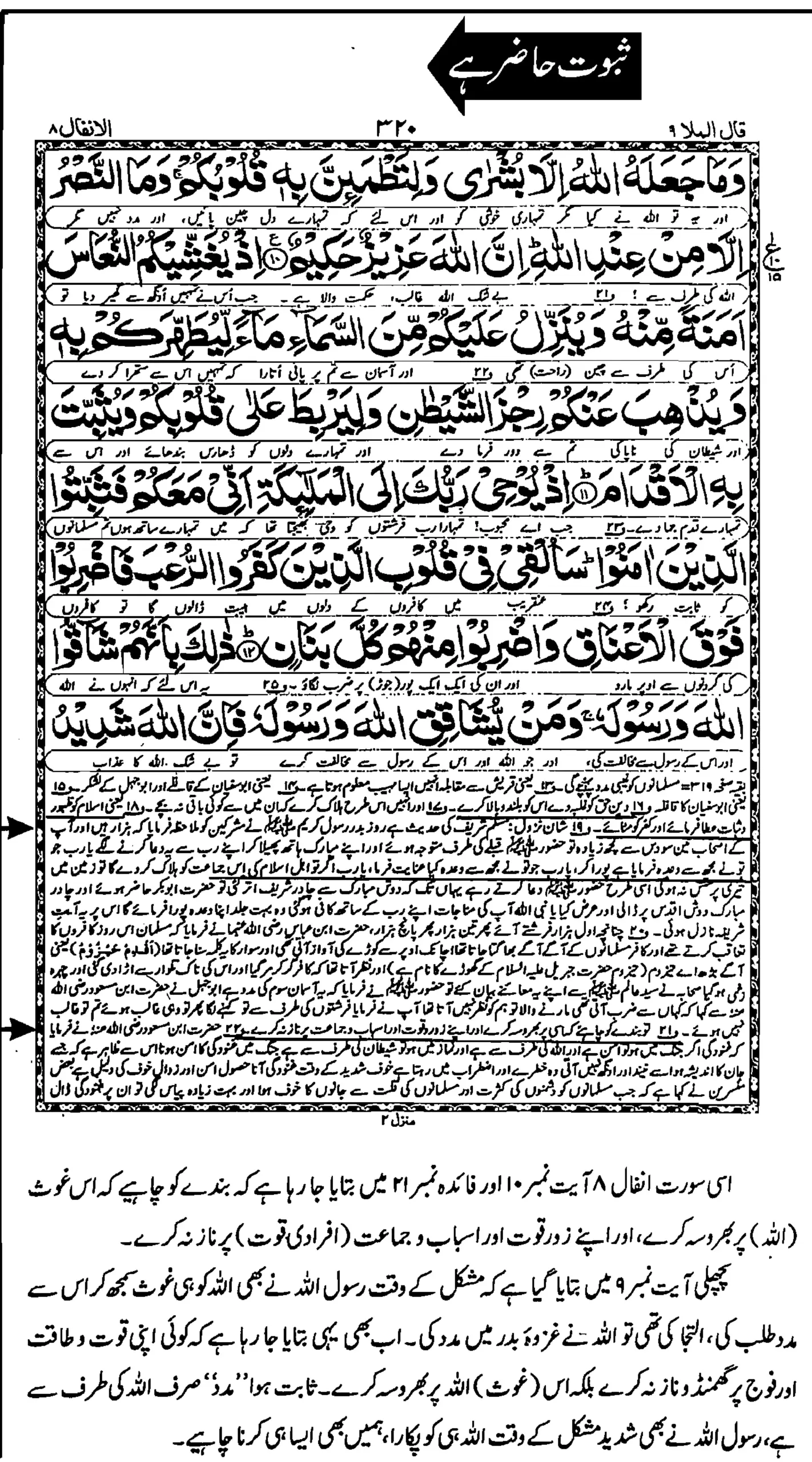
The salutations and the Holy Quran mention these four acts of worship repeatedly, the details of which have already been discussed.The arguments (1 to 4) I have presented show that helping one another is necessary, and asking for help is necessary. Similarly, calling out to one another in times of need and raising one's voice is also permissible. And from the arguments written under number 5, it is understood that help should only be sought from Allah Almighty. Only He should be called upon, and seeking help from others besides Allah or calling upon others besides Allah is disbelief, polytheism, and misguidance.
Seeking help from someone through means and resources and calling upon them is not polytheism. But considering someone superior to the means and resources and self-sufficient and then seeking help or calling upon them is polytheism. Because the one who is above and beyond the means and resources, who has the power to help and respond to the caller's call, is only Allah Almighty.
Now the question arises that the verses which call out that it is not permissible to call upon anyone other than Allah, are these about idols? In this regard, even a person with minimal understanding can comprehend that wherever in the Holy Quran ،،الا الله،، (meaning) other than Allah, or ،،الا هو،، (meaning) besides Him appears, that thing is exclusively for Allah and all other creation from the Throne to the earth is negated. It will not be only the negation of idols, for example [لا إله إلا الله] (meaning) in the Kalima there is affirmation of Allah Almighty and negation of all other creation. Even the greatest of prophets cannot be worshiped. Whoever worships any prophet will become a disbeliever and polytheist, which primarily includes calling upon others besides Allah, as Christians worshiped Prophet Jesus (peace be upon him) and they were declared disbelievers and polytheists. The Quran bears witness to this. Christians worshiped Prophet Jesus (peace be upon him)
Reference: Al-Ma'idah: 72 to 77
and Christians called Jesus (peace be upon him) in churches.
Reference: Al-Jinn: 18 to 20
The details of these matters have already been presented under [Can the Muslim Ummah commit Shirk?]. Similarly, wherever in the Holy Quran ،،من دون الله،، (meaning) other than Allah, or ،،من دونه،، (meaning) besides Him appears, that thing is exclusively for Allah and all other creation from the Throne to the earth is negated. It will not be only the negation of idols. For example
Reference: Al-Ma'idah: 72 to 77
as has already been mentioned. Likewise, wherever in the Holy Quran ،،غیر اللہ،، or ،،غیرہ،، appears, that thing is exclusively for Allah and all other creation from the Throne to the earth is negated. It will not be only the negation of idols. For example:
Reference: Al-An'am: 46, 40, 14
This same matter has come in countless places in the Holy Quran and this same matter is for ،،مع الله،، or ،،معہ،، (meaning) with Allah or along with Him, for example:
Reference: Al-Jinn: 18, Al-An'am: 19, Al-Hijr: 96
. And this same matter is for ،،أَحداً،،, for example:
Reference: Al-Jinn: 22, 20, 18, 2
. This same matter is for ،،شَيْئًا،،, for example:
Reference: Al-An'am: 151, Yusuf 39, 38, An-Nur: 55
, etc. And this same matter is for ،،خالق،،, for example:
Reference: An-Nahl: 20, Al-Ahqaf: 4, Al-A'raf: 189 to 199
. And this same matter is for ،،آخر،،.
Reference: Al-Hijr: 96
From the above verses, it is clear that the verses calling upon others besides Allah are not for idols but for all creatures; they negate all creatures, because these words are mentioned in the Holy Quran with the above context.
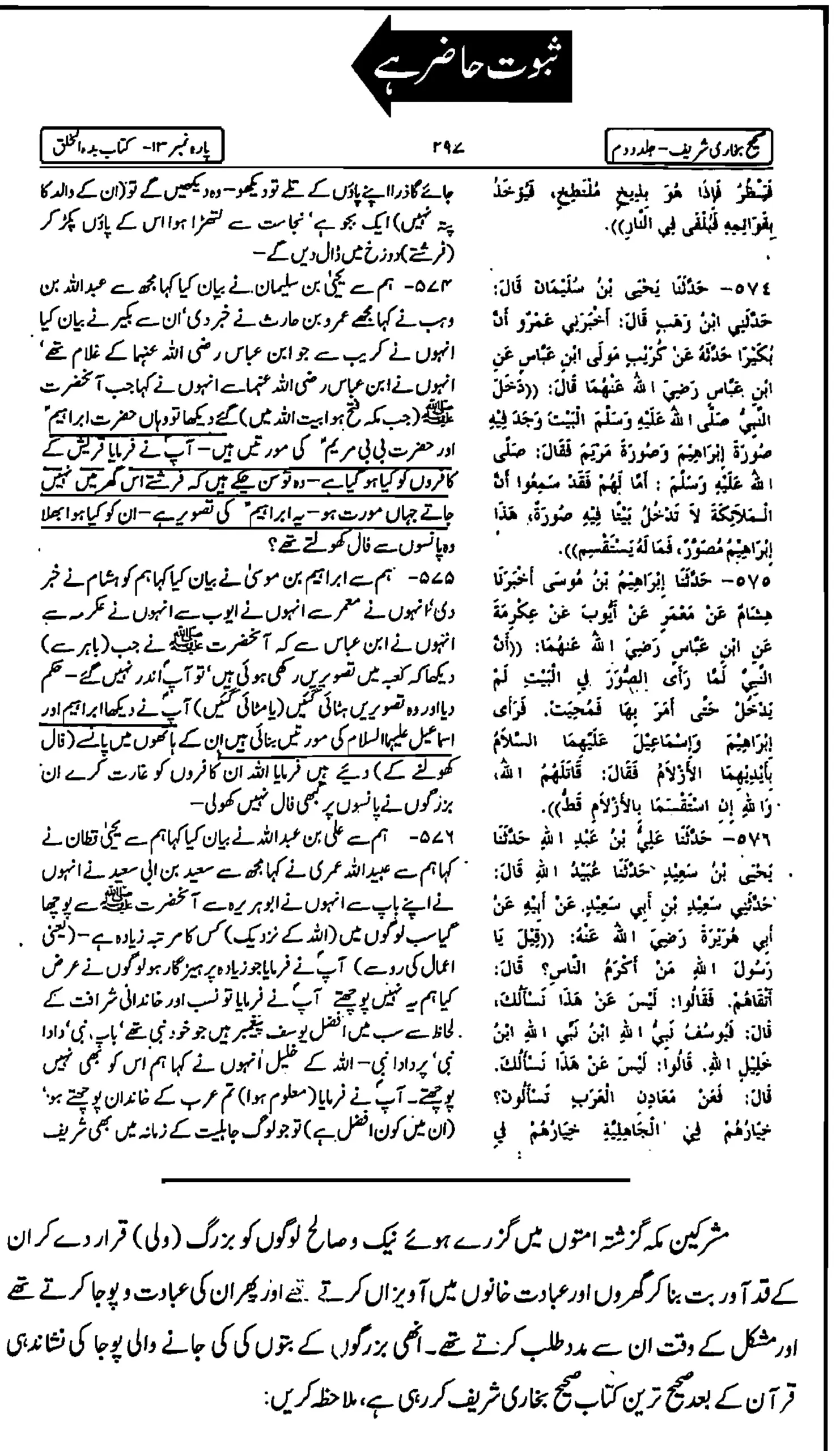
Additionally, it is also remembered that it is recorded in Sahih Bukhari that the people of Noah and the polytheists of Mecca worshipped idols of elders and prophets; these people were not so foolish as to make idols of stones and worship them, but they made idols of elders and prophets. And that in the Kaaba there were idols of Ibrahim (peace be upon him) and Ismail (peace be upon him).
Reference: Bukhari, Book of Hajj, Chapter: Who was honored in the surroundings of the Kaaba:4288,1601
And that in the Kaaba there were idols of Ibrahim (peace be upon him) and Lady Maryam.
Reference: Bukhari, Book of the Hadith of the Prophets, Chapter: The saying of Allah the Exalted and taking Ibrahim as... etc.:3351
And regarding the mention of Lat and Uzza, Sayyiduna Ibn Abbas رضي الله عنهما said that Lat was the name of a person who used to grind flour for the pilgrims.
Reference: Bukhari, Book of Tafsir (Surah An-Najm) Chapter: Have you seen Al-Lat and Al-Uzza:4859
And that ود، سواع، یغوث، یعوق، نصر، was a fortunate person of the people of Noah whose idols were worshipped.
Reference: Bukhari, Book of Tafsir, Chapter (Wadda Wala Suwa'an Wala Yaghuth Wa Ya'uq):4920