

Compiled by: Abu Hamzah Salafi
الحمد لله وحده، والصلوٰة والسلام على من لا نبي بعده۔
All praise is for Allah alone, and peace and blessings be upon the one after whom there is no Prophet.
Calling upon graves and considering them to be places where supplications are accepted is among the clear acts of shirk and innovations. Supplication itself is an act of worship, and worship is exclusively for Allah alone.
Allah Almighty says in the Qur’an:
﴿وَقَالَ رَبُّكُمُ ادْعُونِي أَسْتَجِبْ لَكُمْ إِنَّ الَّذِينَ يَسْتَكْبِرُونَ عَنْ عِبَادَتِي سَيَدْخُلُونَ جَهَنَّمَ دَاخِرِينَ﴾
Translation:
“And your Lord said: ‘Call upon Me; I will respond to you. Indeed, those who are too arrogant to worship Me will enter Hell humiliated.’”
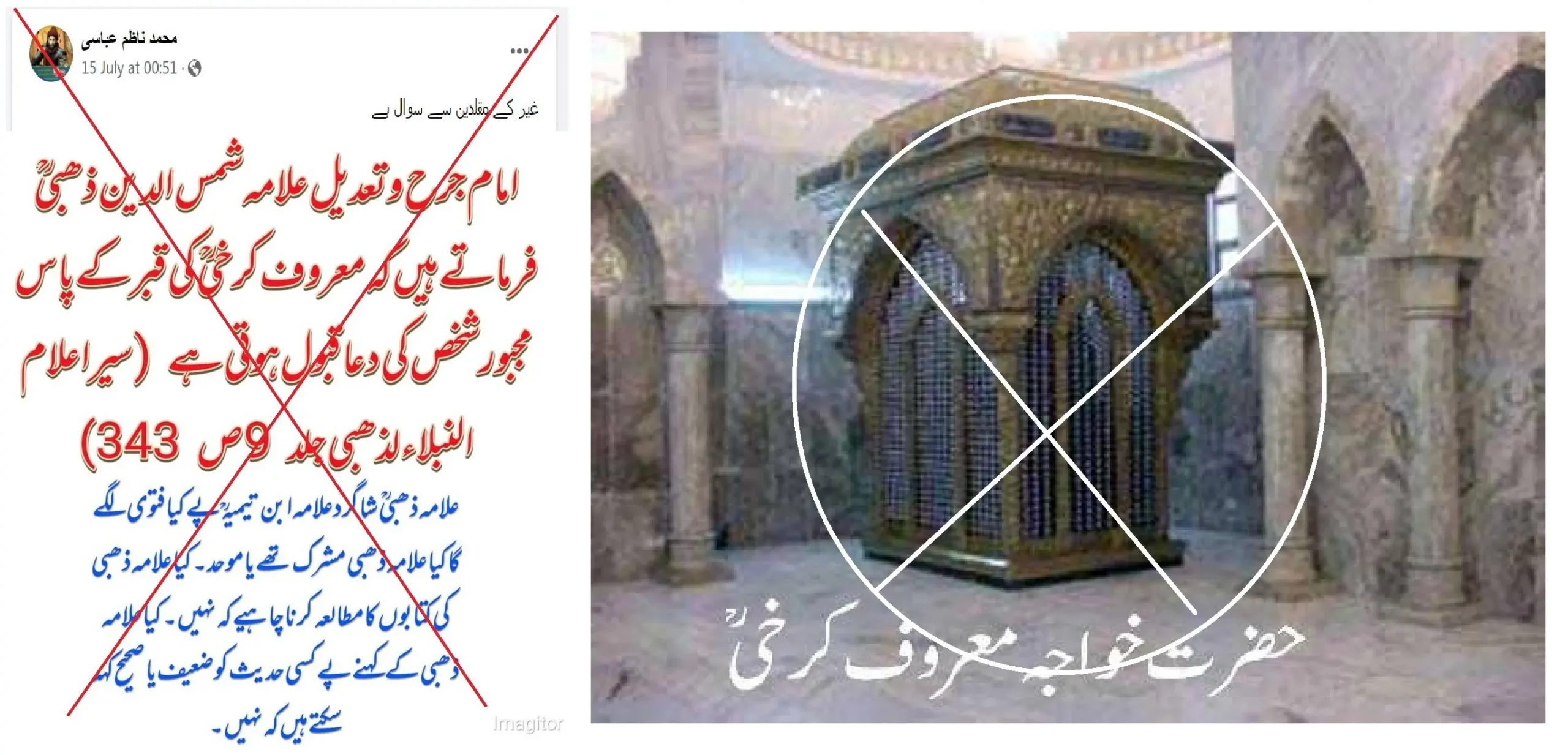
However, some grave-venerating Sufis claim regarding the grave of Ma‘ruf al-Karkhi that supplications are accepted there. This statement is attributed from Siyar A‘lam al-Nubala’ of Hafiz al-Dhahabi رحمه الله.
«وعن إبراهيم الحربي، قال: قبر معروف الترياق المجرب.»
— الذهبي، سير أعلام النبلاء (9/343)
Translation:
Ibrahim al-Harbi said: “The grave of Ma‘ruf is an experienced antidote.”
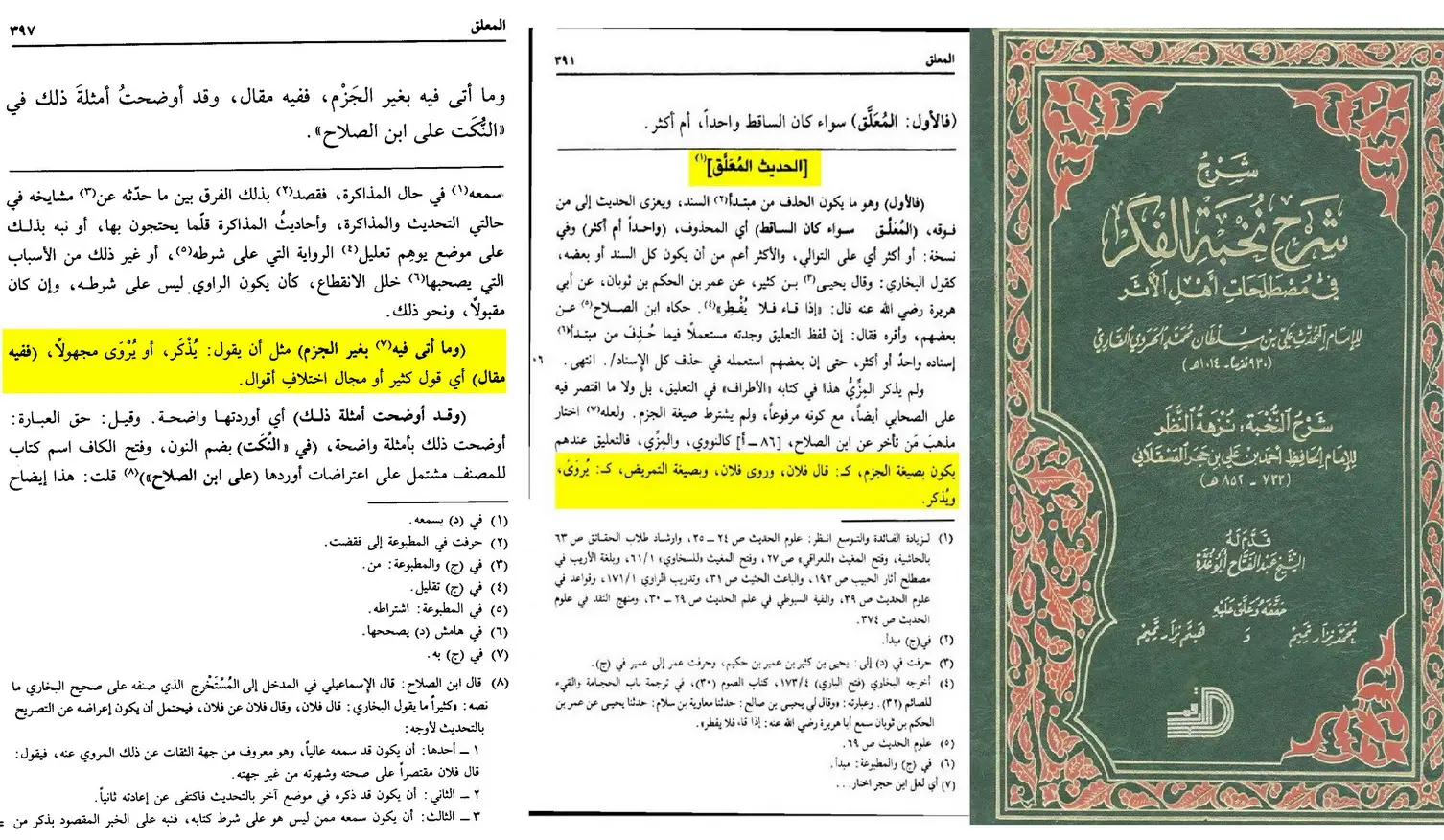
According to the principles of the science of Hadith terminology, when a report is mentioned with expressions such as: يُذكر (it is mentioned), يُروى (it is narrated), قيل (it is said), it indicates weakness.
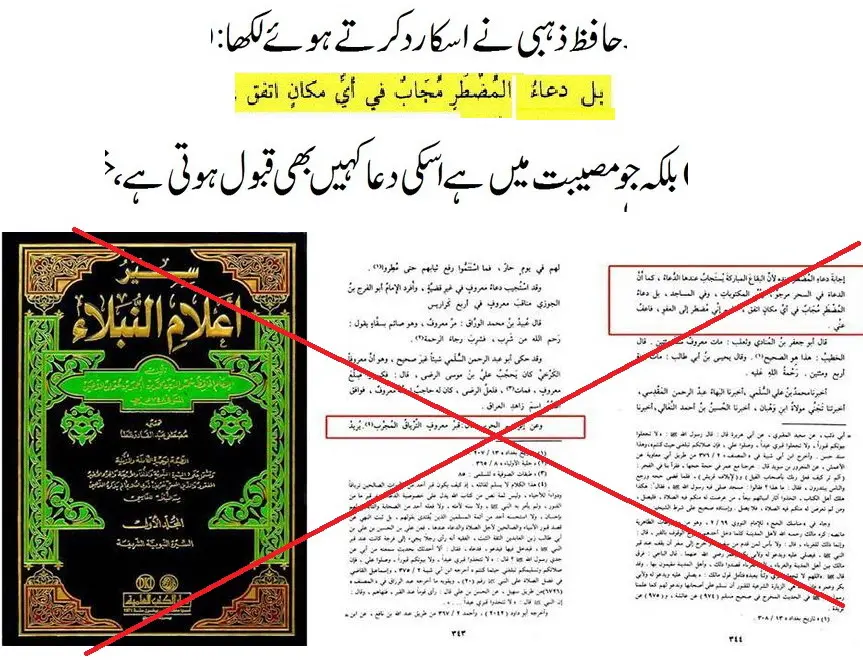
«بل دعاء المضطر مجاب في أي مكان اتفق.»
— الذهبي، سير أعلام النبلاء (9/344)
Translation:
“Rather, the supplication of the distressed person is answered wherever he may be.”
 This clearly shows that the acceptance of supplication is not dependent upon any grave. Rather, Allah answers the supplication of the distressed wherever he may be.
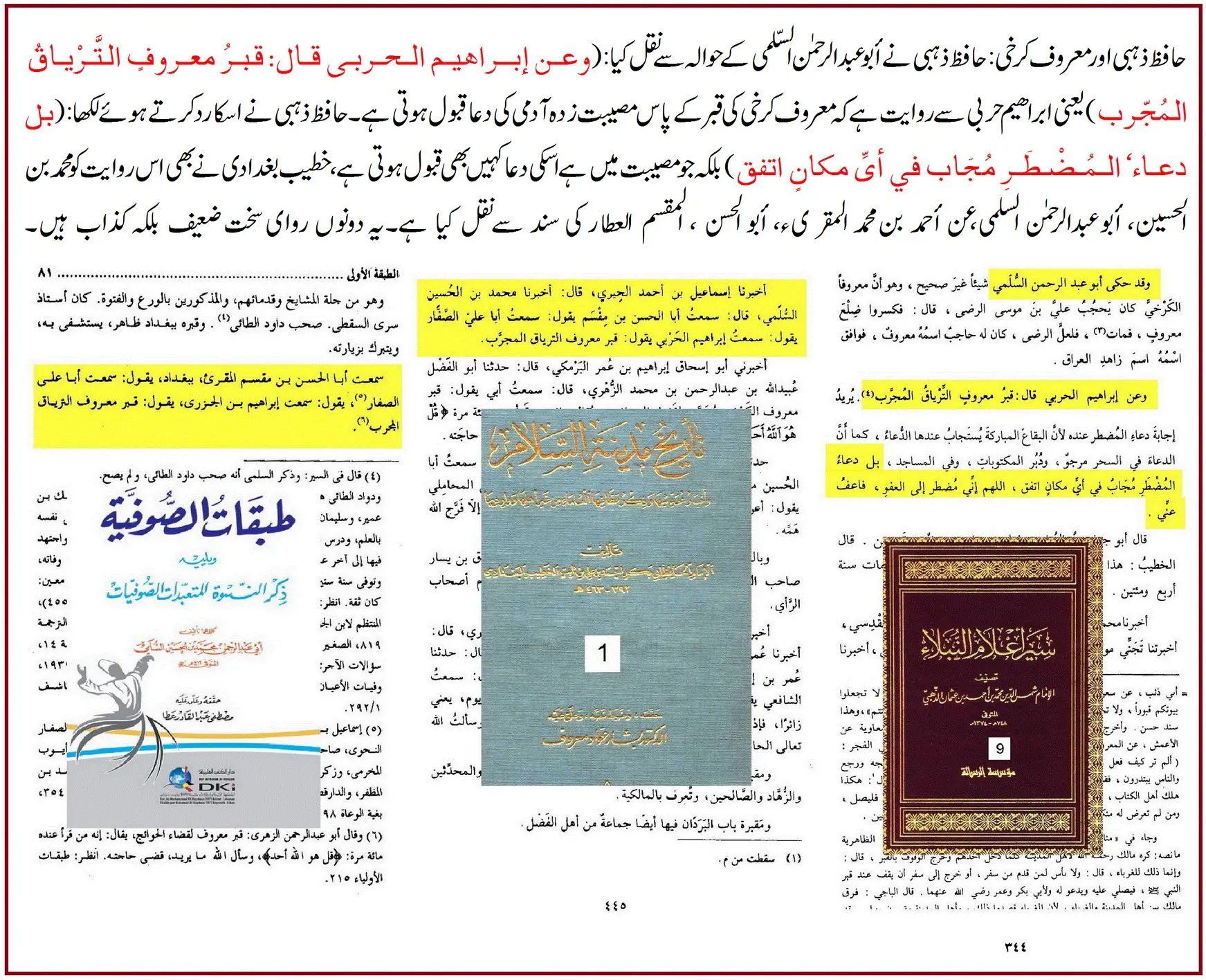
«أخبرنا إسماعيل بن أحمد الحيري، قال: أخبرنا محمد بن الحسين السلمي، قال: سمعت أبا الحسن بن مقسم، يقول: سمعت أبا علي الصفار، يقول: سمعت إبراهيم الحربي، يقول: قبر معروف الترياق المجرب.»
— الخطيب البغدادي، تاريخ بغداد (1/122)
Translation:
Isma‘il ibn Ahmad al-Hiri informed us, he said: Muhammad ibn al-Husayn al-Sulami informed us, he said: I heard Abu al-Hasan ibn Muqsim saying, I heard Abu ‘Ali al-Saffar saying, I heard Ibrahim al-Harbi saying: “The grave of Ma‘ruf is an experienced antidote.”
The central narrator in this chain is Muhammad ibn al-Husayn al-Sulami, who was infamous for fabricating narrations for the Sufis.
Translation:
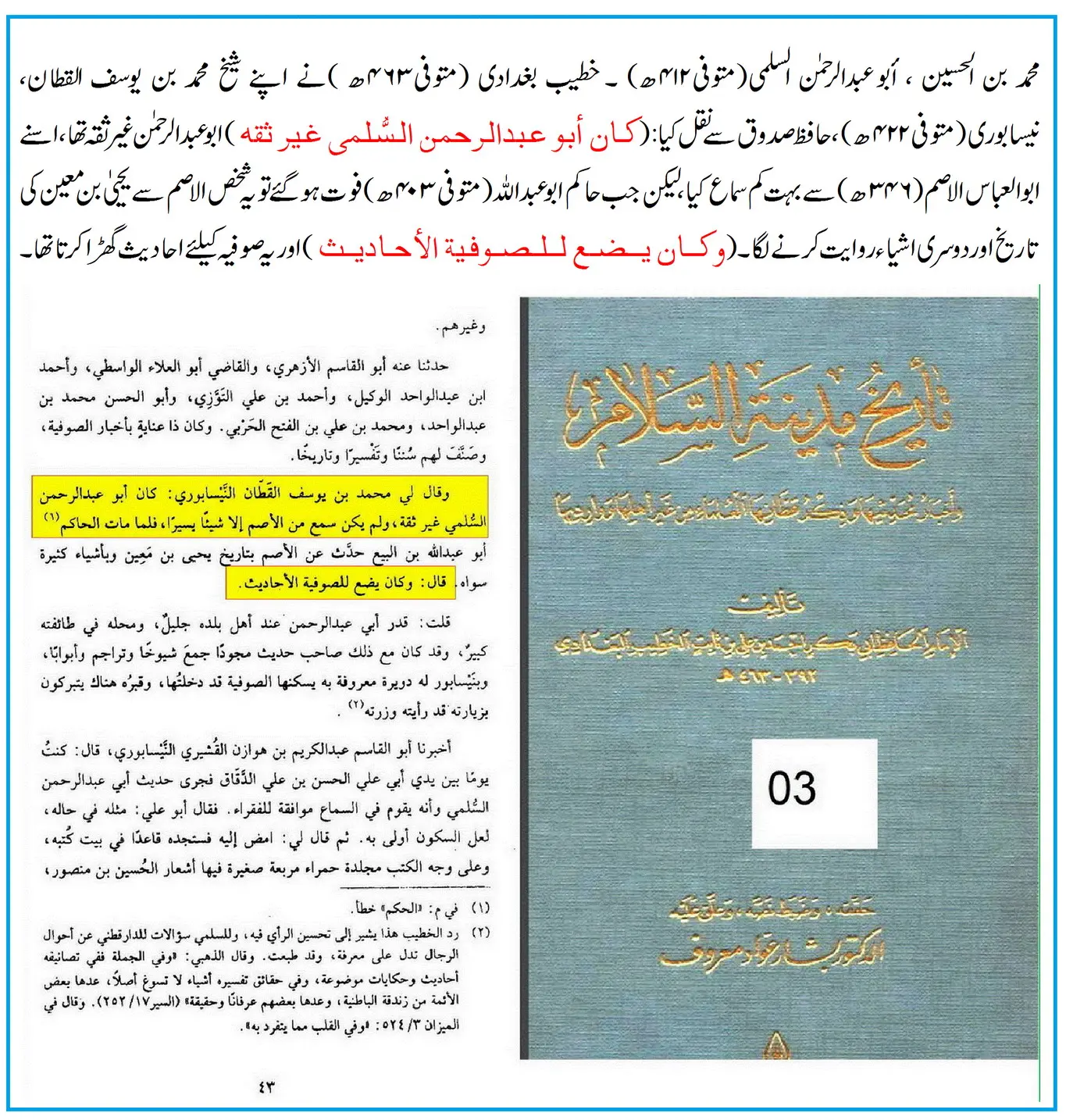
Abu ‘Abd al-Rahman al-Sulami was not trustworthy… and he used to fabricate hadiths for the Sufis.
Translation:
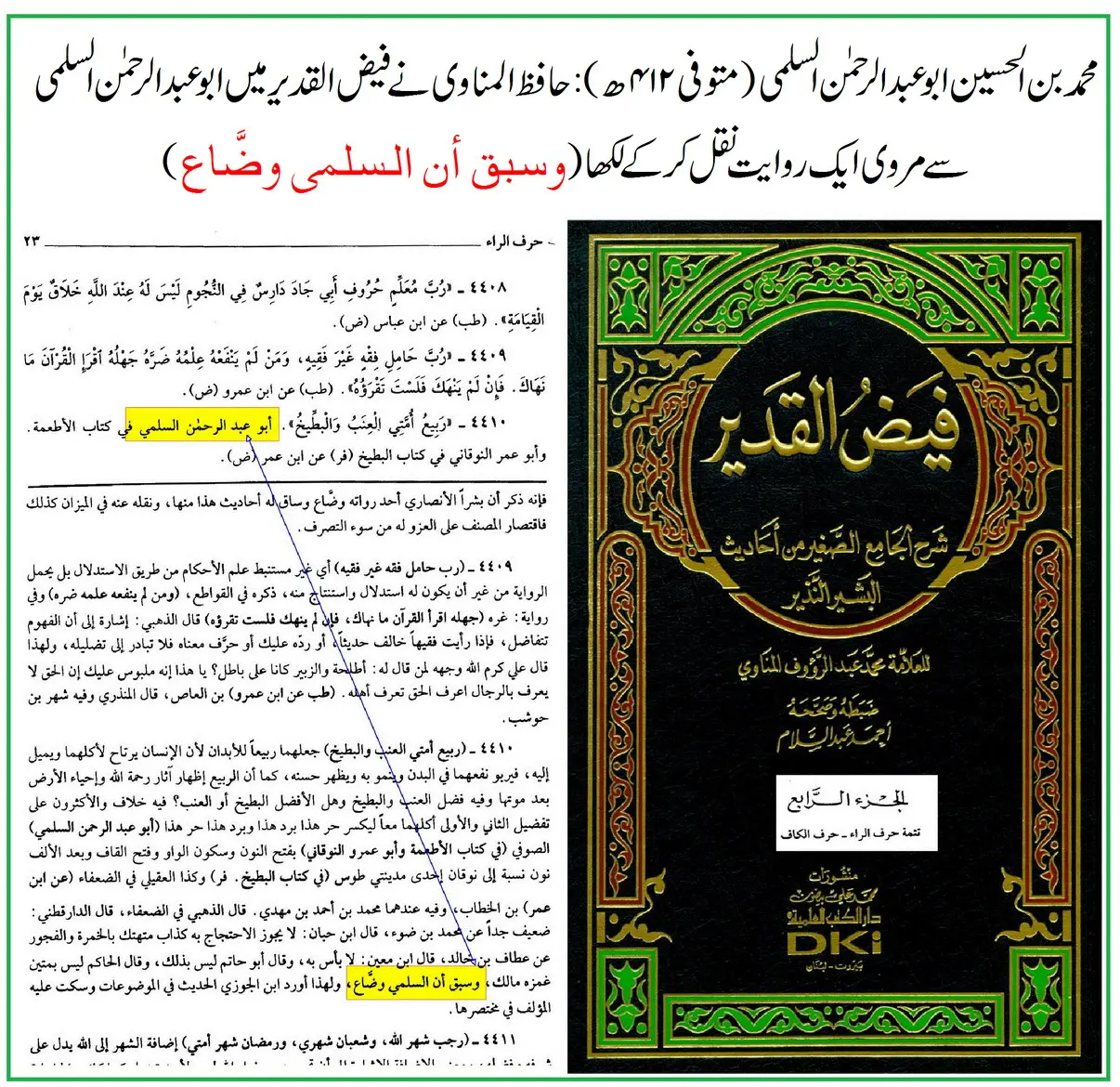
Al-Sulami was a fabricator.
Translation:
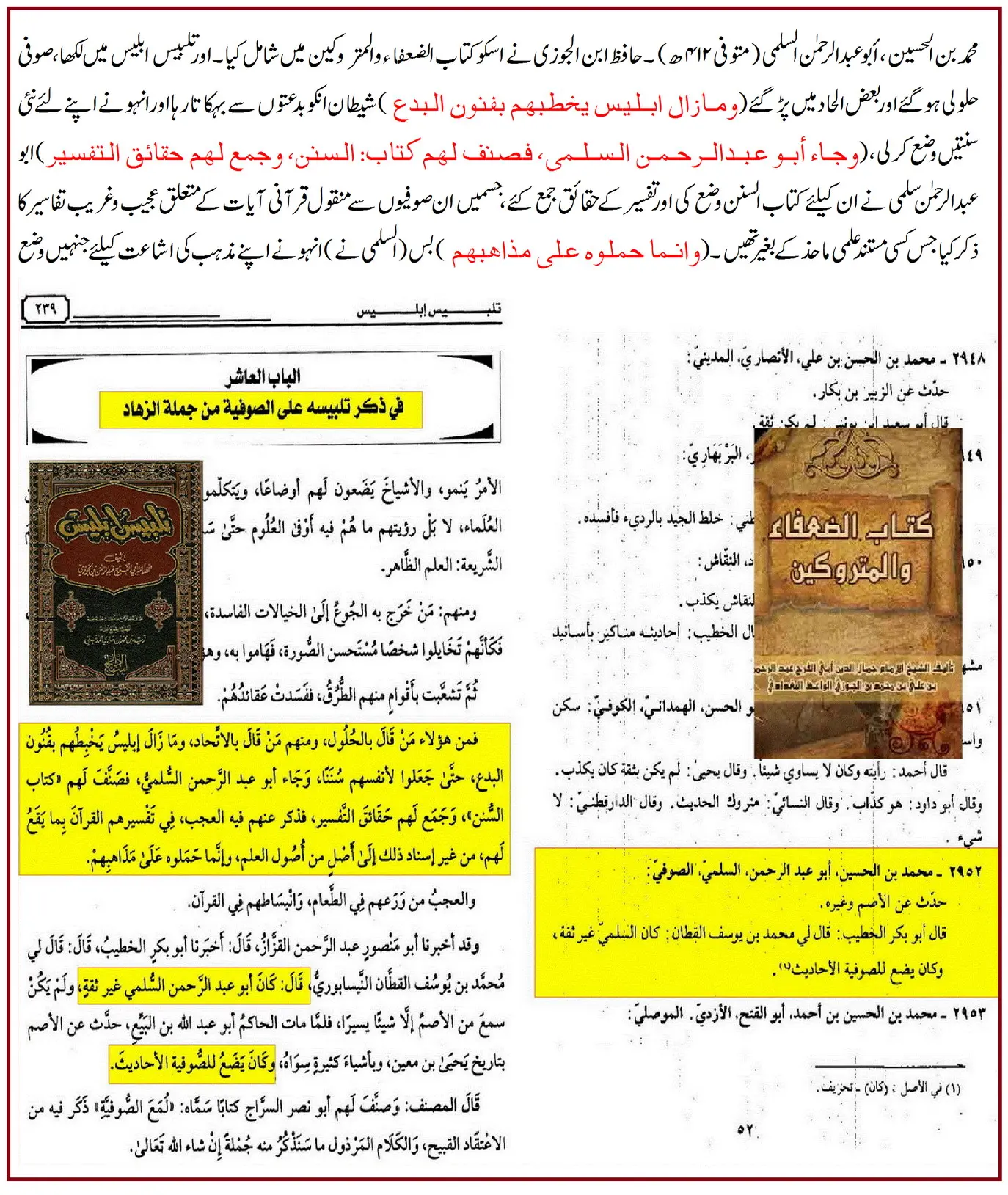
He mentioned astonishing matters in it without chains of transmission, merely in support of their doctrine.
Translation:
It contains fabricated narrations.
Translation:
If he believed that to be actual tafsir, then he committed disbelief.
«كان يضع للصوفية الأحاديث.»
Translation:
The scholars spoke against him; he is not reliable.
He used to fabricate hadiths for the Sufis.
Translation:
He was weak in hadith.
Translation:
He used to fabricate hadiths for the Sufis.
Translation:
Among those accused of lying is Abu ‘Abd al-Rahman al-Sulami.
Translation:
This narration is weak due to the weakness of al-Sulami.
✔ Al-Dhahabi mentioned it using an expression indicating weakness.
✔ He immediately refuted it by clarifying that the supplication of the distressed is accepted anywhere.
✔ The original chain in Tarikh Baghdad contains Abu ‘Abd al-Rahman al-Sulami.
✔ The scholars unanimously declared him weak, abandoned, and a fabricator.
✔ He used to fabricate narrations for the Sufis.
✔ His book Haqa’iq al-Tafsir contains baseless esoteric statements.
Therefore, the claim that supplications are accepted specifically at the grave of Ma‘ruf al-Karkhi is a fabricated report with no authentic or shar‘i basis.
The narration presented as proof for this practice is a fabrication of the lying Sufi narrator al-Sulami.
الحمد لله وحده، والصلوٰة والسلام على من لا نبي بعده۔
All praise is for Allah alone, and peace and blessings be upon the one after whom there is no Prophet.
Calling upon graves and considering them to be places where supplications are accepted is among the clear acts of shirk and innovations. Supplication itself is an act of worship, and worship is exclusively for Allah alone.
Allah Almighty says in the Qur’an:
﴿وَقَالَ رَبُّكُمُ ادْعُونِي أَسْتَجِبْ لَكُمْ إِنَّ الَّذِينَ يَسْتَكْبِرُونَ عَنْ عِبَادَتِي سَيَدْخُلُونَ جَهَنَّمَ دَاخِرِينَ﴾
Reference: Ghafir: 60
Translation:
“And your Lord said: ‘Call upon Me; I will respond to you. Indeed, those who are too arrogant to worship Me will enter Hell humiliated.’”
However, some grave-venerating Sufis claim regarding the grave of Ma‘ruf al-Karkhi that supplications are accepted there. This statement is attributed from Siyar A‘lam al-Nubala’ of Hafiz al-Dhahabi رحمه الله.
❖ The Reality of This Statement
They quote the following wording:«وعن إبراهيم الحربي، قال: قبر معروف الترياق المجرب.»
— الذهبي، سير أعلام النبلاء (9/343)
Translation:
Ibrahim al-Harbi said: “The grave of Ma‘ruf is an experienced antidote.”
① Response: صيغة تمريض (Expression of Weak Attribution)
Hafiz al-Dhahabi رحمه الله نقل this statement in a suspended form using an expression indicating weakness (ṣīghat tamrīḍ), which implies that the report is not established and is weak.According to the principles of the science of Hadith terminology, when a report is mentioned with expressions such as: يُذكر (it is mentioned), يُروى (it is narrated), قيل (it is said), it indicates weakness.
Reference: Sharḥ Nukhbat al-Fikar li al-Qari, p. 86
② Response: Al-Dhahabi’s Own Refutation
Immediately after mentioning this statement, Hafiz al-Dhahabi clarified and refuted this superstition, writing:«بل دعاء المضطر مجاب في أي مكان اتفق.»
— الذهبي، سير أعلام النبلاء (9/344)
Translation:
“Rather, the supplication of the distressed person is answered wherever he may be.”
This clearly shows that the acceptance of supplication is not dependent upon any grave. Rather, Allah answers the supplication of the distressed wherever he may be.③ The Original Source and Chain of Transmission
Al-Dhahabi quoted this report from Tarikh Baghdad, whose chain is as follows:«أخبرنا إسماعيل بن أحمد الحيري، قال: أخبرنا محمد بن الحسين السلمي، قال: سمعت أبا الحسن بن مقسم، يقول: سمعت أبا علي الصفار، يقول: سمعت إبراهيم الحربي، يقول: قبر معروف الترياق المجرب.»
— الخطيب البغدادي، تاريخ بغداد (1/122)
Translation:
Isma‘il ibn Ahmad al-Hiri informed us, he said: Muhammad ibn al-Husayn al-Sulami informed us, he said: I heard Abu al-Hasan ibn Muqsim saying, I heard Abu ‘Ali al-Saffar saying, I heard Ibrahim al-Harbi saying: “The grave of Ma‘ruf is an experienced antidote.”
The central narrator in this chain is Muhammad ibn al-Husayn al-Sulami, who was infamous for fabricating narrations for the Sufis.Jarḥ Upon the Central Narrator: Abu ‘Abd al-Rahman al-Sulami
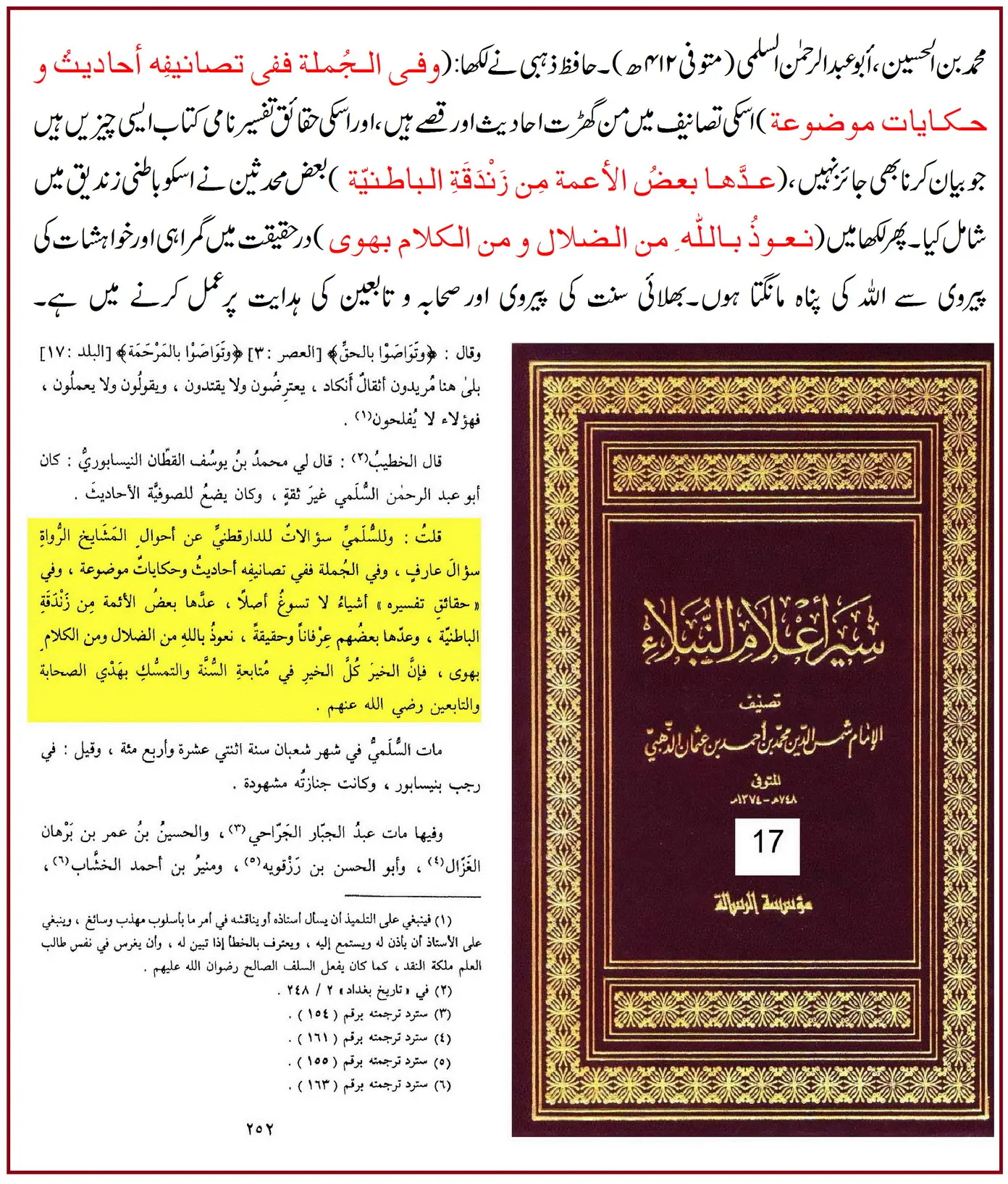
The central narrator of this report is Muhammad ibn al-Husayn ibn Musa al-Naysaburi, Abu ‘Abd al-Rahman al-Sulami, who was known for fabricating narrations for the Sufis. The scholars of Hadith strongly criticized him.① Al-Khatib al-Baghdadi (463 AH)
«كان أبو عبد الرحمن السلمي غير ثقة… وكان يضع للصوفية الأحاديث.»
Reference: Tarikh Baghdad 3/99
Translation:
Abu ‘Abd al-Rahman al-Sulami was not trustworthy… and he used to fabricate hadiths for the Sufis.
② Hafiz al-Manawi (1031 AH)
«… والسلمي وضاع.»
Reference: Fayd al-Qadir 4/410
Translation:
Al-Sulami was a fabricator.
③ Imam Ibn al-Jawzi (597 AH)
«… فذكر فيه العجب… بلا إسناد، وإنما حمله على مذهبهم.»
Reference: Talbis Iblis, p. 205
Translation:
He mentioned astonishing matters in it without chains of transmission, merely in support of their doctrine.
④ Ibn al-‘Ajmi (841 AH)
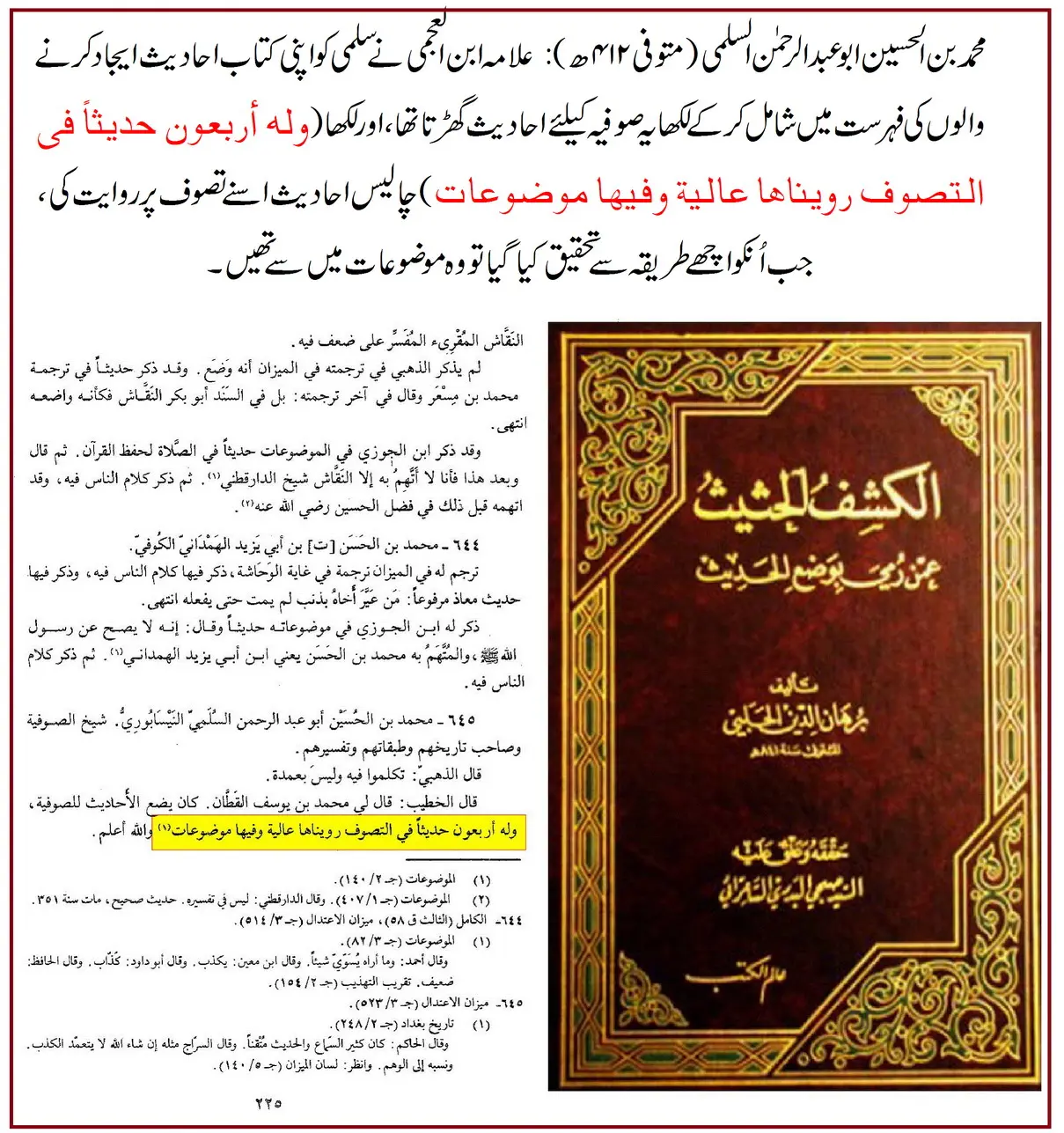
«… فيها موضوعات.»
Reference: Al-Kashf al-Hathith, p. 645
Translation:
It contains fabricated narrations.
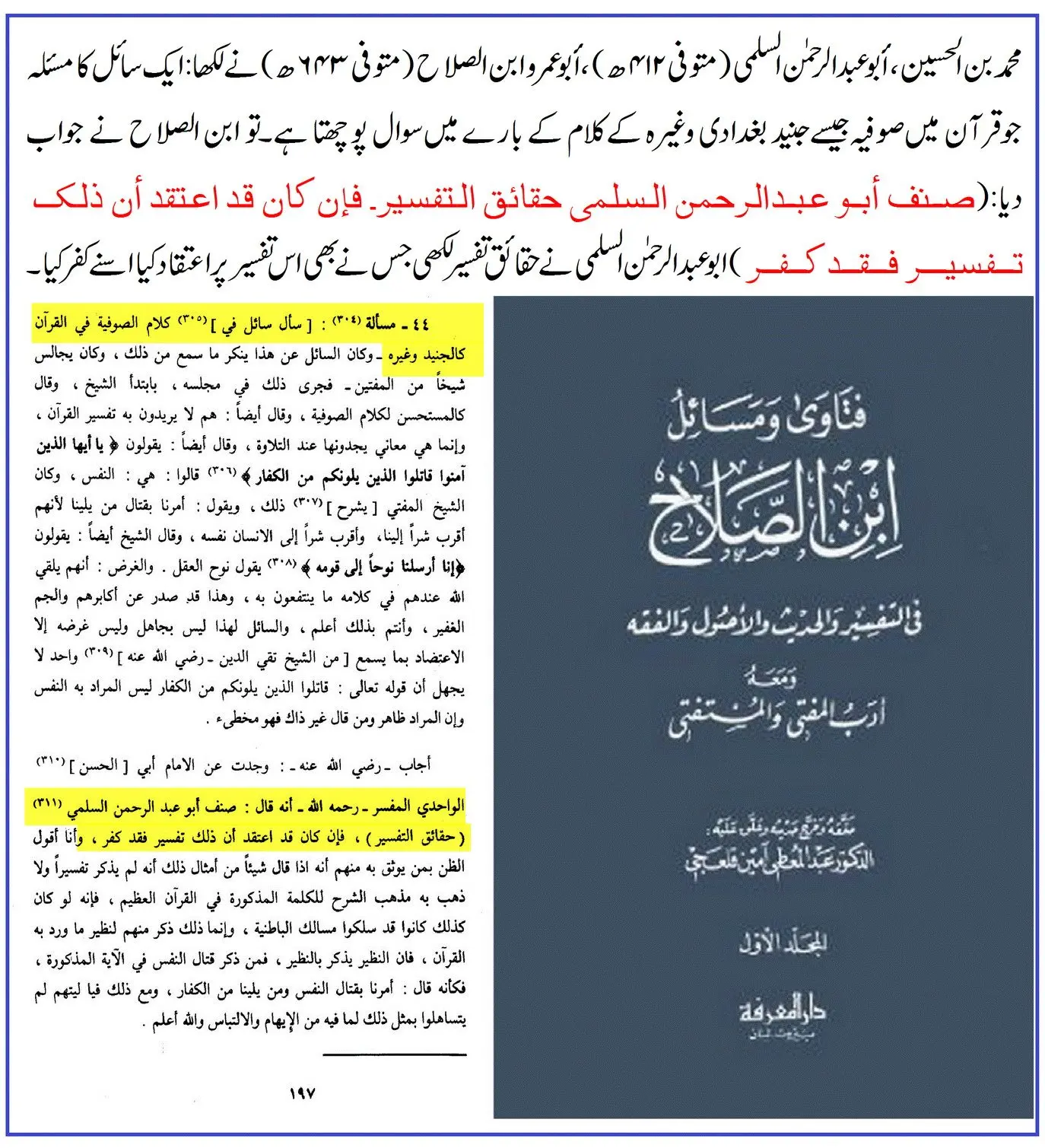
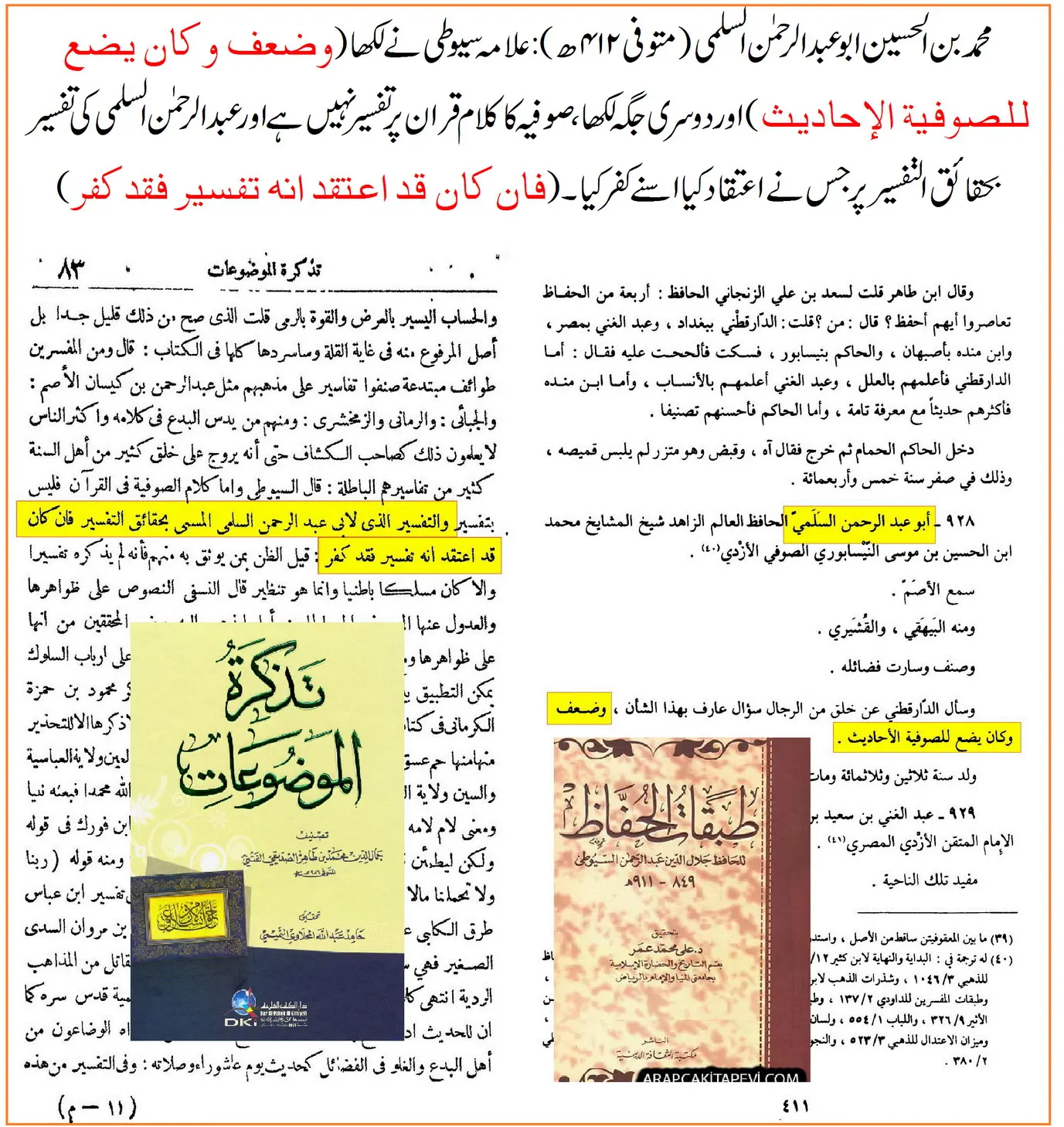
⑤ Imam Ibn al-Salah (643 AH)
«… فإن كان قد اعتقد أن ذلك تفسير فقد كفر.»
Reference: Fatawa Ibn al-Salah, Issue 44
Translation:
If he believed that to be actual tafsir, then he committed disbelief.
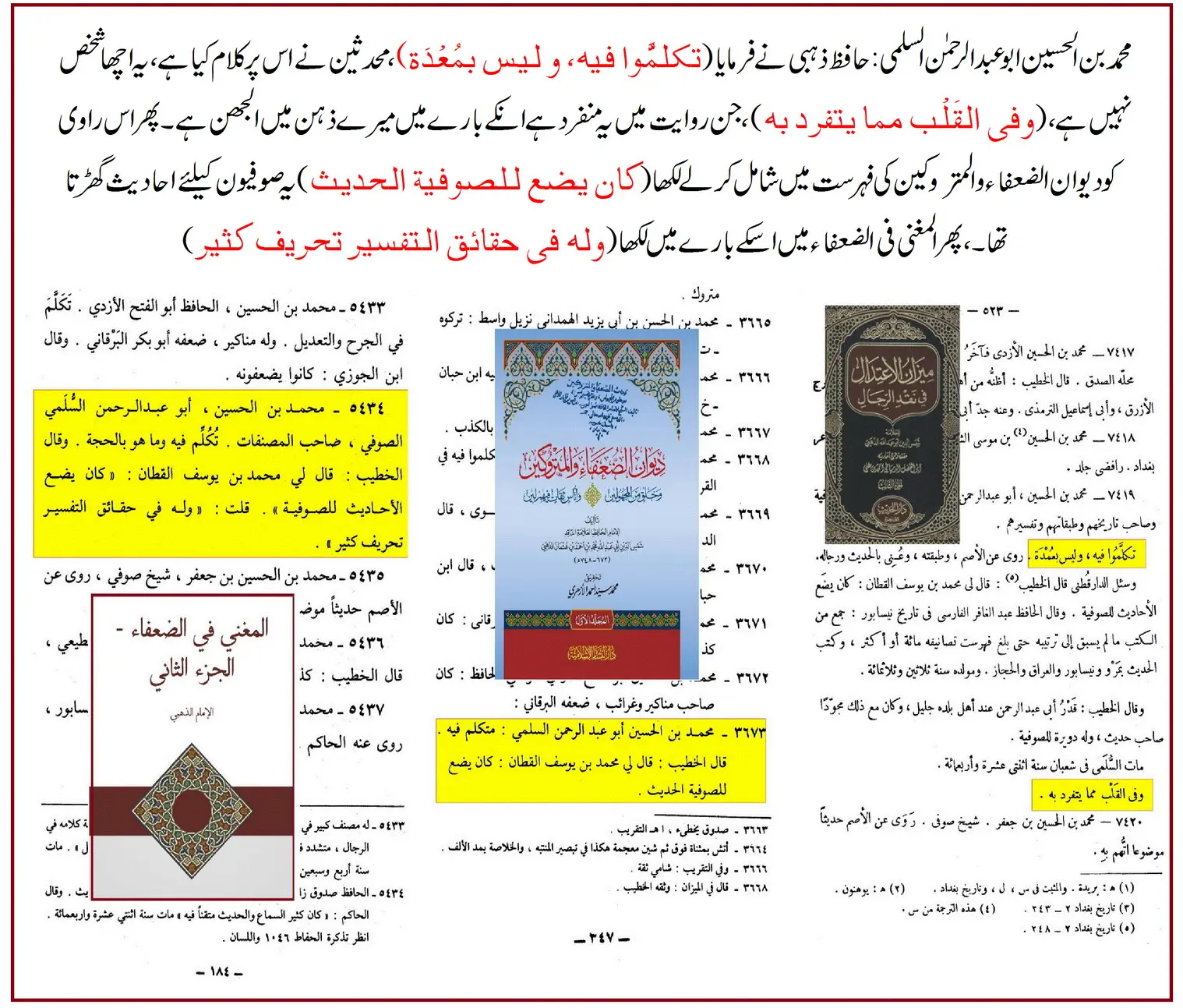
⑥ Hafiz al-Dhahabi (748 AH)
«تكلموا فيه، وليس بعمدة.»
Reference: Mizan al-I‘tidal 4/109, no. 7419
«كان يضع للصوفية الأحاديث.»
Reference: Diwan al-Du‘afa’, no. 3673
Translation:
The scholars spoke against him; he is not reliable.
He used to fabricate hadiths for the Sufis.
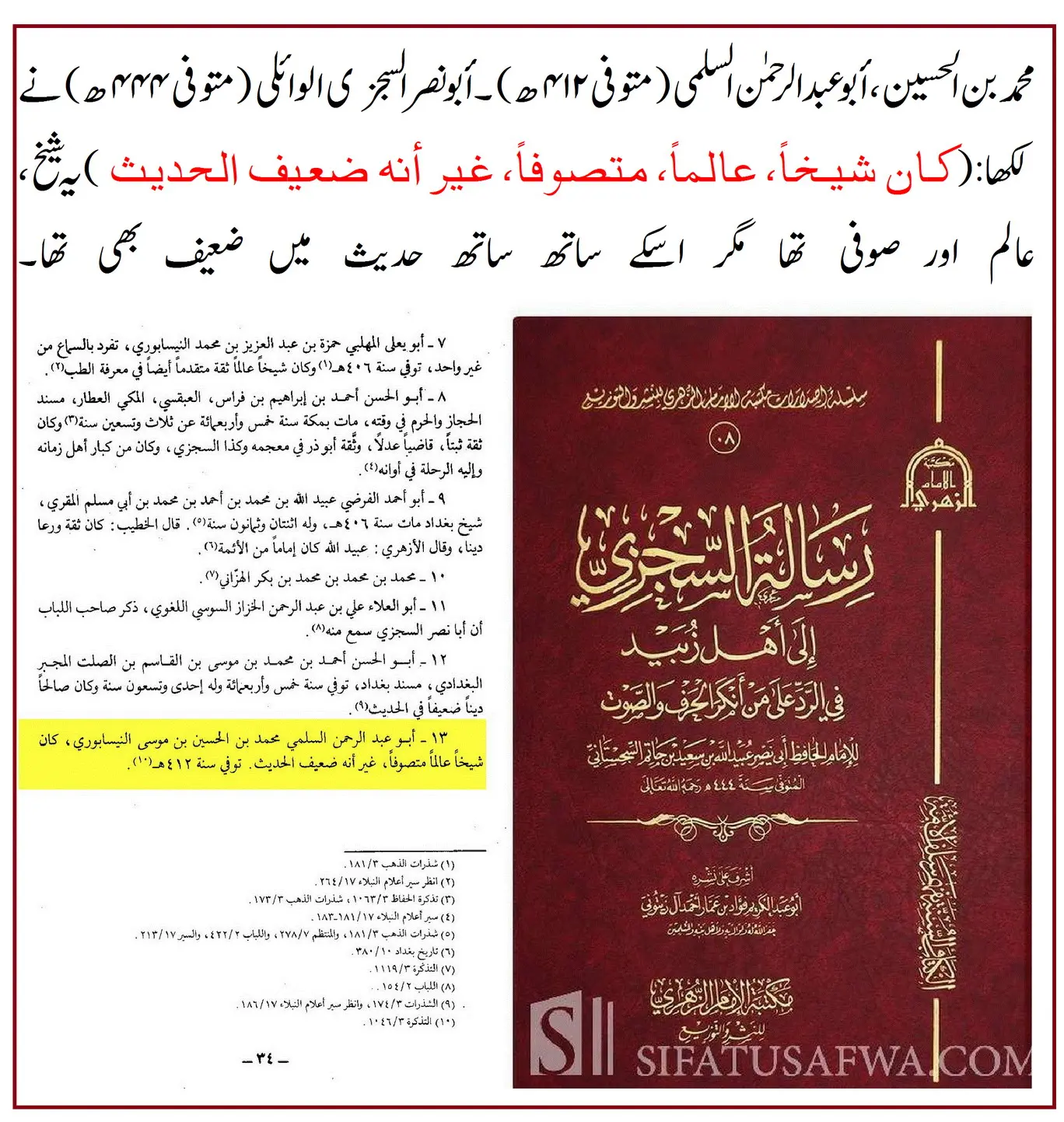
⑦ Abu Nasr al-Wa’ili al-Bakri (444 AH)
«… غير أنه ضعيف الحديث.»
Reference: Risalat al-Sijzi, p. 13
Translation:
He was weak in hadith.
⑧ Imam al-Suyuti (911 AH)
«وكان يضع للصوفية الأحاديث.»
Reference: Tabaqat al-Huffaz, p. 928
Translation:
He used to fabricate hadiths for the Sufis.
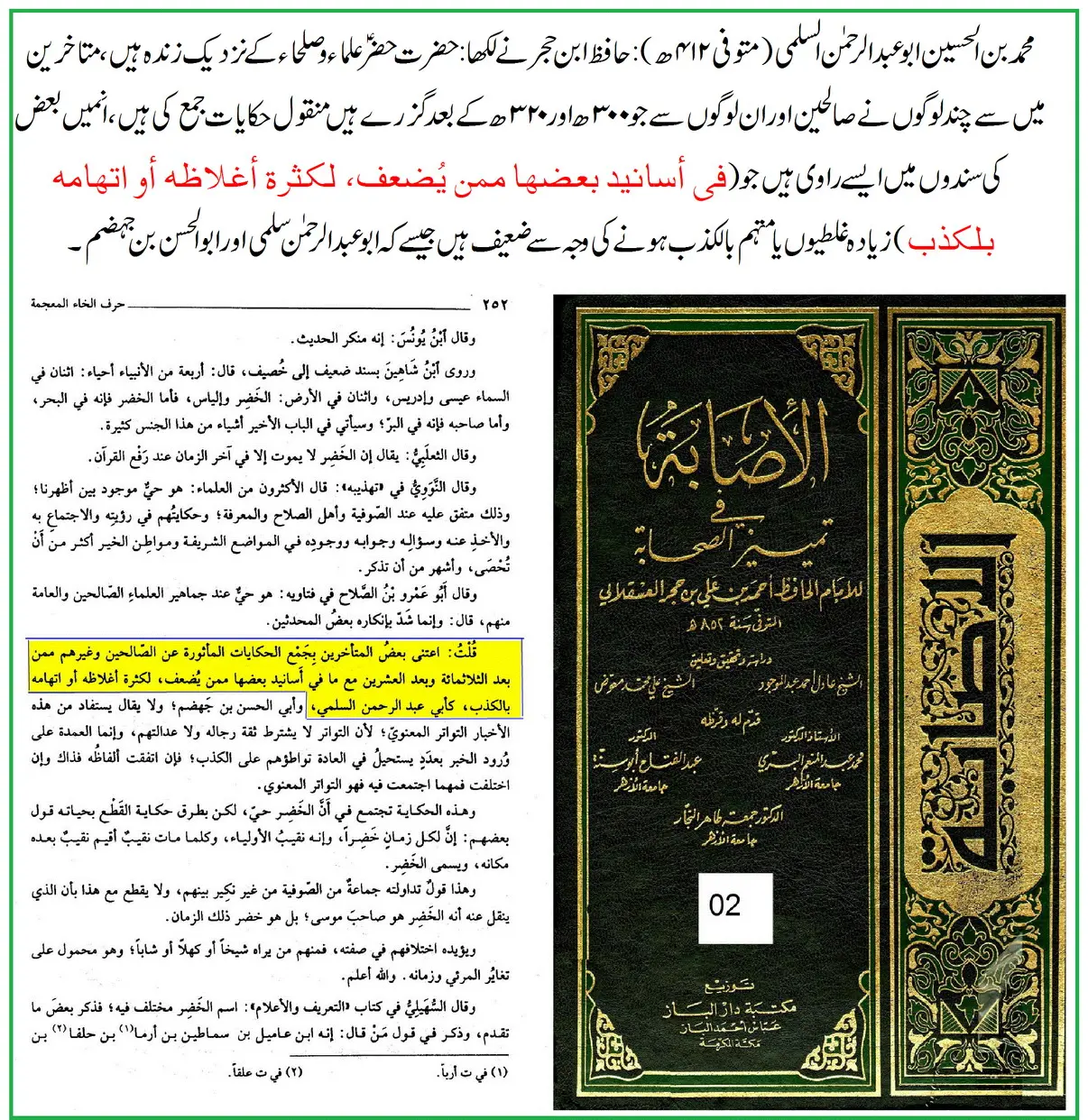
⑨ Hafiz Ibn Hajar al-‘Asqalani (852 AH)
«… ممن يُتهم بالكذب، كأبي عبد الرحمن السلمي…»
Reference: Al-Isabah 1/15
Translation:
Among those accused of lying is Abu ‘Abd al-Rahman al-Sulami.
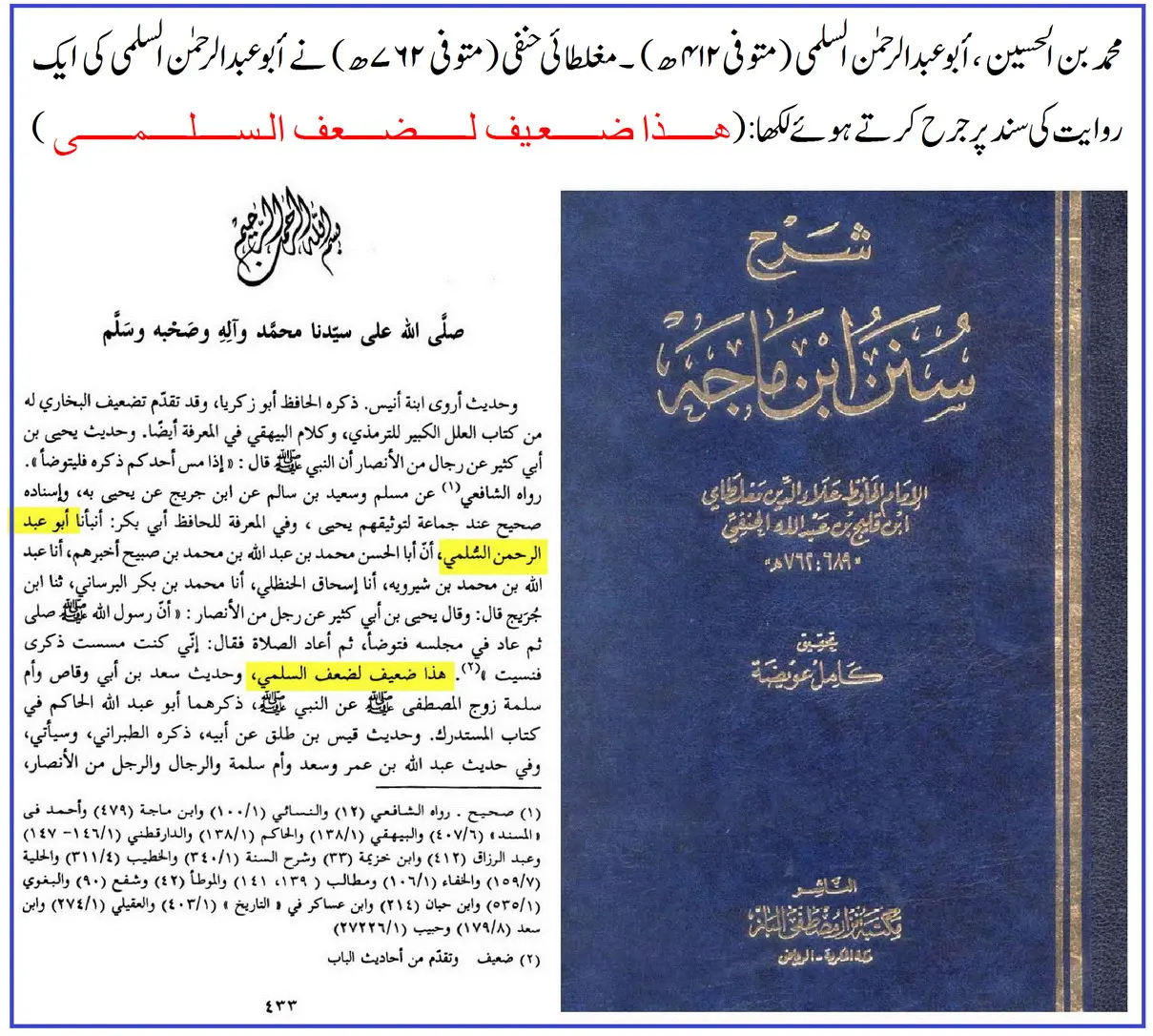
⑩ Mughaltay al-Hanafi (762 AH)
«هذا ضعيف لضعف السلمي.»
Reference: Sharh Sunan Ibn Majah 1/233
Translation:
This narration is weak due to the weakness of al-Sulami.
◈ Summary and Conclusion
The grave-venerating individuals rely upon a quoted statement in Siyar A‘lam al-Nubala’ of Hafiz al-Dhahabi regarding the grave of Ma‘ruf al-Karkhi.✔ Al-Dhahabi mentioned it using an expression indicating weakness.
✔ He immediately refuted it by clarifying that the supplication of the distressed is accepted anywhere.
✔ The original chain in Tarikh Baghdad contains Abu ‘Abd al-Rahman al-Sulami.
✔ The scholars unanimously declared him weak, abandoned, and a fabricator.
✔ He used to fabricate narrations for the Sufis.
✔ His book Haqa’iq al-Tafsir contains baseless esoteric statements.
Therefore, the claim that supplications are accepted specifically at the grave of Ma‘ruf al-Karkhi is a fabricated report with no authentic or shar‘i basis.
✿ Central Point
Making graves a means of worship by supplicating at them is a clear innovation and shirk.The narration presented as proof for this practice is a fabrication of the lying Sufi narrator al-Sulami.
Last edited:

