Fazail-e-Amaal

Can you please give me a brief history of Zakariyya Kandhlawi & also I heard that his book Fadhaail Amal has a lot of faults such as Sufi ideologies, Da'if, Mawdu hadiths & even shirk.
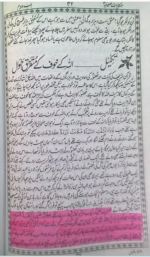
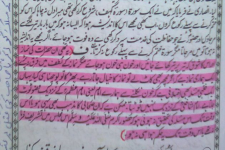
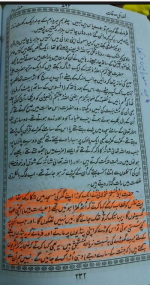
Can you please make a list of examples of this with references & if you can provide pictures of it from the book as well would be really beneficial
بارك الله فيكم
 
Can you please give me a brief history of Zakariyya Kandhlawi & also I heard that his book Fadhaail Amal has a lot of faults such as Sufi ideologies, Da'if, Mawdu hadiths & even shirk.
Can you please make a list of examples of this with references & if you can provide pictures of it from the book as well would be really beneficial
بارك الله فيكم

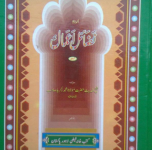
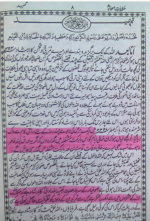
Muhammad Zakariyya Kandhlawi (1898–1982) was a Deobandi scholar from Saharanpur, India. He belonged to the Deobandi school, a branch of the Hanafi–Maturidi tradition that incorporates strong elements of Sufi practices.


Important points:


• He was initiated in Chishti Sufi tariqah, and his writings heavily promote Sufi concepts such as kashf, dreams, miracles of saints, and spiritual hierarchies.
• He became a major spiritual authority for the Tablighi Jamaat.
• His book Fadhaail A’maal became the central textbook for Tablighi Jamaat gatherings, read worldwide in their circles.
• Many Salafi scholars have critiqued him for filling the book with weak, fabricated, and Sufi-oriented stories that contradict Tawheed.

Why Salafi Scholars Criticize​

The criticisms fall into four major categories:​

  1. Fabricated and extremely weak narrations
  2. Stories promoting Sufi saints as having supernatural powers
  3. Shirk-like concepts, such as seeking help from saints or the Prophet صلى الله عليه وسلم in ways only Allah can help
  4. Disrespect and exaggeration regarding Prophets and Sahabah
  5. Teaching false virtues (people praying 1000 raka’ah a day, reciting 8 Qurans daily, etc.)

Below are selected examples with page references.​

Fadhaail A’maal, Virtues of Salah, Part 3, p. 360

A story claims:​


A Sayyid remained on one wudu for twelve days, never lay down for fifteen years, and sometimes went days without tasting food.

This is an extreme exaggeration, unsupported by authentic Islamic sources. Islam never promoted “world record” worship.​

P. 374, Virtues of Salah

It narrates:​


The Prophet صلى الله عليه وسلم tied himself with a rope at night so he would not fall asleep.

This is false and contradicts the authentic Sunnah that the Prophet صلى الله عليه وسلم slept, prayed, and said:​


“Your body has a right over you.”

Reference: Sahih al Bukhari: 1874

To claim he feared falling from sleep due to weakness is a type of disrespect.​

Virtues of Qur’an, p. 254

It states:​


Ibn al Katib used to read eight complete Qurans daily.

This is physically impossible unless done mechanically without understanding, and has no authentic basis.​

P. 378

Claims that Zain al Abideen prayed 1000 raka’ah every single day.​

This contradicts authentic Sunnah and turns worship into exaggeration.​

Virtues of Charity, part 2, p. 588

Story of a saint praying:​


1000 raka’ah standing

1000 raka’ah sitting when his legs become weak.

This is impossible and has no basis in Quran or Sunnah.​

P. 437, Virtues of Dhikr

A dream where Shaytan appears naked, and Sufis tell Junayd:​


“Do not be deceived by the words of the wicked one.”

This story implies these Sufis knew the unseen, contradicting the Quran:​


“None knows the unseen except Allah.”

Reference: Quran 27:65

P. 361

A man sees the deceased praying inside the grave after burial.​

This contradicts authentic Islamic teachings that the dead cannot perform actions.​

P. 356

A Sufi sees a beautiful girl in a dream and then worships 40 years for her.​

This is immoral storytelling and contradicts sincerity in worship.​

P. 386

A saint prays from Zuhr to Fajr without stopping.​

Impossible and contradictory to the Sunnah balance in worship.​

P. 497

The narration says:​


Adam عليه السلام asked Allah for forgiveness by the wasilah of Muhammad صلى الله عليه وسلم.

Scholars have declared this fabricated (موضوع).​

Yet the book still uses it, normalising shirk-like concepts.​

A Sufi style story claiming Abu Hanifah could see sins physically falling off.​

This is kashf and unseen knowledge, not Islamic.​

He questions how Hasan and Husayn could narrate hadith at 6 or 7 years old, yet claims his own father had huge memorisation by that age.​

This double standard is unacceptable.​

A “saint” says:​


We will compete with the Sahabah for levels of Jannah.

This is major disrespect.​

and many such things in his books.​

 
Back
Top