
❖ Compiled by: Abu Hamzah Salafi
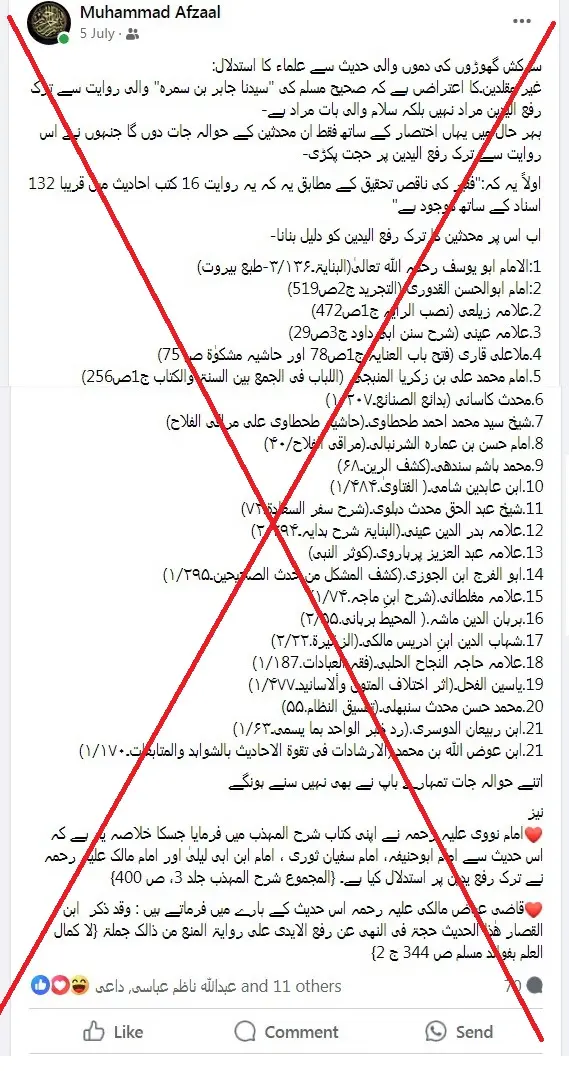
Rafʿ al-Yadayn before and after rukūʿ is a great Sunnah of the Prophet ﷺ. This practice is supported by dozens of authentic narrations found in Ṣaḥīḥ al-Bukhārī, Ṣaḥīḥ Muslim, and other authentic ḥadīth collections, and it was consistently practiced by the Companions.
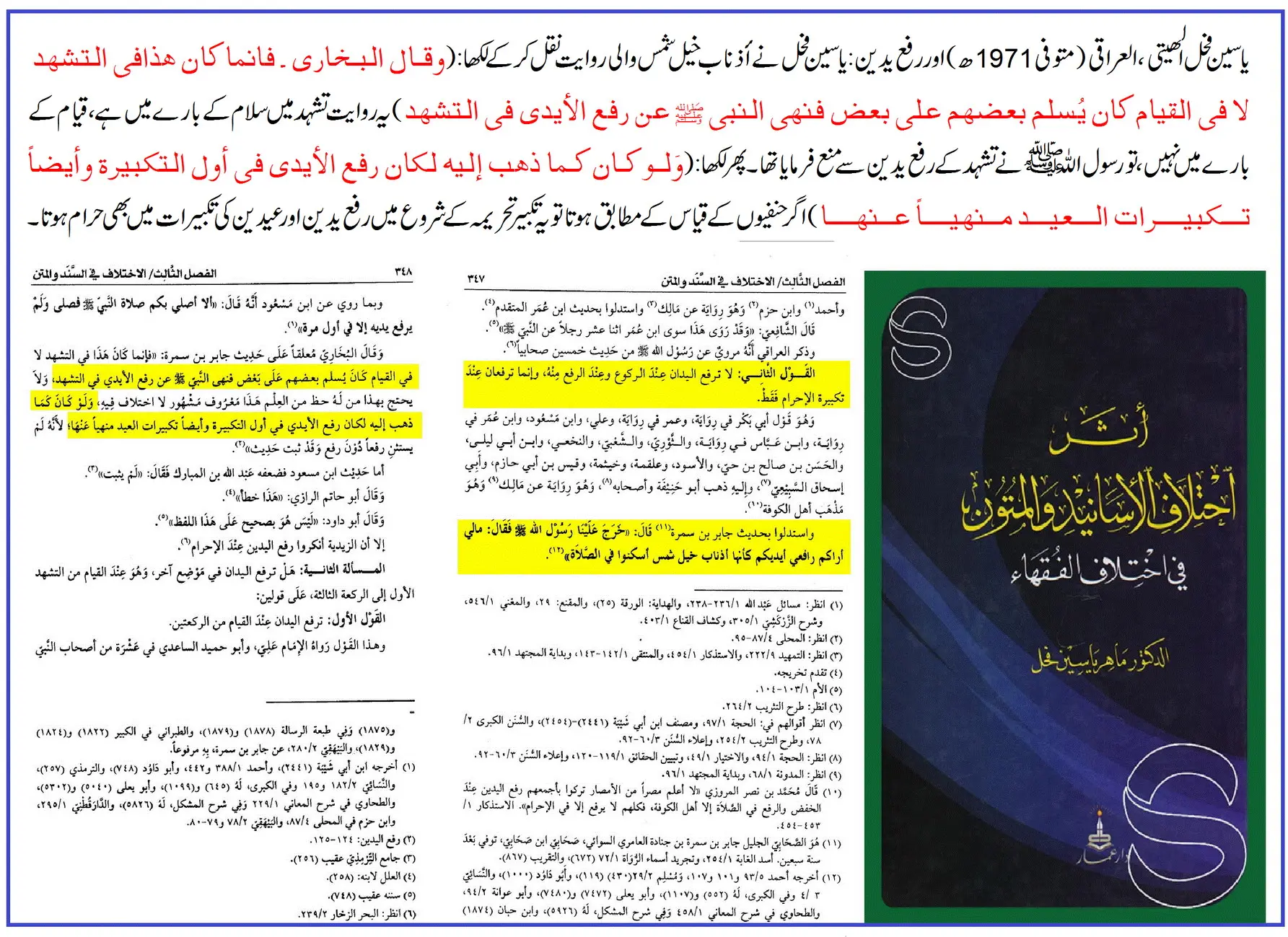
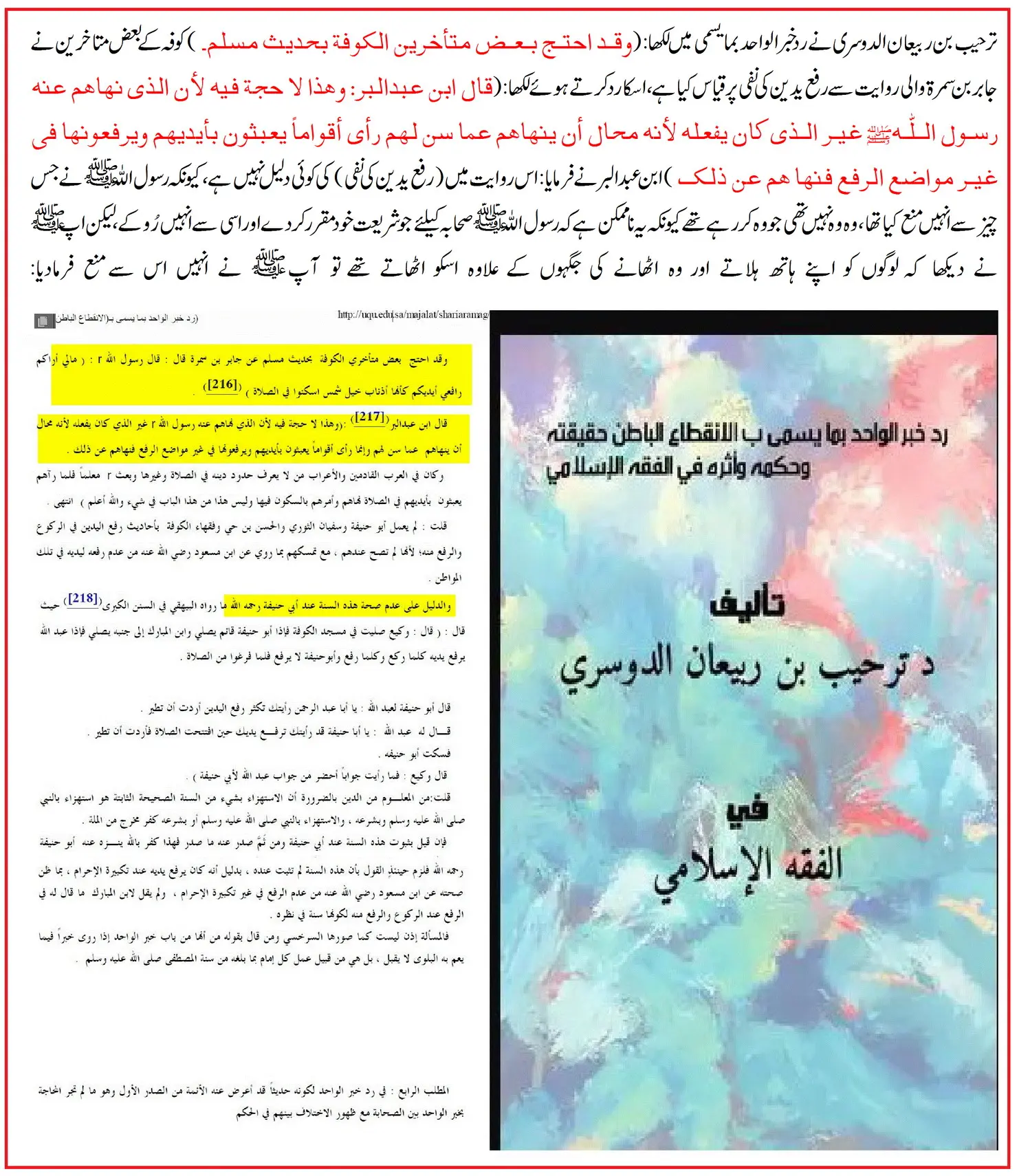
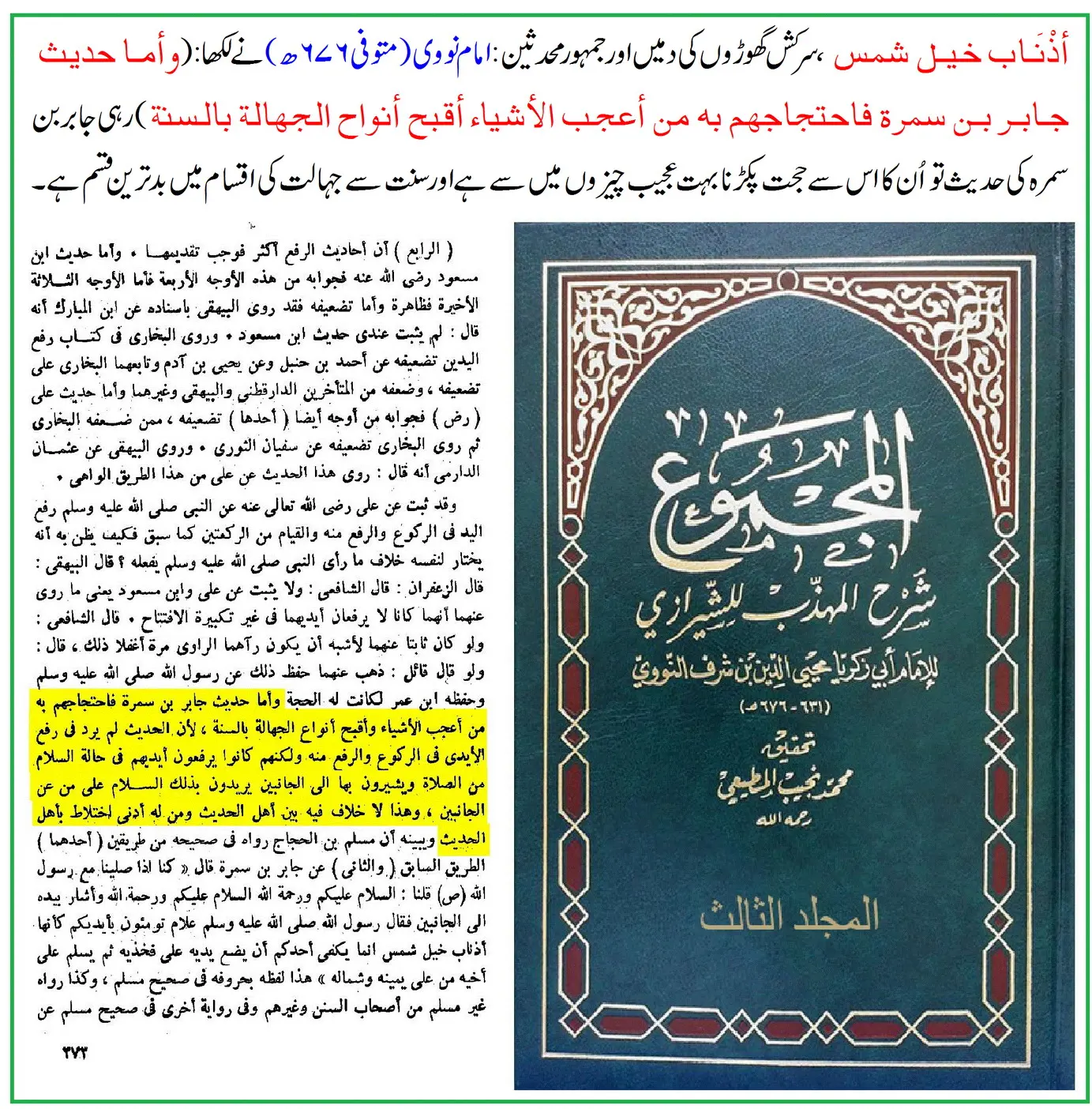
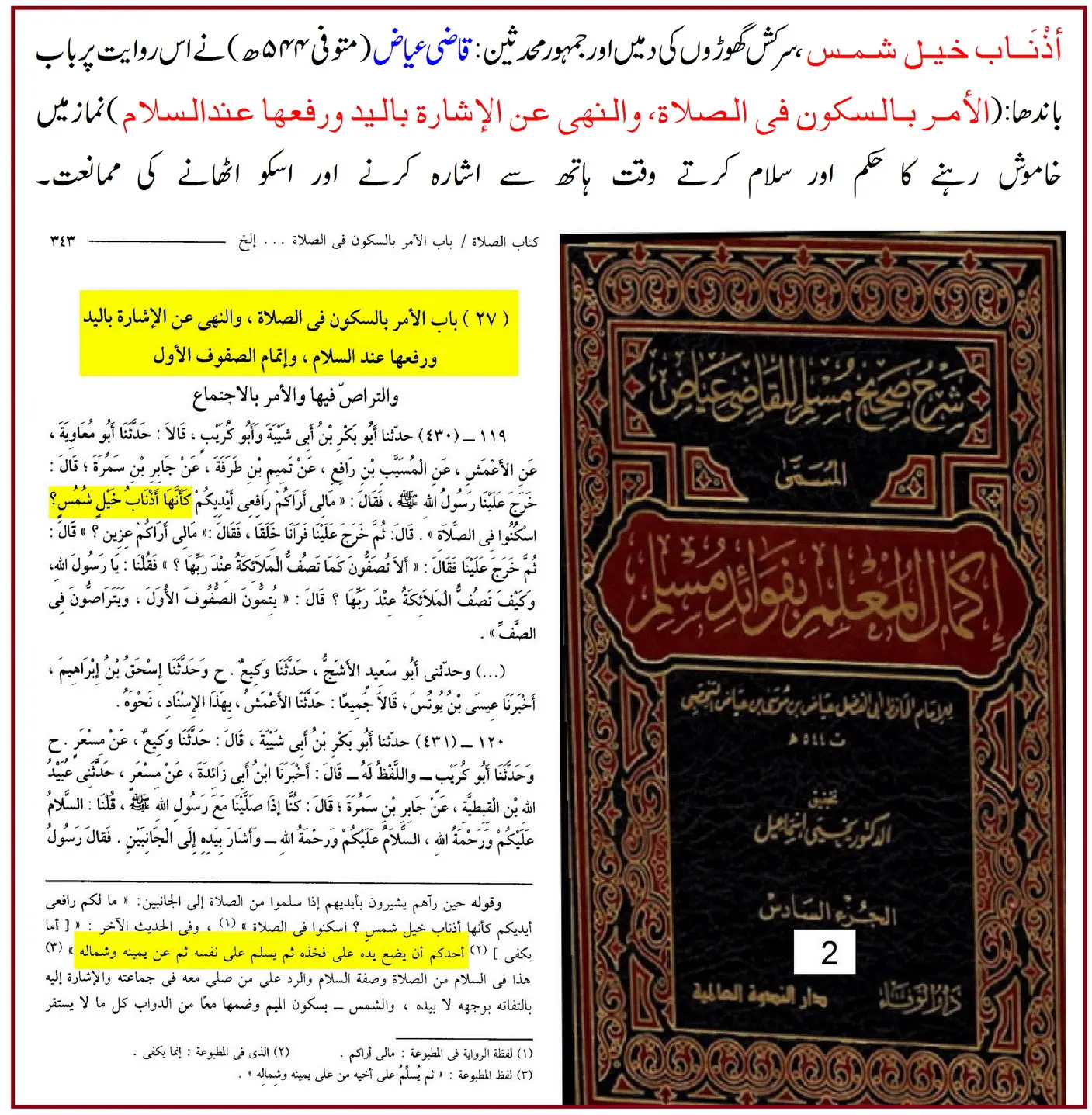
However, some biased Ḥanafī jurists and blind followers have misinterpreted the ḥadīth of Jābir bin Samurah رضي الله عنه in Ṣaḥīḥ Muslim:
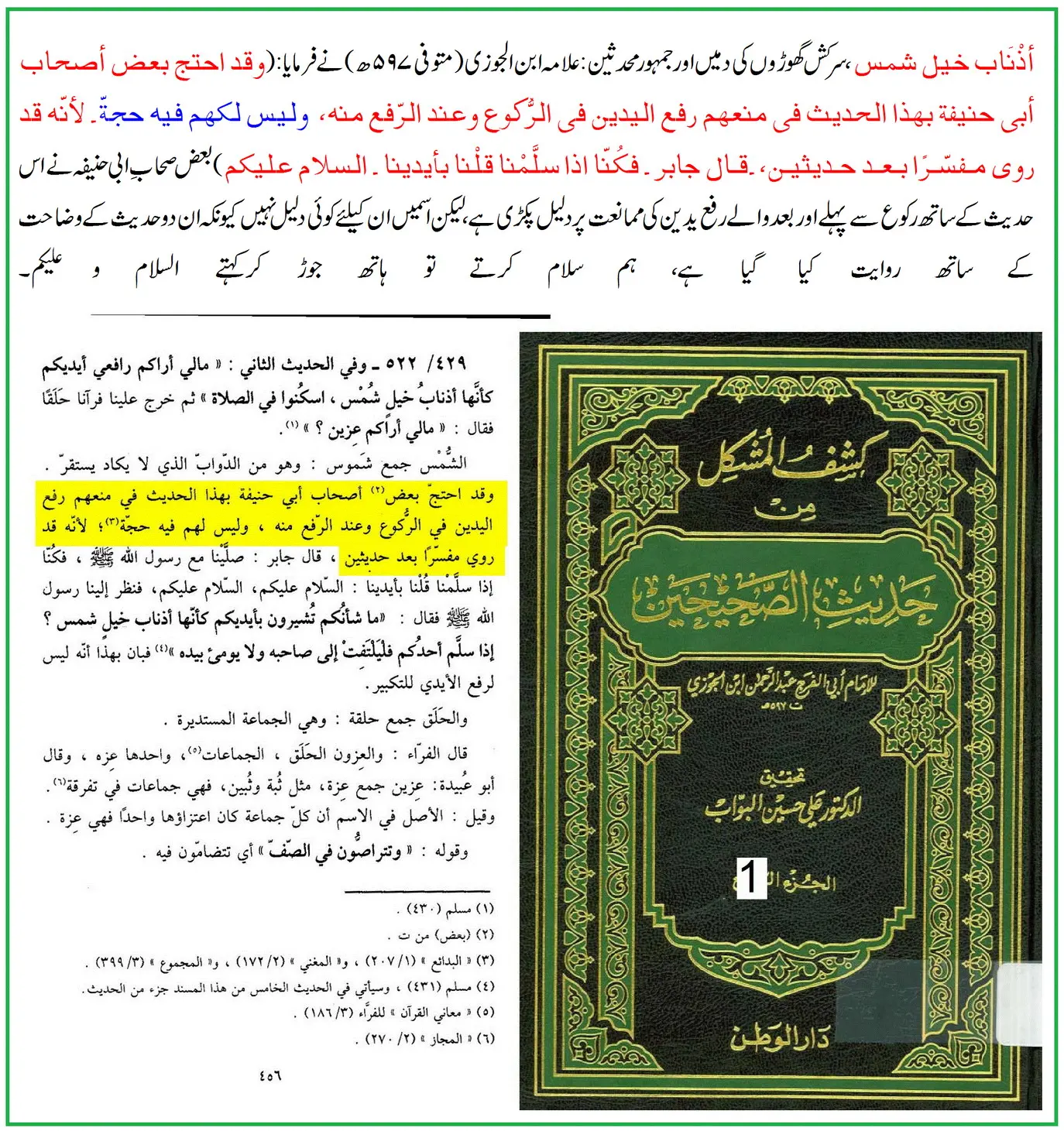
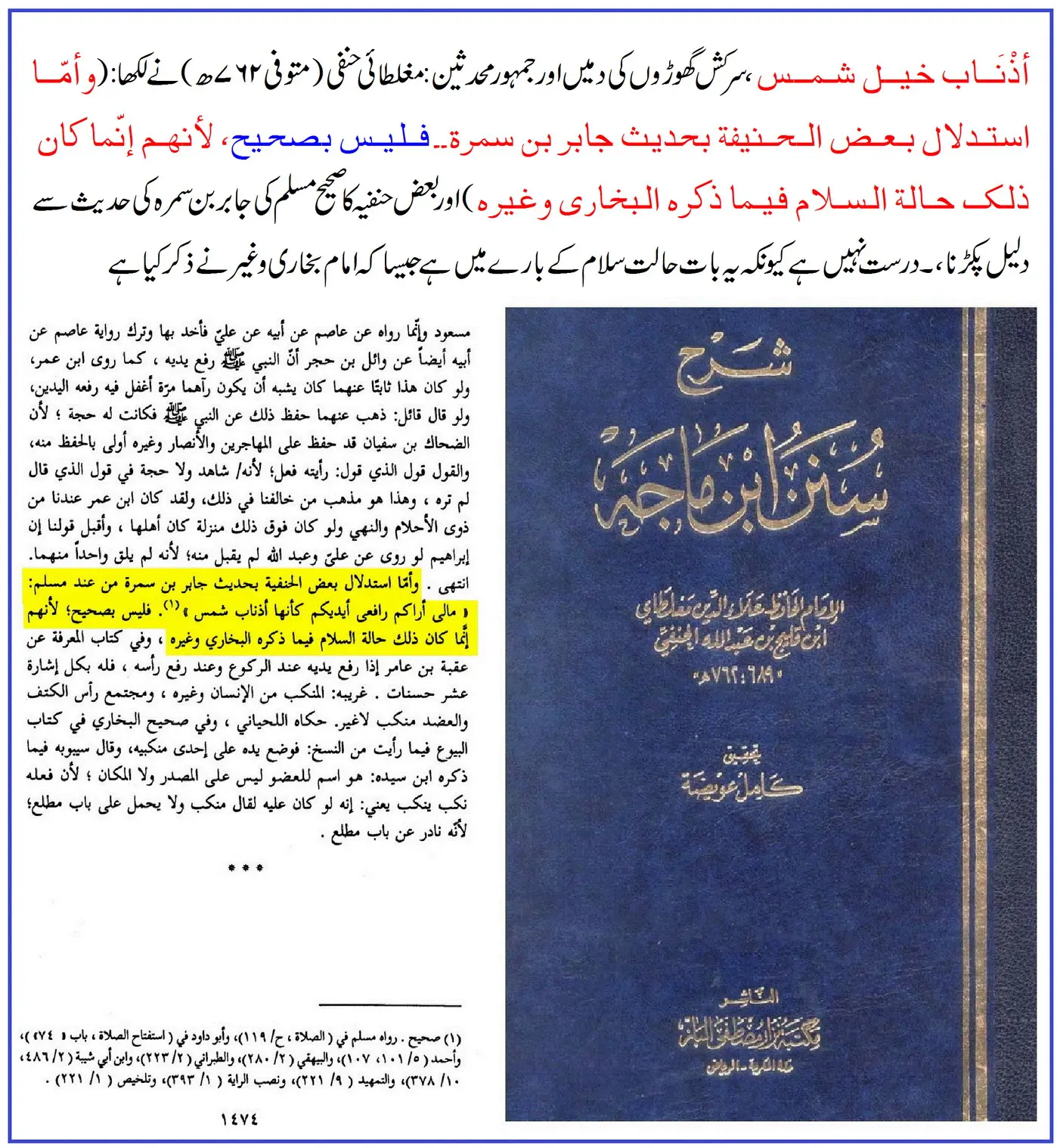
«مالي أراكم رافعي أيديكم كأنها أذناب خيل شمس»
"Why do I see you raising your hands as if they are the tails of restless horses?"
They claim this negates the practice of Rafʿ al-Yadayn.
This article presents a step-by-step scholarly critique of their arguments, proving that the narration refers to waving hands at the time of salām, not to Rafʿ al-Yadayn during rukūʿ.
Arabic Text:
«مَا بَالُكُمْ تَرْفَعُونَ أَيْدِيَكُمْ كَأَنَّهَا أَذْنَابُ خَيْلٍ شُمْسٍ؟ اسْكُنُوا فِي الصَّلَاةِ.»
“Why are you raising your hands like the tails of wild horses? Be calm in prayer.”
 Ṣaḥīḥ Muslim, Book of Ṣalāh, Chapter: Prohibition of Gesturing in Prayer
Reference: al-Bināyah 3/136 (Beirut Edition)
 Reply:
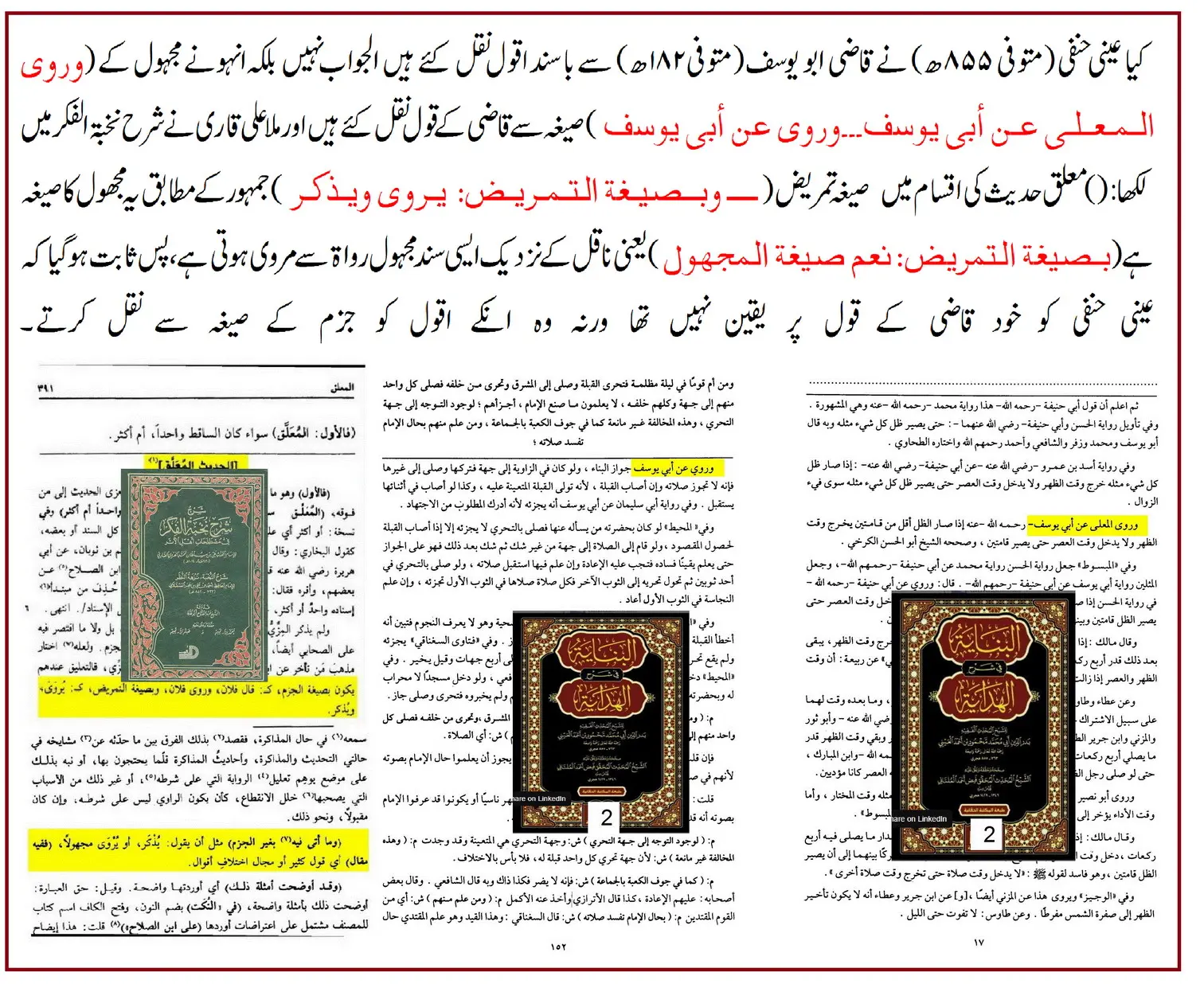
Abū Yūsuf’s opinion is cited using weak transmission wording like "ruwiya", which indicates unreliability. According to the rules of ḥadīth sciences, reports with such ambiguous terms are weak and non-authoritative.
Sharḥ Nukhbah al-Fikar:
"التعليق بصيغة التمريض كـ: يُروى، ويُذكر… يدل على الضعف"
"Expressions like 'yuʿrā' or 'yudhkar' indicate a weak narration."
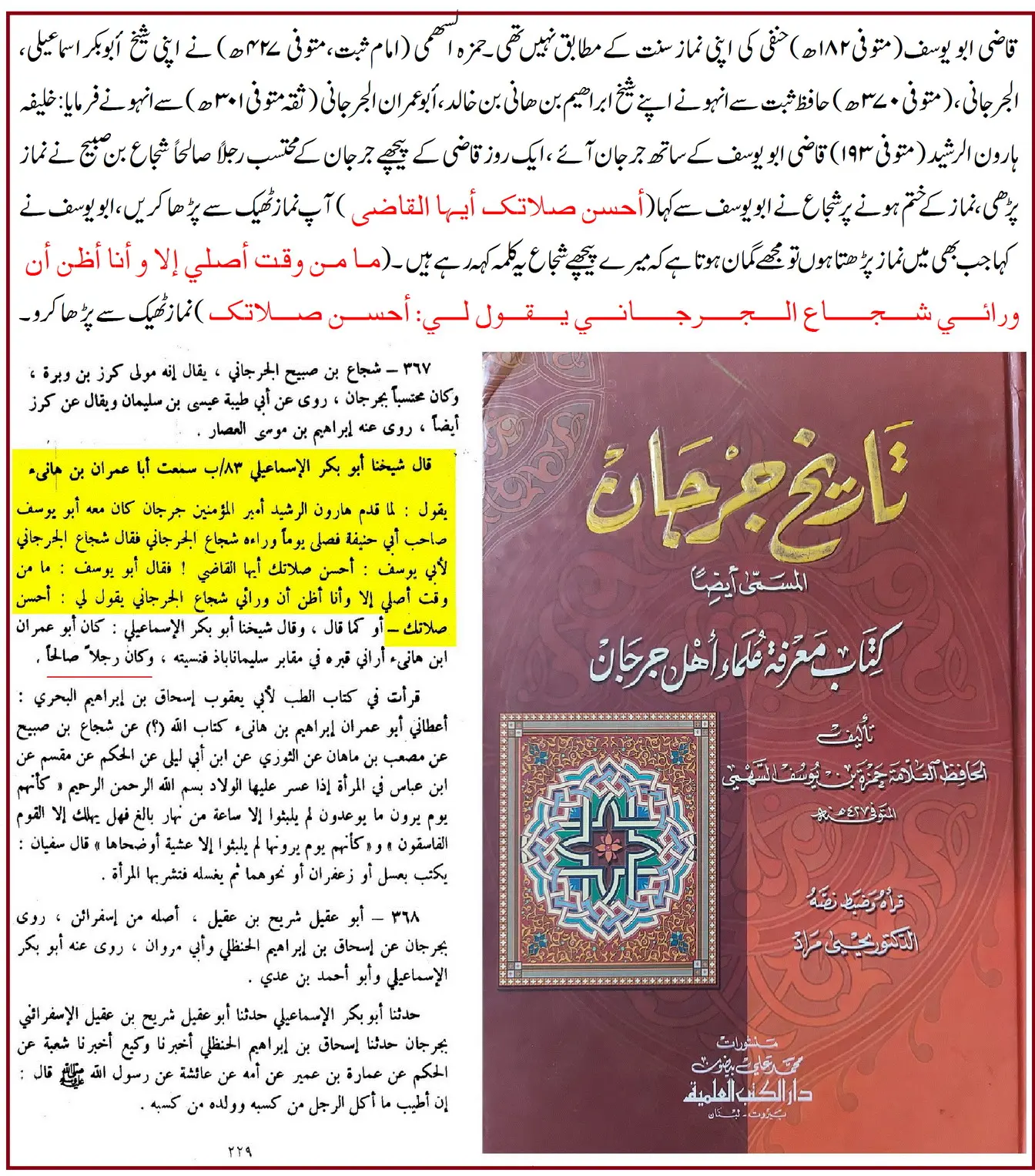
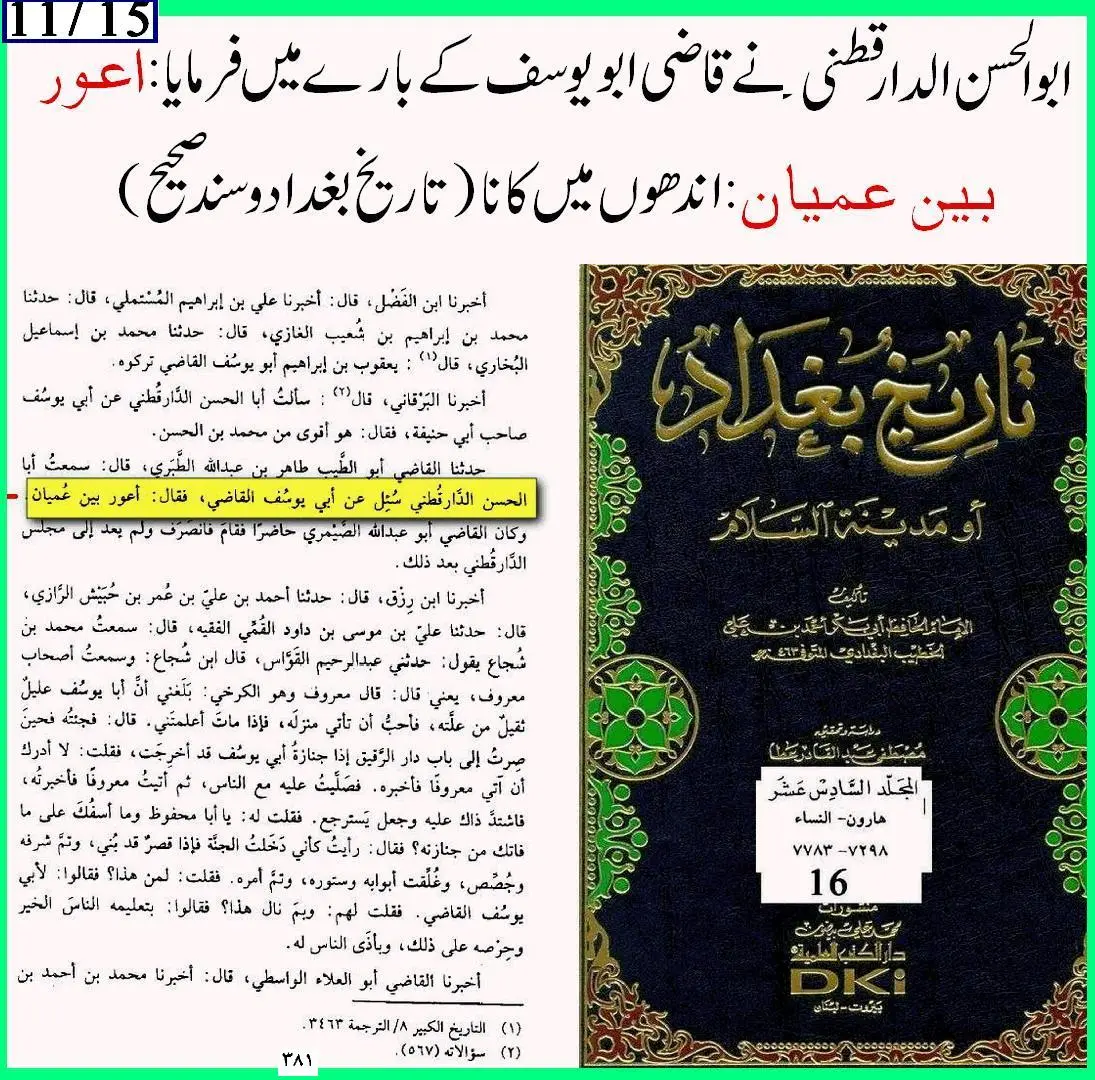
Furthermore, historical reports about Abū Yūsuf’s faulty prayer practices further weaken his credibility as evidence in this matter.
 Conclusion: His statement holds no scholarly weight to negate Rafʿ al-Yadayn.
Reference: al-Tajrīd 2/519
Reply:
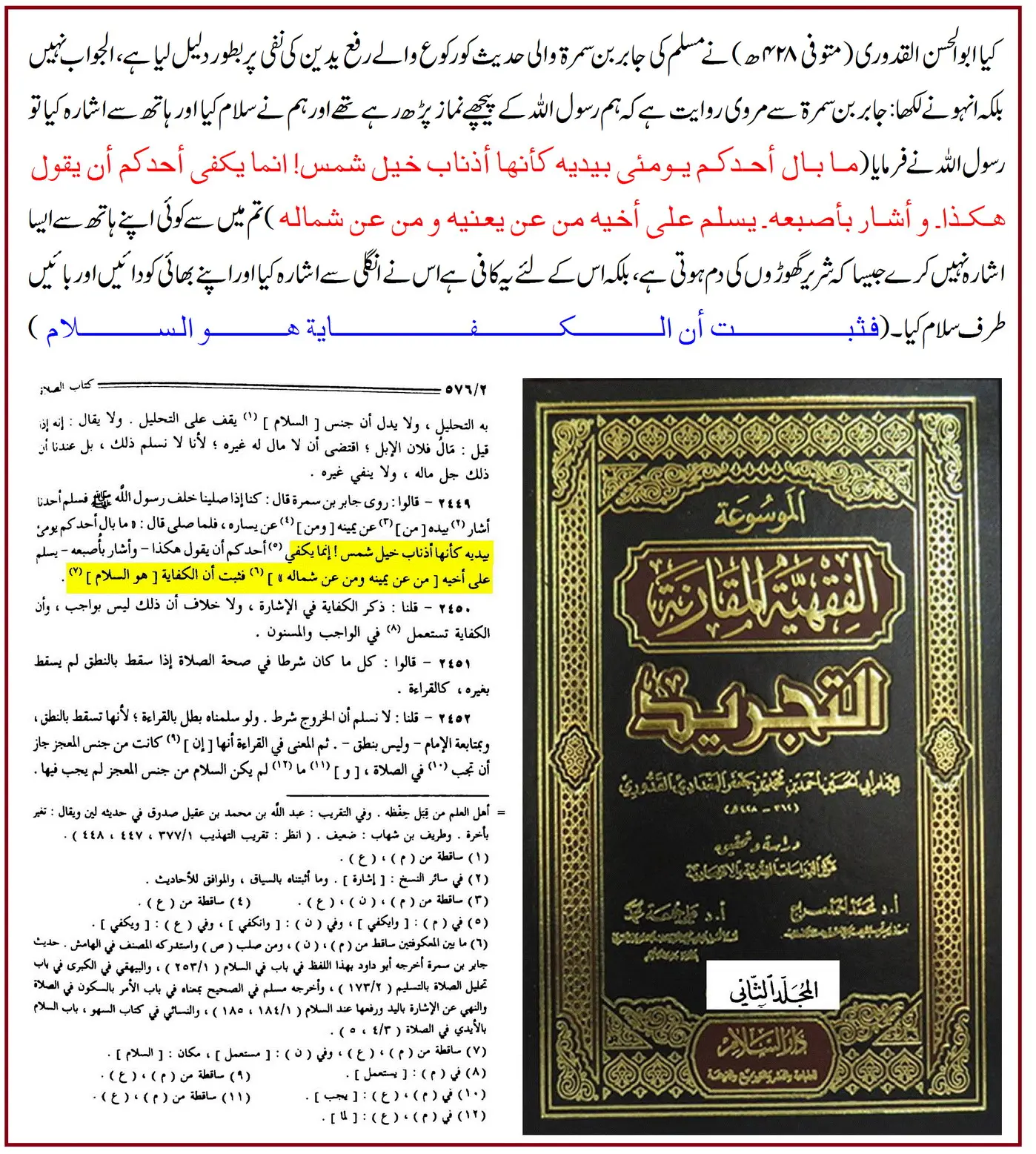
Al-Qudūrī cites the narration in the chapter of salām, not in the context of rukūʿ or standing after rukūʿ.
Even in his own understanding, the ḥadīth only shows that waving hands while saying salām is inappropriate — not that Rafʿ al-Yadayn is to be abandoned.
Conclusion: Placing the narration in the "salām" section confirms it is unrelated to Rafʿ al-Yadayn.
Reference: Naṣb al-Rāyah 1/472
Text:
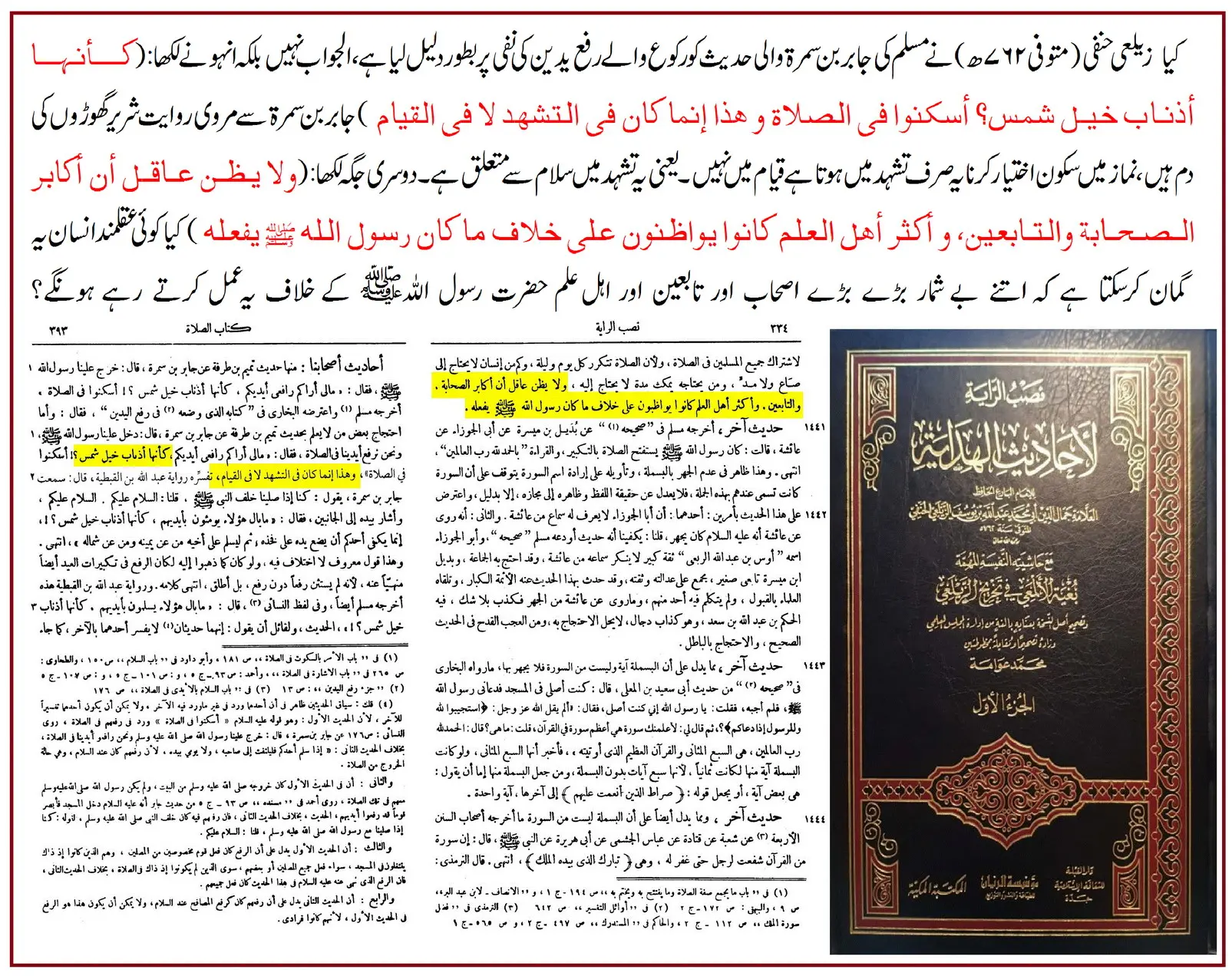
«…أسكُنوا في الصلاة، وهذا إنما كان في التشهد لا في القيام.»
"This was during tashahhud, not during qiyām (standing)."
Conclusion: Zaylaʿī confirms the narration is about salutation at tashahhud, not rukūʿ or qiyām. Hence, it does not negate Rafʿ al-Yadayn.
References:
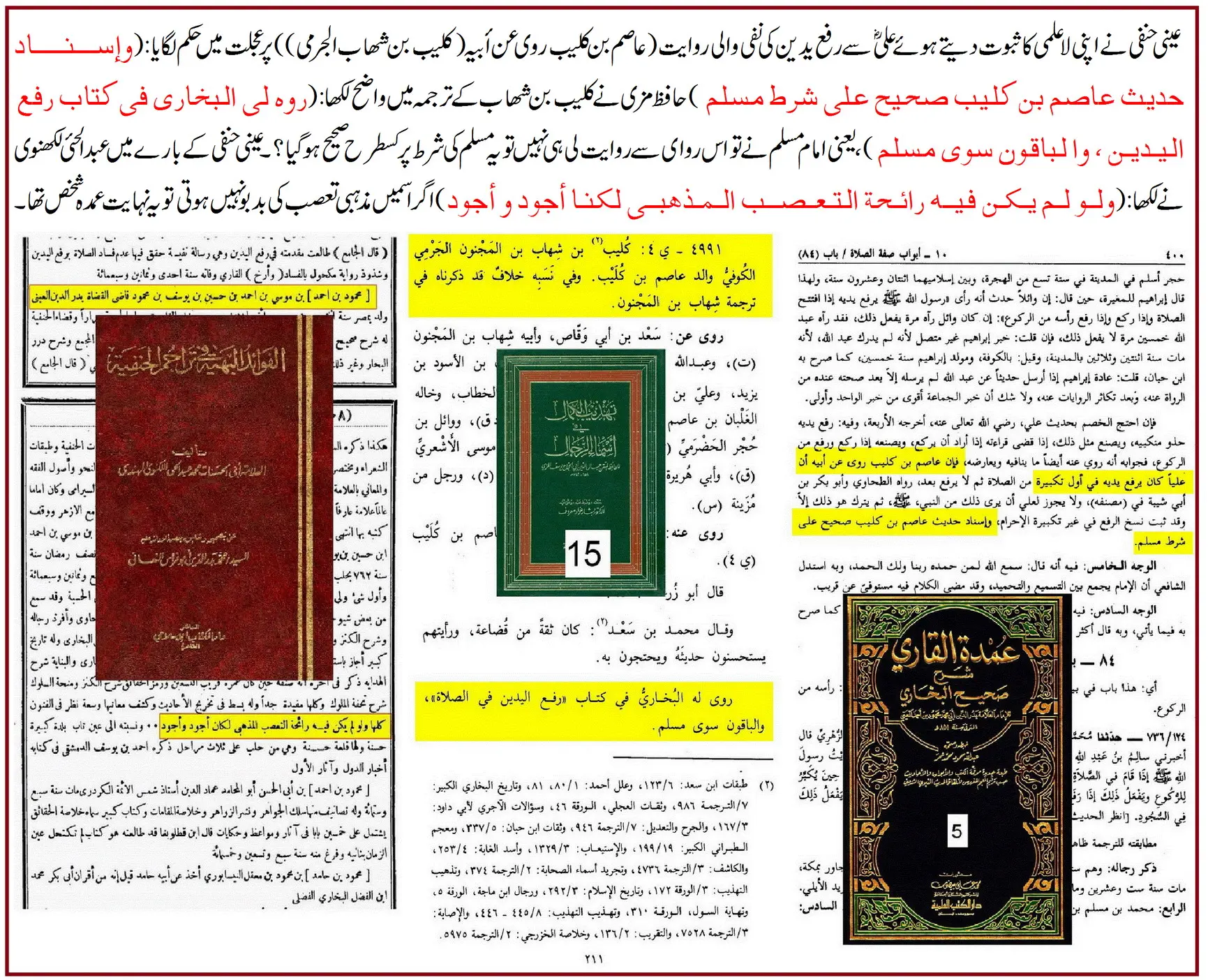
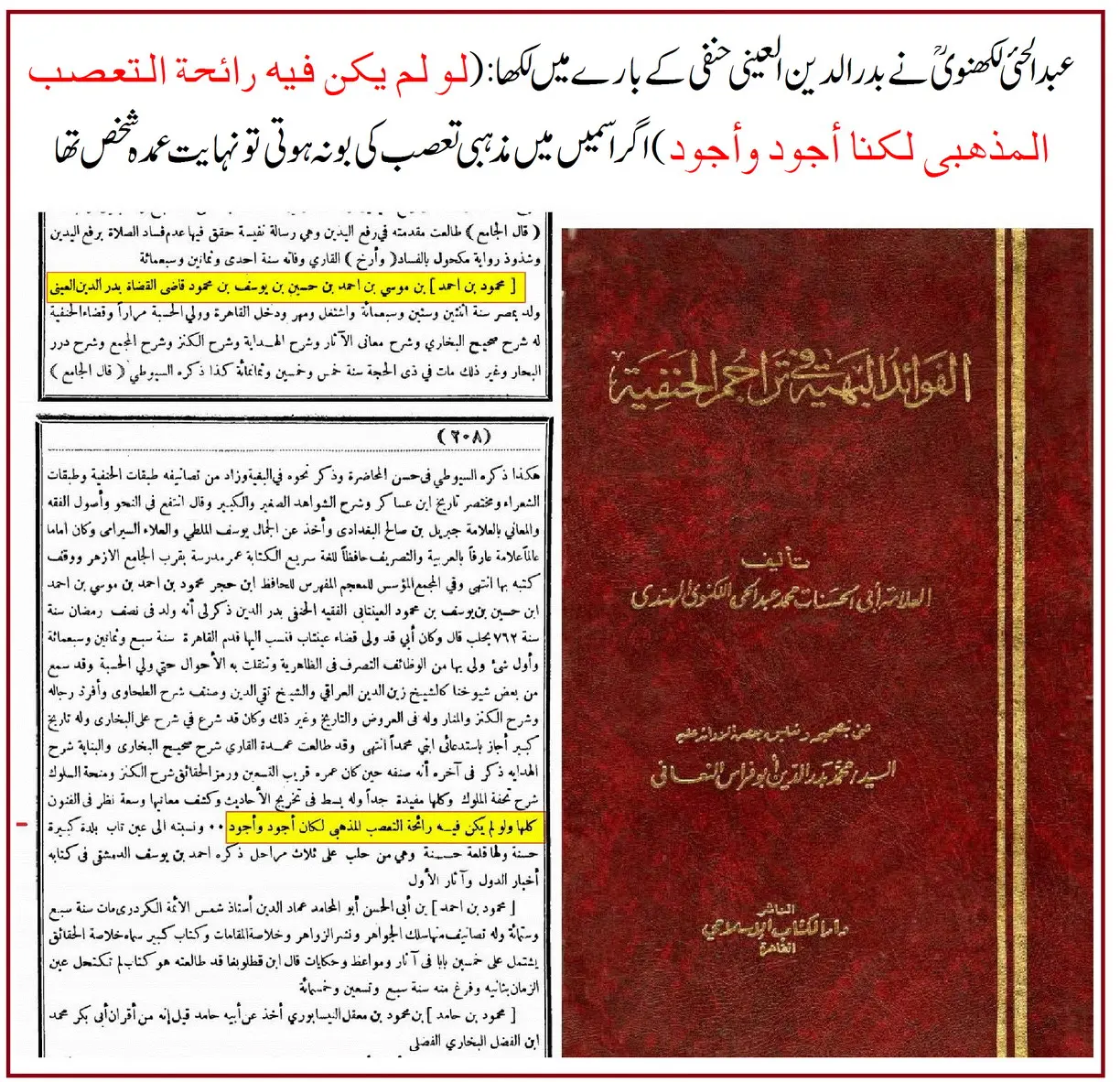
Reply: Both quotes are from the same author. Scholars such as ʿAbd al-Ḥayy al-Laknawī have criticized ʿAynī for being madhhab-centric and biased.
al-Fawāʾid al-Bahiyyah:
«...ولو لم يكن فيه رائحة التعصب المذهبي لكان أجود...»
"Had he not shown sectarian bias, his work would have been better."
Conclusion: Biased views are not accepted in ḥadīth criticism.
Reference: Fatḥ Bāb al-ʿInāyah 1/78; Ḥāshiyah Mishkāh p.75
Reply:
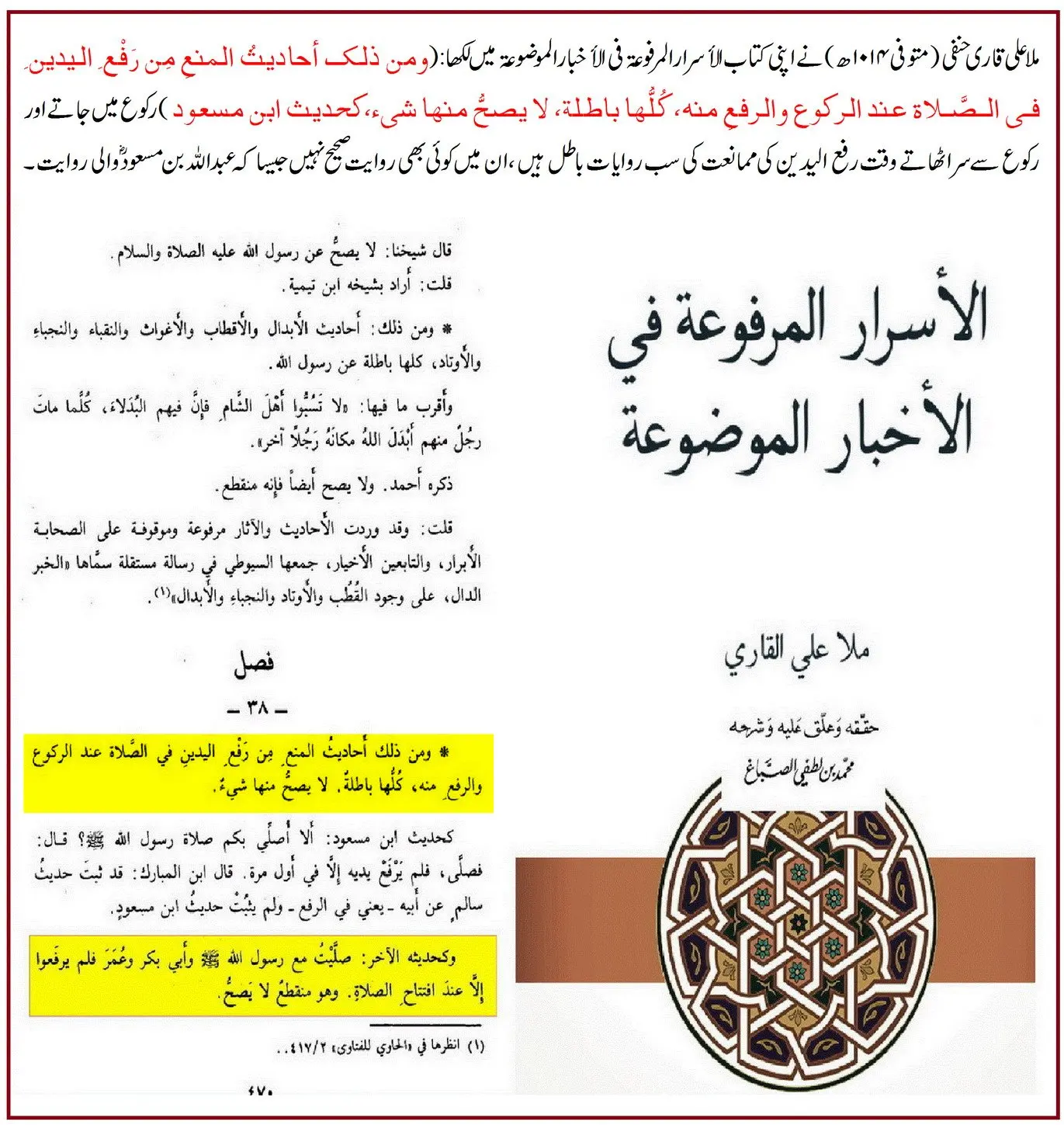
Mullā ʿAlī al-Qārī himself declared:
"أحاديثُ المنع من رفع اليدين… كلها باطلة لا يصح منها شيء."
"All the aḥādīth prohibiting Rafʿ al-Yadayn are fabricated and none are authentic."
Conclusion: His own statement nullifies any argument against Rafʿ al-Yadayn.
Reference: al-Lubāb 1/256
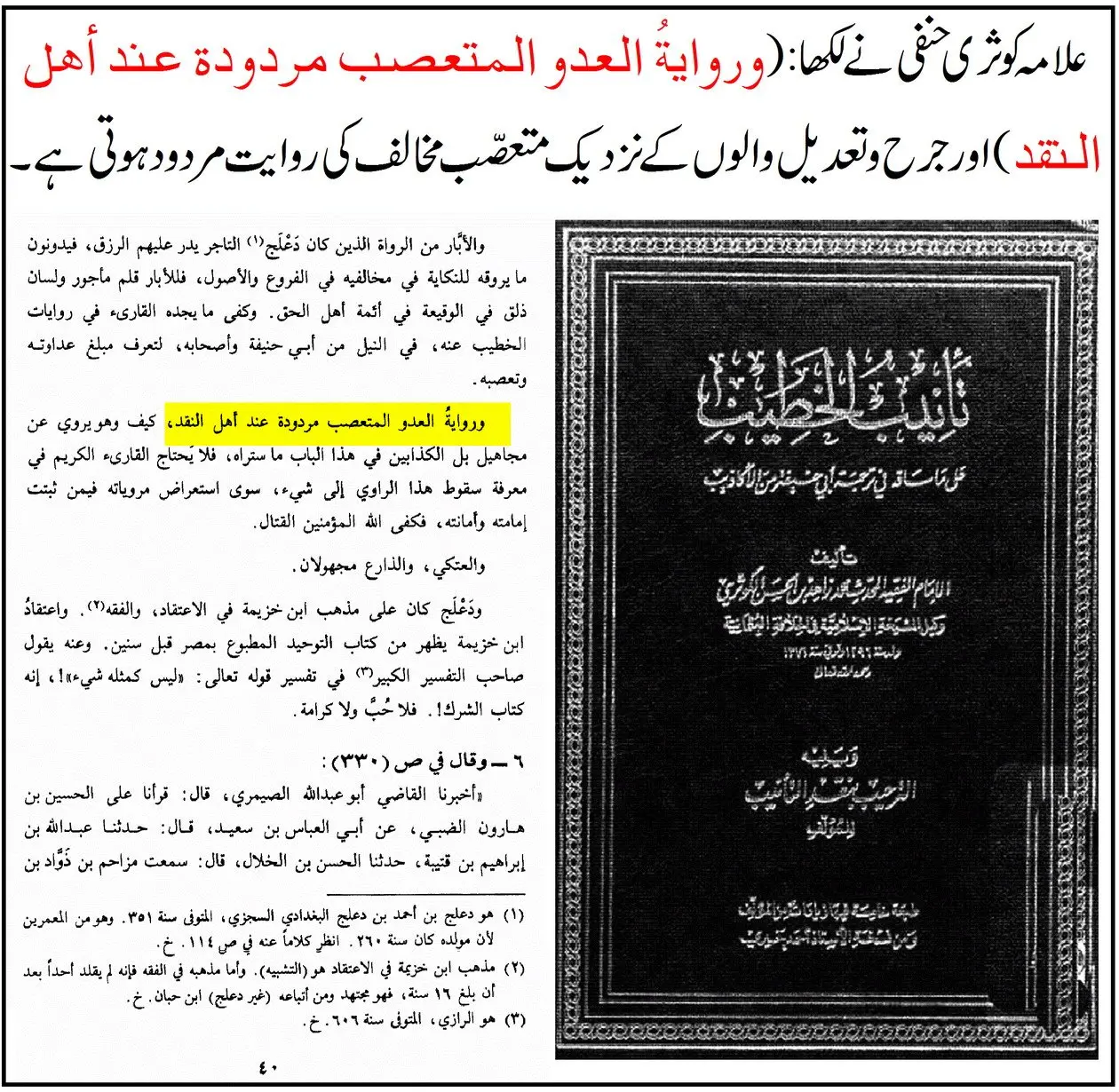
Reply: His opinions are only valued in Ḥanafī circles. Among scholars of ḥadīth, his statements carry little weight.
Conclusion: His citation cannot refute an established Sunnah.
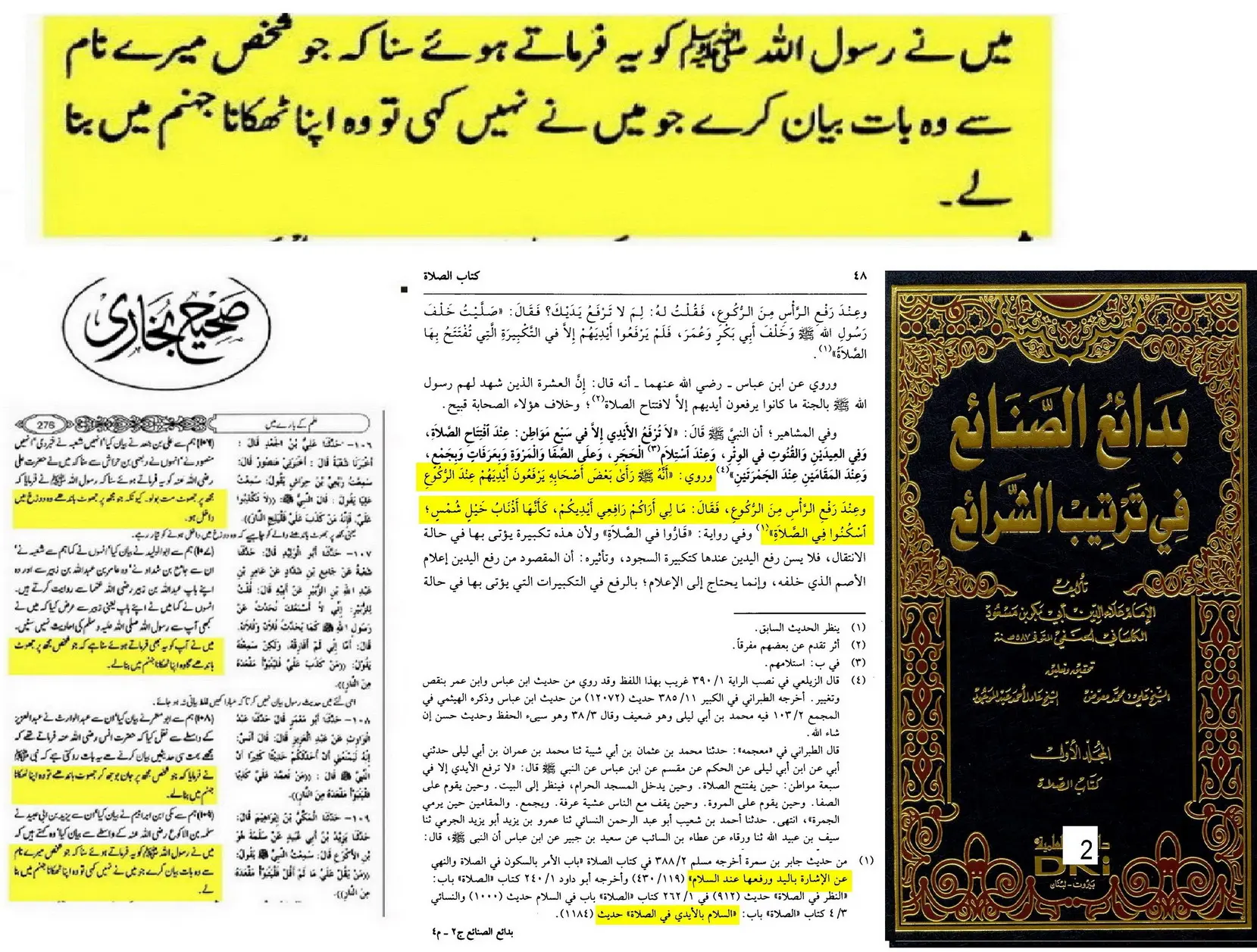
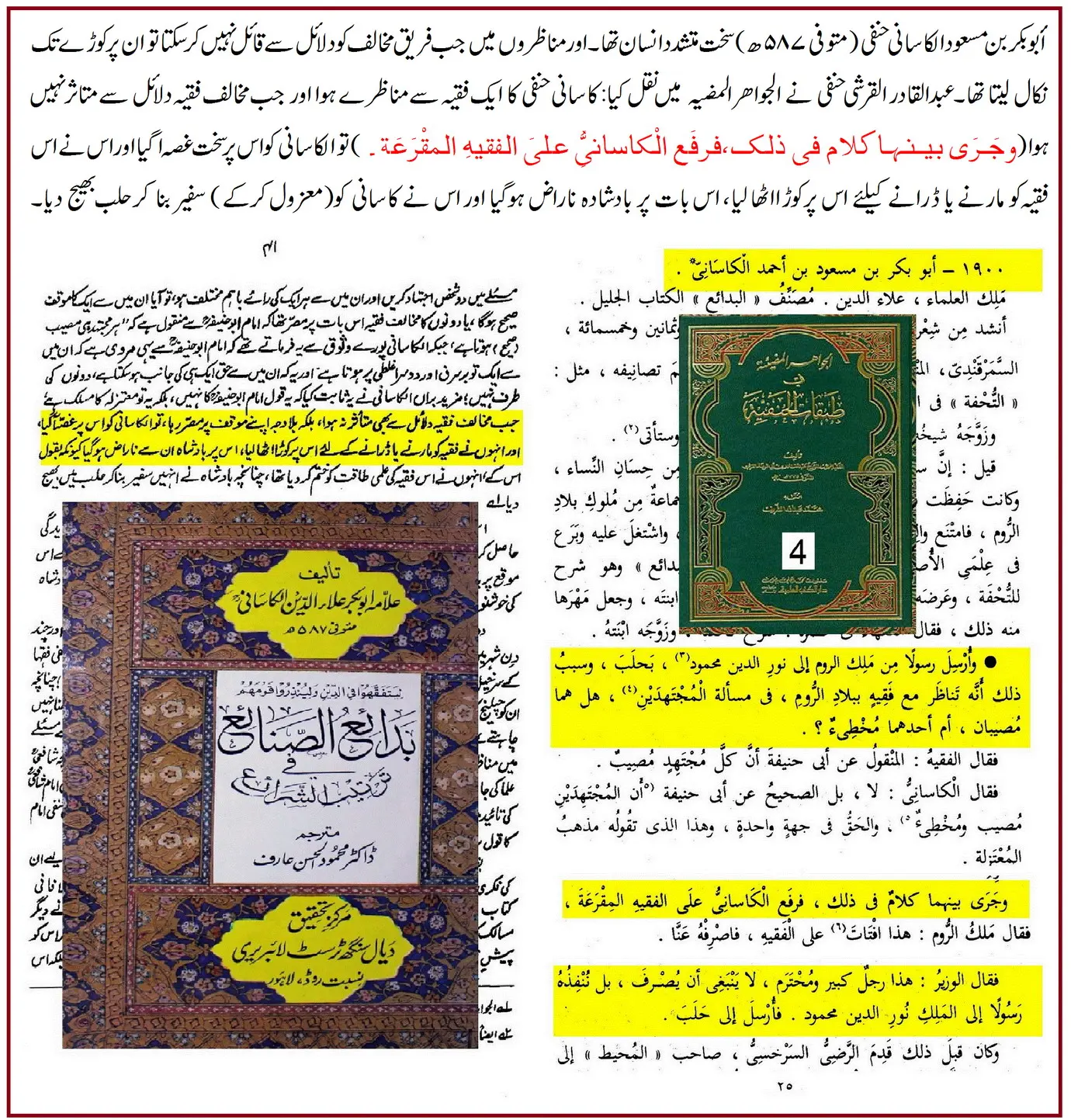
Reference: Badā’iʿ al-Ṣanā’iʿ 1/207
Reply:
Major scholars, including Imām Bukhārī, al-Nawawī, al-Qudūrī, and Zaylaʿī confirm this narration refers to salām, not rukūʿ.
Ṣaḥīḥ al-Bukhārī:
«من كذب عليّ فليتبوأ مقعده من النار»
"Whoever lies about me, let him prepare his seat in the Hellfire."
Conclusion: Misapplying a narration to oppose a Sunnah is a grave offense.
Reference: Ḥāshiyah Ṭaḥṭāwī ʿala Marāqī al-Falāḥ
Reply:
Ṭaḥṭāwī wrongly applies the narration to rukūʿ while it concerns salām. He also supports weak narrations, like kissing thumbs during adhān.
al-Maṣnūʿ:
"Do not be deceived by Ṭaḥṭāwī; his words are based on fabricated narrations."
Conclusion: His argument is invalid due to weak foundations.
Reference: Marāqī al-Falāḥ p.40
Reply:
He claims Rafʿ al-Yadayn is makrūh (disliked) but provides no evidence.
Even in his own book, he admits:
"تَقْلِيد: عمل بلا حجة شرعية"
"Taqlīd is to follow someone without evidence from the Sharia."
Conclusion: His claim is baseless without authentic proof.
Reference: Kashf al-Rayn p.68
Reply:
He holds extreme views, such as claiming that ʿĪsā عليه السلام will follow the Ḥanafī madhhab when he returns — a statement with no basis in Qur’ān or Sunnah.
Conclusion: Such exaggeration disqualifies his authority.
Reference: Fatāwā 1/484
Reply:
He merely compares the scholarly level of Salmān al-Fārsī رضي الله عنه with Abū Ḥanīfah, which has nothing to do with Rafʿ al-Yadayn.
Conclusion: Irrelevant argument to the actual issue.
Reference: Sharḥ Safar al-Saʿādah p.72
Reply:
He admits that Rafʿ al-Yadayn is authentically reported, even if it’s a point of difference.
Conclusion: Acknowledgement of its authenticity nullifies its rejection.
All other objections are either:
Conclusion of All Points:
The ḥadīth «أَذْنَابُ خَيْلٍ شُمْسٍ» is about hand movement during salām, not Rafʿ al-Yadayn during rukūʿ or qiyām.
Claiming otherwise contradicts the consensus of ḥadīth scholars including:
❖ The narration «أَذْنَابُ خَيْلٍ شُمْسٍ» refers solely to salām, not rukūʿ.
❖ Citing it to oppose Rafʿ al-Yadayn is academically dishonest.
❖ All opposing references are either weak, irrelevant, or acknowledge the real context.
❖ Hence, no valid proof exists against the Sunnah of Rafʿ al-Yadayn.

✦ Rafʿ al-Yadayn (Raising the Hands Before and After Rukūʿ) – A Great Sunnah
Rafʿ al-Yadayn before and after rukūʿ is a great Sunnah of the Prophet ﷺ. This practice is supported by dozens of authentic narrations found in Ṣaḥīḥ al-Bukhārī, Ṣaḥīḥ Muslim, and other authentic ḥadīth collections, and it was consistently practiced by the Companions.
However, some biased Ḥanafī jurists and blind followers have misinterpreted the ḥadīth of Jābir bin Samurah رضي الله عنه in Ṣaḥīḥ Muslim:
«مالي أراكم رافعي أيديكم كأنها أذناب خيل شمس»
"Why do I see you raising your hands as if they are the tails of restless horses?"
They claim this negates the practice of Rafʿ al-Yadayn.
This article presents a step-by-step scholarly critique of their arguments, proving that the narration refers to waving hands at the time of salām, not to Rafʿ al-Yadayn during rukūʿ.
✦ Rafʿ al-Yadayn and the Ḥadīth of “Tails of Restless Horses”
Arabic Text:
«مَا بَالُكُمْ تَرْفَعُونَ أَيْدِيَكُمْ كَأَنَّهَا أَذْنَابُ خَيْلٍ شُمْسٍ؟ اسْكُنُوا فِي الصَّلَاةِ.»
“Why are you raising your hands like the tails of wild horses? Be calm in prayer.”
Ṣaḥīḥ Muslim, Book of Ṣalāh, Chapter: Prohibition of Gesturing in Prayer❖ Critical Analysis of the Opposing Arguments Cited by Ḥanafīs ❖
① Objection: Imām Abū Yūsuf رحمه الله
Reference: al-Bināyah 3/136 (Beirut Edition)
Reply:Abū Yūsuf’s opinion is cited using weak transmission wording like "ruwiya", which indicates unreliability. According to the rules of ḥadīth sciences, reports with such ambiguous terms are weak and non-authoritative.
Sharḥ Nukhbah al-Fikar:"التعليق بصيغة التمريض كـ: يُروى، ويُذكر… يدل على الضعف"
"Expressions like 'yuʿrā' or 'yudhkar' indicate a weak narration."
Furthermore, historical reports about Abū Yūsuf’s faulty prayer practices further weaken his credibility as evidence in this matter.
Conclusion: His statement holds no scholarly weight to negate Rafʿ al-Yadayn.② Objection: Imām Abū al-Ḥasan al-Qudūrī
Reference: al-Tajrīd 2/519
Reply:Al-Qudūrī cites the narration in the chapter of salām, not in the context of rukūʿ or standing after rukūʿ.
Even in his own understanding, the ḥadīth only shows that waving hands while saying salām is inappropriate — not that Rafʿ al-Yadayn is to be abandoned.
Conclusion: Placing the narration in the "salām" section confirms it is unrelated to Rafʿ al-Yadayn.③ Objection: ʿAllāmah Zaylaʿī
Reference: Naṣb al-Rāyah 1/472
Text:
«…أسكُنوا في الصلاة، وهذا إنما كان في التشهد لا في القيام.»
"This was during tashahhud, not during qiyām (standing)."
Conclusion: Zaylaʿī confirms the narration is about salutation at tashahhud, not rukūʿ or qiyām. Hence, it does not negate Rafʿ al-Yadayn.④ Objection: ʿAllāmah Badr al-Dīn al-ʿAynī
References:
- Sharḥ Sunan Abī Dāwūd 3/29
- al-Bināyah 2/294
Reply: Both quotes are from the same author. Scholars such as ʿAbd al-Ḥayy al-Laknawī have criticized ʿAynī for being madhhab-centric and biased. al-Fawāʾid al-Bahiyyah:«...ولو لم يكن فيه رائحة التعصب المذهبي لكان أجود...»
"Had he not shown sectarian bias, his work would have been better."
Conclusion: Biased views are not accepted in ḥadīth criticism.⑤ Objection: Mullā ʿAlī al-Qārī
Reference: Fatḥ Bāb al-ʿInāyah 1/78; Ḥāshiyah Mishkāh p.75
Reply:Mullā ʿAlī al-Qārī himself declared:
"أحاديثُ المنع من رفع اليدين… كلها باطلة لا يصح منها شيء."
"All the aḥādīth prohibiting Rafʿ al-Yadayn are fabricated and none are authentic."
Conclusion: His own statement nullifies any argument against Rafʿ al-Yadayn.⑥ Objection: Imām Muḥammad ʿAlī ibn Zakariyyā al-Manbijī
Reference: al-Lubāb 1/256
Reply: His opinions are only valued in Ḥanafī circles. Among scholars of ḥadīth, his statements carry little weight. Conclusion: His citation cannot refute an established Sunnah.⑦-a Objection: al-Kāsānī
Reference: Badā’iʿ al-Ṣanā’iʿ 1/207
Reply:Major scholars, including Imām Bukhārī, al-Nawawī, al-Qudūrī, and Zaylaʿī confirm this narration refers to salām, not rukūʿ.
Ṣaḥīḥ al-Bukhārī:«من كذب عليّ فليتبوأ مقعده من النار»
"Whoever lies about me, let him prepare his seat in the Hellfire."
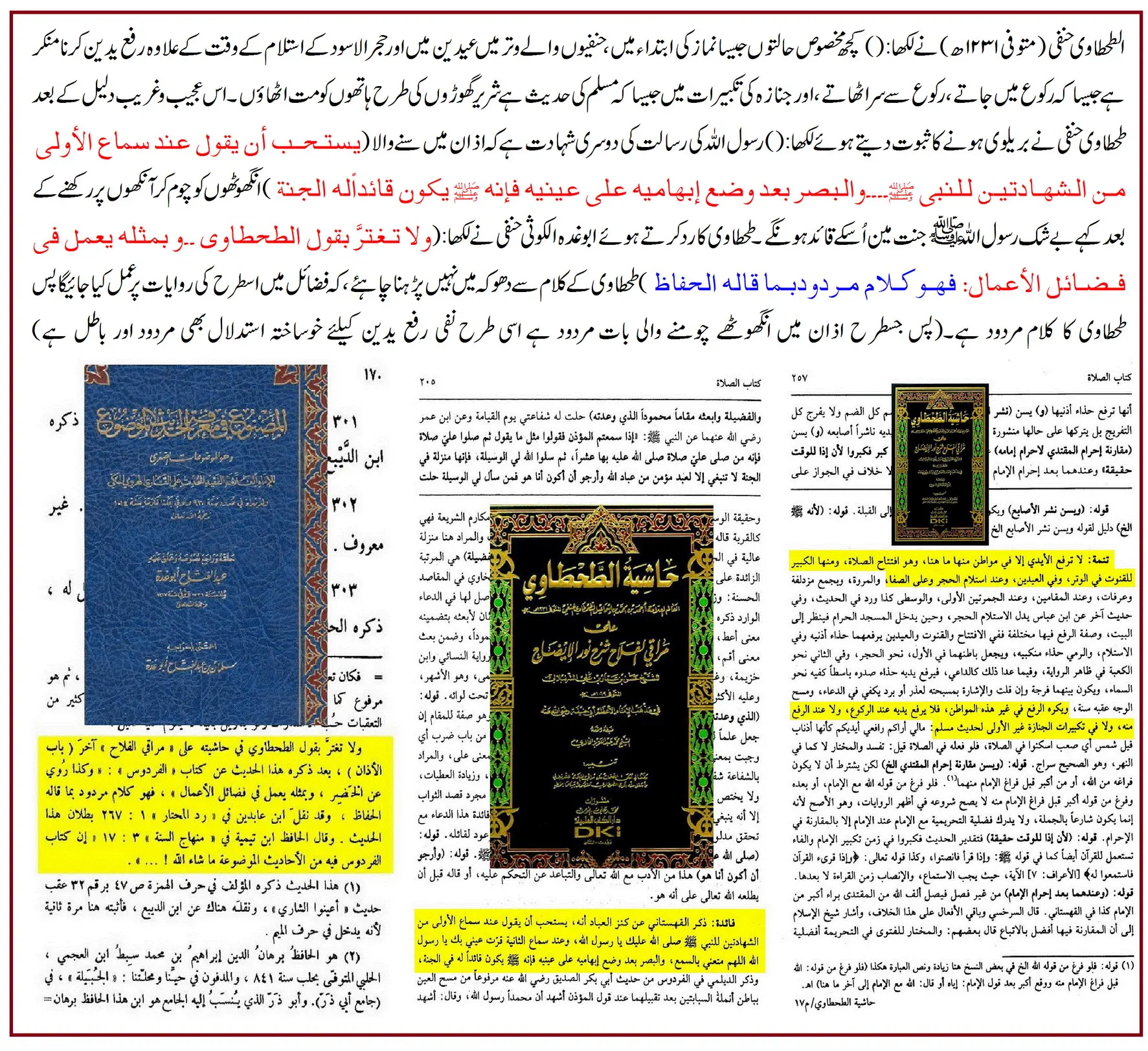
Conclusion: Misapplying a narration to oppose a Sunnah is a grave offense.⑦-b Objection: Ṭaḥṭāwī
Reference: Ḥāshiyah Ṭaḥṭāwī ʿala Marāqī al-Falāḥ
Reply:Ṭaḥṭāwī wrongly applies the narration to rukūʿ while it concerns salām. He also supports weak narrations, like kissing thumbs during adhān.
al-Maṣnūʿ:"Do not be deceived by Ṭaḥṭāwī; his words are based on fabricated narrations."
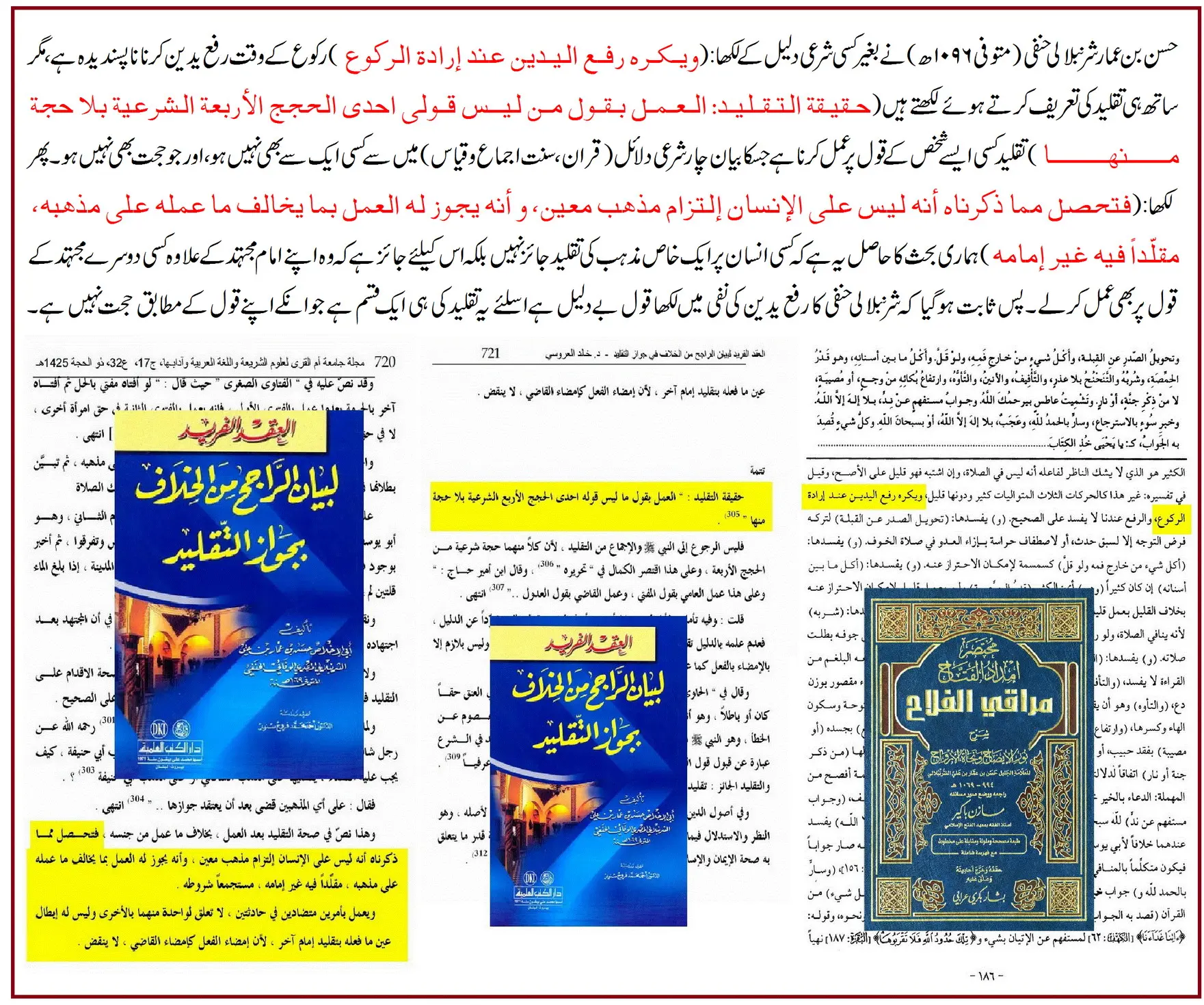
Conclusion: His argument is invalid due to weak foundations.⑧ Objection: Ḥasan ibn ʿAmmār al-Sharnabalālī
Reference: Marāqī al-Falāḥ p.40
Reply:He claims Rafʿ al-Yadayn is makrūh (disliked) but provides no evidence.
Even in his own book, he admits:
"تَقْلِيد: عمل بلا حجة شرعية"
"Taqlīd is to follow someone without evidence from the Sharia."
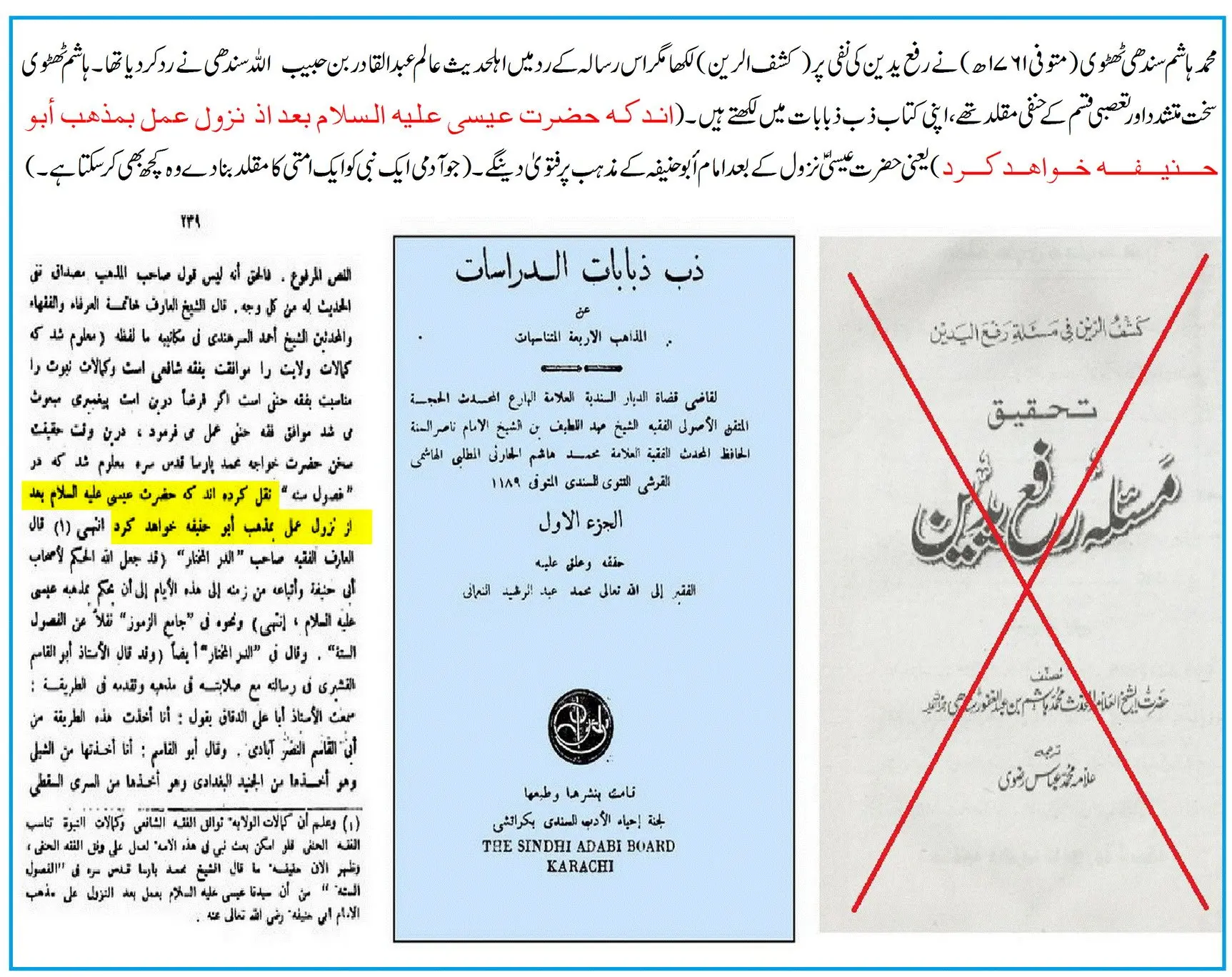
Conclusion: His claim is baseless without authentic proof.⑨ Objection: Muḥammad Hāshim Sindhī
Reference: Kashf al-Rayn p.68
Reply:He holds extreme views, such as claiming that ʿĪsā عليه السلام will follow the Ḥanafī madhhab when he returns — a statement with no basis in Qur’ān or Sunnah.
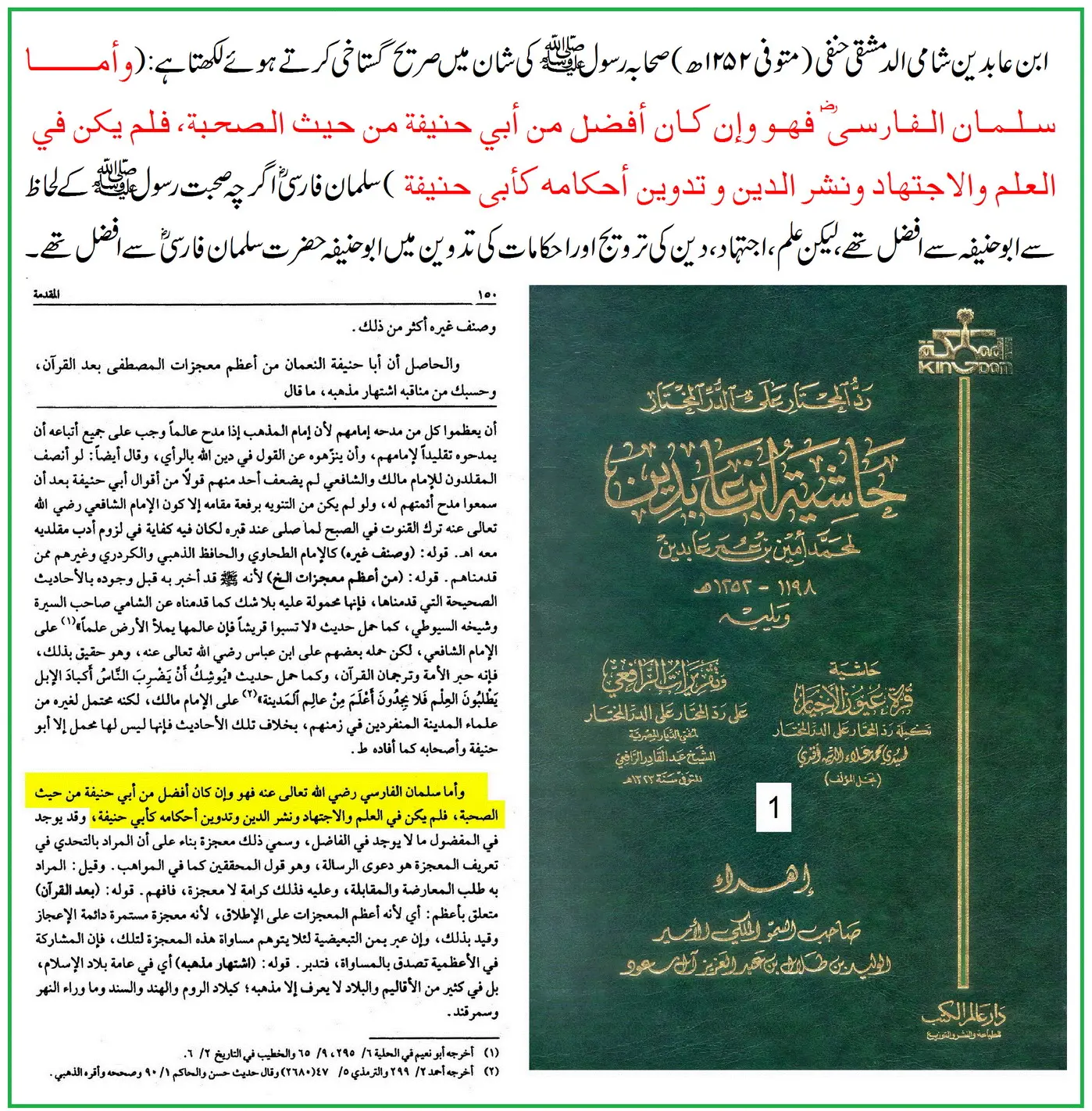
Conclusion: Such exaggeration disqualifies his authority.⑩ Objection: Ibn ʿĀbidīn al-Shāmī
Reference: Fatāwā 1/484
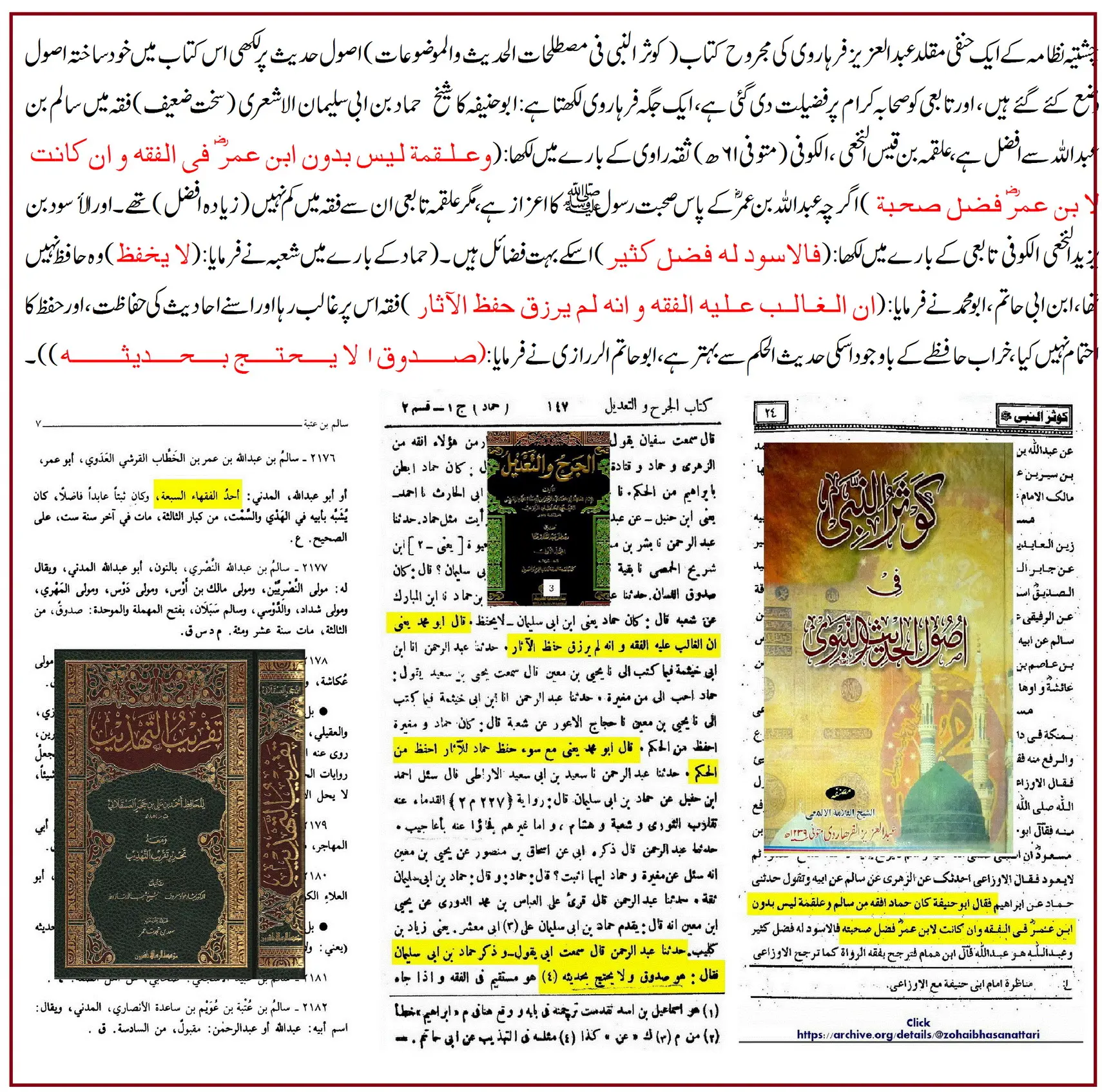
Reply:He merely compares the scholarly level of Salmān al-Fārsī رضي الله عنه with Abū Ḥanīfah, which has nothing to do with Rafʿ al-Yadayn.
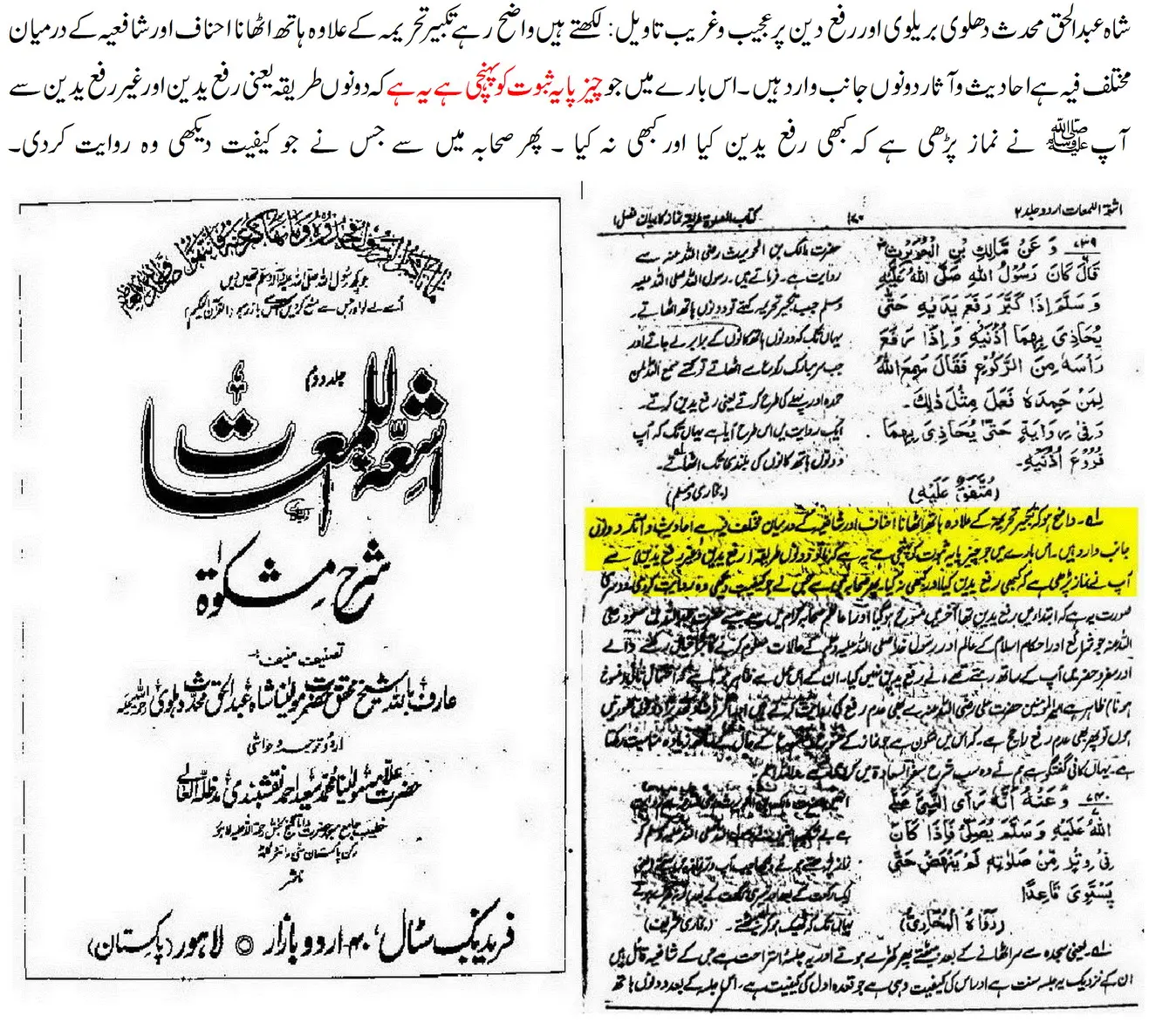
Conclusion: Irrelevant argument to the actual issue.⑪ Objection: Shaykh ʿAbd al-Ḥaqq al-Dehlawī
Reference: Sharḥ Safar al-Saʿādah p.72
Reply:He admits that Rafʿ al-Yadayn is authentically reported, even if it’s a point of difference.
Conclusion: Acknowledgement of its authenticity nullifies its rejection.Remaining Objections
All other objections are either:
- Based on weak, unknown or unreliable sources
- Cited out of context
- Admit the narration refers to salām, not rukūʿ
Conclusion of All Points:The ḥadīth «أَذْنَابُ خَيْلٍ شُمْسٍ» is about hand movement during salām, not Rafʿ al-Yadayn during rukūʿ or qiyām.
Claiming otherwise contradicts the consensus of ḥadīth scholars including:
- Imām al-Bukhārī
- Imām al-Nawawī
- Qāḍī ʿIyāḍ
- Ibn al-Jawzī
- al-Zaylaʿī
- al-Qudūrī
Final Summary:
❖ The narration «أَذْنَابُ خَيْلٍ شُمْسٍ» refers solely to salām, not rukūʿ.
❖ Citing it to oppose Rafʿ al-Yadayn is academically dishonest.
❖ All opposing references are either weak, irrelevant, or acknowledge the real context.
❖ Hence, no valid proof exists against the Sunnah of Rafʿ al-Yadayn.
