


This excerpt is taken from the book Nūr al-ʿAynayn fī Ithbāt Rafʿ al-Yadayn ʿinda al-Rukūʿ wa Baʿdahu fī al-Ṣalāh, authored by the ḥadīth scholar of the era, Ḥāfiẓ Zubayr ʿAlī Zaʾī رحمه الله.
Below are several authentic aḥādīth proving the raising of the hands before bowing (rukūʿ) and after rising from bowing in prayer:
Sayyidunā ʿAbdullāh ibn ʿUmar رضي الله عنهما narrates that when the Messenger of Allah ﷺ began the prayer, he would raise his hands up to his shoulders. Likewise, when he pronounced the takbīr for rukūʿ, he raised his hands, and when he raised his head from rukūʿ, he again raised his hands to his shoulders and said: “Samiʿa Allāhu liman ḥamidah, Rabbanā laka al-ḥamd.” He did not raise his hands during prostration.
◈ Ṣaḥīḥ Ibn Khuzaymah (1/232, ḥadīth: 456)
◈ Ṣaḥīḥ Ibn Ḥibbān (3/168, ḥadīth: 1858)
◈ Ṣaḥīḥ Abī ʿAwānah (2/90)
◈ al-Muntaqā by Ibn al-Jārūd (p. 69, aḥādīth: 177–178)
◈ Jāmiʿ al-Tirmidhī (1/59, ḥadīth: 255) – he said: ḥadīth ḥasan ṣaḥīḥ
◈ Sharḥ al-Sunnah by al-Baghawī (3/20, ḥadīth: 559) – he said: This is a ḥadīth unanimously agreed upon as authentic
◈ al-Istidhkār by Ibn ʿAbd al-Barr (2/125) – he said: It is a ḥadīth upon which no criticism exists
فيه فوائد: الأولى فيه رفع اليدين فى هذه المواطن الثلاثة عند تكبيرة الإحرام وعند الركوع وعند الرفع منه وبه قال أكثر العلماء من السلف والخلف
“This ḥadīth contains several benefits. The first benefit is that raising the hands is established at these three places: at the opening takbīr, before rukūʿ, and after rising from rukūʿ. This is the view held by the majority of scholars among the earlier and later generations.”
The narration of raising the hands before and after rukūʿ is mutawātir from Imām al-Zuhrī.
A brief research table for this ḥadīth is provided on the following page.
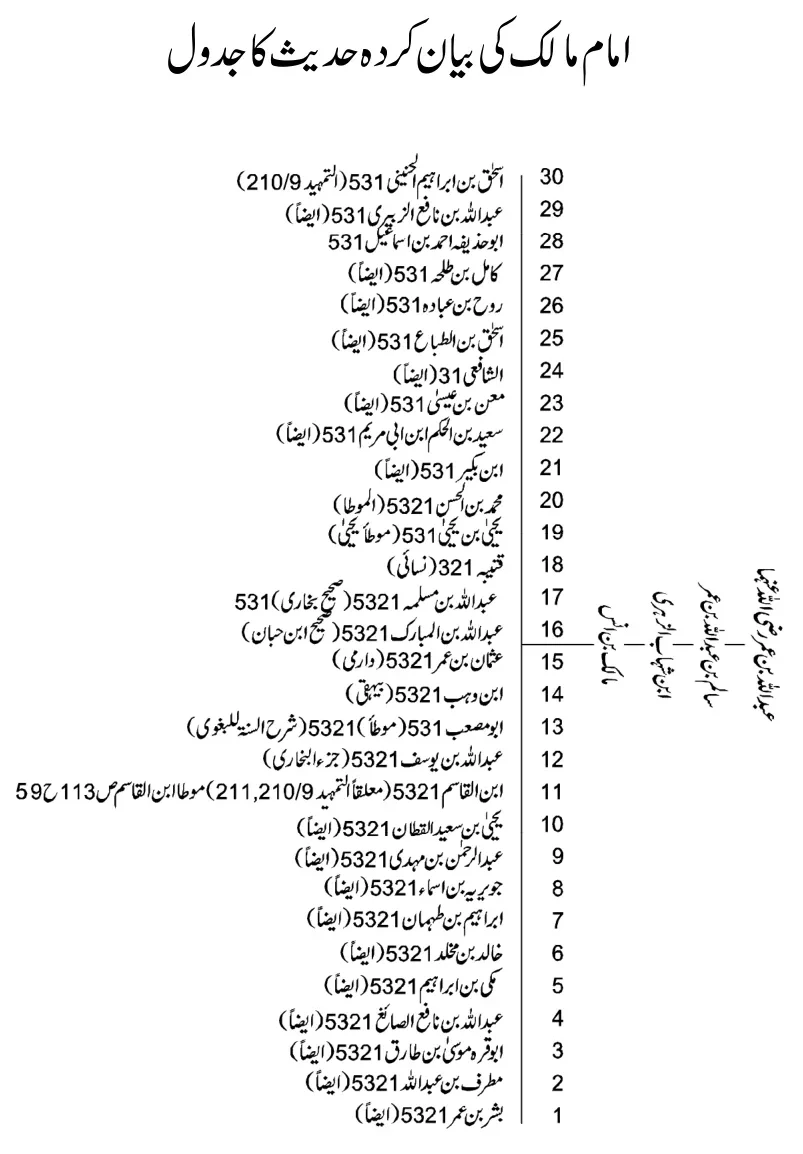
① Raising the hands at Takbīr al-Taḥrīmah
② Raising the hands at Rukūʿ
③ Raising the hands after rising from Rukūʿ
④ Raising the hands after rakʿahs
⑤ Not raising the hands in prostrations
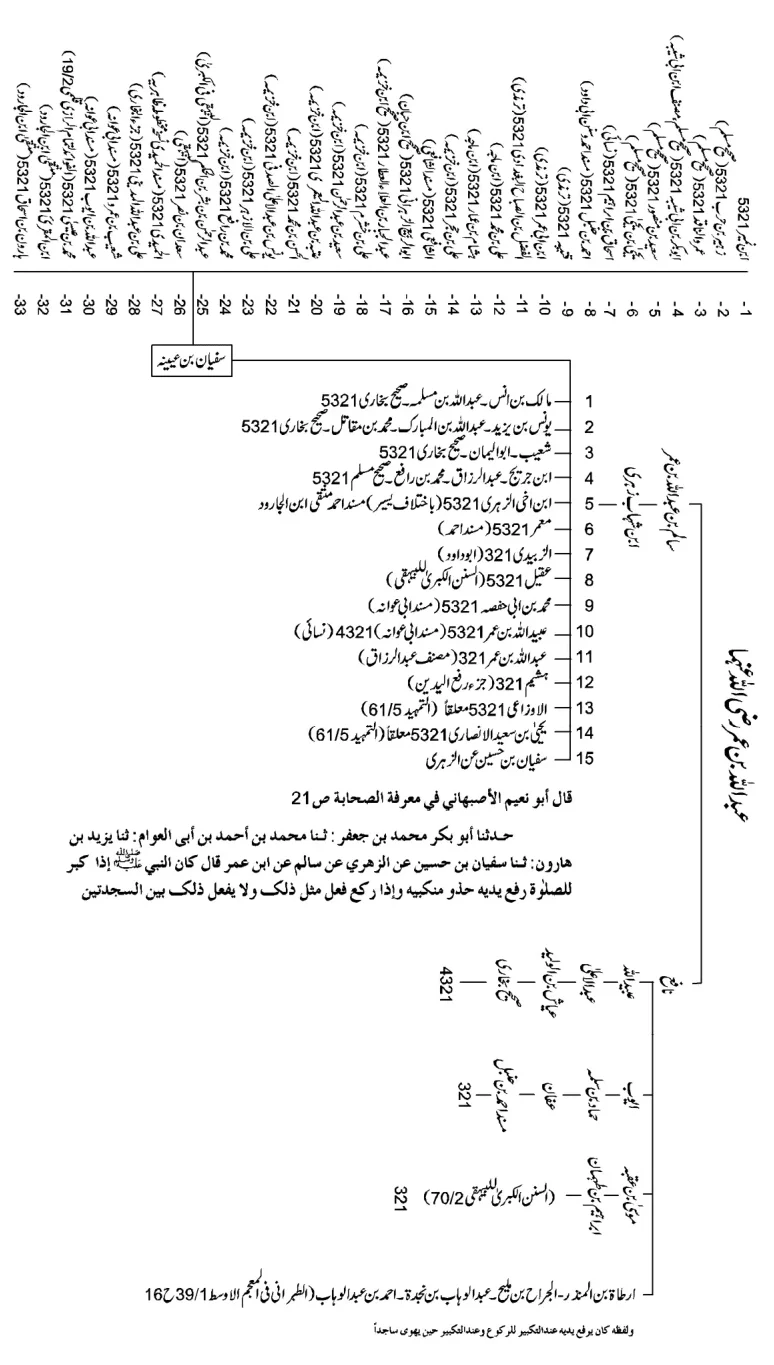
✔ Raising the hands at rukūʿ and after it is mutawātir from Sufyān ibn ʿUyaynah.
✔ Raising the hands at rukūʿ and after it is mutawātir from Mālik ibn Anas.
Establishing the Raising of the Hands (Rafʿ al-Yadayn) in Prayer
ʿBelow are several authentic aḥādīth proving the raising of the hands before bowing (rukūʿ) and after rising from bowing in prayer:
① Ḥadīth of ʿAbdullāh ibn ʿUmar رضي الله عنهما
عن ابن عمر أن رسول الله صلى الله عليه وسلم كان يرفع يديه حذو منكبيه إذا افتتح الصلاة وإذا كبر للركوع وإذا رفع رأسه من الركوع رفعهما كذلك وقال: سمع الله لمن حمده، ربنا لك الحمد وكان لا يفعل ذلك فى السجود.Sayyidunā ʿAbdullāh ibn ʿUmar رضي الله عنهما narrates that when the Messenger of Allah ﷺ began the prayer, he would raise his hands up to his shoulders. Likewise, when he pronounced the takbīr for rukūʿ, he raised his hands, and when he raised his head from rukūʿ, he again raised his hands to his shoulders and said: “Samiʿa Allāhu liman ḥamidah, Rabbanā laka al-ḥamd.” He did not raise his hands during prostration.
Reference: Ṣaḥīḥ al-Bukhārī: vol. 1 p. 102, aḥādīth: 735, 736, 738 – Ṣaḥīḥ Muslim: p. 168, ḥadīth: 390 – Mishkāt al-Maṣābīḥ (Aḍwāʾ al-Maṣāliḥ): 793 (wording from it)
Other Sources of This Ḥadīth
This ḥadīth is also recorded in the following works:◈ Ṣaḥīḥ Ibn Khuzaymah (1/232, ḥadīth: 456)
◈ Ṣaḥīḥ Ibn Ḥibbān (3/168, ḥadīth: 1858)
◈ Ṣaḥīḥ Abī ʿAwānah (2/90)
◈ al-Muntaqā by Ibn al-Jārūd (p. 69, aḥādīth: 177–178)
◈ Jāmiʿ al-Tirmidhī (1/59, ḥadīth: 255) – he said: ḥadīth ḥasan ṣaḥīḥ
◈ Sharḥ al-Sunnah by al-Baghawī (3/20, ḥadīth: 559) – he said: This is a ḥadīth unanimously agreed upon as authentic
◈ al-Istidhkār by Ibn ʿAbd al-Barr (2/125) – he said: It is a ḥadīth upon which no criticism exists
Statement of Ḥāfiẓ al-ʿIrāqī رحمه الله
After mentioning this ḥadīth, Ḥāfiẓ al-ʿIrāqī said:فيه فوائد: الأولى فيه رفع اليدين فى هذه المواطن الثلاثة عند تكبيرة الإحرام وعند الركوع وعند الرفع منه وبه قال أكثر العلماء من السلف والخلف
“This ḥadīth contains several benefits. The first benefit is that raising the hands is established at these three places: at the opening takbīr, before rukūʿ, and after rising from rukūʿ. This is the view held by the majority of scholars among the earlier and later generations.”
Reference: Ṭarḥ al-Tathrīb fī Sharḥ al-Taqrīb: vol. 1 p. 252
Transmission and Tawātur
This ḥadīth from Sayyidunā ʿAbdullāh ibn ʿUmar رضي الله عنهما was narrated by his son Sālim, and from him by Shaykh al-Islām, the unanimously trustworthy Imām al-Zuhrī.The narration of raising the hands before and after rukūʿ is mutawātir from Imām al-Zuhrī.
Reference: Lisān al-Mīzān: 5/289, biography of Ḥamd ibn ʿUkāshah
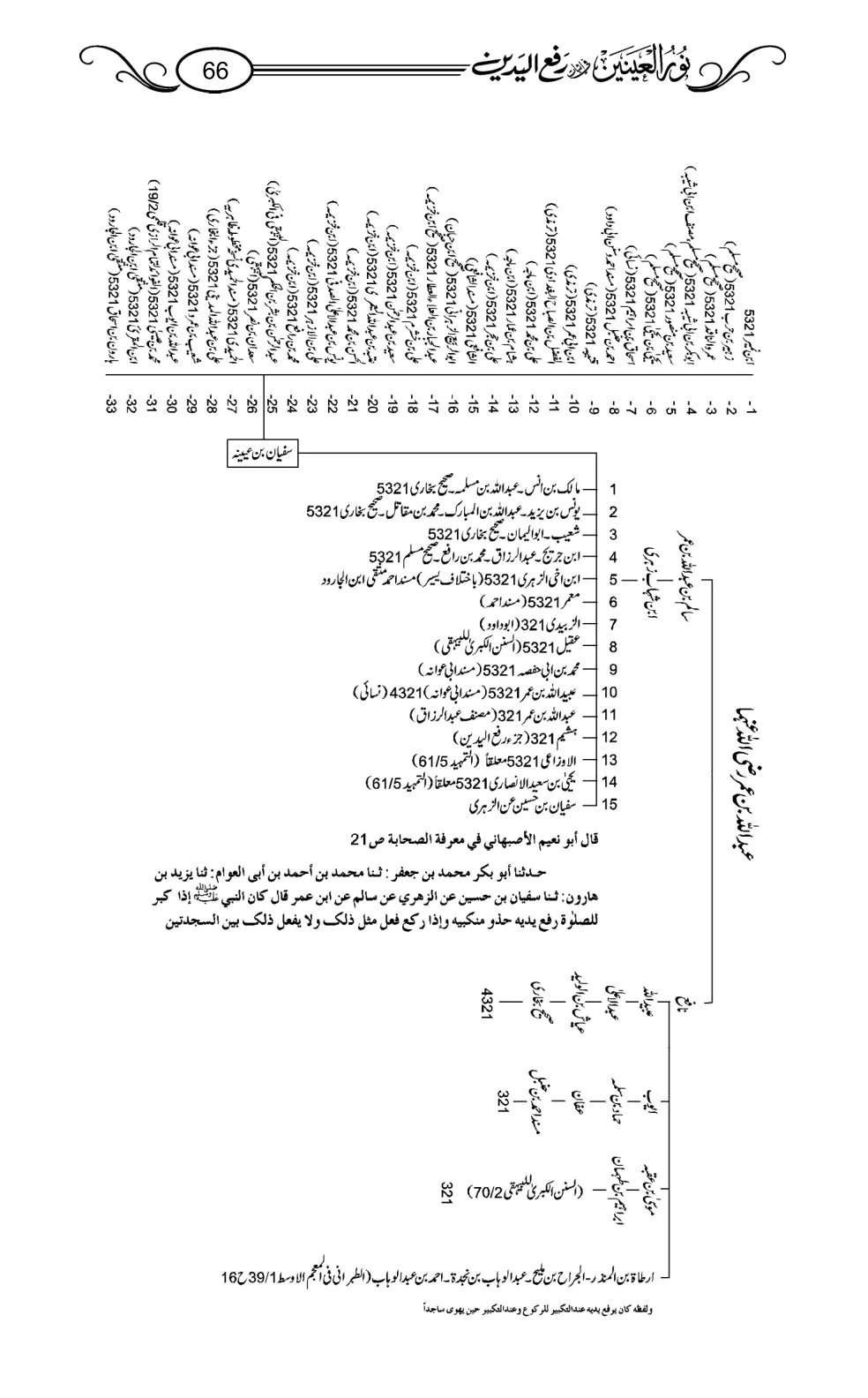
A brief research table for this ḥadīth is provided on the following page.
Important Note
While reviewing the table, keep the following symbols in mind:① Raising the hands at Takbīr al-Taḥrīmah
② Raising the hands at Rukūʿ
③ Raising the hands after rising from Rukūʿ
④ Raising the hands after rakʿahs
⑤ Not raising the hands in prostrations
Conclusions Derived from This Research
✔ Raising the hands at rukūʿ and after it is mutawātir from Imām al-Zuhrī.✔ Raising the hands at rukūʿ and after it is mutawātir from Sufyān ibn ʿUyaynah.
✔ Raising the hands at rukūʿ and after it is mutawātir from Mālik ibn Anas.

