Compiled by: Abu Hamza Salafi
الحمد للہ وحدہ، والصلوٰۃ والسلام علی من لا نبی بعدہ۔
The narration about folding the hands below the navel, which is transmitted from Hazrat Ali (RA), Abu Hurairah (RA), etc., is based on a single narrator: Abdul Rahman bin Ishaq Al-Wasiti Al-Kufi, Abu Shaybah. This narrator is the original source of all the chains from which this narration is transmitted.
❖ The hadith scholars have severely criticized him:
- Some have said he is a rejected narrator,
- Some have said he is a denier of hadith,
- And most have said that his hadith is not to be used as evidence.
In this article, we will present the statements of forty (40) hadith scholars with the original Arabic text, Urdu translation, and references to clarify the fact that due to this narrator, the narration about folding the hands below the navel is unreliable.
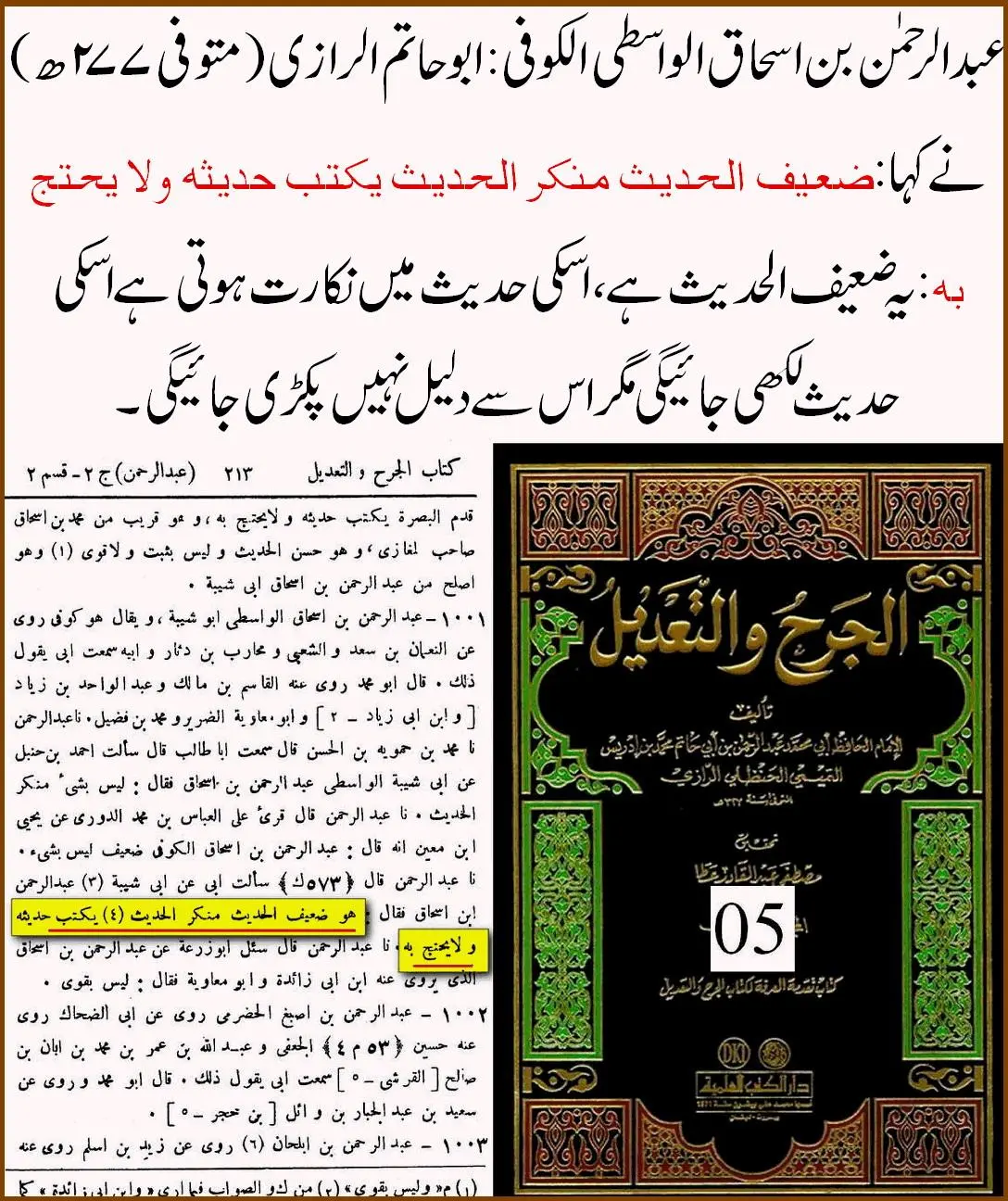
✦ 1. Imam Abu Hatim Al-Razi (244 AH)
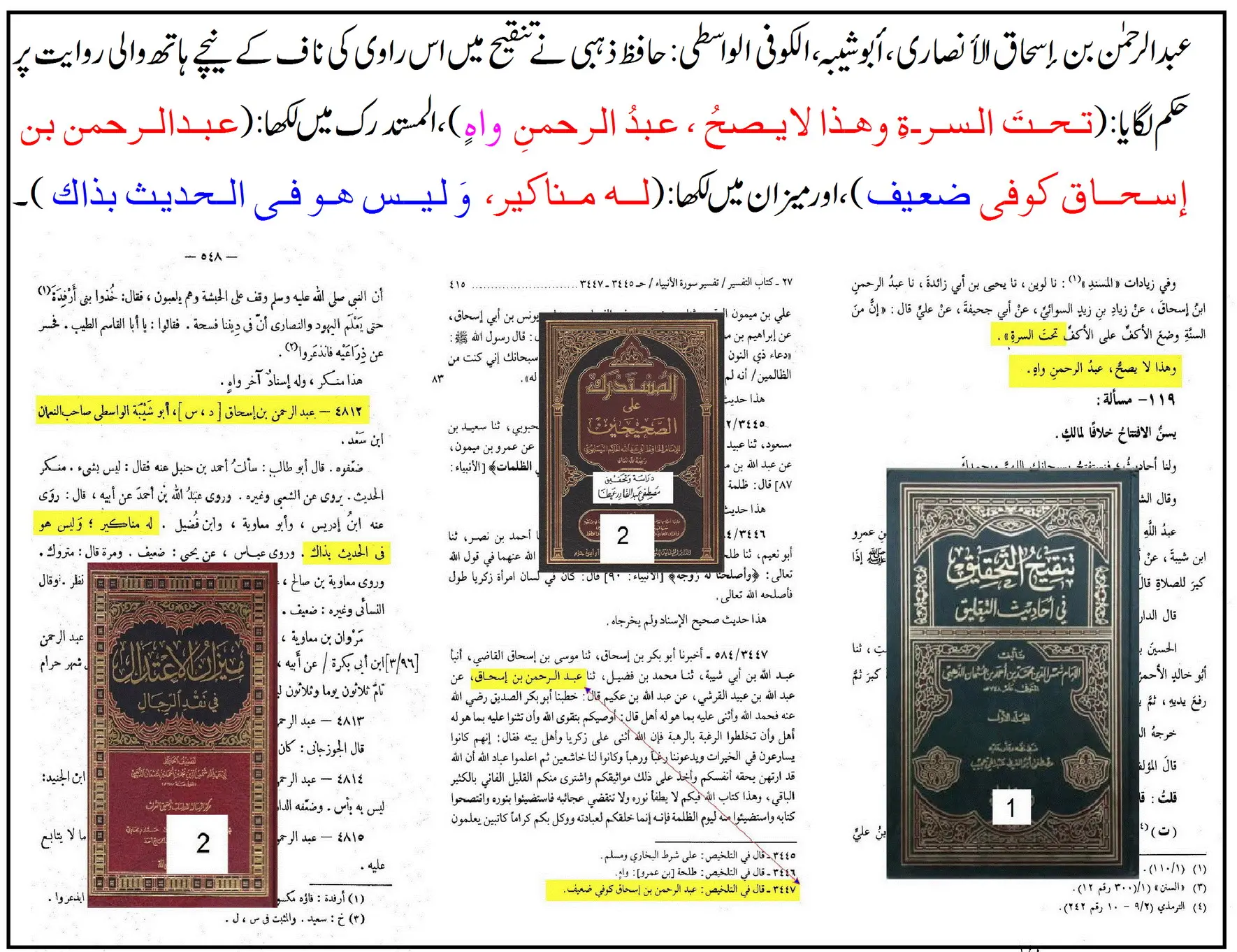
Arabic text: «عبد الرحمن بن إسحاق الواسطي أبو شيبة… ضعيف الحديث منكر الحديث، يكتب حديثه ولا يحتج به.»
Reference: — Ibn Abi Hatim, Al-Jarh wa Al-Ta'dil (1001)
Urdu translation: Abdul Rahman bin Ishaq Al-Wasiti is weak in hadith and a denier of hadith. His hadith may be recorded but it is not to be used as evidence.
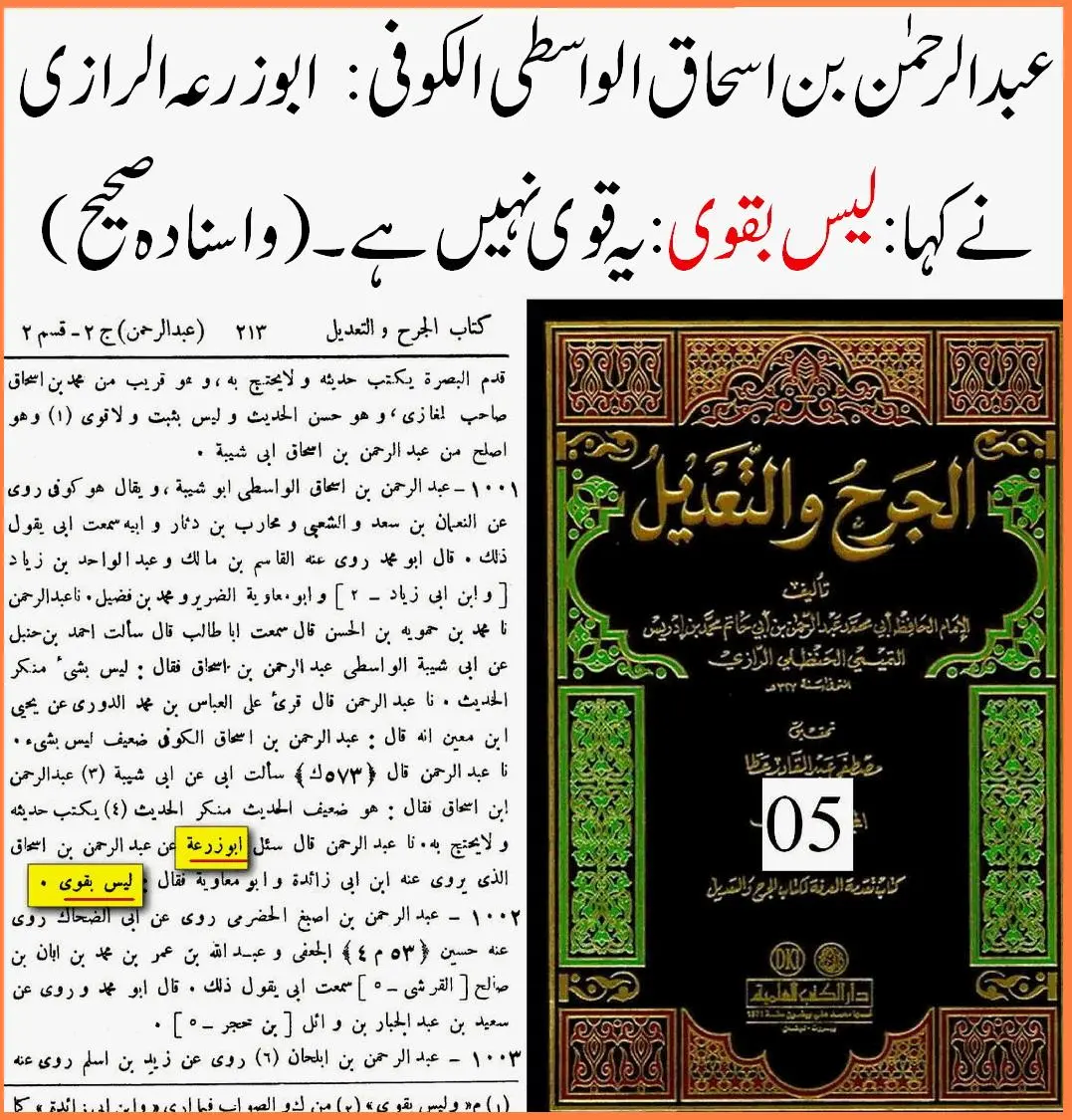
✦ 2. Imam Abu Zur'ah Al-Razi (264 AH)
Arabic text: «سئل أبو زرعة عن عبد الرحمن بن إسحاق… فقال: ليس بقوي.»
Reference: — Ibn Abi Hatim, Al-Jarh wa Al-Ta'dil (1001)
Urdu Translation: When Abu Zur'ah was asked about Abdul Rahman bin Ishaq, he said: He is not strong.
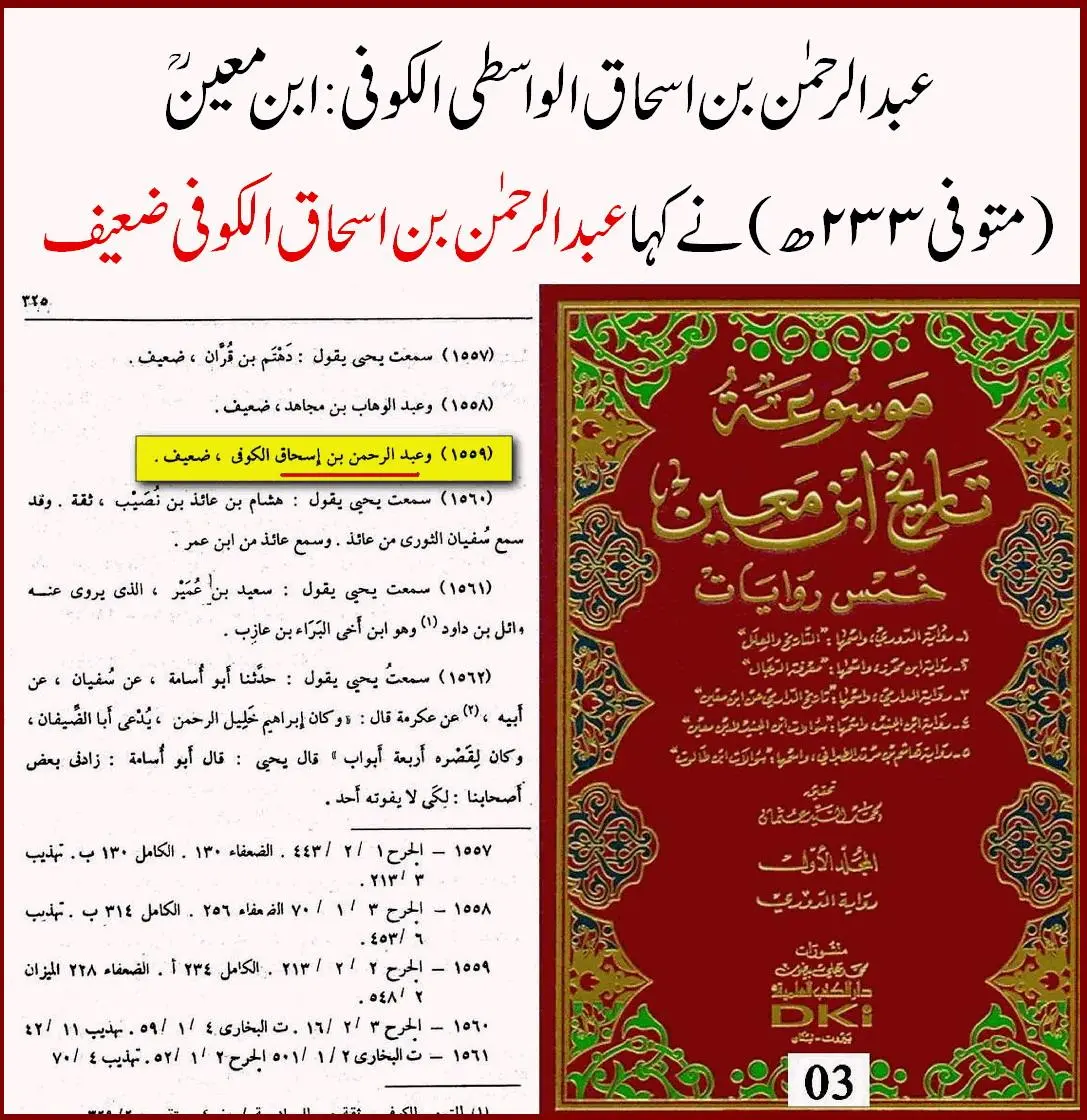
✦ 3. Imam Yahya bin Ma'in (233 AH)
Arabic Text: «عبد الرحمن بن إسحاق الكوفي ضعيف، ليس بشيء.»
Reference: — Ibn Abi Hatim, Al-Jarh wa al-Ta'dil (1001)
Urdu Translation: Yahya bin Ma'in said: Abdul Rahman bin Ishaq al-Kufi is weak, and nothing more.
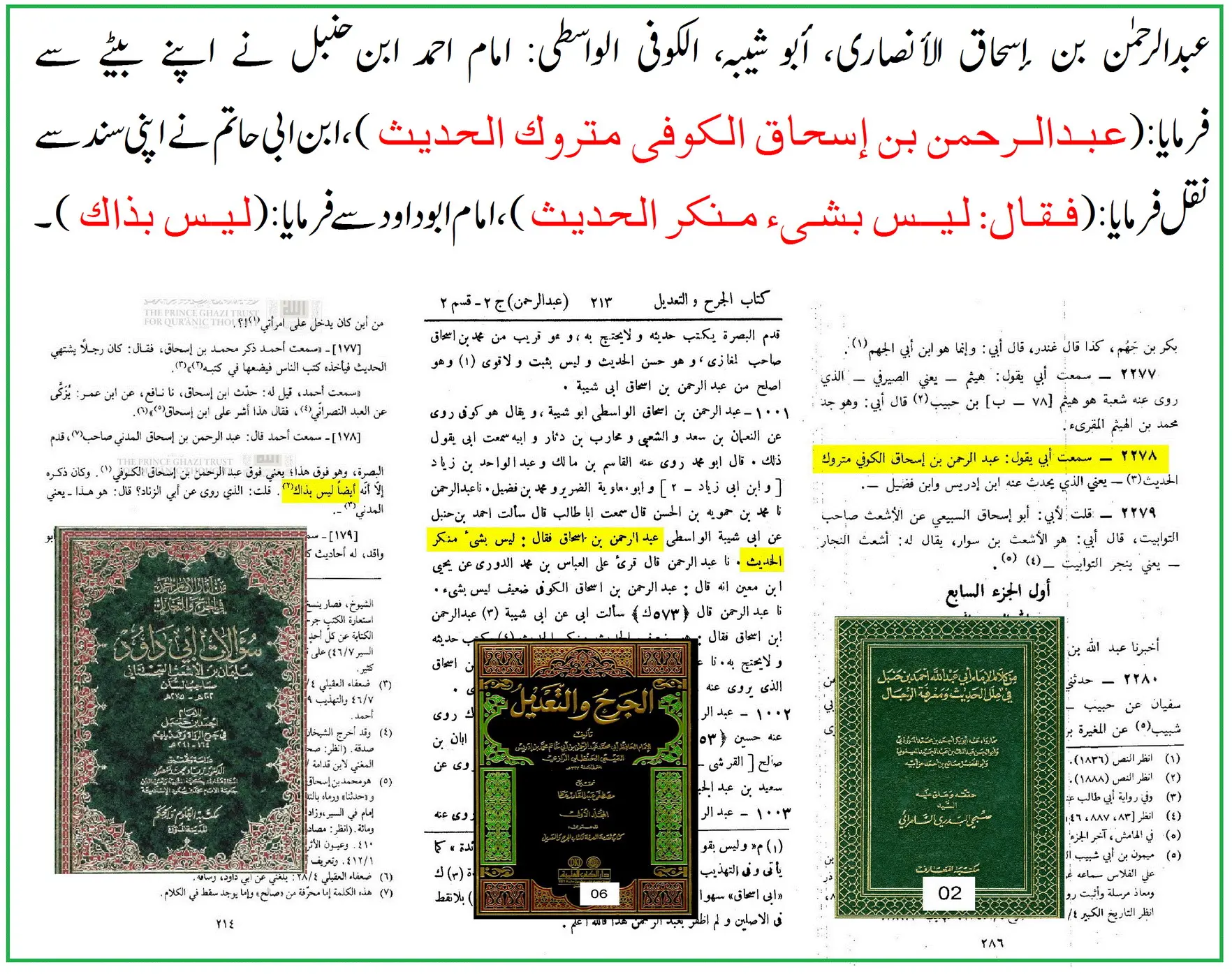
✦ 4. Imam Ahmad bin Hanbal (241 AH)
Arabic Text: «عبد الرحمن بن إسحاق الكوفي متروك الحديث.»
Reference: — Ahmad bin Hanbal, Al-‘Ilal wa Ma’rifat al-Rijal (2278)
Urdu Translation: Abdul Rahman bin Ishaq al-Kufi is a rejected narrator of hadith.
And at another place: «ليس بشيء، منكر الحديث.»
Reference: — Ibn Abi Hatim, Al-Jarh wa al-Ta'dil
Translation: This narrator is of no rank, and a denier of hadith.
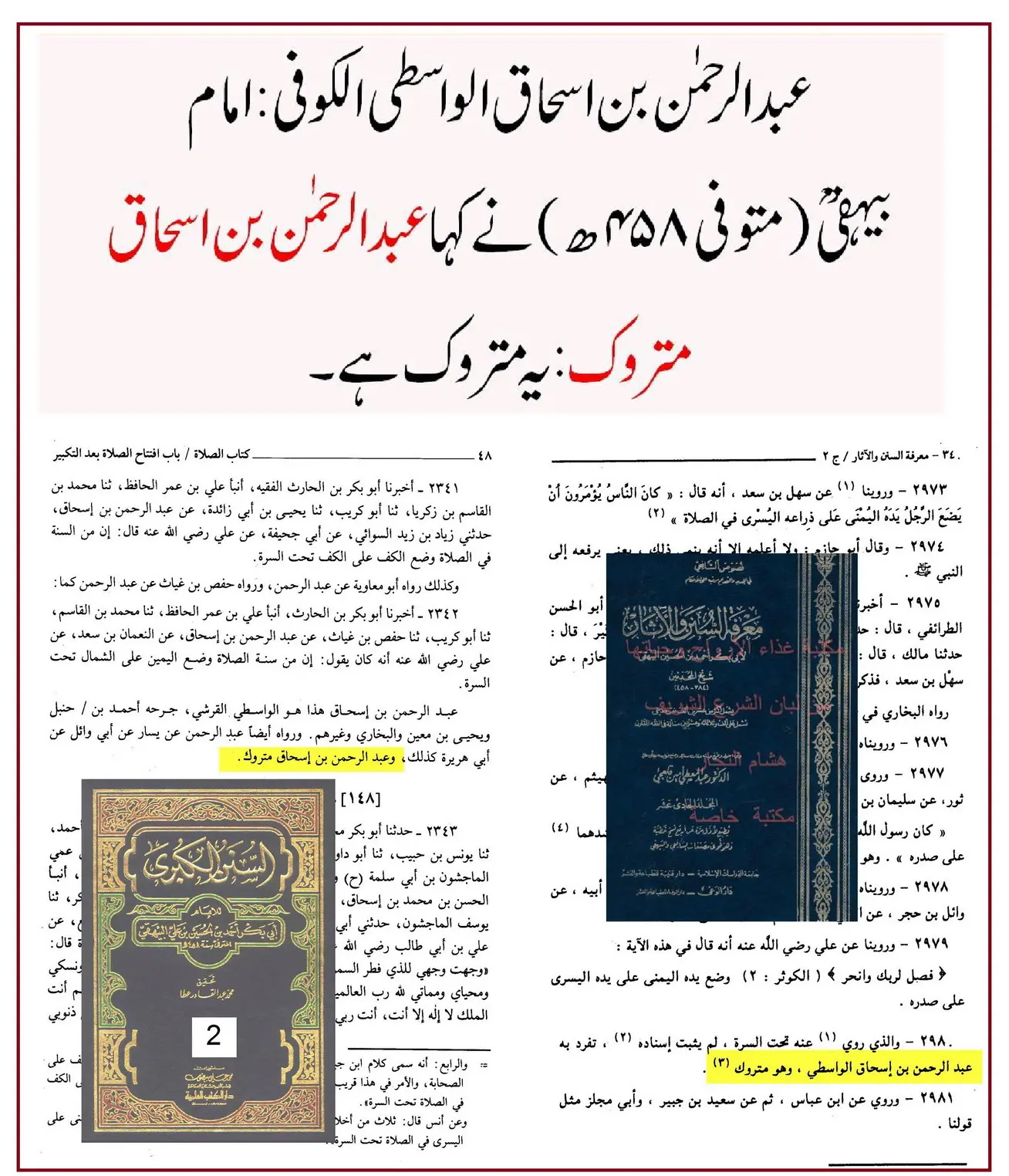
✦ 5. Imam Bayhaqi (458 AH)
Arabic Text: «والذي روي عنه تحت السرة لم يثبت إسناده، تفرد به عبد الرحمن بن إسحاق الواسطي، وهو متروك.»
Reference: — Al-Bayhaqi, Ma’rifat al-Sunan wa al-Athar (2980)
Urdu Translation: There is no chain evidence for the narration of tying the hand below the navel; it was narrated only by Abdul Rahman bin Ishaq al-Wasiti, and he is rejected.
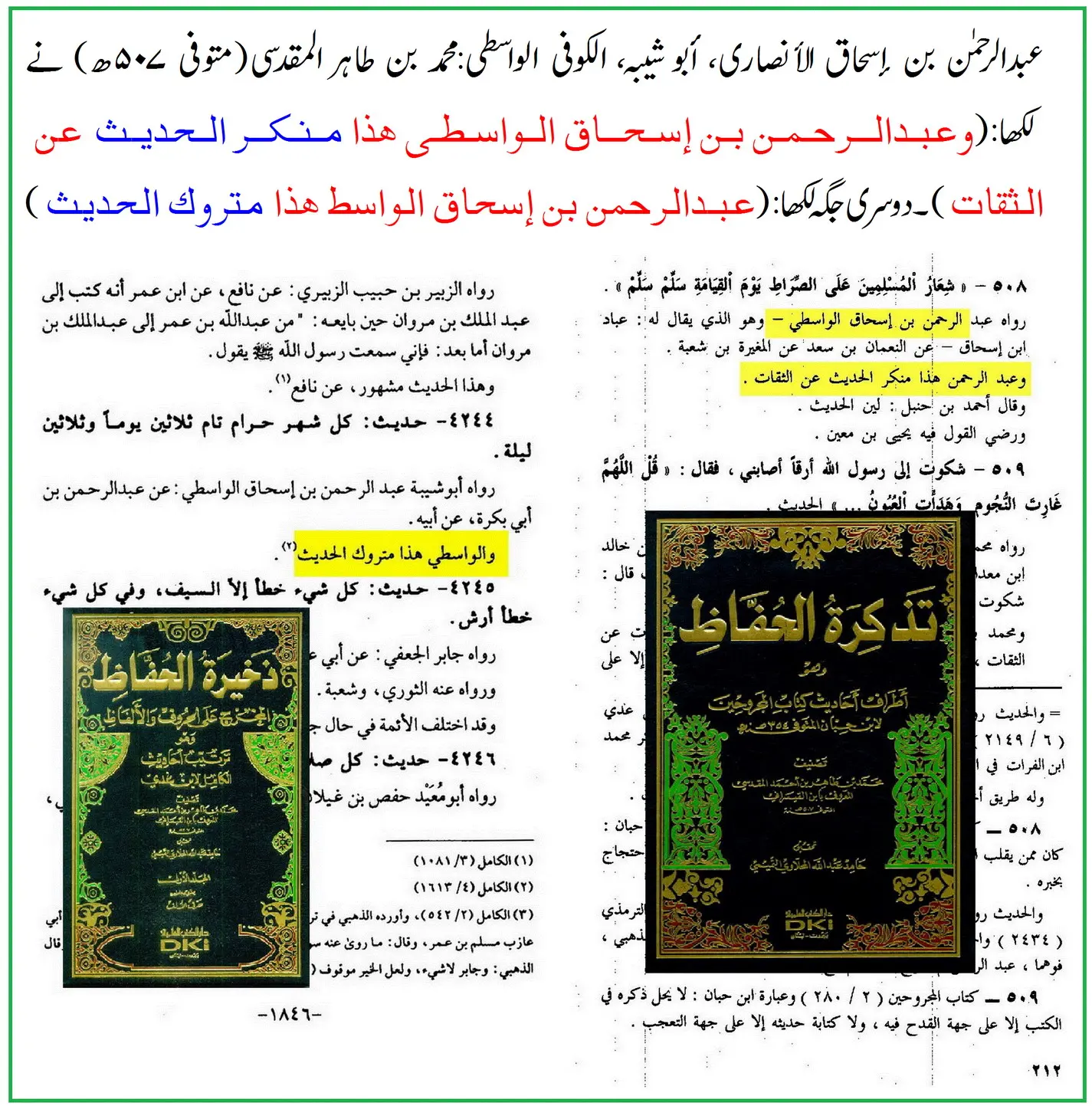
✦ 6. Muhammad bin Tahir al-Maqdisi (507 AH)
Arabic Text: «وعبد الرحمن هذا منكر الحديث عن الثقات.»
Reference: — Ibn Tahir, Tadhkirat al-Huffaz
Urdu Translation: This Abdul Rahman (Abu Shaybah) narrates denials of hadith from trustworthy narrators.
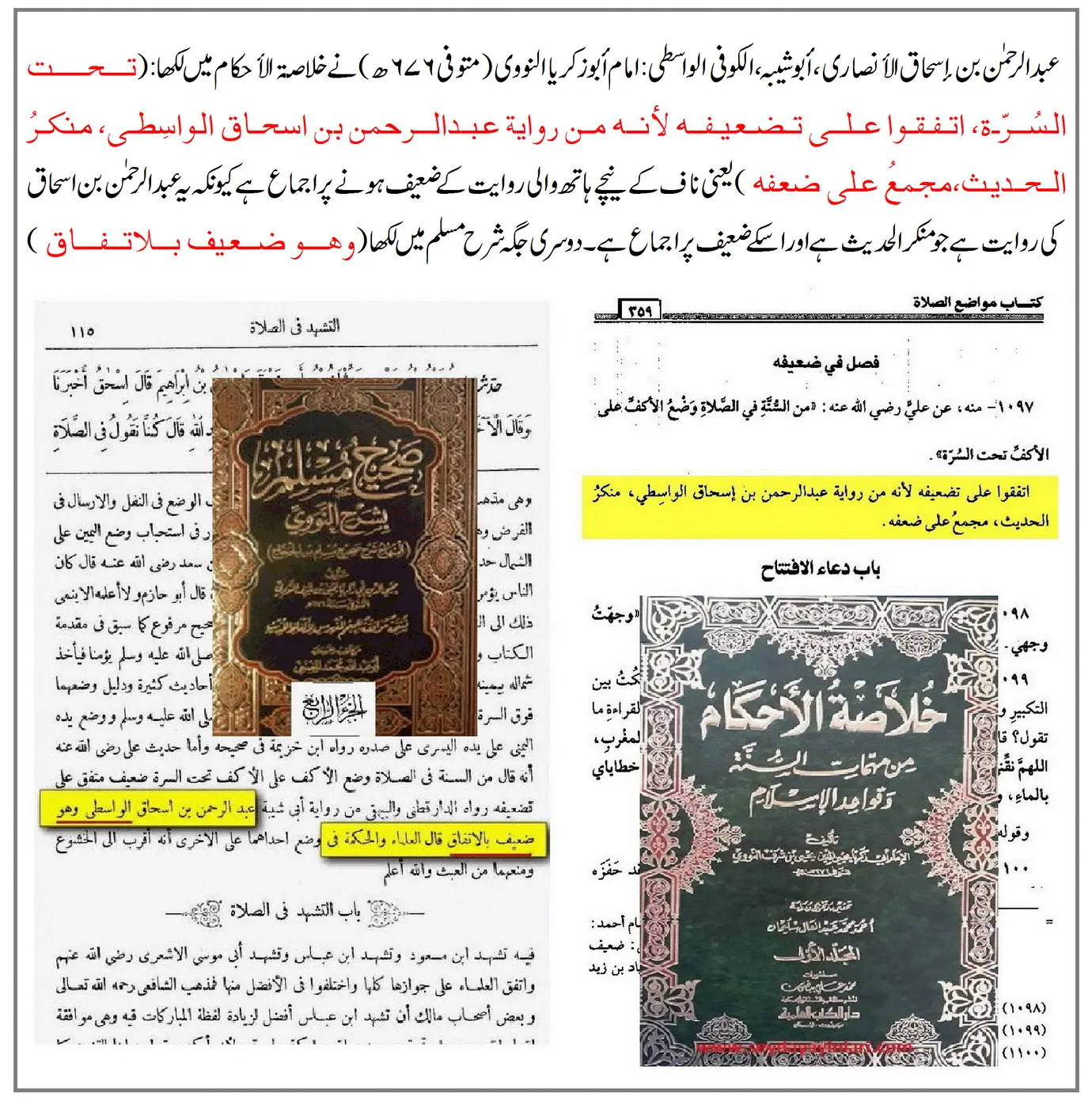
✦ 7. Imam Nawawi (676 AH)
Arabic Text: «من السنة وضع الأكف تحت السرة… اتفقوا على تضعيفه لأنه من رواية عبد الرحمن بن إسحاق الواسطي، منكر الحديث، مجمع على ضعفه.»
Reference: — Al-Nawawi, Khulasat al-Ahkam (1097)
Urdu Translation: There is consensus on the weakness of the narration about folding hands below the navel, because it is narrated by Abdul Rahman bin Ishaq Al-Wasiti, who is a denier of hadith, and there is consensus on his weakness.
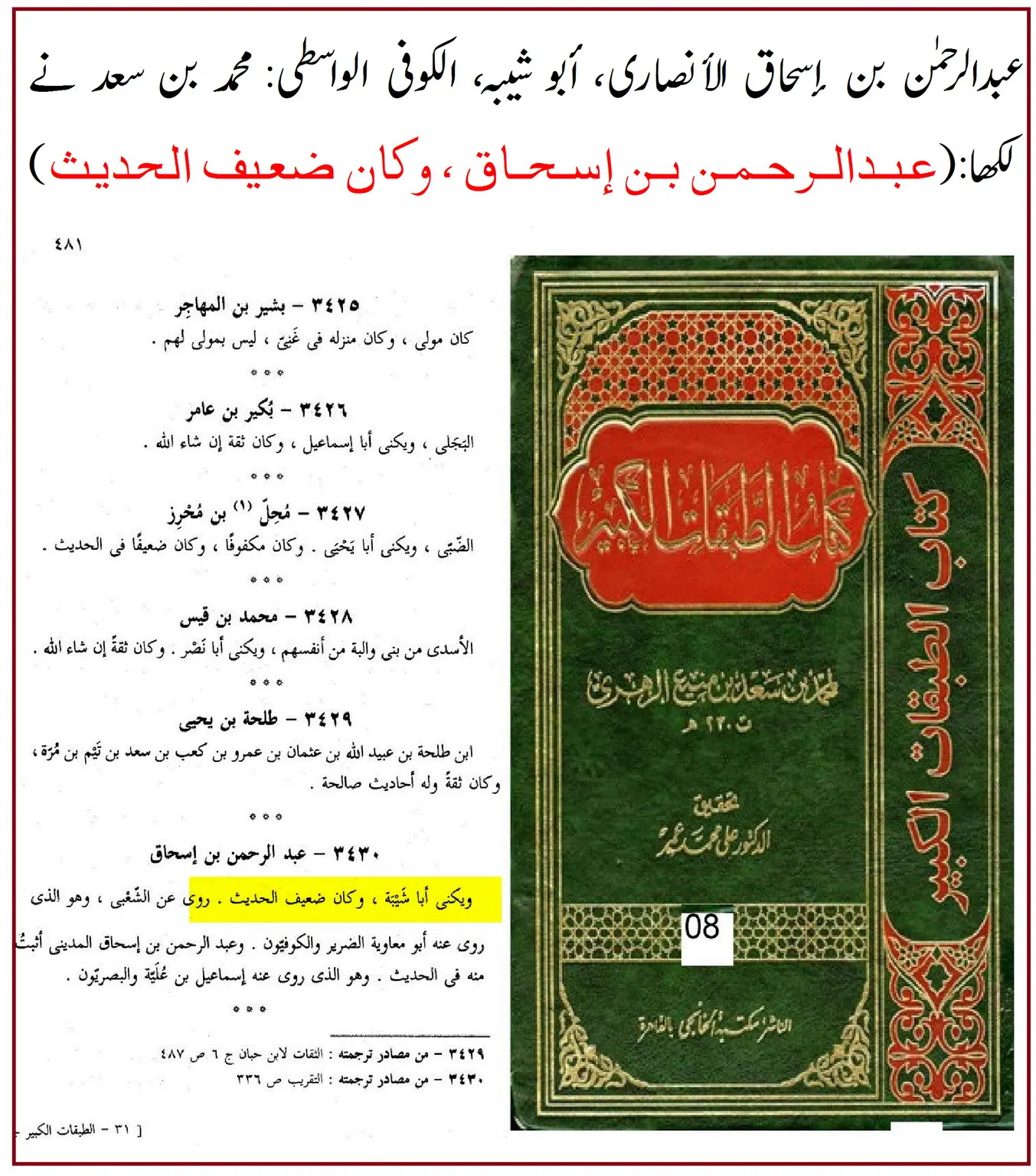
✦ 8. Muhammad bin Saad (Katib Al-Waqidi, died 230 AH)
Text: He said: «ضعيف.»
Urdu Translation: This narrator is weak.
✦ 9. Hafiz Dhahabi (748 AH)
Arabic Text: «له مناكير، وليس هو في الحديث بذاك.»
Reference: — Al-Dhahabi, Mizan al-I'tidal (No. 4812)
Urdu Translation: His narrations contain anomalies, and he holds no rank in hadith.
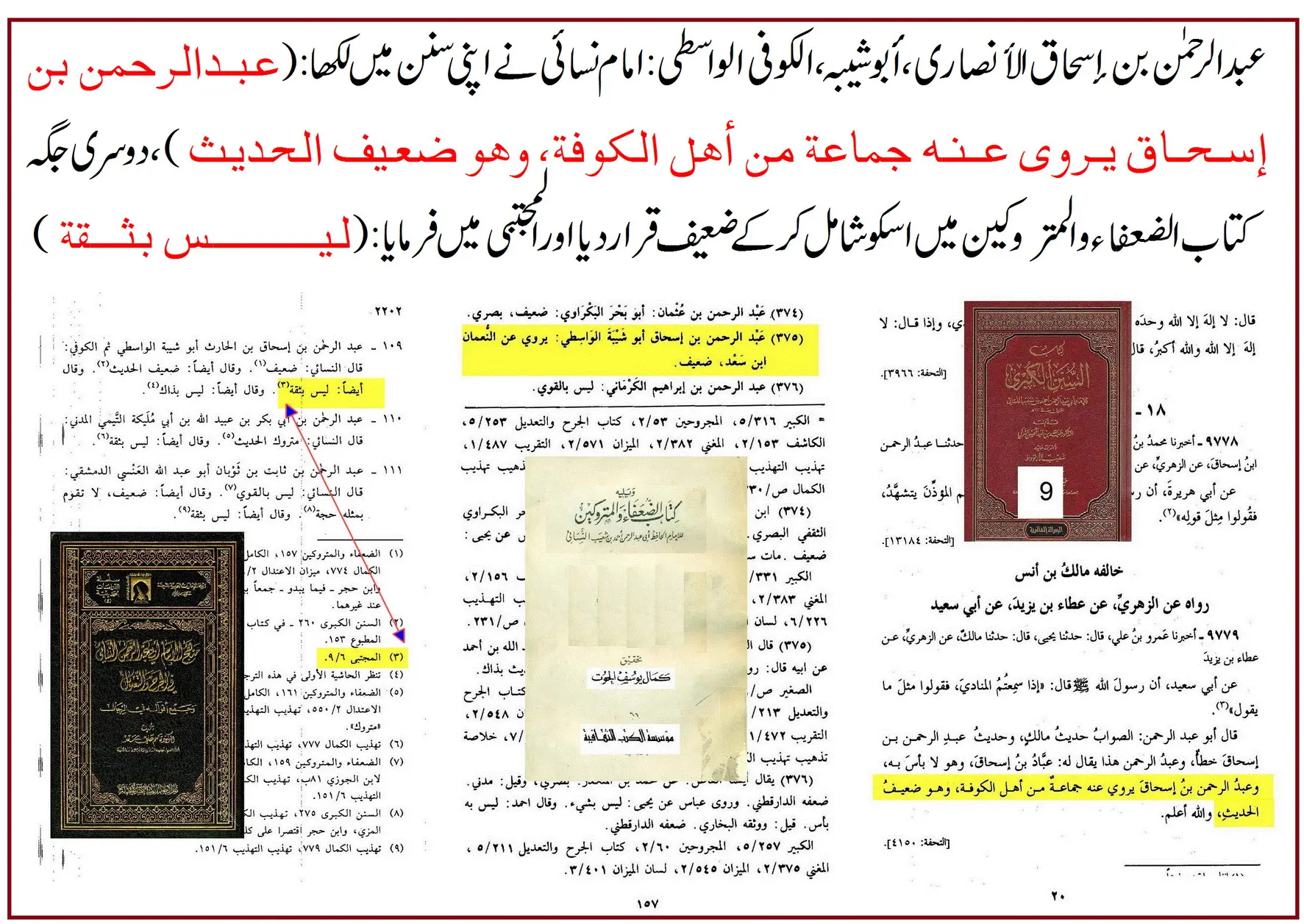
✦ 10. Imam Nasai (303 AH)
Arabic Text: «عبد الرحمن بن إسحاق… ضعيف.»
Reference: — Al-Nasa'i, Al-Du'afa wal-Matrukoon (No. 358)
Urdu Translation: Abdul Rahman bin Ishaq is weak.
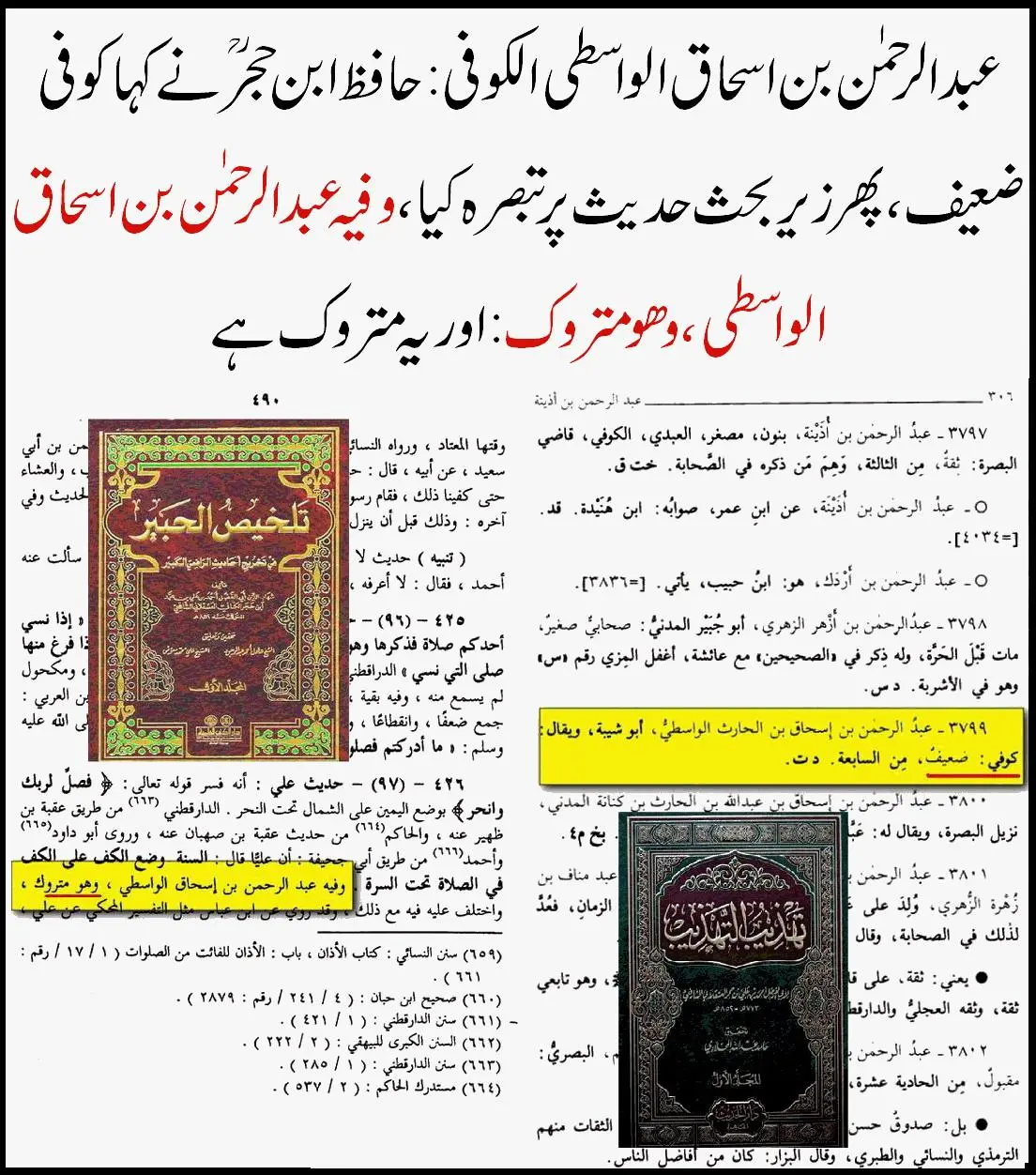
✦ 11. Hafiz Ibn Hajar Asqalani (852 AH)
Arabic Text: «… وفيه عبد الرحمن بن إسحاق الواسطي، وهو متروك.»
Reference: — Ibn Hajar, Al-Talkhis Al-Habeer (2/25)
And he said: «عبد الرحمن بن إسحاق أبو شيبة الواسطي، ضعيف.»
Reference: — Ibn Hajar, Taqreeb al-Tahdheeb (No. 3814)
Urdu Translation: This narrator is abandoned, and the other opinion is that he is weak.
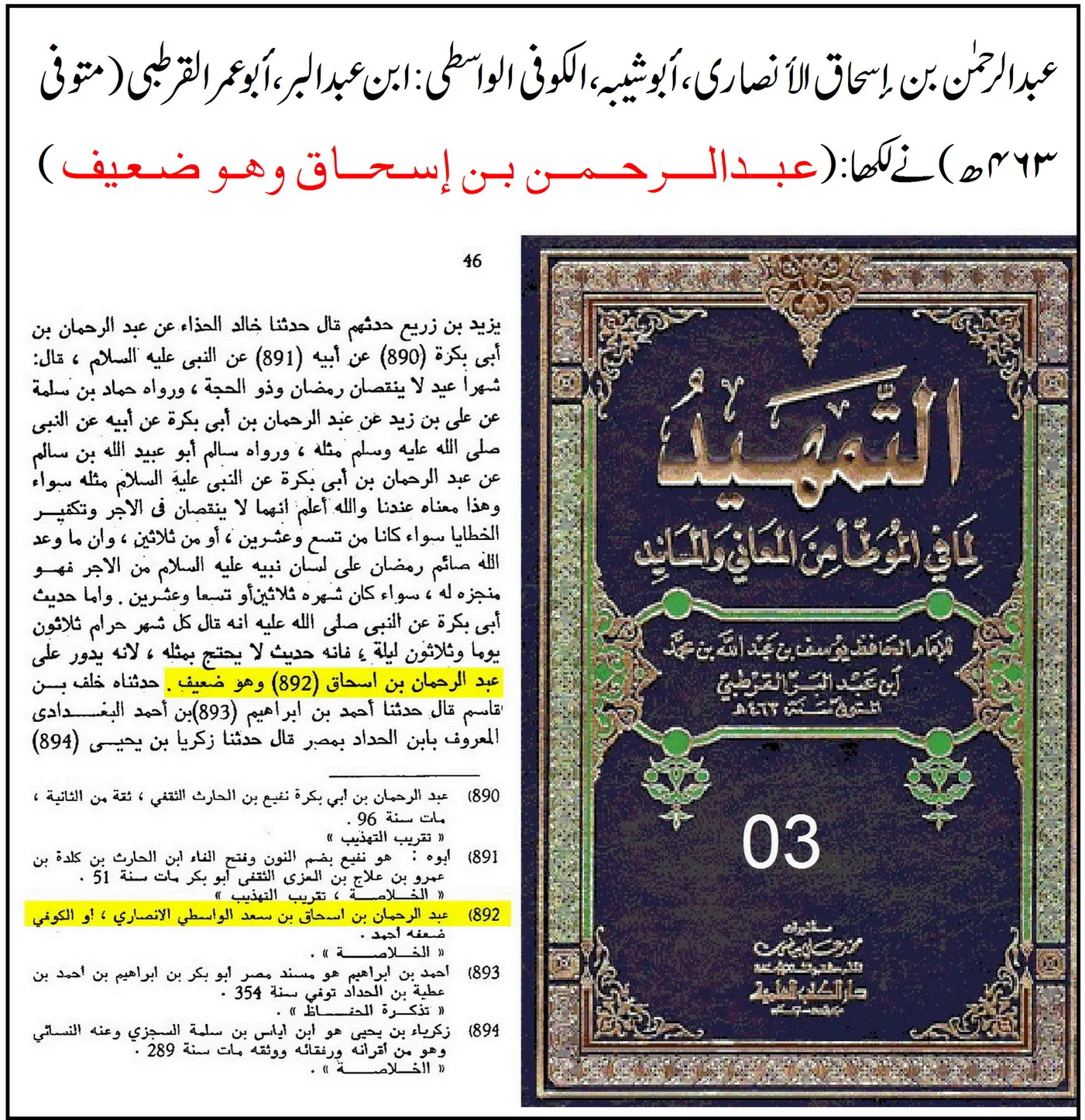
✦ 12. Allama Ibn Abdul Barr Al-Qurtubi (463 AH)
Arabic Text: «… عبد الرحمن بن إسحاق، وهو ضعيف.»
Reference: — Ibn Abdul Barr, Al-Tamhid (20/226)
Urdu Translation: This narrator is weak.
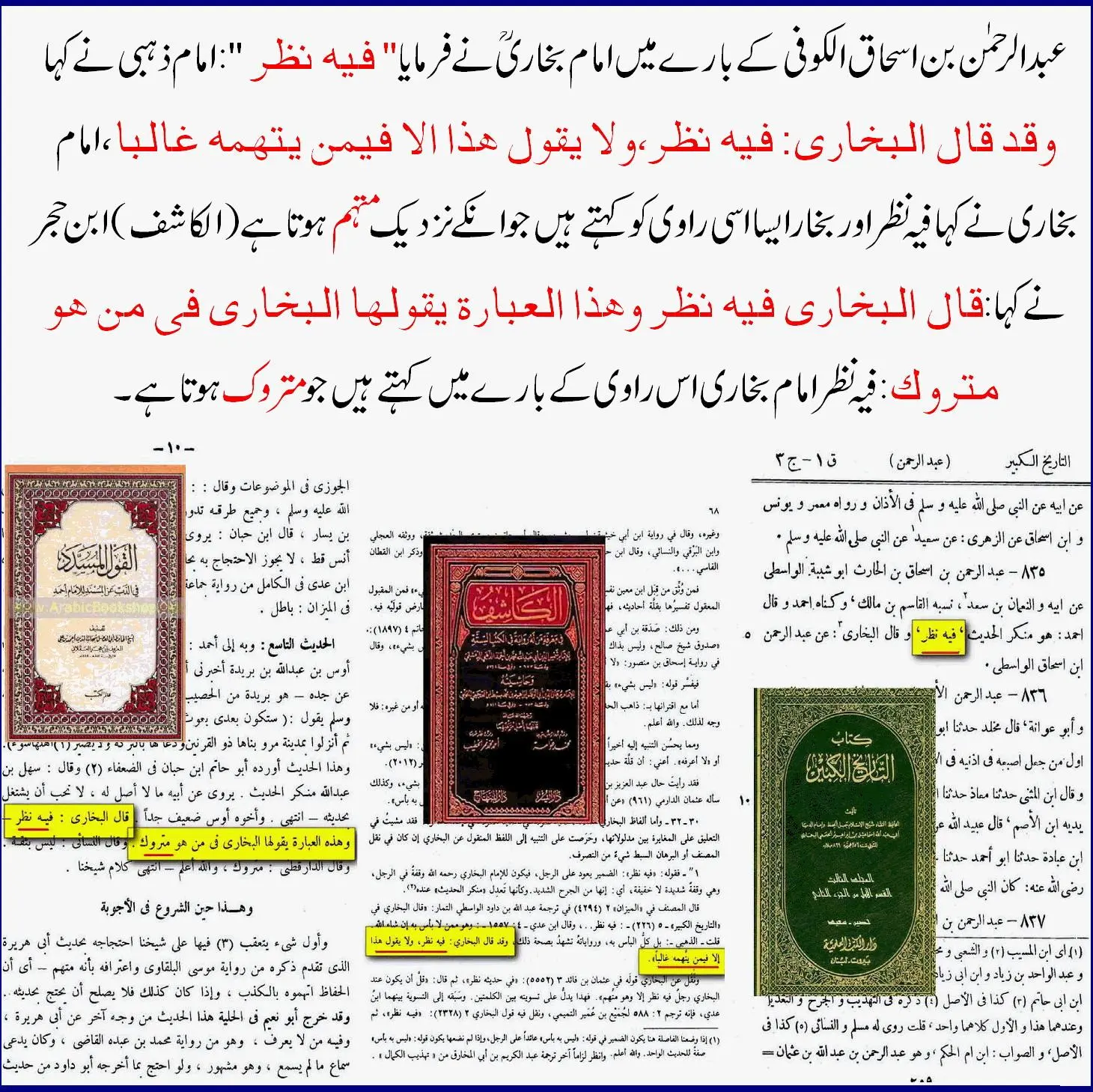
✦ 13. Imam Bukhari (256 AH)
Arabic Text: «عبد الرحمن بن إسحاق أبو شيبة الواسطي، فيه نظر.»
Reference: — Bukhari, Al-Tarikh Al-Kabir (6/23, No. 835)
Urdu Translation: About Abdul Rahman bin Ishaq Al-Wasiti he said: He is under observation. (This is the strongest criticism that Bukhari only applies to liars and abandoned narrators)
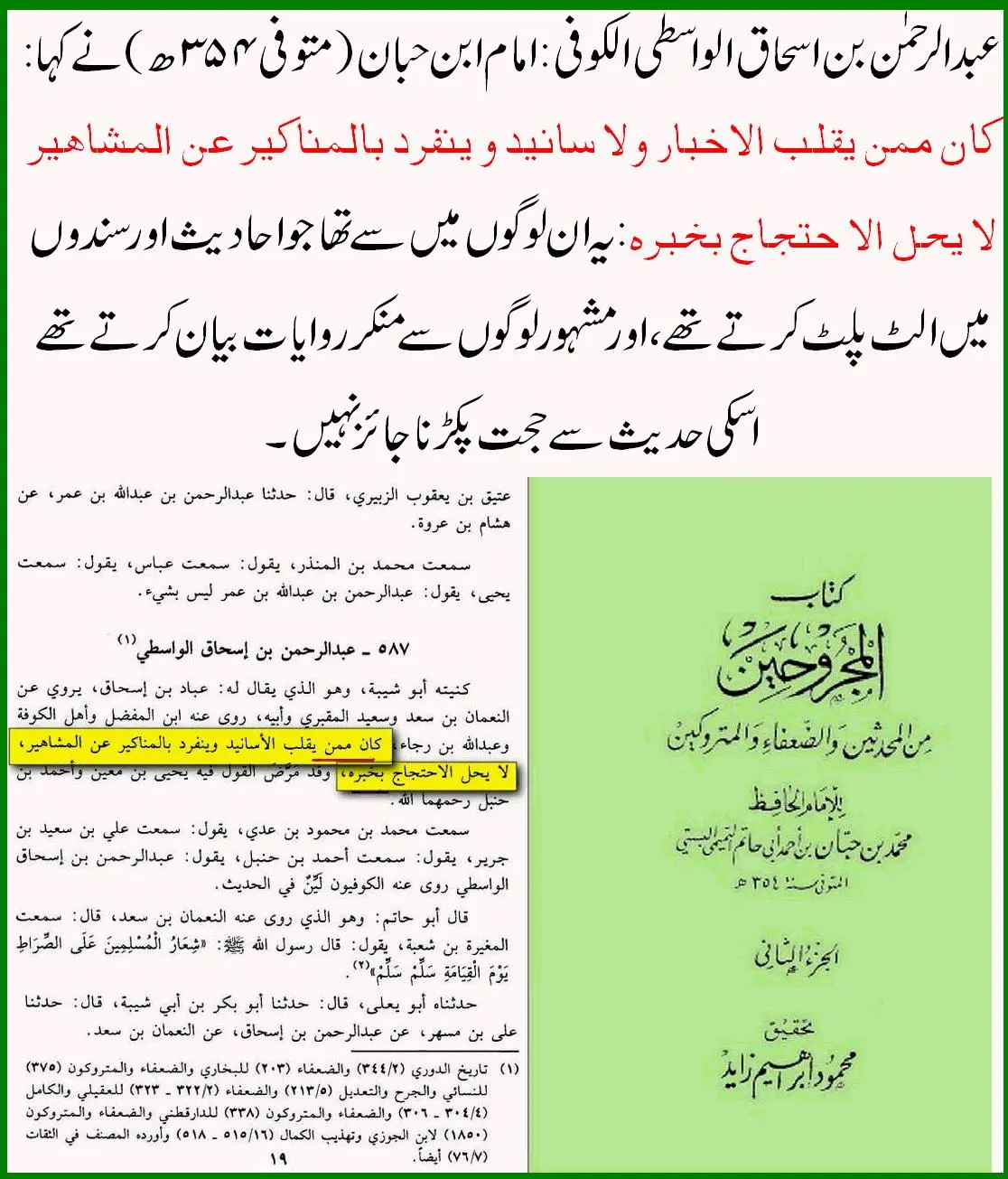
✦ 14. Imam Ibn Hibban (354 AH)
Arabic text: «كان ممن يقلب الأخبار والأسانيد، وينفرد بالمناكير عن المشاهير، لا يحل الاحتجاج بخبره.»
Reference: — Ibn Hibban, Al-Majruhin (2/67)
Urdu translation: This narrator used to distort texts and chains of narration, fabricated narrations denying famous narrators, it is not permissible to take proof from his narration.
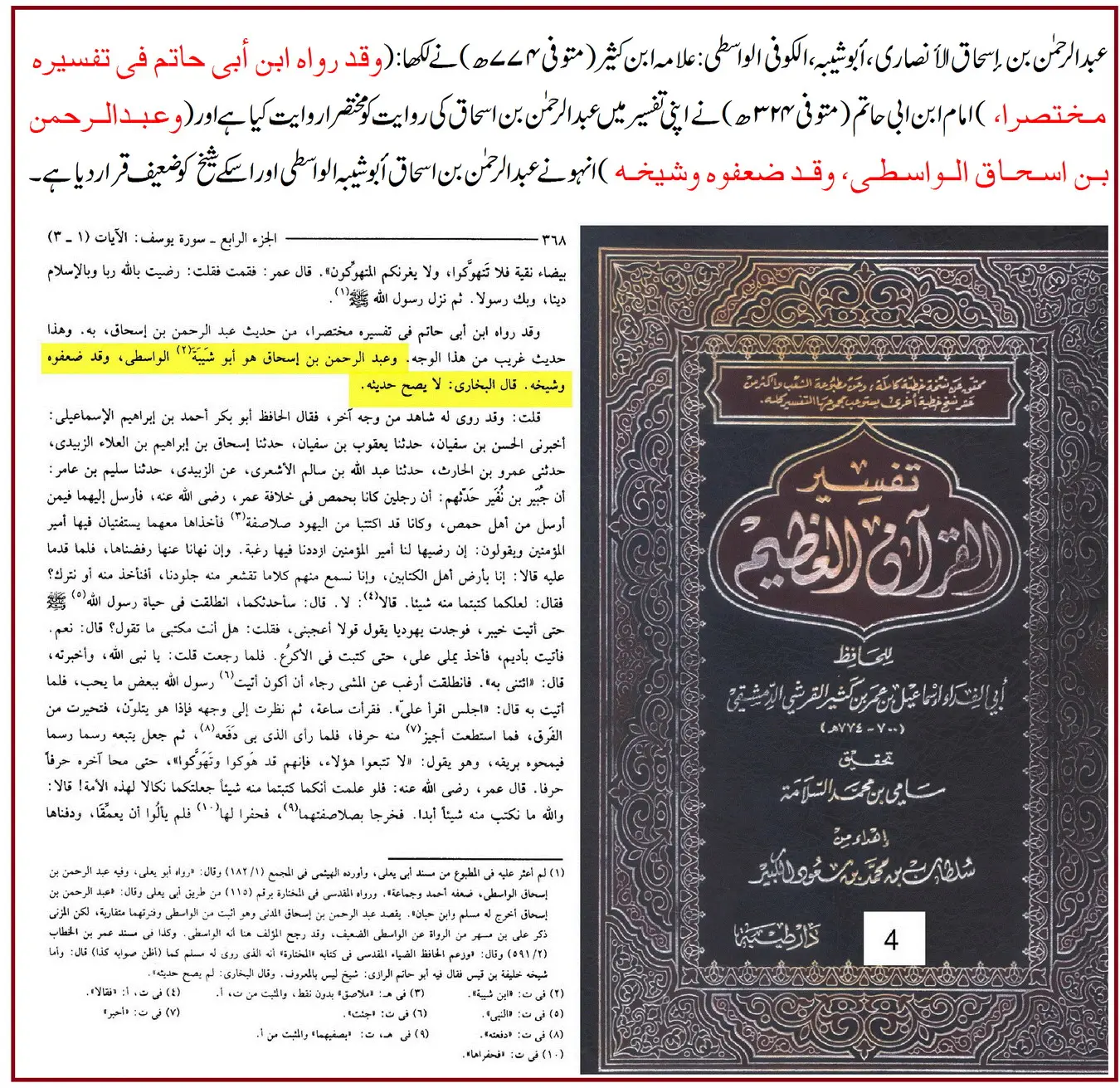
✦ 15. Hafiz Ibn Kathir (774 AH)
Arabic text: «… وهو أبو شيبة الواسطي، وقد ضعفوه وشيخه. قال البخاري: لا يصح حديثه.»
Reference: — Ibn Kathir, Tafsir al-Quran al-Azim (4/231)
Urdu translation: This is Abu Shaybah al-Wasiti, the hadith scholars have declared both him and his teacher weak. Imam Bukhari said: None of his hadiths are authentic.
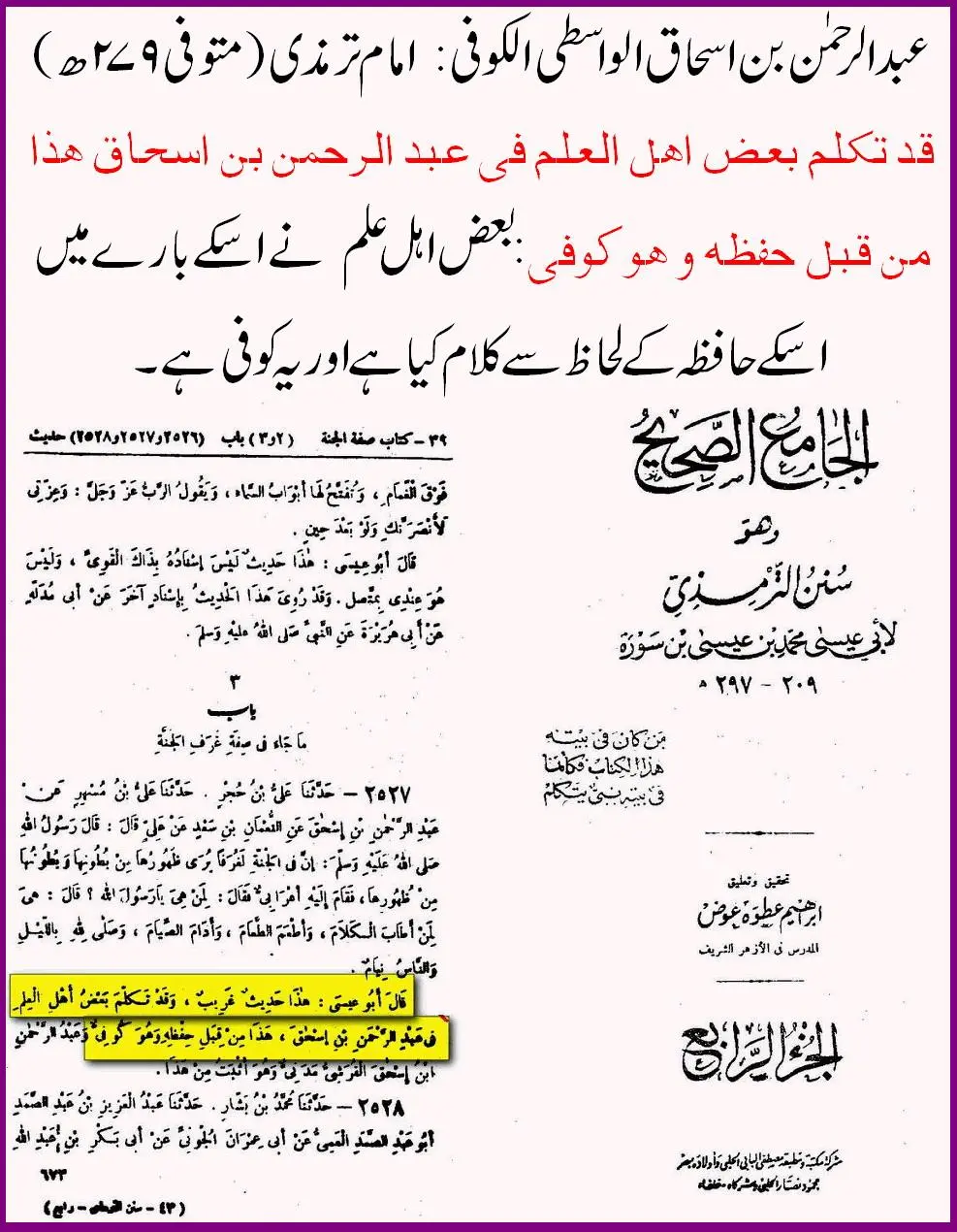
✦ 16. Imam Tirmidhi (279 AH)
Arabic text: «هذا حديث غريب، لا نعرفه إلا من حديث عبد الرحمن بن إسحاق… وقد تكلم فيه أهل الحديث من قبل حفظه.»
Reference: — At-Tirmidhi, Al-Jami' (Hadith 1984)
Urdu translation: This hadith is strange, and is narrated only from Abdul Rahman bin Ishaq... and the hadith scholars have criticized him due to his memory.
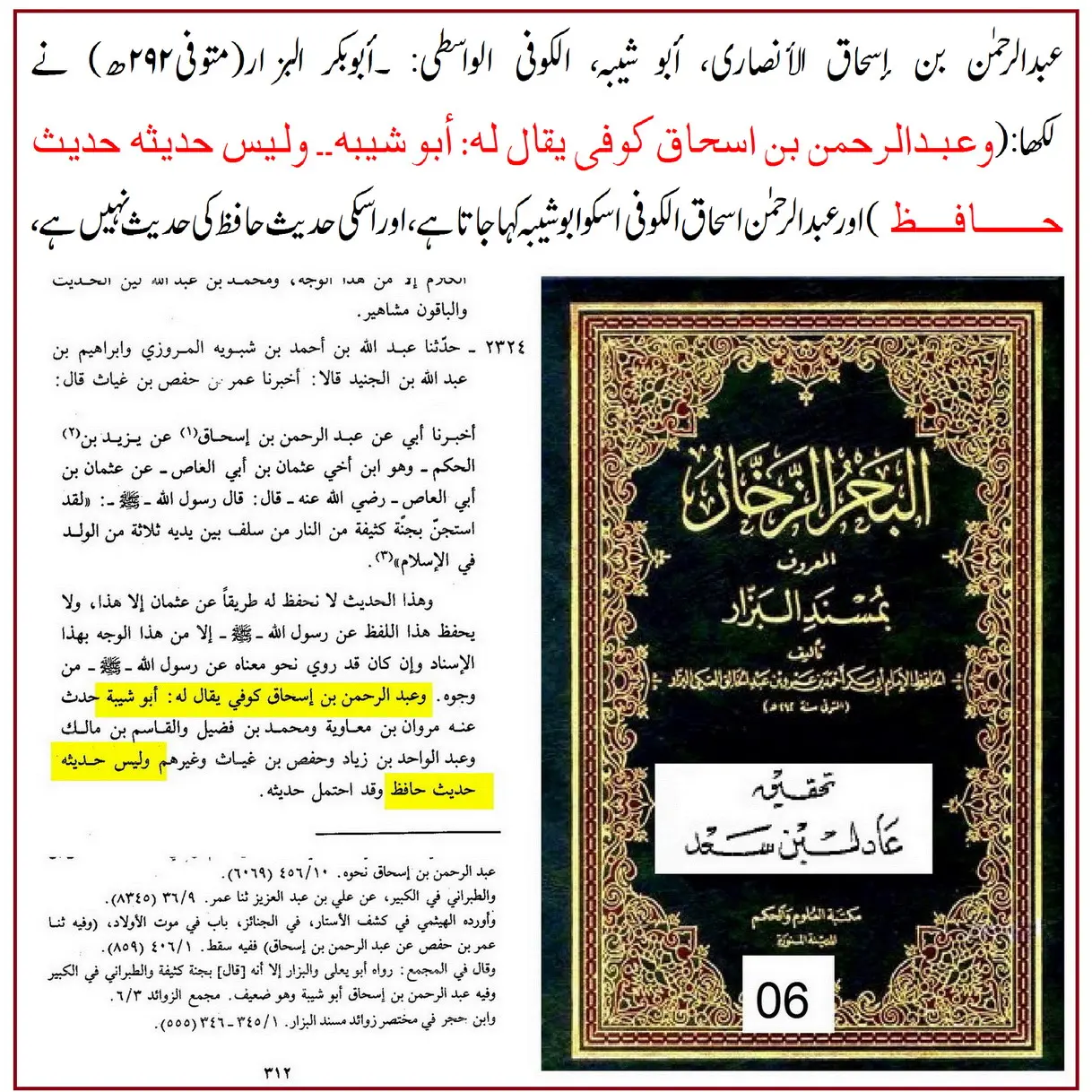
✦ 17. Imam Bazzar (292 AH)
Arabic text: «وعبد الرحمن بن إسحاق كوفي يقال له أبو شيبة، وليس حديثه حديث حافظ.»
Reference: — Al-Bazzar, Al-Bahr az-Zukhar (8/312)
Urdu translation: Abdul Rahman bin Ishaq al-Kufi is called Abu Shaybah... His hadith is not that of a Hafiz (i.e., it is weak).
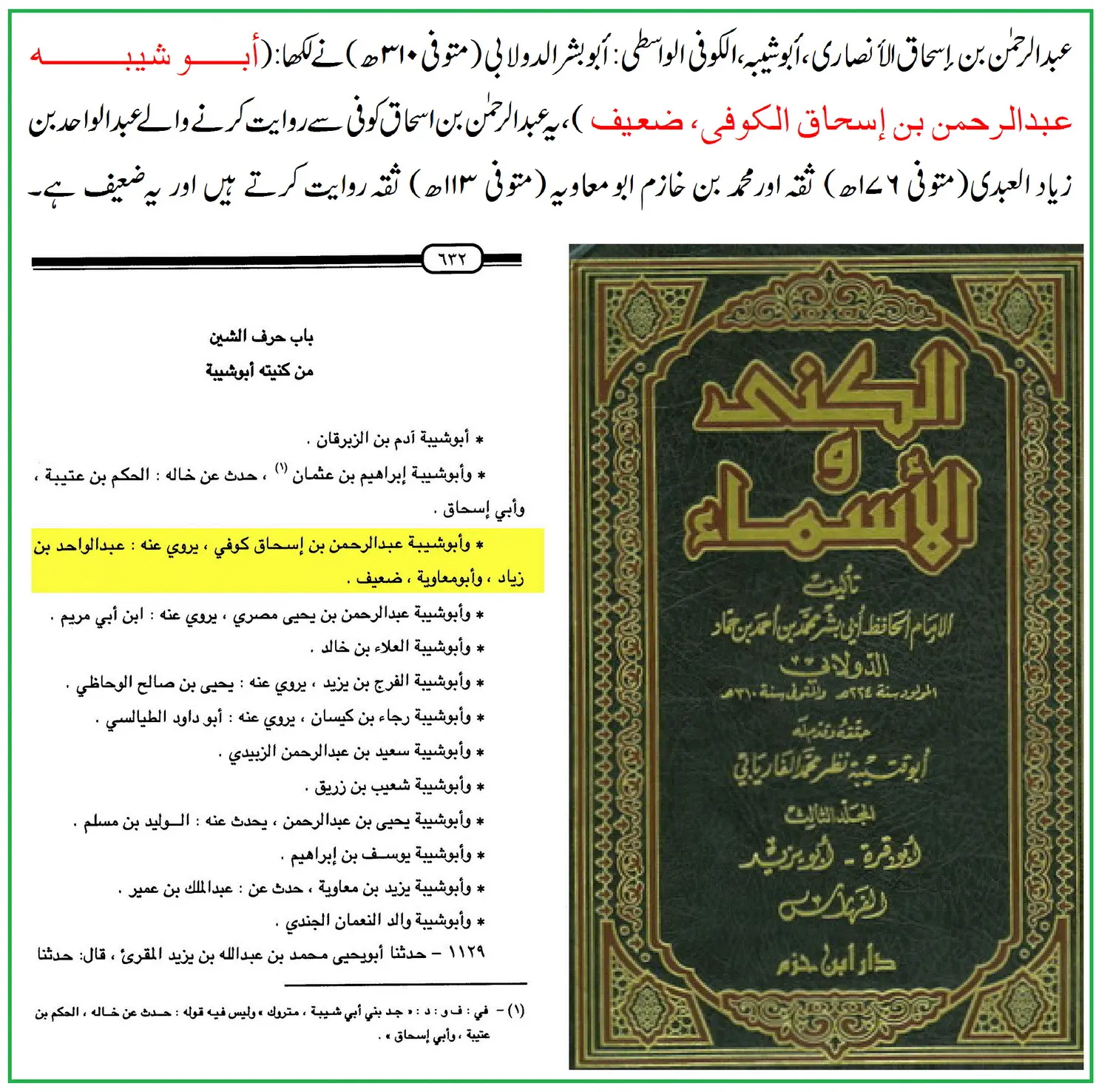
✦ 18. Abu Bishr ad-Dulabi (310 AH)
Arabic text: «أبو شيبة عبد الرحمن بن إسحاق كوفي… ضعيف.»
Reference: — Ad-Dulabi, Al-Kuna wal-Asma (2/179)
Urdu translation: Abu Shaybah Abdul Rahman bin Ishaq al-Kufi... is weak.
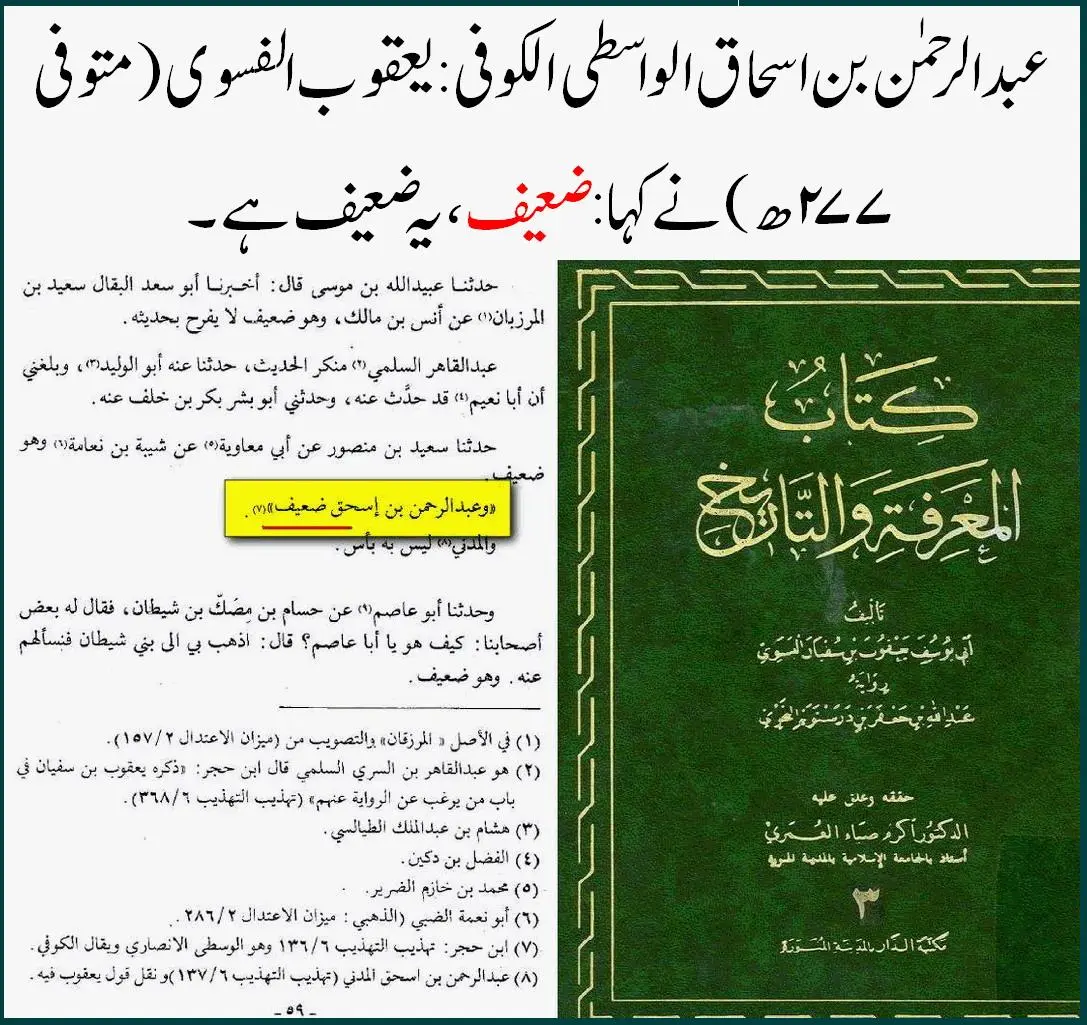
✦ 19. Ya'qub al-Fasawi (277 AH)
Arabic text: «وعبد الرحمن بن إسحاق ضعيف.»
Reference: — Al-Fasawi, Al-Ma'rifah wal-Tarikh (2/780)
Urdu translation: Abdul Rahman bin Ishaq is weak.
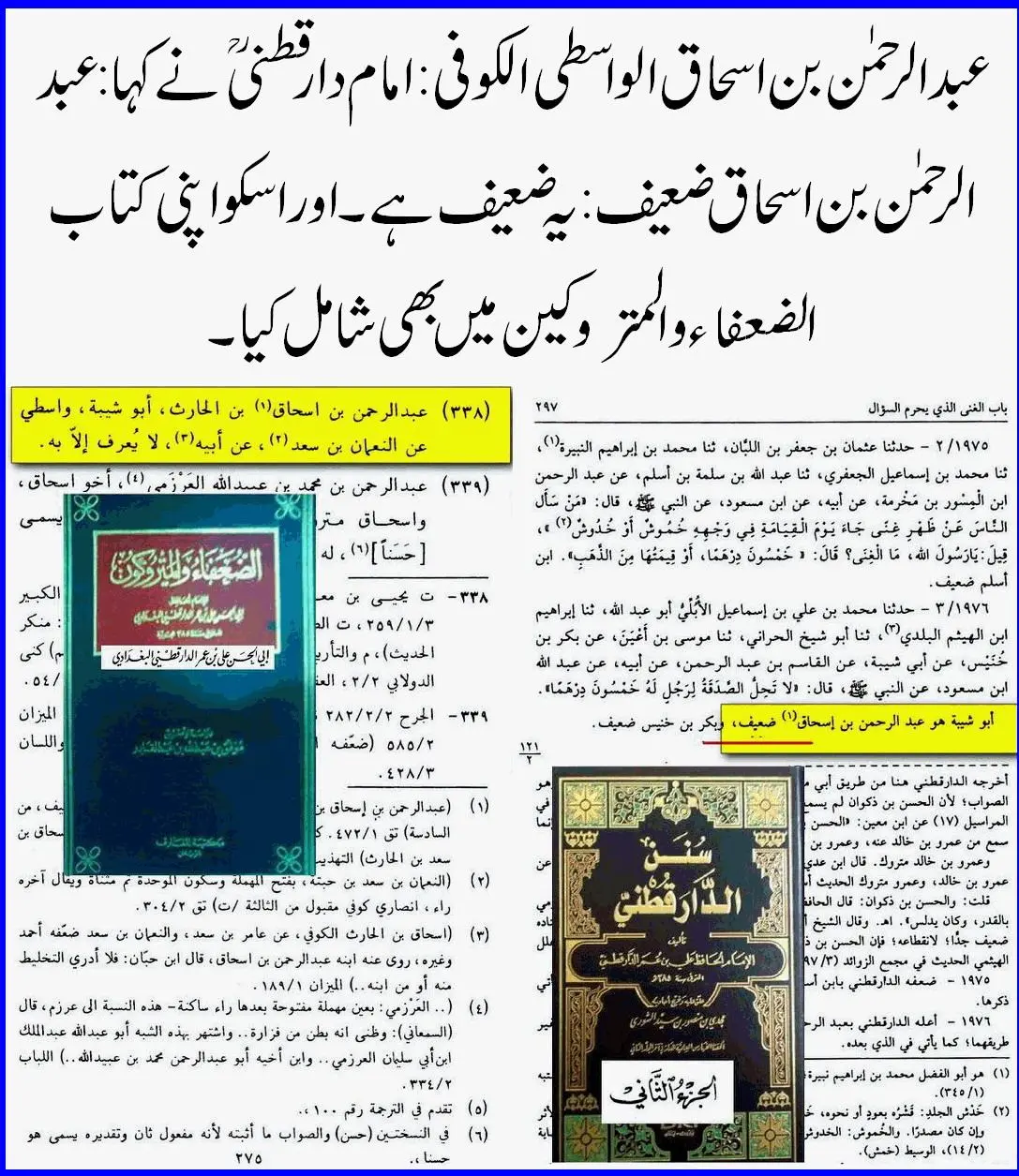
✦ 20. Imam Darqutni (385 AH)
Arabic text: «أبو شيبة هو عبد الرحمن بن إسحاق، ضعيف.»
Reference: — Ad-Darqutni, As-Sunan (2/38)
Also mentioned in his book Al-Du'afa.
Urdu Translation: Abu Shaybah Abdul Rahman bin Ishaq is weak.
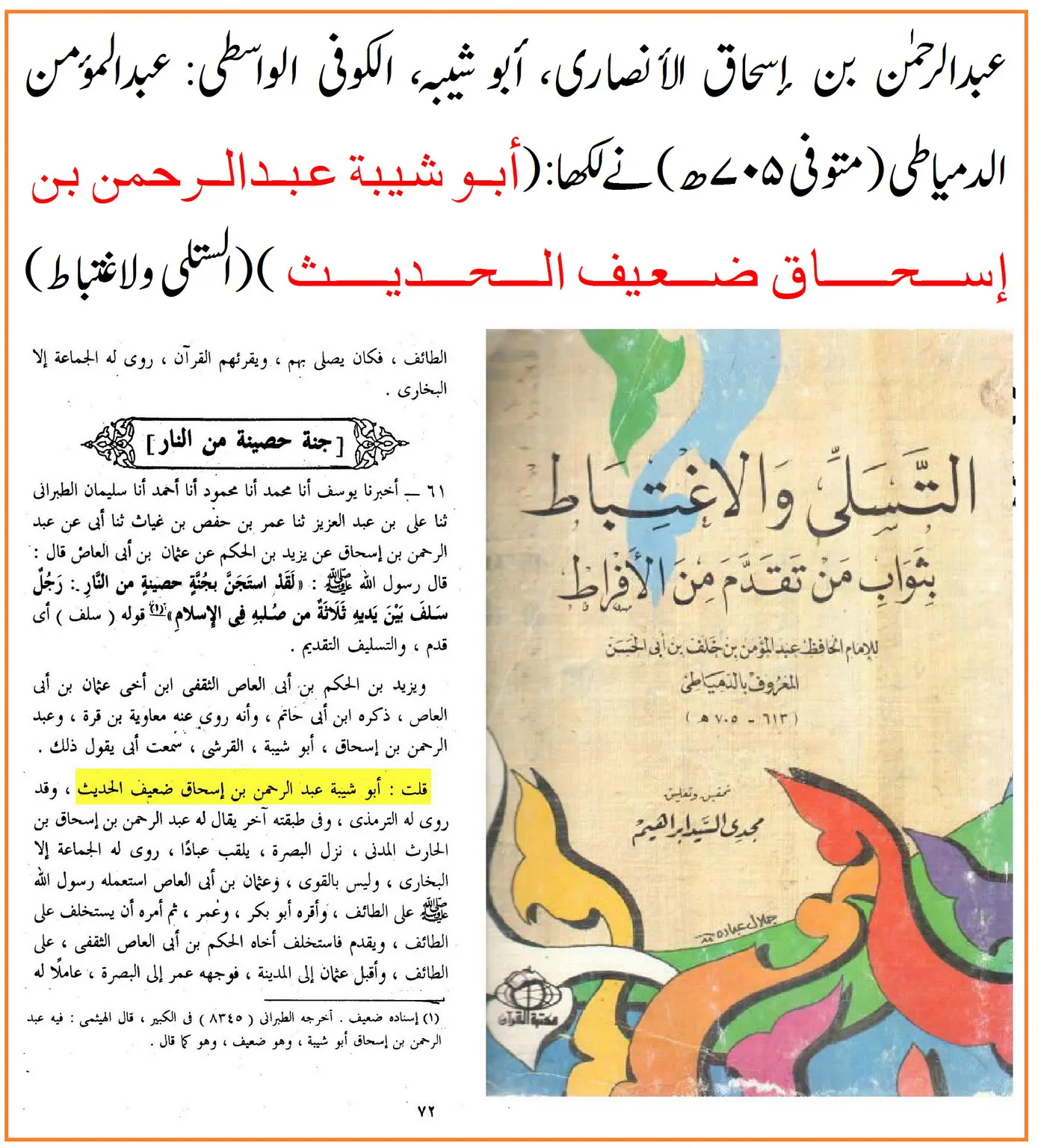
✦ 21. Imam Abdul-Mu'min Al-Dimyati (705 AH)
Arabic Text: «قلت: أبو شيبة عبد الرحمن بن إسحاق ضعيف الحديث.»
Reference: — Al-Dimyati, Al-Tasli wal-Ightibat, p. 92
Urdu Translation: I say: Abu Shaybah Abdul Rahman bin Ishaq is weak in hadith.
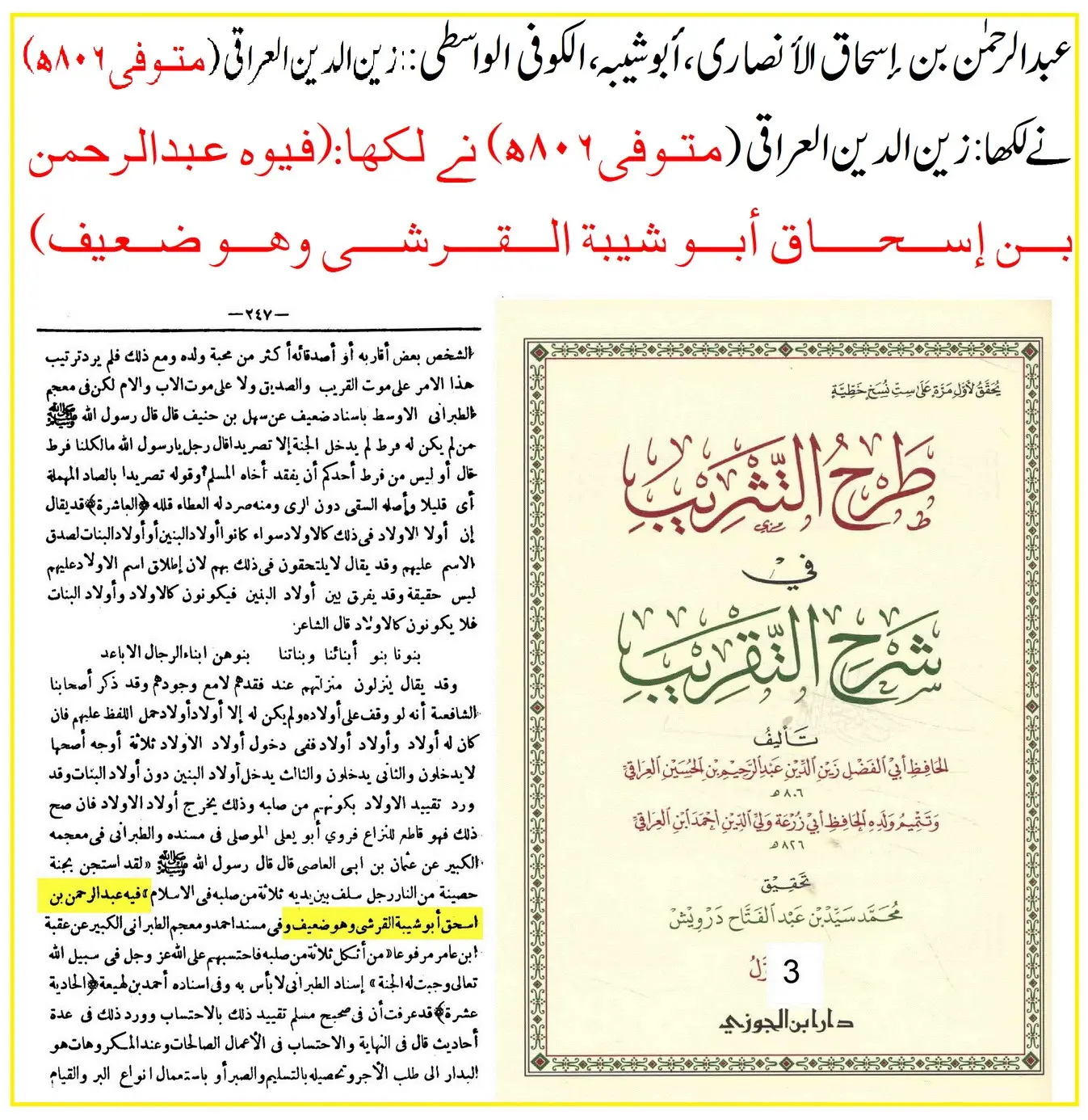
✦ 22. Allama Zainuddin Al-Iraqi (806 AH)
Arabic Text: «فيه عبد الرحمن بن إسحاق أبو شيبة القرشي، وهو ضعيف.»
Reference: — Al-Iraqi, Tarh Al-Tathreeb (2/41)
Urdu Translation: In his chain is Abdul Rahman bin Ishaq Abu Shaybah Al-Qurashi, and he is weak.
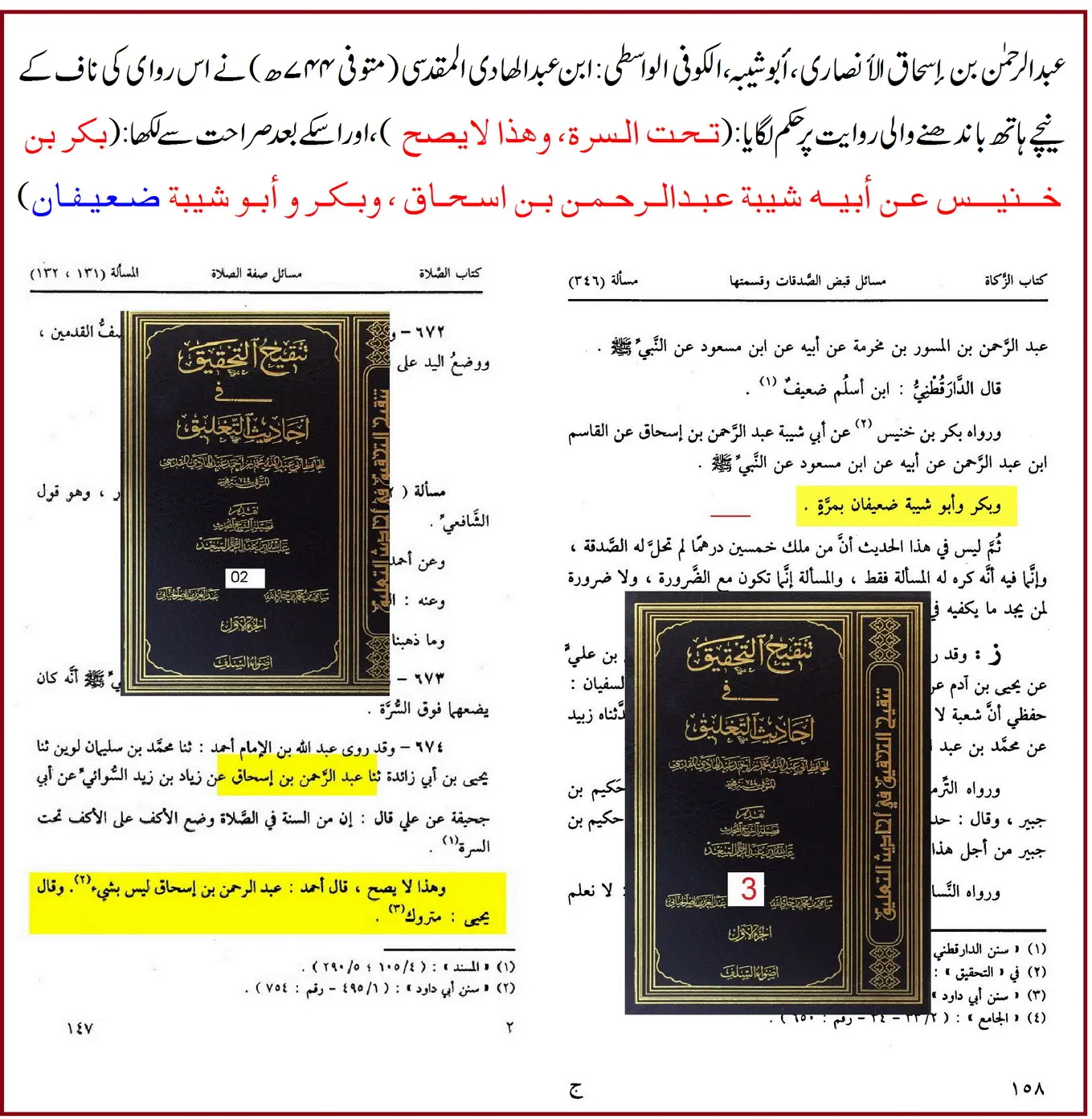
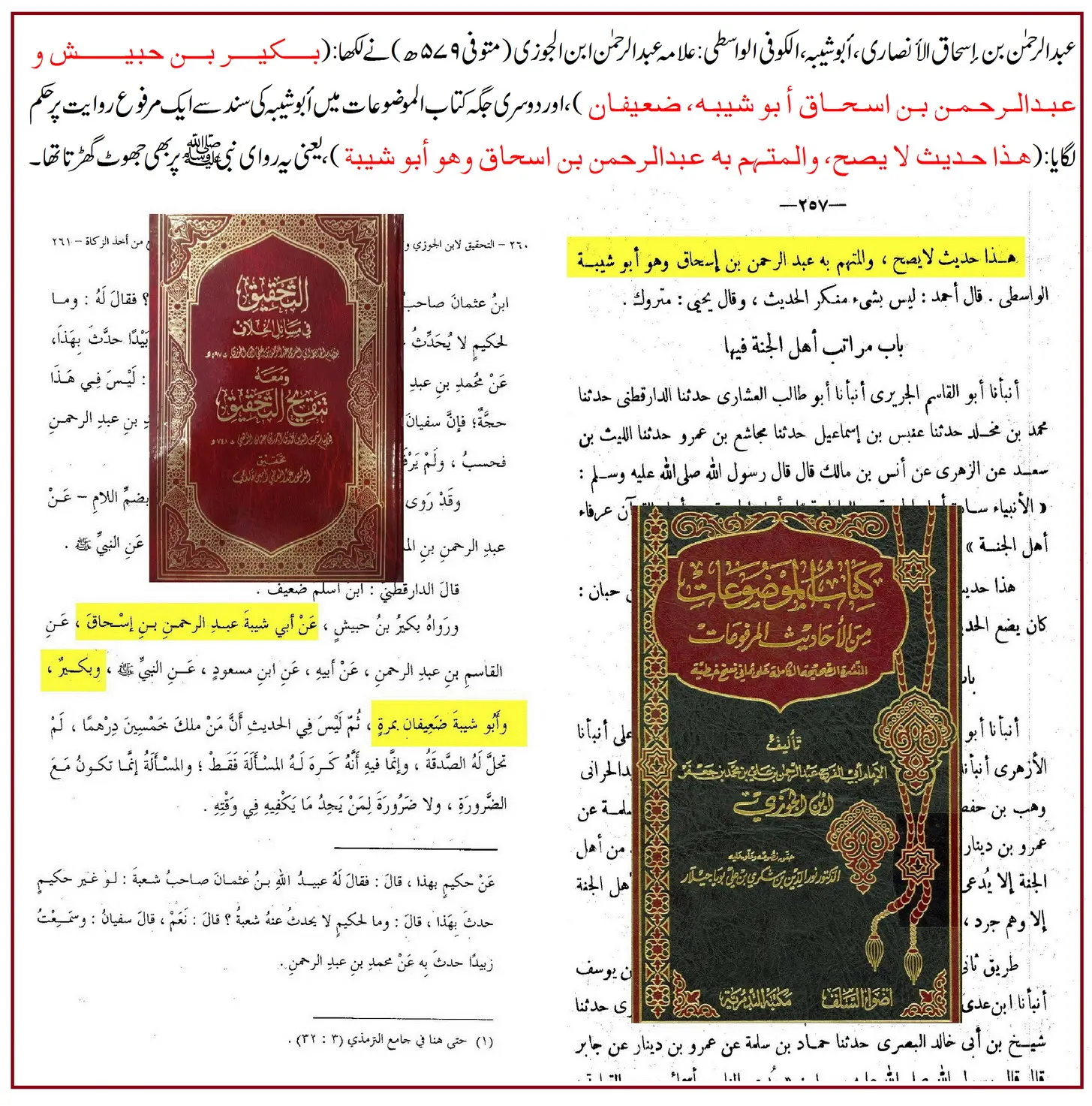
✦ 23. Imam Ibn Abdulhadi Al-Maqdisi (744 AH)
Arabic Text: «… وبكر وأبو شيبة ضعيفان بمرّة.»
Reference: — Ibn Abdulhadi, Tanqih Al-Tahqiq (1/327)
Urdu Translation: In his chain are Bakr and Abu Shaybah (Abdul Rahman bin Ishaq), and both are very weak.
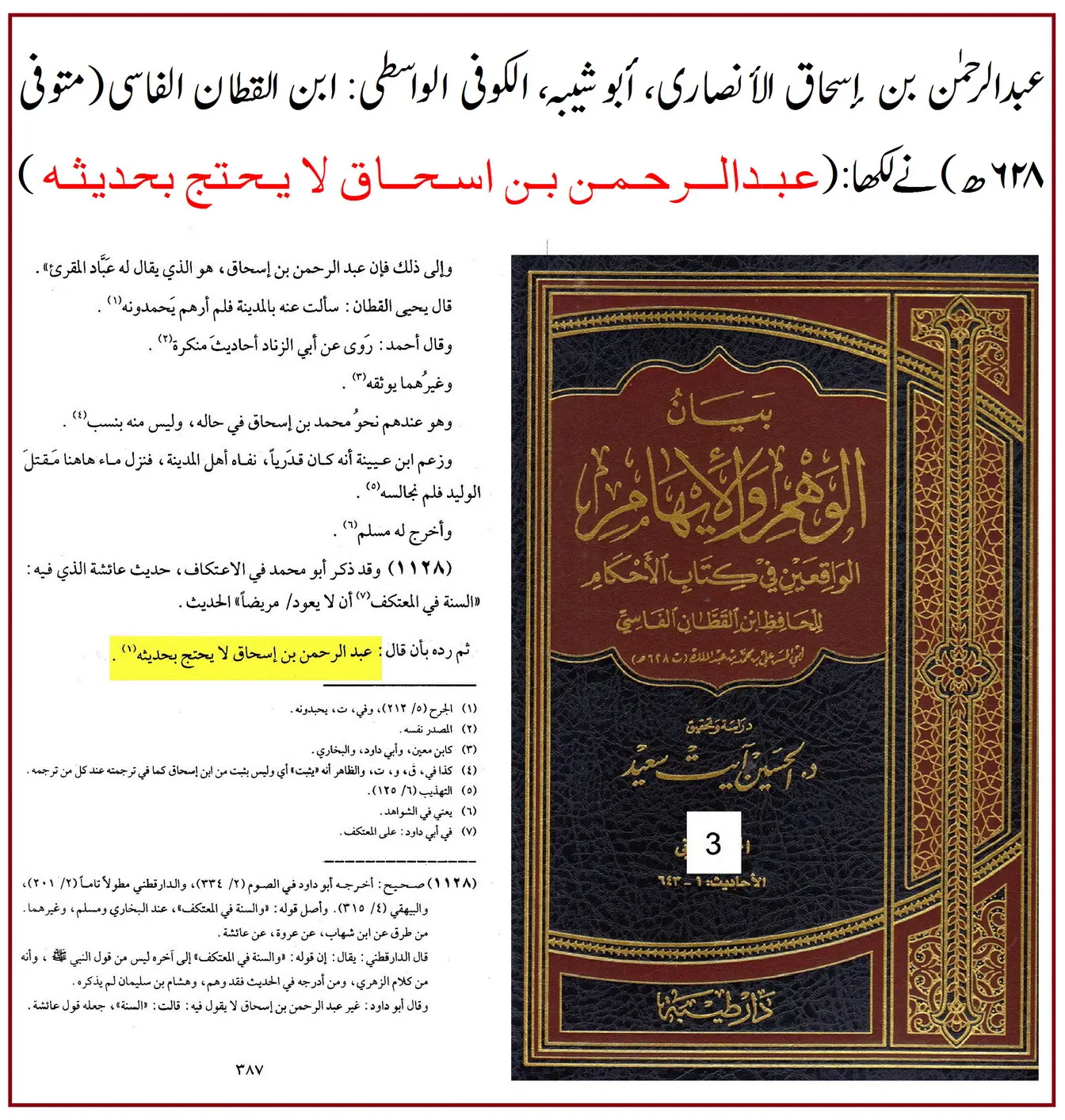
✦ 24. Imam Ibn Al-Qattan Al-Fasi (628 AH)
Arabic Text: «عبد الرحمن بن إسحاق لا يحتج بحديثه.»
Reference: — Ibn Al-Qattan, Bayan Al-Wahm wal-Ihyam (5/142)
Urdu Translation: No proof is taken from the hadith of Abdul Rahman bin Ishaq.
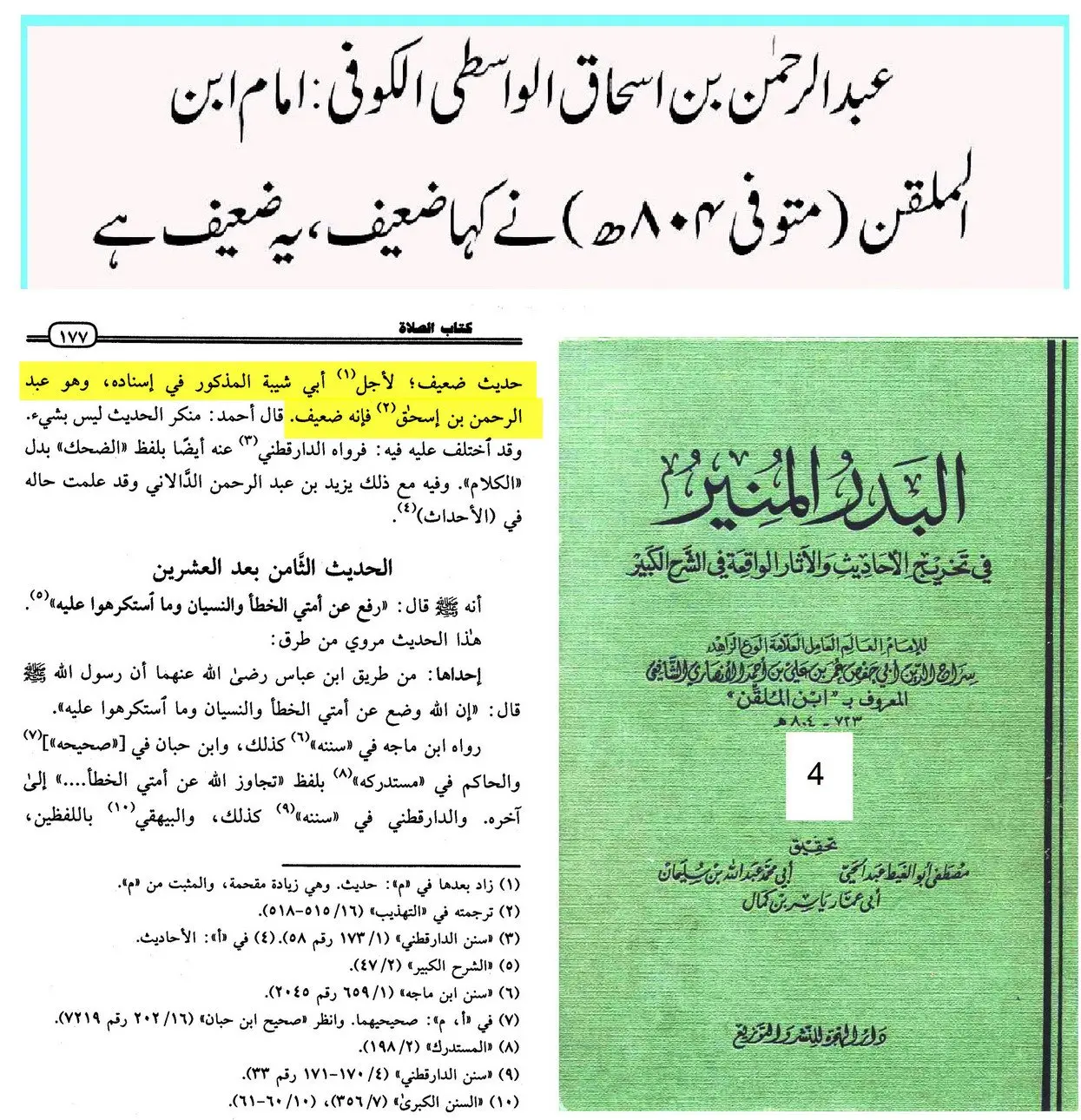
✦ 25. Imam Ibn Al-Mulqin (804 AH)
Arabic Text: «حديث ضعيف؛ لأجل أبي شيبة المذكور في إسناده، وهو عبد الرحمن بن إسحاق، فإنه ضعيف.»
Reference: — Ibn Al-Mulqin, Al-Badr Al-Munir (2/308)
Urdu Translation: This hadith is weak because in its chain is Abu Shaybah Abdul Rahman bin Ishaq, and he is weak.
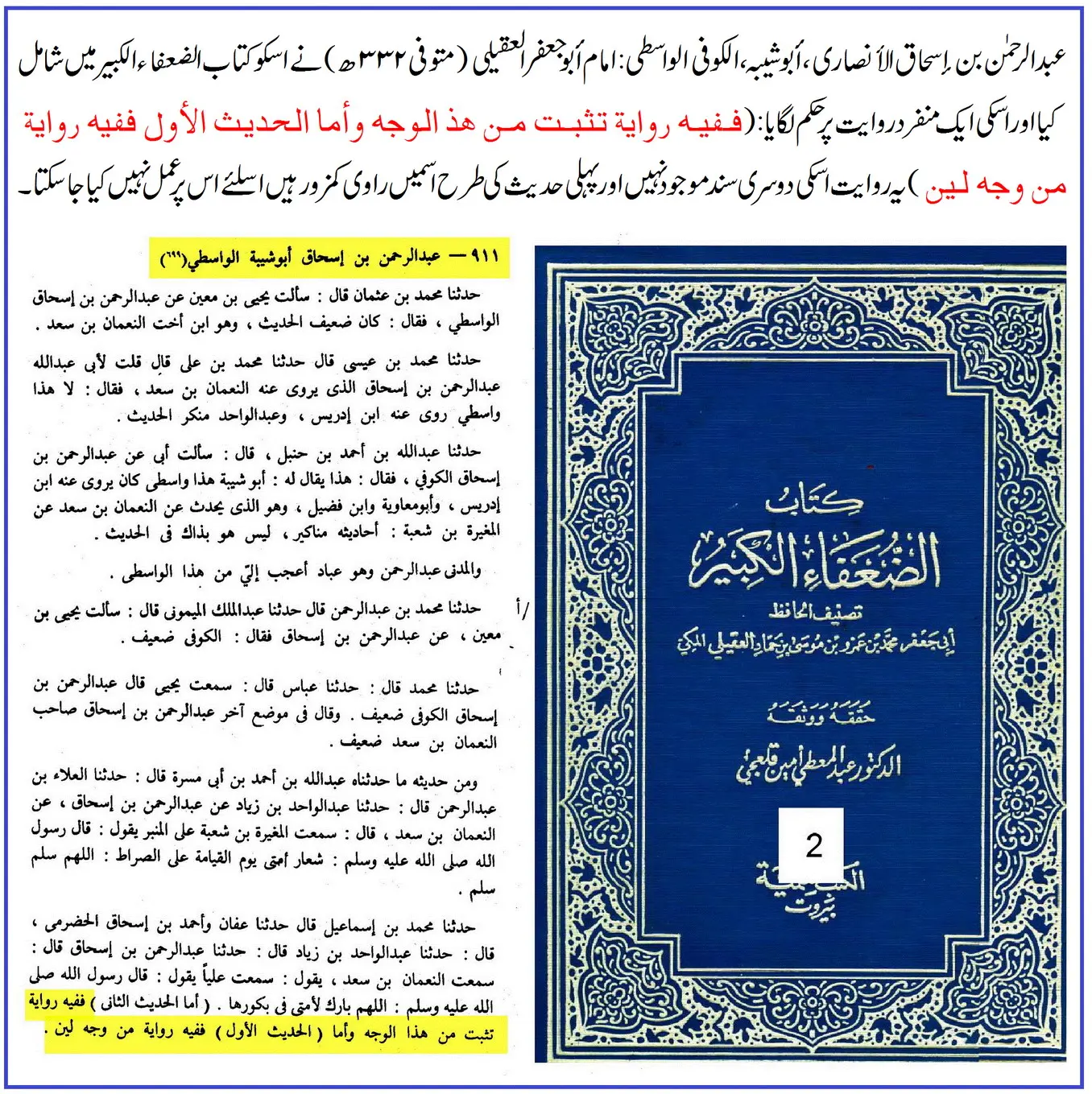
✦ 26. Imam Abu Ja'far Al-Aqili (322 AH)
Arabic Text: «وأما الحديث الأول ففيه رواية من وجه لين، ولا يتابع عليه.»
Reference: — Al-Aqili, Al-Du'afa Al-Kabir (2/312)
Urdu Translation: The first narration is transmitted through a weak chain, and there is no corroboration for it.
✦ 27. Imam Ibn al-Jawzi (597 AH)
Arabic text: «هذا حديث لا يصح، والمتهم به عبد الرحمن بن إسحاق، وهو أبو شيبة الواسطي.»
Reference: — Ibn al-Jawzi, Al-Mawdu'at (2/230)
Urdu translation: This hadith is not authentic, and its fabricator is Abdul Rahman bin Ishaq Abu Shaybah Al-Wasiti.
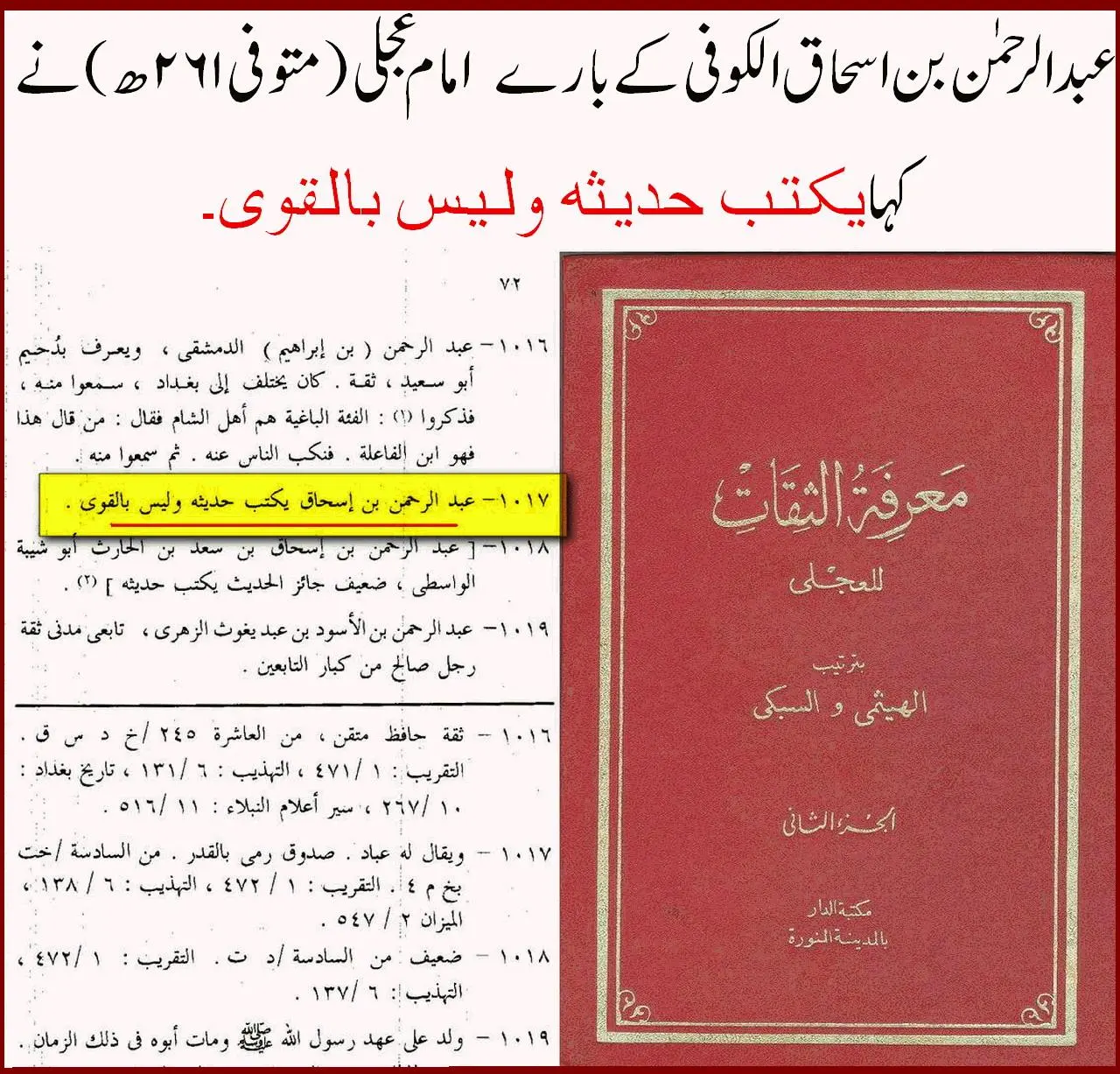
✦ 28. Imam Al-Ajli (261 AH)
Arabic text: «عبد الرحمن بن إسحاق: يكتب حديثه، وليس بالقوي.»
Reference: — Al-Ajli, Tarikh al-Thiqat (2/219)
Urdu translation: The hadith of Abdul Rahman bin Ishaq is recorded, but he is not strong.
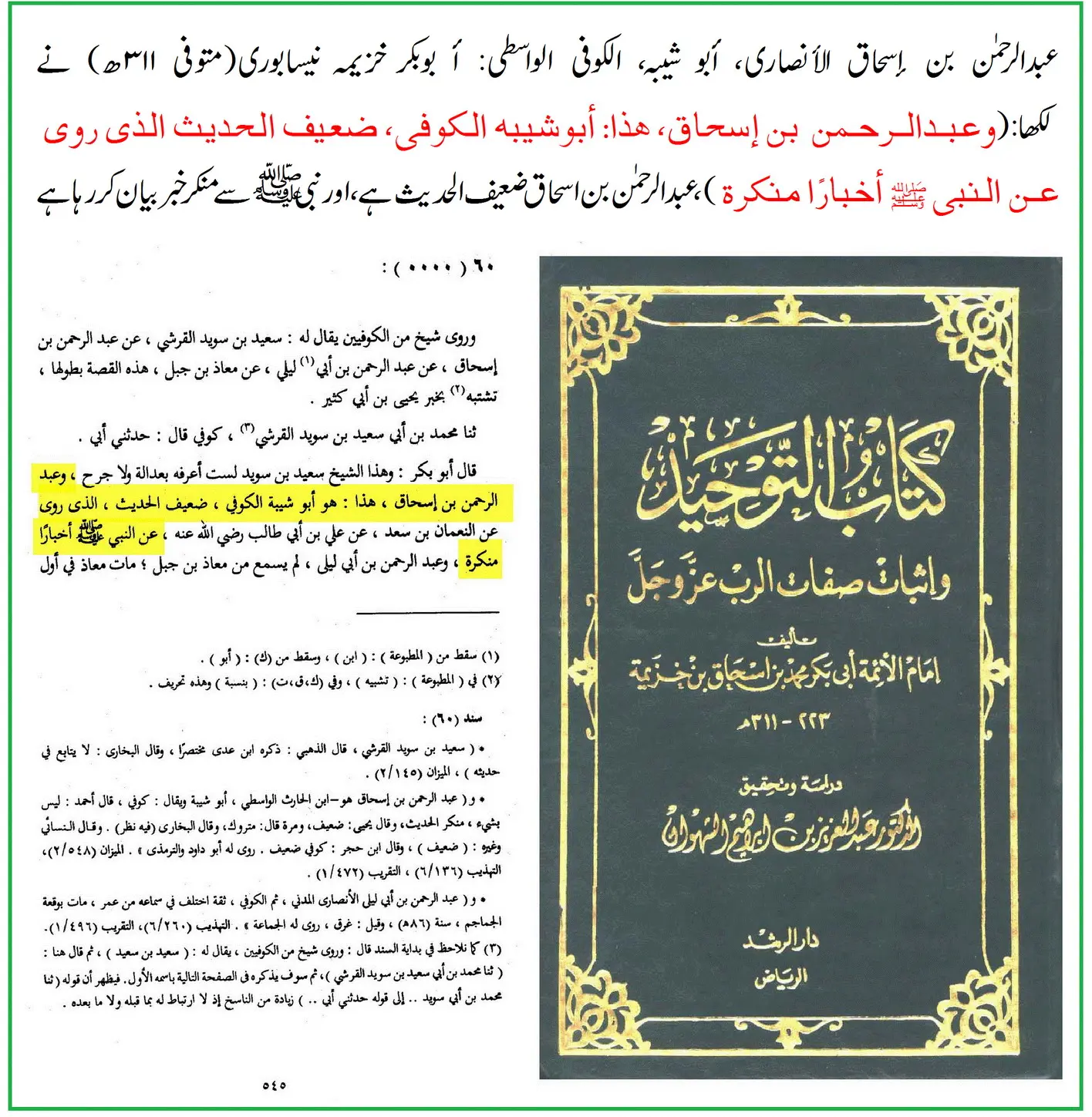
✦ 29. Imam Ibn Khuzaymah (311 AH)
Arabic text: «… وهذا هو أبو شيبة الكوفي، ضعيف الحديث.»
Reference: — Ibn Khuzaymah, Kitab al-Tawheed (1/60)
Urdu translation: He is Abu Shaybah Al-Kufi, and he is weak in hadith.
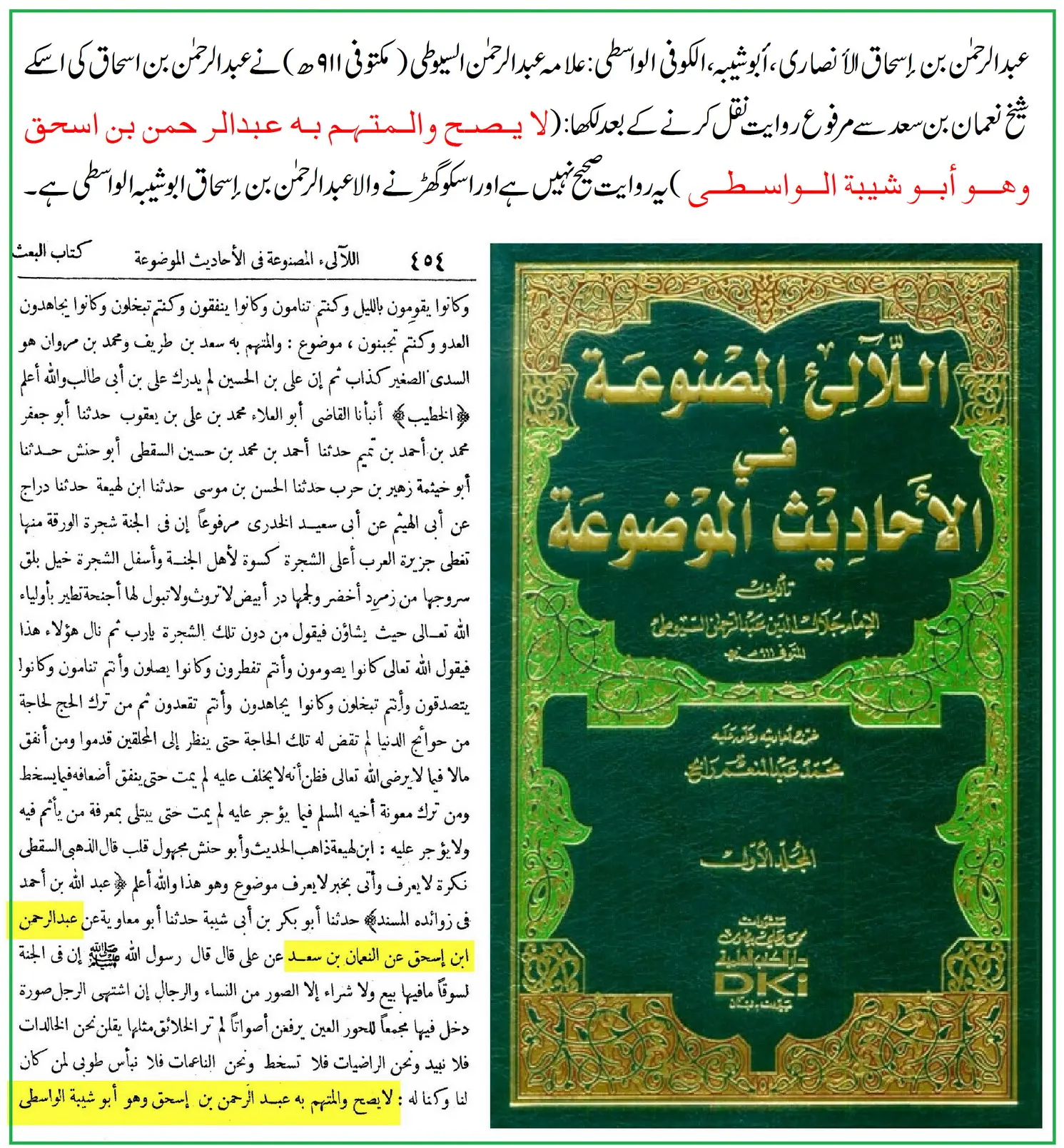
✦ 30. Imam Jalal al-Din Al-Suyuti (911 AH)
Arabic text: «… لا يصح، والمتهم به عبد الرحمن بن إسحاق، وهو أبو شيبة الواسطي.»
Reference: — Al-Suyuti, Al-La'ali al-Masnu'ah (2/332)
Urdu translation: This narration is not authentic, and its fabricator is Abdul Rahman bin Ishaq Abu Shaybah Al-Wasiti.
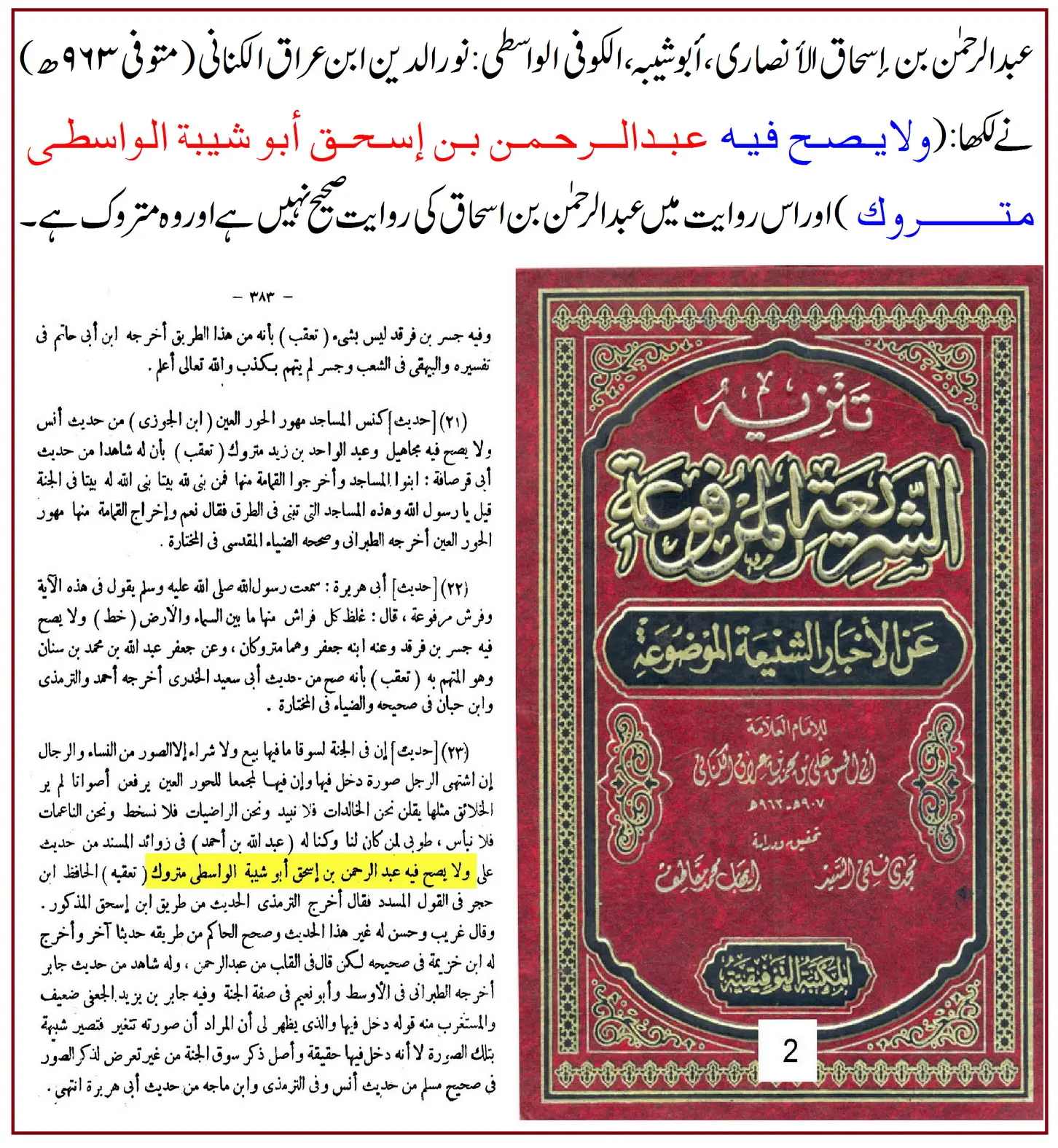
✦ 31. Nur al-Din Ibn Iraq Al-Kinani (d. 963 AH)
Arabic text: «… فيه عبد الرحمن بن إسحاق أبو شيبة الواسطي، متروك.»
Reference: — Ibn Iraq, Tanzih al-Shari'ah (2/142)
Urdu translation: In the chain of this narration is Abdul Rahman bin Ishaq Abu Shaybah Al-Wasiti, who is abandoned.
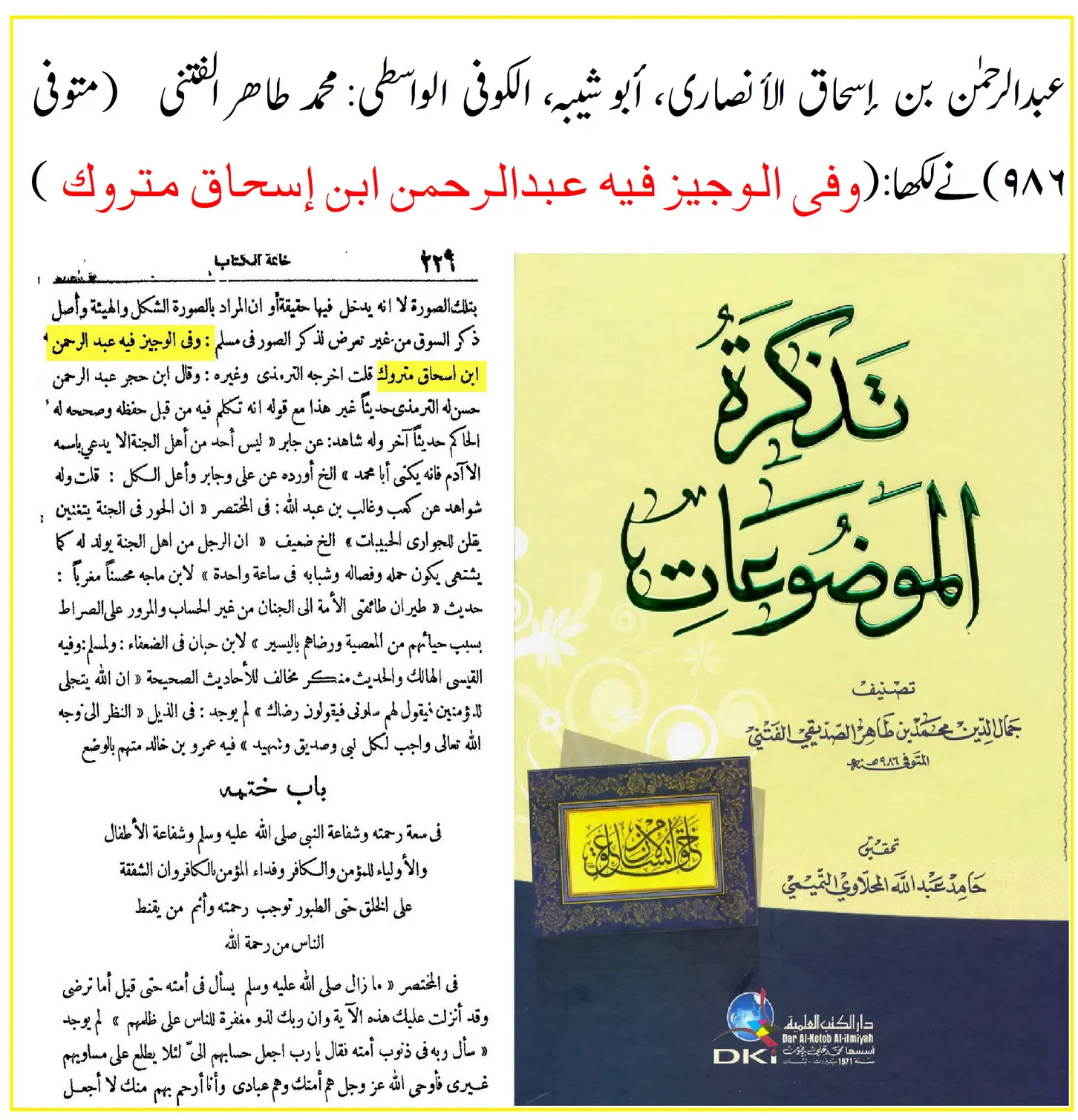
✦ 32. Muhammad bin Tahir Al-Fattani (d. 986 AH)
Arabic text: «وفي الوجيز: فيه عبد الرحمن بن إسحاق، متروك.»
Reference: — Al-Fattani, Tadhkirat al-Mawdu'at (p. 45)
Urdu translation: It is mentioned in Kitab al-Wajiz that in this narration is Abdul Rahman bin Ishaq who is abandoned.
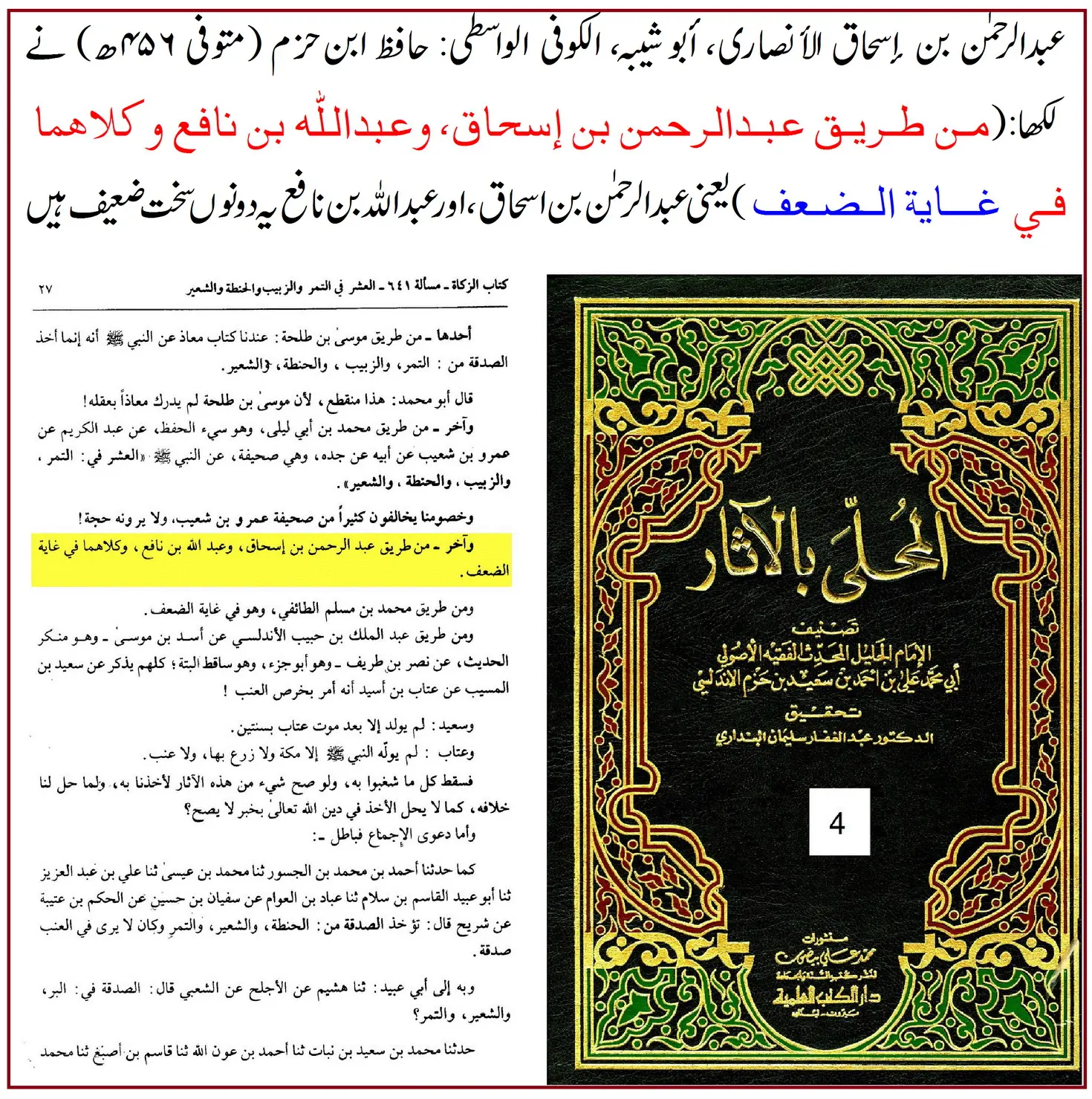
✦ 33. Hafiz Ibn Hazm (456 AH)
Arabic text: «من طريق عبد الرحمن بن إسحاق، وعبد الله بن نافع، وكلاهما في غاية الضعف.»
Reference: — Ibn Hazm, Al-Muhalla (3/30)
Urdu Translation: This narration is from the chain of Abdul Rahman bin Ishaq and Abdullah bin Nafi, and both are very weak.
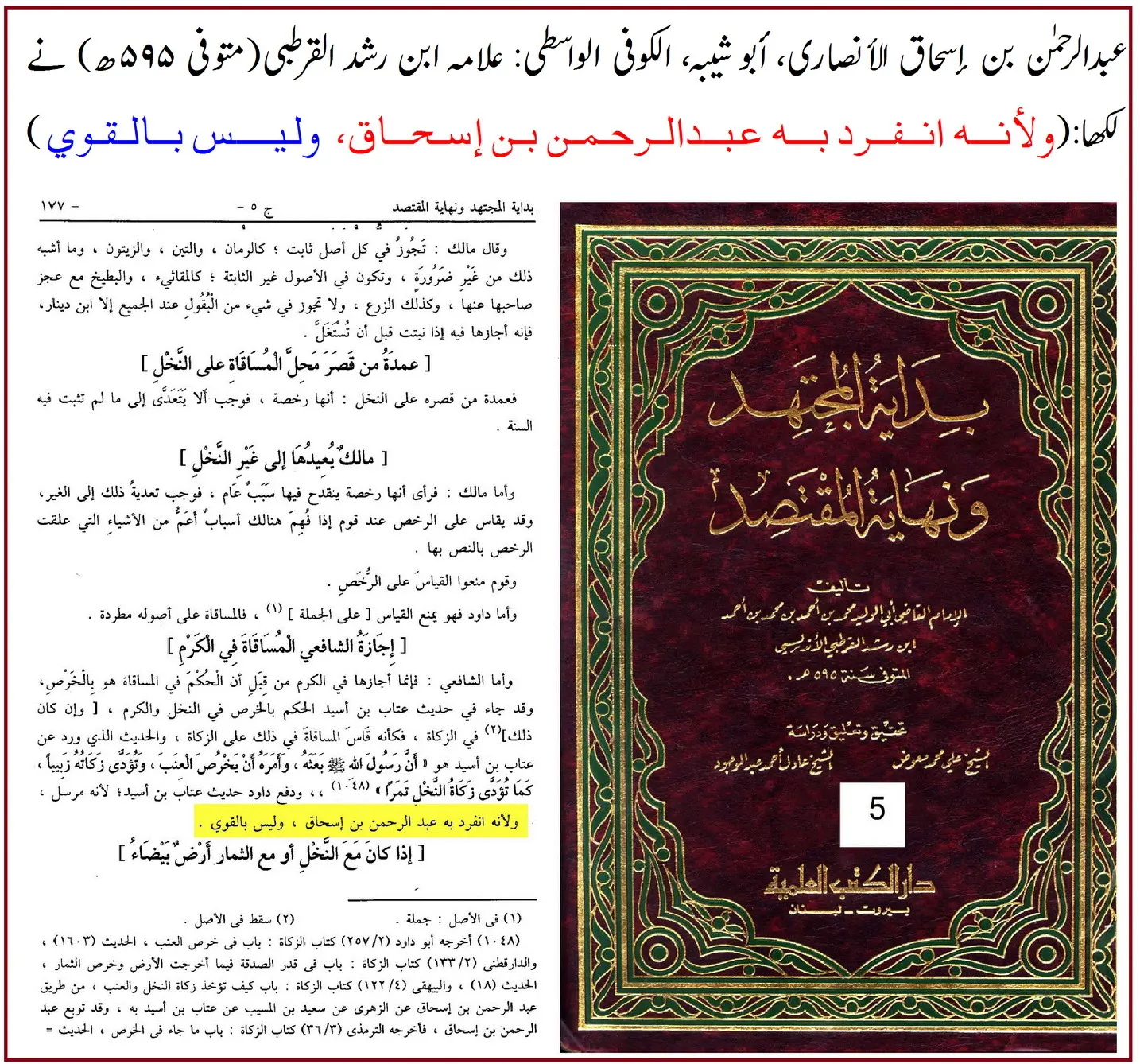
✦ 34. Allama Ibn Rushd Al-Qurtubi (595 AH)
Arabic Text: «لأنه مرسل، ولأنه انفرد به عبد الرحمن بن إسحاق، وليس بالقوي.»
Reference: — Ibn Rushd, Bidayat al-Mujtahid (1/126)
Urdu Translation: This narration is mursal (disconnected), and it has been narrated only by Abdul Rahman bin Ishaq who is not strong.
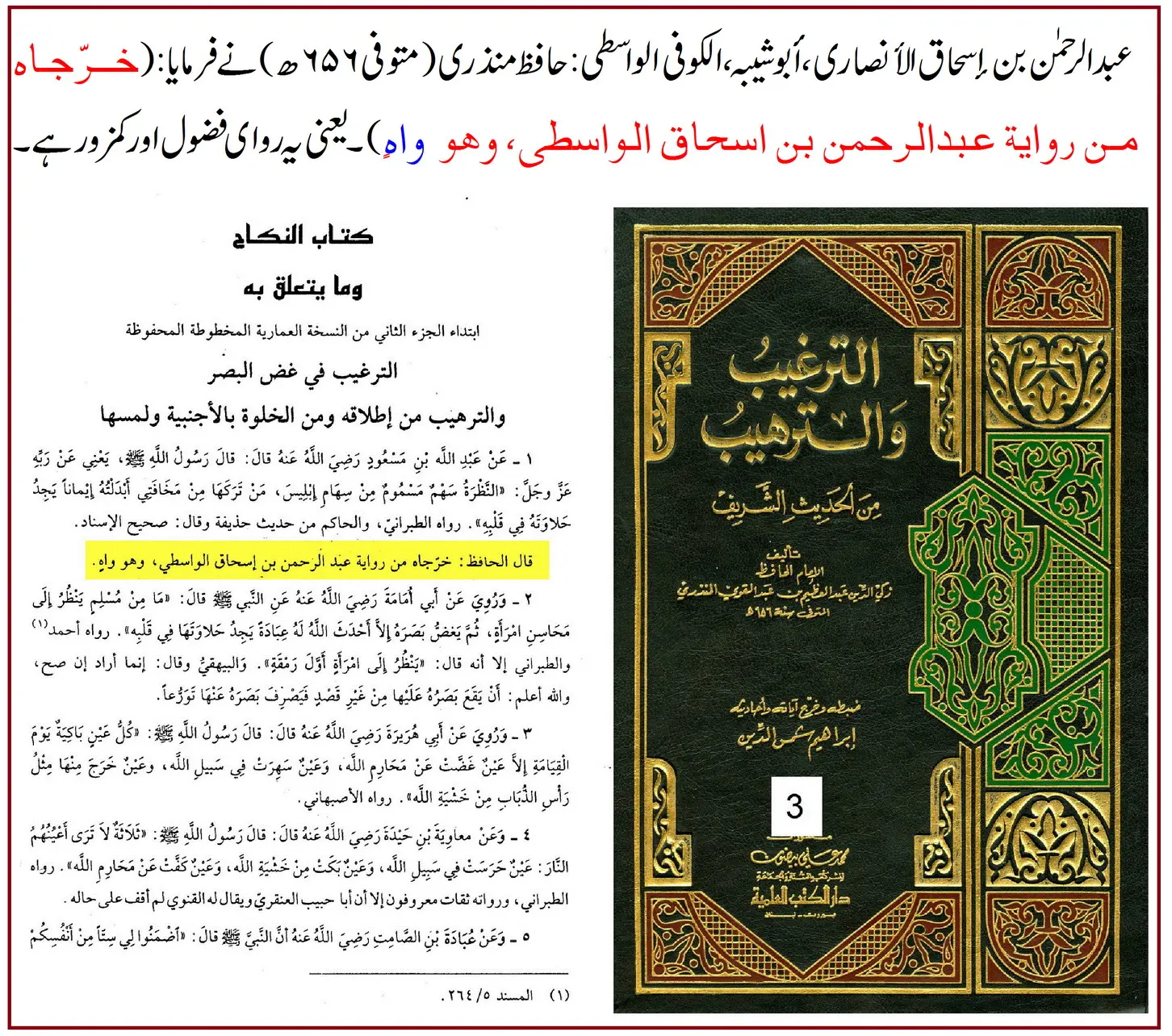
✦ 35. Hafiz Al-Mundhiri (656 AH)
Arabic Text: «خرّجاه من رواية عبد الرحمن بن إسحاق الواسطي، وهو واه.»
Reference: — Al-Mundhiri, At-Targhib wa At-Tarhib (1/296)
Urdu Translation: This narration is from the chain of Abdul Rahman bin Ishaq Al-Wasiti, and he is very weak.
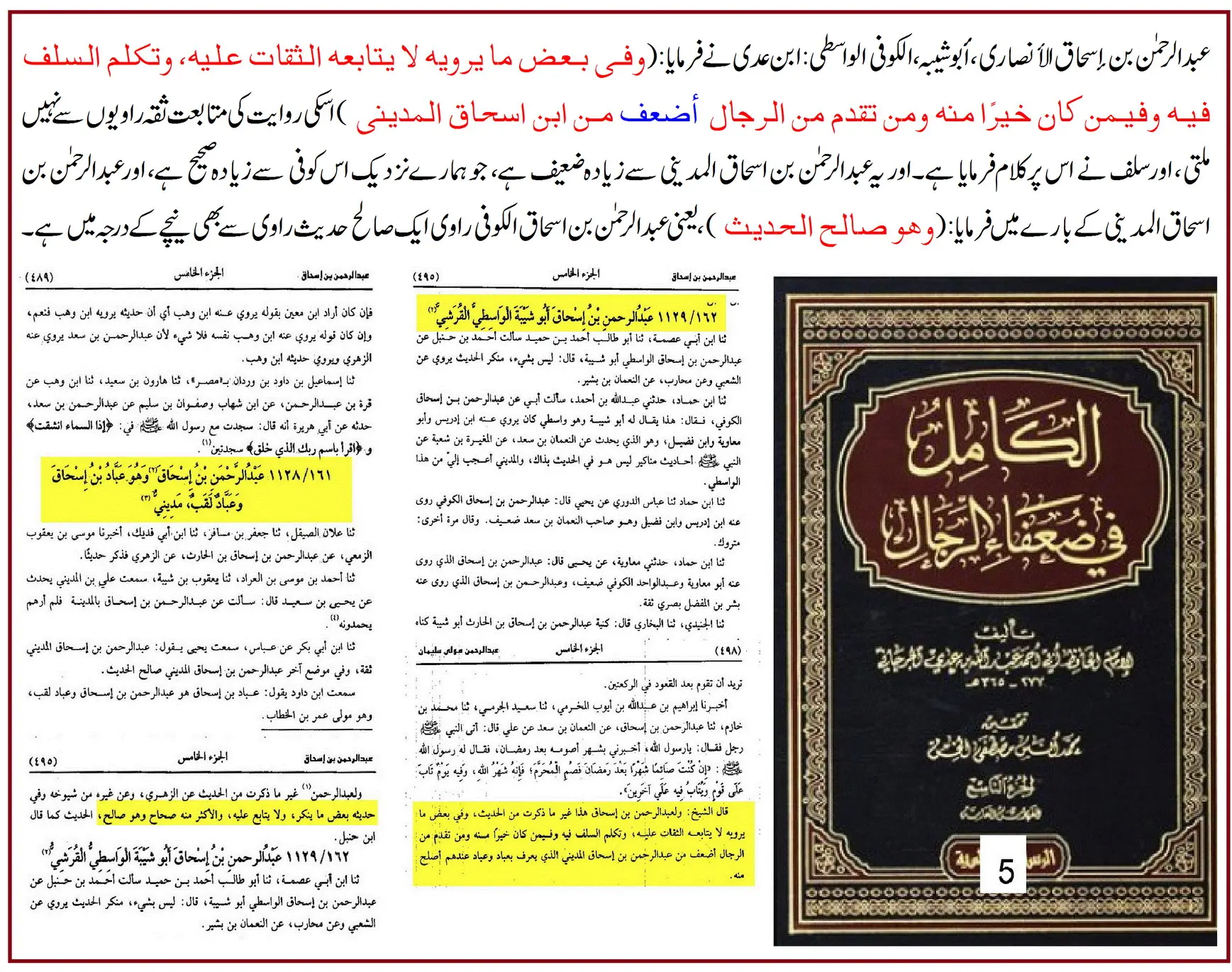
✦ 36. Imam Ibn Adi (365 AH)
Arabic Text: «… وفي بعض ما يرويه لا يتابعه الثقات عليه، وتكلم السلف فيه…»
Reference: — Ibn Adi, Al-Kamil fi Dhu'afa al-Rijal (5/1129)
Urdu Translation: Some of his narrations are not followed by trustworthy narrators, and the Salaf have spoken about him.
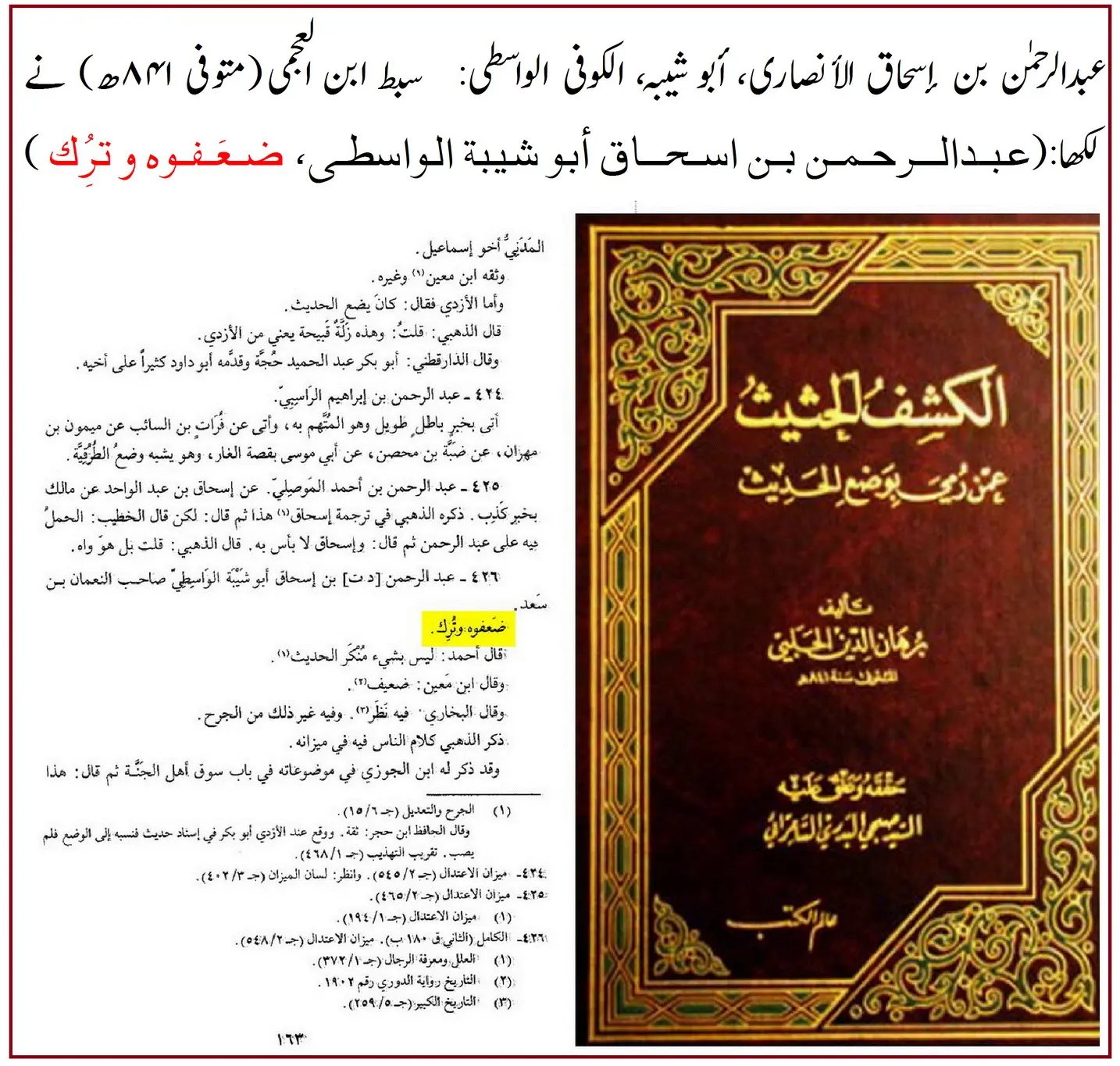
✦ 37. Sabt Ibn Al-Ajmi (841 AH)
Arabic Text: «عبد الرحمن بن إسحاق أبو شيبة الواسطي… ضعفوه وترك.»
Reference: — Sabt Ibn Al-Ajmi, Al-Kashf Al-Hatith (No. 426)
Urdu Translation: Abdul Rahman bin Ishaq Abu Shaybah Al-Wasiti... the Muhaddithin have called him weak and abandoned him.
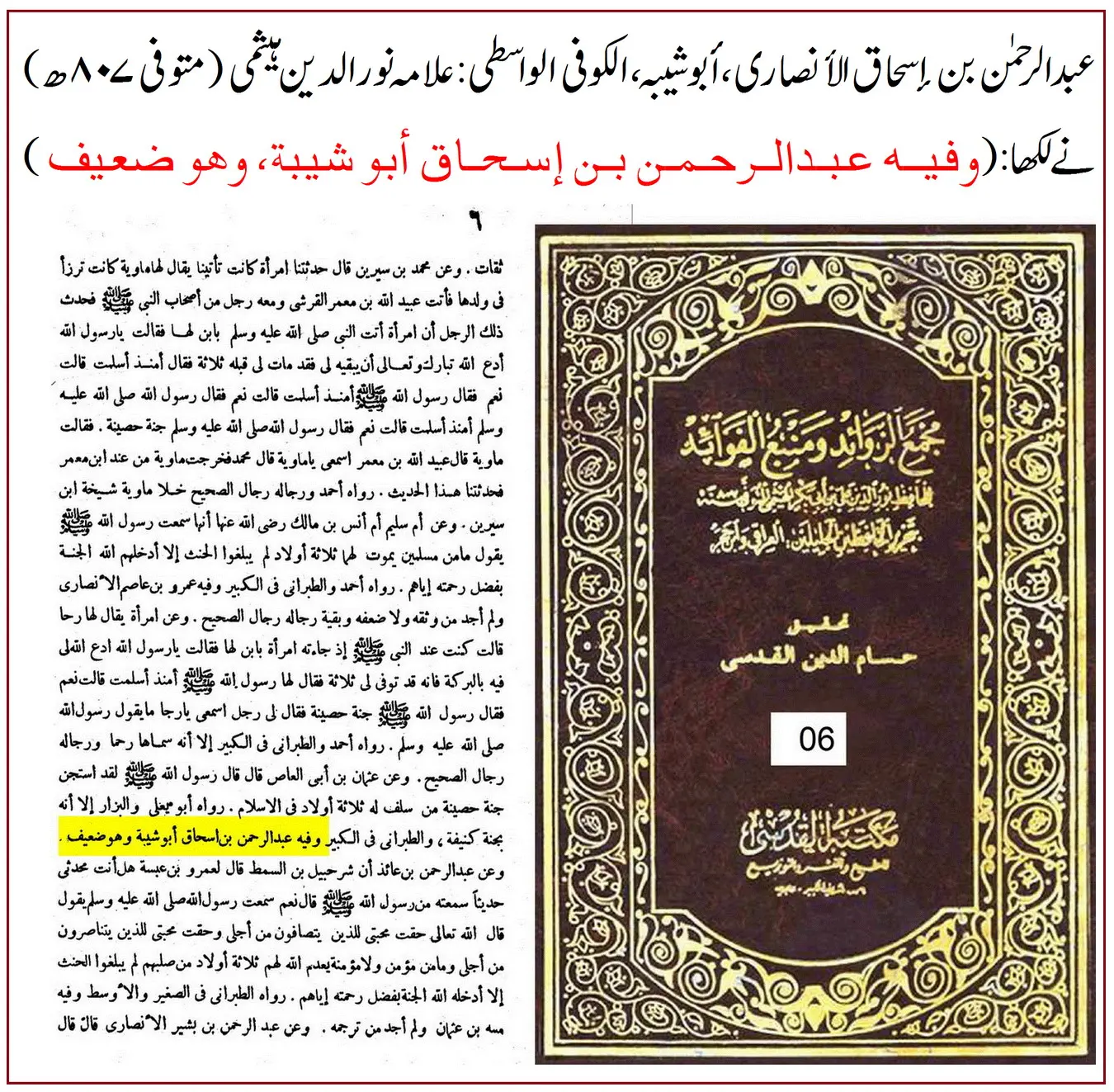
✦ 38. Allama Al-Haythami (807 AH)
Arabic Text: «… وفيه عبد الرحمن بن إسحاق الواسطي، وهو ضعيف، ضعفه أحمد وجماعة.»
Reference: — Al-Haythami, Majma' Az-Zawa'id (2/857)
Urdu Translation: In the chain of this narration is Abdul Rahman bin Ishaq Al-Wasiti, and he is weak. Imam Ahmad and others have called him weak.
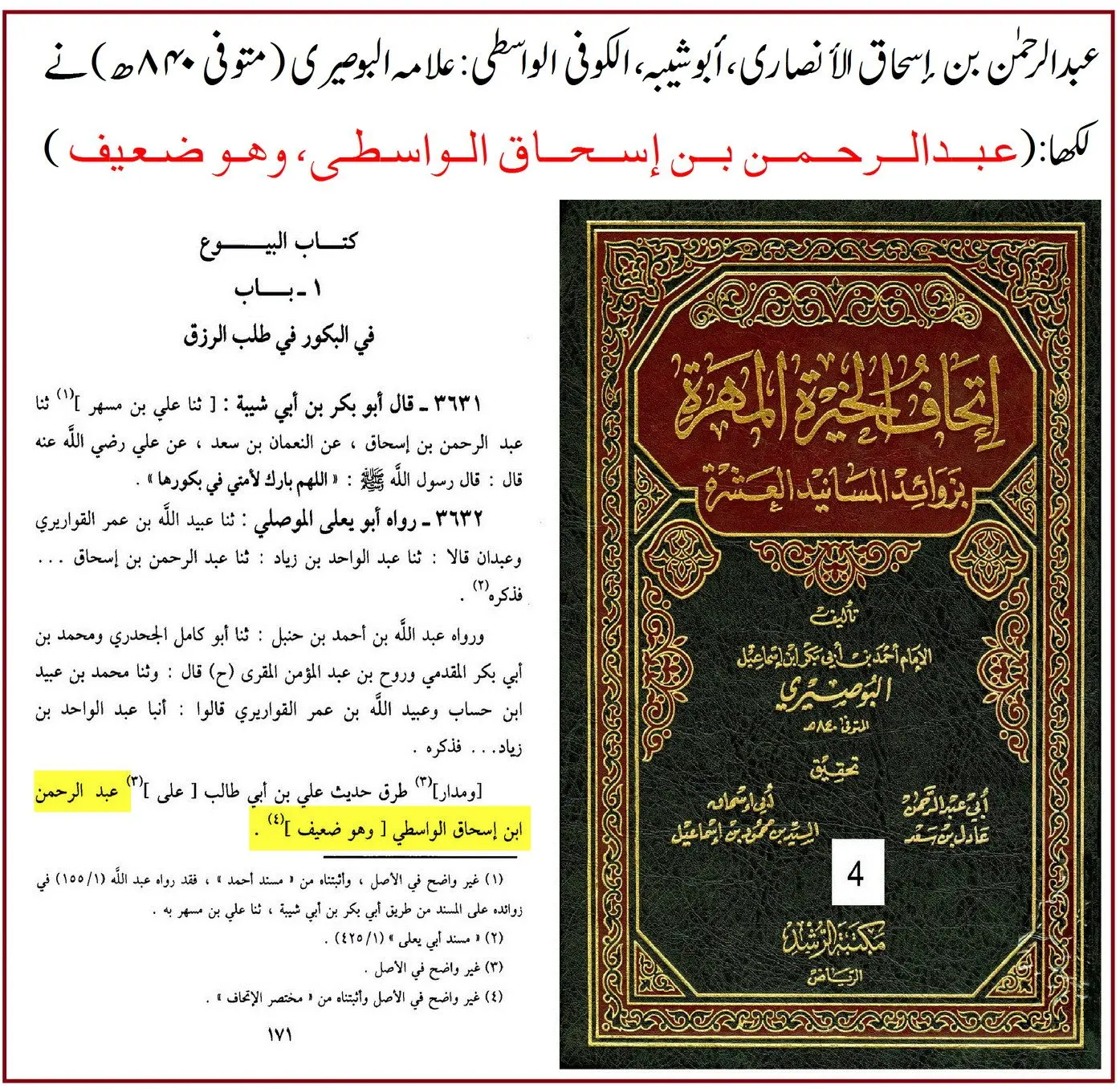
✦ 39. Allama Al-Busiri (840 AH)
Arabic Text: «ومدار طرق حديث علي بن أبي طالب على عبد الرحمن بن إسحاق الواسطي، وهو ضعيف.»
Reference: — Al-Busiri, Ithaf Al-Khira Al-Muharra (4/2714)
Urdu Translation: All chains of narration of the hadith about folding hands below the navel attributed to Hazrat Ali (RA) depend on Abdul Rahman bin Ishaq Wasiti, and he is weak.
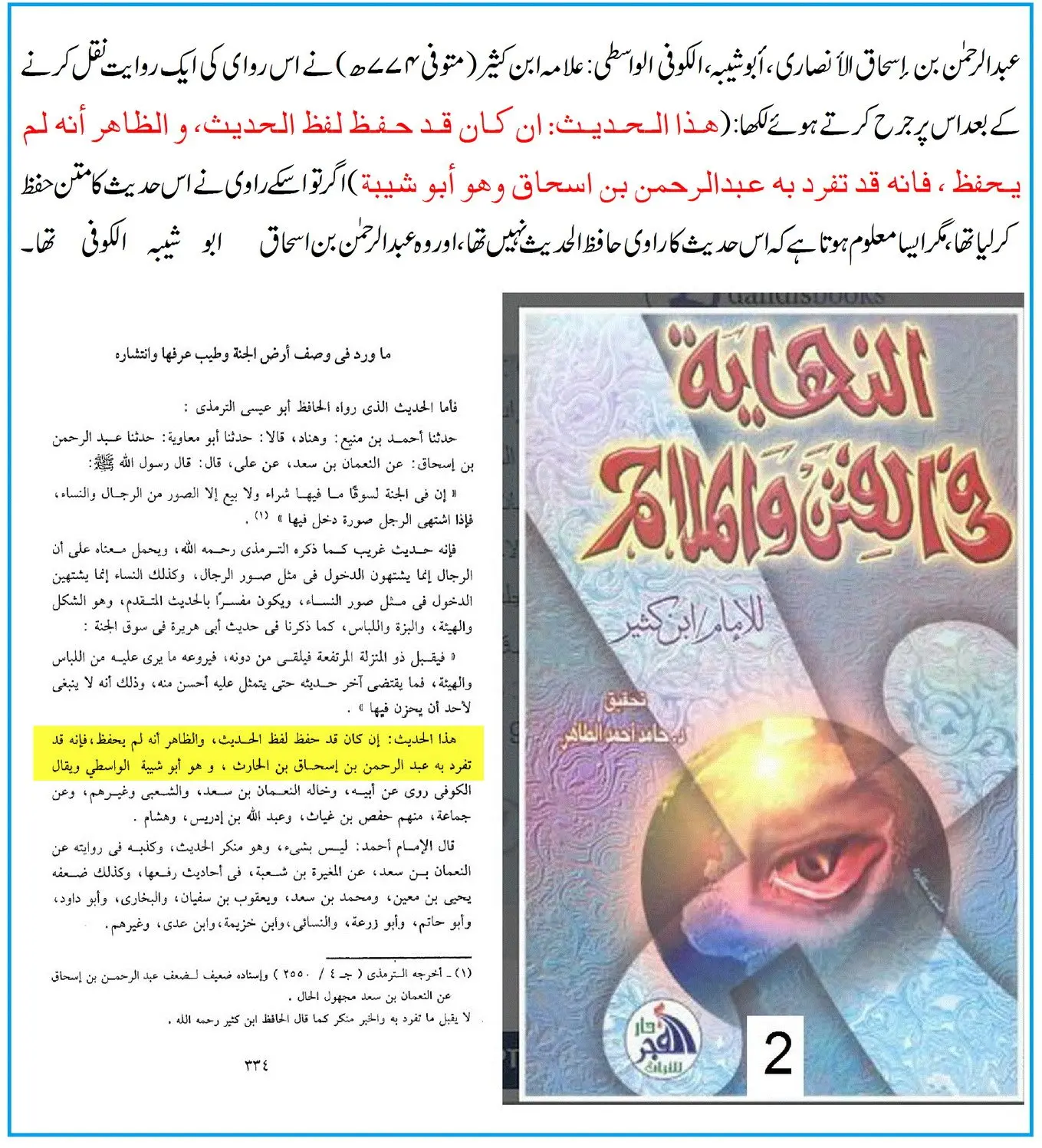
✦ 40. Hafiz Ibn Kathir (774 AH)
Arabic Text: «… تفرد به عبد الرحمن بن إسحاق بن الحارث، وهو أبو شيبة الواسطي… والظاهر أنه لم يحفظ.»
Reference: — Ibn Kathir, Al-Nihayah fi al-Fitan wa al-Malahim (1/312)
Urdu Translation: This narration has only been reported by Abdul Rahman bin Ishaq Abu Shaybah Wasiti, and it appears that he did not memorize it correctly.
◈ Summary of the Subject
- Main Issue: All narrations about folding hands below the navel depend on a single narrator: Abdul Rahman bin Ishaq al-Wasiti al-Kufi (Abu Shaybah).
- Statements of the Muhaddithin: Forty (40) Imams and Muhaddithin have criticized this narrator:
- Some have called him weak.
- Some have called him a denier of hadith.
- Several Imams have labeled him abandoned or even a liar.
- Imam Nawawi said: There is consensus on his weakness.
- Imam Ibn Hibban said: This narrator distorts chains and texts, and it is not permissible to take proof from him.
- Authentic Hadiths: The hadiths established with authentic and good chains of narration are that the Messenger of Allah ﷺ placed his hands on the chest during prayer (as narrated by Wail bin Hujr رضي الله عنه in Sahih Muslim, and Qubaysah bin Hilb رضي الله عنه in Sahih Ibn Khuzaymah).
- Final Conclusion: The narration about placing the hands below the navel is invalid both in chain and text. According to scholars, the correct Sunnah for placing the hands in prayer is only to place them on the chest.