Compiled by: Abu Hamzah Salafi
This article addresses an important issue: Can a person speak after death? Some Barelvi innovators built a false belief upon this claim and then accused the Noble Prophet ﷺ with a grave allegation—that he ﷺ personally comes after someone’s death to lead their funeral prayer. This is not only false, but is equivalent to fabricating a slander against the Messenger of Allah ﷺ.In this article, we will clarify the following matters:
❀ The ruling on a dead person speaking in the light of the Qur’an, Sunnah, and the statements of the Imams
❀ A research-based analysis of the chain and text of this false narration
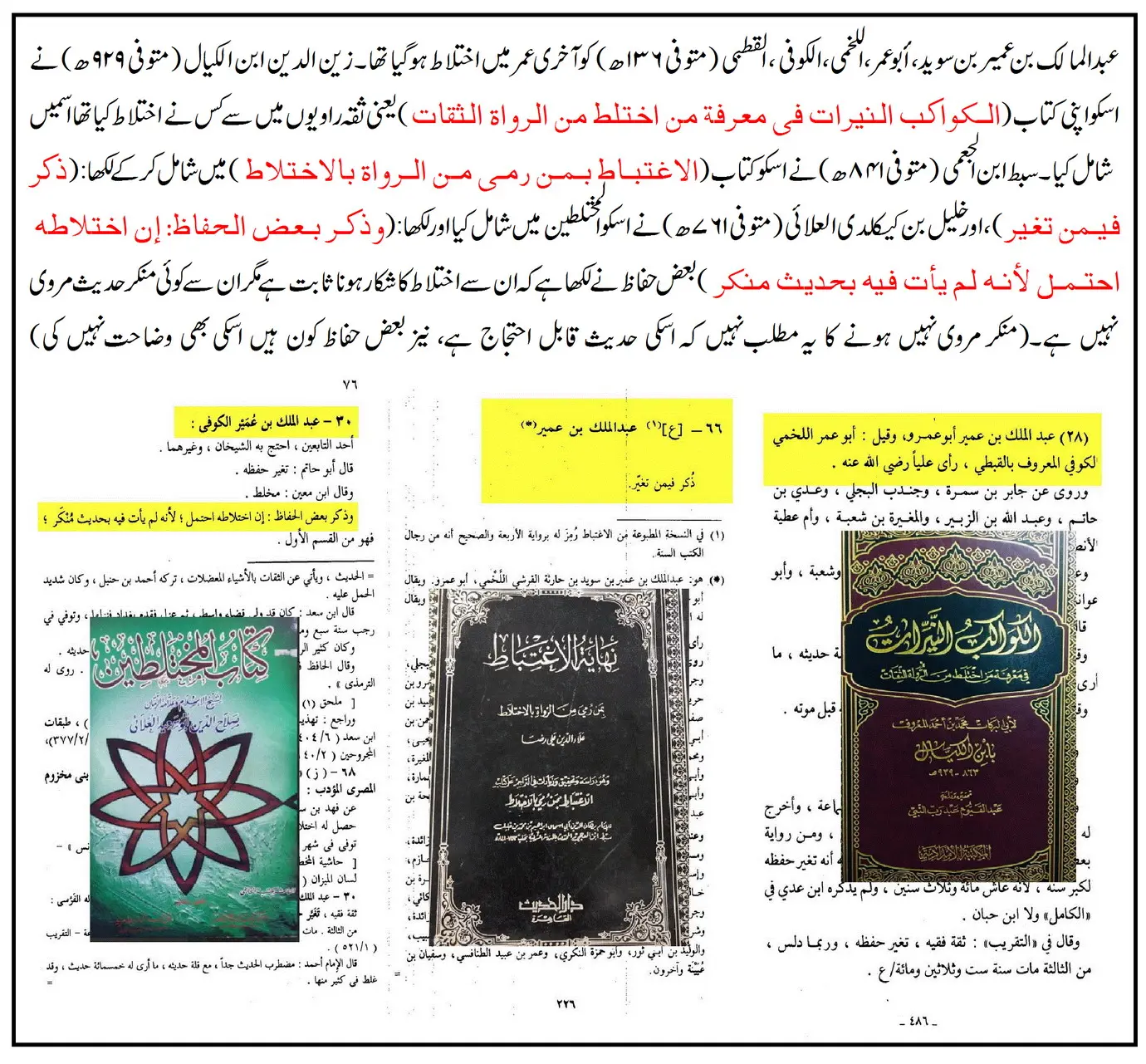
❀ The reality of the narrator ʿAbd al-Malik bin ʿUmayr and the detailed criticism (jarḥ mufassar) of the Hadith scholars
❀ The ruling regarding his narrations in Ṣaḥīḥ al-Bukhārī
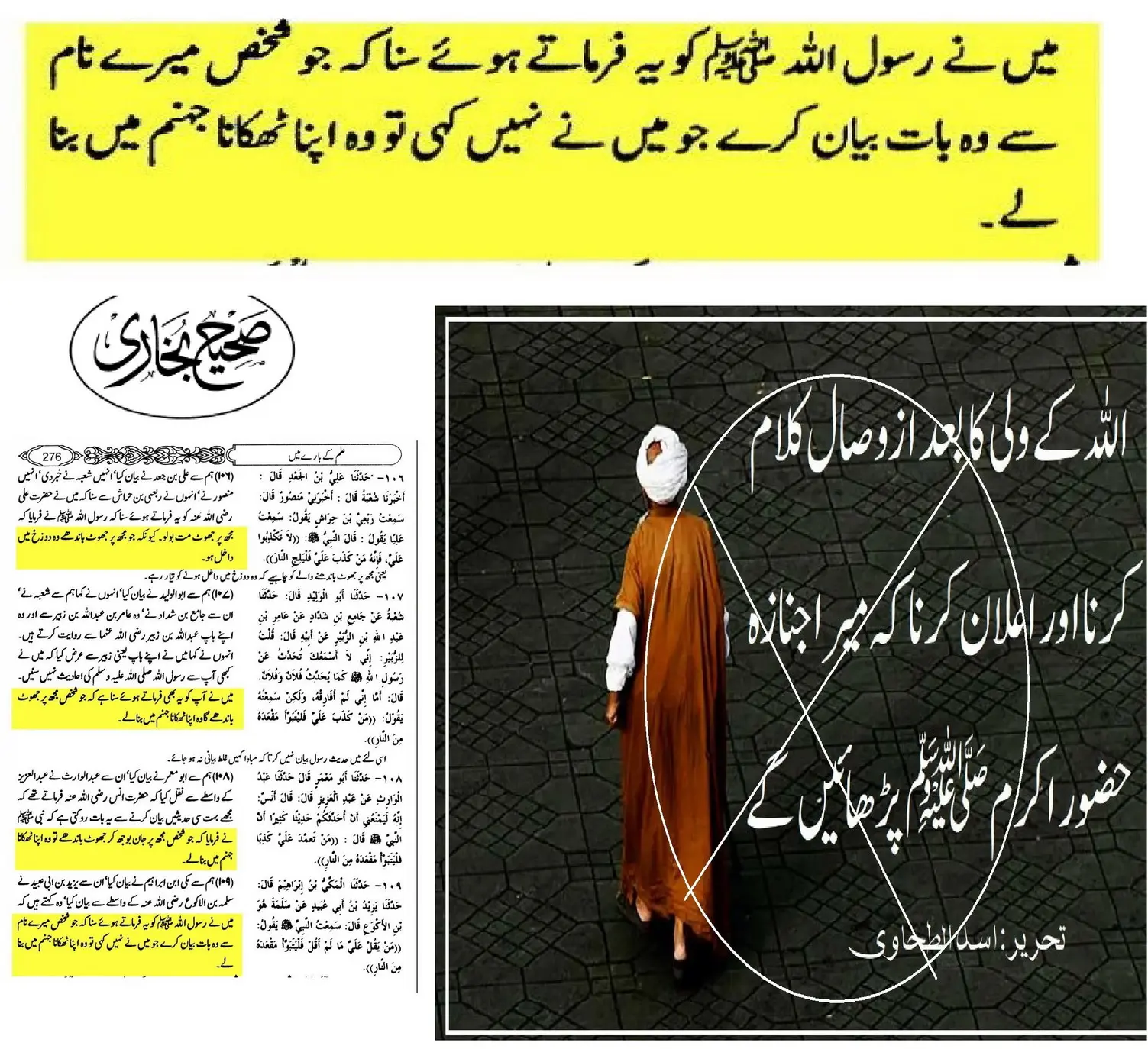
❀ The severe warning against attributing lies to the Noble Prophet ﷺ
Through this research, in shā’ Allāh, it will become as clear as daylight that:
① The narration about the dead speaking is rejected in both chain and text.
② The belief that the Prophet ﷺ comes to attend funerals is a clear slander.
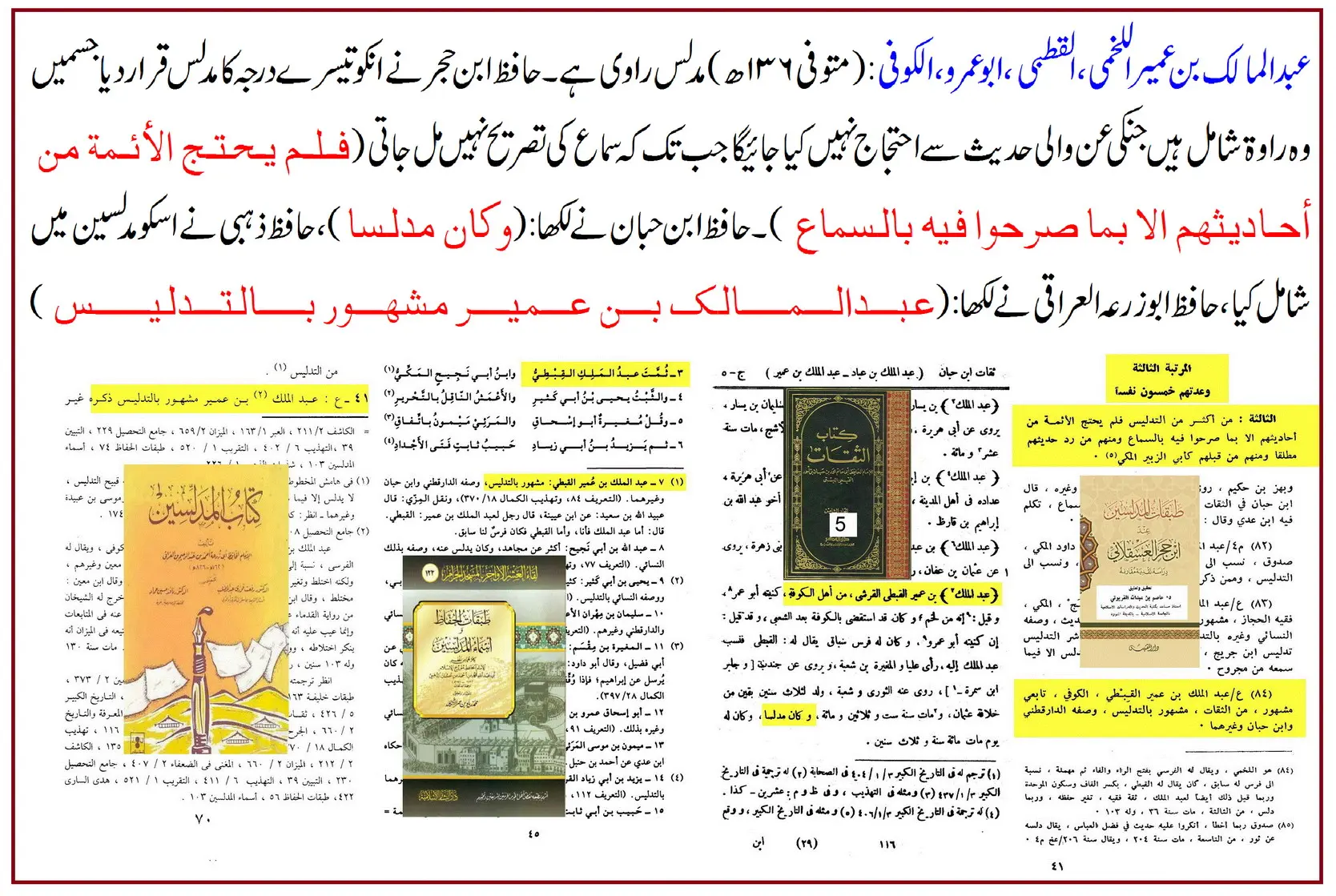
③ There exists explicit jarḥ mufassar upon ʿAbd al-Malik bin ʿUmayr, and he is also a mudallis.
✿ The Innovator’s Claim ✿
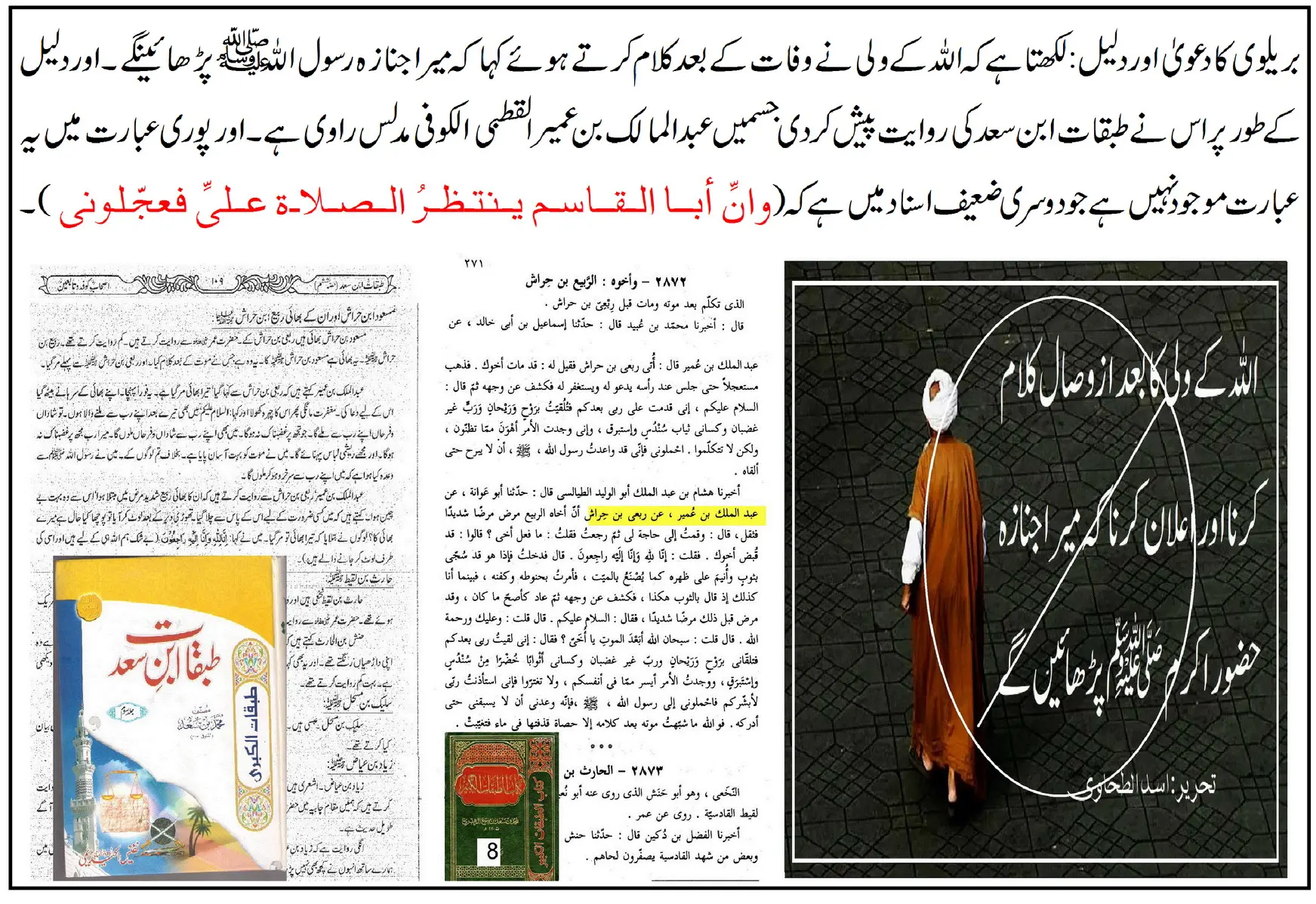
A Barelvi innovator wrote this false statement:“The belief of the early Imams was that even after our death, the Prophet ﷺ can lead our funeral prayer.”
Then, to “prove” this lie, he presented a rejected narration regarding the brother of Rabīʿ bin Kharāsh, claiming that after death he greeted and said:
“Abū al-Qāsim (i.e., the Prophet ﷺ) is waiting to perform my funeral prayer.”
This is the core accusation which the Barelvi dared to attribute to the Noble Prophet ﷺ.
✿ The Text of the Narration ✿
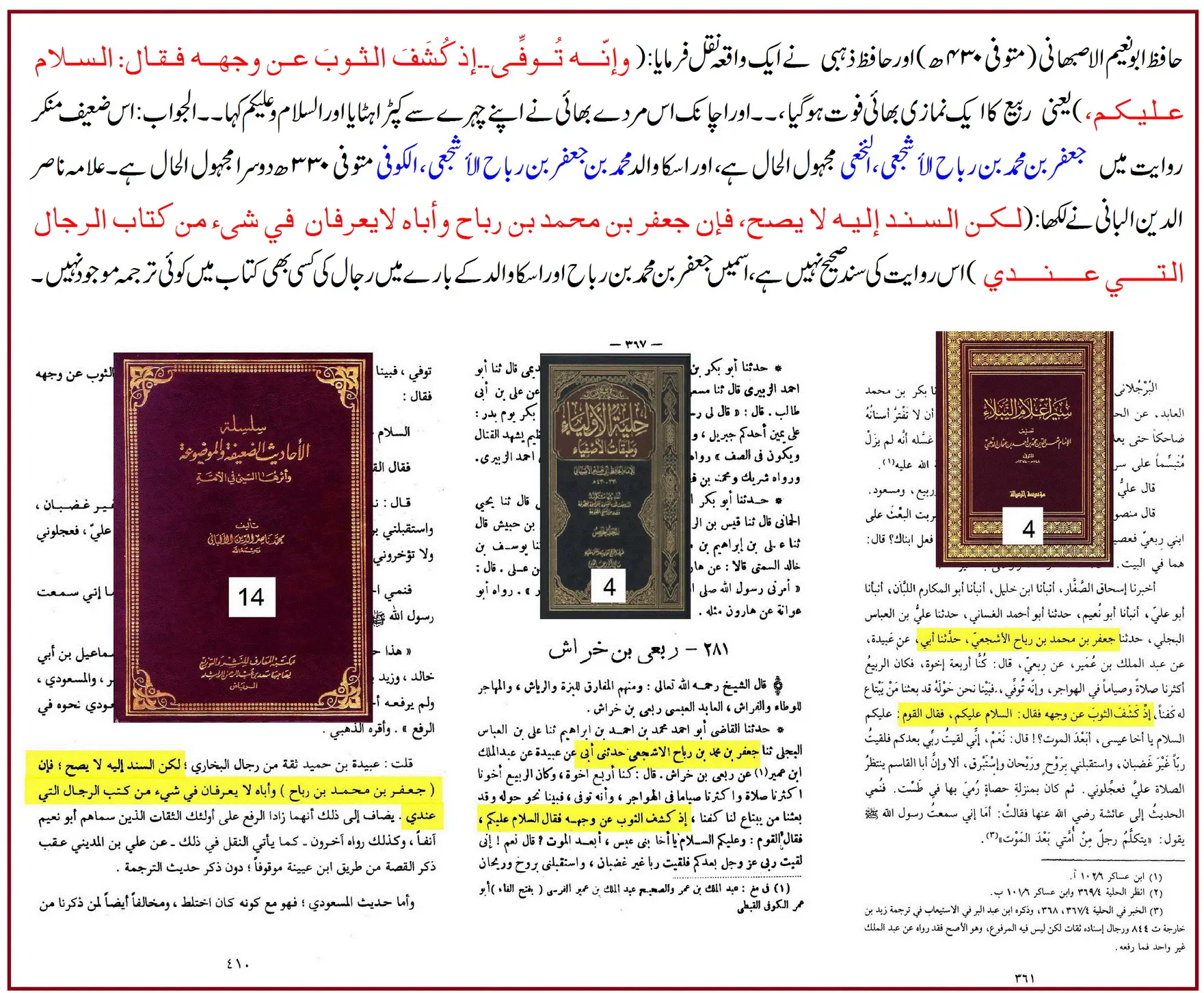
The Barelvi innovator transmitted the following report:أخبرنا إسحاق الصفار، أنبأنا ابن خليل، أنبأنا أبو المكارم اللبان، أنبأنا أبو علي، أنبأنا أبو نعيم، حدثنا أبو أحمد الغساني، حدثنا علي بن العباس البجلي، حدثنا جعفر بن محمد بن رياح الأشجعي، حدثنا أبي، عن عبيدة، عن عبد الملك بن عمير، عن ربعي، قال: كنا أربعة إخوة، فكان الربيع أكثرنا صلاة وصياما في الهواجر، وإنه توفي، فبينا نحن حوله قد بعثنا من يبتاع له كفنا، إذ كشف الثوب عن وجهه، فقال: السلام عليكم. فقال القوم: عليكم السلام يا أخا عيسى، أبعد الموت؟ قال: نعم، إني لقيت ربي بعدكم، فلقيت ربا غير غضبان، واستقبلني بروح وريحان وإستبرق، ألا وإن أبا القاسم ينتظر الصلاة علي، فعجلوني. ثم كان بمنزلة حصاة رمي بها في طست. فنمي الحديث إلى عائشة – رضي الله عنها – فقالت: أما إني سمعت رسول الله -صلى الله عليه وسلم- يقول: (يتكلم رجل من أمتي بعد الموت).
✿ Urdu Translation (Translated into English) ✿
Rabīʿ bin Kharāsh said:We were four brothers. Among us, my brother Rabīʿ was the most devoted in prayer and fasting during the midday heat. When he passed away, we were sitting around him and had sent someone to purchase a shroud. Suddenly, he uncovered the cloth from his face and said: “As-salāmu ʿalaykum.” The people said: “Wa ʿalaykum as-salām, O brother of ʿĪsā! After death?” He replied: “Yes. I met my Lord after you; I met a Lord who was not angry. He received me with comfort, fragrance, and brocade. Indeed, Abū al-Qāsim (i.e., the Prophet ﷺ) is waiting to perform the prayer over me, so hasten with me.” Then suddenly he became like a pebble that is thrown into a basin.
This report reached ʿĀ’ishah رضي الله عنها, so she said:
I heard the Messenger of Allah ﷺ say:
(يتكلم رجل من أمتي بعد الموت)
“A man from my Ummah will speak after death.”
✿ The Barelvi’s Inference ✿
From this narration, the Barelvi concluded:① A person can speak even after death.
② The Noble Prophet ﷺ comes to lead funeral prayers.
③ Since Ḥāfiẓ al-Dhahabī mentioned it in Siyar Aʿlām al-Nubalā’, therefore it is correct.
Research-Based Review of This Chain
Now we turn to the chain and the reality of its narrators, to make clear how false the Barelvi’s inference is.✿ First Chain: Through Ḥāfiẓ al-Dhahabī (via Abū Nuʿaym al-Aṣbahānī) ✿
In this chain, there are two narrators who are unknown (majhūl al-ḥāl):① Jaʿfar bin Muḥammad bin Riyāḥ al-Ashjaʿī
No biography of him exists in any reliable book of narrators.Neither Ibn Ḥajar nor al-Dhahabī mentioned him anywhere.
 Result: This narrator is unknown (majhūl al-ḥāl).
② Muḥammad bin Jaʿfar al-Ashjaʿī (his father)
He too is unknown, and is not found in the books of narrators. Therefore: This report is severely weak in chain.✿ Ruling of al-Albānī رحمه الله ✿
Al-ʿAllāmah Nāṣir al-Dīn al-Albānī رحمه الله wrote regarding this narration:قال الألباني: «إسنادُه لا يصحُّ؛ لأنَّ جعفرَ بنَ محمدِ بنِ رياحٍ الأشجعيَّ وأباهُ مجهولان.»
Reference: Al-Silsilah al-Ḍaʿīfah 4/367
Translation:
Al-Albānī said: Its chain is not authentic, because Jaʿfar bin Muḥammad bin Riyāḥ al-Ashjaʿī and his father are both unknown.
✿ Ruling of Shuʿayb al-Arna’ūṭ ✿
قال شعيب الأرناؤوط: «رِجالُ إسنادِه ثقاتٌ، لكنَّه موقوفٌ لا مرفوعٌ، والصوابُ وقفُه على عبدِ الملكِ بنِ عُميرٍ.»
Reference: Taʿlīq Shuʿayb al-Arna’ūṭ on Ḥilyat al-Awliyā’ 4/367
Translation:
Shuʿayb al-Arna’ūṭ wrote: The narrators of its chain are trustworthy, but it is mawqūf, not marfūʿ; and the correct view is that it is to be considered mawqūf upon ʿAbd al-Malik bin ʿUmayr.
Result: Attributing it as marfūʿ to the Prophet ﷺ is not correct.✿ The Condition of ʿAbd al-Malik bin ʿUmayr ✿
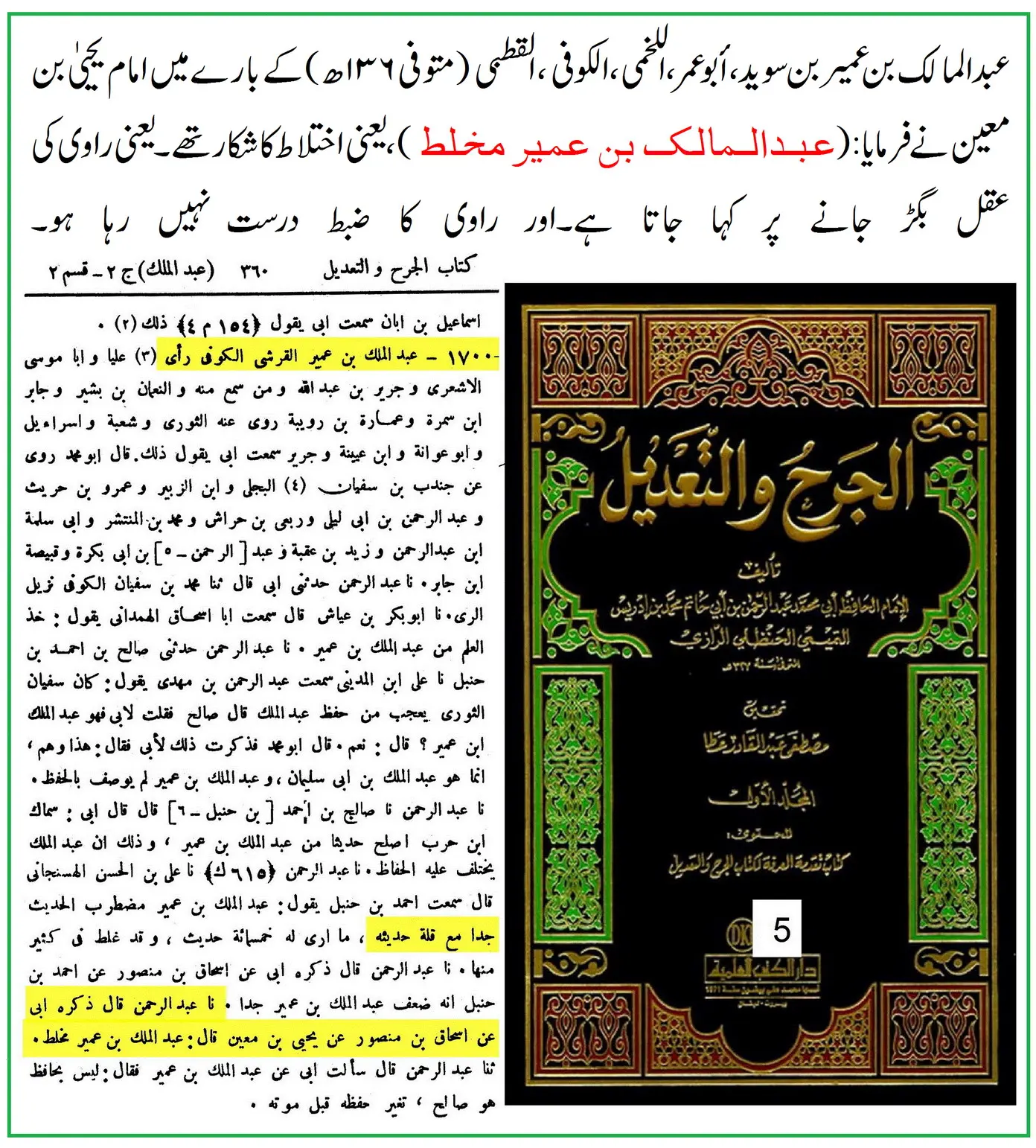
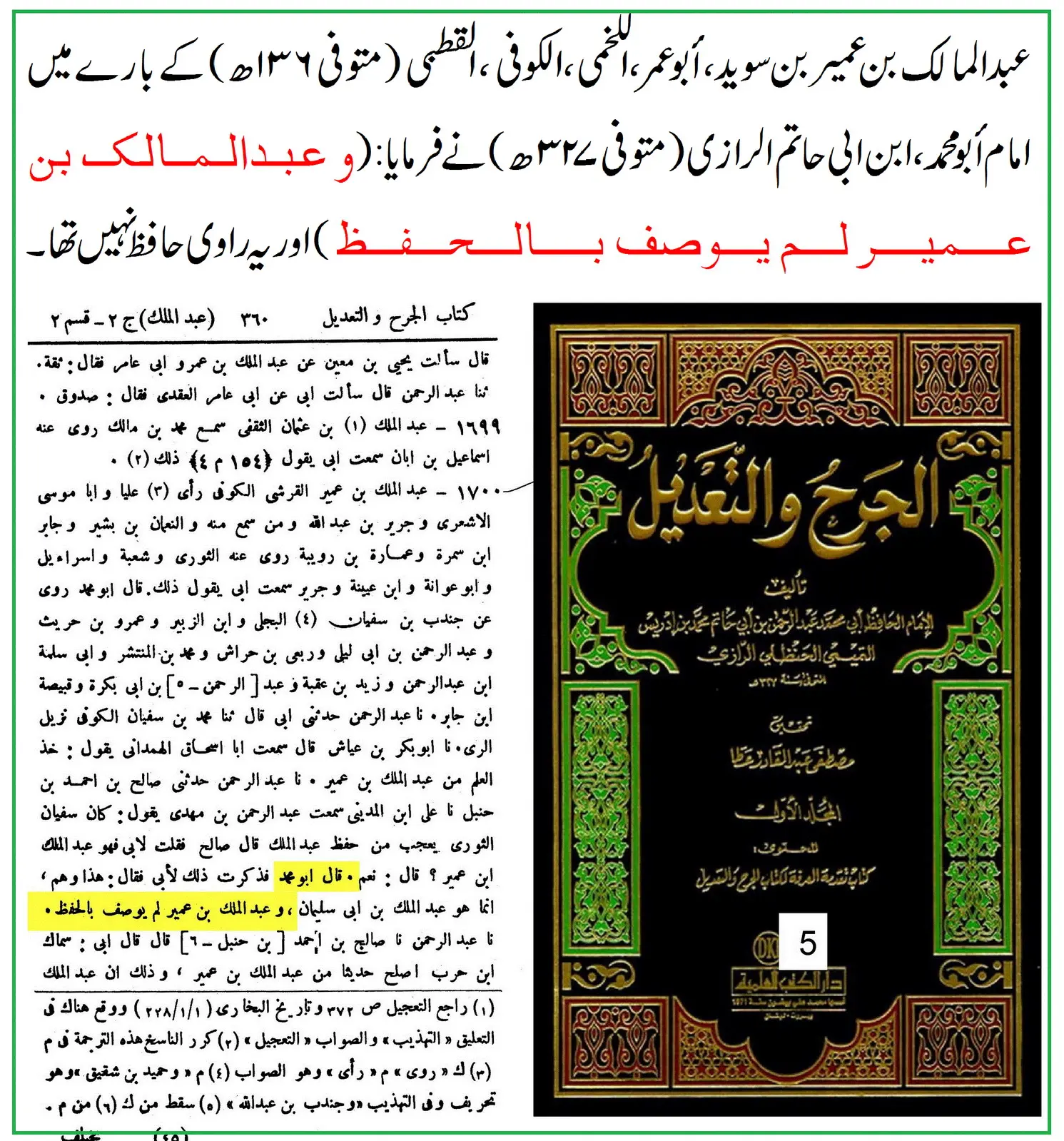
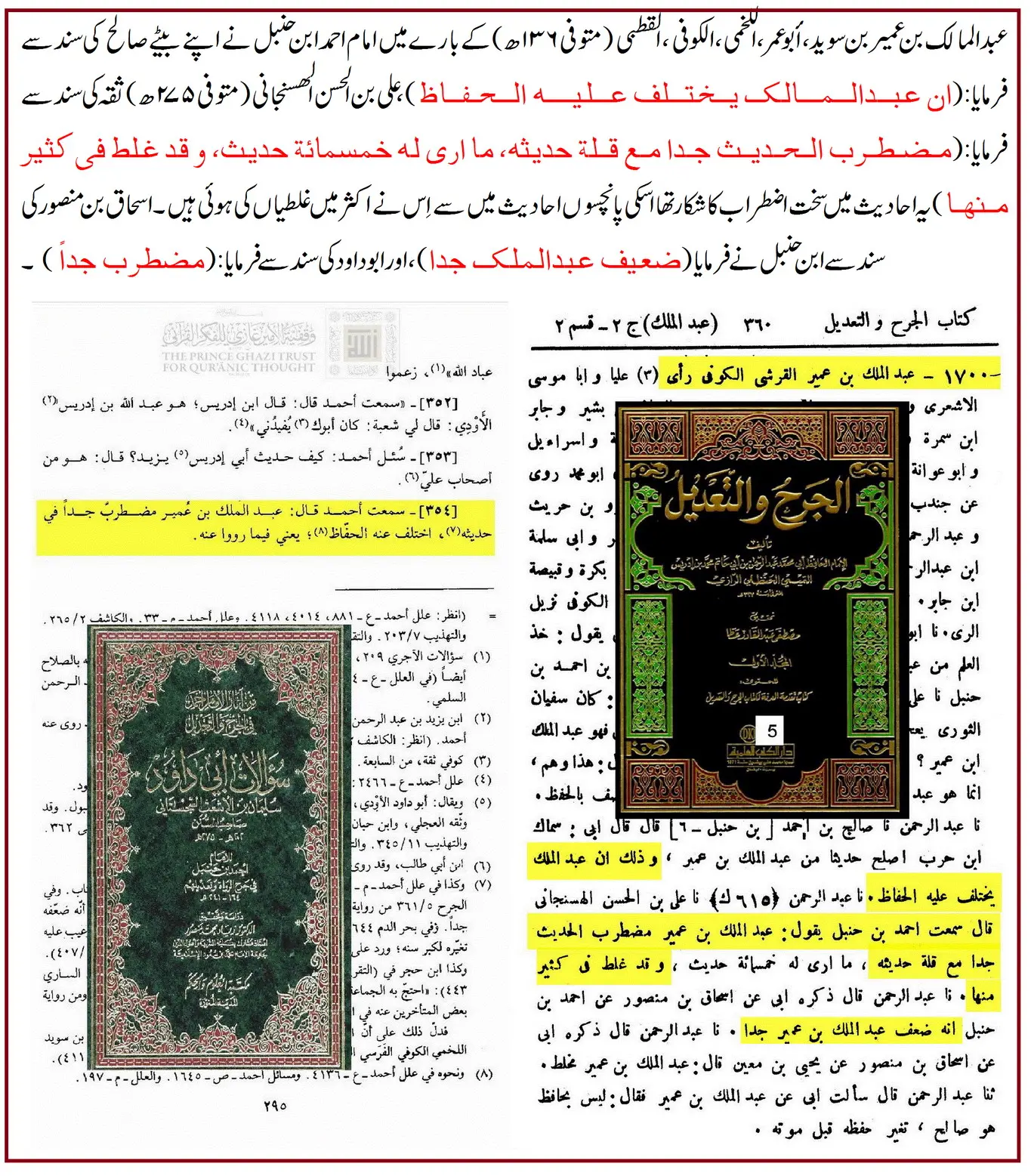
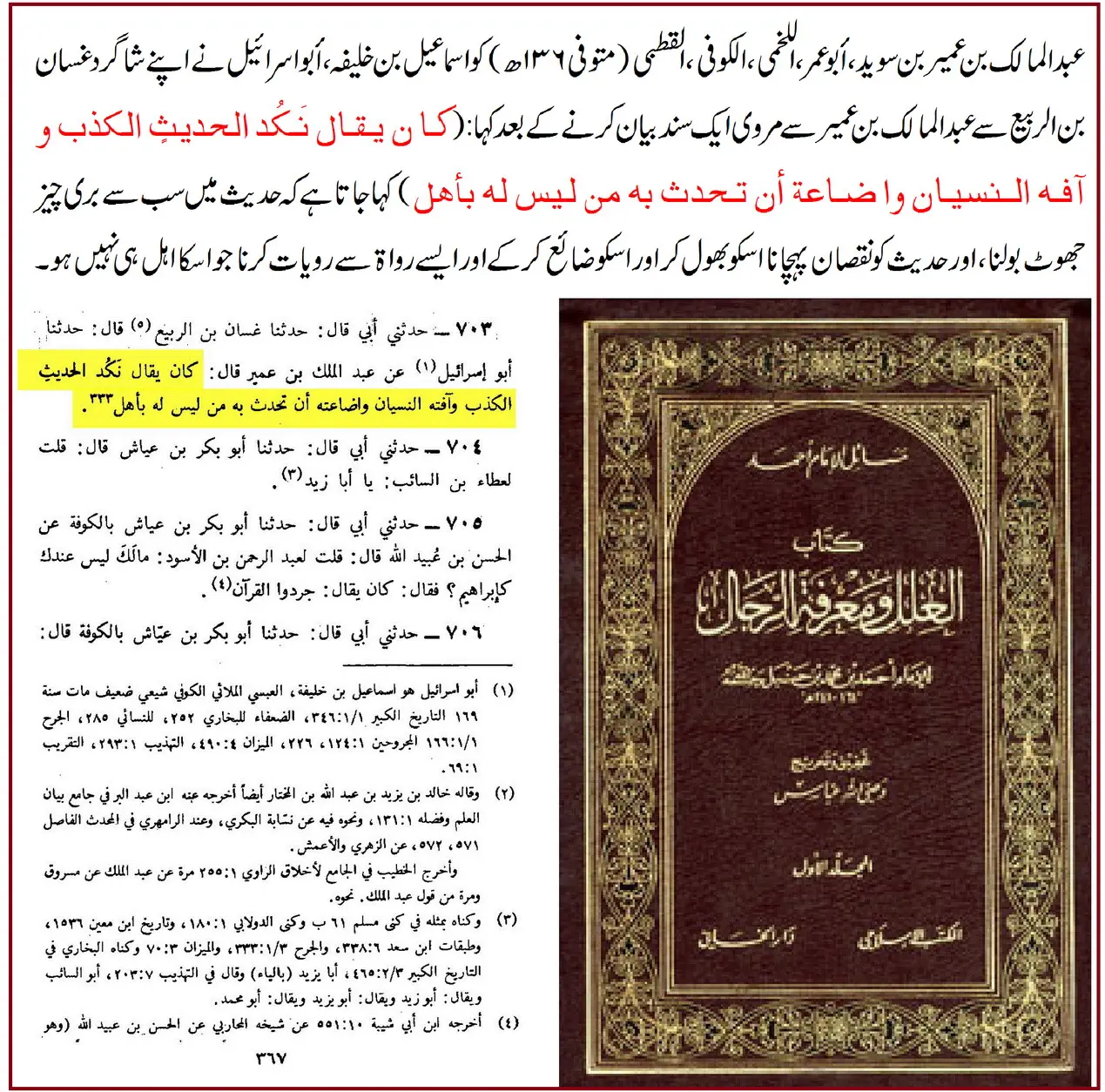
The central narrator in this chain is ʿAbd al-Malik bin ʿUmayr (d. 136 AH). The Imams severely criticized him:① Imām Yaḥyā bin Maʿīn رحمه الله
قال يحيى بن معين: «عبد الملك بن عمير مخلط»
Reference: Al-Jarḥ wa al-Taʿdīl (Ibn Abī Ḥātim) 6/330
Translation: ʿAbd al-Malik bin ʿUmayr was confused/mixed-up (mukhalliṭ).
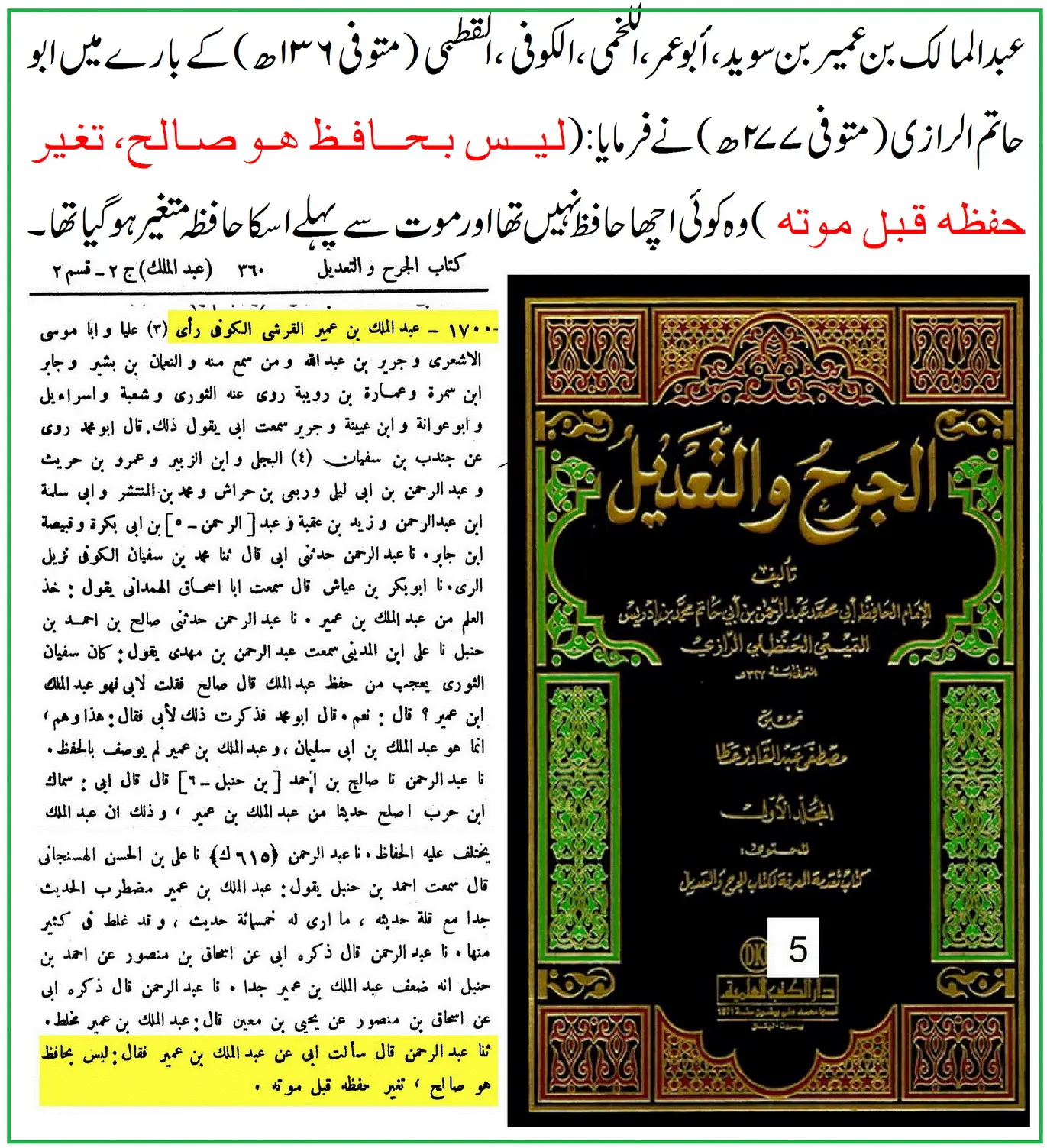
② Imām Abū Ḥātim al-Rāzī رحمه الله
قال أبو حاتم: «ليس بحافظ، هو صالح، تغير حفظه قبل موته»
Reference: Al-Jarḥ wa al-Taʿdīl 6/330
Translation: He was not a ḥāfiẓ (strong preserver). He was generally righteous, but his memory changed before his death.
③ Imām Aḥmad bin Ḥanbal رحمه الله
قال الإمام أحمد: «عبد الملك بن عمير مضطرب الحديث جدّاً، مع قلة حديثه، وقد غلط في كثير منها»
Reference: Al-Jarḥ wa al-Taʿdīl 6/330
Translation: He was extremely inconsistent in Hadith, despite having few narrations, and he made mistakes in many of them.
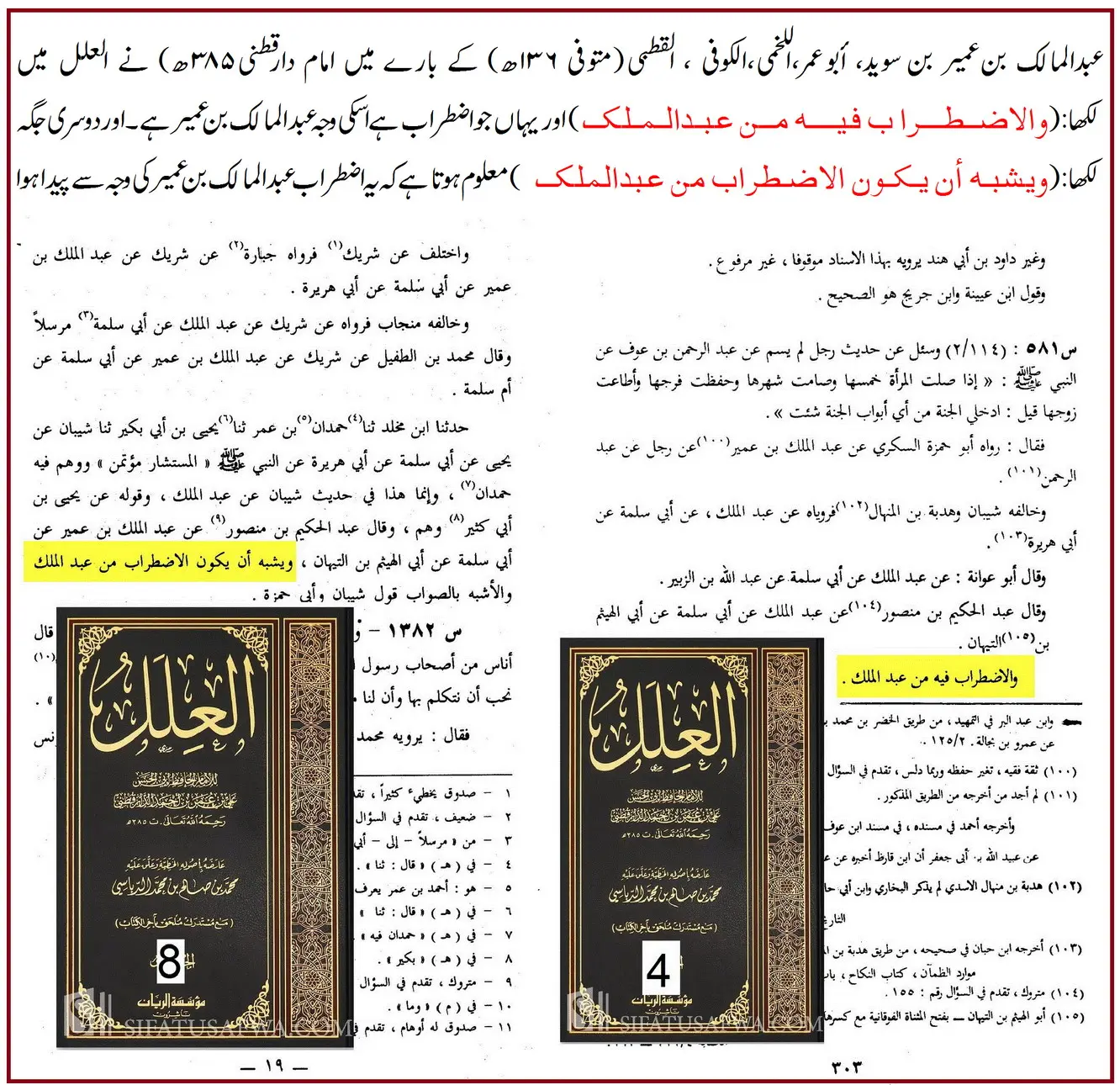
④ Imām al-Dāraquṭnī رحمه الله
قال الدارقطني: «الاضطراب فيه من عبد الملك بن عمير»
Reference: ʿIlal al-Dāraquṭnī 4/303
Translation: The inconsistency in it is from ʿAbd al-Malik bin ʿUmayr.
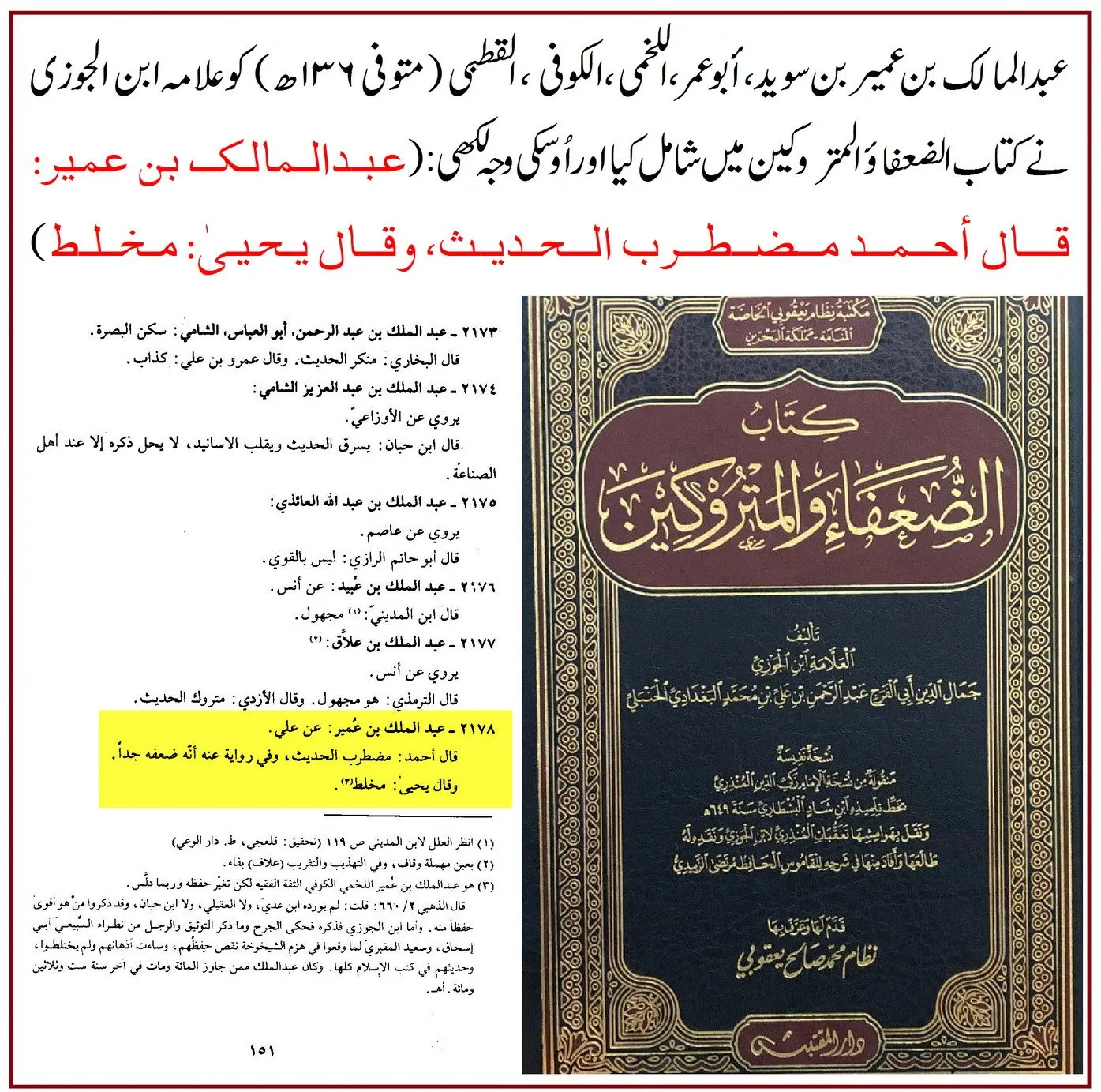
⑤ Imām Ibn al-Jawzī رحمه الله
قال ابن الجوزي: «عبد الملك بن عمير مضطرب الحديث… ضعفه أحمد جداً، وقال يحيى: مخلط»
Reference: Al-Ḍuʿafā’ wa al-Matrūkūn 2/207
Translation: He is inconsistent in Hadith… Aḥmad considered him very weak, and Yaḥyā said he is mukhalliṭ.
⑥ Ḥāfiẓ Ibn Ḥajar رحمه الله
قال ابن حجر: «مدلس من الطبقة الثالثة… وإنما عيب عليه أنه تغير حفظه لكبر سنه»
Reference: Ṭabaqāt al-Mudallisīn
Reference: Fatḥ al-Bārī 1/391
Translation: He is a mudallis from the third category… and he was criticized because his memory changed due to old age.
✔ Summary of the Chain’s Status
① The chain contains unknown narrators (Jaʿfar bin Muḥammad and his father).② The central narrator ʿAbd al-Malik bin ʿUmayr is inconsistent, a mudallis, and weak in memory.
③ Both al-Albānī and Shuʿayb al-Arna’ūṭ rejected accepting it as marfūʿ.
Therefore, this narration is severely weak, and attributing it to the Prophet ﷺ is tantamount to lying against him.ʿAbd al-Malik bin ʿUmayr in Ṣaḥīḥ al-Bukhārī and the Ruling on Those Reports
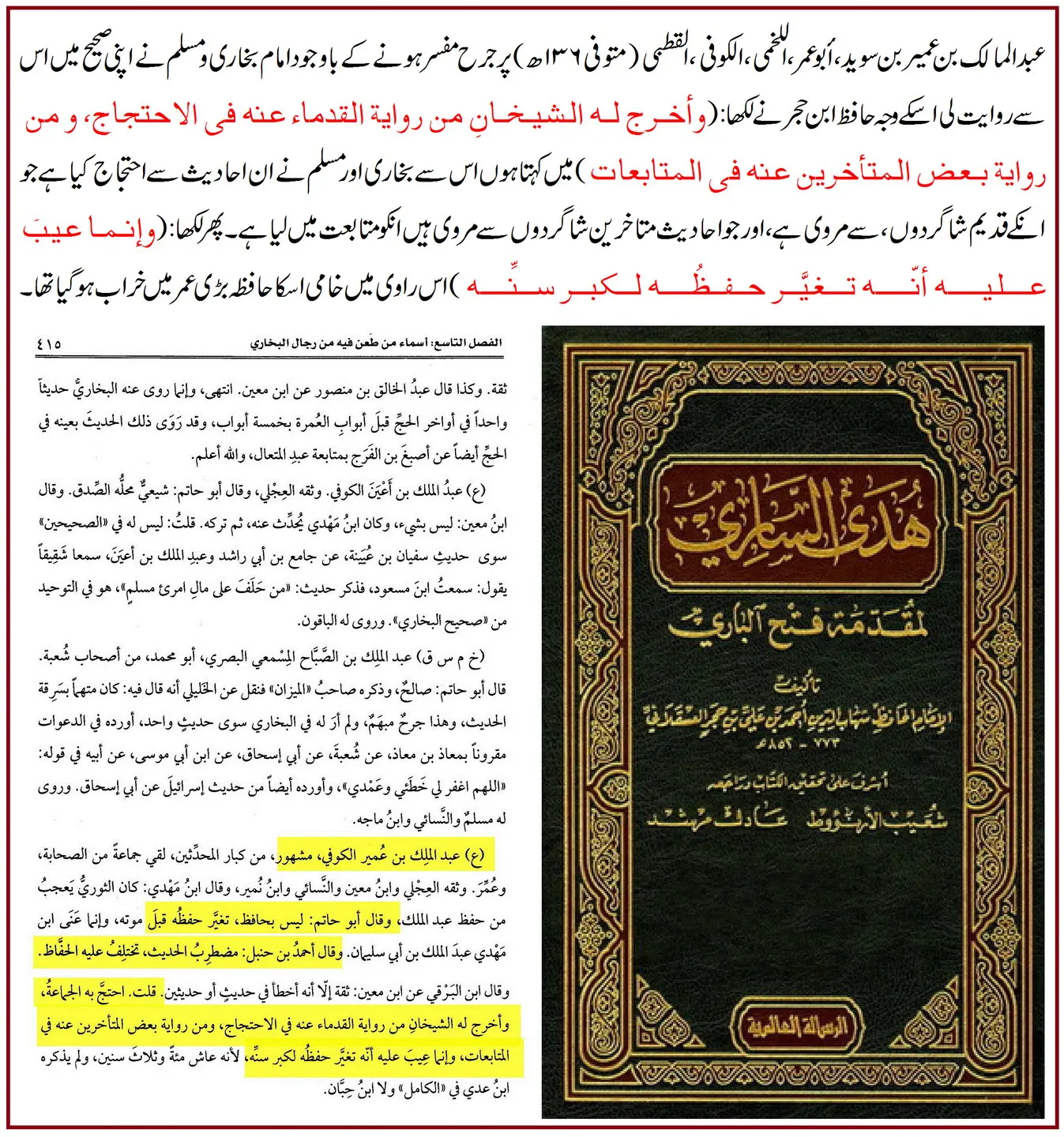
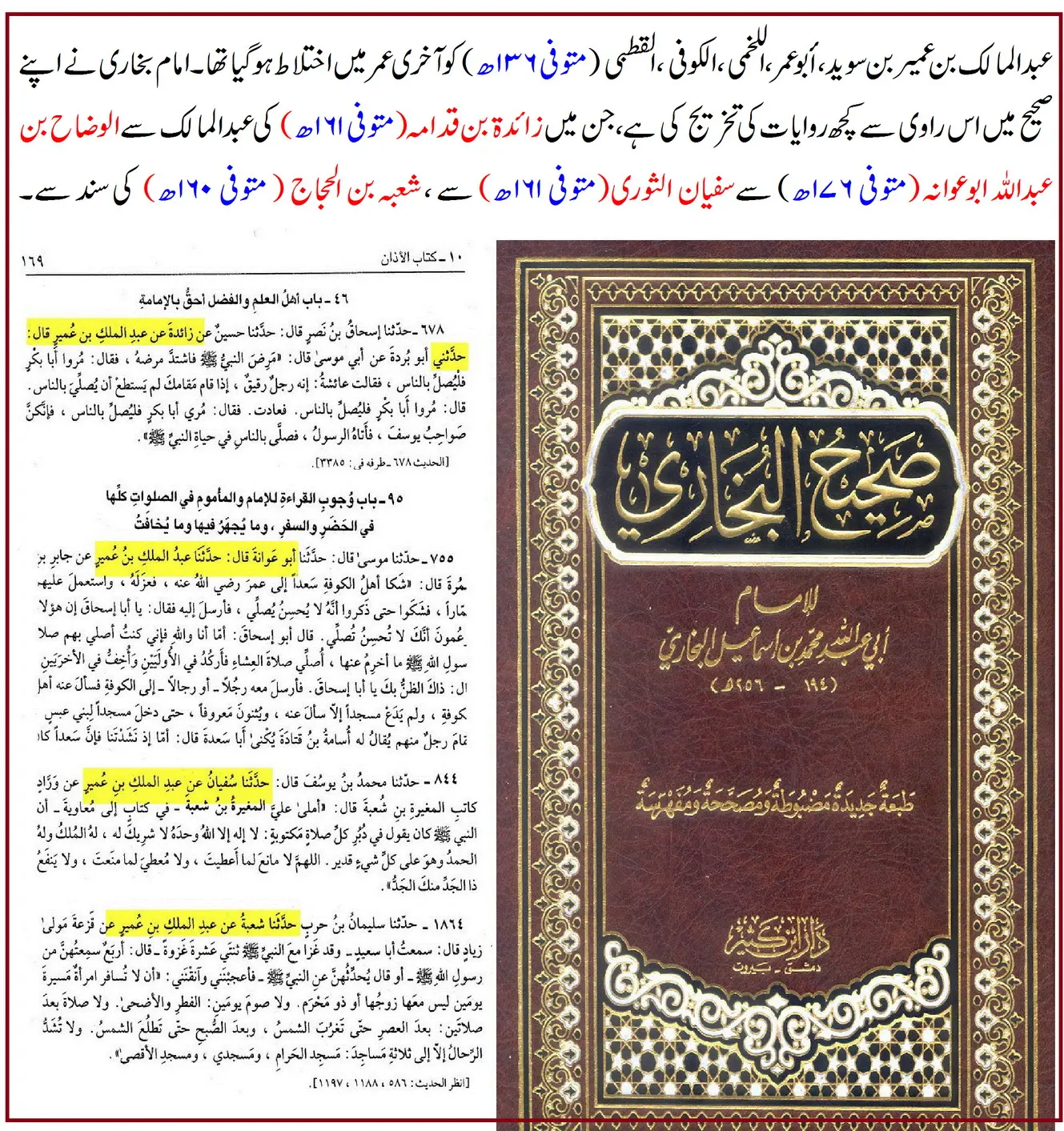
Now we examine how Imām al-Bukhārī included narrations from ʿAbd al-Malik bin ʿUmayr (Kūfī, d. 136 AH)—despite jarḥ mufassar existing against him—and what the scholars explained about the status of those narrations.✿ His Narrations in Ṣaḥīḥ al-Bukhārī ✿
Imām al-Bukhārī used his narrations as proof only when transmitted through early (reliable) students, and used reports of later students only in mutābaʿāt and shawāhid.◈ Bukhārī (Hadith 678)
ʿAbd al-Malik bin ʿUmayr → Abū Burdah → Abū Mūsā al-Ashʿarī
◈ Bukhārī (Hadith 755)
ʿAbd al-Malik bin ʿUmayr → Jābir bin Samurah
◈ Bukhārī (Hadith 844)
ʿAbd al-Malik bin ʿUmayr → Warrād, scribe of al-Mughīrah bin Shuʿbah
◈ Bukhārī (Hadith 1864)
ʿAbd al-Malik bin ʿUmayr → Qazʿah, mawlā of Ziyād
In all these chains, Imām al-Bukhārī took from early, trustworthy students such as: Zā’idah bin Qudāmah (d. 161 AH), Shuʿbah bin al-Ḥajjāj (d. 160 AH), Sufyān al-Thawrī (d. 161 AH), and Abū ʿAwānah al-Waḍḍāḥ (d. 176 AH).
✿ Explanation of Ḥāfiẓ Ibn Ḥajar رحمه الله ✿
قال ابن حجر: «وأخرج له الشيخان من رواية القدماء عنه في الاحتجاج، ومن رواية بعض المتأخرين عنه في المتابعات»
Reference: Fatḥ al-Bārī 1/391
Translation:
Al-Bukhārī and Muslim narrated from him, using reports of his early students as proof, while narrations of some later students were included only as supporting narrations (mutābaʿāt).
Summary
✔ Severe jarḥ exists against ʿAbd al-Malik bin ʿUmayr: he was mukhalliṭ, inconsistent, not a strong preserver, and a mudallis.✔ Yet al-Bukhārī and Muslim only included the narrations transmitted through his early, reliable students—therefore those specific narrations are authentic.
✖ Outside that, his solitary or later narrations are not proof.
Review of the Chains of Ibn Saʿd and al-Bayhaqī
① First Chain (Ibn Saʿd)
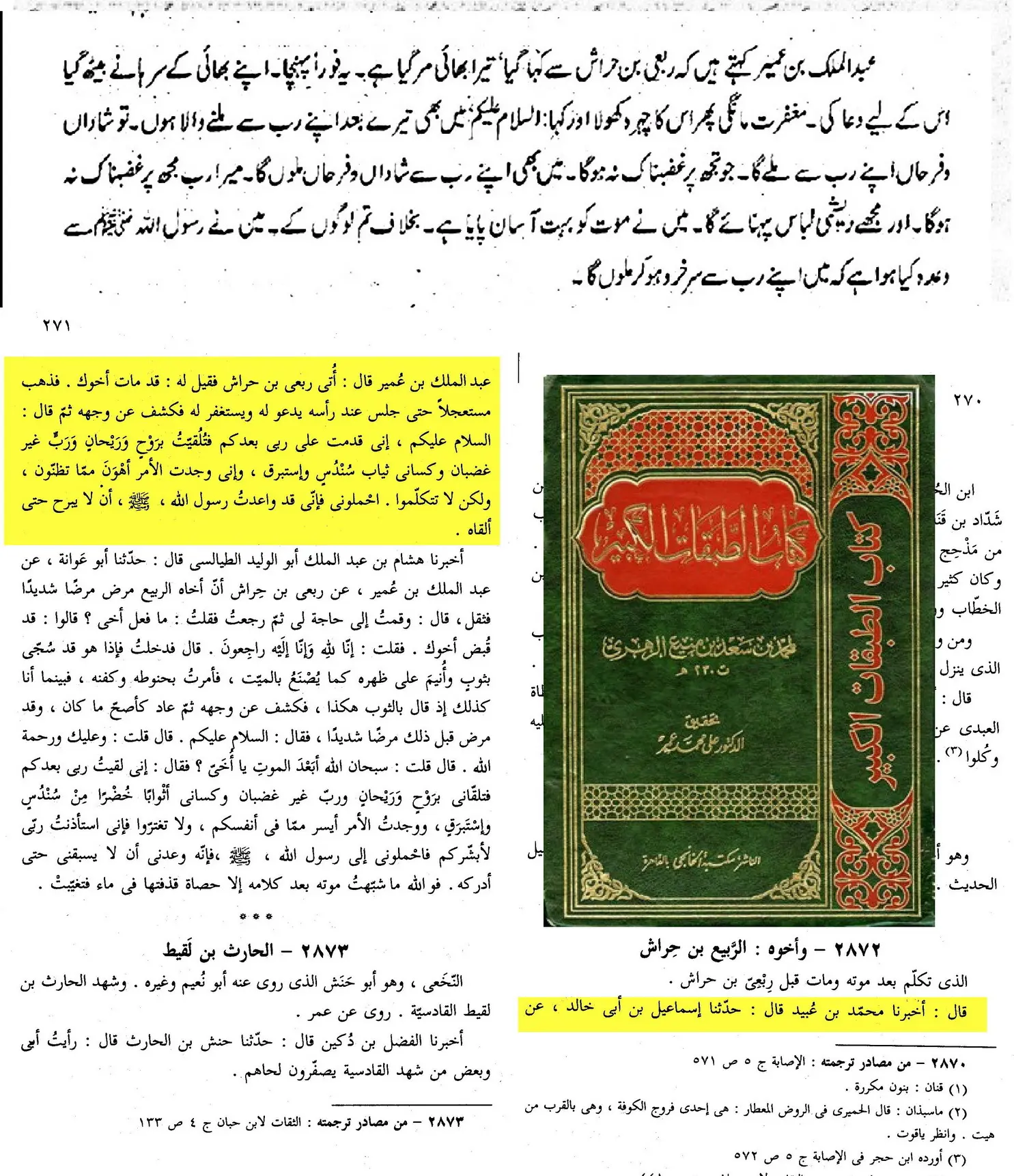
قال ابن سعد:أخبرنا محمد بن عبيد، قال: حدثنا إسماعيل بن أبي خالد، عن عبد الملك بن عمير، قال: أُتي ربعي بن حراش فقيل له: قد مات أخوك، فذهب مستعجلاً حتى جلس عند رأسه يدعو له ويستغفر له، فكشف عن وجهه، ثم قال: السلام عليكم، إني قدمت على ربي بعدكم، فتلقّيت بروح وريحان، وربّ غير غضبان، وكساني ثياب سندس واستبرق، وإني وجدت الأمر أهون مما تظنون، ولكن لا تتكلموا، احملوني؛ فإني قد واعدت رسول الله ﷺ أن لا يبرح حتى ألقاه.
Reference: Al-Ṭabaqāt al-Kubrā (Ibn Saʿd) 6/32
Translation:
Ibn Saʿd reported: Rabīʿ bin Kharāsh was told, “Your brother has died.” He rushed and sat at his head, supplicating and seeking forgiveness for him. Then the face was uncovered, and the deceased said: “As-salāmu ʿalaykum. I have come to my Lord after you, and I was received with comfort and fragrance, and a Lord who is not angry, and He clothed me with garments of fine silk and brocade. I found the matter easier than you assume; but do not speak—carry me, for I have made an appointment with the Messenger of Allah ﷺ that he will not depart until I meet him.”
② Second Chain (Ibn Saʿd)
Ibn Saʿd also mentioned another chain from Rabīʿ bin Kharāsh that his brother became severely ill, then passed away, and later spoke when his face was uncovered.③ Defects in These Chains
In both chains is ʿAbd al-Malik bin ʿUmayr, whose severe criticism has already been mentioned. The texts also differ, indicating inconsistency (iḍṭirāb).✿ Chain of al-Bayhaqī in Dalā’il al-Nubuwwah ✿
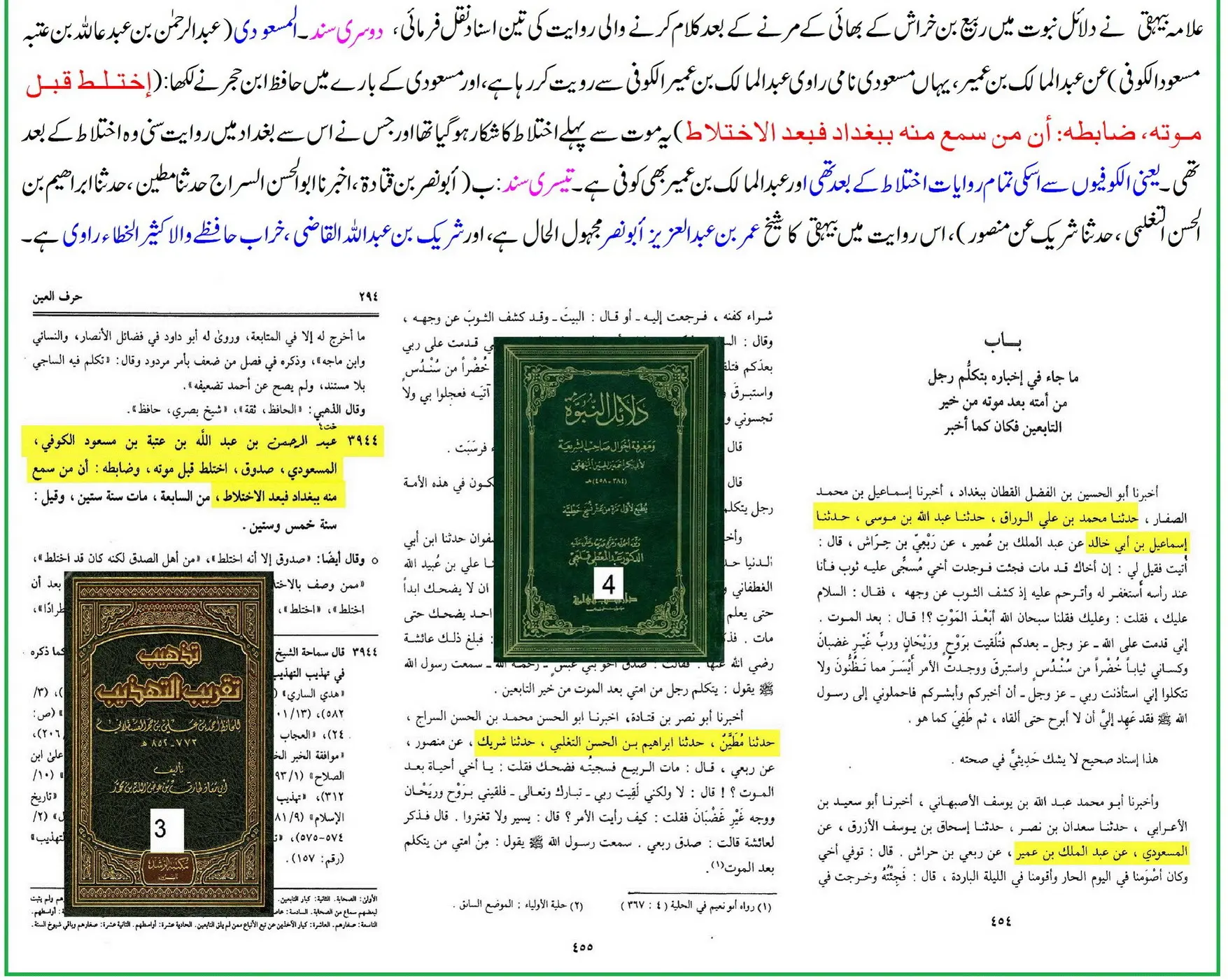
قال البيهقي:أخبرنا أبو محمد عبد الله بن يوسف الأصبهاني، أخبرنا أبو سعيد بن الأعرابي، حدثنا سعدان بن نصر، حدثنا إسحاق بن يوسف الأزرق، عن المسعودي، عن عبد الملك بن عمير، عن ربعي بن حراش، قال: توفي أخي…
Reference: Dalā’il al-Nubuwwah (al-Bayhaqī) 7/185
Translation:
Al-Bayhaqī also narrated that Rabīʿ bin Kharāsh said: My brother passed away, then he spoke after death.
⑤ Defects in This Chain
This chain contains al-Masʿūdī (ʿAbd al-Raḥmān bin ʿAbd Allāh al-Masʿūdī), who was truthful but suffered from confusion later in life. Ibn Ḥajar said:قال ابن حجر: «صدوق، اختلط قبل موته، وضابطه أن من سمع منه ببغداد فبعد الاختلاط»
Reference: Taqrīb al-Tahdhīb 1/583
Translation:
He was truthful, but he became confused before his death. The principle is that whoever heard from him in Baghdad heard after his confusion.
Overall Summary
✔ The chains of Ibn Saʿd contain ʿAbd al-Malik bin ʿUmayr, who is inconsistent and a mudallis.✔ The texts contain strong inconsistency.
✔ Al-Bayhaqī’s chain contains al-Masʿūdī, who suffered confusion.
Therefore, these chains are not admissible as proof.Other Chains: al-Bayhaqī via Sharīk al-Qāḍī, and Ibn ʿAbd al-Barr
1) al-Bayhaqī’s Chain via Sharīk al-Qāḍī
قال البيهقي:أَخْبَرَنَا أَبُو نَصْرِ بْنُ قَتَادَةَ، أَخْبَرَنَا أَبُو الْحَسَنِ مُحَمَّدُ بْنُ الْحَسَنِ السَّرَّاجُ، حَدَّثَنَا مُطَيَّنٌ، حَدَّثَنَا إِبْرَاهِيمُ بْنُ الْحَسَنِ التَّغْلِبِيُّ، حَدَّثَنَا شَرِيكٌ، عَنْ مَنْصُورٍ، عَنْ رِبْعِيٍّ، قَالَ: مَاتَ الرَّبِيعُ فَسَجَّيْتُهُ فَضَحِكَ، فَقُلْتُ: يَا أَخِي أَحَيَاةٌ بَعْدَ الْمَوْتِ؟
Reference: Dalā’il al-Nubuwwah (al-Bayhaqī) 7/185
Translation:
Rabīʿ died, so I covered him, then he laughed. I said: “O my brother! Is there life after death?”
Defects
Sharīk bin ʿAbd Allāh al-Qāḍī: He was truthful but very poor in memory and made many mistakes.2) Chain of Ibn ʿAbd al-Barr (al-Istīʿāb)
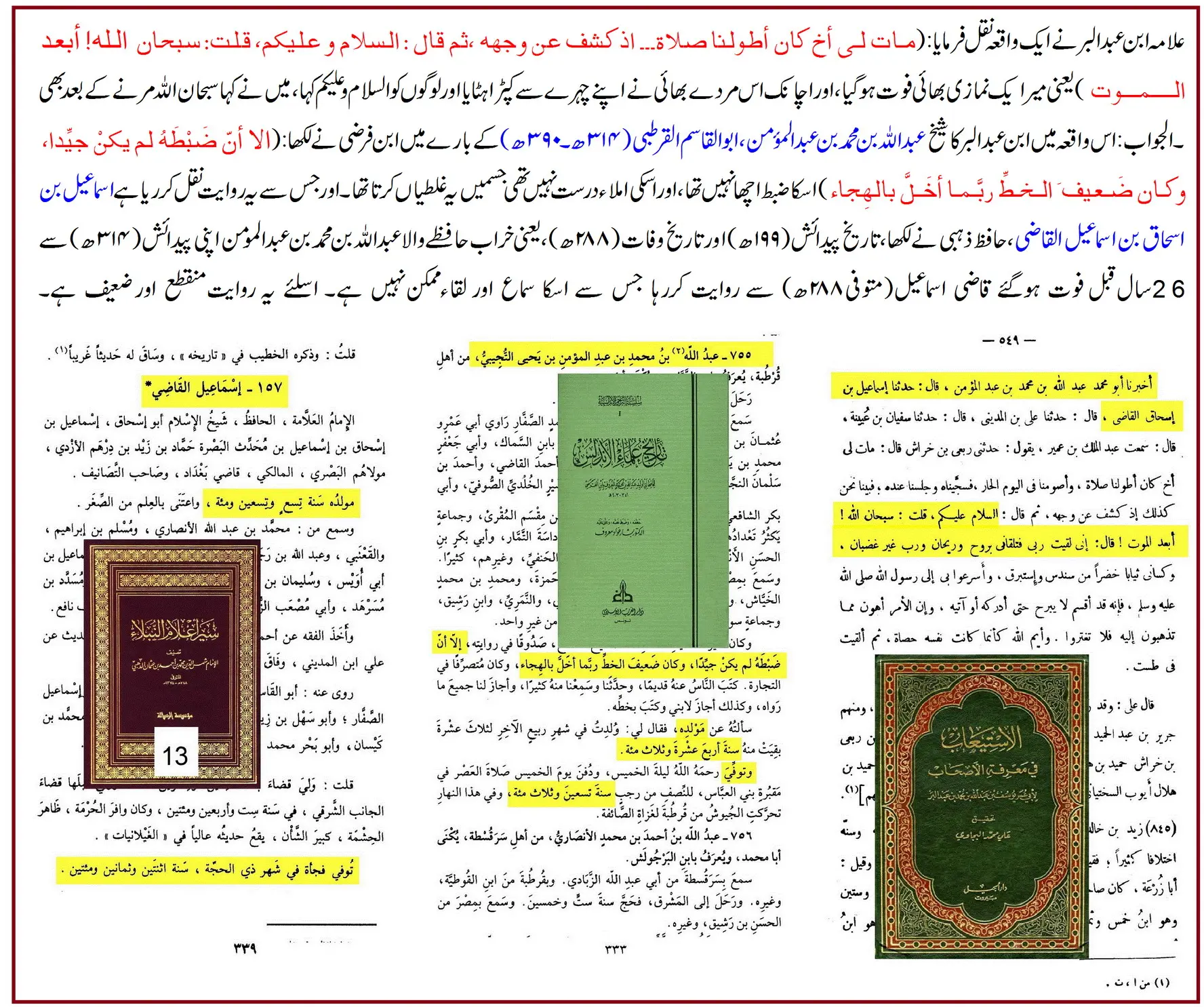
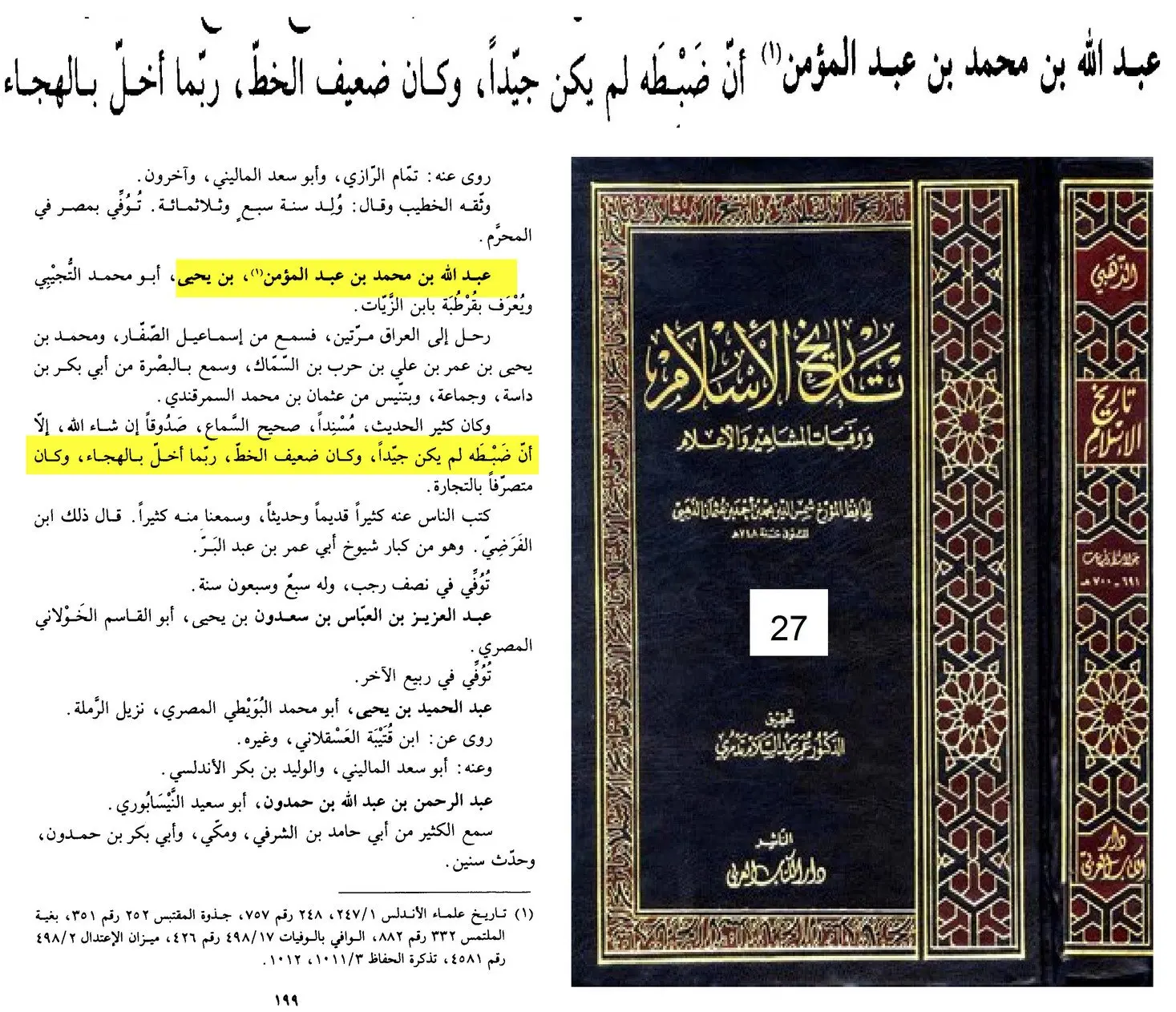
قال ابن عبد البر:أَخْبَرَنَا أَبُو مُحَمَّدٍ عَبْدُ اللهِ بْنُ مُحَمَّدِ بْنِ عَبْدِ الْمُؤْمِنِ، قَالَ: حَدَّثَنَا إِسْمَاعِيلُ بْنُ إِسْحَاقَ الْقَاضِي، قَالَ: حَدَّثَنَا عَلِيُّ بْنُ الْمَدِينِيِّ، قَالَ: حَدَّثَنَا سُفْيَانُ بْنُ عُيَيْنَةَ، قَالَ: سَمِعْتُ عَبْدَ الْمَلِكِ بْنَ عُمَيْرٍ، يَقُولُ: حَدَّثَنِي رِبْعِيُّ بْنُ خِرَاشٍ…
Reference: Al-Istīʿāb fī Maʿrifat al-Aṣḥāb (under the entry of Rabīʿ / Zayd bin Khārijah)
Translation:
Ibn ʿAbd al-Barr narrates through his shaykh… from Ismāʿīl bin Isḥāq al-Qāḍī… from ʿAlī bin al-Madīnī… from Sufyān bin ʿUyaynah… from ʿAbd al-Malik bin ʿUmayr… from Rabīʿ bin Kharāsh… (a mawqūf report).
Defect
The chain is disconnected, and the narrator’s precision is weak as described.✦ Shared Defects Across All Routes
① The central link is ʿAbd al-Malik bin ʿUmayr—severely criticized, and a third-category mudallis.② Severe inconsistency in the texts: in some versions there is salām, in others laughter; in some the “waiting of Abū al-Qāsim ﷺ” is mentioned, in others it is absent.
③ Some routes contain narrators afflicted with confusion or poor memory.
✔ Final Summary and Key Takeaway
This research presents a detailed refutation of the Barelvi innovator’s claim that “people can speak after death and the Prophet ﷺ comes to lead their funeral prayers.”The origin of this story is only a report attributed to the brother of Rabīʿ / al-Rabīʿ bin Kharāsh, yet all its chains contain severe defects:
① Jaʿfar bin Muḥammad al-Ashjaʿī and his father: both unknown.
② ʿAbd al-Malik bin ʿUmayr: mukhalliṭ, inconsistent, not a strong preserver, and a mudallis.
③ al-Masʿūdī: suffered confusion in later life.
④ Sharīk al-Qāḍī: poor memory and frequent mistakes.
⑤ Ibn ʿAbd al-Barr’s route: disconnected chain with additional weakness.
The texts themselves contain obvious inconsistency, which is a sign of rejection.
Therefore:
① The narration about the dead speaking is rejected and not proof.
② The belief that the Prophet ﷺ comes after a person’s death to attend and lead his funeral is a clear slander and a false attribution to the Prophet ﷺ.