Written by: Abu Hamza Salafi
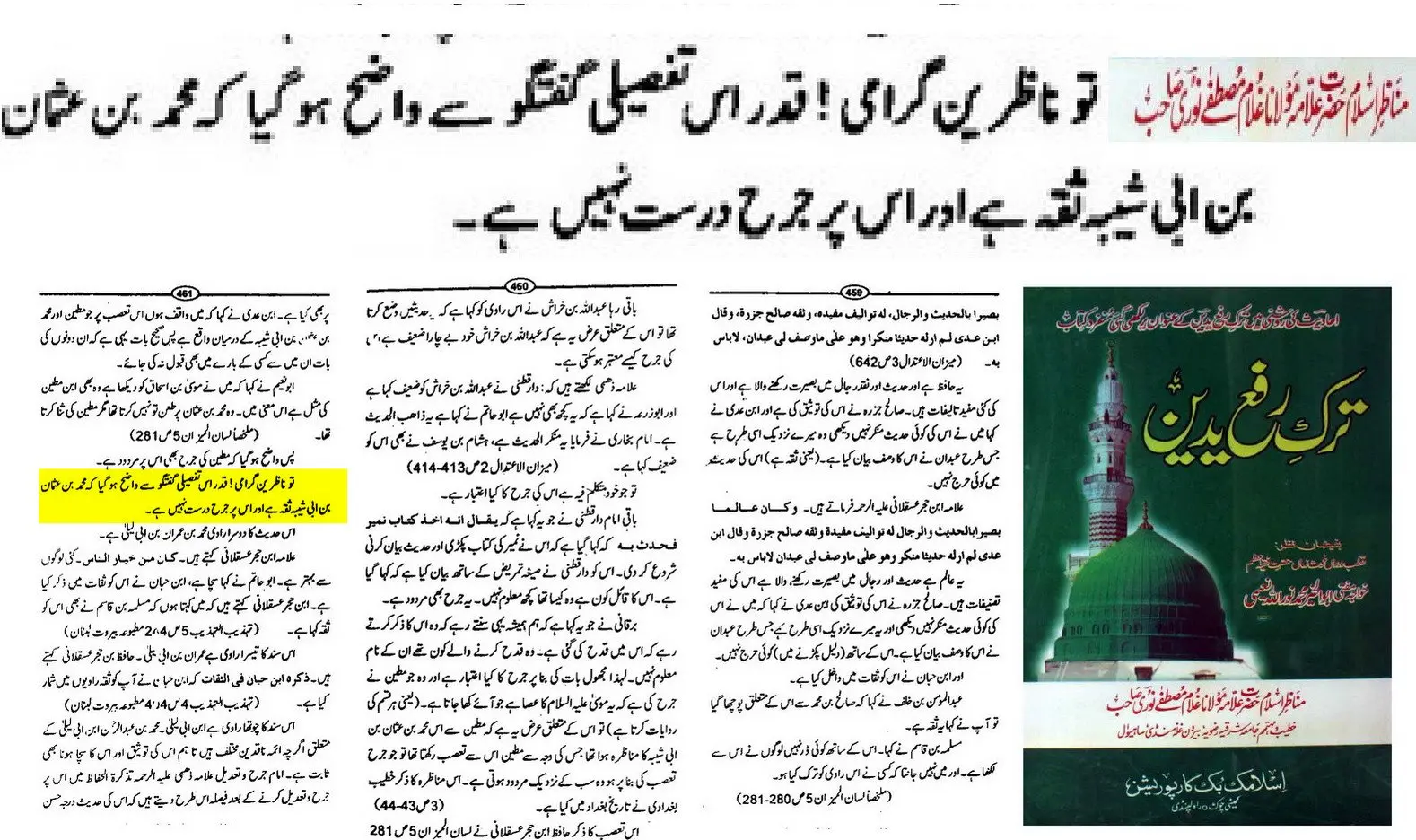
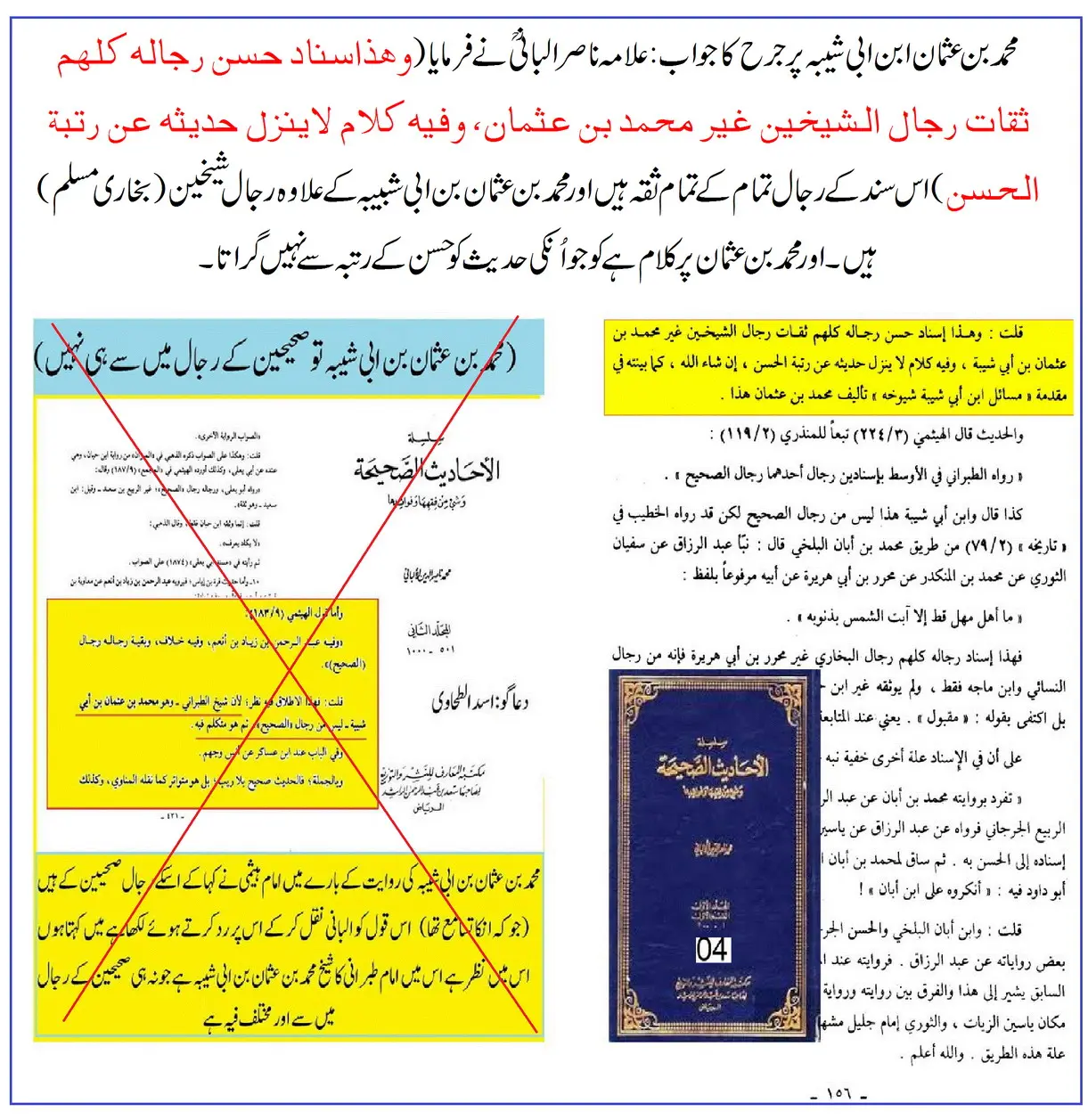
This article is about the scholarly status of the esteemed Muhaddith Muhammad ibn Uthman ibn Abi Shaybah al-Kufi (d. 297 AH). In it, we will quote more than twenty statements from the Imams of Hadith in which they have described him with words such as truthful (Saduq), good in Hadith (Hasan al-Hadith), memorizer (Hafiz), Muhaddith of Kufa, wide narrator (Wasi' al-Riwayah), and acceptable (La Ba'sa Bihi). Alongside, examples of narrations on which the Muhaddithin have ruled as authentic (Sahih) and good (Hasan) will be presented. Furthermore, at some places where criticism calling him a "liar" (Kadhdhab) has been reported, the chain status, background of the transmitters, and explanations of the Imams will be used to prove that these criticisms are rejected and unreliable. Finally, the reference to the criticism of Imam al-Daraqutni will also be highlighted. Thus, this article will clarify the fact that Muhammad ibn Uthman ibn Abi Shaybah is a reliable and accepted narrator whose narrations are trusted.
➤ Evidence ➊ — Allama Nur al-Din al-Haythami (d. 807 AH)
Arabic text: وَعَنْ أَبِي مُوسَى قَالَ: قَالَ رَسُولُ اللَّهِ - صَلَّى اللَّهُ عَلَيْهِ وَسَلَّمَ: «إِنَّ بَنِي إِسْرَائِيلَ كَتَبُوا كِتَابًا وَاتَّبَعُوهُ، وَتَرَكُوا التَّوْرَاةَ».رَوَاهُ الطَّبَرَانِيُّ فِي الْأَوْسَطِ، وَفِيهِ مُحَمَّدُ بْنُ عُثْمَانَ بْنِ أَبِي شَيْبَةَ، وَهُوَ ثِقَةٌ، وَقَدْ ضَعَّفَهُ غَيْرُ وَاحِدٍ.
Translation: It is narrated from Hazrat Abu Musa (may Allah be pleased with him) that the Messenger of Allah ﷺ said: "The Children of Israel wrote a book and began to act upon it while abandoning the Torah." This narration is reported by Al-Tabarani in Al-Awsat, and in its chain of transmission is Muhammad ibn Uthman ibn Abi Shaybah, who is trustworthy, although some have called him weak.
Reference:

Reference: Majma' al-Zawa'id wa Manba' al-Fawa'id, by Al-Haythami (Vol. 2, p. 48, No. 671)
Explanation: Allama Al-Haythami explicitly stated that Muhammad ibn Uthman ibn Abi Shaybah is considered trustworthy. Although some have called him weak, Al-Haythami based his judgment on his trustworthiness, which he regarded as the stronger opinion. This shows that reliable scholars have trusted him.
➤ Evidence ➋ — 'Abdan (Abdullah ibn Ahmad Al-Ahwazi, died 306 AH) and Ibn 'Adi (died 365 AH)
Arabic text: مُحَمد بن عثمان بن أَبِي شيبة كوفي، يُكَنَّى أبا جعفر.قَالَ الشَّيْخ (عبدان): وَمُحمد بْن عثمان هذا عَلَى ما وصفه عبدان لا بأس به.
Translation: Muhammad ibn Uthman ibn Abi Shaybah is from Kufa, his kunya is Abu Ja'far. Sheikh 'Abdan said: As I have stated, there is no flaw in Muhammad ibn Uthman, meaning he is trustworthy.
Reference:
Reference: Al-Kamil fi Dhu'afa' al-Rijal, Ibn 'Adi (Vol. 6, p. 2398, No. 1782)
Explanation: Here is the testimony of two great scholars:
- Abdan, who is a trustworthy and memorizing hadith scholar, said "No harm in it," meaning there is no defect in his hadith.
- Ibn Adi also did not find any rejected narration from him. Therefore, these two statements strengthen the fact that Muhammad ibn Uthman ibn Abi Shaybah is a reliable and acceptable narrator.
➤ Evidence ➌ — Imam Abu Nu'aym Isfahani (d. 430 AH)
Arabic text (Al-Mustakhraj 'ala Sahih Muslim): حَدَّثَنَا مُحَمَّدُ بْنُ عُثْمَانَ بْنِ أَبِي شَيْبَةَ … لَفْظُهُمَا وَاحِدٌ صَحِيحٌ وَإِسْنَادُهُ حَسَنٌ.
Translation: It is narrated from Muhammad ibn Uthman ibn Abi Shaybah... whose text is the same, it is authentic and its chain is good.
Reference:
Reference: Al-Mustakhraj 'ala Sahih Muslim, Abu Nu'aym Isfahani (Vol. 1, p. 426)
Explanation: Abu Nu'aym directly declared his narration authentic and the chains good. These explicit words are proof that the hadith scholars trusted his narration and evaluated it according to the standard of authenticity.
➤ Evidence ➍ — Abu Nu'aym (Book: Hilyat al-Awliya)
Arabic text: حَدِيثٌ صَحِيحٌ مَشْهُورٌ مِنْ حَدِيثِ قَتَادَةَ … لَمْ نَكْتُبْهُ إِلَّا مِنْ حَدِيثِ ابْنِ أَبِي شَيْبَةَ.
Translation: This hadith is authentic and well-known, narrated from Qatadah... and we have recorded this hadith only through the chain of Muhammad ibn Uthman ibn Abi Shaybah.
Reference:
Reference: Hilyat al-Awliya wa Tabaqat al-Asfiya, Abu Nu'aym al-Isfahani (Vol. 6, p. 173)
Explanation: Abu Nu'aym not only declared the hadith authentic but also clarified that he took this narration specifically through Muhammad ibn Uthman. This is a clear proof of practical trust in him.
➤ Evidence ➎ — Hafiz Ibn Kathir (d. 774 AH)
Arabic text (Al-Bidaya wa al-Nihaya):فَمِنْ ذَلِكَ مَا رَوَاهُ مُحَمَّدُ بْنُ عُثْمَانَ بْنِ أَبِي شَيْبَةَ … فَقَالَ رَسُولُ اللَّهِ ﷺ يُحْشَرُ ذَاكَ أُمَّةً وَحْدَهُ …إِسْنَادُهُ جَيِّدٌ حَسَنٌ.
Translation: Muhammad ibn Uthman ibn Abi Shaybah narrated this hadith … The Messenger of Allah ﷺ said: "He will be raised on the Day of Resurrection alone as a single nation." Ibn Kathir said: Its chain of narration is good and hasan.
Reference:
Reference: Al-Bidaya wa al-Nihaya, Ibn Kathir (Vol. 6, p. 276)
Al-Bidaya wa al-Nihaya, Ibn Kathir (Vol. 6, p. 276)
Explanation: A venerable historian and exegete like Ibn Kathir declared his narration to have a good and hasan isnad. This explicit authentication is evidence that his narrations are authoritative.
➤ Evidence ➏ — Shaykh al-Islam Ibn Taymiyyah (d. 728 AH)
Arabic text:وَكَذَلِكَ ذَكَرَهُ مُحَمَّدُ بْنُ عُثْمَانَ بْنِ أَبِي شَيْبَةَ حَافِظُ الْكُوفَةِ فِي طَبَقَةِ الْبُخَارِيِّ.
Translation: Muhammad ibn Uthman ibn Abi Shaybah was a Hafiz of Kufa and is counted among the students of Imam Bukhari.
Reference:
Reference: Majmu' al-Fatawa, Ibn Taymiyyah (Vol. 4, p. 50)
Majmu' al-Fatawa, Ibn Taymiyyah (Vol. 4, p. 50)
Explanation: Ibn Taymiyyah (may Allah have mercy on him) referred to him with the title "Hafiz al-Kufa" and counted him among the class of Bukhari. This is a clear chain of excellence indicating that his status is much higher than that of ordinary narrators.
➤ Evidence ➐ — Al-Khatib al-Baghdadi (d. 463 AH)
Arabic text: وكان كثير الحديث، واسع الرواية، ذا معرفة وفهم، وله تاريخ كبير.
Translation: He was one who narrated many hadiths, had extensive transmission, possessed knowledge and understanding, and he has a large history.
Reference:
Reference: Tarikh Baghdad, Al-Khatib al-Baghdadi (Vol. 3, p. 1243)
Tarikh Baghdad, Al-Khatib al-Baghdadi (Vol. 3, p. 1243)
Explanation: Al-Khatib al-Baghdadi (may Allah have mercy on him) described his qualities as: prolific in hadith, extensive in narration, possessing knowledge and understanding. These words are not used for a weak or defective narrator but are specific to a reliable muhaddith.
➤ Evidence ➑ — Hafiz Abdul Azim al-Mundhiri (d. 656 AH)
Arabic text (Al-Targhib wa al-Tarhib): وَعَن عَمَّارِ بْنِ يَاسِرٍ … رَوَاهُ الطَّبَرَانِيُّ وَرُوَاتُهُ ثِقَاتٌ.
Translation: It is narrated from Hazrat Ammar bin Yasir (may Allah be pleased with him)... It was narrated by al-Tabarani and all its narrators are trustworthy.
Reference:
Reference: Al-Targhib wa al-Tarhib, al-Mundhiri (Vol. 3, p. 3441)
Explanation: Al-Mundhiri (may Allah have mercy on him) included Muhammad bin Uthman bin Abi Shaybah in this narration and explicitly stated that all its narrators are trustworthy. Meaning, he was also counted among the trustworthy.
➤ Evidence ➒ — Abu Saad al-Sam'ani (d. 562 AH)
Arabic text (Al-Ansab): كان كثير الحديث واسع الرواية ذا معرفة وفهم وإدراك، وله تاريخ كبير في معرفة الرجال.
Translation: He was prolific in hadith, possessed extensive narration, had knowledge, understanding, and perception, and has a significant history in the science of Rijal.
Reference:
Reference: Al-Ansab, Al-Sam'ani (Vol. 5, p. 239)
Explanation: Al-Sam'ani (may Allah have mercy on him) also highlighted his qualities that he was prolific in hadith and knowledgeable in Rijal, which further illuminates his scholarly reliability.
➤ Evidence 10 — Imam Jalal al-Din al-Suyuti (d. 911 AH)
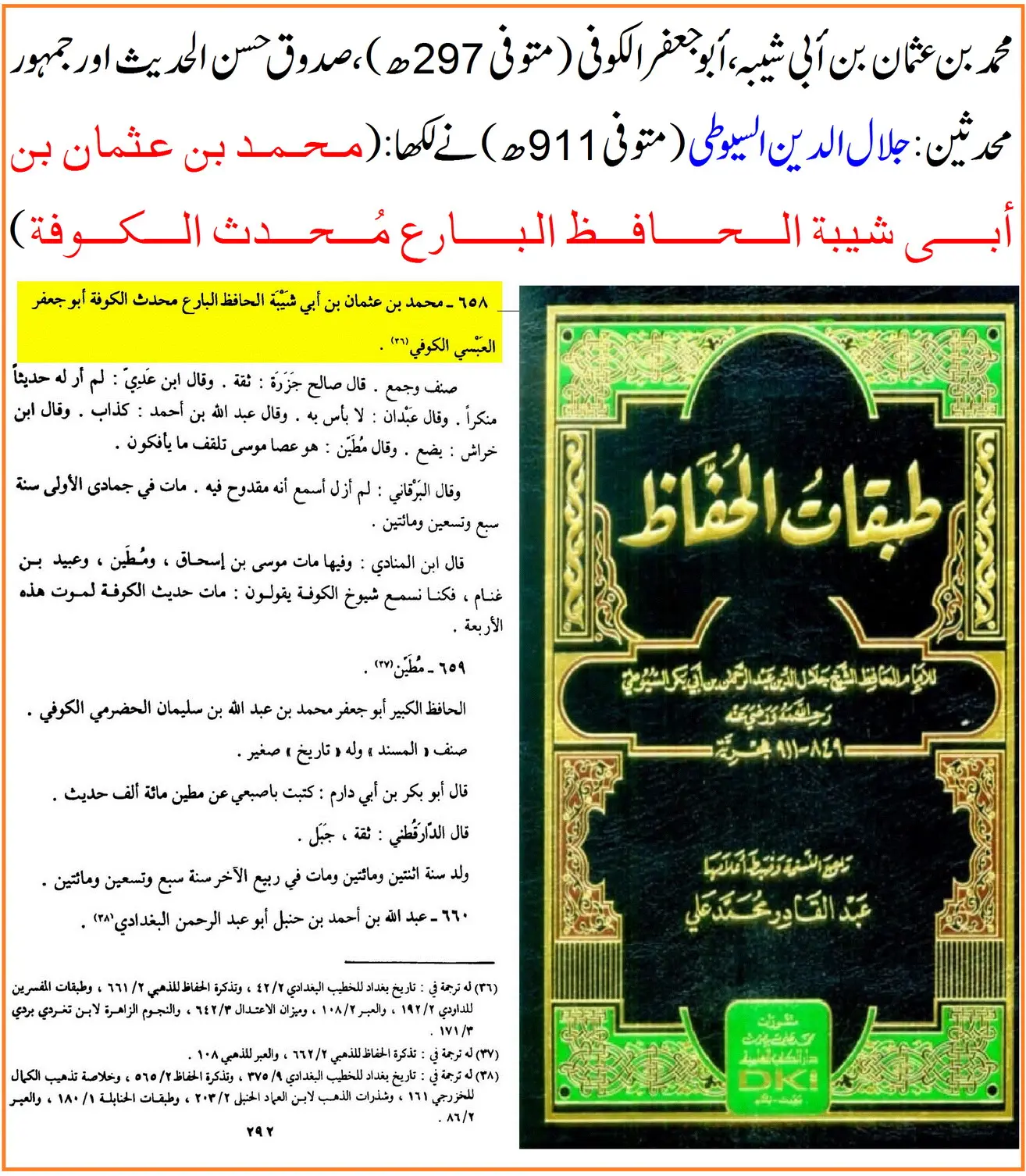
Arabic text (Tabaqat al-Huffaz):مُحَمَّد بن عُثْمَان بن أبي شيبَة الْحَافِظ البارع مُحدث الْكُوفَة … قَالَ صَالح جزرة: ثِقَة. وَقَالَ ابْن عدي: لم أر له حديثا منكرا. وَقَالَ عَبْدَانِ: لا بأس به.
Translation: Muhammad ibn Uthman ibn Abi Shaybah, a Hafiz and expert, a Muhaddith of Kufa... Salih Jazrah said: He is trustworthy. Ibn 'Adi said: I have not seen any rejected hadith from him. 'Abdan said: There is no defect in him.
Reference:
Reference: Tabaqat al-Huffaz, al-Suyuti (p. 658)
Explanation: Here, the testimony of three Imams is given simultaneously: Salih Jazrah called him trustworthy, Ibn 'Adi declared him free from rejected narrations, and 'Abdan said there is no harm in him. This constitutes a strong consensus on his authentication.
Evidence 11 — Imam Abu Muhammad al-Yafi'i (d. 768 AH)
Arabic text:وفي السنة المذكورة توفي الحافظ ابن الحافظ محمد بن عثمان بن أبي شيبة.
Translation: In the same year, the Hafiz, son of the Hafiz, Muhammad ibn Uthman ibn Abi Shaybah passed away.
Reference:
Reference: Mir'at al-Jinan wa 'Ibrah al-Yaqzan, al-Yafi'i (Vol. 2, p. 110)
Explanation: Al-Yafi'i called him "Hafiz ibn Hafiz." In the terminology of hadith scholars, "Hafiz" is a high-level authentication indicating a large number of hadiths and strong memorization/knowledge.
Evidence 12 — Hafiz Ziya al-Maqdisi (d. 643 AH)
Arabic text: حَدَّثَنَا مُحَمَّدُ بْنُ عُثْمَانَ بْنِ أَبِي شَيْبَةَ … إِسْنَادٌ صَحِيحٌ.
Translation: Muhammad ibn Uthman ibn Abi Shaybah narrated ... its chain is authentic.
Reference:
Reference: Al-Ahadith al-Mukhtarah, Ziya al-Maqdisi (Vol. 1, p. 27)
Explanation: In Al-Mukhtarah, Ziya al-Maqdisi collected those narrations which he considered authentic; the inclusion of his narration itself is a clear declaration of his trustworthiness.
Evidence 13 — Hafiz Ibn Hibban (d. 354 AH)
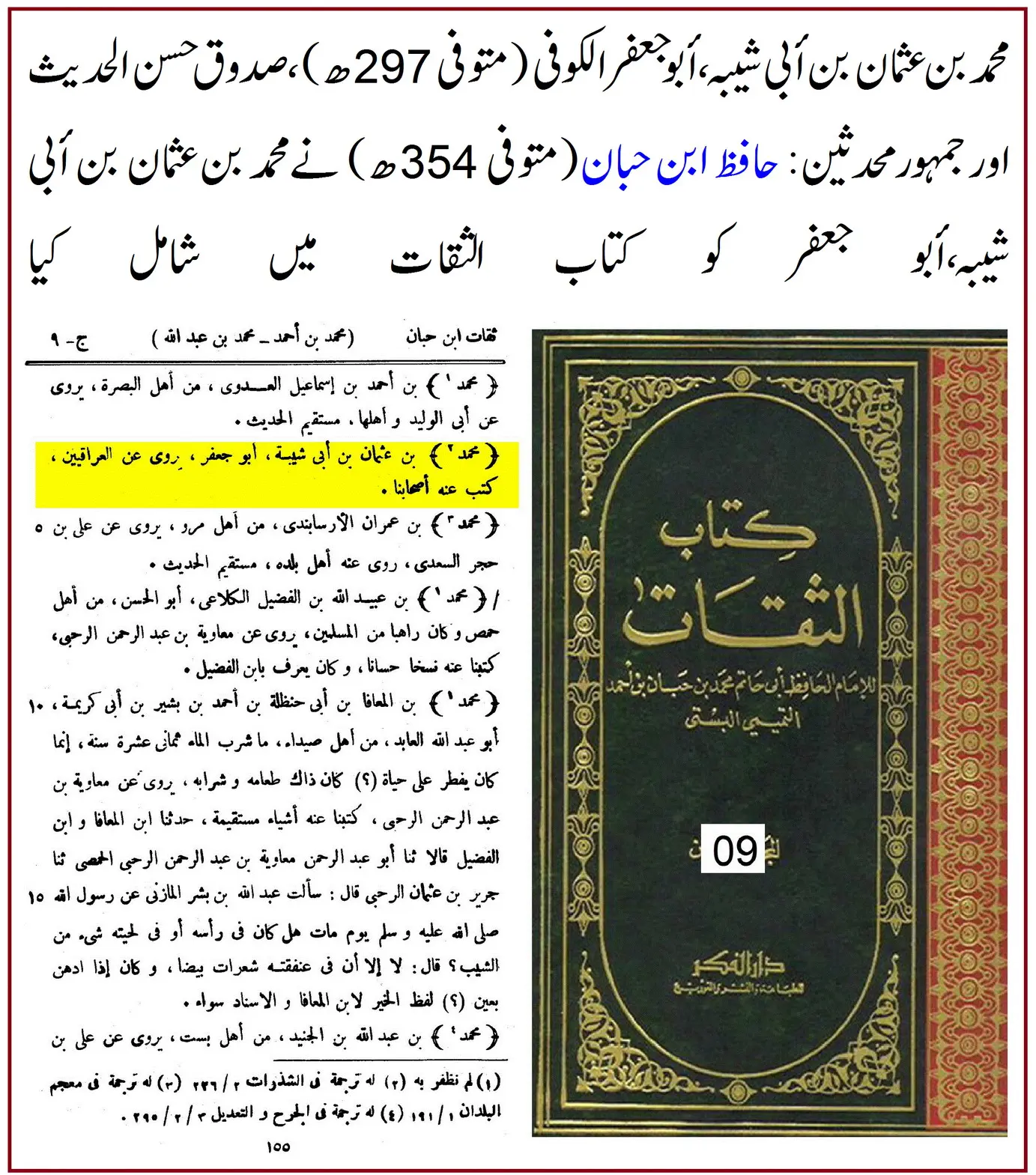
Arabic text: مُحَمَّدُ بْنُ عُثْمَانَ بْنِ أَبِي شَيْبَةَ أَبُو جَعْفَر … ذَكَرَهُ فِي الثِّقَاتِ، كُتِبَ عَنْهُ أَصْحَابُنَا.
Translation: Muhammad ibn Uthman ibn Abi Shaybah Abu Ja'far ... Ibn Hibban mentioned him in "Al-Thiqat," our companions wrote narrations from him.
Reference:
Reference: Al-Thiqat, Ibn Hibban (Vol. 9, No. 15743)
Explanation: Being listed in Al-Thiqat is an explicit text of authentication; meaning Ibn Hibban considered him reliable/trustworthy and the hadith scholars took narrations from him.
Evidence 14 — Allama Ibn al-Jawzi (d. 597 AH)
Arabic text: وكانت له معرفةٌ وفهمٌ، وصنّف تاريخًا.
Translation: He possessed knowledge and understanding and also authored a history.
Reference:
Reference: Al-Muntazam fi Tarikh al-Umam wal-Muluk, Ibn al-Jawzi (Vol. 13, p. 2046)
Explanation: Ibn al-Jawzi (may Allah have mercy on him) highlighted his scholarly qualities — knowledge, understanding, authorship — which strongly indicate mastery and precision in narration.
Proof 15 — Hafiz Ibn al-Imad al-Hanbali (d. 1089 AH)
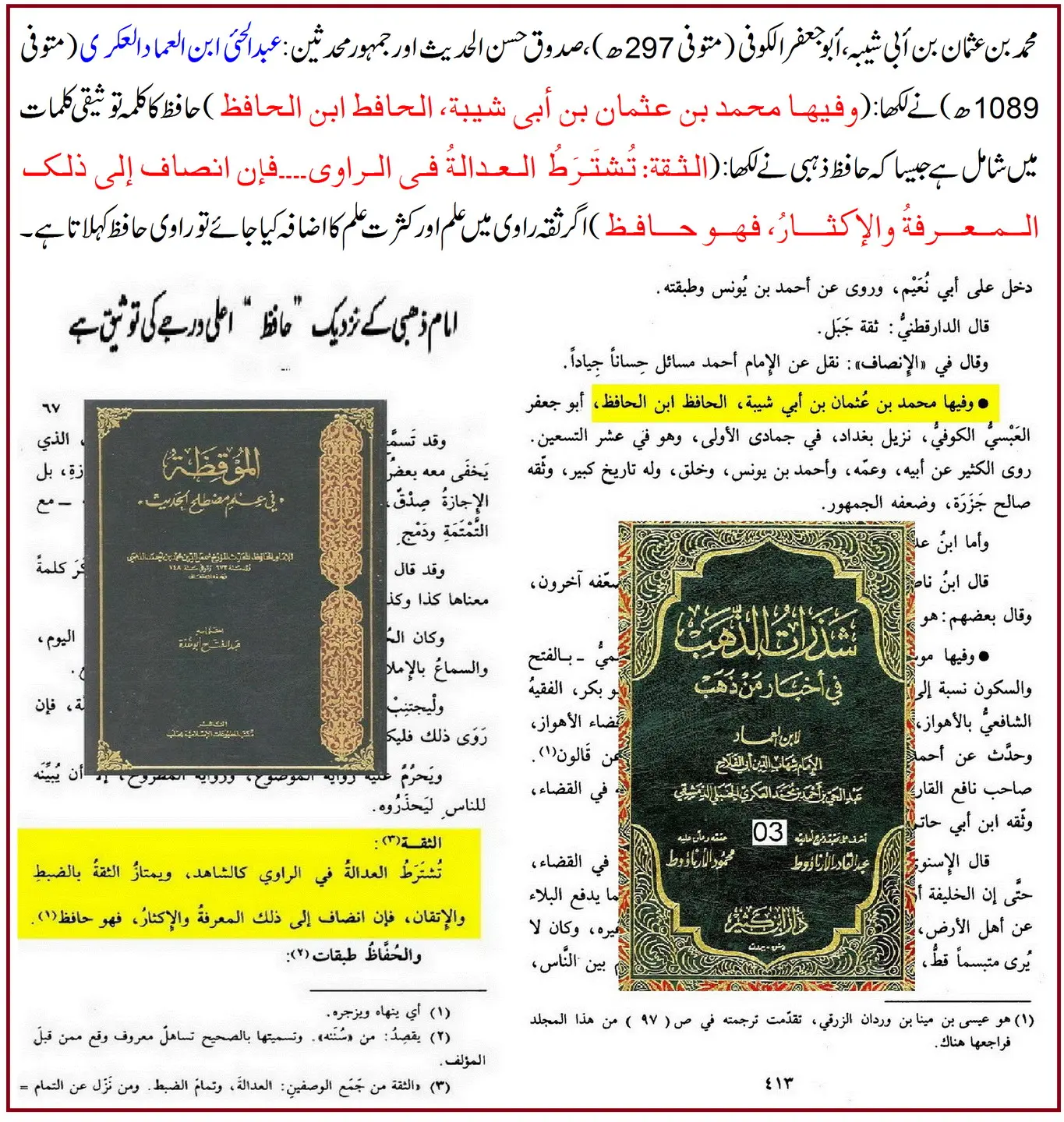
Arabic text:وفيها محمد بن عثمان بن أبي شيبة، الحافظ ابن الحافظ، أبو جعفر العبسي الكوفي …
Translation: In the same year, Muhammad ibn Uthman ibn Abi Shaybah, Hafiz Ibn Hafiz, Abu Ja'far al-Absi al-Kufi passed away.
Reference:
Reference: Shadharat adh-Dhahab fi Akhbar man Dhahab, Ibn al-Imad (Vol. 2, p. 297)
Explanation: Ibn al-Imad (may Allah have mercy on him) also called him Hafiz Ibn Hafiz. In the terminology of hadith scholars, these words are used only for trustworthy and widely narrated imams.
Proof 16 — Hafiz Ibn 'Adi (d. 365 AH)
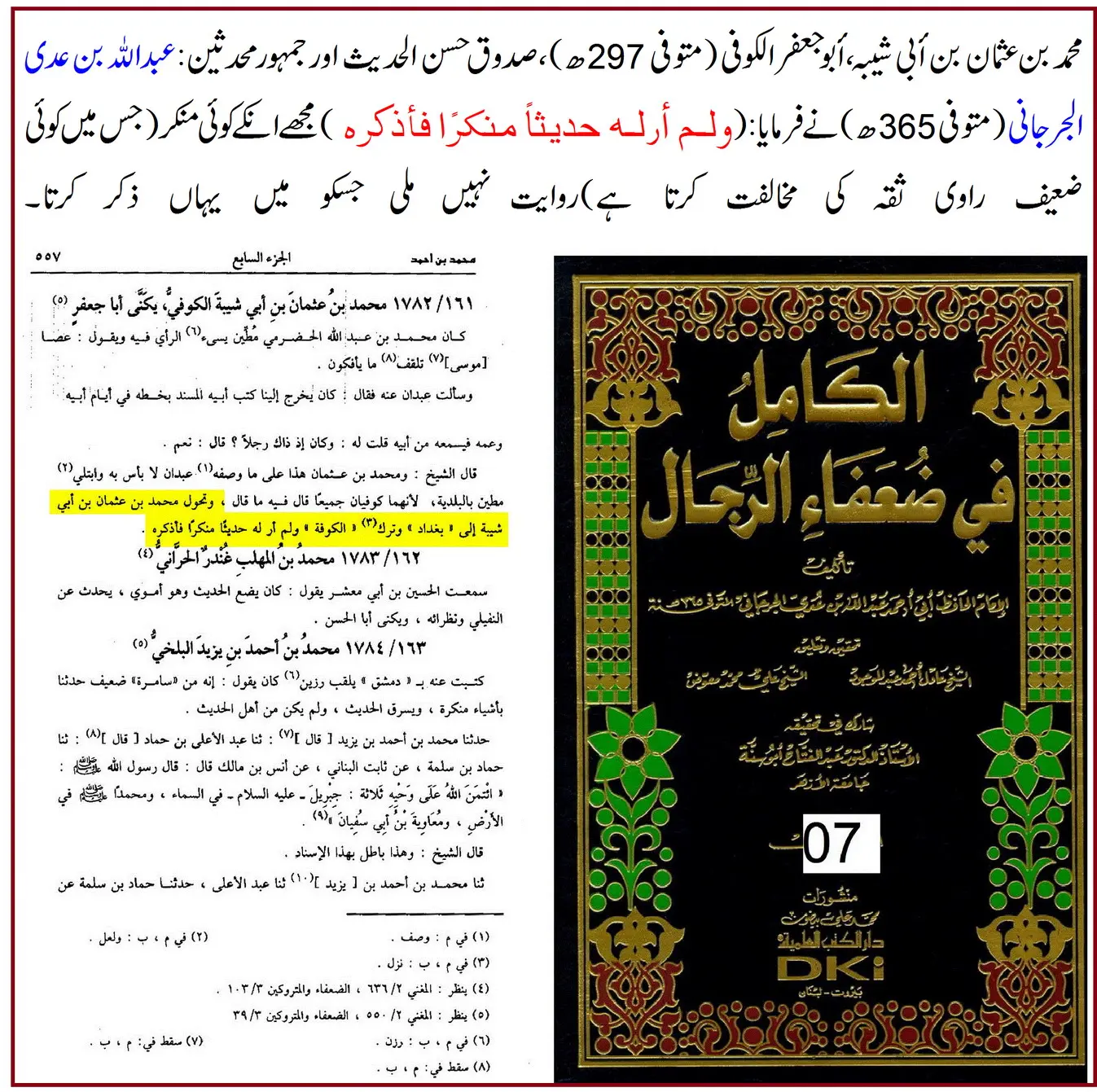
Arabic text:مُحَمَّدُ بْنُ عُثْمَانَ بْنِ أَبِي شَيْبَةَ كُوفِيٌّ … وَلَمْ أَرَ لَهُ حَدِيثًا مُنْكَرًا فَأَذْكُرُهُ.
Translation: Muhammad ibn Uthman ibn Abi Shaybah al-Kufi is ... and I have not seen any rejected hadith narrated by him.
Reference:
Reference: Al-Kamil fi Du'afa ar-Rijal, Ibn 'Adi (Vol. 6, p. 2398)
Explanation: Ibn 'Adi (may Allah have mercy on him) clearly stated that no rejected narration was found from him. This is direct testimony to his integrity and reliability.
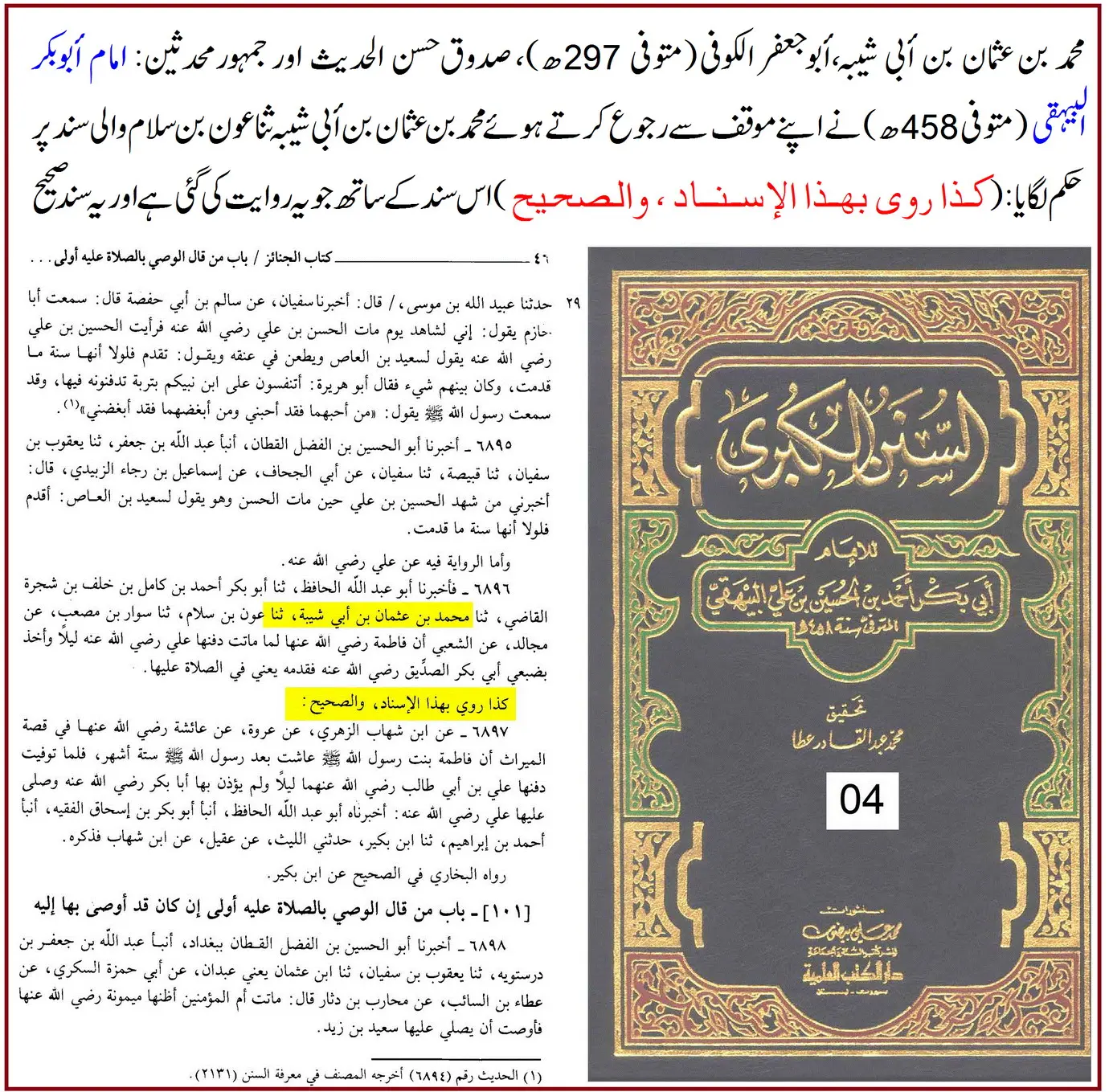
Proof 17 — Imam Bayhaqi (d. 458 AH)
Arabic text:ثنا محمد بن عثمان بن أبي شيبة … كَذَا رُوِيَ بِهَذَا الإِسْنَادِ وَالصَّحِيحُ.
Translation: It is narrated from Muhammad bin Uthman bin Abi Shaybah … and it has been narrated with the same chain, and it is authentic.
Reference:
Reference: Al-Sunan al-Kubra, Bayhaqi (Vol. 4, p. 6896)
Al-Sunan al-Kubra, Bayhaqi (Vol. 4, p. 6896)
Explanation: Bayhaqi has mentioned a statement of weakness at one place, but in his Sunan, he has brought the same narration and declared it authentic. This is a clear retraction and practical reliance.
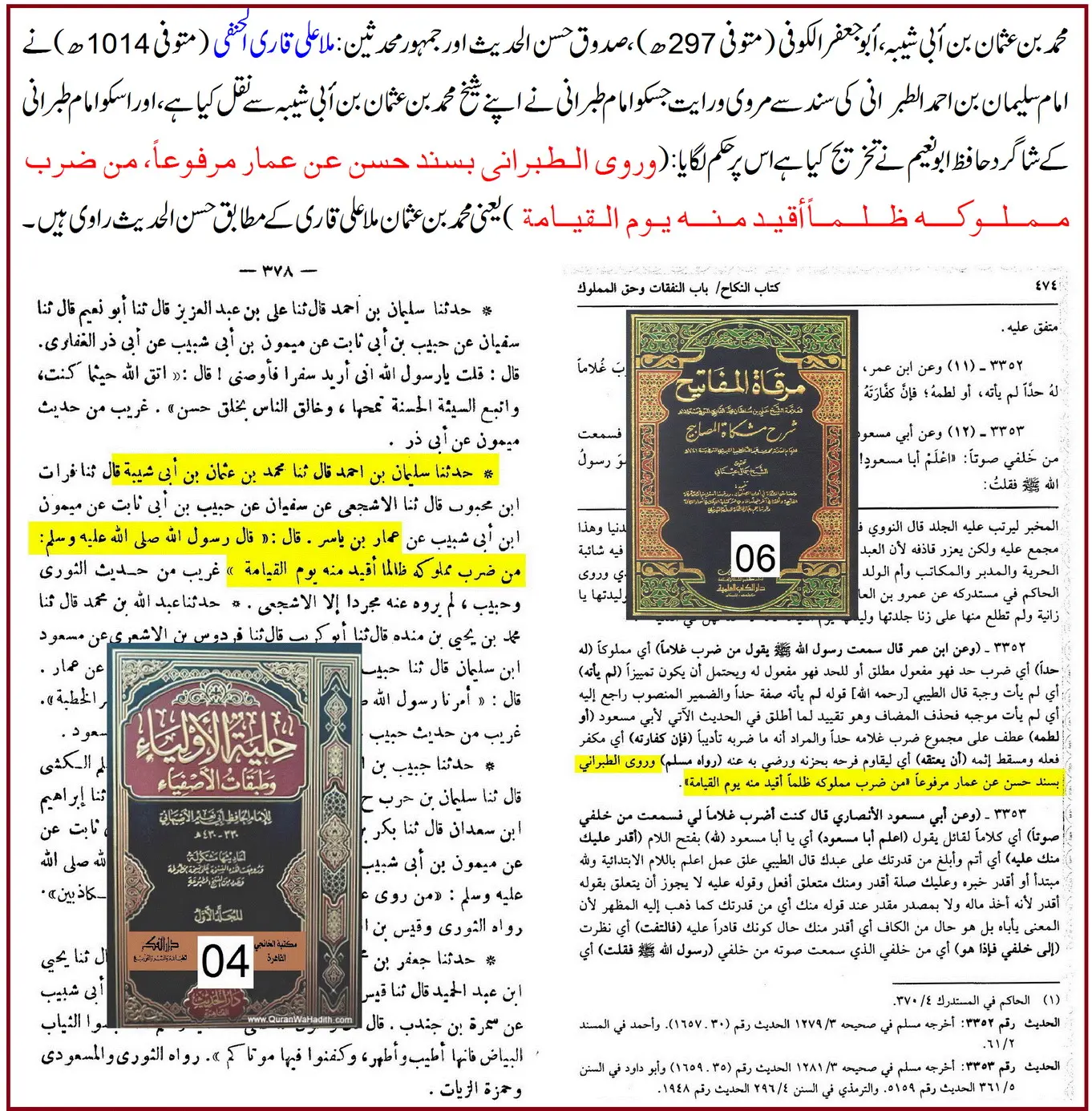
Evidence 18 — Mulla Ali Qari (d. 1014 AH)
Arabic text: وَرَوَى الطَّبَرَانِيُّ بِسَنَدٍ حَسَنٍ عَنْ عَمَّارٍ مَرْفُوعًا …
Translation: Imam Tabrani narrated from Ammar (RA) with a Hasan chain, mursal … and Muhammad bin Uthman bin Abi Shaybah is present in it.
Reference:
Reference: Mirqat al-Mafatih Sharh Mishkat al-Masabih, Mulla Ali Qari (Vol. 9, p. 478)
Mirqat al-Mafatih Sharh Mishkat al-Masabih, Mulla Ali Qari (Vol. 9, p. 478)
Explanation: Mulla Ali Qari declared the chain of this narration as Hasan in which Muhammad bin Uthman is present; this is a clear indication of the Hasan status of his narration.
Evidence 19 — Hafiz Shams al-Din al-Dhahabi (d. 748 AH)
Arabic text (Siyar A'lam al-Nubala): الإِمَامُ الحَافِظُ المُسْنِدُ، أَبُو جَعْفَرٍ العَبْسِيُّ الكُوْفِيُّ.
Translation: Imam, Hafiz, Musnid, Abu Ja'far al-Absi al-Kufi.
Reference:
Reference: Siyar A'lam al-Nubala, al-Dhahabi (Vol. 13, p. 2530)
Siyar A'lam al-Nubala, al-Dhahabi (Vol. 13, p. 2530)
Explanation: Al-Dhahabi called him Imam, Hafiz, and Musnid. These three titles indicate trustworthiness and high status.
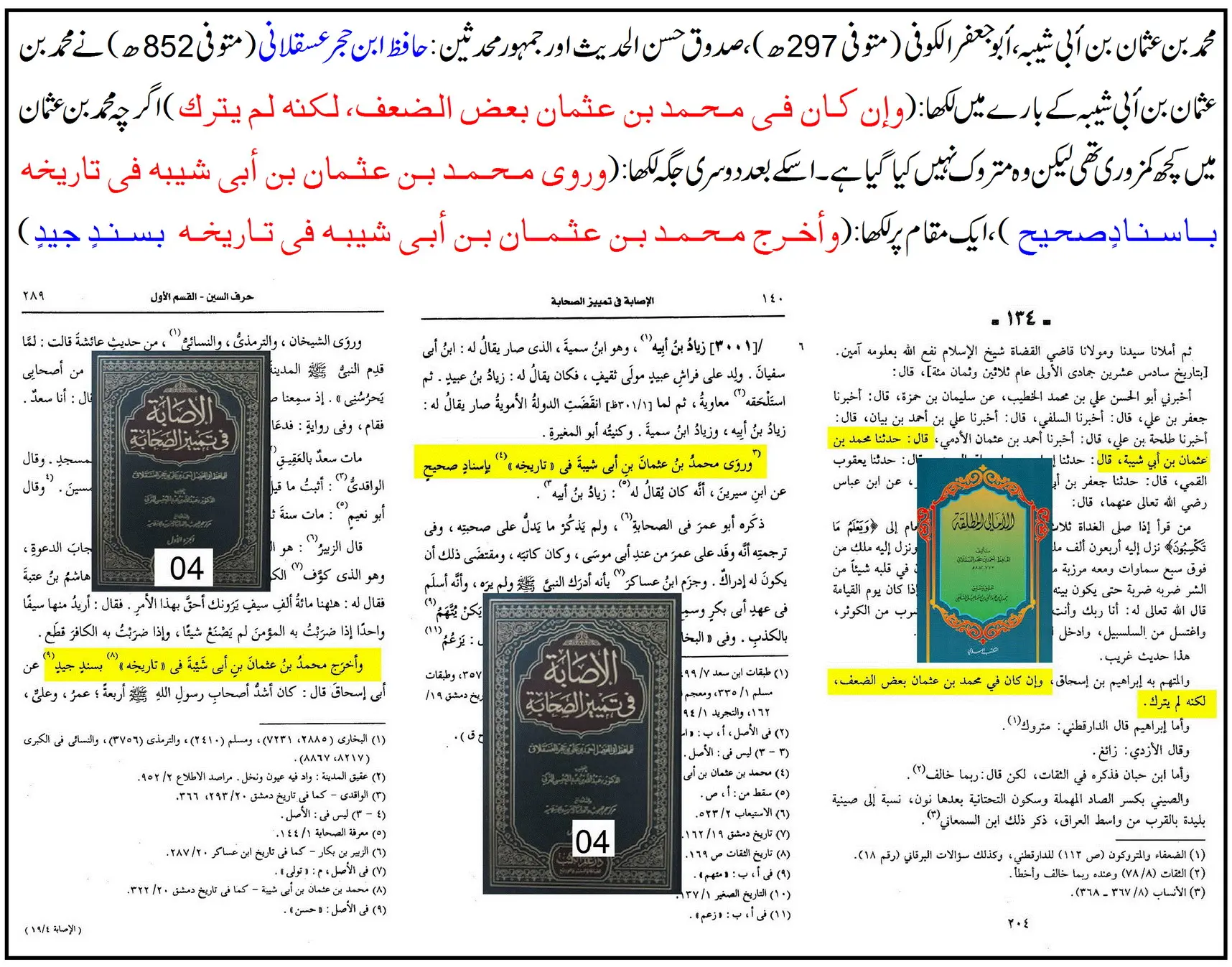
Proof 20 — Hafiz Ibn Hajar Asqalani (d. 852 AH)
Arabic phrase (الأمالي المطلقة):وَإِنْ كَانَ فِي مُحَمَّدِ بْنِ عُثْمَانَ بَعْضُ الضَّعْفِ لَكِنَّهُ لَمْ يُتْرَكْ.
Translation: Although there is some weakness in Muhammad bin Uthman, he was not abandoned.
Reference:
Reference: الأمالي المطلقة، ابن حجر (p. 134)
الأمالي المطلقة، ابن حجر (p. 134)
Explanation: Ibn Hajar pointed to some slight weakness in him but also concluded that he was not abandoned. That is, he is reliable in narration and not classified as abandoned.
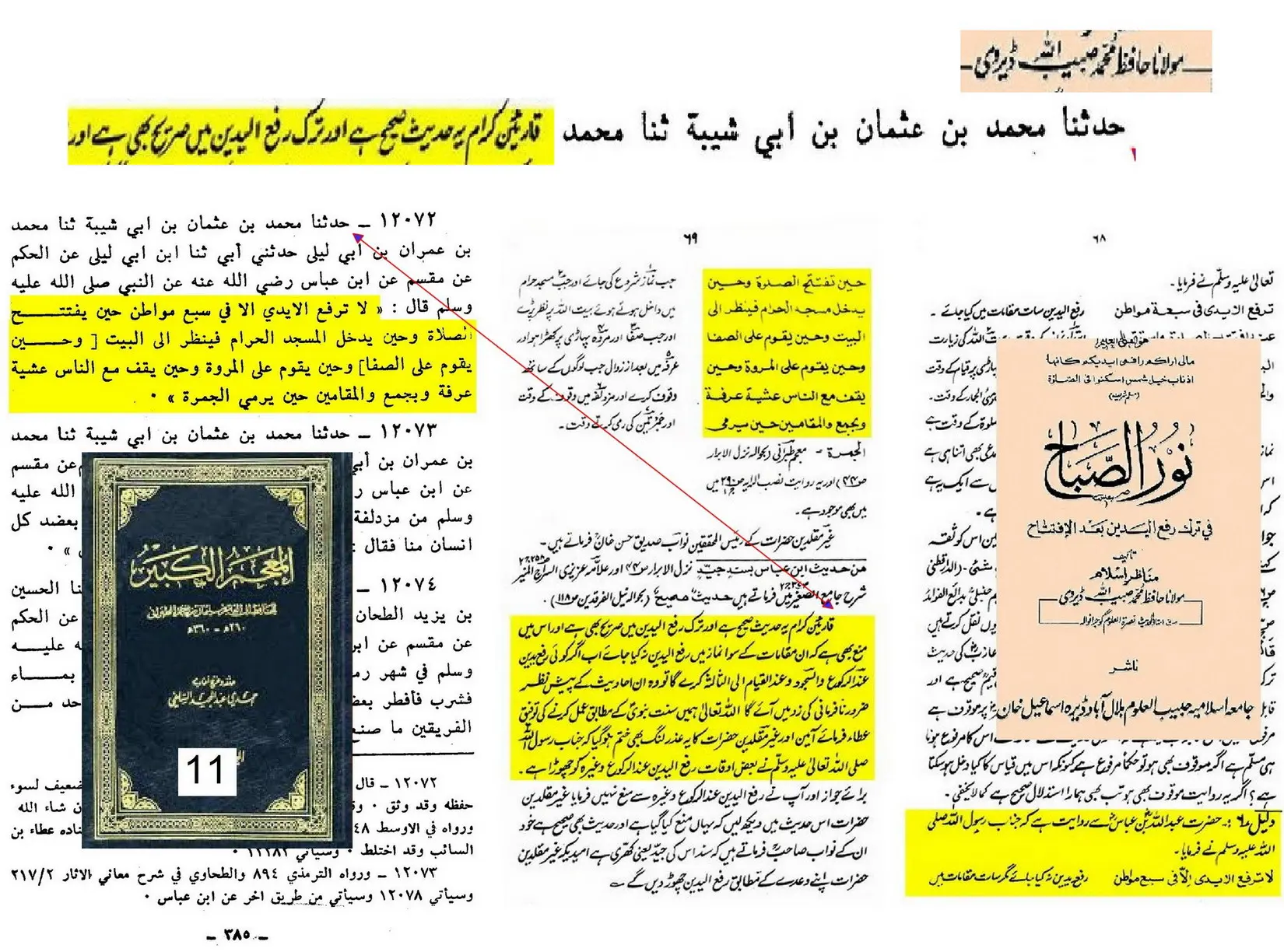
Proof 21 — Testimony of Deobandi Researchers
Phrase: Habibullah Dervi Deobandi declared the hadith of Muhammad bin Uthman bin Abi Shaybah authentic regarding the issue of abandoning the raising of hands.
Reference:
Reference: Noor al-Sabah, Dervi (Vol. 1, p. 69)
Noor al-Sabah, Dervi (Vol. 1, p. 69)
Explanation: Even the researchers opposing the raising of hands accepted his narration as authentic, which is an impartial testimony to his trustworthiness.
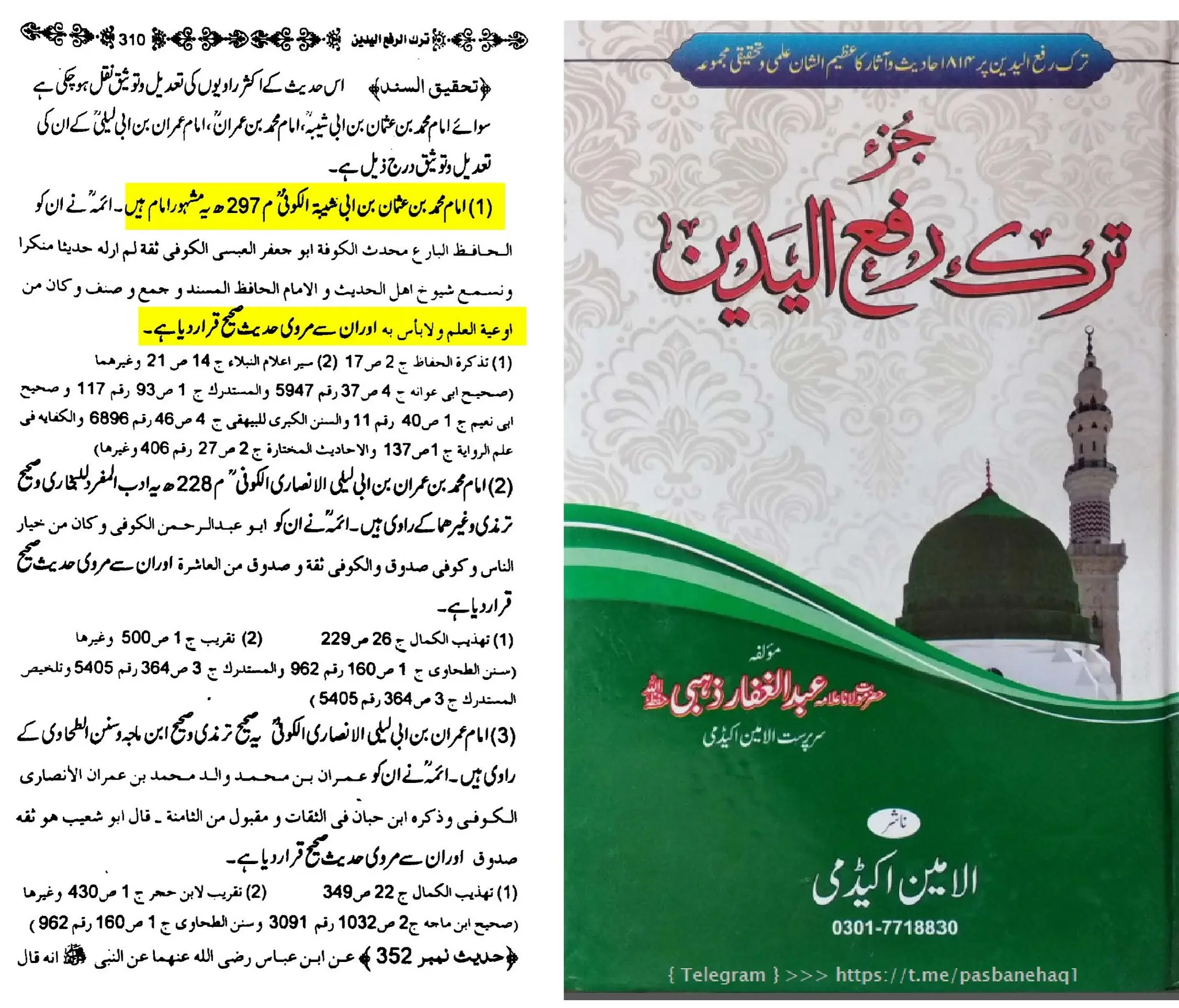
Proof 22 — Allama Abdul Ghaffar Zahbi Deobandi
Phrase: امام محمد بن عثمان بن أبی شیبہ الکوفی … الحافظ البارع، محدث الکوفہ، ثقہ … and the hadith narrated from him was declared authentic.
Reference: Reference: Juz' Tark Raf' al-Yadain, p. 310
Juz' Tark Raf' al-Yadain, p. 310
Explanation: Here he was explicitly called Al-Hafiz Al-Bari', Muhaddith of Kufa, trustworthy, and his narration was considered authentic. This is also a strong authentication from the Deobandi school of thought.
Criticism Presented by Some Biased Hanafis Against Muhammad ibn Uthman ibn Abi Shaybah and Its Explanation
Criticism No. 1 — Weakening Attributed to Imam al-Daraqutni (رحمه الله)
Arabic text: قَالَ الدَّارَقُطْنِيّ: مُحَمَّدُ بْنُ عُثْمَانَ بْنِ أَبِي شَيْبَةَ الْعَبْسِي، ضَعِيف.
Translation: Al-Daraqutni said: Muhammad ibn Uthman ibn Abi Shaybah al-Absi is weak.
Explanation: This statement is attributed to al-Daraqutni (رحمه الله), but in his own Sunan al-Daraqutni, there are numerous narrations from Muhammad ibn Uthman which al-Daraqutni cited as evidence (
Sunan al-Daraqutni, vol. 2, p. 1159). If he were truly weak or accused, al-Daraqutni would not have narrated from him in his hadith book. Therefore, it is established that al-Daraqutni’s first statement is merely an unexplained criticism, and his practical approach is either to refer back or to practically authenticate.Criticism No. 2 — Narrations Calling Him a “Liar”
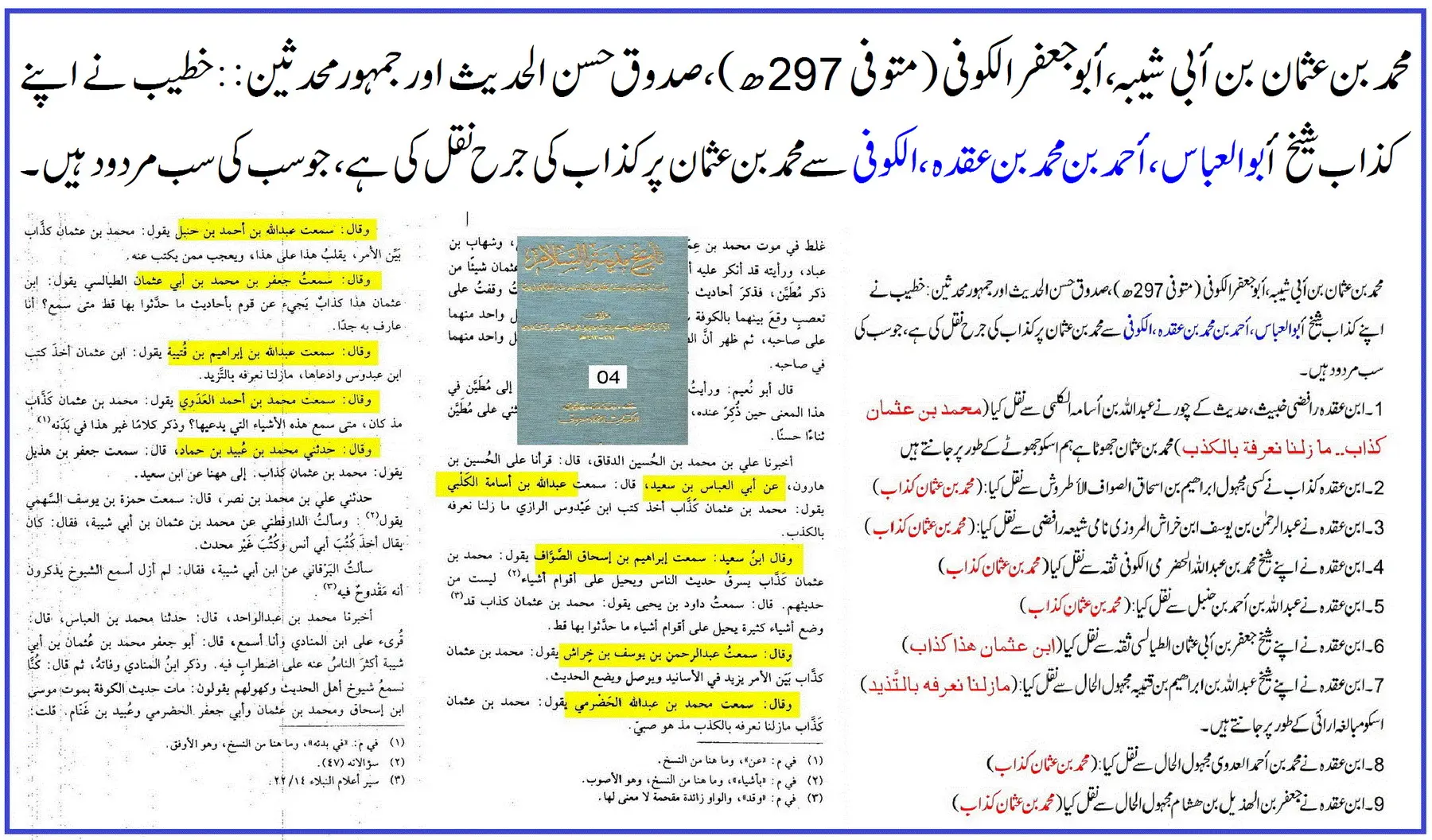
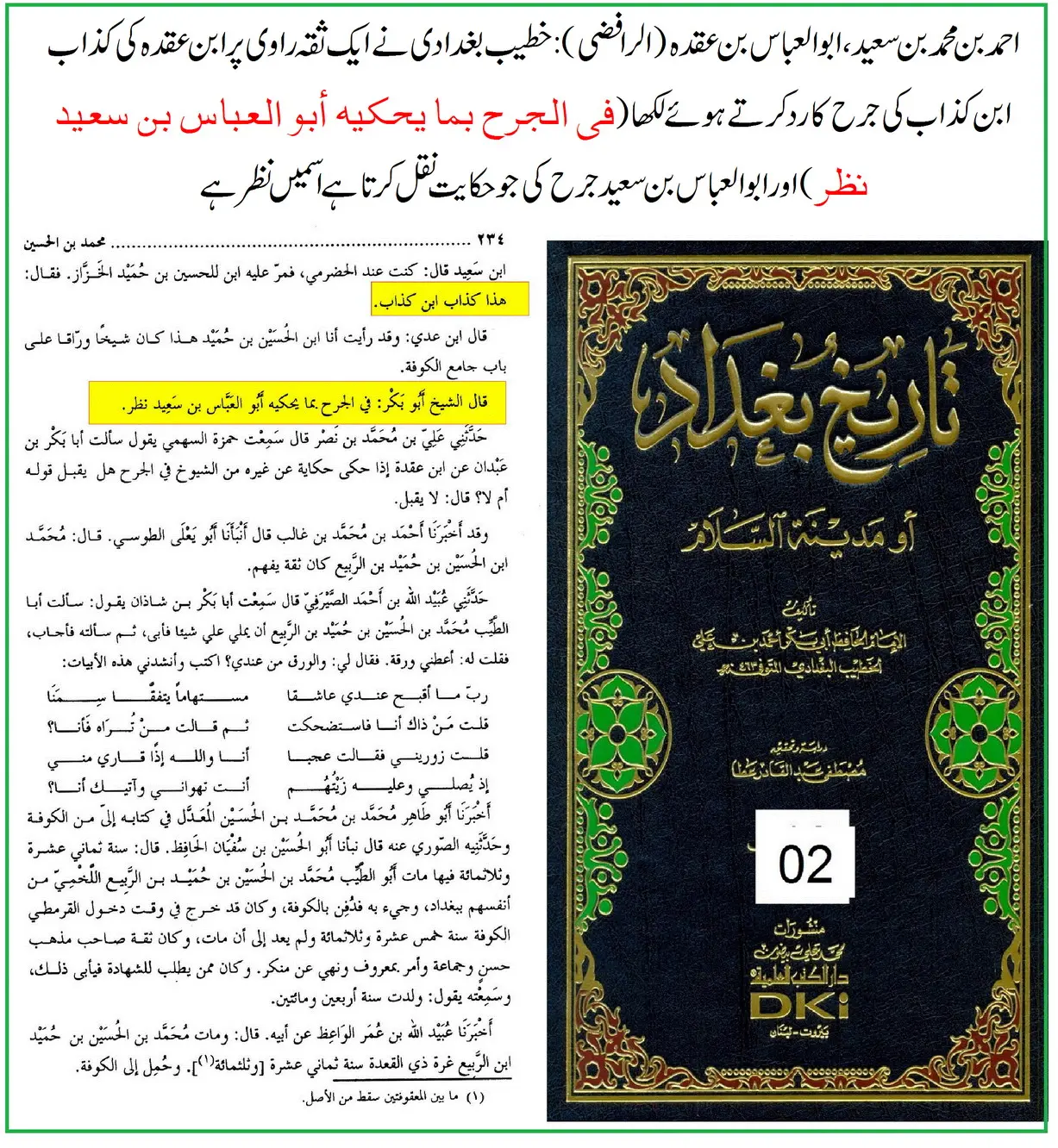
These criticisms are transmitted under various names but all revolve around the same narrator, Abu al-Abbas Ahmad ibn Muhammad ibn ‘Uqda al-Kufi.
(a) Text: سمعت عبد الله بن أسامة الكلبي، يقول: محمد بن عثمان كذاب.
Translation: Abdullah ibn Usamah al-Kalbi said: Muhammad ibn Uthman is a liar.
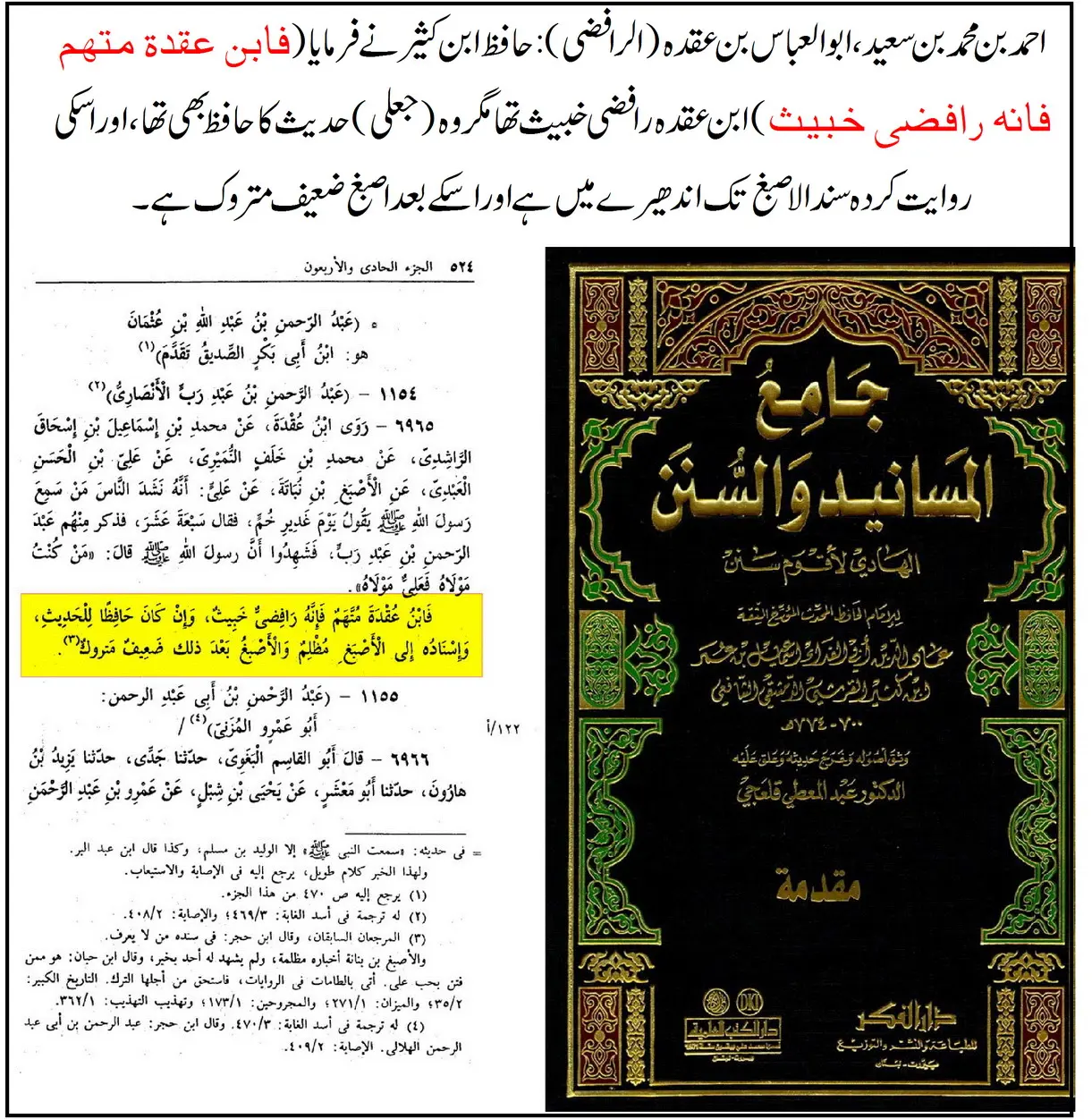
Explanation: This statement has been narrated by Ibn Uqdah, and the scholars have said about Ibn Uqdah that he is a Rafidhi, a liar, and an accuser (
Tarikh Baghdad 5/644, Jami' al-Masanid by Ibn Kathir 1/123). Therefore, such criticism holds no weight.(b) Text: سمعت إبراهيم بن إسحاق الصواف، يقول: محمد بن عثمان كذاب.
Translation: Ibrahim bin Ishaq Sawwaf said: Muhammad bin Uthman is a liar.
Explanation: Ibrahim bin Ishaq Sawwaf himself is unknown in status, so his criticism is not reliable.
(c) Text: سمعت عبد الرحمن بن يوسف بن خراش، يقول: محمد بن عثمان كذاب.
Translation: Abdul Rahman bin Yusuf bin Khurash said: Muhammad bin Uthman is a liar.
Explanation: Ibn Khurash was a Rafidhi and a severe bigot about whom the hadith scholars said: He wrote a book criticizing the two Sheikhs (i.e., Abu Bakr and Umar رضي الله عنهما). Such a person's criticism is rejected.
(d) Text: سمعت محمد بن عبد الله الحضرمي، يقول: محمد بن عثمان كذاب.
Translation: Muhammad bin Abdullah Hadrami said: Muhammad bin Uthman is a liar.
Explanation: This criticism is also narrated only through Ibn Uqdah. While Khateeb Baghdadi said that Ibn Uqdah's transmitted criticisms are suspicious
Reference: ( Tarikh Baghdad 5/644)
. Therefore, calling any trustworthy Imam a "liar" on this basis is not correct. Tarikh Baghdad 5/644)
(h) Additional statements: Through Ibn ‘Uqdah, names such as Ja‘far ibn Muhammad al-Tayalisi, ‘Abdullah ibn Ibrahim ibn Qutaybah, Muhammad ibn Ahmad al-‘Adawi, and Ja‘far ibn al-Hudhail are also found, who called him a "liar."
Explanation: All of these are either unknown in status or their attribution is only through a Rāfiḍī liar like Ibn ‘Uqdah. Therefore, the hadith scholars rejected these statements. Hafiz Ibn Kathir clarified: Ibn ‘Uqdah was a vile Rāfiḍī
Reference: ( Jami‘ al-Masanid 1/123)
. Jami‘ al-Masanid 1/123)
Summary of the Subject
This detailed research made it clear that Imam Muhammad ibn ‘Uthman ibn Abi Shaybah al-Kufi (d. 297 AH) was a reliable and accepted hadith scholar. A long list of Imams of Jarh wa Ta‘dil and hadith scholars have declared him trustworthy, truthful, good in hadith, a Hafiz, a Muhaddith of Kufa, and widely knowledgeable in narration. Ibn Hibban included him among his trustworthy narrators, al-Dhahabi called him al-Imam al-Hafiz al-Musnad, Ibn Kathir and al-Bayhaqi considered his narrations authentic and good, and al-Suyuti and other later scholars also authenticated him.
Wherever there is criticism against him, it is either from an unreliable and non-expert source (such as the initial statement of Al-Daraqutni, which he later retracted), or it is based on a Rāfiḍī liar like Abu al-‘Abbās Ibn ‘Uqdah, whose own criticism is not credible. Thus, these criticisms are rejected and hold no weight.
Therefore, considering all the evidence, the conclusion is:
- The criticism of "liar" against Muhammad ibn ‘Uthman ibn Abi Shaybah is false and baseless.
- He was trusted, his narrations were used as evidence, and the Imams acknowledged his prolific narration.
- Due to his scholarly and hadith contributions, he holds a high status as Hafiz ibn Hafiz and Muhaddith of Kufa.
 Conclusion:
In comparison to all the unreliable criticisms against Muhammad ibn ‘Uthman ibn Abi Shaybah (may Allah be pleased with him), his authentication, correction, and scholarly status are much stronger, clearer, and unanimously agreed upon. Therefore, the correct research is that he is a truthful, good narrator, and trustworthy Imam who can be relied upon.