


This excerpt is taken from the book Nūr al-ʿAynayn fī Ithbāt Rafʿ al-Yadayn ʿinda al-Rukūʿ wa Baʿdahu fī al-Ṣalāh by the Muḥaddith of the era, Ḥāfiẓ Zubayr ʿAlī Zaʾī رحمه الله.
وعن نافع أن ابن عمر كان إذا دخل فى الصلوة كبر ورفع يديه وإذا ركع رفع يديه وإذا قال (سمع الله لمن حمده) رفع يديه وإذا قام من الركعتين رفع يديه ورفع ذلك ابن عمر إلى النبى صلى الله عليه وسلم
Translation:
Nāfiʿ (the Tābiʿī رحمه الله) narrates that when Sayyidunā Ibn ʿUmar رضي الله عنه entered the prayer, he would pronounce the takbīr and raise his hands; when he went into rukūʿ, he would raise his hands; when he said “Samiʿa Allāhu liman ḥamidah”, he would raise his hands; and when he stood up after two rakʿahs, he would raise his hands. Ibn ʿUmar attributed this practice directly to the Messenger of Allah ﷺ.
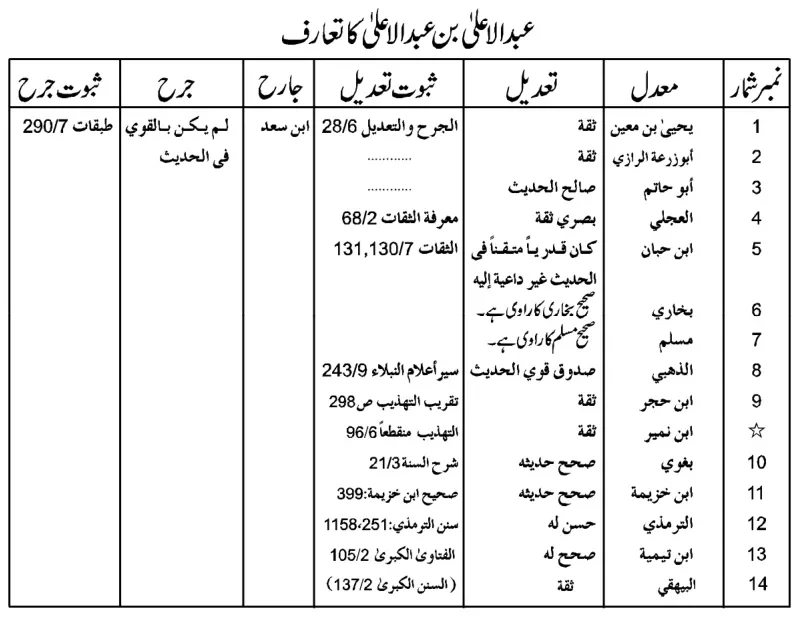
Only Ibn Saʿd, the scribe of al-Wāqidī, criticized him. Ḥāfiẓ Ibn Ḥajar rejected this criticism and said:
Arabic Text:
هذا جرح مردود غير مبين السبب ولعله بسبب القدر وقد احتج به الأئمة كلهم
Translation:
“This criticism is rejected and its reason is unclear. It may have been due to the issue of Qadar. All the Imāms have used ʿAbd al-Aʿlā’s ḥadīth as evidence.”
Ḥāfiẓ al-Dhahabī wrote in al-Kāshif:
Arabic Text:
ثقة لكنه قدري
Translation:
“Trustworthy, though he held views related to Qadar.”
And he stated in Siyar Aʿlām al-Nubalāʾ:
Arabic Text:
تقرر الحال أن حديثه من قسم الصحيح
Translation:
“It has been firmly established that his ḥadīth falls under the category of ṣaḥīḥ.”
Ḥammād was trustworthy.
The narrations of ʿAffān and Ḥajjāj bin Minhāl from him are found in Ṣaḥīḥ Muslim.
Thus, their hearing from him was before his confusion (ikhti lāṭ), and the allegation of confusion is therefore rejected.
He is a central narrator of Ṣaḥīḥ Muslim and the Sunan works.
Imām Yaḥyā bin Maʿīn said:
Arabic Text:
حماد بن سلمة ثقة
Translation:
“Ḥammād bin Salamah is trustworthy.”
Al-ʿIjlī said:
Arabic Text:
بصري ثقة، رجل صالح، حسن الحديث
Translation:
“A Basran, trustworthy, righteous man, sound in ḥadīth.”
Yaʿqūb bin Sufyān al-Fārisī (or Ḥajjāj bin Minhāl) said:
Arabic Text:
وهو ثقة
Translation:
“He is trustworthy.”
He was also declared trustworthy and reliable by the following scholars:
① Aḥmad bin Ḥanbal
② Ibn Ḥibbān
③ Ibn Shāhīn
④ al-Tirmidhī
⑤ Ibn al-Jārūd
⑥ al-Ḥākim
⑦ Ibn Khuzaymah
⑧ al-Sājī
Ḥāfiẓ al-Dhahabī wrote:
Arabic Text:
الإمام الحافظ شيخ الإسلام
And he said:
Arabic Text:
ولم ينحط حديثه عن رتبة الحسن
Translation:
“His ḥadīth did not fall below the level of ḥasan.”
Ḥāfiẓ Ibn Ḥajar wrote:
Arabic Text:
ثقة عابد أثبت الناس فى ثابت، وتغير حفظه بأخرة
Translation:
“Trustworthy, devout, the most reliable of people in narrating from Thābit. His memory changed toward the end of his life.”
It is established that when a narrator whose memory later changed is used as evidence in the Ṣaḥīḥayn, this proves that the narrations of his students are from before the period of confusion, unless specific evidence indicates otherwise.
✔ Conclusion:
The criticism of confusion regarding this narration is rejected, because it was narrated before the period of confusion.
“Shortened” here means that in the narrations of Ḥammād bin Salamah and Ibrāhīm bin Ṭahmān, three occasions of raising the hands are mentioned, while raising the hands when standing after two rakʿahs is not mentioned. It is an established principle that non-mention is not proof of negation.
Ibrāhīm bin Ṭahmān was trustworthy.
The weakening of this narration by the Muḥaddith al-Ismāʿīlī based on some unknown and unidentified shaykhs is rejected. Declaring narrations of Ṣaḥīḥ al-Bukhārī weak requires extreme audacity.
Imām al-Dāraquṭnī declared the narration of ʿAbd al-Aʿlā to be:
Arabic Text:
الأشبه بالصواب
Translation:
“The closest to what is correct.”
From Sayyidunā ʿAbdullāh bin ʿUmar رضي الله عنه, abandonment of Rafʿ al-Yadayn is not established at all.
The narrations of Abū Bakr bin ʿAyyāsh and others are weak and rejected due to error, as will be discussed later, if Allah wills.
Rafʿ al-Yadayn: Another Ḥadīth of Sayyidunā ʿAbdullāh bin ʿUmar رضي الله عنه
➋ The Narration
Arabic Text:وعن نافع أن ابن عمر كان إذا دخل فى الصلوة كبر ورفع يديه وإذا ركع رفع يديه وإذا قال (سمع الله لمن حمده) رفع يديه وإذا قام من الركعتين رفع يديه ورفع ذلك ابن عمر إلى النبى صلى الله عليه وسلم
Translation:
Nāfiʿ (the Tābiʿī رحمه الله) narrates that when Sayyidunā Ibn ʿUmar رضي الله عنه entered the prayer, he would pronounce the takbīr and raise his hands; when he went into rukūʿ, he would raise his hands; when he said “Samiʿa Allāhu liman ḥamidah”, he would raise his hands; and when he stood up after two rakʿahs, he would raise his hands. Ibn ʿUmar attributed this practice directly to the Messenger of Allah ﷺ.
Reference: Ṣaḥīḥ al-Bukhārī 1/102, ḥadīth 739; Mishkāt al-Maṣābīḥ p. 75, ḥadīth 794; Sharḥ al-Sunnah by al-Baghawī 3/21, ḥadīth 560 (he said: “This ḥadīth is ṣaḥīḥ”); Muḥammad ibn Taymiyyah in al-Fatāwā al-Kubrā 2/105 and Majmūʿ al-Fatāwā 22/453; Muḥammad Yūsuf Banūrī al-Deobandī also declared it authentic (Maʿārif al-Sunan 2/457) and quoted its authentication from Ibn Khuzaymah
Status of ʿAbd al-Aʿlā
From this detailed discussion, it becomes clear that according to the majority of scholars, ʿAbd al-Aʿlā is trustworthy (thiqqah).Only Ibn Saʿd, the scribe of al-Wāqidī, criticized him. Ḥāfiẓ Ibn Ḥajar rejected this criticism and said:
Arabic Text:
هذا جرح مردود غير مبين السبب ولعله بسبب القدر وقد احتج به الأئمة كلهم
Translation:
“This criticism is rejected and its reason is unclear. It may have been due to the issue of Qadar. All the Imāms have used ʿAbd al-Aʿlā’s ḥadīth as evidence.”
Reference: Hudā al-Sārī p. 415
Ḥāfiẓ al-Dhahabī wrote in al-Kāshif:
Arabic Text:
ثقة لكنه قدري
Translation:
“Trustworthy, though he held views related to Qadar.”
Reference: al-Kāshif 2/130
And he stated in Siyar Aʿlām al-Nubalāʾ:
Arabic Text:
تقرر الحال أن حديثه من قسم الصحيح
Translation:
“It has been firmly established that his ḥadīth falls under the category of ṣaḥīḥ.”
Reference: Siyar Aʿlām al-Nubalāʾ 9/243
Supporting Evidence for the Narration of ʿAbd al-Aʿlā bin ʿAbd al-Aʿlā
✔ Witness No. ①
ʿAffān and Ḥajjāj bin Minhāl narrated from Ḥammād bin Salamah, from Ayyūb, from Nāfiʿ, from Ibn ʿUmar, with the same wording.
Reference: Taghlīq al-Taʿlīq by Ibn Ḥajar 2/305; al-Sunan al-Kubrā by al-Bayhaqī
Ḥammād was trustworthy.
Reference: al-Jarḥ wa al-Taʿdīl 3/142 from Ibn Maʿīn; its chain is ṣaḥīḥ
The narrations of ʿAffān and Ḥajjāj bin Minhāl from him are found in Ṣaḥīḥ Muslim.
Reference: Tahdhīb al-Kamāl by al-Mizzī 7/257–258
Thus, their hearing from him was before his confusion (ikhti lāṭ), and the allegation of confusion is therefore rejected.
He is a central narrator of Ṣaḥīḥ Muslim and the Sunan works.
Imām Yaḥyā bin Maʿīn said:
Arabic Text:
حماد بن سلمة ثقة
Translation:
“Ḥammād bin Salamah is trustworthy.”
Reference: al-Jarḥ wa al-Taʿdīl 3/142; Tārīkh al-Dārimī p. 37; Suʾālāt Ibn al-Junayd p. 172, where he said: “Thiqah, firmly established.”
Al-ʿIjlī said:
Arabic Text:
بصري ثقة، رجل صالح، حسن الحديث
Translation:
“A Basran, trustworthy, righteous man, sound in ḥadīth.”
Reference: al-Tārīkh bi Tartīb al-Haythamī wa al-Subkī p. 354
Yaʿqūb bin Sufyān al-Fārisī (or Ḥajjāj bin Minhāl) said:
Arabic Text:
وهو ثقة
Translation:
“He is trustworthy.”
Reference: Kitāb al-Maʿrifah wa al-Tārīkh 2/661
He was also declared trustworthy and reliable by the following scholars:
① Aḥmad bin Ḥanbal
② Ibn Ḥibbān
③ Ibn Shāhīn
④ al-Tirmidhī
⑤ Ibn al-Jārūd
⑥ al-Ḥākim
⑦ Ibn Khuzaymah
⑧ al-Sājī
Reference: Various sources as cited
Ḥāfiẓ al-Dhahabī wrote:
Arabic Text:
الإمام الحافظ شيخ الإسلام
Reference: Tadhkirat al-Ḥuffāẓ 1/202
And he said:
Arabic Text:
ولم ينحط حديثه عن رتبة الحسن
Translation:
“His ḥadīth did not fall below the level of ḥasan.”
Reference: Siyar Aʿlām al-Nubalāʾ 7/446
Ḥāfiẓ Ibn Ḥajar wrote:
Arabic Text:
ثقة عابد أثبت الناس فى ثابت، وتغير حفظه بأخرة
Translation:
“Trustworthy, devout, the most reliable of people in narrating from Thābit. His memory changed toward the end of his life.”
Reference: Taqrīb al-Tahdhīb no. 1499
It is established that when a narrator whose memory later changed is used as evidence in the Ṣaḥīḥayn, this proves that the narrations of his students are from before the period of confusion, unless specific evidence indicates otherwise.
Reference: Muqaddimah Ibn al-Ṣalāḥ p. 466; second edition p. 499
✔ Conclusion:
The criticism of confusion regarding this narration is rejected, because it was narrated before the period of confusion.
✔ Witness No. ②
Ibrāhīm bin Ṭahmān narrated from Ayyūb bin Abī Tamīmah, and Mūsā bin ʿUqbah narrated from Nāfiʿ, from Ibn ʿUmar, in a shortened form.
Reference: Taghlīq al-Taʿlīq 2/306; al-Sunan al-Kubrā by al-Muttaqī 2/70
“Shortened” here means that in the narrations of Ḥammād bin Salamah and Ibrāhīm bin Ṭahmān, three occasions of raising the hands are mentioned, while raising the hands when standing after two rakʿahs is not mentioned. It is an established principle that non-mention is not proof of negation.
Ibrāhīm bin Ṭahmān was trustworthy.
Reference: Mīzān al-Iʿtidāl 1/38
The weakening of this narration by the Muḥaddith al-Ismāʿīlī based on some unknown and unidentified shaykhs is rejected. Declaring narrations of Ṣaḥīḥ al-Bukhārī weak requires extreme audacity.
Imām al-Dāraquṭnī declared the narration of ʿAbd al-Aʿlā to be:
Arabic Text:
الأشبه بالصواب
Translation:
“The closest to what is correct.”
Reference: Fatḥ al-Bārī 2/176
 Important Note
From Sayyidunā ʿAbdullāh bin ʿUmar رضي الله عنه, abandonment of Rafʿ al-Yadayn is not established at all.The narrations of Abū Bakr bin ʿAyyāsh and others are weak and rejected due to error, as will be discussed later, if Allah wills.

