


This excerpt is taken from Sheikh Irshad Ullah Maan's book The Search for Truth.
Now we will provide evidence of the mental bias of some Kalima reciters from their Quranic translations:
[1] Mental bias is when the interpretation of the Holy Quran is done not with the Quran itself, or authentic Hadith, or the sayings of the Companions, or the usage of Arabic lexicon, but rather according to one's own opinion. This is the root of sectarianism. It is unacceptable to translate the Quran in a way that deviates from the above four methods or contradicts them. For example, the verse: [وَّاَنَّ الۡمَسٰجِدَ لِلّٰہِ فَلَا تَدۡعُوۡا مَعَ اللّٰہِ اَحَدًا]
Ahmad Raza Sahib Barelvi translates it as:
And indeed, the mosques belong to Allah alone, so do not invoke anyone in worship along with Allah.
Reference: (Al-Jinn:18)
The word ،،تَدْعُوا،، is in the verse, on which there is a detailed discussion in the chapter on supplication. The meaning of [تَدْعُوا] is to call out, the second word [مَعَ] means with, and the third word [أَحَدًا] means one, that is, the translation of the above verse will be: All mosques belong to Allah, so do not call upon anyone along with Allah. The meaning is that the polytheists of Mecca and the Jews and Christians used to call others along with Allah in the mosques, Allah Almighty forbade them from this: But Ahmad Raza Sahib translates this verse according to his own opinion. In this regard, it will be very appropriate to cite the blessed Hadith of the Prophet ﷺ here.
For further references, see the following places in his Quranic translation: There it is translated as servitude.
Reference: (Al-A'raf:37), (An-Nahl:20), (Al-Ahqaf:46)
And the interesting thing is that from ،،دع و،، he has translated these same words in many places in the Quran as calling, summoning, or asking.Ahmad Raza Sahib forms his own belief:
And then they continue to translate the Quran according to their own opinion and belief, without considering the words of the Holy Quran. For example, the translation of the word ،،أَخِی،، is "brothers" everywhere in
Reference: Al Imran (156, 168), An-Nisa (11, 12, 176), and Yusuf (12)
. Remember that in Surah Yusuf, the mention of Yusuf (peace be upon him) and his brothers is repeated. Similarly, in
Reference: Yunus (87)
, it is "brother." But in
Reference: Surah Al-A'raf (65, 73, 85)
, the translation of ،،أَخَاهُمْ،، is "community," not "brother." This means that the Prophets are not human; this was proven by translating according to their own opinion. The same is done in
Reference: Surah Hud (50, 61, 84) and Surah Ash-Shu'ara (106, 124, 142, 161)
.Another example of this is in their
Reference: Qur'anic Translation and Tafsir (Luqman:34)
. At this point, Allah Almighty said: that the knowledge of five things is with no one except Allah, and (Sahih al
Reference: Bukhari:7379)
states that the Messenger of Allah ﷺ said: These five matters are the keys to the unseen, which no one knows except Allah. And the hadith of Sayyida Aisha رضي الله عنها has passed that whoever says the Messenger of Allah ﷺ knew the matters of tomorrow is a liar. And this hadith has also passed that the Messenger of Allah ﷺ said one month before his death: that he did not know the time of the Day of Judgment. And this hadith has also passed that when clouds would come, the Messenger of Allah ﷺ would become worried, fearing that there might be a punishment in them.But Naeemuddin Muradabadi's tafsir at this place is completely the opposite of all these things, meaning since his belief is that the elders have knowledge of the unseen, he did not accept a single verse of the Qur'an and hadith and continued to translate and interpret according to his own opinion.
We have already mentioned in detail in Tawheed Fi al-Hukm and Shirk Fi al-Hukm and in the discussions of Sunnah and Bid’ah that no belief or action should be adopted except the divine revelation (Quran and Hadith). But Naeemuddin Muradabadi, ignoring all the commands of the Quran and Hadith, states in the interpretation of
Reference: Surah Al-Hadid, verse (27)
that the acts in which people engage with enthusiasm and passion in worship and obedience should be called Bid’ah, which is in clear contradiction to this verse of the Holy Quran. Whereas Naeemuddin Muradabadi’s statement: is explicitly against
Reference: Surah Al-Baqarah verses (120, 145), Ar-Ra’d (37), and Al-Hadid verse (16)
, in which Allah Almighty commands to follow only the divine revelation and not to follow the Jews and Christians. That is, instead of restraining his followers with the Quran and Hadith, he has completely unleashed them. This is why the Hanafi Barelvi followers have completely stepped outside the limits of divine revelation (Quran and Hadith) in matters of belief and practice. And the beliefs and practices that are proven from the Quran and Hadith are neither their beliefs nor their practices; that is, they have neither Tawheed nor the Sunnah of the Messenger of Allah ﷺ. In every matter, shirk and bid’ah have completely permeated them. Yet they are considered staunch Ahl al-Sunnah wal-Jama’ah. Instead of obeying the commands of Allah and the Messenger ﷺ, they obey the commands of others, equate others with Allah in His essence and attributes, consider elders as possessors of unseen knowledge, worship others besides Allah, such as prostrating at graves, offering sacrifices, and calling upon others besides Allah, etc., and consider elders besides Allah as owners of benefit and harm, such as calling someone Data, someone Ganj Bakhsh, someone Mushkil Kusha, someone Hajjat Rawa, someone Ghareeb Nawaz, someone Ghaus al-Azam, someone Dastgir, etc., and say so, yet their Tawheed is not affected. They act contrary to the Sunnah in every aspect of life, yet they are staunch Sunnis. May Allah guide them.In this book, we have mentioned Ahmad Raza Khan Sahib's interpretation several times; now more such matters are discussed:
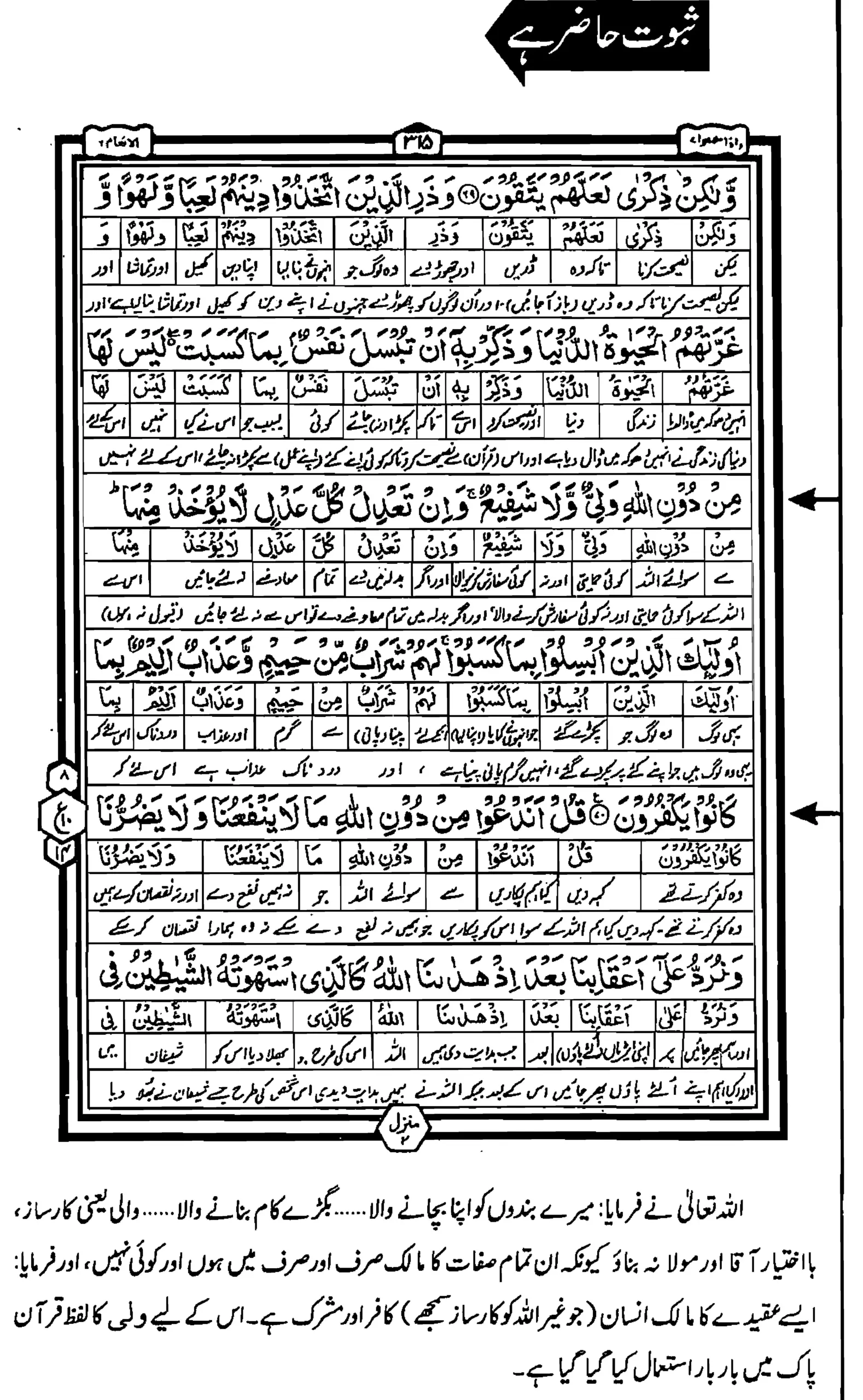
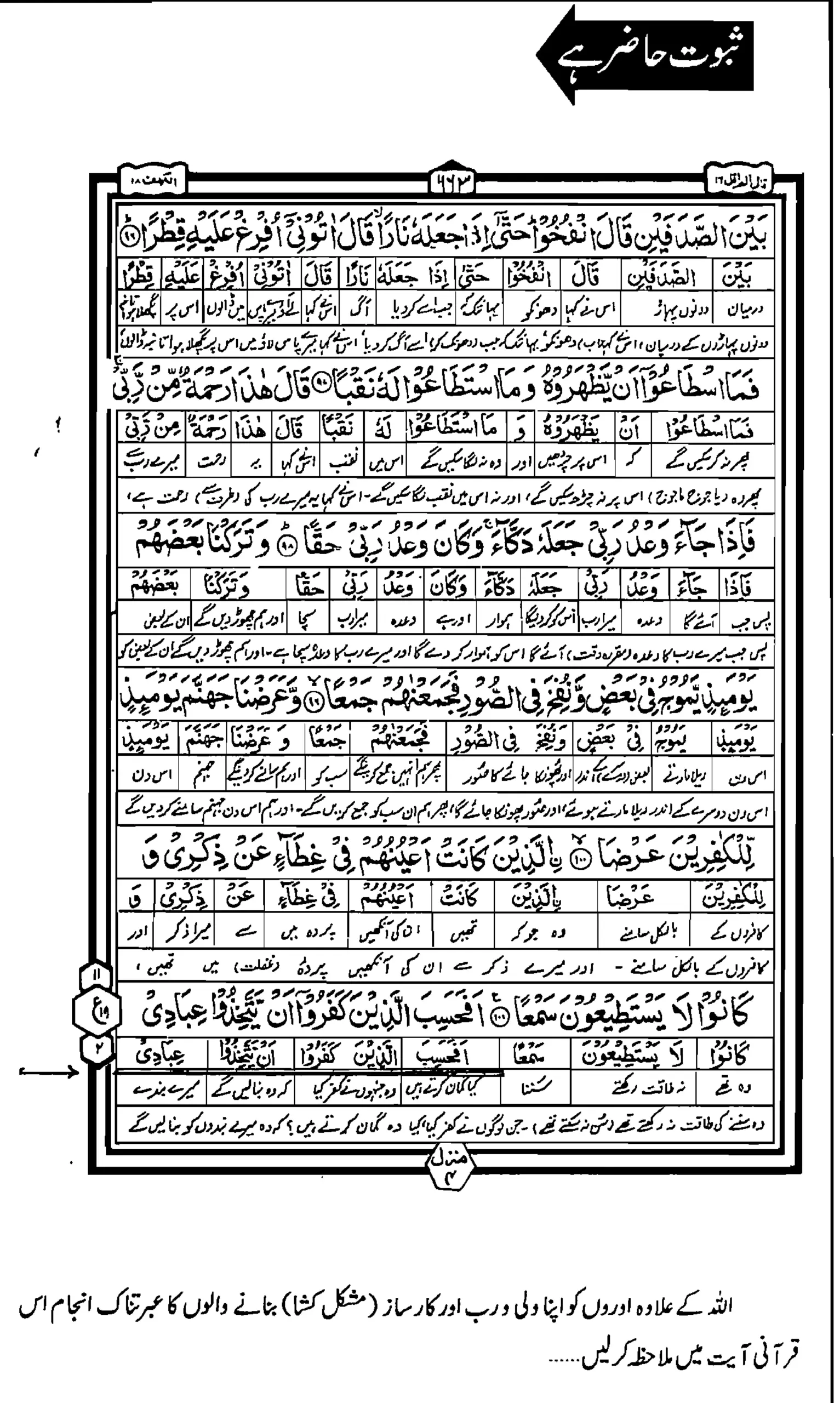
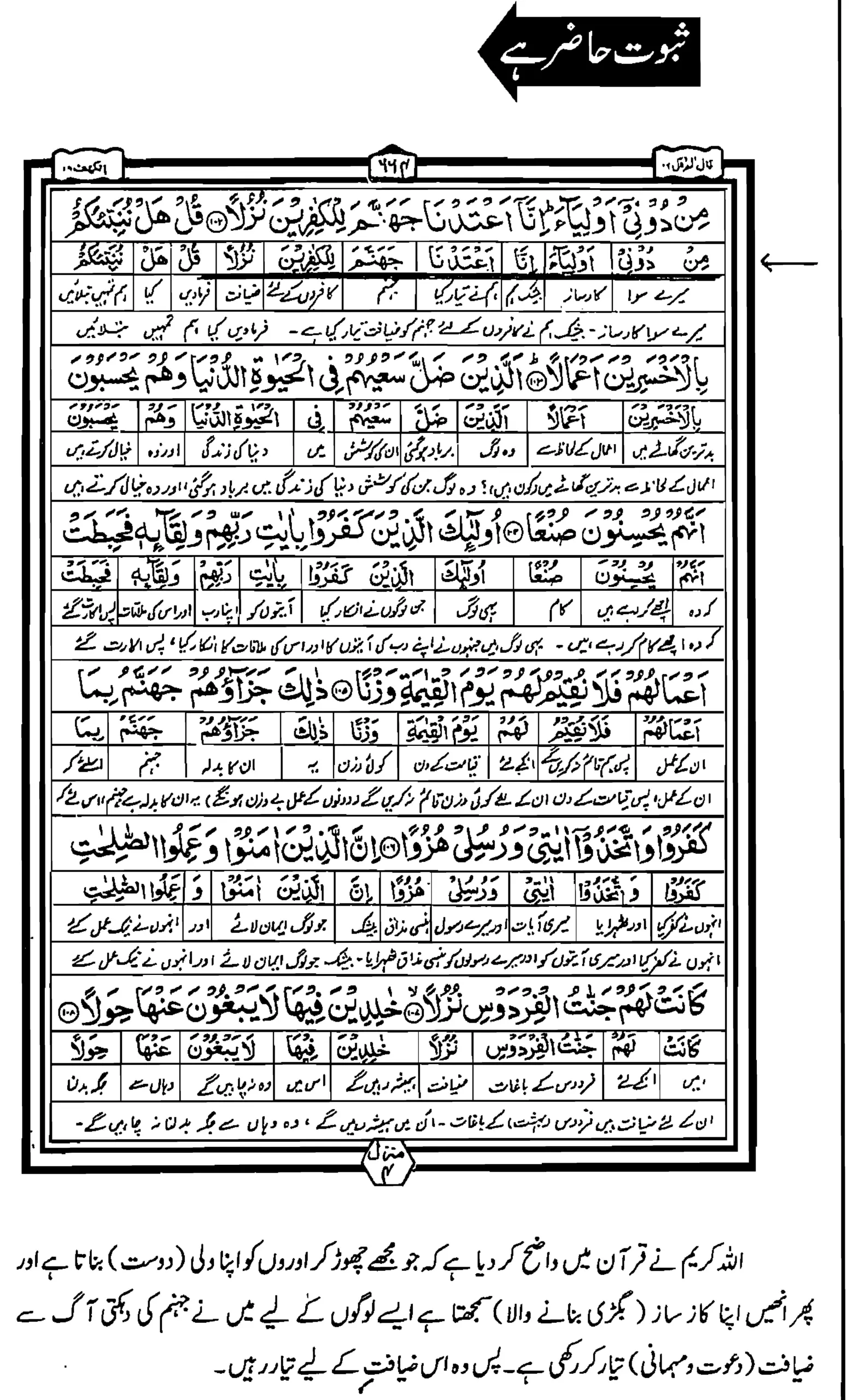
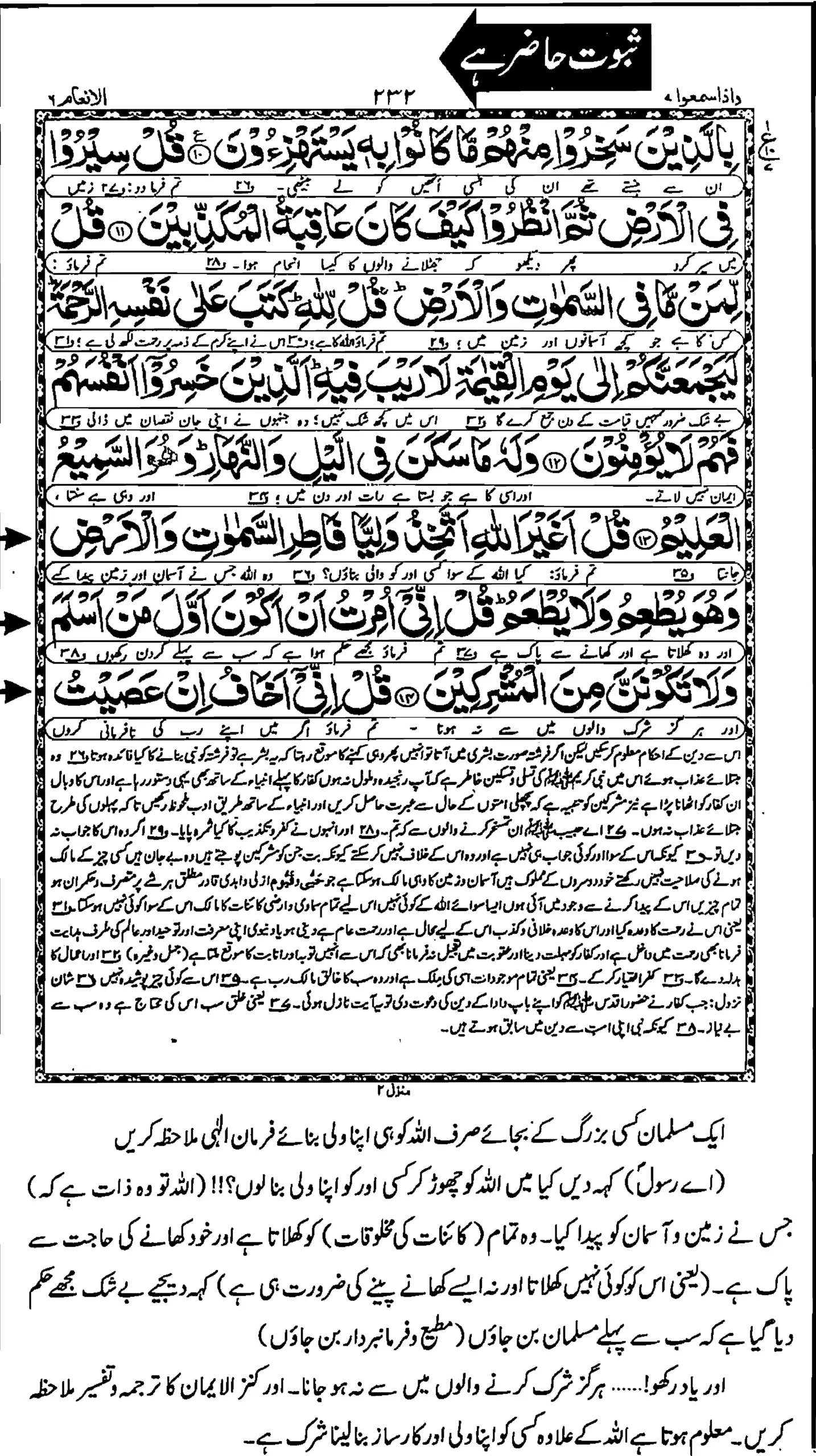
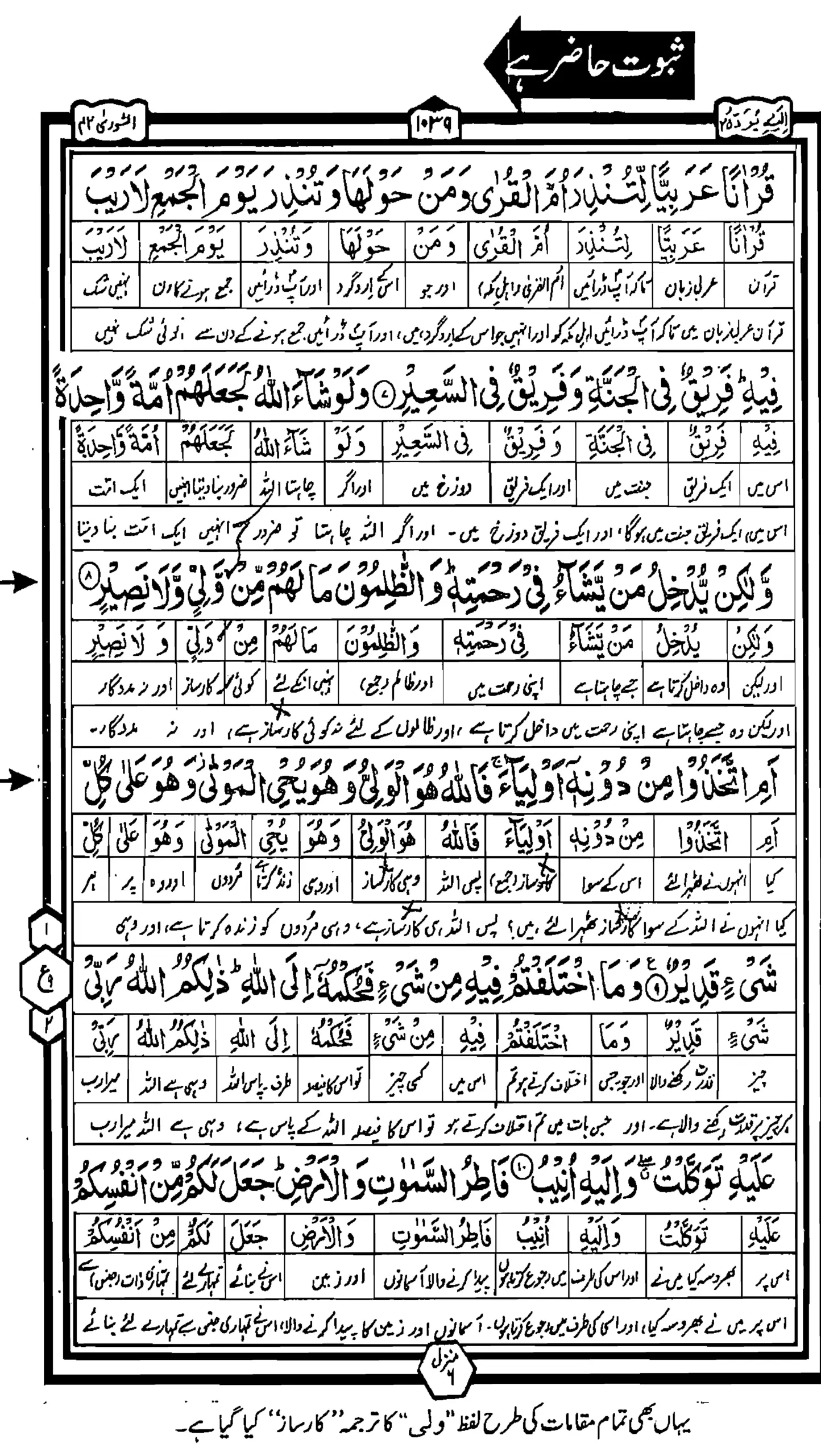
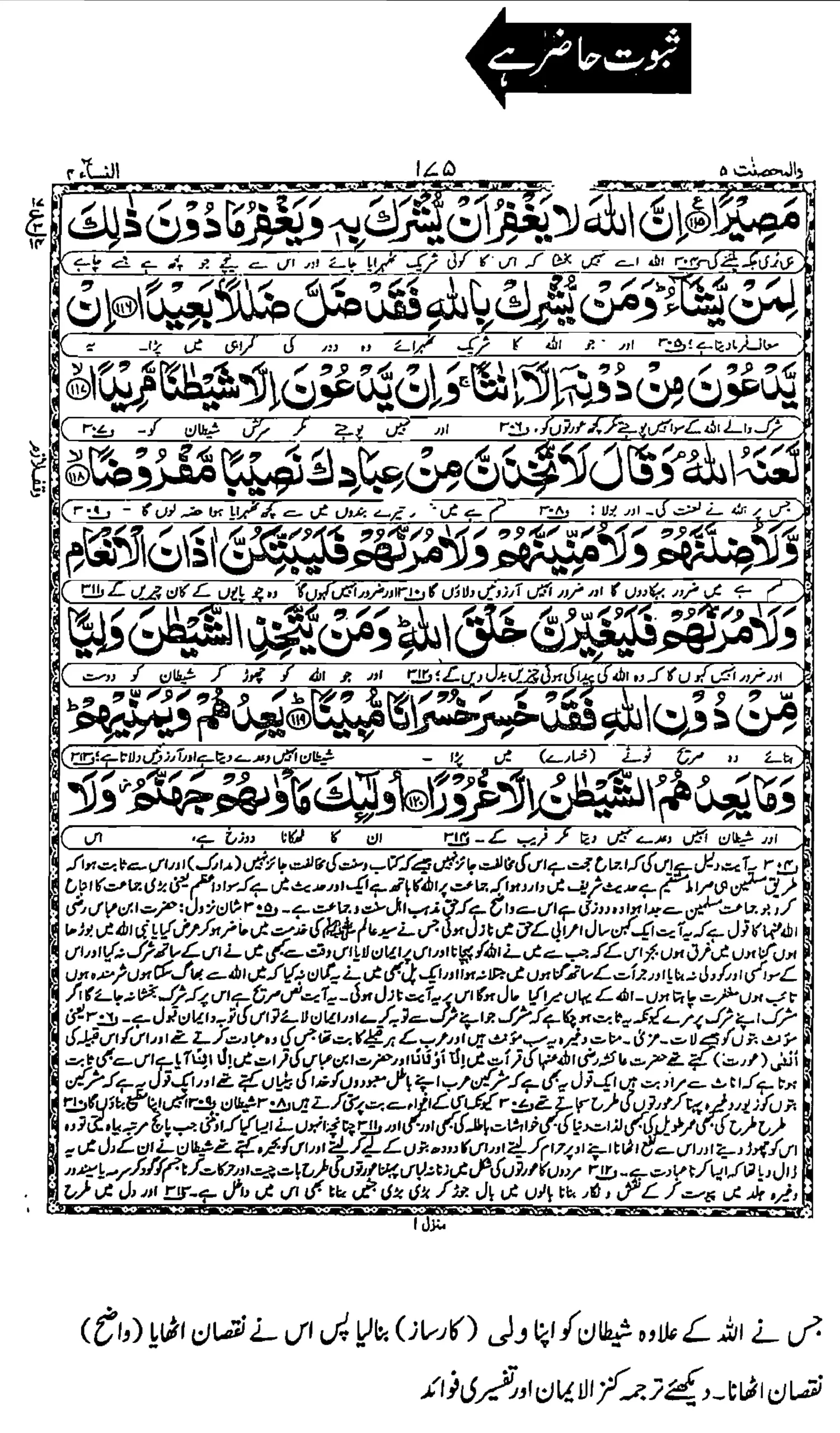
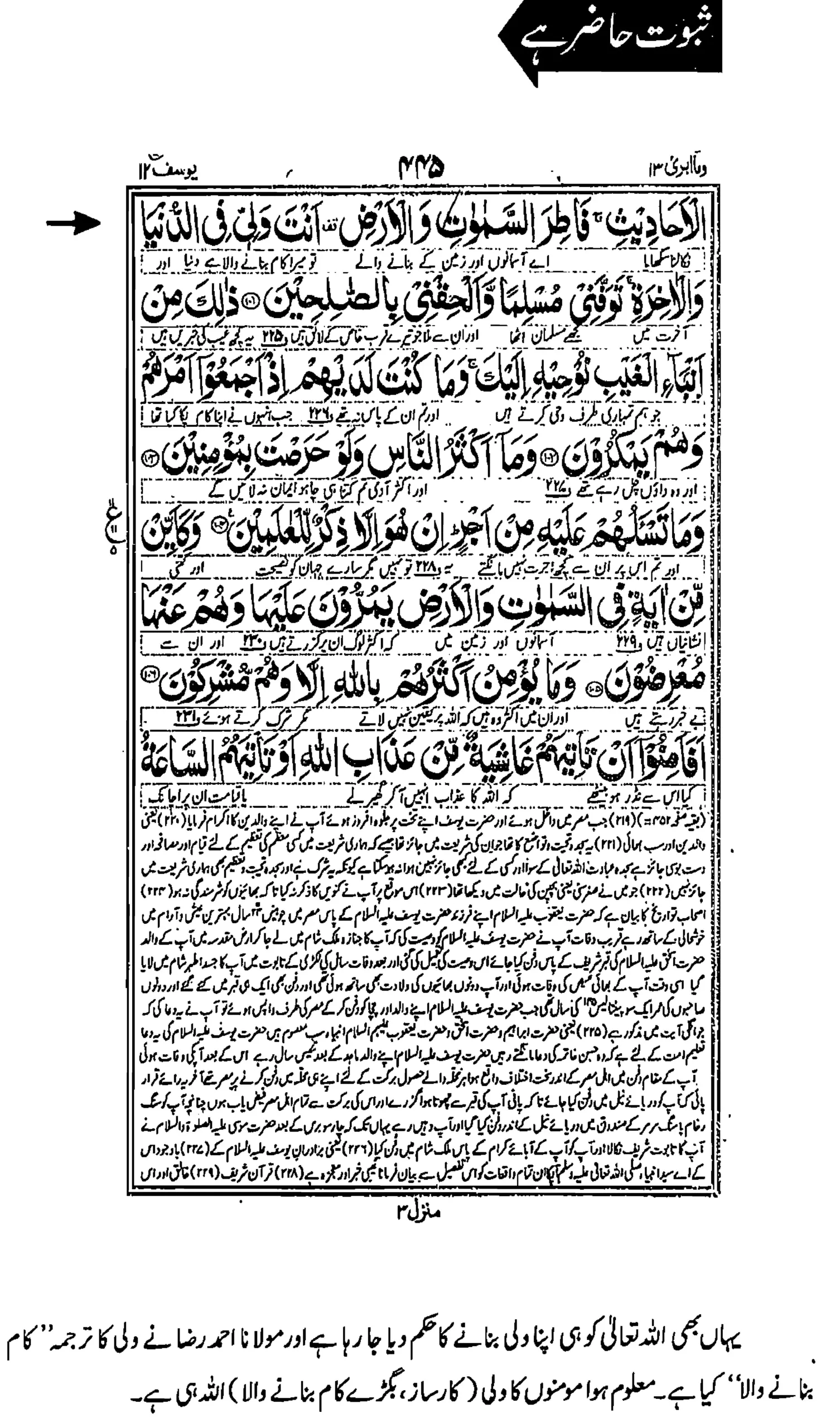
[1] We will mention those verses of the Holy Quran in which Allah Almighty first told the disbelievers and polytheists (the polytheists of Mecca, Jews, Christians): Do not make anyone the protector, helper, guardian, doer, powerful, master, and lord of My servants, because the owner of these attributes is only and only Allah Almighty, and no one else. And He said: A person who holds such a belief (who considers someone other than Allah as a doer) is a disbeliever and polytheist. The above meanings written here are the Ahmad Raza Khan's translation of the words Wali and the words derived from it, such as Waliya, Walina, and Awliya, etc., in the Quranic translation by Ahmad Raza Khan. Also, the words derived from Mola, such as __ARABIC_8, ARABIC_9__, etc.
[1] Protector
Reference: (Al-Baqarah:120)
[2] Doer.
Reference: (Al-Ankabut:22), (Ash-Shura:28), (Yusuf:101)
[3] Guardian.
Reference: (Al-Baqarah:258), (Aal Imran:68), (At-Tawbah:116), (Al-Kahf:26), (Ash-Shura:8, 9), (An-Nisa:45), (Al-An'am:24), (Al-A'raf:196), (Az-Zumar:3), (Ash-Shura:6, 9)
[4] Doer.
Reference: (An-Nisa:45)
The meaning "guardian" is written, and in
Reference: F:148
it is written as "doer."And now these are the verses in which the servants of Allah are forbidden from being facilitators: As mentioned above, but in some places, as usual, meanings have been taken loosely and distortions have been made in the tafsir as well. Please observe:
Reference: (Al-An'am:11 to 19), (Yusuf:101 to 103), (Ash-Shura:1 to 12), (Al-Kahf:32 to 44 and 106 to 110), (Al-Furqan:12 to 20), (Al-Ankabut:19 to 22, 41 to 44), (Az-Zumar:1 to 8)
[1] Your judgment is the truth; whoever does not accept your judgment wholeheartedly is not a Muslim.
Reference: (An-Nur:47 to 49 - 112 to 115), (Kanz al-Iman: An-Nisa:65 p178)
[2] Nowadays, the majority of Muslims obey verbally but oppose in practice; this is an old method and approach.
Reference: An-Nur:53-54 p119 to 124 - Aal Imran:132 p236
[3] The Jews and Christians disobeyed, changed the religion, and concealed the original religion.
Reference: Al-A'raf:168 p321 to 323 - Al-A'raf: p183 and 333
[4] Concealing the religion is a great sin.
Reference: Al-Baqarah: p288 and 309 - Aal Imran: p372
And those who do so and their followers will have a bad end on the Day of Judgment.
Reference: (Al-Furqan:26 to 29), (Al-Ahzab:66 to 68, p162 to 165)
[5] The facilitator of the Prophet ﷺ and the Companions is Allah because these verses were revealed and these events occurred in the presence of the Prophet ﷺ and the Companions.
Reference: (Al-An'am: 66-67), (Yunus: 10, 108/109 and 8/9, pp.19 to 21)
all of this is present and your task is only to convey the religion of Allah. (Not to enforce)
Reference: (Aal Imran: 20 pp.47), (Ar-Ra'd: 40 pp.109 to 112), (Sad: 22)
and
Reference: Kanz al-Iman
states that the Prophet ﷺ asked Allah three questions
Reference: (Al-An'am: 65-66-141, pp.119 to 125)
of which only two were accepted. See more:
Reference: Kanz al-Iman: 4/78 to 82 pp.203 and Aal Imran: 53 pp.128
and
Reference: Muqaddimah Ain al-Hidayah
states that [کل کان من عنداللہ] meaning say, O Muhammad, everything is from Allah alone, and whoever thinks that good or evil comes from anyone else has disbelieved in Allah and his monotheism is nullified
Reference: (Muqaddimah Hidayah Fiqh Akbar p.10)
and
Reference: Kanz al-Iman
writes that offspring is from Allah and attributing offspring to anyone other than Allah is shirk (polytheism)
Reference: (pp.24 to 50 pp.122 to 129), (Al-A'raf: 191 pp.373)
and Allah Almighty said: Indeed, those whom you call besides Allah are servants like you
Reference: (p.379)
so call them, then they respond to you if you are truthful.
Reference: (Al-A'raf: 193 pp.389)
According to Raza Khani's translation and commentary, Tawheed (Oneness of God) is: (1) You say, Allah is sufficient for me.
Reference: (Az-Zumar:38 p90)
Then those who trust rely on Him.
Reference: (Az-Zumar:38)
The example of a polytheist and a monotheist in this commentary is described as follows: A group’s slave is very distressed; each master pulls him towards himself and tells him his own tasks. He is confused about whose command to obey and how to satisfy all the masters. And when this slave himself has a need or requirement, to which master should he go? Unlike this slave, who has only one master, who can serve him and satisfy him. He faces no distress. This is the condition of a believer who is a servant of only one Master and worships only Him, and the polytheist group’s slave is like one who has declared many gods as deities.
Reference: (Az-Zumar:29 p72 to 75)
Comment:
The entire structure of Barelvis was destroyed by the above
Reference: Raza Khani Translation and Tafseer
. They call upon many beings, and when they have a need or necessity, sometimes they call the people of Lahore, sometimes the people of Baghdad Sharif غوث الاعظم, and sometimes they call upon Ali رضي الله عنه for help. Sometimes they call upon the Messenger of Allah ﷺ for help and say that seeking help from saints and prophets is not shirk
Reference: (4/1:Issue)
. They wrote in their tafseer that the people of Baghdad Sharif are Ghaus al-Azam
Reference: (19 /f156)
, and in the above tafseer, they themselves write that this is shirk. A monotheist presents his needs and necessities only before Allah. They have themselves admitted that Barelvis are polytheists.Allah Almighty says:
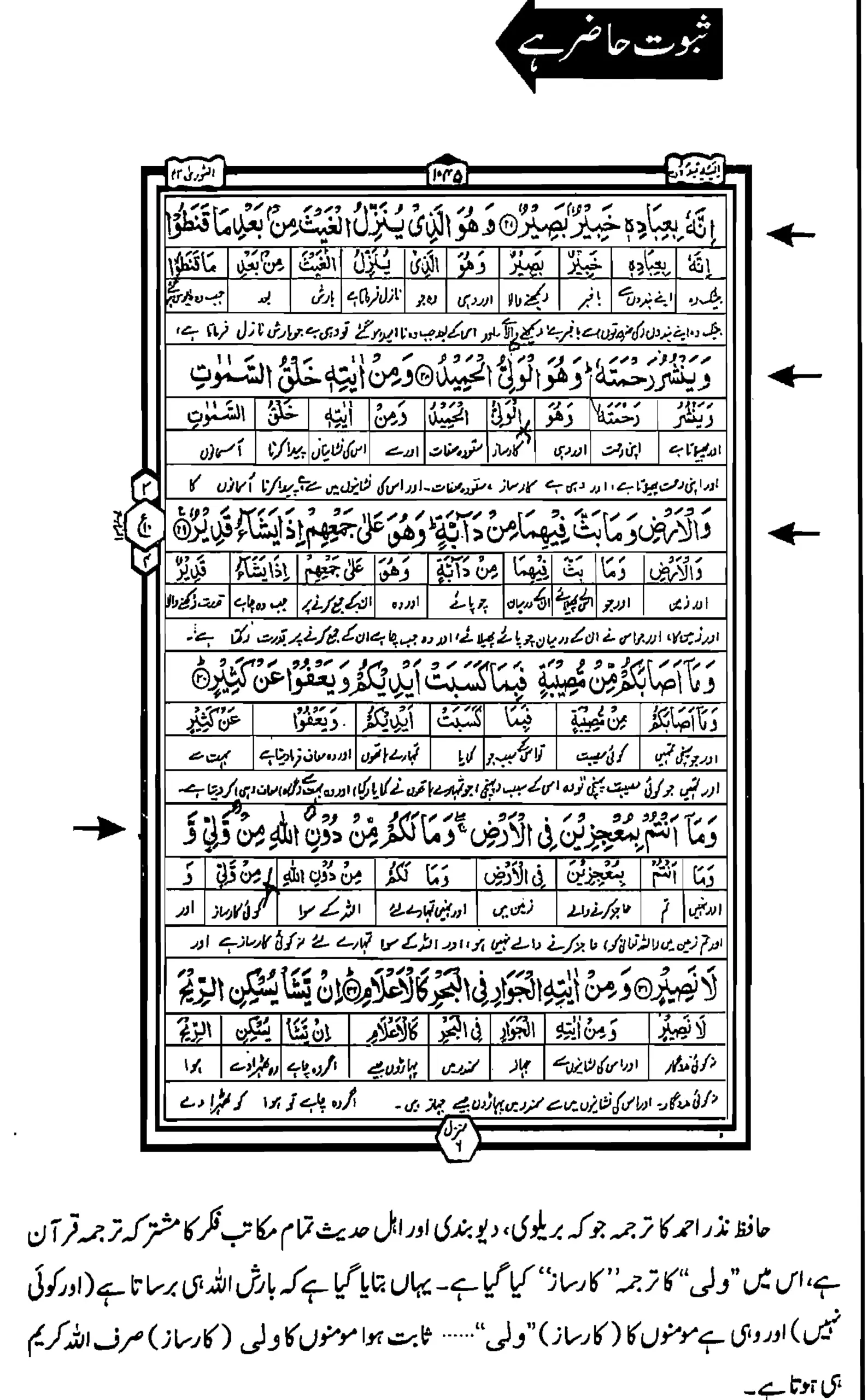
[1] Allah is Sufficient as a Guardian (Helper)
Reference: (An-Nisa:45 f138)
. Further in the tafseer, it is written: Whoever has Allah as a Helper, what fear can he have?
Reference: (3/122)
[2] O Prophet, Allah is sufficient for you.
Reference: (Aal Imran:62 to 64), (Al-Hijr:95), (Az-Zumar:36)
And for the believers as well.[3] Whoever trusts in Allah, Allah is sufficient for him.
Reference: (At-Talaq:3 f12-14)
[4] Allah is Sufficient as a Trustee (Helper)
Reference: (An-Nisa:81-132), (Al-Furqan:3, 25-48)
[5] Everything in the heavens and the earth belongs to Allah.
Reference: (Al Imran:109-129-180-189)
[6] [وَ کَفٰی بِاللّٰہِ وَلِیًّا]
Reference: (An-Nisa:45)
And Allah is sufficient as a guardian, and Allah is sufficient as a helper
Reference: (F:148)
states: And whoever has Allah as their disposer of affairs, what fear can there be for them.[7] And in the same tafsir it is written: [اِنَّ اللّٰہَ لَہٗ مُلۡکُ السَّمٰوٰتِ وَ الۡاَرۡضِ ؕ یُحۡیٖ وَ یُمِیۡتُ ؕ وَ مَا لَکُمۡ مِّنۡ دُوۡنِ اللّٰہِ مِنۡ وَّلِیٍّ وَّ لَا نَصِیۡرٍ]: Translation: Indeed, the dominion of the heavens and the earth belongs to Allah alone; He gives life and causes death, and besides Allah, you have neither guardian nor helper.
Reference: (At-Tawbah:116 F257 to 281)
See also:
Reference: (Al-Baqarah:107, 120 F218 to 220)(Al-Hajj:31),(Hud:113)
[8] Further it is written: [نعم المولیٰ ونعیم النصیر] Translation: How excellent a guardian and how excellent a helper.
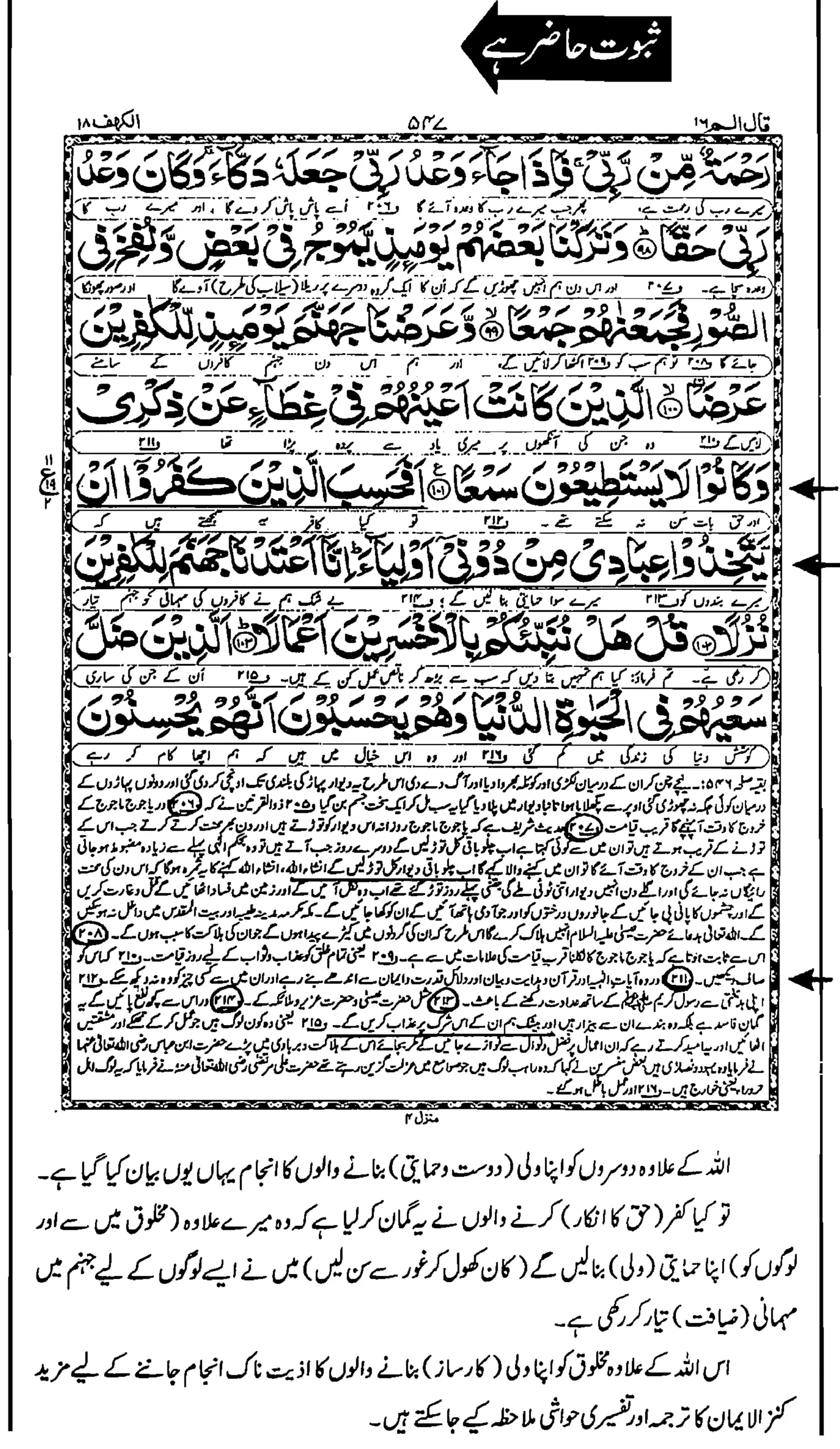
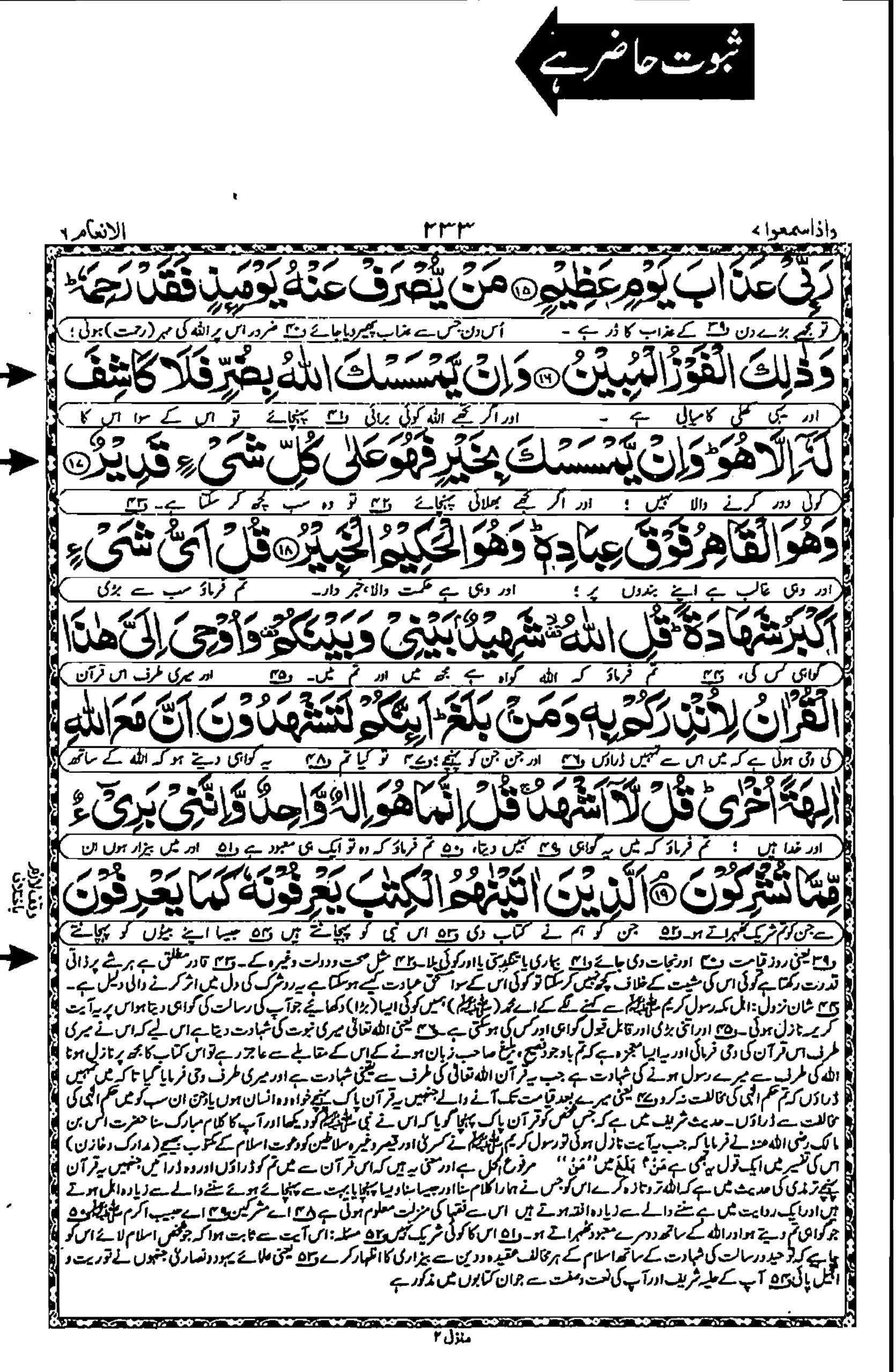
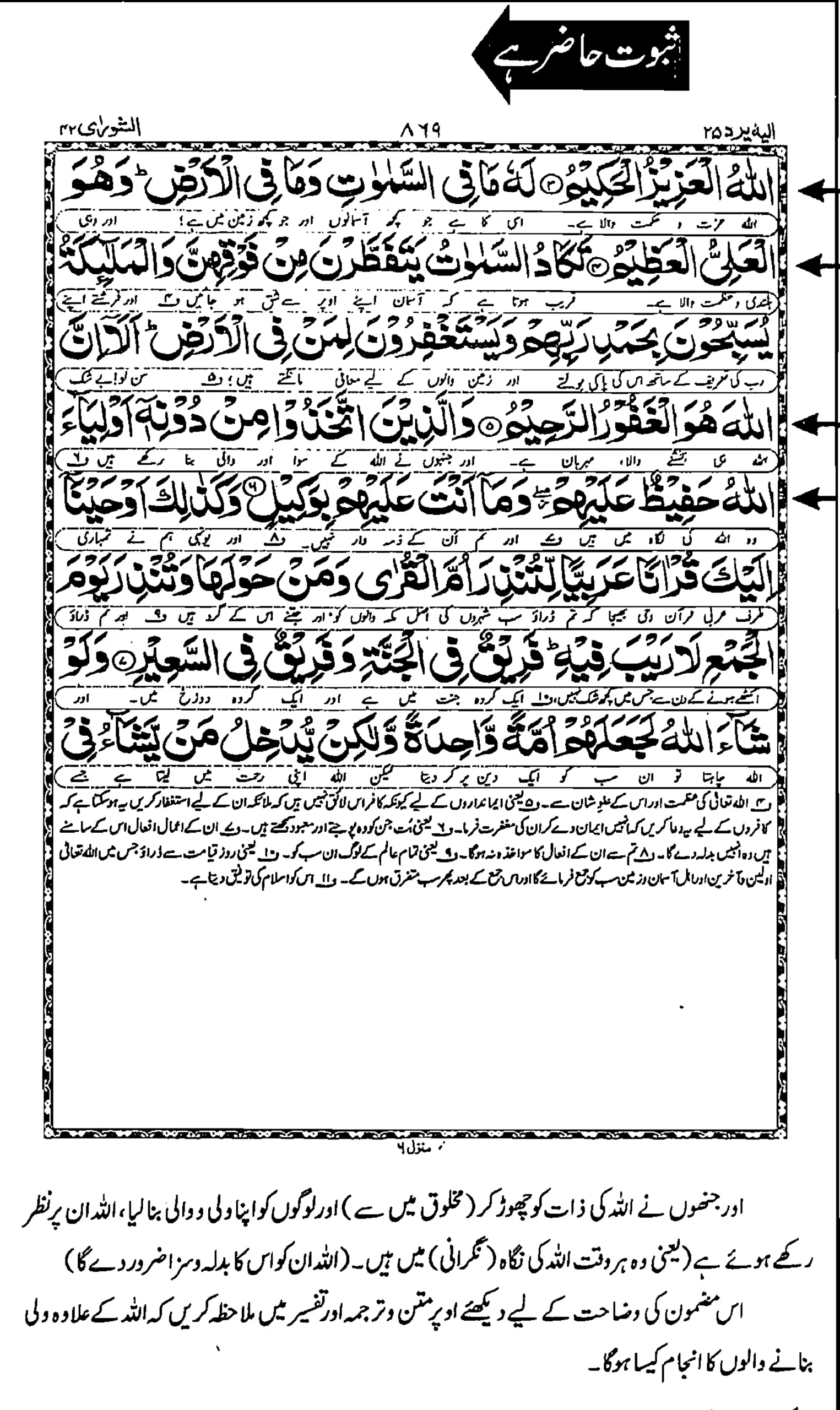
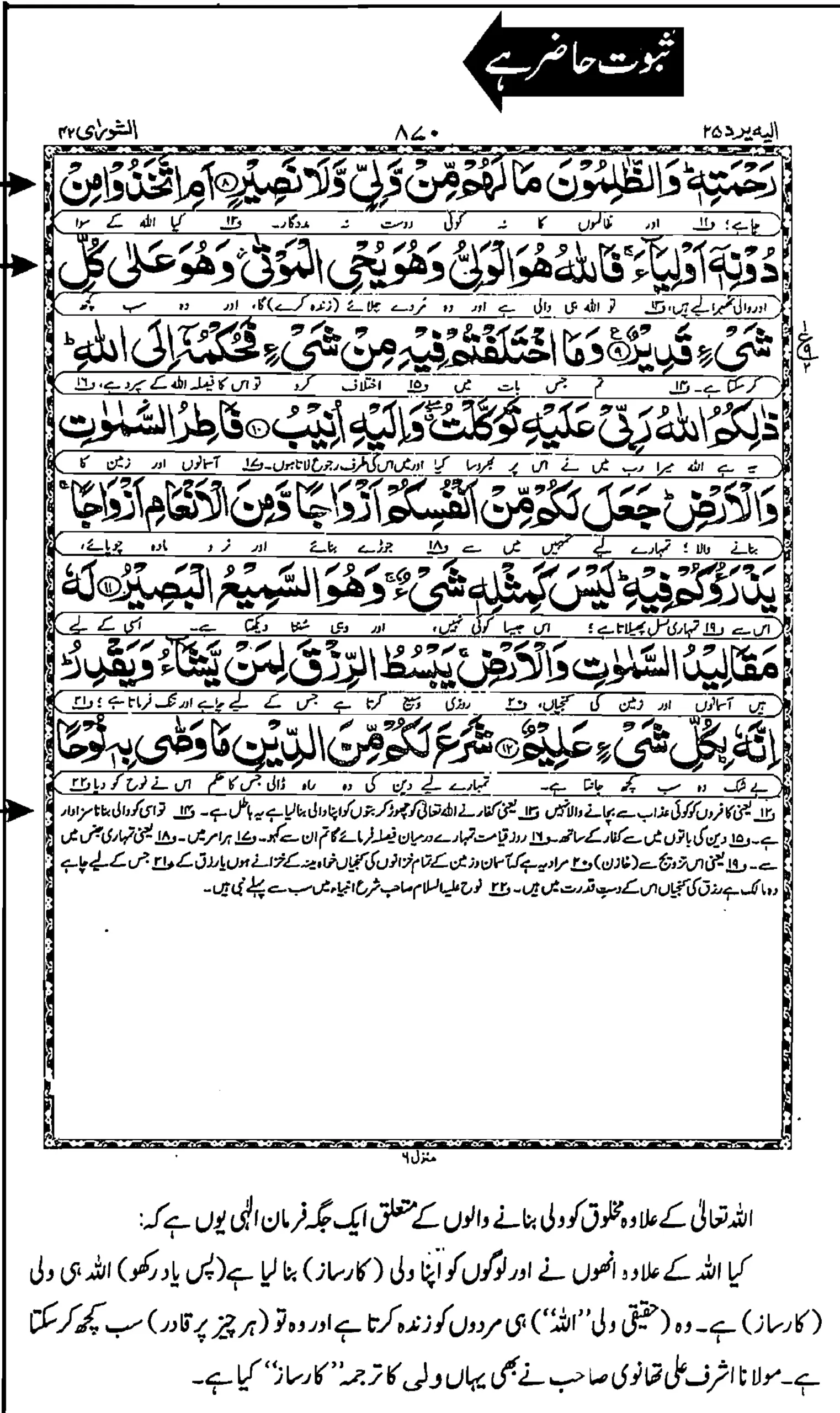
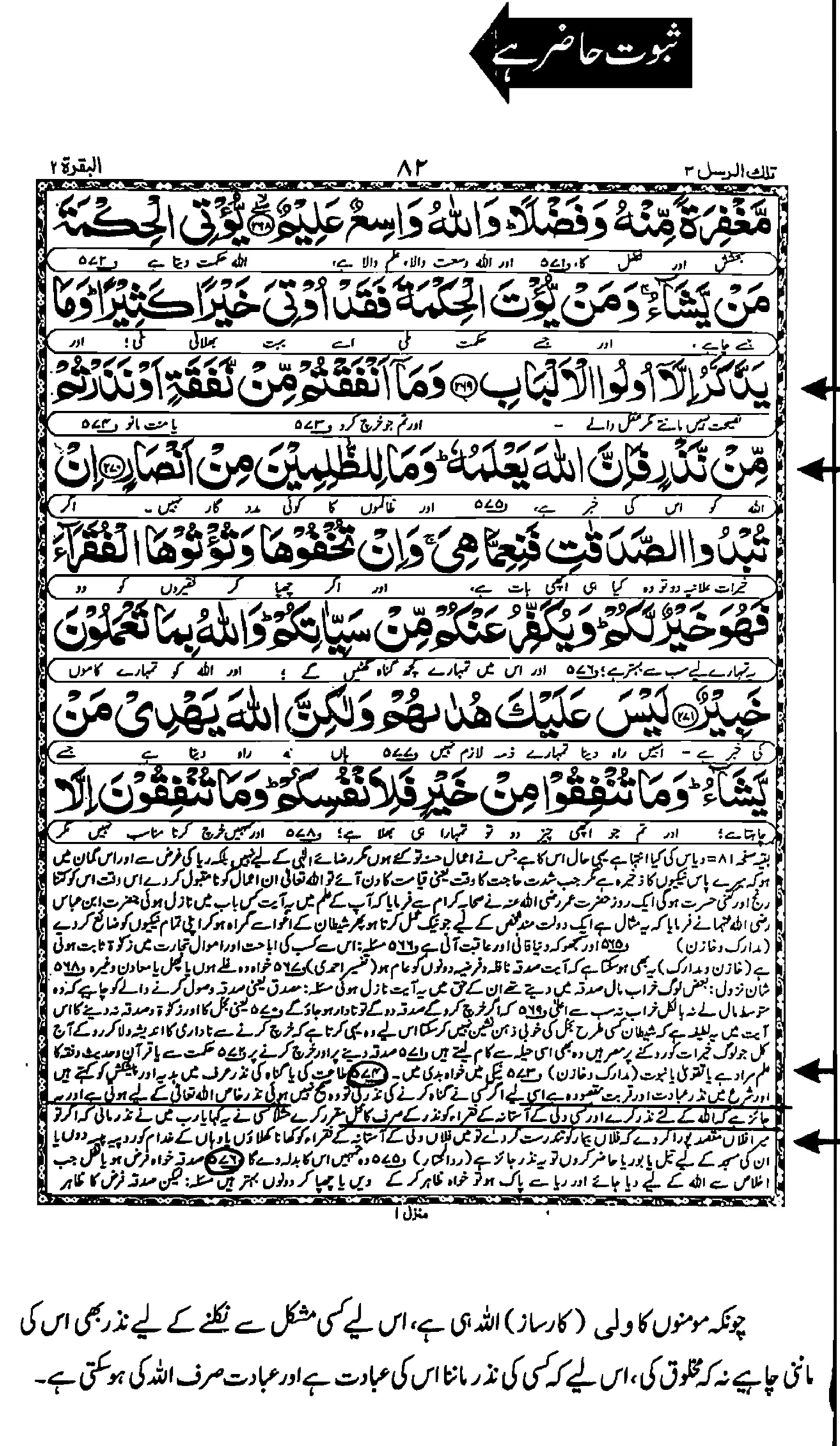
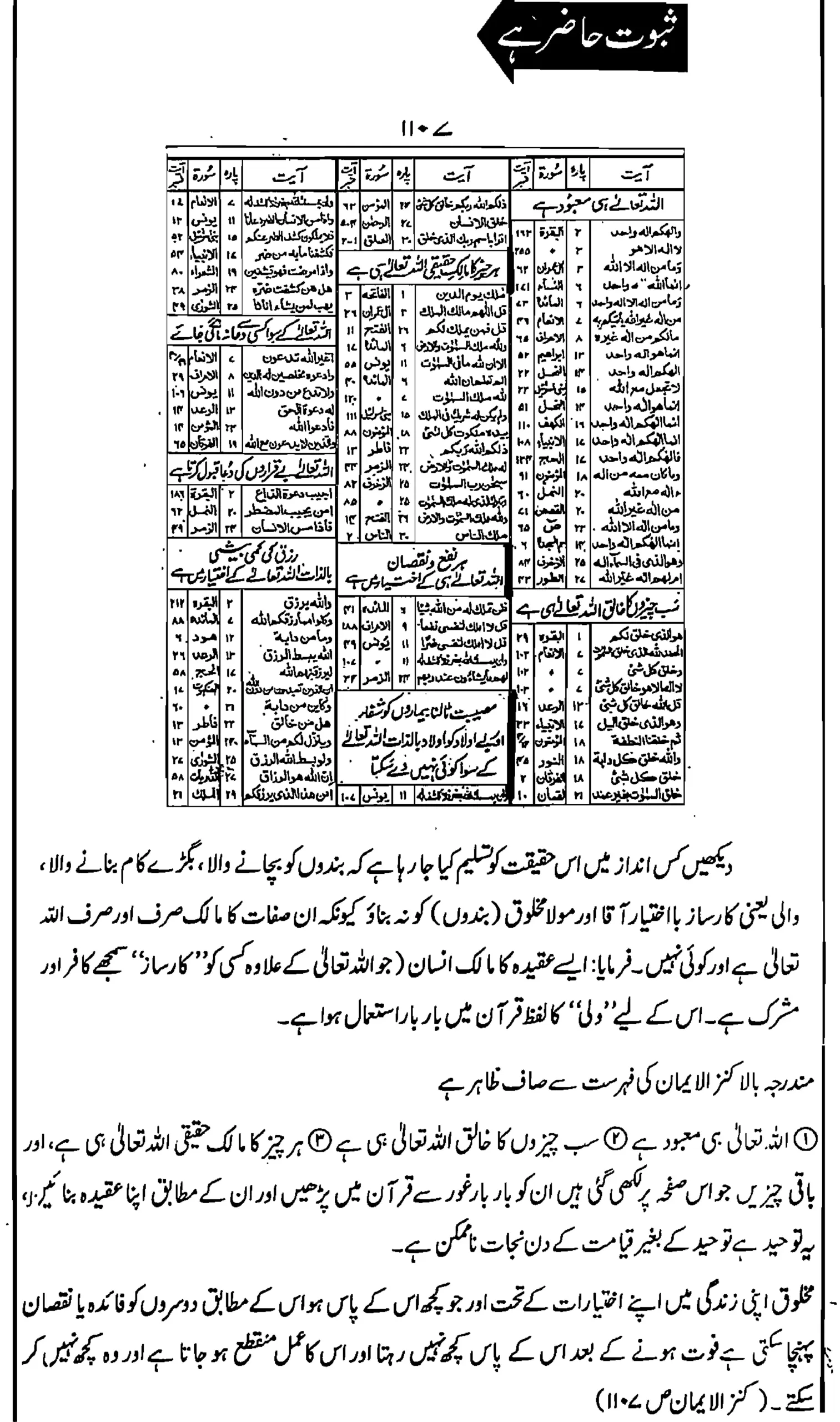
[9] And it is written in
Reference: Kanz al-Iman
that there is no partner with Allah in divinity and lordship (meaning) besides Him there is neither any deity nor any lord, that is, provider. But nowadays people are worshipping many besides Allah. And many consider others besides Allah as providers. Both are clearly polytheists. It is written in
Reference: Kanz al-Iman
, translation: Worship Allah and do not associate anyone as His partner. Under
Reference: (F109 and 109)
it is written: Do not associate any living or non-living being in His lordship or in His worship:
Reference: (An-Nisa:36 F109)
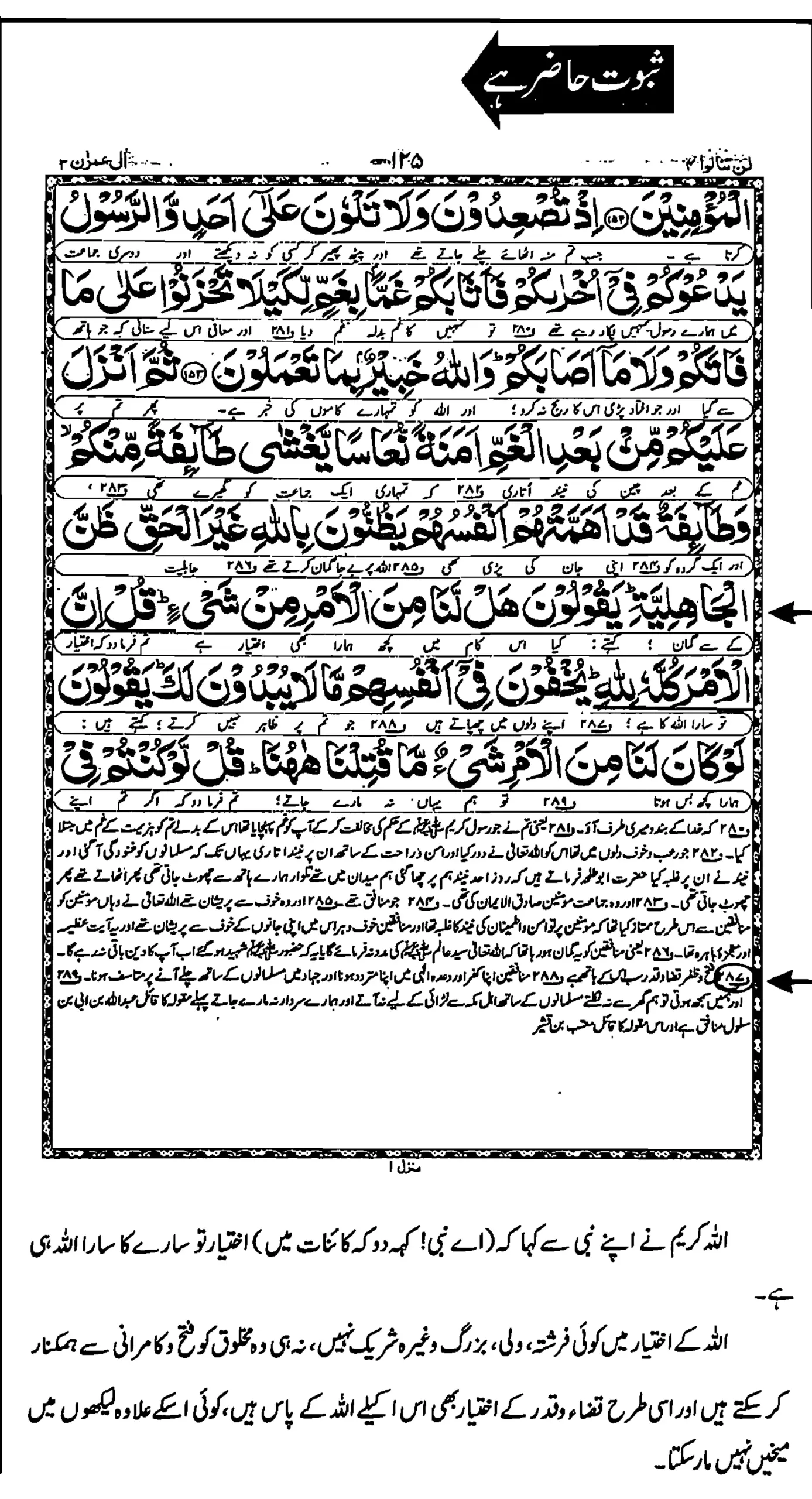
[1] Another deviation:
This is another contradiction,
Reference: Ahmad Raza Khani Translation and Tafseer
states that after the revelation of Surah Muhammad, the Prophet Muhammad ﷺ used to recognize the hypocrites by their appearances and their words
Reference: (See Muhammad:30, verses 78, 79)
, but in (Surah At-Tawbah:101)
Reference: Allah Almighty said: "And there are some unlettered hypocrites around you and some from the people of Madinah; they have become accustomed to hypocrisy. You do not know them, but We know them." This is a strange contradiction, even though the same Tafseer states that Surah At-Tawbah was the last Surah revealed in the Holy Quran.
That Allah Almighty has repeatedly stated in the Holy Quran: not to adopt the ways of the Jews and Christians but to follow the revealed Islam. In Ahmad Raza Khan's translation with commentary, it is also written that one should not adopt the ways of the Jews and Christians, but it is also said that whatever innovations they started after abandoning their revealed religion were not objectionable, and in this commentary, the Muslims who profess the Kalima were repeatedly encouraged towards innovations. See: their
[2] Note another strange contradiction:
That Allah Almighty has repeatedly stated in the Holy Quran: not to adopt the ways of the Jews and Christians but to follow the revealed Islam. In Ahmad Raza Khan's translation with commentary, it is also written that one should not adopt the ways of the Jews and Christians, but it is also said that whatever innovations they started after abandoning their revealed religion were not objectionable, and in this commentary, the Muslims who profess the Kalima were repeatedly encouraged towards innovations. See: their
Reference: translation with commentary: (Al-Hadid:16, f48, 27, f90, 91), (Al-Baqarah:120, f219, 220), (Al-Mujadalah:4, f17, 18, 8 to 10, f33, 36, 37), (Al-Fatiha: 7/1 commentary)
[3] This is a clear double standard and contradiction:
Reference: Al-An'am (14, f38)
in the commentary on [اول من اسلم] (meaning) "I will put my neck first" it is written that the Prophet precedes his Ummah in religion, but
Reference: Al-An'am (161 to 164, f338 to 341) in (f340)
it is written: precedence is either in the sense that the Islam of the Prophets precedes their Ummah or in the sense that Sayyid al-A‘lam ﷺ is the first of creation, so he must have been the first Muslim.Because in the Holy Quran it is stated: O Prophet (ﷺ)! Before the Quran was revealed, you had no knowledge of the Quran and faith.
Reference: Ash-Shura (42:52) and Al-Baqarah (2:285)
mention that the Messenger ﷺ and the believers believed in the revelation sent down by Allah. From this, it is clear that the Messenger of Allah ﷺ believed in the Shariah after it was revealed. Regarding Sayyiduna Musa (Moses) عليه السلام, it is written in his exegesis that Sayyiduna Musa عليه السلام is the first of the believers among Bani Israel.
Reference: (See: Al-A'raf:143, p.266)
And in the same exegesis, it is written that the magicians of Pharaoh who believed after witnessing the miracles of Sayyiduna Musa عليه السلام were among the subjects of Pharaoh or among those present in that assembly, and they were the first of the believers. These points clearly show his duplicity.[4] In his tafsir, he wrote that Allah Almighty honored the Messenger of Allah ﷺ and out of respect and reverence for him ﷺ, He did not address him by ،،یامحمد،،. Whereas the other Prophets, peace be upon them, were addressed by their names.
Reference: (Al-Ahzab:1, f2)
And in the same tafsir, it is written that the believers should address the Messenger of Allah ﷺ with respect and should not address him by name.
Reference: (Al-Hujurat:2, f4)
But in the same tafsir, it is written that Jibreel (Gabriel), peace be upon him, addressed the Messenger of Allah ﷺ as،،یامحمد،،.
Reference: (Al-Muddathir:1, f2)
This is a strange contradiction that Allah Almighty did not prefer to call the Pure Messenger ﷺ __ARABIC_18, but Jibreel addressed him by saying ARABIC_19__.[5] In this tafsir, it is written that from Adam, peace be upon him, up to you ﷺ, all your ancestors are believers.
Reference: (Ash-Shu'ara:129, f183)
But Ibn Abbas (may Allah be pleased with them both) said, if you like to understand the ignorance of the Arabs, then read more than
Reference: (Surah Al-An'am: verse 130)
. Those people were destroyed who, out of ignorance, killed their children; they are misguided, not on the right path, up to this verse.
Reference: Bukhari, Book of Virtues, Chapter on the Story of Zamzam and the Ignorance of the Arabs: 3524
And there is a hadith of the Messenger of Allah ﷺ that the honorable, the son of the honorable, the grandson of the honorable, and the great-grandson of the honorable, Prophet Yusuf (Joseph) was a prophet. He was the son of Yaqub (Jacob), the grandson of Ishaq (Isaac), and the great-grandson of Ibrahim (Abraham). And Bara said the Messenger of Allah ﷺ said: I am the son of Abdul Muttalib.
Reference: Bukhari, Book of Virtues, Chapter on Those Who Trace Their Lineage to Their Fathers in Islam and Ignorance, Commentary, above the hadith: 3525. Also see: 3390, 2864
And it is narrated in Sahih Bukhari that Abu Talib said at the time of his death that he was dying on the religion of Abdul Muttalib, and at that time the Messenger of Allah ﷺ was present there.
Reference: Bukhari, Book of Funerals, Chapter on When a Polytheist Says at Death: There is no god but Allah: 1360, 3884
[6] [عَلَيْكَ الْبَلَاغُ] In the Holy Quran, Allah Almighty has repeatedly stated: that it is the responsibility of the Messenger of Allah ﷺ to deliver the religion, and you are not the owner of benefit or harm for yourself or anyone else.
Reference: (See Ahmad Raza Khan's translation with Tafseer Al-Baqarah:272, p577), (Al-Ma'idah:92, 99, p222, 230), (At-Taghabun:11 to 13, p18 to 21), (Aal Imran:18 to 20), (Ar-Ra'd:37 to 41), (An-Nahl:81 to 83), (Ash-Shura:46 to 53)
So then, despite the above situation, calling upon you ﷺ and other elders and considering them as having the authority of control is nothing but misguidance.
[7] In Ahmad Raza Khan Sahib's Quranic translation with Tafseer, there is frequent mention of authentic Hadith books, but in our book, the references from those authentic Hadith books and Fiqh books given in each chapter are nowhere mentioned in Ahmad Raza Khan Sahib's translation with Tafseer. That is, he maintained a one-sided traffic of his belief and did not mention references from Hadith and Fiqh books that were against his belief. This is clear misguidance, and he repeatedly encouraged shirk and innovations while also writing the truth; both actions were carried out simultaneously.
See their translation along with Tafsir:
Reference: (An-Nisa:64, p177),(An-Nahl:116, p268),(Maryam:96, p156),(Ta-Ha:85, p122),(Al-Baqarah:3, p7- verse 8, p12, very important. verse 37, p67- verse 50, p86, verse 58, p96- verse 61, p106, very important. verse 78, p129 very important. verse 83, p134 and p138, very important. verse 87, p143 p147, very important. verse 248, p504- verse 261, p547),(An-Nisa: Benefits 20, 24-415),(Al-Ma'idah: Benefits 15, 66, 198, 211, 282),(Al-An'am:56, p124, very important),(At-Tawbah:6, 89, p225-verse 103, p238- verse 115, p270, very important. verse 128, p307)
[8] Their repeated statement in the tafsir that one should not do the act from which a Sunnah is lifted, and apart from that, do whatever you want, is meaningless because whoever practices innovations, the Sunnah of that moment in life will automatically be lifted. For example, if an announcer (Mu'adhdhin) prays before the Adhan, then the Sunnah of not praying before the Adhan will automatically end. If a group performs the ritual of Qul or the ritual of the fortieth day, then the Sunnah of the Prophet ﷺ, that he did not perform these acts, will automatically end. If a group, besides visiting graves and praying for the deceased, does other acts at the grave such as building a permanent grave, placing flowers on graves, lighting lamps on graves, washing graves, holding Urs, calling out to the deceased, organizing musical gatherings there, or offering sacrifices there, then the Sunnah of the Prophet ﷺ of not doing these acts will automatically end. If a person gives the eleventh (a specific charity or act), then the Sunnah of the Prophet ﷺ of not giving the eleventh will automatically end. Because the Prophet ﷺ said: Whoever does an act for which there is no command from us, it is rejected.
Reference: Bukhari, Book of Sales, Chapter on Deception and Who Said It Is Permissible, Sale on Condition, before the Hadith: 2142, connected: 2697], [Muslim, Book of Judgments, Chapter on Annulment of Invalid Judgments and Rejection of Innovations: 18/1718
Allah Almighty said: Hold firmly to what the Messenger ﷺ gives you and refrain from what he forbids you.
Reference: (Al-Hashr:7. Ahmad Raza, pp. 22 to 24)

