
Compiled by: Abu Hamzah Salafi
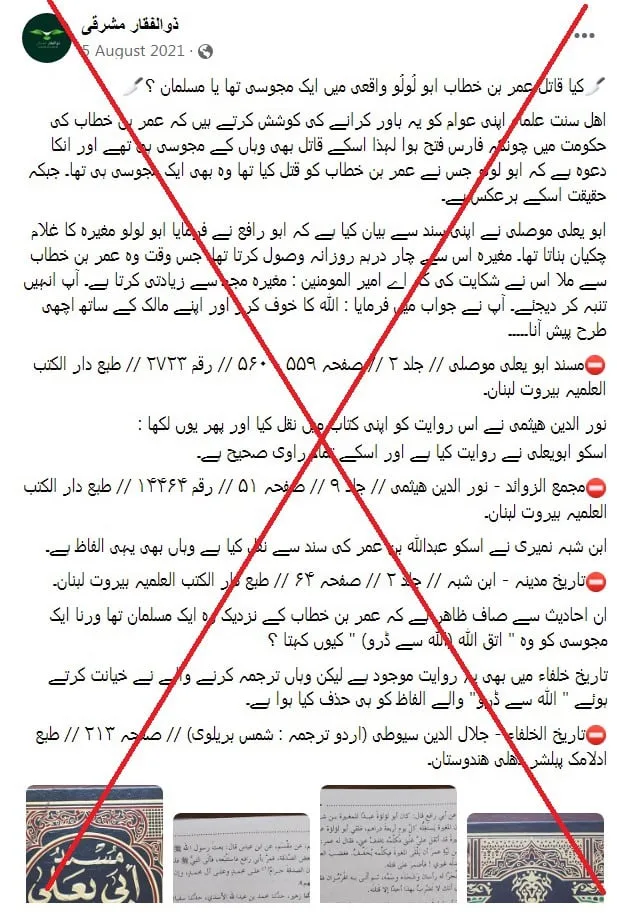
The purpose of the present article is to clarify that the claim made by certain Rāfiḍī and misguided individuals—that Abū Lu’lu’ah (Fīrūz), the assassin of Sayyidunā ʿUmar ibn al-Khaṭṭāb رضي الله عنه, was a “Muslim”—is not established according to scholarly and historical standards.
Through primary sources, we will demonstrate that although the scholars of ḥadīth and history differed regarding his religion (Magian / Christian), his being a Muslim is not proven. Furthermore, deriving Islam merely from words such as “Ittaqullāh” (Fear Allah) is a scholarly error, because such expressions are part of general admonition and can also be addressed to non-Muslims.
In conclusion, it will be shown that the correct methodology is to understand historical material through references and principles of evidence, rather than emotional slogans.
This argument is based on a single phrase from one narration, whereas the determination of religion depends on explicit historical and narrational declarations. Religion is not established merely through words of admonition.
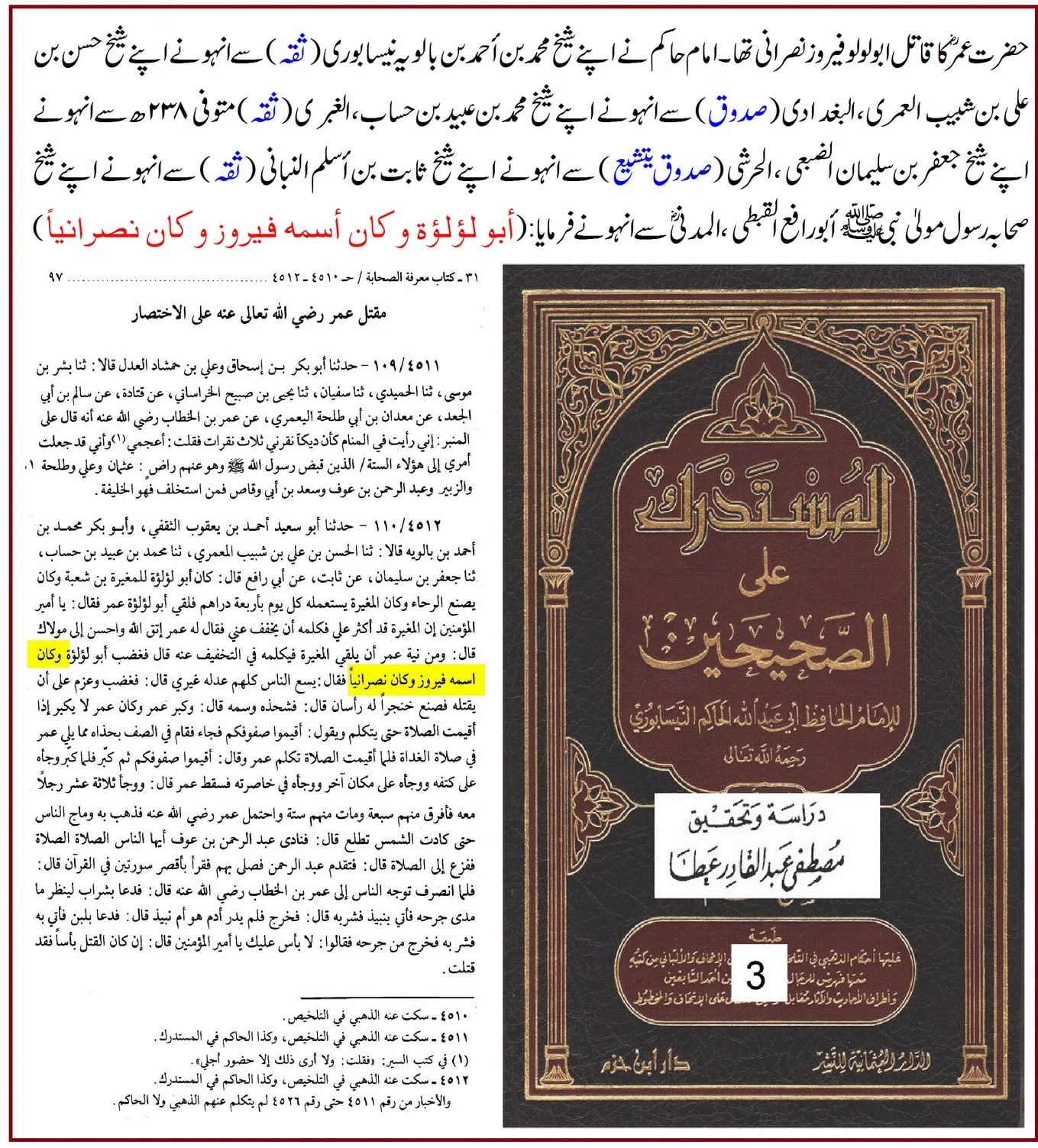
Abū Rāfiʿ said: Abū Lu’lu’ah was a slave of al-Mughīrah ibn Shuʿbah… He met ʿUmar and said: “O Commander of the Faithful! Al-Mughīrah is overburdening me with taxation, so tell him to reduce it.” ʿUmar said: “Fear Allah and treat your master well”… The narrator said: His name was Fīrūz, and he was a Christian.
 Source:
Brief Clarification:
This narration explicitly states at the end that Abū Lu’lu’ah was Christian, despite the presence of the phrase “Ittaqullāh”. This alone refutes the claim that such wording necessitates Islam.
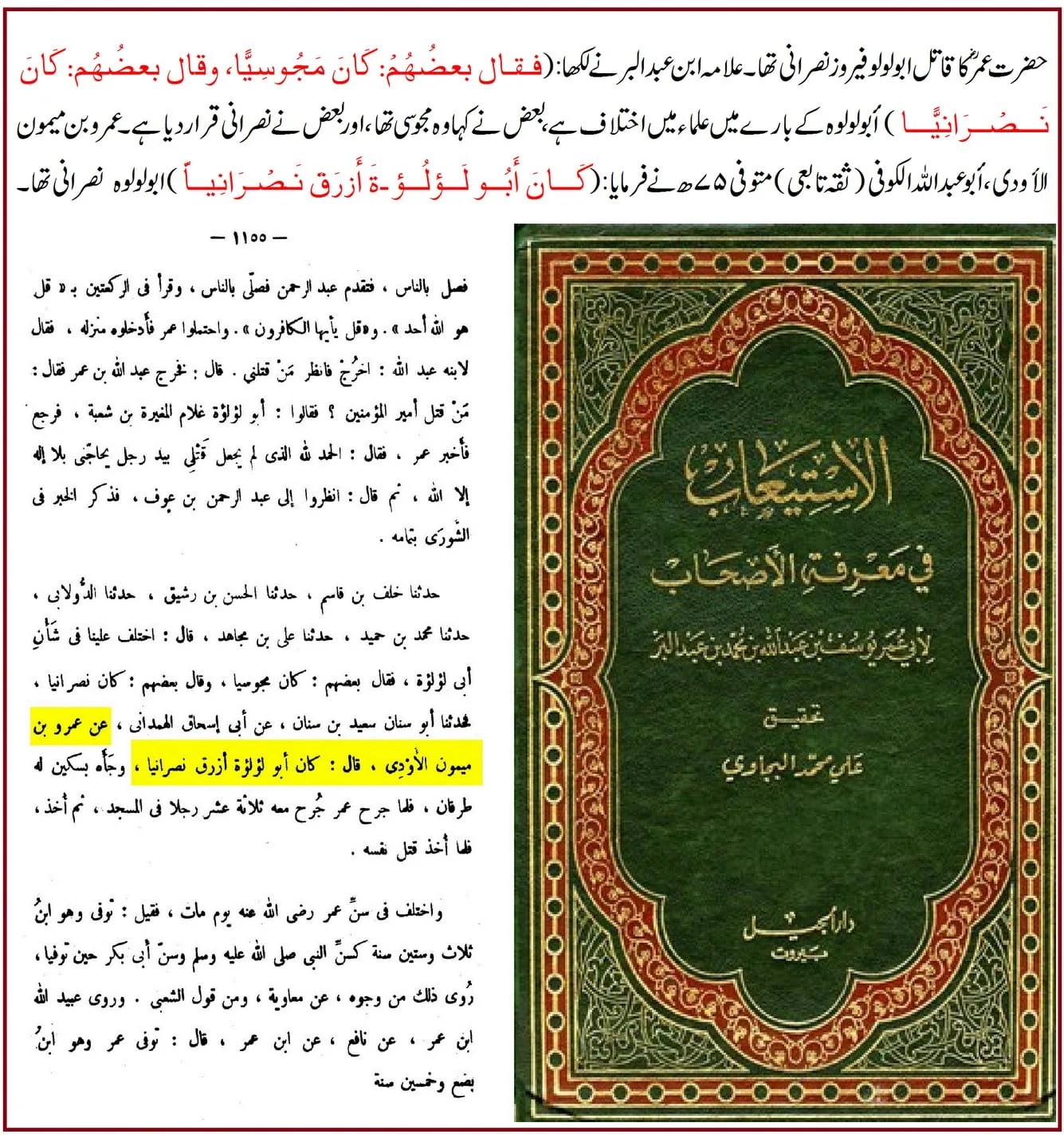
Some said that he was a Magian, and others said that he was a Christian… (from ʿAmr ibn Maymūn) it is said: Abū Lu’lu’ah was blue-eyed and a Christian.
Source:
Brief Clarification:
Ibn ʿAbd al-Barr records the difference (Magian / Christian), yet also transmits a clear statement identifying him as Christian. There is no explicit claim of Islam.
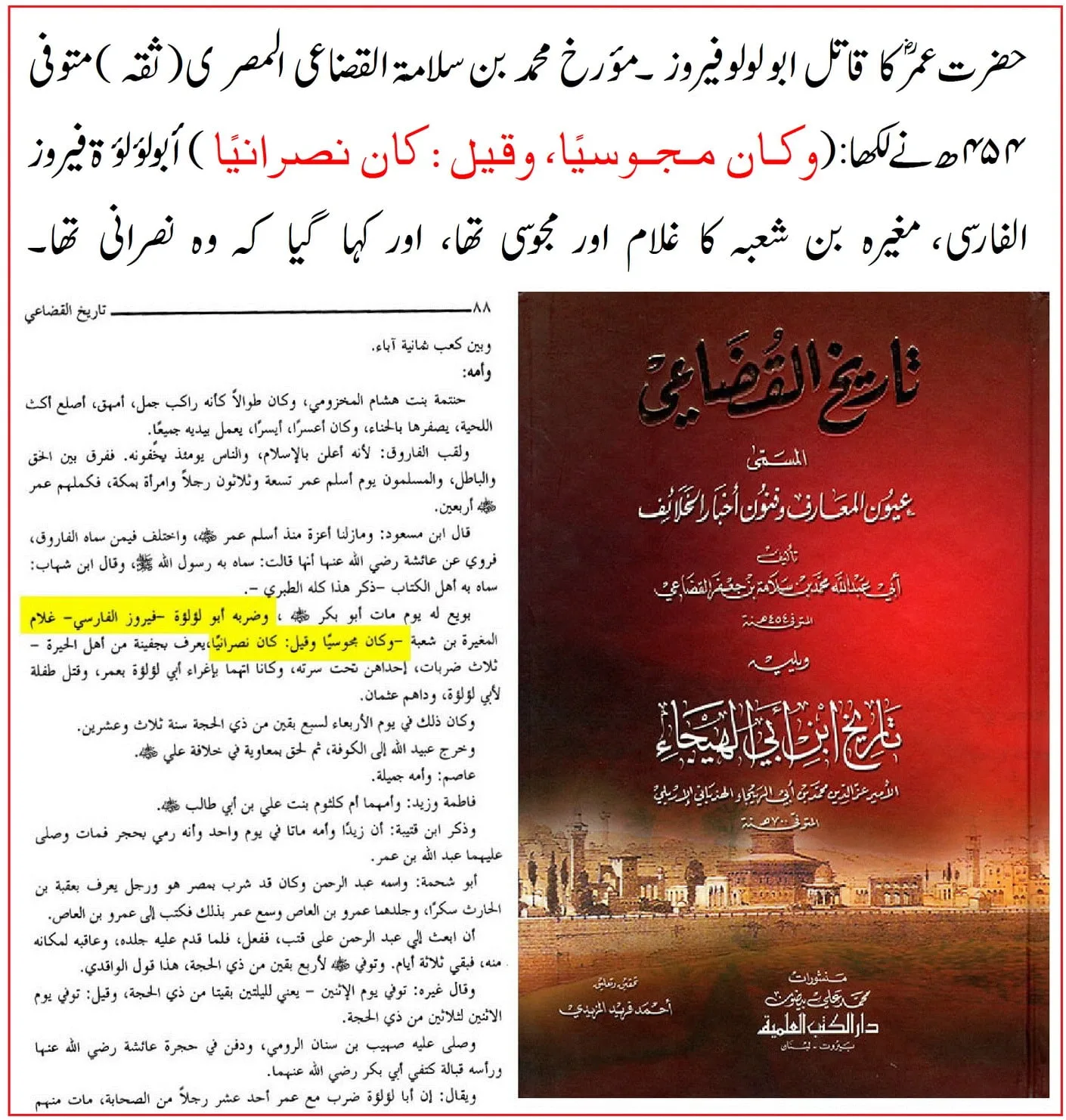
He was struck by Abū Lu’lu’ah Fīrūz the Persian, the slave of al-Mughīrah ibn Shuʿbah. He was a Magian, and it was said that he was a Christian.
Source:
Brief Clarification:
Again, the historical narrative revolves around non-Muslim identity, not a Muslim assassin.
ʿUmar was killed by Abū Lu’lu’ah the Magian.
Source:
Brief Clarification:
A concise yet explicit designation: “al-Majūsī”.
It so happened that he was struck by Abū Lu’lu’ah Fīrūz, Magian in origin… Then (ʿUmar) said: “All praise is due to Allah who did not decree my death at the hands of a man who claimed faith, nor one who ever prostrated to Allah even once.”
Source:
Brief Clarification:
Ibn Kathīr explicitly mentions his Magian origin and transmits ʿUmar’s own words, clearly indicating that the killer did not claim faith and never prostrated to Allah—a strong indication against Islam.
✔ Such expressions are commonly used as general moral exhortations, even to non-Muslims.
✔ The decisive factor is explicit identification, not general advice.
✔ In the very narration cited (by al-Ḥākim), “Ittaqullāh” appears alongside the explicit statement that he was Christian, thereby nullifying this argument entirely.
② No authentic, explicit text establishes that he was Muslim.
③ Inferring Islam solely from phrases like “Ittaqullāh” is methodologically unsound.
④ Attempts to portray him as a “Muslim assassin” rely on selective wording and flawed reasoning.
⑤ The correct approach to historical issues is through clear narrations, multiple sources, and sound principles of evidence, not emotional rhetoric.
The purpose of the present article is to clarify that the claim made by certain Rāfiḍī and misguided individuals—that Abū Lu’lu’ah (Fīrūz), the assassin of Sayyidunā ʿUmar ibn al-Khaṭṭāb رضي الله عنه, was a “Muslim”—is not established according to scholarly and historical standards.
Through primary sources, we will demonstrate that although the scholars of ḥadīth and history differed regarding his religion (Magian / Christian), his being a Muslim is not proven. Furthermore, deriving Islam merely from words such as “Ittaqullāh” (Fear Allah) is a scholarly error, because such expressions are part of general admonition and can also be addressed to non-Muslims.
In conclusion, it will be shown that the correct methodology is to understand historical material through references and principles of evidence, rather than emotional slogans.
The Original Claim and the Point of Dispute
Some people argue that since Sayyidunā ʿUmar رضي الله عنه advised Abū Lu’lu’ah by saying “Ittaqullāh”, therefore he must have been a Muslim. They further allege that Ahl al-Sunnah scholars mislead the masses by portraying him as a “Magian assassin” and concealing the truth.This argument is based on a single phrase from one narration, whereas the determination of religion depends on explicit historical and narrational declarations. Religion is not established merely through words of admonition.
Evidences (Statements of the Imams), One by One
① Imām al-Ḥākim al-Naysābūrī: Abū Lu’lu’ah Described as a Christian
Arabic Text:Translation:قَالَ: كَانَ أَبُو لُؤْلُؤَةَ لِلْمُغِيرَةِ بْنِ شُعْبَةَ … فَقَالَ لَهُ عُمَرُ اتَّقِ اللَّهَ وَأَحْسِنْ إِلَى مَوْلَاكَ … وَكَانَ اسْمُهُ فَيْرُوزَ وَكَانَ نَصْرَانِيًّا
Abū Rāfiʿ said: Abū Lu’lu’ah was a slave of al-Mughīrah ibn Shuʿbah… He met ʿUmar and said: “O Commander of the Faithful! Al-Mughīrah is overburdening me with taxation, so tell him to reduce it.” ʿUmar said: “Fear Allah and treat your master well”… The narrator said: His name was Fīrūz, and he was a Christian.
Source:
Reference: al-Mustadrak ʿala al-Ṣaḥīḥayn – al-Ḥākim al-Naysābūrī, Hadith no. 4512
Brief Clarification:
This narration explicitly states at the end that Abū Lu’lu’ah was Christian, despite the presence of the phrase “Ittaqullāh”. This alone refutes the claim that such wording necessitates Islam.
② Ibn ʿAbd al-Barr: Reports the Disagreement and Explicitly Mentions Christianity
Arabic Text:Translation:فَقَالَ بَعْضُهُمْ: كَانَ مَجُوسِيًّا، وَقَالَ بَعْضُهُمْ: كَانَ نَصْرَانِيًّا … قَالَ: كَانَ أَبُو لُؤْلُؤَةَ أَزْرَقَ نَصْرَانِيًّا
Some said that he was a Magian, and others said that he was a Christian… (from ʿAmr ibn Maymūn) it is said: Abū Lu’lu’ah was blue-eyed and a Christian.
Source:
Reference: al-Istiʿāb fī Maʿrifat al-Aṣḥāb – Ibn ʿAbd al-Barr al-Andalusī
Brief Clarification:
Ibn ʿAbd al-Barr records the difference (Magian / Christian), yet also transmits a clear statement identifying him as Christian. There is no explicit claim of Islam.
③ al-Quḍāʿī (Historian): Magian, with a Secondary View of Christianity
Arabic Text:Translation:ضَرَبَهُ أَبُو لُؤْلُؤَةَ فَيْرُوزُ الْفَارِسِيُّ، غُلَامُ الْمُغِيرَةِ بْنِ شُعْبَةَ، وَكَانَ مَجُوسِيًّا، وَقِيلَ: كَانَ نَصْرَانِيًّا
He was struck by Abū Lu’lu’ah Fīrūz the Persian, the slave of al-Mughīrah ibn Shuʿbah. He was a Magian, and it was said that he was a Christian.
Source:
Reference: Tārīkh al-Quḍāʿī (ʿUyūn al-Maʿārif) – Muḥammad ibn Salamah al-Quḍāʿī (d. 454 AH)
Brief Clarification:
Again, the historical narrative revolves around non-Muslim identity, not a Muslim assassin.
④ Muḥammad ibn Ḥabīb al-Baghdādī: Explicitly Calls Him Magian
Arabic Text:Translation:قَتَلَهُ أَبُو لُؤْلُؤَةَ الْمَجُوسِيُّ
ʿUmar was killed by Abū Lu’lu’ah the Magian.
Source:
Reference: al-Muḥabbar – Muḥammad ibn Ḥabīb al-Hāshimī al-Baghdādī (d. 245 AH)
Brief Clarification:
A concise yet explicit designation: “al-Majūsī”.
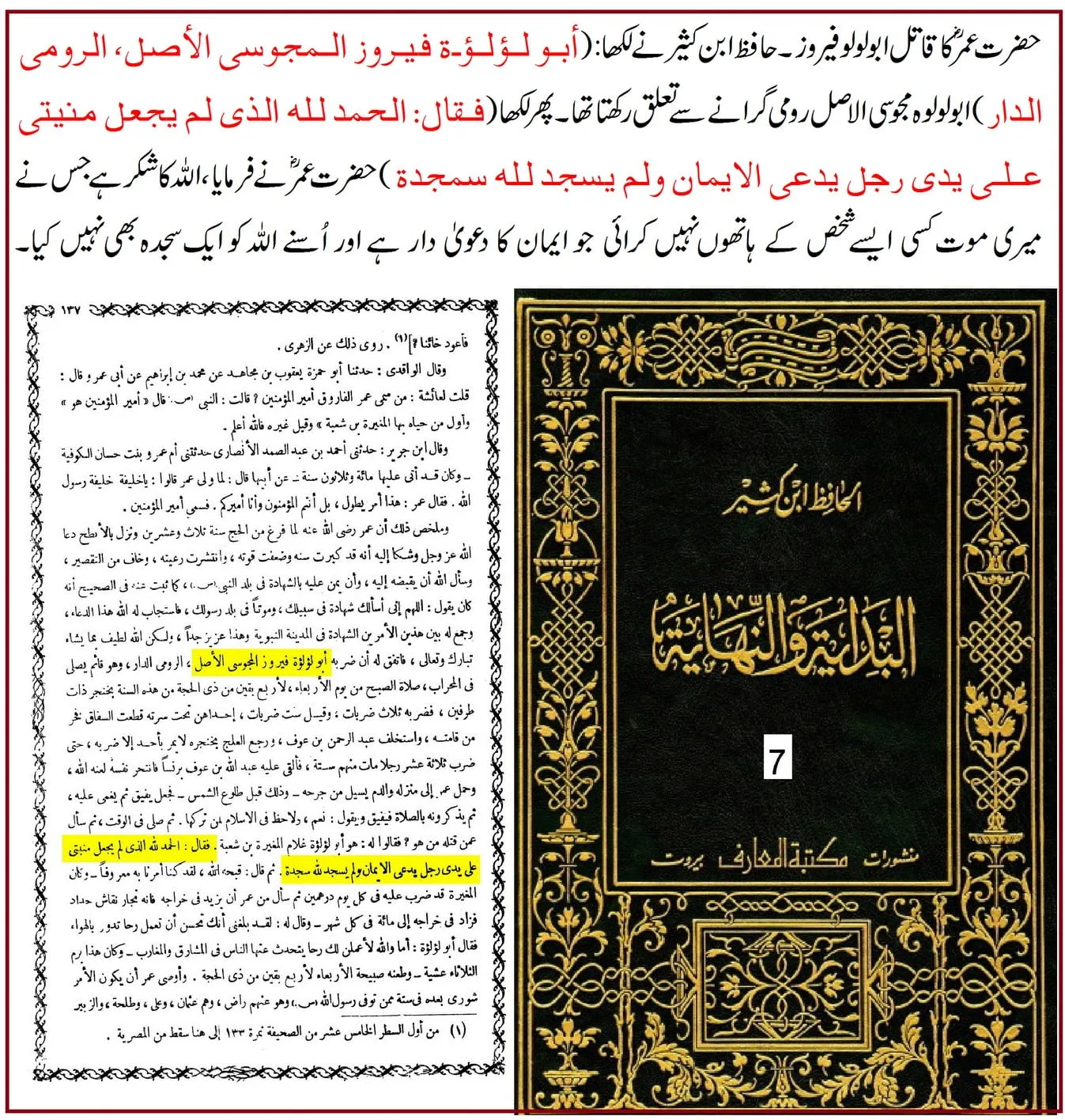
⑤ Ibn Kathīr: Magian in Origin and the Statement of ʿUmar رضي الله عنه
Arabic Text:Translation:فَاتَّفَقَ لَهُ أَنْ ضَرَبَهُ أَبُو لُؤْلُؤَةَ فَيْرُوزُ الْمَجُوسِيُّ الْأَصْلِ … فَقَالَ: الْحَمْدُ لِلَّهِ الَّذِي لَمْ يَجْعَلْ مَنِيَّتِي عَلَى يَدَيْ رَجُلٍ يَدَّعِي الْإِيمَانَ، وَلَمْ يَسْجُدْ لِلَّهِ سَجْدَةً
It so happened that he was struck by Abū Lu’lu’ah Fīrūz, Magian in origin… Then (ʿUmar) said: “All praise is due to Allah who did not decree my death at the hands of a man who claimed faith, nor one who ever prostrated to Allah even once.”
Source:
Reference: al-Bidāyah wa al-Nihāyah – Ibn Kathīr
Brief Clarification:
Ibn Kathīr explicitly mentions his Magian origin and transmits ʿUmar’s own words, clearly indicating that the killer did not claim faith and never prostrated to Allah—a strong indication against Islam.
Why Deriving Islam from “Ittaqullāh” Is Incorrect
The core fallacy in this debate is assuming that the phrase “Ittaqullāh” automatically proves that the addressee was Muslim. However:✔ Such expressions are commonly used as general moral exhortations, even to non-Muslims.
✔ The decisive factor is explicit identification, not general advice.
✔ In the very narration cited (by al-Ḥākim), “Ittaqullāh” appears alongside the explicit statement that he was Christian, thereby nullifying this argument entirely.
Conclusion
① Classical scholars and historians explicitly describe Abū Lu’lu’ah (Fīrūz) as Magian or Christian.② No authentic, explicit text establishes that he was Muslim.
③ Inferring Islam solely from phrases like “Ittaqullāh” is methodologically unsound.
④ Attempts to portray him as a “Muslim assassin” rely on selective wording and flawed reasoning.
⑤ The correct approach to historical issues is through clear narrations, multiple sources, and sound principles of evidence, not emotional rhetoric.

