Compiled by: Abu Hamza Salafi
Muhammad bin Humaid Al-Razi, Abu Abdullah Al-Tamimi, is among those narrators about whom the scholars of Jarh and Ta'dil have used very harsh words. Some scholars have not only called him weak but have also described him with terms such as "liar," "abandoned," "frequent fabricator," "not trustworthy," and "not to be relied upon in his narration." For this reason, his unique narrations, especially those from which major theological, historical, or jurisprudential claims are derived, are considered highly questionable by the Ahl al-Hadith. The purpose of this article is to clarify that the criticisms regarding Muhammad bin Humaid Al-Razi are not limited to just one or two scholars but that many earlier and later scholars have pointed to his weakness, faults, and falsehood with various expressions. The following lines compile these statements to present a well-organized scholarly picture.
A Brief Introduction to Muhammad bin Humaid Al-Razi
Muhammad bin Humaid bin Hayan al-Razi, Abu Abdullah al-Tamimi, was from Ahl-e-Ray. Many people narrated from him, and some narrations were also transmitted from prominent names, but the majority of critics held a strict stance regarding his narrations. This is why, despite a few statements of authentication about him, the overall critical corpus leans towards his weakness, even severe weakness. Later scholars also adopted the same approach that when multiple testimonies of lying, abandonment, and negative traits accumulate against a narrator, his solitary narrations are not trusted.
❶ Criticism of Imam Jawzjani (may Allah have mercy on him)
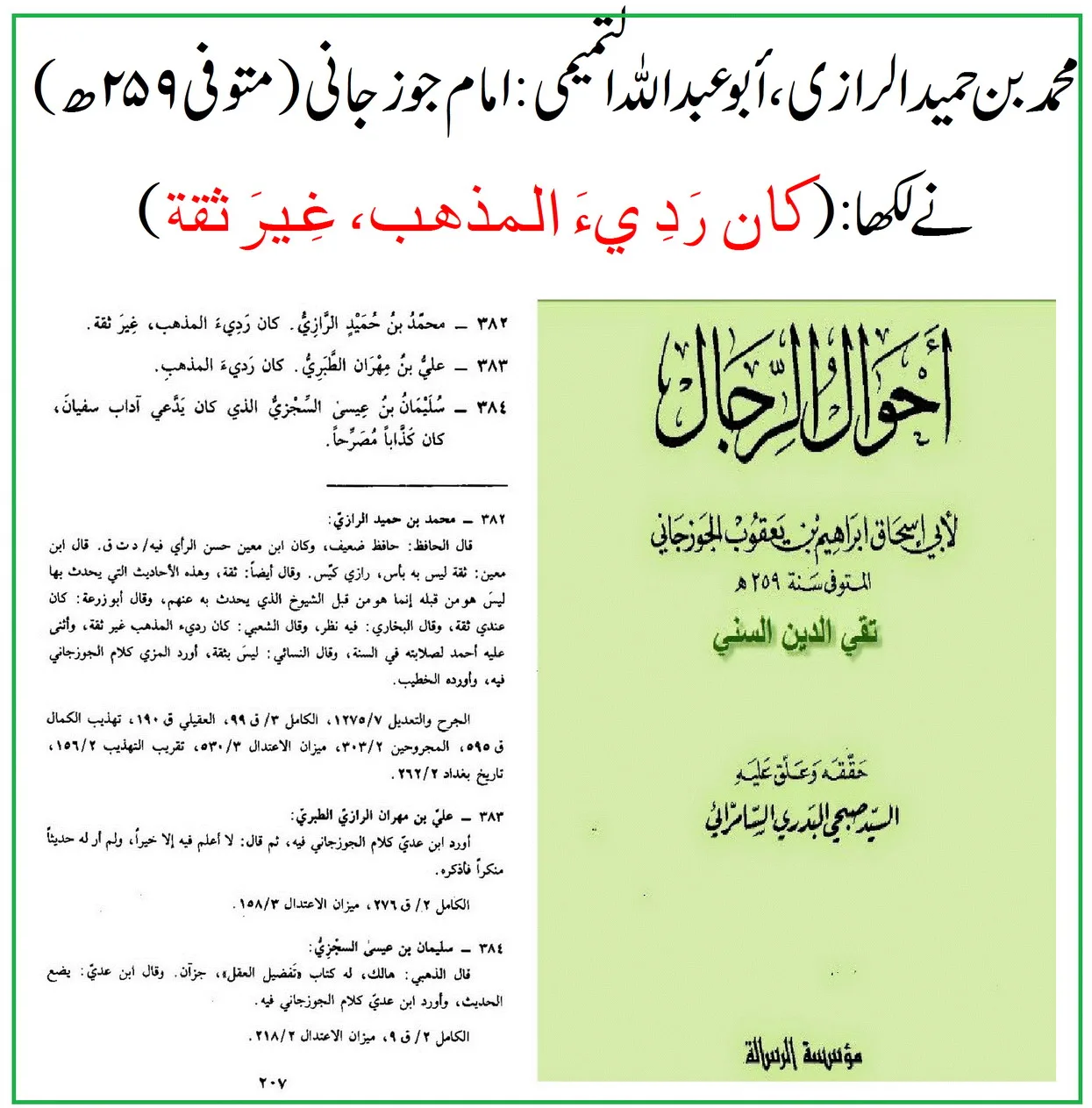
Imam Jawzjani (may Allah have mercy on him) wrote:
محمد بن حميد الرازي كان رديء المذهب غير ثقة
Translation:
Muhammad bin Humaid al-Razi was of corrupt belief and unreliable.
Reference: Al-Kitab: Ahwal al-Rijal
Author: Imam al-Jawzjani (died: 259 AH)
Author: Imam al-Jawzjani (died: 259 AH)
Brief Explanation:
"Unreliable" is a very clear term of criticism. Imam Jawzjani (may Allah have mercy on him) did not only comment on his religious inclination but outright denied his trustworthiness.
❷ Ruling of Hafiz Ibn Hajar (may Allah have mercy on him)
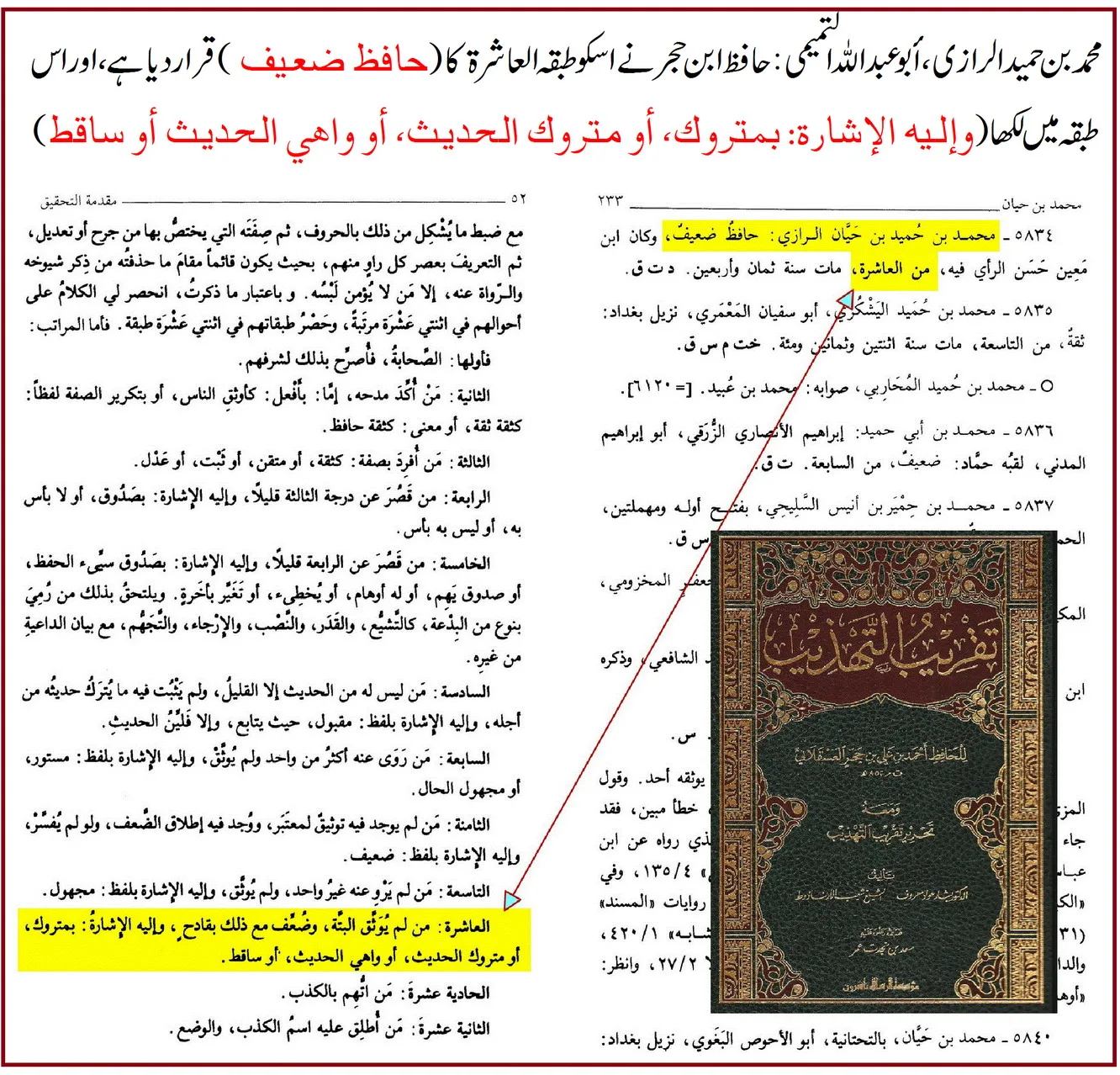
Hafiz Ibn Hajar (may Allah have mercy on him) wrote:
محمد ابن حميد ابن حيان الرازي حافظ ضعيف وكان ابن معين حسن الرأي فيه من العاشرة
Translation:
Muhammad bin Humaid bin Hayan al-Razi was a Hafiz, but weak, and Ibn Ma'in’s good opinion about him is reported. He is from the Tabi‘un generation.
Reference: Al-Kitab: Taqreeb al-Tahdheeb
Author: Ahmad bin Ali bin Hajar al-Asqalani (d. 852 AH)
Author: Ahmad bin Ali bin Hajar al-Asqalani (d. 852 AH)
Brief Explanation:
Hafiz Ibn Hajar explicitly used the word "weak" for him. This indicates that after overall scrutiny, he was not considered reliable.
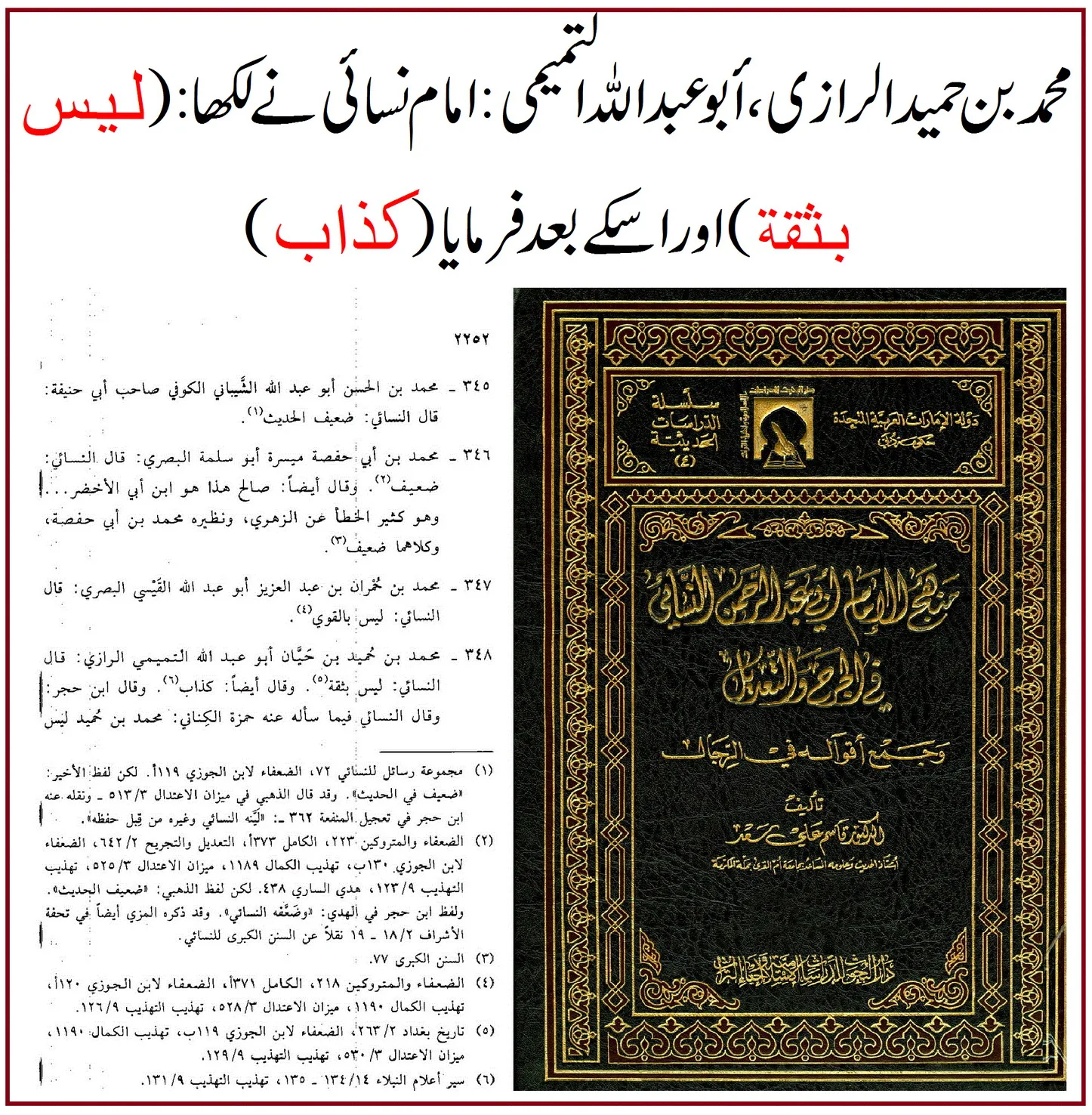
❸ Imam Nasai’s Severe Criticism
It is reported from Imam Nasai:
ليس بثقة
And elsewhere:
كذاب
Translation:
He is not trustworthy.
And in another expression: He is a liar.
Reference: References of criticism from Imam Nasai as found in the books of Rijal
Brief Explanation:
Imam Nasai’s criticism is always considered weighty. Both expressions "ليس بثقة" (not trustworthy) and "كذاب" (liar) are very severe judgments about this narrator.
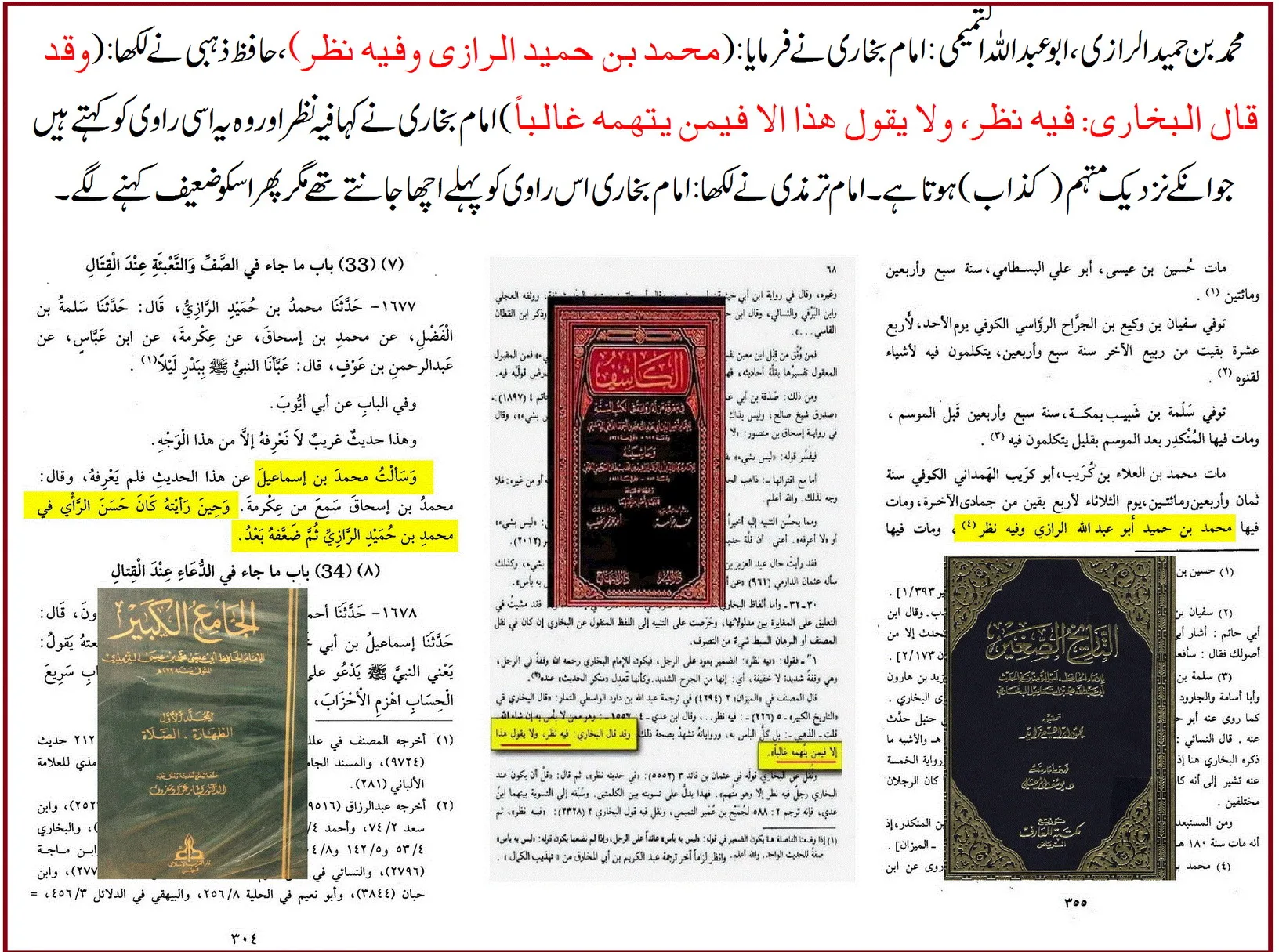
❹ Imam Bukhari’s “Fihi Nazar”
Imam Bukhari said:
وفيه نظر
Translation:
There is doubt in him.
Reference: Al-Kitab: Al-Tarikh al-Saghir
Author: Muhammad bin Ismail al-Bukhari (d. 256 AH)
Author: Muhammad bin Ismail al-Bukhari (d. 256 AH)
Brief Explanation:
Imam Bukhari’s phrase “فيه نظر” is not a general statement but is considered a severe criticism. That is why the hadith scholars have understood it not merely as a slight weakness but as an indication of strong disparagement.
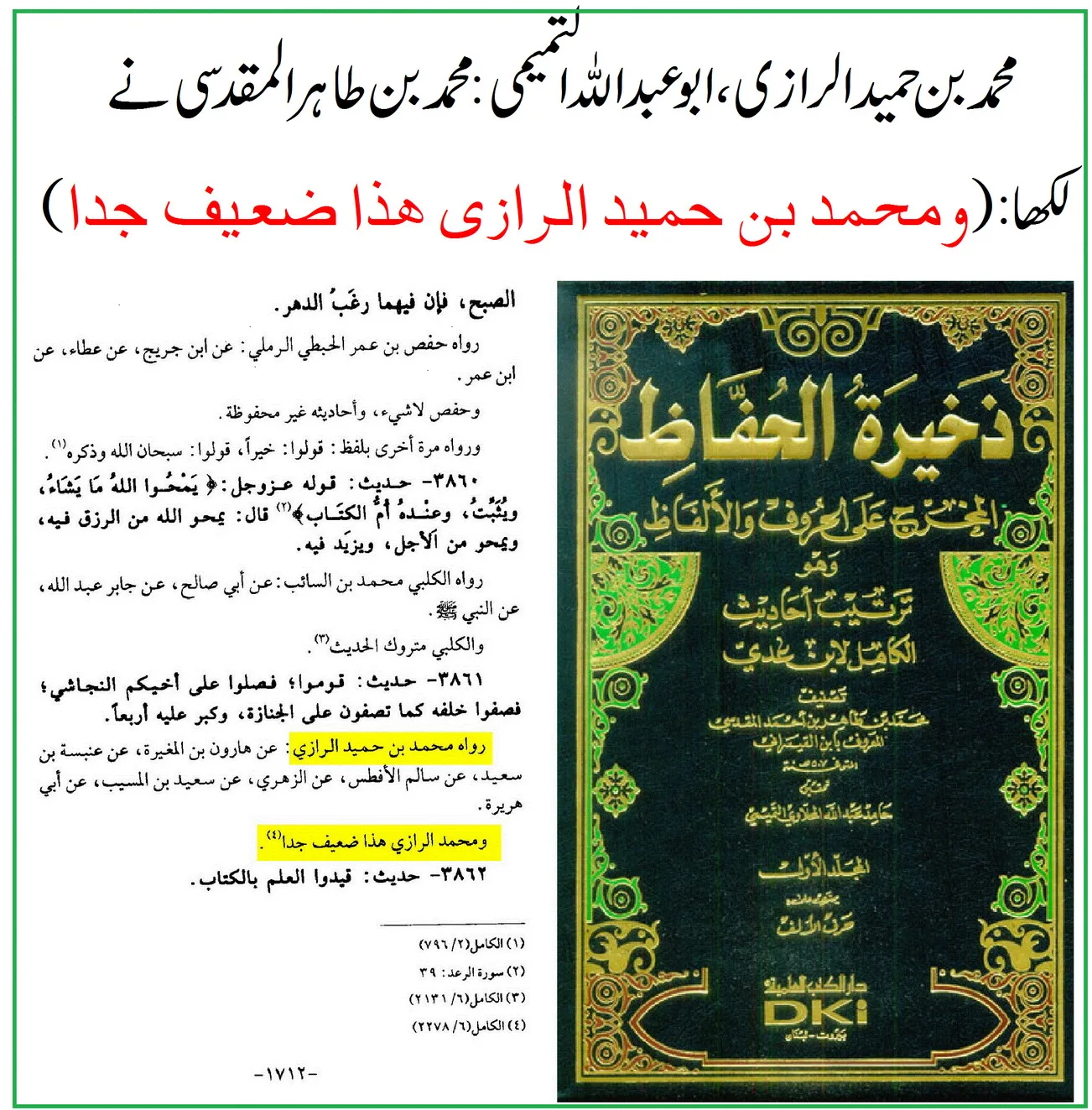
❺ Explanation by Ibn al-Qaisarani
Muhammad bin Tahir Ibn al-Qaisarani wrote:
ومحمد الرازي هذا ضعيف جدا
Translation:
This Muhammad al-Razi is very weak.
Reference: Al-Kitab: Dhakirat al-Huffaz
Author: Muhammad bin Tahir Ibn al-Qaisarani (d. 507 AH)
Author: Muhammad bin Tahir Ibn al-Qaisarani (d. 507 AH)
Brief Explanation:
“Very weak” means the weakness is not minor but of a severe nature, and the unique narration of such a narrator is not accepted.
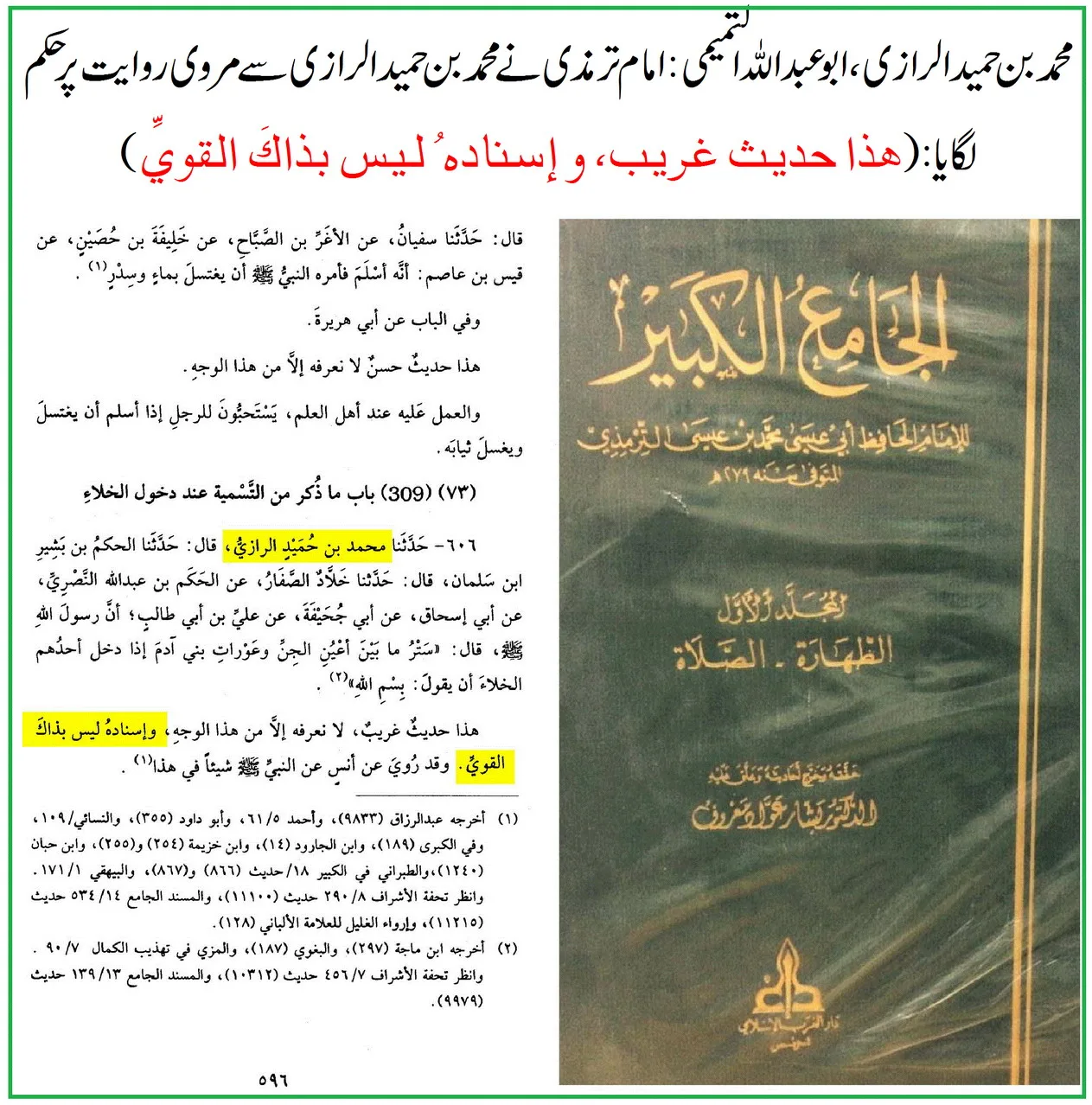
❻ Practical Ruling of Imam Tirmidhi
Imam Tirmidhi said about a unique narration of Muhammad bin Humayd:
هذا حديث غريب، لا نعرفه إلا من هذا الوجه، وإسناده ليس بذاك القوي
Translation:
This hadith is strange; we only know it through this chain, and its chain is not very strong.
Reference: Al-Kitab: Al-Jami' al-Kabir - Sunan al-Tirmidhi
Author: Muhammad bin Isa al-Tirmidhi (d. 279 AH)
Author: Muhammad bin Isa al-Tirmidhi (d. 279 AH)
Brief Explanation:
Imam Tirmidhi calling the chains not strong is evidence that the narration of Muhammad bin Humayd did not reach the level of reliability in his view.
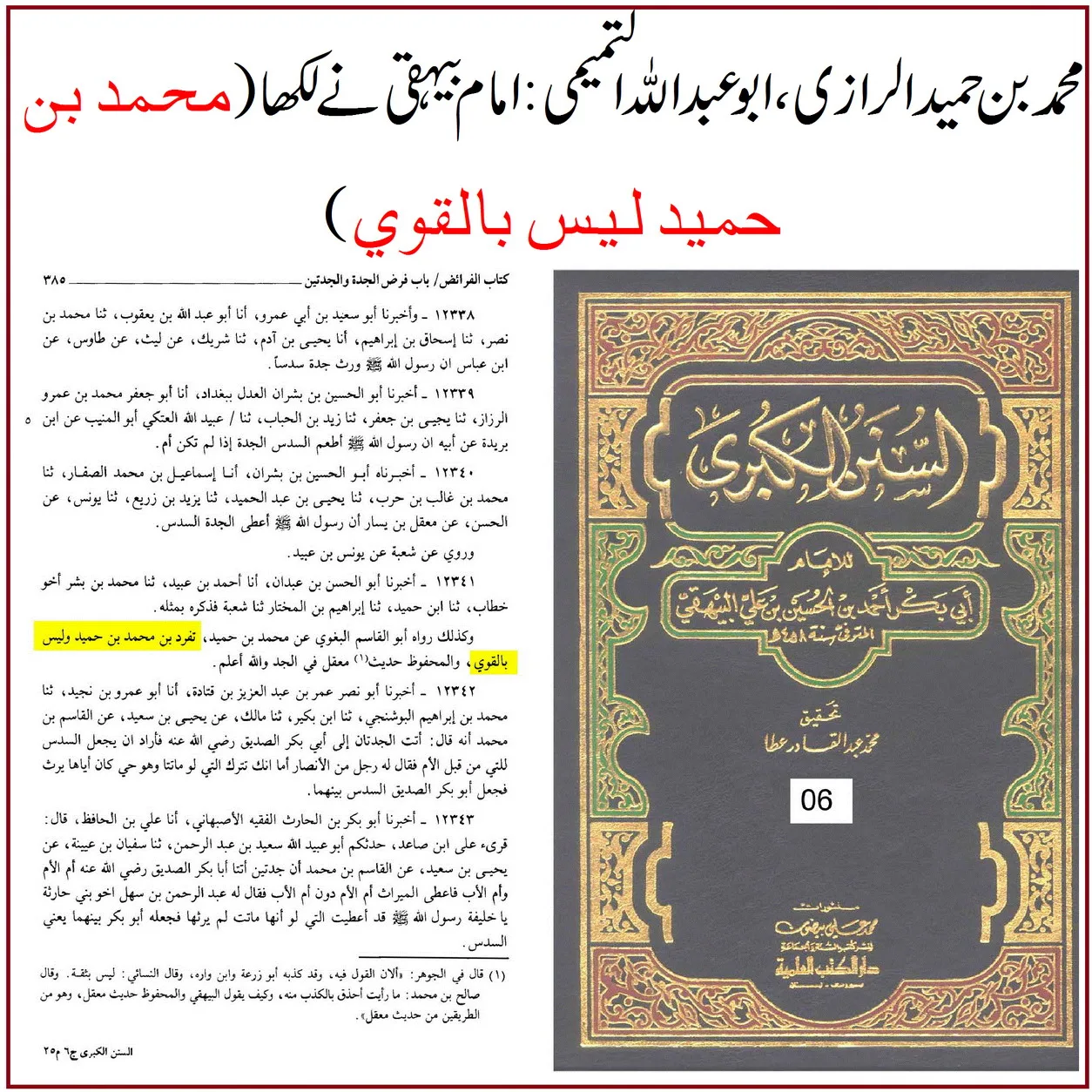
❼ Criticism by Imam Bayhaqi
Imam Bayhaqi said:
تفرد به محمد بن حميد وليس بالقوي
Translation:
It has been uniquely narrated by Muhammad bin Humaid, and he is not strong.
Reference: Al-Kitab: Al-Sunan Al-Kubra
Author: Ahmad bin Al-Husayn Al-Bayhaqi (d. 458 AH)
Author: Ahmad bin Al-Husayn Al-Bayhaqi (d. 458 AH)
Brief Explanation:
Here two things have come together: uniqueness and the narrator is not strong. In such a case, the weakness of the narration increases further.
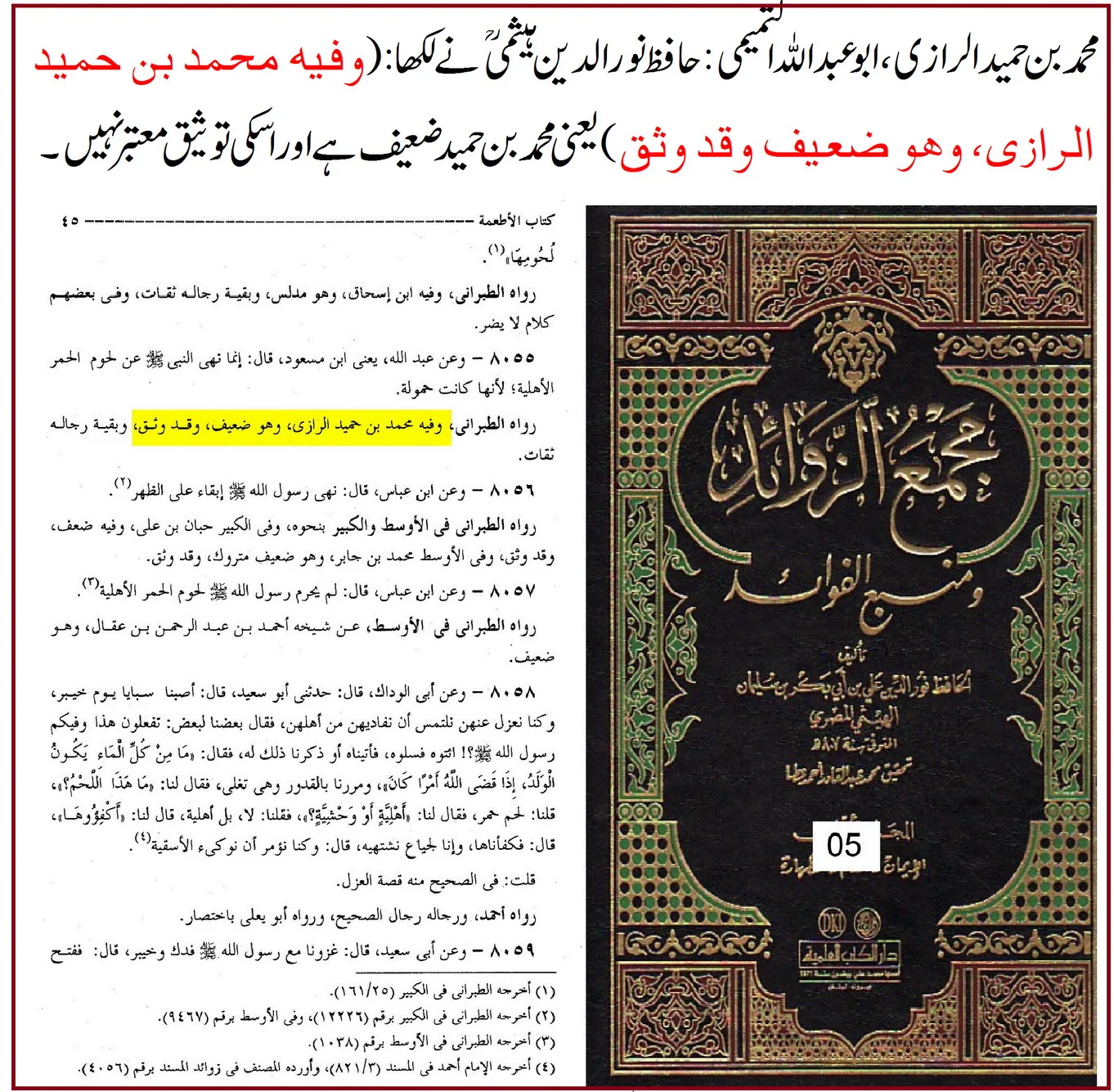
❽ Hafiz Haithami’s Commentary
Hafiz Haithami wrote:
وفيه محمد بن حميد الرازي، وهو ضعيف، وقد وثق
Translation:
In this chain is Muhammad bin Humaid Al-Razi, and he is weak, although he has also been authenticated.
Reference: Al-Kitab: Majma' Al-Zawa'id wa Manba' Al-Fawa'id
Author: Nur al-Din Al-Haythami (d. 807 AH)
Author: Nur al-Din Al-Haythami (d. 807 AH)
Brief Explanation:
This statement is very balanced. Despite mentioning the statements of authentication, Hafiz Haithami maintained the prevailing ruling of "weak."
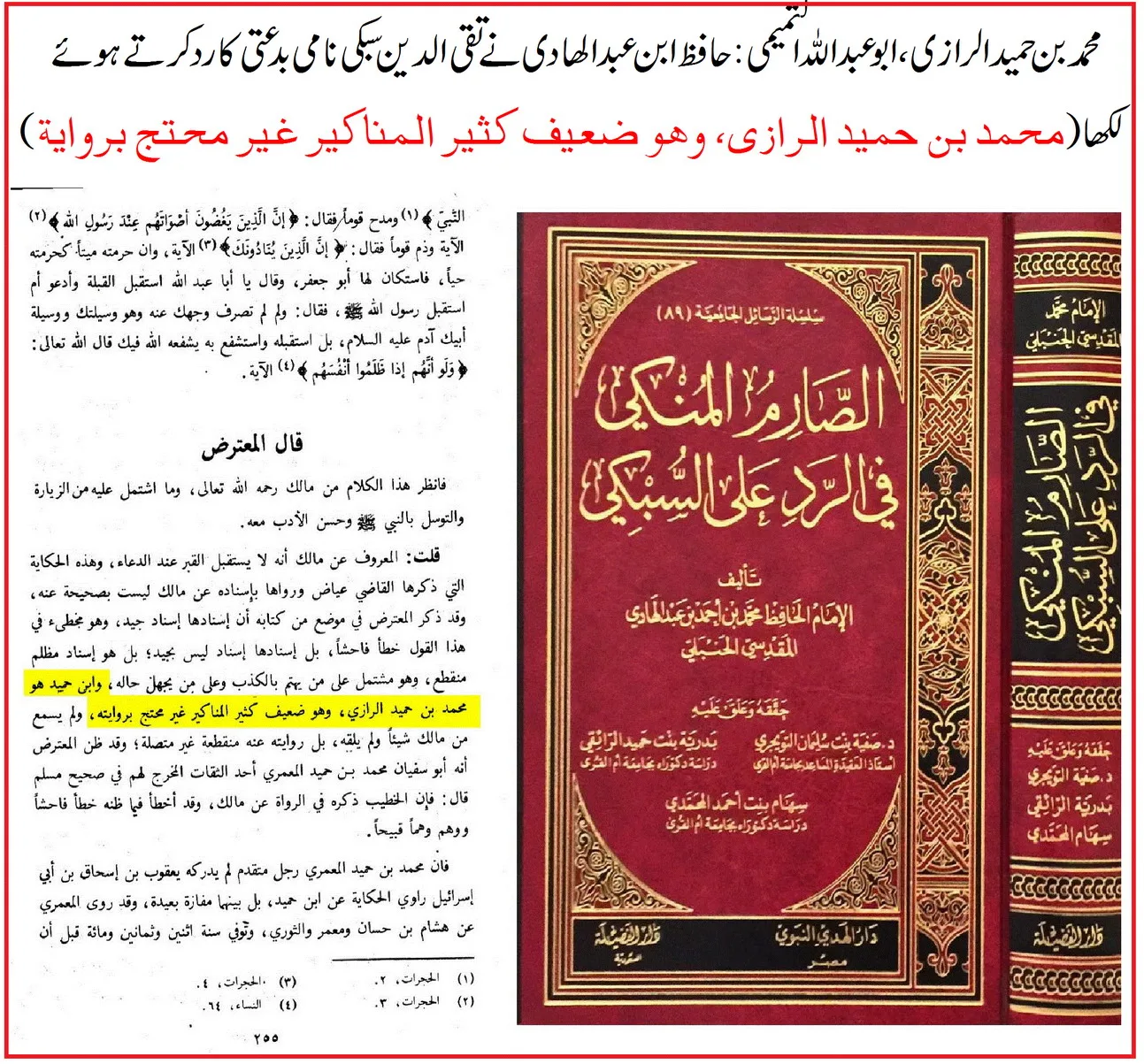
❾ Hafiz Ibn Abdul Hadi’s Explicit Criticism
Hafiz Ibn Abdul Hadi wrote:
وابن حميد هو محمد بن حميد الرازي، وهو ضعيف كثير المناكير غير محتج بروايته
Translation:
The Ibn Humaid referred to is Muhammad bin Humaid Al-Razi, and he is weak, narrates many rejected reports, and his narration is not taken as proof.
Reference: Al-Kitab: Al-Sarim Al-Munki fi Al-Radd 'ala Al-Subki
Author: Yusuf bin Hasan bin Abdul Hadi (d. 744 AH)
Author: Yusuf bin Hasan bin Abdul Hadi (d. 744 AH)
Brief Explanation:
This text holds special importance because it not only mentions weakness but also ends the authority by saying "غير محتج بروايته" (not to be acted upon based on his narration).
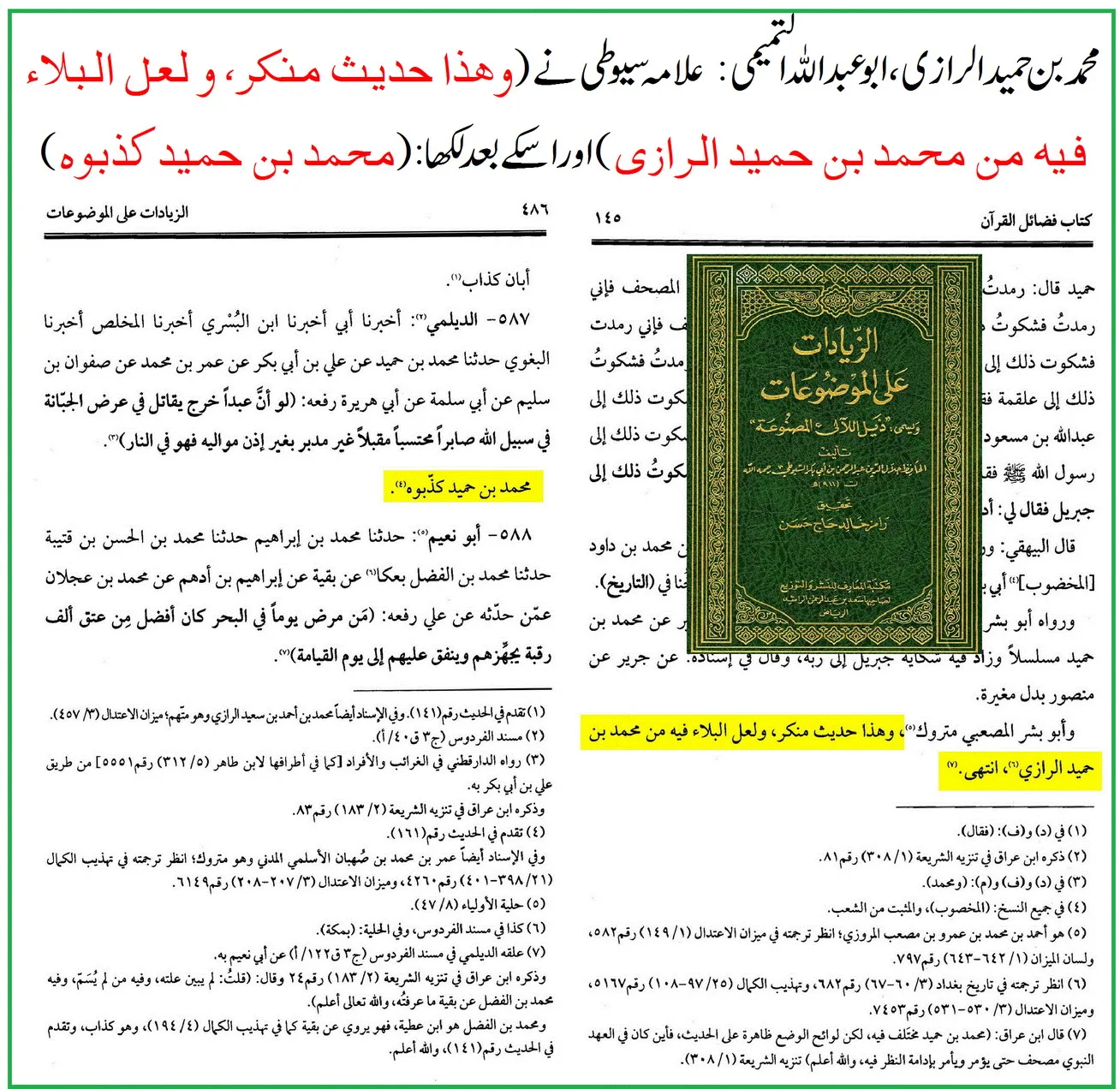
❿ Al-Allama Suyuti’s (may Allah have mercy on him) Ruling
Al-Allama Suyuti (may Allah have mercy on him) wrote:
وهذا حديث منكر، ولعل البلاء فيه من محمد بن حميد الرازي
And elsewhere:
محمد بن حميد كذبوه
Translation:
This hadith is rejected, and its defect is probably due to Muhammad bin Humaid Al-Razi.
And elsewhere: People have declared him a liar.
Reference: Book: Al-Ziyadat ‘ala Al-Mawdu‘at
Author: Jalaluddin Al-Suyuti (d. 911 AH)
Author: Jalaluddin Al-Suyuti (d. 911 AH)
Brief Explanation:
Suyuti (may Allah have mercy on him) also attributed the reason for the hadith being rejected to this narrator and also reported criticism of his truthfulness. This is a strong indication of severe distrust.
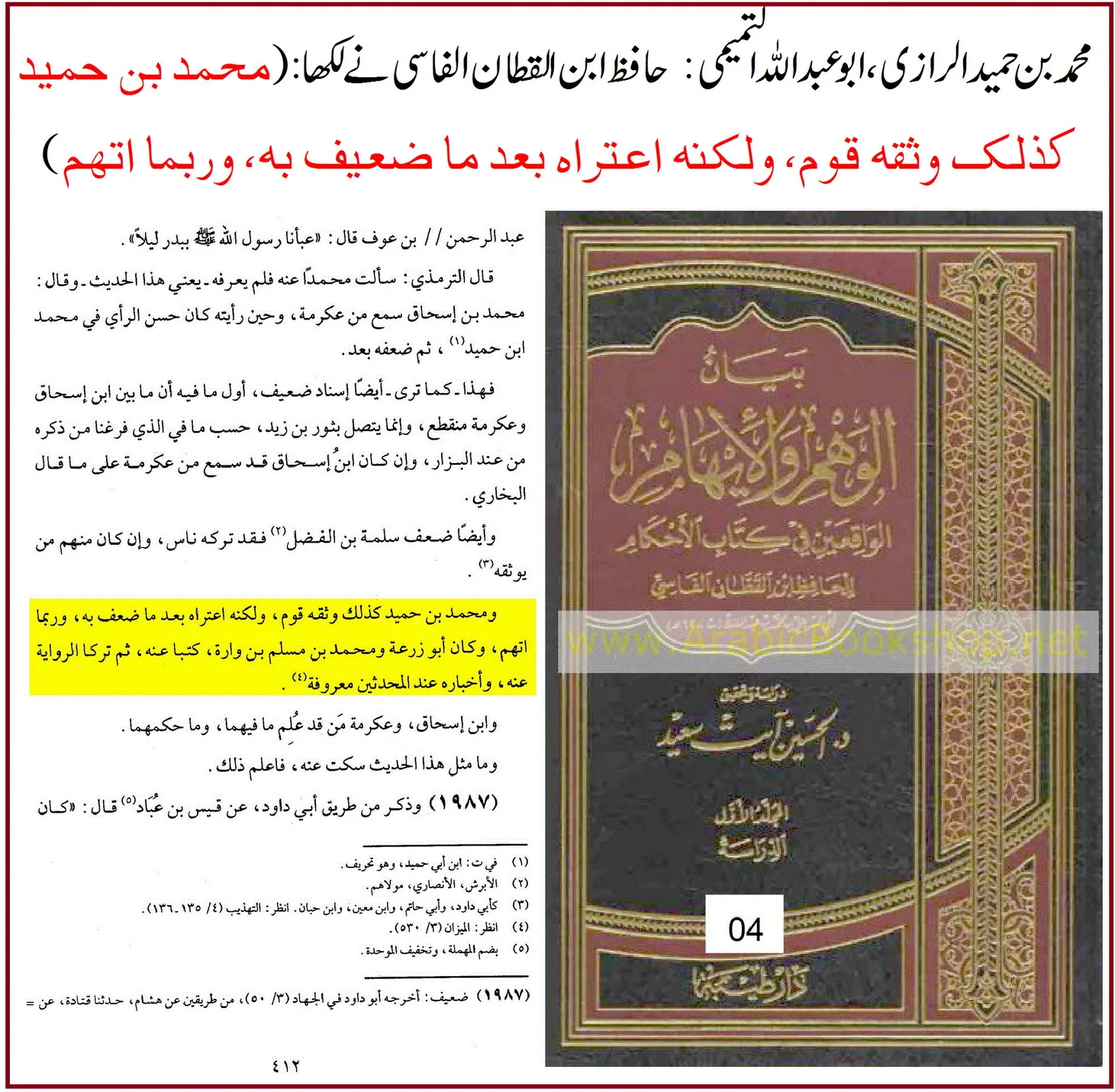
⓫ Ibn Al-Qattan Al-Fasi’s (may Allah have mercy on him) Warning
Ibn Al-Qattan Al-Fasi (may Allah have mercy on him) wrote:
ومحمد بن حميد كذلك وثقه قوم، ولكنه اعتراه بعد ما ضعف به، وربما اتهم، وكان أبو زرعة ومحمد بن مسلم بن وارة كتبا عنه، ثم تركا الرواية عنه، وأخباره عند المحدثين معروفة
Translation:
Some people did authenticate Muhammad bin Humaid, but later on, things befell him that made him weak, and in fact, he was sometimes accused. Abu Zur‘ah and Muhammad bin Muslim bin Warah wrote to him, then abandoned narrating from him, and his condition is well known among the hadith scholars.
Reference: Book: Clarification of Illusion and Deception in the Book of Rulings
Author: Ibn al-Qattan al-Fasi (d. 628 AH)
Author: Ibn al-Qattan al-Fasi (d. 628 AH)
Brief Explanation:
This excerpt is very important because it combines both the transmitted authentication and the subsequent severe criticism of this narrator, and in the end, the overall method of criticism is preferred.
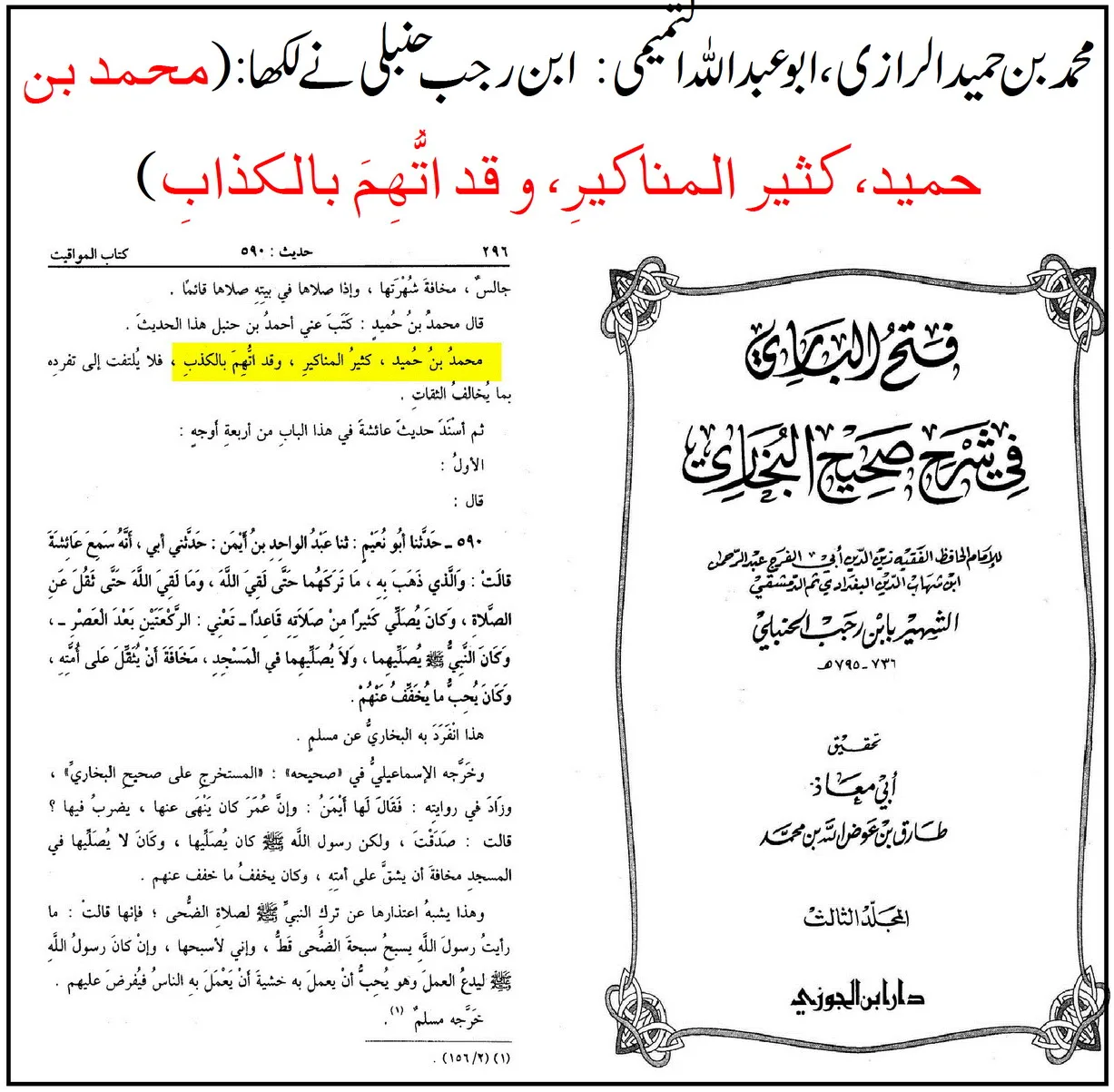
⓬ Ibn Rajab’s (may Allah have mercy on him) Verdict
Ibn Rajab wrote:
محمد بن حميد، كثير المناكير، وقد اتهم بالكذب، فلا يلتفت إلى تفرده بما يخالف الثقات
Translation:
Muhammad ibn Humayd narrates many weak traditions, and he has also been accused of lying; therefore, when he reports a solitary narration against trustworthy narrators, it will not be given attention.
Reference: Book: Fath al-Bari
Author: Ibn Rajab al-Hanbali (d. 795 AH)
Author: Ibn Rajab al-Hanbali (d. 795 AH)
Brief Explanation:
This is a fundamental statement. The solitary narration of such a narrator, especially when it is against trustworthy narrators, is not accepted.
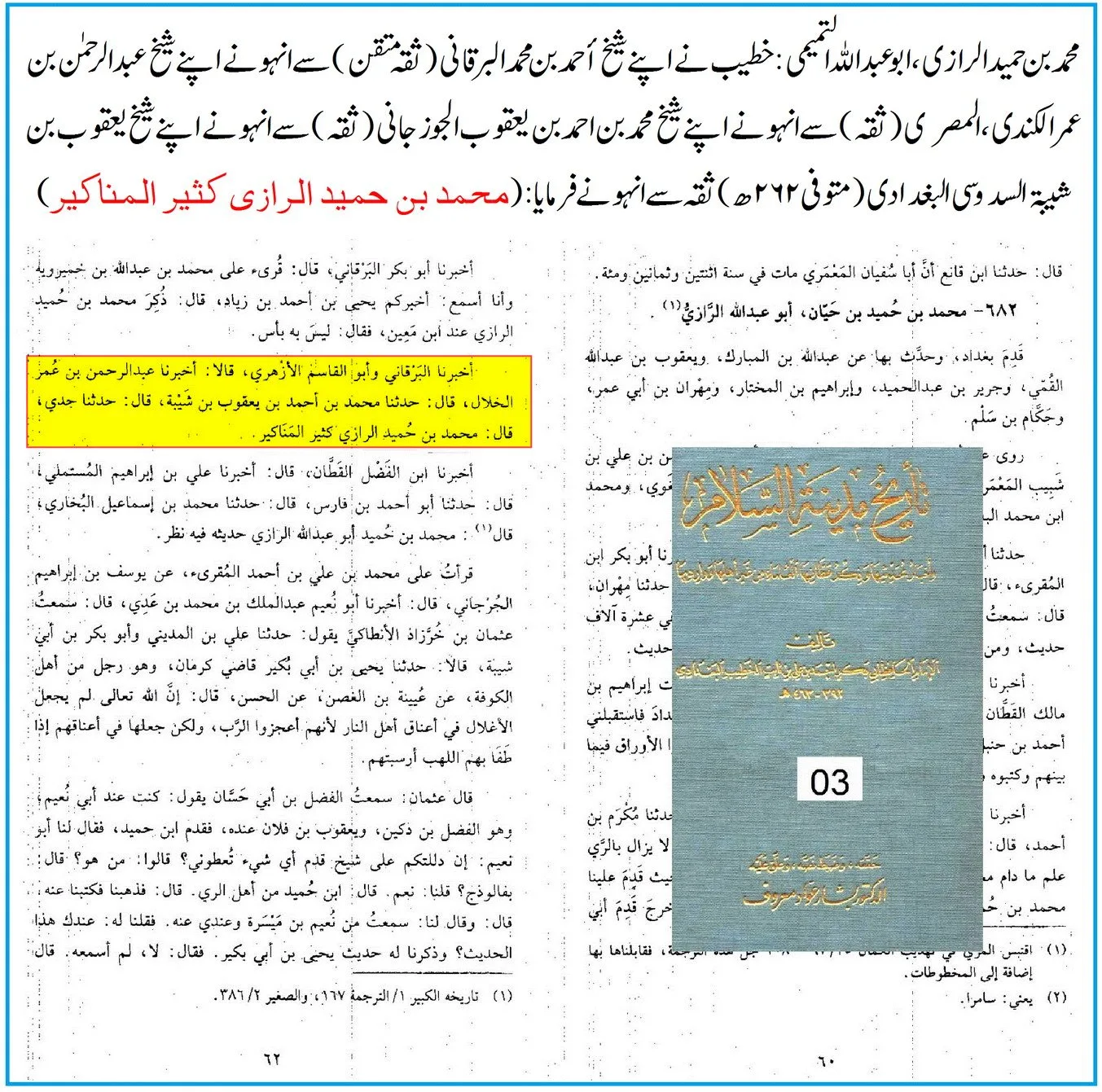
⓭ Criticism of Ya'qub ibn Shaybah (may Allah have mercy on him)
Ya'qub ibn Shaybah said:
محمد بن حميد الرازي كثير المناكير
Translation:
Muhammad ibn Humayd al-Razi narrates many weak traditions.
Reference: Book: History of Baghdad
From Ya'qub ibn Shaybah al-Sudusi (d. 262 AH)
From Ya'qub ibn Shaybah al-Sudusi (d. 262 AH)
Brief Explanation:
“Kathir al-Munakirat” (one who narrates many weak traditions) is a criticism that indicates a general lack of trust in the narrator’s overall narrations.
⓮ Position of Ibn Warahؒ
It is narrated from Muhammad bin Muslim bin Warahؒ that he declared Muhammad bin Humaid as abandoned.
Translation:
This means that according to the hadith scholars, his narration was abandoned and not trusted.
Reference: Naql-e Jarh as mentioned in the books of Rijal
Brief Explanation:
An "abandoned" narrator is one whose weakness reaches such a level that his narration is not considered reliable.
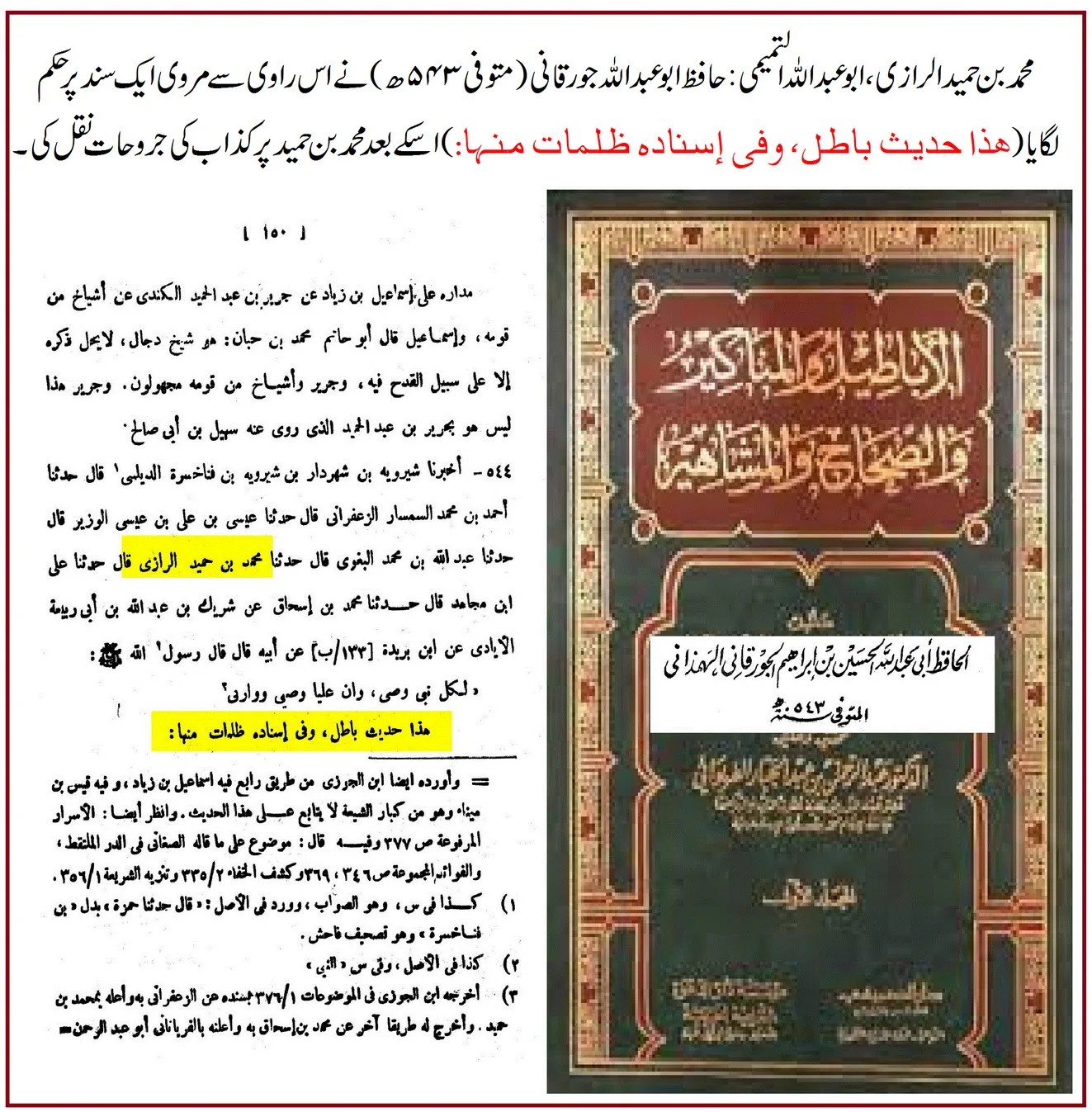
⓯ Ruling of Abu Abdullah al-Jurqaniؒ
Abu Abdullah al-Jurqaniؒ wrote about a narration:
هذا حديث باطل، وفي إسناده ظلمات منها محمد بن حميد الرازي
Translation:
This hadith is false, and there are many obscurities in its chain, among which is Muhammad bin Humaid al-Razi.
Reference: Al-Kitab: Al-Abatil wal-Manakheer was-Sihah wal-Mashahir
Author: Abu Abdullah al-Jurqani (d. 543 AH)
Author: Abu Abdullah al-Jurqani (d. 543 AH)
Brief Explanation:
This is a very severe ruling. Calling a narration "false" and then including Muhammad bin Humaid among the obscurities of the chain clearly indicates his severe weakness.
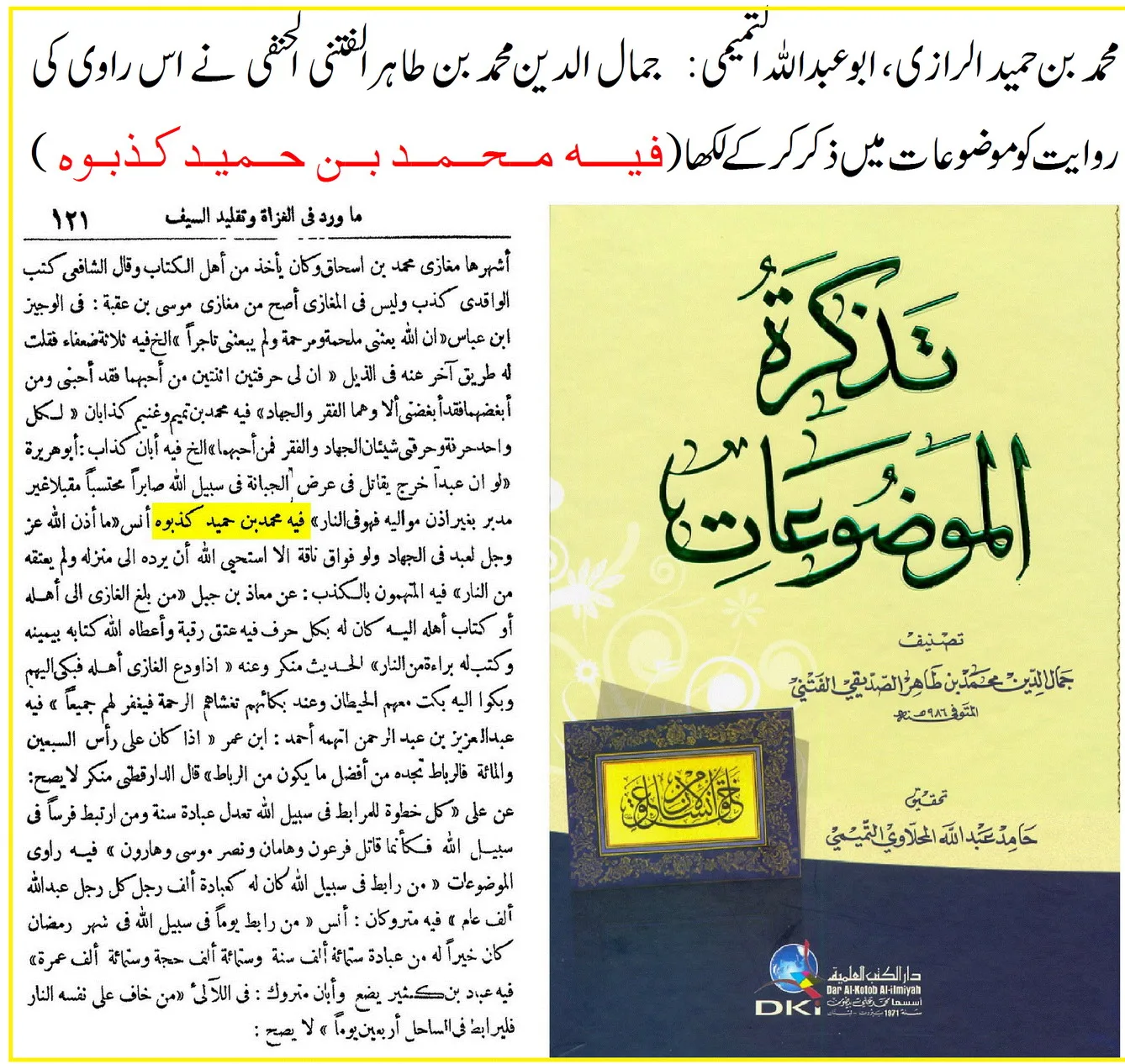
⓰ Ruling of Fataniؒ
Jamal al-Din al-Fataniؒ wrote:
وفيه محمد بن حميد كذبه
Translation:
It includes Muhammad bin Humaid, who has been called a liar.
Reference: Al-Kitab: Tadhkirat al-Mawdu'at
Author: Muhammad Tahir al-Fatani (d. 986 AH)
Author: Muhammad Tahir al-Fatani (d. 986 AH)
Brief Explanation:
In the book of fabricated narrations, mentioning “كذبه” alongside a narrator indicates that he is highly suspicious in the category of fabricated or false narrations.
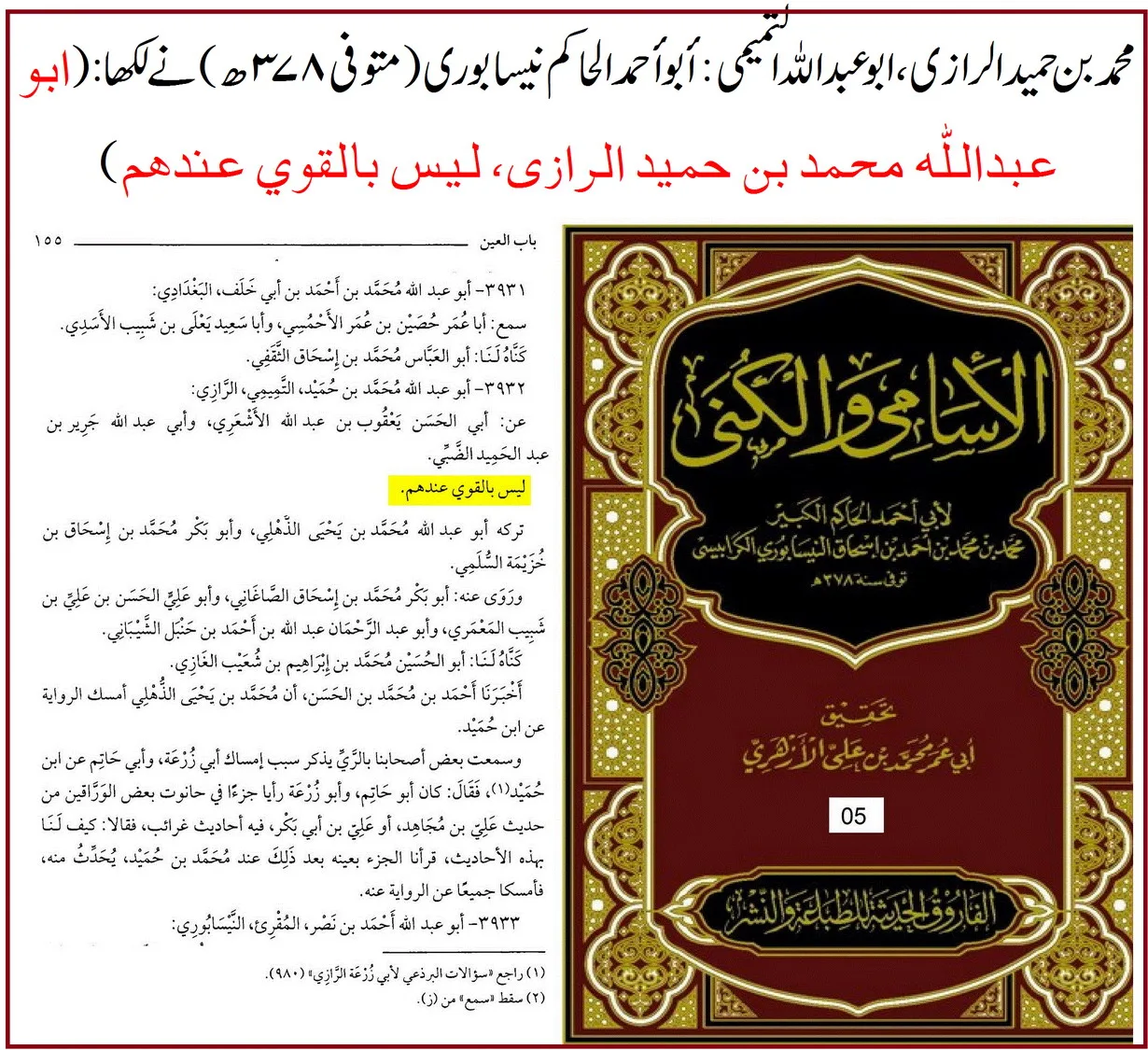
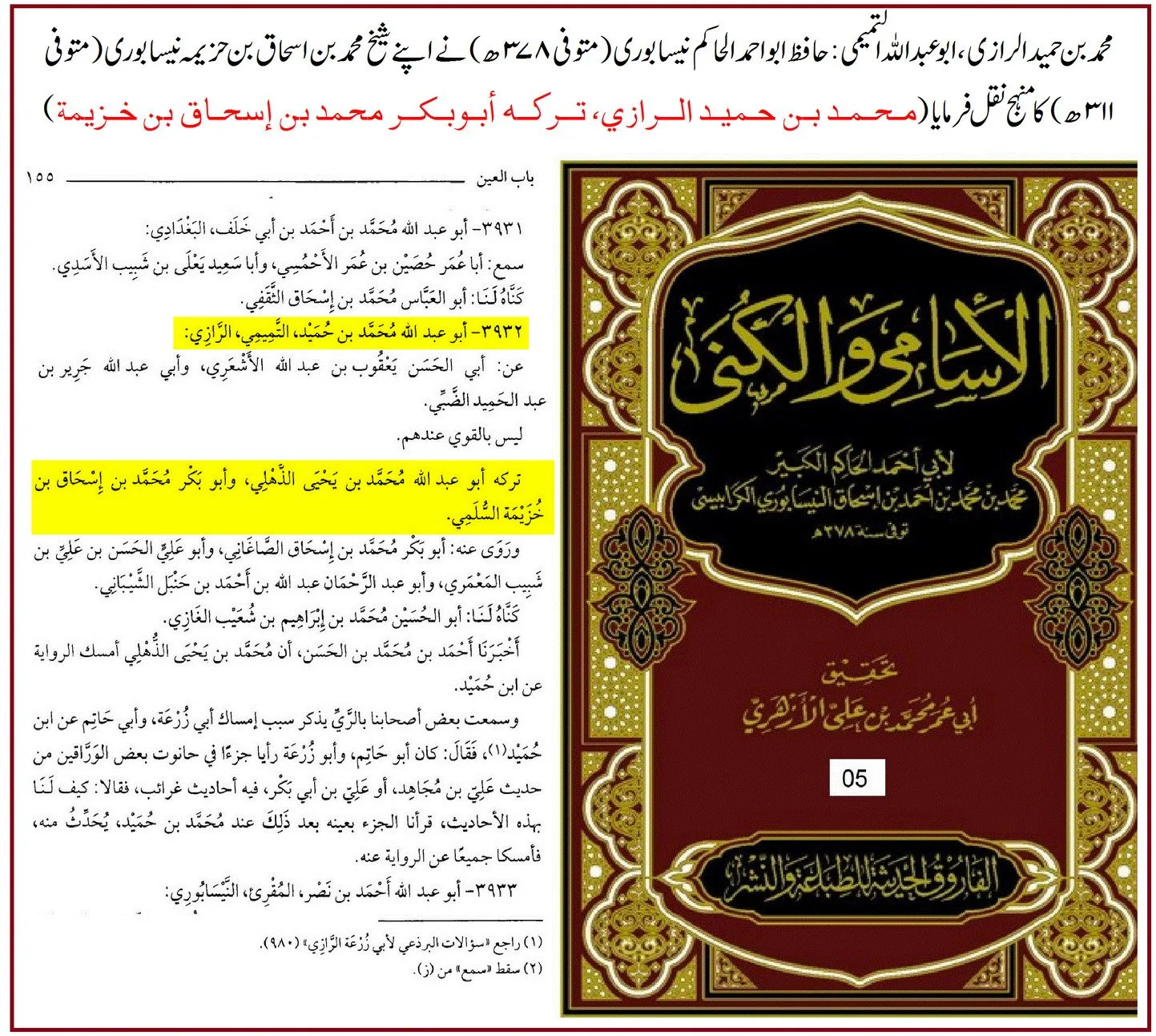
⓱ Criticism of Abu Ahmad Al-Hakimؒ
Abu Ahmad Al-Nisaburi Al-Hakimؒ wrote:
أبو عبد الله محمد بن حميد التميمي الرازي ... ليس بالقوي عندهم
Translation:
Abu Abdullah Muhammad bin Humaid Al-Tamimi Al-Razi is not strong according to him.
Reference: Book: Al-Asami wal-Kuna
Author: Abu Ahmad Al-Hakim Al-Nisaburi (d. 378 AH)
Author: Abu Ahmad Al-Hakim Al-Nisaburi (d. 378 AH)
Brief Explanation:
“ليس بالقوي” (not strong) is also a well-known term of criticism, and this opinion appears to be predominant in the overall collection of statements.
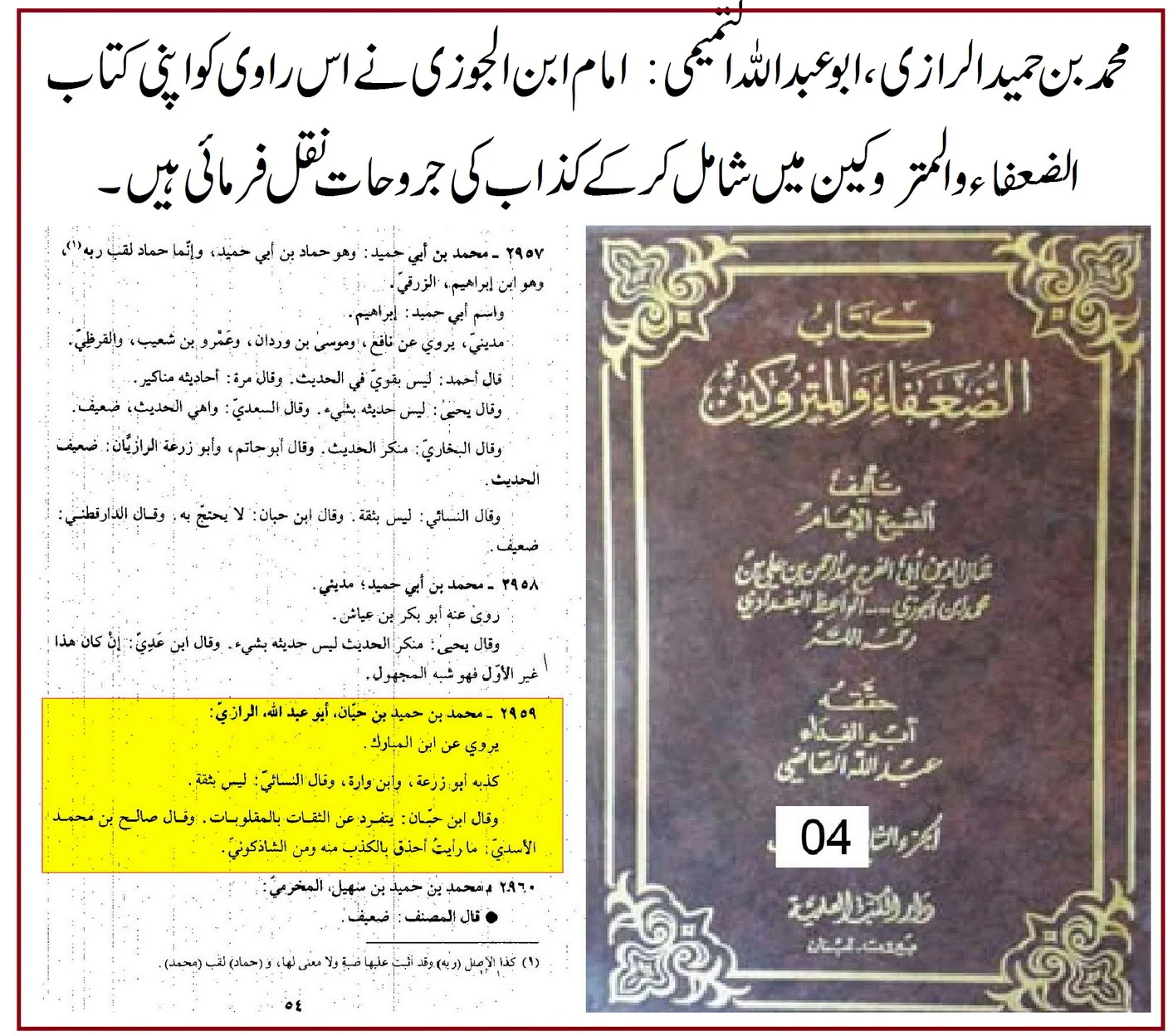
⓲ Inclusion of him among the weak by Ibn Al-Jawziؒ
Imam Ibn Al-Jawziؒ mentioned Muhammad bin Humaid Al-Razi in his book “Al-Du'afa wal-Matrukin”.
Translation:
Mentioning a narrator among the “weak” and “abandoned” itself is a sign of his unreliability.
Reference: Book: Al-Du'afa wal-Matrukin
Author: Abu Al-Faraj Ibn Al-Jawzi (d. 597 AH)
Author: Abu Al-Faraj Ibn Al-Jawzi (d. 597 AH)
Brief Explanation:
This is a consistent scholarly testimony that according to Ibn Al-Jawziؒ, he was not included among the trustworthy narrators.
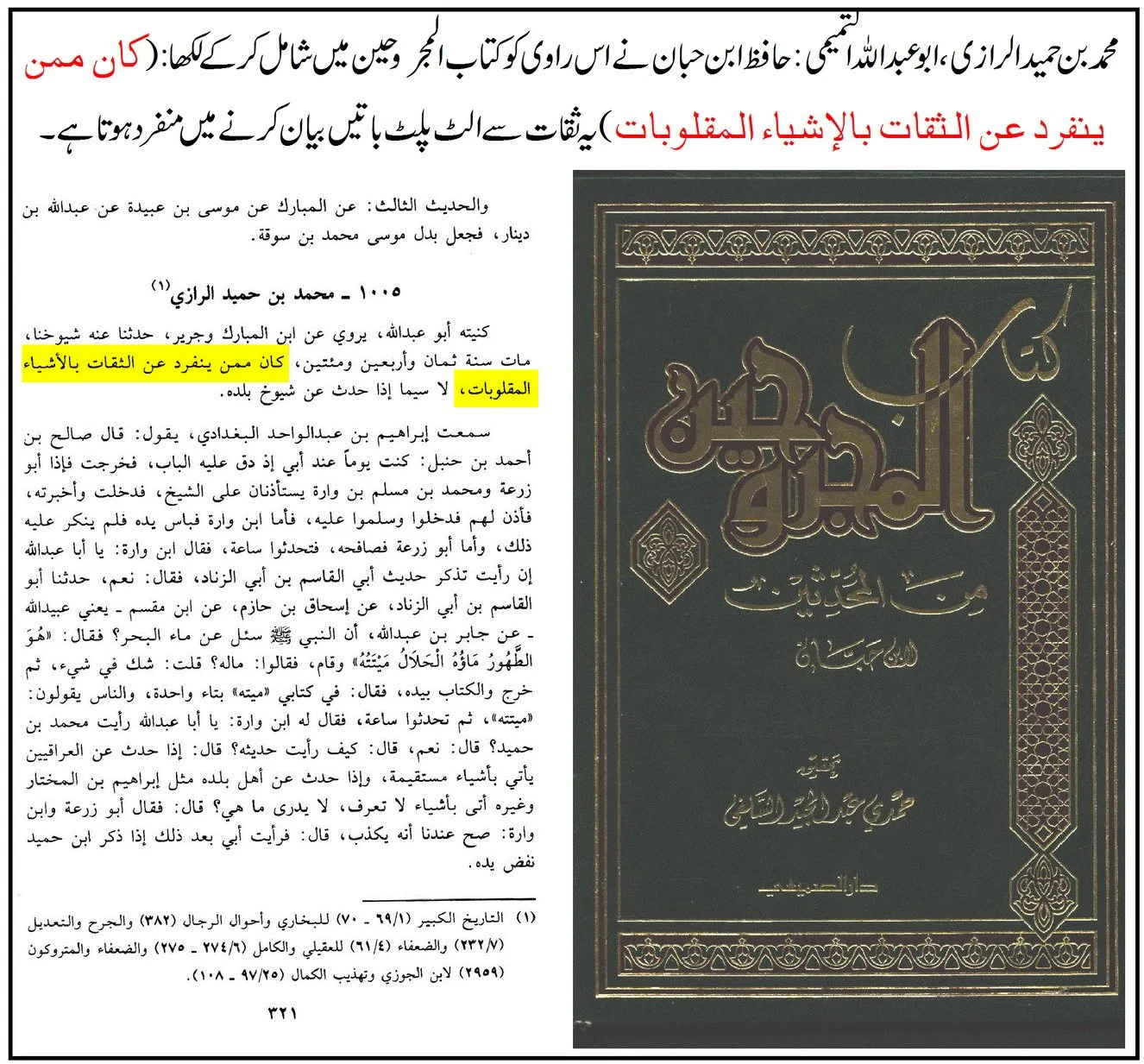
⓳ Criticism of Ibn Hibbanؒ
Hafiz Ibn Hibbanؒ wrote:
كان ممن ينفرد عن الثقات بالأشياء المقلوبات ولا سيما إذا حدث عن شيوخ بلده
Translation:
He was among those who uniquely narrated distorted and reversed traditions from trustworthy narrators, especially when narrating from the sheikhs of his city.
Reference: Al-Kitab: Al-Majruhin
Author: Muhammad ibn Hibban al-Busti (d. 354 AH)
Author: Muhammad ibn Hibban al-Busti (d. 354 AH)
Brief Explanation:
Ibn Hibban (may Allah have mercy on him) also clarified the nature of his weakness, that he narrated distorted and unreliable things from trustworthy narrators.
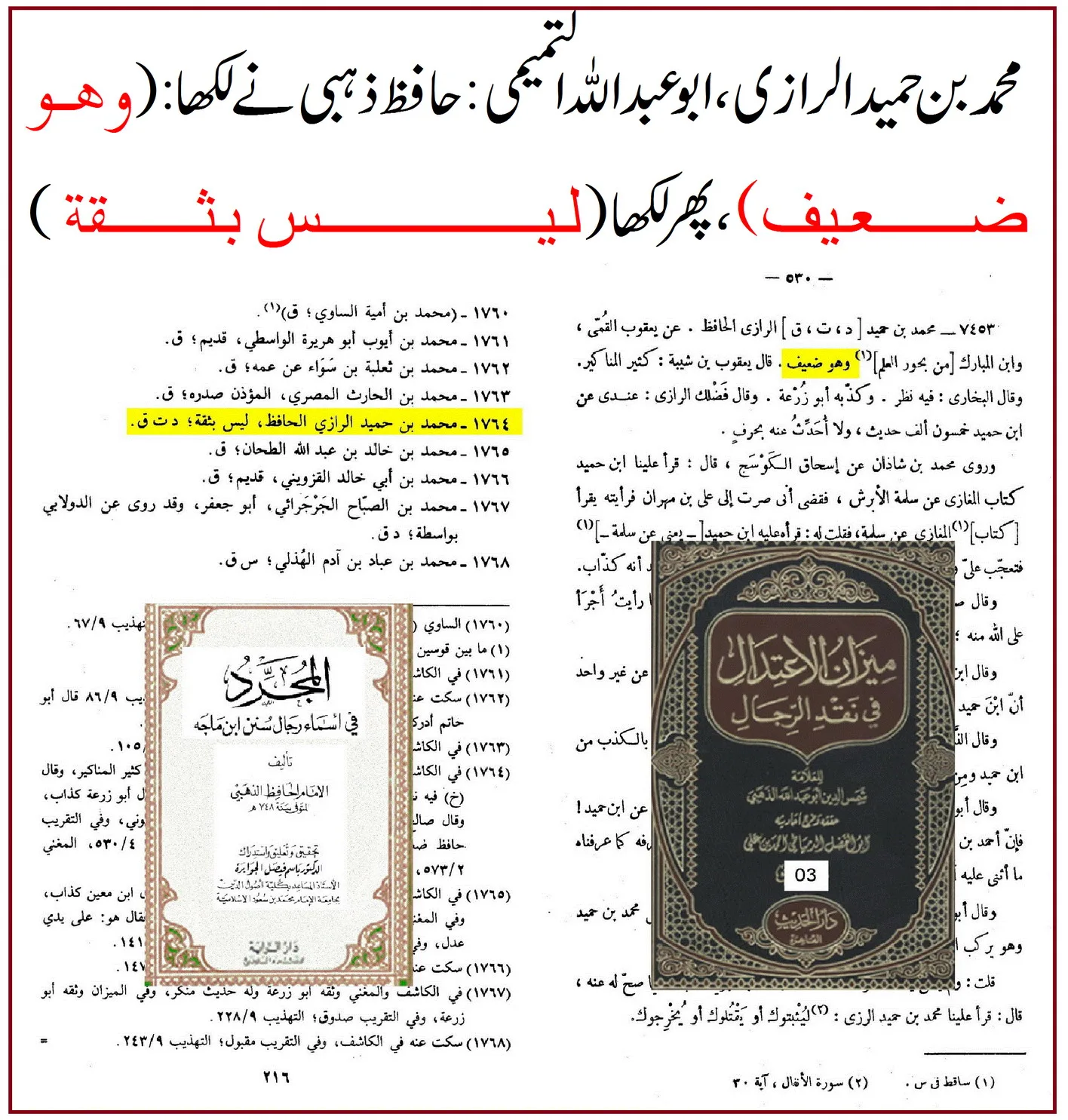
⓴ Hafiz Dhahabi’s Criticism
Hafiz Dhahabi called him weak in Mizan and mentioned "ليس بثقة" (not trustworthy) in the Rijal of Ibn Majah.
Translation:
According to Hafiz Dhahabi, Muhammad ibn Humayd was weak and lacked trustworthiness.
Reference: References: Mizan al-I'tidal, Al-Kashif, and the Rijal books of Dhahabi
Brief Explanation:
Dhahabi generally presents the summary of various opinions, so his criticism holds special importance.
㉑ Ibn Khuzaymah’s Abandonment of Him
Abu Ahmad al-Hakim narrated:
تركه أبو عبد الله محمد بن يحيى الذهلي وأبو بكر محمد بن إسحاق بن خزيمة السلمي
Translation:
Muhammad ibn Yahya al-Dhuhli and Abu Bakr Ibn Khuzaymah had abandoned him.
Reference: Al-Kitab: Al-Asami wa al-Kuna
Author: Abu Ahmad al-Hakim al-Naysaburi
Author: Abu Ahmad al-Hakim al-Naysaburi
Brief Explanation:
When the great Imams downgrade a narrator to the level of "Turkah," his credibility no longer remains.
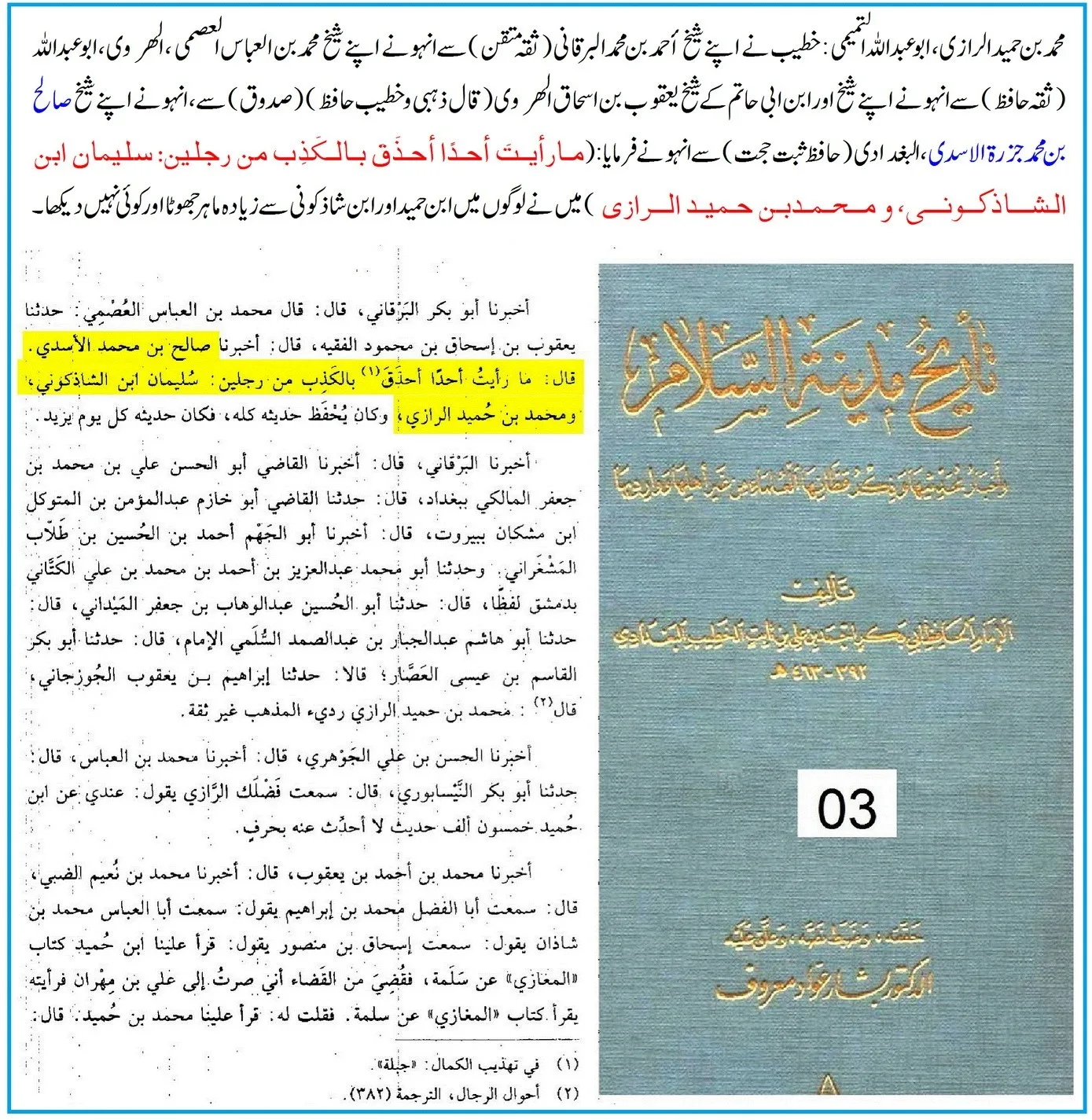
㉒ The Very Severe Criticism of Saleh Jazrahؒ
Saleh bin Muhammad Jazrahؒ said:
ما رأيت أحدا أحذق بالكذب من رجلين: سليمان ابن الشاذكوني، ومحمد بن حميد الرازي
Translation:
I have not seen anyone more skilled in lying than two men: Sulaiman bin Shadhkuni and Muhammad bin Hamid al-Razi.
Reference: Al-Kitab: Tarikh Baghdad
From Saleh bin Muhammad Jazrah (died approximately 293 AH)
From Saleh bin Muhammad Jazrah (died approximately 293 AH)
Brief Explanation:
This criticism is very severe because it implies not only lying but being an "expert liar."
㉓ The Explicit Denial of Abu Hatim al-Raziؒ
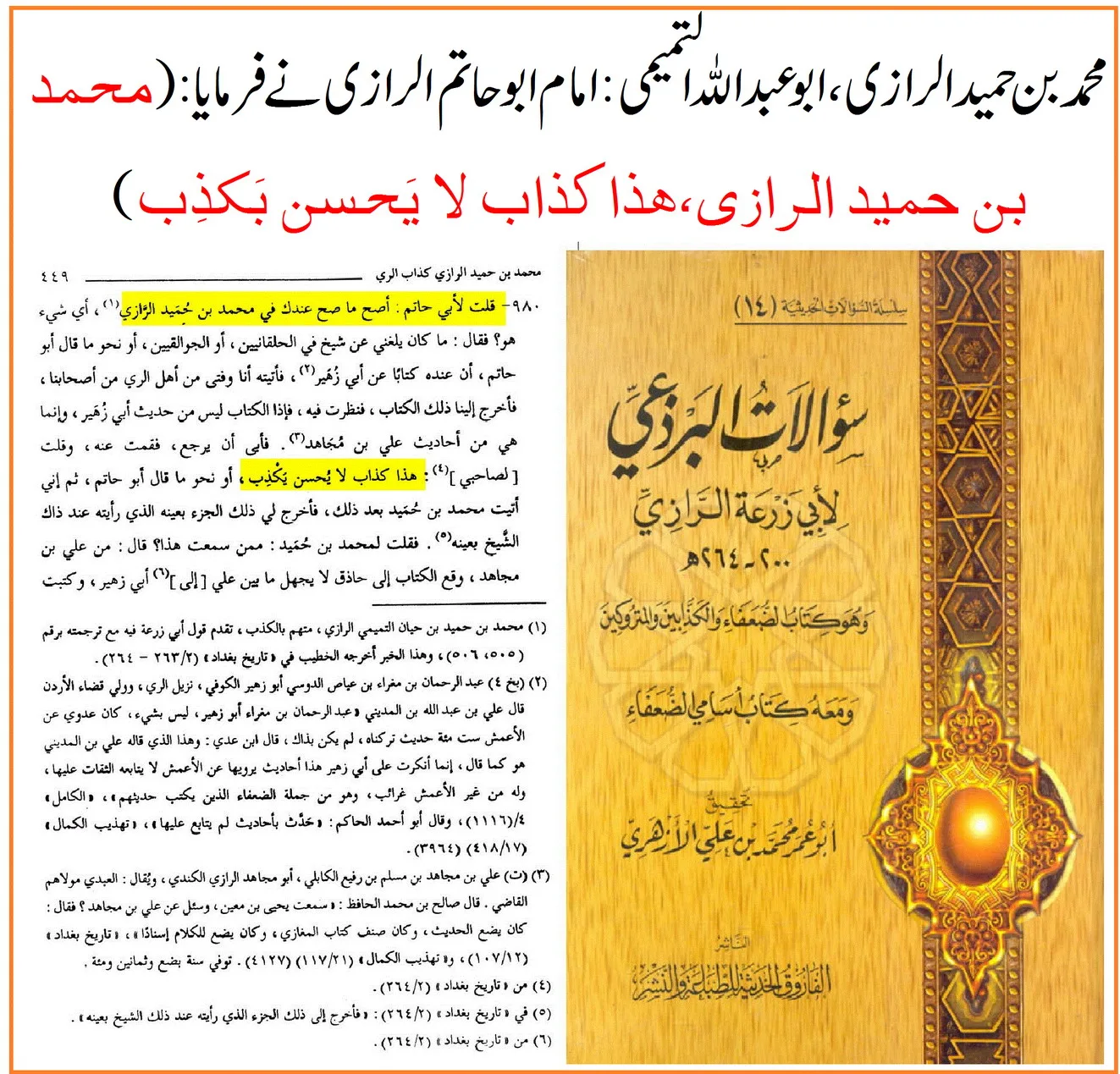
Abu Hatim al-Raziؒ said:
هذا كذاب لا يحسن يكذب
Translation:
He is a liar, and he does not even tell good lies.
Reference: Al-Kitab: Su'alat al-Barzai li Abi Zur'ah
Brief Explanation:
Abu Hatimؒ holds a very high status among the critics of hadith. His criticism of Muhammad bin Hamid is extremely decisive.
㉔ The Testimony of Abu Zur'ah al-Raziؒ
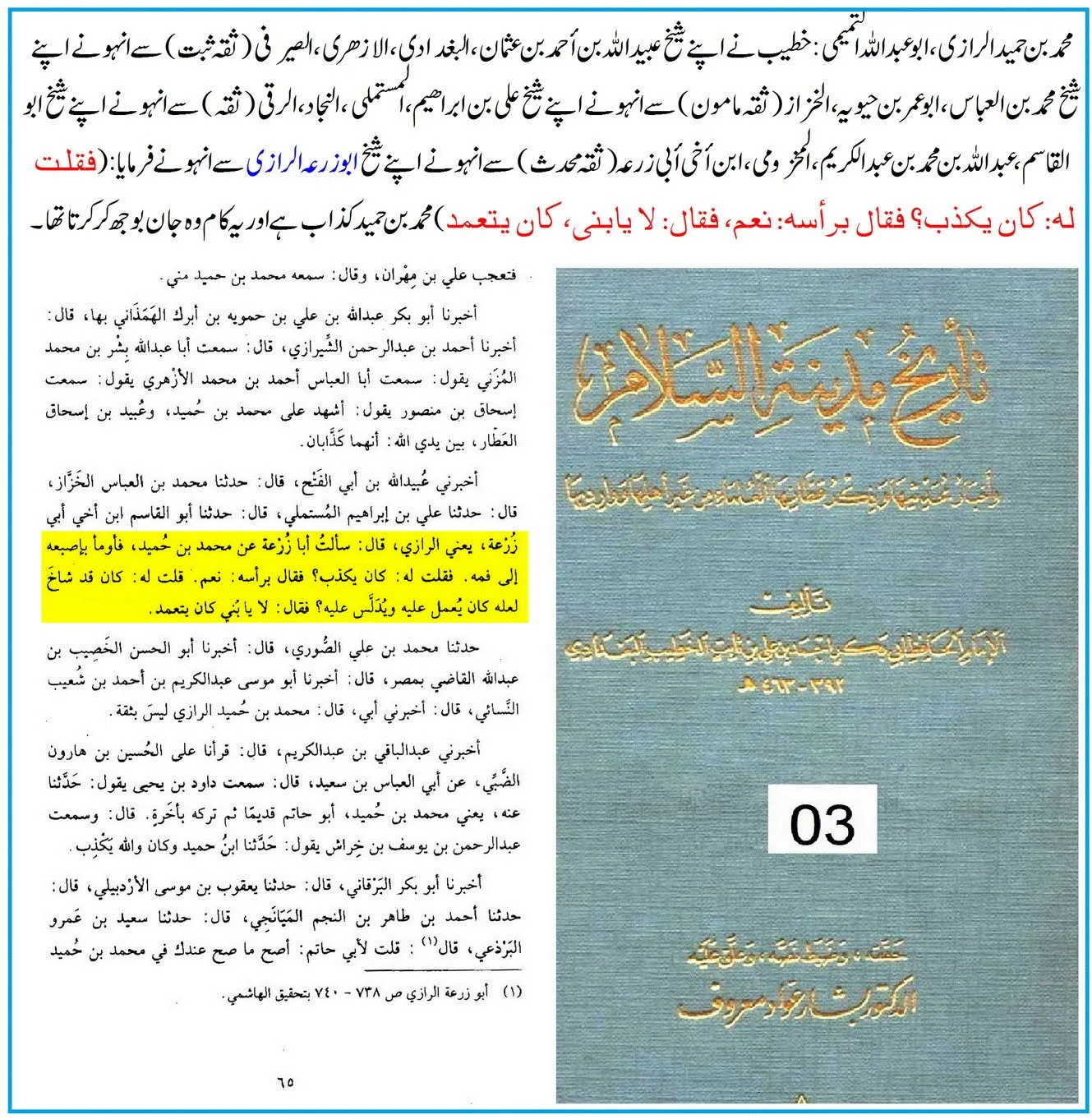
It is narrated about Abu Zur'ah al-Raziؒ:
سألت أبا زرعة عن محمد بن حميد ... فقلت له: كان يكذب؟ فقال برأسه: نعم ... كان يتعمد
Translation:
I asked Abu Zur'ah about Muhammad bin Humayd. I said: Did he lie? He nodded: yes. Then he said: He did so not out of old age or confusion but deliberately.
Reference: Al-Kitab: Tarikh Baghdad
Brief Explanation:
This testimony is particularly important because it explicitly mentions deliberate falsehood.
㉕ Fazl bin al-Abbas al-Razi’s refusal to narrate
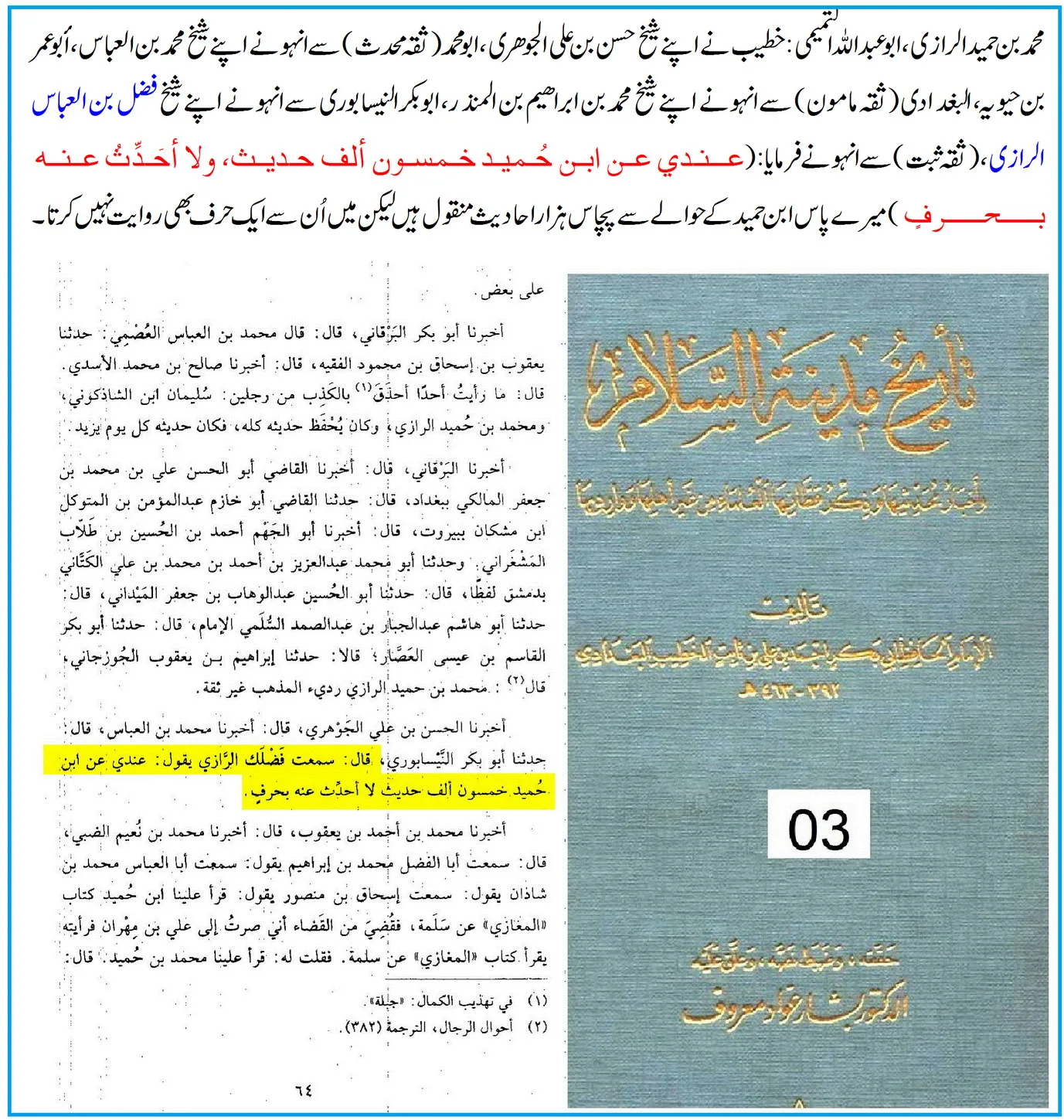
Fazl bin al-Abbas al-Razi said:
عندي عن ابن حميد خمسون ألف حديث، لا أحدث عنه بحرف
Translation:
I have fifty thousand hadiths from Ibn Humayd, but I do not narrate even a single letter from him.
Reference: Al-Kitab: Tarikh Baghdad
Brief Explanation:
This statement shows that mere hearing or abundance of narrations is not sufficient; the real criterion is trustworthiness, which was lacking here.
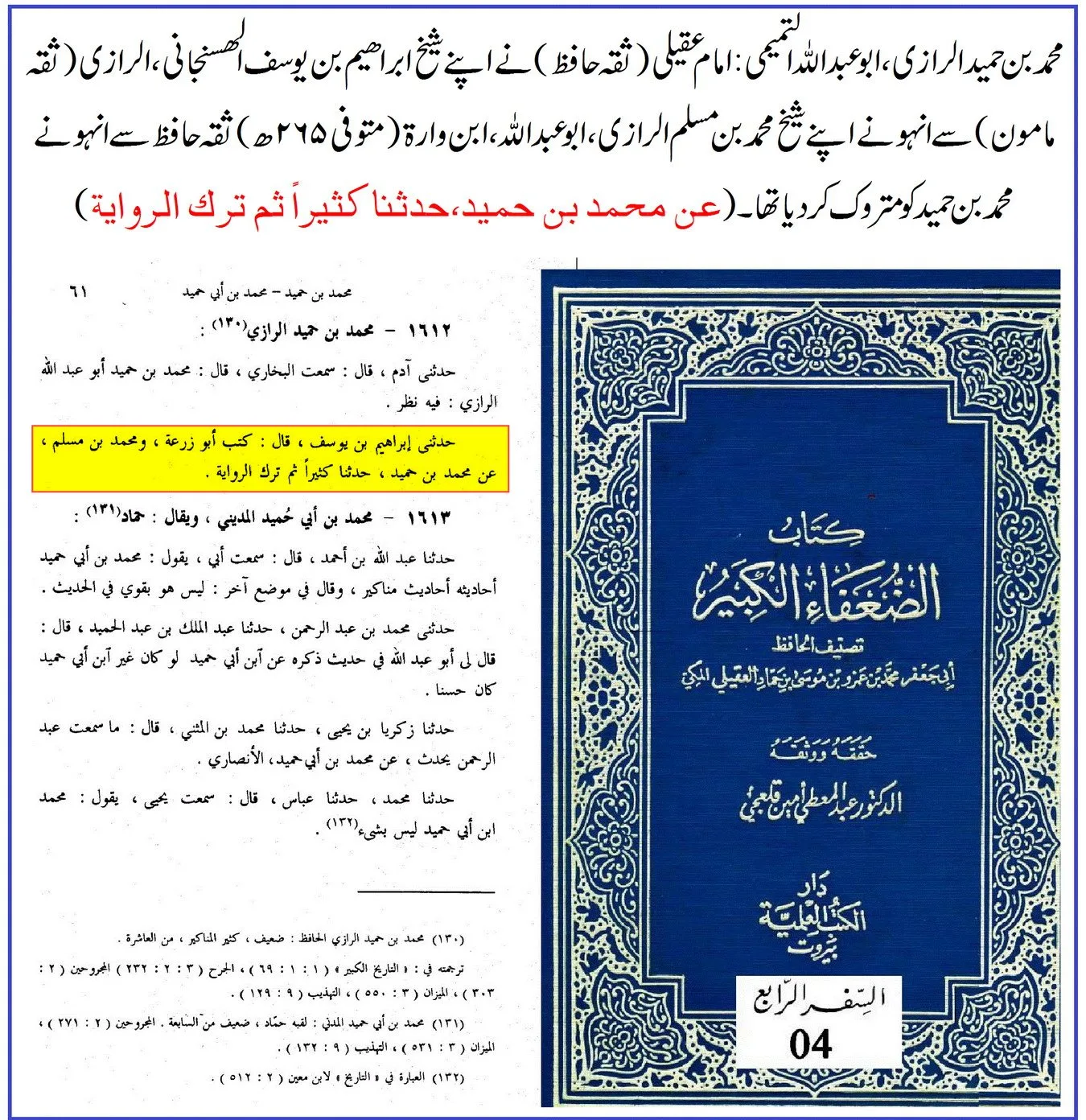
㉖ Abu Ja'far al-'Aqili’s mention of him among the weak narrators
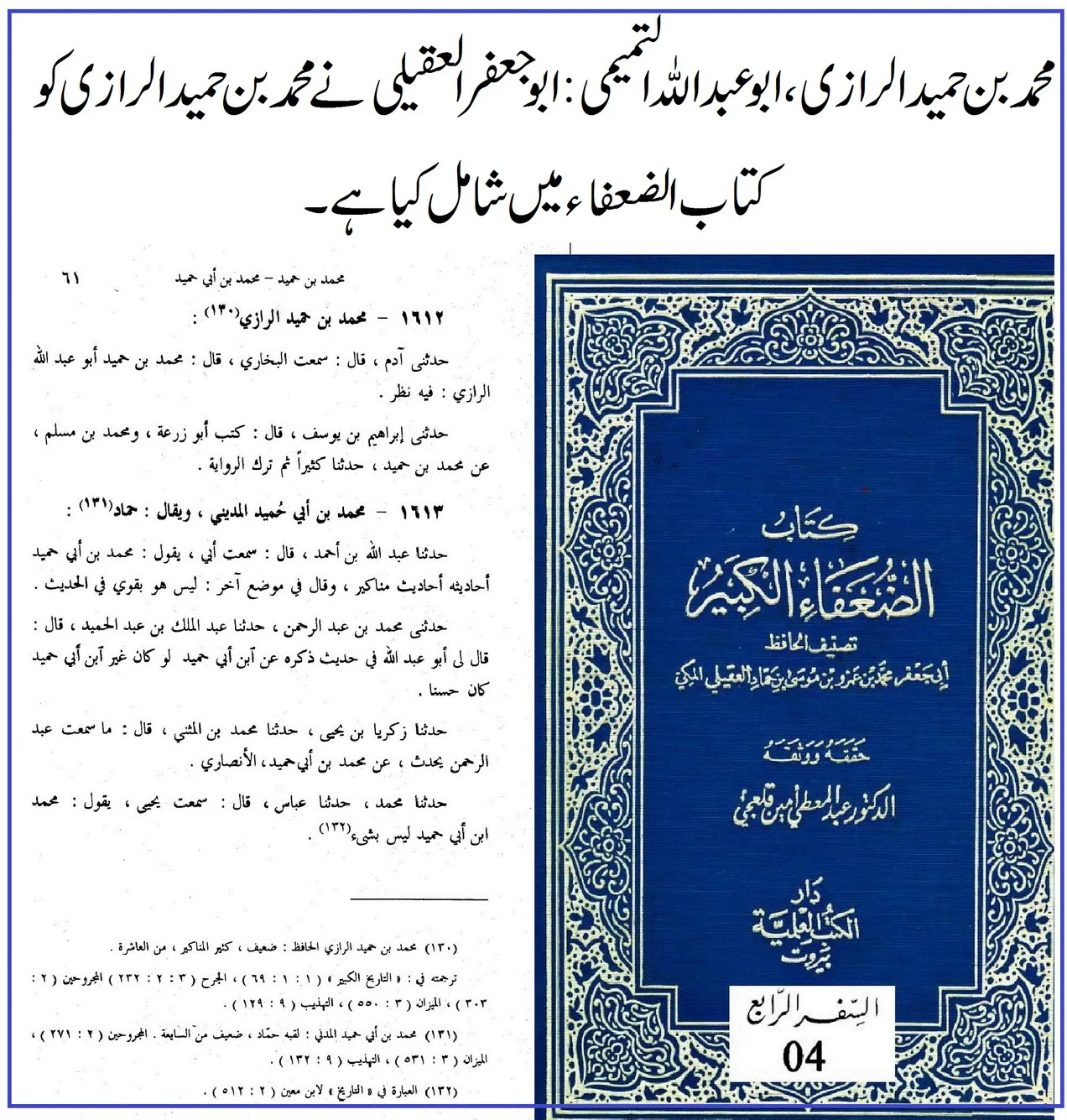
Abu Ja'far al-'Aqili included Muhammad bin Humayd al-Razi in his book "Al-Du'afa."
Translation:
According to al-'Aqili, he was also counted among the unreliable narrators.
Reference: Al-Kitab: Al-Du'afa al-Kabir
Author: Abu Ja'far al-'Aqili (d. 322 AH)
Author: Abu Ja'far al-'Aqili (d. 322 AH)
Brief Explanation:
This is also a consistent narrators' weakness testimony that indicates the general consensus on the narrator's weakness.
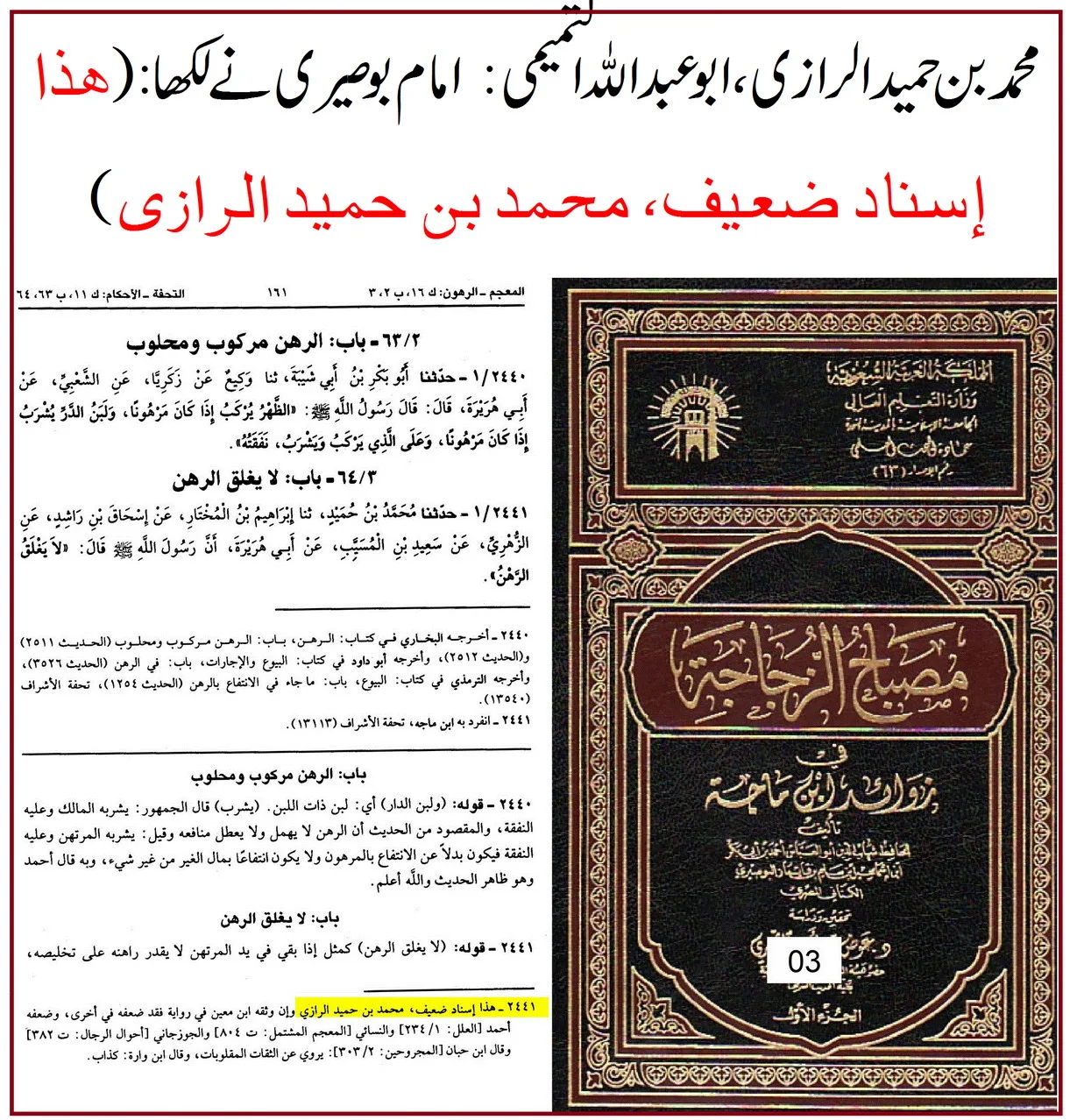
㉗ Summary of Statements by Imam Busiriؒ
Imam Busiriؒ wrote:
هذا إسناد ضعيف محمد بن حميد الرازي وإن وثقه ابن معين في رواية فقد ضعفه في أخرى وضعفه أحمد والنسائي والجوزجاني وقال ابن حبان يروى عن الثقات المقلوبات وقال ابن وارة كذاب
Translation:
This chain of narration is weak. Although Muhammad bin Humaid al-Razi is transmitted as trustworthy from Ibn Ma'inؒ in one narration, in another narration he has called him weak, and Ahmad, Nasai, and Juzjani have also called him weak. Ibn Hibban said that he narrates reports that contradict trustworthy narrators, and Ibn Warah called him a liar.
Reference: Book: Misbah al-Zujajah fi Zawa'id Ibn Majah
Author: Al-Busiri (d. 840 AH)
Author: Al-Busiri (d. 840 AH)
Brief Explanation:
This passage is an excellent summary of the statements of various critics, and the overall tendency clearly points towards weakness.
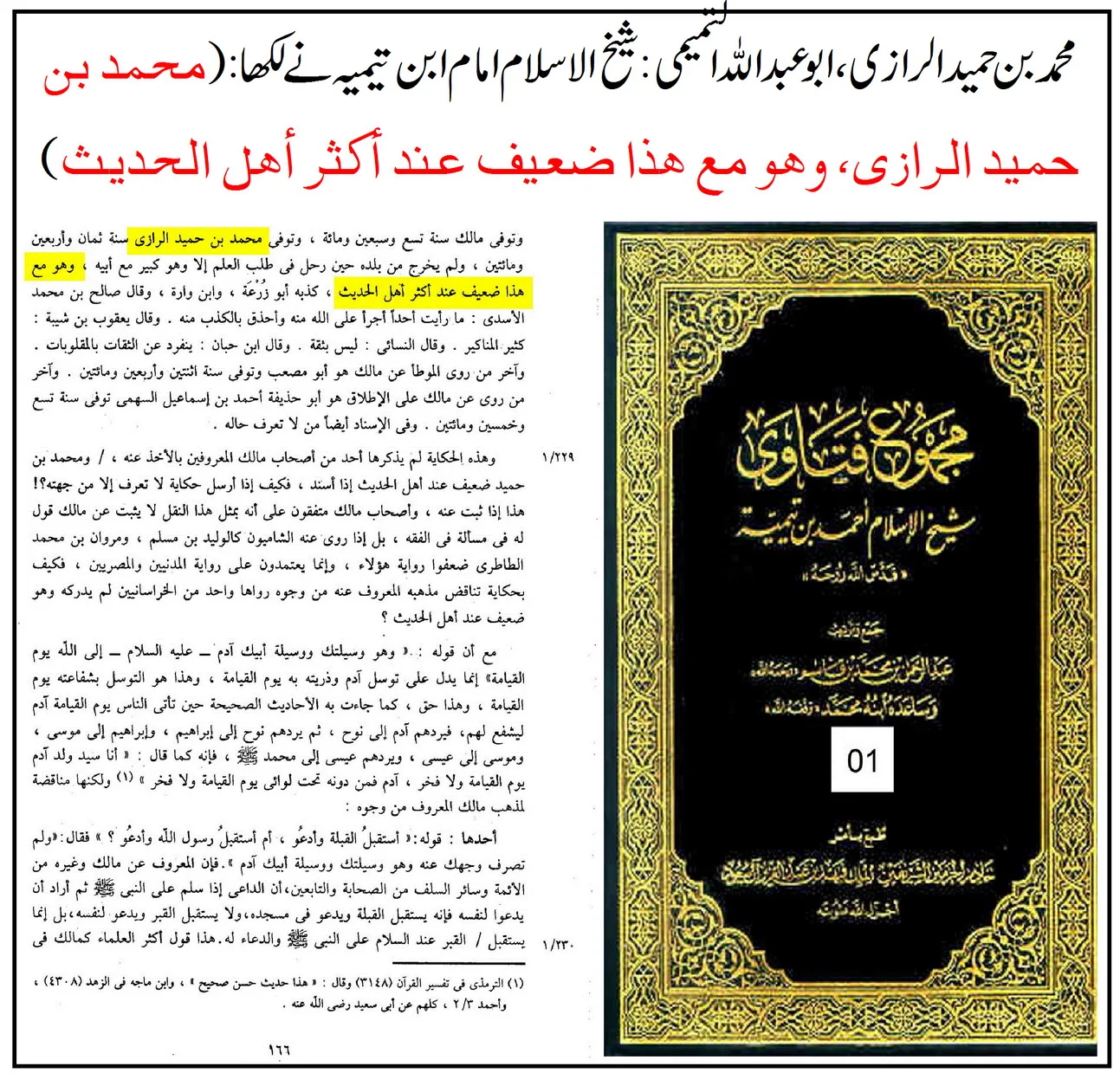
㉘ Statement of Shaykh al-Islam Ibn Taymiyyahؒ
Shaykh al-Islam Ibn Taymiyyahؒ wrote:
وهو مع هذا ضعيف عند أكثر أهل الحديث
Translation:
And despite all this, he is often considered weak by most of the Ahl al-Hadith.
Reference: Book: Majmu' al-Fatawa
Author: Ahmad ibn Abdul Halim Ibn Taymiyyah (d. 728 AH)
Author: Ahmad ibn Abdul Halim Ibn Taymiyyah (d. 728 AH)
Brief Explanation:
Here Ibn Taymiyyahؒ did not express a personal opinion but conveyed the methodology of "most of the Ahl al-Hadith," which indicates the general tendency towards the narrator's weakness.
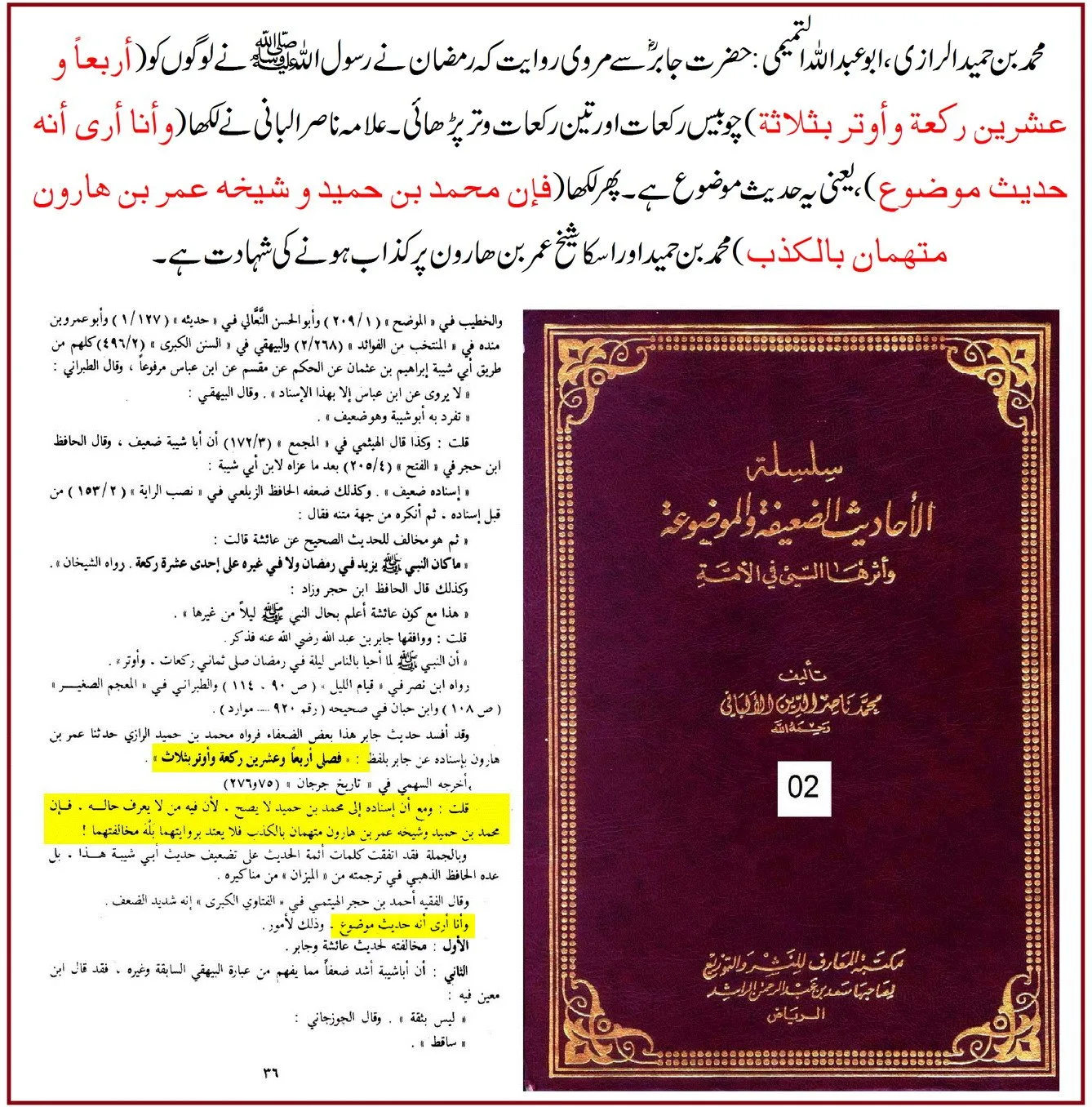
㉙ The Ruling of Allama Albani (may Allah have mercy on him)
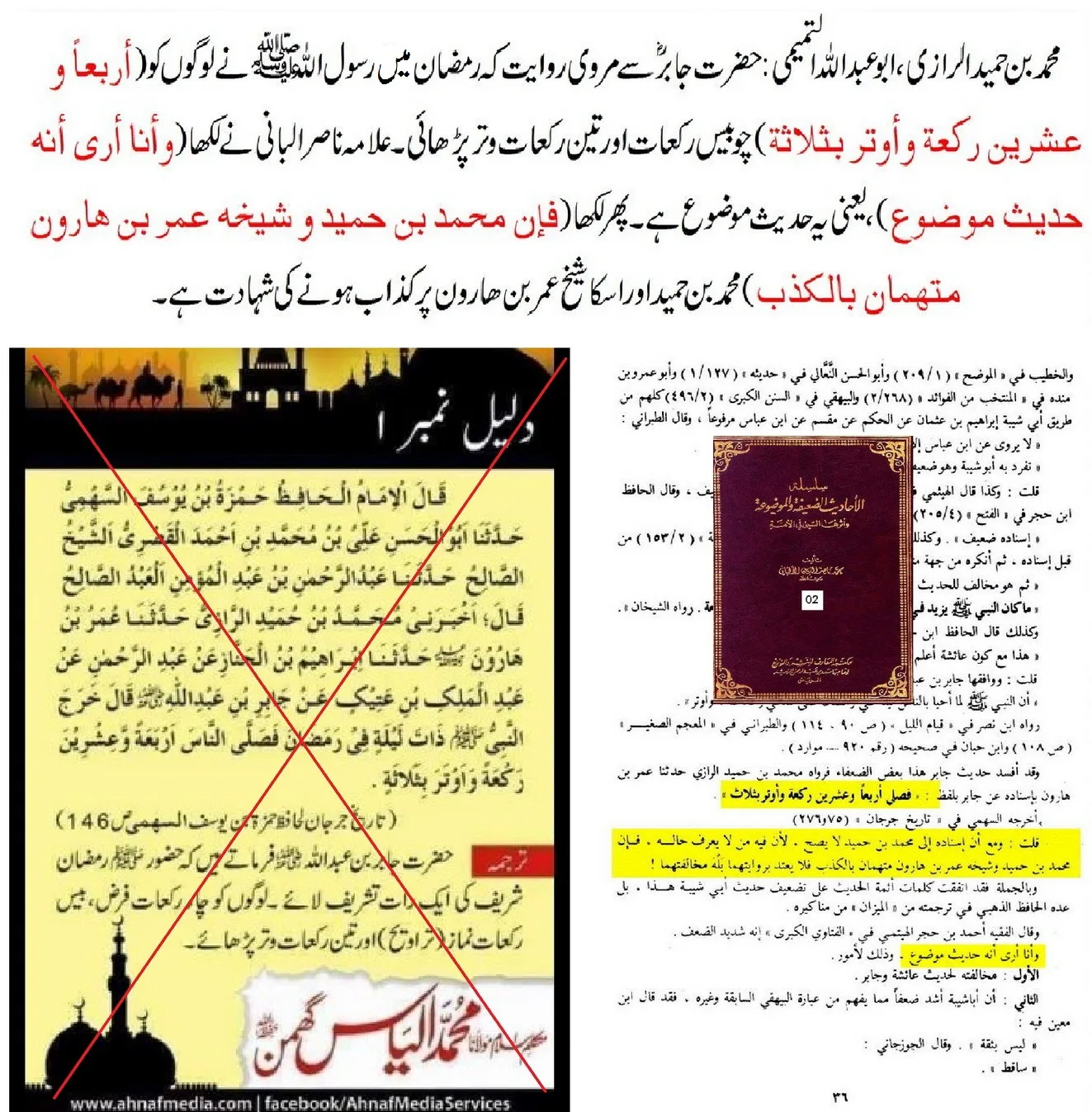
Allama Albani (may Allah have mercy on him) wrote about a narration:
فإن محمد بن حميد وشيخه عمر بن هارون متهمان بالكذب فلا يعتد بروايتهما
Translation:
Muhammad bin Humaid and his teacher Umar bin Harun are both accused of lying, therefore their narration will not be trusted.
Reference: Book: Silsilat al-Ahadith al-Da'ifah wal-Mawdu'ah
Author: Muhammad Nasiruddin al-Albani (died 1420 AH)
Author: Muhammad Nasiruddin al-Albani (died 1420 AH)
Brief Explanation:
This is the explicit ruling of a modern-day hadith scholar that the narration of such a narrator is not worthy of consideration.
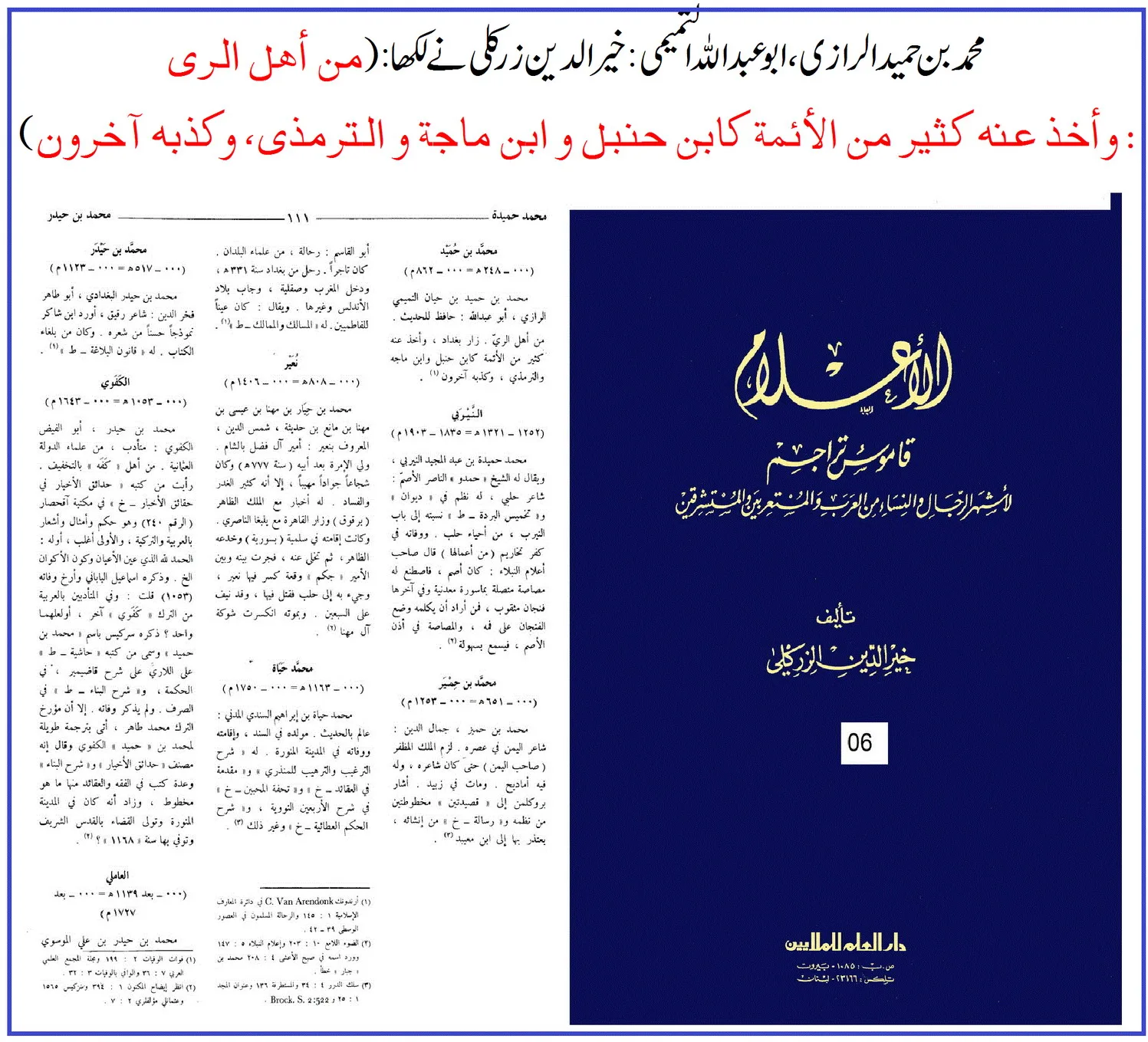
㉚ Summary by Khairuddin Zarkali (may Allah have mercy on him)
Khairuddin Zarkali (may Allah have mercy on him) wrote:
محمد بن حميد بن حيان التميمي الرازي ... أخذ عنه كثير من الأئمة ... وكذبه آخرون
Translation:
Many imams have narrated from Muhammad bin Humaid bin Hayan al-Tamimi al-Razi, but others have declared him a liar.
Reference: Book: Al-A'lam
Author: Khairuddin al-Zarkali (died 1396 AH)
Author: Khairuddin al-Zarkali (died 1396 AH)
Brief Explanation:
Zarkali (may Allah have mercy on him) mentioned both aspects briefly but comprehensively: the spread of the narration on one hand, and the weight of criticism on the other.
Arguments of Various Circles Based on the Narrations of Muhammad bin Humaid al-Razi
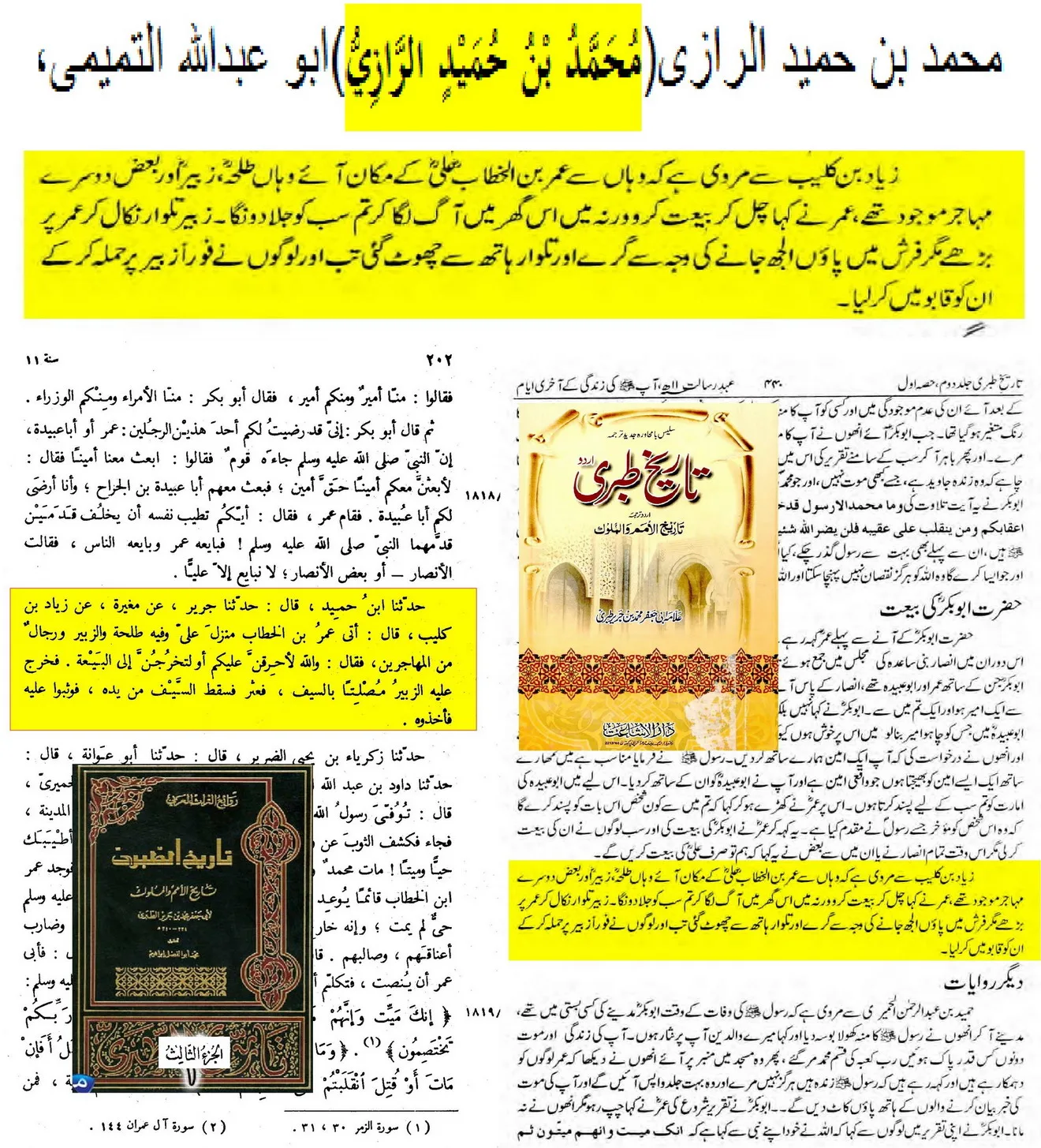
The weakness of the narrations of Muhammad bin Humaid al-Razi is not just a theoretical discussion, but its practical effects are also evident. Certain circles have used his narrations to establish their specific jurisprudential or historical claims. For example, some people argue for the specific number of twenty rak'ahs of Taraweeh based on one narration, while others present a strong historical claim about Hazrat Umar رضي الله عنه based on another narration. However, when the original chain of narration itself rests on a narrator against whom there is abundant testimony of falsehood, denial, and abandonment, it is fundamentally incorrect to establish major claims based on such narrations.
This also clarifies that the issue is not just the weakness of one narrator, but the validity of the entire argumentative structure. When the foundation itself is unstable, the jurisprudential, historical, or theological case built upon it also becomes weak.
Summary of the Discussion
A few points become absolutely clear from the above statements:
❶ The criticism of Muhammad bin Humaid al-Razi is not limited to a single Imam or a specific era; rather, a large group of earlier and later scholars have spoken about his weakness.
❷ The criticism is not only that he is "weak," but also terms like "not trustworthy," "frequent fabricator," "not reliable in his narration," "abandoned," and "liar" have been attributed to him.
❸ Despite some localized endorsements, the overall tendency is towards weakness, and the hadith scholars have prioritized criticism over endorsement in such cases, especially when there are multiple testimonies of lying and fabrications.
❹ Establishing major jurisprudential, historical, or theological claims based on the unique narration of such a narrator is against the principles of hadith.
Conclusion
The conclusion is that Muhammad bin Hamid al-Razi is not a narrator whose unique narrations can be relied upon with confidence. The overall weight of the statements of the Imams of Jarh and Ta'dil clearly points towards his weakness, indeed severe weakness. Several Imams have not only called him weak but have also applied harsh judgments such as lying, fabricating, and abandoning narration. This is why any narration that depends on Muhammad bin Hamid al-Razi becomes especially more questionable when it contradicts trustworthy narrators or when an important jurisprudential, theological, or historical conclusion is derived from it.
Therefore, the demand of scholarly integrity is that the narrations of Muhammad bin Hamid al-Razi should not be accepted without criticism but should be examined in the light of the criticisms of the Imams of Hadith. And when such a large number of Hadith critics have spoken harshly about a narrator, reasoning on important religious matters based on his narrations will be considered a very weak and imprudent approach.