✍ Written by: Abu Hamzah Salafi
In recent times, certain groups—particularly those following the Hanafi school—strictly prohibit women from attending mosques. They even consider it “Makruh Tahrimi” (prohibitively disliked) for women to attend significant gatherings such as the Eid or Tarawih prayers.
This stance is rooted in ignorance, lack of familiarity with the Prophetic Ahadith, and a deviation from the practices of the noble Companions and the Tabi'un.
This article not only exposes the weakness in the Hanafi arguments but also, through authentic Ahadith and the actions of the Companions, demonstrates that women's attendance in mosques is proven from the Sunnah of the Prophet ﷺ and the practice of the Sahabah.
Hanafis cite the following narration:
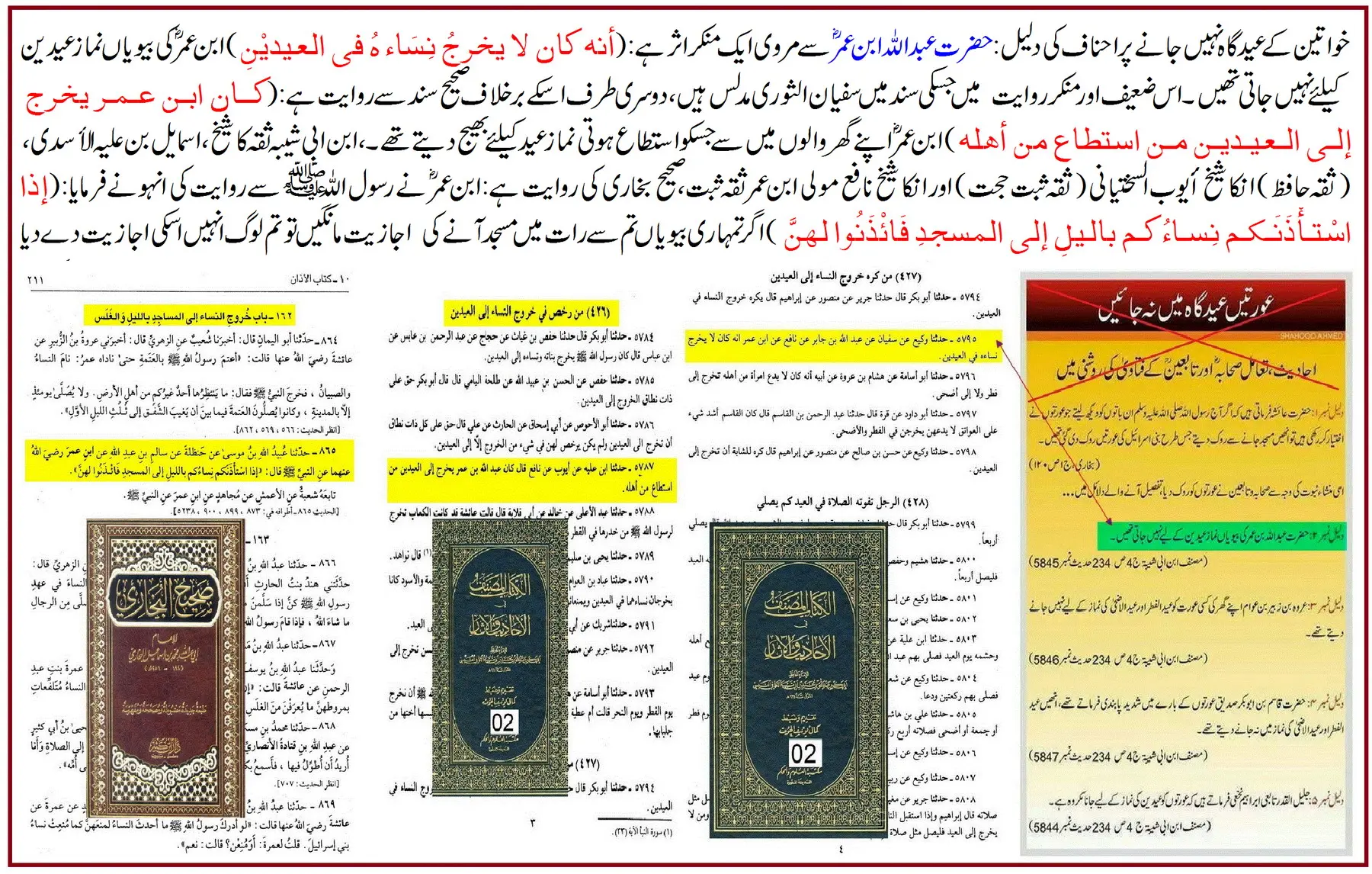
 5795 –
حَدَّثَنَا وَكِيعٌ، عَنْ سُفْيَانَ، عَنْ عَبْدِ اللَّهِ بْنِ جَابِرٍ، عَنْ نَافِعٍ، عَنِ ابْنِ عُمَرَ: "أَنَّهُ كَانَ لَا يُخْرِجُ نِسَاءَهُ فِي الْعِيدَيْنِ”
 [Musannaf Ibn Abi Shaybah, Vol. 4, p. 234, Ḥadīth 5795]
 Translation:
ʿAbdullāh ibn ʿUmar رضي الله عنهما did not bring out his womenfolk for the two Eid prayers.
This narration is weak (daʿīf) and munkar due to two core issues:
① Sufyān al-Thawrī is a mudallis (ambiguous transmitter), and he narrates using the ambiguous term “ʿan”, which makes the chain unreliable.
② ʿAbdullāh ibn Jābir is graded by Ibn Ḥajar as:
3244 – عبد الله بن جابر أبو حمزة، البصري:
"Maqbūl – Only accepted when supported; otherwise he is weak (layyin al-ḥadīth).”
[Taqrīb al-Tahdhīb]
A sound (ṣaḥīḥ) narration from Ibn ʿUmar gives a completely opposite picture:
5787 –
حَدَّثَنَا ابْنُ عُلَيَّةَ، عَنْ أَيُّوبَ، عَنْ نَافِعٍ، قَالَ: "كَانَ عَبْدُ اللَّهِ بْنُ عُمَرَ، يَخْرُجُ إِلَى الْعِيدَيْنِ مَنِ اسْتَطَاعَ مِنْ أَهْلِهِ”
[Musannaf Ibn Abi Shaybah, Vol. 4, p. 233, Ḥadīth 5787]
Translation:
Nāfiʿ said: ʿAbdullāh ibn ʿUmar رضي الله عنهما would bring out whoever among his household was able to attend the Eid prayers.
 Chain Authentication:
 According to the principles of the majority of scholars of ḥadīth, this narration is Ṣaḥīḥ and proves that Ibn ʿUmar used to bring women from his household to the Eid prayers.
Ibn ʿUmar himself narrates the following marfūʿ ḥadīth from the Prophet ﷺ:
865 –
حَدَّثَنَا عُبَيْدُ اللَّهِ بْنُ مُوسَى، عَنْ حَنْظَلَةَ، عَنْ سَالِمِ بْنِ عَبْدِ اللَّهِ، عَنِ ابْنِ عُمَرَ، قَالَ: "إِذَا اسْتَأْذَنَكُمْ نِسَاؤُكُمْ بِاللَّيْلِ إِلَى الْمَسْجِدِ، فَأْذَنُوا لَهُنَّ”
[Ṣaḥīḥ al-Bukhārī, Kitāb al-Adhān, Ḥadīth 865]
Translation:
The Messenger of Allah ﷺ said: “When your women seek permission to go to the masjid at night, grant them permission.”
 Question:
Would a noble companion like Ibn ʿUmar—the narrator of this very ḥadīth—act contrary to it? Never!
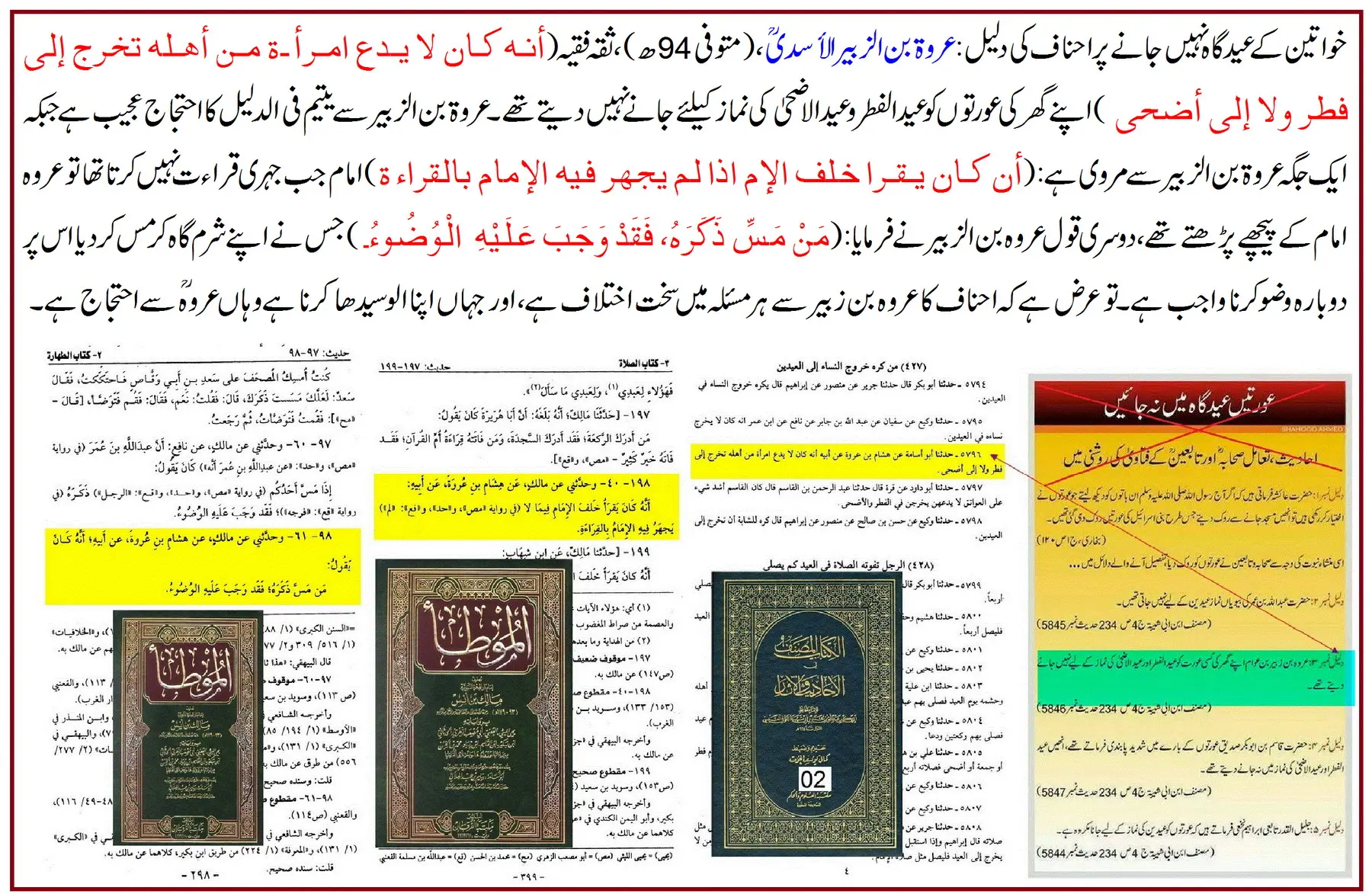
The second Hanafi evidence is:
5796 –
حَدَّثَنَا أَبُو أُسَامَةَ، عَنْ هِشَامِ بْنِ عُرْوَةَ، عَنْ أَبِيهِ: "أَنَّهُ كَانَ لَا يَدَعُ امْرَأَةً مِنْ أَهْلِهِ تَخْرُجُ إِلَى فِطْرٍ، وَلَا إِلَى أَضْحَى”
[Musannaf Ibn Abi Shaybah, Vol. 4, p. 234, Ḥadīth 5796]
Translation:
ʿUrwah ibn al-Zubayr would not allow any of his women to go out for ʿĪd al-Fiṭr or ʿĪd al-Aḍḥā.
① This is a statement of a Tabiʿī, not the Prophet ﷺ or the Sahabah. Legislative evidence in Islam is derived from the Qur’an, authentic Sunnah, and the consensus of the Companions, not from a lone view of a Tabiʿī.
② ʿUrwah’s statement contradicts other authentic reports and even other positions of ʿUrwah which the Hanafis themselves do not follow.
279 –
مَالِكٌ، عَنْ هِشَامِ بْنِ عُرْوَةَ، عَنْ أَبِيهِ: "أَنَّهُ كَانَ يَقْرَأُ خَلْفَ الْإِمَامِ، فِيمَا لَا يَجْهَرُ فِيهِ الْإِمَامُ”
[Al-Muwaṭṭa’ of Mālik]
 ʿUrwah would recite behind the imam in silent prayers—against Hanafi view which prohibits this.
116 –
عَنْ هِشَامِ بْنِ عُرْوَةَ، عَنْ أَبِيهِ: "مَنْ مَسَّ ذَكَرَهُ، فَقَدْ وَجَبَ عَلَيْهِ الْوُضُوءُ”
[Al-Muwaṭṭa’ of Mālik]
ʿUrwah held that touching one's private part invalidates wudū’—contrary to Hanafi view.
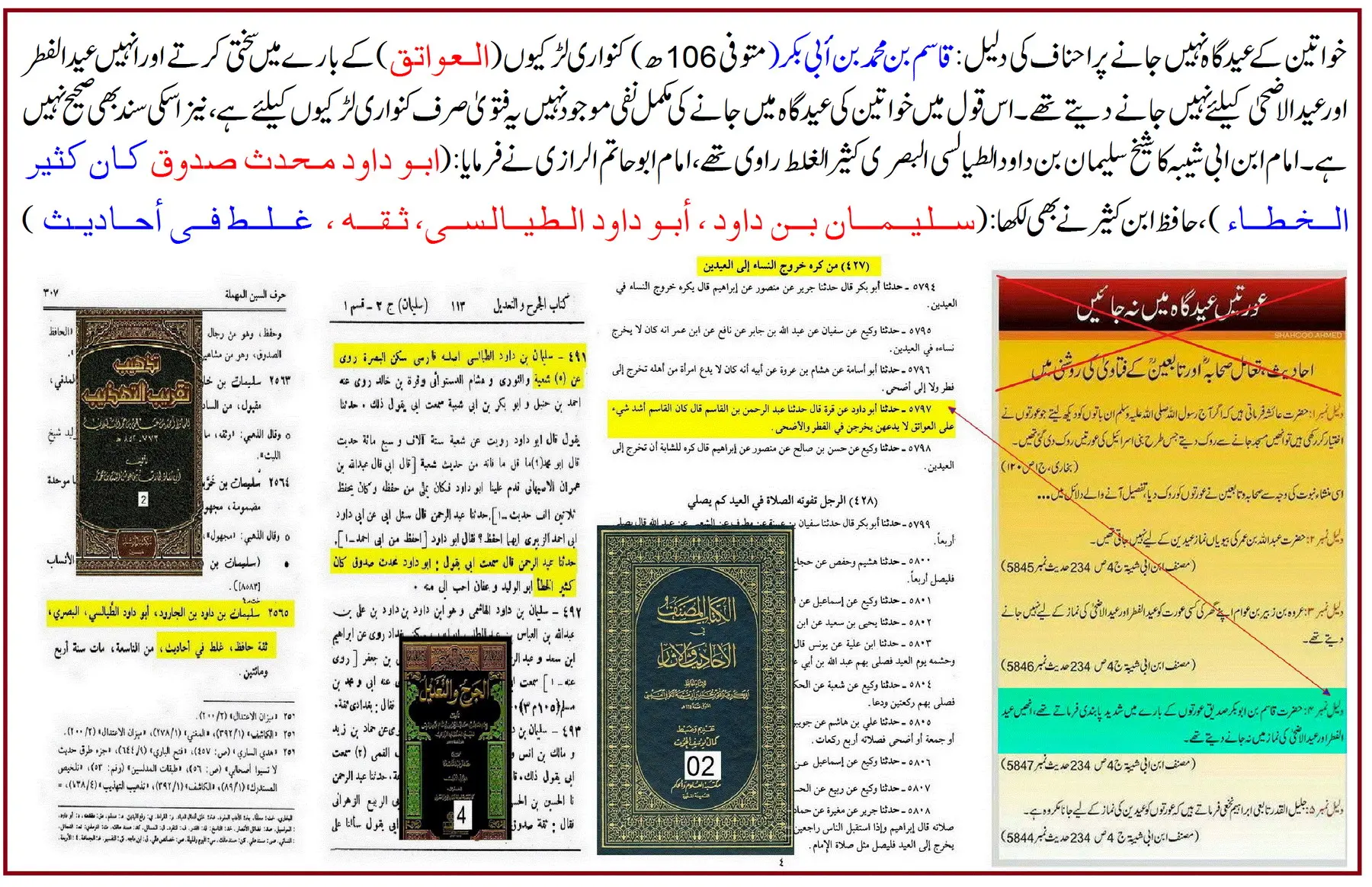
5797 –
"كَانَ الْقَاسِمُ أَشَدَّ شَيْءٍ عَلَى الْعَوَاتِقِ، لَا يَدَعُهُنَّ يَخْرُجْنَ فِي الْفِطْرِ وَالْأَضْحَى”
[Musannaf Ibn Abi Shaybah, Vol. 4, p. 234, Ḥadīth 5797]
Translation:
Qāsim ibn Muḥammad used to be very strict with young women and did not allow them to go out for ʿĪd prayers.
The narrator Abū Dāwūd al-Ṭayālisī is criticized:
Abū Ḥātim al-Rāzī said:
"Abū Dāwūd was truthful, but he made many errors."
[al-Jarḥ wa al-Taʿdīl]
Ibn Ḥajar al-ʿAsqalānī:
"He is trustworthy, but made mistakes in ḥadīths."
[Taqrīb al-Tahdhīb]
Ibrāhīm ibn Saʿīd al-Jawharī:
"He made mistakes in a thousand ḥadīths."
[al-Kāmil fī Ḍuʿafā’ al-Rijāl]
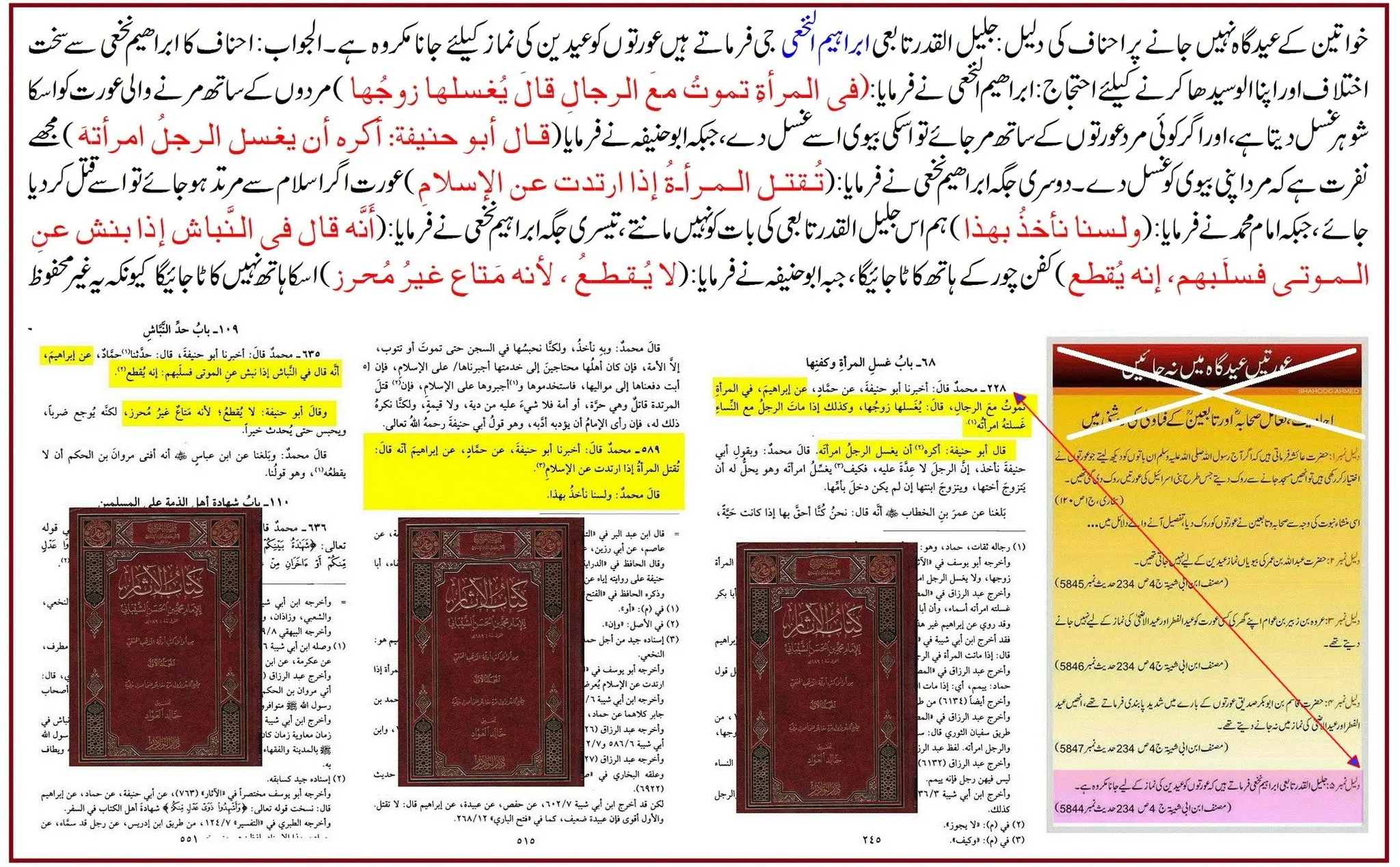
5798 / 5844 –
"كُرِهَ لِلشَّابَّةِ أَنْ تَخْرُجَ إِلَى الْعِيدَيْنِ”
[Musannaf Ibn Abi Shaybah, Vol. 4, p. 234]
Translation:
Ibrāhīm al-Nakhaʿī said that it is disliked for a young woman to go out for Eid.
The Hanafis themselves reject several of Ibrāhīm al-Nakhaʿī’s positions in more critical legal matters:
Nakhaʿī: Permissible
Abū Ḥanīfah: Makrūh (disliked)
[al-Āthār by Muḥammad]
Nakhaʿī: Execute
Abū Ḥanīfah: Do not execute
[al-Āthār]
Nakhaʿī: Cut the hand
Abū Ḥanīfah: Do not cut—property wasn’t secured
[al-Āthār]
540 –
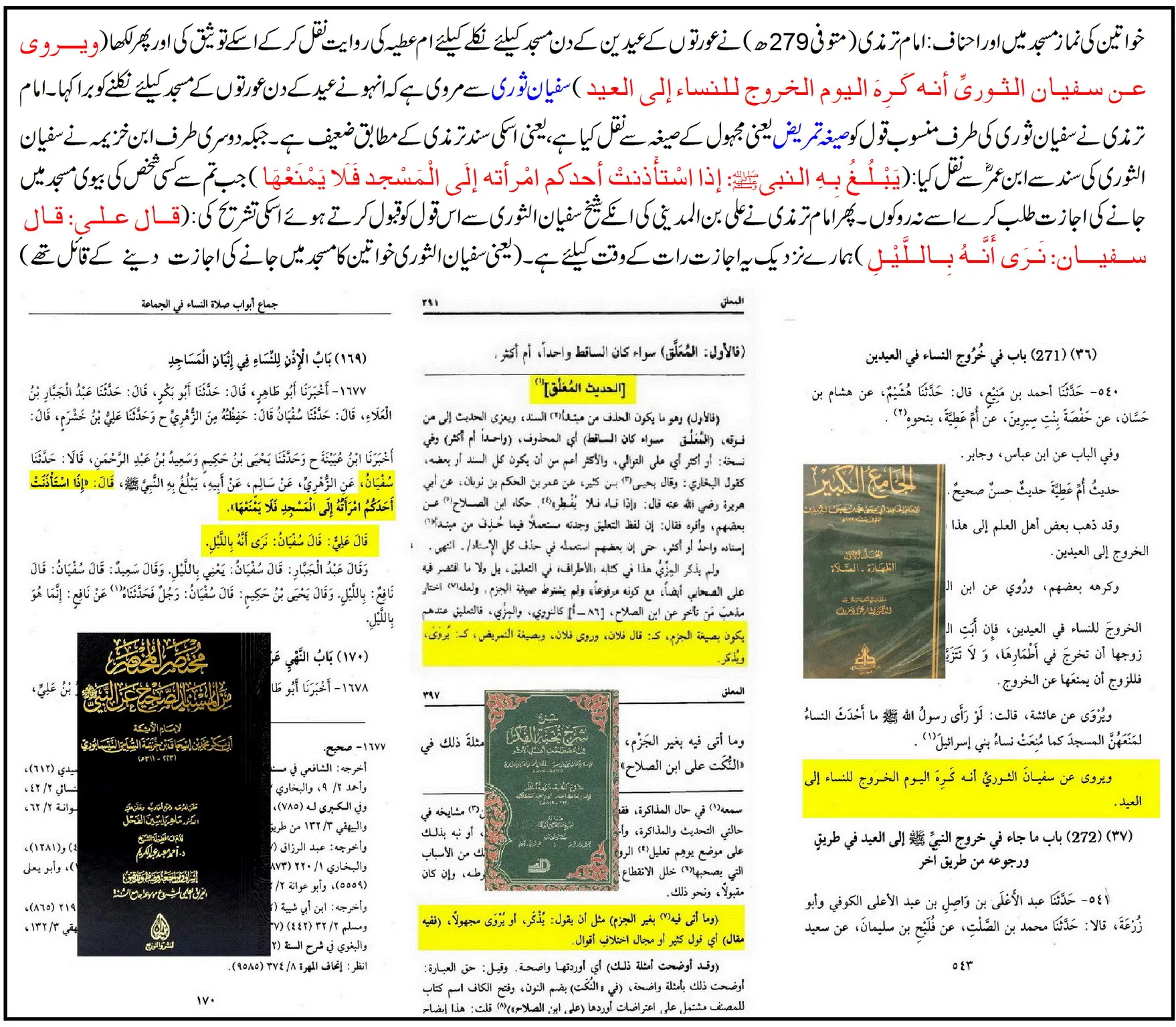
"وَيُرْوَى عَنْ سُفْيَانَ الثَّوْرِيِّ أَنَّهُ كَرِهَ الْيَوْمَ الْخُرُوجَ لِلنِّسَاءِ إِلَى الْعِيدِ”
[Jāmiʿ al-Tirmidhī, Kitāb al-Jumuʿah, Bāb: Karāhah Khurūj al-Nisāʾ ilā al-ʿĪdayn]
Translation:
It is narrated from Sufyān al-Thawrī that he disliked women going out for Eid prayers.
Imām al-Tirmidhī uses the term "yurwā" (it is narrated), which implies a weak or uncertain chain.
However, Sufyān al-Thawrī himself narrated and supported the authentic ḥadīth:
1677 –
قَالَ سُفْيَانُ: "حَفِظْتُهُ مِنَ الزُّهْرِيِّ، عَنْ سَالِمٍ، عَنْ أَبِيهِ، قَالَ النَّبِيُّ ﷺ: «إِذَا اسْتَأْذَنَتْ أَحَدَكُمُ امْرَأَتُهُ إِلَى الْمَسْجِدِ فَلَا يَمْنَعْهَا»”
[Ṣaḥīḥ Ibn Khuzaymah, Ḥadīth 1677]
Translation:
The Prophet ﷺ said: “If a woman from among you seeks permission to go to the mosque, do not stop her.”
Sufyān added a clarification:
"نَرَى أَنَّهُ بِاللَّيْلِ" — "We believe this refers to night-time."
Explanation:
Sufyān did not oppose the ḥadīth, but rather restricted its application to night-time, based on ḥikmah (contextual wisdom)—not prohibition.
This is considered the strongest Hanafi evidence:
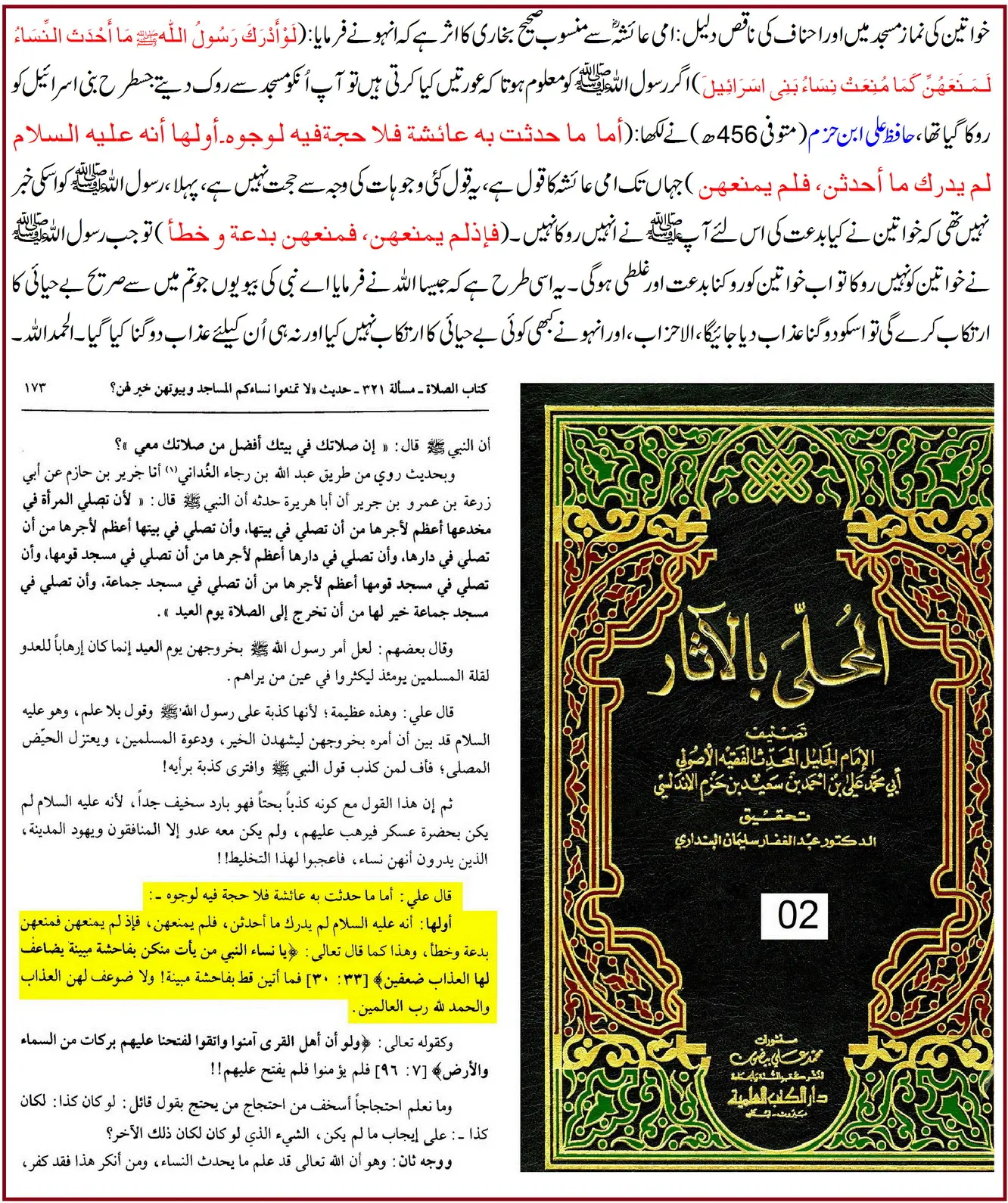
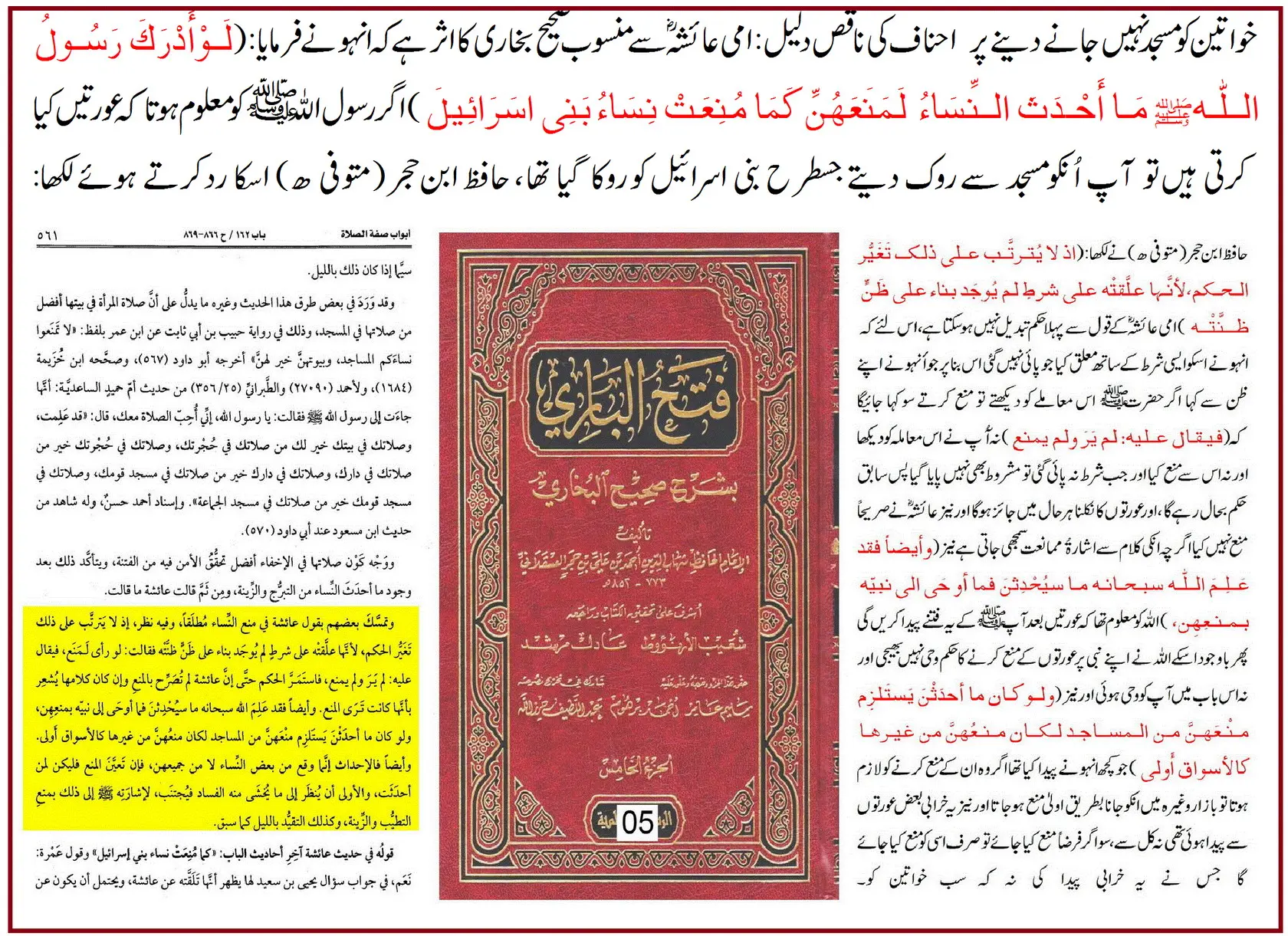
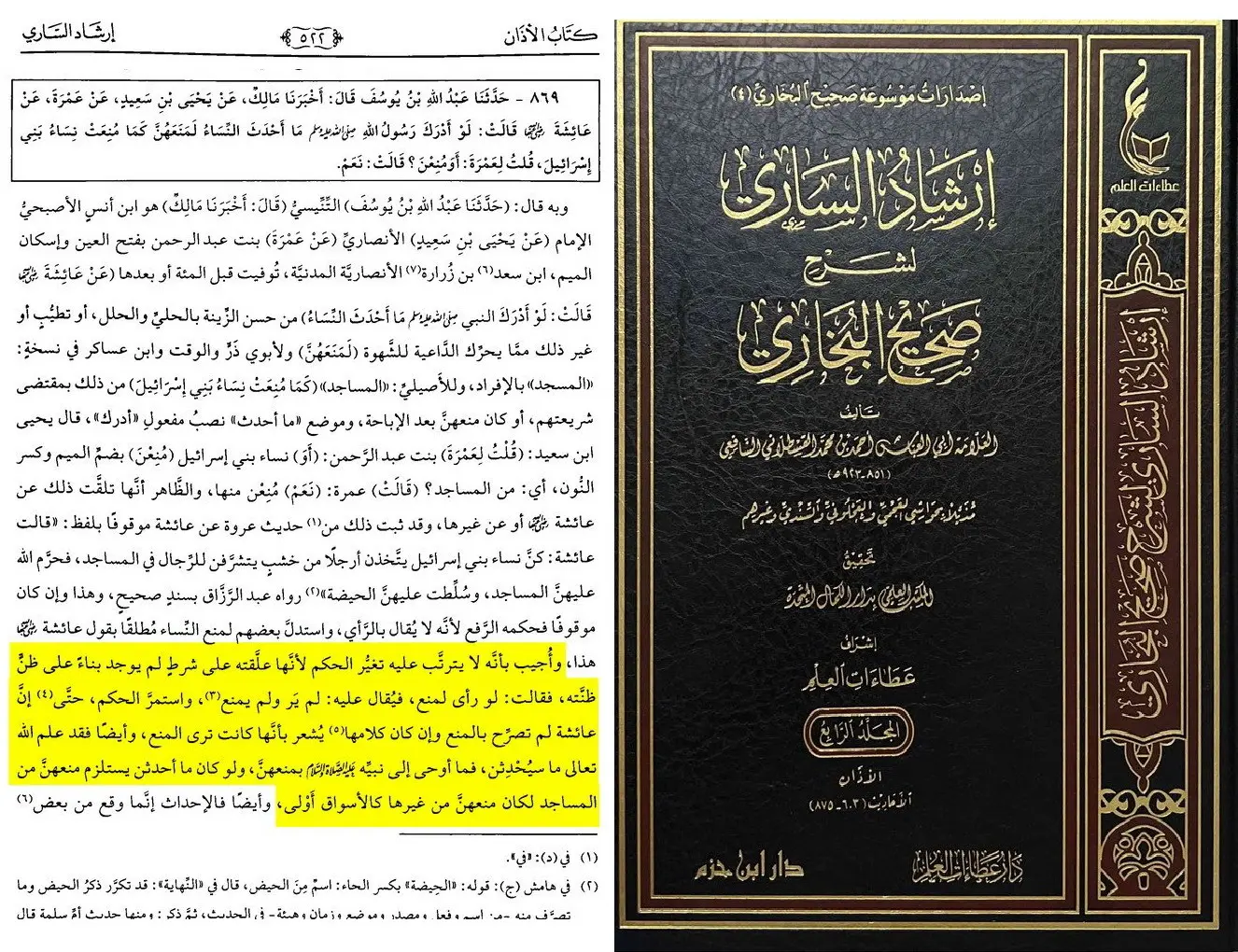
869 –
عَنْ عَمْرَةَ، عَنْ عَائِشَةَ: "لَوْ أَدْرَكَ رَسُولُ اللَّهِ ﷺ مَا أَحْدَثَ النِّسَاءُ لَمَنَعَهُنَّ، كَمَا مُنِعَتْ نِسَاءُ بَنِي إِسْرَائِيلَ”
[Ṣaḥīḥ al-Bukhārī, Kitāb al-Adhān, Ḥadīth 869]
Translation:
ʿĀʾishah رضي الله عنها said: “If the Messenger of Allah ﷺ had seen what women have innovated (today), he would have prevented them (from going to the mosque) just as the women of Banū Isrā’īl were prevented.”
① This was not a legal ruling but a statement of regret based on the changing conditions of society during her time.
② The original ruling of the Prophet ﷺ is still in place:
"لَا تَمْنَعُوا إِمَاءَ اللَّهِ مَسَاجِدَ اللَّهِ"
“Do not stop the female servants of Allah from the mosques of Allah.”
[Ṣaḥīḥ Muslim]
③ Umm al-Mu’minīn ʿĀʾishah never issued a legal prohibition, and this cannot abrogate the Prophet’s clear command.
④ The Companions, including Ibn ʿUmar and others, continued to act upon the Prophet’s ruling after his death.
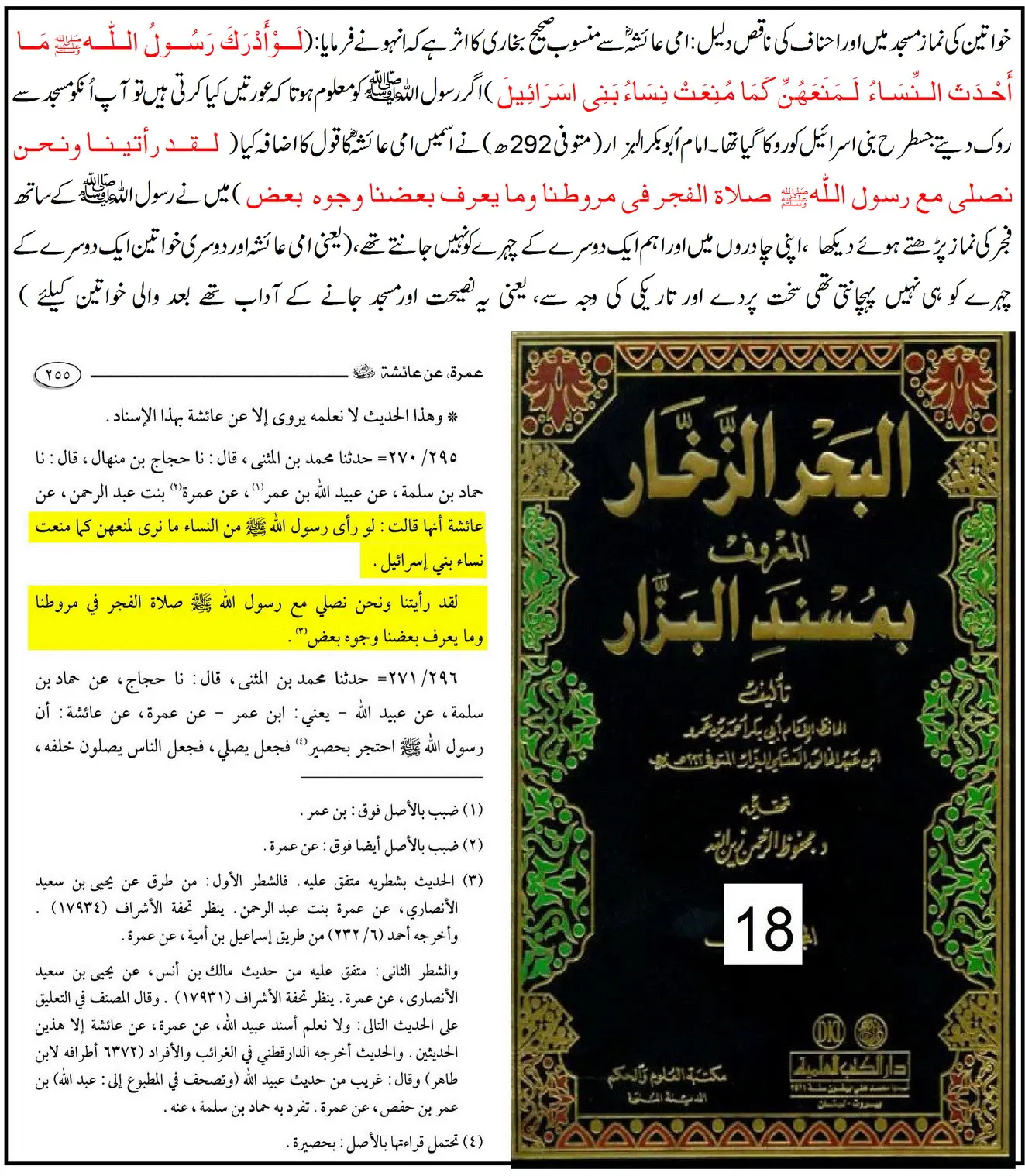
Imām al-Bazzār reported both the statement and practice of ʿĀʾishah رضي الله عنها:
"لقد رأيتنا ونحن نُصَلِّي مَعَ رَسُولِ اللَّهِ ﷺ صَلاةَ الْفَجْرِ فِي مروطِنا، وما يعرف بعضنا وجوهَ بعض"
[Musnad al-Bazzār, al-Baḥr al-Zakhkhār]
Translation:
“We used to pray Fajr with the Messenger of Allah ﷺ, wrapped in our cloaks, to the extent that we could not recognize one another’s faces.”
Conclusion:
ʿĀʾishah’s statement is a personal lament over the inappropriate conduct of some women after the Prophet’s ﷺ time, not a legal verdict of prohibition. It reflects concern, not a command.
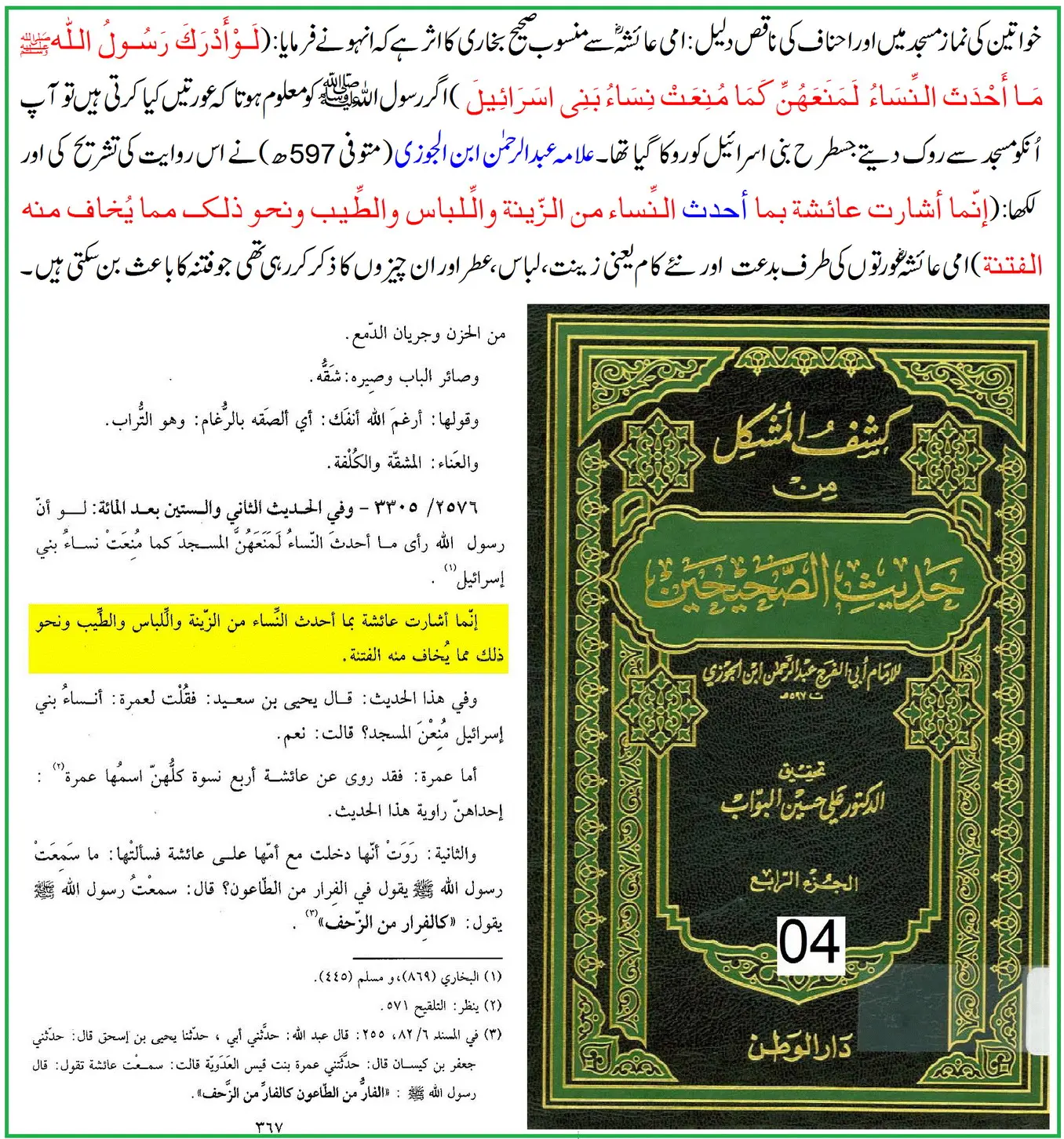
"إِنَّمَا أَشَارَتْ عَائِشَةُ بِمَا أَحْدَثَ النِّسَاءُ مِنَ الزِّينَةِ وَاللِّبَاسِ وَالطِّيبِ، مِمَّا يُخَافُ مِنْهُ الْفِتْنَةُ"
[Kashf al-Mushkil min Ḥadīth al-Ṣaḥīḥayn, Ḥadīth 2576]
Translation:
ʿĀʾishah رضي الله عنها was warning against women’s adoption of adornments, perfumes, and fancy clothing, which could potentially lead to fitnah.
Conclusion:
This is not a legal fatwā, but a moral and societal advisory that emphasizes the need for observing Islamic etiquette when attending the mosque.
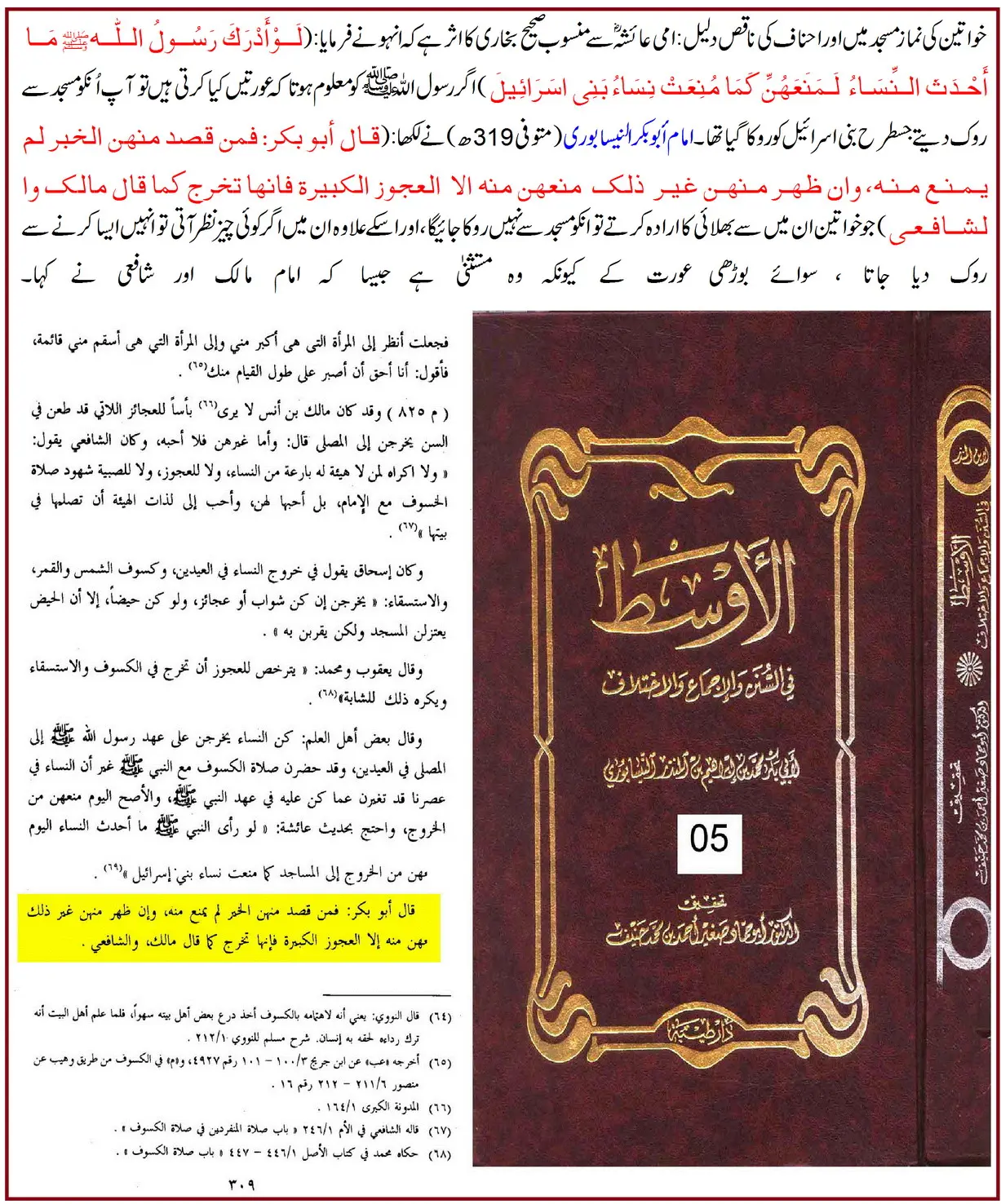
"فَمَنْ قَصَدَ مِنْهُنَّ الْخَيْرَ لَمْ يُمْنَعْ، وَإِنْ ظَهَرَ مِنْهُنَّ غَيْرُ ذَلِكَ، مُنِعَ إِلَّا الْعَجُوزَ الْكَبِيرَةَ..."
[Al-Awsaṭ fī al-Sunan wa al-Ijmāʿ wa al-Ikhtilāf]
Translation:
If a woman goes to the mosque with a righteous intention, she should not be stopped. If she exhibits inappropriate conduct, she may be stopped — except for elderly women, who may go freely.
Conclusion:
The restriction is not absolute; it is context-based. Women seeking goodness are permitted to attend.
"أما ما حدثت به عائشة، فلا حجة فيه… فمنعهن بدعة وخطأ"
[Al-Muḥallā bi al-Āthār]
Translation:
There is no legal weight in ʿĀʾishah’s statement. The Prophet ﷺ did not witness such behavior and thus did not prohibit it. To prohibit now is a bidʿah and an error.
Conclusion:
The Prophet ﷺ never forbade women from attending, hence anyone doing so now introduces a bidʿah.
"فَإِنَّهَا عَلَّقَتْهُ عَلَى شَرْطٍ لَمْ يُوجَدْ... فَيُمنَعْ مَنْ أَحْدَثَتْ، لاَ الكُلّ"
[Fatḥ al-Bārī, Sharḥ Ṣaḥīḥ al-Bukhārī, Ḥadīth 869]
Translation:
ʿĀʾishah attached the prohibition to a condition that was not met. She did not issue a direct prohibition. Only the one causing fitnah should be prevented—not all women.
Conclusion:
Women should not be prevented in general, unless actual fitnah is observed.
When Hanafis rely on weak reports and Tabiʿī opinions, the authentic hadiths and actions of the Sahabah carry more weight.
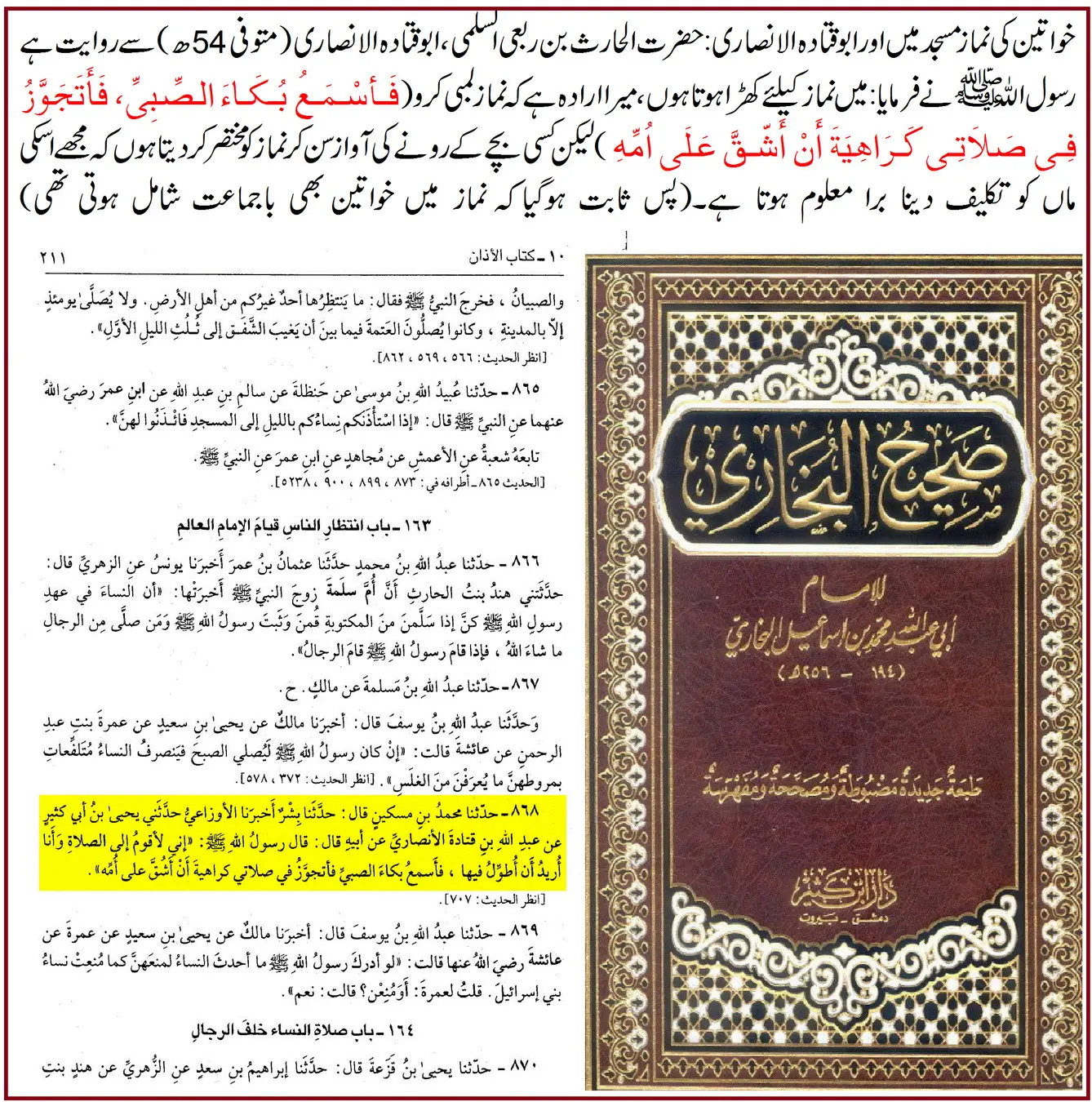
868 –
"...فَأَسْمَعُ بُكَاءَ الصَّبِيِّ، فَأَتَجَوَّزُ فِي صَلاتِي كَرَاهِيَةَ أَنْ أَشُقَّ عَلَى أُمِّهِ"
[Ṣaḥīḥ al-Bukhārī, Ḥadīth 868]
Translation:
The Prophet ﷺ said: "I hear the crying of a child during prayer, so I shorten it, fearing hardship upon his mother."
Proof:
Mothers attended congregational prayers and even brought their children.
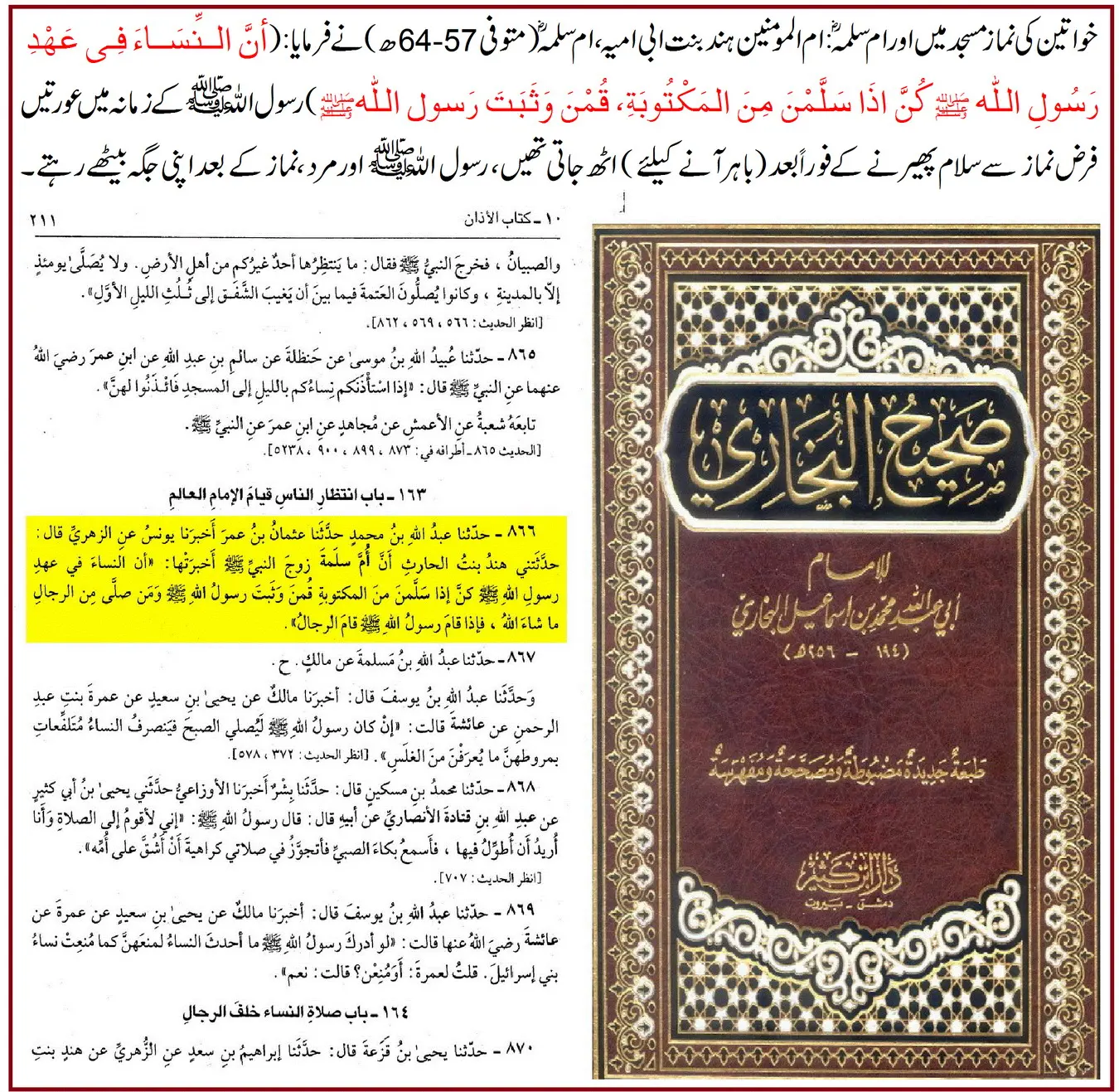
866 –
[Ṣaḥīḥ al-Bukhārī, Ḥadīth 866]
Translation:
In the Prophet’s ﷺ time, women would leave immediately after the obligatory prayer, while the men and the Prophet ﷺ would remain briefly.
Proof:
Women regularly prayed in congregation at the mosque.
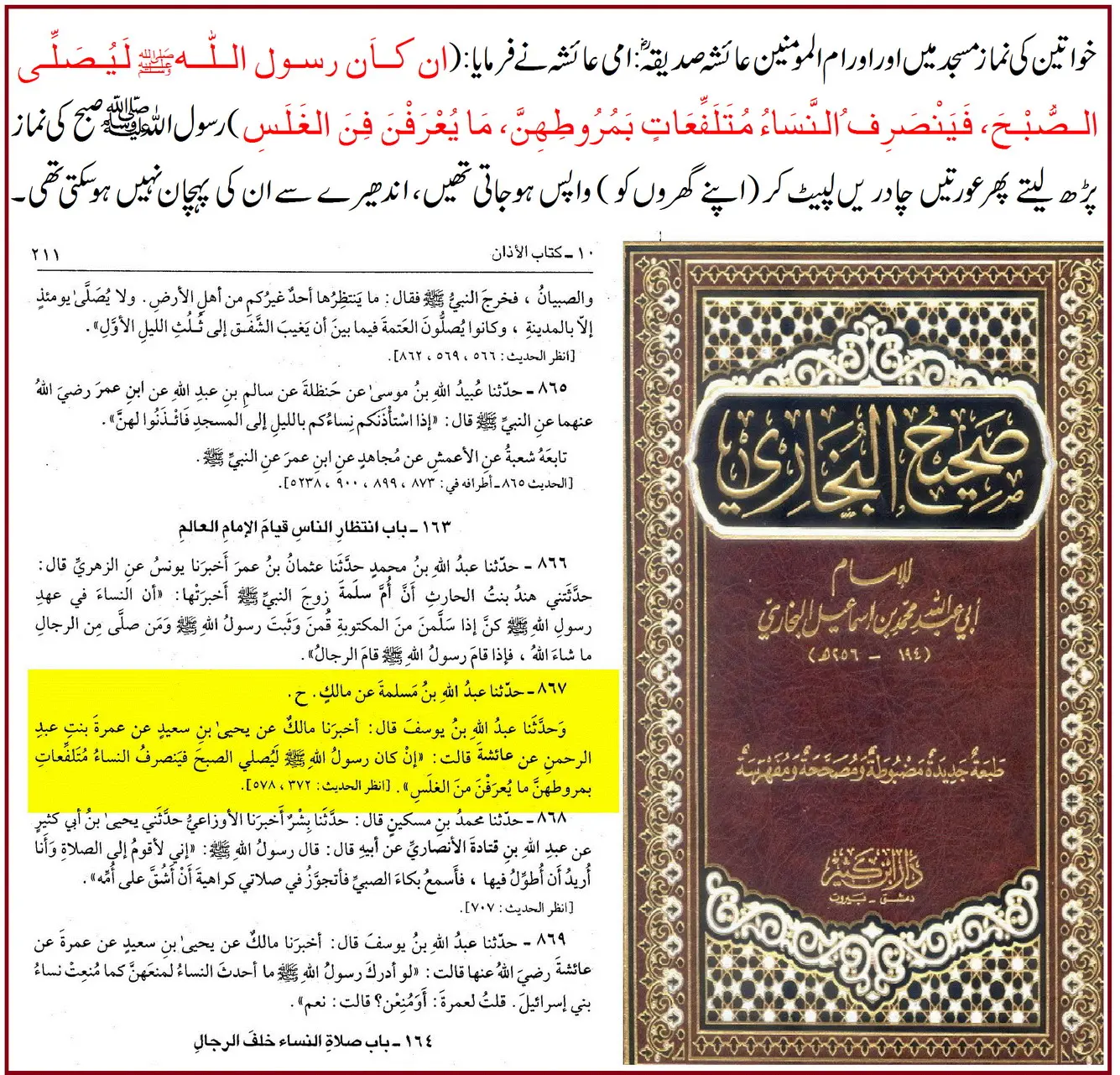
867 –
[Ṣaḥīḥ al-Bukhārī, Ḥadīth 867]
Translation:
The Prophet ﷺ would finish Fajr prayer and the women, wrapped in their garments, would depart in darkness, unrecognized due to the early hour.
Proof:
Women even attended Fajr, highlighting regular mosque participation.
( Final part with Eid evidence and conclusion in next message…)
( Continued Translation – Final Part)
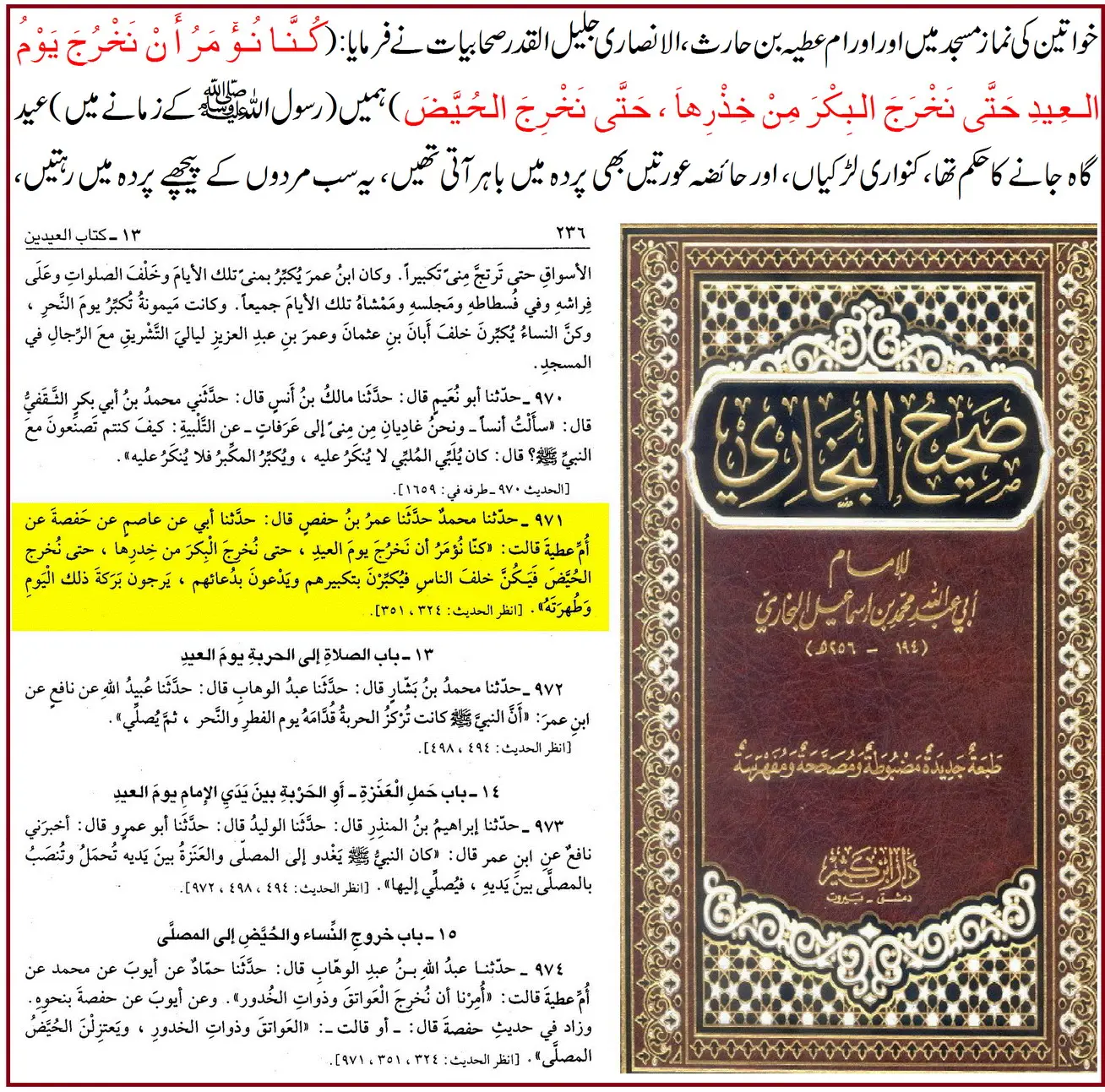
971 –
"...نُؤْمَرُ أَنْ نَخْرُجَ يَوْمَ الْعِيدِ، حَتَّى نُخْرِجَ الْبِكْرَ... وَالْحُيَّضَ... يُكَبِّرْنَ... وَيَدْعُونَ..."
[Ṣaḥīḥ al-Bukhārī, Ḥadīth 971]
Translation:
We were commanded to go out on the day of Eid—even the virgin girls from their rooms, and even menstruating women. They would remain behind the people, joining in the takbīr and duʿā’, seeking the blessings of that day.
Proof:
Even menstruating women were commanded to attend. Their presence was seen as virtuous, not a source of fitnah.
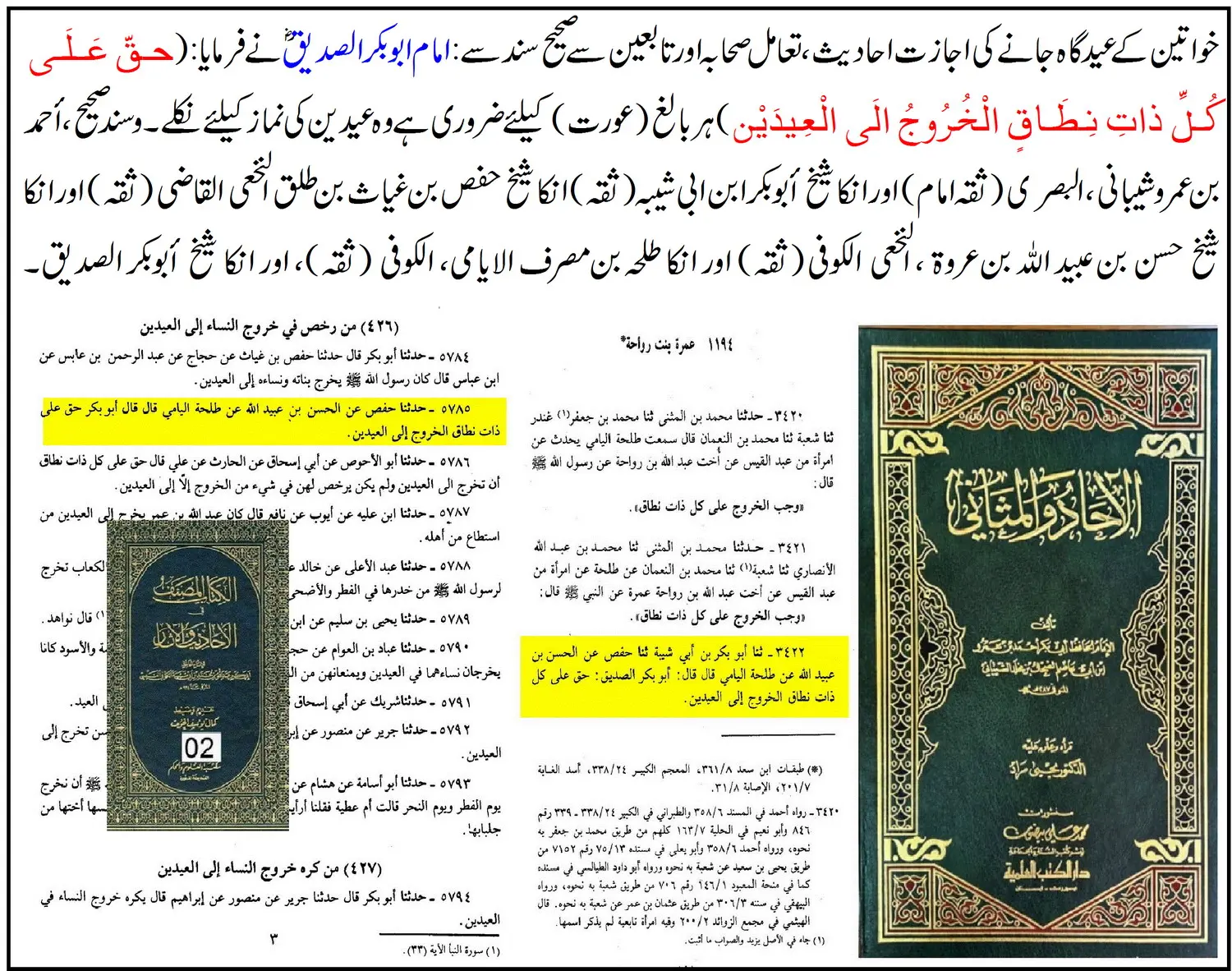
5785 –
"حَقٌّ عَلَى كُلِّ ذَاتِ نِطَاقٍ الْخُرُوجُ إِلَى الْعِيدَيْنِ"
[Musannaf Ibn Abī Shaybah, al-Āḥād wa al-Mathānī by Ibn Abī ʿĀṣim]
Translation:
It is obligatory upon every woman with a waistband (i.e. adult) to go out for the two Eid prayers.
Chain Authentication:
Proof:
The first Caliph of Islam gave a religious verdict affirming women’s obligation to attend Eid prayers.
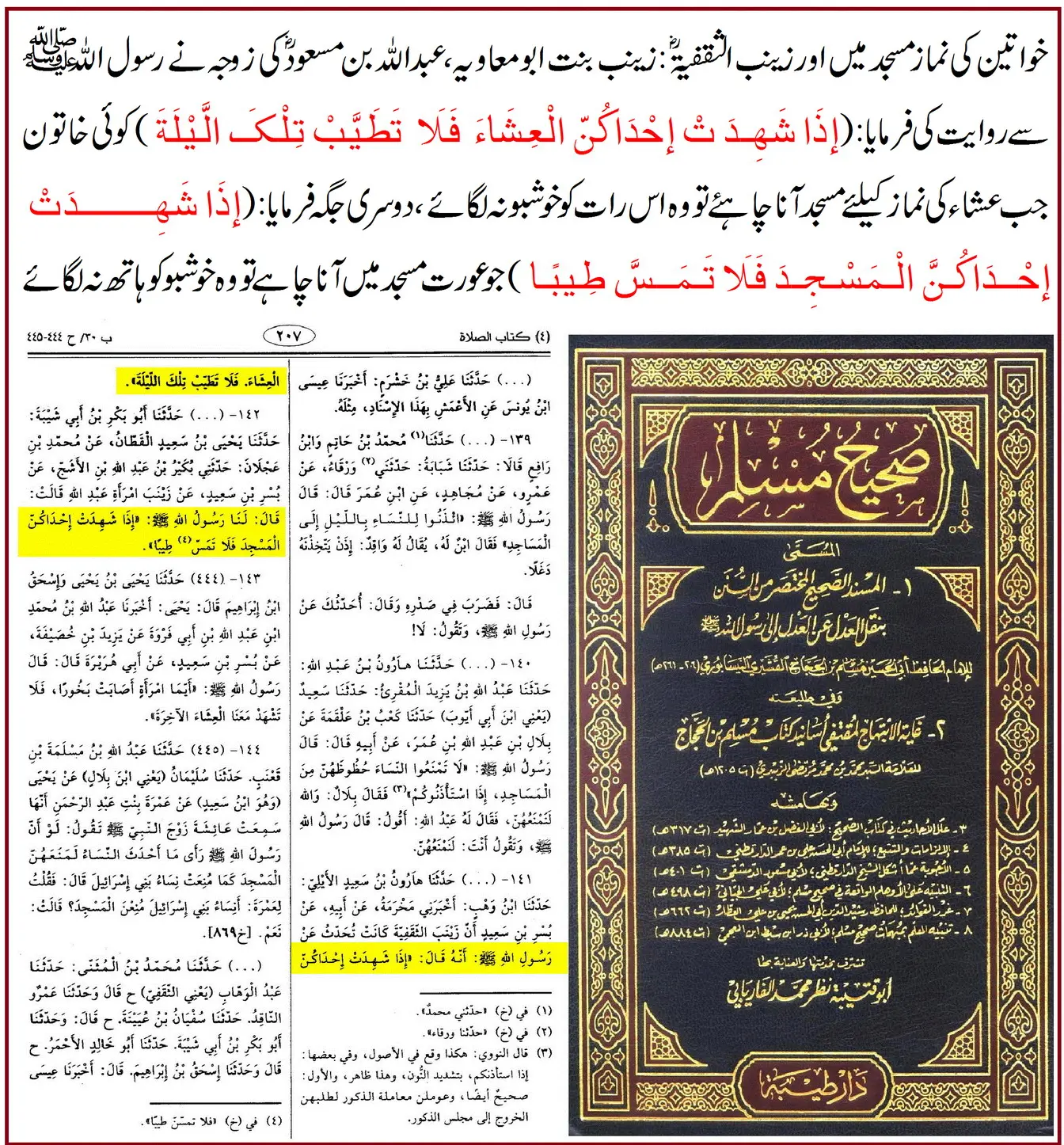
 Ḥadīth 1:
"إِذَا شَهِدَتْ إِحْدَاكُنَّ الْعِشَاءَ فَلَا تَمَسَّ طِيبًا"
Ḥadīth 2:
"إِذَا شَهِدَتْ إِحْدَاكُنَّ الْمَسْجِدَ فَلَا تَمَسَّ طِيبًا"
[Ṣaḥīḥ Muslim, Ḥadīth 443]
Translation:
When any of you attend the night (ʿIshāʾ) prayer or the mosque, let her not wear perfume.
Proof:
The Prophet ﷺ did not forbid women from attending—he only regulated their conduct.
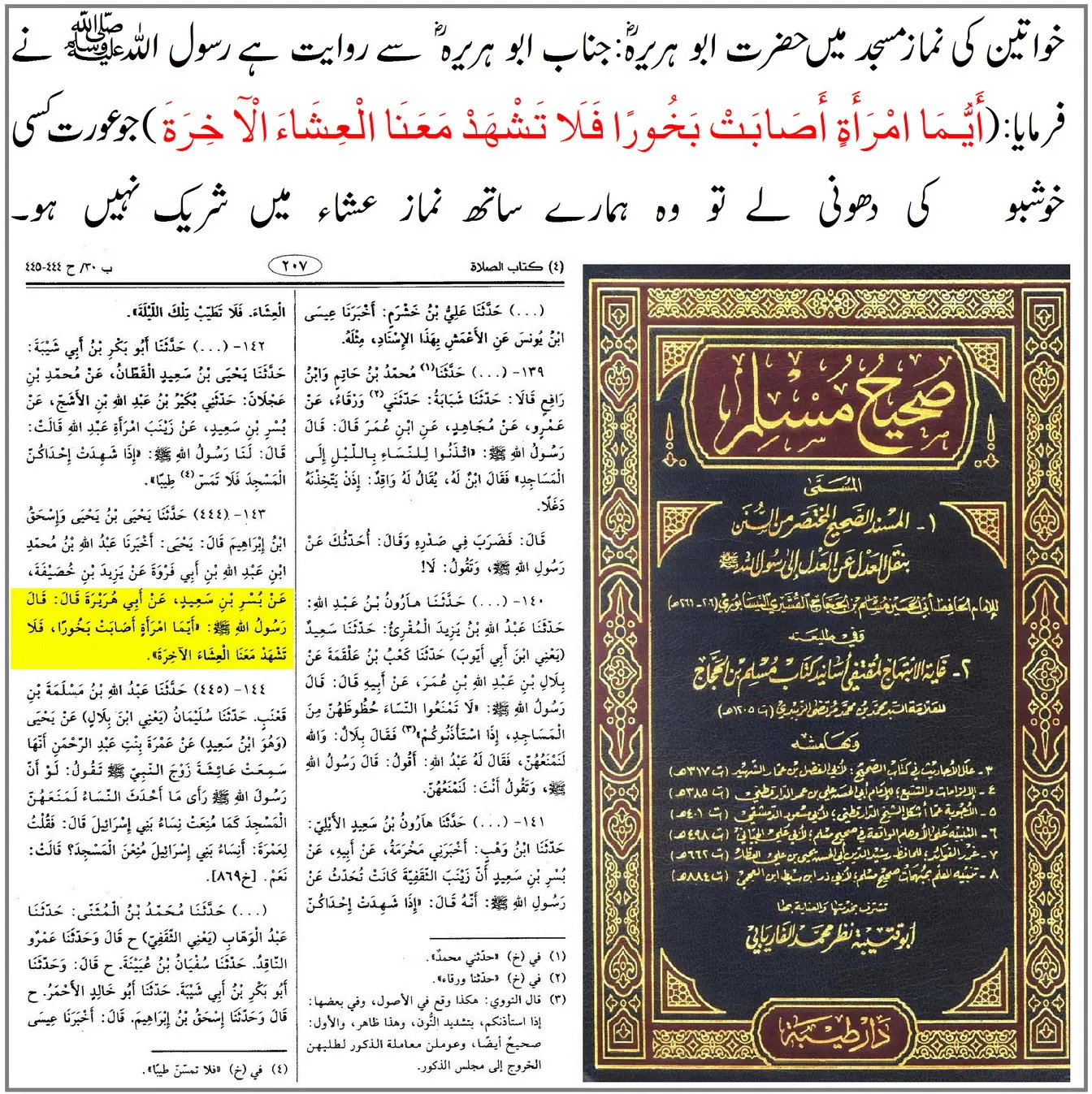
"أَيُّمَا امْرَأَةٍ أَصَابَتْ بَخُورًا فَلَا تَشْهَدْ مَعَنَا الْعِشَاءَ الْآخِرَةَ"
[Ṣaḥīḥ Muslim, Ḥadīth 444]
Translation:
Any woman who applies incense should not join us for the last ʿIshāʾ prayer.
Proof:
Again, the prohibition is for wearing perfume, not for attending the mosque.
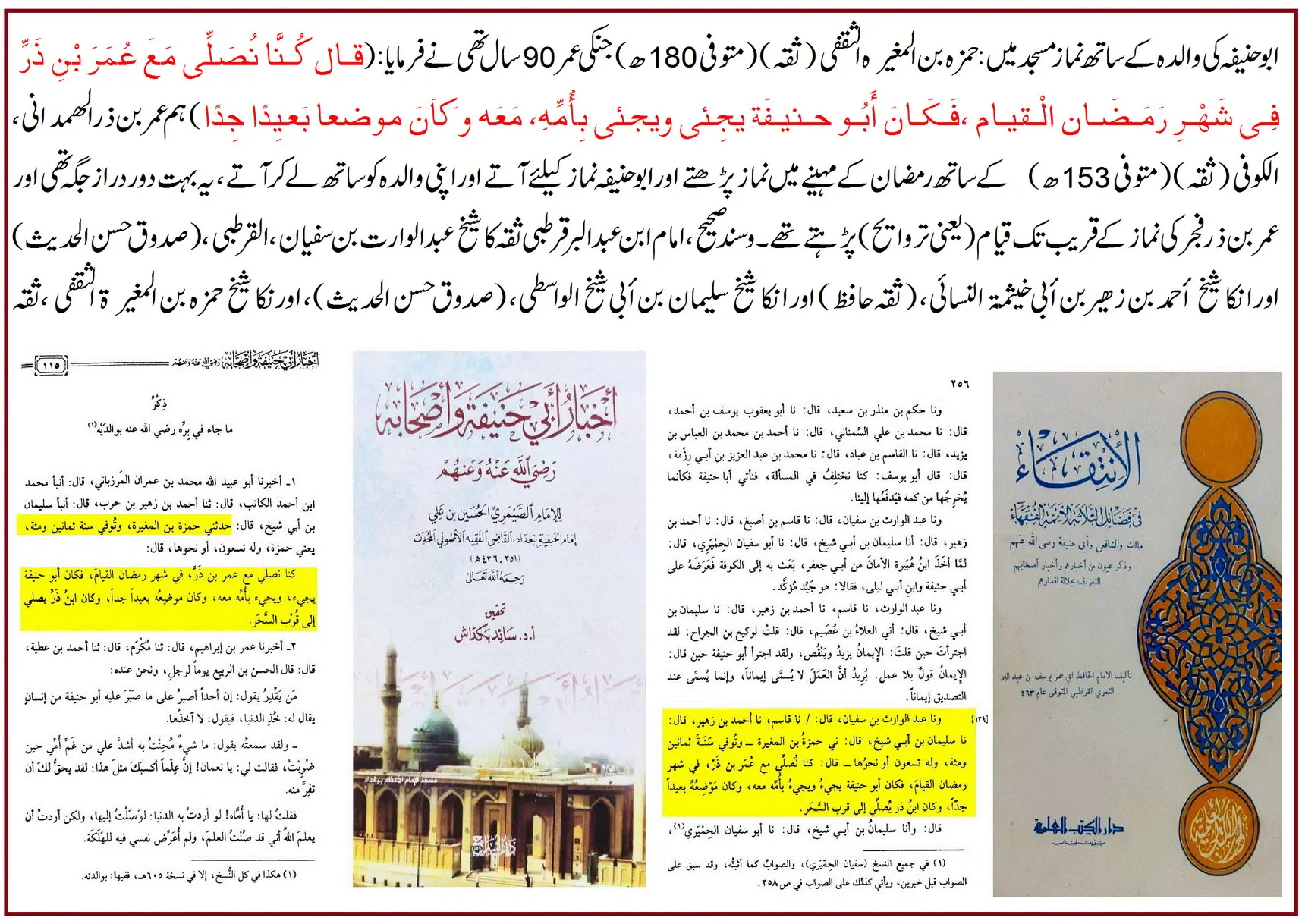
Narrated by Ḥamzah ibn al-Mughīrah al-Thaqafī (d. 180 AH):
"كَانَ أَبُو حَنِيفَةَ يَجِئُ وَيَجِئُ بِأُمِّهِ مَعَهُ... وَكَانَ ابْنُ ذَرٍّ يُصَلِّي إِلَى قُرْبِ السَّحَرِ"
[Al-Intiqāʾ fī Faḍāʾil al-Thalāthah al-Aʾimmah al-Fuqahāʾ]
Translation:
Abū Ḥanīfah used to go for night prayers (Tarāwīḥ) and would bring his mother with him, even though the mosque was far, and the prayer would last until near dawn.
Proof:
Even the founder of the Ḥanafī school brought his mother to the mosque — a practical contradiction to later Ḥanafī positions.
✦ The authentic narrations, practice of the Companions, and even Abū Ḥanīfah’s own conduct show clearly that:
✔ Preventing women from going to the mosque, for Eid or Tarāwīḥ, is against the Sunnah and the Salaf's practice.
✔ The Hanafi arguments are based on weak narrations and selective opinions of the Tabiʿīn — which they themselves do not consistently follow.
✔ If “fear of fitnah” is used as justification, then marketplaces and malls should also be declared makrūh — yet no such fatwa has been issued.
✔ Ahl al-Sunnah wa al-Jamāʿah should revive the Sunnah by permitting women to attend mosques, following the noble examples of the female Companions.
In recent times, certain groups—particularly those following the Hanafi school—strictly prohibit women from attending mosques. They even consider it “Makruh Tahrimi” (prohibitively disliked) for women to attend significant gatherings such as the Eid or Tarawih prayers.
This stance is rooted in ignorance, lack of familiarity with the Prophetic Ahadith, and a deviation from the practices of the noble Companions and the Tabi'un.
This article not only exposes the weakness in the Hanafi arguments but also, through authentic Ahadith and the actions of the Companions, demonstrates that women's attendance in mosques is proven from the Sunnah of the Prophet ﷺ and the practice of the Sahabah.
 Hanafi Evidence #1 — The Athar (Report) of Ibn ʿUmar رضي الله عنهما
Hanafis cite the following narration:
5795 –حَدَّثَنَا وَكِيعٌ، عَنْ سُفْيَانَ، عَنْ عَبْدِ اللَّهِ بْنِ جَابِرٍ، عَنْ نَافِعٍ، عَنِ ابْنِ عُمَرَ: "أَنَّهُ كَانَ لَا يُخْرِجُ نِسَاءَهُ فِي الْعِيدَيْنِ”
[Musannaf Ibn Abi Shaybah, Vol. 4, p. 234, Ḥadīth 5795] Translation:ʿAbdullāh ibn ʿUmar رضي الله عنهما did not bring out his womenfolk for the two Eid prayers.
 Response 01 — Analysis of the Chain
This narration is weak (daʿīf) and munkar due to two core issues:
① Sufyān al-Thawrī is a mudallis (ambiguous transmitter), and he narrates using the ambiguous term “ʿan”, which makes the chain unreliable.
② ʿAbdullāh ibn Jābir is graded by Ibn Ḥajar as:
3244 – عبد الله بن جابر أبو حمزة، البصري:"Maqbūl – Only accepted when supported; otherwise he is weak (layyin al-ḥadīth).”
[Taqrīb al-Tahdhīb] Response 02 — The Authentic Report from Ibn ʿUmar
A sound (ṣaḥīḥ) narration from Ibn ʿUmar gives a completely opposite picture:
5787 –حَدَّثَنَا ابْنُ عُلَيَّةَ، عَنْ أَيُّوبَ، عَنْ نَافِعٍ، قَالَ: "كَانَ عَبْدُ اللَّهِ بْنُ عُمَرَ، يَخْرُجُ إِلَى الْعِيدَيْنِ مَنِ اسْتَطَاعَ مِنْ أَهْلِهِ”
[Musannaf Ibn Abi Shaybah, Vol. 4, p. 233, Ḥadīth 5787] Translation:Nāfiʿ said: ʿAbdullāh ibn ʿUmar رضي الله عنهما would bring out whoever among his household was able to attend the Eid prayers.
Chain Authentication:- Ismāʿīl ibn ʿUlayyah: Thiqah, ḥujjah, ḥāfiẓ
- Ayyūb al-Sakhtiyānī: Thiqah, proven
- Nāfiʿ (mawlā of Ibn ʿUmar): Muttafaq ʿalayh (agreed upon)
According to the principles of the majority of scholars of ḥadīth, this narration is Ṣaḥīḥ and proves that Ibn ʿUmar used to bring women from his household to the Eid prayers. Response 03 — Ḥadīth of the Prophet ﷺ Narrated by Ibn ʿUmar
Ibn ʿUmar himself narrates the following marfūʿ ḥadīth from the Prophet ﷺ:
865 –حَدَّثَنَا عُبَيْدُ اللَّهِ بْنُ مُوسَى، عَنْ حَنْظَلَةَ، عَنْ سَالِمِ بْنِ عَبْدِ اللَّهِ، عَنِ ابْنِ عُمَرَ، قَالَ: "إِذَا اسْتَأْذَنَكُمْ نِسَاؤُكُمْ بِاللَّيْلِ إِلَى الْمَسْجِدِ، فَأْذَنُوا لَهُنَّ”
[Ṣaḥīḥ al-Bukhārī, Kitāb al-Adhān, Ḥadīth 865] Translation:The Messenger of Allah ﷺ said: “When your women seek permission to go to the masjid at night, grant them permission.”
Question:Would a noble companion like Ibn ʿUmar—the narrator of this very ḥadīth—act contrary to it? Never!
Hanafi Evidence #2 — Statement of ʿUrwah ibn al-Zubayr رحمه الله
The second Hanafi evidence is:
5796 –حَدَّثَنَا أَبُو أُسَامَةَ، عَنْ هِشَامِ بْنِ عُرْوَةَ، عَنْ أَبِيهِ: "أَنَّهُ كَانَ لَا يَدَعُ امْرَأَةً مِنْ أَهْلِهِ تَخْرُجُ إِلَى فِطْرٍ، وَلَا إِلَى أَضْحَى”
[Musannaf Ibn Abi Shaybah, Vol. 4, p. 234, Ḥadīth 5796] Translation:ʿUrwah ibn al-Zubayr would not allow any of his women to go out for ʿĪd al-Fiṭr or ʿĪd al-Aḍḥā.
Response
① This is a statement of a Tabiʿī, not the Prophet ﷺ or the Sahabah. Legislative evidence in Islam is derived from the Qur’an, authentic Sunnah, and the consensus of the Companions, not from a lone view of a Tabiʿī.
② ʿUrwah’s statement contradicts other authentic reports and even other positions of ʿUrwah which the Hanafis themselves do not follow.
Example 1 — Recitation Behind the Imam:
279 –مَالِكٌ، عَنْ هِشَامِ بْنِ عُرْوَةَ، عَنْ أَبِيهِ: "أَنَّهُ كَانَ يَقْرَأُ خَلْفَ الْإِمَامِ، فِيمَا لَا يَجْهَرُ فِيهِ الْإِمَامُ”
[Al-Muwaṭṭa’ of Mālik] ʿUrwah would recite behind the imam in silent prayers—against Hanafi view which prohibits this. Example 2 — Wudu after Touching Private Part:
116 –عَنْ هِشَامِ بْنِ عُرْوَةَ، عَنْ أَبِيهِ: "مَنْ مَسَّ ذَكَرَهُ، فَقَدْ وَجَبَ عَلَيْهِ الْوُضُوءُ”
[Al-Muwaṭṭa’ of Mālik] ʿUrwah held that touching one's private part invalidates wudū’—contrary to Hanafi view. Hanafi Evidence #3 — Qāsim ibn Muḥammad ibn Abī Bakr رحمه الله
5797 –"كَانَ الْقَاسِمُ أَشَدَّ شَيْءٍ عَلَى الْعَوَاتِقِ، لَا يَدَعُهُنَّ يَخْرُجْنَ فِي الْفِطْرِ وَالْأَضْحَى”
[Musannaf Ibn Abi Shaybah, Vol. 4, p. 234, Ḥadīth 5797] Translation:Qāsim ibn Muḥammad used to be very strict with young women and did not allow them to go out for ʿĪd prayers.
Response — Chain Criticism
The narrator Abū Dāwūd al-Ṭayālisī is criticized:
Abū Ḥātim al-Rāzī said:"Abū Dāwūd was truthful, but he made many errors."
[al-Jarḥ wa al-Taʿdīl] Ibn Ḥajar al-ʿAsqalānī:"He is trustworthy, but made mistakes in ḥadīths."
[Taqrīb al-Tahdhīb] Ibrāhīm ibn Saʿīd al-Jawharī:"He made mistakes in a thousand ḥadīths."
[al-Kāmil fī Ḍuʿafā’ al-Rijāl] Hanafi Evidence #4 — Statement of Ibrāhīm al-Nakhaʿī رحمه الله
5798 / 5844 –"كُرِهَ لِلشَّابَّةِ أَنْ تَخْرُجَ إِلَى الْعِيدَيْنِ”
[Musannaf Ibn Abi Shaybah, Vol. 4, p. 234] Translation:Ibrāhīm al-Nakhaʿī said that it is disliked for a young woman to go out for Eid.
Response — Contradictions & Double Standards
The Hanafis themselves reject several of Ibrāhīm al-Nakhaʿī’s positions in more critical legal matters:
Example 1 — Husband Giving Ghusl to Deceased Wife:
Nakhaʿī: Permissible
Abū Ḥanīfah: Makrūh (disliked)
[al-Āthār by Muḥammad] Example 2 — Execution of Apostate Woman:
Nakhaʿī: Execute
Abū Ḥanīfah: Do not execute
[al-Āthār] Example 3 — Amputation for Grave Robbers:
Nakhaʿī: Cut the hand
Abū Ḥanīfah: Do not cut—property wasn’t secured
[al-Āthār] Hanafi Evidence #5 — Statement Attributed to Sufyān al-Thawrī رحمه الله
540 –"وَيُرْوَى عَنْ سُفْيَانَ الثَّوْرِيِّ أَنَّهُ كَرِهَ الْيَوْمَ الْخُرُوجَ لِلنِّسَاءِ إِلَى الْعِيدِ”
[Jāmiʿ al-Tirmidhī, Kitāb al-Jumuʿah, Bāb: Karāhah Khurūj al-Nisāʾ ilā al-ʿĪdayn] Translation:It is narrated from Sufyān al-Thawrī that he disliked women going out for Eid prayers.
Response — Weak Attribution & Clarification
Imām al-Tirmidhī uses the term "yurwā" (it is narrated), which implies a weak or uncertain chain.
However, Sufyān al-Thawrī himself narrated and supported the authentic ḥadīth:
1677 –قَالَ سُفْيَانُ: "حَفِظْتُهُ مِنَ الزُّهْرِيِّ، عَنْ سَالِمٍ، عَنْ أَبِيهِ، قَالَ النَّبِيُّ ﷺ: «إِذَا اسْتَأْذَنَتْ أَحَدَكُمُ امْرَأَتُهُ إِلَى الْمَسْجِدِ فَلَا يَمْنَعْهَا»”
[Ṣaḥīḥ Ibn Khuzaymah, Ḥadīth 1677] Translation:The Prophet ﷺ said: “If a woman from among you seeks permission to go to the mosque, do not stop her.”
Sufyān added a clarification:
"نَرَى أَنَّهُ بِاللَّيْلِ" — "We believe this refers to night-time." Explanation:Sufyān did not oppose the ḥadīth, but rather restricted its application to night-time, based on ḥikmah (contextual wisdom)—not prohibition.
Hanafi Evidence #6 — Statement of Umm al-Mu’minīn ʿĀʾishah رضي الله عنها
This is considered the strongest Hanafi evidence:
869 –عَنْ عَمْرَةَ، عَنْ عَائِشَةَ: "لَوْ أَدْرَكَ رَسُولُ اللَّهِ ﷺ مَا أَحْدَثَ النِّسَاءُ لَمَنَعَهُنَّ، كَمَا مُنِعَتْ نِسَاءُ بَنِي إِسْرَائِيلَ”
[Ṣaḥīḥ al-Bukhārī, Kitāb al-Adhān, Ḥadīth 869] Translation:ʿĀʾishah رضي الله عنها said: “If the Messenger of Allah ﷺ had seen what women have innovated (today), he would have prevented them (from going to the mosque) just as the women of Banū Isrā’īl were prevented.”
Response — Explanation of Context
① This was not a legal ruling but a statement of regret based on the changing conditions of society during her time.
② The original ruling of the Prophet ﷺ is still in place:
"لَا تَمْنَعُوا إِمَاءَ اللَّهِ مَسَاجِدَ اللَّهِ"
“Do not stop the female servants of Allah from the mosques of Allah.”
[Ṣaḥīḥ Muslim]
③ Umm al-Mu’minīn ʿĀʾishah never issued a legal prohibition, and this cannot abrogate the Prophet’s clear command.
④ The Companions, including Ibn ʿUmar and others, continued to act upon the Prophet’s ruling after his death.
 Response 01 — Clarification by Imām Abū Bakr al-Bazzār رحمه الله
Imām al-Bazzār reported both the statement and practice of ʿĀʾishah رضي الله عنها:"لقد رأيتنا ونحن نُصَلِّي مَعَ رَسُولِ اللَّهِ ﷺ صَلاةَ الْفَجْرِ فِي مروطِنا، وما يعرف بعضنا وجوهَ بعض"
[Musnad al-Bazzār, al-Baḥr al-Zakhkhār] Translation:“We used to pray Fajr with the Messenger of Allah ﷺ, wrapped in our cloaks, to the extent that we could not recognize one another’s faces.”
Conclusion:ʿĀʾishah’s statement is a personal lament over the inappropriate conduct of some women after the Prophet’s ﷺ time, not a legal verdict of prohibition. It reflects concern, not a command.
Response 02 — Explanation by Ḥāfiẓ ʿAbd al-Raḥmān ibn al-Jawzī رحمه الله
"إِنَّمَا أَشَارَتْ عَائِشَةُ بِمَا أَحْدَثَ النِّسَاءُ مِنَ الزِّينَةِ وَاللِّبَاسِ وَالطِّيبِ، مِمَّا يُخَافُ مِنْهُ الْفِتْنَةُ" [Kashf al-Mushkil min Ḥadīth al-Ṣaḥīḥayn, Ḥadīth 2576] Translation:ʿĀʾishah رضي الله عنها was warning against women’s adoption of adornments, perfumes, and fancy clothing, which could potentially lead to fitnah.
Conclusion:This is not a legal fatwā, but a moral and societal advisory that emphasizes the need for observing Islamic etiquette when attending the mosque.
Response 03 — Clarifications by Imāms Abū Bakr al-Naysābūrī, Ibn Ḥazm, and Ibn Ḥajar
(1) Imām Abū Bakr al-Naysābūrī (d. 319 AH) stated:
"فَمَنْ قَصَدَ مِنْهُنَّ الْخَيْرَ لَمْ يُمْنَعْ، وَإِنْ ظَهَرَ مِنْهُنَّ غَيْرُ ذَلِكَ، مُنِعَ إِلَّا الْعَجُوزَ الْكَبِيرَةَ..." [Al-Awsaṭ fī al-Sunan wa al-Ijmāʿ wa al-Ikhtilāf] Translation:If a woman goes to the mosque with a righteous intention, she should not be stopped. If she exhibits inappropriate conduct, she may be stopped — except for elderly women, who may go freely.
Conclusion:The restriction is not absolute; it is context-based. Women seeking goodness are permitted to attend.
(2) Imām Ibn Ḥazm al-Andalusī (d. 456 AH) said:
"أما ما حدثت به عائشة، فلا حجة فيه… فمنعهن بدعة وخطأ" [Al-Muḥallā bi al-Āthār] Translation:There is no legal weight in ʿĀʾishah’s statement. The Prophet ﷺ did not witness such behavior and thus did not prohibit it. To prohibit now is a bidʿah and an error.
Conclusion:The Prophet ﷺ never forbade women from attending, hence anyone doing so now introduces a bidʿah.
(3) Ḥāfiẓ Ibn Ḥajar al-ʿAsqalānī (d. 852 AH) explained:
"فَإِنَّهَا عَلَّقَتْهُ عَلَى شَرْطٍ لَمْ يُوجَدْ... فَيُمنَعْ مَنْ أَحْدَثَتْ، لاَ الكُلّ" [Fatḥ al-Bārī, Sharḥ Ṣaḥīḥ al-Bukhārī, Ḥadīth 869] Translation:ʿĀʾishah attached the prohibition to a condition that was not met. She did not issue a direct prohibition. Only the one causing fitnah should be prevented—not all women.
Conclusion:Women should not be prevented in general, unless actual fitnah is observed.
Practice of the Companions — Proofs of Women's Mosque Attendance
When Hanafis rely on weak reports and Tabiʿī opinions, the authentic hadiths and actions of the Sahabah carry more weight.
(1) Abū Qatādah رضي الله عنه:
868 –"...فَأَسْمَعُ بُكَاءَ الصَّبِيِّ، فَأَتَجَوَّزُ فِي صَلاتِي كَرَاهِيَةَ أَنْ أَشُقَّ عَلَى أُمِّهِ"
[Ṣaḥīḥ al-Bukhārī, Ḥadīth 868] Translation:The Prophet ﷺ said: "I hear the crying of a child during prayer, so I shorten it, fearing hardship upon his mother."
Proof:Mothers attended congregational prayers and even brought their children.
(2) Umm Salamah رضي الله عنها:
866 – [Ṣaḥīḥ al-Bukhārī, Ḥadīth 866] Translation:In the Prophet’s ﷺ time, women would leave immediately after the obligatory prayer, while the men and the Prophet ﷺ would remain briefly.
Proof:Women regularly prayed in congregation at the mosque.
(3) ʿĀʾishah رضي الله عنها:
867 – [Ṣaḥīḥ al-Bukhārī, Ḥadīth 867] Translation:The Prophet ﷺ would finish Fajr prayer and the women, wrapped in their garments, would depart in darkness, unrecognized due to the early hour.
Proof:Women even attended Fajr, highlighting regular mosque participation.
(
Final part with Eid evidence and conclusion in next message…)(
Continued Translation – Final Part) Practice of the Female Companions — Attendance at Eid Prayers
(4) Umm ʿAṭiyyah al-Anṣāriyyah رضي الله عنها:
971 –"...نُؤْمَرُ أَنْ نَخْرُجَ يَوْمَ الْعِيدِ، حَتَّى نُخْرِجَ الْبِكْرَ... وَالْحُيَّضَ... يُكَبِّرْنَ... وَيَدْعُونَ..."
[Ṣaḥīḥ al-Bukhārī, Ḥadīth 971] Translation:We were commanded to go out on the day of Eid—even the virgin girls from their rooms, and even menstruating women. They would remain behind the people, joining in the takbīr and duʿā’, seeking the blessings of that day.
Proof:Even menstruating women were commanded to attend. Their presence was seen as virtuous, not a source of fitnah.
(5) Statement of Abū Bakr al-Ṣiddīq رضي الله عنه:
5785 –"حَقٌّ عَلَى كُلِّ ذَاتِ نِطَاقٍ الْخُرُوجُ إِلَى الْعِيدَيْنِ"
[Musannaf Ibn Abī Shaybah, al-Āḥād wa al-Mathānī by Ibn Abī ʿĀṣim] Translation:It is obligatory upon every woman with a waistband (i.e. adult) to go out for the two Eid prayers.
Chain Authentication:- Ḥafṣ ibn Ghiyāth: Thiqah
- Ḥasan ibn ʿUbayd Allāh: Thiqah
- Ṭalḥah al-Yāmī: Thiqah
Proof:The first Caliph of Islam gave a religious verdict affirming women’s obligation to attend Eid prayers.
(6) Zaynab al-Thaqafiyyah رضي الله عنها — Wife of ʿAbdullāh ibn Masʿūd رضي الله عنه:
Ḥadīth 1:"إِذَا شَهِدَتْ إِحْدَاكُنَّ الْعِشَاءَ فَلَا تَمَسَّ طِيبًا"
Ḥadīth 2:"إِذَا شَهِدَتْ إِحْدَاكُنَّ الْمَسْجِدَ فَلَا تَمَسَّ طِيبًا"
[Ṣaḥīḥ Muslim, Ḥadīth 443] Translation:When any of you attend the night (ʿIshāʾ) prayer or the mosque, let her not wear perfume.
Proof:The Prophet ﷺ did not forbid women from attending—he only regulated their conduct.
(7) Abū Hurayrah رضي الله عنه narrated:
"أَيُّمَا امْرَأَةٍ أَصَابَتْ بَخُورًا فَلَا تَشْهَدْ مَعَنَا الْعِشَاءَ الْآخِرَةَ" [Ṣaḥīḥ Muslim, Ḥadīth 444] Translation:Any woman who applies incense should not join us for the last ʿIshāʾ prayer.
Proof:Again, the prohibition is for wearing perfume, not for attending the mosque.
(8) Imām Abū Ḥanīfah رحمه الله and His Mother’s Practice:
Narrated by Ḥamzah ibn al-Mughīrah al-Thaqafī (d. 180 AH):"كَانَ أَبُو حَنِيفَةَ يَجِئُ وَيَجِئُ بِأُمِّهِ مَعَهُ... وَكَانَ ابْنُ ذَرٍّ يُصَلِّي إِلَى قُرْبِ السَّحَرِ"
[Al-Intiqāʾ fī Faḍāʾil al-Thalāthah al-Aʾimmah al-Fuqahāʾ] Translation:Abū Ḥanīfah used to go for night prayers (Tarāwīḥ) and would bring his mother with him, even though the mosque was far, and the prayer would last until near dawn.
Proof:Even the founder of the Ḥanafī school brought his mother to the mosque — a practical contradiction to later Ḥanafī positions.
 Final Summary:
✦ The authentic narrations, practice of the Companions, and even Abū Ḥanīfah’s own conduct show clearly that:✔ Preventing women from going to the mosque, for Eid or Tarāwīḥ, is against the Sunnah and the Salaf's practice.
✔ The Hanafi arguments are based on weak narrations and selective opinions of the Tabiʿīn — which they themselves do not consistently follow.
✔ If “fear of fitnah” is used as justification, then marketplaces and malls should also be declared makrūh — yet no such fatwa has been issued.
✔ Ahl al-Sunnah wa al-Jamāʿah should revive the Sunnah by permitting women to attend mosques, following the noble examples of the female Companions.