

Compiled by: Abu Hamzah Salafi
الحمد للہ وحدہ، والصلوٰۃ والسلام علی من لا نبی بعدہ۔
All praise is for Allah alone, and peace and blessings be upon the one after whom there is no prophet.
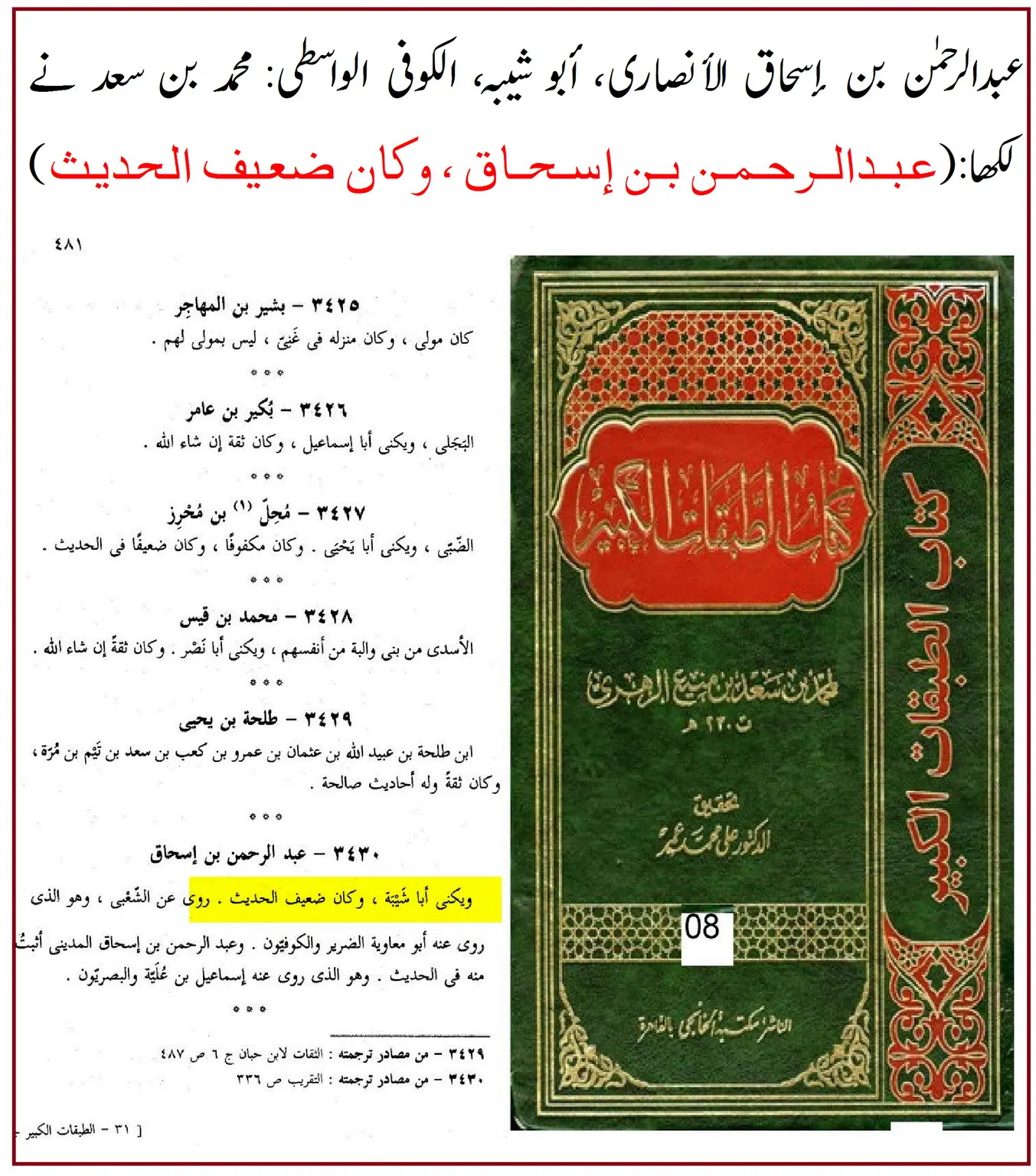
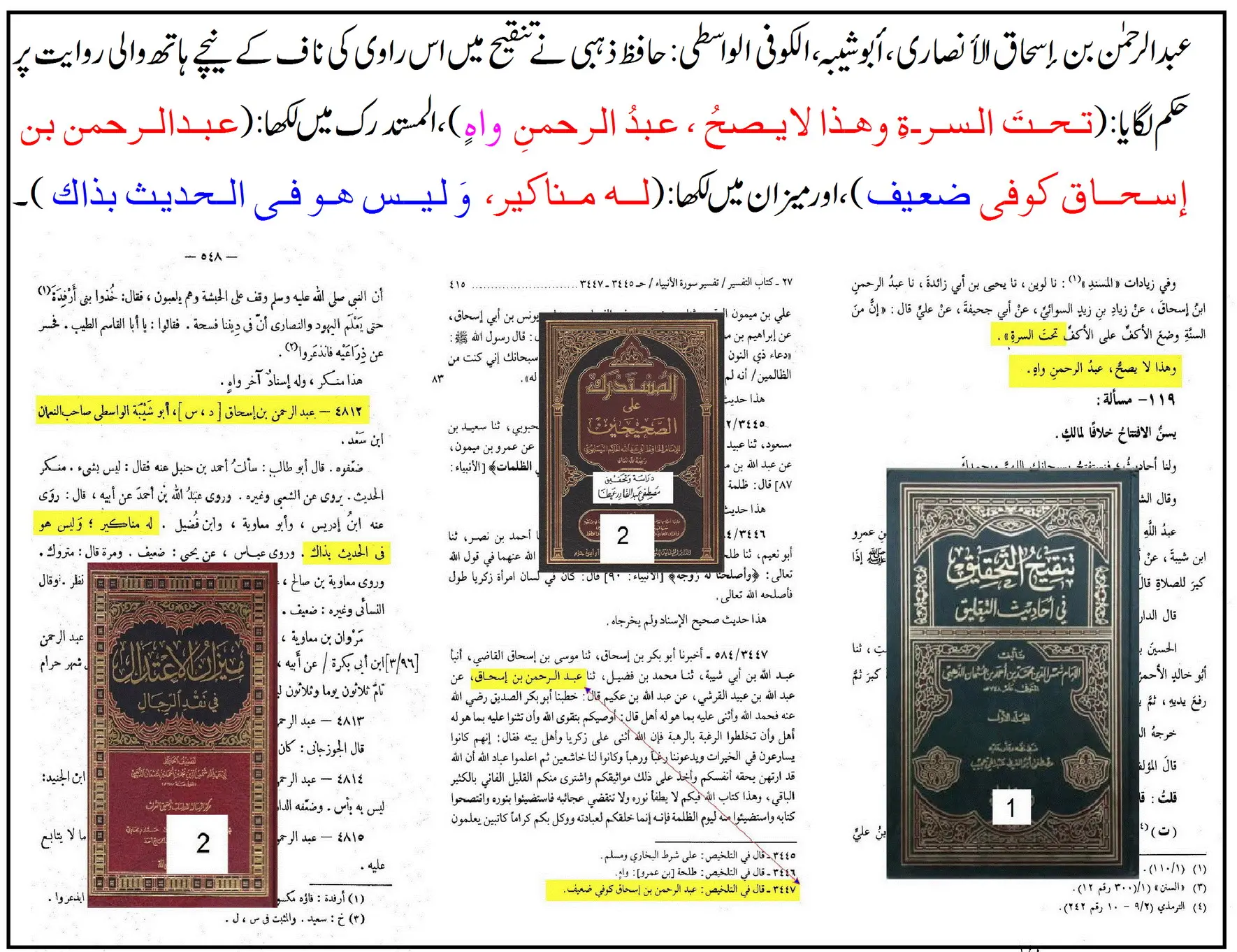
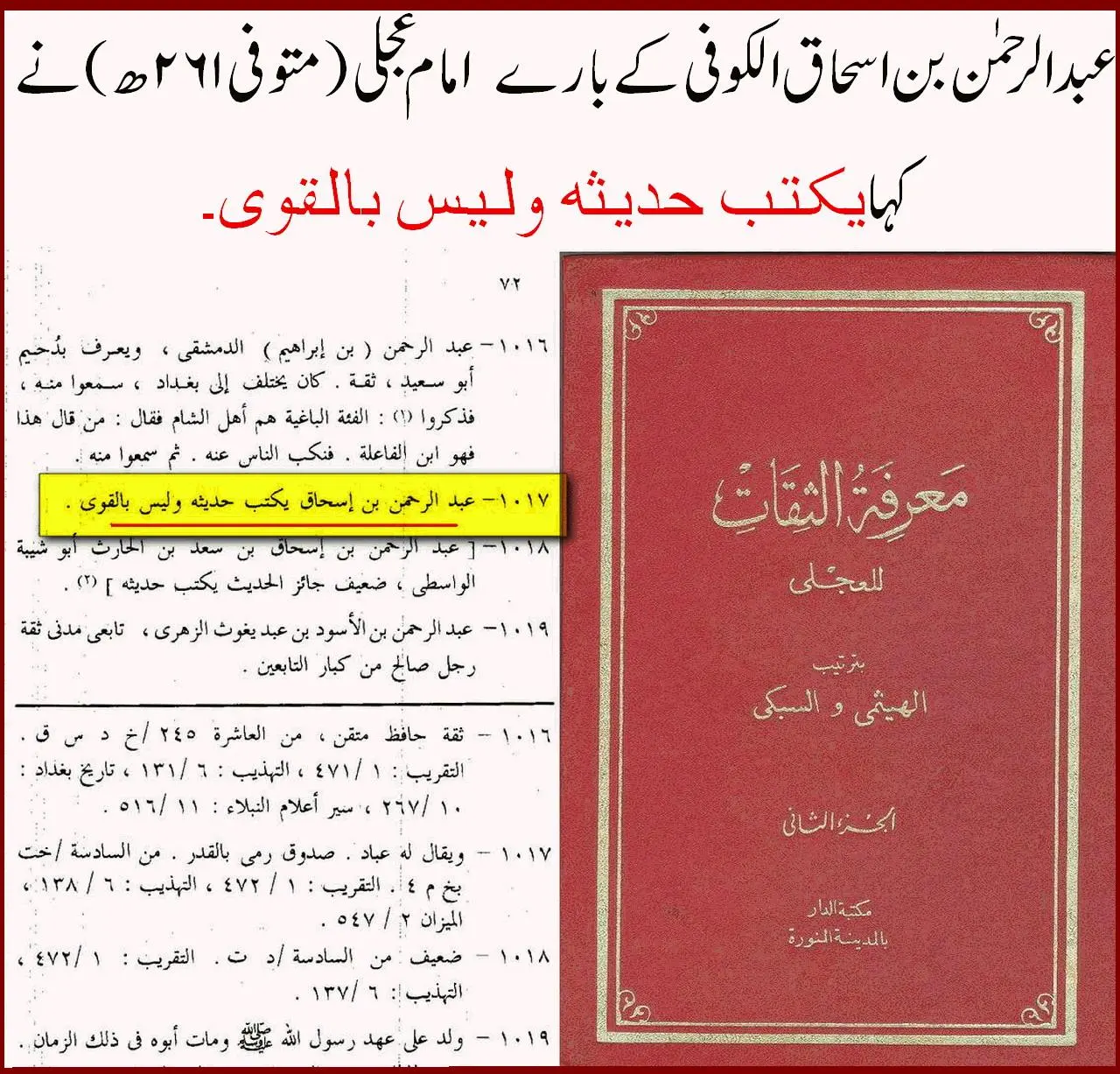
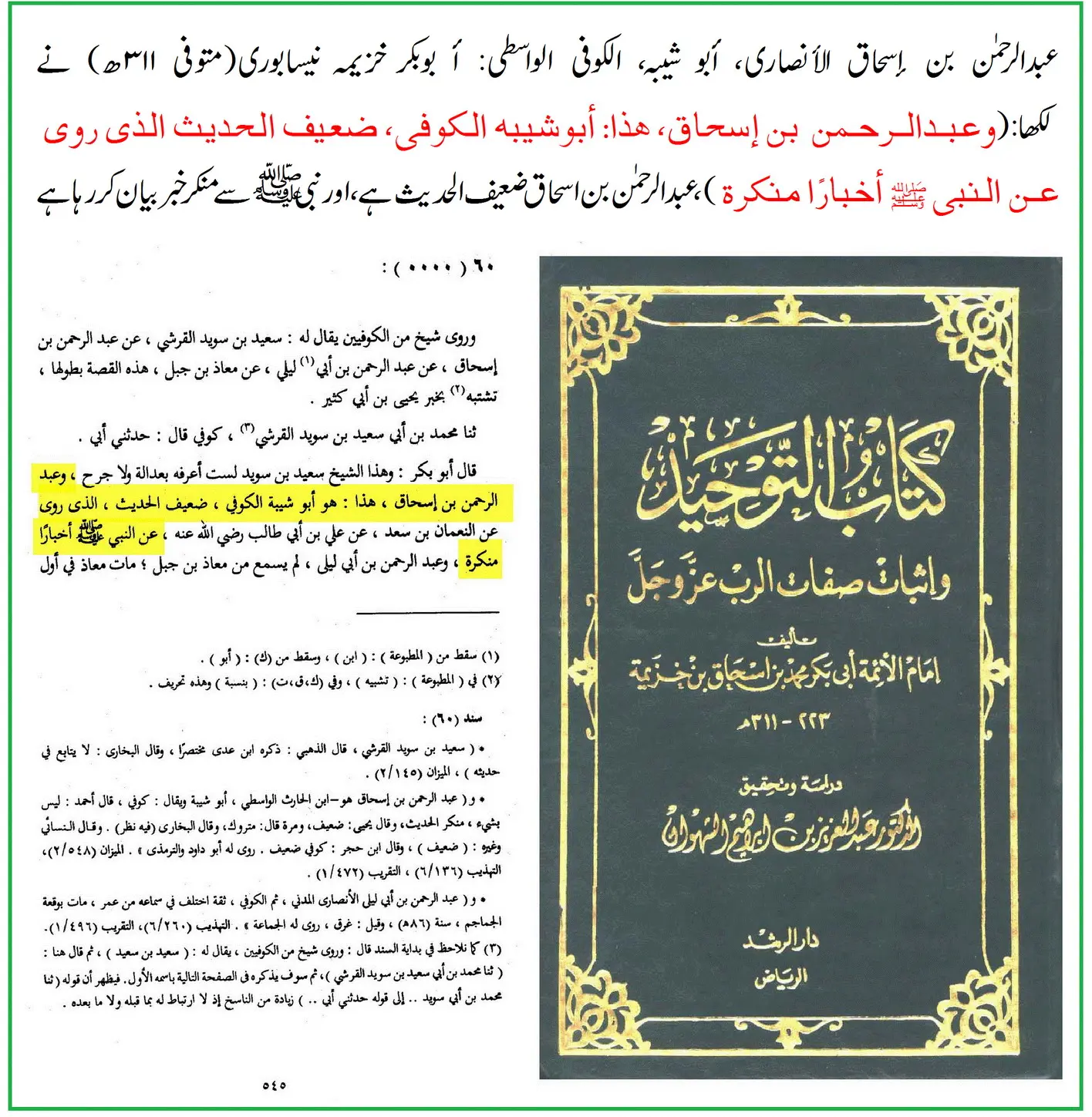
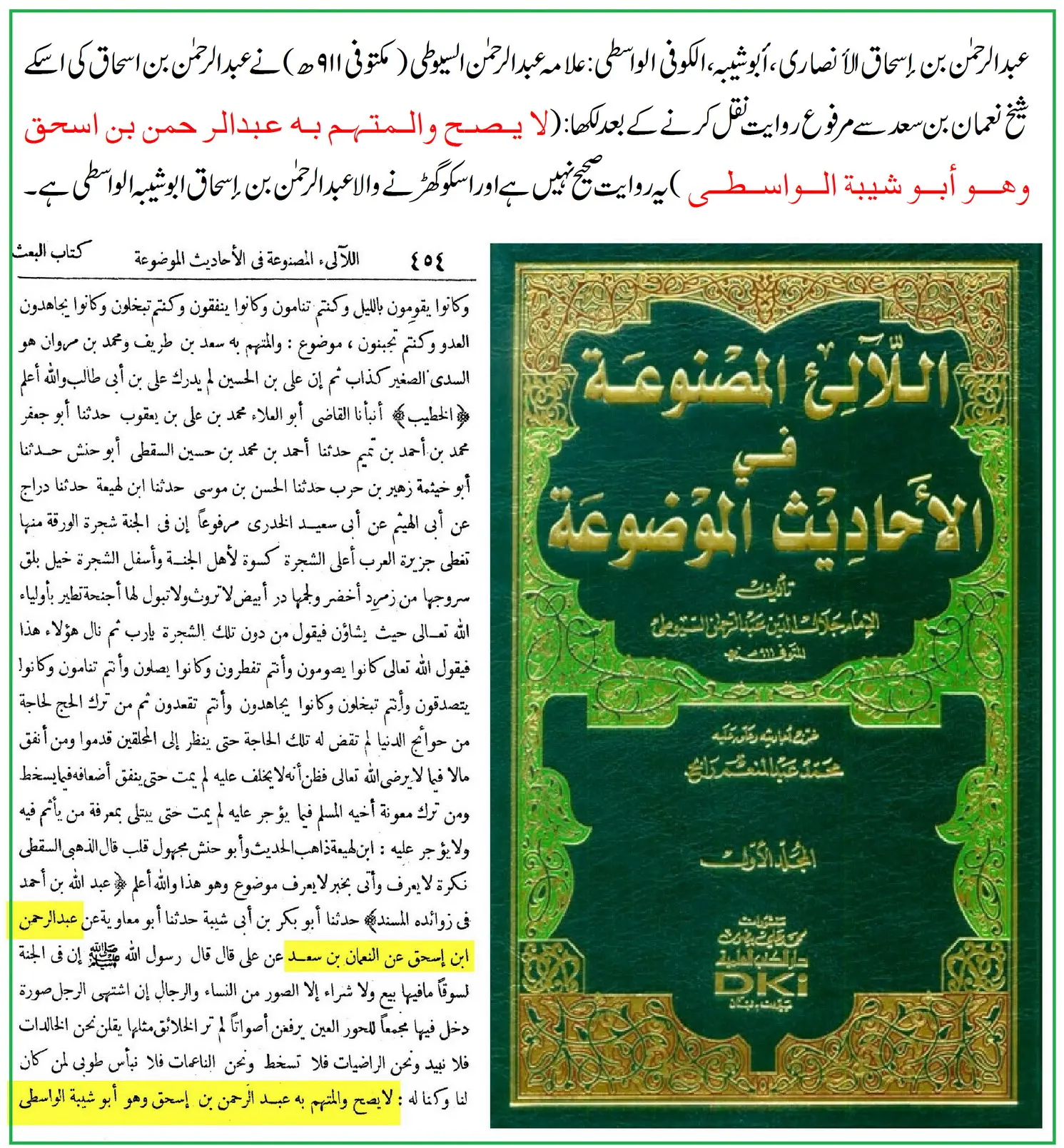
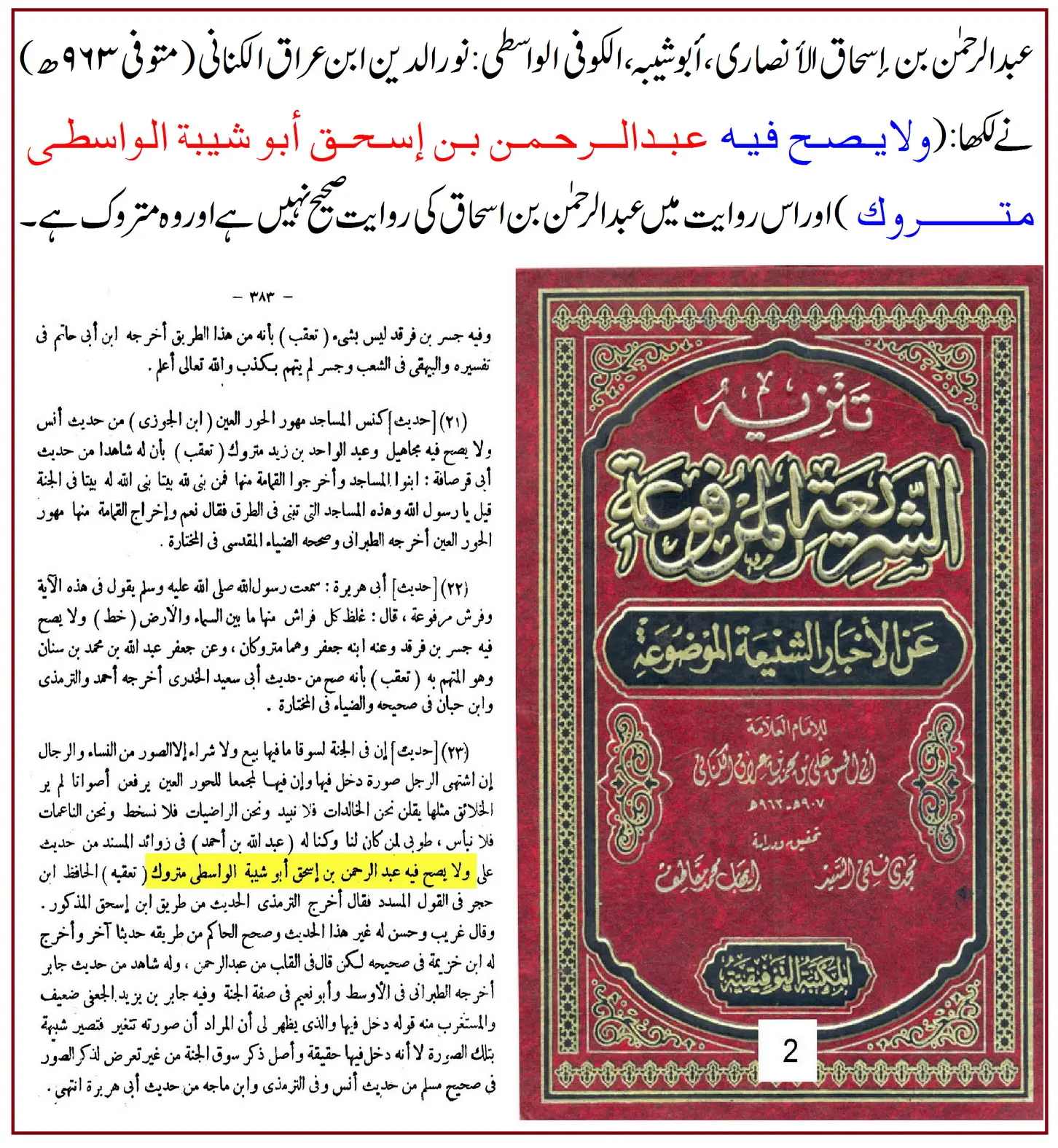
ʿAbd al-Raḥmān ibn Isḥāq al-Wāsiṭī al-Kūfī (Abū Shaybah).
He is the central narrator in all the chains through which this report has been transmitted.
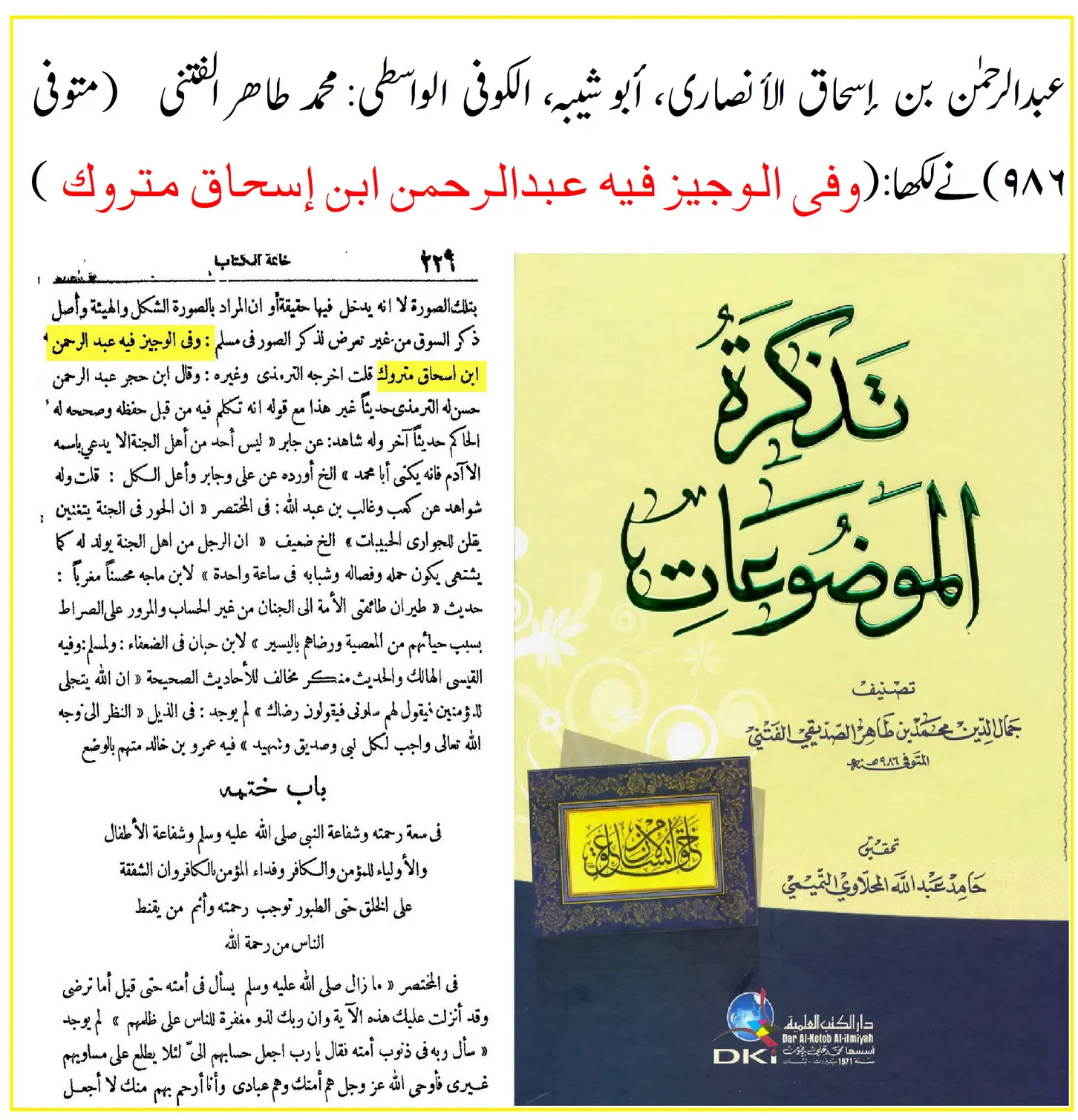
① Some declared him matrūk al-ḥadīth (abandoned in ḥadīth).
② Some called him munkar al-ḥadīth (narrator of rejected reports).
③ The majority stated that his narrations cannot be used as proof.
In this discussion, forty (40) statements of scholars are presented with the original Arabic text, English translation, and reference, to clarify that due to this narrator, the report of folding the hands below the navel is unreliable.
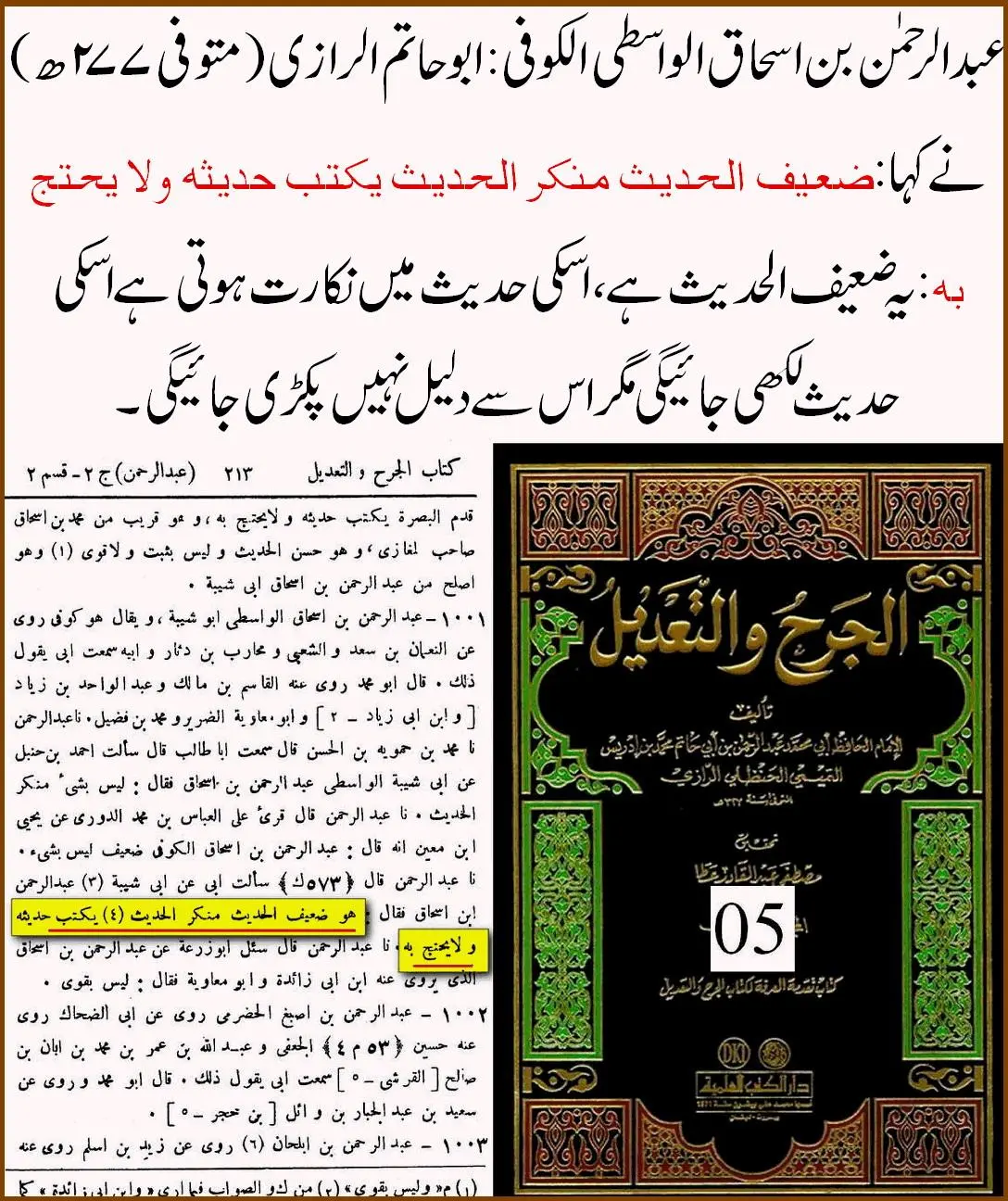
«عبد الرحمن بن إسحاق الواسطي أبو شيبة… ضعيف الحديث منكر الحديث، يكتب حديثه ولا يحتج به.»
Translation:
ʿAbd al-Raḥmān ibn Isḥāq al-Wāsiṭī is weak in ḥadīth and narrates rejected reports. His ḥadīth may be written, but it is not used as proof.
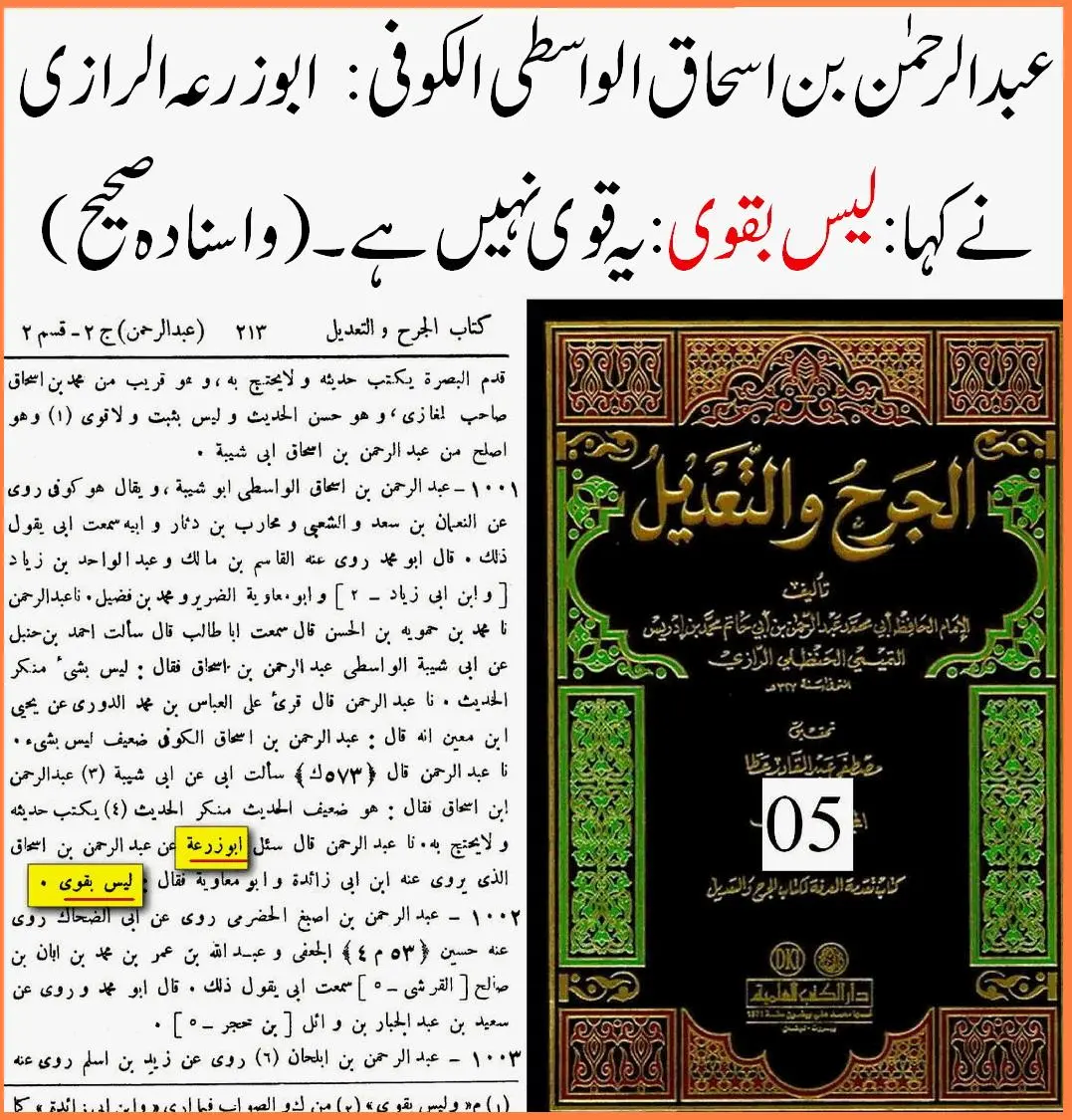
«سئل أبو زرعة عن عبد الرحمن بن إسحاق… فقال: ليس بقوي.»
Translation:
Abū Zurʿah was asked about ʿAbd al-Raḥmān ibn Isḥāq and replied: He is not strong.
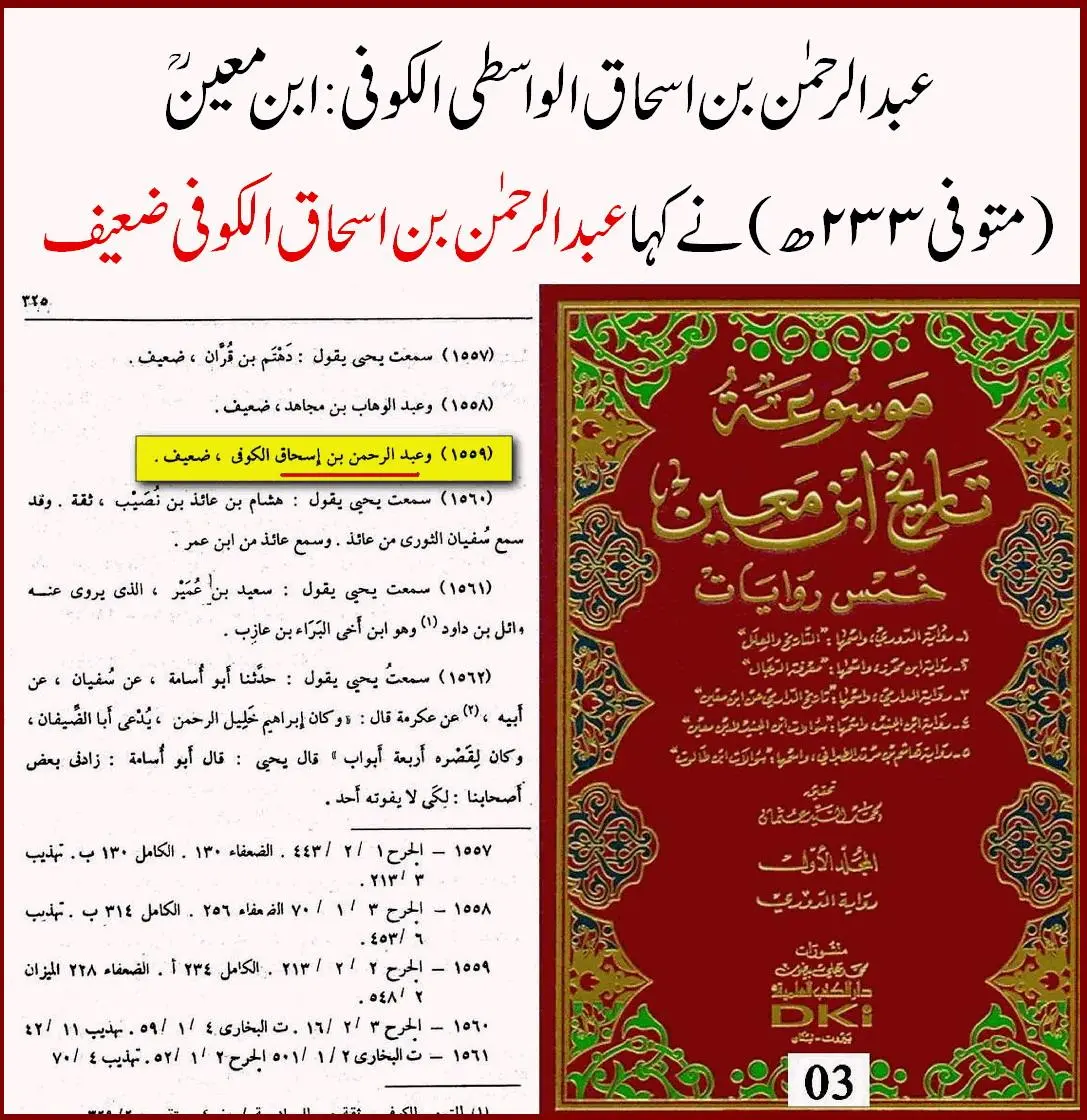
«عبد الرحمن بن إسحاق الكوفي ضعيف، ليس بشيء.»
Translation:
ʿAbd al-Raḥmān ibn Isḥāq al-Kūfī is weak; he is nothing.
«عبد الرحمن بن إسحاق الكوفي متروك الحديث.»
Also:
«ليس بشيء، منكر الحديث.»
Translation:
ʿAbd al-Raḥmān ibn Isḥāq al-Kūfī is abandoned in ḥadīth.
He is nothing and narrates rejected reports.
«والذي روي عنه تحت السرة لم يثبت إسناده، تفرد به عبد الرحمن بن إسحاق الواسطي، وهو متروك.»
Translation:
The narration about placing the hands below the navel has no established chain. It was narrated solely by ʿAbd al-Raḥmān ibn Isḥāq al-Wāsiṭī, and he is abandoned.
«وعبد الرحمن هذا منكر الحديث عن الثقات.»
Translation:
This ʿAbd al-Raḥmān narrates rejected reports from reliable narrators.
«… اتفقوا على تضعيفه لأنه من رواية عبد الرحمن بن إسحاق الواسطي، منكر الحديث، مجمع على ضعفه.»
Translation:
The scholars unanimously agreed on declaring it weak because it is from the narration of ʿAbd al-Raḥmān ibn Isḥāq al-Wāsiṭī, who narrates rejected reports and whose weakness is agreed upon.
«عبد الرحمن بن إسحاق أبو شيبة الواسطي، فيه نظر.»
Translation:
Regarding ʿAbd al-Raḥmān ibn Isḥāq al-Wāsiṭī, there is scrutiny concerning him.
(This is among the strongest forms of criticism used by al-Bukhārī.)
«كان ممن يقلب الأخبار والأسانيد، وينفرد بالمناكير عن المشاهير، لا يحل الاحتجاج بخبره.»
Translation:
He used to invert texts and chains, and he would uniquely narrate rejected reports from well-known narrators. It is not permissible to use his reports as proof.
«هذا حديث غريب، لا نعرفه إلا من حديث عبد الرحمن بن إسحاق… وقد تكلم فيه أهل الحديث من قبل حفظه.»
Translation:
This ḥadīth is strange; we only know it through ʿAbd al-Raḥmān ibn Isḥāq. The scholars of ḥadīth have spoken about him due to his poor memory.
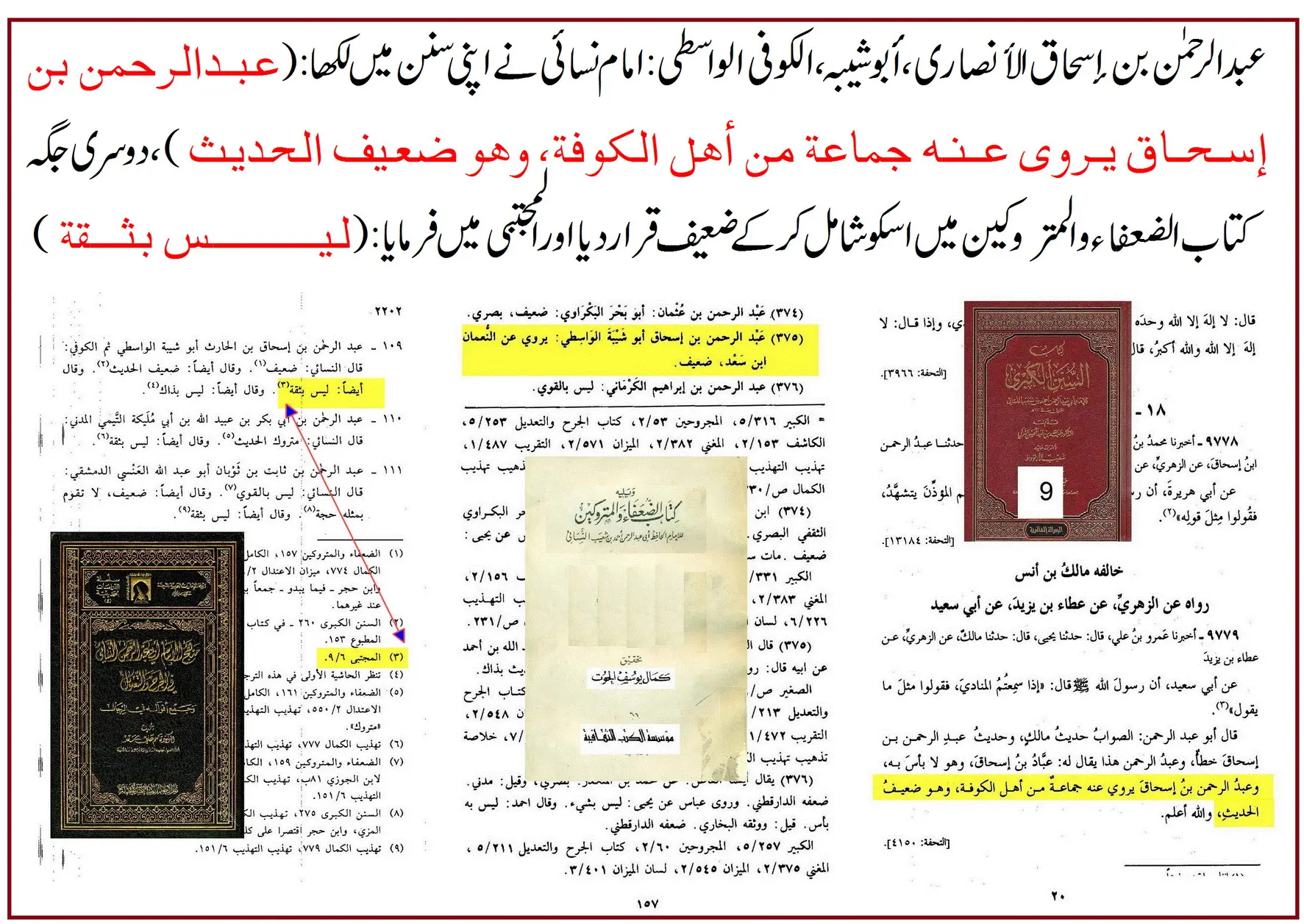
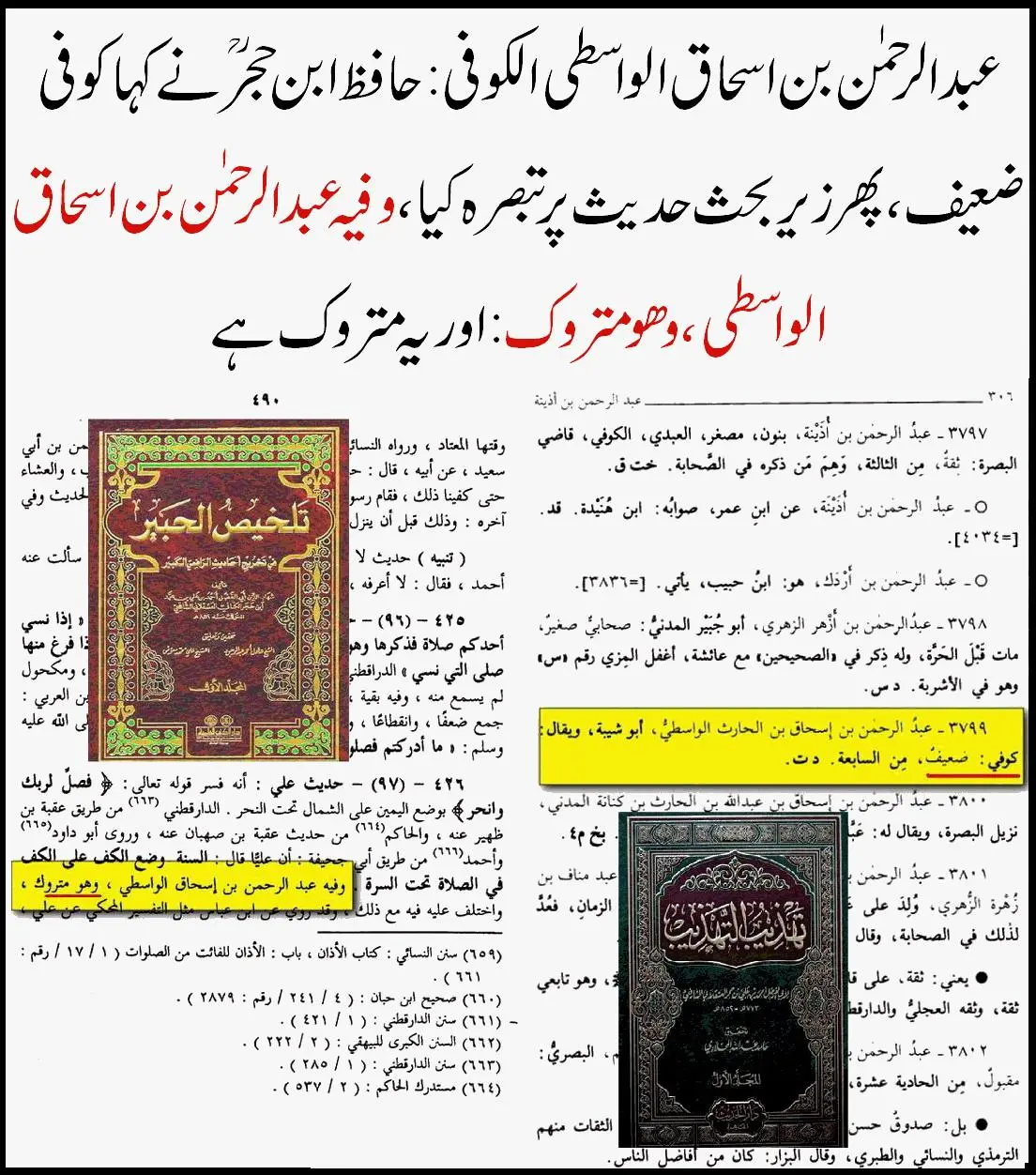
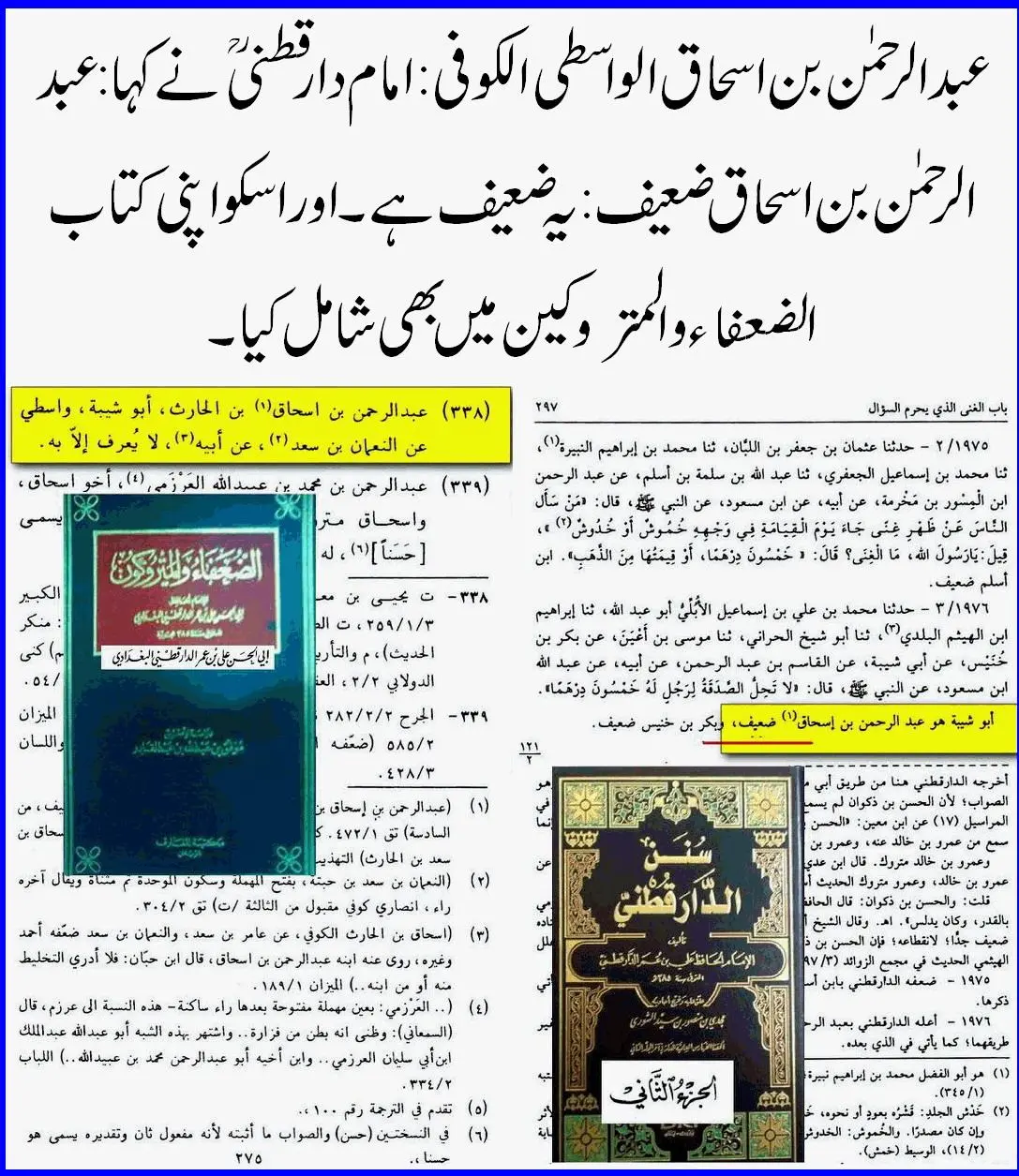
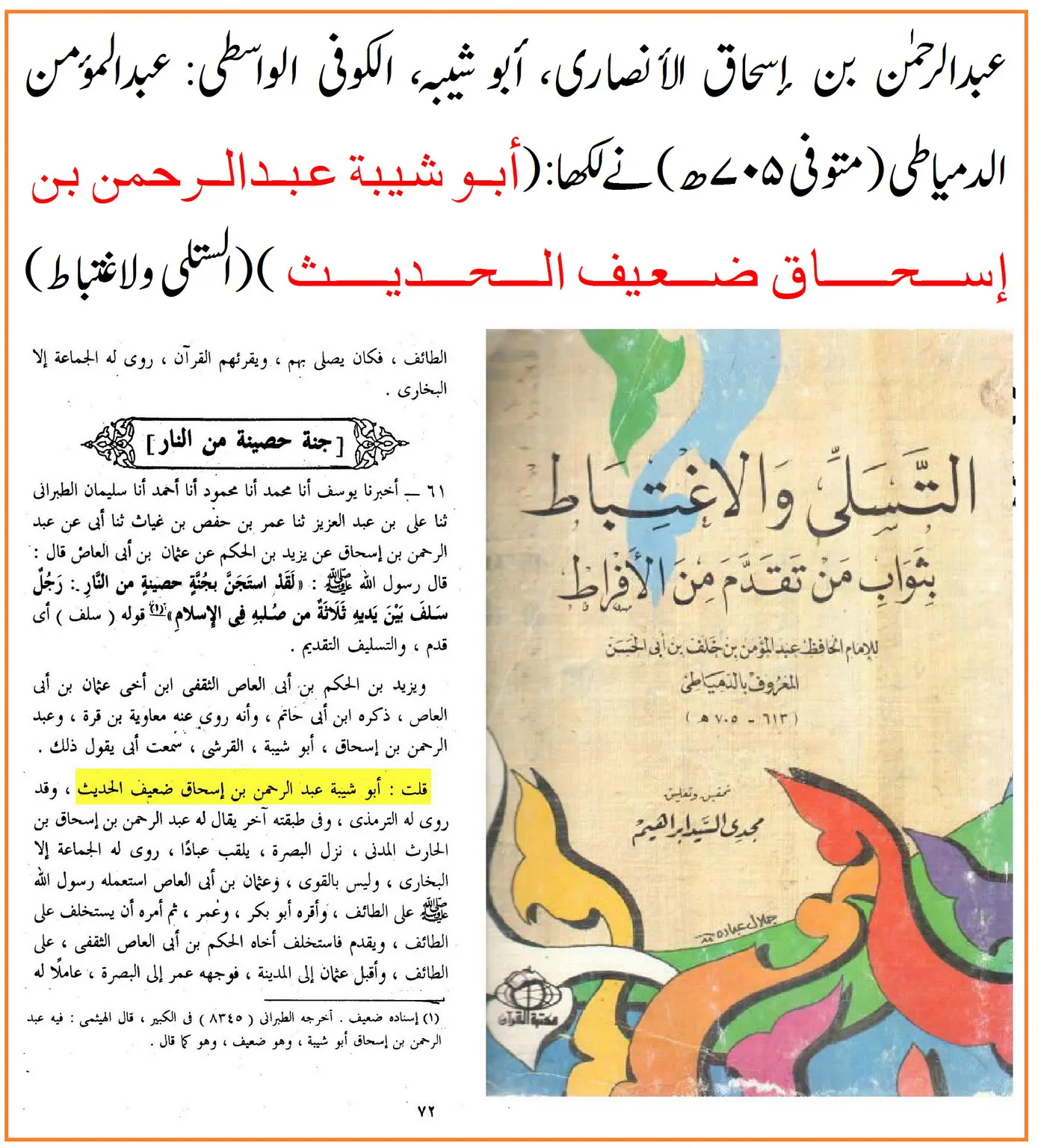
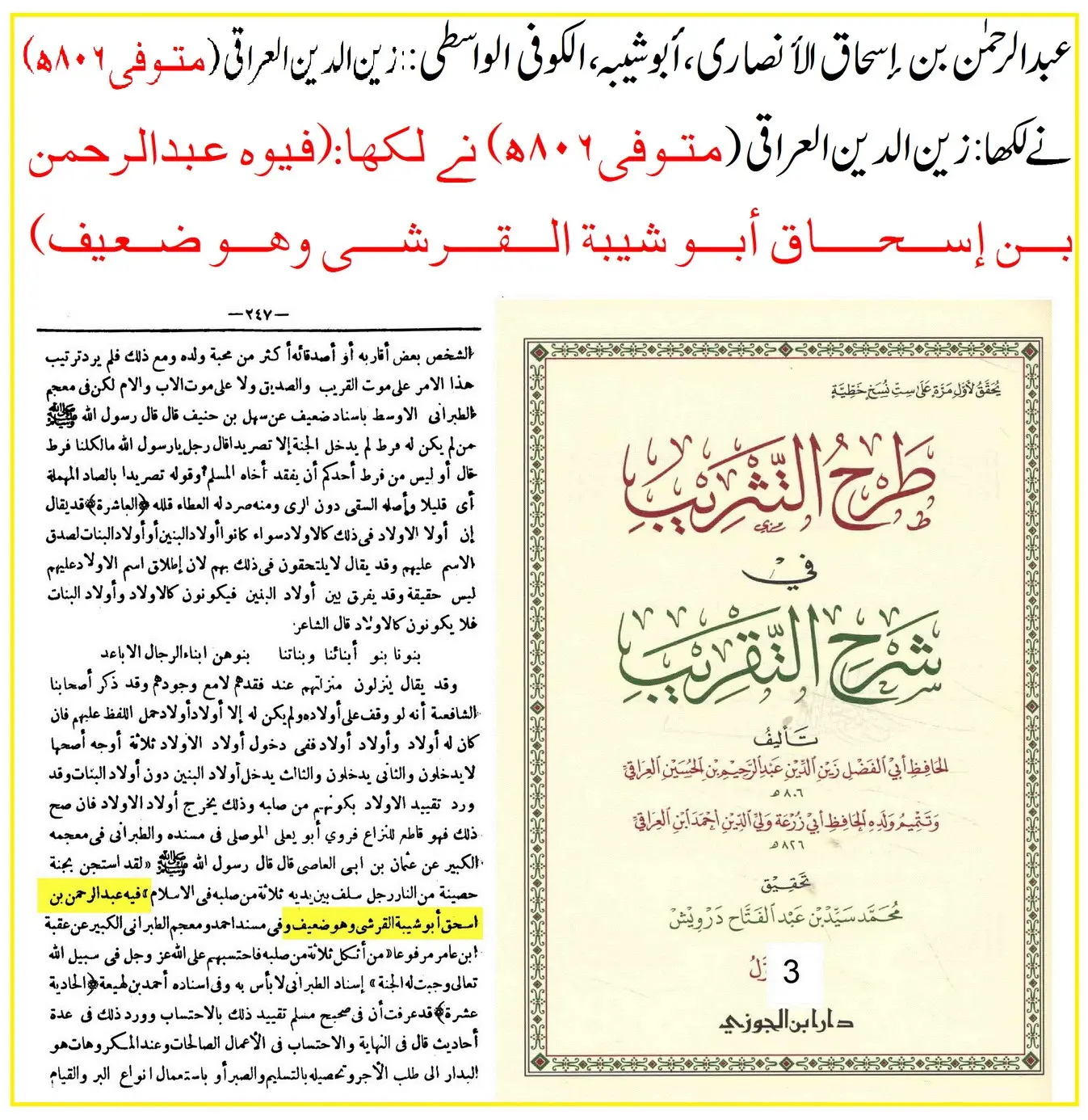
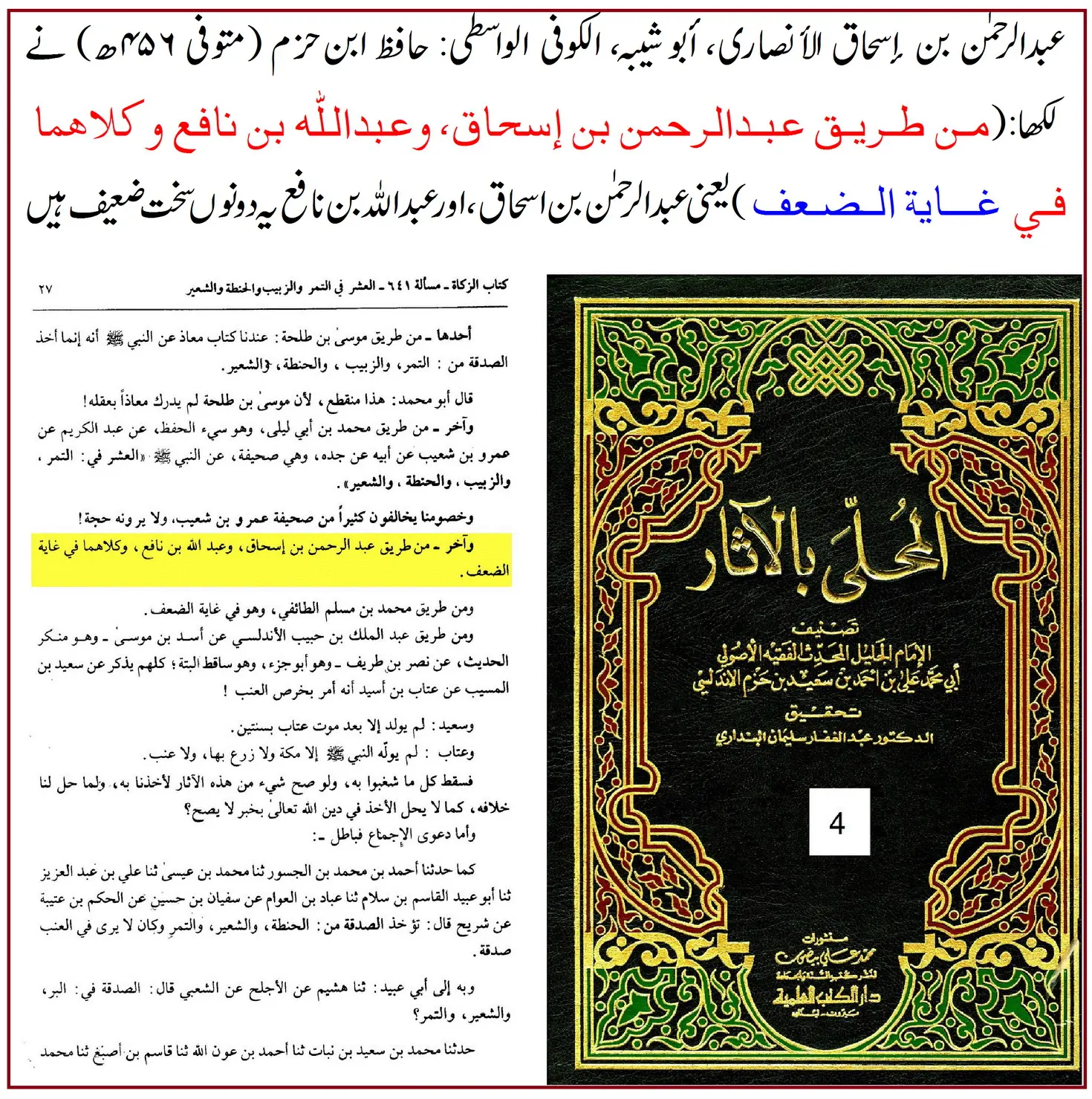
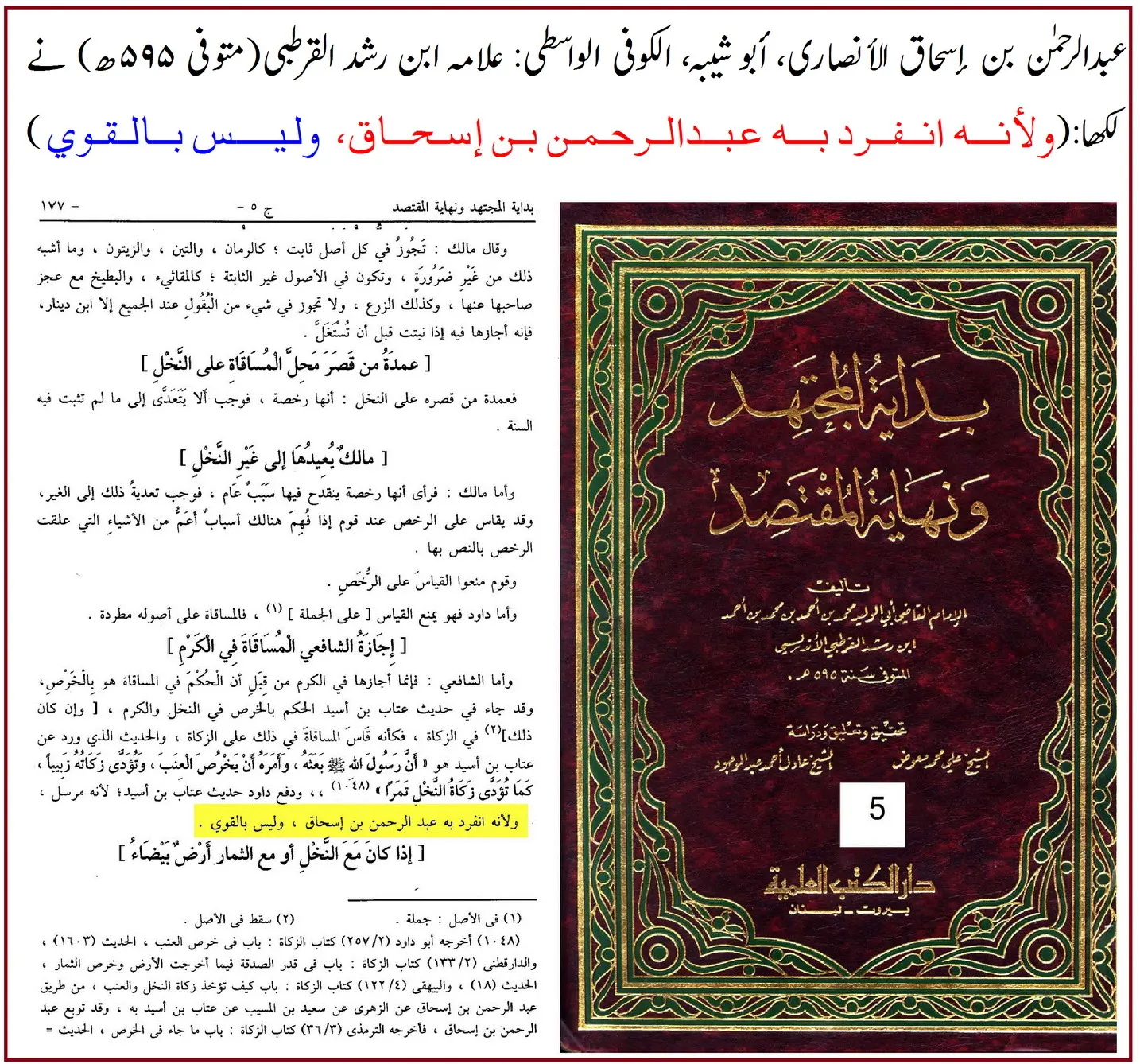
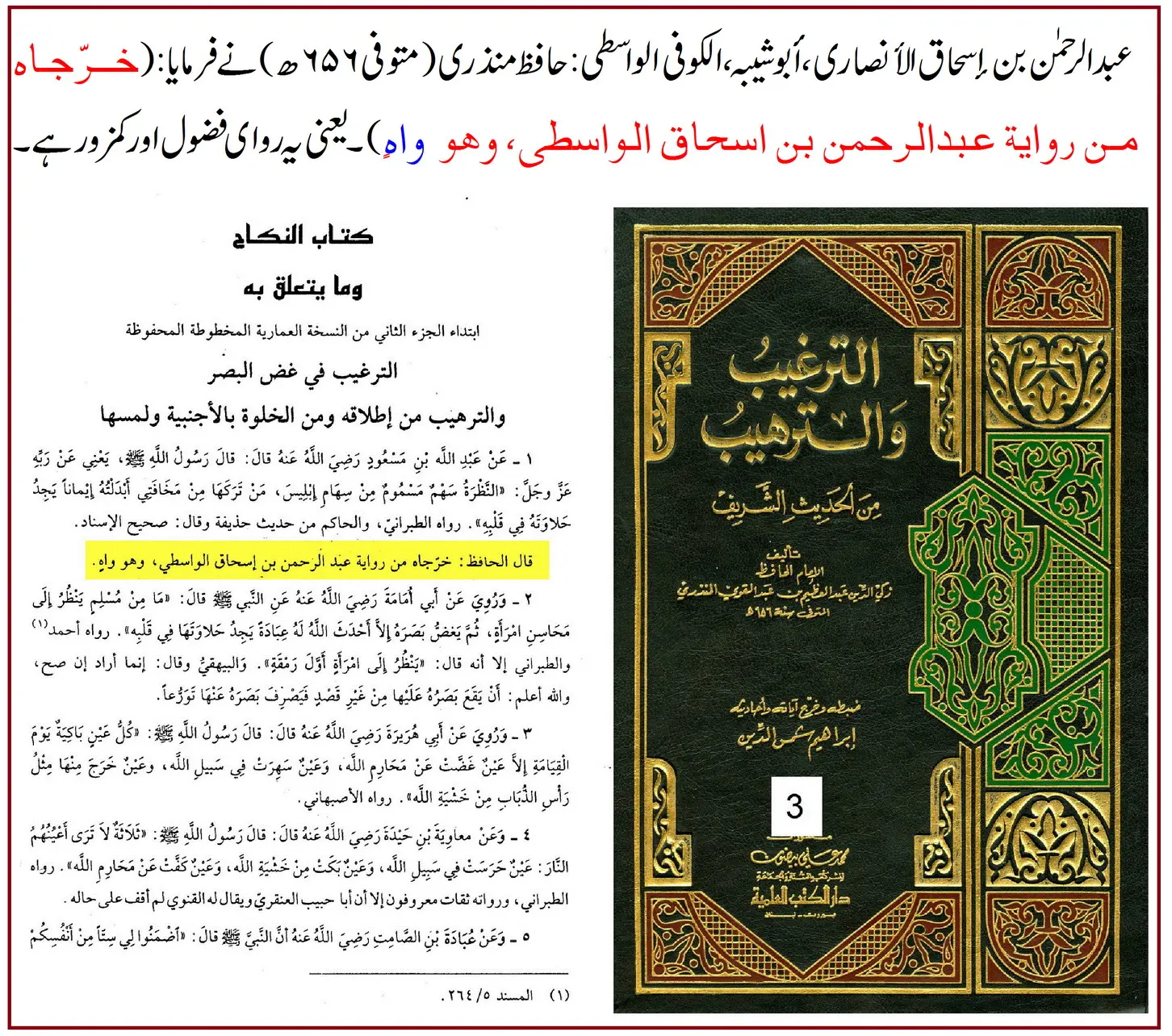
(The remaining scholars similarly declared him weak, rejected, or abandoned in ḥadīth, including: al-Nasā’ī, Ibn Ḥajar, Ibn ʿAbd al-Barr, Ibn Kathīr, al-Dāraquṭnī, Ibn al-Jawzī, al-ʿIrāqī, al-Haythamī, al-Būṣīrī, Ibn Ḥazm, Ibn Rushd, al-Mundhirī, Ibn ʿAdī, and others — totaling forty authorities who criticized him.)
ʿAbd al-Raḥmān ibn Isḥāq al-Wāsiṭī (Abū Shaybah).
The narration of folding the hands below the navel is invalid both in chain and text.
According to the scholars of knowledge, the authentic Sunnah regarding placing the hands in prayer is to place them upon the chest.
الحمد للہ وحدہ، والصلوٰۃ والسلام علی من لا نبی بعدہ۔
All praise is for Allah alone, and peace and blessings be upon the one after whom there is no prophet.
Introduction
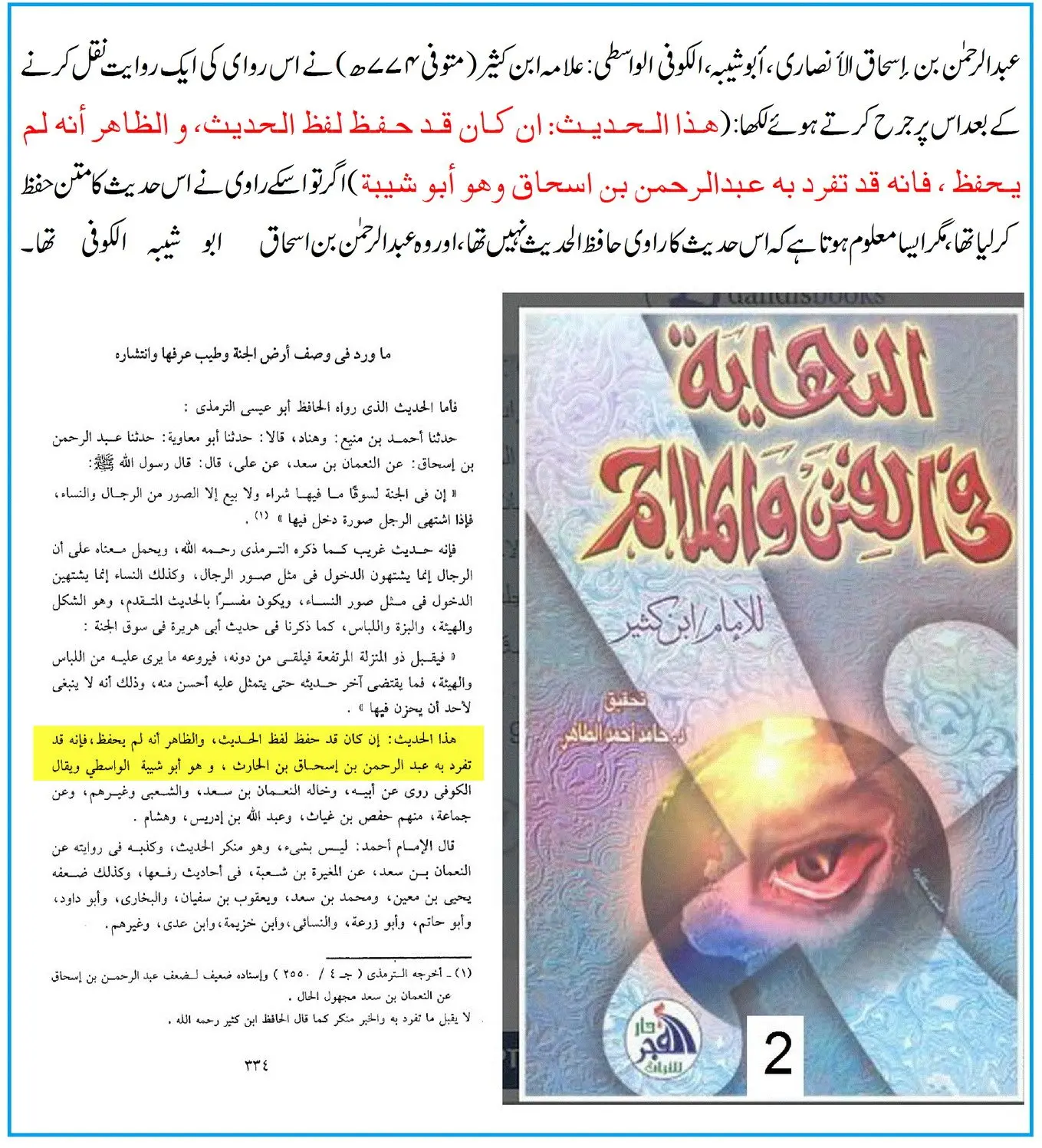
The narration regarding folding the hands below the navel, which is attributed to ʿAlī رضي الله عنه, Abū Hurayrah رضي الله عنه and others, is based upon a single narrator:ʿAbd al-Raḥmān ibn Isḥāq al-Wāsiṭī al-Kūfī (Abū Shaybah).
He is the central narrator in all the chains through which this report has been transmitted.
❖ Severe Criticism of This Narrator by the Hadith Scholars
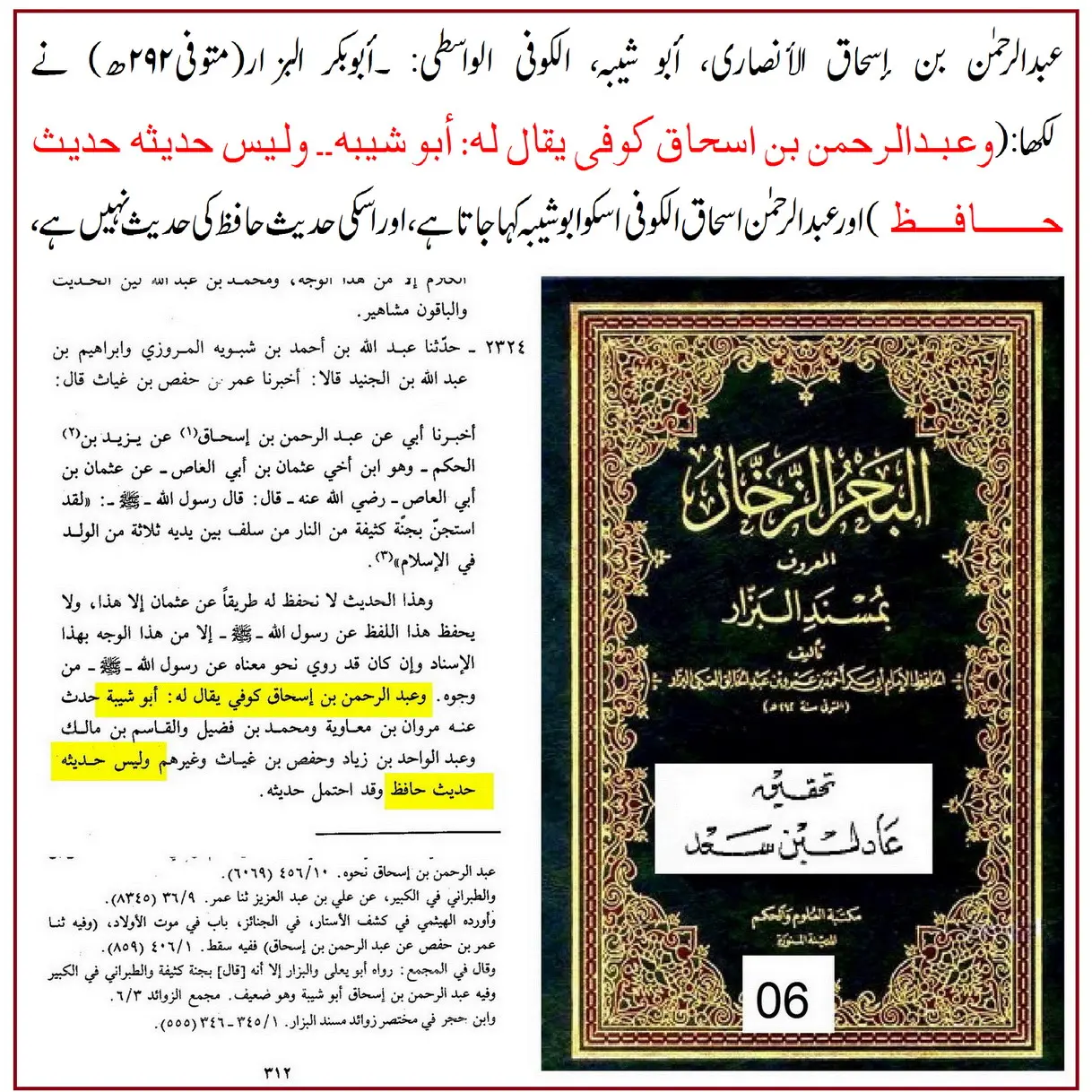
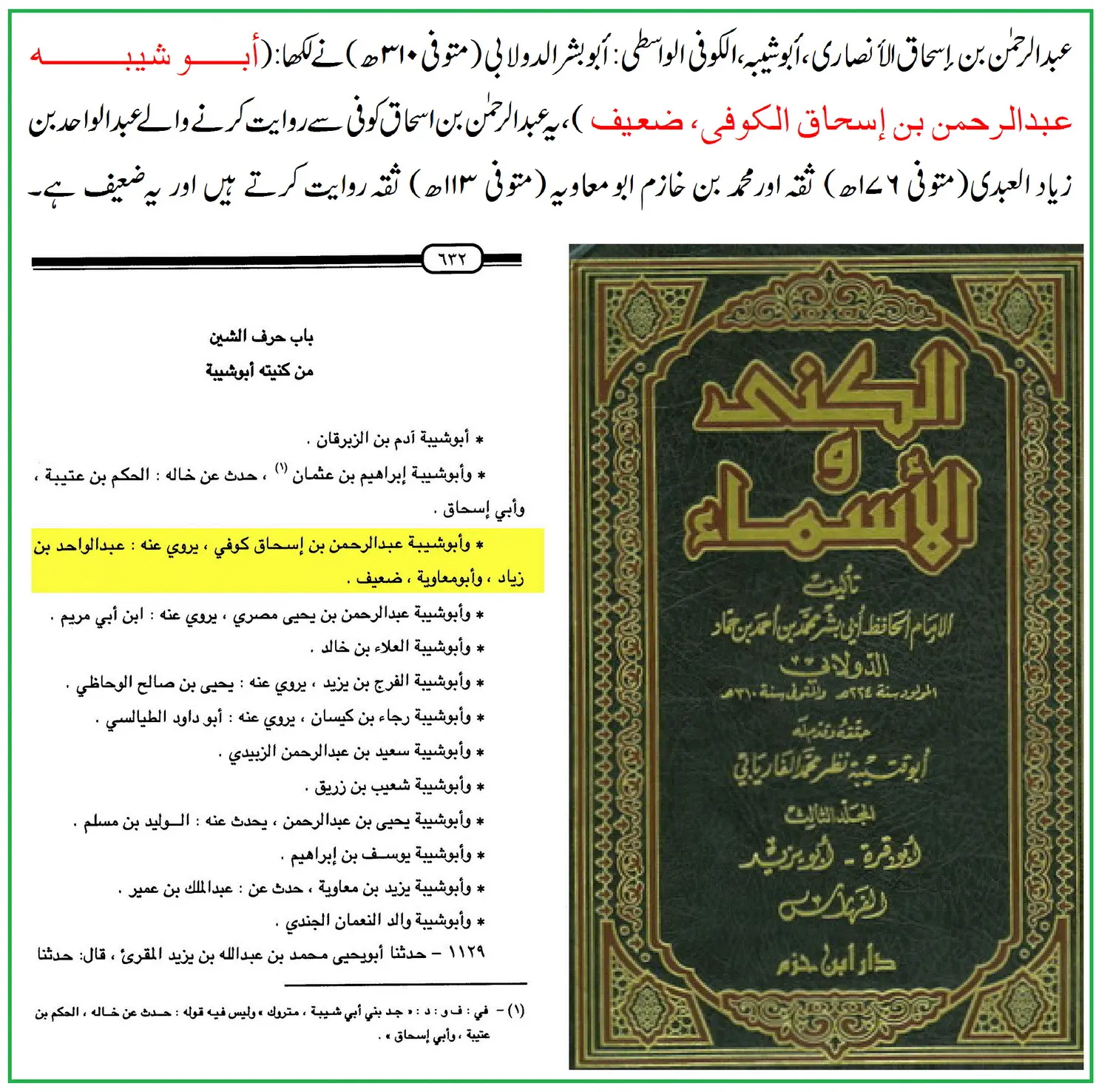
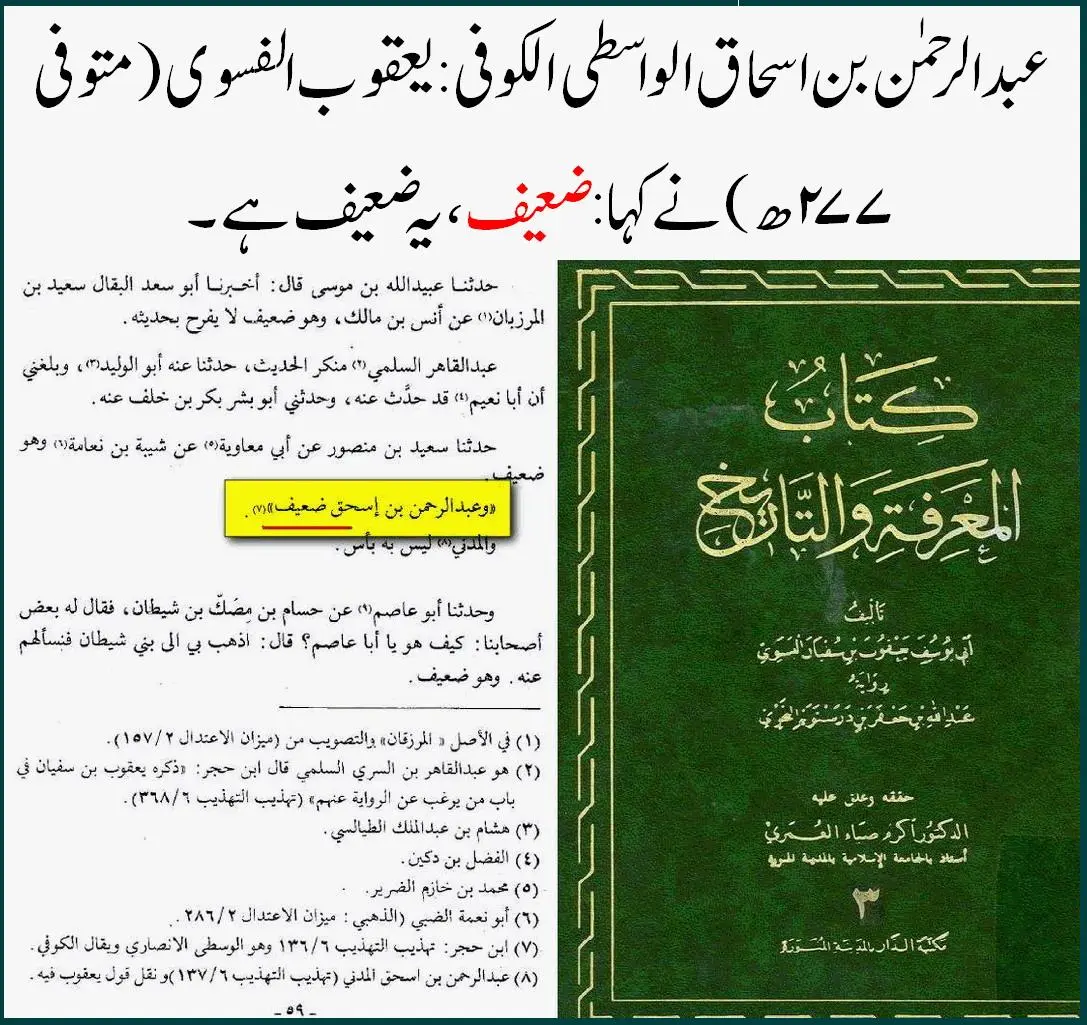
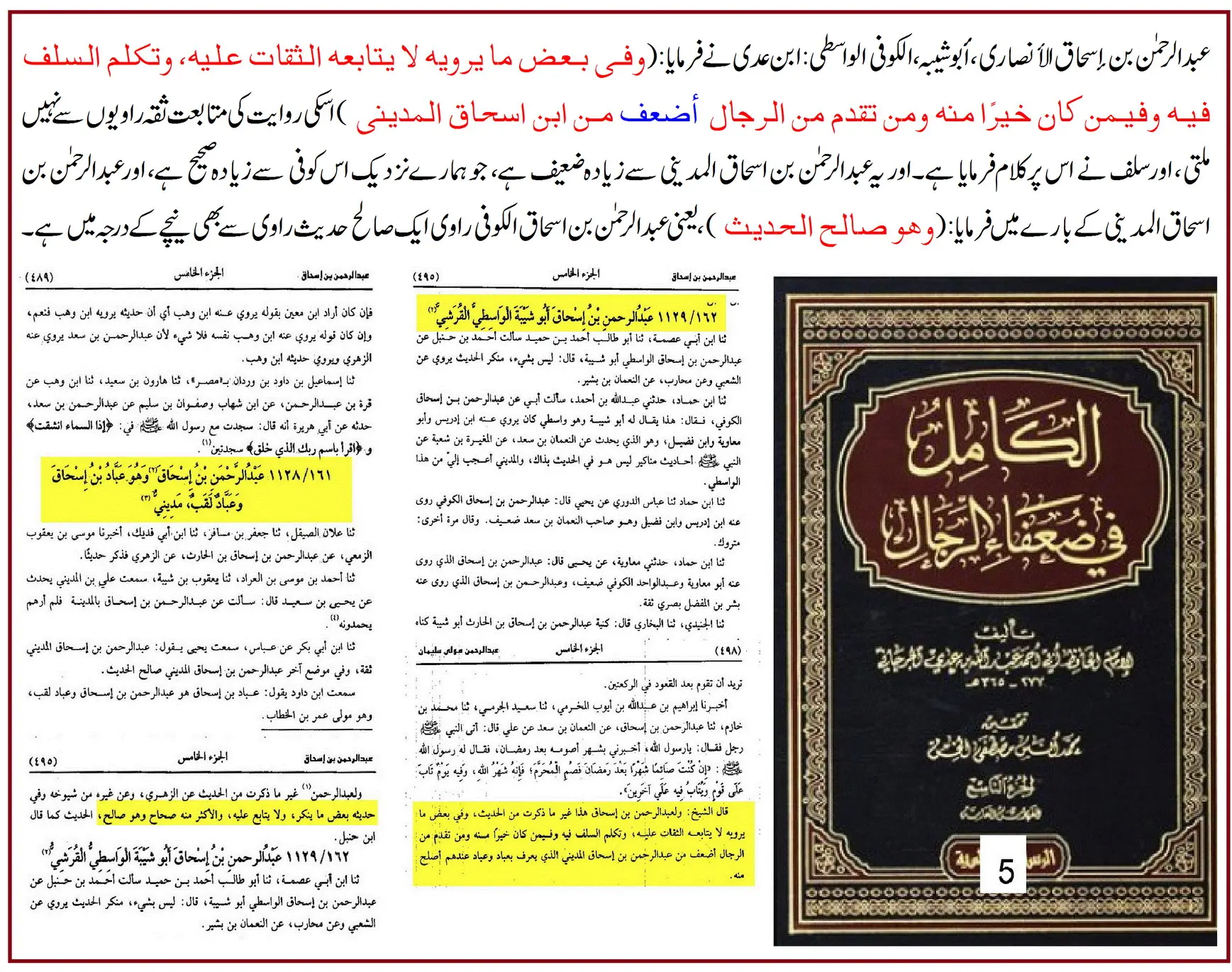
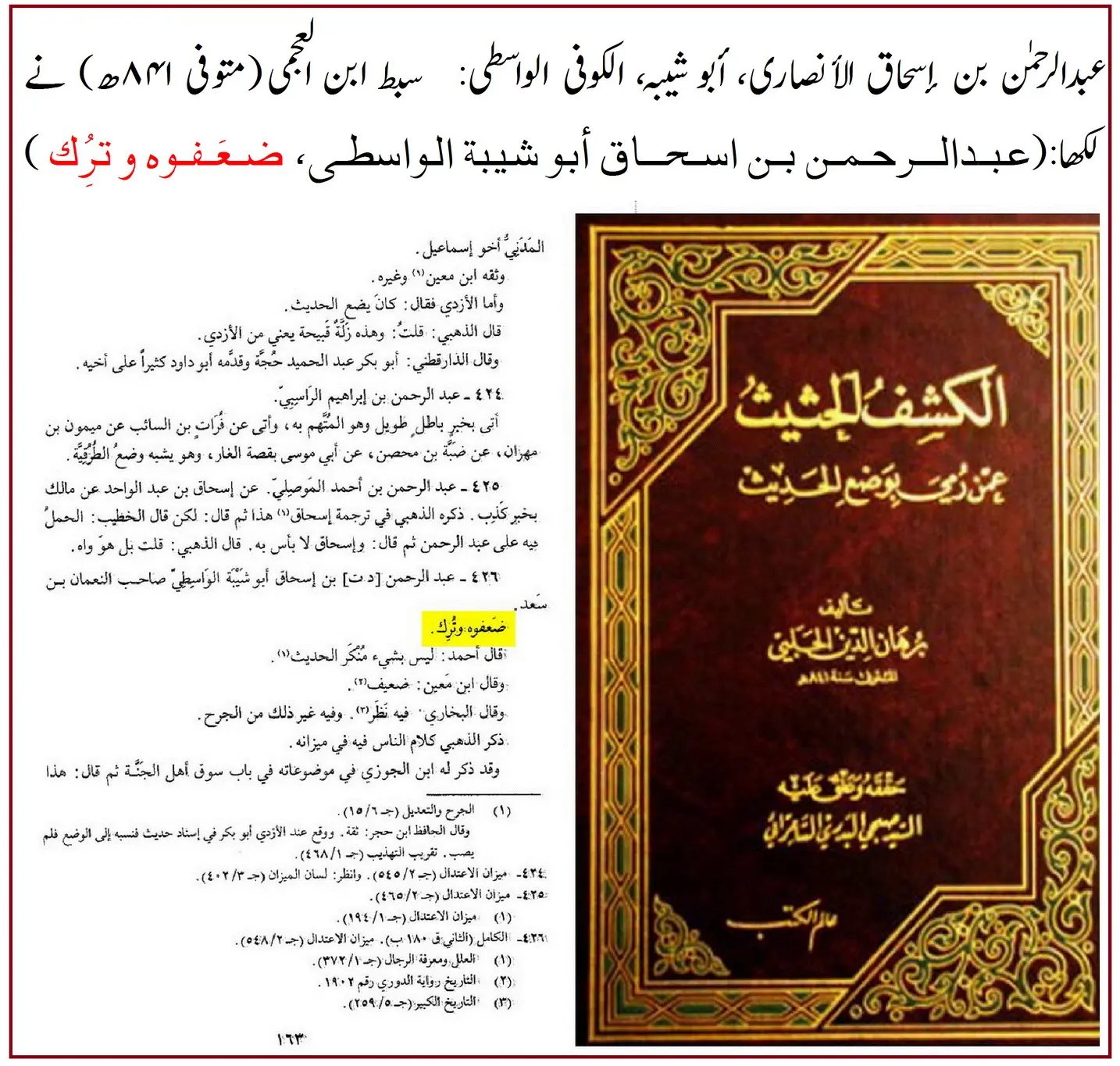
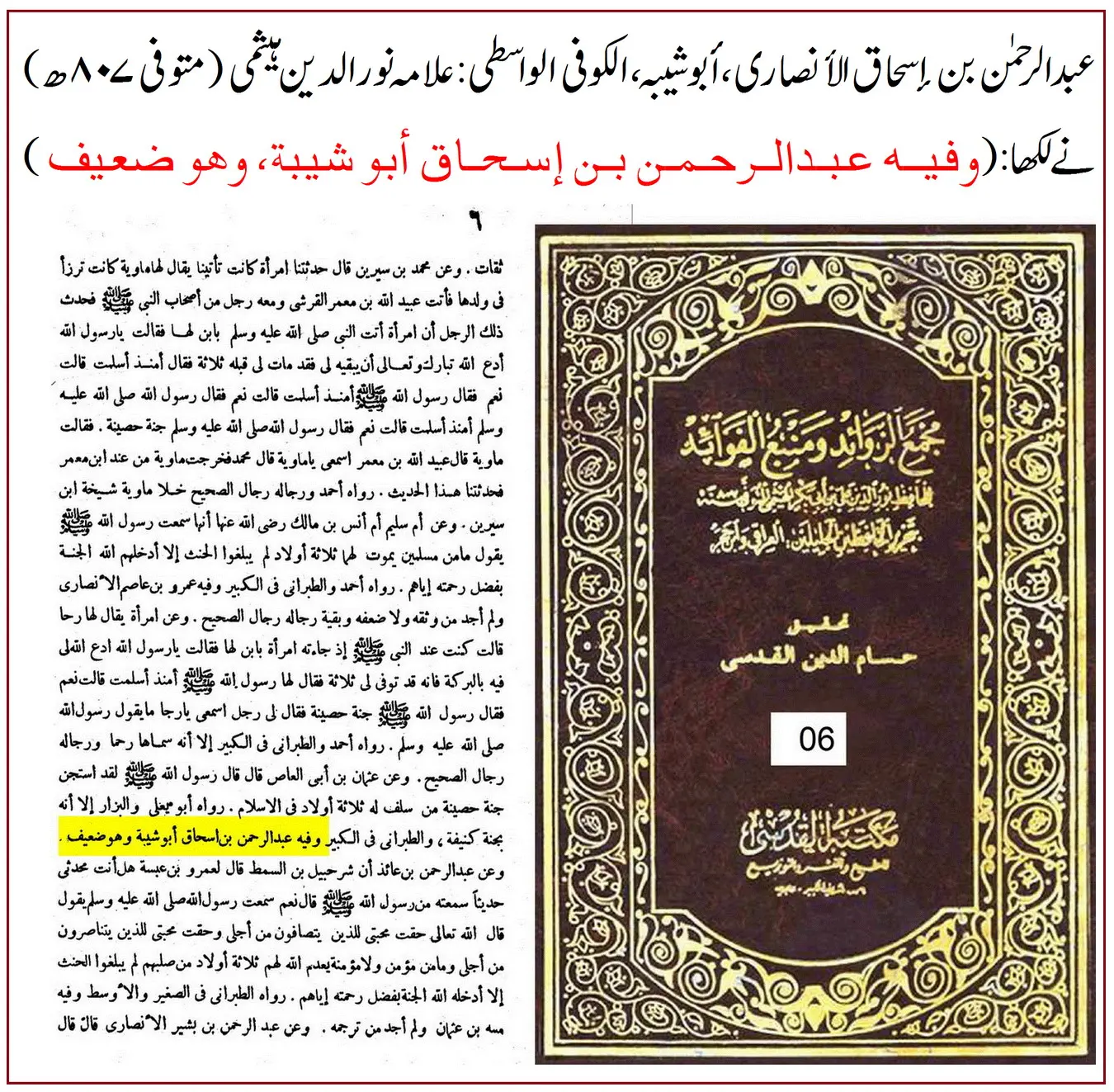
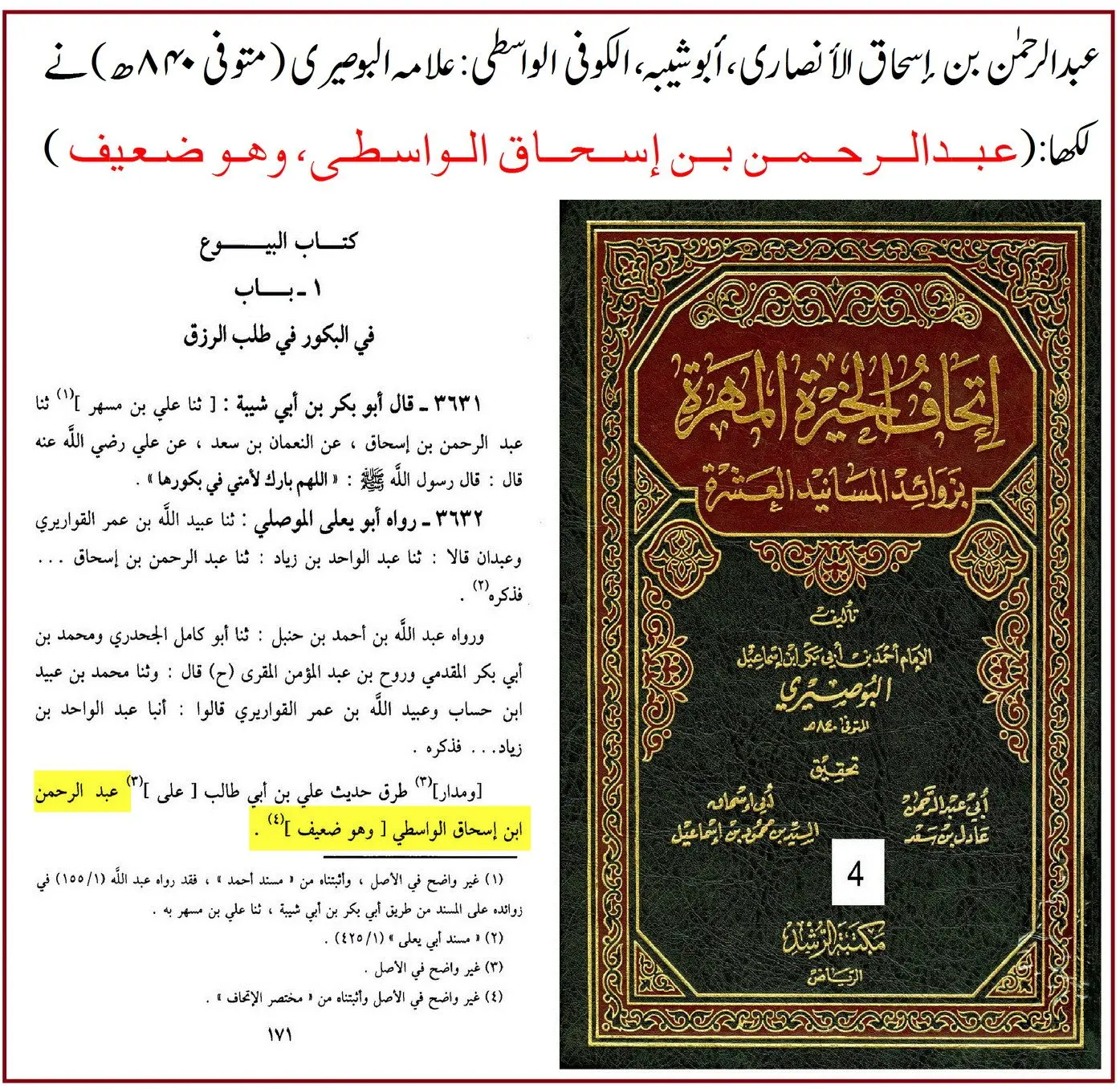
The scholars of ḥadīth have strongly criticized him:① Some declared him matrūk al-ḥadīth (abandoned in ḥadīth).
② Some called him munkar al-ḥadīth (narrator of rejected reports).
③ The majority stated that his narrations cannot be used as proof.
In this discussion, forty (40) statements of scholars are presented with the original Arabic text, English translation, and reference, to clarify that due to this narrator, the report of folding the hands below the navel is unreliable.
Statements of the Scholars
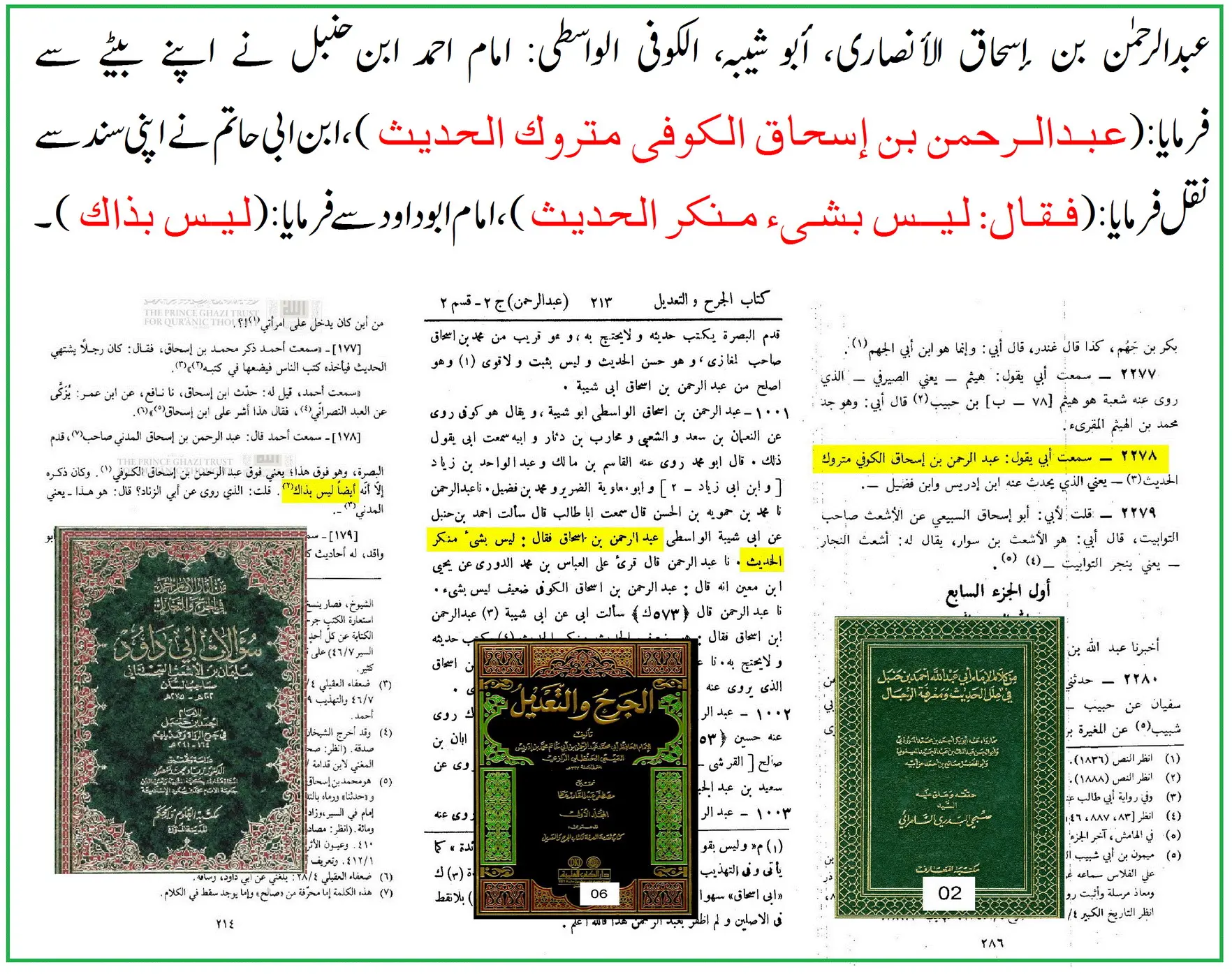
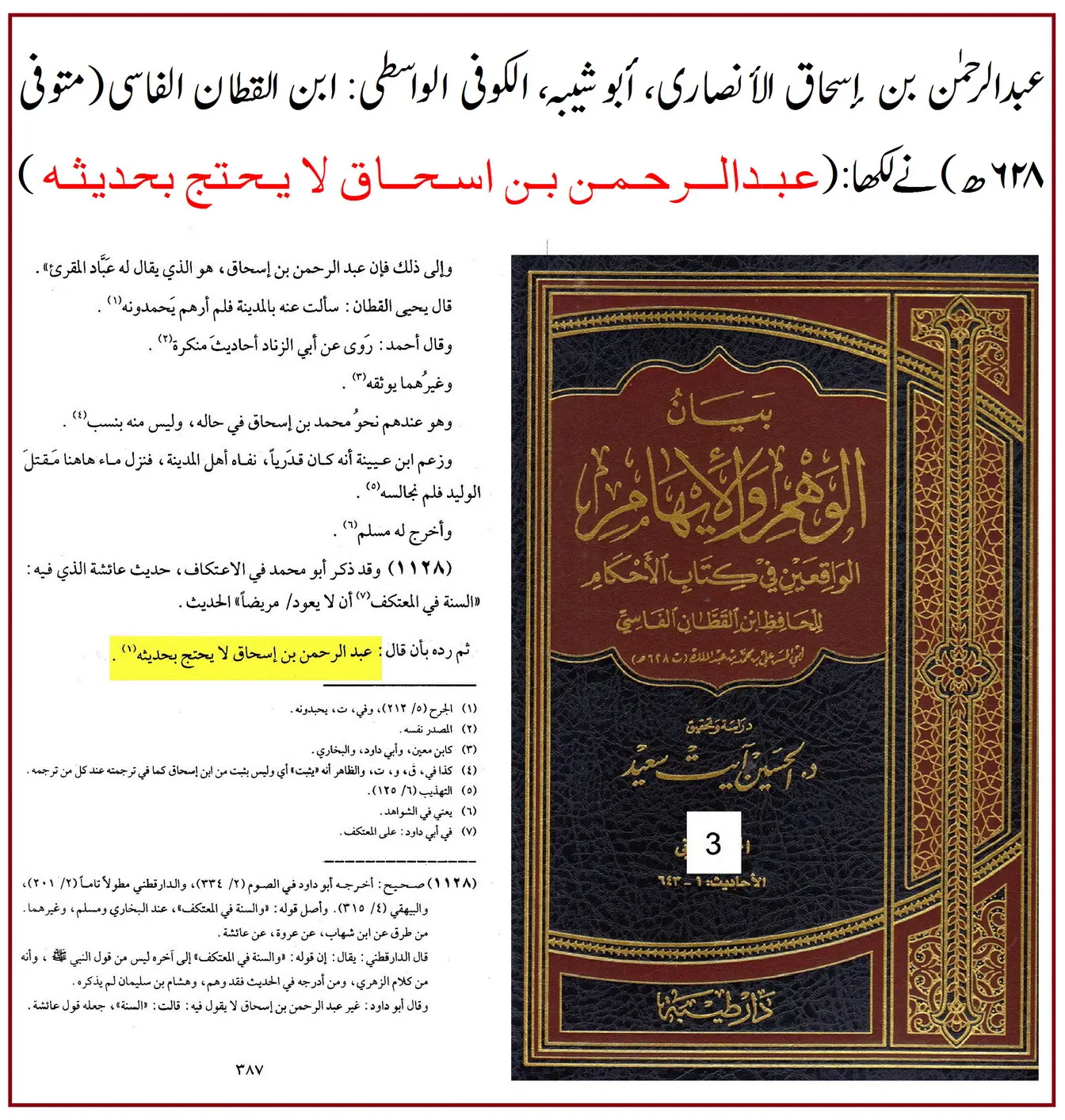
✦ 1. Imām Abū Ḥātim al-Rāzī (244 AH)
Arabic Text:«عبد الرحمن بن إسحاق الواسطي أبو شيبة… ضعيف الحديث منكر الحديث، يكتب حديثه ولا يحتج به.»
Reference: Ibn Abī Ḥātim, al-Jarḥ wa al-Taʿdīl (1001)
Translation:
ʿAbd al-Raḥmān ibn Isḥāq al-Wāsiṭī is weak in ḥadīth and narrates rejected reports. His ḥadīth may be written, but it is not used as proof.
✦ 2. Imām Abū Zurʿah al-Rāzī (264 AH)
Arabic Text:«سئل أبو زرعة عن عبد الرحمن بن إسحاق… فقال: ليس بقوي.»
Reference: Ibn Abī Ḥātim, al-Jarḥ wa al-Taʿdīl (1001)
Translation:
Abū Zurʿah was asked about ʿAbd al-Raḥmān ibn Isḥāq and replied: He is not strong.
✦ 3. Imām Yaḥyā ibn Maʿīn (233 AH)
Arabic Text:«عبد الرحمن بن إسحاق الكوفي ضعيف، ليس بشيء.»
Reference: Ibn Abī Ḥātim, al-Jarḥ wa al-Taʿdīl (1001)
Translation:
ʿAbd al-Raḥmān ibn Isḥāq al-Kūfī is weak; he is nothing.
✦ 4. Imām Aḥmad ibn Ḥanbal (241 AH)
Arabic Text:«عبد الرحمن بن إسحاق الكوفي متروك الحديث.»
Reference: Aḥmad ibn Ḥanbal, al-ʿIlal wa Maʿrifat al-Rijāl (2278)
Also:
«ليس بشيء، منكر الحديث.»
Reference: Ibn Abī Ḥātim, al-Jarḥ wa al-Taʿdīl
Translation:
ʿAbd al-Raḥmān ibn Isḥāq al-Kūfī is abandoned in ḥadīth.
He is nothing and narrates rejected reports.
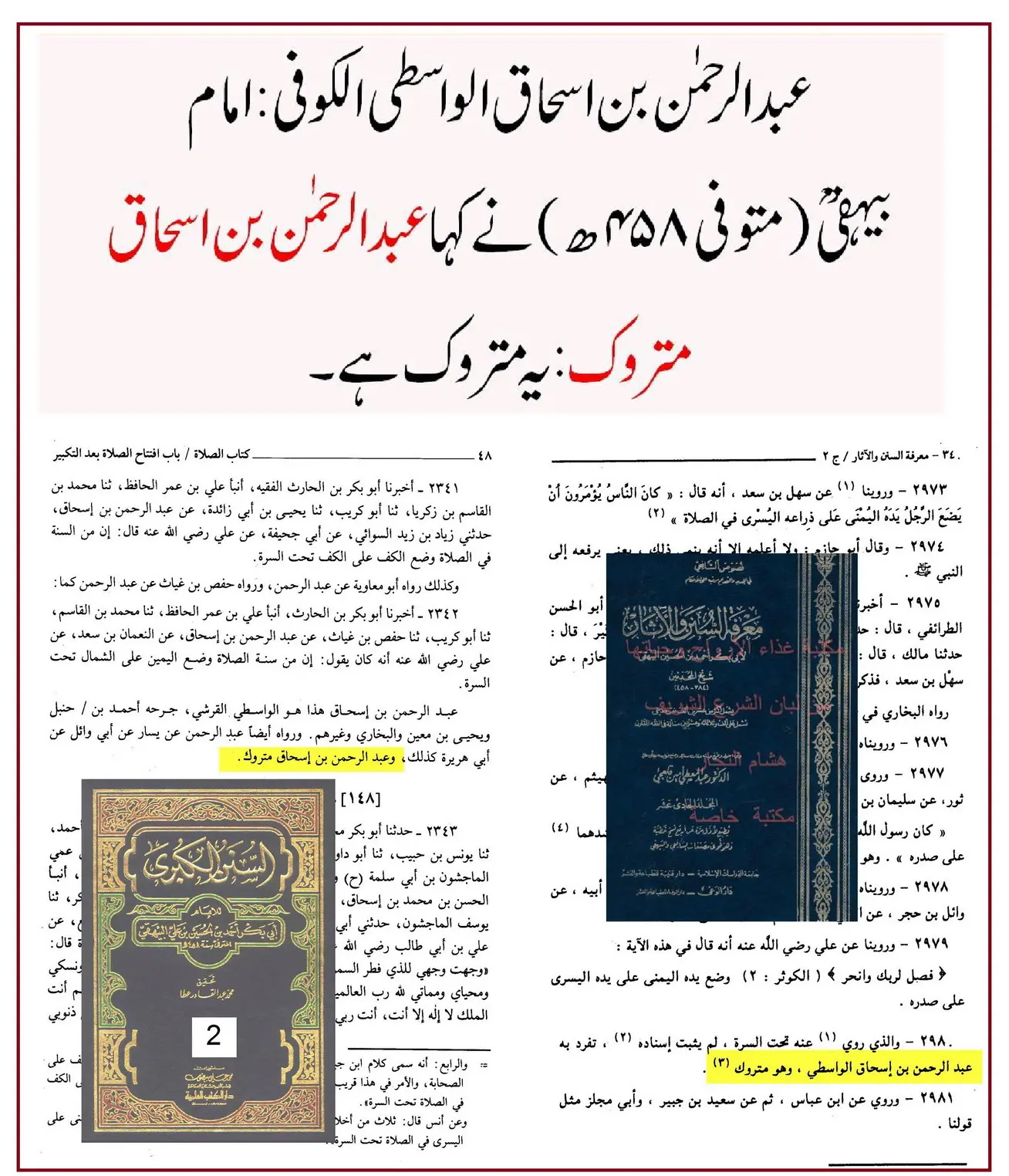
✦ 5. Imām al-Bayhaqī (458 AH)
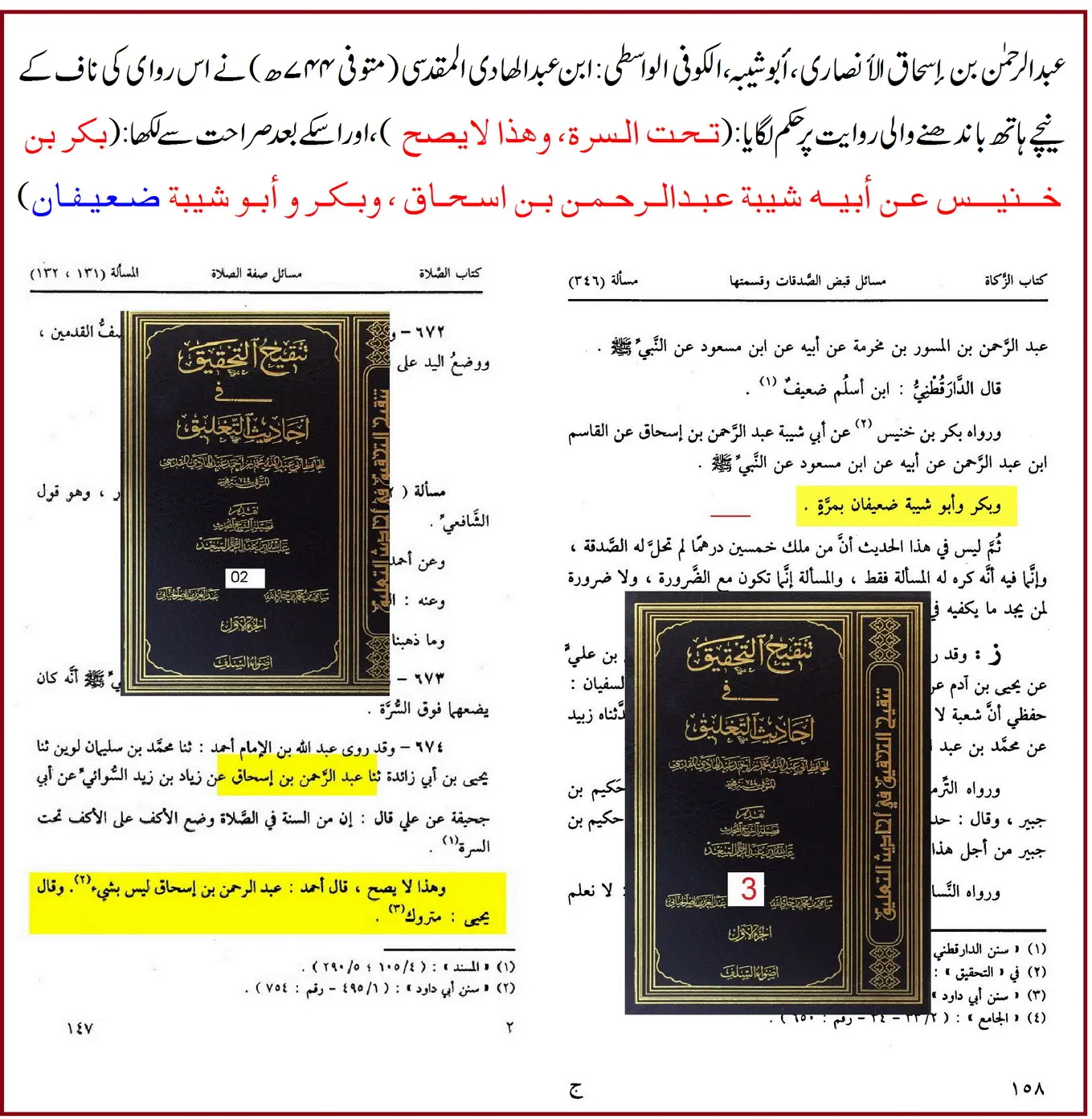
Arabic Text:«والذي روي عنه تحت السرة لم يثبت إسناده، تفرد به عبد الرحمن بن إسحاق الواسطي، وهو متروك.»
Reference: al-Bayhaqī, Maʿrifat al-Sunan wa al-Āthār (2980)
Translation:
The narration about placing the hands below the navel has no established chain. It was narrated solely by ʿAbd al-Raḥmān ibn Isḥāq al-Wāsiṭī, and he is abandoned.
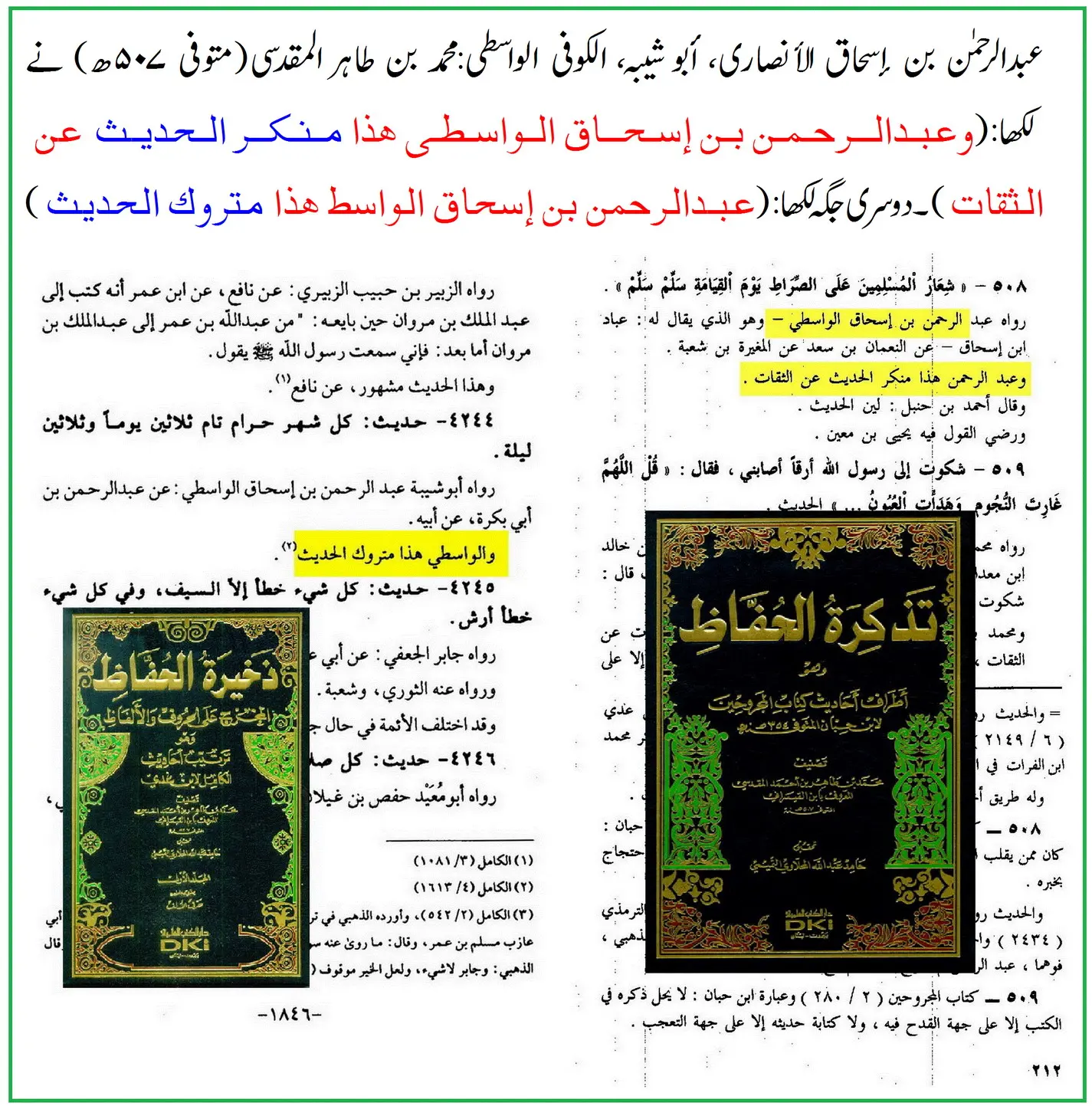
✦ 6. Muḥammad ibn Ṭāhir al-Maqdisī (507 AH)
Arabic Text:«وعبد الرحمن هذا منكر الحديث عن الثقات.»
Reference: Ibn Ṭāhir, Tadhkirat al-Ḥuffāẓ
Translation:
This ʿAbd al-Raḥmān narrates rejected reports from reliable narrators.
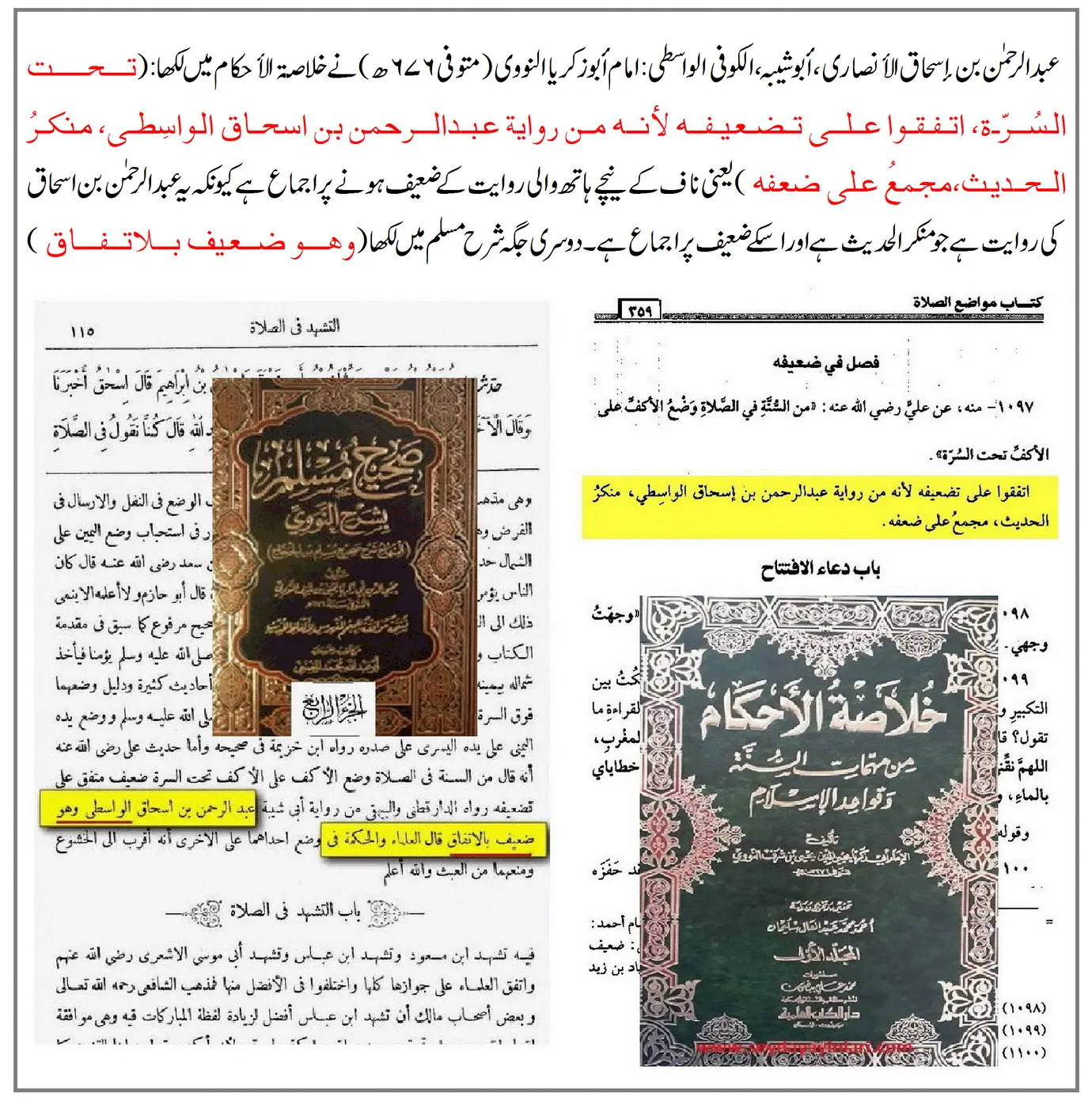
✦ 7. Imām al-Nawawī (676 AH)
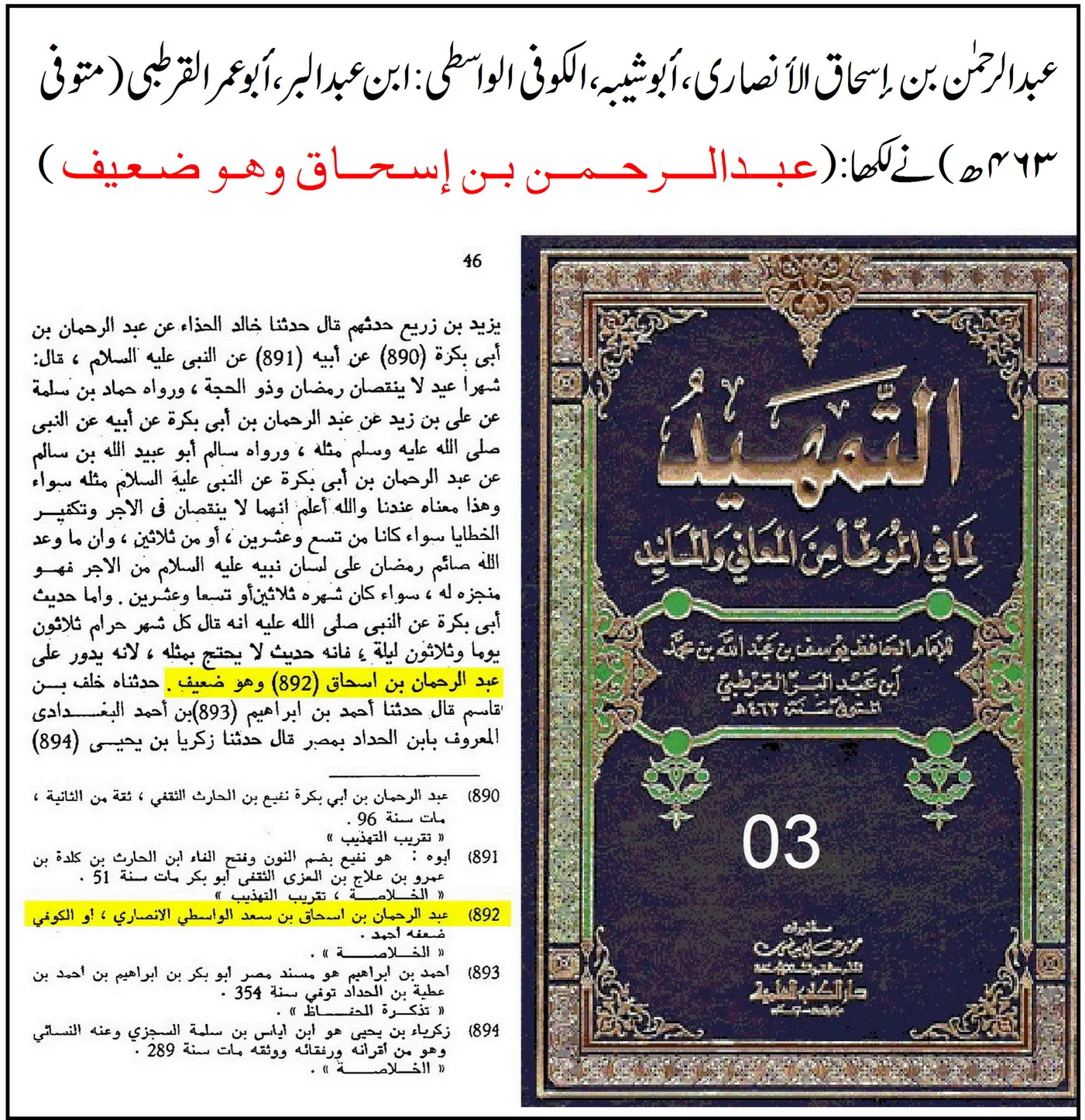
Arabic Text:«… اتفقوا على تضعيفه لأنه من رواية عبد الرحمن بن إسحاق الواسطي، منكر الحديث، مجمع على ضعفه.»
Reference: al-Nawawī, Khulāṣat al-Aḥkām (1097)
Translation:
The scholars unanimously agreed on declaring it weak because it is from the narration of ʿAbd al-Raḥmān ibn Isḥāq al-Wāsiṭī, who narrates rejected reports and whose weakness is agreed upon.
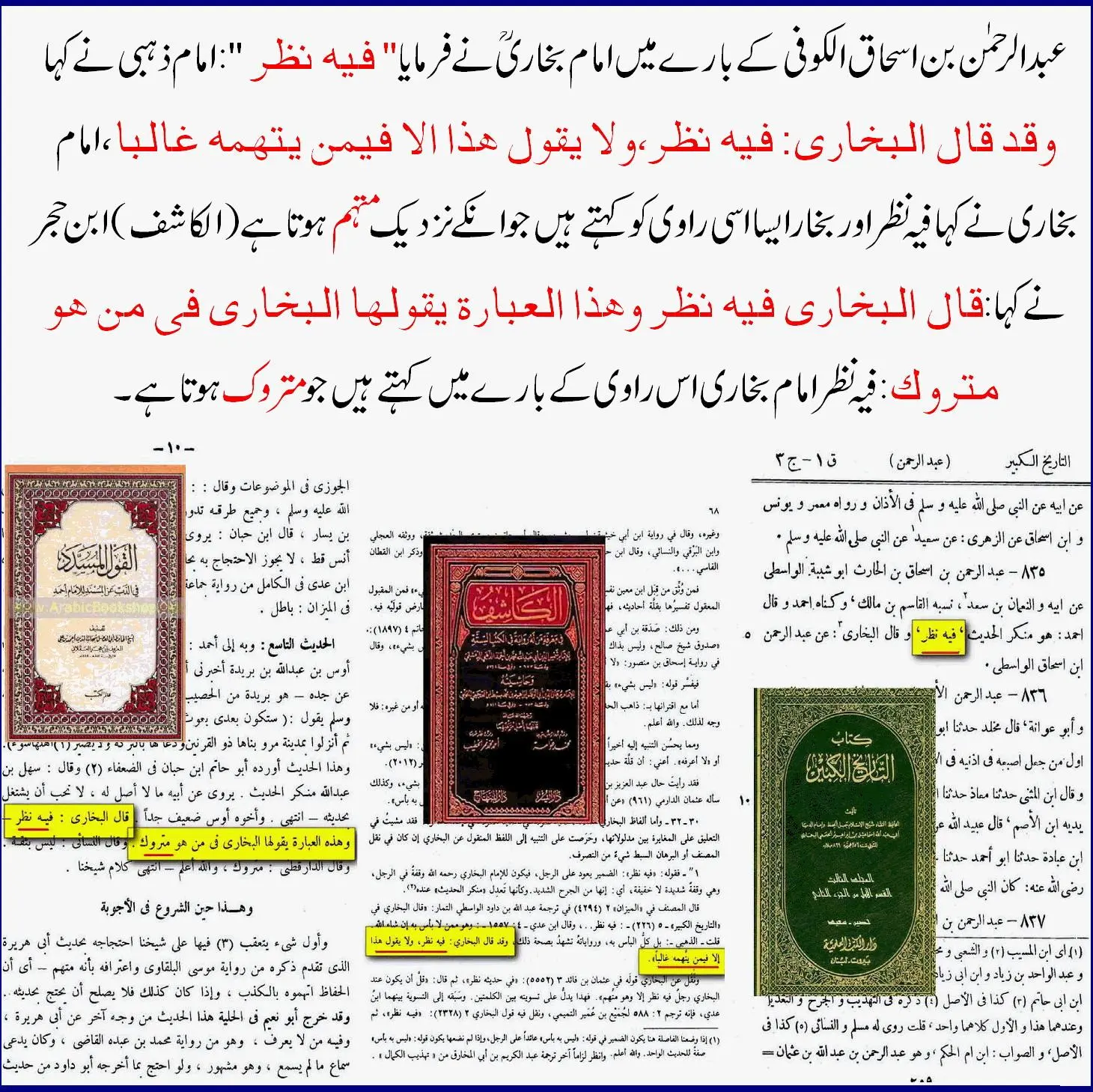
✦ 8. Imām al-Bukhārī (256 AH)
Arabic Text:«عبد الرحمن بن إسحاق أبو شيبة الواسطي، فيه نظر.»
Reference: al-Bukhārī, al-Tārīkh al-Kabīr (6/23, 835)
Translation:
Regarding ʿAbd al-Raḥmān ibn Isḥāq al-Wāsiṭī, there is scrutiny concerning him.
(This is among the strongest forms of criticism used by al-Bukhārī.)
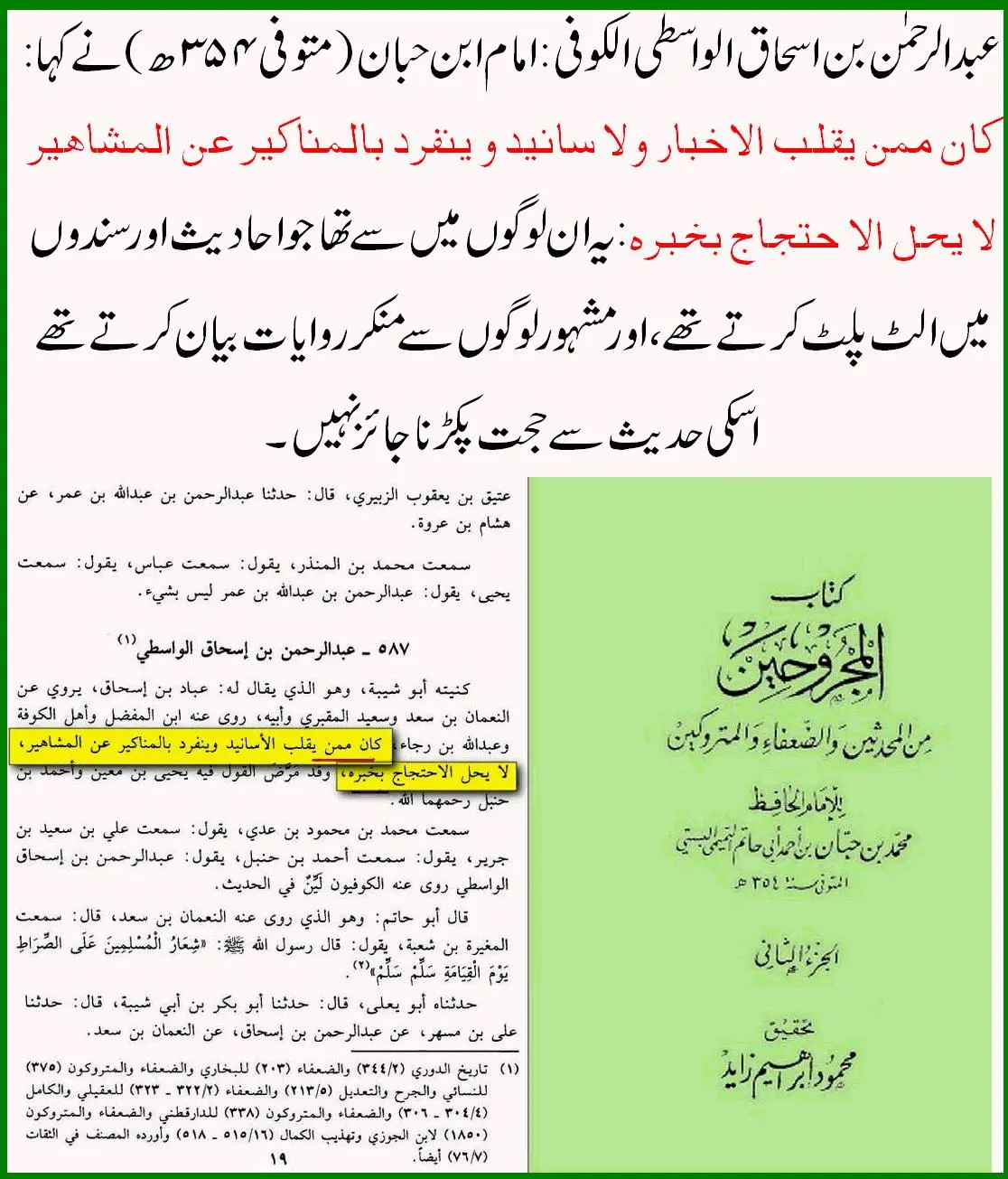
✦ 9. Imām Ibn Ḥibbān (354 AH)
Arabic Text:«كان ممن يقلب الأخبار والأسانيد، وينفرد بالمناكير عن المشاهير، لا يحل الاحتجاج بخبره.»
Reference: Ibn Ḥibbān, al-Majrūḥīn (2/67)
Translation:
He used to invert texts and chains, and he would uniquely narrate rejected reports from well-known narrators. It is not permissible to use his reports as proof.
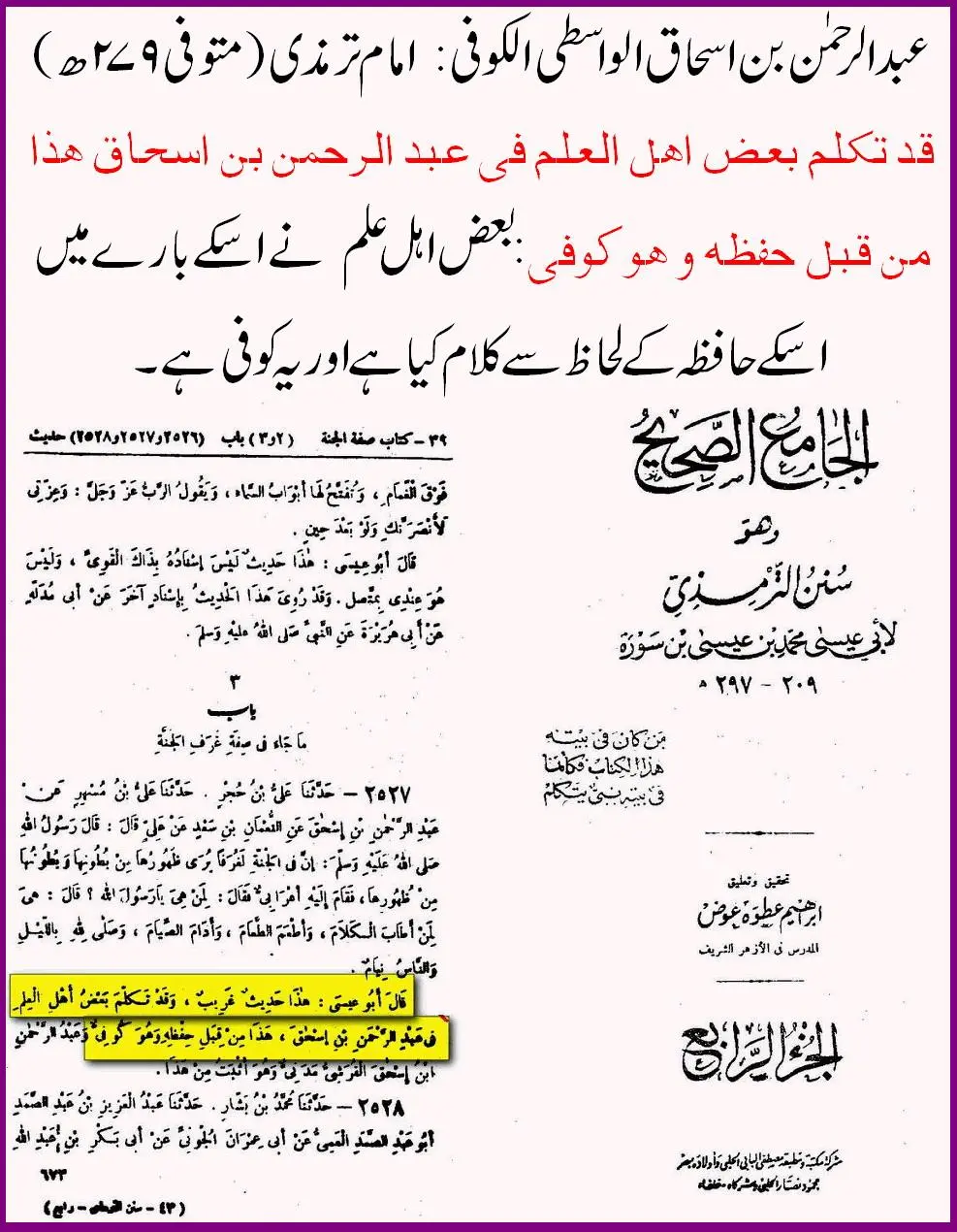
✦ 10. Imām al-Tirmidhī (279 AH)
Arabic Text:«هذا حديث غريب، لا نعرفه إلا من حديث عبد الرحمن بن إسحاق… وقد تكلم فيه أهل الحديث من قبل حفظه.»
Reference: al-Tirmidhī, al-Jāmiʿ (1984)
Translation:
This ḥadīth is strange; we only know it through ʿAbd al-Raḥmān ibn Isḥāq. The scholars of ḥadīth have spoken about him due to his poor memory.
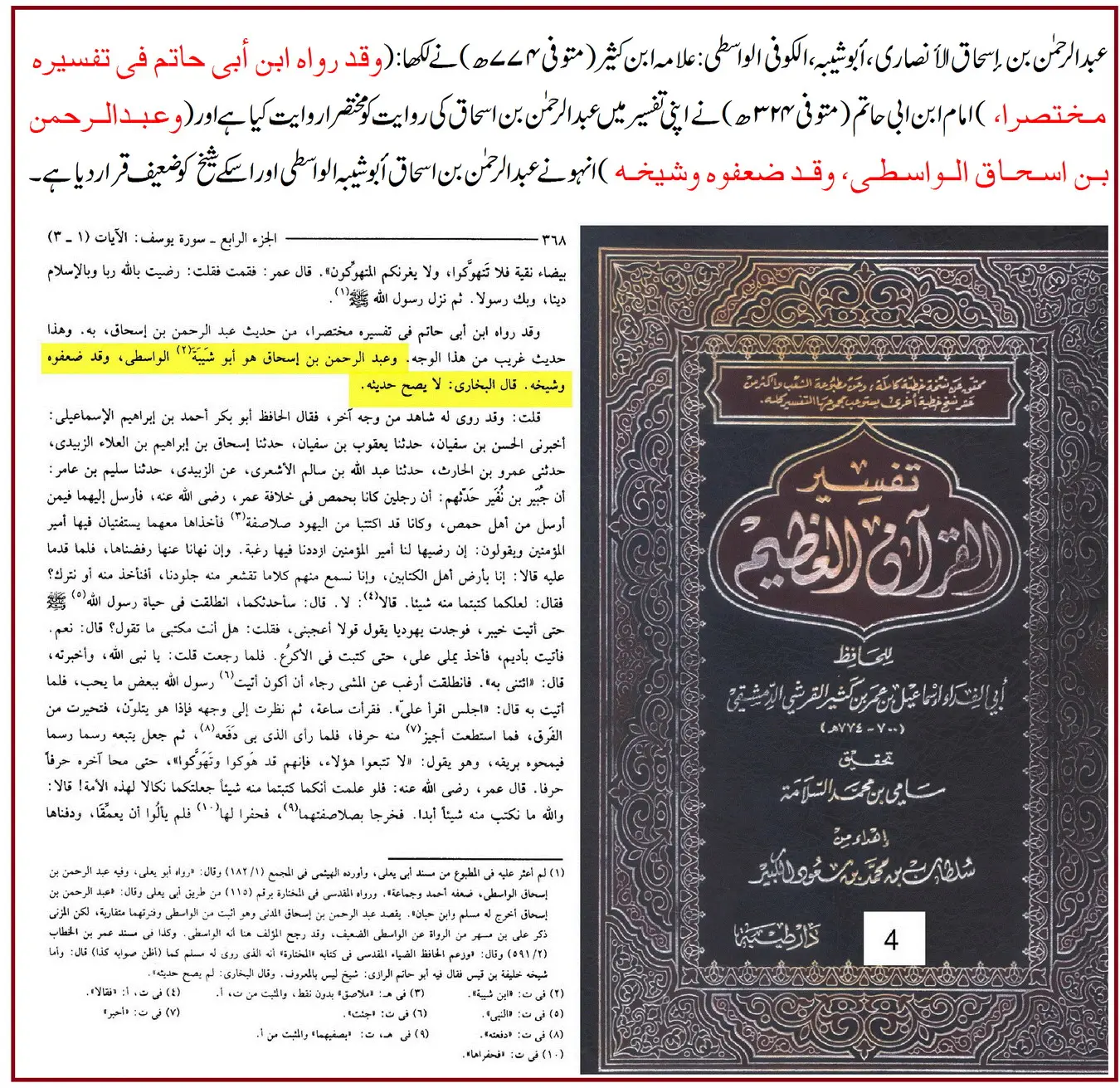
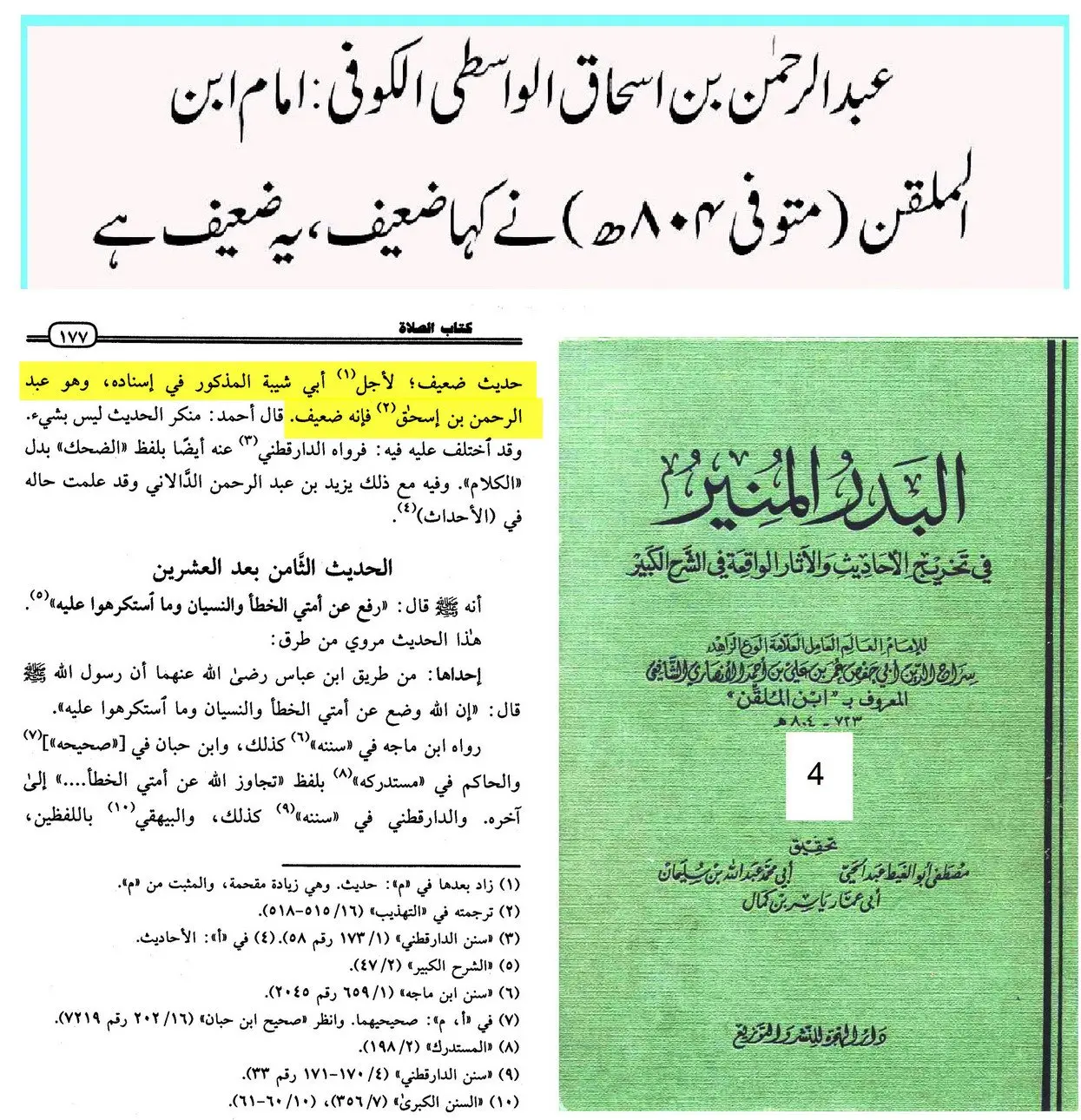
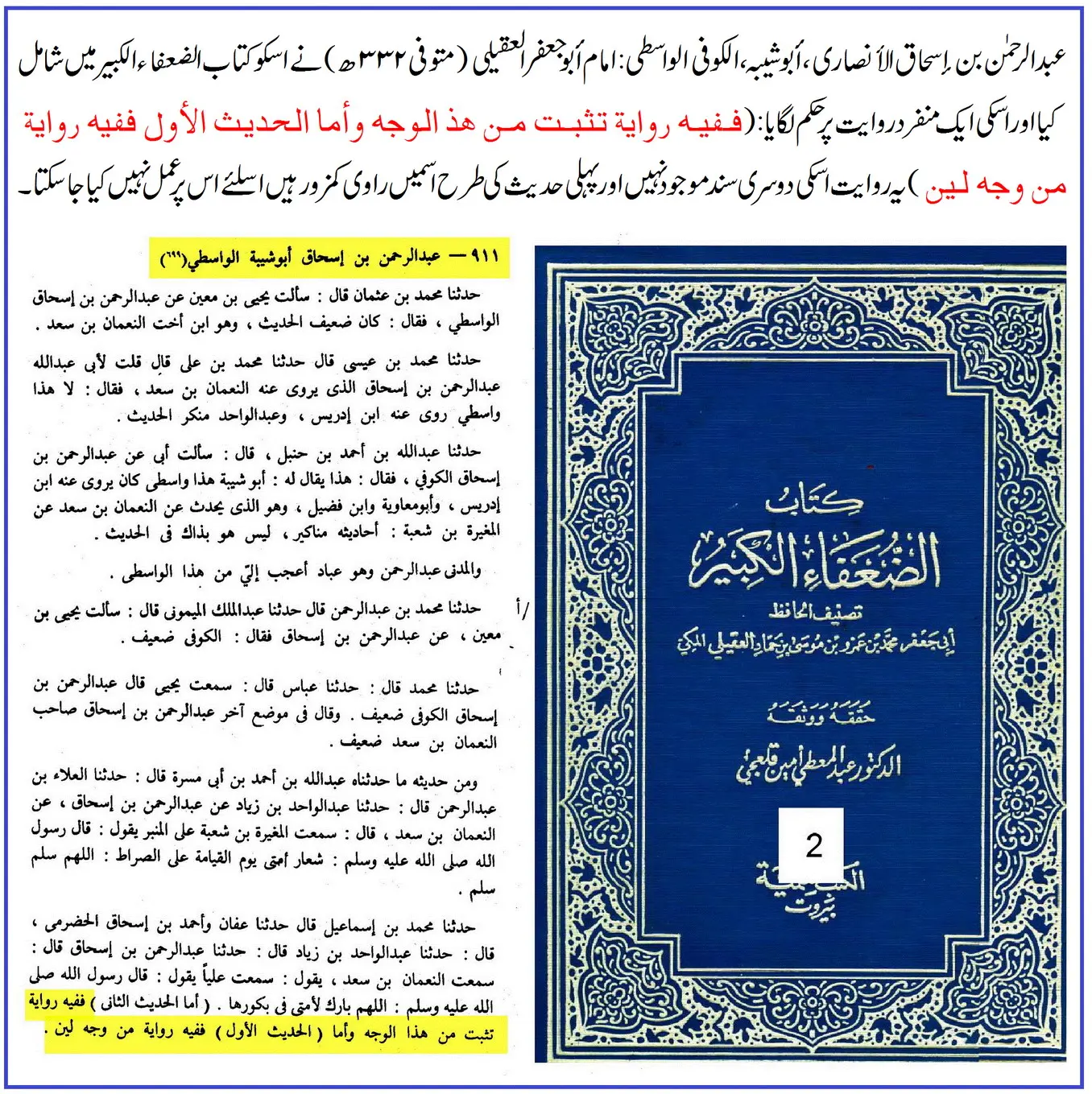
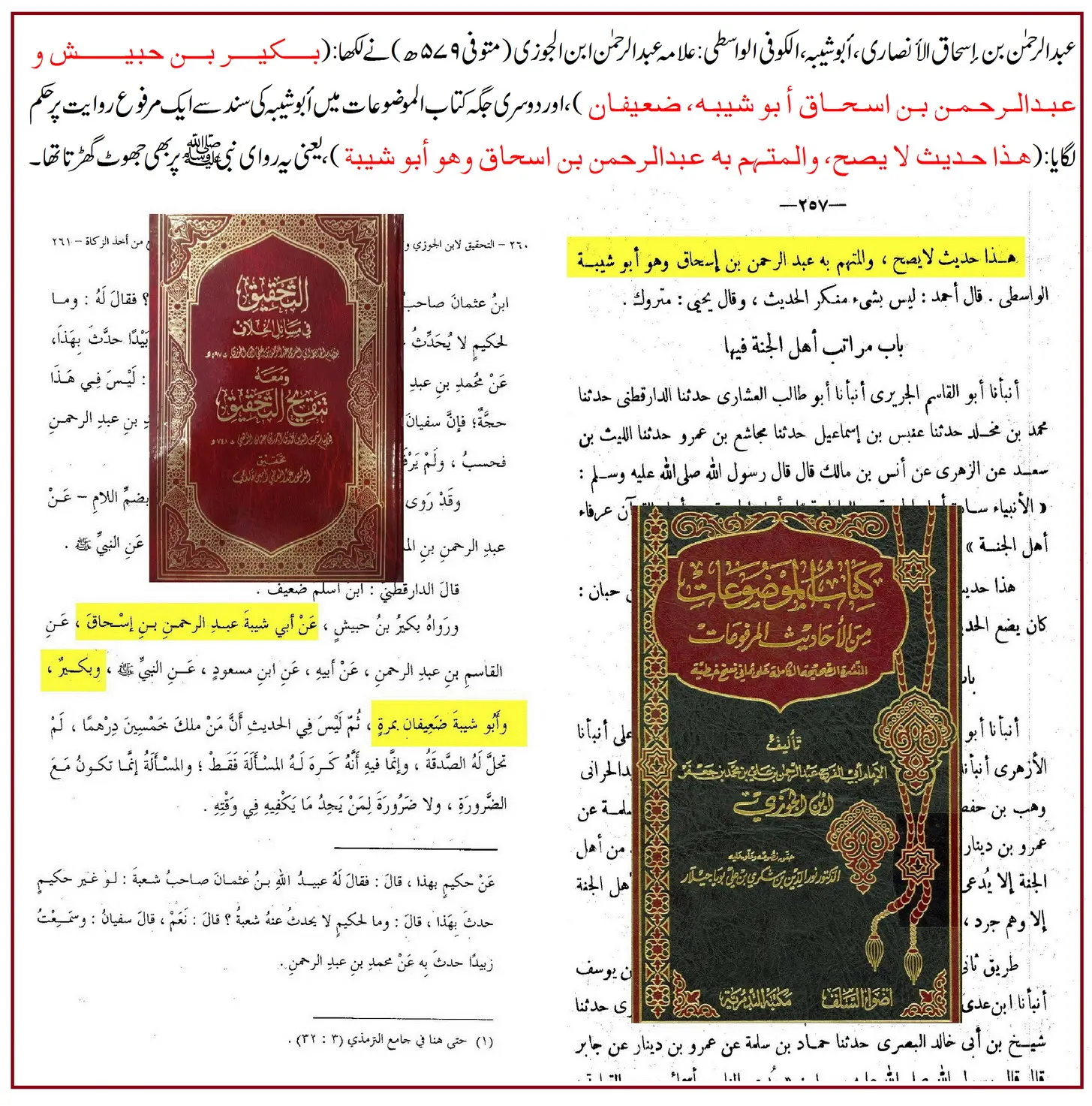
(The remaining scholars similarly declared him weak, rejected, or abandoned in ḥadīth, including: al-Nasā’ī, Ibn Ḥajar, Ibn ʿAbd al-Barr, Ibn Kathīr, al-Dāraquṭnī, Ibn al-Jawzī, al-ʿIrāqī, al-Haythamī, al-Būṣīrī, Ibn Ḥazm, Ibn Rushd, al-Mundhirī, Ibn ʿAdī, and others — totaling forty authorities who criticized him.)
◈ Summary of the Discussion
✔ Core Issue
All narrations regarding folding the hands below the navel revolve around a single narrator:ʿAbd al-Raḥmān ibn Isḥāq al-Wāsiṭī (Abū Shaybah).
✔ Verdict of the Scholars
Forty leading scholars of ḥadīth criticized him:- Some declared him weak (ḍaʿīf).
- Some declared him munkar al-ḥadīth.
- Many declared him matrūk (abandoned).
- Imām al-Nawawī stated there is consensus on his weakness.
- Imām Ibn Ḥibbān stated it is not permissible to use his reports as proof.
✔ Authentic Narrations
Authentic and sound chains establish that the Messenger of Allah ﷺ placed his hands upon his chest during prayer, as reported in:- Ṣaḥīḥ Muslim (ḥadīth of Wā’il ibn Ḥujr رضي الله عنه)
- Ṣaḥīḥ Ibn Khuzaymah (ḥadīth of Qabīṣah ibn Hulb رضي الله عنه)
 Final Conclusion
The narration of folding the hands below the navel is invalid both in chain and text.According to the scholars of knowledge, the authentic Sunnah regarding placing the hands in prayer is to place them upon the chest.
Last edited:

